



Most people notice their inner thighs on the reformer the same way: the carriage starts sliding home, their legs begin to shake, and the smooth control they thought they had vanishes in about three reps. Reformer Pilates moves for inner thighs have a way of exposing weak adductors fast, because the springs do not care how polished your setup looks if you cannot guide the carriage back with both legs working evenly.
And those inner-thigh muscles do more than create that “lifted” feeling along the legs. Your adductors help steer the knees, steady the pelvis, support hip motion, and connect into the deep core in a way people often underestimate. When they are asleep, the knees wobble, the low back tries to help, and standing work gets messy.
One small detail that matters more than class chatter makes it sound: spring colors are not universal. A medium spring on one reformer can feel heavy on another, especially if the machine is older or the springs are fresh. Use the setup ranges below as a starting point, then judge by carriage control, not by ego.
Start with the stable supine work. Earn the standing work. Then, if your landings stay quiet and your pelvis stays still, add the jumpboard. The sign that you are in the right place is not punishment-level soreness the next day; it is that deep, narrow line of effort along the inner seam of the leg while the carriage moves like it is on rails.
1. Wide Heels Footwork on the Footbar
If I want someone to find their inner thighs without overthinking it, this is where I start. Put your heels wide on the footbar, toes turned out only as far as your hips allow, and set the springs to a medium to heavy load that gives support without turning the move into a shove.
Why this wakes up the adductors
The trick is not the press out. The trick is the drag back in. As you extend the legs, imagine your heels lightly pulling toward each other across the bar. That tiny “scissor inward” thought switches the adductors on, especially the larger fibers higher up near the groin.
A sloppy version looks familiar: knees rolling inward, ribs popping, and the carriage banging home. Skip that. Keep the pelvis neutral, let the tail stay heavy, and return in the same track you pressed out on.
- Spring range: medium to heavy, often 2 to 4 springs depending on the machine
- Reps: 8 to 12 slow presses
- Foot placement: heels on the bar, wider than hips, turnout from the hips rather than the feet
- Best cue: think “press long, then pull the carriage home with the inner thighs”
Use a 3-count return. That is where the move starts telling the truth.
2. Second-Position Toes Press
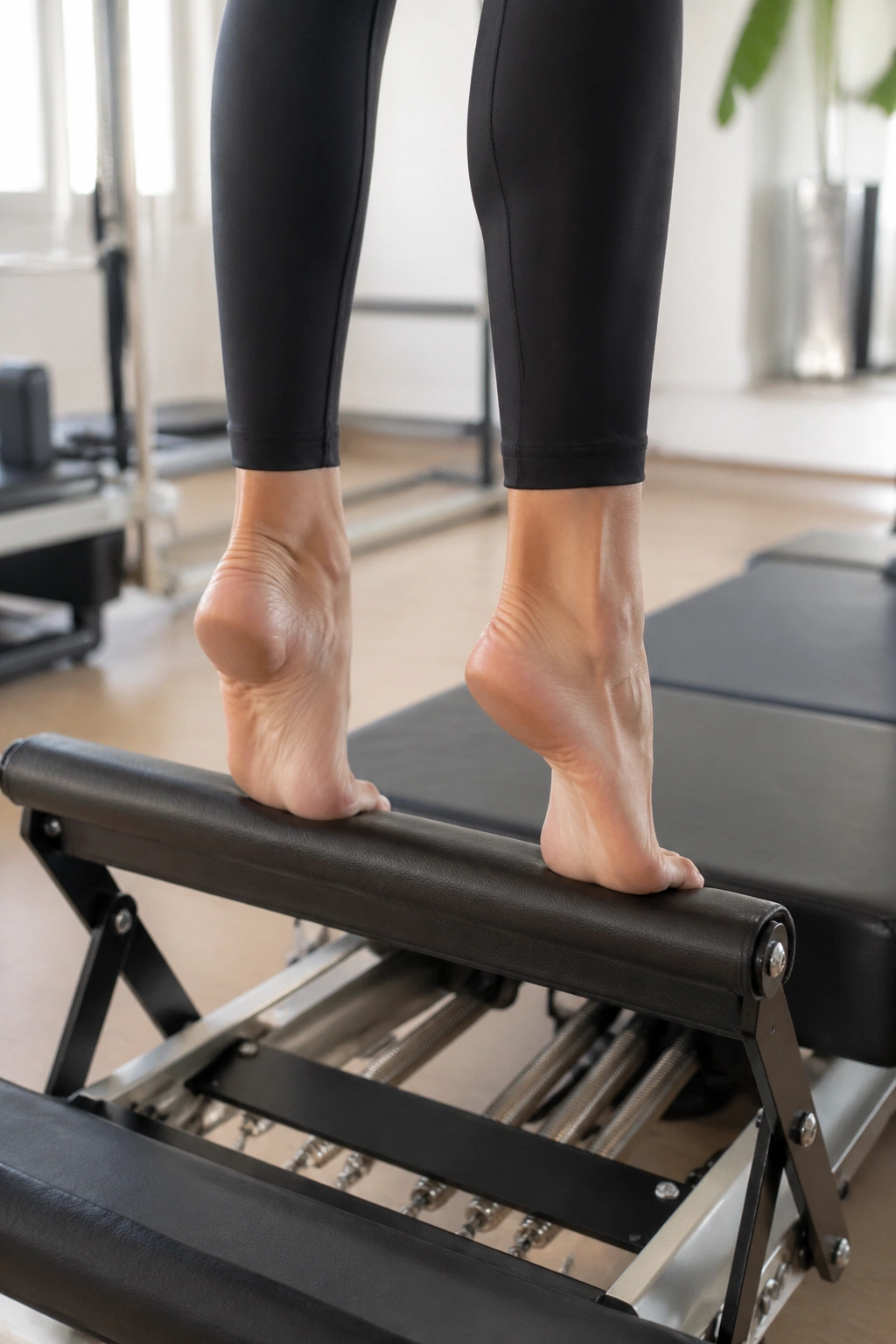
If your arches collapse, your inner thighs check out. That is the first thing I watch on this one.
Come onto the balls of the feet in a wide second position, heels lifted, knees tracking over the second and third toes. Use a spring load close to your regular footwork setting, though some people do better with one notch lighter so they can keep the ankles alive instead of gripping through the quads.
This variation changes the whole feel of footwork. The calves light up, sure, but the adductors have to help organize the femurs so the legs do not wobble in turnout. Think of the thigh bones spiraling open while the inner thighs still draw toward the midline. It sounds contradictory until you feel it. Then it makes perfect sense.
Lower the carriage in with control. No dropping. No shortcut on the last two inches. If the heels bounce or the toes claw the bar, reduce the range and rebuild the line from pelvis to feet.
Ten reps is usually enough. Add a two-second pause at full extension if you want the burn to arrive earlier—and it will.
3. Wide-Heel Tendon Stretch on the Reformer
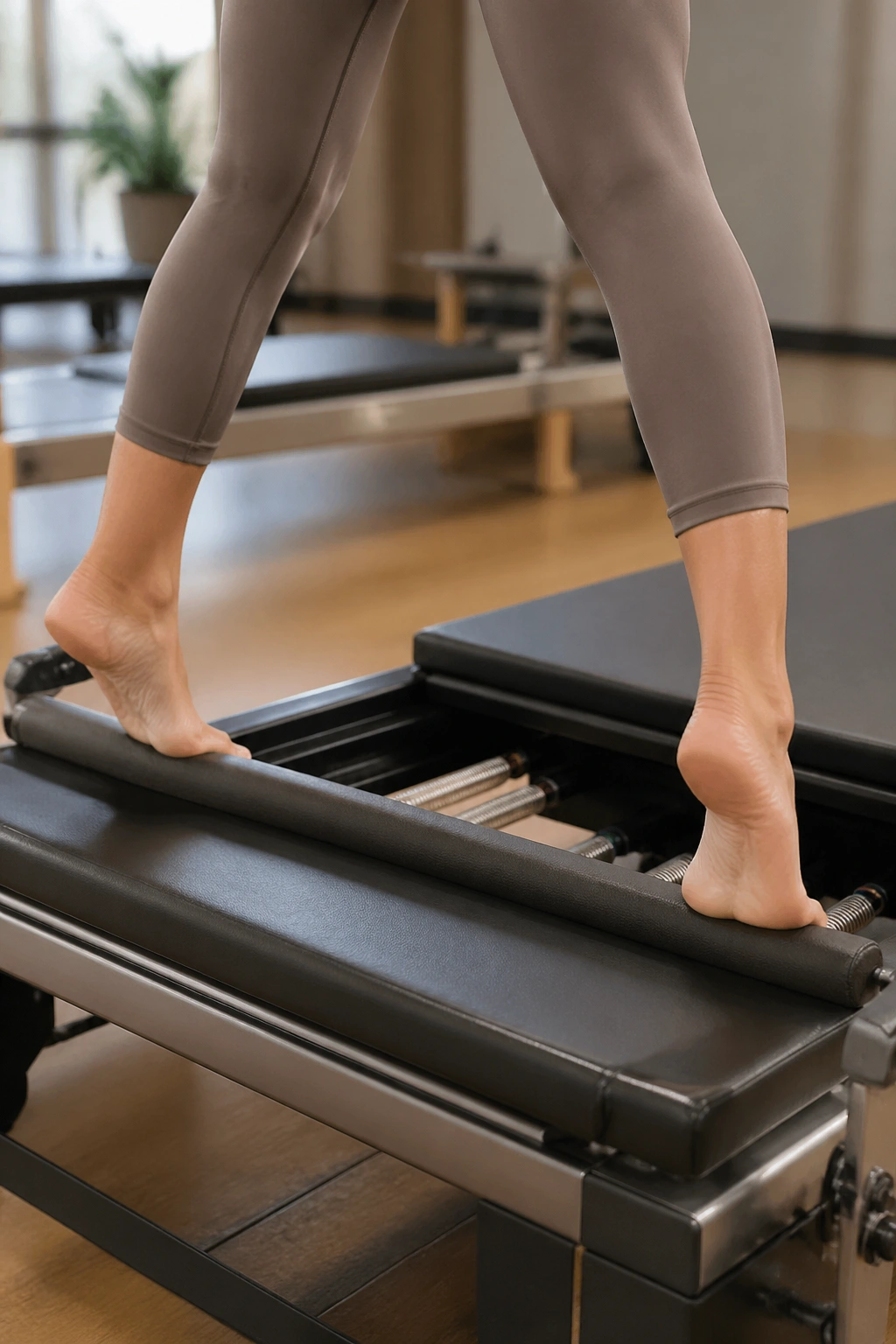
Why does this one feel so small and so rude?
Press out from a wide turned-out stance, then stay long in the legs while you lower both heels under the bar and lift them back up. The carriage barely moves, yet the inner thighs have to stabilize the thighs and pelvis while the ankles work through plantar flexion and dorsiflexion.
Where people lose it
Most people push the knees back too hard and lock them. That dumps the work into the joints and steals the connection from the top of the legs. Keep the knees long but soft, the sit bones heavy, and the front of the hips quiet.
You will also get more from this move if the heel drop is modest. Going lower is not always better. Stop the moment the pelvis shifts or the rib cage lifts.
Try this sequence:
- Press out to straight but not locked legs.
- Lower the heels for a count of 2.
- Lift the heels for a count of 2.
- Repeat 8 to 10 times.
- Pull the carriage in without losing your turnout.
That last pull-in is the part people rush. Don’t.
4. Pelvic Lift with a Block Between the Thighs
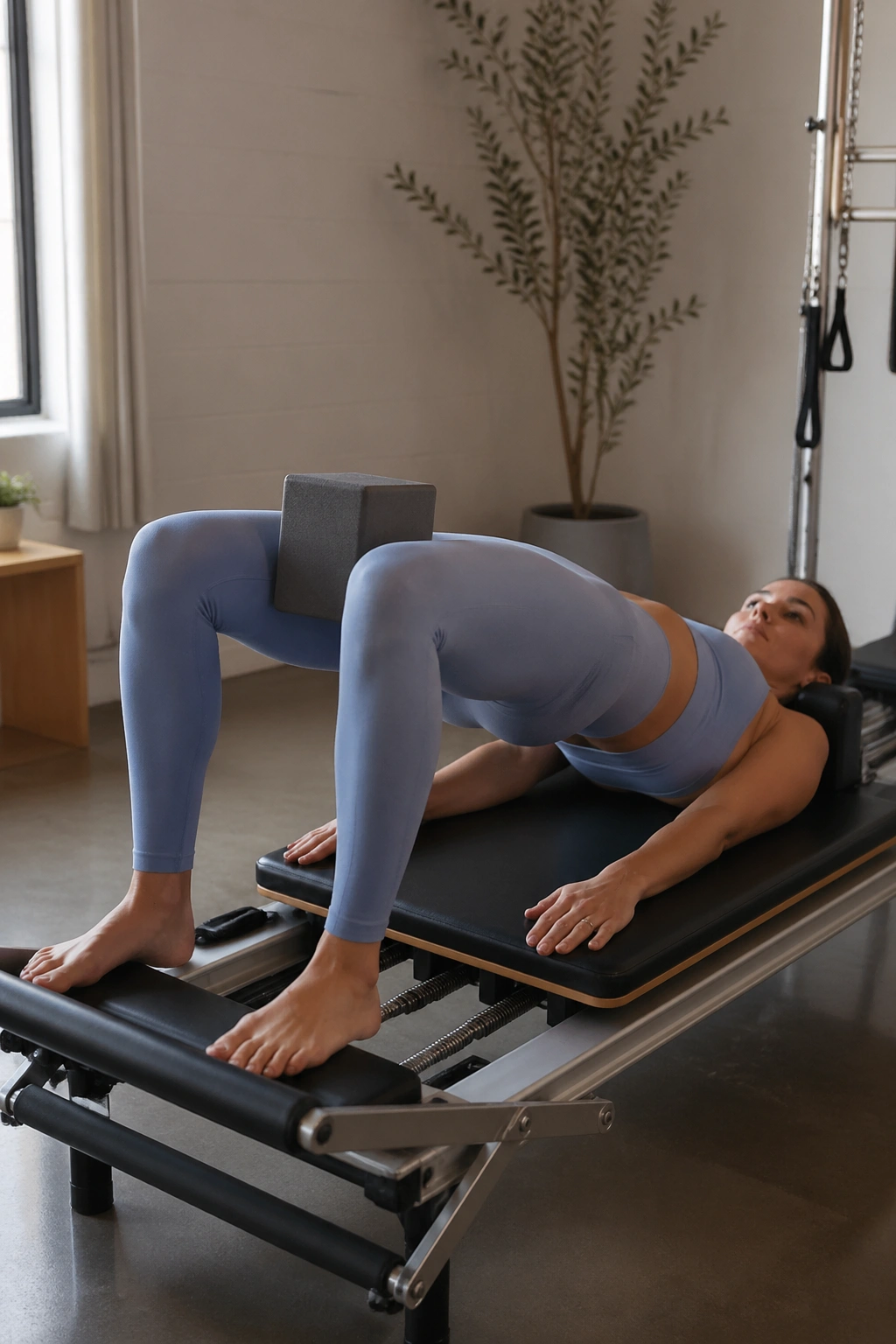
A small foam block, folded towel, or soft ball between the upper thighs can change a plain bridge into a sharp inner-thigh drill. Not glamorous. Works anyway.
Set the feet parallel on the footbar, about hip-width apart, and place the prop high enough on the thighs that you can squeeze without gripping the knees. Use a medium spring load so the carriage feels grounded. Roll the pelvis up into a bridge, hold the squeeze on the prop, press the carriage out a short distance, then pull it back in before you articulate down.
What I like here is the way the adductors join the hamstrings and pelvic floor. You feel the back body, yes, though the inner thighs stop the knees from drifting apart and help keep the pelvis level. When someone’s bridge keeps wobbling from side to side, this is one of the first fixes I reach for.
- Range: small carriage travel, often 4 to 8 inches is enough
- Reps: 6 to 10 bridges or bridge presses
- Watch for: ribs flaring, knees pushing out into the prop, weight rolling to the outer feet
- Helpful cue: squeeze the block lightly, like you do not want it to fall but do not want to crush it either
Too much squeeze can make the hips cramp. A steady 30 to 40 percent effort usually lands better.
5. Frog in Straps for Inner-Thigh Strength
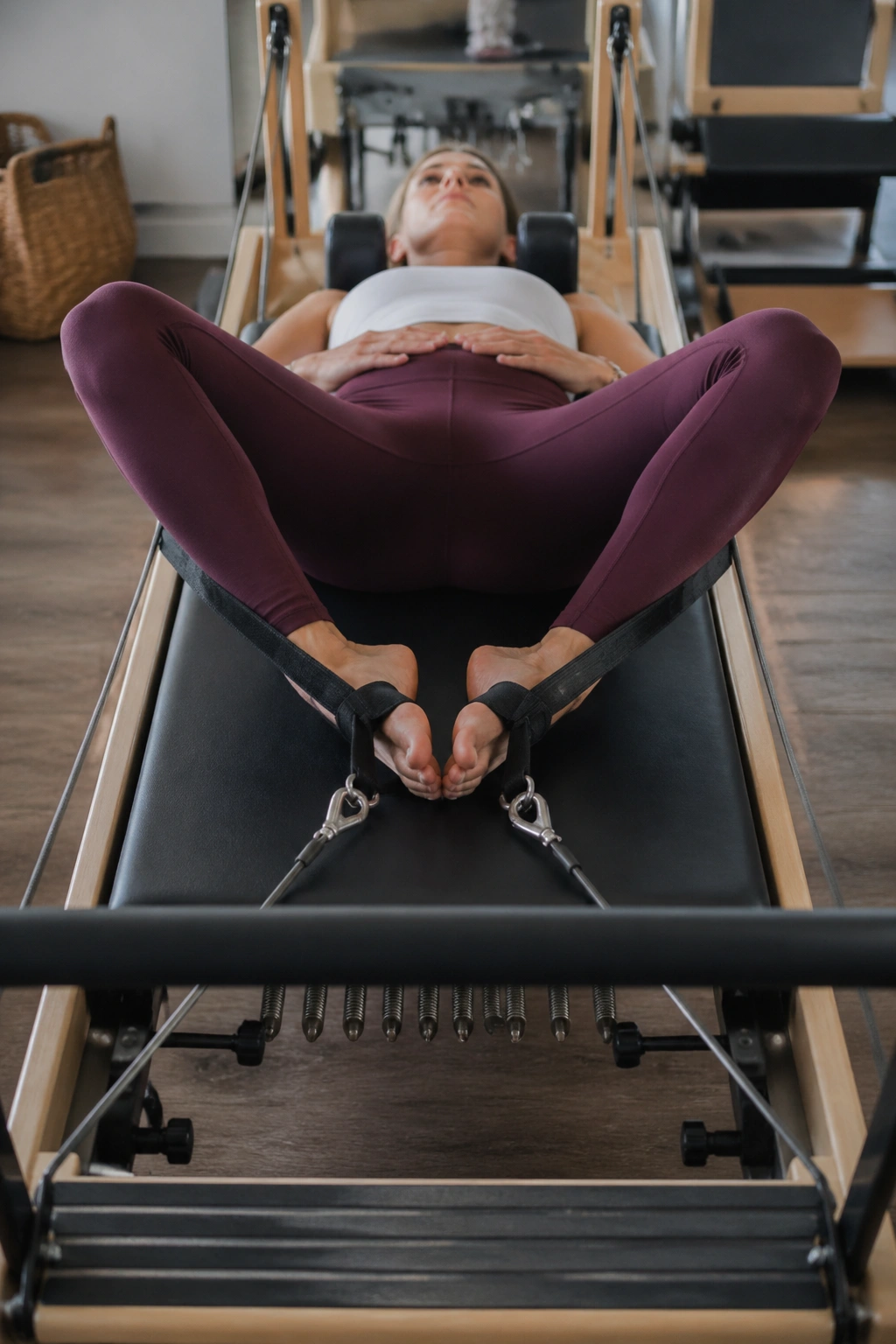
There is a reason frog in straps shows up so often in lower-body sequences: it teaches adductor connection without asking the spine to do much at all. Put the feet in the loops, heels together, toes apart, knees bent wider than the shoulders only if your hips allow it, and work on a light to medium spring.
From the bent frog shape, press the legs out on a diagonal to about 45 degrees, then bend the knees back in while keeping the heels touching. That heel-to-heel contact matters. The adductors have to stay awake the whole time or the shape falls apart.
What I do not want is a giant turnout with the pelvis rocking and the low back arching off the carriage. Smaller is sharper here. Think of the thigh bones sliding in their sockets while the sacrum stays heavy and the lower belly stays wide.
A useful image: scrape the heels toward each other even as the legs lengthen away. That cue tends to reach people faster than “engage the inner thighs,” which sounds tidy and means almost nothing until you have felt it.
Stay with 8 to 12 reps. If the straps start swinging, the springs are winning.
6. Diamond Frog Pulses with the Soles Together
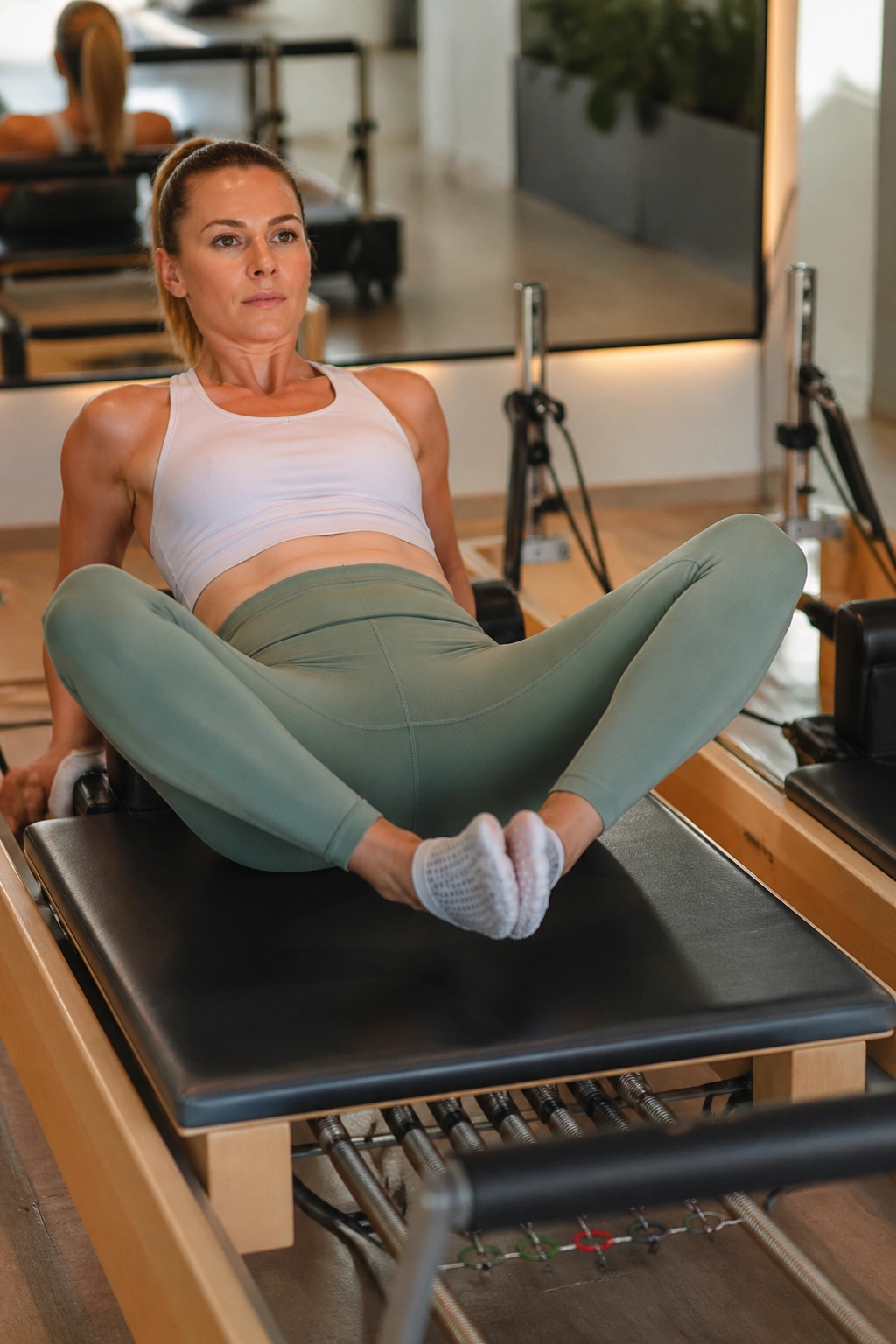
Unlike a standard frog, this version keeps the soles of the feet together in a diamond shape and uses a smaller, pulsing press. That shifts the sensation higher into the inner thighs for many bodies, especially people who tend to dominate with the quads.
Use a light spring. Heavy tension turns this move into a wrestling match and usually pulls the pelvis into the wrong place. Bring the knees open, let the soles touch, then press the legs out only partway while keeping the feet connected. Pulse in that mid-range for 10 to 20 counts, then bend back in.
Some hips love this. Some do not. If you feel pinching at the front of the hip, reduce the turnout, bring the knees narrower, or drop the move. No medal for forcing the shape.
This one is more intense than it looks because the adductors never get a clean break. They keep working to hold the feet together, guide the knees, and control the spring tension on the way back.
Short range. Clean breath. Pelvis still. That is the formula.
7. Openings in Straps with a Slow Close
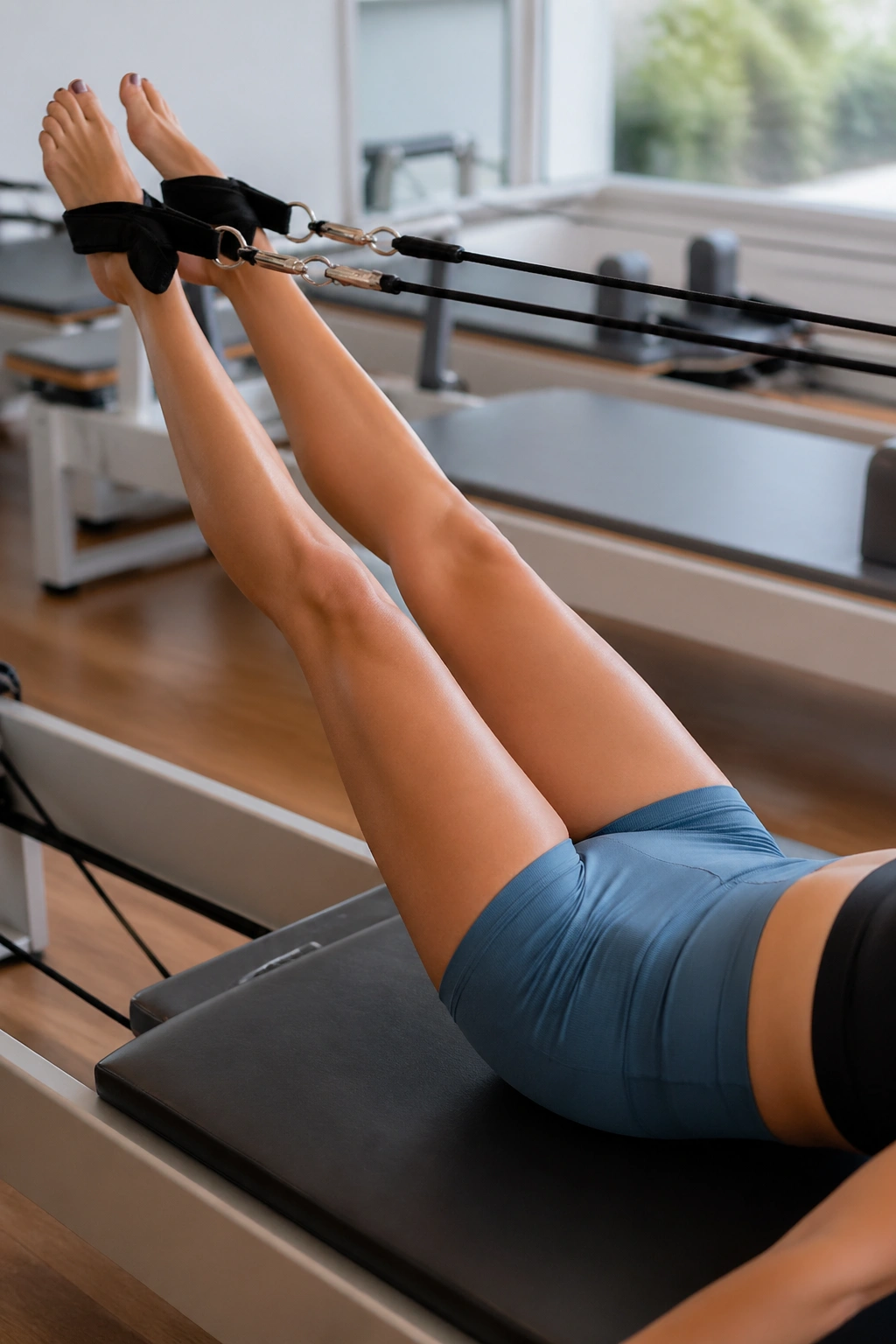
The opening phase gets the attention. The close is where the inner thighs earn their pay.
Begin with the legs long and together, usually at about 60 degrees from the carriage if your hamstrings allow it. Open the legs out to a comfortable V, then close them with a deliberate squeeze back to center. Use a light to medium spring so the carriage feedback stays crisp.
Make the return do the work
A lot of people fling the legs open and then let the straps pull them together. That misses the point. Think of drawing the inner thighs inward as if you were sliding both legs through thick water. The close should feel active from the top of the thighs all the way to the ankles.
You do not need circus-level range. A moderate V with a strong return beats a huge split with dead adductors every time.
Try 8 slow reps with this rhythm:
- Open for 2 counts
- Hold the width for 1 count
- Close for 3 counts
- Pause together without letting the straps slack
That three-count close is where the deep shaking starts. Good sign.
8. Leg Circles with a Strong Midline Squeeze
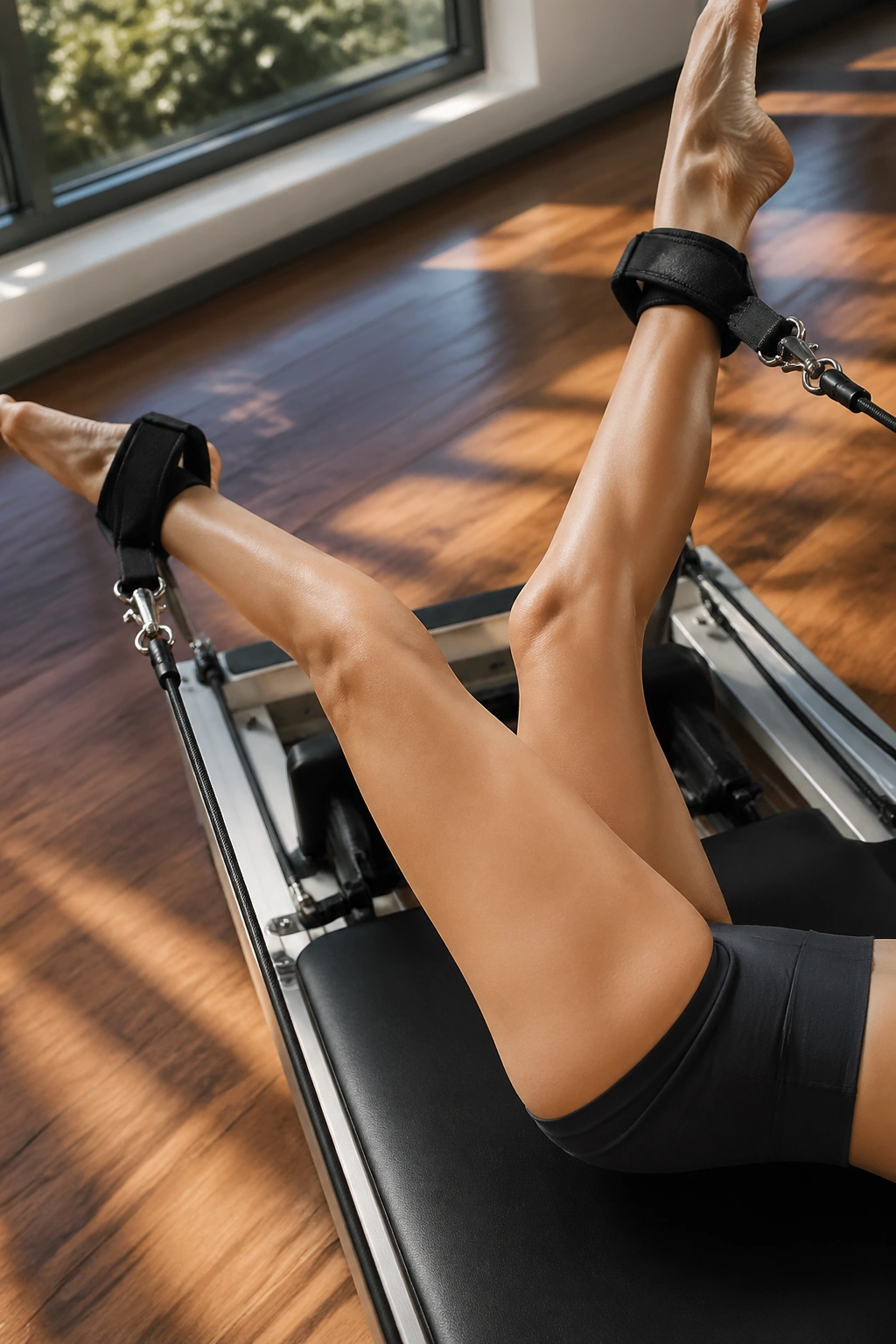
Leg circles can turn into decorative choreography if you are not paying attention. Done well, they are one of the best ways to train the adductors to control the path back through center.
Start with the legs together in straps, slightly turned out or parallel depending on your hips. Circle the legs open, down, around, and back together. Then reverse. Keep the circles around the size of a dinner plate at first; bigger circles are not better if the pelvis rocks.
I cue the closing phase hard here. As the legs travel up and toward each other, think of wrapping the inner thighs in to meet at the zipper line of the body. That is the point where people realize the move is not “hip flexibility work.” It is control work.
- Springs: light to medium
- Reps: 5 to 8 circles each direction
- Best cue: close the circle from the inner thigh, not from the feet
- Common mess: ribs lifting, lower back peeling up, straps going slack at the top
If your sacrum starts hopping, shrink the circle by half. Small circles with strong adductor control beat giant circles with zero pelvic stability.
9. Single-Leg Frog in Straps
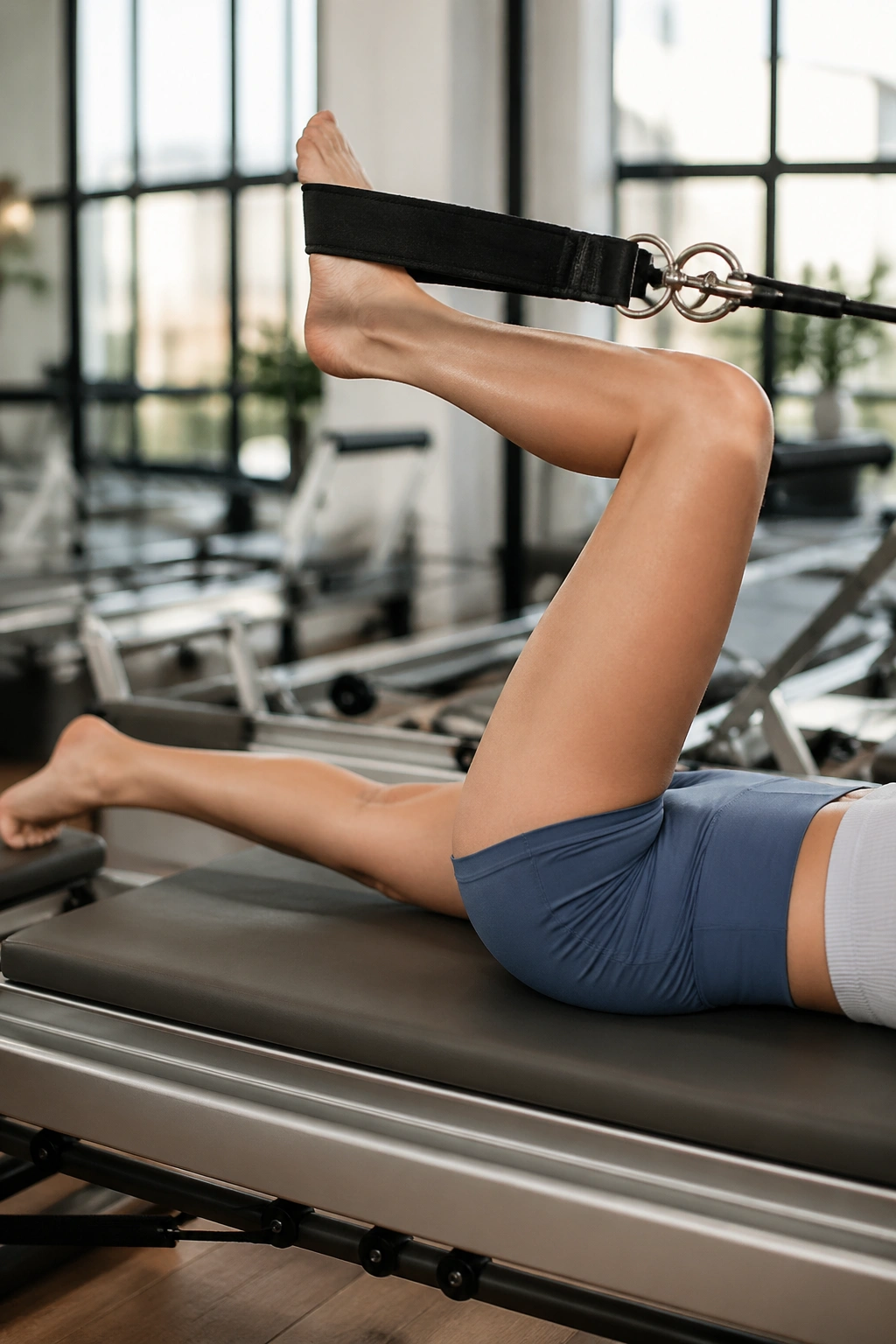
This one exposes left-right differences fast. No place to hide.
Place one foot in the strap and keep the other leg in tabletop or planted lightly on the footbar if you need more stability. From a frog shape, bend and press the working leg without letting the pelvis twist toward or away from the strap.
One spring is often enough. The challenge is not load; it is keeping the trunk quiet while one adductor has to organize the leg on its own. You will notice quickly if one side wants to push from the quad, grip the hip flexor, or lose the heel-to-seat connection.
Think about the inner thigh wrapping toward center as the leg lengthens, then resisting the spring as the knee bends. The nonworking side matters too. If that rib cage flares or the free leg starts dancing around, slow down.
Six to eight reps per side will tell you plenty. Add a one-second pause at full extension if you want to test control without piling on more spring.
10. Feet-in-Straps Beats
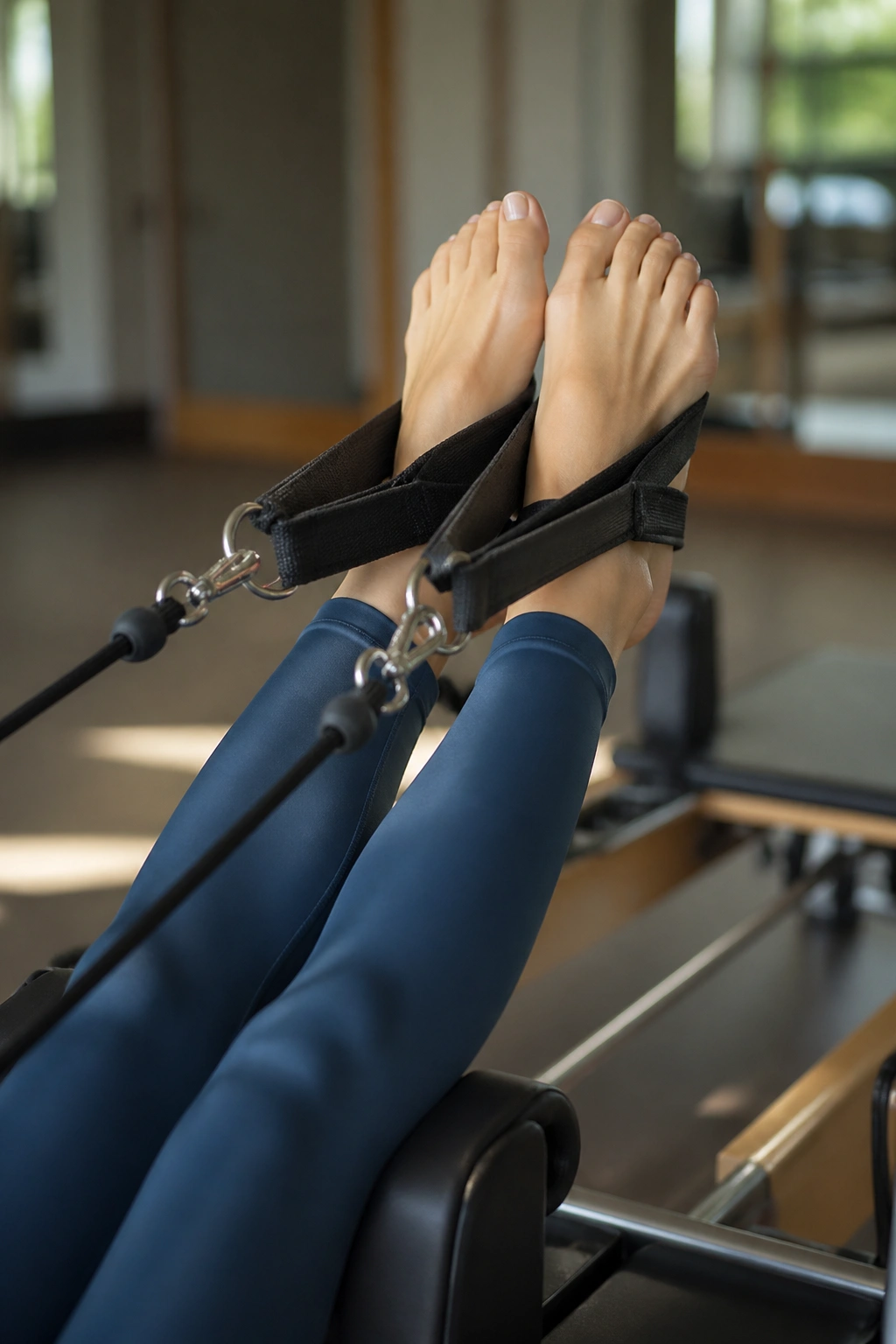
Tiny move. Big message.
Extend the legs to about 45 degrees, turn out from the hips, open them only a few inches, and beat the heels together in a quick, precise rhythm. The range stays narrow. The pelvis stays heavy. The neck and jaw stay relaxed.
People often assume this is a light finisher. Sometimes it is. Sometimes it is the move that makes the inner thighs cramp first, especially if the adductors have been coasting through the earlier series. That crampy feeling means you went from zero to gripping. Back off the turnout, lower the legs less, and shorten the set.
A clean set might look like 10 beats, rest, then 10 more. Or 20 straight if your form holds. The goal is not noise from the straps or a big clap of the heels. Think quick contact, quick release, same tension all the way through the legs.
When it works, the sensation sits high along the inseam of the thigh. Not flashy. Sharp.
11. Short Spine Frog Return
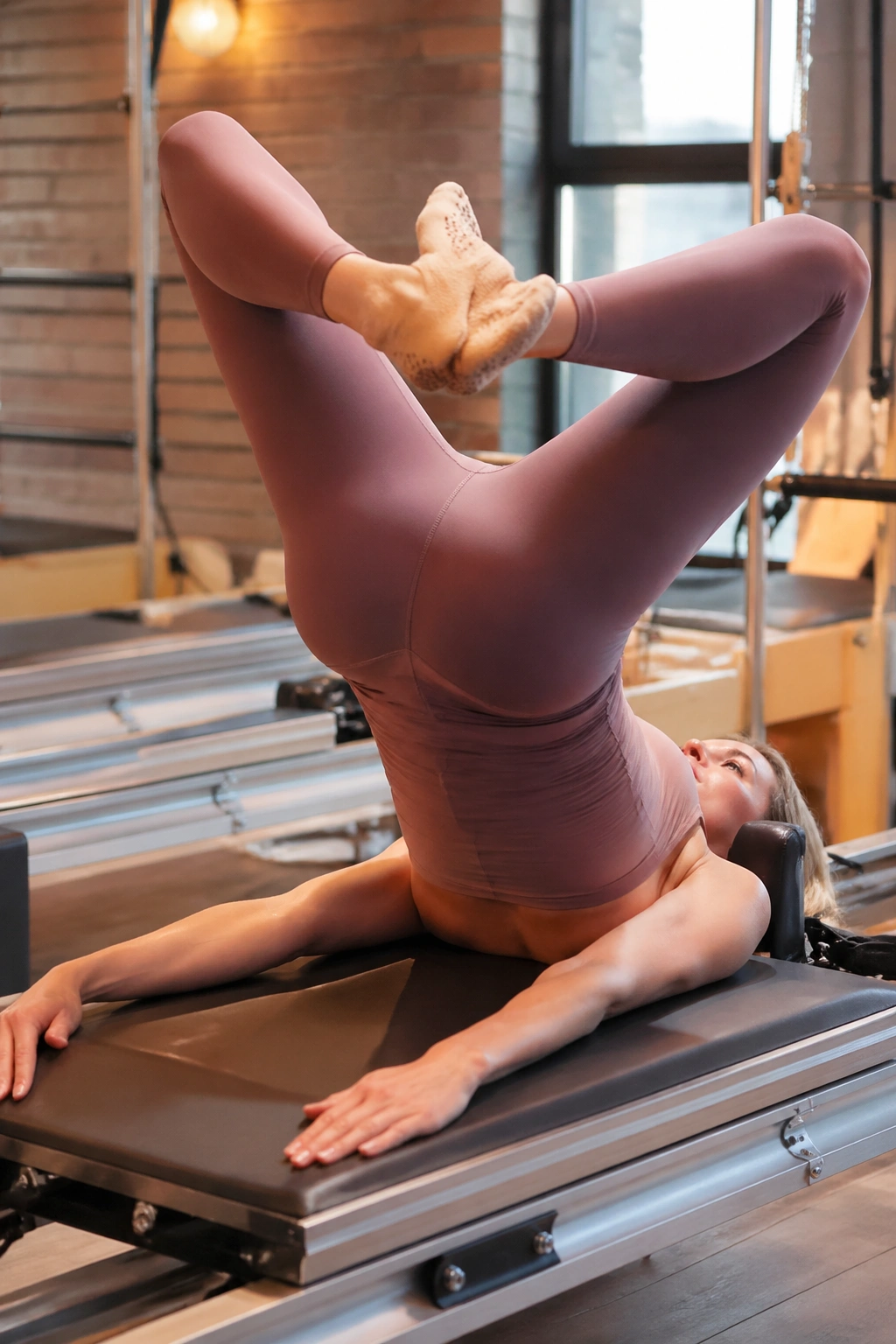
This one is advanced, and it earns that label. If your neck, shoulders, or low back do not like inversions, skip it and stay with standard frog.
In short spine, you press the legs out, roll the pelvis up as the legs travel overhead, bend the knees into a frog shape, then articulate the spine down while keeping the heels connected and the adductors active. That lowering phase is the gold. The inner thighs help organize the legs so the pelvis can roll down with control instead of dropping in chunks.
It is easy to rush because the move feels elegant when someone else does it. Under the hood, it is a precise coordination drill. The springs pull, the spine moves segment by segment, and the adductors keep the shape from unraveling.
Use a light to medium spring and shorten the range if needed. You do not need the knees by the ears. You need the back of the waist long, the shoulder girdle broad, and the descent quiet.
Done well, short spine feels like a conversation between the inner thighs, lower abdominals, and spinal articulation. Done badly, it feels like hauling furniture. Choose the first option.
12. Side-Lying Bottom-Leg Footbar Press
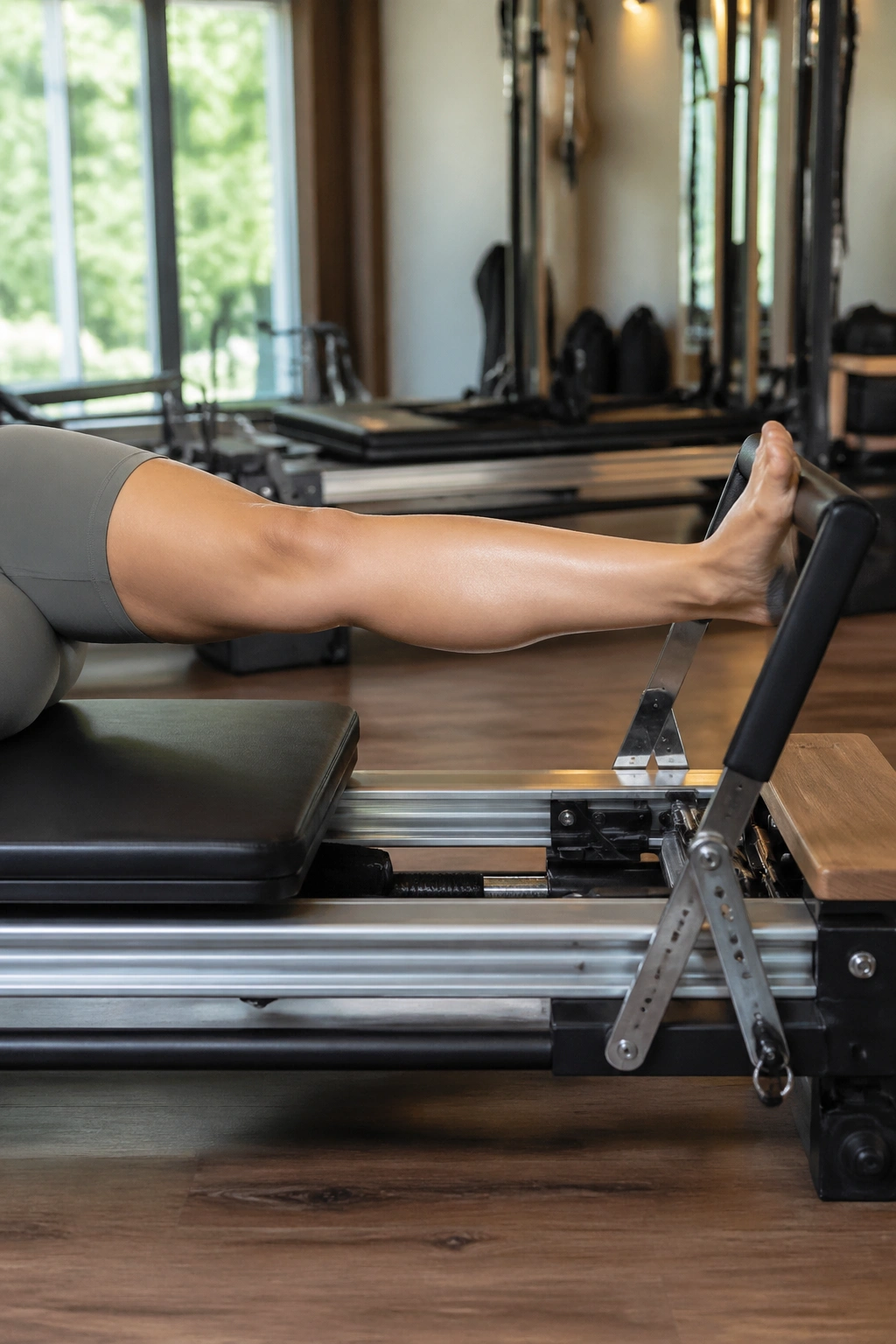
This is one of those exercises people do once and then never forget, mostly because the underneath inner thigh starts working in a hurry. Lie on your side on the carriage, lower leg extended to the footbar, top leg bent with the foot planted on the carriage or in front for balance, and set the springs light to medium.
Setup that makes sense
You want the bottom leg lined up with the hip, not drifting behind you. The foot on the bar can be flexed or softly pointed depending on comfort, though a flexed foot gives many people a cleaner line.
Press the carriage out with the lower leg, then pull it back in without rolling the pelvis backward. The range may be small. That is fine. Small and stable beats big and sloppy.
What to watch for
The torso will try to help. So will the top hip. Keep the waist lifted away from the carriage and think of the inner thigh drawing the carriage home.
- 8 to 10 reps per side is enough for most people
- Use a folded towel under the waist if the setup feels cramped
- Stop if the knee feels twisty rather than muscular
There is no pretty way to describe the effort here. It bites.
13. Side-Lying Strap Adduction
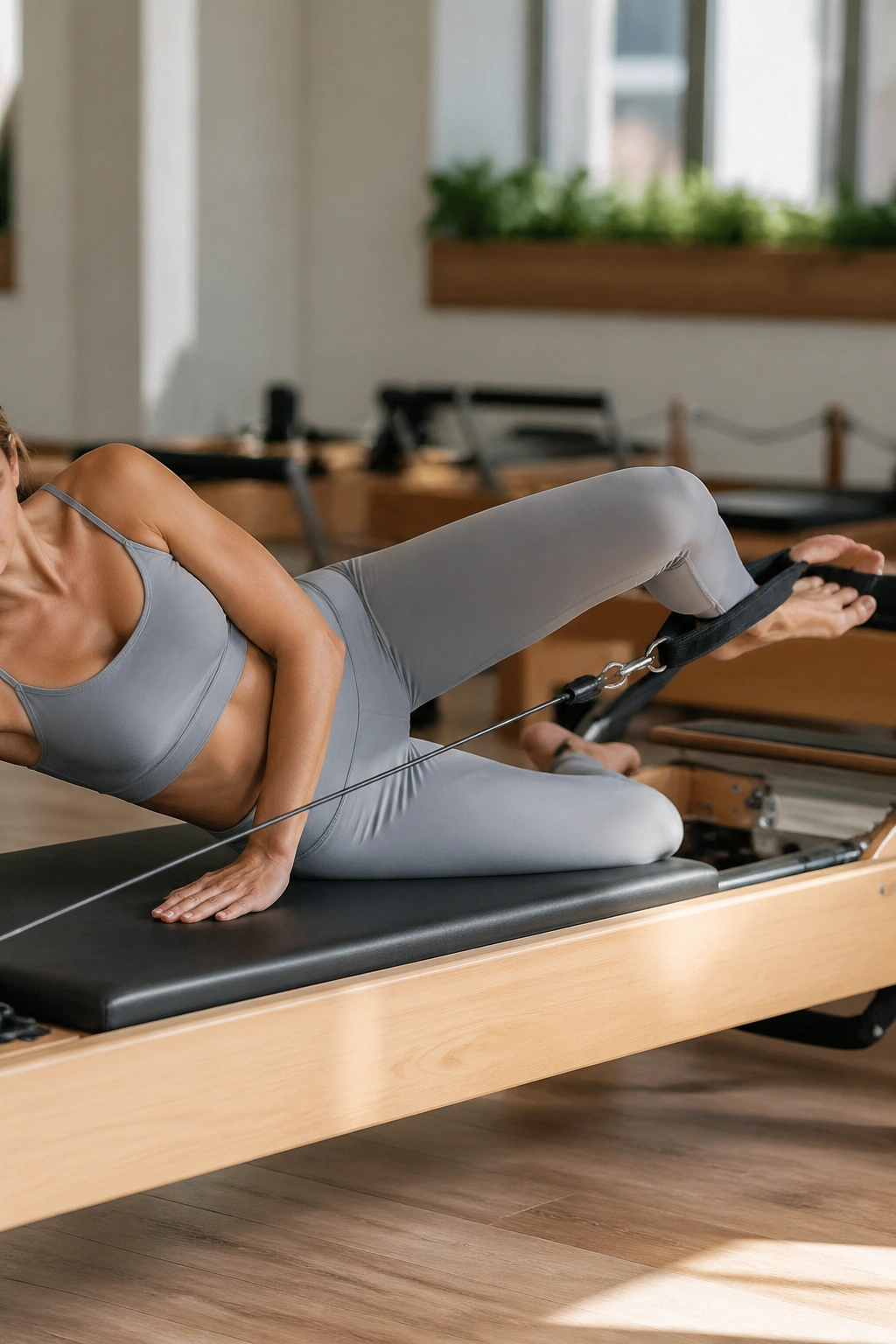
Floor adduction lifts are useful. The reformer version is better because the spring gives feedback in both directions, and that matters.
Lie on your side with the bottom foot in a strap and the top leg bent in front for support. From a low position, lift the bottom leg toward midline, then lower it with control before the spring yanks it down. Use the lightest workable spring. Heavy load usually drags the pelvis around and ruins the line.
This move targets the adductors in a blunt, honest way. No big choreography, no fancy transitions, no place for momentum. You either lift from the inner thigh or you do not. I like sets of 10 to 12 with a pause at the top for one breath.
One caution: do not chase height. The best version often looks modest from the outside. The working leg rises only as far as the pelvis can stay stacked and the waist can stay long. Once the whole body starts trying to “help,” the exercise loses its edge.
14. Standing Side Splits for Deep Inner-Thigh Work
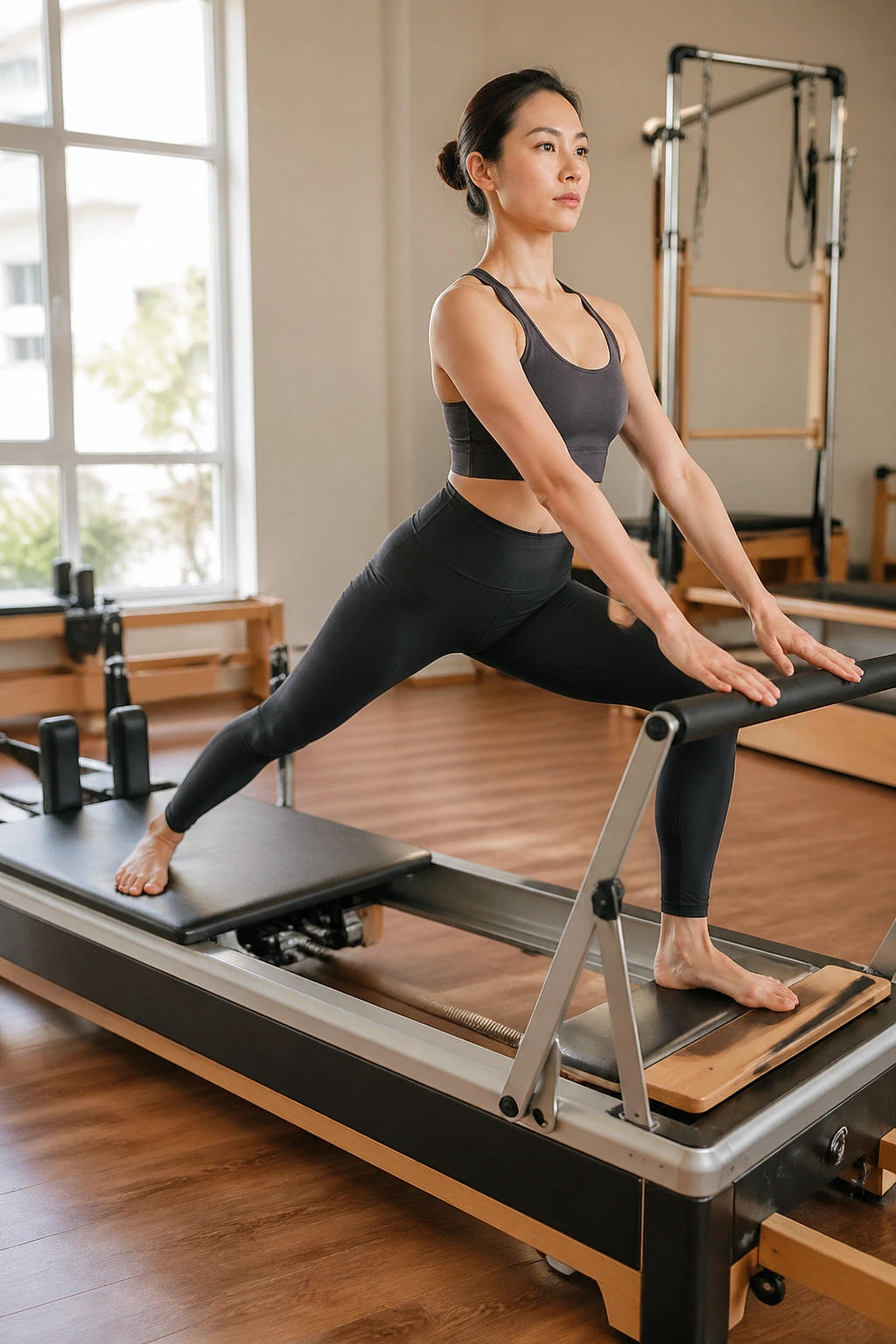
The reformer has a cruel little talent for revealing whether your adductors can work while you stand on one moving surface and one stable one. Standing side splits are where that truth shows up fast.
Stand sideways with one foot on the platform and one foot on the carriage, both feet parallel or lightly turned out, and use one light spring. Start with the hands on the footbar or a dowel if balance is still a work in progress. Press the carriage open, then pull it back in from the inner thighs without leaning the torso all over the room.
- Spring range: one light spring is often enough
- Reps: 6 to 10 controlled reps
- Range: smaller than you think; stop before the pelvis tips
- Main cue: pull the carriage in from the top inner thighs, not from the feet
Most people feel the opening phase in the outer hips and the closing phase in the inner thighs. That is the relationship you want. If the carriage slams home, you lost the return.
One thing I say often here: your split width is not the achievement. Smooth, centered return is the achievement.
15. Side Split Hold and Pulse
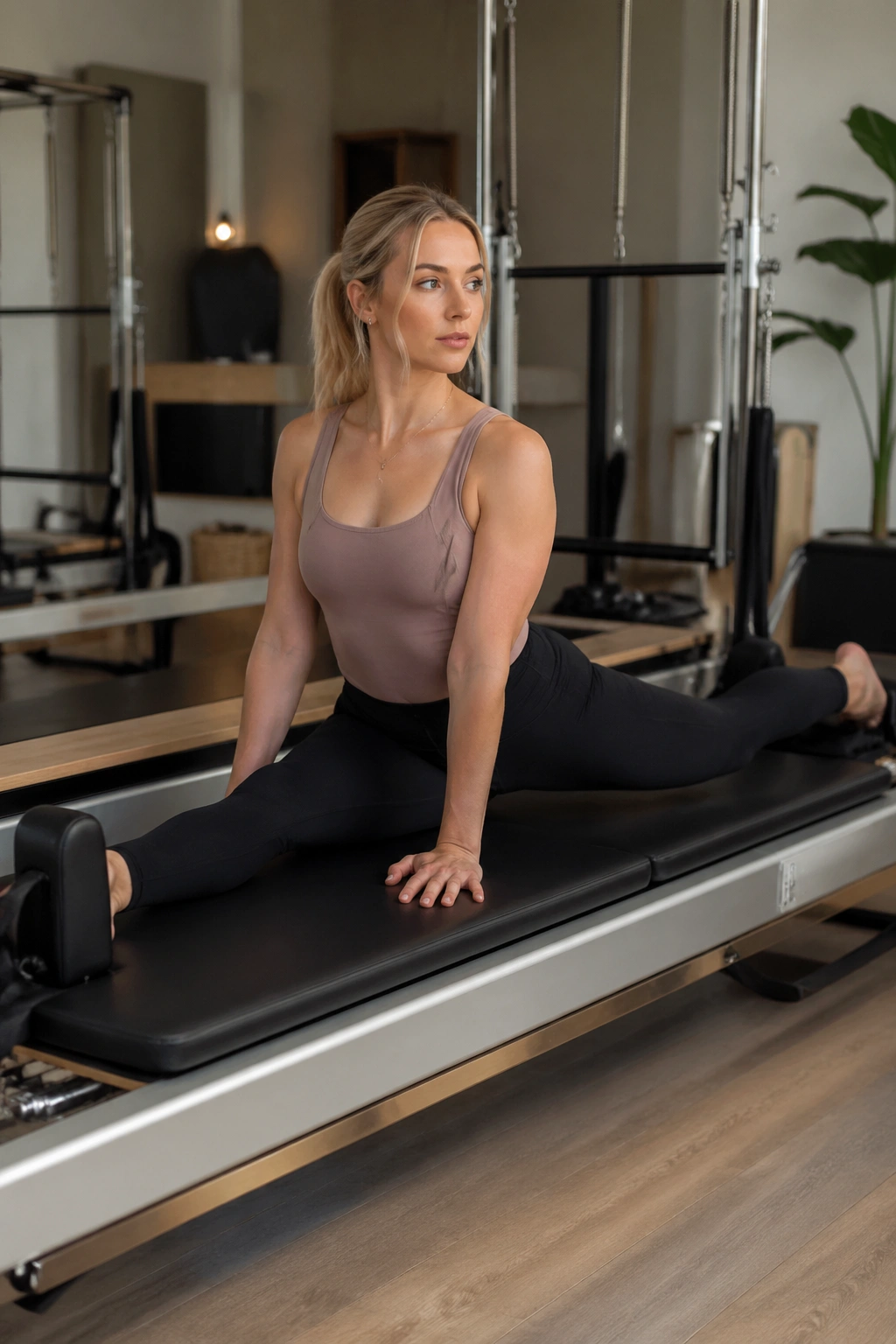
Static work is meaner than it looks.
Step into a side split position, glide the carriage out to a moderate width, and hold. Then add small pulses—an inch out, an inch in—without letting the pelvis sway or the shoulders creep toward your ears. Use a light spring and keep the range narrow.
This is where people stop confusing flexibility with strength. You can be loose enough to slide wide and still have no control there. The hold tells the truth. The pulse tells it louder.
I like 15 to 30 seconds of holding, followed by 8 to 12 tiny pulses. The adductors on both sides work: one leg resists the opening, the other helps guide the carriage home. That shared effort is what makes the drill feel deeper than a plain stretch.
Skip the dramatic range. Mid-range with tension is the sweet spot.
16. Side Split Squats with a Controlled Return
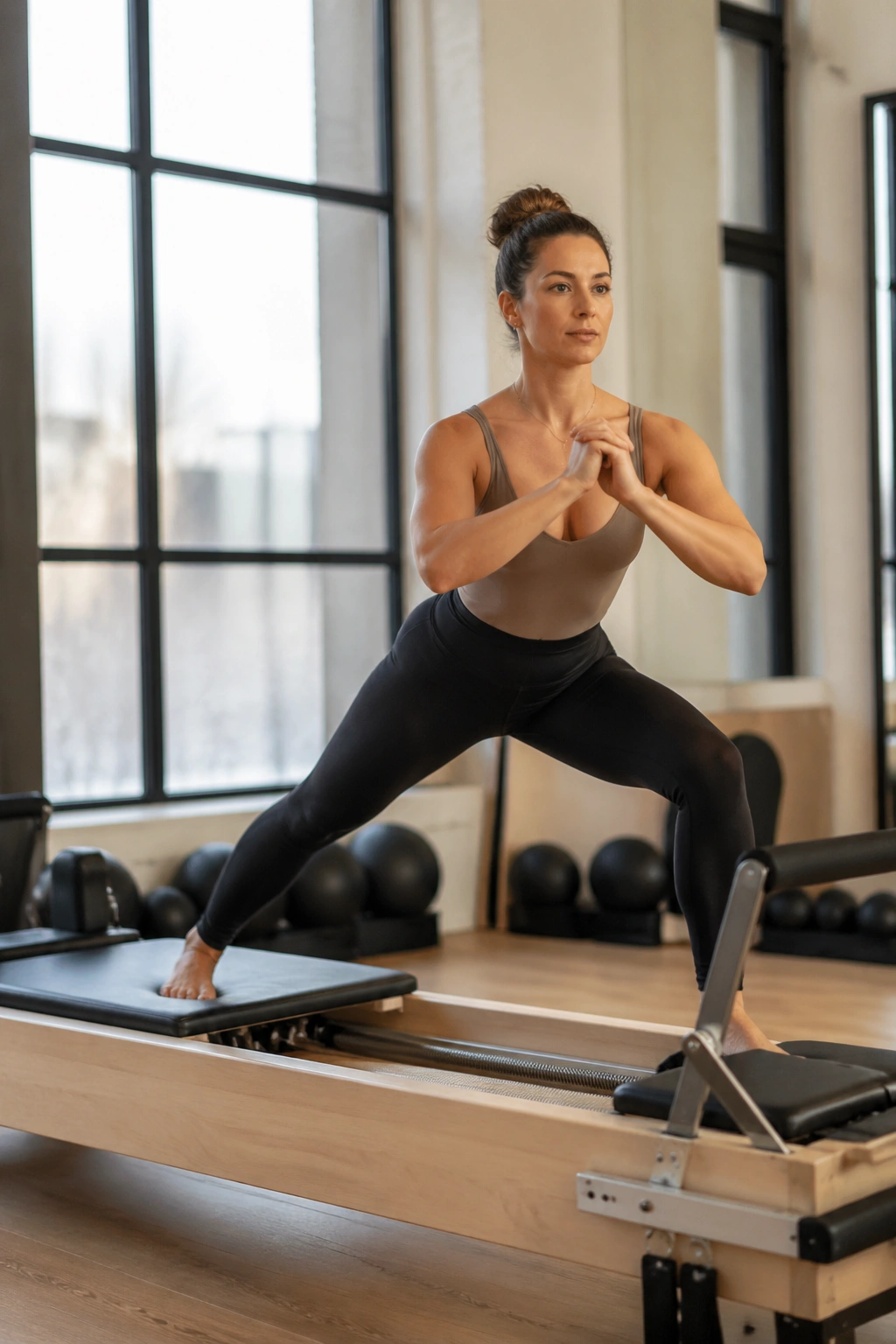
Want more than a straight-legged side split? Add a squat and the move turns into a frontal-plane strength drill that lights up the adductors, glutes, and trunk together.
Stand in your side split setup with one foot on the carriage and one on the platform. As the carriage opens a small distance, bend both knees into a shallow squat, then drive through the legs to stand and pull the carriage back in under control. The knee bend can be small. On a reformer, small often goes a long way.
The inner thighs come alive during the return because they help guide the femurs back under the pelvis. If the knees cave or the chest pitches forward, the load has gone somewhere else. Narrow the range and try again.
A good set is 6 to 8 reps per side with a pause in the bottom position. That pause strips out momentum. And yes, it feels longer than it sounds.
17. Skater Push-Outs
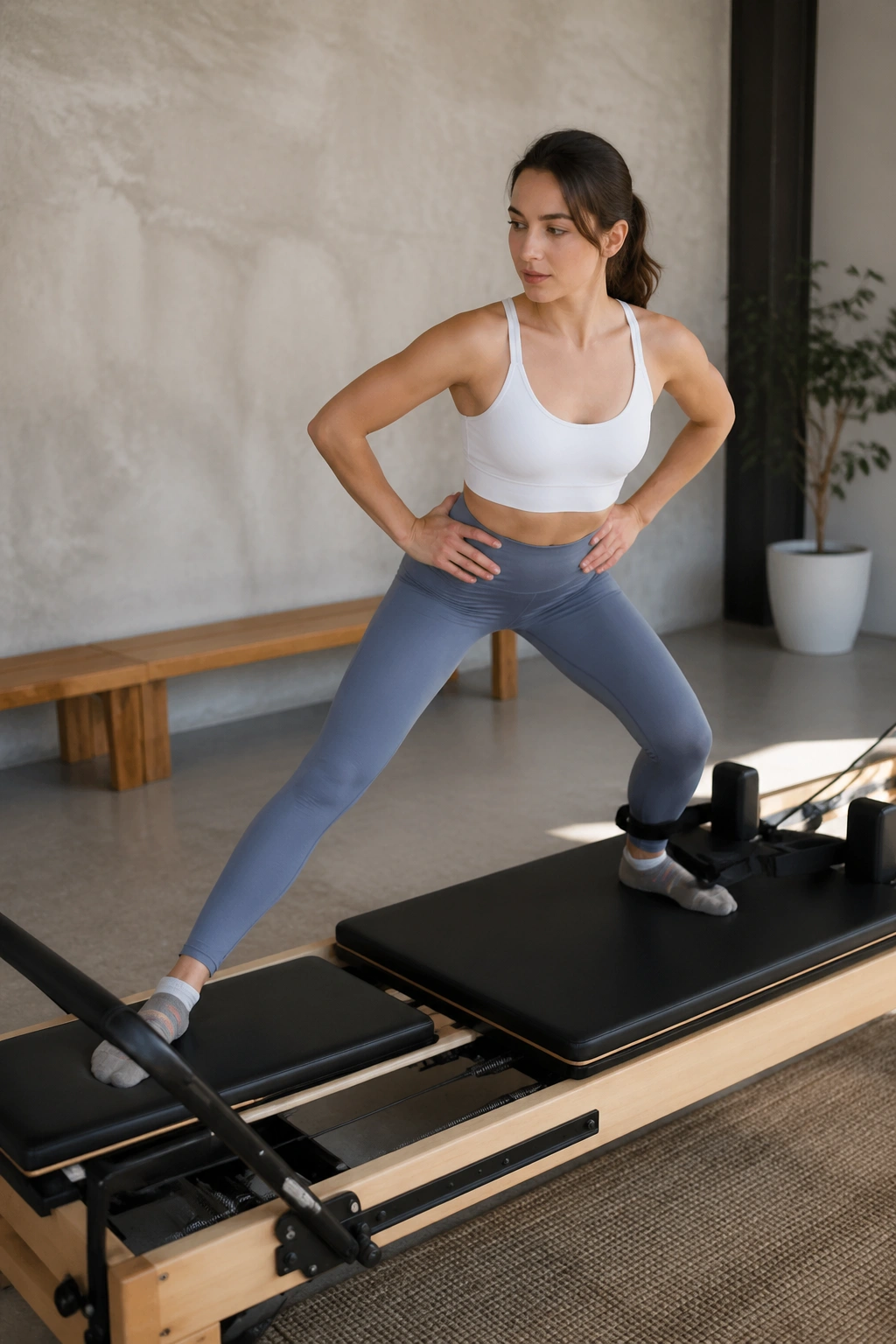
This one looks athletic because it is. It also tells you fast whether your standing leg can control side-to-side force without the pelvis wobbling.
Stand facing the side of the reformer in a shallow hinge, one foot on the platform and the other on the carriage. Push the carriage away on a diagonal like a speed skater, then pull it back in without snapping upright. Use a light spring so the carriage can move freely while the working leg has something to resist.
The standing leg’s inner thigh often steals the show here. As the carriage comes home, that adductor helps steady the knee and keep the pelvis from sliding off line. The moving leg works too, though the standing side usually gives the stronger “oh, there it is” sensation.
Short sets work best: 8 reps each side, maybe 10 if the form stays clean. Past that point, many people start twisting through the spine instead of controlling through the hips.
Done well, skater feels strong and springy. Done badly, it looks like someone chasing a runaway grocery cart.
18. Supported Standing Adductor Slide-Ins
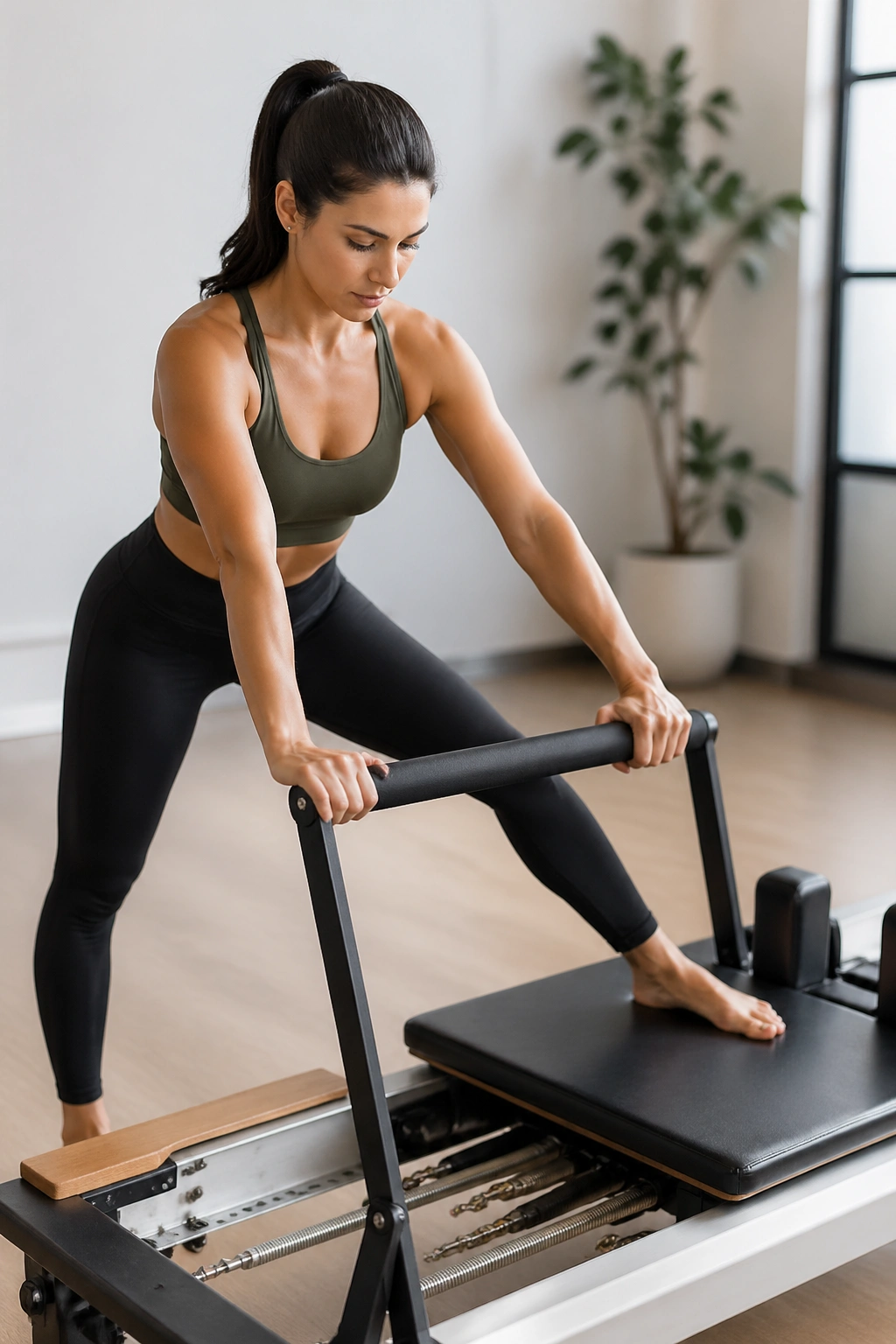
If standing side splits feel too exposed, this is the friendlier cousin. Place both hands on the footbar, face the bar, keep one foot on the platform and the other on the carriage slightly out to the side, then draw the carriage inward with the moving leg.
The support from the arms lets you focus on the adductor line without spending half your energy on balance. That makes it a smart option for people rebuilding strength after time away, or for anyone whose knees do not love the wider split position.
Think narrow range. Maybe 6 to 10 inches. Pull the carriage in as if you were dragging the floor toward your midline with the whole inner leg, not only the foot. Then send it back out under control. Use one light spring, maybe a touch more if the carriage feels too loose.
This drill also works well as a prep move before side splits or jumpboard work. Same muscles, less drama.
19. Second-Position Jumpboard Jumps for Inner-Thigh Endurance
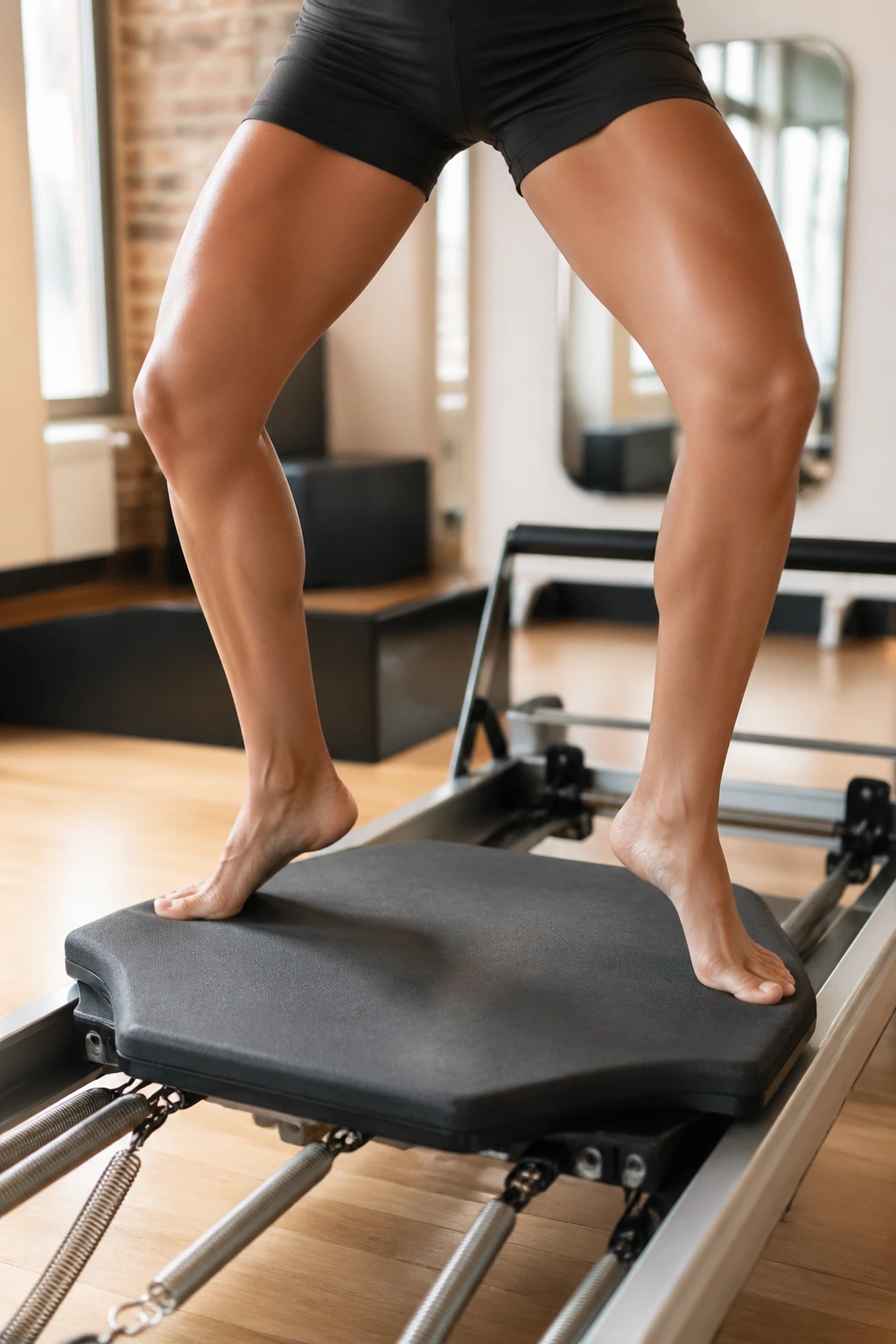
The jumpboard changes the conversation. Suddenly the adductors have to help with landing mechanics, not only slow carriage control.
Lie on your back with the feet on the jumpboard in a turned-out second position, knees tracking over the toes, and use a medium spring load that gives rebound without turning the landing harsh. Jump out and land softly, keeping the heels and knees aligned and the pelvis steady.
What makes this different from regular second-position jumps
The inner thighs help guide the legs back under you on each landing. If they switch off, the knees drift, the arches collapse, and the movement gets noisy. Good jumpboard work should sound light, almost muted.
A few details matter here:
- Land through the whole foot, not only the toes
- Bend the knees on impact instead of locking out
- Keep the range of turnout honest; too much turnout usually wrecks the line
- Start with 10 jumps, rest, then build toward 20
Do not chase height. Chase quiet landings and matched legs.
20. Frog Jumps on the Jumpboard
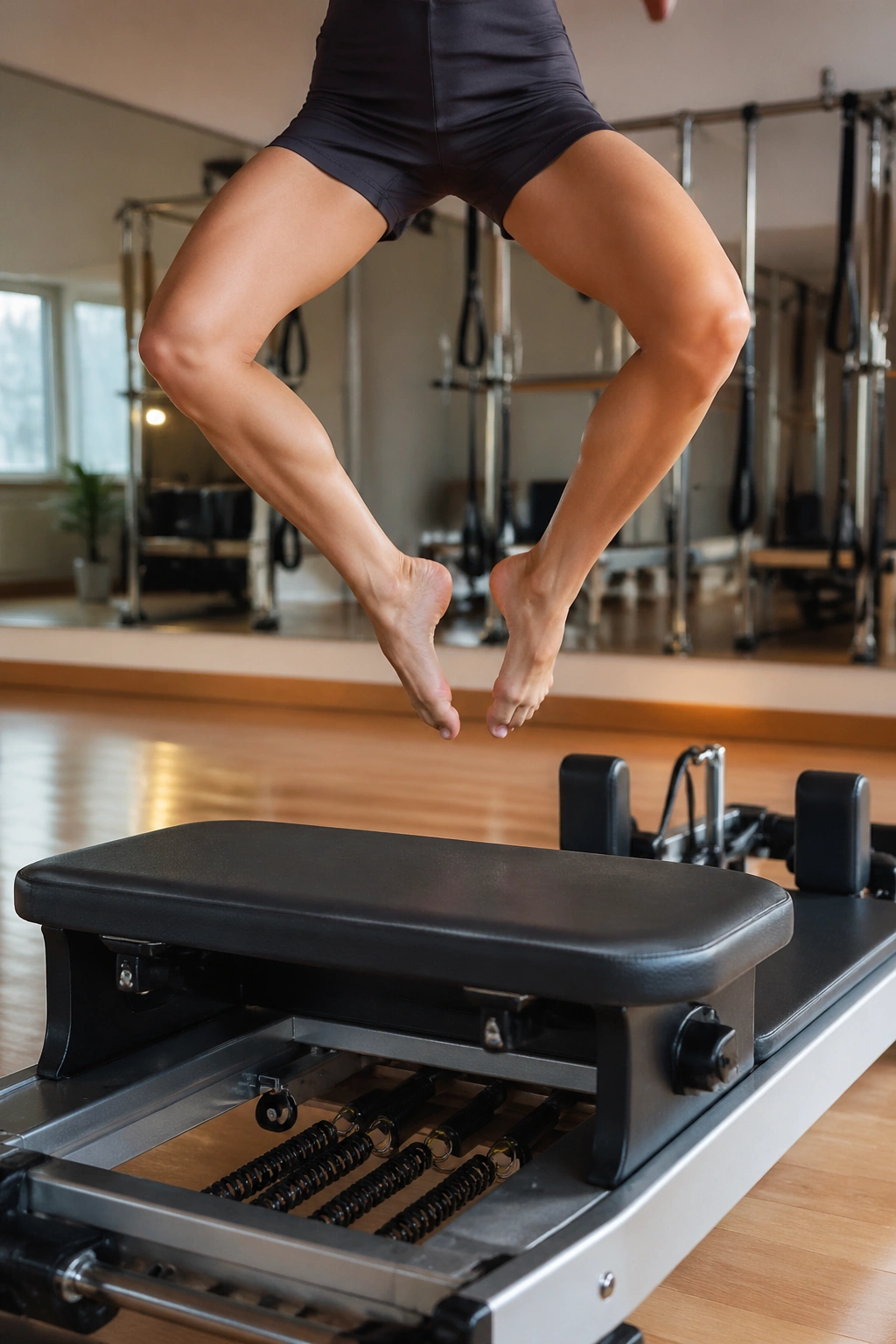
This is my favorite way to finish an inner-thigh-focused reformer session when someone already owns solid frog work in straps and clean jumpboard landings. The setup looks familiar: heels together, toes apart, knees bending into a frog shape before you jump.
Press off the board from that turned-out frog, lengthen the legs in the air, then return to the bent shape with the heels finding each other again on landing. The adductors have to organize the whole pattern—push, lengthen, re-find the midline, absorb the landing.
Use a medium spring setting and stay crisp. Eight to 15 jumps is plenty if the shape is honest. Once the heels separate, the knees wing out unevenly, or the pelvis starts bobbing, the quality is gone.
This drill has a playful feel, though it is not easy. You need the turnout control of frog, the timing of jumpboard work, and the inner-thigh squeeze to reconnect the legs in the air. When all three pieces show up, the movement feels smooth and springy in the best way.
Final Thoughts
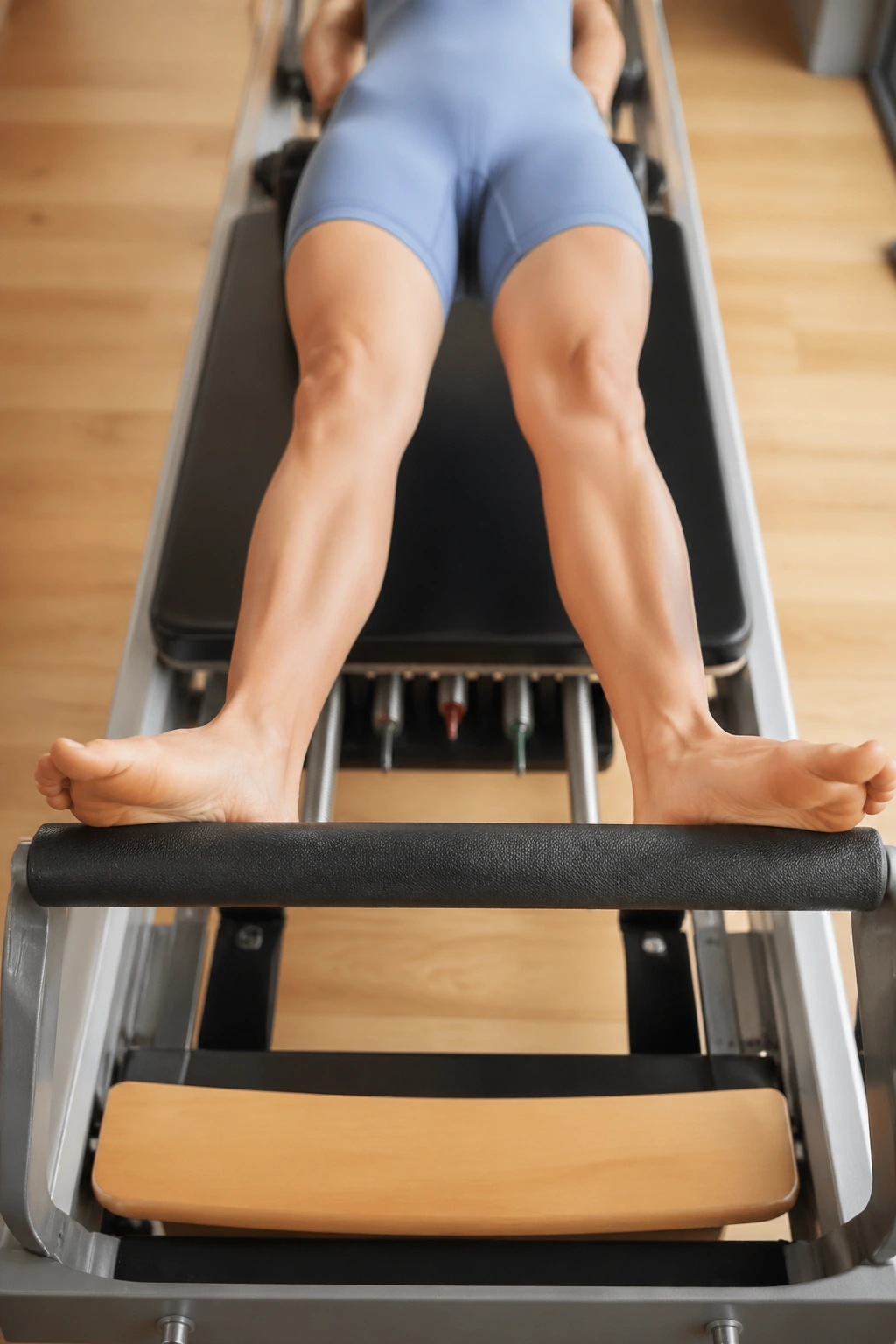
If I had to pick three moves to start with, I would go with wide heels footwork, frog in straps, and supported standing slide-ins. That trio gives you one stable pattern, one classic strap exercise, and one standing drill without asking for circus-level balance.
The other point worth repeating—because it matters—is that inner-thigh work is not about forcing a wider turnout or a bigger split. It is about guiding the carriage home, keeping the pelvis steady, and making the legs behave like they belong to the same body.
When the adductors are doing their job, the reformer feels smoother. Your knees track better. Standing work stops looking wobbly. And the shake that shows up along the inner seam of the legs starts feeling less like panic and more like proof that the right muscles finally showed up.
