



Your lower back is not supposed to do all the work.
That sounds obvious until you watch a mat Pilates class where the room goes quiet, the arms start pumping, and half the people are secretly bracing their necks while pretending the burn is “in the core.” The best mat Pilates moves don’t chase exhaustion for its own sake. They ask for control, breath, and the kind of trunk strength that keeps your ribs from flaring every time your legs move.
That is why mat Pilates moves feel different from a pile of crunches. A crunch mostly flexes the spine. Pilates wants more: spinal articulation, pelvic control, a steady breath, and enough precision that your hips do not wander off while your shoulders are trying to stay polite. The deep muscles matter here — transverse abdominis, obliques, pelvic floor, the whole inner corset — but they only work when the bigger, showier muscles stop hogging the job.
And yes, the mat is honest. No springs. No machine to guide you. No fancy setup to hide sloppy form. If your center is weak, the mat will tell you fast.
1. The Hundred for Mat Pilates Breathing
The Hundred earns its reputation by making the trunk work before the limbs get to show off. You lie on your back, lift the head and shoulders, and pump the arms in sharp little beats while you keep the ribs heavy and the belly flat enough to hold the shape. The classic version uses 100 arm pumps split into ten breath cycles, and that steady rhythm is what makes the move sting in a good way.
What matters most is not the count. It’s the shape.
What to Feel
- The lower abs drawing inward as the legs hover in tabletop or extend low.
- The rib cage staying quiet instead of popping up every time the arms pump.
- The neck feeling long, not jammed.
- The breath moving wide into the sides and back of the ribs.
A lot of people turn this into a neck exercise. Don’t. If your neck starts whining before your abs do, keep the head down for a round or two and work the breath and arm pumps first. That is still honest Pilates.
2. Roll Up
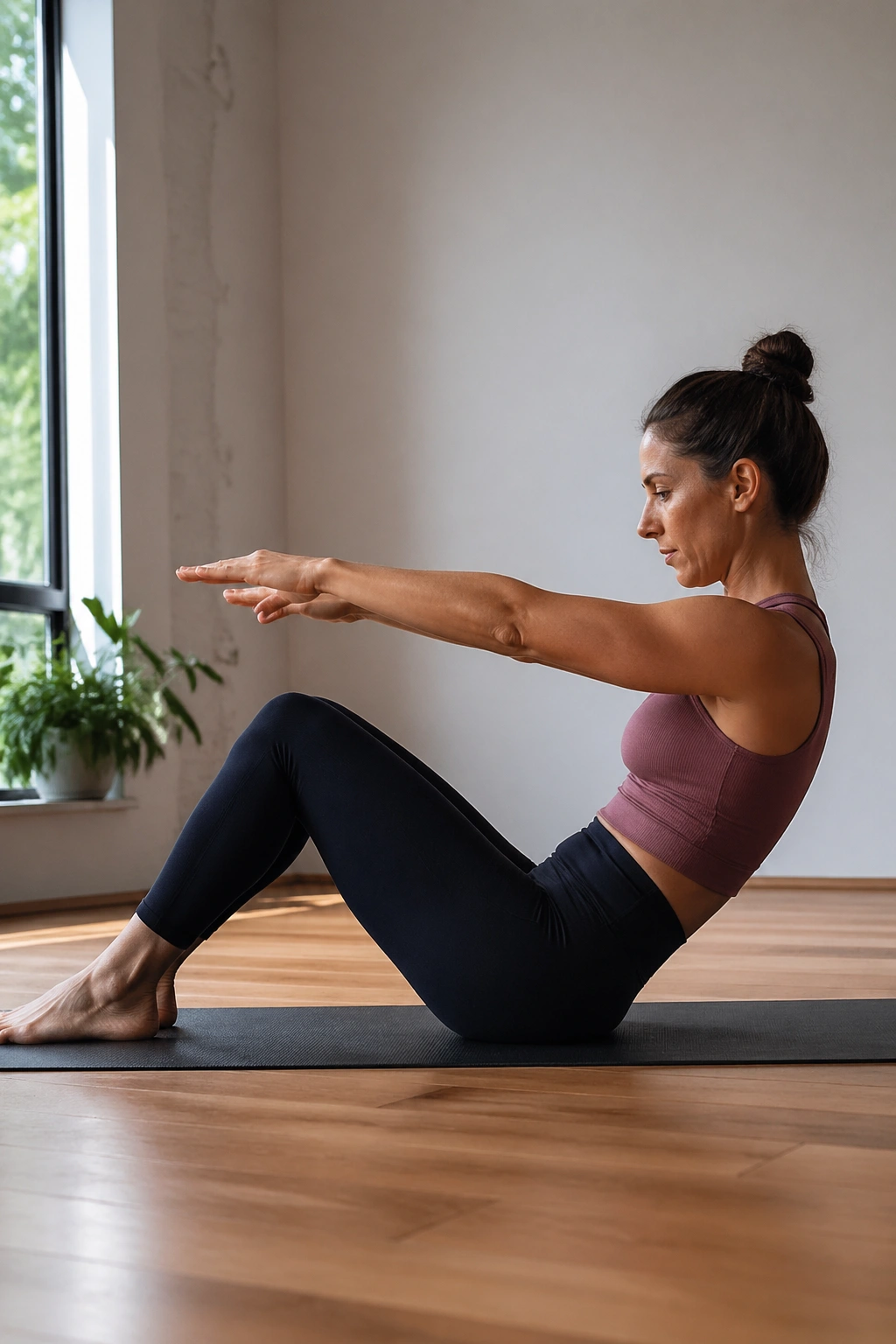
Crunches feel easy because momentum can help you cheat. The Roll Up does not let that happen. You start long on the mat, then peel the spine up one segment at a time, reach forward over the legs, and lower back down with the same control. It looks simple. It is not.
The real work happens on the way down. That slow descent asks your abdominal wall to resist gravity while your spine unrolls without collapsing. If you rush it, the legs pop off the mat, the hip flexors take over, and the whole thing turns sloppy. Slow is the whole point.
I like this move for people who sit a lot. Tight backs usually hate being yanked into flexion, but the Roll Up teaches length first, then curl. If your hamstrings are tight, bend the knees slightly or loop a strap around the feet and use that as a gentle anchor. The goal is clean spinal shape, not a dramatic reach.
3. Single Leg Circles
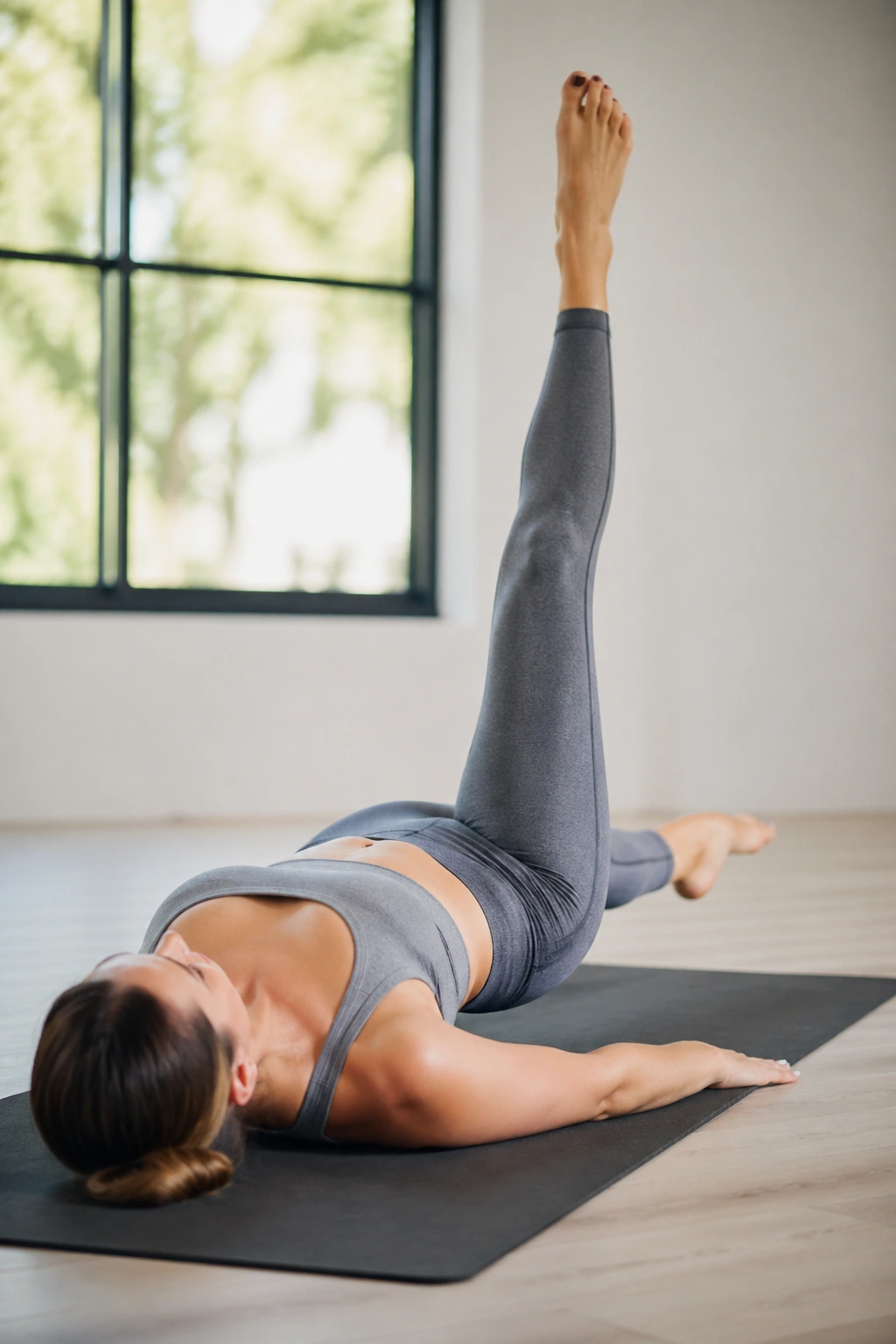
Why does a leg drawing circles in the air shake the middle so much? Because the pelvis has to stay quiet while the hip joint moves through a controlled range. That is harder than it looks, and it is one of the reasons Single Leg Circles earns a place in a strong core routine.
How to Keep the Circle Honest
- Keep the opposite hip heavy on the mat.
- Make the circle small enough that the low back does not arch.
- Move from the hip joint, not from the knee.
- Exhale as the leg crosses the center line if that helps you stay organized.
I prefer smaller circles done well over giant circles done badly. Big shapes look impressive for about three seconds. Small circles teach pelvic control, which is the whole point. If your pelvis rocks side to side, cut the size in half and slow the tempo down. The move gets harder, not easier, when you stop pretending.
4. Rolling Like a Ball
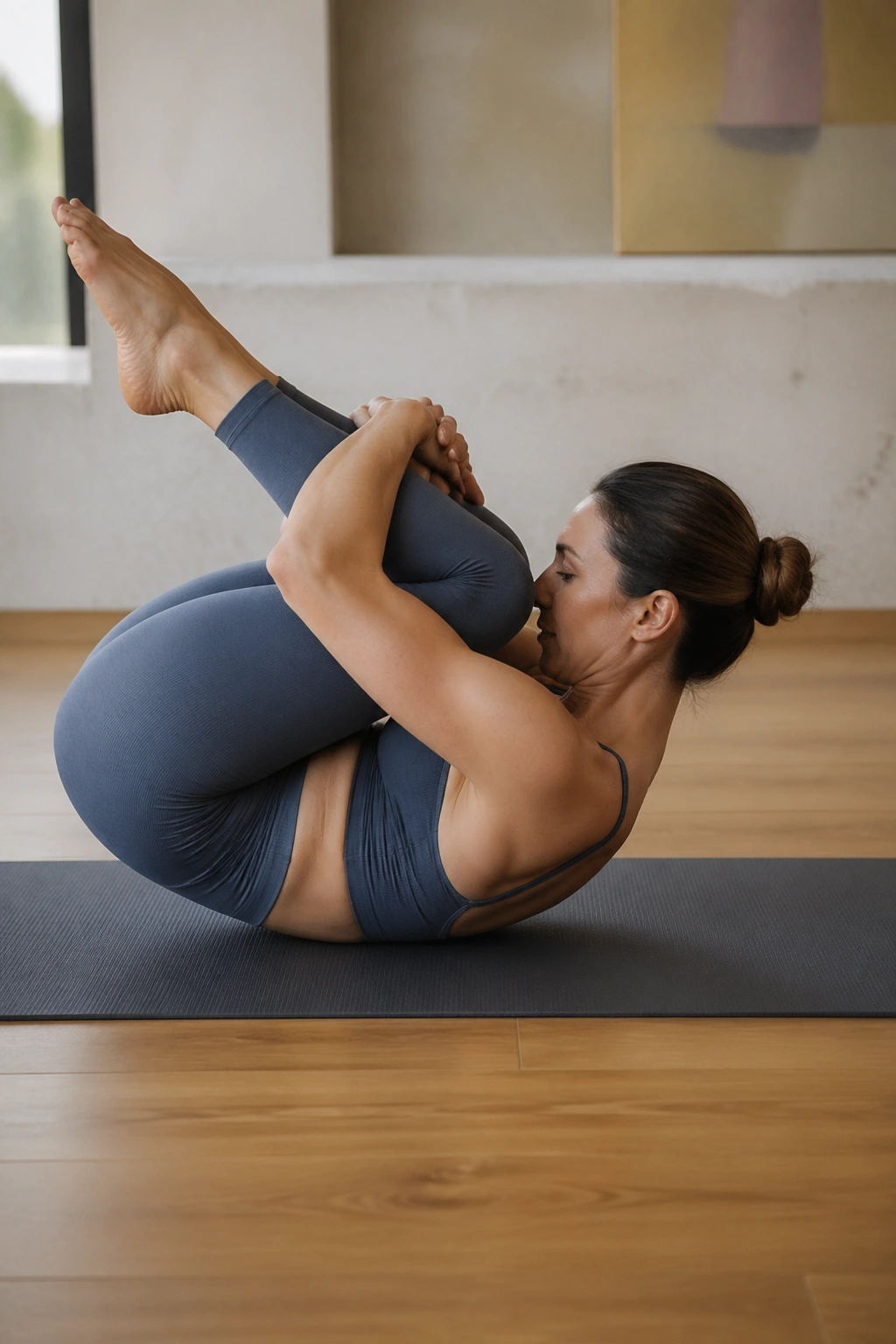
The first time a class rolls like a ball, there is usually a little laugh. Good. That means people have realized the move is playful and demanding at the same time. You sit in a tight tuck, balance on the back of the pelvis, roll to the shoulders, then come back up without slamming into the feet.
It is not a party trick. It teaches spinal flexion, balance, and the strange little skill of keeping your core engaged while your body moves in a curved shape. If you launch yourself backward, you miss all the good work. If you hold the shape and use the breath, the motion becomes smooth and strangely calming.
- Keep the chin tucked slightly so the neck stays long.
- Hold the shins, not the knees, unless hamstrings say otherwise.
- Pause for a split second at the top before rolling back.
- Avoid letting the feet crash to the mat on the return.
That last one matters. A soft landing tells you the abdominals stayed involved the whole way through.
5. Single Leg Stretch
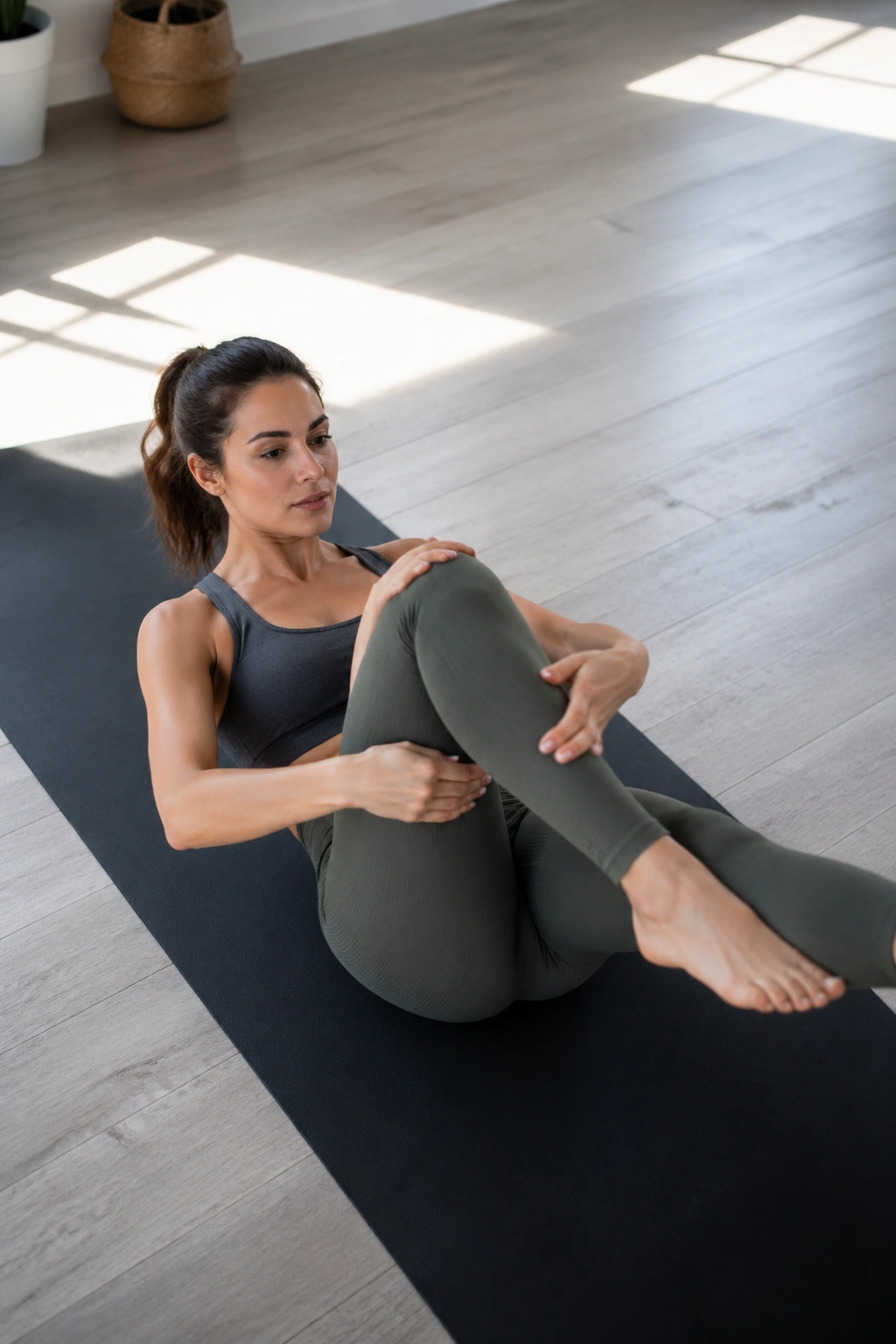
Single Leg Stretch is one of those mat Pilates moves that looks friendly until you actually do it with control. One knee draws in, the other leg reaches long, and the legs switch while the torso stays lifted and the ribs stay put. The challenge is not the number of reps. It’s the refusal to let the pelvis rock every time the legs trade places.
The common mistake is yanking the bent knee too hard. That turns the move into a hip flexor tug-of-war and shortens the neck at the same time. Keep the hands light, the elbows wide, and the chest open enough that you can still breathe into the sides of the ribs.
The best version feels organized. You can feel the lower abs flattening the front of the belly, the low back staying calm, and the reach of the long leg coming from the hip instead of from a fling. If your head and shoulders are off the floor, keep the chin slightly nodding and the gaze toward the thighs. No straining. No jerking.
Five clean switches beat twenty messy ones. Every time.
6. Double Leg Stretch in Mat Pilates
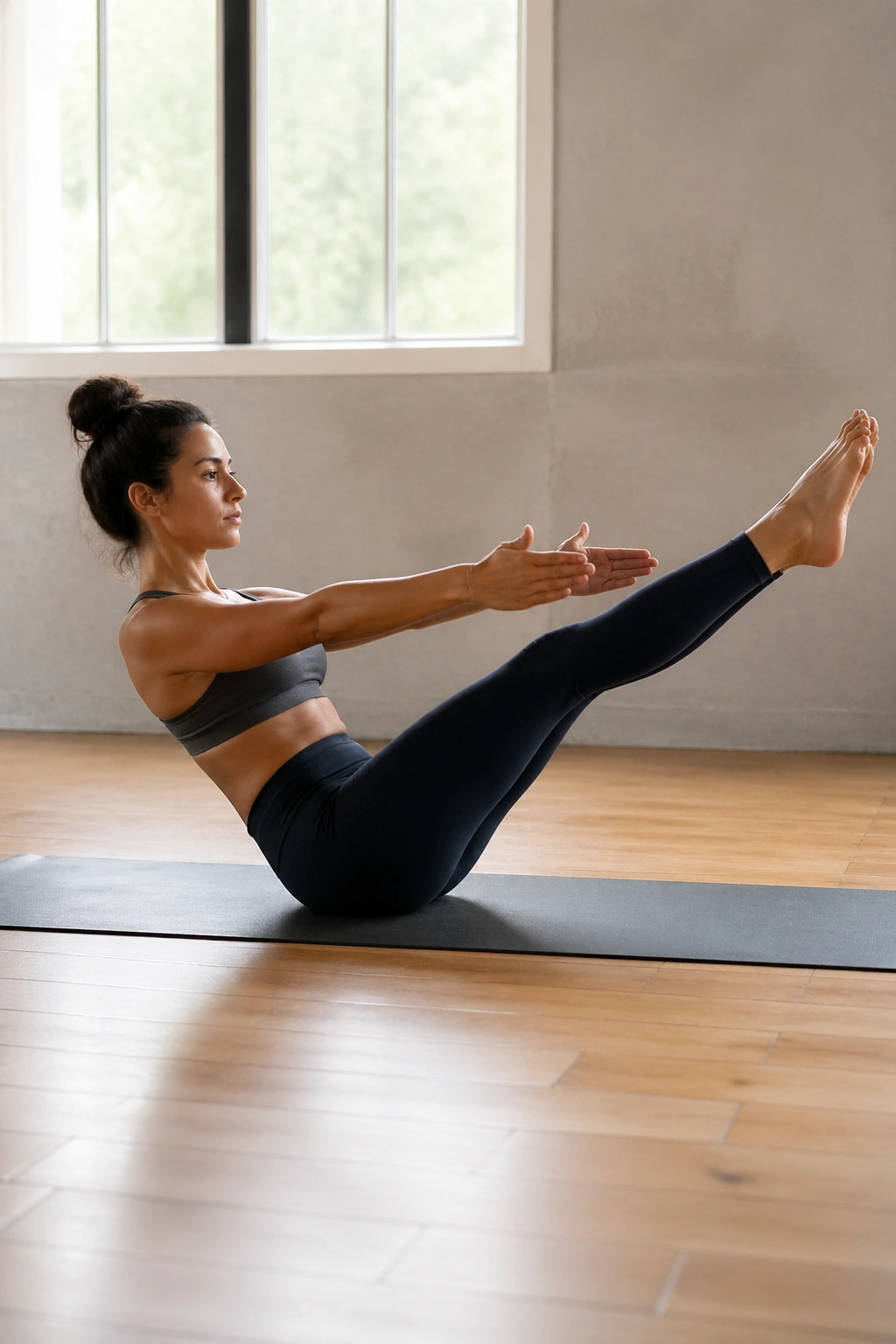
The jump from Single Leg Stretch to Double Leg Stretch is where the work gets real. One leg extending is manageable for most people. Both legs extending at once changes the lever, and your center has to work harder to stop the ribs from flaring and the low back from arching.
The arm circle in this move matters too. You reach the arms overhead as the legs lengthen, then circle the arms back around as the knees return. That coordination asks for timing, not speed. If you rush the circle, the shoulders tense up and the belly loses its job.
This is one of my favorite mat Pilates moves for people who think they are “bad at abs.” Usually they are not bad at abs. They are just moving too fast to control the shape. Start small: extend the legs halfway, or keep them higher than you want to. Once the trunk stays still, lower the legs a little more. That is progress.
7. Criss-Cross
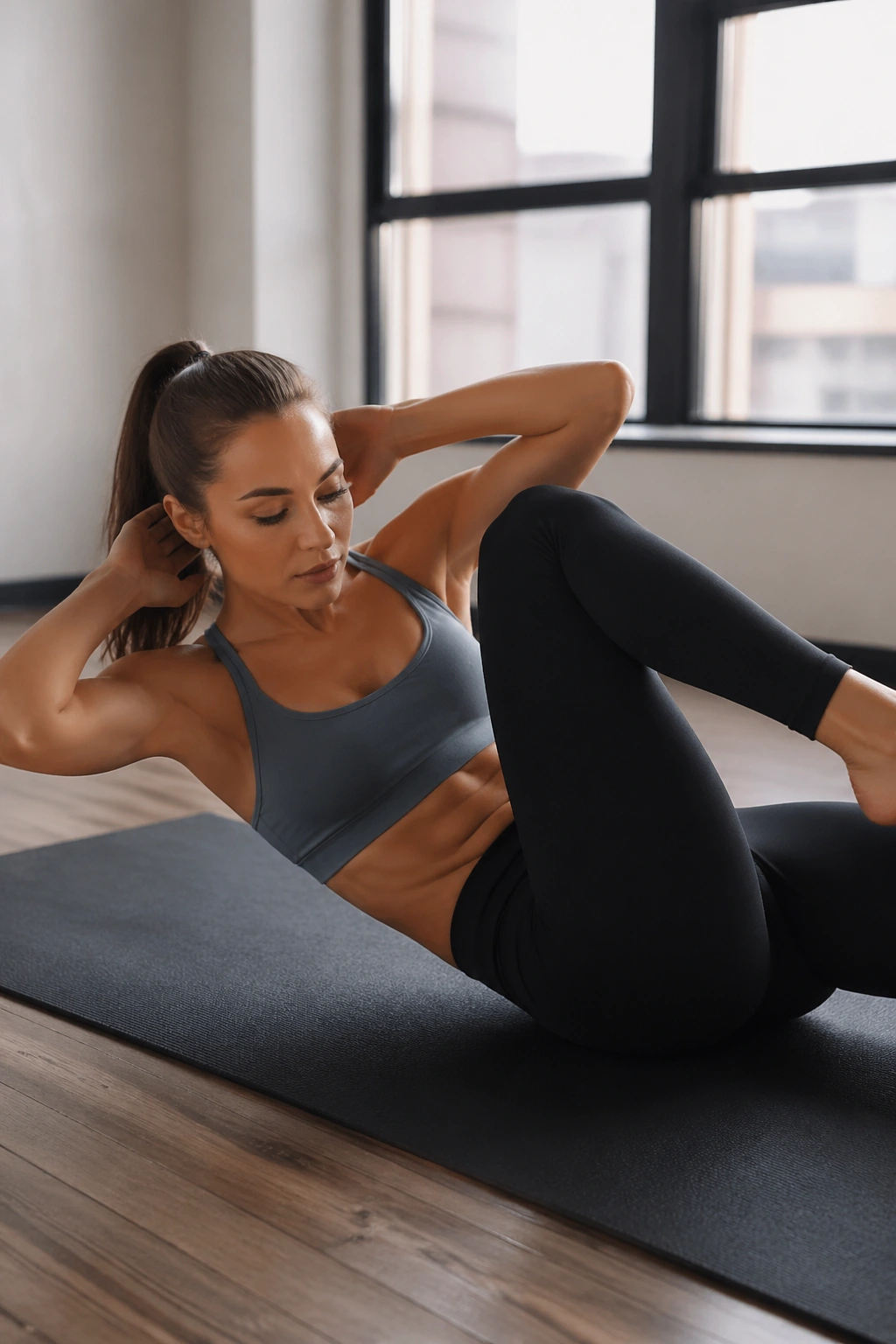
If you hurry through Criss-Cross, your elbows do the talking and your abs miss the meeting. The move is a twisted version of the basic curl: one knee comes in, the opposite elbow rotates toward it, and the torso switches sides with control. Done well, it is one of the best oblique exercises in mat Pilates.
What People Cheat With
- Pulling hard on the neck.
- Letting the pelvis rock from side to side.
- Moving the elbows faster than the ribs.
- Pedaling the legs like a bicycle and calling it a twist.
The twist should come from the rib cage, not from the elbows yanking across. Think of turning the breastbone toward the opposite hip while the legs stay organized and the lower back stays heavy. A smaller range with a clean twist is far better than a huge, sloppy rotation.
I also like this move because it exposes weak spots fast. If one side feels clumsier, slower, or less stable, that is useful information. You do not need to fix it in one set. You do need to notice it. That is how core work starts paying off outside the mat.
8. Spine Stretch Forward
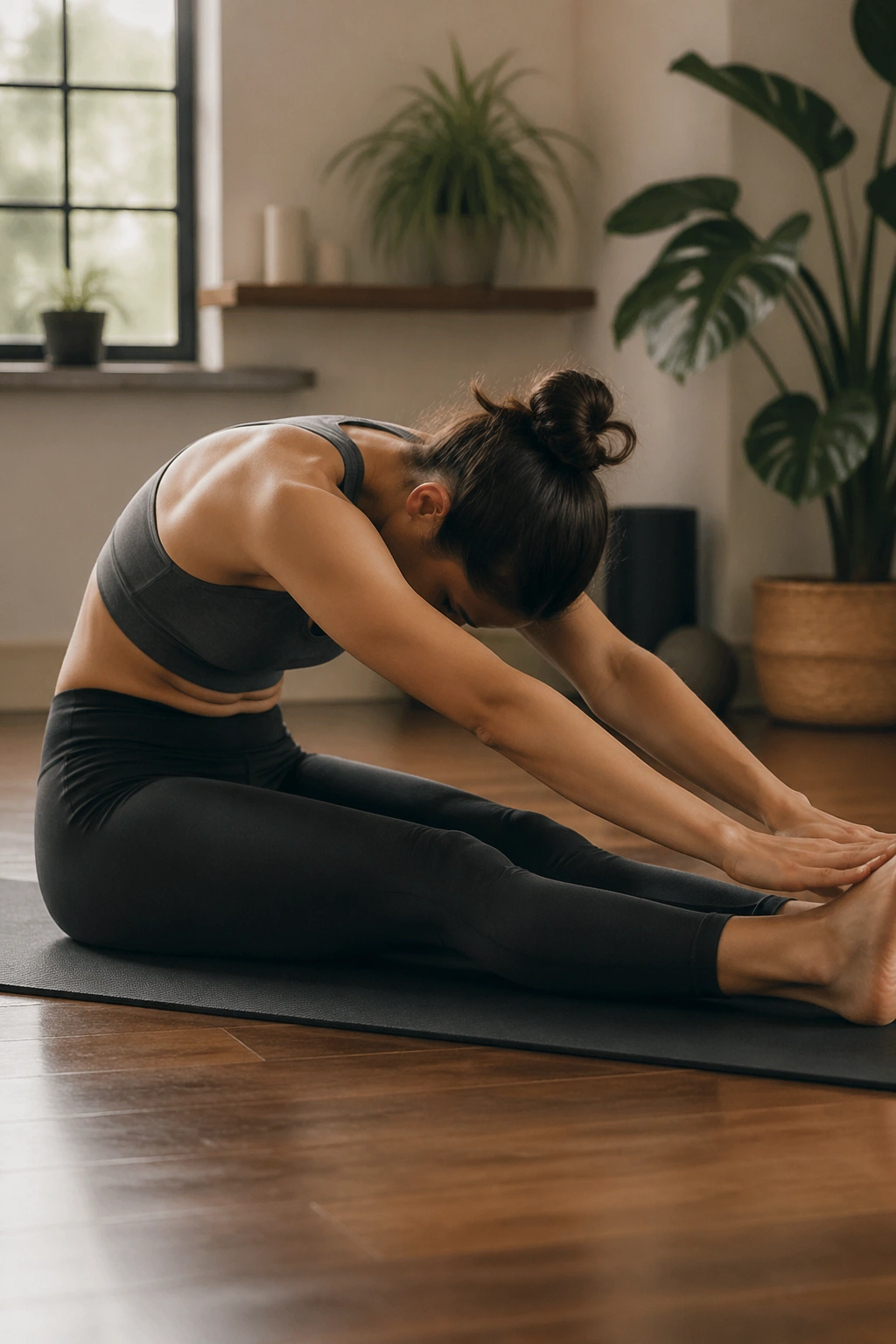
Should a move that looks gentle count as core work? Absolutely. Spine Stretch Forward asks you to sit tall, anchor the pelvis, and peel the upper body forward without collapsing into the hips. That controlled roundness is doing more than a casual hamstring stretch ever could.
The trick is the setup. Sit on the sit bones, not rolled back on the tailbone, and press the heels down with enough ease that the legs stay awake but not tense. Then exhale, nod the chin, and send the crown of the head forward as the spine rounds. The belly should stay active the whole time, especially on the return to upright.
Where the Work Happens
- In the control of the descent.
- In the ability to stack the spine back up without swinging.
- In the steady pelvis that does not tip backward.
- In the breath that keeps the ribs from locking shut.
If your hamstrings are tight, bend the knees. That is not a failure. That is a clean adjustment that lets the spine do its job.
9. Saw
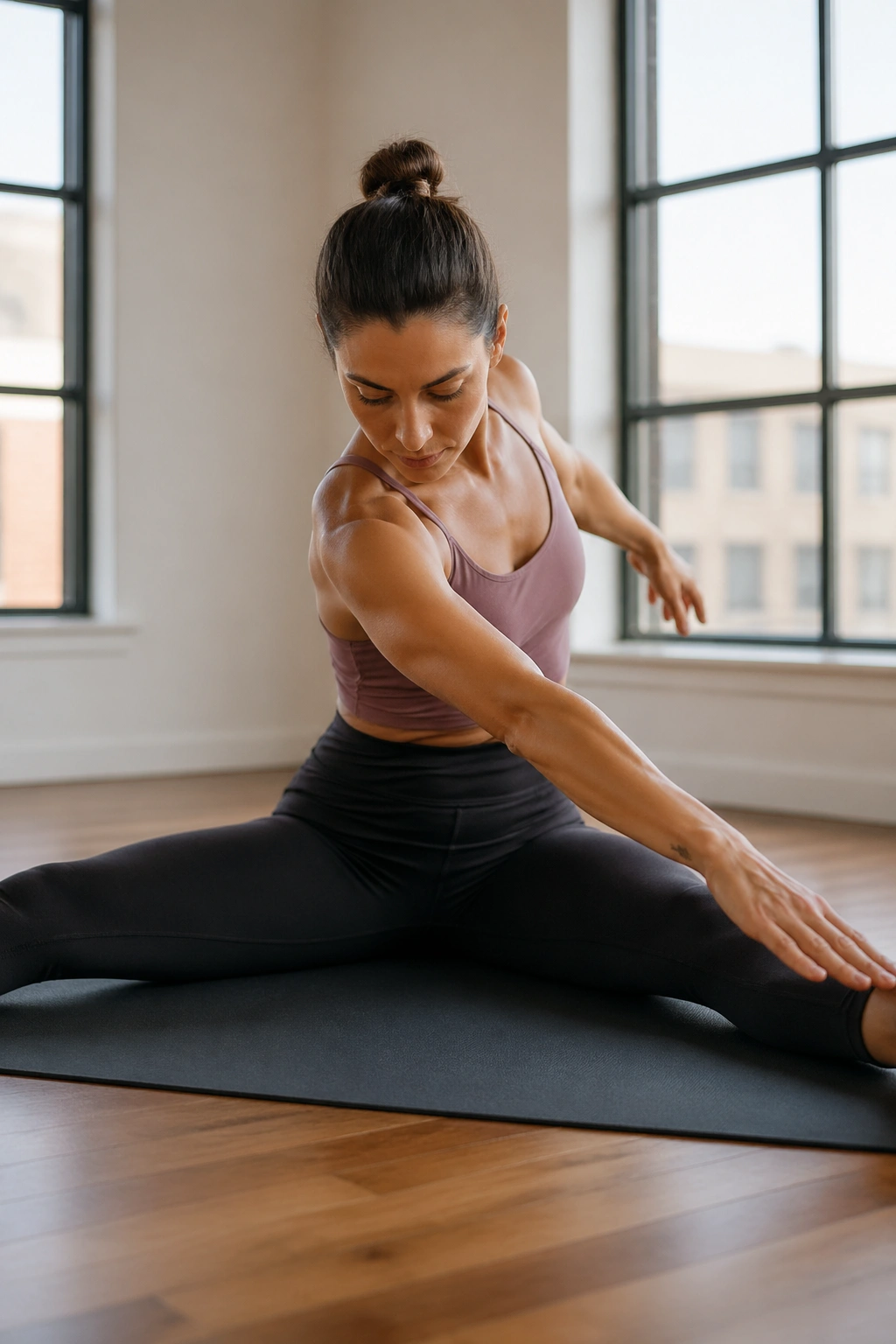
The Saw is one of those mat Pilates moves that feels like two jobs at once: a twist and a reach. You sit tall with the legs wide, rotate the torso, then reach the opposite hand toward the little toe on the far side while keeping both sit bones rooted. It wakes up the obliques, but it also asks your spine to move in a long, controlled arc.
The reason it works so well is the combination of shapes. Rotation happens first, then forward reach. If you lunge toward the foot before you twist, the movement gets sloppy and the shoulder takes over. You want the ribs turning from the waist, the arm reaching past the pinky toe, and the back heel of the sit bone staying heavy.
A clean Saw often feels smaller than people expect. That is fine. Big reaches can tempt the pelvis to lift. Smaller reaches keep the core honest and the hamstrings from shouting too loudly. If you are new to it, keep the legs narrower and the twist modest. You can build range later.
10. Single Straight Leg Stretch
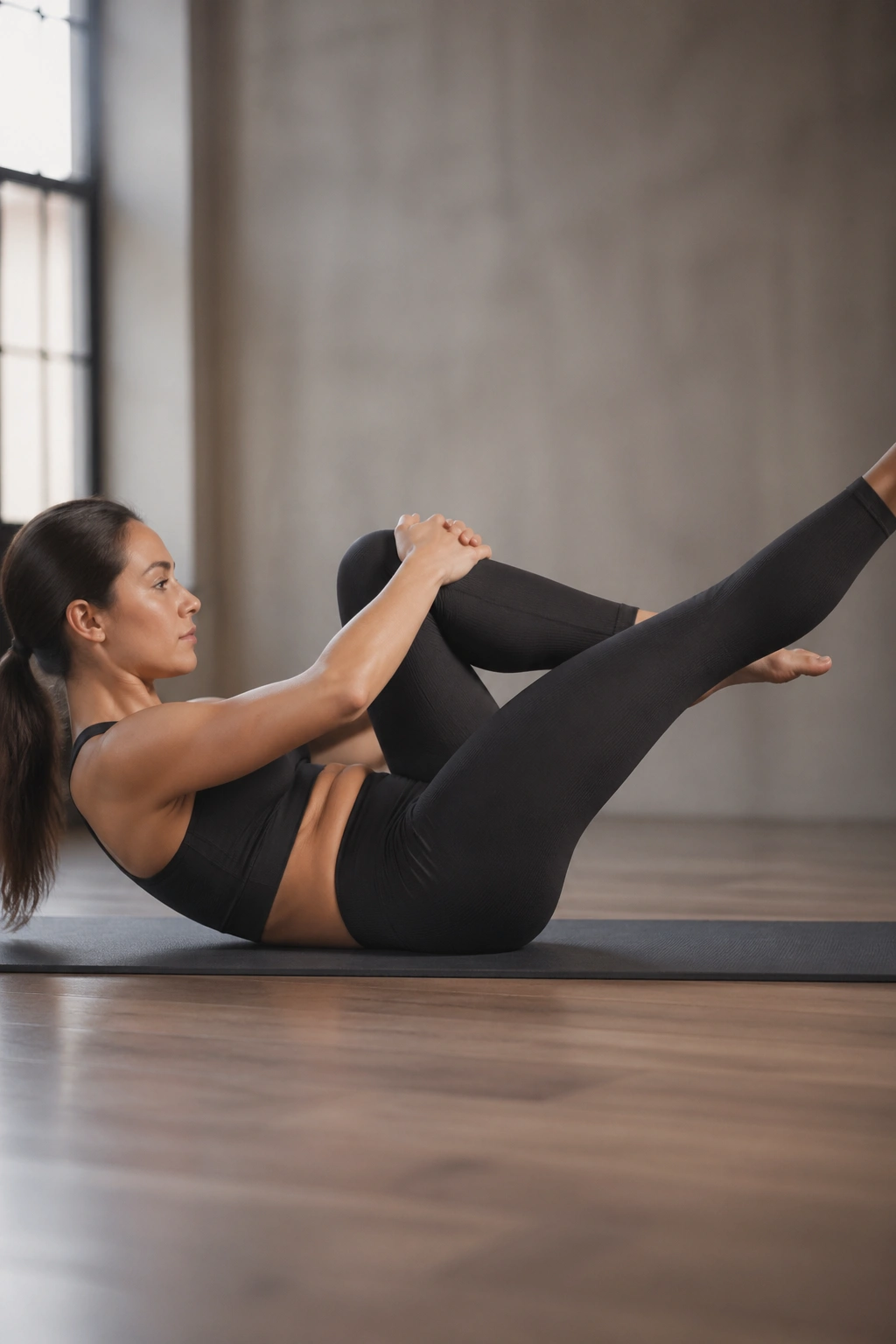
Single Straight Leg Stretch is the sharper cousin of Single Leg Stretch. One leg stays lifted and straight while the other knee draws in, then the legs switch without letting the pelvis bounce around like it has a mind of its own. The straight leg makes the line longer, which makes the abdominal control more obvious.
The lower leg does not get to wander.
That is the part people miss. As soon as the extended leg drifts too low, the low back hollows and the hips start fighting the floor. Keep the lifted leg at a height you can actually manage. If that means it hovers closer to 45 degrees, so be it. A smaller range with a steady trunk beats a bigger shape with a backbend you did not ask for.
I also like this move because it teaches patience. One side of the body may feel tighter, and one switch may feel clunkier, and both are useful clues. If the neck gets tense, lower the head for a set and try again. Pilates is full of these tiny corrections. They matter.
11. Double Straight Leg Lower and Lift
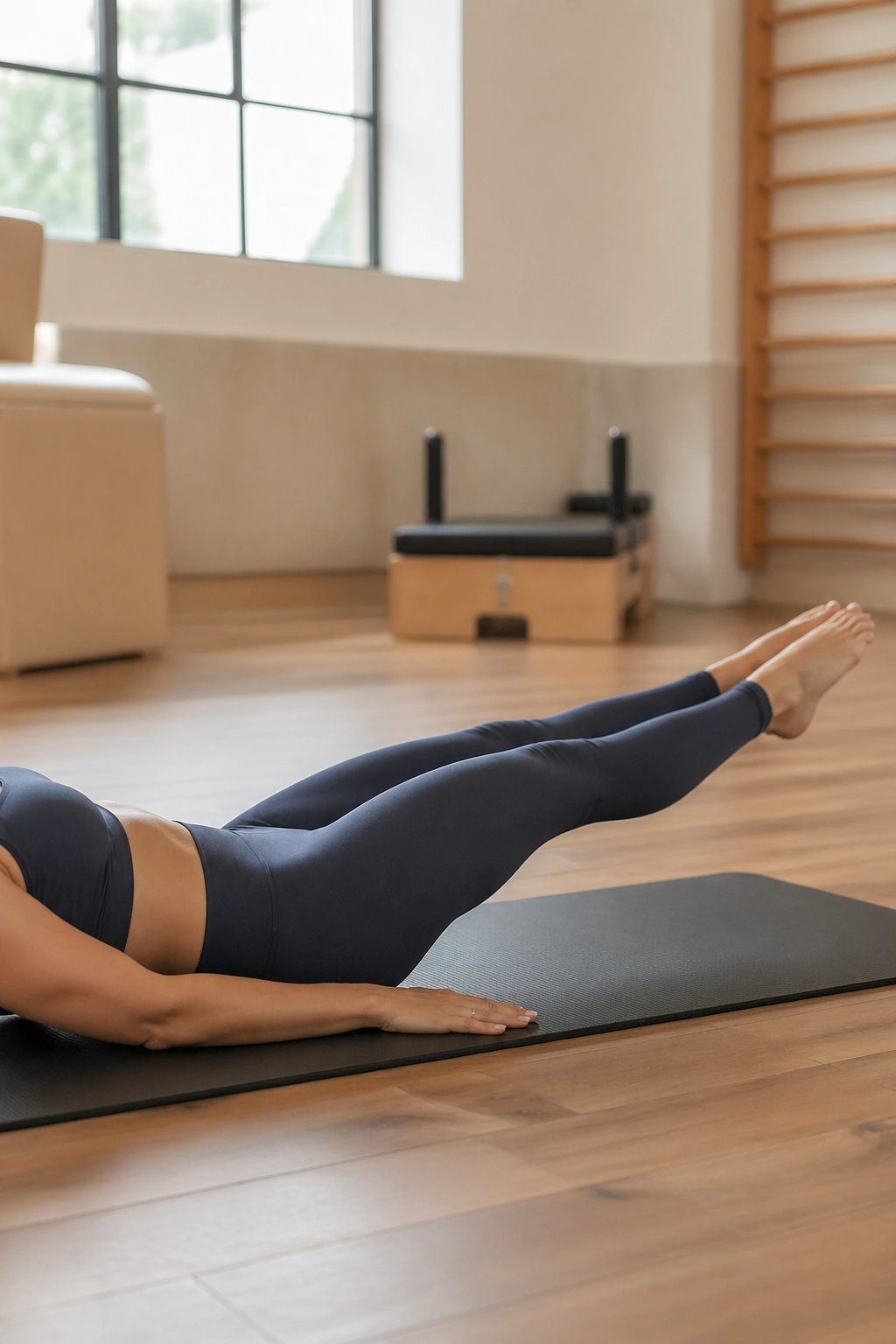
This is where a lot of otherwise solid ab work gets honest. Double Straight Leg Lower and Lift asks both legs to stay long while they lower together and return without pulling the low back off the mat. It looks plain. It is a core test.
The big rule is range. Lower only as far as you can keep the pelvis stable. For some people that is a few inches. For others it is halfway to the floor. The exact number matters less than the fact that the ribs stay down and the spine does not arch.
Check These Before Each Rep
- The low back should stay quiet.
- The neck should not brace.
- The legs should lower with control, not drop.
- The exhale should help you bring the legs back up.
If your back lifts, stop lower the legs sooner. That is the move telling you the lever is too long for the amount of control you have right now. A smaller range is still work. A sloppy full range is just a bad habit with good marketing.
12. Shoulder Bridge
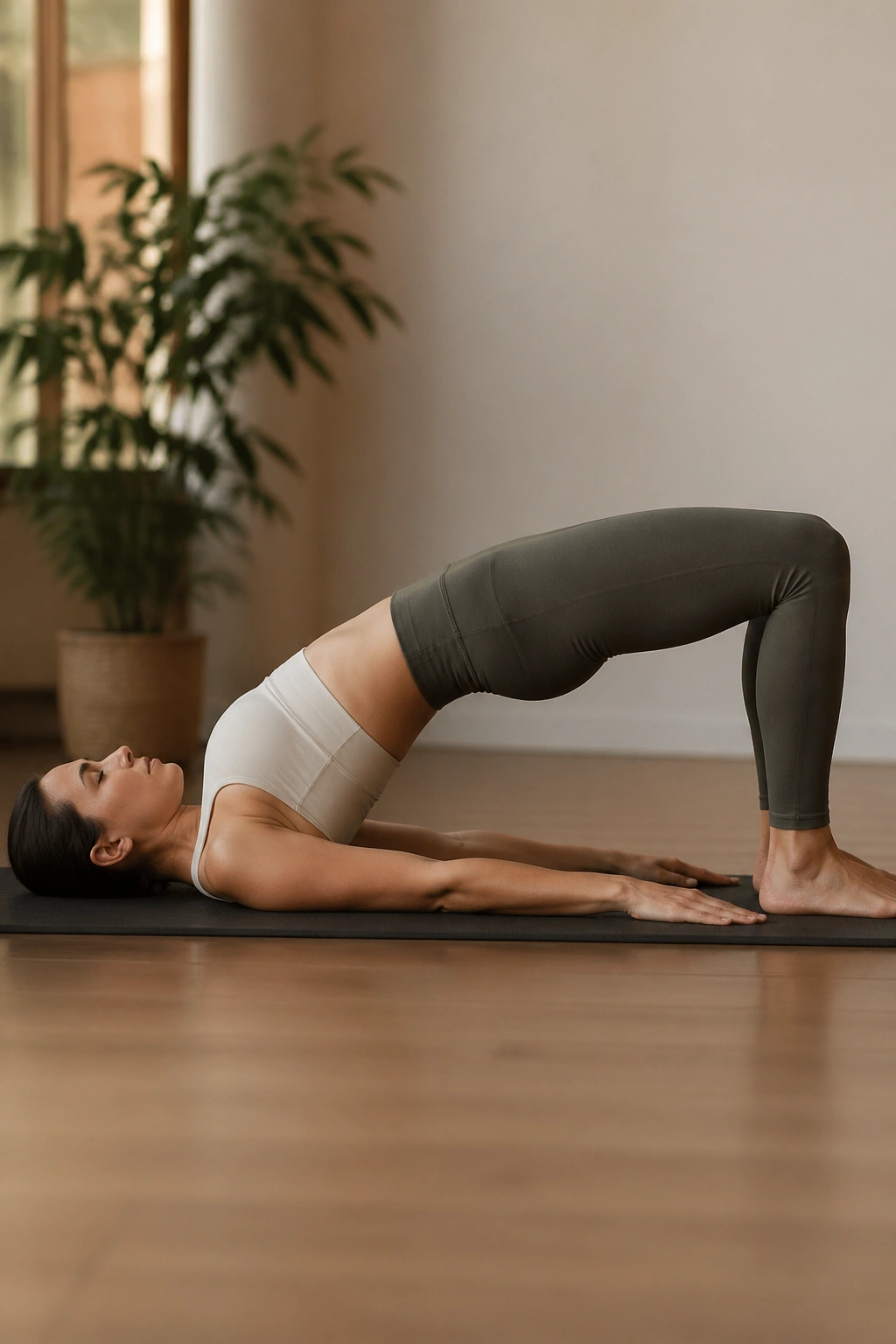
What looks like a simple bridge is actually a tidy little lesson in spinal articulation. Shoulder Bridge starts with the feet grounded, then the pelvis lifts one bone at a time until the body forms a diagonal line from knees to shoulders. The abs stay involved, the glutes support the lift, and the spine moves through each segment instead of hinging all at once.
A Clean Bridge Feels Like
- The ribs stay settled, not flared.
- The knees track forward, not splaying out.
- The hamstrings work, but do not cramp.
- The lift comes from the pelvis, not a hard push through the feet.
If the hamstrings cramp, the feet may be too close to the body. Move them a little farther away and try again. If the lower back feels pinchy at the top, come down sooner and keep the lift smaller. Bridge work should feel sturdy, not jammed.
This is also one of the best ways to wake up the back side of the core. People talk about abs and forget the muscles behind the spine. Bad idea. The back line matters if you want real trunk strength.
13. Corkscrew
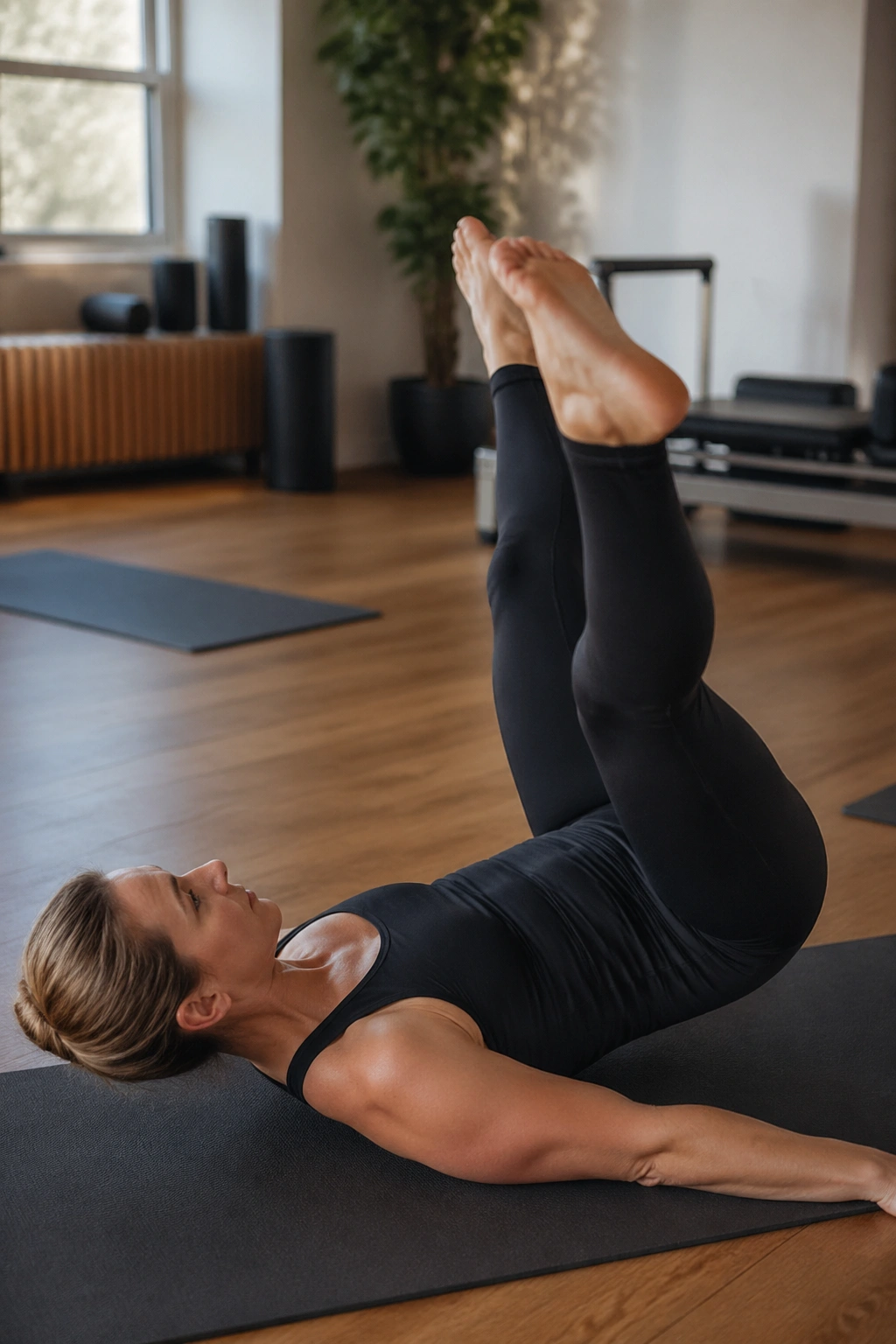
Unlike plain leg lifts, Corkscrew asks the pelvis to draw a circle without letting the lower back chase after it. The legs extend up, then move in a controlled circle that travels through space while the trunk stays stable. It looks a little fancy, but the point is simple: control the center while the limbs move around it.
Start small. Tiny circles tell you far more than giant ones. If the shoulders press into the mat and the ribs stay quiet, you are on the right track. If the body rolls like a boat in rough water, the circle is too big or too fast.
I would not rush this one. It sits on top of several other skills: shoulder stability, core control, and honest leg lowering. If those pieces are not there yet, keep the range modest and the tempo slow. That is still good work. Corkscrew rewards patience more than ambition.
14. Open Leg Rocker
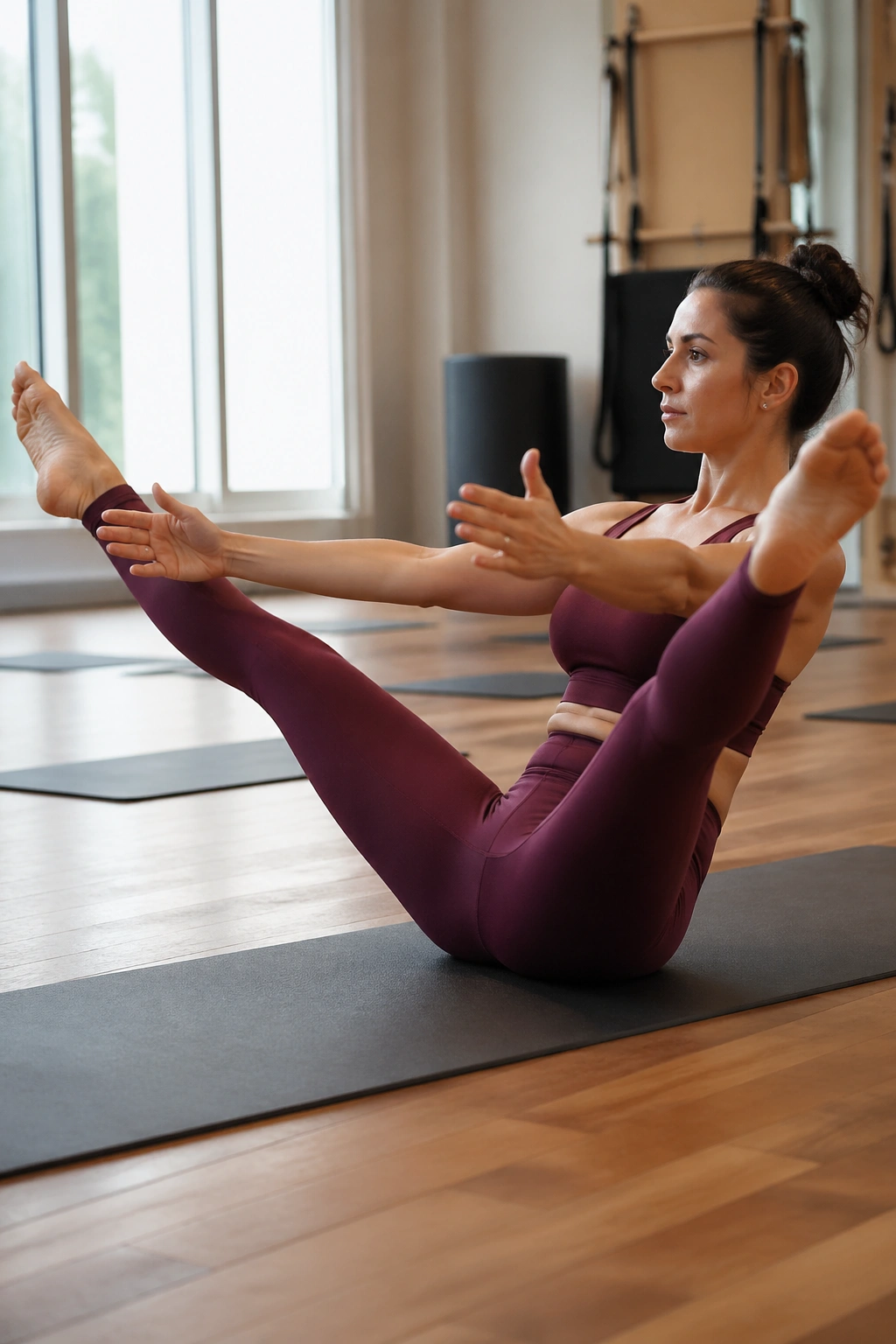
The first time you try Open Leg Rocker, your balance tells on you. You sit on the sit bones, hold the legs open, and roll backward before returning to a balanced seat without grabbing the floor or collapsing into the tailbone. It is part core work, part coordination, part humility.
The open shape is the challenge. You have to keep the chest lifted and the spine long enough to avoid turning the whole thing into a flopped roll. If the hamstrings are tight, soften the knees a little. If the balance point feels slippery, keep the hands on the calves or behind the thighs until the shape settles.
- Roll back only as far as you can keep the neck relaxed.
- Pause at the balance point before coming up.
- Keep the knees from drifting wider as you roll.
- Exhale on the return to help the abs pull the spine back upright.
It is a tricky one. That is part of the charm.
15. Swan Prep
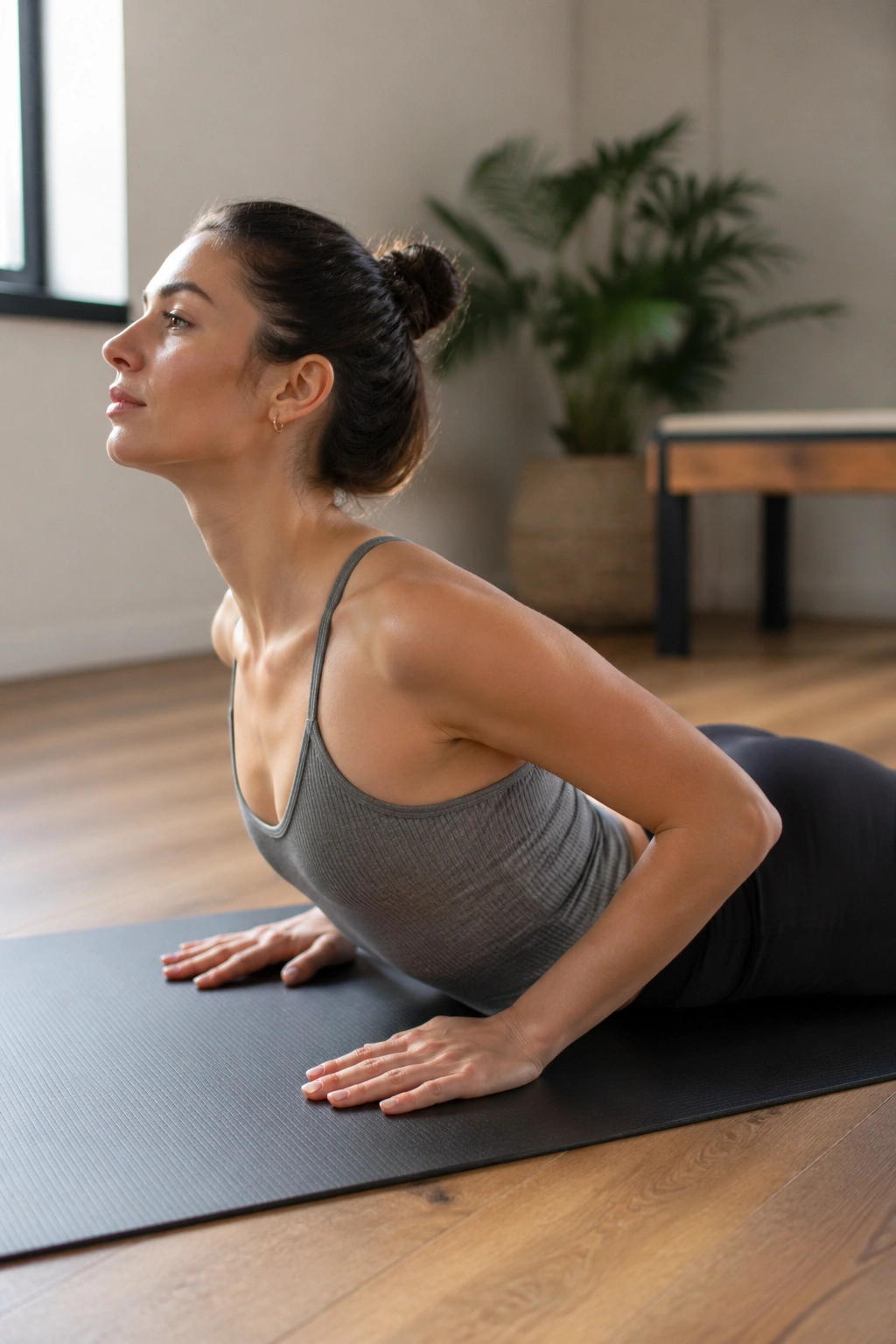
Swan Prep balances out all the flexion-heavy work with a little extension. You lie facedown, lengthen through the crown, and lift the chest without cranking the low back into a hard arch. The abs stay lightly engaged so the movement comes from the upper spine, not from a wild swing through the lumbar area.
That distinction matters. A lot. If the lower back pinches, the lift is too big or too low. Keep the pubic bone heavy, reach the sternum forward before lifting it, and think of length more than height. The goal is a long line through the front body, not a dramatic bend.
Big range is not the goal.
I like Swan Prep because it reminds people that core strength is not only about curling inward. A stable trunk also needs to support back extension, shoulder placement, and breath. If you spend all your time folding forward, the body gets grumpy. Swan Prep keeps that from happening.
16. Side Kick Series for Mat Pilates Hips
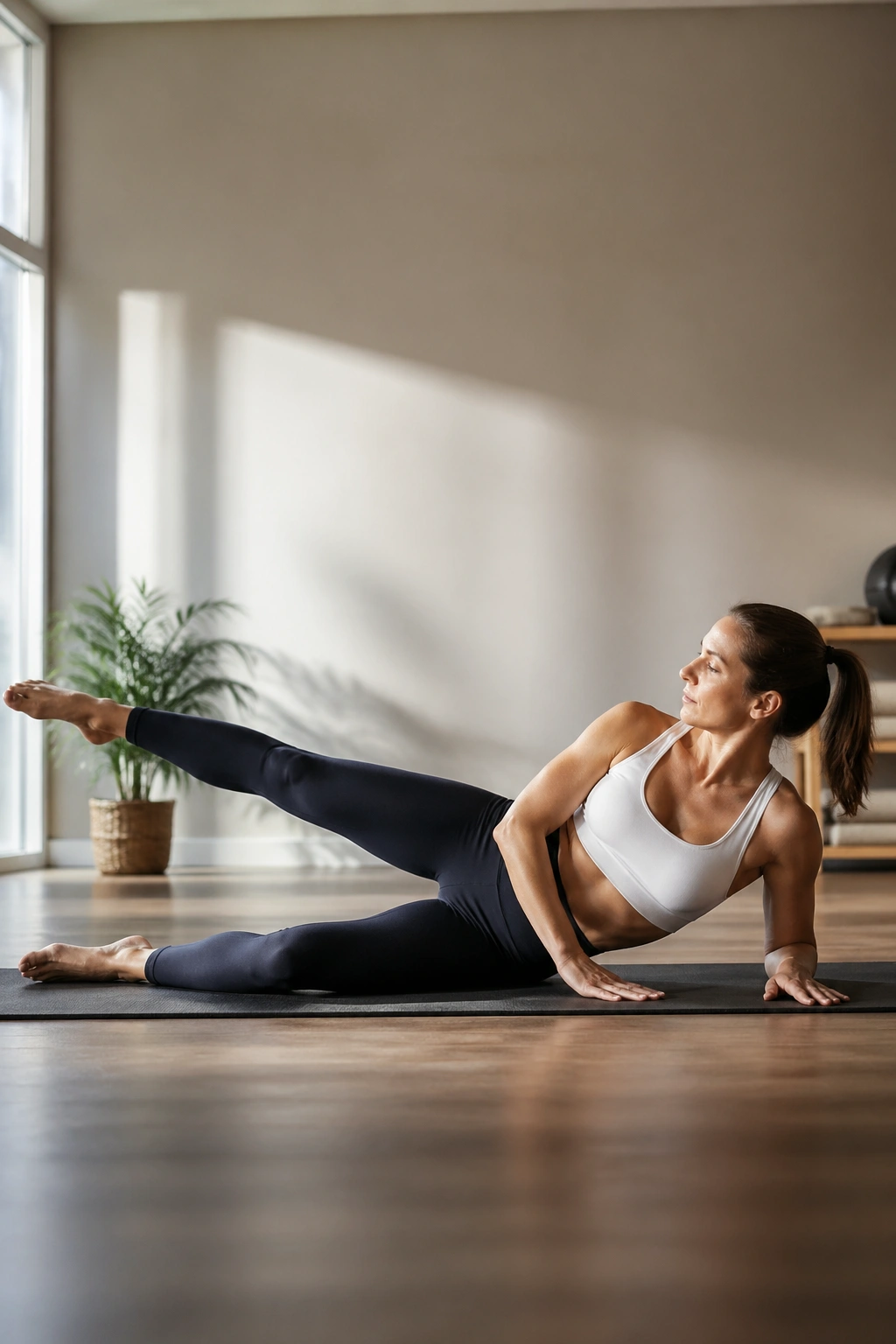
Why do side-lying kicks show up in core work? Because the side body has to work hard to keep the pelvis from tipping and the waist from collapsing. The leg moves, sure, but the deeper job belongs to the obliques, glutes, and the tiny stabilizers that keep your pelvis stacked.
A simple version goes front and back with the top leg while the trunk stays still. Another version circles the leg in small loops. Some classes add a scissor-like reach or a flex-and-point pattern. The exact order matters less than the control. If your top hip rolls backward every time the leg swings, the range is too big.
What to Watch For
- Keep the waist long on the mat.
- Stack the hips instead of dumping forward.
- Use a small kick with a steady torso.
- Let the movement come from the hip, not the lower back.
This is sneaky work. You feel it in the side seam of the body before you feel anything dramatic in the abs, and that is usually a good sign.
17. Side Plank
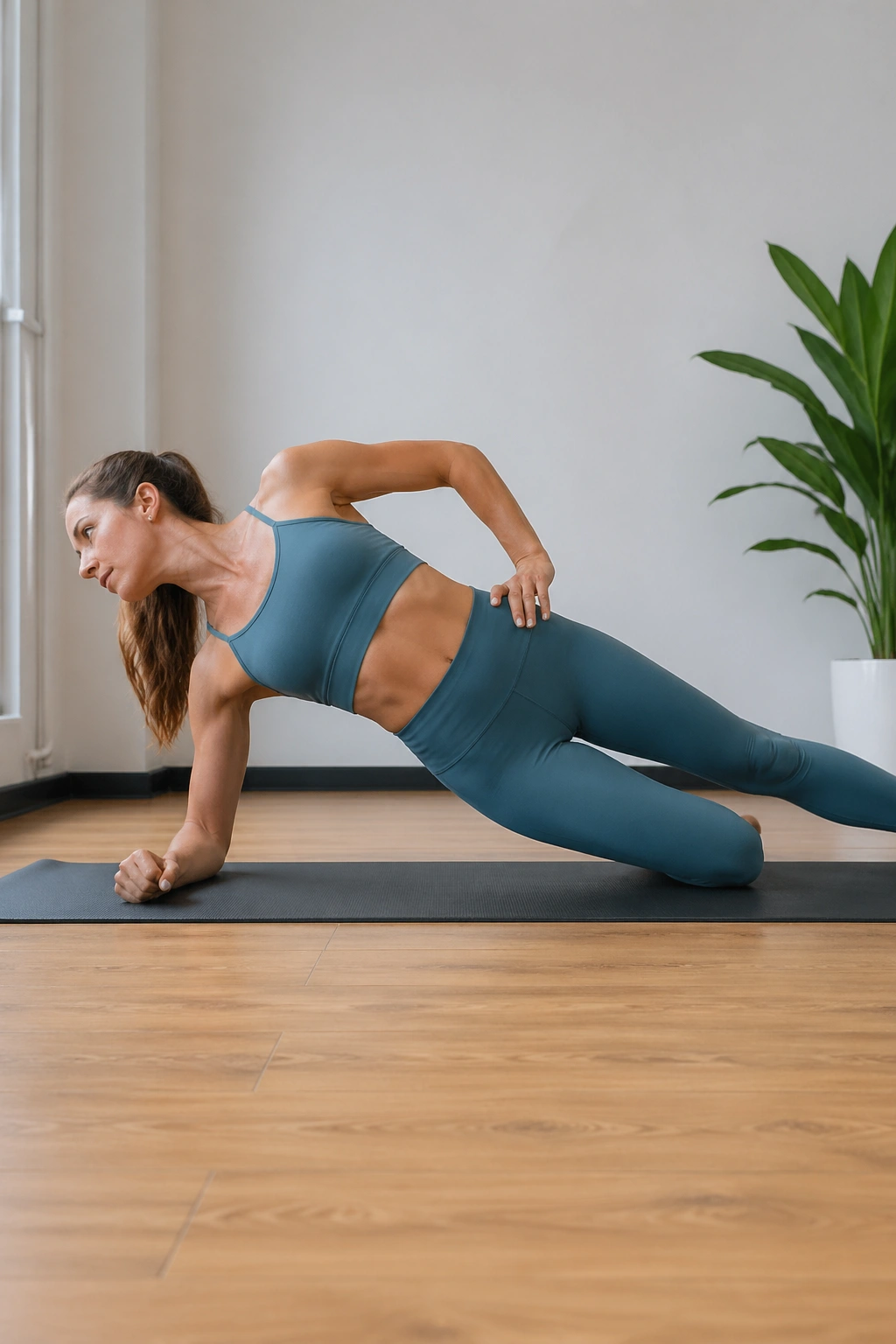
Side Plank is one of the fastest ways to find out whether your obliques and shoulder can cooperate. It asks you to hold the body in a straight line while gravity pulls everything down toward the floor. The side waist has to kick in hard, the shoulder has to stay stacked, and the hips need to resist sagging.
There are two clean ways to approach it. Keep the bottom knee down for a friendlier version, or stack the feet for a full side plank. Either way, the ribs should stay lifted away from the hip, not dumped into the waist. If the neck tightens, look straight ahead or down slightly instead of craning upward.
How to Keep the Line Clean
- Press the forearm or hand firmly into the mat.
- Lift the hips high enough that the torso stays long.
- Keep the top shoulder from rolling forward.
- Hold for 15 to 30 seconds before adding time.
I prefer short, crisp holds over sloppy long ones. A clean 20-second side plank is worth more than a shaky minute.
18. Leg Pull Front
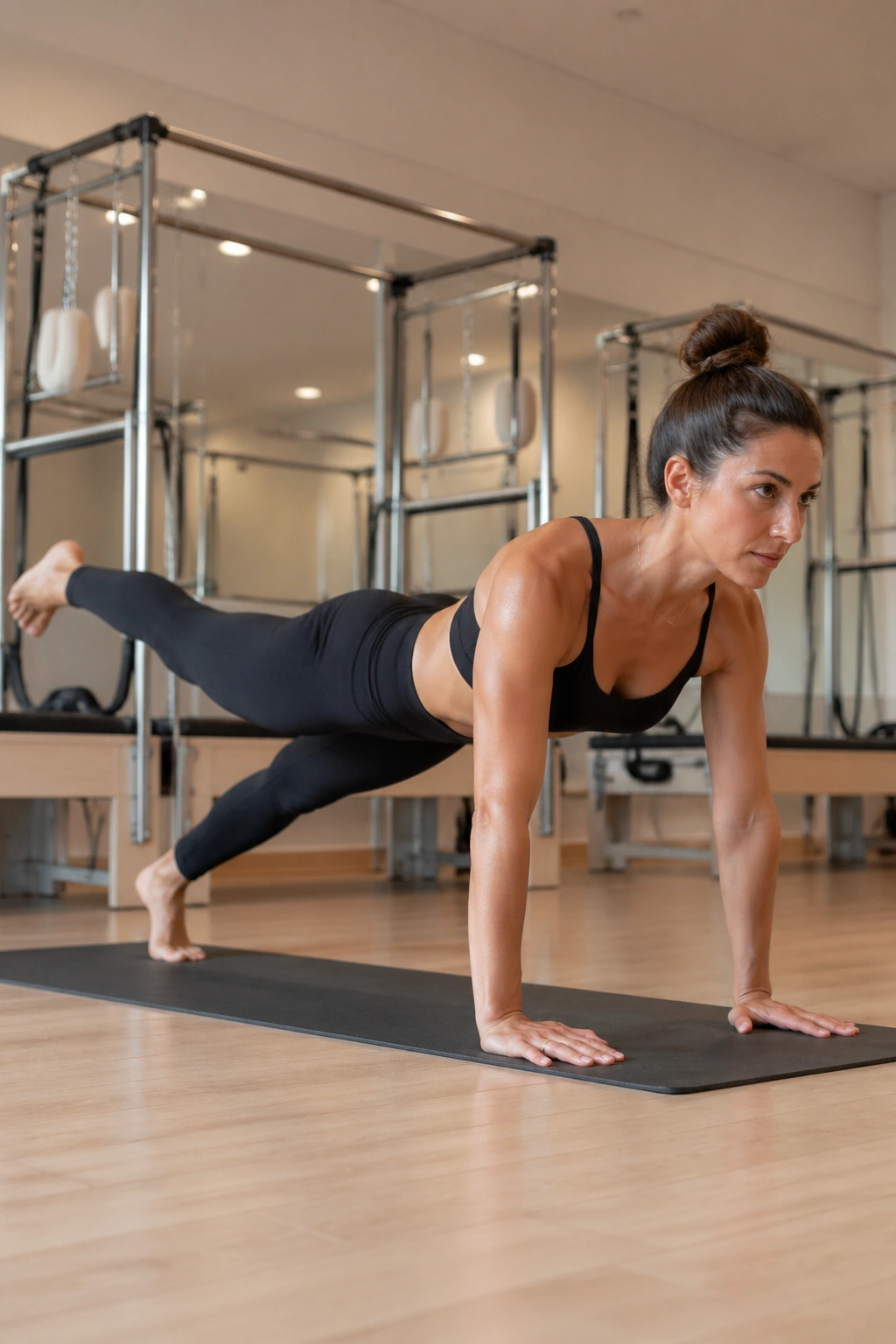
If front planks bore you, Leg Pull Front is the version your core actually notices. You start in a strong plank position, then lift one leg a few inches without letting the hips twist or the shoulders wobble. The move looks small. The challenge is not.
Your shoulders need to stay stacked over the wrists, the heels need to reach back, and the belly has to keep the pelvis from swaying. People often lift the leg too high. That usually causes the back to arch and the ribs to poke forward. A tiny lift is enough. Seriously.
This is also a quiet test of upper-body support. The wrists, shoulders, and upper back all have to do their share so the trunk can stay organized. If the wrists complain, come down to the forearms or shorten the hold. Form beats ego here, every time.
19. Teaser
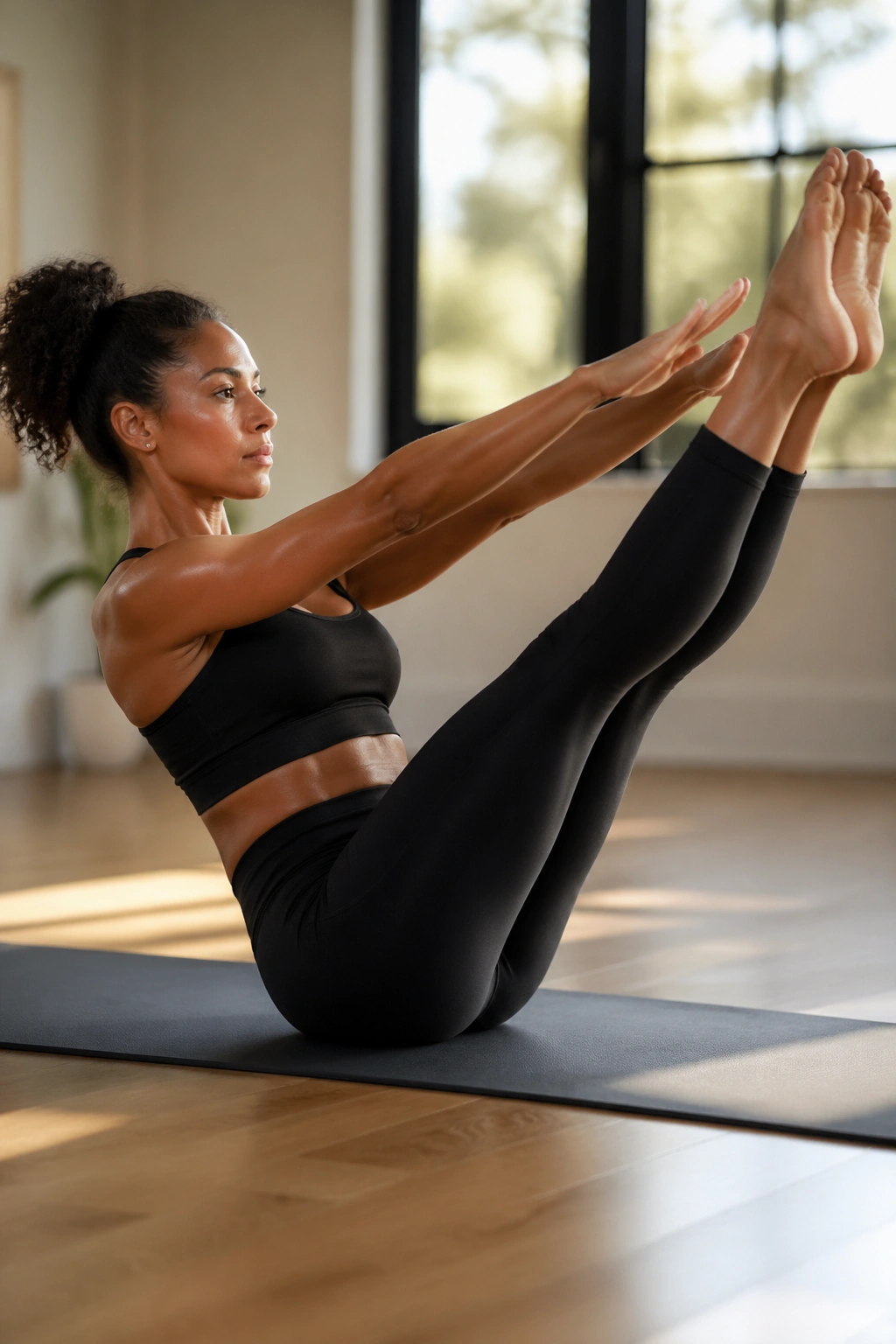
Teaser is the move people talk about when they want to sound like they know Pilates, and to be fair, it deserves the attention. It blends a Roll Up, a leg lift, and a balance hold into one clean shape. The torso and legs meet in the air, and the body has to stay long enough to avoid folding in half like a lawn chair.
The useful part is not the pose itself. It is the control needed to get there and leave it. If you can only hold the teaser for one breath, that still tells you a lot. If you need one knee bent, that is fine too. Start there and keep the spine long, the chest open, and the movement smooth.
Why the Hold Matters
- It teaches the abs to stabilize against long lever arms.
- It asks the hip flexors to share the job without dominating it.
- It exposes leaks in the rib cage and low back fast.
- It rewards clean breath more than brute force.
Teaser is not something to muscle through. It works best when it feels a little calm, a little controlled, and a little hard to fake.
20. Seal
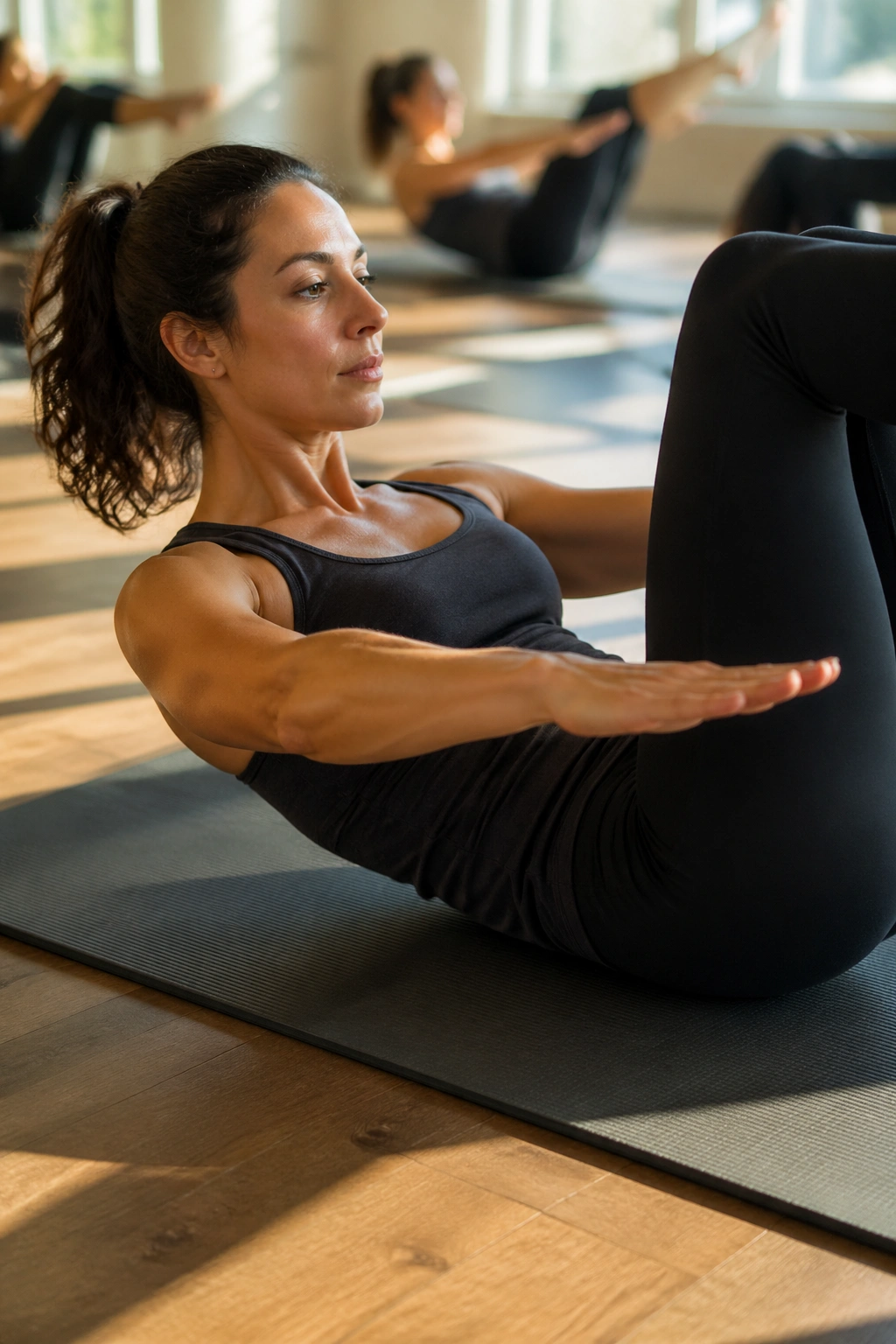
Seal is playful, but it is not a throwaway. You sit in a rounded shape, hold the ankles or shins, clap the feet lightly if that is part of your version, then roll back and return to balance with the body staying organized. The movement massages the spine, asks for a steady center, and adds a nice bit of rhythm at the end of a mat session.
I like Seal as a finisher because it keeps the work from getting grim. Too much core training turns into bracing and grimacing. Seal adds coordination and a little bounce without losing the point. If the neck gets tense, soften the roll. If the feet slap hard, slow it down. The motion should feel controlled enough that you could repeat it five more times without losing your shape.
That is the real test in mat Pilates, honestly. Not whether the move looks hard. Whether you can stay organized while your arms, legs, and spine all want different things. If Seal feels smooth and your breath stays calm, your core is learning the right lesson.
