



A smaller waist rarely comes from endless crunches.
It comes from workouts that make your whole body work hard enough to burn energy, keep muscle, and pull your day out of the chair-shaped rut most people live in. Belly fat workouts get oversold all the time, and most of the hype is useless. Spot reduction is not a thing, no matter how many times a program promises it with a shiny grin.
Two weeks is a short window, but it is long enough to notice changes. Your jeans may sit a little easier. Stairs stop feeling rude. The mirror may show a flatter look around the middle, partly from actual fat loss, partly from less bloating, better posture, and a body that finally gets pushed hard enough to respond.
The smarter plan mixes low-impact cardio, hard intervals, and strength moves that make your trunk brace under load. That is why this list leans on walking, ropes, swings, carries, sprints, and full-body work instead of endless floor crunches. If your meals are chaos, no workout list will save you, but if your food is decent and your training is honest, these are the kinds of sessions that show up fast.
1. Brisk Incline Walk Intervals for Belly Fat Loss
Walking sounds too easy until you put it on an incline and keep the pace honest.
A good incline walk turns into a sneaky midsection workout because your glutes, calves, and deep core muscles have to keep you upright while your heart rate climbs. You are not smashing your joints, which is part of why this works so well for people who want repeatable fat-loss sessions instead of one heroic workout that wipes them out for two days.
Why It Works
The incline shifts the load from casual strolling to real effort. On a treadmill, 5% to 10% incline with short faster bursts is enough to make your breathing change without turning the session into a sprint.
Try 20 to 30 minutes total. Spend 60 seconds walking fast, then 90 seconds at a strong but recoverable pace. If you are outside, pick a hill and keep moving instead of stopping at the top like you just climbed Everest.
- Keep your chest tall and your ribs stacked over your hips.
- Drive through the whole foot, not just the toes.
- Shorten your stride a little when the incline rises.
- Hold the rails only if you need balance, not support.
Best use: Put this on the days you want a solid calorie burn without feeling wrecked afterward. It is boring in the best possible way.
2. Jump Rope Rounds
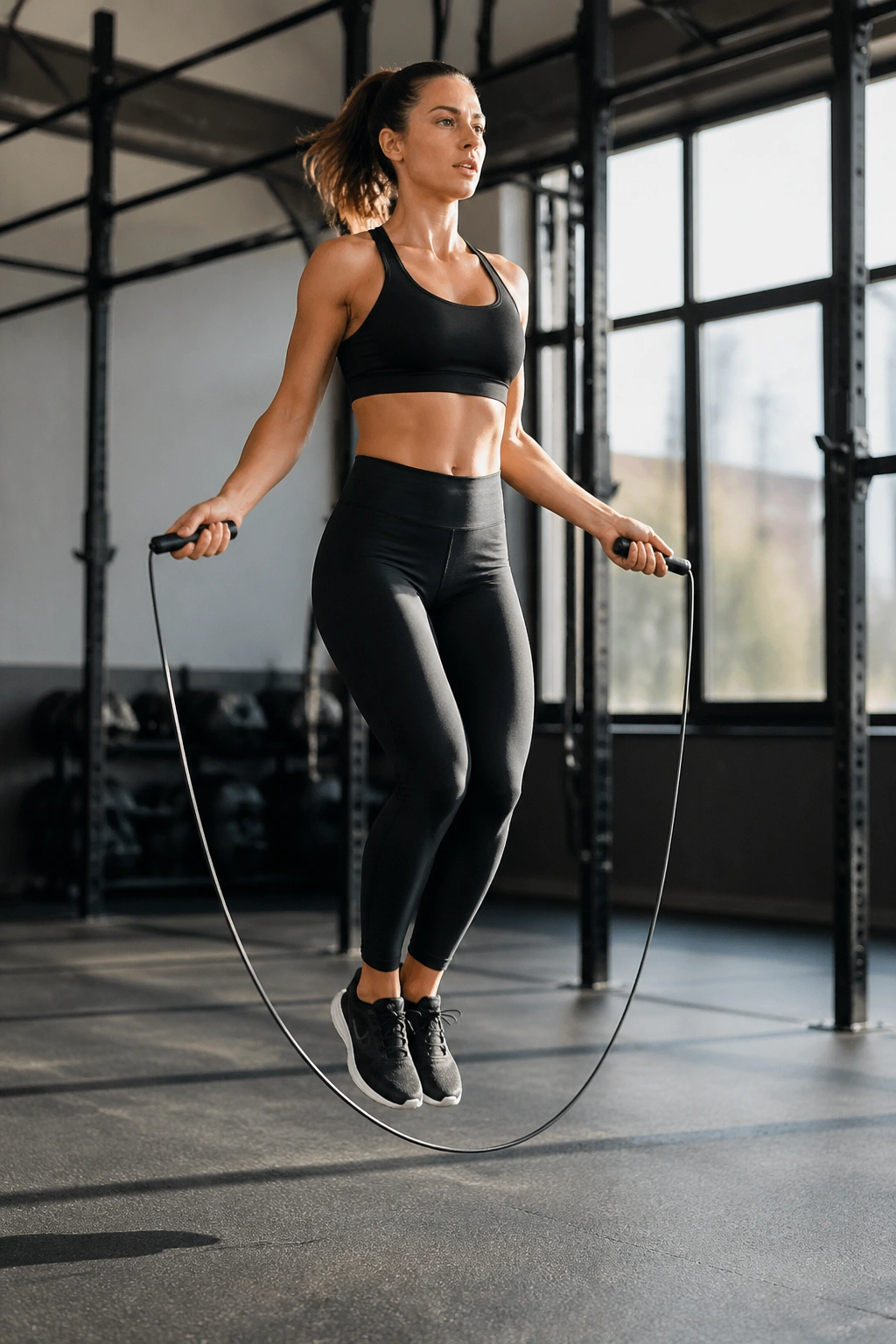
A jump rope can spike your heart rate faster than a longer jog if you keep the rest short.
That is the appeal. Ten minutes of decent rope work can leave your lungs working, your calves hot, and your abs bracing every time your feet tap the floor. It is also one of the cheapest belly fat workouts you can do, which probably explains why it survives every fitness trend without much help.
The trick is rhythm, not punishment. Start with 20 to 30 seconds of jumping, then rest for 30 to 45 seconds. Keep the jump low, barely clearing the rope, and let the wrists turn the rope instead of flailing the shoulders around like you are trying to swat a fly.
If regular jumps annoy your knees or shins, use a boxer step or march in place between ropes. That keeps the heart rate up without turning the workout into a pain contest. A smooth floor and a decent pair of trainers help more than fancy gear ever will.
Do six to ten rounds, stop before your form falls apart, and you will feel it. A sloppy rope session is just noisy cardio. A clean one is a calorie-burner.
3. Kettlebell Swings That Work Your Core Without Crunches
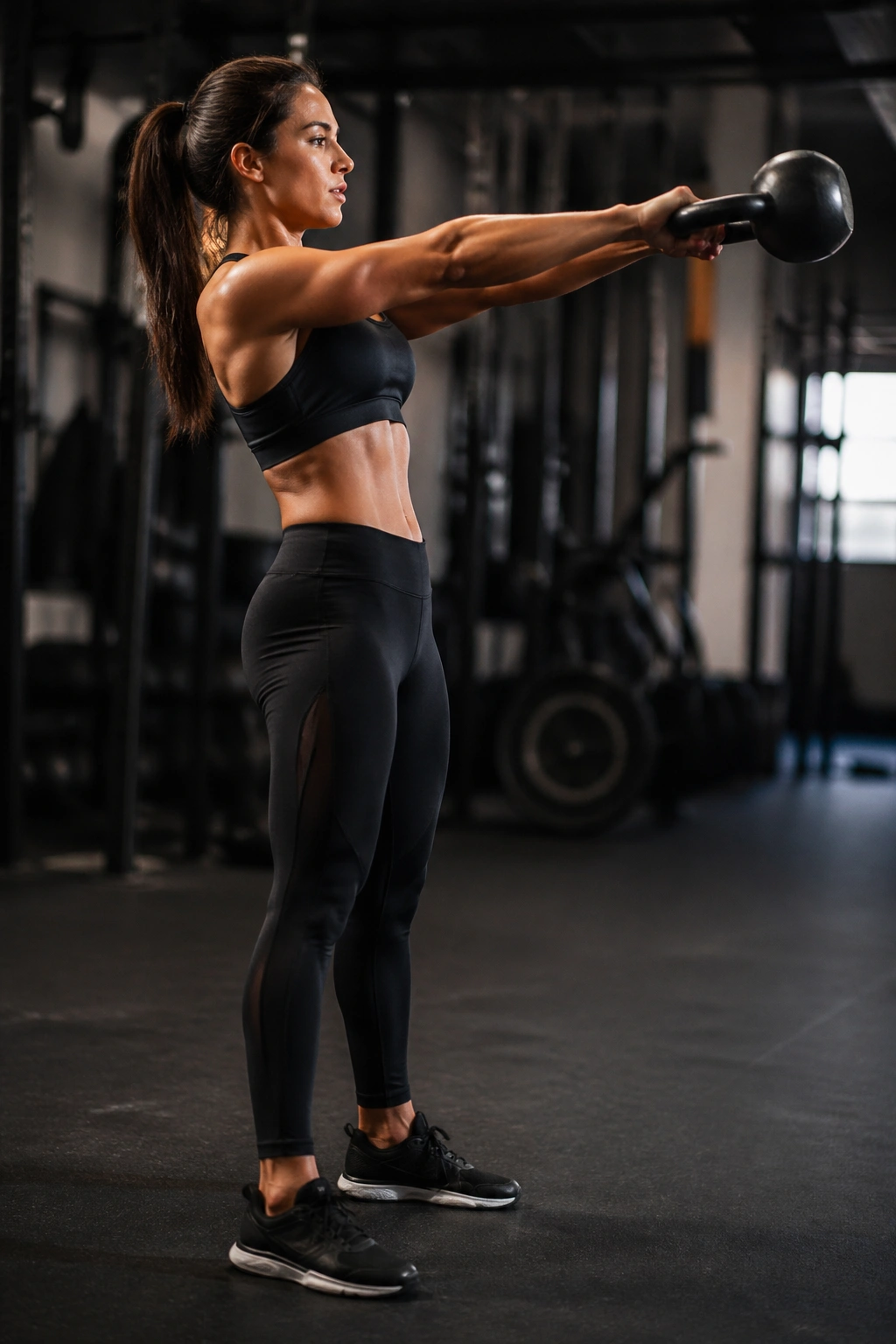
Why do kettlebell swings keep showing up in fat-loss plans?
Because they hit the body like a hinge-driven engine test. Your hips do the work, your legs help, and your trunk has to brace hard so the bell does not pull you forward. That bracing matters. A lot. The movement is fast, but it is not random, and the difference between a useful swing and a bad one is whether you snap from the hips or squat it like a weird front raise.
The usual sweet spot is 10 to 20 reps per set for 8 to 12 minutes. You can do straight sets with a minute rest, or use an every-minute-on-the-minute format: 10 swings at the top of each minute, then rest until the next minute starts. If you choose a bell that makes you strain your shoulders, it is too heavy. If it feels like cardio in a toy store, go heavier.
How to Use It
Stand with feet about shoulder-width apart, hinge back, and keep your spine long. The bell should travel from the hips, not from a squat bounce. When the hips snap forward, the bell floats. That float is the whole point.
Stick with a weight you can control for the full set. Messy swings beat up the lower back fast. Clean swings build power, breathing control, and that tight, braced feeling people usually want from core work.
4. Mountain Climbers for a Fast Midsection Burn
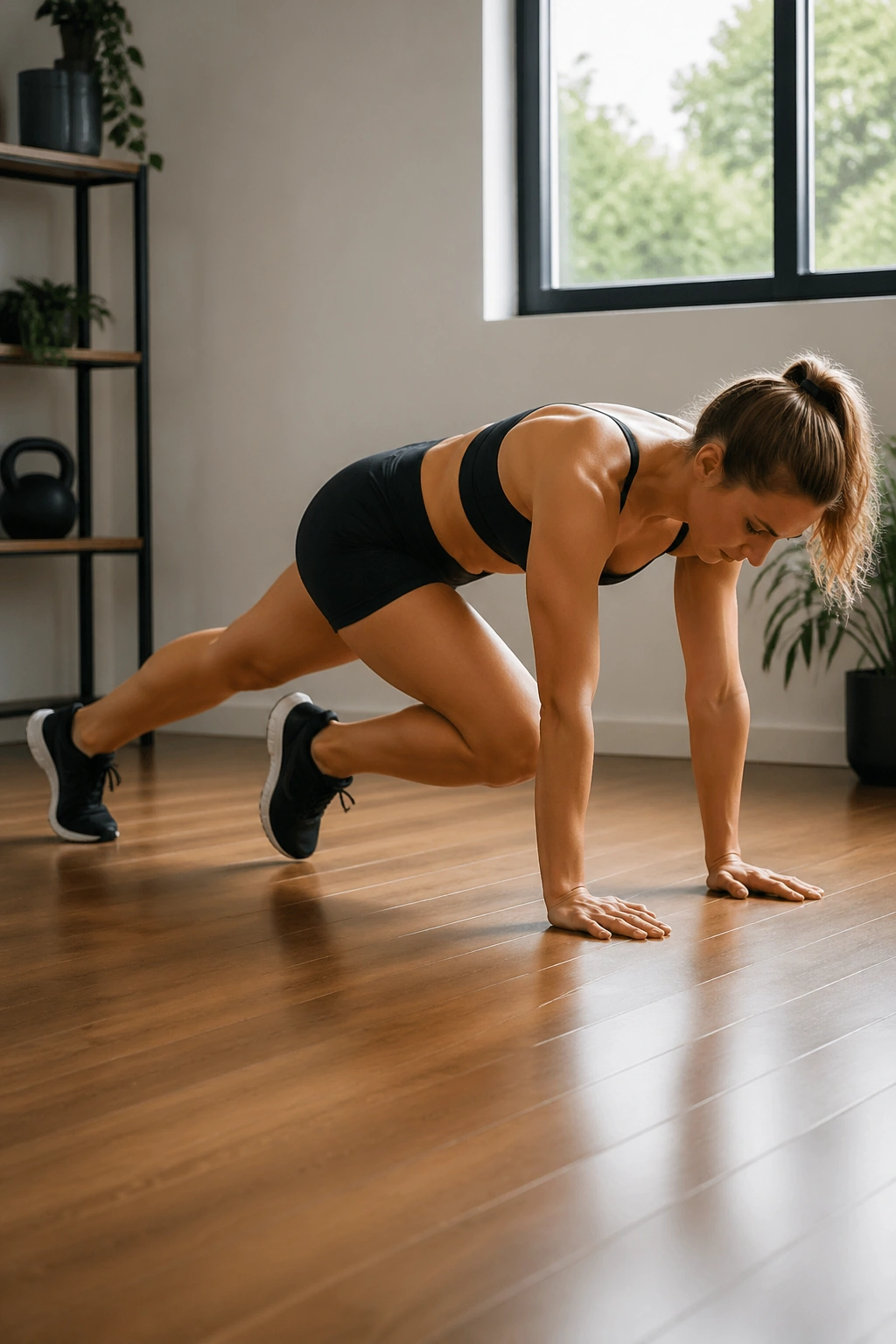
Picture a hotel room, a living room, or a patch of floor next to the bed. No machines. No excuses. Mountain climbers fit there, and they still work hard enough to earn a spot on a belly-fat plan.
The reason they bite is simple: your shoulders stay loaded, your hips keep moving, and your midsection has to stop your torso from wobbling all over the place. Fast climbers are brutal for conditioning. Slow cross-body climbers are better when you want control and a little more time under tension.
- Keep your hands under your shoulders.
- Drive one knee at a time toward the chest.
- Do not let your hips bounce high.
- Stop if your lower back starts sagging.
- Work in 20- to 40-second bursts.
A clean set should feel fast, tight, and slightly mean by the end. That is the point. If your hands are slipping or your shoulders are folding in, slow down and make the movement smaller.
Mountain climbers are not glamorous. They are useful. And useful usually wins.
5. Tabata Bodyweight Circuits for Belly Fat
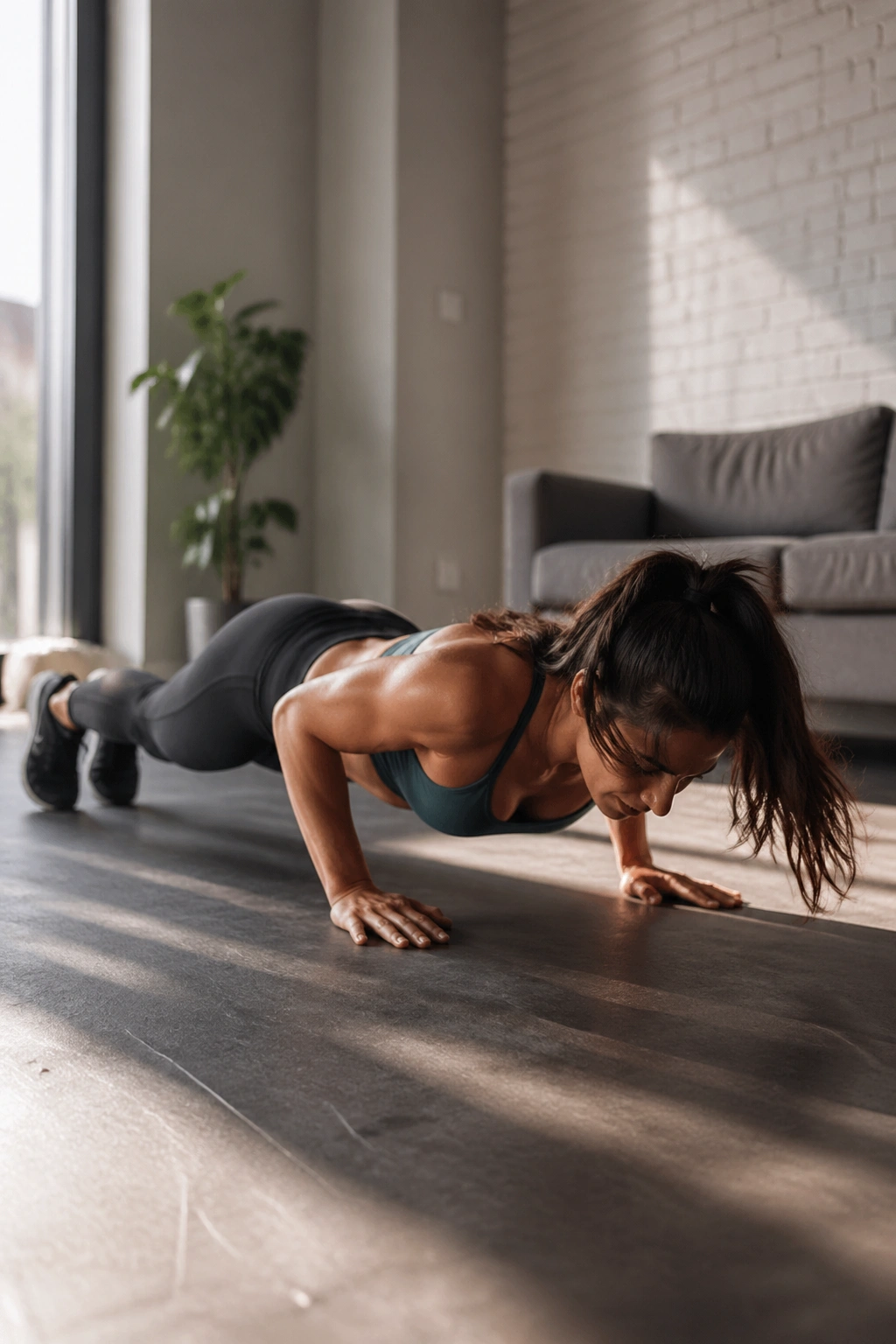
Tabata has a reputation for being a little too spicy, and honestly, that reputation is earned.
The classic format is 20 seconds hard, 10 seconds rest, repeated for 4 minutes. That is short enough to sound easy and sharp enough to leave your breathing ragged if you do it right. The reason it shows up in belly fat workouts is that you can stack several fast, full-body rounds without needing equipment, a coach, or a playlist that thinks you are an Olympian.
Use exercises that force a lot of muscles to work at once: squats, push-ups, high knees, plank jacks, reverse lunges, or squat thrusts. Keep each movement crisp. A Tabata round done badly is just flailing with a timer. A Tabata round done well feels like you borrowed someone else’s lungs for a few minutes.
One round is enough for a beginner. Two rounds is plenty for most people who also have a life. Three rounds starts to turn into sloppy survival work, and once form disappears, the quality drops fast. That is where people start calling the workout “hard” when they really mean “messy.”
The best part is how simple it is to repeat. No setup. No long rest. No drama.
6. Rowing Machine Sprints
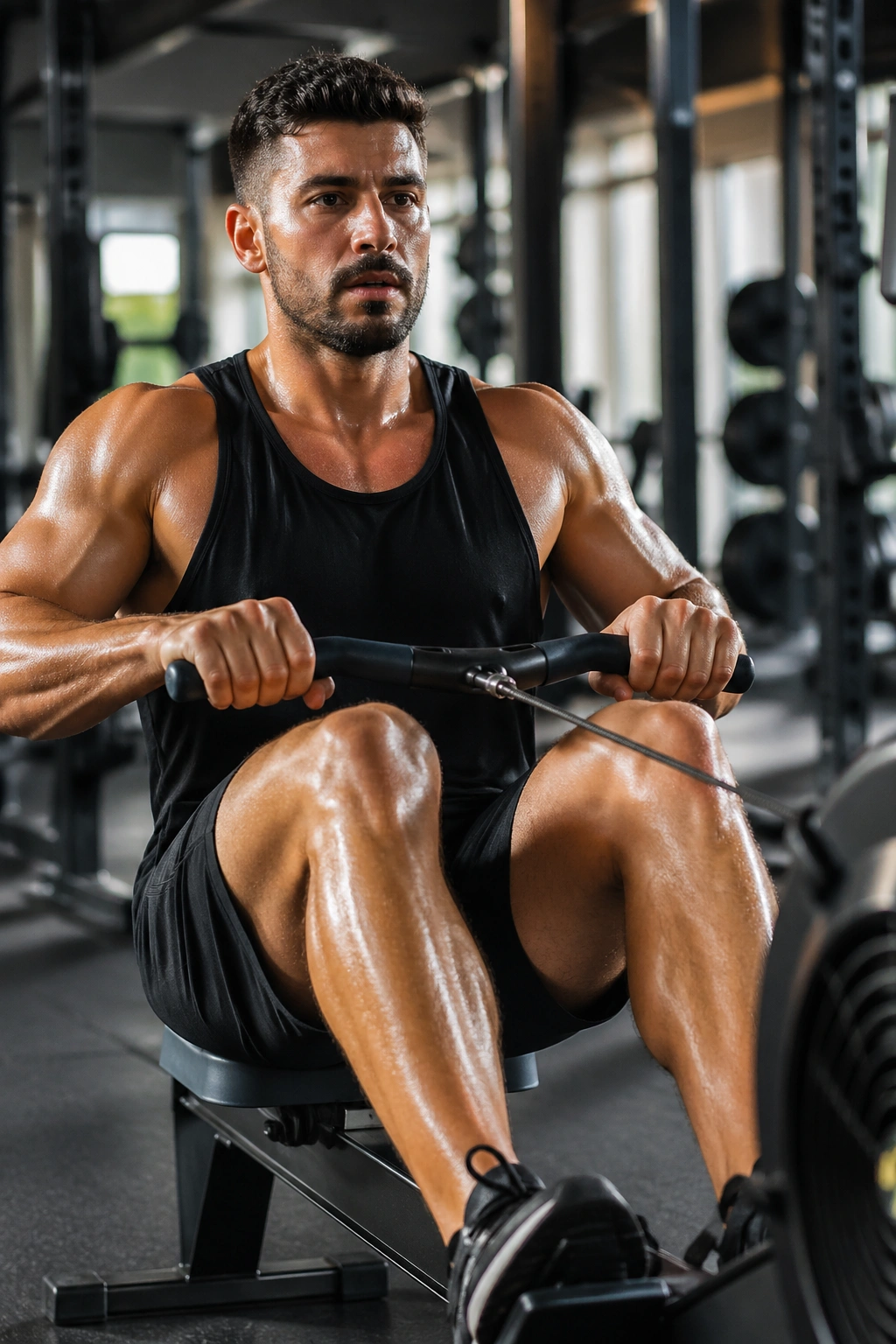
Unlike treadmill running, rowing hits your legs, back, and core at the same time.
That matters because the rower does not let your upper body loaf around. Every stroke asks you to drive with the legs, swing through the hips, and finish with the arms. The machine rewards good timing and punishes lazy posture, which is why it can be such a solid choice for people who want a hard, low-impact burn without the foot pounding of running.
Try 250-meter sprints with 60 to 90 seconds of easy paddling between efforts. Or row hard for 30 to 45 seconds, then back off for a minute. Keep the damper somewhere moderate, usually around 3 to 5, unless you know exactly why you want more resistance. Too much drag turns the stroke into a grind, and grinding is not the same as training.
Who is this best for? People who want a full-body conditioning session and do not want to jump around. Also people whose knees hate treadmill sprints. If your lower back rounds at the catch, shorten the range and fix the setup before you go hard.
The rower is a workhorse. Treat it like one.
7. Stair Climb Intervals That Hit the Legs and Lungs

A flight of stairs can humble a person fast.
That is why stair intervals are so good. Each step asks for a little force, and that force adds up quickly through the quads, glutes, calves, and the deep muscles around the waist that keep you from folding forward. You do not need fancy programming here. You need a staircase, a watch, and the willingness to keep moving when your legs start complaining.
Why Stairs Hit the Waistline Harder Than Flat Walking
Stairs raise your heart rate faster than level ground because the body has to lift itself upward every single step. That creates a stronger demand with less time spent waiting around.
Use 30 to 60 seconds climbing, then walk down slowly and recover for 60 to 90 seconds. Keep your stride controlled. Do not skip steps like you are in a hurry to sprain something. If you want more challenge, carry light hand weights only after the basic pattern feels smooth. Honestly, most people do not need them.
- Stay tall through the chest.
- Push through the heel and midfoot.
- Use the railing only for light balance.
- Stop before your knees start caving inward.
A stair session feels plain at first. Then it bites. That is usually a good sign.
8. Battle Rope Slams
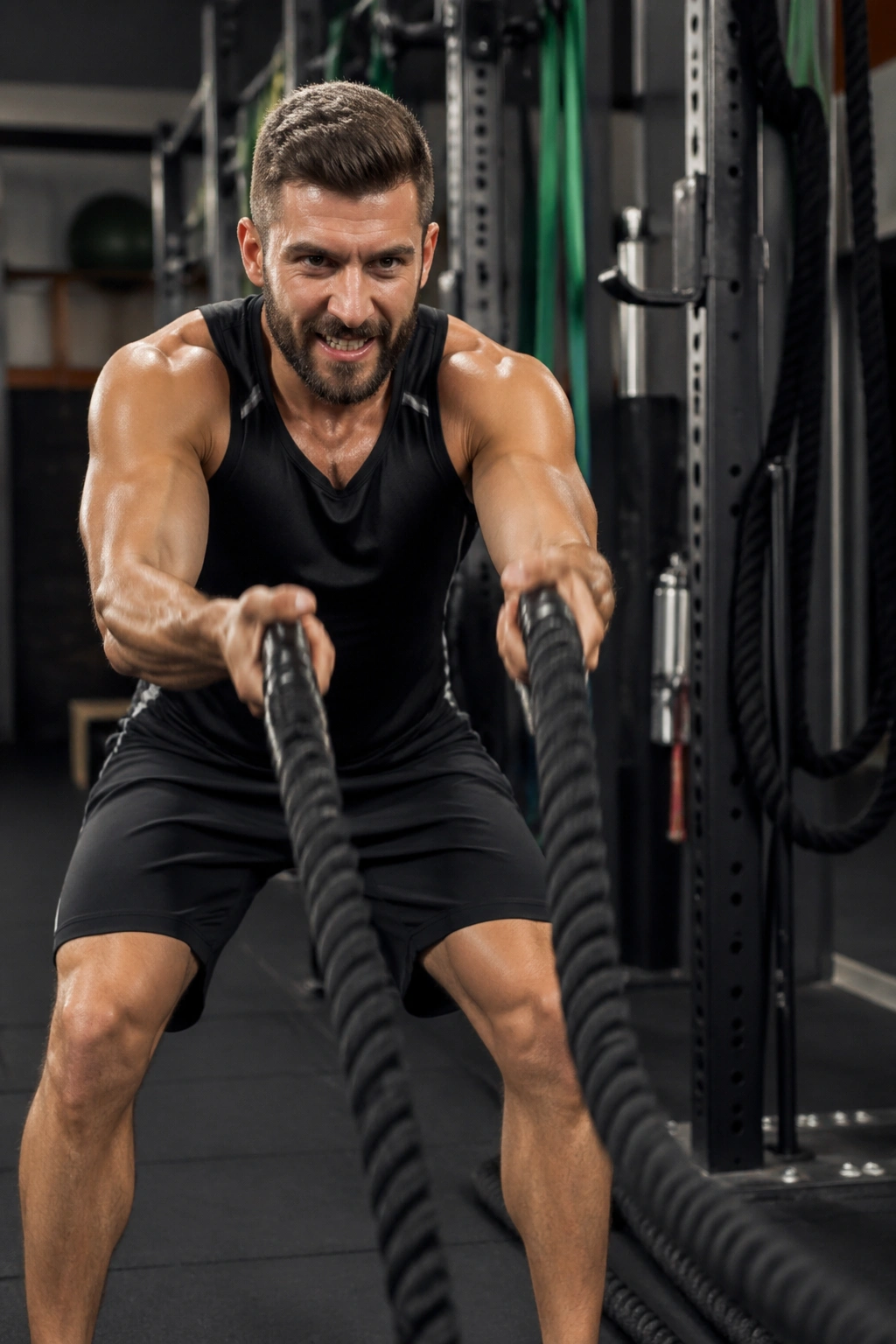
Few workouts punish laziness as quickly as battle ropes.
The first thirty seconds look harmless. Then the shoulders start burning, the grip starts slipping, and the core has to lock down so the whole body does not wobble like jelly. That combination is why ropes belong on a list of belly fat workouts. They are not just an arm exercise. They are a full-body conditioning tool with a loud personality.
Work in short, hard bursts: 15 to 20 seconds of double slams, alternating waves, or lateral waves, then 40 to 60 seconds of rest. Keep the knees soft and the ribs down. If you stand bolt upright, the load shifts into the lower back and the movement gets ugly fast. A slightly athletic stance saves you.
This is a good choice when you want a workout that feels aggressive without needing to run or jump. It also pairs well with other moves in a circuit, since the heart rate stays high even after the rope set ends. Shorter people sometimes think ropes are only for athletes with giant gyms. Not true. A single pair of ropes and a few square feet of floor are enough.
If the workout does not leave your forearms talking back, you probably did not push hard enough.
9. Burpee Ladders for a Short, Brutal Conditioning Block
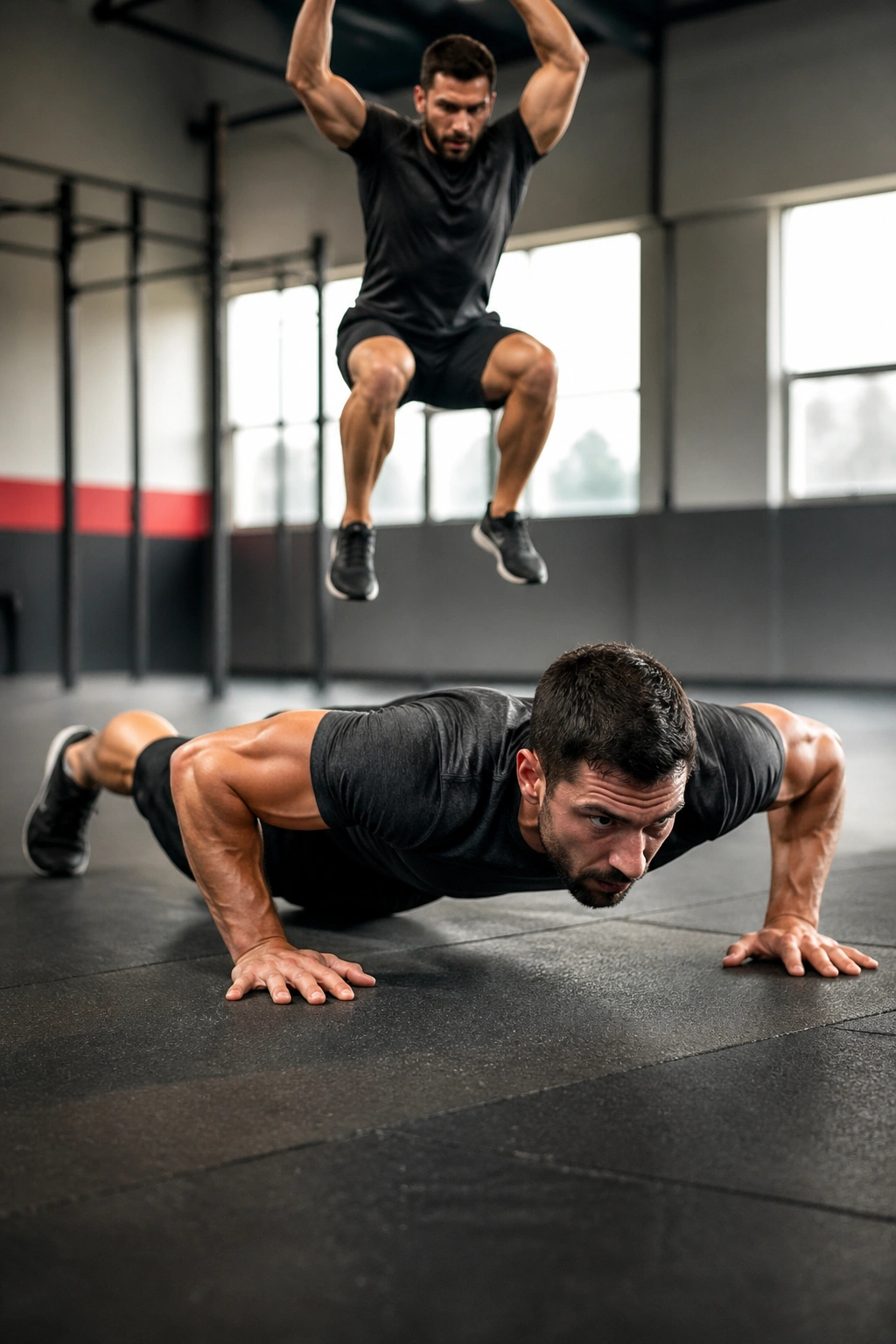
Why do burpee ladders work so well when time is tight?
Because they stack effort fast and leave no room to coast. A ladder forces you to climb up in reps, which makes you pace yourself better than a random all-out set. That pacing matters. People usually quit burpees because they start too hard, not because the movement itself is impossible.
Start with 1 burpee, then 2, then 3, and keep building until you hit 5 or 6. Then walk the ladder back down. Rest 30 to 60 seconds between rounds if your form starts breaking. If a full burpee hurts your wrists or back, step back instead of jumping back, and step up instead of hopping in. That version still works.
How to Use It
Keep your hands planted under the shoulders, land softly, and stand up with your ribs stacked, not flared. A burpee that turns into a wild backbend is a bad burpee.
Best use? Treat this like a short conditioning block after strength work or as the main event on days you want a fast hit of cardio. It is not a casual move. It is a blunt one. That is part of the charm.
10. Shadow Boxing Rounds

Shadow boxing is the workout people underestimate until their shoulders start buzzing.
It looks light from across the room. Then you spend a few rounds moving your feet, throwing combinations, slipping, weaving, and holding your guard up while your breathing gets a little ragged. The core works the whole time, not because you are doing a “core exercise,” but because your trunk has to rotate, brace, and recover with every punch.
- Use 2- to 3-minute rounds.
- Keep the jab crisp and the cross straight.
- Move your feet after every combination.
- Slip and weave just enough to feel the waist engage.
- Rest 45 to 60 seconds between rounds.
The beauty of shadow boxing is how much it gives you for almost no setup. You can do it in a small space, and you can scale it from light footwork to a hard sweat session in about two minutes. It also tends to fix a problem a lot of people have: they move like statues during cardio. Boxing changes that.
If you want a flatter-looking midsection, better rotation and better posture matter more than people think. Shadow boxing helps both.
11. Sled Pushes
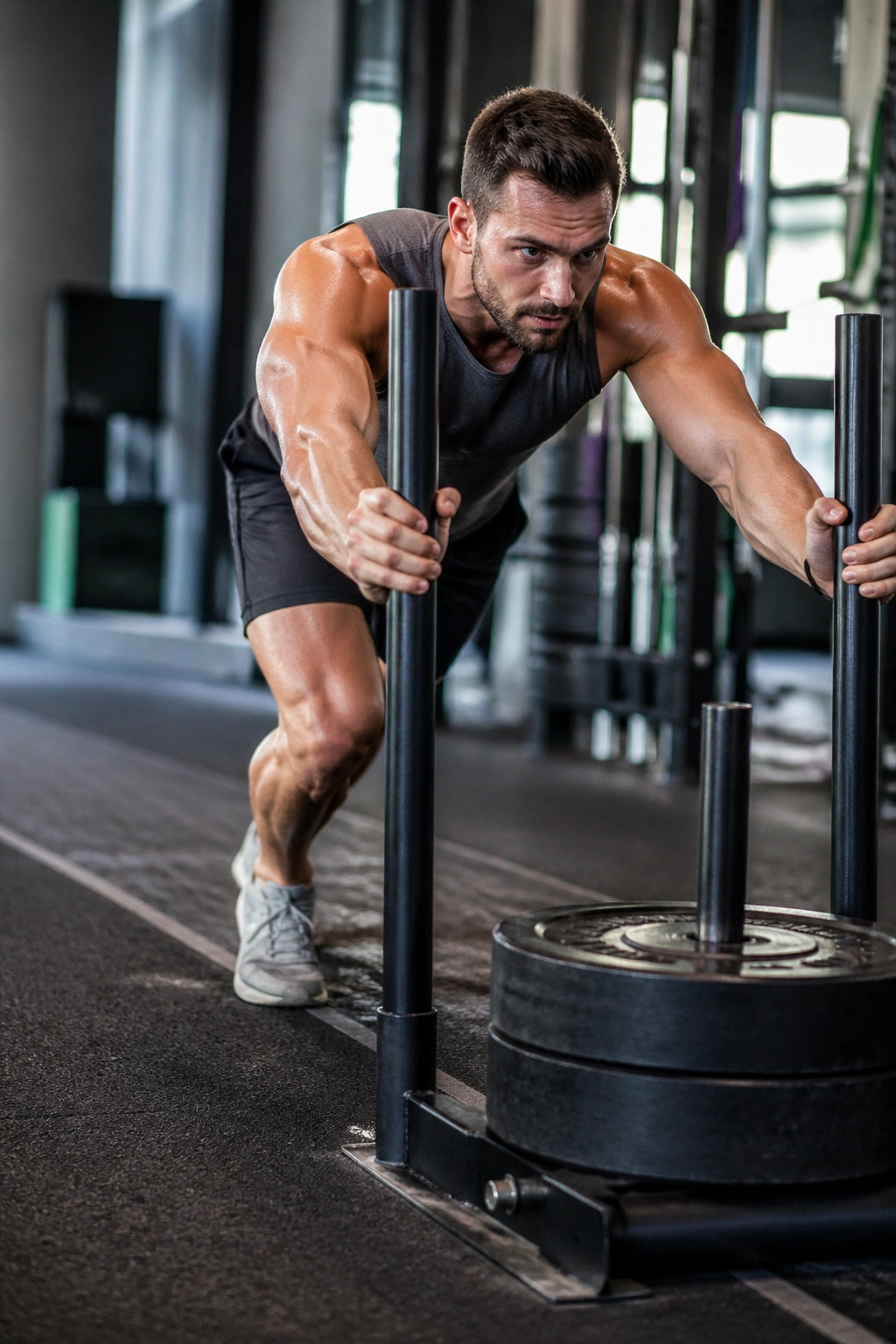
Sled pushes are one of the few hard workouts that do not beat you up in the same way running does.
That is the draw. You get a heavy lower-body drive, a strong trunk brace, and a high heart rate without the landing impact. It is a brutal kind of simple: lean in, drive your feet, and keep the sled moving for 15 to 25 meters at a time. Then recover, because the next push should still look clean.
What makes sled work stand out is the lack of eccentric loading. Your muscles are pushing, but they are not getting stretched and smashed on the way down like they do in lots of jumping or running drills. That usually means less soreness and faster repeatability. If you have access to a sled, use it. If you do not, a heavy prowler-style push, a loaded treadmill walk with the belt off, or even a thick towel push on turf can give a rough substitute.
Keep your spine neutral. Low hips, strong arms, short steps. It is not graceful.
It is effective, though. And that matters more.
12. Cycling Sprints
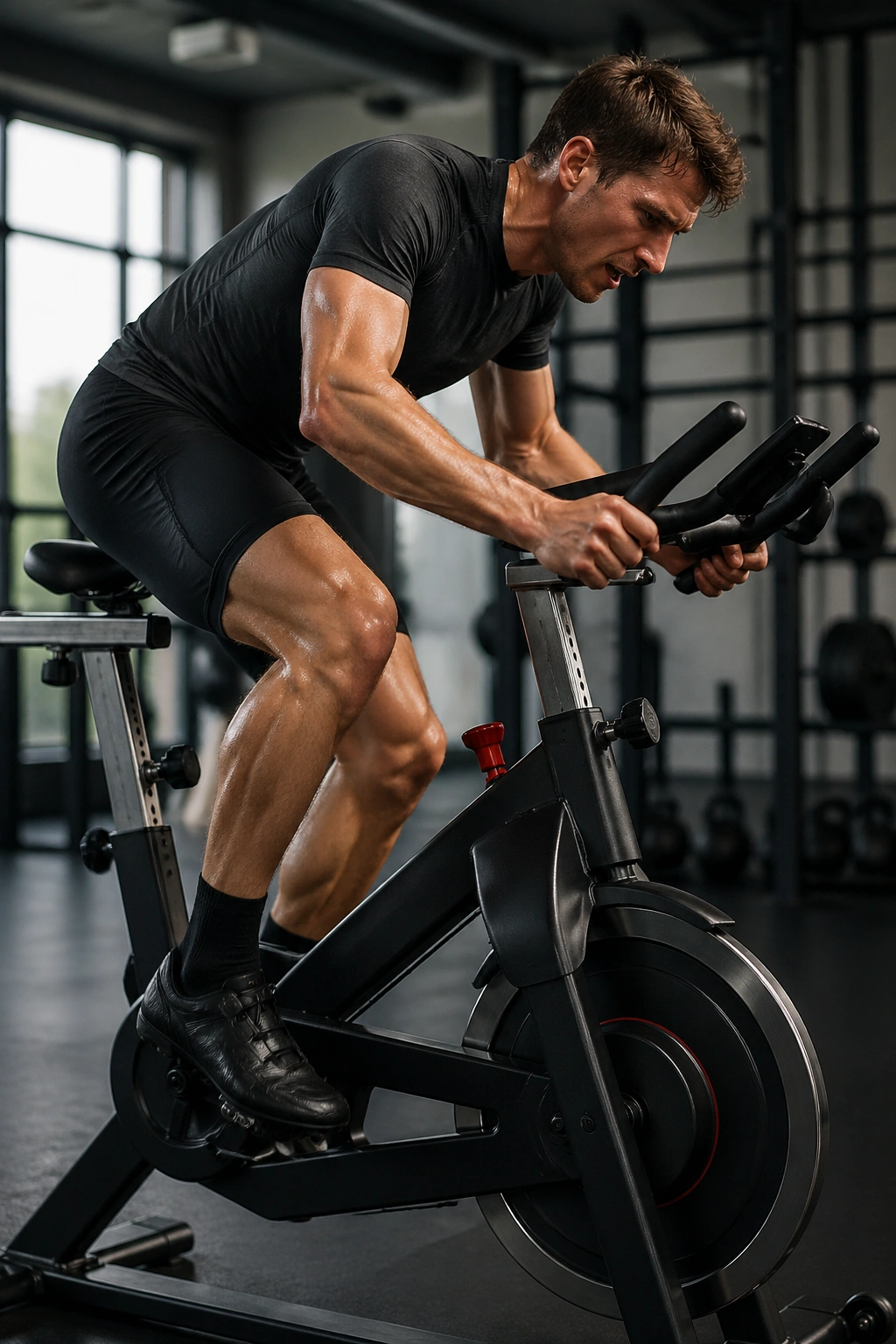
Unlike jogging, cycling lets you go hard with less pounding on the joints.
That is one reason bike sprints are a smart tool for fat loss. The legs do almost all the work, but the core still has to steady the torso while you drive the pedals hard enough to make the effort count. If you have a stationary bike, this can be one of the easiest ways to rack up serious intensity without needing much recovery afterward.
Try 10 to 15 seconds all-out, then 45 to 60 seconds of easy spinning. Five to eight rounds is enough to matter. If you prefer a longer interval, use 30 seconds hard, 90 seconds easy. Keep the seat high enough that your knees are not jammed at the top of the pedal stroke, and resist the urge to rock your upper body like you are trying to shake the bike apart.
This is best for people who want a hard sweat session but also want to protect their knees, shins, or feet from impact. It is also a good fallback when the weather is terrible and you would rather not think about it.
A bike sprint done with real effort is not subtle. Your breathing will tell you that.
13. Dumbbell Thrusters for a Belly Fat Workout Finisher
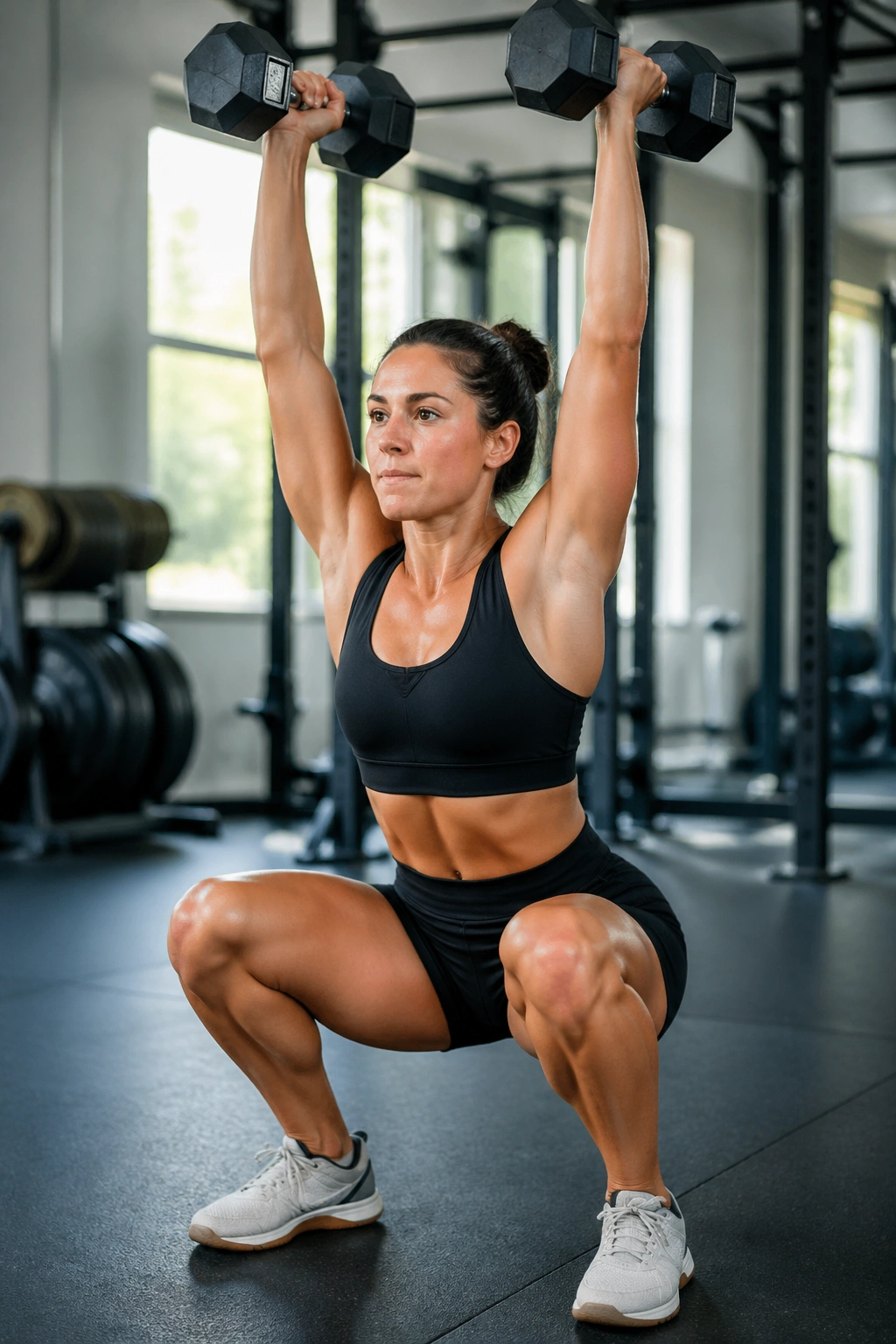
Dumbbell thrusters are ugly in the nicest possible way.
You squat, drive up, and press overhead in one smooth chain, which means your legs, shoulders, and core all have to cooperate or the rep falls apart. That full-body demand is why they work so well as a finisher. You do not get to hide with thrusters. The movement keeps asking for more until the set ends.
Why They Work
Choose dumbbells you can control for 8 to 12 reps without turning the press into a back bend. If the weights are too light, the move turns into a warm-up. If they are too heavy, you lose the squat depth and the press path gets sloppy.
- Keep your feet about hip-width apart.
- Squat until your thighs are roughly parallel, or as low as your mobility allows.
- Stand fast, then press overhead in one smooth motion.
- Lower the weights under control before the next rep.
- Rest 45 to 90 seconds between sets.
I like thrusters as a finisher after a strength day because they leave no weak link untouched. Legs tired? You feel it. Shoulders tired? You feel that too. Core not doing its job? The rep gets ugly fast.
That honesty is useful. It is one of the reasons the move belongs in a serious fat-loss rotation.
14. Farmer’s Carries That Tighten Your Core Under Load
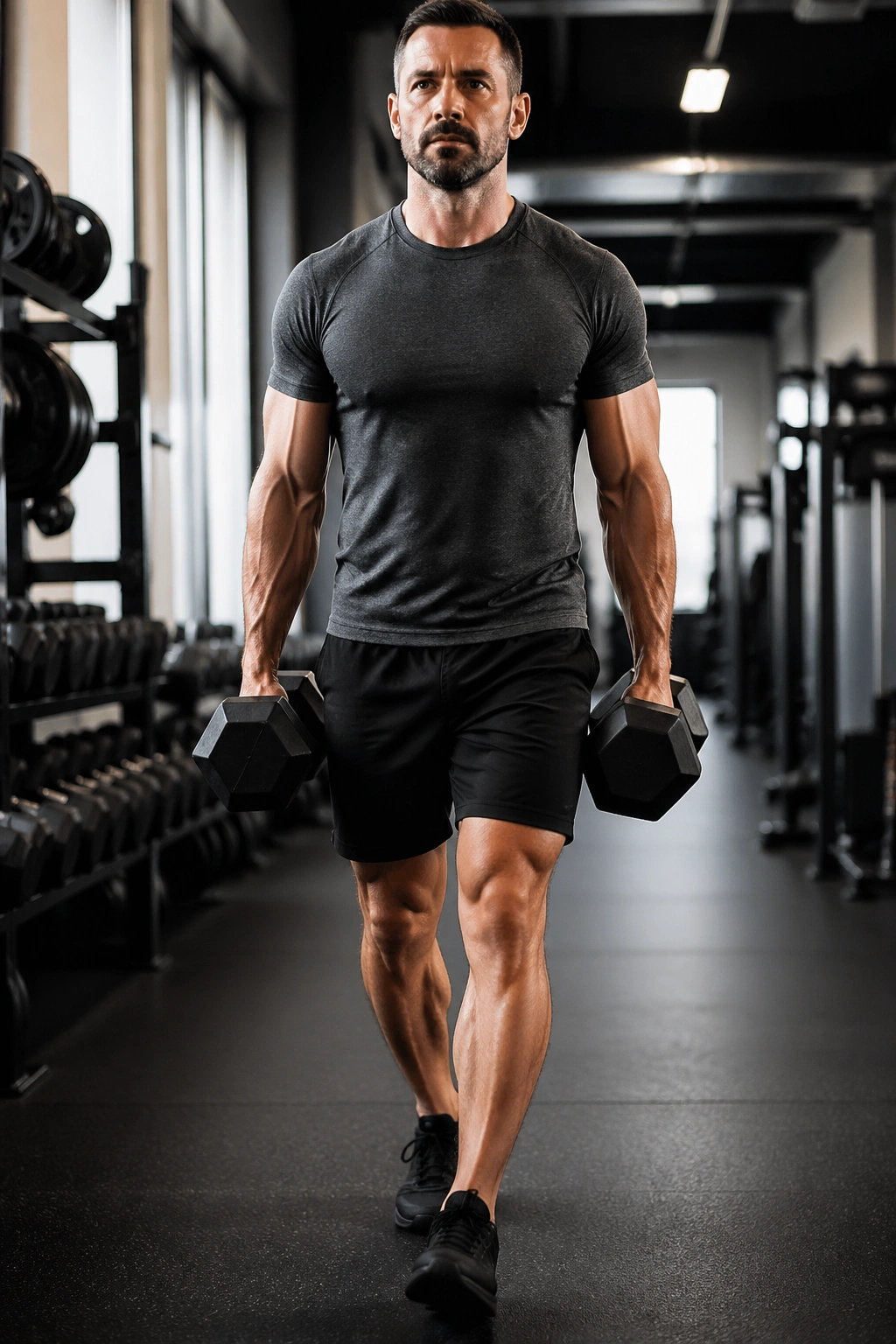
Carrying heavy things is underrated.
A farmer’s carry looks almost too plain to count as a workout, which is exactly why people dismiss it. Then they pick up two heavy dumbbells, walk for 30 seconds, and discover their whole torso has to fight to stay tall. The abs are not curling or crunching here. They are resisting side-bending, rotation, and sloppy posture while the grip works too.
Walk 20 to 40 meters per set, or go for 30 to 60 seconds if you have room. Keep the ribs down, shoulders back and down, and the steps controlled. A suitcase carry, where you hold one weight on one side only, is even nastier on the core because the body has to stop itself from leaning. That variation is gold if your goal is a tighter middle and better everyday posture.
People often overlook carries because they do not feel flashy. Fine. Flashy does not trim waists. Work does.
If your back arches or your shoulders creep toward your ears, the weight is too heavy. Lighten it, walk cleaner, and make the torso do the job it was built for.
15. Dead Bug to Plank Flows for a Stronger, Flatter Midsection
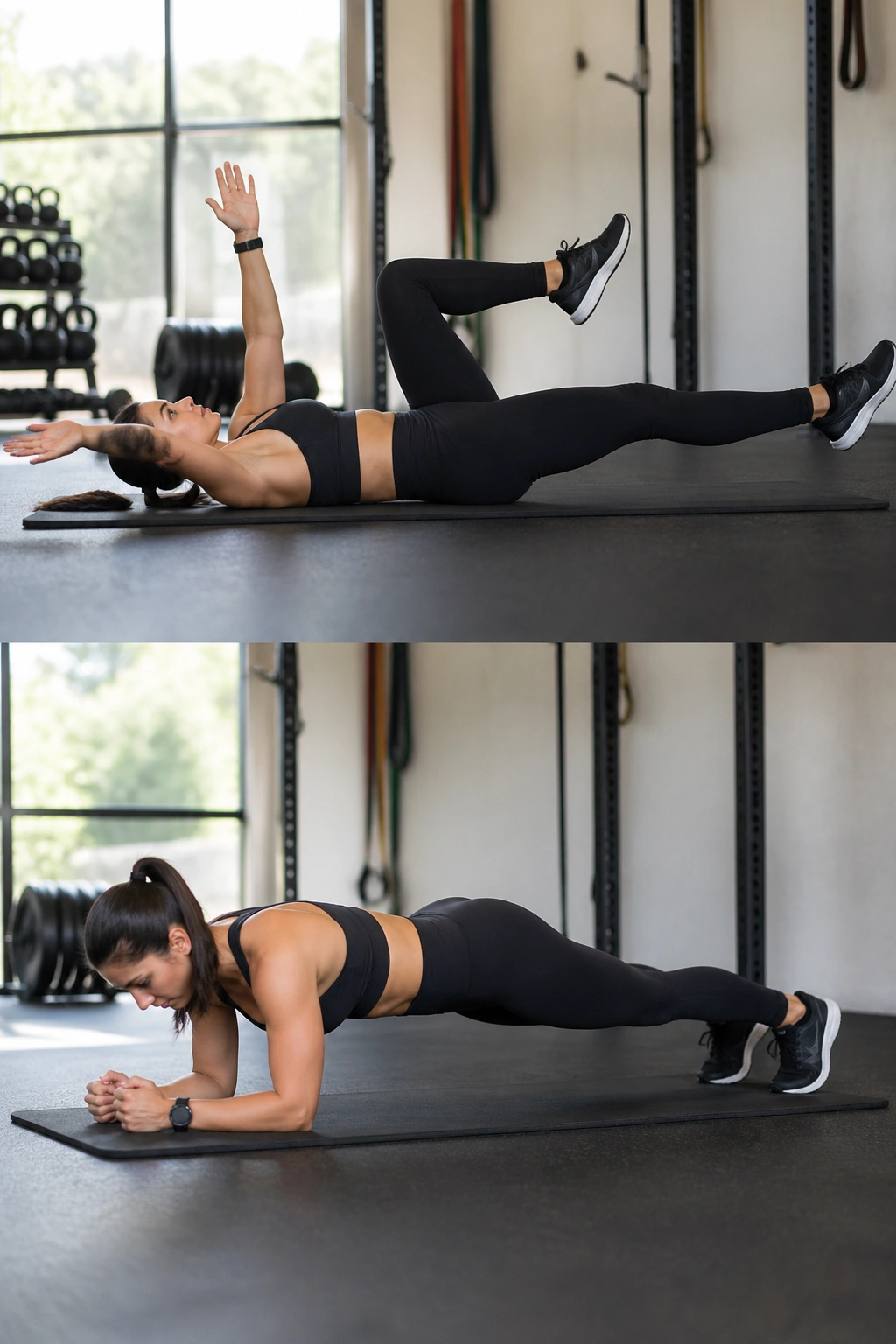
Do core moves matter in a belly fat list if they do not torch calories the way sprints do?
Yes, but in a quieter way. Dead bugs and planks teach the trunk to brace, the pelvis to stay stable, and the ribs to stop flaring when you get tired. That has a real payoff. Better bracing makes your other workouts cleaner, and cleaner workouts usually mean more total work with less junk movement.
How to Use It
Start with 6 to 10 dead bugs per side, then move into a 20- to 40-second plank. Repeat for 3 to 5 rounds. Keep your lower back pressed toward the floor during the dead bug, and stop the plank the second your hips sag or your shoulders shrug up. Quality matters more than volume here.
This is a smart add-on on days when you want to train but not crush yourself. It also helps if your lower back tends to take over when you fatigue. A lot of people chase harder cardio and never learn to hold a good body position. That is a mistake. A stable core does not show up on its own.
The move is boring. It also fixes things. That is worth a lot.
16. Kettlebell Clean and Press Intervals
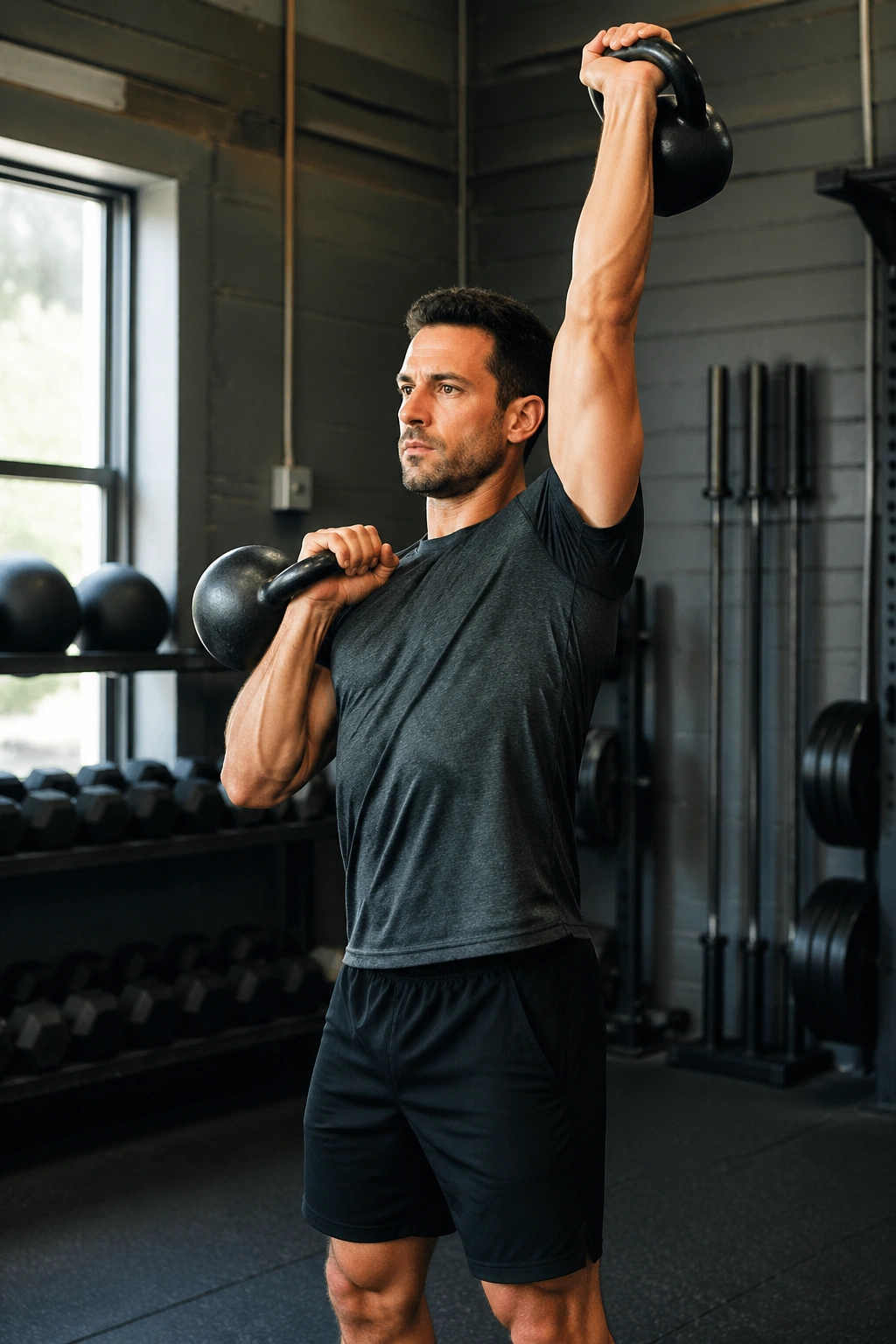
A clean and press interval feels a bit like strength work and conditioning got shoved into the same room.
The bell starts between the feet, travels up close to the body, lands softly in the rack position, then gets pressed overhead. If that sounds technical, it is only because the movement has to be tidy. A wild clean bangs the forearm. A sloppy press turns into a back arch. When both pieces are clean, though, the workout hits the legs, shoulders, grip, and core in one compact block.
Use 5 to 6 reps per side, then rest 60 to 90 seconds. You can also run a timer and alternate sides each round for 10 to 12 minutes. The pace should feel demanding but not frantic. If your breathing gets so choppy that the rack position falls apart, the session is too fast.
- Keep the bell close on the way up.
- Catch it softly at the shoulder.
- Press without leaning back.
- Reset before the next rep.
This one is excellent for people who want a workout with some muscle behind it. It is not the easiest option on the list. It is one of the most useful.
17. EMOM Full-Body Burners for Belly Fat Workouts
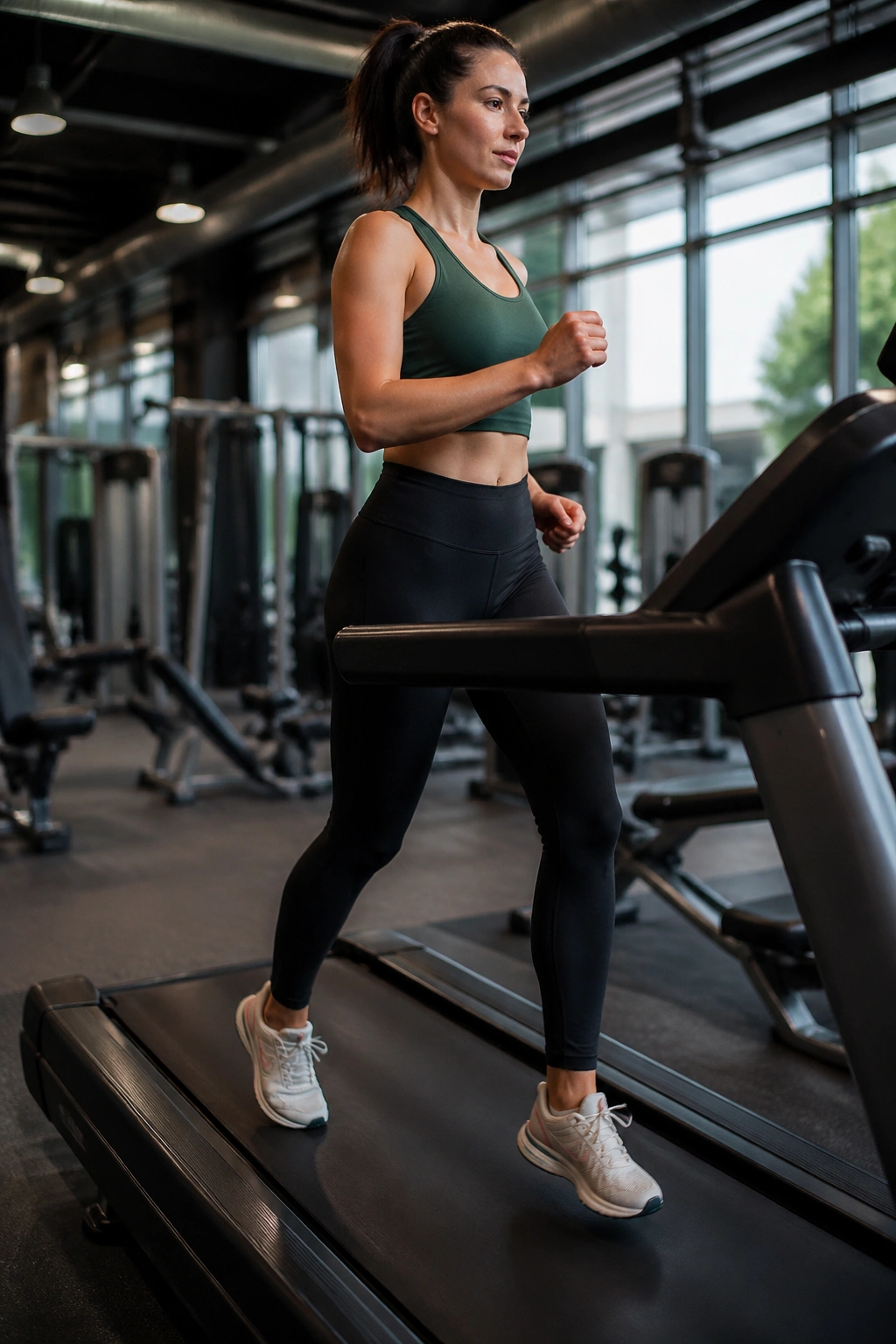
EMOM stands for every minute on the minute, and it is one of the cleanest ways to keep a workout honest.
You pick a move, do a set at the top of the minute, and rest for whatever time is left. That rest is the point. It keeps the pace from drifting into lazy territory, but it also stops the workout from becoming a sloppy marathon. A good EMOM can blend strength and cardio so well that you barely notice the clock until your shirt is soaked.
Try a four-move circuit for 12 to 20 minutes: minute one, goblet squats; minute two, push-ups; minute three, kettlebell swings or dumbbell rows; minute four, mountain climbers or step-ups. Repeat. If you finish each set in under 40 seconds, the format is about right. If you need 55 seconds every time, the load is too heavy or the reps are too high.
This is a nice place to end because EMOMs let you build your own version of a fat-loss week without overthinking it. Pick four or five of the workouts above, spread them across the week, and leave at least one easier day between the hardest sessions. Two weeks is enough time to feel the difference if the work is real. Maybe not dramatic. Definitely noticeable.
