



Leg training is notorious for one thing: it is physically exhausting. If you are doing it right, your central nervous system feels the toll, and your legs feel like lead for two days afterward. But there is a trap many lifters fall into. They find three or four movements they are comfortable with, and they repeat them until their progress plateaus or, worse, they develop repetitive strain injuries. The body is an adaptation machine. If you keep feeding it the exact same stimulus, it stops growing and stops getting stronger.
Building a powerful, aesthetic, and functional lower body requires rotating through different planes of motion, varying your rep ranges, and playing with different types of tension. You need movements that prioritize heavy mechanical loading, others that emphasize explosive power, and some that are strictly about metabolic stress or unilateral balance. By mixing these thirty specific protocols throughout your week, you provide a comprehensive stimulus that forces your legs to adapt, grow, and improve their structural integrity.
1. Traditional Back Squat
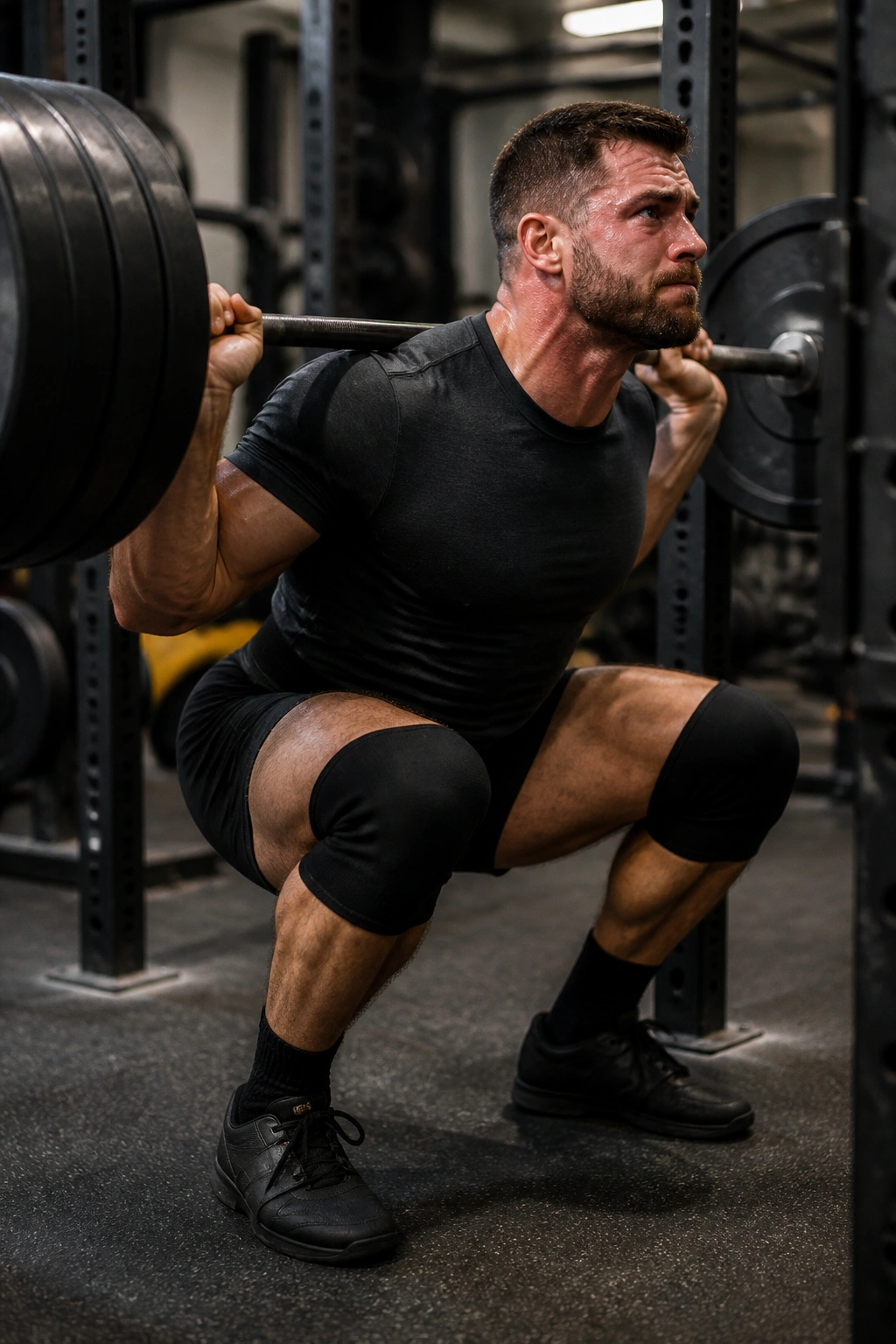
There is a reason this movement is the cornerstone of almost every strength program on the planet. It allows you to load the spine with more weight than any other leg exercise, forcing your quads, glutes, and core to handle massive force. When you unrack the bar, your entire body must stabilize the weight, which builds a level of structural density that leg press machines simply cannot replicate.
How to Integrate It
Use this as your primary compound lift on your heaviest training day. Aim for a lower rep range—between three and six reps—to maximize strength gains. If you want to increase your squat capacity, focus on your descent. Control the negative portion for three full seconds before driving up. This builds eccentric strength and prepares your connective tissues for heavier loads over time.
Pro tip: Adjust your stance width to find the sweet spot for your hip anatomy; a wider stance usually engages the adductors and glutes more, while a narrower stance puts more emphasis on the quads.
2. Front Squat
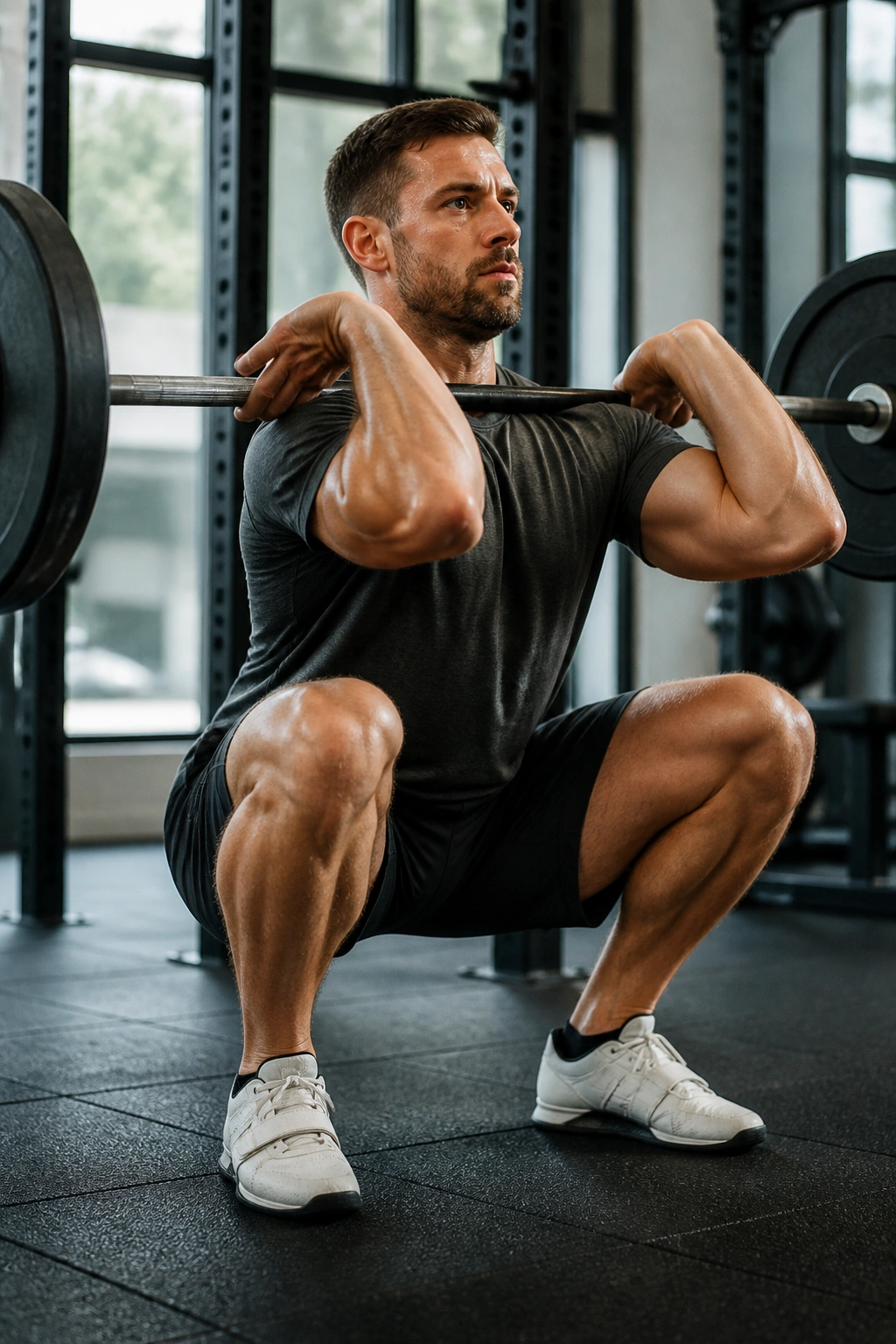
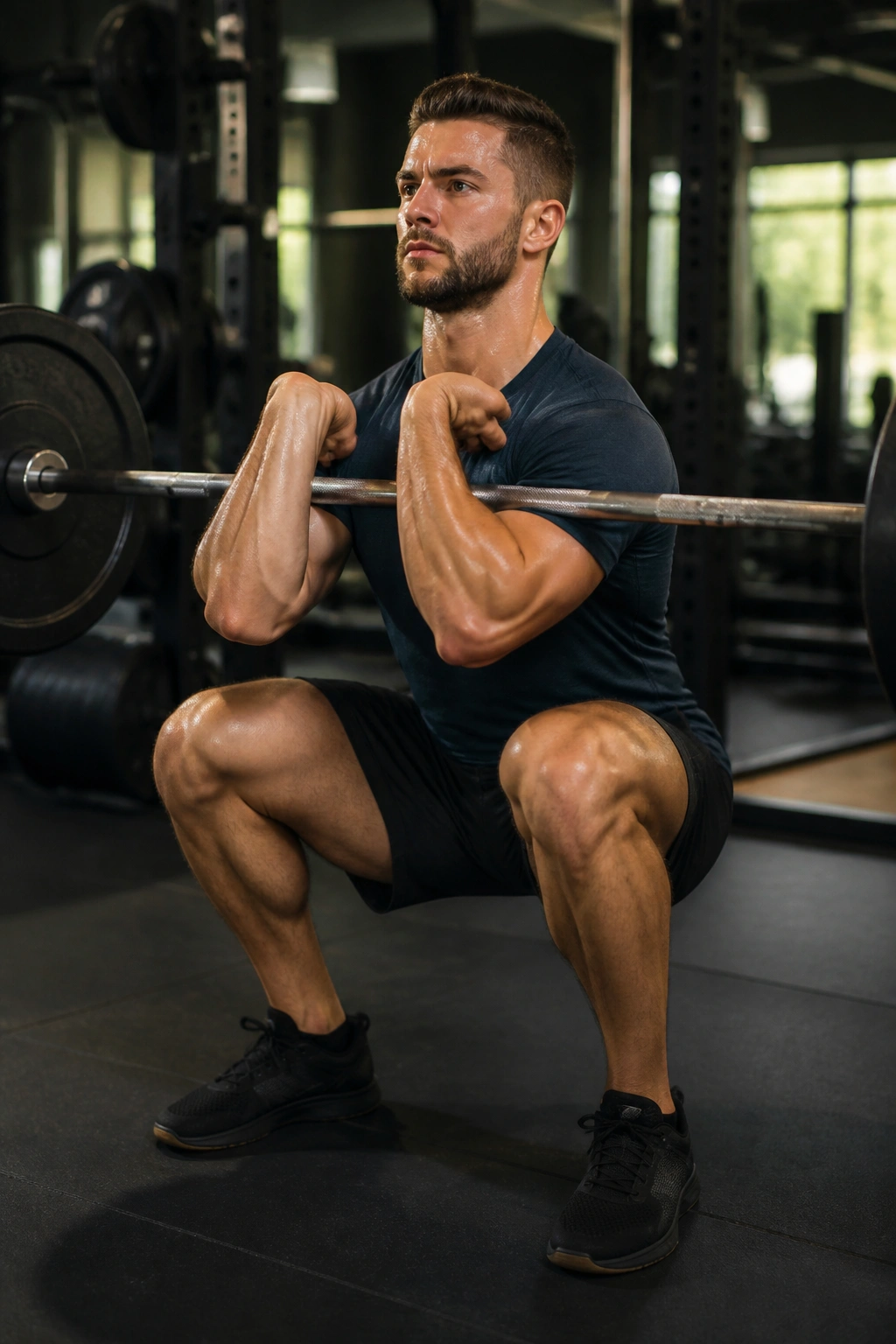
If your back squat has plateaued, or if you find yourself leaning too far forward under heavy load, the front squat is the correction you need. By placing the barbell across the front deltoids, you are forced into an upright torso position. If you round your back, the bar simply rolls off. It is an immediate, unforgiving teacher of form.
Why It Demands Perfection
The front squat shifts the center of mass forward, putting significantly more demand on your quadriceps and your core stability. You cannot “cheat” a front squat with a rounded spine. This makes it a fantastic movement for building a thick, muscular set of quads without the heavy spinal loading required for maximal back squats.
Focus point: Keep your elbows high throughout the entire movement. If they drop, your chest will follow, and you will lose the lift.
3. Romanian Deadlift
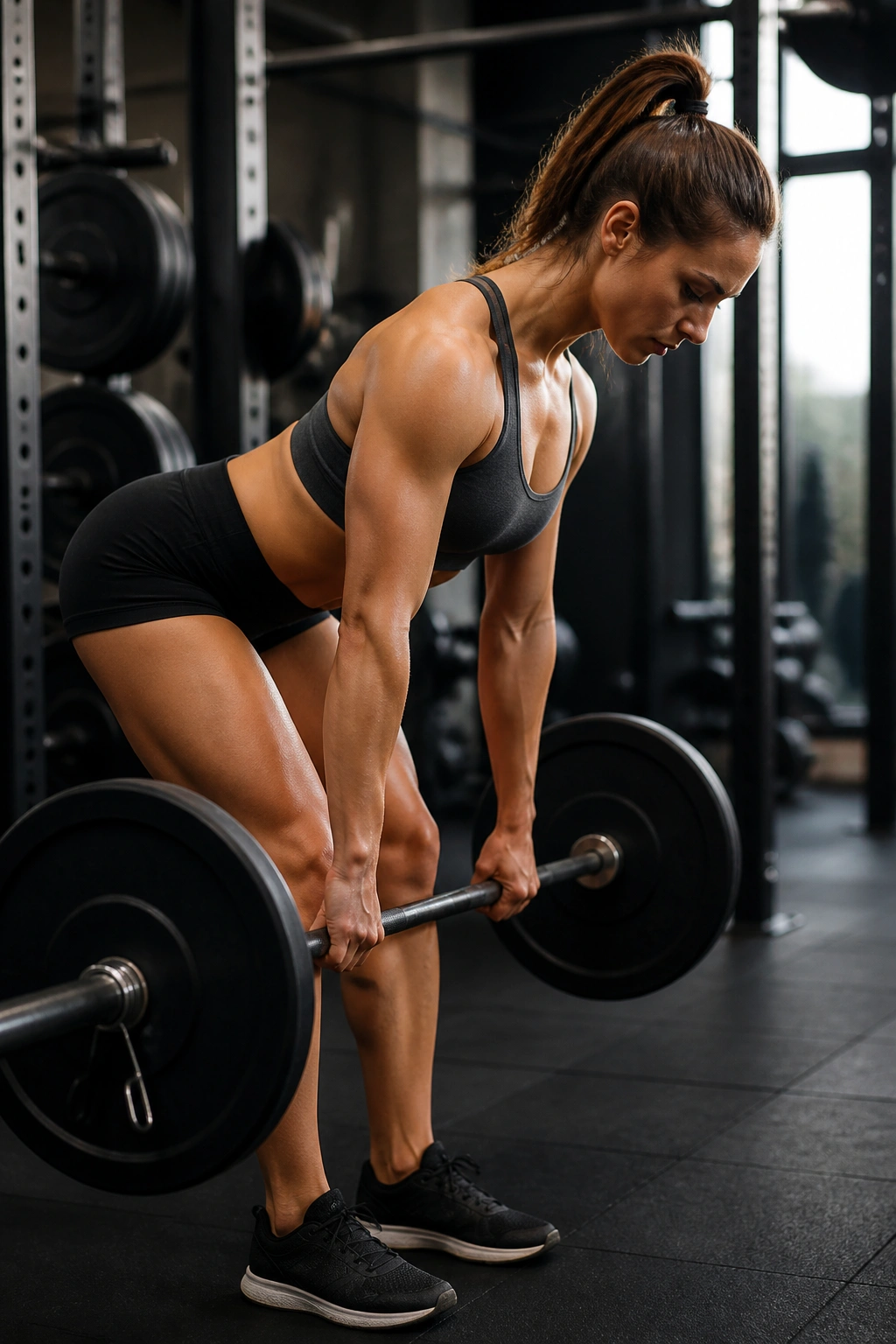
Forget the leg extensions for a second. If you want to build hamstrings that have real thickness, you have to hinge. The Romanian deadlift, or RDL, keeps a slight bend in the knee, which shifts the emphasis squarely onto the hamstrings and glutes while minimizing quad involvement.
The Mechanism of Growth
Unlike a traditional deadlift, you start from the top and lower the weight. You are looking for a deep, painful stretch in the hamstrings as you push your hips back. Do not touch the floor. Stop when you feel your hamstrings reach their end range of motion, then drive your hips forward forcefully to lock out. This eccentric stretch is what triggers serious muscle fiber damage and subsequent hypertrophy.
4. Bulgarian Split Squat
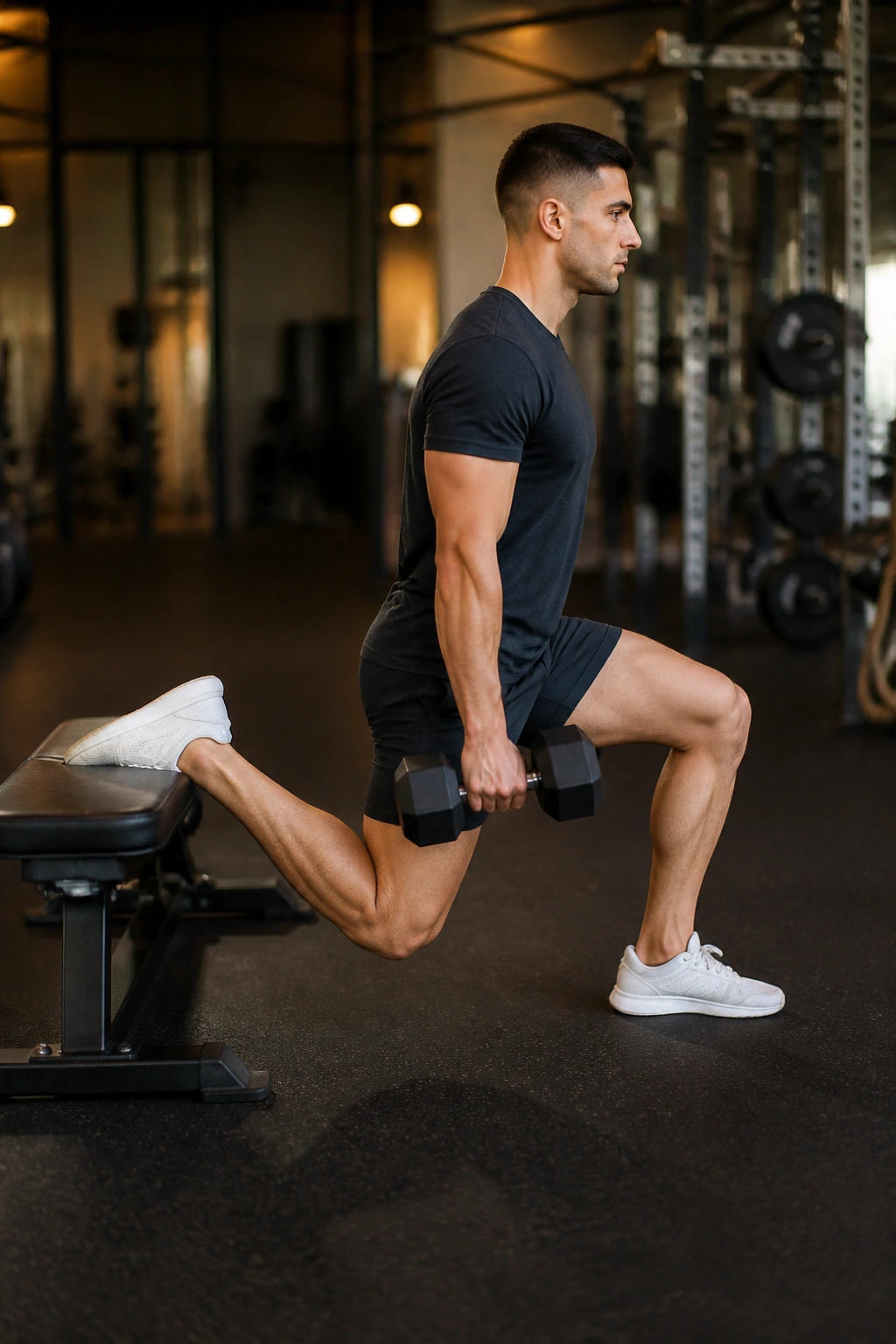
Many people hate this exercise, and that is exactly why it is so effective. It is a unilateral nightmare that exposes every weakness in your stability and hip strength. By elevating your rear foot, you remove the help your other leg would usually provide, forcing the working leg to handle your entire body weight plus whatever load you are holding.
Why Use It
This is the ultimate movement for fixing muscle imbalances. If your left leg is stronger than your right, the Bulgarian split squat will highlight it instantly. It also provides a significant stretch to the hip flexors of the back leg, which can improve your overall mobility. Use dumbbells or a barbell, but start light—the balance requirement alone will challenge you.
5. Walking Lunges
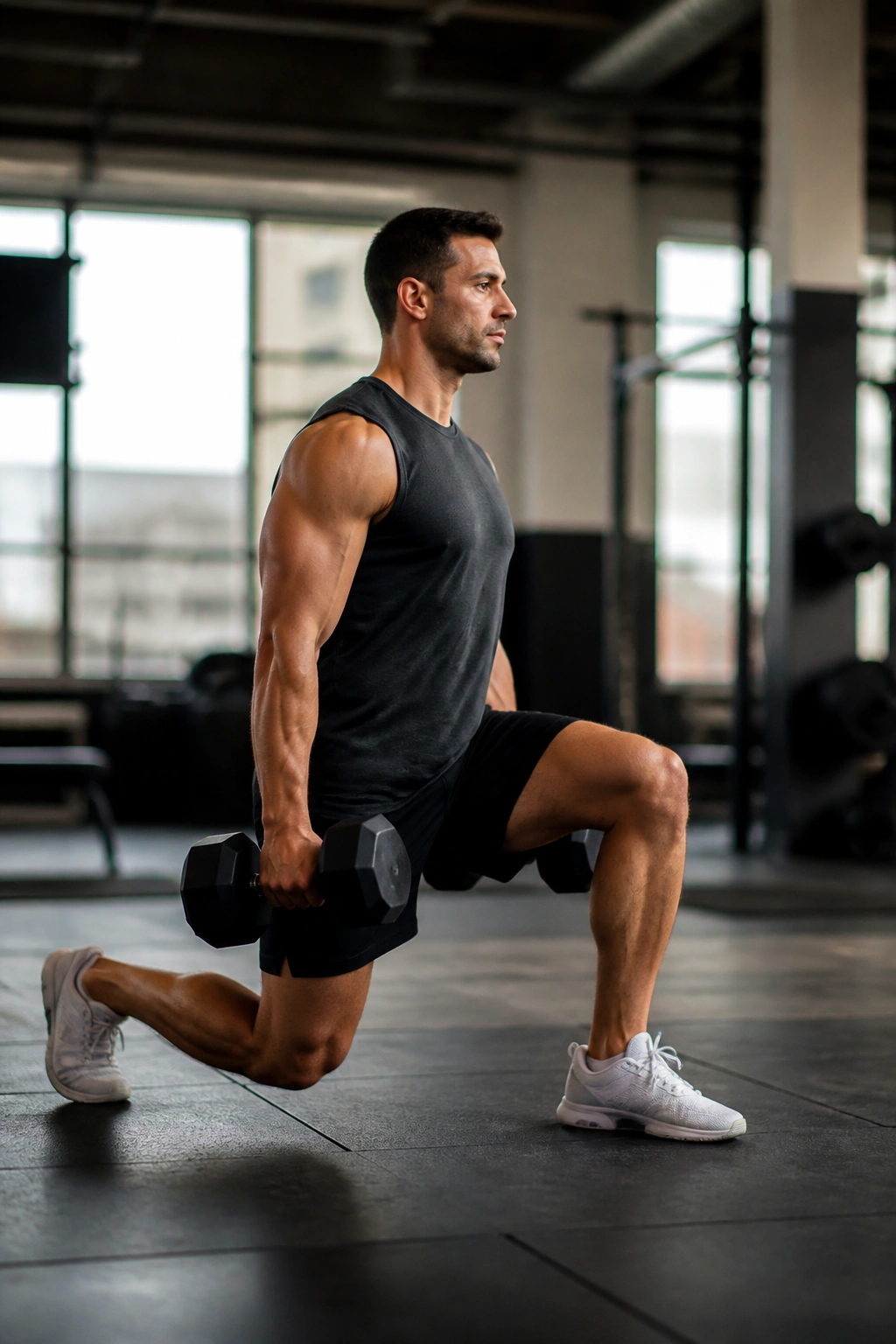
Walking lunges are not just for conditioning; when performed with heavy dumbbells, they are a powerful muscle-building tool. They force you to balance in a dynamic environment, engaging the stabilizing muscles in your hips and core that remain dormant during fixed movements like the leg press.
The Execution
Take a controlled step forward, keeping your torso upright, and descend until your rear knee almost kisses the floor. Do not slam your back knee into the ground. Drive through the heel of the front foot to propel yourself into the next step. If you want to bias your glutes, take a longer stride. If you want to bias your quads, take a shorter, more upright stride.
6. Leg Press
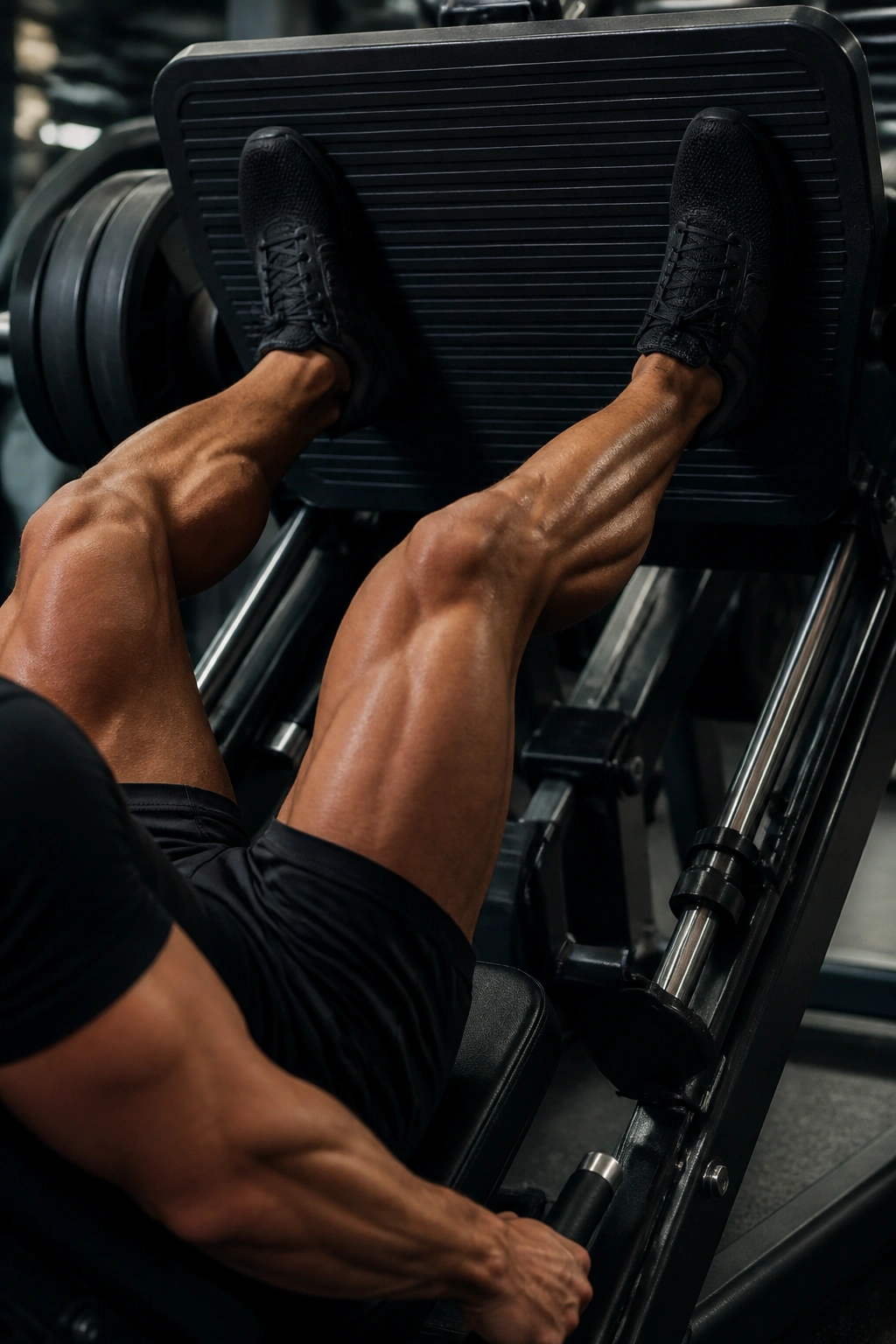
Some gym purists claim the leg press is “fake” weight. They are wrong. While it does not offer the same core stabilization requirements as a barbell squat, the leg press allows you to safely train your legs to failure without the risk of dropping a heavy bar on your face.
How to Get More Out of It
Don’t just mindlessly push the weight. Place your feet lower on the platform to emphasize the quads, or higher to hit the glutes. The key is to control the eccentric phase. Lower the carriage slowly, bringing your knees toward your chest, and press through your entire foot. Do not lock your knees at the top; keep the tension on the muscle, not the joint.
7. Goblet Squat
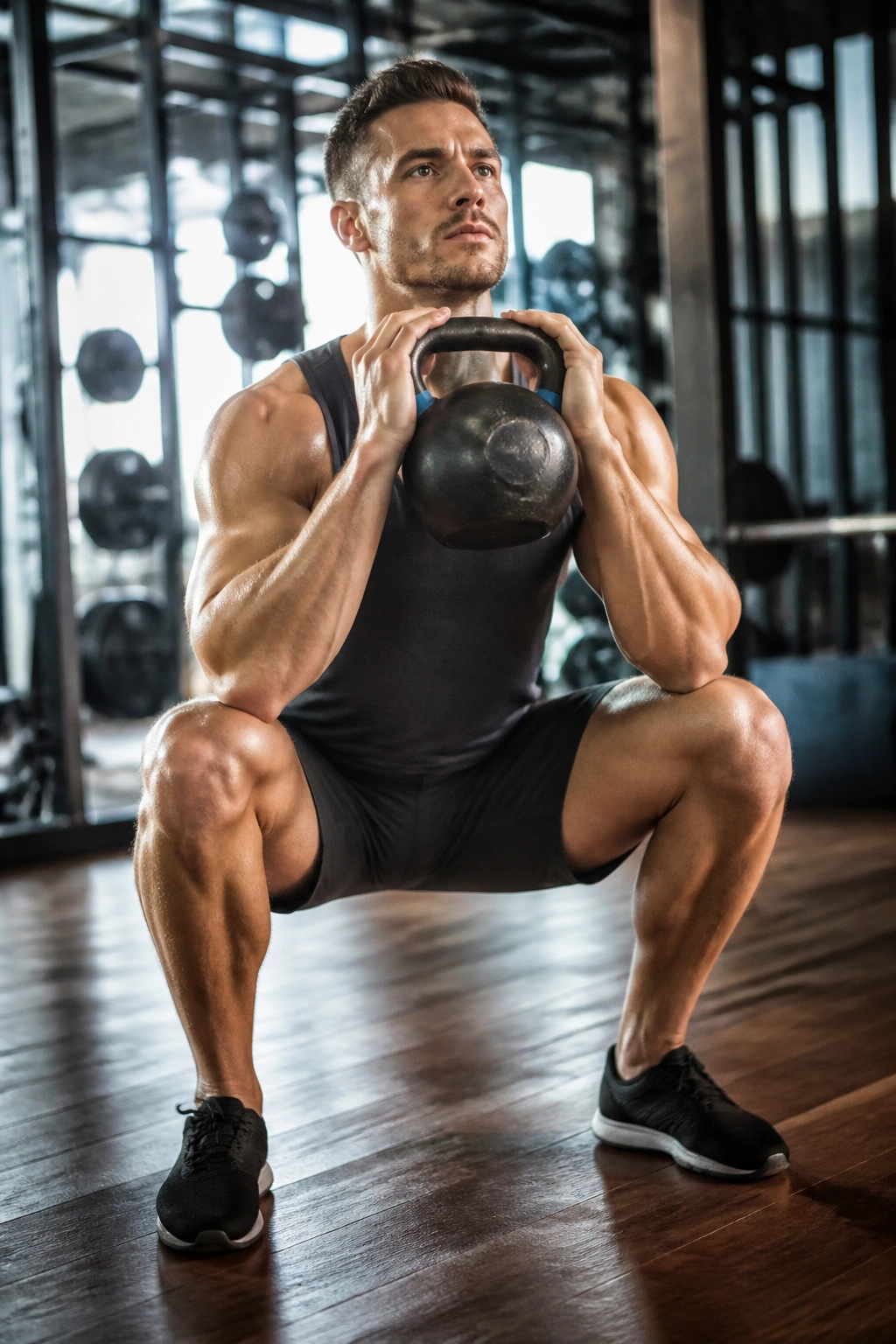
This is the perfect movement for beginners or for experienced lifters looking to “grease the groove” on their squat form. Holding a kettlebell or dumbbell at chest height acts as a counterbalance, allowing you to sink deeper into the squat than you might with a barbell.
The Benefits
The goblet position forces you to keep your chest up and your spine neutral. It is an excellent way to warm up for heavier squats or to perform high-volume sets to get a massive pump in your quads. Because you are limited by the weight you can hold in your hands, it is less about maximal strength and more about perfecting your squat mechanics.
8. Sumo Deadlift
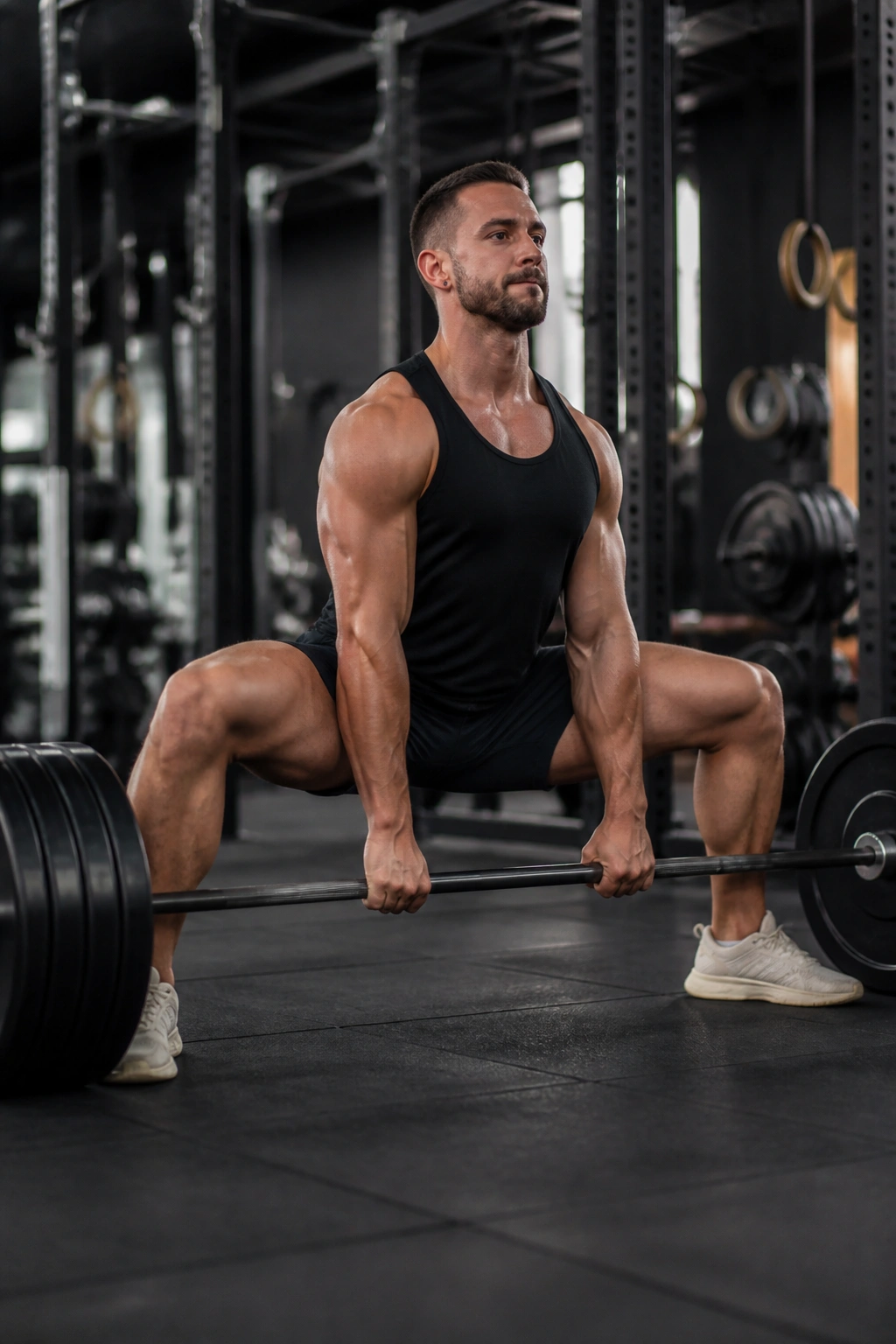
If you find that conventional deadlifts bother your lower back, the sumo variation might be the answer. By taking a wide stance and gripping the bar inside your legs, you reduce the distance the bar has to travel and keep your torso more upright.
Why It Matters
This position engages your adductors (inner thighs) and glutes much more than a conventional deadlift. It puts the load directly under your center of gravity. For those with long legs, the sumo deadlift is often a much more mechanically advantageous way to pull heavy weight from the floor, building powerful hips in the process.
9. Hack Squat
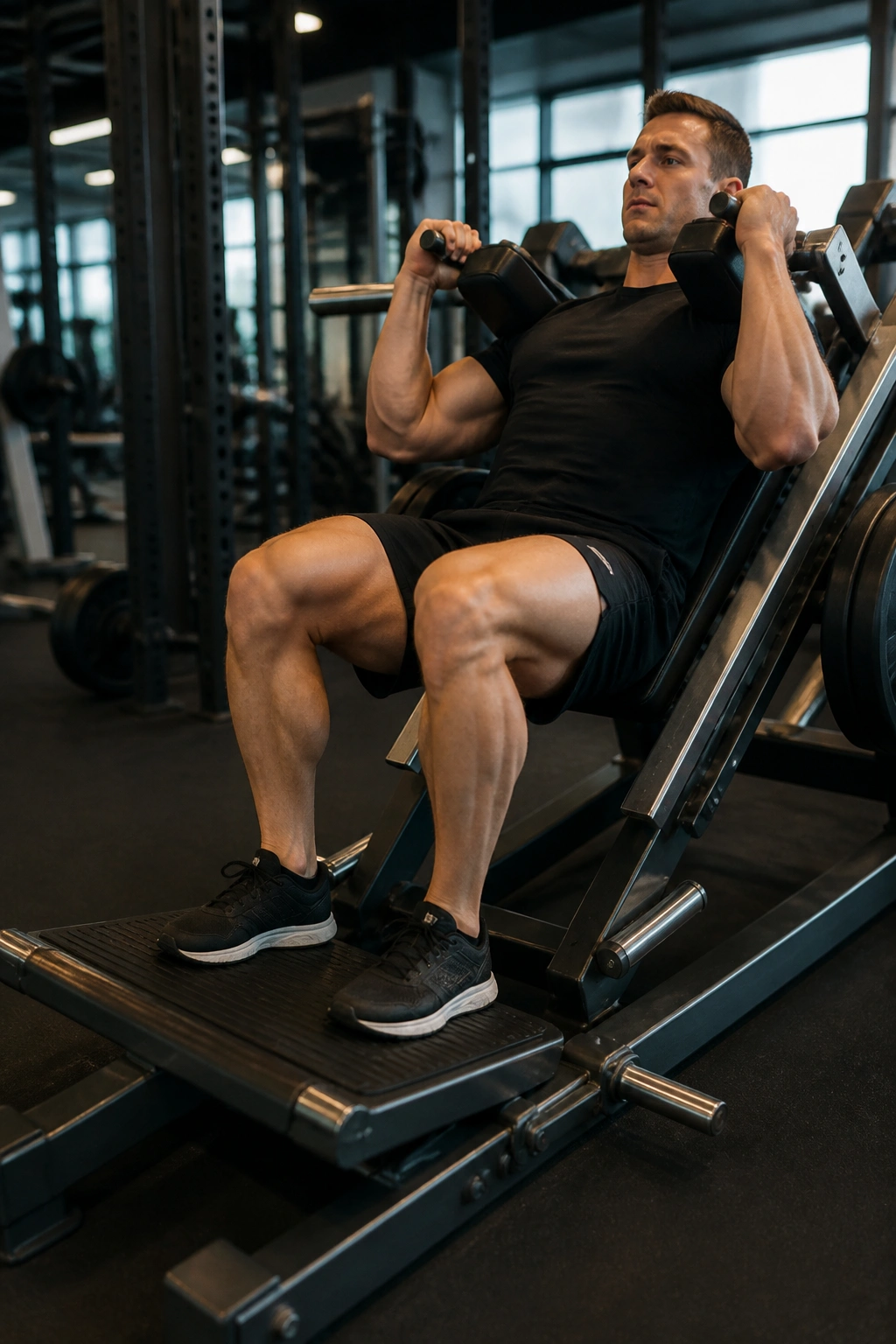
The hack squat machine is often misunderstood. It is not just a “lazy” way to squat; it is a way to isolate the quadriceps without any lower back interference. Because your back is supported against the pad, you can focus entirely on driving through your feet.
How to Use It
Place your feet in the middle of the platform with your toes pointed slightly outward. As you descend, push your knees forward over your toes. This is different from a barbell squat where you prioritize sitting back. By letting your knees track forward, you maximize the stretch and contraction of the quadriceps, leading to that “tear-drop” development above the knee.
10. Kettlebell Swing
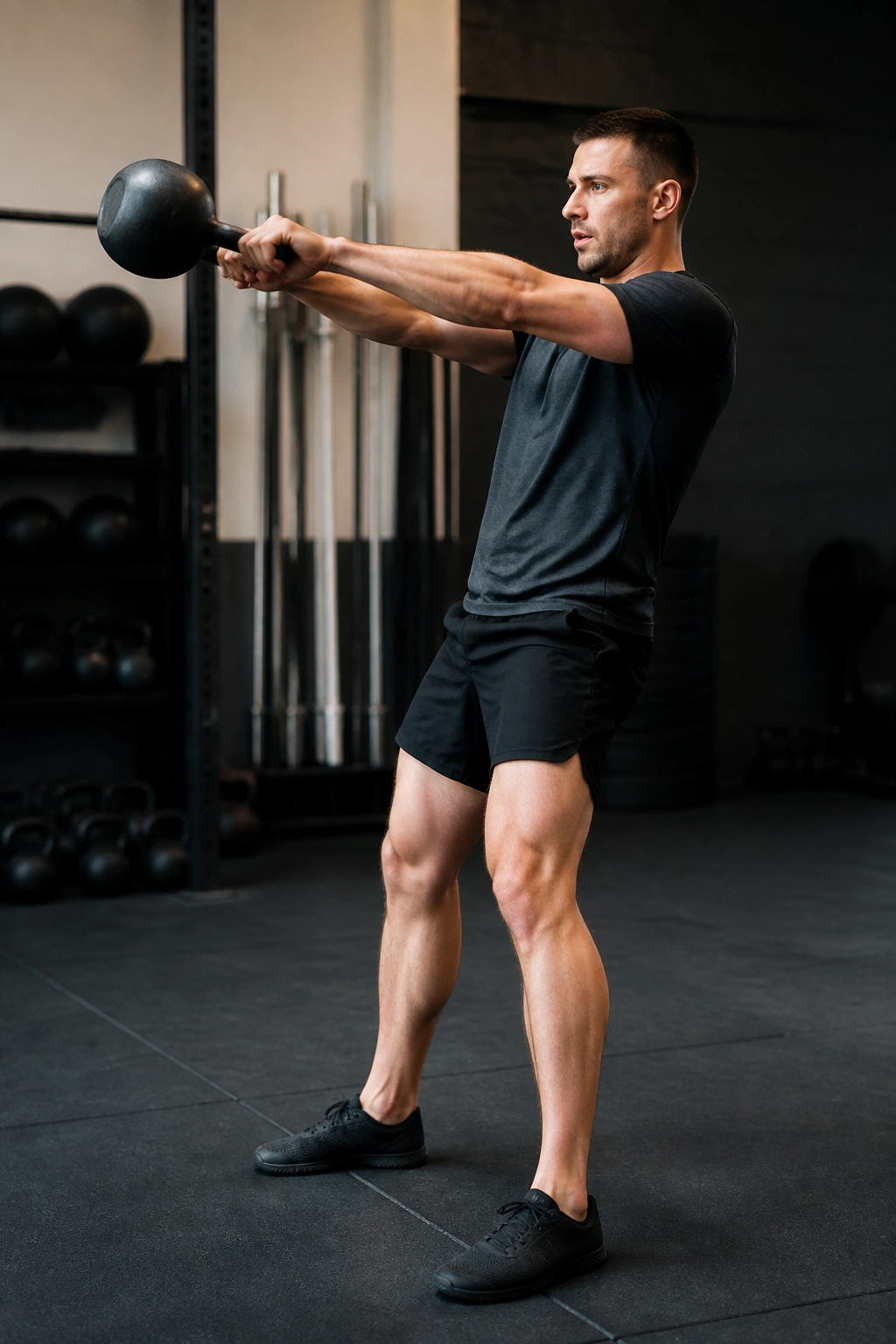
Explosive power is just as important as slow-speed strength. The kettlebell swing is a ballistic movement that targets the entire posterior chain—glutes, hamstrings, and lower back—with high-velocity force.
Why It Works
This is not a squat. It is a hip hinge. Your knees should only bend slightly. The power comes from your glutes snapping your hips forward. By training your posterior chain to produce force quickly, you improve your athleticism and help your body handle heavy loads more safely. Use a weight that feels heavy enough to challenge you, but not so heavy that you lose your snap.
11. Glute Ham Raise
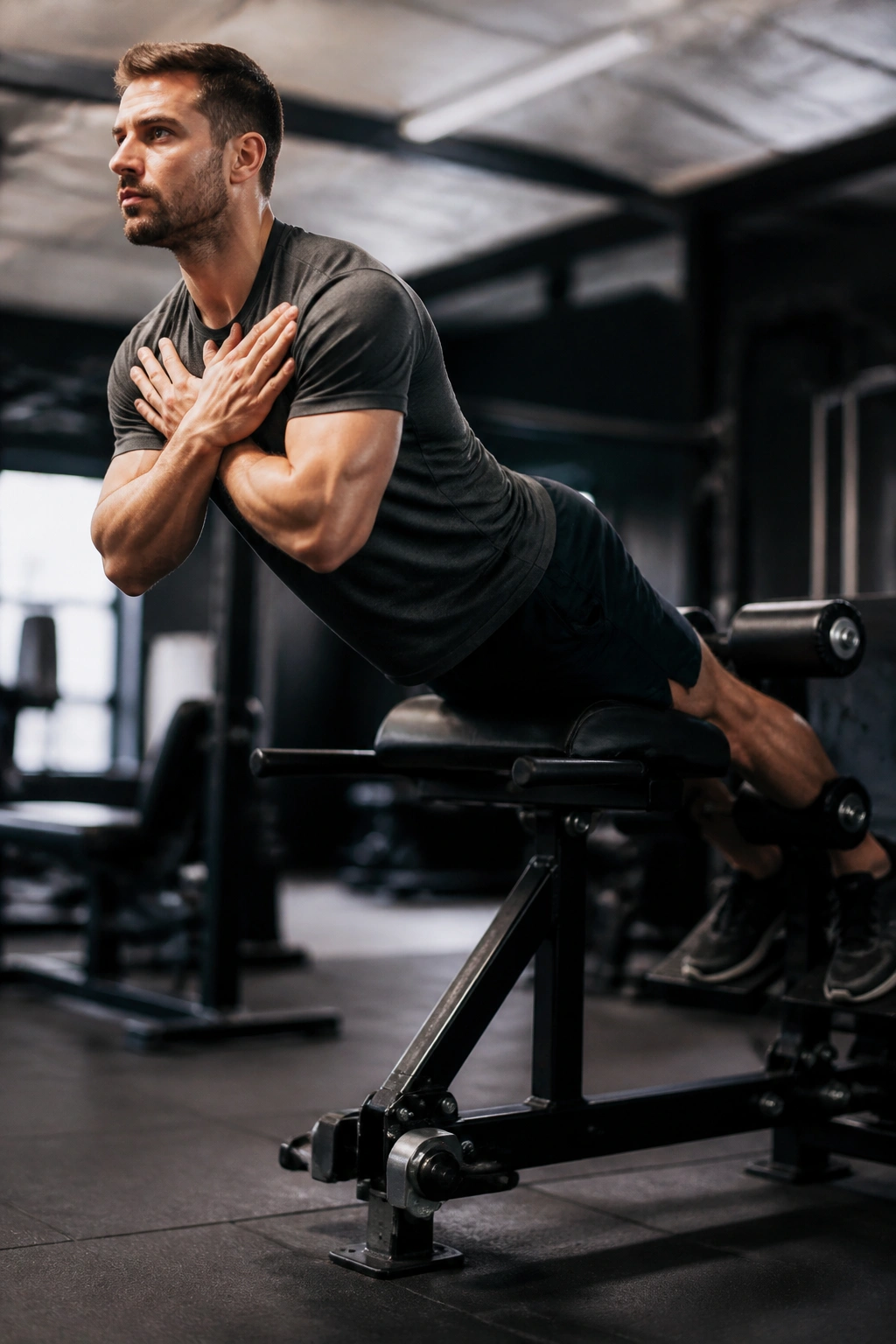
If you have access to a glute-ham developer (GHD) machine, use it. This exercise is the gold standard for hamstring eccentric strength. Unlike leg curls, which only act on the knee joint, the glute-ham raise involves both the knee and the hip, making it a functional powerhouse for leg strength.
The Challenge
This movement is incredibly difficult. It forces your hamstrings to act as both a knee flexor and a hip stabilizer. Start by focusing on the negative—lower yourself slowly—and use your hands to push back up until you build the strength to perform the full rep without assistance.
12. Step-Ups
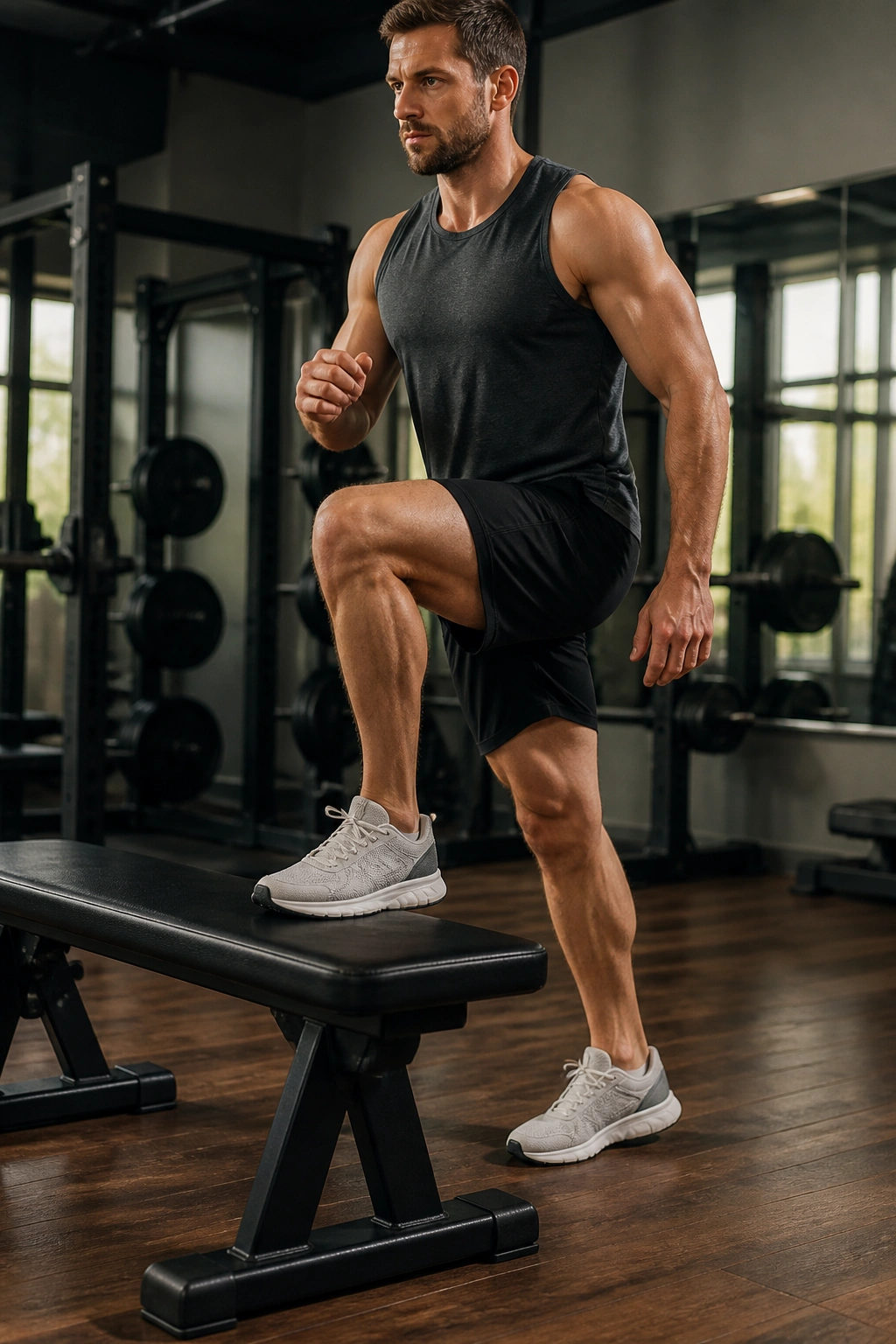
Step-ups are the most overlooked unilateral exercise. They are incredibly simple but demand intense focus. Find a box or bench that puts your thigh parallel to the ground when your foot is planted on it.
The Execution
Step up, driving through your lead leg. Do not push off with your trailing foot. Once you are at the top, stabilize for a second, then lower yourself under complete control. The descent is where the growth happens. Most people rush the down phase, but controlling your body weight on the way down is what builds true stability and strength in the gluteus medius.
13. Leg Extension
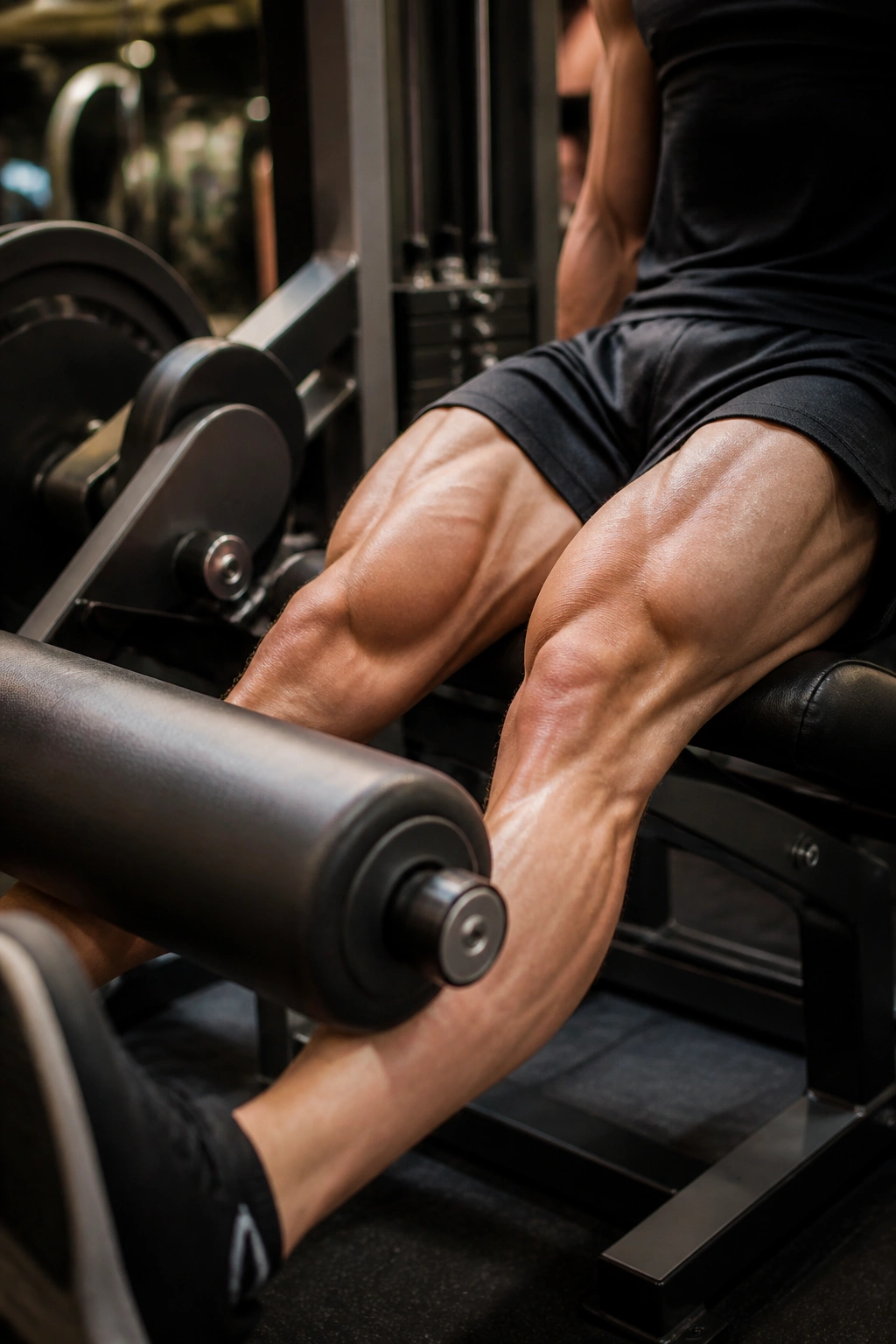
Isolation movements get a bad reputation in the strength world, but for bodybuilding and muscle hypertrophy, they are invaluable. The leg extension is the best way to directly target the rectus femoris—the quad muscle that crosses the hip.
How to Optimize
Do not just kick the weight up. Control the tempo. Lift for one second, hold the peak contraction for one second, and lower for three seconds. The goal is to flood the muscle with blood and create metabolic stress. Use this at the end of your workout as a finisher, when your legs are already exhausted from compound lifts.
14. Lying Leg Curl
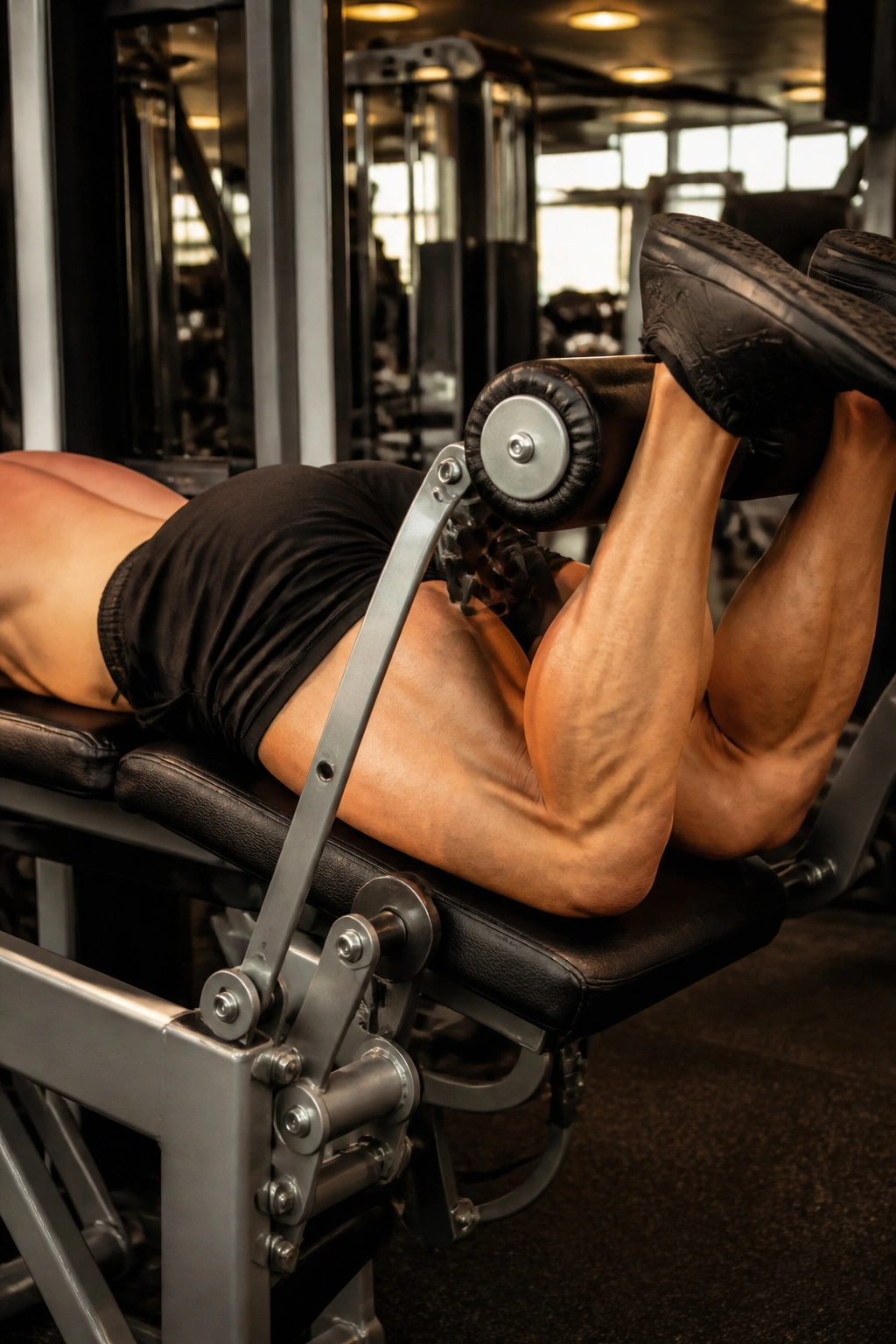
While the glute-ham raise is great for compound strength, the lying leg curl is your bread and butter for isolating the hamstrings. Hamstrings have a dual function: they extend the hip and flex the knee. You must train both to have fully developed legs.
The Fix
The biggest mistake people make is lifting their hips off the pad to move the weight. Keep your hips glued to the bench. If you have to lift your butt, the weight is too heavy. Use a lighter load, keep your hips flat, and focus on curling the weight all the way to your glutes.
15. Box Jumps
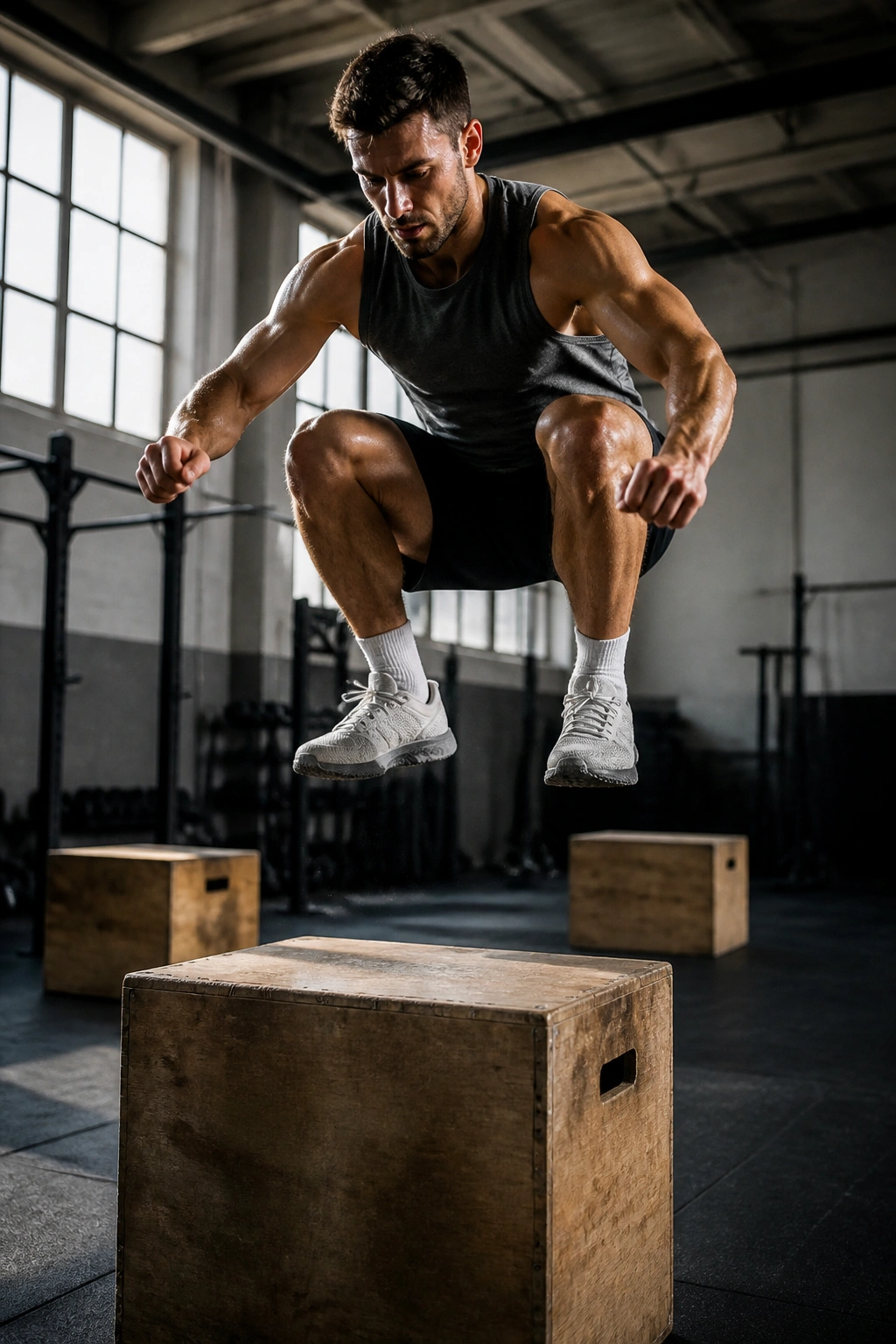
Plyometrics are essential for leg health. Box jumps teach your nervous system to fire motor units rapidly. They are not about how high you can jump; they are about how efficiently you can land and how quickly you can leave the ground.
Safety First
Always step down from the box. Do not jump down. The impact of jumping down repeatedly is unnecessarily hard on your knees and Achilles tendons. Jump up, land softly with your knees tracking over your toes, and step down. This builds explosive power while minimizing wear and tear on your joints.
16. Cossack Squats
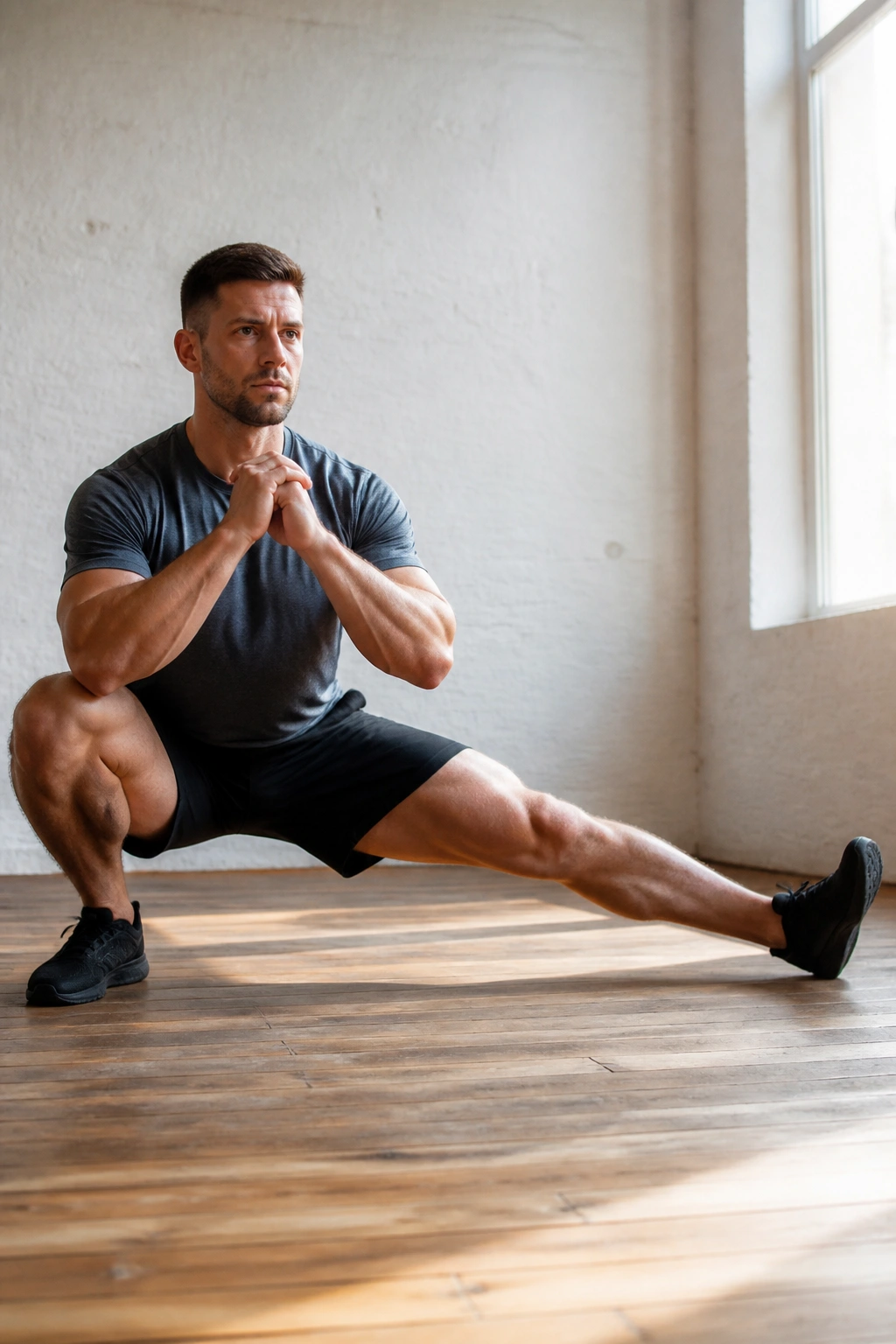
Most people train in the sagittal plane—moving forward and backward. But your legs also need to be strong in the frontal plane, moving side to side. The Cossack squat involves sinking into a deep side lunge.
Why You Need Them
These are excellent for hip mobility and adductor strength. If you have tight hips, these will be uncomfortable at first, but they will drastically improve your squat depth and comfort over time. Keep your heel flat on the floor of the bent leg. If your heel lifts, you need to widen your stance or go a little less deep until your mobility improves.
17. Curtsy Lunges
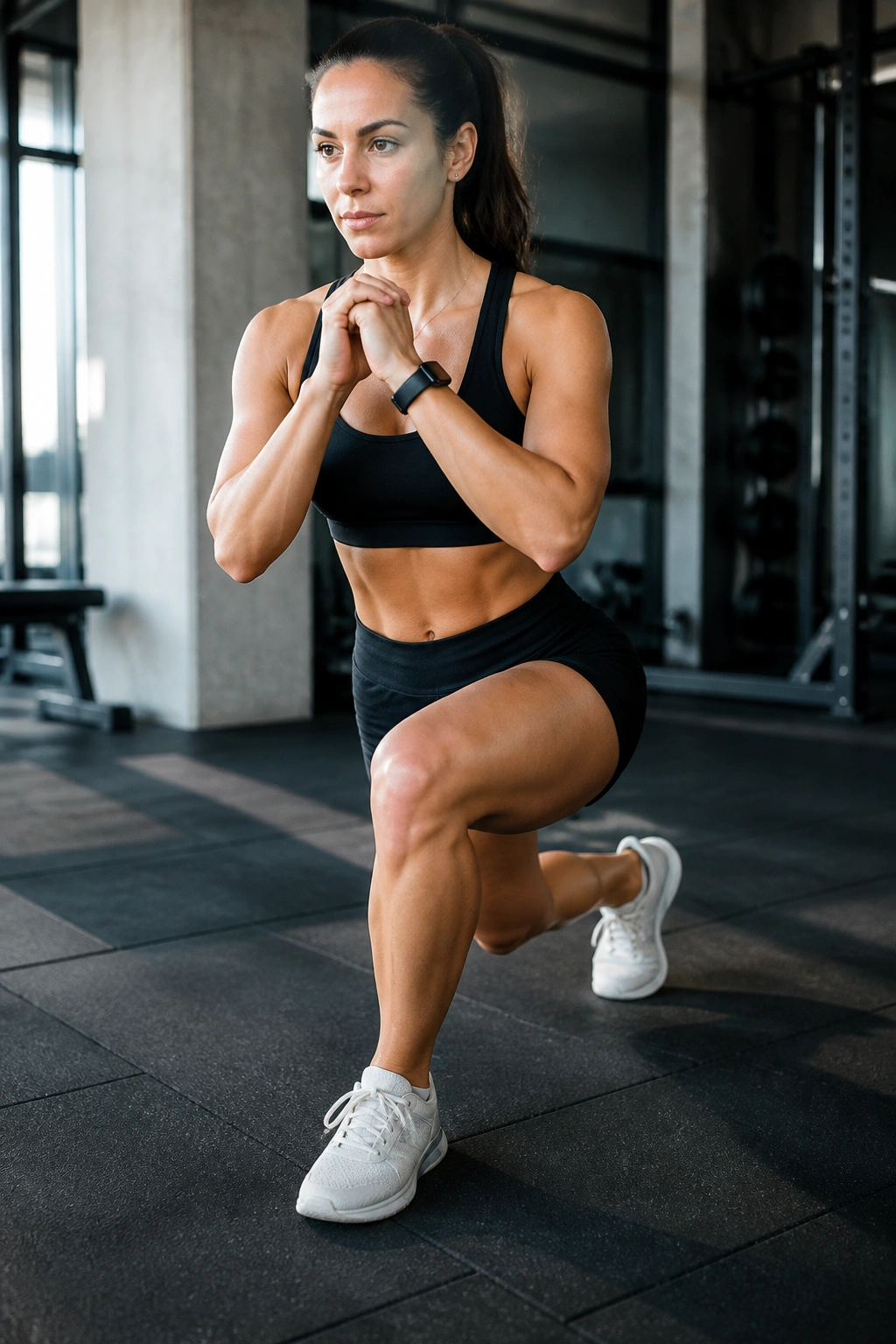
The curtsy lunge is an underrated glute-builder. By stepping back and across your body, you change the angle of the load, forcing the gluteus medius to work much harder to stabilize your hip.
The Benefits
This movement targets the upper glutes, which is the area most people neglect when they only stick to squats and deadlifts. You don’t need heavy weight for this to be effective. Because of the angle, lighter dumbbells or even body weight will leave your glutes burning.
18. Jefferson Squat
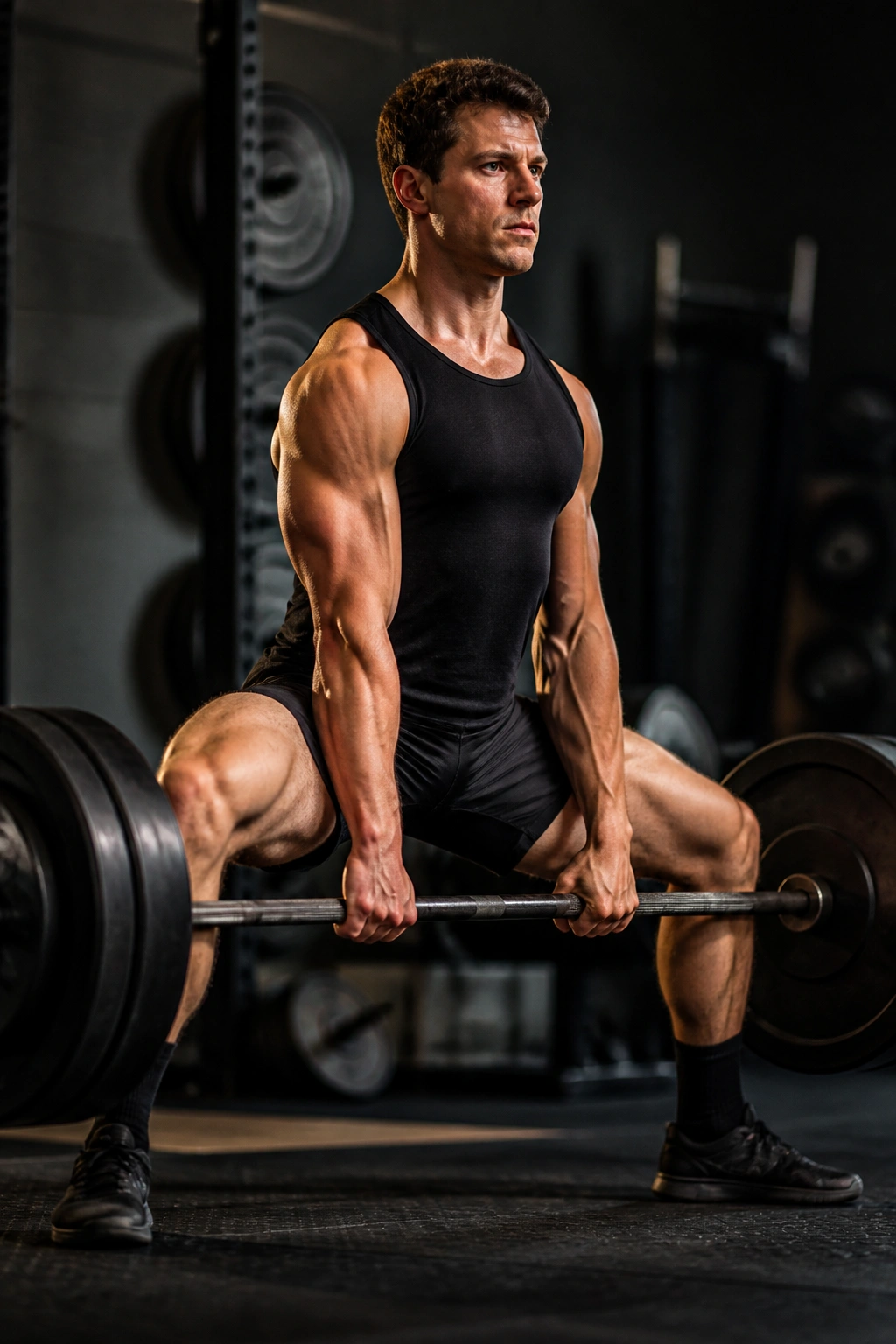
The Jefferson squat is a classic old-school lift that has mostly disappeared from modern gyms. You straddle the barbell, with the bar running between your legs. You grab the bar with one hand in front and one behind.
The Feel
This exercise forces your torso to stay perfectly upright and creates a unique hip and quad loading pattern that hits muscles from an angle the back squat ignores. It feels awkward at first, but once you get the rhythm, it allows for heavy loading without the spinal compression of a back squat.
19. Sled Push
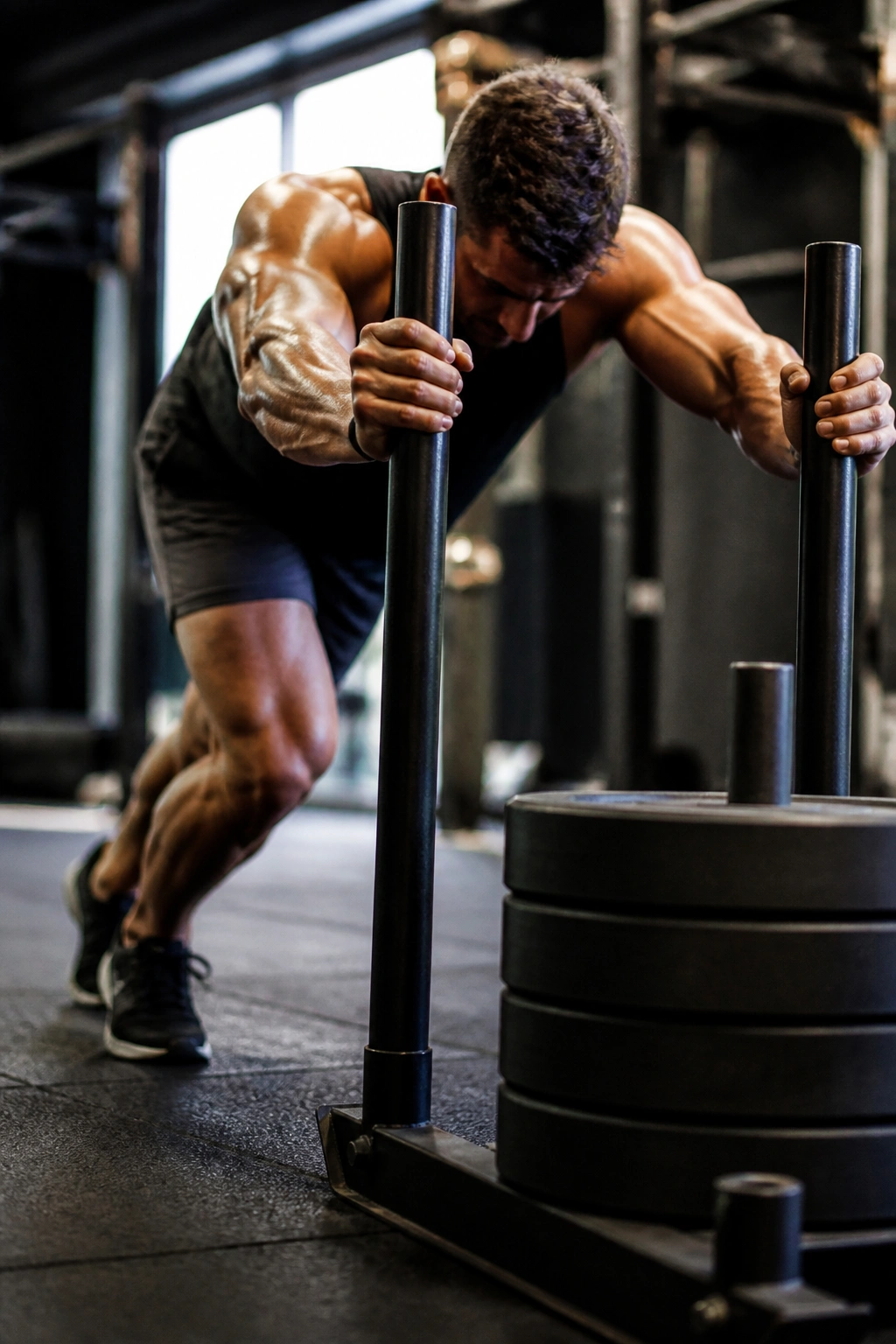
If you want to build size and conditioning simultaneously, nothing beats the sled push. It is concentric-only, meaning there is no eccentric phase (no lowering the weight). This creates massive metabolic stress with minimal muscle damage, meaning you can recover from it much faster than a heavy squat session.
The Strategy
Keep your arms locked out and your body at a 45-degree angle to the sled. Drive through your mid-foot. This is an incredible tool for developing the “sweeps” of the quads. Do 20-30 meter pushes, rest for a minute, and repeat.
20. Seated Leg Curl
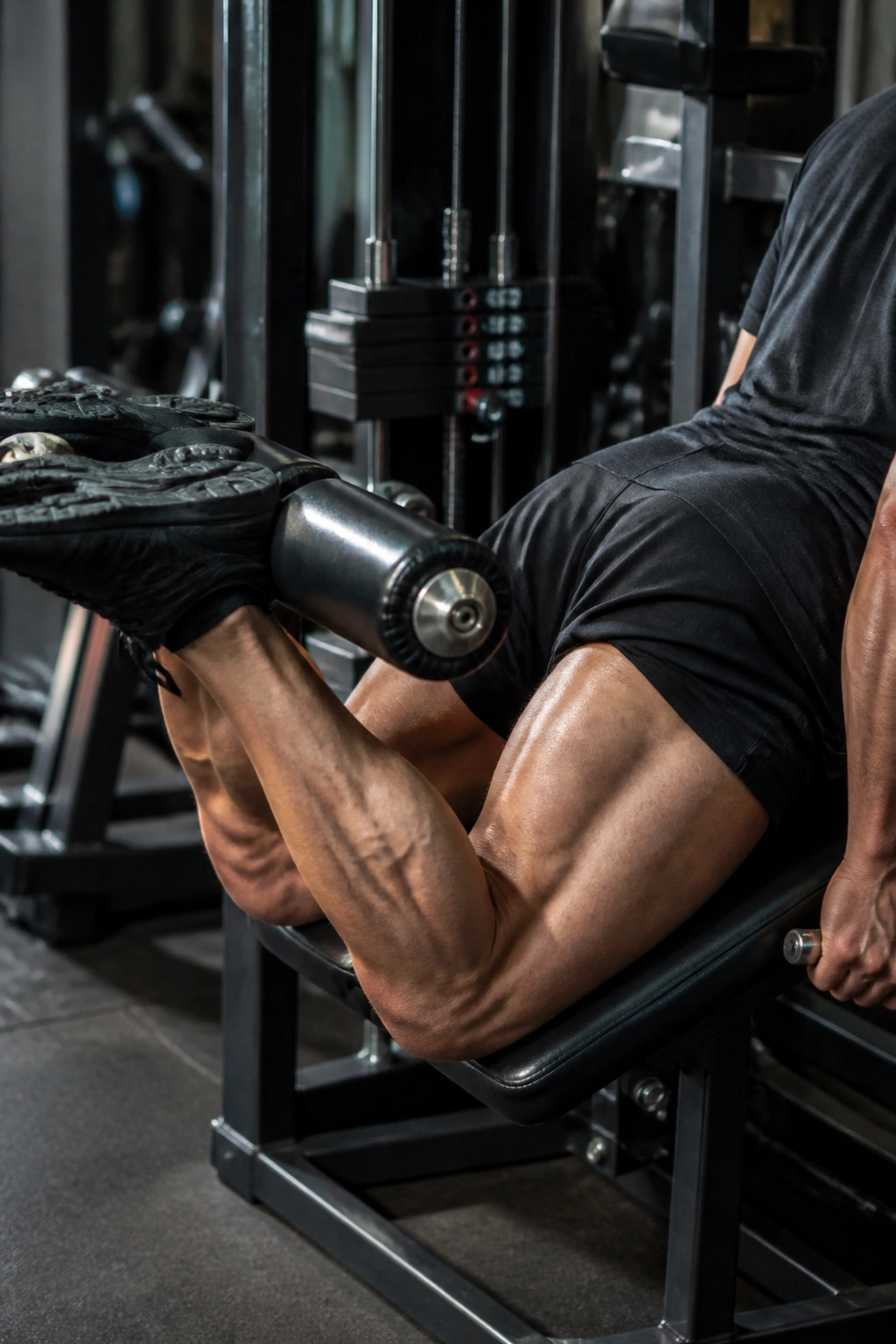
Similar to the lying leg curl, the seated version provides a different feel. Because you are sitting, your hips are flexed, which puts the hamstrings in a slightly stretched position to start the rep.
The Nuance
This position often allows for better isolation of the hamstrings because your torso is fixed against the seat pad. It eliminates the ability to use your lower back to cheat the weight. Use this to complement your lying leg curls; if you do lying curls on one leg day, do seated on the other.
21. Reverse Lunges
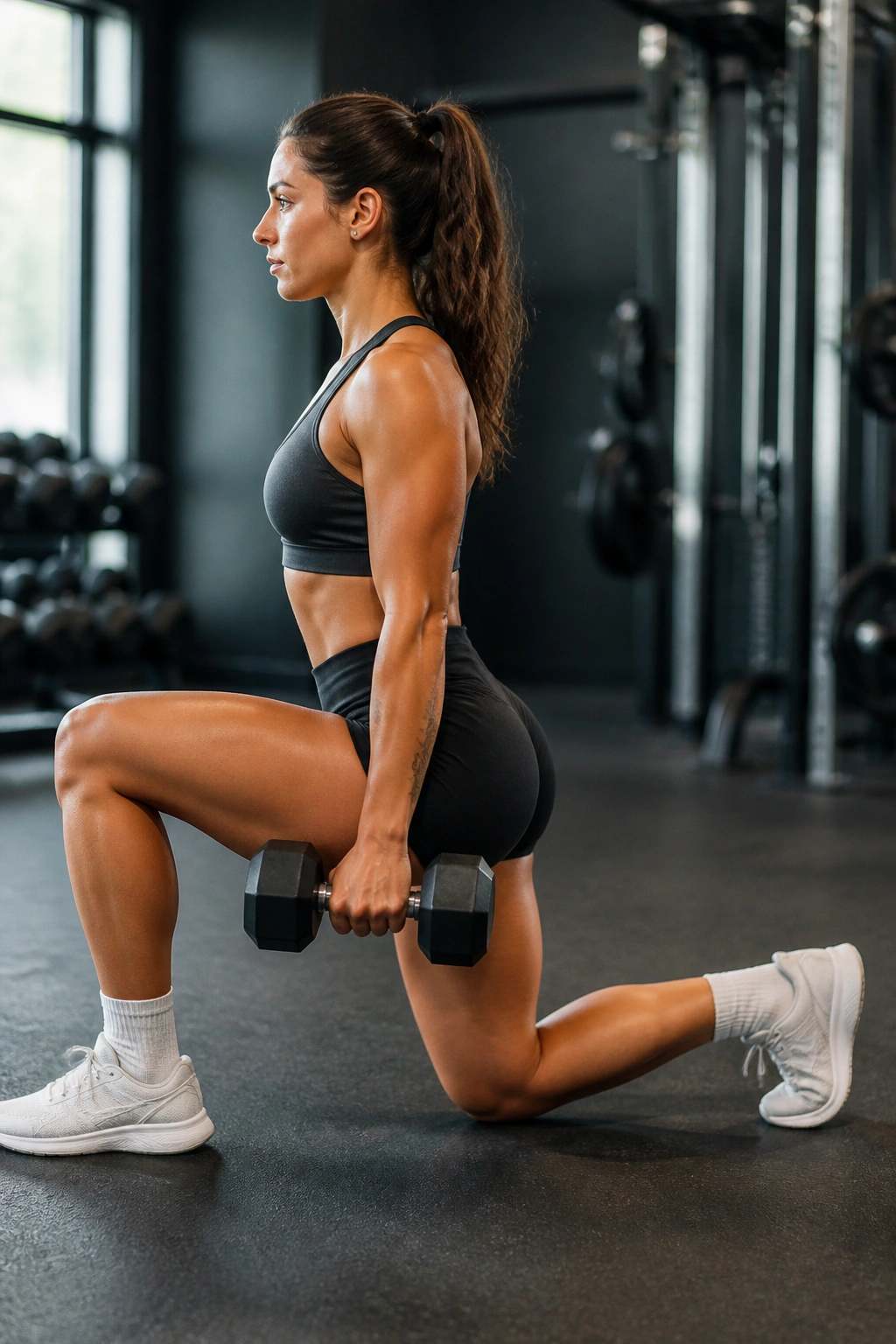
Reverse lunges are generally more knee-friendly than forward lunges. Because you are stepping backward, your front knee tends to stay stacked over your ankle rather than traveling far over your toes.
How to Use Them
Hold dumbbells at your sides or a barbell on your back. Step back, lower your knee until it’s just above the ground, and drive back to the starting position. This is a great exercise for people with previous knee issues who still want to reap the benefits of unilateral leg training.
22. Pistol Squats
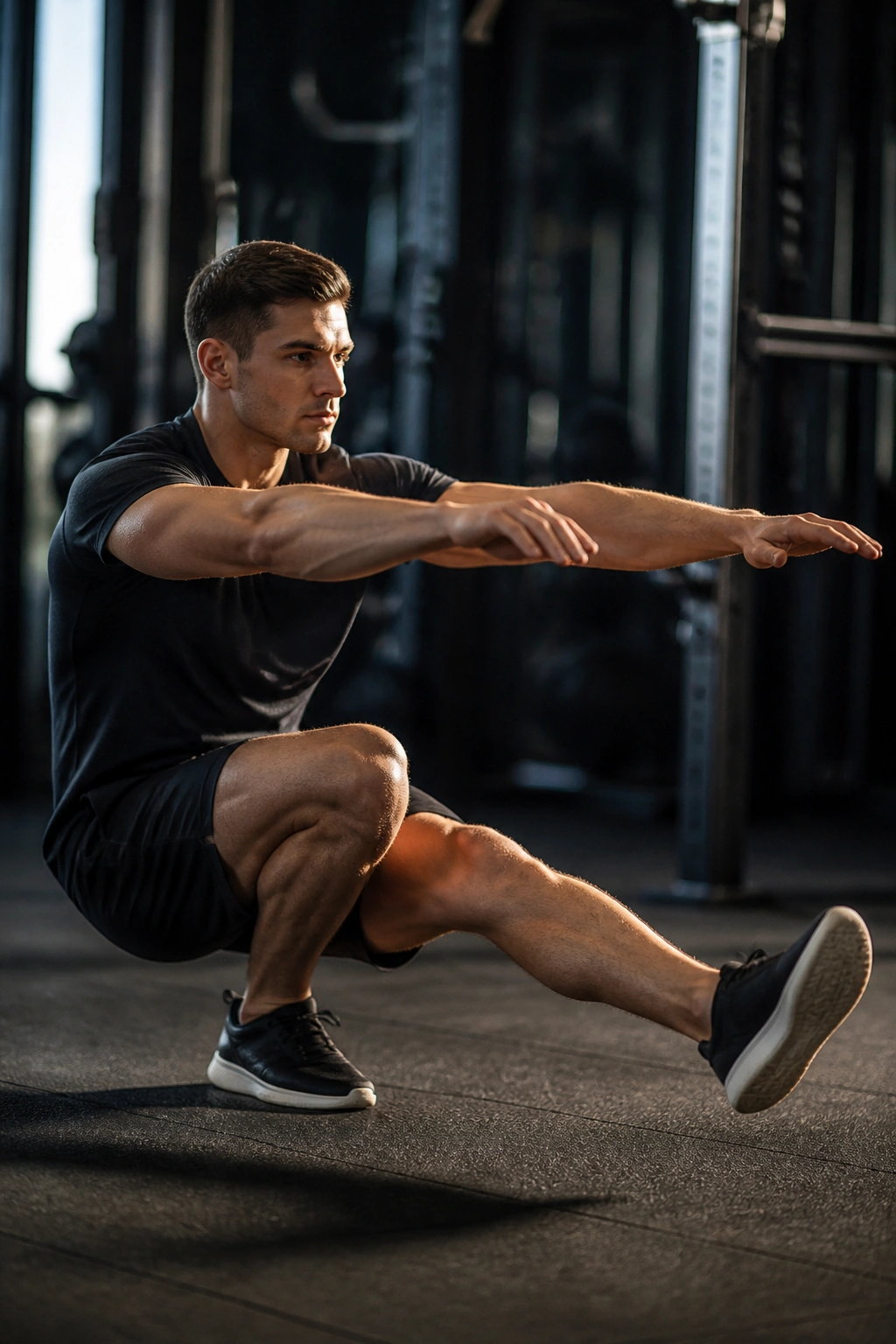
The pistol squat is the king of bodyweight leg training. It requires strength, balance, and incredible ankle mobility. If you can do a strict, controlled pistol squat, your legs have a baseline of strength that most people in the gym do not possess.
Scaling It
If you cannot do a full pistol squat yet, hold onto a sturdy pole for assistance. Use the pole only as much as you need to get the range of motion. The goal is to eventually let go and perform the squat under your own power.
23. Cable Pull-Throughs
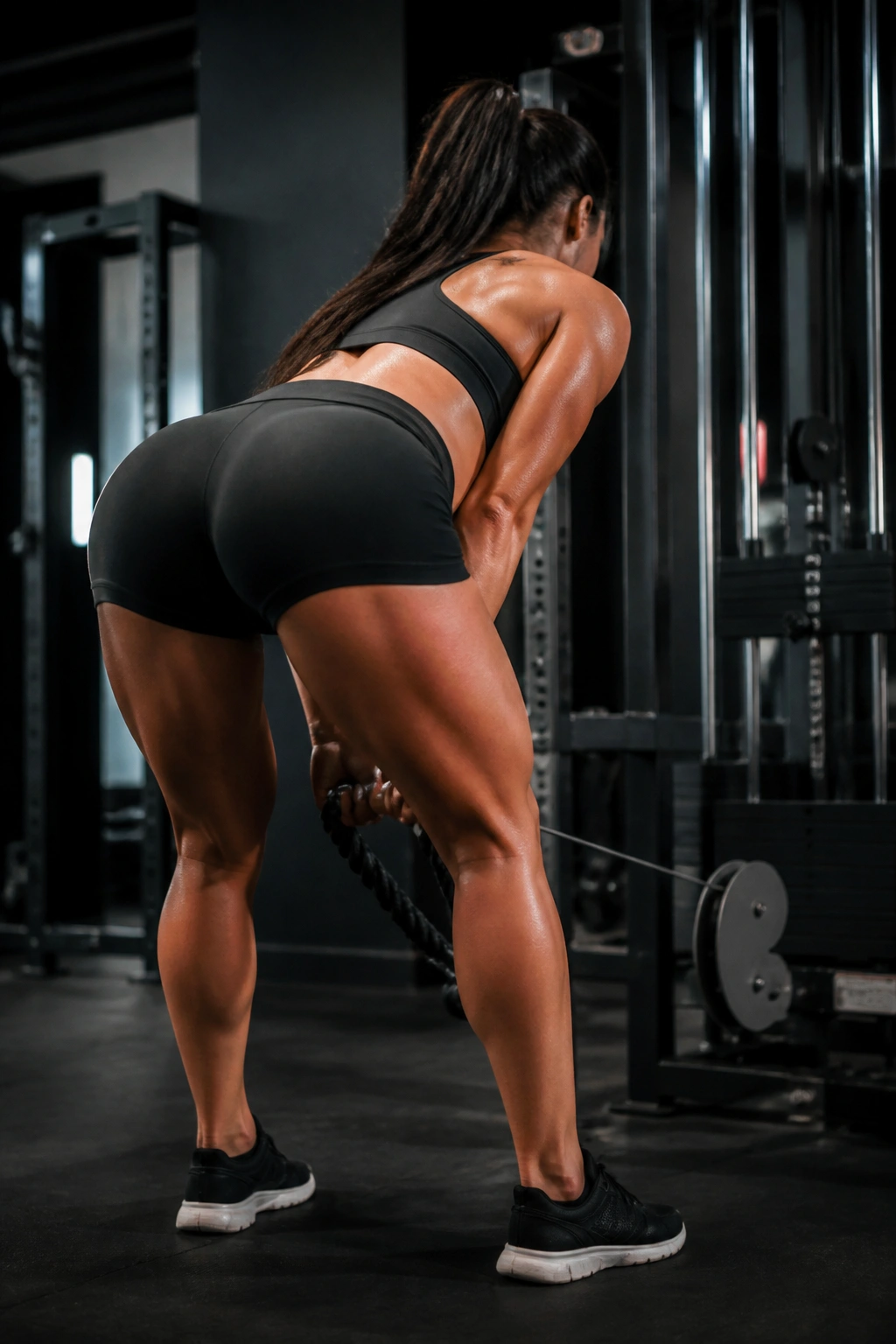
This is a fantastic exercise for learning the hip hinge pattern without the lower back strain of a heavy deadlift. Stand facing away from a cable machine, grab the rope attachment between your legs, and hinge forward, letting the cable pull your arms back.
The Goal
Snap your hips forward to pull the cable through. This is pure glute isolation. Because the weight is coming from behind you, it teaches you to initiate the movement with your glutes rather than your lower back. It is a perfect movement for high-rep finisher sets.
24. Hip Thrusts
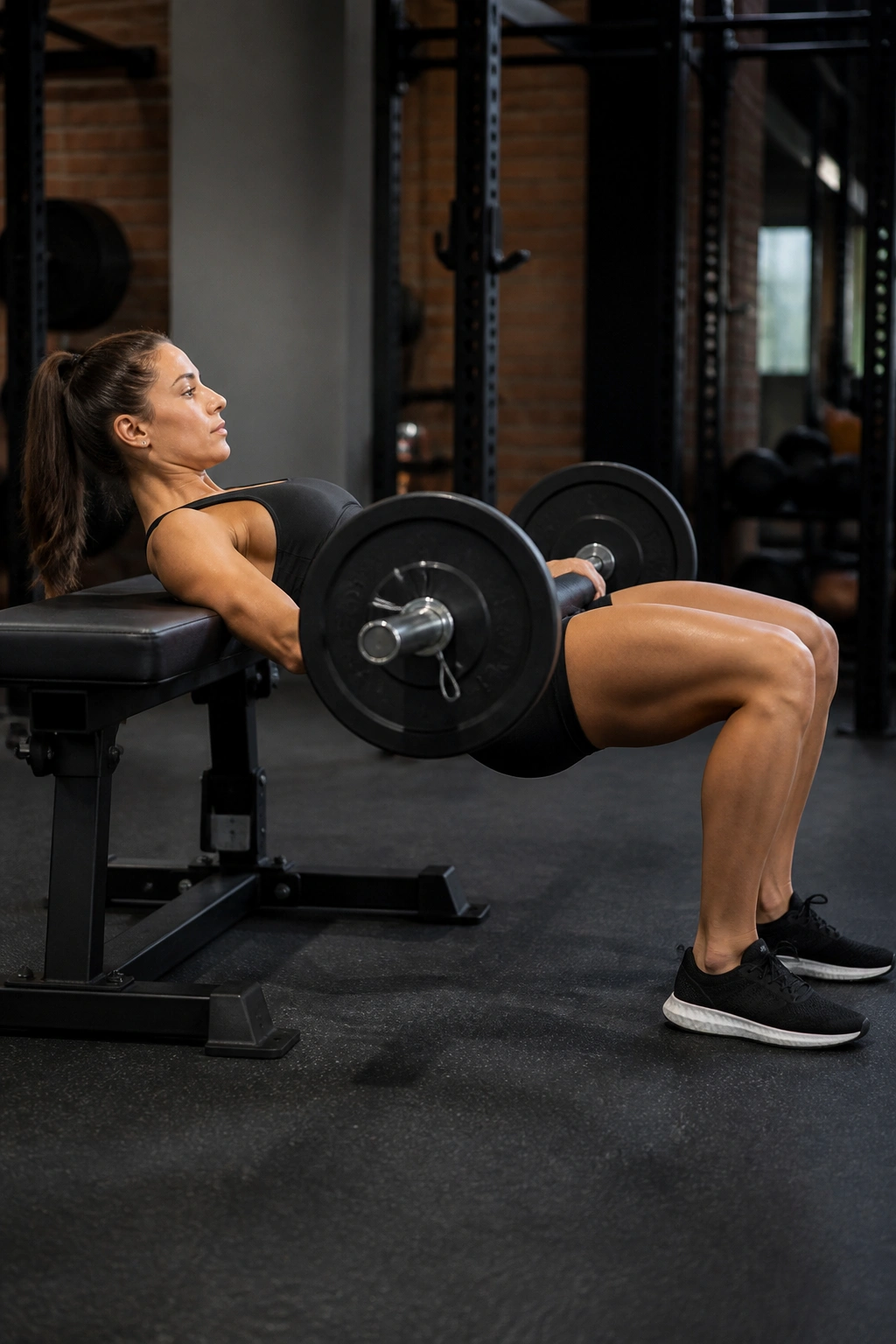
Science consistently shows that the hip thrust is one of the most effective movements for glute hypertrophy. By placing your back against a bench and thrusting a barbell over your hips, you maximize the tension on the glutes at the peak of the movement.
Execution Tips
Ensure your chin is tucked and your eyes are looking forward, not at the ceiling. This keeps your spine neutral and prevents your lower back from arching. Drive the weight up using your glutes, not your hamstrings or lower back. Squeeze at the top for a full second.
25. Jump Squats
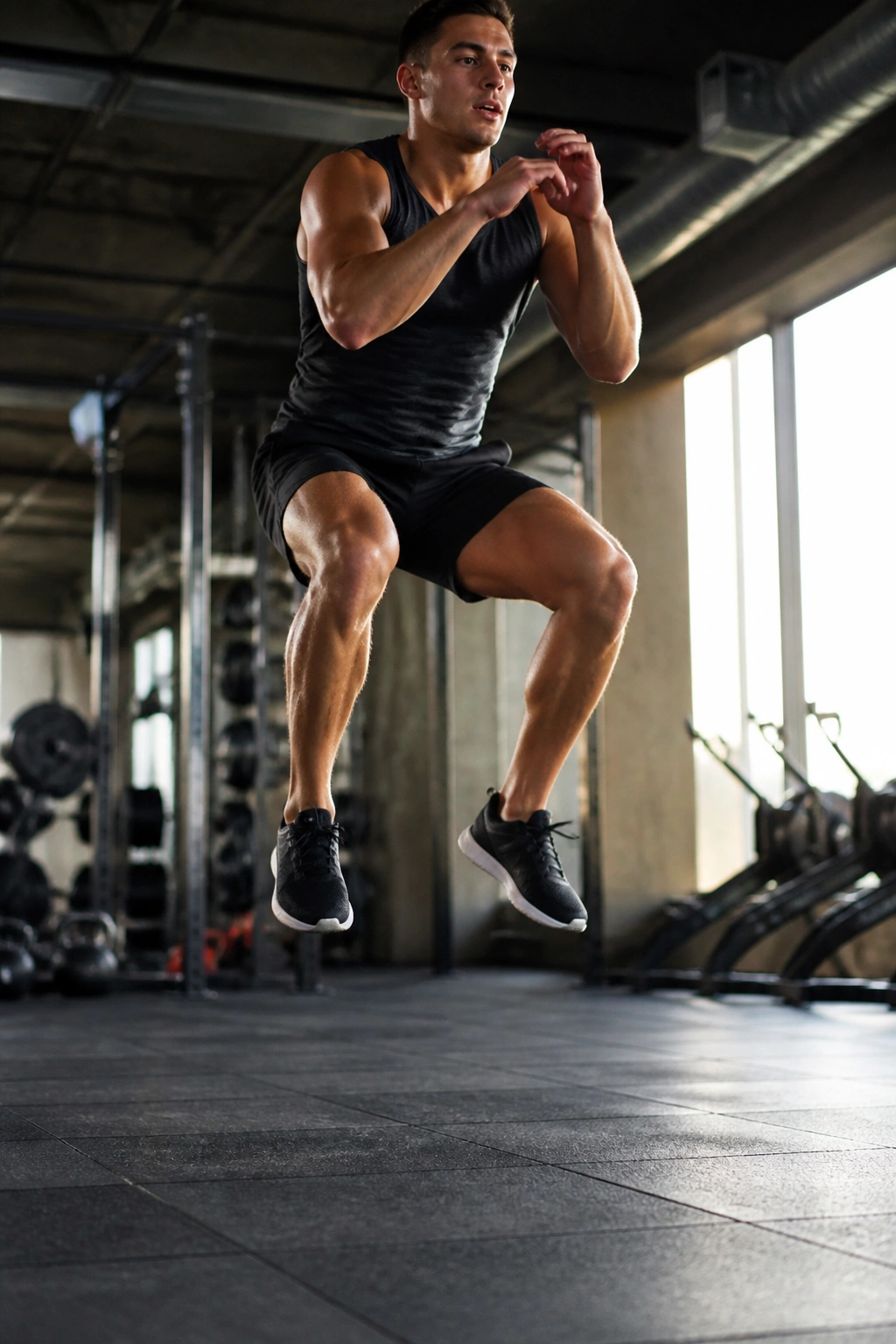
Jump squats bridge the gap between strength and speed. They take the mechanics of a squat and add an explosive component. You don’t need a heavy barbell for this; a light weight or just body weight is enough.
The Focus
Go down into a squat and explode up, leaving the ground. Land softly and immediately go into the next rep. The key is rhythm. You want to train your body to turn around quickly, which is a key component in sports performance and general leg athleticism.
26. Wall Sit
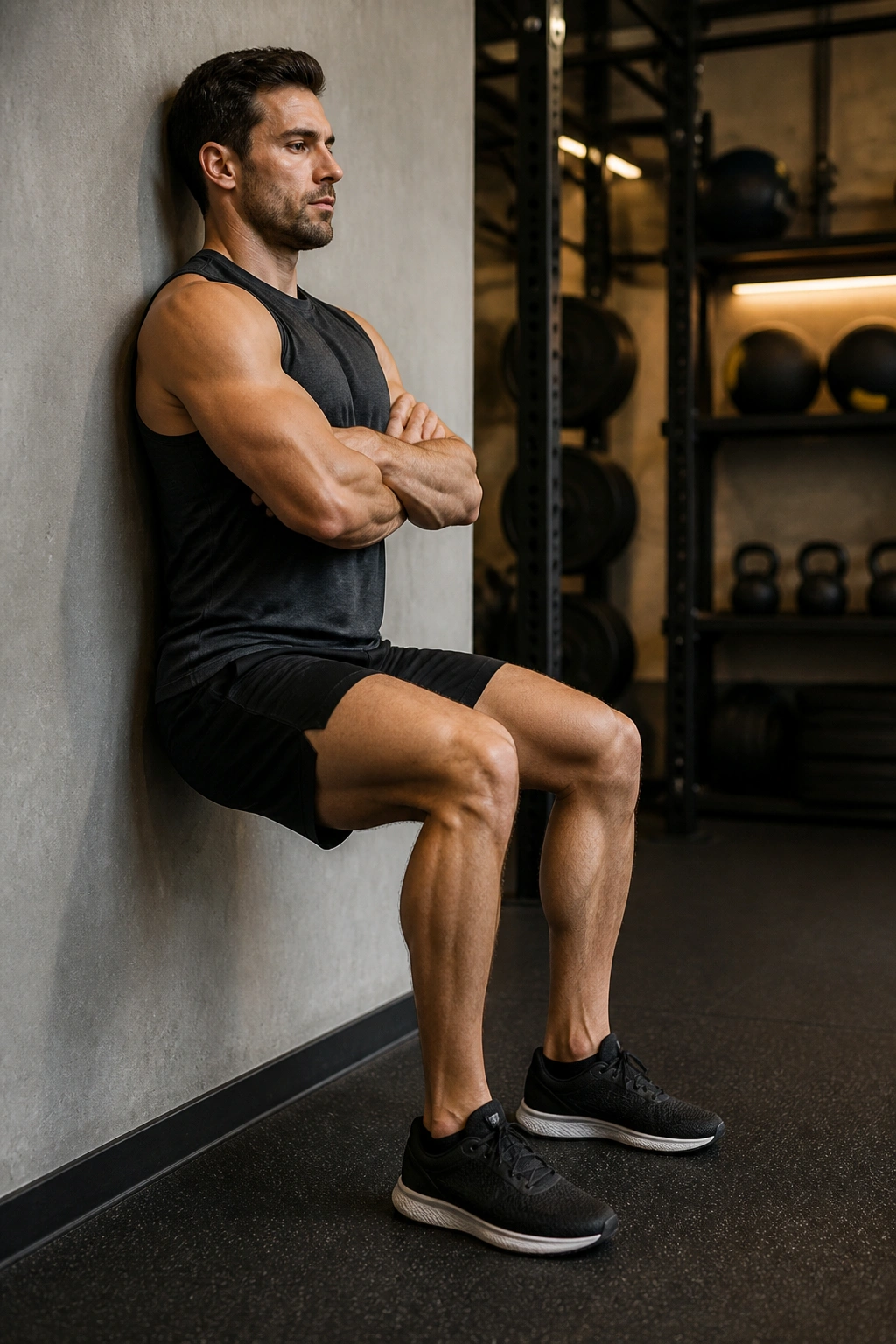
Isometrics are often neglected, but they are powerful. A wall sit forces your quads to hold a contraction for a prolonged period, which builds endurance and mental toughness.
How to Make It Harder
Most people just sit there and wait for the time to pass. Instead, actively push your heels into the floor. Try to slide your feet down the wall—they won’t move, but the engagement will be immense. This “active tension” turns a boring static exercise into a brutal quad workout.
27. Lateral Band Walks
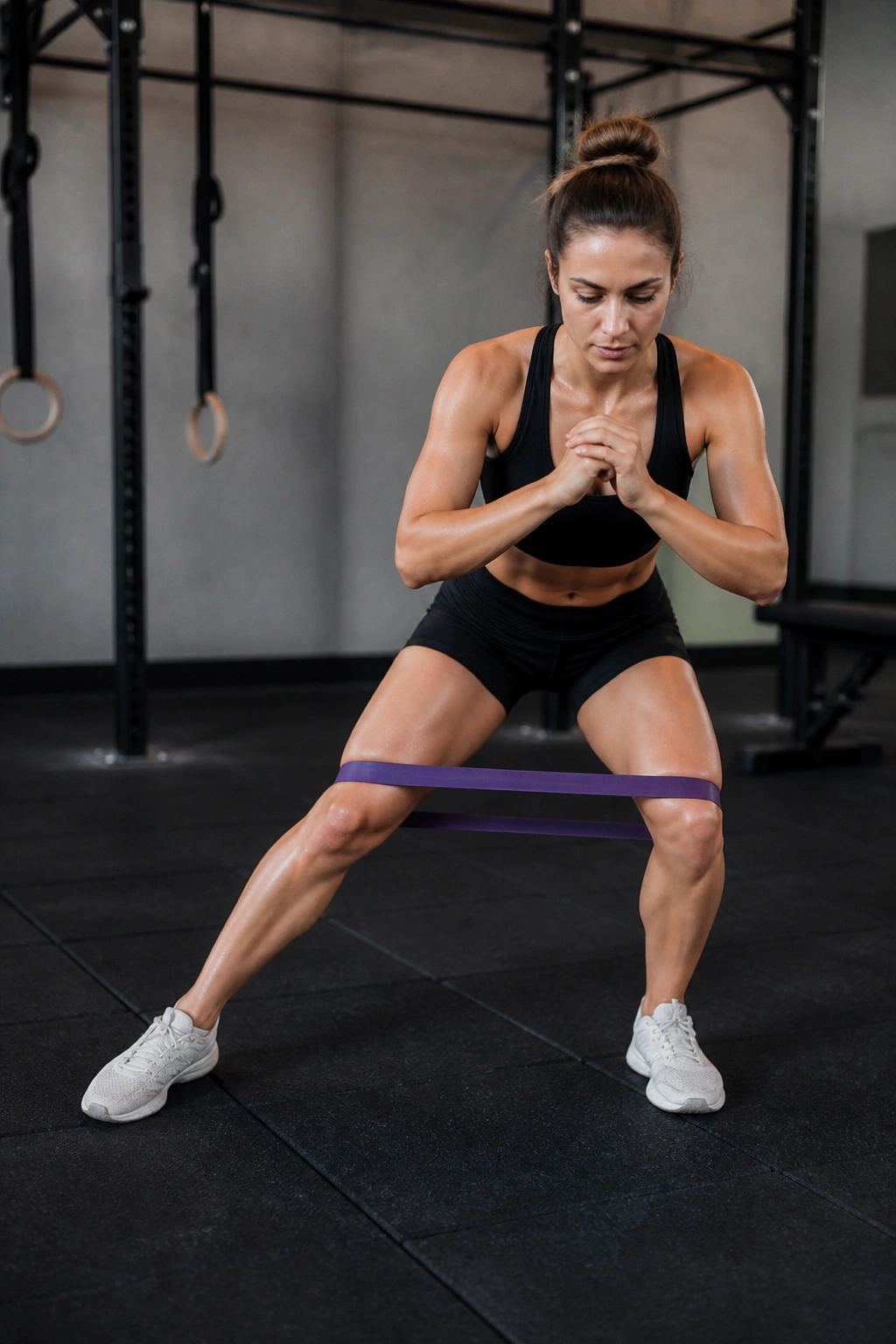
This exercise targets the gluteus medius, the muscle responsible for stabilizing your pelvis when you walk or run. Weakness here often leads to knee pain and poor squat form.
The Routine
Place a resistance band around your knees or ankles. Get into a half-squat position and take steps laterally, keeping tension on the band the entire time. Do not let your knees cave inward. If the band pulls your knees in, you are failing the exercise. Keep them pushed out.
28. Single-Leg RDL
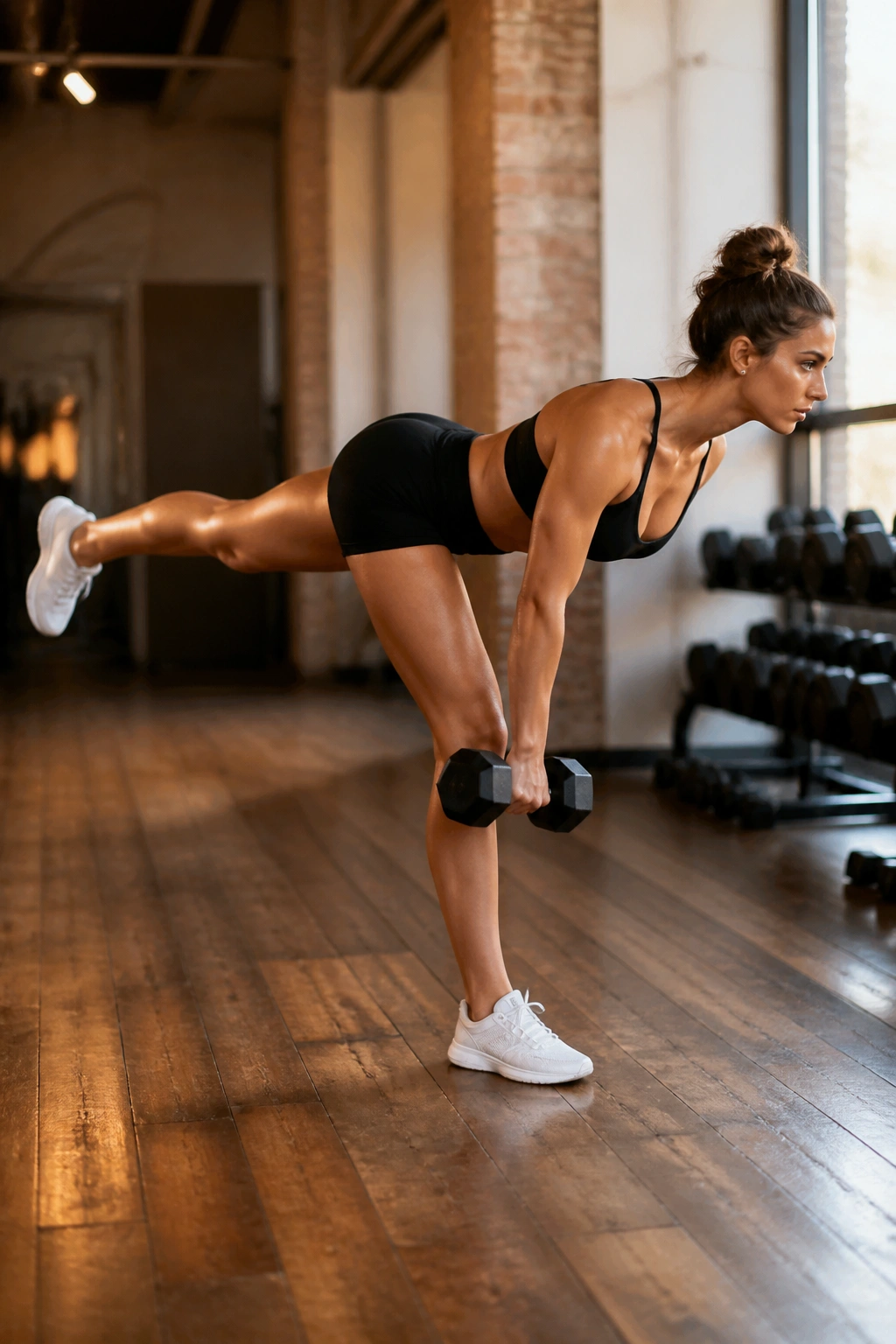
This takes the Romanian Deadlift and removes the stability of having two feet on the ground. You have to balance on one leg while performing the hinge. It is not just a hamstring exercise; it is a full-body stabilization exercise.
Pro Technique
If you are holding a dumbbell, hold it in the hand opposite the working leg. This creates a cross-body stabilization pattern that makes the exercise much more effective for your glutes and core. Don’t worry about how heavy you go; focus on keeping your hips square to the floor.
29. Hack Squat Machine (Reverse)
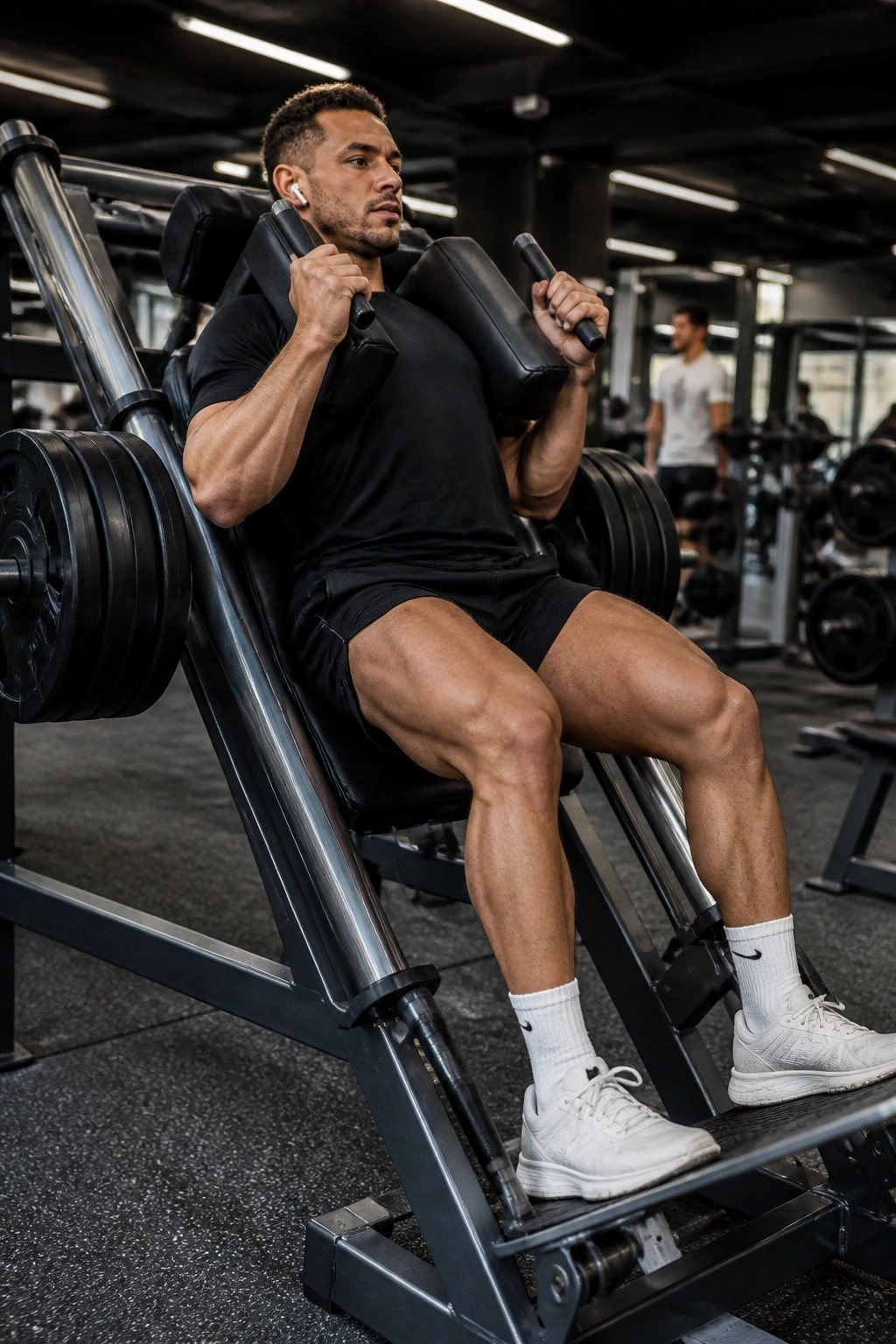
Some hack squat machines allow you to face the pad. This turns the exercise into a standing leg press. It is a killer for your quads and glutes, and it forces a very specific vertical loading pattern.
Why Do It
It puts your body in a position where you cannot cheat with your lower back or hip movement. It locks your spine in place, allowing you to focus entirely on the leg drive. It’s a great variation if you find your legs are stronger than your lower back can support.
30. Zercher Squat
The Zercher squat is for people who want to build a bulletproof core and a massive set of quads. You hold the barbell in the crooks of your elbows, against your chest.
The Difficulty
This movement is uncomfortable. The bar will dig into your arms. But the trade-off is immense. It forces you to stay incredibly upright, hitting the quads with precision. It also builds a level of upper back and core strength that no other squat variation provides. If you can master the Zercher, you will have a rock-solid foundation for every other lift in your arsenal.
Wrapping Up
Building a balanced, strong lower body is not about doing one “perfect” exercise; it is about providing your muscles with diverse stimuli. You should not be doing all thirty of these in one week, of course. That would be a recipe for overtraining. Instead, pick four to five of these movements to structure your leg sessions around for a month, then rotate to others.
The secret to progress is not finding the single best exercise—it is finding how to combine these movements in a way that allows you to train hard, recover well, and keep pushing your boundaries. Listen to your joints, respect your recovery, and don’t be afraid to try the movements that challenge your weaknesses. Consistency in your training structure will always beat the intensity of a single “perfect” workout.
