



Most people convince themselves that if they don’t have an hour to dedicate to the gym, they might as well skip the workout entirely. It is a persistent myth that holds back more progress than almost any other barrier. You do not need sixty minutes of complex equipment choreography to build strong, capable legs. You need fifteen minutes of focused, high-intensity effort and a willingness to embrace the discomfort that comes with actually working your muscles.
High-intensity training in a compressed window is not just about convenience. It forces you to prioritize compound movements and reduces the “junk volume” that clutters many longer routines. When the clock is ticking, you don’t spend ten minutes walking on a treadmill or scrolling through your phone between sets. You move. You breathe. You work. This is how you elicit a metabolic response in a fraction of the time, keeping your heart rate elevated while challenging the largest muscle groups in your body.
The following workouts are designed to be brutal, efficient, and entirely doable in under fifteen minutes. Whether you are at home with nothing but your body weight or in a commercial gym with racks of iron, there is a format here that will suit your needs. Do not expect these to be easy. Do expect them to be effective.
1. The Bodyweight “Ascending” Ladder
This is the ultimate test of simplicity. You don’t need a single piece of equipment, making it perfect for when you are traveling or stuck in your living room. The structure is based on a ladder format, which helps keep your intensity high because the mental focus shifts from how many reps are left to simply getting to the next rung.
Start with two repetitions of each exercise, then perform four, six, eight, and ten. Keep going as high as you can in fifteen minutes.
- Bodyweight Squats: Keep your heels planted and drive through the mid-foot.
- Forward Lunges: Alternate legs with every repetition to keep things balanced.
- Glute Bridges: Squeeze at the top for a full second, focusing on the contraction.
If you finish the set of ten, cycle back down to two or just start back at the bottom of the ladder. The goal is continuous movement. You are aiming to minimize rest periods. If you have to stop, keep it under twenty seconds. Your legs should feel heavy and the burn should be localized, not sharp or painful. If you feel sharp pain in the knees, adjust your stance width or depth.
2. Kettlebell Swing and Goblet Squat Super-Set
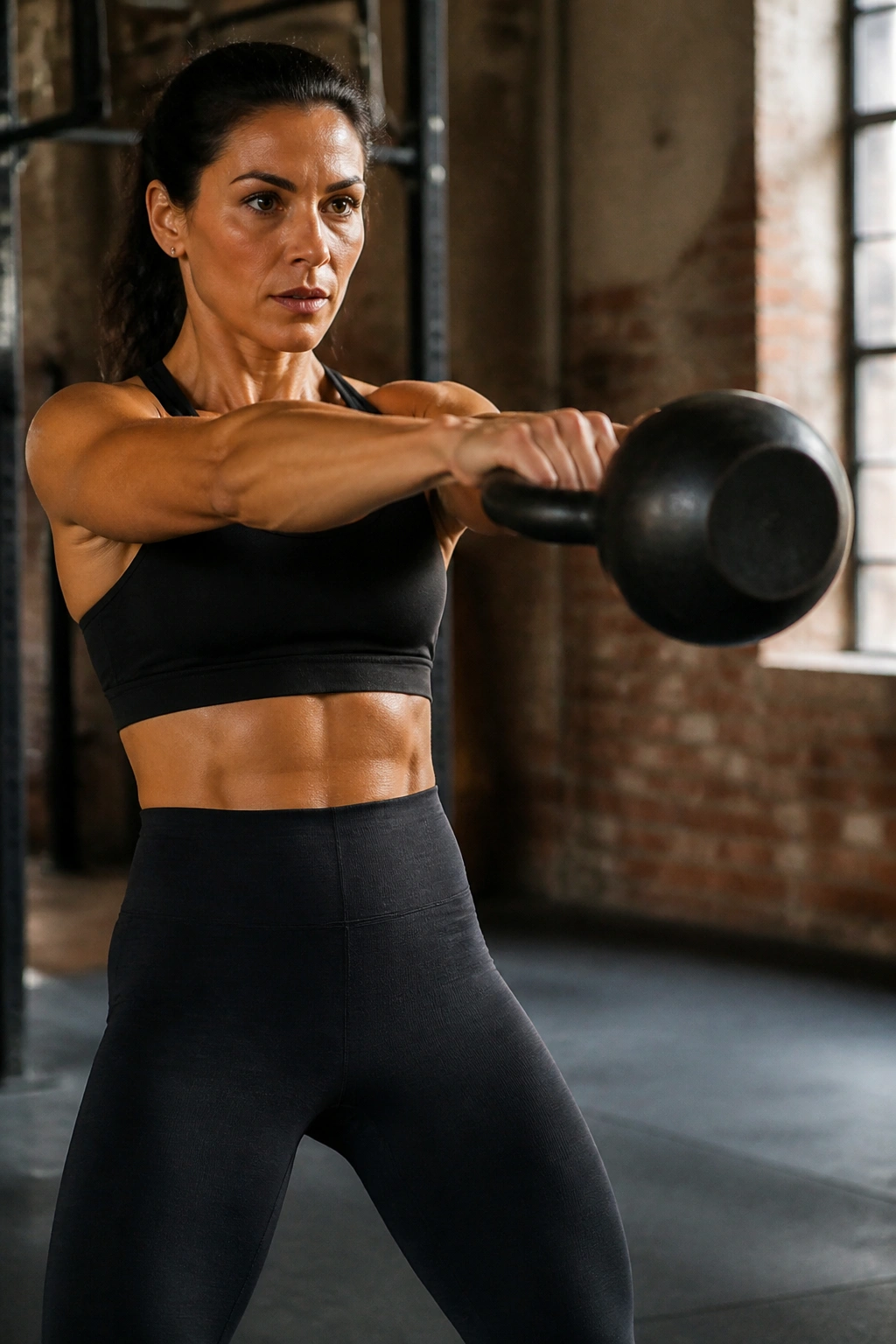
This workout leverages the efficiency of the kettlebell. You are combining a hinge movement with a squat movement. This is a classic combination because it hits the posterior chain—hamstrings and glutes—with the swing, and then demands deep quad engagement from the goblet squat.
Set a timer for 15 minutes. Perform 20 kettlebell swings followed immediately by 10 goblet squats. Rest for 60 seconds. Repeat this cycle until the timer beeps. The key here is the weight selection. You need a kettlebell heavy enough that those 20 swings feel challenging by the end of the 15 minutes, but not so heavy that your form breaks down.
Why This Works
The swing is an explosive hip hinge. It recruits the glutes and hamstrings forcefully. By pairing this with the squat, you ensure that you are working the leg muscles from different angles and movement patterns. This prevents muscle fatigue in one specific area from stalling your entire workout. Keep your back straight, your core braced, and your eyes focused on a point in front of you during the goblet squat. If your lower back starts to round during the swings, drop the weight or take a longer rest.
3. The Unilateral Lunge Matrix
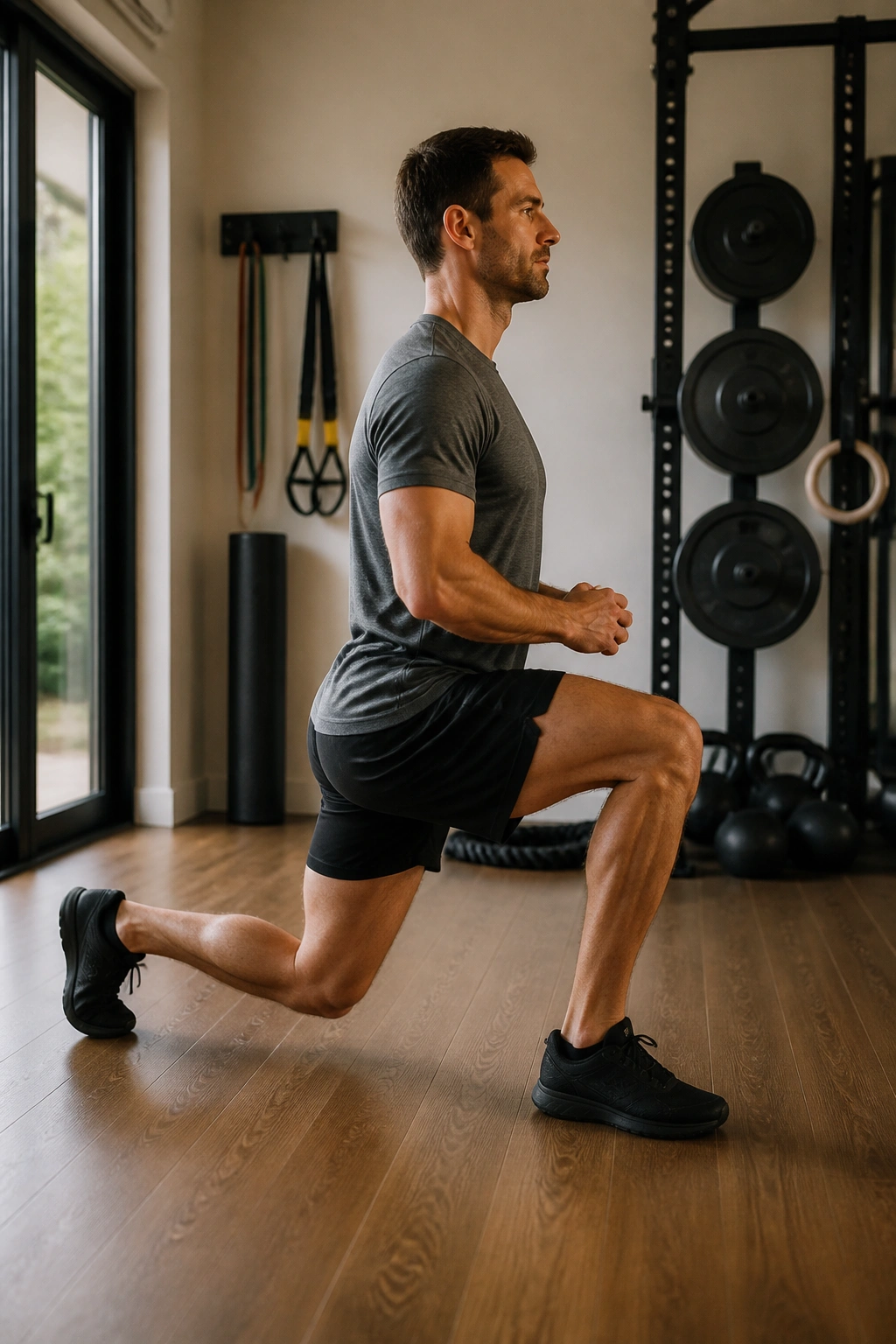
Unilateral training—working one leg at a time—is one of the most effective ways to build leg strength because it forces your stabilizer muscles to fire. It also exposes weaknesses. You might find your right leg is significantly stronger or more stable than your left, and this workout will make that glaringly obvious.
This is a continuous flow workout. Do not put the dumbbells down.
- Reverse Lunges: 10 reps per leg.
- Side Lunges: 10 reps per leg.
- Curtsy Lunges: 10 reps per leg.
Repeat this circuit for 15 minutes. The transitions are where the fatigue really sets in. Moving from a forward-backward plane into a side-to-side plane challenges your balance and forces your glute medius—the muscle on the side of your hip—to work overtime. If you are doing this at home and don’t have dumbbells, use two heavy books or just use your own body weight and slow down the eccentric (lowering) phase to three seconds.
4. Plyometric Power Blasts
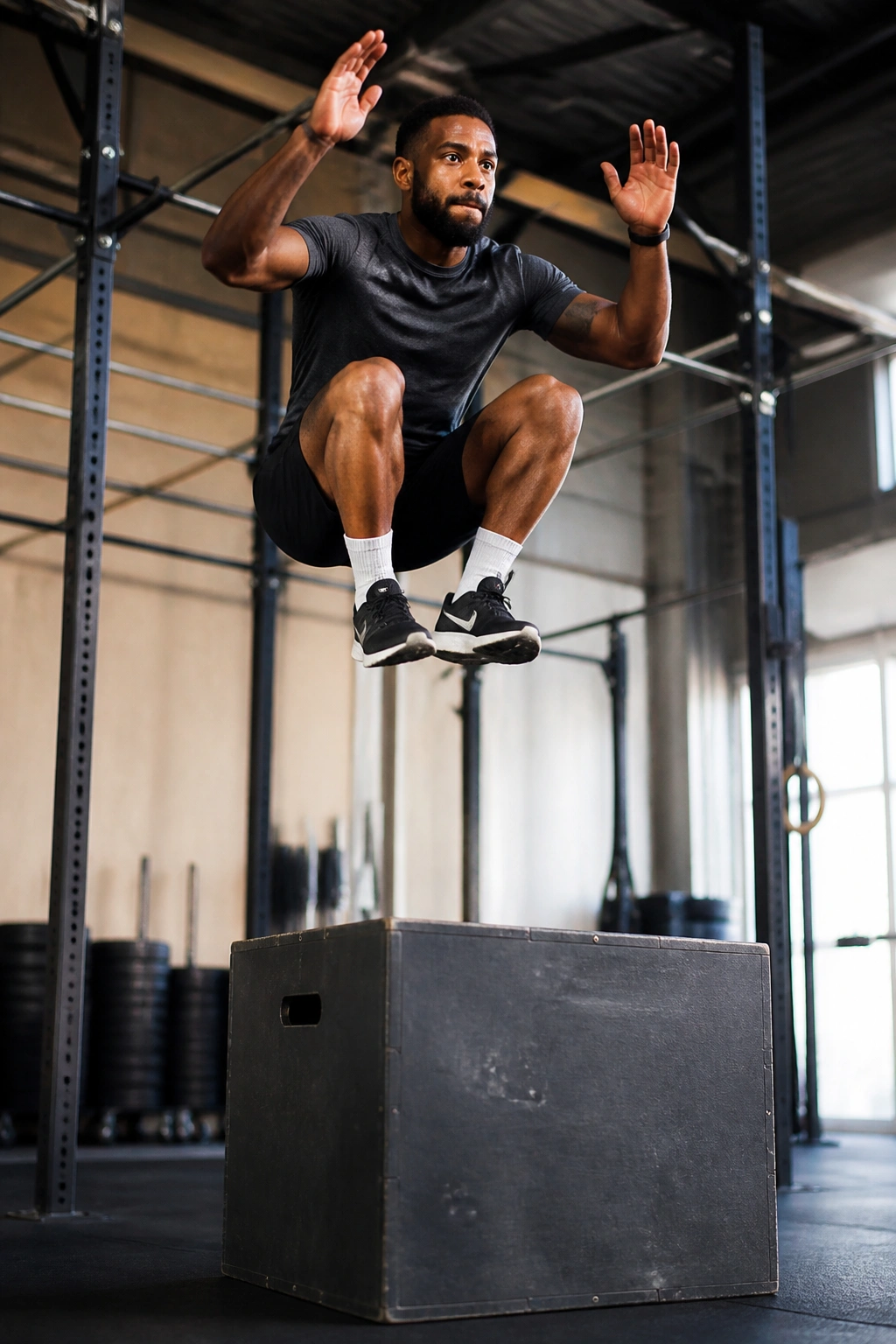
If you want to build athletic legs that can actually produce force, you need to incorporate explosive movement. This workout is not about endurance; it is about power. You will perform high-impact movements, so ensure your joints are warmed up. If you have bad knees, skip this one and opt for a low-impact routine.
Perform this as an AMRAP (As Many Rounds As Possible) in 15 minutes:
- Box Jumps: 5 reps (ensure you step down, don’t jump down).
- Squat Jumps: 10 reps (explode upward, land softly).
- Split Squat Jumps: 5 reps per leg (these are taxing, keep your chest upright).
Managing the Intensity
Plyometrics fatigue your central nervous system faster than slow lifting. If you find your jump height decreasing significantly, take an extra 30 seconds of rest. The goal is maximum output on every single jump. If you are sloppy with your form or your landings are loud, you are doing it wrong. Land like a ninja—silent and controlled.
5. The Resistance Band Glute Pump
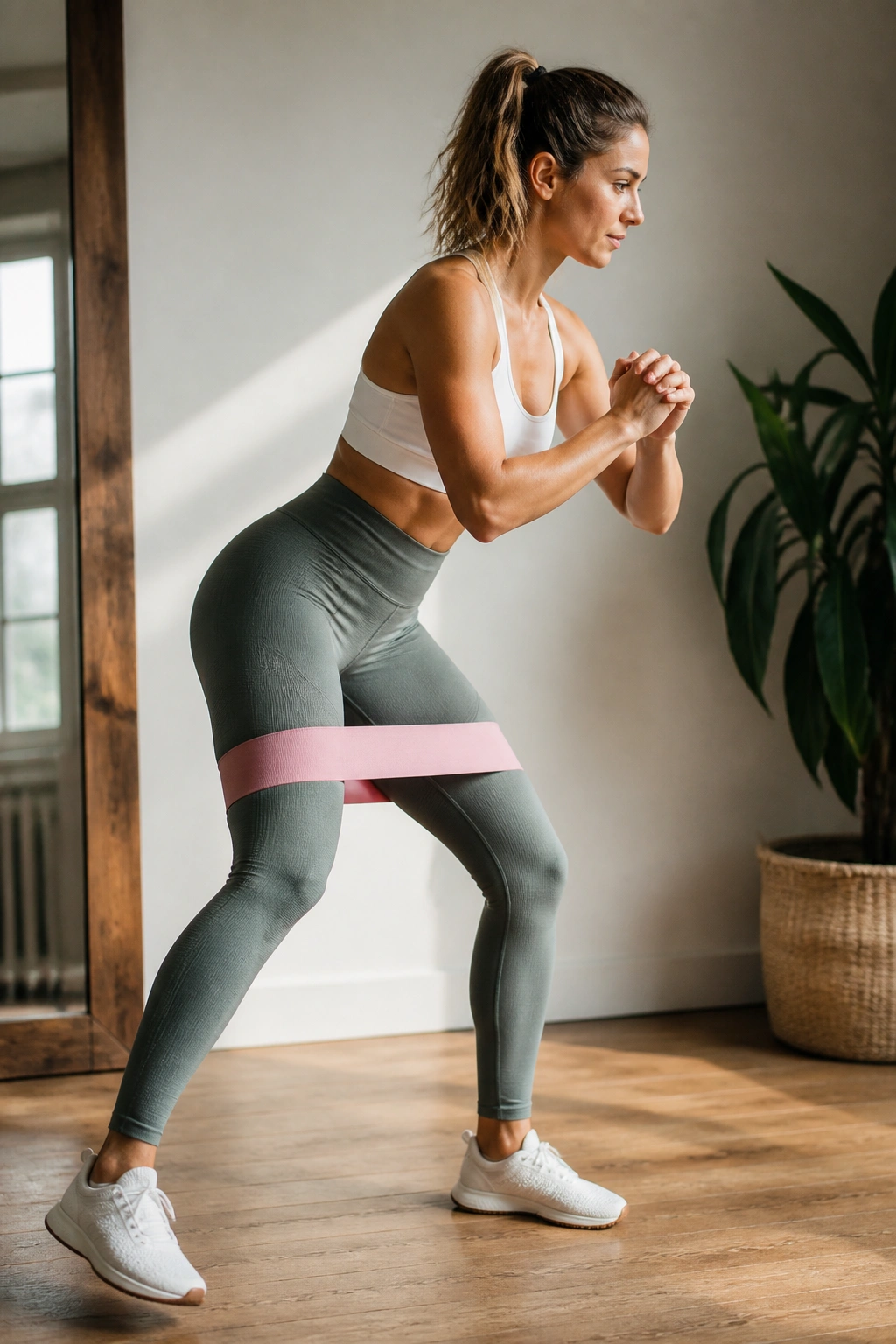
Sometimes, you don’t need heavy iron to get a punishing workout. Resistance bands are fantastic for constant tension. This workout is designed to target the glutes specifically, which are often the weakest link in leg strength.
Place a looped resistance band just above your knees. Set your timer for 15 minutes and perform the following as a continuous circuit:
- Band Walks: 20 steps to the left, 20 steps to the right. Stay low in a quarter-squat position.
- Clamshells: 15 reps per side.
- Glute Bridges: 20 reps, pushing your knees outward against the band the entire time.
The “burn” you feel here is metabolic stress. Because the band provides constant tension, your glutes never get a break during the reps. It is a different kind of pain compared to heavy squats—it feels like a deep, searing heat. Keep your pace steady. If the band is too light, double it up or use a thicker, heavier-tension band.
6. Isometric Static Holds
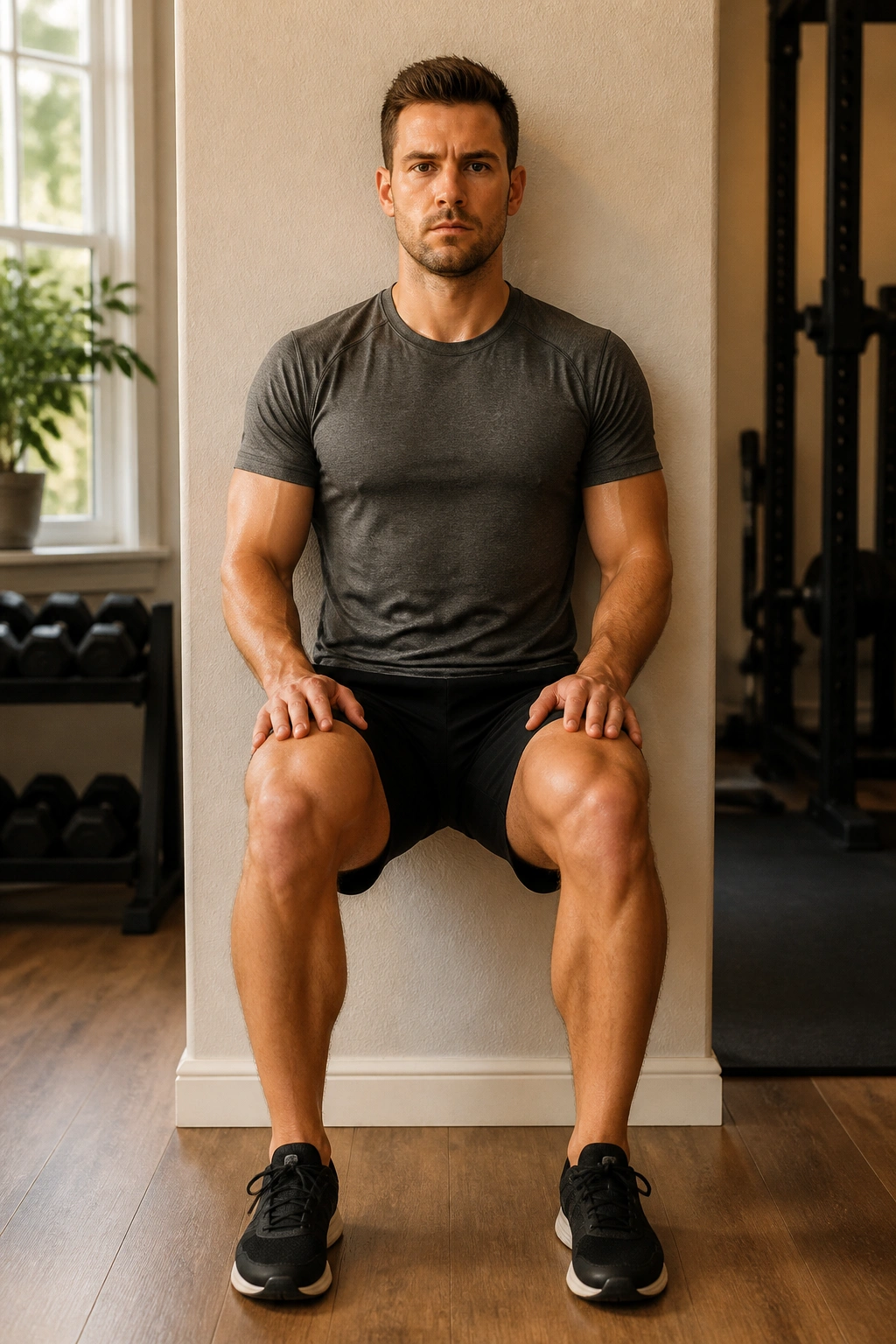
Isometric training—holding a position without moving—is underrated. It builds incredible strength in the tendons and creates immense muscular tension. This workout will make your legs shake in a way that dynamic movements rarely do.
We are going to use timed intervals. Perform each hold for 45 seconds, then rest for 15 seconds. Cycle through this for 15 minutes.
- Wall Sit: Keep thighs parallel to the floor.
- Lunge Hold (Right Leg): Keep your back knee one inch off the ground.
- Lunge Hold (Left Leg): Keep your back knee one inch off the ground.
- Squat Hold: Keep your hips at knee level.
The Mental Challenge
The physical pain of an isometric hold is easy to manage for the first twenty seconds. The last fifteen seconds, however, is a mental battle. Your brain will tell you to quit, to stand up, to shake it out. Ignore it. Keep your core tight. Keep breathing. If you find your quads twitching violently, that is a sign your muscle fibers are firing optimally.
7. The Step-Up and Box Jump Hybrid

Step-ups are arguably the most functional leg exercise because they mimic the movement of climbing stairs or stepping over obstacles. This workout combines step-ups with the explosiveness of box jumps. You will need a sturdy box, a bench, or a solid chair.
Alternate between these two movements for the full 15 minutes:
- Weighted Step-Ups: 10 reps per leg. If you have dumbbells, hold them at your sides. If not, just use body weight.
- Box Jumps: 10 reps.
The transition between the controlled, grinding nature of a step-up and the explosive snap of a box jump is tough. It teaches your legs to switch between slow force production and fast, powerful muscle recruitment. Be careful with the box jump height; it is better to jump onto a lower box with perfect form than to struggle to clear a high box and risk an injury to your shins or ankles.
8. The 15-Minute Tabata Leg Shredder

Tabata is a specific protocol: 20 seconds of all-out effort, followed by 10 seconds of rest. It is arguably the most efficient way to tax your cardiovascular system while destroying your legs. You will need to be disciplined with the clock.
Perform 8 rounds of 20 seconds of work and 10 seconds of rest for each of the following exercises. That will take 4 minutes per exercise.
- Jump Squats: 4 minutes.
- Mountain Climbers: 4 minutes.
- Speed Lunges: 4 minutes.
You have three minutes of rest total across the fifteen-minute block. This is brutal. Your heart rate will be through the roof by the end. The 10-second rest is not a break; it is a transition. Do not sit down. Stay standing, keep moving, and prepare for the next 20-second burst. This workout is not for beginners.
9. The “Rep-Drop” Leg Finisher

This is a high-volume, muscular endurance workout. The goal is to accumulate as many repetitions as possible. Start with a high rep count and work your way down, but keep the total work density high.
Perform 50 bodyweight squats, then 40 lunges (20 per side), then 30 calf raises, then 20 squat jumps. If you finish this circuit, start back at the top.
- Squats: Keep a steady, rhythmic pace.
- Lunges: Ensure full range of motion—back knee should lightly graze the floor.
- Calf Raises: Hold the top contraction for a heartbeat.
- Squat Jumps: Maximum height.
The “Rep-Drop” method is deceptive. Fifty squats feel fine, but by the time you cycle through it and get back to the squats, your quads will be screaming. This is a classic bodybuilding-style approach applied to a time-constrained format. It creates a massive “pump” by flooding the muscles with blood.
10. The Lateral Movement Focus

Most of our movement happens in the sagittal plane—walking forward, squatting, lunging. We rarely move laterally, which is why the adductors (inner thighs) and abductors (outer hips) often get neglected and weak. This workout fixes that.
Spend 15 minutes moving side-to-side.
- Lateral Lunges: 10 per side.
- Side-Shuffles: 30 seconds of shuffling side-to-side in a low squat.
- Cossack Squats: 8 per side (slow and controlled).
Lateral lunges are tricky. The common mistake is to push the knee forward over the toes. Instead, push your hip back as if you are trying to sit on a chair placed to your side. Keep the trailing leg perfectly straight. You will feel this in the inner thigh of the straight leg. It is a different, often weaker, part of your anatomy, so start with body weight before you add any load.
11. Single-Leg Romanian Deadlift (RDL) & Split Squat
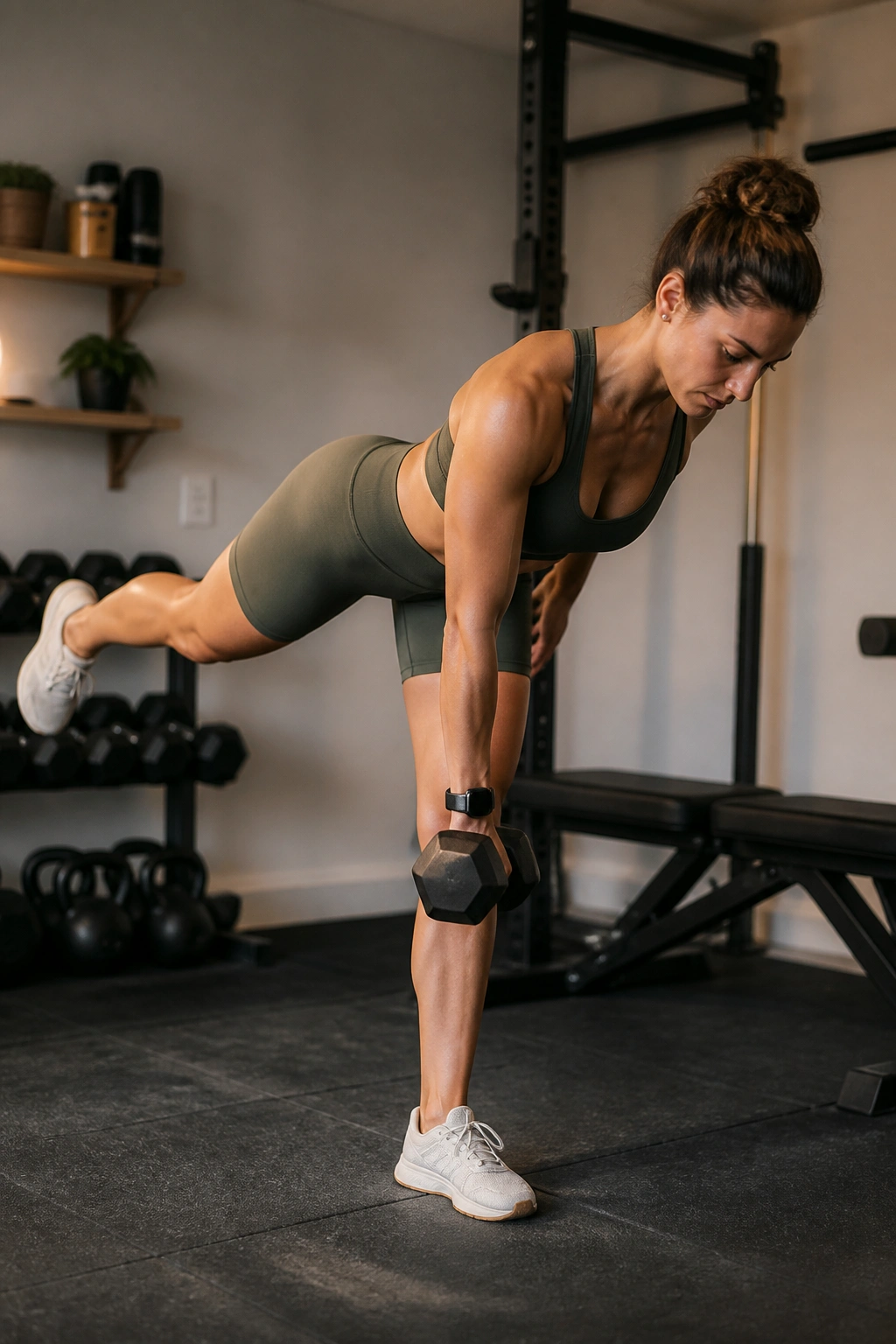
This workout targets the posterior chain on one leg, then the quad on the other. It is excellent for correcting imbalances. You will need a weight for this—a dumbbell or kettlebell. If you don’t have one, use a gallon jug of water or a heavy backpack.
Perform a circuit of:
- Single-Leg RDL: 10 reps per side. Focus on the stretch in the hamstring.
- Bulgarian Split Squats: 10 reps per side (back foot elevated on a chair or couch).
Why This Is Effective
The RDL is a hinge—it requires a flat back and a slight bend in the knee. The split squat is a knee-dominant movement. By pairing these, you hit the entire leg in a single circuit. The split squat is particularly punishing because of the stability requirement. If you are struggling with balance, hold onto a wall or a sturdy piece of furniture for the split squats until your stabilizers catch up.
12. The “Wall-Sit” Endurance Burn
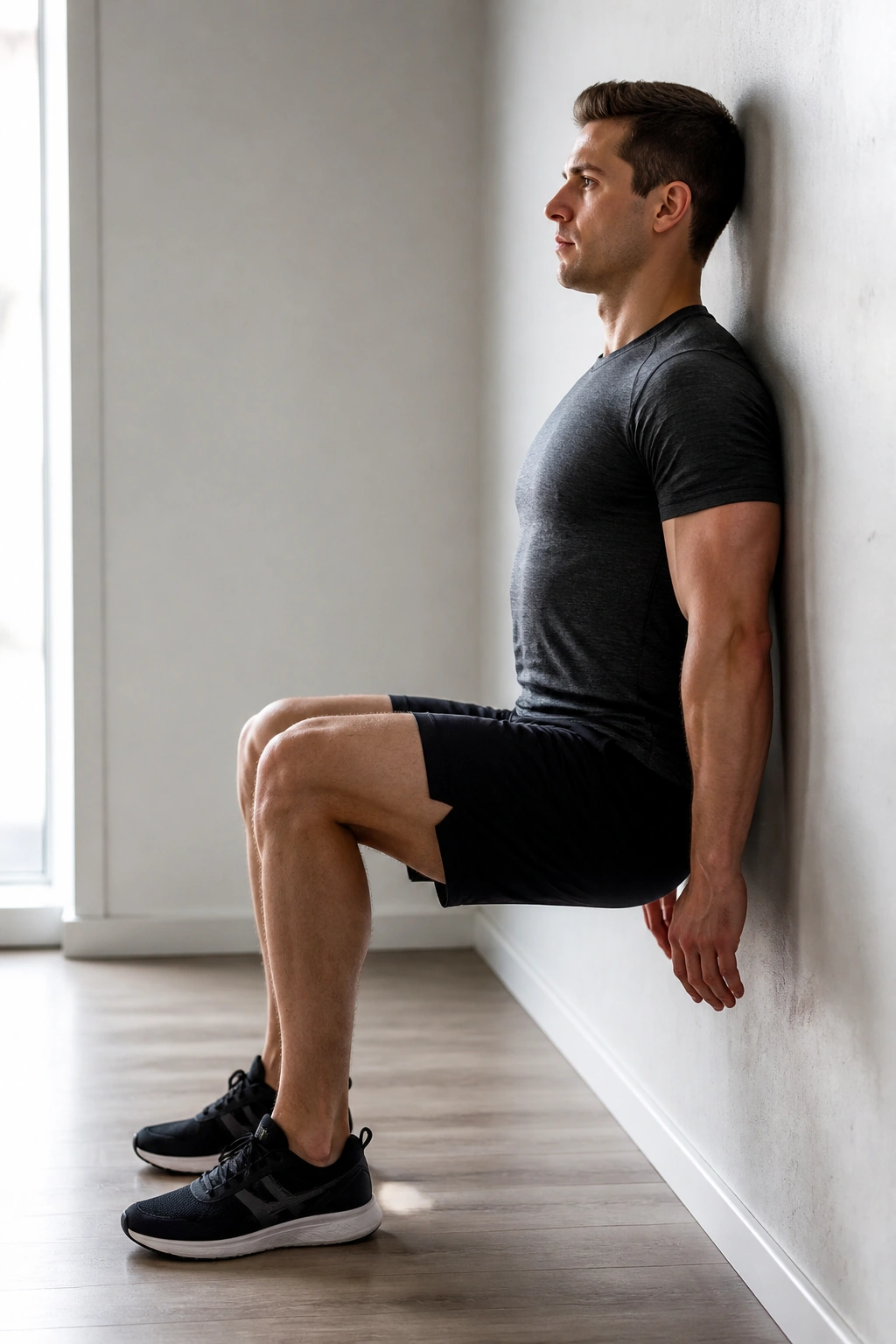
This is simple, but do not mistake simple for easy. You are going to use the wall-sit as your primary exercise, but you will incorporate variations to keep it interesting and painful.
- Round 1: 60-second standard wall sit.
- Round 2: 45-second wall sit with one leg extended (alternating).
- Round 3: 60-second wall sit with a weight (or heavy object) in your lap.
- Round 4: 45-second wall sit, but pulse the hips up and down an inch.
Rest for 30 seconds between rounds. By the end of 15 minutes, your legs will feel like jelly. This is an isometric routine with a twist. The constant tension in the quads is fantastic for endurance. If your legs start shaking so hard you cannot hold the position, lower your hips slightly to reduce the leverage, or stand up for a three-second reset before sinking back in.
13. The Weighted Compound Circuit
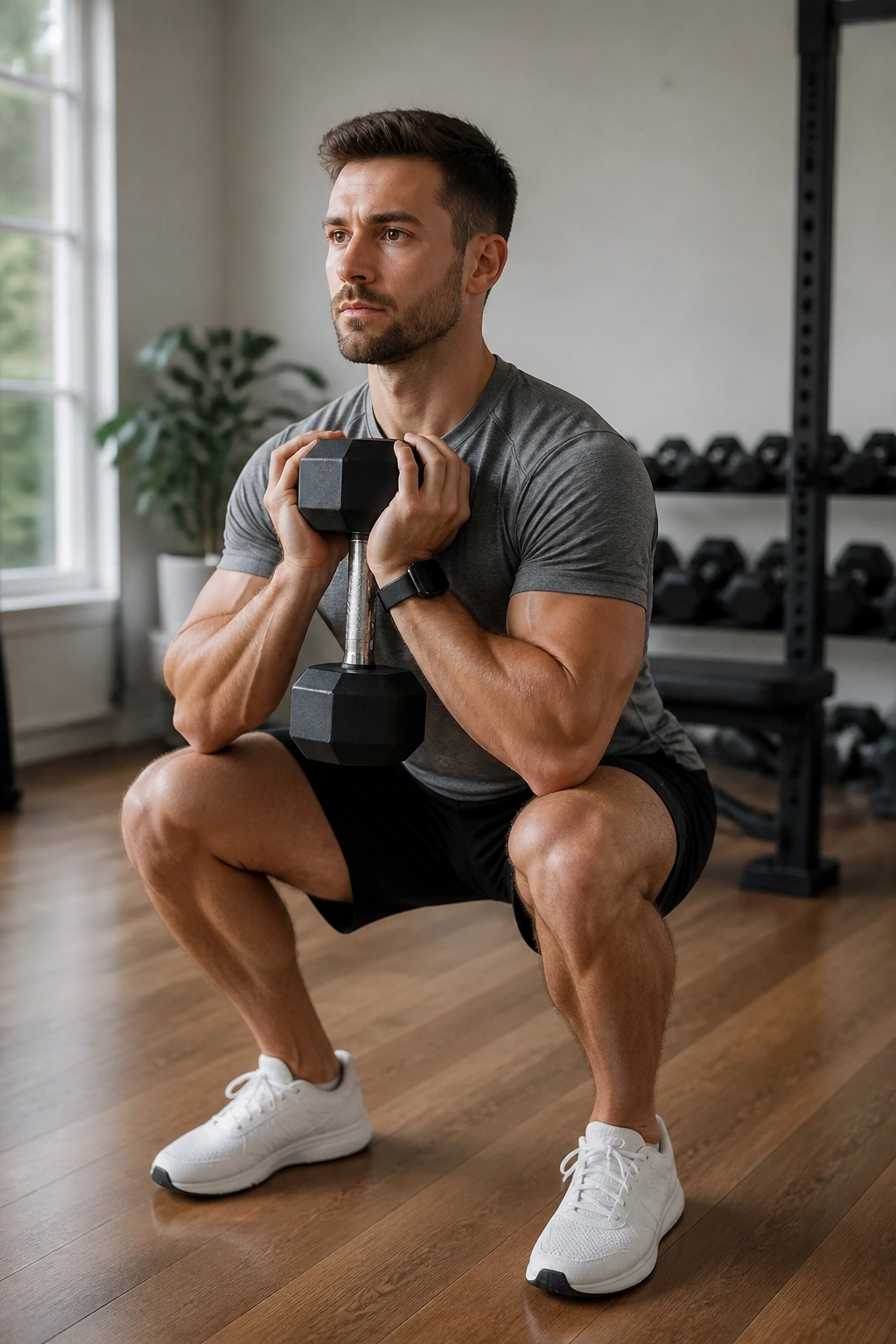
If you have access to a pair of dumbbells, this is the most “gym-like” workout you can do at home. You are combining strength and conditioning by minimizing rest.
Perform 12 reps of each, cycling through for 15 minutes:
- Goblet Squat: Keep the weight pinned to your chest.
- Dumbbell RDL: Keep the weights close to your shins.
- Dumbbell Lunge: Hold weights at your sides.
The key to this workout is the transition. Keep the dumbbells in your hands the entire time. Only set them down if you absolutely must. The grip strength required to hold the dumbbells through the lunges and RDLs adds an extra layer of difficulty, taxing your forearms and core as well as your legs. This is “full-body” conditioning disguised as a leg workout.
14. Eccentric-Focus Leg Routine
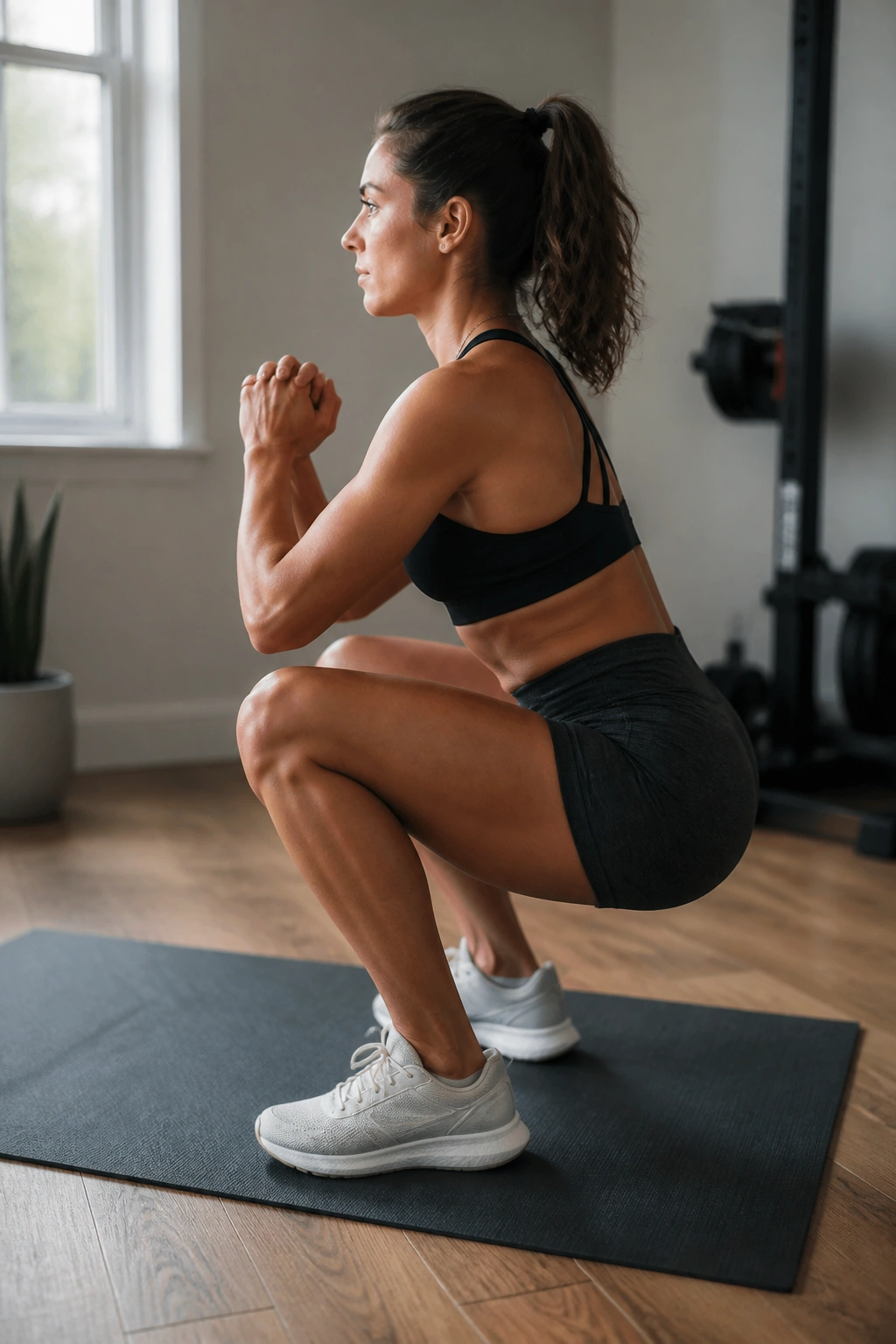
Most people focus on the lifting (concentric) phase of an exercise. But the lowering (eccentric) phase is where most muscle damage—and thus growth—occurs. We are going to slow down the lowering phase.
Pick two exercises, like a squat and a lunge.
- Squats: 3 seconds down, 1 second up.
- Lunges: 3 seconds down, 1 second up.
Perform 10 reps of each. Because you are spending so much time under tension, you will find your legs fatigue much faster than usual. You don’t need heavy weight for this. The time under tension creates the intensity. If you find yourself rushing the descent to get it over with, count “one thousand, two thousand, three thousand” out loud.
15. The “Destroyer” Finisher

This is for when you have nothing left but want to ensure you have left everything on the floor. It is a singular, grueling challenge.
Set a timer for 15 minutes.
- Burpees: 5 reps.
- Jump Squats: 20 reps.
- Mountain Climbers: 30 reps (15 per leg).
This is a cardio-heavy leg workout. The burpees spike the heart rate, and the jump squats keep the legs under load while the heart rate is high. It creates a “gasping for air” effect that is incredibly effective for fat burning and conditioning. Do not worry about speed in the first five minutes. Pace yourself. This is a 15-minute marathon, not a 15-second sprint.
Final Thoughts
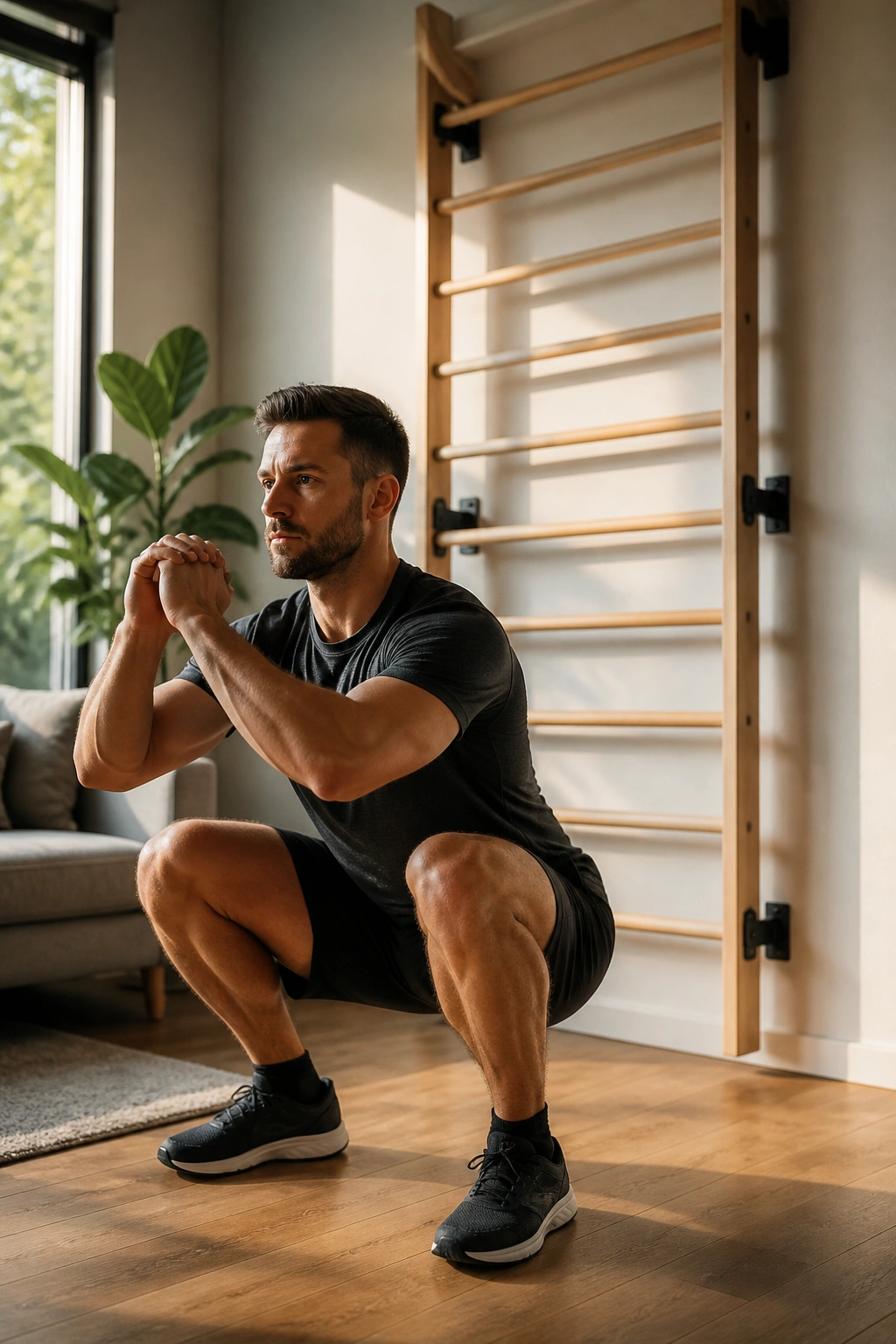
The most important element of these fifteen-minute routines is not the specific exercises, but the intensity you bring to them. If you treat these like a leisurely walk in the park, you will get leisurely results. If you attack the movements, focus on the muscle contraction, and keep your rest periods minimal, you will see strength gains and conditioning improvements that rival hour-long sessions.
Consistency beats intensity every time, but when you combine the two—short, intense bursts of effort performed consistently—you unlock a level of fitness that doesn’t require clearing your schedule. Pick one of these workouts, set your timer, and get to work. Your legs will thank you, eventually.
