



The Smith machine gets treated like a backup plan. That’s a waste.
Used well, Smith machine leg workouts can hammer quads, glutes, hamstrings, and calves with a kind of control free weights can’t always give you. The fixed bar path cuts out some wobble, which means you can load the legs hard, slow the descent down, and pay attention to the muscle that’s supposed to be working instead of fighting for balance.
That fixed path is also the catch. Move your feet a few inches, and the same exercise changes a lot. A squat can become quad-heavy, hip-heavy, or just plain awkward if the setup is off by a little. The good news: once you learn how to place your feet and brace properly, the Smith machine becomes a very useful leg-day tool — not a gimmick, not a cheat, just a different way to train.
I’m a fan of it for one simple reason. It lets you get honest about effort. No heroic balance work. No messy bailout reps. Just tension, depth, and a clearer sense of where the load is going. That matters more than people think, especially on leg day, when a small form mistake can turn a squat into a lower-back exercise you never asked for.
1. Smith Machine Back Squat
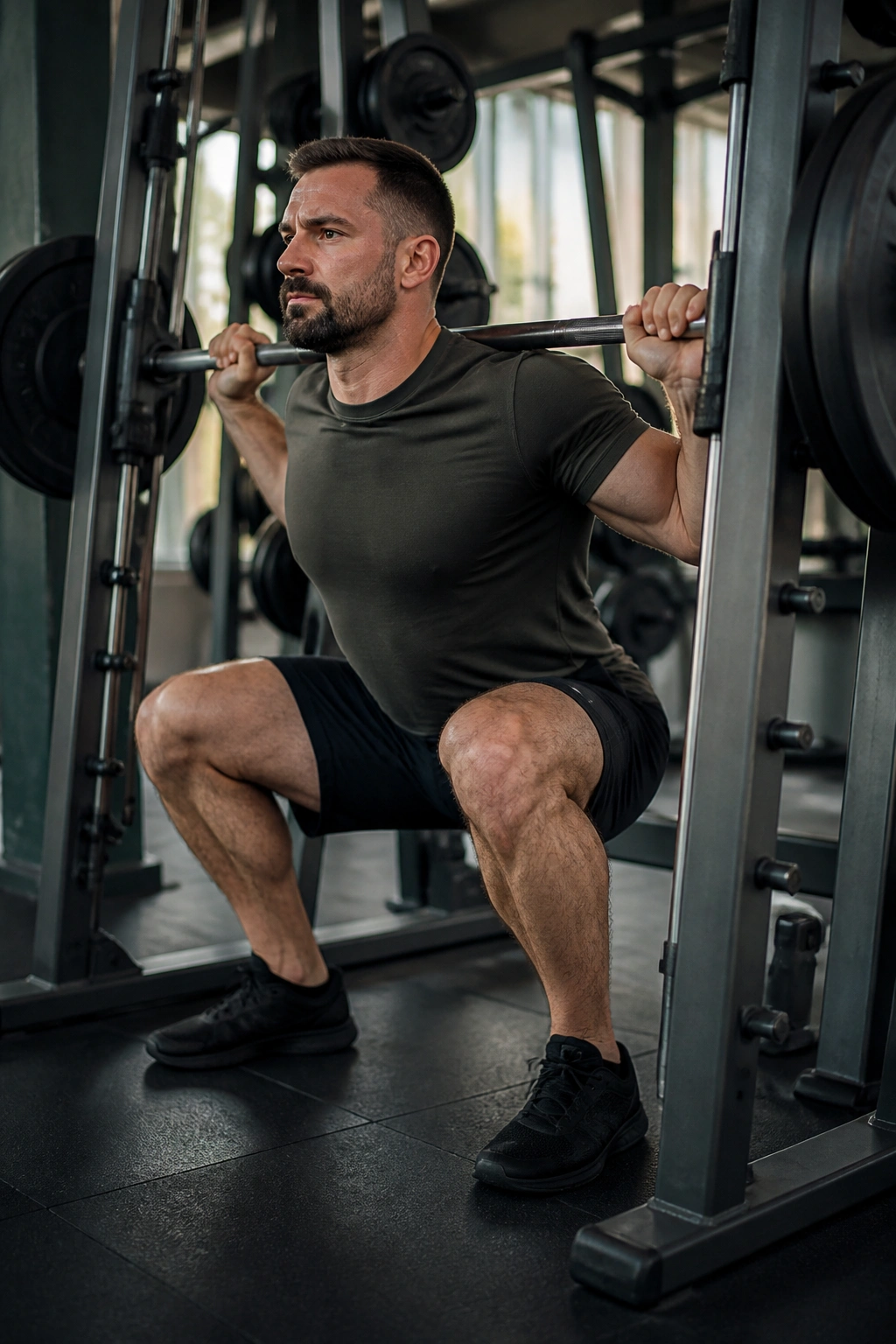
If you want one dependable Smith machine leg move, start here. The back squat is the standard for a reason: it loads the quads, glutes, and adductors in one clean pattern, and the Smith machine makes it easier to repeat the same depth rep after rep.
Set the bar across your upper traps, not your neck. Step your feet to a stance that feels about shoulder width, then test one slow rep before you add plates. On most machines, you’ll land with your feet a little in front of your hips so the bar tracks straight and your knees can travel without your heels popping up. That detail matters. A lot.
How to make it feel right
- Keep your whole foot on the floor.
- Lower for 2 to 3 seconds.
- Stop the descent when your thighs are at least parallel, or a touch below if your hips allow it.
- Drive up through midfoot and heel, not your toes.
Watch for the lower-back dump. If your pelvis tucks hard at the bottom, you’ve gone deeper than your hips can own right now. Shorten the range by an inch or two and earn it back later.
A good loading range is 6 to 10 reps for 3 to 5 sets. Heavy enough to matter. Clean enough to repeat.
2. Smith Machine Front Squat
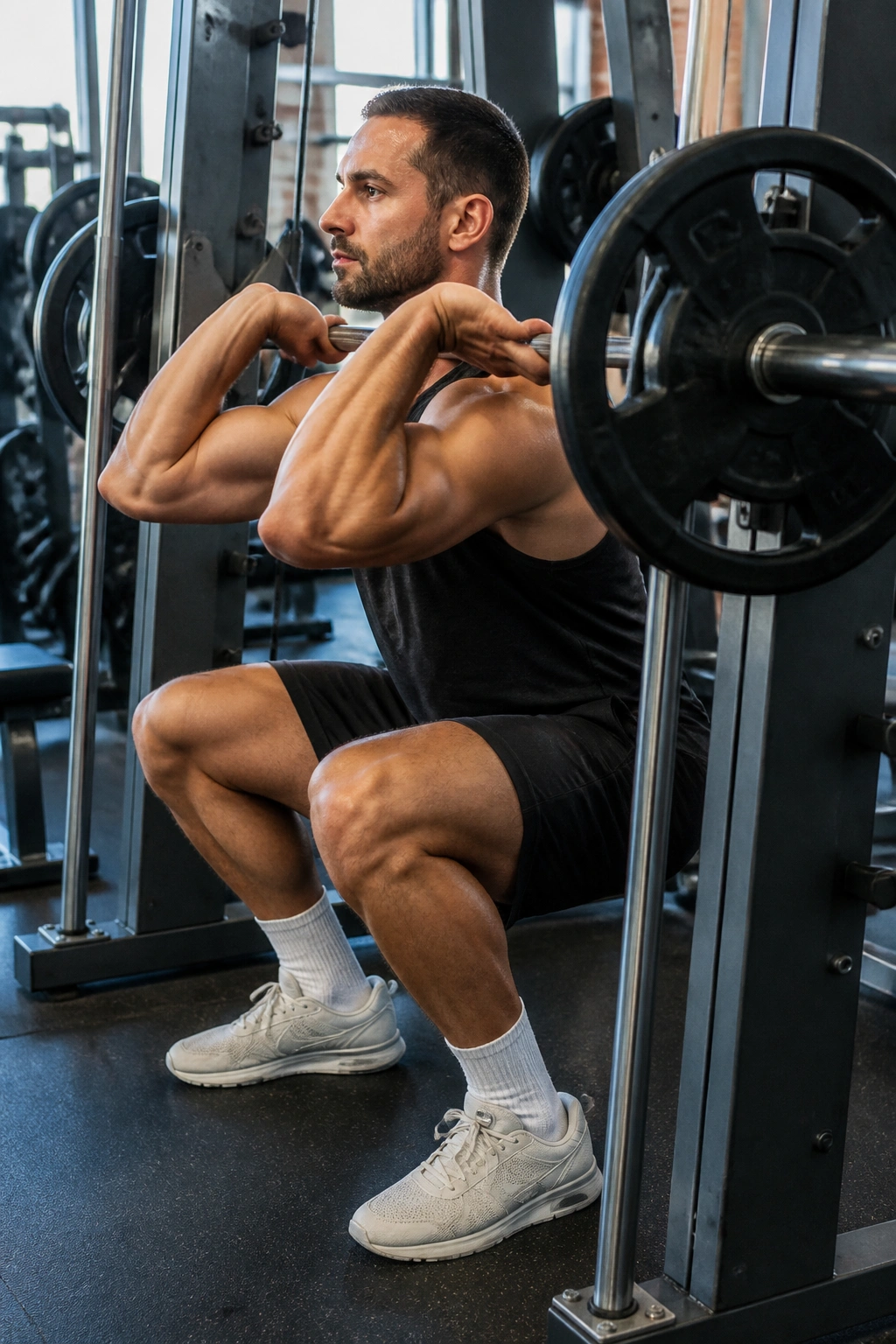
Why do front squats feel so different on a Smith machine? Because the upright torso changes the whole conversation. The bar sits on the front delts, your elbows stay high, and the quads take a bigger share of the work while the hips stay a little quieter.
You can use a clean grip, crossed arms, or lifting straps around the bar if your wrists hate the front rack. I prefer straps for most people. Less fuss. Less wrist drama. The important thing is keeping your chest tall while your ribs stay down. That sounds neat on paper and messy in practice, which is exactly why the Smith machine helps: the fixed line keeps the movement tidy while you learn the position.
What makes it different
- Torso stays more upright than a back squat.
- Quads get hammered harder.
- The core has to fight hard to keep the ribs from flaring.
If you feel the bar drifting forward or your elbows dropping, the weight is too heavy or your upper back is giving up early. Trim the load. Front squats punish sloppy reps fast.
I like this one in the 5 to 8 rep range. It’s crisp, direct, and a little unforgiving. That’s the point.
3. Heels-Elevated Smith Squat
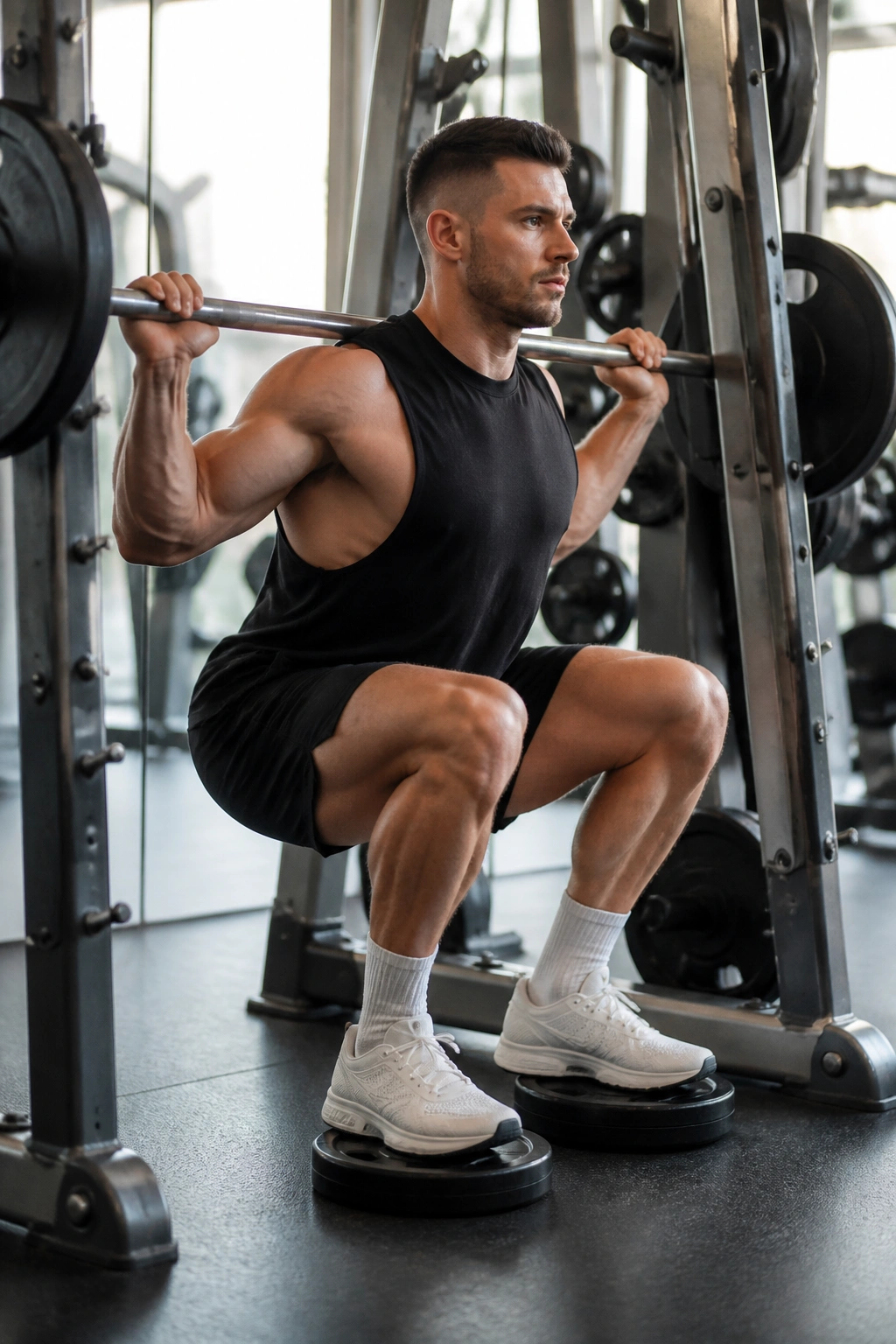
A pair of small plates under your heels changes the whole lift. Suddenly the knees can travel more freely, the torso stays taller, and the quads light up without you having to lean forward like you’re trying to pick something off the floor.
This is one of my favorite Smith machine leg workouts for people with tight ankles or lifters who simply want more quad bias. Use 1 to 2 inches of heel elevation — a pair of 2.5-pound plates works fine, and lifting shoes work too. Stand close enough that your knees can move forward naturally, then sit straight down between your feet. Not back. Down.
Why it works so well
The heel lift shortens the ankle angle, which lets the knees travel farther without the heels peeling up. That can make the bottom position feel smoother and less cramped, especially if your squat usually turns into a tiptoe contest.
Keep the movement slow on the way down. If you bounce off the bottom, the quads don’t get the full benefit and the bar can feel jumpy under load. A controlled pause of half a second is enough.
Use 10 to 15 reps here. It’s a nasty burn in the best way. No need to chase a one-rep max on this one.
4. Smith Machine Box Squat
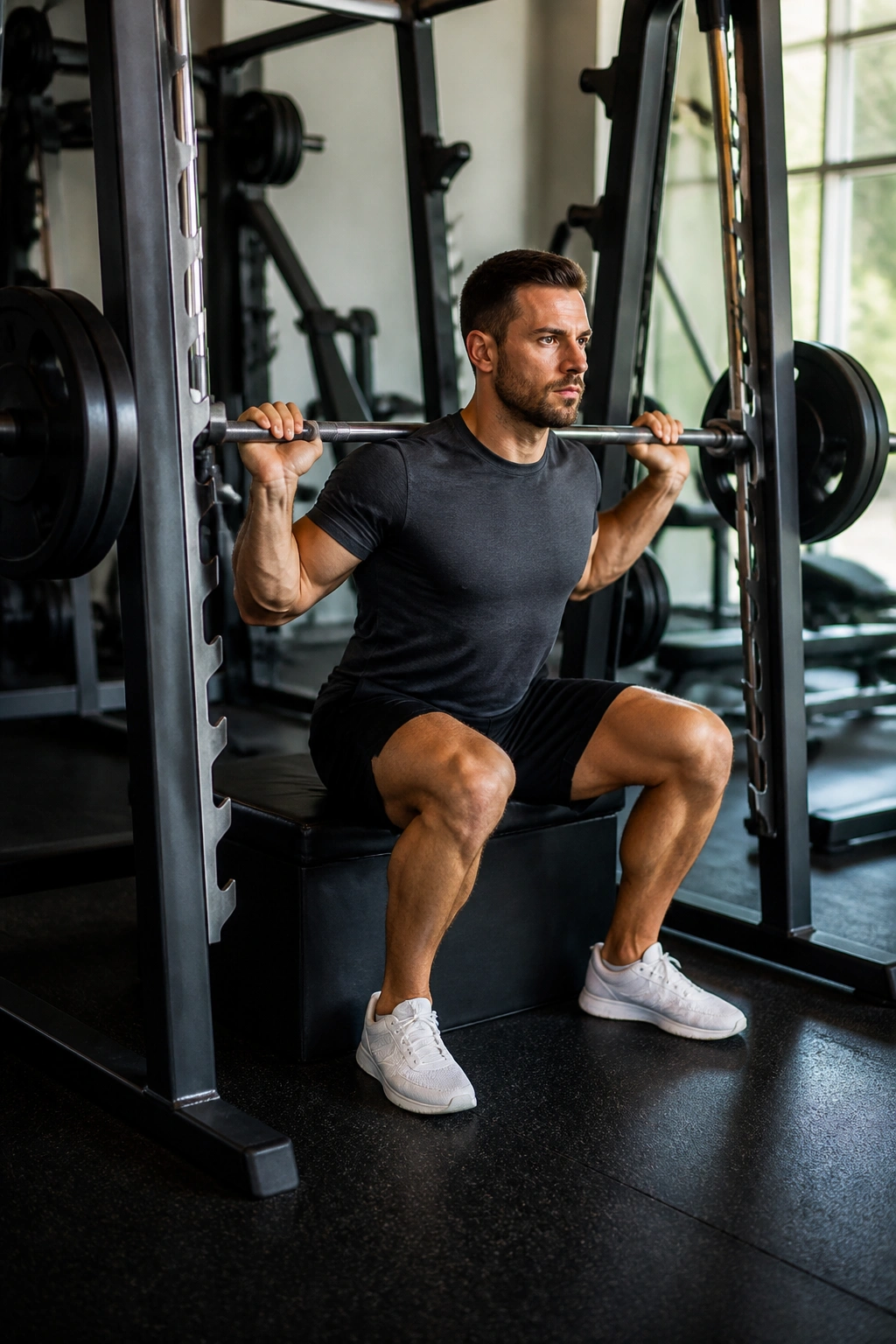
Box squats are not just for powerlifters with spreadsheets and loud shoes. On a Smith machine, they’re one of the cleanest ways to practice depth control without wondering if you hit the same depth on every rep.
Set a box or bench to just below parallel. Sit back until you lightly touch it, keep tension in your legs, then drive up without relaxing into the box. That last part is where people mess it up. If you fully drop your weight onto the box, you steal the work from the legs and turn the bottom into a reset. That’s not the goal.
Quick setup cues
- Use a box that puts your thighs near parallel.
- Keep your shins mostly vertical.
- Touch, don’t crash.
- Stay braced the whole time.
The box squat is useful when your regular squat depth gets inconsistent. It gives you a clear target, which is underrated. Humans are better at hitting something than guessing something.
I like this for 4 to 8 reps when you want strength and consistency. It also pairs well with tempo work — slow down, pause, stand up hard. Simple. Effective. Not flashy.
5. Smith Machine Wide-Stance Squat
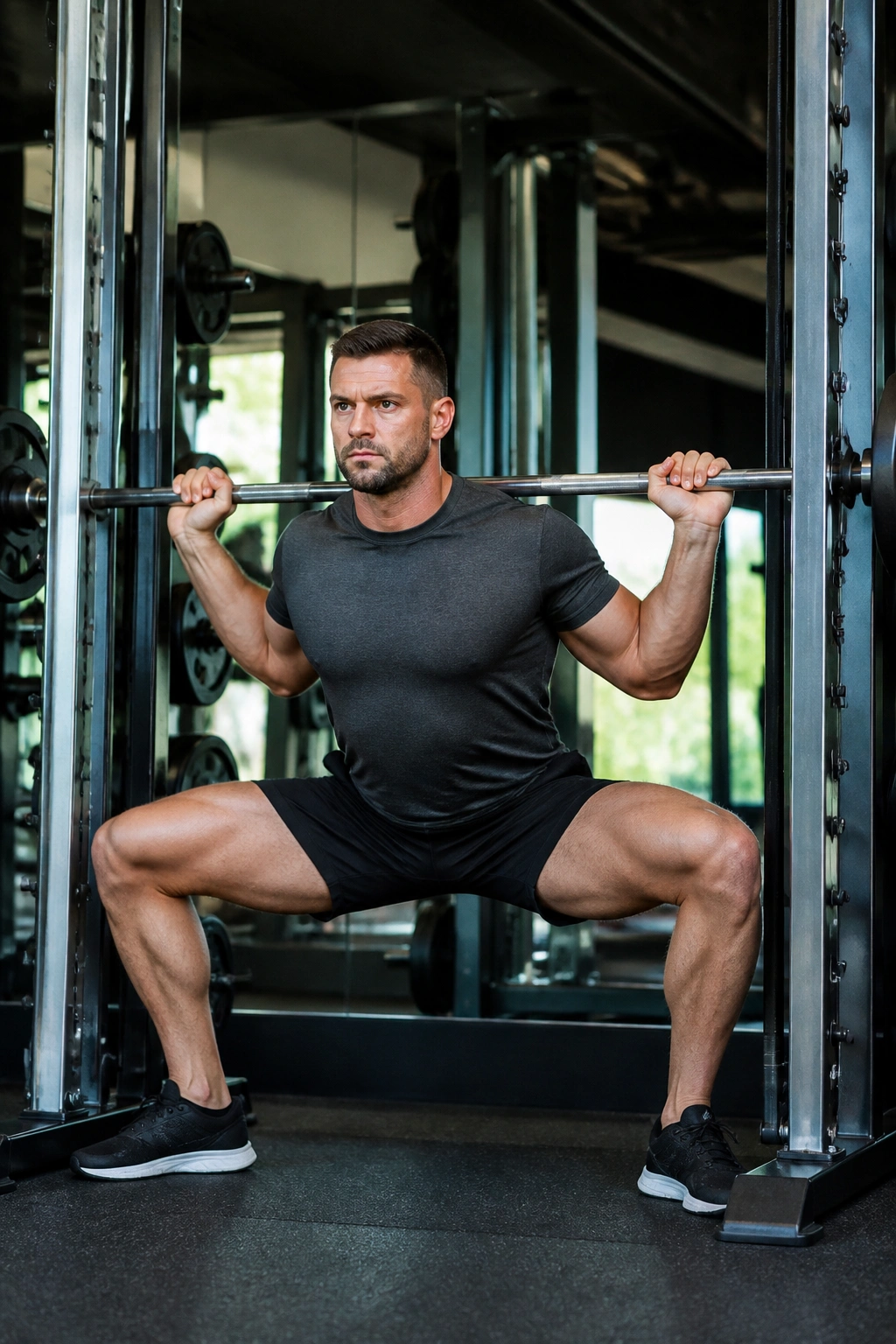
If your hips feel cranky in a narrow squat, widen the stance and see what changes. A wide stance Smith machine squat shifts more work to the glutes, adductors, and inner thighs while letting some lifters hit depth with less front-of-knee stress.
Set your feet a little wider than shoulder width and turn the toes out about 30 to 45 degrees. Don’t go so wide that your hips feel pinched or your knees cave inward to compensate. Descend between the legs, not straight down like a drill press. There’s a difference, and your hips know it.
This version is especially good if you like the feeling of staying a bit more upright while still driving hard through the lower body. The fixed bar path makes it easier to own the bottom position without worrying about balance.
A quick note: wide stance does not mean sloppy stance. If your feet are turned out too much or your knees collapse, you’ve gone past useful and landed in awkward.
Use 8 to 12 reps. The groove should feel stable, almost heavy and steady, not wobbly. A steady wide squat can be brutally honest.
6. Smith Machine Narrow-Stance Squat
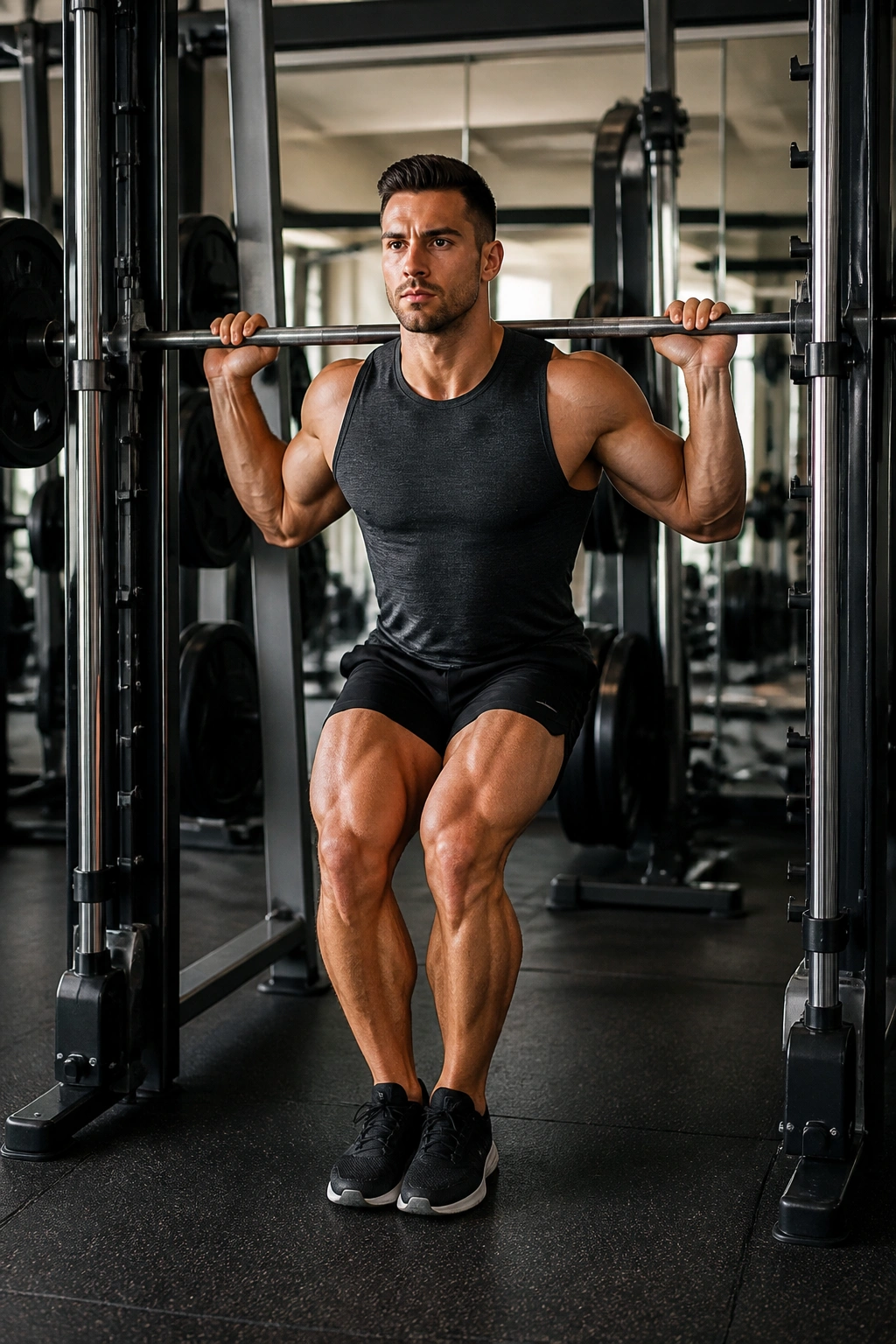
Close your stance a little and the quads start working harder fast. The narrow-stance Smith squat is a simple move, but it hits differently because your knees travel a bit more and your torso usually stays more upright than it does in a broad squat.
Stand with your feet around hip width, maybe slightly inside it if your joints tolerate that well. Keep the bar stacked over the midfoot, brace your core, and lower until your thighs are at least parallel. If your heels lift or your lower back starts doing the job of your thighs, widen the stance a touch. No trophy for suffering through a bad setup.
This is a good choice when you want a squat that feels more like a quad press than a hip hinge. It’s also useful after a heavier compound lift, when you want to keep tension high without turning the rest of the session into chaos.
What to feel
- Strong knee travel
- Pressure through the front of the thighs
- A clean push off the floor
I’d keep this in the 10 to 15 rep range. It’s a burn-builder. Not delicate. Not fancy. Just very direct.
7. Smith Machine Bulgarian Split Squat
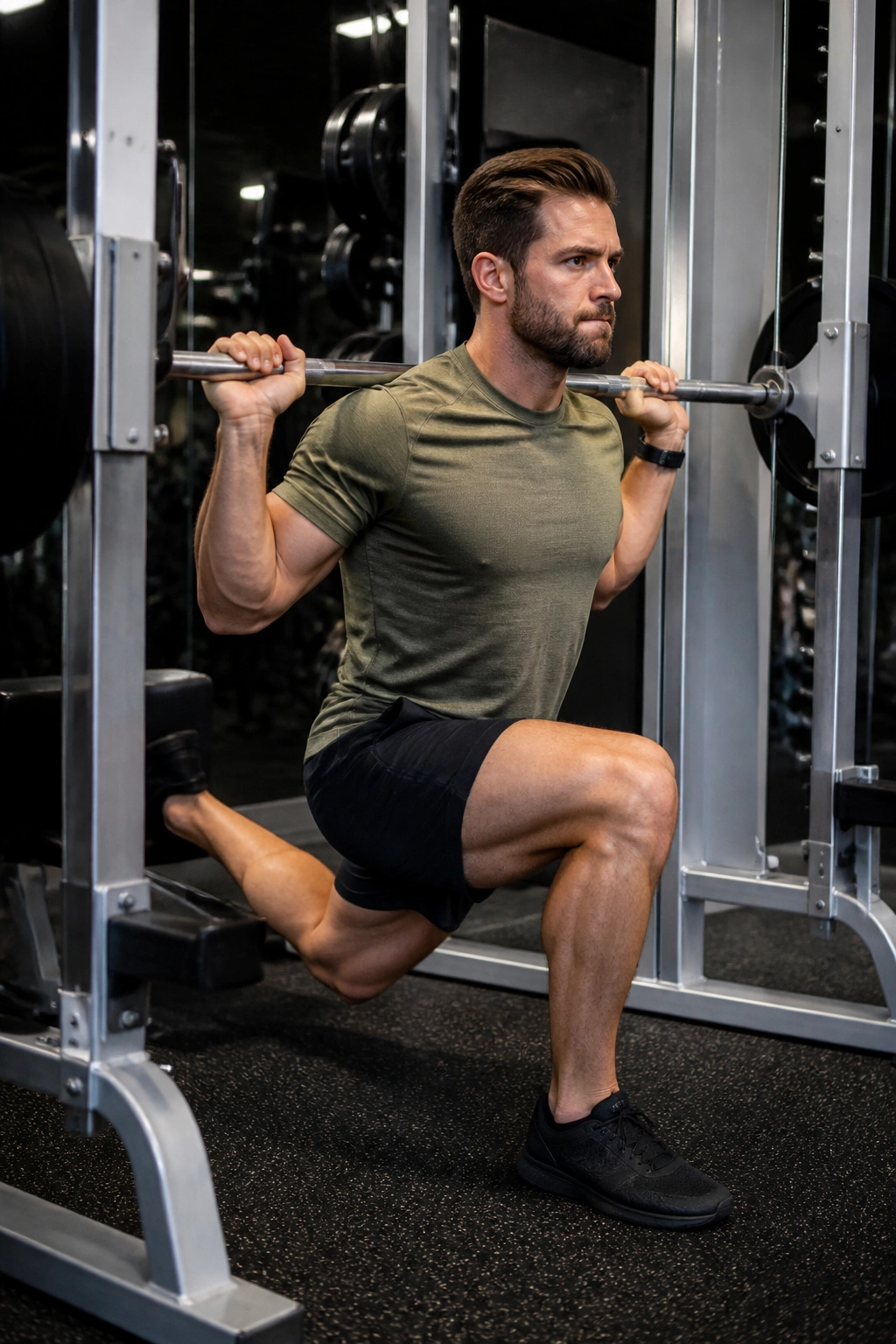
The first set looks easy. The second one usually tells the truth.
Bulgarian split squats on the Smith machine are one of the best ways to load one leg hard without your balance becoming the star of the show. Put the back foot on a bench, step the front foot far enough forward that you can drop straight down without the heel peeling up, and keep your torso slightly tilted only if it helps the front glute or quad do its job. The Smith bar makes the movement feel more stable, which lets you focus on depth and leg drive instead of wobbling around.
Setup that saves your knees
- Front foot far enough forward for a solid base
- Back foot relaxed on the bench, not jammed
- Front knee tracks over the toes, not inward
- Descend until the back knee gets close to the floor
If the front knee hurts, the front foot is probably too close. Shift it forward by an inch or two and try again. That tiny adjustment fixes a lot.
This one works best for 8 to 12 reps per leg. Slow lowers help. So does not rushing the setup. The setup is half the lift.
8. Smith Machine Reverse Lunge
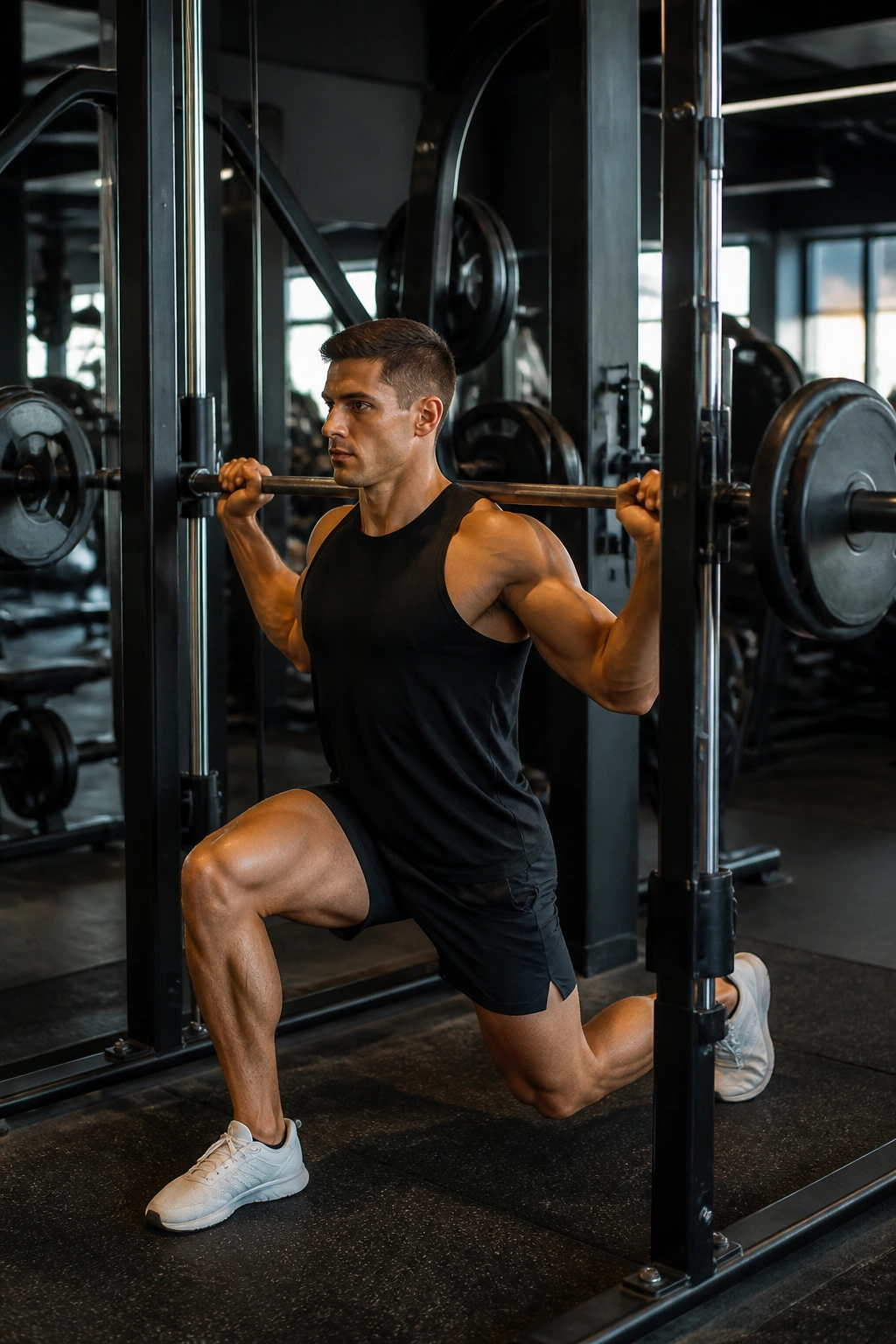
Why reverse lunge instead of forward lunge? Because it’s usually easier on the knees and easier to control on a Smith machine. You step back, lower under control, and keep the front foot planted like it has a job to do.
The fixed bar takes some of the balance out, which is exactly why this version is so useful. You can load the legs hard without turning every rep into a little rescue mission. Keep your front shin at an angle that feels strong, not jammed, and let the back knee travel down toward the floor. A slight forward torso lean is fine if it helps the glutes do more work.
This variation is especially good if you like unilateral work but hate the feeling of dangling around under a free barbell. It’s more stable, cleaner to repeat, and easier to progress over time.
A simple way to program it: 3 to 4 sets of 8 to 10 reps per leg. Keep the steps smooth. Don’t bounce off the back foot. That turns the movement into a sloppy push-off, and the front leg gets cheated out of the work.
9. Smith Machine Step-Up
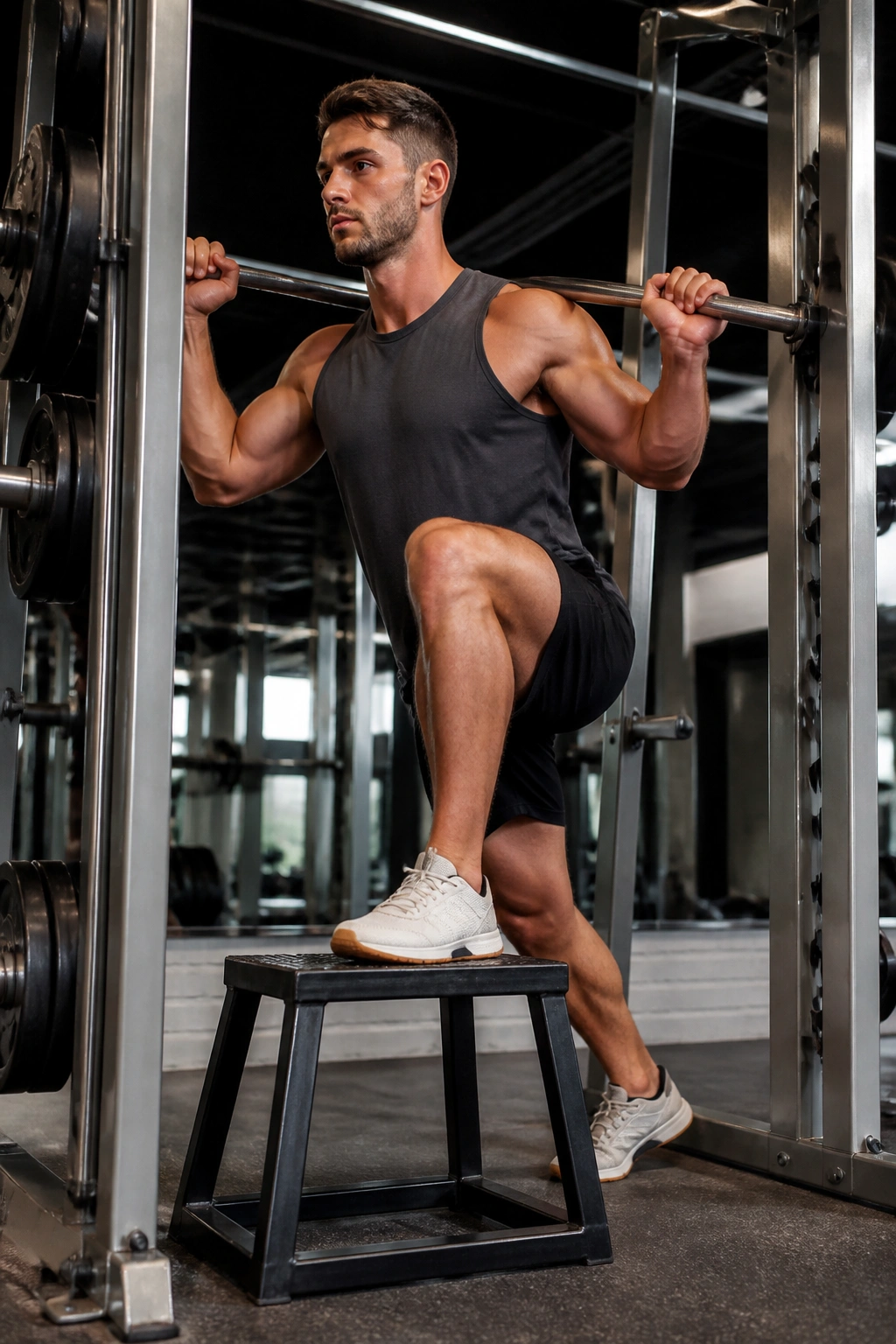
A knee-high box and a Smith bar can humble you fast. That’s part of the charm.
The step-up is one of the best Smith machine leg workouts for teaching single-leg drive without a circus act. Pick a platform around mid-shin to just below knee height to start. Anything much higher, and people start yanking themselves up with the trailing leg. Not ideal. Place one foot fully on the box, lean slightly into the working leg, and stand up by driving through the planted foot.
What makes a good step-up
The box height matters more than ego does. If you have to push off hard with the trailing foot, the step is too tall. If you feel the movement in the hip and quad of the leading leg, you’re in the right place.
Keep the descent slow. That part gets ignored all the time. Dropping down fast might feel athletic, but it steals tension from the working leg and makes the rep less useful.
I like 8 to 12 reps per leg. More than that, and people start cheating. Less than that, and they stop controlling the negative. There’s a sweet spot here, and it usually lives in the middle.
10. Smith Machine Hack Squat
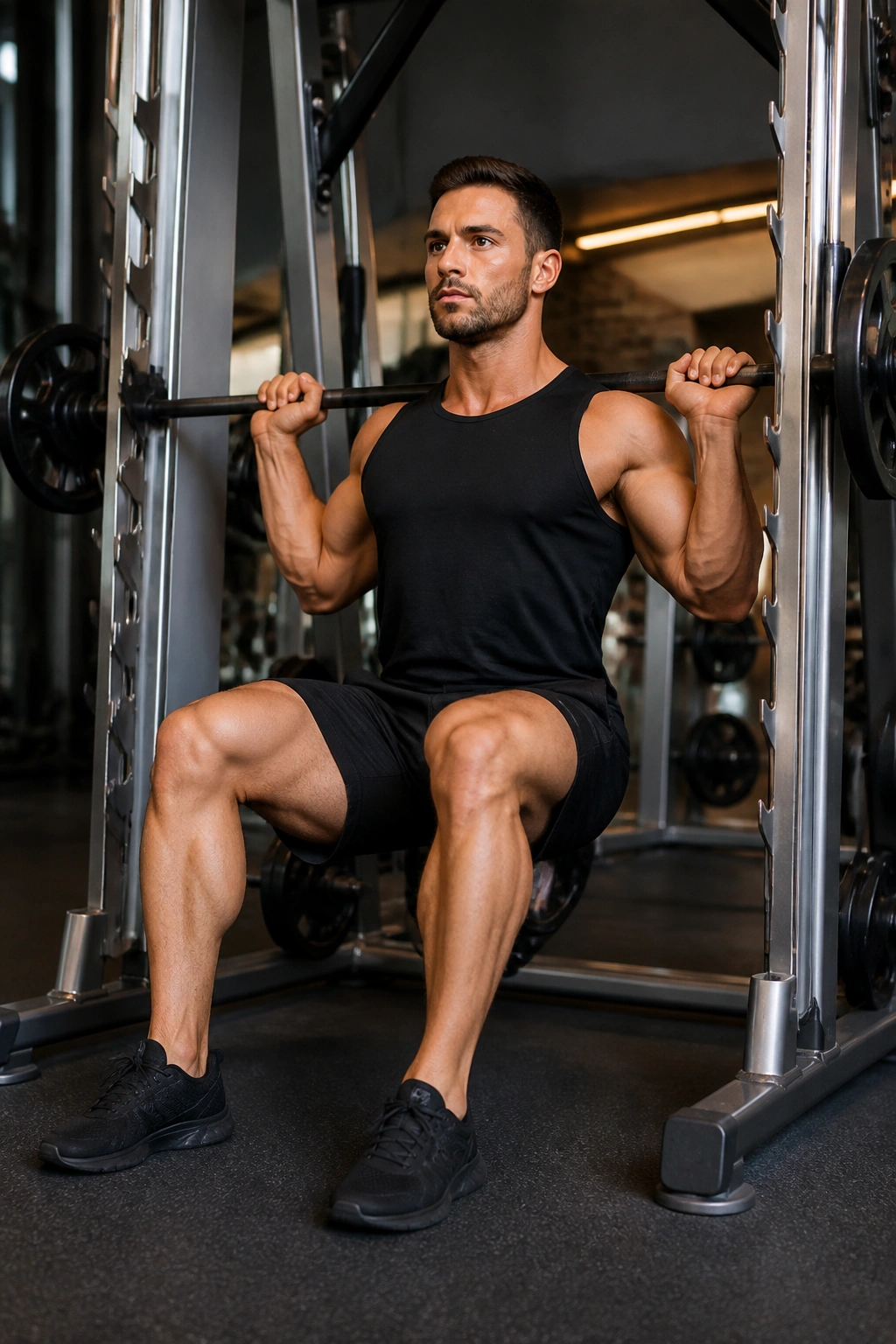
This is the closest thing to a quad machine exercise without actually using a hack squat machine. The Smith machine hack squat puts more stress on the front of the legs by changing your foot position and torso angle so the knees travel forward while the hips stay more under control.
Set your feet slightly forward from the bar, keep the bar on your upper traps, and let your torso angle stay a little more upright than in a regular squat. From there, sit down between your feet while keeping the heels glued to the floor. The movement should feel like your quads are doing the bulk of the work while your hips help but don’t dominate.
What to watch for
- Heels should stay down
- Knees should travel forward in a controlled way
- Bar should stay smooth, not bounce
- Lower back should stay braced, not arched hard
The hack squat version is especially handy if you want a front-of-thigh burn without loading your spine like crazy. That does not mean it’s easy. It just means the stress is aimed differently.
Use 10 to 15 reps and keep the reps smooth. You’ll know it’s working when the last three reps feel slow in the front of the thighs.
11. Smith Machine Romanian Deadlift
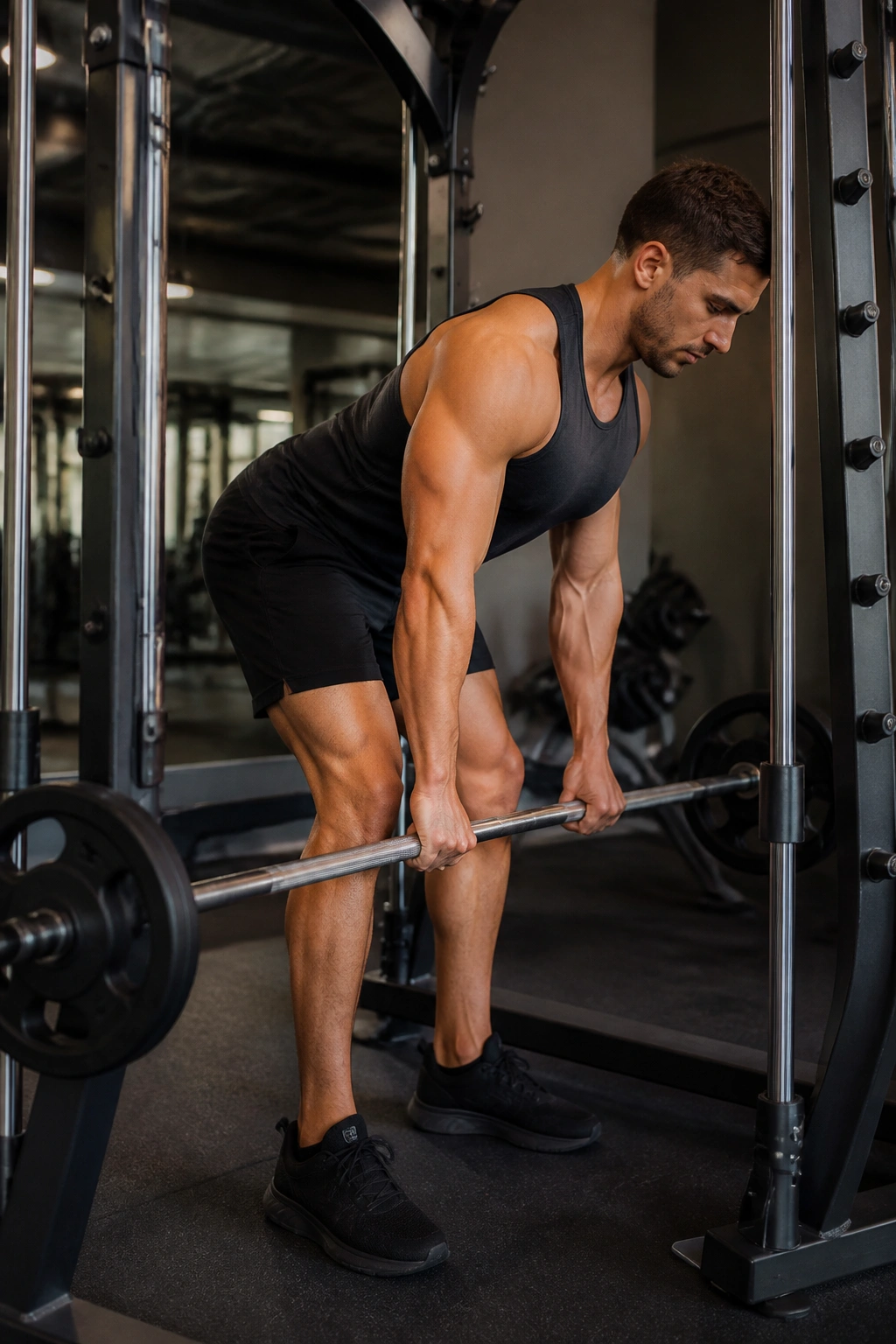
The Smith machine is underrated for RDLs because the fixed path removes one bit of noise. You can focus on the hinge, the hamstring stretch, and the bar staying close to the legs instead of worrying about drift.
Stand with your feet about hip width, unlock the knees slightly, and push your hips back while the bar slides down the thighs. Stop when the hamstrings feel fully loaded and your back is still flat. For a lot of people, that’s somewhere around mid-shin. For others, it’s higher. Don’t force depth if the spine starts rounding. That’s a bad trade.
The movement should feel like the hips are moving behind you, not like you’re reaching for the floor with your hands. The bar should stay close enough to graze the legs on the way down. If it floats forward, the lower back gets cranky fast.
A good RDL rhythm
- 2 to 3 seconds down
- brief pause in the stretched position
- drive the hips forward without leaning back at the top
I like 6 to 10 reps here. Heavy enough to build real hamstring work, controlled enough to keep the form honest.
12. Smith Machine Good Morning
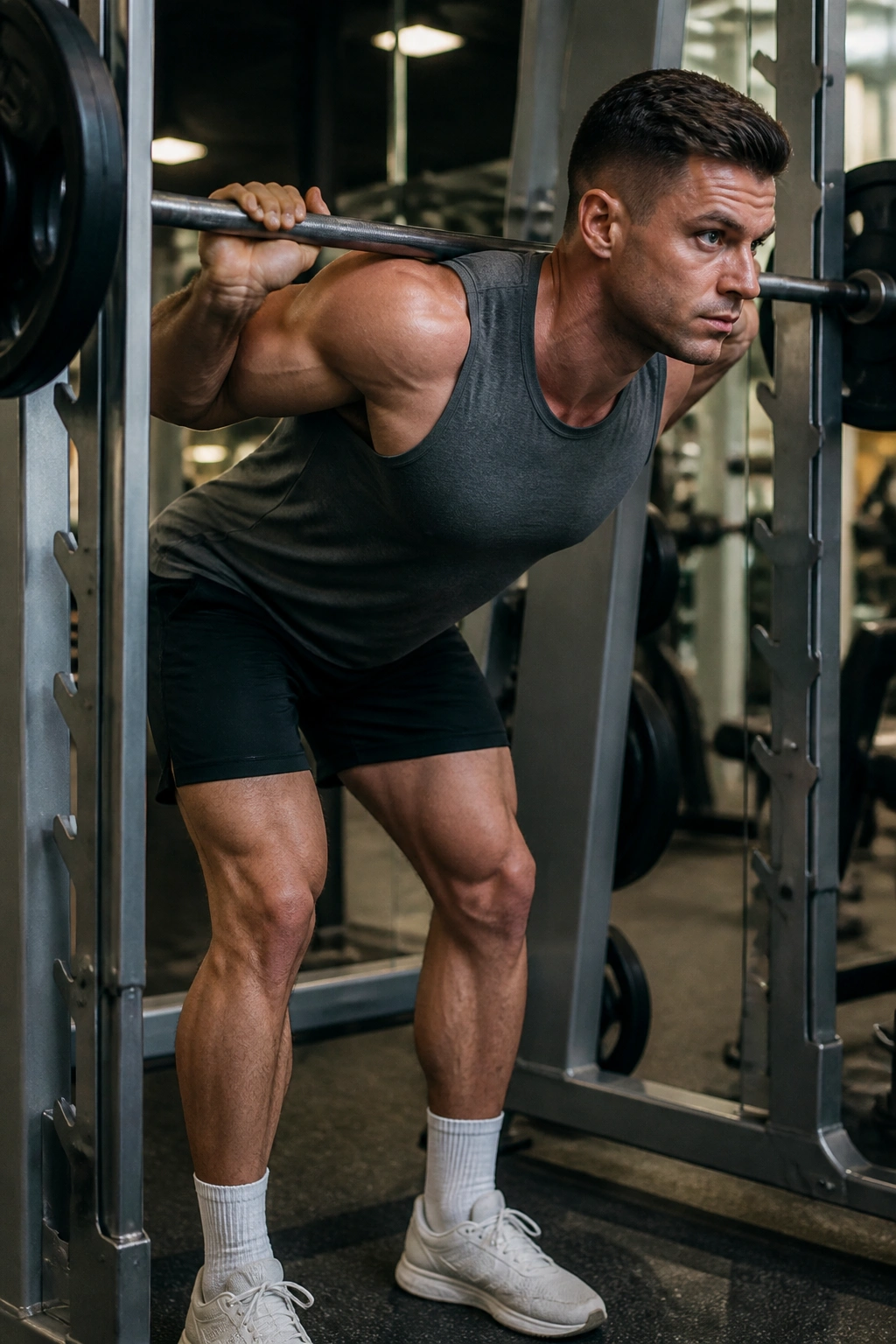
If you hate good mornings with a free bar, try them here. The Smith machine keeps the bar path steady, which can make the exercise feel a lot less chaotic once you learn the hinge.
Set the bar across your upper traps, bend your knees a little, and push your hips back while your torso inclines forward. The movement is small compared with a squat, and that’s fine. You are not trying to fold in half. You’re loading the hamstrings, glutes, and spinal erectors in a controlled arc. Go too heavy and the whole thing turns into a spine test. That’s not the point.
What makes this one useful
The good morning teaches you to hold tension through the back side of the body while your knees stay softly bent. It also has a way of exposing weak bracing. If your ribs flare or your lower back overextends, the load will feel ugly fast.
Keep the range modest. A lot of people go too deep because they think deeper means better. Not here. Stop when the hamstrings get a strong stretch and the torso angle still looks controlled.
Use 8 to 12 reps with lighter weight than your squat or RDL. This is a feel lift. Respect it.
13. Smith Machine Hip Thrust
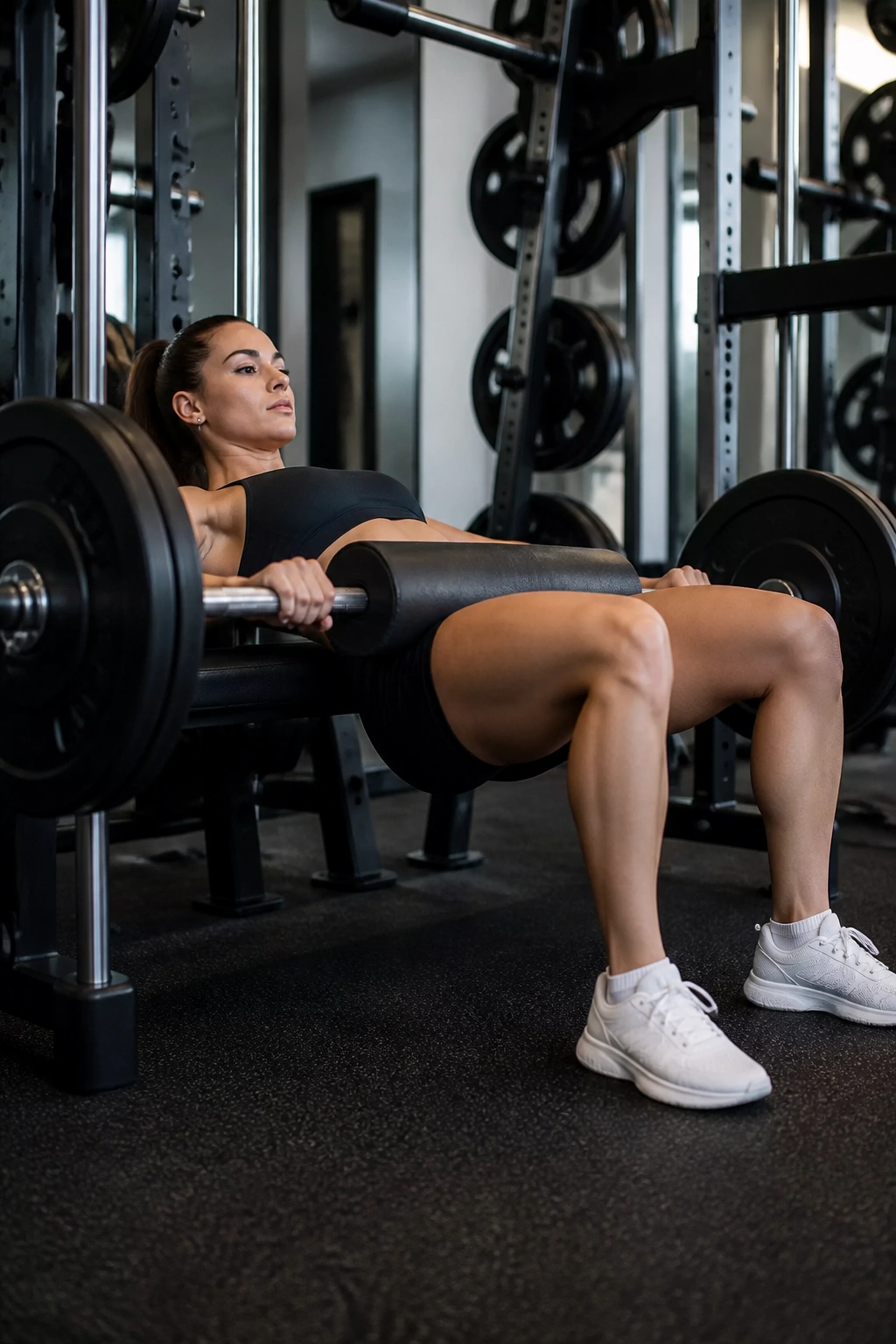
Your upper back on a bench, a loaded bar over your hips, and one long squeeze at the top — the Smith machine hip thrust is plain uncomfortable in the way that usually means it works.
Set the bench behind you so your shoulder blades rest on it, then roll the bar over your hips with a thick pad or folded towel. Plant your feet about shoulder width apart. At the top, your shins should be close to vertical, your ribs should stay down, and your glutes should finish the rep without your lower back taking over. That last part matters more than most people think.
Top-position check
If you’re arching your lower back to get higher, the load is wrong or your feet are placed poorly. Slide them a bit forward or back until the glutes can lock out the rep cleanly.
Pause for 1 full second at the top. Squeeze hard. No half-hearted reps. Hip thrusts reward commitment and punish lazy lockouts.
I like 8 to 12 reps with a couple of heavier sets and a final set that’s a little lighter but cleaner. The Smith machine makes this one easy to load. Which is dangerous, honestly. Add weight slowly.
14. Smith Machine Standing Calf Raise
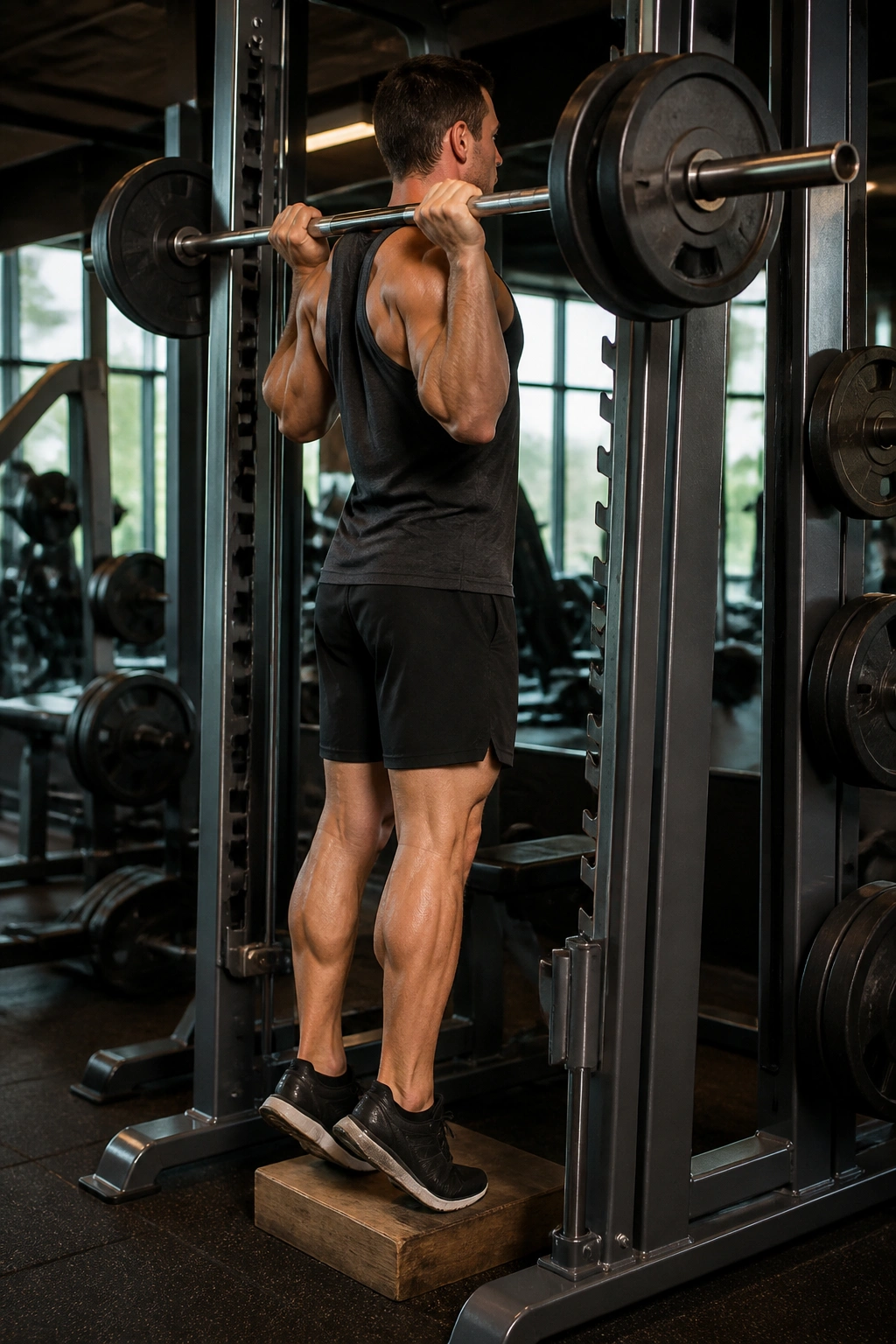
Most people rush calf work, then wonder why their calves look exactly the same month after month. That pattern is not a mystery.
The Smith machine standing calf raise gives you a simple, loadable way to train the calves through a full stretch. Step onto a block or plate so your heels can drop below the toes, place the bar on your upper traps, and rise up onto the balls of your feet. Pause at the top for a second. Then lower under control until you feel a deep stretch through the calves. That stretch is not decoration. It’s the work.
A few details that matter
- Keep the knees mostly straight to hit the gastrocnemius harder.
- Don’t bounce at the bottom.
- Use a slow, full descent.
- Hold the top for a clean squeeze.
If your gym has no calf machine, this is one of the best substitutions you can make. It’s simple, and that’s part of why it works. No setup drama. No weird angles.
Try 12 to 20 reps. Calves usually like volume, clean range, and patience. Annoying, yes. Also true.
15. Smith Machine Sissy Squat
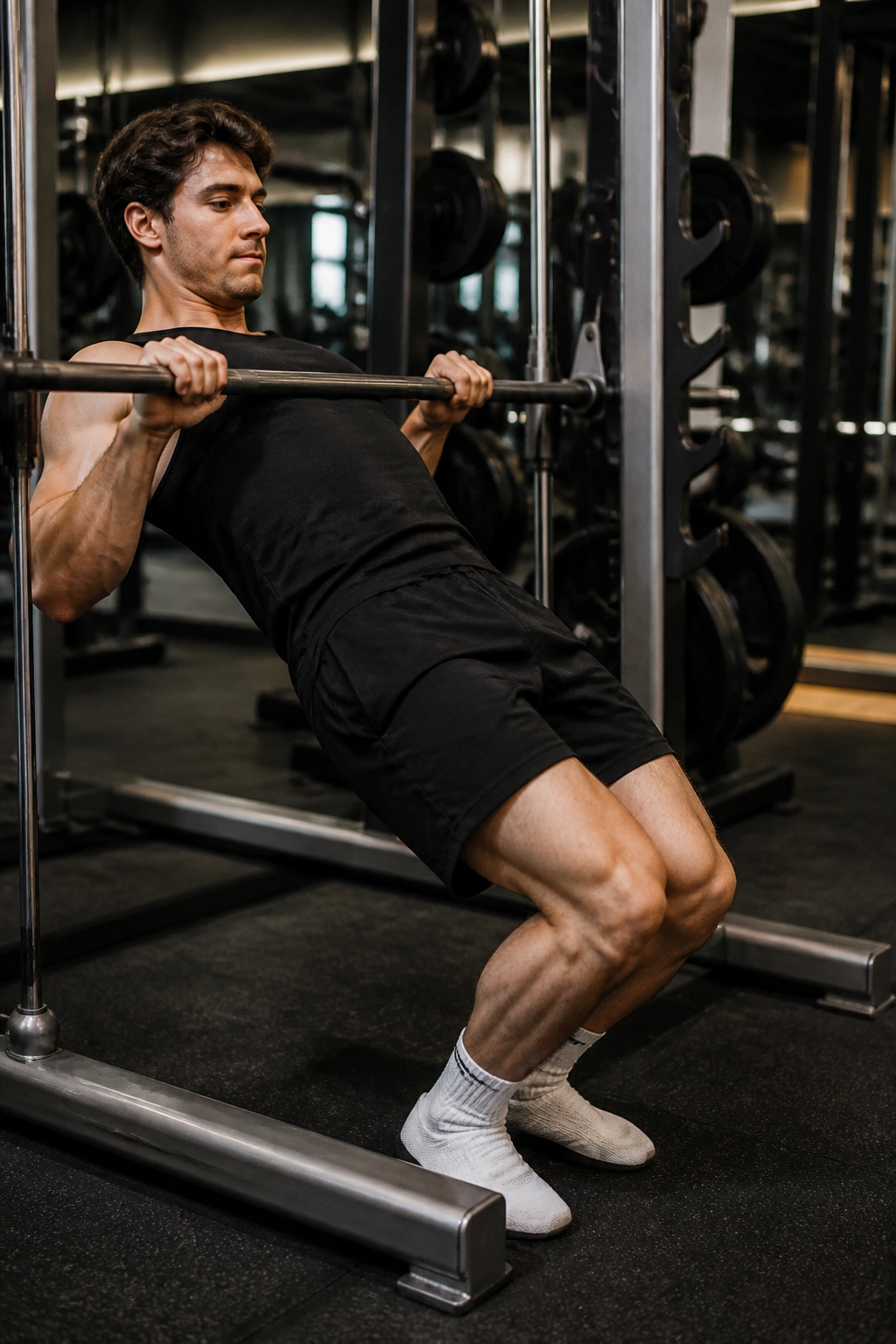
This one is a quad torch, and I mean that in the old-school, slightly unfair sense. The Smith machine sissy squat drives the knees forward while the torso leans back, which puts a huge amount of tension on the quads, especially the rectus femoris.
Stand under the bar and hold it for support. Keep your feet set under you, rise onto the balls of your feet if needed, and let the knees move forward as the torso leans back in a straight line. The hips stay extended. The movement is short, sharp, and not especially friendly if your knees are already cranky, so start light and keep the range modest. A lot of people try to turn it into a circus trick. Don’t.
What to know before you try it
- Start with bodyweight or a very light load
- Use a reduced range at first
- Keep the movement smooth, not jerky
- Stop if the knees feel pinchy
This is a finishing move, not a pride contest. It’s best for lifters who already handle squats well and want more quad work without piling on more spinal loading.
Use 8 to 15 reps and keep the last few ugly in the muscles, not the joints. That distinction matters. A lot.
If you build a leg day from three or four of these, you’ve already got more than enough work to grow on. Pick one squat pattern, one unilateral move, one hinge, and one accessory. Then repeat it long enough to get stronger instead of endlessly swapping exercises because the internet made boredom sound like a problem.
