



The lower body is the powerhouse of your entire physique. Whether you want to sprint faster, climb stairs without gasping for breath, or simply look better in a pair of jeans, training your legs is non-negotiable. It is not just about aesthetics; it is about function. Your legs carry you through life, absorbing impact and generating force with every step you take. If you neglect this foundation, you lose out on one of the most effective ways to boost your metabolic rate and build overall strength.
Many people dread “leg day,” often because they treat it as an exhausting chore rather than a skill-building session. When you break it down into specific movements—mastering the mechanics of a squat, the balance of a lunge, or the isolation of a curl—it stops being a test of pain tolerance and starts being a practice of control. The key to consistency is variety. Using the same routine indefinitely kills motivation and limits growth. Below are thirty distinct movements ranging from bodyweight basics to heavy compound lifts and plyometrics. These will give you the tools to construct a training plan that evolves with you, regardless of your starting point.
1. Air Squats
The air squat is the gold standard of lower body training. It requires zero equipment, yet it forces you to master the basic mechanics of hip hinge and knee flexion. If you cannot perform a technically sound air squat with your own body weight, you have no business putting a loaded barbell on your back.
Why They Form the Foundation
Think of the air squat as a diagnostic tool. It shows you exactly where your mobility limitations lie. If your heels lift off the ground, your ankles are likely tight. If your chest caves forward, you probably need to work on thoracic spine mobility and core bracing. You are teaching your nervous system how to move through a full range of motion.
How to Master the Form
- Keep your feet shoulder-width apart with toes turned out slightly.
- Initiate the movement by pushing your hips back, as if sitting into an invisible chair.
- Drive your knees outward so they track over your toes; do not let them cave inward.
- Descend until your hip crease is below the top of your knee, then drive back up through your heels.
Pro tip: Hold a light plate or a household object straight out in front of you as a counterbalance if you struggle with falling backward during your descent.
2. Walking Lunges
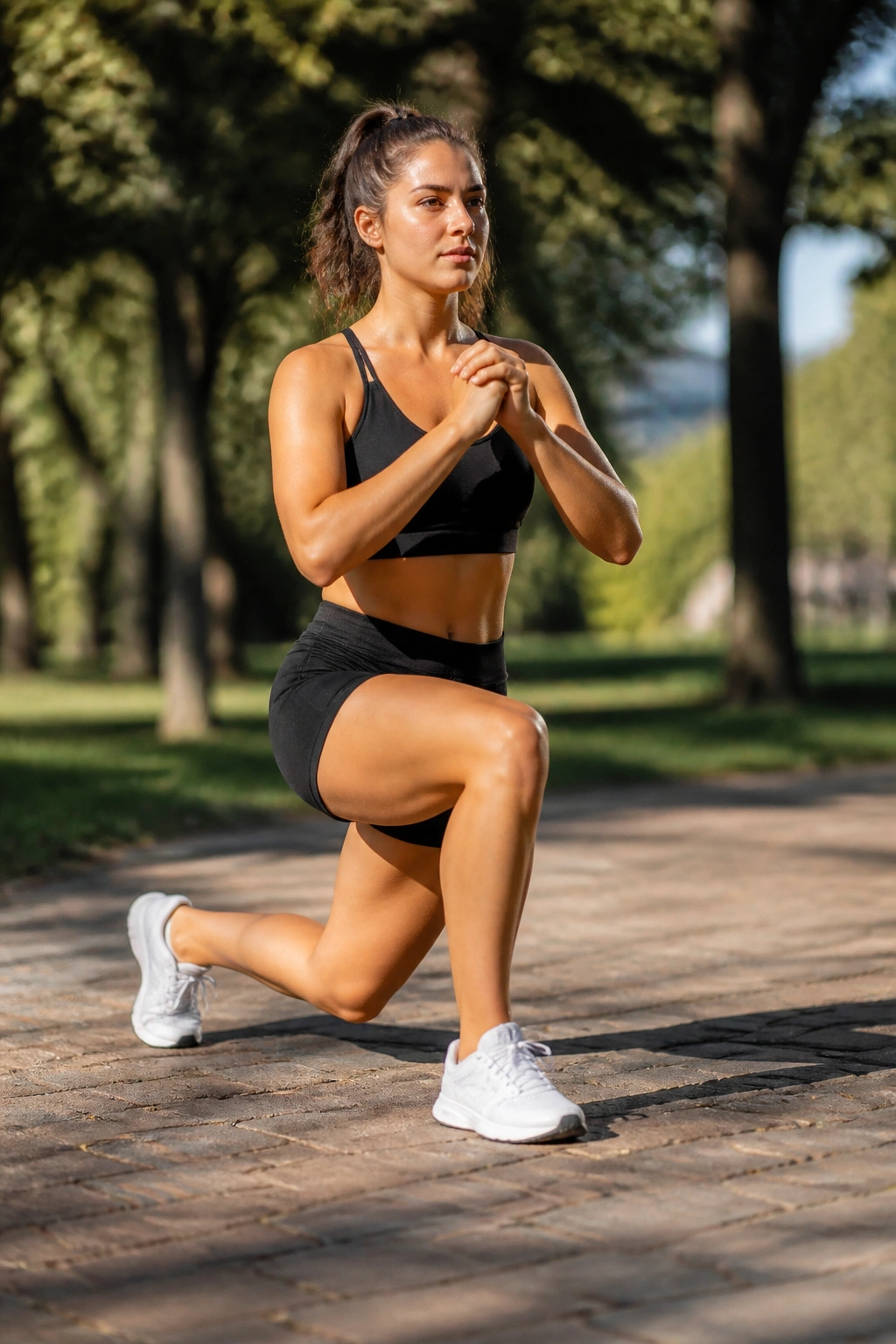
Walking lunges are fantastic for building unilateral stability and coordination. Unlike stationary lunges, these force your body to regain balance after every single repetition, which engages your core significantly more than you might expect.
The beauty of the walking lunge lies in its versatility. You can do them with just your body weight to focus on high-rep endurance, or you can hold dumbbells in your hands to challenge your grip and total body stability. They mimic real-world movement patterns, such as walking up a steep incline or stepping over obstacles, more effectively than most machine-based movements.
Focus on taking a stride long enough to create 90-degree angles at both knees when you reach the bottom of the movement. If your stride is too short, you put unnecessary pressure on the kneecap. If it is too long, you might overstretch your hip flexors and lose the ability to drive powerfully off the front foot. Keep your torso upright—avoid leaning excessively forward, as that shifts the focus away from the glutes and onto the lower back.
3. Glute Bridges
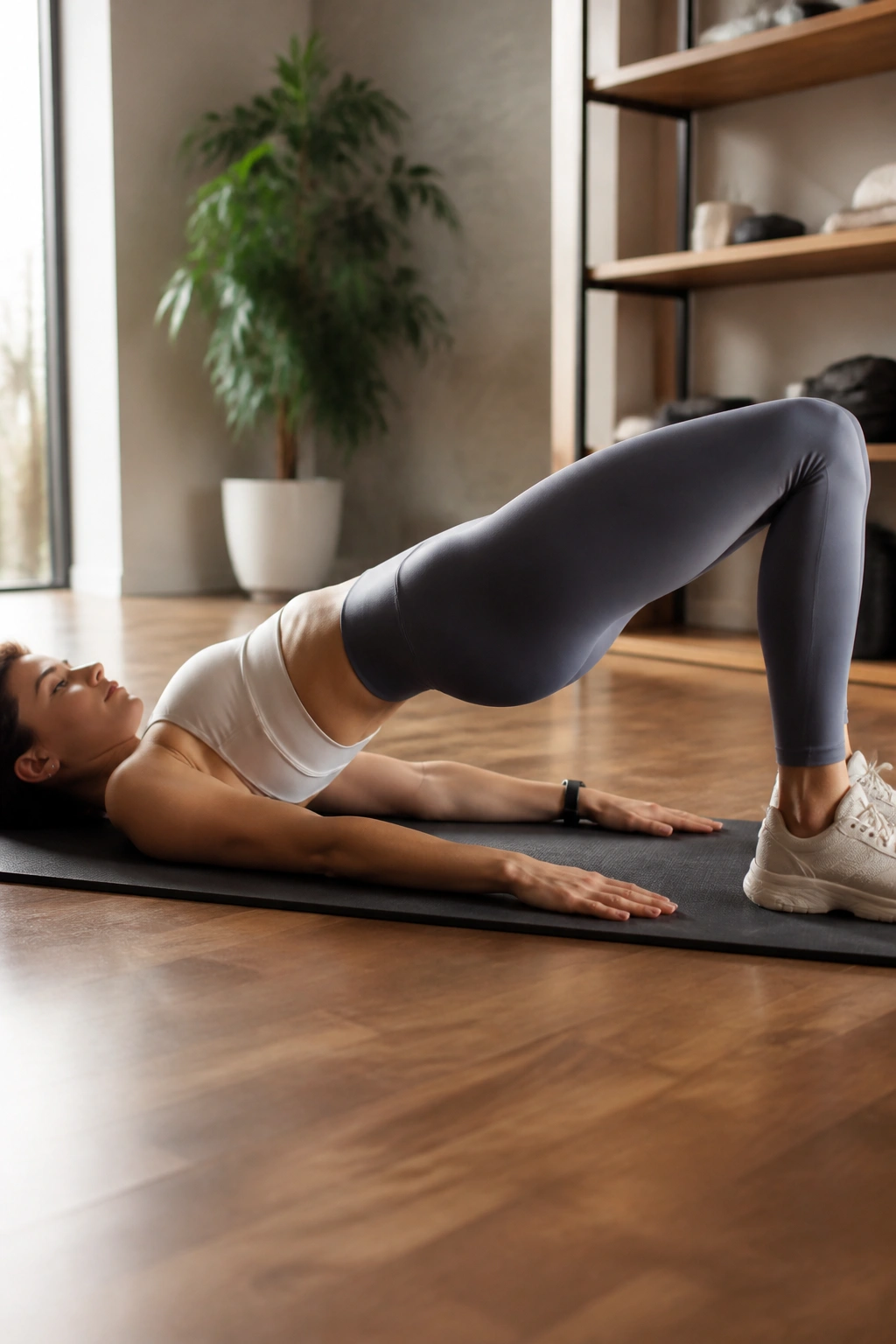
If you spend much of your day sitting, your glutes are likely “asleep.” The glute bridge is the single most effective way to wake them up. This movement isolates the posterior chain without putting any strain on your lower back, making it a staple for anyone recovering from an injury or just beginning their fitness journey.
Can You Build Leg Size with Just Bridges?
While the glute bridge is primarily an isolation move, it is surprisingly effective for hypertrophy when you add resistance. By placing a dumbbell or a barbell across your hips, you can apply significant mechanical tension to the glutes. As you get stronger, you can advance to a single-leg variation, which doubles the workload on the glutes while challenging your pelvic stability.
The Technique Checklist
- Lie flat on your back with knees bent and feet flat on the floor, about hip-width apart.
- Drive through your heels to lift your hips toward the ceiling.
- Squeeze your glutes at the very top for two seconds—this pause is where the real work happens.
- Lower your hips back down slowly, stopping just before your glutes touch the ground.
4. Step-Ups
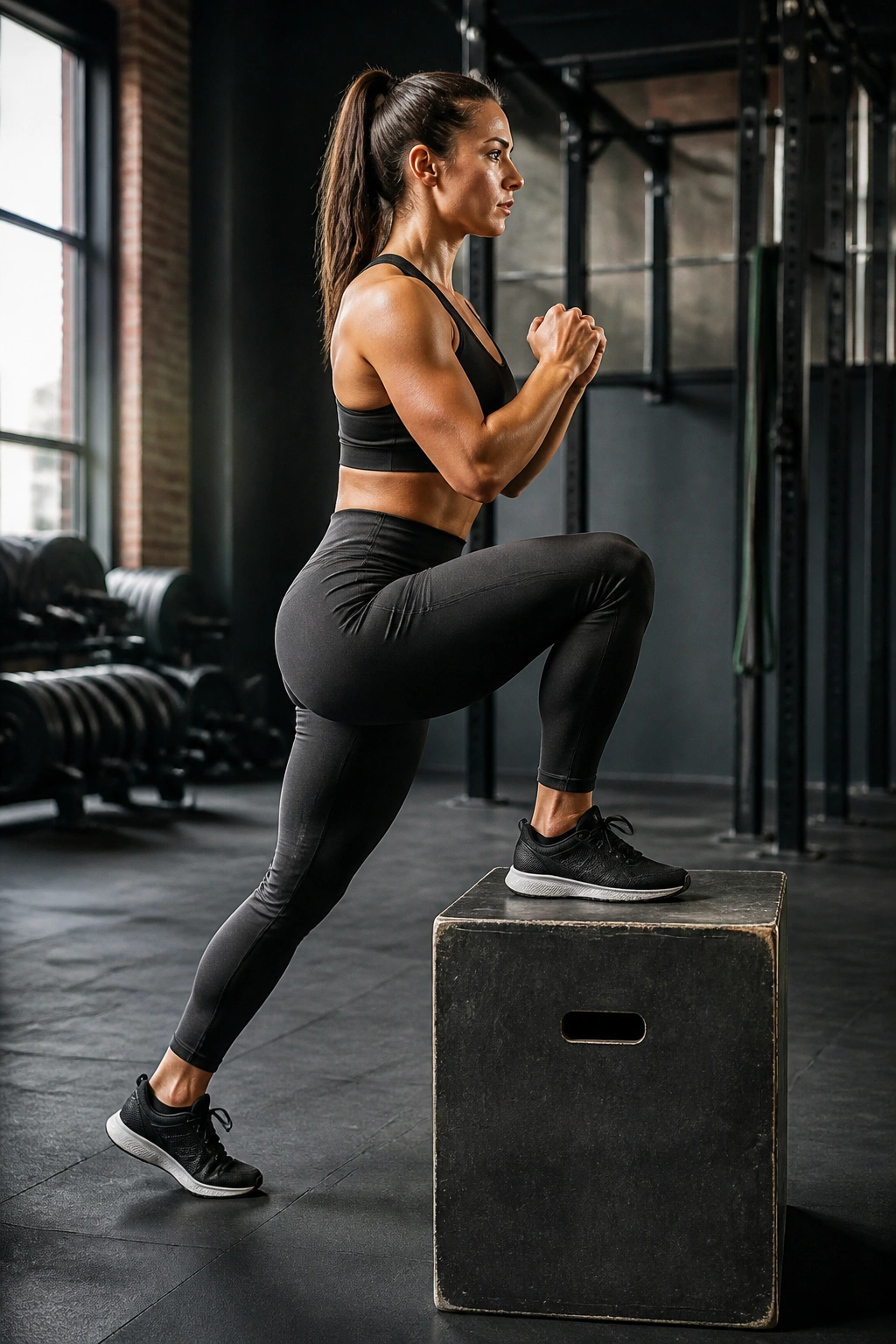
Step-ups are the ultimate “functional” leg movement. Every time you climb a set of stairs, you are performing a step-up. By doing them intentionally with weight, you strengthen the quadriceps and glutes while simultaneously improving your balance.
Most people perform step-ups incorrectly by pushing off the floor with their back foot. This defeats the purpose. The back foot should be there for safety, but the front leg should do one hundred percent of the work. Imagine you are trying to push your front foot through the box or bench rather than just stepping onto it.
Keep your entire foot on the box. If your heel hangs off the edge, you lose stability and increase the risk of sliding. Once you master the basic version, try doing them with a high box—one that puts your knee at or above hip height. This increases the range of motion and makes the exercise significantly harder without needing to increase the weight.
5. Standing Calf Raises
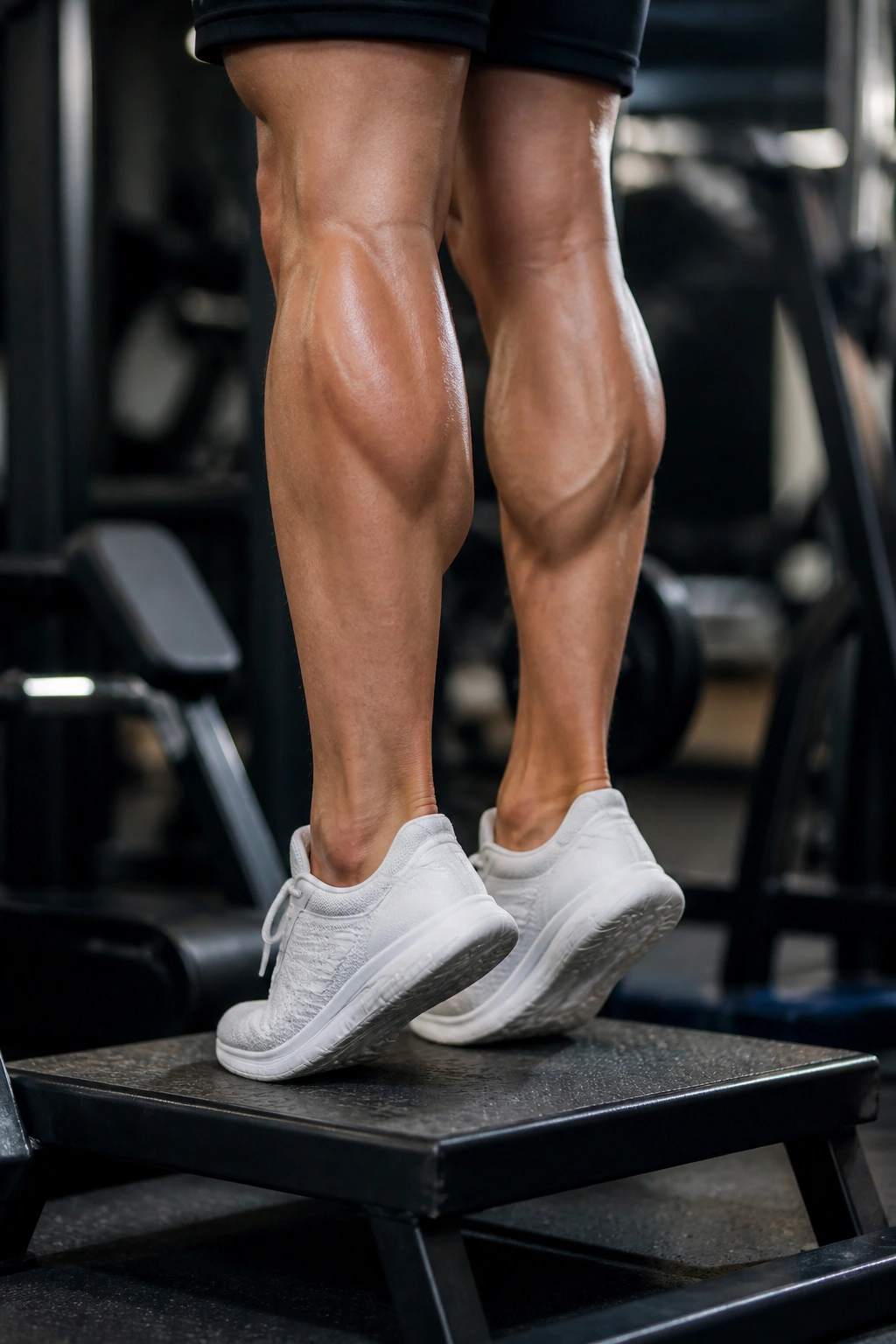
Calves are notorious for being stubborn. If you ignore them, they stay small. If you train them with high volume and a full range of motion, they grow. The standing calf raise targets the gastrocnemius, the larger muscle that gives the calf its diamond shape.
There is a common mistake people make: bouncing. They use momentum at the bottom of the movement to spring back up. This does nothing for muscle growth and everything for Achilles tendon strain. You must control the tempo. Spend two seconds lowering your heels until you feel a deep stretch in the calf, then pause for one second at the bottom.
Then, explode upward onto your tiptoes. Squeeze hard at the peak of the contraction, like you are trying to crush a penny between your heels. Do not rush these. High-rep sets of fifteen to twenty repetitions are often more effective than heavy, low-rep sets because the calves are endurance-heavy muscles used to carrying your body weight all day.
6. Goblet Squats
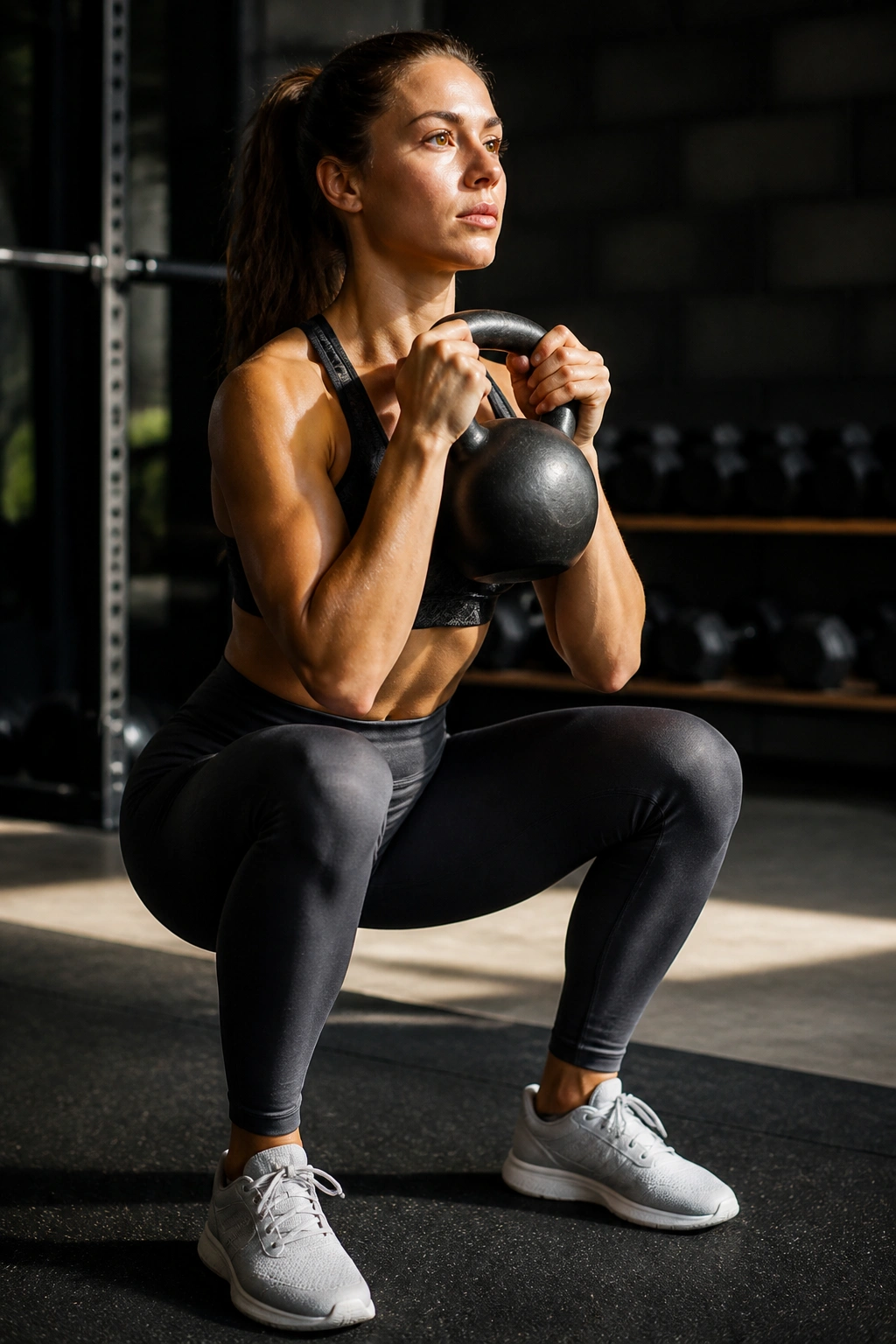
The goblet squat is arguably the best variation for beginners learning to squat with weight. By holding a weight against your chest, you create a counterbalance that forces you to stay upright. If you lean forward, the weight pulls you down, which provides instant bio-feedback to correct your posture.
Why This Beats a Barbell for Beginners
When you start with a barbell on your back, your core often struggles to stabilize the load, leading to rounded backs and hip pain. The goblet position keeps the spine neutral and the chest open. It is safer, easier to learn, and allows you to practice squatting deep with consistent form.
How to Execute
- Hold a dumbbell or kettlebell vertically against your chest, gripping the head of the weight with both hands.
- Keep your elbows tucked in close to your body.
- Squat down slowly, ensuring your elbows clear your knees at the bottom.
- Drive up, keeping the weight pinned against your sternum the entire time.
7. Romanian Deadlifts (RDLs)
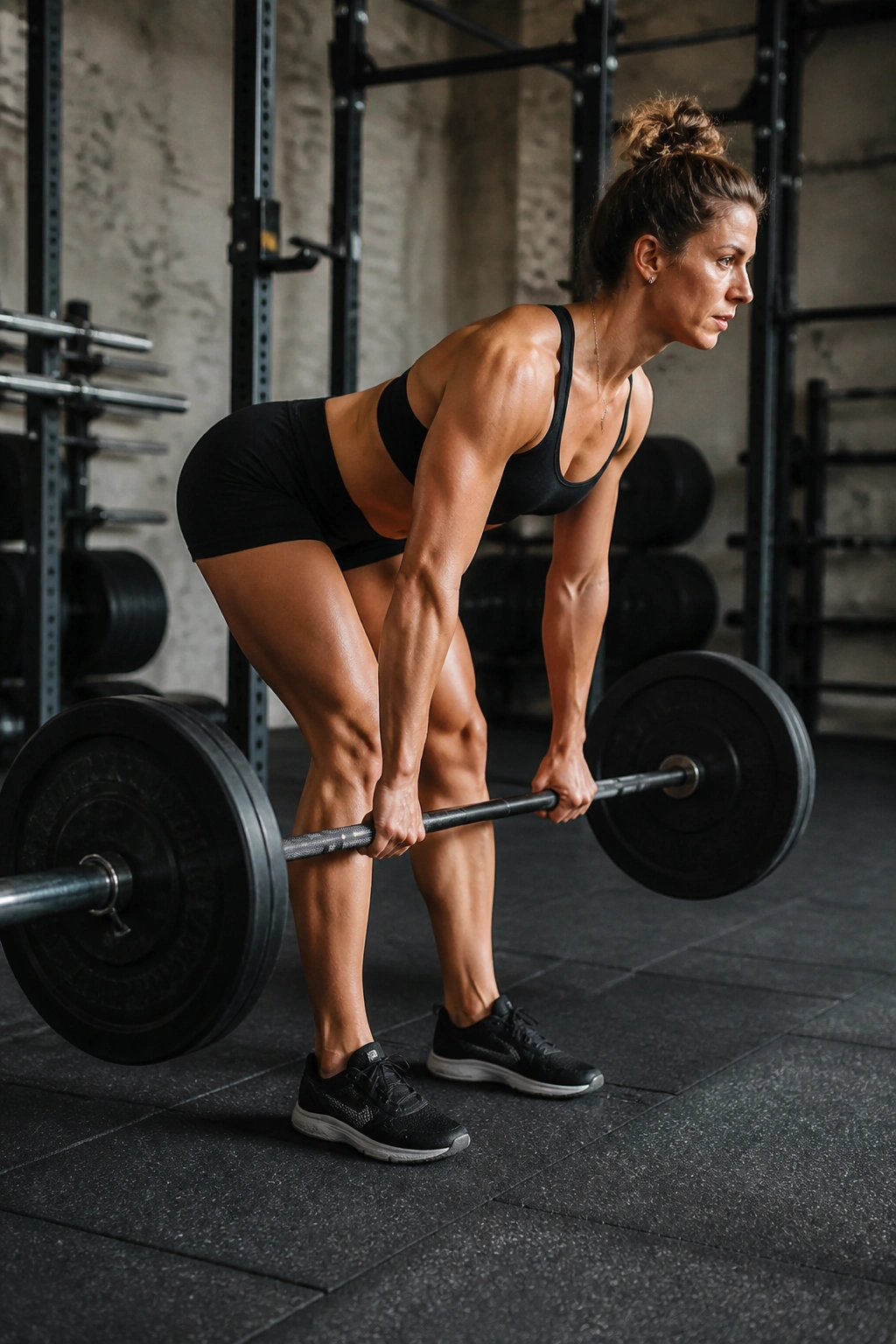
The Romanian Deadlift is the king of the posterior chain. It targets the hamstrings and glutes through a hip-hinge pattern. Unlike a conventional deadlift, where you start from the floor, the RDL starts from the top, which keeps constant tension on the hamstrings.
This movement is not about how much weight you can move; it is about the stretch. You should feel a deep, intense pull in your hamstrings as you lower the weight. Only go as low as your flexibility allows while keeping a neutral spine. If your back rounds, you have gone too far.
Push your hips backward as if you are trying to touch a wall behind you with your glutes. Your knees should have a soft, fixed bend—do not turn it into a squat. Keep the bar or dumbbells as close to your legs as possible throughout the entire movement. The further the weight drifts from your shins, the more strain you place on your lower back.
8. Sumo Squats
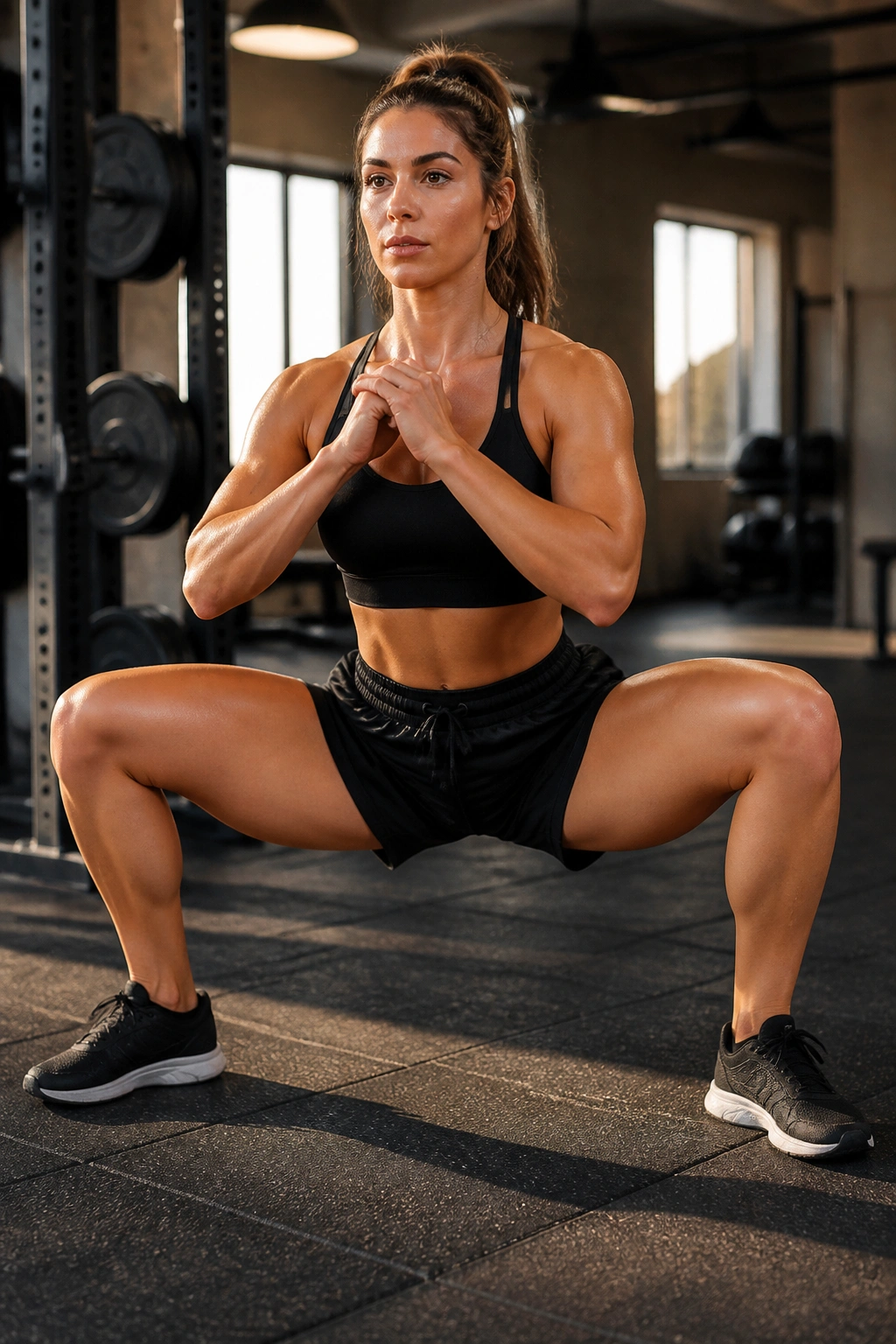
Sumo squats widen your stance significantly, which shifts the emphasis toward your adductors (inner thighs) and glutes. This is a great variation if you find that standard squats are too quad-dominant or if you want to target the inner leg muscles that often get overlooked.
Think of yourself as a wide-based tripod. Because your feet are wide, your range of motion is naturally shorter than a standard squat, which can allow you to move a bit more weight. However, do not use the wider stance as an excuse to ignore depth. You still need to reach that parallel point to get the full benefit.
Be careful with your knee tracking here. With a wider stance, it is very easy for the knees to collapse inward. You must actively focus on pushing your knees outward, following the direction of your toes. If your toes are pointed out at forty-five degrees, your knees must track in that same direction.
9. Bulgarian Split Squats
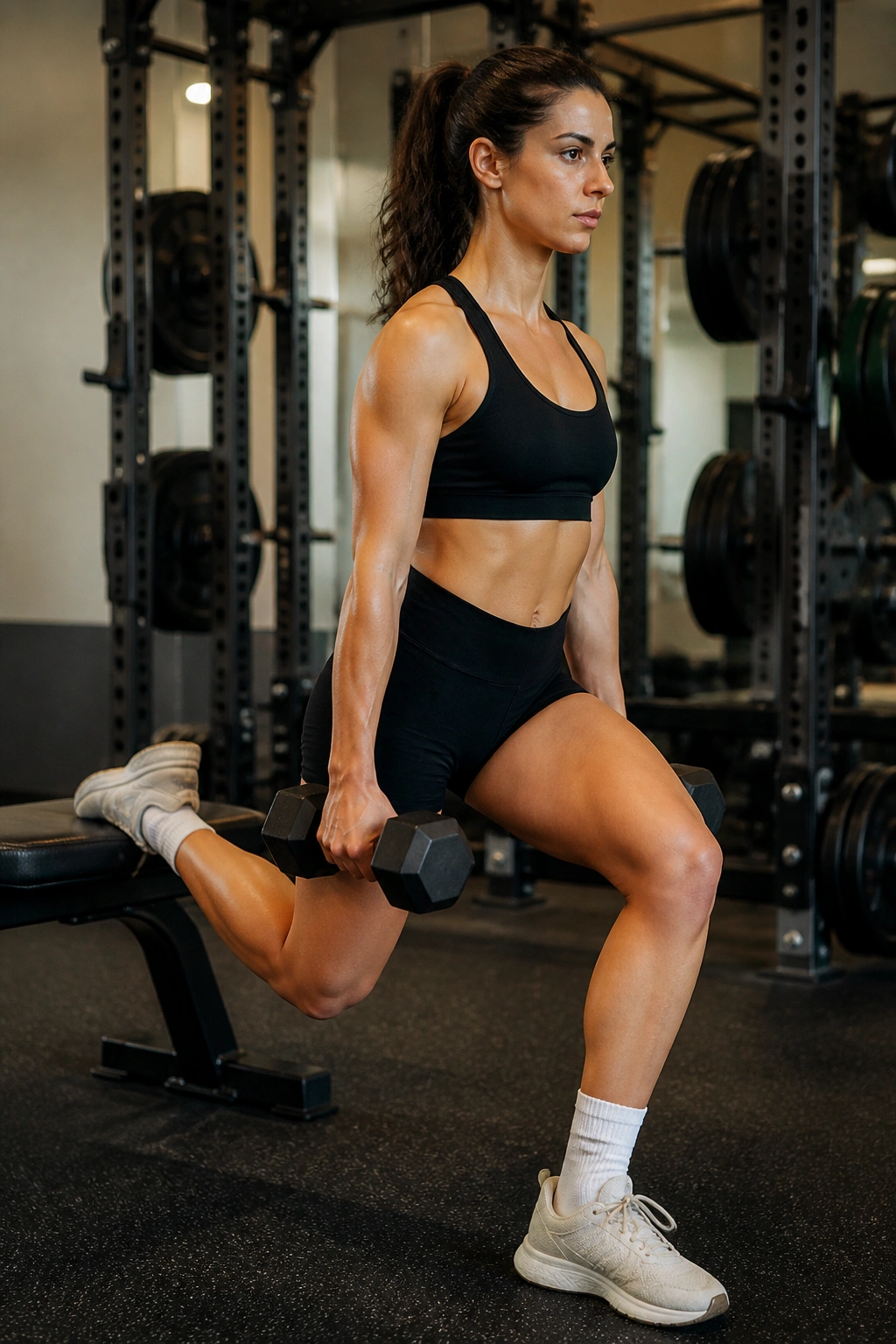
Love them or hate them, Bulgarian Split Squats (BSS) are non-negotiable for serious leg development. They are essentially a single-leg squat with your rear foot elevated on a bench or chair. They expose every weakness in your balance and stability.
The “One-Leg” Advantage
Most people have a dominant leg that compensates for the weaker one during bilateral movements like leg presses or back squats. The BSS forces each leg to work independently, ensuring that your right side is as strong as your left side. It eliminates imbalances and prevents future injuries.
Quick Setup Tips
- Stand a few feet in front of a bench.
- Extend one leg back and place the top of your foot on the bench.
- Keep your torso upright—leaning slightly forward biases the glutes, while staying vertical biases the quads.
- Lower your back knee until it is just an inch above the floor.
- Drive through the front heel to return to the start.
10. Curtsy Lunges
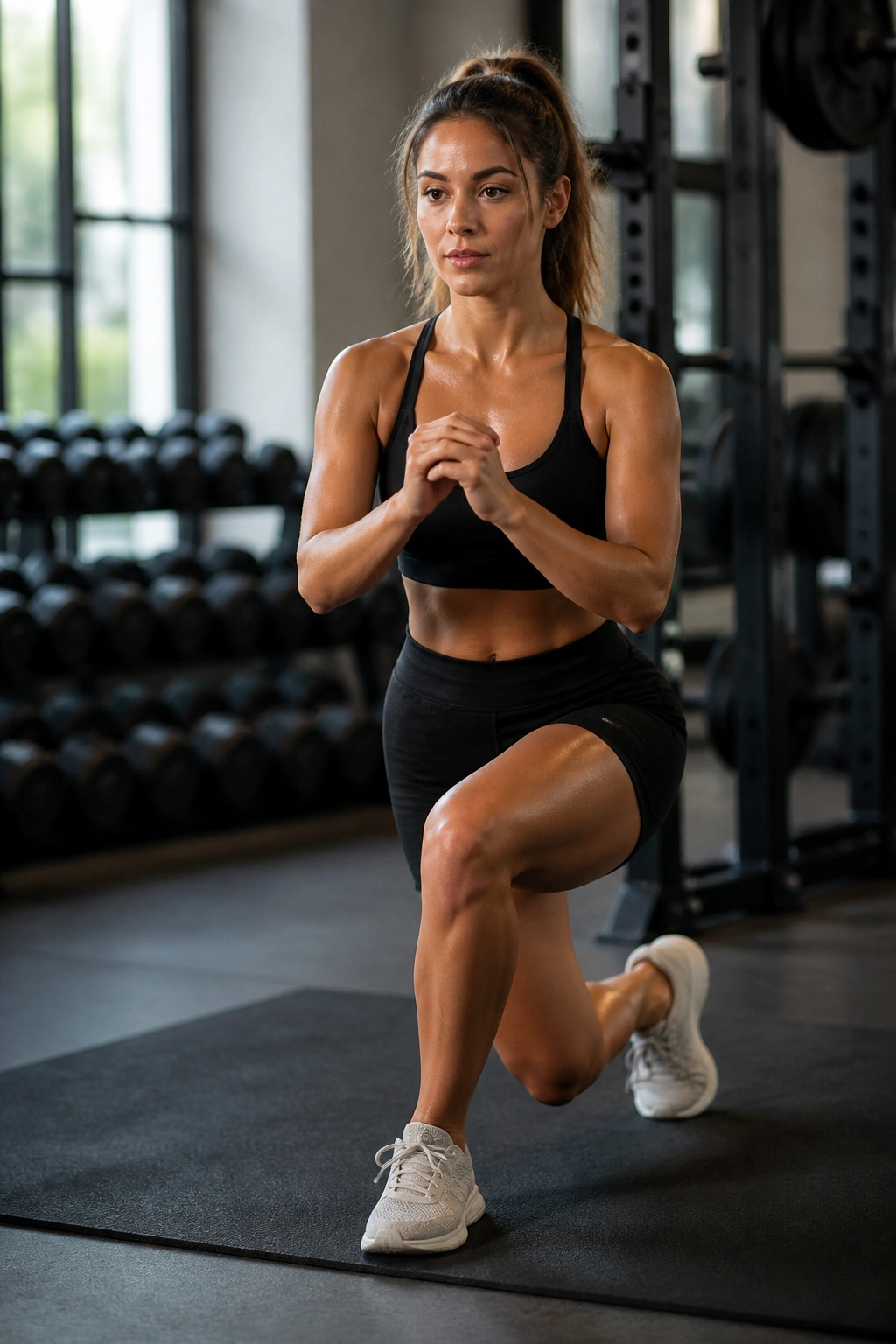
Curtsy lunges are an underrated lateral movement. By stepping back and across your body, you shift the load onto the gluteus medius, the muscle responsible for hip stability and side-to-side movement. This is a brilliant exercise for fixing hip issues and adding shape to the outer glutes.
When you step back, aim for the “four o’clock” position if your front leg is your right leg. Do not just step back; step across. You should feel a stretch in the side of your hip as you descend. It feels slightly awkward at first, but once you find your balance, the activation is undeniable.
Because this is a more complex movement pattern, start with body weight or very light dumbbells. Focus on quality of movement. If you find yourself wobbling, reset your feet. You are trying to train your hips to stabilize the body under load, not just move a weight from point A to point B.
11. Barbell Back Squats
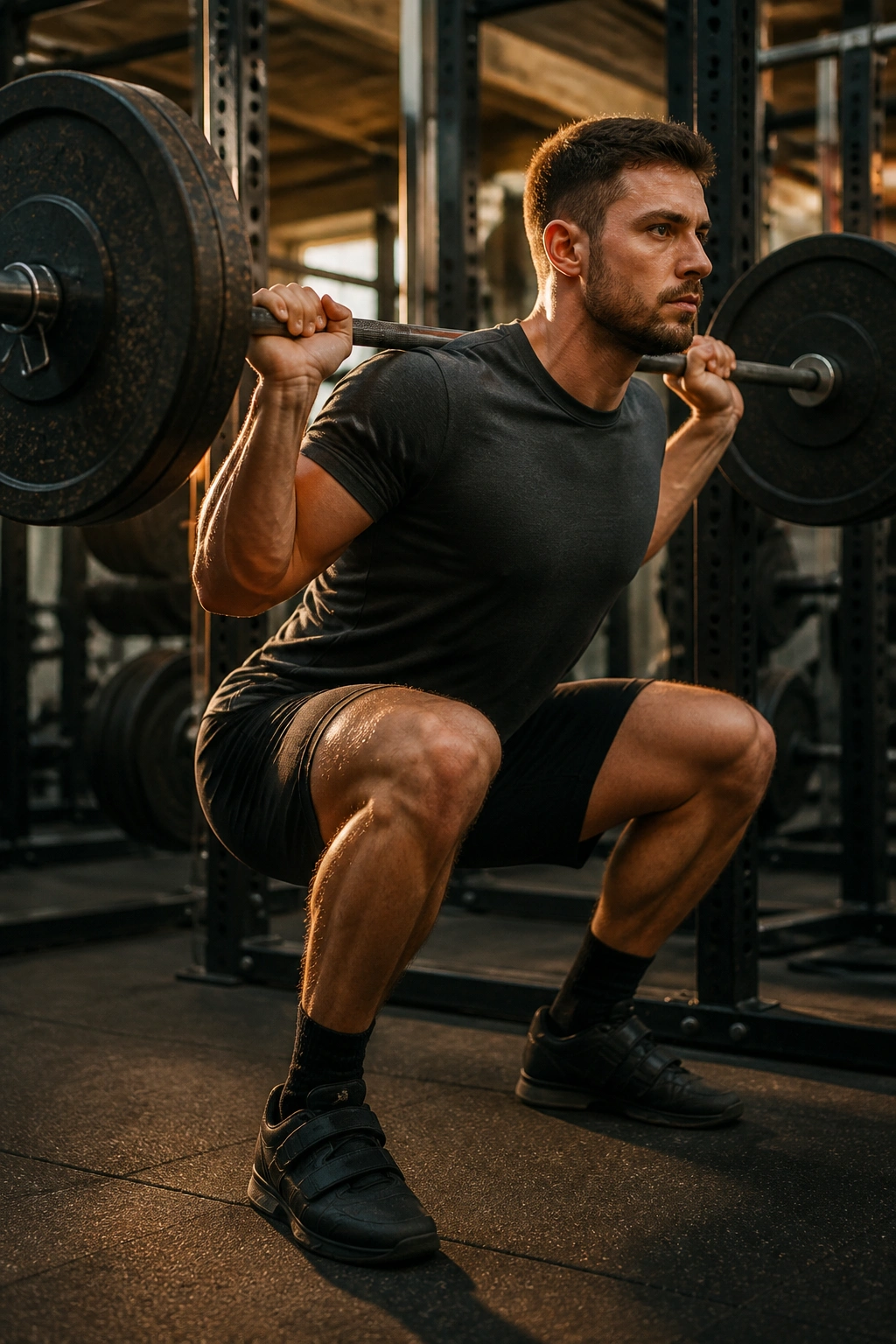
The barbell back squat is the heavyweight champion of lower body exercises. It allows for the greatest amount of total load, which triggers significant central nervous system response and overall muscle growth. It is a full-body movement that happens to be performed with a barbell on your back.
Why It’s Still the King
Despite the popularity of fancy machines, nothing creates the same core-to-toe structural integrity as the back squat. You have to brace your core, maintain a rigid spine, and stabilize the load through your entire descent and ascent. It builds a level of “functional” strength that carries over into everything else you do.
The Safety Protocol
- Position the bar on your upper traps, not your neck.
- Create a “shelf” for the bar by pulling your shoulder blades together.
- Take a deep breath into your belly and brace your abs—imagine someone is about to punch you in the stomach.
- Never sacrifice depth for weight. A half-squat is not a full-squat.
12. Conventional Deadlifts
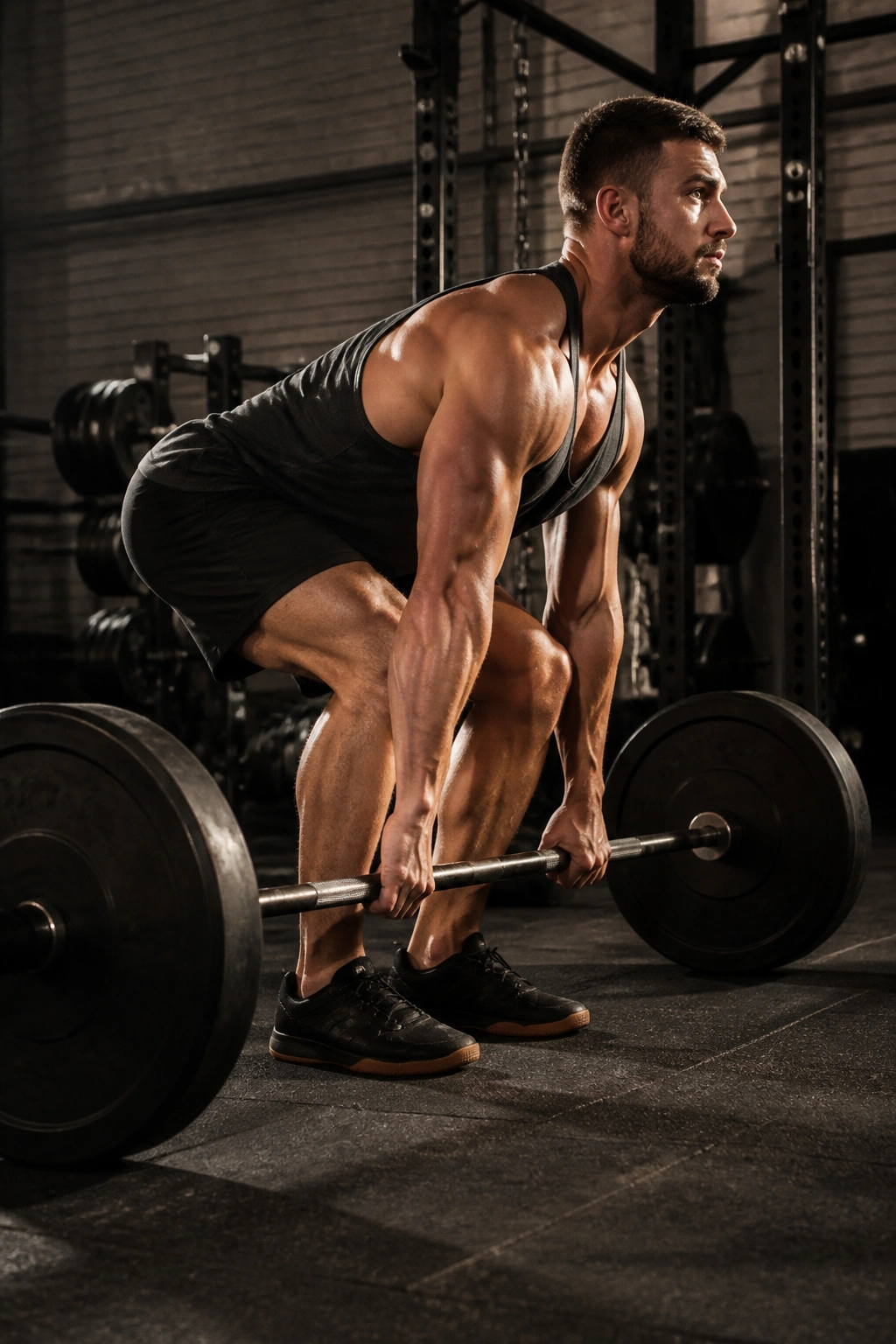
While often categorized as a back exercise, the conventional deadlift is a massive leg builder. It hits the hamstrings, glutes, and even the quads, especially during the initial phase of the pull. It is a true “pull from the floor” movement that builds raw power.
The key to a good deadlift is patience. Do not rip the bar off the floor. Instead, start by creating tension. Pull the “slack” out of the bar—you should hear a slight click as the bar hits the top of the plates before it actually leaves the ground. This tension prevents your lower back from taking the brunt of the load.
Your legs should do the work of driving the bar off the floor. Think of it as a leg press pattern where you are pushing the floor away from you. Once the bar passes your knees, your hips should drive forward to complete the lockout. Do not lean back excessively at the top; just stand tall.
13. Front Squats
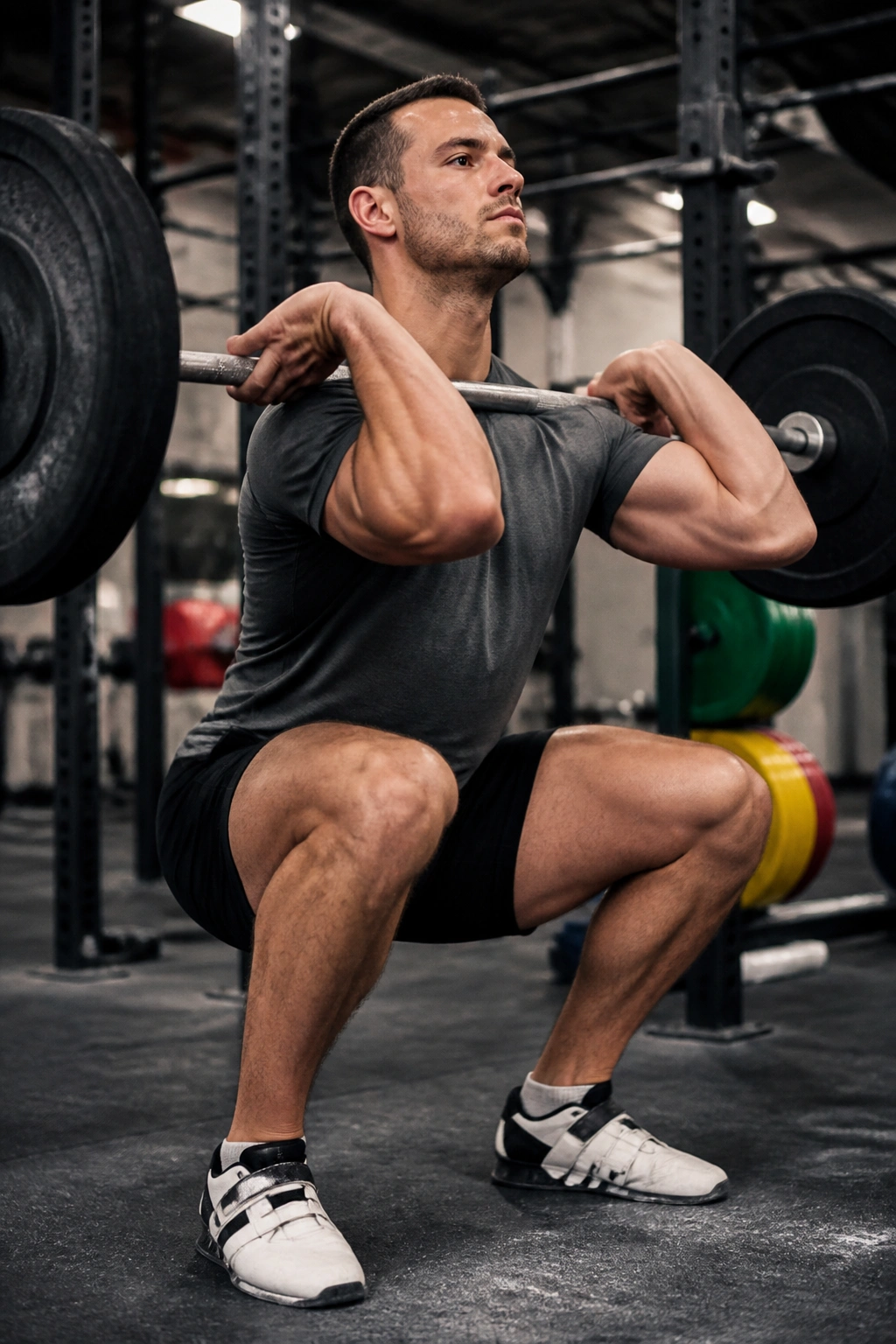
Front squats shift the center of gravity to the front of your body, which forces your torso to stay perfectly vertical. This makes the movement much more quad-dominant than a back squat. If you have a weak core or tend to “good morning” your squats (letting your hips rise faster than your chest), the front squat will fix it.
You can hold the bar in a “clean grip” (with the bar resting on your front delts and hands turned back) or a “cross-arm grip” (with arms crossed over the bar). The clean grip is more secure but requires significant wrist and shoulder mobility. If that is too uncomfortable, use the cross-arm grip.
Because the weight is in front of you, you cannot cheat. If you collapse forward, the bar will roll off your shoulders. This immediate failure mechanism makes it one of the safest ways to learn how to keep your chest up during a squat.
14. Barbell Hip Thrusts
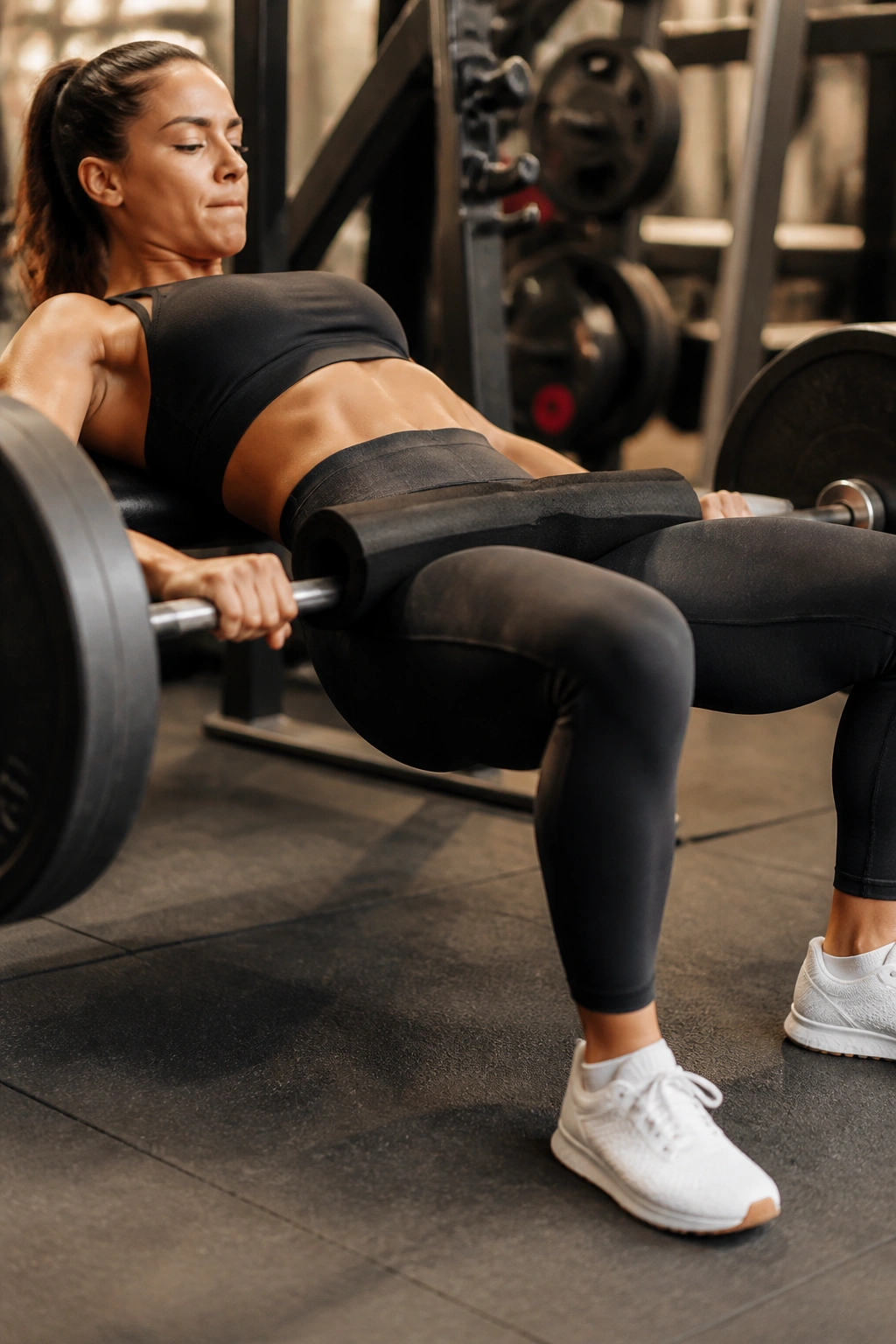
The hip thrust is the absolute best exercise for glute isolation. Period. It puts your hips through a range of motion that specifically recruits the gluteus maximus, creating a level of muscle fiber engagement that squats and deadlifts just cannot match.
You need a bench for support. Place your upper back against the bench, roll the barbell over your hips (use a pad, because it will bruise your pelvis otherwise), and drive up. The goal is a full hip extension—your body should form a straight line from your shoulders to your knees at the top.
Focus on a two-second hold at the top. Do not hyperextend your lower back. If you feel this in your lower back instead of your glutes, you are likely using too much weight or you are not tucking your chin to your chest. Tucking your chin creates a “posterior pelvic tilt” which helps lock your core and maximizes glute recruitment.
15. Good Mornings
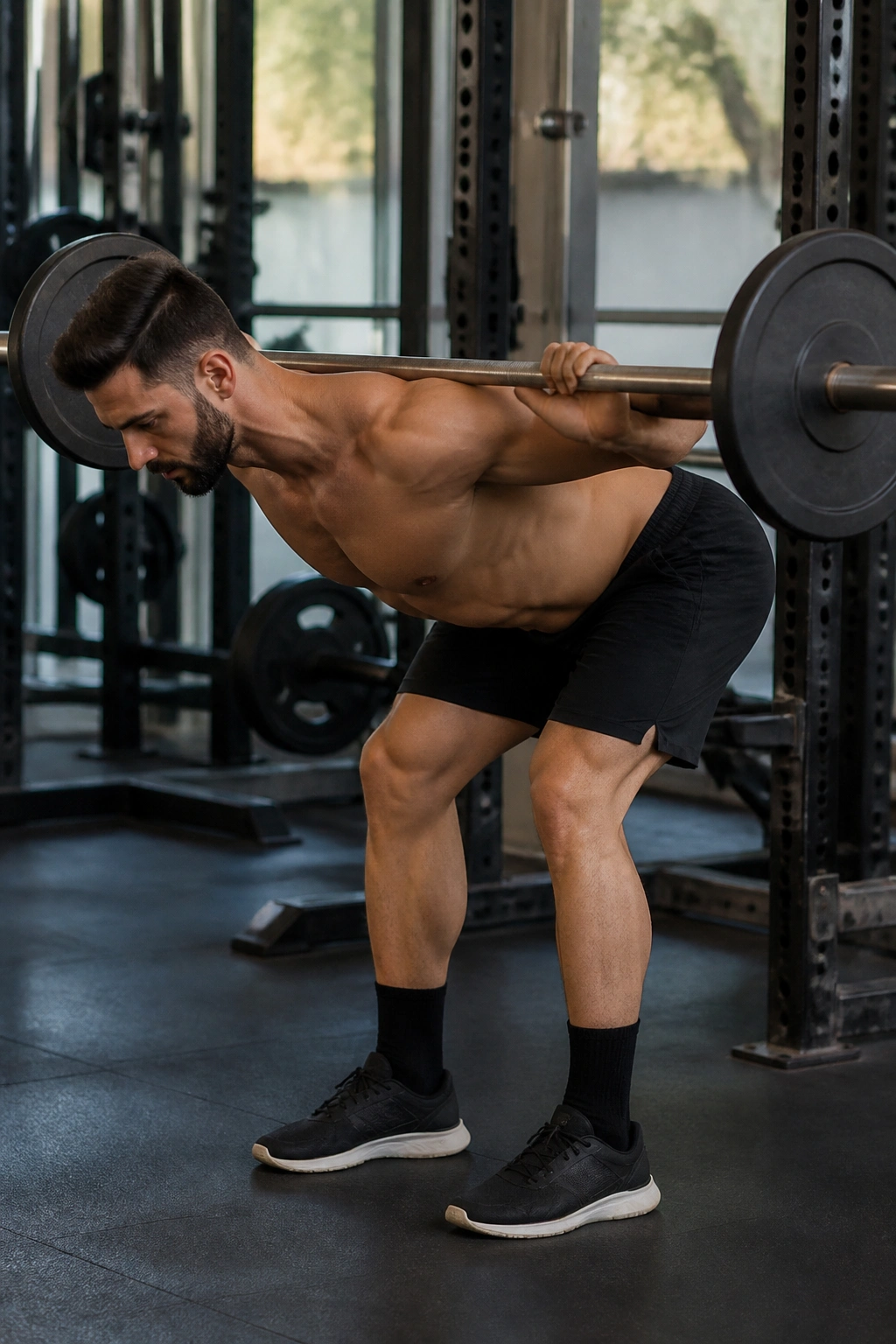
The good morning is essentially an RDL with the weight on your back. It is a fantastic movement for the hamstrings and lower back, but it is often misunderstood. It requires a high level of technical proficiency and should be performed with a lighter weight than you would use for a squat.
The movement starts with the hips. You are hinging, not bending. Your knees have a slight bend, but that bend stays fixed throughout the lift. As you lower your torso, you should feel a massive stretch in the hamstrings. Your goal is to get your torso parallel to the ground, but don’t force it if your hamstrings feel like they are about to snap.
Good mornings are not meant for max-effort attempts. They are a volume movement used to strengthen the posterior chain. Use them to improve your squat and deadlift mechanics, not as a replacement for the primary compound lifts.
16. Leg Press
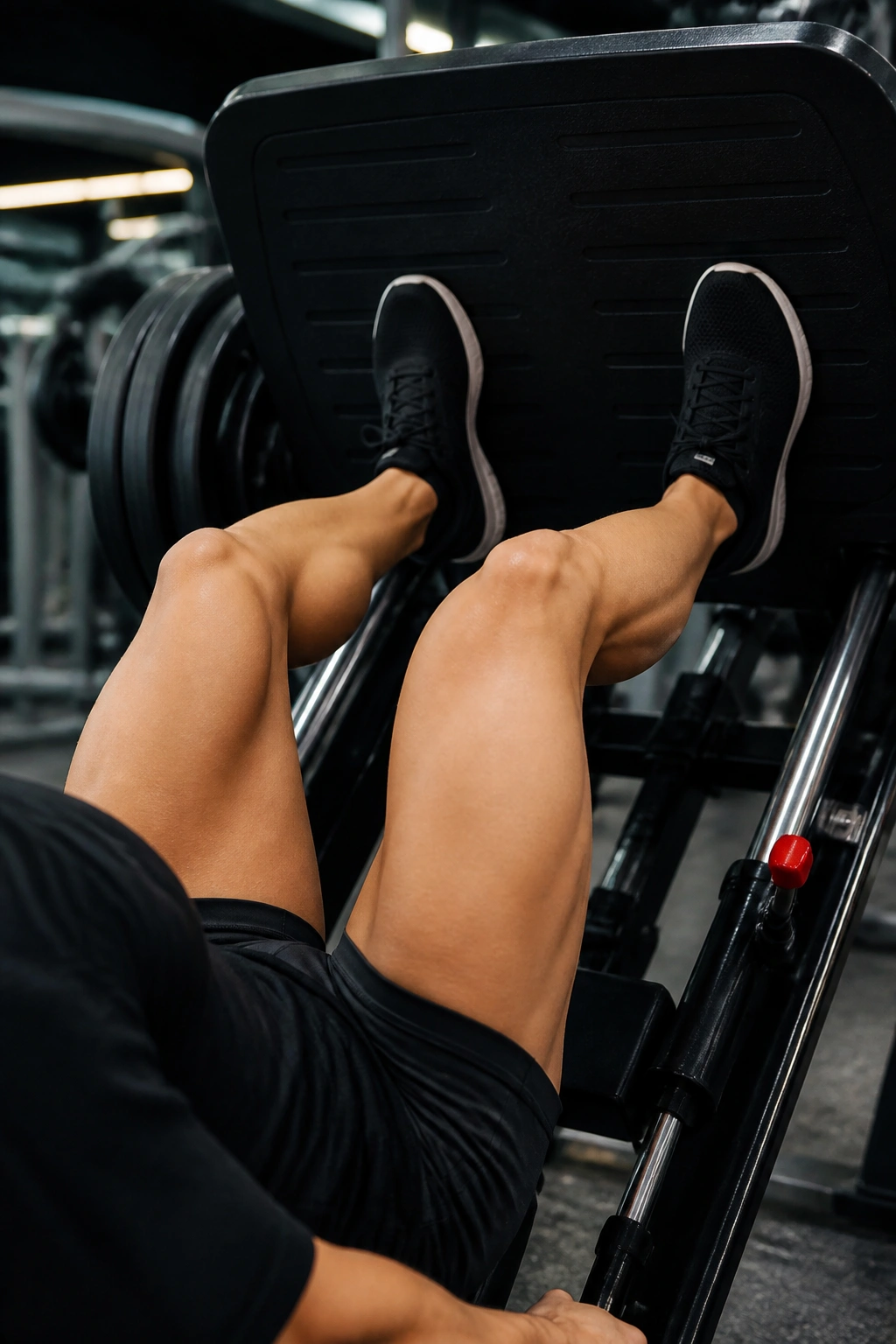
The leg press allows you to load your quads with massive amounts of weight without the need for core stabilization. This makes it perfect for “finishing” your legs—when your back is tired and you cannot safely squat anymore, you can hop on the leg press and squeeze out extra volume.
Be careful with your feet position. Feet low on the platform emphasize the quads. Feet high on the platform emphasize the glutes and hamstrings. Also, pay attention to your lower back. If your butt starts to lift off the seat at the bottom of the movement, you are going too deep or your feet are positioned poorly.
Never lock out your knees at the top. The leg press machine is notorious for causing knee hyperextension injuries. Stop just short of a full lockout to keep the tension on the muscles and off the joint.
17. Leg Extensions
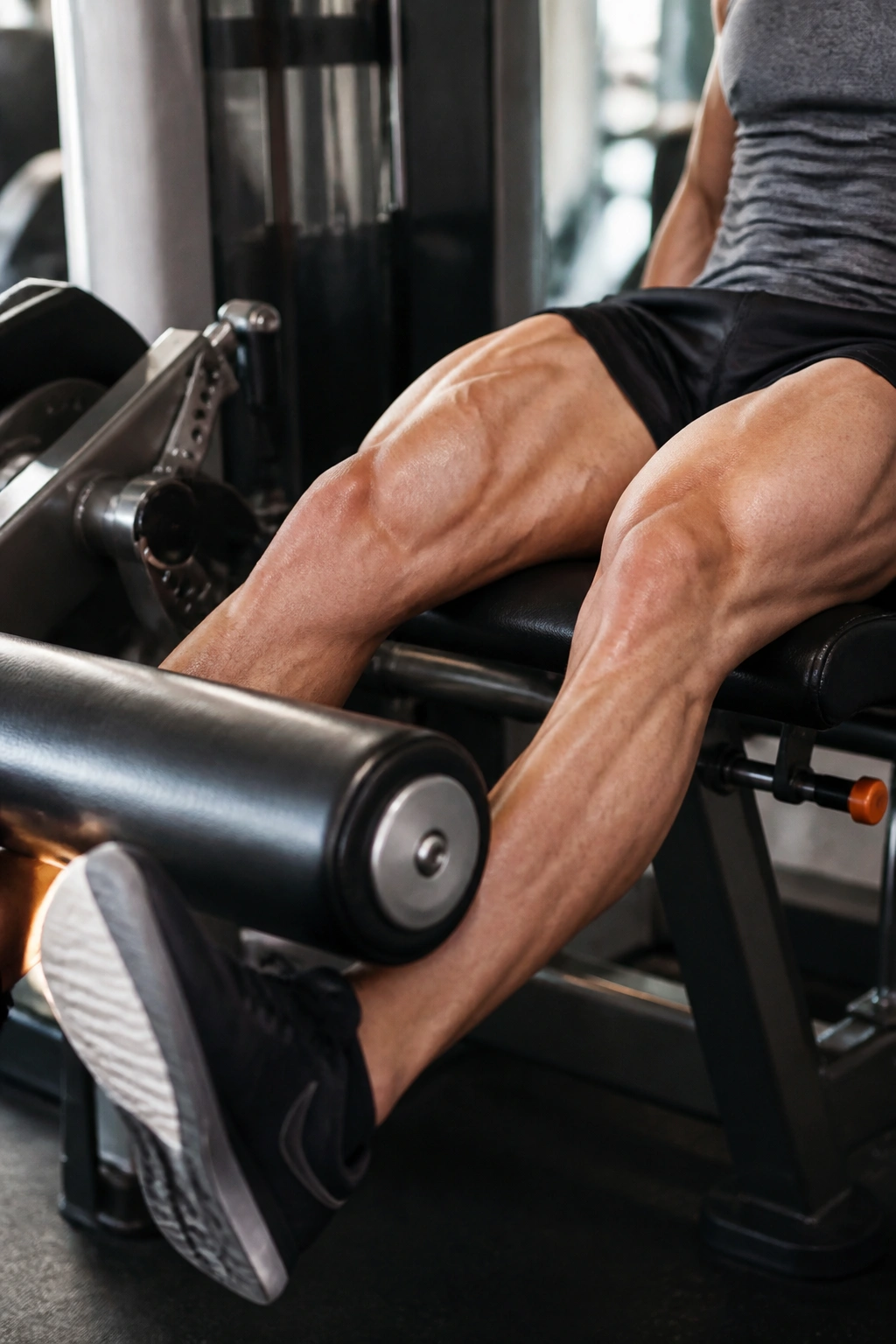
Leg extensions are the definition of isolation. They are the only movement on this list that focuses almost entirely on the quadriceps without involving the glutes, hamstrings, or lower back. They are great for building the “teardrop” muscle (vastus medialis) above the knee.
Are They Bad for Your Knees?
There is a myth that leg extensions destroy your knees. This is only true if you have pre-existing issues or if you do them with terrible form, like swinging the weight. Used correctly—with controlled tempo and a full range of motion—they are a safe and effective way to hypertrophy the quads.
Technique Details
- Adjust the backrest so your knee joint aligns with the pivot point of the machine.
- Start from a dead stop at the bottom—do not let the weight stack rest between reps.
- Extend your legs fully, squeeze the quads for one second, and lower slowly.
18. Lying Leg Curls
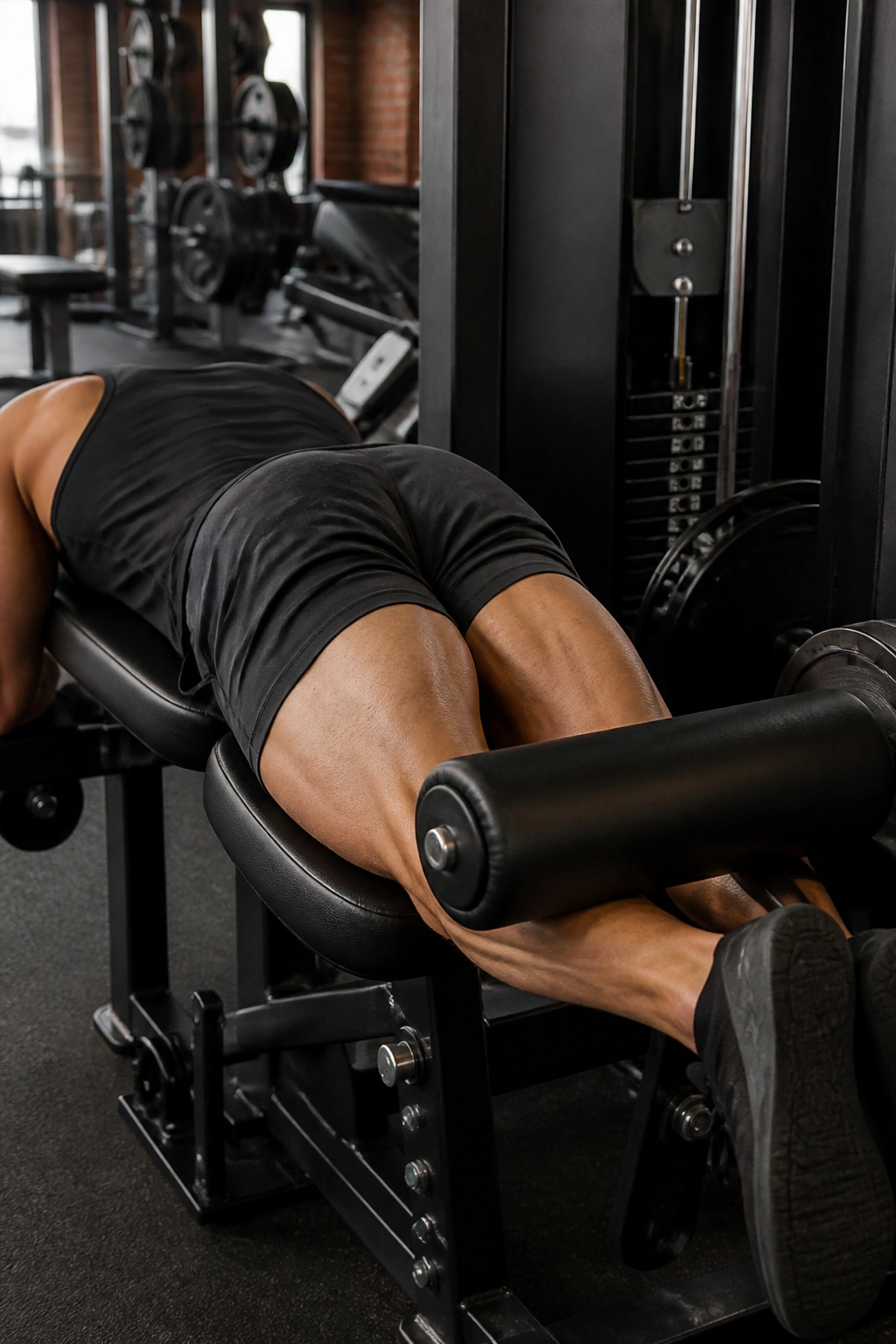
If you want to build thick hamstrings, you need a flexion movement. Deadlifts and RDLs are hinge movements, but the hamstrings also have the function of bending the knee. That is where the leg curl comes in. It isolates the hamstring perfectly.
Many people perform these with their hips lifting off the pad. This is a mistake. Keep your hips pinned to the bench. If you have to lift your hips to move the weight, the weight is too heavy. You are relying on your lower back to generate momentum, which defeats the point of an isolation exercise.
Point your toes slightly outward or inward to target different heads of the hamstring. If you keep your feet neutral, you hit the whole muscle. If you experiment with foot positioning, you can emphasize the inner or outer part of the hamstrings, which helps with overall leg balance.
19. Hack Squats
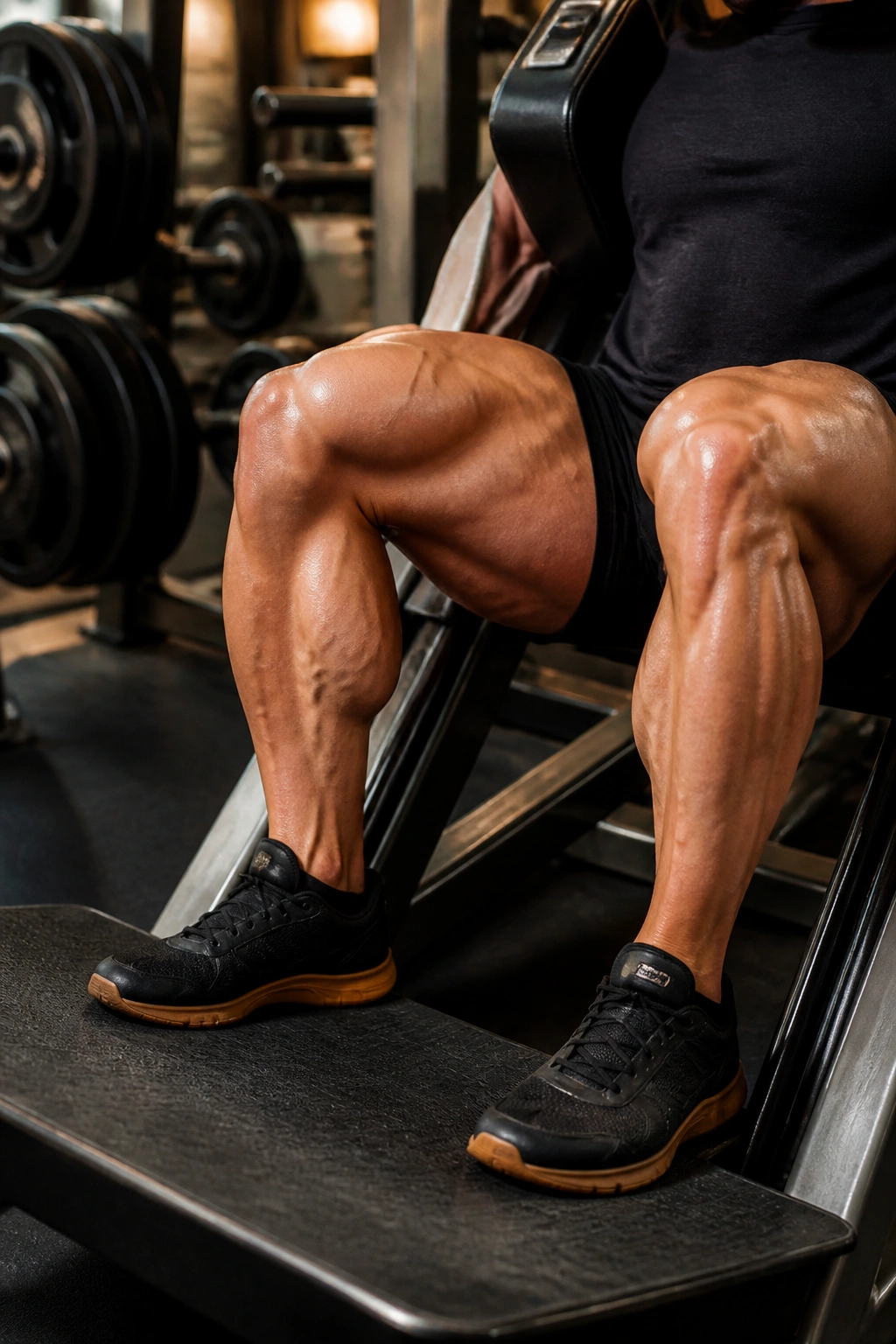
The hack squat machine is a cross between a squat and a leg press. Because your back is supported, you can achieve a depth that would be impossible for many people in a free-standing squat. It is a fantastic tool for forcing quad growth.
Think of it as a guided squat. You don’t have to worry about the bar rolling off your back or falling over. You can just focus on pushing through the quads. Many people find they can go deeper on a hack squat than any other movement, which leads to massive muscle fiber activation.
Take advantage of that depth. Sink as low as the machine allows, provided your heels stay on the platform. If you come up on your toes, your knees will take all the load. Keep those heels planted.
20. Seated Calf Raises
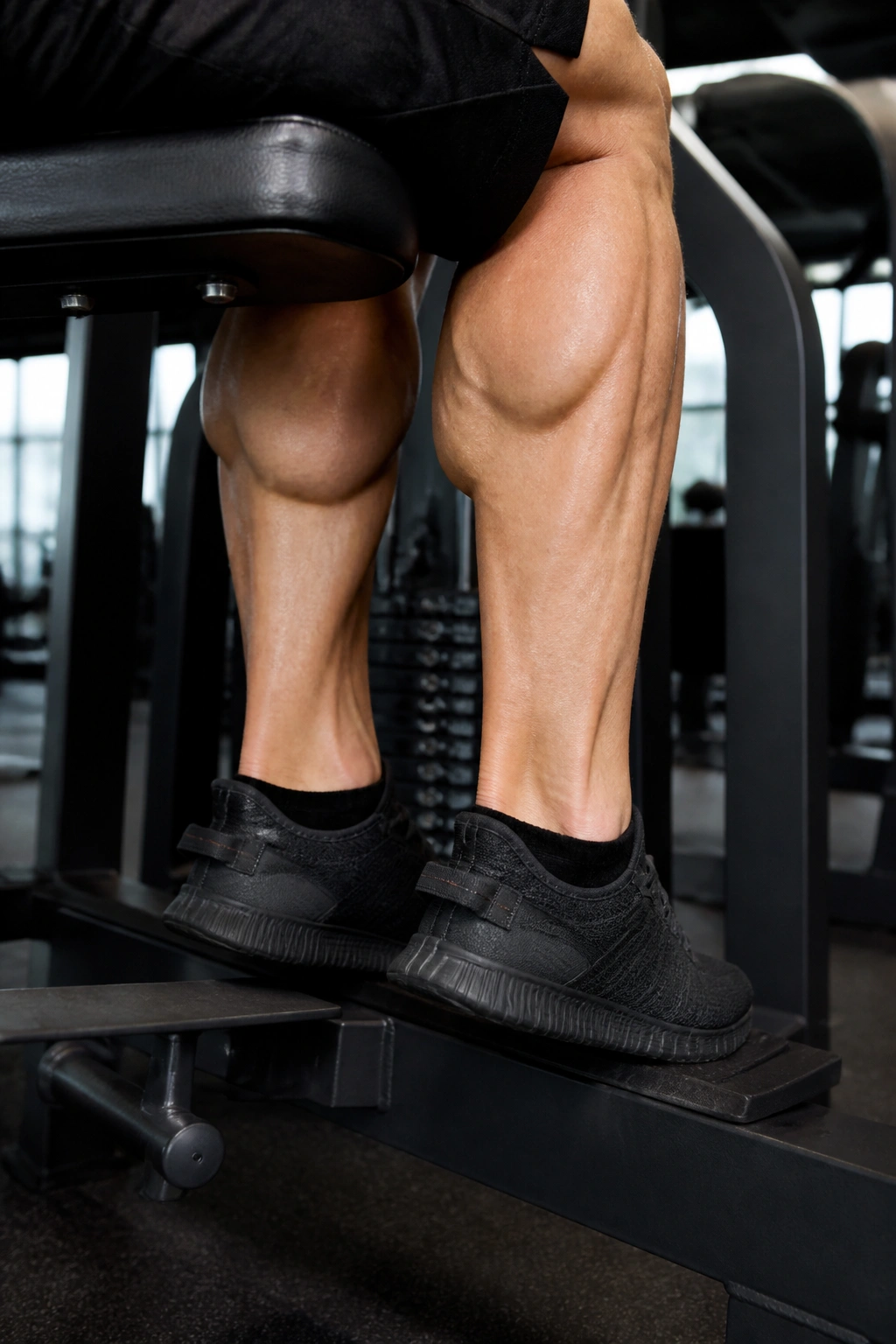
While standing calf raises target the gastrocnemius, the seated calf raise targets the soleus—the flat muscle that lies underneath the gastrocnemius. The soleus is responsible for the overall thickness of your lower leg, and because it is comprised mostly of slow-twitch muscle fibers, it requires specific training.
You must perform seated calf raises with bent knees. This is not a choice; it is anatomical necessity. When your knees are bent, the gastrocnemius is effectively “turned off,” forcing the soleus to do the heavy lifting.
Go heavy here, but keep the tempo steady. The soleus is an endurance muscle, but it responds well to heavy load if you train it with a full range of motion. Spend three seconds on the descent for every rep to ensure you are truly stretching the muscle fibers.
21. Box Jumps
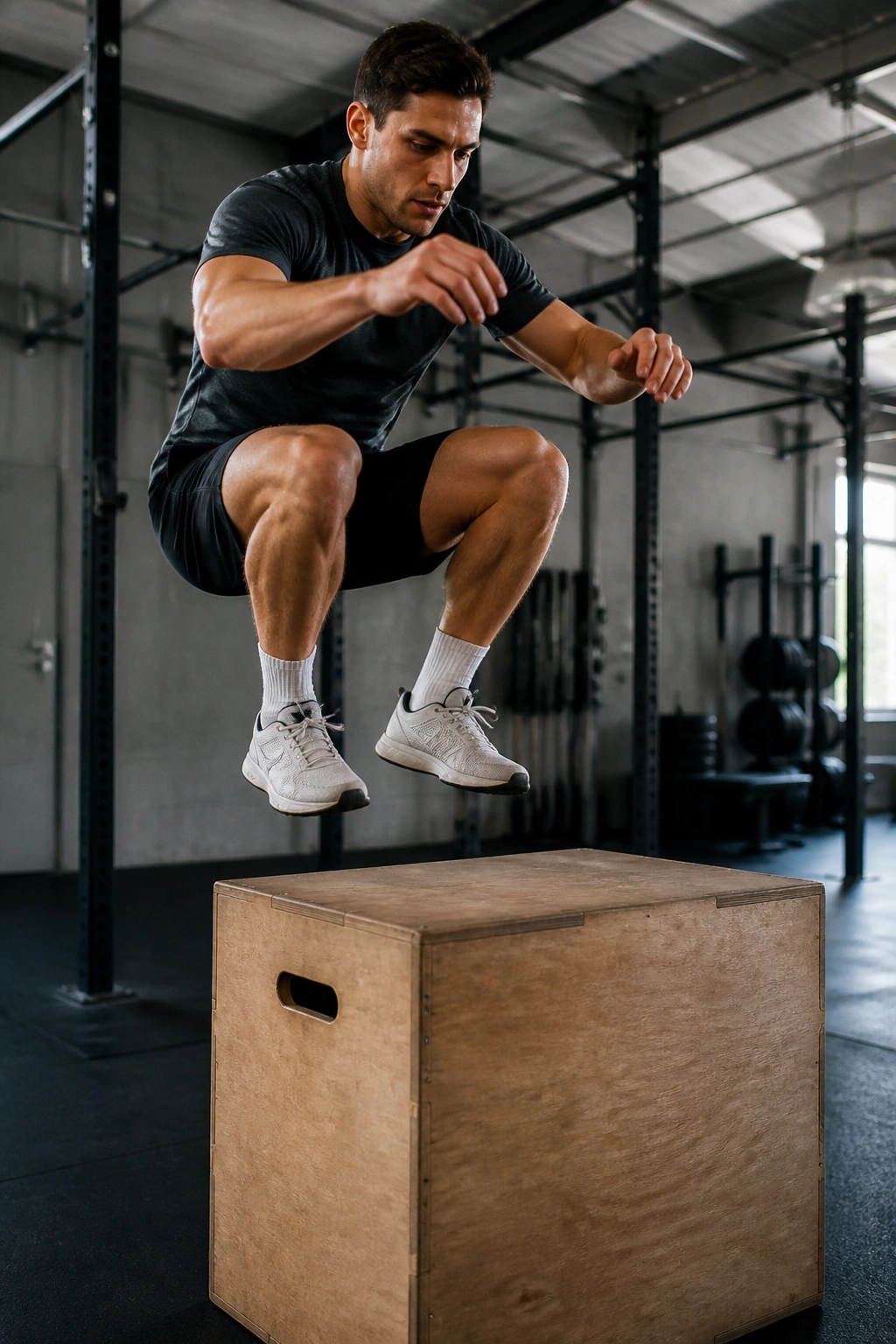
Box jumps are all about explosive power. They teach your central nervous system to fire your leg muscles rapidly, which improves your speed and vertical leap. Plus, they look impressive. But they also carry a risk, so technique is paramount.
The goal is to land softly. If your landing sounds like a sack of potatoes hitting a floor, you are doing it wrong. You want to land quietly, with your knees absorbing the shock. Think of your legs as springs.
Start with a box height you can manage comfortably. Do not try to jump onto a box that is at your waist height until you have mastered the movement. Remember, the focus here is the jump, not the landing. Step off the box—do not jump down. Jumping down from a height repeatedly is a quick way to develop knee issues.
22. Jump Lunges
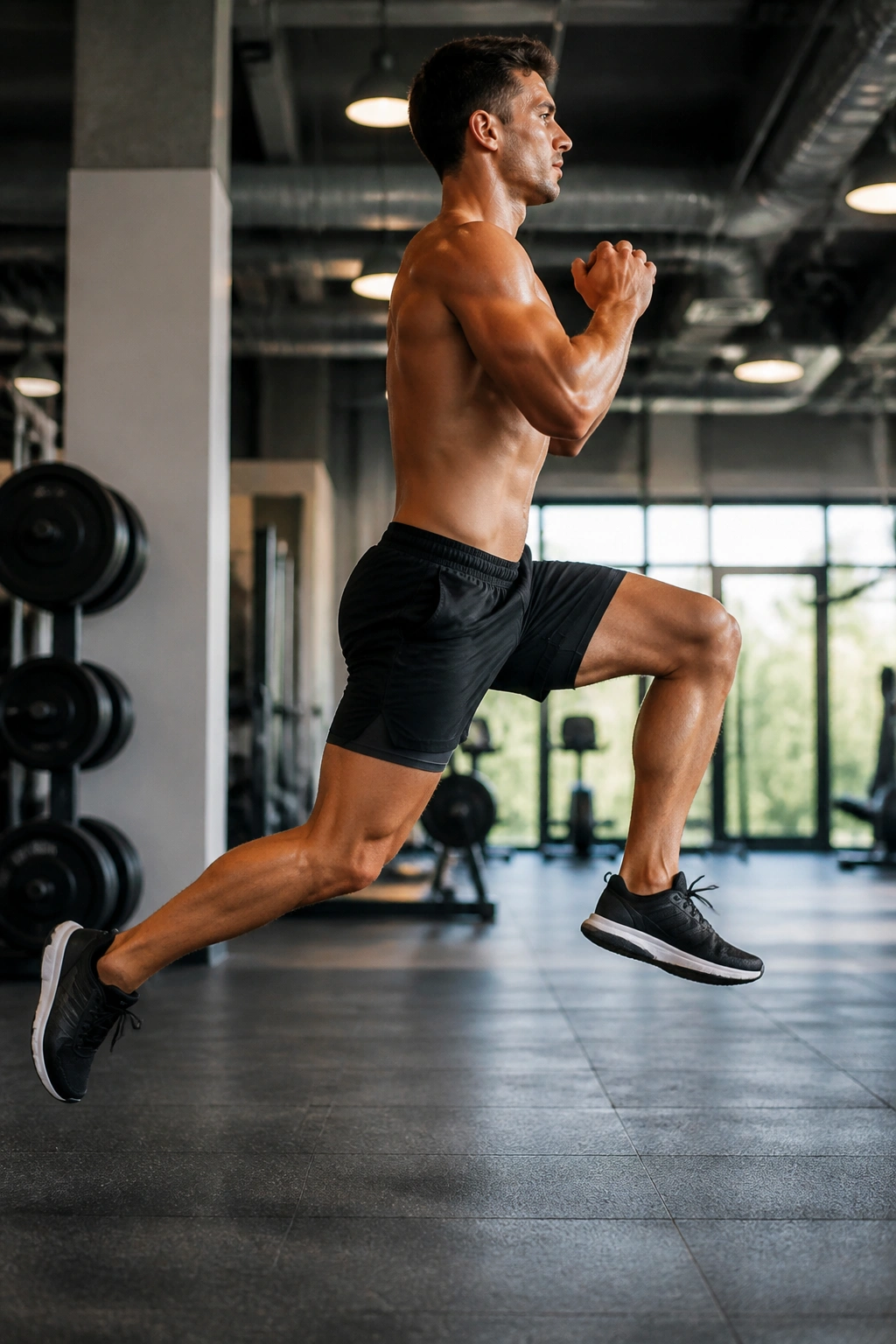
Jump lunges are a cardiovascular nightmare—in the best way possible. They build explosive power in each leg while forcing you to stabilize your core mid-air. They are excellent for burning calories and conditioning the legs for sports.
Your transition from one lunge to the other must be quick. Do not pause at the bottom. As soon as your back knee taps the ground, explode upward, switch your legs in the air, and land in the lunge position with the opposite leg forward.
Keep your chest up. It is very common to hunch over during jump lunges as you get tired. Fight that urge. A straight spine keeps the pressure off your lower back and ensures your glutes and quads are handling the impact.
23. Skater Hops
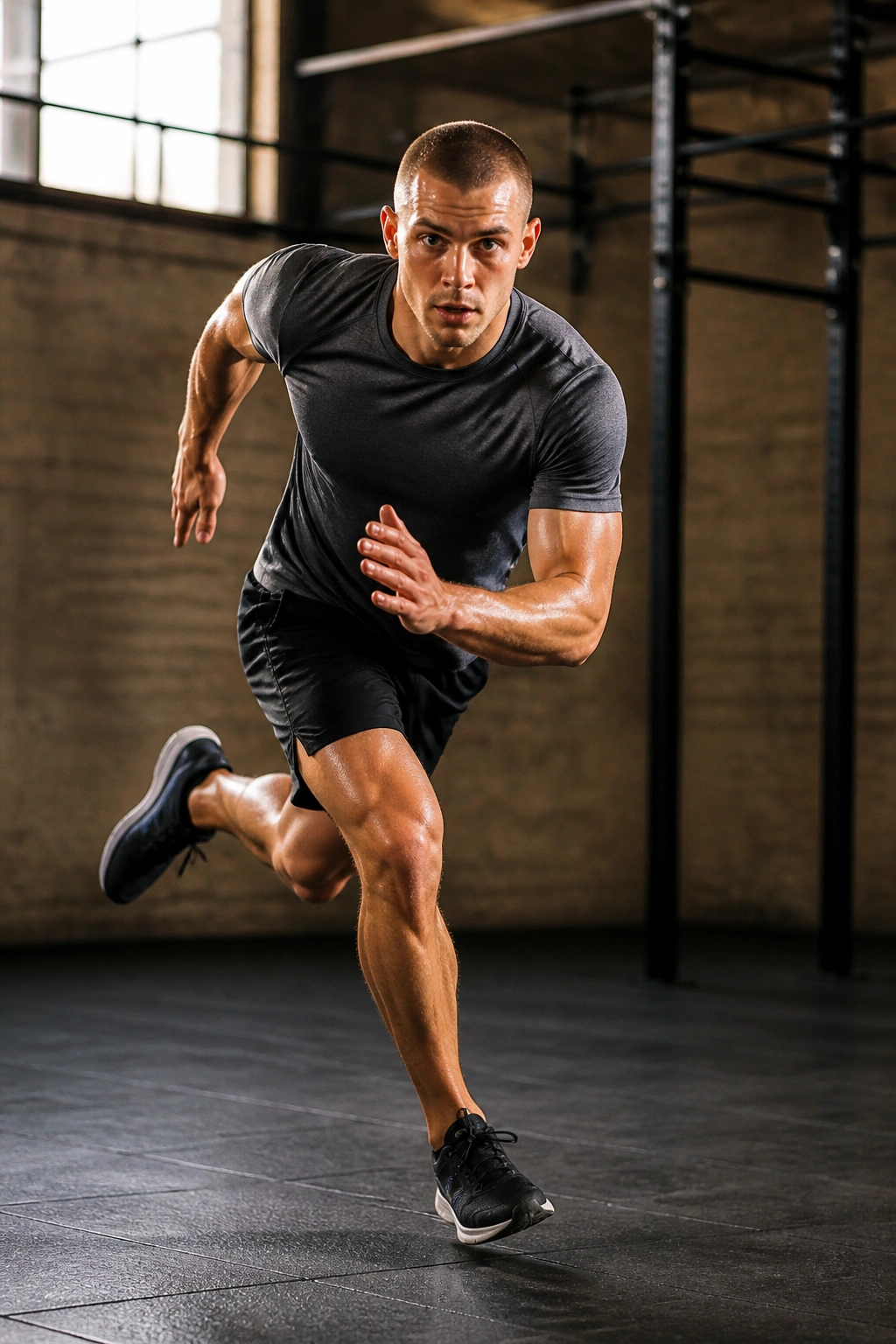
Skater hops are a lateral (side-to-side) movement. Most gym exercises are linear—forward and backward. Life, however, happens in all directions. Skater hops train your legs to handle lateral force, which is crucial for injury prevention in the knees and ankles.
Imagine you are an ice skater pushing off from one leg to the other. Leap as far as you can to the side, landing on one foot, and immediately stick the landing. The “stick” is the most important part—that is where you are training your stabilizer muscles.
You don’t need a lot of space for this. A small mat is enough. Focus on the quality of the push-off and the stability of the landing. If you are wobbling, slow down the tempo until you can control the movement perfectly.
24. Broad Jumps
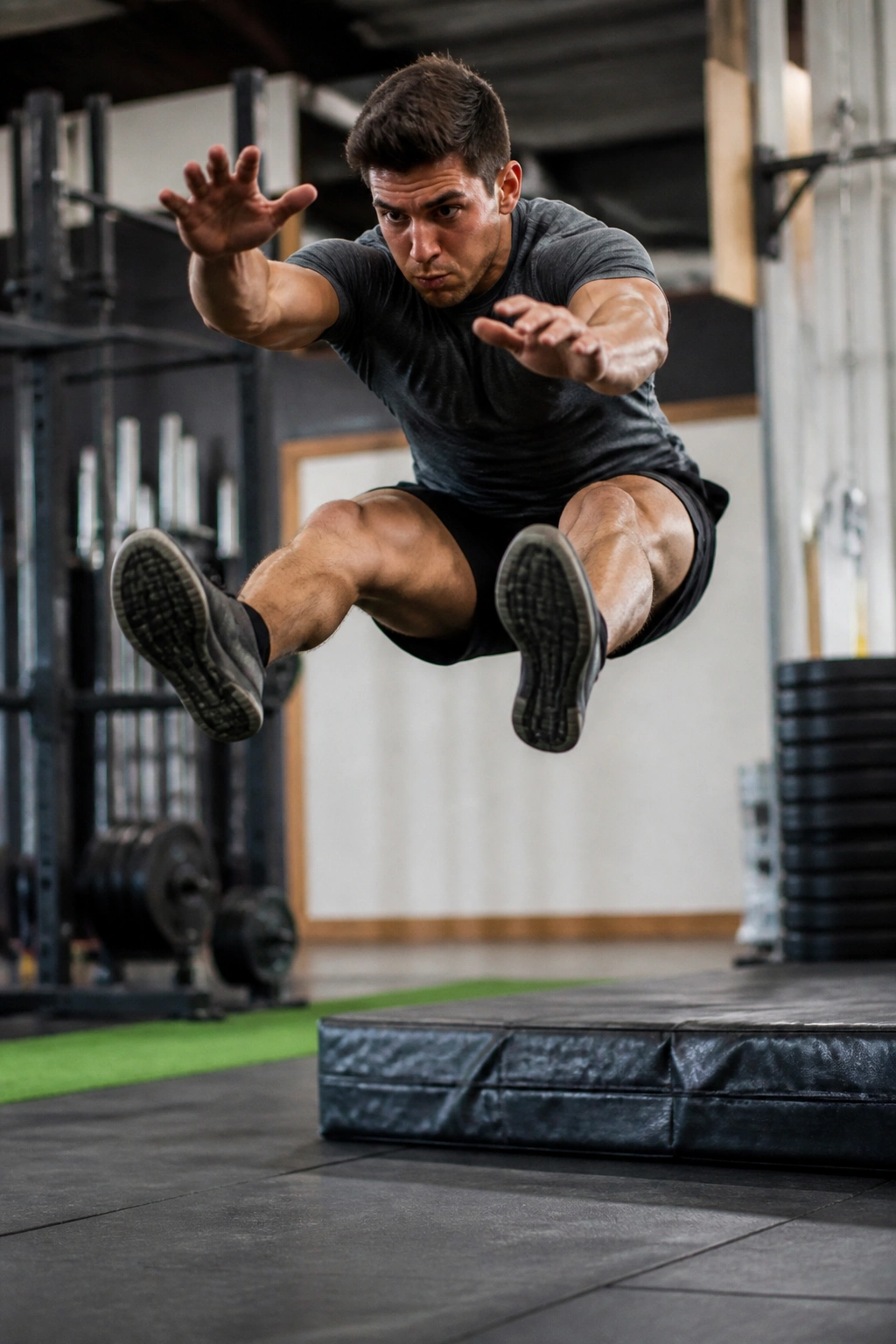
The broad jump is a pure power test. It measures how much force you can generate from a standing start and propel forward. It requires total body coordination—you have to swing your arms to generate momentum that transfers into your legs.
Use your arms. Many people forget that their arms act as levers in a jump. Swing them back as you load your squat, and throw them forward as you explode. This simple addition can add inches to your jump distance.
Like with box jumps, land softly. Do not lock out your knees on impact. Your knees should be slightly bent when you land, acting as shock absorbers. If you feel a “clunk” in your knees, you are landing too stiffly.
25. Mountain Climbers
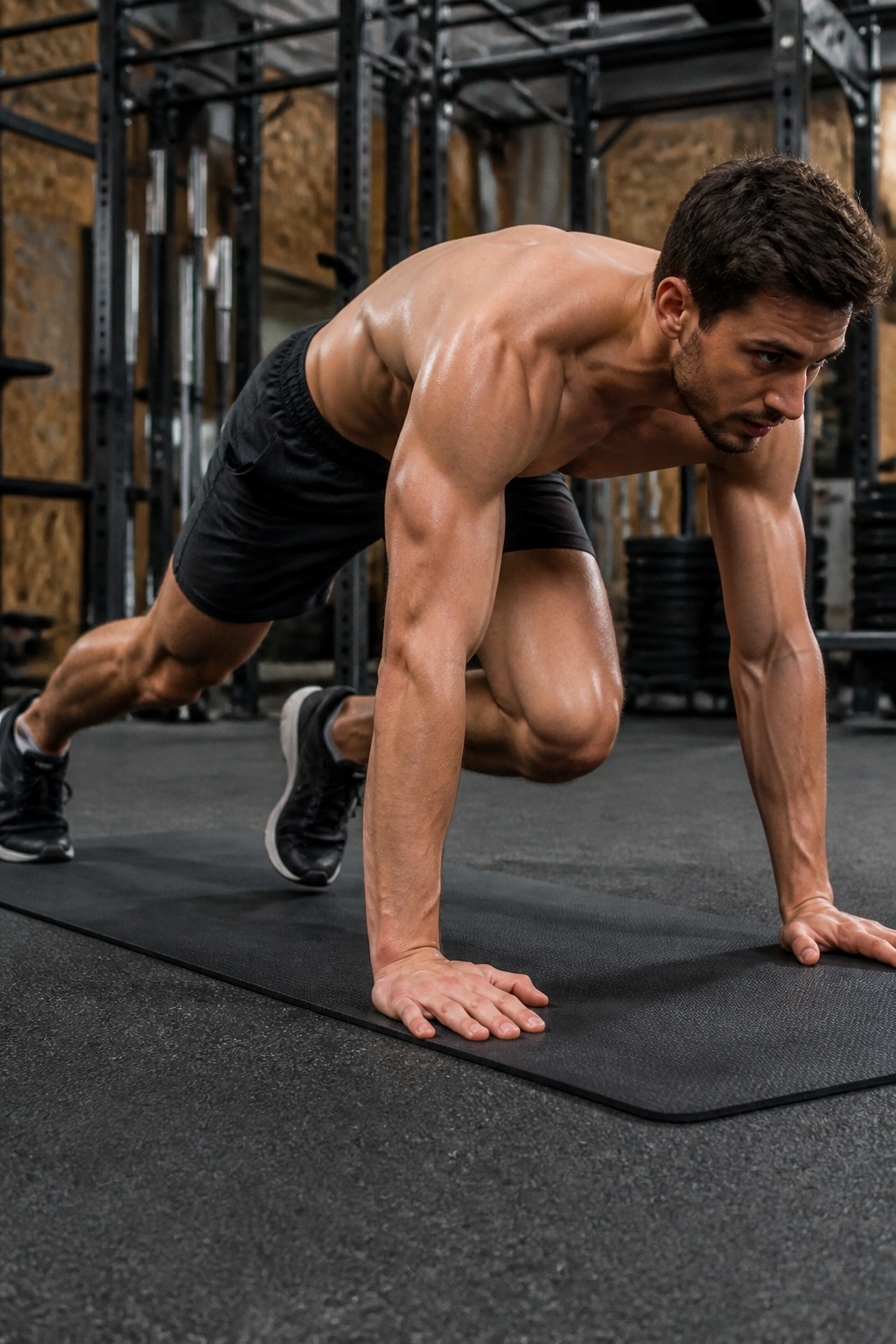
Mountain climbers are often thought of as a core exercise, but they are secretly a brutal quad and hip flexor workout. They keep your legs under constant tension in a bent position, which creates a deep burn that is hard to replicate with weights.
The secret is the pace. Do not just move your legs. Drive your knees toward your chest with intention. Keep your hips low—do not let them pike up toward the ceiling. If your butt is in the air, you are taking the tension off your legs and core.
Try doing these for time rather than reps. Set a timer for forty-five seconds and see how many clean repetitions you can get. The goal is consistent speed, not sprinting for ten seconds and then stalling.
26. Pistol Squats
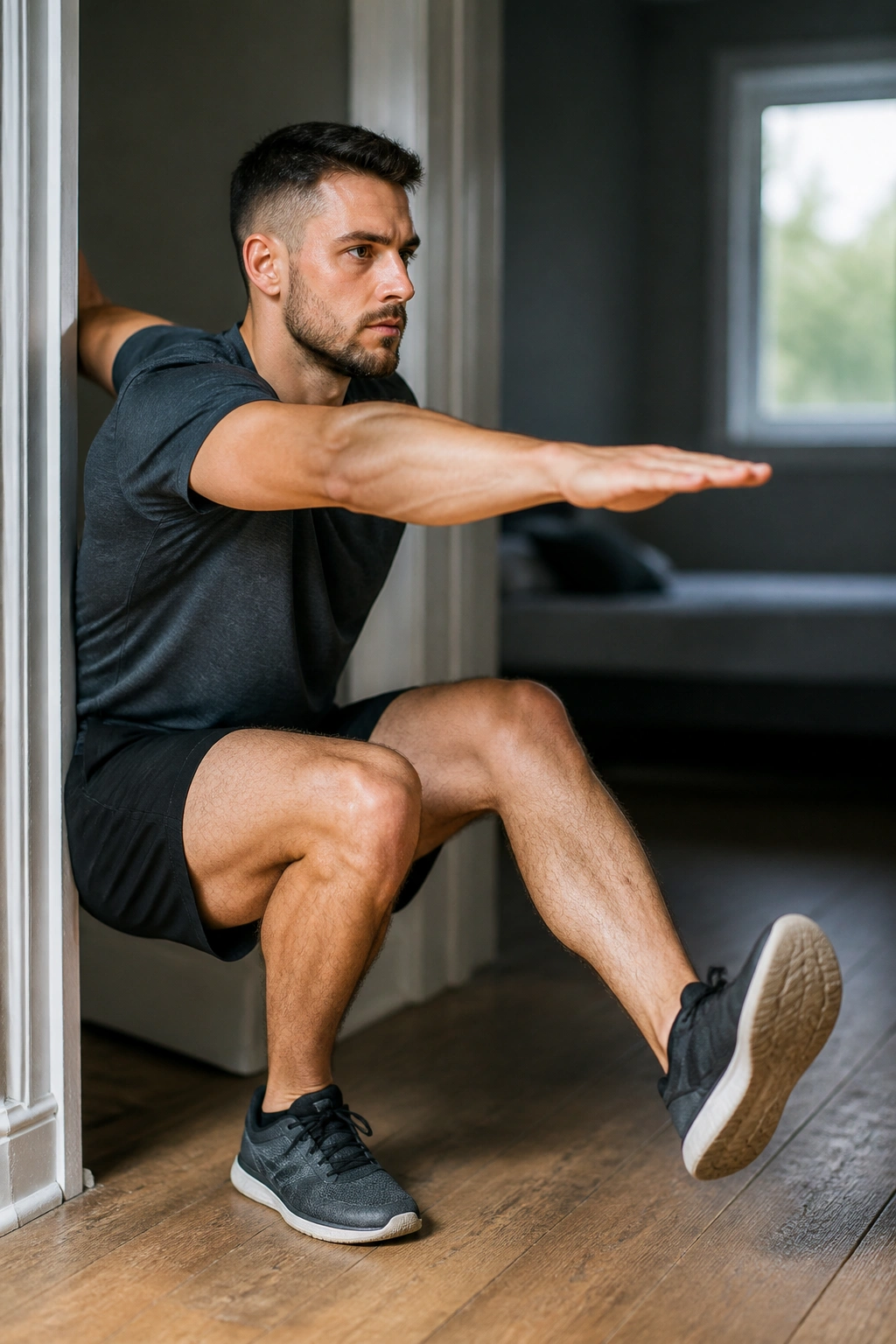
The pistol squat is the holy grail of unilateral training. It is a single-leg squat performed with the non-working leg extended straight out in front of you. It requires insane balance, ankle mobility, and pure quad strength.
If you can’t do one, don’t worry—most people can’t. Start by holding onto a doorway or a rack for balance. Lower yourself slowly, keeping the heel of your working leg planted. Do not let it lift.
As you get stronger, you can use less and less of your hand for support until you are doing them totally unassisted. This exercise will humble you, but once you master it, your leg strength will be superior to almost anyone in the room.
27. Shrimp Squats
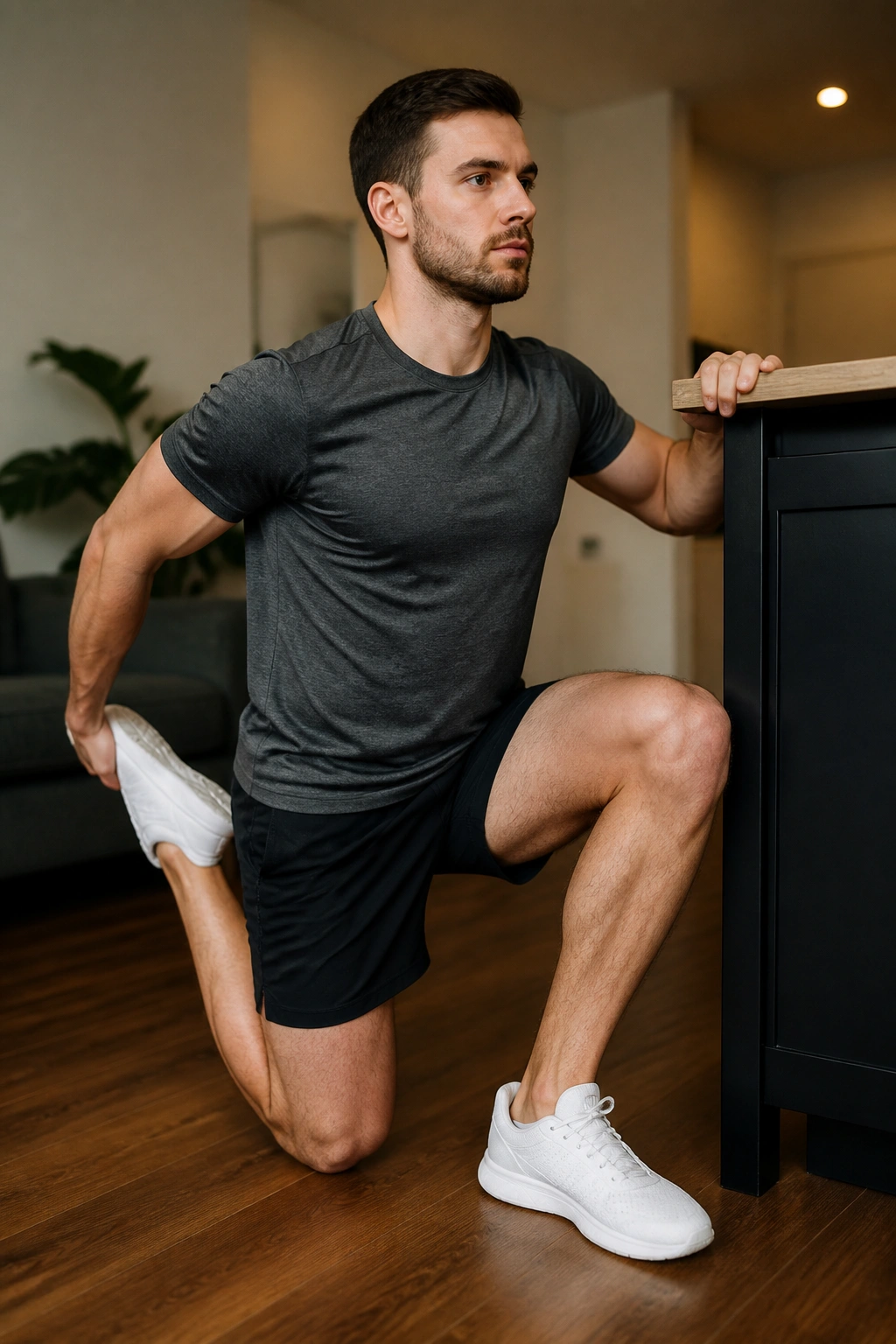
The shrimp squat is a fantastic alternative to the pistol squat if you lack the ankle mobility for that movement. Instead of extending your leg forward, you pull your non-working leg behind you, holding onto your foot with your hand.
It feels like a mix between a lunge and a squat. It is very knee-friendly because the weight is shifted differently, and it provides a great stretch for the quad of the non-working leg while you train the working one.
Start by holding onto something for balance. Keep your torso upright and lower your back knee until it just touches the floor. The resistance comes from the weight of your body, but because it is all on one leg, it is significantly harder than it looks.
28. Cossack Squats
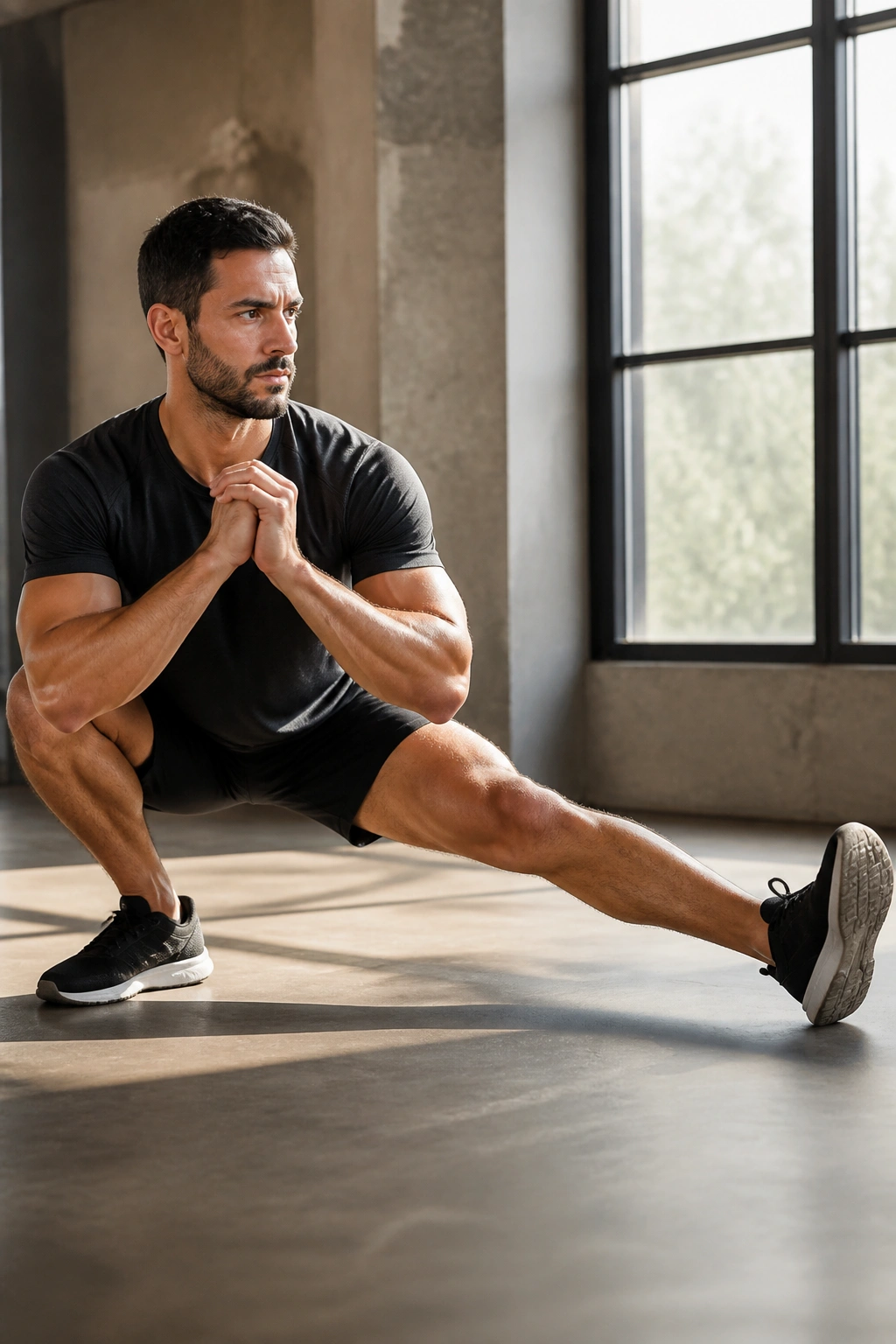
Cossack squats are a lateral lunge taken to the extreme. You take a wide stance and sink entirely onto one side, keeping the other leg perfectly straight with the toe pointed up. It is a deep stretch for the adductors and a serious challenge for the quads.
This movement is incredible for hip mobility. If you spend your days at a desk, your hips are likely tight. The Cossack squat forces you to open those hips and gain range of motion that you didn’t know you had.
Start with body weight only. This is not an exercise you want to load up heavy right away. Focus on sitting back into your hip rather than just shifting your knee forward. Your heel must stay on the floor of the working leg—if it lifts, narrow your stance until you can keep it flat.
29. Single-Leg Romanian Deadlifts
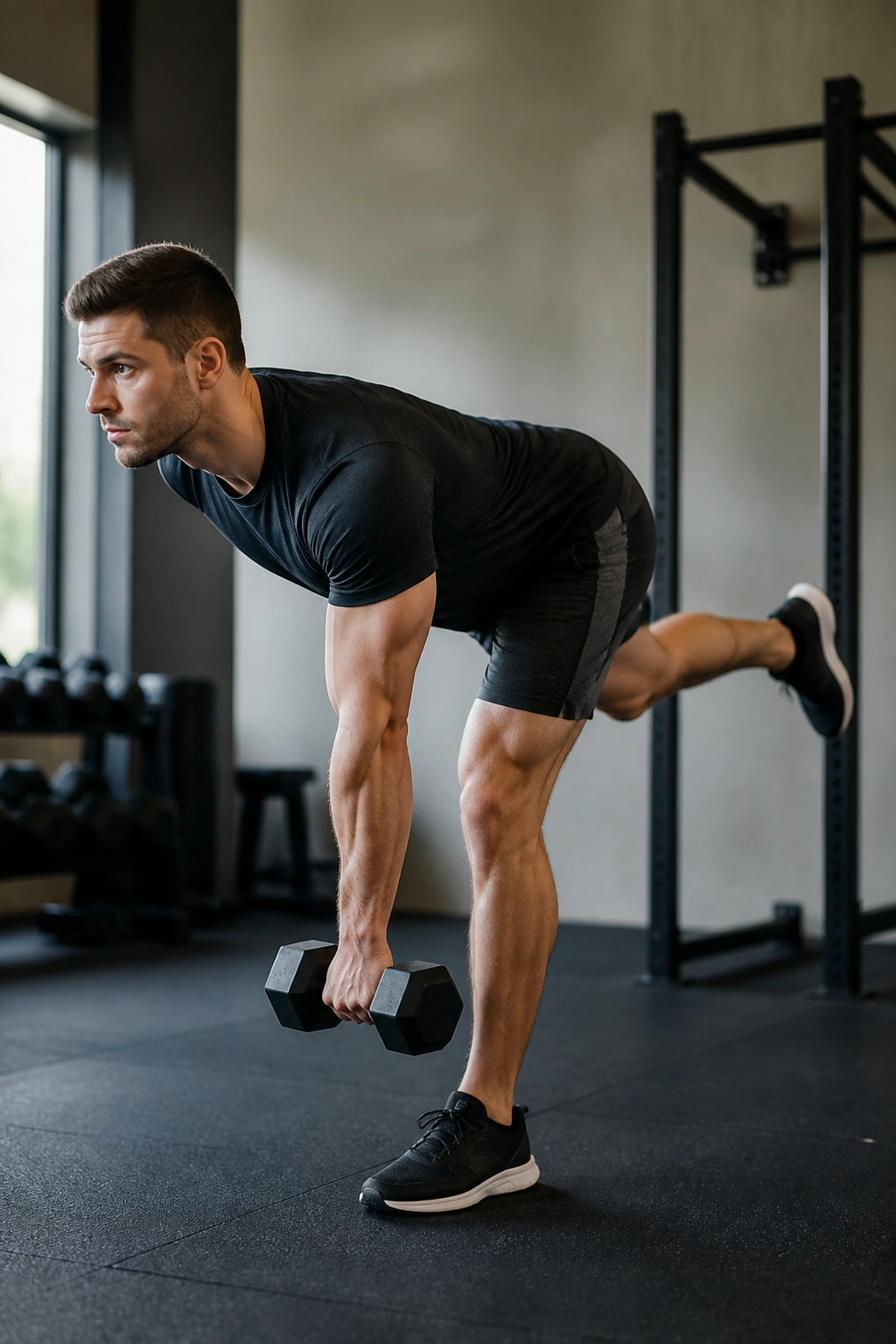
If the standard RDL builds the hamstrings, the single-leg RDL builds hamstrings and fixes imbalances. By standing on one leg, you remove the ability for your dominant side to take over. You are forced to recruit every tiny stabilizing muscle in your ankle, knee, and hip.
The balance component is the hardest part. Pick a focal point on the wall and stare at it—do not look around. Keep your back straight, hinge at the hips, and let your non-working leg float up behind you for balance.
Use dumbbells or a kettlebell in the hand opposite to your working leg. This creates a cross-body stabilization pattern that makes the move much more effective. Go slow. This is not about speed; it is about control.
30. Sissy Squats
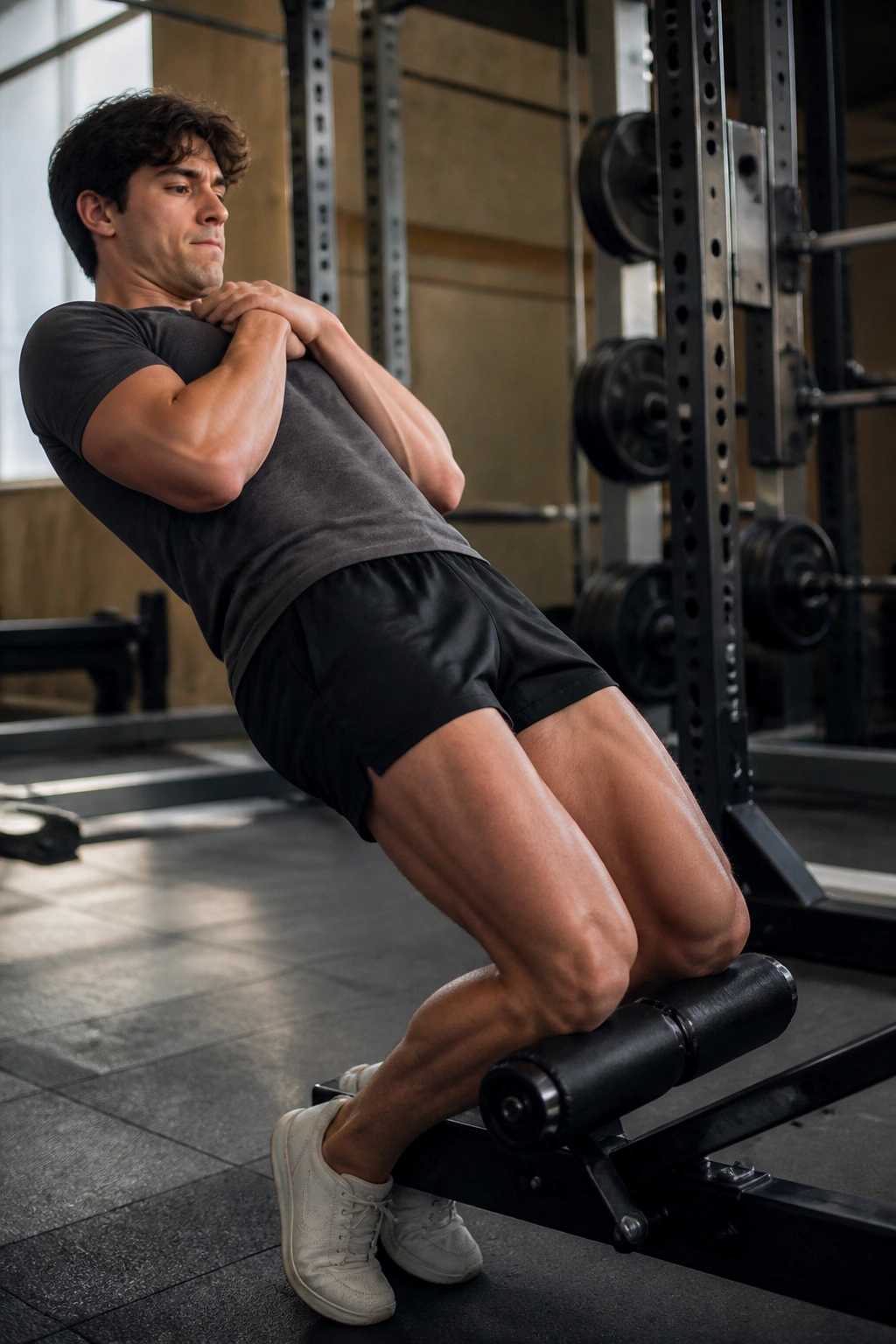
The sissy squat is an old-school bodybuilding secret. You lock your feet under something stable, lean your entire torso back, and squat by driving your knees forward. It sounds dangerous, but done correctly, it is one of the best quad isolation moves in existence.
It looks like your knees are going to explode, but because your torso is leaned back, the tension is actually entirely on the quads, not the knee joints. It is a brilliant way to target the quad without needing heavy weights.
You can do these holding onto a wall for balance. Just make sure you do not sit your hips back. You want your knees to travel forward, over your toes. If you sit back, it becomes a regular squat. The “sissy” motion is all about that knee-forward lean.
Final Thoughts
Training your legs is a practice in patience and persistence. You do not need to do all thirty of these moves in a single week, or even in a single month. Pick a handful that resonate with you, master the form, and build a routine that you can stick to.
Consistency beats intensity every time. It is better to have a moderate leg workout that you actually do every week than an “impossible” workout that you skip because you dread it. Start with the foundations, learn how your body moves under load, and add complexity as you get stronger. Your legs are the foundation of your fitness; treat them with the respect they deserve, and they will support you for a lifetime.
