



A pair of thighs can be stubborn in a very specific way: they do not care that you walked a few miles yesterday if the rest of your day was spent sitting. They change when you ask the muscles to work through a full range, load them from more than one angle, and keep showing up long enough for the work to matter.
That’s why a good thigh workout at home needs more than endless squats. The quads matter, yes, but so do the hamstrings, glute medius, adductors, and the small stabilizers around the knee and hip. Miss those pieces and your legs get strong in one direction and shaky in another. That’s not a look people usually want.
These 20 moves cover the job with floor space, a chair, a wall, and a little patience. If you want a simple way to use them, pick 5 or 6 exercises, do 2 to 4 rounds, rest 30 to 45 seconds between moves, and slow the lowering phase until the last few reps feel honest.
Start with the squat, because the squat tells you fast whether your form is helping or wasting your effort.
1. Bodyweight Squat for Quads and Inner Thighs
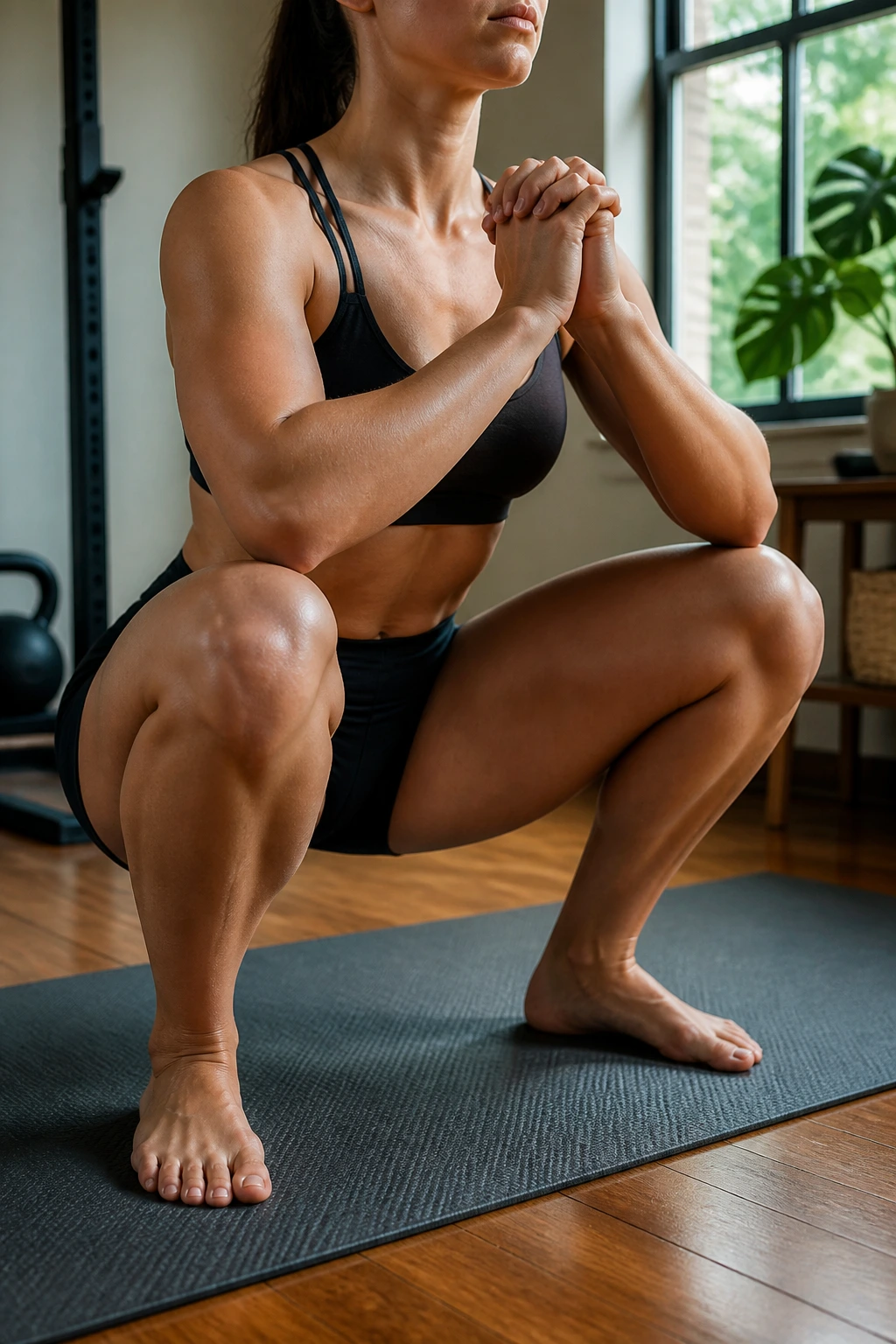
The bodyweight squat is the anchor move here. Done well, it hits the front of the thighs, asks the inner thighs to stabilize, and wakes up the glutes without needing any gear at all.
How to set it up
Stand with your feet about shoulder-width apart, toes turned out just a little, and your weight spread across the whole foot. Sit down and back as if you’re aiming for a chair, then stand by pressing the floor away. Aim for 8 to 15 reps for 2 to 4 sets, and slow the descent to about 3 seconds if you want more thigh work without adding weight.
What to watch for
Keep your knees tracking in the same line as your toes. If they cave in, shorten the range and clean up the pattern before you chase depth.
- Heels stay down.
- Chest stays proud, not arched.
- Stop before your lower back tucks under.
- Rise with control instead of bouncing.
Half reps are a waste here. If you can do a clean squat with a two-second pause at the bottom, the move gets a lot more useful.
2. Sumo Squat for Inner Thigh Burn
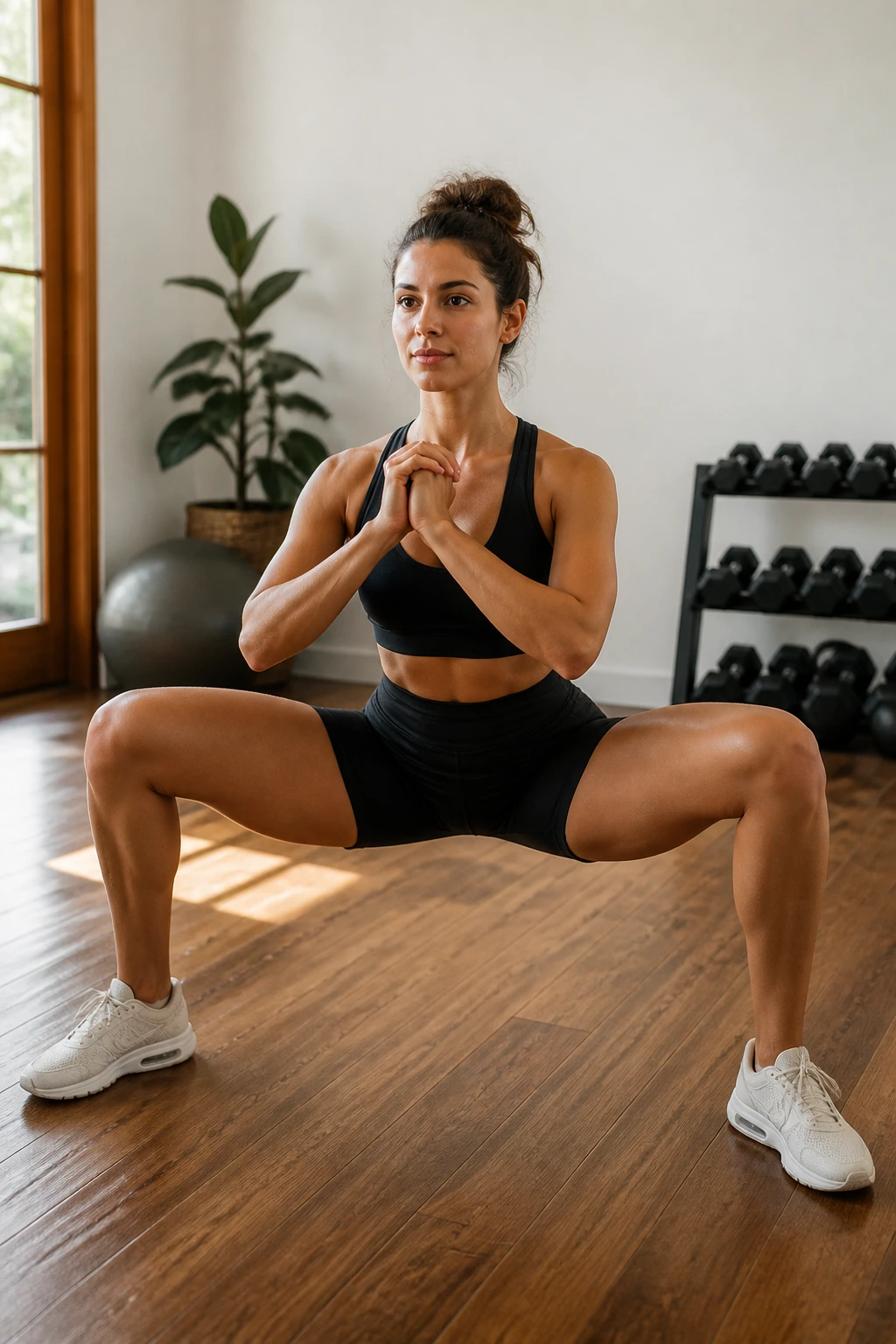
Want more inner-thigh work without a machine? Open the stance. The sumo squat shifts a little more load toward the adductors, and that wide-foot position changes the whole feel of the movement.
The stance should be wider than shoulder width, but not so wide that your knees feel forced. Point the toes out about 15 to 30 degrees, keep the chest tall, and lower until the thighs are working hard without losing control. I like this move with a backpack hugged to the chest, because the extra load makes the legs tell the truth fast.
Why the wide stance matters
The inner thighs help pull the legs back toward the midline. In a sumo squat, they work harder to keep the knees from drifting and to help you stand back up cleanly.
Do not force the stance wider just because it looks dramatic. A stance you can own is better than a stance that folds your hips.
3. Reverse Lunge for Knee-Friendly Leg Strength
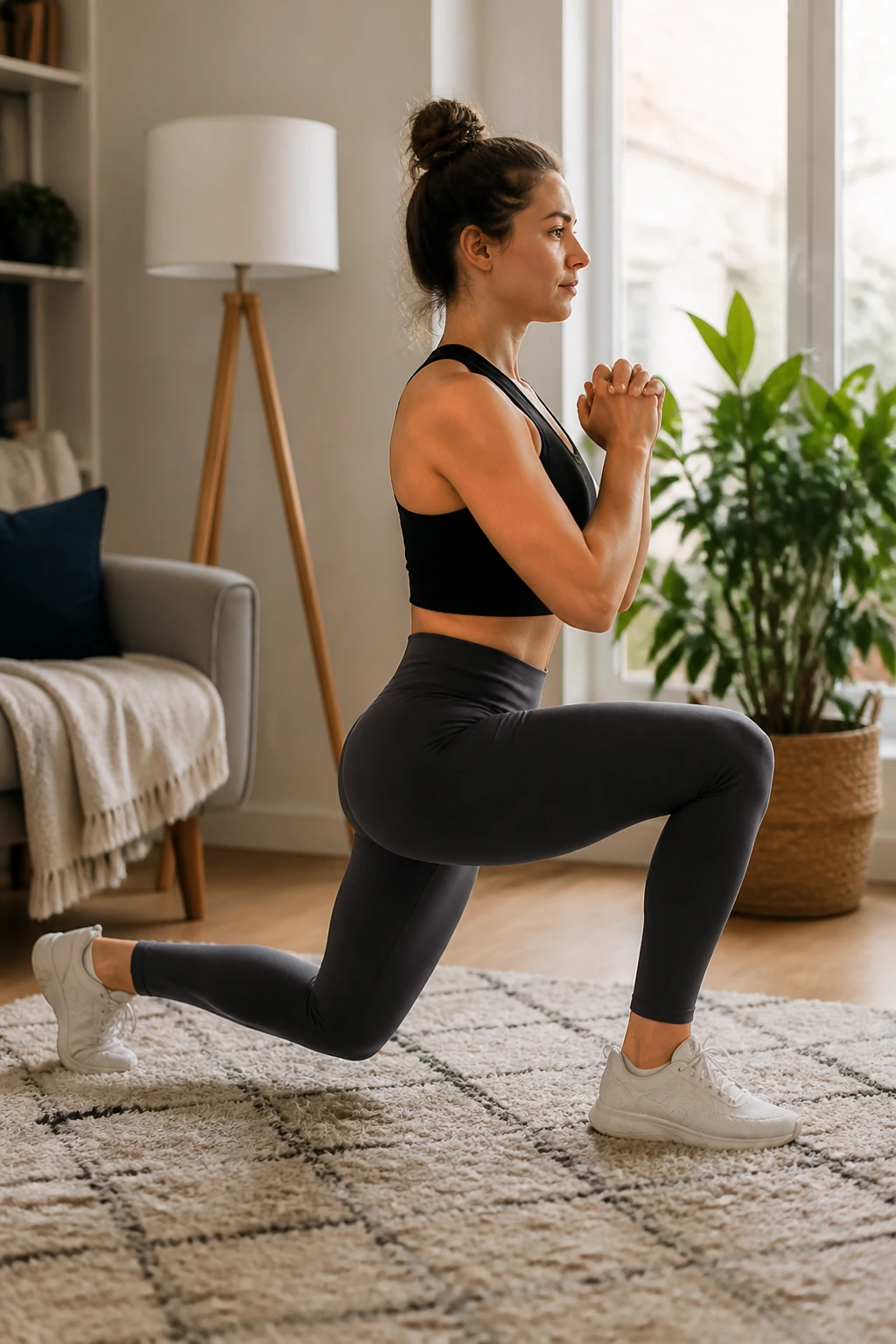
Forward lunges get more attention. Reverse lunges are the cleaner option for most people, especially if the front knee gets cranky when you step forward.
Step back with one leg, drop the back knee toward the floor, and keep most of your weight on the front leg. The front heel stays planted, the front shin stays fairly vertical, and the torso leans only slightly forward. Eight to 12 reps per side is a solid working range.
A small detail matters here: the step back should be long enough that you can lower without wobbling, but not so long that you turn it into a stretch instead of a strength move. That’s the part many people miss.
A simple progression
- Bodyweight only for control.
- Hold a backpack at chest height.
- Add a knee drive at the top for balance and a little more hip work.
If your front knee dives inward, shorten the step and slow down. The fix is almost always cleaner positioning, not more speed.
4. Curtsy Lunge for Outer Thigh and Glute Medius
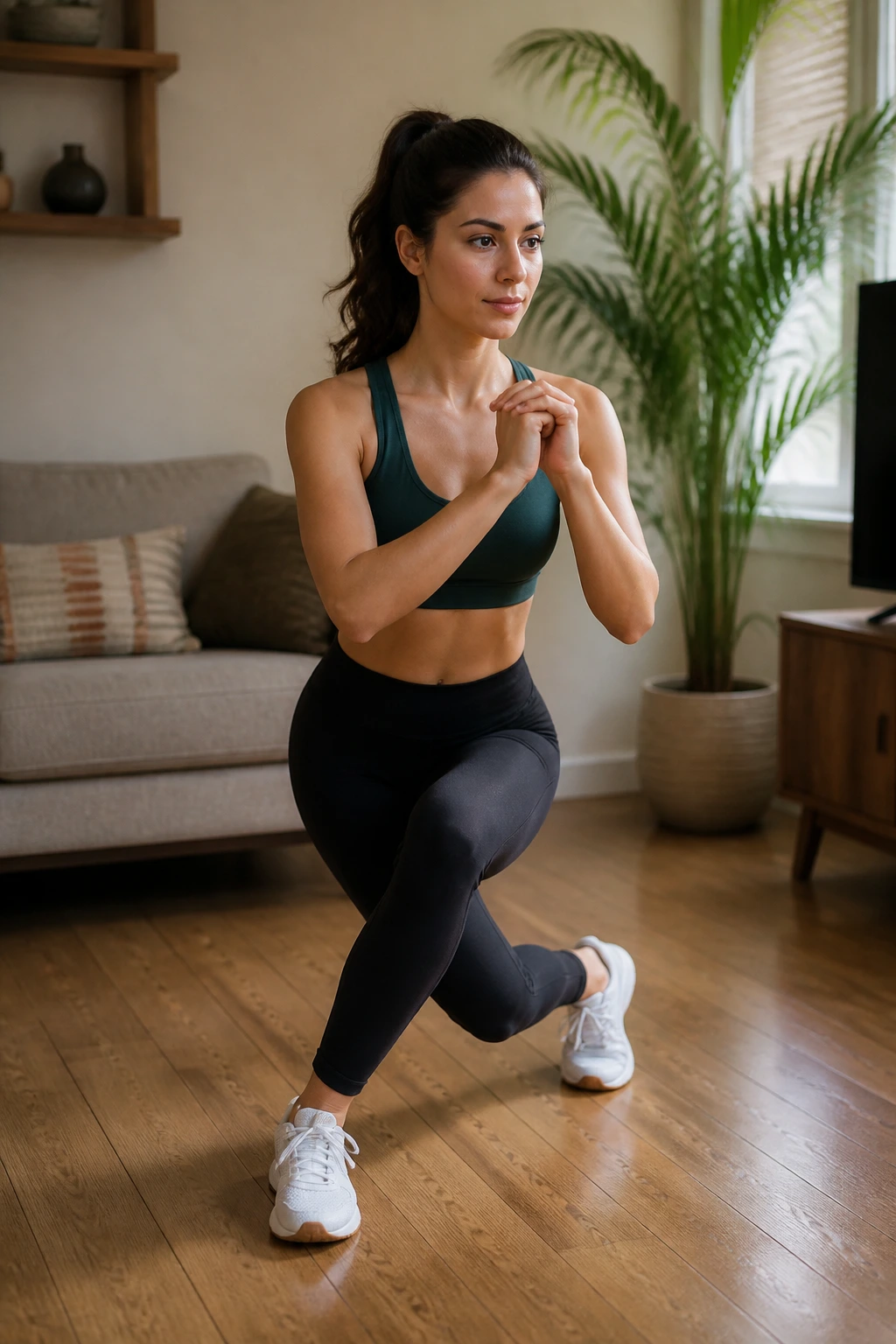
This one looks small until your outer hip starts shaking. The curtsy lunge hits the glute medius and outer thigh in a way straight-up-and-down moves don’t always manage, and that makes it useful for thigh toning workouts at home.
Step one leg back and across the body, then lower under control. The front foot stays rooted, the chest stays lifted, and the working knee should not collapse inward. If your knees are sensitive, keep the cross-behind step short. Deep crossover angles can feel messy fast.
What makes it different
The diagonal line of the movement changes the load on the side of the hip. That side load is the whole point.
- Work in the range of 8 to 10 reps per side.
- Move slowly enough that you can stop the knee from twisting.
- Use it as a finisher if you want the outer hip to light up.
I would not put this first in a workout. It’s better after a squat or lunge, when the legs are already warm and the body knows where it is.
5. Bulgarian Split Squat for Deep Quad Work
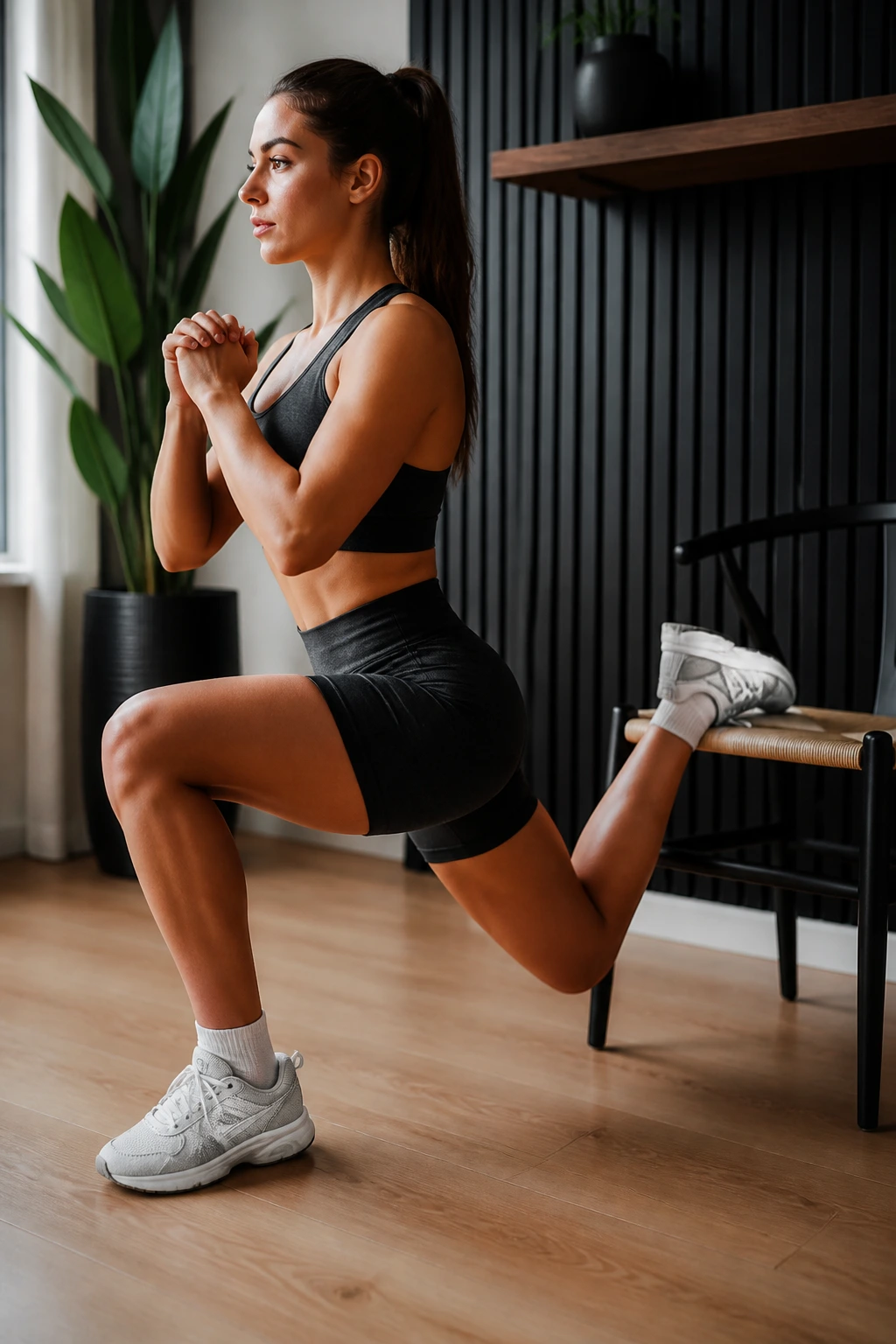
Unfair, in the best way. The Bulgarian split squat puts one leg in charge and makes the front thigh work much harder than a regular lunge does, which is why people love it and hate it in equal measure.
Place the back foot on a chair, sofa edge, or sturdy step. The front foot should be far enough forward that the front heel stays down when you lower. Keep the torso a little more upright if you want extra quad load, or lean forward a bit if you want the glutes to join the party harder. Six to 12 reps per side is plenty.
Where to put the back foot
The back foot is there for balance, not for pushing. If you’re using it to launch yourself up, the setup is off.
How to keep balance
- Set your front foot first.
- Look at a spot on the floor a few feet ahead.
- Lower under control for 2 to 3 seconds.
- Pause briefly at the bottom before standing.
If this move feels shaky, reduce the height of the back foot. A lower setup often gives better work than a fancy one.
6. Lateral Lunge for Inner and Outer Thighs
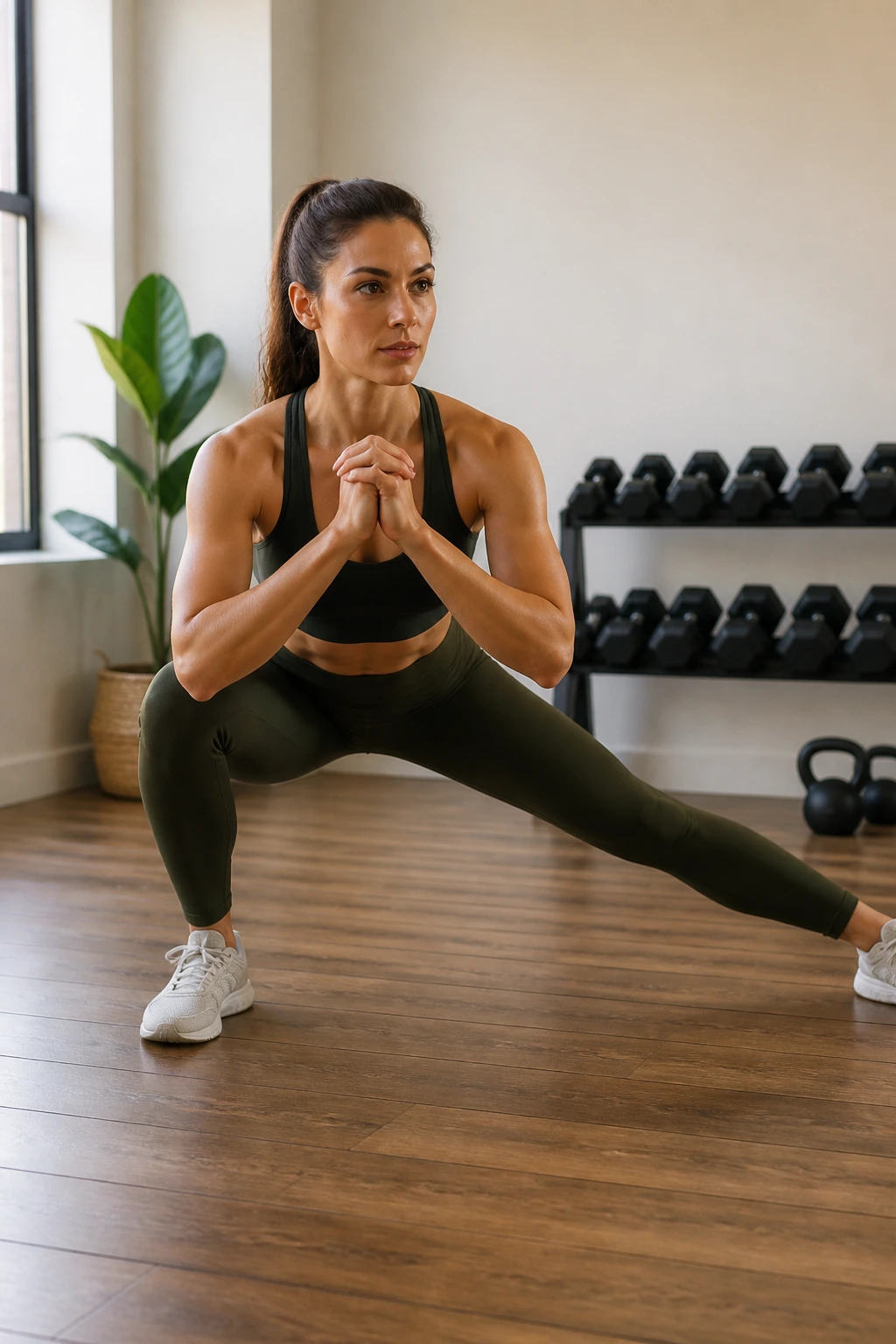
Straight-line work is only half the story. The lateral lunge adds side-to-side movement, and that is where a lot of inner-thigh control shows up.
Step out to one side, sit your hips back, and keep the other leg long and straight. The bent leg does the work; the straight leg stays planted and quiet. You should feel the load in the bent leg’s inner thigh, quad, and glute. Eight to 10 reps per side is a strong start.
A lot of people lean too far forward here. Don’t. Let the hips travel back, keep the torso long, and stop before the knee collapses inward.
The nice thing about lateral lunges is that they make the legs work in a direction most home workouts ignore. That missing direction matters more than people think.
7. Step-Up for Quads and Glutes
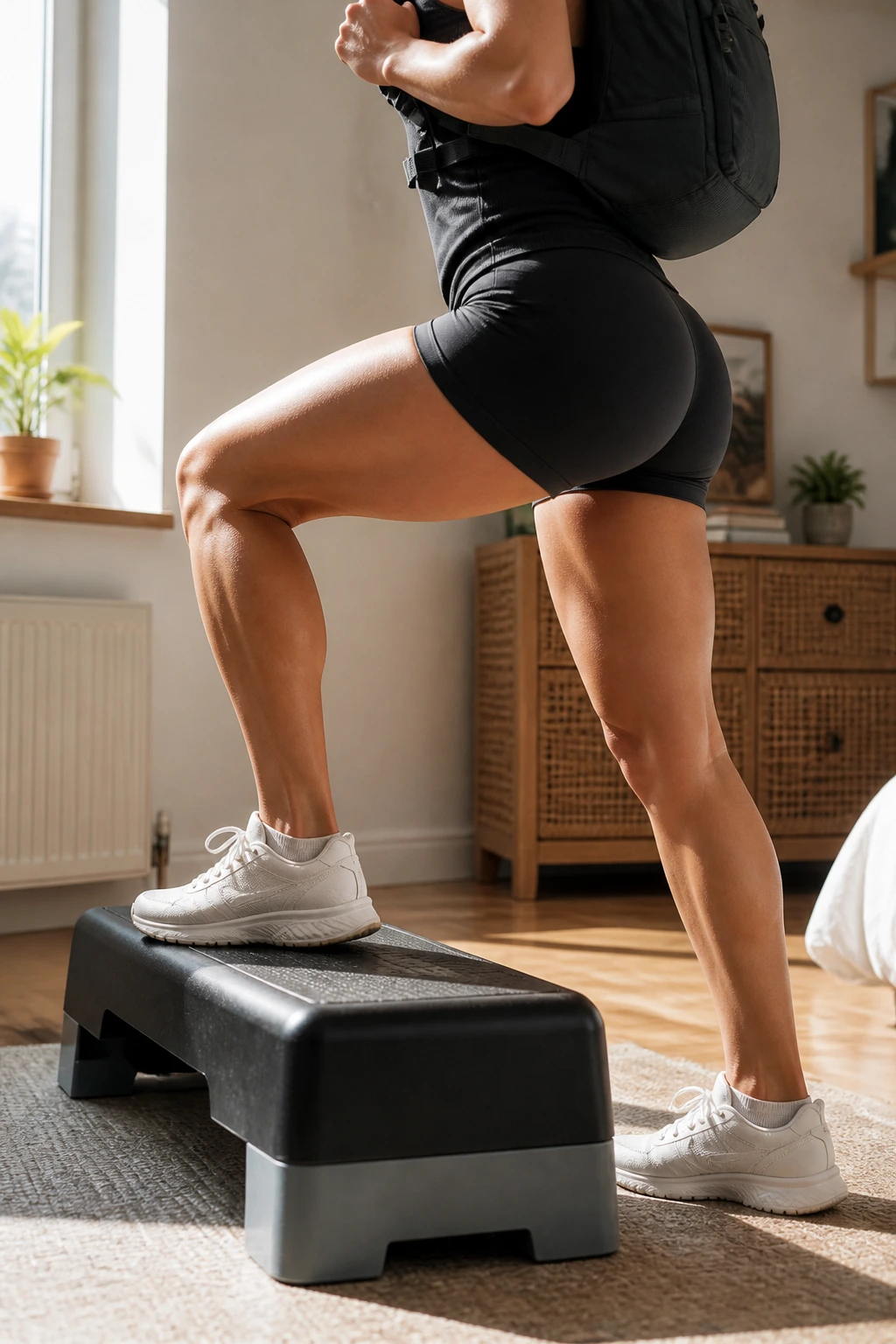
If you have a sturdy step, stair, or low bench, this one pays rent. The step-up looks simple, but it teaches one leg to push through the floor while the other stays quiet, and that makes it a smart thigh workout at home.
Plant the whole foot on the step, lean slightly forward, and drive through that front leg to stand up. Do not shove off hard with the back leg. That back foot should help only a little, or not at all. Eight to 12 reps per side is a good working range, and a backpack adds plenty if the move starts to feel too easy.
What height works best
A step around mid-shin to knee height is enough for most people. Higher is not automatically better. Too high, and the pelvis starts twisting to cheat the rep.
Keep it clean
- Full foot on the step.
- Control the way down.
- No jumping off the back foot.
- Finish tall, not hunched over.
This is one of those exercises where you can tell in two reps whether the setup is right.
8. Wall Sit for a No-Movement Thigh Finisher
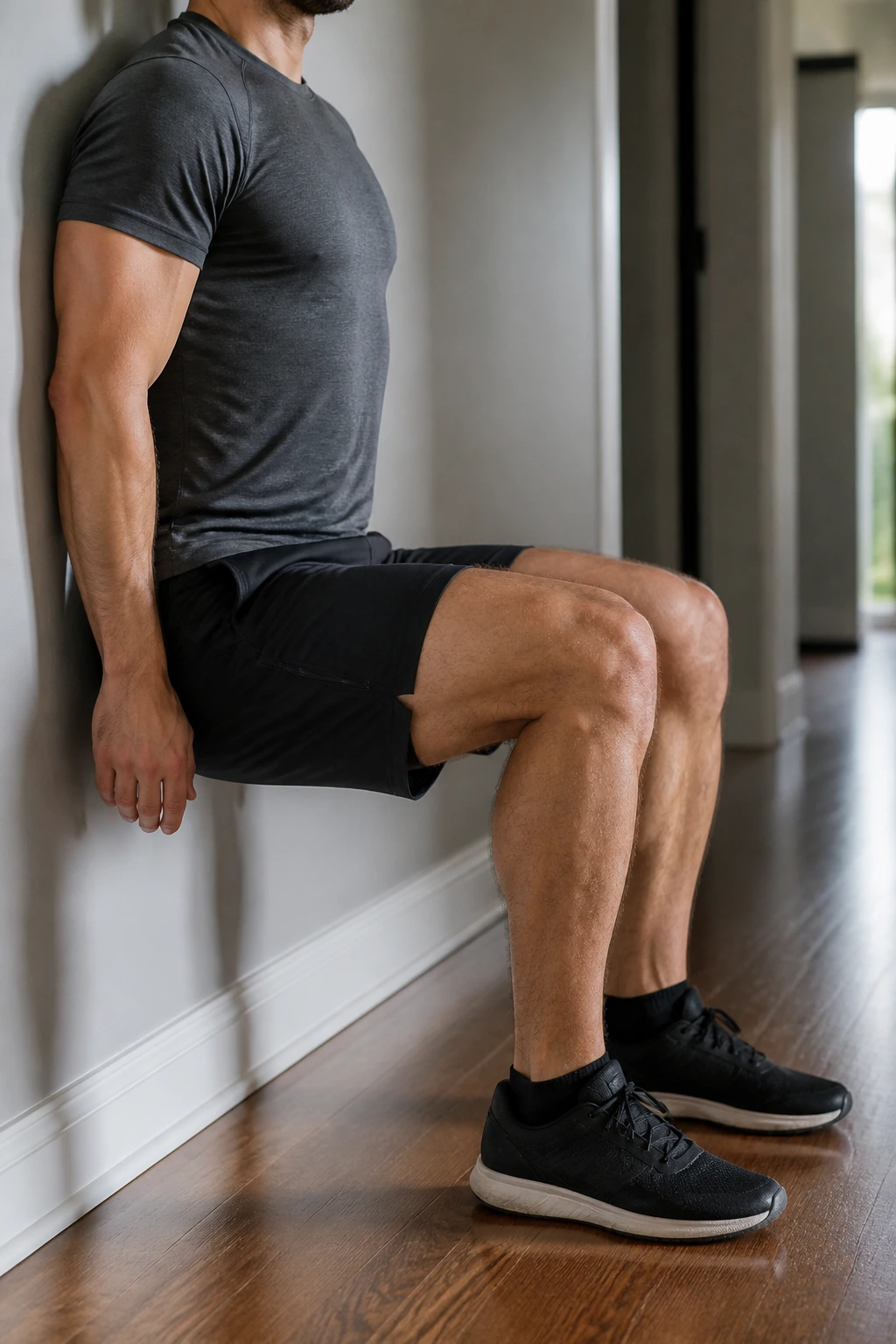
The wall sit is brutally honest. It does not care how fancy your routine looks; it cares whether your quads can hold you in place.
Slide down a wall until your knees are around a 90-degree angle, or a little higher if that feels better on your knees. Keep the lower back flat against the wall, press the whole foot into the floor, and breathe. Start with 20 to 30 seconds, then build toward 45 to 60 seconds as it gets easier.
A wall sit is not a throwaway finisher. It is a real thigh builder because the muscles stay under tension the whole time. There’s no place to hide.
If you want to make it nastier without changing the setup, lift one heel for a few seconds at a time or hold a small backpack on your lap. Small changes. Big difference.
9. Glute Bridge for Thigh Stability
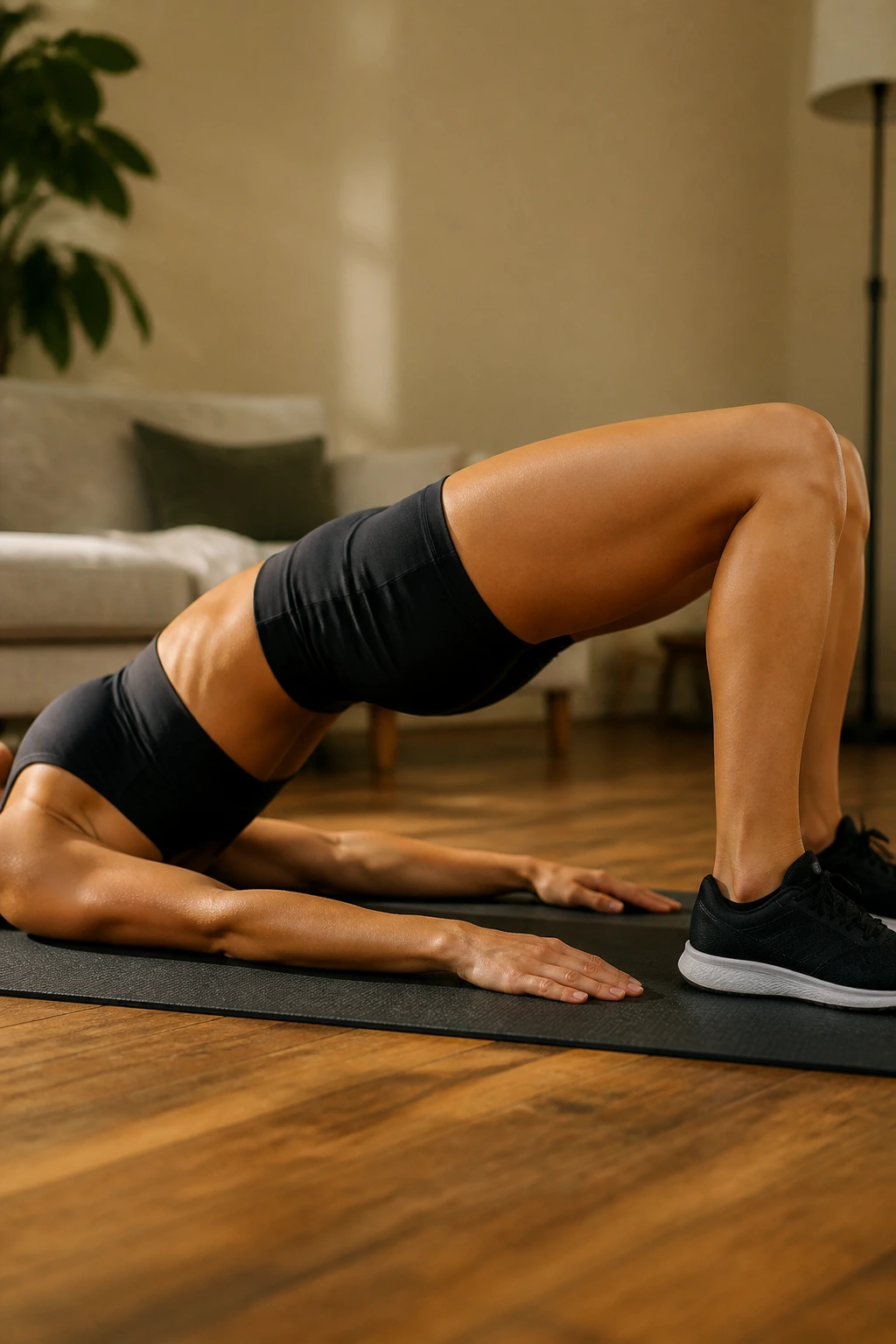
Do not skip bridges because they look easy. A clean glute bridge supports the thighs by teaching the hips to extend without dumping the work into the lower back.
Lie on your back with your knees bent and feet flat on the floor. Bring your heels close enough that your shins are near vertical, then tuck the pelvis slightly and lift the hips until your body forms a straight line from shoulders to knees. Squeeze for 1 to 2 seconds at the top. Aim for 12 to 20 reps.
Why it helps thighs too
The hamstrings and adductors help stabilize the hips during the bridge, which means the thighs are not sitting out the party. They’re helping you keep the shape clean.
Keep your ribs down. If the ribs flare up and the lower back arches, you’ve turned a bridge into a back bend.
This one is especially good between harder standing moves because it lets you work the back side of the legs without beating up the joints.
10. Single-Leg Glute Bridge for One-Side Strength
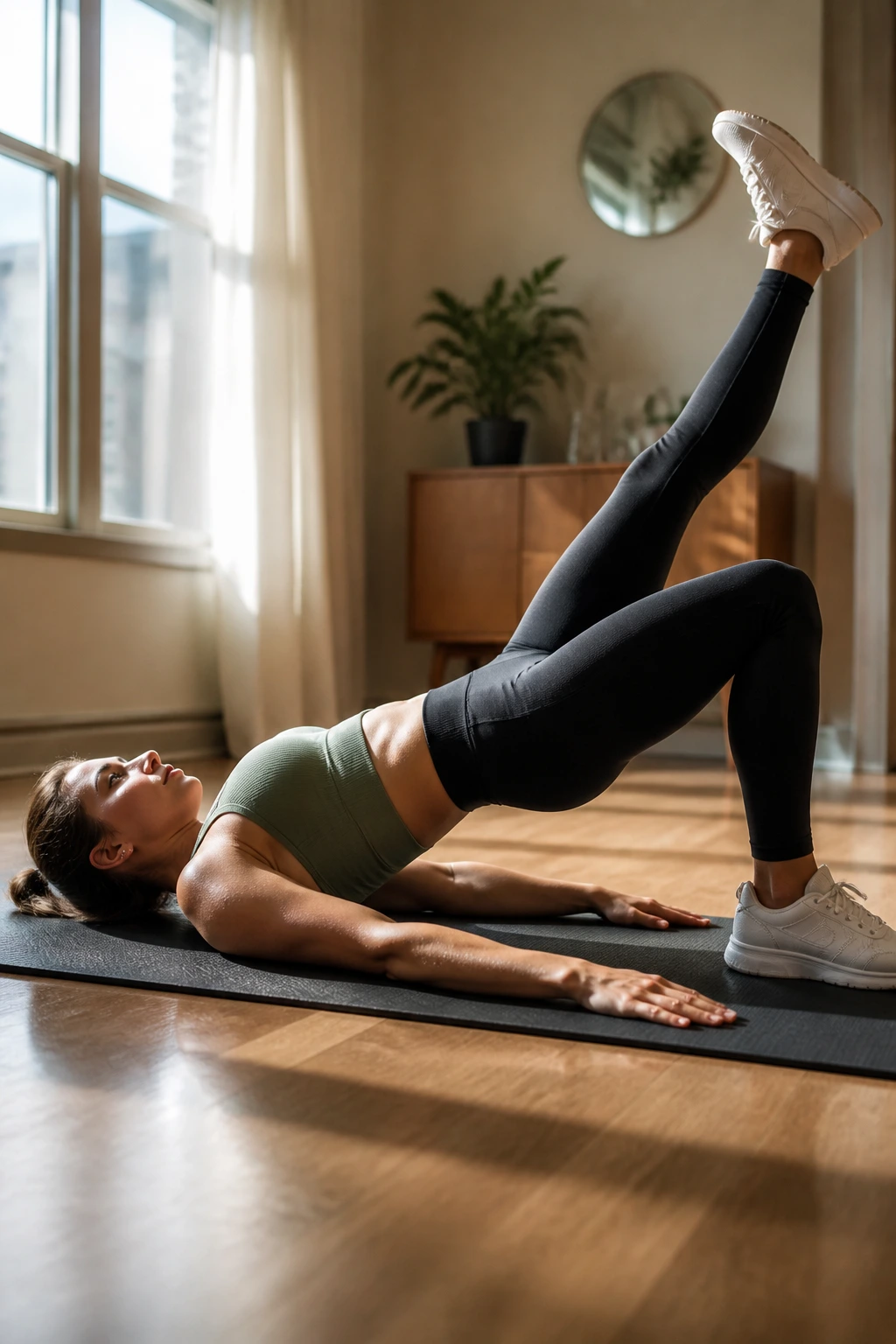
This is where the wobble starts. A single-leg bridge makes each side of the body pull its own weight, and that matters if one hip tends to lag behind the other.
Set up the same way as a normal bridge, then lift one leg so the thigh stays in line with the other knee. Press through the planted heel, raise the hips without letting them twist, and lower under control. Eight to 12 reps per side is enough for most people.
The common mistake is arching the lower back to cheat the height. Don’t do that. If the hamstring cramps, move the working heel a little farther away and shorten the range. Tiny adjustment. Big relief.
I like this one after regular bridges because the hips are already awake and the single-leg version feels more like a focused strength test than a random struggle.
11. Frog Pump for High-Rep Burn
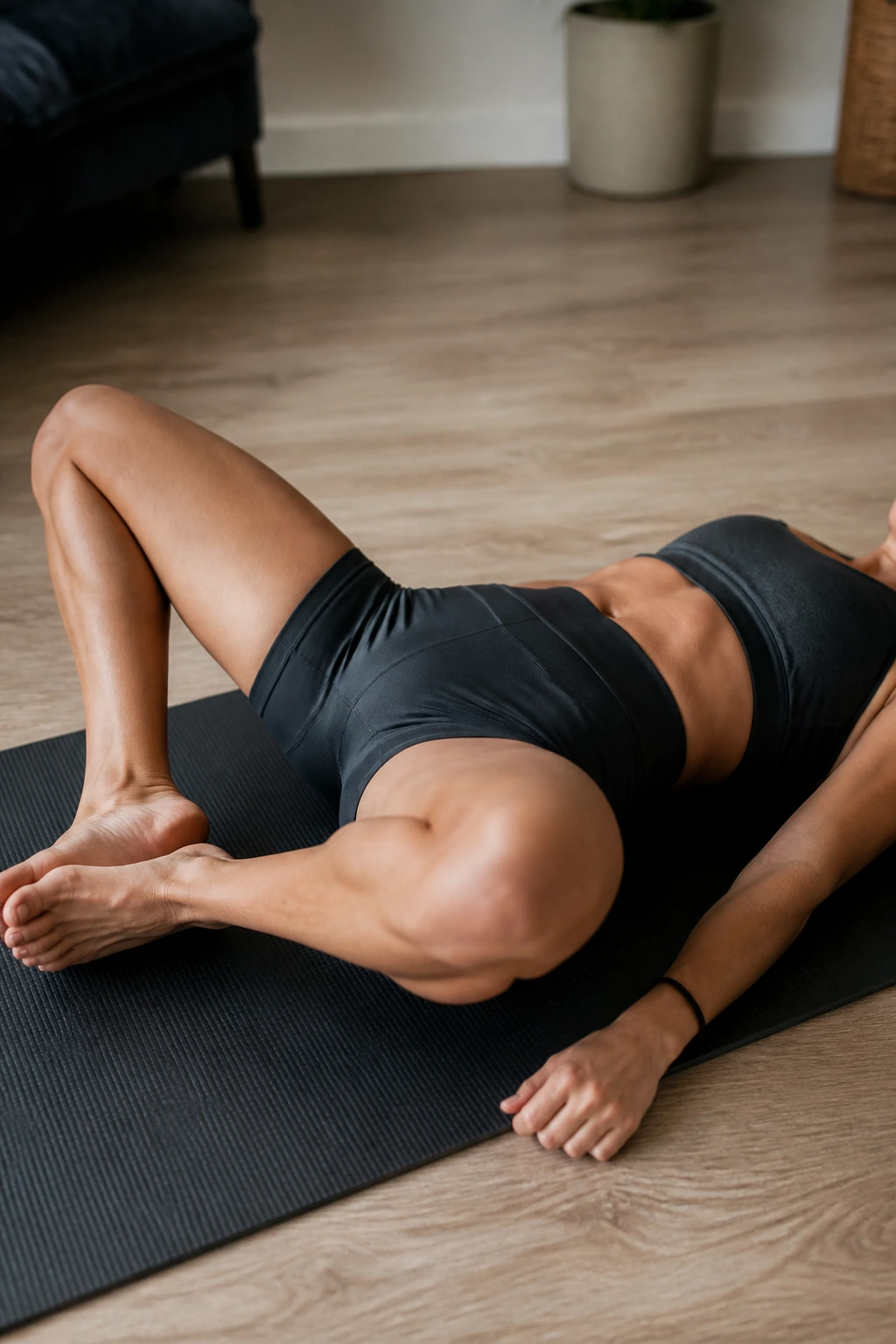
Heels together, knees open, hips pumping. That’s the whole move, and it does not need much more decoration.
Lie on your back, bring the soles of your feet together, and let the knees fall open. Press the heels into the floor and lift the hips in a short, quick range. The range is smaller than a glute bridge, but the burn arrives fast. Try 20 to 30 reps or a 30-second set if you want a short finisher.
Why people like it at the end
It loads the glutes and upper hamstrings without asking for a huge range of motion. That makes it useful when your legs are already tired and you still want one more useful set.
The move should feel tight and controlled, not sloppy. If the knees are flying everywhere, slow down and make the top squeeze cleaner.
No shame in using this as your final set when you want the legs to feel done.
12. Backpack Romanian Deadlift for Hamstrings
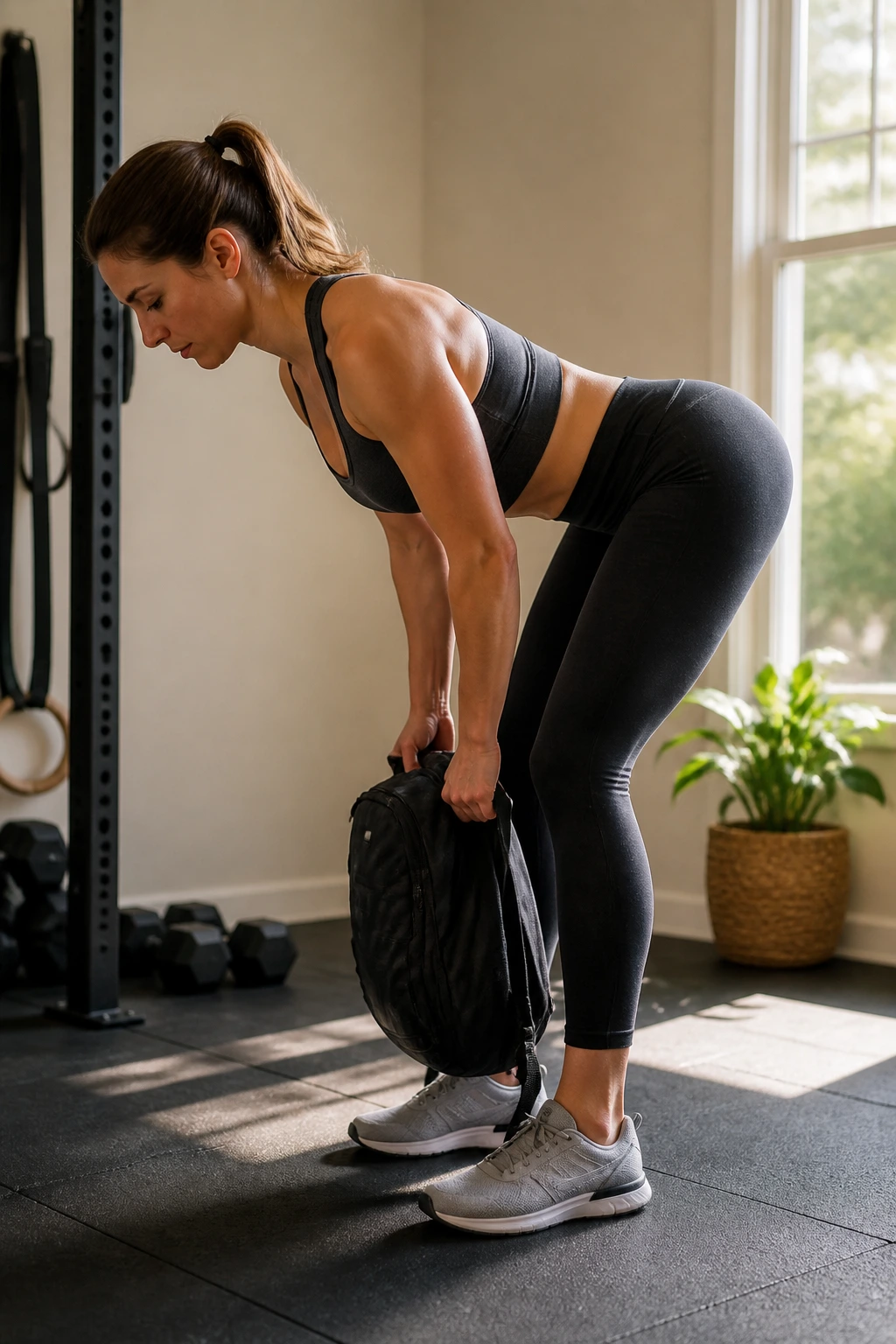
Every thigh routine should have a hinge. If all you ever do is squat and lunge, the back of the legs gets shortchanged, and that usually shows up as weak hamstrings and cranky knees.
Hold a loaded backpack by the top handle or straps, keep it close to your body, and soften the knees just a little. Push the hips back until you feel a stretch in the hamstrings, then stand by driving the hips forward. The spine stays long the whole time. Eight to 12 reps is enough.
How to load a backpack safely
Pack books or canned goods inside, zip it closed, and make sure it does not swing around. A shifting bag ruins the pattern fast.
- Keep the weight close.
- Stop when your back wants to round.
- Lower slowly for 3 seconds.
- Stand by using the hips, not a yank from the lower back.
This one is worth keeping near the front of your workout if your legs need more balance between front-side and back-side work.
13. Towel Hamstring Curl on a Smooth Floor
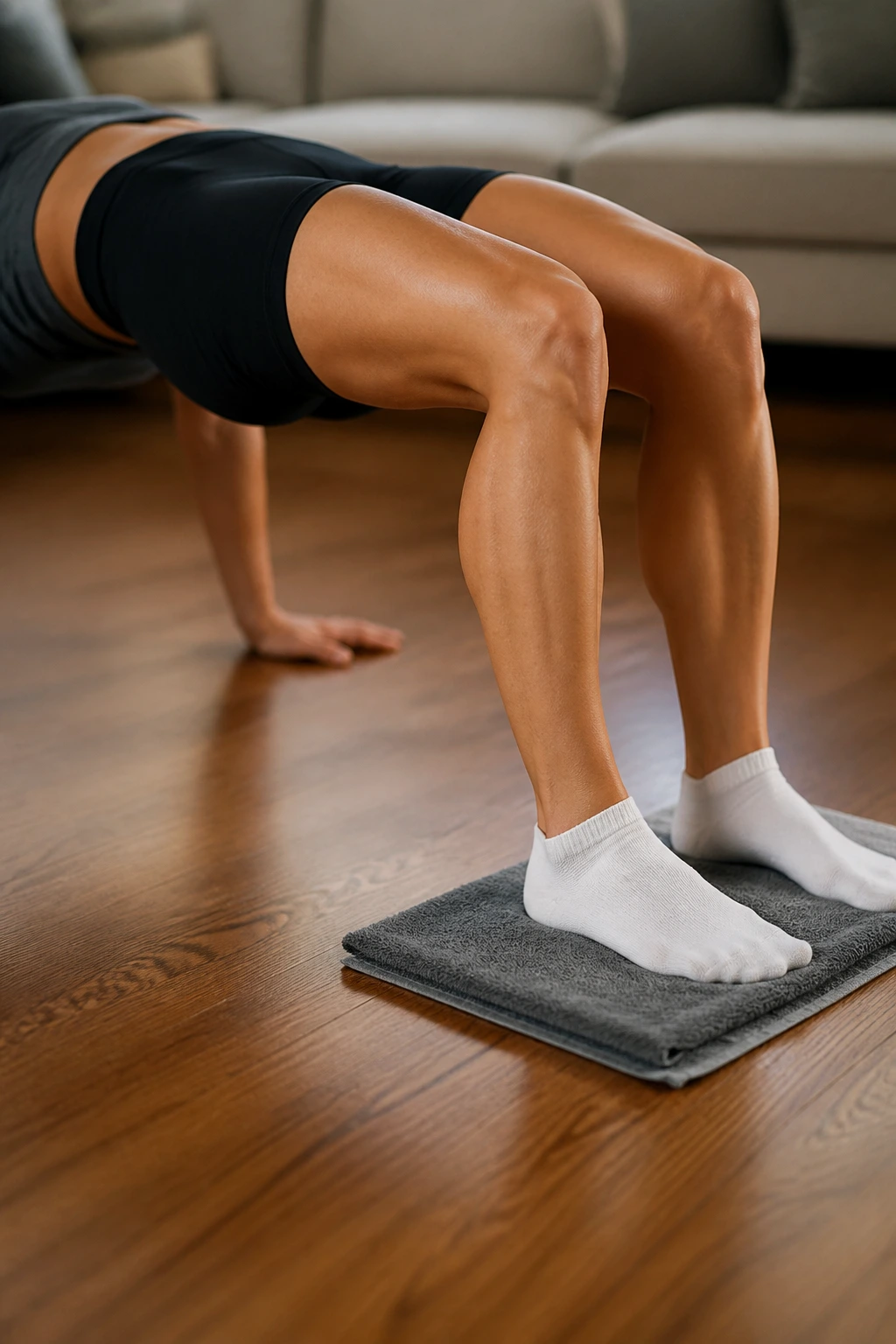
If your floor is smooth, use it. If you have socks and a hardwood floor, even better. The towel hamstring curl is one of those sneaky home moves that looks harmless right up until the second rep.
Lie on your back with your heels on a towel or sliders. Lift the hips into a bridge, then slide the heels away from you until the legs are almost straight. Pull them back in without dropping the hips. Six to 10 controlled reps is a serious workout for the back of the thighs.
What to feel
You should feel the hamstrings doing most of the work while the hips stay lifted. If the hips sag, shorten the range and make the bridge cleaner first.
This is a strong move for knee support too, because the hamstrings help control the joint from behind. It is not flashy. It does the job.
14. Side-Lying Inner Thigh Lift for Adductor Strength
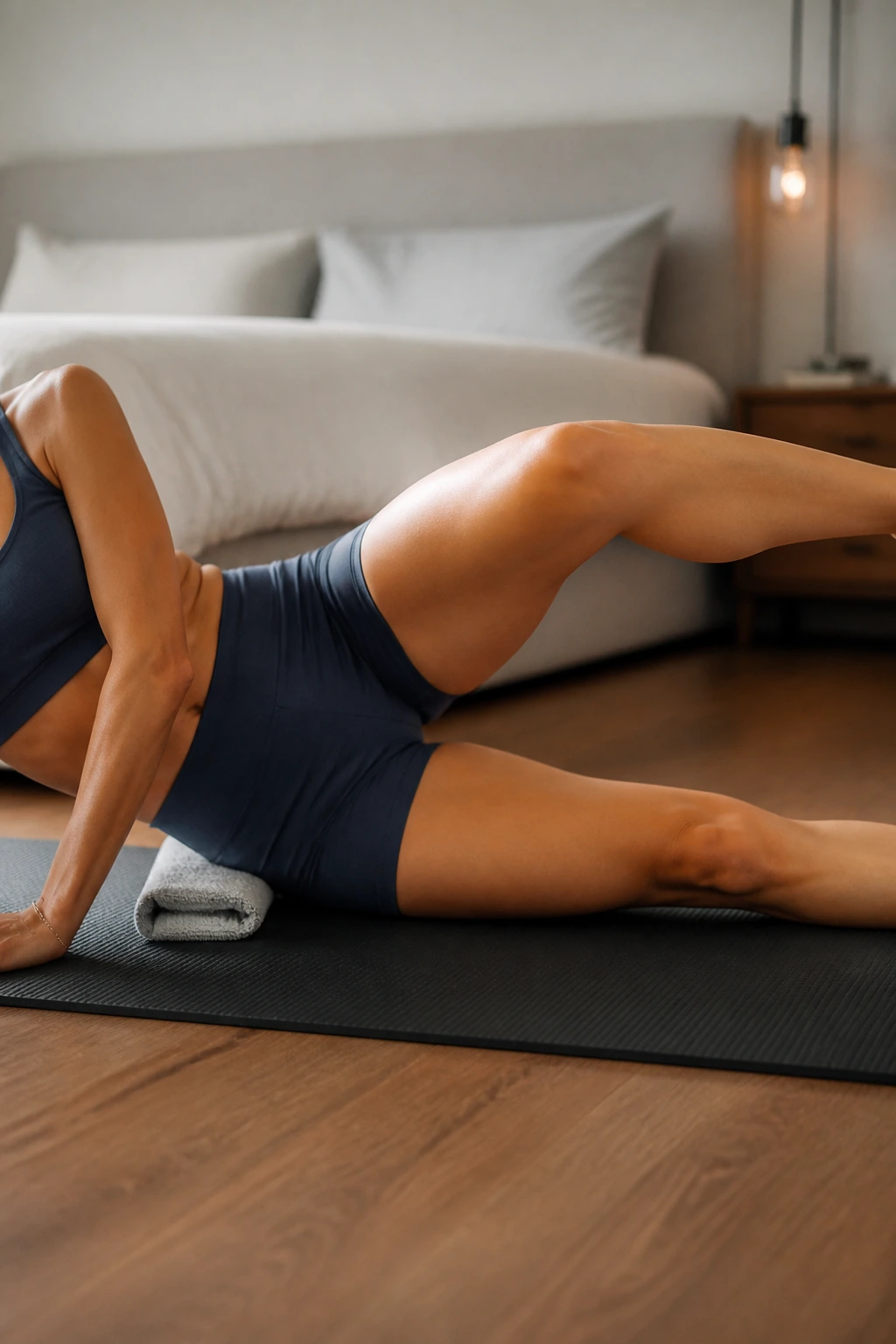
Looks tiny. Burns like a much bigger move.
Lie on one side with the bottom leg straight and the top leg bent, foot planted in front of you for support. Lift the bottom leg up a few inches, lower it slowly, and keep the toes pointed forward or slightly up. The movement is small, but the inner thigh does not care. 12 to 20 reps per side will tell you that quickly.
How to make it cleaner
Put a rolled towel under your waist if the floor feels hard on your hip. Keep the lower leg straight, and do not swing it.
This is a nice move to pair after squats or sumo squats because the adductors are already warm. When they are warm, they work harder without complaining as much.
The inner thigh often gets ignored until it starts talking during side-to-side work. This move shuts that excuse down.
15. Side-Lying Leg Raise for Outer Thighs
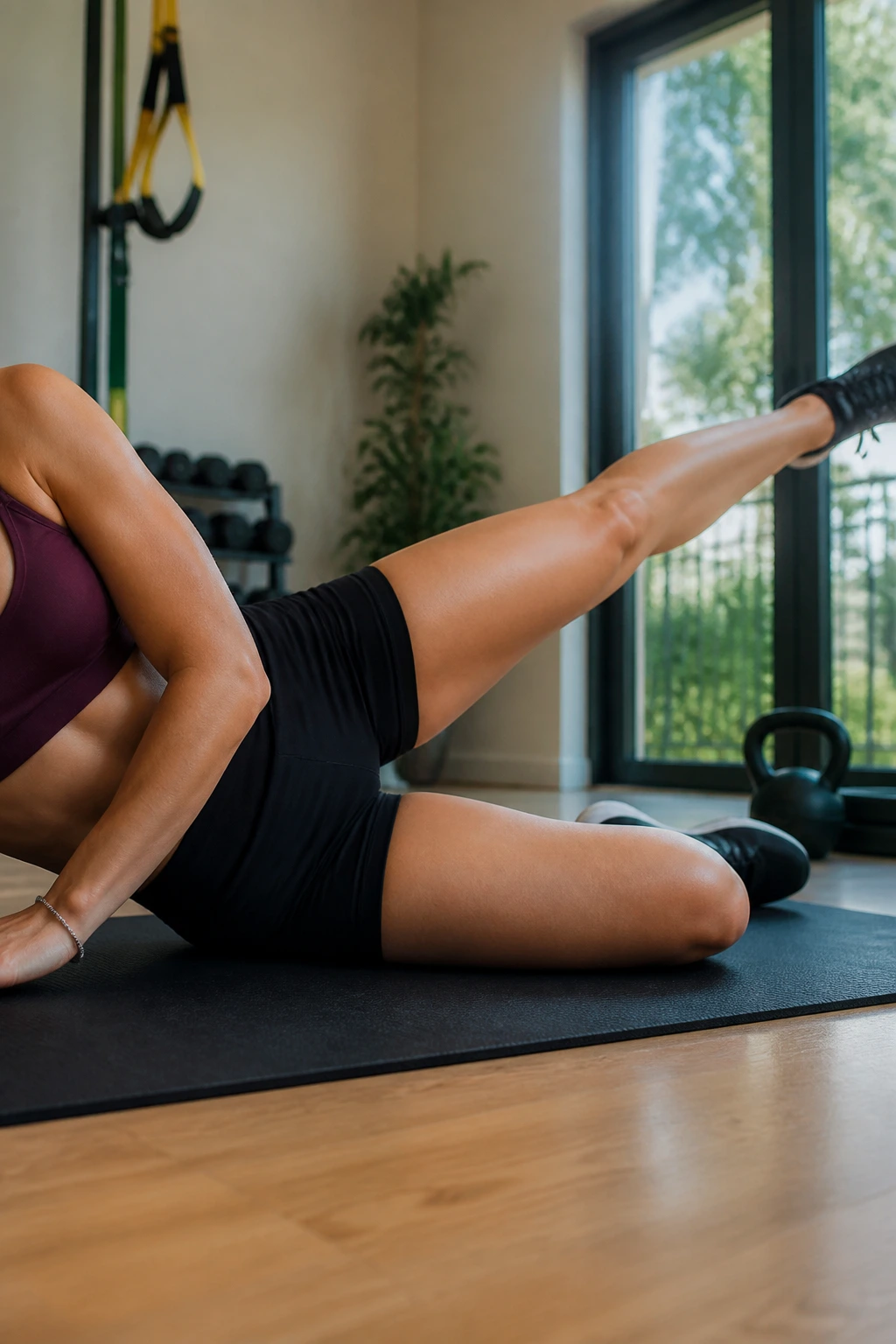
Outer thighs matter more than most people think. They help control the knee, steady the pelvis, and keep the leg from collapsing inward when you squat or lunge.
Lie on your side, stack your body, and lift the top leg with the heel leading slightly. Point the toes just a touch down if you want to keep the work out of the hip flexors. 15 to 25 reps per side with a slow lower works well, especially when you add a mini-band around the thighs or ankles.
The move should feel clean, not jerky. If you’re swinging the leg up, you’ve lost the point.
A little burn here goes a long way. It may look like a rehab drill, but I’d still keep it in a serious leg session.
16. Fire Hydrant for Hip and Outer Thigh Control
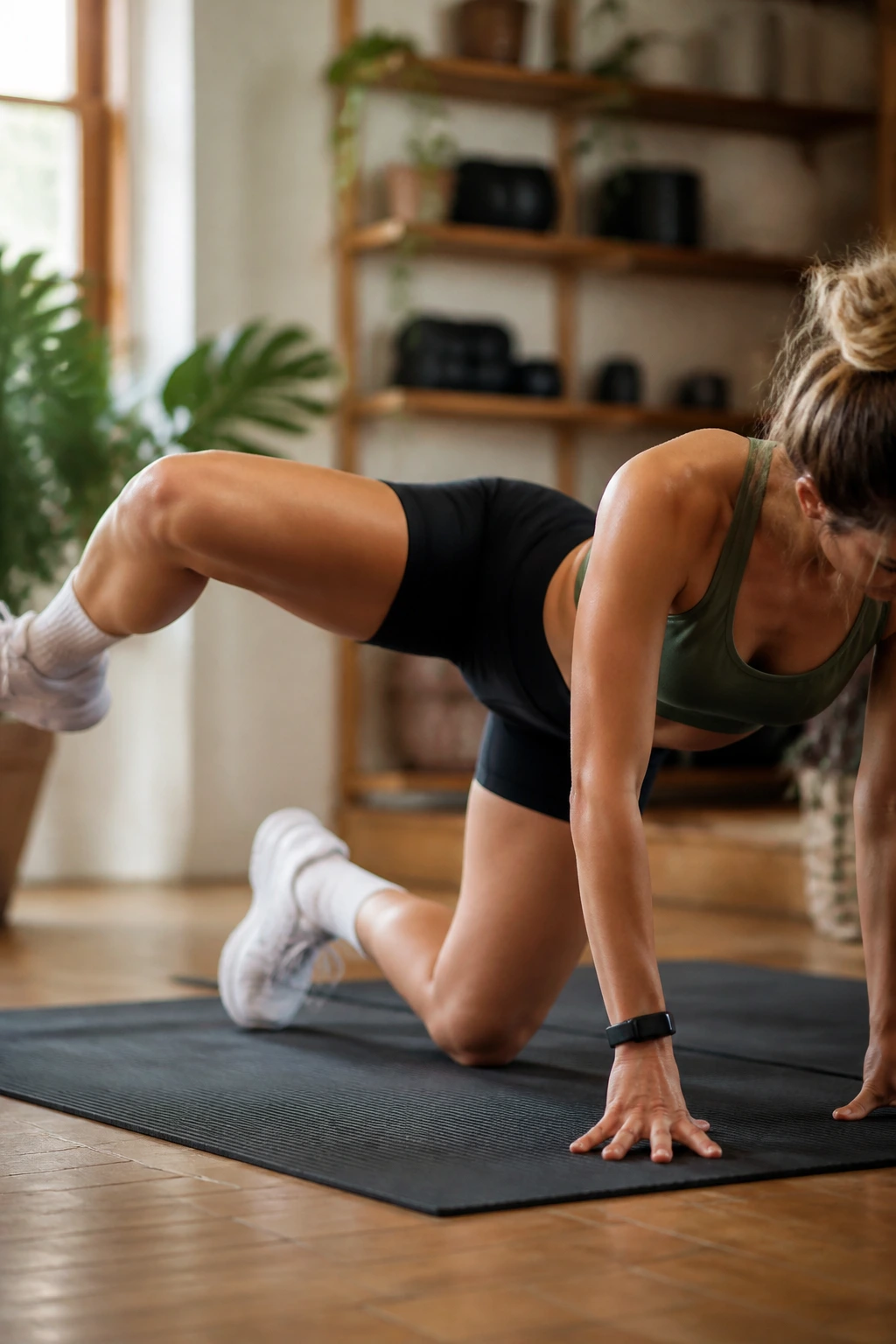
On all fours, lift one knee out to the side without rocking your hips. That’s the whole deal, and it’s more useful than it sounds.
The fire hydrant trains the outer hip to work without help from momentum. Keep the knee bent around 90 degrees, brace the core, and lift only as high as you can without twisting the pelvis. 12 to 15 reps per side is a good target, and a one-second pause at the top makes the move much tougher.
If your wrists get sore
Drop to your forearms or put your hands on a low bench. Same exercise. Better comfort.
The reason this works so well is simple: the hip has to stay stable while the leg moves away from the body. That’s the exact job people forget until they need it.
17. Donkey Kick for Glute and Hamstring Support
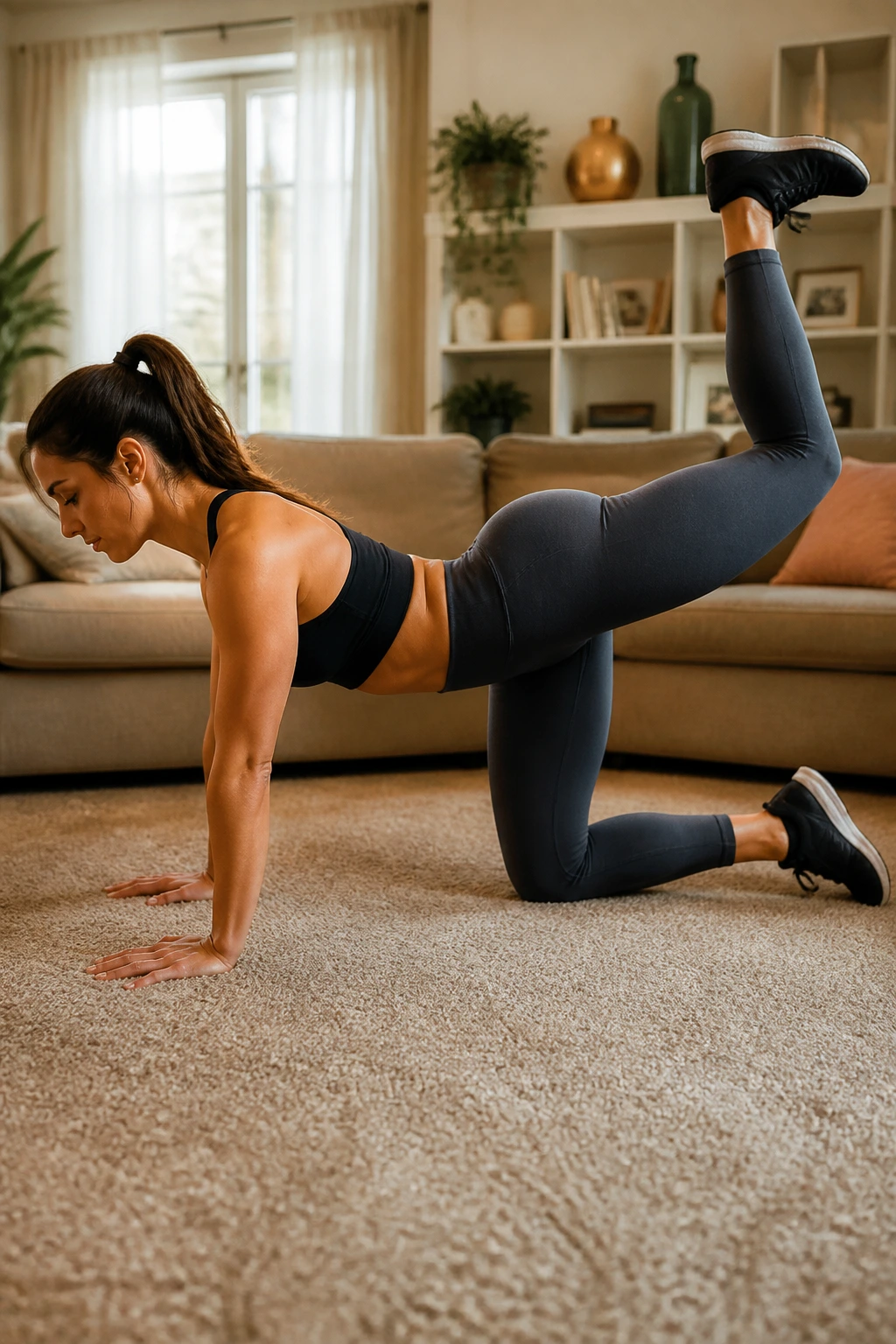
Same position, different line of force. The donkey kick drives the heel up and back, which makes the back side of the leg work while the torso stays quiet.
Start on all fours, brace the midsection, and lift one heel toward the ceiling without letting the lower back arch. The movement should come from the hip, not from a sway in the spine. Try 12 to 20 reps per side with a one-second squeeze at the top.
A lot of people kick too high and lose tension. Higher is not better here. A smaller, stricter rep does more for the thighs and glutes than a wild kick that throws the pelvis around.
This one pairs nicely with fire hydrants if you want a short all-fours section that fries the hips from two angles.
18. Split Squat Pulse for Time Under Tension
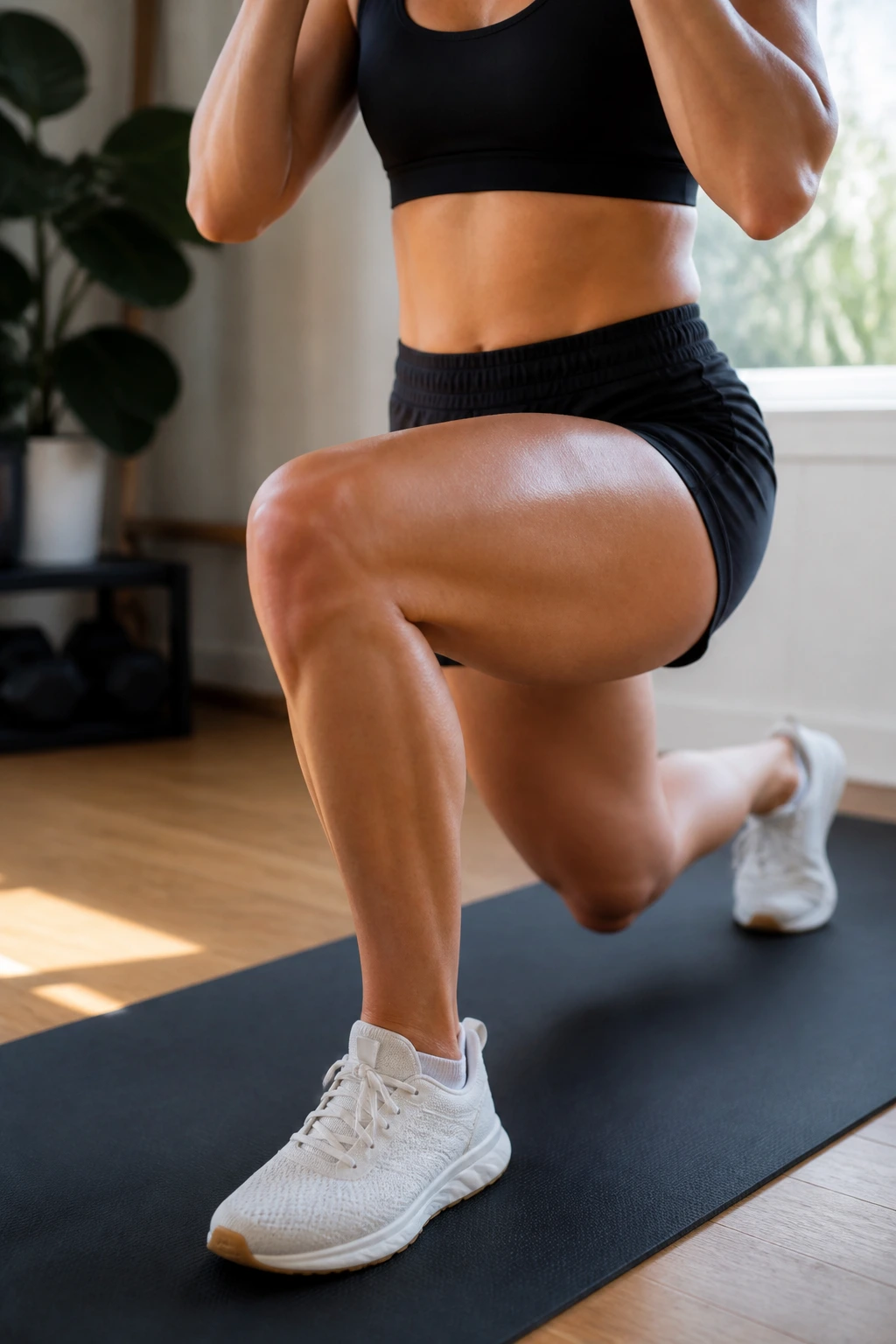
Once the split squat position is set, tiny pulses near the bottom create a nasty amount of time under tension. That is the trick here.
Set up like a regular split squat, lower into the working range, and pulse through a small range of motion — only 2 to 3 inches — for 15 to 25 reps or about 20 to 30 seconds. The burn comes on fast, especially in the front thigh.
Do not bounce. That turns the move sloppy and shifts stress to the knee. Keep the movement small, keep the torso steady, and own the bottom position.
This is a finisher, not a main event. Use it after your heavier standing work when you want the legs to complain a little.
19. Skater Lunge for Side-to-Side Power
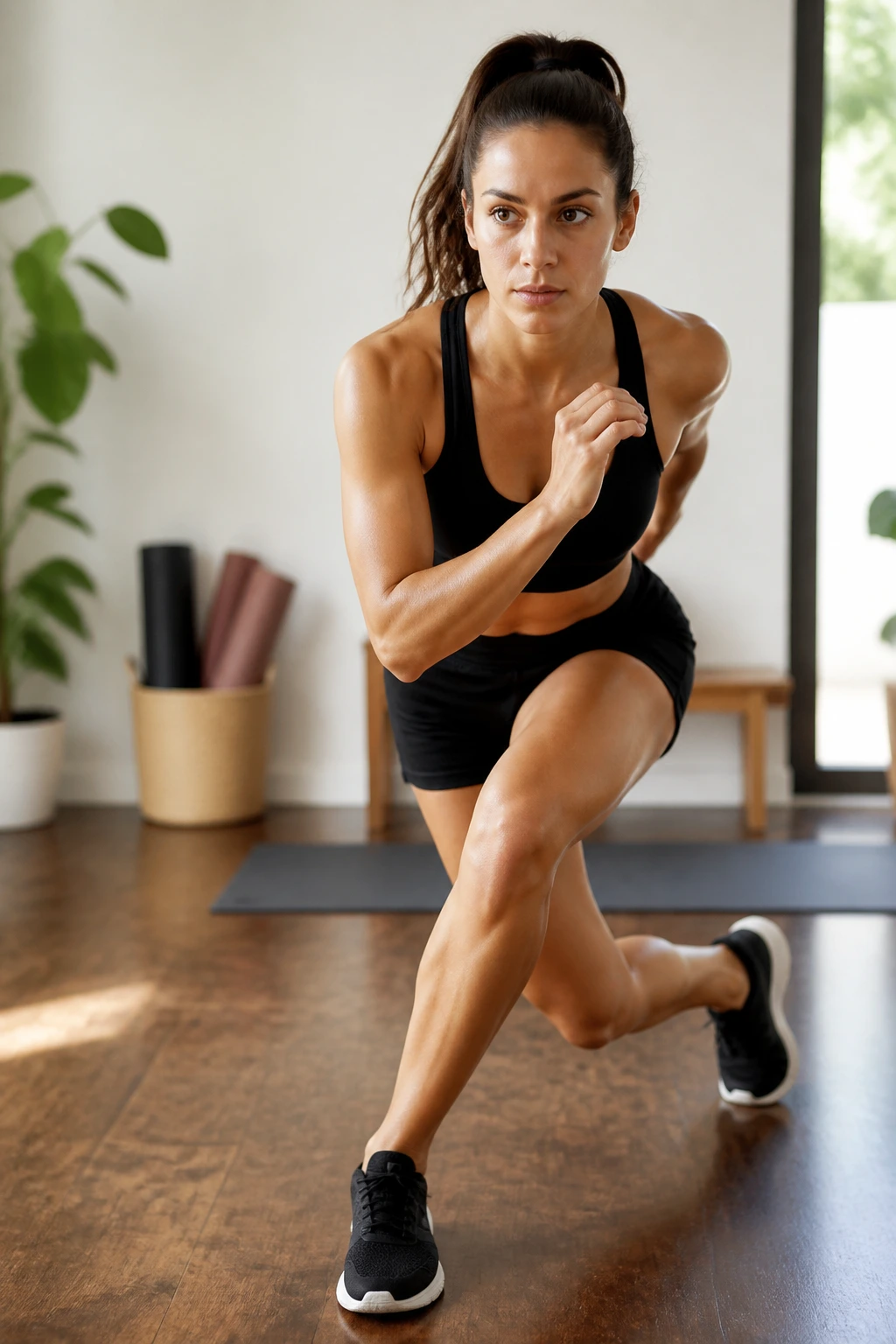
Side-to-side power work wakes up the whole leg. The skater lunge brings the thighs, hips, and balance system into the same conversation, which is useful if your home routine feels too straight-line and too predictable.
Step or hop to one side, land softly on one leg, and let the other leg reach behind you for balance. Keep the landing knee bent and lined up over the foot. You can make it low-impact by stepping instead of hopping, or turn it into a more athletic drill with a small hop. 30 to 45 seconds is plenty.
What to focus on
- Soft landings.
- Hips level.
- Chest slightly forward.
- Knee tracking over the middle toes.
If you want a move that feels like it wakes up the whole lower body in one shot, this is it. The side-to-side pattern also shows you fast where your weak side lives.
20. Mini-Band Lateral Walk for Outer Thigh and Hip Stability
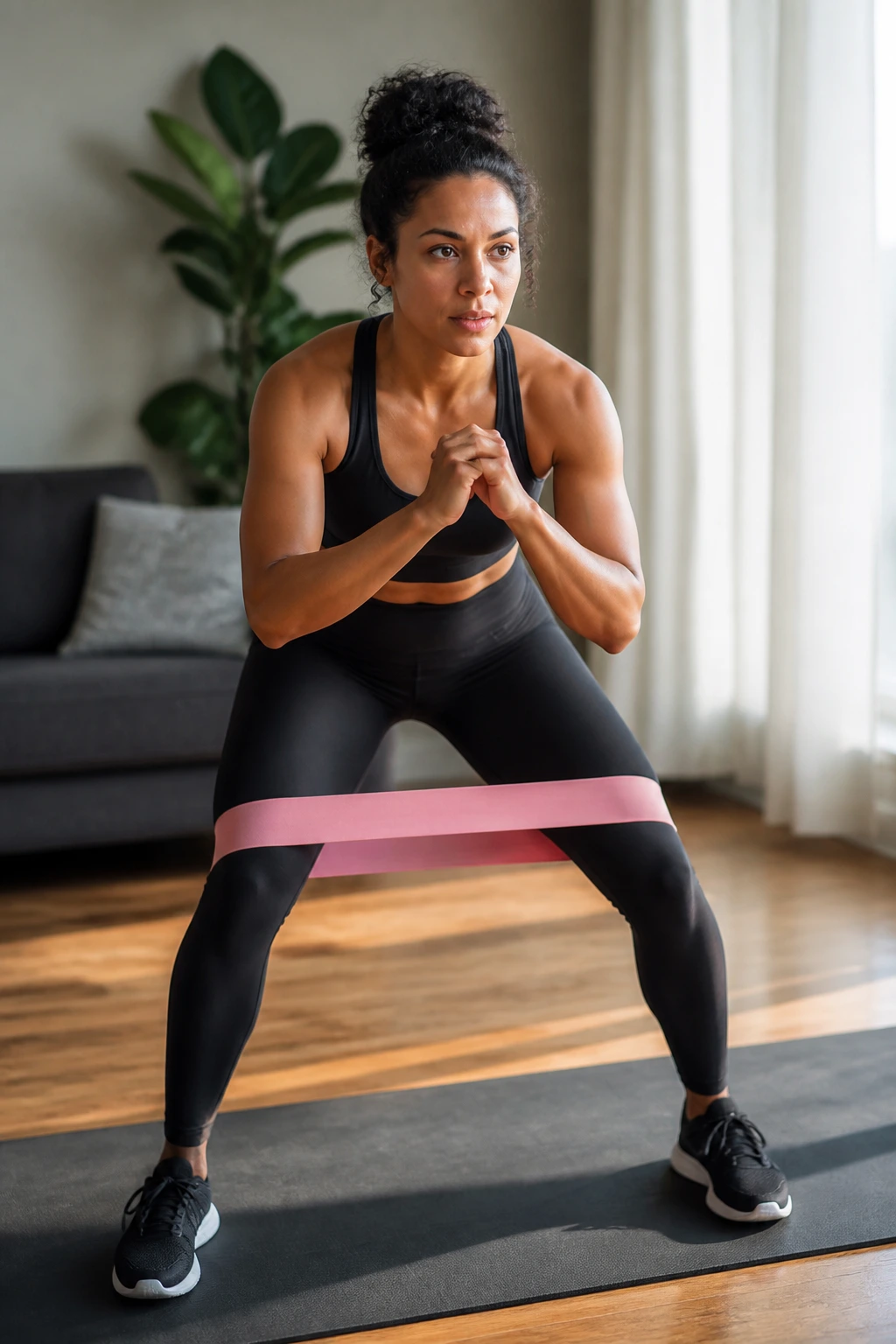
End with the move most people skip, then wonder why their knees cave in on squats. The mini-band lateral walk trains the outer thighs and hip stabilizers that keep the whole leg organized.
Place a mini-band above the knees for an easier version, or around the ankles for more challenge. Stay in a shallow squat, step sideways with control, and keep the feet from dragging together. Ten to 15 steps each way is enough to make the hips work. If you do not have a band, do the same slow side steps without it and focus on keeping tension through the outer hips.
Why it belongs at the end
By the time you reach this move, the legs are already warm, which means the smaller stabilizers have to show up and work harder. That is exactly what you want.
I like this one after lunges and squats because it ties the whole session together. The thighs feel more organized when the outer hip has done its share.
Final Thoughts
A good thigh session does not need to feel like punishment from start to finish. It needs a mix of squat patterns, lunges, hinges, and a few smaller moves that catch the parts people usually ignore.
The easiest mistake is doing twenty random reps of one exercise and calling it a plan. Better to pick 5 to 7 moves and give them real work: clean form, slow lowering, and one or two hard sets near the end.
If you want firmer-looking legs, keep the routine honest. Add a little depth, a little load, or a few more reps over time, and the legs will answer. Start with the moves that fit your body best, and let the rest earn their place.
