



Leg day ideas for stronger more sculpted legs usually work best when they stop pretending one exercise can do the whole job. A pair of heavy squats, a hinge, a single-leg move, and one honest finisher will do more for your quads, hamstrings, glutes, and calves than two hours of random machine hopping.
The legs that look trained tend to be trained from more than one angle. You need deep knee bend for quad growth, loaded hip extension for the glutes, lengthened hamstring work, and at least some direct calf work because calves are stubborn little things and they do not care about your excuses.
Sweat is not the goal.
A smart lower-body session can be heavy, awkward, controlled, fast, or brutally simple. It can be built for strength, shape, athletic carryover, or all three at once if you’re willing to be a little less dramatic and a little more specific about what each movement is doing. The ideas below are the ones that keep showing up because they earn their place.
1. Back Squat Leg Day Strength Block
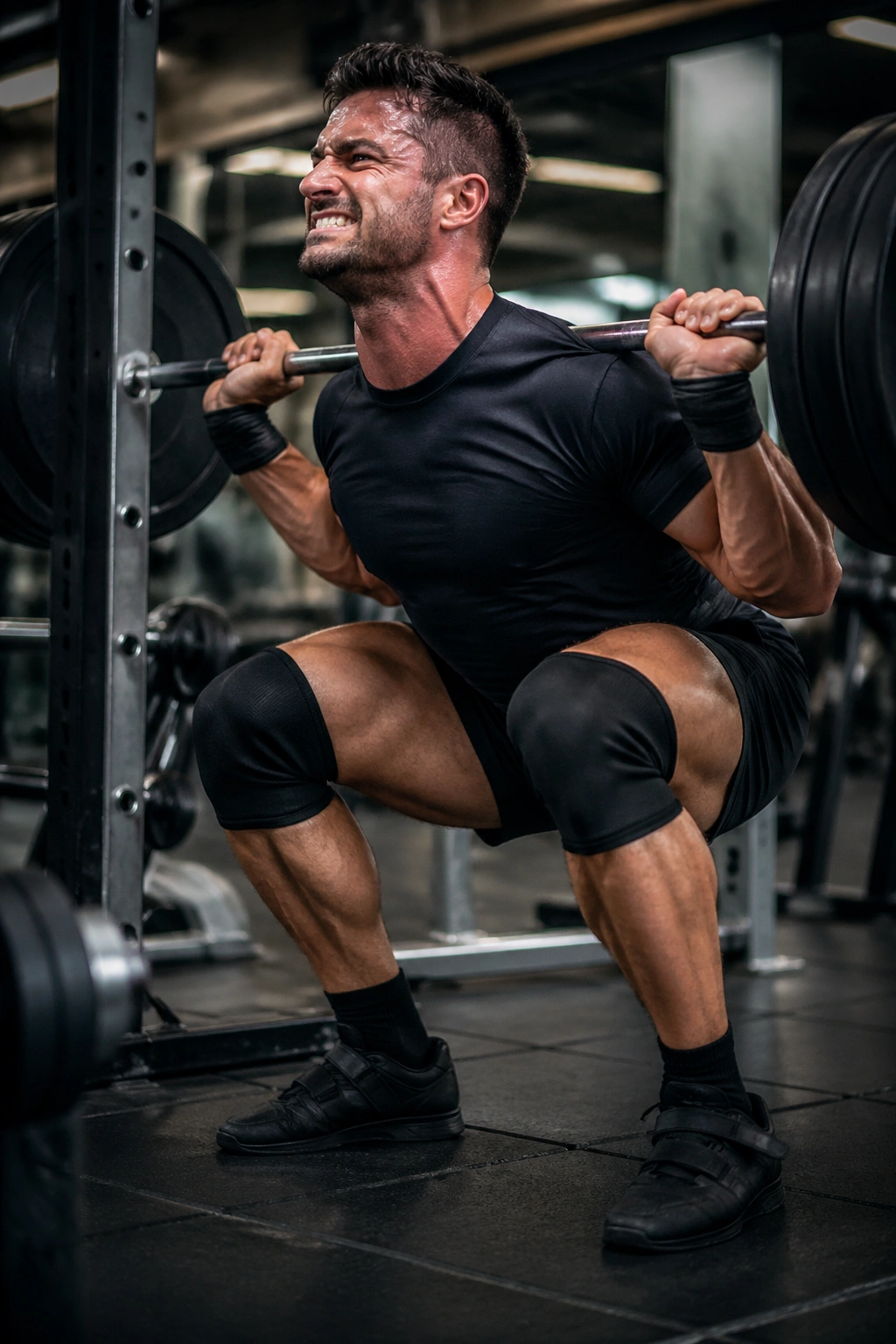
If your leg day only has room for one heavy lift, this is the one most people should keep. The back squat loads the quads, glutes, adductors, and trunk at the same time, which is why it has survived every fitness fad that tried to bury it.
Why It Earns a Slot
Back squats are useful because they let you load the lower body in a way that’s hard to fake. You can’t coast through them. Your torso has to stay braced, your feet have to stay planted, and your depth has to be honest enough to matter.
A solid working range is 3 to 5 sets of 3 to 6 reps with 2 to 3 minutes of rest. That’s enough work to build strength without turning the session into a grind-fest.
- Stance: roughly shoulder width, or a touch wider if your hips like it
- Depth: as low as you can go while keeping your back position clean
- Cue: take a deep breath before each rep and lock the ribs down
- Best use: strength, size, and full-leg development
One sharp rep done well beats five sloppy ones. That sounds obvious, but people still try to rush the set and wonder why their knees and lower back feel cooked.
2. Front Squat for Quads That Pop
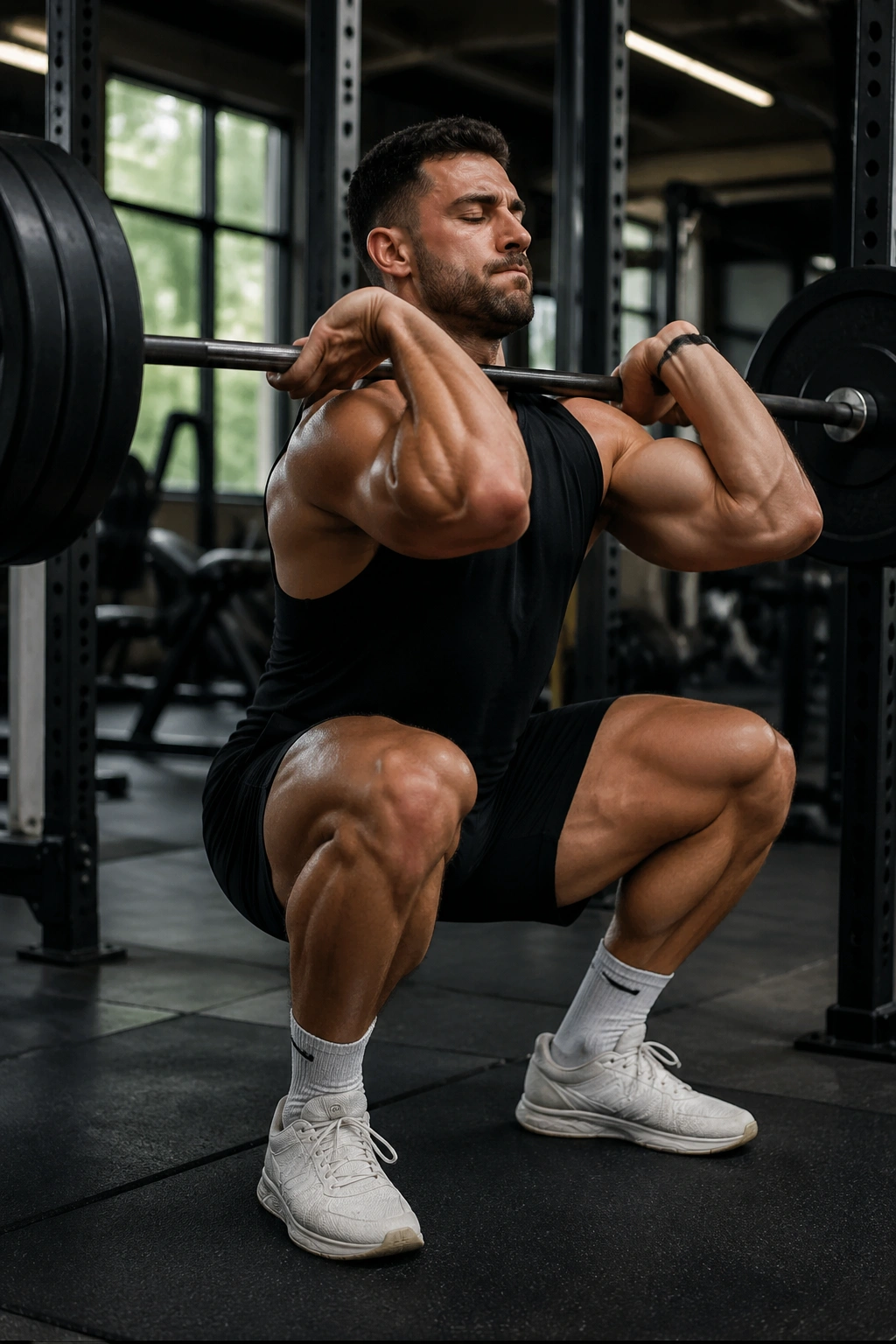
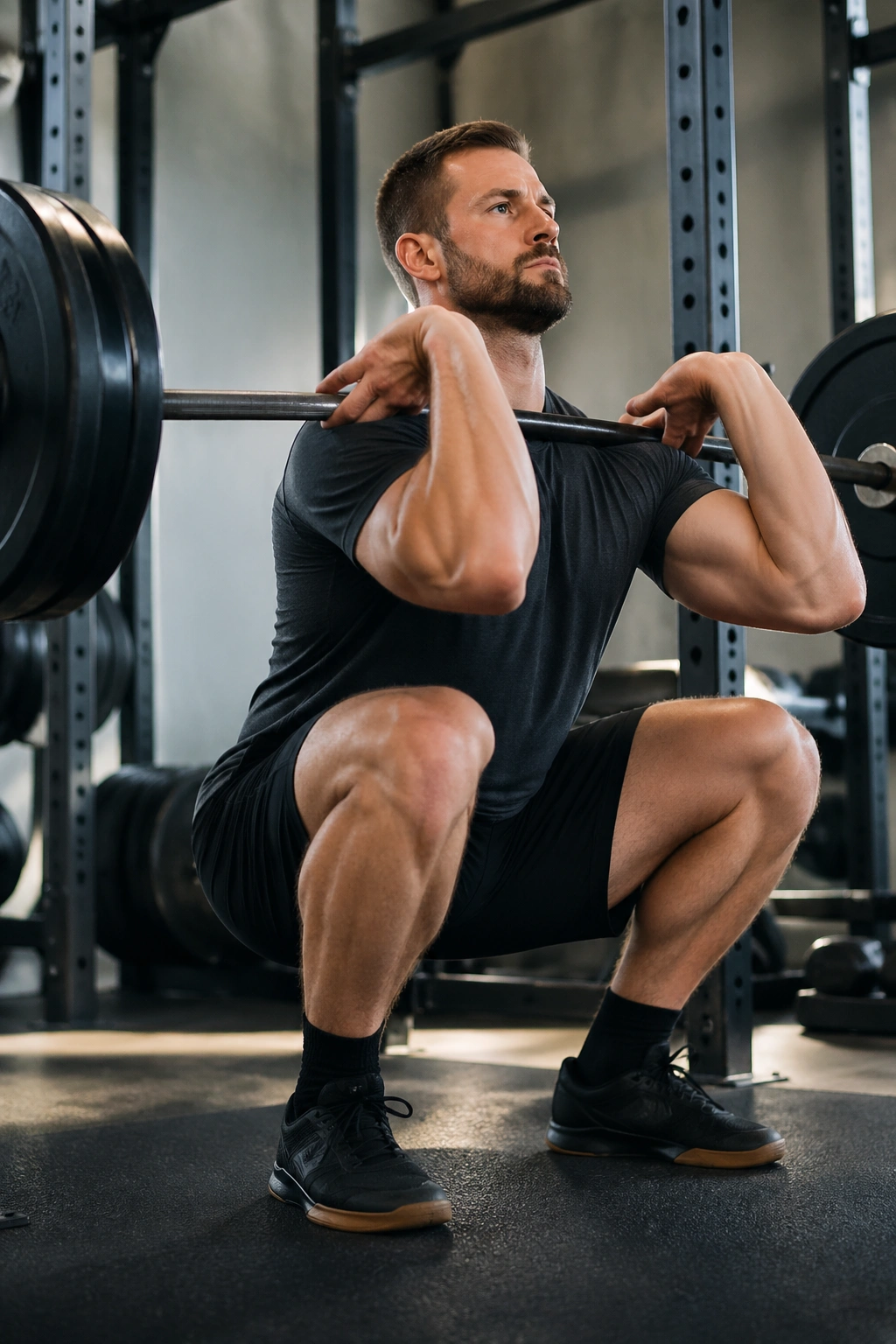
Want more quad work without turning every set into a hip-dominant grind? Front squats put the load in front of you, and that changes the whole conversation. The torso stays more upright, the knees travel forward more naturally, and the quads get a bigger share of the work.
The front rack position can be annoying at first. Fine. That annoyance is part of the package. You can use clean grip, crossed arms, or straps looped around the bar if wrist mobility is the thing that’s limiting you.
A good setup is 3 to 4 sets of 4 to 8 reps. Keep the elbows high, breathe into the upper back, and let the knees move. If the bar crashes forward, the set is over.
Front squats are not forgiving. That’s why they’re good.
They fit best on a day when you want your quads to do the talking. Pair them with a hinge or a machine movement, and you’ll have a lower-body session that covers both strength and shape without needing fifteen exercises to say very little.
3. Romanian Deadlift for Hamstrings That Carry
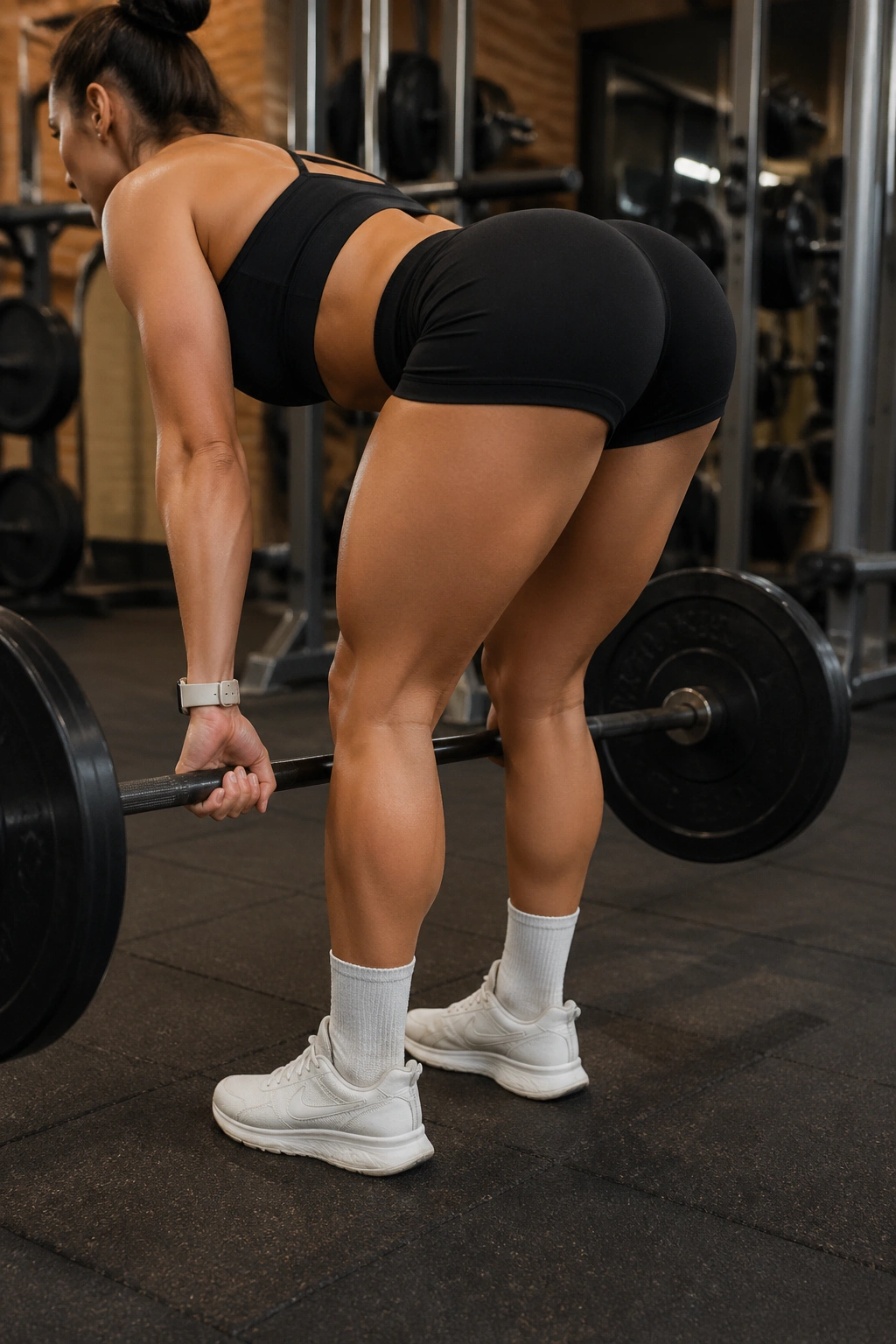
Why do Romanian deadlifts show up in so many good leg programs? Because they train the hamstrings where they usually need the most help: under stretch, with the hips moving back and the spine staying long.
How to Use It
Start with a soft bend in the knees. Push the hips back. Lower the bar or dumbbells until you feel a strong hamstring stretch and your torso is near parallel or just above it. Then come back up by driving the hips forward, not by yanking with the lower back.
- Reps: 6 to 10 works well for most lifters
- Tempo: 2 to 3 seconds on the way down
- Stop point: the moment your back wants to round
- Best pairing: squats, split squats, or leg curls
This is one of those lifts that looks simple and punishes bad patience. Go too low and you lose tension. Go too fast and you turn it into a shrugging contest with your lumbar spine.
Use RDLs when you want hamstring thickness, glute tie-in work, and a hinge pattern that actually teaches control. They’re especially good on weeks when heavy deadlifts feel like too much but you still want real posterior-chain work.
4. Bulgarian Split Squats for Uneven Legs
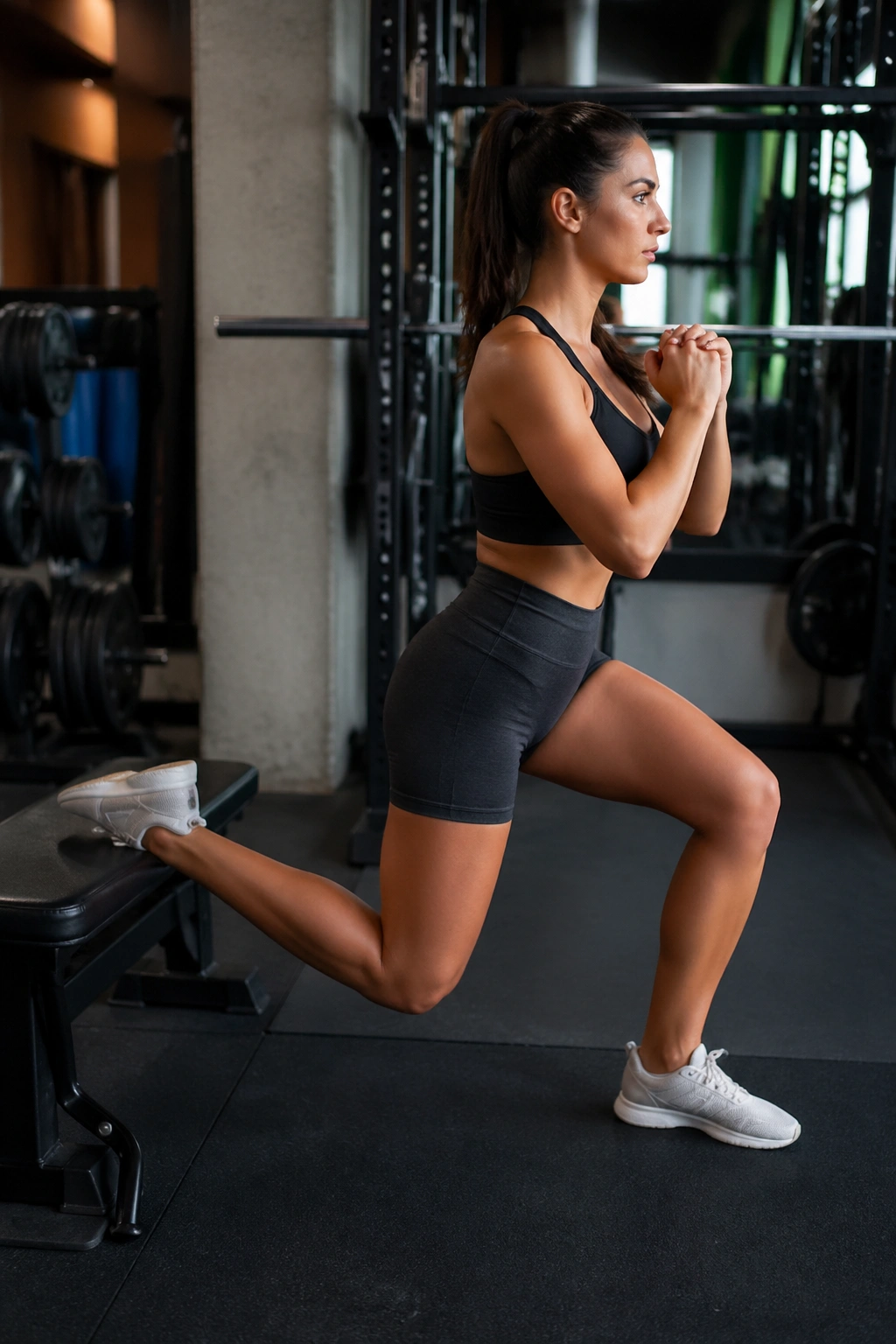
One dumbbell in each hand, one rear foot on a bench, and suddenly your balance tells on you. That’s Bulgarian split squats in a nutshell. They’re awkward at first, then brutally useful, then weirdly addictive once you stop fighting them.
The front leg does nearly all the work, which is exactly why this movement deserves space on a serious lower-body day. It exposes side-to-side differences fast, and it’s excellent for building quads and glutes without needing huge loads.
What to Watch For
- Keep the front foot far enough forward that your heel stays down
- Lean the torso slightly forward if you want more glute work
- Stay more upright if you want more quad emphasis
- Use a stable bench or box, not a wobbly one
A good target is 3 to 4 sets of 8 to 12 reps per leg. Don’t chase load too early. Chase balance, depth, and a smooth path.
There’s a reason people hate these and keep them in their program anyway. They work.
5. Hip Thrusts for Glute Shape and Lockout Power
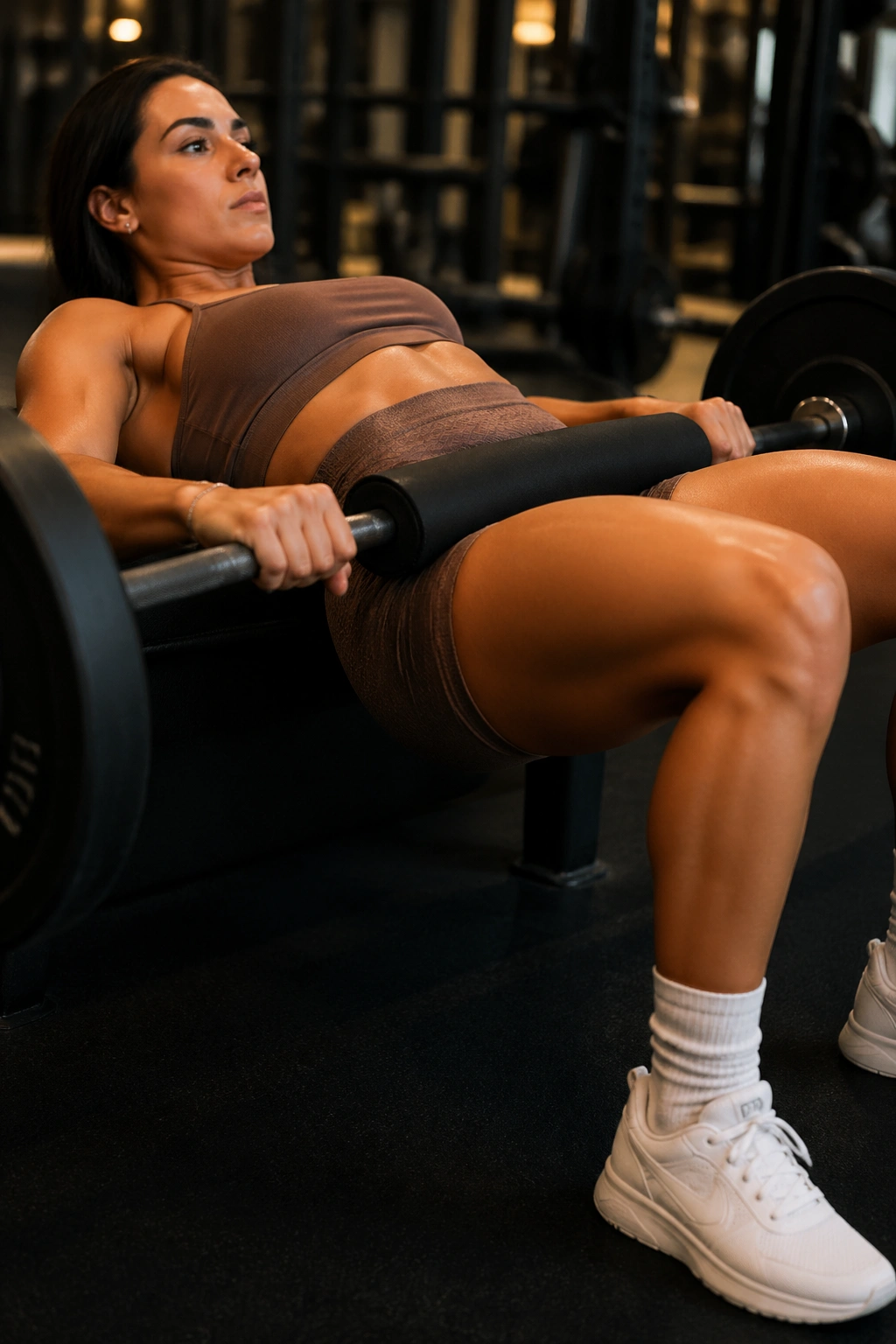
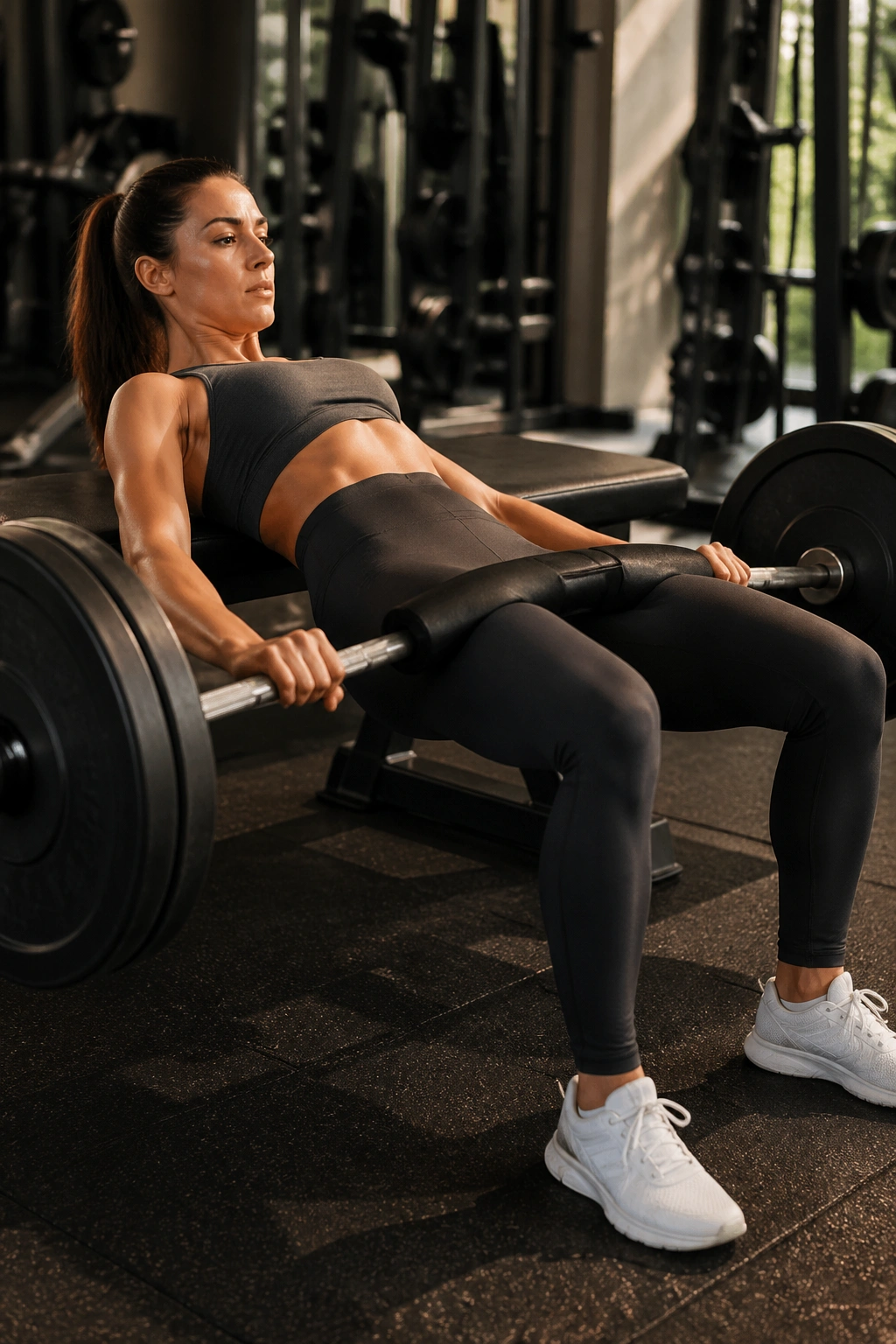
Hip thrusts are not flashy, and that’s part of the appeal. They load the glutes hard at the top of the movement, which makes them one of the cleanest ways to train hip extension without asking your lower back to do all the talking.
The setup matters more than people want to admit. Your upper back should rest on the bench, the bar should sit in the crease of the hips with a pad if needed, and your chin should stay tucked so you don’t turn the top of the rep into a backbend. At lockout, the ribs stay down and the pelvis stays controlled.
A lot of lifters overdo the top position. They arch hard, flare the ribs, and think that counts as a better contraction. It doesn’t. It just moves the stress where it doesn’t belong.
A clean hip thrust usually looks best for 3 to 4 sets of 6 to 12 reps, with a one-second squeeze at the top. If the glutes aren’t doing the work, the load is probably too heavy or the setup is off.
Hip thrusts also play nicely with deadlifts and squats because they train the glutes in a shorter range with less spinal fatigue. That makes them a smart choice on days when you want hard training without wrecking your back for two days straight.
6. Leg Press 1.5 Reps for Brutal Quad Volume
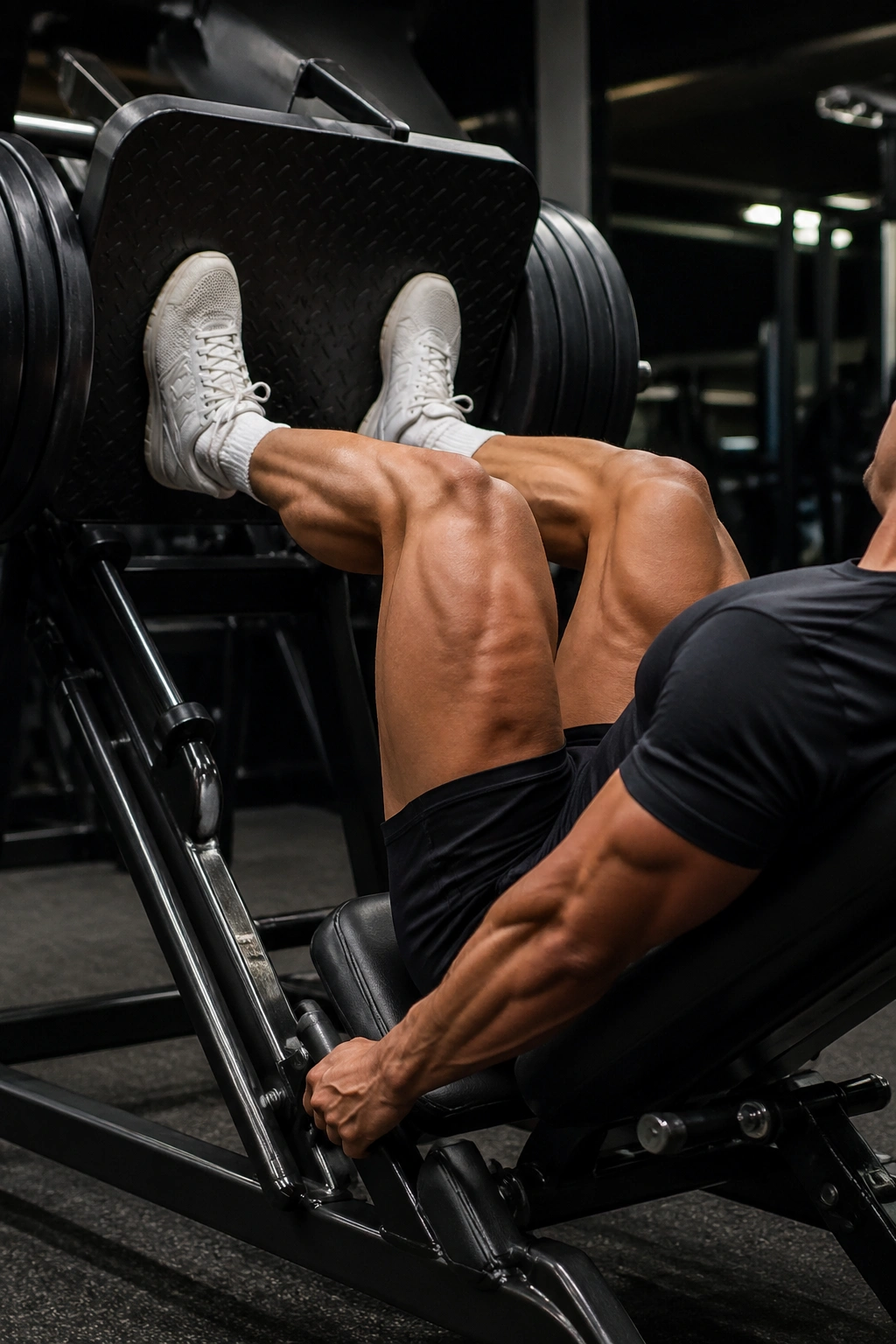
Unlike barbell squats, the leg press lets you push close to failure with less balance and less upper-body limitation. That makes it a very useful tool when the goal is simple: make the quads do a ridiculous amount of work.
The 1.5 rep method is exactly what it sounds like. Lower the sled, press halfway up, bring it back down, then press all the way up. One full cycle counts as one rep. It sounds silly until your legs start shaking.
What Makes It Different
This style keeps tension on the quads for longer than standard reps. It also removes a bit of the resting point you get at the top, so the muscles never get much of a break.
- Rep range: 8 to 12
- Foot placement: mid-platform for balanced quad work
- Range: deep enough to bend the knees, but not so deep your pelvis tucks hard
- Use case: hypertrophy without needing maximal load
If your knees like controlled movement and your legs need volume, this is a strong option. If your lower back hates deep squats on a given day, even better.
I like it as a second or third movement in a leg session, after the main free-weight lift has already done its job.
7. Walking Lunges for Long Strides and Work Capacity
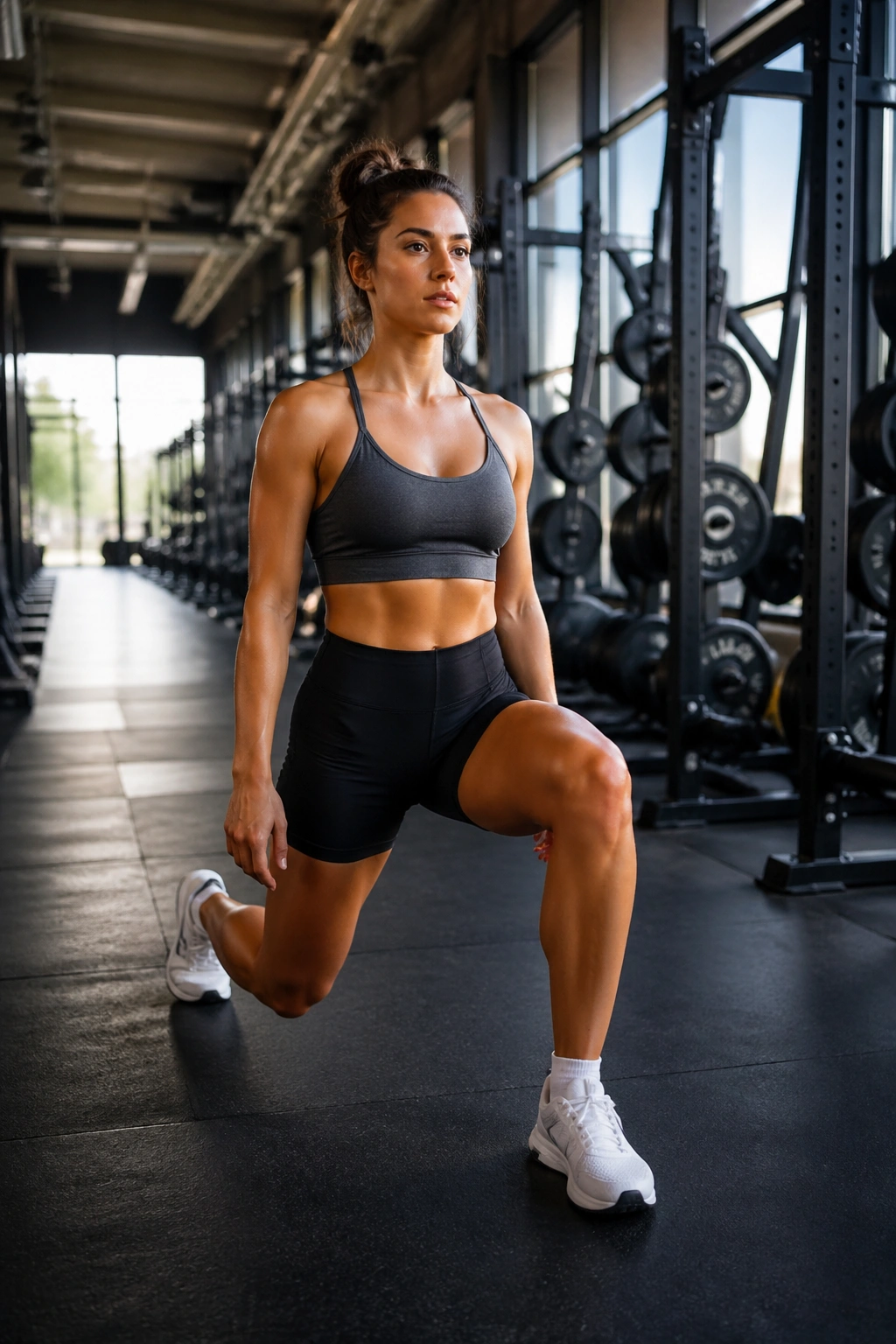
Walking lunges make a leg day feel longer than it looks on paper. That’s because they do two things at once: they challenge each leg independently, and they force you to keep moving while the muscles are already complaining.
Take a long enough stride and you’ll get more glutes and adductors. Shorten it a little and the quads take over. There’s no magic here, just leverage and body position doing what they always do.
How to Get the Most From It
Use 20 to 40 total steps with dumbbells or a barbell if you’re confident with your balance. Keep the torso tall, plant the front heel, and avoid bouncing off the back leg. That back knee is there for control, not for cheating the rep.
Walking lunges are great after heavier work because they’re demanding without requiring huge loads. They also expose sloppy side-to-side mechanics fast, which can be humbling in the best way.
A lot of people rush these and turn them into a lunge-and-fall. Slow down. You’ll feel the difference immediately.
8. Step-Ups for Glute Drive and Balance
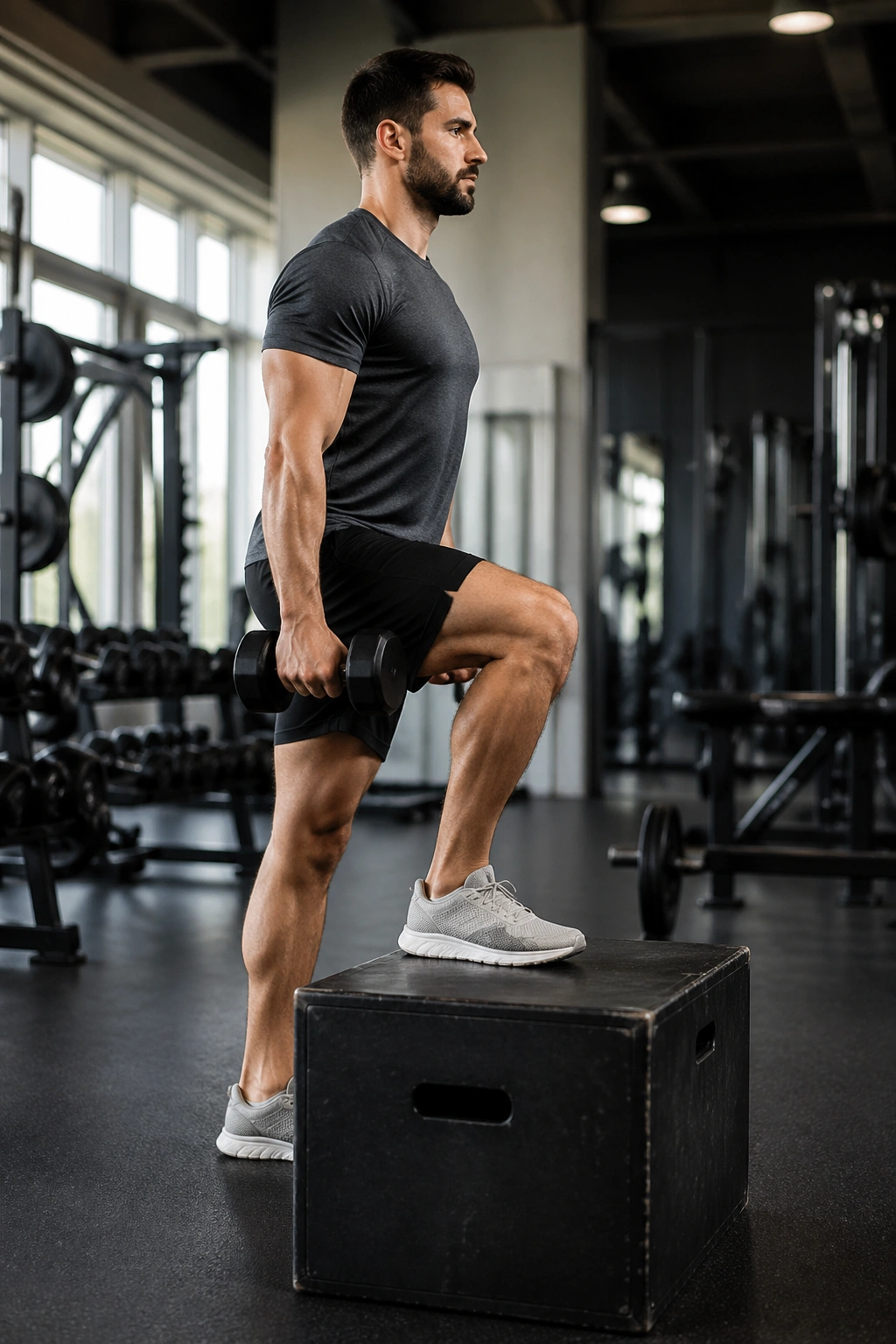
A box that’s around knee height or a little lower can tell you a lot about your lower body very quickly. If your glute isn’t helping on step-ups, you’ll know it by the awkward push-off and the slight wobble at the top.
The movement is simple: put one foot on the box, drive through the full foot, stand tall, and lower under control. Don’t make the back leg do a hidden jump. That ruins the point.
Step-ups are especially good for people who want better single-leg strength without the deep soreness that sometimes comes with lunges. They’re also easier to dose in a program because you can make them harder by changing the box height, adding load, or slowing the descent.
Use 3 to 4 sets of 8 to 10 reps per side. If the box is too high, your hip will fold and the rep will turn into a circus act. If it’s too low, the glute demand drops off.
Plain and useful. That’s the whole charm.
9. Hack Squats for Deep Quad Work
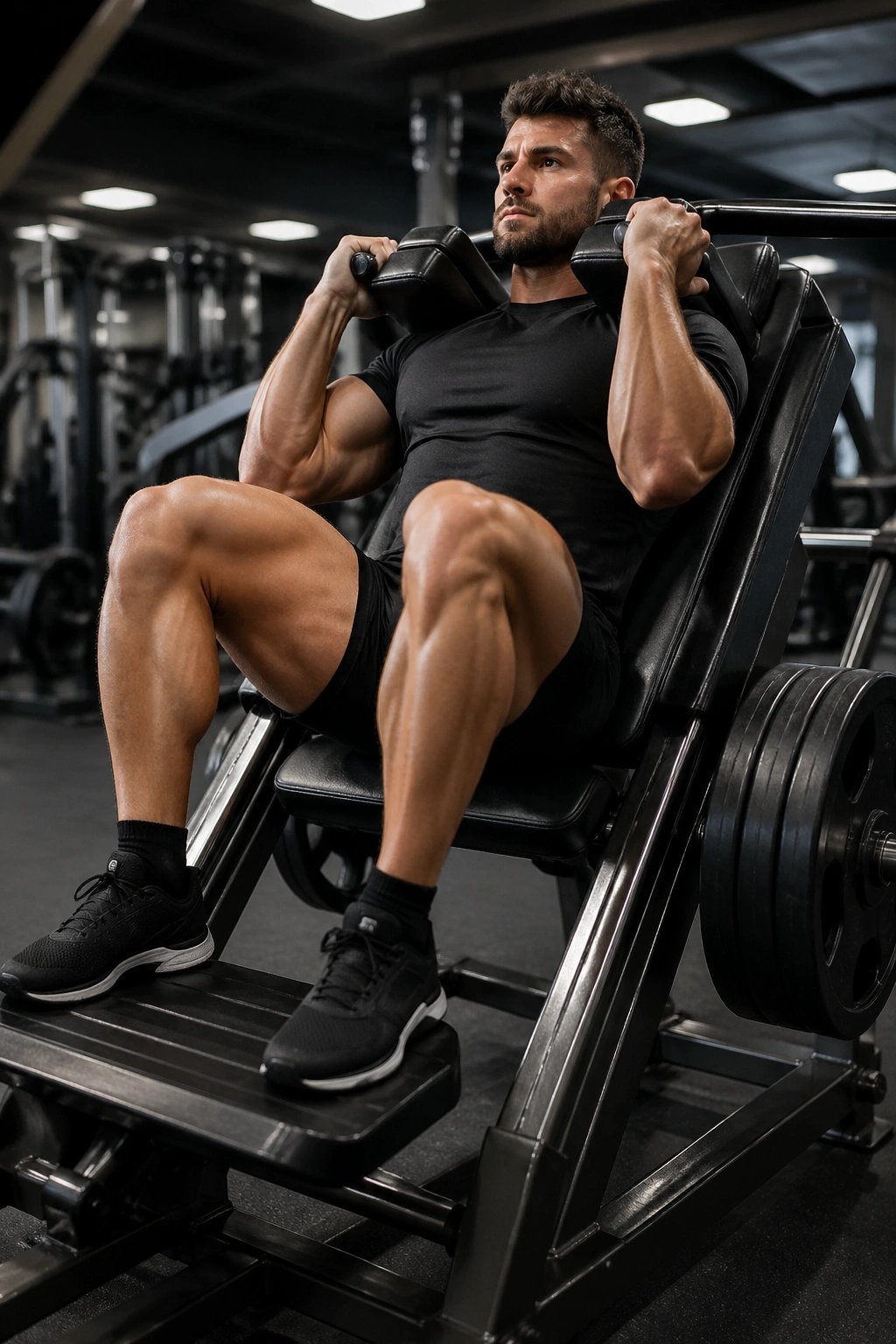
Why do hack squats hit the quads so fast? Because the machine takes balance out of the equation and lets you chase knee bend, depth, and leg tension without much upper-body interference. That’s a nice deal when the goal is quad growth.
How to Use It
Keep your back and hips pinned to the pad. Place your feet mid-platform if you want a balanced quad bias, or a touch lower if your knees tolerate it and you want even more forward knee travel. Descend under control and press without locking out so hard that the tension disappears.
- Sets: 3 to 4
- Reps: 8 to 15
- Rest: 90 seconds to 2 minutes
- Cue: drive the knees in the same direction as the toes
Hack squats shine when you want to push volume without needing to stabilize a barbell. They’re not a replacement for free squats, but they’re a very good companion. A session with front squats and hack squats can light up the quads in a way that feels almost unfair.
If your gym has one that fits your body well, use it.
10. Sumo Deadlifts for Hips, Adductors, and Glutes
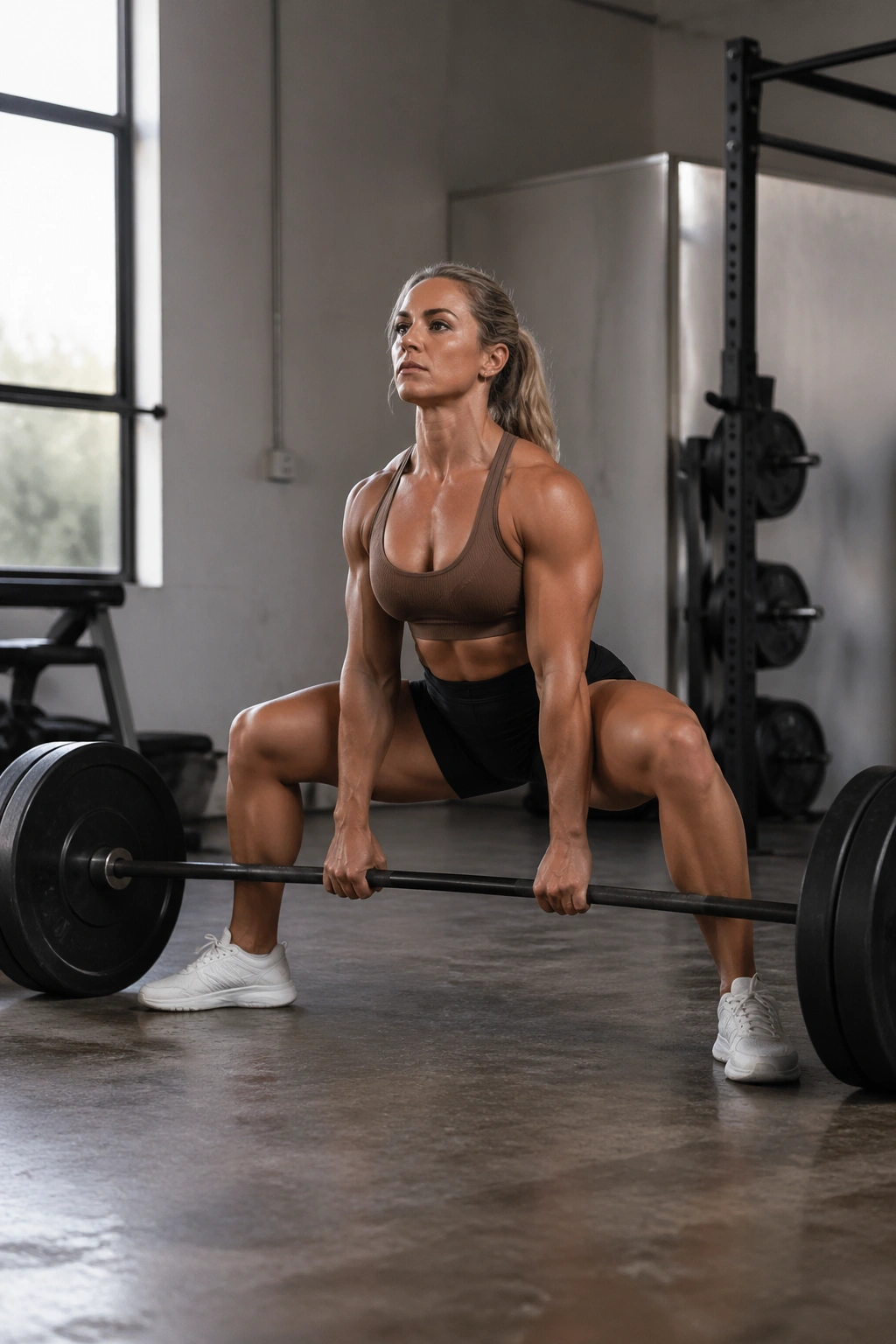
A wide stance changes the whole pull. Sumo deadlifts shorten the bar path a bit, involve the adductors more directly, and often let the torso stay more upright than a conventional deadlift. That makes them a useful lower-body builder for people who want a different kind of hinge.
The setup matters. Feet wide, toes turned out, knees tracking over the toes, chest tall, and the bar close enough that you don’t reach for it. Pull the slack out before the plates leave the floor. That first inch should feel deliberate, not yanked.
Some lifters feel sumo deadlifts in the inner thighs more than anything else. Good. That’s part of the job. If your hips are tight, or your stance is too wide for your anatomy, the lift can feel awkward fast — so adjust the width before blaming the movement.
Use them for 3 to 5 sets of 3 to 6 reps if strength is the goal, or a little higher if you’re using them as a hypertrophy hinge. They pair well with hamstring curls and hip thrusts because the three together cover a lot of ground.
11. Leg Curls That Finish the Hamstrings Properly
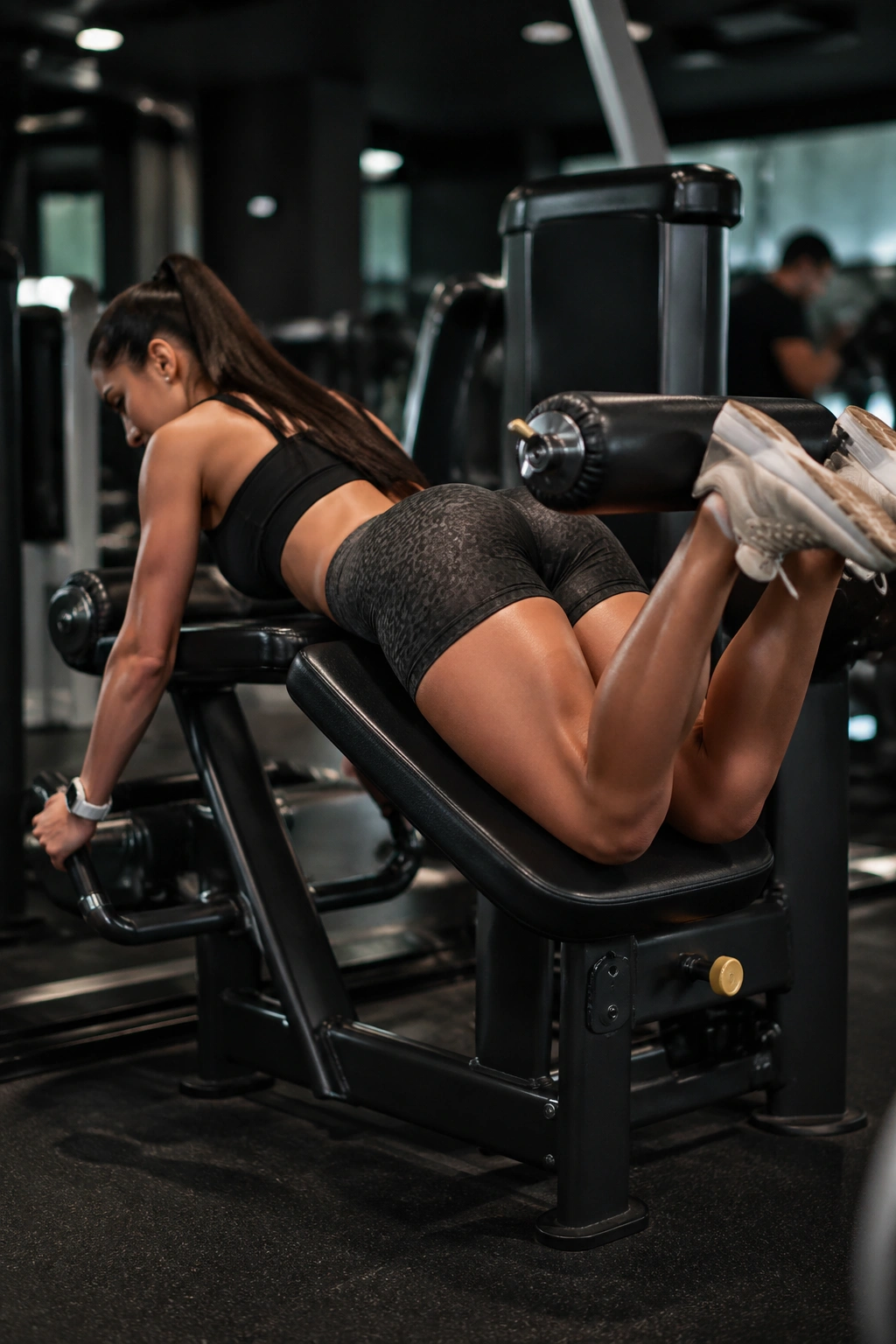
Deadlifts are not enough for hamstrings. I know people love to pretend they are, but hamstrings do more than extend the hip, and leg curls cover the knee-flexion side of the job.
Seated curls are often the one I’d pick first because the hamstrings are stretched at the hip while they work at the knee. That longer position can feel ugly in the best possible way. Lying curls are fine too, especially if that machine fits your body better or your gym doesn’t have a good seated setup.
A good leg curl set should feel smooth on the way down and hard at the squeeze. Don’t rush through a short range and call it done. Let the knees bend all the way, then lower under control for 10 to 15 reps.
There’s also a quiet benefit here that gets ignored: leg curls can help balance out all the knee-dominant work people do on leg day. Squats and presses are great. Curls keep the back side honest.
I like these near the end of a session, when the big lifts are finished and all that’s left is to make the hamstrings complain a little more.
12. A Quad-Focused Leg Day
A quad-focused leg day is what you use when you want to emphasize front-of-thigh growth without throwing the rest of the body out of balance. It’s not about neglecting glutes or hamstrings. It’s about giving the quads the first, best, and freshest work of the session.
The structure usually looks like this: one squat pattern, one machine press or hack squat, one isolation move, and one calf movement. That’s enough. You do not need six versions of the same pain.
A Simple Order That Works
- Front squat or back squat: 3 to 5 sets of 4 to 6 reps
- Hack squat or leg press: 3 to 4 sets of 8 to 12 reps
- Leg extensions: 2 to 4 sets of 12 to 15 reps
- Standing calves: 3 to 4 sets of 10 to 15 reps
This kind of day suits lifters who already hinge a lot on other training days, or anyone whose legs grow better from knee-dominant work. If your quads lag behind your glutes, this is the kind of session that should live in your program.
You’ll know it’s working when walking downstairs feels oddly specific in the front of the thigh. That’s the sensation you pay for.
13. A Glute-Biased Leg Day
A glute-biased leg day is not just hip thrusts until you get bored. That’s lazy programming dressed up as strategy. The glutes need hip extension, yes, but they also need work in stretched positions and a little help from the muscles that keep the pelvis steady.
Start with a hinge or a thrust, then add a split squat or step-up with a longer stride, and finish with abduction work. That combination hits the glute max and glute med without making the session feel like a one-note machine circuit.
Why Glutes Need More Than Thrusts
Hip thrusts train the glutes hardest near the top. Split squats and RDLs load them in a longer range. Abduction work helps with the side of the hip — the part that stabilizes your pelvis when you walk, run, or climb stairs.
- Hip thrusts: 4 sets of 6 to 10 reps
- Romanian deadlifts: 3 sets of 6 to 8 reps
- Long-stride split squats: 3 sets of 8 to 10 reps per side
- Cable abductions or band walks: 2 to 3 sets of 15 to 20 reps
This is one of the best leg day ideas for people who want shape and strength at the same time. The glutes respond well to being trained from multiple angles, and they usually look better when they’re not only getting short-range work.
14. Tempo and Pause Squats That Force Better Positions
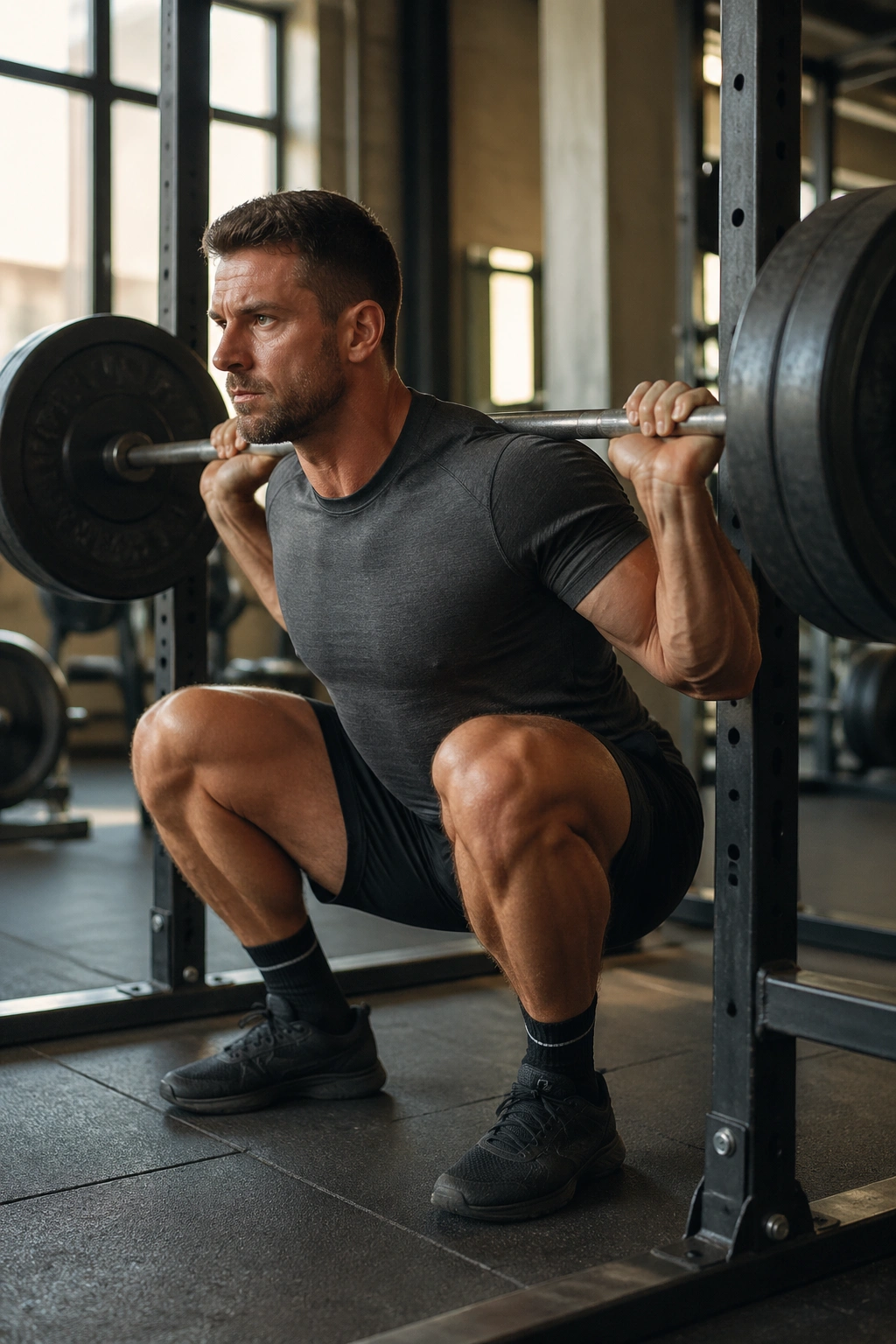
A slower squat can be harder than a heavier one. That’s not a joke. Taking three seconds to descend and pausing for two seconds in the bottom position strips out bounce, momentum, and sloppy positioning.
Tempo squats are useful because they expose the parts of the lift people usually rush past. The bottom stop makes you own the hole. The slow lower makes you keep tension instead of dropping like a sack of potatoes.
Use a load that feels moderate, not heroic. If the bar speed gets ugly, the point is gone. A good starting point is 3 to 4 sets of 4 to 6 reps with a 3-0-2 or 3-2-1 tempo depending on how nasty you want it to be.
These squats are especially useful for lifters who bounce off the bottom too hard, lose brace under load, or want a way to build confidence in deep positions. They also make lighter weights feel useful again, which is a nice change of pace.
No ego needed. Plenty of burn.
15. Single-Leg RDLs for Balance and Hamstrings
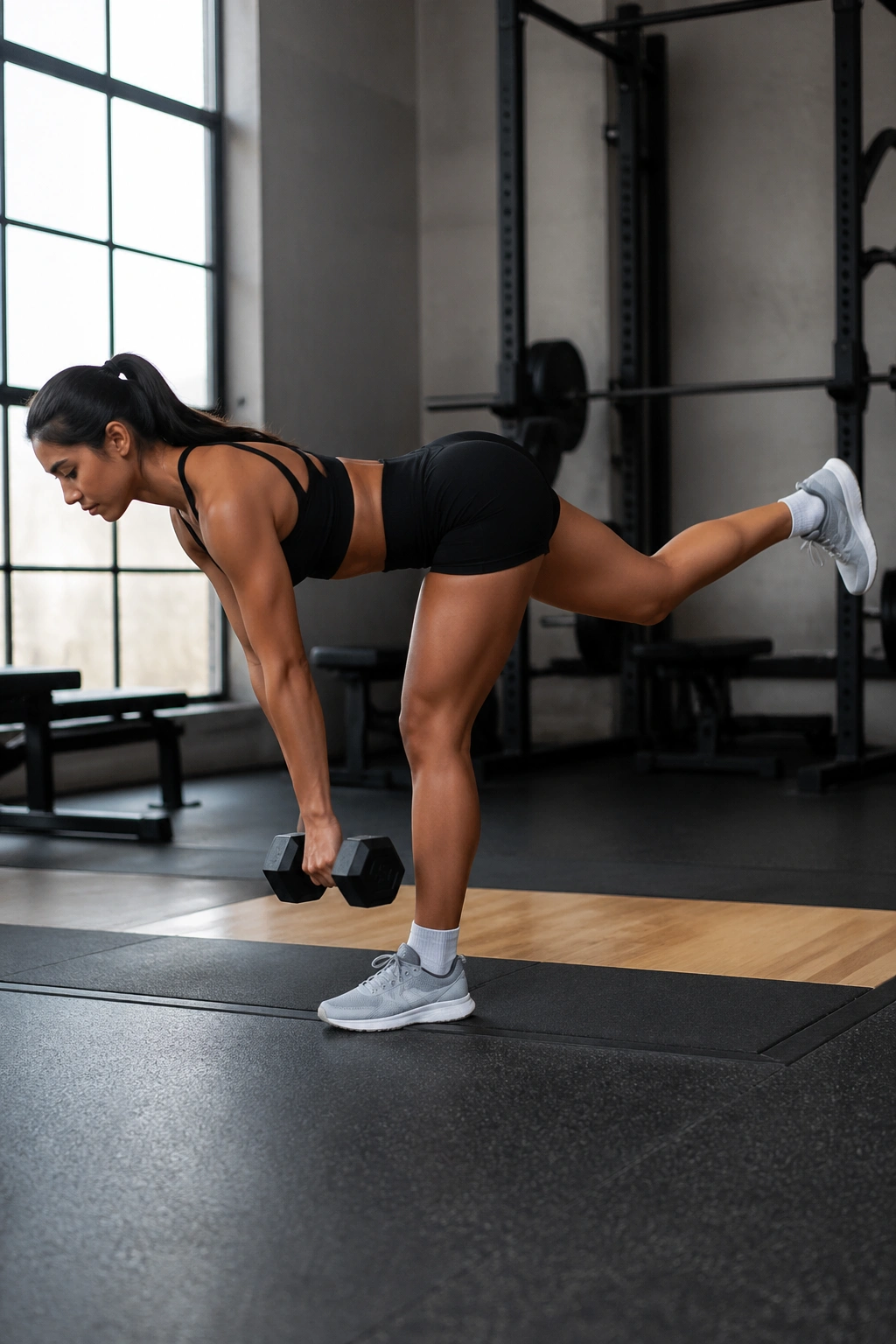
Can one dumbbell and one free leg build real hamstrings and glutes? Absolutely. Single-leg RDLs ask the body to do something much closer to real-world control: hinge on one leg, keep the hips square, and prevent the whole torso from twisting around.
What to Watch For
- Keep a soft knee on the standing leg
- Reach the back leg long, not high
- Keep the hips level instead of opening up
- Stop the descent when the hamstring stretch gets strong and the back stays flat
A light dumbbell can be plenty here. That’s a good thing, not a weakness. If you need to go heavy enough to wobble all over the floor, the movement quality is probably gone.
These work well at 3 to 4 sets of 8 to 10 reps per side. Use them after bilateral work or on days when you want more hamstring and glute work without piling on spinal loading.
Single-leg RDLs also have a sneaky bonus: they show you whether one hip is moving better than the other. That’s useful information, even if it’s mildly annoying.
16. Sled Pushes and Backward Drags for Low-Soreness Leg Work
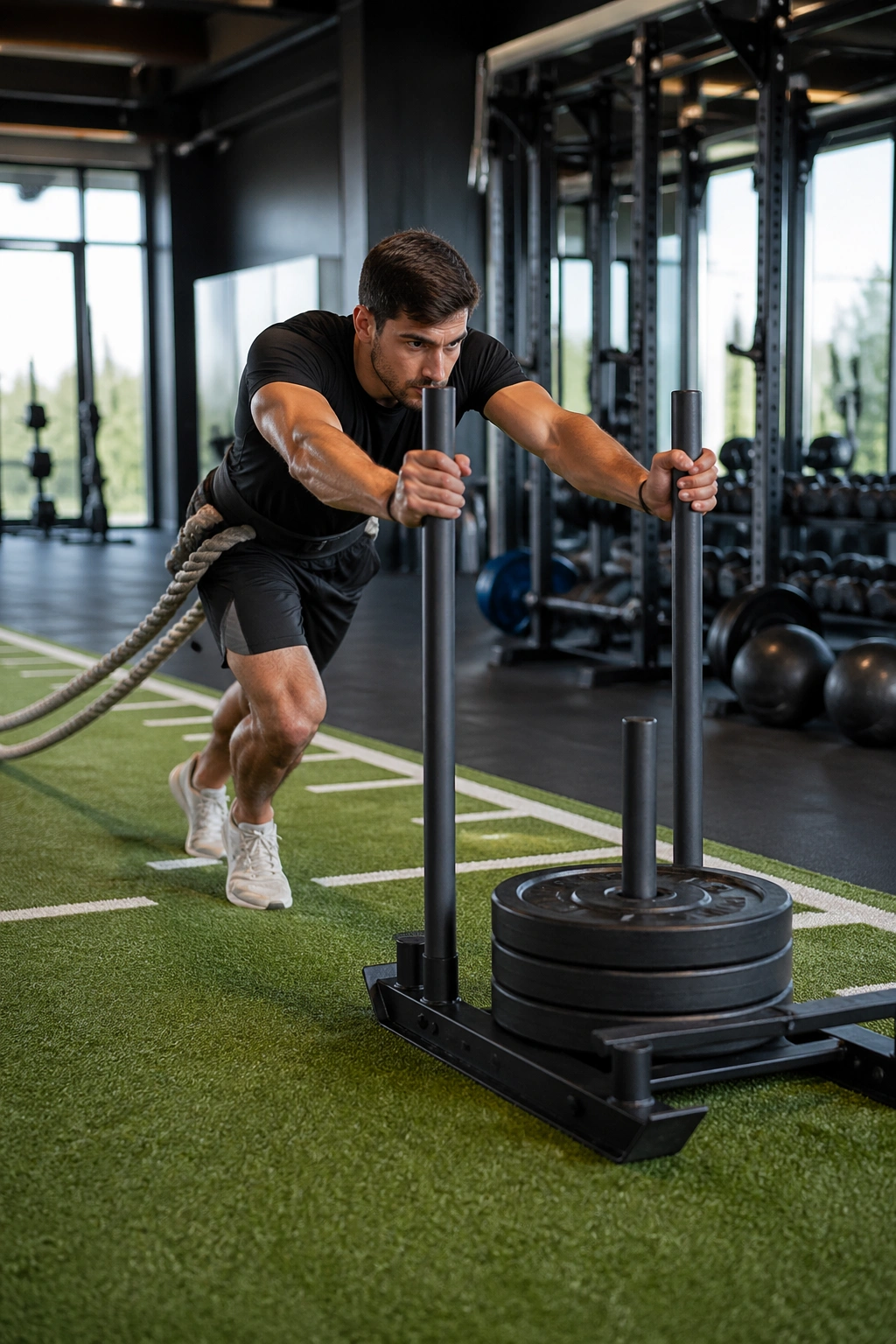
If you want hard leg work without the same level of eccentric soreness that heavy lifting brings, sleds are hard to beat. They let you drive hard, stay upright, and keep tension on the legs without the same joint drama that can show up in bigger barbell sessions.
Forward pushes usually bias the quads, glutes, and calves. Backward drags light up the quads in a way that feels weird the first time and excellent the third or fourth time. Together, they make a very clean finisher or even a standalone conditioning block.
How to Program It
- Pushes: 4 to 8 trips of 15 to 25 meters
- Backward drags: 4 to 6 trips of 15 to 20 meters
- Load: heavy enough to make you work, light enough to keep moving
- Rest: walk back and breathe, then go again
The floor matters. Turf, rubber, and smooth concrete all change how the sled feels. That’s part of the fun, and part of the frustration if your gym has a terrible setup.
Sleds are a smart pick when you want legs that feel worked, not wrecked.
17. Cable Kickbacks and Abductions for Glute Detail
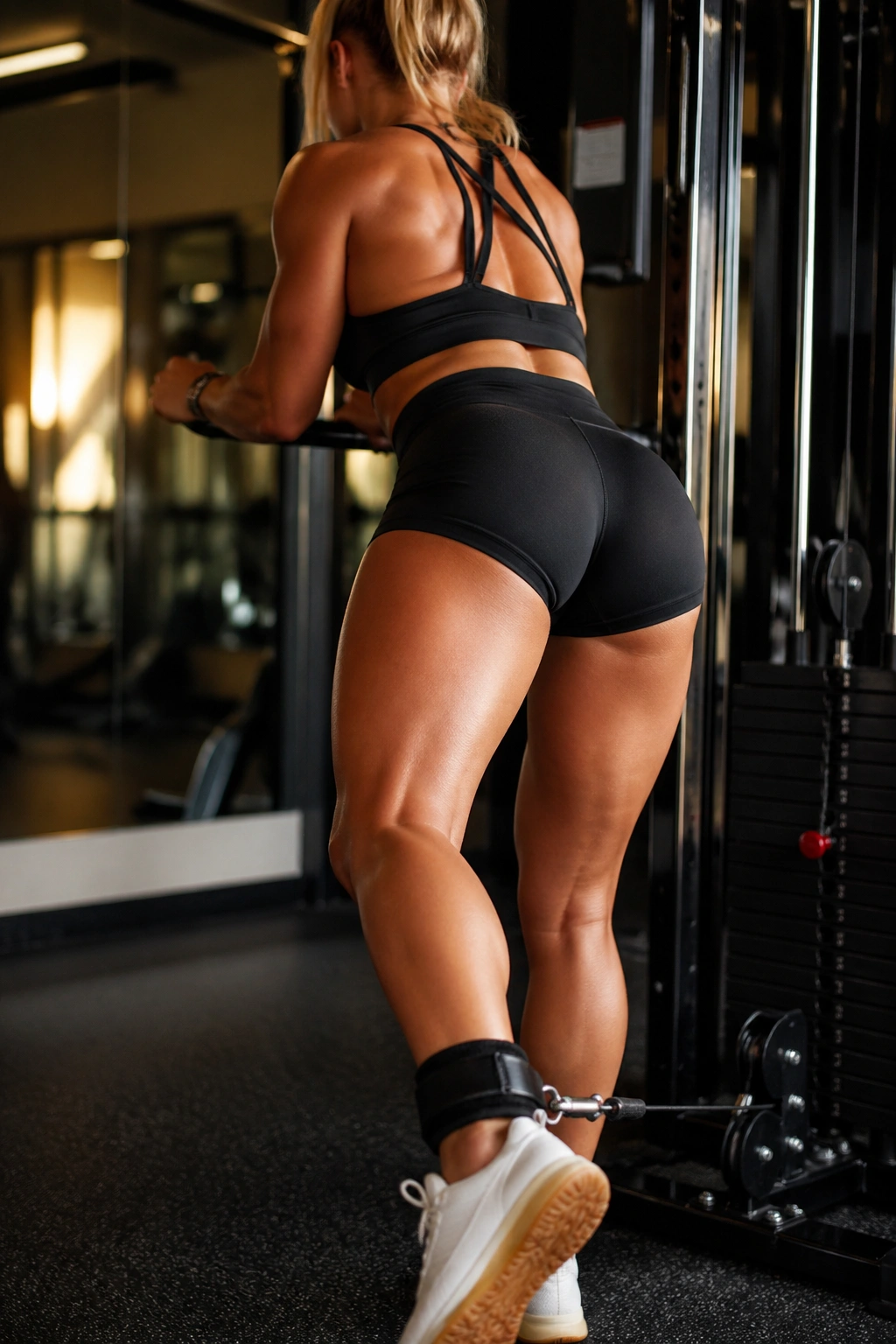
Cable work gets dismissed by people who only trust brutal-looking lifts. That’s a mistake. If the big compounds build the base, cable kickbacks and abductions let you clean up the parts that don’t always get enough attention.
Kickbacks train hip extension with a controlled line of pull. Abductions train the glute medius and the side of the hip, which matters more than many lifters think. If your knees cave inward on squats or lunges, that muscle deserves some of your time.
The trick is to keep the movement honest. Don’t swing the torso. Don’t turn the stack into a pendulum show. Use a modest load, pause at peak contraction, and keep the movement smooth for 12 to 20 reps.
These are best as finishers or as a short accessory block after a heavier leg session. They’re not glamorous. They don’t need to be.
What they do need is control. Half reps and sloppy pulses don’t buy you much.
18. Box Squats and Pin Squats for Power Off the Bottom
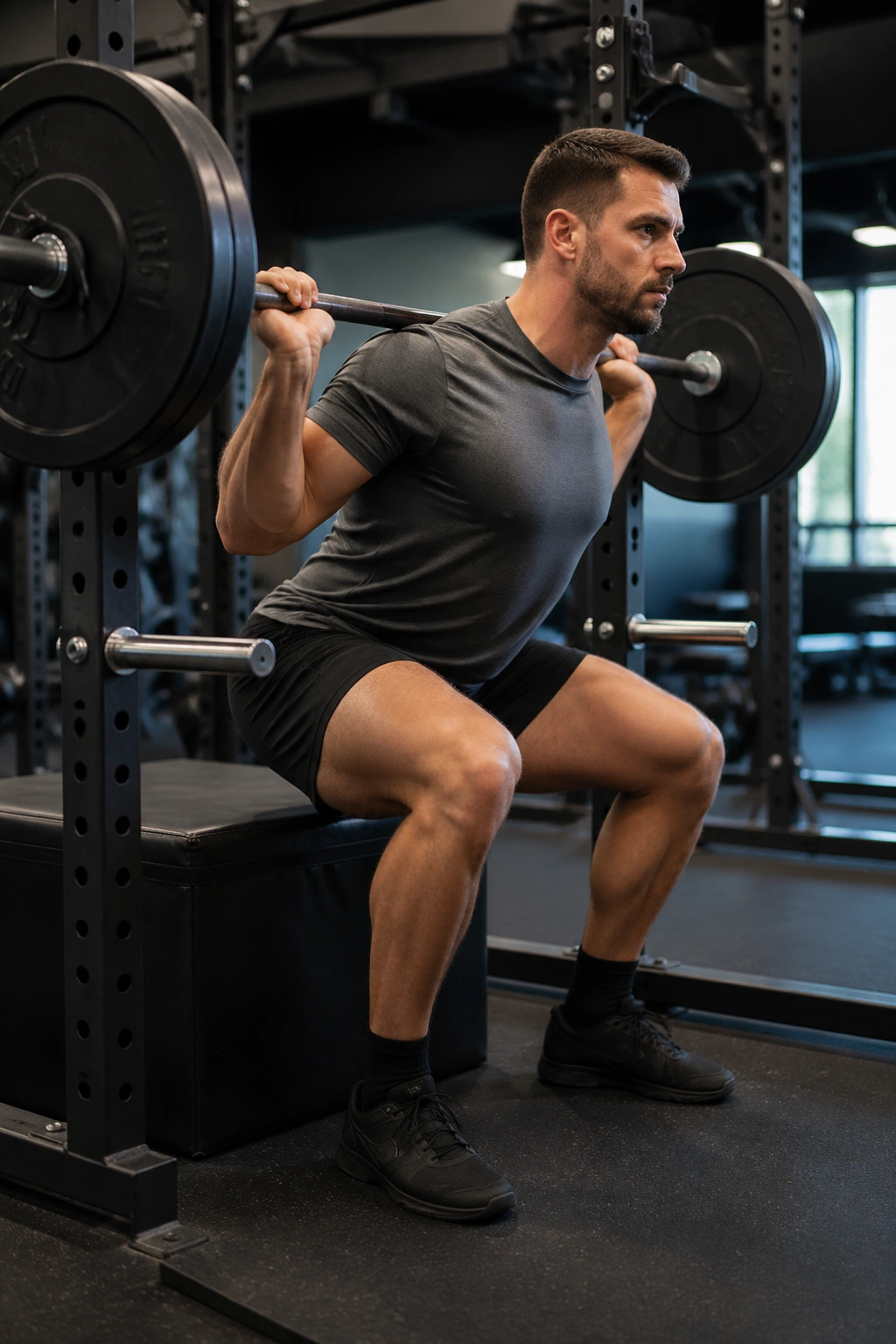
Box squats and pin squats are related, but they solve slightly different problems. Box squats teach you to sit back and own the descent. Pin squats make you start from a dead stop out of the bottom. Both of them can improve strength where a regular squat tends to stall.
What Makes Them Different
A box squat gives you a repeatable depth target and a clear pause point. A pin squat removes the stretch reflex entirely, which forces a clean brace and a hard drive from stillness. That dead-start strength often carries over to regular squats in a very useful way.
- Box height: around parallel or a touch above, depending on mobility
- Load: moderate, not maximal
- Pause: brief and controlled, not a full collapse onto the box
- Best use: building confidence and force from weak positions
These aren’t flashy lifts. They’re problem-solvers. If you get stuck out of the hole, or if your squat changes shape every time the load gets serious, one of these variations can clean things up fast.
Use them as part of a rotation, not forever.
19. Goblet Squat Density Circuits for Short, Hard Sessions
No barbell? No problem. A goblet squat density circuit is a simple way to get a real leg session done in a short block of time, especially when you’ve only got a dumbbell or kettlebell and about half an hour.
The idea is to keep moving for a set window — say 8 to 12 minutes — and cycle through a small number of lower-body moves with little rest. Goblet squats can be the anchor, with reverse lunges or dumbbell RDLs filling out the rest.
A Simple Template
- 8 goblet squats
- 8 reverse lunges per leg
- 10 dumbbell Romanian deadlifts
- Rest 30 to 45 seconds
- Repeat for 3 to 5 rounds
That setup works because it keeps tension high without needing huge weight. You’ll breathe hard, your legs will burn, and your form will tell you exactly when the pace is too fast.
This is a smart choice for travel, home training, or weeks when you want to keep the habit alive without a long gym session. It won’t replace heavy squats forever. It does keep your legs honest.
20. Calf Finishers That Actually Do Something
Calves need their own work. They don’t grow just because you walked around or stood on your feet all day. If you want lower legs that match the rest of your training, they need direct volume and a full range of motion.
Standing calf raises hit the gastrocnemius, the larger visible calf muscle. Seated raises shift more work to the soleus, which sits underneath and responds better when the knee is bent. That’s why both versions matter.
Use a 2-second stretch at the bottom and a controlled squeeze at the top. If you bounce through the rep, the calves get less work and the Achilles tendon gets more annoyance than it asked for.
A good finisher might be 3 sets of 12 to 20 standing raises followed by 2 to 3 sets of seated raises. It’s boring. It also works.
Calves are the sort of muscle that reward patience more than drama. Annoying, yes. True, too.
21. A Home Dumbbell Leg Day That Covers the Bases
No barbell? Fine. You can still build strong legs with a pair of dumbbells, a bench, and enough honesty to keep the reps hard. Home training tends to work best when you stop chasing fancy and start chasing good positions.
A useful home leg day usually needs one squat pattern, one hinge, one unilateral move, one glute movement, and one calf exercise. That’s enough to hit the major pieces without turning the session into a mess.
A 30-Minute Template
- Goblet squat: 3 sets of 10 to 15 reps
- Dumbbell Romanian deadlift: 3 sets of 8 to 12 reps
- Rear-foot-elevated split squat: 3 sets of 8 to 10 reps per side
- Glute bridge or hip thrust on a couch: 3 sets of 12 to 15 reps
- Single-leg calf raise: 2 to 4 sets of 15 to 20 reps
If the dumbbells are light, slow the lowering phase and add pauses. That’s the trick most home lifters miss. Tempo can make a moderate load feel much heavier without needing more equipment.
This is one of the better leg day ideas for people who are short on time but still want progress that shows up in the mirror.
22. Power and Plyo Work for Faster, Springier Legs
Not every leg day should feel like you got buried under a squat rack. Power work keeps the lower body explosive, which matters if you want legs that are strong and athletic rather than only tired.
Box jumps, broad jumps, squat jumps, and split squat jumps all train force production in different ways. The key is to stay fresh. These are not conditioning drills to be done until your jumps look like parking-lot hops.
Use 3 to 5 sets of 3 to 5 reps with full rest between sets. Every rep should look clean and land softly. If the landing gets loud, messy, or shallow, stop the set.
A few good options:
- Box jump: safer landings, easy on the joints
- Broad jump: good for horizontal force
- Split squat jump: brutal in a short dose
- Kettlebell swing: not a jump, but useful for power through the hips
Power work belongs beside strength training, not instead of it. It’s the seasoning, not the whole meal. Done well, it gives lower-body training a sharper edge.
The Bottom Line
The best leg day ideas are the ones that cover different jobs instead of repeating the same one from seven slightly different angles. Squats build the base. Hinges grow the back side. Single-leg work cleans up imbalances. Curls, calves, sleds, and cable work fill in the gaps that big lifts leave behind.
A plain rule works better than a complicated one: pick one squat, one hinge, one unilateral move, and one accessory for most leg sessions, then push each one a little harder over time. Add load when you can. Add reps when you can’t. Slow the tempo if the weights feel too light. That’s where the progress hides.
Strong, sculpted legs usually come from boring consistency with a few sharp choices. The fun part is finding the mix that makes your quads burn, your glutes wake up, and your hamstrings feel like they actually belong to the program.
