



Gym equipment names can feel like a private language the first time you walk into a busy gym. Treadmill, cable machine, Smith machine, landmine, TRX — the room sounds familiar and foreign at the same time.
That awkward feeling passes faster than most people expect. Once you know what the machines are called, you can ask better questions, read beginner workout plans without guessing, and stop pretending you “just need a sec” while you stare at a row of pulleys and plates.
A lot of gym confusion comes from the same place: pieces of equipment look related, but they behave differently. A seated row and a lat pulldown both use a cable stack, yet they train your body in different directions. A power rack and a Smith machine both hold a bar, but one gives you freedom and the other gives you a fixed path. That difference matters.
1. Treadmill
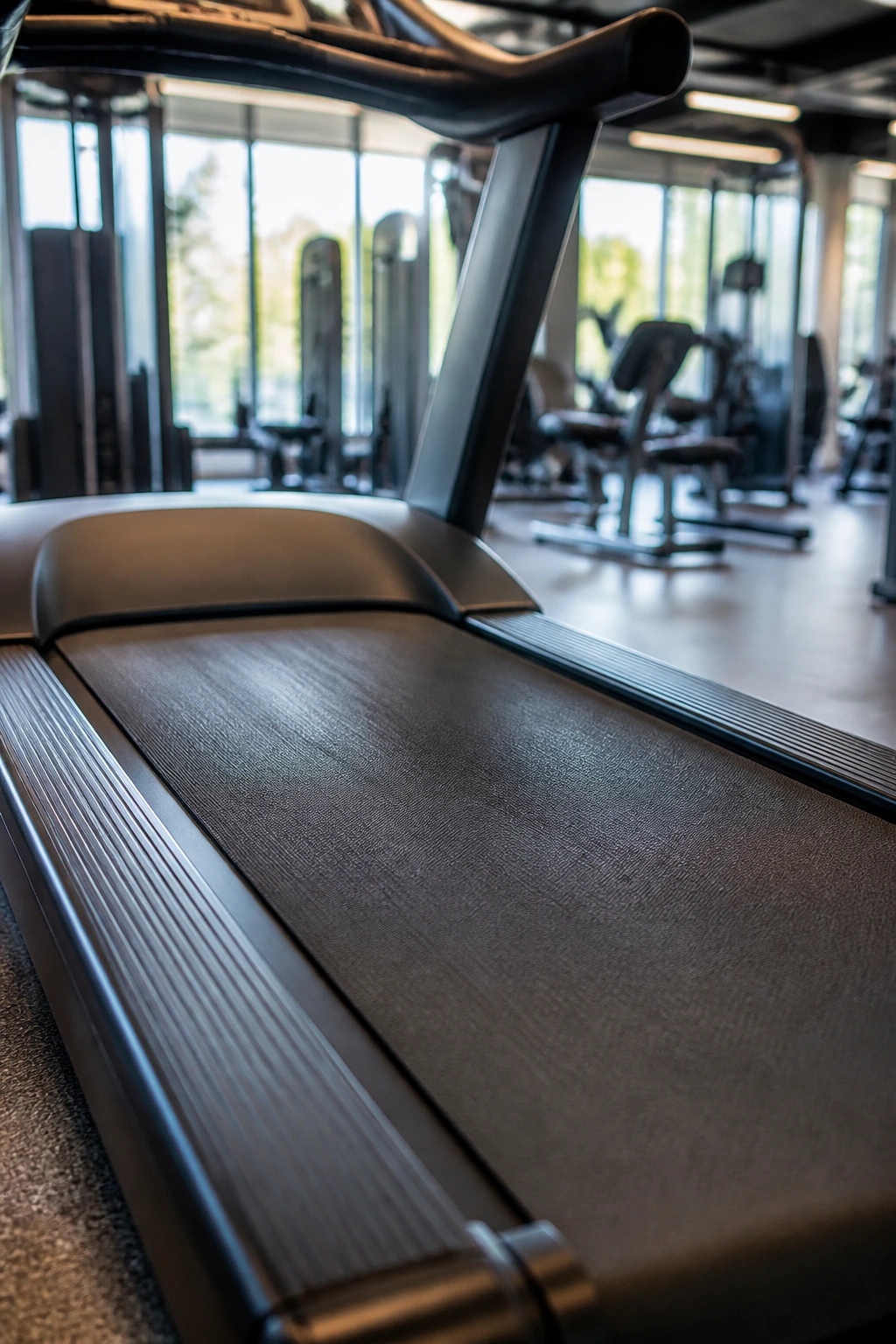
A treadmill is the machine most beginners recognize first, and it still gets used badly. People lean on the rails, crank the speed too soon, and then blame the machine when their form falls apart.
What to watch for
- Speed controls let you walk, power-walk, jog, or do intervals.
- Incline settings add work without forcing you to run faster.
- The emergency clip is there for a reason; clip it to your shirt or waistband.
The nicest thing about a treadmill is that it lets you control the pace down to the smallest bump. That makes it useful for warm-ups, steady cardio, and short bursts when you want to raise your heart rate without learning a complicated movement first.
Small tip: keep your hands off the rails unless you need them for balance. If you have to hang on, the belt is moving faster than your form can handle.
2. Stationary Bike
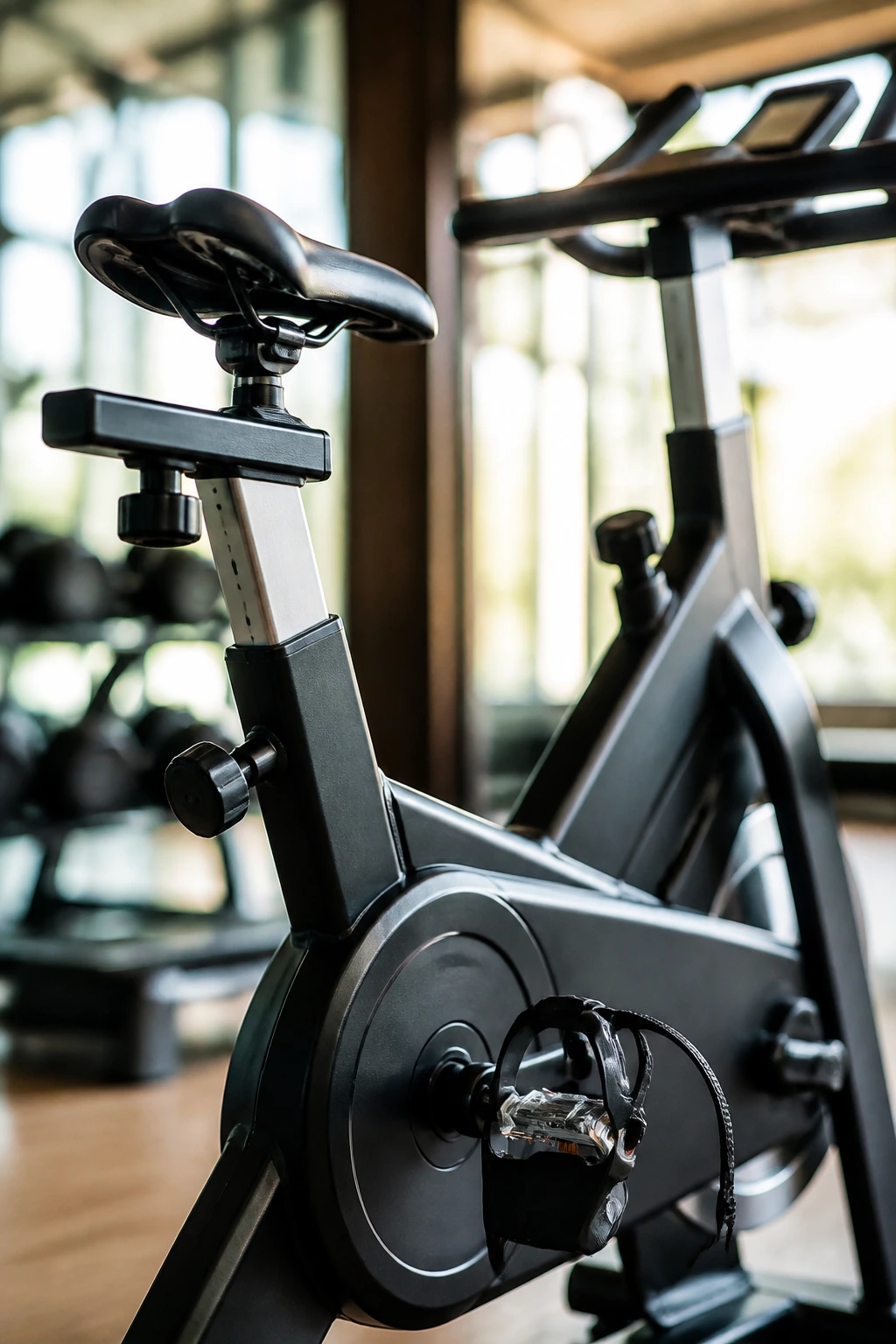
A stationary bike can make cardio feel less punishing on tired knees, which is why so many new lifters end up liking it more than they expected. It looks simple, but the setup matters more than people think.
An upright bike and a recumbent bike do not feel the same at all. The upright version asks you to hold a more athletic position, while the recumbent style gives your back more support and spreads the load out a little. Both can work well.
A decent starting point is to set the seat so your knee stays slightly bent at the bottom of the pedal stroke. Too low, and your knees take a beating. Too high, and your hips start rocking side to side, which is a dead giveaway that the bike is fighting you.
Use the bike for steady rides, short intervals, or a warm-up before leg day. If the resistance is so light that your legs are barely turning, the session is too easy to matter. If you cannot speak in short sentences after two minutes, ease up a notch.
3. Elliptical Trainer
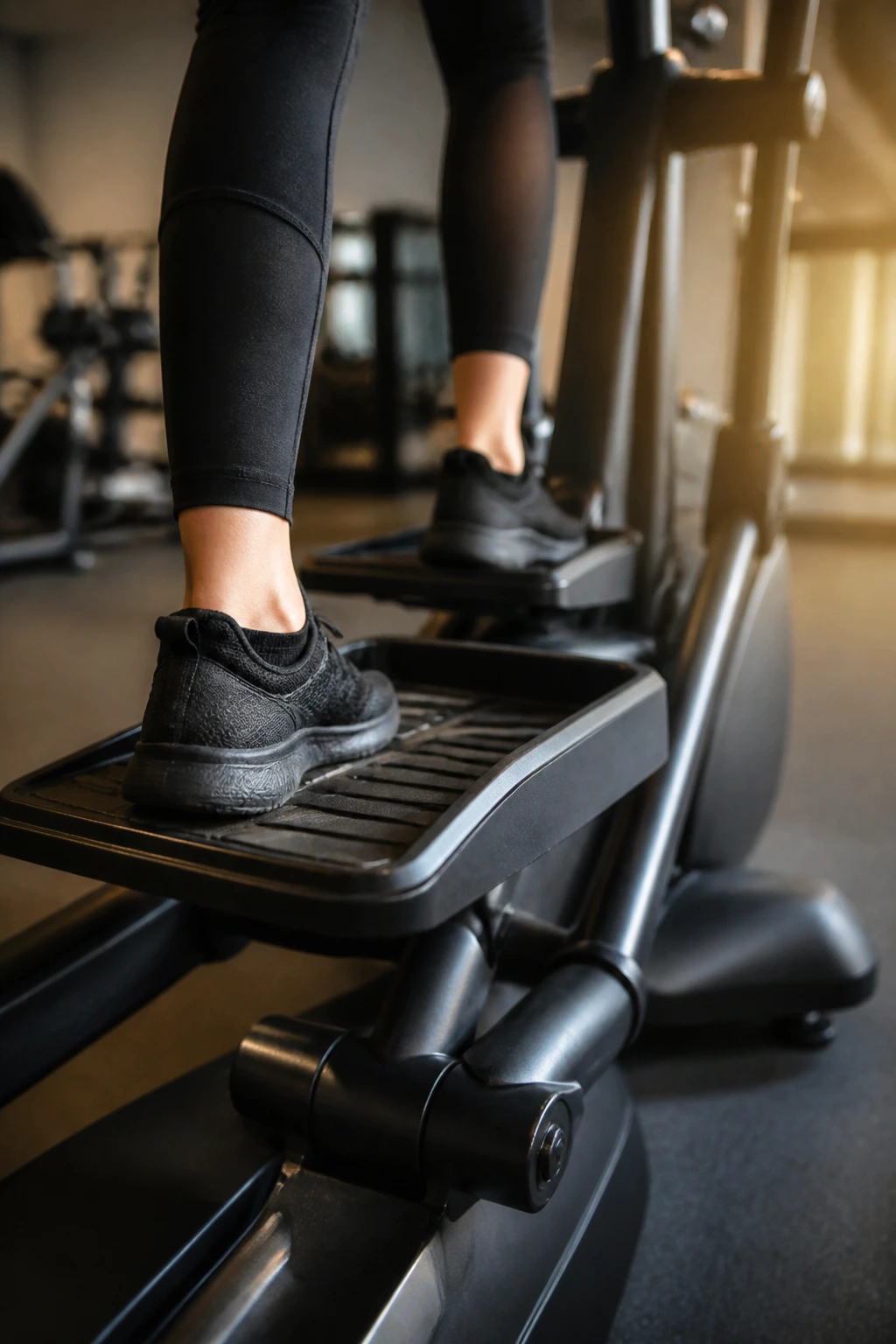
Why do beginners like the elliptical for one week and then avoid it? Usually because they either make it too easy or turn it into a weird upper-body exercise with their shoulders hunched forward.
The elliptical, sometimes called a cross-trainer, gives you a low-impact cardio option that still makes you breathe hard when you use enough resistance. Your feet stay planted on the pedals, which takes some of the pounding out of the motion, but your legs are still doing real work.
How to use it without wobbling
Keep your chest tall, your core lightly braced, and your feet flat through most of the stride. If the machine has moving handles, let them help instead of death-gripping them. That grip tension creeps up into your neck fast.
A good rule is to start with 5 minutes at a moderate resistance and see whether you can keep a smooth rhythm. If the machine feels like a slow glide with no effort, nudge the resistance up. If your hips are bouncing around, lower it and reset.
4. Rowing Machine
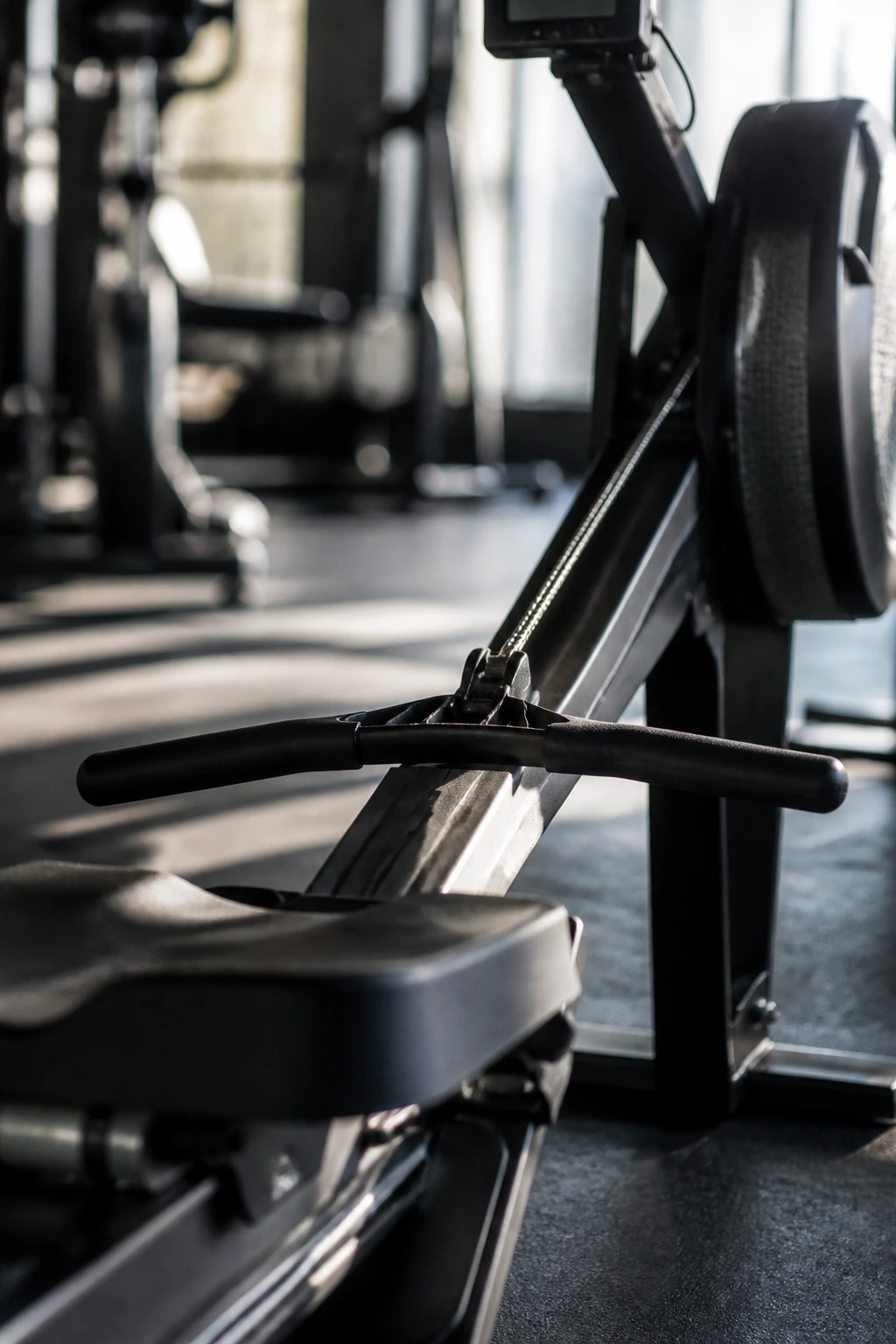
The rowing machine looks like an arm workout until your legs find out what is really happening. The first strong pull comes from the legs, not the biceps, and that surprises people every time.
Rowers are one of those pieces of gym equipment that teach sequence. Push with the legs first, then swing the body slightly, then finish with the arms. On the way back, the order reverses. Get that wrong and the row feels jerky, loud, and weirdly exhausting.
- Leg drive starts the stroke.
- The handle should travel in a straight line to the lower ribs or upper stomach.
- The recovery should feel smooth, not rushed.
- Your feet stay strapped in so you can drive hard without slipping.
The best beginner row sessions are short and clean. Twenty strokes at a relaxed pace teaches more than flailing through ten minutes with sloppy form. Once the sequence makes sense, the machine becomes one of the best full-body cardio tools on the floor.
5. Stair Climber
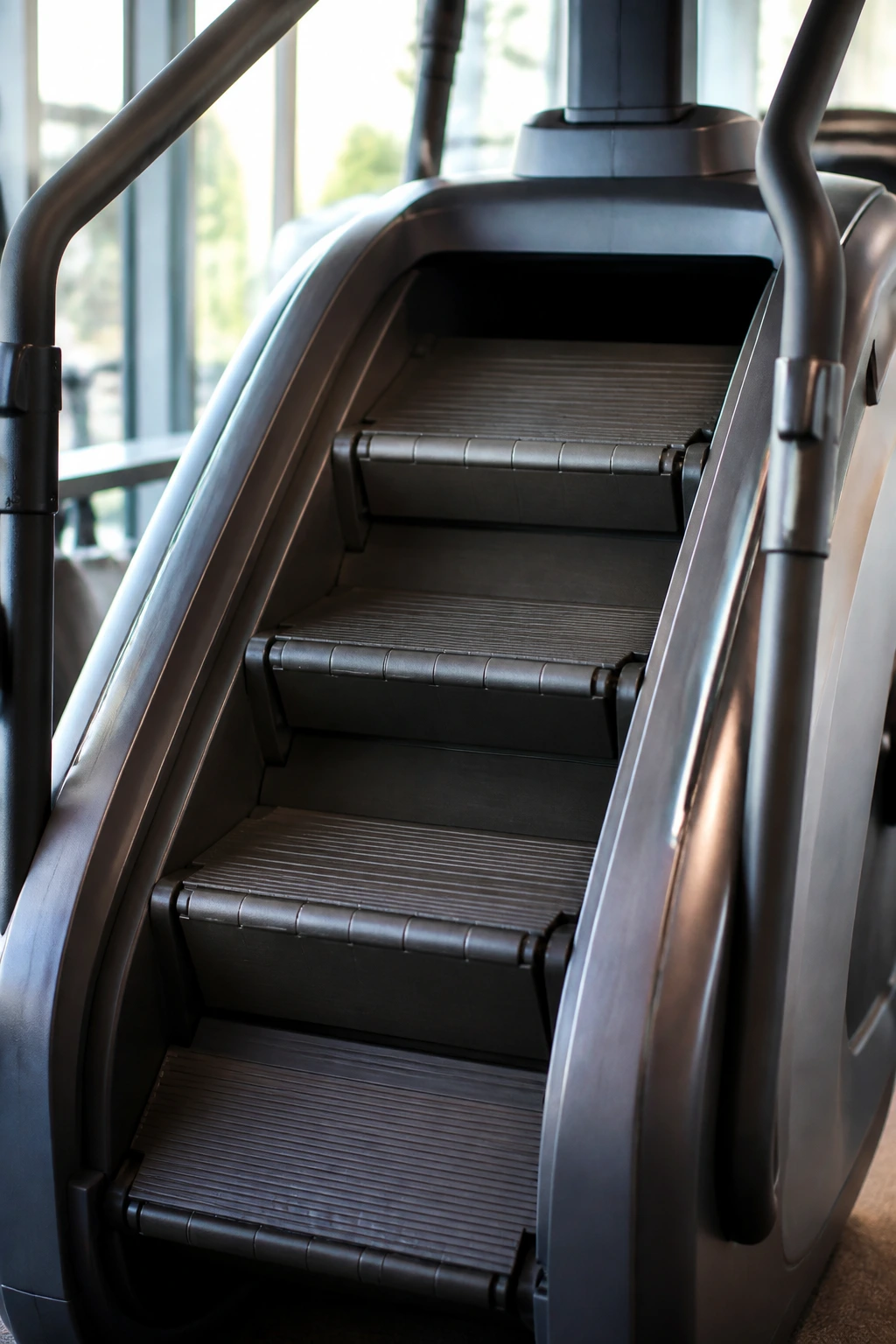
The stair climber is honest. It makes your legs work, and it does not care that you walked in feeling fresh.
Unlike a treadmill, the stair climber forces a repeated stepping pattern that lights up the glutes, quads, and calves almost immediately. It can also spike your heart rate fast, which is why even a short session can leave you breathing harder than you expected.
The main mistake is leaning on the rails like you are trying to survive a storm. That takes load off your legs and turns the whole thing into a half-hearted climb. Stand tall, keep most of your weight in your legs, and use the handles lightly if you need them for balance.
A clean stair-climber session feels rhythmical, not frantic. If the steps are so fast that you are slapping the pedals, slow down. A controlled pace is better than a rushed one, and your knees will thank you for it later.
6. Dumbbells
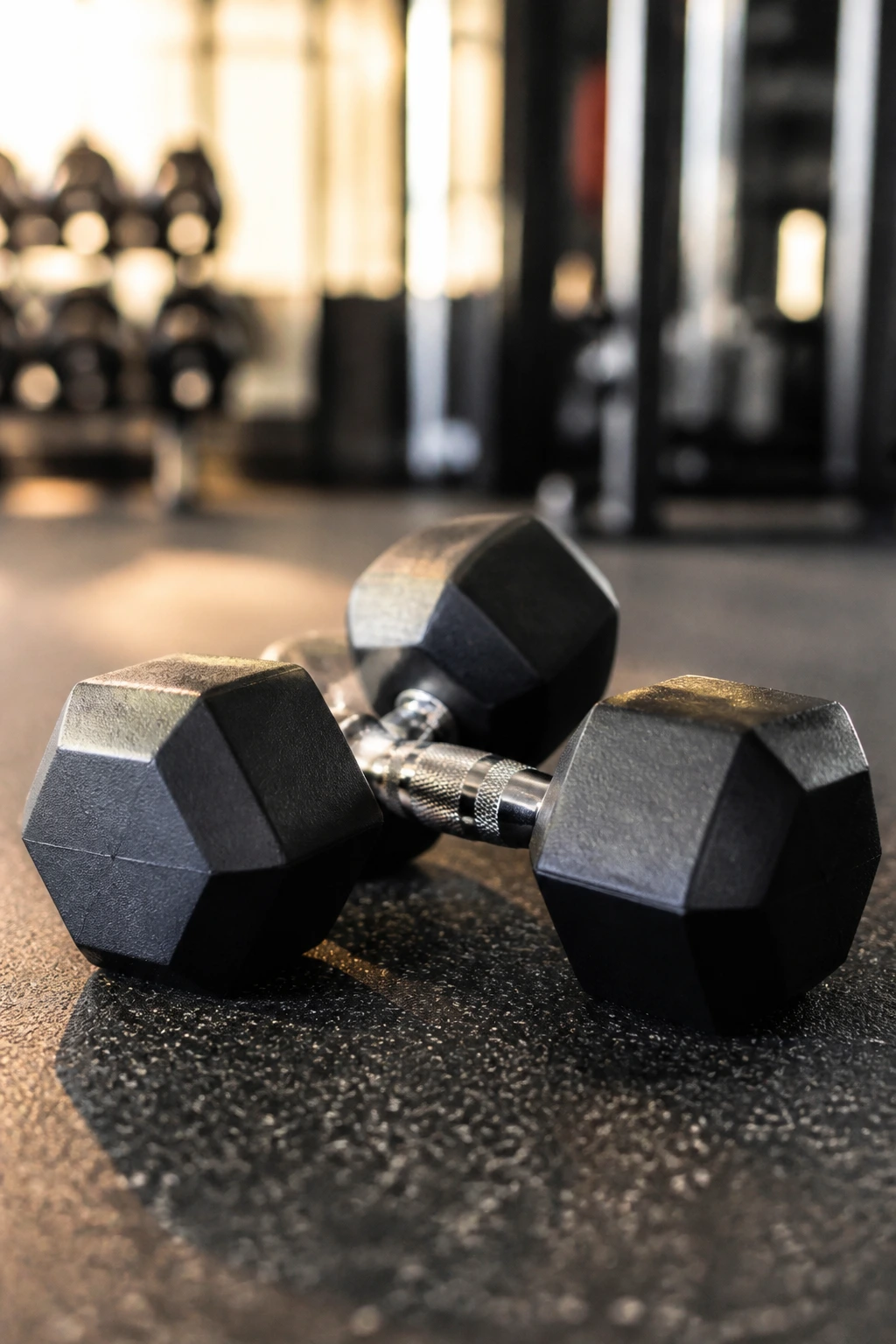
Unlike a barbell, dumbbells let each arm work on its own. That sounds like a small detail until you realize how many beginners have one stronger side that keeps stealing the work.
Dumbbells are the easiest way to learn pressing, rowing, curling, and lunging without a huge setup. They also show you pretty quickly when one shoulder is tighter than the other or when one arm cheats to finish a rep. No hiding. Which is part of the appeal.
For many beginners, dumbbells are the most useful free weight on the floor. A pair of 10s might be perfect for curls or shoulder presses, while rows or Romanian deadlifts might call for something heavier. The exact number matters less than the rule that the last two reps should feel challenging without turning ugly.
If you want one piece of equipment that can stay in a program from day one to the point where you’re lifting serious weight, dumbbells are a safe bet. They travel well, they store well, and they teach honest movement.
7. Barbell
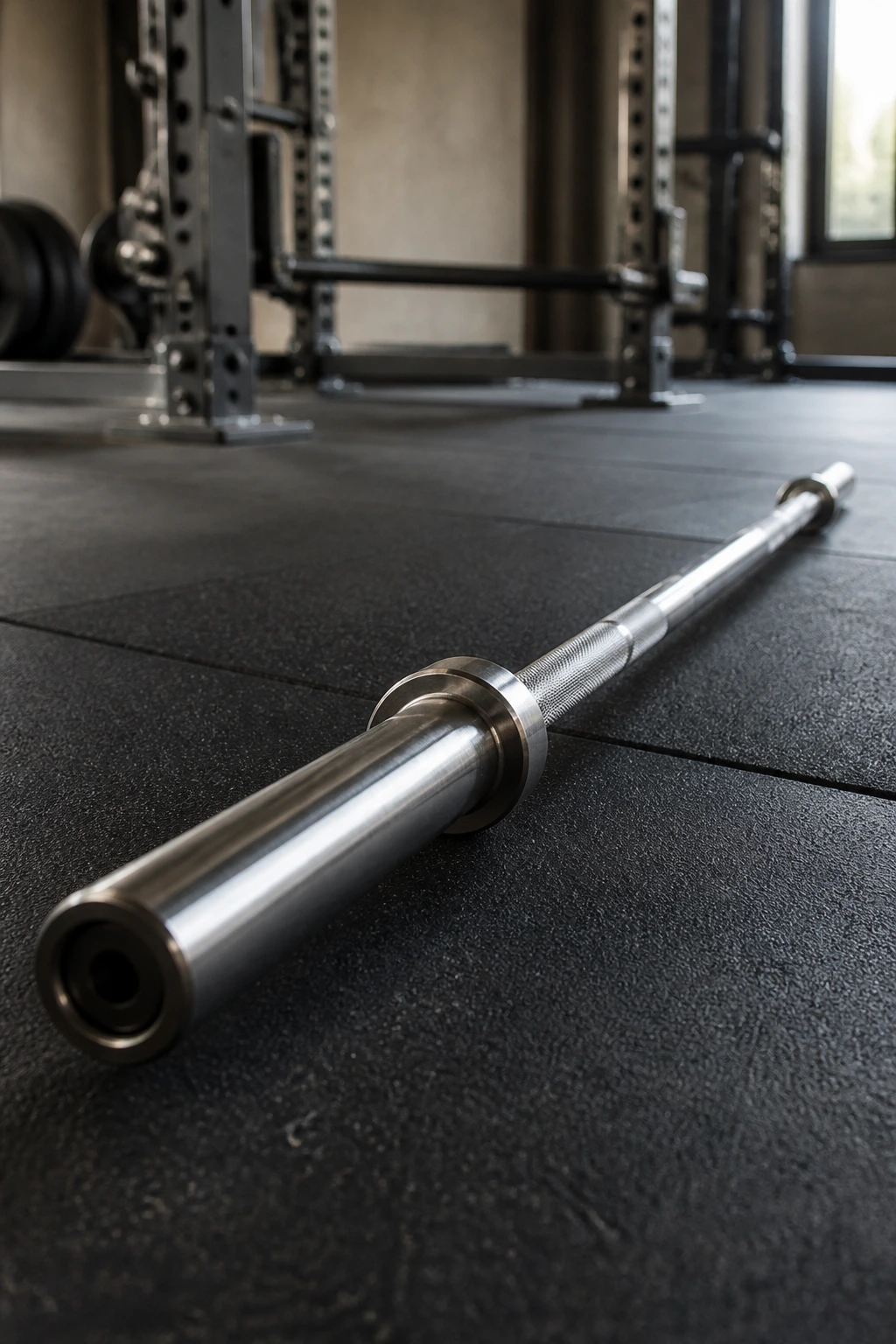
A barbell is just a long metal bar until you try to squat with it. Then it becomes a lesson in balance, grip, and patience.
Why the empty bar matters
- Most Olympic barbells weigh 45 lb, though lighter training bars exist.
- The sleeves spin so the plates do not twist your wrists as much.
- Collars keep the plates from sliding around mid-set.
- The empty bar is often enough for skill practice on squats, presses, and deadlifts.
New lifters sometimes rush past the empty bar because it feels too light. Bad move. The bar itself teaches position, bar path, and where your feet need to be before you add any real load.
Start with the bar on its own and learn where it sits on your back, how it feels in your hands, and how straight it moves when you press or deadlift. If the bar drifts forward or your wrists fold back hard, the weight is not the problem yet. The setup is.
8. Weight Plates
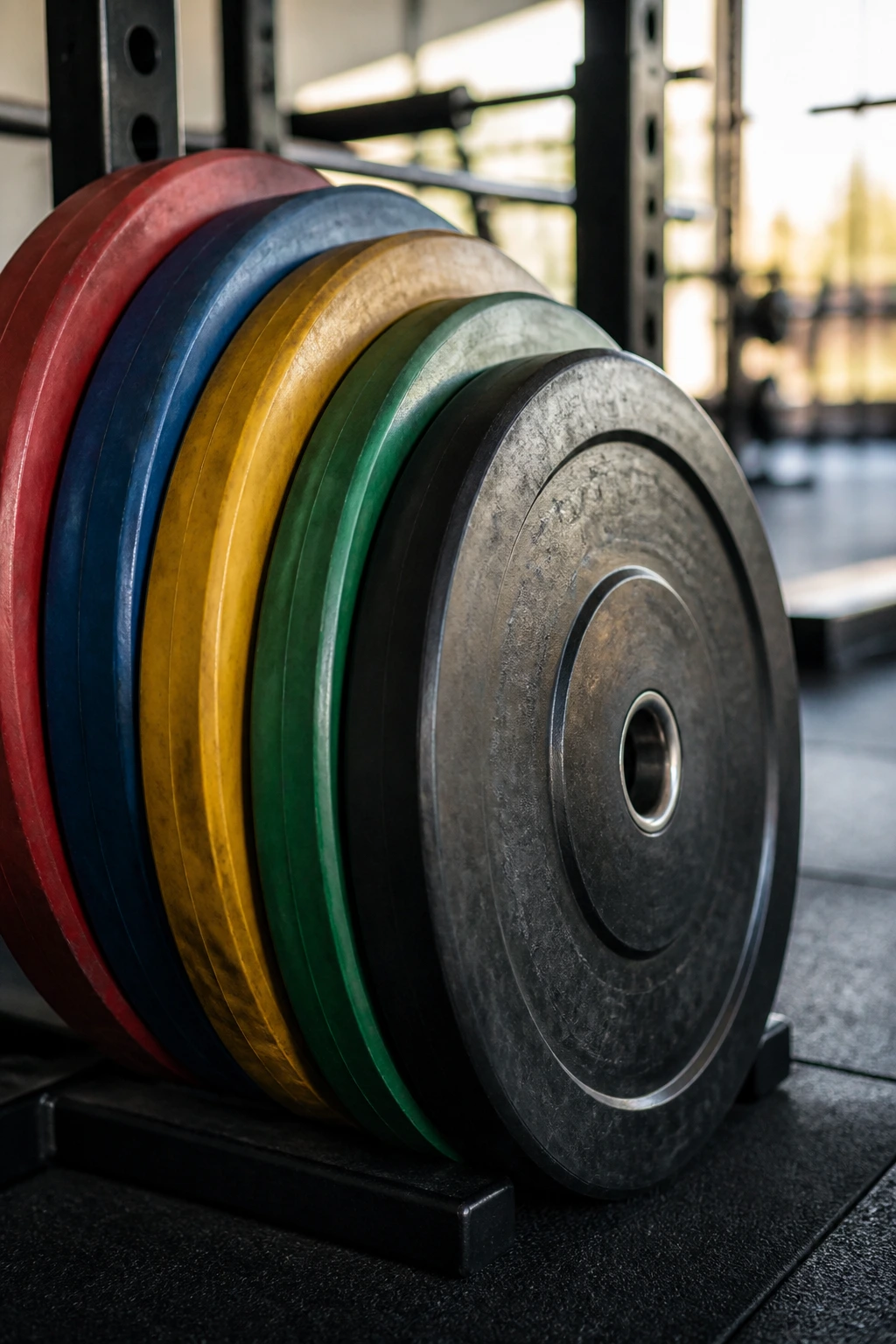
Weight plates are the math behind the whole gym. Without them, a barbell is just a shiny stick.
Some plates are thin iron discs, some are thick rubber bumper plates, and some are coated in urethane or another durable material. The material changes how they sound, how they bounce, and how much space they take up on the bar. Beginners do not need to obsess over the brand. They do need to know what the numbers mean.
A common beginner mistake is loading one side first and then forgetting to match the other side exactly. That turns a lift into a lopsided mess before the bar even leaves the rack. Keep the loading symmetrical, and use the smaller plates when you need tiny jumps. A jump from 25 to 35 pounds can feel huge; a pair of 2.5s or 5s often makes more sense.
If you are not sure where to start, go lighter than pride wants and add plates later. The plates will still be there.
9. Adjustable Bench
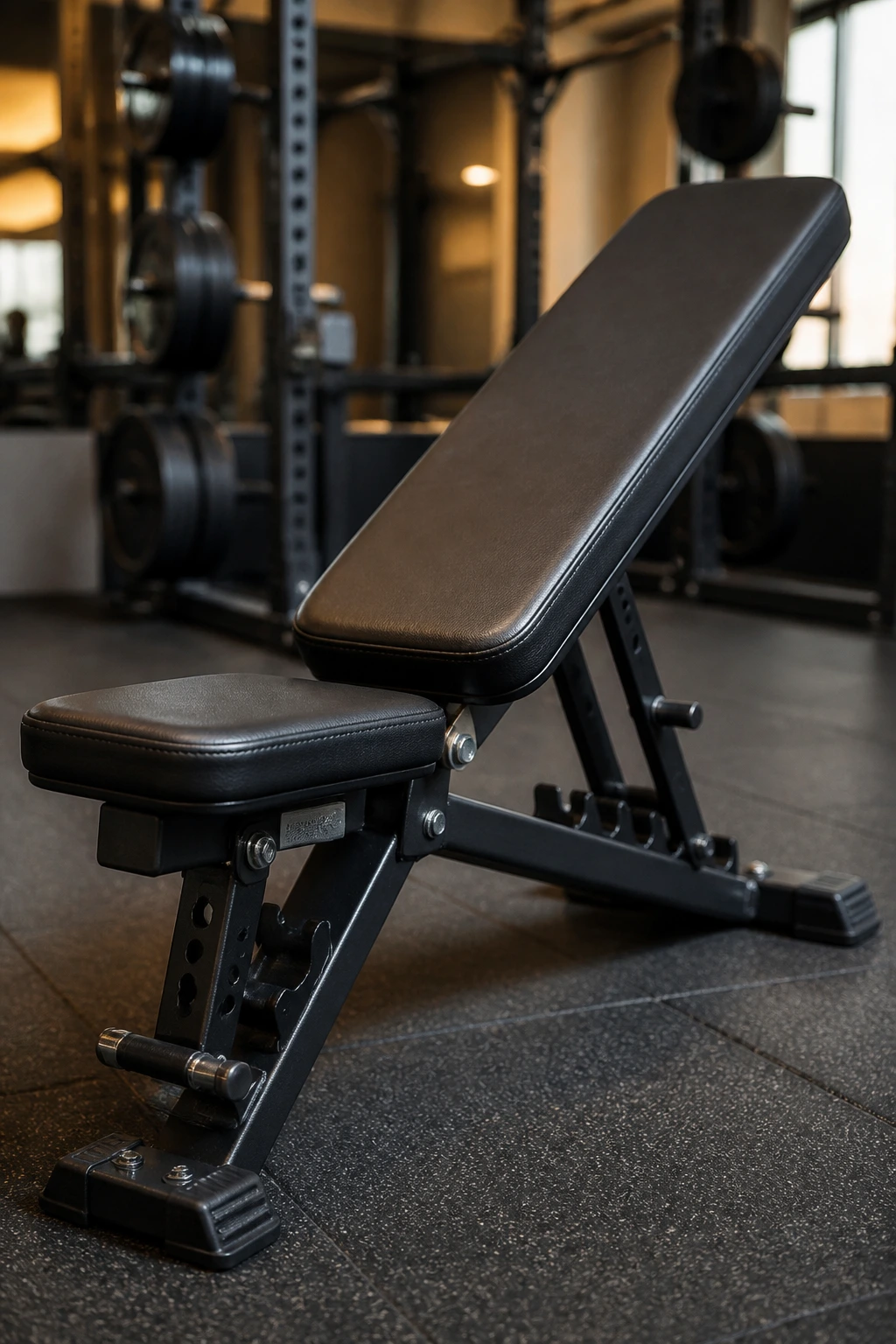
Why does one bench have three jobs? Because an adjustable bench can go flat, incline, and sometimes nearly upright, which gives you a lot of options from one piece of steel and padding.
How to set it up
Place the bench on stable ground, check that the pin is locked, and test the seat before you sit down with a loaded dumbbell in each hand. That sounds obvious. People still skip it.
Flat benching is the obvious use. Incline settings around 30 to 45 degrees shift more work to the upper chest and shoulders. A steeper angle makes the shoulders work harder, which is fine if that is what you want, but it changes the feel a lot.
The seat height and foot position matter too. If your feet skid around or your lower back arches into something dramatic, reset before you press. A good bench should feel solid under you, not like a hotel chair with ambition.
10. Smith Machine
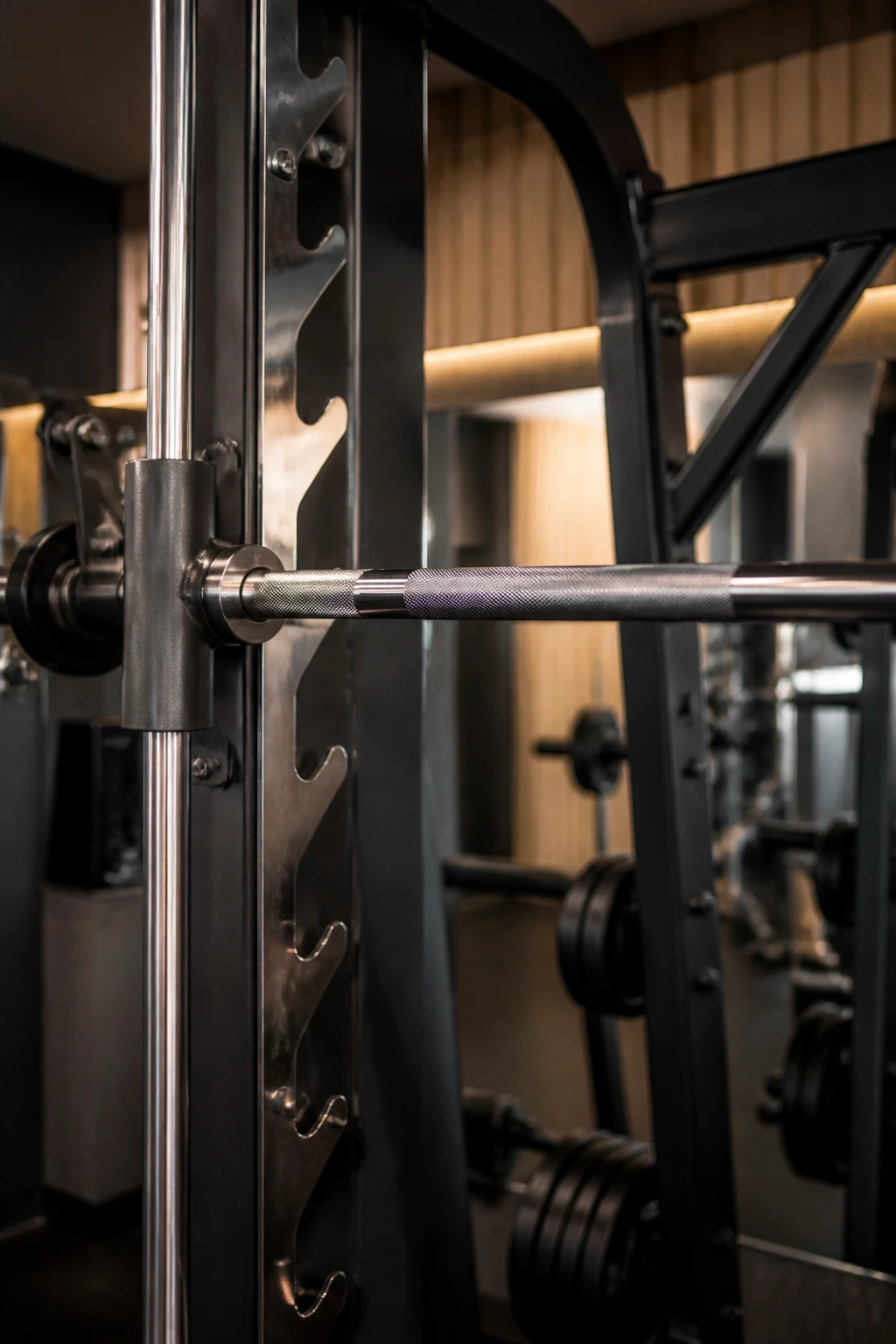
You see the Smith machine near the free weights, and it looks like a barbell on rails. That is exactly what it is.
The fixed path helps some beginners because the bar cannot drift forward or backward the way a free bar can. That makes controlled presses, split squats, and certain squatting patterns easier to learn at first. It also means the machine is telling your body where to go, which is both the benefit and the drawback.
- Bar path is fixed, so balance demands are lower than with a free bar.
- Hooks lock in at set points, which can make unracking feel safer.
- Foot placement matters more than people think, especially on squats and lunges.
- The machine is not magical; it still punishes sloppy setup.
I like it for simple, controlled reps when a beginner needs confidence. I do not love it when people treat it like a replacement for learning how to move under a barbell. It is a tool. A useful one. Not a shortcut to ignore technique forever.
11. Power Rack
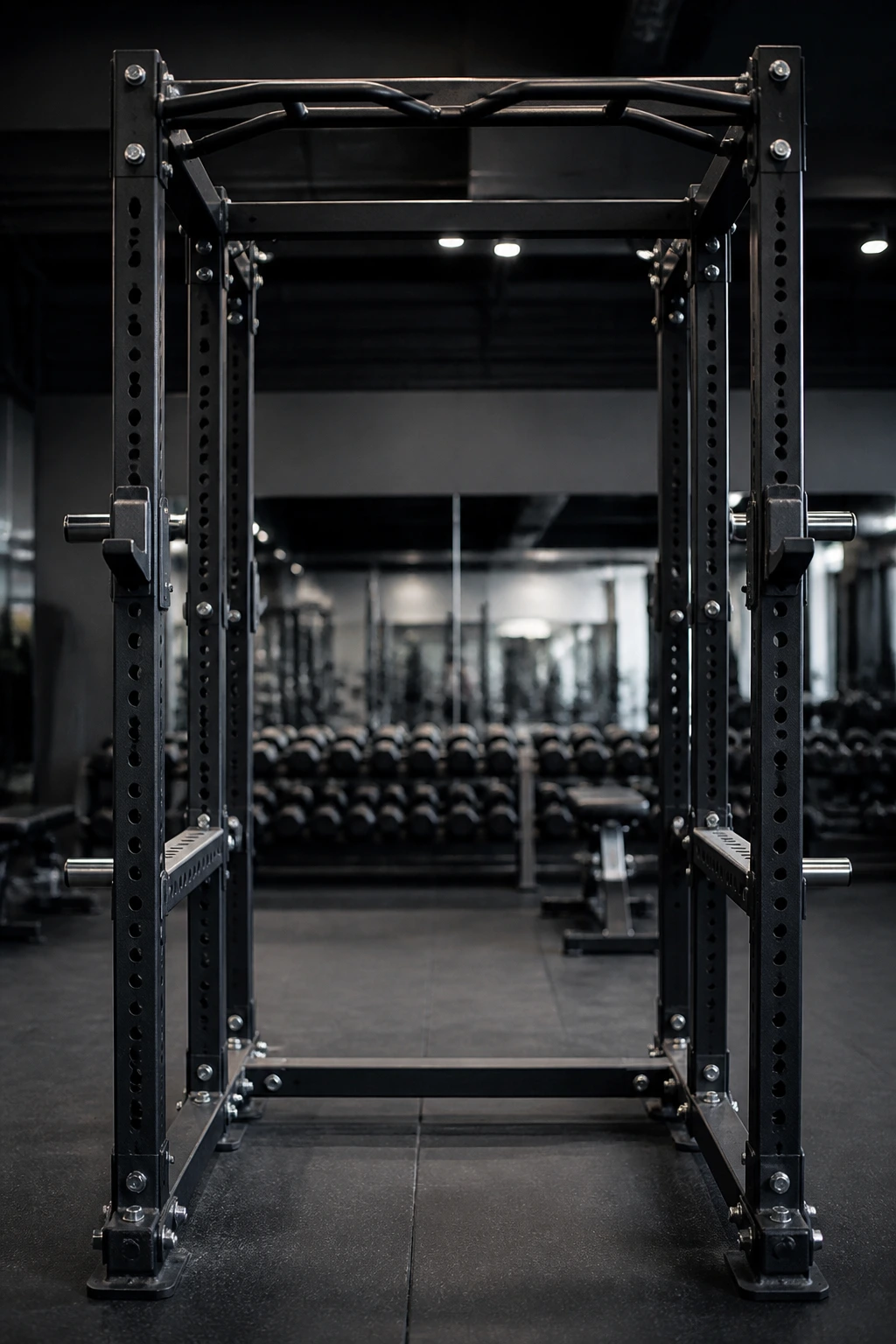
If you only remember one free-weight station, make it the power rack. Big steel uprights. J-hooks. Safety pins or spotter arms. It looks serious because it is serious.
A power rack gives you a place to squat, bench, press, and pull with some built-in safety. That matters a lot when you do not have a spotter and you are still learning how a bar should move. The pins can catch the bar if a rep goes sideways, which is the kind of ugly detail beginners should appreciate.
The rack also teaches setup discipline. You have to set the hooks at the right height, put the safety pins where they can actually protect you, and walk the bar out with some control. Lazy setup inside a rack is still lazy setup.
One nice thing people forget: many racks also include pull-up bars and storage posts for plates. So the power rack is not just a squat station. It becomes a small training hub.
12. Cable Machine
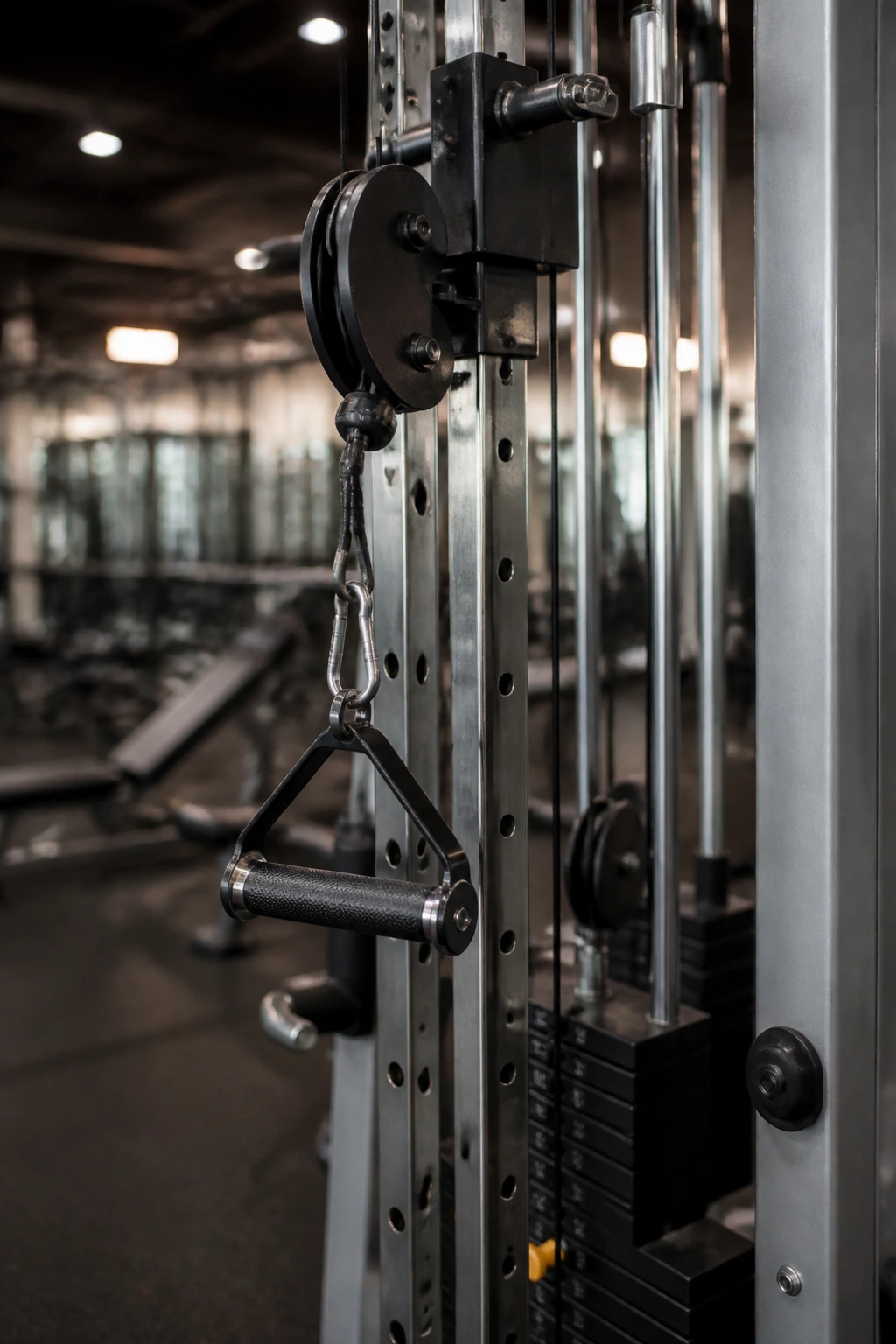
The cable machine is the gym’s most flexible workhorse. It can be a little intimidating at first because there are pulleys, attachments, and numbers staring back at you, but the movement patterns are easier to control than most people expect.
Unlike dumbbells, cables keep tension on the muscle through a bigger part of the rep. That is why face pulls, triceps pressdowns, cable rows, and wood chops often feel smoother than the same moves done with free weights. The resistance does not vanish at the top the way it can with a dumbbell.
This is the machine I like for beginners who want steady control and clear feedback. You can start with a light pin, stand tall, and learn how your body tracks through the movement without having to balance a free load in space. It is also friendly for awkward angles, which is why so many rehab plans and beginner plans lean on it.
If one pin setting feels too easy, move up one notch. Do not jump five steps just because the stack looks small.
13. Lat Pulldown Machine
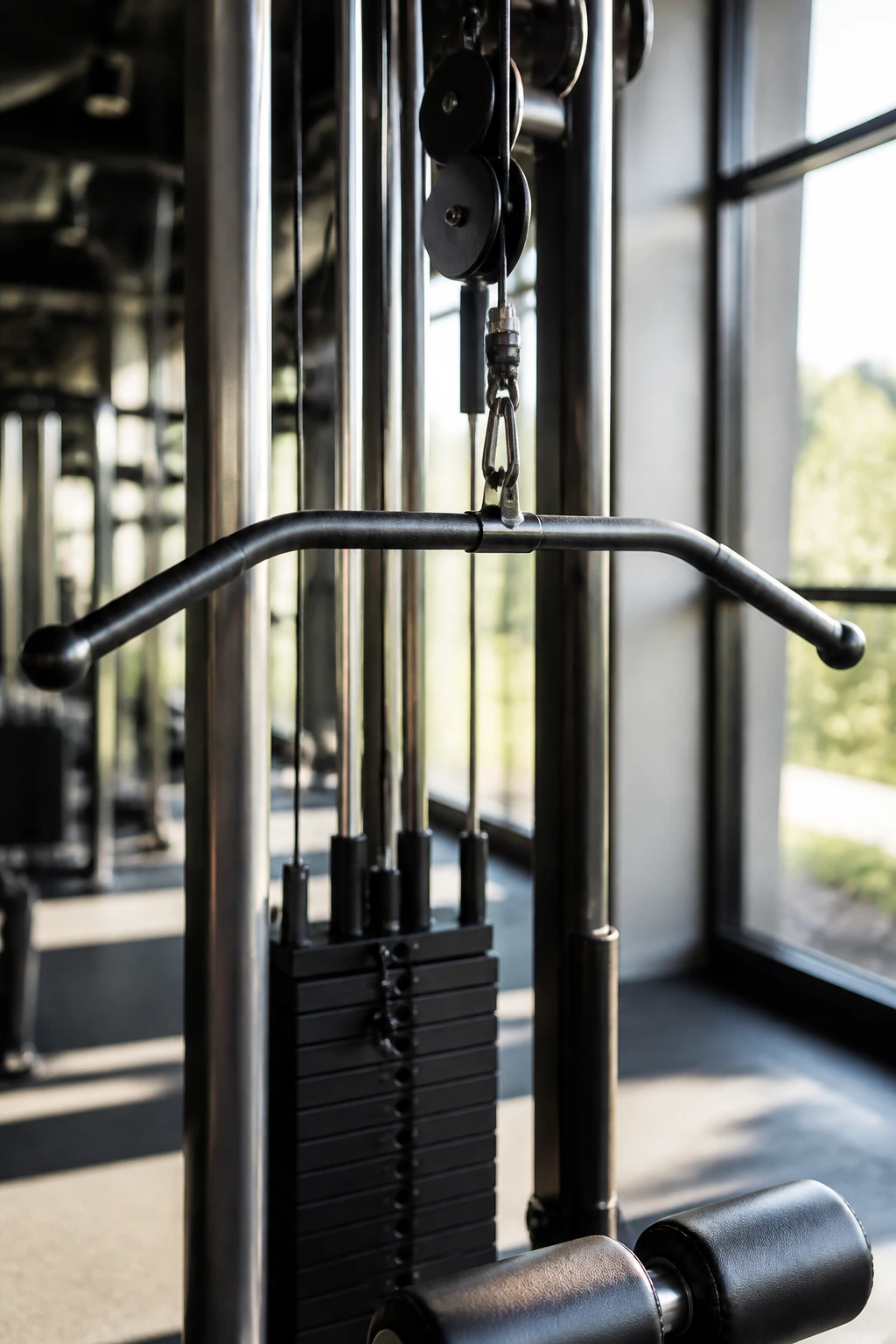
The lat pulldown is the machine version of a vertical pull, and it is one of the cleanest ways to teach the back how to work before someone attempts full pull-ups.
Quick facts
- The bar pulls down from overhead toward the upper chest.
- A grip slightly wider than shoulder width is usually a good starting point.
- The weight stack should move smoothly; a slam at the bottom means the load is too heavy.
- Behind-the-neck pulldowns are not a smart beginner choice for most people.
The big mistake is turning the pulldown into an arm curl. Your elbows should travel down and in, and your torso should stay mostly still, with just a small lean back. If you yanked the bar with your wrists, the load is too much or the setup is off.
The machine is useful because it gives you a very clear target. Pull the bar to the upper chest, pause for a second, and control the return. That last part matters. The return is where a lot of people lose the rep.
14. Seated Row Machine
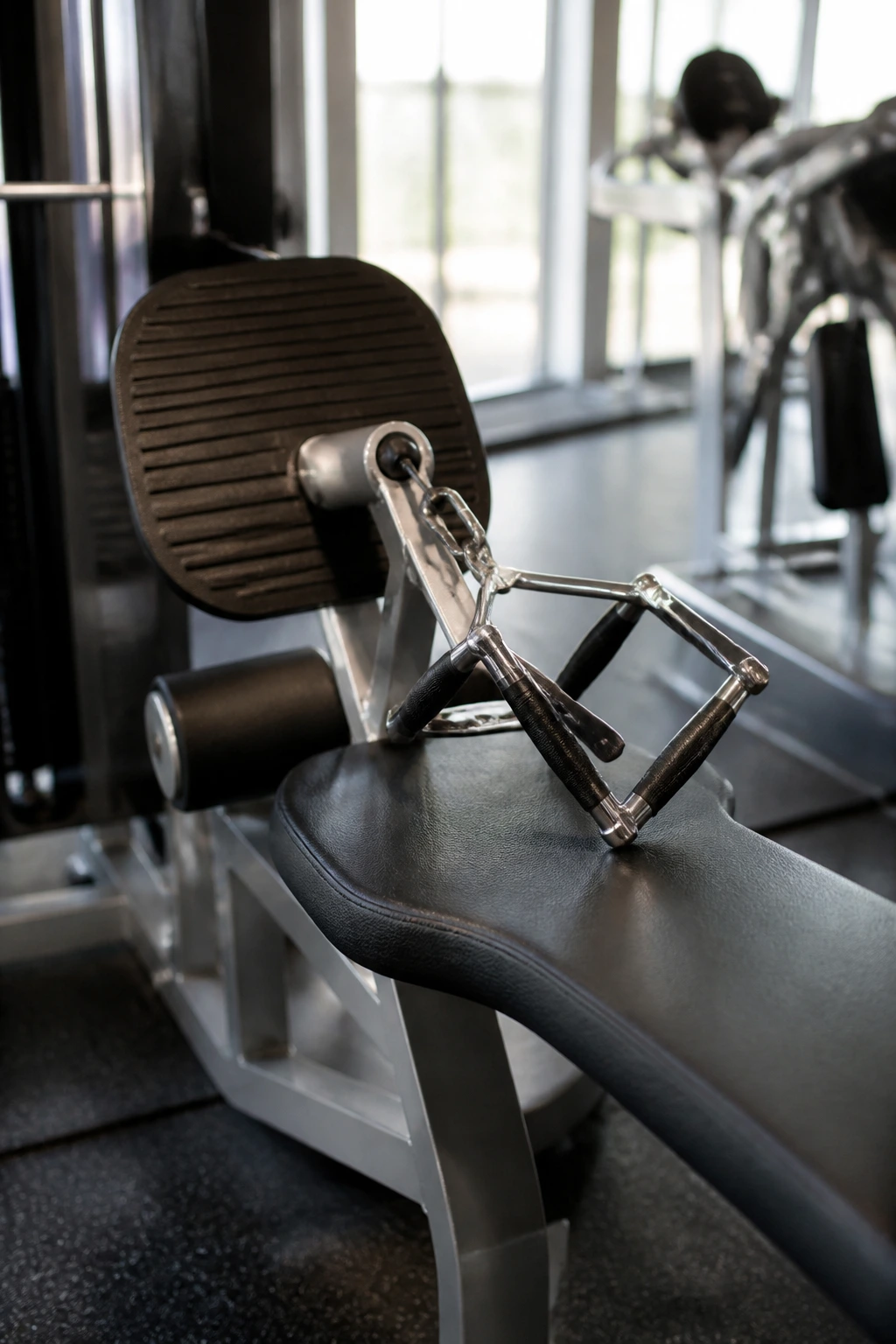
If your shoulders spend most of the day rounded forward, the seated row deserves your attention. It trains the pull that most desk-bound bodies need more than they realize.
A seated row works the middle back, lats, and rear shoulders while asking you to keep the torso stable. Depending on the machine, you may sit low with your feet on plates, or upright with a chest pad that keeps you from swinging. Both versions can be useful.
The key is not to yank the handle toward your stomach like you are starting a lawn mower. Let the shoulder blades move back first, then finish the pull with the elbows. That sounds tiny, but it changes the whole exercise from arm-dominant to back-dominant.
Handle shape matters too. A narrow neutral grip feels different from a wide handle or a single-arm attachment. If one version bothers your wrists, switch it. The machine does not care which handle you choose.
15. Leg Press Machine
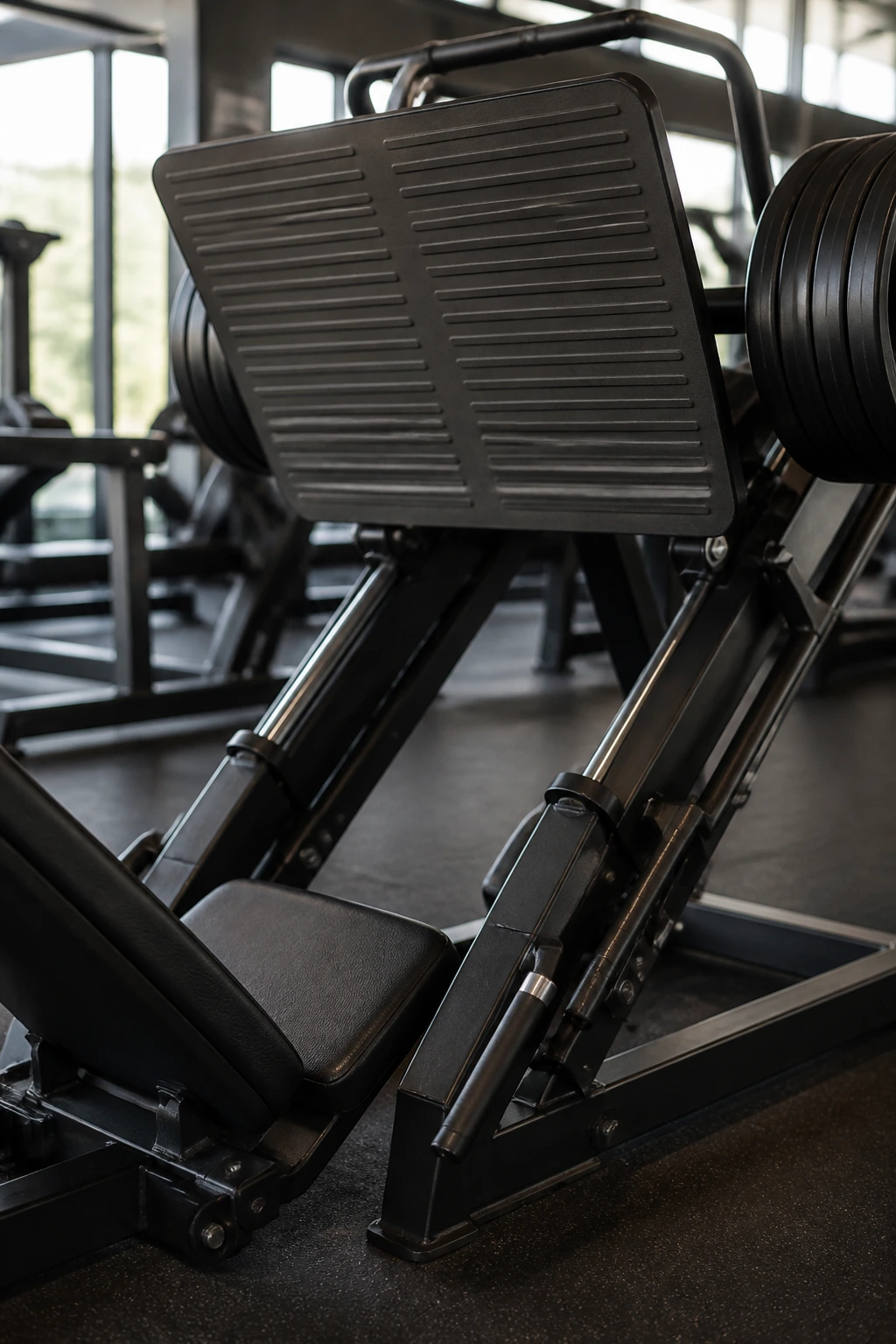
Why does the leg press feel safer than a squat, and why do people still mess it up? Because the backrest and sled do a lot of the stability work, but the machine still punishes poor depth and sloppy foot placement.
How to use it without folding your lower back
Sit back with your hips fully against the pad and place your feet shoulder-width apart on the platform. When you lower the sled, stop before your pelvis tucks under and your lower back rounds. That tucked position is the part you want to avoid.
Foot position changes the feel. A slightly higher stance tends to shift more work toward the glutes and hamstrings, while a lower stance pushes the quads more. Do not go so low that your heels lift or your hips peel off the seat. That is too deep for most beginners, even if the machine seems to invite it.
Press through the full foot, not just the toes, and do not lock the knees hard at the top. A soft finish keeps the rep cleaner and the joints happier.
16. Leg Curl Machine
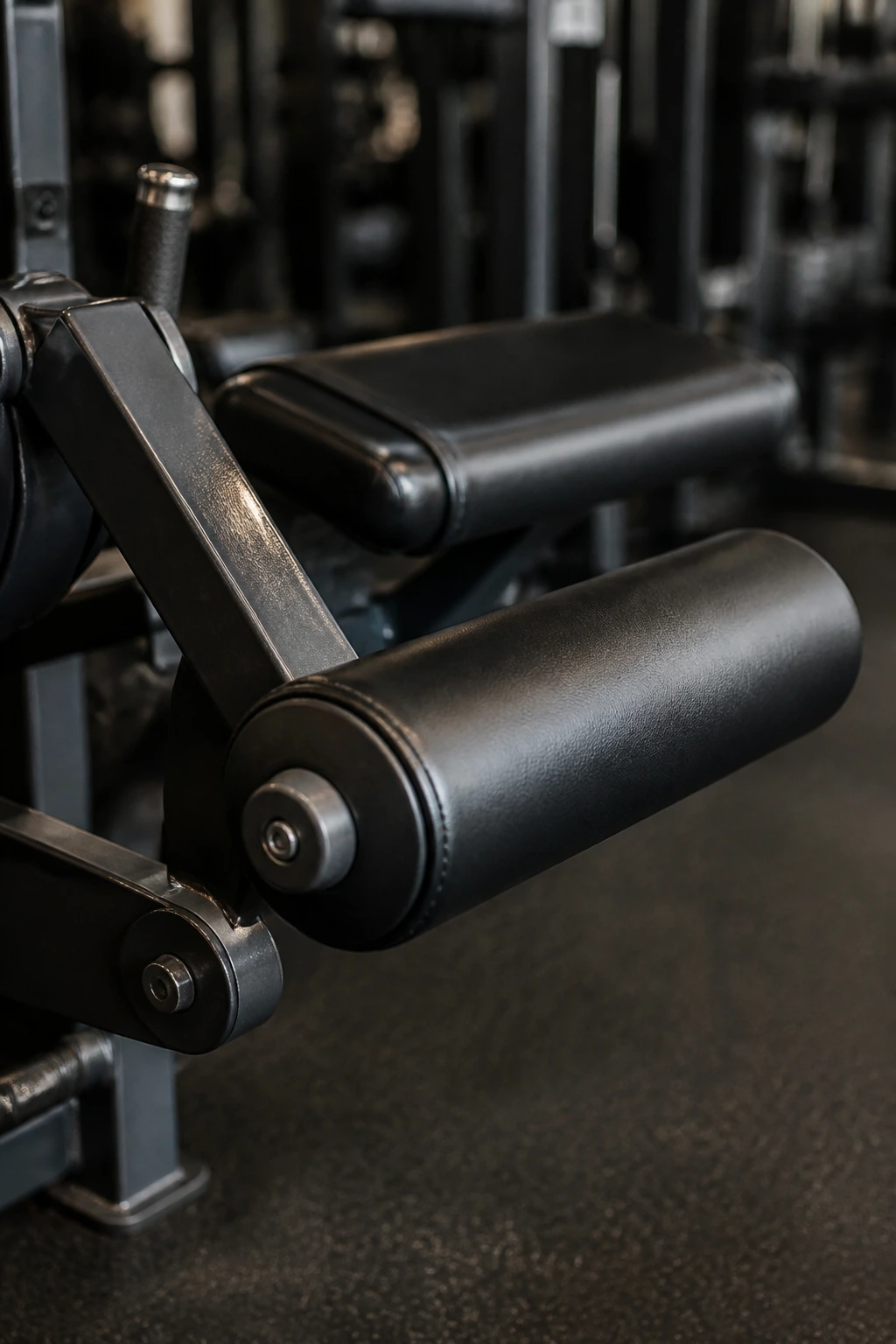
Hamstrings get ignored until the leg curl machine shows up and reminds everyone that knee flexion is a real job. The move looks simple: bend your knees against resistance. The feeling is not simple at all.
The machine comes in a seated or lying version, and both work the back of the leg in a slightly different way. Seated curls put the hip in a more flexed position, which changes how the hamstring feels. Lying curls stretch the muscle differently. Either one can belong in a beginner plan.
- Keep your hips planted on the pad.
- Use a smooth curl, not a snap.
- Lower the weight under control instead of letting the stack drop.
- Stop before your pelvis lifts or the rep starts to turn sloppy.
Leg curls pair well with hip hinges like deadlifts or Romanian deadlifts because they train the hamstrings from another angle. That makes the whole leg program feel more complete, and honestly, more sensible.
17. Leg Extension Machine
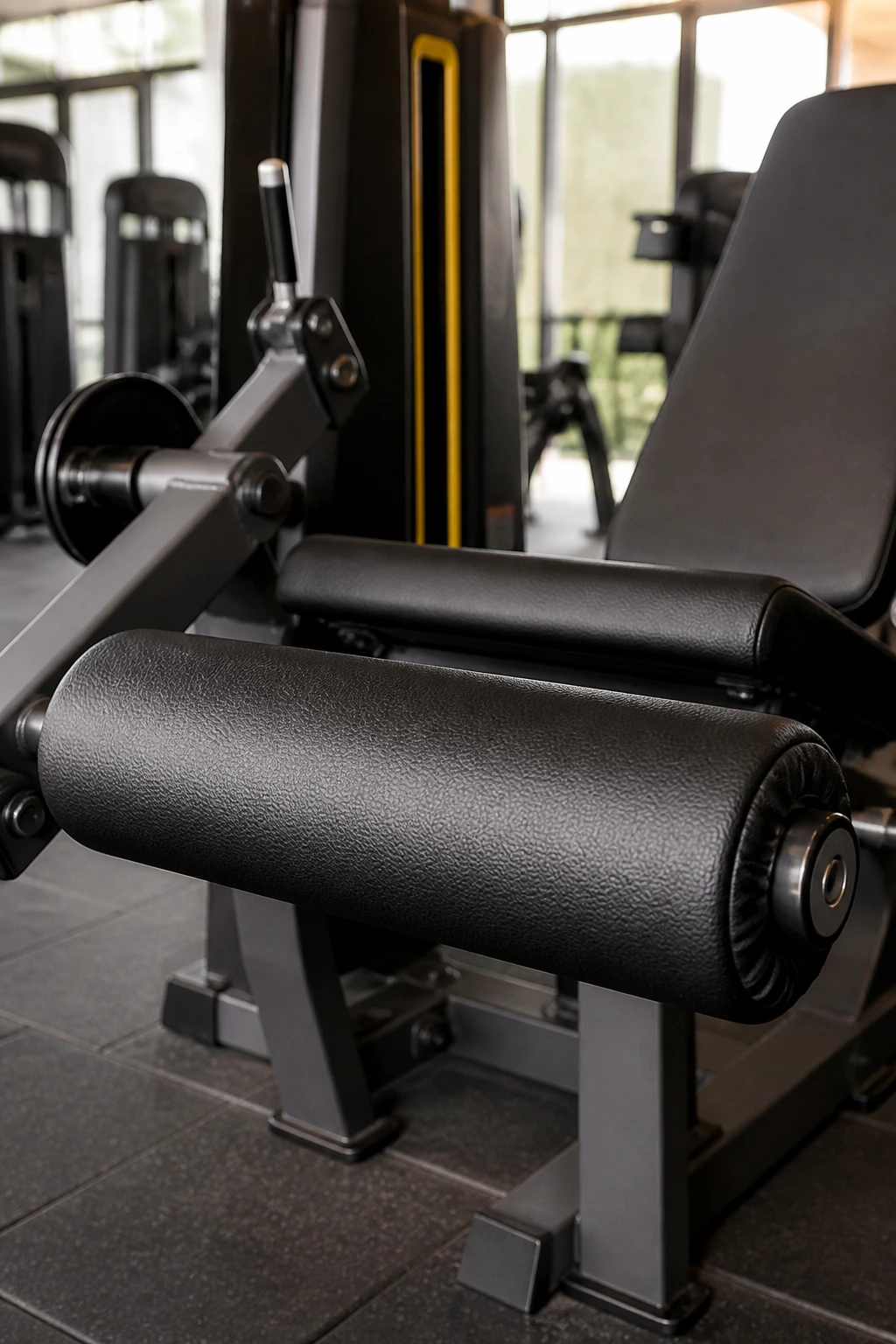
The leg extension machine is the quad isolation move people love to hate, usually because it burns fast and leaves no place to hide. That burn is the point.
Unlike a squat or a leg press, leg extensions isolate the quadriceps at the knee joint. That makes them useful when you want a direct quad stimulus without needing balance, a barbell, or a complicated setup. They are not a replacement for big compound lifts, but they have a real place.
The trick is to keep the motion smooth and stop chasing momentum. Kick the pad up under control, hold the top for a brief beat, and lower it slowly. If you slam the weight stack at the bottom or lock out aggressively at the top, the machine starts feeling rough instead of useful.
Some beginners think isolation work is somehow “less real.” Nonsense. Sometimes the direct route is the smart route. Especially if your quads need extra work and your squat pattern still feels messy.
18. Kettlebell
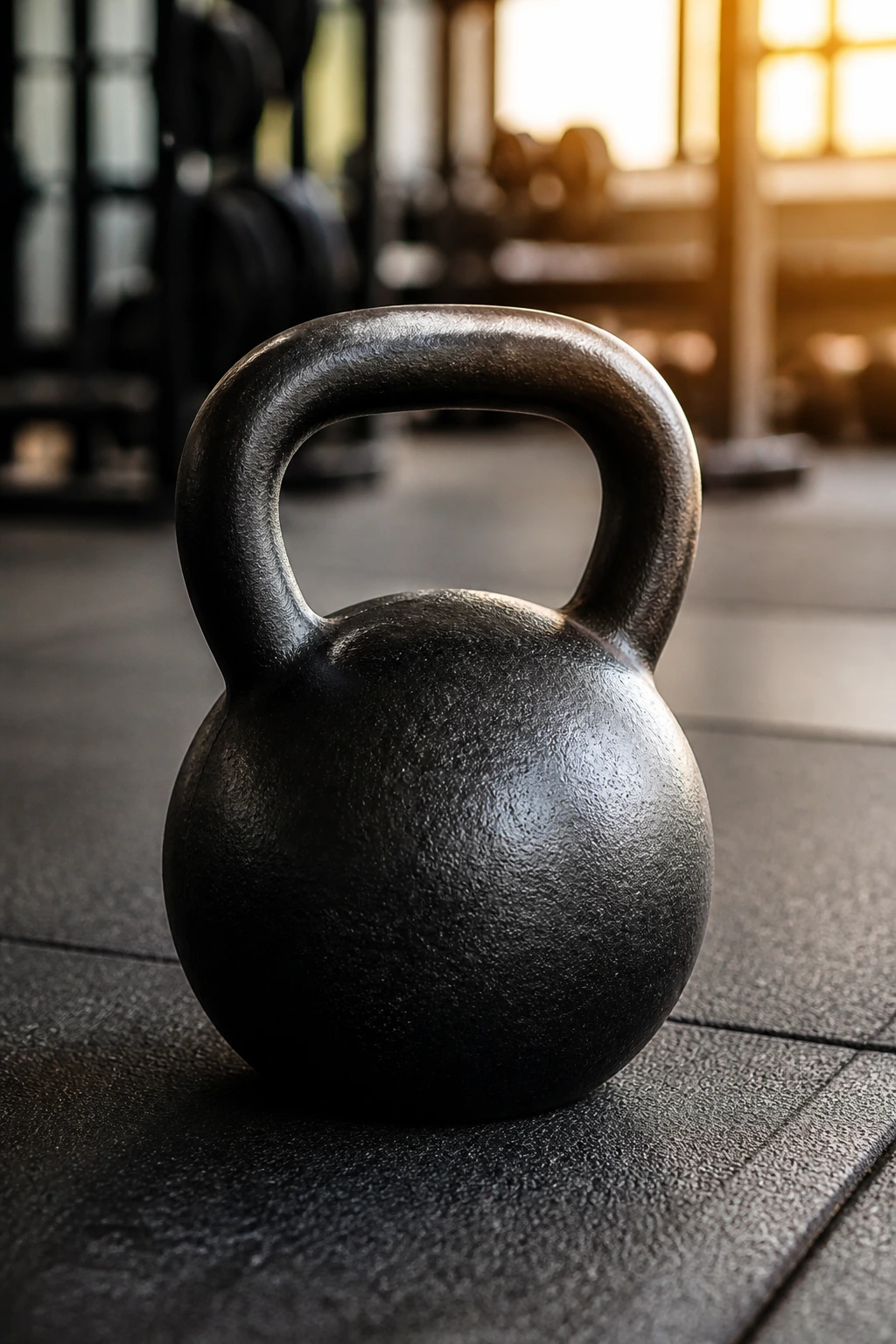
A kettlebell is not just a dumbbell with a handle on top. The off-center weight changes how it moves, and that changes everything from swings to carries.
Because the mass sits away from the handle, kettlebells challenge grip and control in a different way than dumbbells do. That makes them good for goblet squats, deadlifts, presses, swings, and suitcase carries. You feel the weight shift in your hands, which is part of the lesson.
For many beginners, one moderate kettlebell is enough to learn a lot. A lighter bell works better for presses and halo drills, while a heavier one often feels better for two-hand swings and deadlifts. The exact starting weight depends on the exercise, so do not pick one number and assume it fits everything.
If dumbbells feel like straight lines, kettlebells feel a little more alive. That can be awkward at first. Then it becomes useful.
19. Resistance Bands
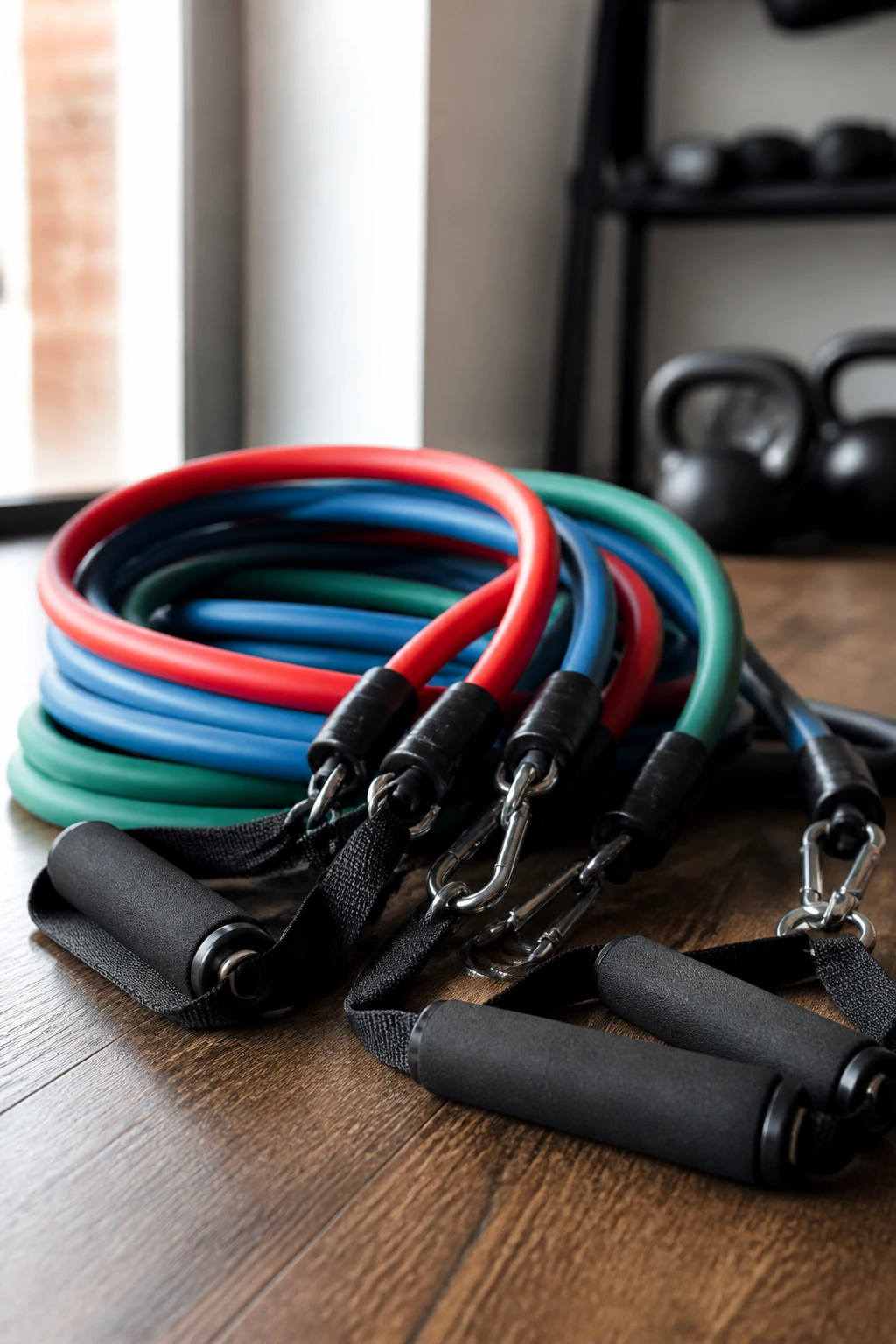
Resistance bands are one of the easiest pieces of gym equipment to underestimate. They are cheap, light, and small enough to disappear into a backpack, which makes people assume they are only for warm-ups.
What to look for
- Mini bands are handy for glute work and hip activation.
- Long loop bands can assist pull-ups or add resistance to squats and presses.
- Tube bands with handles work well for rows, presses, and simple home setups.
- Heavier bands need a secure anchor point; a bad anchor is the whole problem.
Bands change tension as they stretch, which means the resistance feels different at the start of the rep than at the end. That is useful for certain warm-ups and accessory drills. It also means form can get sloppy if you try to yank through the motion.
The one thing I tell people often: check the anchor before you pull hard. A snapped band is not a cute little inconvenience. It stings.
20. Pull-Up Bar
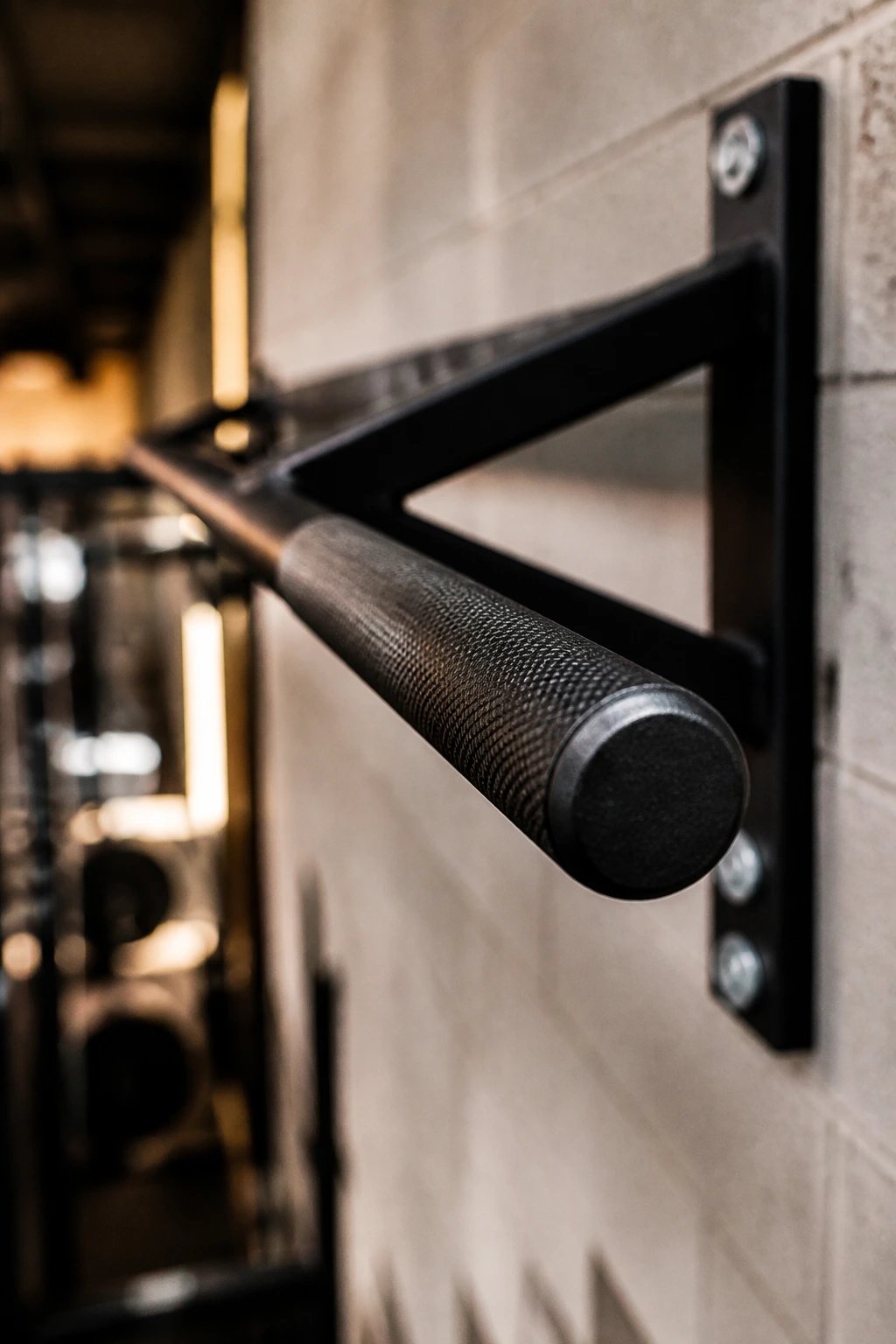
A pull-up bar is one of the hardest-looking pieces of equipment in the gym, and one of the best teachers. It does not care how polished your shoes are. It only cares whether you can hang on and pull.
A beginner does not need to crank out a full pull-up on day one. Dead hangs, scapular pulls, band-assisted reps, and slow negatives all count. Those pieces build the grip and shoulder control that make the full movement possible later.
The difference between a pull-up and a chin-up is grip position. Pull-ups use an overhand grip. Chin-ups use an underhand grip. Chin-ups usually feel a little friendlier for newcomers because the biceps help more.
How to use it without guessing
Start with a short hang of 10 to 20 seconds. Add shoulder blade pulls next, then try a band if you need one. The bar is one of those places where patience pays off faster than ego ever will.
21. Medicine Ball
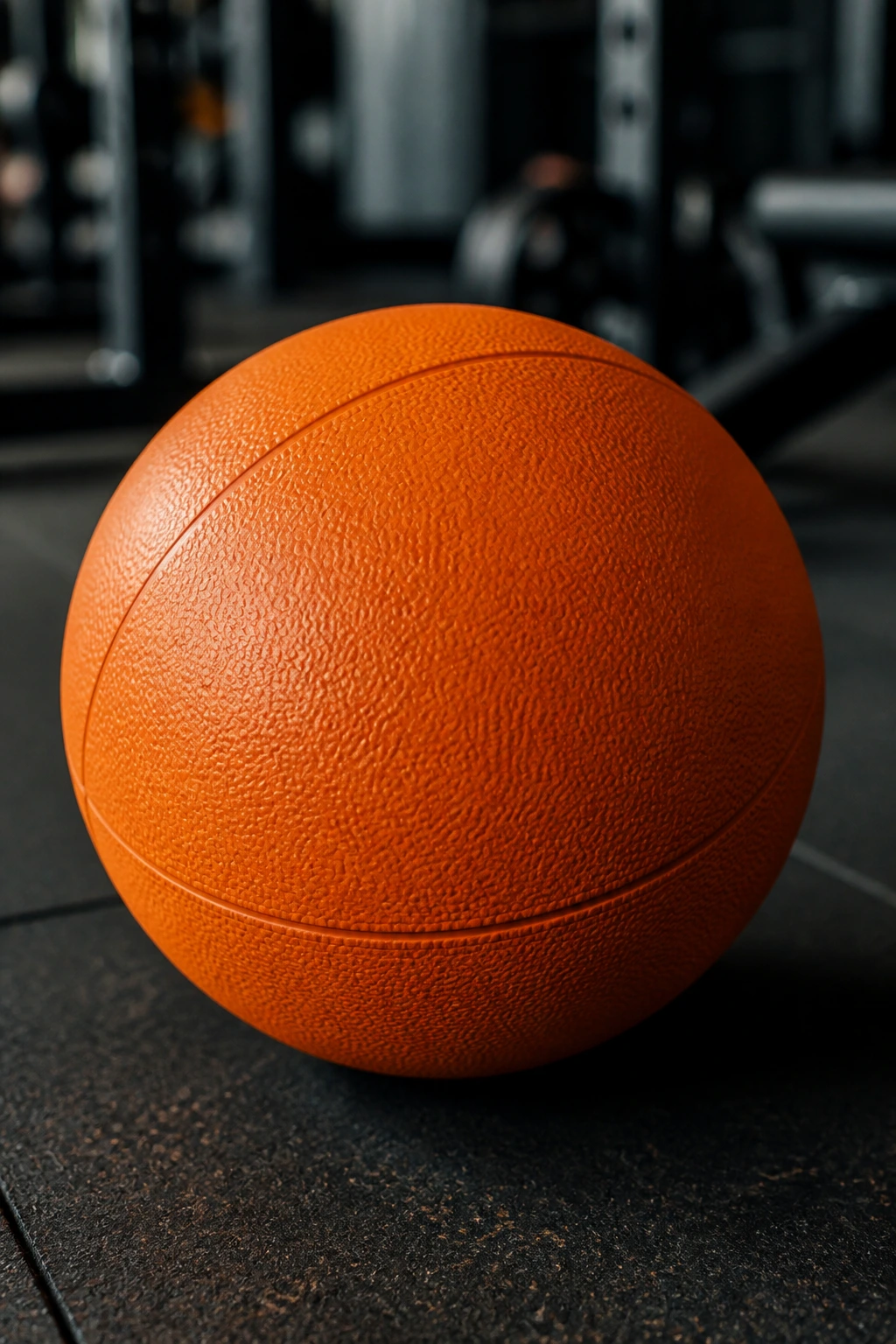
Why use a heavy ball instead of a dumbbell? Because a medicine ball lets you throw, catch, slam, and rotate in ways that free weights usually do not.
That makes it useful for power work, core drills, partner passes, and wall throws. A ball in the 4- to 12-pound range often gives beginners plenty to think about. Heavier is not automatically better here. If you move like a statue, the exercise loses what makes it useful.
How to use it safely
Keep the area clear if you are doing slams or rotational throws. Use a ball meant for impact work, not a fragile training prop that cracks the first time it hits the floor. For core exercises, keep your ribs down and your spine steady instead of swinging your back around to fake extra effort.
Medicine balls are one of the few gym tools that can feel playful and serious in the same minute. That’s rare. And useful.
22. Stability Ball
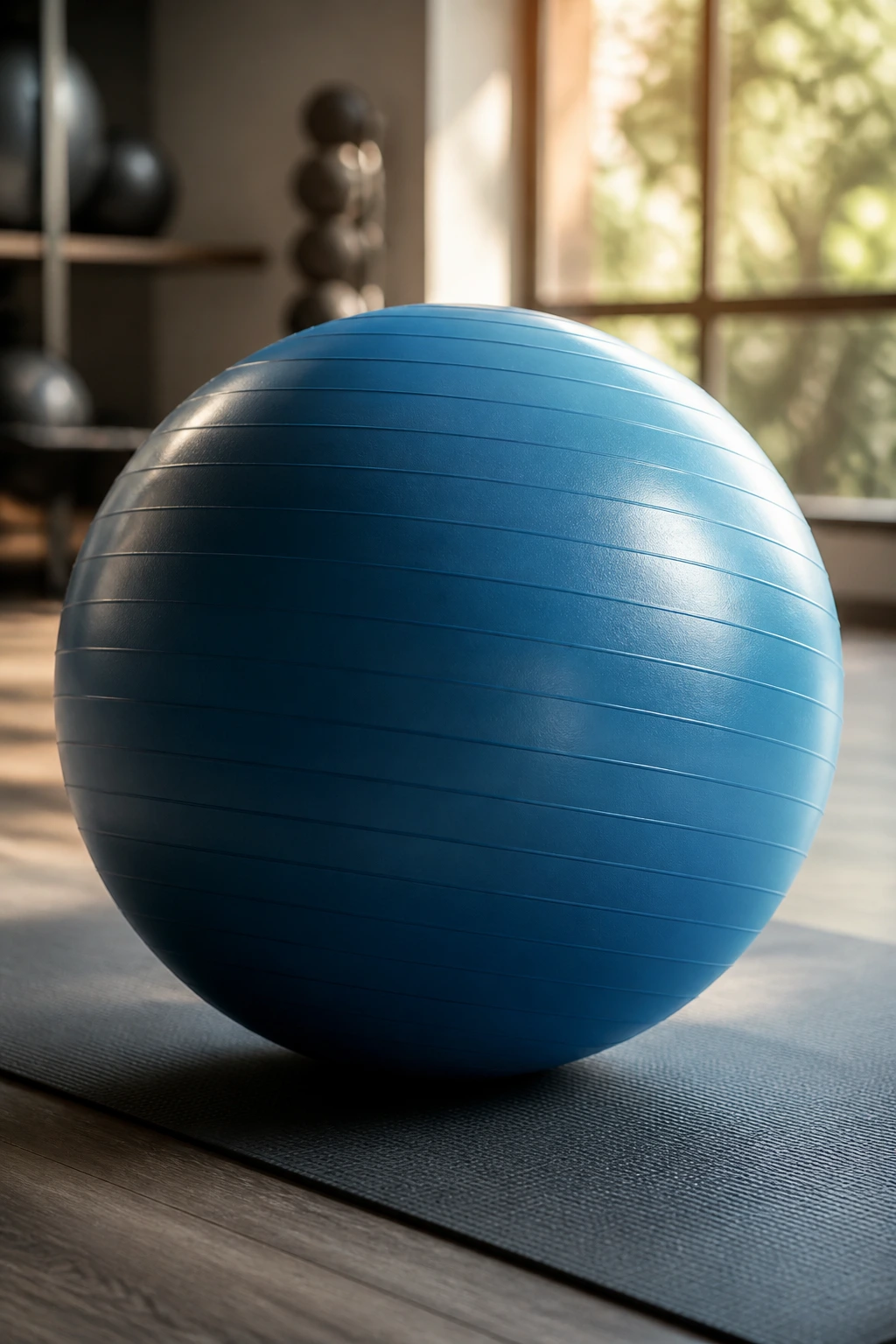
A stability ball looks like a toy until your hips start shaking during a simple plank or hamstring curl. Then it feels a lot less like a toy.
The point of the ball is unstable support. Your body has to keep itself centered while the surface shifts under you, which makes core and balance work feel different from a floor exercise. It can be a solid option for bridges, rollouts, pike variations, and seated mobility work.
- Ball sizes usually run around 55 cm, 65 cm, or 75 cm.
- Proper inflation matters; a soft, underfilled ball feels mushy and unstable in a bad way.
- Keep it away from sharp edges and anything that can puncture it.
- Use it for controlled drills, not for heavy lifting fantasies.
I like the stability ball for controlled training, but I do not love watching people turn it into a circus prop. Keep the reps clean and the range sensible, and it earns its place.
23. Foam Roller
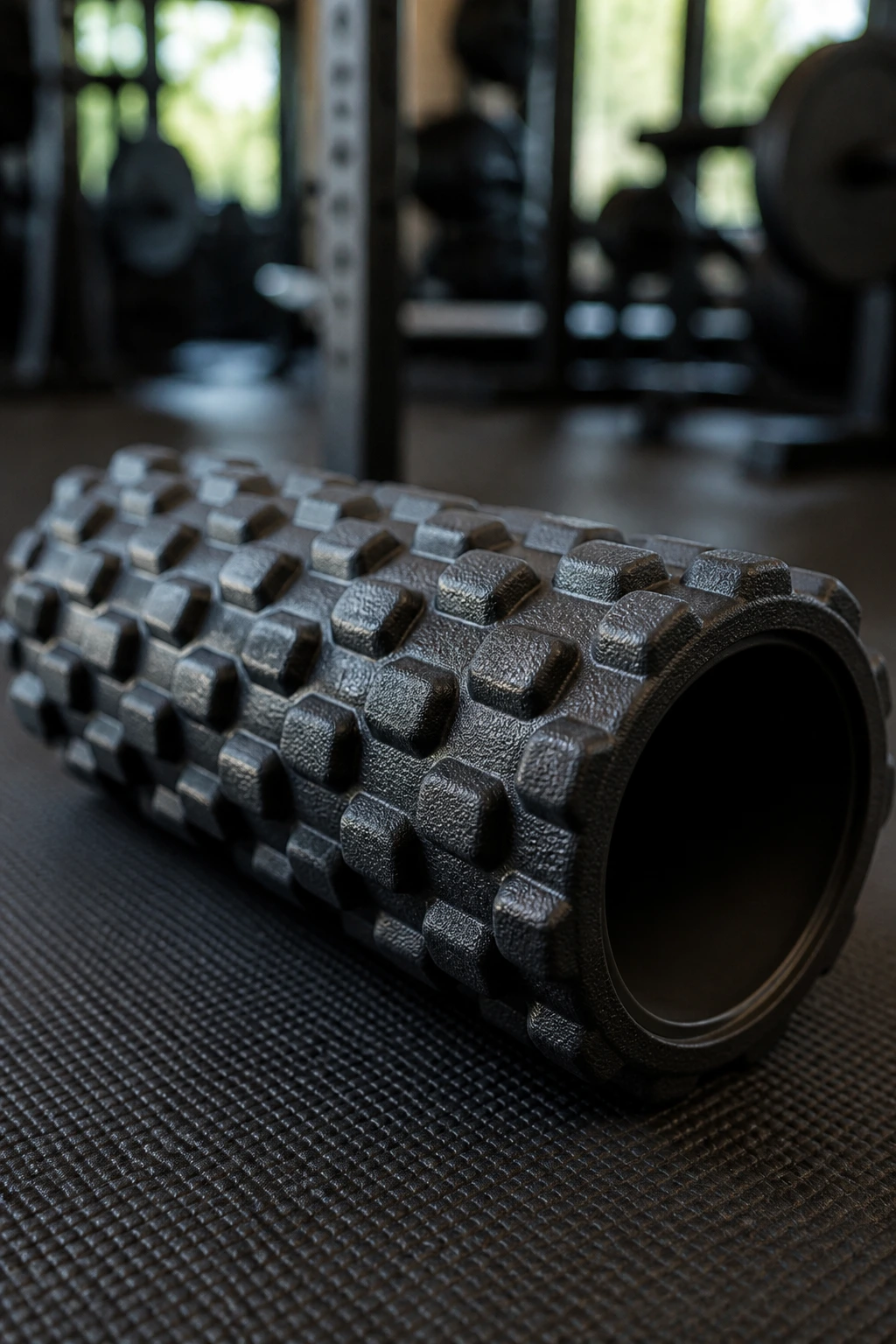
The foam roller is one of the most misunderstood things in the gym. Some people treat it like a magic fix for soreness. It is not that. Some people ignore it completely. That is a mistake too.
A foam roller applies pressure to muscles and the tissue around them, which can make tight areas feel less cranky and make warm-ups feel smoother. Quads, calves, glutes, upper back, and lats are common spots. The key is to move slowly, pause on tender spots, and breathe. Twenty to thirty seconds per area is plenty to start.
Do not roll directly on joints or hard bones. That is not the point, and it feels awful for no useful reason. Use enough pressure to notice the tissue without bracing your whole face like you’re under interrogation.
A good foam rolling session can make your warm-up feel less stiff. It will not replace sleep, hydration, or sensible training load. Nothing does.
24. Jump Rope
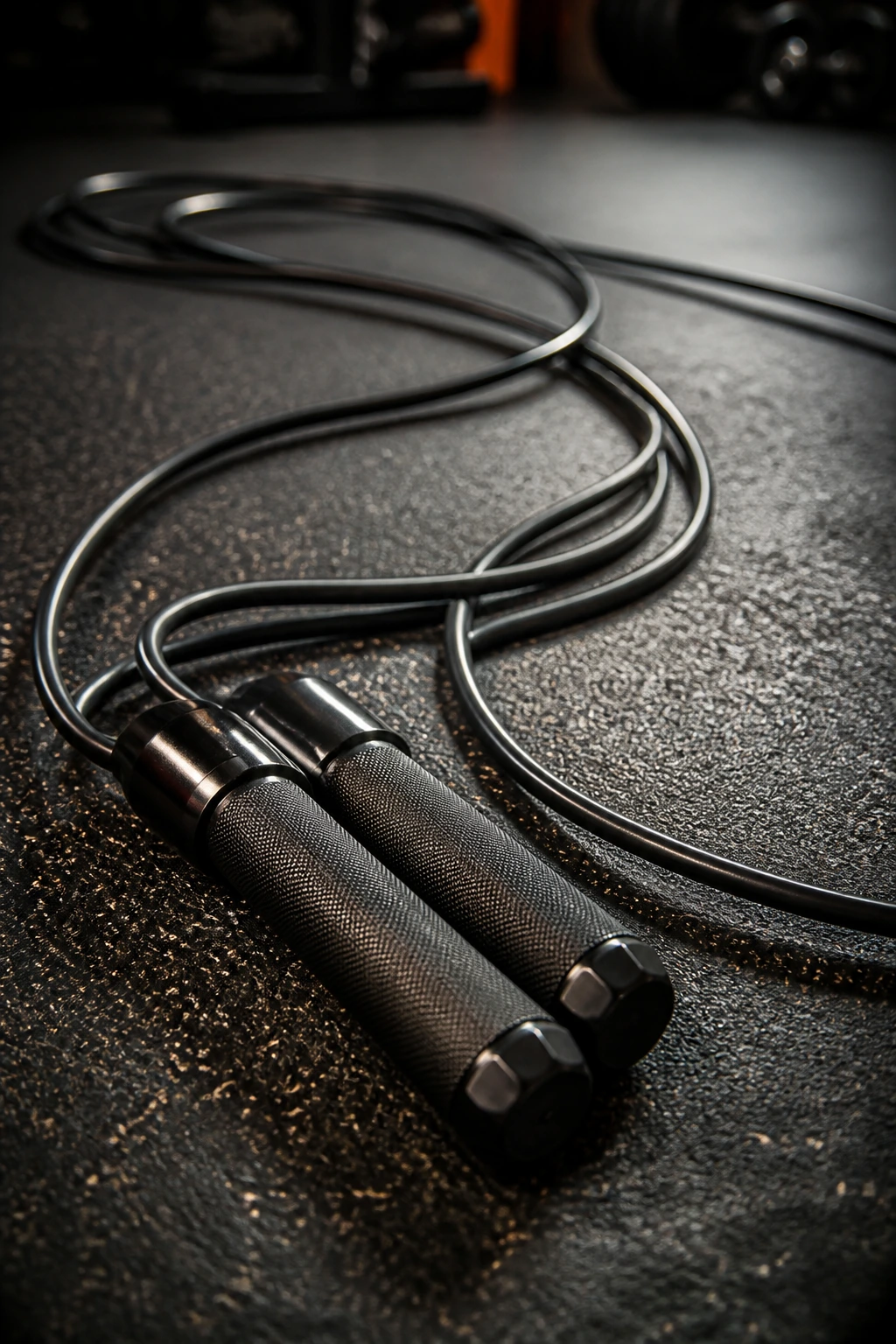
A jump rope is a tiny piece of equipment with an unfair amount of cardio payoff. It takes almost no space, warms you up fast, and punishes sloppy timing within a minute.
Compared with a treadmill, the rope asks for rhythm and coordination instead of a belt doing the work for you. That makes it a nice change of pace on days when you want shorter bursts and a little footwork practice. It also lights up the calves fast, so do not be surprised when your lower legs start talking back.
The rope length matters more than many beginners think. Stand on the center and pull the handles up; they should reach somewhere around your chest or armpits, depending on the style. Too long and you trip more. Too short and the rope feels weirdly jerky.
Small jumps win. You do not need to leap into the air like you are trying to clear a curb. A low bounce keeps the rope moving and saves energy.
25. Battle Ropes
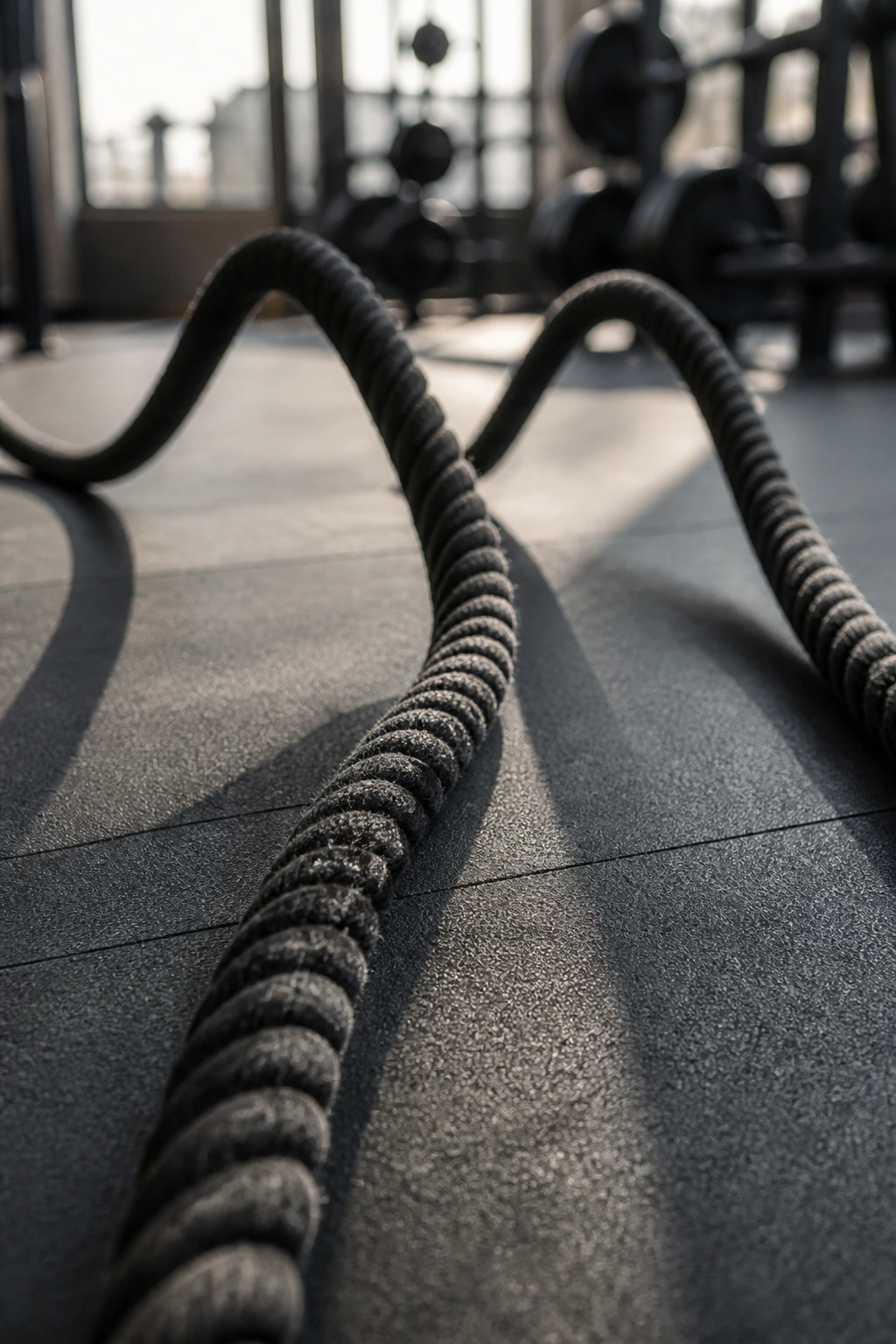
Battle ropes look simple from across the room. Then you pick them up, start waving, and discover how quickly your shoulders, core, and lungs can complain.
What makes them useful
- Short bursts of 15 to 30 seconds are common and effective.
- Wide stances help you stay balanced when the ropes get heavy.
- Alternating waves and double slams feel very different.
- Outdoor turf or rubber flooring helps because the ropes can drag and slap hard.
The best part about battle ropes is how fast they expose weak conditioning. There is no hiding in a tiny wave pattern forever if your posture is collapsing. Your stance needs to stay athletic, knees soft, chest tall, and hands moving with purpose.
They are a nice choice when you want hard conditioning without running. Loud? Yes. Unmissable? Also yes. But they earn the noise.
26. TRX Suspension Trainer
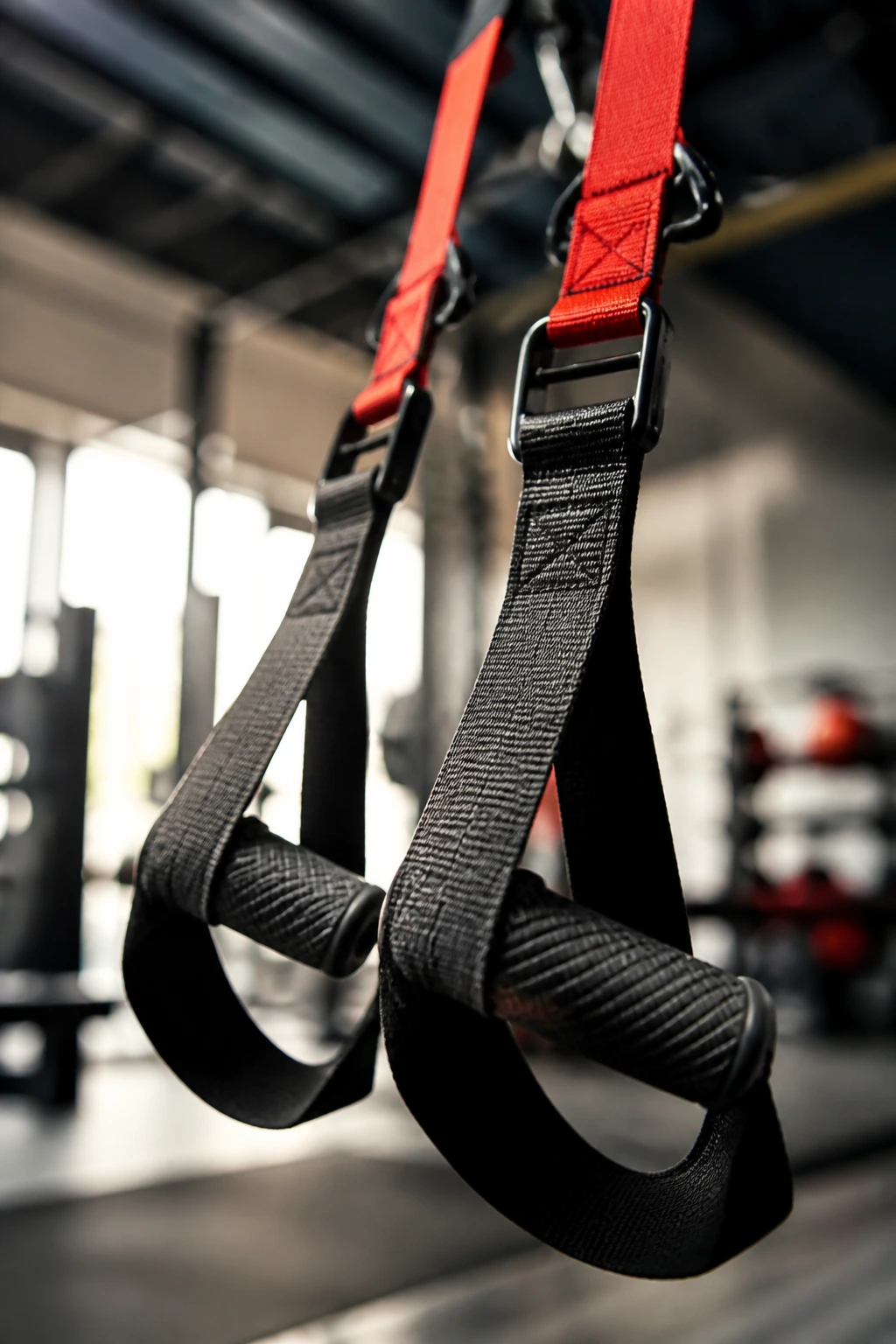
A TRX suspension trainer is just a pair of straps until you lean your body out and realize your own weight can be the resistance.
The beauty of the setup is that the load changes with your body angle. Stand more upright and the movement gets easier. Lean farther back or forward and the work ramps up fast. That makes it one of the friendlier tools for beginners who need adjustable difficulty without swapping plates or pin settings.
TRX rows, push-ups, split squats, hamstring curls, and fallout-style core drills all fit well here. The straps also force you to stabilize through the shoulders and trunk, which is why the exercises can feel clean and humbling at the same time.
I like TRX work for home gyms and busy gym floors because it does not take over a whole corner. You just need a secure anchor point and enough space to move. Simple setup. Hard work.
27. Ab Wheel
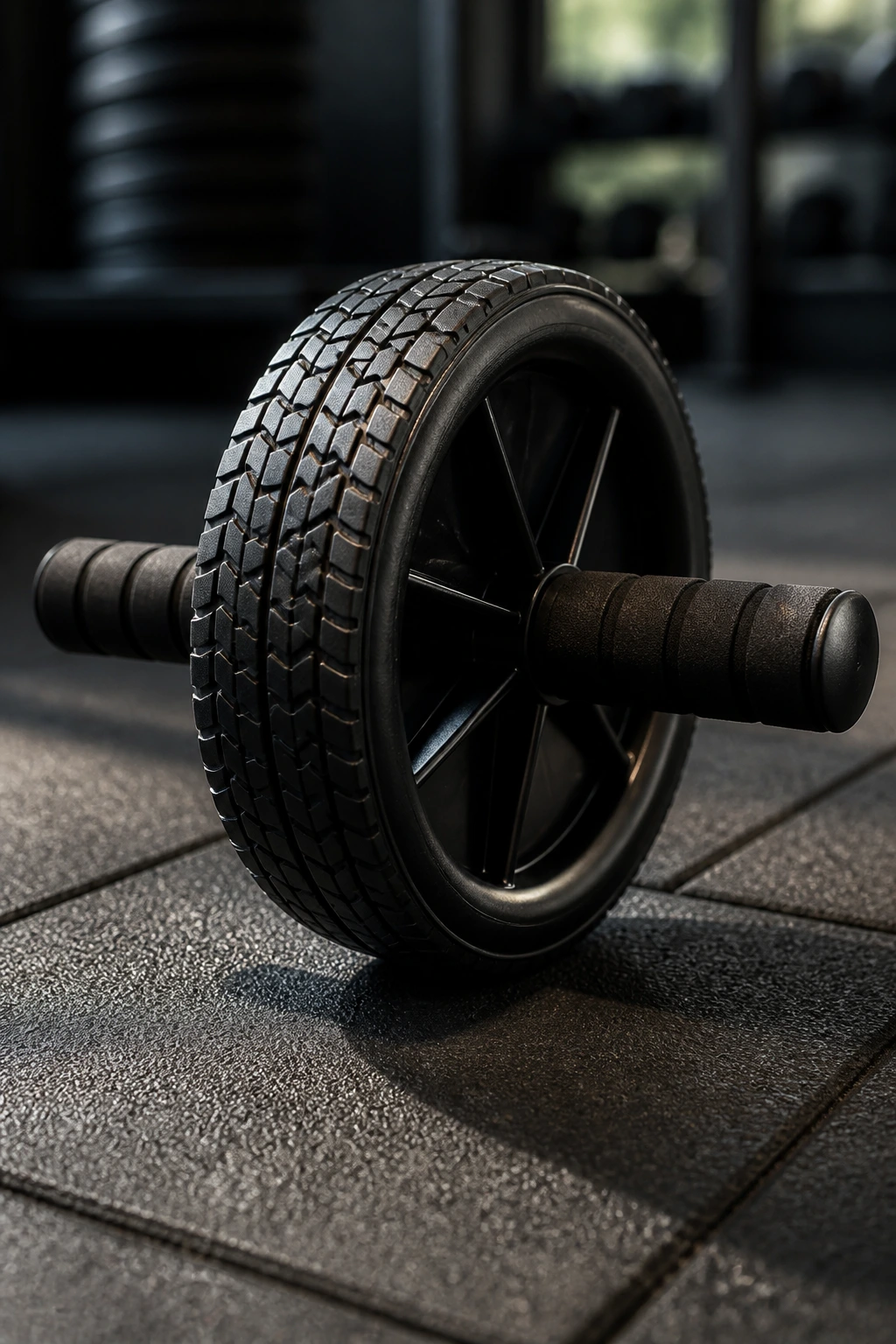
Why does such a small wheel make so many people curse? Because the ab wheel asks your core to stop pretending and actually hold your spine in place.
The movement is a rollout. You start on your knees, grip the handles, and roll forward only as far as you can keep your ribs from flaring and your lower back from sagging. The motion seems tiny. Then the front side of your body starts shaking.
How to start without wrecking your back
Begin with a short range of motion. Do not chase the floor on your first day. Keep your hips tucked slightly, brace your abs, and stop the rollout before your back arches. That part matters more than how far the wheel travels.
You can also do partial reps from a wall or an elevated setup if a full floor rollout feels too aggressive. The wheel is a brutal little tool when it is used well, and a sloppy one when it is not. There is no middle ground for long.
28. Dip Bars
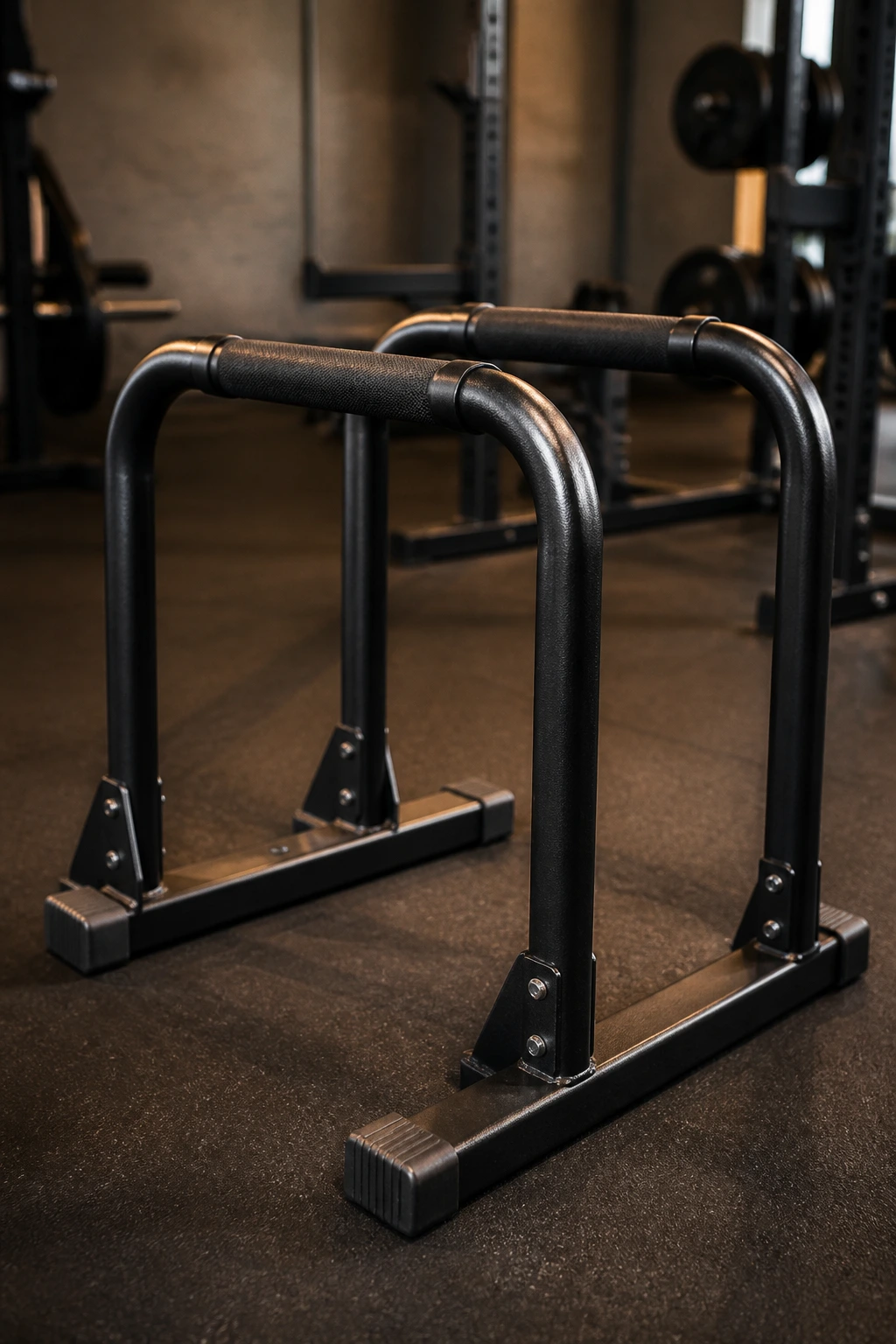
Parallel bars can look plain, until your shoulders decide otherwise. Dips and support holds ask for more control than most people expect, especially if they rush the setup.
Dip bars are used for triceps-focused dips, chest-leaning dips, knee raises, and support holds. They can also help you practice top-position strength before you can handle full reps with clean depth. That makes them useful for beginners who want to build pressing strength without a bench.
- Keep the shoulders packed instead of letting them shrug up toward your ears.
- Use a small range first if full dips feel rough.
- Try knee raises if bodyweight dips are too much right now.
- Check the bar spacing; wider bars can feel less friendly on some shoulders.
If the bottom of the dip feels pinchy, stop trying to force more depth. Better to own a smaller range than to grind through a range your shoulders hate.
29. Landmine Attachment
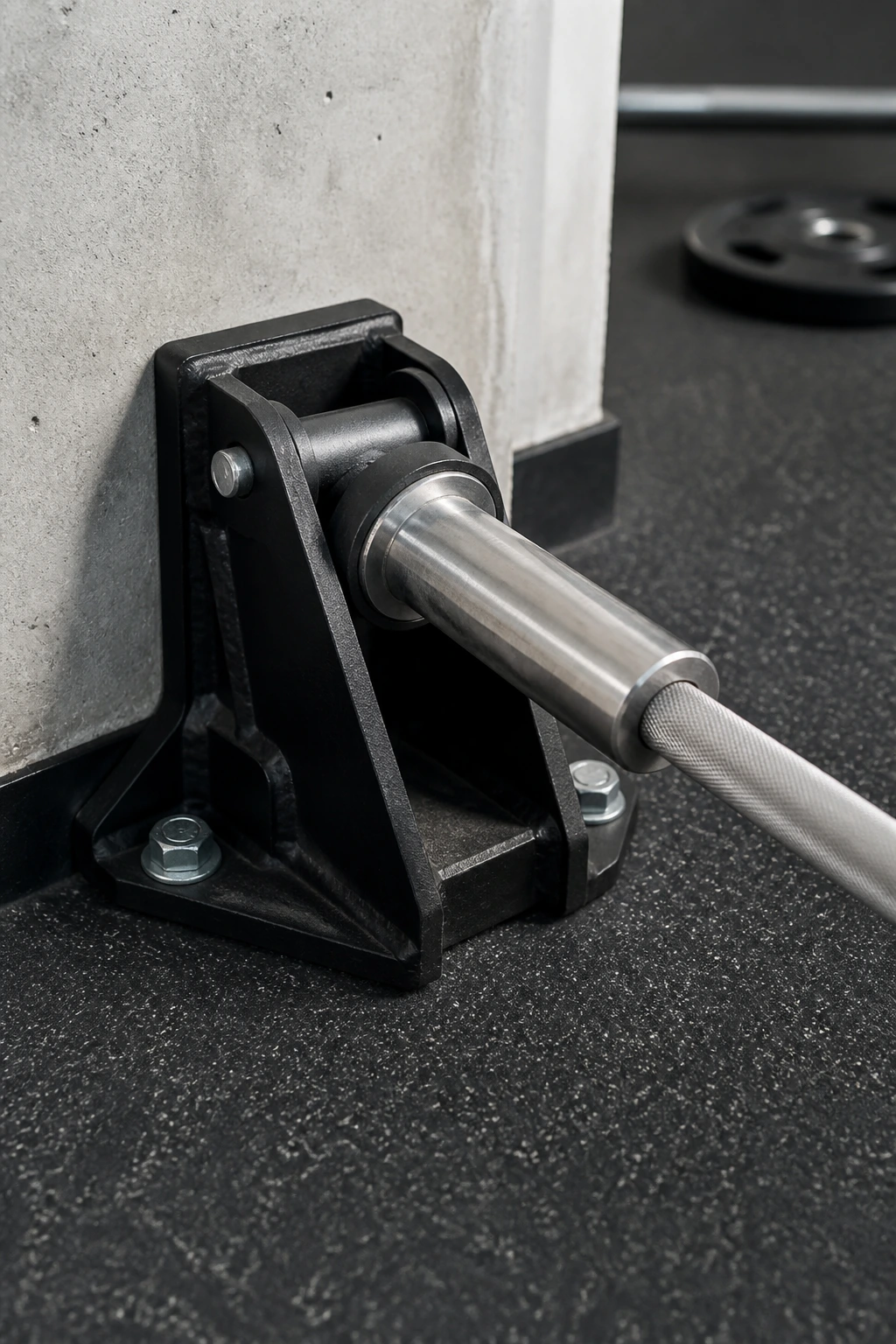
A landmine attachment is one of those pieces of equipment people overlook until they try it once and realize how useful it is. A barbell sleeve is anchored into a corner or a landmine base, and that creates a fixed arc that feels friendlier than a straight-up overhead bar path.
That arc changes pressing, rowing, and squatting patterns in a way beginners can often handle more easily than full barbell versions. The half-kneeling landmine press is a favorite of mine for that reason. It teaches shoulder control without demanding the same overhead stability as a strict press.
The landmine also works well for rows and rotational drills, especially when a beginner wants a strong movement that does not feel as intimidating as a big bar on the back. Just make sure the anchor is secure. A loose setup ruins the whole point.
It is one of those odd-looking tools that becomes obvious only after you use it.
30. Sled
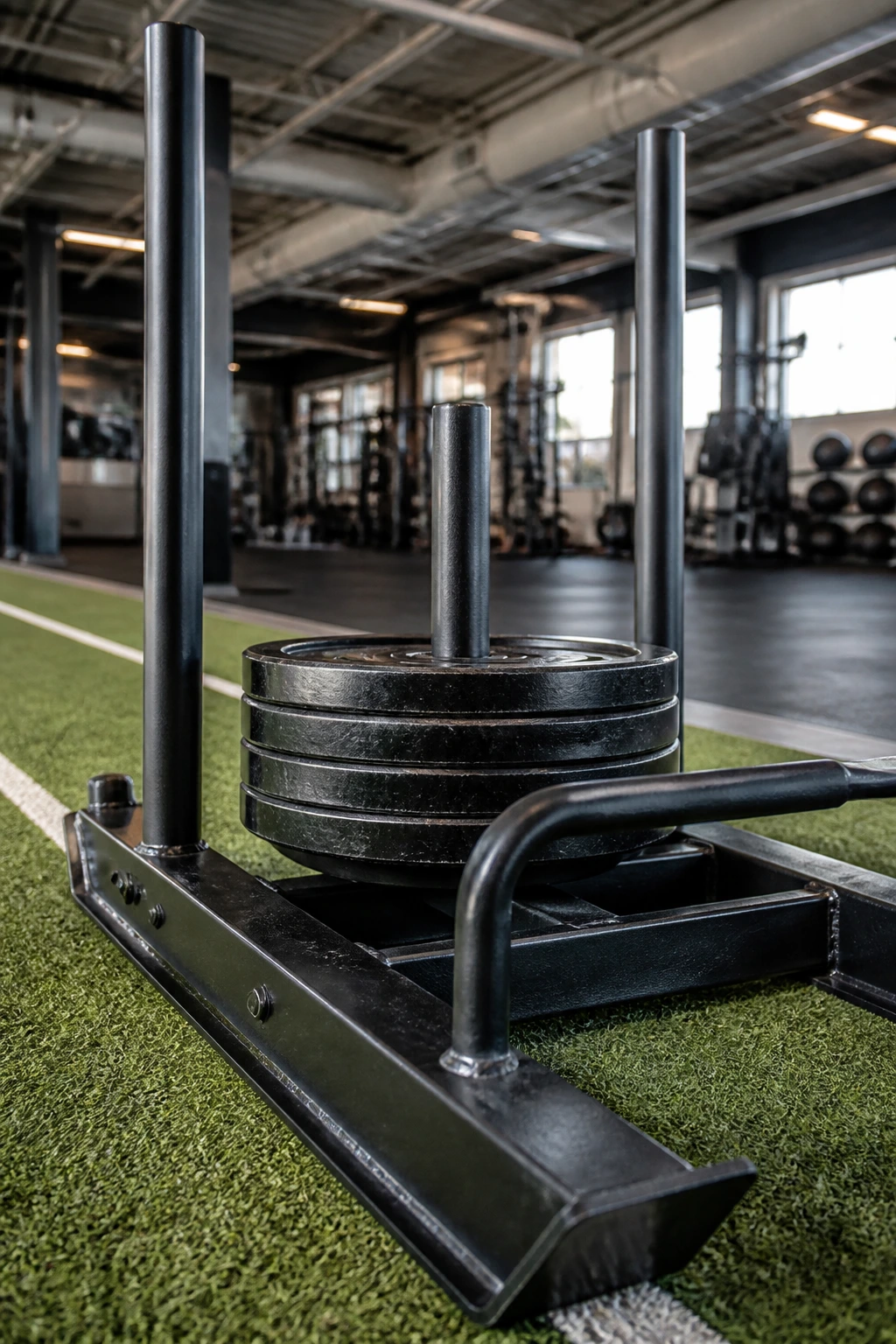
A sled is one of the cleanest conditioning tools in the gym, and it is brutally simple. Load it up, push it, pull it, drag it, repeat.
Unlike sprinting, the sled lets you go hard without the same impact on the joints, which is why it shows up in strength gyms, turf areas, and conditioning circuits. It works the legs, lungs, and trunk all at once, and it does not need fancy coaching to make sense.
Who should use it
- Beginners who want short bursts instead of long cardio sessions.
- Lifters who want conditioning without beating up their knees.
- Anyone with turf space and enough room to push in a straight line.
- People who like simple work with no complicated setup.
The sled rewards steady pressure more than speed. Keep your torso angled forward, drive the floor away, and take short powerful steps. If the load is so heavy that the sled barely moves, it is too much for conditioning work and the session turns into a dead stop.
Final Thoughts
The fastest way to feel less lost in a gym is to learn the names of the things sitting in front of you. Once treadmill, cable machine, power rack, and dumbbells stop sounding like random nouns, the whole room gets easier to read.
You do not need to master all 30 pieces at once. Pick one cardio machine, one free-weight station, and one cable or band setup. Learn those three well, then add the rest as your training gets more specific.
Gym floors can look crowded and noisy, but most of the equipment is doing one of a few simple jobs. Pulling, pushing, lifting, carrying, conditioning. Once you see that pattern, the place feels a lot less mysterious — and a lot more usable.
