



A pair of dumbbells can do a lot for your arms if you stop treating curls like the whole story. Biceps matter, sure. But the triceps make up more of the upper arm than most people think, and shoulders change the way the whole arm looks when you reach, press, carry, or even stand with better posture. That is where dumbbell arm workouts for women at home get useful fast.
The biggest mistake I see is chasing tiny weights with sloppy speed. Ten fast reps that swing from the hips do less than six controlled reps that make your arms work through a real range. If the last three reps look exactly like the first three, the weight is too light. If your shoulders creep up toward your ears, the load is too heavy or the exercise needs a cleaner setup.
You do not need a garage gym. Two dumbbells, a floor, a chair, and a little patience will cover a surprising amount of ground. A lot of the shape you want comes from simple things done well: elbow position, slower lowering, honest range of motion, and enough resistance to make the final reps feel like work.
Pick four to six moves from the list, rest 30 to 75 seconds between sets, and train arms two or three times a week. Start with a quick warm-up—arm circles, light curls, shoulder rolls, and a few slow press-outs. Then the first move is exactly what it should be: clean, simple, and hard to cheat.
1. Alternating Dumbbell Biceps Curl
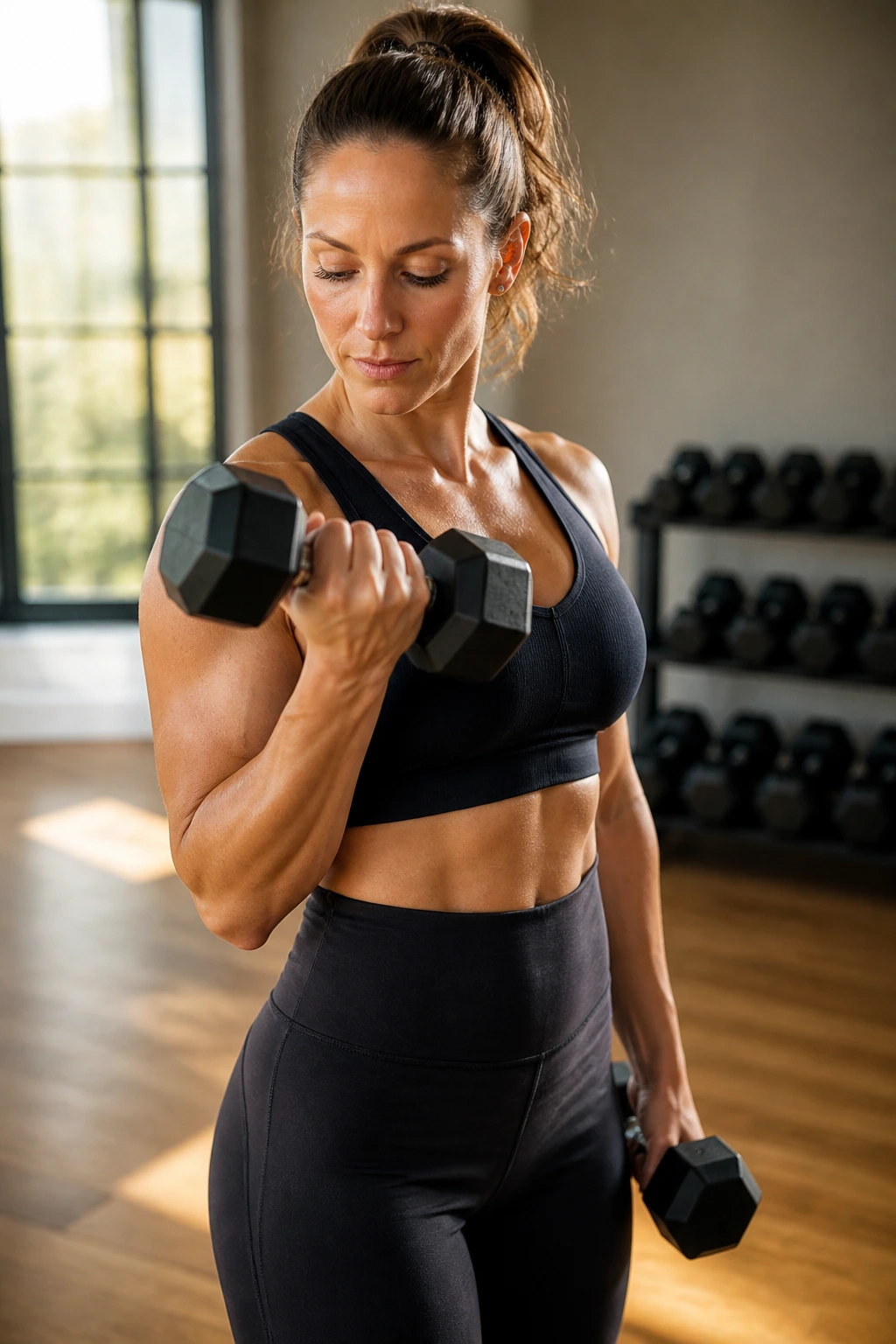
This is the arm move people think they already know, and then they realize they’ve been cheating it for years. Alternating curls are simple on purpose. One arm works while the other rests, which helps you keep the dumbbell path clean and gives you a better shot at strict form.
Why It Works
The alternating setup lets you feel each side separately. That matters when one arm is weaker, which happens more often than people admit. Keep your elbows close to your ribs, turn the palm up as you curl, and lower for a count of two or three. Three sets of 8 to 12 reps per arm is a solid place to start.
- Stand tall with feet hip-width apart.
- Curl one dumbbell at a time.
- Stop before your shoulder rolls forward.
- Rest 30 to 45 seconds between sets.
Tip: If your body starts swaying, the weight is too heavy for this version.
2. Hammer Curl Hold
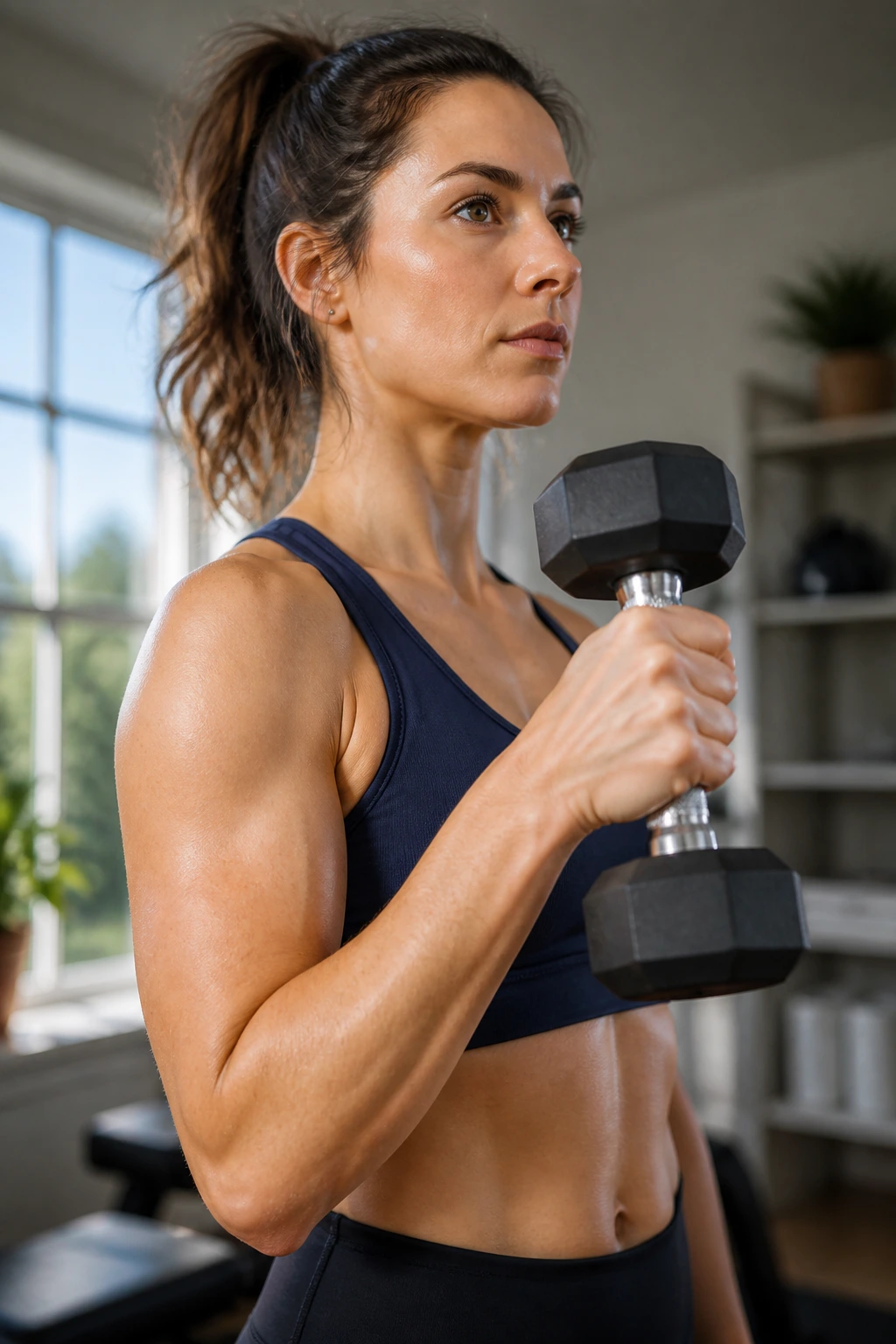
Hammer curls look calmer than regular curls, but they hit differently. The neutral grip lights up the brachialis and forearms, which gives the upper arm more thickness without needing wild weights. Add a hold at the top, and the movement gets mean in a useful way.
That top pause matters. A one- or two-second hold strips out momentum and makes you own the rep instead of tossing the dumbbell upward. Use a load you can control for 3 sets of 8 to 10 reps, and keep the wrists straight the whole time. No bending them back. No snapping the dumbbells up.
Use this when standard curls start feeling stale or when your wrists prefer a neutral grip. It also pairs well after rows or carries, because your grip is already warm. The burn sneaks up on you here. It always does.
3. Concentration Curl
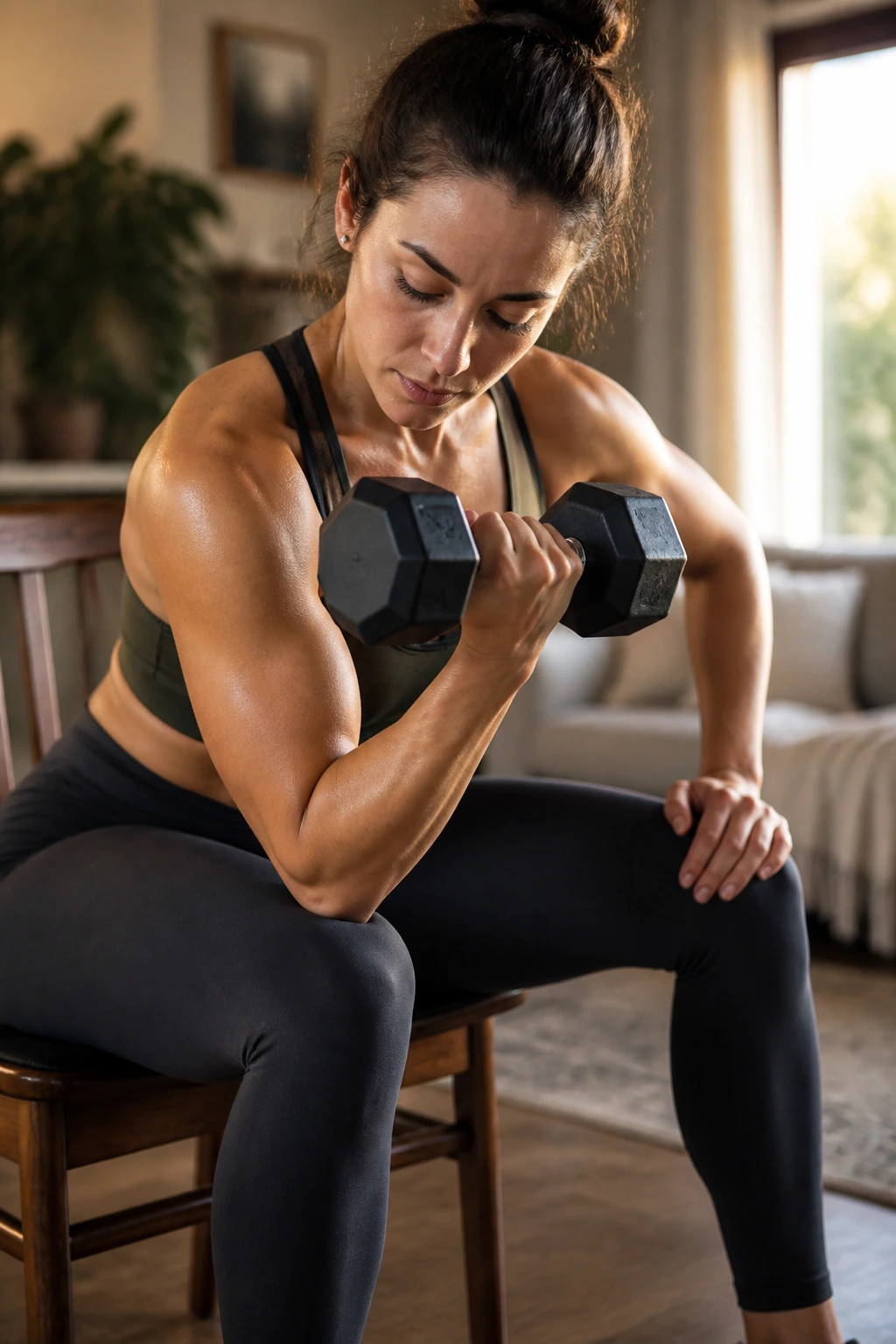
Why does a concentration curl burn so fast? Because there is nowhere to hide. Once your upper arm is braced against your inner thigh, the whole exercise becomes about control, not momentum, and that makes every inch of the curl work harder.
Sit on a chair or the edge of a couch, spread your feet, and let the working arm hang straight down. Curl the dumbbell toward your shoulder without letting the elbow drift forward. Lower slowly until your arm is almost straight. Ten to 15 reps per side works well here, especially if you are using this as a finisher after a bigger curl or press.
How to Use It
Take your time with the lowering phase. That is where the useful tension lives. If the top of your shoulder starts tensing up, reset and shorten the range a little. The goal is a tight biceps contraction, not a dramatic swing. Small move. Big sting.
4. Zottman Curl
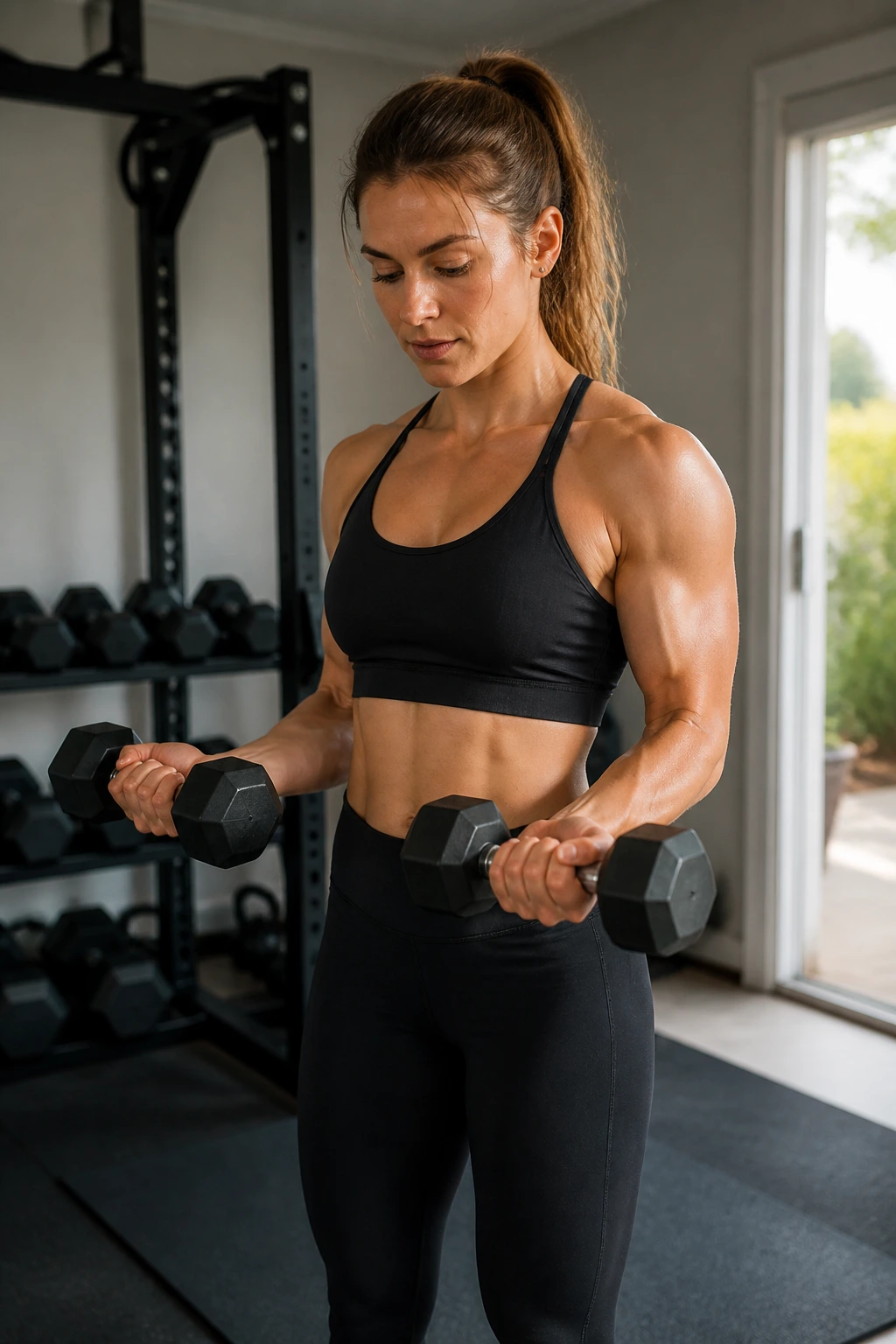
When you want biceps and forearms in one pass, the Zottman curl is hard to beat. You curl up with a palm-up grip, rotate at the top, and lower with the palms facing down. It feels awkward for the first few reps, then it starts making sense fast.
The reason it works is simple: the lifting phase hits the biceps, and the lowering phase asks the forearms to control the descent. That down phase should be slow—about three seconds if you can manage it. Keep the dumbbells light at first. This is not the place to show off.
- Curl up with palms facing forward.
- Rotate the wrists at the top.
- Lower with palms facing down.
- Use 2 to 3 sets of 8 to 10 reps.
Pro tip: If the rotation feels sloppy, reduce the weight before you reduce the tempo.
5. Curl to Shoulder Press
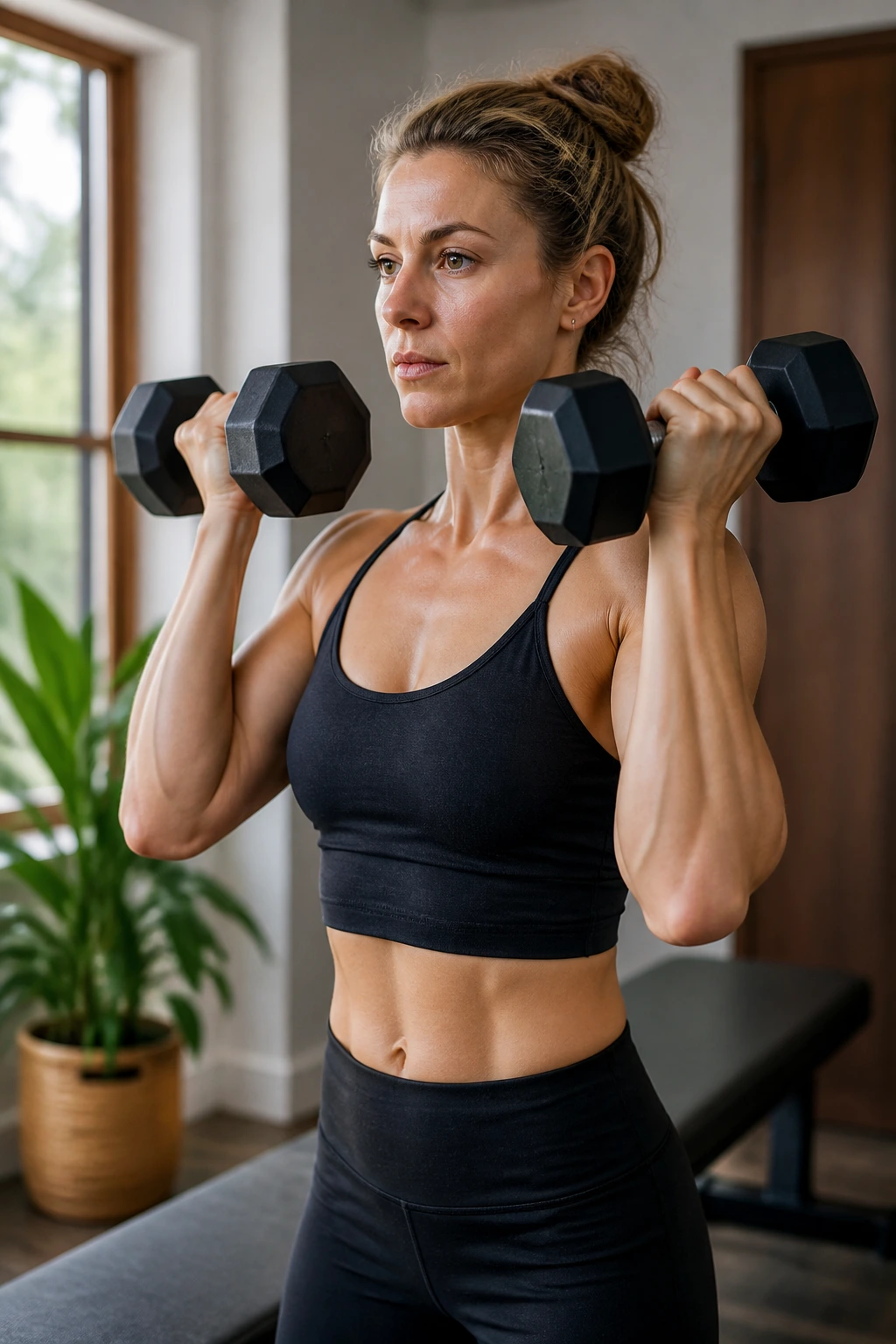
This is the move for days when you want an arm workout that also makes your heart rate jump a little. Curl to shoulder press combines elbow flexion with overhead pressing, so your biceps, shoulders, and triceps all get pulled into the same rep. It is efficient. And yes, it is humbling.
Stand with the dumbbells at your sides, curl them up, then rotate the palms forward and press overhead. Lower with control, curl again, and repeat for 6 to 8 slow reps. Don’t rush the handoff from curl to press. That transition is where people lean back and turn a decent rep into a lower-back shrug.
Use a weight that feels moderate rather than heroic. If you cannot keep your ribs down, the dumbbells are too heavy. Two or three sets is enough here. It is a busy little move, and busy moves need cleaner form, not more speed.
6. Overhead Triceps Extension
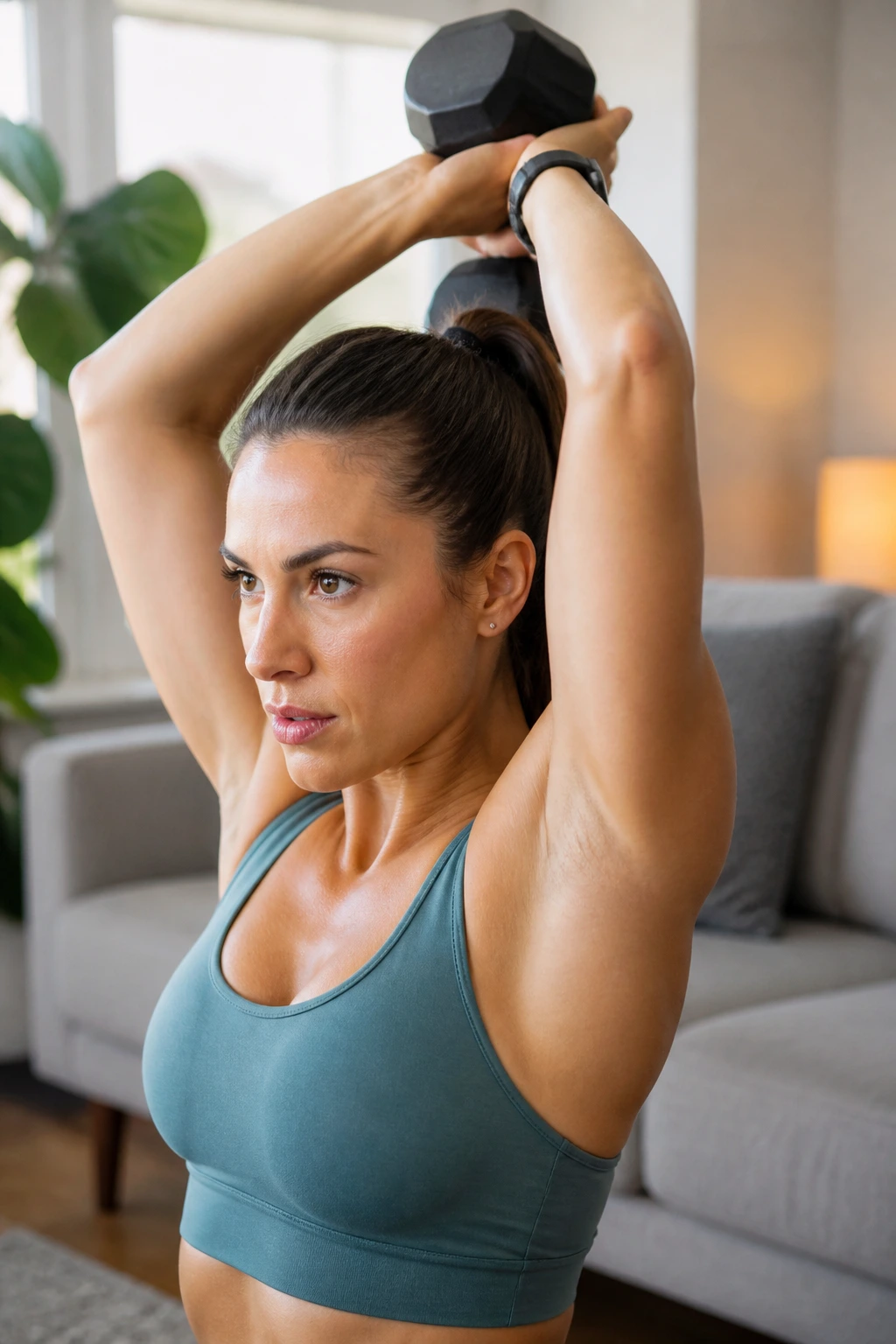
Unlike kickbacks, overhead triceps extensions put the long head of the triceps on stretch, which is a big deal if the back of the upper arm is your main target. That stretched position is where this exercise earns its keep.
Hold one dumbbell with both hands, or use a single dumbbell in one hand if that feels better on your elbows. Bring the weight behind your head, keep your upper arms mostly pointed up, and press until your elbows straighten. Three sets of 10 to 12 reps is a good zone. The descent should be slow enough that you can feel the triceps lengthen.
A lot of people flare their ribs here and turn the move into a lower-back arch. Don’t. Keep the core tight and the chin level. If your elbows ache, shorten the range slightly and lighten the load. The goal is a clean triceps stretch, not a joint complaint.
7. Triceps Kickback
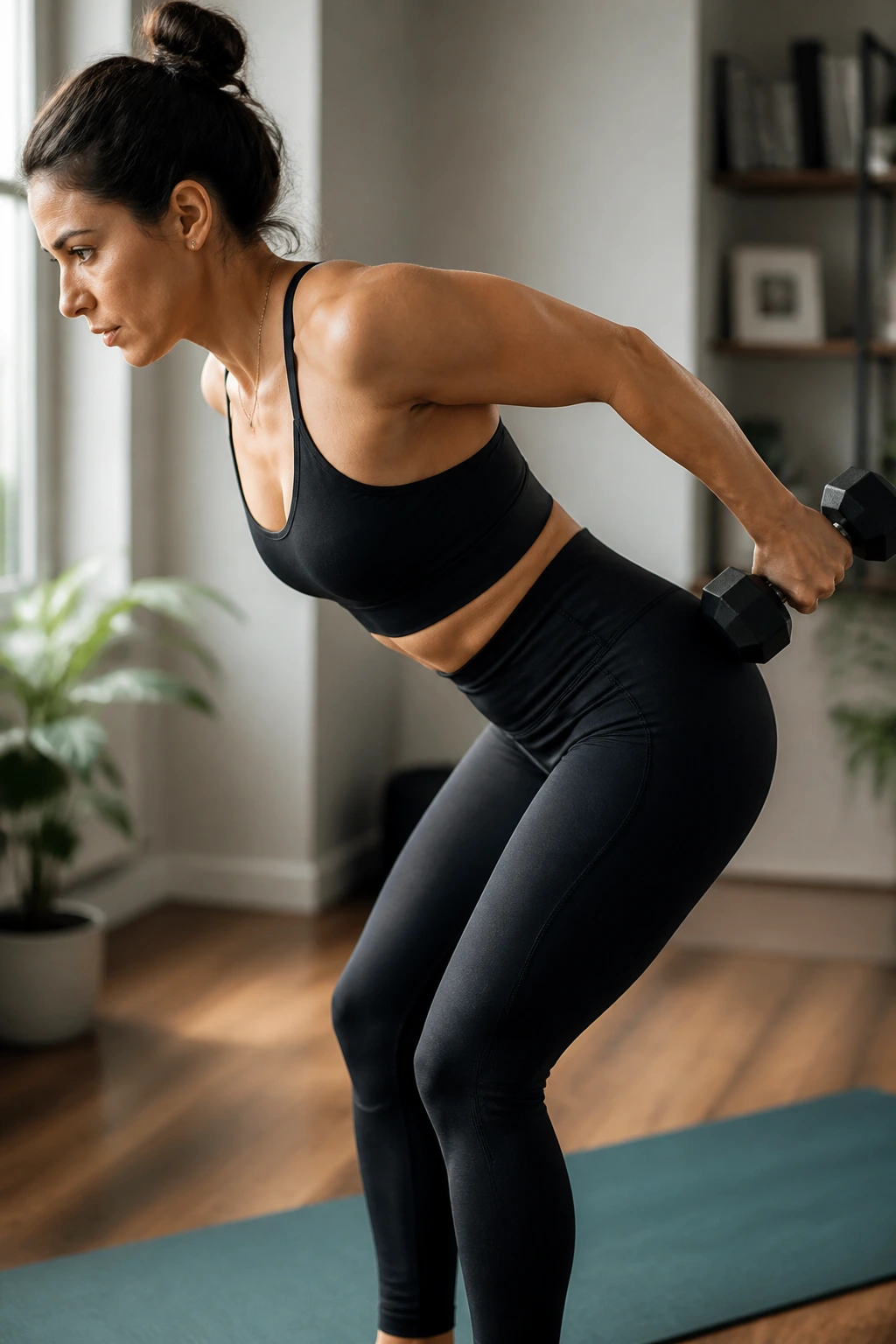
A good kickback looks almost boring from the outside. Inside the muscle, it is a different story. The upper arm stays fixed, the elbow opens from a bent position, and the triceps do the rest. That strict setup is what makes the exercise useful at home.
Why It Works
Bend at the hips, keep your back flat, and pin your upper arm beside your torso so it does not swing. Extend the dumbbell until the arm is straight, then squeeze for one second before lowering. Use a lighter weight than you think you need—12 to 15 reps is a better target than chasing heavy load here.
- Keep the upper arm parallel to the floor.
- Move only at the elbow.
- Pause at full extension.
- Rest 30 to 45 seconds.
Tip: If your shoulder drifts forward, reset your hinge and try again. That little drift changes the whole exercise.
8. Close-Grip Dumbbell Floor Press
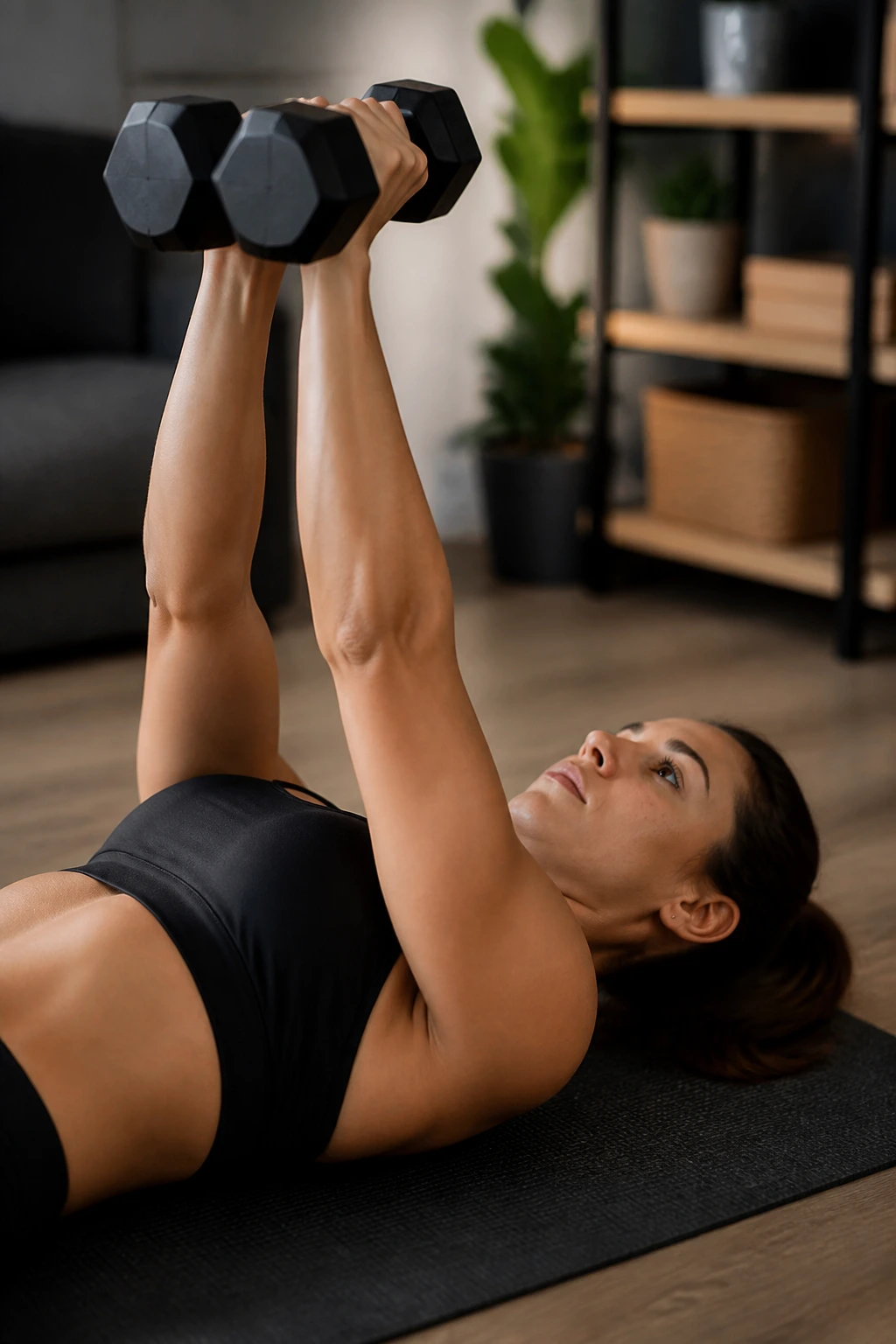
This one is sneaky. It looks like a chest press, but the close grip shifts a big share of the work into the triceps. The floor also limits your range in a good way, so the shoulder joint gets a break while the arms still have to grind through the pressing phase.
Lie on your back with the dumbbells held above your chest, palms facing each other. Keep your elbows tucked about 30 to 45 degrees from your torso, lower until the backs of your upper arms touch the floor, then press hard. Three or four sets of 8 to 12 reps works well. Pressing from the floor feels honest. You can’t bounce out of the bottom.
Use this if overhead triceps work bothers your shoulders or if you want a stronger pressing pattern without needing a bench. The floor makes cheating harder. I like that.
9. Dumbbell Skull Crusher on the Floor
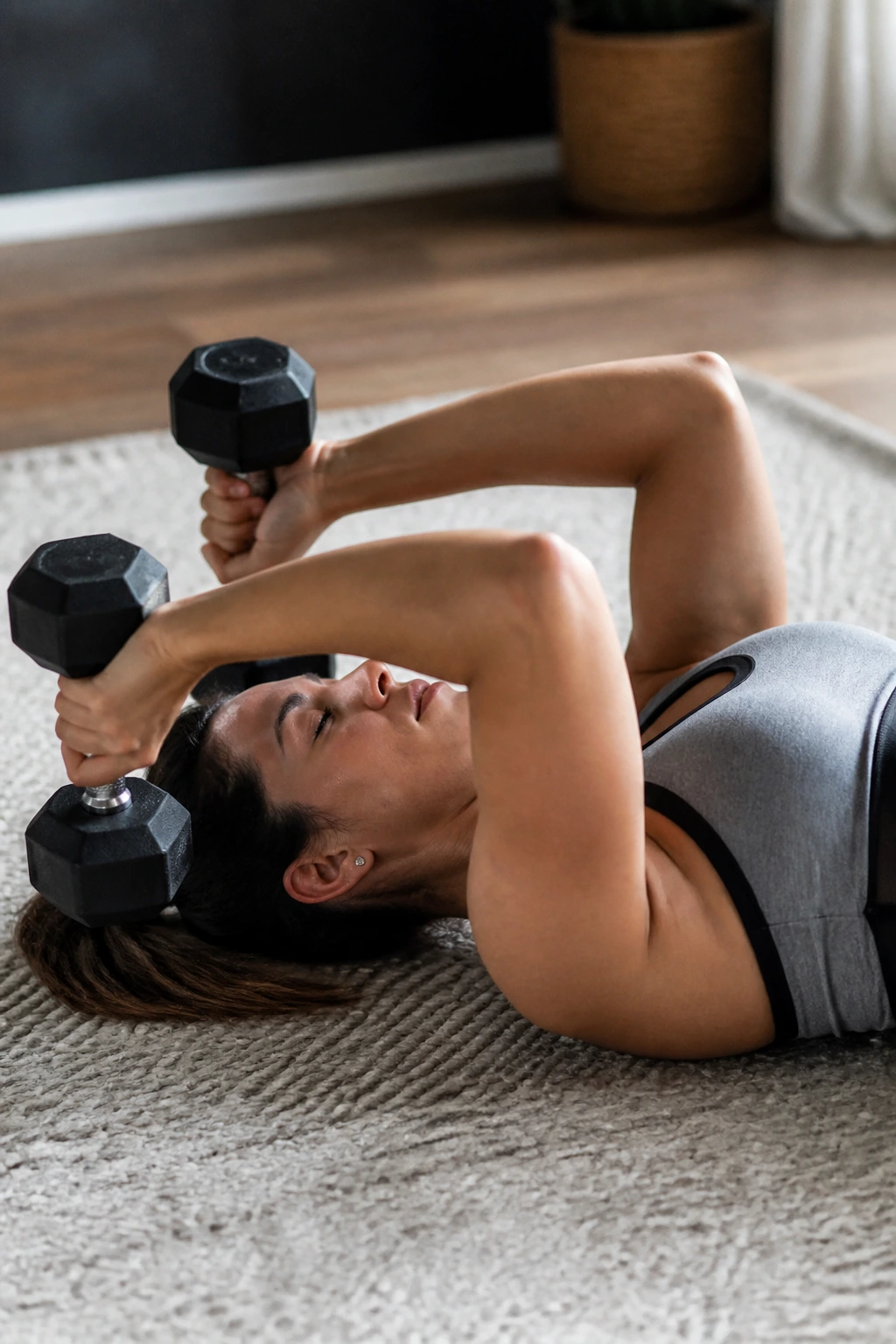
What makes this different from an overhead extension? The angle. Floor skull crushers keep the upper arms mostly fixed while the forearms fold and unfold toward the temples or just behind the head. That changes the feel enough to give your triceps a new kind of work.
Lie down, hold the dumbbells over your chest, and bend at the elbows so the weights travel toward the sides of your head. Stop before the elbows flare wide. Then press back up with control. Two or three sets of 10 to 12 reps is plenty if you keep the lowering phase slow.
How to Use It
A lot of people let the elbows drift all over the place and turn this into a weird press. Don’t. Keep the upper arms quiet. If your elbows feel cranky, reduce the depth slightly and keep the dumbbells a little wider apart. The sweet spot is controlled and a little uncomfortable, not sharp.
10. Reverse Curl
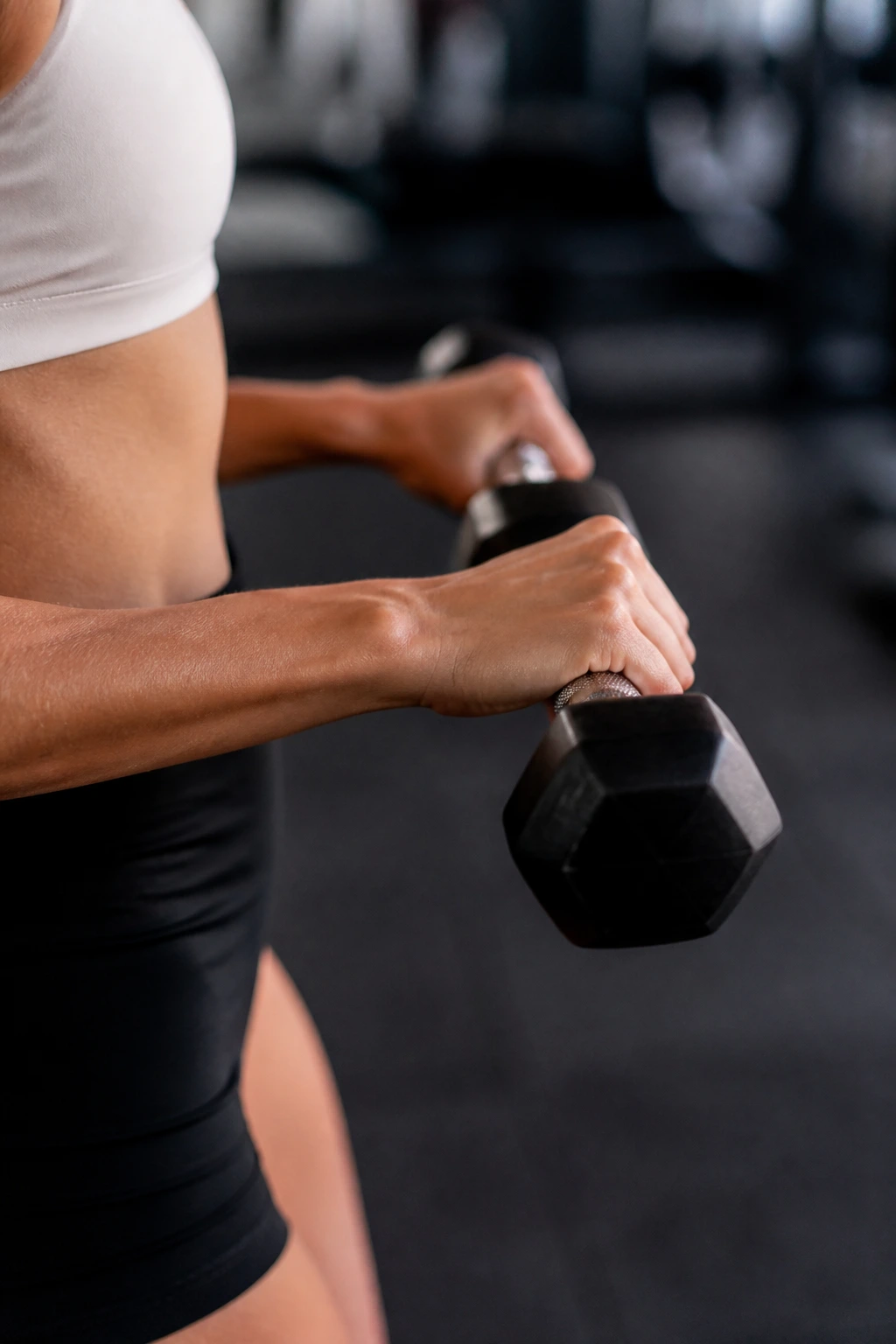
If your wrists complain about regular curls, reverse curls are the obvious fix. The pronated grip changes the line of pull and shifts more work to the forearms and brachioradialis, which helps the arm look fuller from the side. It’s not glamorous. It is useful.
The dumbbells should be lighter than the ones you use for regular curls. That surprises people, but the grip position makes the movement harder almost immediately. Curl the weights up with palms facing down, stop near the top of the chest, and lower slowly. Eight to 12 reps for 3 sets is a clean target.
- Keep wrists stacked, not bent back.
- Stay close to your torso.
- Control the lowering phase.
- Use less weight than a supinated curl.
One clean rule: if you have to shrug to finish the rep, the load is too ambitious.
11. Cross-Body Hammer Curl
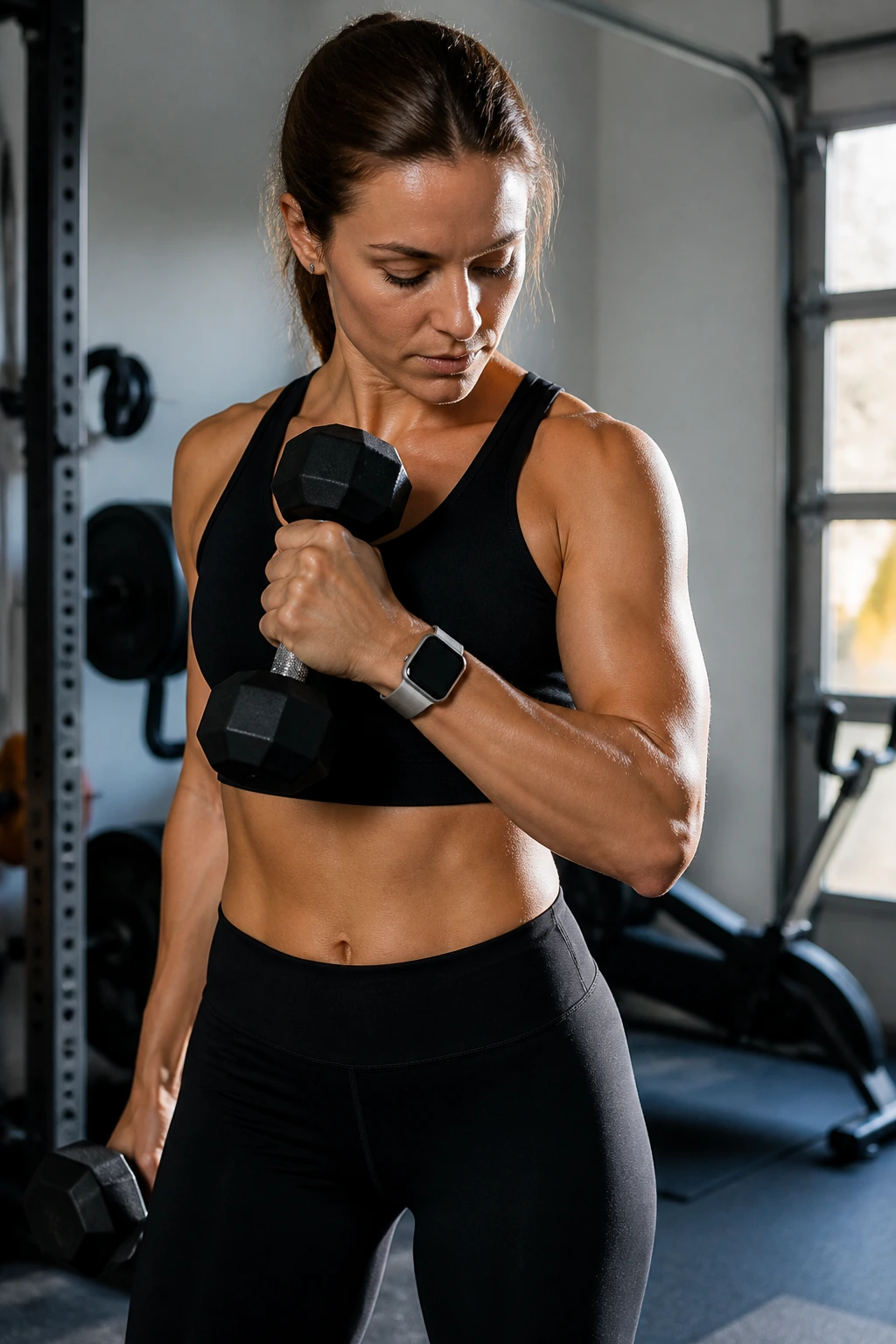
This variation feels different from a standard hammer curl because the dumbbell travels diagonally across the body toward the opposite shoulder. That path gives the biceps and brachialis a slightly different job, and it tends to feel easier on the wrists than a fully supinated curl.
Stand tall, palm facing your body, and bring the dumbbell across to the opposite chest or shoulder line. Keep the elbow close to your ribs. Don’t let the weight wander into a front raise. Three sets of 8 to 12 reps per arm is enough. Use a strict lowering phase and pause at the bottom if you want a little more sting.
This move is nice when you want something more interesting than the basic hammer curl, but not so wild that form falls apart. It works well as a second or third curl in a session, especially after rows or presses when the forearms are already warm.
12. Lateral Raise
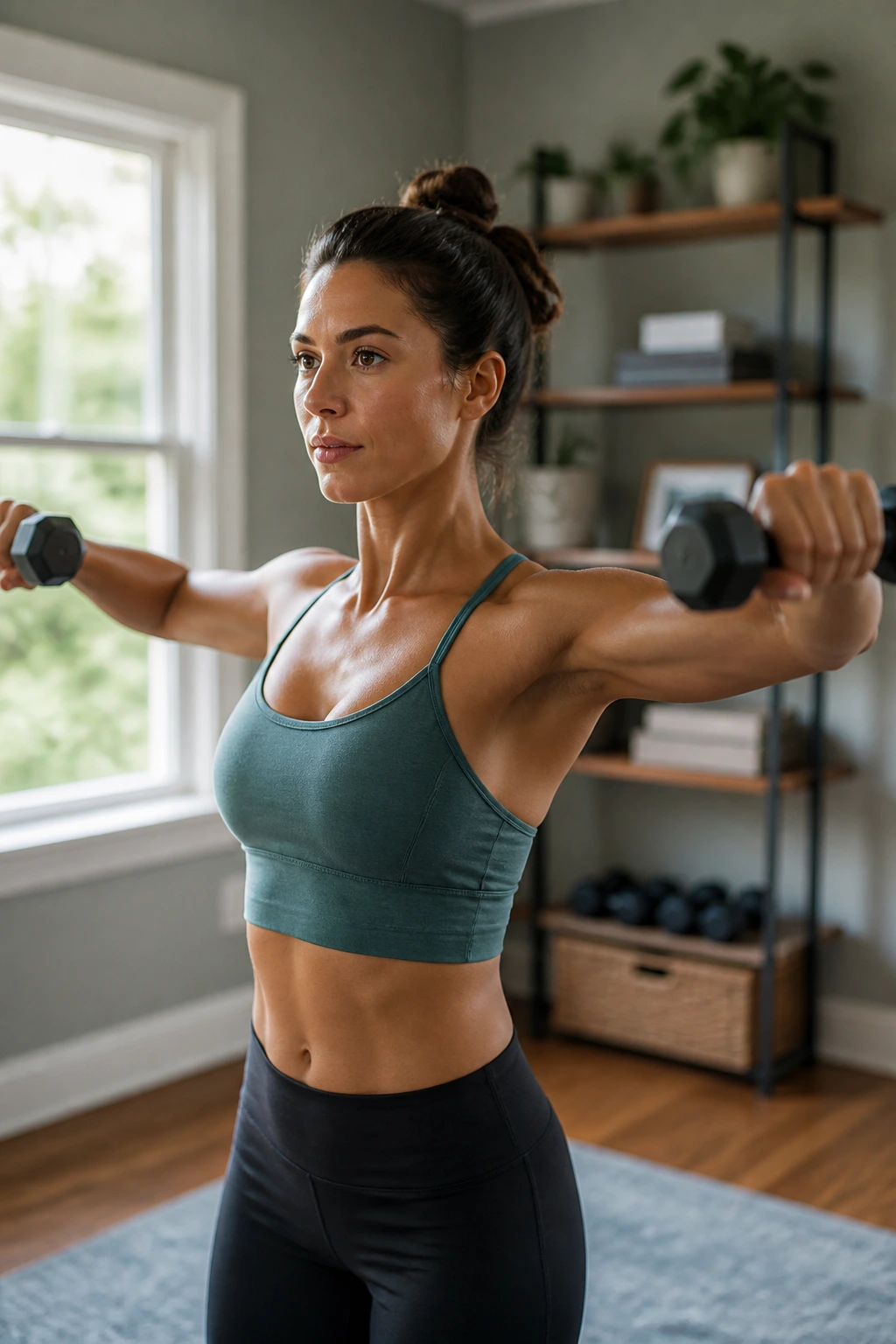
Lateral raises change the shape of the shoulder, which changes the look of the whole arm. That matters more than people think. The side delts help create that clean line from shoulder to upper arm, and the movement itself is small enough to demand control.
Use light dumbbells. Lighter than you want. Raise the arms out to the sides until they reach shoulder height, then lower with a slow count of two or three. Keep a soft bend in the elbows and stop if the traps start taking over. Three sets of 12 to 15 reps is the sweet spot here.
This is not a power lift. It is a precision lift. If the weights bang around or your torso starts leaning, the dumbbells are too heavy. A good lateral raise feels smooth, a little burny, and very specific. The shoulders should feel worked before the ego has a chance to show up.
13. Front Raise
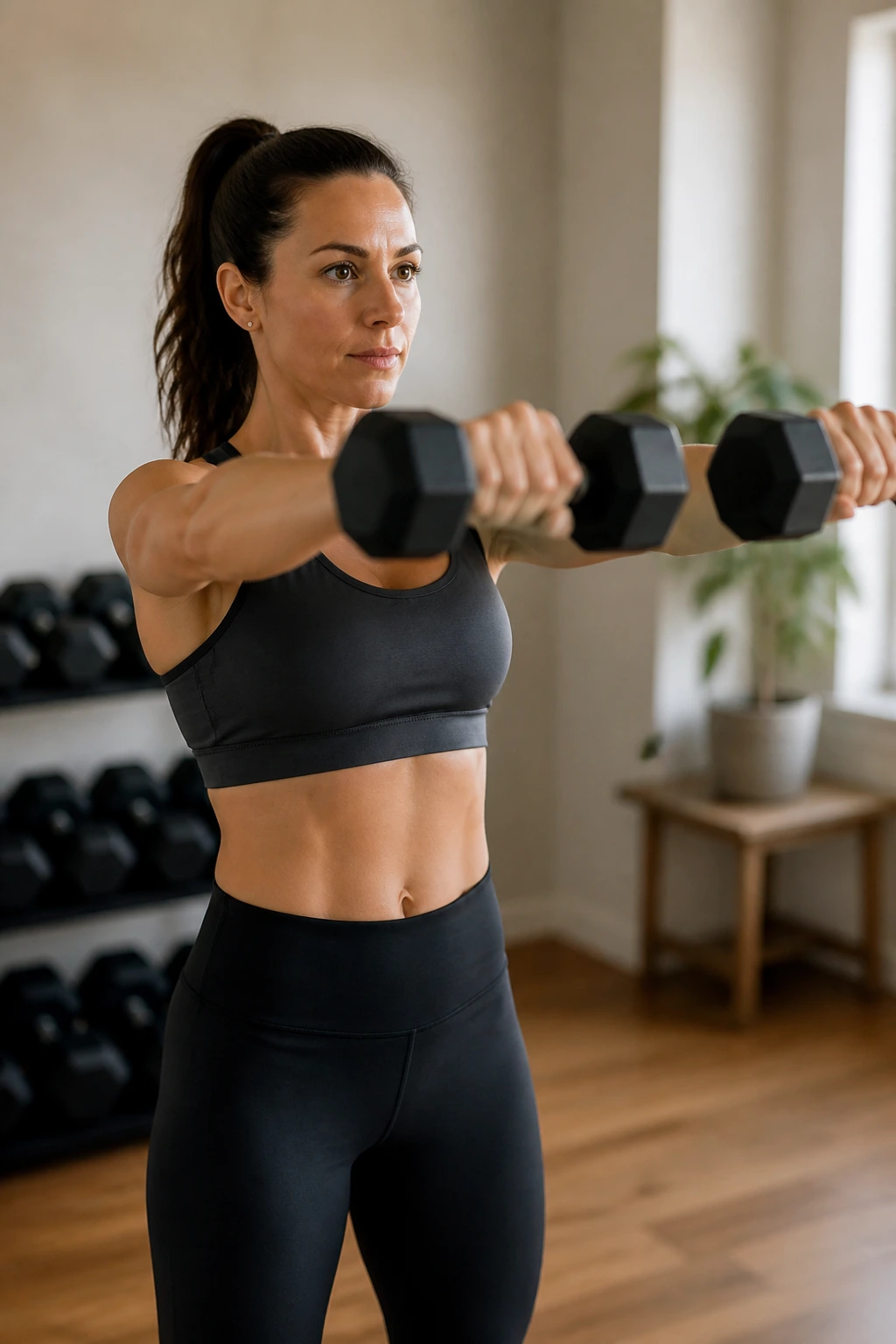
Why bother with front raises if pressing already hits the front of the shoulders? Because sometimes direct work exposes weak spots faster, especially if you want better control when lifting, carrying, or pressing overhead. The front delts help hold the arm in front of the body, and that shows up in more places than people expect.
Why It Works
Raise both dumbbells straight in front of you to about eye level or just below. Anything higher usually turns into neck tension and a messy shrug. Keep the ribs down, use a slight bend in the elbows, and lower slowly. Two or three sets of 10 to 12 reps is enough. The exercise looks small, but the burn arrives fast.
- Stop around eye level.
- Keep the motion smooth.
- Use a light pair.
- Rest 30 to 45 seconds.
Tip: If your neck starts working harder than your shoulders, the load is too heavy.
14. Arnold Press
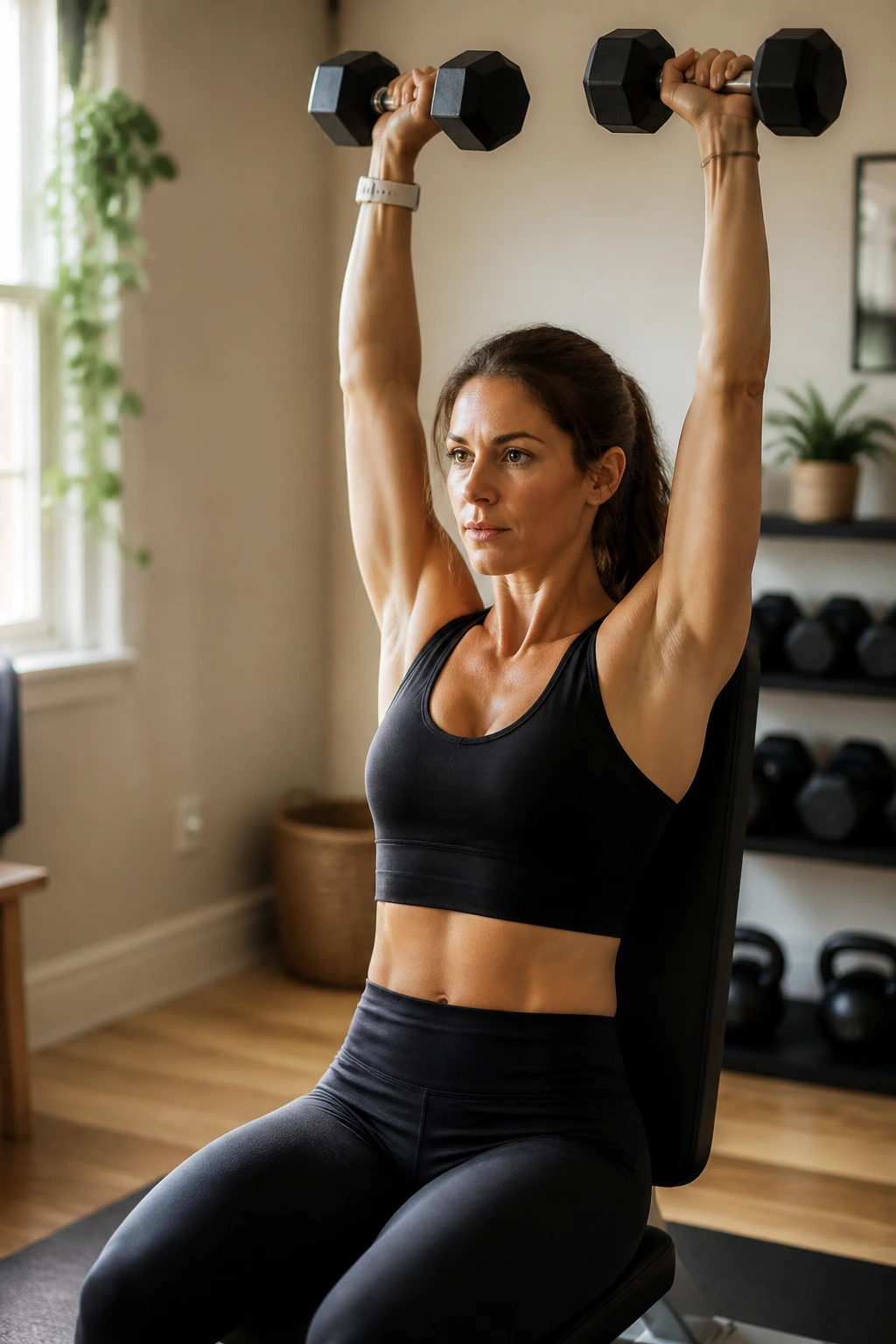
The Arnold press is part shoulder press, part rotation, and it brings the triceps along for the ride. It looks fancier than it is, but the movement asks for clean control, which is exactly why it belongs in a home arm routine. No rushing. The rotation should feel deliberate.
Begin with the dumbbells in front of your chest, palms facing you. As you press overhead, rotate the palms forward. Lower along the same path. Six to 10 reps for 3 sets is a sensible range, especially if you are using this after curls or raise work. Seated is a good choice if you want the torso to stay honest.
The mistake here is twisting too hard and losing the line of the press. Keep the movement smooth and stop if the shoulders feel pinchy. I prefer this with moderate weight rather than a heavy load. It gives you more control and less noise.
15. Bent-Over Reverse Fly
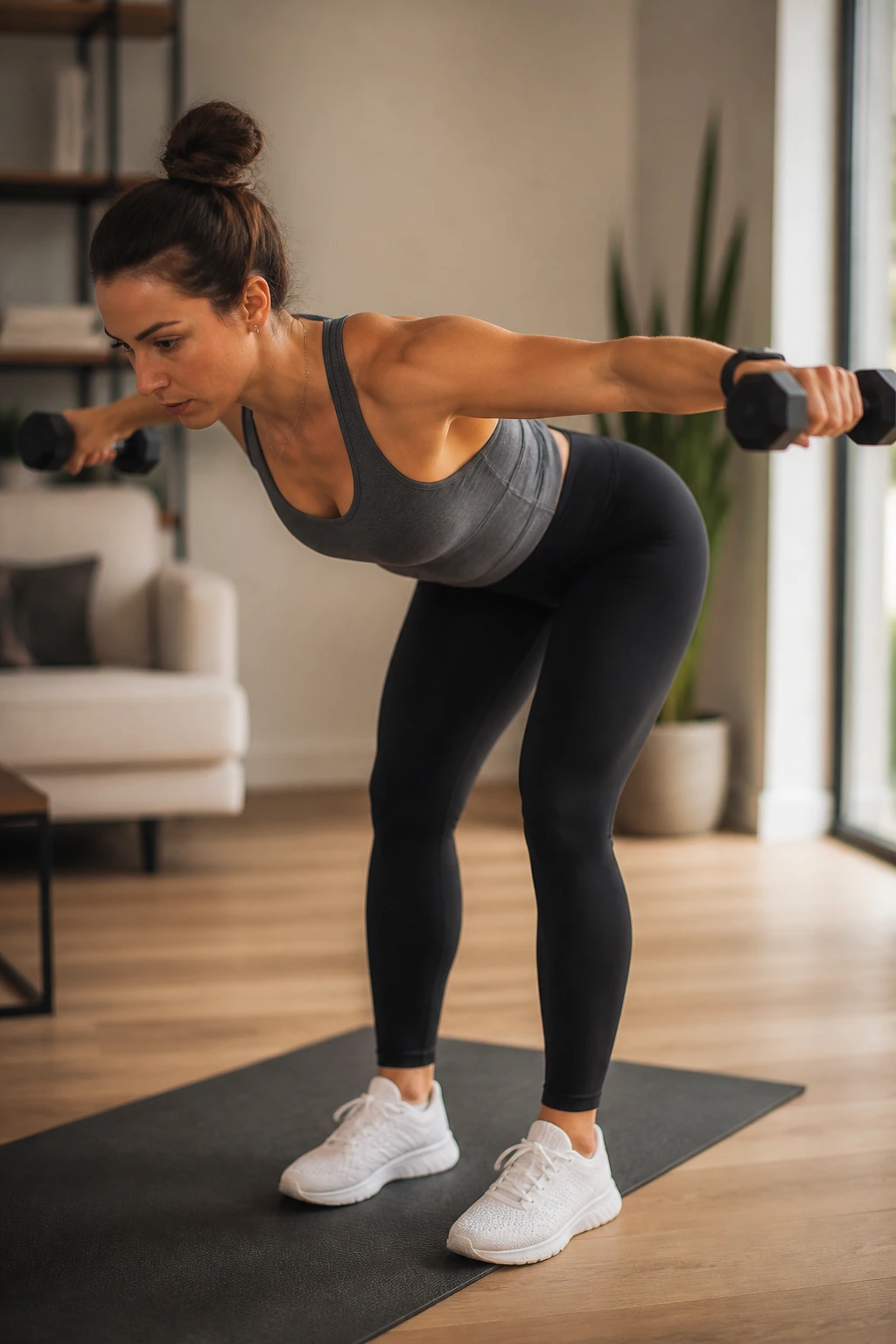
What does a reverse fly do for arms? More than most people think. Rear delts, upper back, and the muscles that hold the shoulder blades in place all matter when you want the arm to move and look better from every angle. A shoulder that moves well usually feels better, too.
Hinge at the hips until your torso is near parallel to the floor, let the dumbbells hang, and lift them out to the sides with a soft bend in the elbows. Stop when your upper arms line up with your torso, then lower slowly. Twelve to 15 reps for 3 sets is a good range because the weight should stay light. Light is fine here. Heavy usually turns into traps.
How to Use It
Focus on pulling the shoulder blades gently back and down, not on yanking the weights up. If your neck gets tight, look a few feet in front of you and shorten the range. The rear delt burn is enough. It does not need drama.
16. Upright Row with Light Dumbbells
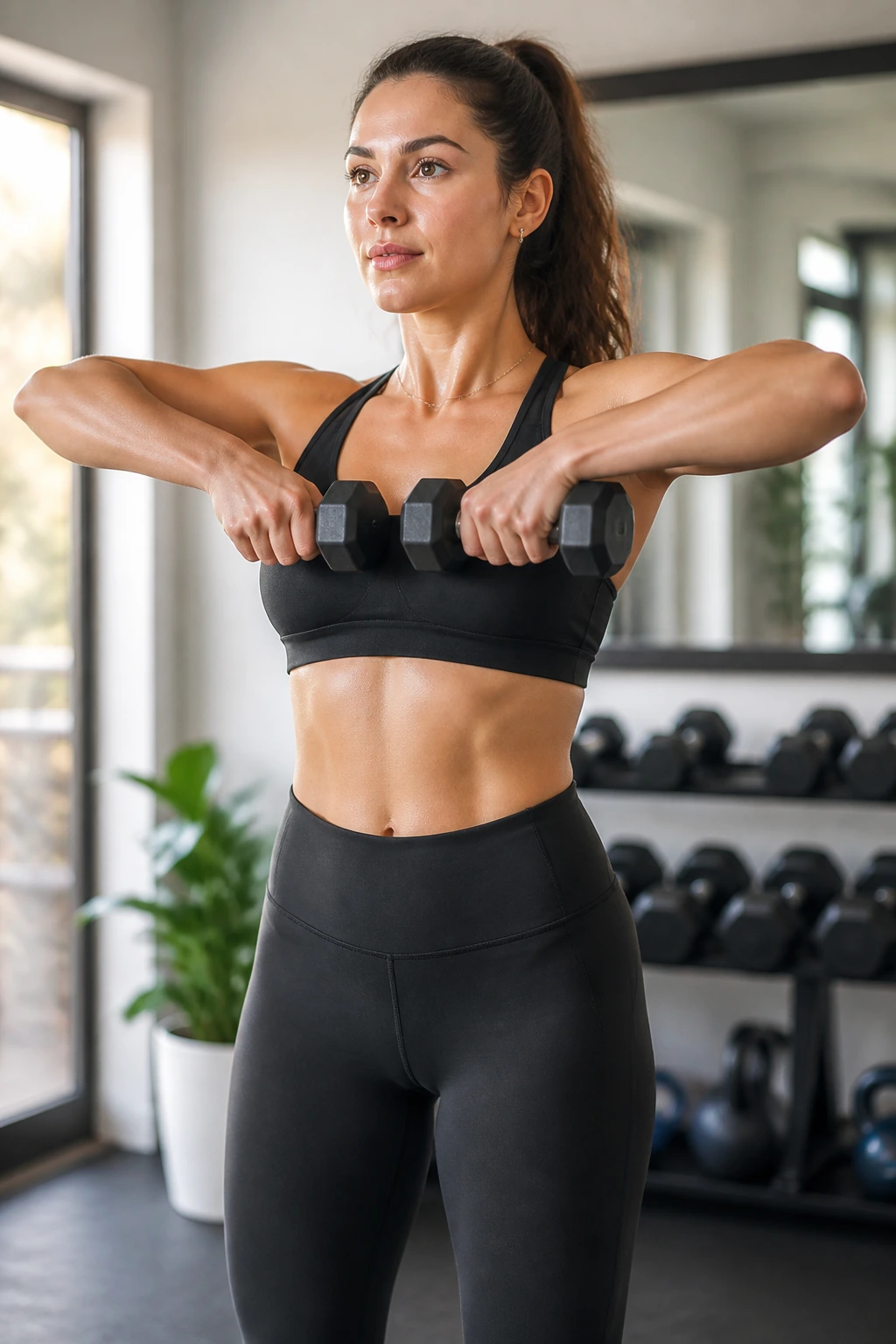
This one gets a bad reputation for a reason: too much weight, too high a pull, and shoulders get cranky. Done lightly and carefully, though, it can add a useful shoulder-and-arm stimulus without needing much space or gear.
Stand with the dumbbells in front of your thighs and pull them up along your torso until they reach the lower chest or upper ribs. Keep the elbows moving up and out, but do not yank them sky-high. Eight to 12 reps for 2 or 3 sets is enough. The movement should feel controlled, not pinched.
- Keep the grip a little narrower than shoulder width.
- Use light weights.
- Stop below the collarbone.
- Skip it if your shoulders dislike the angle.
Honest note: if this ever feels sharp, replace it. There are plenty of other ways to train shoulders and arms at home.
17. Single-Arm Dumbbell Row
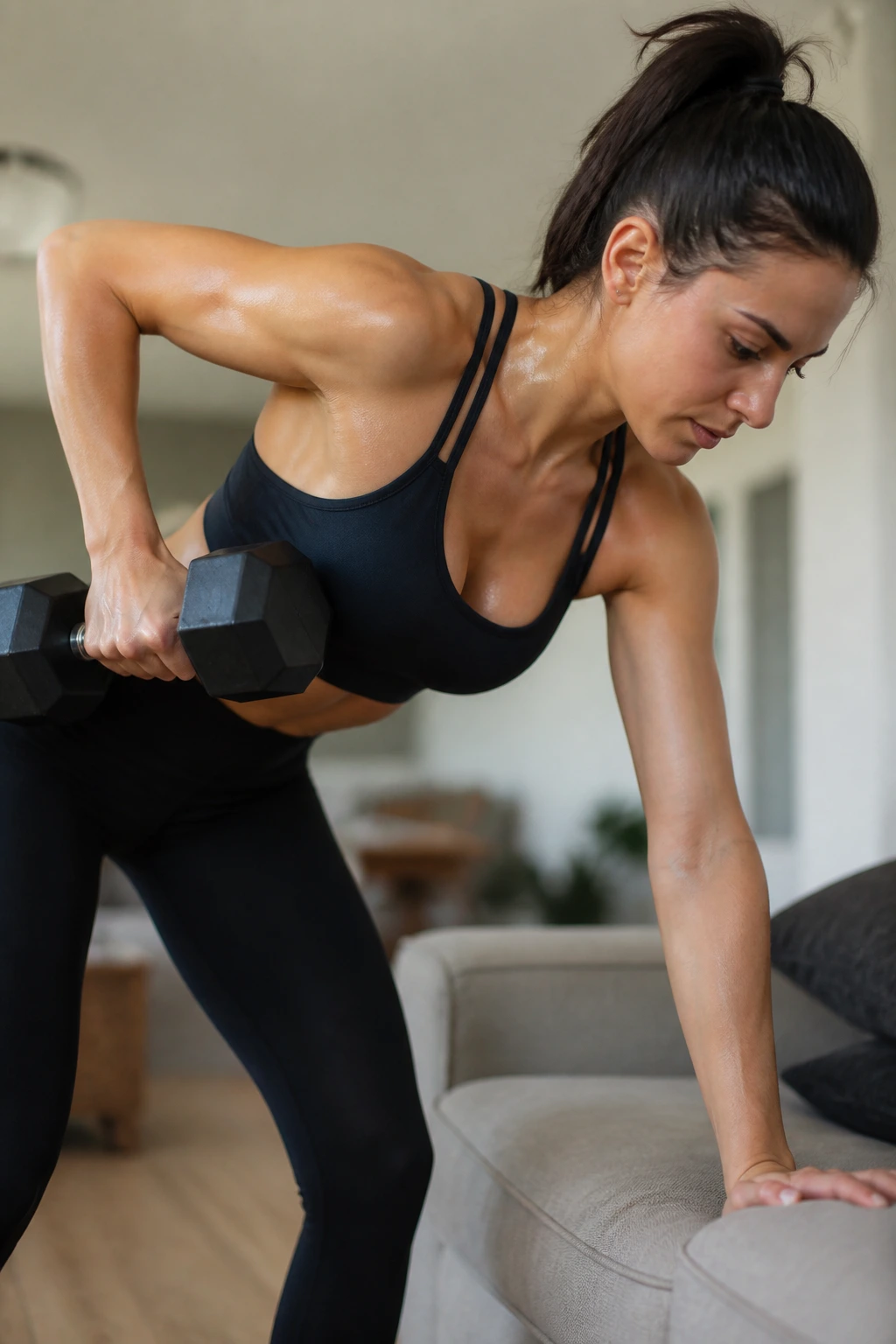
A row looks like back work, and it is, but it also trains the biceps, rear delts, and all the little stabilizers that help your arms look and function better. That makes it a smart piece of any dumbbell arm workout for women at home, especially when space is tight and you need one move to cover a lot.
Brace one hand on a couch or chair, hinge so your spine stays long, and pull the dumbbell toward your lower ribs. Keep the elbow close to the body. Lower with control until the arm almost straightens. Three or four sets of 8 to 12 reps per side works well. The upper arm should feel like it is doing real work, not just the grip.
The best row is the one that doesn’t twist your torso all over the place. If the shoulder blades and upper back feel active at the top, you’re in the right zone.
18. Renegade Row
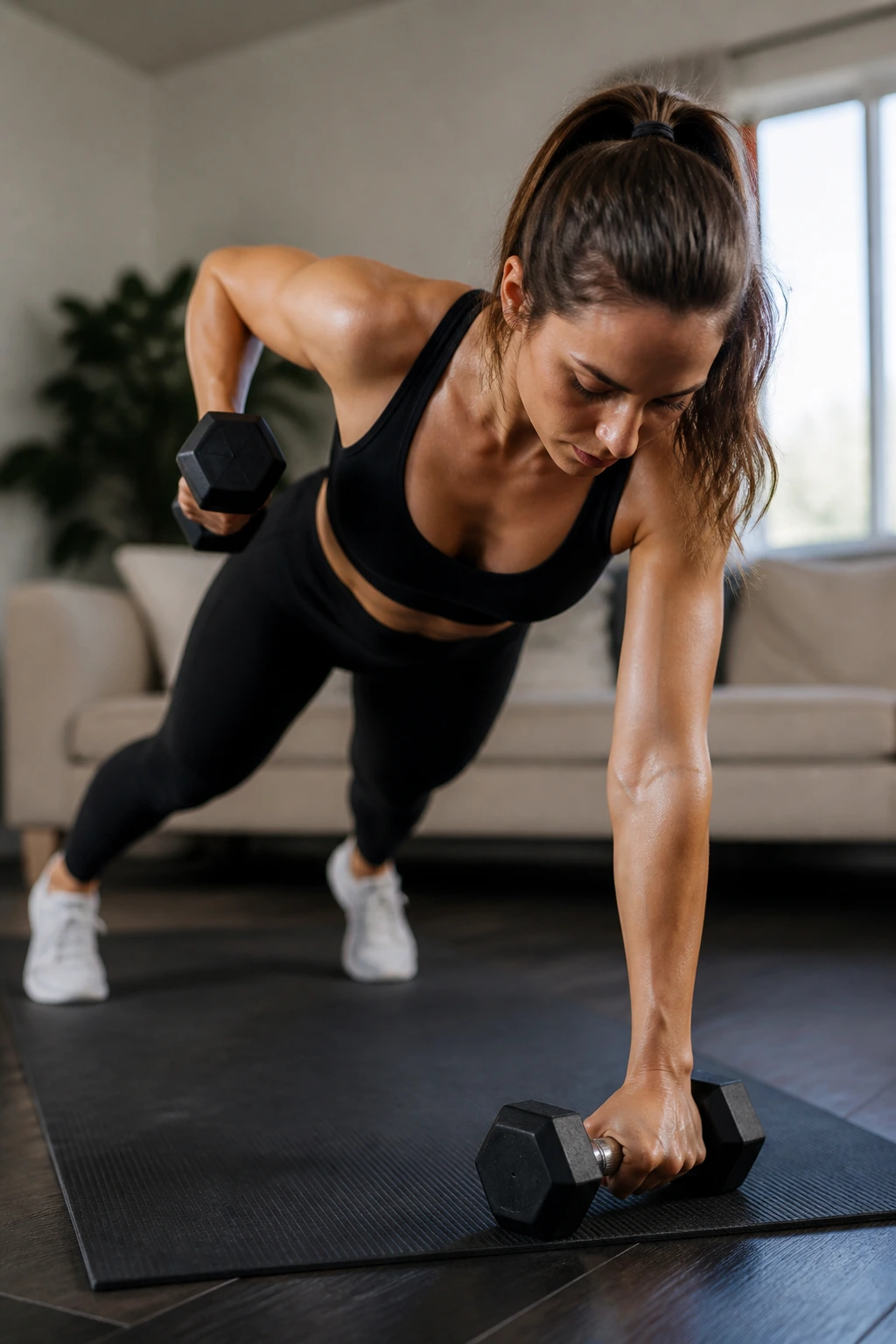
Unlike a bench-supported row, the renegade row forces your torso to stay quiet while one arm pulls and the other arm supports. That makes it more than an arm exercise. It becomes a core drill, a shoulder stability drill, and a test of whether your dumbbells are placed wide enough apart.
Start in a plank with hands on dumbbells, feet wider than hips if needed, and row one dumbbell at a time toward your waist. Keep your hips as level as you can. Six to 8 reps per side is plenty. Heavy weights usually make the whole thing ugly, so choose a pair you can move without tipping.
This is best for people who want a challenge that feels athletic, not just isolated. It is not the move to chase a huge pump. It is the move to learn control under load. And yes, your grip will know about it the next day.
19. Bent-Over Row with a Two-Second Squeeze
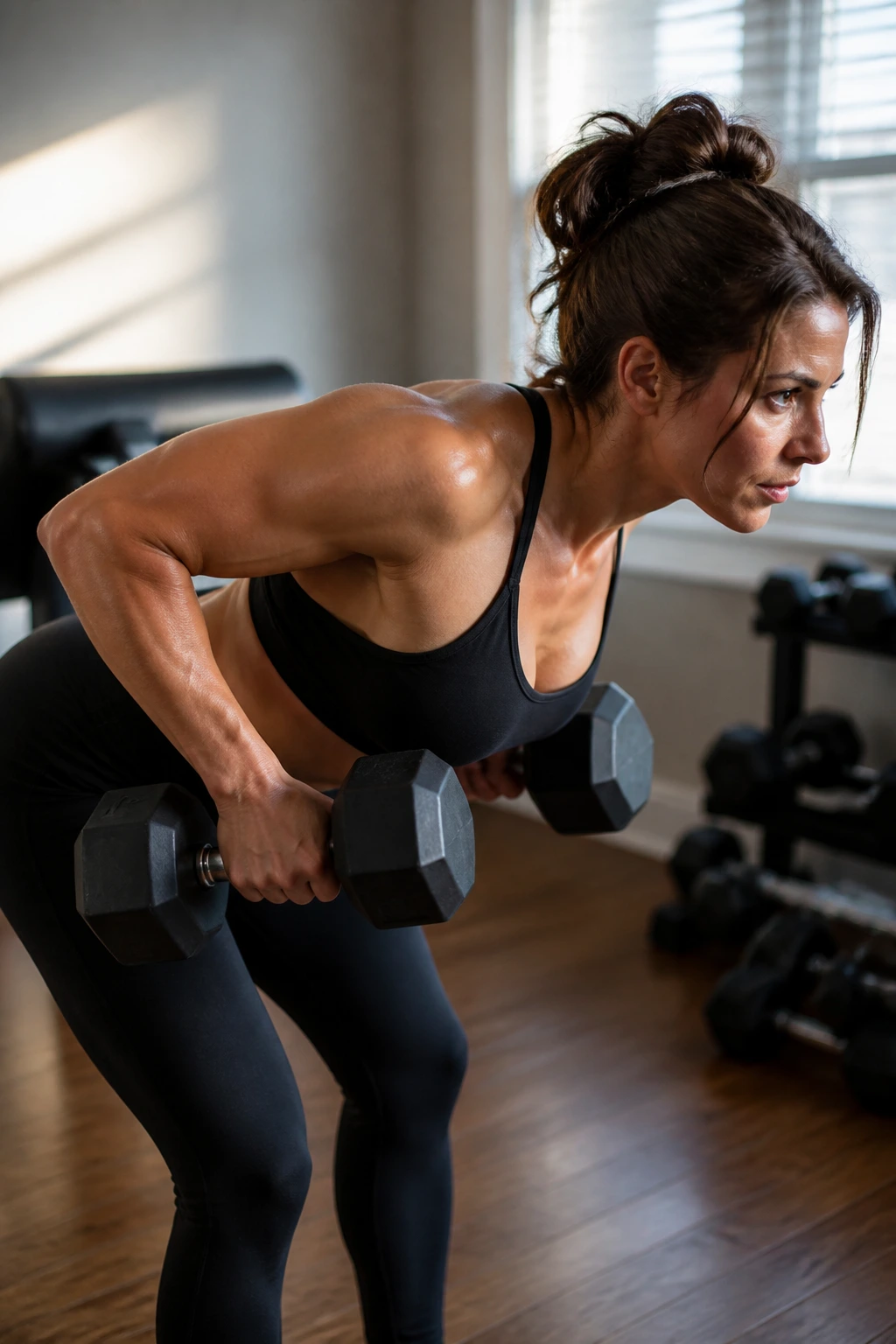
A row with a pause is a different animal from a quick pull. The two-second squeeze at the top makes the back and arm muscles actually finish the job instead of letting momentum steal the rep. That tiny pause changes the whole exercise.
Hinge at the hips, hold the dumbbells in both hands, and pull them toward your lower ribs. At the top, hold for a full two-count before lowering for another two or three seconds. Three sets of 8 to 10 reps is enough when you keep the tempo honest. No jerking. No shrugging. The pause should feel like you’re holding a difficult posture, not resting.
Why It Works
The pause strips away the easy part. If you’ve ever rushed through rows and wondered why they felt too light, this is the fix. Keep your neck long and your abs braced. The back of the upper arm works harder than people expect here.
20. Neutral-Grip Floor Press
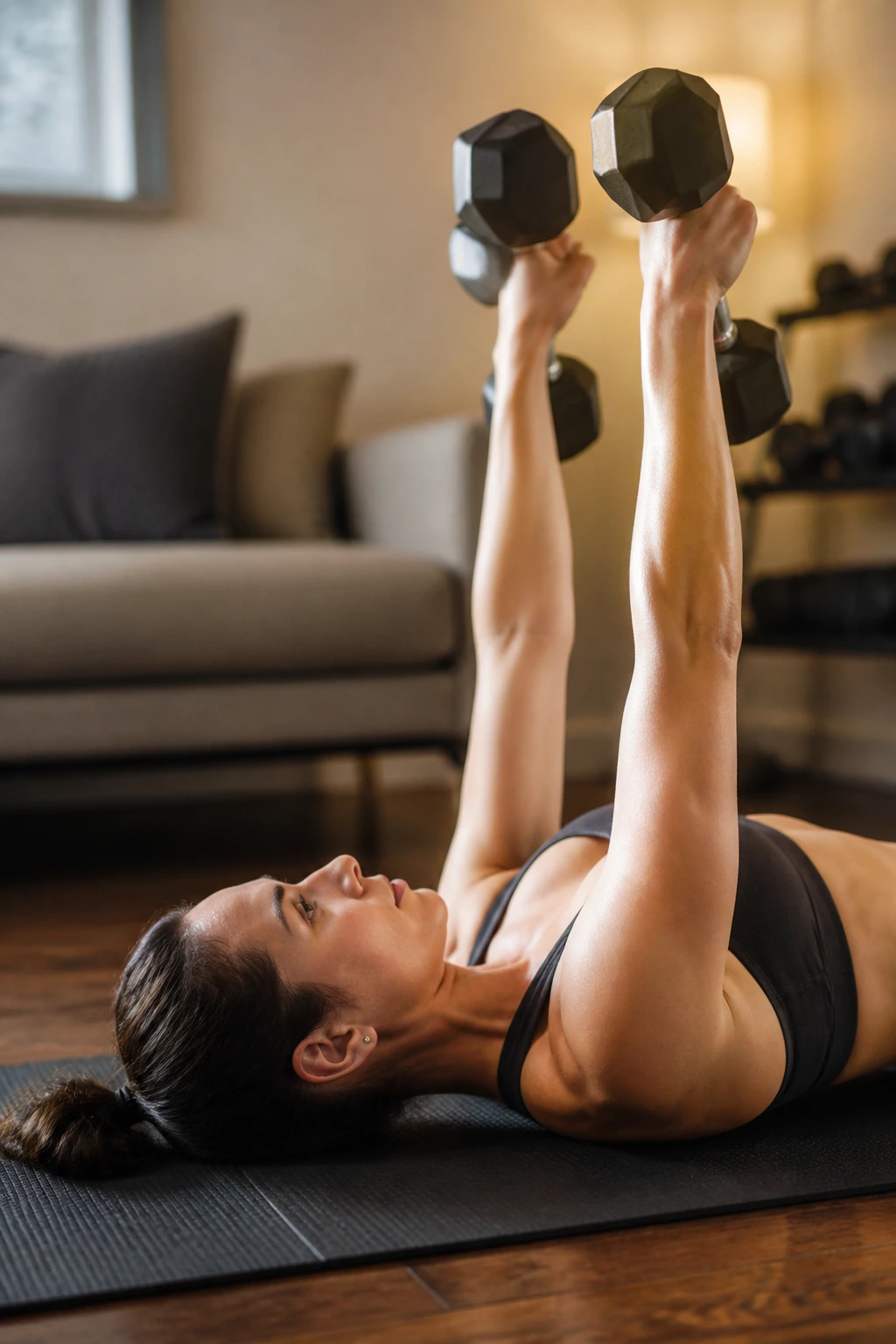
This is one of my favorite at-home pressing options because it is straightforward and shoulder-friendly. The neutral grip keeps the shoulders in a happier position, and the floor keeps the range controlled, which means the triceps can work without a lot of drama.
Lie on your back, palms facing each other, and press the dumbbells until your elbows are straight but not locked hard. Lower until the upper arms lightly touch the floor, then drive up again. Three or four sets of 8 to 12 reps works nicely. Keep the wrists stacked over the elbows so the dumbbells don’t drift backward.
Use this if standard presses bother your shoulders or if you want a safer way to press heavy enough to matter. It pairs well with curls or triceps extensions because the movement is simple, efficient, and easy to track week to week.
21. Tate Press
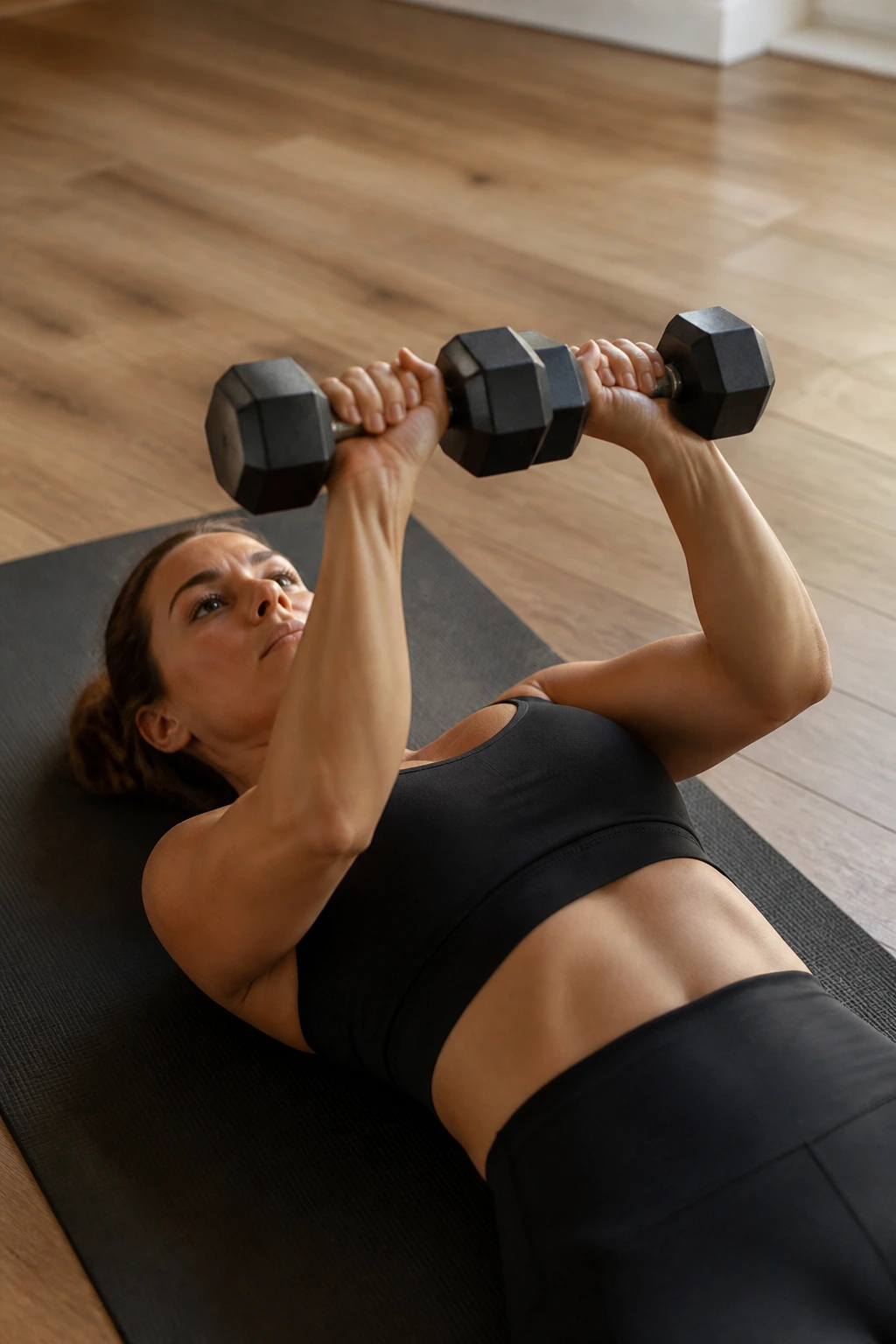
The Tate press looks odd until you feel what it does. It puts the triceps under a different kind of tension than a floor press or overhead extension, and that variation is useful when your arms have adapted to the usual stuff.
Lie on the floor with dumbbells held above the chest, palms facing forward. Bend the elbows out and lower the weights toward the upper chest or sides of the chest, then press them back up. Keep the range small and controlled. Two or three sets of 10 to 12 reps is a smart starting point, because this one can feel awkward before it feels good.
How to Use It
If the elbows feel stressed, narrow the range and slow the descent. The aim is to make the triceps work through a focused press pattern, not to force a huge stretch. It’s a strange-looking move. It earns its place anyway.
22. 21s Curl
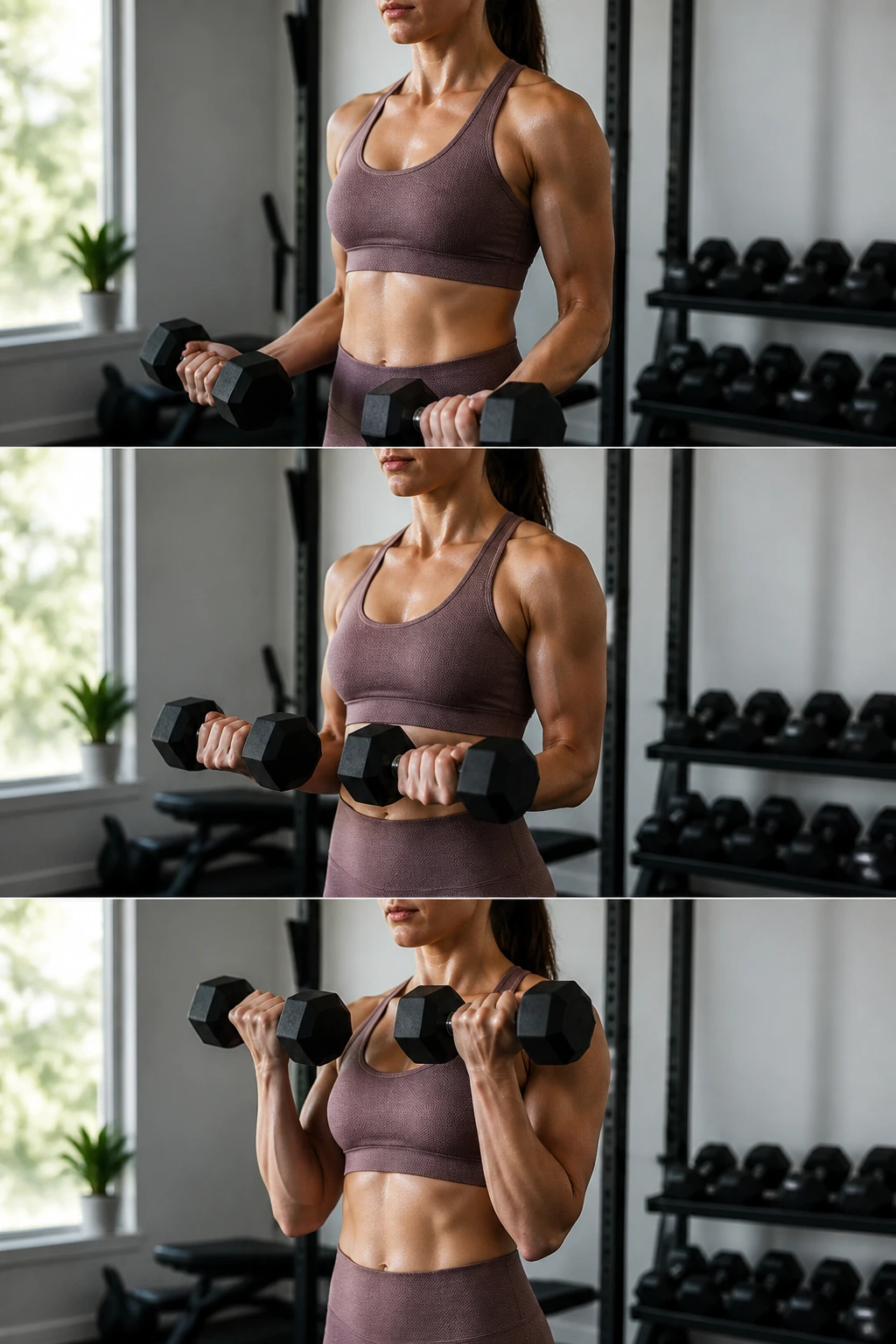
There’s a reason people still use 21s. They are simple, brutal, and easy to scale. Seven reps in the lower half, seven in the upper half, and seven full curls create a biceps burn that shows up fast even with light dumbbells.
Use a weight that feels almost too easy at the start. That is the trick. By the middle of the set, it will not feel easy anymore. Keep the elbows still and avoid swinging through the bottom half. One to three rounds is enough, depending on the rest of your workout. More is not always better here. Form drops off quickly when the pump gets nasty.
- 7 reps from bottom to halfway.
- 7 reps from halfway to top.
- 7 full-range reps.
- Rest 45 to 60 seconds.
Tip: If your shoulders are taking over, lower the weight and keep the curl path tighter.
23. Isometric Curl Hold
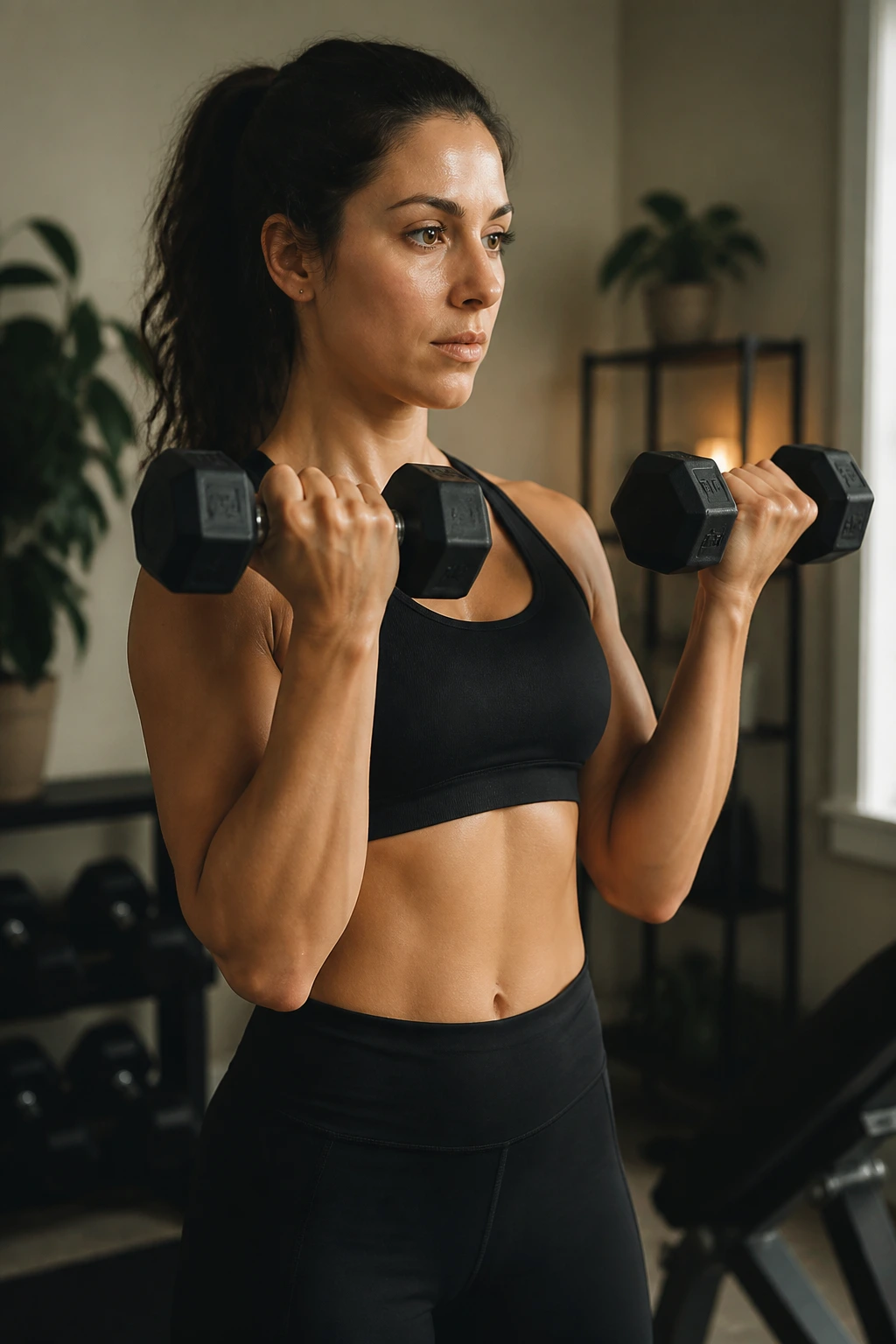
A curl hold looks almost too simple to count as a real workout until your biceps start shaking. Hold the dumbbells halfway up, around a 90-degree elbow bend, and keep the tension there for 20 to 30 seconds. The muscle has no chance to relax, which is exactly the point.
You can also hold the top of the curl for 10 to 15 seconds if that feels better on your elbows. Either way, the arm should stay quiet except for the muscle trying to fight the position. Two to four holds per side is enough, especially if you place this after normal curls or rows.
It’s a good option on days when you don’t want a lot of joint movement but still want the arms to work hard. It is also easy to do with one dumbbell at a time while the other arm rests. Small move. Serious burn.
24. Spider Curl Off the Couch
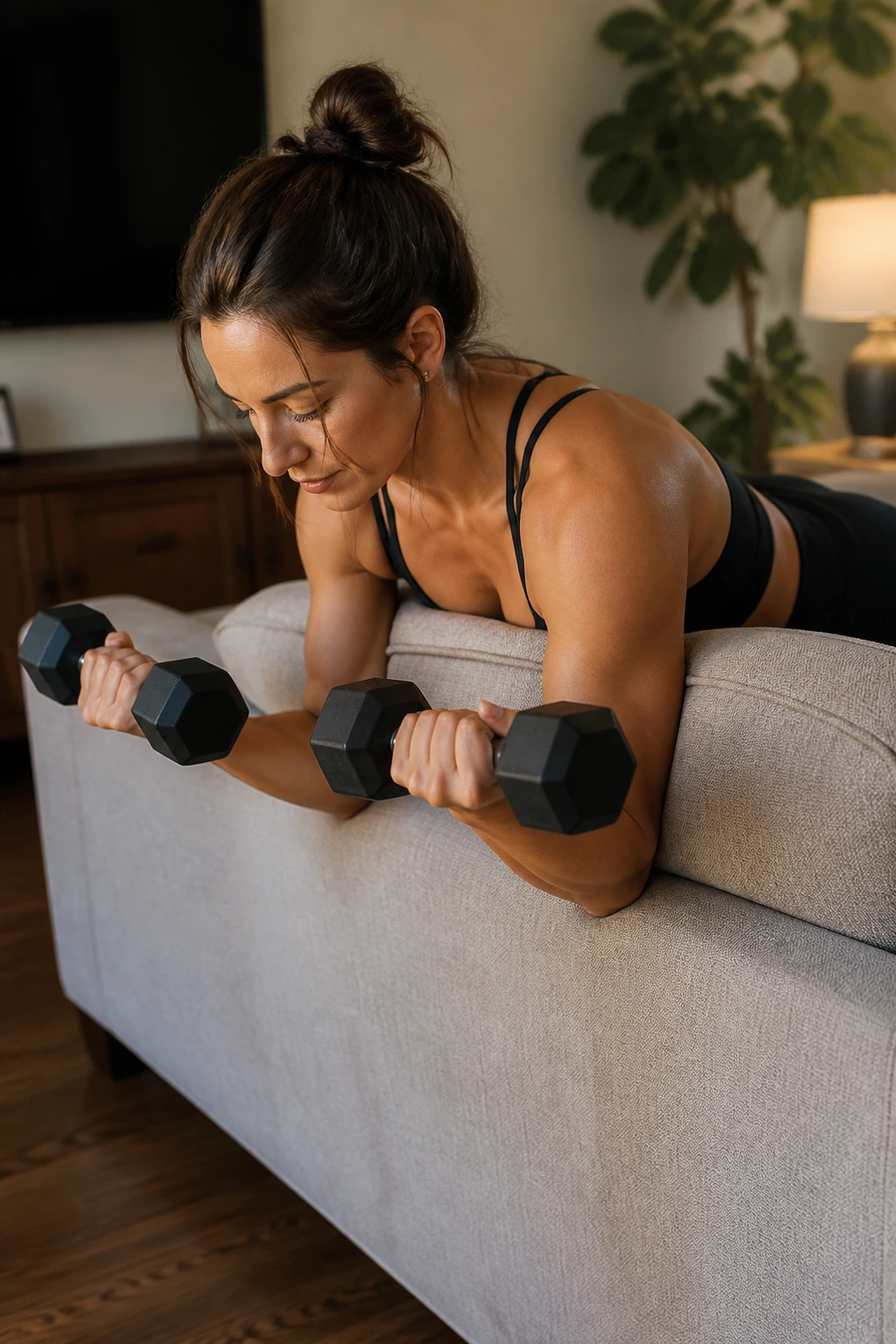
Spider curls give you a strict angle that keeps momentum out of the picture. Unlike concentration curls, your upper arm stays angled forward, which makes it harder to cheat and easier to feel the biceps doing the actual lifting. A couch back, firm cushion, or sturdy bench works well.
Lean your chest against the support, let the arms hang down, and curl the dumbbells straight up. Keep the wrists straight and the elbows fixed. Lower slowly until the arms are nearly straight. Eight to 12 reps for 3 sets is enough, especially if the weight is moderate. The top squeeze should be obvious.
What Makes It Different
The supported position removes body swing, which is why the exercise feels so honest. If your lower back usually helps on curls, spider curls will expose that fast. Use them when you want a strict biceps hit and do not mind the setup.
25. Seated Z-Press
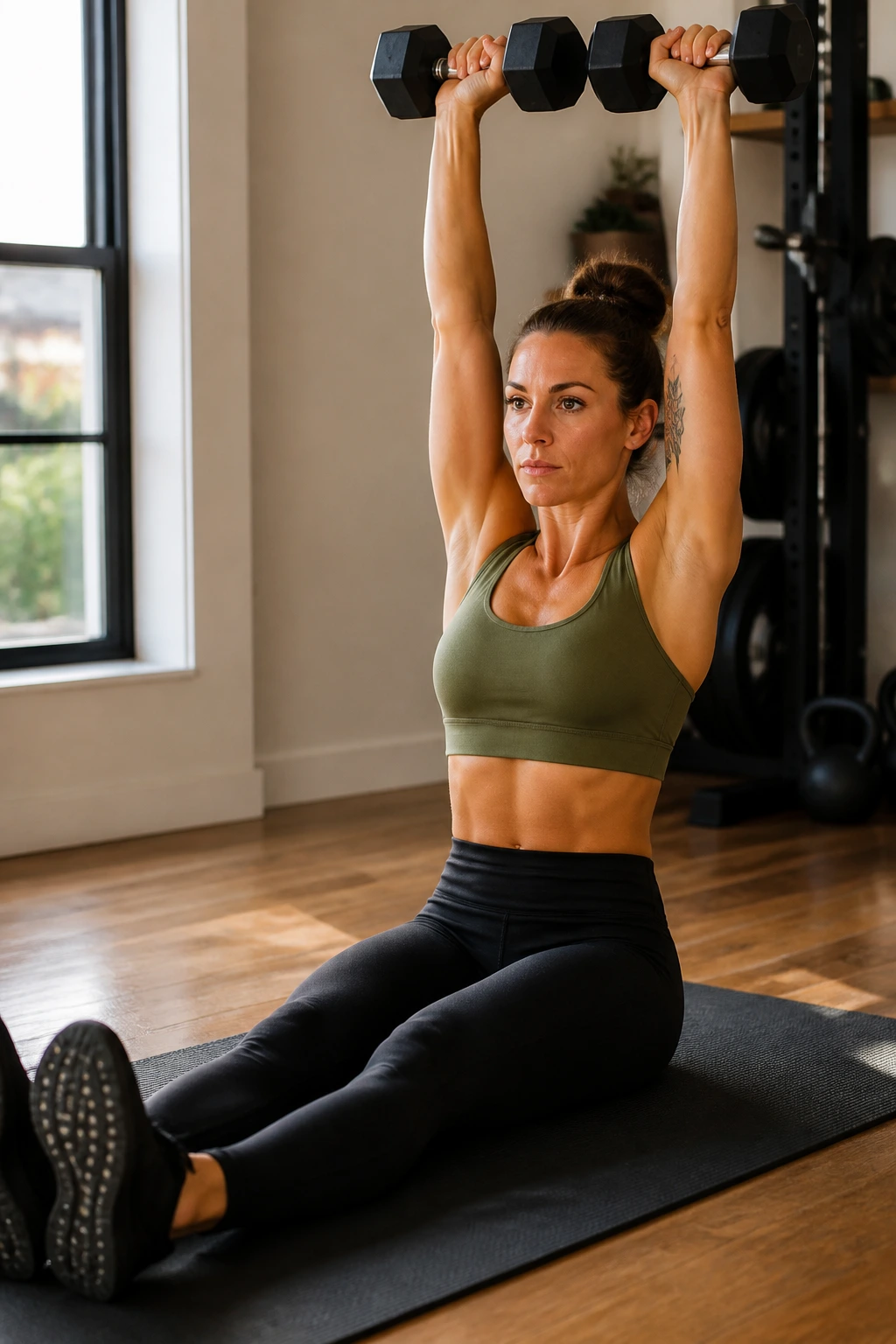
The Z-press is sitting on the floor with your legs straight out and pressing overhead from a no-cheating position. That sounds simple. It is not simple. Your core, shoulders, and triceps all have to work to keep you upright while the dumbbells move overhead.
Sit tall, hold the dumbbells at shoulder level, and press without leaning back. If your hamstrings are tight, sit on a folded towel or light cushion. Six to 10 reps for 3 sets is a smart range because the position itself is demanding. Keep the rib cage from flaring and lower the weights slowly.
- Sit on the floor with long legs.
- Brace the abs before each rep.
- Press in a straight line overhead.
- Use light to moderate dumbbells.
Pro tip: If the lower back starts arching, the load is too heavy or the torso is losing position.
26. Triceps Kickback Pulse Set
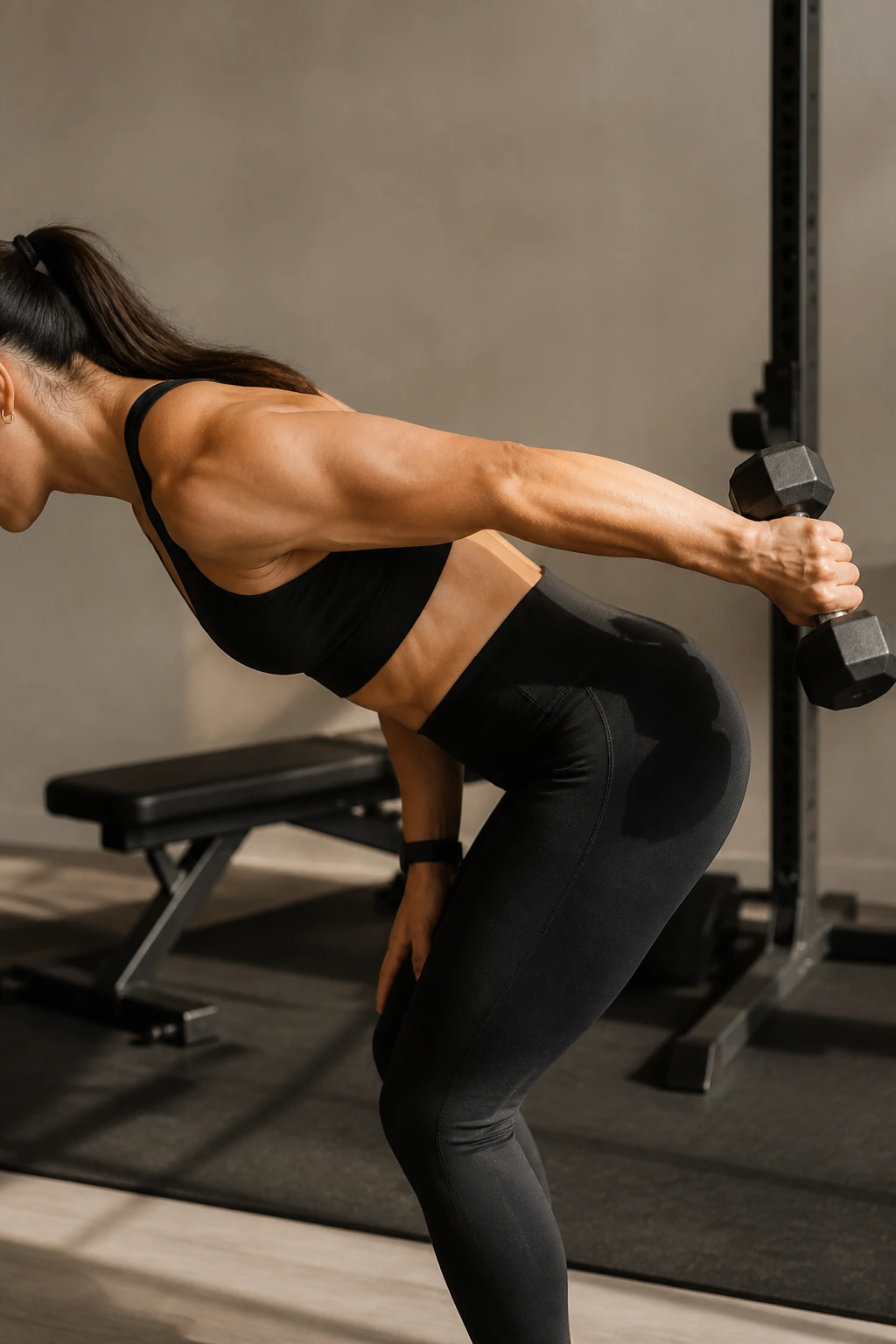
A standard kickback can feel a little plain after a few rounds. Add pulse reps at the top, and the exercise stops being polite. You extend the arms fully, then pulse in the last inch of the range for 5 to 10 short reps before lowering.
Keep your hinge, pin the upper arm beside your torso, and use a lighter weight than normal. The whole idea depends on staying strict. Two to three sets of 10 full reps plus 5 to 10 pulses works well. The upper arm should stay still enough that you could balance a glass on it. I’m only half joking.
This is a smart finisher when you want the triceps to feel completely spent without needing a heavy dumbbell. It’s not a big, flashy move. It is a small, annoying one. Those are often the ones that matter most.
27. Farmer’s Carry
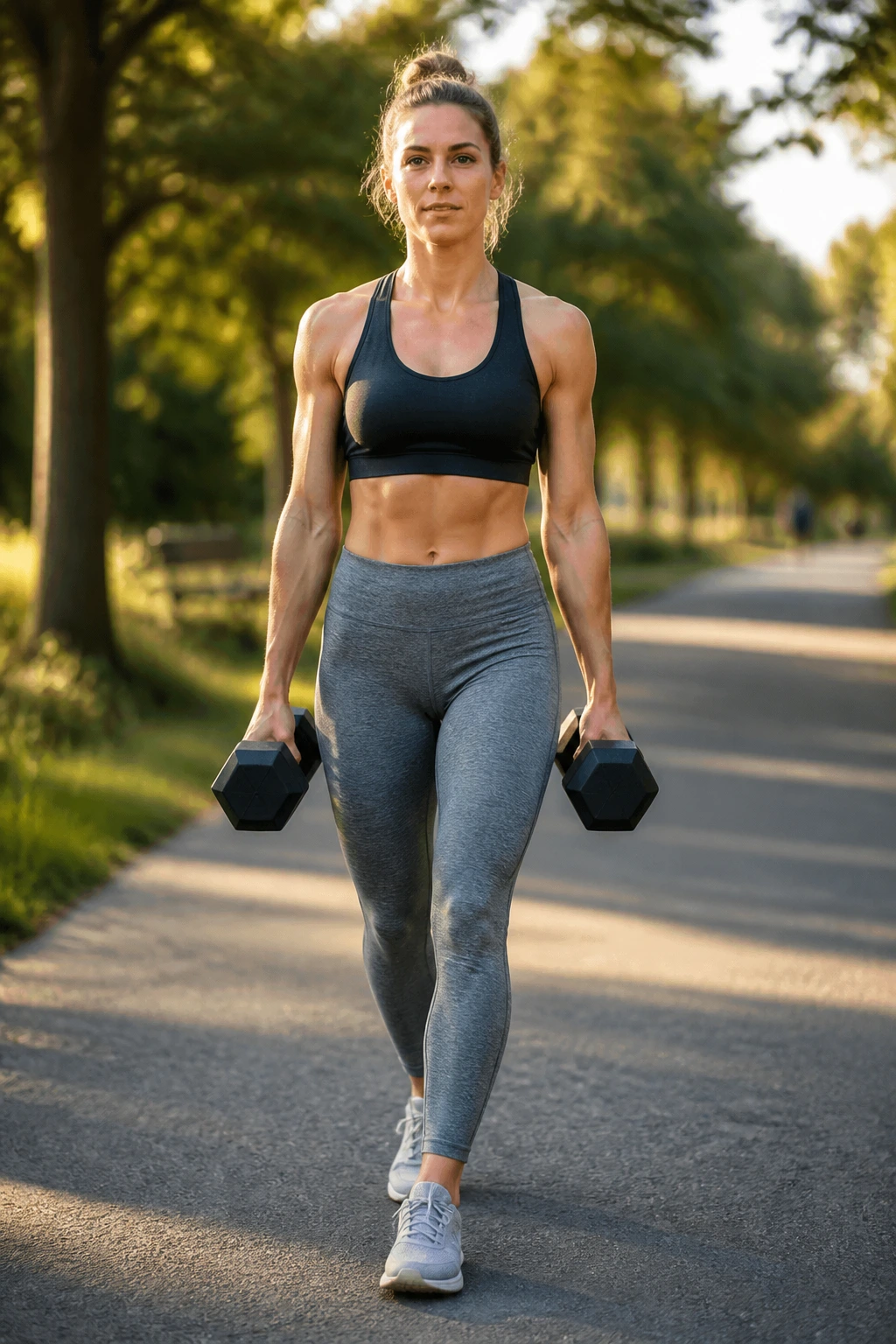
Why does walking with dumbbells count as arm work? Because your grip, forearms, biceps, shoulders, and even your upper back have to keep the load from wobbling the whole time. A heavy carry does more for arm stability than a lot of people expect.
Pick up a heavy pair, stand tall, and walk for 30 to 60 seconds with slow, controlled steps. Keep the shoulders down, the ribs stacked, and the wrists straight. Don’t lean to one side. Don’t shrug. If you can talk comfortably the entire time, the dumbbells are probably too light.
How to Use It
Use farmer’s carries as a finisher after curls or presses, or place them between upper-body moves to keep the heart rate up. The final 10 seconds should feel like your hands are earning their keep. That is the point.
28. Overhead Carry March
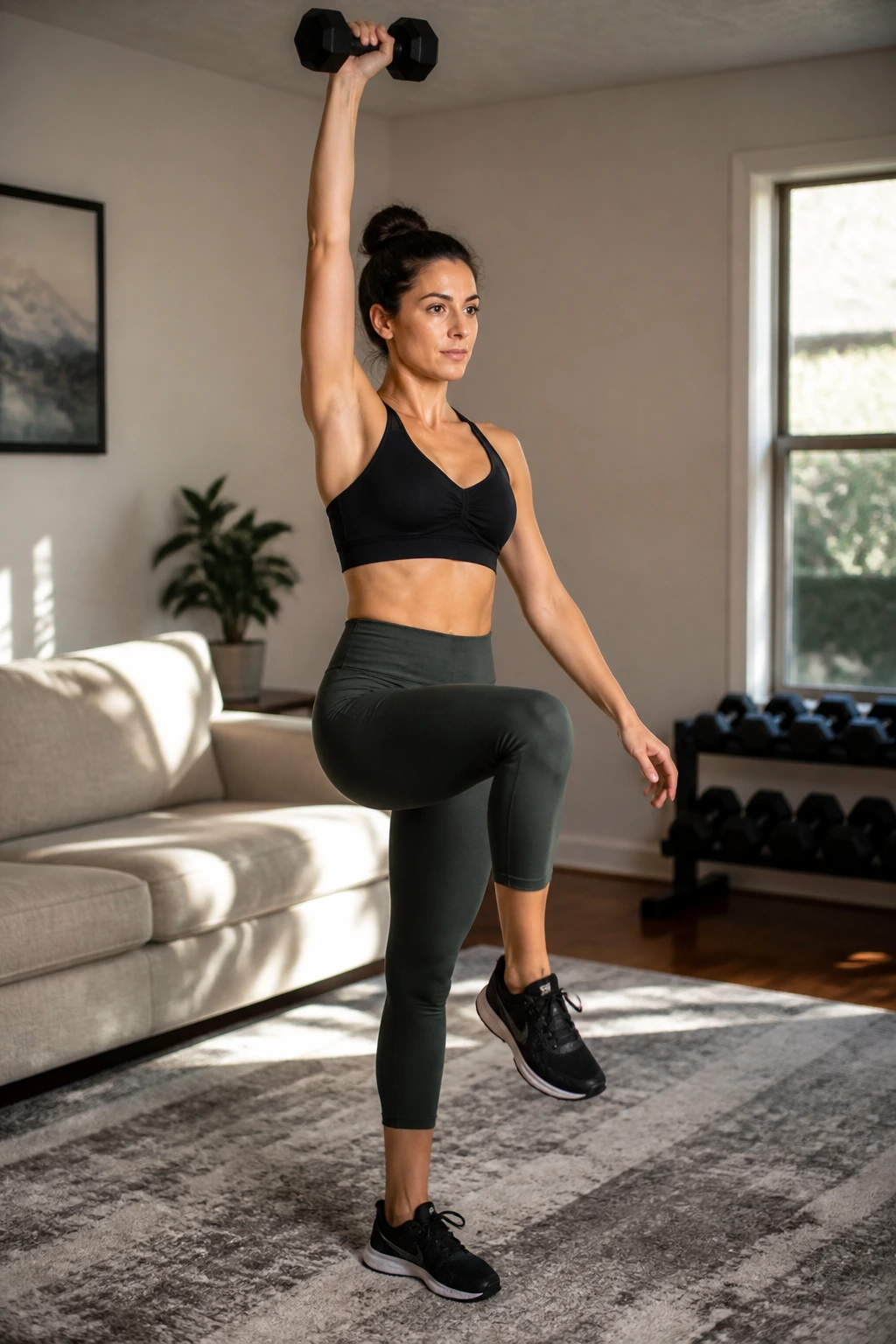
This move looks like a simple balance drill, but it lights up the shoulders and triceps fast. Holding a dumbbell overhead while you march in place forces the arm to stabilize against wobble, which is useful if you want stronger pressing and better control.
Press one dumbbell overhead and keep it there while you march slowly, lifting the knees only as high as you can without losing posture. Switch sides after 20 to 40 seconds. The weight should feel challenging but manageable, not like a struggle to keep the elbow locked. If the ribs flare, lighten the load.
- Keep the biceps close to the ear.
- March slowly.
- Stay tall through the spine.
- Use a wall nearby if balance feels shaky.
Honest note: this looks easy until the shoulder starts shaking. Then it gets interesting very quickly.
29. Push-Up Plus Dumbbell Drag
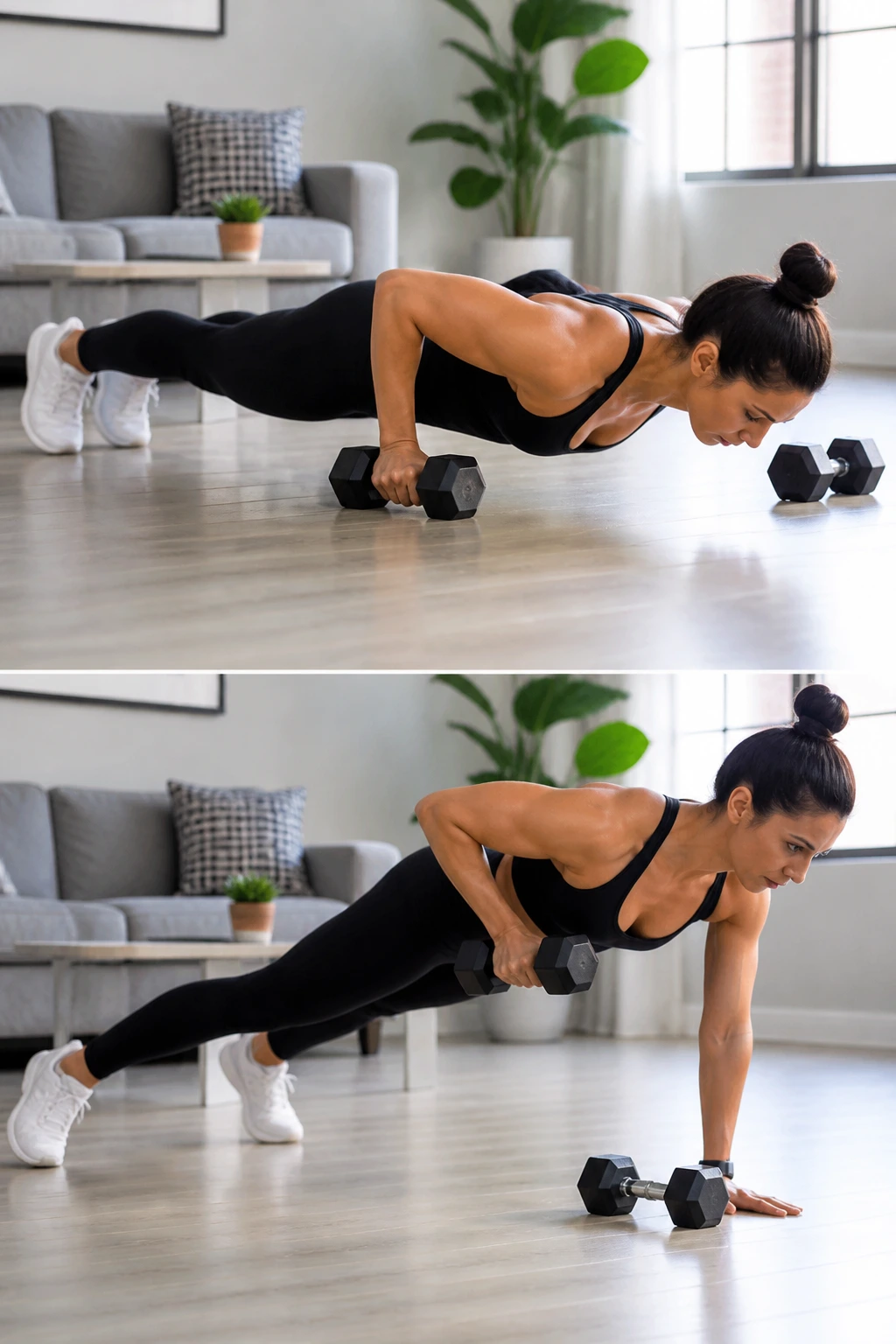
Put dumbbells on the floor, take a plank position with your hands on them, and do a push-up. At the top, drag one dumbbell across your body, then do the same on the other side. It is a tougher home move than it sounds, because your arms have to press, stabilize, and resist twisting all at once.
Use light dumbbells and a wider stance with your feet. Keep the hips as level as possible during the drag. Four to 8 reps per side is enough, and incline the hands on a couch if full push-ups are not there yet. The push-up portion hits the triceps; the drag lights up the shoulders, lats, and core.
The “plus” part matters because you keep pressing the floor away at the top, which helps the shoulder blades move well. That little extra push is useful and brutally honest.
30. Dumbbell Arm Complex Finisher
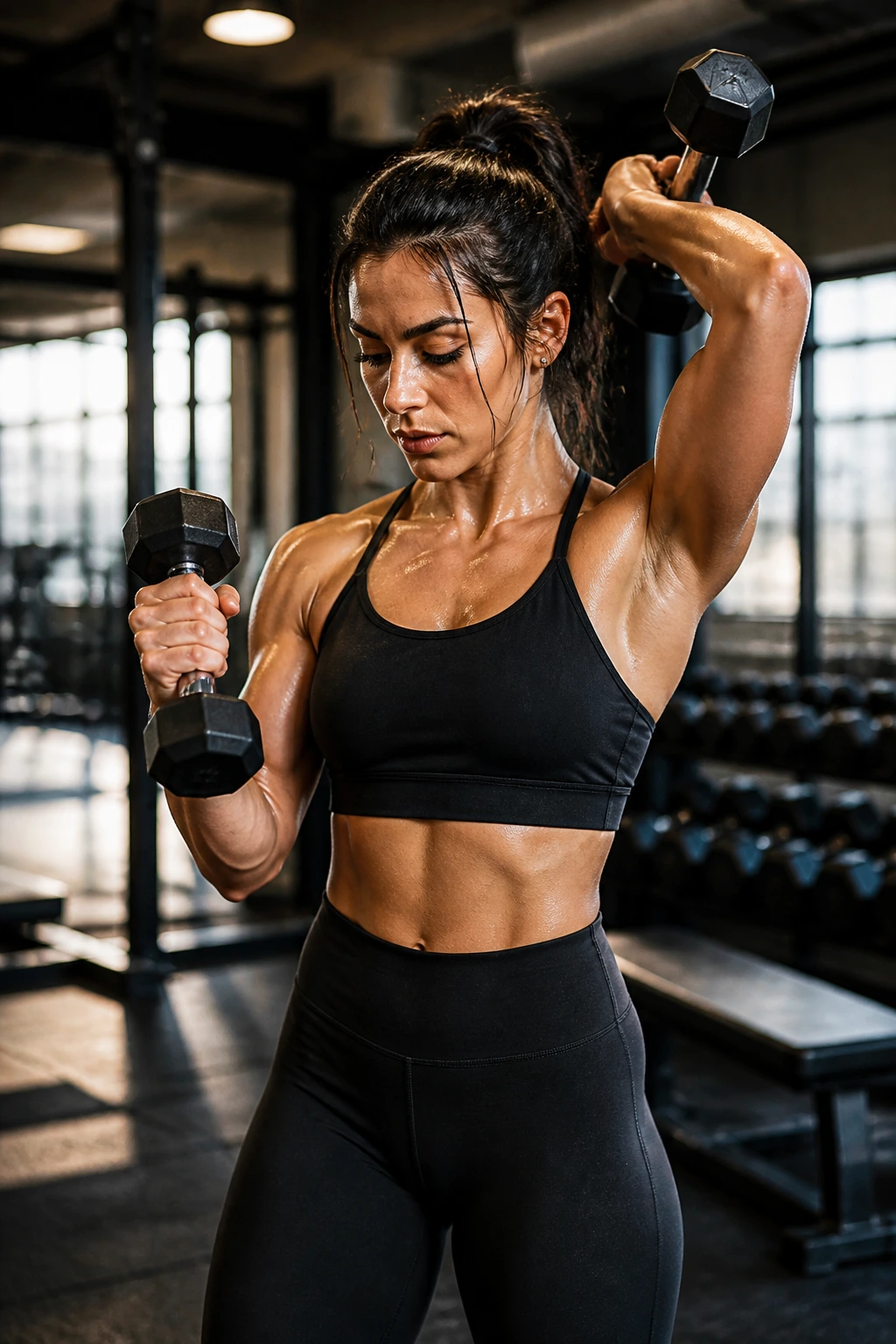
Unlike single-exercise sets, a complex keeps the same dumbbells in your hands while you move from one pattern to another with almost no rest. That makes it a strong finisher for arms when time is short and you want the muscles to feel fully worked.
Try 5 curls, 5 hammer curls, 5 overhead triceps extensions, and 5 kickbacks without putting the weights down. Rest 60 to 90 seconds, then repeat for 3 to 5 rounds. Use a pair of dumbbells that feels light for the first move and challenging by the last. If the weights force you to break form early, they are too heavy for the complex.
This works best after your main strength work, not before it. The point is density, not max load. Pick a clean rhythm, breathe through the transitions, and keep every rep controlled. By the last round, your forearms and upper arms should feel cooked. Good. That means it did its job.
Final Thoughts
Strong-looking arms do not come from one magical exercise. They come from a small group of moves done with cleaner form, enough load, and enough patience to let the muscles adapt. If your current dumbbells feel easy for every set, slow the lowering phase, add a pause, or move up in weight.
The smartest home arm sessions usually mix one curl, one triceps move, one shoulder movement, and one carry or row. That keeps the work balanced and makes your shoulders happier over time. Boring? A little. Effective? Much more than the endless tiny-rep approach people keep trying.
