



A kettlebell makes core training honest fast. If your ribs flare, your back arches, or you try to cheat the rep, the bell tells on you.
Kettlebell ab workouts for women work best when they train the torso to resist movement, not just crunch hard. That means anti-extension, anti-rotation, anti-side-bend, and loaded carries that force the midsection to stay stacked while the rest of the body moves.
That matters if you want more than a tired, sore stomach. A stronger trunk helps you press overhead without wobbling, carry groceries without twisting, deadlift with better shape, and keep your posture from collapsing after a long day at a desk or in a car. It also gives you options: floor work when you want control, standing work when you want carryover, and a few tougher drills when you want the bell to earn its keep.
Pick the version that matches your current control, not the one that looks most dramatic. A light kettlebell and clean mechanics beat a heavy bell and sloppy reps, every time.
1. Dead Bug Kettlebell Press
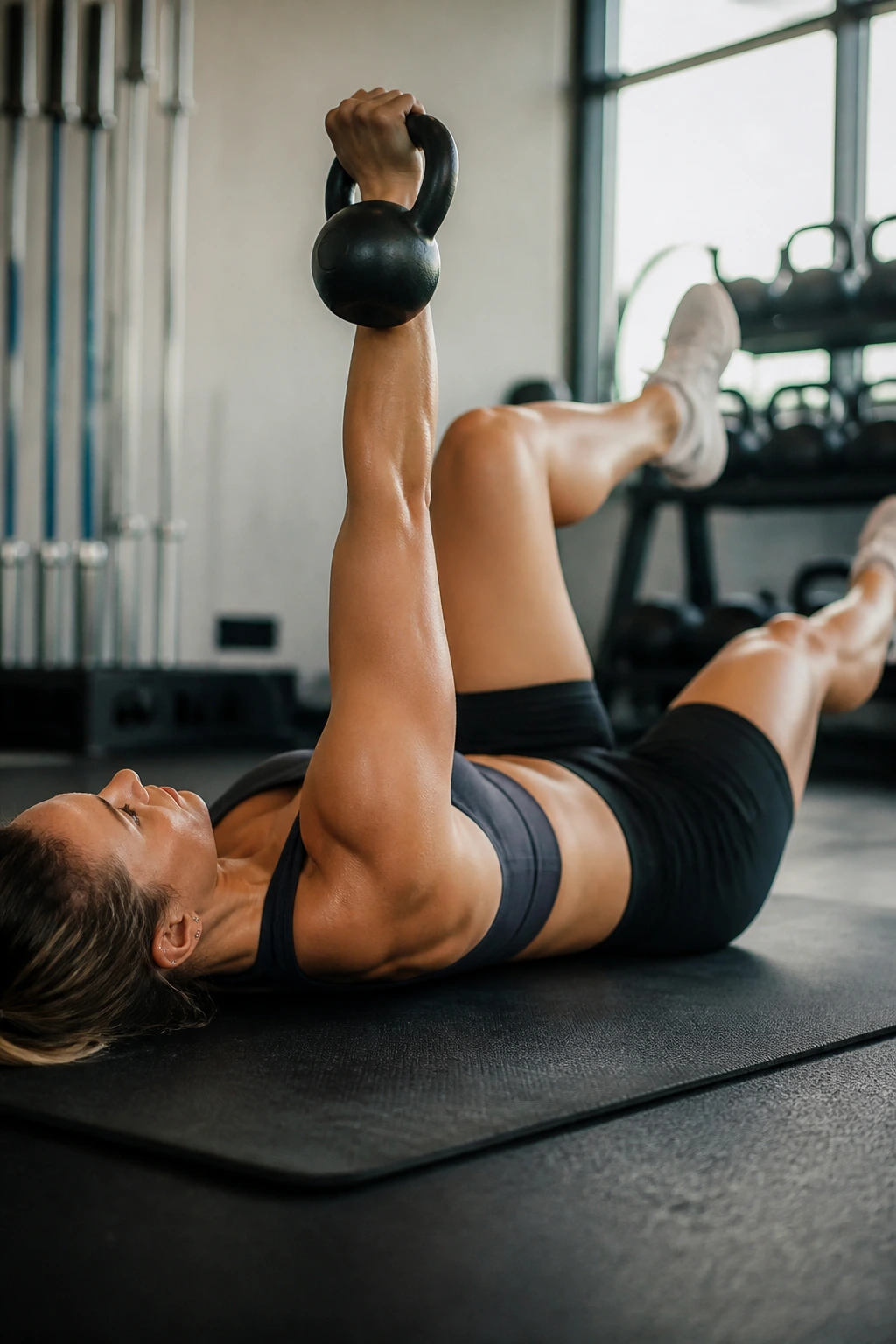
This is one of the cleanest ways to teach the abs to stop the ribs from popping up. Lie on your back, press the kettlebell straight up over one shoulder, and move the opposite leg while keeping your lower back heavy on the floor. If the bell drifts or your spine arches, the weight is too much.
Why It Works
The dead bug press is built around anti-extension. That’s the job of the deep core: stop the low back from taking over when your arms and legs move away from center. You are not chasing a burn here. You’re chasing control.
Use 3 sets of 6 to 8 reps per side with a light bell, usually the kind you can keep steady without shaking. A 6 to 12 kilogram kettlebell often makes sense for this move, but the right load is the one that lets your ribs stay down.
- Keep one knee bent at 90 degrees.
- Exhale as the leg lowers.
- Stop the rep the second your back starts to arch.
- Press the bell hard toward the ceiling.
Tip: If your neck feels tense, put the bell down and hold a small plate or even no weight at all. The exercise still works.
2. Half-Kneeling Halo Flow
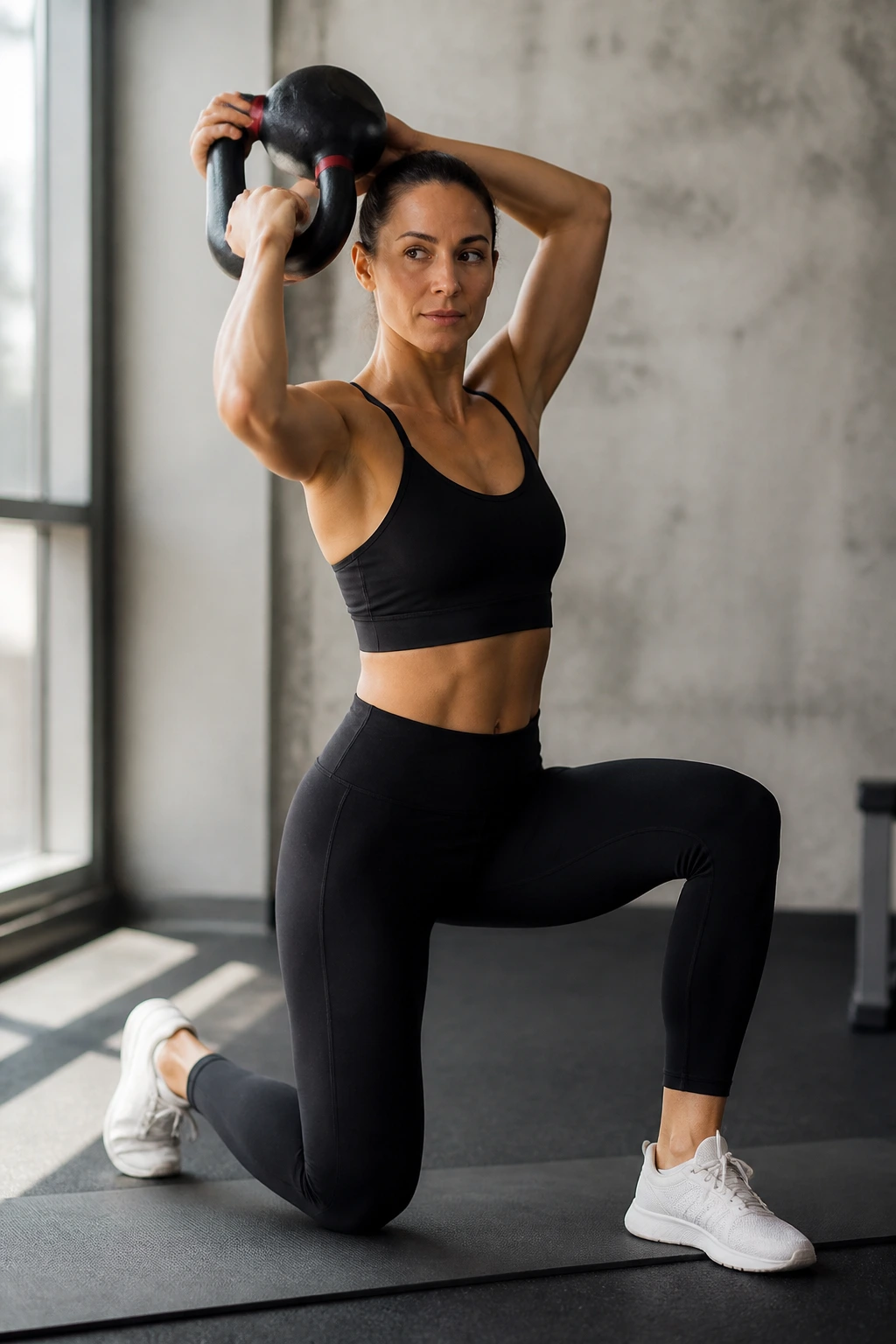
Why does a move that circles a kettlebell around your head show up in core training? Because the torso has to stay quiet while the shoulders and ribs want to wiggle.
The half-kneeling halo forces your obliques to brace while your upper body traces a controlled circle. One knee is down, the other foot planted, and the bell moves slowly around the head in a tight path. The trick is not speed. The trick is not letting the chest rotate with the bell.
How to Use It
Start with 2 to 3 sets of 5 circles each direction. Go slower than you think. If the path gets wide, the bell gets away from you, and the whole point disappears. A lighter kettlebell usually feels better here because the exercise is about precision, not brute force.
Keep your front ribcage stacked over your hips. If you lean backward, you’ve lost the drill. If you can breathe smoothly while the bell moves, you’re doing it right.
This one is especially handy for women who want a core move that also helps with shoulder control. It has a nice carryover to pressing and carrying, and it is kinder on the neck than a lot of people expect.
3. Suitcase Carry March
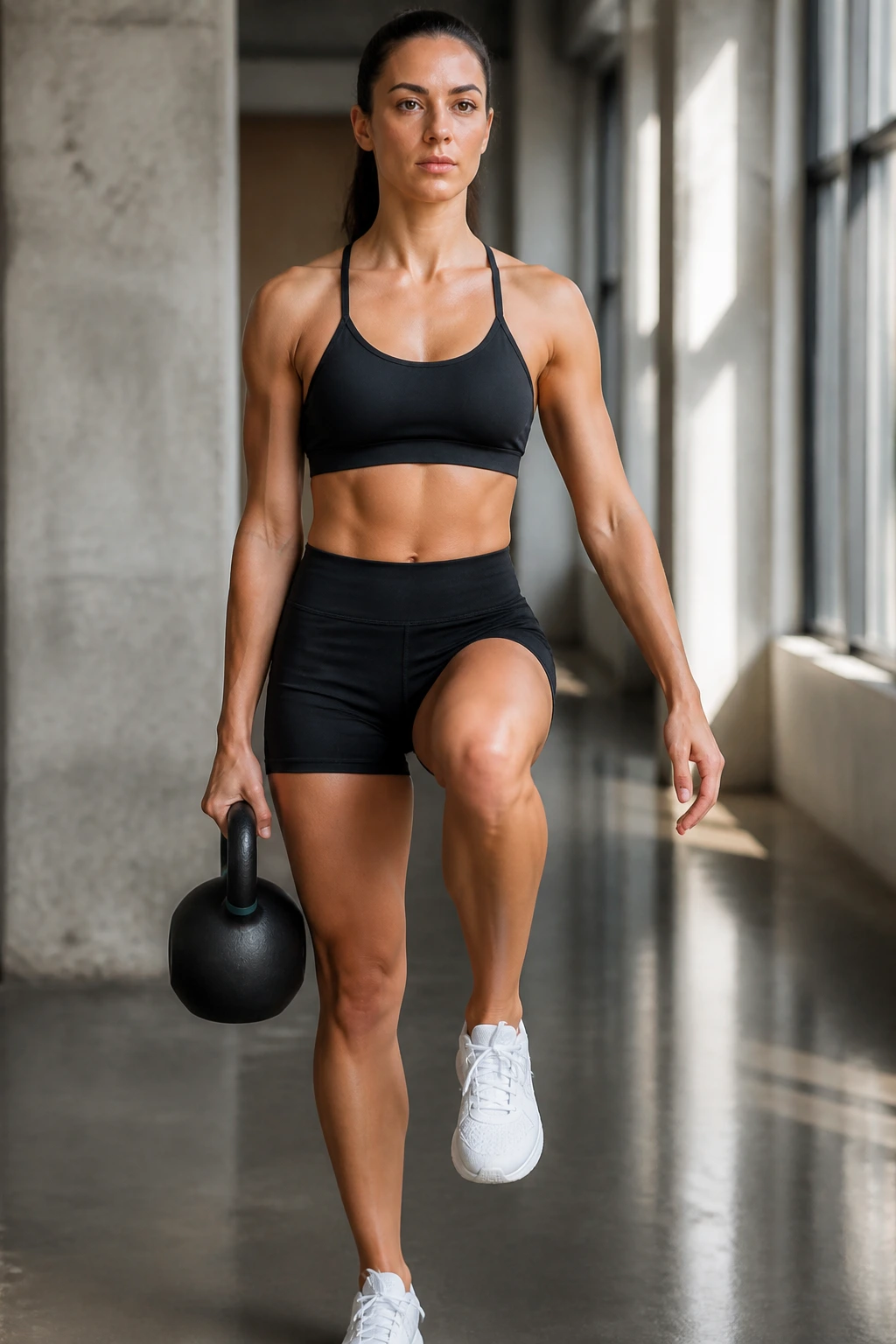
A suitcase carry march looks simple. It is not easy.
Hold one kettlebell at your side, stand tall, and march in place or walk slowly for 20 to 40 steps. The loaded side wants to pull you down. Your job is to stay square, keep the pelvis level, and refuse the lean. That’s where the obliques and deep stabilizers do their real work.
Quick Form Notes
- Keep the shoulders level.
- Walk with short, quiet steps.
- Brace before each step, not after.
- Switch sides every set.
Use 3 to 5 rounds of 20 to 30 seconds per side. A bell that feels manageable in your hand but annoying in your side is about right. If you can cruise around the room without any effort, the load is too light to matter much.
Small detail, big difference: don’t let your free arm flare out. Let it hang naturally. That makes the trunk work harder and keeps the drill honest.
4. Slow Russian Twist
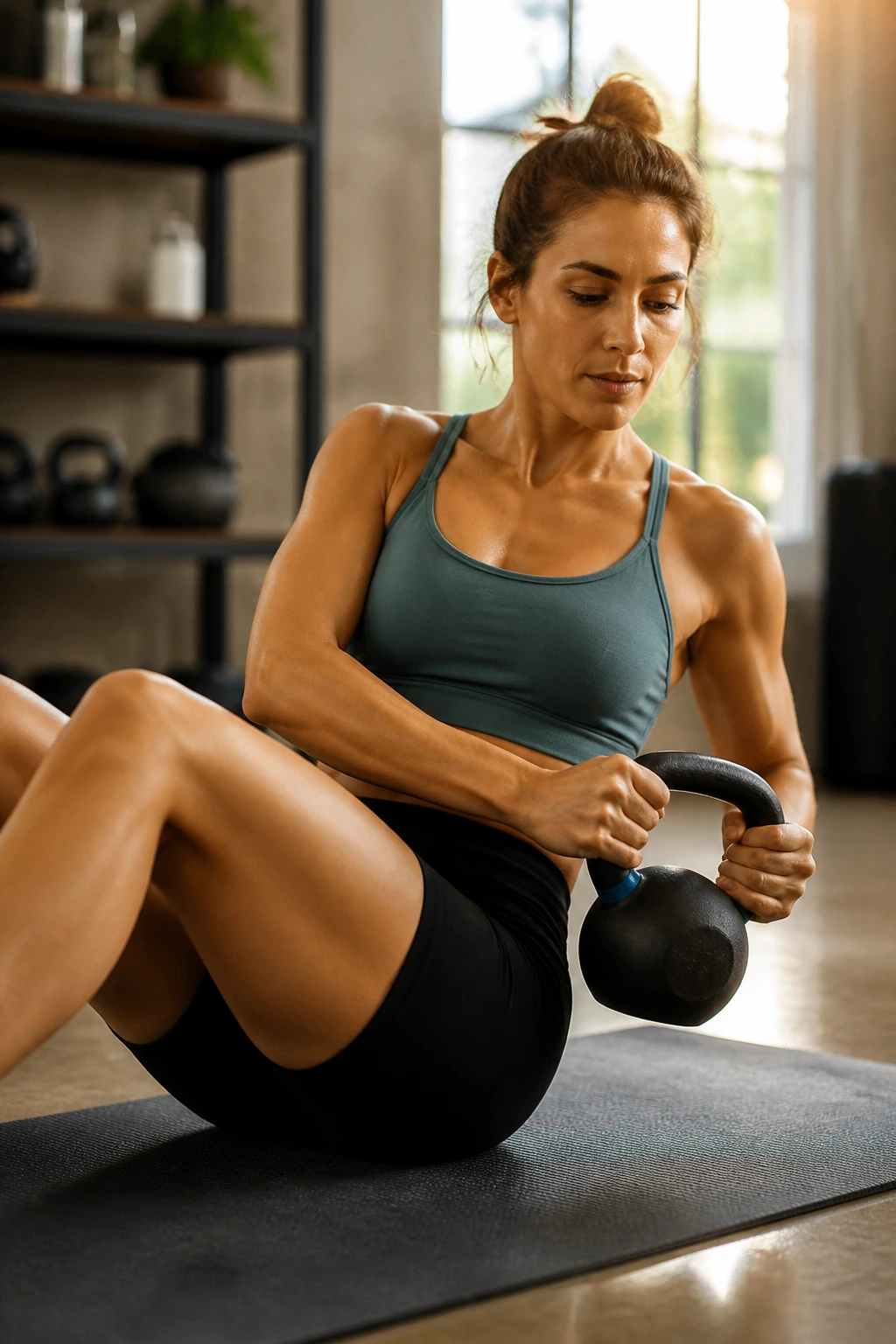
Russian twists get sloppy fast. Fast twisting, feet flying, and a heavy bell usually turn the move into a mess that irritates more than it helps.
The better version stays controlled. Sit tall, lean back only a little, and rotate the bell from side to side with the torso moving as one unit. The rotation should come from the ribcage and upper abs, not from yanking your arms across your lap like you’re trying to move faster than the room.
Use a light kettlebell for 8 to 12 twists per side, or keep the feet down if your lower back rounds easily. If the spine starts to collapse, stop the set. There’s no prize for ugly reps.
Compared with endless crunches, this drill asks the obliques to do more of the stabilizing. That makes it a better choice for women who want rotational strength for sport, carrying, or general fitness, not just fatigue for the sake of fatigue.
5. Tall-Kneeling Single-Arm Press
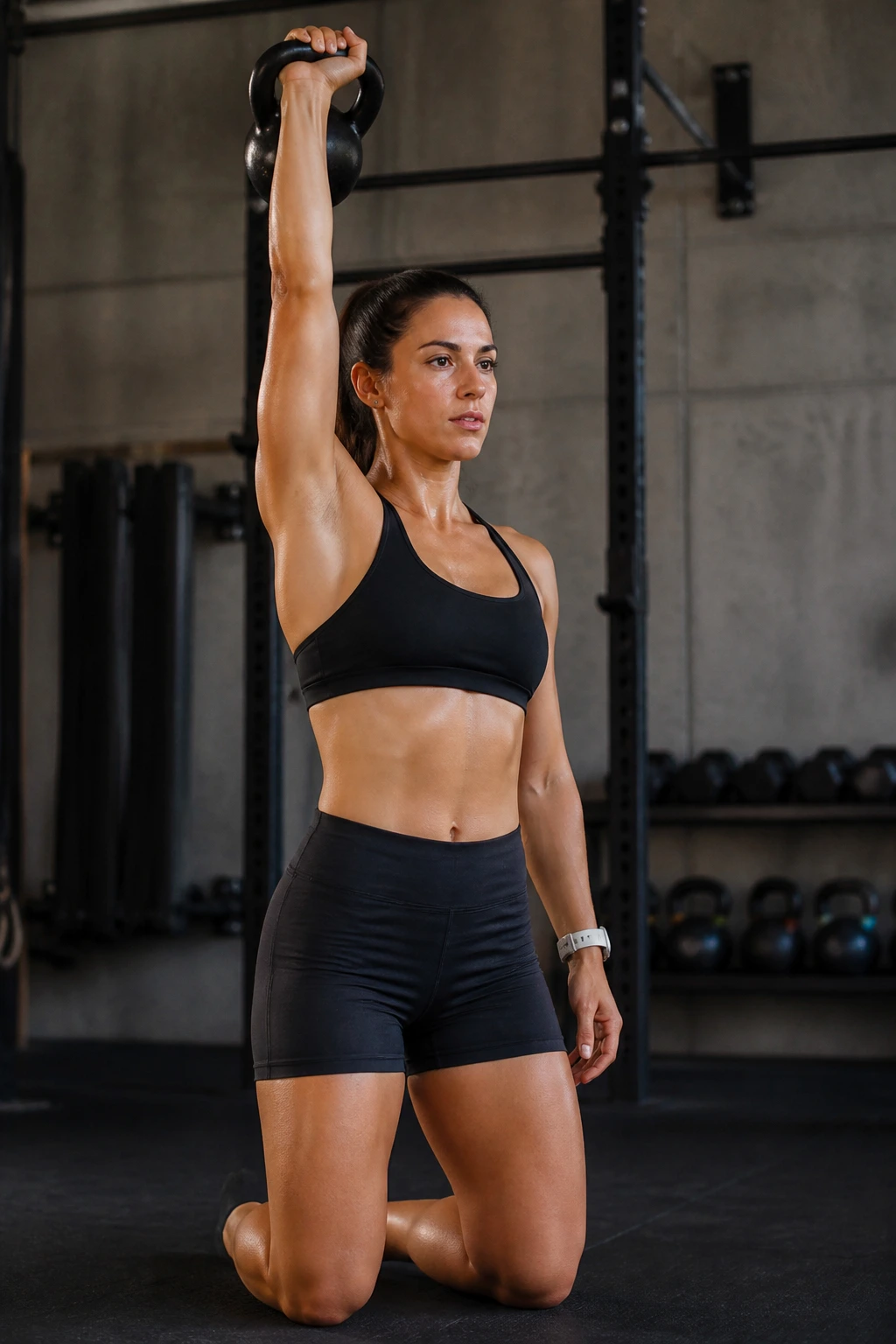
Tall-kneeling presses are sneaky. They look like a shoulder move, then your midsection starts working hard because the hips cannot help you cheat.
Get into a tall kneel with both knees on the floor, squeeze the glutes, and press one kettlebell overhead without leaning back. The knees pin the lower body down, so your abs have to keep the ribs from flaring. That makes this a strong choice when you want core tension without a lot of spinal motion.
Use 3 sets of 5 to 8 reps per side. The bell should move in a straight line, and your chest should stay calm. If you feel yourself tipping to one side, the weight is too ambitious.
No drama here. Just clean reps.
For women who spend a lot of time sitting, this one can feel surprisingly good because it teaches the torso to stay tall under pressure. That posture transfer matters more than people think.
6. Kettlebell Windmill
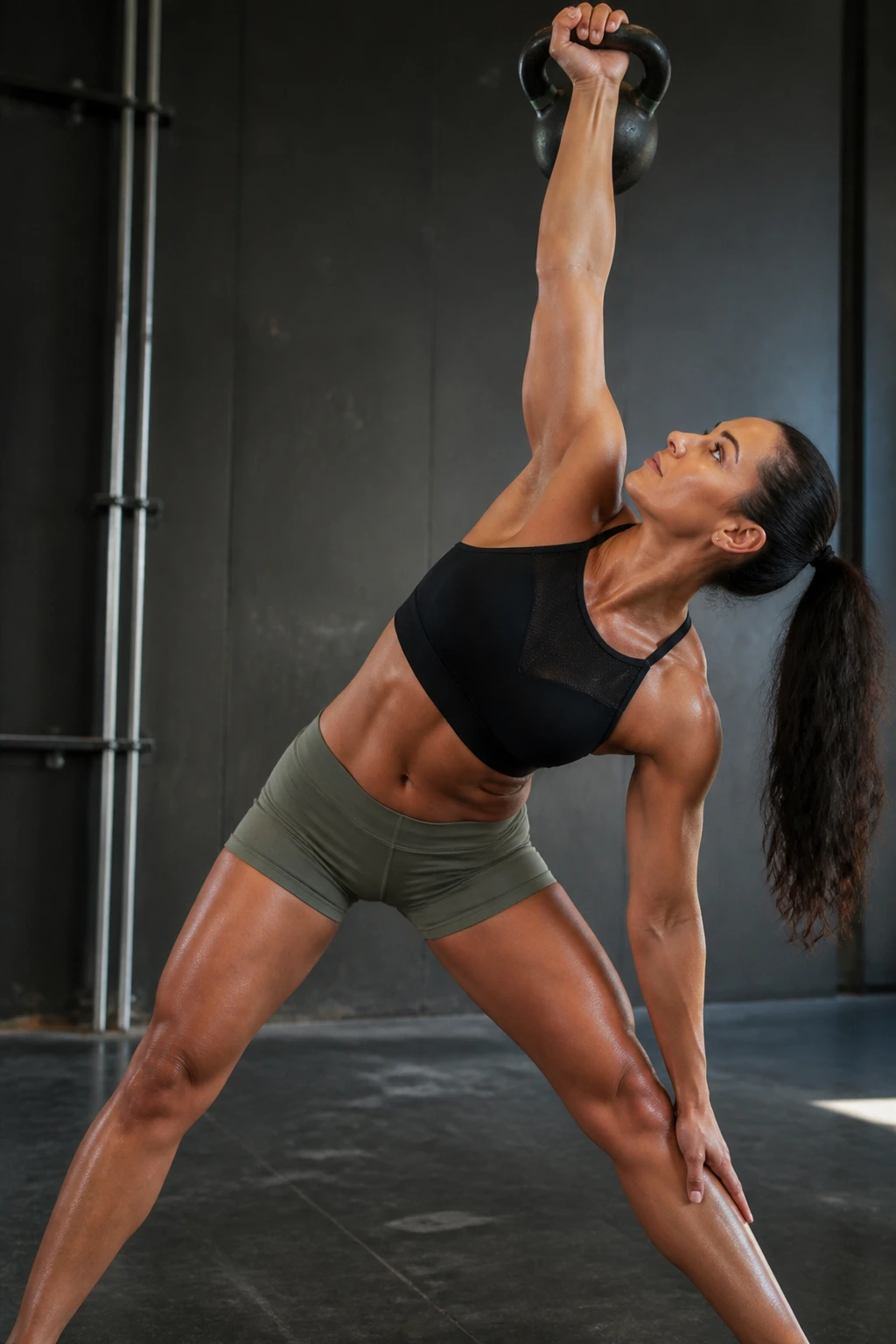
The windmill is a core exercise dressed up like a flexibility drill. It asks for hamstrings, hips, shoulder control, and serious oblique work all at once.
Stand with the kettlebell overhead in one hand, turn the opposite foot out a little, and hinge sideways while keeping your eyes on the bell. The free hand slides down the inside of the leg. The torso rotates only enough to keep the stack clean. If the lower back pinches, shorten the range and lighten the load.
A light to moderate bell for 3 sets of 4 to 6 reps per side is plenty. This is not the place to show off. It is the place to move slowly and keep the arm locked out.
Unlike side bends, the windmill teaches the body to stay long and stacked while the hips move. That makes it one of the better choices for obliques, especially if you want strength that feels useful outside the gym.
7. Plank Drag Drill
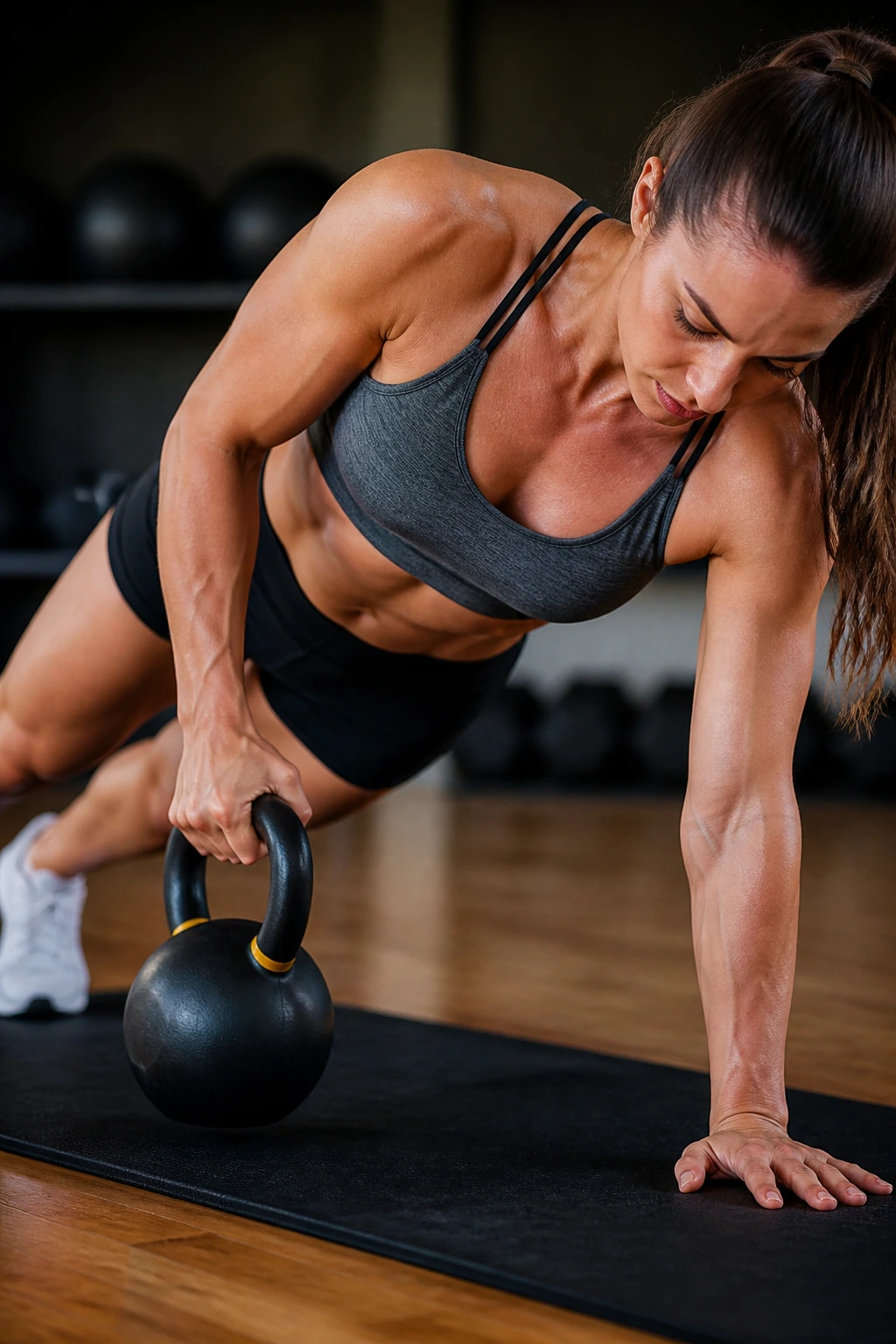
Picture a high plank where one hand sneaks a kettlebell across the floor. The rest of the body has to pretend not to notice.
That is the whole game. In a plank drag, you set the bell just outside one hand, brace hard, and pull it under the chest to the other side without letting the hips swing. The abs fight rotation while the shoulders and lats help keep you steady.
Key Cues
- Feet set a little wider than a normal plank.
- Pull the bell slowly, not with a yank.
- Keep the pelvis level.
- Breathe through short exhales.
Try 2 to 4 sets of 6 to 10 drags. If the hips sway side to side, widen the stance or use a lighter bell. A clean drag with a modest load beats a jerky drag with a heavy one.
This is a good drill for women who want plank work that feels more athletic than a static hold. It also exposes weak links fast, which is useful even if it is mildly annoying.
8. Bottoms-Up Carry
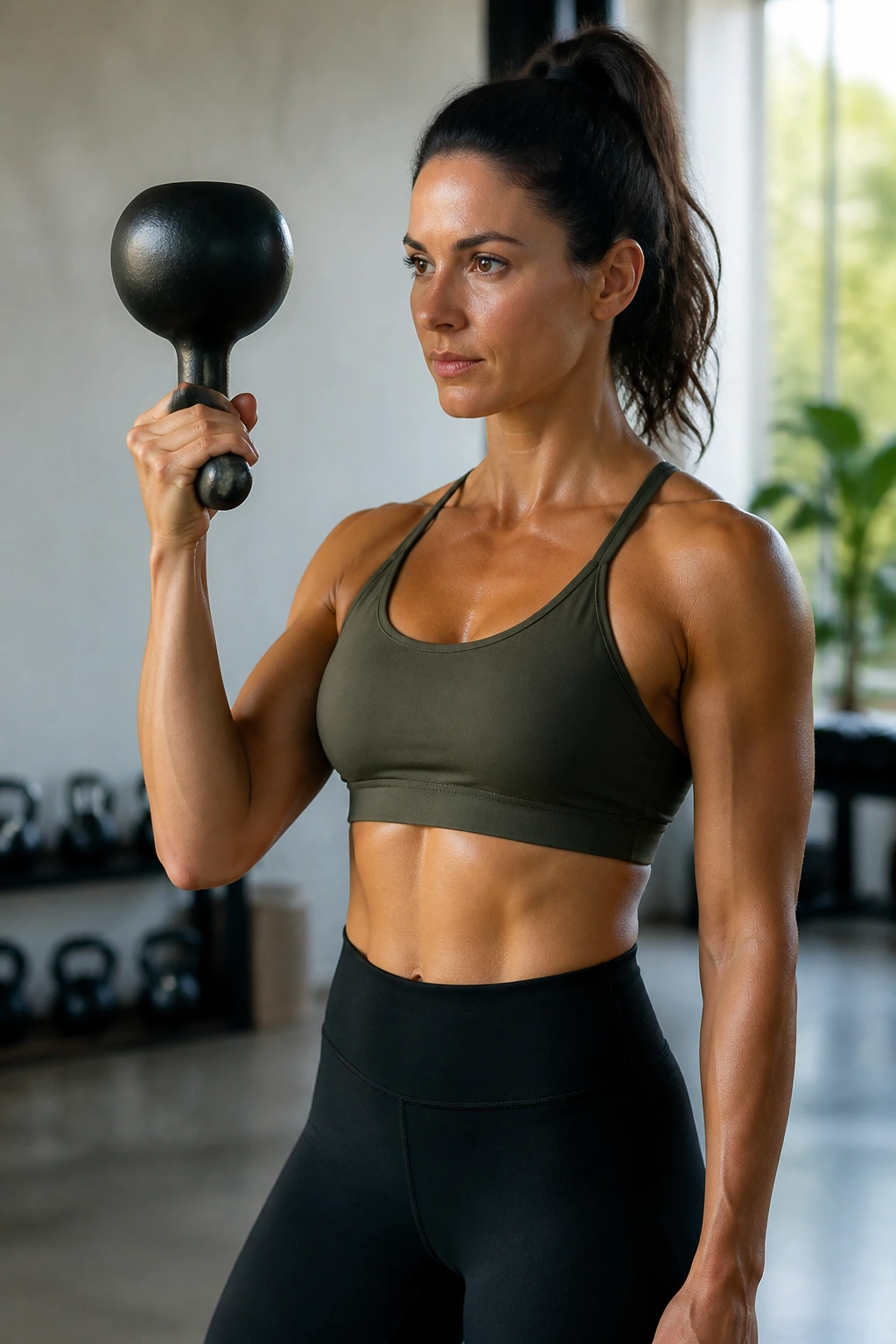
A bottoms-up carry looks small and feels rude. The bell is held upside down, so the handle wants to wobble and the wrist has to stay stacked under the load.
Because the grip is so demanding, the trunk can’t wander off and slacken. You have to keep the ribcage in place, the shoulder quiet, and the steps controlled. It is one of those moves that looks almost cute until you pick it up.
Use 4 to 6 carries of 15 to 25 seconds per side with a very light kettlebell. Seriously, start light. A bottoms-up position magnifies mistakes, and the hand position punishes overconfidence.
Best for women who want a grip challenge that also lights up the deep stabilizers without a lot of floor work. It pairs well with dead bugs or suitcase carries because the body has to organize itself from a different angle.
9. Kettlebell Toe Touch Crunch
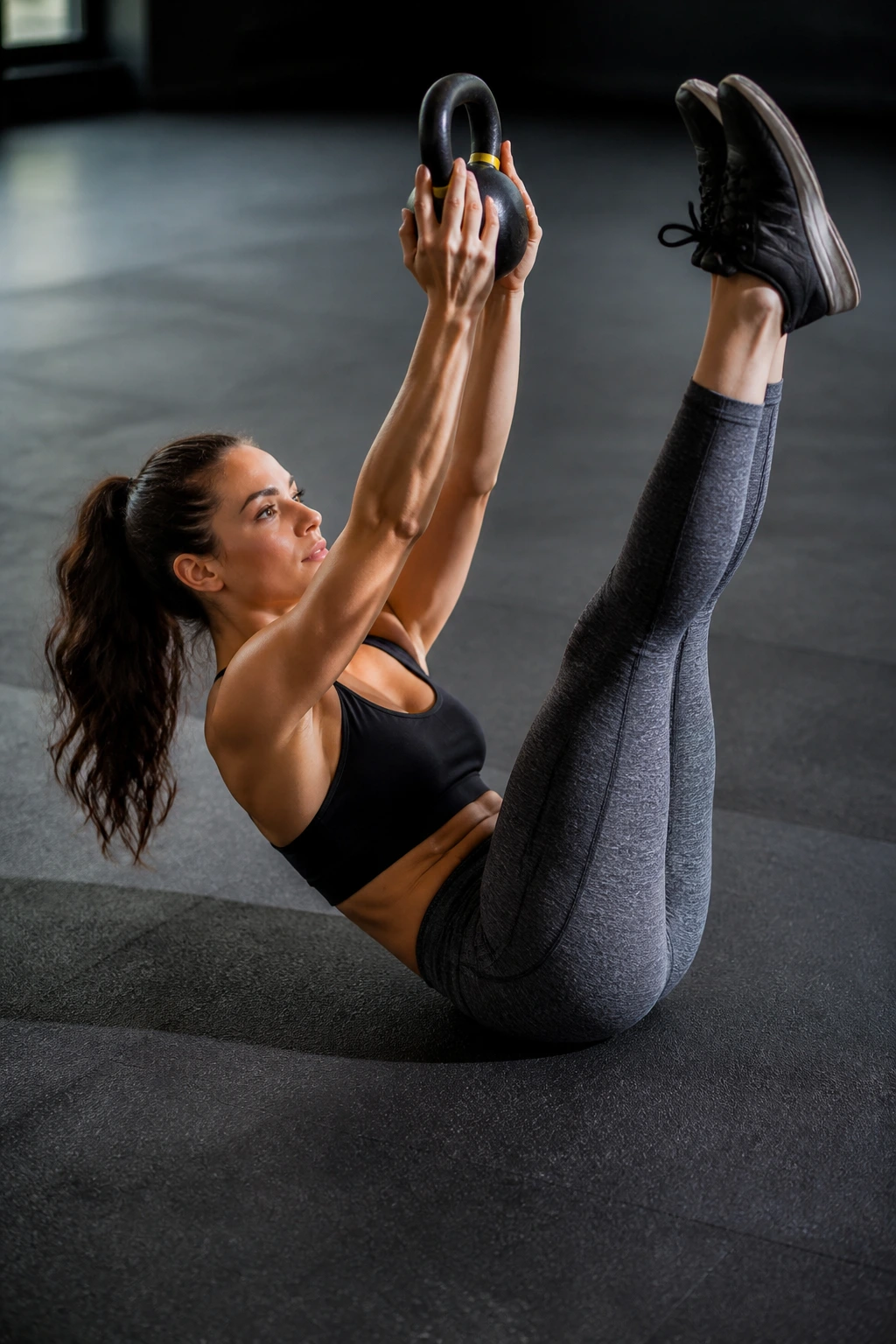
Can a crunch be useful? Yes, if you do not rush it and you do not turn it into a hip flexor tug-of-war.
Lie on your back, hold a light kettlebell over the chest or slightly above it, and reach the shoulders off the floor as you tap toward the toes. The goal is to curl the upper ribs toward the pelvis while keeping the neck relaxed. If the bell makes your arms drift or the low back arches, it is too heavy.
What to Watch For
- Chin stays gently tucked.
- Lower ribs knit down before the curl.
- The movement is short and controlled.
- Exhale at the top.
Use 2 to 3 sets of 10 to 15 reps. Keep the range small. The point is not to chase a giant sit-up.
Compared with old-school high-rep crunches, this version gives you a little external load without losing control. That makes it a decent choice for women who want direct ab flexion in the mix, not just planks and carries.
10. Goblet March
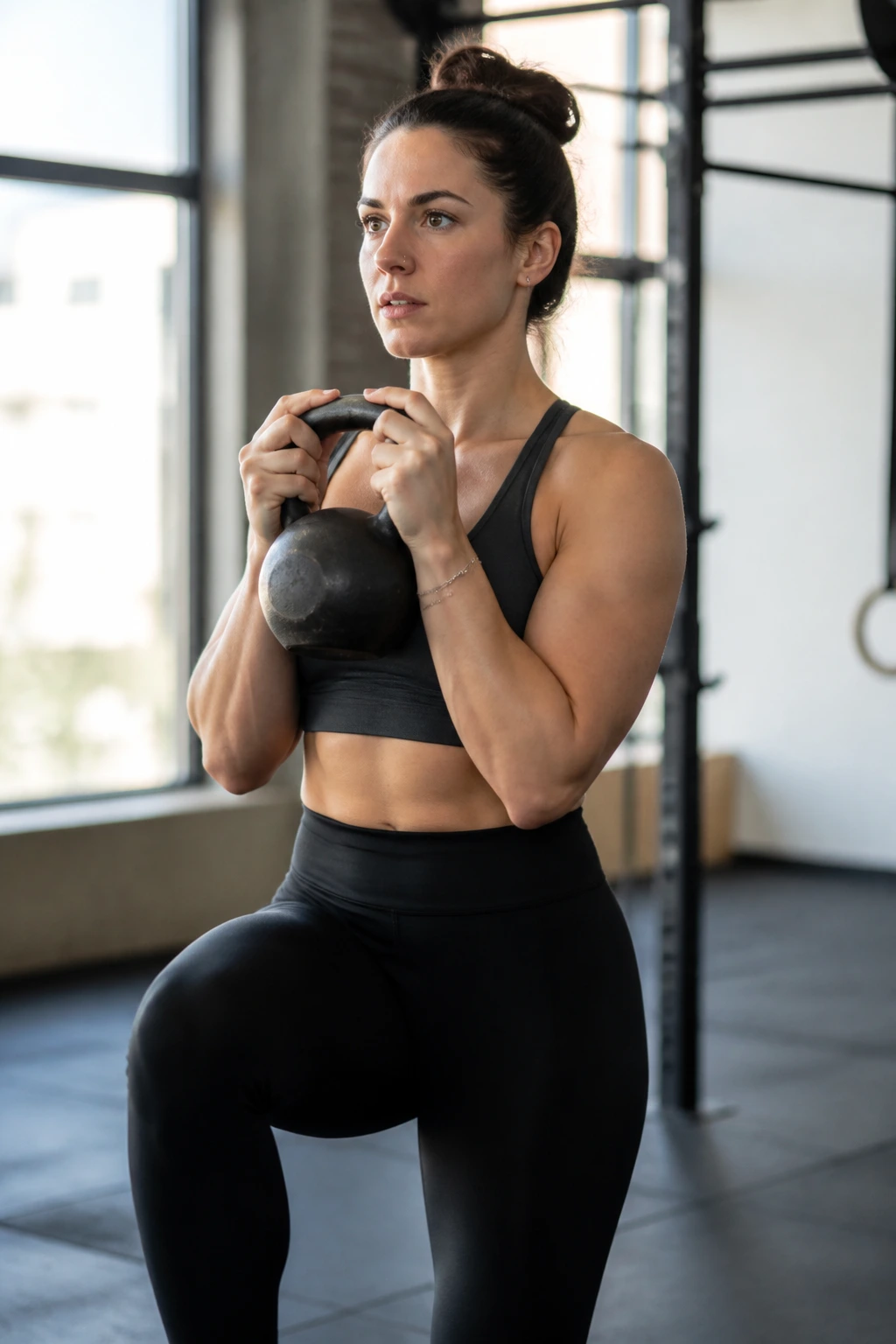
Hold the kettlebell close to your chest, brace like you’re about to be bumped, and march.
That’s the goblet march in plain English, and it’s one of the easiest ways to teach the torso to stay upright under load. The bell sits in front of the body, so the abs, upper back, and glutes all have to cooperate to keep the trunk from folding or leaning.
Use 3 sets of 20 to 30 steps. Keep the elbows down, the ribs stacked, and the breathing calm. If the weight pulls your upper body forward, it’s too much. If you bounce through the knees, slow down.
This one is ideal for beginners who want a standing core drill that feels stable but not boring. It also works well as a warm-up before harder carries or presses because it switches on the brace without frying you.
11. Standing Wood Chop
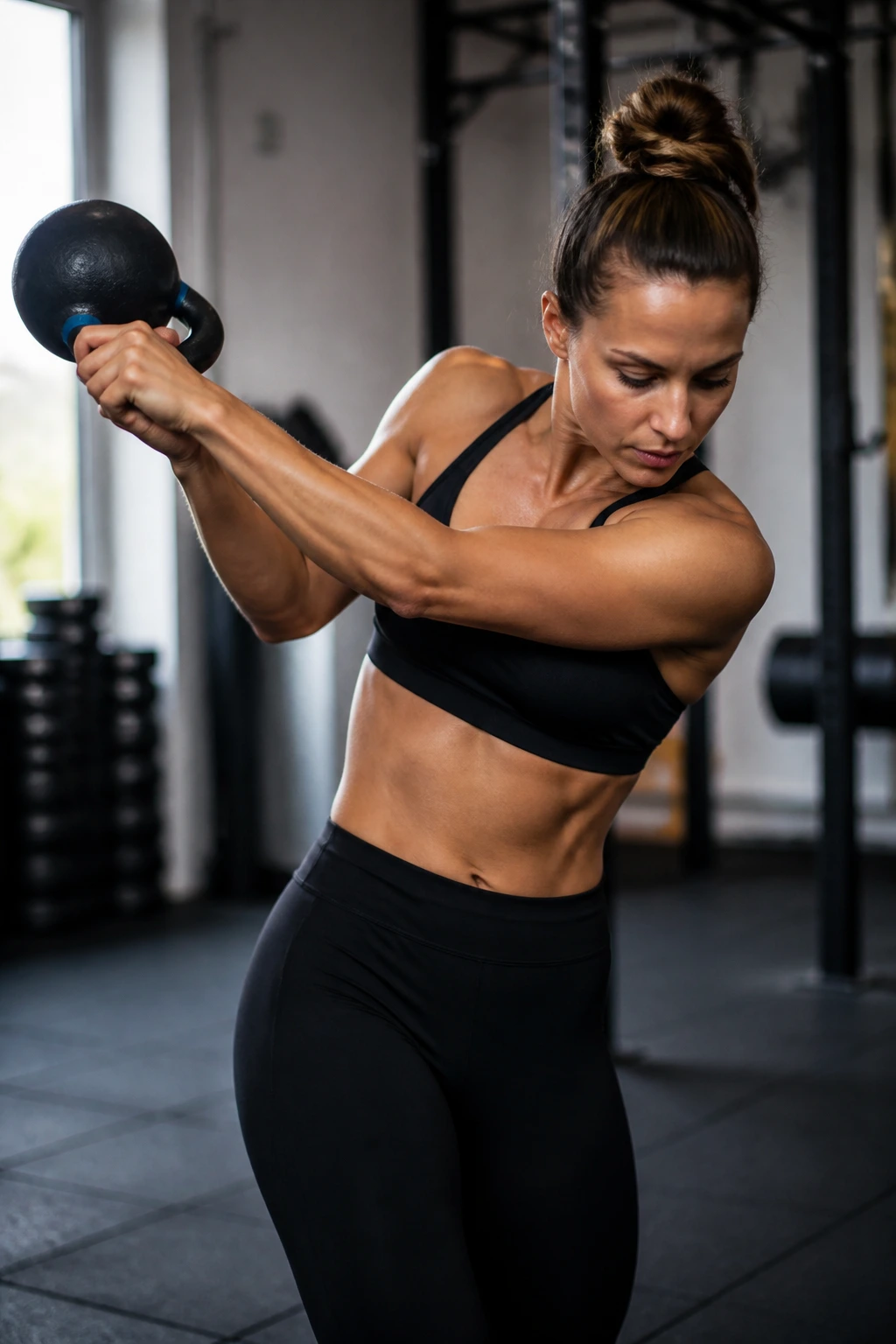
The standing wood chop is one of those moves that can look sharp or look messy in a heartbeat. The difference is usually tempo.
Hold the bell high on one side and guide it diagonally down across the body, then reset with control. Your hips and ribs should rotate together as a unit. If the arms are doing all the work, the core never gets a say.
A moderate bell for 3 sets of 6 to 10 reps per side is plenty. Move with purpose, then stop for a full second before the next rep. That pause matters. It keeps the exercise from turning into a swinging diagonal shrug.
People like this drill because it feels athletic, and they are not wrong. It trains the trunk to organize force across the body, which is handy for lifting, reaching, and daily tasks that never happen in a neat straight line.
12. Renegade Row Hold
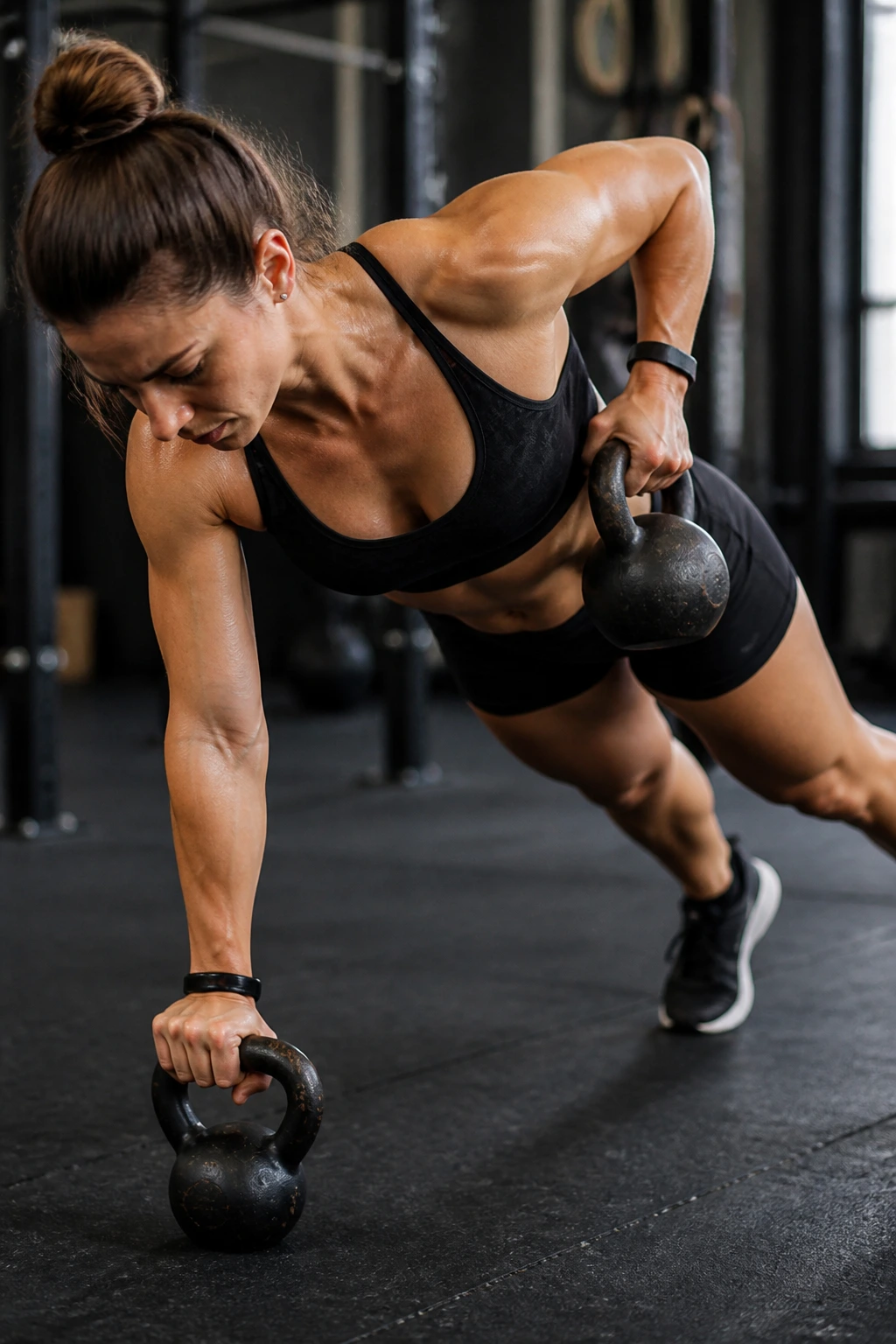
Renegade rows are usually sold as a back move. They are also a hard core exercise if you stop rushing through the row itself.
Set up in a high plank with hands on kettlebells or floor and pull one bell in while the hips stay square. The row should be smooth, and the torso should resist every bit of twist. If you sway, arch, or rock hard to one side, the abs are no longer running the show.
This version works best when you slow it down. Use 2 to 4 sets of 5 to 8 rows per side. A pause at the top makes the drill harder in a useful way because it strips away momentum.
Compared with a regular bent-over row, the renegade position asks for more anti-rotation and shoulder control. That makes it a better fit if you want a core challenge that still feels like a full-body strength exercise.
13. Around-the-World Pass
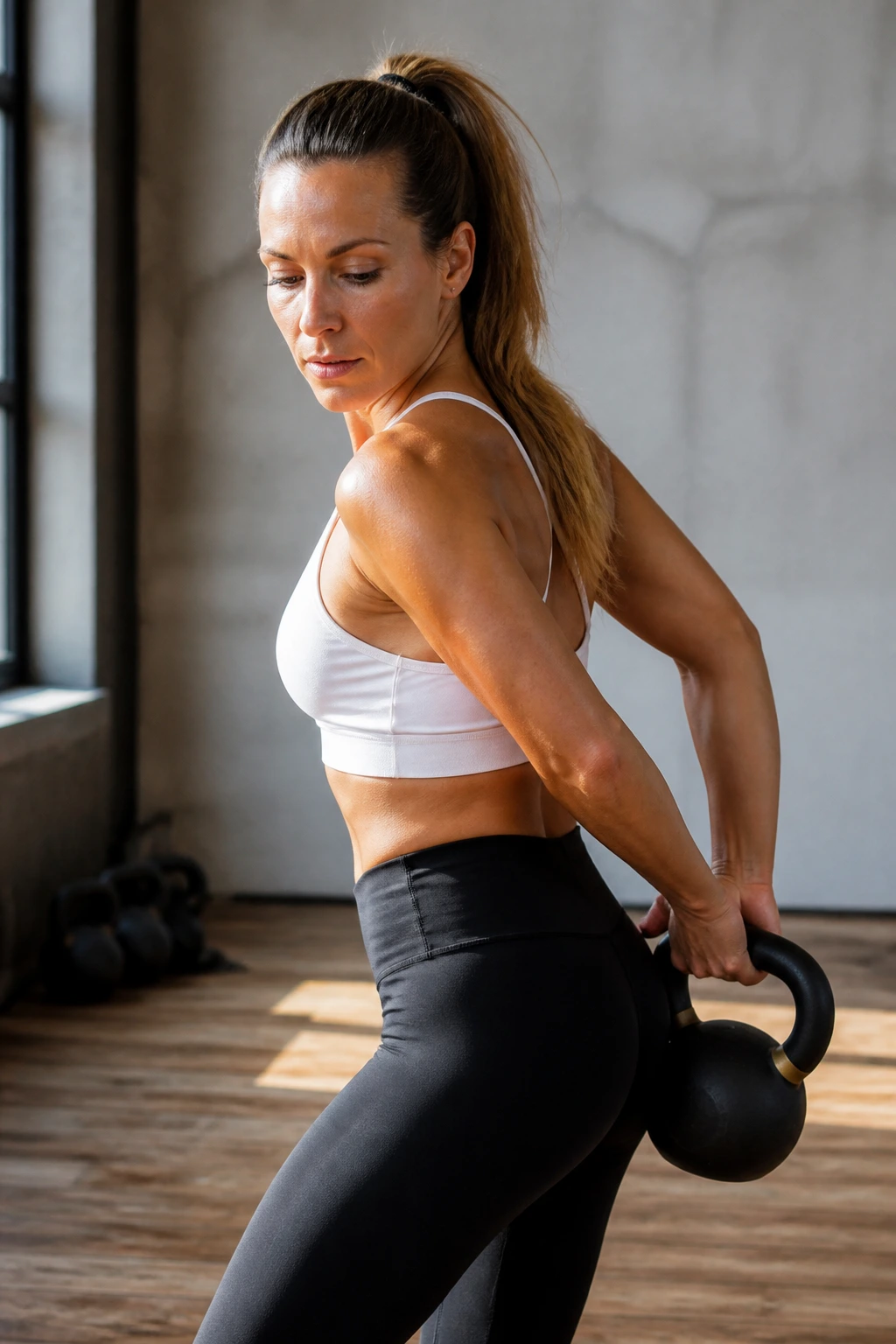
A kettlebell passed around the waist sounds playful until the timing gets off. Then it becomes a grip, rib, and oblique drill all at once.
Stand tall, pass the bell from one hand to the other around your hips, and keep the torso from twisting with every transfer. The hands move, but the chest should stay mostly still. If the shoulders start chasing the bell, the drill loses its value.
Quick Details
- Use a light kettlebell first.
- Make the circle tight.
- Keep knees soft, not locked.
- Switch directions halfway through.
Try 2 to 3 rounds of 20 to 30 seconds each way. This is a good conditioning core drill because it asks for coordination, not brute force. It also rewards rhythm, which is oddly satisfying once you stop overthinking it.
If you like workouts that feel less clinical, this one earns a spot. Just keep it tidy. Sloppy hand changes make the exercise worse, not more impressive.
14. Side Plank Reach-Through
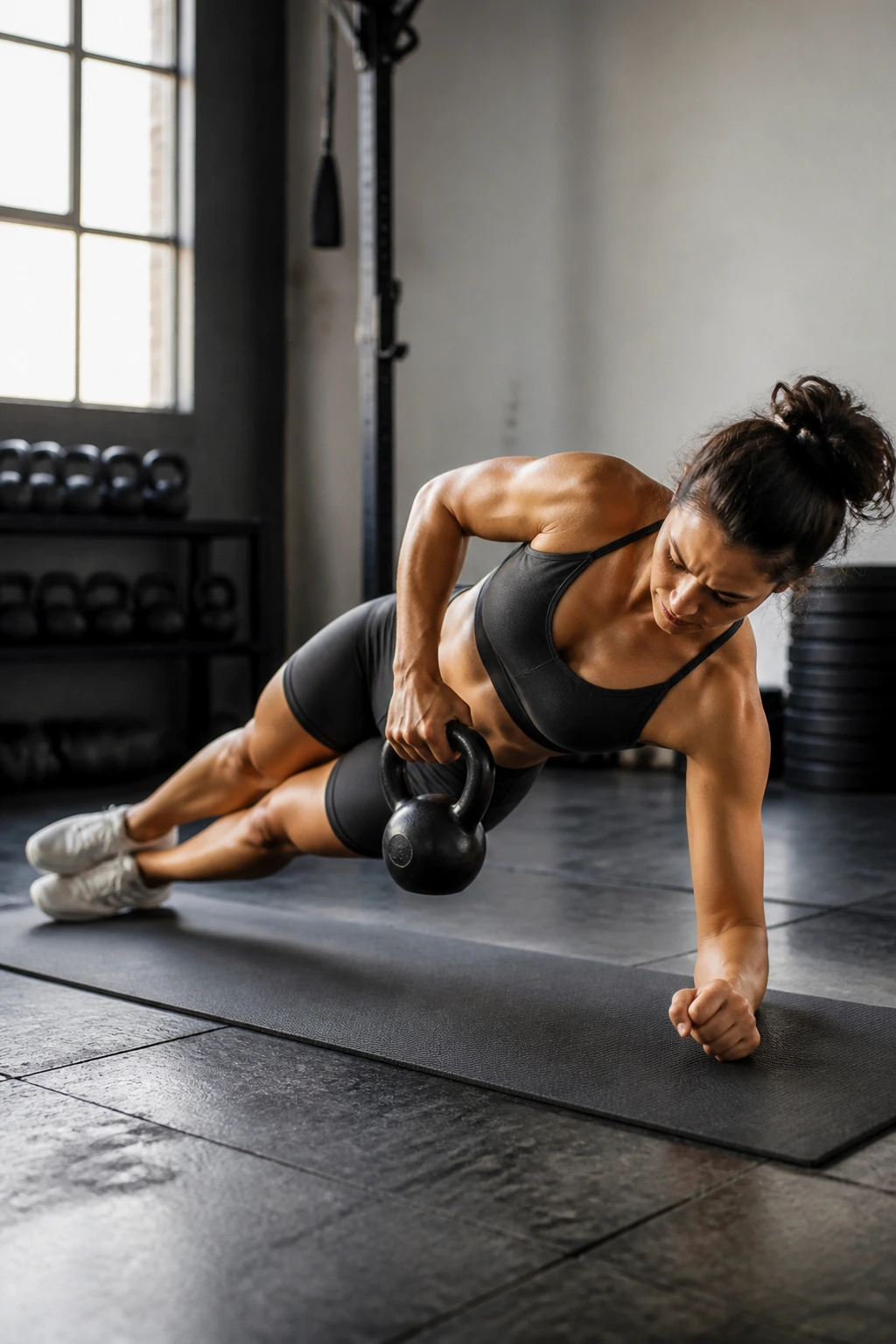
Why does the side plank show up so often in core programs? Because the obliques have to do real work to stop the torso from collapsing sideways.
Start in a side plank and reach the top arm under your body with the kettlebell, then open back up. The reach-through adds rotation on top of the hold, so you get anti-lateral flexion and controlled motion in the same drill. If your hips sag, shorten the set immediately.
How to Get the Most From It
Use 2 to 3 sets of 5 to 8 reach-throughs per side. A lighter bell keeps the shoulder happier. If balancing on a straight arm feels shaky, drop to the forearm and keep the bell close to your chest.
This move tends to favor women who already have a little plank control and want something more specific for the side body. It is not the first drill I’d hand to a true beginner, but it is a solid upgrade when basic side planks feel too easy.
15. Turkish Get-Up to Elbow
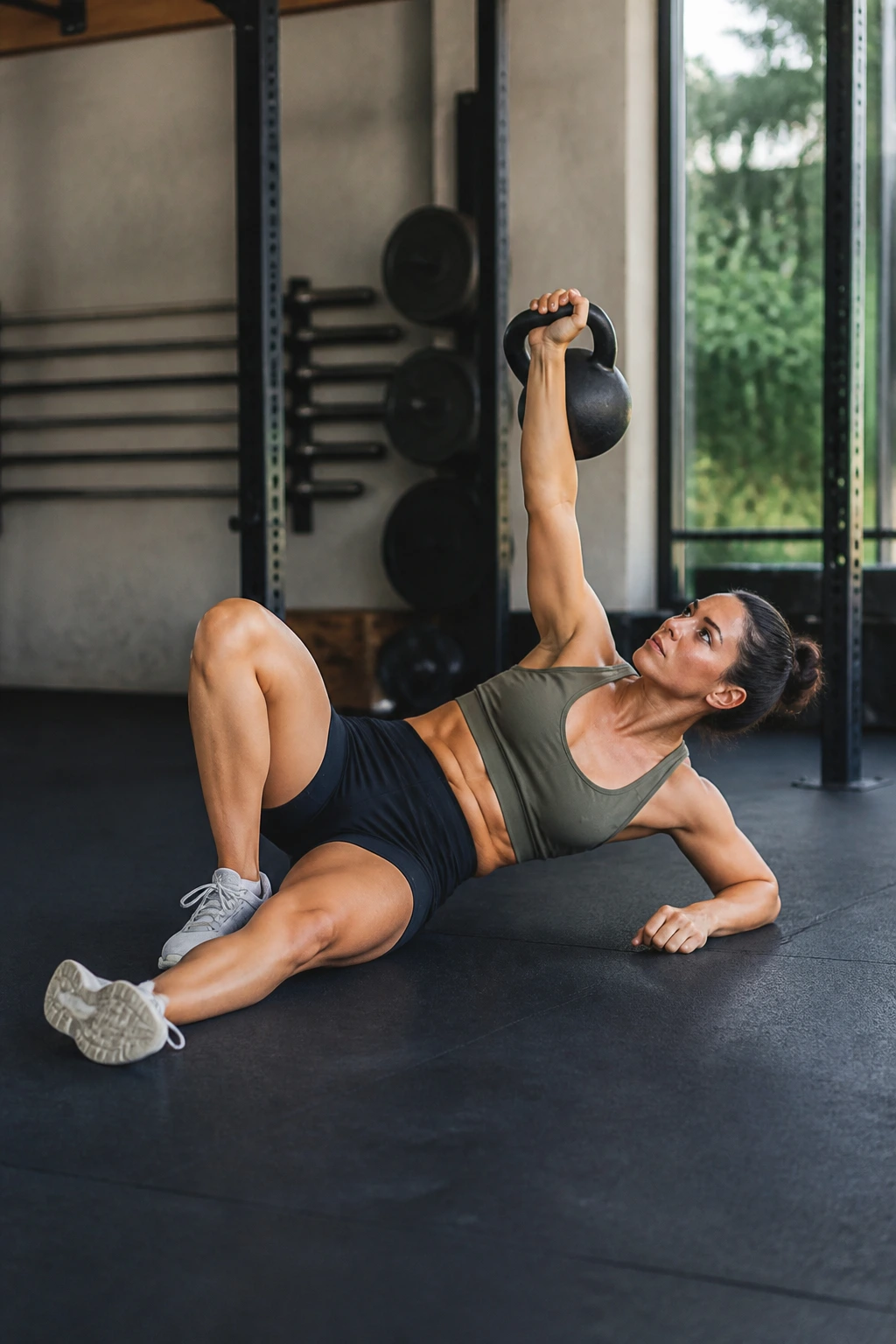
Most people think of the Turkish get-up as a whole-body skill move. Fair. It is that. But the first half alone already asks the trunk to do plenty.
Lie down, press the kettlebell up, and roll to the elbow with control. Stop there if you want a shorter core-focused version. The ribcage has to stay locked in place while the shoulder remains packed and the loaded arm stays vertical.
What Makes It Worth Learning
- The bell should feel stable overhead.
- The elbow posts under the shoulder.
- The free hand helps you rise without yanking.
- The movement should feel deliberate, not rushed.
Use 3 to 5 singles per side with a light bell and long rests. That’s enough. This is a skill drill, not a race.
If you want a core exercise that teaches real-world coordination, this one is hard to beat. It also makes other kettlebell work feel cleaner because you learn how to keep the bell organized over your center.
16. Sit-Up to Press
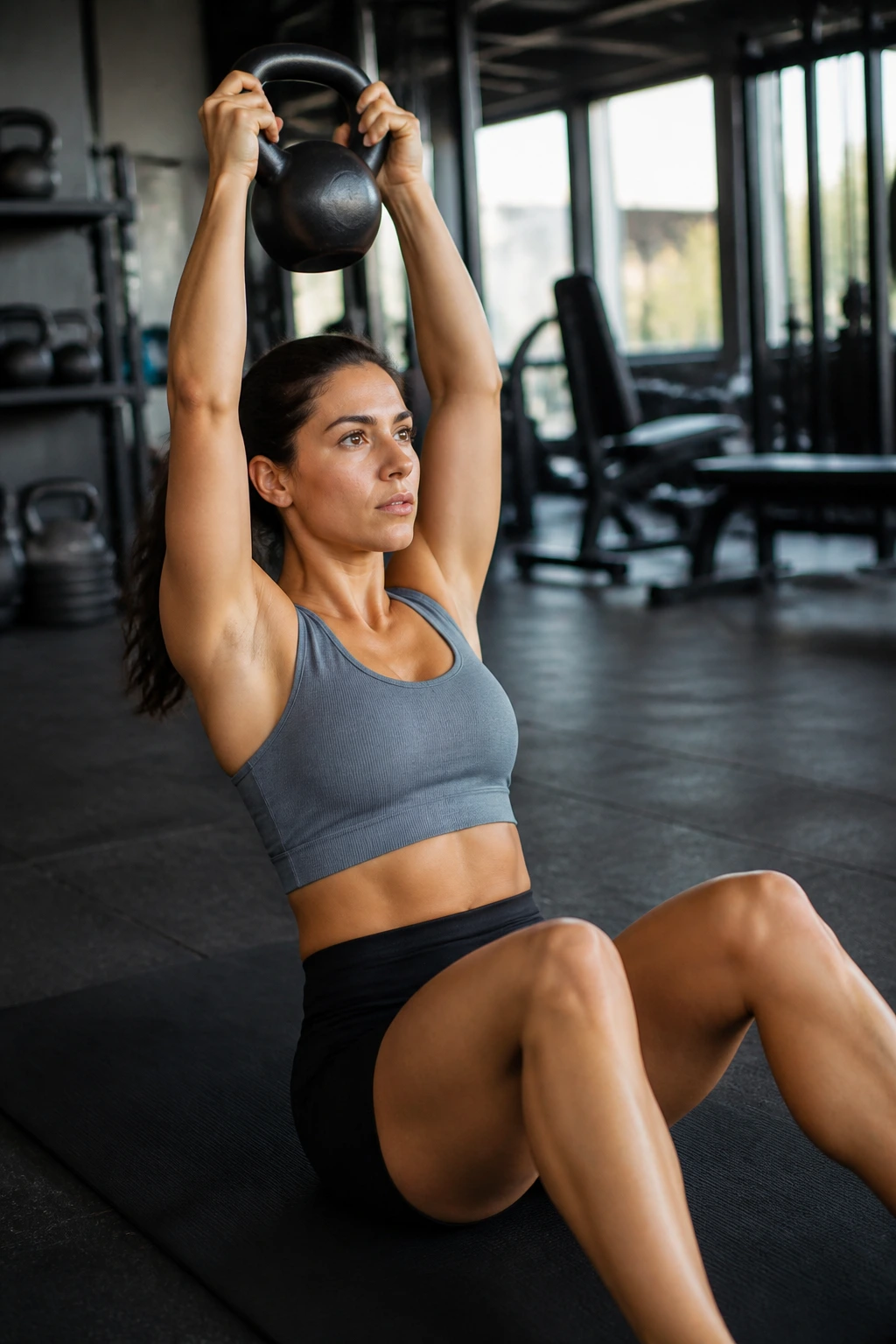
A sit-up plus overhead press sounds simple. It isn’t, once you add a kettlebell and demand that the torso stay tidy.
Hold the bell close to the chest, sit up with control, and press overhead only after you are tall. The hard part is not the press. The hard part is the transition from floor to upright without jerking through the spine. If the low back rounds hard on the way up, cut the range.
Compared with a plain sit-up, this version adds a stability demand at the top that forces better posture. Use 3 sets of 5 to 8 reps with a light bell and smooth tempo. Slow down the descent too. That matters.
This one suits women who want some direct ab flexion but also want a movement that feels a little more athletic than a standard crunch. Keep the rep quality high, and do not chase volume just because the set feels short.
17. Offset Front Rack March
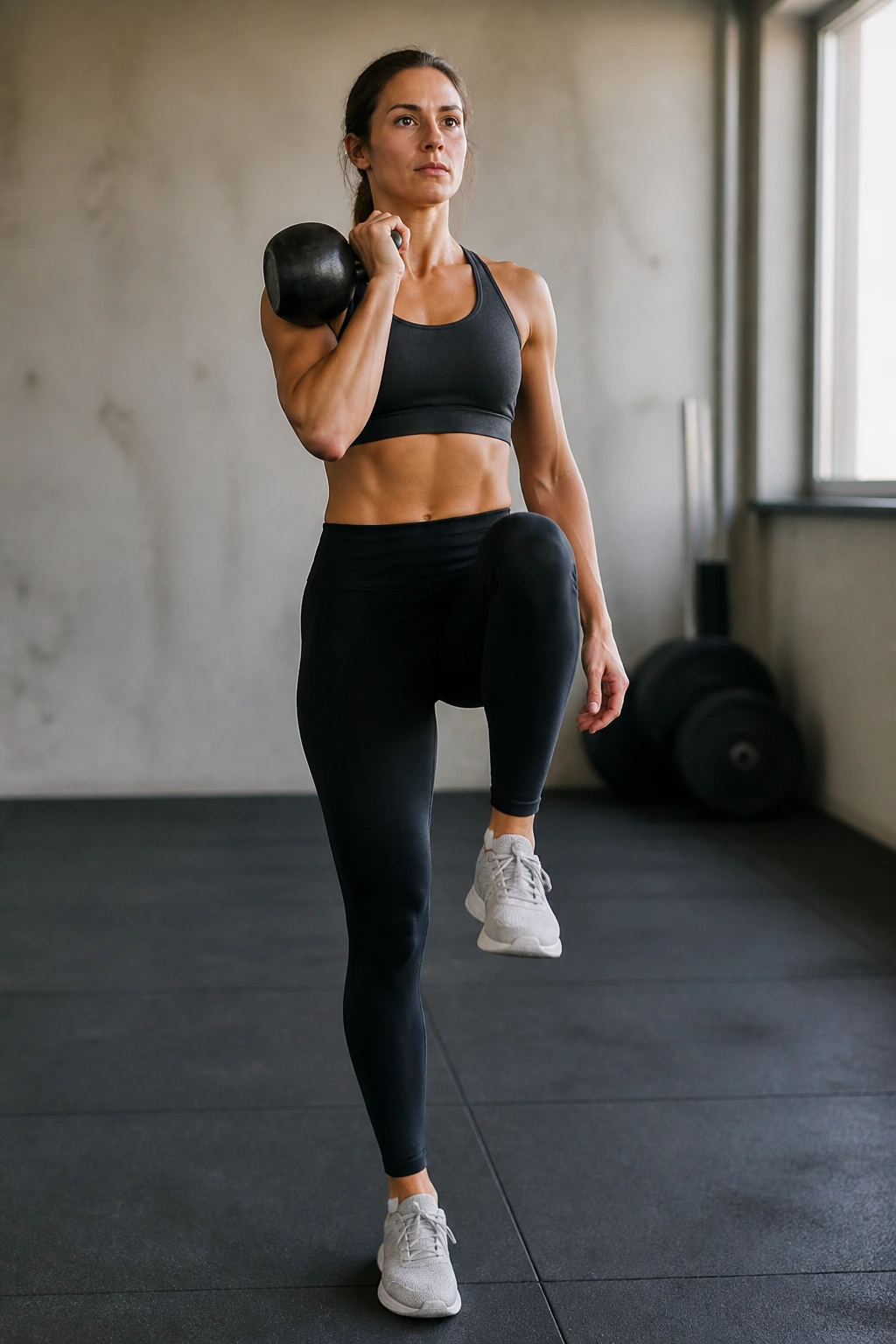
Hold one kettlebell in the front rack on one side and march with purpose.
That uneven front load makes the torso work hard to stop the body from leaning or twisting. The bell sits close to the chest, the elbow points down, and the ribs stay stacked over the pelvis. It is a different kind of challenge from the suitcase carry because the weight sits in front instead of hanging at the side.
Use 3 to 4 sets of 20 to 30 steps per side. Keep the steps quiet. If the bell slams into the forearm or the shoulder hunches up, reset the rack before you keep going.
This is a useful choice for women who already like carries and want something slightly harder without jumping to overhead work. The front rack makes breathing a little more interesting, which is part of why the exercise works.
18. Kettlebell Leg Lowering
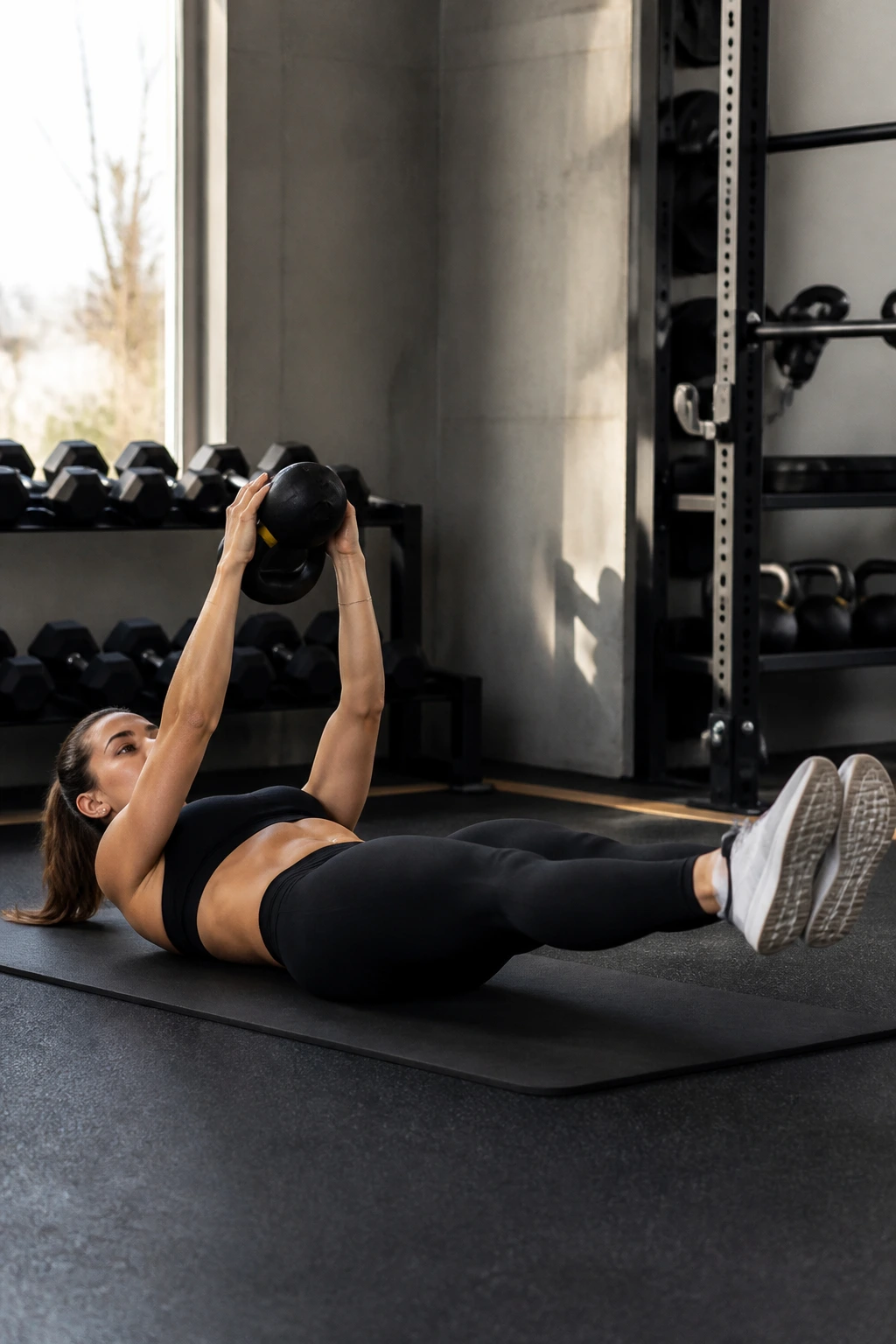
Leg lowers are one of the nastiest anti-extension drills when you do them well. The bell adds just enough load to make cheating obvious.
Lie on your back with the kettlebell held over the chest or in a locked-out press position, then lower one or both legs slowly toward the floor. The abdomen has to keep the low back from peeling up. If your back arches, the range is too deep and the rep is over.
Use 2 to 3 sets of 6 to 10 controlled lowers. Go slower than your ego wants. A three-second lower is a decent starting point. If needed, bend the knees a little. That is better than forcing a full straight-leg rep and losing position.
Compared with hanging leg raises, this version is more accessible and easier to scale. It is a strong pick for women who want direct lower-ab focus without needing bars, straps, or a fancy setup.
19. Bridge Halo
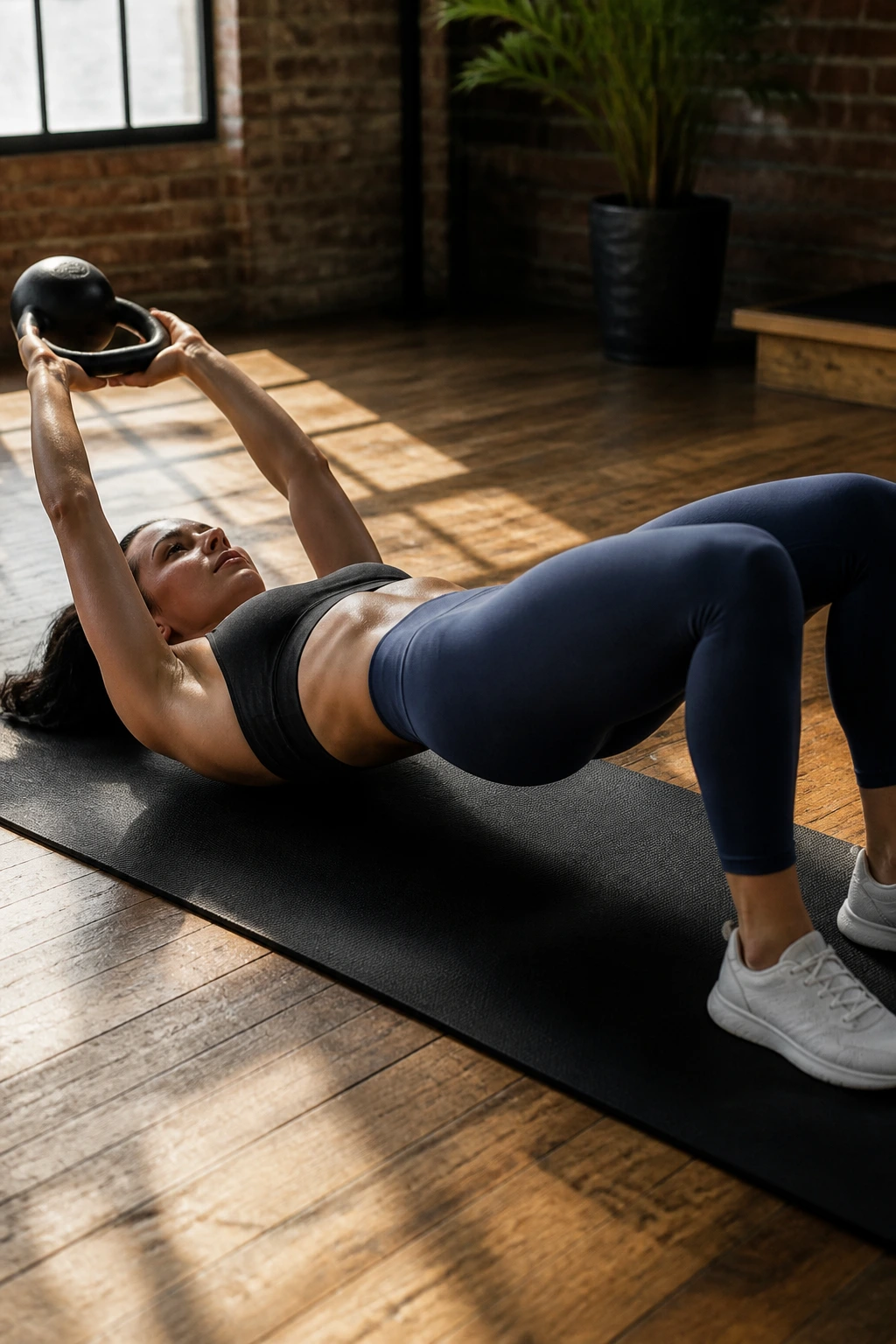
The glute bridge halo is a strange little combo, and I mean that in a good way.
Set up in a bridge, lift the hips, and halo the kettlebell around the head while the pelvis stays still. The bridge keeps the glutes awake, and the halo keeps the ribs from flaring. You end up training the front line of the torso, the side body, and the hips in one compact drill.
The key is not letting the arch take over. If your lower back starts to do the work, lower the hips slightly and shorten the halo path. Use 2 to 3 sets of 5 circles each direction with a light bell.
This is a nice option for women who want core work that feels different from planks and crunches. It also pairs well with hip-heavy training days because it reminds the body to brace without turning every movement into a back extension contest.
20. Single-Arm Clean and Hold
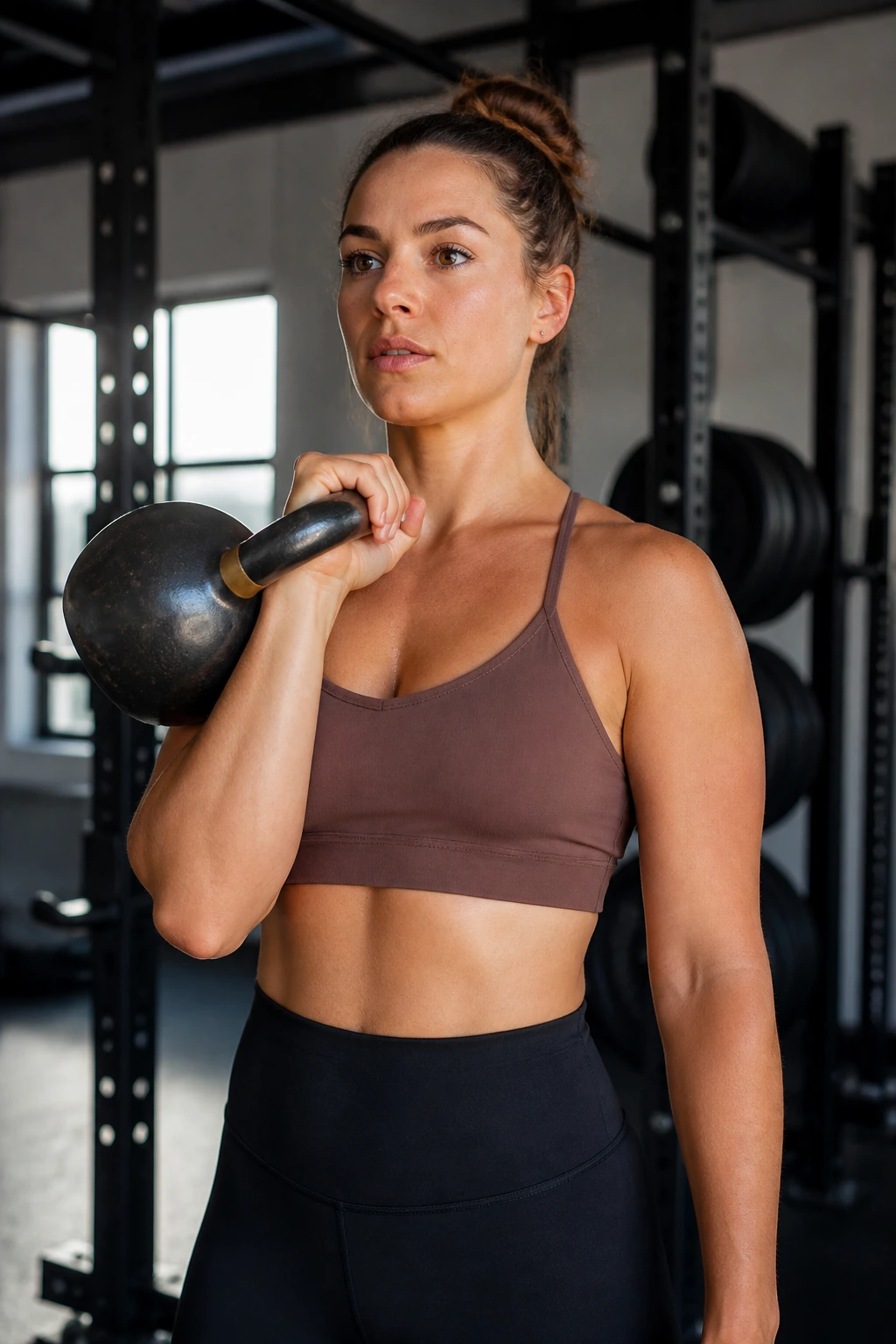
Can a clean be core training? Absolutely, if you stop at the rack and hold the position.
The single-arm clean teaches the torso to stay compact as the bell moves from the floor to the shoulder. The hold at the top is where the abs get loud. One side of the body wants to rotate, the ribs want to flare, and the trunk has to keep everything stacked.
How to Get the Most From It
- Keep the bell close on the swing up.
- Catch softly in the rack.
- Exhale once you stand tall.
- Hold for 2 to 3 breaths before the next rep.
Use 3 sets of 3 to 5 cleans per side. A clean with a messy catch does not count as a core win. If the rack position feels bruising, reduce the load or clean to a dead stop.
This is best for women who already know the hinge pattern and want a bridge between explosive work and core stability. It is not flashy when done well. That is part of why it works.
21. High Plank Pull-Through
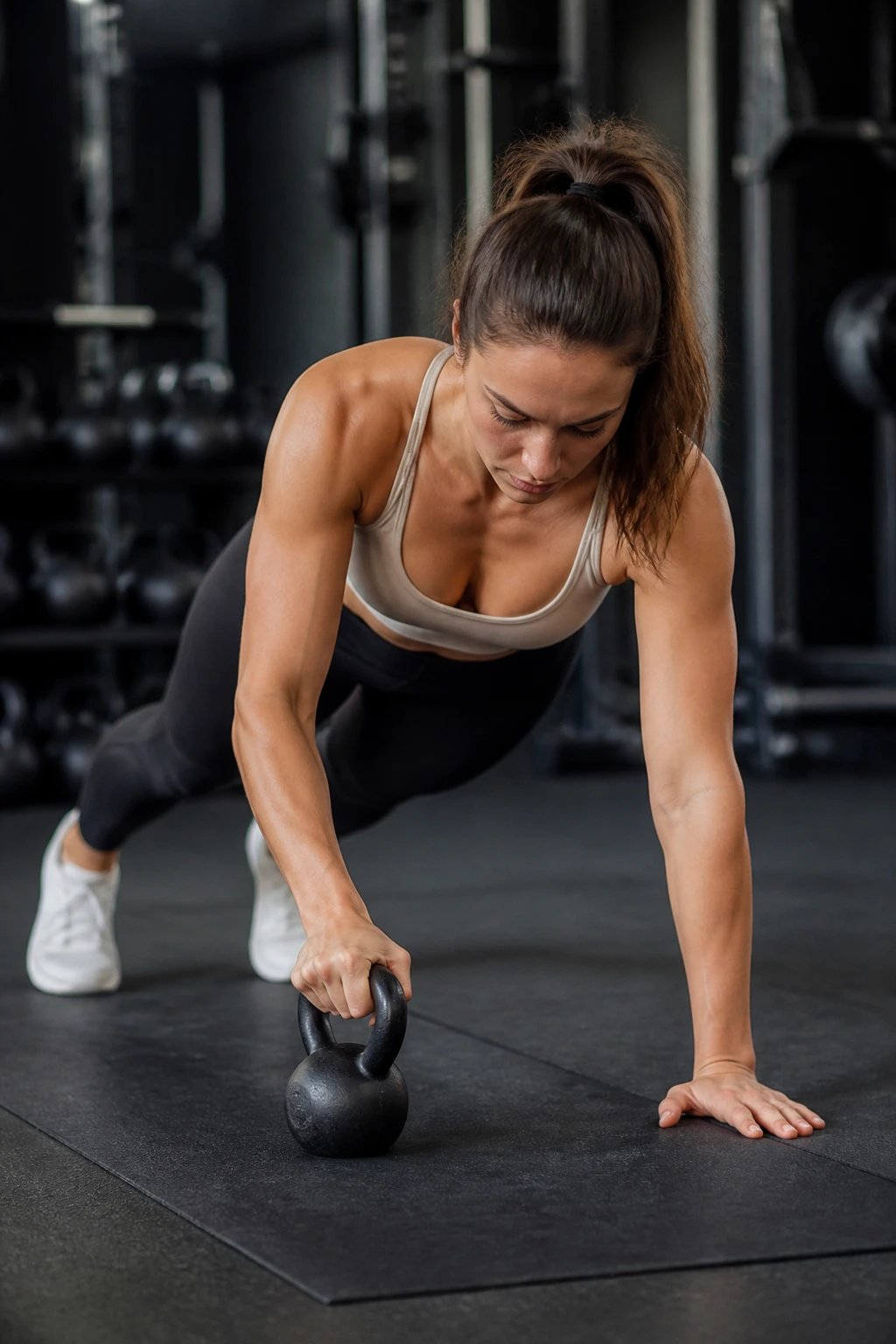
A pull-through is a drag with a little more range, and that extra movement can expose weak spots fast.
Set up in a high plank, place the bell outside one hand, and pull it across the body to the other side. The shoulders stay square, the hips stay level, and the feet stay wide enough to keep you from tipping. If your body spins to chase the bell, the abs are not winning.
Use 3 sets of 6 to 8 pull-throughs per side. Move slowly on the way across and pause for a beat before each transfer. That pause makes the drill more useful because it forces you to own the position instead of surfing momentum.
This works well for women who want a tougher plank variation without jumping straight into advanced gymnastics-style floor work. It is a clean test of anti-rotation strength, and it usually gets honest fast.
22. V-Up Pass
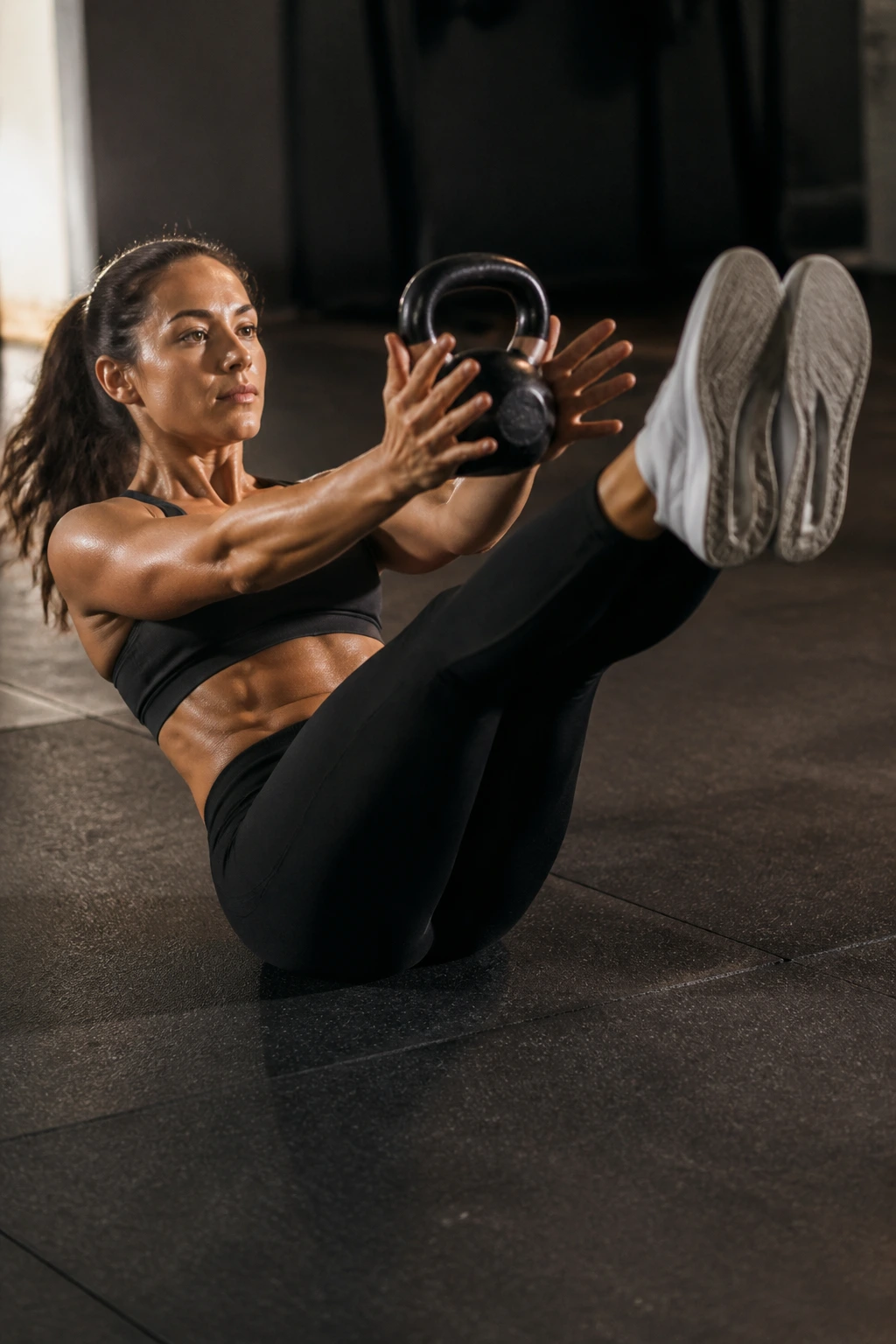
The kettlebell V-up pass is advanced enough to deserve respect. If your lower back is sensitive or your hamstrings are tight, ease into it.
Lie down, lift into a controlled V position, and pass a light kettlebell from hands to feet and back. The abs have to keep the torso curled while the limbs move. This is not a move for rushing. It is a move for accuracy.
Compared with standard V-ups, the bell adds coordination and makes sloppy reps obvious. Use 2 to 3 sets of 4 to 6 passes with a very light weight. If you cannot keep the chest lifted, do the motion without the bell first.
This is best for women who already have a solid base of core strength and want something more challenging than the usual floor routine. It is one of the few kettlebell ab drills here that should feel a little demanding from the first rep.
23. Half-Kneeling Windmill Reach
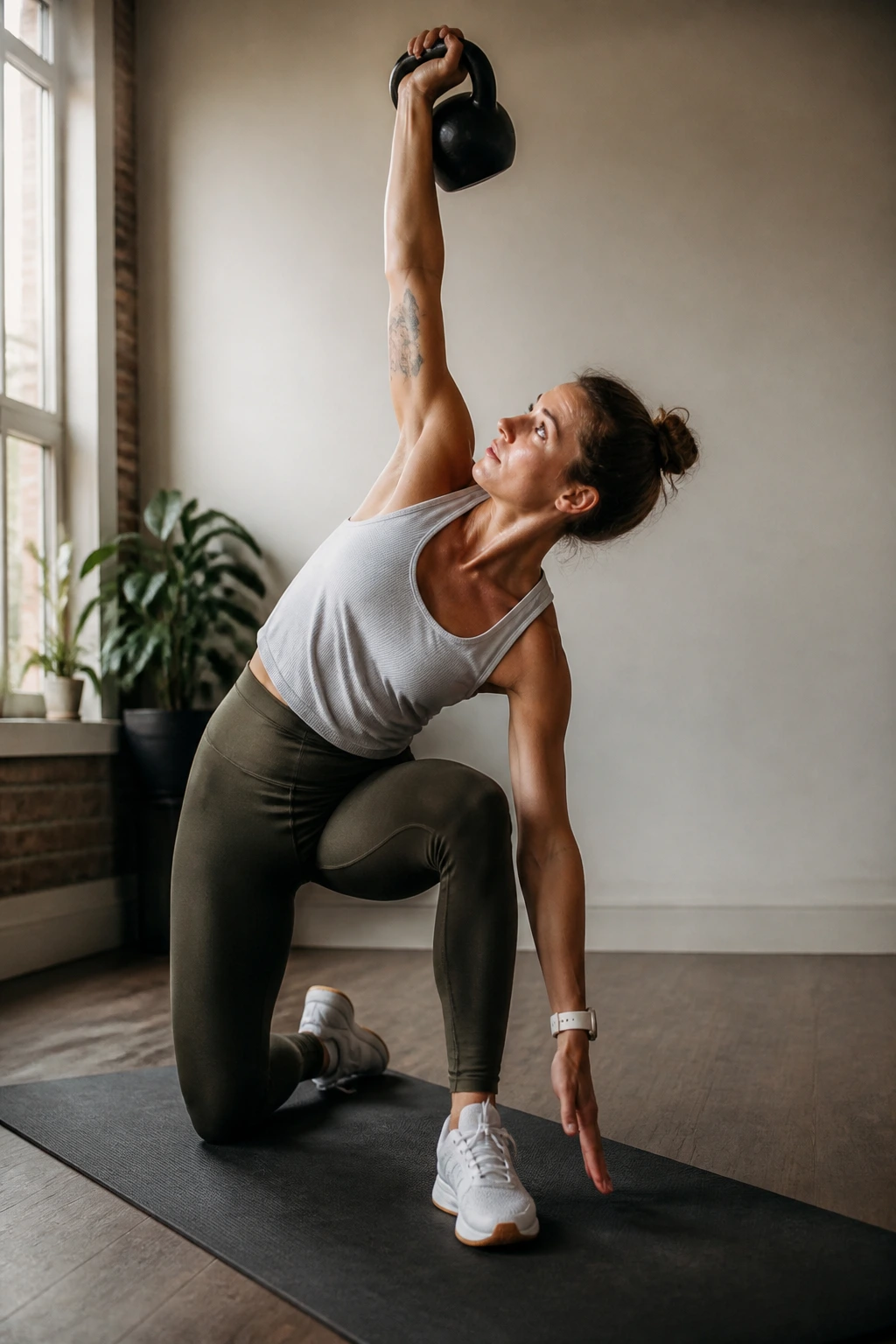
A half-kneeling windmill strips away some of the lower-body complexity and puts the focus where it belongs: the torso.
With one knee down and the bell overhead, hinge to the side and reach the free hand toward the floor. Because one leg is anchored, the body has fewer ways to cheat. The obliques, glutes, and shoulder have to cooperate to keep the bell stable and the ribs in line.
Use 3 sets of 4 to 5 reps per side. Keep the movement slow enough that you could stop halfway and still feel in control. If you lose the overhead line, reset. No need to grind through it.
This variation is a good bridge between basic side planks and full windmills. Women who want more hip mobility and side-body strength without juggling too much balance often do well here.
24. Front Rack Carry
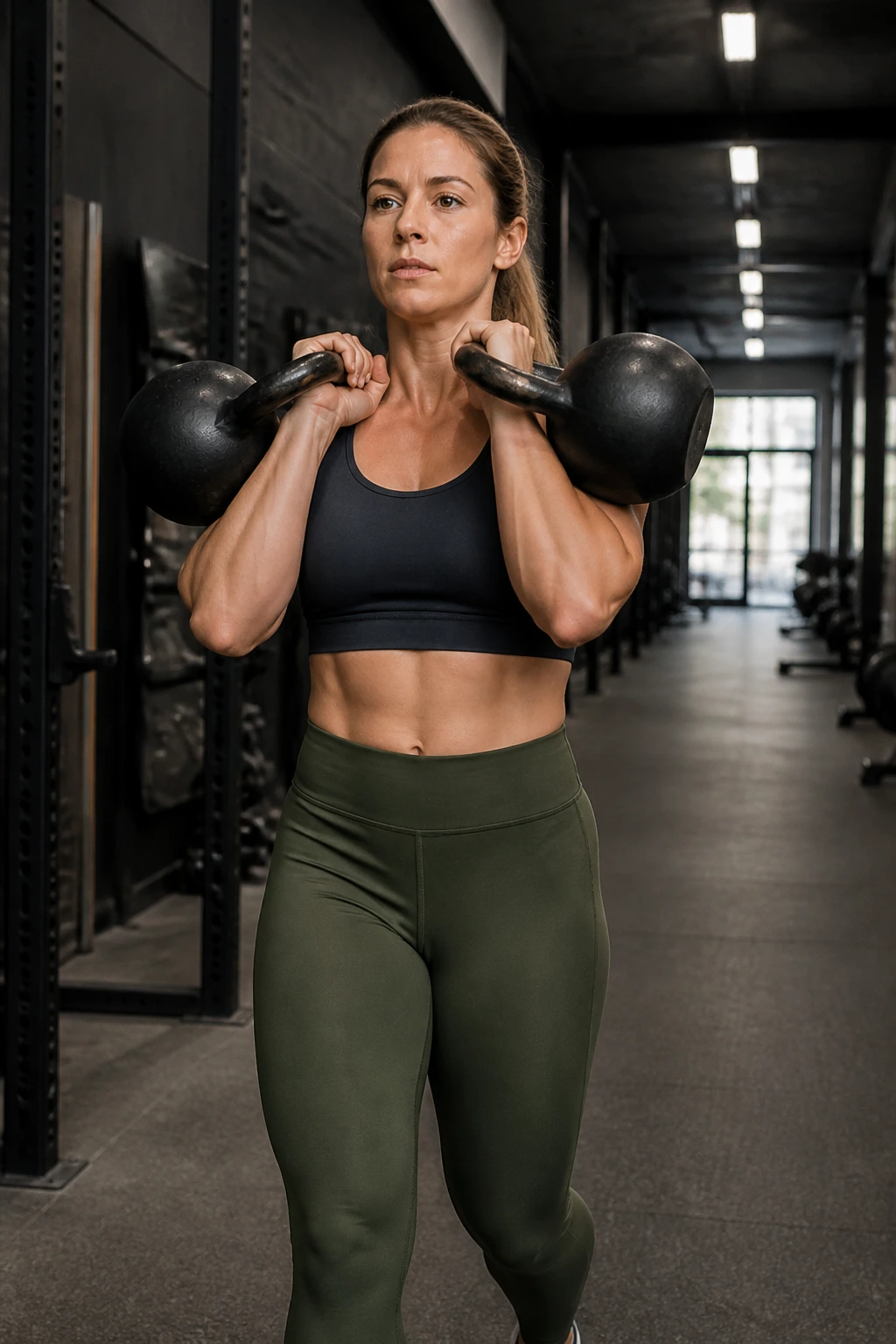
The front rack carry is one of those drills that looks almost too plain to matter. It matters.
Hold one or two kettlebells in the rack position and walk with short, steady steps. The weight sits close to the chest, so the abs have to keep the ribs down and the spine from overextending. If you lean back to balance the load, the exercise turns into a back-arching contest.
Use 4 carries of 20 to 40 meters or 30 to 45 seconds per round. Breathing gets interesting here, because the rack makes the torso work while the diaphragm keeps trying to move. That’s useful. It teaches you to brace without locking up.
This is a strong choice for women who want a core drill that carries over to real lifting. Groceries, suitcases, kid-carrying, all of it. Quiet feet, tall chest, steady breath.
25. Weighted Reverse Crunch
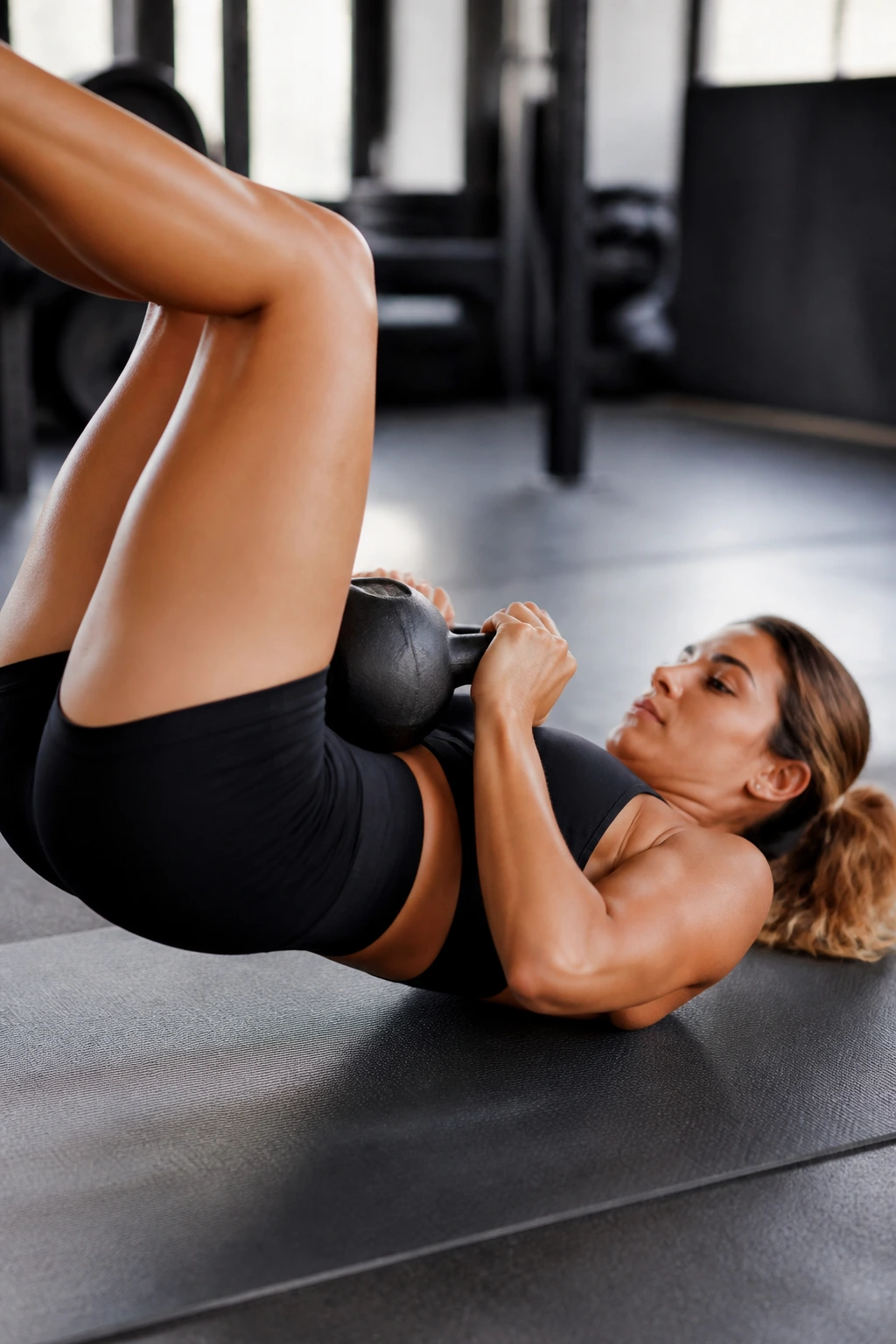
A reverse crunch should come from the pelvis, not a violent swing of the legs. The kettlebell just adds enough load to keep the rep honest.
Lie on your back, bend the knees, and hold a light bell against the chest or between the hands while you curl the pelvis upward. The tailbone should leave the floor first. If the legs shoot around like pendulums, the rep is too fast.
Use 2 to 4 sets of 8 to 12 reps with a small bell. A small pause at the top helps a lot. The lower abs have to finish the curl instead of letting momentum do it for them.
Compared with a regular crunch, the reverse version is often friendlier on the neck and puts more focus on the lower part of the trunk. It’s a good fit for women who want a direct floor move that does not require much setup.
26. Kettlebell Press-Out Hold
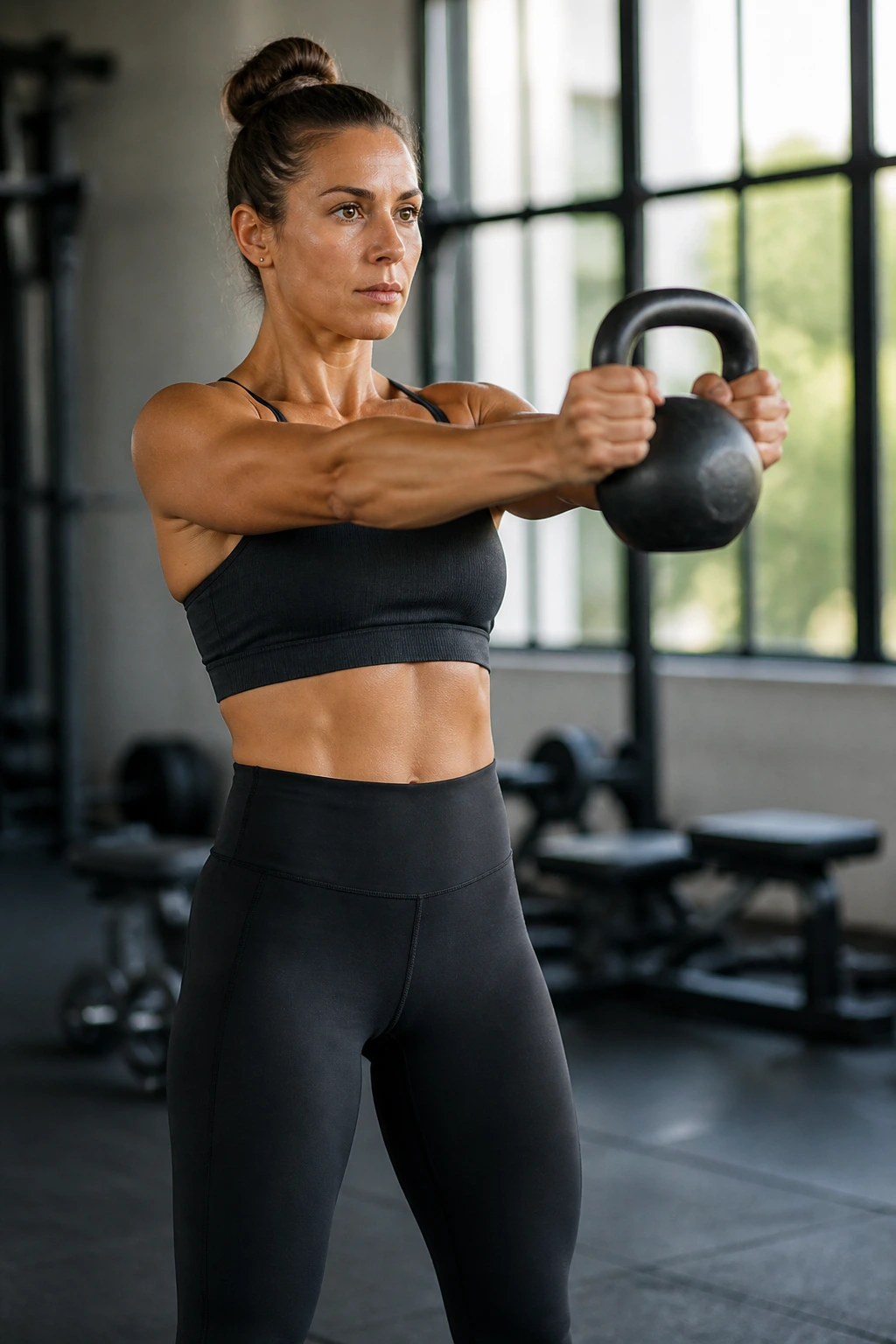
Why press a kettlebell away from your body and hold it there? Because that little extra distance makes the abs work harder.
Stand tall or kneel, hold the bell at chest level, and press it straight out until the arms are almost straight. Hold for a breath or two, then pull it back in without letting the ribs flare. The farther the bell is from your center, the more the torso has to fight to stay fixed.
How to Use It
Use 3 sets of 5 press-outs with a 2-second hold. Keep the shoulders down and the neck relaxed. If the low back arches, reduce the range or go lighter.
This drill is useful for women who want anti-extension work without lying on the floor. It also pairs nicely with marching or half-kneeling positions, because the body has to manage the bell while staying calm through the trunk.
27. Deadlift to Knee Drive
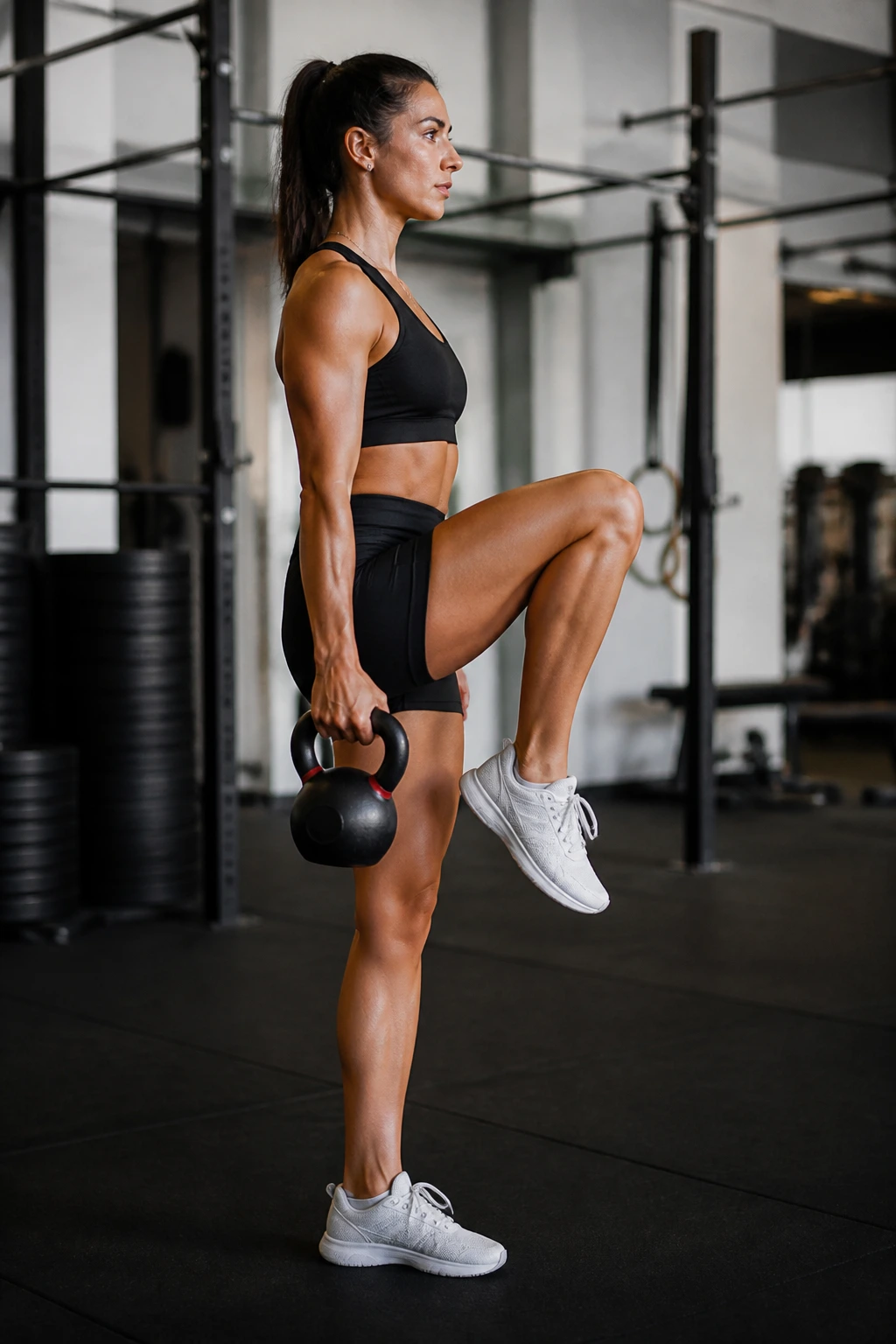
This one blends a hinge with a marching pattern, and the core has to smooth the transition.
Deadlift the kettlebell, stand tall, then drive one knee up while keeping the torso square. The hip on the lifted side wants to hike and twist. The abs stop that from happening. If you swing backward to help the knee rise, the bell is too heavy or the hinge is getting sloppy.
Form Details
- Start with a clean deadlift.
- Pause at full stand.
- Drive the knee up under control.
- Set it down softly before the next rep.
Try 3 sets of 6 reps per side. The movement should feel crisp, not rushed. Keep the bell close and the ribs stacked the whole time.
This is a nice option for women who want a core drill that feels a little more athletic than pure floor work. It also helps connect hip strength to trunk stability, which is where a lot of useful movement lives.
28. Figure-8 Pass
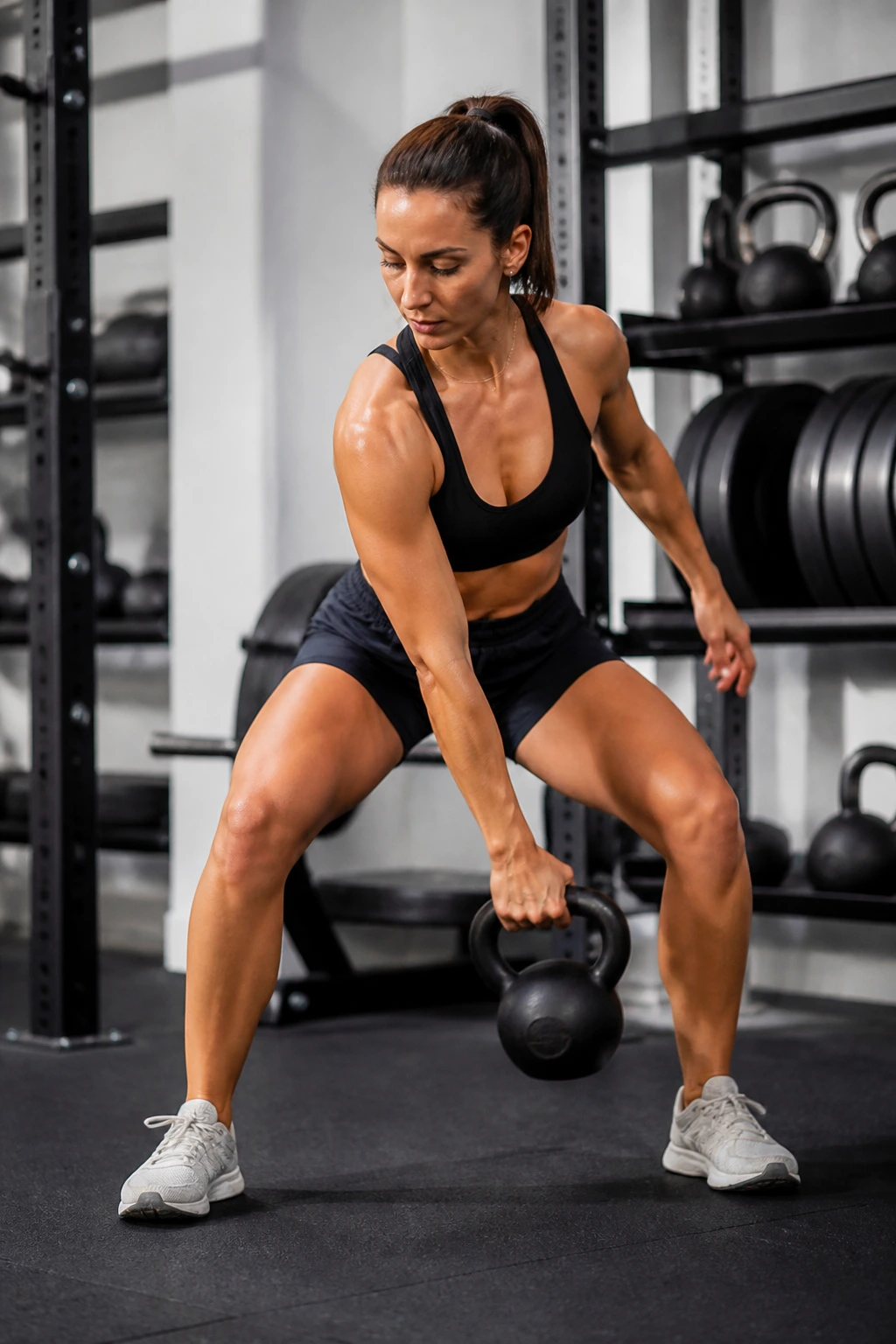
The figure-8 pass is rhythmic, a little old-school, and much harder than it looks once the bell gets moving.
Pass the kettlebell between the legs in a figure-8 pattern, shifting it from hand to hand around the knees and hips. The torso has to stay braced while the bell travels. If the upper body chases the motion, the drill becomes a sloppy sway.
Compared with static ab work, this move adds coordination and a touch of conditioning. Use 3 rounds of 20 to 30 seconds with a moderate bell. Go slow enough to keep the pattern tidy. A faster pass that breaks shape is worse than a slower clean one.
This suits women who want core work that feels dynamic and a little less like homework. It is best after you already know how to hinge, because the pattern depends on a decent body position.
29. Stair-Step Core Circuit
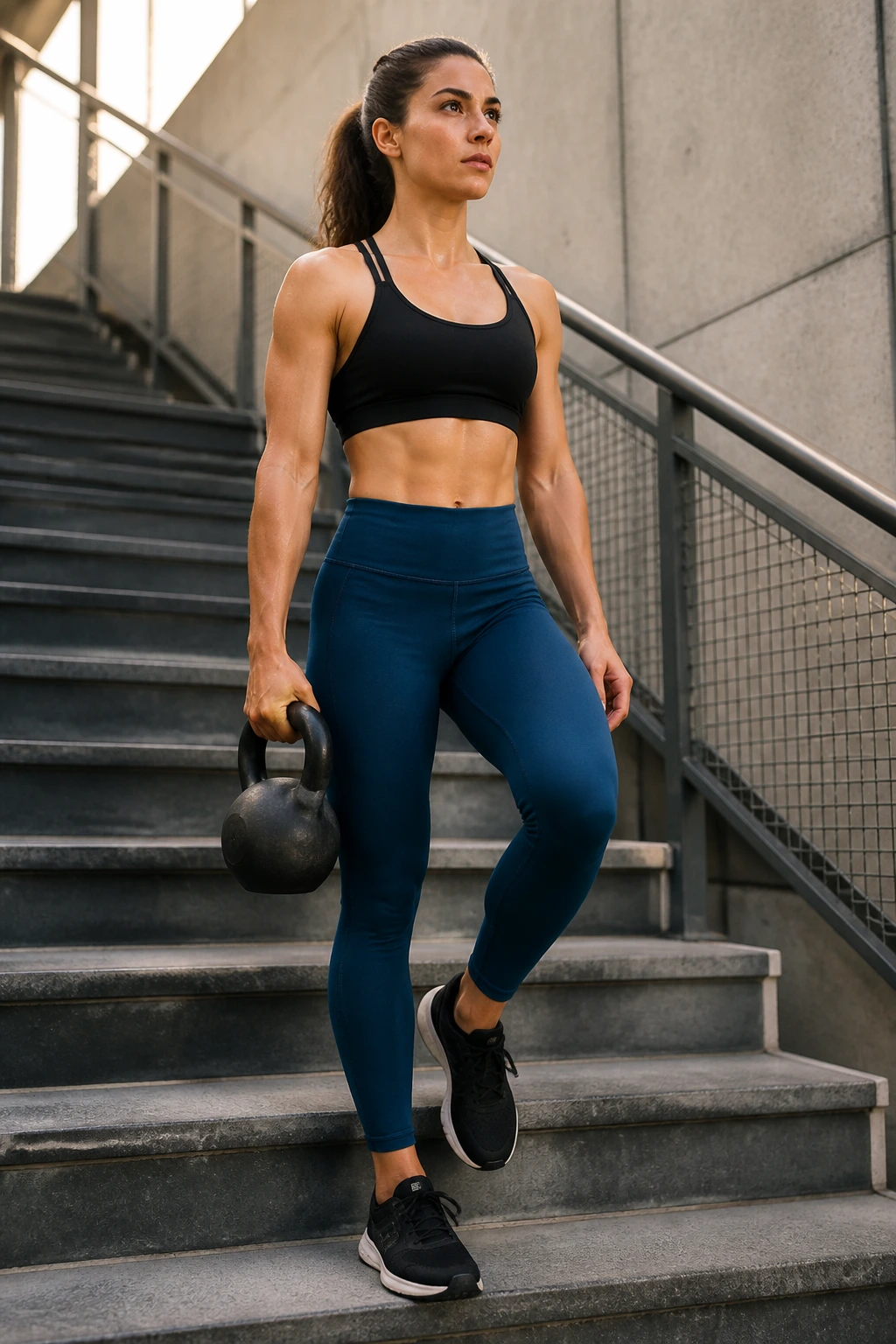
A good core circuit does not need six exercises and twelve minutes of confusion. Three moves can be enough if the choices are smart.
Try this staircase: 6 dead bug presses per side, 20 suitcase march steps per side, 5 windmill reps per side. That’s one round. Rest 60 to 90 seconds, then repeat for 3 total rounds. Each drill hits a different lane—front-of-core control, side-body stability, and rotational strength—without turning the session into a circus.
The best part is how easy this is to scale. If the windmill feels too ambitious, swap it for halos. If the suitcase carry feels too easy, slow the march and hold the top position for a breath on each step. The circuit stays useful because the pieces are simple and each one asks for a different kind of brace.
This is a strong choice for women who want a short, well-rounded session on days when energy is decent but not unlimited.
30. Ten-Minute Core Finisher
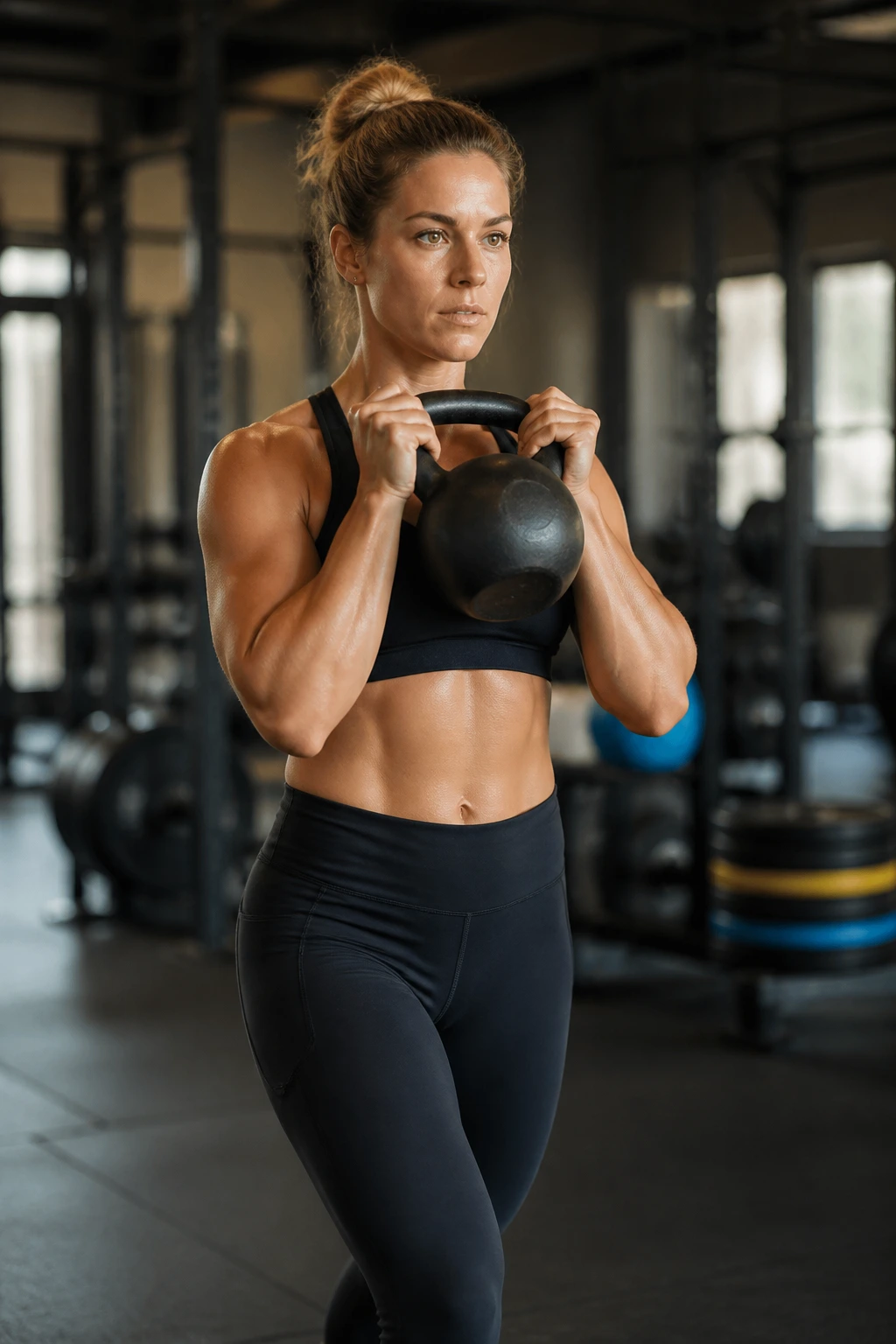
A finisher should leave you sharper, not wrecked. Ten minutes is enough.
Run 3 rounds of: 30 seconds front rack carry, 20 seconds plank drag, 6 press-outs with a 2-second hold. Rest 30 to 45 seconds between moves, longer if your form starts slipping. The first round should feel crisp. The last round should feel earned.
Unlike endless ab circuits that chase fatigue, this finisher keeps changing the demand. The carry teaches posture, the drag punishes rotation, and the press-out forces the ribs to stay under control. That mix matters more than sheer burn.
Best for women who want a compact, no-nonsense end to a lower-body day, a press day, or a full-body session. Keep the bell moderate and the setup simple. If your form falls apart by the second round, cut the time before you cut the quality.
Final Thoughts
Kettlebell core work gets better when you stop treating the abs like a single muscle that only wants crunches. The best drills here ask the torso to resist, stabilize, and carry load while the rest of the body keeps moving.
If your lower back feels overworked, the bell is probably too heavy or the range is too big. Shorten the motion, slow the tempo, and pick the drills that let you breathe without losing shape. That usually fixes more than people expect.
A smart mix of carries, presses, floor work, and a little rotation gives you a stronger midsection than chasing one favorite exercise over and over. Keep one anti-extension drill, one carry, and one rotational move in the mix, and the rest starts to fall into place.
