



The best fitness routine for women over 60 is usually the one that still feels useful the next morning. Not punished. Useful.
If you’re sorting through 20 fitness routines for women over 60, ignore the flashy stuff. The smart choices are the ones that build leg strength, balance, heart health, and mobility without making your knees or shoulders file a complaint.
A good week after 60 has a bit of walking, a bit of resistance work, some balance practice, and enough mobility to keep getting up from chairs, climbing stairs, carrying groceries, and reaching overhead without stiffness turning into a daily nuisance. That’s the real job. Looking “fit” is nice. Moving well is better.
The mistake I see most is too much of one thing. All cardio gets you sweaty and still weak. All stretching feels lovely and still leaves you short on muscle. The routines below are the ones I’d keep coming back to because they make ordinary life easier, and that matters more than a fancy sweat session ever will.
1. Brisk Walking Intervals for Women Over 60
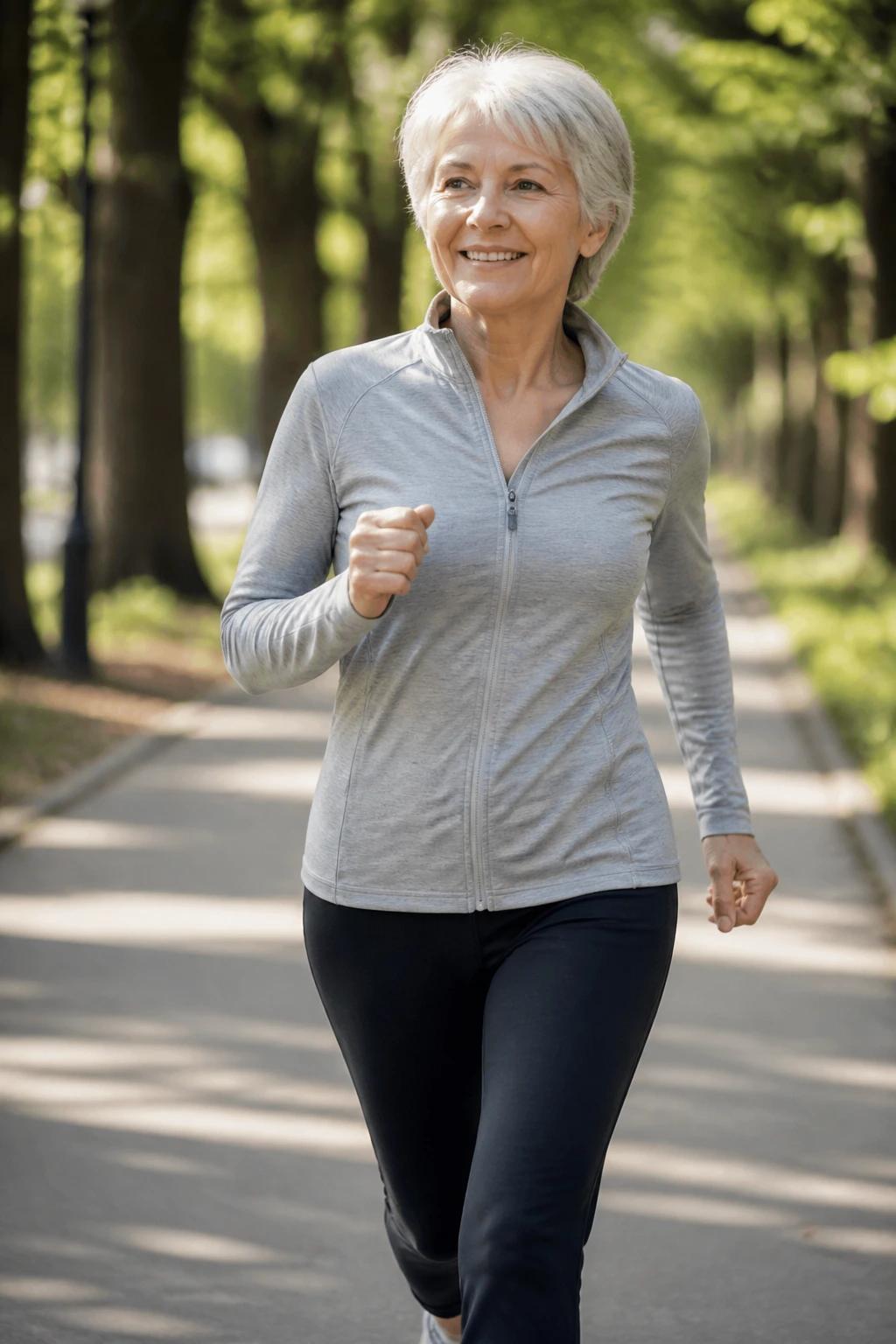
Walking is still the most honest workout on the list. It’s simple, free, and easy to scale, which is exactly why it works so well.
A flat, brisk walk with short faster bursts is a cleaner choice than a hard push every day. Start with a 5-minute easy warm-up, then alternate 1 minute brisk / 2 minutes easy for 20 to 30 minutes. You should be breathing deeper, but still able to speak in short sentences. If your feet feel heavy, shorten the brisk bursts before you shorten the whole walk.
A simple setup that works
- Warm up for 5 minutes at a relaxed pace.
- Do 6 to 8 rounds of 1 minute brisk walking and 2 minutes easy walking.
- Keep your shoulders loose and your steps quick, not long and stompy.
- Finish with 3 to 5 minutes at an easy pace.
The small interval change matters. It wakes up the heart without asking for a sprint. And if hills are available, use them sparingly. A mild incline is enough.
Best tip: walk like you’re late for an appointment, not like you’re trying to win one.
2. Chair Squats and Sit-to-Stand Repeats
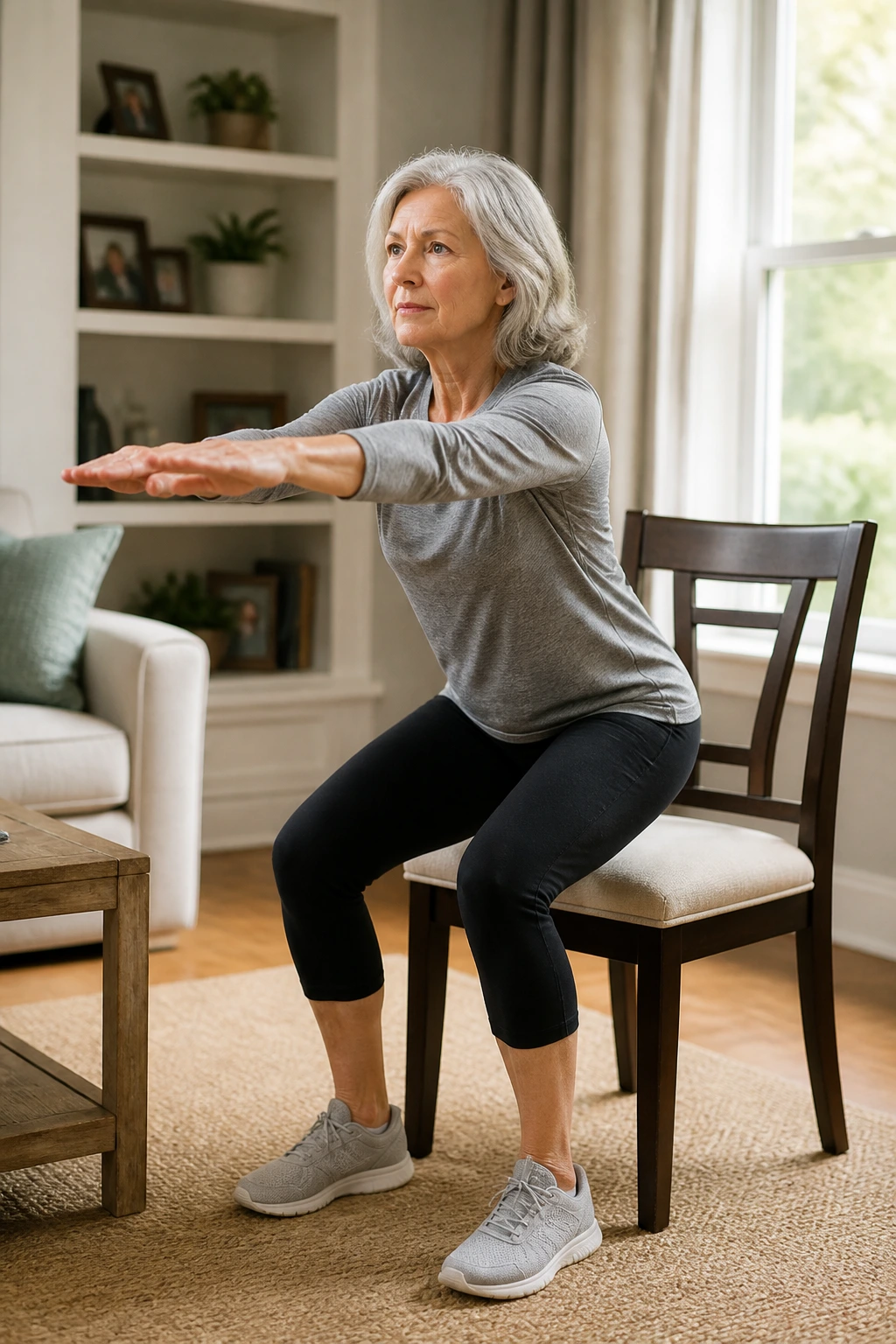
What beats standing up from a chair on your own? Not much, honestly.
Chair squats are one of the best strength routines for women over 60 because they train the exact movement that shows up all day long. Use a firm chair, feet about hip-width apart, and stand up slowly without throwing yourself forward. Sit back with control, lightly touch the seat, then rise again. A set of 8 to 12 reps is enough to start, and two or three rounds can feel like plenty.
How to make it easier on the knees
Hold the chair arms or a countertop for the first few sessions. That’s not cheating. That’s good sense. If your knees drift inward, slow down and reset your feet. If the movement feels too deep, place a cushion on the chair so you’re not dropping as far.
The useful part here is the control. Fast stand-ups have their place, but slow sit-to-stands teach balance, leg power, and confidence all at once.
Watch for this: if you can’t sit down quietly, you’re dropping too fast.
3. Resistance Band Upper-Body Circuit
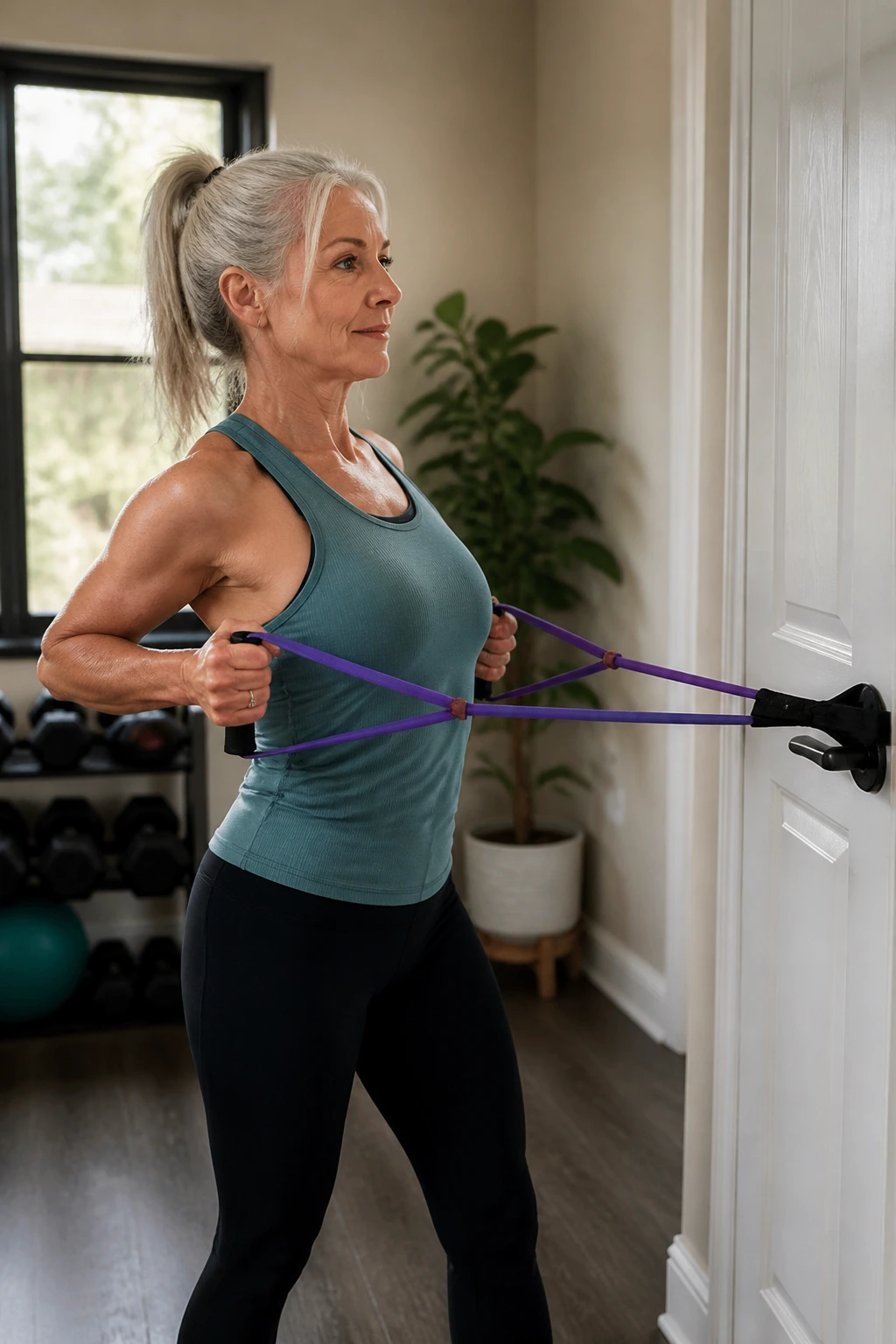
A band looks harmless. Then the last three reps start talking back.
A resistance band circuit is one of the easiest ways to train the back, shoulders, chest, and arms without needing a room full of weights. Use a light-to-medium band and cycle through rows, chest presses, pull-aparts, and biceps curls. Ten to 15 reps per move is a good target, with enough tension that the final two reps feel honest.
A band routine that actually gets finished
- Rows: anchor the band around a sturdy post or door anchor.
- Chest presses: press straight forward from the chest, then return slowly.
- Pull-aparts: hold the band at shoulder height and open the arms wide.
- Biceps curls: keep the elbows tucked near your sides.
The magic here is posture. Rows help counter the rounded-shoulder habit that creeps in from driving, reading, phone use, and years of life doing life.
Use a band you can control. If the last rep turns into a wrestling match, the band is too heavy.
4. Water Walking and Aqua Jogs
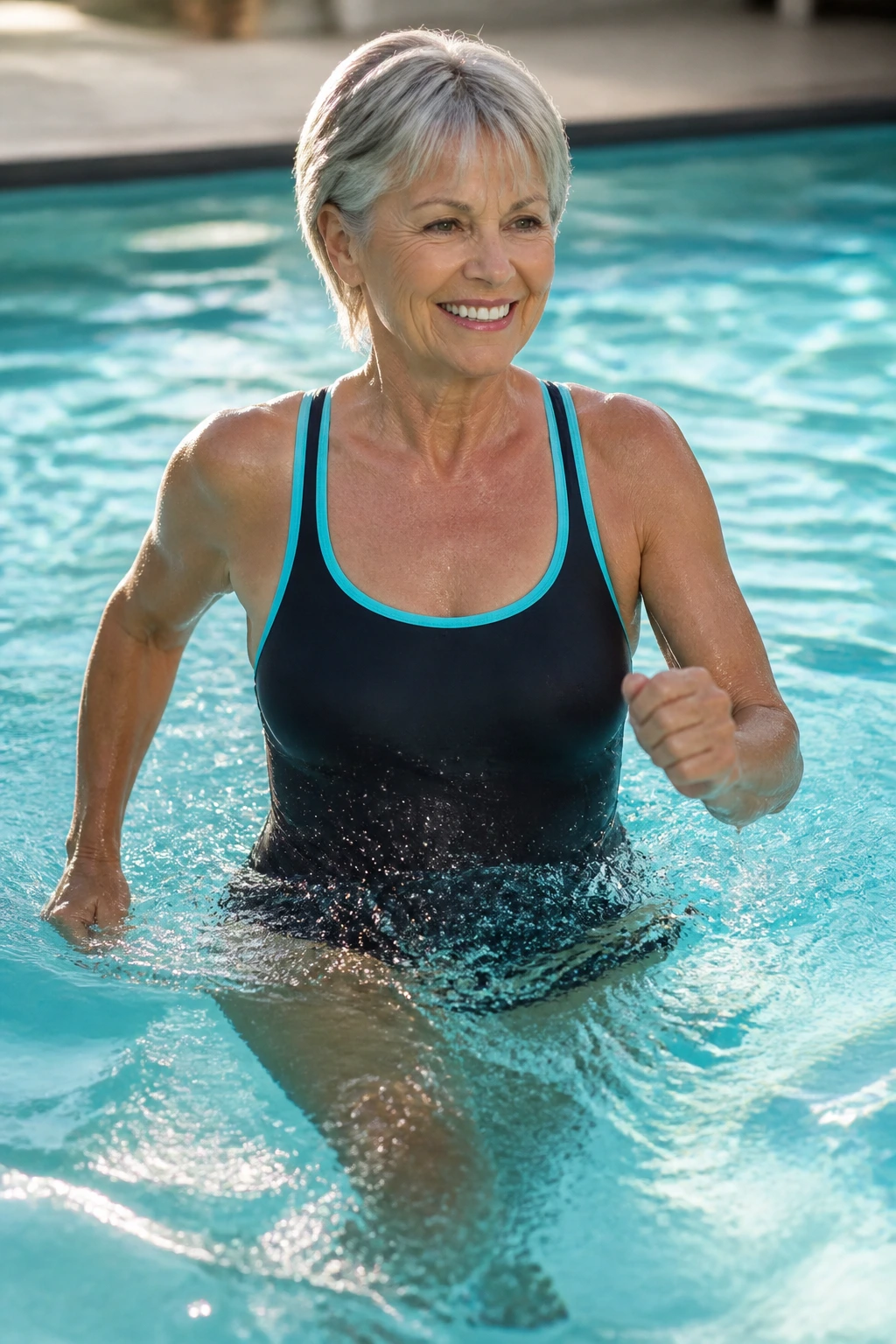
The pool earns its keep here.
Water workouts are not “easy” in the lazy sense. They’re joint-friendly because buoyancy cuts impact, while the water itself adds resistance in every direction. That makes water walking, aqua jogging, and pool marching a smart choice for knees, hips, ankles, and backs that dislike pounding on hard ground.
Chest-deep water works well if you want more support, while waist-deep water gives a little more load through the legs. A session can be as short as 15 minutes or stretch to half an hour if the pool feels good and your energy holds.
Aqua jogs are especially useful when land walking starts to feel repetitive or painful. The water lets you move faster without the same jarring force. You still need to keep your core lightly braced, because sloppy water posture turns into sloppy land posture fast.
One honest note: pool time only works if you’ll actually go. If you hate the logistics, use it as a weekly treat rather than your main plan.
5. Wall Push-Ups and Incline Presses
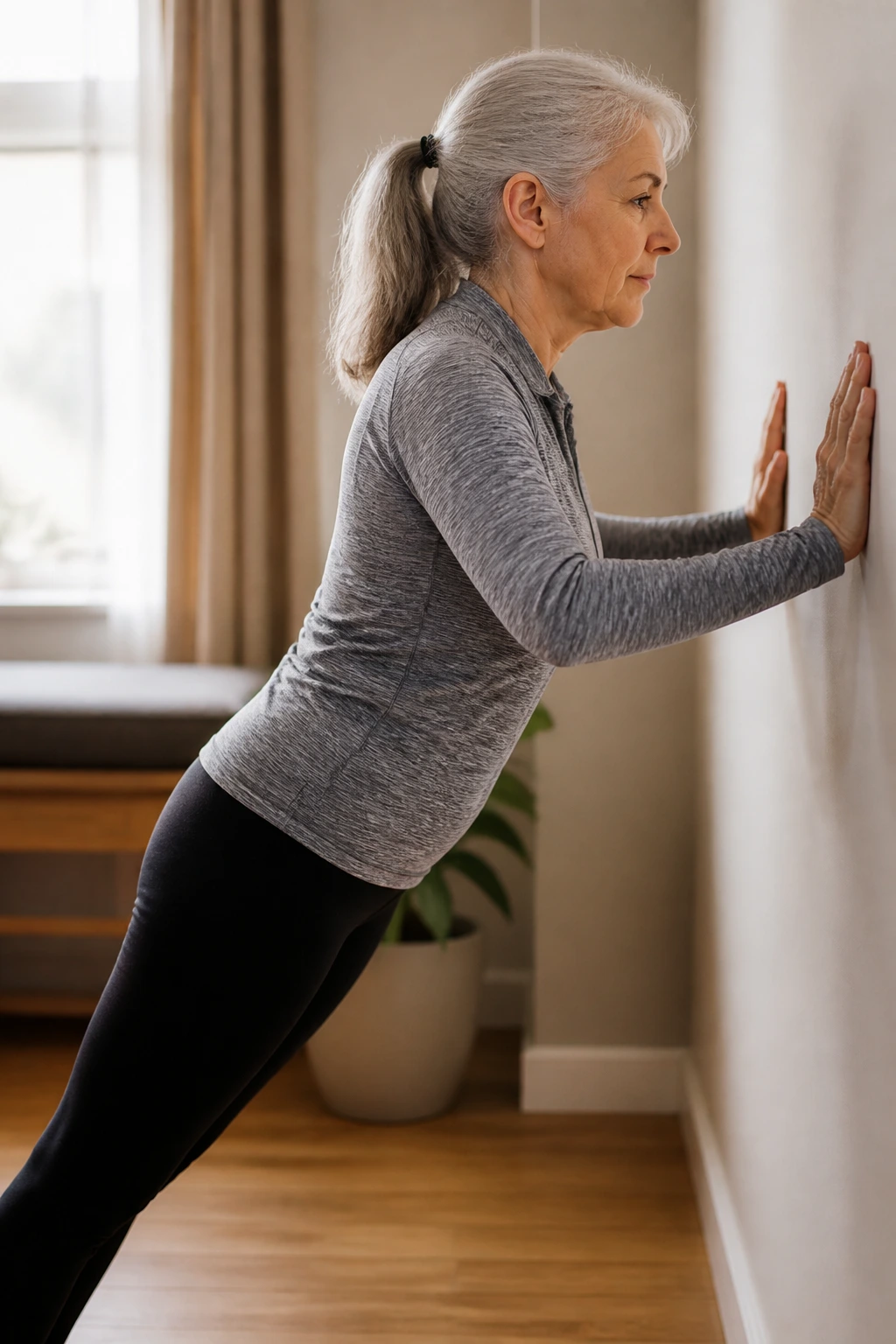
Your hands should feel steady against the wall, your chest should stay open, and your body should move like one clean line.
Wall push-ups are a quiet little fix for weak pushing strength. They train the chest, triceps, and shoulders with far less load than floor push-ups. Stand an arm’s length from the wall, place your hands slightly wider than shoulder width, and lower your chest toward the wall with control. Push back until your arms straighten. Eight to 15 reps is a solid range.
What the wall changes
The wall cuts the load enough that you can focus on alignment. If your elbows flare wildly, narrow the angle a bit. If your lower back sags, bring your feet closer and tighten your belly lightly. A kitchen counter works too, and it’s often the better choice if the wall feels too easy.
One set done slowly can be more useful than three rushed sets done badly. I’d rather see a woman finish six clean incline push-ups than chase a number with sloppy shoulders.
Quick rule: the higher the incline, the easier the movement. Start high if you need to.
6. Step-Up Practice on a Low Stair
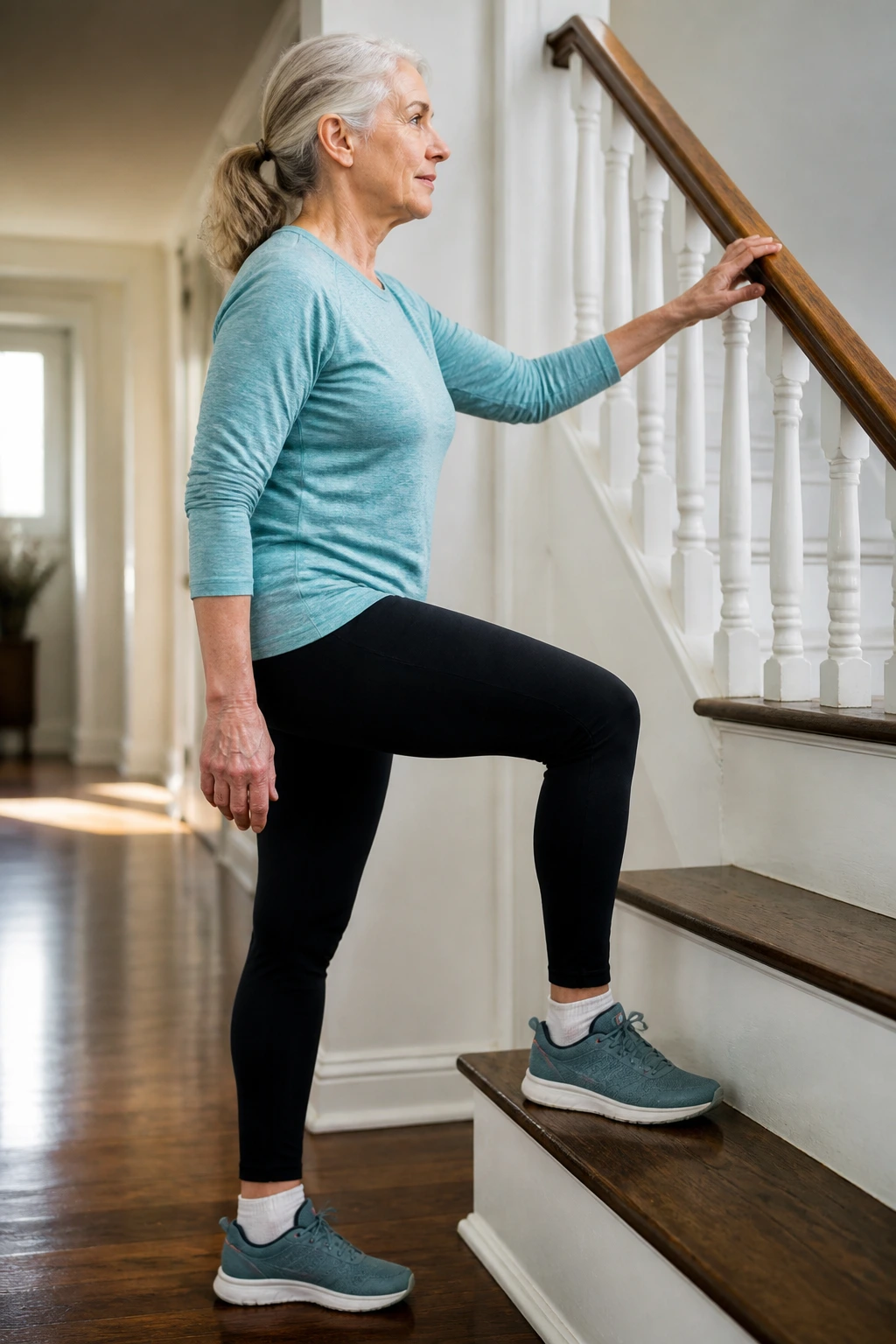
Six inches is enough.
That’s the part people miss. A low stair or aerobic step can train the legs, hips, and balance without needing a huge range of motion. Step up with one foot, bring the other foot up, then step down with control. Do 6 to 10 reps per side to start. Hold a rail or wall if balance wobbles.
The lowering part matters more than most people think. Coming down slowly teaches the thighs to control body weight, which helps with stairs, curbs, and getting in and out of cars. If the knee on the stepping leg caves inward, slow the motion and shorten the step height.
A low stair also tells you a lot about your day-to-day strength. If it feels shaky, that’s useful information, not a failure. You can build from there.
Try this: step up for two counts, step down for three. The slower descent is the real work.
7. Tai Chi Flow for Balance and Calm
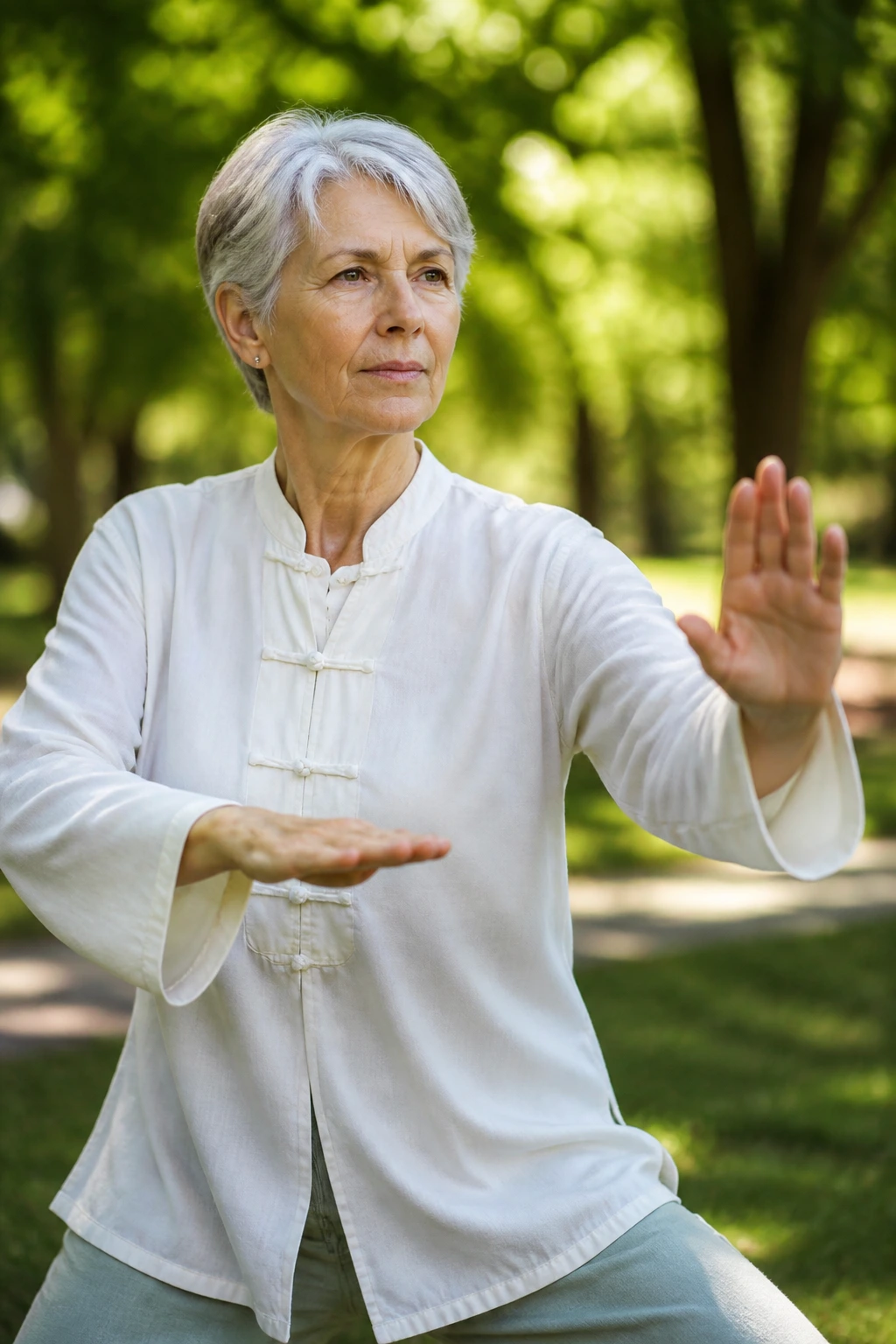
Tai chi is one of the few routines that can make you feel steadier and calmer at the same time.
The slow weight shifts, small foot placements, and controlled arm patterns train balance in a way that feels almost sneaky. You’re not bouncing, not twisting hard, and not asking the joints to make dramatic moves. You’re teaching the body how to transfer weight cleanly, which is a skill that matters every time you turn, reach, or step sideways.
The part people get wrong
They rush it. Don’t.
Tai chi works best when the movements are slow enough that you can feel the foot pressure change from heel to toe and side to side. Even 10 minutes a day can be worthwhile if you stay attentive. Pick a short sequence, repeat it, and let the repetition do the work.
This is also one of the best routines for days when you feel mentally scattered. It gives the nervous system something orderly to latch onto, which is not a small thing.
8. Gentle Yoga Sequence for Hips and Back
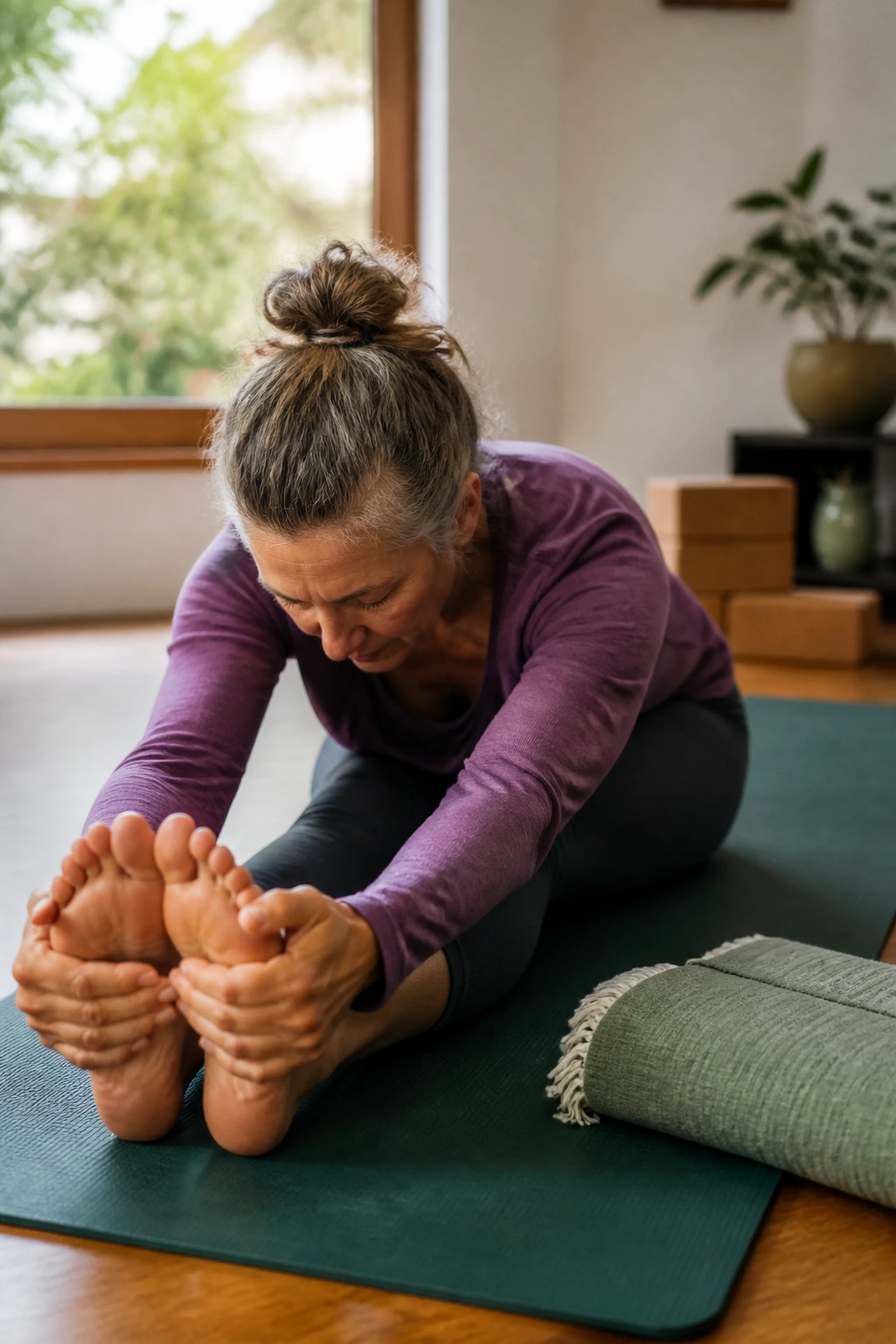
Gentle yoga is not a test of how far you can fold yourself.
It’s a way to get the hips, spine, and shoulders moving without forcing range you do not have. A simple sequence might include cat-cow, seated forward folds with bent knees, supported low lunges, and a reclined twist. Use blocks, cushions, or the side of a couch if the floor feels awkward.
A better way to think about it
If a pose makes your breath catch, back off. If you’re gripping through your jaw, back off again. The goal is not a prettier shape. The goal is easier movement when you stand up, turn, or reach into a cabinet.
Some women love a short evening yoga routine because it helps the hips stop feeling welded shut. Others prefer it after a walk, when the body is already warm. Either way works. Just keep the holds around 20 to 30 seconds and let the stretch feel gentle, not dramatic.
Good sign: you should feel looser afterward, not wrung out.
9. Pilates Core Set on a Mat or Bedside
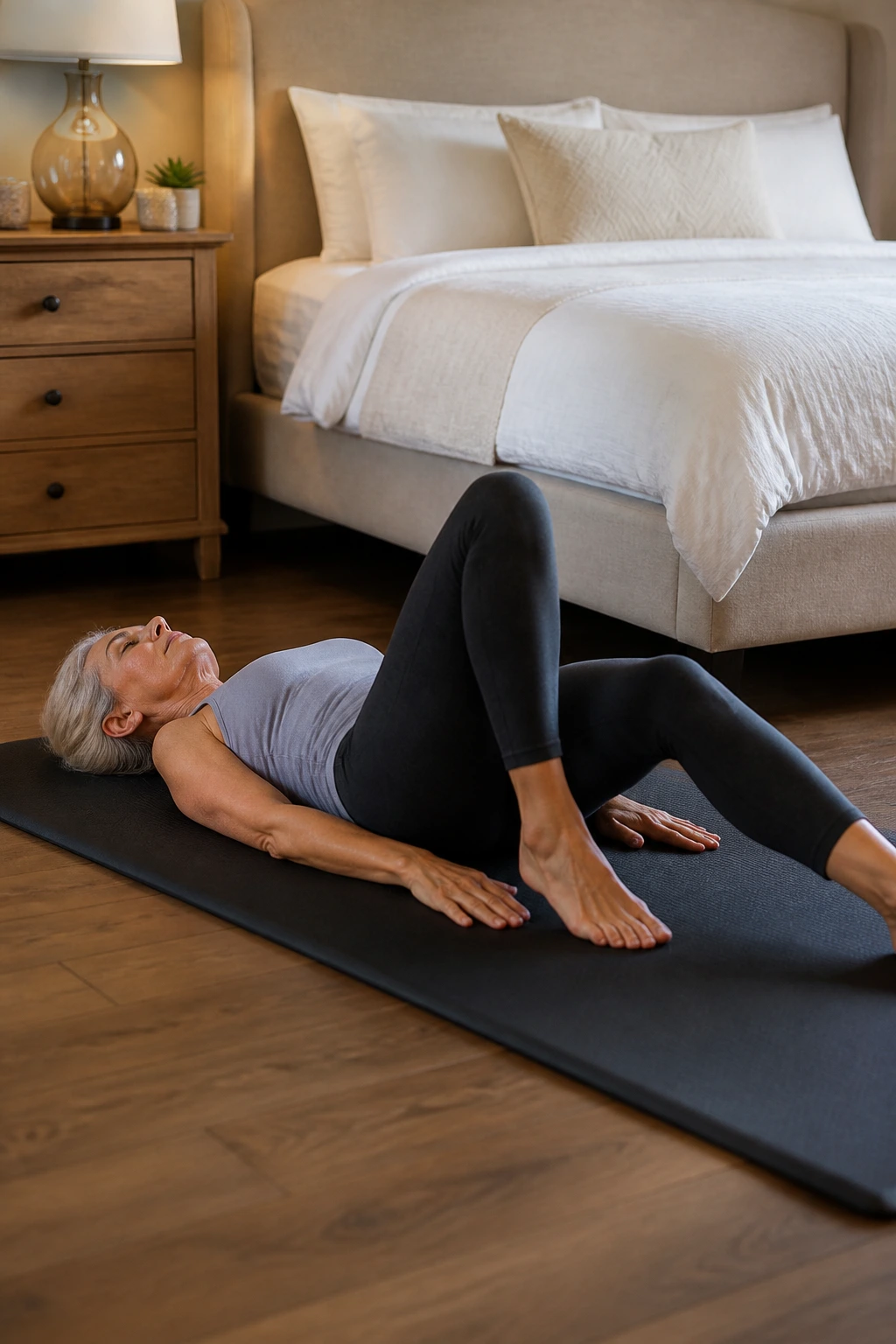
A strong core after 60 is not about having visible abs. It’s about getting out of bed, standing tall, and twisting without grunting.
Pilates shines here because it trains the deep trunk muscles, pelvic control, and breathing together. Try heel slides, toe taps, dead-bug variations, and side-lying leg lifts. Move slowly. That slowness is not filler; it’s the whole point.
Why slow wins here
If you rush Pilates, it turns into random motion. If you slow down, you start to notice the small stabilizers in the belly and hips waking up. That’s the stuff that helps with posture and back comfort.
A beginner set might look like 6 to 8 heel slides per side, then 8 toe taps, then 8 side-lying leg lifts each side. Keep the neck relaxed and the ribs from flaring. If your lower back arches off the mat, shorten the range.
A bedside version works too, which is handy on low-energy mornings.
10. Dumbbell Hinge Training for Women Over 60
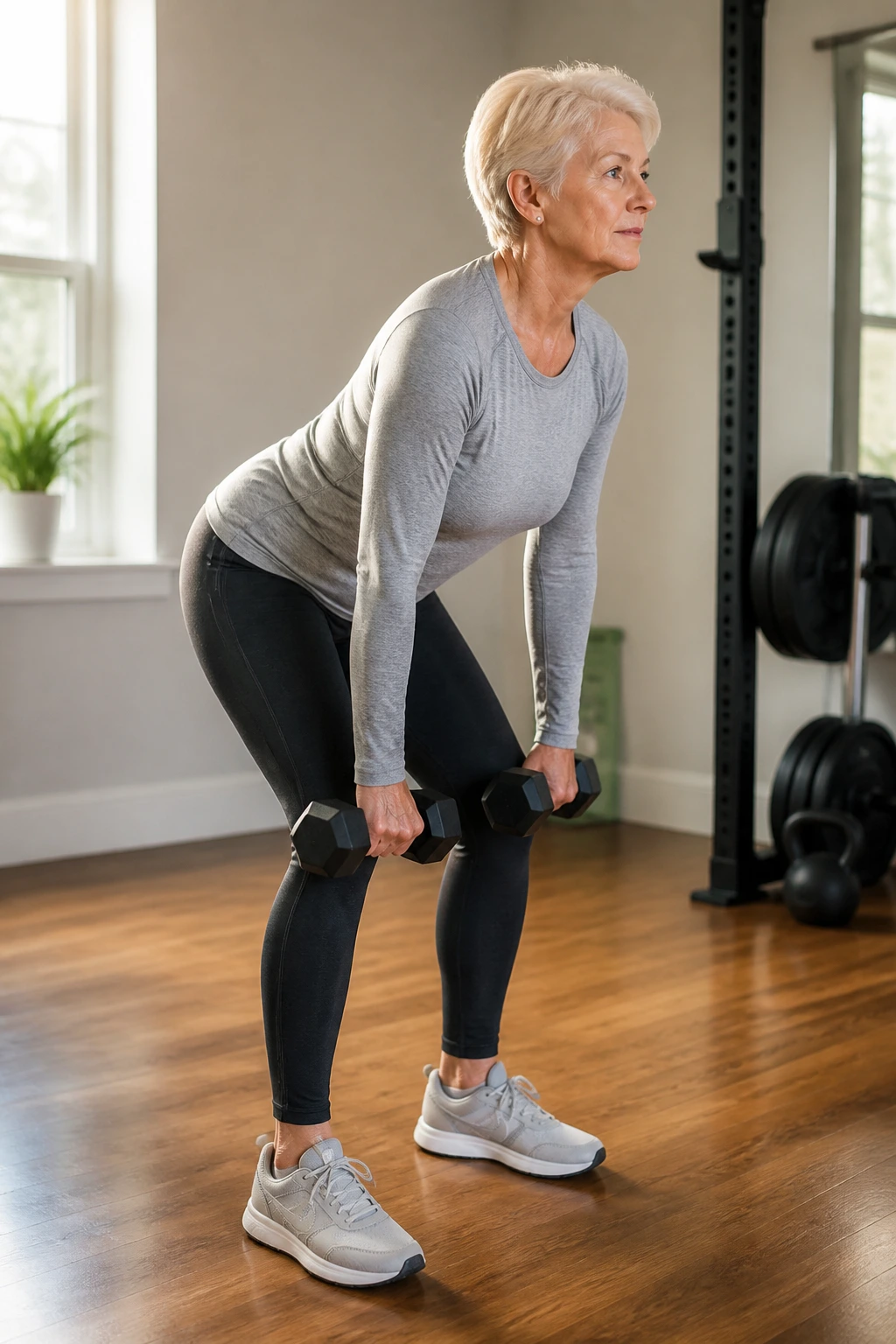
Why train the hinge when the squat gets more attention? Because the hinge teaches you how to bend, lift, and carry without treating your lower back like a hinge that got stuck.
A dumbbell deadlift pattern is one of the most useful strength routines for women over 60. Use two light dumbbells or one kettlebell, stand tall, and send the hips back while keeping a soft bend in the knees. The spine stays long. The weight stays close. Eight reps is enough to start if your form is new.
How to hinge without rounding
- Keep the dumbbells near your thighs.
- Shift the hips back as if closing a car door behind you.
- Stop when your hamstrings feel loaded, not when your back starts to round.
- Stand up by driving through the heels and squeezing the glutes gently.
The hinge is practical. It helps with laundry baskets, pet food, grocery bags, and anything you pick up from the floor. Start with 5 to 10 pounds per hand if that feels safe, then build only when the movement stays clean.
11. Single-Leg Balance at the Kitchen Counter
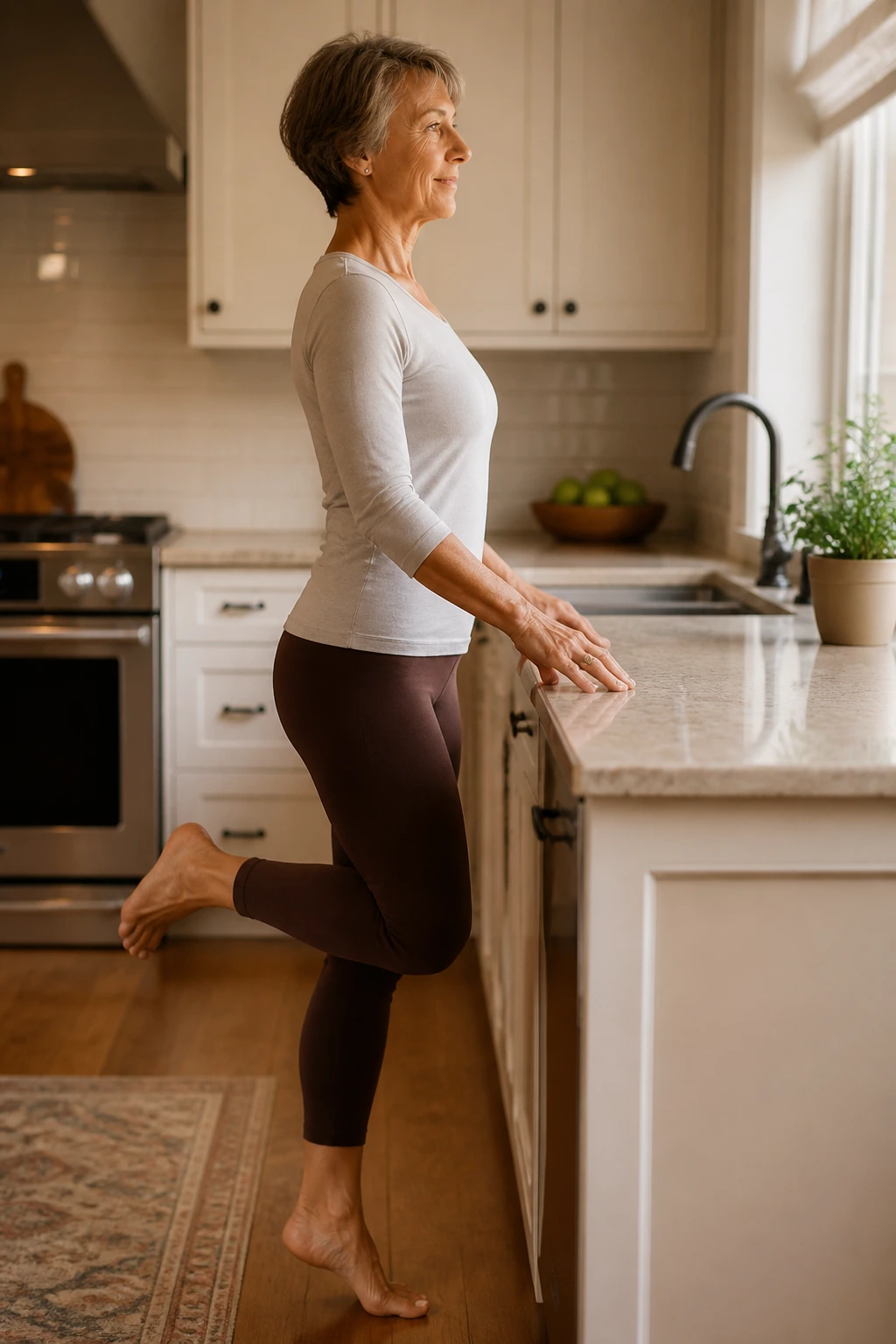
Standing on one leg while the kettle boils sounds too simple to matter. It isn’t.
Balance is one of those skills that fades if you never poke at it. The kitchen counter makes the drill safer, which means you can actually practice instead of bracing for a wobble. Stand near the counter, touch it with one hand, lift one foot, and hold for 10 to 30 seconds. Switch sides. Repeat.
A tiny wobble is normal. A huge sway means you need more support or less time. You can also turn this into marching in place, heel-to-toe walking across the room, or slow toe taps to a low step.
- Hold the counter with fingertips only.
- Keep the standing knee soft.
- Look at one fixed point ahead.
- Try barefoot if your floor is safe and not slippery.
The point is not to become a circus act. The point is to catch balance loss early, before daily life catches you off guard.
12. Seated Strength Training on Busy Days
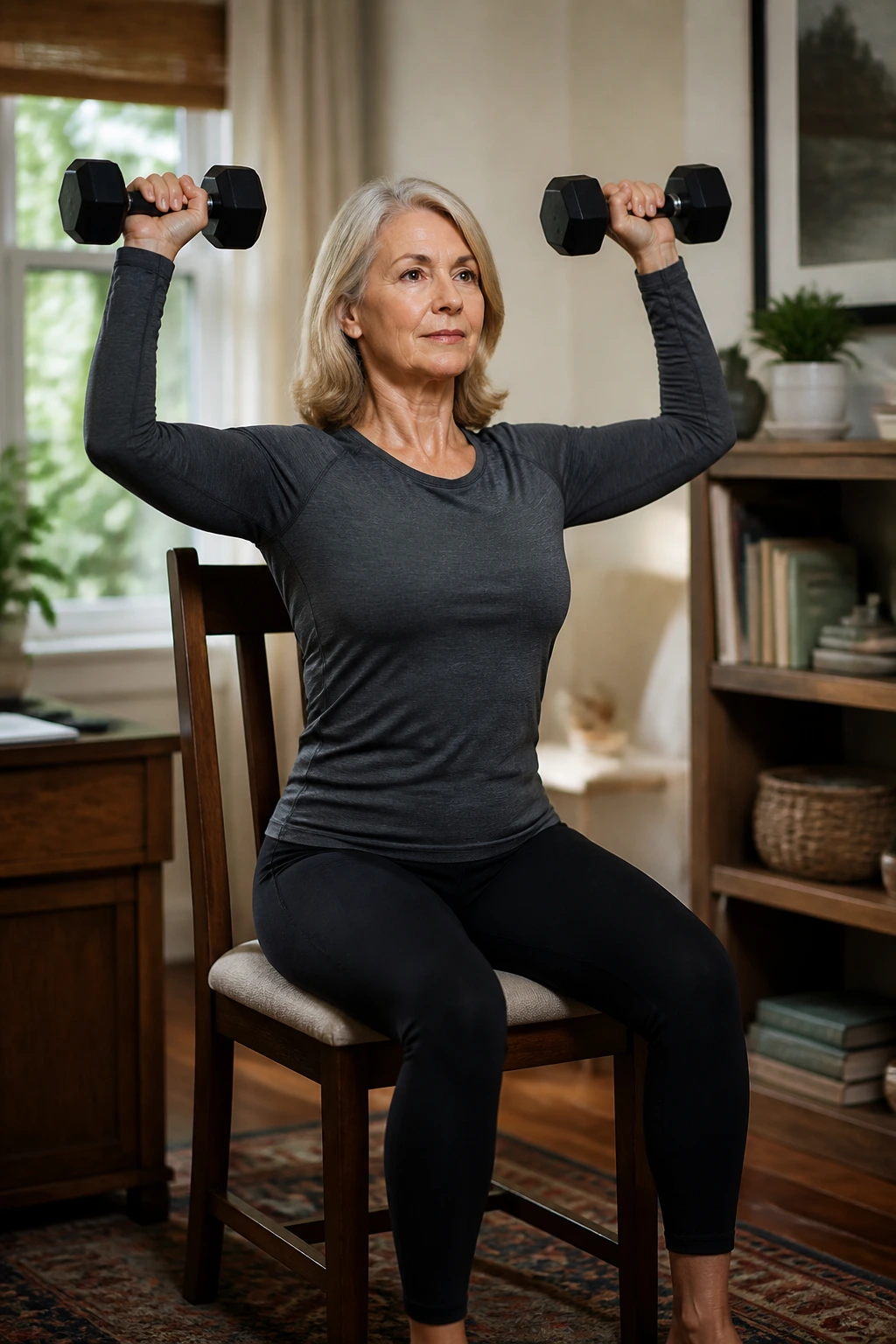
Seated workouts are not a consolation prize.
They’re a real option for days when your energy is flat, the weather is ugly, or standing work feels like too much. A sturdy chair lets you train the shoulders, arms, legs, and core without worrying about fatigue or balance. Seated presses, seated marches, leg extensions, and band rows can all fit in a 12-minute block.
Sometimes the best workout is the one you will actually do while the coffee brews.
That sounds small until you stack it over weeks. Ten good minutes done often beats a heroic session that happens once and then disappears. Seated work is also useful for women managing arthritis flares, post-holiday stiffness, or recovery days after harder training.
Keep the chair stable. No wheels. No wobble. And work with a pace that lets you finish the last rep without swinging your body around to cheat the movement.
13. Stationary Bike Intervals
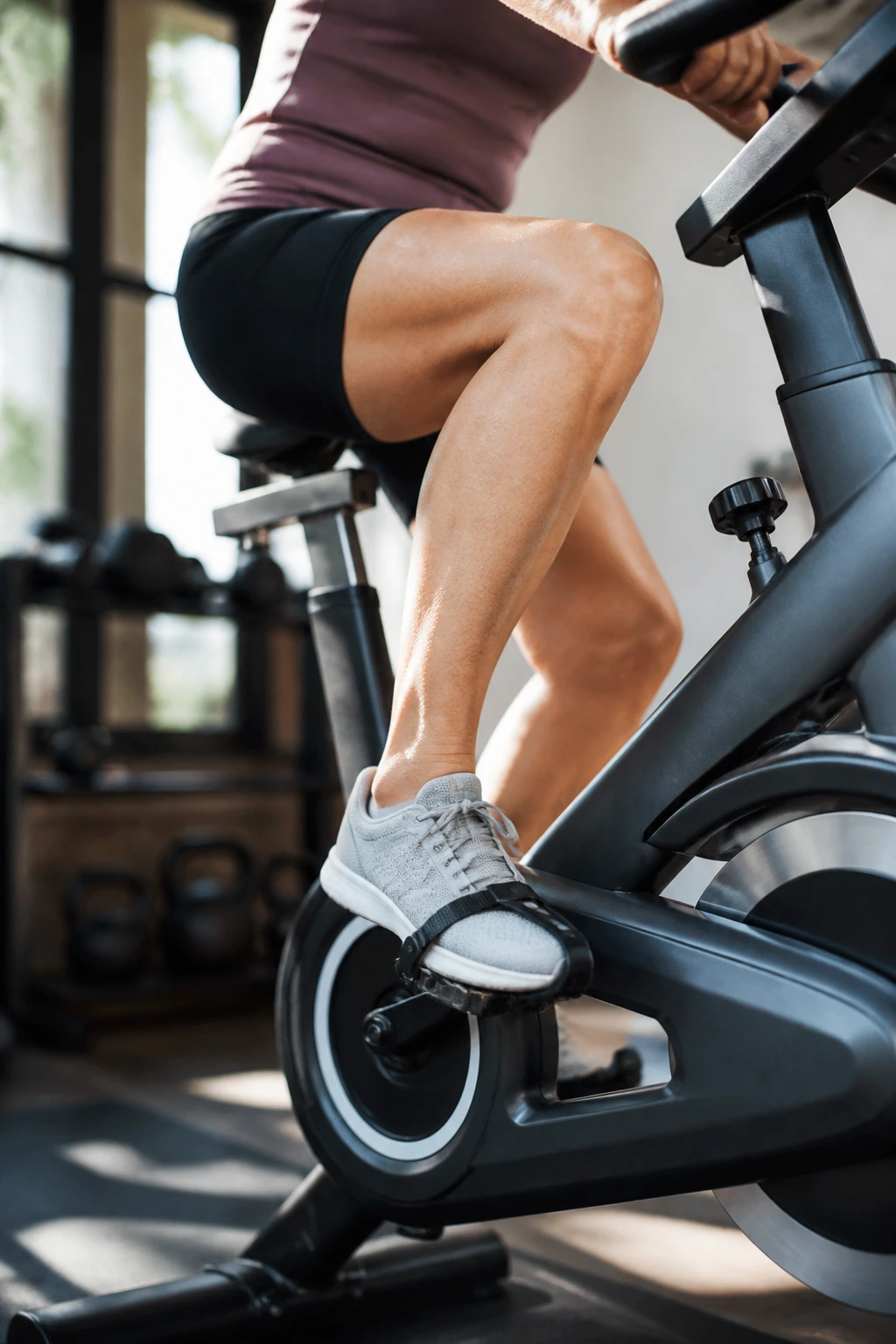
Your legs should feel warm, not beaten up.
That is the beauty of a stationary bike. It gives you cardio without the same impact as running or fast step work, and it’s easy to adjust resistance by a small amount. A good starter session is 5 minutes easy, then 30 seconds faster / 90 seconds easy for 8 to 10 rounds, followed by a gentle cooldown.
How hard is hard enough
You’re looking for a breathing change, not a panic. The faster interval should feel like work by the end, but you should still be able to recover in the easy section. Keep your feet planted through the whole pedal stroke and sit tall instead of hunching over the handlebars.
If your knees complain, reduce resistance first. If your hips feel pinched, raise the seat a little and see whether the stroke smooths out. Little adjustments matter more than people expect.
The bike is a fine choice for winter, bad weather, or anyone who wants a controlled cardio session without much drama.
14. Easy Rowing Machine Sessions
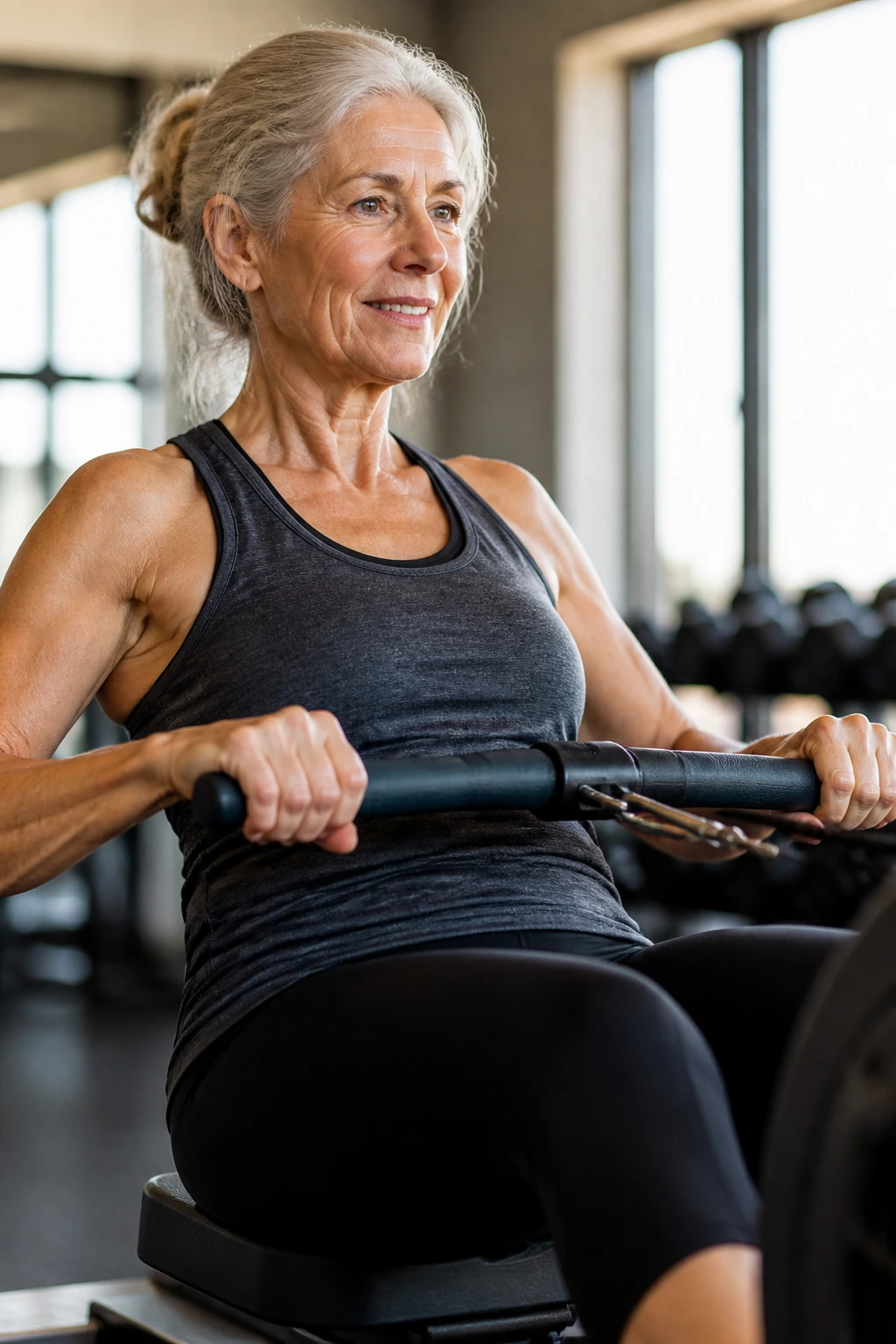
Twelve strokes per minute is too soft. Twenty-eight is too much. Somewhere in the middle lives the sweet spot.
Rowing is one of the best full-body routines for women over 60 when the technique stays clean. Legs start the pull, the torso follows, and the arms finish the stroke. On the return, the arms extend first, then the torso leans forward, then the knees bend. A low or moderate resistance setting is plenty for most people starting out.
How to keep the back happy
- Sit tall before each stroke.
- Push with the legs first.
- Do not yank with the arms alone.
- Keep the handle level with the lower ribs.
- Let the return be slow and smooth.
The rower works the back, shoulders, legs, and grip in a way that feels useful, not ornamental. Two to three rounds of 5 minutes easy rowing with a minute of rest can be plenty. If your lower back rounds, shorten the range and slow the pace until the motion feels tidy again.
15. Low-Impact Dance Cardio
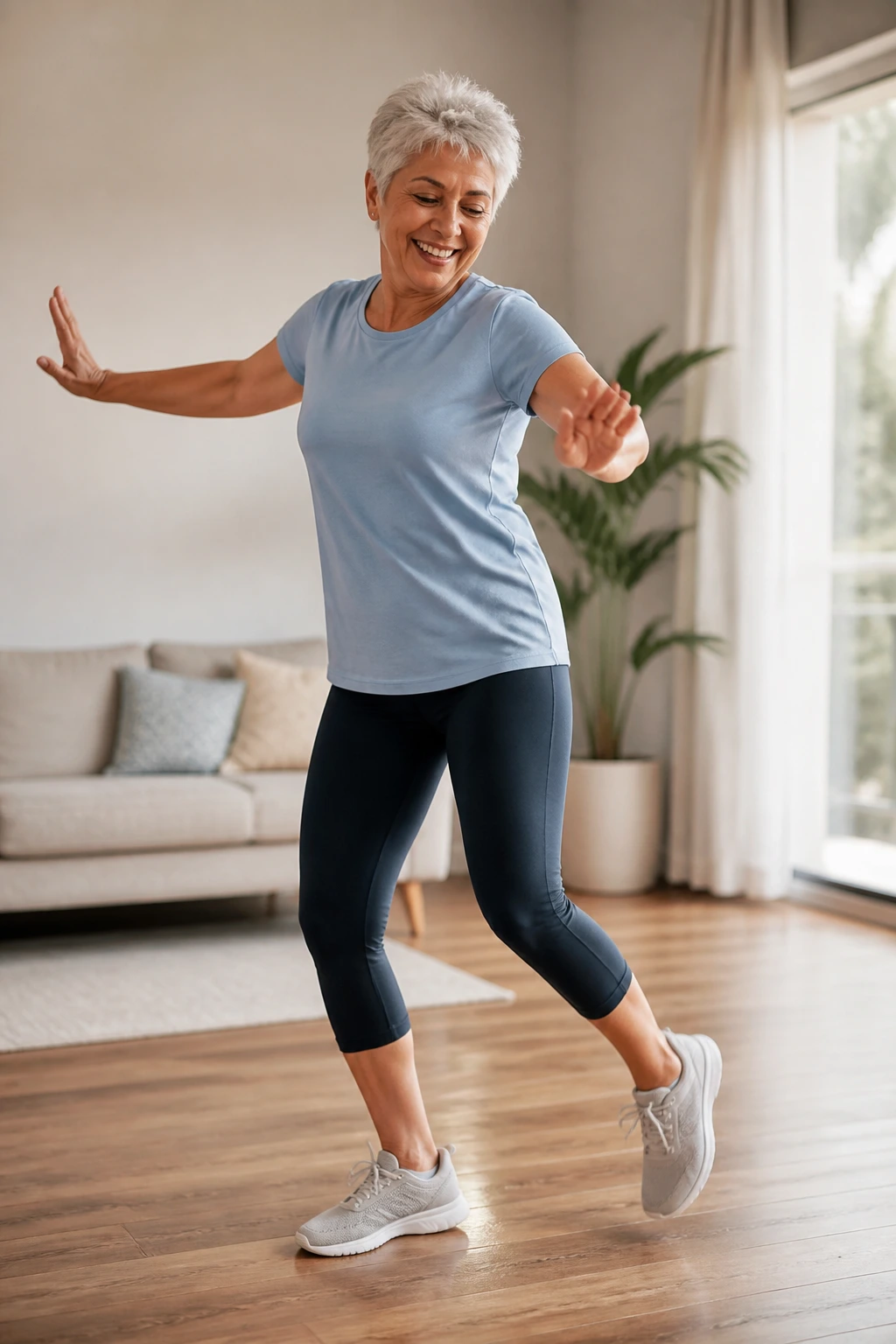
If you hate the bike, put on music and move.
Low-impact dance cardio is a good fit for women who want a raised heart rate without jumping or pounding the floor. Think step-touch, side taps, grapevines, knee lifts, and arm reaches. Keep one foot on the ground at all times if your joints prefer that. Twenty minutes can fly by when the music is decent.
You do not need choreography. You need rhythm and enough variety to keep you from zoning out. That makes this routine oddly useful for mood as well as fitness. A few upbeat songs can shift the whole tone of the day.
The best part? It can be done in socks in your living room, which lowers the barrier enough that you’ll actually use it.
Simple rule: if you’re smiling by the second song, you picked the right style.
16. Farmer’s Carry and Grocery Bag Marches

A loaded carry beats a dozen random arm moves.
That sounds blunt, but I mean it. Carrying weight trains grip, posture, and the deep muscles that help you stay upright while walking. Use two light dumbbells, kettlebells, or even grocery bags with equal weight. Stand tall, shoulders down, and walk for 20 to 40 seconds at a time. Marching in place works too if you don’t have much room.
Why this one earns its place
- It improves grip strength, which matters more than most people think.
- It teaches the body to stay tall under load.
- It mirrors real life: bags, laundry, a tote, a suitcase.
- It can be done in a hallway or kitchen.
Start lighter than you think. If you lean to one side, the load is too uneven or too heavy. If your neck tightens, let the shoulders settle. A carry should feel sturdy and a little proud, not braced and miserable.
This is one of my favorites. Plain, useful, and hard to fake.
17. Trail Walking With Poles
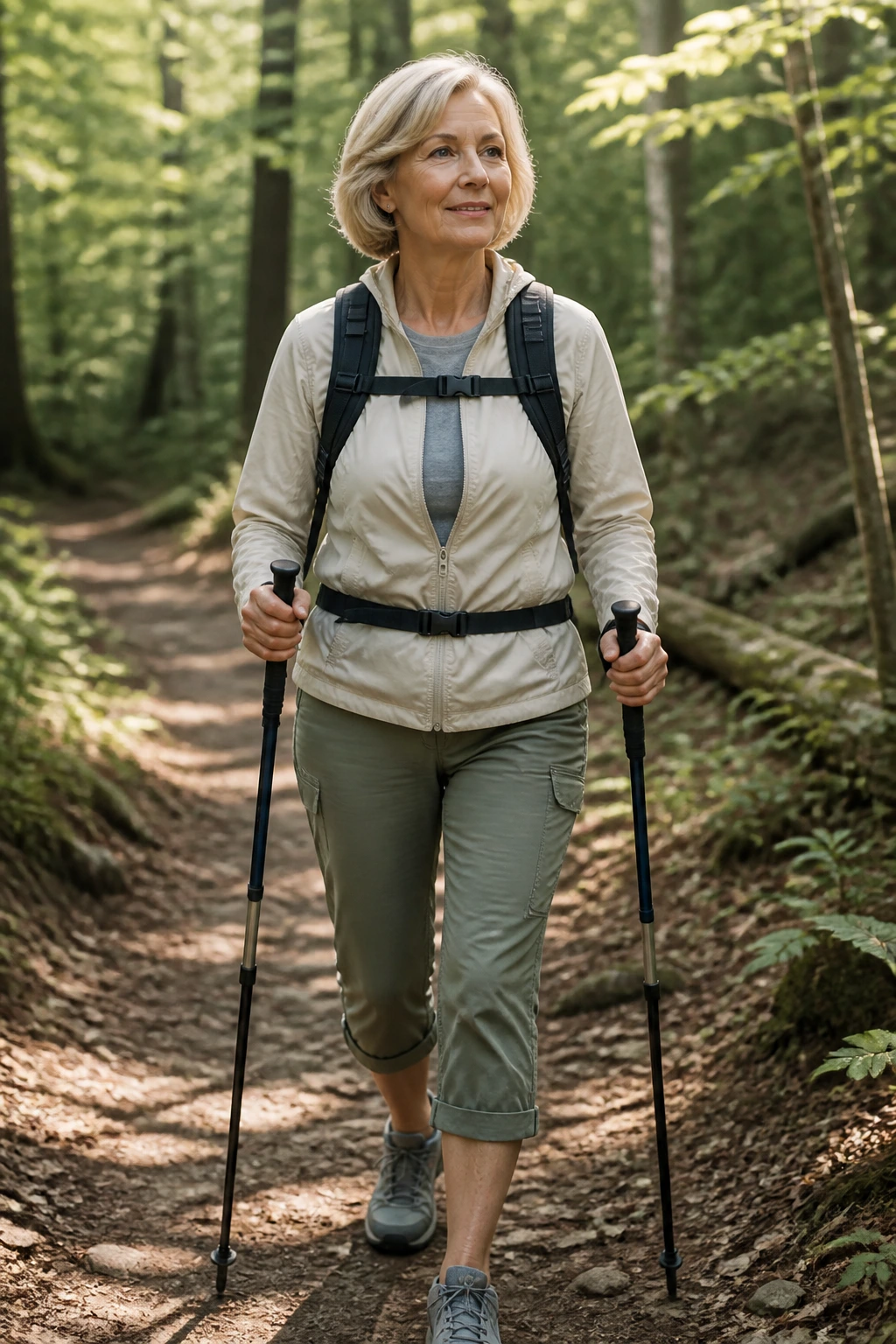
If flat pavement bores you, a park path changes the whole thing.
Trail walking with poles gives you a little more upper-body involvement and a lot more stability on uneven ground. The poles help share the load on inclines and give you something to brace against when footing gets loose. They also make the walk feel more like a full outing than a chore.
What to watch for
Poles should be set so your elbows bend around 90 degrees when the tips touch the ground. Keep the straps snug but not tight. Plant the pole opposite the forward foot, then let the arms swing naturally rather than stabbing the ground.
This routine is especially good if you like being outdoors but get nervous on roots, gravel, or sloped paths. It brings confidence back into the picture, which changes everything.
A trail walk can be gentle or long, but it should always feel controlled. If you’re gripping the poles like a climbing wall, slow down and shorten the route.
18. Shadow Boxing and Light Kickboxing Drills
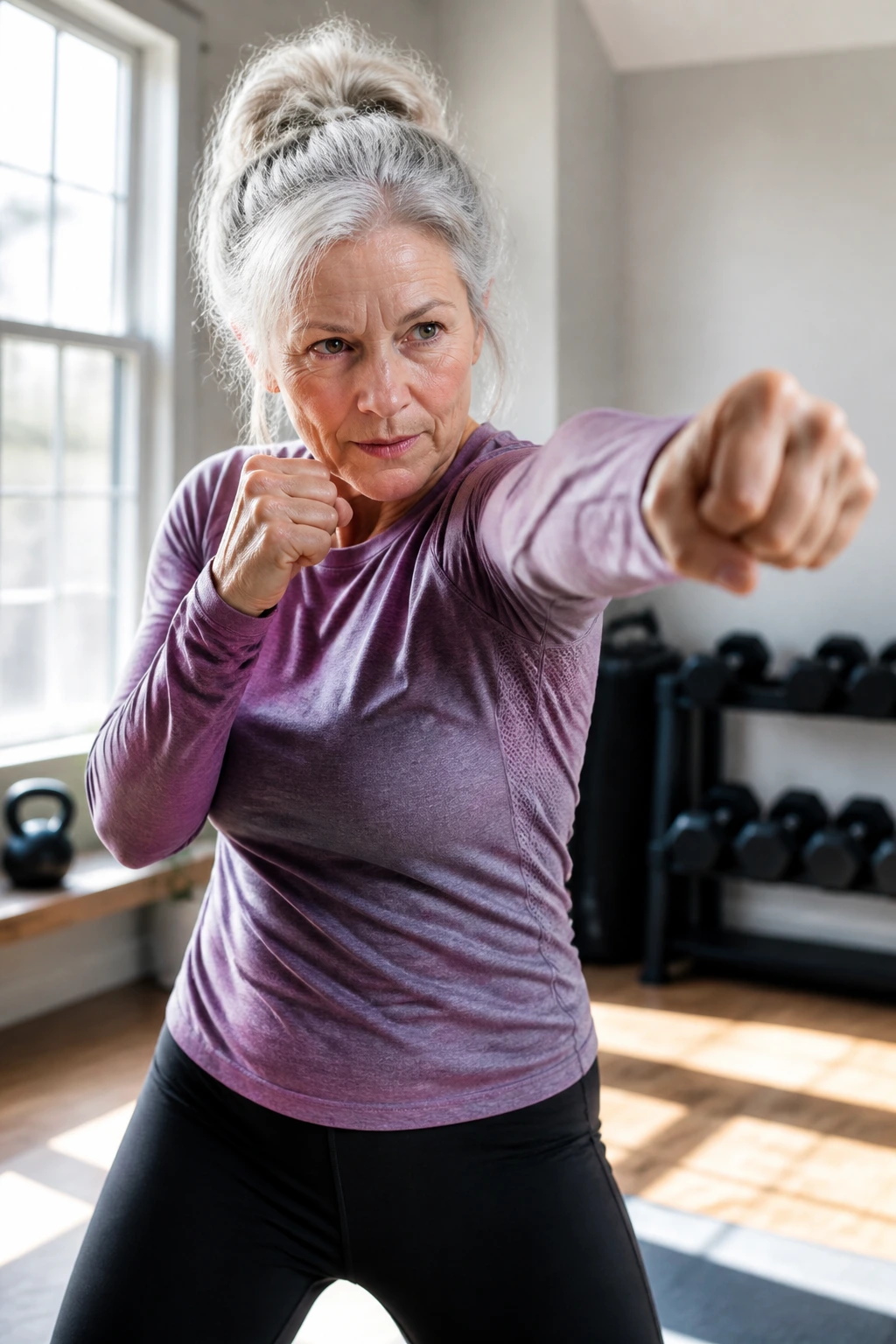
Want cardio that wakes up the upper body too?
Shadow boxing does that job nicely. It gets the heart rate up, sharpens coordination, and uses the shoulders, torso, and legs together. Start with a stance about shoulder-width apart, knees soft, hands up near the face, then throw easy jabs, crosses, and light hooks in the air. A round can be 30 seconds on / 30 seconds off or a few minutes continuous if you feel good.
How to keep the shoulders calm
Keep the punches crisp but not wild. The power should come from the feet and torso rotating a little, not from yanking the shoulders forward. If the neck tightens, lower the hands for a breath and reset the stance.
This is also a surprisingly good confidence routine. There’s something about punching the air that wakes people up in a good way. No contact, no gear, no complicated setup.
Try mixing in a few front steps, side steps, or gentle knee lifts. That keeps it from becoming just an arm workout.
19. Morning Mobility Micro-Routine
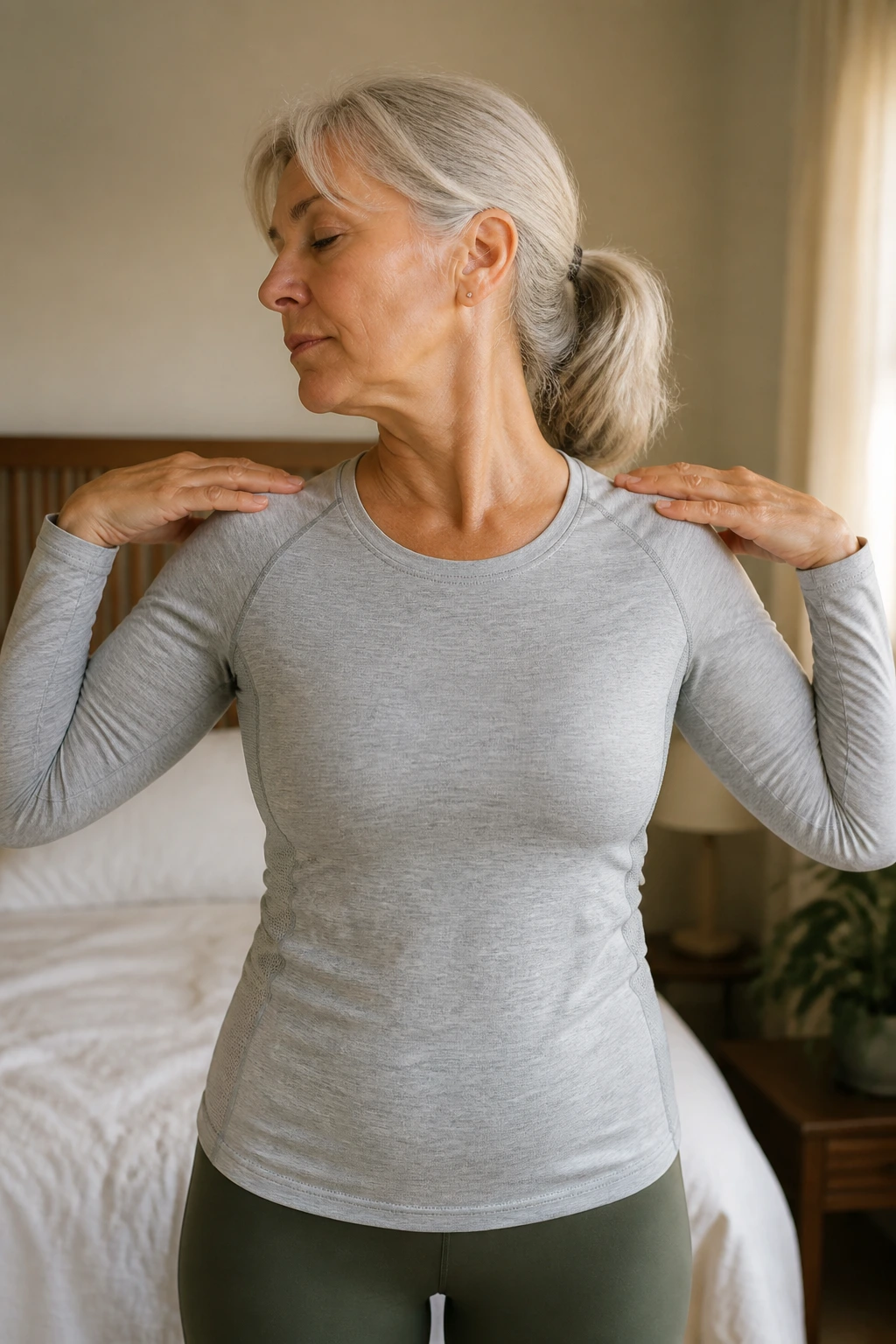
Some mornings your body feels like it slept in a folded chair.
A short mobility routine can fix a lot of that stiffness before it hardens into the rest of the day. Think 5 to 8 minutes of neck turns, shoulder circles, ankle rolls, cat-cow on the wall or countertop, standing hip openers, and a few overhead reaches. Nothing dramatic. Just enough to remind the joints how they like to move.
The nicest thing about mobility work is that it sneaks in before the excuses do. You can do it beside the bed, beside the sink, or while the tea kettle hums. No mat required.
Keep the motion slow and smooth. If a joint clicks but doesn’t hurt, that’s one thing. If it feels sharp, stop and choose a smaller range. The goal is waking up, not forcing range.
A tiny routine like this pays off when you later sit down, stand up, or turn your head to back out of the driveway.
20. Recovery Walks for Women Over 60
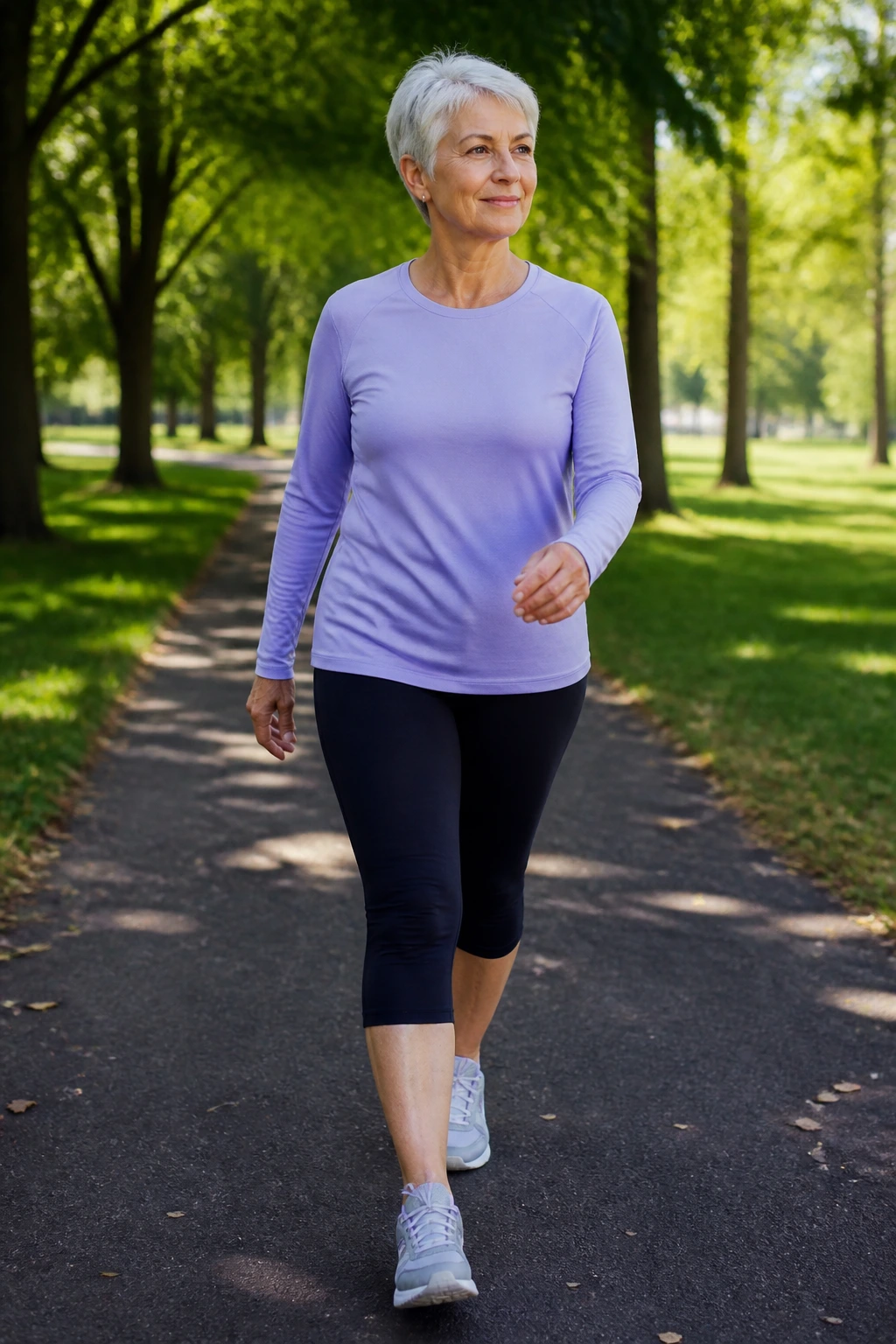
Recovery is not a day off from fitness. It’s part of the work.
A recovery walk helps the body settle after stronger sessions, and it keeps joints from stiffening up after a long stretch of sitting. Ten to twenty minutes at an easy pace is usually enough. Keep the breathing relaxed, let the arms swing, and choose flat ground unless you specifically want a little extra challenge.
A good recovery day can also include gentle calf stretches, a few ankle circles, or lying down with the legs up on a couch for a couple of minutes. None of this is flashy. All of it helps. If you’ve done a harder bike session, strength day, or hill walk, a quiet recovery routine can make the next workout feel much cleaner.
Sometimes the most valuable training choice is the one that feels almost boring. That’s fine. Boring is often what lets you keep going.
The routines that last are the ones you can repeat without dreading them, and that may be the most useful fitness rule of all.
