



A good Pilates session does not need a studio, a mirror wall, or a reformer taking up half the room. A mat, a little floor space, and some patience will do more than most people expect.
Full body Pilates workouts at home work best when they feel precise, not frantic. The small stuff matters here: a slow pelvic curl, a controlled leg lower, a reach through the crown of the head while the ribs stay quiet. That is where the work gets honest. The burn is quieter than a sprint workout, but it tends to stick around in the shoulders, glutes, deep abs, and even the feet.
What I like about Pilates is that it does not let one part of the body slack off while another part does all the work. Breath, control, centering, precision, concentration, and flow show up in almost every good mat sequence, even if the teacher never names them out loud. When those pieces are in place, the workout feels cleaner and more balanced. Less flailing. More actual strength.
Some of these routines are short and sharp. Some are slower and more surgical. Pick the one that matches the way your body feels right now, then move on to the next one when you want a different kind of challenge.
1. The 10-Minute Whole-Body Wake-Up
If your body feels stiff, this is the place to start. A 10-minute Pilates flow can light up your core, wake up your glutes, and loosen your upper back without chewing up your whole day.
Why this small circuit works
The trick is constant movement with no wasted reps. You move from hundred prep, to roll-downs, to bridges, to bird dogs, and the body never gets to coast for long. That keeps the session short but dense, which is exactly what makes it feel bigger than the clock says.
- 1 minute: standing roll-downs
- 2 minutes: hundred prep with bent knees
- 2 minutes: glute bridges with a three-second squeeze at the top
- 2 minutes: bird dogs with a slow reach
- 2 minutes: side-lying leg lifts
- 1 minute: plank hold or knee hover
Tip: keep your exhale longer than your inhale. That one cue does more for control than rushing into extra reps ever will.
2. Slow Core and Glute Fire
Slow Pilates is the reason people walk away surprised. No jumping. No noise. Still brutal in its own way. When you slow the tempo, the deep abs and the side glutes cannot hide behind momentum.
The best version of this workout uses dead bugs, toe taps, bridge marches, and tabletop leg lowers. Each move asks for control at the exact point where most people want to rush. That is the whole point. A slow lower from tabletop can light up the lower belly more than twenty fast crunches, and a bridge march teaches your pelvis not to wobble when one leg leaves the floor.
Use this on days when you want to feel strong without feeling wrecked. Four exercises, two rounds, about 15 minutes total. Keep your lower ribs heavy on the mat. If your back arches, the range is too big.
3. Standing Pilates for Small Spaces
Can you get a full body Pilates workout in a tight room without going to the floor every minute? Absolutely. Standing sequences are underrated because they make your balance, posture, and core work at once.
How to use it
Stand near a wall or the back of a sturdy chair. That gives you a point of reference without turning the workout into a leaning exercise. Start with roll-downs, then add knee lifts, side reaches, calf raises, and controlled leg circles in the air. The standing leg has to stabilize while the moving leg challenges your hips.
- 8 roll-downs
- 10 knee lifts per side
- 8 side bends per side
- 12 calf raises
- 8 standing leg circles each direction
- 30-second wall sit with arms reaching forward
Keep the standing foot rooted through the big toe, little toe, and heel. That tripod shape makes the work feel cleaner. It also keeps your ankles from doing all the cheating.
4. Beginner Mat Flow for Tight Hips
Picture the first five minutes after a long day of sitting. Hips cranky. Lower back a bit grumpy. This is the workout that makes the floor feel friendly again.
Start with pelvic clocks, then move into cat-cow, half roll-backs, figure-four stretches, and a few easy bridges. Nothing here is flashy. That is the point. Beginners often need less drama, not more. Tight hips tend to show up as a stiff back, so opening the front of the hips while gently waking the glutes usually pays off fast.
A nice sequence is 6 pelvic clocks, 6 cat-cows, 8 half roll-backs, 30 seconds per figure-four hold, and 10 bridges. Keep the breath smooth. If your shoulders creep toward your ears, pause and reset. The body usually listens better after the second exhale.
5. Upper-Body and Posture Reset
Your upper back tells on you fast. Slumped shoulders, a stiff neck, and ribs flaring forward are the usual clues, and a smart Pilates session can clean that up without needing any equipment.
This one works because it blends prone back work, scapular control, and arm endurance. Think swimming prep, chest lifts, kneeling triceps presses, and small pulses that make the back of the shoulders wake up. The goal is not to fling your arms around until they burn. It is to hold your chest open while your ribs stay calm.
I like a layout of 3 rounds of 6 exercises, 30 seconds each. Keep the forehead lightly down on the mat during prone work so the neck does not take over. A lot of people make this harder than it needs to be by arching the lower back or shrugging the shoulders. Don’t. Clean form will make it plenty hard.
6. Side-Lying Leg Series
Side-lying work looks small. Then your hip starts shaking halfway through the second set, and the whole story changes.
What makes this style different from standing glute work is the way it isolates the glute medius, outer thigh, and inner thigh without asking the lower back to help. Clamshells, leg lifts, circles, and front-back kicks all target those smaller support muscles that keep your pelvis steady when you walk, climb stairs, or stand on one leg.
This is a good choice if your knees like a gentler setup. Try 12 clamshells, 10 side kicks forward, 10 side kicks back, 8 circles each way, and 10 inner thigh lifts per side. Keep your waist lifted off the floor, even if it means making the range a little smaller. Bigger is not better here. Tighter control usually wins.
7. Low-Impact Cardio Pilates
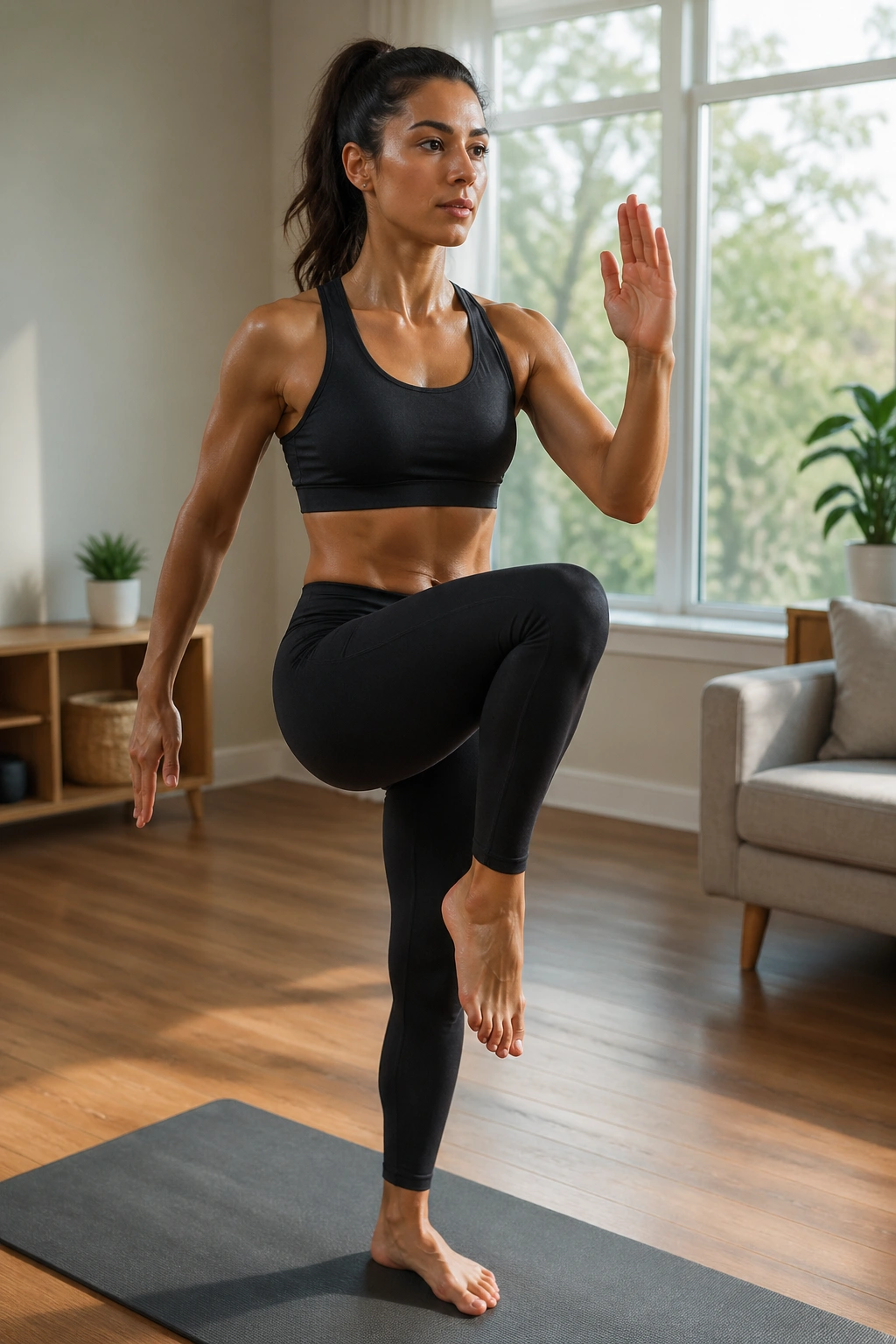
Cardio does not have to mean jumping. A low-impact Pilates session can still raise your heart rate if you stitch the right moves together fast enough.
What to expect
The best low-impact cardio Pilates uses standing knee drives, plank walks, squat pulses, and fast but controlled transitions. The effort comes from reduced rest, not from pounding the floor. Your breathing gets louder. Your joints stay happier.
- 45 seconds of squat to calf raise
- 30 seconds of plank shoulder taps
- 45 seconds of alternating knee drives
- 30 seconds of slow mountain climbers
- 45 seconds of curtsy lunges
- 30 seconds of teaser prep hold
Repeat the circuit 2 to 4 times. Keep your transitions neat. If you move like you are dragging furniture, the workout loses its rhythm. If you move with control, the sweat shows up fast enough.
8. Spine Mobility and Back Strength
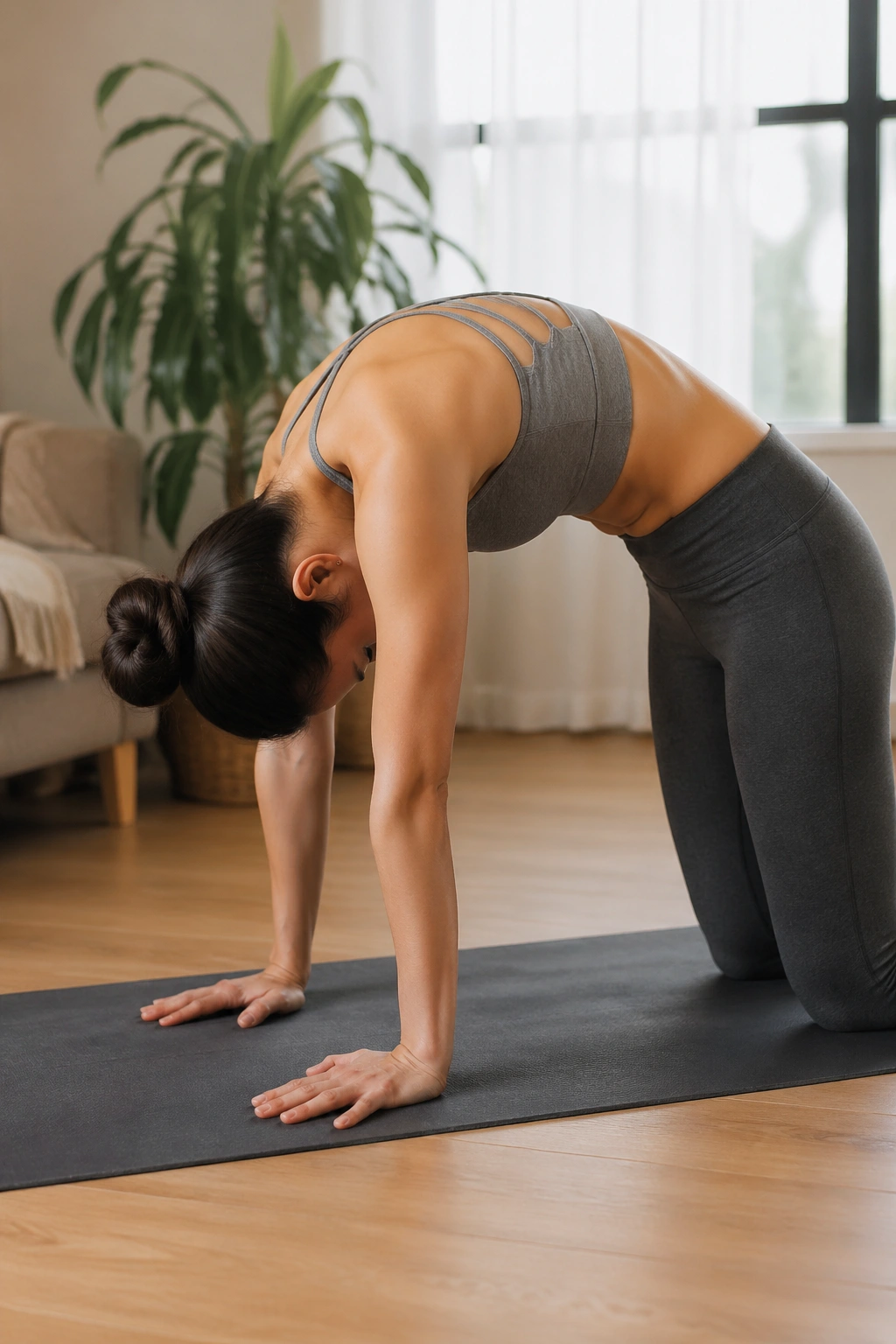
Why does your back feel better after a session that starts with slow cat-cow and ends with a swan lift? Because the spine likes motion in both directions, not just one.
A balanced back-focused Pilates workout should combine flexion, extension, and gentle rotation. Start on hands and knees with cat-cow, then move into swan prep, breaststroke prep, and a child’s pose side reach. The spine gets more room when the front body and back body both do their part. It is not about stretching the back until it gives up. It is about teaching it to move.
How to use it
Keep each position for 3 to 5 breaths. That sounds easy until you hold a swan prep with your legs active and your shoulders low. If the lower back starts pinching, shorten the lift. The shape matters less than the quality. A controlled 20-minute session here often feels better than chasing range.
9. No-Crunch Ab Workout
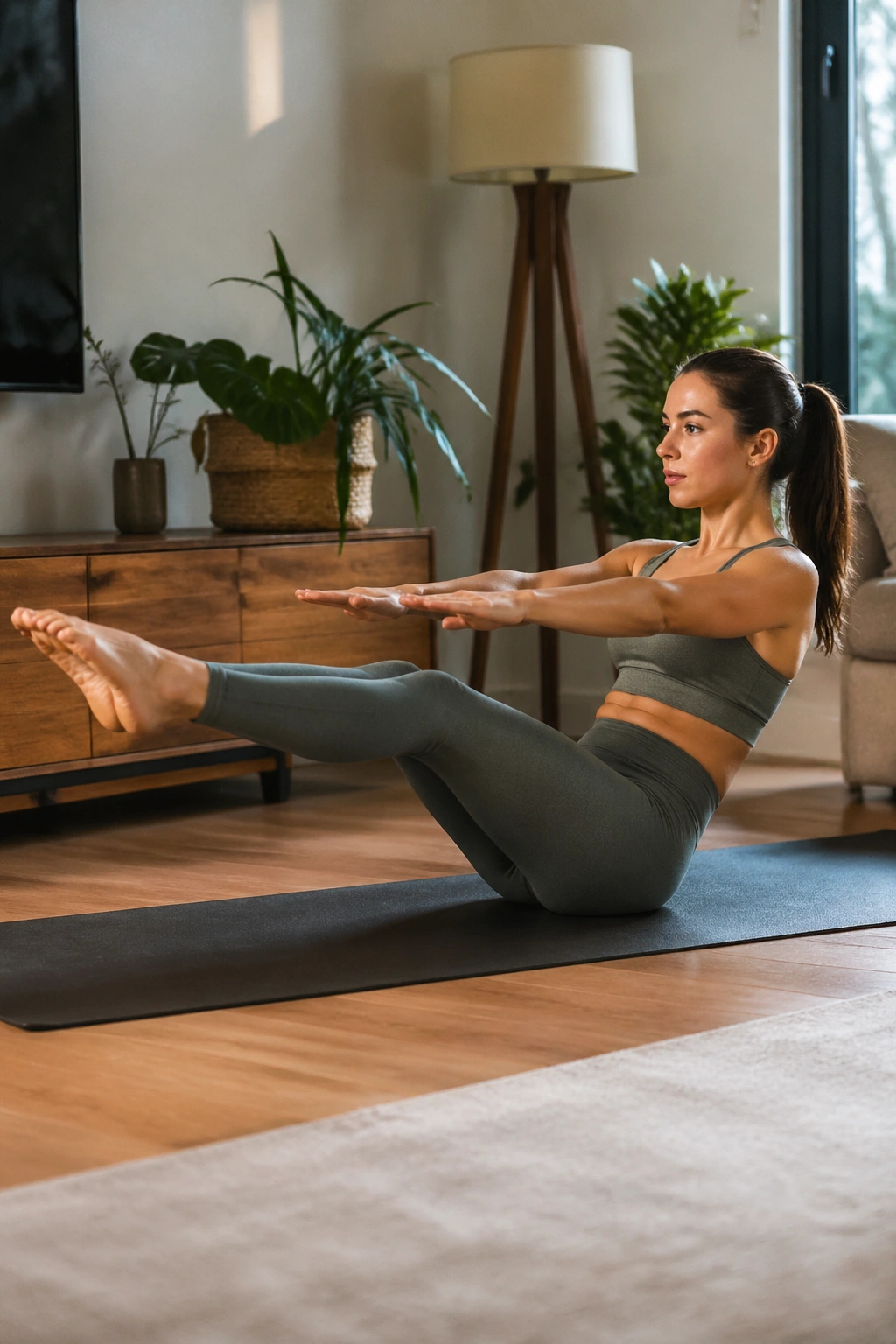
Crunches are not the whole story. In fact, a lot of good Pilates ab work happens with the torso barely moving at all.
This workout leans on tabletop holds, toe taps, single-leg stretch, double-leg stretch, and scissors. The deep core works hardest when the limbs move and the spine stays steady. That is what makes Pilates ab work look so calm while feeling so sneaky. Your neck stays happier, too, because you are not yanking the head forward rep after rep.
Try 8 to 10 reps of each movement, or hold each shape for 20 to 30 seconds if you prefer timed work. Keep the pelvis heavy and the lower ribs knit down. If the back arches, shorten the legs. If the abs shake, good. That part is not a problem.
10. Full-Body Bridge Ladder
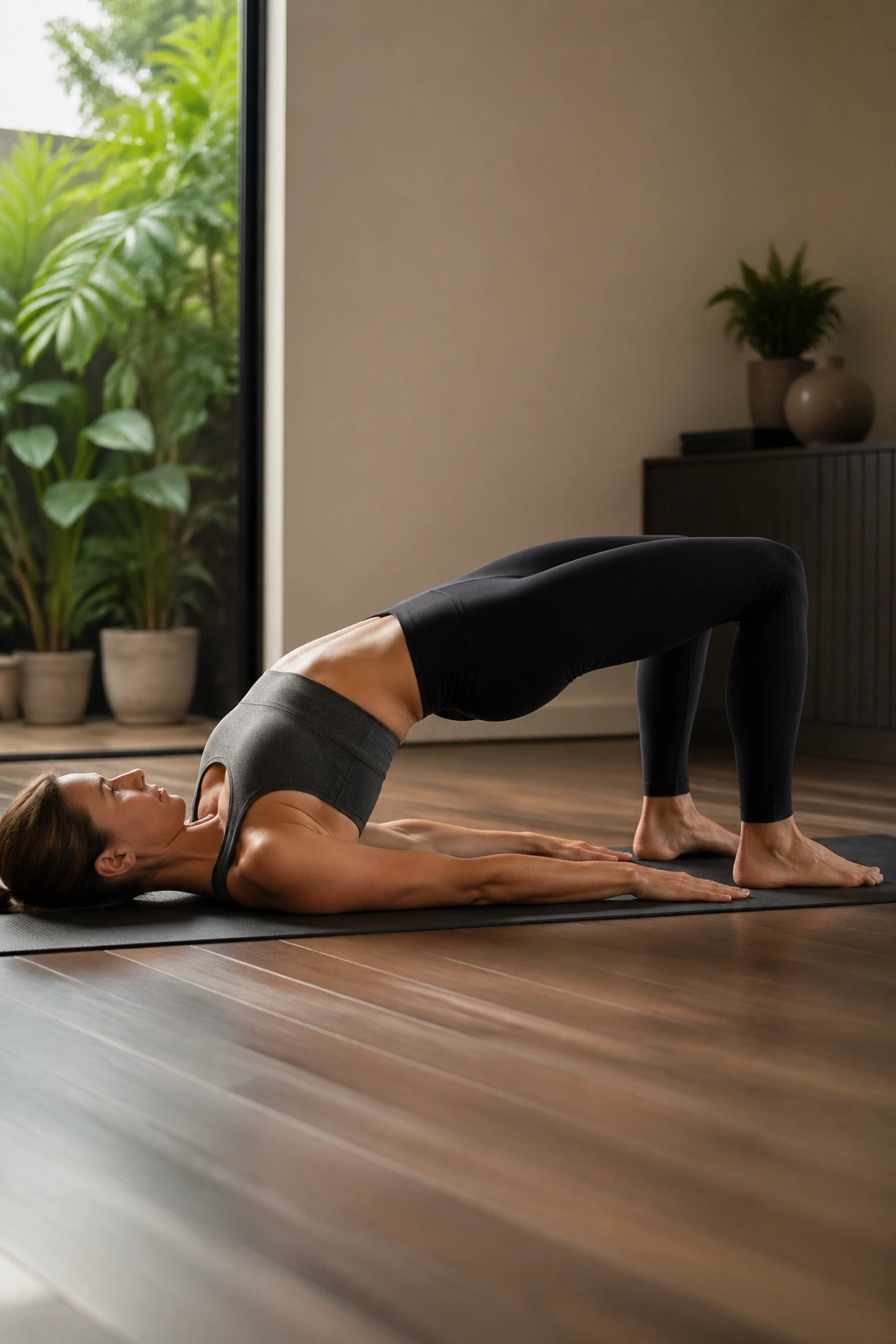
I like bridge ladders because they start politely and then get mean in a quiet way. A simple glute bridge turns into a full-body challenge once you add pulses, marches, and single-leg holds.
The bridge series teaches the posterior chain to work without letting the lower back steal the spotlight. Start with regular bridges, then lift one heel, then march one knee at a time, then add a single-leg hold if the pelvis stays level. Hamstrings, glutes, and deep abs all have to coordinate. That is where the payoff lives.
- 10 standard bridges
- 8 bridge pulses at the top
- 6 bridge marches per side
- 5 single-leg bridge lifts per side
- 20-second hold with both heels grounded
Keep your knees tracking over your second toe. If they drift wide, the glutes lose some of the load. The last rep should feel controlled, not sloppy.
11. Desk-Body Undoer
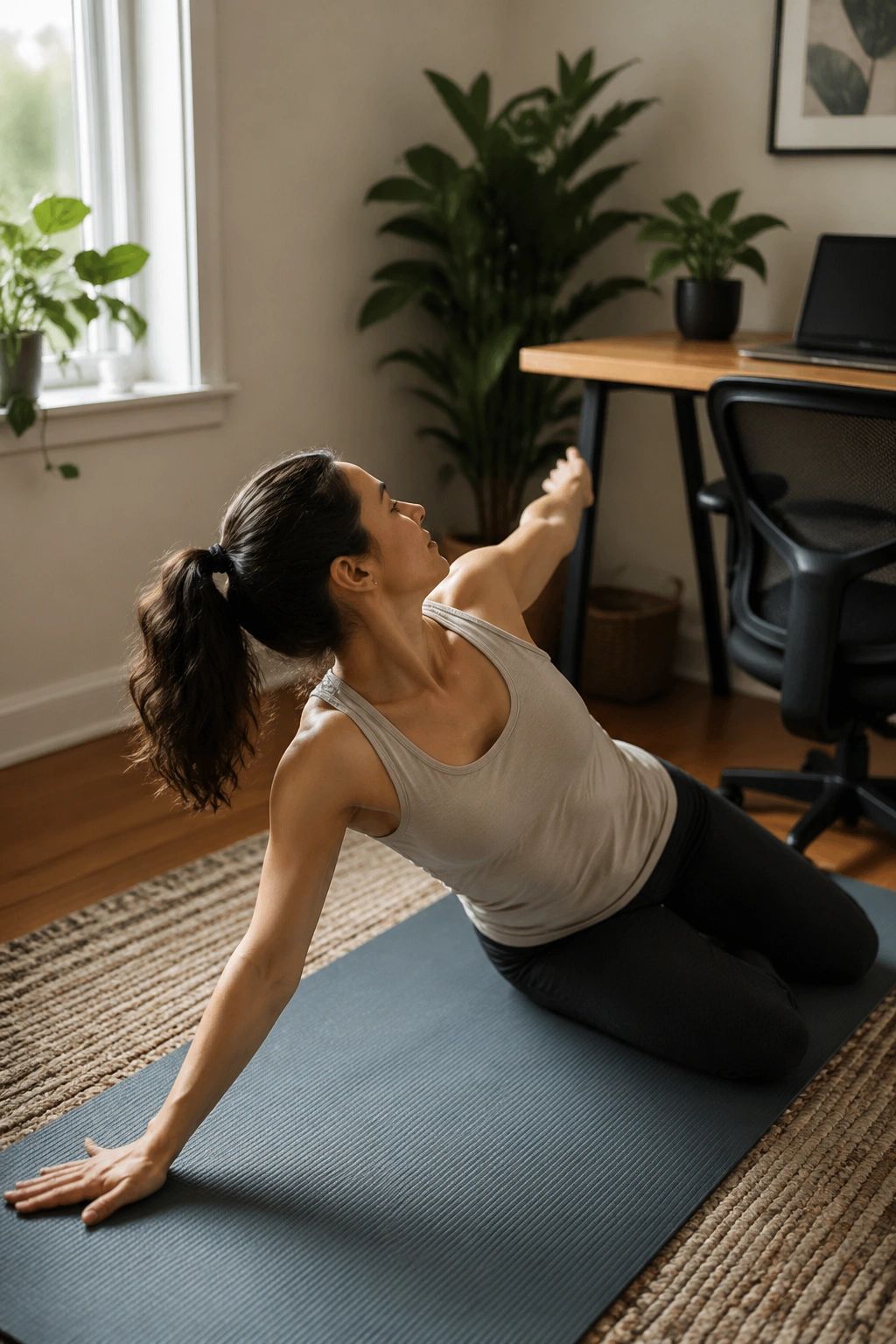
Desk posture is a thief. It takes shoulder mobility, shortens the hip flexors, and leaves the upper back doing extra work just to keep you upright.
A good undoer sequence focuses on thoracic rotation, hip opening, and gentle spinal lengthening. Open books on the floor, kneeling lunges, side bends, and reach-backs all help the body remember what extension feels like. You do not need to force anything. Tight tissue hates being bullied.
A small routine here might be 5 open books per side, 30 seconds in a kneeling hip flexor stretch, 8 side bends each way, and 10 slow shoulder rolls. If you sit a lot, this is the kind of workout that pays off even when it feels less dramatic than a hard sweat session. Sometimes boring is useful. This is one of those times.
12. Balance and Stability Flow
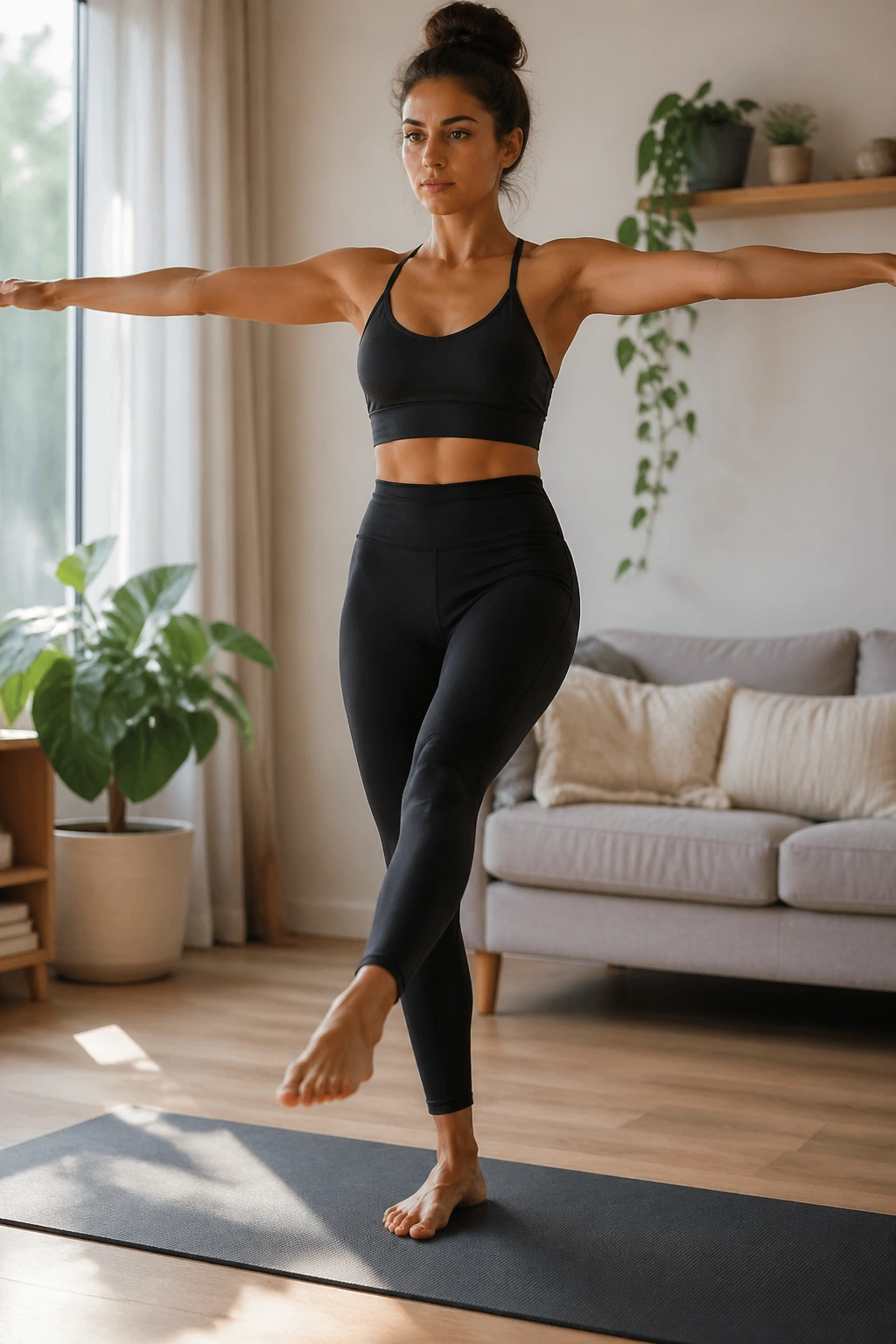
Balance work is sneaky. It looks calm until your standing foot starts doing tiny corrections you did not know you had.
Unlike straight core work on the mat, balance-focused Pilates recruits the ankles, hips, and deep abs at the same time. Single-leg hinges, arabesque reaches, curtsy-to-side kick patterns, and plank knee hovers all ask the body to stabilize while one piece moves. That instability is the whole training effect.
This is best for people who want more control in walking, running, or stair climbing. Try 30 seconds per side on each move, or count 8 to 10 reps with no rushing. Use a wall if needed, but do not lean into it. Light fingertips are enough. The minute you cling, the stabilizers back off.
13. Inner Thigh and Hamstring Focus
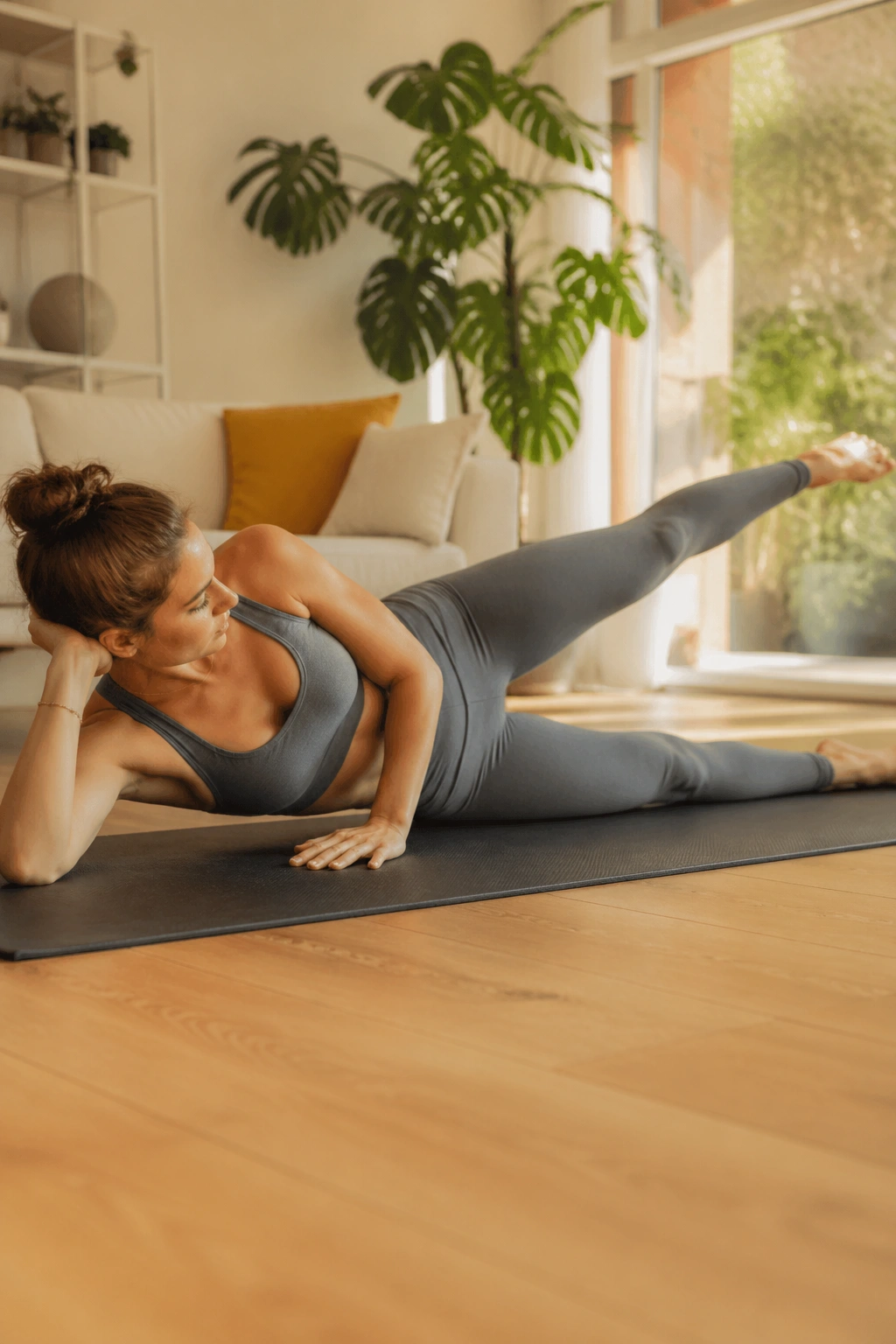
A towel under the heels changes everything. So does a tiny squeeze between the knees.
This workout brings together adductor lifts, bridge work, and hamstring curls so the inner thighs and back of the legs have to share the load. Side-lying adductor raises are the cleanest entry point, since they isolate the inner thigh without a lot of extra noise. Then the bridge variations add the hamstrings, which often get underused in home workouts.
What makes it useful
- 12 side-lying inner thigh lifts per side
- 10 bridges with a 2-second squeeze
- 8 bridge heel slides
- 10 standing hip hinges
- 8 slow hamstring curls per side
Keep the feet flexed on the floor and the knees soft, not locked. If you use a rolled towel between the knees during bridges, press into it lightly. Too hard turns the movement into a squeeze contest. A soft, steady pressure works better.
14. Roll-Up and Roll-Down Practice
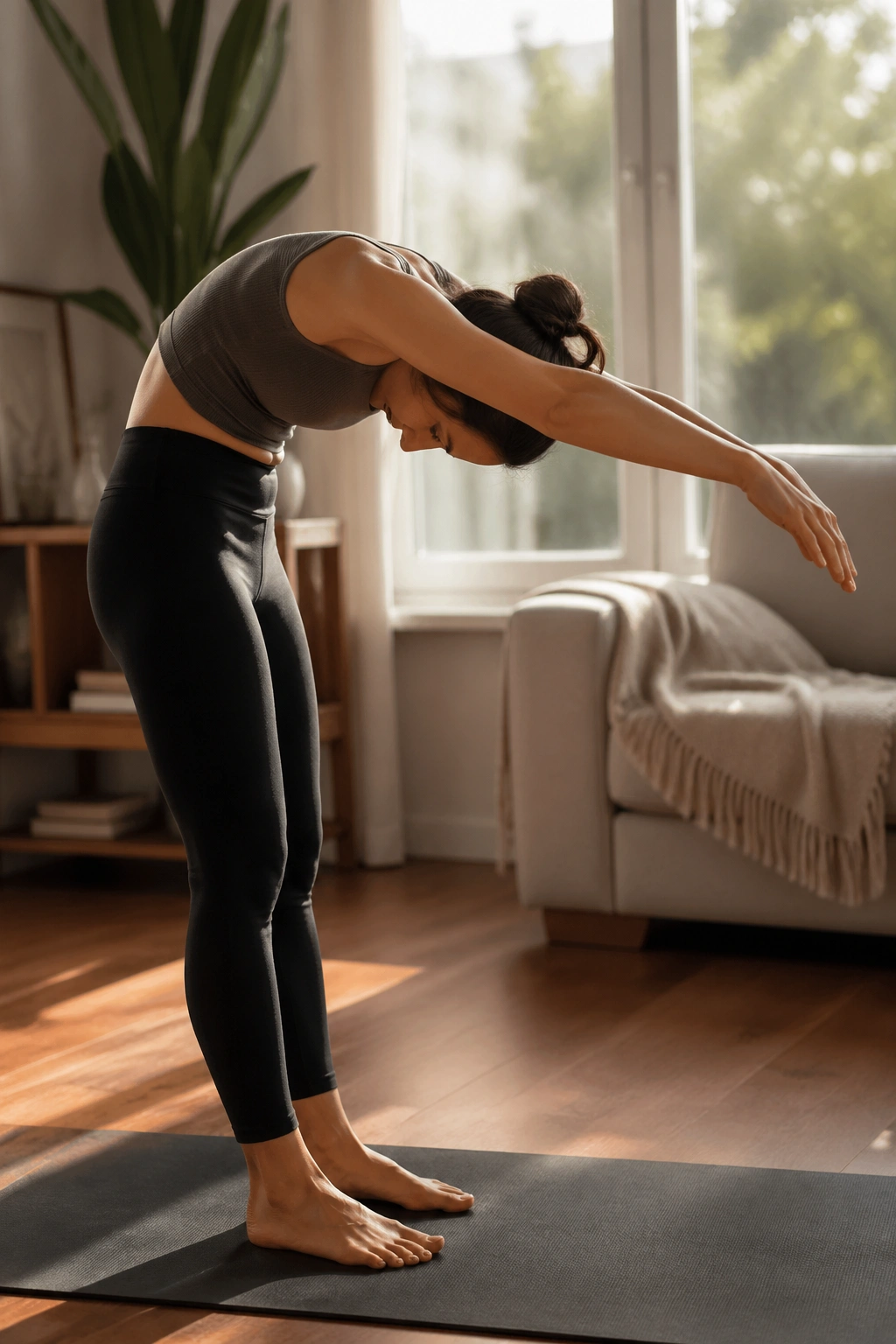
Roll-ups are less about speed than control. If you rip through them, you miss the real work, which is the slow sequence of spinal articulation and abdominal control.
How to use it
Start with standing roll-downs so the spine gets a chance to lengthen before the floor work begins. Then move into half roll-backs, full roll-ups, and spine stretch forward. If you want a little extra challenge, add teaser prep with bent knees. Each rep should feel like the ribs are stacking over the pelvis one segment at a time.
The key is not to yank yourself up with the hip flexors. Exhale, curl the tailbone, and let the lower ribs melt in. If the neck gets cranky, stop at the halfway point. That is still a useful workout. Fifteen minutes of clean roll-up practice often teaches more than a much longer sequence done badly.
15. Glutes, Calves, and Ankle Control
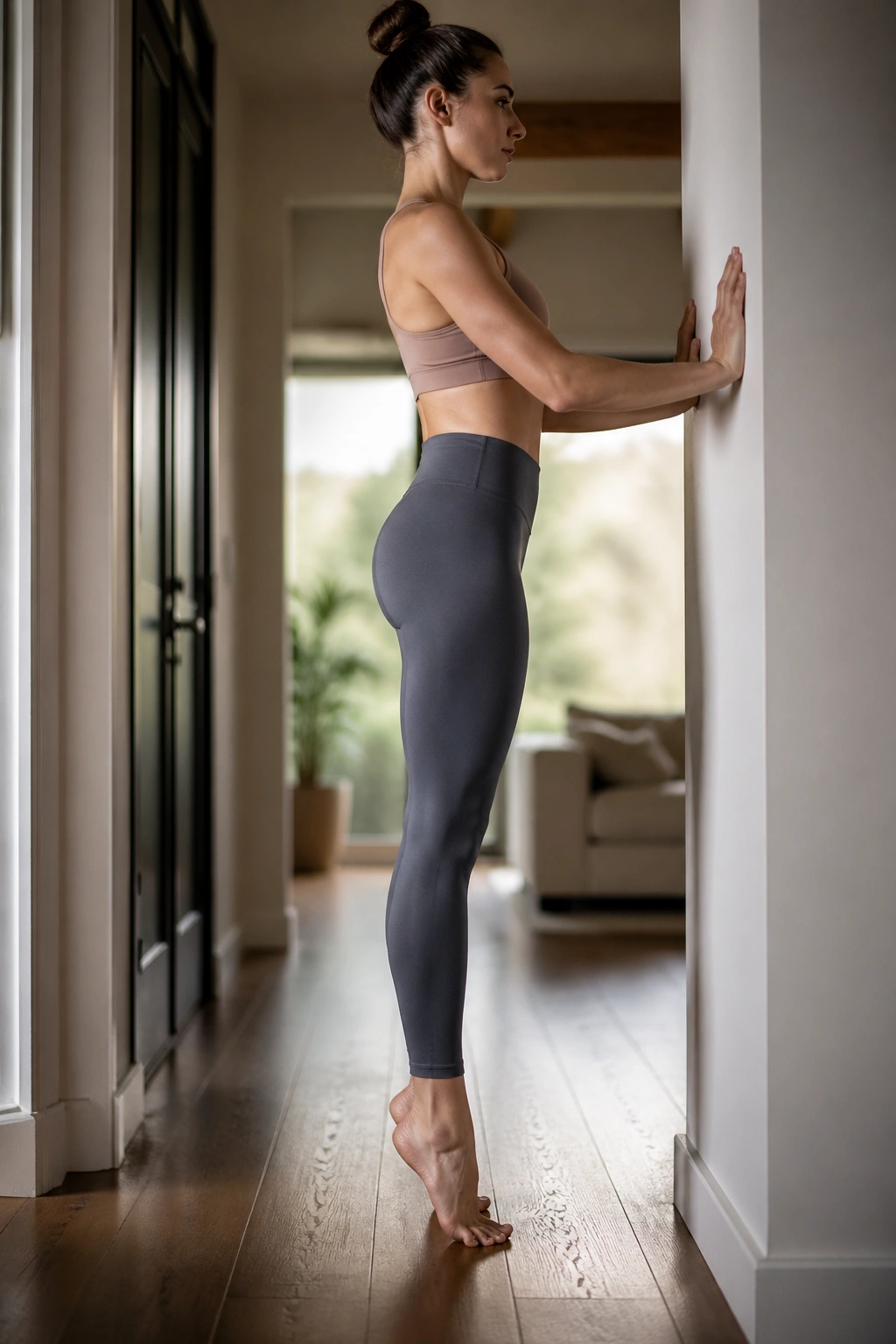
Calves get ignored in home Pilates. That is a mistake, because stable ankles make every squat, lunge, and bridge feel better.
This sequence pairs glute bridges, relevé holds, split squat pulses, and standing kickbacks. The glutes drive the bigger motions, while the calves and feet fine-tune balance. You feel the lower leg working when you rise onto the balls of the feet and hold for 10 to 20 seconds. That tiny hold matters more than it looks.
Use a wall or countertop if needed. Try 12 bridge reps, 12 calf raises, 8 split squat pulses per side, and 10 standing kickbacks per leg. Keep the arch of the foot active. If the foot collapses inward, the ankle loses its job and the knee pays for it.
16. Arms, Back, and Deep Core
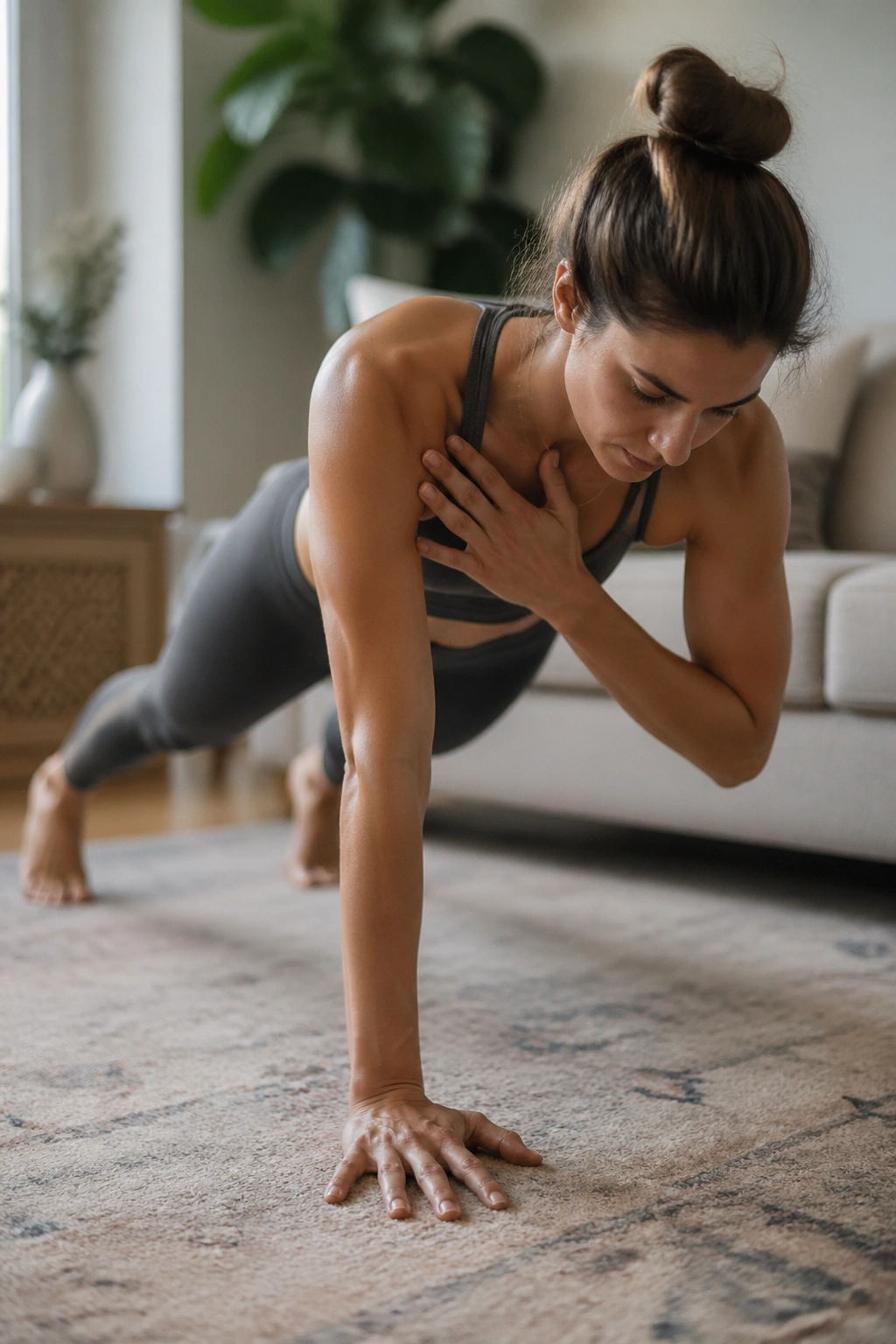
Arms and back work best together. Separating them makes the body cheat.
A strong Pilates upper-body session usually blends plank shoulder taps, kneeling triceps presses, prone T-lifts, and reverse tabletop holds. The back has to stabilize while the arms move, and the core has to keep the ribs from flaring. That three-way job is what makes the session feel honest. No part gets to coast.
What to watch for
- Keep the shoulders away from the ears.
- Pull the lower ribs in before every press.
- Make the movement small if the neck starts grabbing.
- Use 20 to 30 second holds when reps get sloppy.
I like this kind of work on days when my posture has gone a little sideways. It does not need to be huge to matter. Ten clean reps can do more than thirty messy ones.
17. Pilates for Stiff Mornings
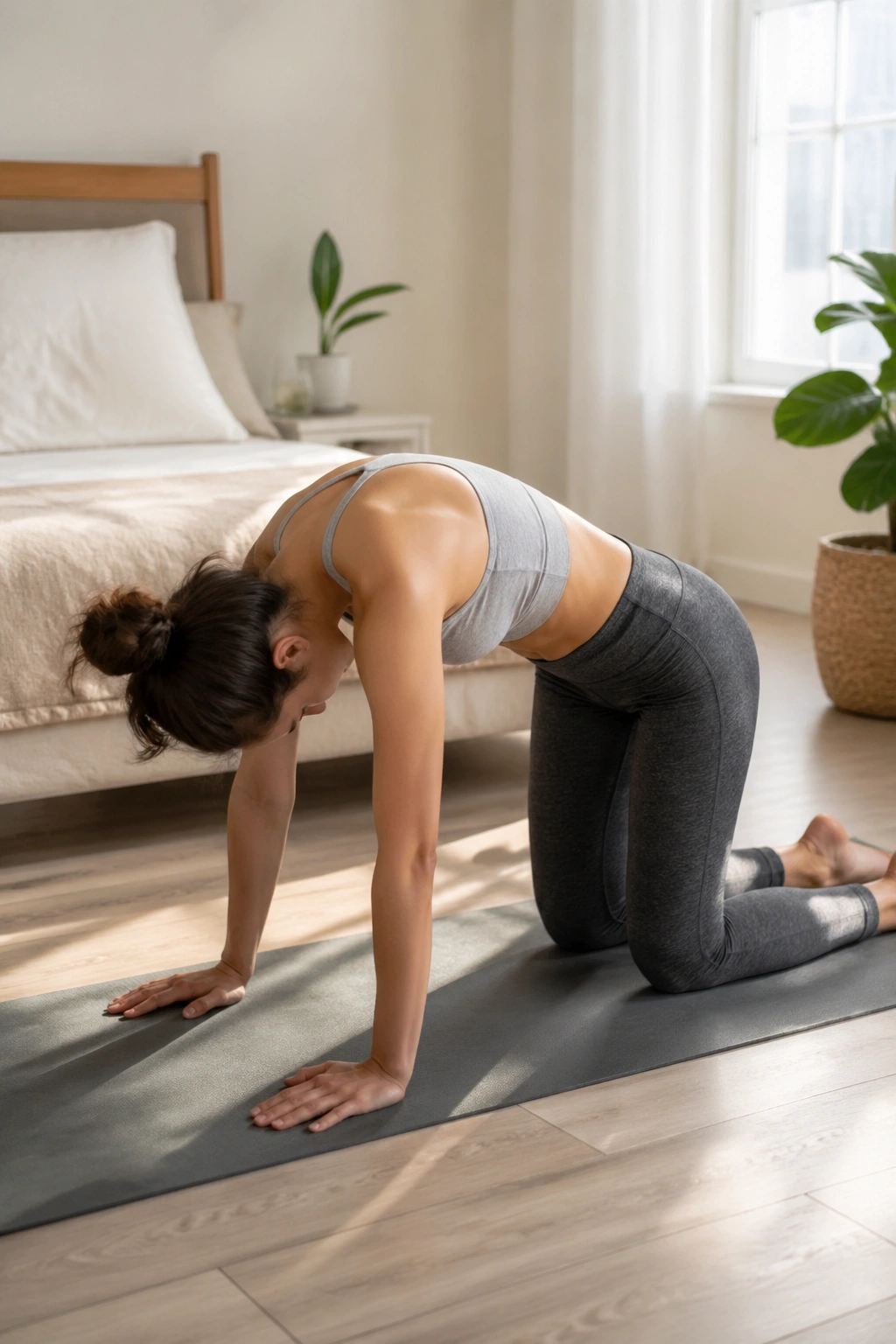
Morning stiffness needs a different mood. You want movement that feels like oil on a hinge, not a boot camp.
Start with easy cat-cow, then add knee circles, shoulder bridge, side-lying arm reaches, and toe stretches. Keep the pace slow enough that your breath does not catch. The point is to wake the joints up and remind the spine that it can move without a fight. Ten minutes is plenty.
A gentle morning session works well because the body usually needs time to warm before it wants effort. I would keep the first few reps smaller than you think and save the bigger range for the second round. Stiff bodies tend to lie about what they can do in the first minute. They usually loosen up once the rib cage and hips stop arguing.
18. Pilates for Sore Days
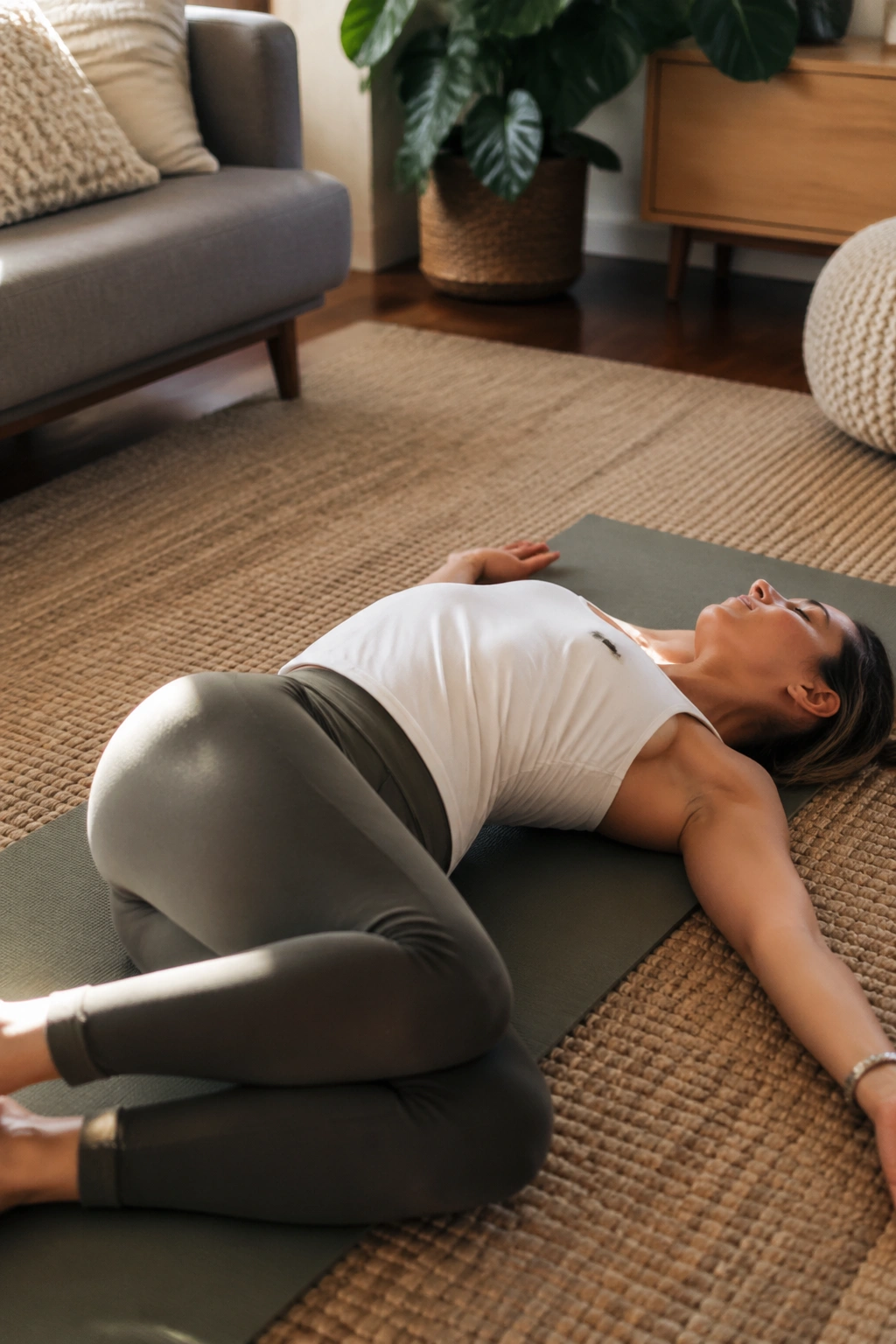
Sore days are not lazy days. They are the days when a lighter sequence can keep you moving without digging a deeper hole.
This workout is the opposite of a punishing burn. Think supine twist, leg slides, supported bridge holds, child’s pose breathing, and gentle hamstring flossing. Compared with a harder mat series, the intensity stays low and the range stays smaller. That makes it useful after a long run, a hard strength day, or a week where sleep was not generous.
The best move here is often the one you can repeat without flinching. Slow bridge holds with 4 to 5 breath counts can calm the lower back. Easy leg slides keep the hips from locking up. If something hurts in a sharp way, skip it. Sore is one thing. Grumpy joints are another.
19. Teaser Prep and Ab Control
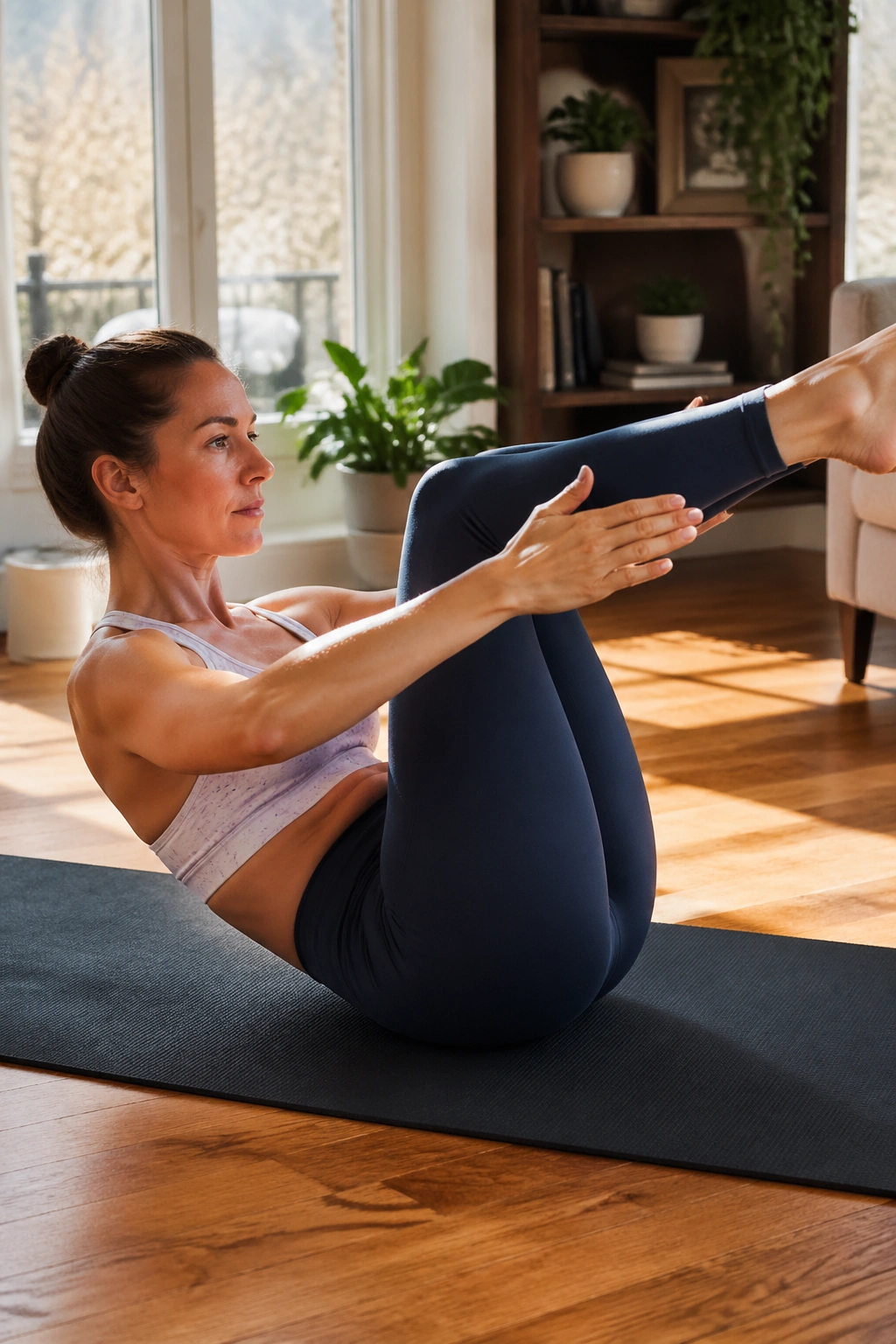
Teaser prep is where a lot of people realize their abs are fine but their patience is not.
This workout builds toward the teaser shape through half roll-backs, tabletop holds, one-leg extensions, and bent-knee teaser prep. The trick is to stay steady through the pelvis while the legs get longer. That is harder than it sounds because the hip flexors want to help too much. They usually show up first and leave the abs to do the cleanup.
How to use it
- Start with 8 half roll-backs.
- Hold tabletop for 20 seconds.
- Extend one leg at a time for 6 reps per side.
- Try 5 teaser preps with bent knees.
- Finish with a 15-second hollow hold if the back stays flat.
Do not chase straight legs before your torso can hold its shape. Bent knees are not a failure. They are a smart place to train from.
20. Standing Leg Lines and Core Bracing
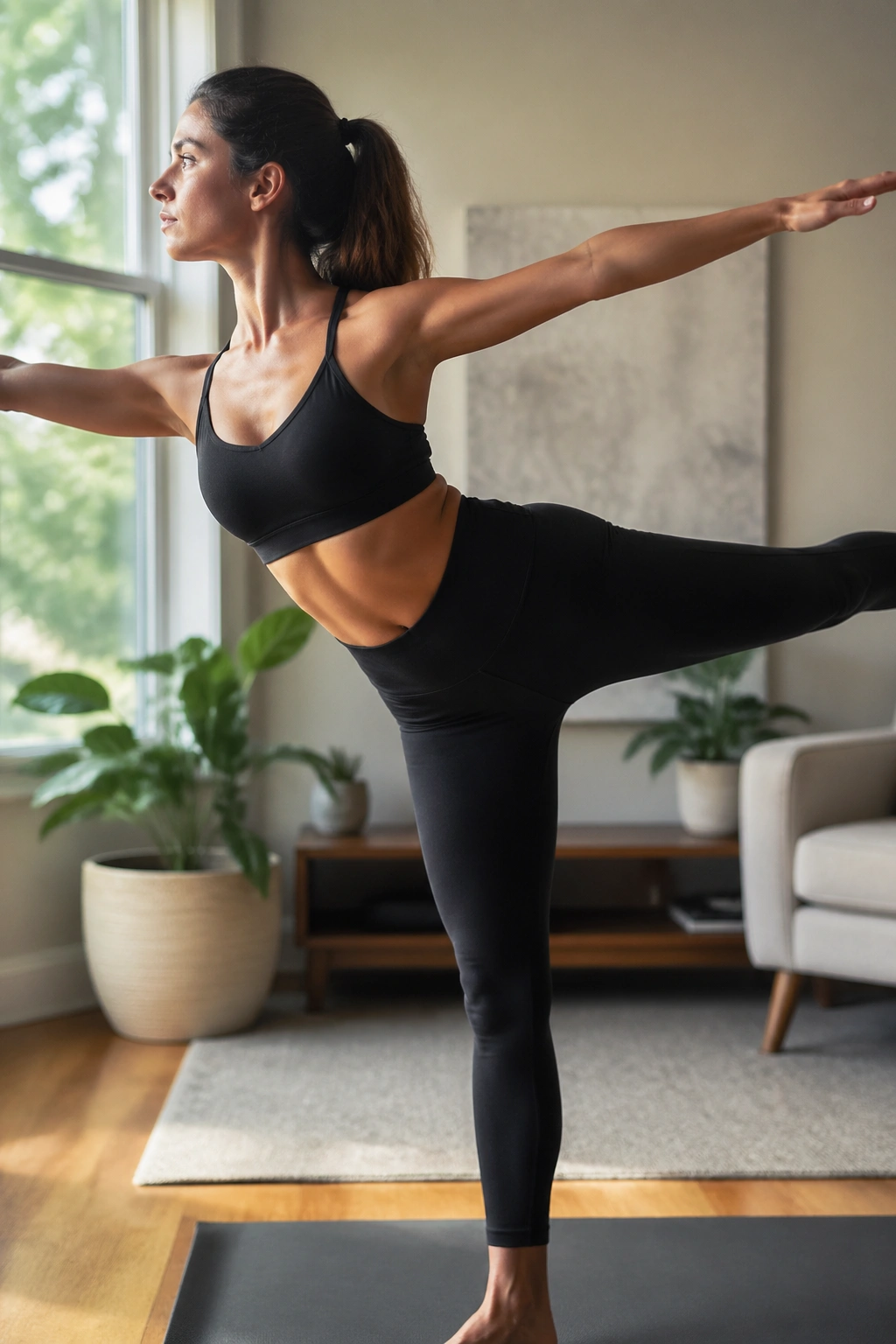
Standing leg work keeps the session honest. The minute one foot leaves the floor, the core has to stop freeloading.
A strong standing Pilates sequence can include lateral lunges, knee drives, arabesque reaches, and controlled step-back patterns. The core braces while the standing leg works, which makes this useful for anyone who wants more control in daily movement. You are not just building leg strength. You are training the body to stay stacked when the floor feels less stable.
Try 10 lateral lunges, 8 knee drives per side, 8 arabesque reaches per side, and 12 slow step-backs. Keep the chest lifted and the ribs closed. If you pitch forward, the hips will do too much of the work. A mirror helps here, but a phone camera set to the side works fine too.
21. Oblique Rotation and Waist Strength
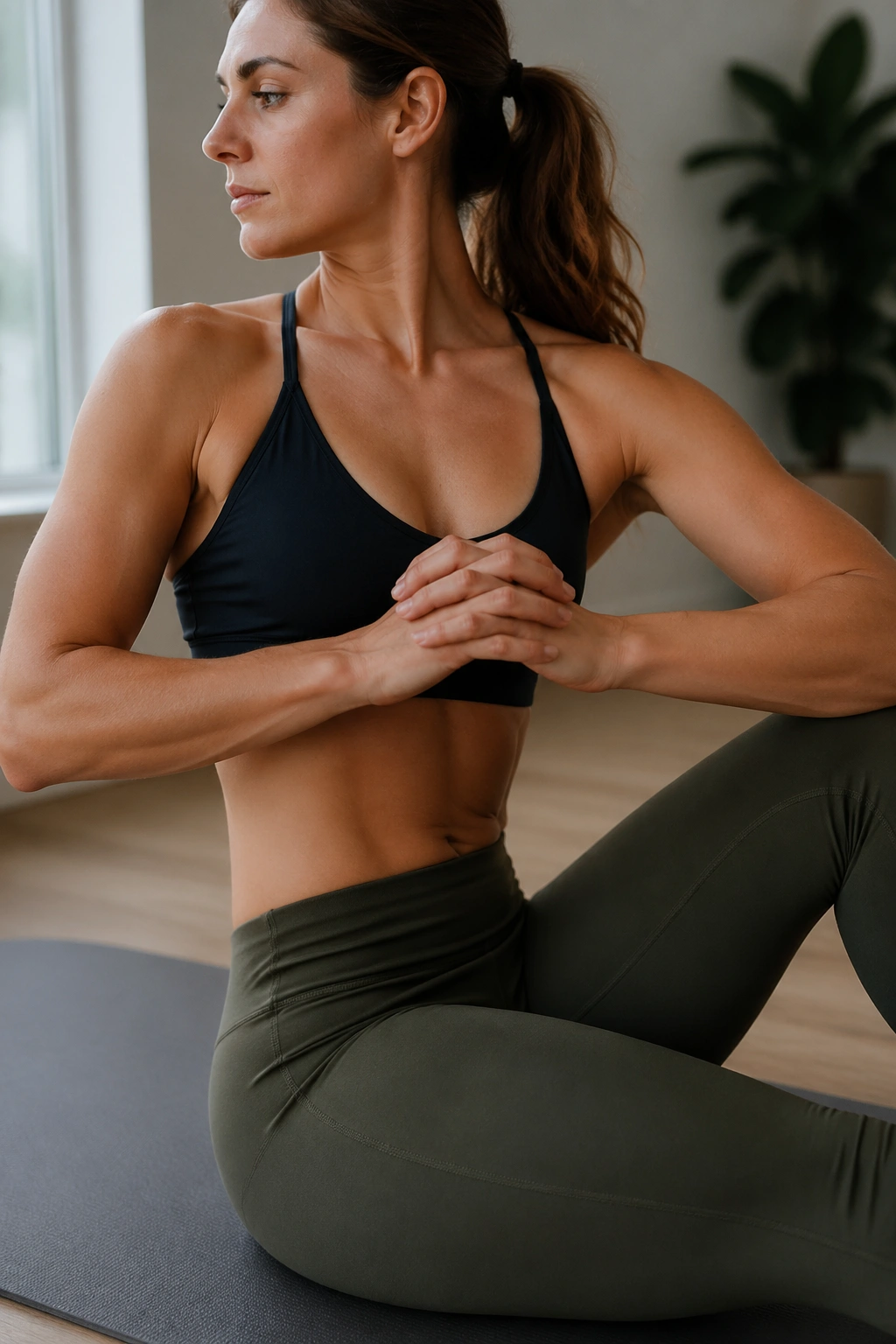
Oblique work is where posture and waist strength meet. If the ribs flare and the torso twists without control, the movement loses its point.
Why the side body matters
The side waist helps with rotation, but it also helps you stay upright when you carry groceries, reach across a table, or shift weight from one foot to the other. In Pilates, that means criss-cross, saw, mermaid, and side plank variations become more than ab exercises. They become stability drills.
A practical sequence is 8 criss-cross reps per side, 5 saw reaches, 3 slow mermaid breath cycles, and a 20-second side plank hold with the bottom knee down. Keep the rotation coming from the ribs, not the neck. If your chin leads the turn, the obliques are getting shortchanged. The side body should feel long and active, not crunched up.
22. One-Mat, No-Equipment Sweat Session
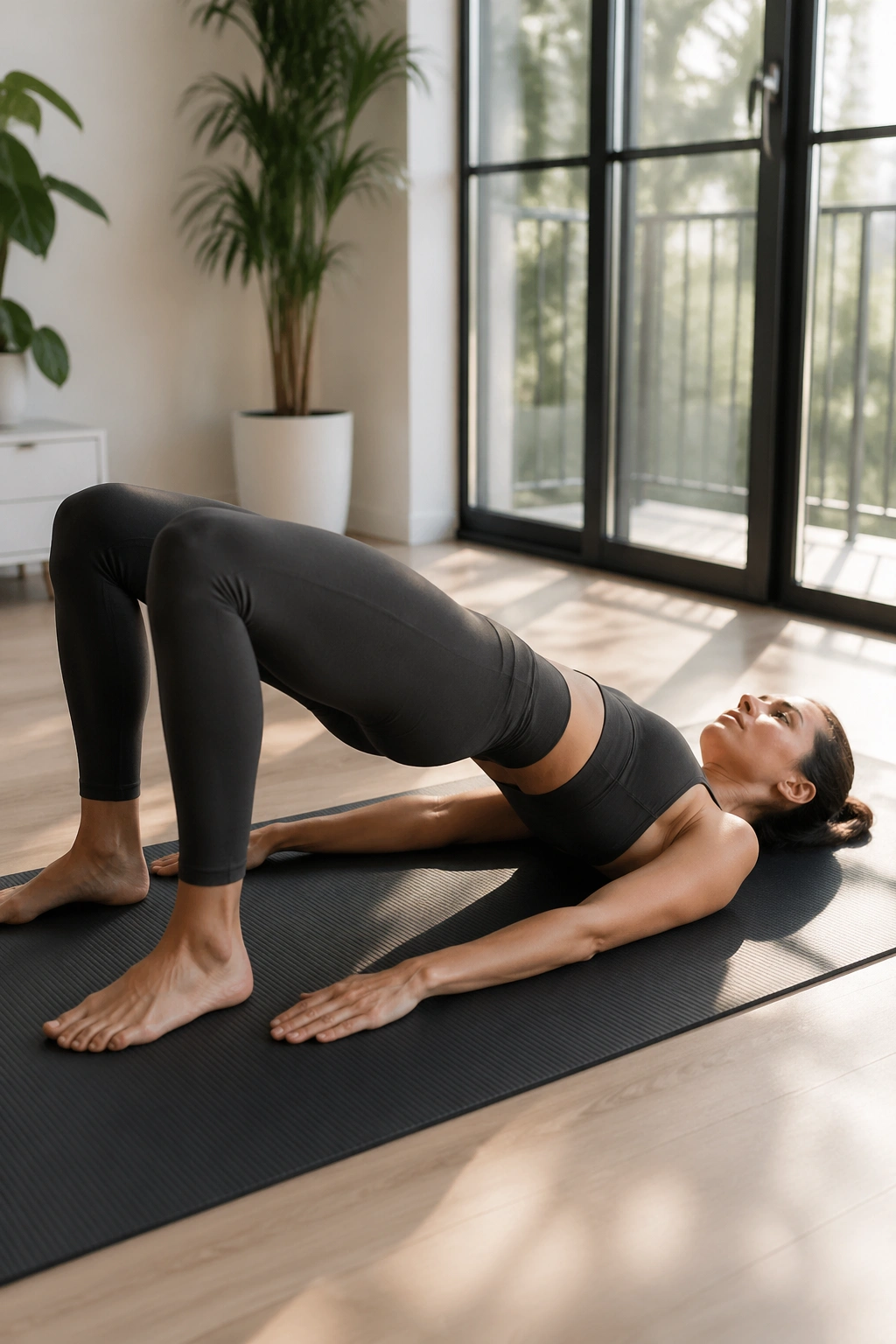
A hard Pilates session can still stay low impact. You do not need jumps to earn a sweaty forehead.
This one is built like a circuit: squats, planks, bridges, reverse lunges, and fast transitions. The short rests matter. So does the sequence. Put the lower-body work next to the floor work and the heart rate climbs without losing the Pilates feel.
- 12 bodyweight squats
- 10 plank shoulder taps per side
- 12 glute bridges
- 8 reverse lunges per side
- 20-second forearm plank
- 10 slow climbers per side
Repeat 3 rounds. Move cleanly from one exercise to the next. If your form falls apart, take 20 extra seconds before the next round. That is not slacking. That is smarter pacing.
23. Gentle Recovery Flow
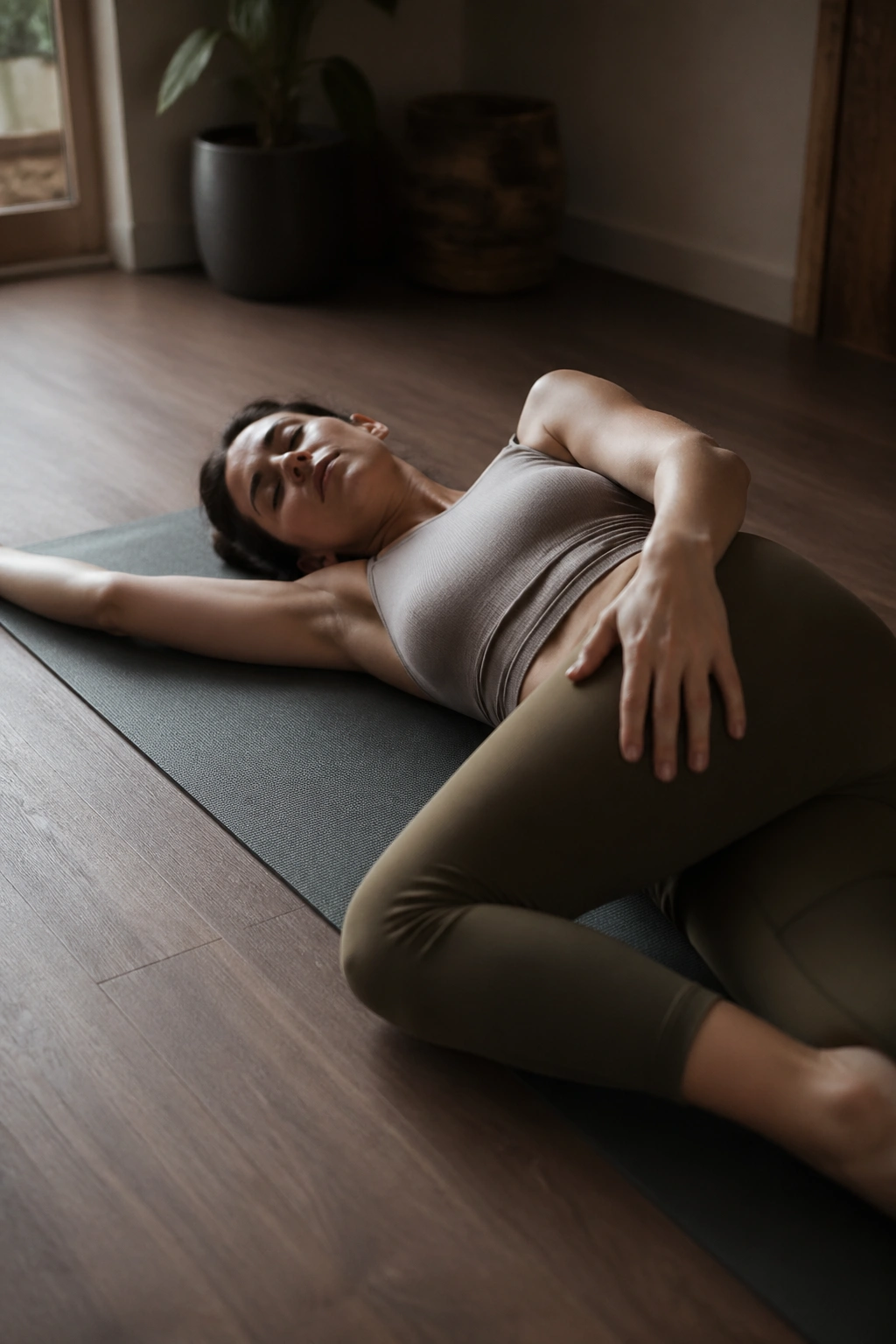
Some days ask for less. Not nothing. Less.
This is the kind of Pilates session that feels good in low light, with a mat that is slightly cool and a room that is quiet enough to hear your own breath. Use slow spine twists, supported hip stretches, arm reaches, and easy leg lowers. The body gets movement without pressure, which is sometimes the only useful goal.
I like to keep the holds long here — 5 to 6 breaths per shape — and the transitions soft. No snapping up. No racing through the floor. If the neck feels tense, support the head with one hand during twists. Recovery work only helps when it truly feels recoverable.
24. Advanced Control Challenge
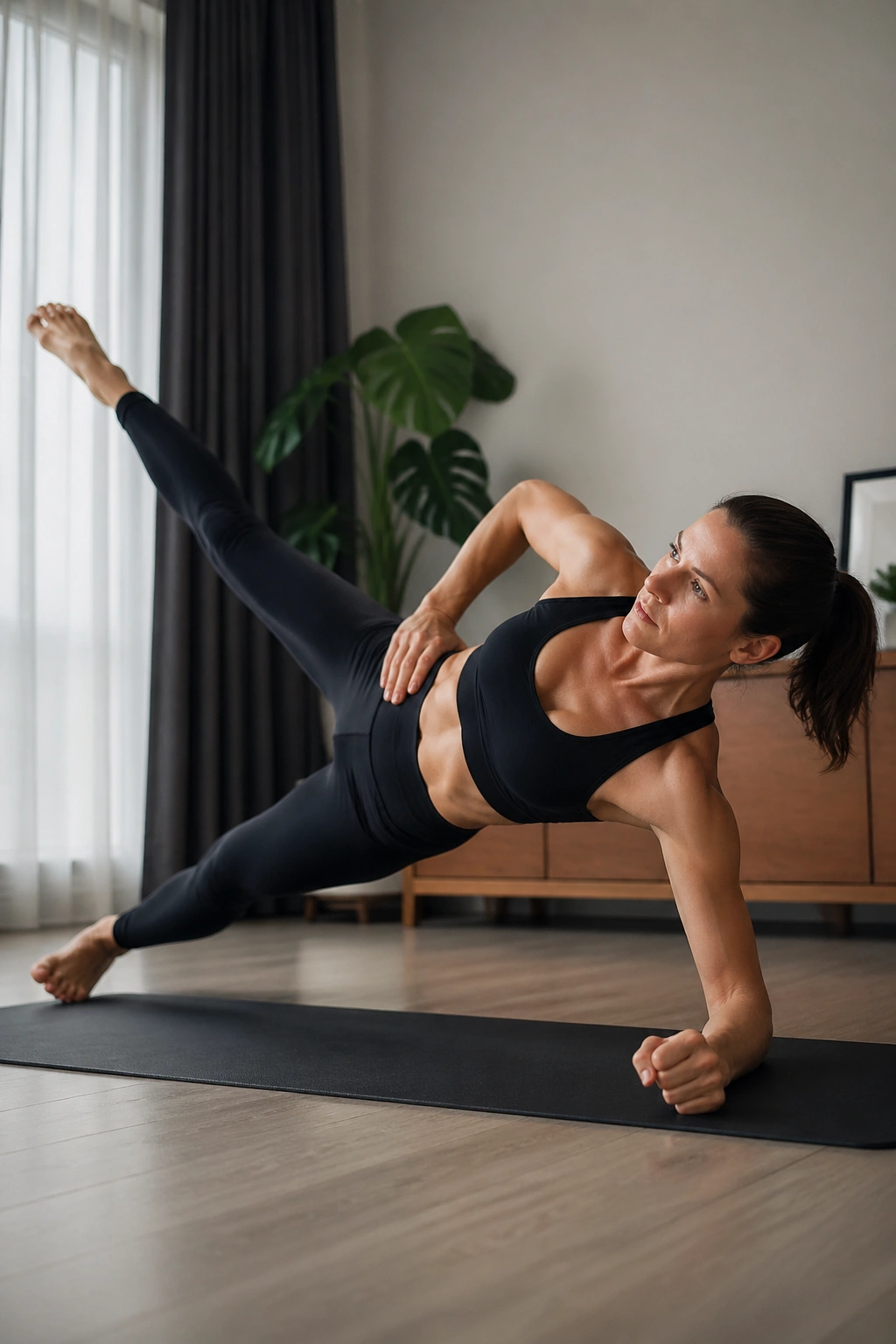
Advanced control is about patience. If you rush it, the workout falls apart fast.
Unlike a beginner flow, this one demands cleaner timing and stronger transitions. Try single-leg teaser prep, side plank leg lifts, plank-to-pike holds, and long lever bridge work. Each move asks the body to stay organized while the limbs wander farther from center. That is where the challenge lives.
This workout is best for people who already know how to keep their lower back from taking over. Eight reps per side is enough for most moves. If the ribs flare or the hips twist, shorten the lever and try again. Better shape. Better result. More work, too, even if it doesn’t look dramatic from across the room.
25. Full-Body Flow With a Towel
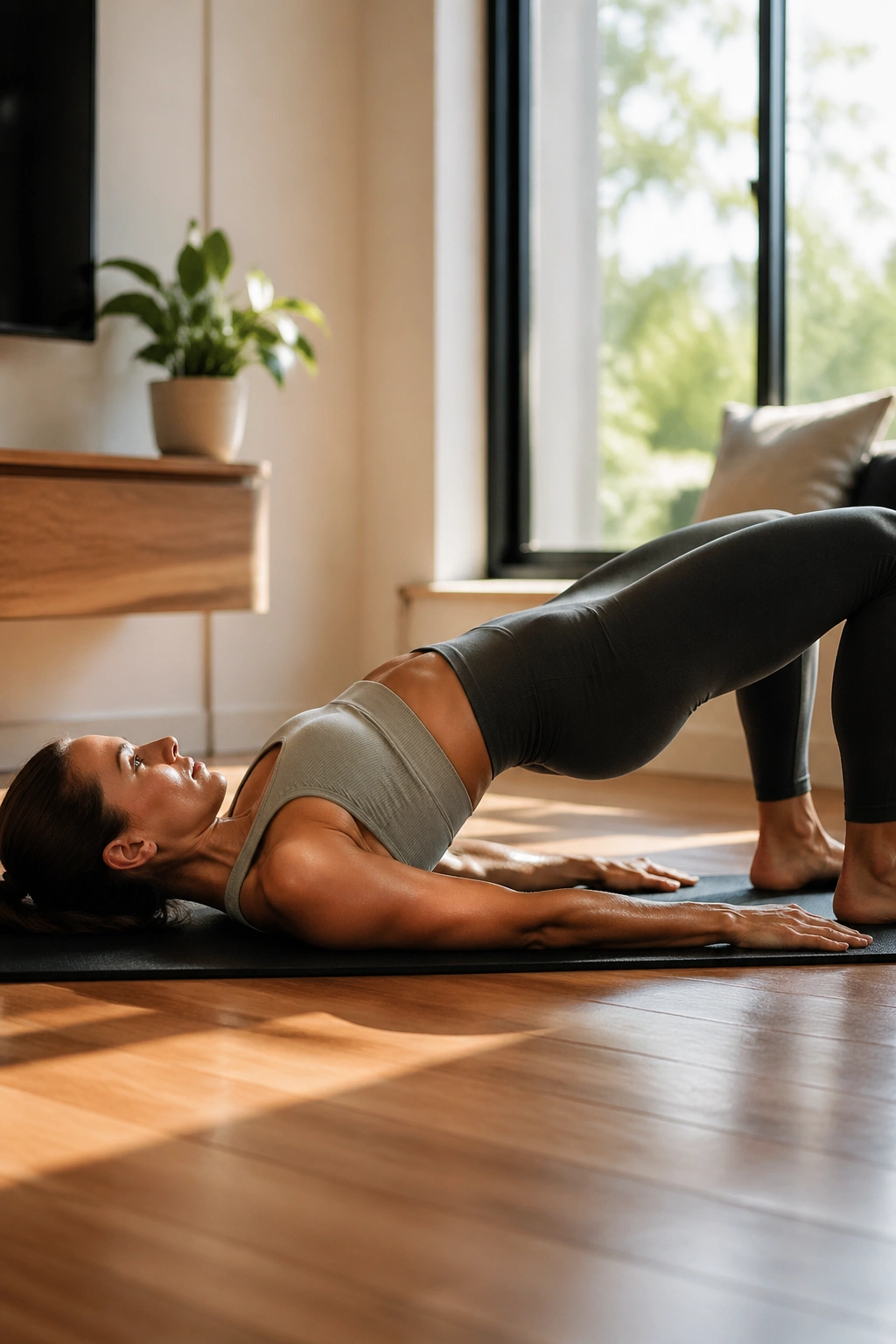
A towel can make an ordinary sequence feel sharper. Fold one lengthwise and suddenly you have a handle for hamstrings, arms, and core.
Use the towel for supine hamstring curls, seated arm pulls, and isometric holds that make your body brace harder. Loop it around the feet during leg lowers, or hold it wide during seated rolls to encourage the shoulders to stay open. The resistance is light, but the feedback is useful.
Move list
- 10 towel-assisted hamstring curls
- 8 seated spine stretch reps
- 10 overhead towel pulls
- 8 bridge lifts with towel tension
- 20-second seated hold with arms reaching forward
Keep the towel taut, not yanked. If it goes slack, the cue disappears. This workout works well in a hotel room too, which is one of the reasons I keep coming back to it.
26. Hip Openers With Core Support
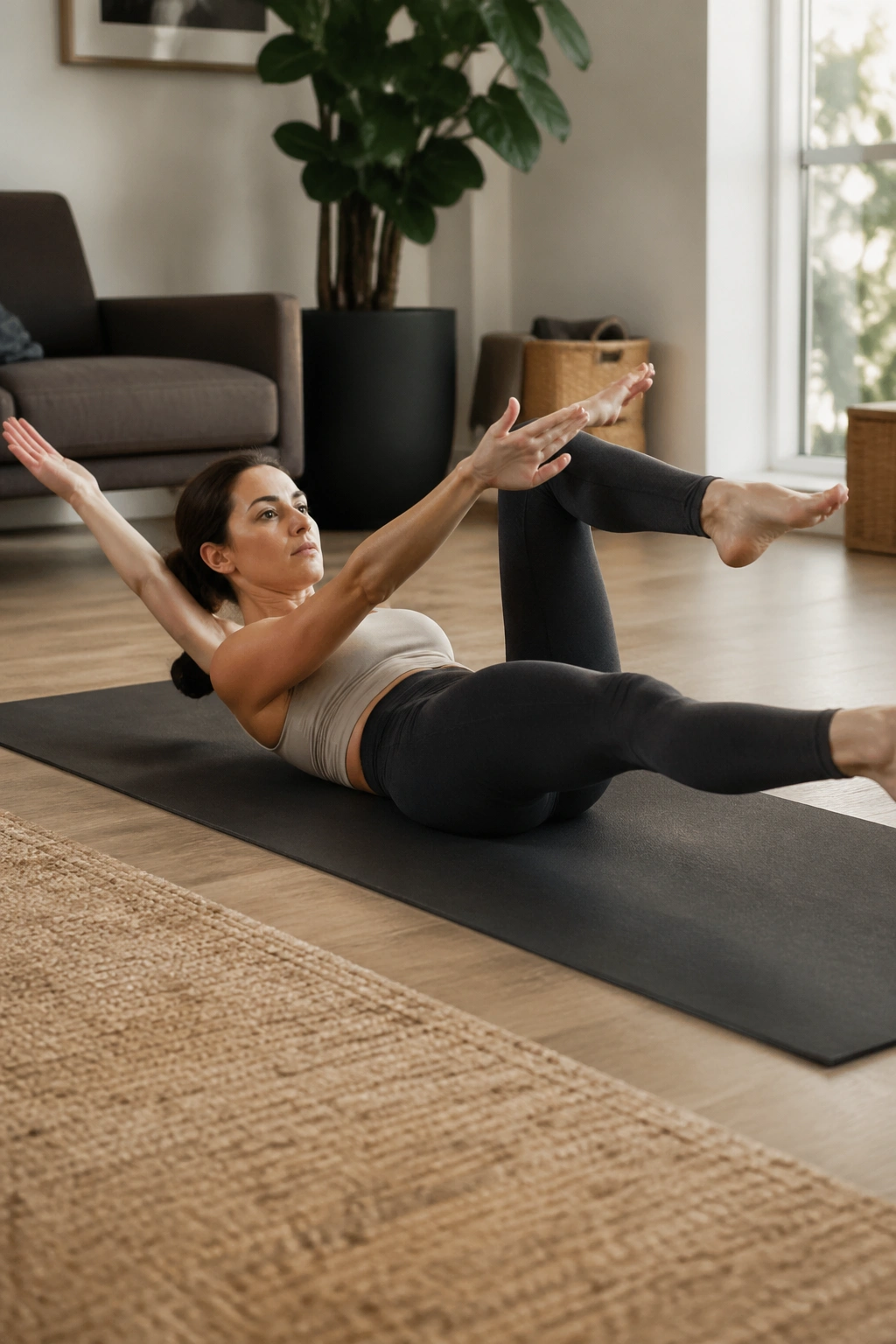
Hip openers should not turn into sloppy stretches. If the pelvis dumps forward, the stretch gets easier in the wrong places.
What makes this sequence better
The stronger version of hip opening uses lunge holds, figure-four shapes, side kicks, and supported pigeon prep while the core keeps the spine from collapsing. That combination matters because the hips rarely move well when the trunk is loose. The center has to help.
Try 30 seconds per side in a low lunge, 30 seconds in a figure-four stretch, 10 side kicks forward, 10 side kicks back, and a 20-second pigeon prep hold if the knees tolerate it. Keep the front ribs tucked. If the lower back arches, the hip flexors steal the whole show. You want open hips and a quiet spine, not a dumpy stretch that feels bigger than it is.
27. Long-Hold Pilates Burn
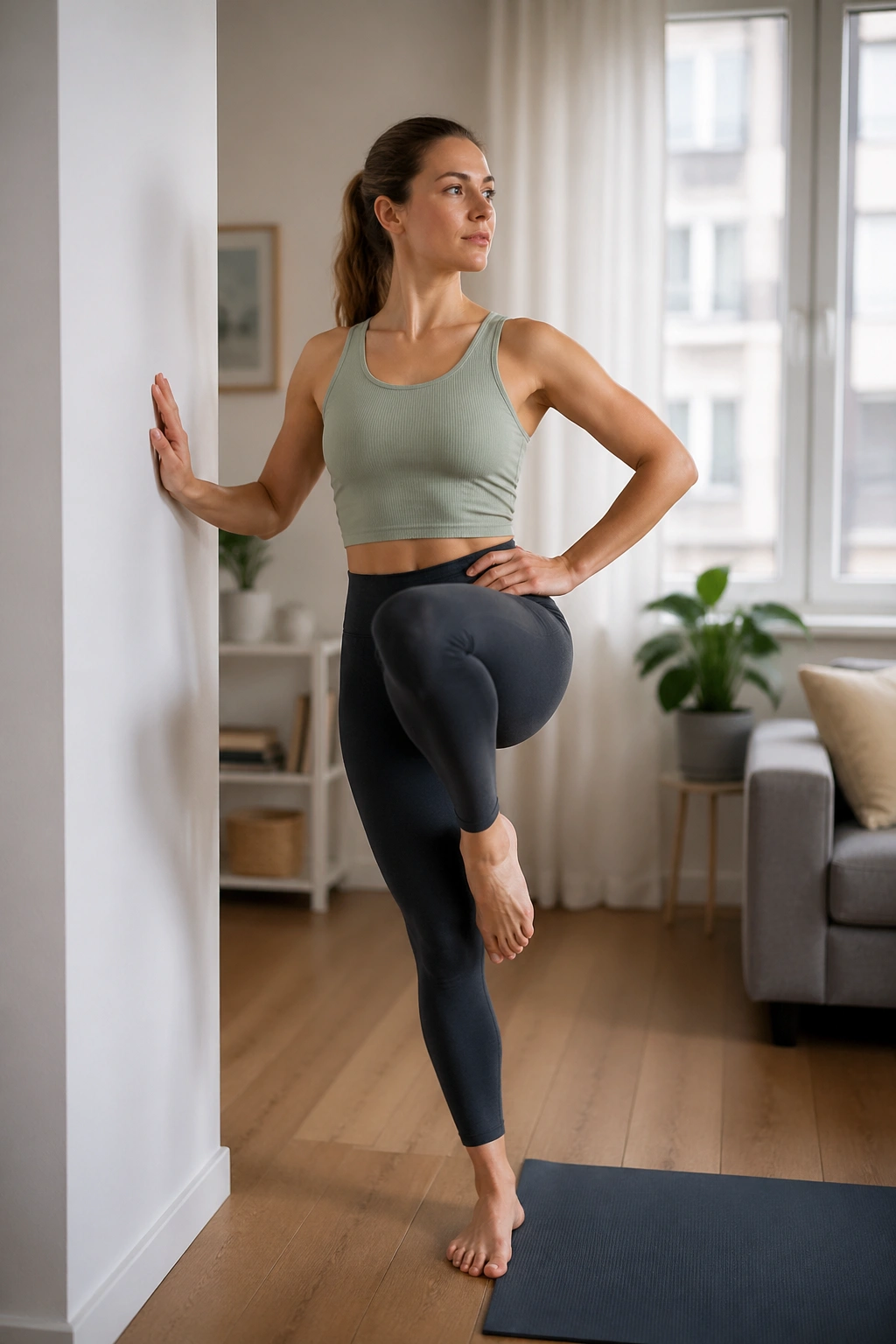
Long holds are a different kind of burn. They don’t announce themselves quickly, which makes them nasty in a very Pilates way.
This workout uses bridge holds, tabletop holds, side plank holds, and wall sit variations to build endurance where it counts. The goal is not to chase maximum reps. It is to stay in the shape long enough for the smaller stabilizers to complain. They usually do.
Try 30 seconds on, 15 seconds off, for each hold. Two rounds is plenty to start. Keep the breath even and the face relaxed. If your jaw clenches, the rest of the body often follows. That is a funny little clue, and it is usually right.
28. Evening Downshift Pilates
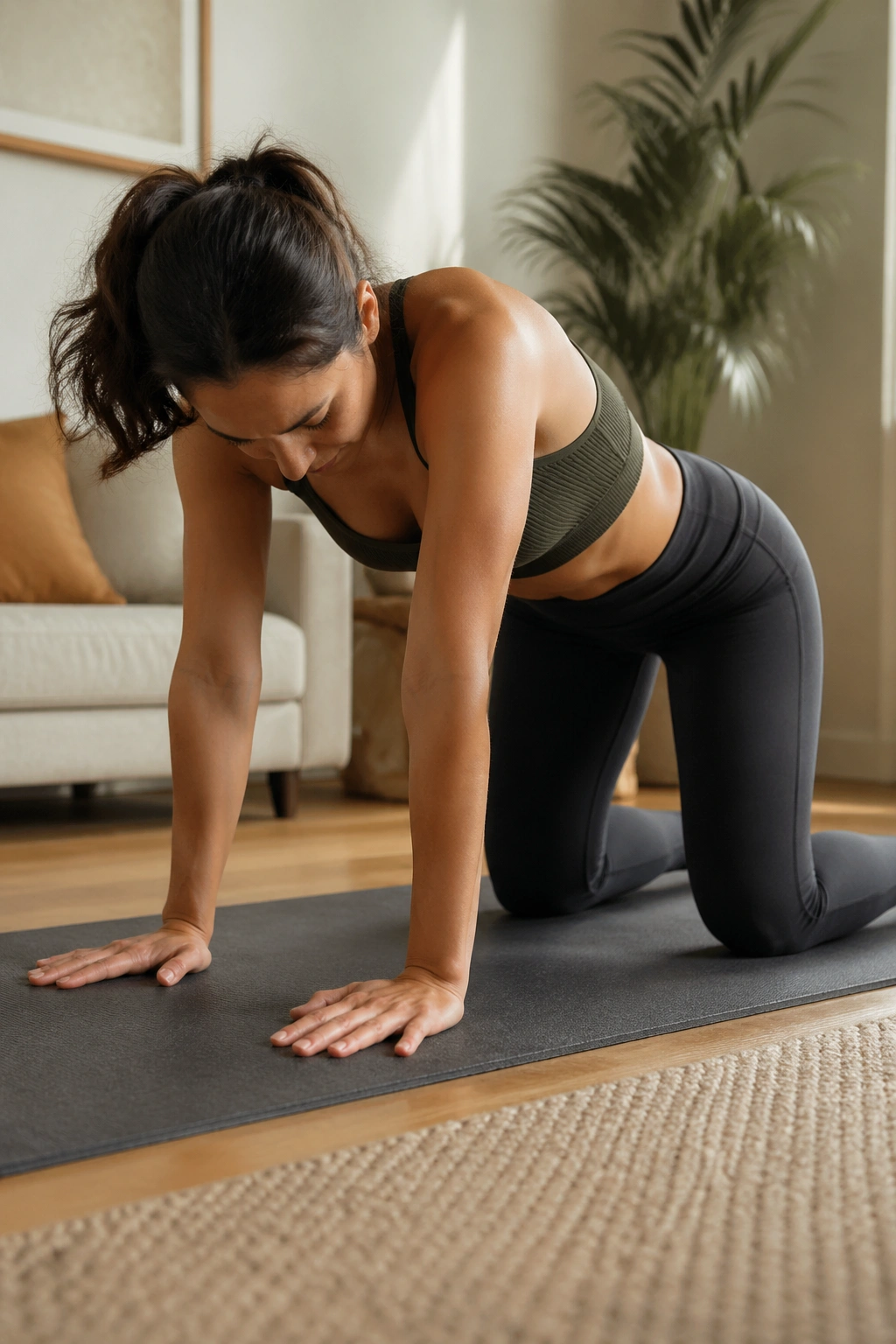
Evening Pilates should leave you quieter, not wiped out. If the workout feels like a second caffeine hit, it is the wrong one.
A good downshift flow leans on slow spinal twists, supported bridges, gentle side bends, and legs-on-the-wall breathing. The nervous system likes the slow pace, and the hips usually like the decompression. I would keep the room dim if you can, not because it is trendy, but because it helps your body stop scanning for the next task.
Use 4 to 5 breaths per shape and keep the transitions unhurried. This is a nice place for a long exhale and a soft jaw. The point is not to become sleepy on command. It is to step off the tension ladder one rung at a time.
29. Wall-Supported Full-Body Sequence
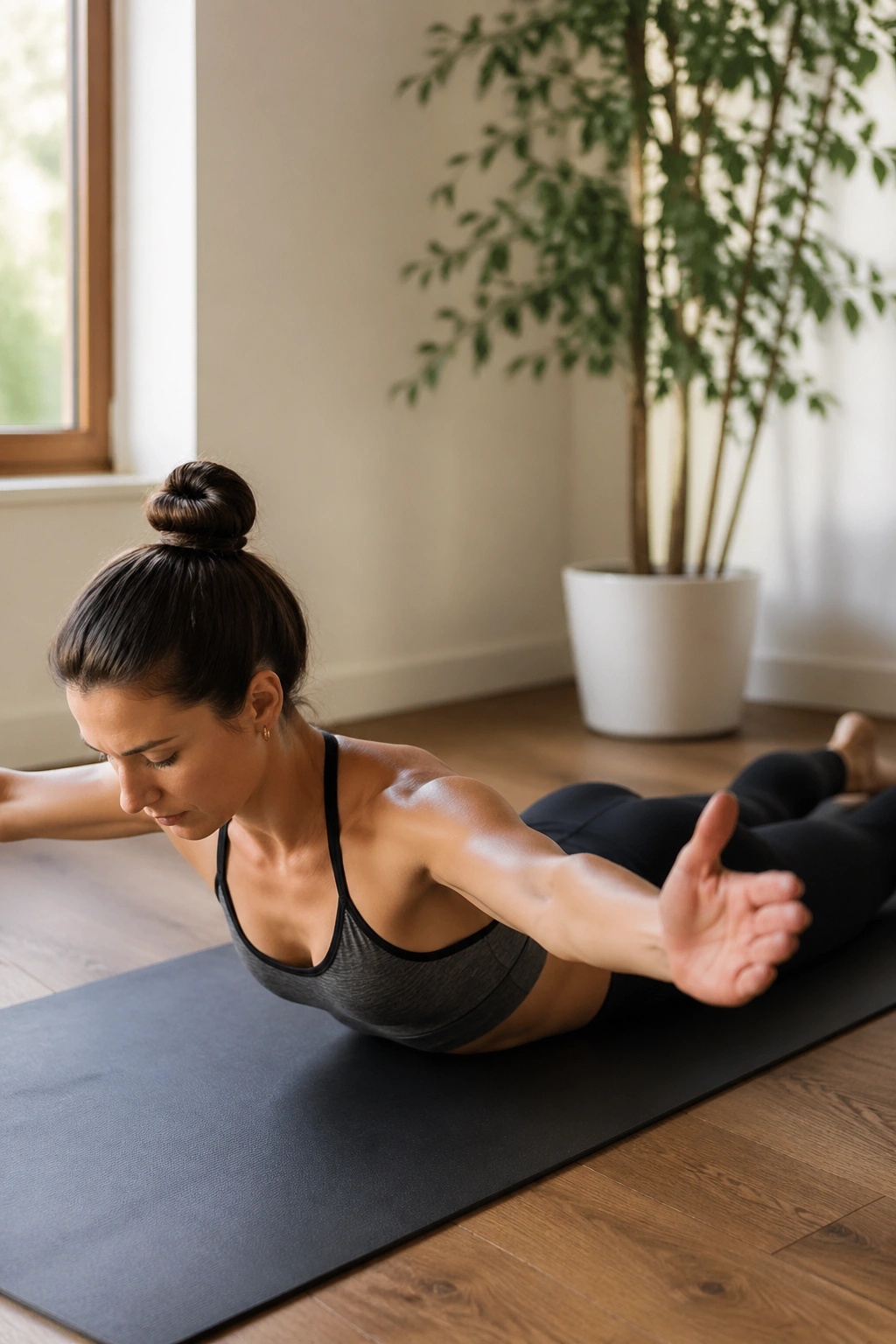
The wall can rescue sloppy form. It gives you feedback you can feel in your heels, ribs, and shoulder blades.
Compared with pure floor work, wall Pilates makes alignment easier to sense because the body has a fixed surface to work against. Try wall rolls, wall sits, wall angels, standing leg lifts, and incline push-ups. The back of the body gets feedback the whole time, which tends to clean up the movement without a lot of extra coaching.
A simple set looks like 8 wall roll-downs, a 30-second wall sit, 10 wall angels, 8 standing side lifts per leg, and 8 incline push-ups. Keep the chin slightly tucked and the lower ribs from popping forward. The wall is not there to lean on forever. It is there to show you when you are cheating.
30. The Repeatable Weekly Reset
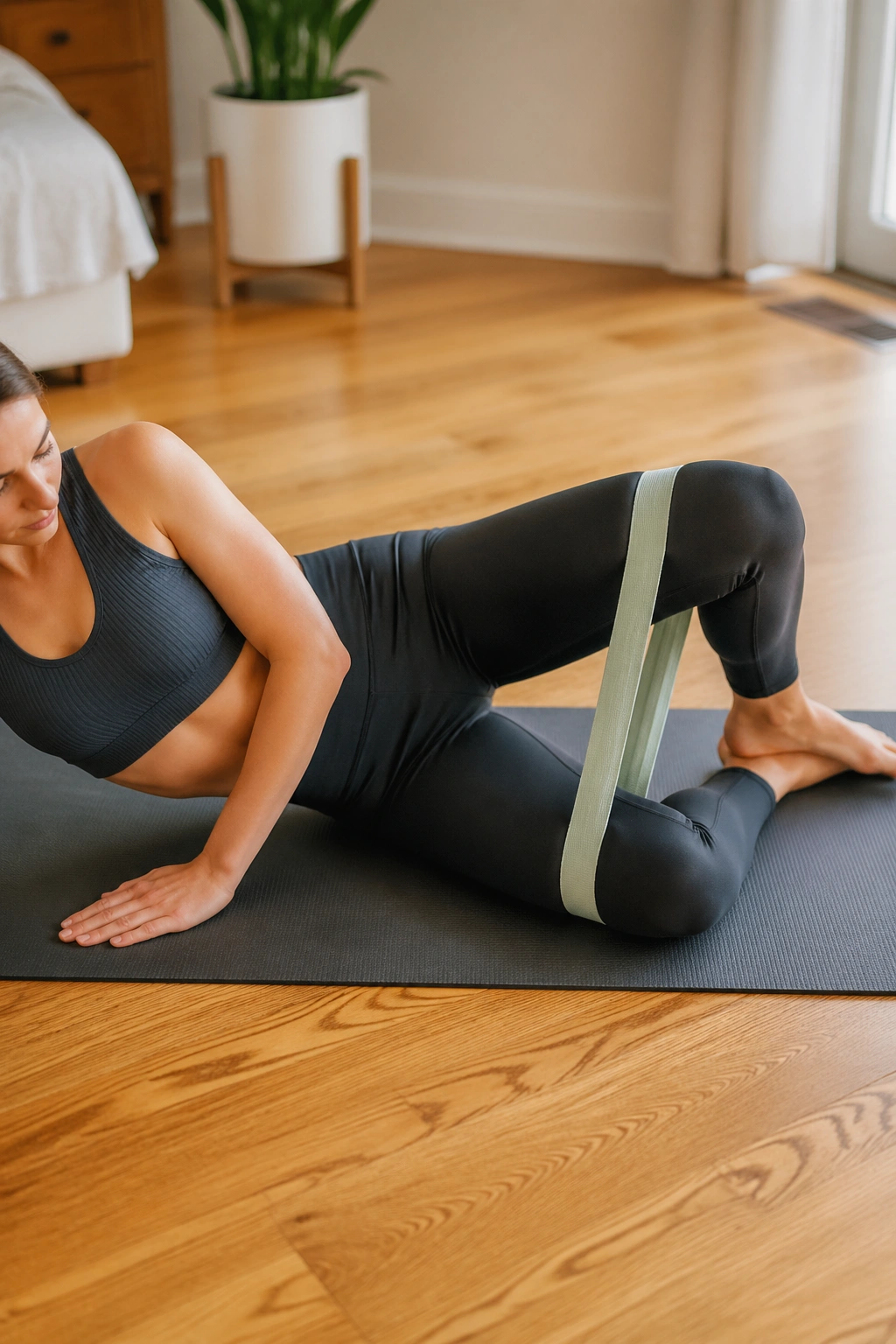
A good weekly reset has a rhythm. You start with breath and mobility, find the core, wake up the glutes, and finish with something that leaves the body longer than it started.
This is the workout I would keep in rotation when you want one session that touches everything without feeling random. Begin with roll-downs, move into bridges, add side-lying leg work, then finish with a plank variation and a few spinal stretches. It takes about 15 to 20 minutes, which is long enough to matter and short enough to repeat without dread.
- 6 standing roll-downs
- 10 bridges with a 2-second hold
- 10 side-lying leg lifts per side
- 8 plank shoulder taps per side
- 6 bird dogs per side
- 3 deep breaths in child’s pose
Use this as a clean reset on weeks when your schedule gets messy. If you only remember one thing, make it this: Pilates works best when you come back to it often enough for the small details to add up. That is where the shape changes, and that is where the workout starts to feel like part of your body instead of a separate event.
