



Pilates rewards control, not drama.
That’s why so many beginners feel lost the first time they try it. The movements look small, then suddenly your ribs are flaring, your neck is tense, and your hips are doing their own strange little protest. A good beginner routine should feel organized, not punishing. The best full body Pilates routines for beginners use simple shapes — bridge, tabletop, roll-down, side-lying leg work, kneeling reach — and ask you to move slowly enough that you can actually feel what’s happening.
A mat, a wall, and a little patience go a long way. You do not need fancy gear to get a meaningful session. What matters more is whether the routine respects the basics: breath into the ribs, a steady pelvis, soft shoulders, and movement that stays within a range you can control. That’s the difference between “I did Pilates” and “I flailed on the floor for 12 minutes.”
One more thing. Beginner Pilates works best when it’s boring in the right way. Repetition helps. So does keeping the exercises clean and not trying to make every rep look impressive. Start there, and the rest gets easier to understand.
1. The 6-Move Full Body Pilates Starter
This is the routine I’d hand to someone who wants to start without guesswork. No weird setup. No advanced crunching. Just a calm sequence that teaches your body how to stack, breathe, and stay centered while the legs and arms still do some work.
How it flows
- 5 pelvic tilts on your back
- 8 slow bridge lifts
- 6 tabletop toe taps per side
- 6 bird-dog reaches per side
- 8 side-lying leg lifts per side
- 5 standing roll-downs at the end
Keep each move slow enough that you can say the cue out loud in your head. On the bridge, pause at the top for one breath. On the toe taps, keep the low back heavy and stop before the ribs pop up. That little stop is what makes this feel like Pilates instead of random calisthenics.
What beginners should watch: if your lower back starts arching, shorten the range. If your neck gets cranky, put a small towel under your head for the floor work. Simple fixes. No heroics.
2. A Wall-Supported Standing Pilates Flow
What if getting down on the floor feels like the hard part? Use the wall. It’s one of the most underrated tools in beginner Pilates because it gives you feedback fast. You feel when your ribs drift, when your pelvis tilts, and when one shoulder is doing too much.
Start with a wall roll-down, slow enough that each vertebra feels like it has its own job. Then do 8 wall push-ups with elbows at about 45 degrees, 10 heel raises, and 6 standing knee lifts per side. Finish with side reaches, one hand sliding down the thigh while the opposite arm reaches overhead. That overhead reach wakes up the side body in a way most beginners don’t expect.
Why it works
The wall keeps you honest. It also makes balance work feel safer, which matters if you’re still getting used to Pilates cues and breathing. Stand with your heels 4 to 6 inches from the wall, not jammed against it.
Tip: keep your chin slightly tucked on the roll-down. If you lead with your head, your neck ends up doing all the work.
3. Bridge, Tabletop, and Breath Practice
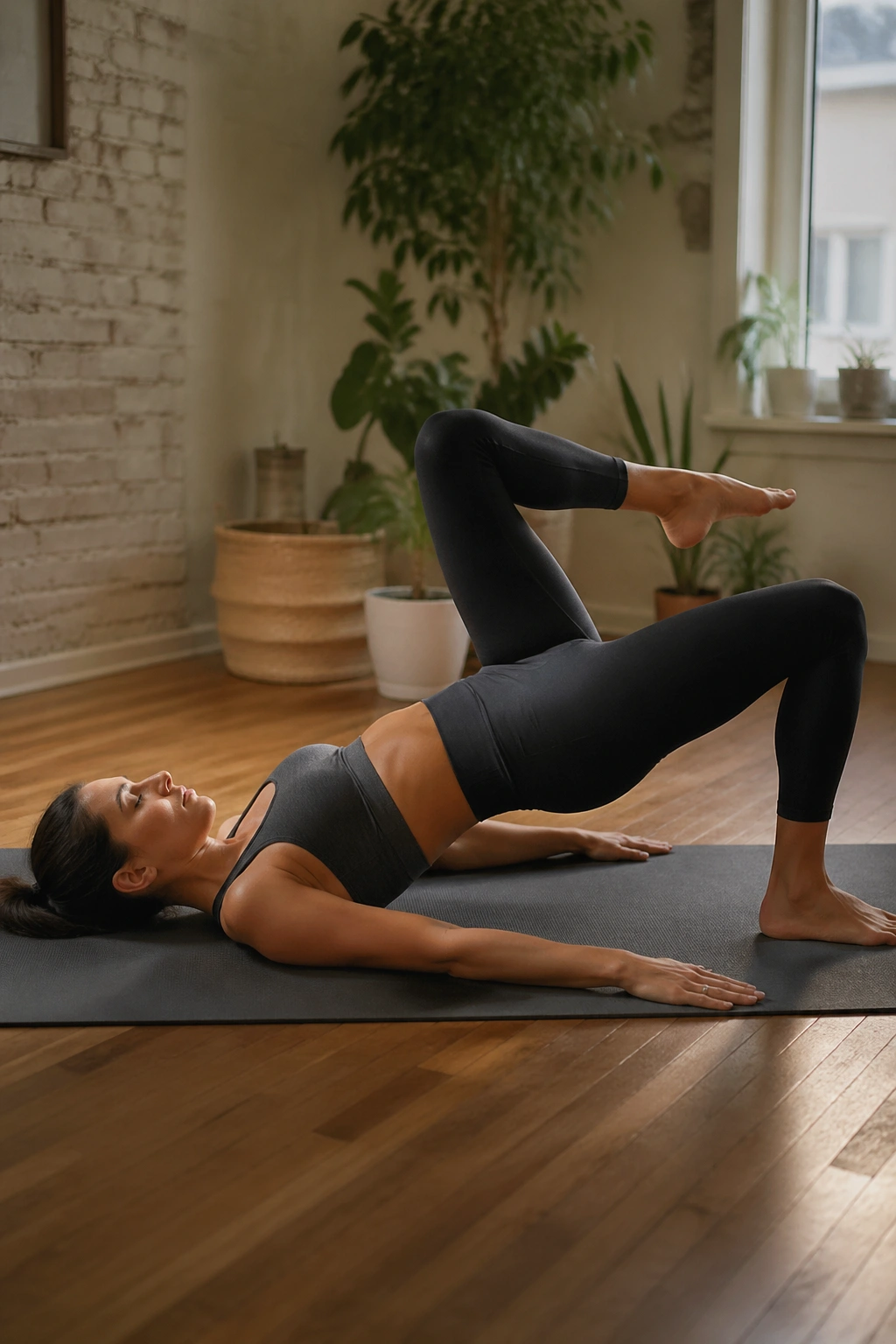
The first time you hold tabletop, your abs may complain. Fair enough. That’s why this routine keeps the shapes small and the breath steady.
Lie on your back with knees bent. Inhale into the sides of the ribs. Exhale and tilt the pelvis a little, then lift into a bridge for 6 slow reps. After that, bring one leg to tabletop and tap the toe down 6 times per side. If the hip flexors start yelling, leave the leg higher. That is not a failure; it’s better body control.
What to feel
The bridge should feel like your glutes wake up first, not your hamstrings cramp. If your thighs grab, bring your feet a little closer to your seat. On the tabletop taps, your stomach should feel gently braced, not sucked in so hard that you can’t breathe.
A final set of arm reaches overhead while staying on your back ties the whole thing together. The body is still one piece, even when the work is coming from the center.
4. Spine Articulation on the Mat
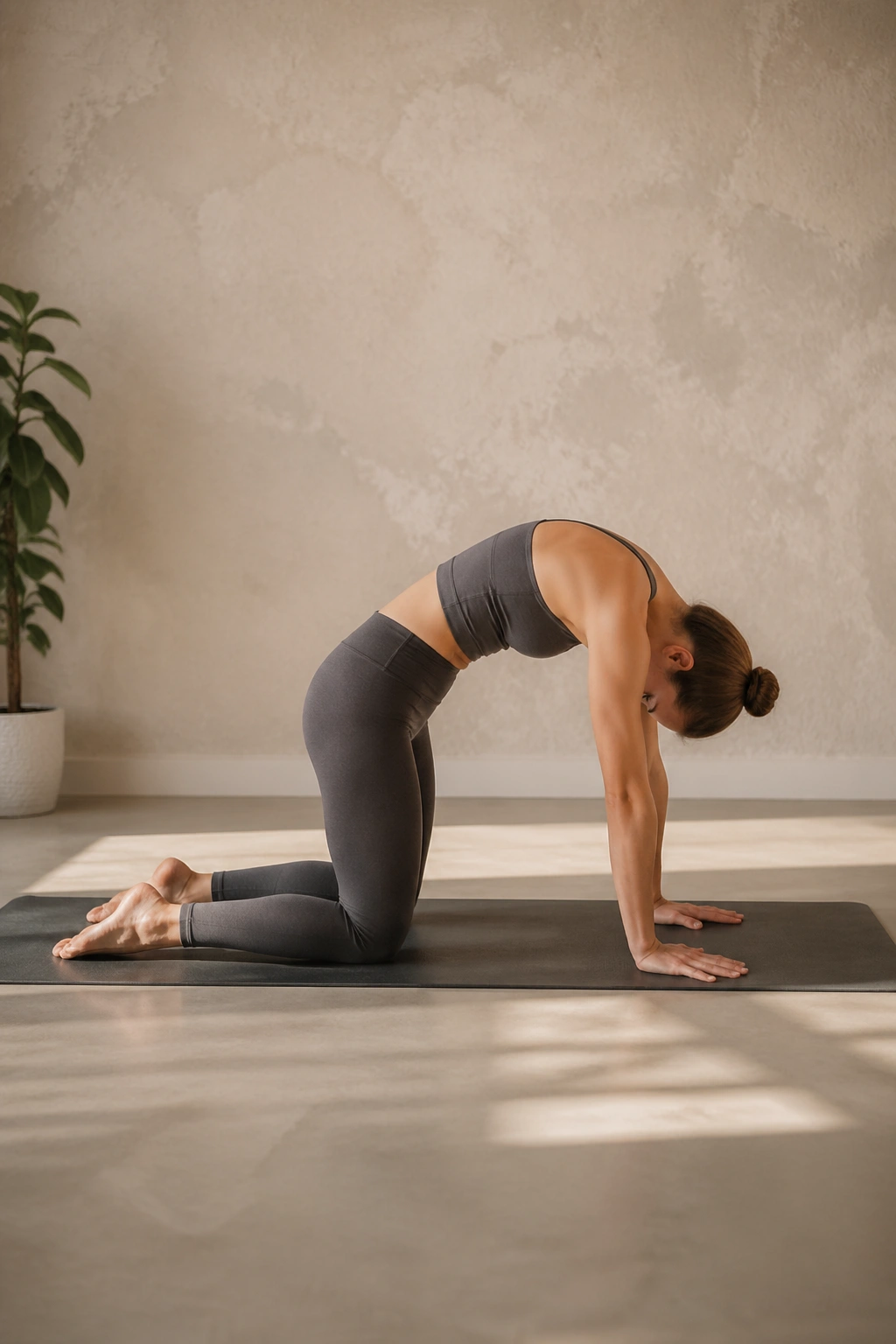
Your spine likes to move in pieces. Most people don’t give it that chance.
This routine is built around slow spinal motion: cat-cow, pelvic curl, half roll-backs, and a supported chest lift. The goal isn’t to bend as far as possible. It’s to make each segment of your back wake up without getting rushed. That matters for beginners because stiff backs tend to compensate by jamming the neck or locking the hips.
The slow part
Start on all fours with 6 cat-cows. Breathe into the rib cage on the way down, exhale as you round. Then roll into 8 pelvic curls, lifting the tailbone first and lowering one bone at a time. That slow descent is the point. If it feels like you’re being pulled apart in a good way, you’re doing it right.
The stronger part
Add 6 half roll-backs sitting on the mat, knees bent, hands behind the thighs if needed. Finish with 6 chest lifts, not full sit-ups. Keep the gaze toward the thighs, not the ceiling.
If your neck works too hard, tuck a towel under the head and keep the lift tiny.
5. Arms, Shoulders, and Core in One Slow Sequence
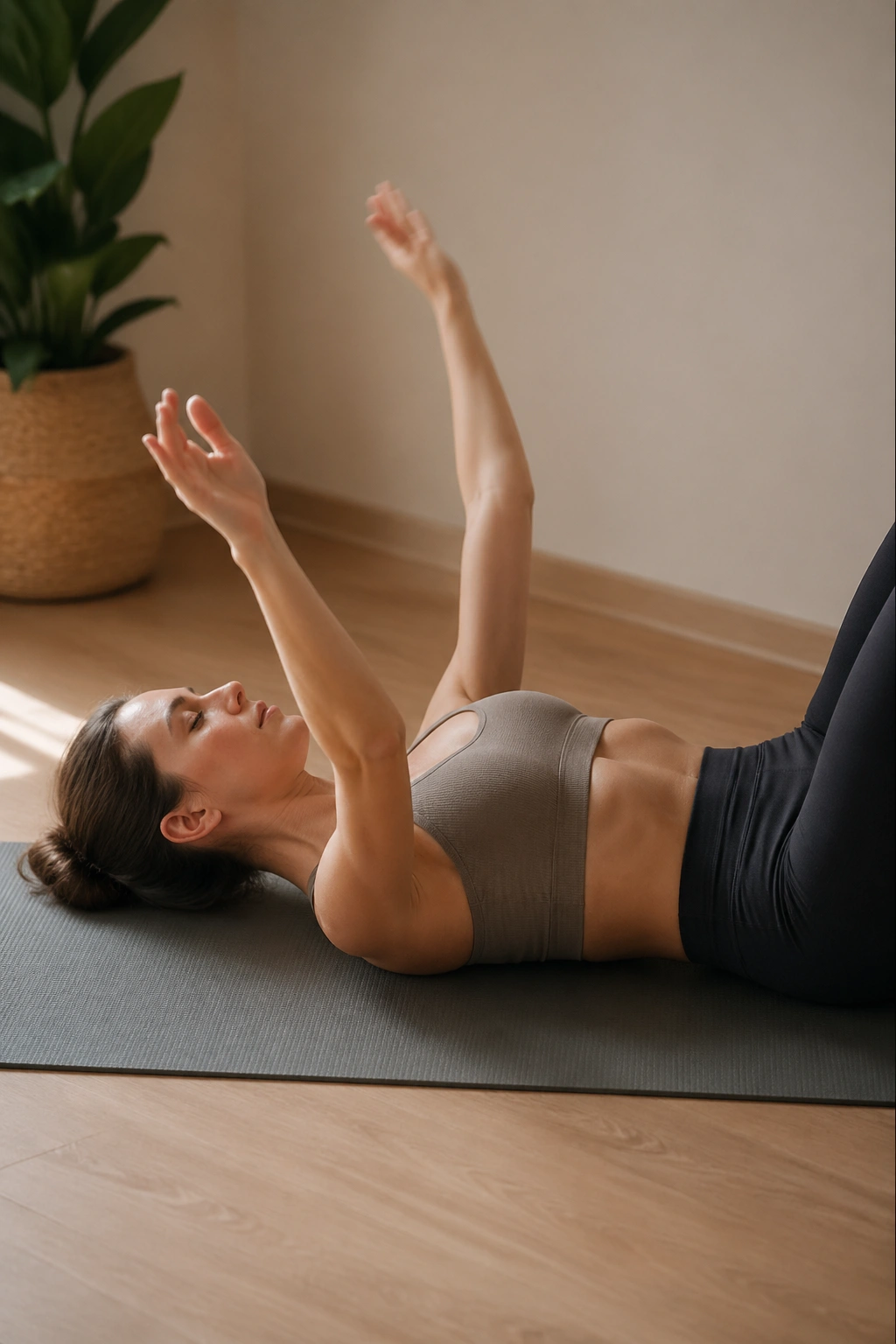
A lot of beginners think Pilates is all about abs. Not even close. Good Pilates uses the shoulders and arms to organize the torso, and this routine makes that obvious fast.
Unlike a heavy upper-body workout, this one doesn’t chase fatigue. It asks for control. Start with arm circles on your back, 8 in each direction, then do 8 hug-a-tree motions with a soft bend in the elbows. Move to a kneeling or standing wall press, 8 slow reps, and finish with 6 dead bugs or toe taps so the core has to hold the line while the arms move.
How to keep it clean
- Keep the shoulders away from the ears.
- Exhale as the arms lower.
- Stop the range before the ribs pop open.
- If the neck gets tight, reduce the arm height.
That last point matters. People often lift the arms too high and then wonder why everything feels off. Lower and slower wins here.
6. Glutes and Inner Thighs Without Fuss
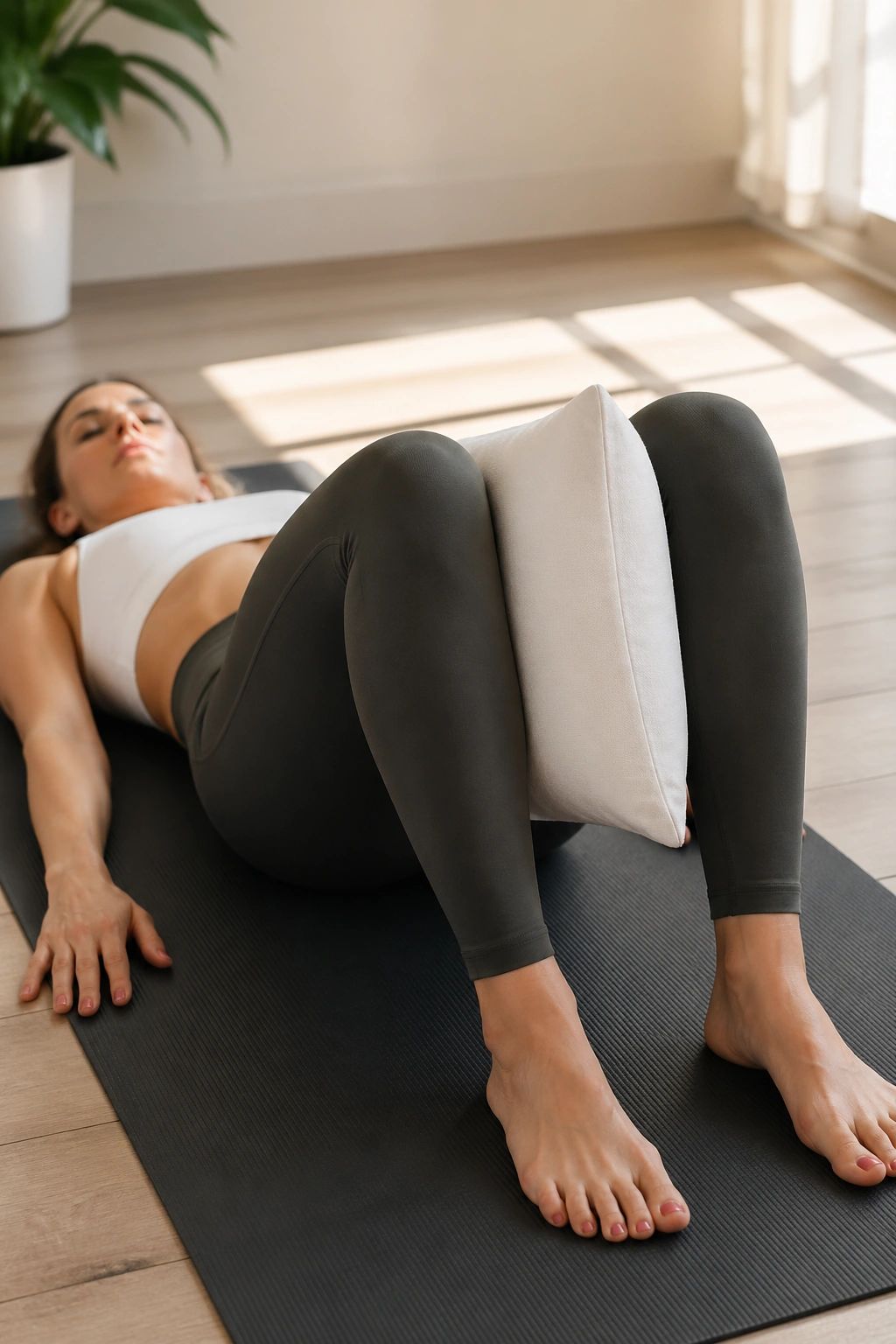
If your knees wobble or your hips feel sleepy, this routine gets right to the point. It’s simple, and I mean that in the best way.
Start with a pillow squeeze between the knees for 8 breaths while lying on your back. Then do 8 bridges with the squeeze still on. The inner thighs and glutes start talking to each other almost immediately. After that, move to side-lying clamshells, 10 reps per side, and finish with 8 sit-to-stand squats from a chair, reaching your arms overhead as you stand.
The overhead reach makes the routine full-body instead of turning it into a lower-body-only drill.
One small warning: don’t crush the pillow so hard that your neck and jaw tighten. The squeeze should feel firm, not angry. If the knees cramp, back off and use less pressure. That is usually the fix.
7. Side-Lying Work That Wakes Up the Hips
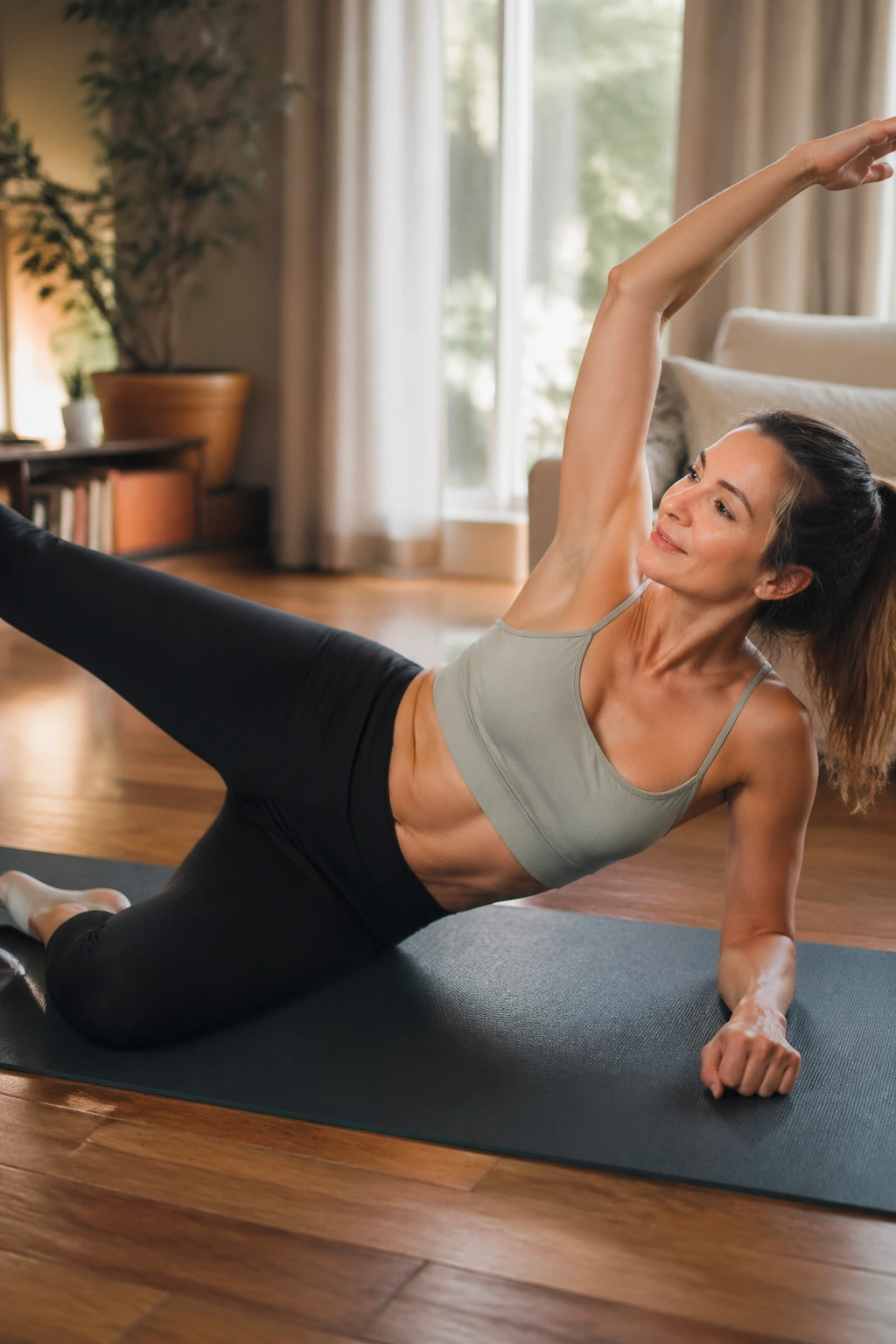
The side-lying position looks lazy until your outer hip starts shaking.
That’s why I like it for beginners. You can’t hide much here. Lie on one side with the bottom knee bent for support, then do 8 leg lifts, 8 small circles, and 6 front-and-back kicks. Keep the waist long and the top waist lifted slightly off the floor so the work stays in the side body, not dumped into the lower back.
Add 6 arm reaches overhead on each side to bring the upper body into the picture. The whole pattern feels balanced instead of isolated.
What to watch for
- The foot should stay flexed or softly pointed, not floppy.
- The leg should move from the hip, not from the knee.
- The waist should stay quiet.
- The neck should stay relaxed.
If your top hip rolls backward, shorten the lift. Big range is overrated here. Clean range wins.
8. A Kneeling Pilates Routine for Better Balance
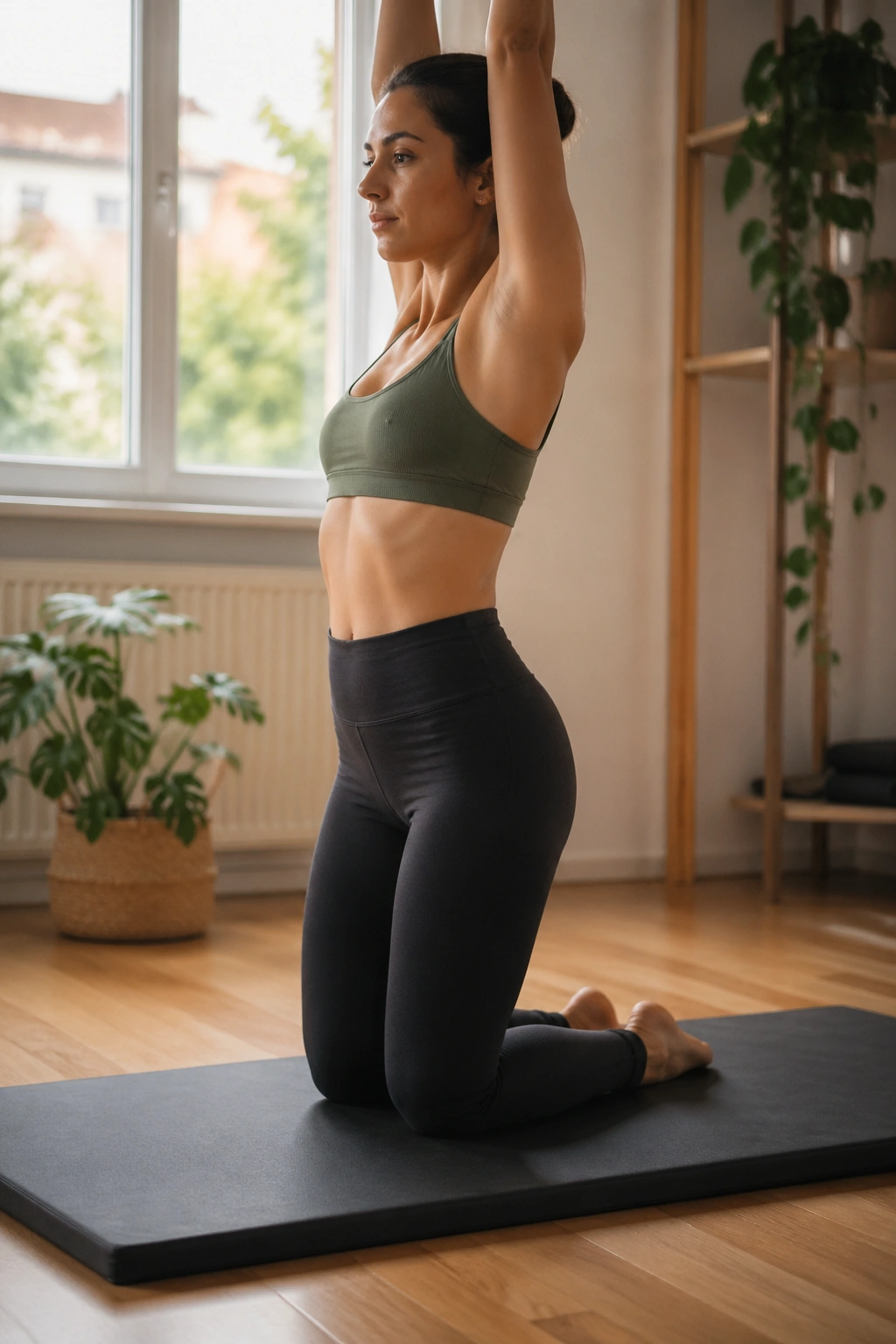
Kneeling work is a nice bridge between floor and standing Pilates. You get a little challenge without the full wobble that comes with single-leg balance.
Start in tall kneeling on a folded mat or thick towel. Reach both arms up for 5 breaths. Then do 6 kneeling side bends per side, keeping the hips stacked and the shoulders soft. After that, shift into bird-dog on all fours, 6 reps per side, followed by 8 kneeling hip hinges where the torso tips forward a few inches and comes back up under control.
The kneeling position makes people notice their ribs. That’s good. It is hard to cheat here.
If your knees are sensitive, pad them properly. Don’t tough it out on a hard floor. That only distracts from the work. And if balance is shaky, keep one hand on the wall during the side bends. That little support changes everything.
9. Marching, Dead Bugs, and Easy Core Control
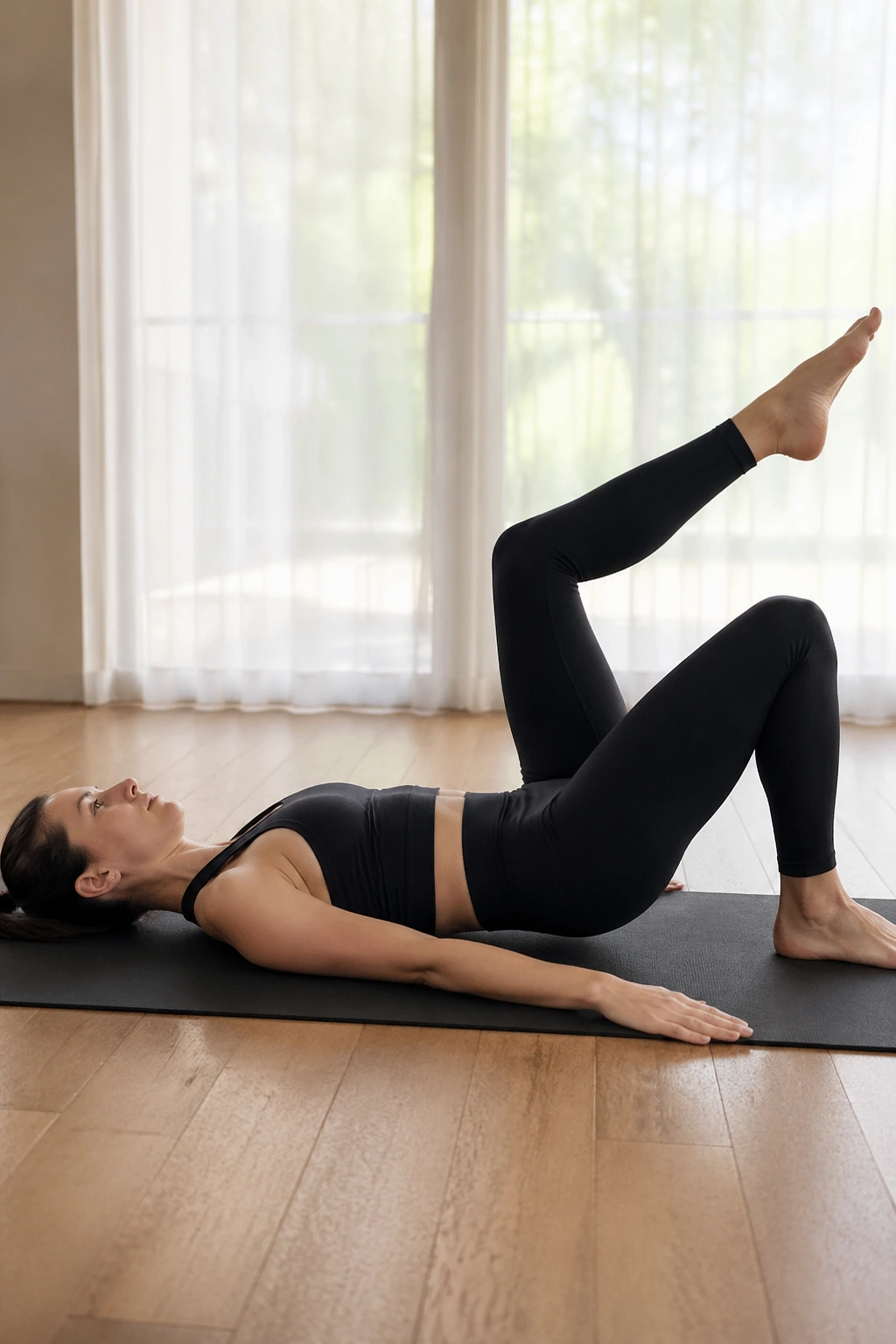
You do not need to crunch harder.
You need to teach the torso to stay still while the limbs move. That’s what this routine does. Begin with a neutral spine on your back, knees bent, and arms by your sides. March one foot up at a time for 8 slow reps per side, keeping the pelvis level. Then move into dead bug prep: one arm reaches overhead while the opposite leg slides away, 6 reps per side.
Why it feels different
The work is subtle. Sometimes too subtle, which is exactly why beginners benefit from it. You are learning control, not chasing a burn that makes everything else messy.
After the dead bug pattern, add 8 bridge marches and finish with a seated spine twist, 4 slow turns per side. The rotation wakes up the waist without asking for a big range. If your low back grips, make the march smaller and keep both feet closer to the floor.
How to use it
Do this routine on days when your core feels scattered. It sorts things out without beating you up.
10. Hundred Prep and Roll-Up Flow
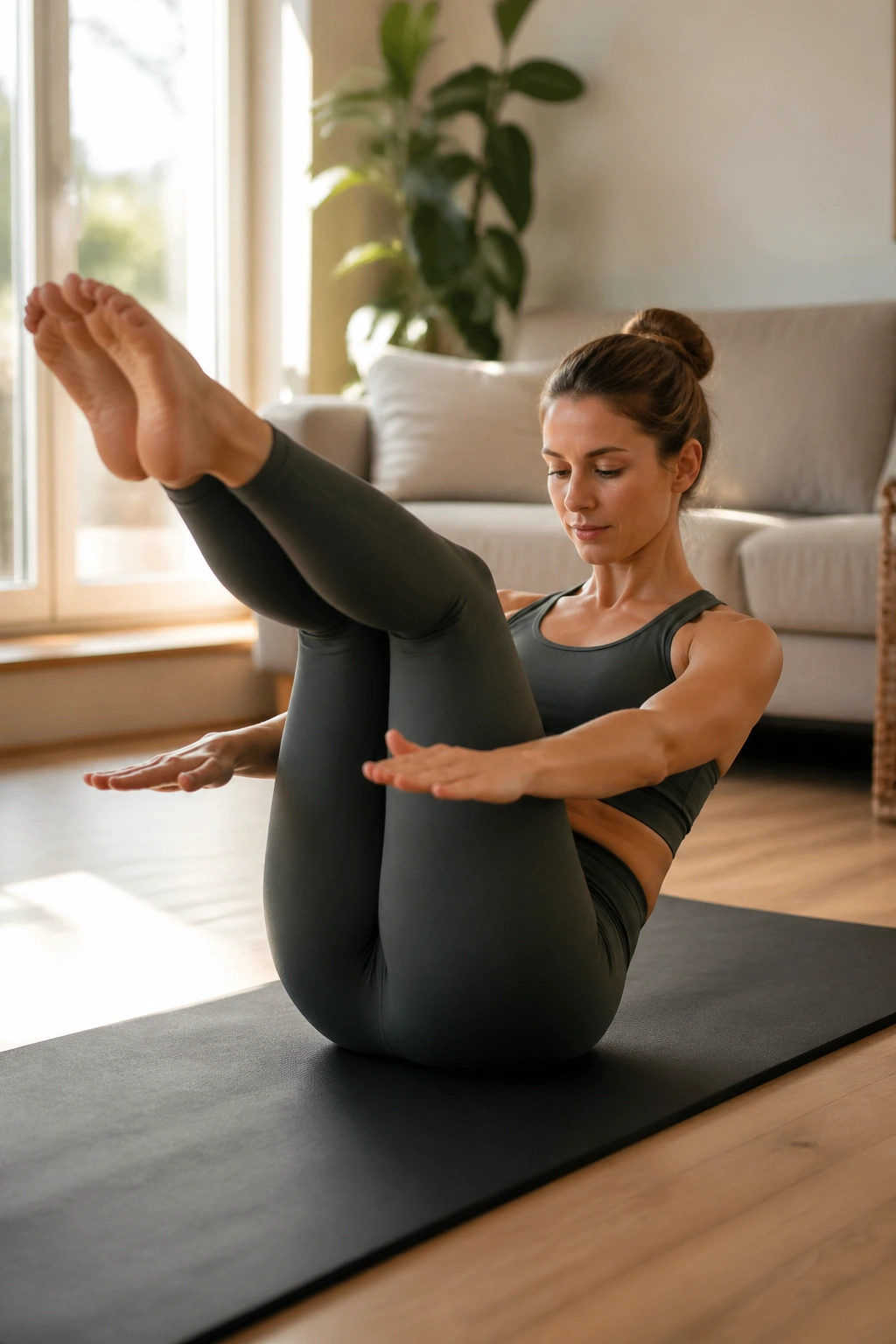
Ten breaths, one rib cage, zero rushing. That’s the mood here.
The Hundred prep is a classic Pilates entry point, but beginners often make it too hard. Keep the legs in tabletop with feet on the floor if needed. Pump the arms for 10 controlled breaths, not 100 frantic ones. Then do 5 supported roll-backs, hands behind the thighs, and 6 single-leg stretch prep reps per side with the head either down or lightly lifted.
Breath
Inhale wide into the ribs. Exhale as the arms pump or the torso curls. If the breath gets choppy, the effort is too high.
Spine
The roll-back should feel like you’re lowering a fence one bone at a time. Stop if you start yanking with the neck. That usually means the movement is too big.
Legs
Keep the thigh angle modest. Lower legs make the abdomen work, but only if the back stays calm.
Arms
The arms are not there to wave around. They move with purpose, low and steady, like you mean it.
11. A Plank-Free Core Routine for Nervous Beginners
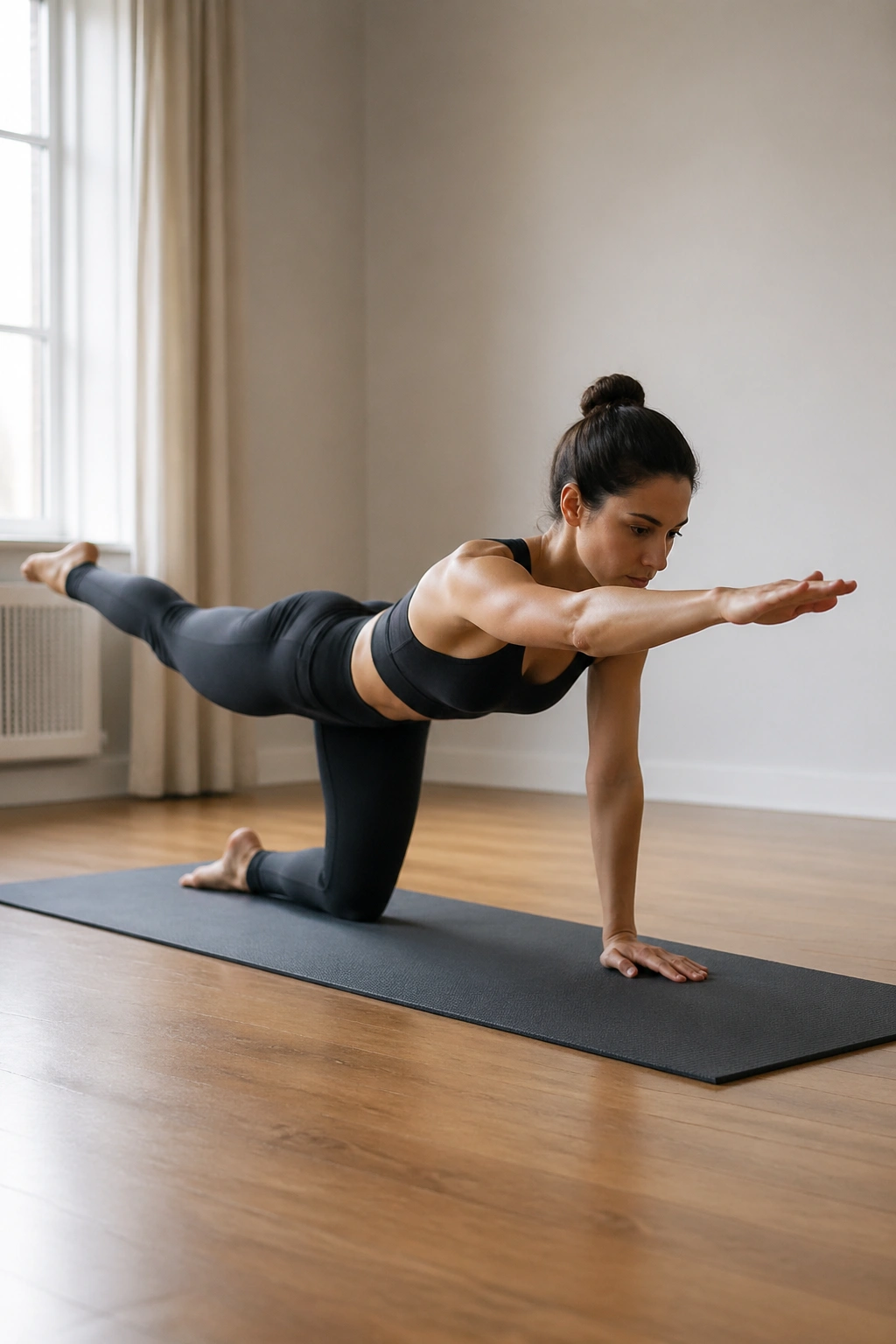
Planks get too much credit.
Yes, they’re useful. No, they’re not mandatory. If wrists bother you, shoulders feel weak, or floor planks make you tense up before you even begin, this is the kinder route. Use bird-dog, dead bug, bridge march, and side-lying oblique lifts instead. Each one trains the center without loading the wrists.
The real win here is confidence. Beginners often need a way to feel strong before they’re asked to hold more complex shapes. This routine gives them that chance.
Finish with 6 seated spine rotations per side and 6 overhead reaches while standing. That last part matters. It keeps the routine from becoming a one-note ab session. Full body means the trunk supports the arms and legs, not the other way around.
If your lower back feels pinchy, stop and reset the pelvis. Don’t push through that. Pilates should feel organized, not cranky.
12. Gentle Magic Circle or Pillow Squeeze Series
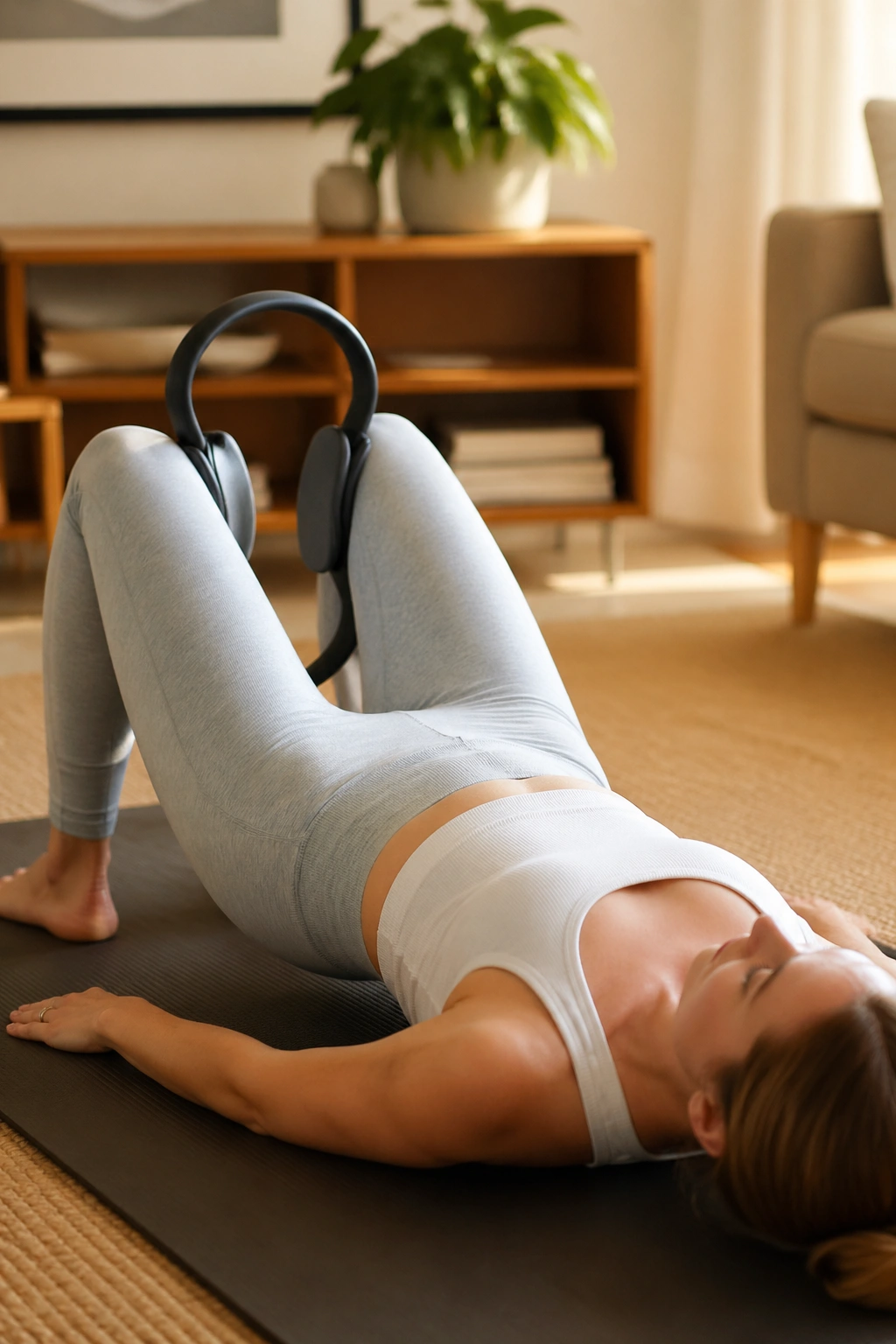
Do you have a Pilates ring? Great. If not, a pillow works almost as well.
Start lying on your back with a ring or pillow between the knees. Squeeze gently for 8 breaths. Then add 8 bridges while keeping that light pressure on. Next, press the ring or pillow between the hands overhead for 6 controlled arm raises. The inner thighs, chest, and shoulders all get a turn.
After that, switch to a seated squeeze: hold the pillow at chest height and rotate the torso 4 times per side. It’s small, but it wakes up the waist and upper back in a clean way.
The trick is pressure, not force. If you grip too hard, the neck and jaw tighten and the whole thing goes sideways. Light to medium pressure is enough. That’s the sweet spot.
This routine is especially nice for beginners who want structure without a fast pace. It feels tidy. I like that.
13. Standing Balance and Posture Routine
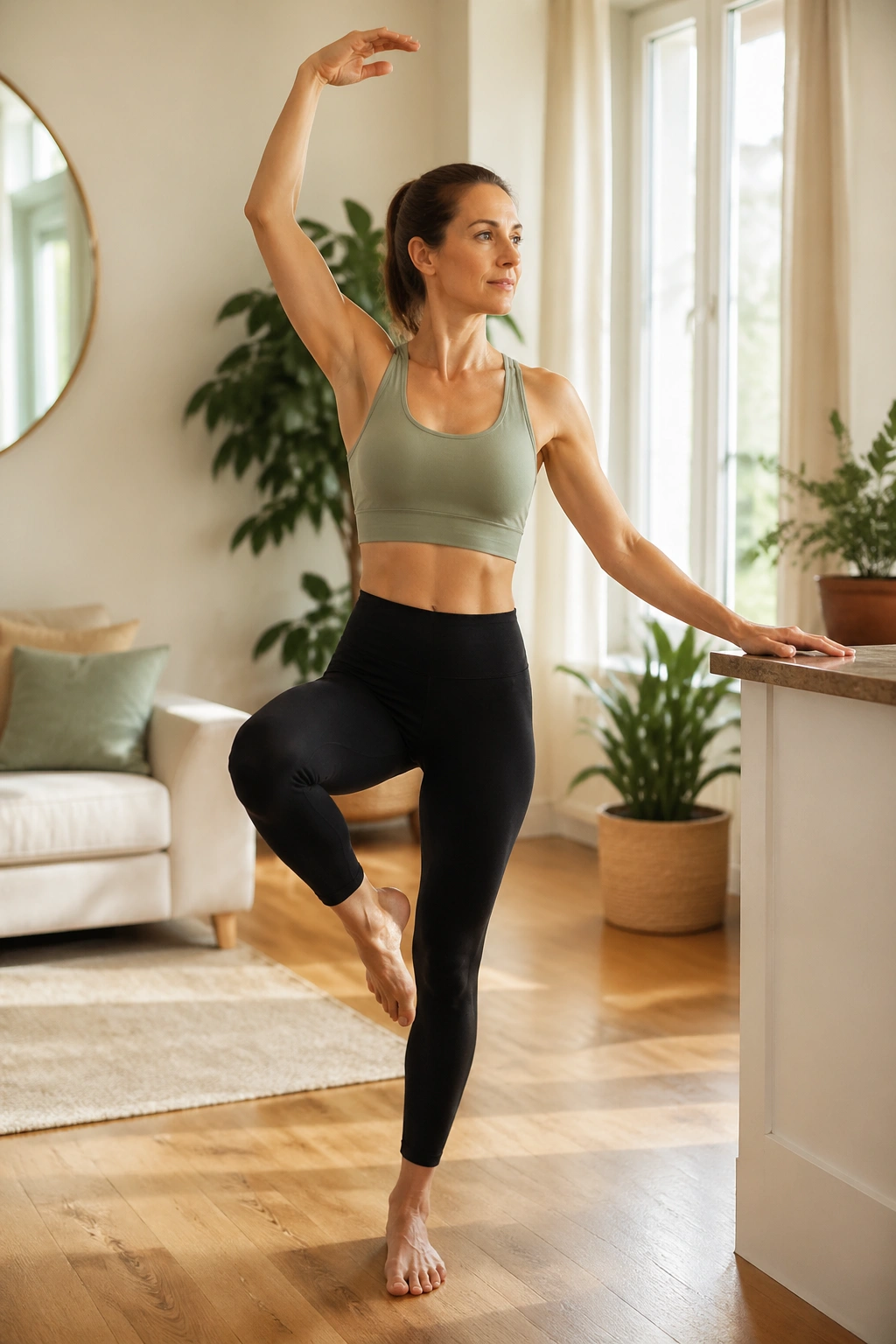
Everyone wobbles at first. That’s normal.
Standing balance work teaches your feet, hips, and shoulders to cooperate instead of acting like separate departments. Start with 6 heel-toe shifts, then lift one knee at a time for 8 reps per side. Add arm sweeps from low to high, 6 reps, keeping the ribs from flaring. A wall or countertop is fine if you need support.
How to use it
Stand tall, but not stiff. There’s a difference. Knees stay soft. Toes spread on the floor. Weight stays evenly across the heel, big toe mound, and little toe mound.
What to avoid
- Don’t lean into the standing hip.
- Don’t shrug during the arm sweep.
- Don’t lock the standing knee.
- Don’t rush the switch between sides.
A short balance routine like this does a lot more than people expect. It reaches the feet, the waist, the upper back, and the deep stabilizers around the pelvis. That is the Pilates magic people usually mean, even if they don’t say it that way.
14. Tight-Hip Release Flow with Leg Circles
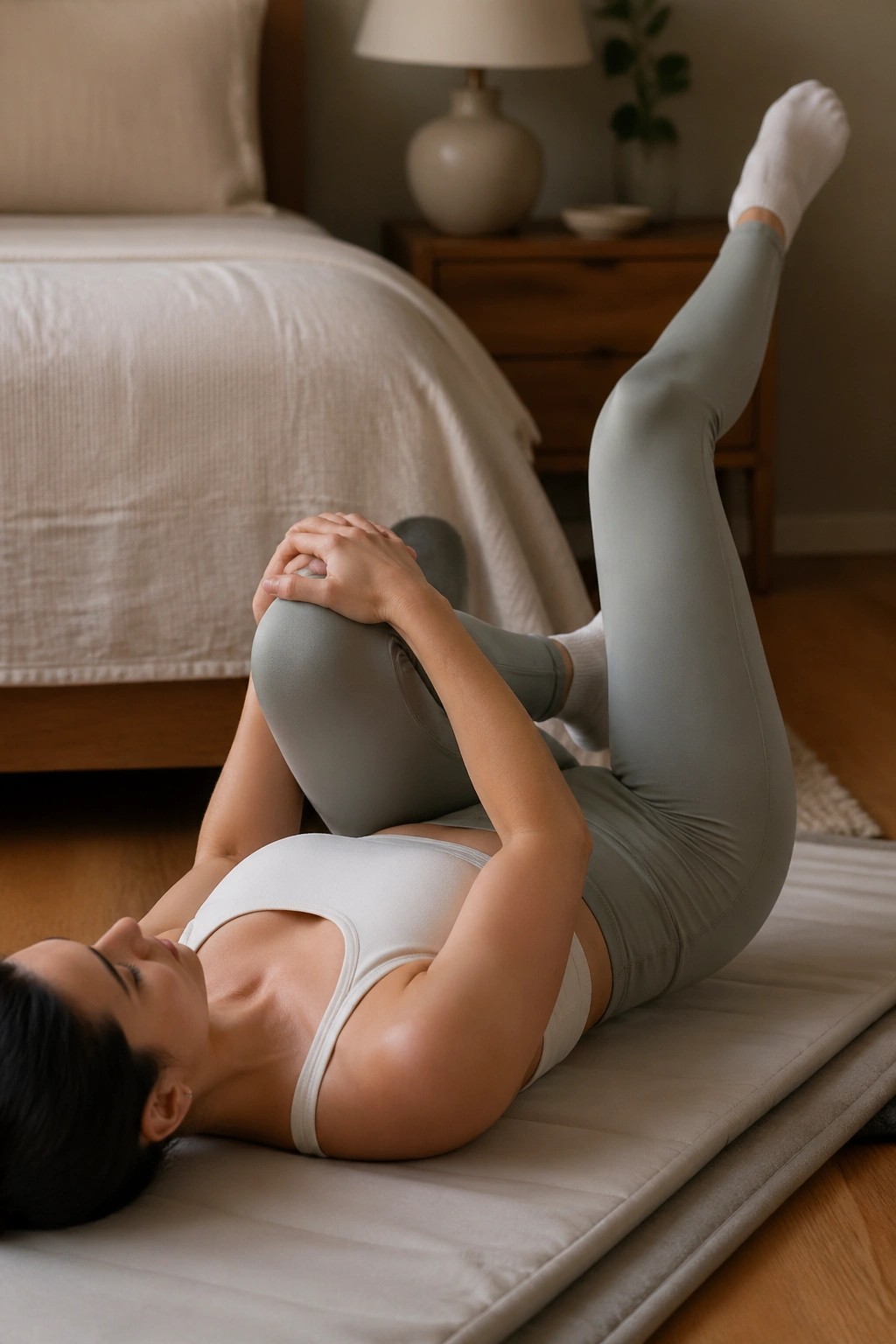
Hips that feel like rusty hinges need motion, not force.
Begin on your back with one knee hugged in and the other foot planted. Do 5 gentle hip circles with the lifted leg, then switch sides. Move to side-lying leg circles, 6 each direction per side, keeping the circle small enough that the pelvis stays quiet. After that, use a low lunge stretch with one arm reaching overhead for 3 slow breaths per side.
A few useful cues
- Make the circle smaller than you think.
- Keep the belly softly engaged.
- Let the breath stay smooth.
- Stop before the lower back starts arching.
If the lunge stretch feels too deep, slide the back knee farther behind you. No need to chase a huge opening. Tight hips usually respond better to steady, repeatable movement than to one dramatic stretch.
This is also a nice routine after a long day of sitting. The body likes being reminded that it can move in more than one direction.
15. Back Strength and Scapula Control Routine
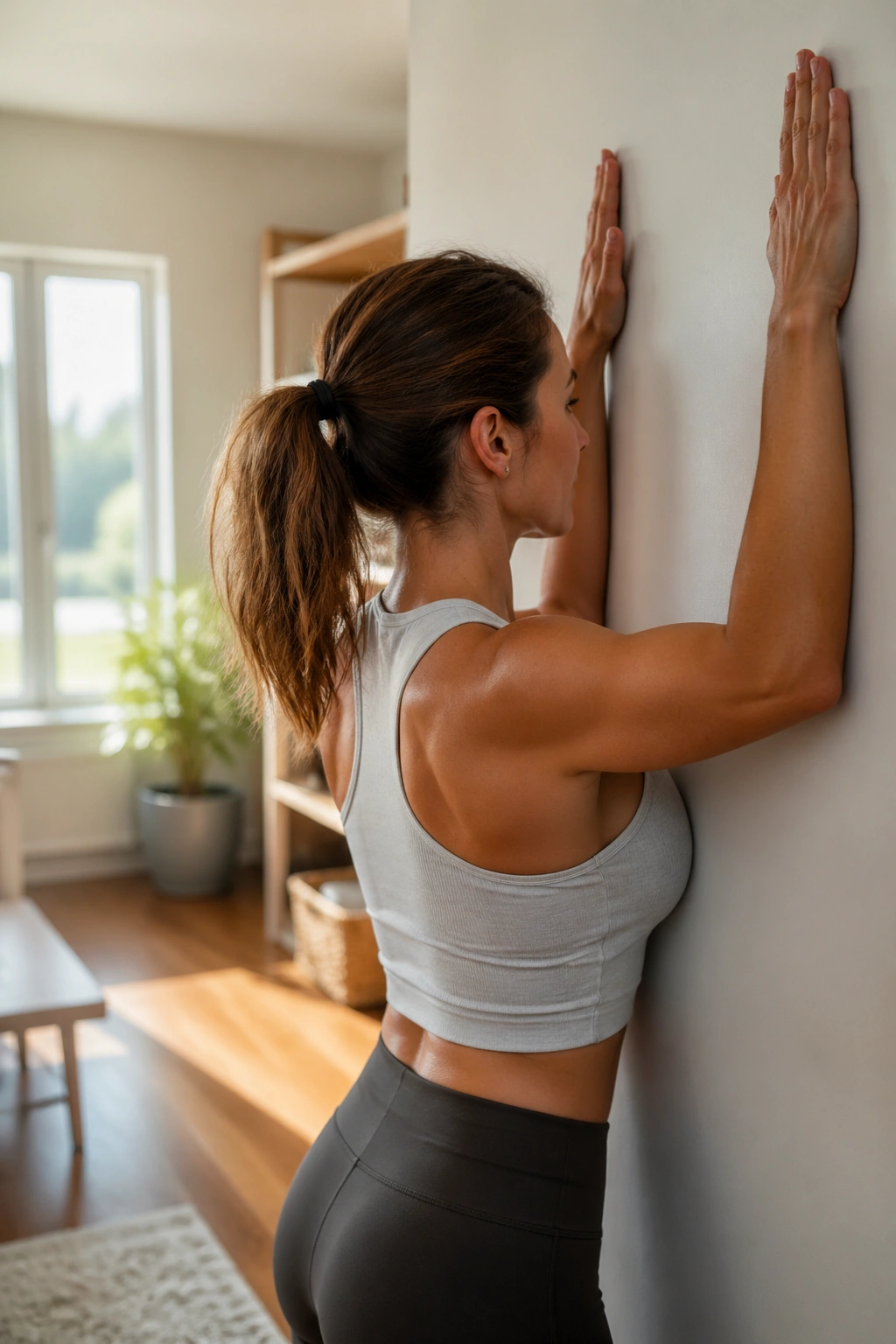
Random back exercises can make you sweat. That doesn’t mean they help your posture.
Pilates uses the back differently. The work starts around the shoulder blades, then spreads through the trunk and hips. Try wall slides for 8 reps, prone chest lifts for 6 reps, bird-dog reaches for 6 per side, and a kneeling arm hover where both arms float forward and lower with control. The shoulder blades should glide, not jam down hard.
Why this one feels better
Unlike fast back workouts, this routine teaches you where the effort should live. If the upper traps take over, the neck gets tight. If the low back takes over, the ribs flare. So the cue is simple: keep the chest broad and the shoulders wide.
Add 6 standing arm pulls with a towel if you want more upper-back work. Pull the towel apart lightly, not with a death grip. A little tension is enough to wake the area up.
Beginners usually like this sequence more than they expect. It feels tall, and that matters.
16. Slow Pilates for Days When You Feel Stiff
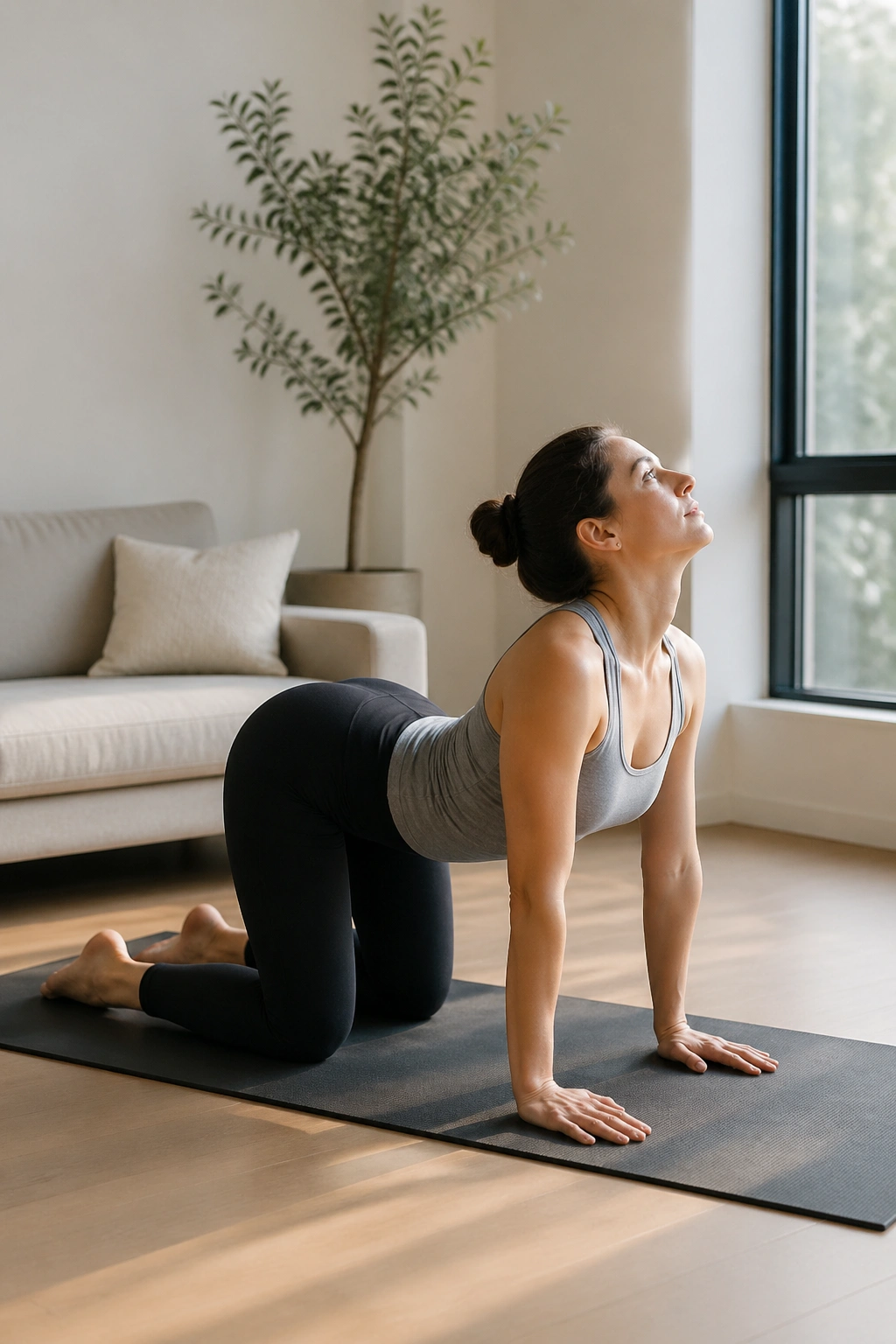
Some days you do not need a challenge. You need a reset.
Start with cat-cow for 6 rounds, then a standing roll-down, then 8 pelvic curls on the back. Add open-book rotations on your side for 5 breaths per side, then finish with a seated fold and 4 side reaches per side. Nothing fancy. Just enough motion to loosen the spine, shoulders, and hips.
A stiffness routine works best when the range stays small. If you force the stretch, the body protects itself. If you keep it smooth and slow, things often soften more than expected.
Use a cushion under the knees if the floor feels too hard. Use the wall if standing balance feels off. Use both if needed. That’s not cheating. That’s smart.
This is the routine I’d choose after a long day of sitting at a desk or driving. Not because it’s dramatic. Because it works without making you feel beat up.
17. A Beginner Flow for Low Ceilings and Small Spaces
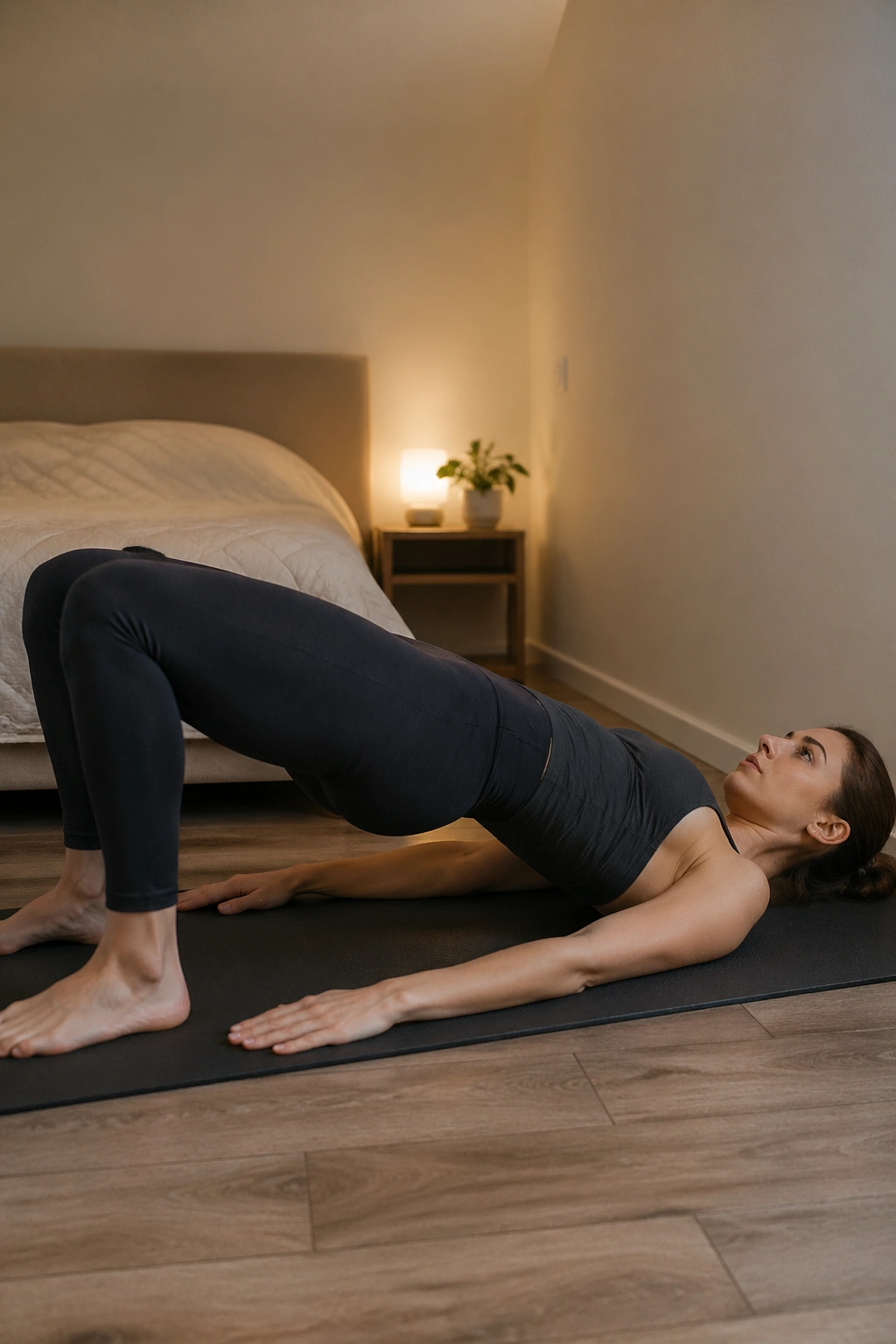
I like routines that don’t ask much of the room. It makes them easier to repeat.
This one is tiny-space friendly: seated spine twists, bridge lifts, side-lying leg work, wall push-ups, and a few standing calf raises. You can do the whole thing next to a bed or in a narrow corner. That matters more than people admit. If the setup is annoying, the routine gets skipped.
Why it works in cramped spaces
The shapes are compact. The transitions are simple. And nothing needs a long reach or a big mat. That keeps the focus on control instead of choreography.
What to include
- 6 seated twists per side
- 8 bridges
- 8 side-lying leg lifts per side
- 8 wall push-ups
- 10 calf raises
If you want more challenge, add a slow arm sweep during the calf raises. That gives you a little extra trunk work without taking up another inch of space.
18. Mat-and-Wall Combo for Extra Support
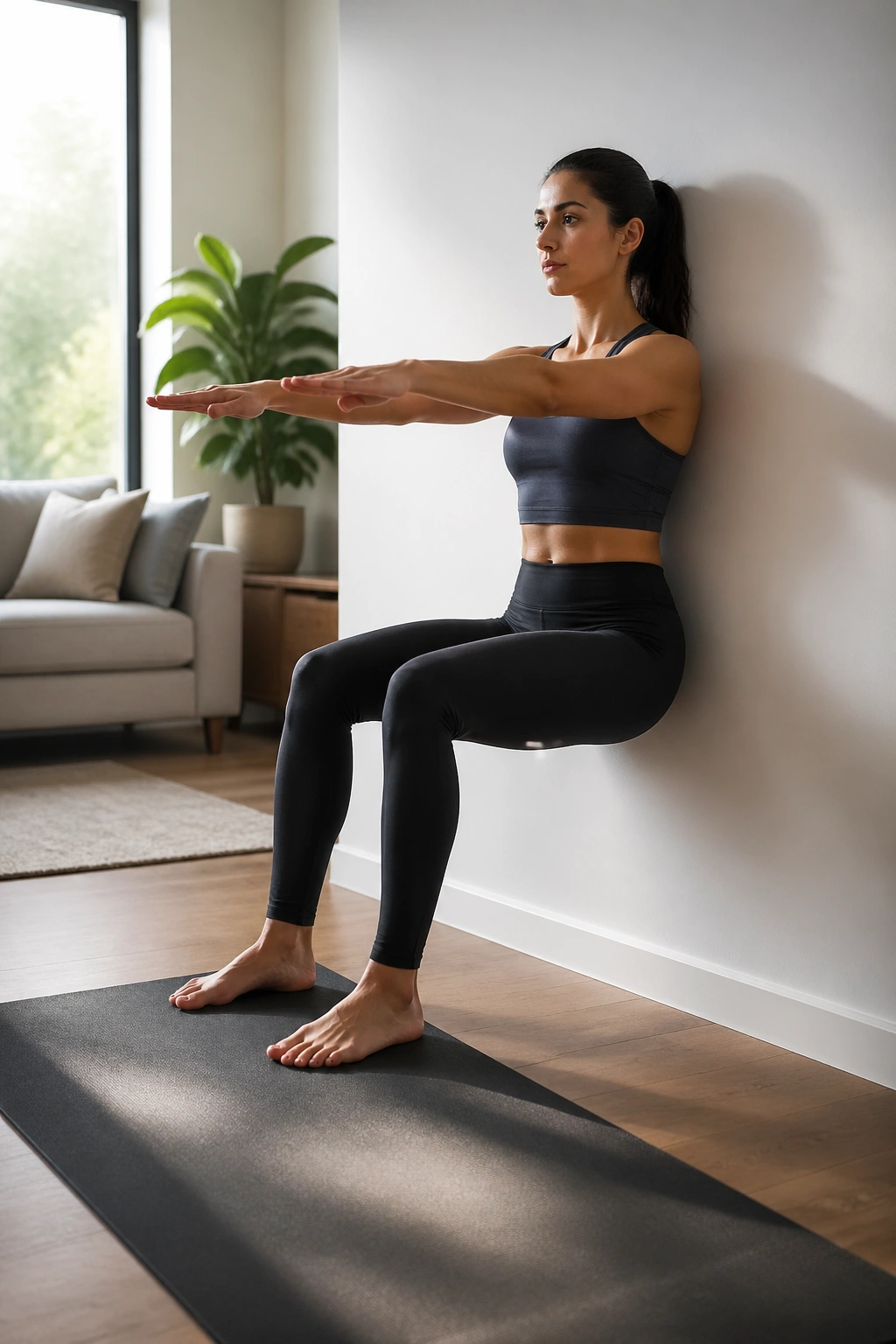
What if floor work and standing work both feel good, but you want a little structure? Mix them.
Begin with a wall squat and arm reach, 8 reps. Move to wall push-ups, 8 reps. Then go to the mat for 6 bridges, 6 dead bugs, and 8 side-lying clamshells per side. Finish back at the wall with a roll-down and a slow overhead reach.
The handoff from wall to mat gives the session a nice rhythm. Your body gets vertical support, then horizontal control, then vertical again. That shift keeps beginners from getting stuck in one position too long.
Keep the squat shallow. Just a few inches down is enough. If your knees drift inward, press gently into the outer edges of the feet and reduce the depth. Small details matter more than big effort here.
I like this routine on days when I want to feel put together without doing anything aggressive. It’s tidy work.
19. A 12-Minute Full Body Pilates Circuit
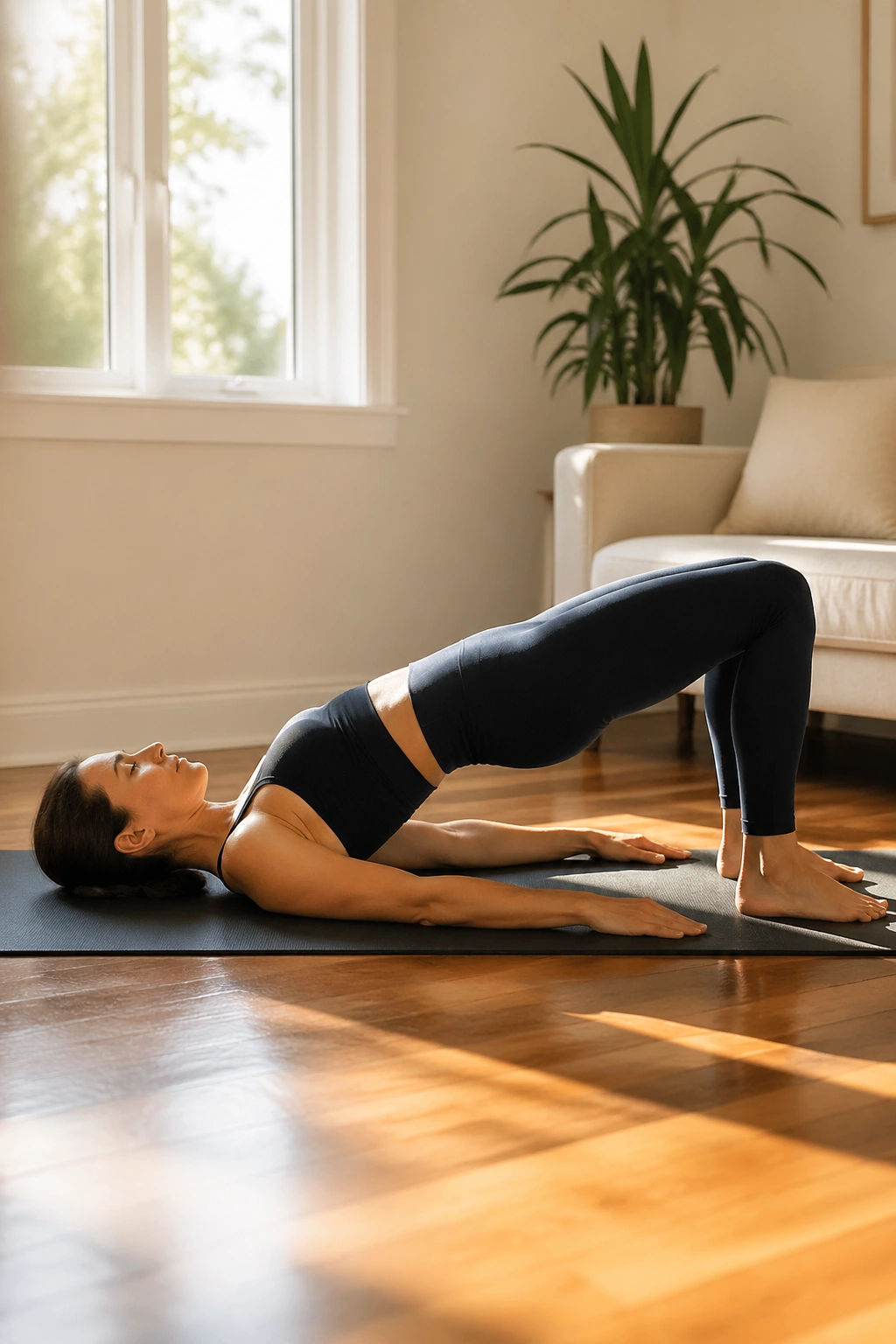
Twelve minutes is enough if the sequence is tight.
Start with 30 seconds of breathwork on your back. Then do 8 pelvic tilts, 8 bridges, 8 toe taps per side, 8 clamshells per side, 8 wall push-ups, and 8 standing side reaches per side. Rest for 20 to 30 seconds, then repeat the whole circuit once more if you have the time and energy.
The order matters
Putting floor work first calms the trunk before the arms and legs ask for more. The wall push-ups and standing reaches at the end bring posture back into the picture. That makes the routine feel whole instead of chopped up.
Quick rules
- Keep the reps slow.
- Stop one step before form slips.
- Choose quality over speed.
- Use a mat or folded blanket for comfort.
This routine is handy when you want something repeatable and clear. No guessing. No wandering around the room.
20. The Quiet Finisher: A Full Body Pilates Cool-Down
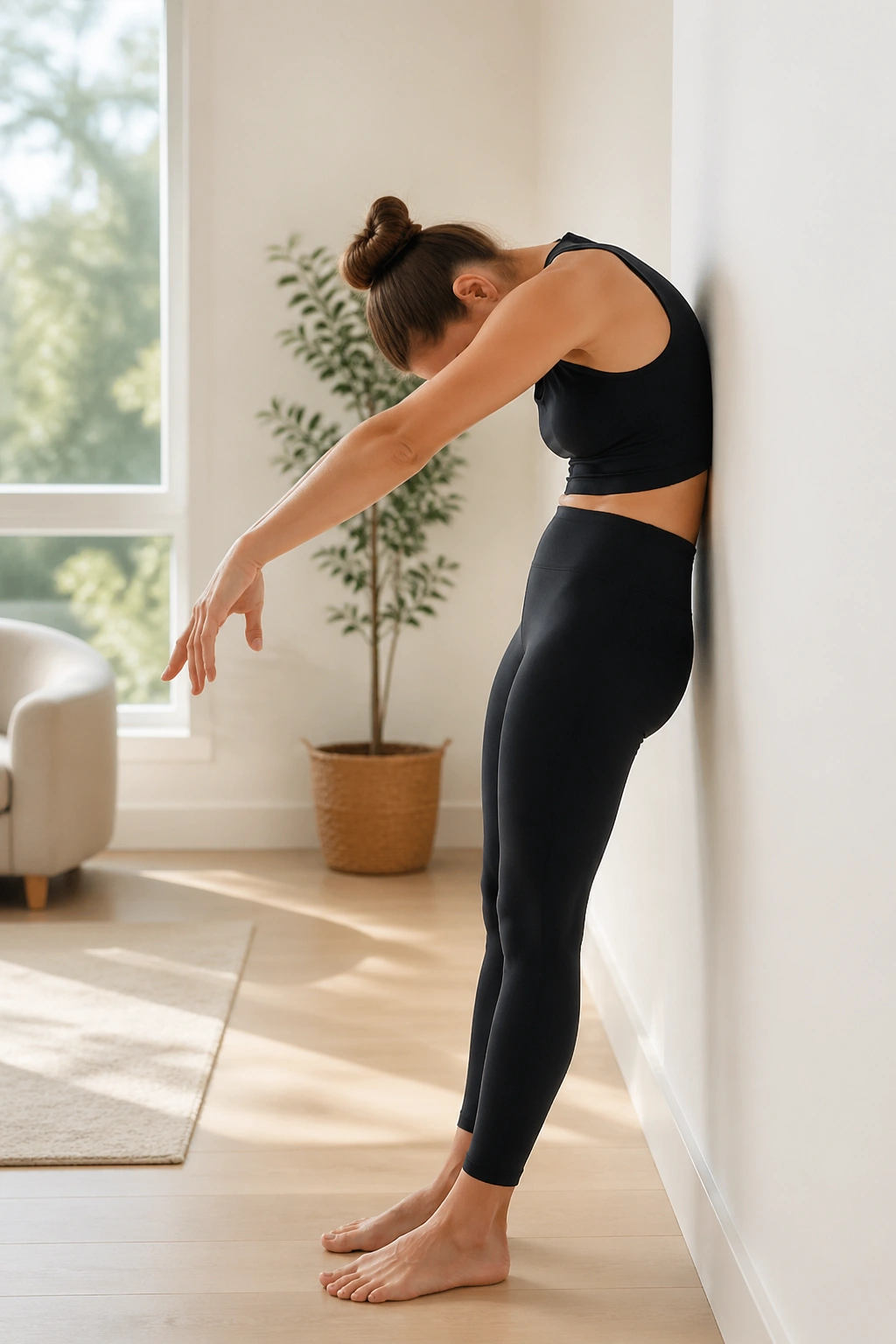
Ending well matters. A messy finish leaves you feeling oddly unfinished, even if the workout itself was solid.
This cool-down uses a child’s pose with side reach, a supine twist, a hamstring stretch, shoulder rolls, and a slow standing roll-up to finish. Keep each position for 3 to 5 breaths. If the body feels tight, stay longer. If it feels open, move on. The point is to leave the mat without that rushed, breathless feeling.
Why beginners like this one
It gives you a clean exit. The spine lengthens, the hips soften, and the shoulders stop carrying the day. You also get a little balance work at the end, which is useful because Pilates never really wants the body to switch off completely.
How to finish it
- Breathe into the ribs first.
- Stretch one side at a time.
- Roll up slowly through the spine.
- Stand for one full breath before stepping away.
A good finish makes the whole session feel better. That’s not a small thing.
