



Pilates neck stretches work best when you stop treating the neck like a rope to pull on. Most of the time, the tightness you feel under your skull, behind one ear, or along the top of the shoulder is tied to how your ribs, shoulder blades, jaw, and breath are behaving together.
A neck that keeps bracing usually has company. The chin juts forward. The shoulders creep up. The ribs flare. The jaw clamps down during screen time or stress, and the upper trapezius ends up doing a job it was never meant to do all day. That’s why the smartest Pilates neck stretches are small, precise, and a little boring-looking. Boring is good here.
I’m not a fan of big neck circles for cranky necks. They can feel nice for five seconds, then leave you more irritated than you were before, especially if the upper cervical joints are already sensitive. Better to use gentle side bends, tiny chin nods, rib-led lengthening, and positions that let the head get heavy again without forcing anything.
If a stretch causes sharp pain, tingling, dizziness, a headache that spikes, or pain that shoots into the arm, stop. That is not the moment to “push through.” The stretches below are meant to feel like a slow exhale for the neck, not a test.
1. Chin Nods on the Mat for Pilates Neck Stretches
A tiny chin nod looks almost too simple. That’s why it works.
This is one of the cleanest Pilates neck stretches for the back of the neck, especially if you spend a lot of time looking down at a phone or laptop. The goal is not to jam the chin to the chest. You’re trying to make the back of the neck feel long while the front of the throat stays soft.
How to Keep It Tiny
Lie on your back with your knees bent and your feet flat on the mat. Let the back of your skull rest heavy, then imagine the space between the base of your skull and the top of your shoulders getting a little wider. From there, make a very small “yes” nod, as if you’re acknowledging someone across the room without moving your face much at all.
Hold that shape for 2 slow breaths. Return to neutral, then repeat 6 to 8 times. You should feel a mild release right under the skull, not a crunch in the throat or a hard squeeze at the front of the neck.
- Keep the movement at about 10 to 15 percent of your full range.
- Let your tongue rest on the floor of your mouth.
- Keep your lower ribs quiet instead of pushing them up.
- Stop the second you feel pinching at the back of the head.
Small range wins here. Big effort usually turns this into a neck jam.
2. Ear-to-Shoulder Side Bends with a Long Exhale
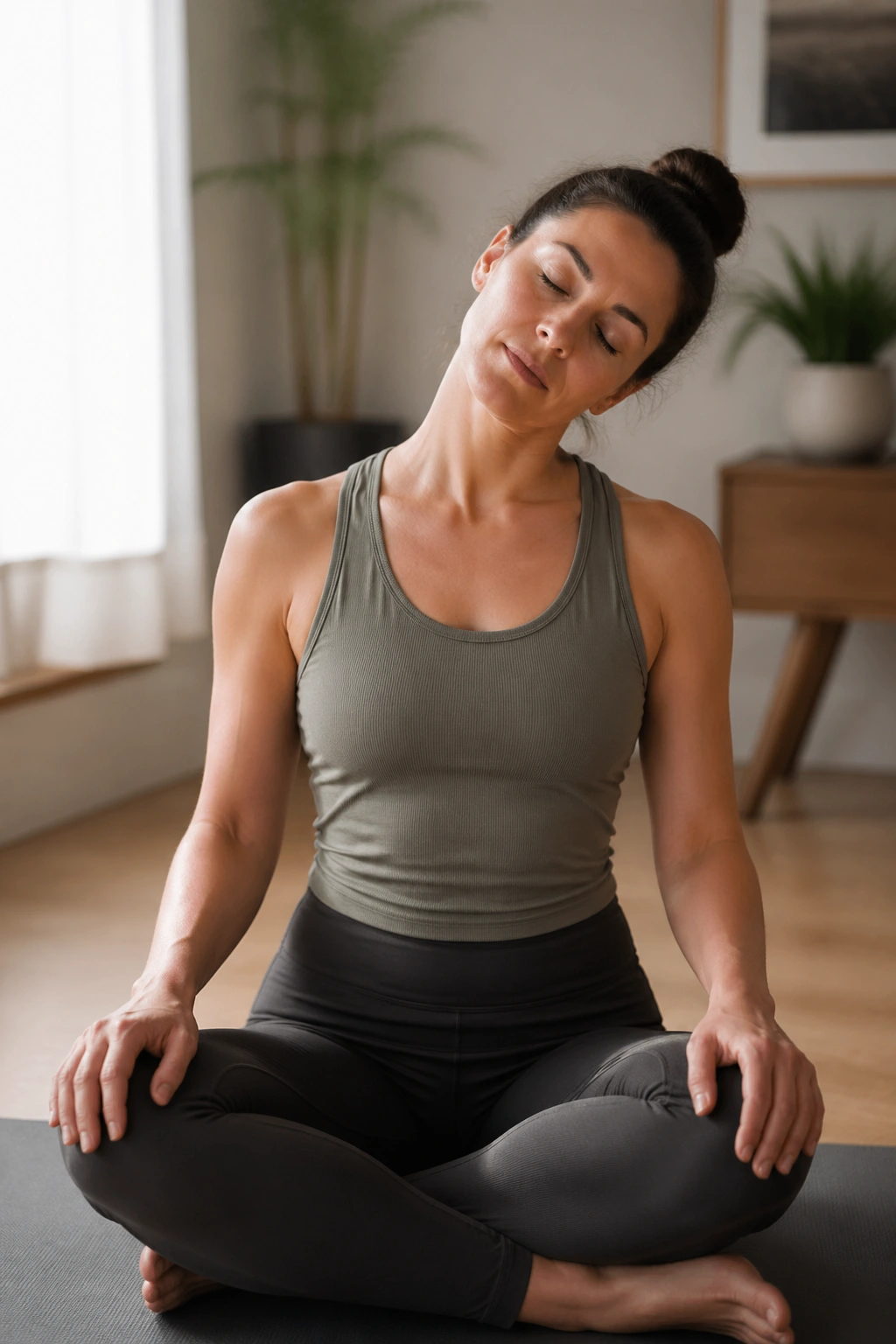
Why does a side bend help when the tight spot sits right under your ear? Because the side neck muscles rarely tighten alone.
When the upper trapezius and levator scapulae start guarding, they often pull the head slightly upward and sideways without your permission. A gentle ear-to-shoulder stretch gives them the message to let go, but only if you keep the shoulder on the stretched side heavy and the movement slow.
What You Should Feel
Sit tall on a mat, chair, or folded blanket. Let your left hand hang by your side, or hold the seat with that hand to anchor the shoulder down. Tip your right ear toward your right shoulder just enough to feel the left side of the neck lengthen. Then add a long exhale and see if the stretch softens another notch.
Don’t yank the head. Don’t lift the chin. And don’t let the shoulder pop up to meet the ear. That’s cheating, and it steals the stretch from the tissue you actually want to calm down.
A good version feels like a long line from the top of the shoulder up toward the jaw, with no strain in the jaw itself. If your face scrunches, you’ve gone too far.
3. Constructive Rest Neck Release
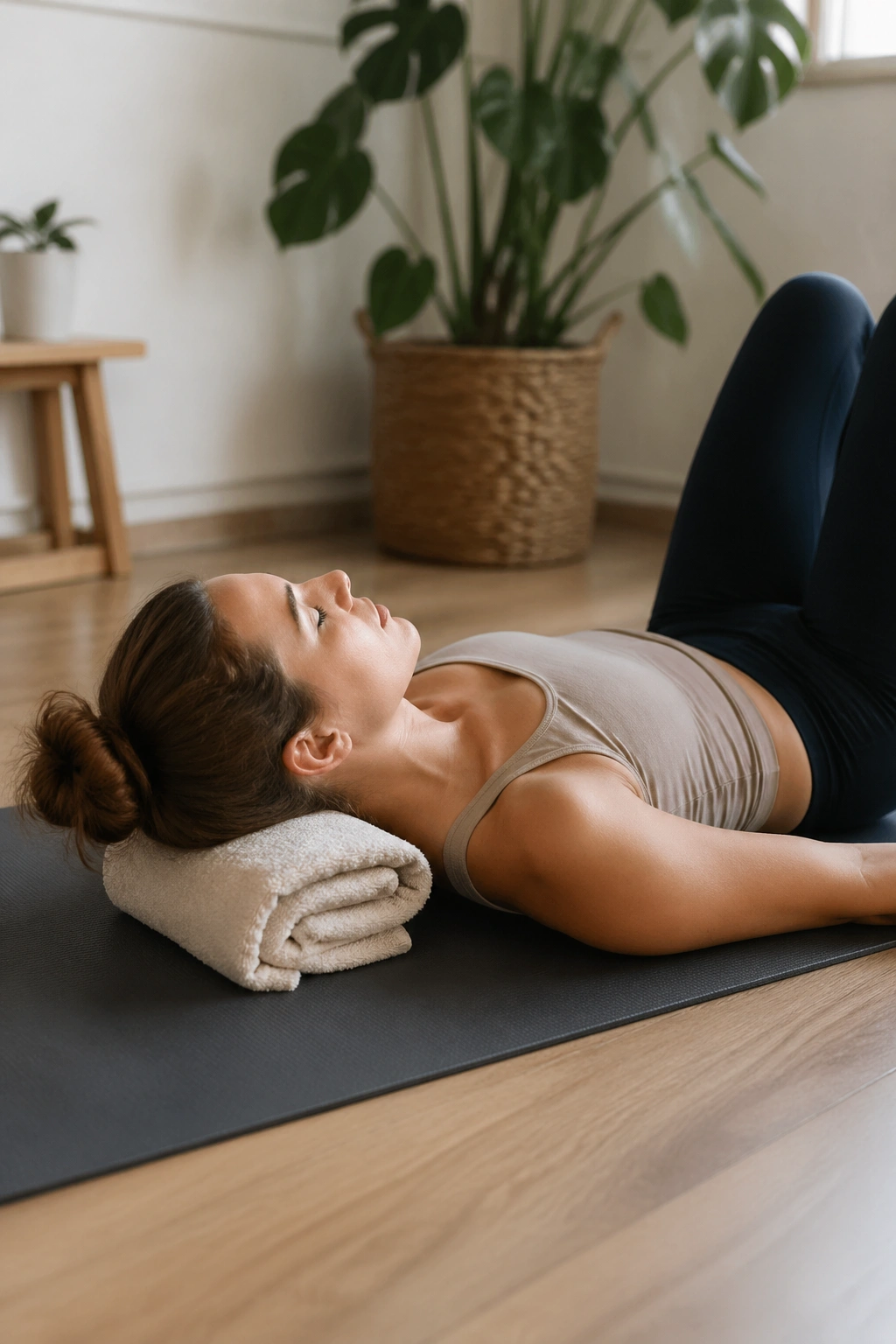
If your neck feels wired after a long day, constructive rest is the place I’d start. It looks plain. It works anyway.
Lie on your back with your knees bent and your feet on the floor, hip-width apart. If the back of your head feels flat and hard against the mat, slide a folded towel under it so the head can settle without the chin popping up. The whole point is to let gravity do the heavy lifting while you stop gripping through the front of the throat.
Breathe into the back of the ribs for 5 to 8 slow breaths. On each exhale, imagine the sides of the neck getting a little wider. Your shoulders may sink a little, and your jaw may unclench without you trying. That is the release you’re after.
This position is especially useful if you get the sort of neck tension that comes with shallow breathing. One minute of this can teach the body more than a lot of forceful stretching. Two minutes is even better.
4. Shoulder Blade Slides That Let the Neck Unclench
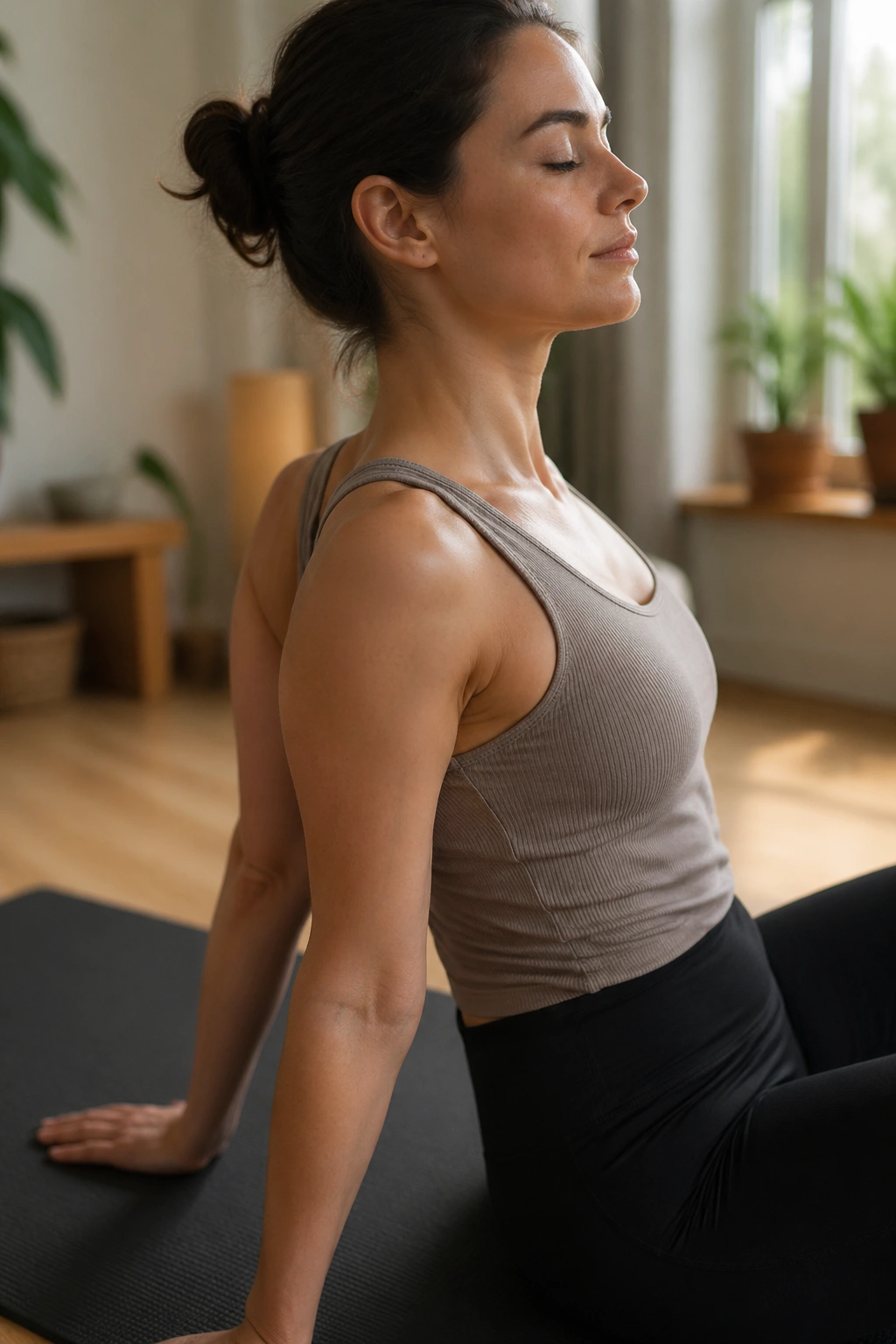
If the upper traps are doing too much, the neck usually follows them into the mess. That’s why a shoulder-blade slide belongs in a Pilates neck stretch routine.
Sit or lie down with your arms resting by your sides. Let the shoulders melt away from the ears, then gently slide the shoulder blades down and slightly around the rib cage, as if you’re putting them into back pockets. The motion is small. If it becomes a shrug, start over.
Keep the Shoulder Blades Quiet
The temptation here is to make it dramatic. Don’t. You want the shoulder blades to glide, not clamp. Pair the movement with a slow exhale and keep the back of the neck long enough that your head stays balanced over your ribs.
- Slide down, not back hard.
- Keep the collarbones wide.
- Relax the jaw.
- Breathe into the sides of the ribs.
- Repeat 6 to 10 times with control.
One useful cue: imagine your shoulders are wearing heavy winter coats and you’re letting the weight hang off them. That image sounds silly, but the body usually gets it fast.
5. Thread-the-Needle with a Soft Neck
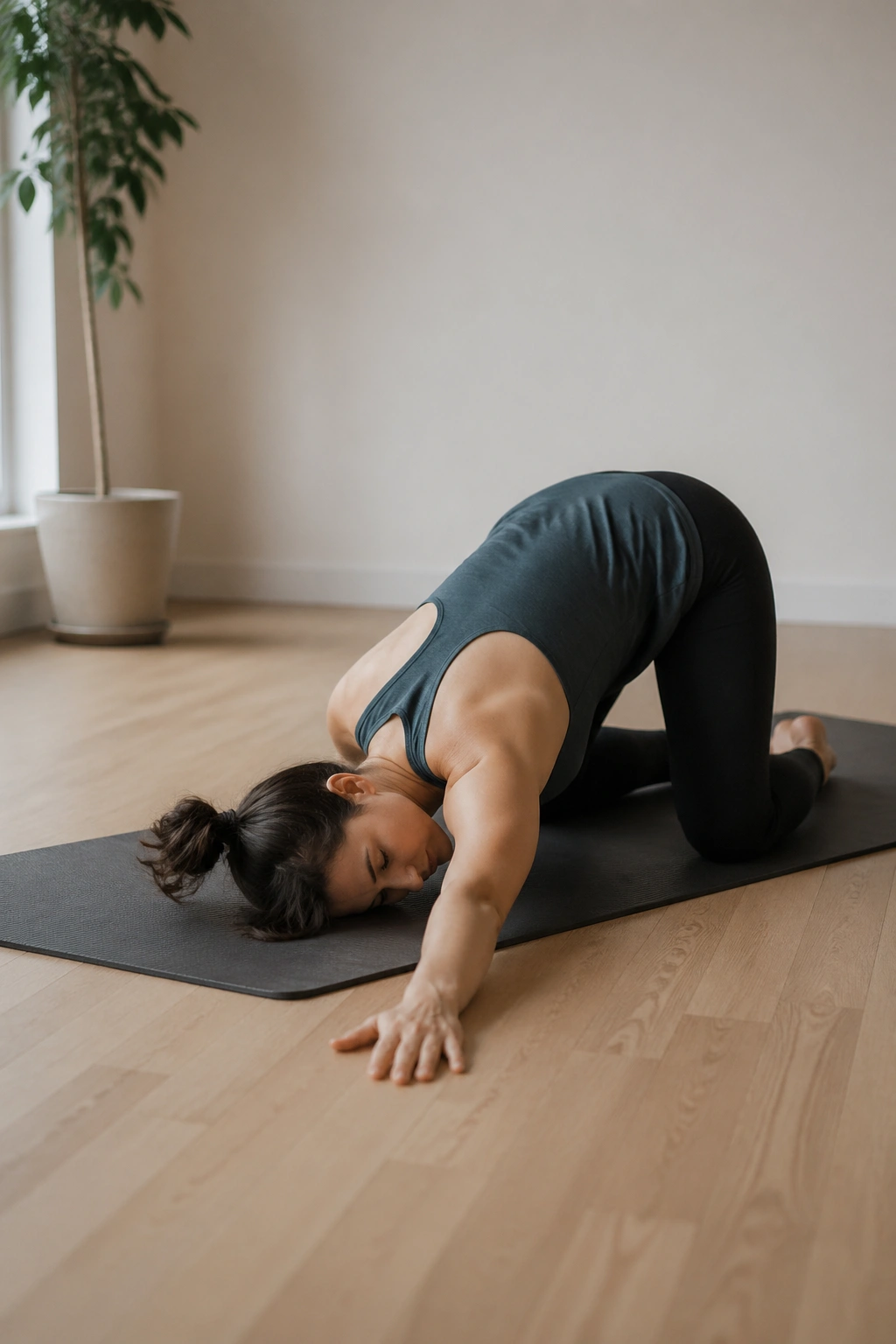
Why include a twist in a neck routine? Because a stiff upper back often forces the neck to overwork.
Thread-the-needle gets the thoracic spine moving, and when the rib cage rotates better, the neck usually stops trying to do all the turning. Start on hands and knees. Slide your right arm under your left arm and let your right shoulder and temple lower toward the mat, or rest your head on a block if the floor feels too low.
The key detail is the neck. Keep it easy. Let the head rest instead of reaching or pressing. Breathe into the back of the ribs for 3 to 5 breaths, then switch sides.
The Thoracic Spine Does the Heavy Lifting
If your neck feels worse in twisty moves, check whether you’re leading with the head instead of the ribs. The rotation should come from the upper back first. The neck just follows.
A lot of people rush this one. They twist, drop, and yank the shoulder through the mat. That’s not the goal. You want a slow unraveling through the upper back, with enough space that the side of the neck can stop guarding.
6. Seated Upper Trapezius Lengthener
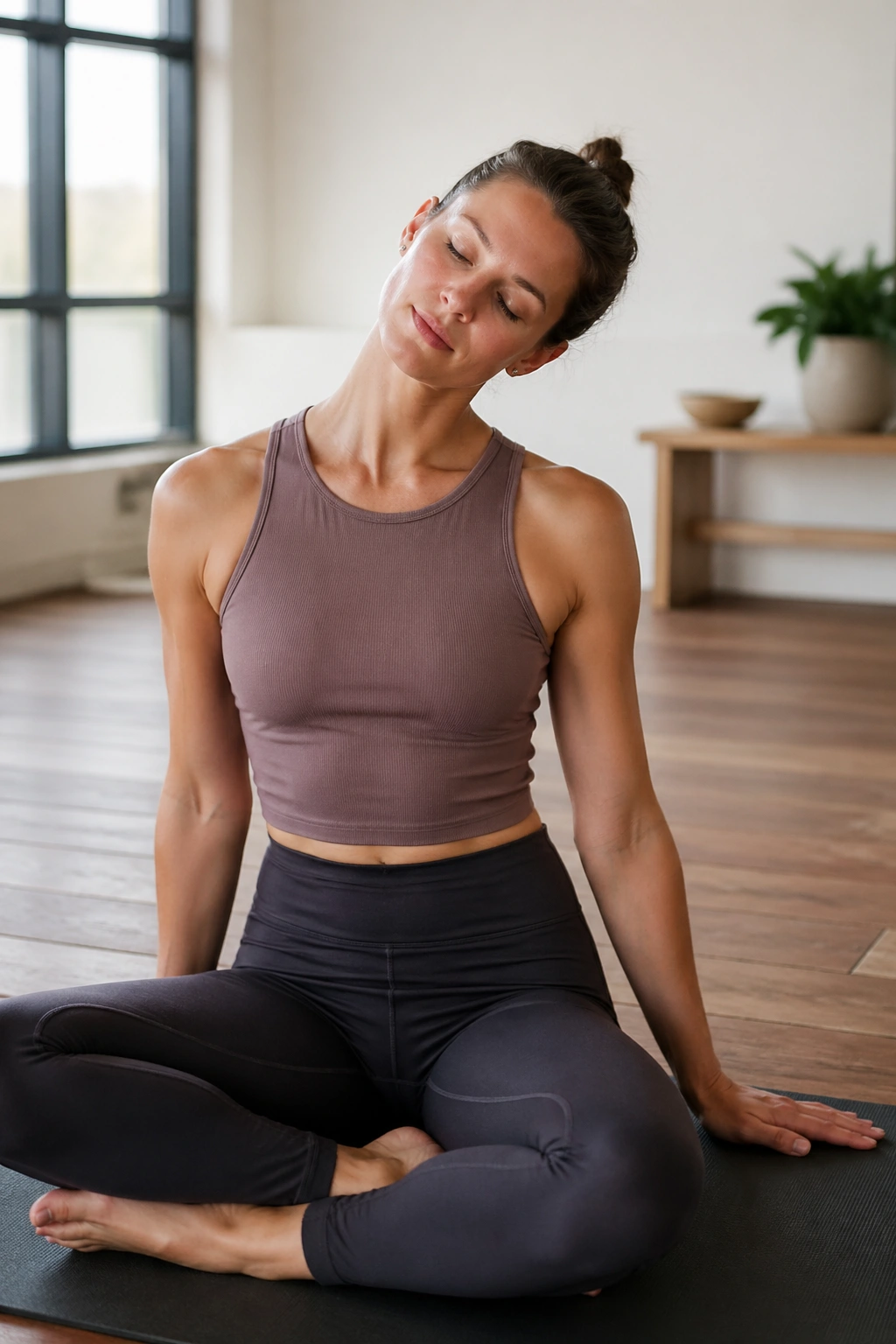
This is the stretch I reach for when the top of the shoulder feels like a clenched fist.
Sit tall on a chair or the edge of a mat. Hold the chair seat with your right hand, or sit on that hand to anchor the right shoulder down. Then let your left ear drift toward your left shoulder. That opens the right side of the neck, especially the upper trapezius.
The important part is the anchor. If the lower shoulder floats upward, the stretch gets muddy and the neck muscles start fighting back. Keep the opposite shoulder heavy, keep the chest soft, and breathe as if you’re trying to fog a window with your exhale.
- Hold for 20 to 30 seconds.
- Repeat 2 to 3 times on each side.
- Ease out if the jaw tightens.
- Stop before the stretch turns into a pinch behind the ear.
One sentence of honesty: if you only have time for one side neck stretch, this is a strong candidate.
7. Levator Scapulae Angle Stretch for Neck Tension Relief
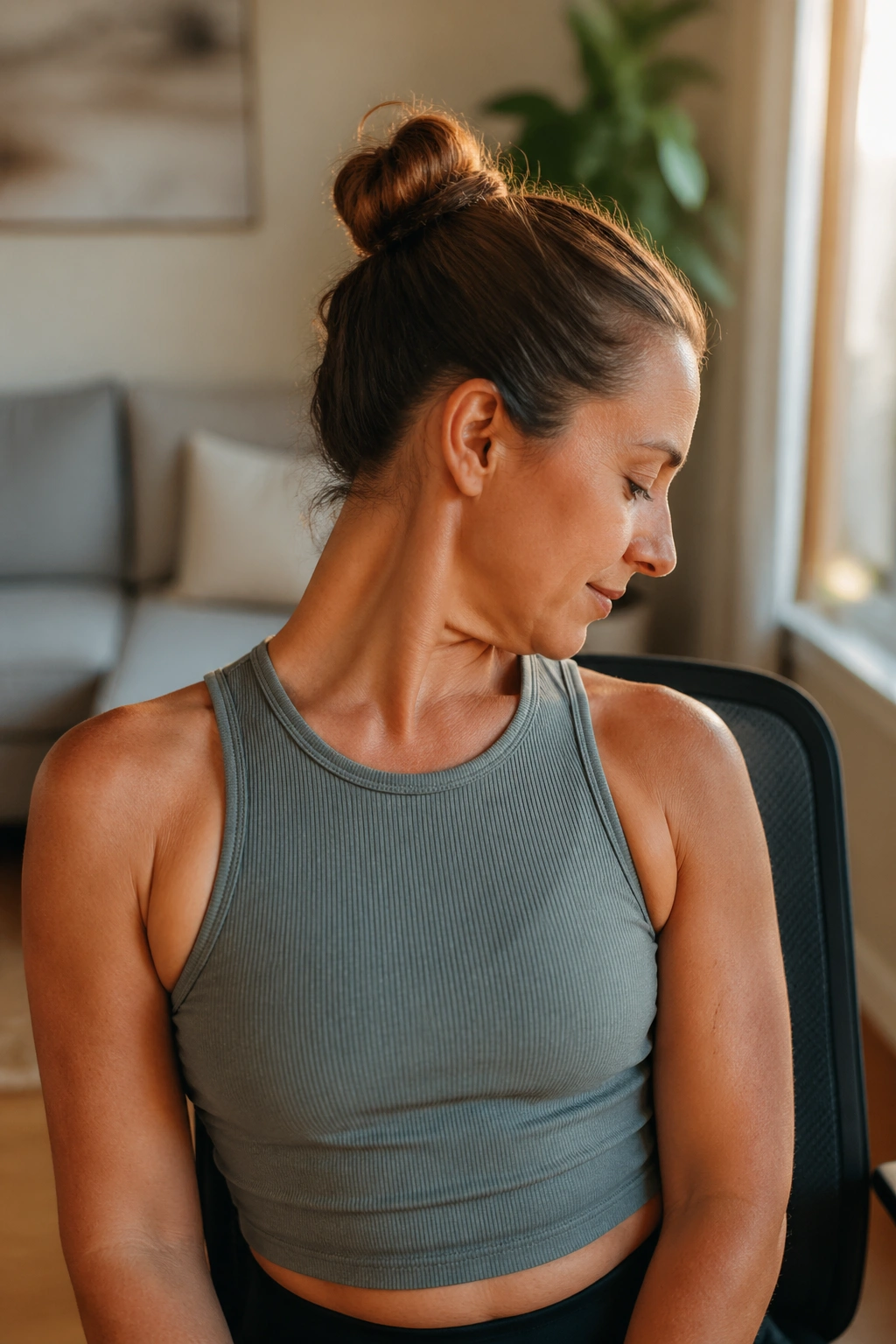
Unlike a straight side bend, this one reaches the high corner of the neck that likes to hide near the shoulder blade.
The levator scapulae runs from the upper neck down toward the shoulder blade, and it gets cranky when you spend too much time with your head turned slightly off-center. To stretch it, sit tall, anchor the shoulder on the side you want to stretch, turn your head about 45 degrees away, then gently nod your nose toward the front pocket on the side you’re stretching.
Find the Angle
For the right side, turn your nose a little left, then tilt it down toward the left front pocket. That’s the spot. You should feel a line from the back corner of the neck toward the top inner shoulder blade. If you feel a pinch in the front of the throat, come back out of it.
Hold for 2 or 3 slow breaths, then release and try the other side. This one is easy to overdo, so stay modest. A mild pull is enough. A hard pull usually means the shoulder is creeping up or the head is dropping too far.
Use this stretch after long desk work or after overhead arm work. It does not need much time to make itself useful.
8. Mermaid Side Bend, a Classic Pilates Neck Stretch
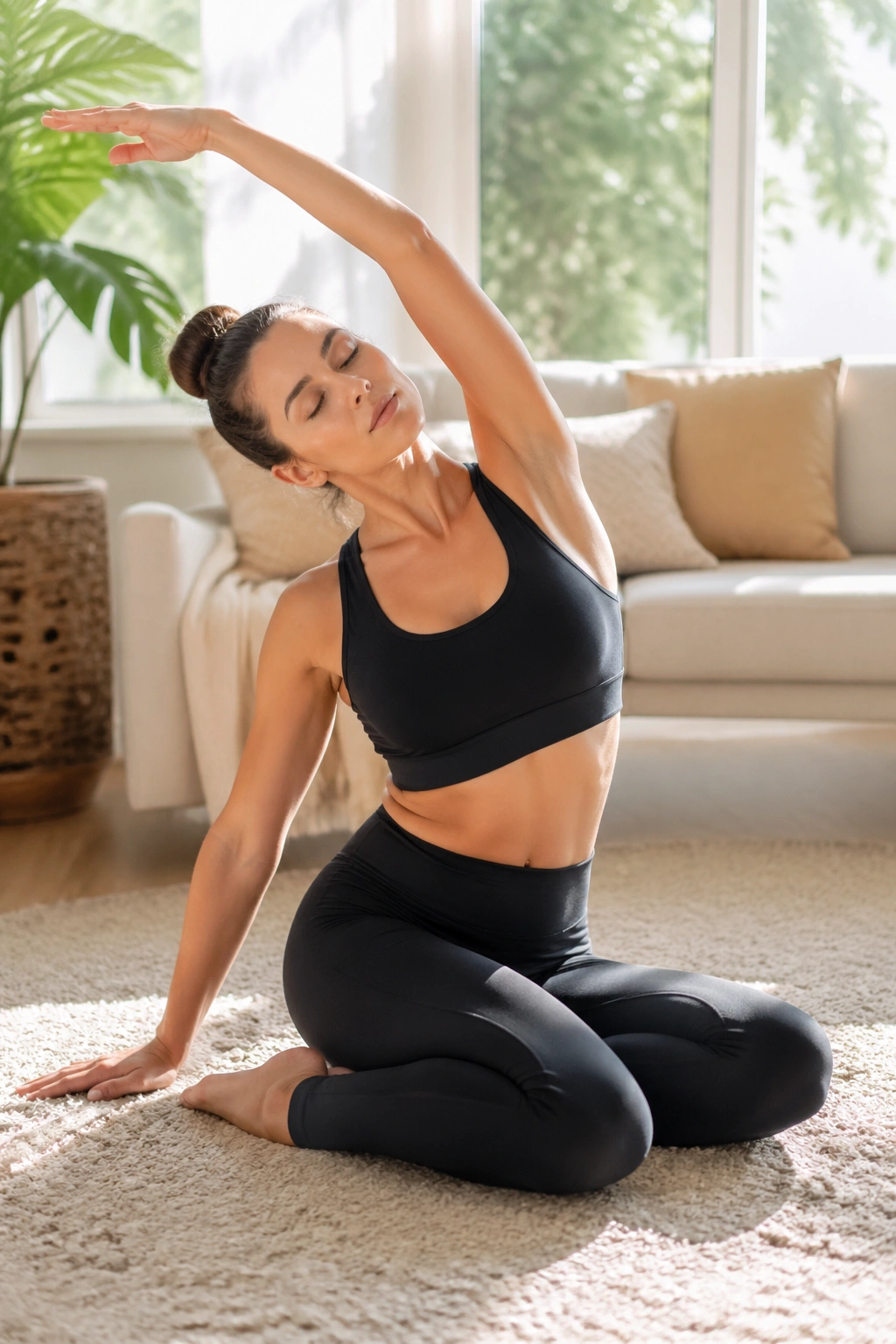
Mermaid is one of those movements that looks elegant but earns its keep in the side body and neck. I like it for people whose tension lives all the way from the rib cage to the jaw.
Sit with both legs folded to one side or in whatever seated shape feels kind to your hips. One hand stays down for support while the other arm reaches up and over. The stretch should travel along the side of the body first, then gently into the neck as the ribs open and the shoulder stays down. If the shoulder rides up near the ear, the movement gets noisy fast.
Breathe into the upper ribs on the open side. That’s the part people skip. It matters. The side neck and the intercostals tend to relax together, and when the ribs finally move, the neck doesn’t have to work so hard to make space.
No need to collapse. Reach first, then lengthen. The feeling should be long and spacious, not folded and squashed.
9. Wall Angels with a Gentle Chin Tuck
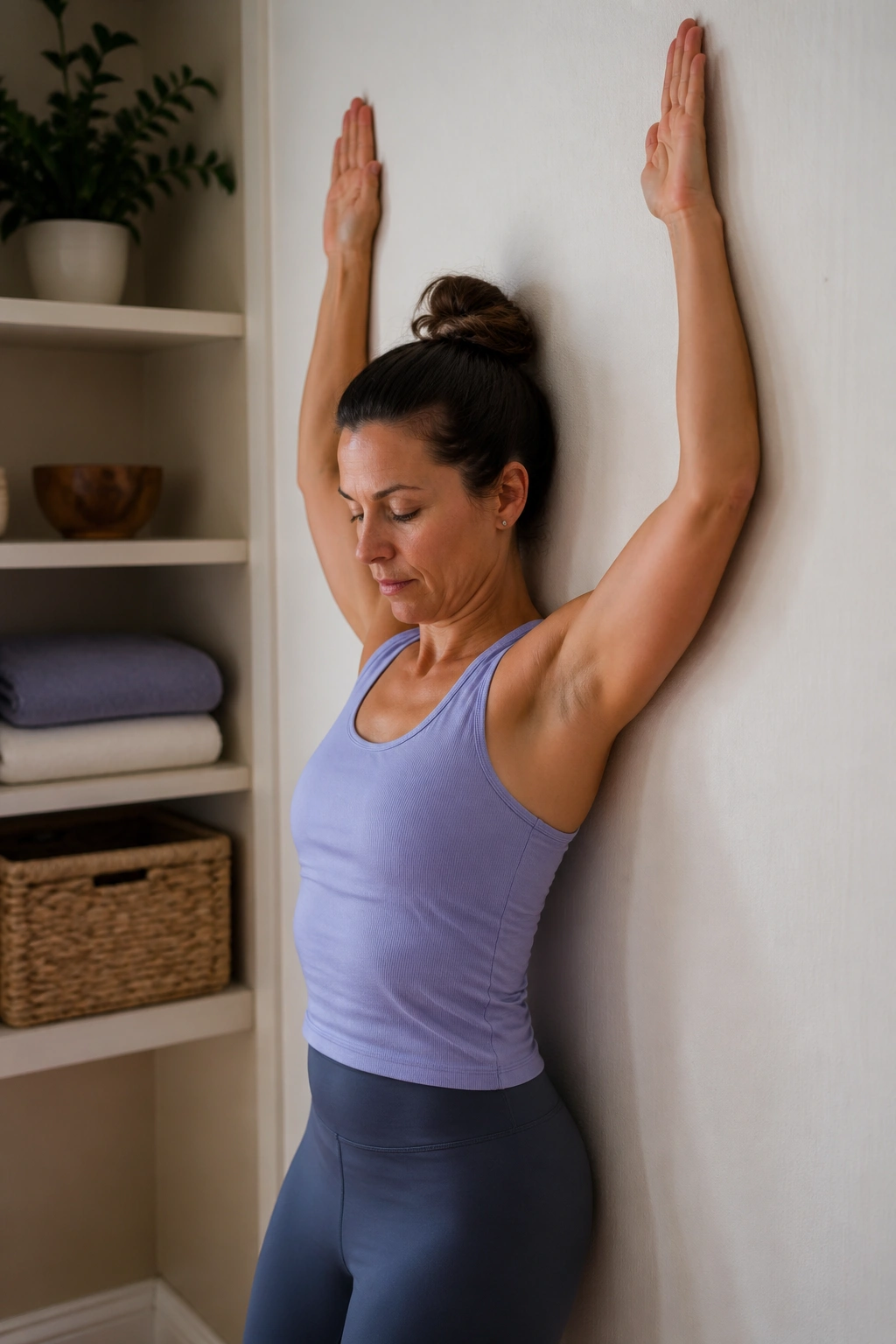
Wall angels look like a shoulder exercise. They are also a neck exercise, which is one reason I keep them around.
Stand with your back against a wall, feet a few inches away, and the back of your head lightly touching the surface if that’s comfortable. Bring the chin in just a little, as if you’re making the back of the neck tall. Then slide the arms up and down the wall slowly, keeping the ribs from flaring out.
What Not to Do
Do not force the lower back flat so hard that you lose your breath. Do not push the chin down hard. And do not let the neck jut forward when the arms rise. That last one is sneaky. The body will try it without warning.
A clean wall angel helps the shoulder blades glide and teaches the head to sit over the ribs instead of drifting ahead of them. If the back of the skull cannot touch the wall comfortably, that tells you more than the stretch itself. Work smaller and keep the ribs calm.
This is a good one for people who feel neck tightness every time their arms go overhead. Which is a lot of people, honestly.
10. Chest Opener with Interlaced Fingers
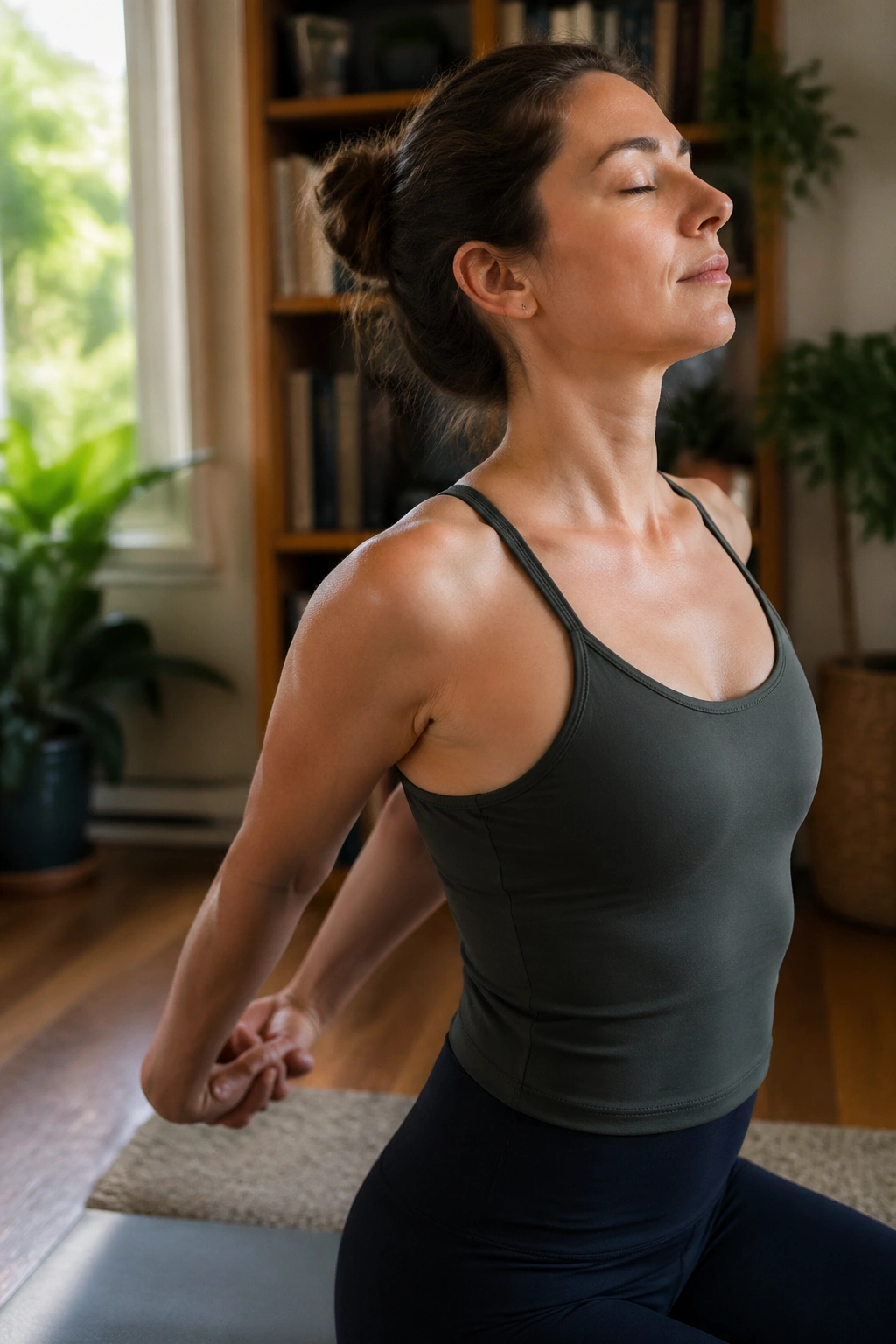
What’s happening in the front of the body matters a lot more than people want to admit.
If the chest stays tight, the shoulders drift forward, and the neck keeps pulling back to compensate. That’s why an interlaced-finger chest opener can take pressure off the cervical spine without touching the neck directly. Stand or kneel, lace the fingers behind the back, and let the arms lengthen gently away from the body.
Why the Front of the Chest Matters
The stretch should live across the collarbones, the front of the shoulders, and the upper chest. If you squeeze the shoulder blades together too hard, you miss the point and start pinching the low neck instead. Keep the lift modest and the sternum soft.
Take 3 or 4 slow breaths here. On each exhale, imagine the collarbones widening from the center outward. That tiny change often makes the neck feel less crowded.
This is a good reset after typing, driving, or carrying a bag on one shoulder. Small habit, big payoff.
11. Half-Kneeling Arm Reach and Rib Lift
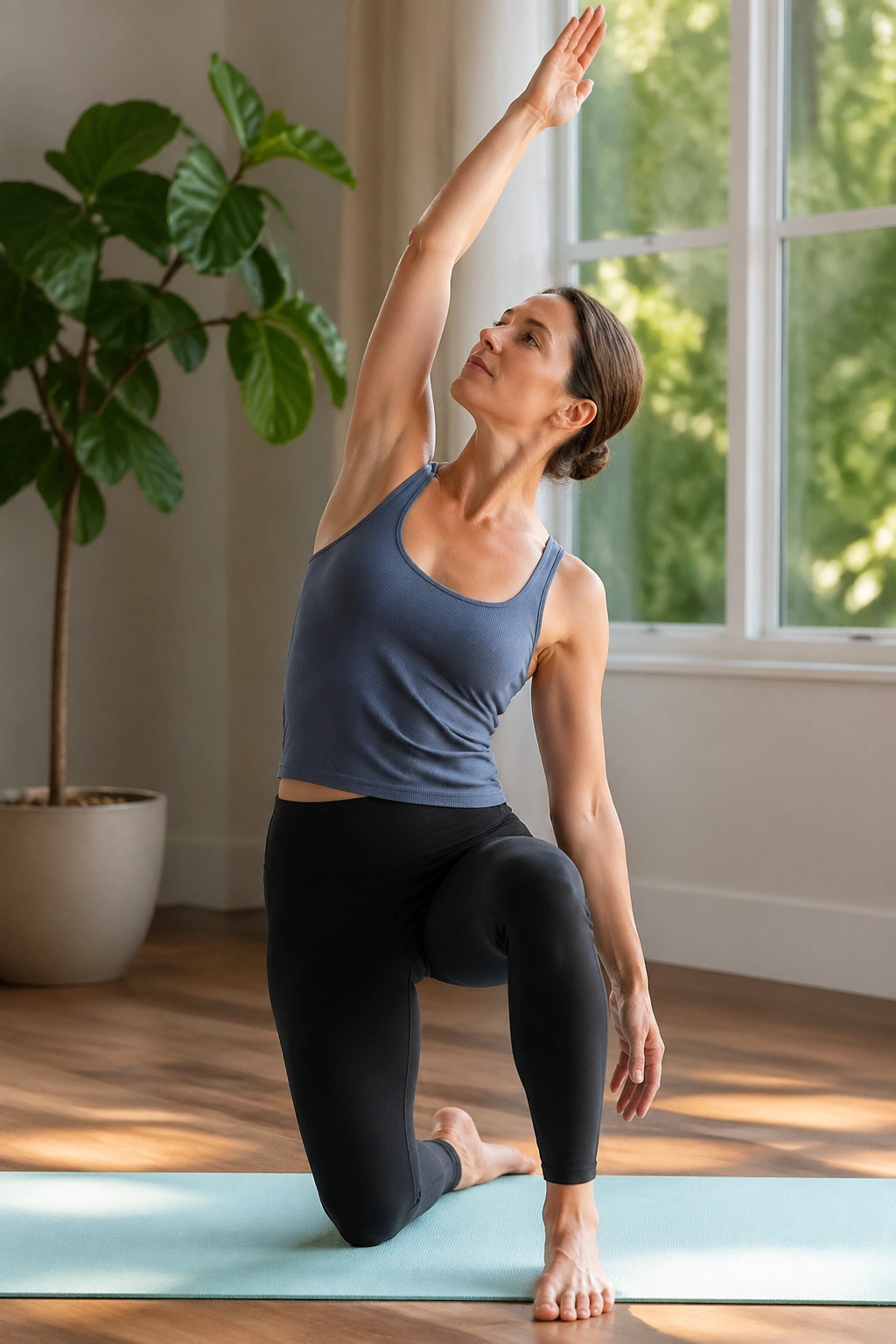
If your neck clenches every time your arms go overhead, this one is worth keeping.
Start in a half-kneeling position, one knee down and the other foot planted. Reach the arm on the kneeling side up toward the ceiling, then let the same-side ribs lift just enough to create space along the side of the neck. The trick is not to shrug. You’re reaching long, not crawling into your ear.
A half-kneeling stance gives you a stable base, which makes it easier to notice when the upper traps take over. Keep the down arm relaxed, the pelvis square, and the gaze soft. That soft gaze matters more than people think. A hard stare usually turns into a hard neck.
- Reach 3 breaths high.
- Keep the shoulder away from the ear.
- Let the side ribs expand.
- Switch sides and compare.
The two sides often feel different, and that information is useful. One side usually tells the truth faster.
12. Supported Swan Prep to Unload the Front of the Neck
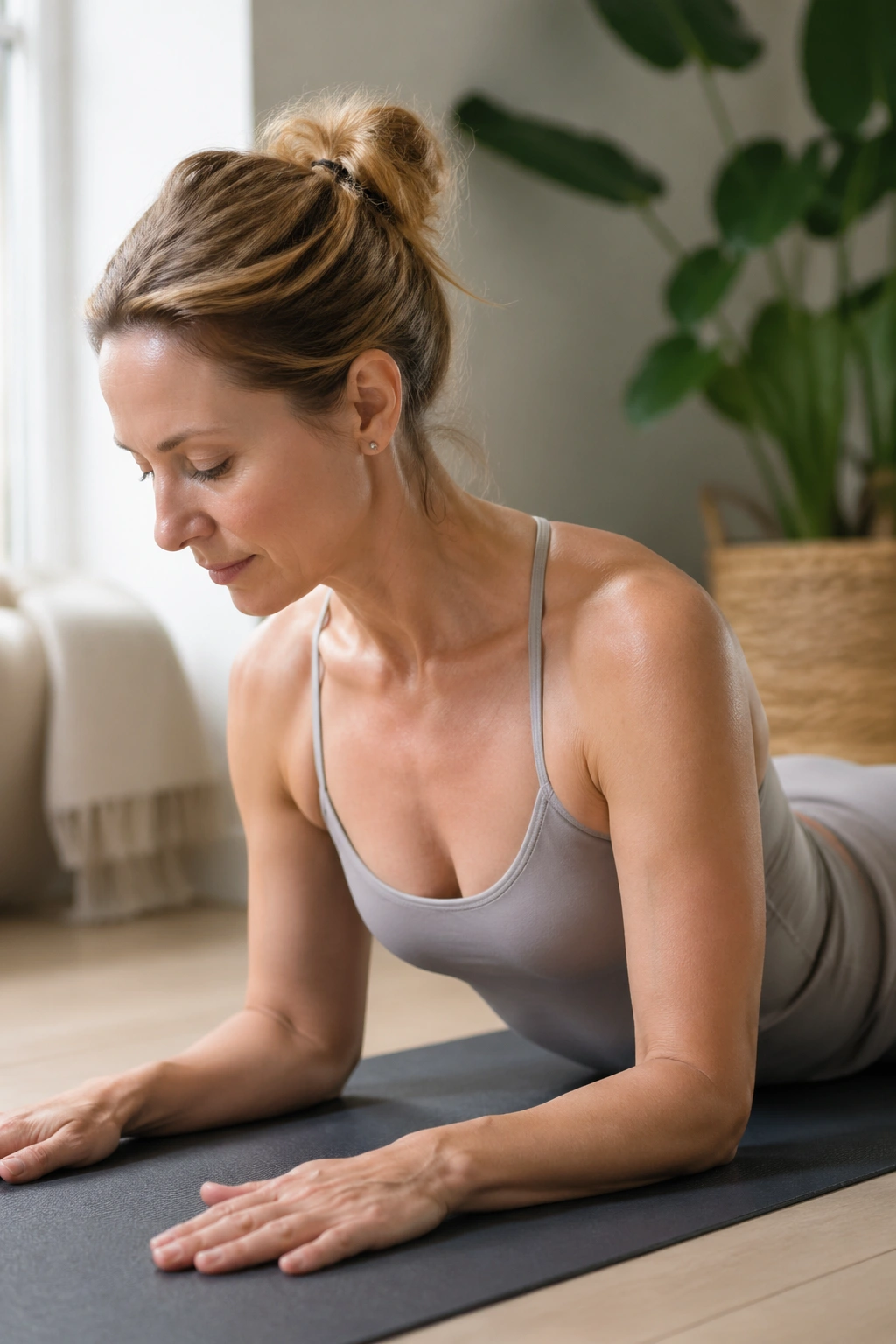
Unlike a full backbend, this version keeps the neck quiet.
Lie on your stomach with your forearms on the mat and elbows under the shoulders. Press gently through the forearms and lift the chest only a few inches. The sternum comes forward, the shoulder blades slide down the back, and the back of the neck stays long. Your gaze stays down and slightly ahead, not straight up at the ceiling.
This stretch helps when the front of the neck feels short because the chest has collapsed and the head has been carrying itself too far forward. You’re giving the front of the torso a better shape, which lets the neck stop bracing so hard.
A lot of people overdo this one. They jam the chin up and make the back of the neck angry. Don’t. The lift should be small enough that you could still breathe smoothly and speak in a normal voice.
If the low back pinches before the chest opens, lower down. The neck can only relax when the rest of the chain stops fighting.
13. Diagonal Look-Away Stretch for the SCM
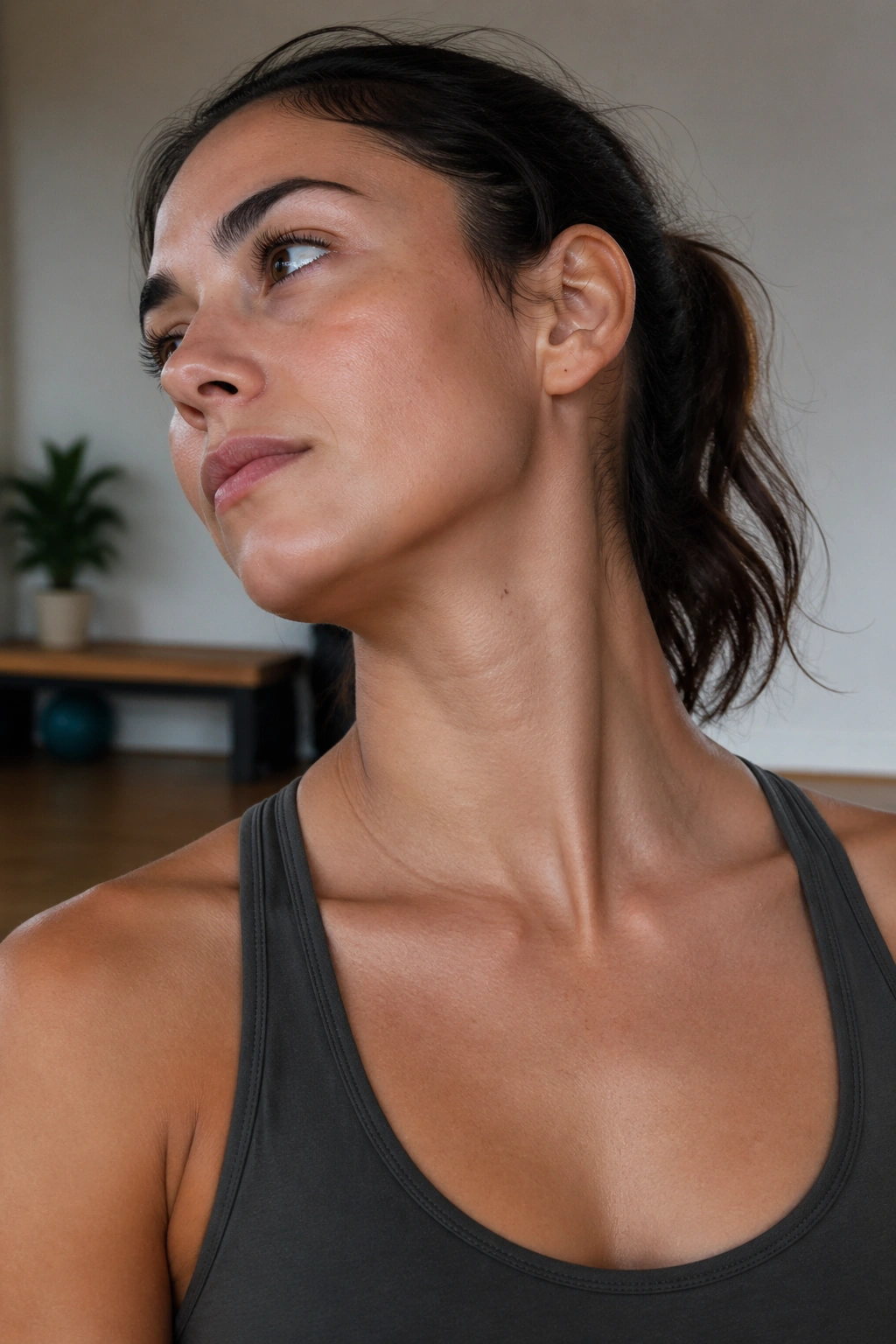
The sternocleidomastoid, or SCM, is the long strap muscle at the front and side of the neck. When it gets tight, it can make the throat feel crowded and the head feel slightly stuck.
To stretch it, sit or stand tall. If you want to stretch the right SCM, turn your face a little left, then lift your chin a little and look toward the upper left corner. You’re trying to lengthen the front-right side of the neck. Keep the movement small. The SCM responds to precision, not drama.
One Side at a Time
Do not throw the head back. That just jams the joints. You want a diagonal line, not a neck crane. A light stretch here often feels better than a big one because the front of the neck is sensitive and easy to overwhelm.
Hold for 2 breaths, come out slowly, and compare sides. If one side feels much tighter, that’s worth noting. A lot of people can feel the stretch all the way into the chest near the collarbone, which is a good sign you’ve found the right angle.
Use this one sparingly. It’s effective, but it’s not the kind of stretch you force.
14. Child’s Pose with Forehead Support
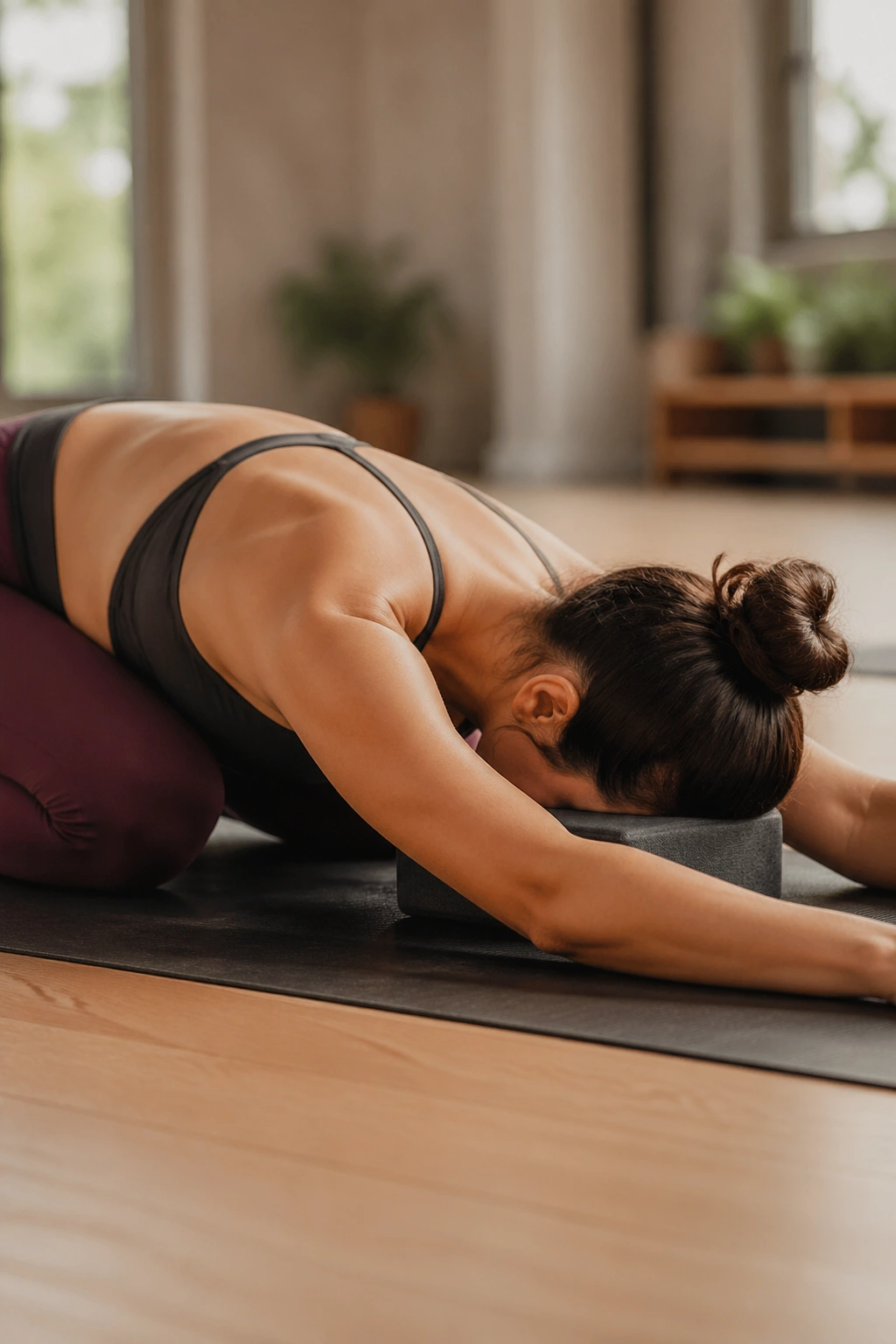
This is the stretch that tells the nervous system to stop pacing.
Kneel, spread the knees as wide as they need to be, and walk the hands forward. Rest the forehead on the mat, a block, or stacked fists if the floor sits too low. From there, let the shoulders spill away from the ears and let the back of the neck go long. You are not reaching hard. You are yielding.
A forehead prop changes everything for people whose necks hate hanging freely. The support makes it easier to relax the jaw, soften the eyes, and breathe into the back body without strain. If your knees complain, place a folded blanket under them. If your hips complain, open the knees wider.
That’s the whole charm of this one. It can be adjusted until it feels welcoming instead of punitive.
Take 5 or 6 slow breaths and notice whether the neck feels wider when you rise. If the answer is yes, you found a keeper.
15. Constructive Rest with Jaw and Tongue Release
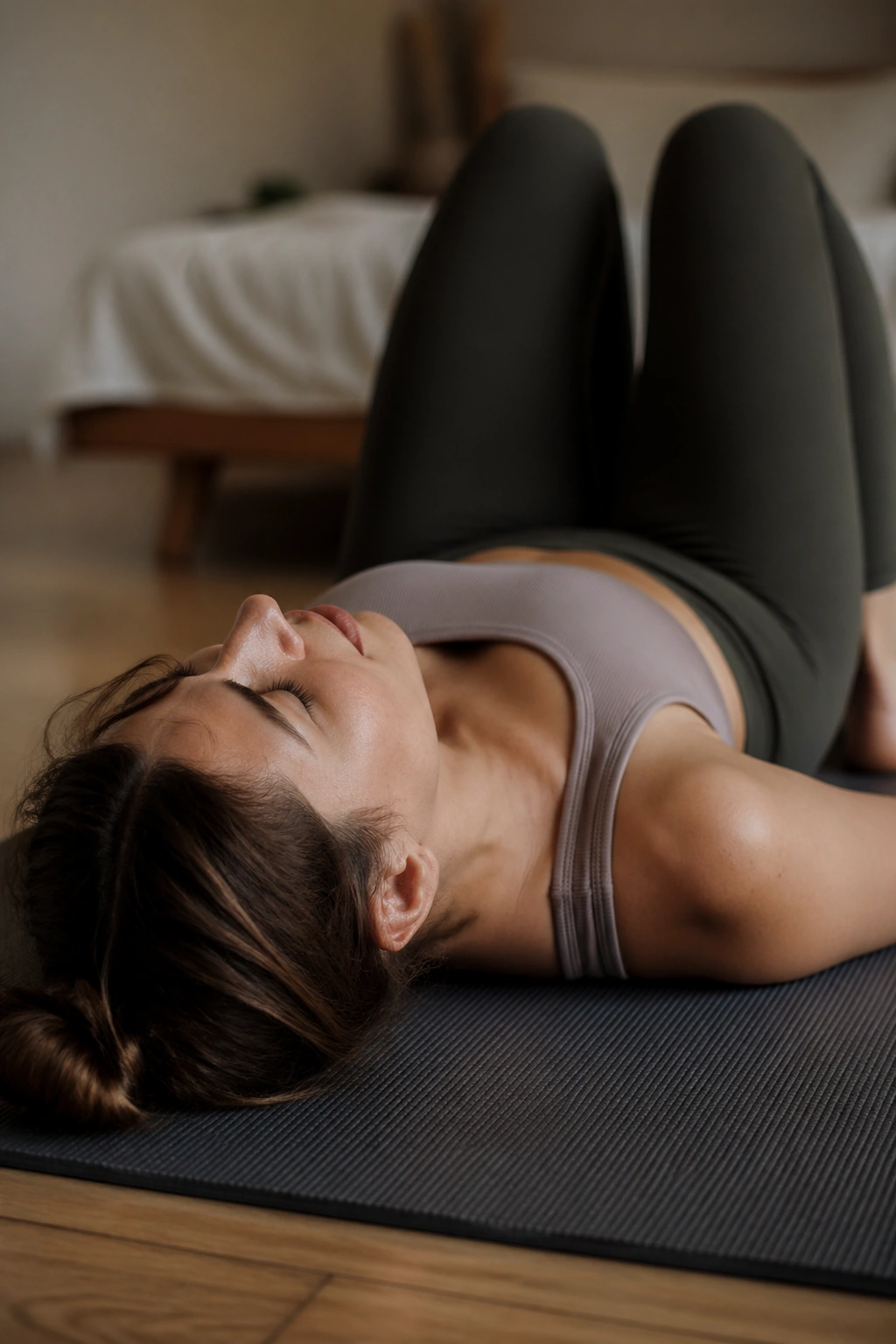
The neck and jaw act like gossiping neighbors. One gets tense, the other follows.
Lie back in constructive rest again, or keep the same shape from earlier and add a little more attention to the face. Let the teeth separate slightly. Rest the tongue loosely on the floor of the mouth, not pressed hard to the roof. Soften the space behind the eyes. Then breathe as if the exhale were sliding down the throat and out through the collarbones.
A Two-Minute Reset
- Lie with knees bent and feet grounded.
- Let the back of the head be heavy.
- Keep the jaw loose, teeth apart.
- Breathe in for 4, out for 6.
- Stay for 6 to 10 breaths.
This one is gentle enough to use at the end of a workout or before bed. It also helps when the neck feels tight but the real problem is clenching. The face often needs permission to stop holding itself together.
I like this more than people expect. It looks nearly nothing, and then half the body starts to unwind.
Final Thoughts
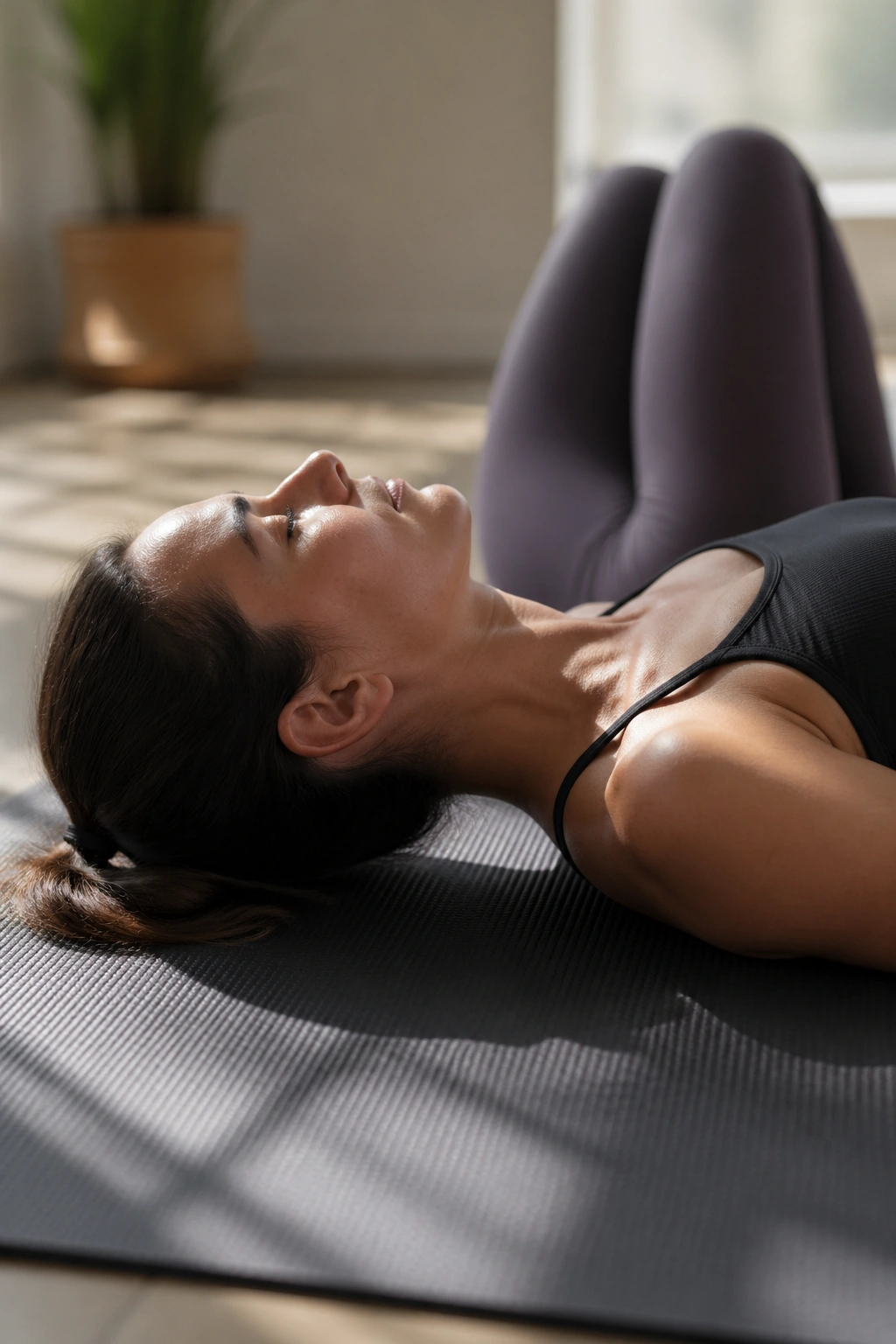
The best Pilates neck stretches usually look small from the outside. That’s not a flaw. It’s the point. A tiny chin nod, a careful side bend, a supported twist, or a quiet chest opener can change the way the whole upper body carries itself.
If you want the fastest relief, pick the stretch that matches where the tension lives. Back of the neck? Start with chin nods. Side of the neck? Use the upper trapezius or levator scapulae work. Front of the neck and jaw? Give constructive rest a real chance.
The people who get the most from this kind of work are the ones who stop forcing it. Keep the range modest, breathe slowly, and let the shoulders stay out of the story. That’s where the relief tends to show up.
