



Evening Pilates workouts for stress relief work best when they feel almost suspiciously simple. If your shoulders are riding up near your ears, your jaw is locked, and your brain keeps replaying one annoying conversation from the day, more intensity is usually the wrong answer. You need slow breathing, clean spinal motion, and a little bit of control.
Pilates has always made sense to me at night for that exact reason. It does not ask for noise, speed, or a heroic mood. It asks you to notice your ribs, steady your pelvis, and move with enough precision that your body stops bracing for no reason.
That matters more than people think. Stress tends to show up in the places that do the most quiet gripping: the neck, the hip flexors, the low back, the upper belly. Once those spots start guarding, even a simple lie-down can feel busy. A good Pilates sequence gives those muscles a new job for a few minutes, and that job is not “hold everything together all by yourself.”
The best evening sessions are usually the ones that begin with breath and end with stillness. A little spine movement helps, too. So does anything that lengthens the front of the body after a day of sitting, driving, scrolling, standing in lines, or carrying a bag on one shoulder. The first place to start is on your back, with one hand on your ribs and one long exhale.
1. The 90-Second Breath and Rib Reset
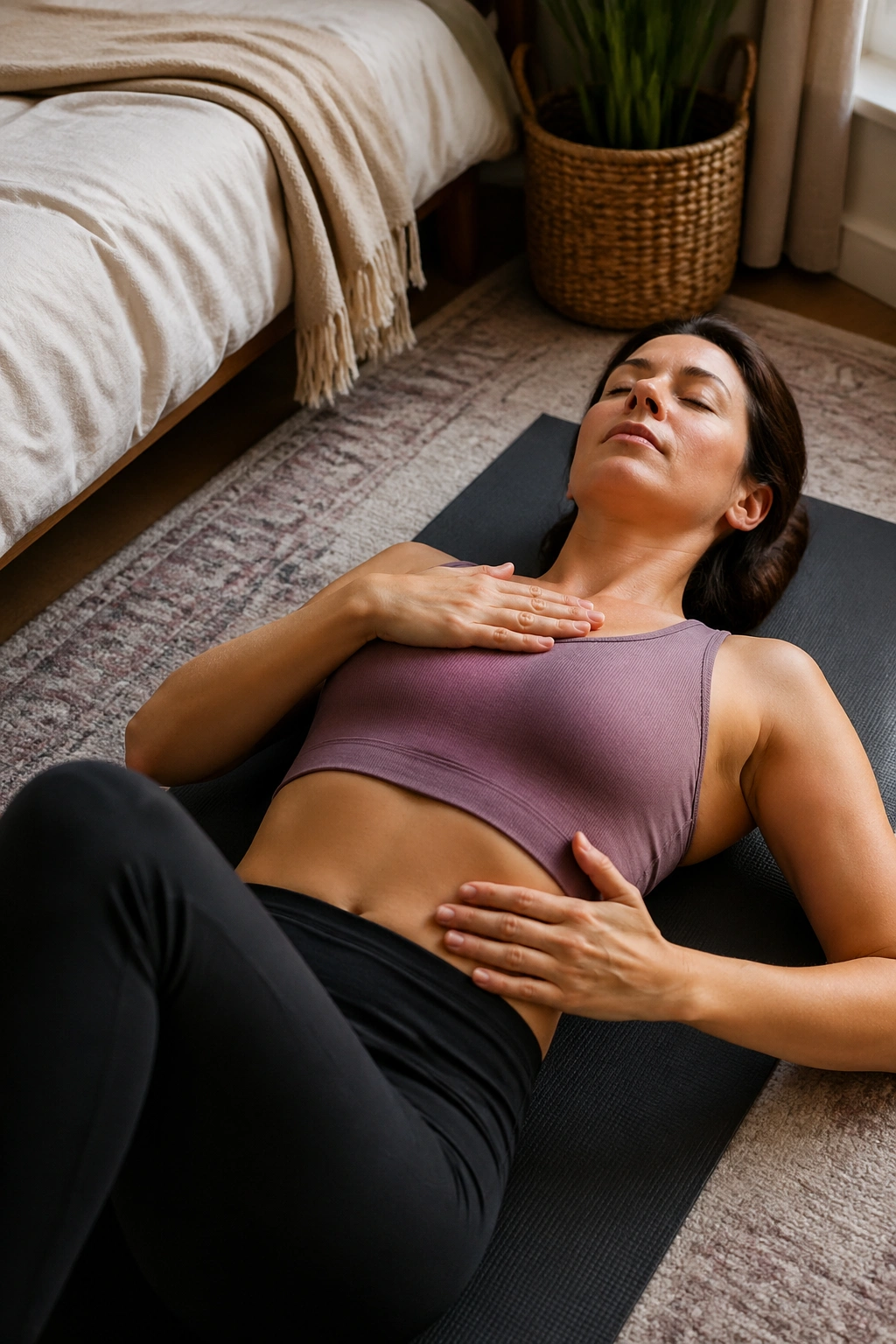
The whole point here is to tell your body that the day is over without making a big speech about it. Lie on your back, bend your knees, and let your feet rest hip-width apart on the mat. Put one hand on your chest and the other on the side of your ribs, then breathe so the lower hand feels the ribs widen and soften.
Why the long exhale works
The exhale is the part that changes the mood. A longer out-breath gives your torso a chance to stop bracing, and that matters when your shoulders have been stuck in a lifted position for hours. Keep it easy. You are not trying to win a breathing contest.
- Inhale for 3 to 4 counts through the nose.
- Exhale for 5 to 6 counts and feel the ribs narrow.
- Repeat for 6 to 8 rounds.
- Keep your jaw loose and tongue resting softly.
- If lying flat feels too open, place your calves on a chair.
Tiny tip: let the inhale happen quietly. Loud, gulping breaths usually mean the neck is taking over.
Add a slow arm reach if you want a little more release. Float both arms overhead on the inhale, then sweep them back down on the exhale. Nothing dramatic. The arms are just there to give the rib cage something to organize around. That is enough to start the shift from wired to settled.
2. Pelvic Clock on the Mat
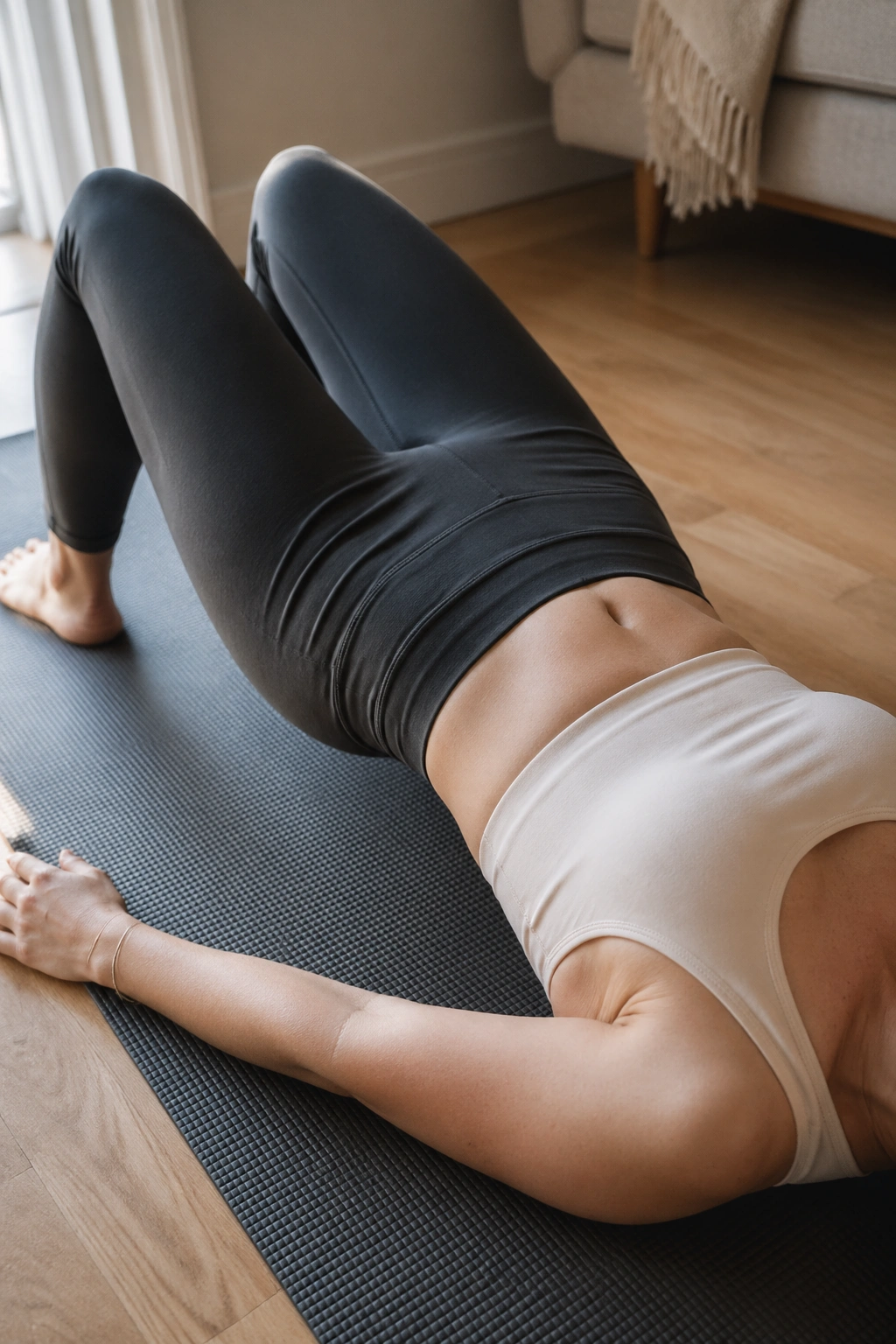
Your lower back does not need a lecture at night; it needs motion that is small enough to feel safe. That is why the pelvic clock is one of the most useful evening Pilates drills. You imagine your pelvis as a clock face, with 12 toward your ribs and 6 toward your tailbone, then tip and circle the pelvis slowly without pushing into a hard arch.
Start with your knees bent and feet grounded. Gently tip the pubic bone toward the ceiling to find 12 and 6, then ease the hips side to side toward 3 and 9. After that, make the circle tiny. Seriously tiny. If the movement is big enough for your shoulders to roll around, it is too much for this time of night.
A nice pattern is 3 circles clockwise and 3 counterclockwise, then a short pause. Feel for the spots where your low back wants to grab. Don’t force those edges. Instead, make the circle smaller and smoother. The goal is to give the spine a little motion without asking the muscles to perform.
After a long day of sitting, this one often feels like a sigh from the waist down. That is the right feeling. Not stretchy. Not flashy. Just a quiet reminder that the pelvis can move in more than one direction.
3. Bridge and Roll Flow
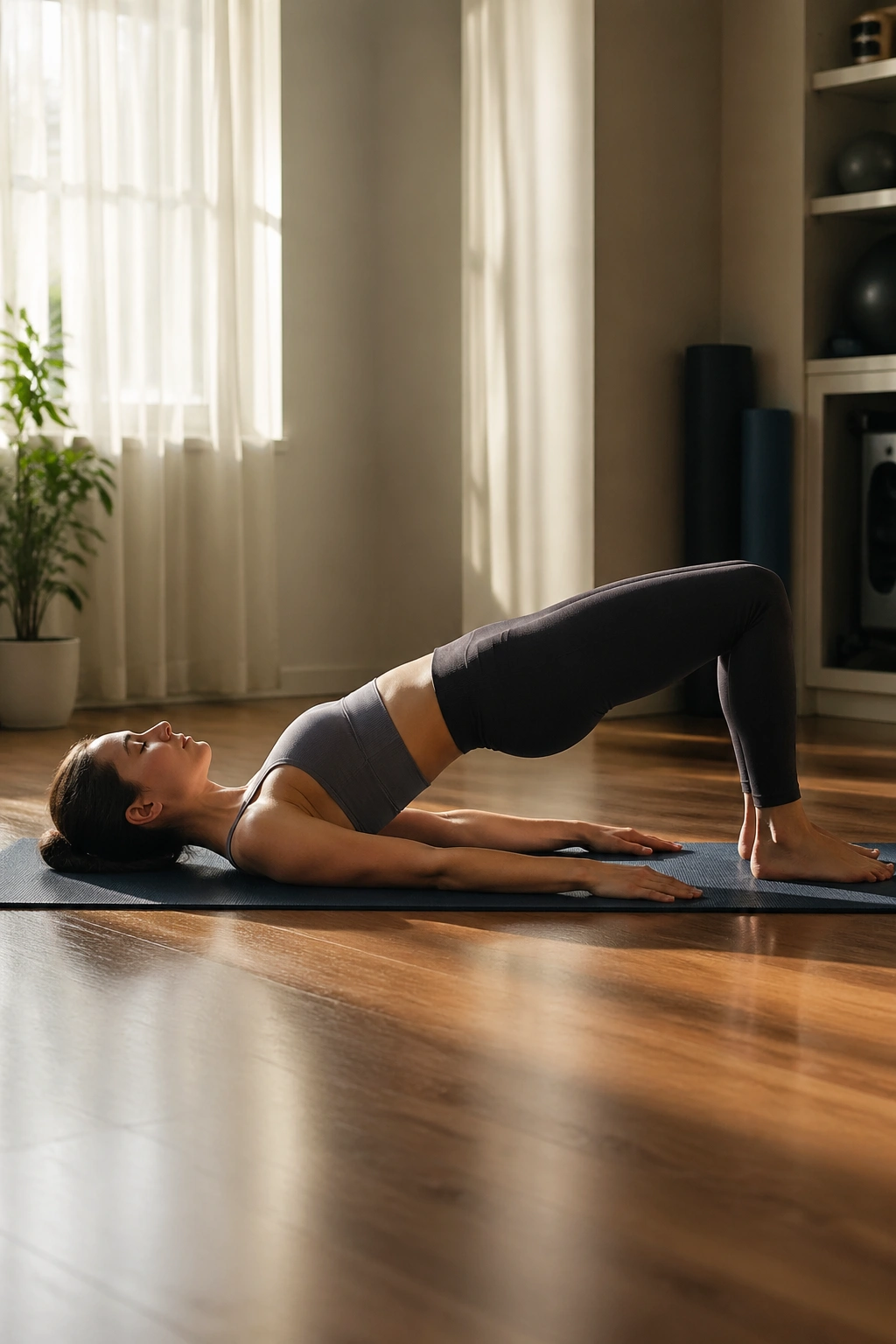
A lot of people think they need to lie still to recover from the day. I think a slow bridge often works better. It gives the hamstrings, glutes, and spinal muscles something simple to do, and the controlled roll down can feel like uncoiling a piece of wire.
Lift your hips on an exhale, one vertebra at a time, until you reach a comfortable bridge. Hold for a breath or two, then roll back down with the same kind of control. If you like a more deliberate pace, pause at the top and think about the front ribs softening instead of jutting forward.
How to keep it soft
Keep the movement smooth, not high. A small bridge with a clean spine does more for stress relief than a big arch with clenched hamstrings. If the backs of your thighs cramp, walk your feet a little farther away from your seat and lift less high. That tiny adjustment helps a lot.
A good dose is 6 to 8 slow bridges. On the last one, stay up for 2 full breaths and then roll down bone by bone. The slow descent is half the point. It gives your body a controlled ending instead of a drop.
This is one of those workouts that can feel almost too plain while you’re doing it. Then you stand up and notice your back is less noisy. That is the payoff.
4. Cat-Cow with Thread-the-Needle
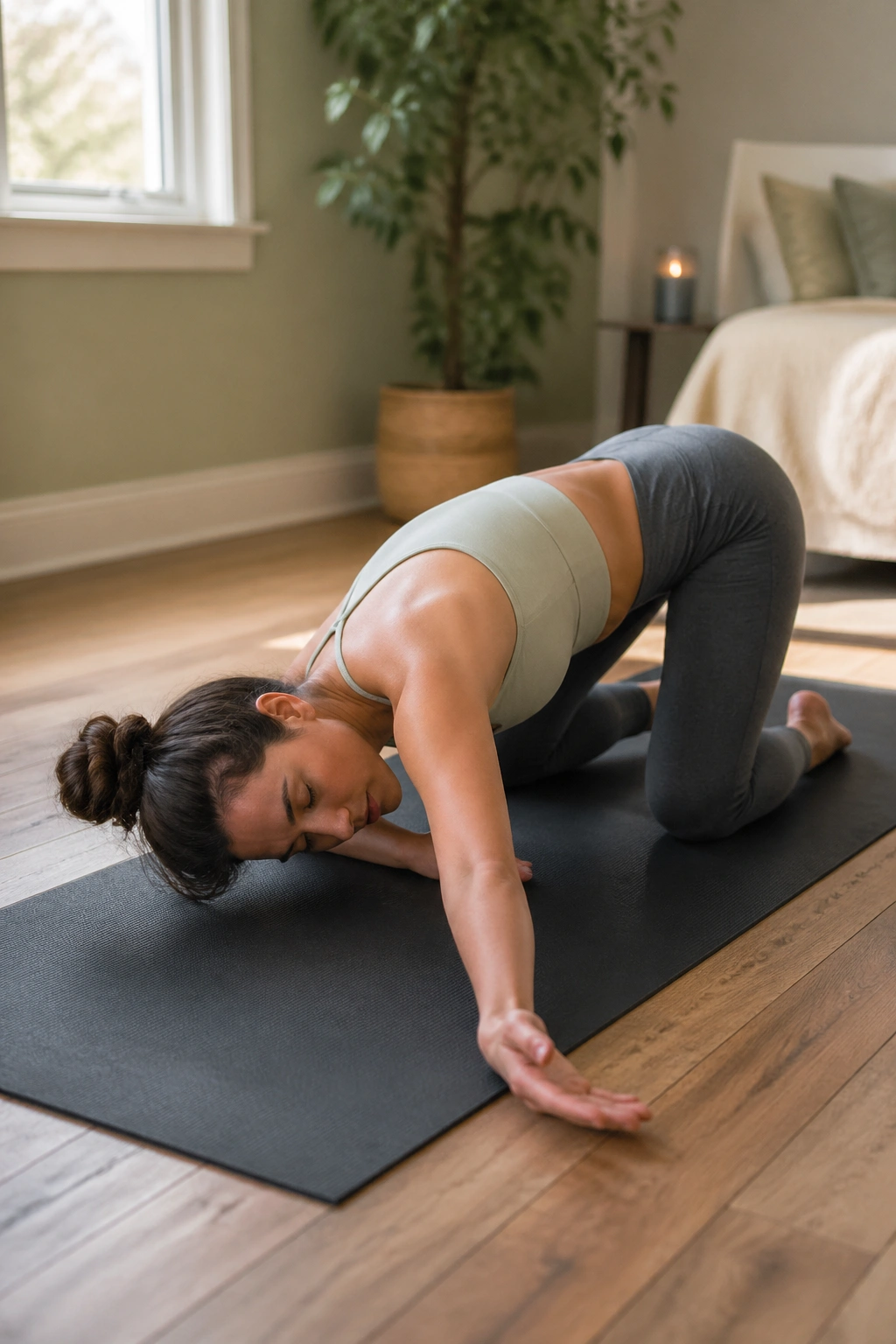
You can often hear the shoulders before you feel them. After screens, driving, or a day of hunching over a desk, the upper back starts to move like it has rust on it. Cat-cow is the obvious answer, but adding a few thread-the-needle reaches makes it a better evening reset.
Come onto hands and knees, then slowly round and lengthen your spine with the breath. Move only as far as you can keep the motion smooth. After 4 or 5 cat-cows, slide one arm underneath the other, rest the shoulder and temple lightly toward the mat, and breathe into the back ribs.
- Do 4 to 5 cat-cows.
- Add 3 thread-the-needle reaches per side.
- Keep the hips stacked over the knees.
- Put a folded towel under the knees if the floor feels hard.
- If wrists complain, come down to forearms.
The thread-the-needle part is what makes this feel less like a warm-up and more like a release. It opens the space between the shoulder blade and rib cage, which is where a lot of tension likes to hide. The twist stays mild. That is a feature, not a flaw.
When you come back up after each reach, take one breath before doing anything else. That pause matters. It keeps the whole thing from turning into exercise-for-exercise’s-sake, which is the last thing an evening body needs.
5. Side-Lying Clam Series
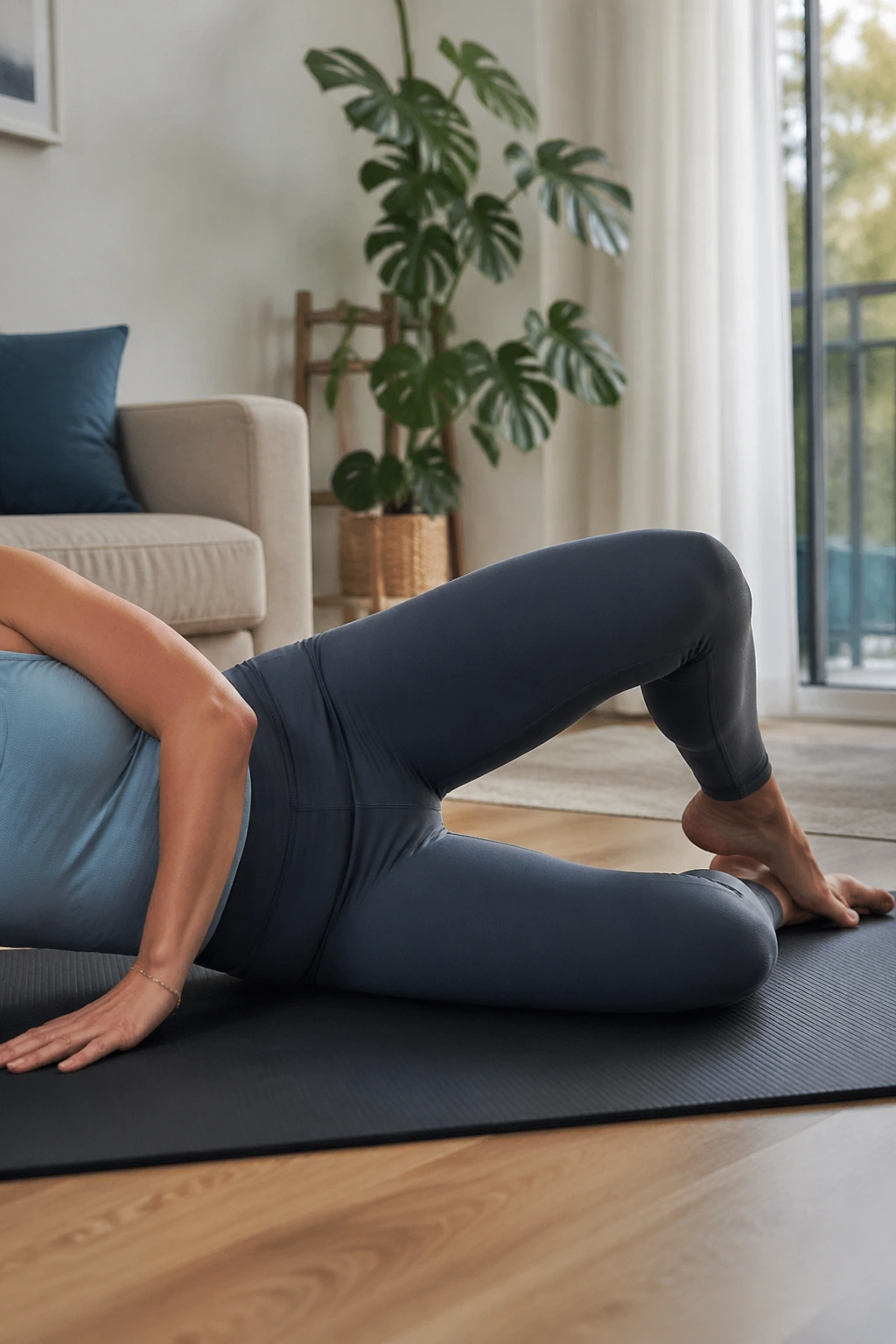
Side-lying work looks quiet. That is why I like it at night. The body gets a chance to work without feeling like it has to brace against gravity in every direction, and the hips usually appreciate that more than they let on.
Lie on your side with your knees bent, head supported on your arm or a small pillow, and stack your hips so the pelvis doesn’t roll backward. Open and close the top knee for clams, then straighten the top leg and lift it a few inches, then make a few slow circles. The outer hip, seat, and deep stabilizers all wake up without much drama.
A solid mini-series is 10 clams, 8 leg lifts, and 8 small circles each direction. Keep the pace slow enough that you can feel your side waist staying long. If the top hip starts to twist back, stop the range a little earlier. That is usually the honest version of the exercise.
I reach for this one when my hips have that stubborn, grippy feeling from sitting too long. It is not flashy. It also does not need to be. A steady outer-hip sequence can take pressure off the low back, and that alone often makes the whole evening feel less tense.
6. Single-Leg Stretch Ladder
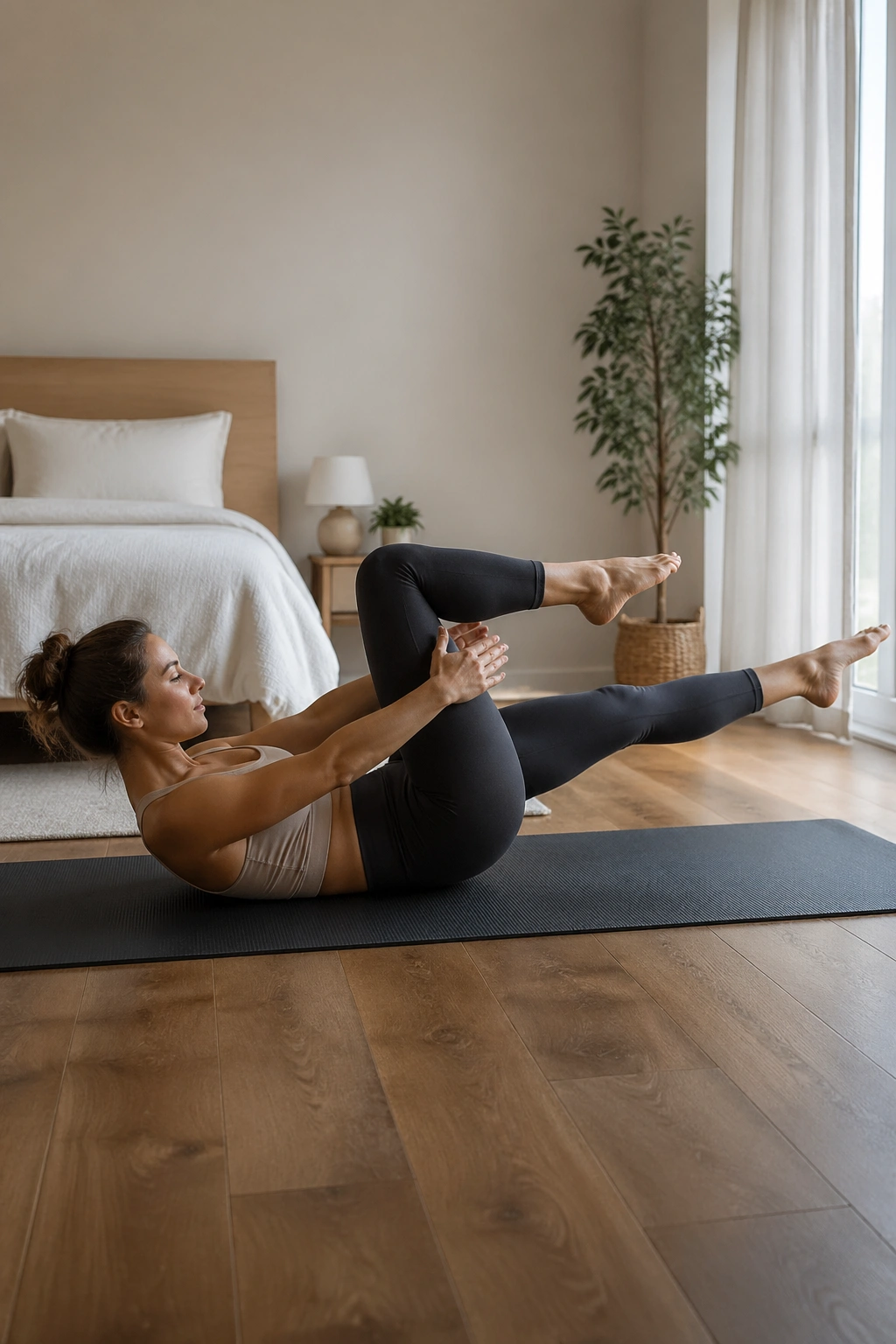
Unlike a fast core circuit, this one gives your brain a count to follow. That small bit of order can be weirdly calming when your mind is bouncing off the walls. You stay on your back, lift into tabletop, and alternate one knee in while the other leg reaches long.
The rhythm matters more than the range. Keep the movement slow enough that your breath can stay steady. If you yank the knee in too hard or let the extended leg drop too low, the neck and hip flexors tend to hijack the work. A smaller line is cleaner.
A simple ladder looks like this: 4 slow switches, brief pause, 4 more switches, brief pause, then 4 final switches. Rest your head down if your neck feels tired. You do not need the head lift to count this as real work. The core still has to organize the pelvis and keep the back from arching.
This one works especially well for the restless-brain crowd. There is enough coordination to keep your attention occupied, but not so much that it feels stressful. That balance is rare. Use it.
7. Seated Spine Twist and Saw
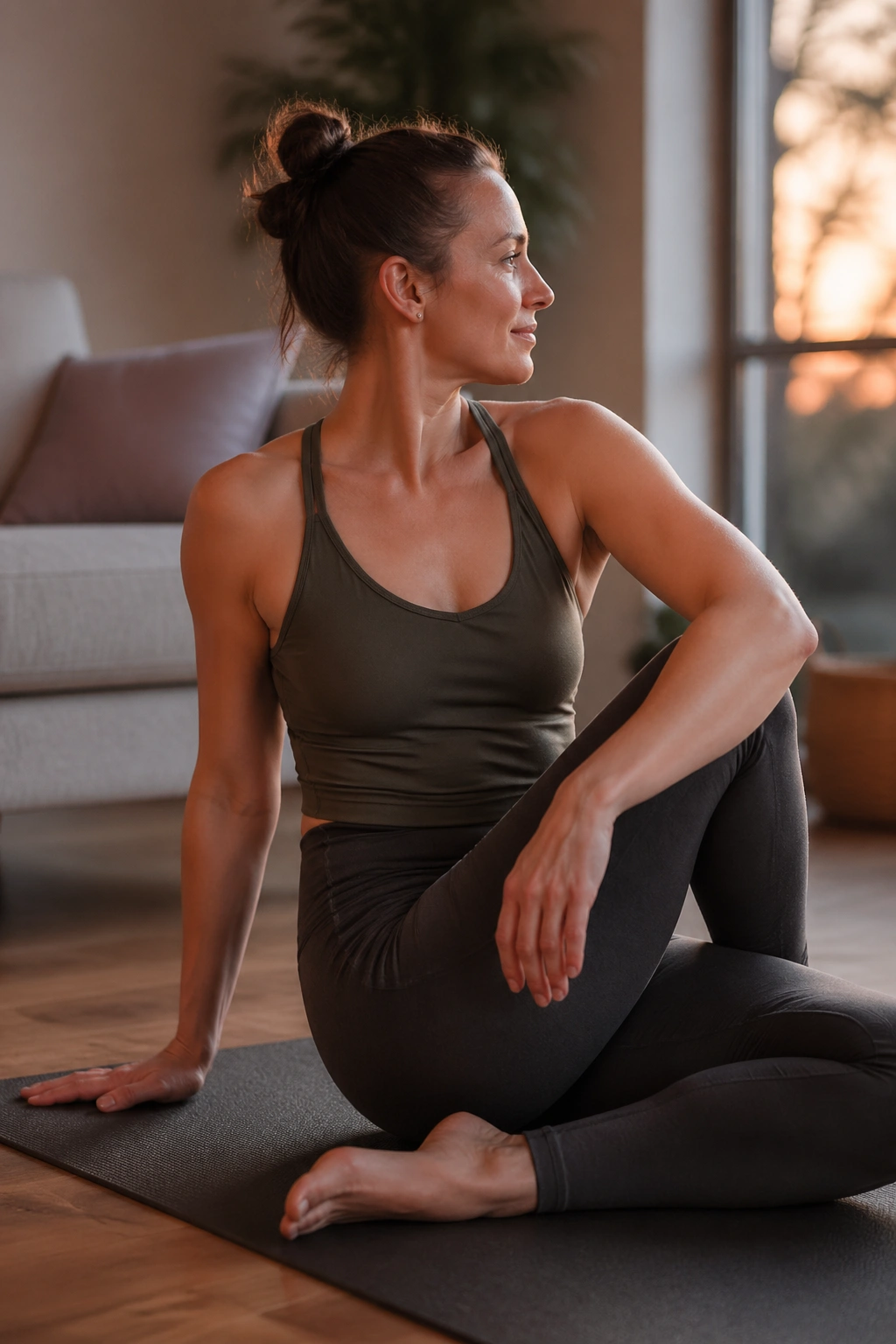
Can a sitting twist calm a noisy evening? Usually, yes — if you keep it gentle and stop chasing range. Sit tall on the mat with your legs crossed or extended, grow through the crown of the head, and rotate from the rib cage instead of yanking the shoulders around.
The first twist is the easiest place to overdo it. Don’t. Keep the pelvis heavy, the inhale long, and the exhale slow enough to let the ribs turn without force. Do 3 slow twists each side, then add the saw only if your back feels warm and your hamstrings aren’t protesting.
How to use it without straining your neck
Let the head follow the spine instead of leading the move. If you reach into a saw, hinge from the hips only as far as you can keep the chest open and the shoulders relaxed. A tiny reach toward the pinky toe can be enough. The goal is rotation and length, not a dramatic fold.
This is one of my favorites for the end of the day because it feels collected. There is posture, breath, and a little bit of effort, but nothing frantic. Your torso gets to organize itself again, which is oddly comforting.
8. Mermaid Side Bend Flow
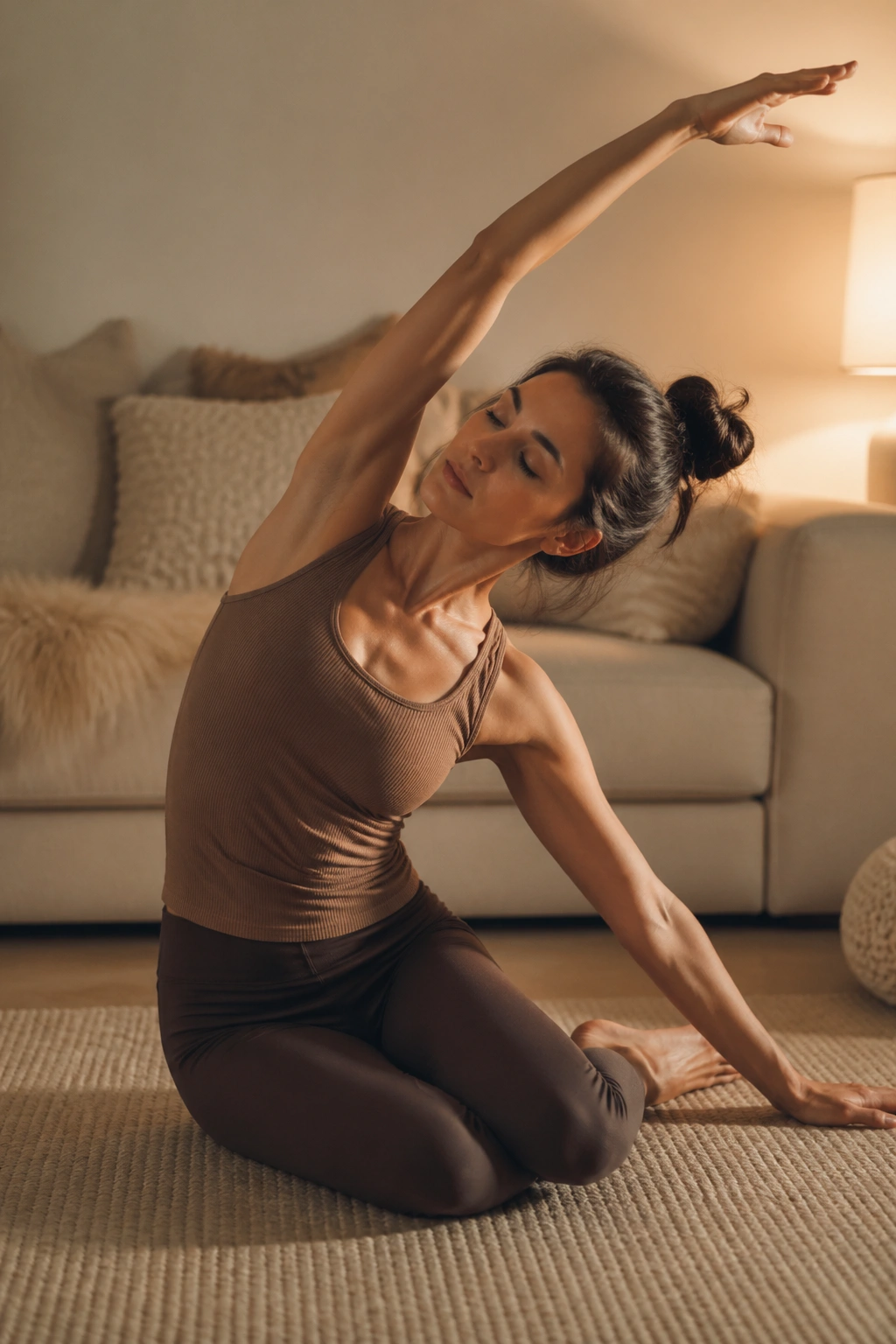
I like mermaid after a long day of carrying a bag on one shoulder or sitting a little twisted in a chair. One side of the body gets opened, the ribs get space to breathe, and the whole thing feels less like a stretch class and more like resetting a bent wire.
Sit with both shins folded to one side or in a comfortable side-sit, then place one hand on the floor and sweep the other arm overhead. Side-bend toward the supporting hand and breathe into the long side of the ribs. Come back through center, then repeat with a little rotation if it feels good.
- Hold each side bend for 2 to 3 slow breaths.
- Keep both sit bones heavy.
- Reach the top arm long, but don’t shrug the shoulder.
- Add a small chest rotation if your upper back wants more room.
- Switch sides and compare how each side feels.
The reason this one lands so well at night is simple: it gives the ribs and intercostals room to move after a day of compression. The motion is soft, but it is not lazy. You still have to stay awake in your body while you do it. That little bit of attention changes the mood fast.
9. Dead Bug Tabletop Calm
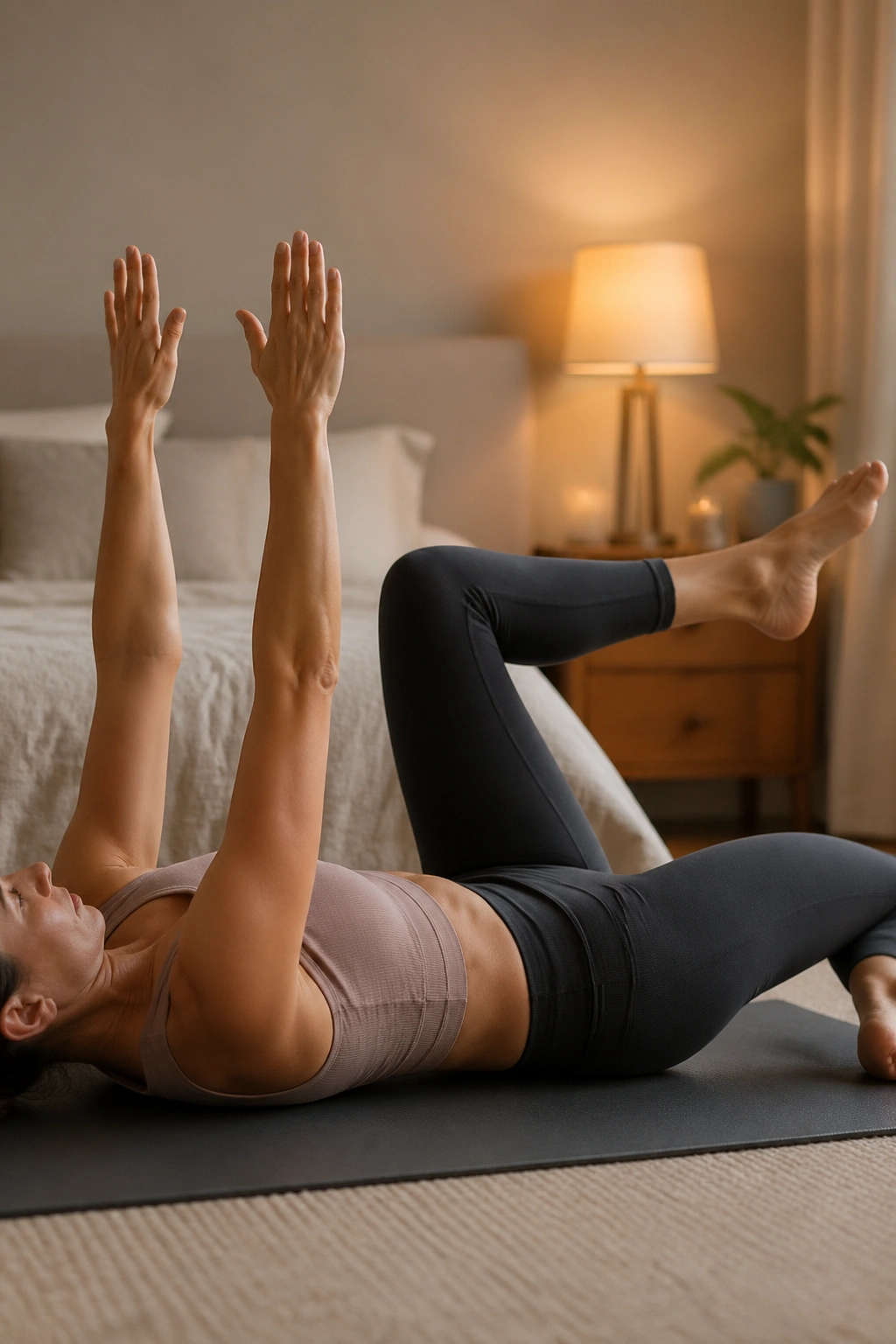
Dead bug is not a punishment drill when you do it slowly. It is a brake pedal. The name sounds a little ridiculous, which is part of why people underestimate it, but the movement is one of the cleanest ways to quiet an overworked torso before bed.
Lie on your back, bring your legs into tabletop, and float your arms toward the ceiling. Exhale to lower one heel toward the floor or extend one leg long, then inhale to return. Keep the pelvis quiet. If the low back pops up or the ribs flare, make the leg reach smaller.
A nice tempo is 3 counts out, 2 counts hold, 3 counts back in. That slow beat gives your brain something to follow and keeps the movement from turning twitchy. Ten fast reps would be the wrong tool here. Five slow ones often do more.
If your neck tends to tighten, rest your head down and work only the legs and arms. You still get the benefit. The magic is in the control, not in the head lift. I love that about this exercise. It is honest.
10. Shoulder Bridge Marches
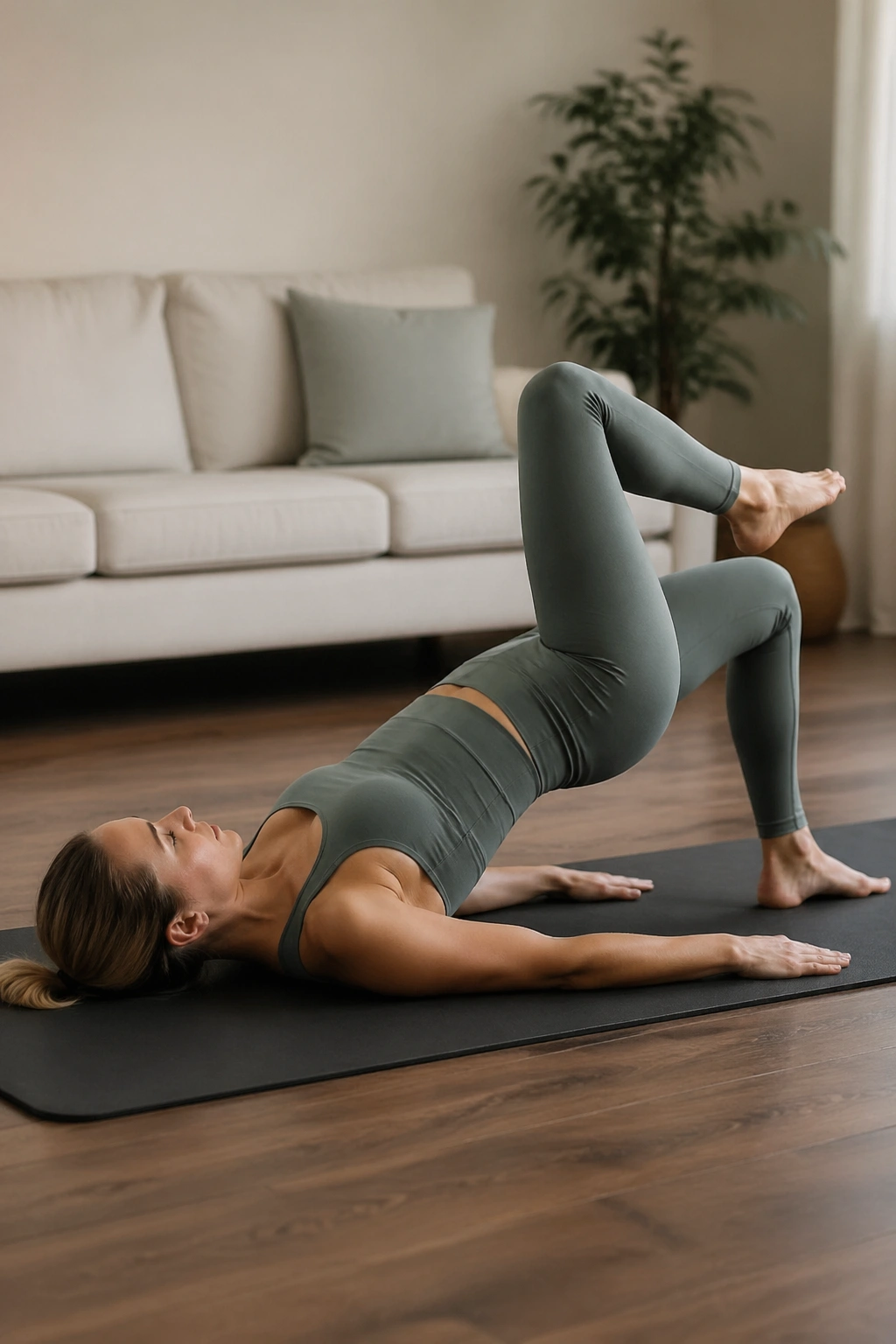
Can a tiny marching bridge calm a body that feels wired? Yes, if the pace stays slow and the hips don’t start wandering around. This is a little more demanding than a basic bridge, but it can feel more focused too, which helps when the mind needs a clear job.
Lift into bridge, then keep the pelvis level as you float one foot a few inches off the mat and place it back down. Alternate sides. The whole shape should stay steady. If the hips wobble, lower the bridge and shorten the march. That is not failing. That is smart editing.
A good starting dose is 6 marches per side. Keep your ribs soft and your weight grounded through the shoulders and upper arms. Think of the bridge as a quiet roof, not a big arch. Too much height steals the work from the glutes and throws it into the low back.
This one is useful when you want strength without heat. It builds stability, then gives you a controlled way to come back down. That combination feels unusually good in the evening.
11. Swimming Prep and Backbody Wake-Up
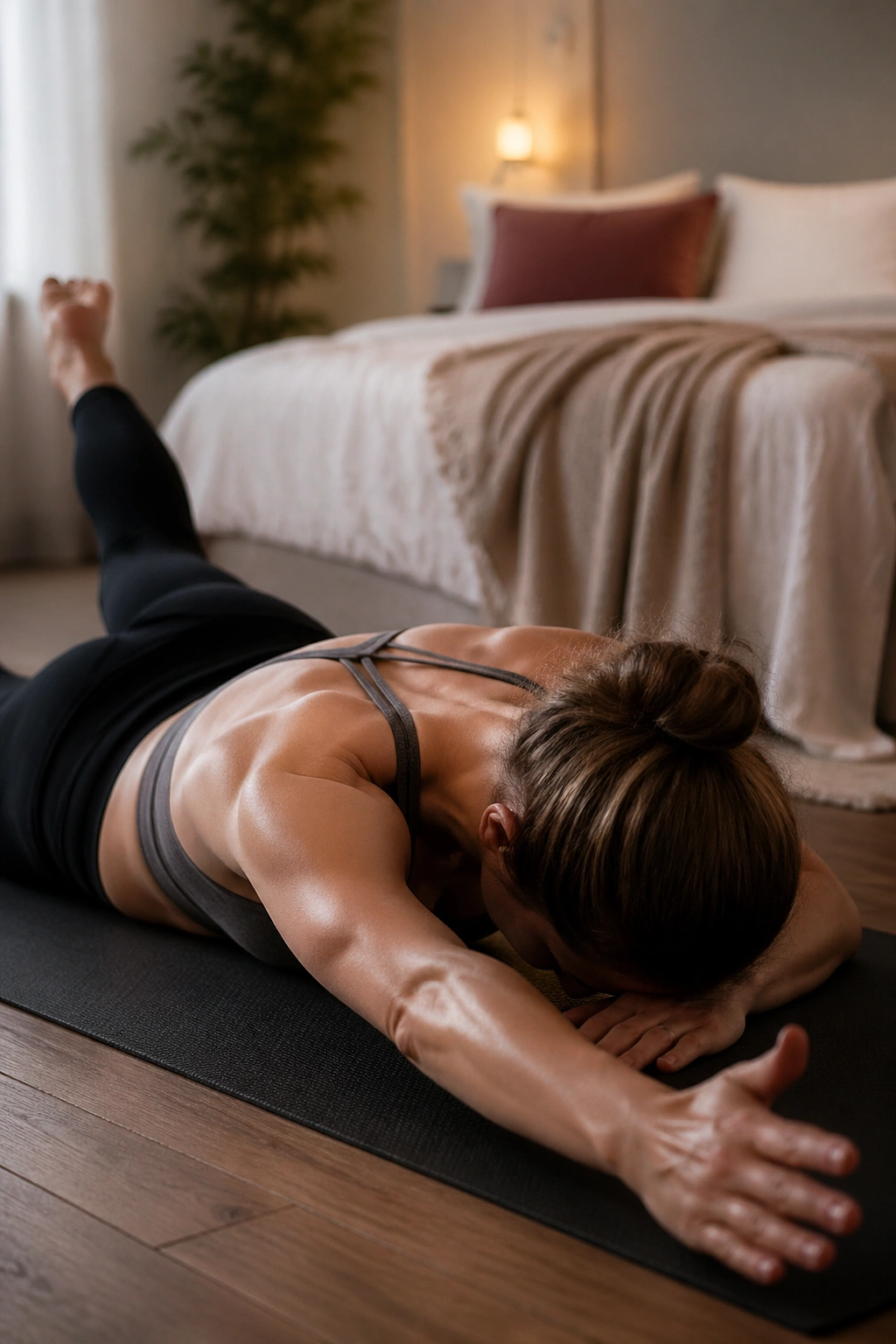
Forehead on folded hands, ribs breathing into the mat, and a tiny lift of opposite arm and leg — that is enough. You do not need to turn swimming prep into a back-bending performance. Keep the lifts small and the neck long, and the back line of the body will wake up without getting angry.
The reason I like this late in the day is that it counters the shape most of us live in: rounded shoulders, tucked chin, tight hip flexors, sleepy glutes. A few low, controlled lifts remind the body that the back side still works. That can feel oddly relieving after a day of being folded forward.
How to keep it gentle
Use a folded towel under the pubic bone if your lower back feels pinched. Lift one arm and the opposite leg only an inch or two off the floor. Hold for 2 seconds, lower, then switch sides for 6 rounds each side. If that still feels spicy, take the arms out and keep only the leg lifts.
The point is not height. It is activation without strain. A little back-body work can make your shoulders feel less heavy when you finally lie down for real.
12. Rolling Like a Ball Prep
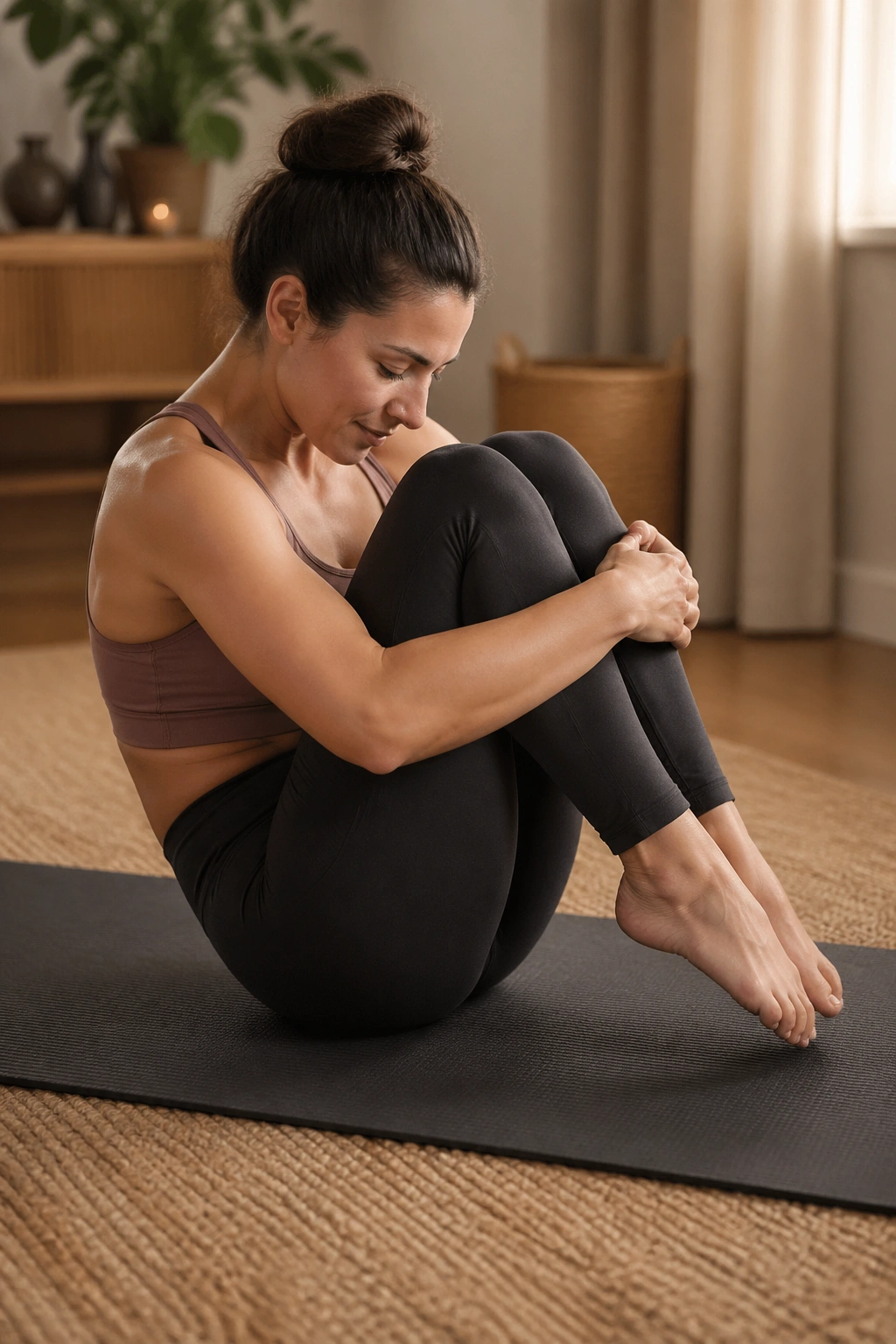
You do not need a hard abdominal finisher at night. You need something that massages the spine a little and leaves you feeling more together than you did ten minutes earlier. Rolling Like a Ball prep does that, if you keep it tiny.
Sit, hold behind the thighs, tuck the knees close, and find a rounded spine. If your neck is happy, rock back a few inches and return to balance. If rocking feels like too much, just hold the shape and breathe while balancing on the sit bones. That still counts.
The common mistake is chasing momentum. Don’t. A sleepy evening body usually wants control, not speed. Try 3 to 5 small rocks and stop before the movement gets sloppy. If your head taps the floor or your feet land with a thunk, the range is too big for a stress-relief session.
This is the kind of exercise that feels childlike in the best way when it stays small. It also tells you a lot about how tired your core is. If the balance is shaky, that does not mean you should push harder. It means you should make the shape smaller and call it good.
13. Half-Kneeling Hip Flexor Release
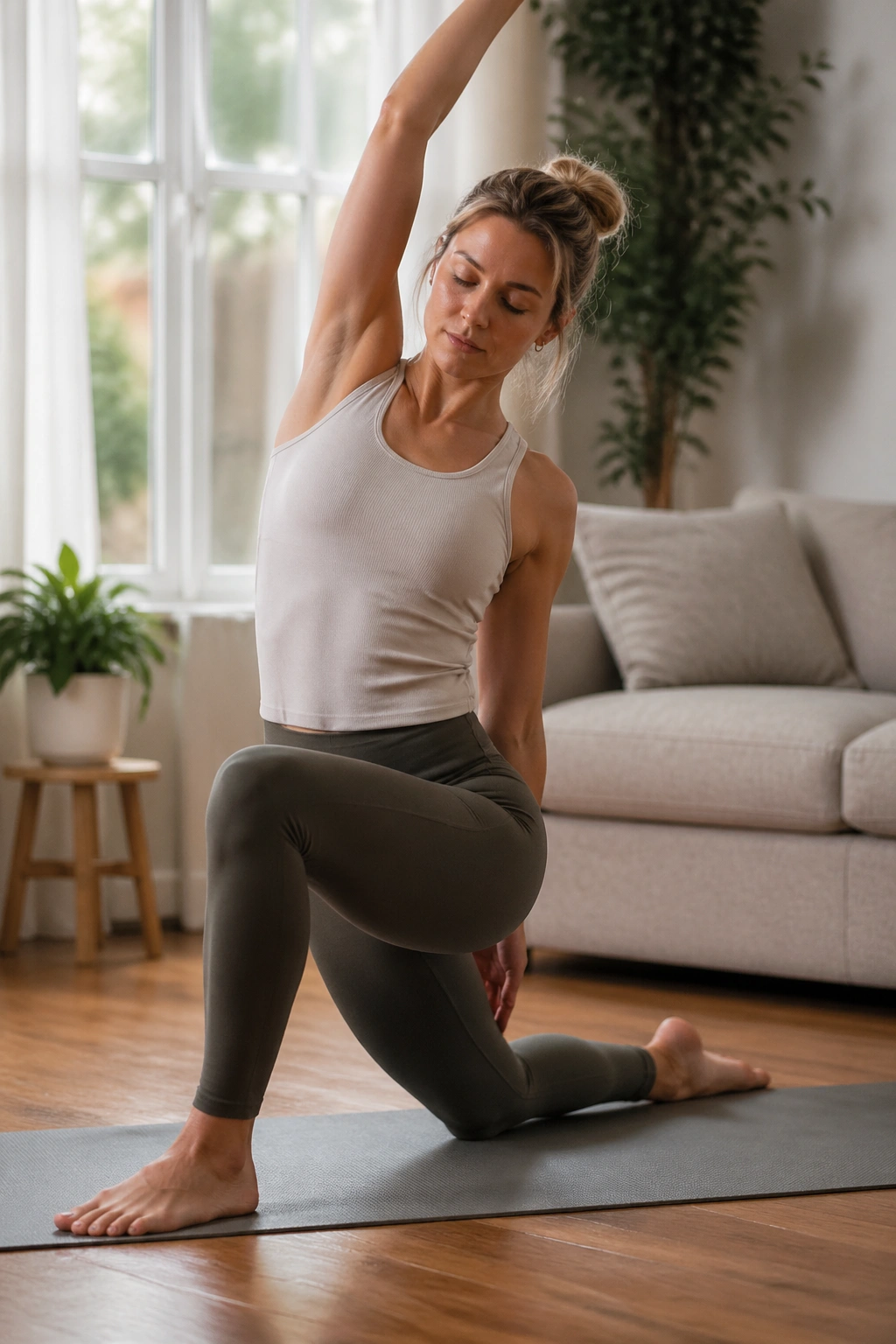
Tight hips are not a character flaw. They are often the bill that sitting sends you at the end of the day. A half-kneeling hip flexor release fits beautifully into an evening Pilates set because it opens the front of the hip without turning into a giant lunge.
Kneel with one knee down and the other foot in front, then lightly tuck the pelvis so the front of the back-leg hip feels long. Reach the same-side arm overhead or slightly across the body. Hold the shape for 20 to 30 seconds, breathe into the front ribs, and switch sides.
Set the pelvis first
That tiny pelvic tuck matters. Without it, people usually just sink forward and dump the stretch into the low back. The real work is in the front of the hip and the lower belly. Keep the ribs stacked over the pelvis and the spine tall enough that you can breathe normally.
If the knee on the floor is unhappy, fold a blanket under it. If you want more release, shift the hips forward an inch and add a small side bend toward the front-leg side. That reaches the line from hip to ribs, which is where a lot of evening stiffness hides.
This is a calm, useful stretch. No drama. Just the kind of opening that makes standing up later feel easier.
14. Standing Roll-Down Ladder
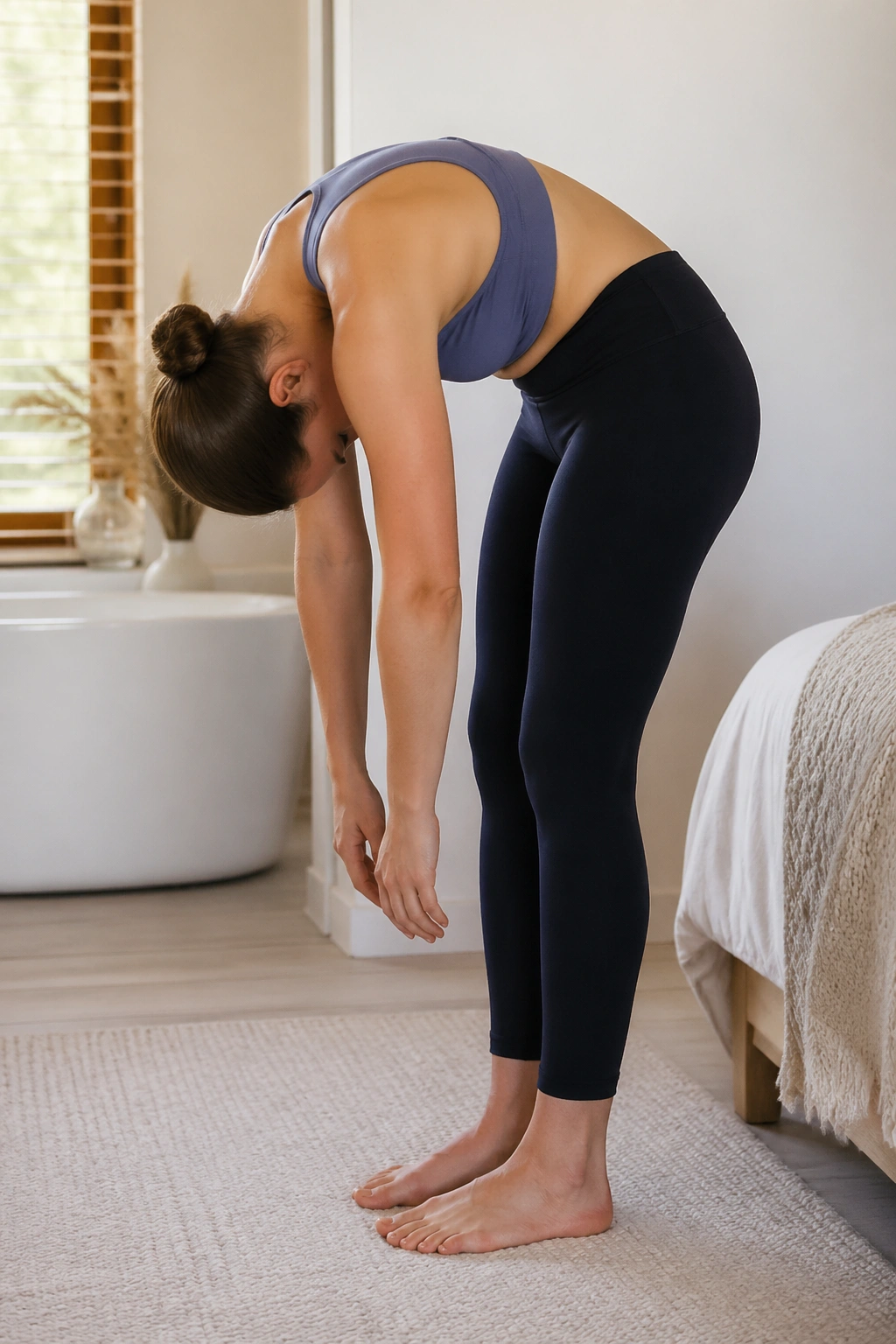
Standing at the sink with your shoulders braced near your ears is a terrible way to end the day. A roll-down ladder gives your spine a chance to decompress from the top down, and I like it because you don’t even need to get back onto the floor to do it.
Stand with your feet hip-width apart, soften the knees, and let the chin nod slightly. Roll down one vertebra at a time until your hands hang near the floor or your shins, then pause and let the head go heavy. Roll halfway back up, pause, and then return to standing.
- Roll down for 1 slow count per vertebra if you can.
- Keep the knees bent enough that the hamstrings don’t grab.
- Breathe out as you fold.
- Stay in the middle range if full forward folds feel rough.
- Repeat 3 to 5 times.
The version people usually rush is the exact version that helps least. Slow it down. Let the arms dangle. Let the shoulders stop trying to hold your posture together for one minute. That little undoing can feel surprisingly good before bed.
15. Legs-Up-the-Wall Wind-Down
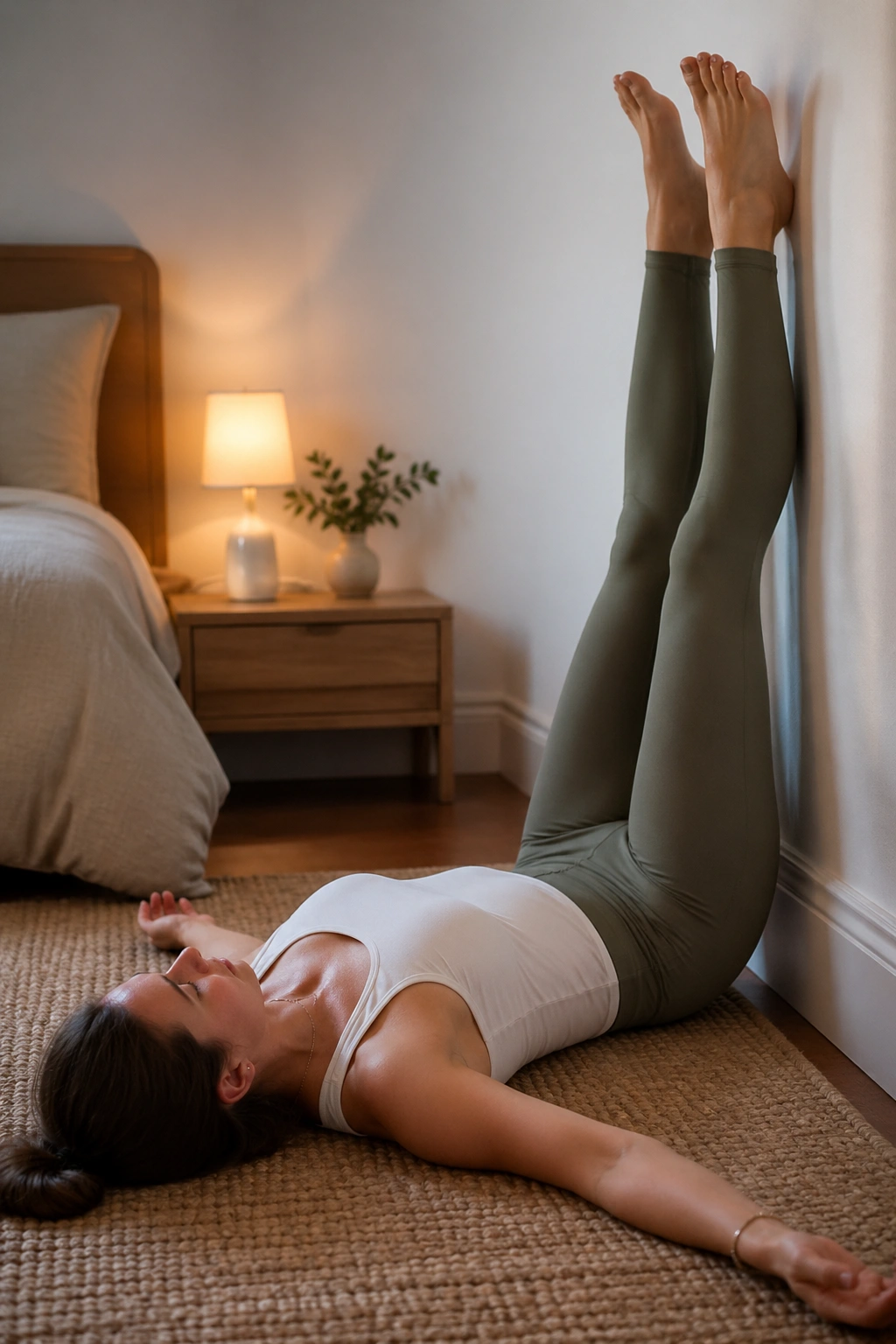
By the time you get here, the job is not to work harder. It is to stop asking so much of your body. Legs-up-the-wall does that cleanly. It takes the load off the calves, eases the lower back, and gives your breathing a chance to flatten out.
Lie down with your hips near a wall and rest your legs up it, or place your calves on a chair if the wall setup feels awkward. Let your arms rest wherever they can stay quiet. Breathe into the side ribs for a few rounds, then soften the belly and notice the legs getting heavier.
A small ankle pump can be nice here. So can a gentle bend and straighten of the knees if the hamstrings feel tight. The session does not need more than 2 to 5 minutes. Longer is fine, but the usefulness shows up fast.
This is one of those positions that asks almost nothing and gives a lot back. The body no longer has to hold itself upright, and the mind usually notices the difference before the muscles do. That is a good sign. Stay there until the breath feels less sharp and more even.
The Quiet Finish
Pick one move that gets the breath moving, one that changes the shape of the spine, and one that lets the body settle at the end. That is enough for most evenings. A short Pilates routine done with care will usually do more for stress than a longer workout done while half distracted.
If your shoulders carry the day, start with breath and cat-cow. If your hips feel fused to the chair, go for the pelvic clock, mermaid, or the hip flexor release. If your mind will not stop running, table the hard choices and do dead bug, then finish with legs up the wall.
The real win is not sweat. It is the moment when your body stops acting like it needs to defend itself. That shift can be quiet, almost boring, and still be exactly what you needed.
