



Thirty days of squats can build stronger, more defined glutes, but only if the reps are deep enough, the load keeps changing, and you stop treating every set like a punishment test. Shallow, rushed squats mostly teach your legs to get tired. They do not teach your glutes to grow.
Glute definition comes from two things that have to meet in the middle: thicker muscle and enough overall leanness for that shape to show. Squats help with the first part. They do not burn fat from one exact spot, and anybody promising that is selling a story, not a training plan.
The smarter version of a squat challenge is boring in the right way. A little tempo work. Some loaded reps. A couple of recovery days that keep your knees and lower back from getting cranky. If you have dumbbells, great. If you don’t, a backpack filled with books does more work than most people expect. Day 1 starts light on purpose.
1. Day 1: Bodyweight Squat Check-In
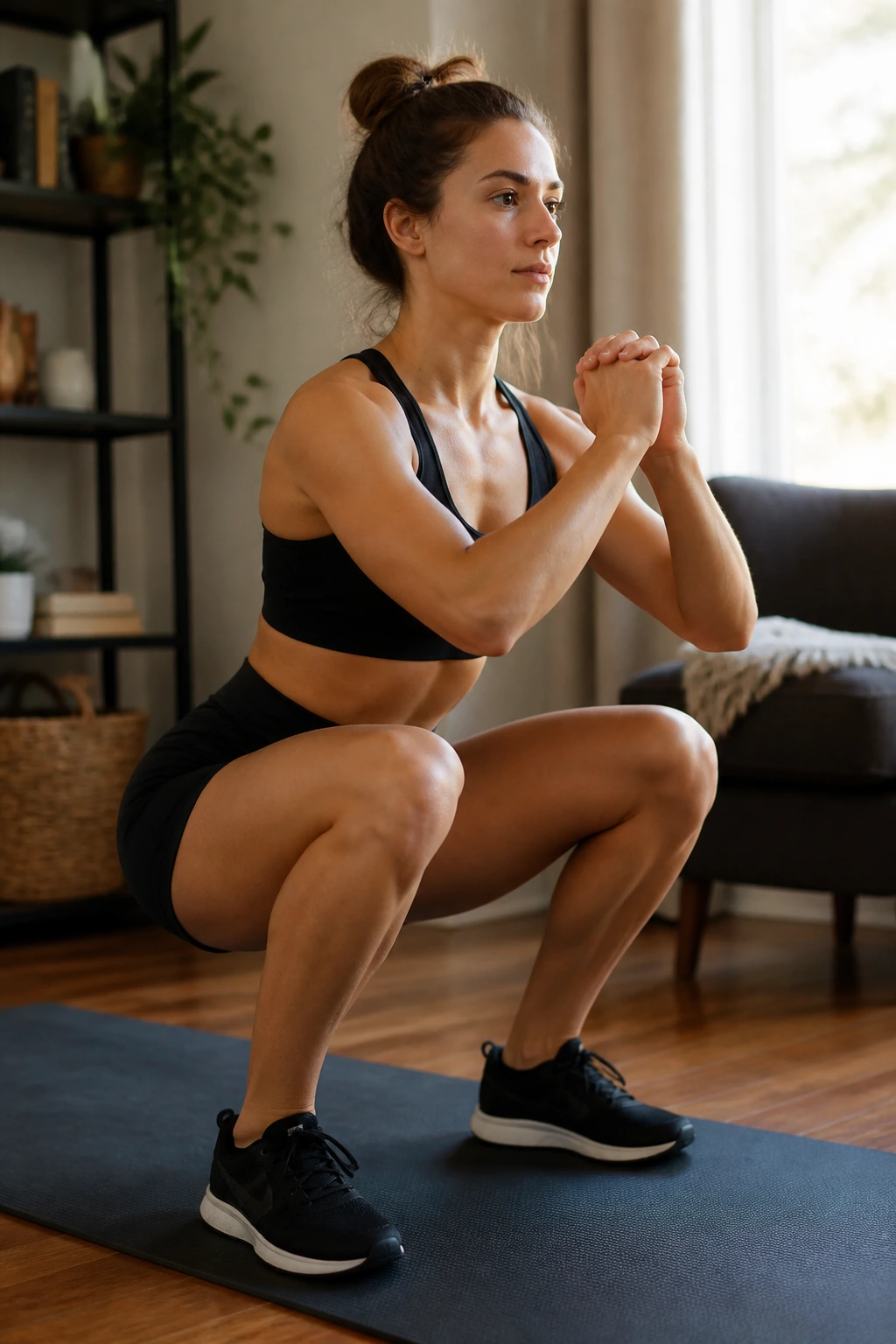
Start with 3 sets of 12 bodyweight squats and rest 45 to 60 seconds between sets. The goal is not to leave the floor wrecked. The goal is to see how your squat looks when you slow down and pay attention.
What Clean Reps Feel Like
- Feet about shoulder-width apart.
- Toes turned out about 10 to 20 degrees.
- Pressure spread across the whole foot, not dumped into the toes.
- Knees tracking in line with the second or third toe.
- A smooth stand-up, not a little hip pop and a shrug.
That first day tells you a lot. If your heels peel up, your stance may be too narrow. If your knees cave inward, the load is not the problem yet — the pattern is. Fix the pattern first.
One clean rep beats five sloppy ones. That sounds obvious, but it’s the detail that separates a glute-building squat plan from a random leg-burn routine.
2. Day 2: Slow-Eccentric Squats
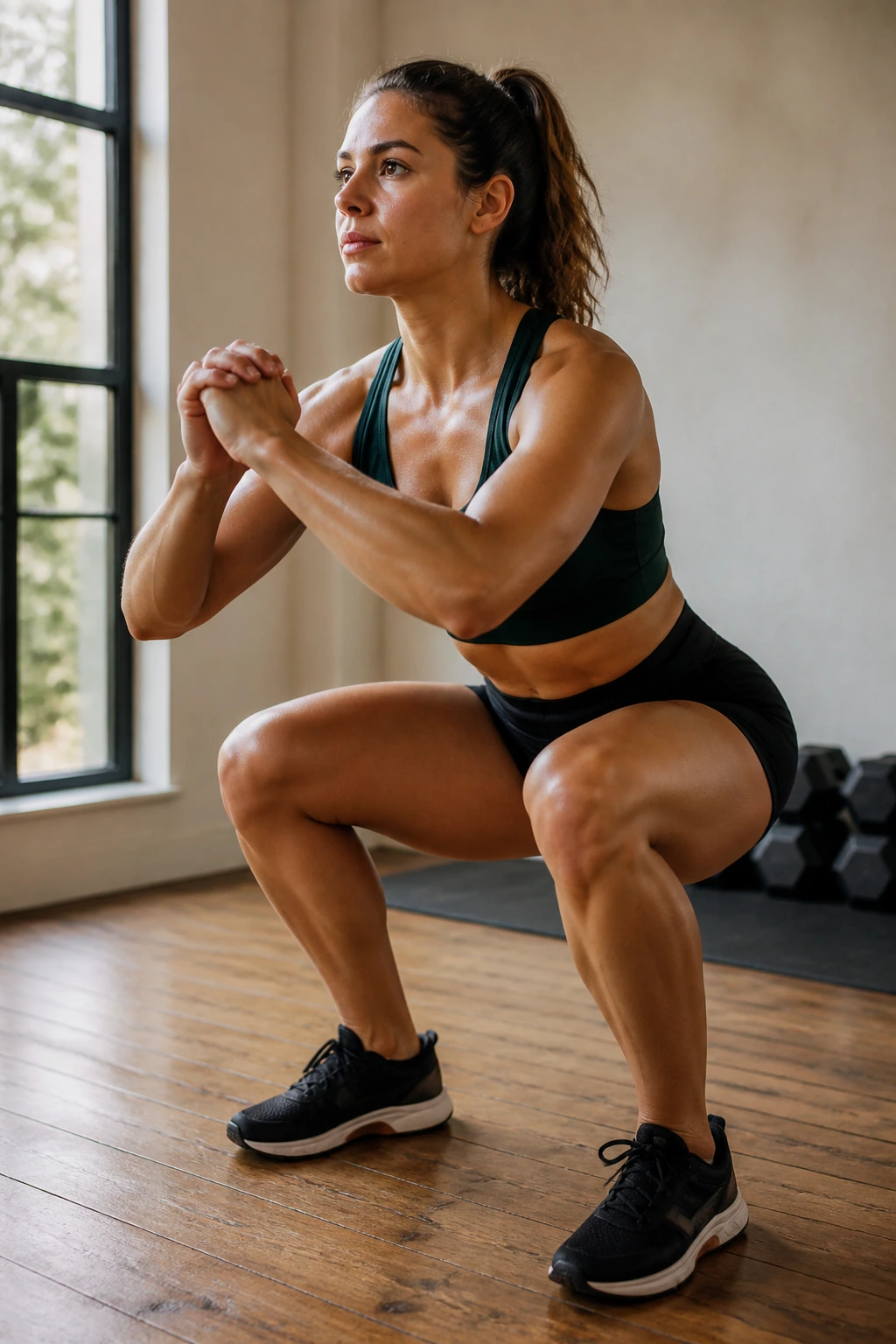
Three seconds down changes the whole conversation. Do 3 sets of 10 squats with a 3-second lowering phase and a normal stand-up. The slower descent makes your glutes and thighs stay under tension longer, which is exactly what you want when the goal is stronger, denser shape.
Keep your torso tall, but do not turn the movement into a military parade. A natural forward lean is fine as long as your spine stays stacked and your heels stay planted. The lowering phase should feel controlled, not stiff.
The first few reps will probably feel easy. Then the burn shows up. That’s the point. Tension beats speed when you’re trying to build muscle, and slow eccentrics are one of the simplest ways to get there without fancy gear.
3. Day 3: Pause Squats at the Bottom
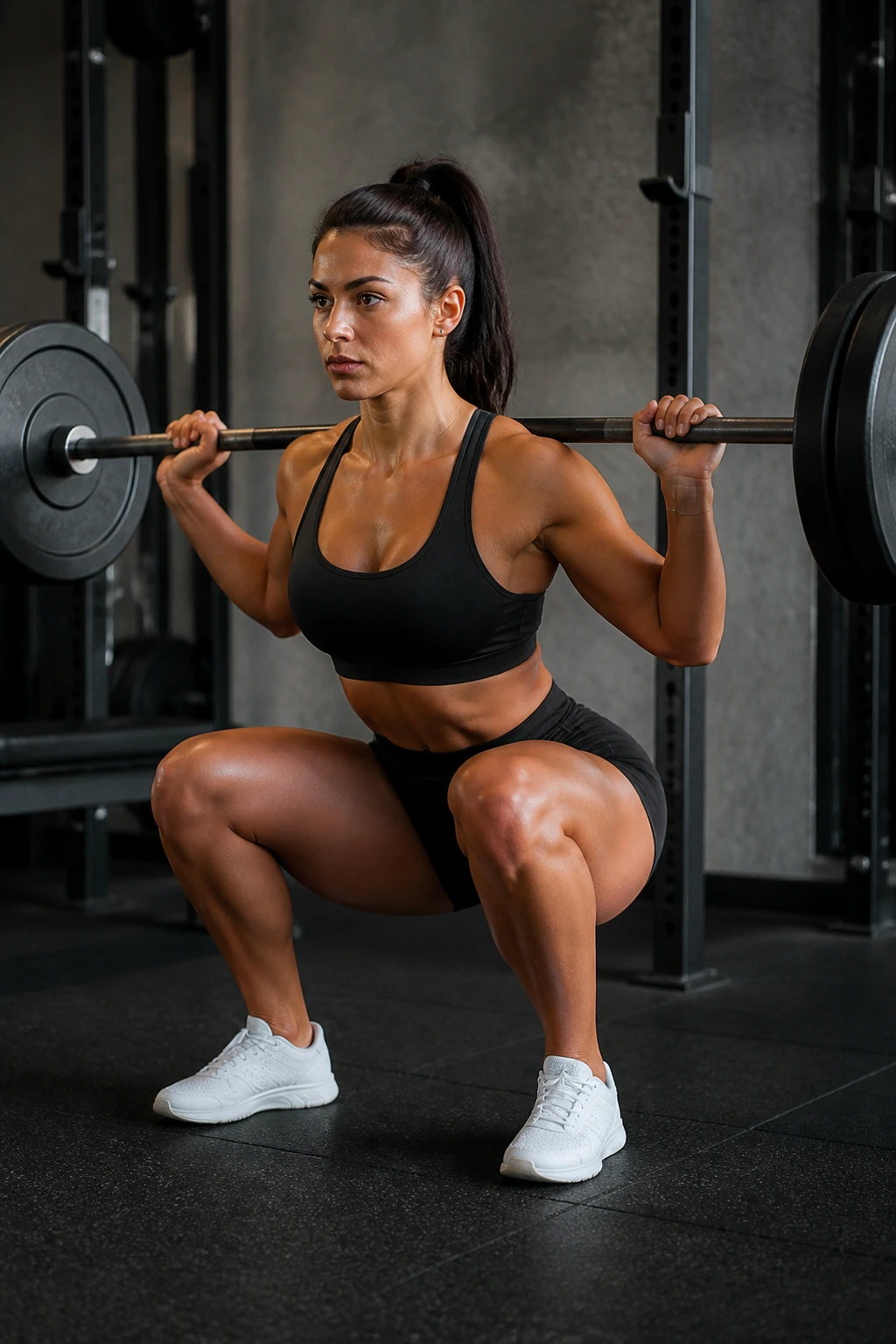
Pause squats are rude in the best way. Sit into the bottom of the squat and hold for 2 full seconds before standing. Do 4 sets of 8 reps and rest 60 seconds. The pause kills momentum, so your glutes have to do the job instead of borrowing help from bounce and speed.
The bottom position should look solid, not collapsed. If your lower back tucks hard or your heels lift, shorten the range a little and keep the pause where you can stay controlled. A good pause is quiet. No wobbling. No rock-and-roll.
Why the Pause Matters
It teaches you to own the hardest part of the squat. The sticky spot off the floor is where a lot of people lose tension, and that’s exactly where better glute strength pays off.
Don’t rush the stand-up. Drive through the midfoot and heel, keep the knees open, and let the glutes finish the rep.
4. Day 4: Goblet Squats with a Dumbbell
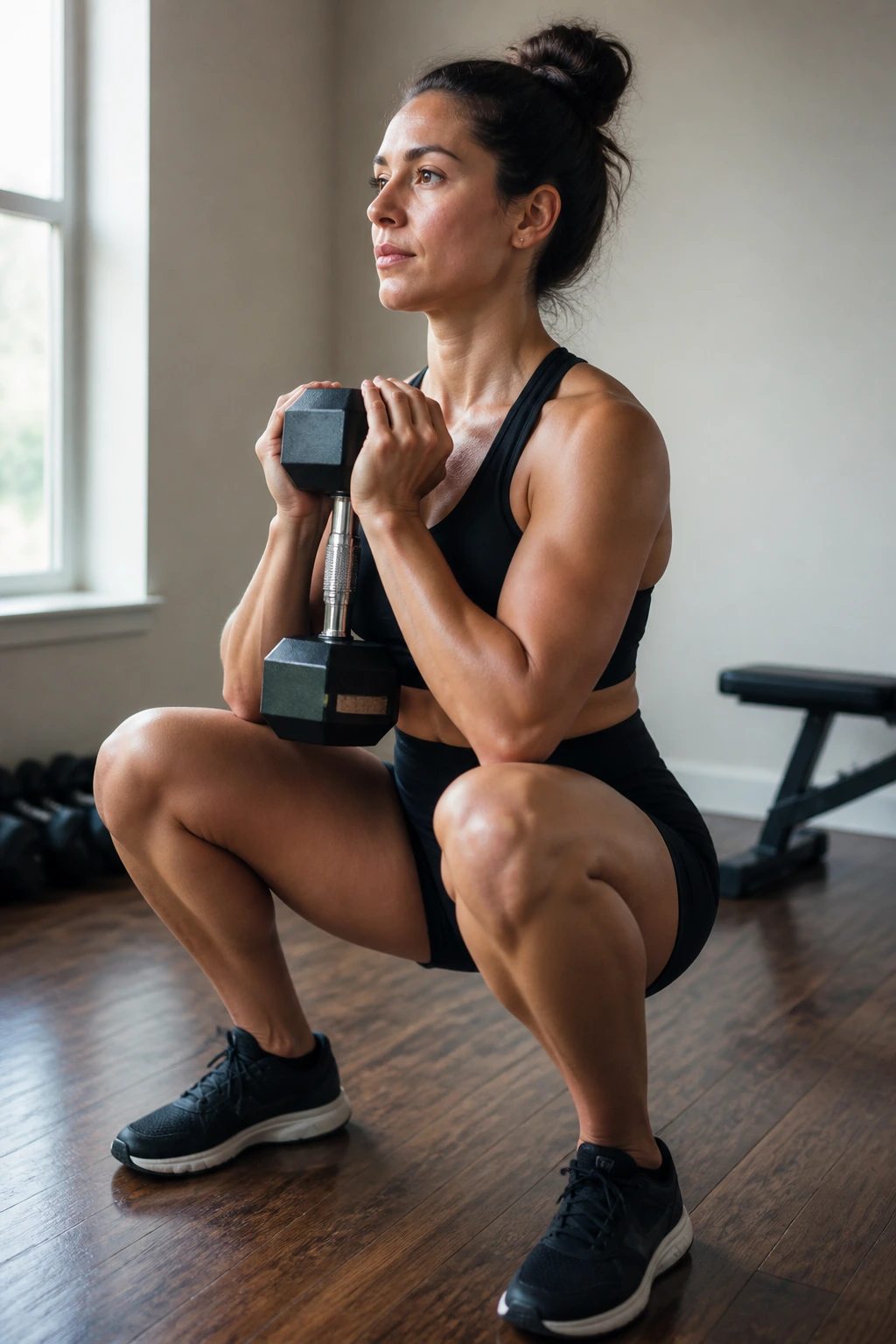
A dumbbell held at the chest is one of the easiest ways to make squats feel more honest. Do 4 sets of 10 goblet squats with a load that makes the last 2 reps deliberate, not grindy. A heavy backpack works too if that’s what you have.
The front-loaded position helps your torso stay upright, which makes depth easier for a lot of people. That matters because glutes tend to do better when the squat is deep enough to actually challenge them. Half reps look tidy. They do not do much.
I like goblet squats because they punish lazy posture fast. If your ribs flare or your elbows drop, the dumbbell will tell you. Hold the weight tight to your chest and keep the rep clean from the first inch to the last.
5. Day 5: Wide-Stance Sumo Squats
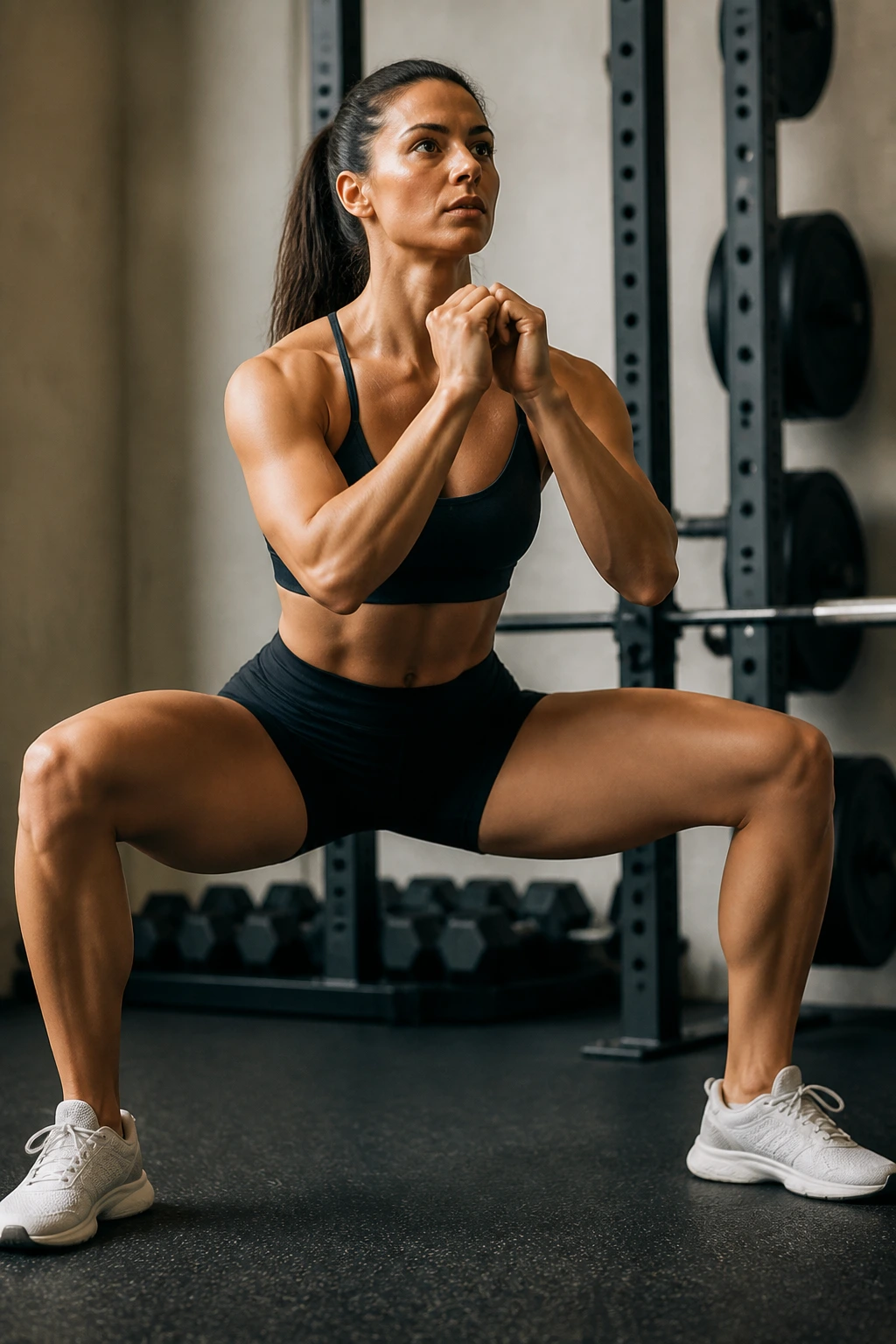
Wide-stance squats shift the feeling right away. Sit a little wider than shoulder-width, turn the toes out more, and do 3 sets of 15 reps with 45 seconds of rest. You should feel more work through the inner thigh and the outer sweep of the glutes.
This is not about turning every squat into a sumo deadlift. It’s about giving your hips a slightly different angle so the muscles get a fresh demand. Wide stance works well for people who feel regular squats mostly in the quads.
The rep should still travel straight down and up. Don’t rock side to side. Push the knees out gently and keep your feet glued to the floor. That steady pressure is what makes the glutes take charge.
6. Day 6: Squat Pulses for Burn
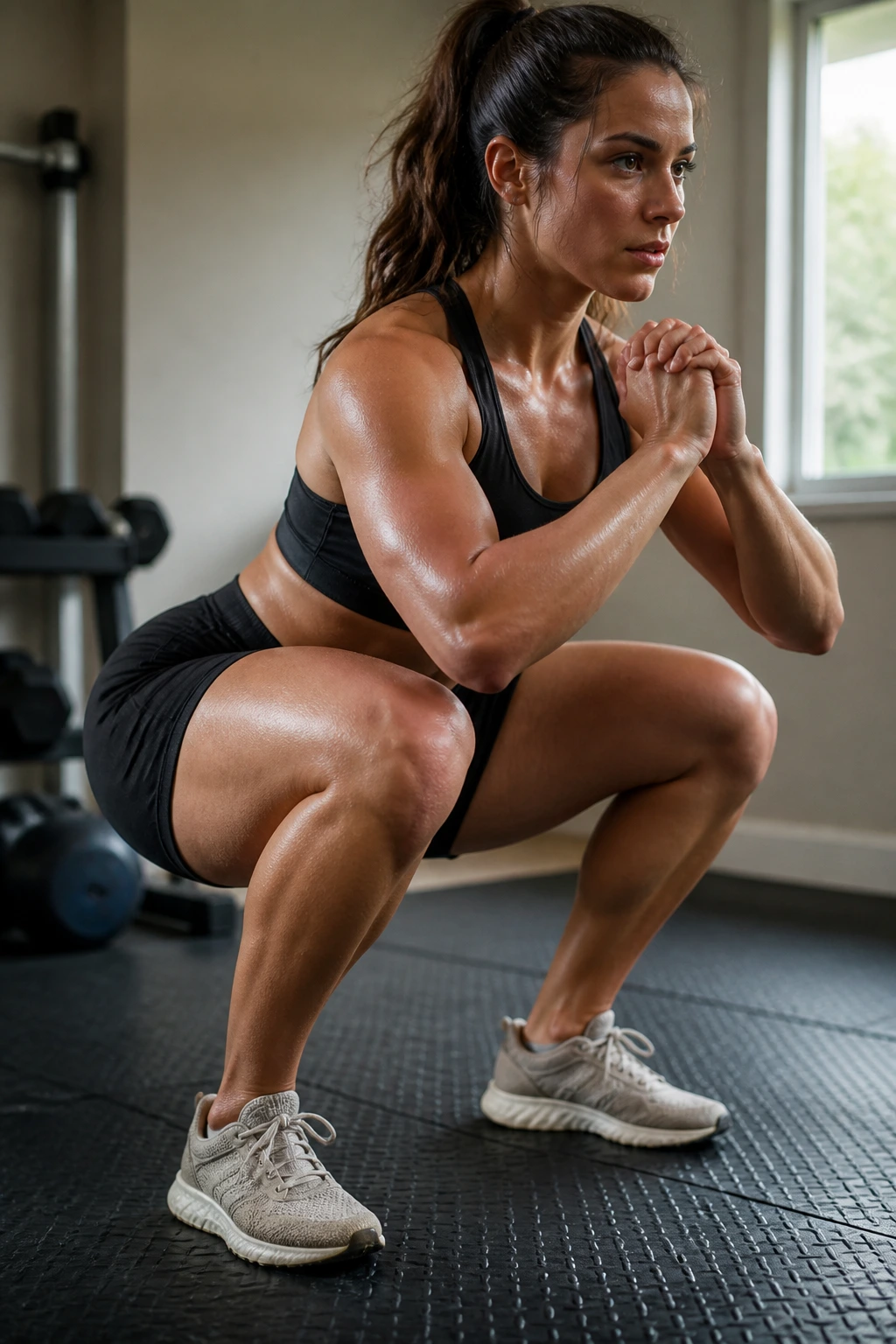
Pulses are a spice, not the main course. Drop into a squat, move up just a few inches, and pulse for 20 reps, then stand. Do 3 rounds with 30 to 45 seconds between rounds. Your legs will complain. That’s expected.
Use a controlled rhythm. The point is not to bounce like a jackhammer. The point is to keep tension in the bottom half of the squat where your glutes and thighs have to work harder to stabilize.
What to Watch For
- Knees drifting inward.
- Heels coming off the floor.
- Your chest folding forward.
- The pulse getting smaller because you’re cheating.
If any of that shows up, slow down. Small, honest pulses beat big sloppy ones every time. This is the day to feel the burn, not to chase a circus trick.
7. Day 7: Recovery Squats and Hip Mobility
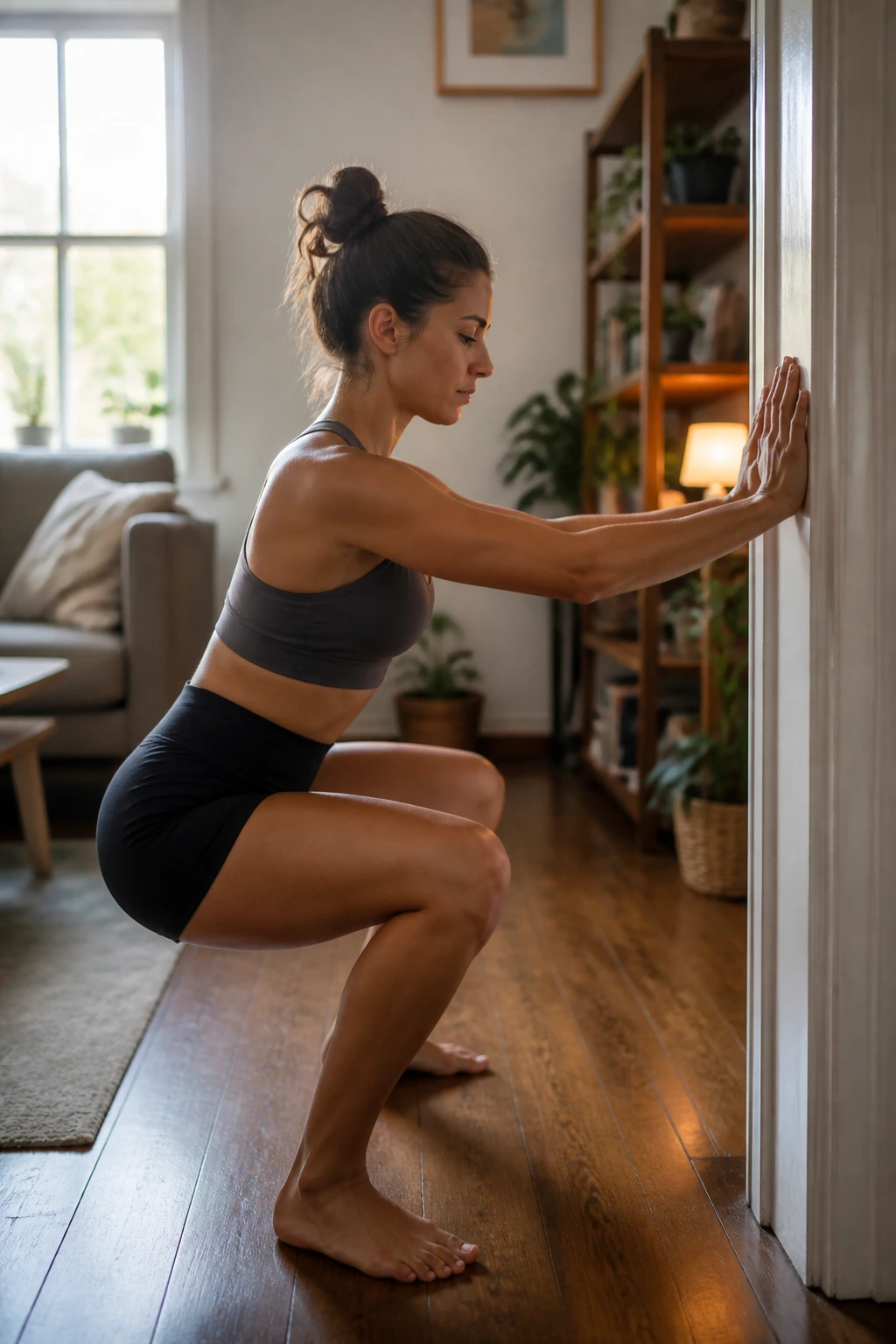
Recovery does not mean doing nothing. Do 2 sets of 10 easy squats, then spend a few minutes opening up the hips and ankles. A 30-second deep squat hold with support from a doorframe or sturdy post can help you relax into the position without forcing it.
Recovery That Actually Helps
- 10 bodyweight squats at half speed.
- 30-second deep squat hold.
- 10 glute bridges on the floor.
- 1 to 2 minutes of walking between drills.
- A gentle calf stretch if your heels keep lifting.
This day should feel almost too easy. Good. That means you’re still able to train tomorrow. A lot of people skip this kind of reset and then wonder why every squat after day five feels glued to the floor.
8. Day 8: 1.5-Rep Goblet Squats
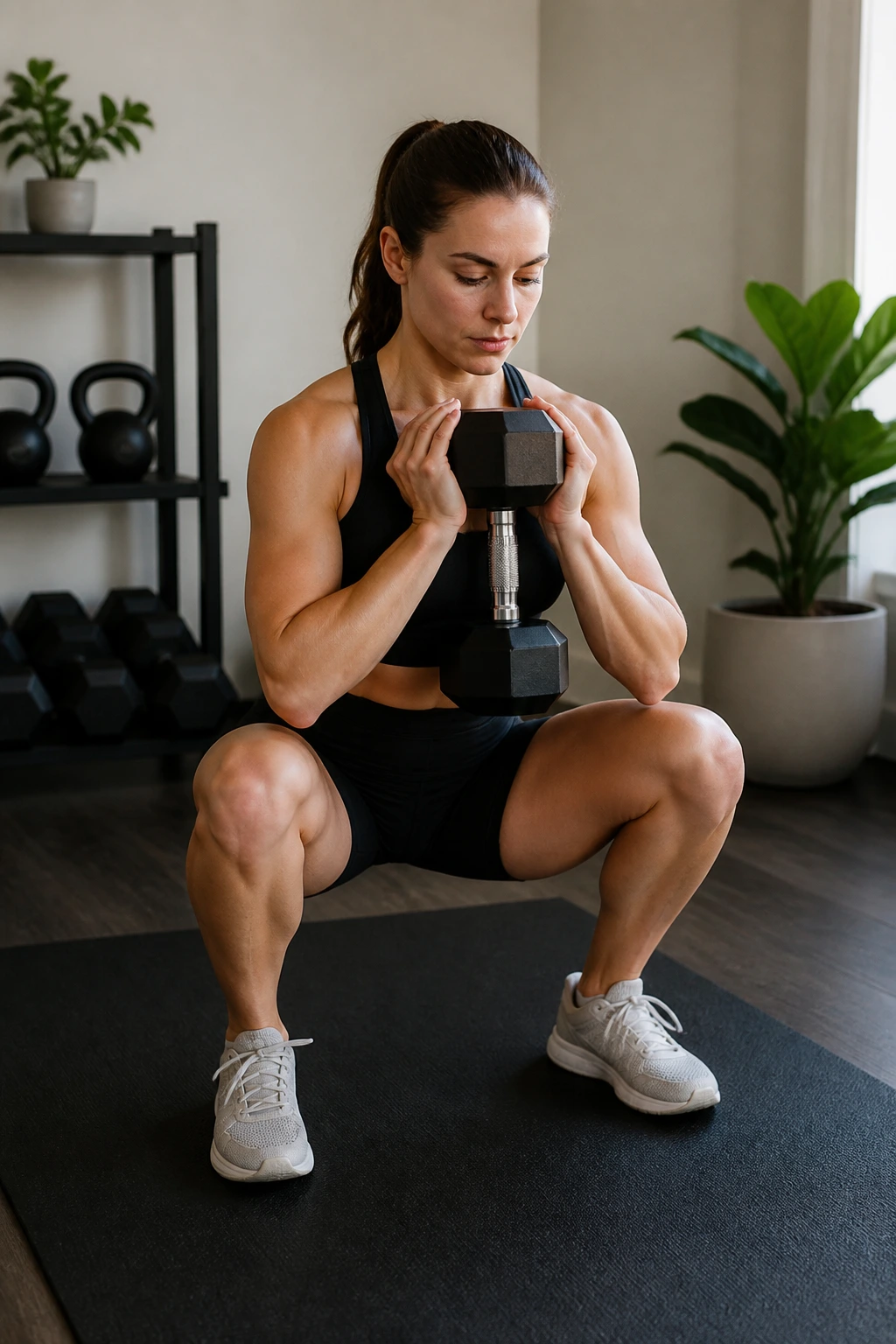
A 1.5-rep squat sounds odd until you try it. Go down, come halfway up, drop back into the bottom, then stand all the way. Do 3 sets of 8 reps with a dumbbell or backpack. One rep becomes two bursts of tension, and your glutes get dragged into every inch of the movement.
The middle of the squat will feel sticky. That’s normal. Don’t fight the shape of the rep. Own it. Keep the weight close, stay braced through the trunk, and use the same footing every time.
Why This Works So Well
The movement forces you to stay tight through the bottom, then rebuild power from a dead stop. That is a useful skill if you want squats that do more than just make you sweaty.
Stop if your lower back starts stealing the work. That usually means the load is too heavy or the descent got sloppy.
9. Day 9: Heels-Elevated Squats
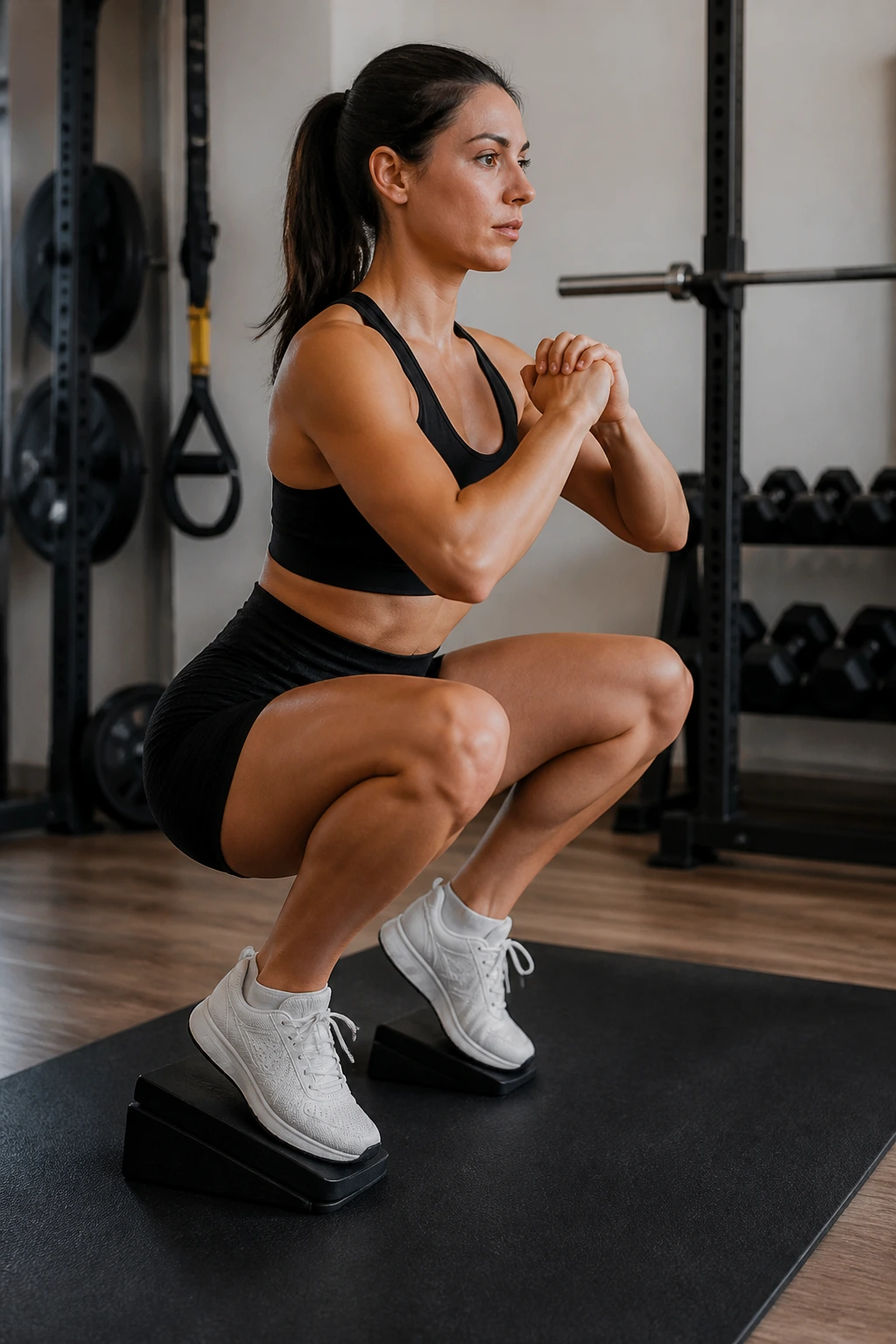
Put your heels on a small plate, a wedge, or a folded towel and do 4 sets of 12 squats. This setup helps people with stiff ankles find depth without turning the entire rep into a balance contest. For some bodies, it also shifts the load to a place that makes the glutes easier to feel.
Keep the elevation modest. You do not need to stand on a stack of cookbooks. A small lift is enough. Too much height turns the rep weird and makes your knees do work they don’t need.
The squat should feel more upright and controlled. If it feels like you’re falling forward, lower the heel lift. Depth matters, but control matters more.
10. Day 10: Box Squats for Cleaner Depth
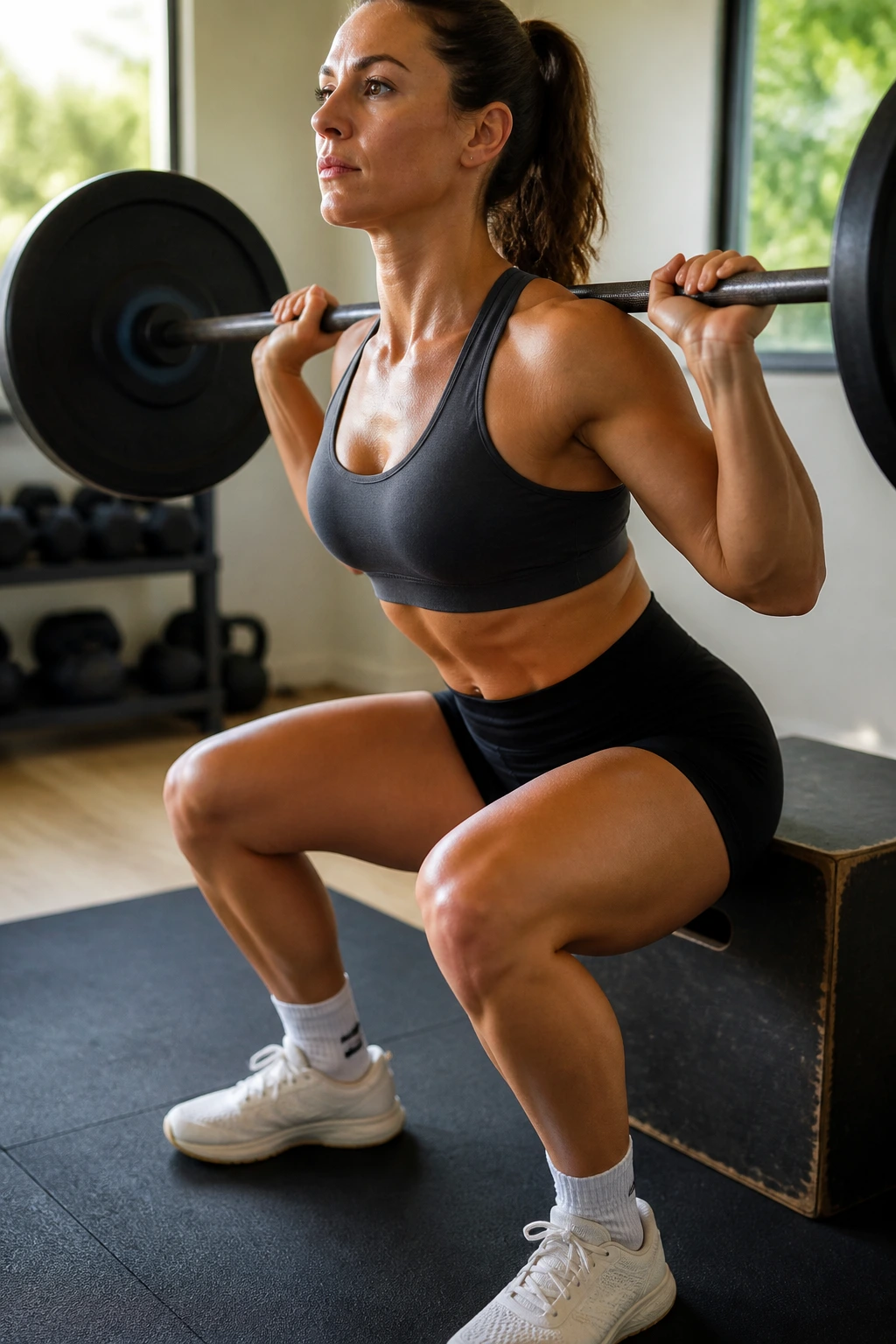
Box squats are the day you learn consistency. Sit back to a box, bench, or sturdy chair, touch lightly, then stand. Do 4 sets of 8 reps and rest 60 seconds. The touch point gives you a clear depth target and keeps you from bouncing around rep to rep.
Don’t plop down. That’s the mistake. You want a soft touch, a brief stop, and then a strong drive up. The shins should stay fairly vertical, and your hips should travel back under control.
A box squat is great when your standard squat starts getting messy. It gives you a target you can trust. That matters more than people think. Clean depth builds better habits than guessing.
11. Day 11: Split-Stance Squats
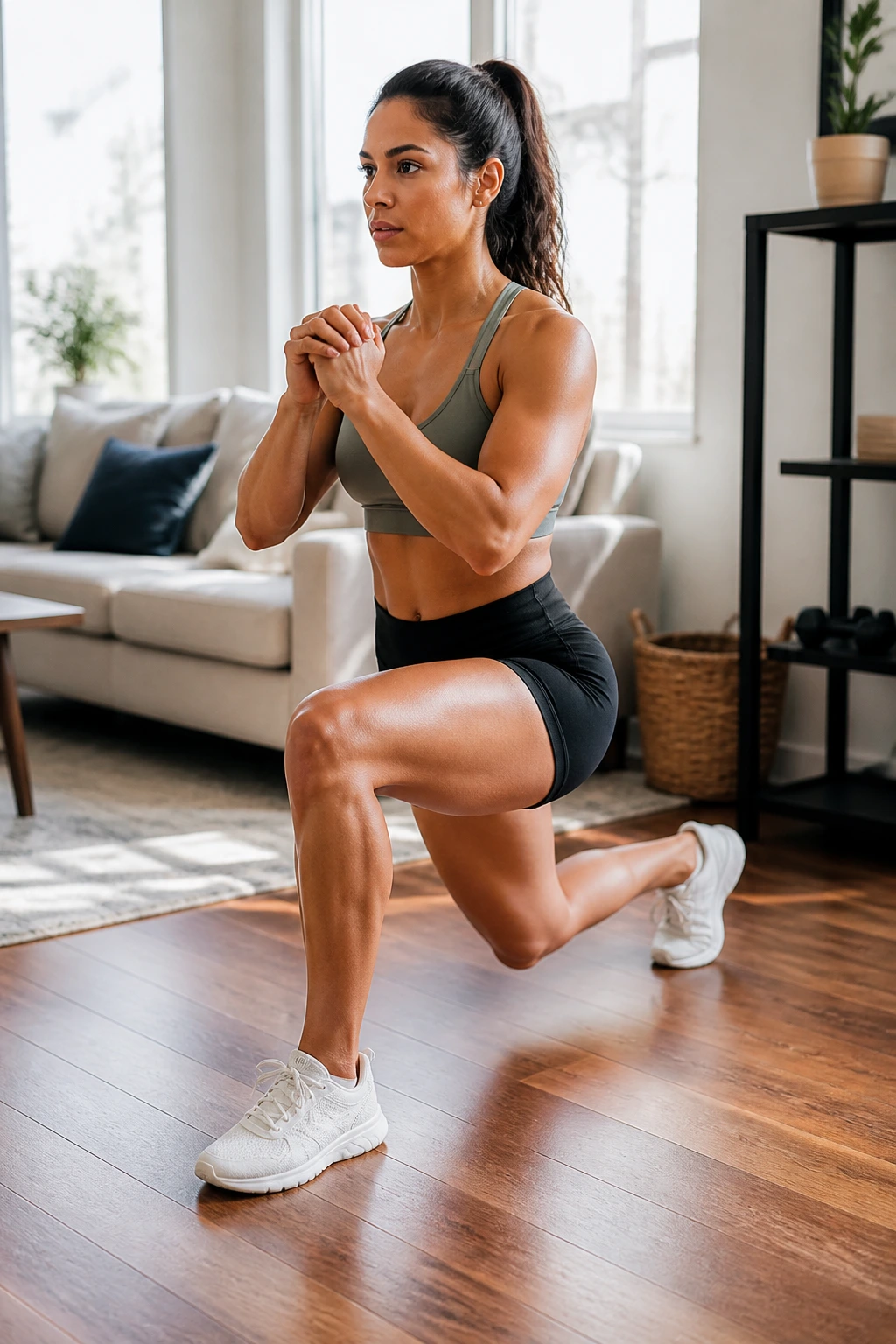
Take one foot a step forward and the other a step back, then squat straight down in that split stance. Do 3 sets of 10 reps on each side. This one is humbling in a good way. The front glute has to work hard, and your hips have to stay honest.
The stance should feel stable, not like a tightrope. Keep most of the pressure in the front foot, but don’t let the back leg go completely dead. That back toe helps with balance, nothing more.
Split-stance squats are useful because they expose side-to-side differences fast. If one hip is weaker, you’ll feel it. Do both sides with the same load and the same reps. No cheating the awkward side.
12. Day 12: Rep Ladder Day
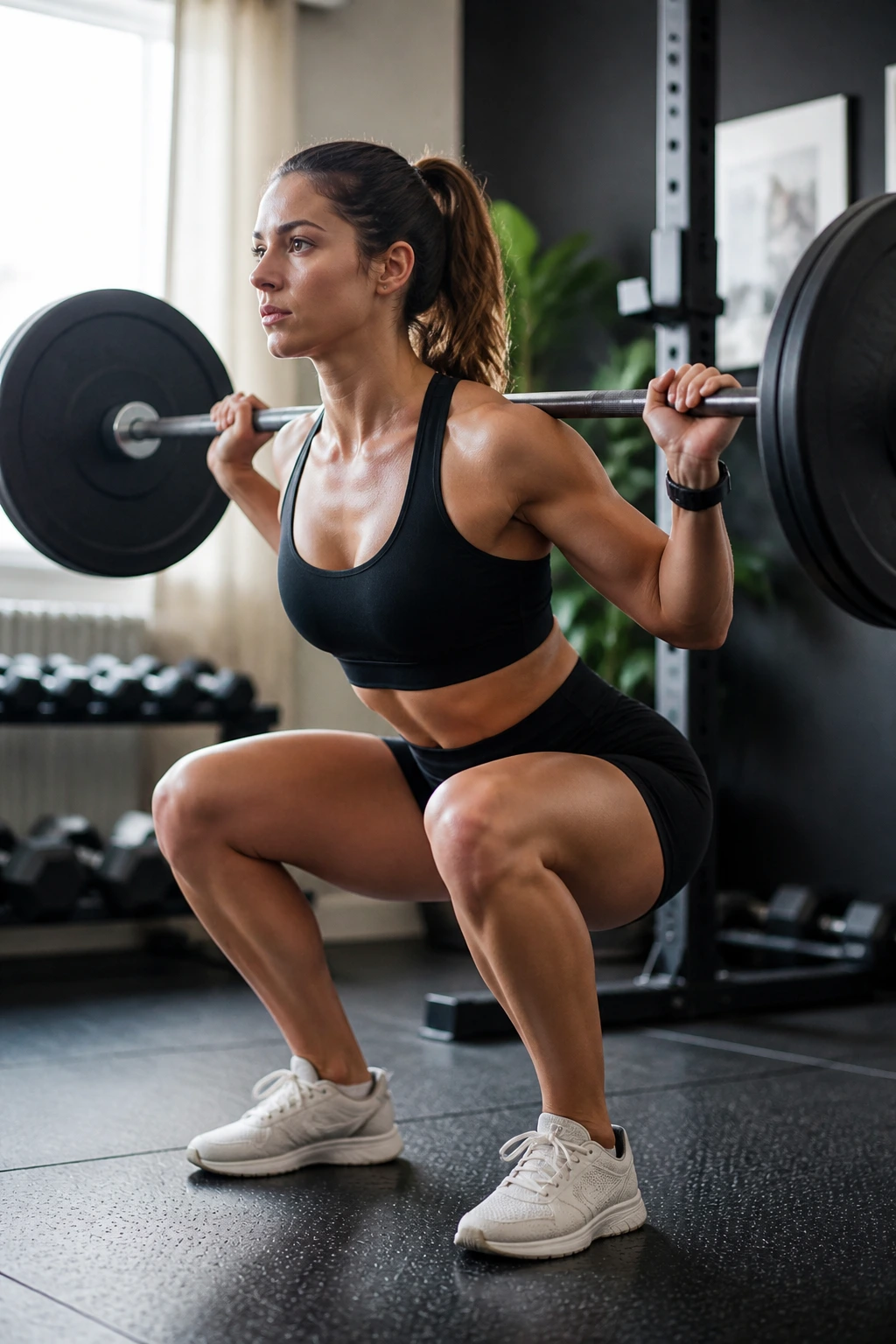
Ladders keep the mind busy and the muscles under steady work. Try 8 reps, then 10, then 12, then back down to 10 and 8, resting 30 to 45 seconds between rounds. Use bodyweight or a light dumbbell.
The ladder format is sneaky. The first set feels small, so you go faster than you should. Then the bigger sets hit, and your form tells on you. That feedback is useful. It shows where you rush and where your squat gets sloppy.
Quick Notes
- Keep every rep at the same depth.
- Reset your feet if they slide.
- Breathe at the top before the next rep.
- Stop the set if your knees cave in.
Consistency matters more than speed here. A ladder only works if the reps look the same from start to finish.
13. Day 13: Banded Squat Warm-Up
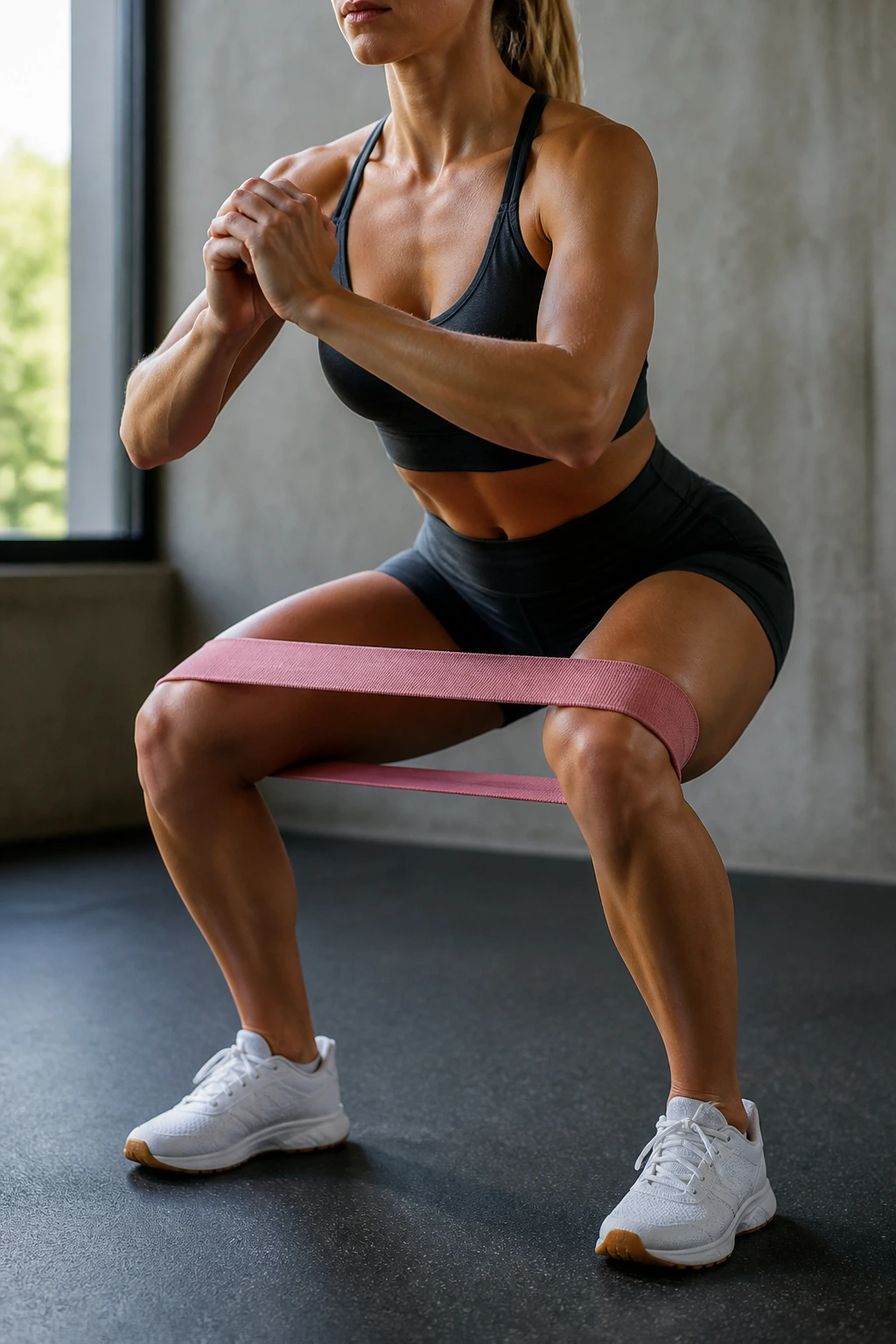
A light resistance band above the knees is a simple way to wake up the hips. Do 2 sets of 15 banded squats, then remove the band and do 2 more sets of 10 bodyweight squats. The band gives you feedback. If your knees drift inward, you feel it right away.
Don’t force the knees wide like you’re trying to tear the band in half. A gentle outward pressure is enough. The outer glutes should stay awake, but the rep still needs to move naturally.
What This Day Is For
It’s a reminder, not a punishment. You’re teaching your hips to stay lined up so the whole squat feels cleaner.
If the band makes your knees ache, skip it. A tool that changes your form in a bad way is not helping. Use the bare squat and keep moving well.
14. Day 14: Easy Volume and Walking
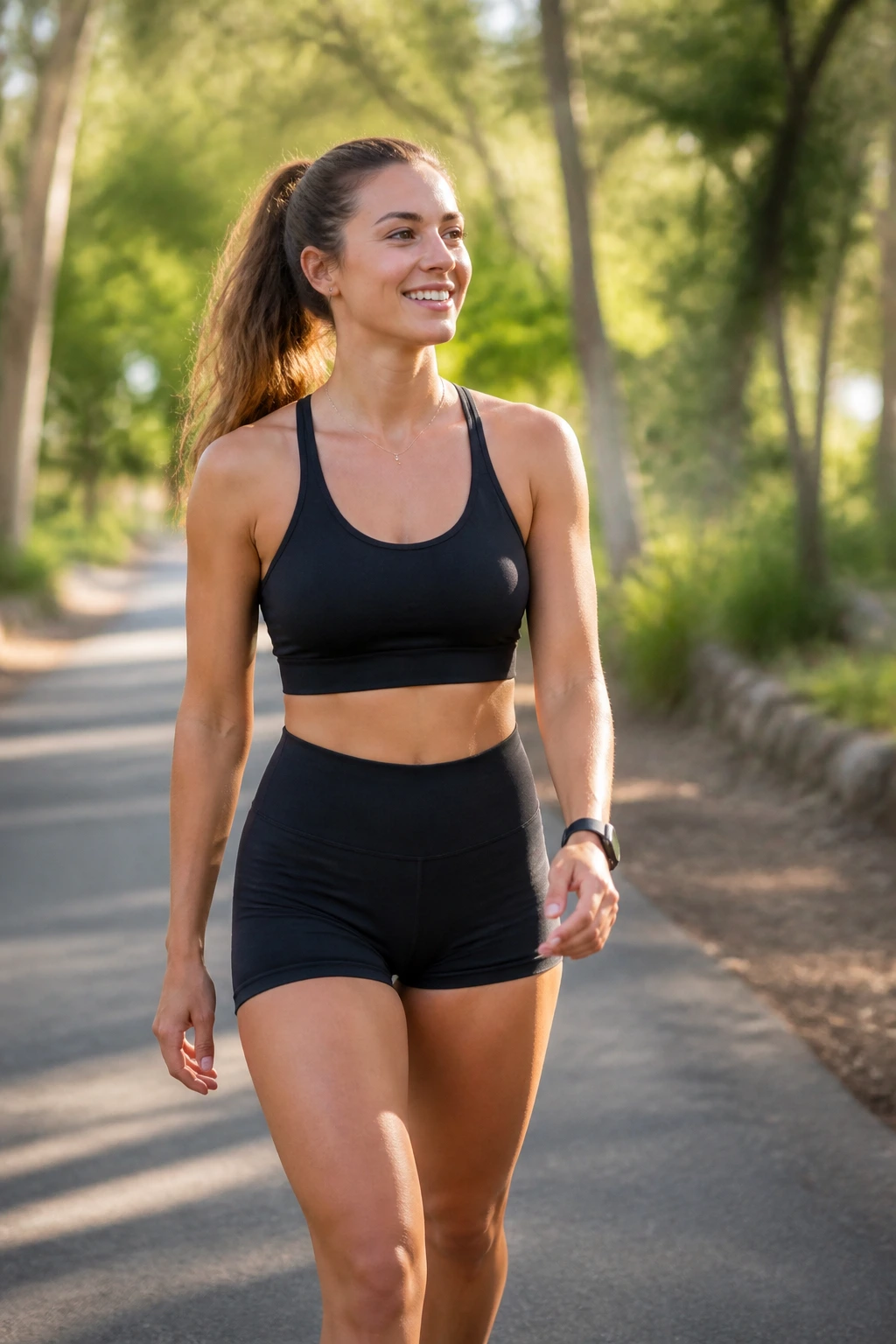
Take the pressure down a notch. Do 2 to 3 sets of 12 easy squats, then walk for 10 to 15 minutes at a comfortable pace. This isn’t a lazy day. It’s a day that helps you show up again with better legs tomorrow.
The squats should feel smooth and unforced. No burn chase. No grimacing. Your body needs practice, but it also needs space to recover from the harder sessions stacked around it.
People like to overcomplicate recovery. They don’t need to. A few clean squats and a brisk walk can do more than another sloppy max-effort set. That’s especially true when the lower body has been taking hits for two straight weeks.
15. Day 15: Front-Loaded Squats
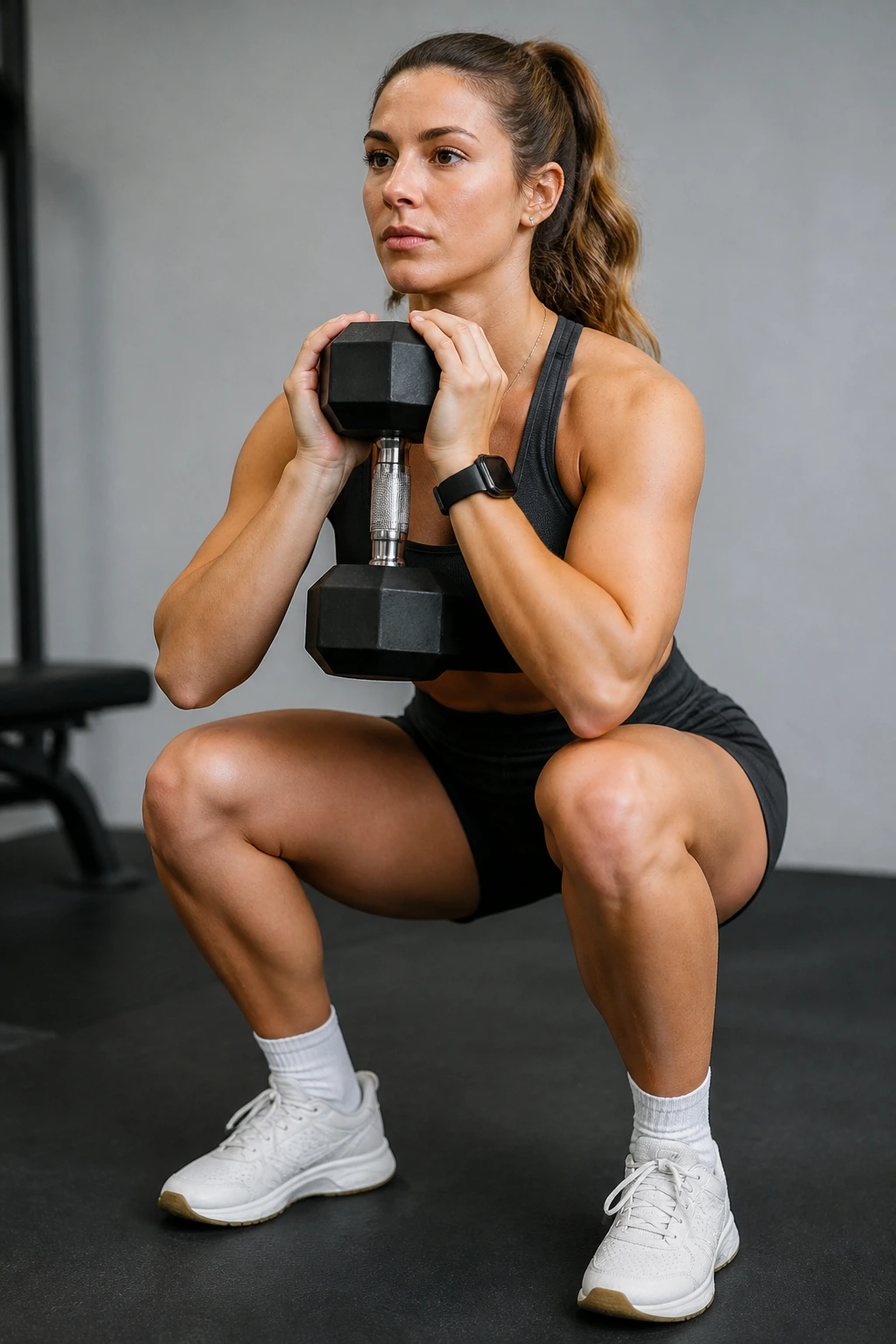
Load the weight in front again, but this time go heavier and lower the reps. Do 5 sets of 6 reps with a dumbbell, kettlebell, or backpack that feels challenging without wrecking your shape. The front load helps keep your torso upright, which usually makes glute work cleaner.
Pick the Load Like a Grown-Up
- The last rep should be hard, not ugly.
- Your heels stay down.
- Your chest stays open.
- You can repeat the same depth on every set.
That’s the standard. Not a hero set. Not a half-rep grind. A solid set you could copy three more times without dreading it.
I love this day because it feels serious. Heavy enough to matter, light enough to stay crisp. That’s the sweet spot most people miss.
16. Day 16: Sumo Squat Holds
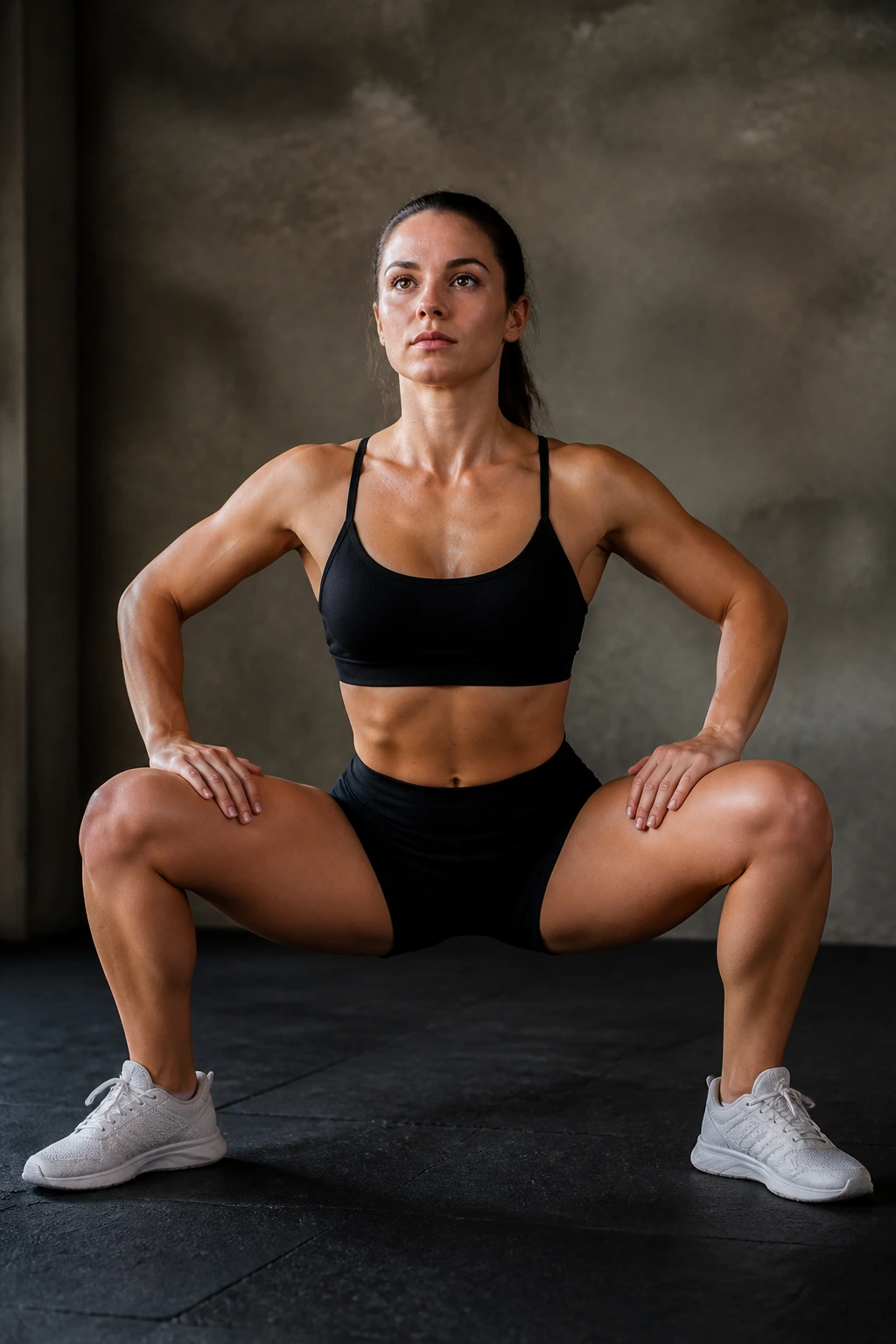
Sink into a wide squat and hold the bottom for 20 to 30 seconds, then stand and do 8 reps. Complete 3 rounds. The hold lights up the adductors and glutes in a way that straight reps often miss.
This is not the day to chase depth by rounding the back. Settle into the deepest position you can own with a flat foot and a tall chest. The hold should feel demanding, but not sketchy.
A lot of people rush past isometric work like it’s boring. Bad idea. Static tension builds control, and control is what makes the next loaded squat look better. You feel the difference fast when you come back up.
17. Day 17: Explosive Stand-Up Reps

Take a normal squat and stand up with intent. Not a jump. Just a sharp, strong rise. Do 4 sets of 8 reps, resting 60 seconds. The lowering phase stays controlled, but the way up should feel decisive.
The speed matters because it teaches force. Strong glutes do not just hold positions; they drive you out of them. That little burst out of the bottom is where a lot of people get sluggish, and sluggish reps rarely look athletic.
What to Feel
- Tight brace before each descent.
- Smooth drop.
- Strong drive through the floor.
- No knee collapse on the way up.
If your form breaks when you stand faster, reduce the load. Power is useless without shape. Keep the movement clean first, then make it snappier.
18. Day 18: Pulse-Then-Drive Reps
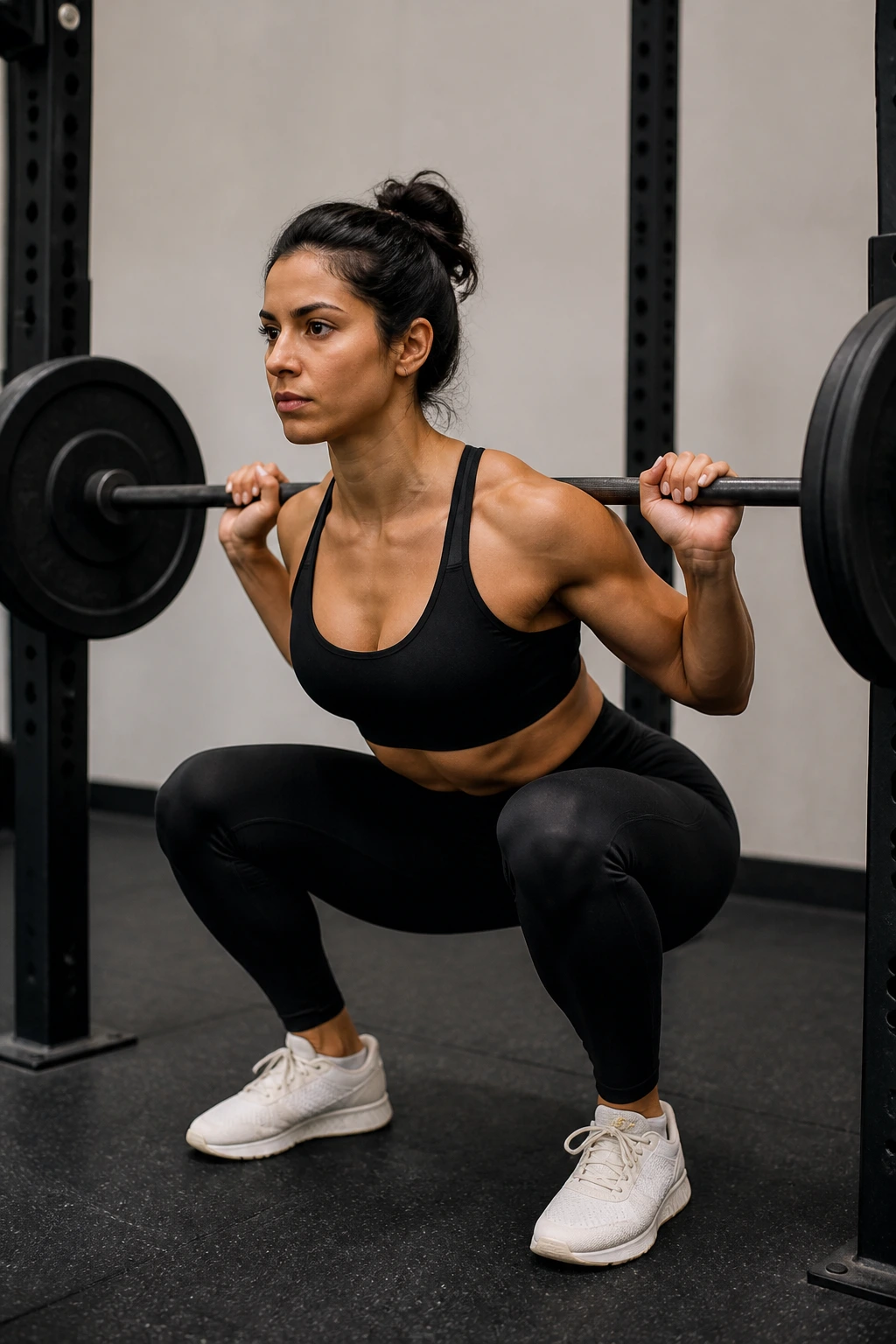
This one is a little nasty. Drop into a squat, pulse twice near the bottom, then stand all the way up. Do 3 sets of 10 reps. The short pulses keep tension where the glutes are working hardest, and the stand-up forces you to rebuild power after the burn starts.
It’s a good day to notice whether you lose posture when fatigue shows up. If your chest drops or your knees wobble, slow the pulses down and cut the set short.
A rep like this should feel focused, not chaotic. Two small pulses are enough. Three usually turns into a sloppy bounce, and that’s not the point at all.
19. Day 19: High-Rep Bodyweight Sets
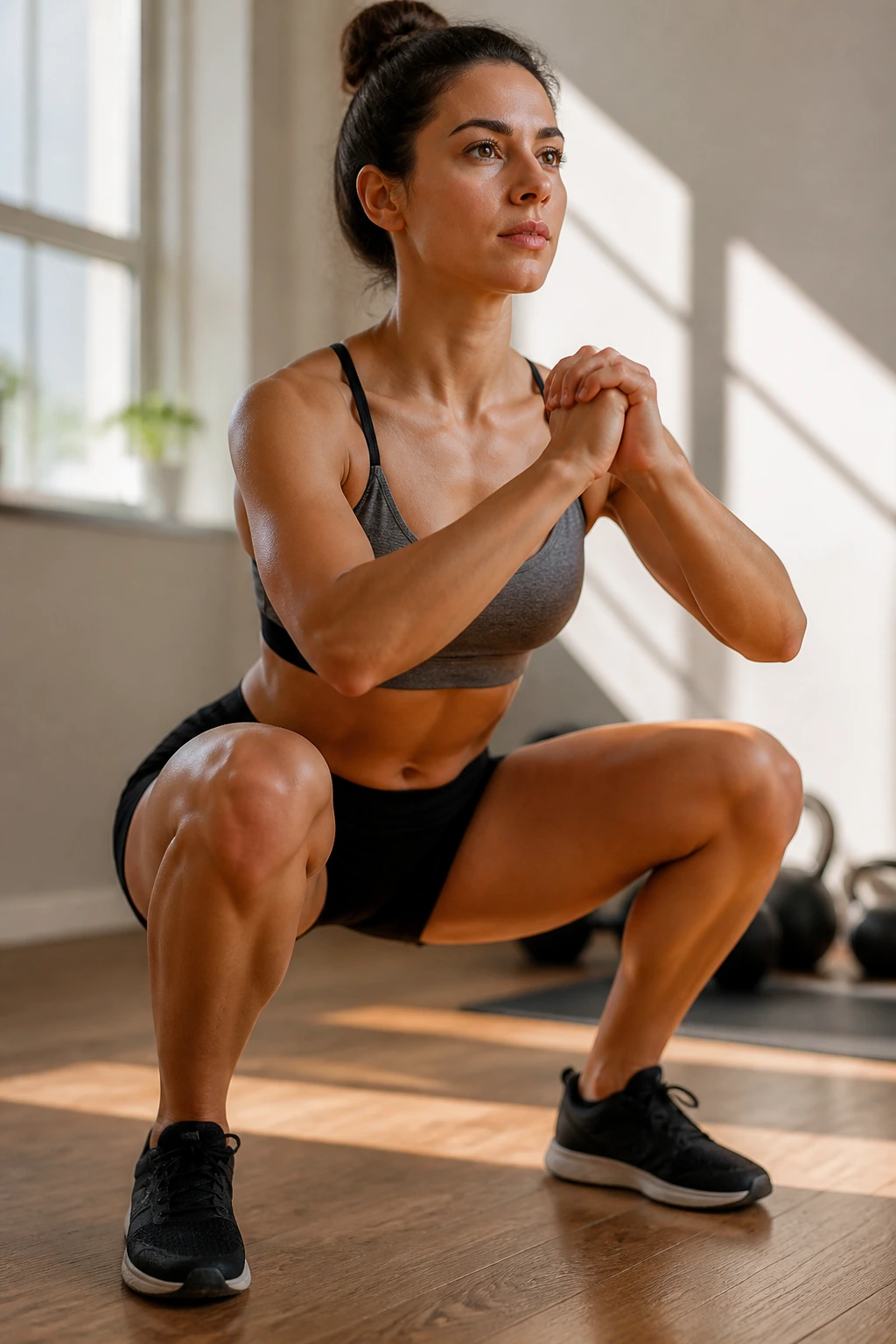
Some days are about volume, plain and simple. Do 4 sets of 20 bodyweight squats with 30 to 45 seconds rest. Keep every rep clean and steady. If you can’t hold form for 20, break the set into 12 and 8 with a short breath in between.
This day builds endurance in the glutes and legs, which matters more than most people admit. A muscle that tires fast also tends to lose shape under fatigue. Better stamina helps your later loaded days feel less clumsy.
Don’t Turn It Into Cardio Slop
- Same depth on every rep.
- Same foot position.
- Same stance width.
- Same calm breathing.
High reps only help if the movement still looks like a squat. Once it turns into a bounce-fest, stop and reset.
20. Day 20: Heavy Goblet Squats
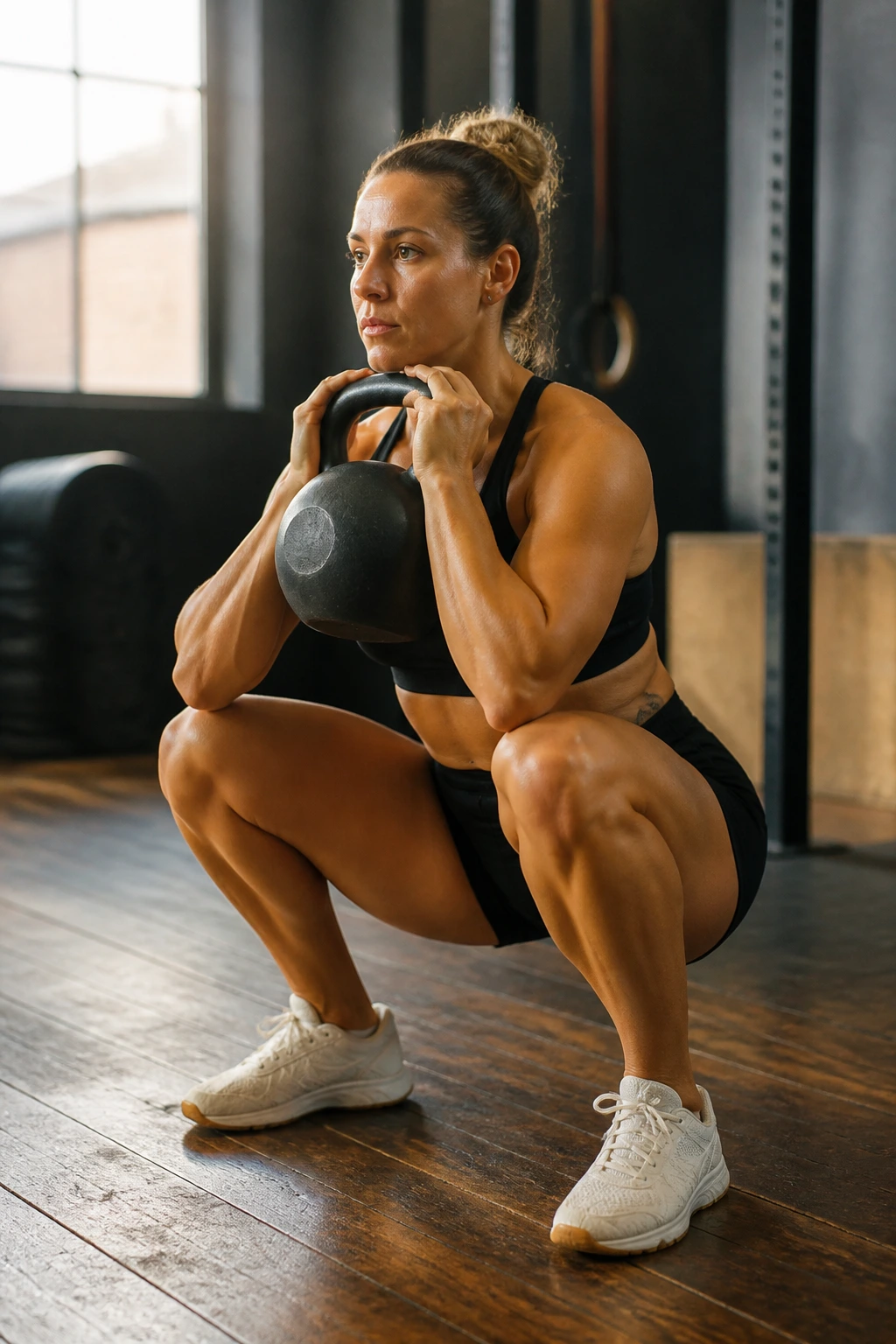
If you’ve got a heavier dumbbell or kettlebell, this is the day to use it. Do 5 sets of 5 reps and rest 75 to 90 seconds. This is one of the most useful ways to build stronger glutes without needing a barbell.
The load should feel heavy in your hands, but you should still own the bottom position. If the last rep turns into a good-morning shuffle, the weight is too high. Back off and keep the rep honest.
I’m picky about this one because goblet squats are easy to fake. A real heavy set forces full-body tension. That tension is what helps the glutes look firmer and carry more shape over time.
21. Day 21: Mobility Reset Squats
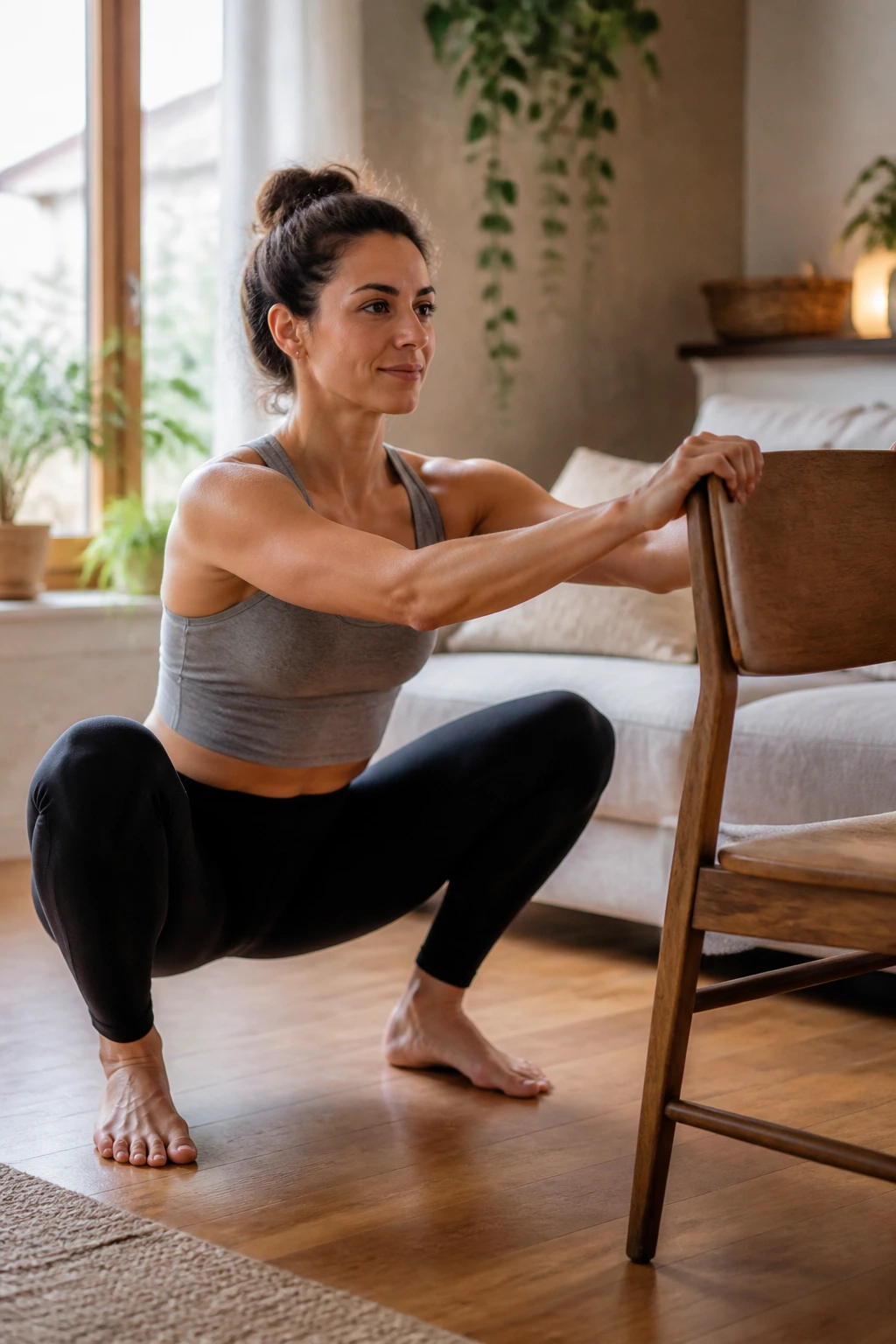
Take the edge off. Do 2 sets of 8 slow squats, then spend a minute in a supported deep squat hold and another minute stretching the hip flexors. That’s enough. You do not need to punish sore legs for the sake of the challenge.
A Simple Reset
- 8 slow bodyweight squats.
- 30-second supported deep squat hold.
- 30 seconds per side on the hip flexor stretch.
- 10 ankle rocks on each side.
This day gives your joints a break without making you stiff. Squat patterns get worse when hips and ankles lock up, and a little mobility work can save the rest of the week.
You should leave this session feeling looser, not drained. That’s the whole deal.
22. Day 22: Narrow-Stance Squats
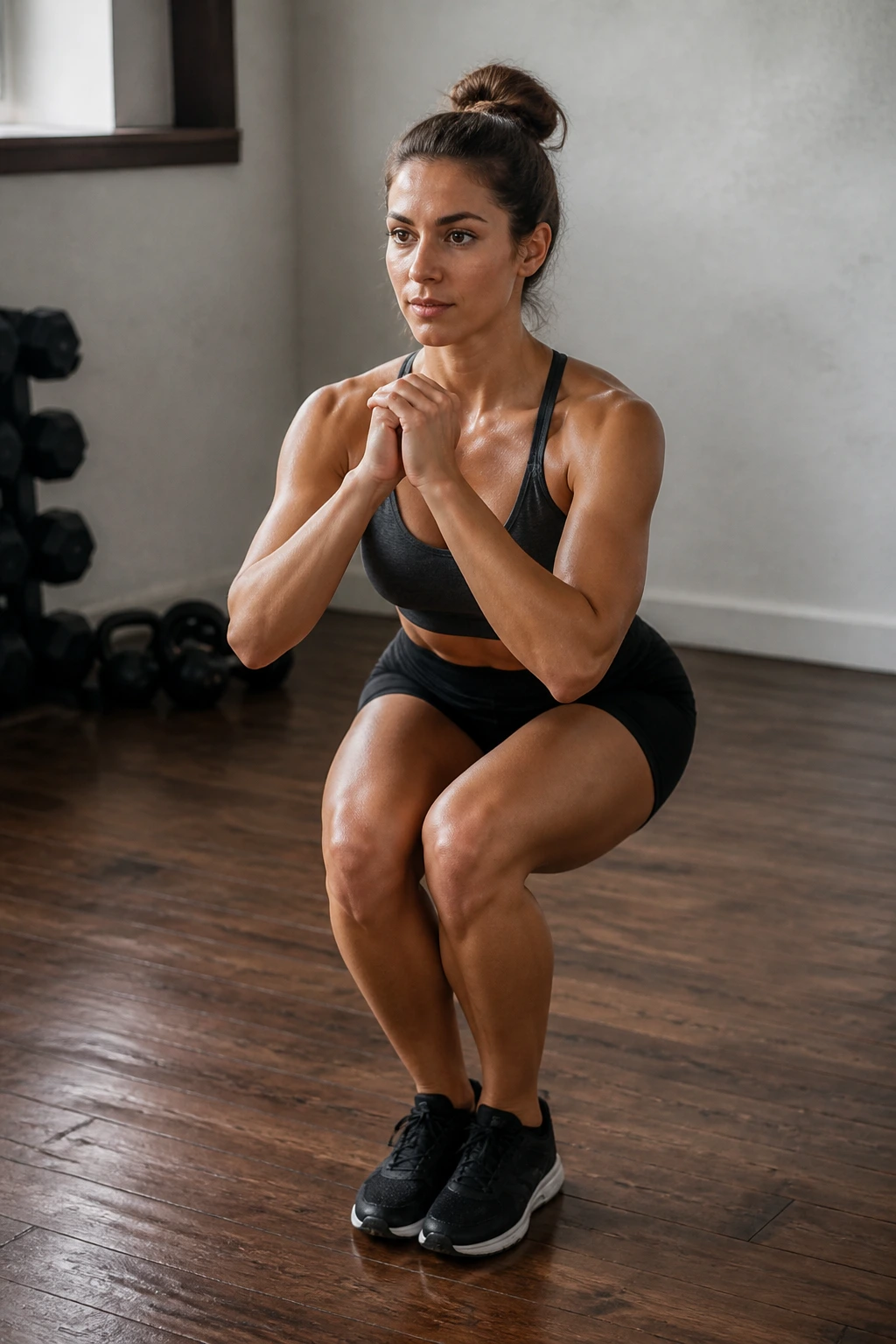
Bring your feet a little closer together and do 4 sets of 10 squats. Narrower stance changes the demand, especially through the quads and the stabilizers around the hips. It also asks your balance to pay attention, which is useful if your regular stance has gotten lazy.
Do not force the stance so narrow that your knees knock around. A modest change is enough. The squat should still feel rooted, not twitchy.
What Changes Here
The torso may stay a little more upright, the bottom position may feel tighter, and your glutes still have to fire hard to stand up cleanly. That mix is part of what keeps the plan from going stale.
If your ankles dislike the narrow stance, widen it a bit and keep going. A squat you can repeat well beats a perfect-looking rep you can’t control.
23. Day 23: Cluster Squats

Cluster sets break a bigger set into smaller bites. Try 3 rounds of 9 reps, but pause for 10 to 15 seconds after every 3 reps. The short breaks let you keep quality high while still piling up work.
This is one of my favorite ways to train when fatigue starts to blur the rep shape. You get the burn, but you also get better reps than you would in one long, messy set.
The best part is mental. The set feels manageable, then suddenly it isn’t. That’s a useful lesson. Strong glutes are built by doing good reps while tired, not by surviving chaos.
24. Day 24: Offset Dumbbell Squats
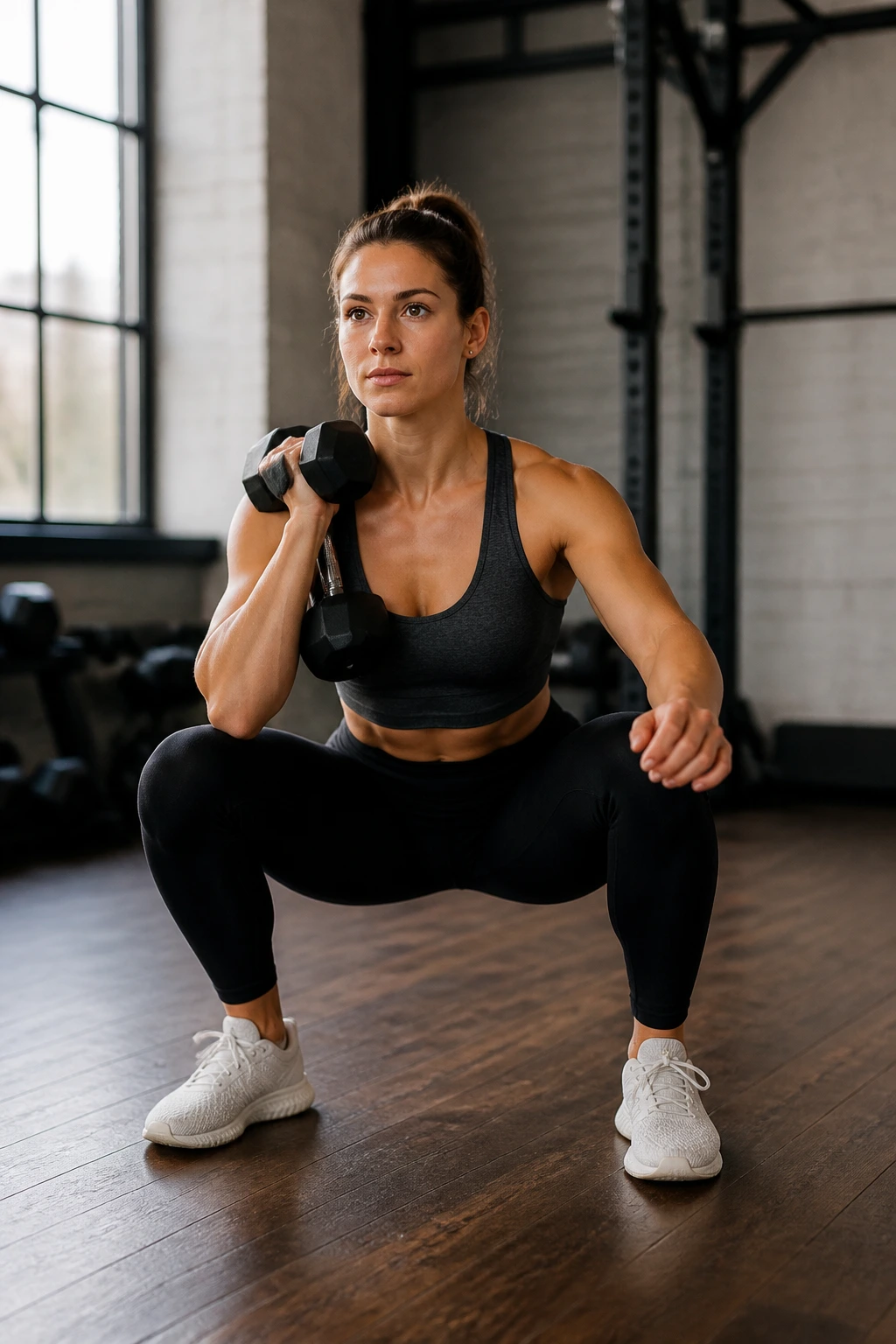
Hold a dumbbell on one side of your body and squat. Then switch sides. Do 3 sets of 10 reps per side. The uneven load forces your core and hips to stabilize harder, and that extra work shows up fast around the glutes.
The movement should not twist. If you feel yourself leaning hard toward the weight, reduce the load and slow down. The goal is control, not a side bend masquerading as a squat.
Why This One Sticks
- It exposes weak hips.
- It wakes up the glute med.
- It teaches your trunk to stay tall.
- It makes regular squats feel easier afterward.
That last part matters. A harder squat variation often makes the plain squat look cleaner. That’s not magic. It’s practice.
25. Day 25: Box Squat Plus Pulses
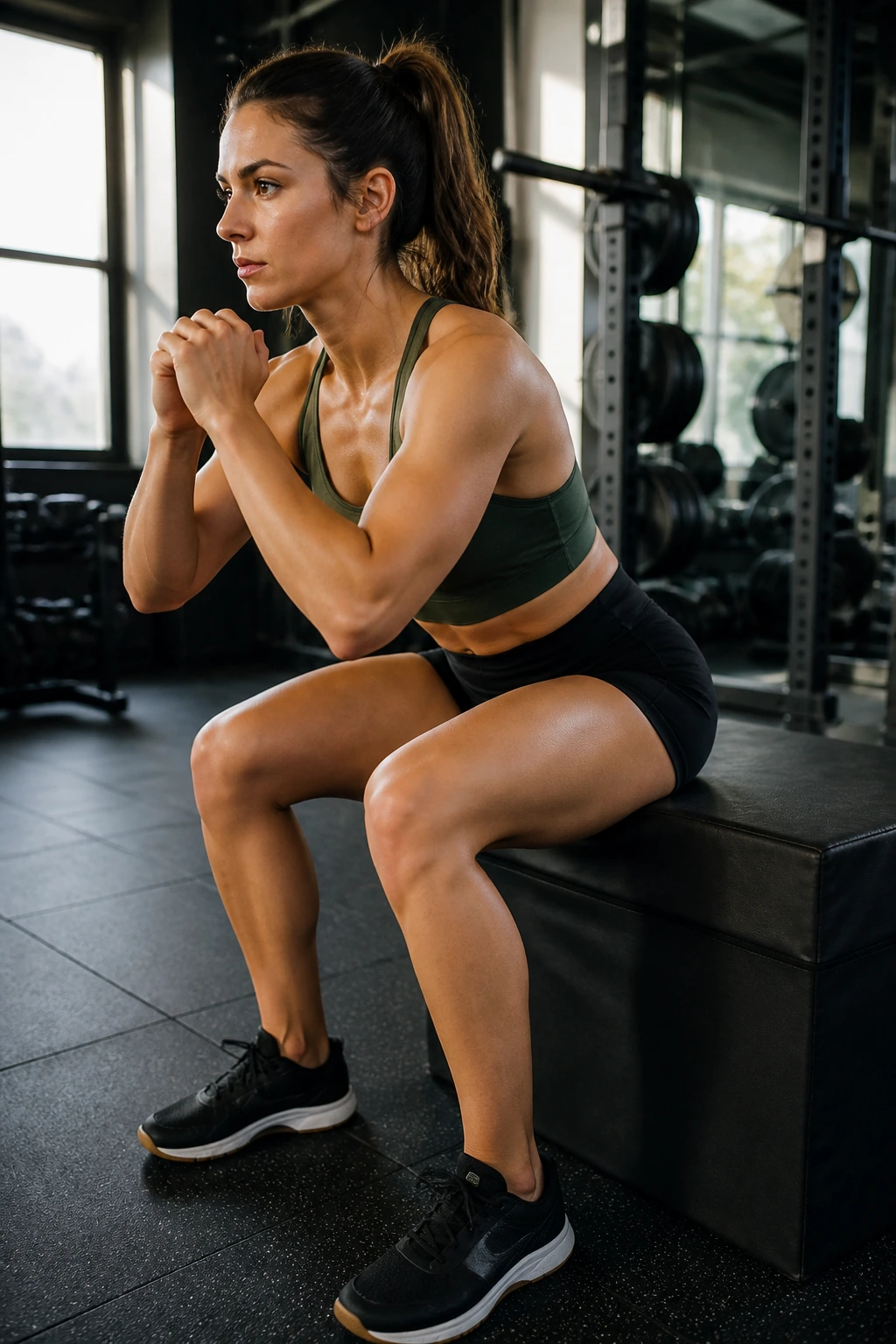
Sit to the box, stand up, then add 3 tiny pulses at the bottom on the final rep of each set. Do 4 sets of 8 reps. This combo gives you the control of a box squat and the sting of the pulses, which is a nice way to finish the middle block of the month.
Keep the touch on the box light. If you relax hard into it, the whole set loses tension. You want the box to guide depth, not replace effort.
This is a good day for people who tend to dive-bomb squats and lose position. The box slows the ego down. The pulses make sure you still earn the work.
26. Day 26: Slow-Negative Challenge
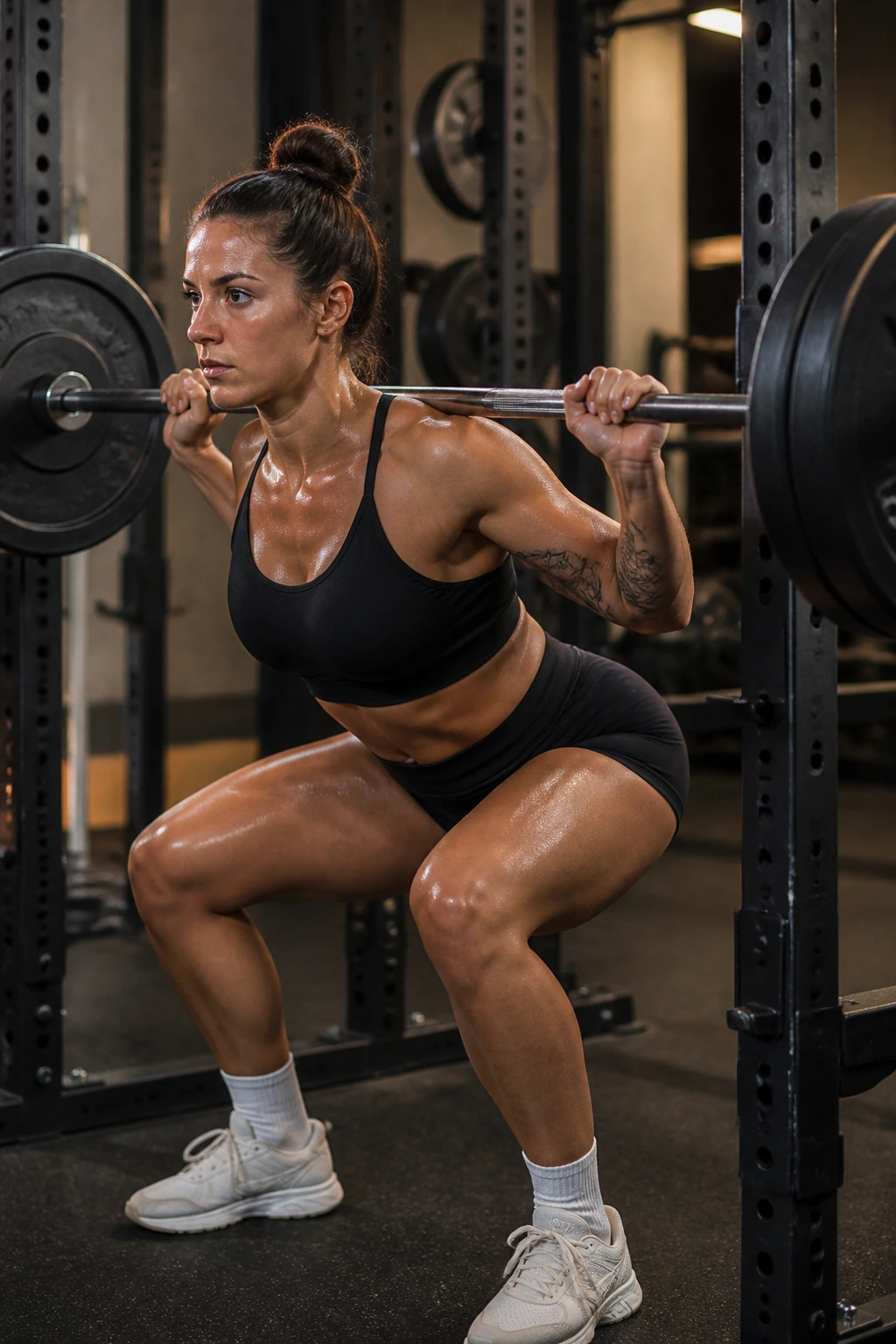
Five seconds down. That’s the rule. Do 3 sets of 6 reps with a 5-second lowering phase and a strong stand-up. The set will feel longer than it looks on paper, and that’s exactly why it works.
The long descent loads the glutes through the full range of motion and forces you to stay braced the whole time. It’s a clean way to train without piling on more weight just to feel challenged.
Form Check
If the last two reps get ugly, cut the set and rest a little longer next time. Tempo only helps when the shape stays good. A slow mess is still a mess.
27. Day 27: Glute Burnout 100

Set a target of 100 total squats and break it into as many clean sets as you need. Ten sets of 10 works. Five sets of 20 works if your form stays sharp. Take 30 to 60 seconds between sets.
This day is about accumulation, not heroics. You’re letting volume do the work. The legs should feel warm, tired, and a little stubborn. That’s fine. Sharp pain is not fine. If your knees or lower back complain, stop the count and switch to easy recovery squats.
A workout like this is a reminder that muscle endurance supports muscle shape. It won’t replace heavier work, but it does make the whole month feel like a real training block instead of random days on a calendar.
28. Day 28: Chair Squats and Stretching
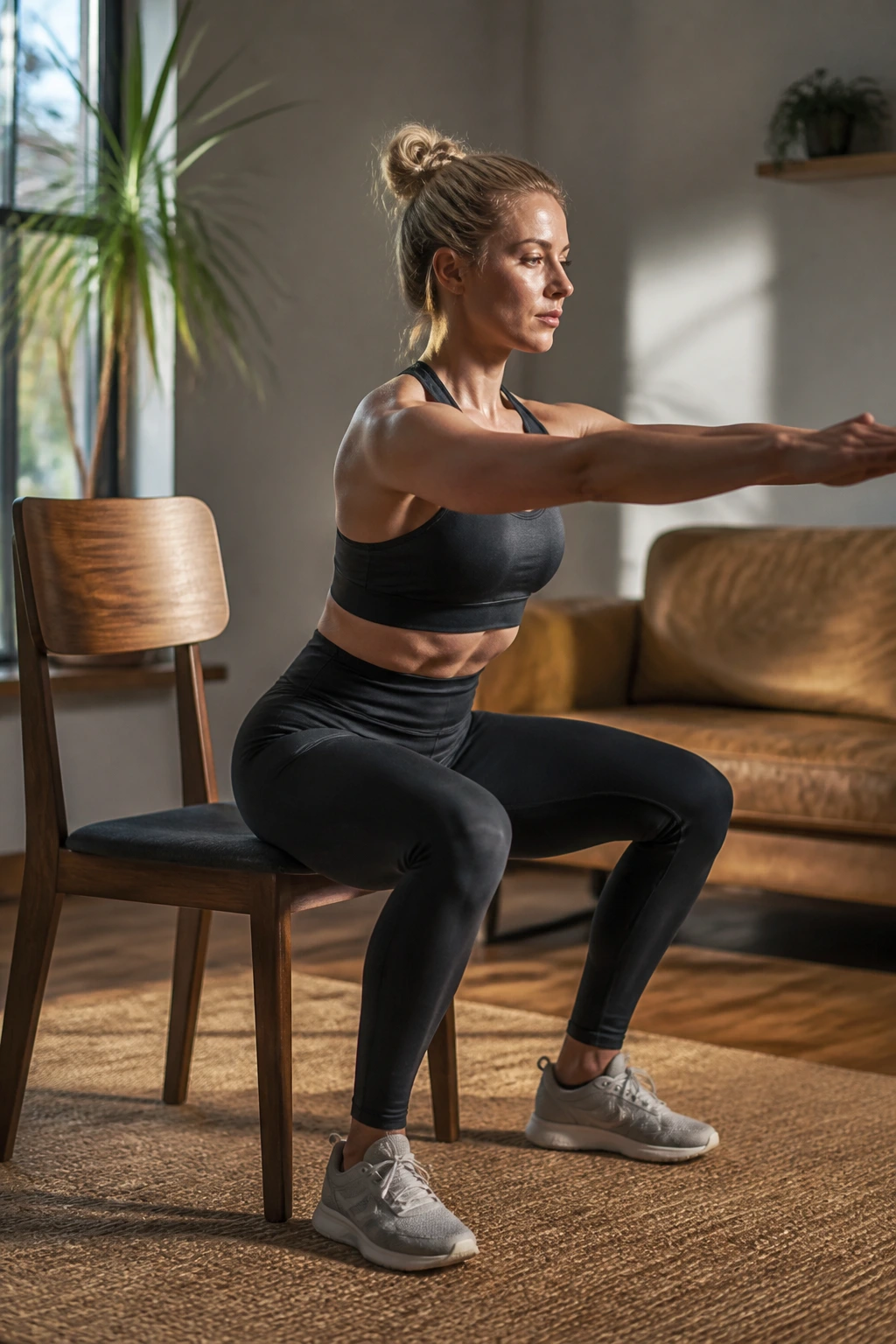
Use a chair, bench, or box for a simple sit-back squat. Do 2 sets of 12 reps, then stretch the quads, glutes, and calves for a few minutes. The target is smooth movement and a calmer finish to the week.
Keep It Easy
- Sit back under control.
- Stand without throwing your chest forward.
- Keep your feet flat.
- Stop if the chair touch turns into a drop.
This is one of those days people skip because it looks too plain. Then they wonder why they feel beat up two days later. A simple deload keeps the next hard session useful.
29. Day 29: Best-Form 5×5 Test
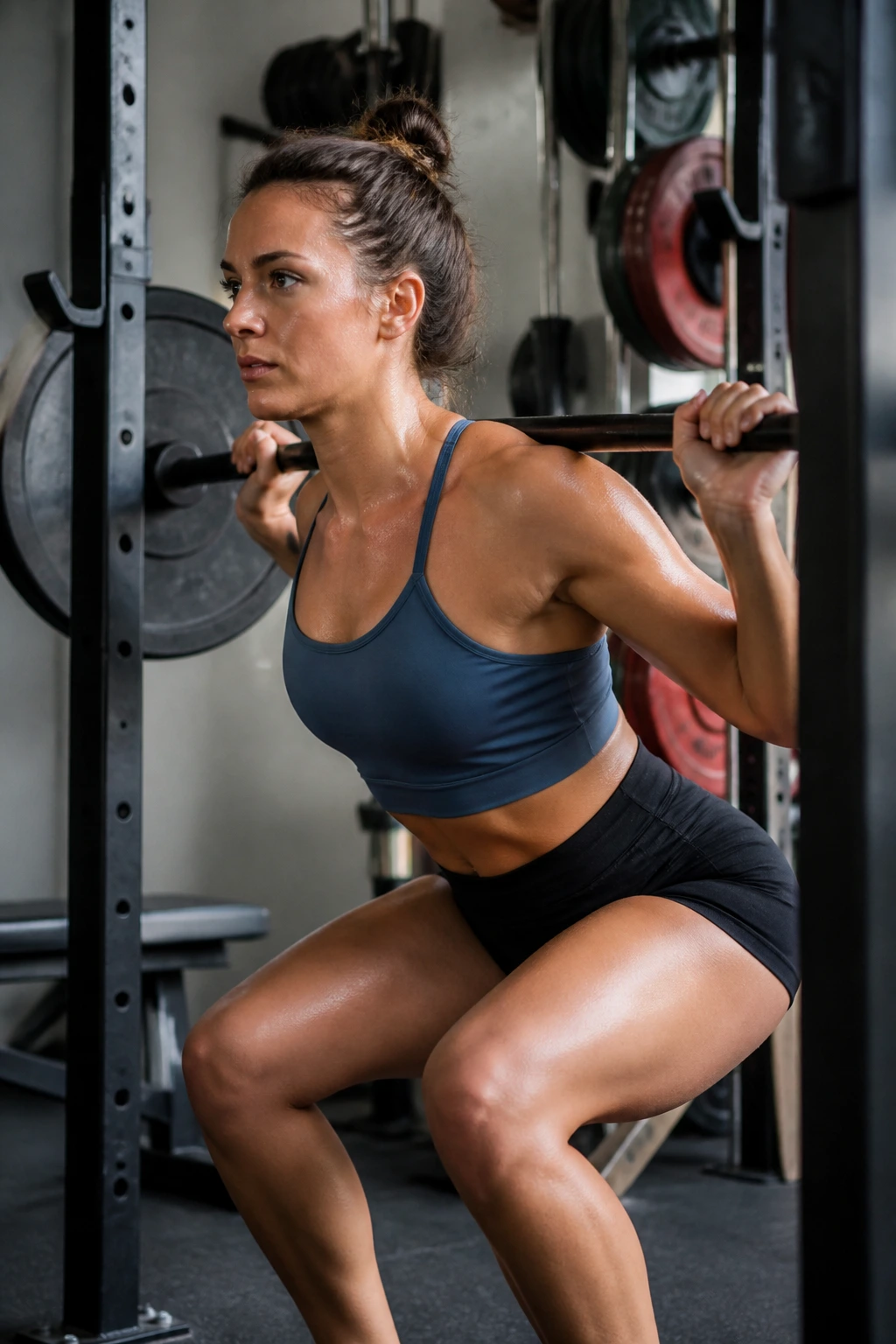
Use the load that gave you the cleanest reps during the month and do 5 sets of 5. Not the heaviest possible weight. The best-form weight. That difference matters. One version builds strength. The other often builds bad habits.
Take your time between sets, around 90 seconds, and watch for the little breaks in form that show up when fatigue sneaks in. If rep 4 starts looking different from rep 1, the load is too ambitious.
Judge the Result
- Did depth stay consistent?
- Did the knees stay lined up?
- Did the glutes feel like they worked, not just the thighs?
- Did you recover faster than you would have on Day 1?
That’s the real test. Better squats should look cleaner and feel more controlled.
30. Day 30: Density Set Finish

Finish with a 15-minute density set: every minute on the minute, do 6 to 8 squats, then rest until the next minute starts. Keep the reps crisp. If you can’t keep the same shape by the middle of the session, drop to 5 reps and keep the quality high.
This is the day that ties the whole month together. You’ve done slow reps, pauses, loaded sets, recovery work, and high-volume days. Now you prove that the squat pattern holds up when fatigue builds.
A small detail makes a big difference here: end every minute with control, not panic. The last set should feel like work, but not like a collapse. Leave a little in the tank. That’s a better sign of real progress than a sloppy finish.
Final Thoughts
The best part of a 30-day squat plan is not the burn. It’s the way clean reps start to feel normal. Your stance settles. Your depth gets steadier. The glutes start doing more of the work instead of letting your quads and lower back grab everything.
Keep that in mind when the month ends. If you want stronger defined glutes, keep a squat pattern in your week, keep adding a little load or a little control, and keep recovery in the picture. That last part matters more than people like to admit.
One hard truth, and it’s worth saying plainly: squats can build the shape, but they don’t replace sleep, protein, or a sane training plan. Put those pieces together, and the work you did over these 30 days has somewhere to go.
