



A defined chest does not come from endless flat pressing.
Chest exercises for women who want definition work best when the pecs get load from a few different angles—slightly upward, straight across, and a little downward—because the muscle responds to line of pull, not just effort. And no, chest training does not make you look bulky overnight; it makes the area firmer, stronger, and better supported under your clothes.
The part most people miss is control. A sloppy rep with 50 pounds often gives less useful tension than a clean rep with 25 pounds, especially if the shoulders roll forward and the elbows flare like wings. The chest shows up when the shoulder blades stay set, the ribs stay down, and the weight moves through a full, honest range.
That is why the best mix includes push-ups, presses, flyes, cables, bands, and a couple of slow finishers you can feel long after the set ends. The order matters less than the details, and the details are where definition gets built.
1. Incline Push-Up for Chest Exercises for Women Who Want Upper-Chest Definition
If the top of your chest disappears the moment you shrug, the incline push-up is worth your time. Put your hands on a bench, sturdy step, or smith bar, and the body angle shifts just enough to make the upper chest work harder than it does in a flat-floor push-up.
Why It Works Better Than the Knee Version
The incline keeps the movement honest without burying you under full bodyweight right away. That makes it easier to keep your rib cage tucked and your shoulders packed instead of collapsing at the bottom.
- Set your hands about 12 to 18 inches high.
- Keep your body in one line from ears to ankles.
- Lower for 2 to 3 seconds until your chest is a few inches from the edge.
- Press up until the elbows are straight but not locked hard.
Tip: If your wrists get cranky, hold dumbbells as handles instead of flattening your palms.
A lot of people rush this one. Don’t. Slow reps here do more for shape than frantic ones ever will.
2. Standard Push-Up
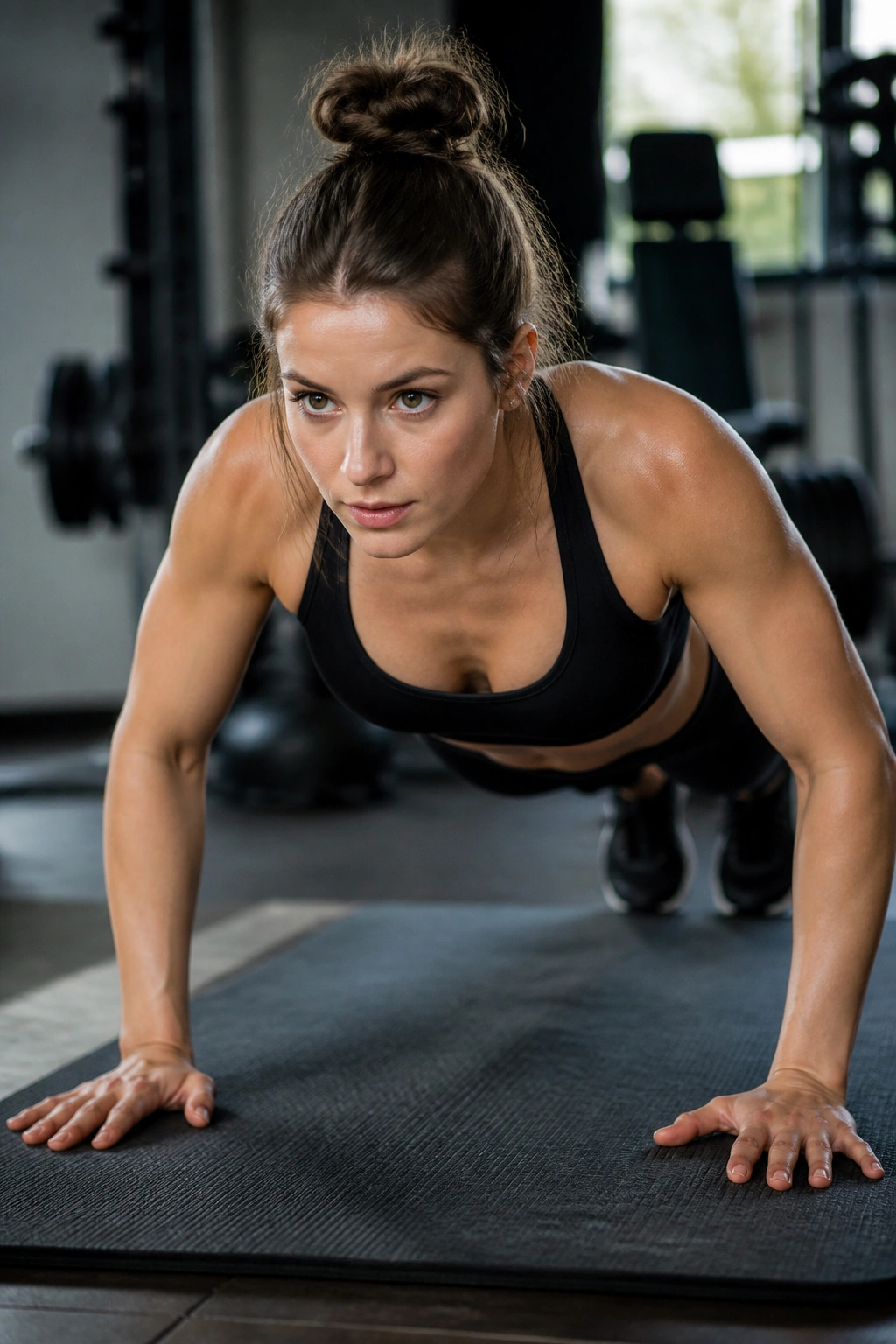
The floor push-up is still one of the best chest builders in the room. It teaches the pecs to work while the core, glutes, and shoulder blades stay in line, which is exactly what you want if you’re chasing clean definition instead of just a pump.
The move looks simple. It isn’t. If the hips sag, the chest barely moves, and the neck cranes forward, the set turns into a messy shoulder drill. Keep your hands under or slightly outside the shoulders, let the elbows drift about 30 to 45 degrees from your body, and lower until your chest hovers close to the floor.
Use a full rep. No half effort. A push-up that stops three inches too high misses the stretch that makes the pecs earn their keep.
A clean standard push-up is a good place to live once incline reps start feeling easy.
3. Decline Push-Up
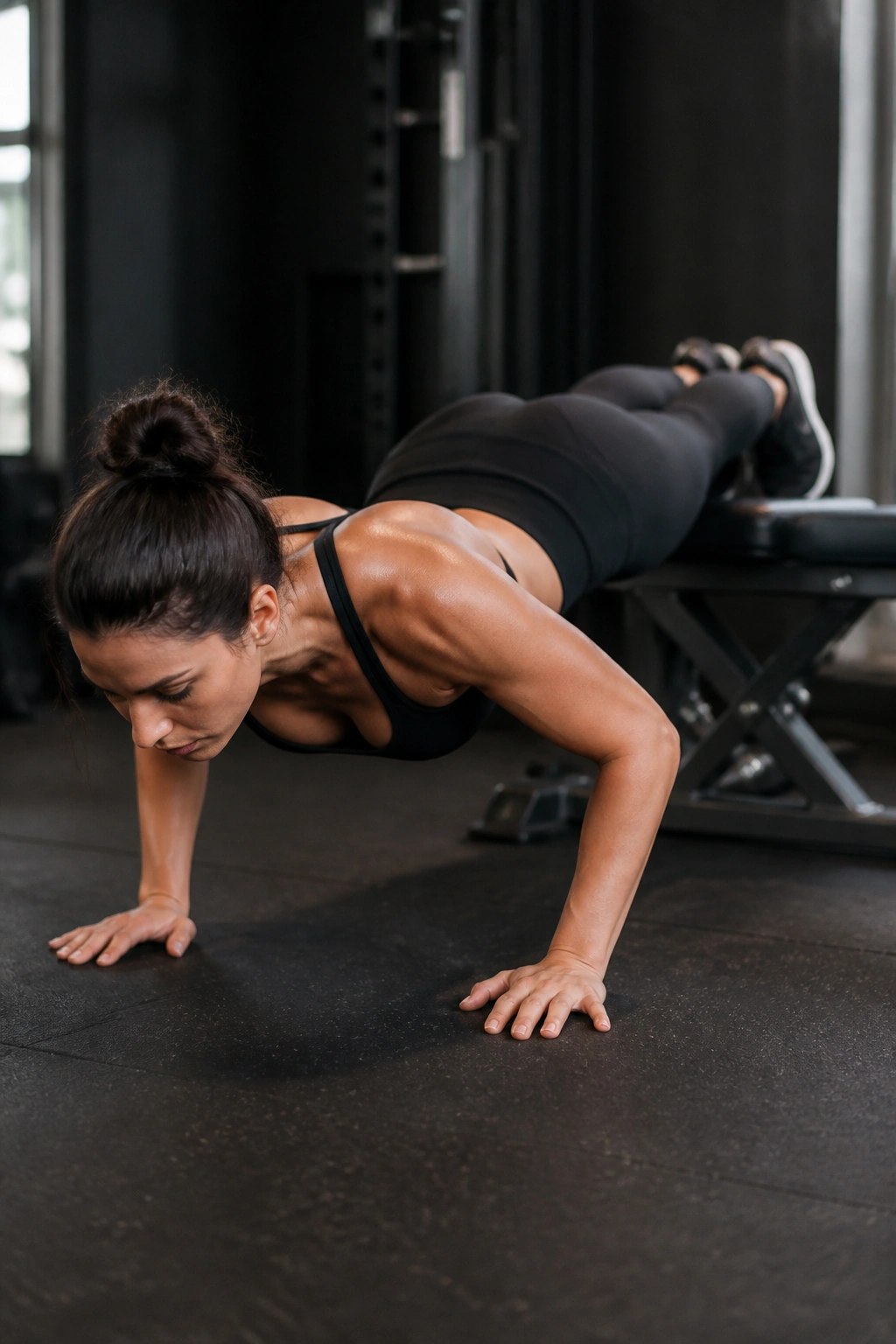
Why do so many people avoid decline push-ups? Usually because they look harder than they are fun. That’s fair. Feet on a box or bench shift more load toward the upper chest and front of the shoulders, which is exactly why the move deserves a place in a chest routine.
How to Use It
Start with your feet on a surface about 12 to 24 inches high. The higher the feet, the tougher the set becomes, so there’s no prize for turning it into a circus act on day one. Keep the pelvis level and avoid the common low-back dip that shows up when the core gives up.
A good target is 5 to 10 controlled reps. I like this one best in the middle of a workout, after a flat press or standard push-up, when the chest is already awake and you can feel the top half of the rep working.
Short version: decline push-ups are not a vanity move. They hit the upper chest hard.
4. Dumbbell Floor Press
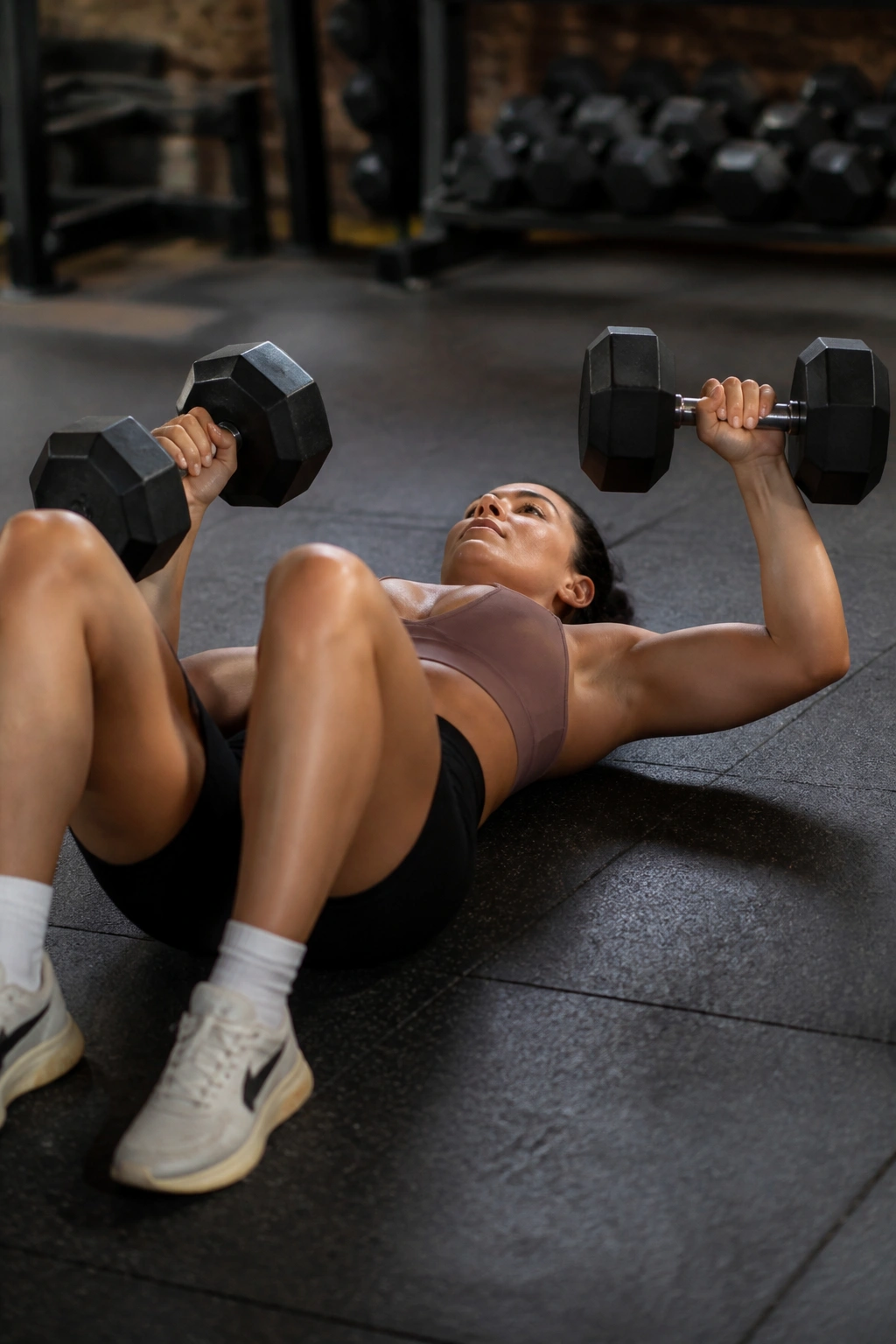
A dumbbell floor press feels calm and heavy. The floor stops the elbows before they drift into the deep shoulder stretch that can irritate some lifters, which makes this one a smart press for anyone who wants chest work without the wobble of a full bench.
Lie on the floor with the dumbbells over the mid-chest, elbows bent, and palms facing forward or slightly inward. Lower until the upper arms touch the floor lightly, pause for a beat, and press back up. The pause matters. It kills the bounce and makes the pecs do the work.
This is a good choice when you want to train hard but keep the setup simple. You can go heavier here than on flyes, and that load helps build the muscle that definition needs.
One sentence, because it matters: don’t slam your elbows into the floor.
5. Flat Dumbbell Bench Press
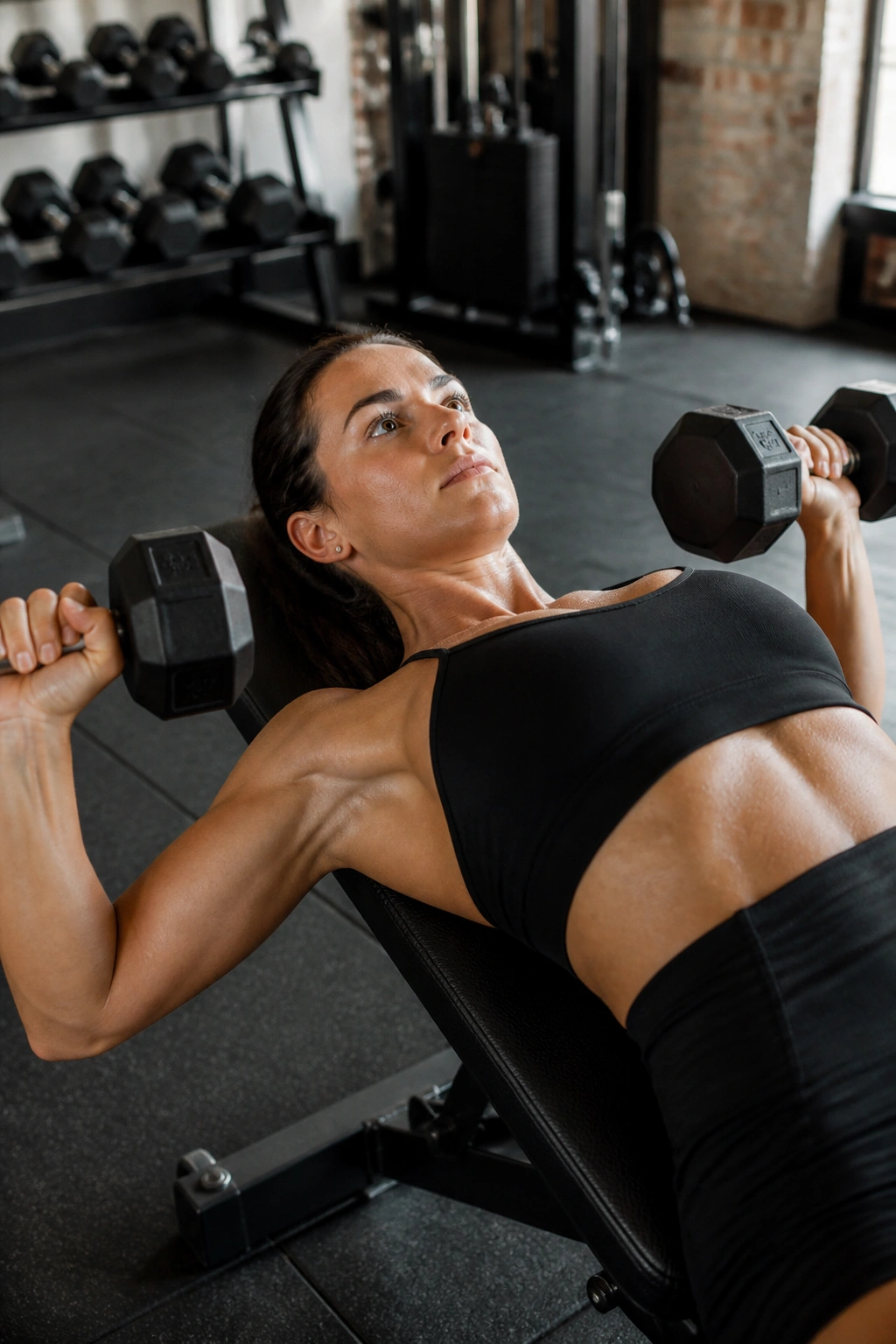
Unlike a barbell bench, the flat dumbbell bench press lets each arm travel on its own path. That sounds like a small thing. It isn’t. For many women, it makes the press feel more natural through the shoulders and reveals left-right weakness fast, which is useful if one side always seems to do the heavy lifting.
The bench gives you room to lower the dumbbells a little deeper than a floor press, so the chest gets more stretch under load. Keep the shoulder blades pulled back and down, set the dumbbells just outside the chest, and press without banging them together at the top. A controlled stop keeps tension in the pecs instead of dumping it into momentum.
Use a load that allows 8 to 12 clean reps. If the wrists fold back or the elbows wobble, the set is too heavy for the goal.
This is one of those lifts that looks basic and still earns respect every time.
6. Incline Dumbbell Press for Women Who Want a Higher Chest Line
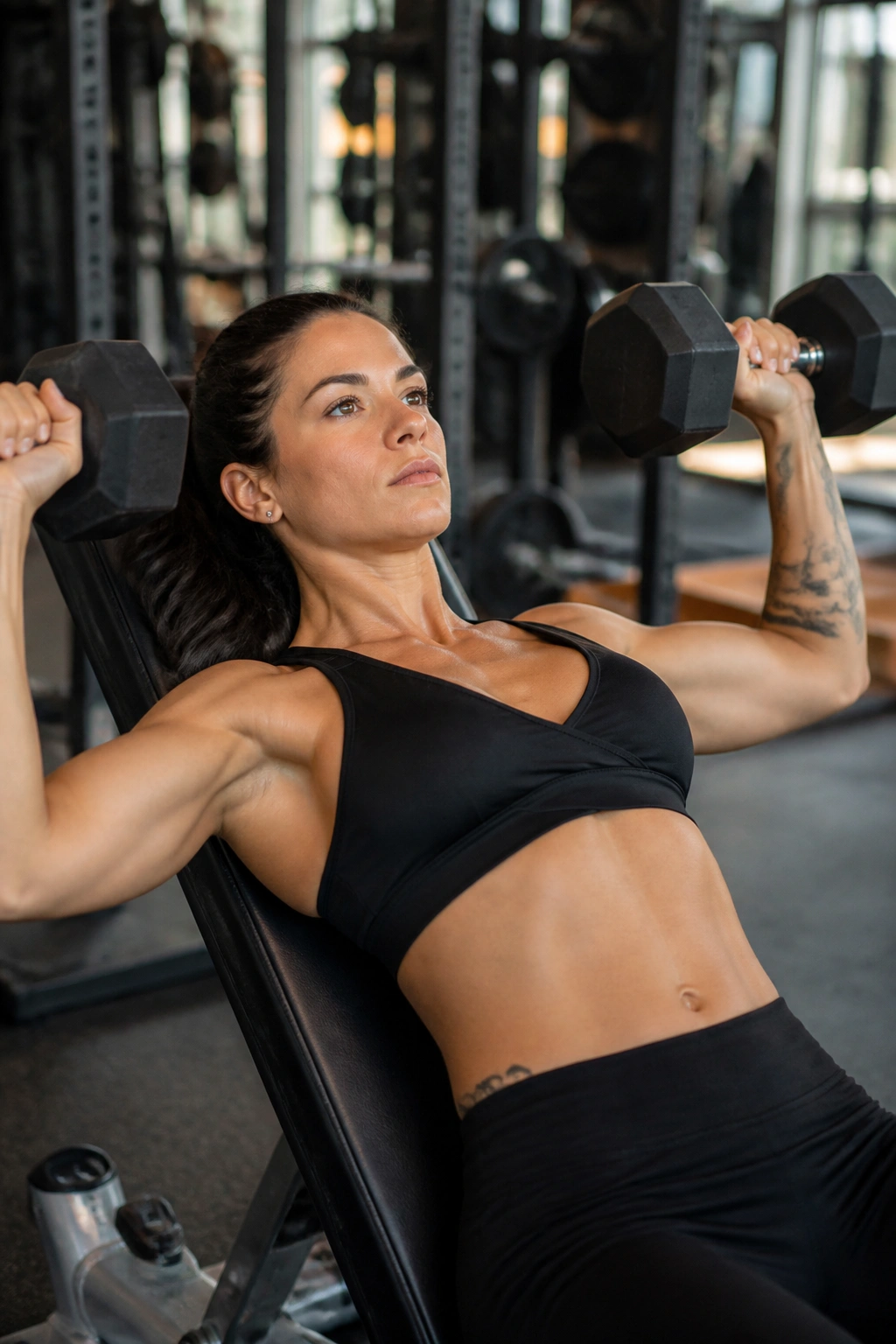
The incline dumbbell press is the one I reach for when someone wants the upper chest to look a bit fuller under a fitted top. A bench set at about 20 to 35 degrees changes the line of force enough to bias the clavicular head of the pec without turning the movement into a shoulder press.
What Makes the Angle Matter
Too steep, and your front delts hijack the set. Too flat, and you lose the upper-chest emphasis that gives the area more shape. The sweet spot is somewhere in the middle, and you can feel it right away if the dumbbells travel in a slight arc rather than straight up and down.
How to Use It
- Plant your feet flat and squeeze the bench with your upper back.
- Lower the dumbbells until they sit around the upper chest line.
- Keep the elbows a little below shoulder height.
- Press up and slightly in, stopping before the bells knock together.
I like 8 to 10 reps here, with a slow lower and a sharp but controlled press.
It’s a clean, useful press. No drama.
7. Reverse-Grip Dumbbell Press
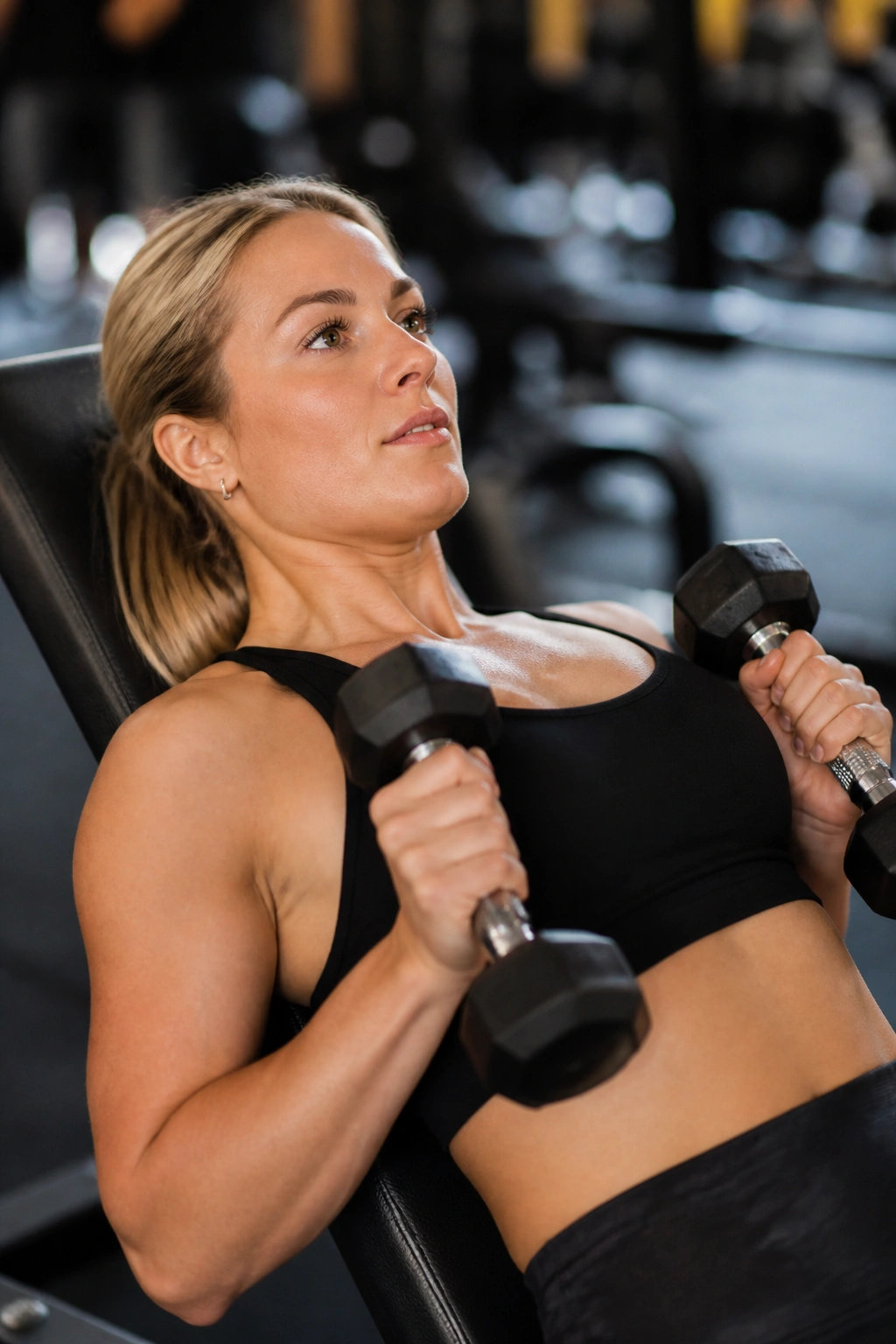
A reverse-grip dumbbell press looks odd the first time you see it, and that oddness is part of the point. With the palms facing you, the elbow path changes, and many lifters feel more upper-chest involvement than they do with a standard overhand press.
Use this one with lighter dumbbells than your ego wants. The underhand position asks more from the wrists and forearms, and if you rush it, the set turns awkward fast. Keep the dumbbells close to the lower chest, press in a straight line, and stop if the wrist angle starts to pinch.
I’d treat this as a niche tool, not a main lift. Two or three sets of 6 to 8 reps are plenty.
If your shoulders like it, great. If not, skip it and move on. There are twenty-one other ways to train the chest here.
8. Neutral-Grip Dumbbell Press for Women Who Want a Shoulder-Friendly Press
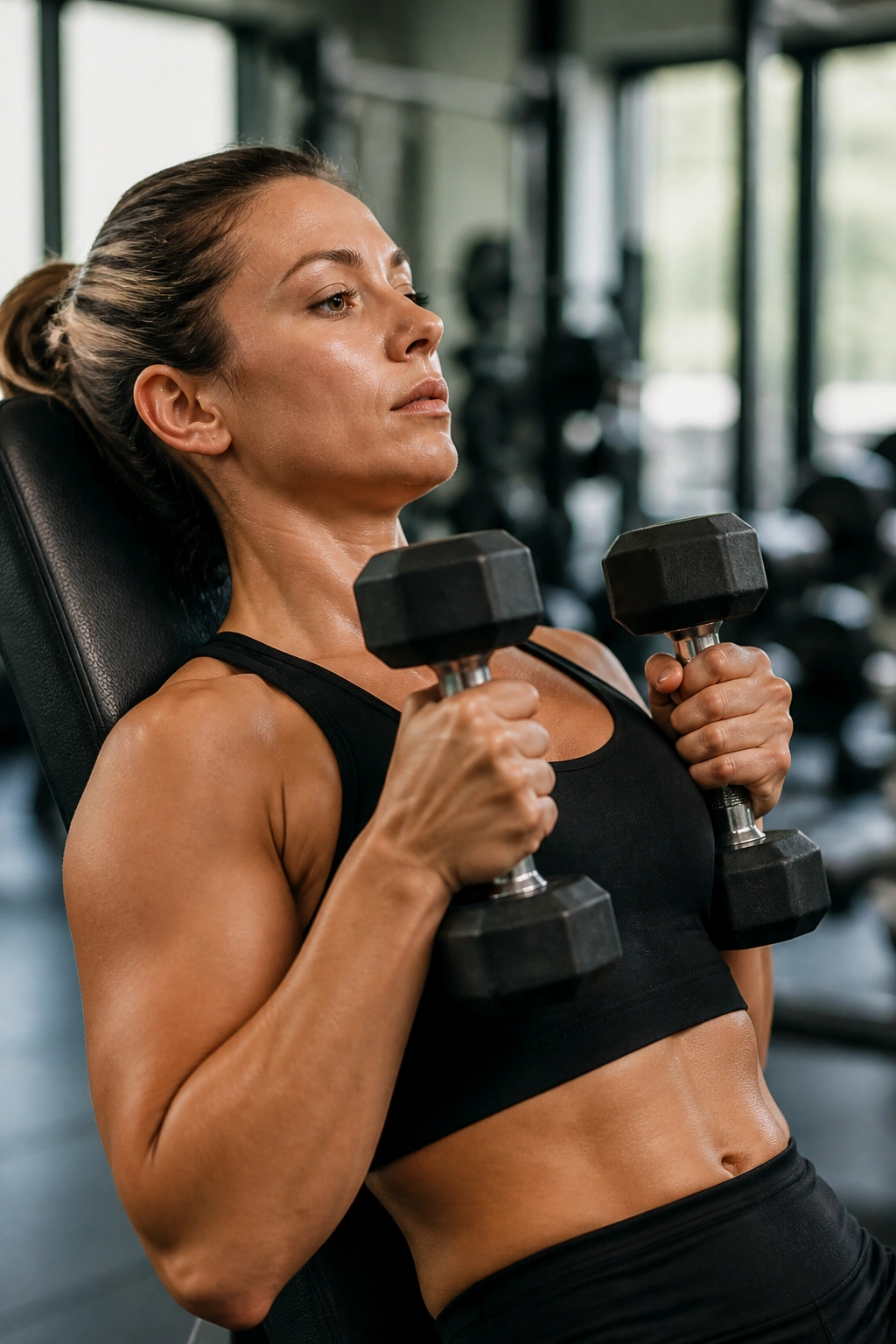
Why does a neutral grip matter so much? Because palms facing each other often lets the elbows tuck a little closer, which can take pressure off cranky shoulders while still loading the pecs well. You don’t need to flare wide to make the chest work.
The path is simple. Lie back, hold the dumbbells with palms facing inward, and lower them to the sides of the chest under control. Press up until the arms are straight, but keep the dumbbells from drifting too far behind the line of the shoulders. That little detail keeps the front of the shoulder from taking over.
This is a good press on days when your joints feel a little stale or when you want to train chest volume without a rough session. 10 to 12 reps usually feels right.
How to Get the Most From It
- Use a bench with a stable pad and no wobble.
- Keep the wrists stacked over the elbows.
- Lower until you feel a chest stretch, not a shoulder pinch.
- Pause for half a second at the bottom.
9. Smith Machine Bench Press
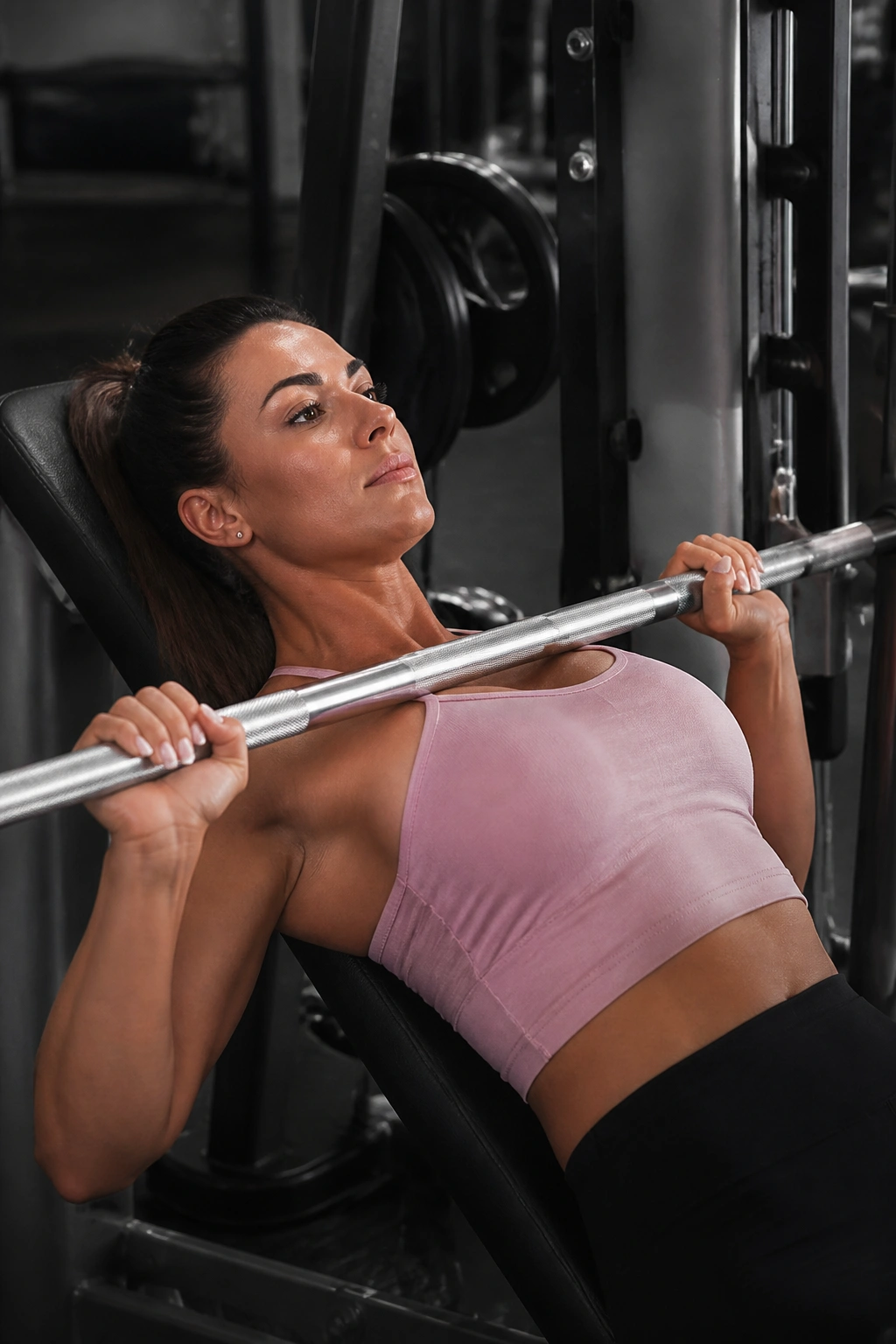
A Smith machine bench press takes away one big problem: balancing the bar. That can be a blessing when your goal is to push the pecs near fatigue without worrying about whether the bar path is drifting over your face or wrists.
The fixed track changes the feel. Some lifters hate that. I get it. Others love it because they can focus on the squeeze, the tempo, and the last few hard reps without spotter anxiety. Set the bench so the bar lands over the mid-chest, not the neck, and keep the shoulder blades pinned back.
The best use is moderate-to-heavy sets of 6 to 10 reps. Don’t bounce off the chest. Let the bar hover for a beat if you need to strip out momentum.
This one is less pretty than a perfect dumbbell rep. It is still useful.
10. Machine Chest Press for Chest Exercises for Women Who Prefer a Fixed Path
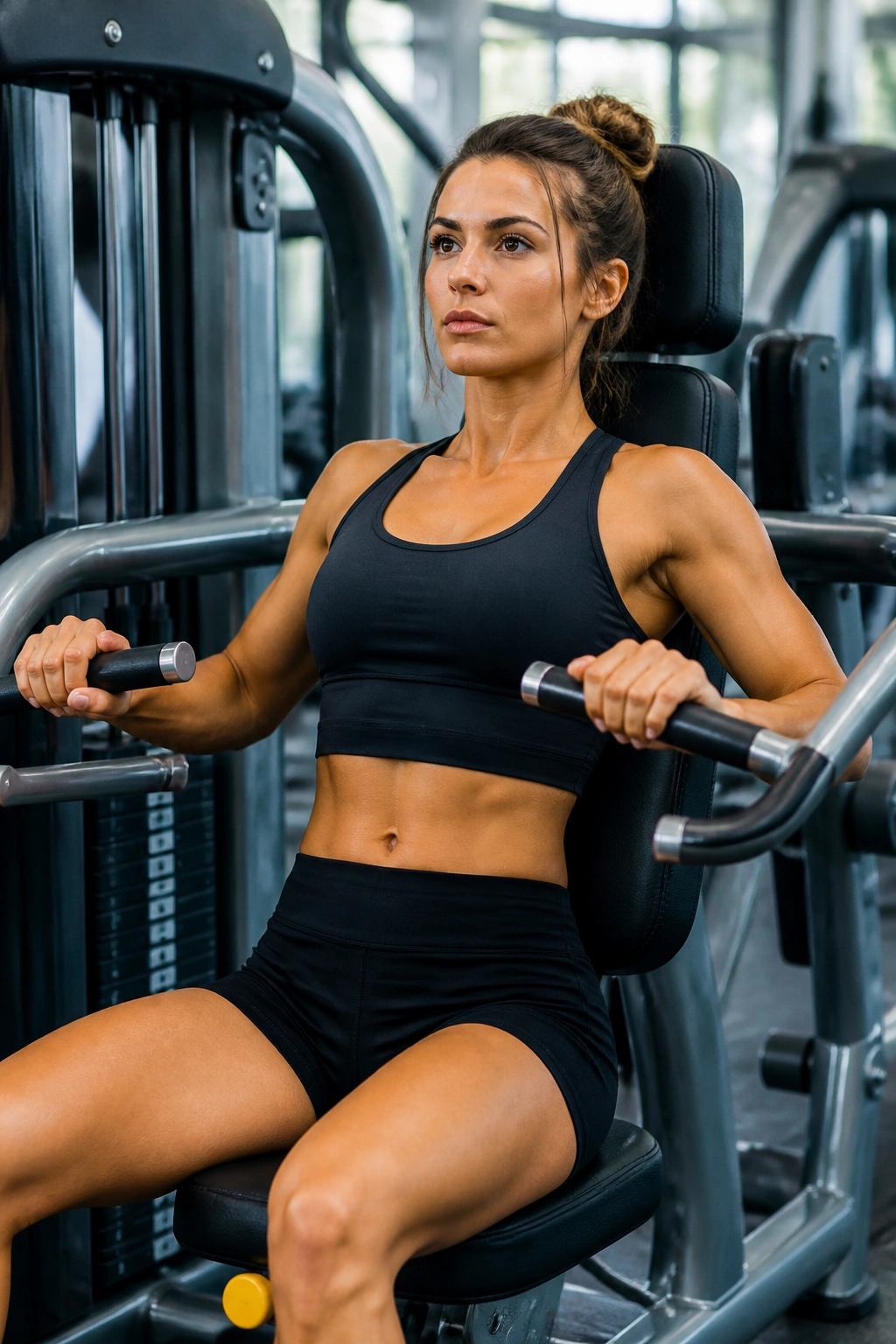
The machine chest press is one of the easiest places to build quality reps. The seat, handles, and path do a lot of the boring work for you, which means you can put your attention on the pecs instead of on balance.
That matters more than people admit. If your chest session usually turns into shoulder strain or sloppy reps at the end of the workout, a machine gives you cleaner tension and a safer way to train close to failure. Set the seat so the handles line up with the mid-chest, press with the shoulder blades set, and keep the elbows from drifting way behind the torso.
I like this best for 8 to 15 reps, especially when the goal is a hard, clean finish. Drop sets work well here too, because the machine keeps the setup simple.
No glamour here. Just useful chest work.
11. Single-Arm Cable Press
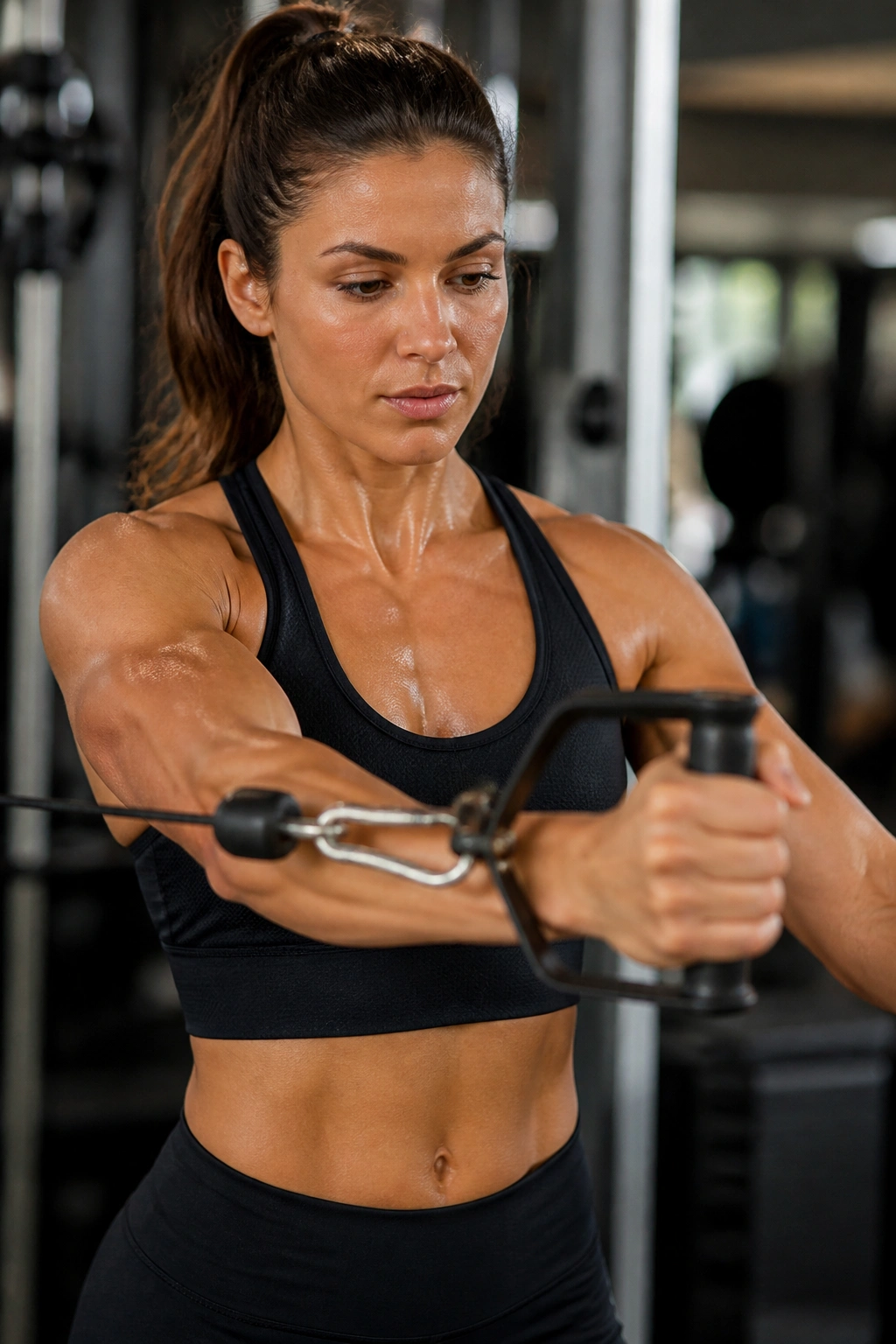
One arm at a time changes everything. The torso wants to twist, the ribs want to flare, and the core has to do real work to keep the press straight. That extra anti-rotation challenge makes the single-arm cable press a sneaky-good chest move.
What Makes It Different
Stand with your feet split, cable at chest height, and press the handle forward and slightly across the body. That cross-body line matters because the pec fibers are built to bring the arm toward the midline, not just straight ahead like a piston.
- Keep the working elbow about 30 to 45 degrees from the torso.
- Hold the handle for a brief squeeze at full extension.
- Resist the pull from the cable on the way back.
- Match both sides, even if one arm feels awkward.
Use 10 to 15 reps per side. The set should feel tidy, not rushed.
This is a good one when symmetry matters.
12. Standing Cable Chest Press
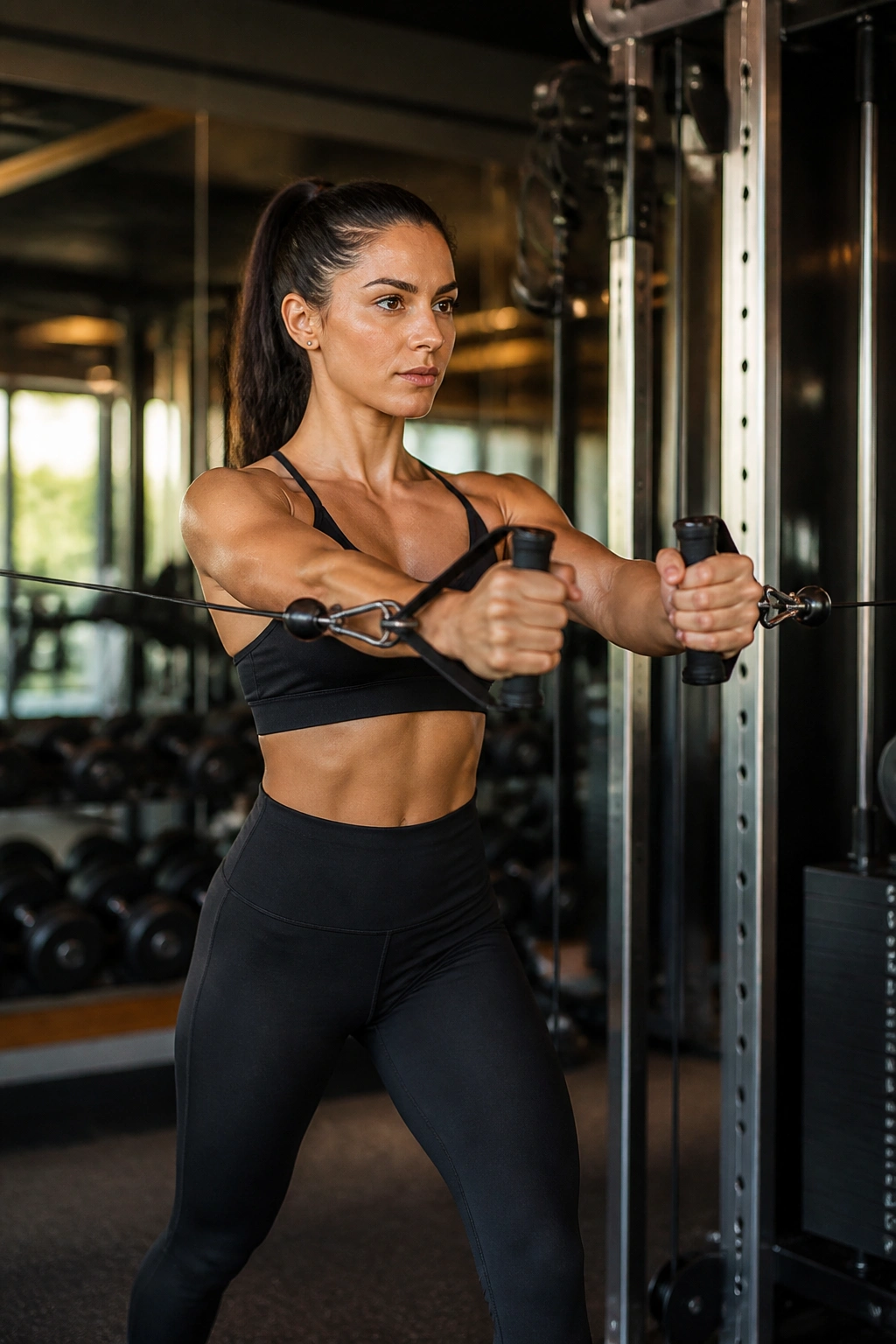
A cable press can look less dramatic than a barbell press, and that’s exactly why it works. The cables keep tension alive through the whole rep, so the chest never gets the easy rest that free weights sometimes give at the top.
Stand in a slight staggered stance, handles at chest height, and press forward until the hands meet in front of you. Keep the chest tall without turning it into a proud military posture. The ribs should stay quiet. The shoulders should stay down.
Quick Setup Notes
- Use a chest-height pulley setting.
- Step forward far enough to keep tension before the first rep.
- Press with a slight inward angle, not straight like a door hinge.
- Stop before the shoulders roll forward.
This works well for 12 to 15 smooth reps. The burn arrives fast.
And that’s the point. Not the circus. The burn.
13. Cable Chest Fly
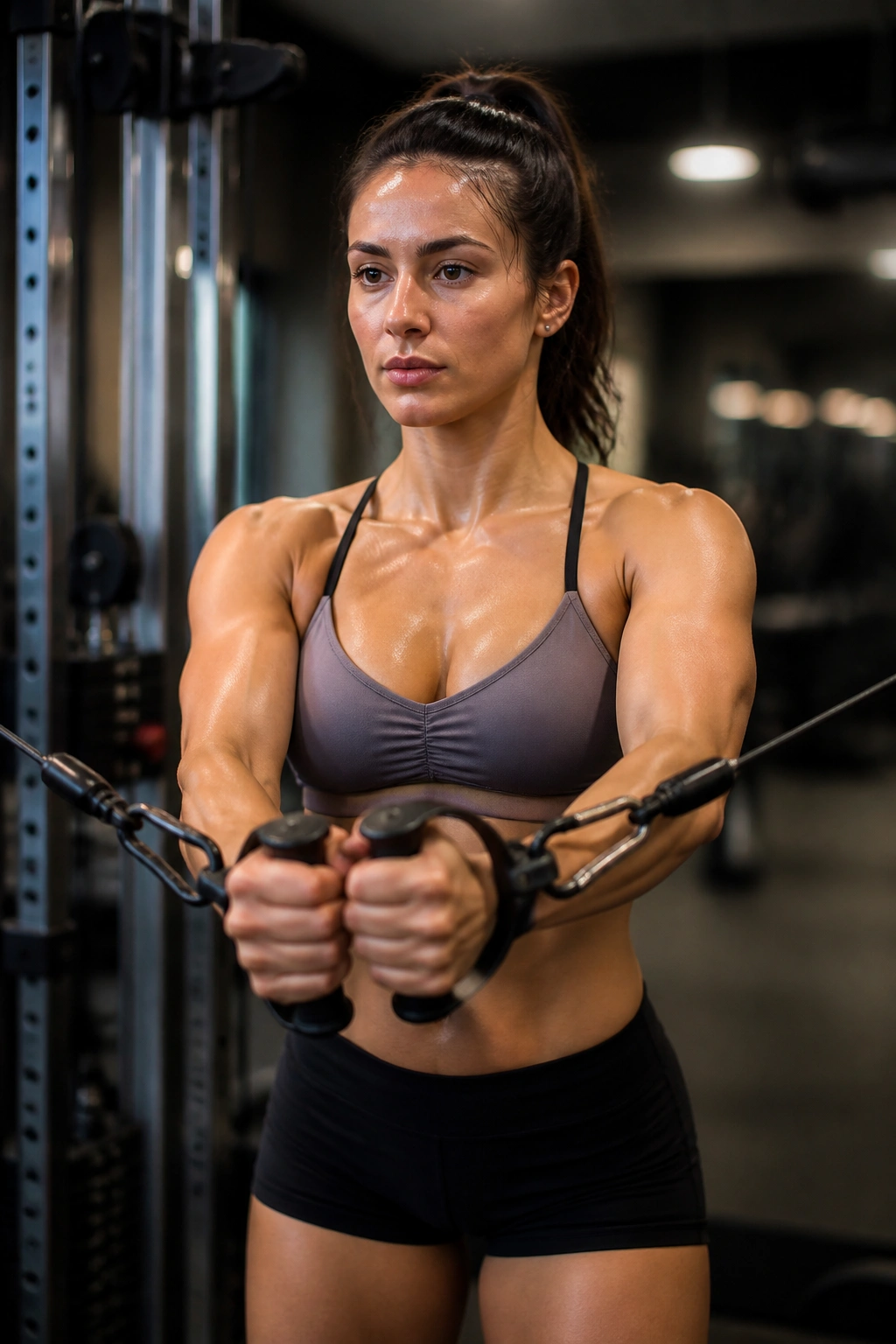
The cable chest fly is where the chest gets to show off a little. Start with the handles wide, arms softly bent, and bring the hands together in a smooth arc until the palms meet or almost meet in front of the sternum. The pecs should feel like they’re doing a long, clean squeeze.
I like this one at the end of a session, when the chest is already warm and you want to chase tension without loading the joints too hard. The cables make the top half of the rep harder than dumbbells do, which gives the movement a different feel from a press. That matters. Different feels build different pieces of the same muscle.
One sentence: do not turn the fly into a press.
Keep the elbow bend fixed and let the arms sweep, not shove.
14. Low-to-High Cable Fly for Chest Exercises for Women Who Want a Higher Line
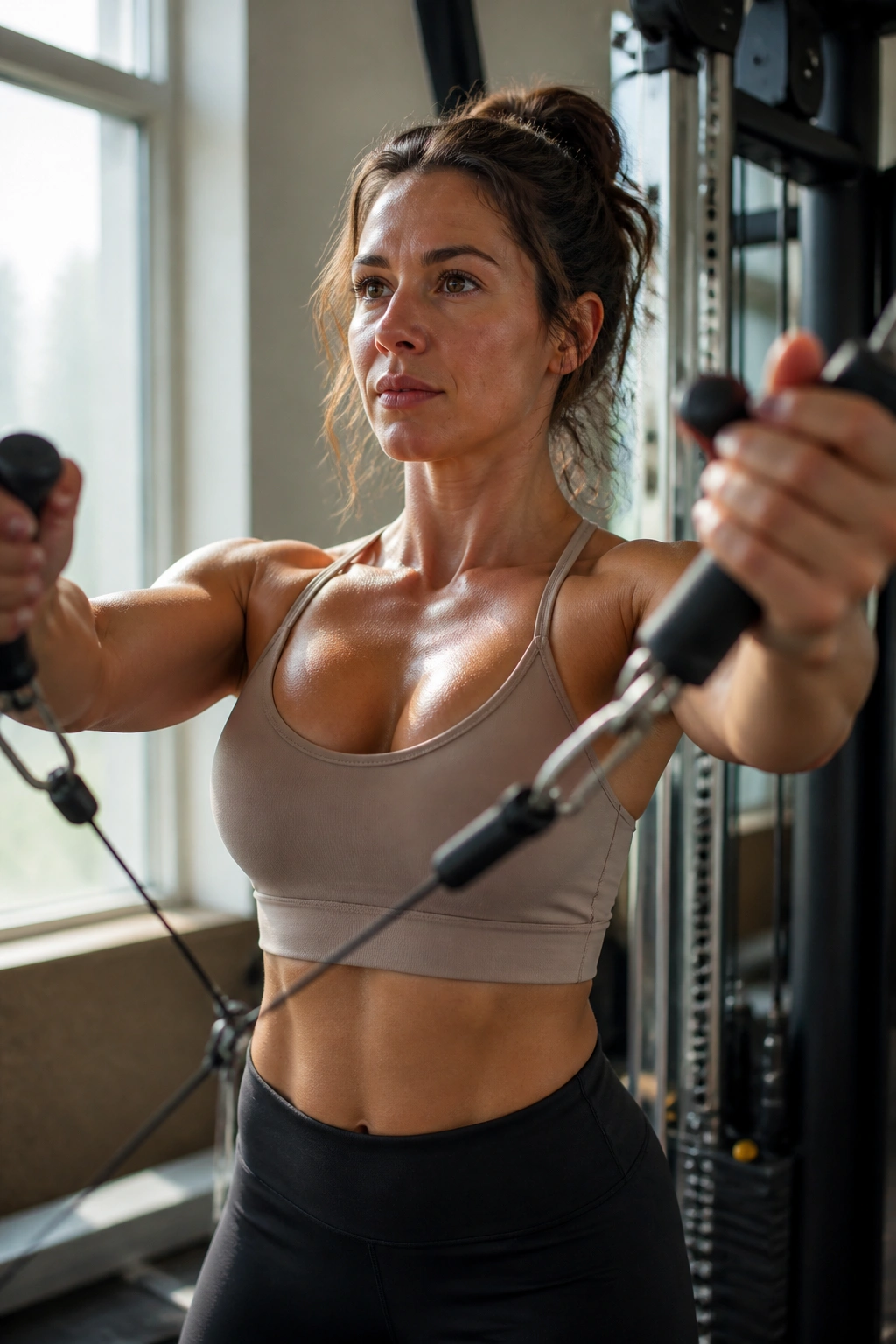
If the upper chest looks flat under a shirt, low-to-high cable flyes are the move I’d keep around. The line of pull starts near the hips and travels up toward the eye line, which leans hard into the upper pec fibers.
The set-up is easy to mess up, though. If you stand too far back, the cables drag you into a shrug. If you go too heavy, the arms turn into crooked presses. Keep a soft bend in the elbows, step forward just enough to feel tension, and sweep the handles up and in with the sternum lifted but the ribs still under control.
What to Watch For
- Finish with the hands around chin to eye level.
- Keep the neck long instead of jutting forward.
- Use a weight that lets you pause for one second at the top.
- Work in 10 to 14 reps and keep the tempo smooth.
This one is a favorite of mine for the upper chest. It earns its place.
15. High-to-Low Cable Fly
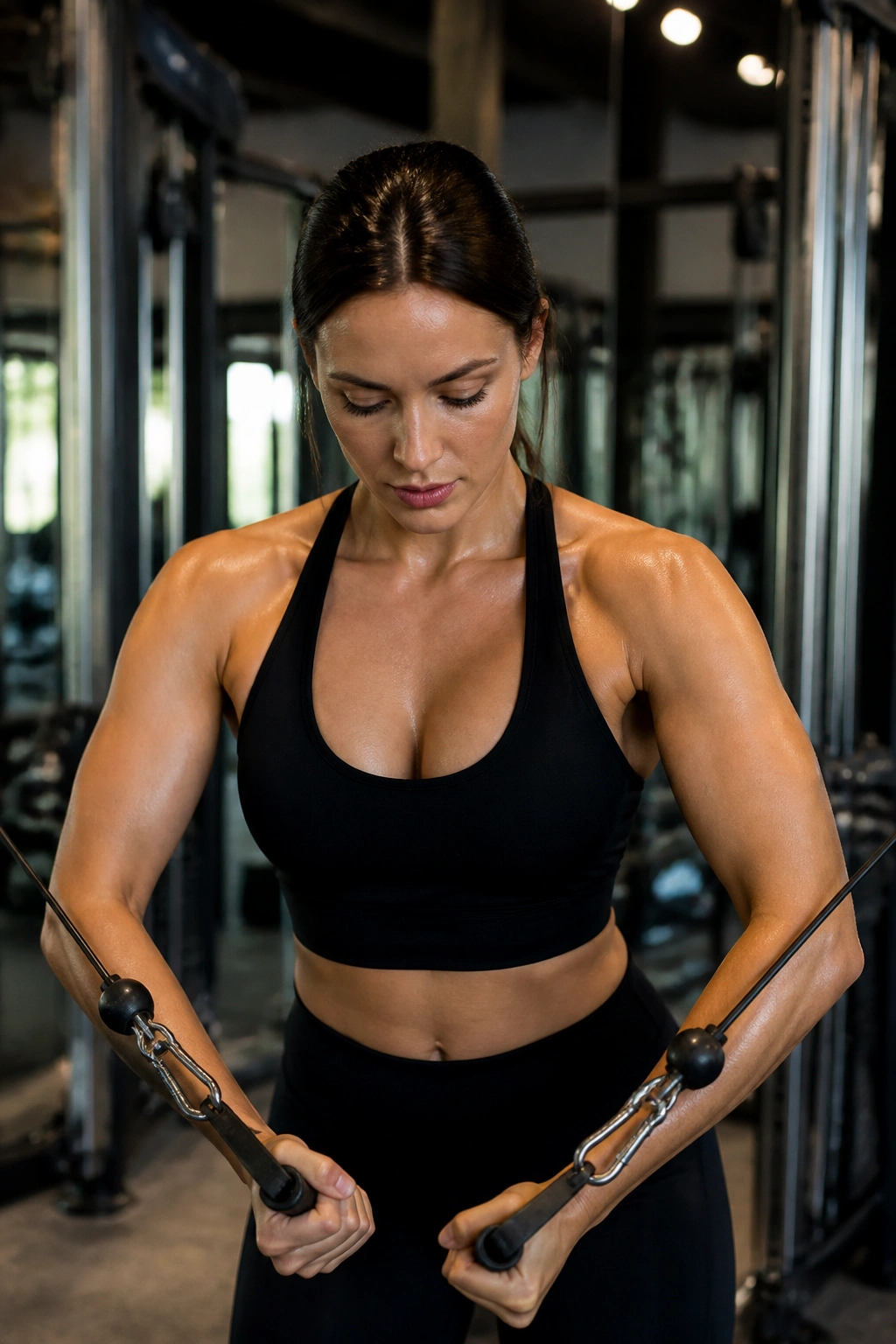
Why bother with the high-to-low version when the flat fly already exists? Because the downward arc shifts more emphasis toward the lower part of the chest, and the movement can feel very different from a standard press-heavy session.
Set the pulleys high, grab the handles, and bring the hands down and together toward the lower chest or upper abdomen. Keep the shoulders out of your ears. That’s the big mistake here. If the traps take over, the chest loses the whole conversation.
A lighter load works better than a heavy one. I’d rather see 12 controlled reps with a clean squeeze than a sloppy set of eight where the shoulders and low back are doing half the job.
Use this as a shape-building movement. It’s not the one to chase on your first day.
16. Pec Deck Fly
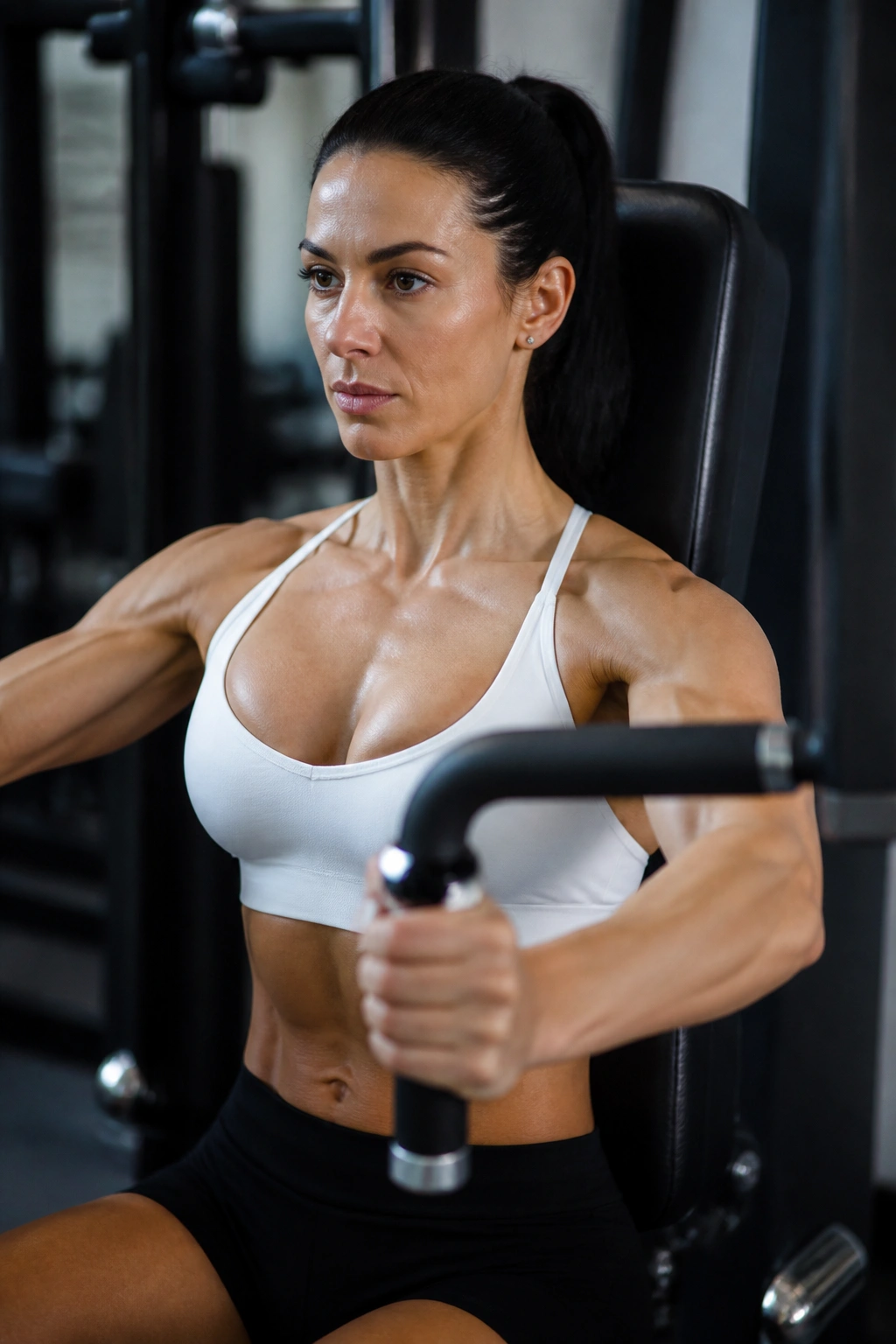
The pec deck is the machine version of a chest hug, and that description is not a joke. The seat keeps the body stable, the handles guide the path, and the chest gets to do the work without you juggling dumbbells at the same time.
Set the seat so your elbows land in line with the mid-chest. If the seat is too high, the shoulders creep up. Too low, and the press turns strange fast. The stretch at the back of the movement should feel broad and controlled, not sharp or pinchy.
I like the pec deck on days when energy is low but focus is decent. It’s easier to keep clean form here than on free-weight flyes, especially when the chest is already tired. 8 to 12 reps is the range I’d use most often.
The machine does not make the work easy. It just makes it neater.
17. Dumbbell Fly
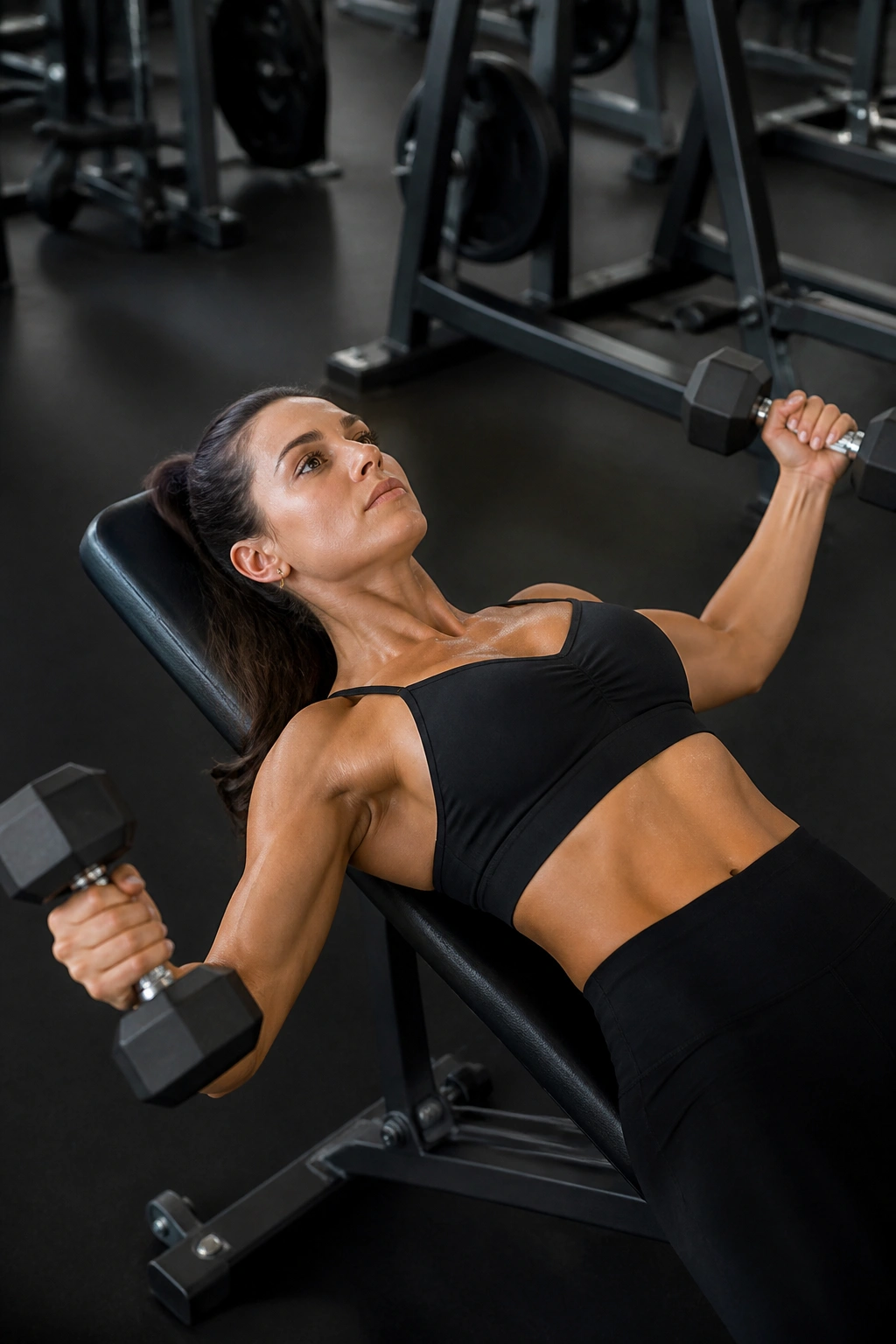
A dumbbell fly is the more old-school version of the chest squeeze, and it still has value if you respect the load. Unlike cables, dumbbells lose tension at the top. Unlike a press, the movement asks for more control through the stretch, which is exactly where many people get sloppy.
Keep a soft bend in the elbows, lower the bells until you feel a broad chest stretch, then arc them back up like you’re wrapping your arms around a tree. That stretch should feel deep but not painful. If the front of the shoulder grumbles, shorten the range and lighten the weight.
This is not a heavy lift. 10 to 15 pounds per hand can be enough for plenty of lifters, especially if the tempo is slow.
How to Use It
- Use a flat or slight incline bench.
- Stop the descent when the upper arms are near chest level.
- Keep the wrists neutral.
- Pause one second at the top.
18. Dumbbell Squeeze Press
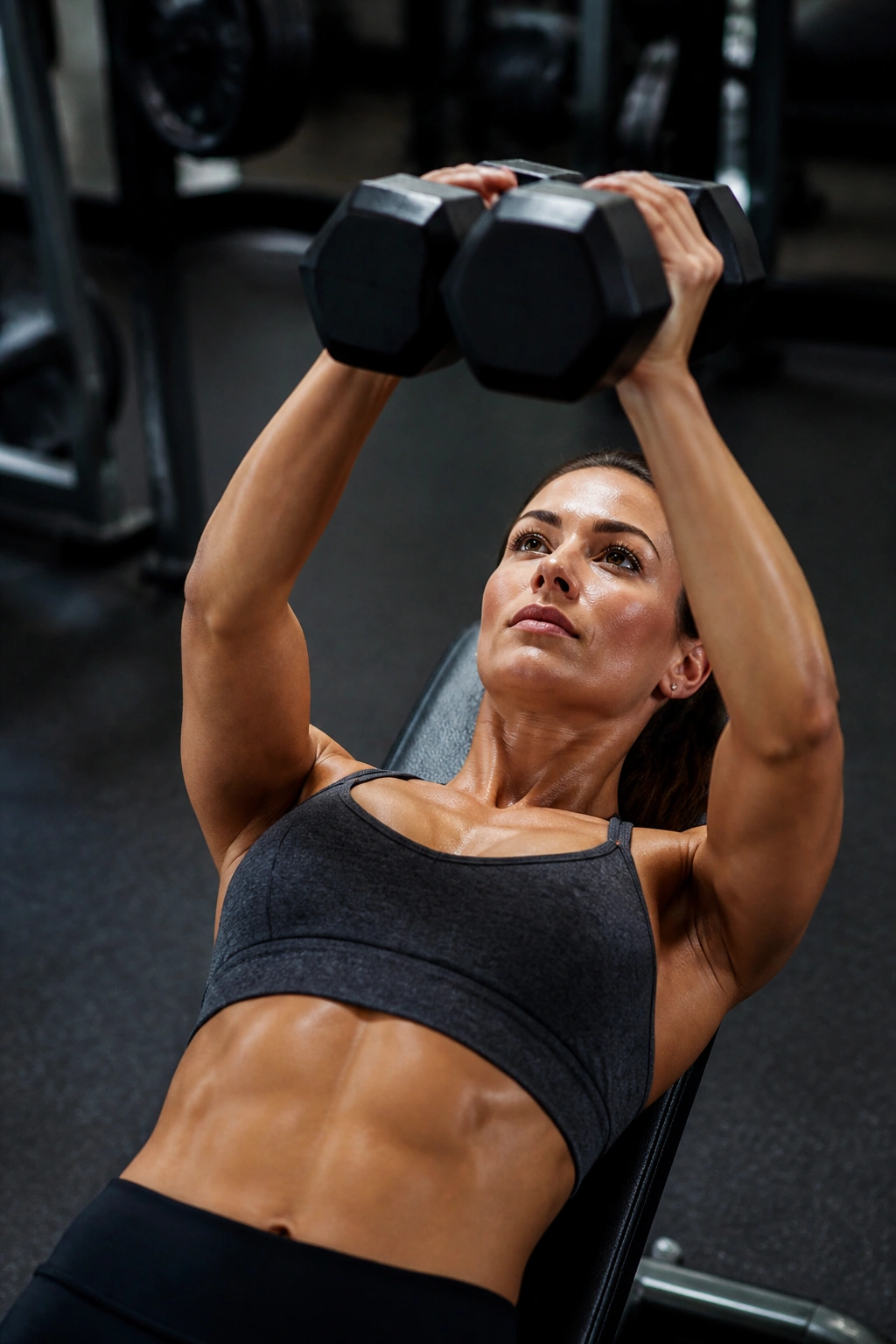
The squeeze press is one of those weird little moves that looks simple and hits harder than expected. Press two dumbbells together over the chest, keep them touching or nearly touching the whole time, and press them up while maintaining that inward pressure. The chest has to contract hard to keep the bells from drifting apart.
Why It Feels So Different
The constant inward squeeze changes the job of the pecs. Instead of moving the weight from point A to point B, you’re asking the chest to press and adduct at the same time. That can light up the inner line of the chest in a way most presses don’t.
Use a light to moderate load. 8 to 12 reps is usually enough, and a one-second pause at the top makes the set sting in a useful way.
Tip: Start with dumbbells that have flat sides. Round handles slide around and make the set annoying.
I love this one as a finisher. It does not pretend to be fancy.
19. Resistance Band Chest Press
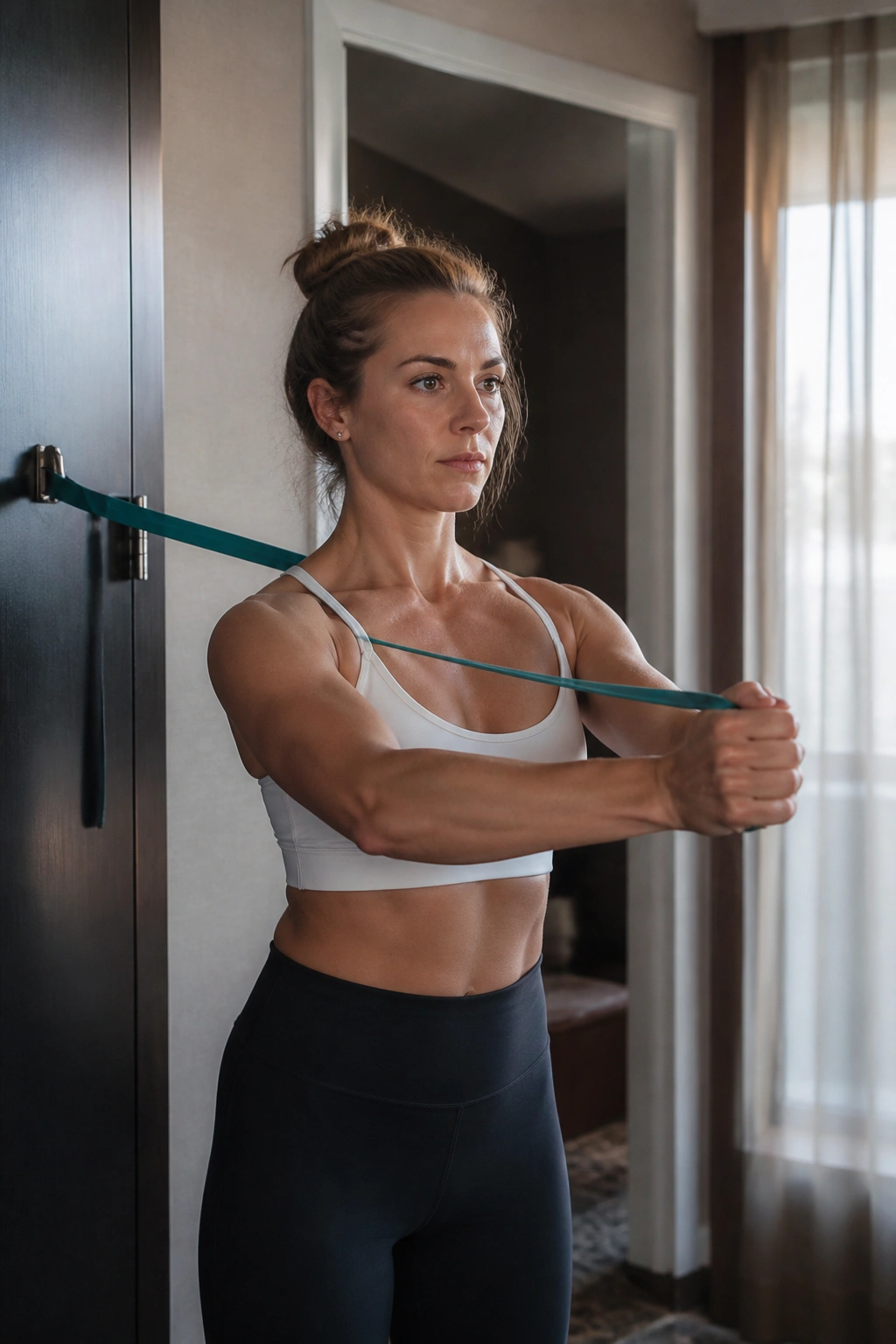
A resistance band chest press is the move you pull out when the gym is packed, the dumbbells are gone, or you’re training in a hotel room with one good anchor point and a little patience. The band gets harder as you press, which means the top of the rep becomes the hardest part.
That rising tension is sneaky. It feels easy at first, then it starts biting as the hands travel forward. Anchor the band at chest height, step forward until the first rep already has some pull, and press with the elbows close enough to feel the pecs doing the work. If the shoulders creep up, shorten the range and reset.
- Use a door anchor or sturdy post.
- Stand in a split stance so you don’t get yanked backward.
- Keep the wrists straight.
- Hold the end range for 1 second.
This is a clean option for 15 to 20 reps when you want chest work without a heavy setup.
20. Resistance Band Chest Fly for Chest Exercises for Women Training at Home
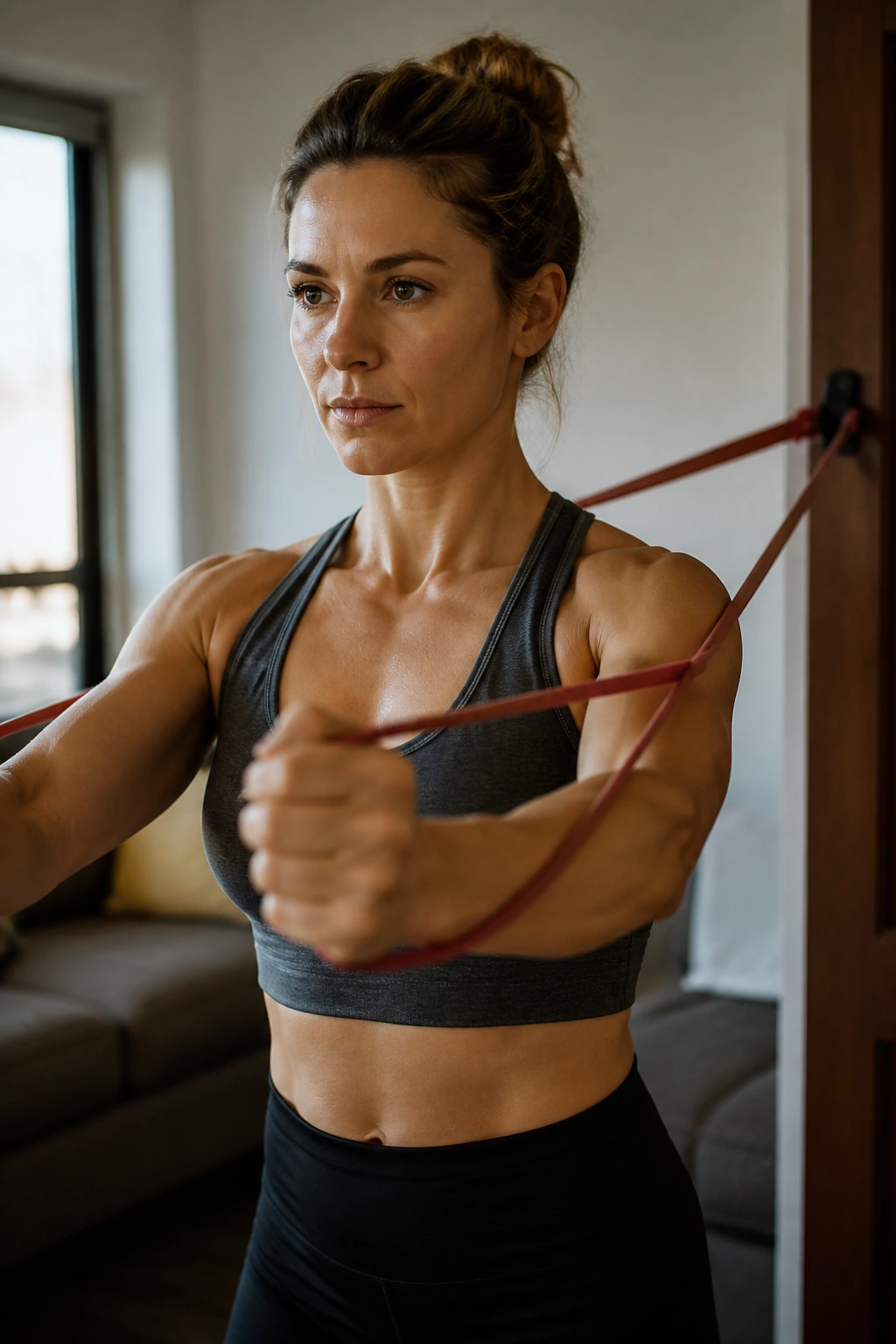
The band fly is the home version of the cable fly, and it earns the same kind of respect. The setup is lighter, yes, but the tension is still there, especially once the hands start moving inward and the band stretches harder.
Anchor the band behind you at about chest height, step forward until the arms already feel a little loaded, and sweep the hands together in a wide arc. Keep the elbows softly bent. If they lock out, the chest loses tension and the elbows start barking at you.
What Makes It Useful
- Works well with high reps, usually 15 to 25.
- Gives a strong squeeze at the midline.
- Fits into warm-ups, finishers, or travel sessions.
- Takes almost no space.
I like this one more as a finisher than a main lift. It’s too easy to load badly and too easy to rush. Slow it down and the chest pays attention.
21. Assisted Chest Dip
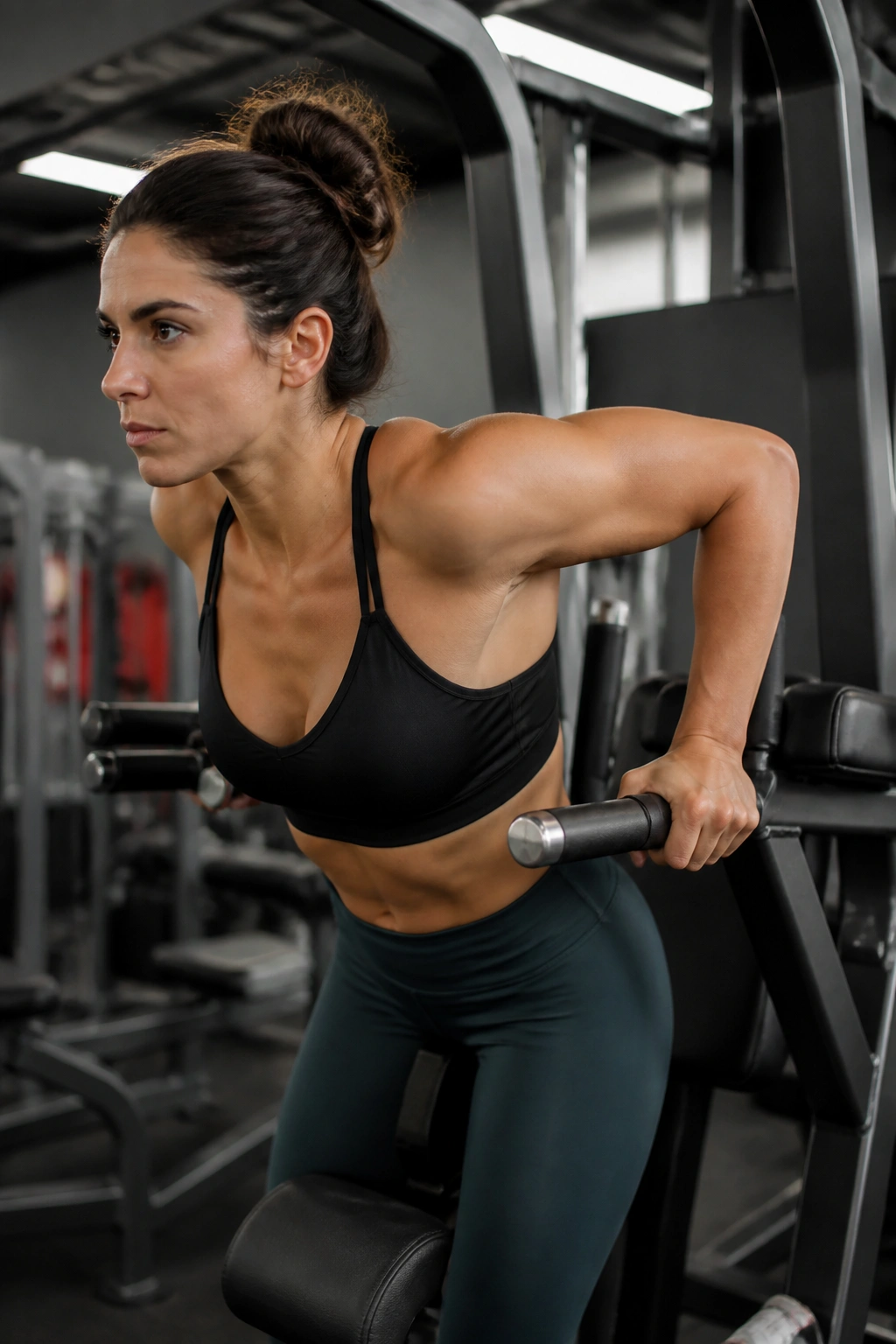
Chest dips are not gentle. Lean the torso forward a little, let the elbows bend, and lower under control until the upper arms are close to parallel with the floor or just above your comfortable limit. Then drive up while keeping the chest open and the shoulders from collapsing inward.
The assisted version matters because not everybody needs to bodyweight-dip on day one. A band-assisted dip or assisted machine lets you learn the forward lean and range before the movement gets brutal. That lean is what shifts the work toward the chest rather than making it all triceps and shoulder irritation.
How to Know It’s Working
If you feel the lower chest and the front of the shoulder working together, you’re in the right zone. If the shoulders pinch, shorten the range and reduce the load.
Use 5 to 8 reps and keep the descent slow. This one rewards control more than bravado.
22. Isometric Plate Squeeze Press for the Last Set
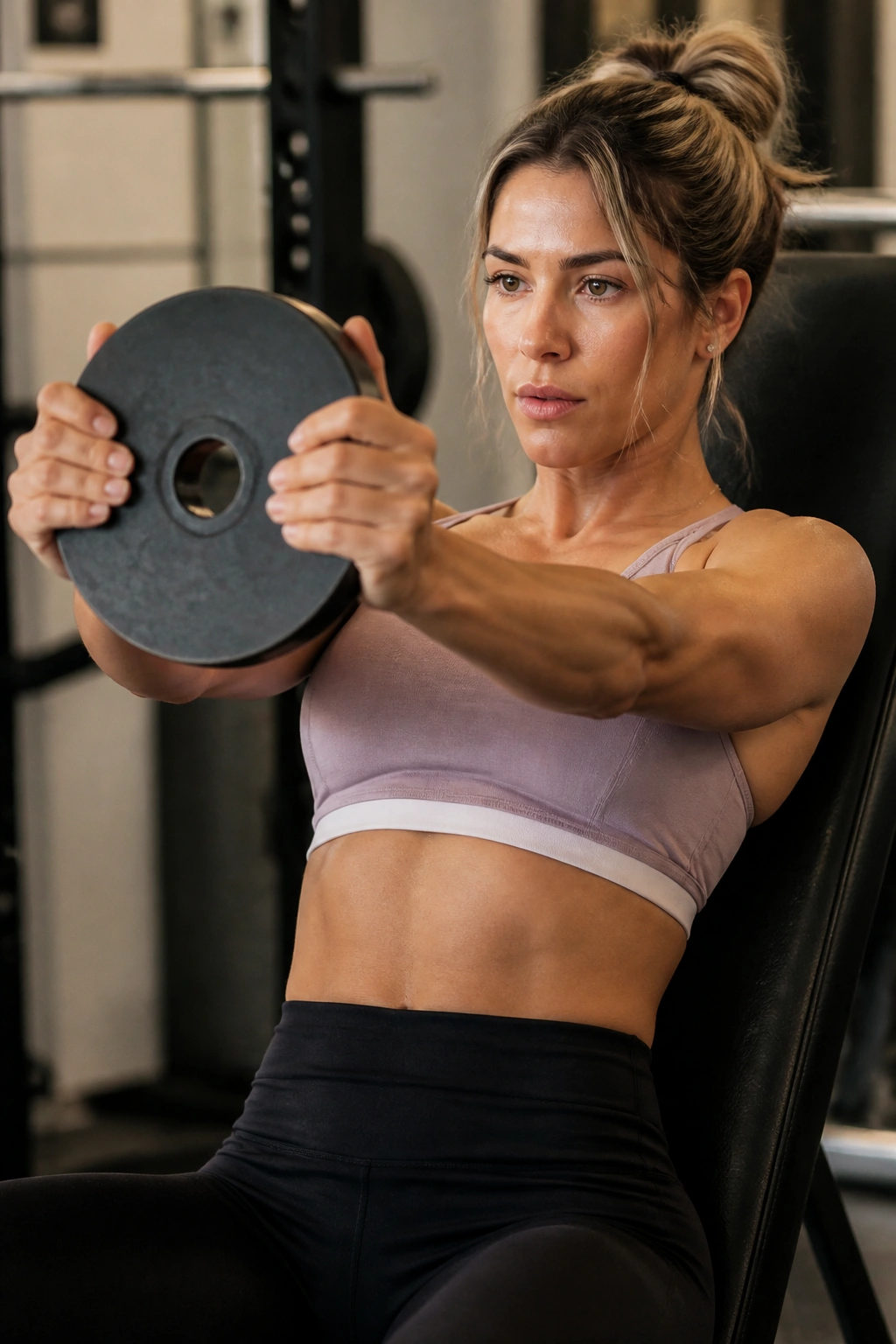
An isometric plate squeeze press is a tidy way to end a chest workout when the tank is almost empty. Hold a light plate—usually 5 to 10 pounds—between both palms at chest height, squeeze the plate hard, and press the hands forward while keeping the pressure alive.
It looks almost too simple. That’s the trick. The chest has to keep contracting the whole time, and because the movement is small, there’s nowhere to hide. No bounce. No momentum. No shoulder swing to save the set.
You can hold the squeeze for 20 to 40 seconds, or press it out for 10 to 15 slow reps. Either way, the pecs feel the tension in a clean, direct way that works well after heavier pressing or fly work.
If you want one pure finisher from this whole list, this is mine.
Final Thoughts
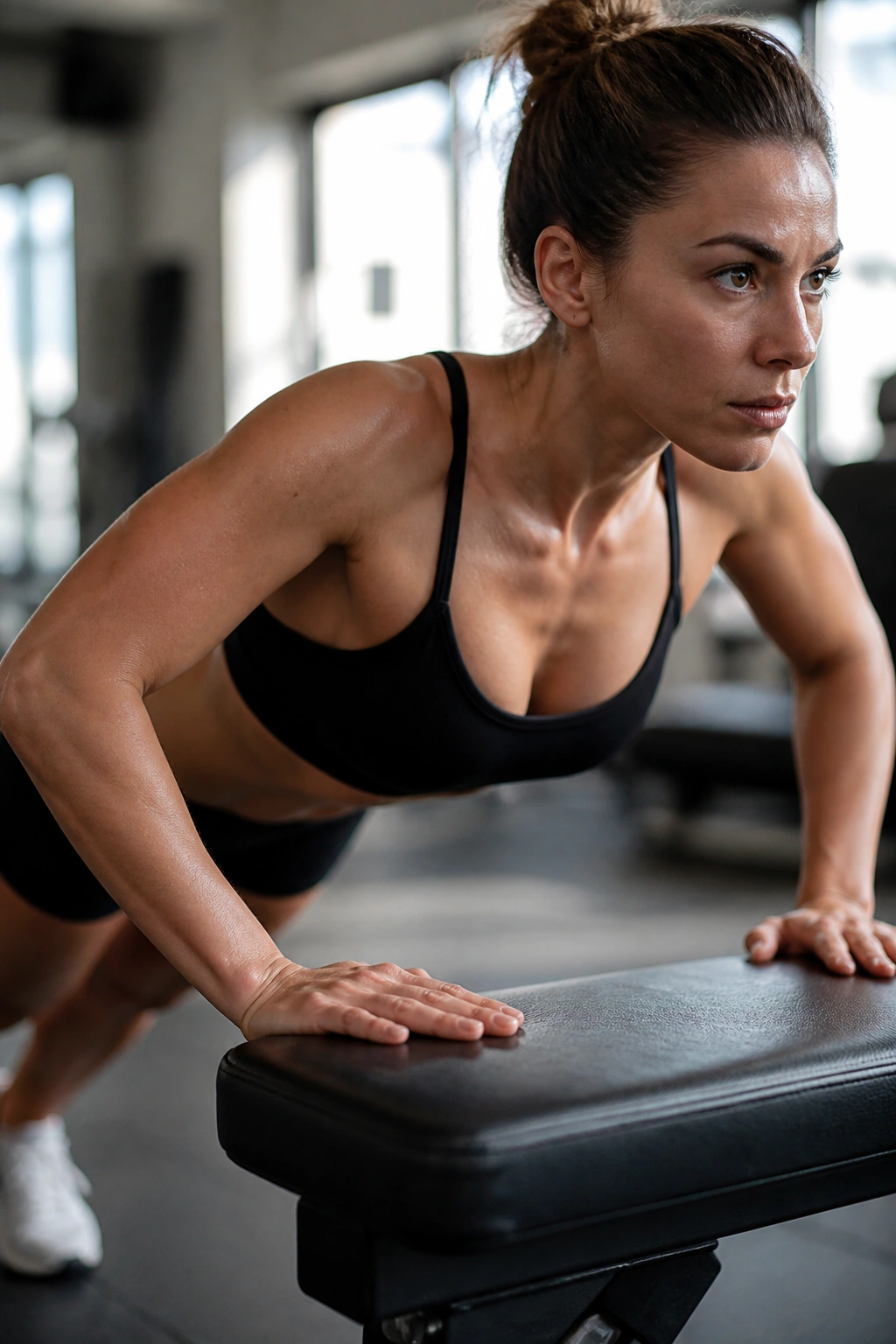
A chest routine does not need twenty-two moves in one day. Pick four or five that fit your equipment, your shoulders, and your energy, then make those reps cleaner over time. Slow lowers, full range, and a real squeeze at the top will do more for definition than frantic volume ever will.
The best chest exercises for women are the ones you can repeat well next week. That’s the part people skip. They chase novelty, then wonder why nothing changes.
Train the chest from a couple of angles, keep the form strict, and let the work build up in plain sight. The result tends to show up quietly—then one day it’s there, and your shirts start fitting a little differently.
