



Most workouts with baby are built around interruptions, not perfect reps. Some days you get 20 minutes before the next feed; some days you get 6 minutes, a drooly onesie, and a stroller wheel that squeaks like a tiny violin. That’s not failure. That’s the first year.
The big mistake is waiting for a clean, gym-like block of time. Those blocks are rare when you’re carrying a child, pushing a stroller, negotiating naps, and trying to remember where you put your water bottle. What works better is movement that can survive real life: short walks, quick strength circuits, a few minutes on the floor, then back to the day.
There’s a physical reason this matters, too. The first year often means more carrying, more leaning, more feeding, more standing on one leg than you’d expect. Your back, hips, shoulders, and core notice all of it. So do your mood and energy. Short sessions won’t look glamorous, but they can keep you from feeling like your body belongs to the couch.
After you’ve been cleared to exercise, the smartest plan is the one you can repeat when the nap is short and the coffee is cold. Start with the easiest options, build in some strength, and keep the baby close in ways that feel safe and calm — stroller, carrier, play mat, or a quiet spot on the floor.
1. Stroller Interval Walks With Baby
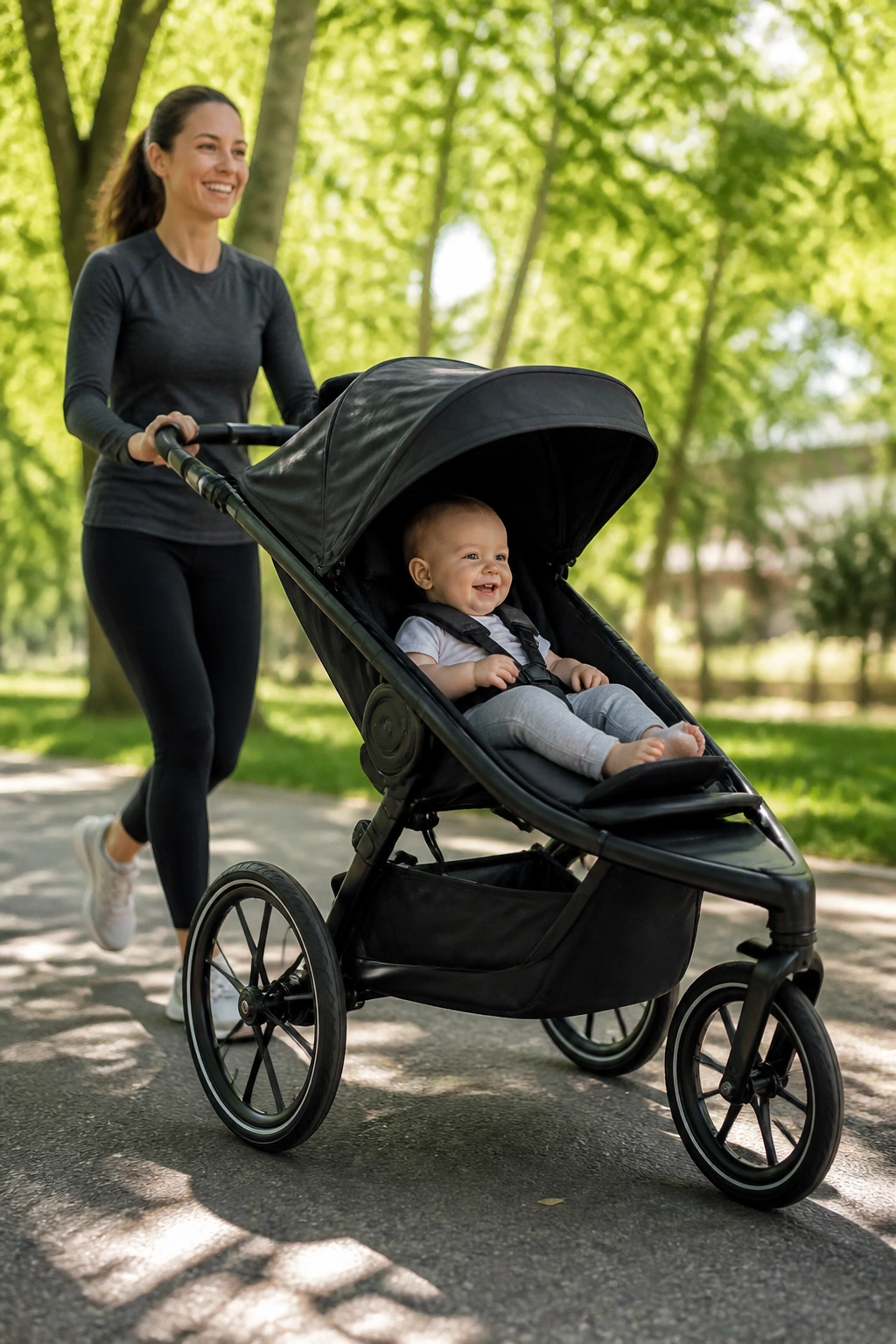
A flat stroller loop is one of the easiest workouts with baby to keep alive during the first year, because it asks for almost no setup. Clip the baby in, grab water, and go. No mat. No noise. No decision fatigue.
Why this one works so well
The stroller gives you built-in structure. You can walk for 20 minutes and still feel like you did something, especially if you mix brisk and easy stretches of pace. That matters when sleep is thin and your brain is already juggling five things.
I like simple intervals here: 2 minutes brisk, 2 minutes easy, repeated five times. If you’re early in recovery, keep the whole thing steady and smooth instead of pushing pace. If you feel good and your baby is comfortable, make the brisk parts more assertive. Not sprinting. Just enough to make your breathing change.
How to make it feel like a real workout
- Pick a route with few curbs and clean pavement.
- Keep both hands on the stroller during the brisk parts.
- Stand tall and avoid hunching over the handlebar.
- Use the easy minutes to let your shoulders drop.
- If the baby falls asleep, take that as a bonus, not a reason to stop moving.
One good loop beats a heroic plan you hate.
2. Baby Carrier Power Walks
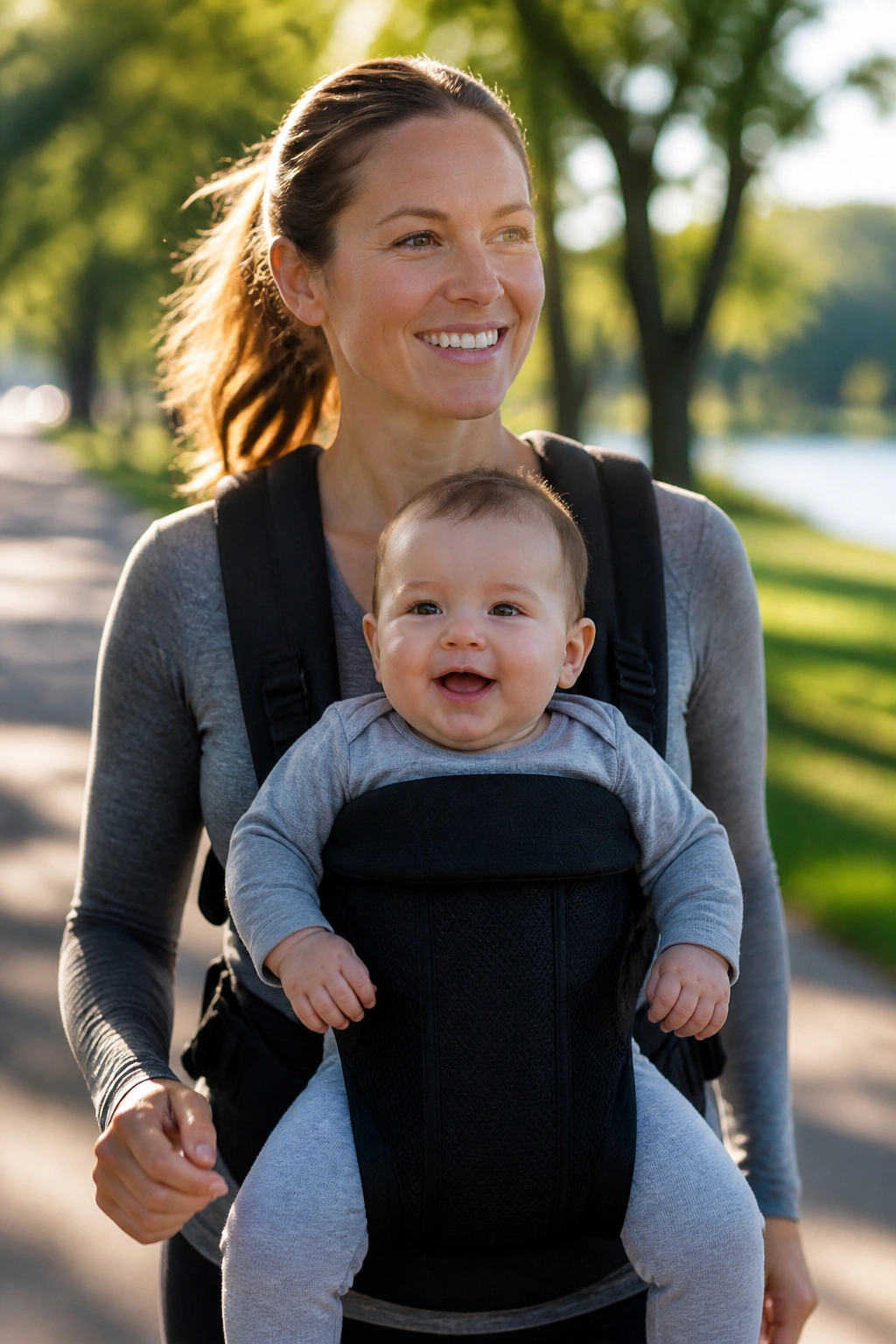
A snug carrier turns an ordinary walk into a real strength session. Your arms don’t hold the baby in place, but your upper back, core, and hips still have to work harder than they do on a solo walk. That shift is subtle. You feel it more by the end of the route than in the first five minutes.
The key is fit. The carrier should hold the baby high and close, with clear airways and enough support that you’re not slouching to compensate. If the fit feels off, skip the power part and keep the pace easy. A sloppy carrier fit can make your back feel like you carried a bag of bricks.
For most parents, this is best as a 10- to 20-minute power walk on level ground. Keep your ribs stacked over your hips, take shorter steps than you think you need, and let your arms swing a little. If your shoulders start creeping up toward your ears, you’re pushing too hard.
This one gets better as your confidence rises. Early on, it’s just a walk with extra load. Later, it becomes a clean, steady cardio block that also reminds your torso how to stay organized.
3. Floor-Play Core Circuit
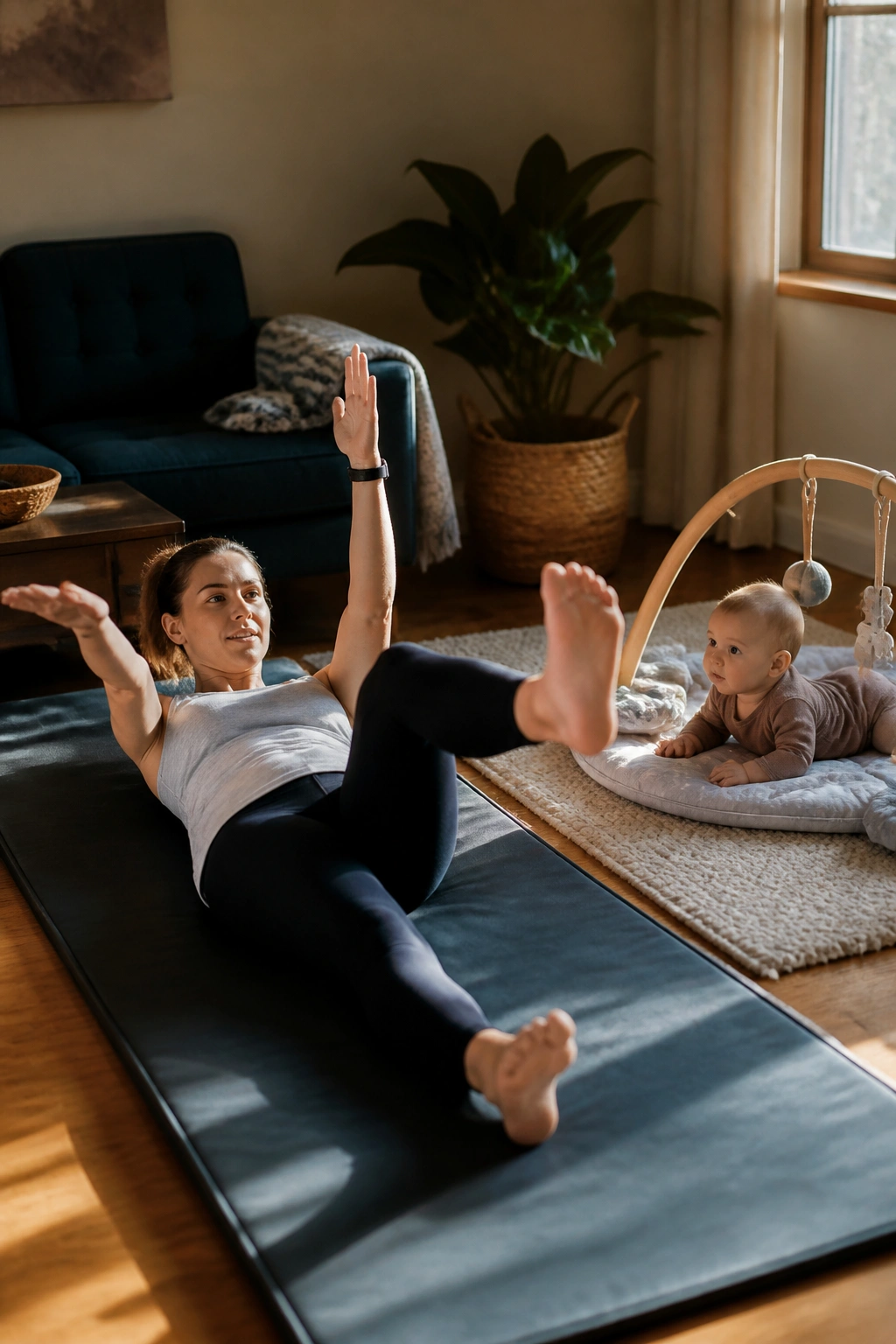
What do you do when your core needs attention but the baby wants to be on the floor? Use the floor, too. That’s the whole trick.
A floor-play core circuit keeps you near the baby without pretending you can do a polished gym routine in the middle of family life. The baby gets tummy time, toy time, or rolling practice. You get dead bugs, bird dogs, side planks from the knees, and glute bridges. Messy? Sure. Useful? Absolutely.
A simple sequence that fits early postpartum life
Try 30 seconds of work, 20 seconds of rest for each move:
- Dead bug heel taps
- Bird dog reaches
- Side plank from the knees
- Glute bridge holds
- Slow marching in place
If you see your midline dome or feel pressure that shouldn’t be there, shorten the range and slow down. That tiny adjustment matters more than chasing a prettier rep. I’d rather see clean, small movement than a bigger version that leaks effort everywhere.
What to skip
Skip crunching hard through fatigue. Skip rushed twists. Skip anything that makes your breath go choppy in a bad way. The goal here is not sweat for the sake of sweat. It’s restoring control while your baby kicks, rolls, or gnaws on a teether beside you.
4. Diaper-Station Squat Ladder
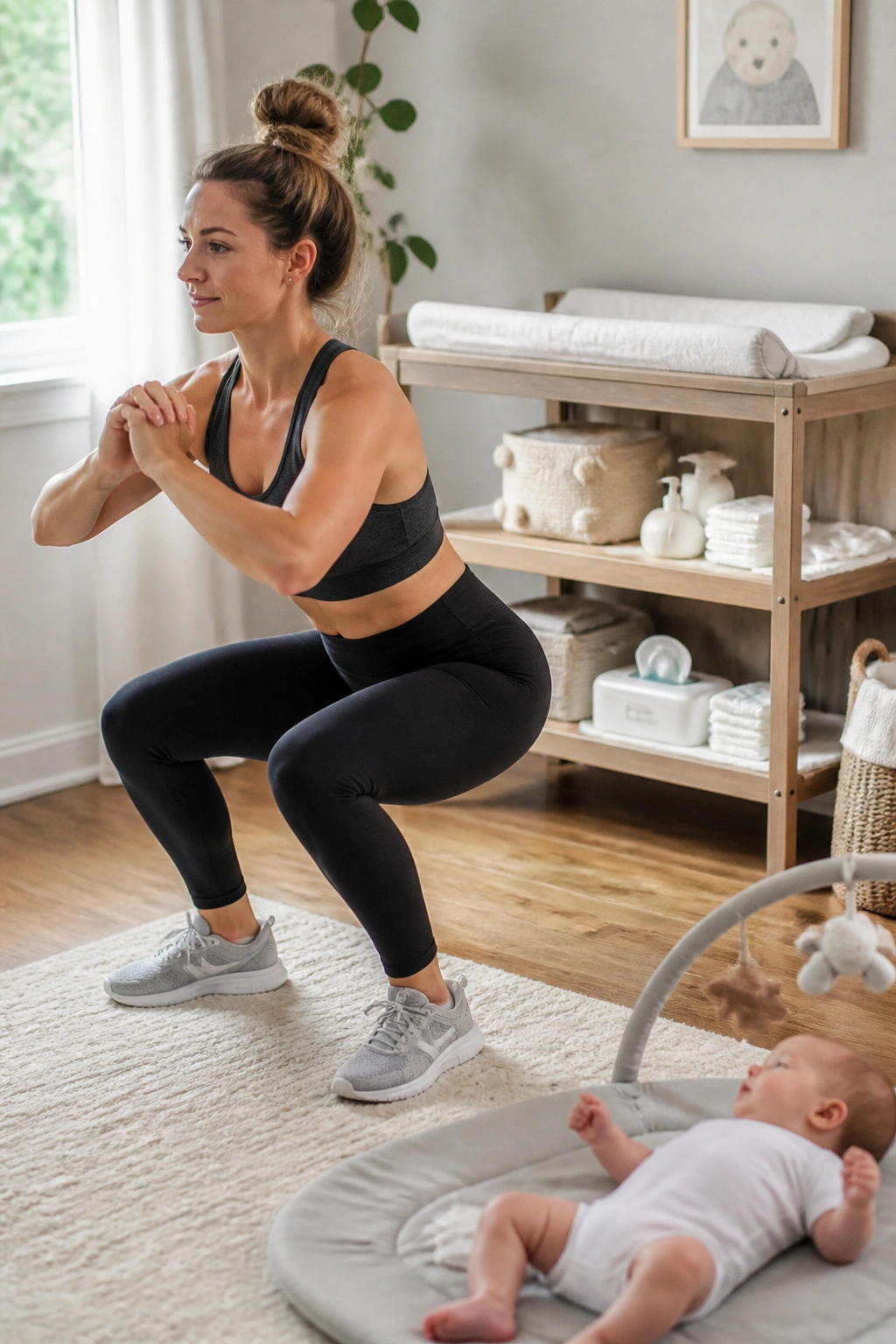
The changing station is an underrated training zone. Strange, maybe. Practical, definitely.
Picture the usual scene: diaper done, wipes capped, baby safely back in the crib or on the mat, and you’ve got 30 seconds before the next tiny crisis. That is enough time for a squat ladder. Ten squats. Then maybe eight. Then five if you’re tired. No outfit change required.
Here’s why it works: squats are one of the easiest ways to rebuild leg strength after months of carrying, standing, and bending in awkward shapes. They also wake up your glutes, which tend to go missing when you spend half the day feeding, rocking, and folding yourself around a baby.
Keep it clean and repeatable
- Use bodyweight only at first.
- Sit back as if you’re reaching for a chair.
- Keep your feet about hip-width apart.
- Exhale as you stand.
- Stop if your knees cave inward or your balance feels off.
The real win is volume. Five squats here, eight there, then another set before lunch. It adds up fast without asking for a single scheduled workout window. That’s the kind of boring consistency that actually moves you forward.
5. Hallway Lunge Walks
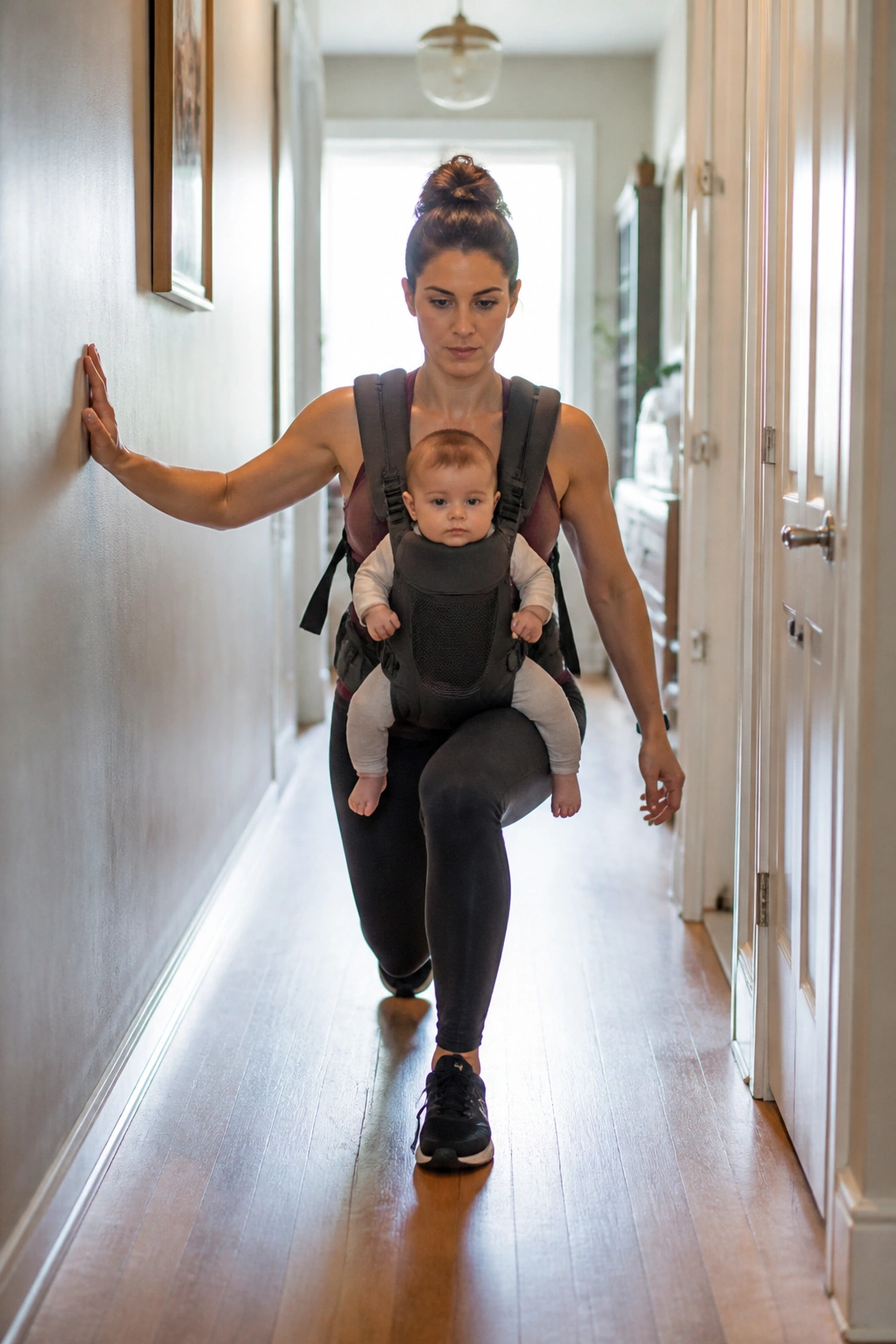
Hallways are not exciting. Good. They’re excellent for lunges because there’s only so much space to wander off into. You walk one end to the other, turn around, and do it again. No dramatic setup. No waiting for ideal conditions.
Walking lunges hit the quads, glutes, and balance muscles in a way that standing squats don’t quite match. They also expose weak spots fast, which sounds rude but is useful. If one side feels shakier, you know it. If your pelvis tips, you know it. The workout gives you a mirror without the mirror.
I prefer 6 to 10 lunges on each side, then a short pause to breathe. If your body still feels a little loose in the middle, hold onto a wall with one hand. That’s not cheating. That’s smart.
The best part is that you can tuck this into the baby’s awake time without making a production out of it. Set the baby on a safe mat, keep the room in view, and do one or two passes down the hall. Not flashy. Just solid leg work that keeps your lower body from turning into a swamp after a day indoors.
6. Dance Cardio to the Same Three Songs
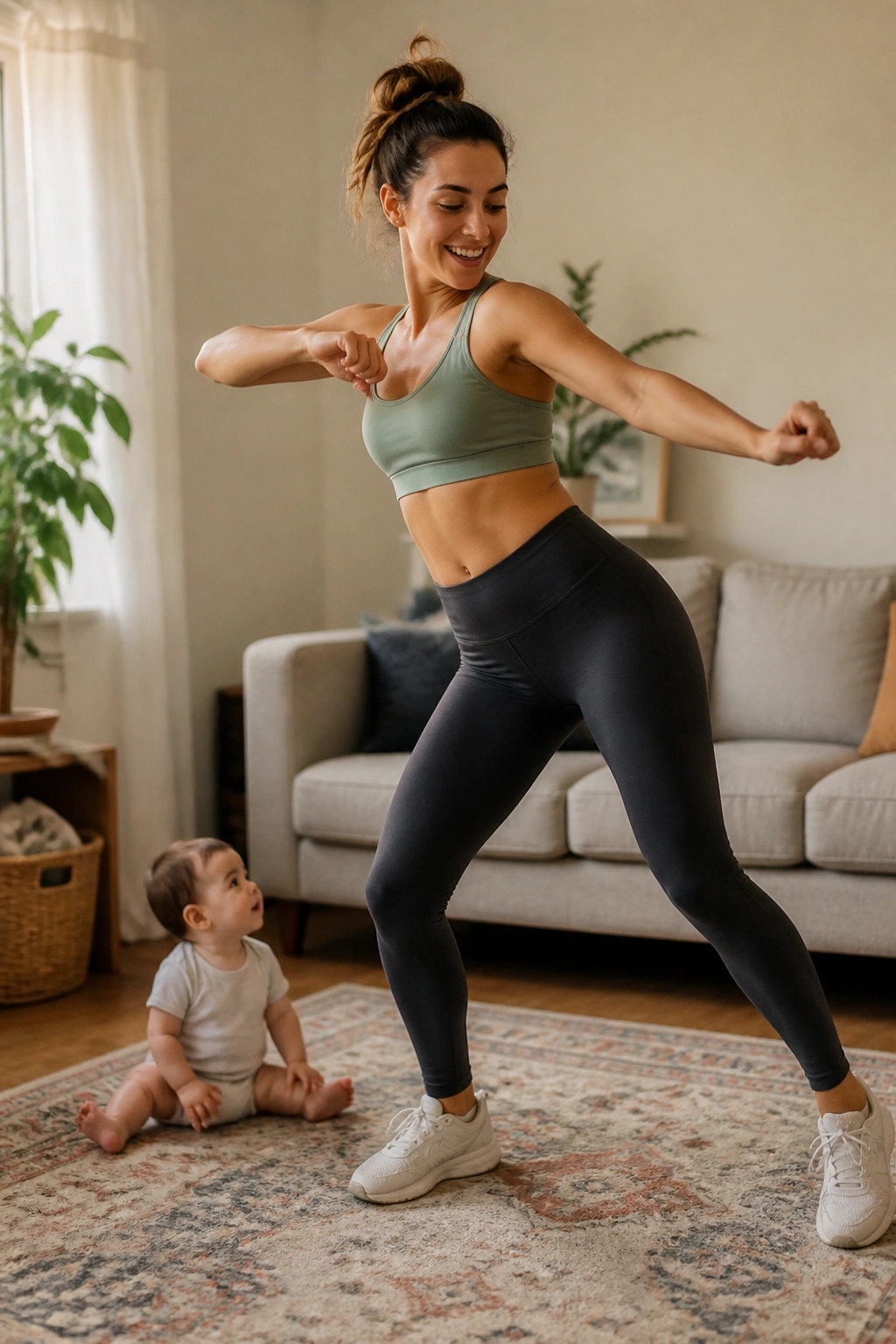
Sometimes the best workout is the one that makes the room feel less heavy. Dance cardio does that fast.
Pick three songs. That’s it. Not a playlist you’ll spend 12 minutes arranging. Three songs that make you move without thinking too hard. March in place, side step, tap behind, reach overhead if your shoulders feel okay, and let the beat carry the rest. Baby on the floor nearby? Great. Baby in your arms? Keep the moves gentle and skip anything bouncy if it feels rough.
Why I keep coming back to this one
It’s honest cardio. No one needs to see it. No special shoes. No floor space beyond a rug and enough room not to kick a chair. And because the music changes, the session feels shorter than the clock says it is.
That matters on low-sleep days. Your brain may not be ready for a formal workout, but it can usually handle a song or two of marching and swaying. By song three, your breathing has changed, your mood usually has too, and your body has done more work than you expected.
If you want a simple target, aim for 8 to 12 minutes. Longer if the baby is happy and you are too. Shorter if the day is already a mess. There’s no prize for dragging it out.
7. Resistance Band Upper-Body Circuit With Baby Nearby
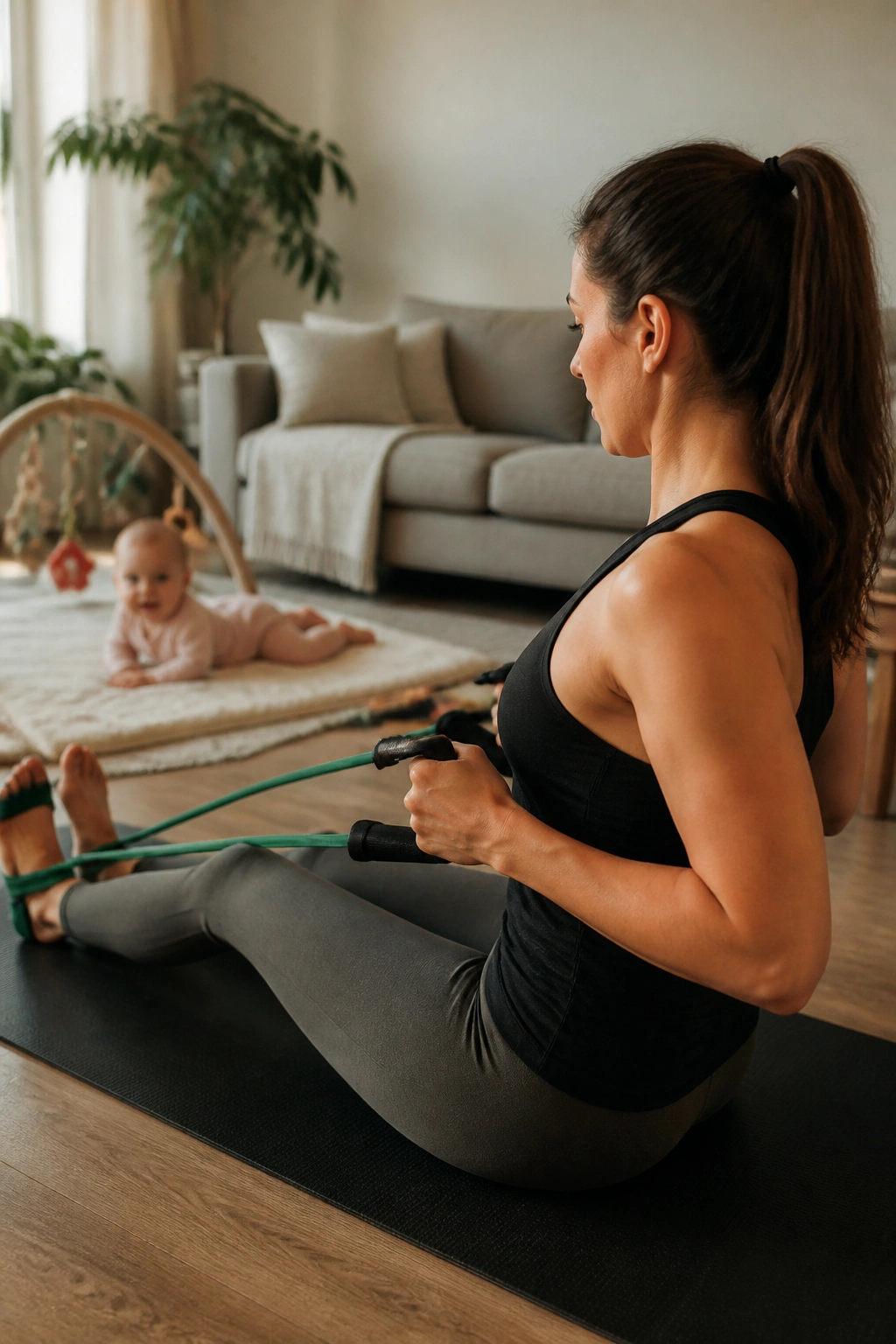
Bands are the easiest way to fight the rounded-shoulder slump that comes from carrying a baby all day. They’re cheap, quiet, and small enough to live in a drawer. That’s already a win.
Set the baby on a blanket or play mat nearby, then run a simple circuit: rows, pull-aparts, and chest presses. If you have a door anchor, fine. If not, stand on the band and keep the moves controlled. The point isn’t to chase huge resistance. The point is to wake up your back, chest, and arms without needing dumbbells or a gym visit.
A straightforward 8-minute circuit
- 12 band rows
- 12 band pull-aparts
- 10 standing chest presses
- 30 seconds rest
- Repeat 2 rounds
Move slowly enough that you can feel the shoulder blades glide back and down. If the baby starts fussing, pause between exercises and pick it up later. This kind of workout has to tolerate interruptions or it won’t last.
I especially like this one in the middle months, when you’ve been carrying the baby more and your upper back starts complaining in small, annoying ways. Bands won’t solve everything, but they do a nice job of reminding your posture that it still has a job.
8. Yoga Flow on the Play Mat
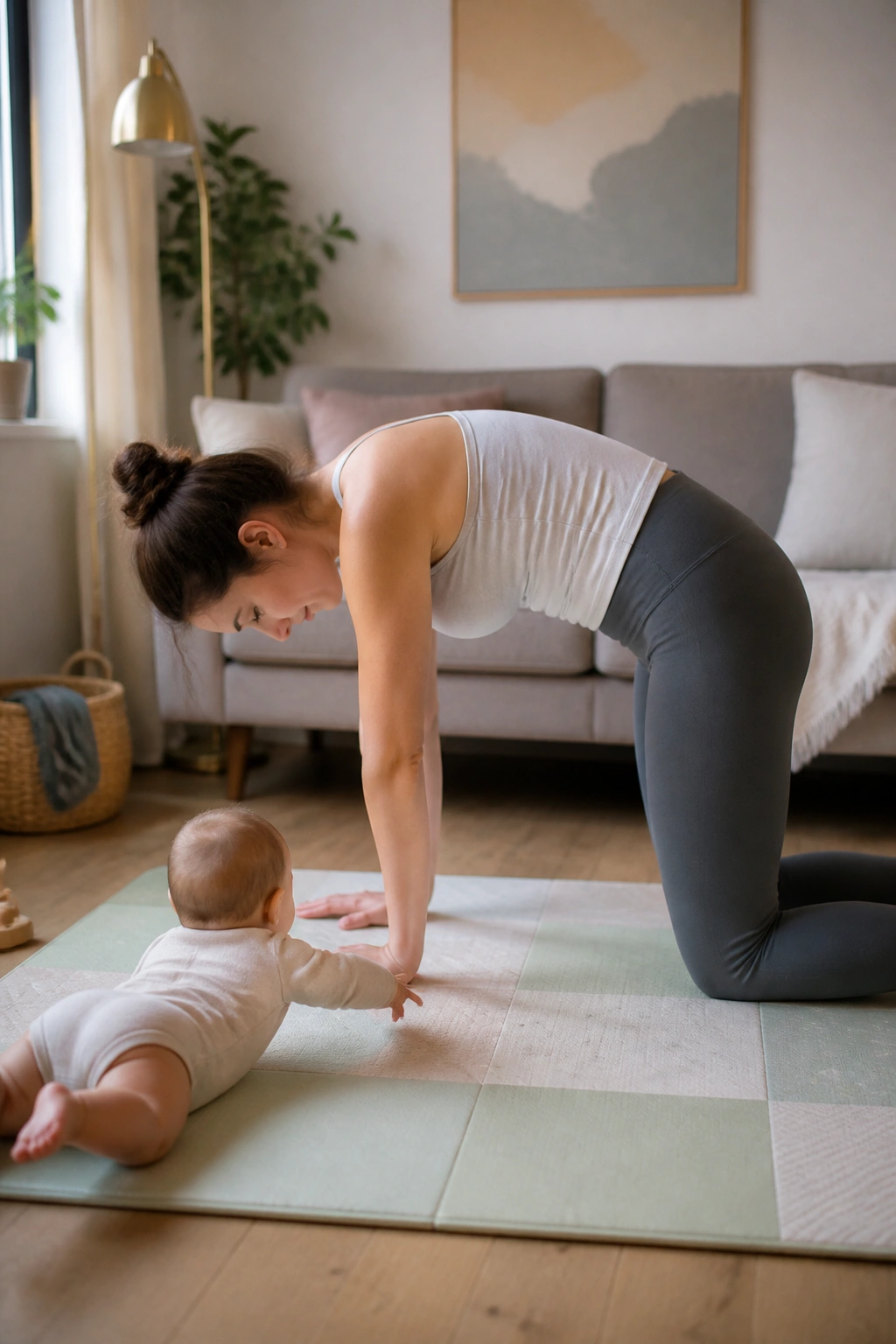
Can yoga count as a workout when the baby keeps rolling toward your hands? Yes. Frankly, that’s part of the charm.
A short yoga flow gives you mobility, breath, and a quieter kind of strength. Cat-cow, child’s pose, low lunge, half-kneeling hip flexor stretch, and a gentle forward fold can undo a lot of the stiffness that builds up from feeding positions and car-seat life. If your wrists are sensitive, keep it upright more often than not.
A five-move flow that stays realistic
- Cat-cow for 5 breaths.
- Child’s pose for 5 breaths.
- Low lunge on each side for 20 to 30 seconds.
- Standing side stretch.
- Supported squat hold by a wall.
The baby doesn’t need you to be elegant. That’s the good part. If the little one crawls over, rolls under your torso, or steals the edge of your mat, shorten the sequence and keep going. The workout still counts.
What I like most here is the way yoga helps the whole body settle down. Not sleepy-settle. More like unclench your jaw, soften your ribs, and notice where you’ve been holding tension for no reason. Some days that matters more than a sweaty session.
9. Incline Push-Ups Against the Couch
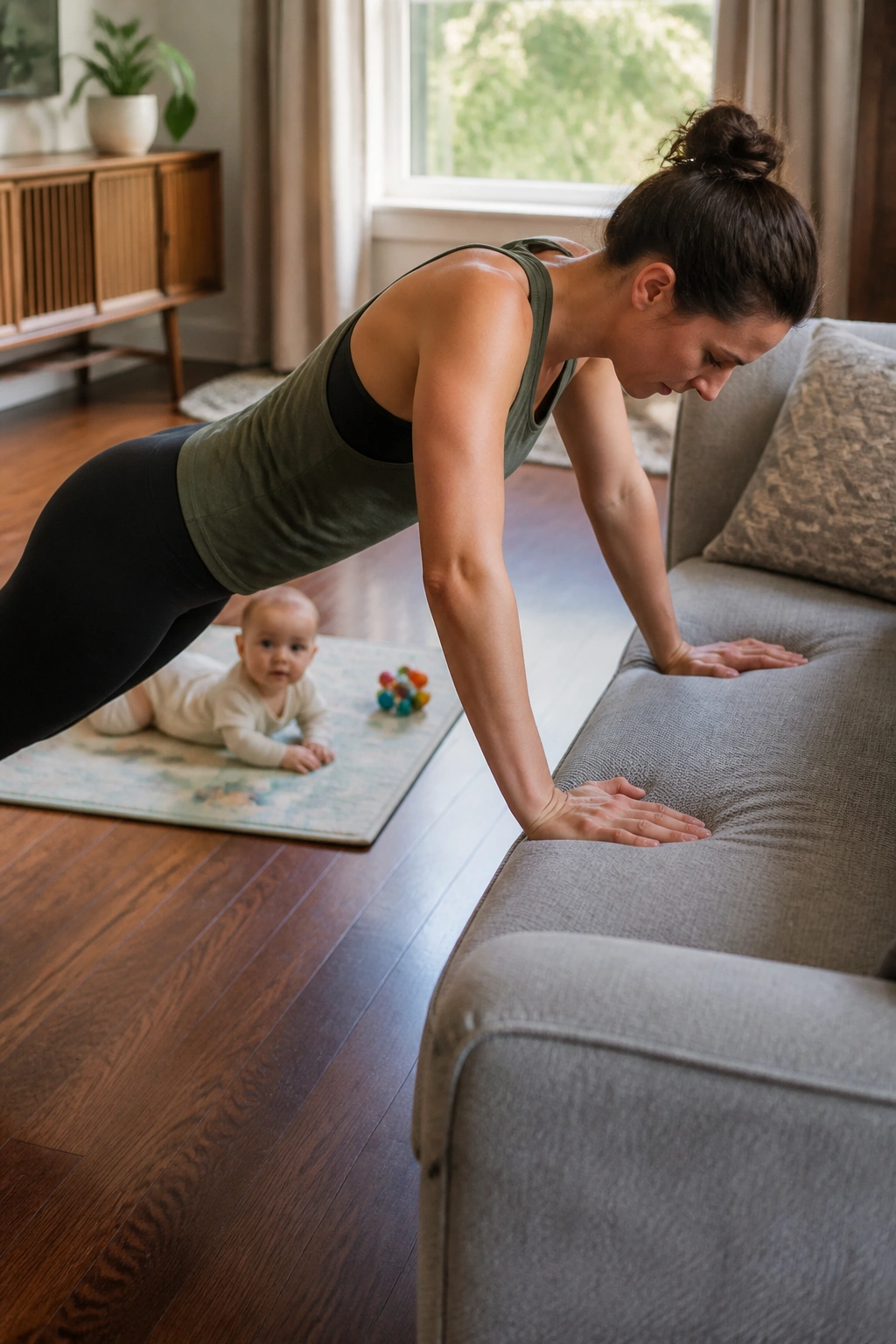
A couch, a sturdy bench, or even a kitchen counter can give you a better push-up than the floor if your wrists or core aren’t ready for full bodyweight work yet. That sounds backwards until you try it.
Start with your hands a little wider than shoulder-width. Walk your feet back until your body makes a clean line from head to heels. Lower your chest toward the couch edge, pause for a split second, and press back up while exhaling. Six good reps beat fifteen sloppy ones every time.
Why incline push-ups earn a spot
They’re easier on the wrists than floor push-ups for many parents. They also let you focus on control instead of collapsing through the middle. That matters if you’re still rebuilding after pregnancy or if you just spent the last hour holding a baby in one arm.
You can pair them with a quick baby-safe setup:
- Baby on the floor mat, facing you.
- One set of 6 to 12 reps.
- Rest 30 to 45 seconds.
- Repeat 2 or 3 rounds.
If your shoulders shrug up, stop and reset your hands. If your belly domes hard, raise the surface a little more. Small adjustments keep the exercise useful instead of irritating.
10. Glute Bridges and Dead Bugs Beside the Play Mat
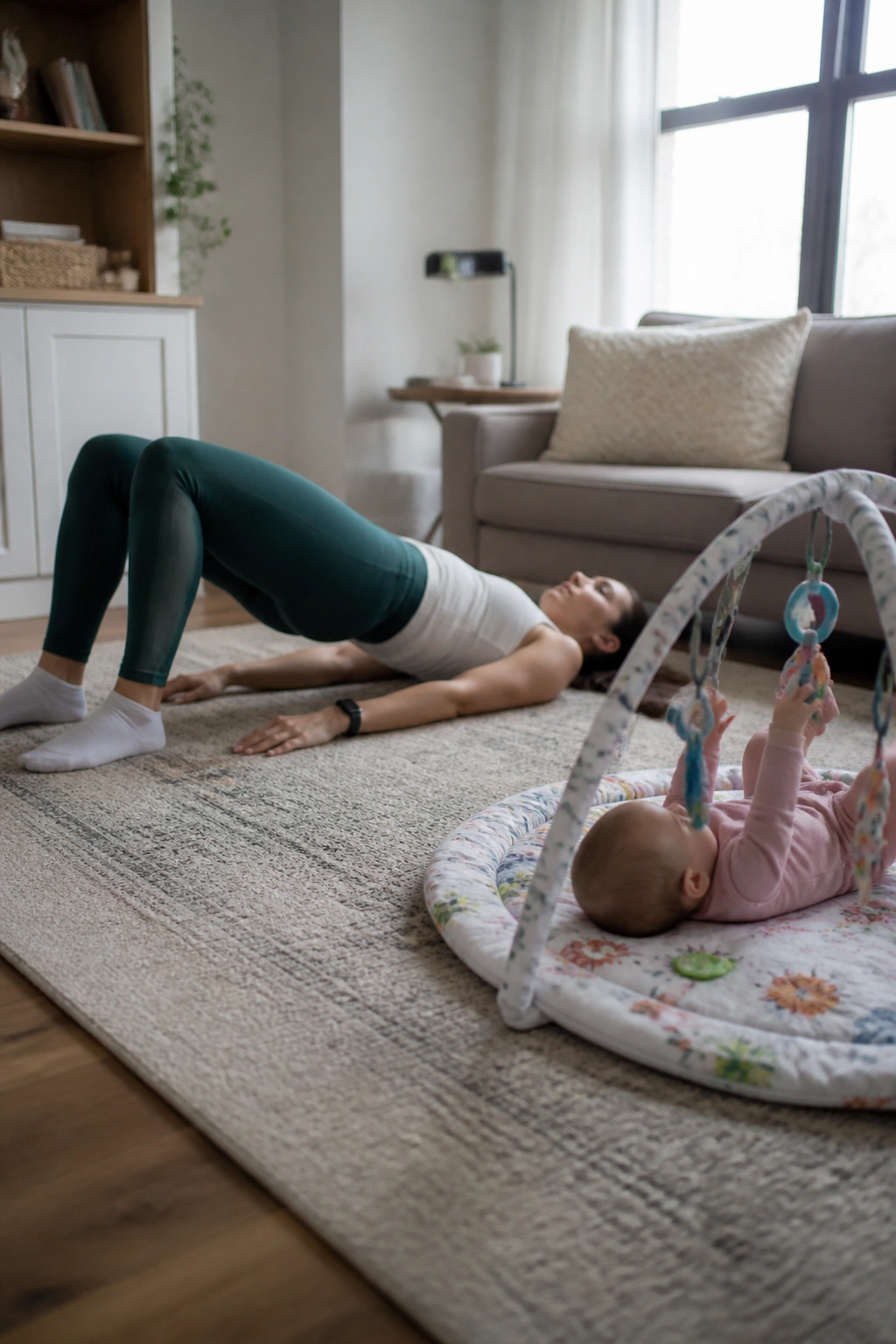
This is the kind of workout that looks quiet from the outside and does a lot of work underneath. Glute bridges wake up your backside. Dead bugs train your deep core to stay steady while your arms and legs move.
Lie on your back with knees bent, feet planted, and exhale as you lift your hips into a bridge. The top position should feel like your glutes are doing the lift, not your lower back. Then come down slowly and repeat for 10 to 15 reps. After that, switch to dead bugs: one arm and the opposite heel reach away from the center, then return with control.
A good target is 6 to 8 reps per side. Keep the movement small if your abdomen feels shaky. That’s fine. Smaller is often better here.
The reason this combo matters in the first year is simple: babies are heavy, and they pull you into all sorts of lopsided positions. Bridges help counter the sitting and standing. Dead bugs help you keep your trunk organized while life tugs you in different directions. If you only do one floor-based strength block, this is a strong choice.
11. Stroller Hill Repeats
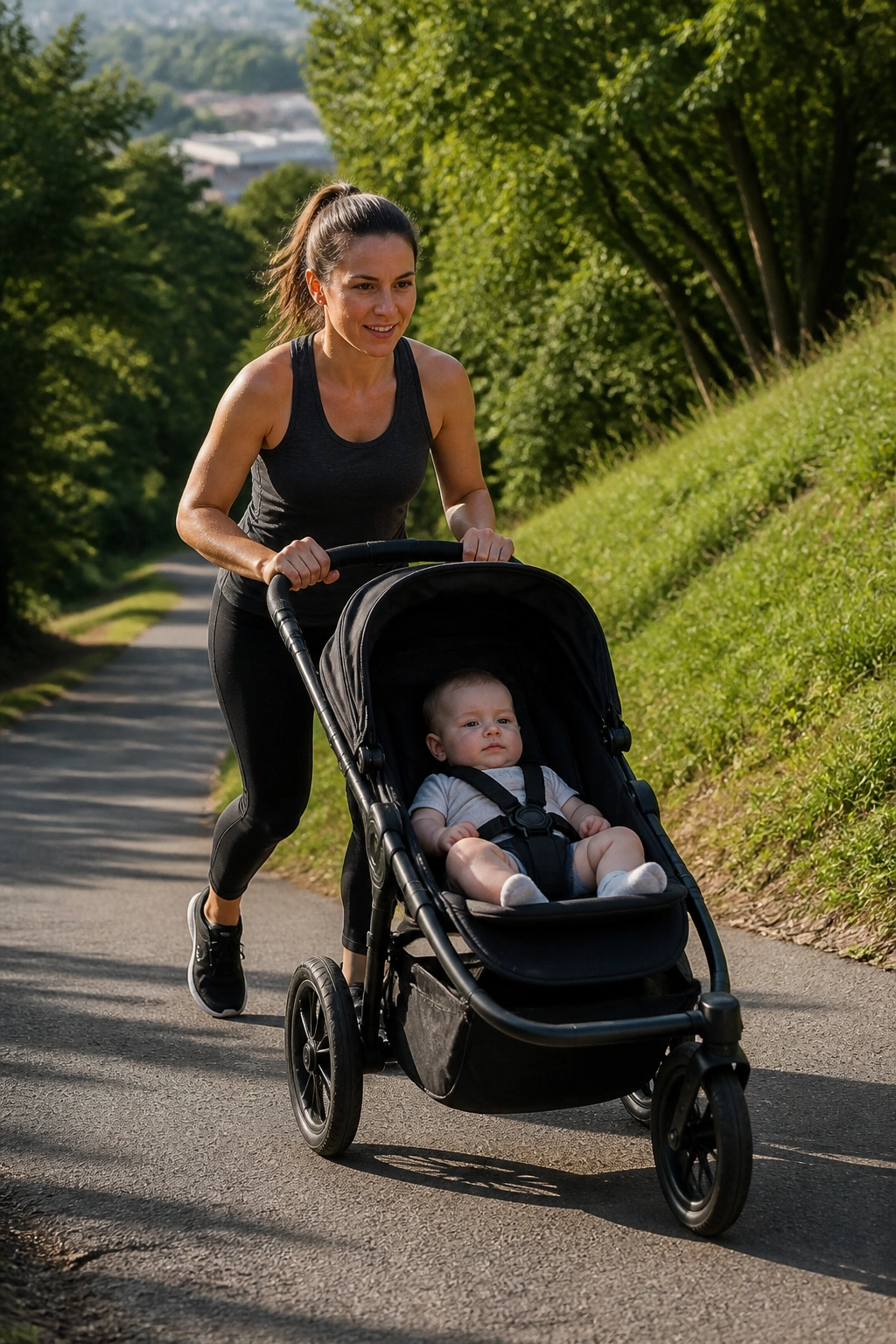
If flat walks start feeling too easy, hills change the conversation fast. Not because you need to run. Because walking uphill makes your legs and lungs work harder without turning the session into a scramble.
Keep the stroller steady, use both hands, and choose a hill with a smooth surface and enough space to turn around safely. Walk up for 45 to 60 seconds, then take it easy on the way down. Repeat 4 to 6 times. If you’re tired, do fewer rounds. If the baby is napping and the route feels calm, add one more.
The mechanics matter here. Short steps help more than long ones. A tall torso helps more than leaning over the handlebar. And if the grade is too steep, it stops being a workout and starts being a balance drill you didn’t ask for.
I like this option for the later part of the first year, when the baby is heavier and the stroller no longer feels like a light push. You get cardio, glutes, and a decent mood shift from the outdoors. No treadmill. No garage gym. Just a hill and a baby who may or may not find the whole thing deeply boring.
12. Mini Tabata Between Naps
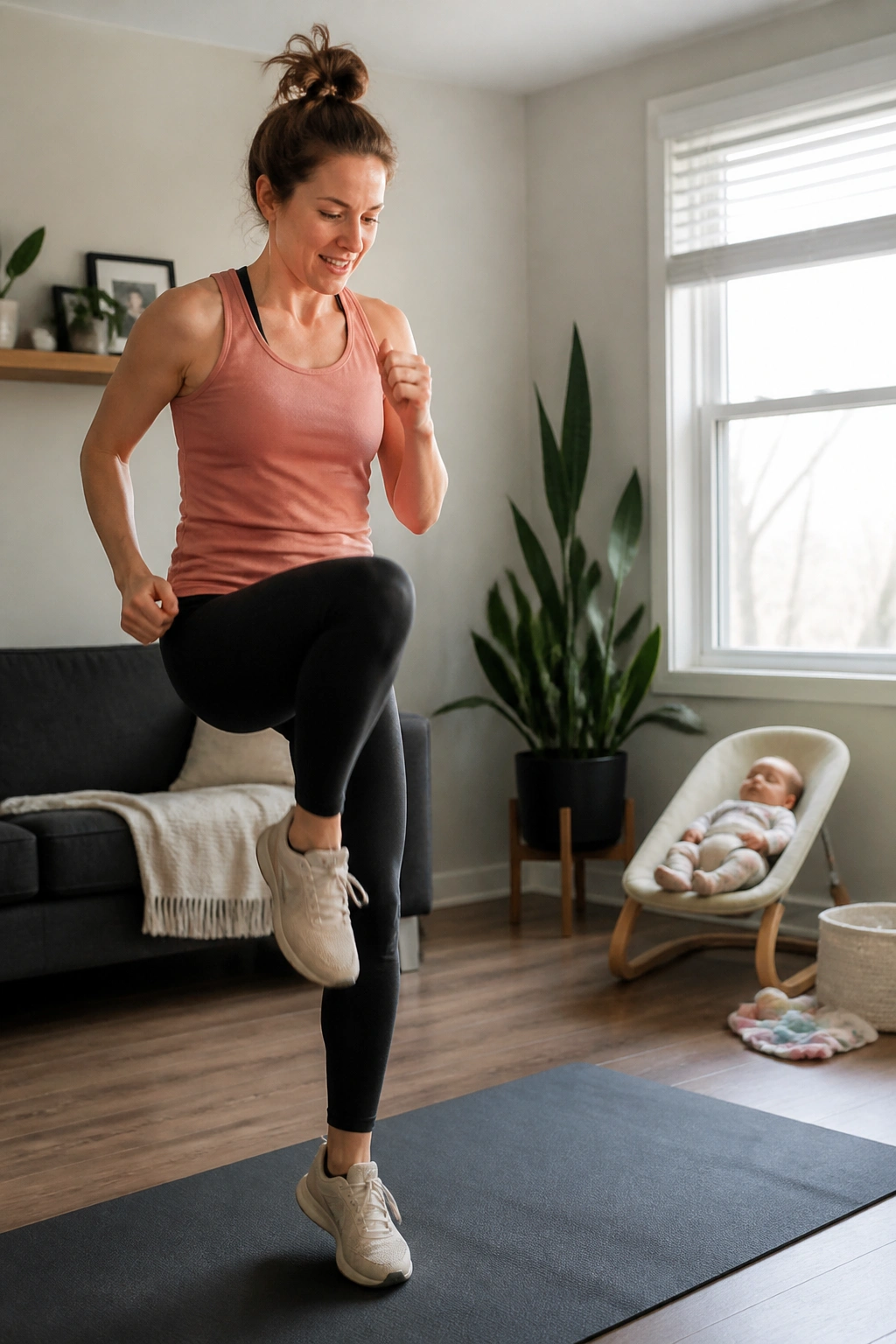
Four minutes can absolutely count. Tabata is just a short burst format: 20 seconds of work, 10 seconds of rest, repeated 8 times. That’s it. No mystical fitness aura attached.
For the first year, I’d keep the moves low-impact unless your body feels ready for more. Try squat to reach, fast marching, incline plank holds, and alternating step-back taps. Use one move for the whole 4-minute block, or rotate two moves if that feels less stale. The point is a quick hit of effort, not a circus.
Good low-impact Tabata choices
- Fast march in place
- Bodyweight squat to a reach
- Incline push-up hold
- Standing side step with arm drive
If you’re very early postpartum or still feeling unstable, this may be too much. Skip it. No guilt. But once you’ve got a bit of rhythm back, a tiny Tabata block can wake you up faster than a long, sleepy routine.
What I like is the tight container. You know the session will end soon, which makes it easier to start when the baby’s nap clock is unpredictable. Four minutes sounds small. In the middle of a day with a baby, it can feel like a gift.
13. Post-Feeding Mobility Reset With Baby Nearby
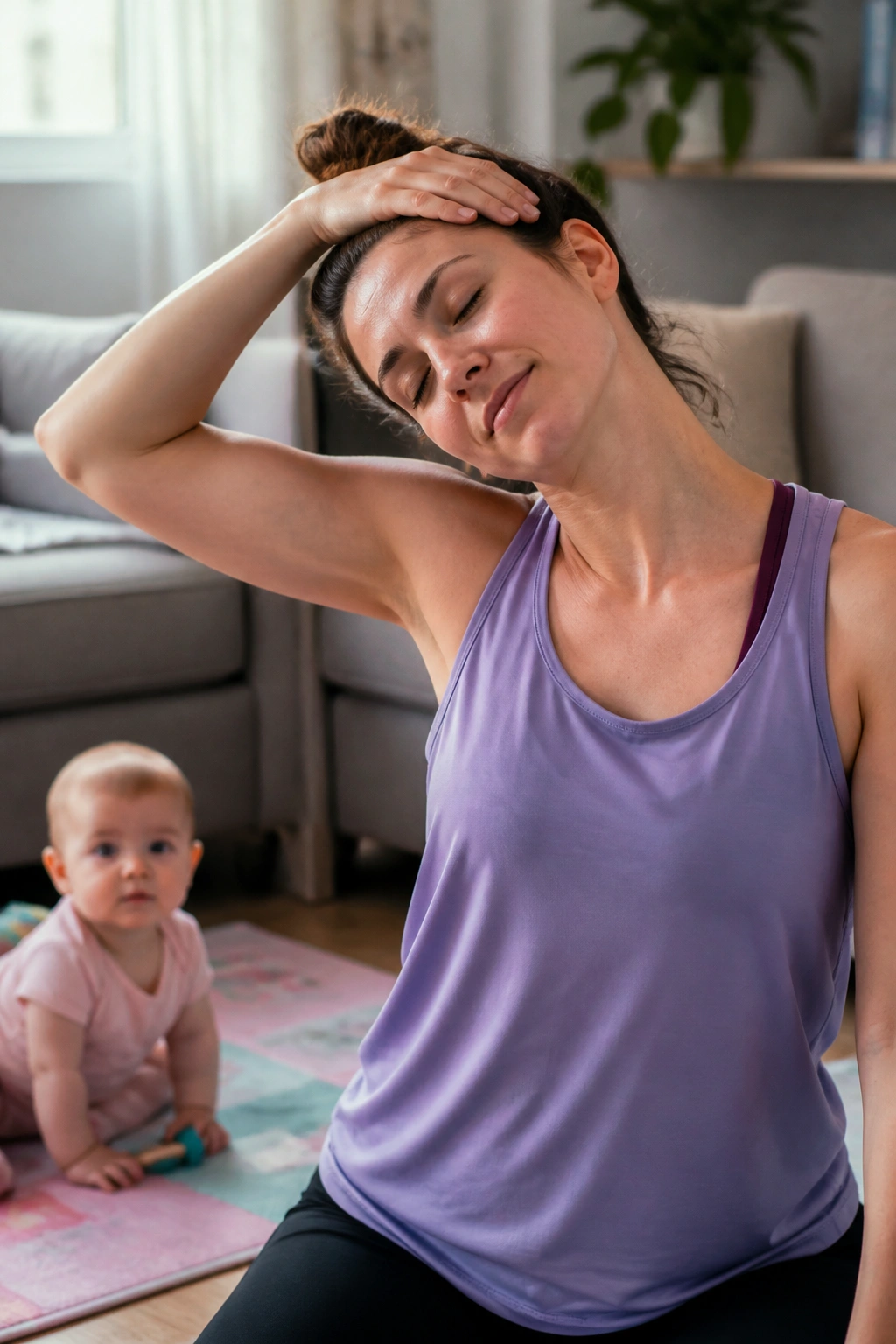
After nursing or bottle feeding, your shoulders can feel like they climbed toward your ears and never came back down. A short mobility reset fixes that better than pushing through one more “real” workout when your upper body is already tight.
Can this count as exercise? I think so. Movement is movement, and a body that gets fed, rocked, and carried all day needs some gentle maintenance. Keep the baby nearby on a mat or in a bouncer, then spend five minutes working through tight spots.
A five-minute sequence
- Neck side stretch, 20 seconds each side
- Thoracic rotation on hands and knees, 5 reps per side
- Hip flexor stretch, 30 seconds each side
- Ankle rocks, 10 reps per side
- Wrist circles, 10 slow circles each direction
Don’t force range. If the stretch feels sharp, back off. If your breath catches, slow down. This is the opposite of a hard workout, but it still changes how the day feels. And after a few feedings in a row, that’s no small thing.
I’d use this on the days when you want relief more than sweat. Which is more often than fitness ads admit.
14. Park Bench Strength Circuit
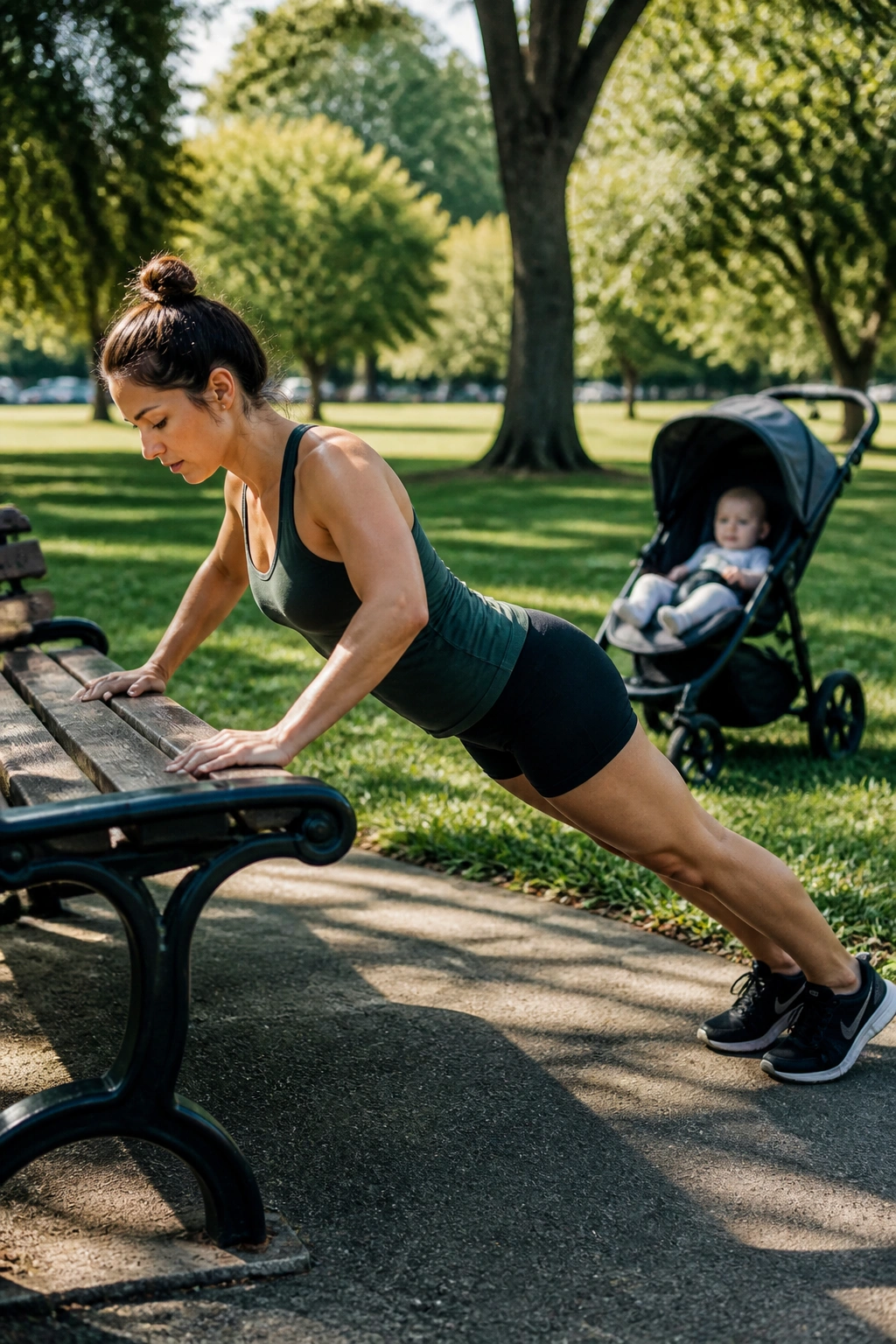
A park bench can do more than hold your coffee. It can anchor a proper strength circuit while the baby naps in the stroller or sits beside you on a blanket, safely out of the way.
Use the bench for step-ups, incline push-ups, and split squats. Add a resistance band row if you brought one. Three rounds is plenty. If the park is busy, choose a quieter corner so you’re not constantly turning your head to check what’s behind you. You want a calm setup, not a performance.
Simple bench circuit
- 8 step-ups each leg
- 8 split squats each leg
- 8 to 10 incline push-ups
- 12 band rows
- 45 seconds rest
The bench gives you a change of angle, which matters more than people think. A step-up feels different from a squat. A split squat stretches the hip flexor while strengthening the leg. An incline push-up reminds your chest and triceps that they still have a job.
This one fits nicely once the baby is old enough that leaving the house doesn’t require a suitcase. But even before that, a short stop at a bench can break up a long walk and turn it into something more useful than plain cardio.
15. The Repeatable 20-Minute Family Loop
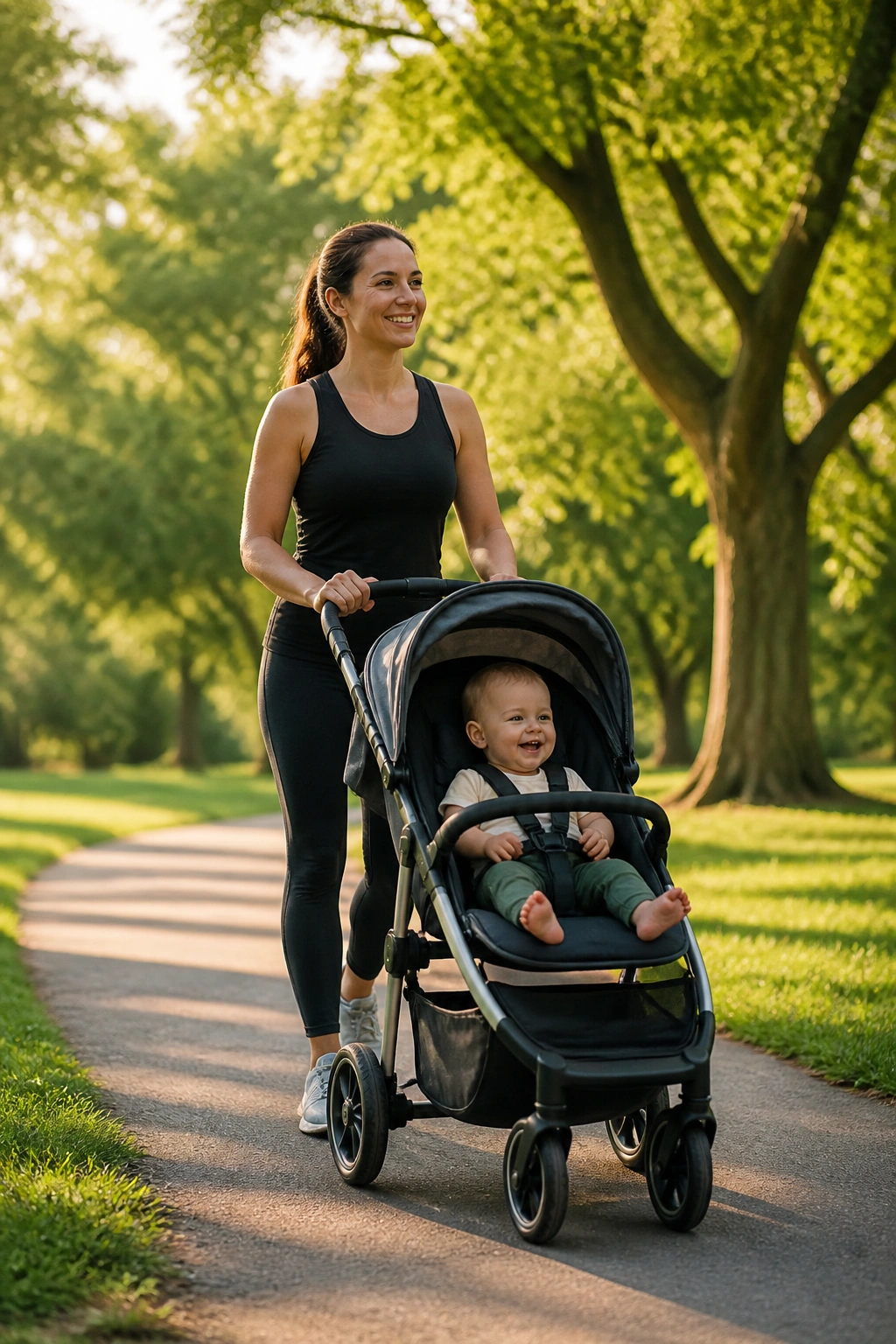
If I had to build one loop that survives the whole first year, this would be it. A little walking. A little strength. A little mobility. Nothing so long that it falls apart when the baby spits up or the timer gets ignored.
Start with 5 minutes of brisk stroller or carrier walking, then stop for 10 squats, 10 band rows, 8 incline push-ups, and 30 seconds of calf raises. Finish with a song’s worth of marching or dancing and two minutes of stretching. If the baby needs you in the middle, pause and pick up where you left off. The circuit should bend around your day, not the other way around.
What makes this the keeper is its flexibility. Early months? Keep the walking gentle and the strength moves small. Later months? Add a second round. Once the baby is crawling or pulling up, you may find yourself doing half the routine while also fetching a toy that rolled under the sofa. Fine. That’s still movement.
That’s the real lesson with workouts with baby: the plan that gets repeated beats the plan that looks impressive on paper. A loop you can pull off three times a week, even in fragments, does more for your body than a perfect schedule that collapses by Thursday night.
