



A good workout buddy changes the whole session.
The clock moves faster. Rest turns into a relay. And the awkward little gap between sets—the part where people start staring at the floor or checking a phone for no reason—basically disappears.
The best part is that you do not need to match perfectly. One person can be stronger, faster, or more mobile, and the workout still works if you both agree on the rep scheme, the rest, and the switch point. That’s where buddy workouts shine: they keep the effort honest without turning the room into a competition no one asked for.
A smart partner session also solves a practical problem. A lot of people want a harder workout, but they do not want more dead time. Pairing up lets you build intensity through timing, pacing, spotting, and shared accountability. Simple. Useful. Hard to fake.
1. Mirror Warm-Up and Mobility Flow

Start here if you want the two of you to sync up before the hard work begins. One person leads a movement for 20 to 30 seconds, and the other copies it exactly. Then swap. It sounds almost too easy, but it wakes up the hips, shoulders, ankles, and spine faster than standing around doing random arm circles.
How to make it feel smooth
Use movements that are easy to see from across the room: marching in place, arm swings, inchworms, bodyweight squats, and hip openers. Keep the pace controlled so nobody is guessing what comes next. If one person gets stiff or rushed, the whole thing starts to feel clumsy.
A good mirror flow usually runs for 6 to 8 minutes. That is enough to raise body temperature without stealing energy from the workout you actually came to do. And yes, it matters that both people stay present. If one of you is scrolling between sets, the whole point gets lost.
Good options to cycle through:
- 10 arm circles each way
- 6 inchworms
- 8 deep squats with a reach overhead
- 5 lunge-and-rotate reps per side
- 20 seconds of high knees or march steps
Tip: keep the lead changes quick. If a movement starts to feel awkward, move on. No need to nurse a warm-up into the ground.
2. Dumbbell Squat-and-Press Ladders
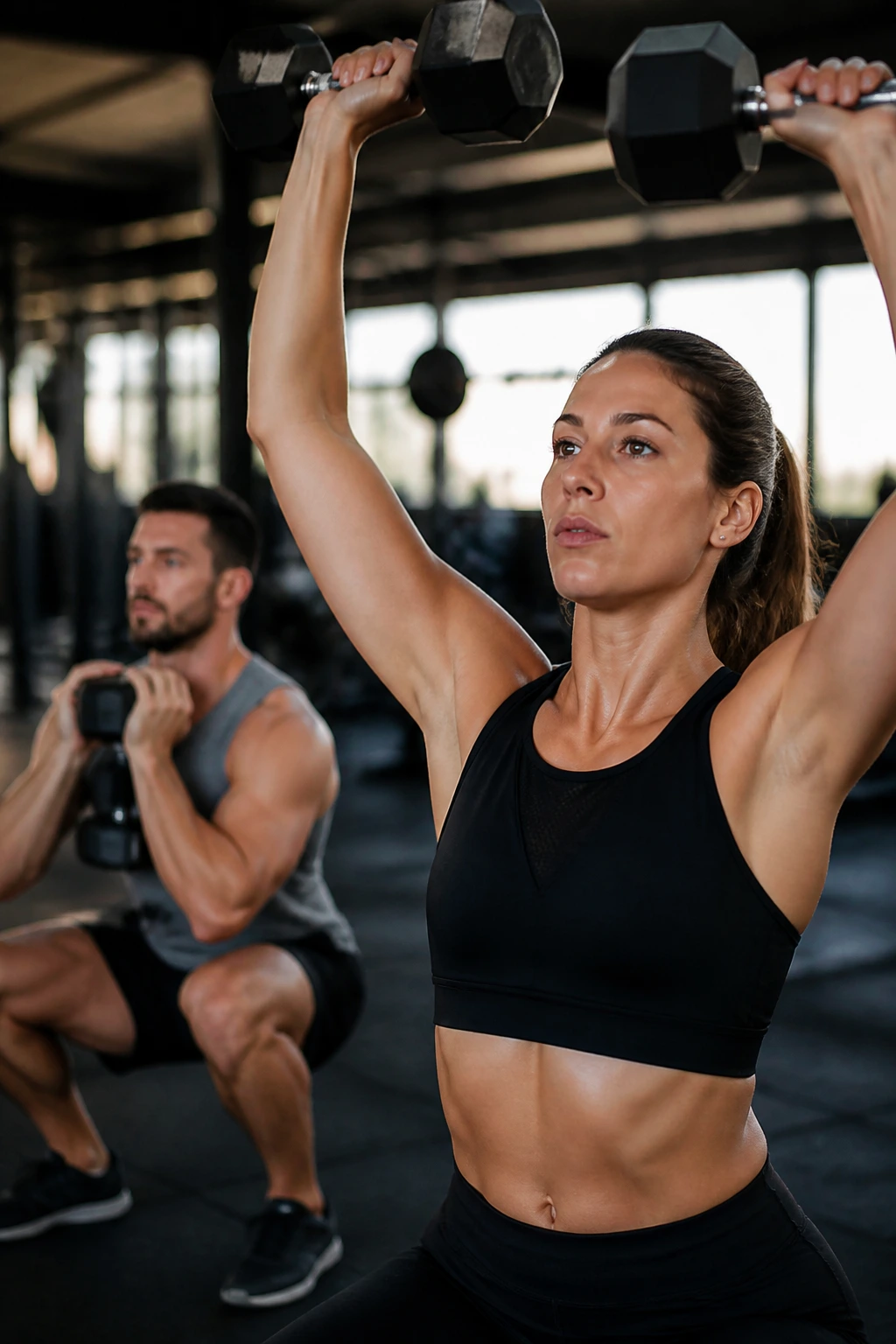
This is one of the cleanest partner strength workouts because it gives both people a clear job. One person works through the ladder while the other rests, counts, or gets set for the next round. Then you swap. The format keeps the pace honest, and the ladder itself adds a little bite without needing heavier weights.
A simple version looks like this: 5 goblet squats, 5 dumbbell presses, rest, then 6 and 6, then 7 and 7, all the way up to 10 and back down. If that feels like too much, stop at 8. If it feels too easy, slow the lowering phase to three seconds on the squats.
Why it works so well
The squat and press combination hits the legs, shoulders, and core at the same time. It also punishes sloppy pacing. If you rush the squats, the press gets ugly. If you lean back on the press, your lower back gets involved when it should not.
A shared ladder is also a sneaky accountability tool. Nobody wants to be the person who taps out first when the other is still moving cleanly.
Best setup: moderate dumbbells, enough to make the last two reps of each rung work, but not so heavy that form falls apart at rung 6.
3. High-Five Plank and Core Circuit
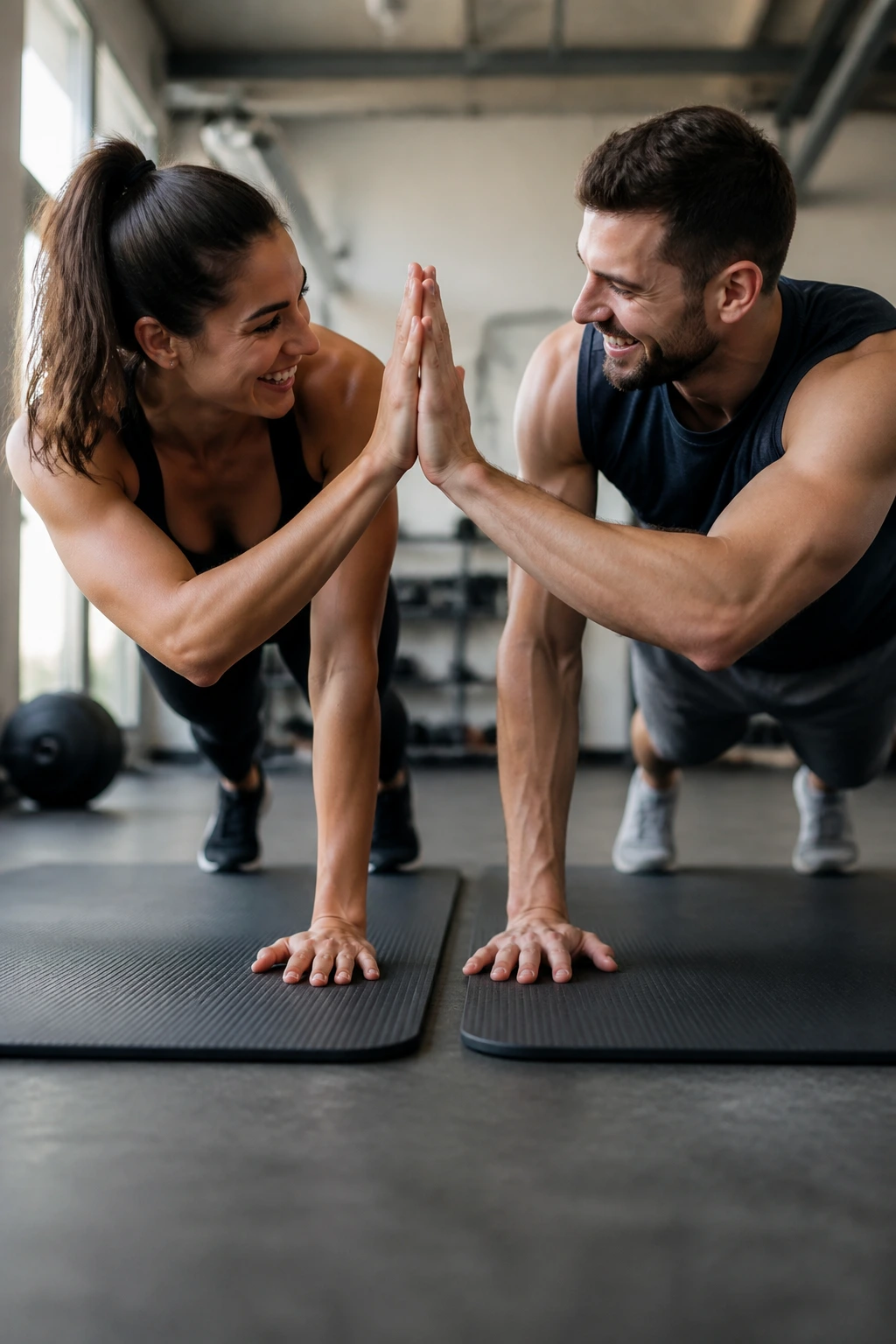
Two mats, side by side, and a little ego. That is all you need here.
Both of you start in a high plank, shoulders stacked over wrists, feet about hip-width apart. Reach one hand across for a quick high-five, then switch. If that feels too unstable, drop the feet a little wider. After 20 to 40 seconds, move into shoulder taps, then forearm plank holds, then dead bugs.
How to keep the hips from wobbling
- Brace the ribs down before each reach
- Squeeze the glutes so the low back does not sag
- Widen the stance if the hips twist
- Slow the hand switches if you start rocking side to side
A buddy makes this more useful because somebody is always watching. You can catch the little cheats—a dropped hip, a neck craning up, a breath held too long—before they turn into bad habits. And yes, that matters. Core work gets a lot more honest when another person can see what your torso is doing.
A simple round is 30 seconds plank taps, 30 seconds dead bugs, 30 seconds rest, repeated for 4 to 6 rounds.
4. Medicine Ball Pass Intervals
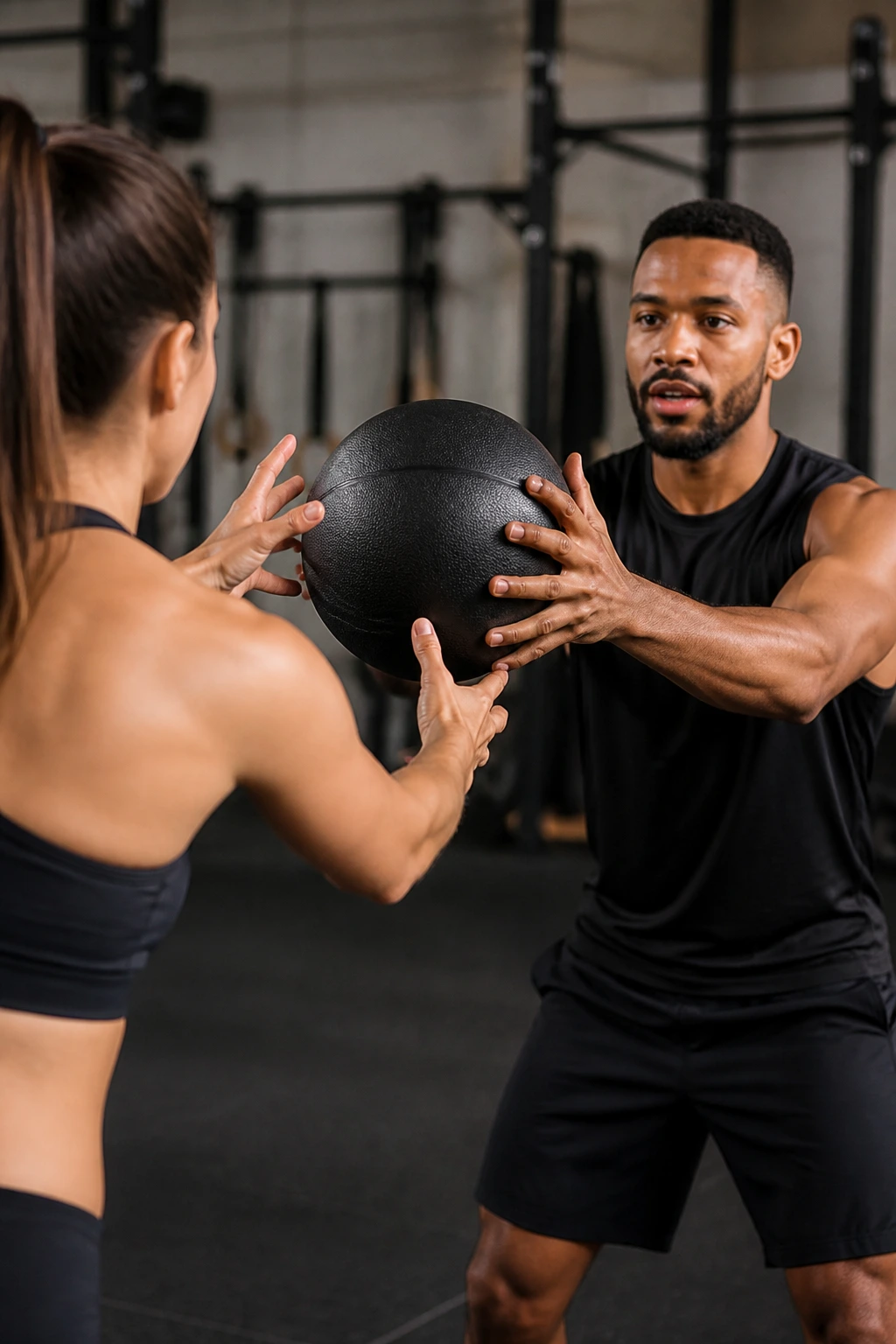
A medicine ball gives partner training a different feel. The movement is snappy, the rhythm is obvious, and the ball itself creates a real exchange instead of two people merely working beside each other.
Stand about 6 to 8 feet apart and pass the ball chest to chest for 20 to 30 seconds. Then try rotational passes from one hip to the other. If you have a slightly heavier ball and enough room, add squat-to-pass reps so both of you have to load the legs before tossing.
The best version is the one where both people stay springy, not sloppy. If the passes get wild, step closer. If the ball feels too light, move a little farther apart or use a heavier ball. One clean 10-pound ball can be enough to make the room feel lively.
This is a good option when one person wants cardio and the other wants core and power. The shared tempo ties it together. Nobody is waiting around, and nobody is guessing when their turn ends.
5. Partner Sprint Repeats

You do not need matching speeds for sprint work. You need matching effort.
That can mean one person runs 20 seconds hard while the other walks back to the start, then you swap. It can also mean one of you does hill sprints while the other counts recovery time and makes sure the effort stays sharp instead of turning into a jog. Short bursts work better with a witness.
The main trick is keeping the repeats short enough that both runners can stay fast. Ten to twelve rounds of 15 to 30 seconds is plenty. Past that, form usually breaks down and the session turns into survival mode.
A simple outdoor version looks like this:
- 20 seconds fast run
- 40 to 60 seconds walk
- switch roles
- repeat for 8 to 10 rounds
Watch for this: if one partner is fading hard by round 4, shorten the sprint and lengthen the walk. The goal is clean speed, not dragging both of you through a sloppy pile of exhaustion.
6. Resistance Band Row-and-Press Rounds
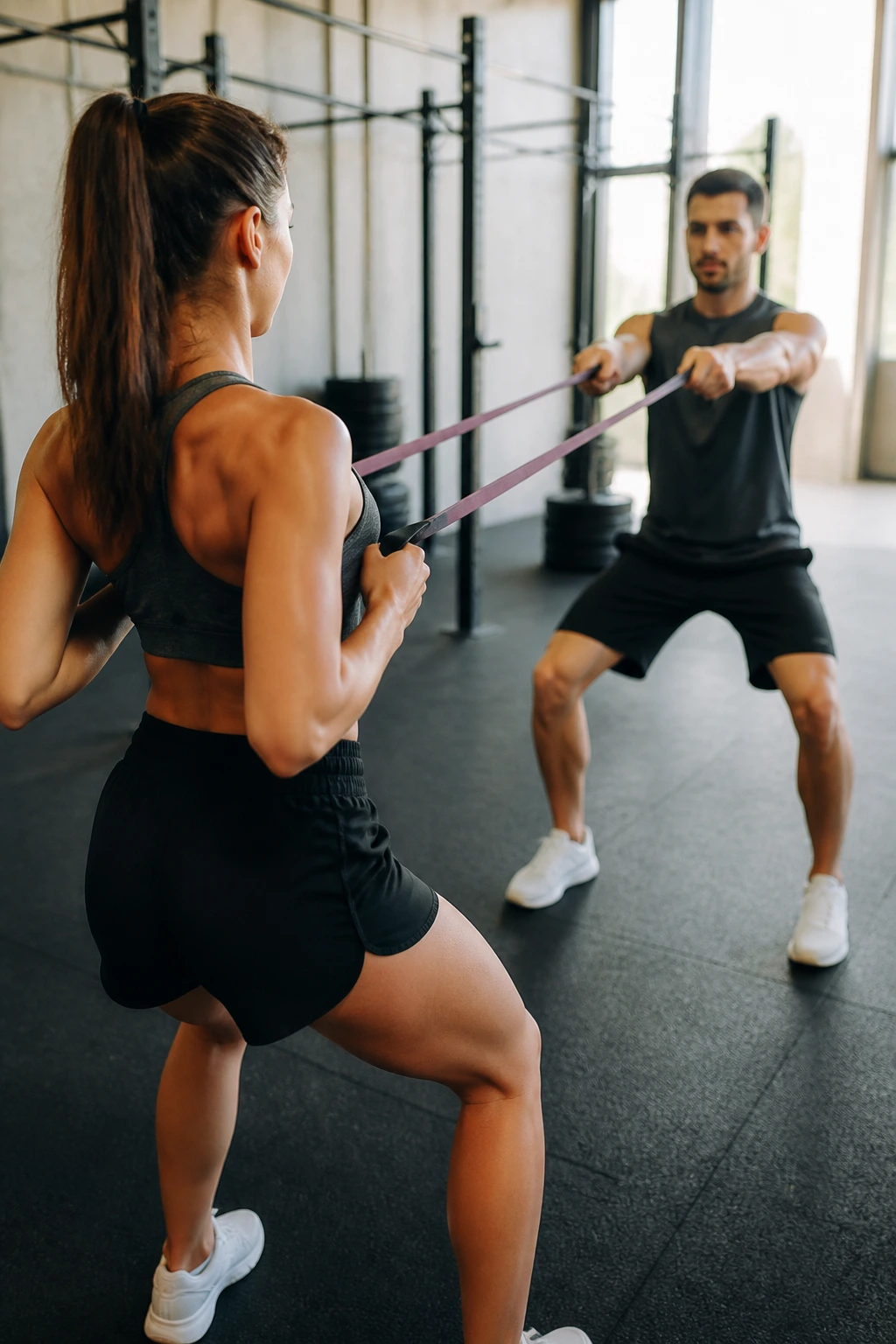
Bands are boring alone and much better with a partner. That is the honest truth.
Face each other and use one long resistance band for rows, or stand back-to-back and perform pressing moves in opposite directions. One person can row while the other holds an isometric squat, then switch. Or both of you can work at the same time in a mirrored stance, which feels a little like a drill team and a little like a fight with rubber.
What makes the setup useful
The band gives instant feedback. If one person yanks too hard, the line of tension changes fast. If the shoulders shrug, the form gets ugly right away. You do not need a complicated plan here—three rounds of 12 to 15 rows, 10 to 12 chest presses, and 10 face pulls can hit the upper back without cooking the shoulders.
This is especially good on days when you want posture work without a lot of equipment. A single band, a few feet of floor space, and a partner who keeps count. That’s enough.
Keep the resistance light enough that both people can move through the full range without twisting at the waist.
7. Walking Lunge Relay

Picture one lane of floor or a short strip of sidewalk. One person lunges down and back while the other waits with a light plate, a dumbbell, or nothing at all. When the first person returns, hand off and repeat. That handoff is the whole point. It turns a standard lunge set into a relay.
Walking lunges hit harder when you have to hand something over or keep pace with someone else. The legs stay honest because there is no hiding in a long solo rest. If you want to make it tougher, hold a weight at the chest the whole way. If you want more balance challenge, try a light overhead carry between sets.
A clean target is 10 to 14 steps per leg, repeated for 3 to 5 rounds. Take shorter steps if the knees drift too far forward. Keep the torso tall. And breathe, because people forget to do that during lunges more often than they admit.
A buddy helps here in a boring but useful way: they notice when your stride shortens and your hips start to cheat.
8. Dumbbell Complex Relay
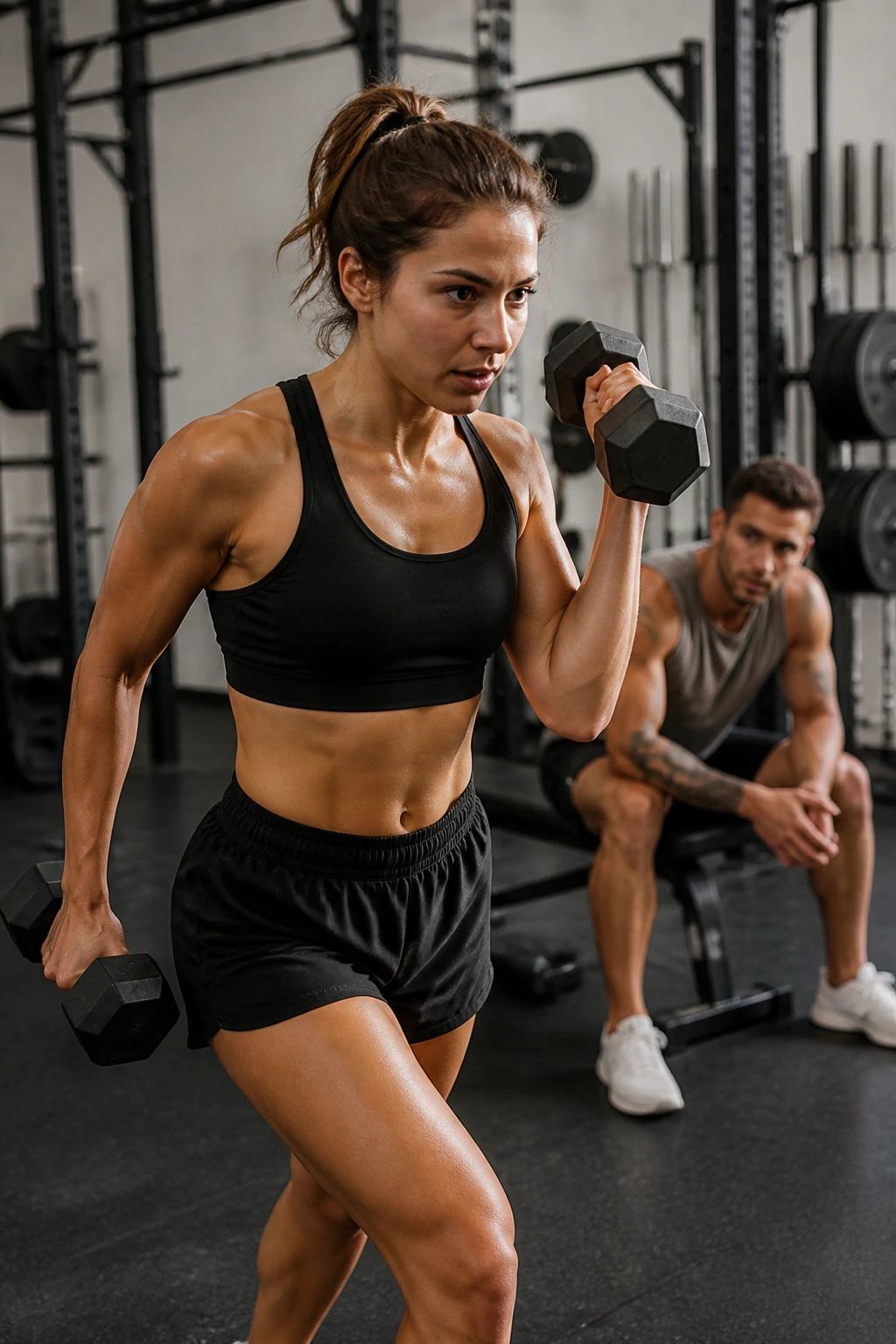
This one is a little more demanding, which is exactly why it works.
Choose a pair of moderate dumbbells and run one complex without setting them down. A simple version is 6 Romanian deadlifts, 6 hang cleans, 6 front squats, and 6 push presses. One person finishes the full sequence while the other rests, watches, and gets ready to go.
A clean sequence to try
- 6 Romanian deadlifts
- 6 hang cleans
- 6 front squats
- 6 push presses
- rest 60 to 90 seconds
- switch
The relay format keeps the weights moderate. That is a good thing. Heavy loads are not the point here. Smooth transitions are. If the cleans get sloppy, the complex is too heavy. If the front rack collapses, the weight needs to come down.
A partner also makes the setup less tedious because you are not just staring at a clock between rounds. You are watching someone move, which oddly makes your own form better when it is your turn. Shared focus beats random rest every time.
9. Spotter Bench and Press Session
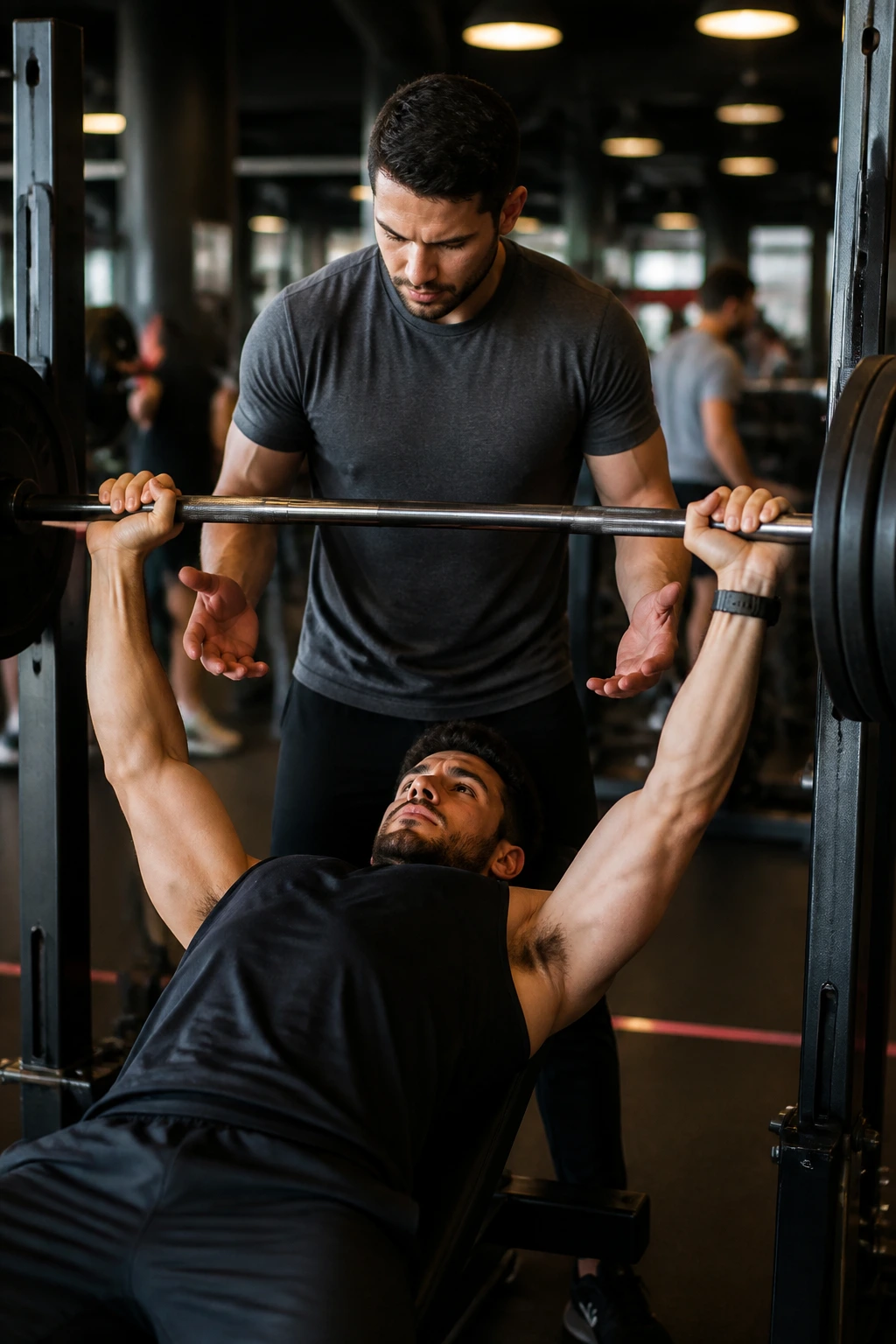
A good spotter changes lifting from nervous to steady.
Bench press is the obvious example, but this also works for incline press, shoulder press, and even pull-up assistance. The partner’s job is not to yank the bar for you. The job is to give a clean handoff, stay alert, and help only when the lift stalls.
Where spotting matters most
- Bench press: help with the liftoff, then hover close without touching unless the bar stops moving
- Overhead press: stand behind the lifter and help only if the bar stalls near forehead level
- Pull-ups: support at the ankles or give a light band assist, not a full body hoist
This kind of session works best when both people know the plan before the bar comes out. Agree on the fail signal. Agree on the rep target. Agree on what “help” means, because guessing under a loaded bar is a bad idea.
The upside is huge: more confidence, more controlled reps, less wasted energy between sets. And yes, it feels better to have someone there who actually pays attention.
10. Dead Bug and Hollow Hold Core Pairing
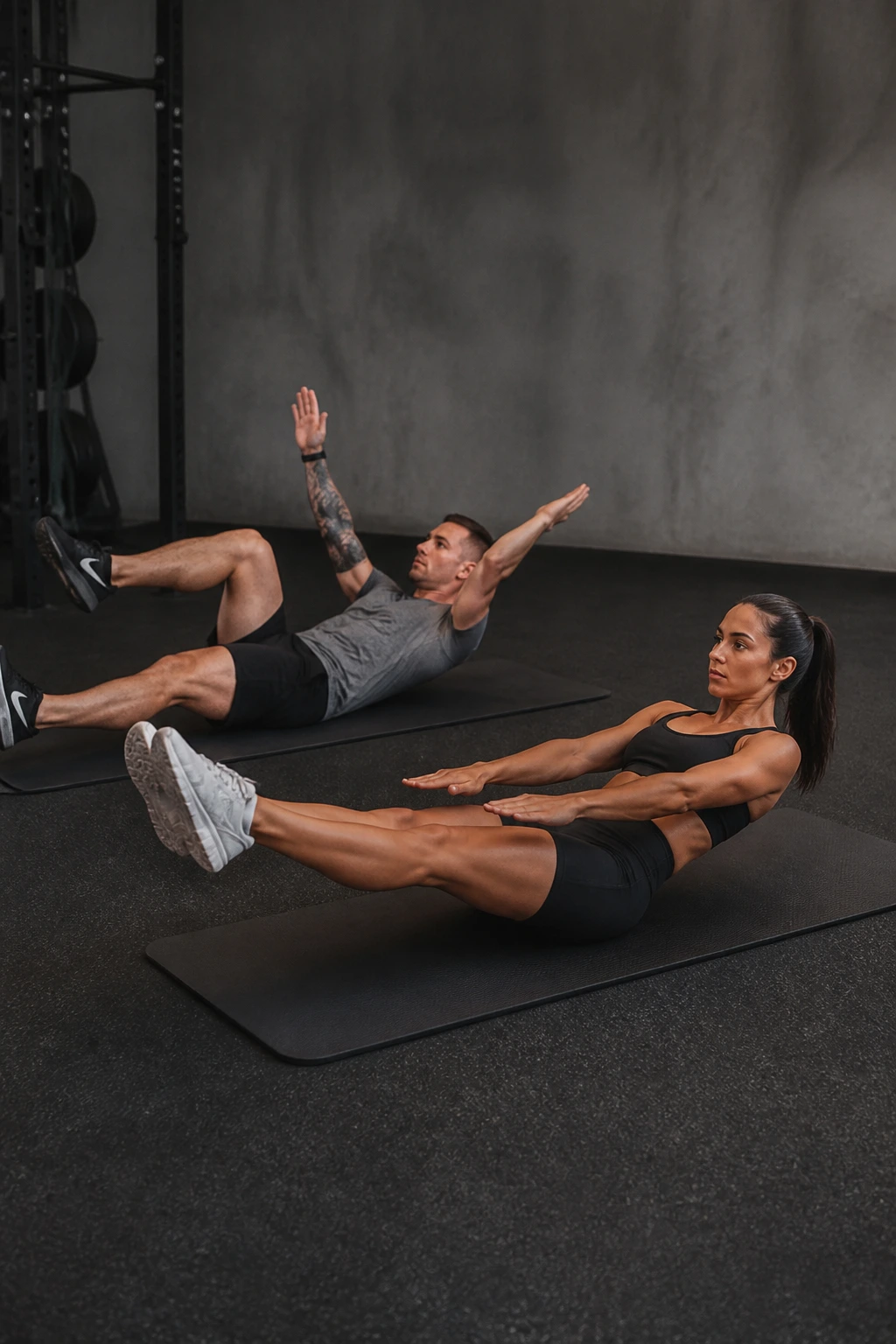
Want core work that lights up the midsection without beating up the lower back? Pair dead bugs with hollow holds.
One person lies on the floor doing dead bugs—opposite arm and leg extend while the ribs stay pinned down. The other holds a hollow body position, shoulders slightly off the floor, low back flat, legs extended as long as they can keep form. Swap after 20 to 30 seconds or after a set number of reps.
The contrast is useful. Dead bugs slow everything down and force control. Hollow holds make you face the shake. Together, they cover the whole front side of the trunk without a single sit-up.
How to get the most from it
Keep the lower back glued to the floor on both movements. If it arches, shorten the lever. Bend the knees a little. That is not a cheat; it is smart training.
A simple pairing is 8 dead bugs per side, 20 seconds hollow hold, then 30 seconds rest. Four rounds is enough for most people. If your neck starts doing all the work, stop and reset.
11. Cardio Machine Pace Ladder

A rower, bike, ski machine, or treadmill becomes more interesting the minute a partner is watching the numbers.
One person goes for a hard interval while the other logs the time or distance, then swaps. The ladder format keeps it from feeling endless. Try 200 meters, 300 meters, 400 meters, then back down. Or use time: 30 seconds hard, 45 seconds moderate, 60 seconds hard, then reverse the order.
This is a good fit when both people want conditioning but do not want to fight over equipment. One works, one recovers, then the roles flip. No wandering. No half-paying attention. No need for a complicated app.
A few practical notes:
- Match the machine to the space you actually have
- Use time if the machines are different
- Keep the hard efforts hard enough to matter, but not so hard that the last round becomes a shuffle
- Set the damper or resistance before the first round and leave it alone
A partner makes pacing much easier because someone else is counting alongside you. That alone keeps the effort cleaner.
12. Partner Kettlebell Flow
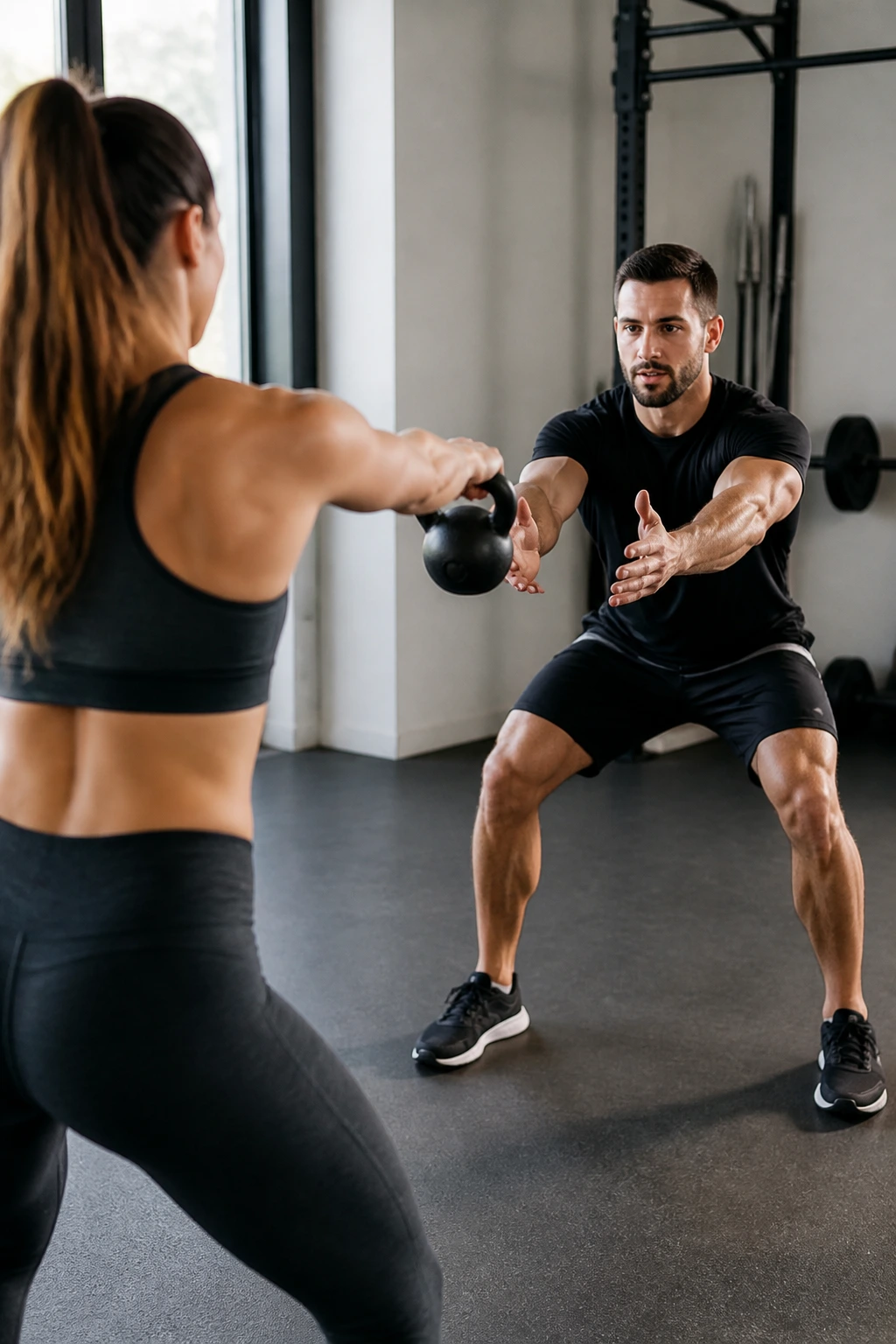
A kettlebell flow works well with two people because it has a natural rhythm. One person completes a short sequence, passes the bell, and the next person goes. It feels almost like a relay with better posture.
A simple sequence
- 10 swings
- 6 clean and press reps per side
- 8 goblet squats
- pass the kettlebell
- repeat
Keep the bell path clean and the space between you clear. No wide wandering steps. No casual tosses. The handoff should be controlled enough that the receiver can grab the handle without chasing it across the floor.
This setup is excellent for full-body conditioning because it blends hip power, shoulder stability, and leg work in one loop. It is also a good test of concentration. Kettlebells punish lazy transitions fast.
A lighter bell can be used for speed, while a heavier one slows the work and makes the squats and carries more demanding. I prefer the middle ground. Too light feels fidgety. Too heavy turns the flow into a grind.
13. Battle Rope Alternating Bursts

Battle ropes are brutally honest. There is no pretending.
One person works the ropes for 20 to 30 seconds while the other rests, coaches, or does a bodyweight move like air squats or a plank hold. Then switch. Alternating waves, double slams, and side-to-side swings are all fair game, as long as the shoulders stay packed and the hips stay involved.
The rope does not need much finesse, but it does need attention. If the chest caves and the arms take over, the set burns out fast. Use the legs. Bend the knees. Keep the wrists loose enough that the waves travel without jerking.
A useful pairing is this:
- 20 seconds alternating waves
- 20 seconds air squats
- 20 seconds double slams
- 40 seconds rest
- repeat for 4 to 6 rounds
This one feels especially good with a workout buddy because the watch duty matters. Someone has to keep the interval honest. Someone has to call the switch. Otherwise, people drift.
14. Assisted Pull-Up and Dip Work
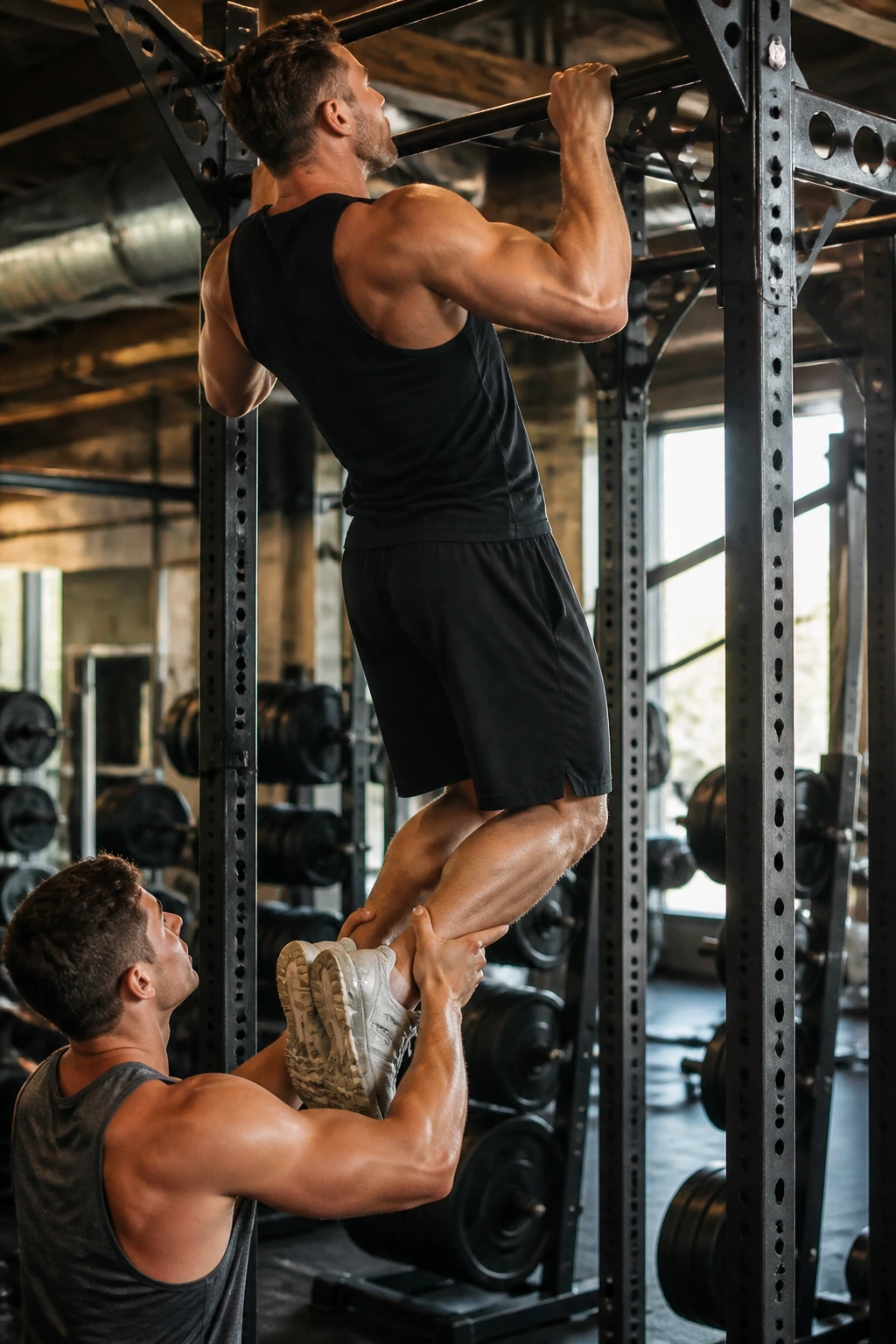
Bodyweight pulling gets better when a partner is part of the system.
For pull-ups, one person can support lightly at the ankles or lower legs so the lifter gets enough help to move through a full rep. Another option is slow negatives: the partner gives a small boost to the top, then the lifter lowers for 3 to 5 seconds. Dips work the same way with a little foot support or a band assist.
Where helpers matter most
- The bottom half of the pull-up, where most people stall
- The lockout on dips, where the shoulders can drift forward
- The lowering phase, where control matters more than speed
This should never feel like a launch. If the partner is hoisting you around, the rep quality is gone. Keep the help light and specific. The goal is a cleaner range of motion, not fake strength.
A workout buddy also makes these sets less frustrating. Pull-ups can be humbling. Having someone count reps and keep the pace steady takes the edge off that frustration and usually squeezes out one or two better sets.
15. Tag-Team EMOM
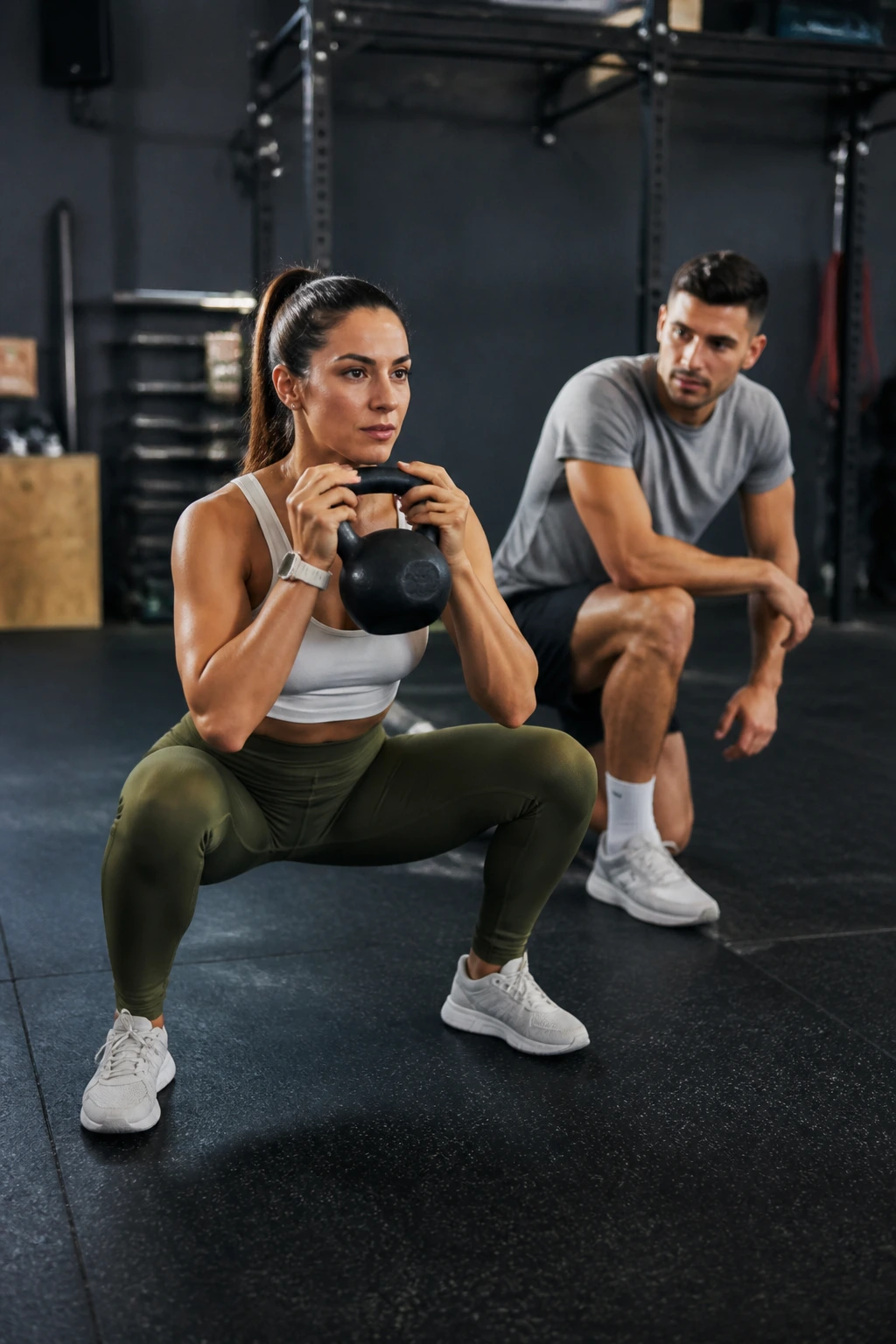
EMOM stands for every minute on the minute, and partner training makes it even cleaner.
Pick a movement or short pair of movements, then split the minute between you. One person works for 30 seconds while the other rests, then switch at the next minute mark. You can run the same pattern for 10 to 16 minutes without the session feeling scattered.
A simple 12-minute tag-team block
- Minute 1: 12 goblet squats
- Minute 2: 10 push-ups
- Minute 3: 12 reverse lunges
- Minute 4: 20 mountain climbers
- repeat three times
The reason this works is pace. A clock makes it impossible to drift. You know when your turn starts. You know when it ends. And because the rest is built in, both people can move with a little more intent.
If one partner finishes early, they can count reps, breathe, and reset equipment. If one person is slower, the other still stays engaged. No dead spots. No wandering. Just a tidy block of work.
16. Pad Work or Shadowboxing Rounds
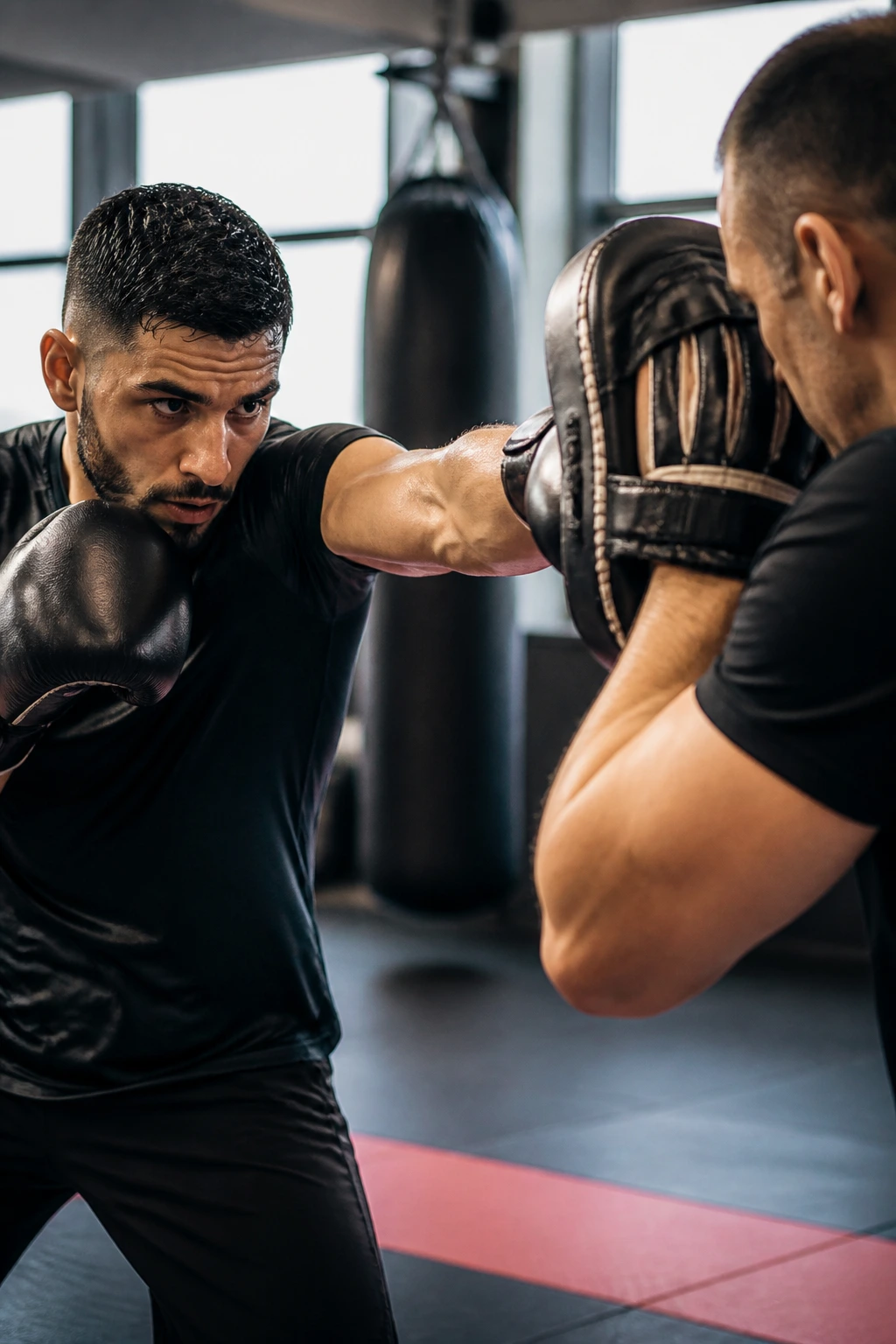
A good pad session wakes up the whole body. It is cardio, coordination, and a little bit of fun, which is rare enough on its own.
One partner holds focus mitts or Thai pads while the other works a simple combination like jab-cross-hook, then a step out. After 60 to 90 seconds, switch. If you do not have pads, shadowboxing still works if one person calls the combo and the other mirrors it across the room.
What to keep in mind
- Keep the combos short: 3 to 5 punches is plenty
- Step out after each round instead of standing square
- Switch roles every round so both people stay active
- Use a timer so nobody drags the round out
The benefit of a partner here is feedback. Pad holders can call out sloppy footwork, and shadowboxing partners can catch dropped hands or stiff shoulders. The round gets sharper fast when somebody is paying attention.
And yes, it feels less awkward than punching the air alone in the corner.
17. Partner Carry Circuit
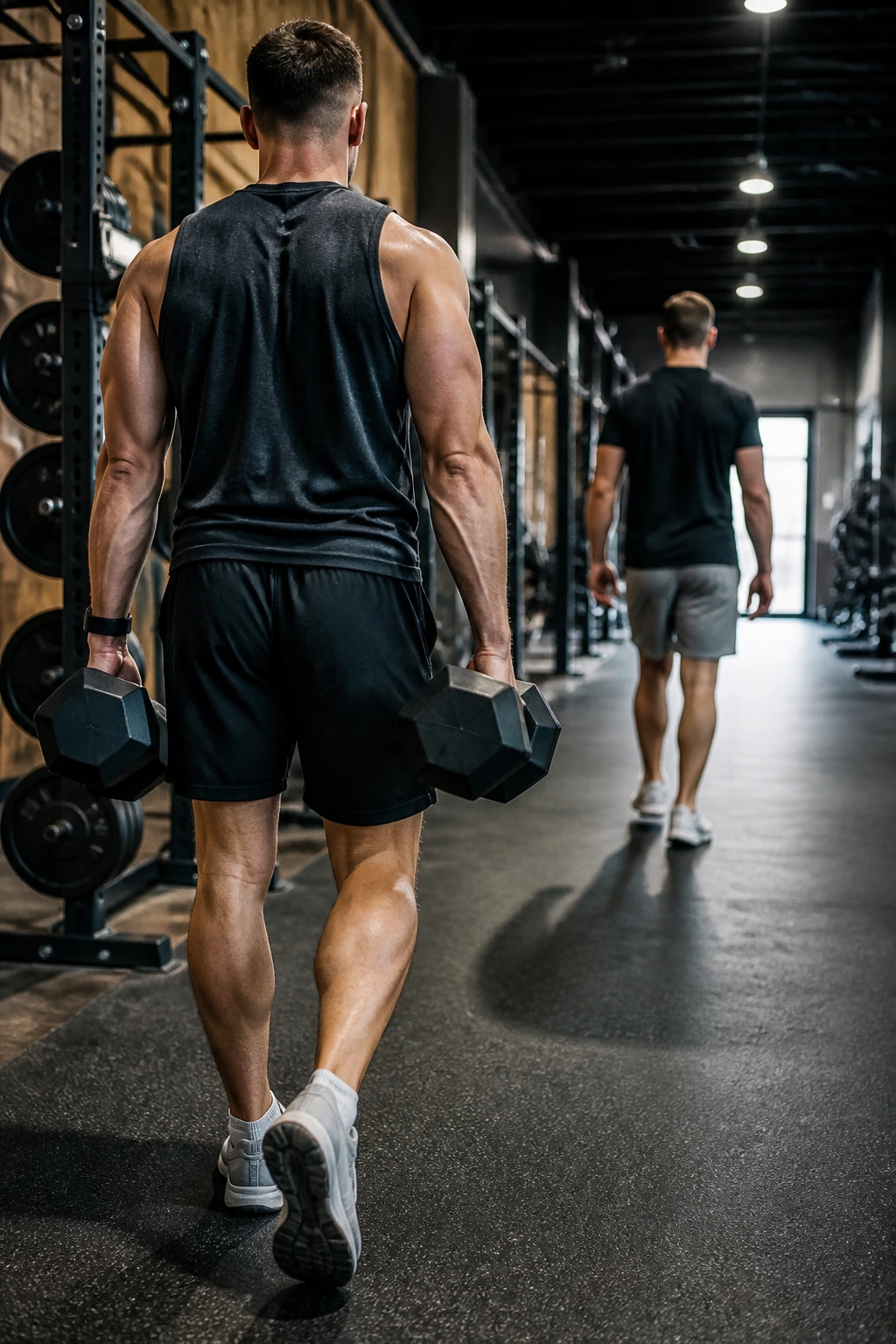
Carries look simple until your grip starts complaining.
That is exactly why they work so well with a partner. One person carries a pair of dumbbells, a kettlebell, or a sandbag for 20 to 40 meters while the other times the effort, walks the return path, and gets ready to switch. Farmer carries, suitcase carries, and bear-hug carries all fit here.
Good options to rotate through
- Farmer carry: two weights, one in each hand
- Suitcase carry: one weight, one side at a time
- Bear-hug carry: sandbag or heavy med ball hugged to the chest
- Overhead carry: light load, short distance, tight ribs
Keep the path straight and the shoulders level. If the body starts leaning, shorten the distance before adding weight. A partner is helpful because they see the lean before you feel it.
This one is a sleeper. It looks plain. Then the forearms light up, the trunk gets tired, and the whole thing starts to feel far more serious than it seemed at the start.
18. Stair or Hill Shuttle Challenge

You do not need a track to make cardio hard.
A stairwell, a hill, a short incline on a street, or even a stadium step set can turn into a partner shuttle. One person runs or power-walks up for 20 to 30 seconds, while the other recovers on the way down or waits at the bottom. Swap each round and keep the effort smooth, not reckless.
This is a good choice when you want a hard workout with almost no gear. Hills and stairs naturally force shorter strides and better posture than flat sprinting, which helps if one partner is less experienced with speed work.
A practical setup:
- 6 to 10 climbs
- 20 seconds uphill effort
- walk down as recovery
- switch roles each round
The buddy piece matters because the return path can get lazy. One person counts the climb, watches the pace, and makes sure the rest is long enough to keep the next effort clean. It is simple, but it works.
19. Recovery Mobility Flow for Two
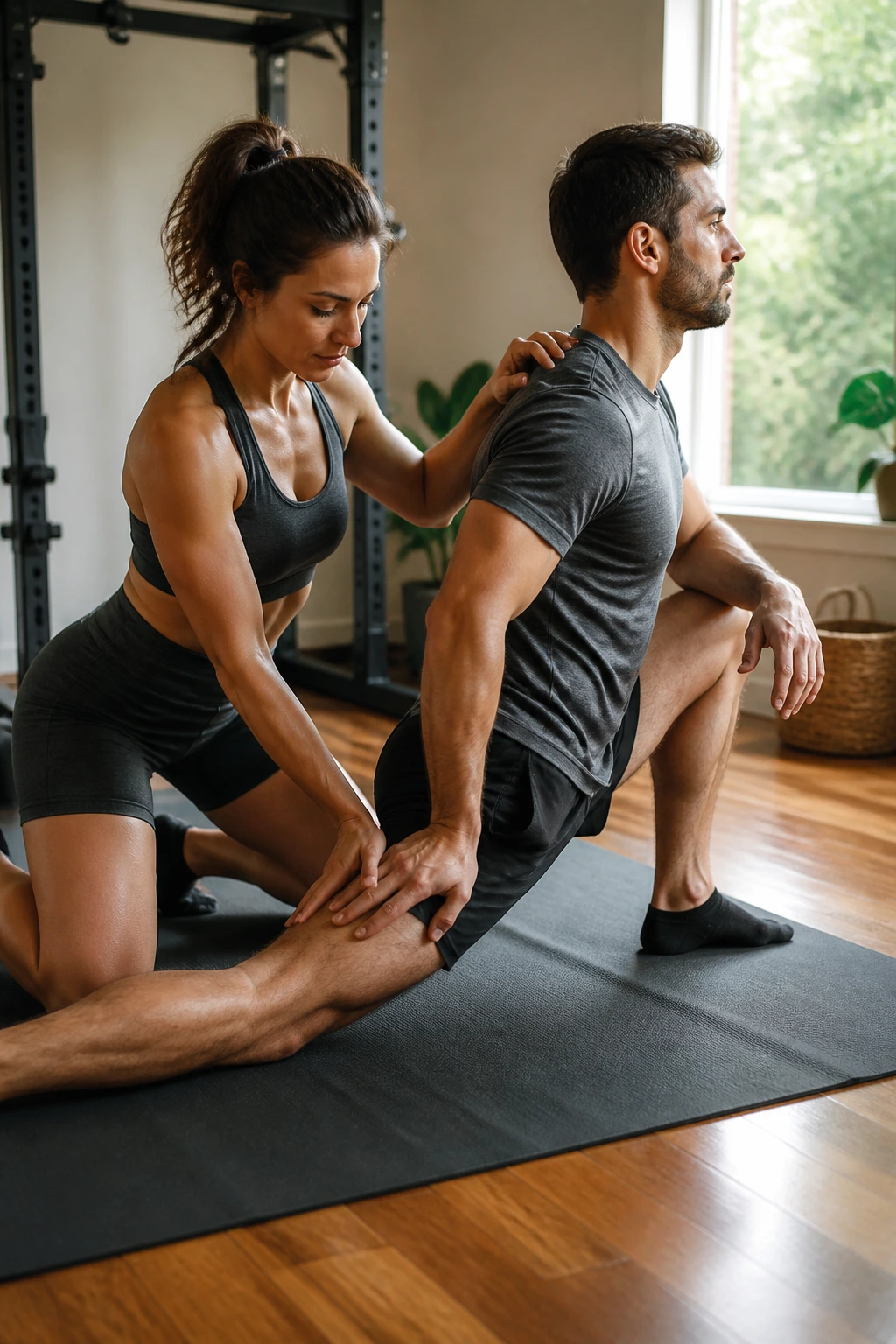
What do you do when the legs are cooked but you still want to train together? You slow down and do the work properly.
Partner mobility is underrated because it gives you a reason to hold positions a little longer and breathe through them instead of rushing off to the next thing. Think couch stretch, hamstring reaches, thoracic rotations, calf opens, and shoulder stretches. One person can help the other deepen the position gently, but never force it.
Stretches that pair well
- Couch stretch for the hip flexors, held 20 to 30 seconds per side
- Hamstring stretch with a straight spine and light partner support
- Thoracic rotation on the floor, 5 slow reps per side
- Chest opener with a doorway or band
- Calf stretch against a wall, heel flat
This works best on days when the training plan is not built around heavy intensity. It is also a good cooldown after a hard lift or sprint session. Keep the breathing slow. If either person is holding their breath, the stretch is probably too deep.
A buddy makes recovery less boring, which is not a small thing. Most people skip mobility because it feels lonely. Pair it with someone else, and suddenly it gets done.
20. Finisher Circuit With a Built-In Cheerleader
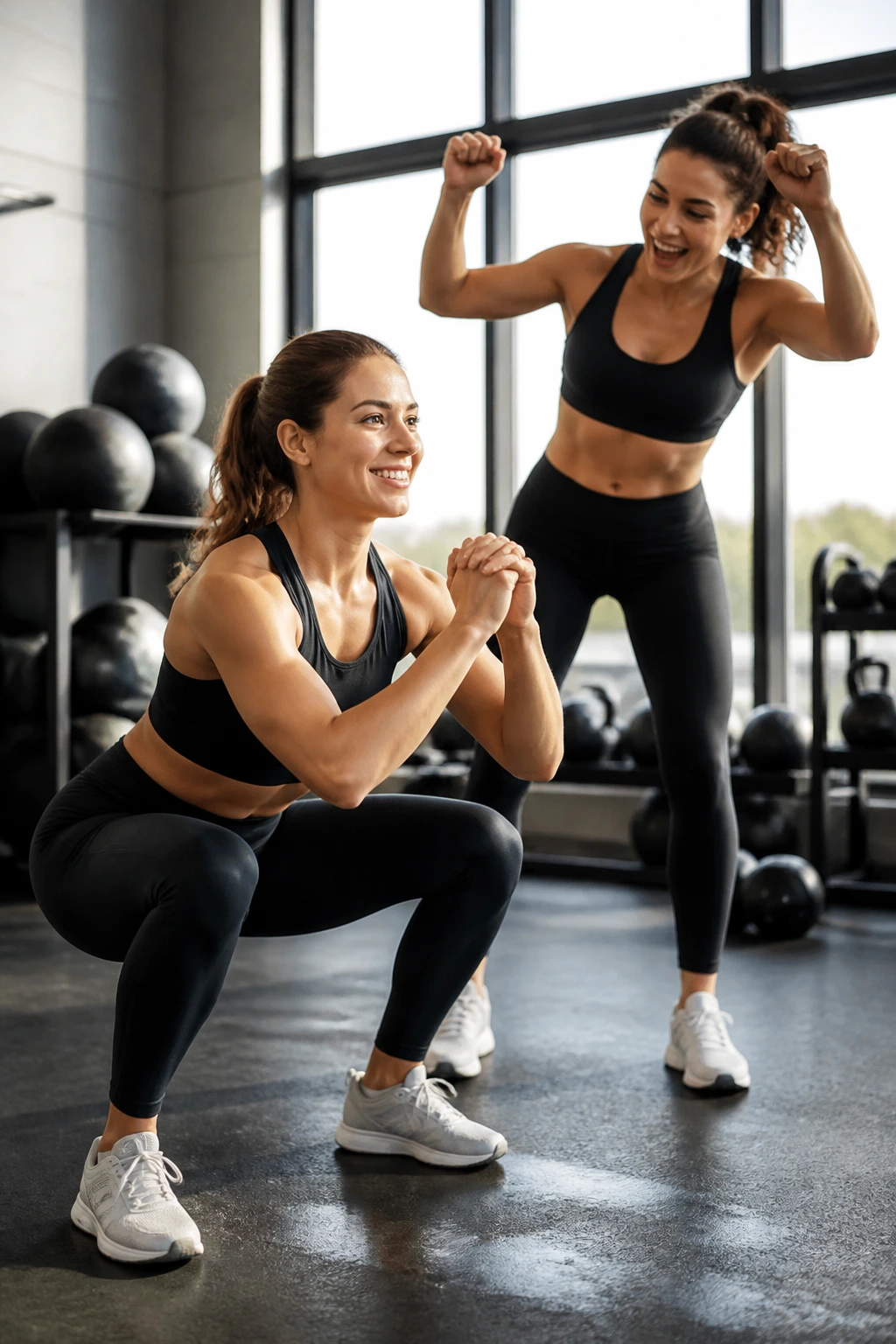
The last round should feel like a finish line, not a chore.
Set a timer for 8 to 10 minutes and pick three simple movements: bodyweight squats, push-ups, mountain climbers, plank jacks, or kettlebell swings if you have the gear. One person works while the other counts, then swap at the next interval. The cheerleader part matters more than people admit. A tired body moves better when someone else is watching the finish.
A straightforward finisher
- 20 seconds air squats
- 20 seconds push-ups
- 20 seconds mountain climbers
- 20 seconds rest
- switch
- repeat for 4 to 5 rounds
Keep the reps clean and stop before form gets ugly. There is no prize for sloppy extra reps at the end of a session. A workout buddy should make the last few minutes sharper, not messier.
And that is the real draw of partner training: the work feels shared, the pace stays honest, and even a hard set has a little momentum behind it. Pick two or three of these workouts, rotate them through the week, and the whole routine starts to feel less like a solo grind and more like a session with some bite.
