



Your body can feel like it slept in a suitcase. Stiff neck, heavy legs, lower back grumbling before breakfast — all of it shows up at once, and a hard workout is usually the last thing you want. That’s where yoga poses for sluggish mornings earn their keep. They do not need a loud start or a complicated sequence. They need a few clean movements, some honest breathing, and enough time for your joints to remember they’re allowed to move.
Morning yoga works best when it treats the body like a machine that needs a gentle restart, not a problem that needs fixing. The spine tends to hold the first complaint, then the hips, then the shoulders. A good wake-up flow loosens those places in that order, which is why the sequence below starts close to the floor and gradually builds into stronger standing shapes. No theatrics. No weird contortions.
If you’ve ever rolled out of bed and felt like a rusty hinge, you already know the value of simple movement done with care. The first few breaths matter more than the perfect pose. The body usually gets interested once the breathing steadies and the joints stop bracing for impact.
1. Cat-Cow Stretch
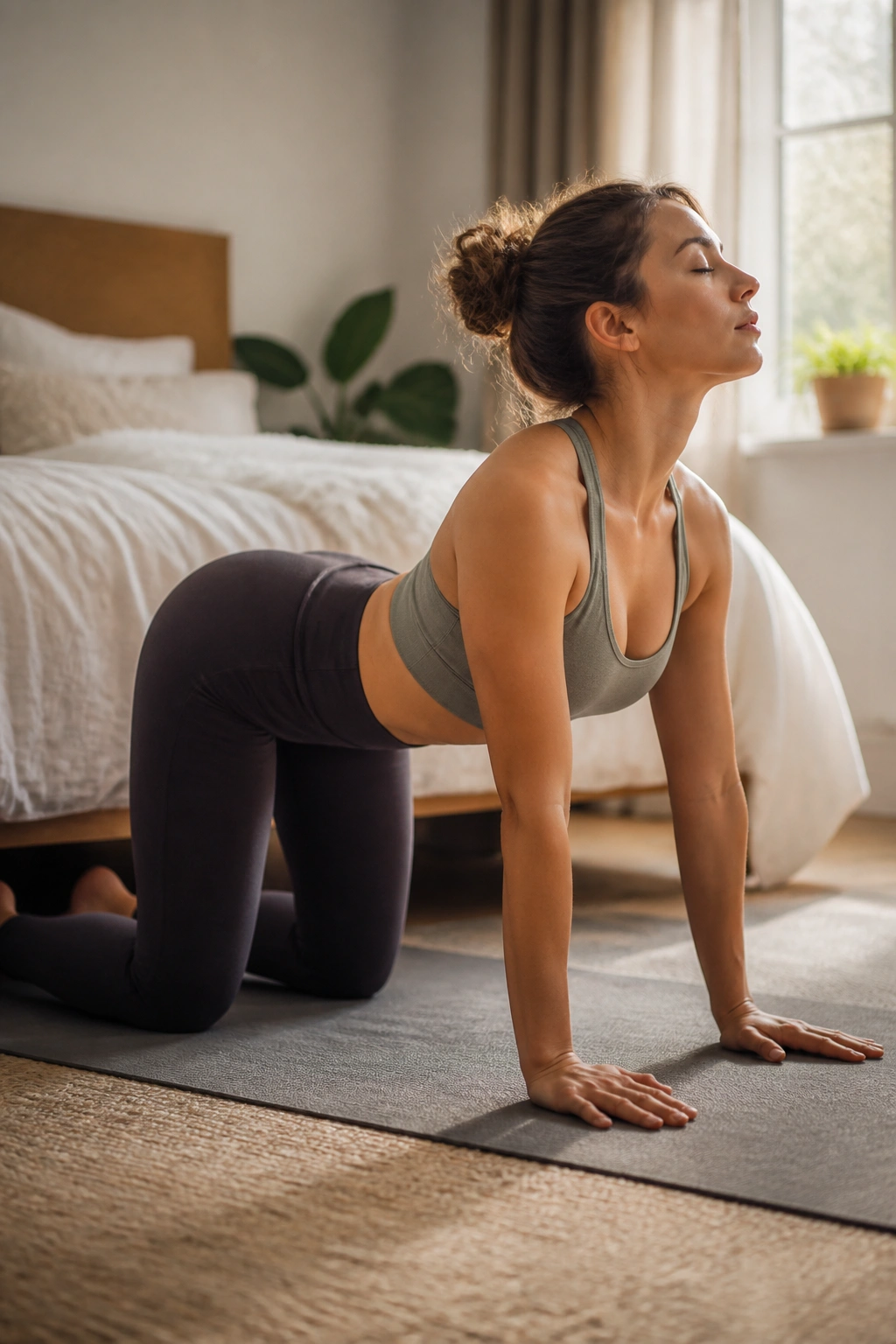
Cat-cow is the least dramatic way to tell your spine it’s safe to move again. That matters more than people admit. When the back feels glued together, slow flexion and extension can wake up the whole chain without making you work for it.
Why It Works
The real magic here is the rhythm. One inhale opens the chest, one exhale rounds the back, and the nervous system gets a simple message: move, breathe, soften. It’s one of the cleanest yoga poses for sluggish mornings because it starts at the spine, which is usually where that sleep-stiffness sits first.
Keep your hands under your shoulders and knees under your hips. Move slowly enough that you can feel each vertebra joining the motion instead of rushing through it. Five to eight rounds are enough for most people, and if your wrists are cranky, come down to fists or place your hands on blocks.
- Inhale as the belly drops and the tailbone lifts.
- Exhale as the navel draws in and the back rounds.
- Keep the neck long instead of cranking the head back.
- Let the movement stay smooth, not forceful.
Pro tip: move a little smaller on the first two rounds, then deepen only if your back says yes.
2. Downward-Facing Dog
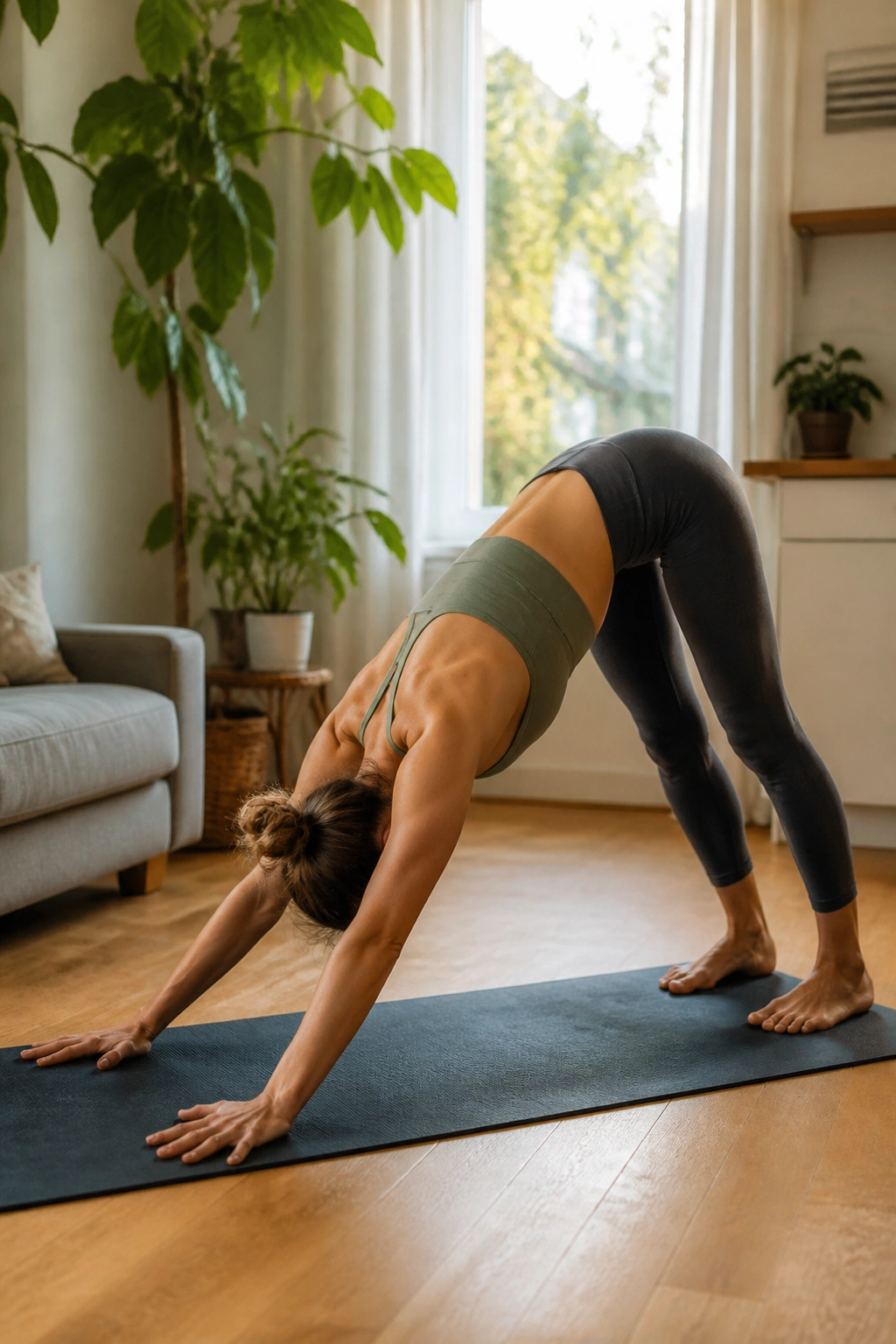
A single good down dog does more for a sleepy morning than a rushed cup of coffee. That sounds dramatic, but the pose earns the reputation. It stretches the calves, wakes the shoulders, and gives the hamstrings enough attention to stop feeling like cables.
If you’re tight through the back body, don’t try to make this pose look like a photo. Bend your knees. Seriously. A bent-knee down dog often feels better and does more useful work than a forced straight-leg version, especially first thing in the morning when the ankles and hamstrings are still negotiating with gravity.
Press your hands into the mat and think about length, not perfection. Hips up and back. Heels do not need to touch the floor. The point is to make space from fingertips to tailbone, then breathe there for three to five slow breaths.
A lot of people yank themselves into this shape too fast and then wonder why the shoulders feel jammed. Wider hands, soft elbows, and a long spine usually solve the problem. Tiny adjustments. Big difference.
3. Standing Forward Fold
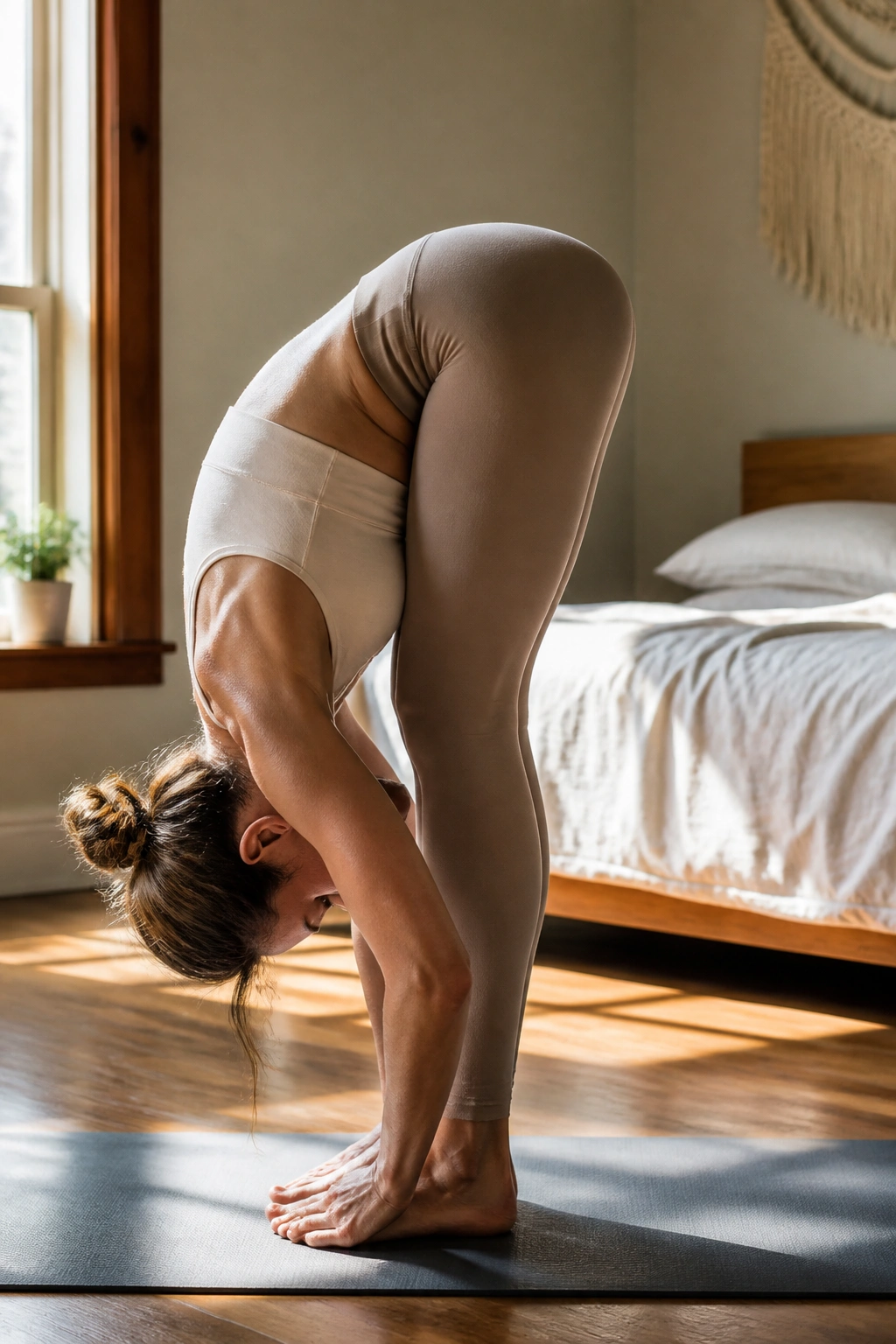
Why does hanging heavy over your legs feel so good when you’re half awake? Because the nervous system likes being allowed to let go. A standing forward fold gives your back line a chance to release without asking for a long explanation.
The pose works best when you hinge from the hips and let the torso drape rather than collapsing into the low back. That distinction matters. If you round too hard from the waist, the stretch feels sloppy and pinchy; if you fold with a long spine first and then soften, the whole shape feels cleaner.
How to Use It
- Keep a slight bend in the knees if your hamstrings are tight.
- Let the head hang only if that feels calm, not dizzy.
- Sway side to side for two or three breaths.
- Hold opposite elbows if you want a deeper release through the shoulders.
If standing still feels too intense, just stay here for a few breaths and let the weight of the head do its work. Coming up slowly is wise, especially if you’re prone to lightheadedness. Morning blood pressure can be a little rude.
4. Half Lift
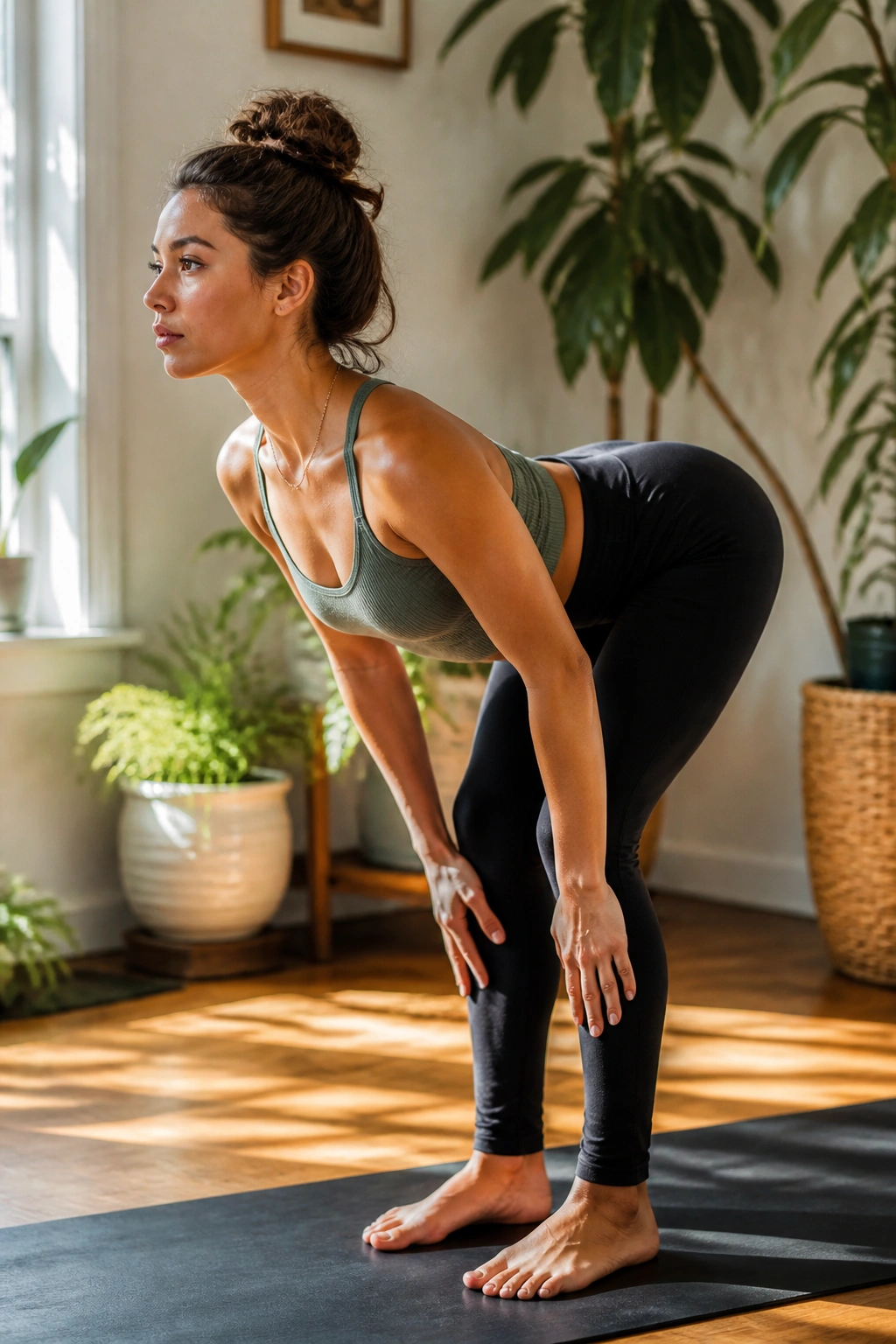
Half lift is the bridge between “I am folded in half” and “I’m actually functioning.” That sounds blunt, because it is. The pose teaches the spine how to lengthen while the hips stay folded, which is a useful skill when your body wants to stay curled up forever.
Imagine a long line from tailbone to crown. That is the shape to chase here, not height. Hands can rest on shins, fingertips on the floor, or blocks under the shoulders if the floor is far away. The chest should come forward until the back feels broad and flat, not strained.
- Keep the gaze a little forward and down.
- Draw the lower ribs in so the belly does not hang.
- Bend the knees as much as needed to keep the back long.
- Exhale back into your fold and repeat two or three times.
A lot of sleepy movers skip this pose because it looks small. It isn’t. Half lift helps the body remember posture before the day has a chance to shove everything into the shoulders again.
5. Sun Salutation A
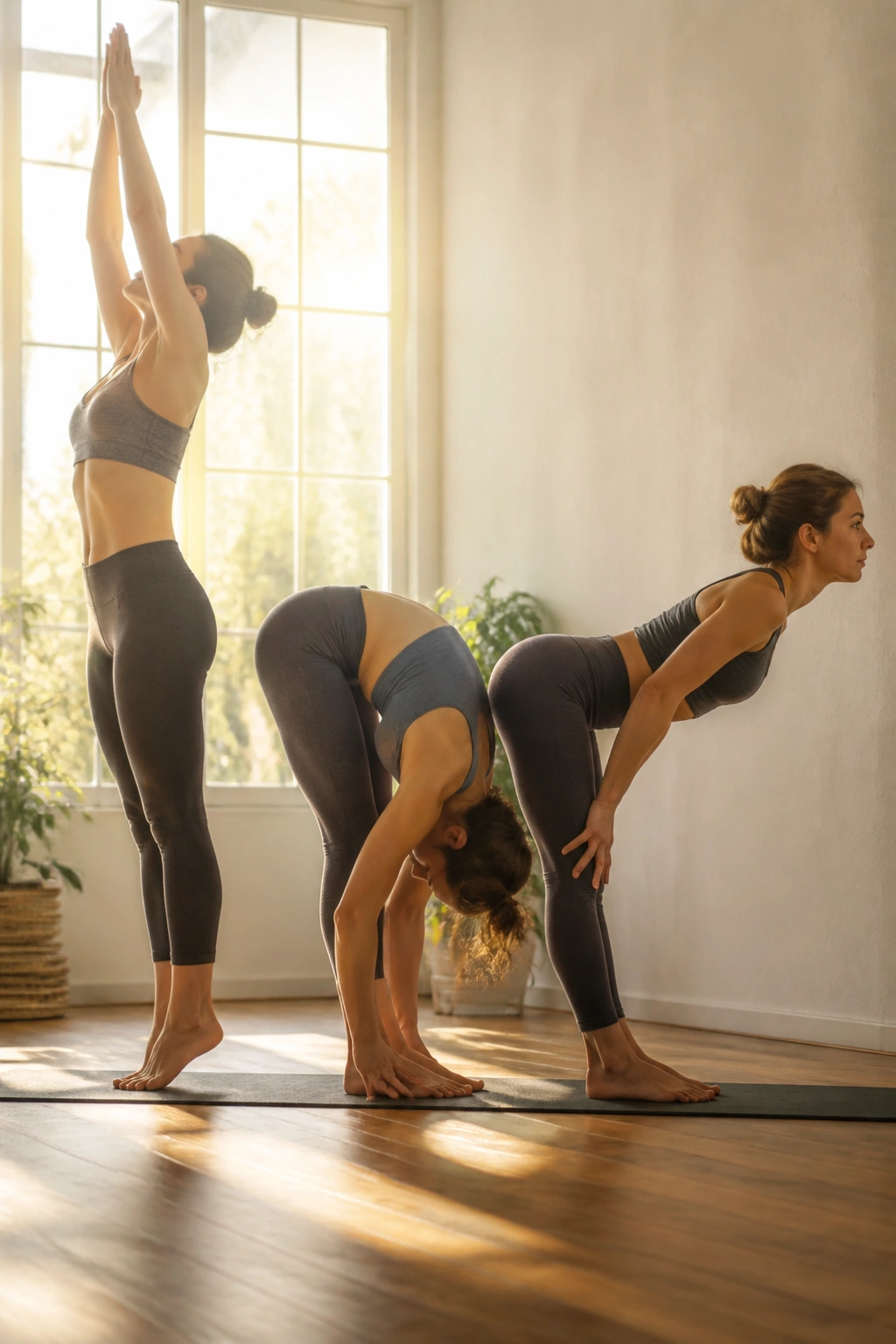
Sun Salutation A is the fastest way to turn fog into motion without turning the morning into a boot camp session. It strings together several shapes, which means you get spine movement, hamstring length, shoulder work, and a little heat all at once. That’s a nice trade.
The sequence usually flows from mountain to forward fold, then half lift, plank, lower-to-floor or cobra, and back to downward dog. If chaturanga feels like too much before breakfast, skip the low push-up and lower the knees instead. No prize exists for forcing a fancy version before your coffee has even cooled.
What makes this flow useful is the repetition. By the second round, the breath tends to settle in, and the body stops feeling like separate parts. The shoulders start helping the hips, the hips stop guarding the back, and the whole thing becomes less annoying.
Three rounds are enough for most sluggish mornings. Five rounds if you want a firmer wake-up. Move at a pace where the exhale stays smooth; if the breath gets choppy, you’re pushing too hard for that hour.
6. Low Lunge
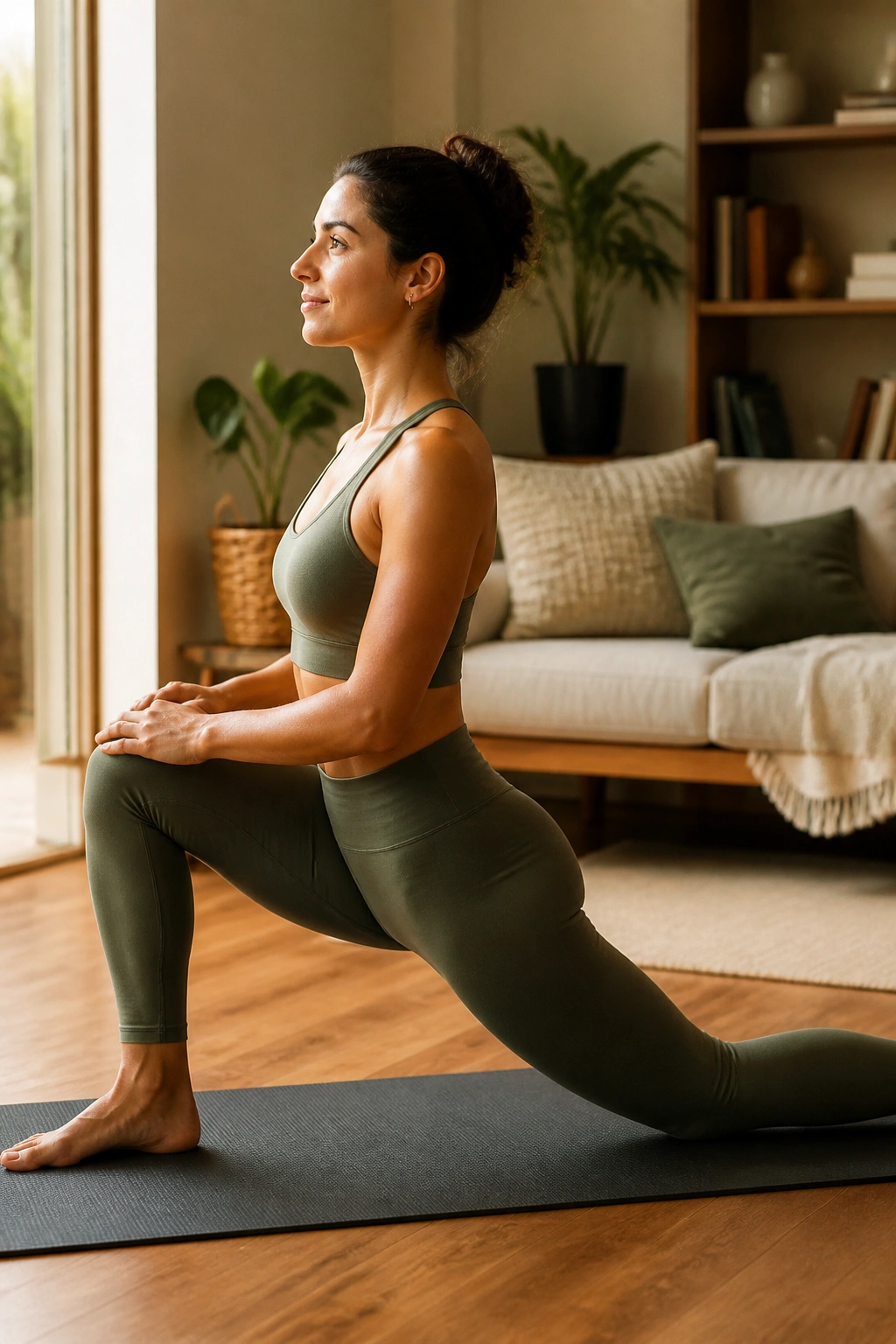
Low lunge is a kindness to the front of the hip. If you sit a lot, that area can feel short and grumpy by the time you stand up, and nothing ruins a morning faster than a hip flexor that refuses to negotiate.
Unlike standing lunges, this version gives you a knee on the floor, which takes the edge off and lets you explore the stretch without wobbling around. Pad the back knee with a folded blanket if your mat is thin. That tiny bit of cushioning can change the whole experience.
The front knee should stay roughly over the ankle, and the pelvis should gently sink forward without dumping into the low back. Keep the back toes tucked if you want more heat, or release the top of the foot if you want a calmer stretch. Hold for three to five breaths, then switch sides.
This is one of those poses that looks quiet but works deep. If your lower body feels locked up from sleep, low lunge is often the first shape that makes walking feel less stiff.
7. Crescent Lunge
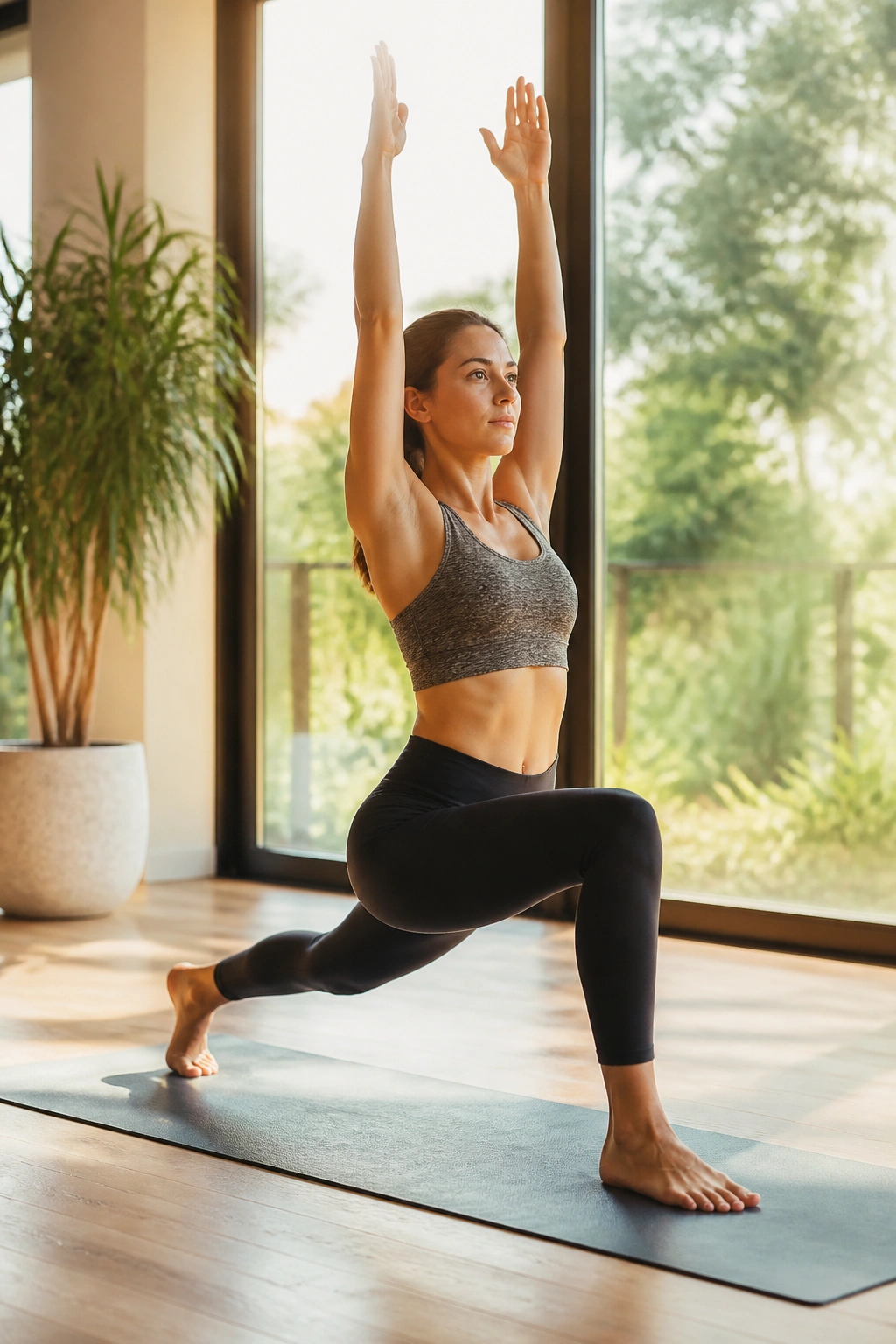
Crescent lunge turns sluggishness into heat fast. That’s the point. Once you lift the back knee off the floor, the legs start helping more, the core wakes up, and the whole body has to pay attention.
Why It Feels Different From Low Lunge
Low lunge is about release. Crescent lunge is about alertness. The back leg stays active, the torso rises tall, and the balance challenge makes your brain show up a little earlier than it wanted to. That is why it’s so useful in a morning sequence.
Keep the stance long enough that the front knee can stack over the ankle without crowding the toes. Reach the arms up only if the ribs stay controlled. If the low back pinches, bring the hands to the hips or keep them in prayer at the chest.
- Back heel stays lifted.
- Front foot stays rooted through the big toe mound.
- Hips face forward as much as your body allows.
- Breath stays even, even when the thighs complain.
Tip: take one extra exhale before you rise out of the pose. The body usually steadies faster when you don’t rush the transition.
8. Chair Pose
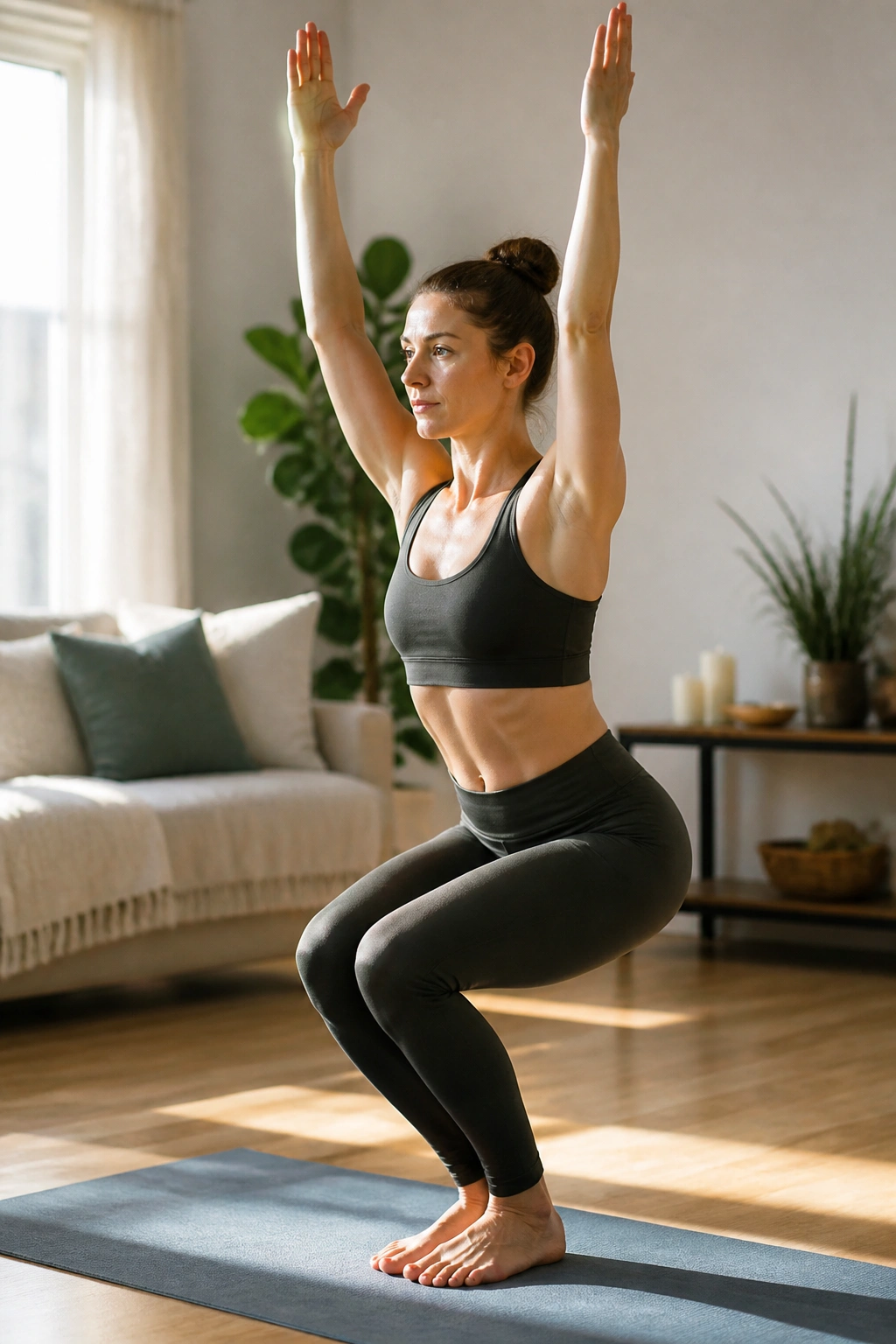
Chair pose looks tame until you hold it for four breaths. Then it tells the truth. The thighs start working, the glutes switch on, and the whole front of the body wakes up in a way that floor stretches never quite match.
The trick is to sit back, not down. Weight should drift into the heels while the knees track roughly in line with the toes. If you can still wiggle the toes, good. If the chest collapses and the shoulders climb toward the ears, ease up. This pose needs effort, not strain.
A modest hold — maybe 20 to 30 seconds — is enough on a groggy morning. You don’t need a long burn to get the effect. The point is to call the legs to attention and leave them more available for the rest of the day.
Arms overhead feel great for some people and awful for others. If your shoulders are tight, keep the hands at heart center or press the palms together in front of the face. Small change. Much better mood.
9. Warrior I
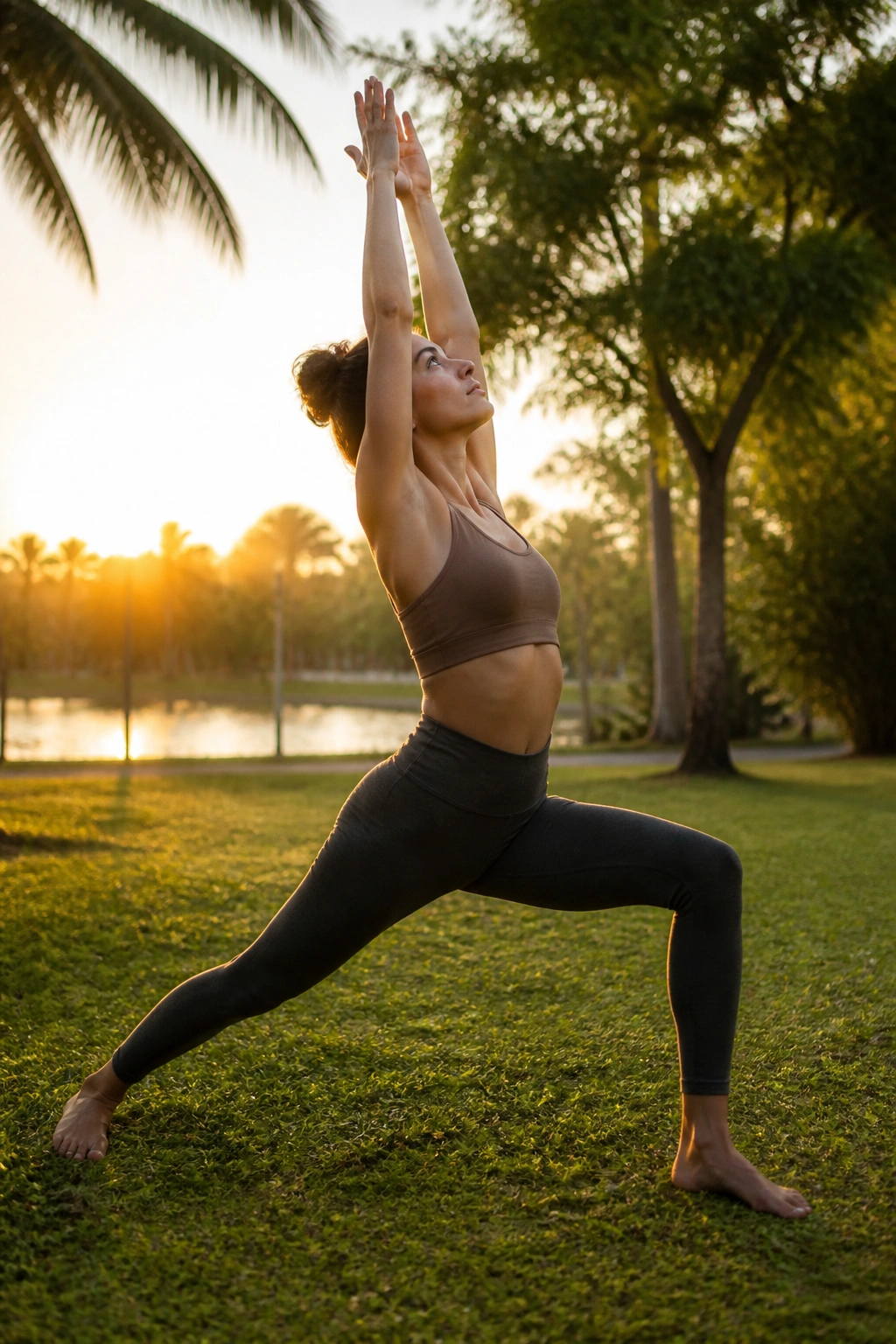
Why does Warrior I feel so steady first thing in the day? Because it gives you shape, and shape is soothing when your body feels vague. The feet ground down, the torso lifts, and the chest opens without requiring circus-level flexibility.
This pose is especially useful when you want to wake the front of the hips and the upper back at the same time. The back heel presses into the floor, the back leg stays long, and the pelvis faces forward as much as the body can manage without twisting. That alignment does not need to be perfect. It needs to be honest.
How to Use It
Step one foot back into a split stance and keep the front knee bent. Lift the arms on an inhale, then soften the shoulders so the neck doesn’t take over. Hold for three to five breaths, then switch sides. If the low back feels pinched, shorten the stance or bring the hands to the hips.
Warrior I works because it asks for both lift and grounding. That combination can feel strangely organizing when you’re dragging through the first hour of the day.
10. Warrior II
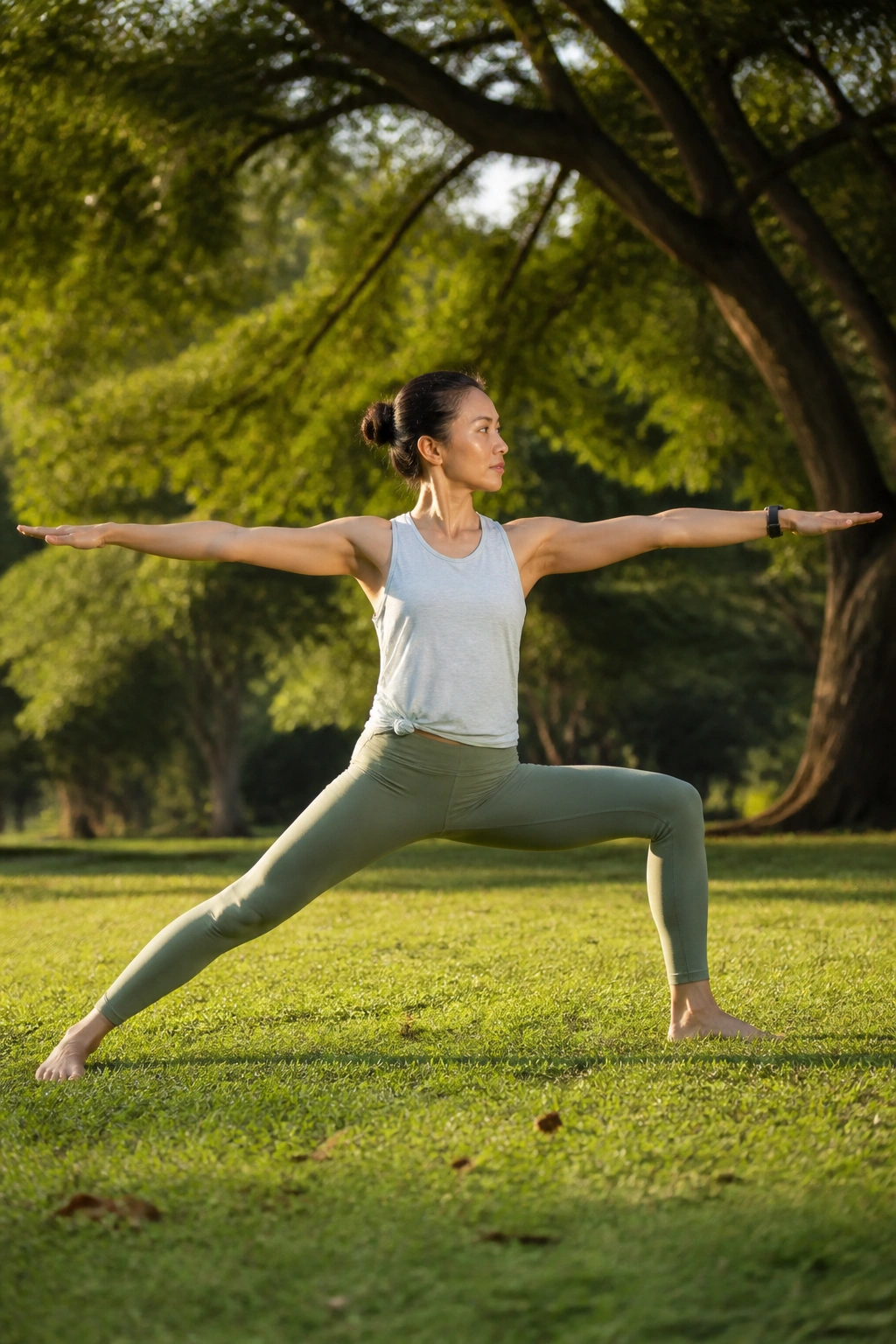
Step wide enough and everything wakes up at once. Warrior II is the pose that reminds your legs they’re not decorative. The front thigh burns, the inner thighs spread out, and the eyes finally have somewhere to land.
The front knee should bend toward the second toe, not cave inward. Back foot turns slightly in or stays close to a right angle, depending on what your hips allow. Arms extend long and level, like you’re drawing a straight line from fingertips to fingertips across the room.
The pose is good for mornings when you feel stiff and scattered at the same time. Your body gets a side-to-side opening, and your mind gets a target in the front hand. That little bit of direction matters more than it sounds like it should.
Keep the shoulders stacked over the hips and breathe into the side ribs. If the front thigh starts shaking too fast, come up, shake it out, and return. There is no virtue in wobbling through bad form just to say you held it longer.
11. Reverse Warrior
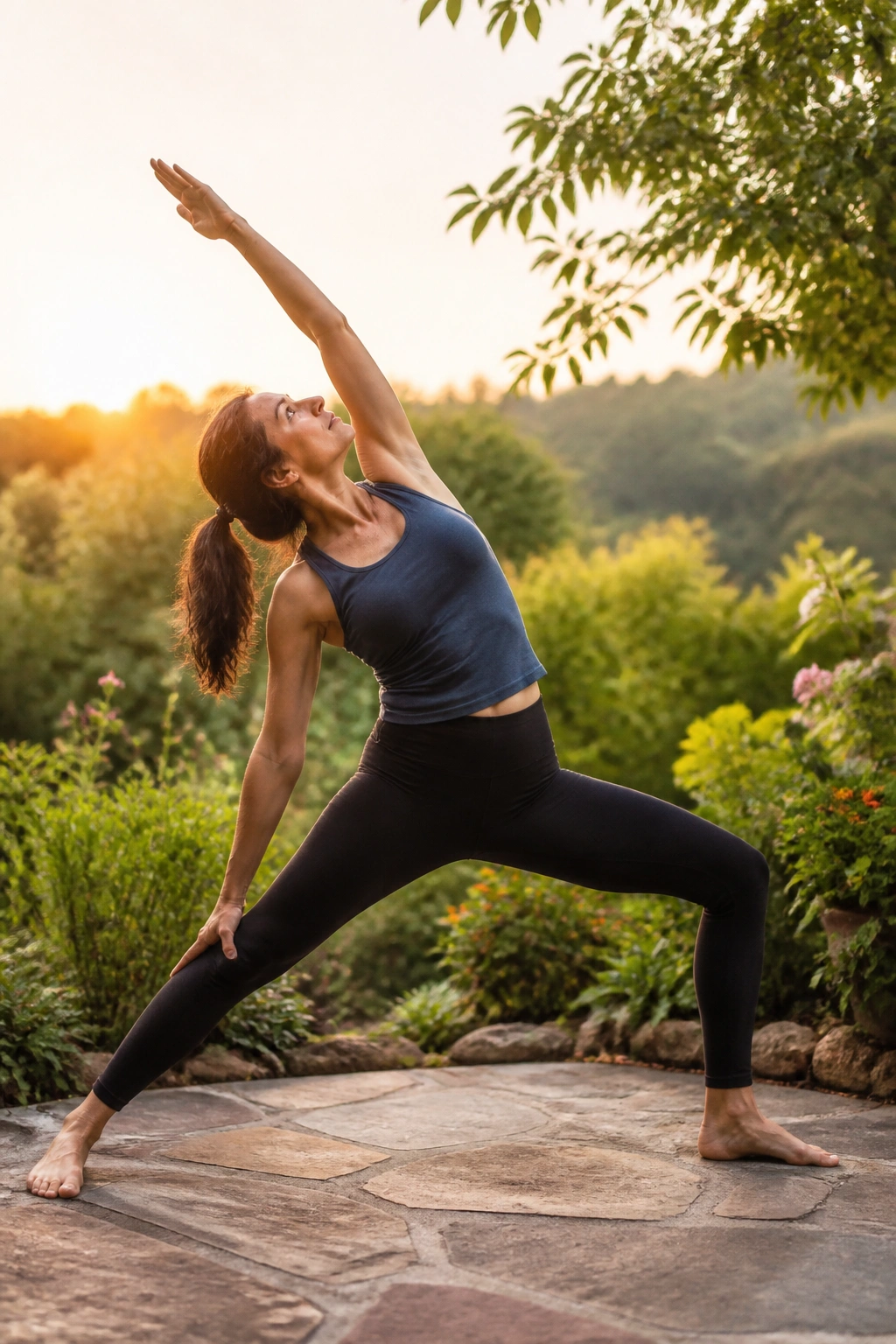
Reverse Warrior is the elegant cousin in the standing sequence, and I mean that in the best way. It doesn’t try to overpower anything. It lifts, stretches, and opens the side body while the legs keep doing their grounding job below.
What I like about it is the feeling of space it creates between the ribs and the hips. That space can be hard to find after sleep, when the torso wants to stay compressed. A light backbend through the upper body — not the low back — makes breathing feel easier almost at once.
Keep the front knee bent and let the back hand slide lightly down the back leg. The front arm arcs overhead, but the chest should stay open rather than collapsing toward the floor. If the neck complains, keep your gaze forward or slightly up instead of chasing the ceiling.
This is not the place to force depth. It is the place to breathe through a side stretch and feel your body lengthen from the inside out. A few calm breaths here can make the next pose feel much better.
12. Triangle Pose
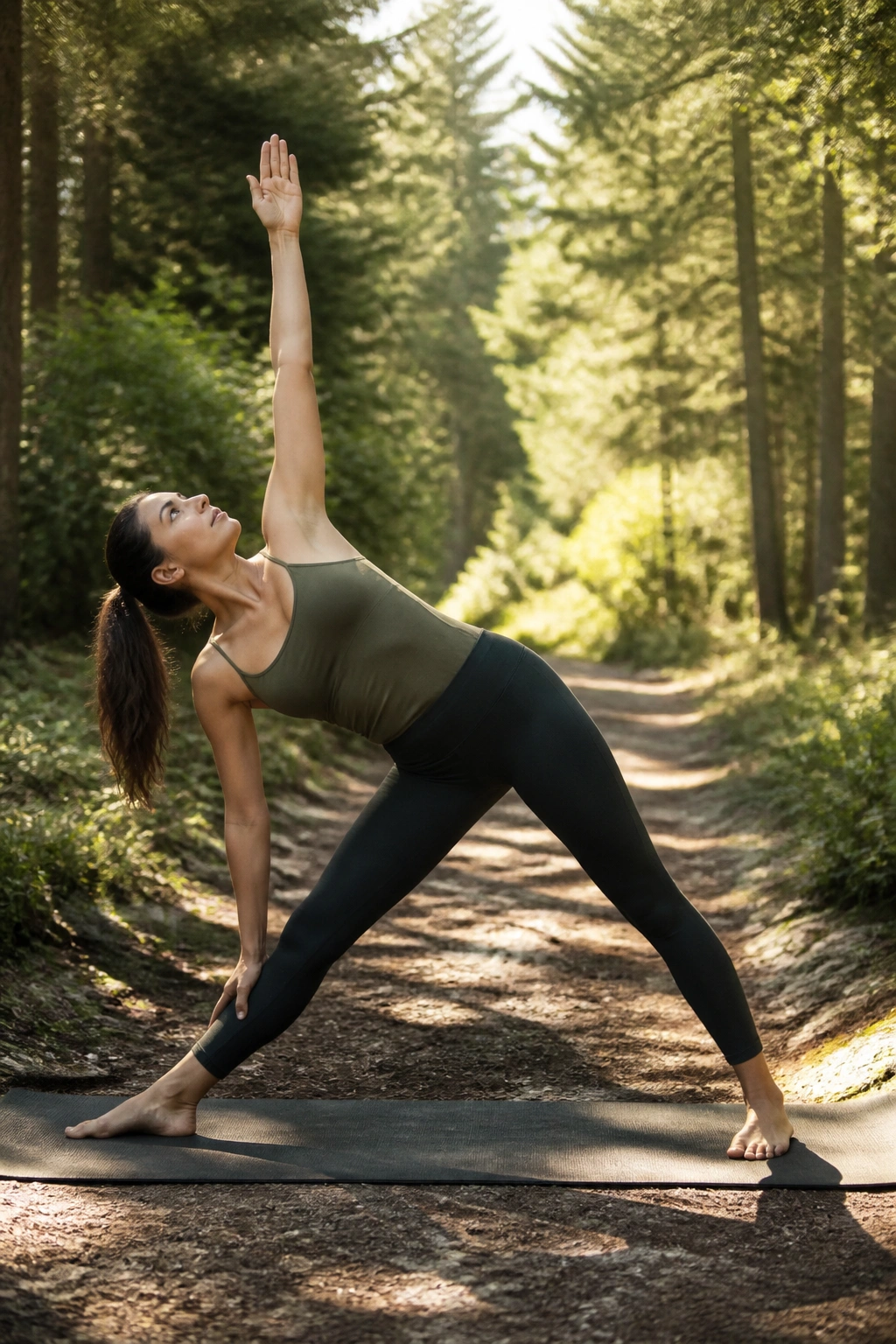
Triangle gives you length where side angle gives you bend. That difference matters, because not every stiff morning needs another deep knee flexion. Sometimes the body wants a long line from outer heel to fingertips, and triangle provides exactly that.
A block under the lower hand is not a beginner crutch. It is smart geometry. Place it roughly 8 to 12 inches outside the front foot if the floor feels far away, then hinge from the hip instead of dumping into the lower back. The chest can turn open without the torso collapsing.
Triangle is especially useful if your lower back feels compressed or your hamstrings are grumpy. The long diagonal line through the side body helps people who wake up feeling short on space. Keep the top shoulder stacked over the lower one only if it happens naturally; forcing the chest open can make the pose sloppy.
Hold for three to five breaths. Then switch sides. Don’t rush out of it — the shape rewards a pause more than a performance.
13. Extended Side Angle
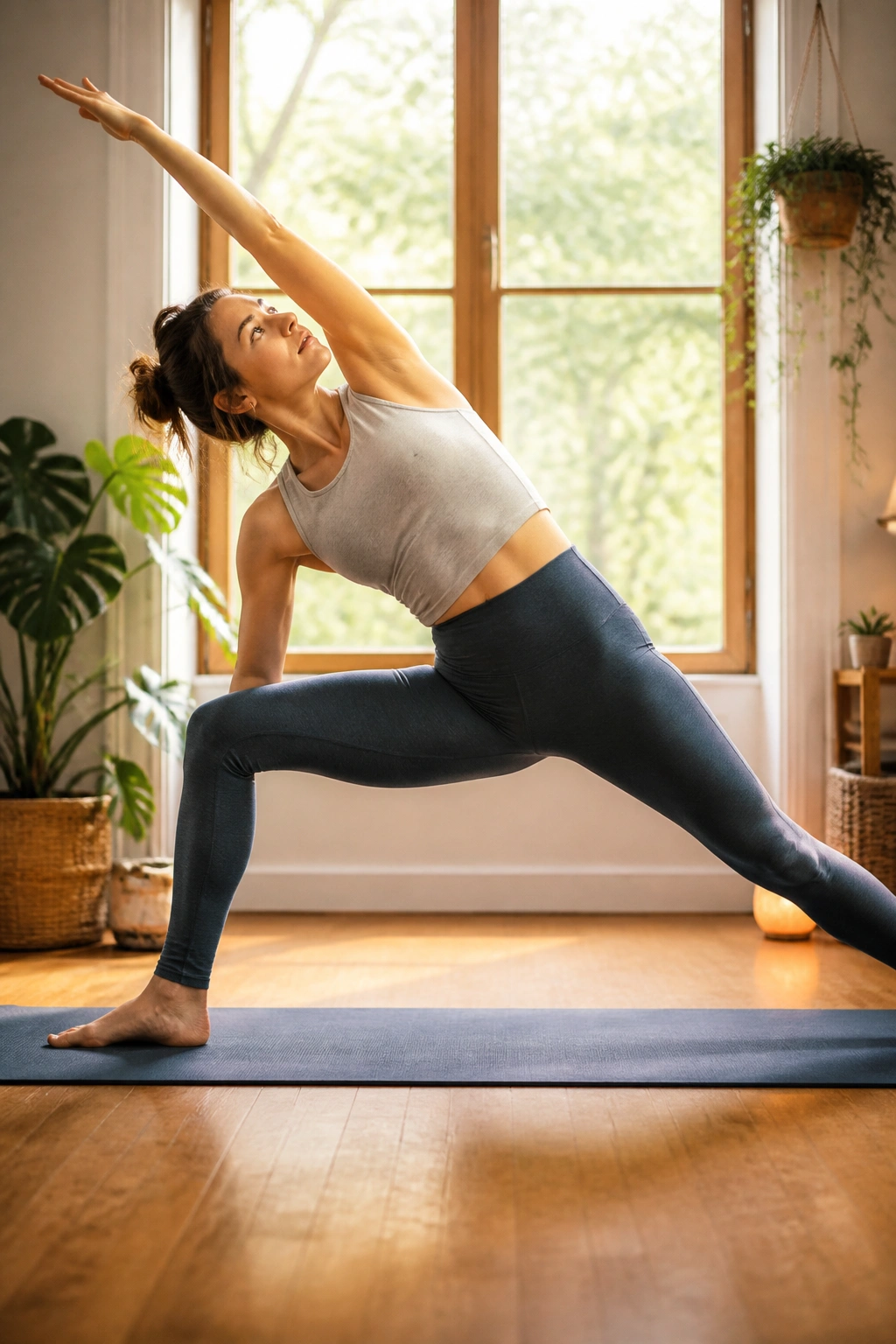
Extended Side Angle is the pose that tells the hips and ribs to stop acting like strangers. It takes the solid base of Warrior II and adds a long reach that wakes the side body without making the whole thing feel stiff.
Why It Wakes the Hips and Ribs
The front thigh stays bent, which keeps the legs honest. The top arm reaches overhead or forward, which gives the torso a long line from back heel to fingertips. If you drop the lower forearm to the front thigh or a block, the chest often feels more open and less forced.
- Keep the back leg active.
- Press the outer edge of the back foot down.
- Let the front knee track over the middle toes.
- Use a block if the lower shoulder collapses.
Best bet: choose the arm position that lets your breath stay easy. If the side bend turns into a crunch, you’ve gone too far.
This pose is a strong pick on mornings when your torso feels boxed in. It has enough stretch to wake you, but not so much complexity that it becomes a puzzle before breakfast.
14. Plank Pose
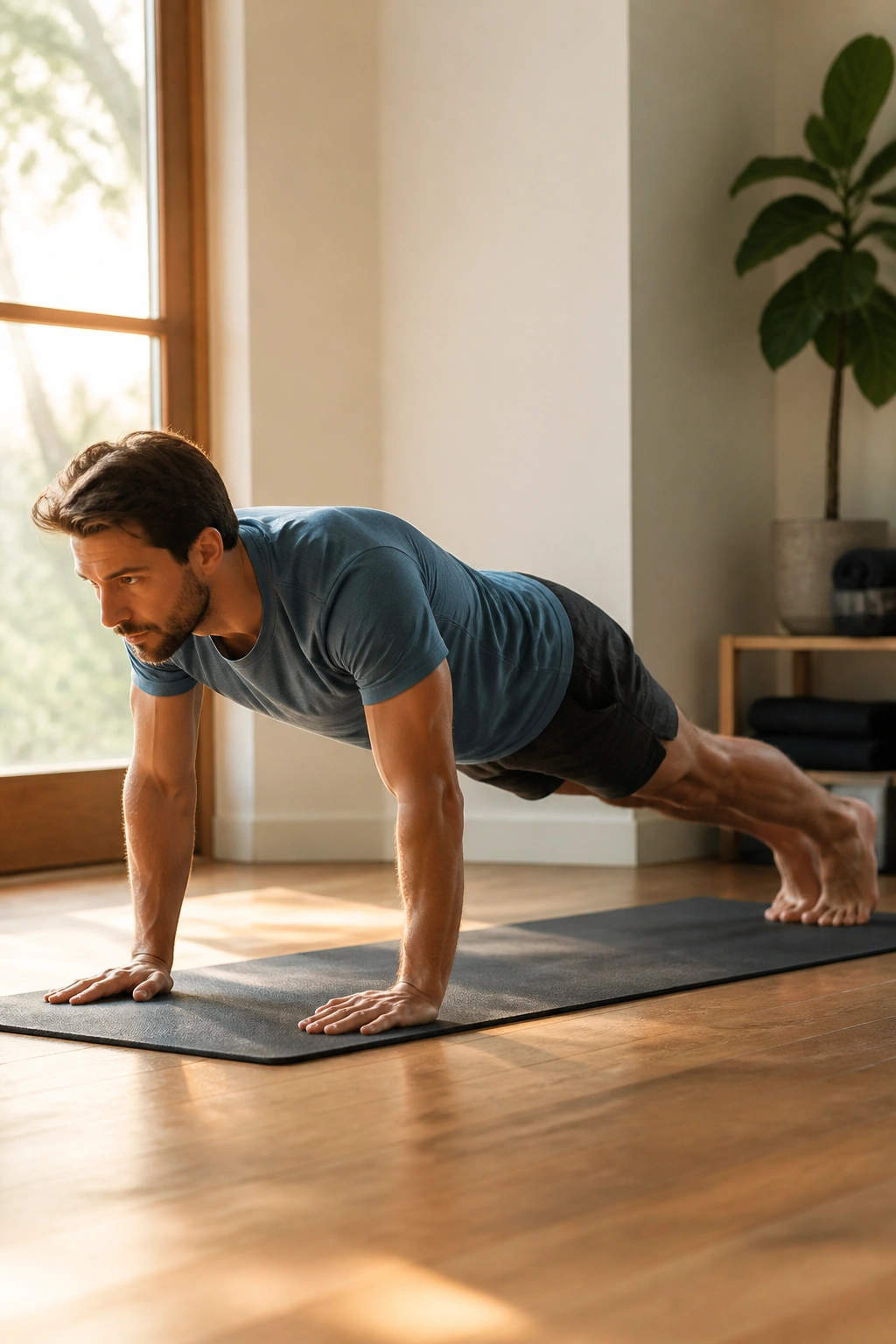
Plank is where the morning excuses get tested. Not because it’s flashy. Because it is plain. No hiding. No twisting. Just a straight line and some honest work through the shoulders, core, and legs.
The mistake people make is letting the hips sag or the head drift forward. Press the floor away, broaden the collarbones, and pull the lower ribs in just enough to keep the back from swinging. If full plank feels like too much before your second breath, drop the knees and keep the same body line from shoulders to knees.
A short hold is enough. Fifteen to twenty seconds can wake the entire middle of the body without draining it. Longer is not automatically better, especially when you’re still half asleep and the wrists have not fully come online.
This pose is best thought of as a bridge between mobility and effort. It prepares the body for stronger standing work or a flow sequence without asking for maximal output too early.
15. Side Plank
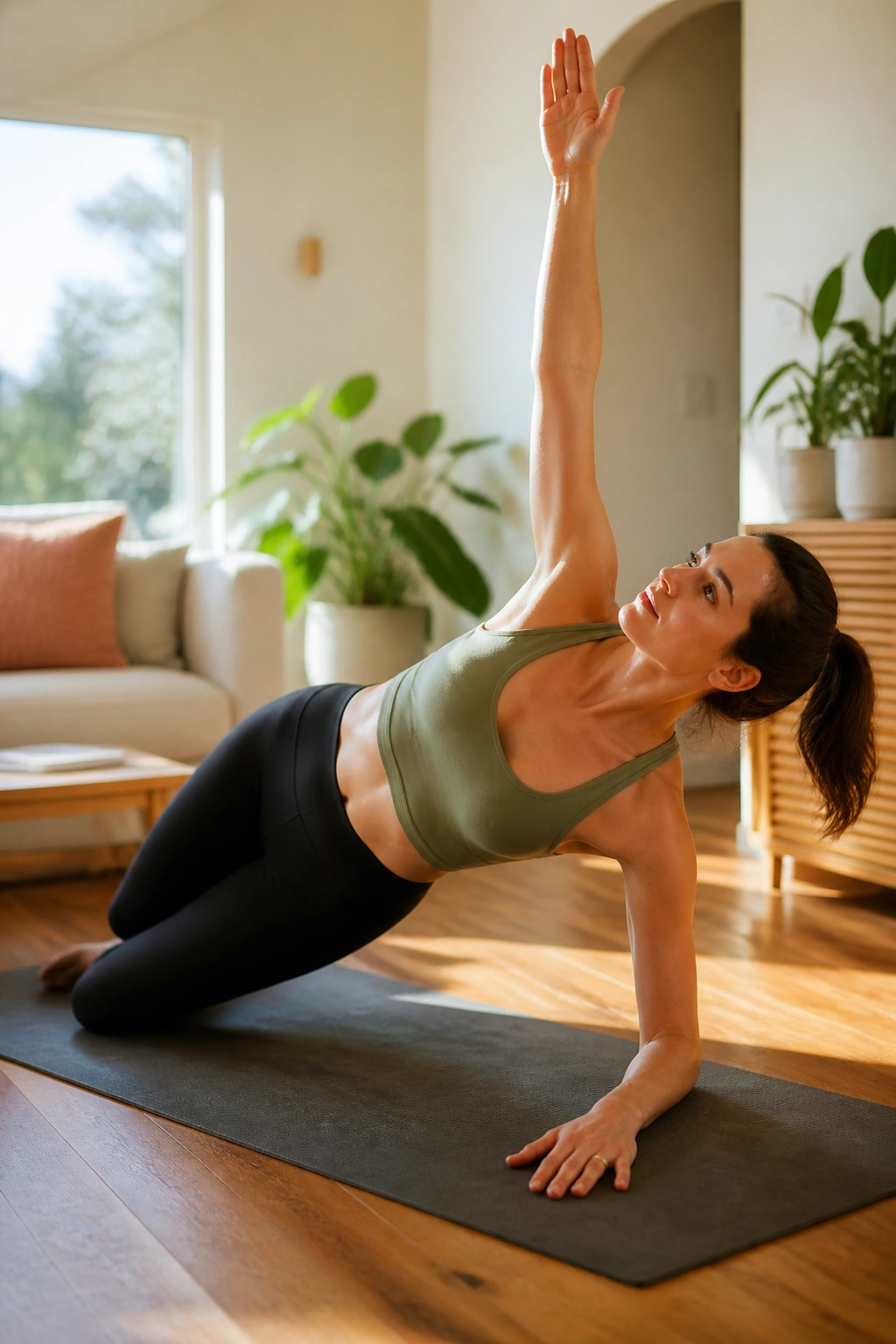
Can one pose wake the side body and the shoulders at the same time? Yes. Side plank does exactly that, and it does it fast. The obliques light up, the supporting arm has to organize, and the whole torso learns not to collapse sideways.
There’s no need to go straight into the hardest version. A bottom knee on the floor works well, especially when mornings are rough. Stack the feet only if the balance feels steady and the shoulder stays smooth. One small wobble is fine. A pinchy shoulder is not.
How to Use It
Start from plank, then pivot onto one hand and one side of the foot. Lift the free arm to the ceiling and keep the ribs from spilling forward. Hold for two to four breaths, then switch sides. If the wrist complains, drop to the forearm version instead.
Side plank is a sneaky way to wake up the whole trunk without jumping. It’s one of the more efficient morning shapes in the bunch.
16. Cobra Pose
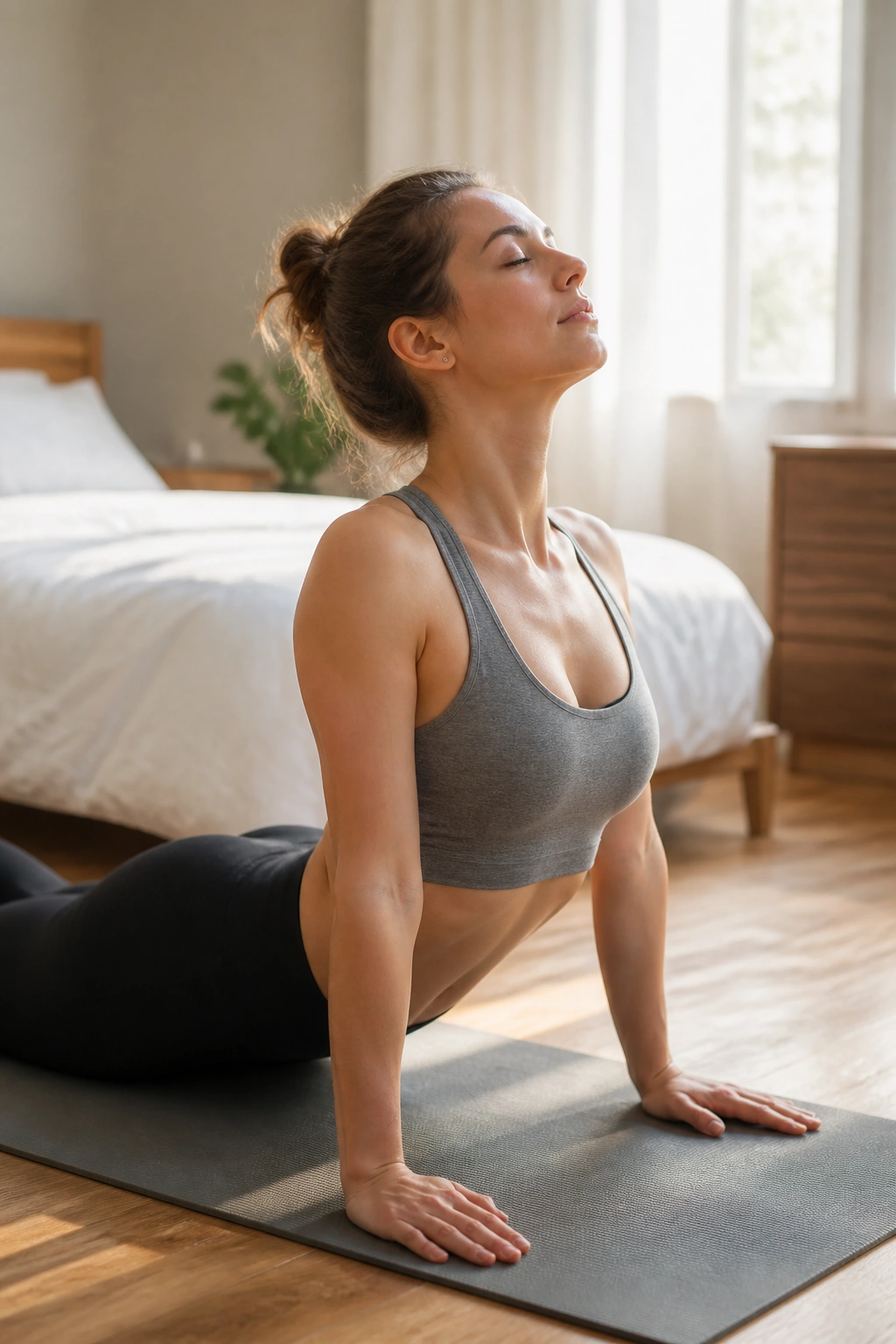
After a night of curling into sleep, cobra feels like opening a window. The spine extends, the chest broadens, and the front of the body gets a chance to come back to life. Small cobra is usually better than big cobra here.
Place the hands under the shoulders, keep the elbows close, and lift the sternum forward and up without flinging the chin. The pelvis stays grounded. That grounding matters more than people think, because it keeps the low back from taking all the load.
- Keep the shoulders down and away from the ears.
- Press the tops of the feet into the floor.
- Lift only as high as the low back stays calm.
- Exhale to lower with control.
A modest cobra can be enough to change the feel of the entire morning. If your upper back feels stiff or your chest feels closed, this is one of the first poses worth reaching for.
17. Bridge Pose
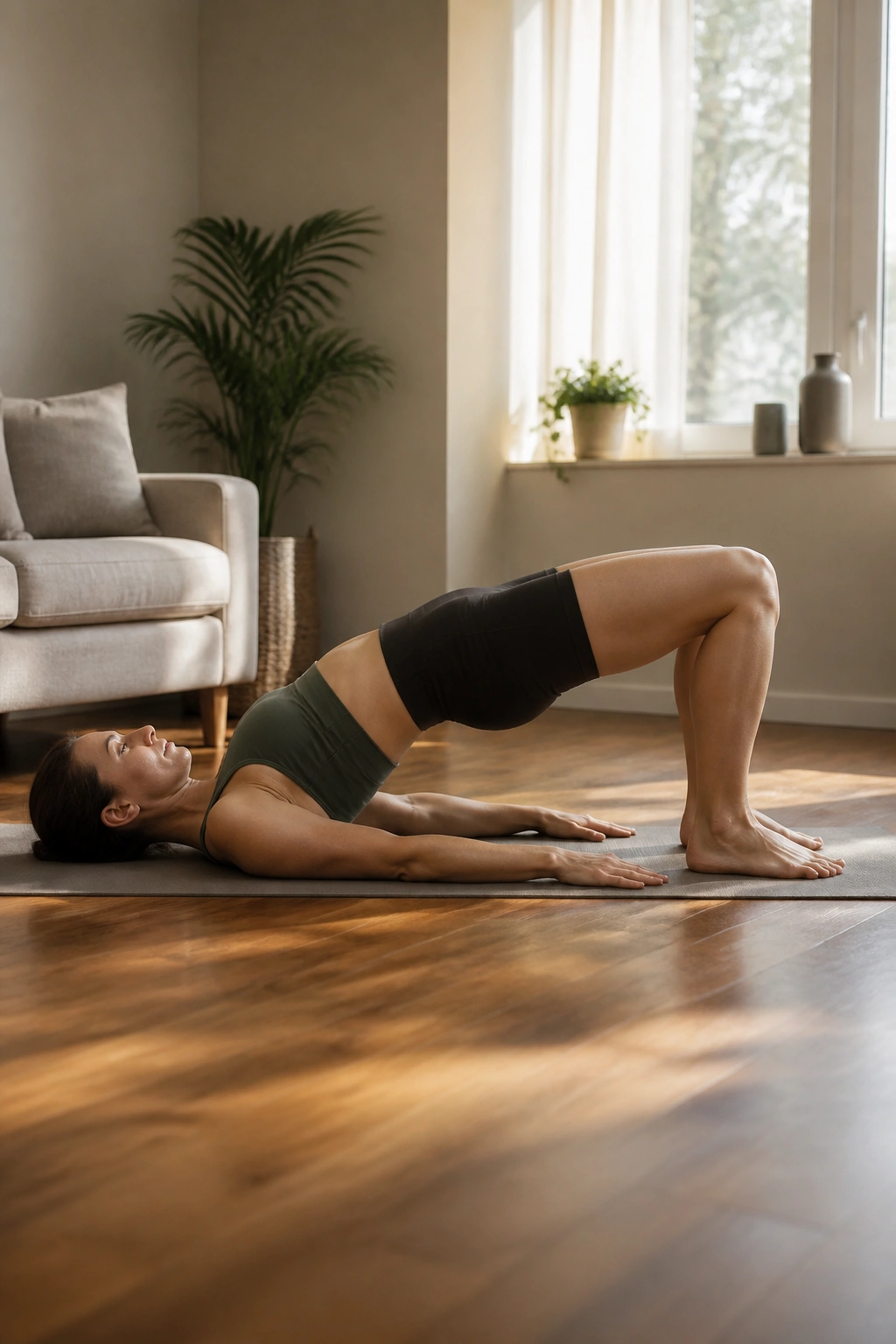
Bridge pose has a quiet power to it. You lie down, bend the knees, and lift the hips, and somehow the whole back line starts cooperating again. It works the glutes, opens the hip flexors a bit, and gives the chest a lift without turning the room upside down.
Feet stay about hip-width apart, close enough that the fingertips can just graze the heels. From there, press into the feet and lift the hips on an inhale. The back does not need to arch dramatically. A small, steady bridge often feels cleaner than a high one that jams the lower spine.
You can hold bridge for three to five breaths, lower with control, and repeat once or twice. If you want less effort, keep the lift low and place a block under the sacrum for a supported version. That version is not lazy. It’s strategic.
This pose is especially good when you want morning movement that feels strengthening rather than stretchy. The body gets a wake-up from the hips outward, which is a nice change after all the folding and opening above.
18. Boat Pose
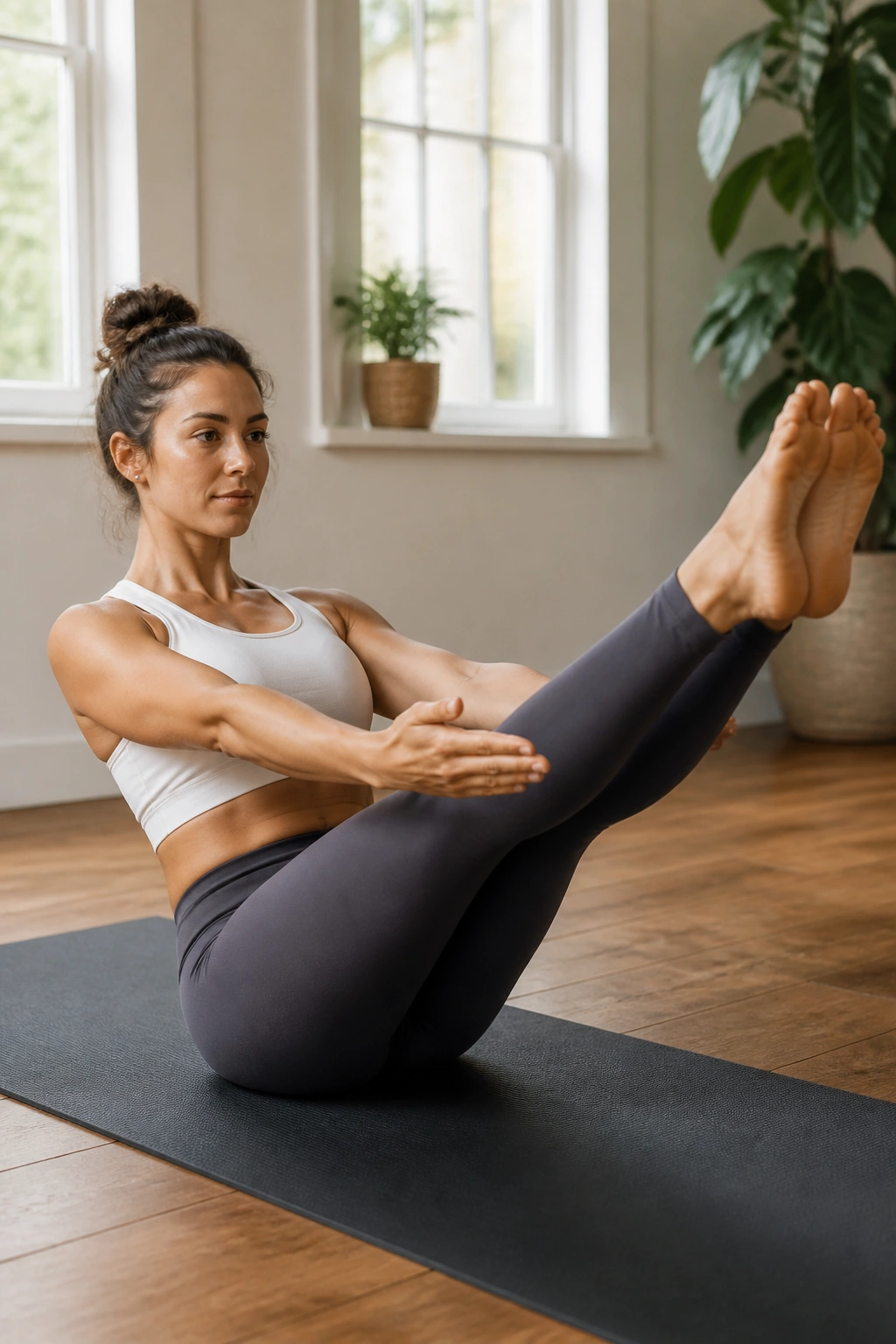
Unlike crunches, boat asks for a tall spine and a steady breath. That makes it a better fit for a yoga sequence that’s supposed to wake you up instead of flatten you out. The core works, yes, but so do the hip flexors and the muscles that help you sit upright without slumping.
Start with bent knees if the full shape feels too aggressive. Hands can stay behind the thighs while you lift the chest and balance on the sit bones. The goal is a quiet center, not a grimace. If the neck starts to tense, lower sooner than you think you need to.
Three short rounds of 15 to 20 seconds each are plenty. If your lower back feels vulnerable, keep the toes on the floor and lift the shins instead of chasing a full V-shape. That still counts. It still wakes the body.
Boat is a strong way to finish a morning sequence because it pulls attention inward. After all the opening and standing, the core has to take over the conversation for a moment. That shift can feel sharp in a good way.
Keep Moving
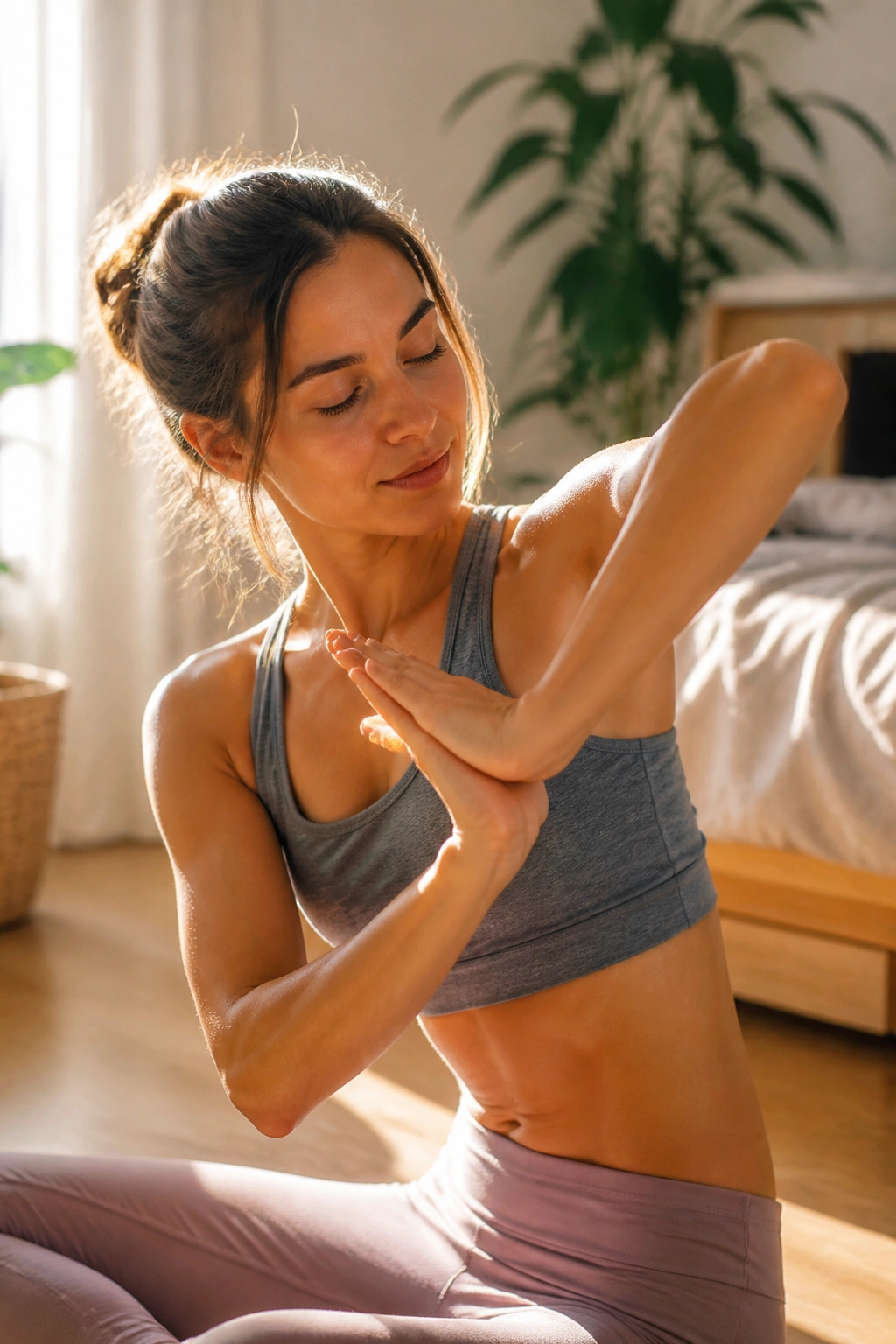
A sluggish morning does not need a huge yoga practice. It needs a practical one. Four or five poses done with decent breath often do more than a long routine performed half-asleep and half-annoyed.
Pick the shapes that match the way you feel. If your back is stiff, start on the floor. If your legs feel sleepy and your mind feels foggy, move into the standing poses sooner. The useful part is not the perfect order — it’s the act of moving before your body has fully signed off on the day.
And if some mornings only allow three poses, that’s still a win. The habit matters more than the size of the flow, and the body tends to reward the people who keep showing up with a mat, a little patience, and enough honesty to bend the knees when they need to.
