



A good core workout should make you brace hard, breathe on purpose, and finish with your abs doing the work — not your neck, not your lower back, and not your hip flexors stealing the show. Core workouts can get stale fast when they all look like endless crunches on a mat.
That’s the trap. People chase the burn and forget the job. Your core is there to keep your torso steady when you lift, carry, twist, run, reach, or just stay upright for a long day. If a move only lights up the front of your stomach but never asks your trunk to resist movement, it’s leaving half the job undone.
The better approach is to mix patterns. Some exercises teach you to resist arching, some train you to fight rotation, some challenge your sides, and a few build the kind of midsection strength that carries over to real life. A strong core is quiet like that. It shows up when you stop thinking about it.
Pick the right mix, and your abs work harder with less nonsense. Pick the wrong mix, and you end up doing 200 reps for a feeling that disappears by lunch.
How to Mix Core Workouts Into a Smarter Session
A useful core session does not need a giant menu. It needs balance. One hold that keeps your ribs from flaring, one move that resists twisting, one exercise that trains the sides, and one dynamic drill is enough to make your midsection work from more than one angle.
Here’s the simple rule I like: pair a stability move with a movement move. A forearm plank goes well with dead bugs. A Pallof press sits nicely next to reverse crunches. Suitcase carries and side planks are cousins, so they belong in the same conversation. That kind of pairing keeps the session from turning into six versions of the same thing.
A clean 10- to 15-minute setup could look like this:
- 30 seconds of forearm plank
- 8 dead bugs per side
- 20 to 30 meters of suitcase carry each side
- 10 reverse crunches
- 30 seconds of side plank each side
Rest 30 to 45 seconds between rounds. Do 2 to 4 rounds, depending on how fresh you are.
If your lower back starts doing the work, stop chasing reps. Shorten the range, slow the tempo, or switch to a simpler version. That is not failure. It’s useful information.
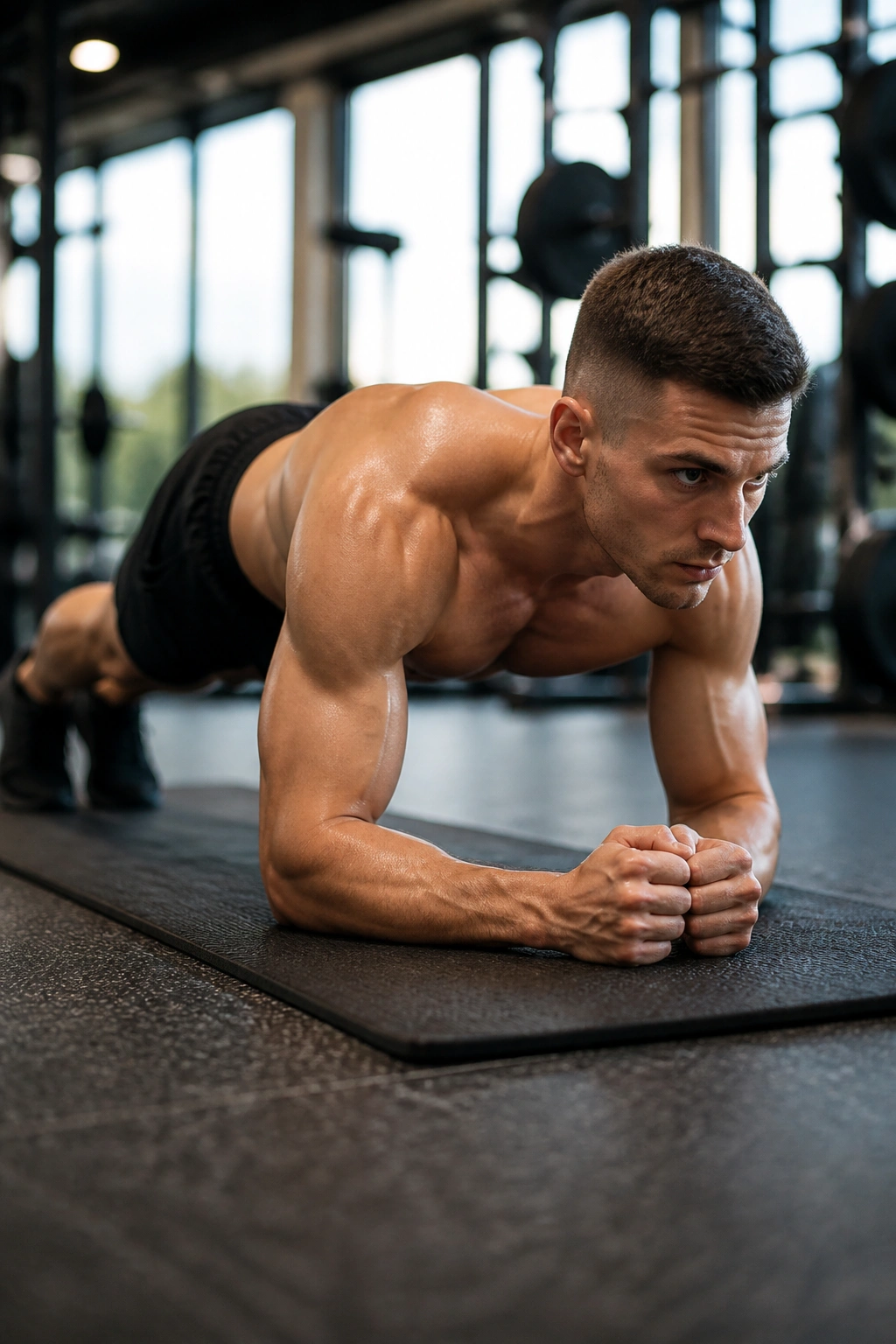
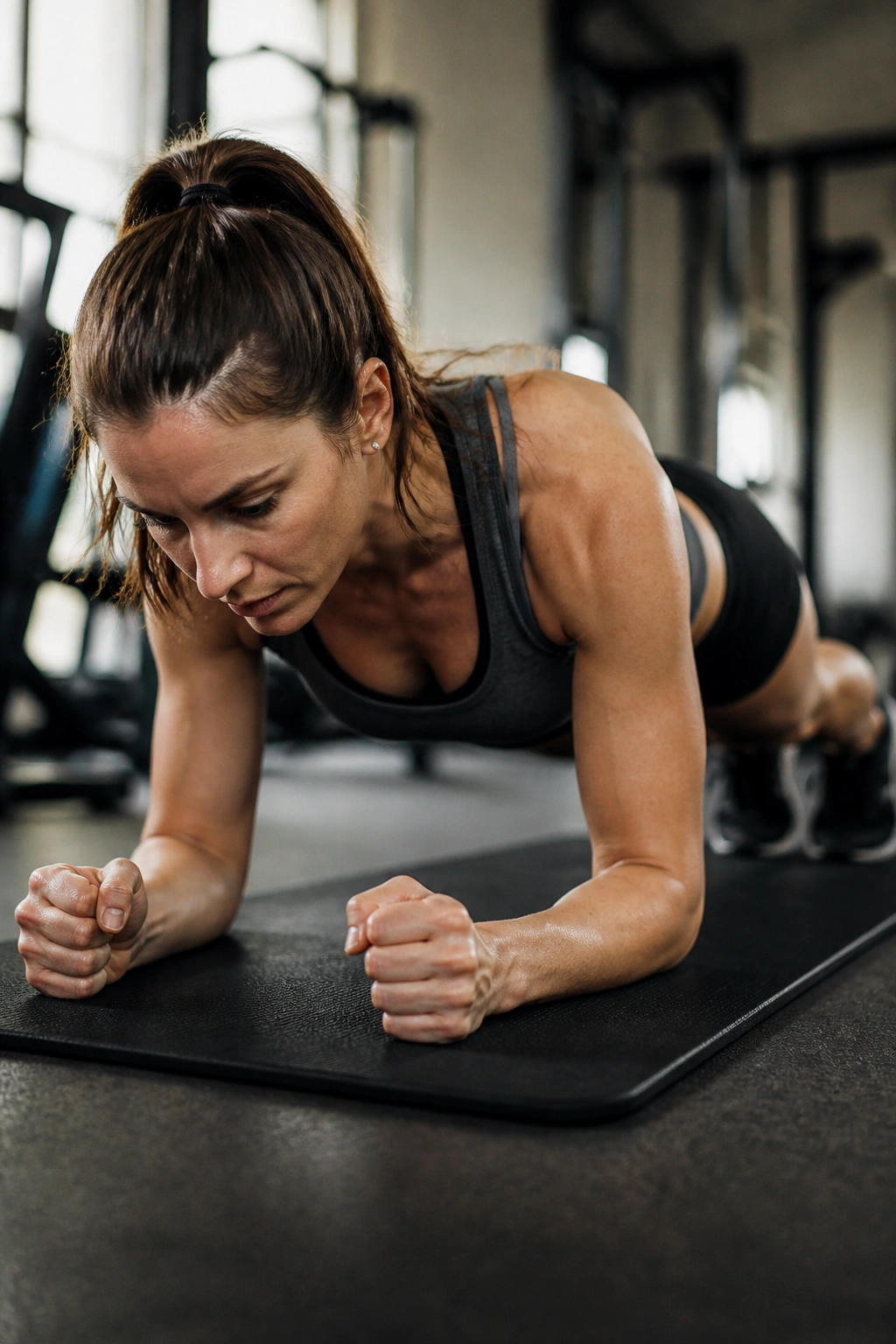
1. Forearm Plank
The forearm plank is still one of the cleanest core builders around, and it gets less credit than it deserves. It looks boring because it is quiet. That quiet is the point.
Why It Works
A good plank teaches your body to resist extension, which is a fancy way of saying your lower back does not get to sag while your abs nap. Squeeze your glutes, pull your ribs down, and make your body feel like one long, straight plank from shoulders to heels.
- Elbows under shoulders
- Feet about hip-width apart
- Neck long, eyes on the floor
- Hold 20 to 45 seconds, not forever
- Stop when your hips start drifting or your breath turns frantic
A shaky 25-second plank with good form beats a sloppy 90-second hold every time. That last five seconds should feel honest. If you can chat through the whole thing, you’re probably not bracing hard enough.
2. High Plank Shoulder Taps
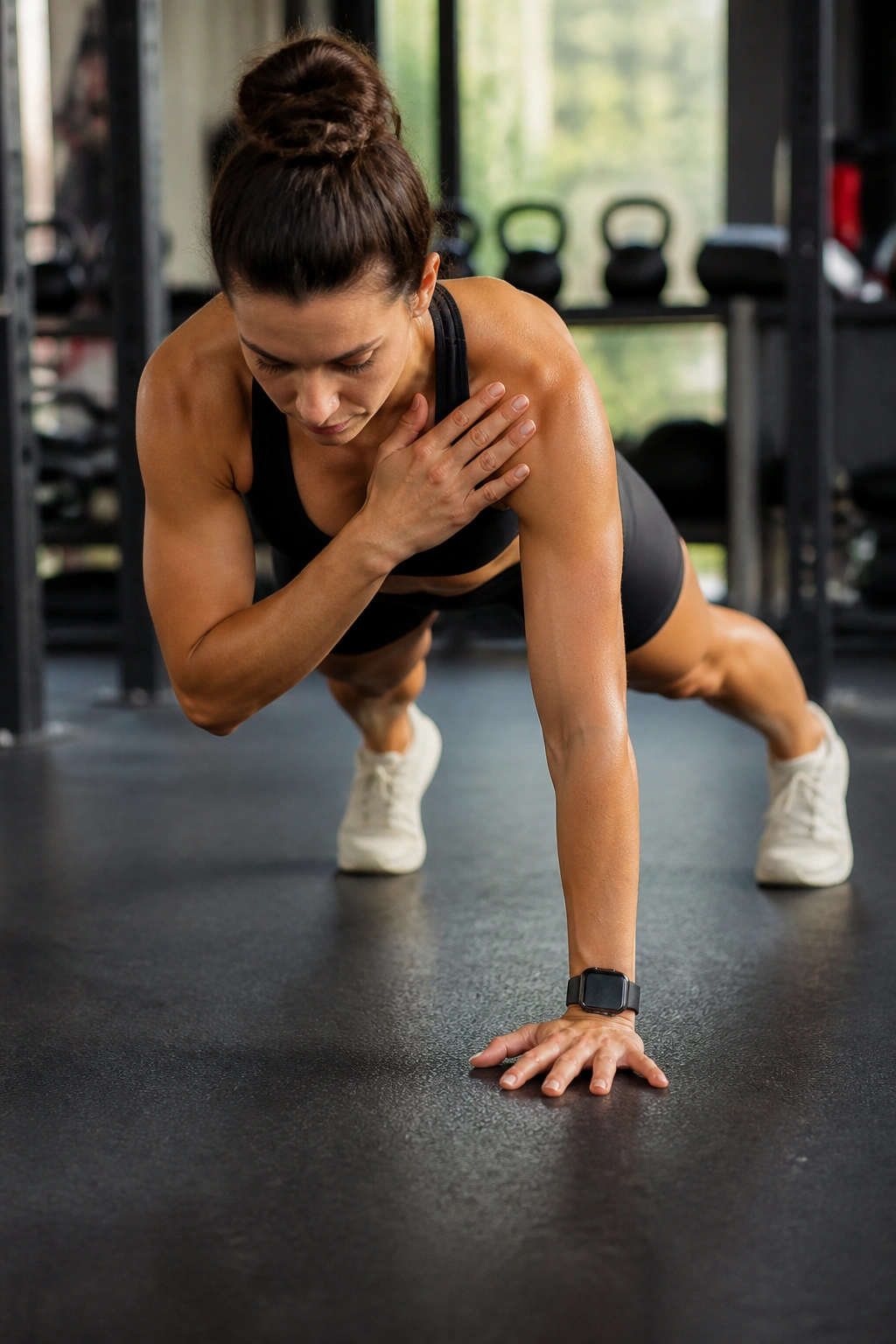
Can you keep your hips still while one hand leaves the floor? That is the whole challenge here, and it’s a good one.
High plank shoulder taps train anti-rotation in a way that feels practical fast. Every time you lift a hand, your body wants to sway. Don’t let it. Spread your feet a little wider than you think you need, press the floor away, and tap the opposite shoulder without rocking side to side.
Keep the movement slow. Fast taps turn into sloppy taps, and sloppy taps turn into a shoulder exercise with a little cardio attached. You want your trunk to work before your heart rate does.
Try 6 to 10 taps per side for 2 or 3 sets. If your hips wobble, widen your stance and shorten the rep count. Clean beats hard here.
3. Dead Bug
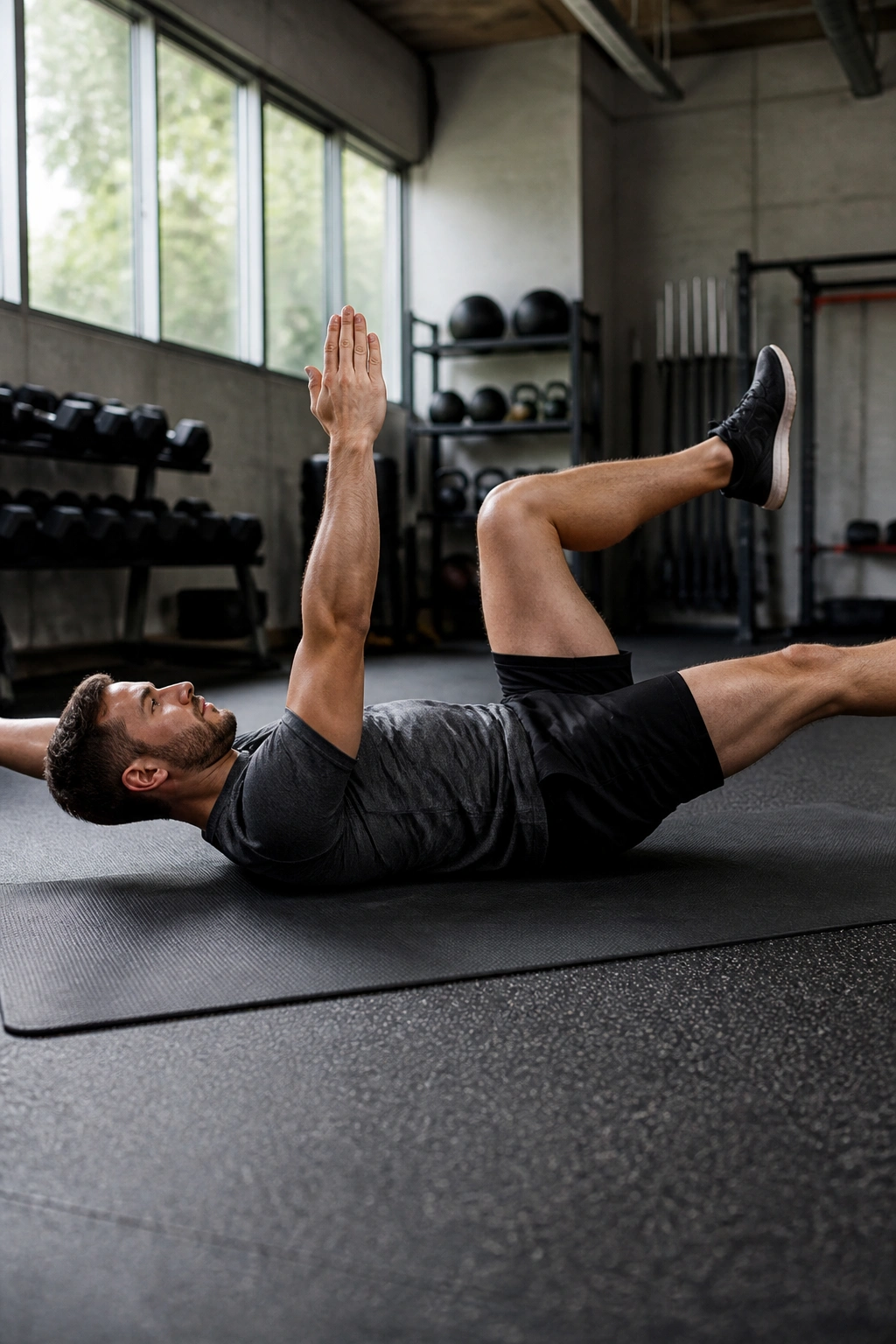
The dead bug is the move people skip because it looks too gentle. Then they try it correctly and realize their abs are on fire.
Lie on your back with your arms pointed toward the ceiling and your knees bent at 90 degrees. Press your lower back into the floor before you move anything. That little back pressure matters. If your back arches, the drill loses its job.
How to Use It
Lower one leg and the opposite arm at the same time, then bring them back with control. The lower the leg goes, the harder it gets — but only go as low as you can without losing contact between your back and the floor. Six to eight reps per side is plenty for most people.
I like this one early in a session because it wakes up the deep core without beating you up. It is also one of the best choices if crunches make your neck tense. Slow wins here.
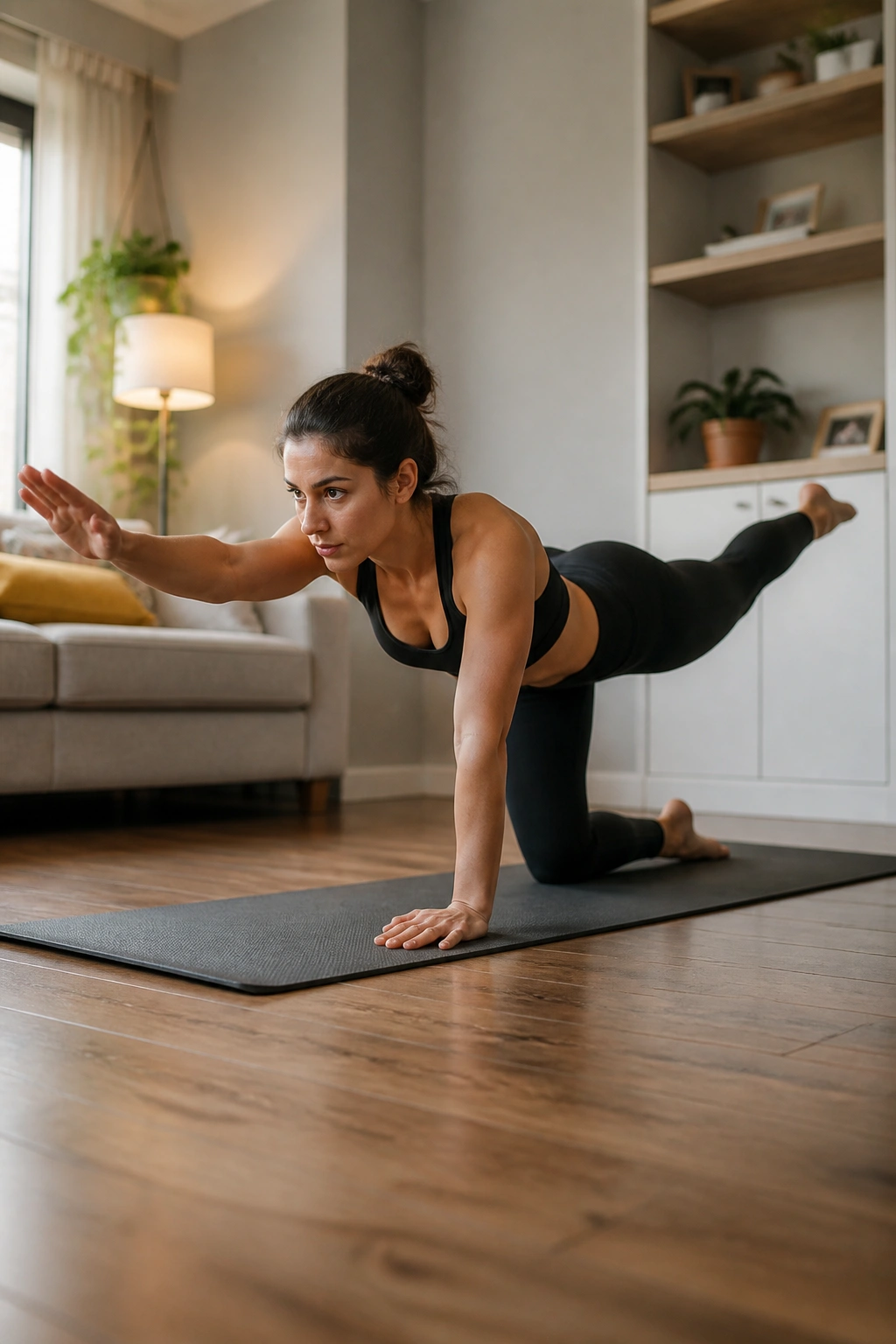
4. Bird Dog
If the dead bug is about learning control on your back, the bird dog is its floor-level cousin on hands and knees. It looks easy. It almost never is.
Reach one leg straight back and the opposite arm forward while keeping your hips square to the ground. The temptation is to fling the limb as far as possible. Don’t. Reach long enough to create tension, then pause for a second or two before you come back in.
- Keep your hands under shoulders
- Keep knees under hips
- Avoid arching the low back
- Pause at full reach
- Use 6 reps per side to start
Bird dogs are excellent when your trunk feels a little noisy and you want to teach it to calm down. They also work nicely after heavier lifts because they clean up your posture without adding more fatigue. Tiny movement, big payoff.
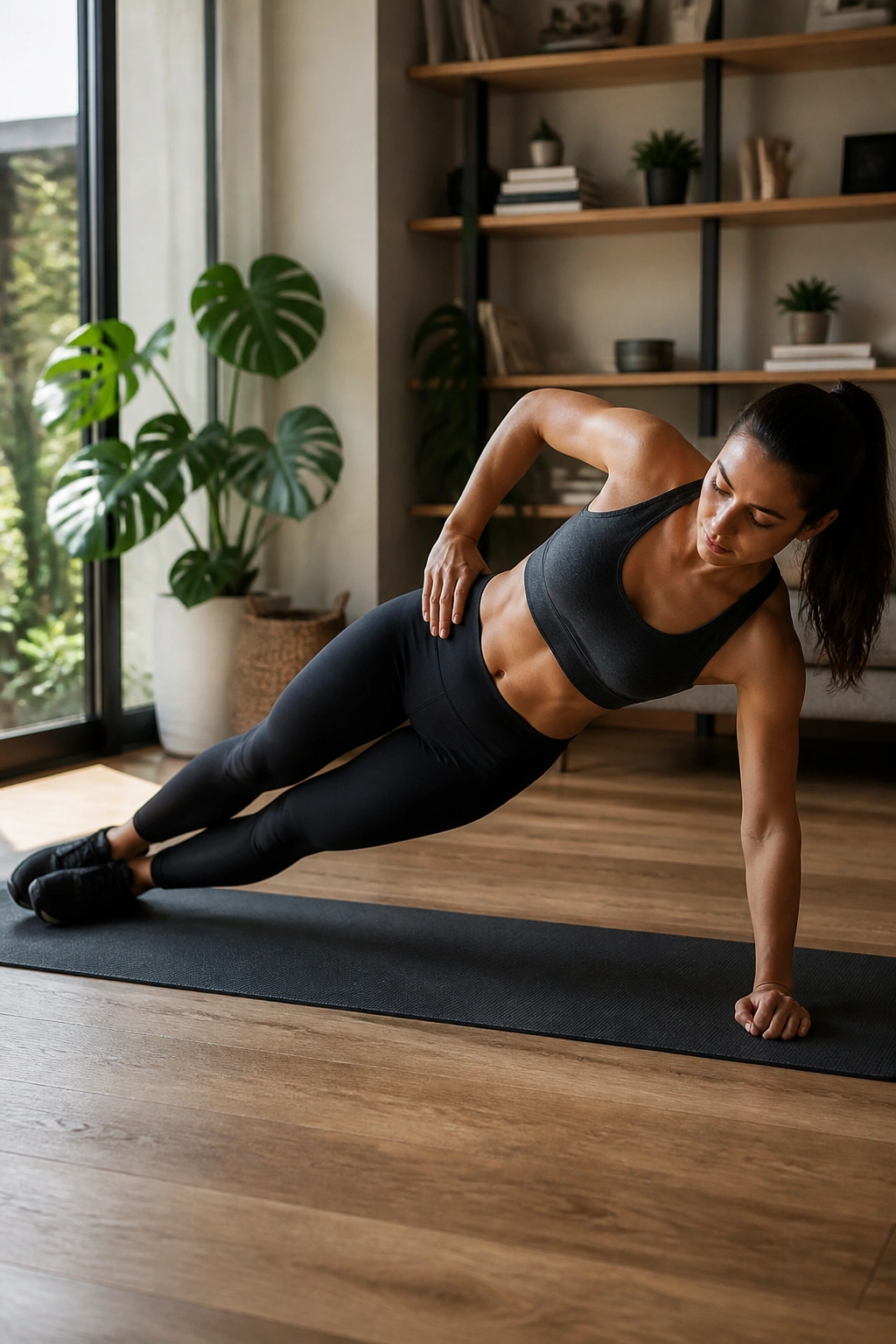
5. Side Plank
A front plank is about resisting extension. A side plank is about not folding at the waist. That difference matters.
Set your elbow under your shoulder, stack your feet, and lift your hips until your body makes a straight line. You should feel the side of your waist, the outside of your hip, and the shoulder on the floor all working together. If your neck tightens, reset. If your hips drift backward, reset again.
Side planks are one of the best ways to train the obliques without a million twisting reps. They also teach the pelvis to stay steady, which pays off in running, walking, and single-leg strength work.
Hold 15 to 30 seconds per side if you’re learning. Go longer only when the shape stays clean. A side plank that sags is just a tired one.
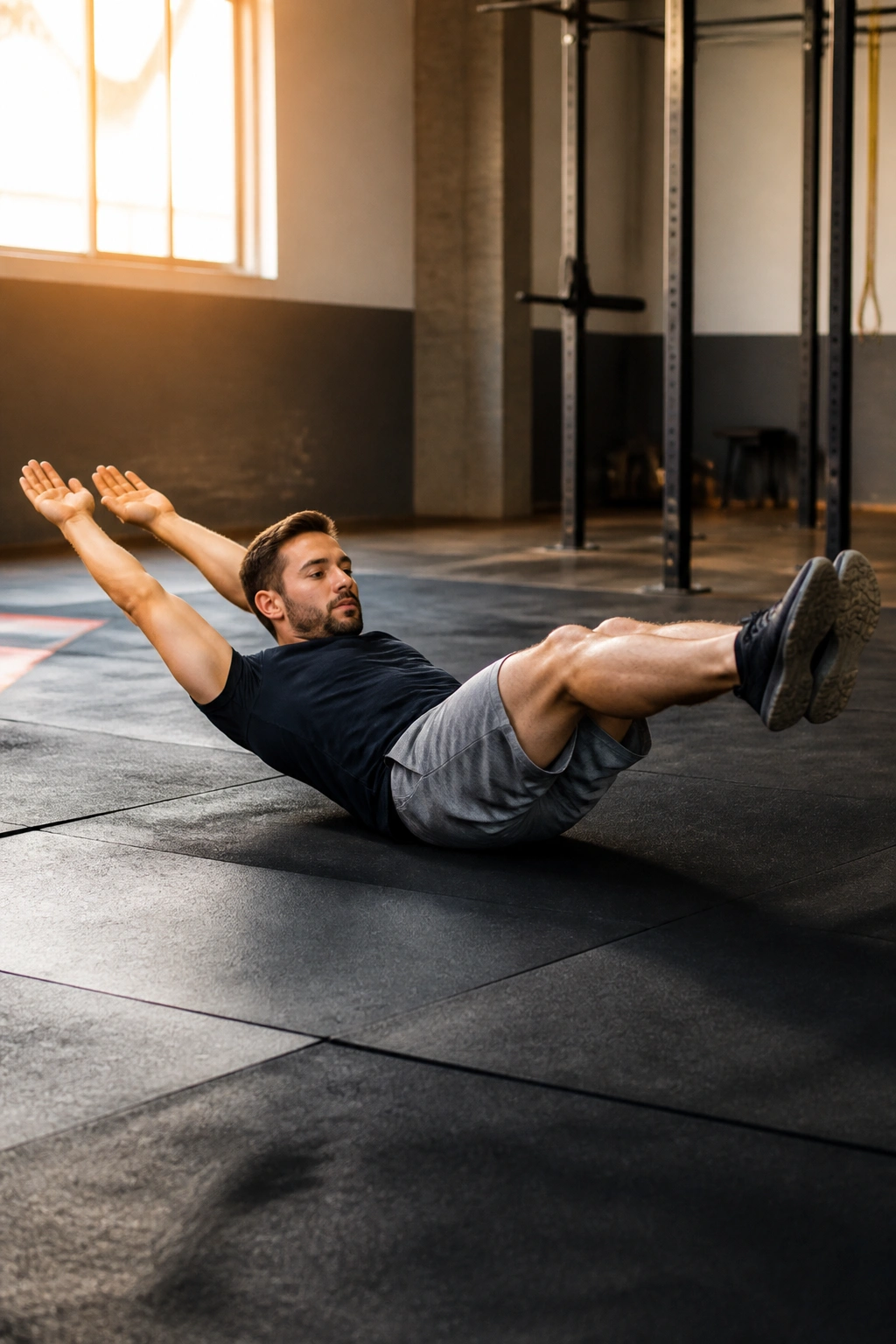
6. Hollow Body Hold
The hollow body hold is a little savage in the best way. Gymnasts love it because it teaches whole-body tension, and that tension carries into almost everything else.
Lie on your back, press your lower back into the floor, lift your shoulders slightly, and extend your arms overhead. Then lift your legs a few inches off the ground. If that’s too much, bend your knees. If that’s still too much, keep one leg tucked and one leg extended.
What matters is the back. It stays down. No arching. No cheating. The second your ribs pop up, the hold stops being useful.
Start with 10 to 20 seconds. Two or three rounds is enough. A short, clean hollow hold can light up your abs more than a long sloppy one. That’s the part people miss.
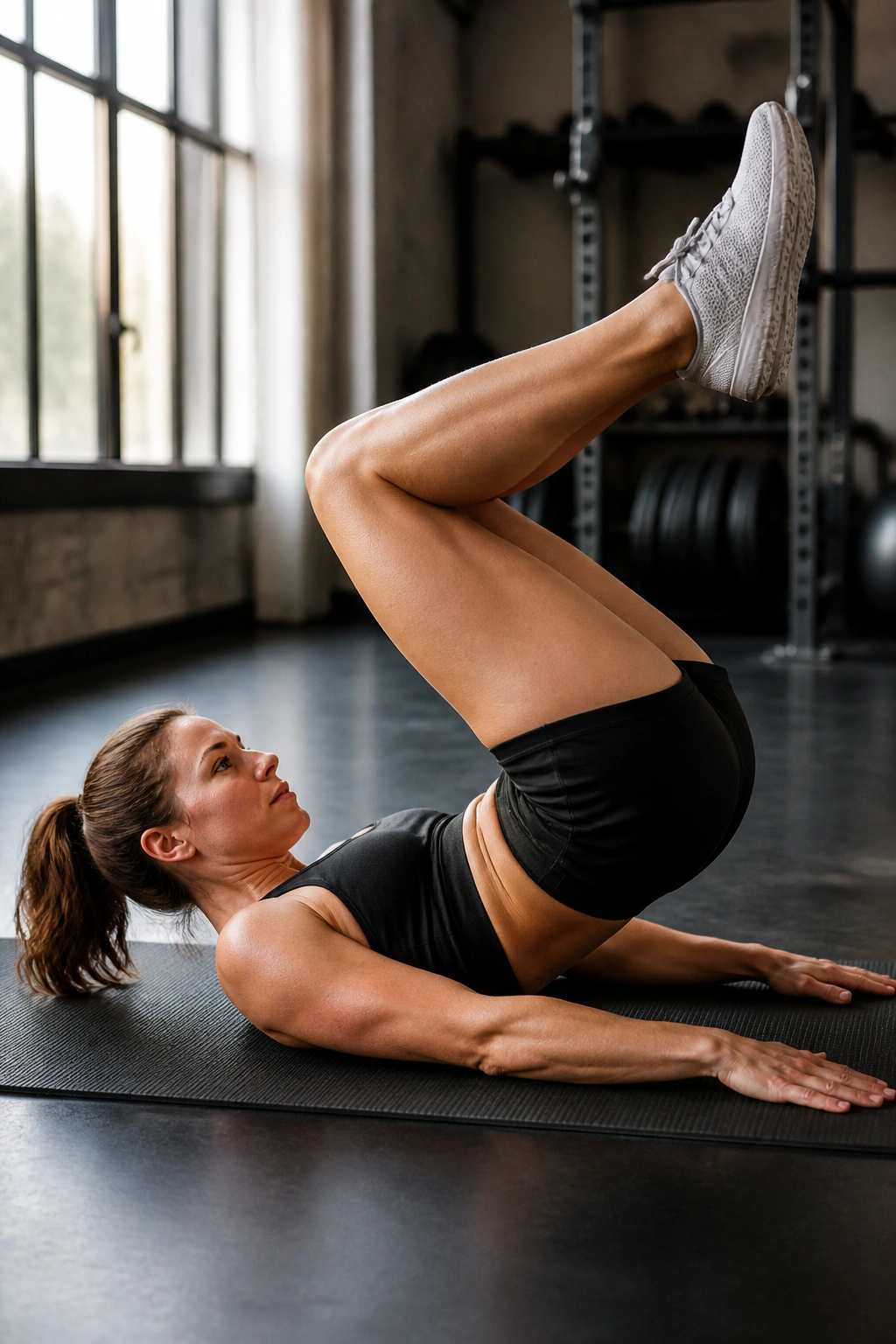
7. Reverse Crunch
A reverse crunch is not a leg swing. That mistake ruins the whole thing.
Lie on your back with your knees bent and your thighs lifted. Think about curling your pelvis up toward your ribs, not about throwing your feet toward the ceiling. The pelvis moves first. That’s the money cue. The lower abs have to work to finish the curl, and the hip flexors stop hogging the job.
What to Watch For
If your thighs are doing all the moving, slow down. If your low back pops off the floor too early, shorten the range. If your shoulders are pressing into the ground and you’re still controlled, you’re doing it right.
Try 8 to 12 reps with a pause at the top. The pause matters. It makes the movement feel tighter and keeps the rep from becoming a bounce. Curl, don’t kick.
8. Bicycle Crunch
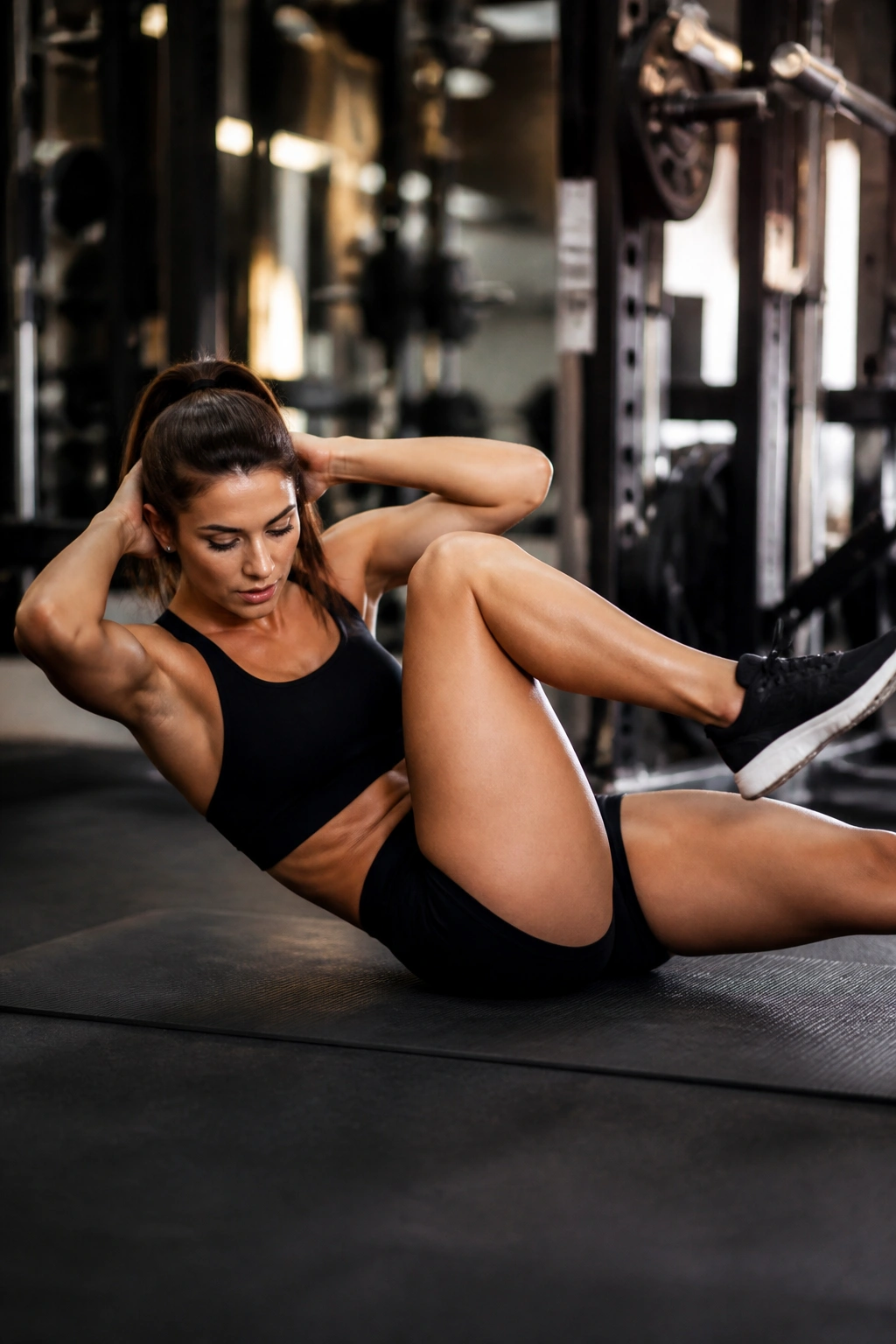
Bicycle crunches get abused a lot. Done fast, they turn into a neck yanking contest. Done well, they’re a sharp little combination of rotation and flexion.
Bring one elbow toward the opposite knee, but do not force the elbow to touch the knee if that means twisting awkwardly. Extend the other leg slowly and keep the movement smooth. The goal is controlled rotation through the torso, not speed.
A short set done with clean form usually beats a long set done like you’re trying to escape the floor. Twelve to 16 reps per side is plenty. Exhale as you twist. That breath cue helps your ribs drop and makes the abs work instead of the neck.
This move is best for people who want more motion in their core routine, but it still needs control. Rushed bicycles are junk. Controlled bicycles are useful.
9. Mountain Climbers
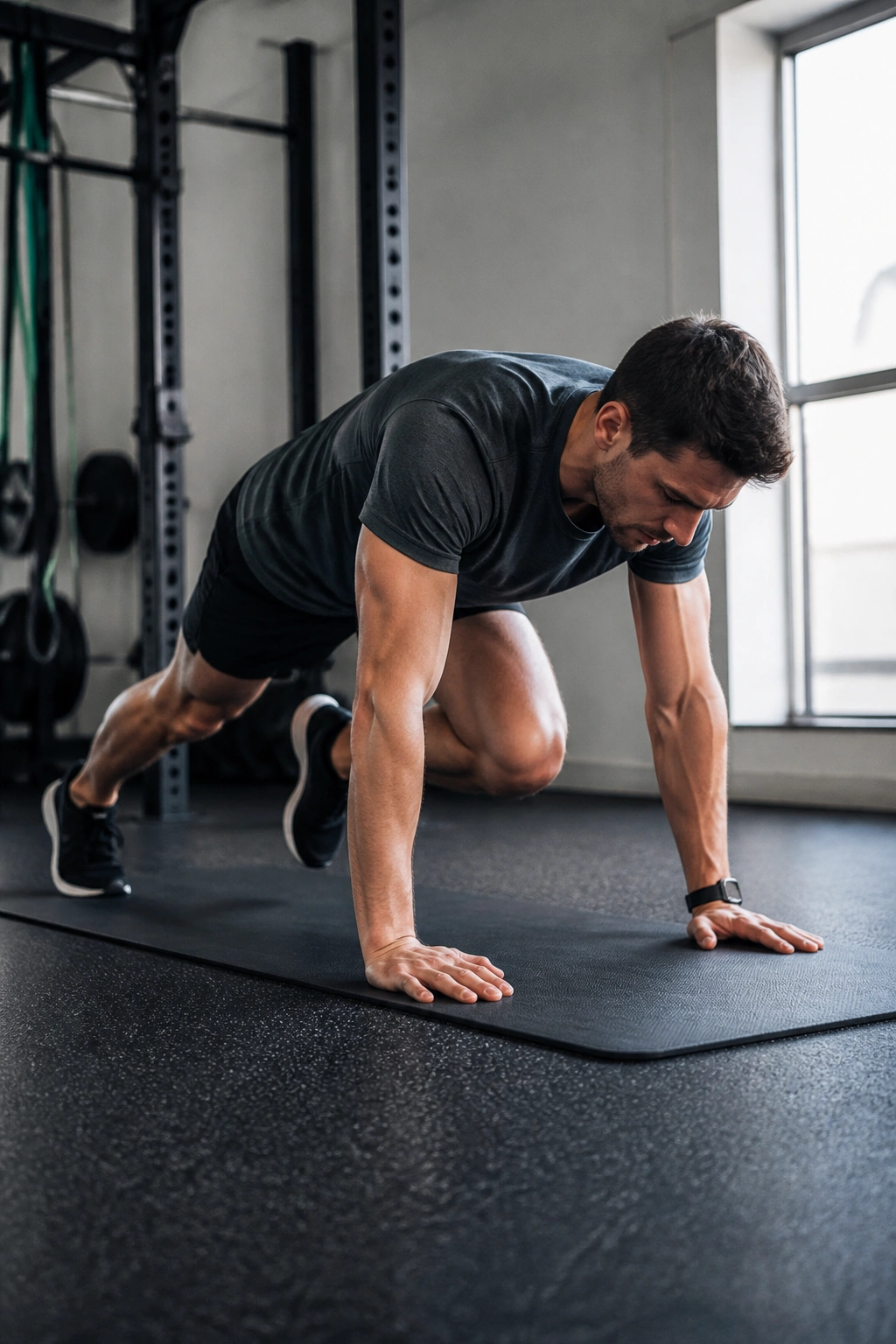
Mountain climbers can be core work, cardio, or both, depending on how you do them. Most people do them too fast.
Set up in a high plank and drive one knee toward your chest, then switch legs with control. Keep your shoulders over your wrists and your hips from bouncing up and down. If the body turns into a seesaw, slow it down. If the shoulders drift behind the wrists, reset.
I like mountain climbers in short bursts: 20 to 40 seconds at a time. They wake up the abs, but they also light up the shoulders and get your breathing moving. That makes them handy inside a circuit.
They’re not subtle. Fine. Not every core move should be. The trick is staying braced while the legs move.
10. Russian Twist
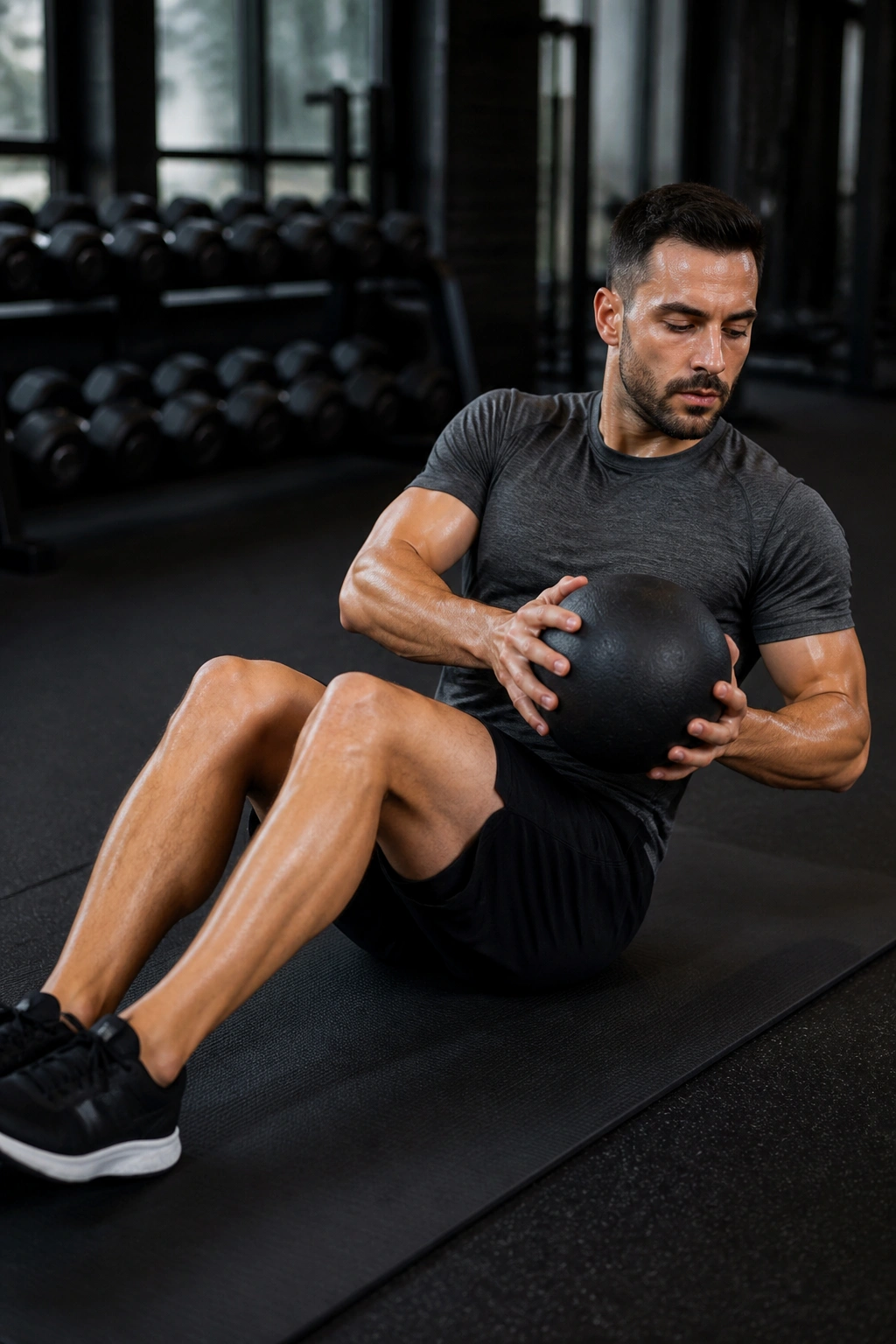
Russian twists look simple until you try to keep the trunk honest through the whole set. Then you realize how much your body wants to cheat with momentum.
Sit tall, lean back just enough that your abs stay engaged, and rotate from the ribs, not just the arms. Keep the movement smooth. If you’re slamming side to side with a dumbbell, you’re probably using speed to hide weak control.
A lighter load or no load at all is often better. Twelve to 16 twists per side is a reasonable place to start. Heels on the floor make it easier. Feet lifted make it harder.
I’m not against this exercise. I’m against sloppy versions of it. When it’s controlled, it’s a useful rotation drill. When it’s frantic, it turns into a lower-back gamble.
11. Leg Raise
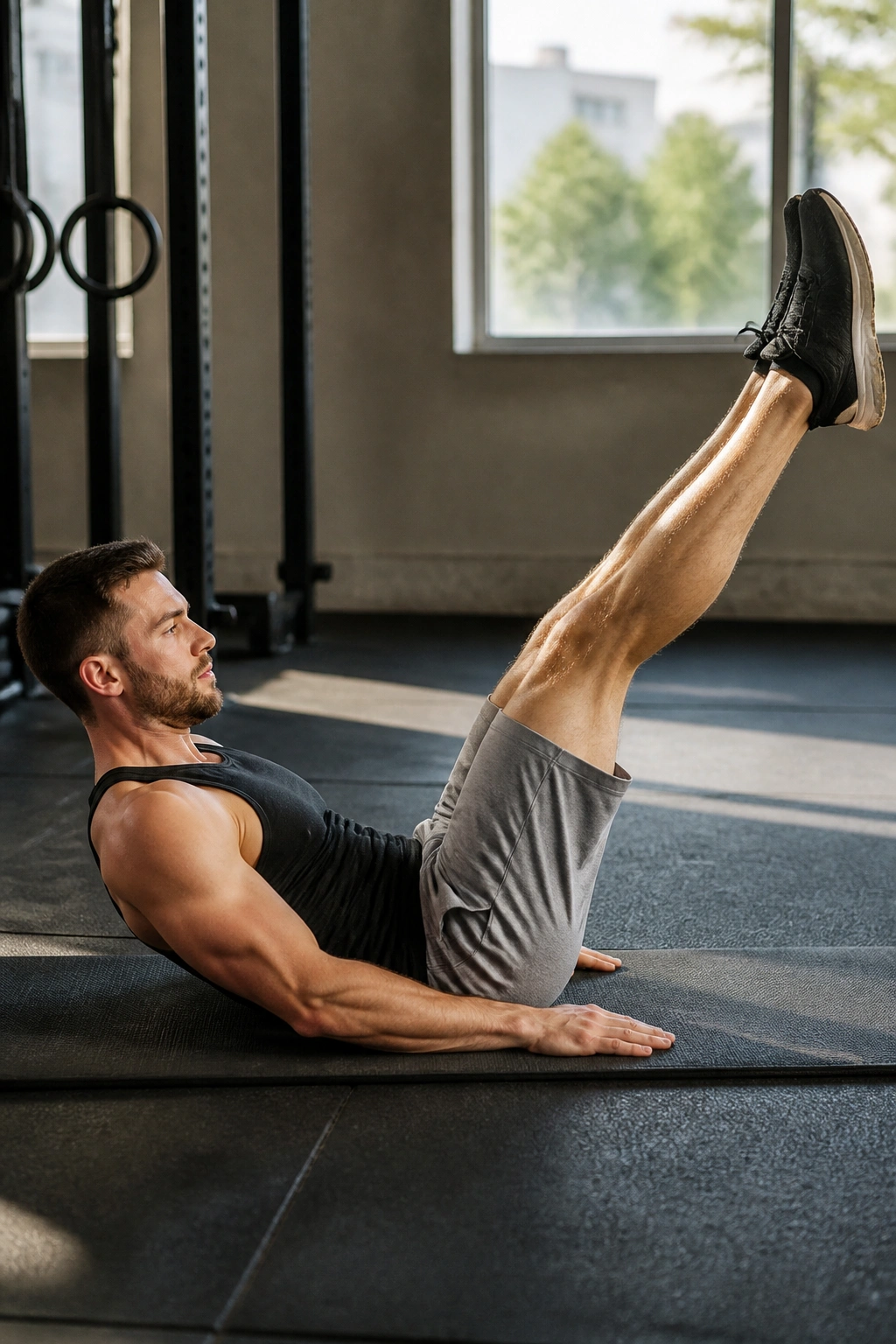
Leg raises are one of those exercises that sound straightforward and then turn out to be a lesson in pelvic control.
Lie flat, press your lower back down, and lift your legs with as little swing as possible. The real work happens on the way down. Lower them only as far as you can before your back starts to arch. That point is your stop sign.
How to Feel It in the Abs
The cue I use most is simple: tilt the pelvis first. If you can tuck your pelvis slightly before the legs descend, the abs stay involved longer and the hip flexors do less stealing.
Start with 6 to 10 reps. Bent knees are fine. A short range that stays clean is better than full straight-leg reps that turn into back arching. This one rewards patience. It punishes ego.
12. Heel Tap Crunch
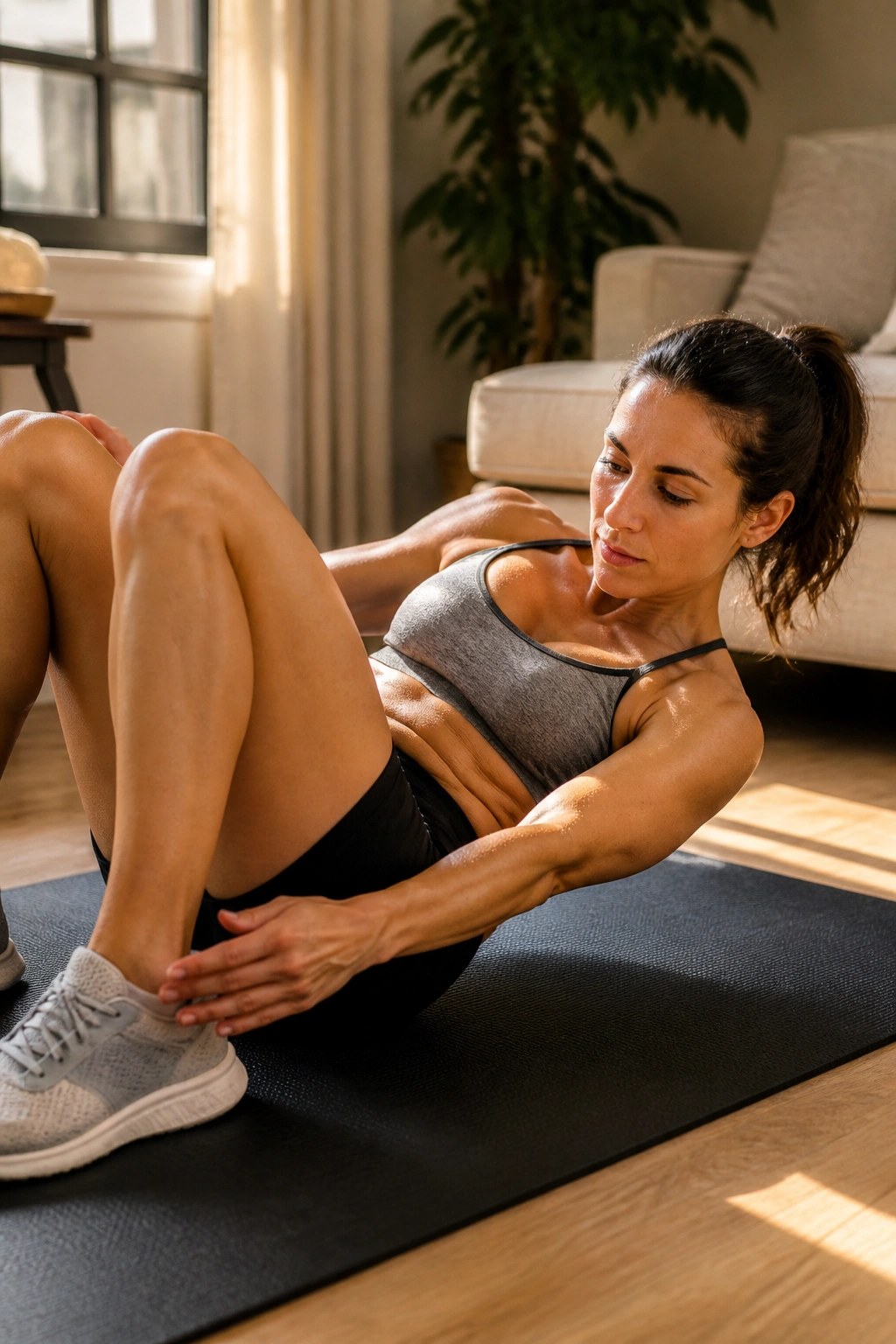
Heel taps are a nice middle ground between dead-bug calm and crunch-style burn. They hit the front of the abs and the obliques without needing much equipment.
Lie on your back with your knees bent and feet planted. Lift your shoulders off the floor a little, then reach one hand toward one heel while keeping the other side of the trunk engaged. Alternate side to side in a controlled rhythm. Your head should stay relaxed. Your neck should not feel like it’s doing the work.
This is a good choice when you want something that feels more active than a hold but less aggressive than fast crunches. Twelve to 20 total taps is enough for most people. Exhale as you reach. That breath makes the ribs drop and tightens the trunk.
Simple move. Not easy when you do it right.
13. Plank Saw
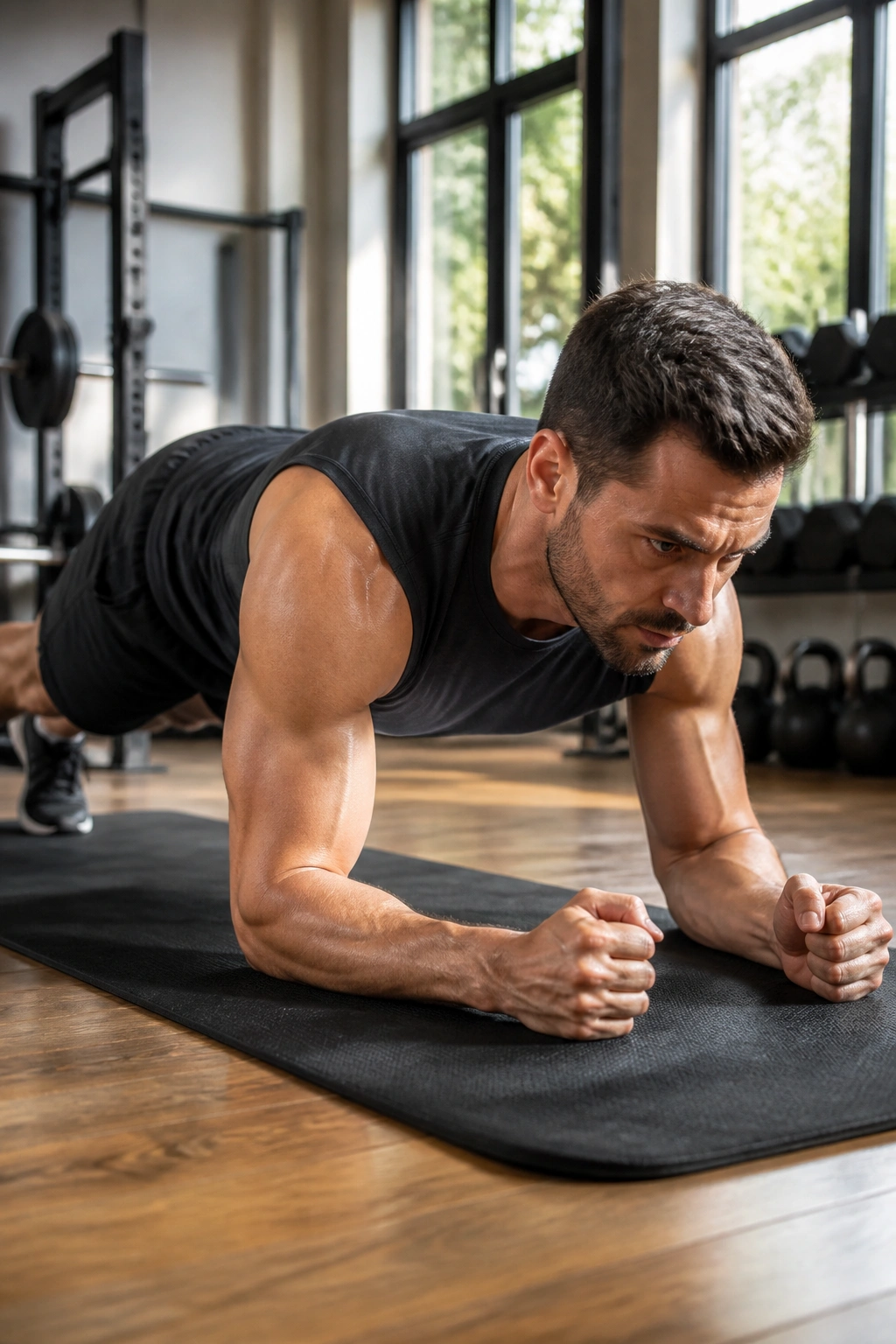
A plank saw looks like a tiny shift, but that small shift puts the whole front line of the body on notice.
From a forearm plank, glide your body forward and back a few inches. Keep the movement small. The elbows stay under control, the ribs stay tucked, and the glutes keep everything from sagging. If your shoulders rush forward and your low back dips, the range is too big.
Quick Form Check
- Elbows under shoulders
- Neck long
- Glutes lightly squeezed
- Move 2 to 4 inches, not 12
- Breathe through the hold
Plank saws are a good bridge between static planks and harder rollout-style work. They teach you to hold tension while the body moves, which is a useful skill for almost any sport or lifting pattern. Small range, big demand.
14. Pallof Press
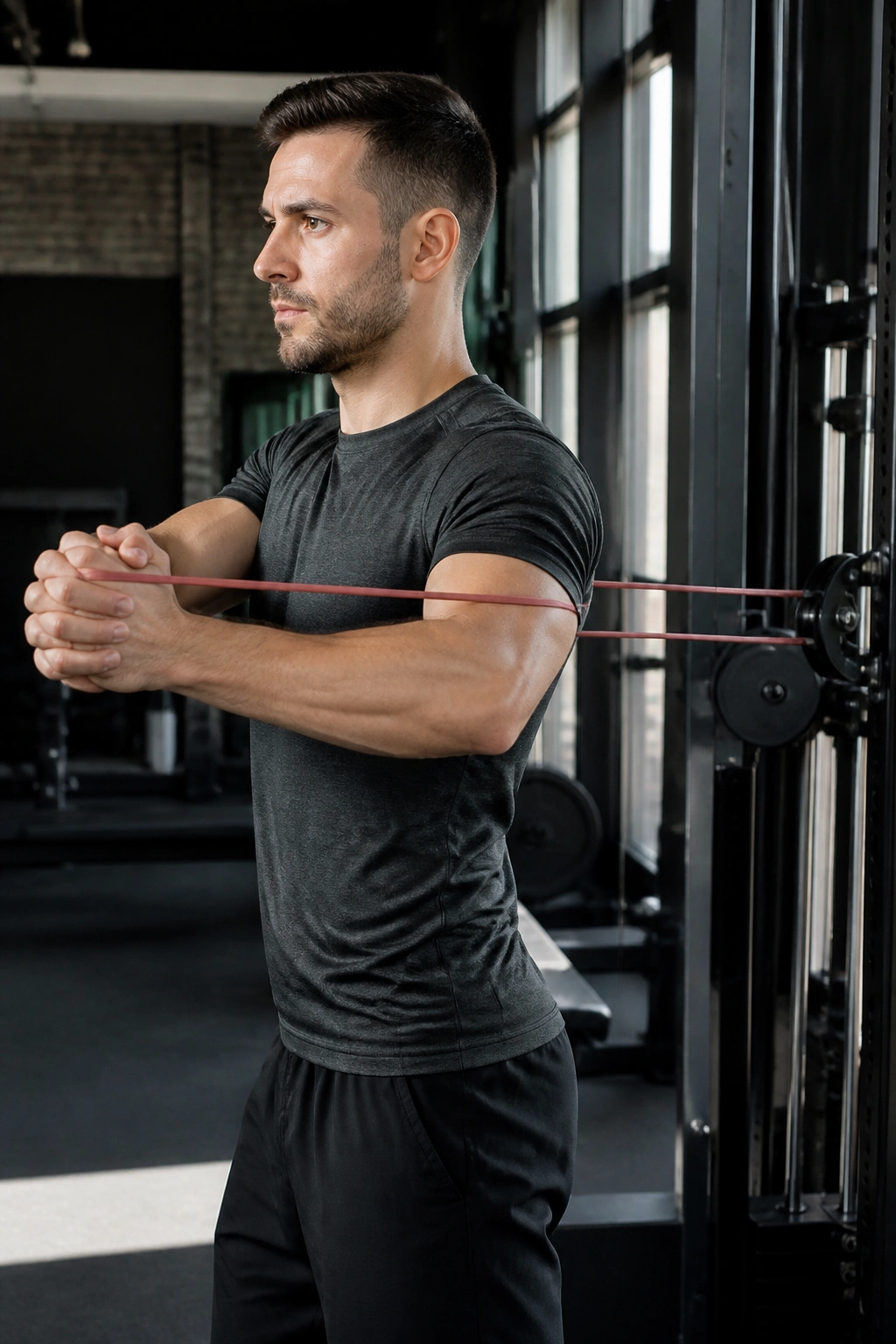
The Pallof press is a clean anti-rotation drill, and I wish more people treated it like a staple instead of an afterthought.
Set a band or cable at chest height, stand sideways to the anchor, and press the handle straight out from your chest. Your job is not to twist. Your job is to fight the twist. Hold for a beat, bring it back in, and repeat.
How to Use It
Do 8 to 12 presses per side with a slow, even tempo. Step farther from the anchor if you need more tension; step closer if your torso starts leaning. The body should feel tall and steady, like someone could bump you and you would hold your ground.
This move is especially good if your lower back gets cranky with lots of rotation. It teaches control without a ton of motion. That’s why it earns a spot in a real core routine.
15. Suitcase Carry
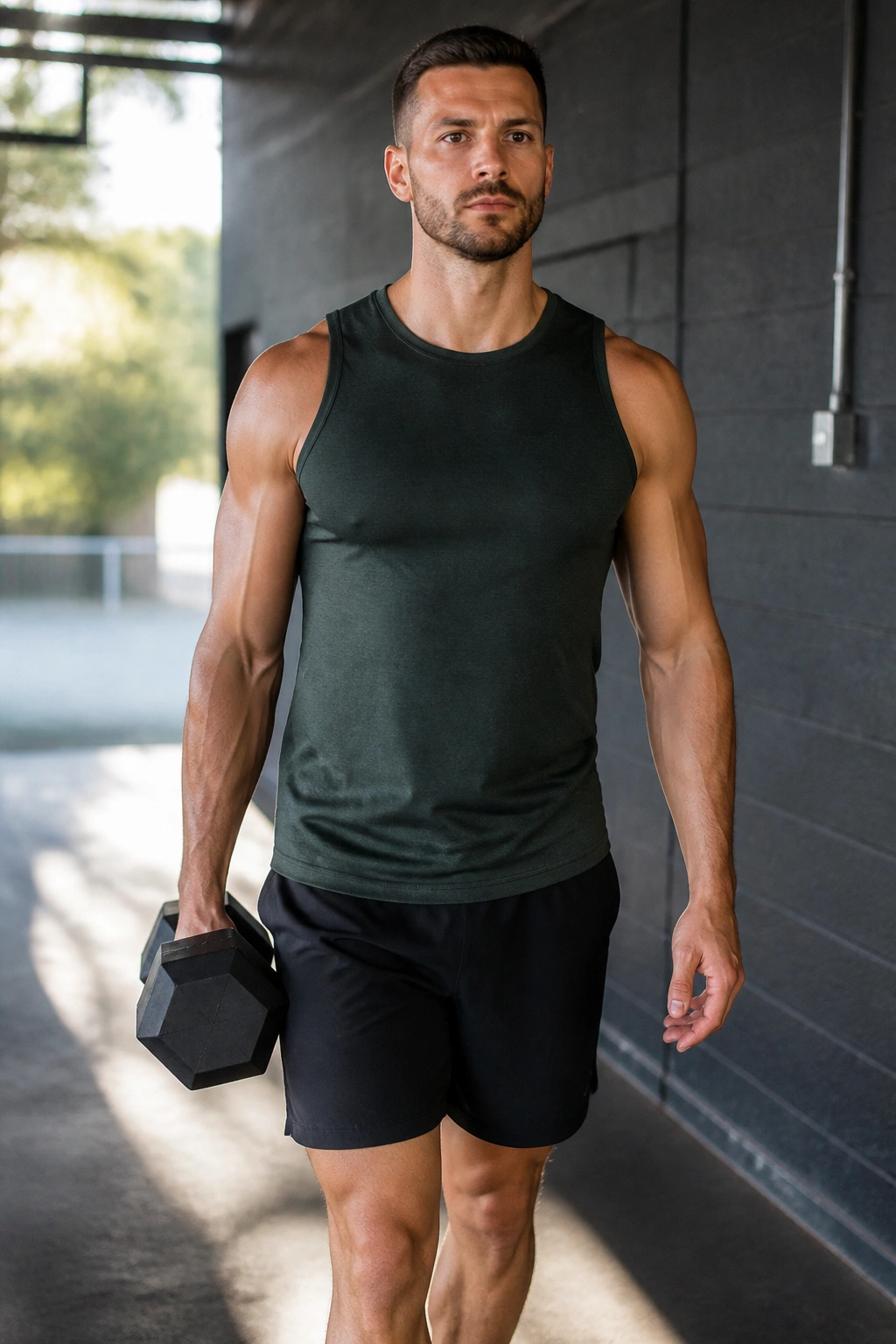
A suitcase carry is one heavy weight in one hand and a whole lot of honesty.
Hold a dumbbell or kettlebell on one side and walk. That’s it. Except it isn’t, because your trunk instantly notices the uneven load and wants to lean. Don’t let it. Stay tall, keep your ribs stacked over your pelvis, and walk with steady steps.
This is one of the best core drills for anti-lateral flexion, which just means resisting side bend. It also teaches grip strength and posture without making the movement feel like a fancy abdominal exercise. Sometimes the plain stuff is the best stuff.
Try 20 to 40 meters per side, or 20 to 40 seconds. Heavy enough to challenge you, light enough that you can keep your shoulders level. If you can’t stay tall, the weight is too much.
16. Farmer’s Carry
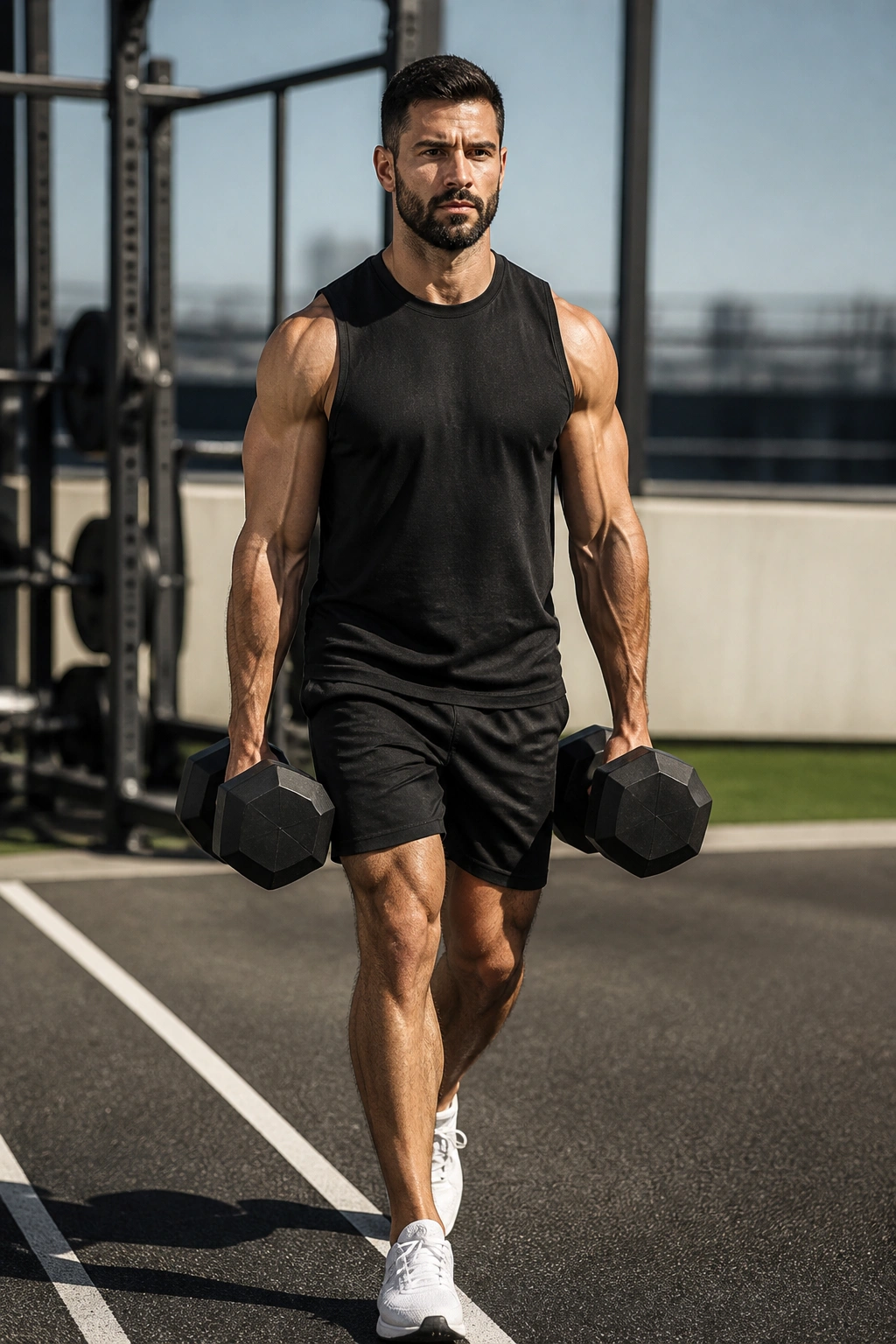
Where the suitcase carry loads one side, the farmer’s carry loads both. That changes the feel a lot.
Grab two dumbbells or kettlebells and walk with your chest tall, shoulders down, and steps smooth. Your core still works hard, but now it shares the job with your upper back and grip. The whole body has to stay organized.
I like farmer’s carries because they’re blunt. There’s no mystery. Pick the weights up, walk with control, put them down, repeat. They’re also easy to slot into a circuit between floor-based ab work and more dynamic drills.
Use 30 to 60 seconds or 20 to 40 meters. Keep the neck relaxed. If you’re shrugging like a frightened turtle, lower the load a little and try again.
17. Ab Wheel Rollout
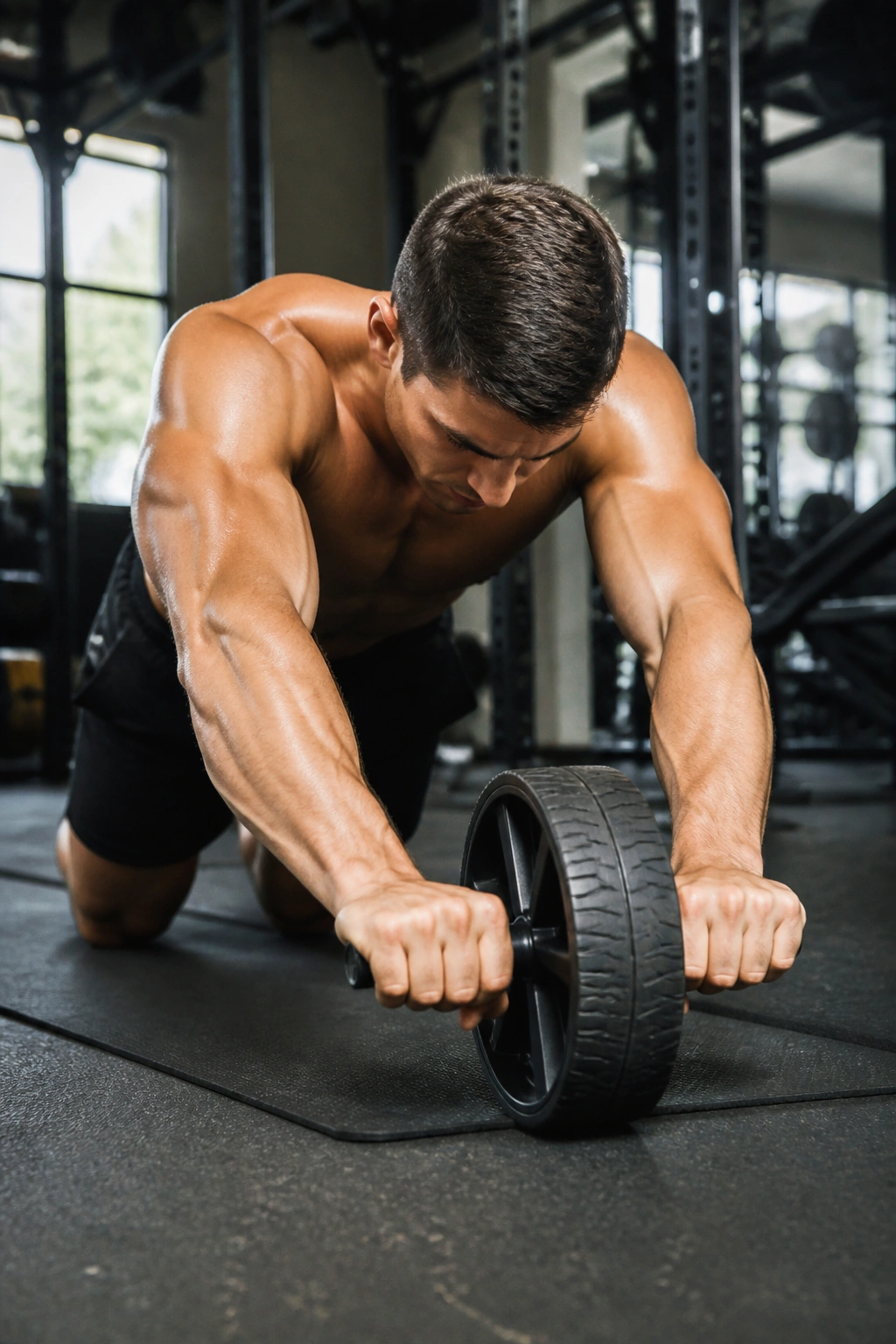
The ab wheel rollout deserves respect. It is not a beginner’s toy.
Start from your knees, grip the wheel, and roll forward only as far as you can keep your ribs tucked and your low back from arching. Then pull yourself back using your abs, lats, and shoulders together. The movement should feel controlled on both the way out and the way in. If you crash into the floor, the range is too long.
This is one of the hardest anti-extension drills on the list. It asks the front of the body to stay tight while the leverage gets worse. That’s why it works so well — and why it humbles people fast.
Begin with 5 to 8 good reps. A small range is fine. If your back starts to sag, stop the set. That’s the rule. No arguing.
18. Stability Ball Rollout
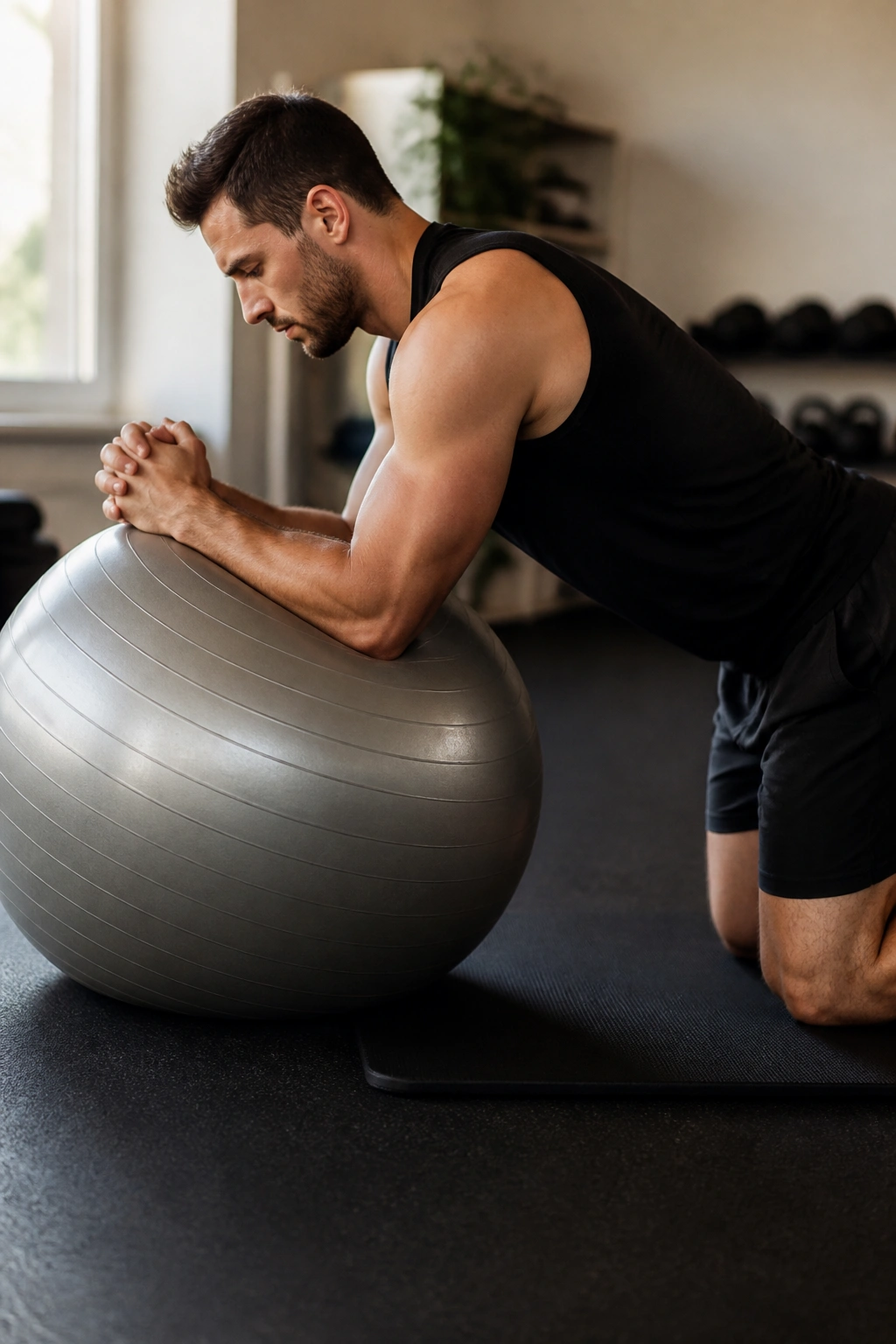
If the ab wheel feels too sharp, the stability ball rollout is a friendlier place to start.
Kneel behind a stability ball, rest your forearms on it, and roll forward while keeping your abs braced. The ball gives a little, which takes some pressure off the shoulders and makes the movement easier to control. Still, the same rule applies: no arching at the lower back.
Why It’s Useful
The ball rollout teaches you the same bracing pattern as the ab wheel, just with a slightly softer edge. That makes it good for building confidence before you move to a harder lever. It also works well for higher reps — around 8 to 12 — because the instability builds tension without needing a brutal load.
If the ball shoots away from you, shorten the range. If your hips sit back on your heels the whole time, you’re probably not getting enough challenge. Find the middle. That’s where the work lives.
19. Cable Chop
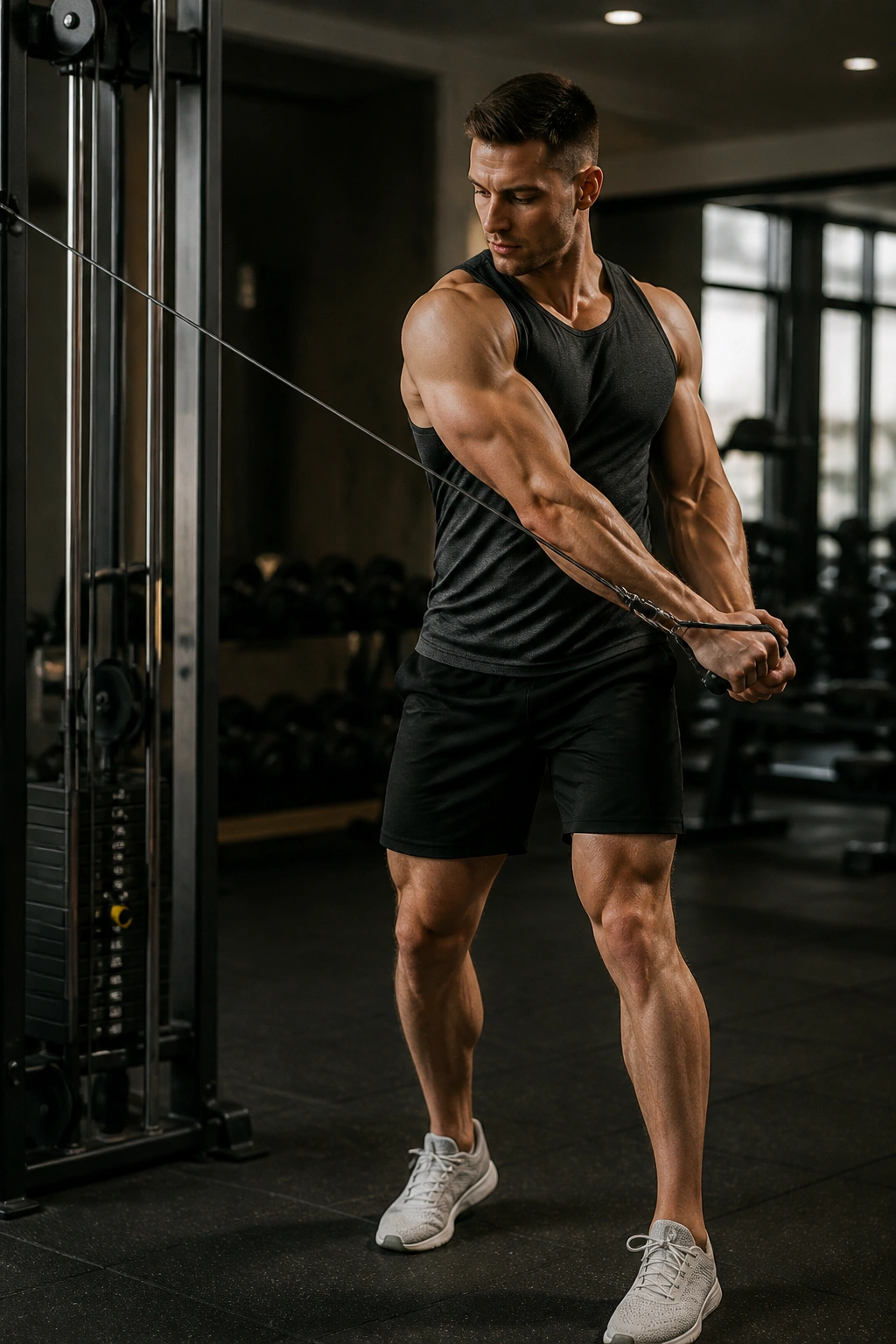
A cable chop lets you train rotation with more control than a lot of floor twists. That matters.
Set the pulley above shoulder height for a high-to-low chop, or below hip height for a low-to-high version. Pull across your body while keeping your trunk steady and your hips organized. The arms guide the motion, but the torso has to control it.
- Stand tall with soft knees
- Rotate through the torso, not just the arms
- Keep the spine long
- Use 8 to 12 reps per side
- Move slowly enough to feel the abs and obliques work
I like chops because they connect the core to the hips and shoulders in a real way. They’re a strong fit for athletes, lifters, and anyone who wants more than floor crunches. Rotation should feel controlled, not rushed.
20. Hanging Knee Raise
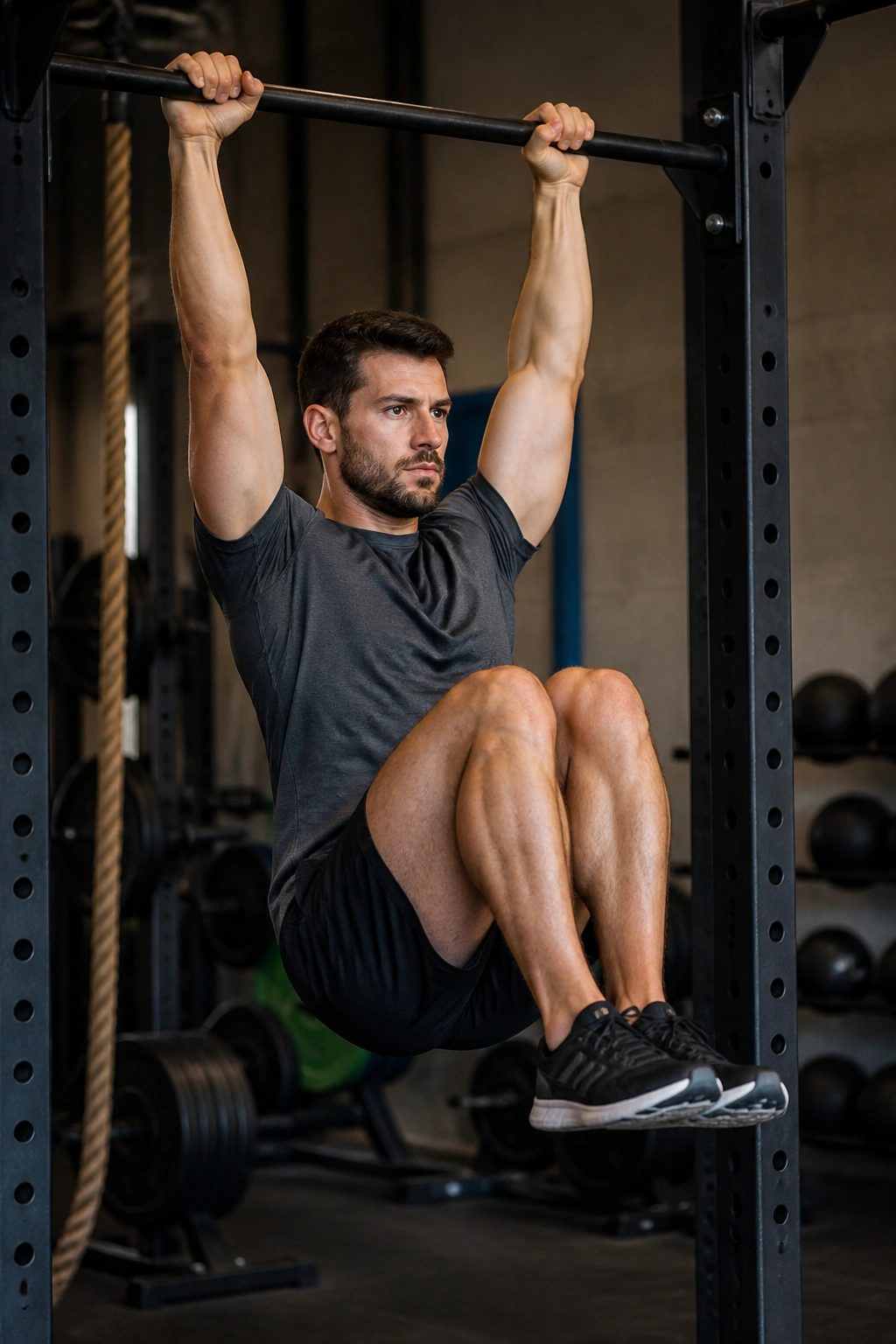
Hang from a bar and bring your knees up without swinging. That sounds simple. It is not.
The grip has to hold. The shoulders have to stay active. The abs have to curl the pelvis instead of letting the legs dangle up and down like a pendulum. If you swing, pause and reset. Better to do three clean reps than ten messy ones.
What to Feel
You should feel the lower abs finish the lift at the top. If all you feel is hip flexors and grip fatigue, slow the rep down and make the descent deliberate. A small knee tuck is a fine starting point. Straight-leg versions come later.
Six to 12 reps is a useful range. If the bar movement is too much, use captain’s chair knee raises until your control improves.
21. V-Up
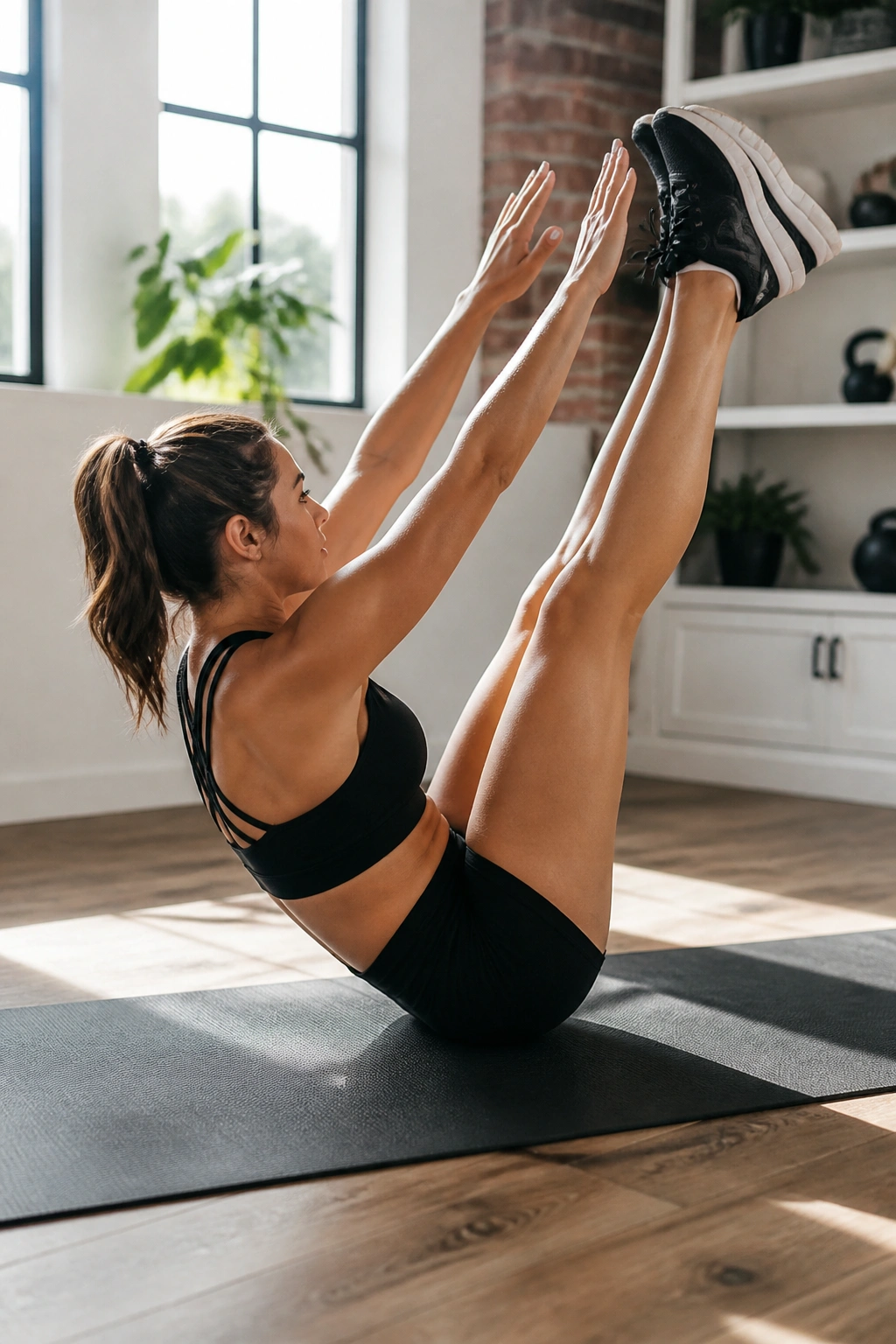
A V-up is a sharp, compact expression of core strength. It asks the upper and lower body to meet in the middle without turning into a flail.
Lie flat, extend your arms overhead, and lift your shoulders and legs at the same time. Reach toward your shins or toes, then lower with control. If a full V-up feels too much, bend the knees. That keeps the motion honest without forcing your low back to complain.
This one is more explosive than a hollow hold and more demanding than a basic crunch. That makes it a good bridge exercise. It’s also a nice test of how well you can create tension quickly.
Try 6 to 10 reps. If the movement gets jerky, shorten the range and slow down. A clean V-up is a small, tight shape — not a big throw.
22. Jackknife Sit-Up
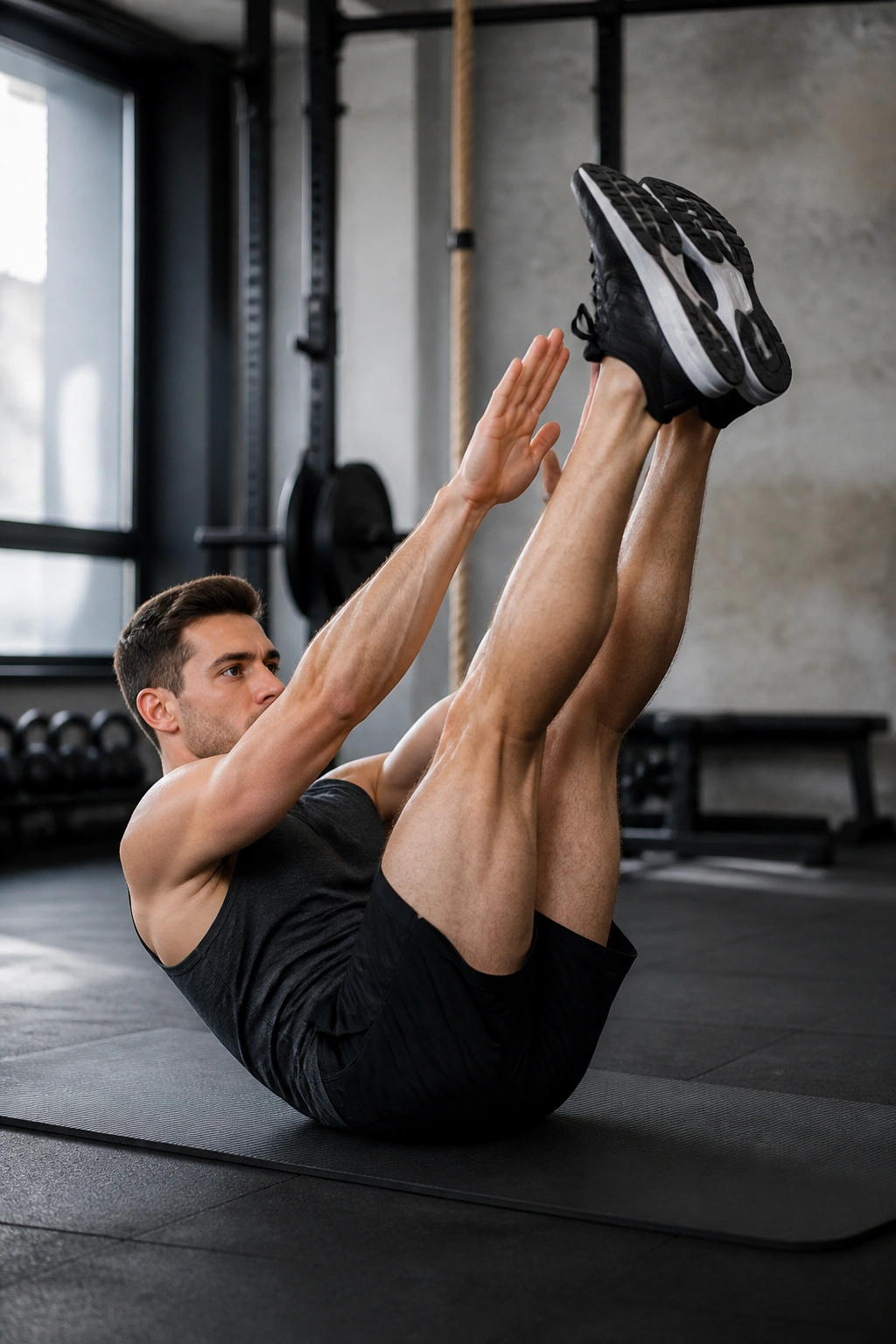
Jackknife sit-ups and V-ups overlap a bit, but they feel different in the body. I like jackknifes when I want a little more control and a little less drama.
Keep your legs straighter than a crunch but not so rigid that your lower back starts to pull weirdly. Lift the torso and legs together, then fold at the middle. The key is to avoid yanking with momentum. If your feet slam down, the rep has already gotten away from you.
This move works well for people who want a strong abdominal contraction without hanging from a bar or loading a machine. Eight to 12 reps can be enough if the quality stays high.
I’d rather see smooth, deliberate reps than a fast set that looks busy and does little. Control the descent. That’s where the abs earn the set.
23. Glute Bridge March
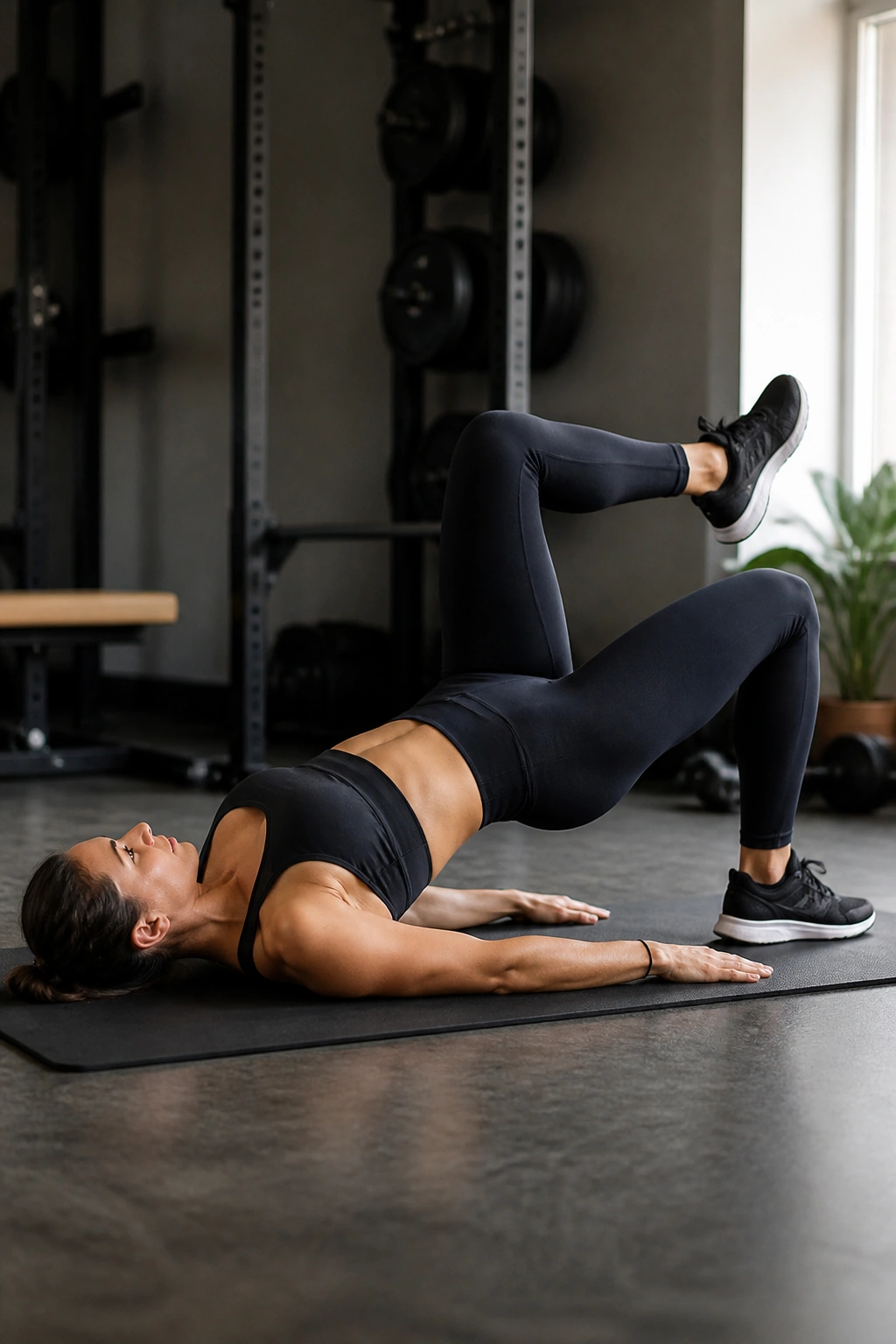
The glute bridge march doesn’t look like an ab exercise at first glance, which is exactly why it’s so useful.
Set up in a glute bridge, lift one foot a few inches, set it back down, then alternate. The hips should stay level the whole time. If one side drops every time you march, the trunk and glutes are not sharing the load cleanly.
This is a sneaky core move because it ties the abs to the pelvis and glutes at once. That connection matters when you walk, run, and lift with one leg planted. It also gives the hip flexors a job without letting them run the show.
Keep the reps controlled. Ten to 16 total marches is a solid starting point. If hamstrings cramp, bring the feet a little closer to your glutes and reset.
24. Bear Crawl
Bear crawls are messy in a useful way. They make your trunk work while your limbs move, which is a very real-life problem for the core.
Get on hands and knees, lift the knees a couple of inches off the floor, and crawl forward with opposite hand and foot moving together. Keep the back flat and the steps short. Big steps make the hips bob. Small steps make the abs stay honest.
Quick Bullet Check
- Knees hover 1 to 2 inches off the floor
- Hands land under shoulders
- Back stays flat
- Move 10 to 20 steps at a time
- Turn around and crawl back
Bear crawls are more than a conditioning drill. They build body control under movement. That’s a rare combo. Short, steady steps beat fast scrambling.
25. TRX Fallout
A TRX fallout is like a standing rollout with straps, and it can light up the front of your body fast.
Stand facing away from the anchor, hold the straps, and lean forward while keeping your ribs down and your body long. Then pull yourself back in. The farther you go, the harder it gets. Stay small at first. The angle will fool you if you rush it.
How to Get the Most From It
Use a slow 3-second reach out, a brief pause, and a controlled pull back. Six to 10 reps is a good target. If your shoulders shrug or your lower back arches, step in and reduce the angle.
I like this one because it teaches bracing while the body moves through space. That skill carries over to almost everything else. It also feels a little like a plank that woke up and decided to move around.
26. Turkish Get-Up
The Turkish get-up is a whole-body core workout hiding inside a mobility drill. It’s slow, awkward at first, and worth the time.
Lie on your back with a light kettlebell or dumbbell held straight up. Roll to your elbow, then hand, bridge your hips, sweep the leg, kneel, and stand. Reverse the pattern on the way down. Every stage asks for balance, shoulder stability, and trunk control.
This is not a rep-count exercise you rush through for sweat. It’s a pattern you learn piece by piece. I tell people to practice each stage before chasing a full set, because the floor transitions are where the mistakes live.
One to 3 reps per side is enough for many people. Use a light weight until the path feels smooth. Move like you’re placing each joint on purpose.
27. Medicine Ball Slam
A medicine ball slam is the loudest move on this list, and maybe the most satisfying.
Lift the ball overhead, brace your middle, and slam it down hard while exhaling. The point is not just force. The point is force with control through the trunk. Your abs should tighten before the ball hits, not after.
This is a good choice when you want a power move that still counts as core work. It trains the midsection to transmit force quickly, which is a useful skill if you play sports or just like exercises that don’t feel sleepy.
Try 8 to 15 slams, then rest enough to do the next set with snap. A soft, lazy slam is just an expensive drop. Make the whole body work.
28. L-Sit Tuck Hold
An L-sit tuck hold is the close cousin of the hollow hold, but the body angle changes everything.
Support yourself on parallel bars, floor blocks, or sturdy push-up handles, tuck the knees toward the chest, and lift the hips. Keep the shoulders down away from the ears and the trunk tight. If you can straighten one leg for a second, nice. If not, don’t force it.
This move builds compression strength, which is one of those old-school qualities that feels almost hidden until you try to stand up from the floor with control. It also smokes the lower abs in a way that is hard to fake.
Hold for 10 to 20 seconds. Short holds are fine. If the shoulders collapse, the set is over.
29. Copenhagen Side Plank
The Copenhagen side plank is the one on this list that tends to surprise people the most. The inner thigh gets involved fast, and the core has to keep up.
Place your top leg on a bench or box, support yourself on your forearm, and lift the hips. A bent-knee version is the smart place to start. A straight-leg version is tougher, and it asks a lot from the adductors and obliques at the same time.
The first few seconds tell you everything. If the hips dump forward, shorten the lever. If your lower side collapses, keep the hold shorter and cleaner. This is not an exercise to rush.
Use 10 to 20 seconds per side. It’s a good reminder that core strength is not only about abs. Your sides and groin matter too.
30. Renegade Row
Renegade rows combine pulling strength with anti-rotation core work, and that makes them a strong finishing move.
Set up in a plank with dumbbells under your hands, spread your feet a little wider than shoulder-width, and row one weight at a time without letting your hips twist. The row itself is simple. The hard part is staying square while one arm moves and the other side holds the floor.
What Makes It Different
Unlike a standard row, this drill asks your trunk to resist rotation under load. That makes the abs and obliques do real work while the back and arms pull. It’s one of the few moves that can feel like a strength exercise and a core drill in the same rep.
Try 6 to 10 rows per side with a controlled pause at the top. If your lower back sags, raise your hands onto a bench or drop the weight. The goal is stillness under load, not wobble.
Final Thoughts
The best core workouts are the ones that do more than make your stomach burn. They teach your trunk to hold shape, resist twisting, and stay useful when your arms and legs are busy.
A smart mix usually starts with one hold, one anti-rotation drill, one side-stability move, and one dynamic exercise. That’s enough. More is not always better, and a messy session with 12 random moves often does less than a short, clean one.
Pick four from this list, run them with good form, and pay attention to what your body tries to cheat on. That tells you where you need work next.
