



Floor crunches aren’t sacred. If your knees hate the carpet, your gym is packed, or you just want core work that feels more like real life than gym class, core workouts without floor time are the easy win.
The trunk does more than make a six-pack look good in a mirror. It keeps your ribs over your pelvis, stops you from twisting when a load pulls sideways, and helps your spine stay steady while your arms and legs do the actual moving. That’s why carries, presses, chops, hinges, and one-leg drills do such a good job here.
I keep coming back to that because people still chase burn over function. A set can look calm and still wreck your midsection. A suitcase carry, for instance, can feel almost too easy for the first 8 seconds, then your torso starts trying to tip and your obliques suddenly have a job. Quiet work. Mean work.
So use the moves below as building blocks. Pick the ones that match your equipment, stack them into short circuits, and keep the reps clean enough that your body stays tall instead of folding in half.
1. Standing Marches with a Tall Spine
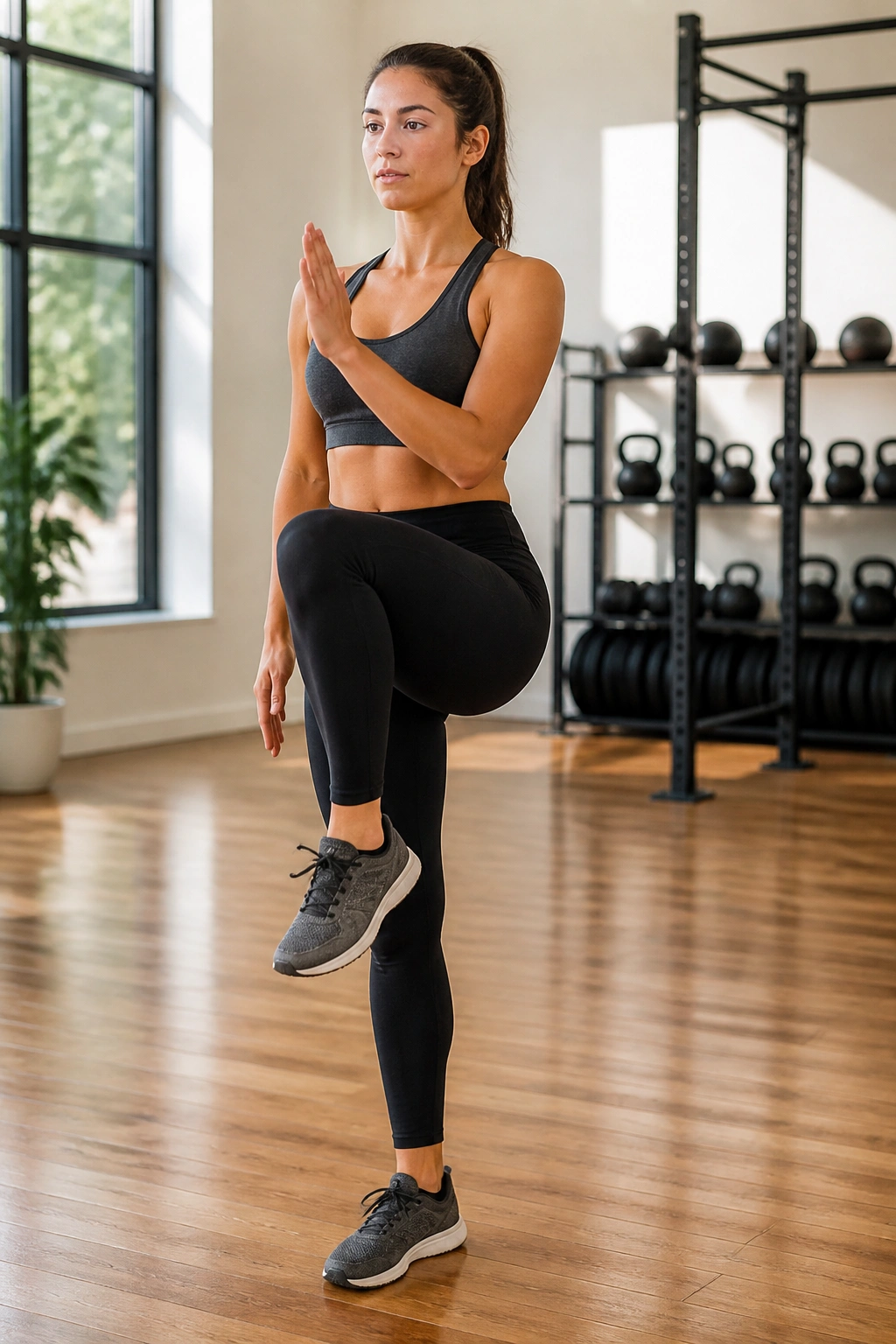
Standing marches look almost too simple to count, which is exactly why they work. You’re teaching your core to hold position while one hip flexes, one foot leaves the ground, and the rest of you refuses to wobble.
Set your feet hip-width apart, stand tall, and lift one knee to about hip height without leaning back. Exhale as the knee comes up, then place the foot down softly and repeat on the other side. Three sets of 20 to 40 total steps is enough for most people, and you’ll feel it in the deep abs before your legs get bored.
What to watch for
- Don’t throw your shoulders backward.
- Don’t slam the lifted foot down.
- Keep the standing leg active, not locked.
- If your low back starts arching, shorten the knee lift.
This one is a good opener because it shows you what “bracing” actually feels like before you add weight. No drama. Just control.
2. Suitcase Carries
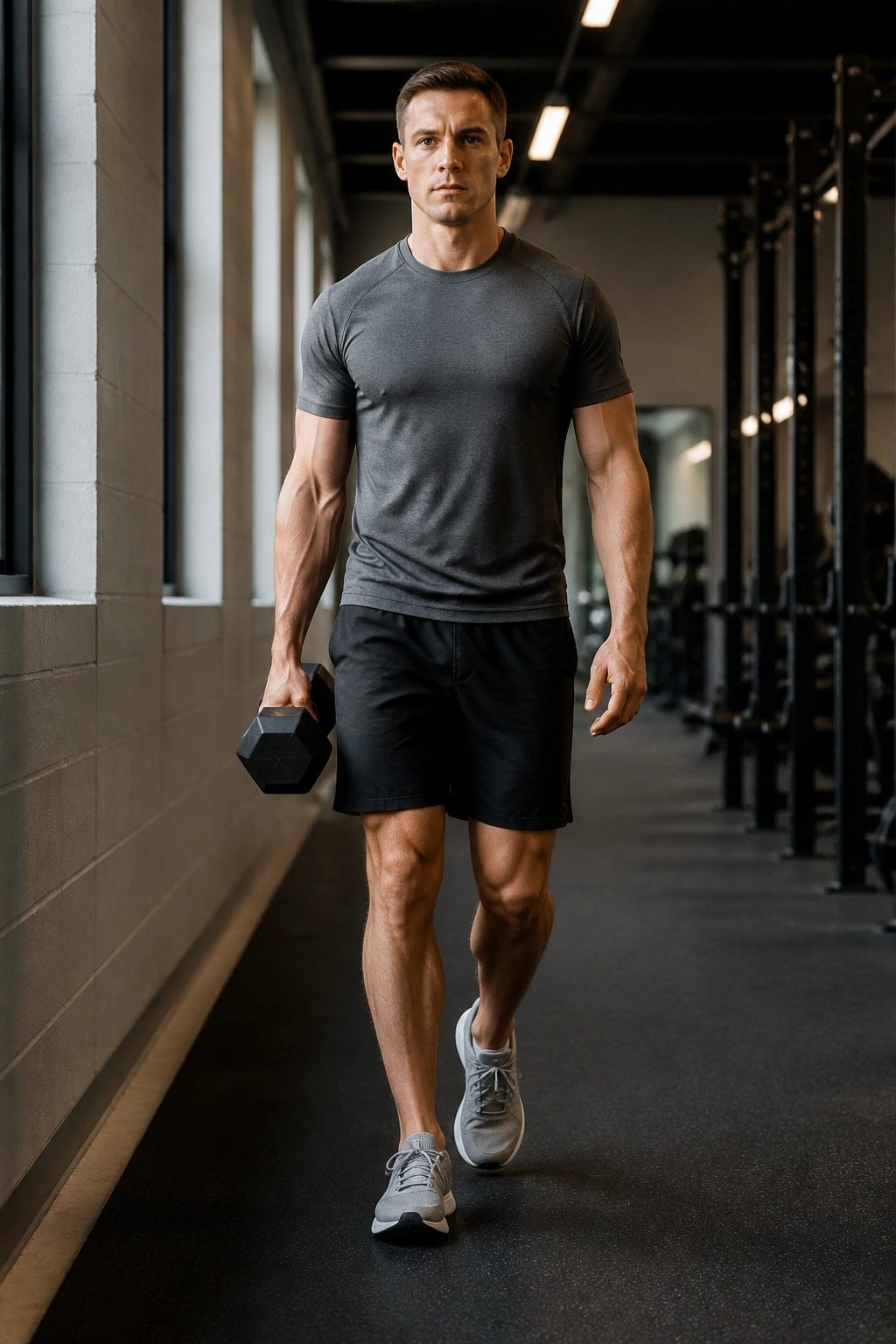
Suitcase carries are one of those exercises that look ordinary and feel rude. A single dumbbell or kettlebell in one hand creates a sideways pull, and your job is to stop your torso from tilting toward the weight.
Walk 20 to 40 yards with the load in one hand, shoulder relaxed but not slumped, and ribs stacked over your hips. I like this drill because it tells the truth fast. If your side bends, shrugs, or leans, the weight is exposing something useful.
How to load it
Start lighter than your ego wants. A load you can carry for 20 to 30 seconds with a clean posture is plenty. If your free hand starts drifting away from your body like a balance pole, the bell is too heavy or your steps are too long.
A suitcase carry is especially good when you want anti-lateral flexion work, which is a fancy way of saying your core resists side-bending. That matters when you’re carrying groceries, a child, a tool bag, or anything else that doesn’t sit neatly in the middle.
3. Farmer’s Carries
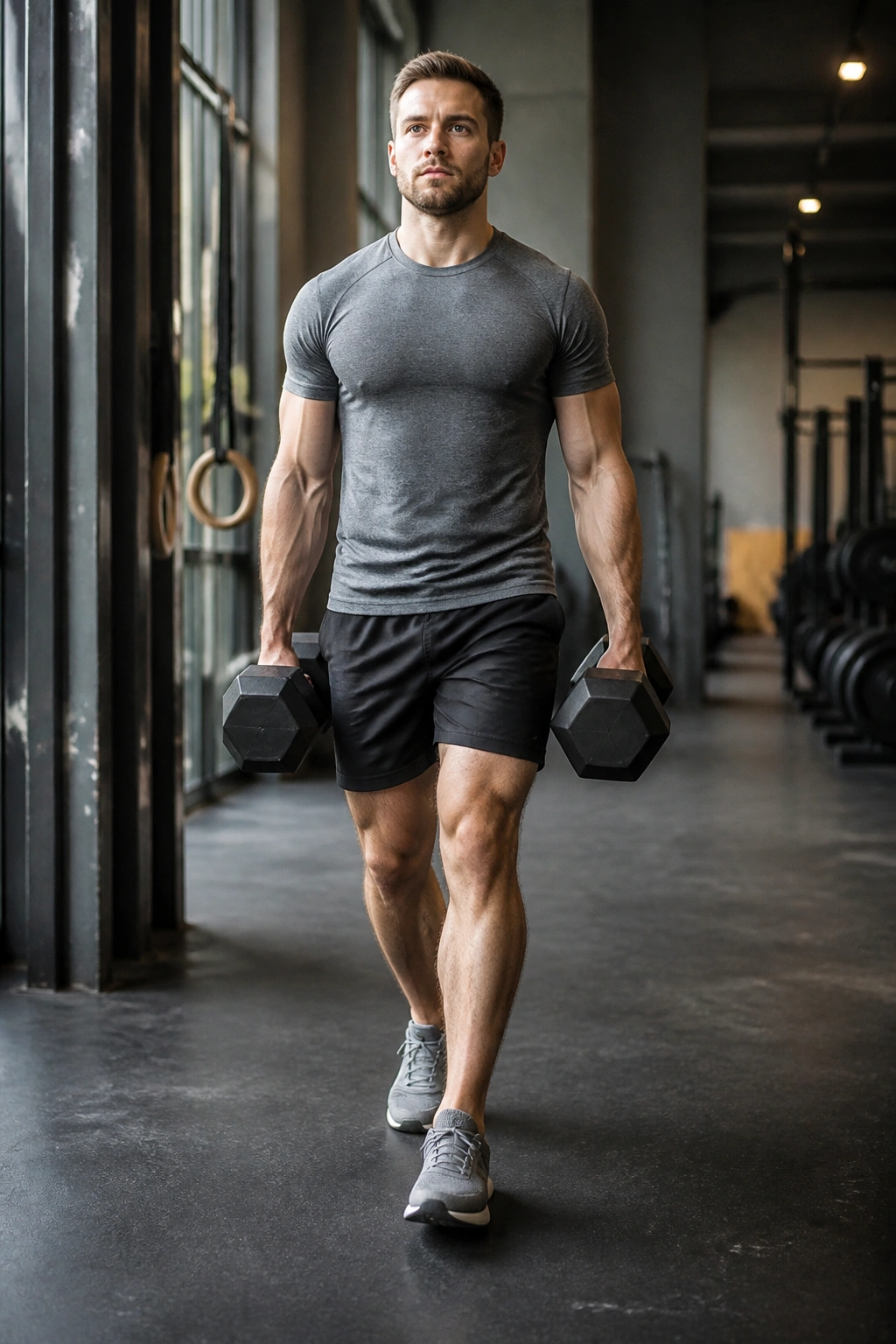
Two weights, two hands, one job: don’t collapse. Farmer’s carries are the cleanest way I know to train the whole trunk without touching the floor, because you need to stay tall while both sides get loaded at once.
Hold a dumbbell or kettlebell in each hand and walk in a straight line for 20 to 40 yards. Keep the steps short and steady. Let the arms hang, but keep the shoulders quiet. If you clench your jaw and hunch up like you’re trying to hide from weather, the load is probably too much.
Quick coaching points
- Keep the neck long.
- Breathe behind the brace.
- Turn around before your posture gets sloppy.
- If your grip fails first, that’s not a problem. It still counts.
Farmer’s carries are less sneaky than suitcase carries, but they’re still excellent. They’re the kind of drill you can repeat often without wrecking yourself, which makes them easy to build into a weekly routine.
4. Front Rack Carries
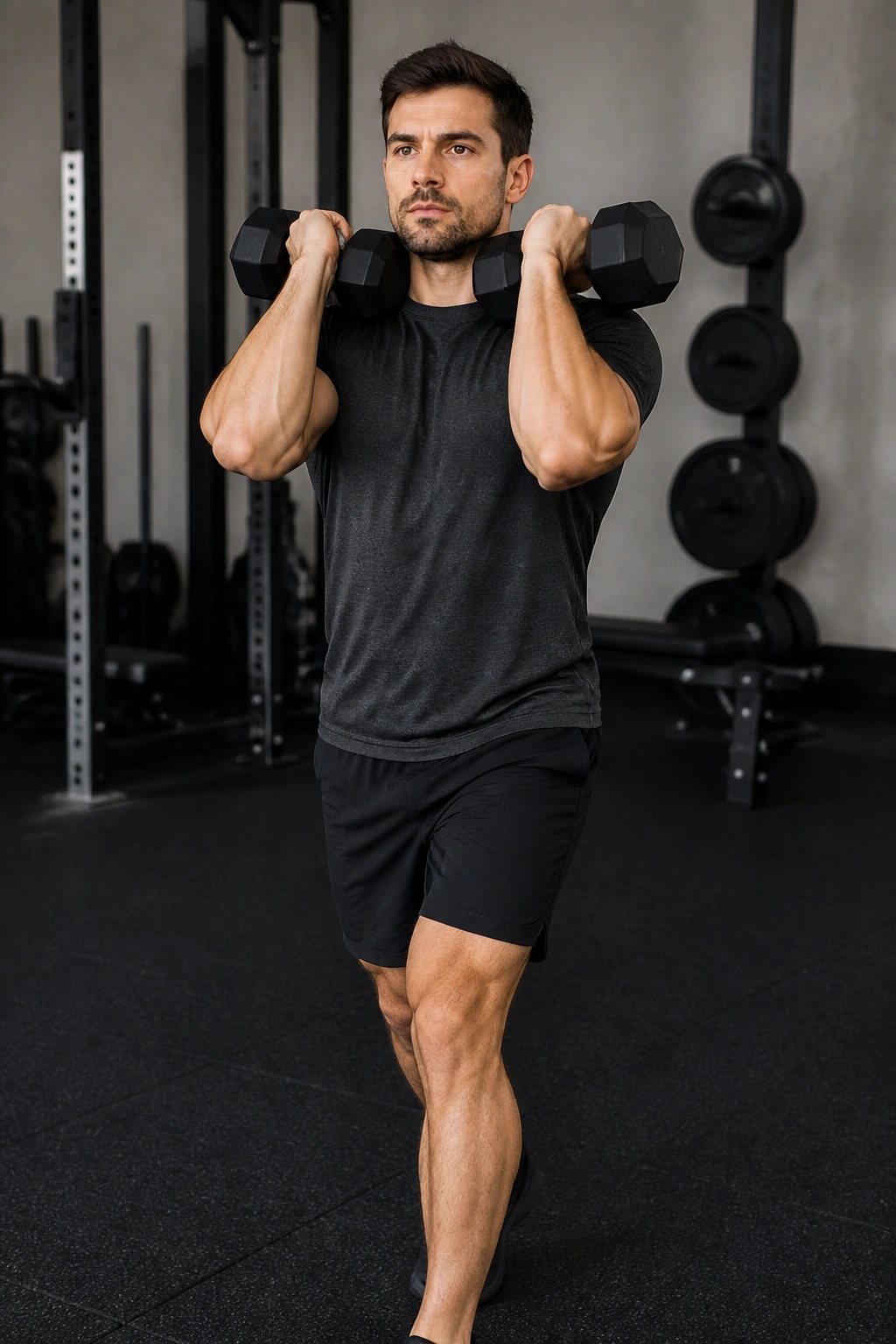
Front rack carries are ugly in the best possible way. The weight sits at your shoulders or upper chest, and that front-loaded position makes your abs work hard to keep your rib cage from flaring open.
Use one or two kettlebells, or a pair of dumbbells held at shoulder height. Stand tall, elbows slightly in front of the body, and walk for 15 to 30 seconds at first. If your lower back arches or your ribs pop forward, the load is too aggressive.
The front rack position is excellent for people who want more than side-to-side stability. It asks for upper-back control, clean breathing, and a torso that doesn’t turn into a banana. That sounds harsh, but it’s honest.
You’ll feel this one in the front of the abs and deep around the rib cage. Not flashy. Very useful.
5. Overhead Carries
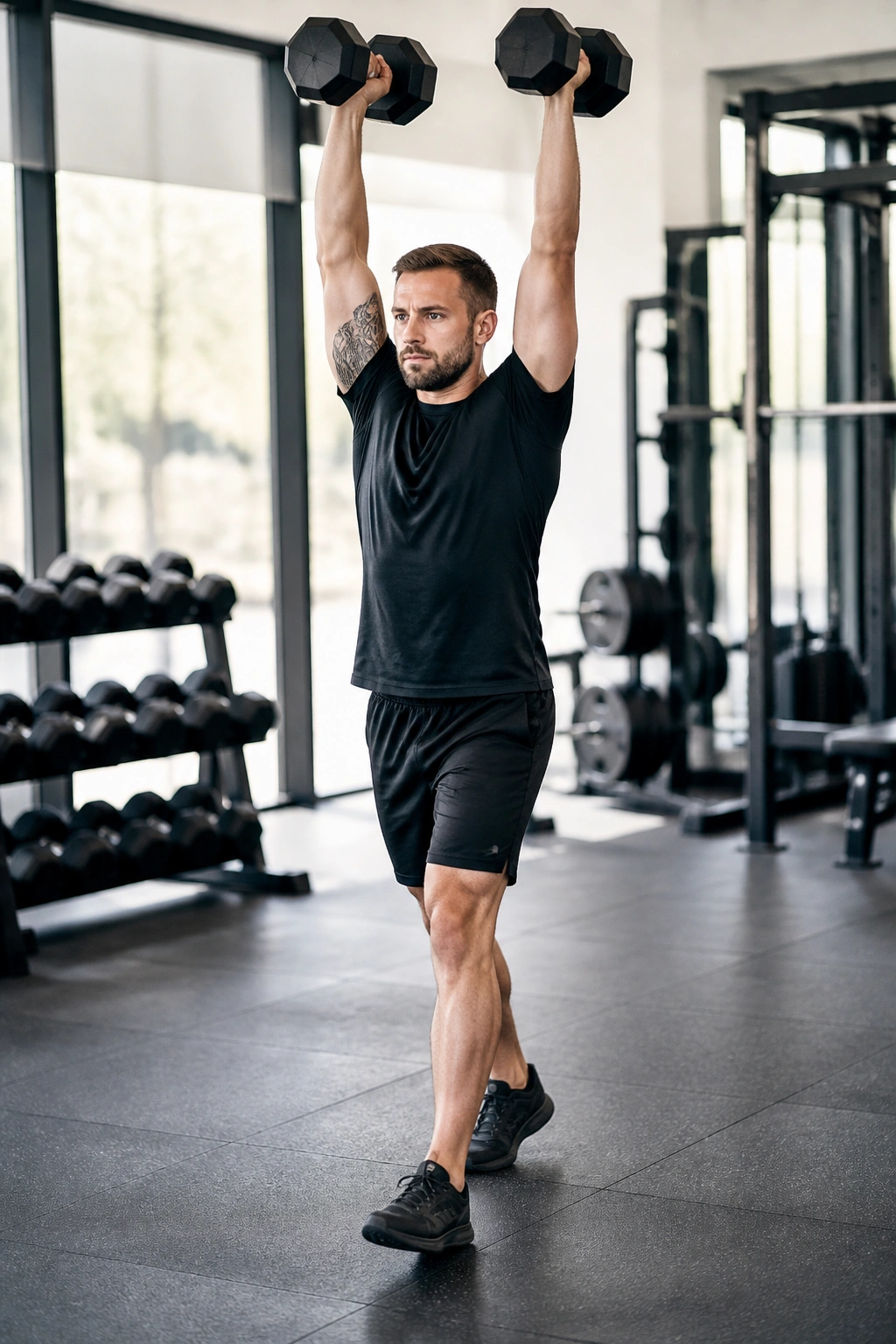
Overhead carries are where the core starts acting like a pillar instead of a flexing machine. Once the weight goes overhead, your abs, obliques, and upper back all have to keep the whole stack from drifting.
Press one or two weights overhead, lock in the elbow without hyperextending it, and walk slowly. Keep your ribs down, glutes on, and eyes level. A clean set usually starts at 10 to 20 seconds per side if you’re using a single-arm variation.
This drill is more demanding than most people expect. The shoulder has to stay happy, yes, but the bigger issue is the trunk. If you lose the rib cage and start leaning back, the carry stops being a core exercise and becomes a lower-back complaint waiting to happen.
A light bell done well beats a heavy one done badly. Every time.
6. Waiter Carries
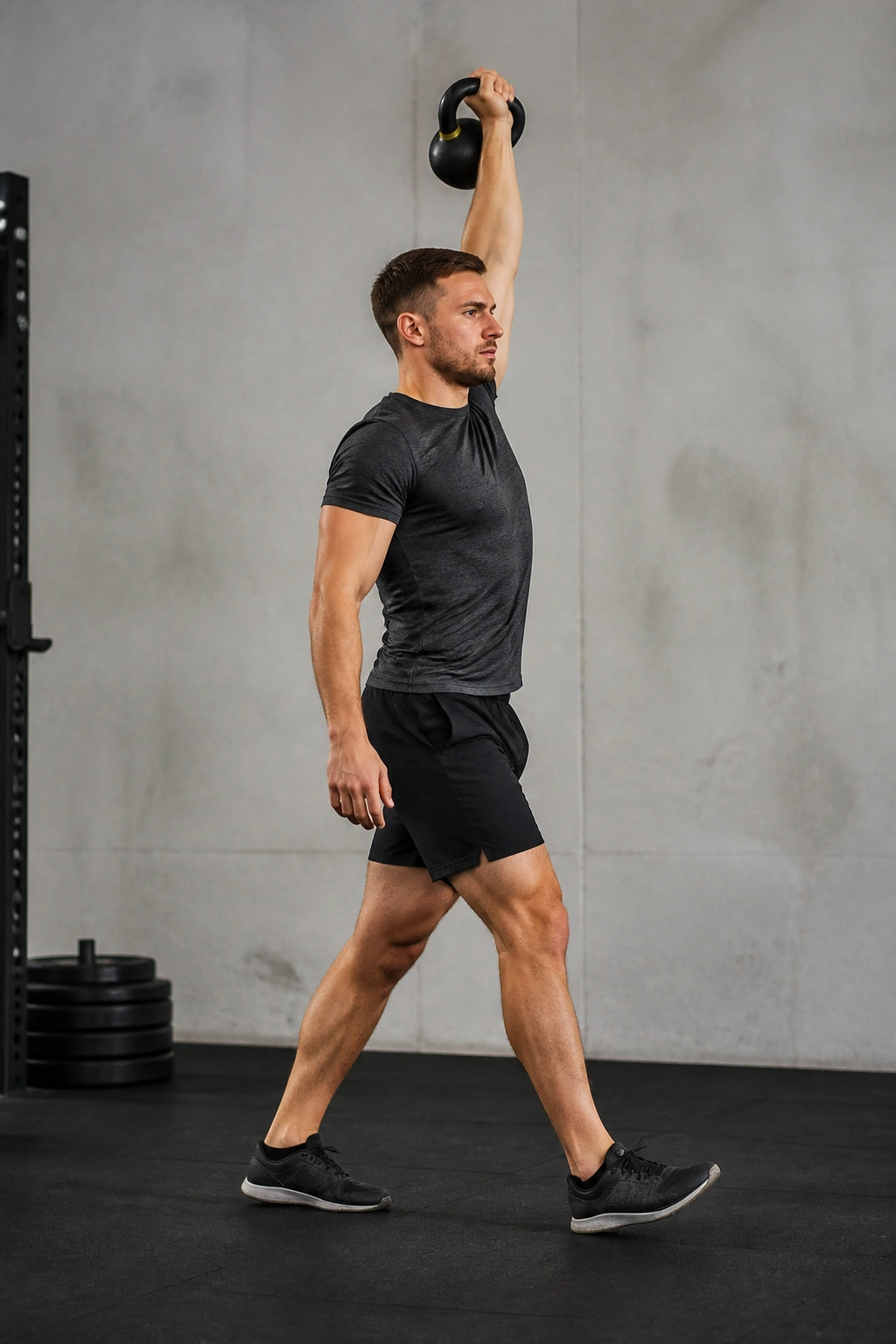
A waiter carry is basically an overhead carry with one weight in one hand, and it has a nastier side-to-side challenge than the two-hand version. One arm goes up, the other side of the trunk has to keep the whole thing from tipping over.
Stand tall, press the dumbbell or kettlebell overhead, and walk as if you’re balancing a tray full of water you’d rather not clean up. 15 to 25 seconds per side is a strong starting point. Keep the wrist stacked over the shoulder and don’t let the loaded shoulder creep toward your ear.
Why it works so well
The load sits off-center, so your obliques and deep stabilizers have to fight rotation and side bend at the same time. That makes it a strong choice if you want a more athletic feel than straight-up crunch work.
How to keep it clean
- Squeeze the glute on the loaded side.
- Keep the free hand loose.
- Walk slowly enough to stay stacked.
- Stop before the elbow softens.
I reach for this one when I want a compact core drill that still feels like real-world movement.
7. Pallof Presses
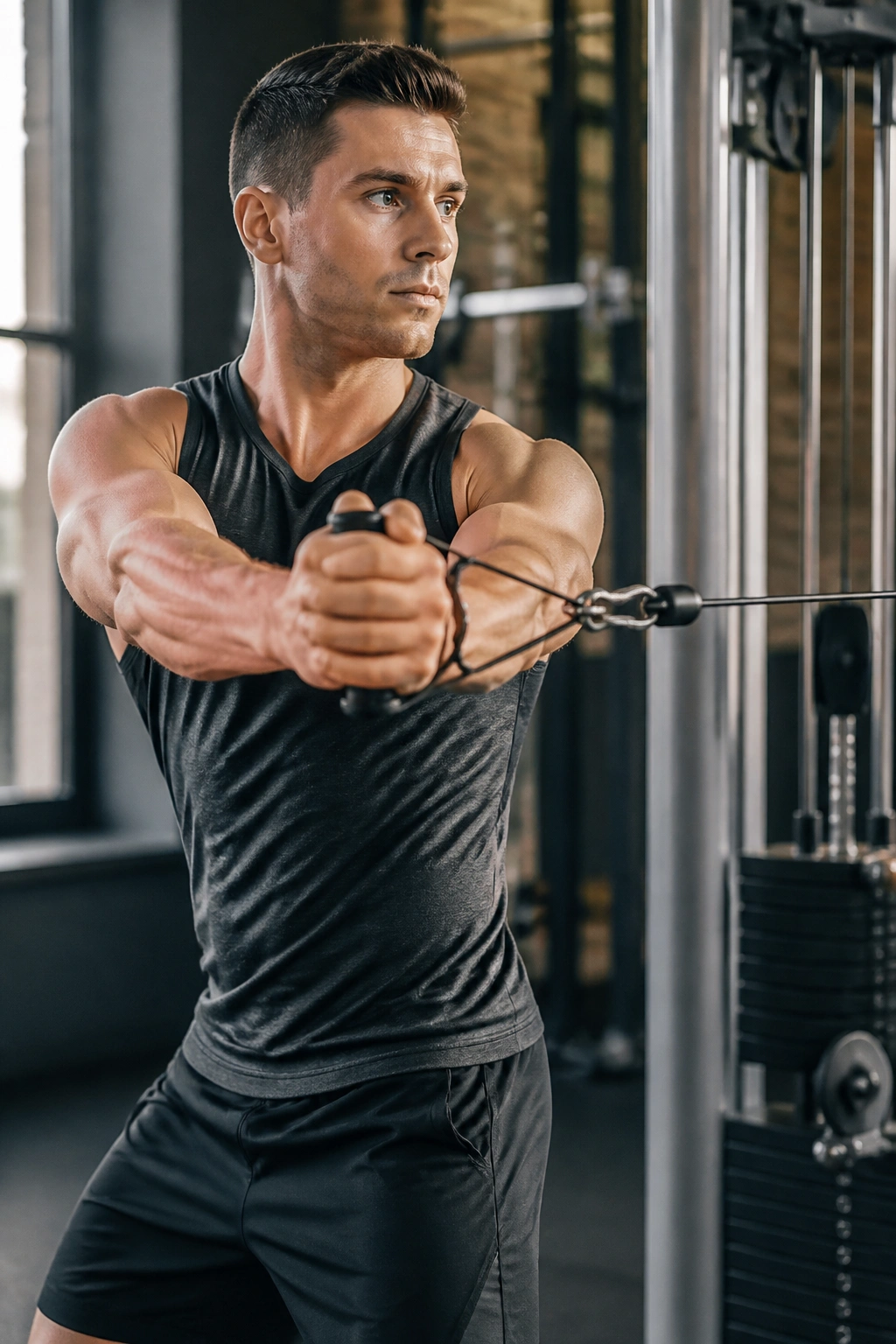
A Pallof press is one of the best no-floor core exercises because it trains the body to resist twisting instead of chasing movement. That sounds subtle. It isn’t.
Anchor a cable or band at chest height, stand sideways to it, bring the handle to your sternum, and press it straight out until your arms are long. Hold for a beat, then bring it back. 8 to 12 slow reps per side works well, or use 20-second holds if you like more tension and less motion.
What you should feel
The work should show up along the sides of the abs, around the lower ribs, and sometimes deep near the pelvis. If you mostly feel your shoulders, the load is probably too far away or the stance is too loose.
The nice thing about this move is that it scales well. Beginners can use a light band and a split stance. Stronger people can step farther from the anchor and make the band pull harder without changing the pattern.
Pallof presses look plain. They are not plain to your trunk.
8. Pallof Press Step-Outs
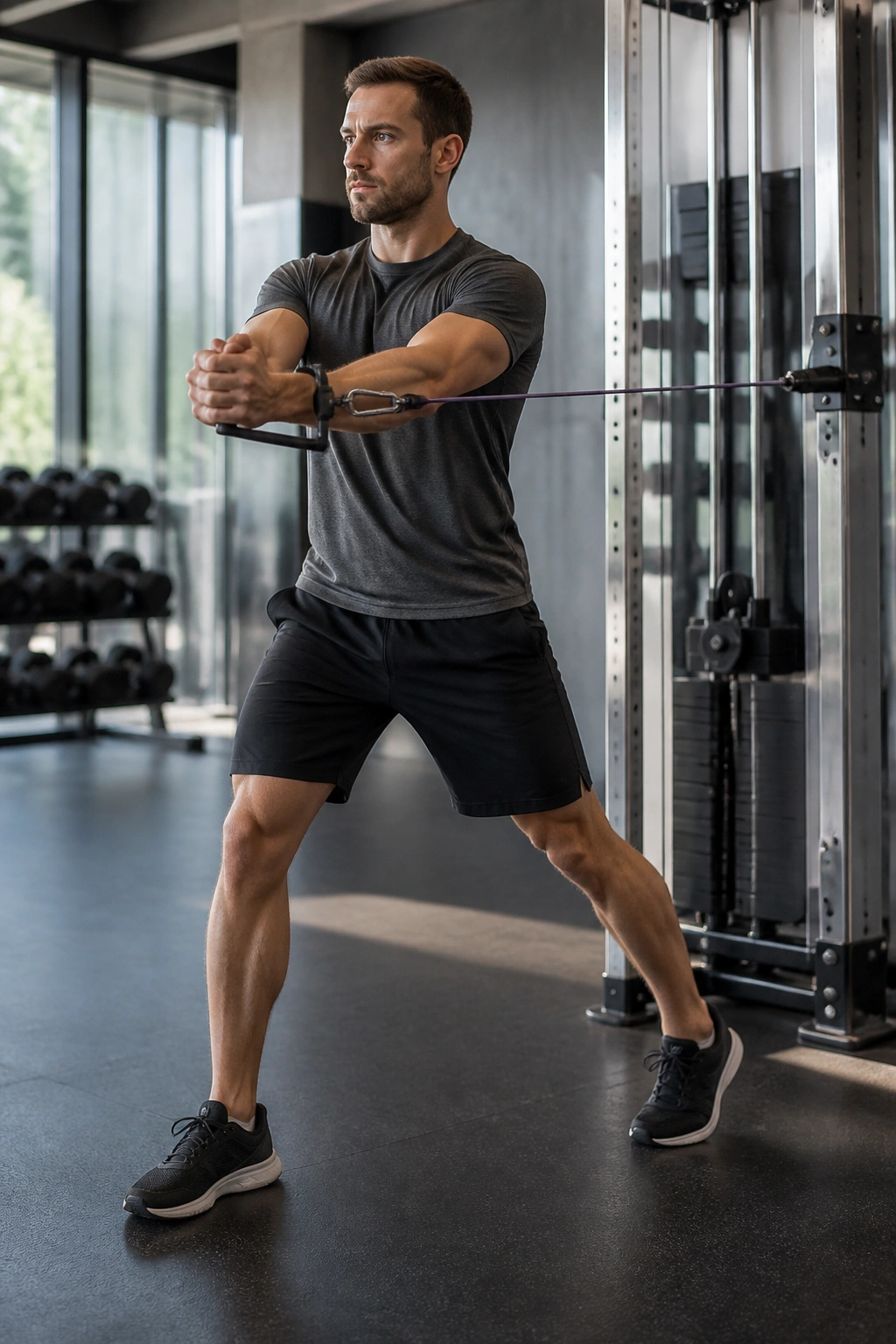
Why do step-outs matter if the regular Pallof press already works? Because the extra footwork makes your core chase balance while still refusing rotation, and that’s a more honest test.
Set up like a normal Pallof press, press the handle straight out, then take one small step away from the anchor and return. Keep the arms from drifting, keep the ribs from flaring, and keep the hips from swinging around to cheat. Six to ten controlled step-outs per side is enough to make the point.
This is a sneaky drill. The upper body wants to help more than you’d expect, and the lower body wants to wobble. Stay calm and make the movement small. Bigger is not better here.
How to use it
- Pair it with a carry.
- Use it as a warm-up before rows or presses.
- Slow the return if you want more trunk work.
The best version of this exercise feels boring for the first few reps and irritating by the end. That’s usually a good sign.
9. Standing Cable Chops
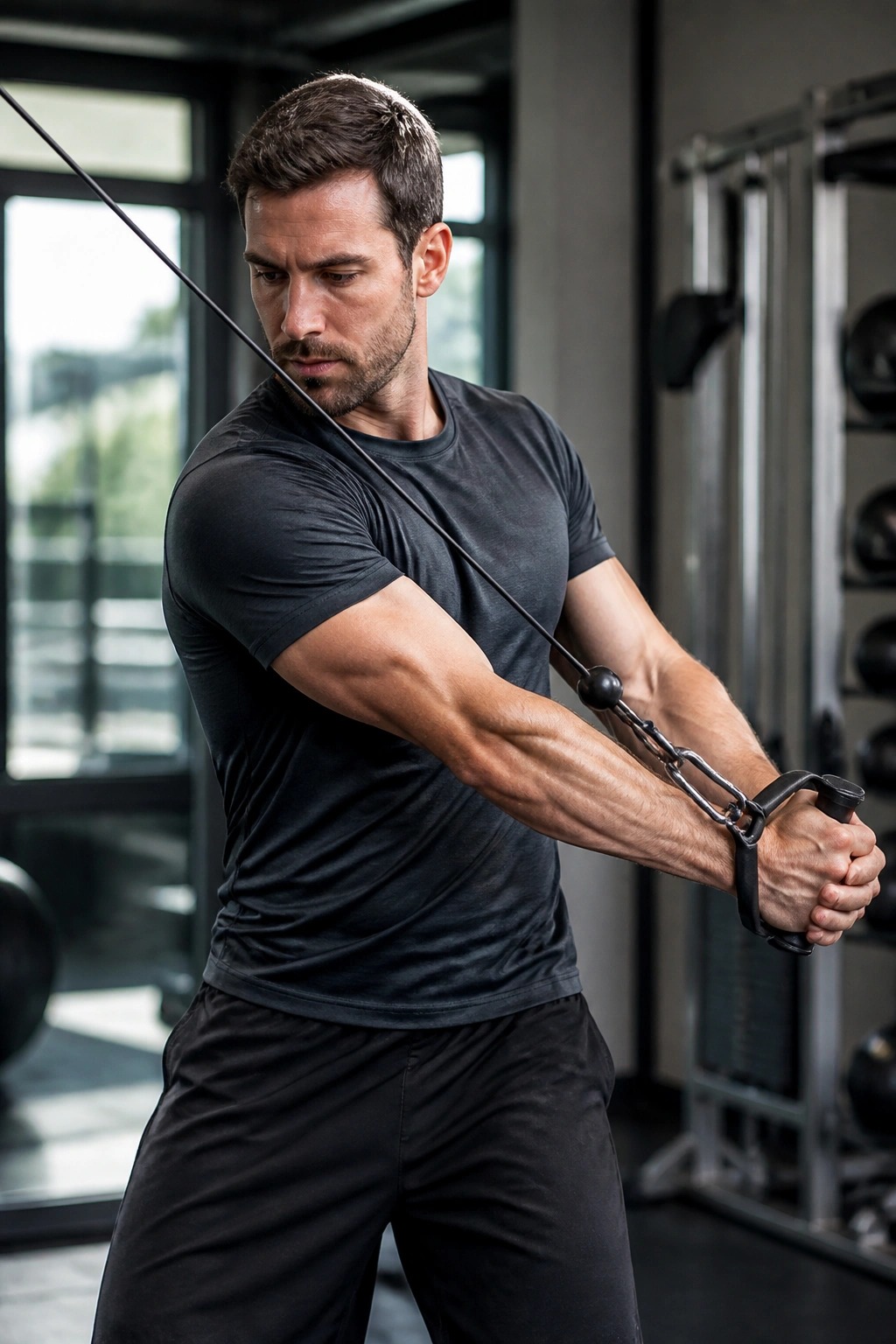
Standing chops are a little more dramatic than carries, but they still live in the no-floor camp and they train the core to control force across the body. From high to low, you’re guiding the weight through a diagonal path while your torso stays organized.
Set a cable at shoulder height or above, stand sideways, and pull across your body toward the opposite hip. The hips can turn a little, but not so much that the move turns into a full spin. 8 to 10 reps per side is a fine place to start.
The key detail is the finish. Don’t yank the handle. Let the abs and obliques control the end of the range, then return with the same control on the way back.
A chop feels best when you exhale through the effort. That breath keeps the ribs from flaring and makes the trunk do the work you actually want.
10. Standing Cable Lifts
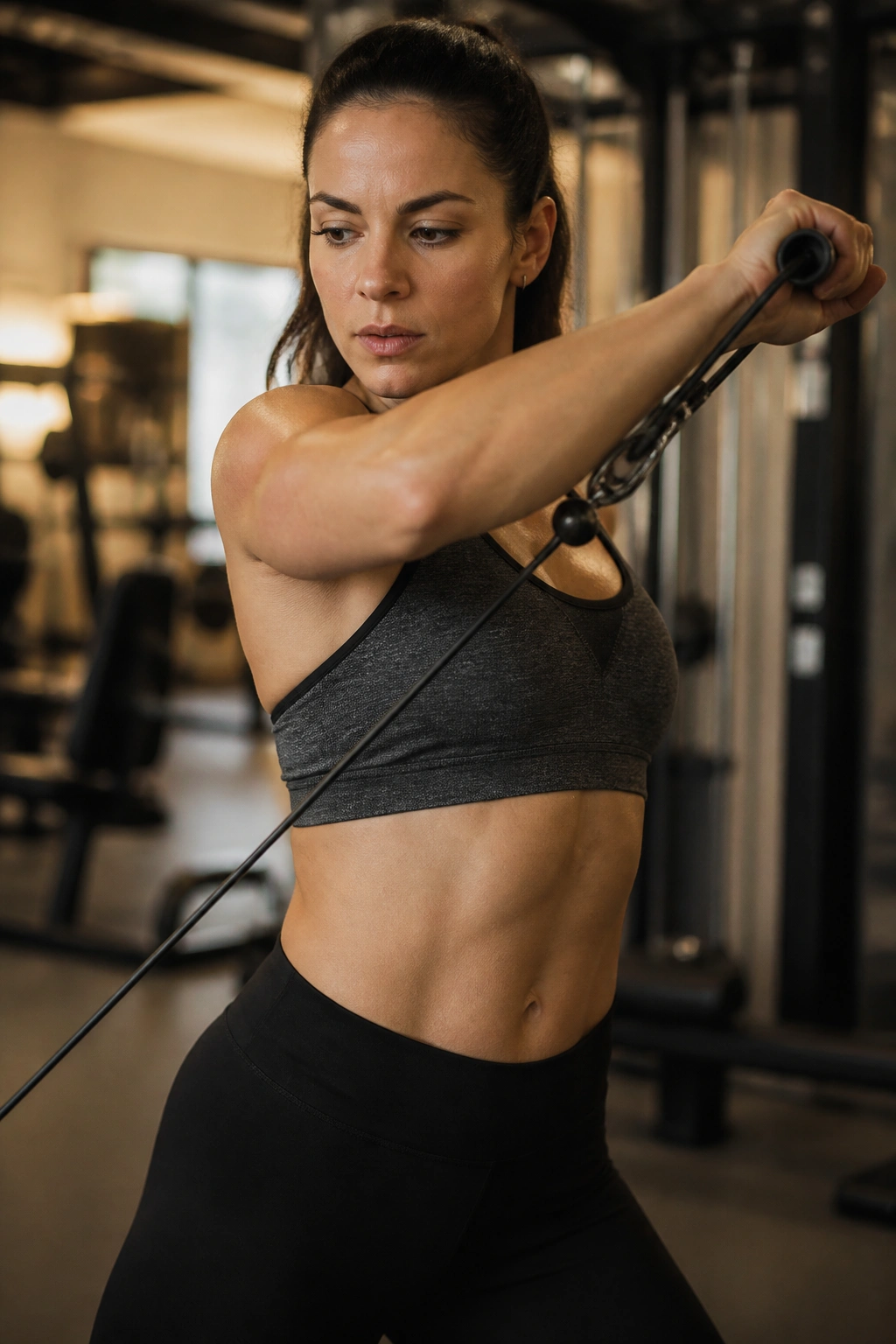
A cable lift is the diagonal cousin of the chop, and I like it because the angle changes the feel enough to matter. Instead of pulling from high to low, you move from low to high, which asks the core to manage a different line of force.
Anchor the cable low, stand sideways, and lift it across the body toward the opposite shoulder. Keep the pelvis square and avoid turning it into a big twisting dance. 8 to 12 controlled reps per side is a solid set.
If chops feel too easy for your upper body or too heavy in the arms, lifts often expose the trunk better. You have to stay organized while the load rises across your body, and that upward angle tends to light up the side body in a cleaner way.
No need to rush. Slow, deliberate reps tell you more than fast ones ever will.
11. Wall Press Marches
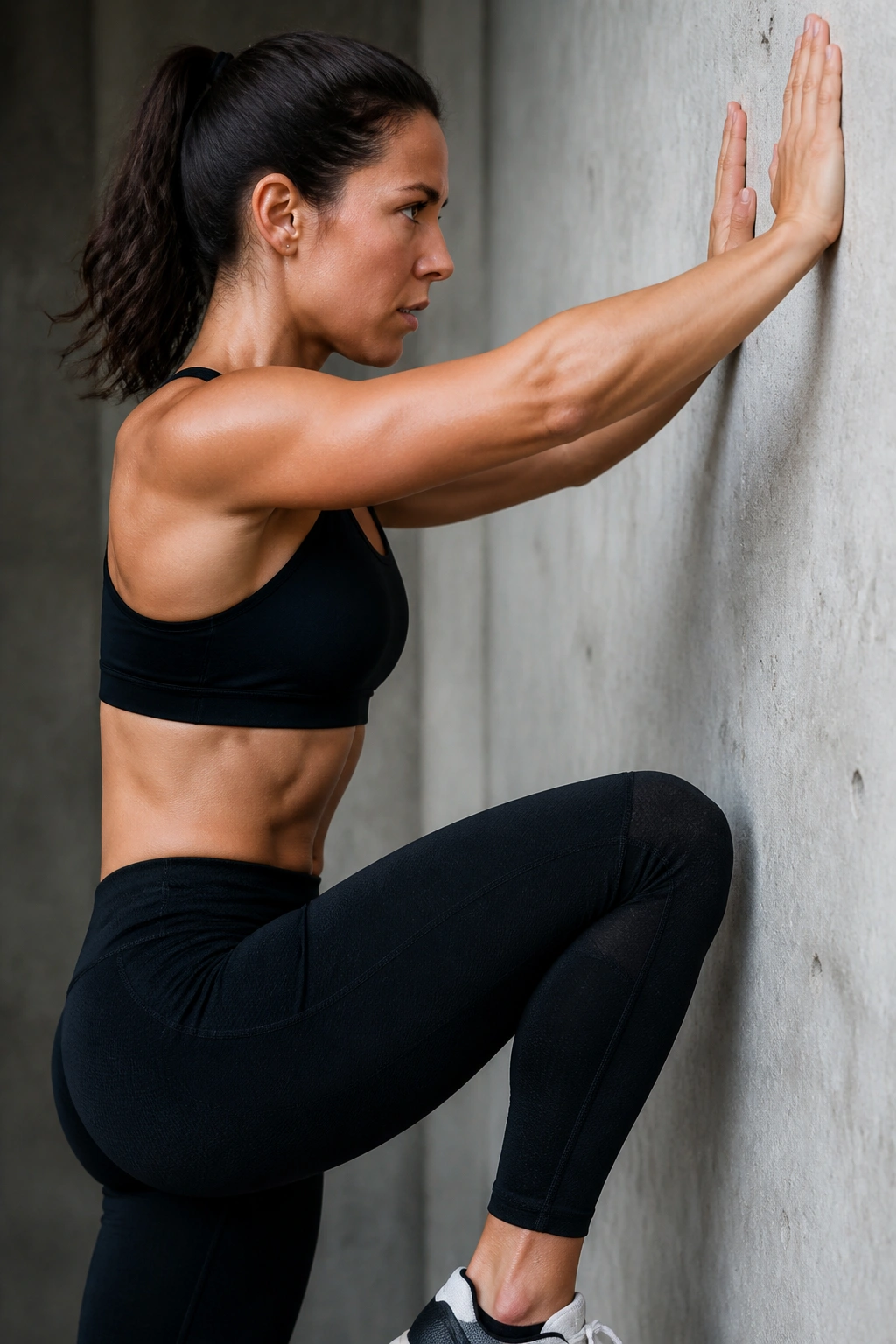
Push your forearms into a wall and suddenly a tiny knee lift becomes a core drill. That’s the beauty of wall press marches: the wall gives you feedback, and the marching leg forces your trunk to keep everything in place.
Stand facing a wall, feet a short step away from it, forearms pressed firmly into the surface. Keep the ribs down, then lift one knee a few inches and lower it. Alternate sides for 20 to 30 total marches. The harder you press the wall, the more your abs have to hold the rest of you steady.
What to feel
- The front of the abs.
- The low ribs.
- The hip flexors, but not as the only thing working.
If your lower back takes over, move your feet a little closer to the wall and reduce the knee height. The drill should feel braced, not sloppy.
I like this one for beginners because the wall teaches posture without making the move complicated. It’s friendly. And still hard.
12. Wall Sit with an Overhead Reach
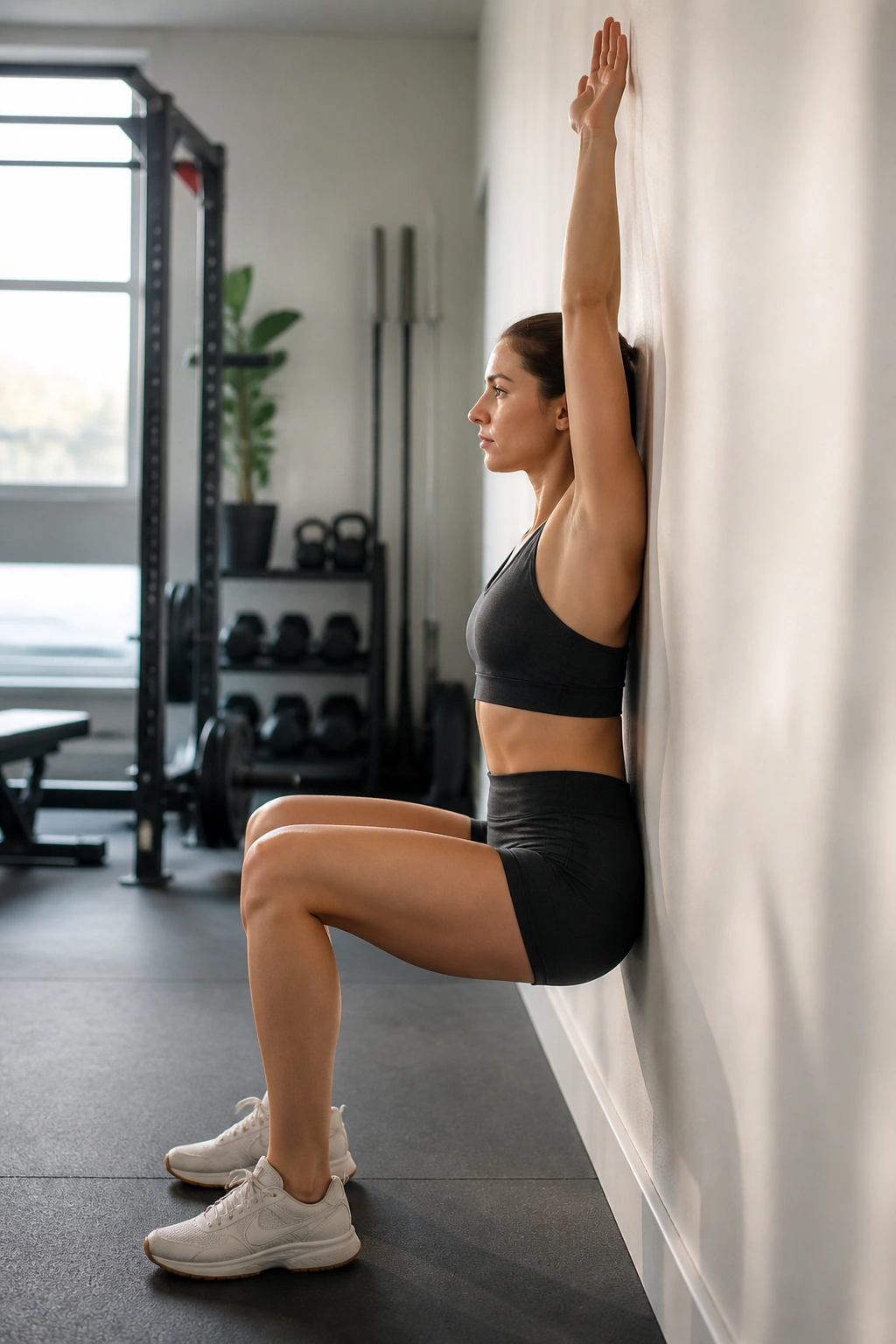
A wall sit usually gets filed under leg work, but add an overhead reach and it becomes a trunk exercise in disguise. The body has to keep the rib cage from flaring while the thighs burn and the shoulders stay up.
Sink into a wall sit with the knees roughly at 90 degrees, then reach one arm overhead or hold a light weight overhead with both hands. Stay there for 20 to 40 seconds. If the low back arches hard against the wall or the ribs pop forward, cut the reach shorter.
This one sneaks up on people. The legs complain first, which is a useful distraction, but the core is doing its own quiet job to keep the torso stacked while the body is under tension.
Use a blank wall and no equipment if you want a bare-bones version. Add a light plate or dumbbell when that becomes too easy.
13. Offset Goblet Squats
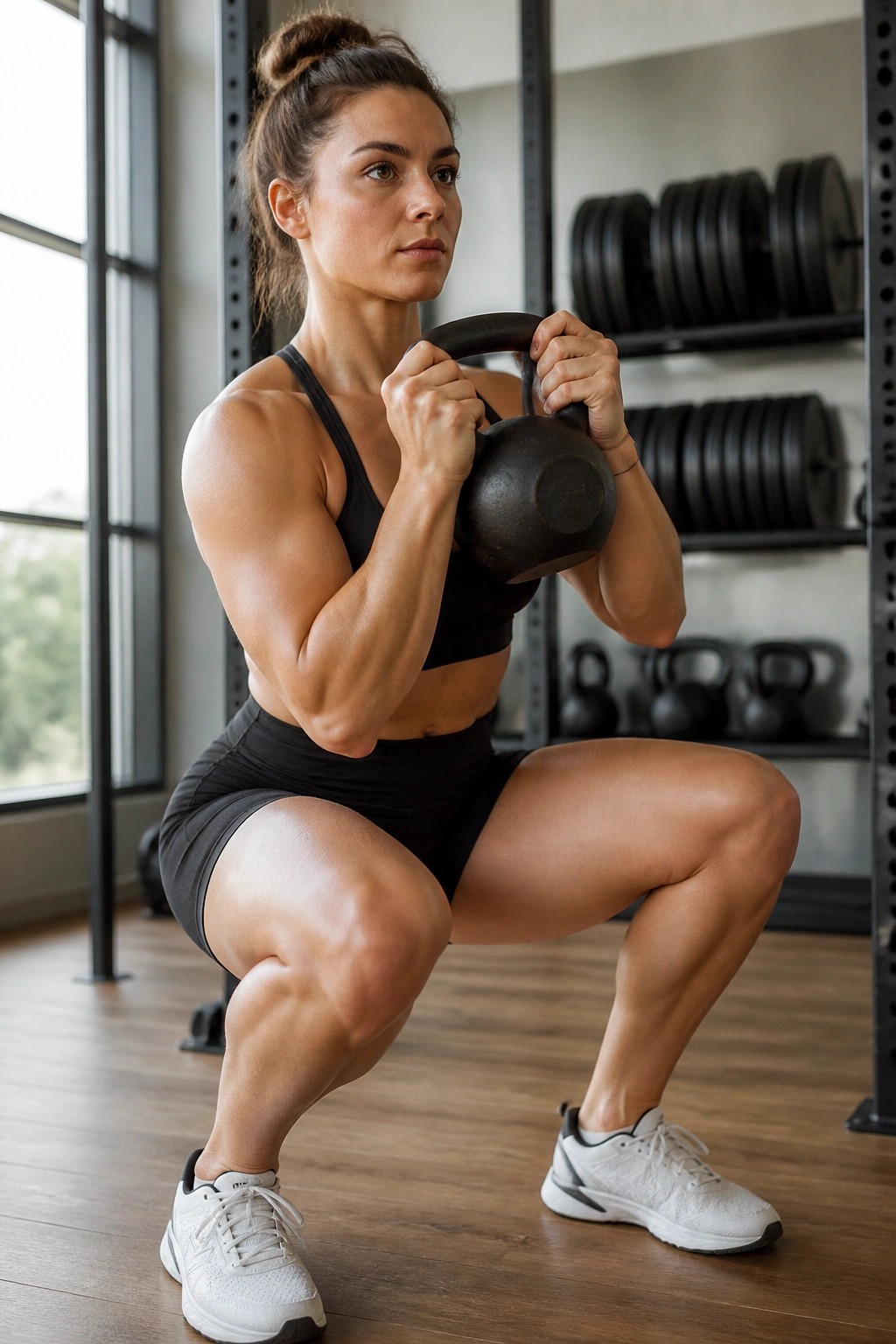
Hold a kettlebell or dumbbell slightly off-center, and a squat becomes a core test fast. The offset load wants to pull you sideways, so the trunk has to keep the chest from drifting and the hips from caving toward the weight.
Set your feet about shoulder-width apart, hold the weight at one side of the chest, squat down under control, and stand back up without leaning. 6 to 10 reps per side is enough to make this feel very real.
A lot of people think squats are only about legs. Not even close. Once the weight sits off-center, your obliques and deep midsection have to organize the whole rep.
Watch for this
If your torso twists toward the weight, the bell is too heavy or the stance is too narrow. Keep the chest quiet and let the legs do the obvious work while the core does the less obvious work.
14. Single-Leg Romanian Deadlifts
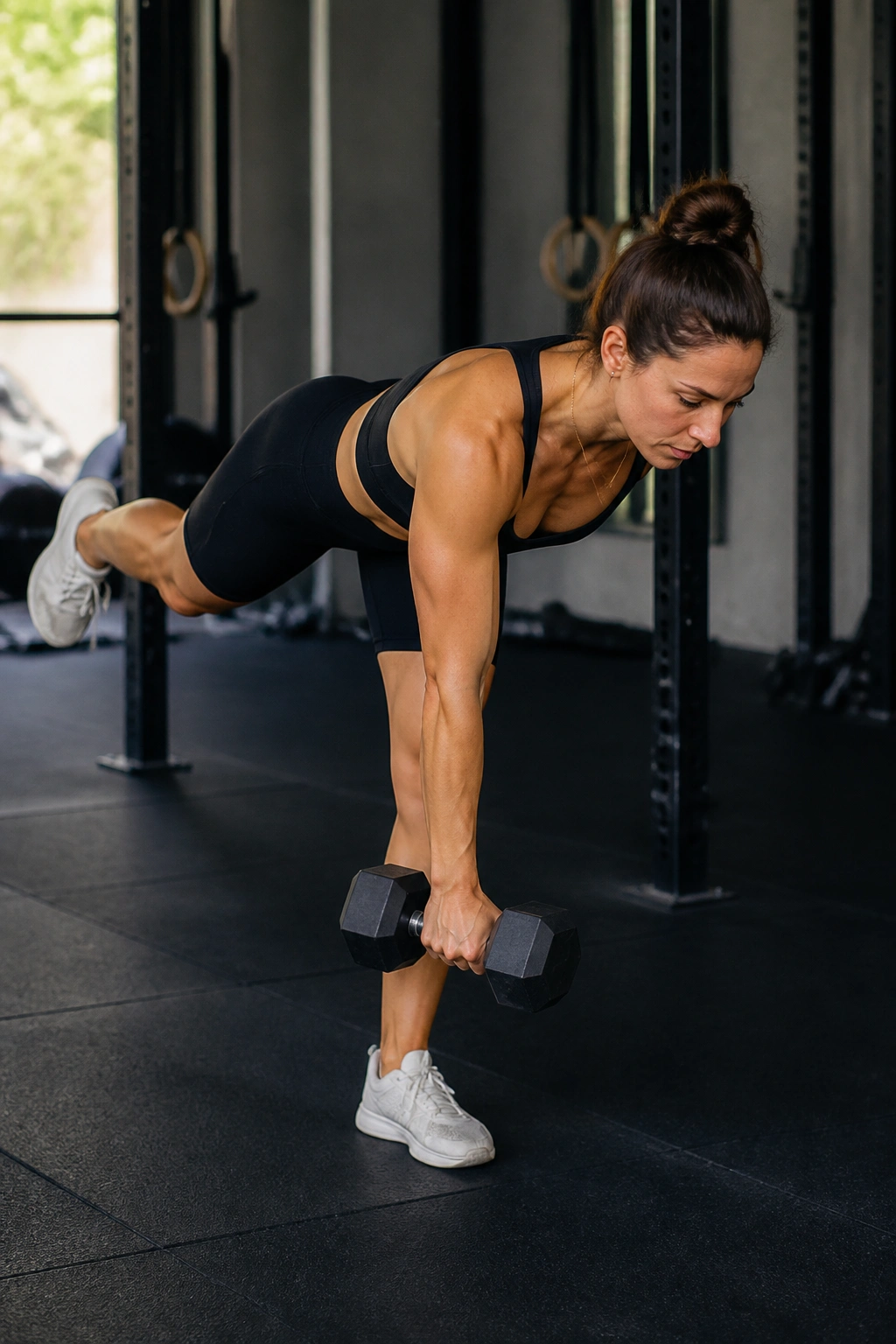
Single-leg RDLs are one of my favorite no-floor options because they force the body to manage hinge mechanics and anti-rotation at the same time. The free leg reaches back, the torso tips forward, and the core has to stop the spine from spiraling.
Hold a dumbbell in one hand or two light dumbbells, soften the standing knee, and hinge until your back leg reaches long behind you. Keep the hips as square as you can. 6 to 8 reps per side is enough to start, and you do not need to touch the floor with the trailing leg.
What makes this different
Unlike a simple hip hinge, the single-leg version exposes every lazy compensation. You’ll feel the standing glute, yes, but you’ll also feel the obliques working to keep the pelvis from opening up like a door.
Take your time on the way down. The slower the hinge, the easier it is to keep the torso from turning into a seesaw.
15. Kickstand Deadlifts
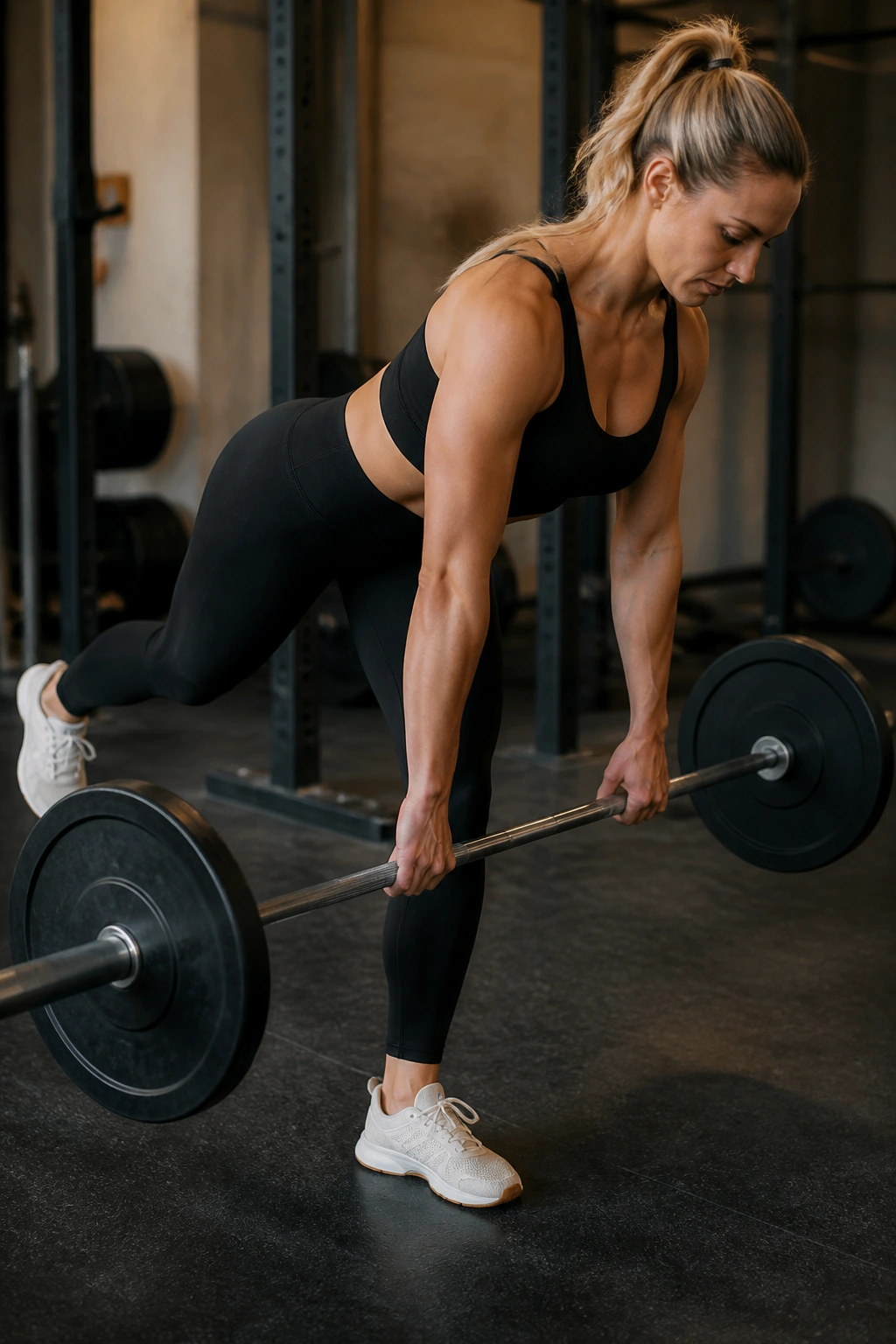
If single-leg RDLs feel too wobbly, the kickstand deadlift is the saner choice. One foot stays mostly loaded while the other toe acts like a small kickstand behind you, which gives you balance without removing the core challenge.
Hinge at the hips with a dumbbell or barbell, keep most of the weight on the front leg, and let the back toe hover for support. The torso should stay square, and the spine should feel long, not rounded. 6 to 10 reps per side is a strong set.
This version lets you build the pattern before you chase full single-leg balance. That’s useful. A lot of people rush straight to the hardest version and never build the positions that make it work.
If you want a drill that sits between a bilateral deadlift and a true single-leg move, this is the one.
16. Dumbbell Halos
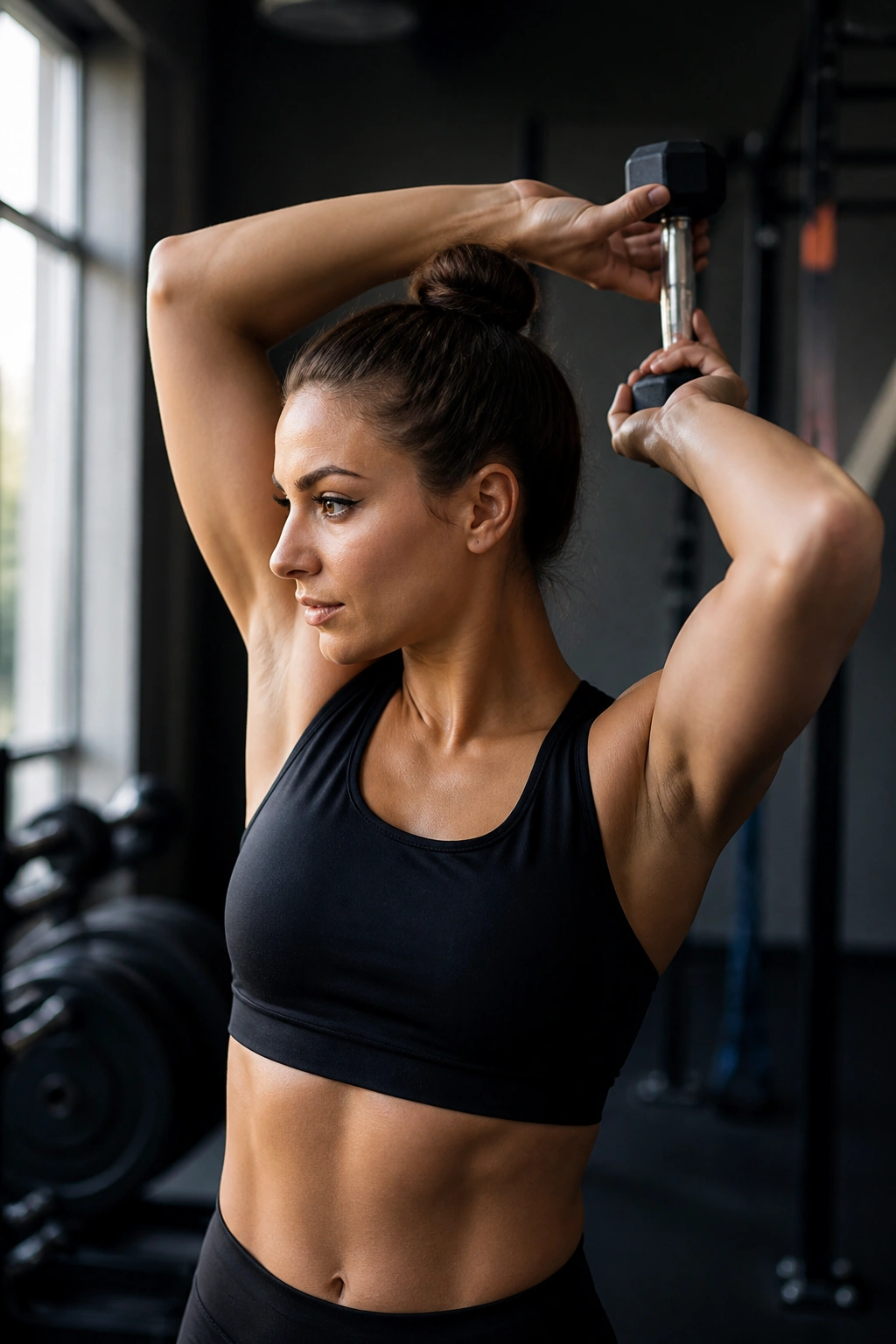
A dumbbell halo looks almost playful until you try to keep your ribs from flaring and your neck from tensing up. Moving the weight around your head forces the trunk to stay organized while the shoulders and upper back do a slow, controlled circle.
Hold a light kettlebell by the horns or a single dumbbell by one end, circle it around your head in one direction, then reverse. Keep the elbows close and the ribs down. 5 to 8 circles each way is plenty.
How to keep it honest
- Use a lighter weight than you think.
- Move slowly.
- Don’t crane the chin forward.
- Keep your pelvis still.
This one is more about control than brute force. If the circle gets jerky, the weight is too heavy or your range is too big. Smaller is better.
17. Sandbag Bear-Hug Carries
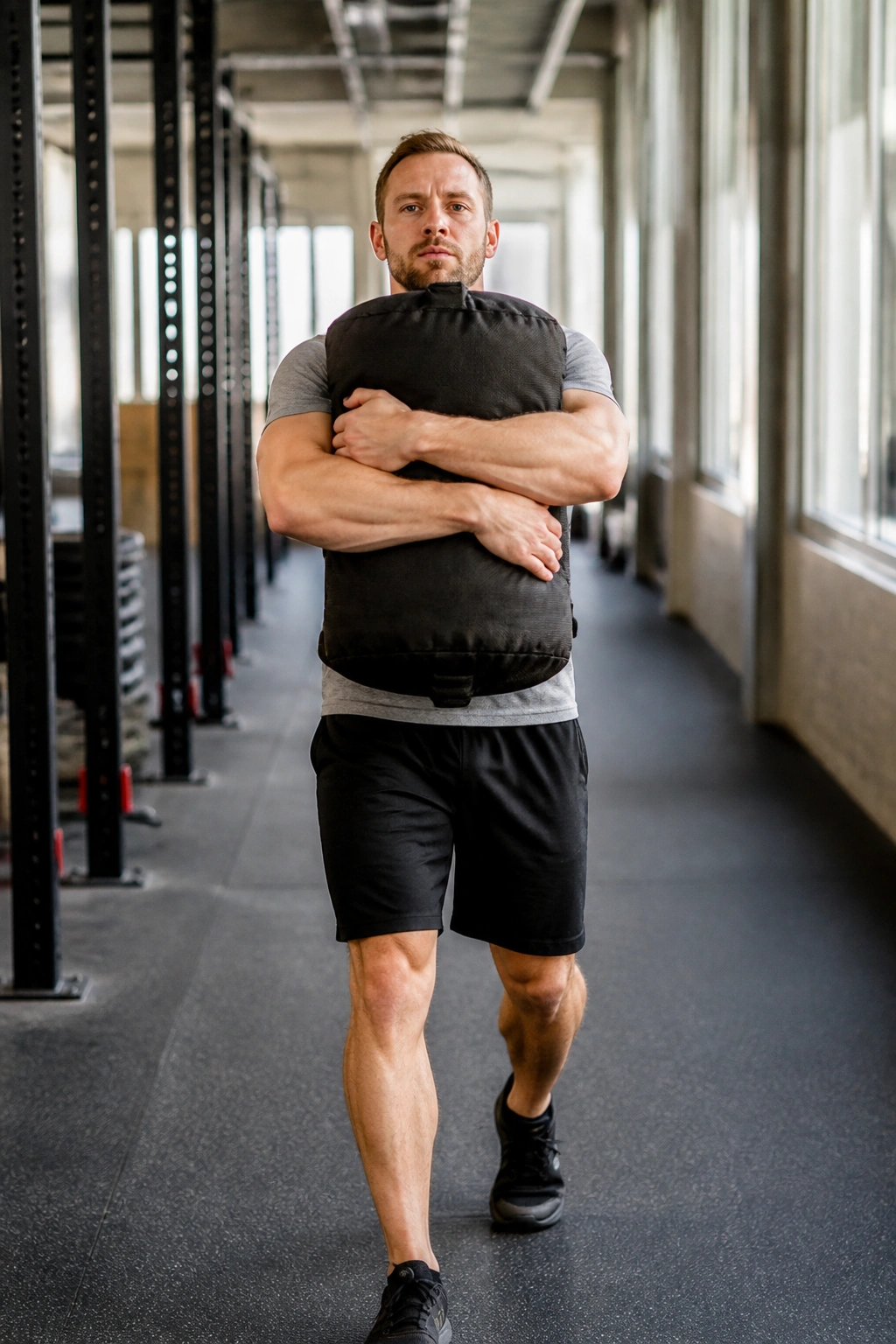
A sandbag bear-hug carry feels a bit like hauling an awkward suitcase that refuses to sit still. The bag pushes into your chest, pulls on your upper back, and makes the whole trunk brace from front to back.
Wrap your arms around the sandbag, pull it snug to the body, and walk for 20 to 40 yards. The closer the bag sits to your chest, the more the abs have to hold the ribs down against pressure. Keep the steps short and steady.
The front-loaded nature of this carry is the real trick. Your trunk has to resist extension while your grip and breathing work around a bulky, shifting object. It’s messier than a dumbbell carry, and that messiness is part of the appeal.
If you don’t have a sandbag, a loaded duffel or heavy backpack can fill in. Clumsy is fine here.
18. Split-Stance Landmine Press
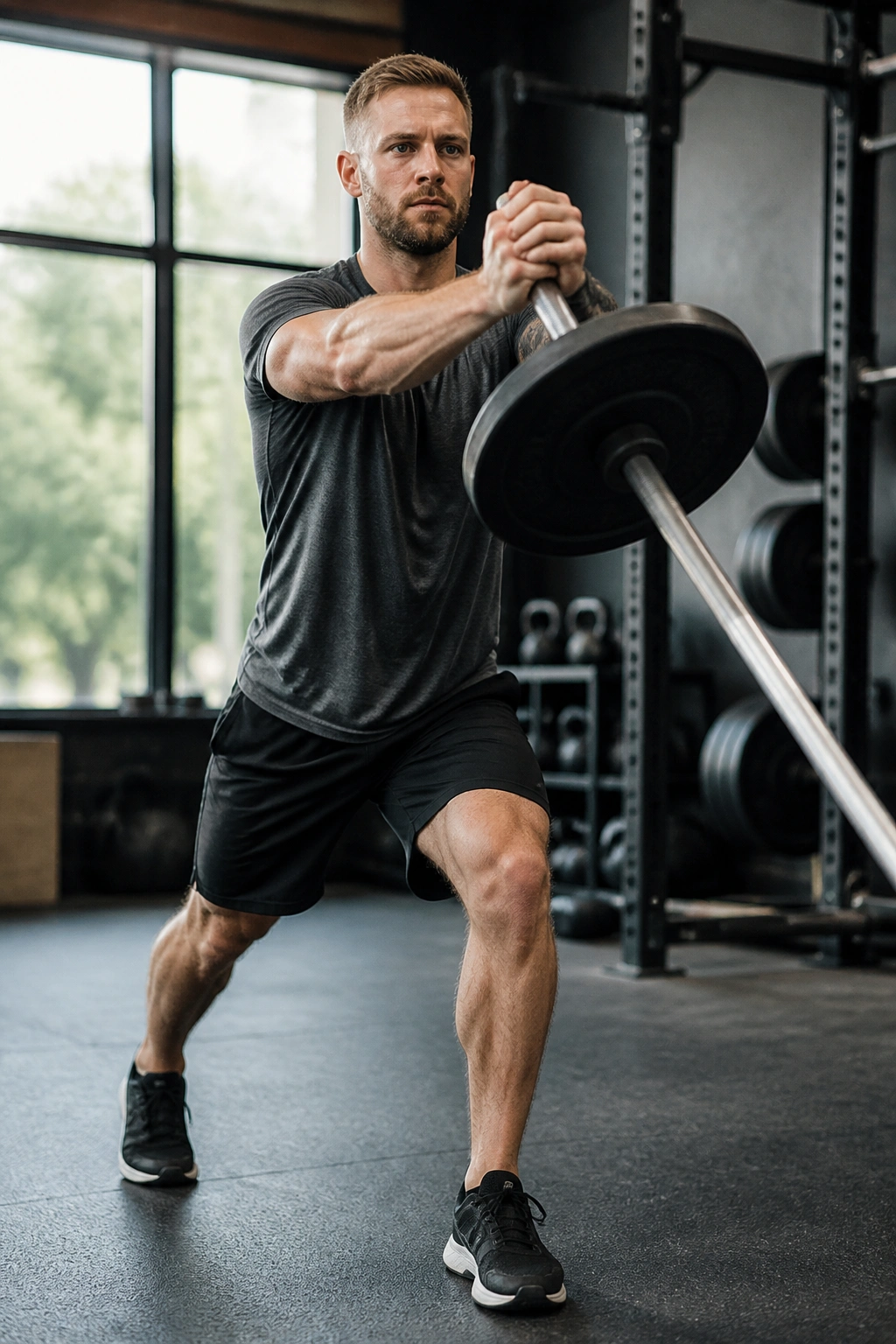
The split-stance landmine press belongs on any serious no-floor core list because it challenges you to press while one side of the body resists rotation. The staggered stance gives you stability, but not too much. That’s the sweet spot.
Stand with one foot forward and one back, hold the bar in the landmine attachment near your chest, and press it away on a slight diagonal. Keep the ribs stacked and the back foot quiet. 6 to 10 reps per side works well.
What makes it hard
The press wants to turn your torso. Your job is to keep the pelvis and ribs facing mostly forward while the arm does the work. That blend of shoulder drive and trunk control is why this move feels so good for athletes, but it’s useful for regular people too.
If your lower back arches at the top, narrow the range or lighten the load. Clean reps matter more than heavy ones.
19. Standing Band Rotation Holds
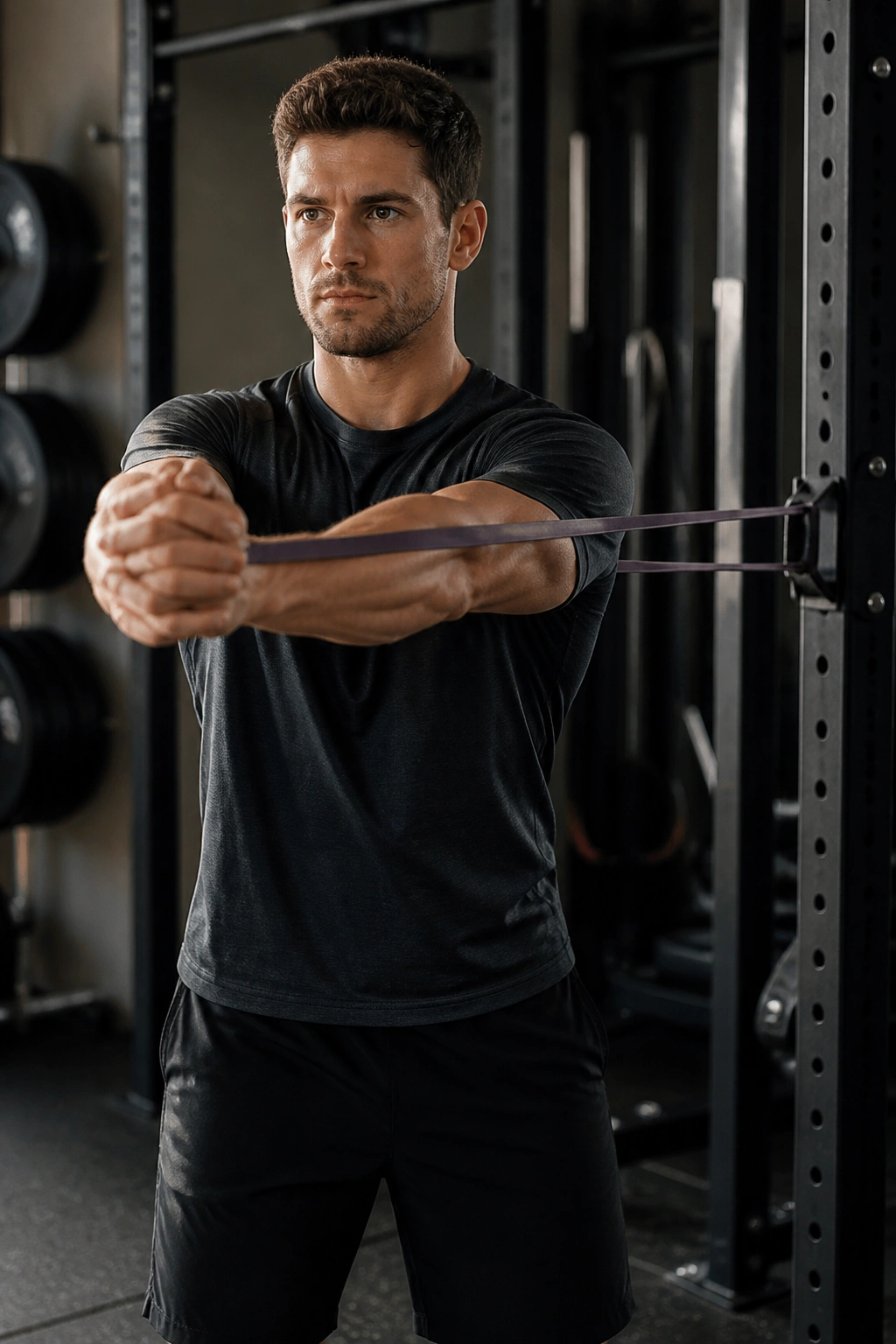
A standing band rotation hold is one of those exercises that looks mild until the band starts dragging you sideways. Instead of cranking out fast reps, you press the band out and hold the body square against the pull.
Anchor a band at chest height, stand sideways, press it straight away from the chest, and freeze for 10 to 20 seconds before returning. Keep the feet planted, knees soft, and hips quiet. The goal is not to win a wrestling match with the band. The goal is to stay still while it tries to move you.
This is a great choice when you want a less frantic anti-rotation drill than a moving press. The hold gives you time to feel where the body leaks. Usually it’s one rib, one hip, or a shoulder that starts sneaking forward.
Short, tough, and strangely satisfying.
20. One-Arm Rows in a Hinge Position
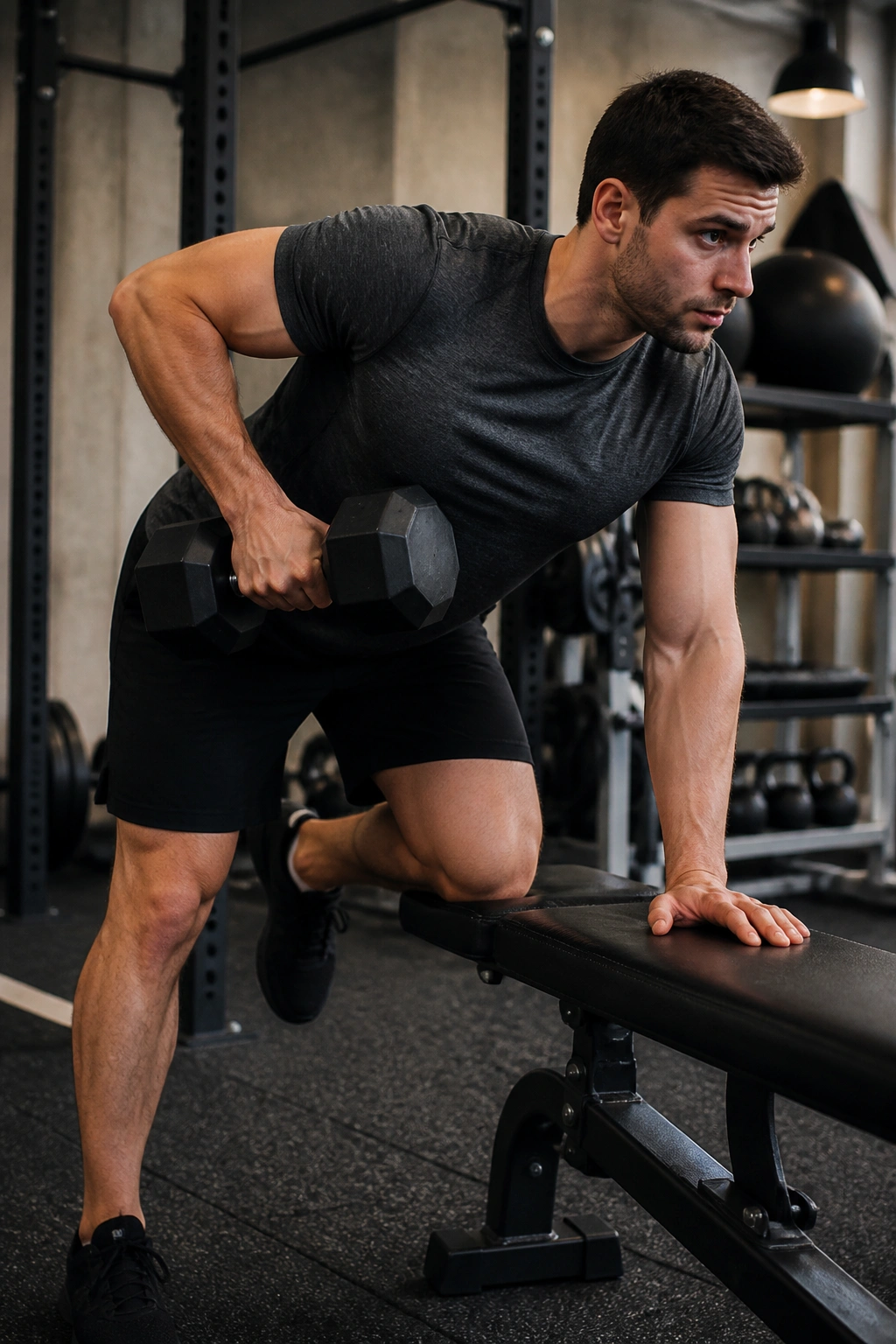
Rows aren’t always thought of as core work, but a one-arm row in a hinged stance can hit the trunk hard if you keep the torso square. The pulling arm moves; the rest of you has to resist turning into a swivel.
Set one hand on a bench or let the free hand hover on the thigh, hinge forward at the hips, and row a dumbbell with the opposite arm. Keep the spine long and the shoulders level. 8 to 12 reps per side is a useful range.
The core demand comes from not letting the torso twist when the weight leaves the floor. If your shoulder blades do all the work and your trunk stays loose, you’ve made it easier than intended.
A quick cue helps: pull the elbow back without letting the chest rotate open. That little detail changes the whole feel of the lift.
21. Cross-Body Cable Presses
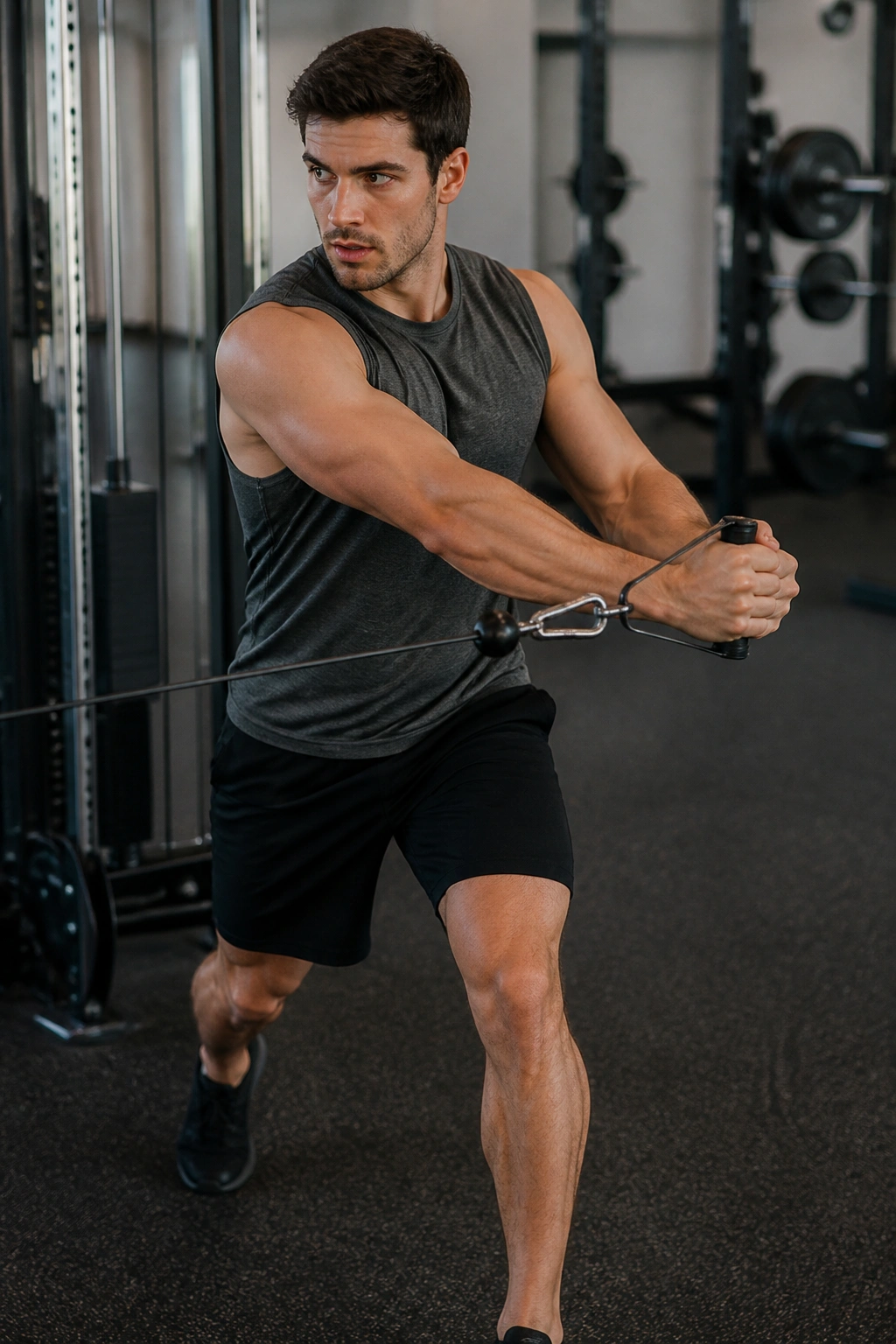
Cross-body cable presses are like the opposite of a chop. Instead of pulling across the body, you drive the handle from one side toward the far side, and the trunk has to keep the motion clean without swinging into it.
Set the cable low or mid-height, stand in a split stance, and press across your body on a slight diagonal. Keep the pelvis level and the front ribs down. 8 to 10 reps per side is a solid range, and a slower return makes the drill even better.
Why I like it
The path is natural. You’re not forcing the body into a weird shape. You’re training it to transfer force from the legs through the torso to the arms without leaking energy all over the place.
If the movement starts feeling like a press and a twist mixed together, lighten the load and shorten the range. Clean force transfer beats sloppiness every time.
22. The No-Floor Core Circuit
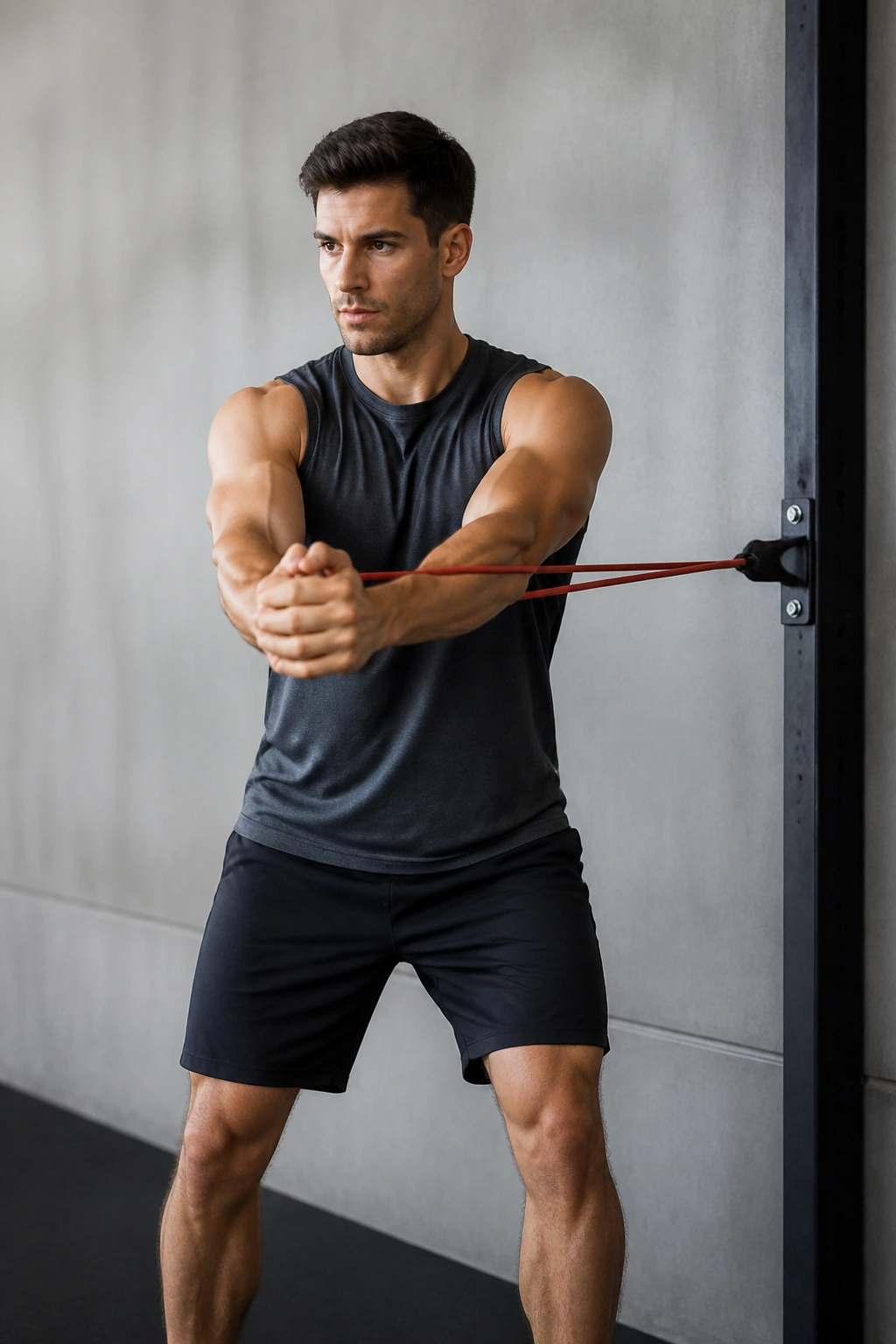
If you want the simplest way to stitch these together, build a short circuit and stop pretending core work needs to be fancy. A compact no-floor session can hit the abs, obliques, and deeper stabilizers in less than 15 minutes if you choose the right pieces.
Try this:
- Suitcase carry for 20 yards per side
- Pallof press for 8 reps per side
- Wall press march for 20 total marches
- Offset goblet squat for 6 reps per side
- Waiter carry for 15 seconds per side
Rest 45 to 60 seconds between rounds, then do 2 to 4 rounds depending on how much time and energy you have. Keep every rep crisp. If your posture falls apart, shorten the round instead of chasing fatigue.
This is the version I’d hand to someone who wants a real core session without ever getting down on the floor. It’s tidy, it’s effective, and it’s easy to repeat often enough that the body actually adapts.
