



Most people learn the plank the hard way: they hold one forever, their lower back starts to bark, and they decide the move is overrated. That’s usually not a plank problem. It’s a leverage problem.
Plank variations matter because the front plank is only one way to train the core. Change the angle, the base, or the amount of movement, and the exercise stops being a stopwatch contest and starts being a real test of bracing, hip control, shoulder stability, and anti-rotation strength. That’s the useful stuff. The abs are part of it, sure, but so are the glutes, serratus, deep trunk muscles, and the way you stack your ribs over your pelvis.
A good plank should feel firm through the midsection and calm through the neck. A bad one turns into a shrug, a sway, or a sag. That difference matters more than people admit, and it’s why the right variation can be a better teacher than a longer hold.
So let’s use the moves that actually earn their keep.
1. Forearm Plank: The Base of Most Plank Variations
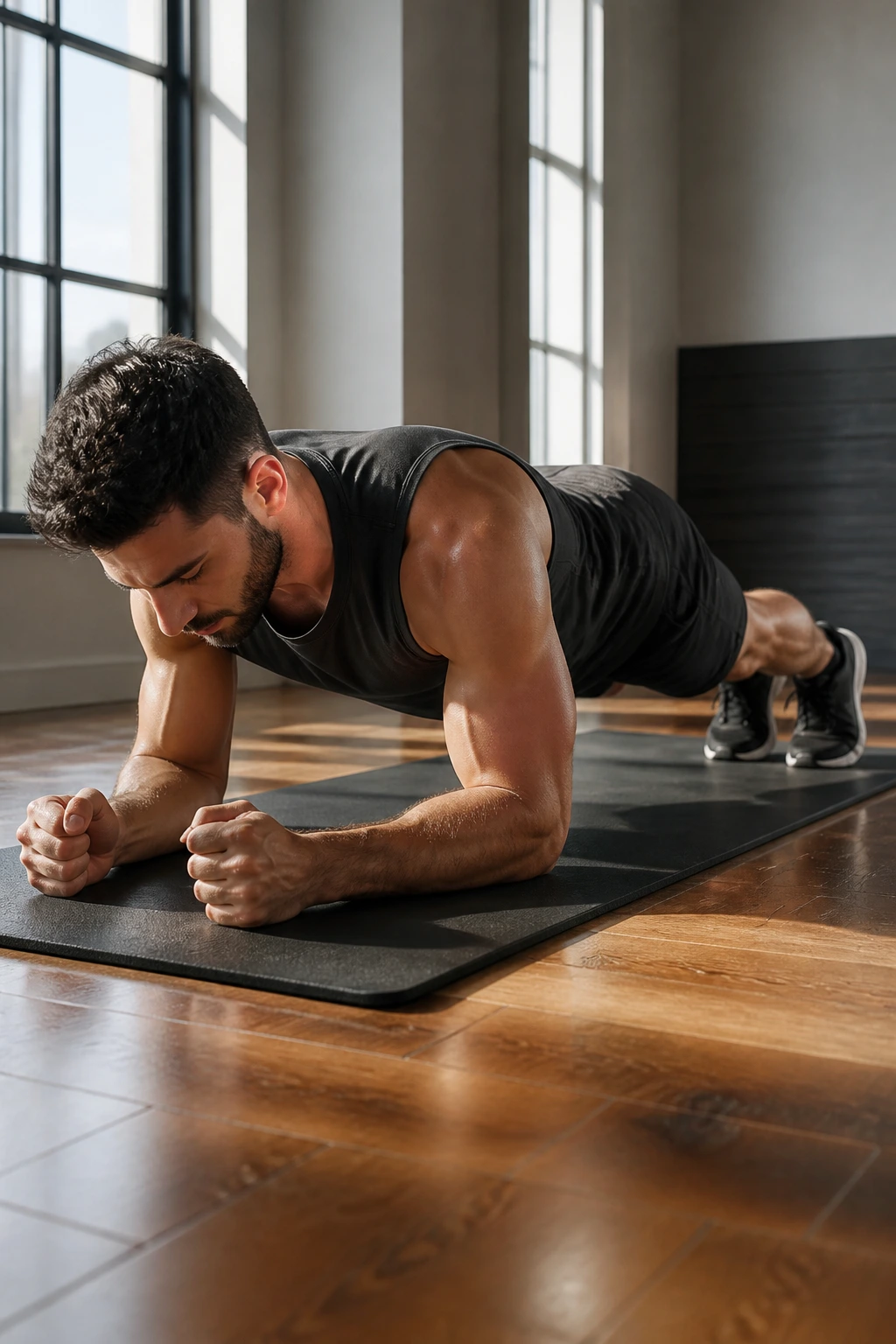
The forearm plank is still the cleanest starting point. Not because it’s easy. Because it tells the truth.
Forearms on the floor, elbows under shoulders, legs long, glutes on, ribs pulled down. That’s the shape. If your hips drift high, the abs stop working much. If your low back sinks, your spine starts doing the job your trunk should be doing. The best cue I know is simple: push the floor away and make your body one rigid line.
What to Feel
You should feel steady work across the front of the core, a little heat through the glutes, and some shoulder effort without neck tension. Breathing should stay controlled. If you can’t exhale without collapsing, the hold is too long.
Common Mistakes
- Letting the belly hang toward the floor
- Hiking the hips too high and turning it into a rest position
- Clenching the shoulders up near the ears
- Holding your breath until your face goes red
Short holds beat ugly long holds. Ten sharp seconds with full-body tension teach more than a sloppy minute.
2. High Plank: Straight Arms, More Shoulder Demand
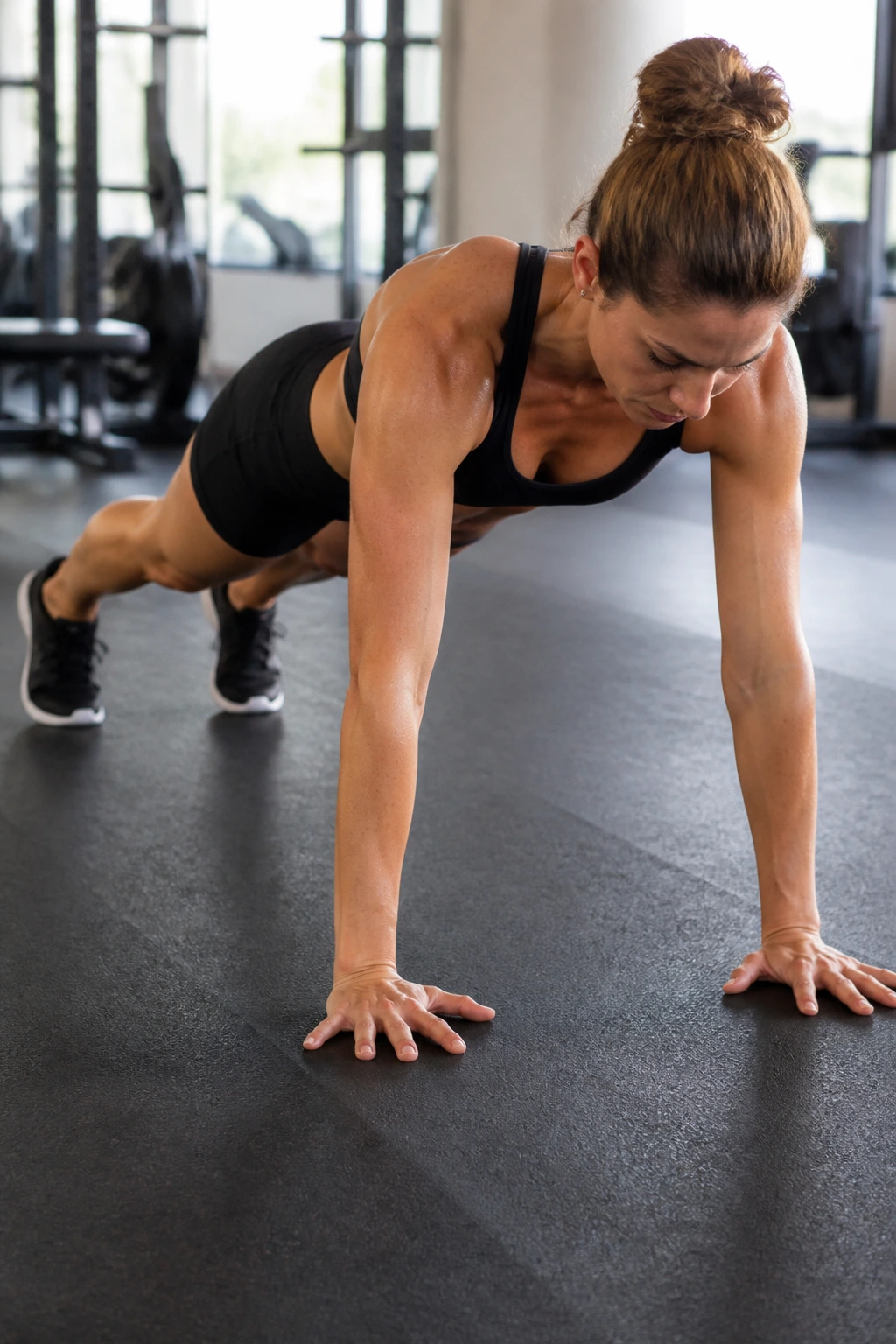
Why keep the arms straight?
Because the high plank changes the load. Your shoulders, wrists, and serratus have to work harder, and the whole position starts to look a lot more like the top of a push-up. That makes it a smart choice if you want core work that carries over into pressing, crawling, and bodyweight training.
The setup is plain enough: hands under shoulders, fingers spread, elbows locked without being hyperextended, and the floor pushed away. A lot of people forget the hand detail. Spread the fingers. Root the base of the index finger and thumb into the ground. That gives the wrists something to hang onto.
A clean high plank feels long, not crushed. The head reaches forward slightly, the heels press back, and the ribs stay tucked instead of flaring. If your lower back looks like a hammock, you’re not bracing; you’re surviving.
One useful habit: do a five-second check before every hold. Hands. Shoulders. Ribs. Glutes. If those four are on point, the rest usually follows.
3. Knee Plank: The Version That Teaches Position
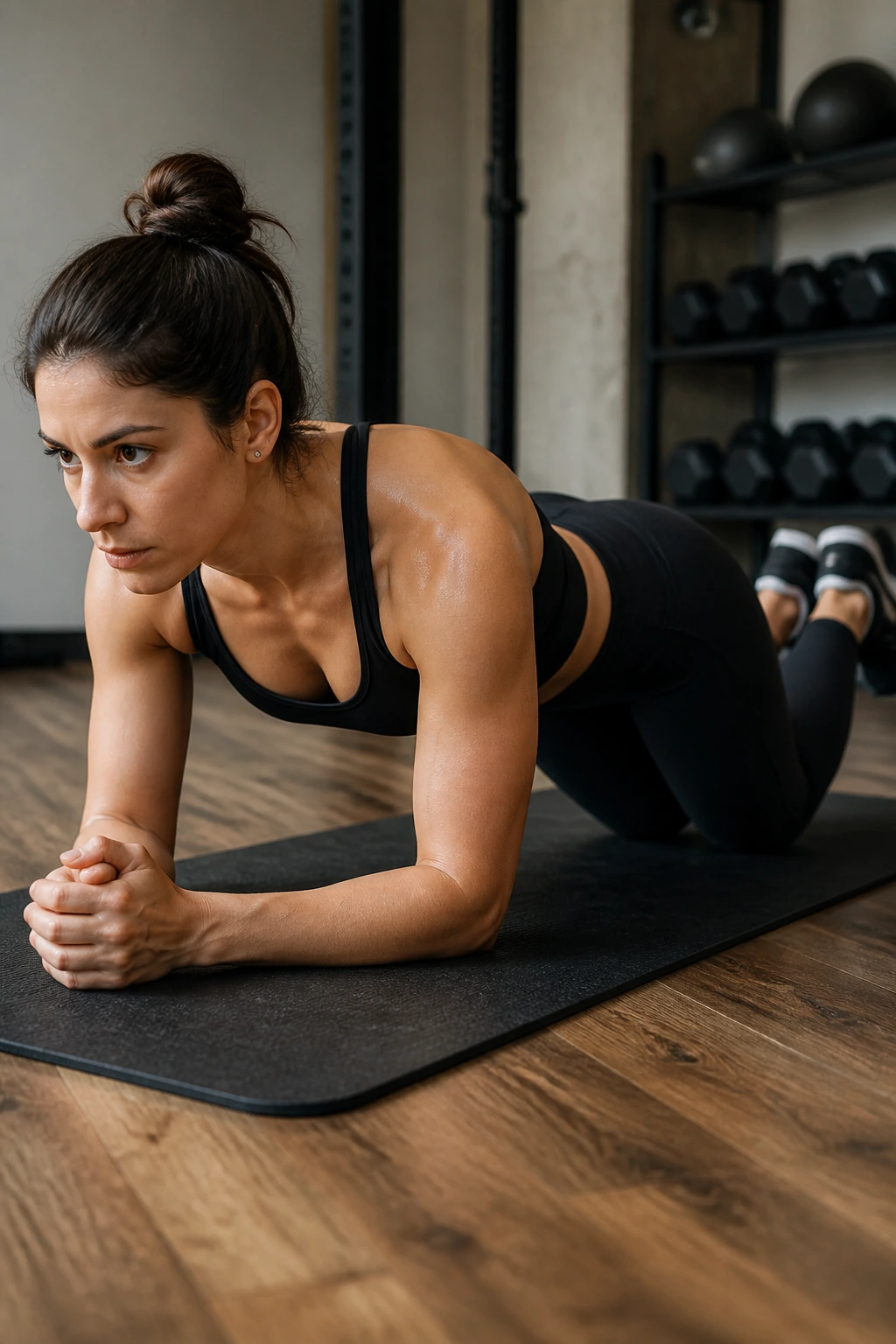
If a full plank makes you sag in eight seconds, the knee plank is not “cheating.” It’s the version that lets you learn the shape without your lower back stealing the show.
Knees down, shins on the floor, hips slightly forward so your body still makes a long line from shoulders to knees. That forward shift matters. If you sit back, the exercise turns into a rest pose. If you stay too upright, you lose the trunk demand. Tiny adjustments change everything here.
The knee plank is useful for beginners, people returning after a break, and anyone who needs to rebuild clean bracing before going harder. It also works well between tougher sets when you want volume without trashing your form.
How to Progress It
- Start with 10 to 15 seconds of perfect shape
- Add time only when your low back stays quiet
- Move to a full plank once the knee version feels steady and controlled
One sentence is worth repeating: a scaled plank still counts if it’s done well. The point is to own the position, not to impress anybody with a shaky hold.
4. Side Plank: The Oblique Test Most Plank Variations Miss
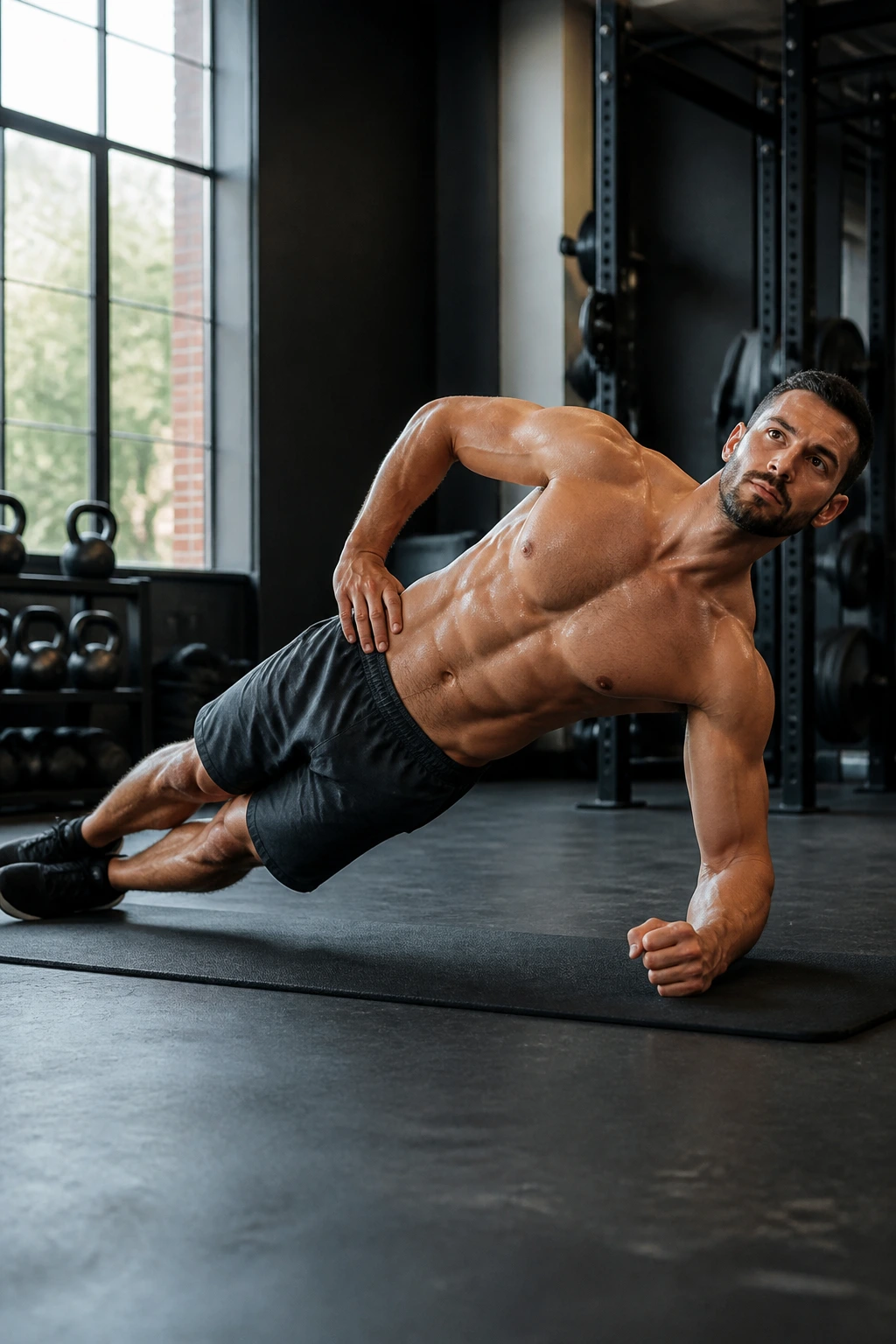
Front planks love to hog the attention. Side planks are where the real anti-side-bending work happens.
Stack your feet, or put the top foot slightly in front if balance is rough. Support yourself on one forearm or one hand, then lift the hips until your body forms a straight line from head to heel. The bottom side of the waist should not collapse. That’s the whole game. Your obliques work hard here, and the glute on the lower side has to keep the pelvis from dropping.
This is also one of the best plank variations for people who sit a lot. The side line of the body tends to get lazy. Side planks wake it up fast.
A clean rep should look almost boring. No twisting, no forward lean, no hip dump. If your top shoulder rolls inward, reset. If your neck cranks to the side, shorten the hold and fix your line.
What Makes It Different
- Trains side-bending resistance instead of straight-ahead bracing
- Lights up the obliques and glute medius
- Exposes weak spots fast, which is annoying and useful
Start with 10 to 20 seconds per side. Quality first, then time.
5. Side Plank Reach-Through: Rotation Without Losing the Brace
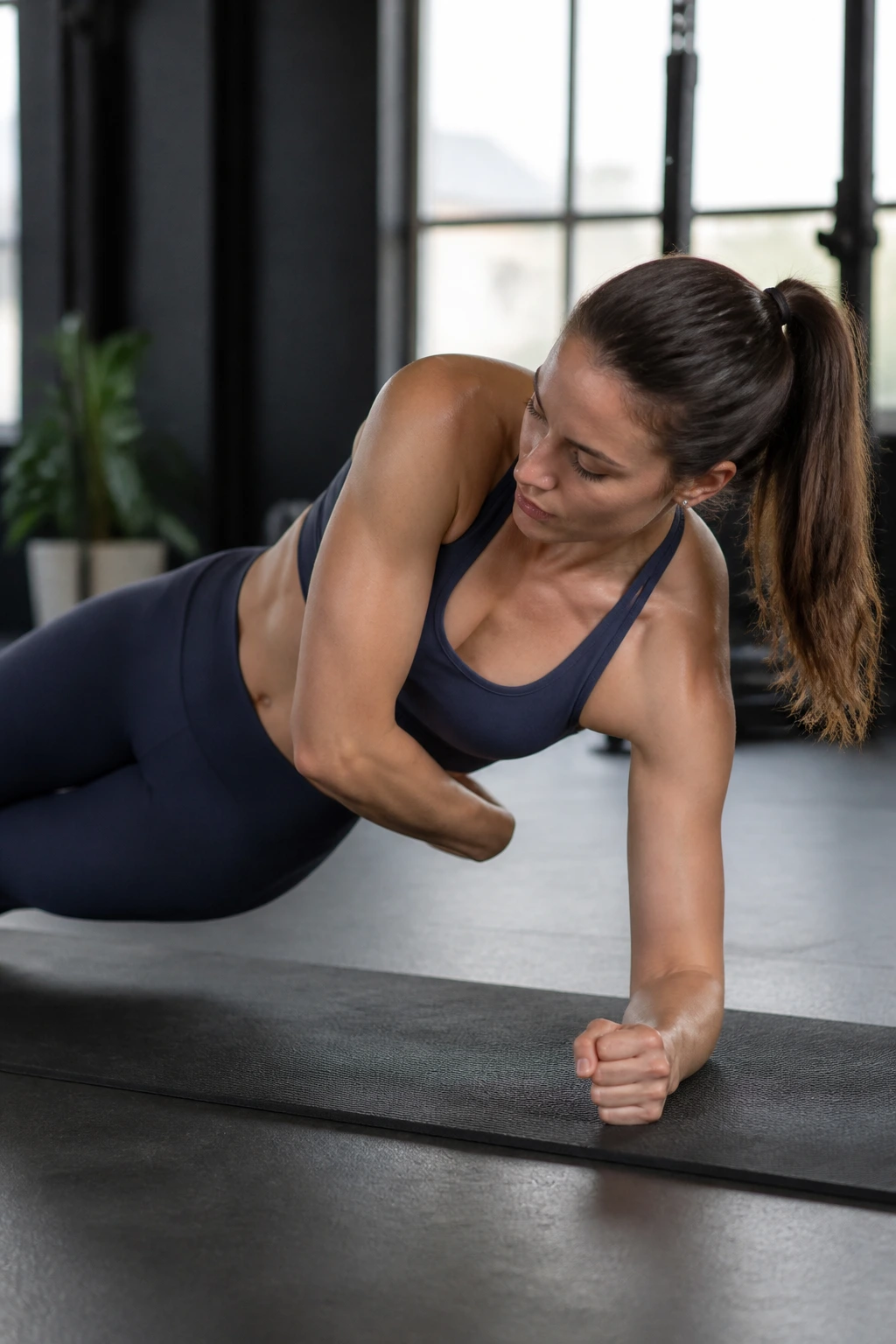
The first time you thread the top arm under your body, the floor feels farther away than it looks.
That’s the charm of the side plank reach-through. It keeps the side-body demand from the basic side plank, then adds controlled rotation through the ribs and upper back. Done right, it teaches you to move without letting the hips collapse. Done badly, it turns into a sloppy twist with the shoulder taking the hit.
Start in a side plank. Lift the top arm toward the ceiling, then reach it under your torso in a slow arc. Keep the hips high. Keep the neck long. The movement should come from the upper body turning, not from the pelvis dropping like a trapdoor.
How to Keep It Honest
- Move slowly enough that the hips stay stacked
- Keep the bottom shoulder active, not dumped into the floor
- Reach only as far as you can go without losing height
A little wobble is normal. A full collapse is not.
I like this one because it punishes lazy form in a useful way. You cannot fake control here. The body has to learn timing, and timing is half of good core work anyway.
6. Plank Shoulder Taps: Slow Down or Don’t Bother
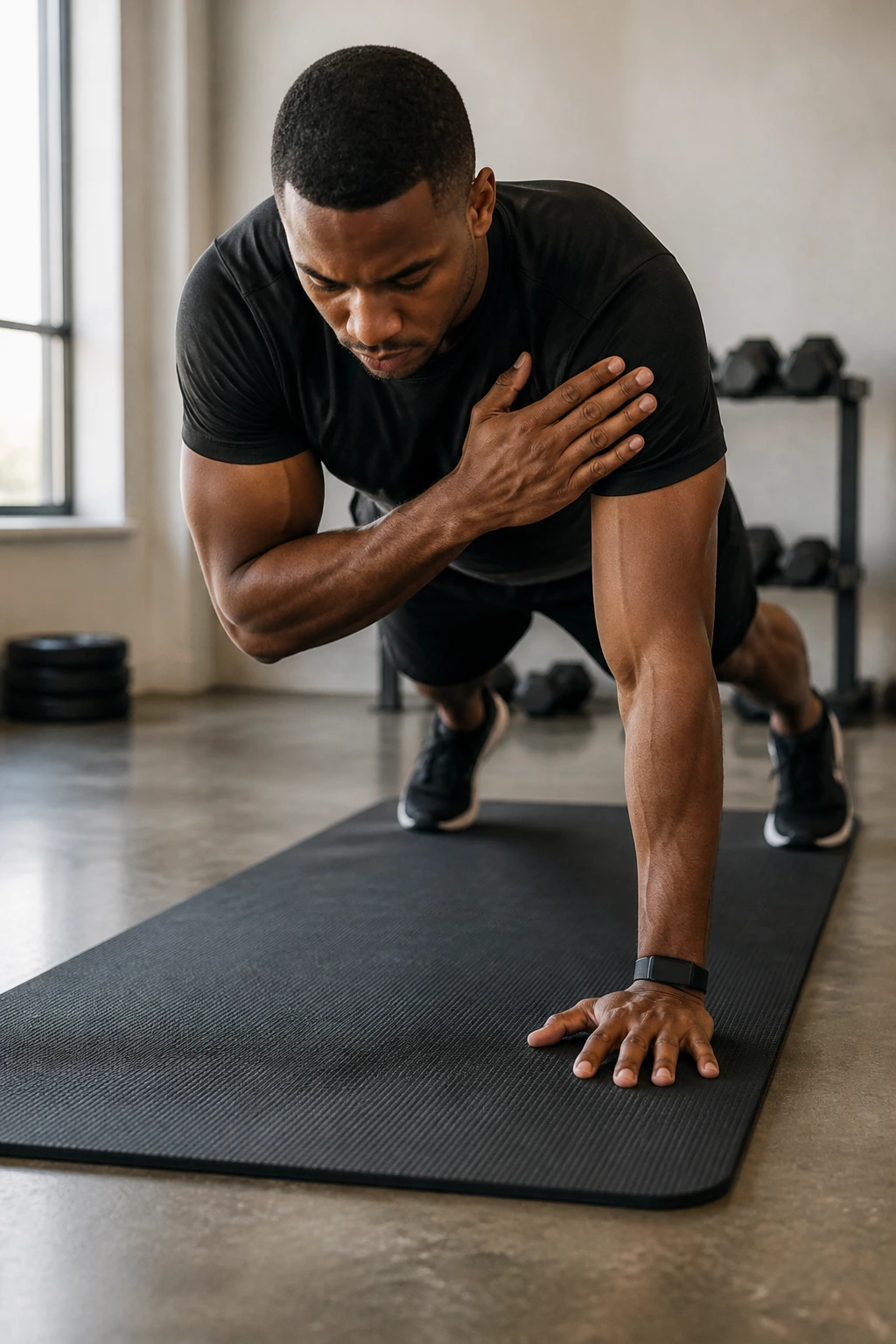
The cleanest plank shoulder tap is slower than most people expect.
From a high plank, touch one shoulder with the opposite hand, then set it back down and switch sides. The challenge is not the tap itself. It’s stopping the hips from swinging around like a loose gate. Wider feet make the drill easier. Narrower feet make it much harder. That tiny change changes the whole feel.
Your base should stay quiet. Think of the pelvis as a bowl of water you’re trying not to spill. Each tap should happen with very little side-to-side sway. If the body rocks hard, the core isn’t controlling the load; it’s reacting to it.
A mirror helps here. So does filming one set on your phone. Most people think they’re still. They aren’t.
Good Cues
- Press the floor away with the supporting hand
- Keep the feet planted and the glutes switched on
- Tap lightly, then return the hand without rushing
If you have to rush, you’ve already lost the point. This drill pays off when it gets annoyingly slow.
7. Plank Leg Lift: Tiny Motion, Big Demand
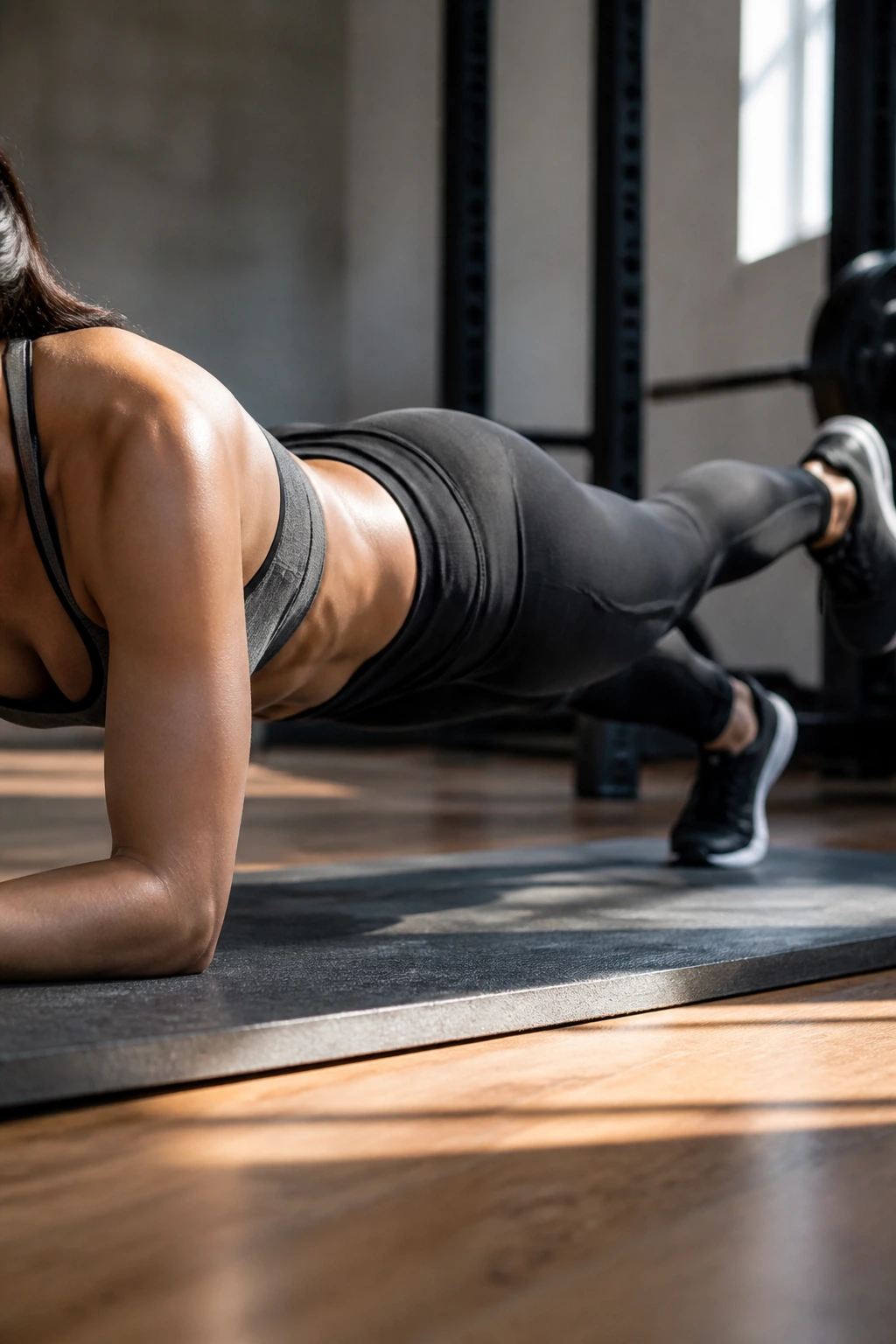
Can you lift one leg without twisting your hips?
That’s the question this variation asks. And it answers fast.
From a forearm or high plank, lift one leg just a couple of inches off the floor. Not six inches. Not a heroic rear kick. Just enough for the glute to fire while the trunk stays square. The raised leg should feel controlled, almost quiet. If the pelvis rolls or the low back arches, the lift is too big.
This move hits the glutes and hamstrings, but the main lesson is anti-rotation. One leg leaves the floor, and the body has to resist the urge to spin. That makes it a sneaky-good bridge between basic planks and more athletic work.
What to Watch
- Keep the toes pointed down or neutral, not wildly turned out
- Hold the top position for 1 to 2 seconds
- Switch sides with no pause if your form stays clean
A leg lift that gets higher every rep is usually a bad sign. Small is strong here. Small is controlled. Small is hard.
8. Plank to Push-Up: A Strength Test Among Plank Variations
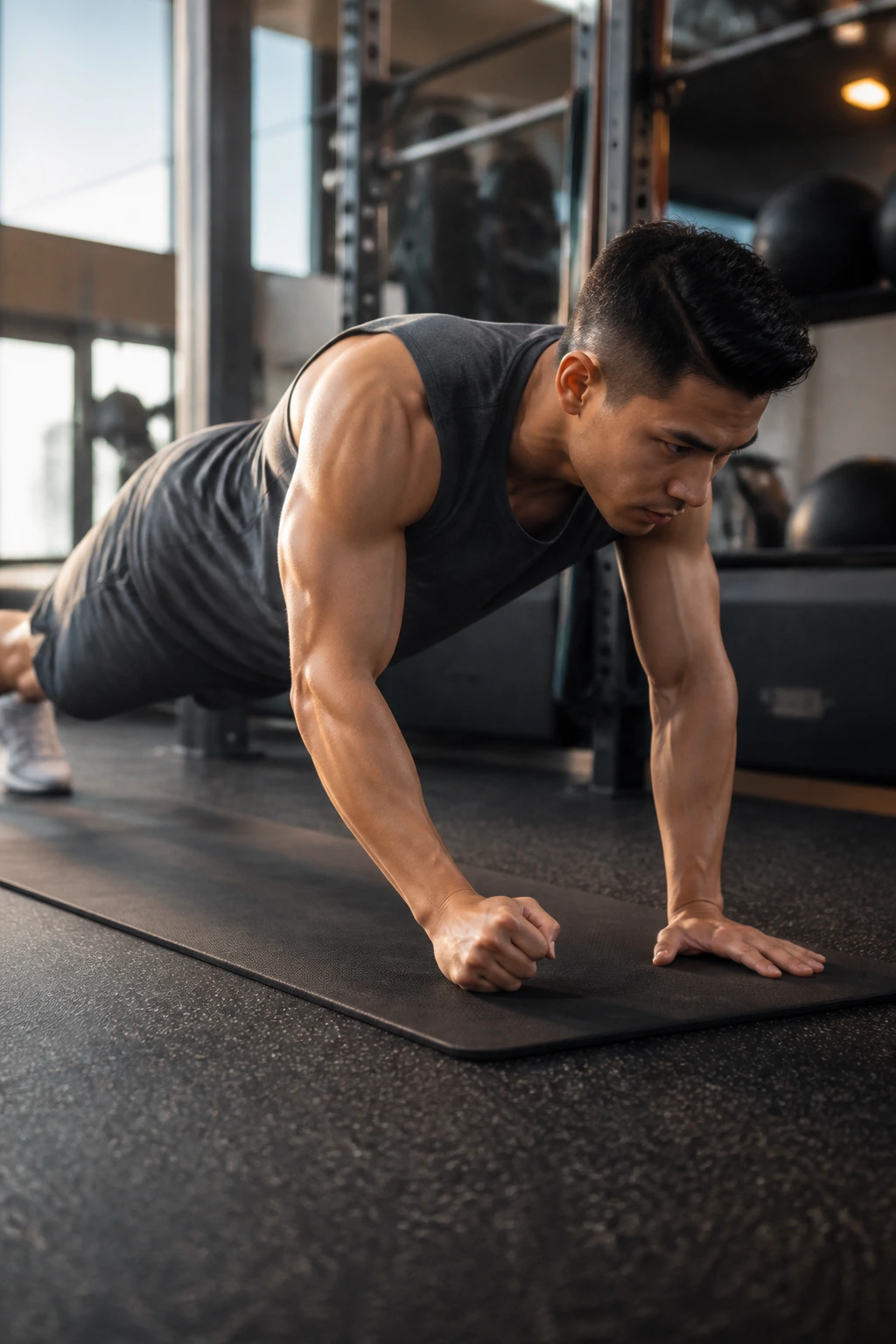
This is the drill that turns a still brace into a moving one.
Start on the forearms, then press up to one hand at a time into a high plank. Drop back down the same way. The body has to keep everything lined up while the base changes under it, which is why this variation feels a lot harder than it looks on paper. The shoulders take a beating, the triceps have to work, and the core has to stop the torso from swaying.
Hand placement matters. Put your hands where your elbows were, or close to it. If one hand lands too far forward, your body starts yawing. If the hips pike up on the way up, the set has gone sideways.
A controlled tempo makes this move better. Fast reps turn into a messy arm workout. Slow reps turn it into a real core drill.
Practical Notes
- Keep the feet a little wider than a regular plank if balance is shaky
- Alternate the lead arm on each rep
- Stop the set when your hips start shifting instead of staying flat
You want smooth, not heroic. Smooth is the part that counts.
9. Staggered-Hand Plank: A Small Offset With a Big Effect
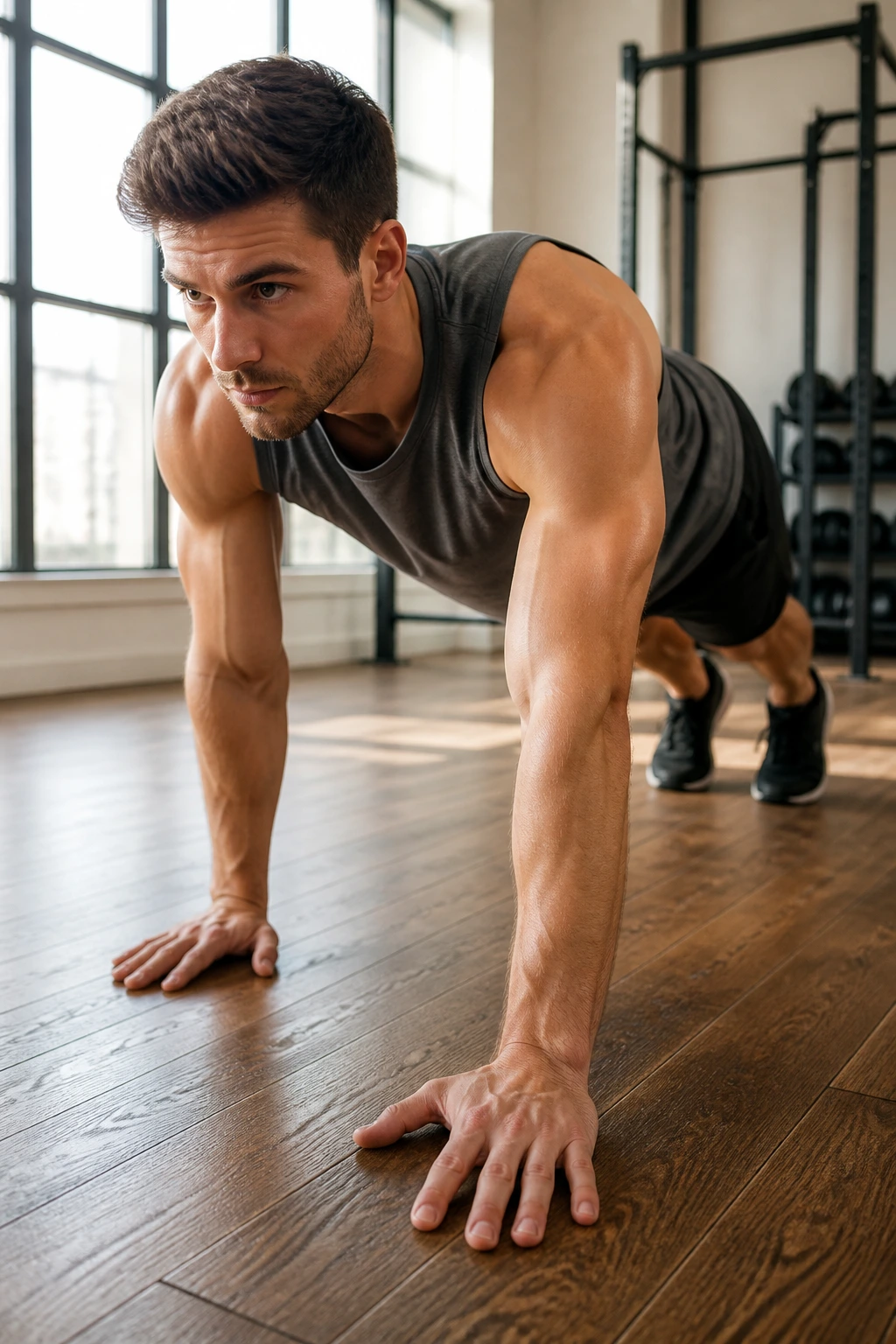
A slight hand offset changes more than people think.
Put one hand a few inches ahead of the other and hold a high plank. Then switch the position after the set. That uneven base forces the trunk to resist rotation in a different way than a square stance does, and it also shifts some load through the shoulder and triceps on the forward side.
This one is useful if you want to prepare for single-arm work without jumping straight into unstable chaos. It’s also a nice way to wake up core control when normal planks feel stale.
The key is not to exaggerate the offset. A few inches is enough. Too much offset starts to twist the body into a weird diagonal, which changes the exercise into something else entirely.
Best Uses
- Warm-up before pressing work
- Core training when you want a quieter challenge than shoulder taps
- A simple regression for people who aren’t ready for single-arm loading
Switch sides with every set. If you don’t, you’ll notice one shoulder gets all the love and the other one gets the boring job.
10. Bird-Dog Plank: Opposite Arm and Leg, No Wobble
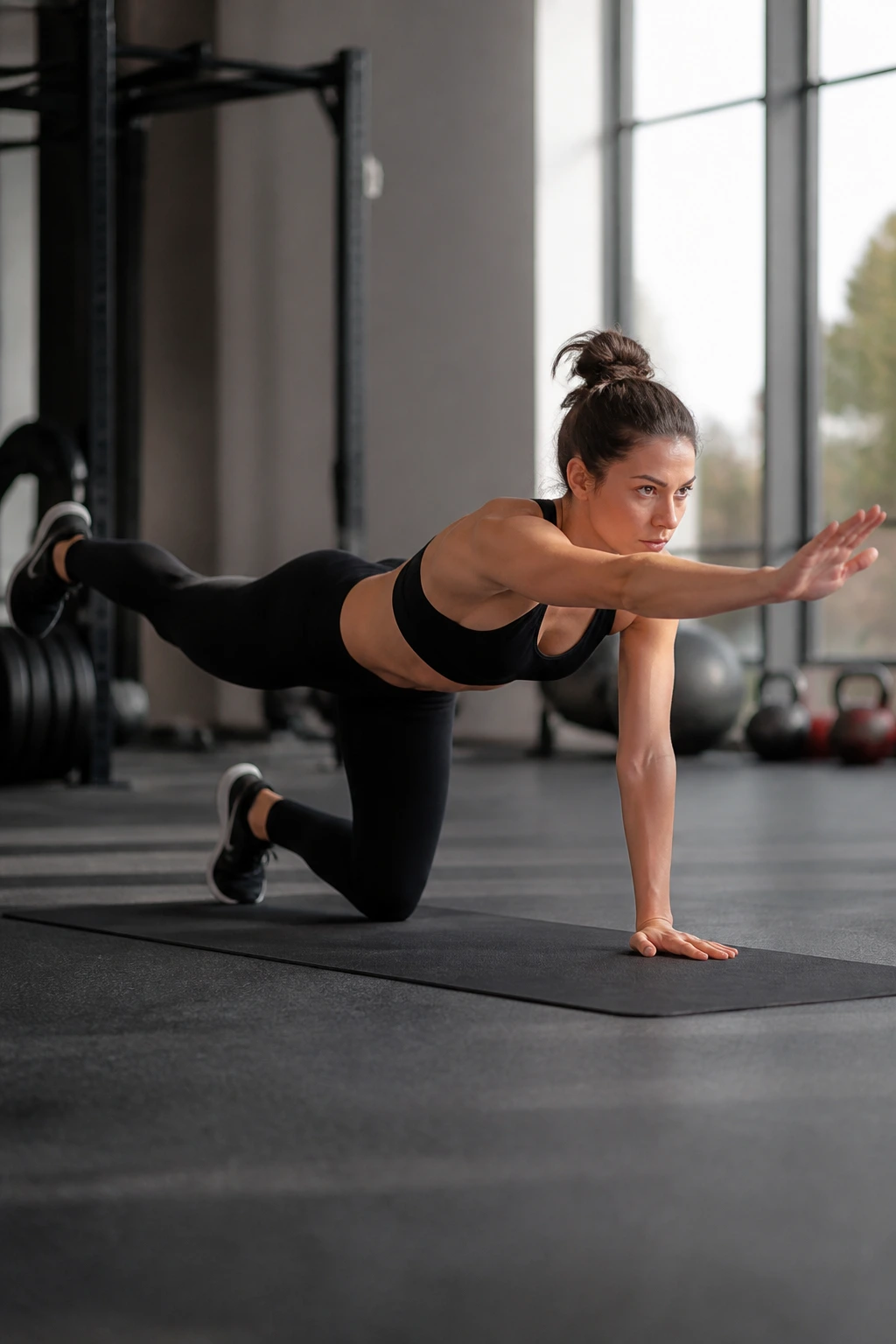
One arm and the opposite leg leave the floor, and suddenly your trunk has to behave.
That’s the bird-dog plank. Start in a high plank, then extend one arm forward and the opposite leg back. Keep the hips level. Keep the ribs down. Reach long instead of high. People love to lift the leg too far, which just opens the pelvis and steals the work from the core.
This variation is excellent for teaching cross-body control. It also exposes asymmetries fast. One side usually shakes more. One shoulder usually feels less stable. That’s not failure. It’s information.
What to Feel
- The standing hand and foot working harder
- The abs bracing to stop twisting
- The glute on the lifted leg staying on, not loose
Try holding each rep for two to three seconds. Long enough to feel the line, short enough to keep form sharp. If your back starts to arch, shorten the reach and reset. The body should look long, not strained.
11. Forearm Plank Rock: A Tiny Shift That Exposes Weak Spots
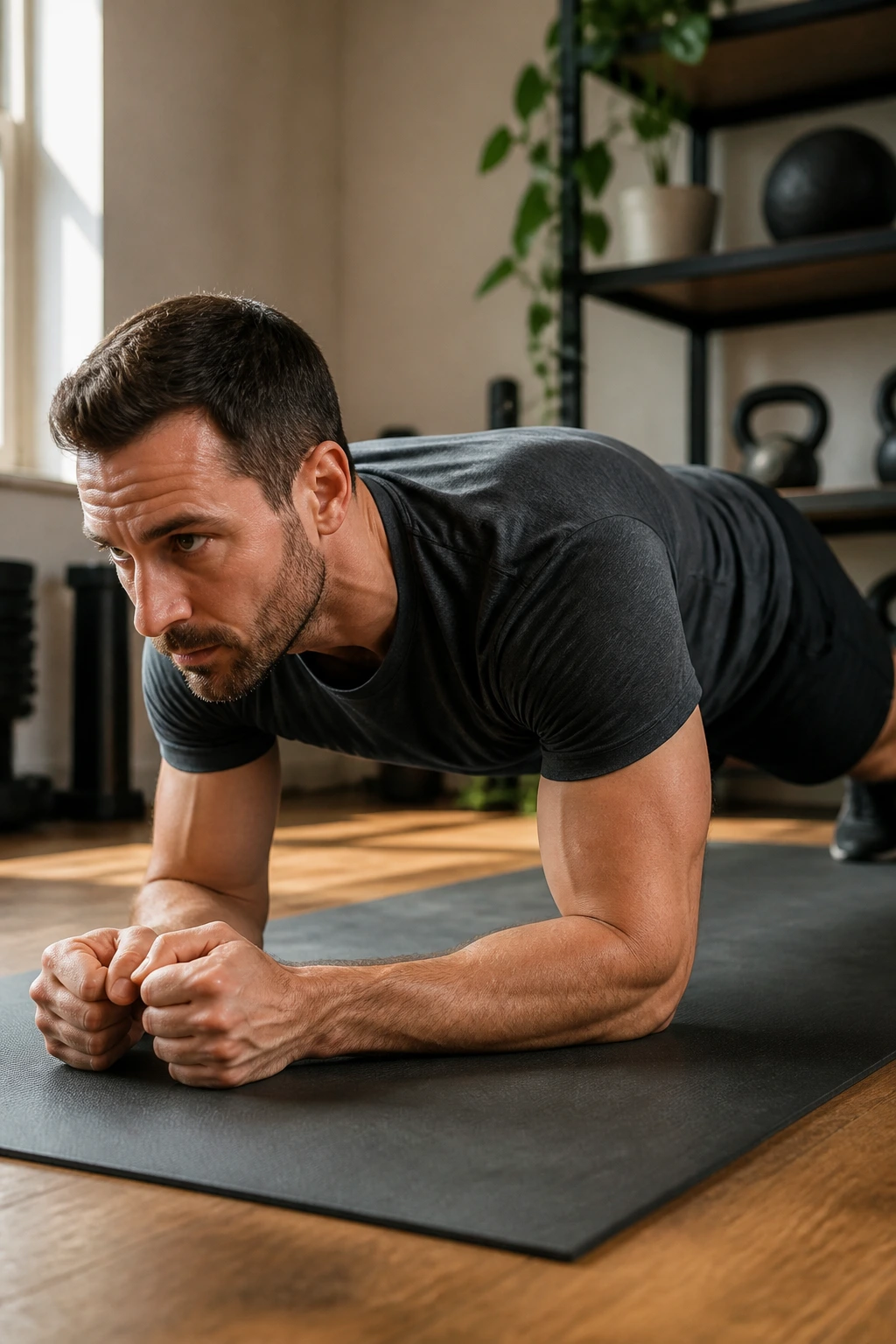
A tiny forward-and-back rock can humble a strong plank.
From a forearm plank, shift the shoulders slightly forward past the elbows, then rock back to the start. The movement is small. Really small. We’re talking about an inch or two, not a floor slide. That little shift changes the lever arm on the abs and puts extra work on the shoulders and serratus.
The body has to keep bracing while the center of mass moves. That’s the whole point. It’s not a flashy drill, and that’s part of why I like it. It feels plain until your midsection starts complaining.
How to Use It
- Rock for 5 to 10 controlled reps
- Keep the hips from sagging on the forward shift
- Stop the set if the neck starts reaching out of line
If you’re tempted to make the movement bigger, don’t. Bigger rocks turn into sloppy shifts. Small rocks make the core earn the rep. There’s a difference.
12. Plank Jack: Core Work With a Faster Pulse
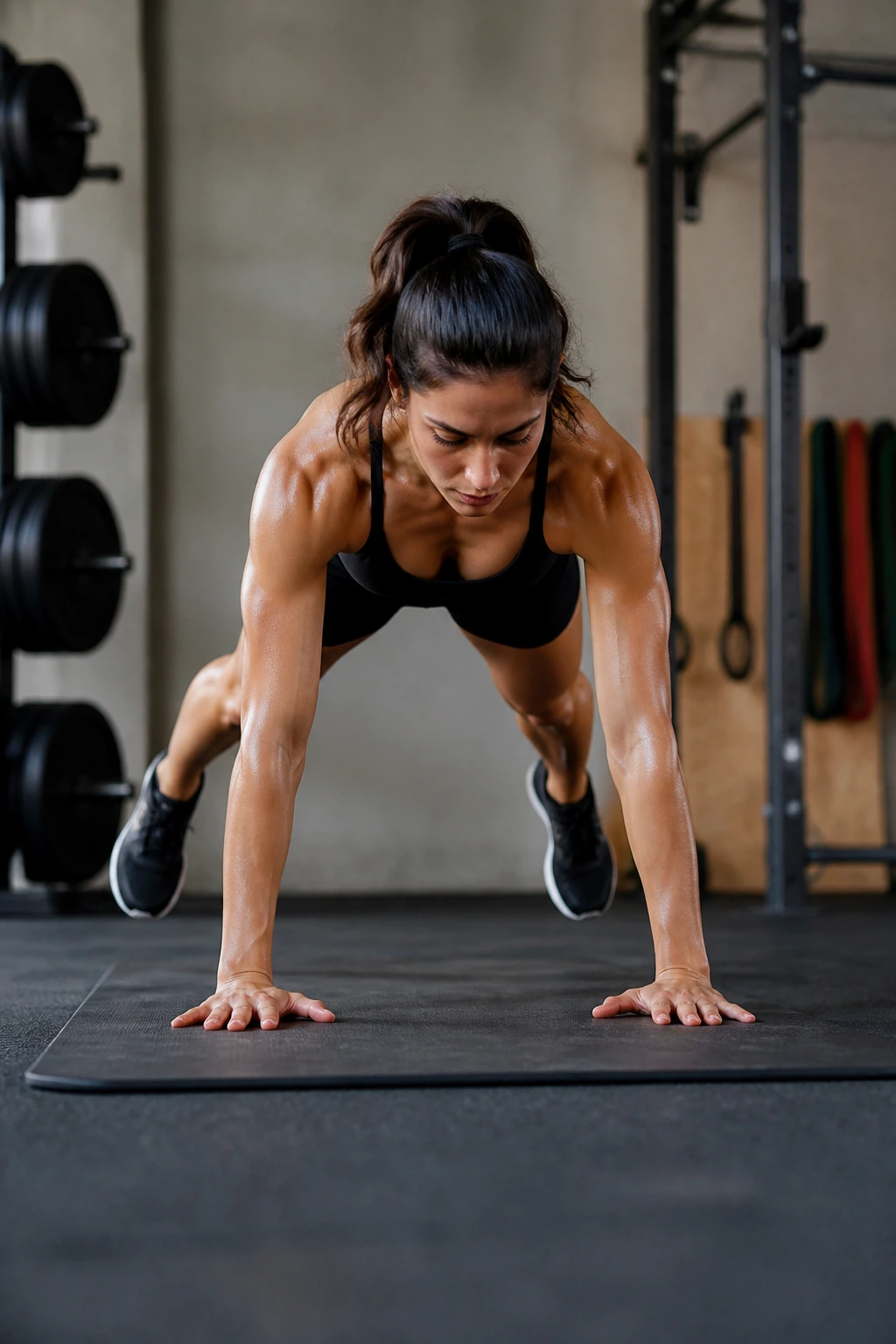
The plank jack looks like cardio wearing a core exercise’s clothes.
From a high plank, jump the feet out and in while keeping the shoulders steady and the hips from bouncing. The movement is simple, but the landing matters. Soft feet. Quiet body. If the whole torso rattles every time the feet land, the drill loses its point and starts becoming a noise problem.
I like plank jacks when someone wants a bit more speed without abandoning plank mechanics. They do raise the breathing rate, though, and that means form can fall apart fast. If you’re flinging the legs around, slow down. A slower jack with control beats a fast mess every time.
Good Form Cues
- Keep the hands rooted hard into the floor
- Land softly through the balls of the feet
- Keep the ribs tucked so the low back doesn’t sag
A short set works well here. Ten to twenty seconds is plenty if the pace is honest. Past that, quality tends to leak out.
13. Body Saw: Sliding an Inch Makes a Big Difference
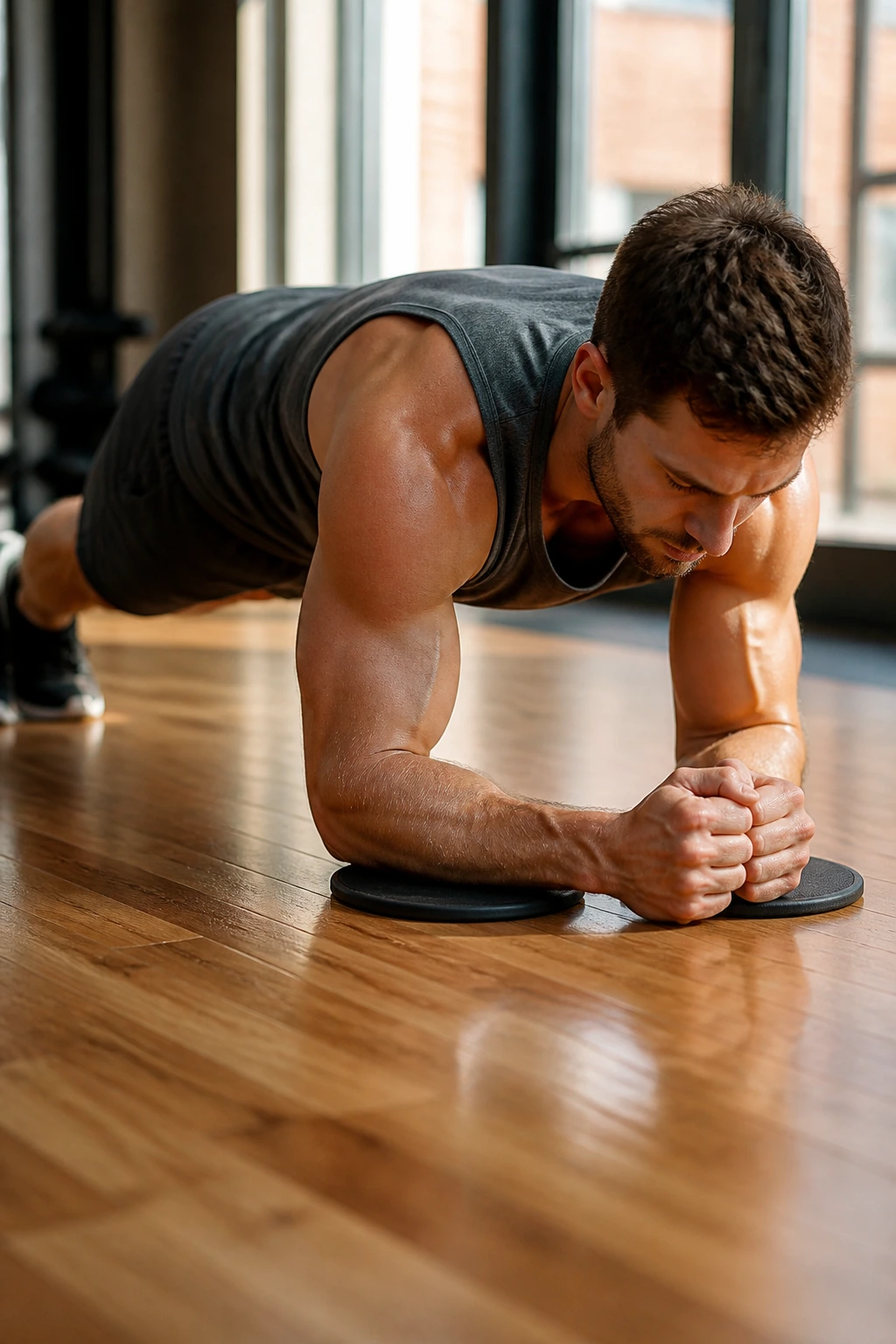
Why does sliding an inch make a plank so much harder?
Because the lever changes. That’s the whole trick.
Set your feet on sliders, towels, or another surface that moves smoothly, then hold a forearm plank while you slide the body a little forward and back. The abs have to keep the trunk from folding as the center of mass drifts. The shoulders stay active, the ribs stay down, and the hips have to resist the urge to wave around.
This one works best on a slick floor. Carpet usually makes it clunky. Hardwood, tile, or laminate is much better. If you have suspension straps, a body saw can also be done with the feet elevated, but the floor version is enough for most people.
Setup Notes
- Start with a very small range
- Keep the movement slow and smooth
- Stop before the low back starts to arch on the forward slide
The body saw is one of those drills that looks mild until you do three clean reps. Then it gets rude.
14. Pike Plank: Compression, Not a Stretch
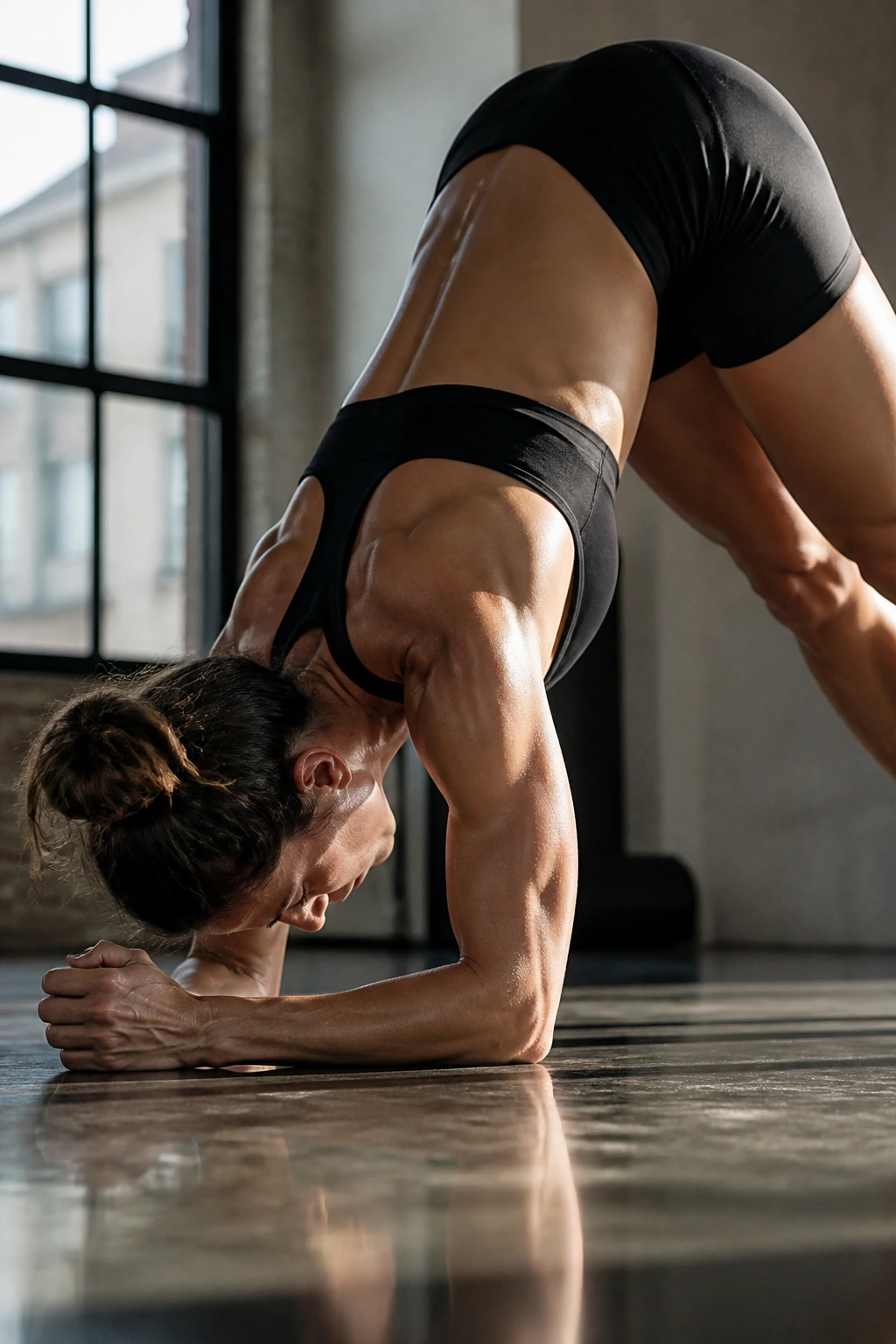
This is not a hip-flexor stretch. It’s a moving compression drill.
From a high plank, pike the hips toward the ceiling, then return to the starting line. Some people like to bend the knees a touch. That’s fine if the hamstrings are tight or the lower back needs a little mercy. What matters is that the movement comes from the trunk and shoulders staying connected while the hips travel.
The pike plank asks a lot from the shoulders, upper abs, and hip flexors at the same time. It also teaches you to control body shape through a bigger range than a still plank does. If your head dives toward the floor or your lower back rounds hard, you’re rushing the motion.
A Clean Rep Looks Like This
- Hands planted firmly under the shoulders
- Hips lift without the ribs flaring wildly
- Feet stay grounded and controlled on the return
I’d use this one after you already own standard plank positions. It’s a progress move, not an entry point. And yes, it can light up the shoulders faster than you expect.
15. RKC Plank: The Hardstyle Finish for Plank Variations
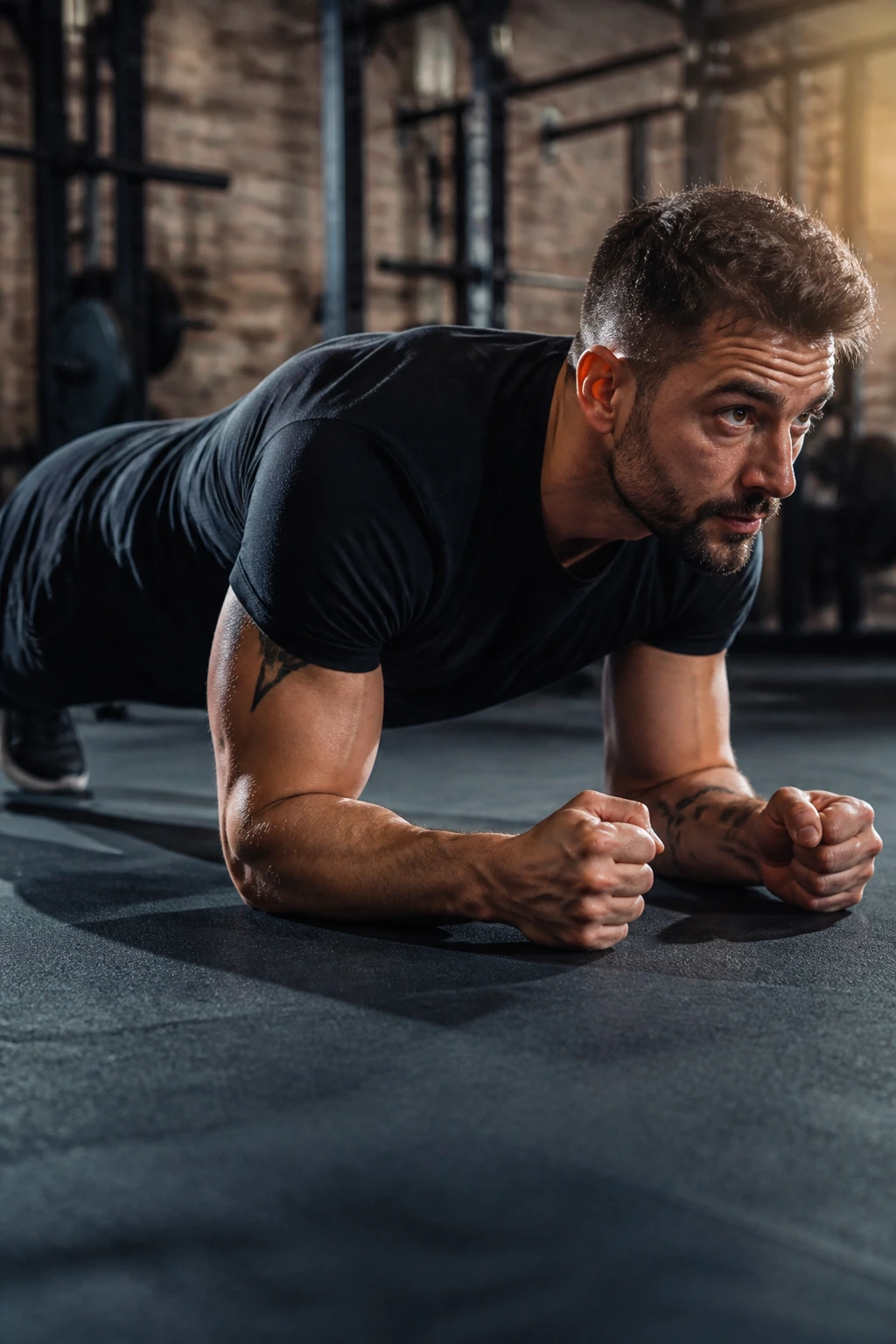
Ten seconds done right can beat a minute done lazily.
That’s the RKC plank in one sentence. It’s a hardstyle version of the forearm plank that asks for full-body tension: elbows drag back toward the toes, forearms press into the floor, fists or hands squeeze, glutes clamp down, quads tighten, and the ribcage stays locked in place. There’s nothing casual about it. The goal is not time. The goal is tension.
The cue I use most is this: pull the floor apart and try to shorten your body without moving. That sounds odd, but it works. The abs light up hard when every line of the body is trying to contract at once. Breathing gets tricky too, which is why short holds make sense here. Five to fifteen seconds is enough for most people.
What to Notice
- The body should feel like a single hard unit
- The shoulders should be active, not collapsed
- The lower back should not sag, even a little
What Not to Do
- Don’t chase long holds
- Don’t hold your breath until your face feels tight
- Don’t let the glutes go soft halfway through
This is the one I’d use as a finisher when you want to leave the core with no doubt about what happened. It’s also one of the easiest planks to fake badly, so be honest. If the shape is gone, stop the set.
Final Thoughts
Plank variations work best when they change the job, not just the pain. A forearm plank teaches bracing. A side plank teaches anti-side-bending. Shoulder taps, body saws, and plank-to-push-up drills add movement without giving up control. That mix is what makes the list useful.
Pick one or two from each bucket. One straight-ahead hold. One side-focused hold. One moving drill. That’s enough to build a strong weekly rotation without turning core training into a circus.
The small details matter more than the clock. Ribs down, glutes on, neck long, movement small when movement is needed. Get those right, and even the simple versions stay honest.
