



Crunches are not the only way to train your midsection. They’re one tool, and for a lot of people they’re a clumsy one — especially if the neck gets cranky, the hip flexors take over, or the lower back starts grumbling halfway through the set.
A stronger core does more than bend your spine. It keeps your ribs stacked, your pelvis steady, and your body from leaking force when you lift, carry, run, twist, or simply stand there without feeling wrecked by the end of the day. That’s why the best core work often looks a little less like “abs day” and a little more like bracing, resisting, and holding position under pressure.
I’d take a clean dead bug over 50 sloppy crunches any day. Same for a hard plank, a suitcase carry, or a slow rollout done with control instead of ego.
Once you start treating the core as a brace, not a folding hinge, the whole training picture changes.
1. Dead Bug
The dead bug is the first move I’d hand to most people who want a better replacement for crunches. It teaches the two things a lot of ab routines miss: ribs down and pelvis quiet. That sounds simple, and it is — which is exactly why so many people skip it and end up doing flashy work that never really lands.
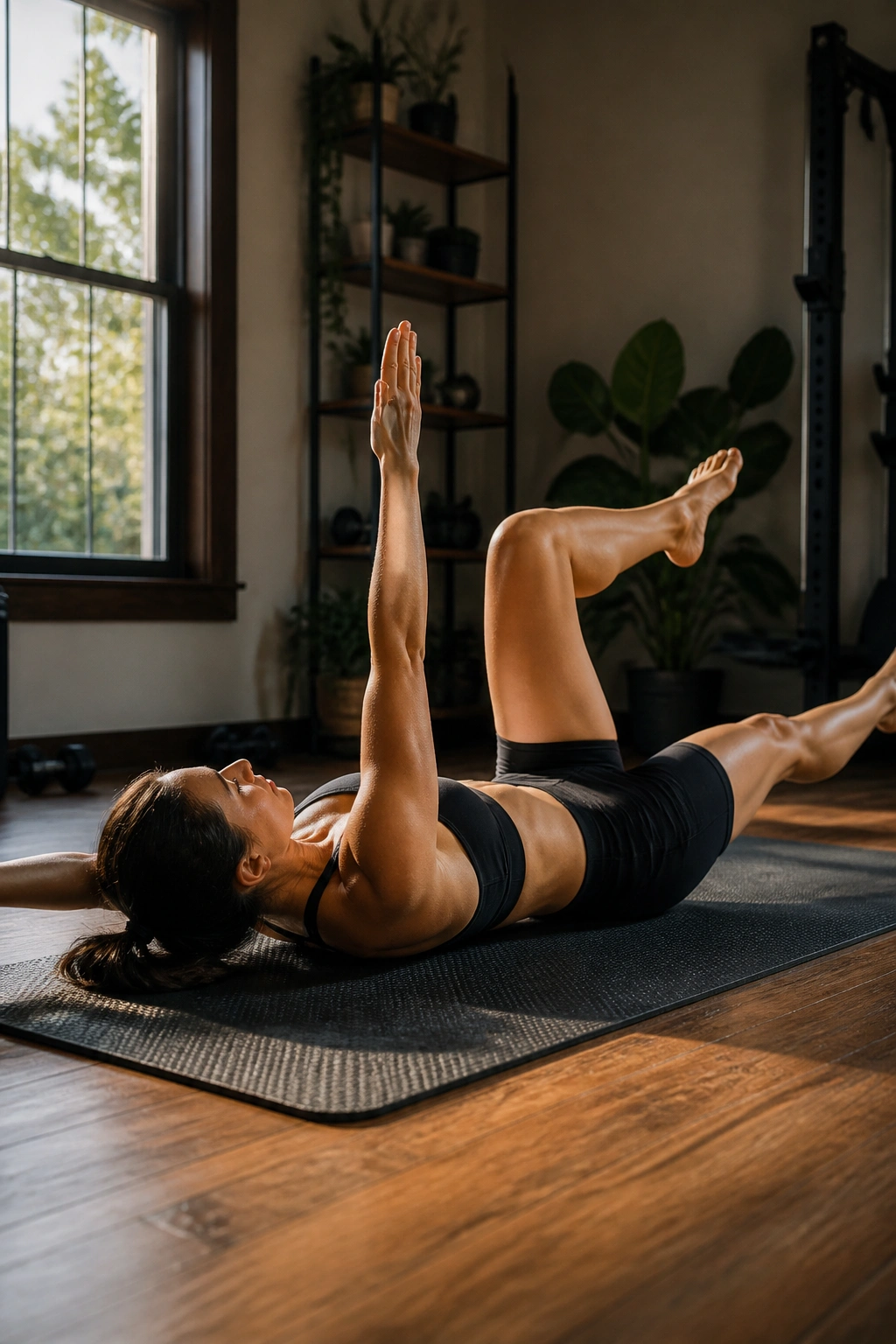
Start on your back with your arms pointed to the ceiling and your hips and knees bent at 90 degrees. Press your lower back gently into the floor, then lower one arm and the opposite leg until they’re almost touching the ground. Bring them back, switch sides, and keep your trunk from wobbling.
Why It Works
The dead bug trains anti-extension, which means your midsection learns to stop your low back from arching. That matters in squats, presses, carries, and even walking uphill with a backpack. If you can hold that shape under slow limb movement, your abs are doing useful work instead of just curling your torso.
A lot of people rush this drill and turn it into a floppy bicycle motion. Don’t. Slow is the point. A good dead bug should feel a little boring in the best way — controlled, tense, and a bit harder than it looks.
Try this: 2 to 3 sets of 6 to 8 reps per side, with a 2-second pause when the arm and leg are extended.
What to Watch For
- Your low back should stay close to the floor.
- Your ribs should not flare up.
- The moving leg should lower only as far as you can control.
- If your neck tenses, reset and breathe out before each rep.
One clean rep beats five sloppy ones.
2. Forearm Plank
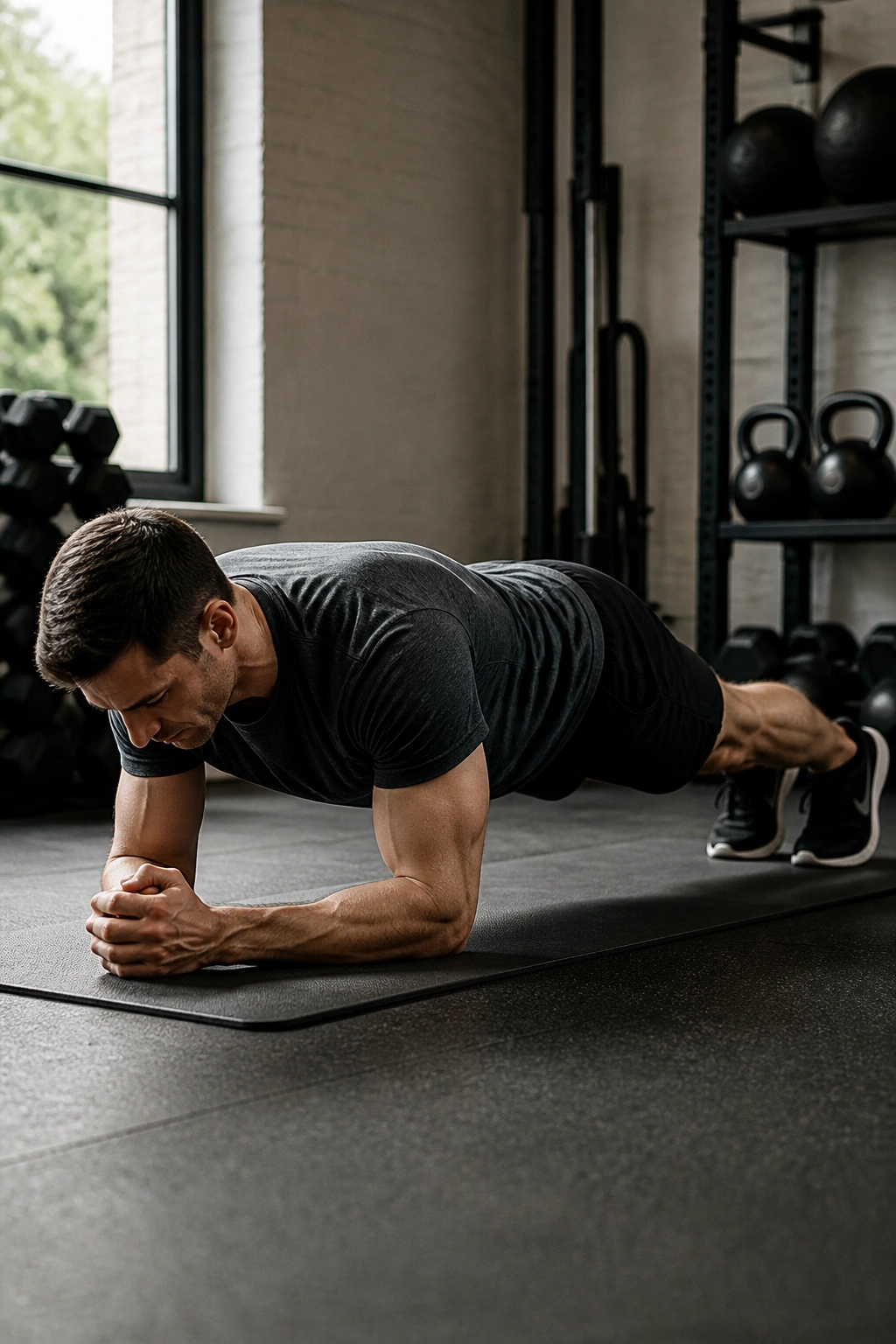
How long should a plank last? Shorter than most people think. A 20-second plank with a hard brace is worth more than a 90-second hold where the hips sag and the shoulders creep toward the ears.
The forearm plank is the classic anti-extension drill, but it only works when you treat it like a full-body tension exercise. Squeeze your glutes, pull your elbows toward your toes without moving them, and imagine zipping your front ribs down toward your belt line. That tension is the point.
What Makes It Better Than Crunches
Crunches train spinal flexion. The plank trains the body not to move when movement is the easy option. That’s a big difference. If your trunk collapses every time you press, row, run, or stand on one leg, a plank helps teach the opposite pattern.
A solid plank should feel like work in the abs, shoulders, and glutes all at once. If it only feels like a backbend with your toes on the floor, you’re missing the good stuff. Breathe through it too — shallow panicked breaths usually mean you’ve lost the brace.
How to Use It
- 3 rounds of 15 to 30 seconds for beginners
- 20 to 45 seconds for most intermediate lifters
- Add load or longer lever positions before chasing endless time
If your lower back talks back, stop the set there.
3. Side Plank
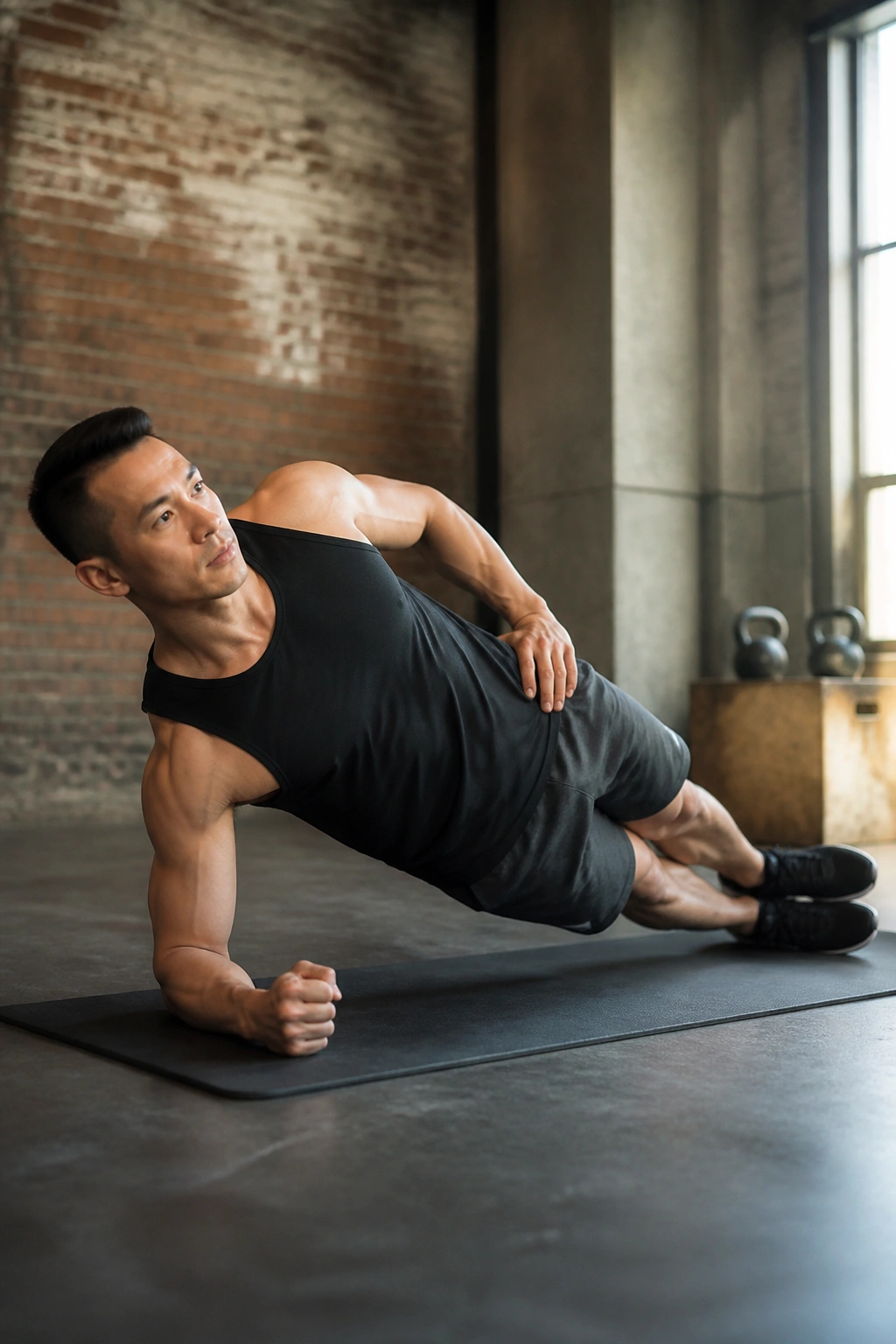
Side planks are brutally honest. If one side of your trunk is weaker, you’ll know within seconds.
That’s why they deserve a spot in any list of core movements that replace crunches. Crunches mostly train flexion. Side planks train anti-lateral flexion, which is the fancy way of saying they keep you from folding sideways when you carry a bag, plant a foot, or stand on one leg for too long.
What It Builds
The side plank hits the obliques, glute medius, and the deep stabilizers that help keep your pelvis level. People often feel it in the bottom side of the waist, the outer hip, and even the shoulder of the supporting arm. Good. That means the whole chain is working.
You do not need to hold a side plank forever. Ten clean seconds on each side with a stacked body line tells me more than some shaky minute-long sufferfest. If the top shoulder drifts forward or the hips roll open, shorten the hold and own the position first.
A Simple Progression
- Start on the knees if needed.
- Build to full feet.
- Add a top-leg lift only when you can hold steady without twisting.
That little knee-down version is not a cheat. It’s a smart step.
4. Bird Dog
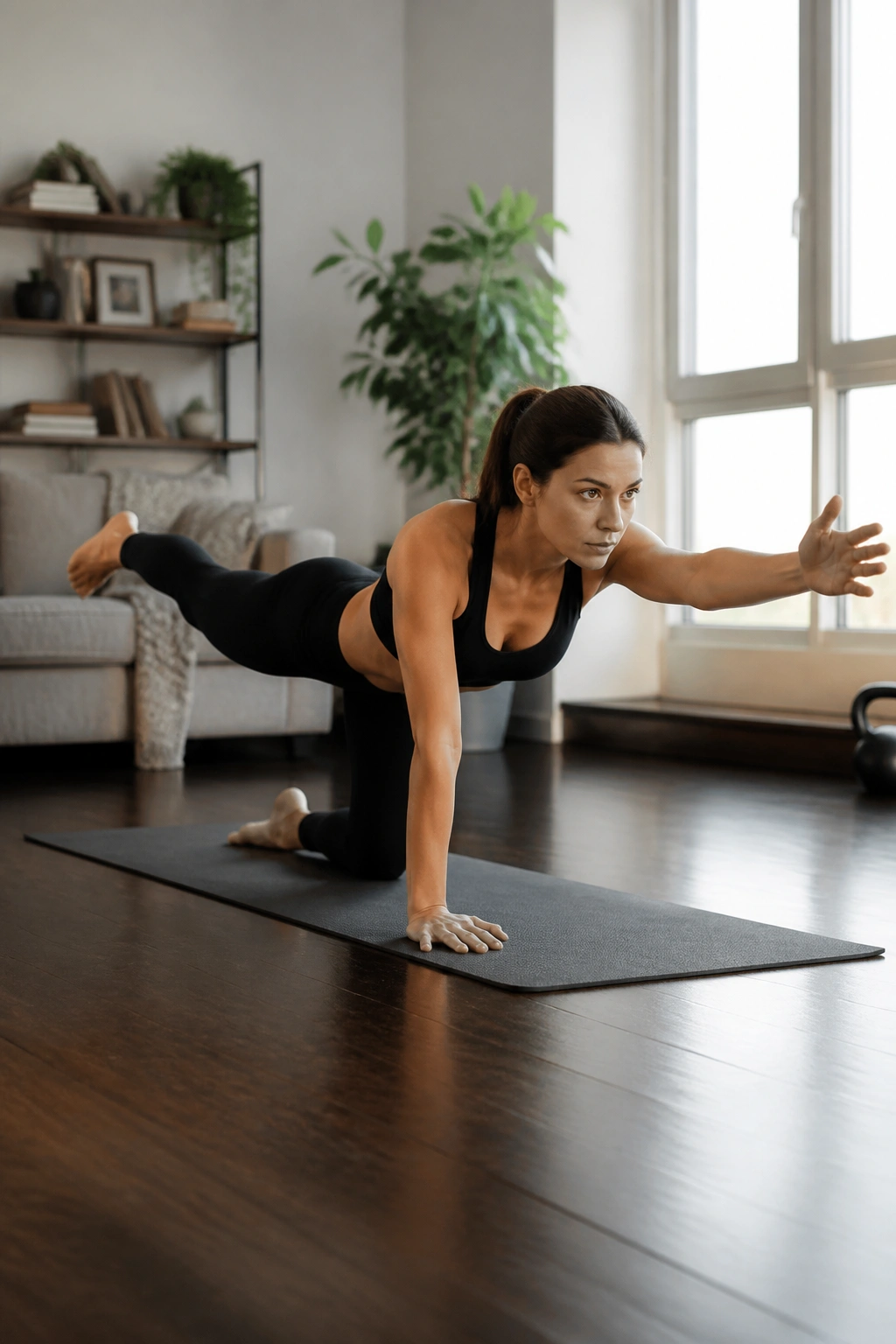
Watch a sloppy bird dog and the hips start swaying like a boat in choppy water. Watch a good one and the room seems to go quiet.
The bird dog is one of those unglamorous drills that works better than people expect. From hands and knees, extend one arm and the opposite leg while keeping your spine long and your hips level. The challenge isn’t the reach. It’s keeping everything else still.
Why It Belongs Here
This move trains coordination, trunk control, and spinal stability at the same time. It’s especially useful if your lower back gets annoyed by crunches or sit-ups. Instead of bending and flexing the spine, you learn to resist movement while the limbs travel through space.
That transfer matters. A loaded carry, a press, a pull, a sprint — all of them ask your core to stay organized while something else happens. Bird dog rehearses that pattern in a low-stress way.
Quick Cues That Help
- Reach long, not high.
- Keep the hips square to the floor.
- Pause for 2 to 5 seconds at full extension.
- Exhale as the arm and leg lengthen.
If you can’t stop twisting, shorten the range.
5. Hollow Body Hold
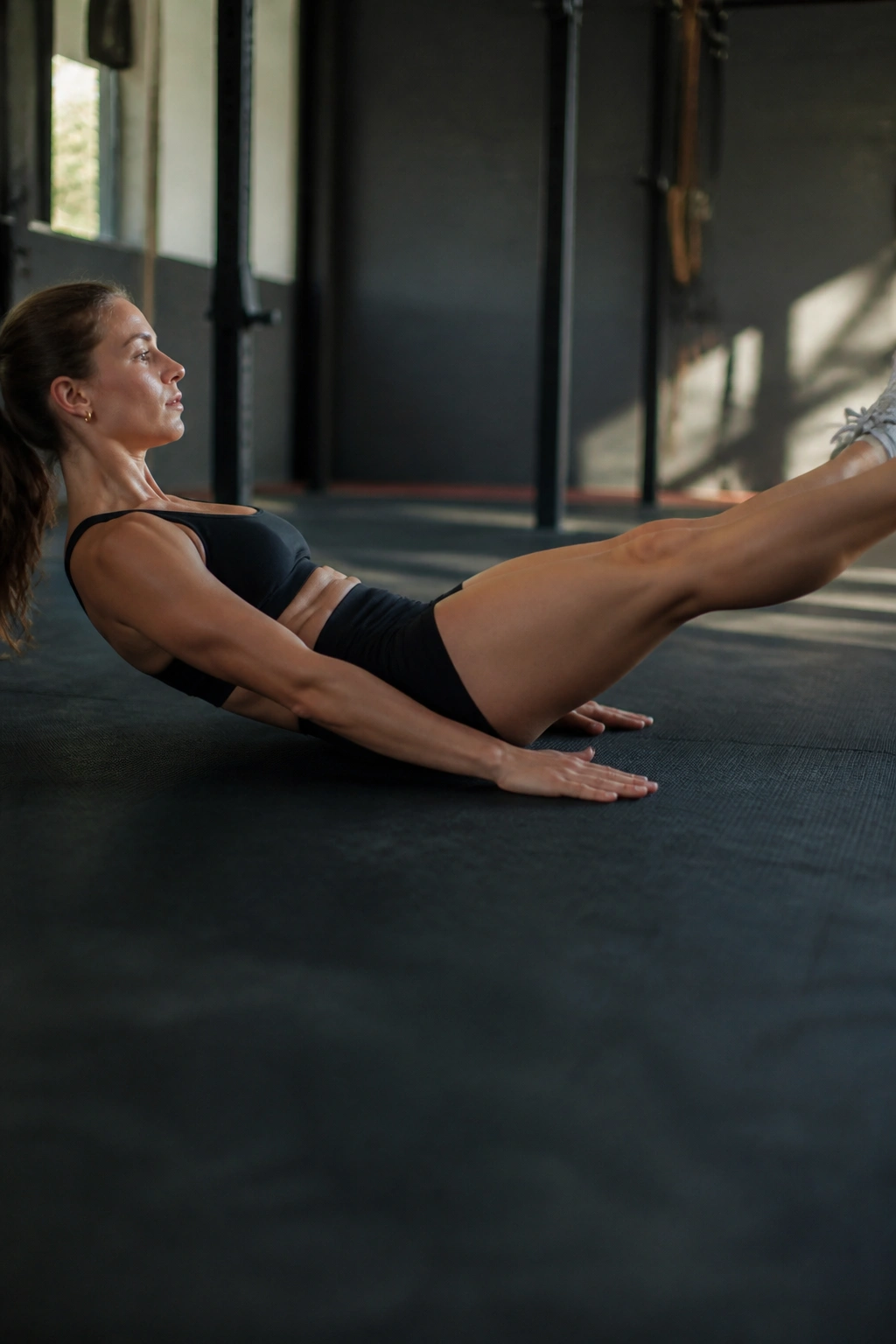
The hollow body hold is one of the cleanest tests of whether your midsection can keep its shape under tension. You lie on your back, flatten the low back into the floor, then lift the shoulders and legs a few inches off the ground. No drama. Plenty of burn.
Gymnasts love this shape for a reason. It teaches a rigid torso while the limbs stay long, and that makes it a smart alternative to crunches for people who want more than just flexion. The abs work hard, but so do the hip flexors and deep trunk muscles, which is part of the deal.
A lot of people lose the position the second the legs go out. That’s fine. Bend the knees a little, keep the low back pressed down, and hold that version first. A bent-knee hollow hold is still a real hollow hold.
This one should feel sharp. Not sloppy. If your back arches off the floor, the set is over.
Best use: 3 to 5 holds of 10 to 20 seconds, with full rest between efforts.
6. Reverse Crunch
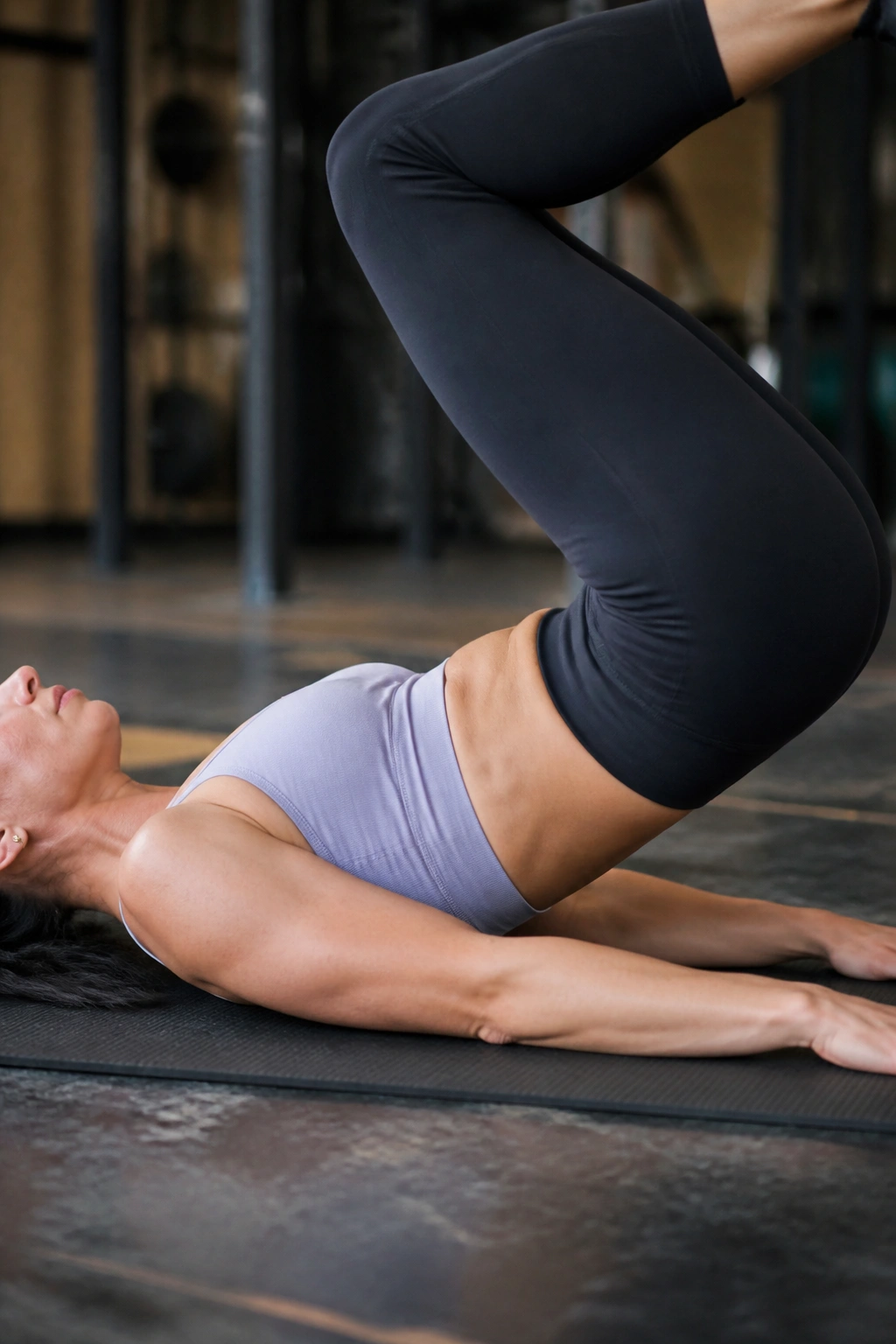
The reverse crunch deserves more respect than it gets. It looks simple, but when it’s done well, it teaches a cleaner abdominal curl than the classic crunch ever does.
Unlike a full crunch, the reverse crunch starts with the pelvis. You curl the tailbone off the floor, then bring the knees toward the chest using the abs, not momentum. That small pelvic tilt is the whole trick. It keeps the neck quiet and usually shifts more of the work where you want it.
Why It Feels Different
A lot of people do leg lifts and call them abs work. Then the hip flexors dominate and the low back takes a beating. The reverse crunch fixes part of that by shortening the lever and focusing on the tuck. You’re not trying to fling your legs upward. You’re trying to peel the hips off the floor with control.
How to Get It Right
- Start with knees bent at 90 degrees.
- Exhale as you curl the pelvis up.
- Lower slowly until the low back touches down again.
- Stop before the swing starts.
If you want a direct abdominal burn without yanking on your neck, this is a smart place to go.
7. Pallof Press
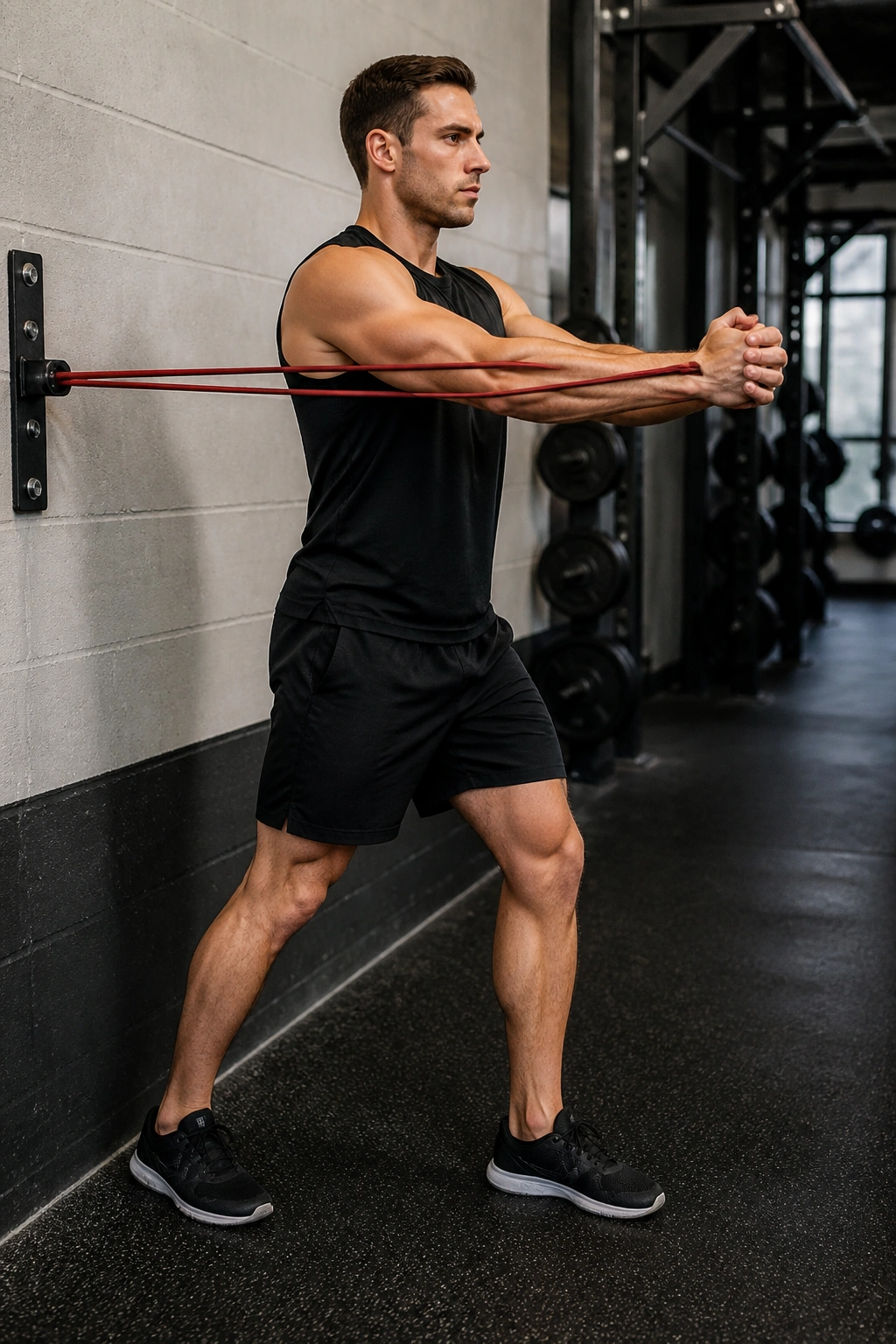
Why does a simple band press make the abs light up? Because the body hates being twisted when it wants to stay straight.
The Pallof press is one of the best anti-rotation drills out there. Set a cable or band at chest height, stand sideways to the anchor, hold the handle at your chest, then press it straight out and resist being pulled around. The weight is trying to rotate you. Your core says no.
Best Set-Up
- Feet about hip-width apart
- Knees soft, not locked
- Ribs stacked over pelvis
- Press straight out, then pause for 1 to 2 seconds
You can do it standing, half-kneeling, or tall-kneeling. Half-kneeling often feels cleaner because it cuts down on cheating through the hips. Tall-kneeling usually raises the difficulty fast, which is useful if the standing version starts feeling too easy.
The beauty of the Pallof press is that it teaches bracing without motion. That’s gold for golfers, lifters, runners, and anyone who wants stronger abs without another pile of spinal bending.
A good set: 8 to 10 presses per side, or 10- to 20-second isometric holds.
8. Suitcase Carry
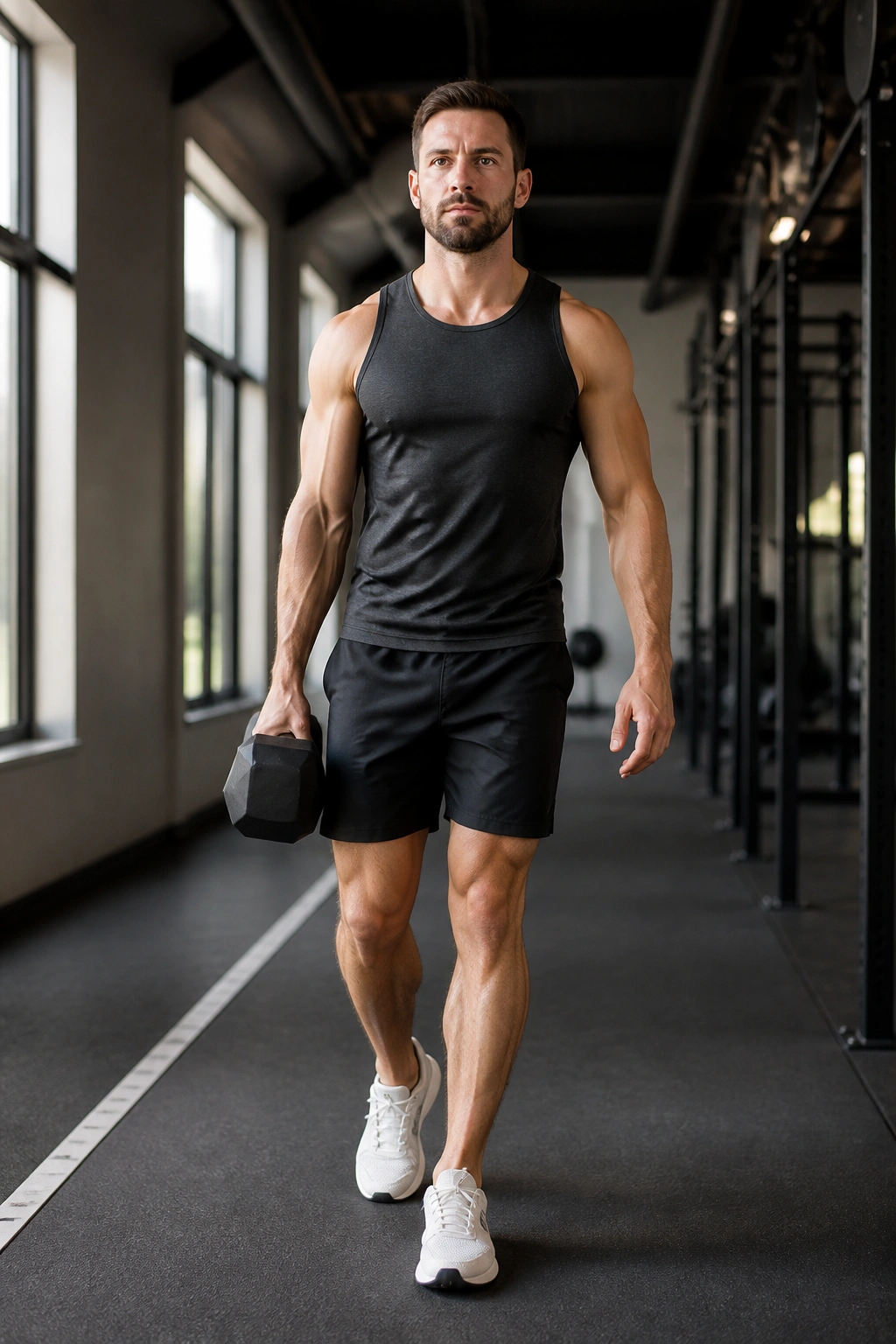
One heavy dumbbell in one hand can light up your core better than a whole mat full of crunches.
That sounds dramatic, but it’s true. The suitcase carry trains the trunk to resist sideways bending while you walk. You stand tall, pick up a heavy kettlebell or dumbbell in one hand, and take controlled steps without leaning toward the weight. The obliques, glutes, and grip all chip in.
Why I Like It
It’s honest. If the load is too heavy, you tip. If you’re lazy with posture, you tip. If your breathing falls apart, you tip. There’s no hiding in a suitcase carry, and that’s part of why it earns a place on this list.
You also get a nice carryover to daily life. Groceries. Luggage. A kid on one hip. A tool bucket. The body lives in standing patterns far more often than it lives in crunch patterns.
What to Do
- Walk 20 to 40 meters per side
- Keep the ribs stacked
- Don’t let the free hand swing wildly
- Use a weight that makes posture matter by the end of the walk
Walk smooth, not fast.
9. Bear Crawl
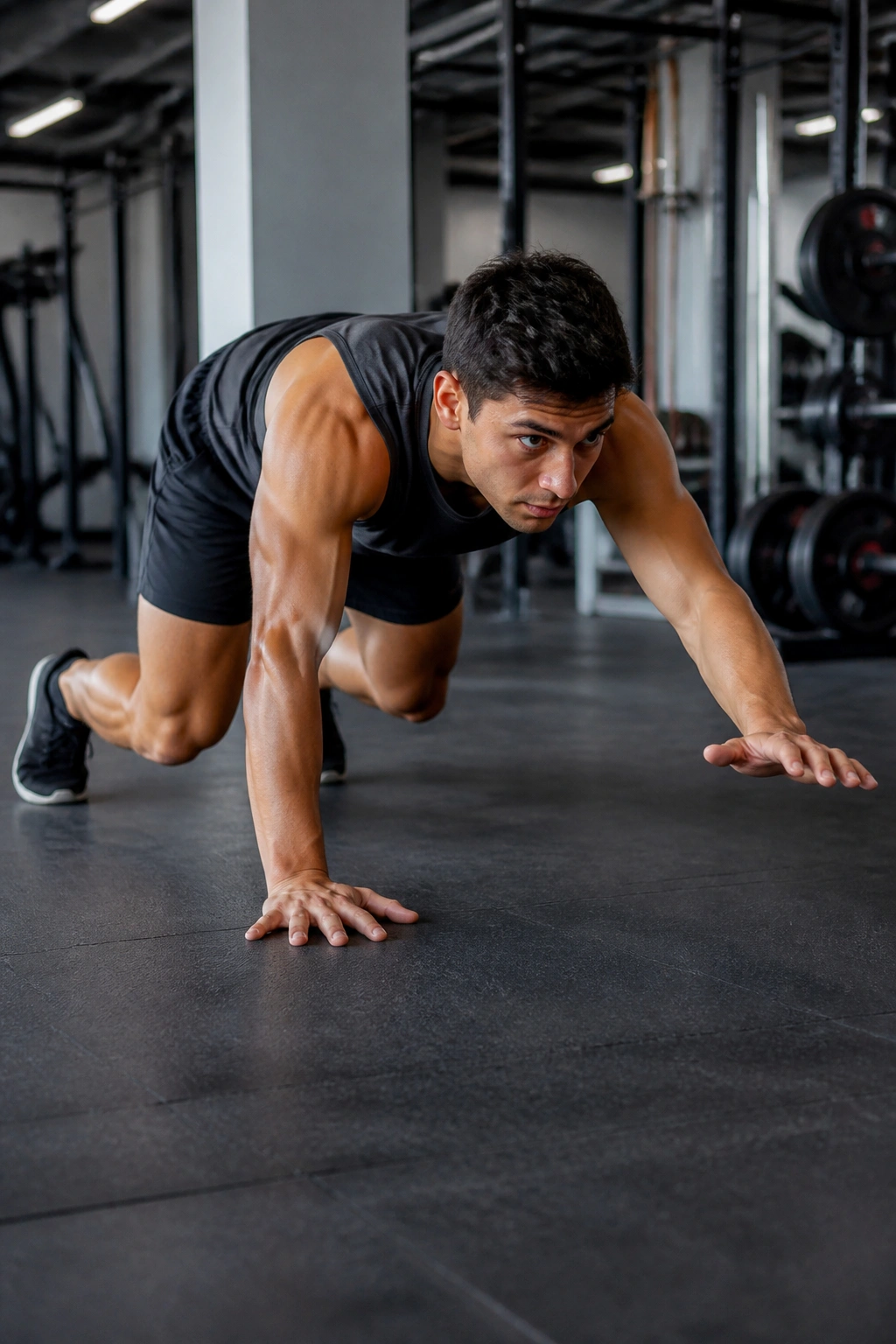
A bear crawl looks playful until you try to do it with control. Then it gets serious fast.
This drill challenges the core in a different way: you’re on hands and feet, knees hovering a few inches off the floor, and every step asks your trunk to stay tight while your limbs alternate. It trains shoulder stability, hip control, and anti-extension at the same time.
Why It Beats Mindless Ab Work
Bear crawls are dynamic. Crunches are not. That matters because a lot of real-world trunk work happens while you’re moving — shifting, crawling, carrying, bracing, turning. A slow crawl teaches your abs to stay on while your body changes shape under load.
Don’t race it. Racing turns the movement into a sloppy cardio drill. A good bear crawl is quiet, low, and controlled, with the knees hovering just off the floor and the back staying flat rather than sagging.
You can crawl forward, backward, or sideways. Backward crawls are sneakily hard and usually force a cleaner brace.
Try 10 to 20 meters total, broken into short trips.
10. McGill Curl-Up
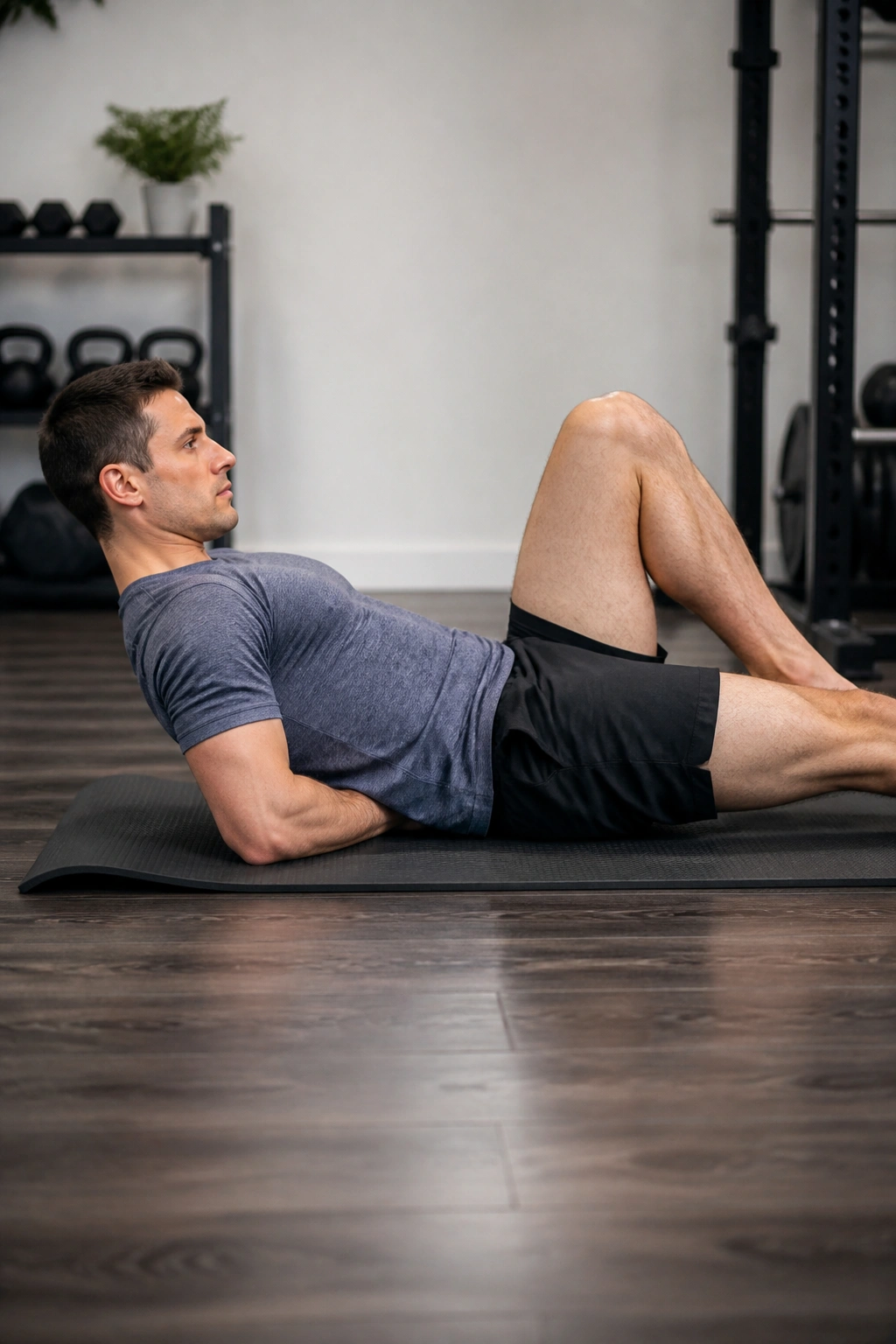
The McGill curl-up is what I wish more people knew about when they think “core training.” It looks like a tiny crunch, but it’s not a full spinal fold, and that difference matters.
Stuart McGill built this drill around spine-friendly endurance. One knee bends, the other leg stays long, hands slide under the lower back for support, and the head and shoulders lift only a little. You hold, breathe, and lower with control. The range is small on purpose.
How It Differs From a Crunch
A regular crunch tends to pull the torso into repeated flexion. The McGill version keeps the lumbar spine closer to neutral while still asking the abs to work hard. That makes it a smart choice for people whose backs complain during high-volume crunches.
You’re not chasing a big lift here. You’re bracing against a small curl and making that position clean. A 10-second hold is usually enough to tell the truth.
Simple Prescription
- 5 reps per side
- Hold each rep for 8 to 10 seconds
- Rest a few breaths between reps
If you like a flexion-based drill but want less spine movement, this is the one to keep.
11. Ab Wheel Rollout
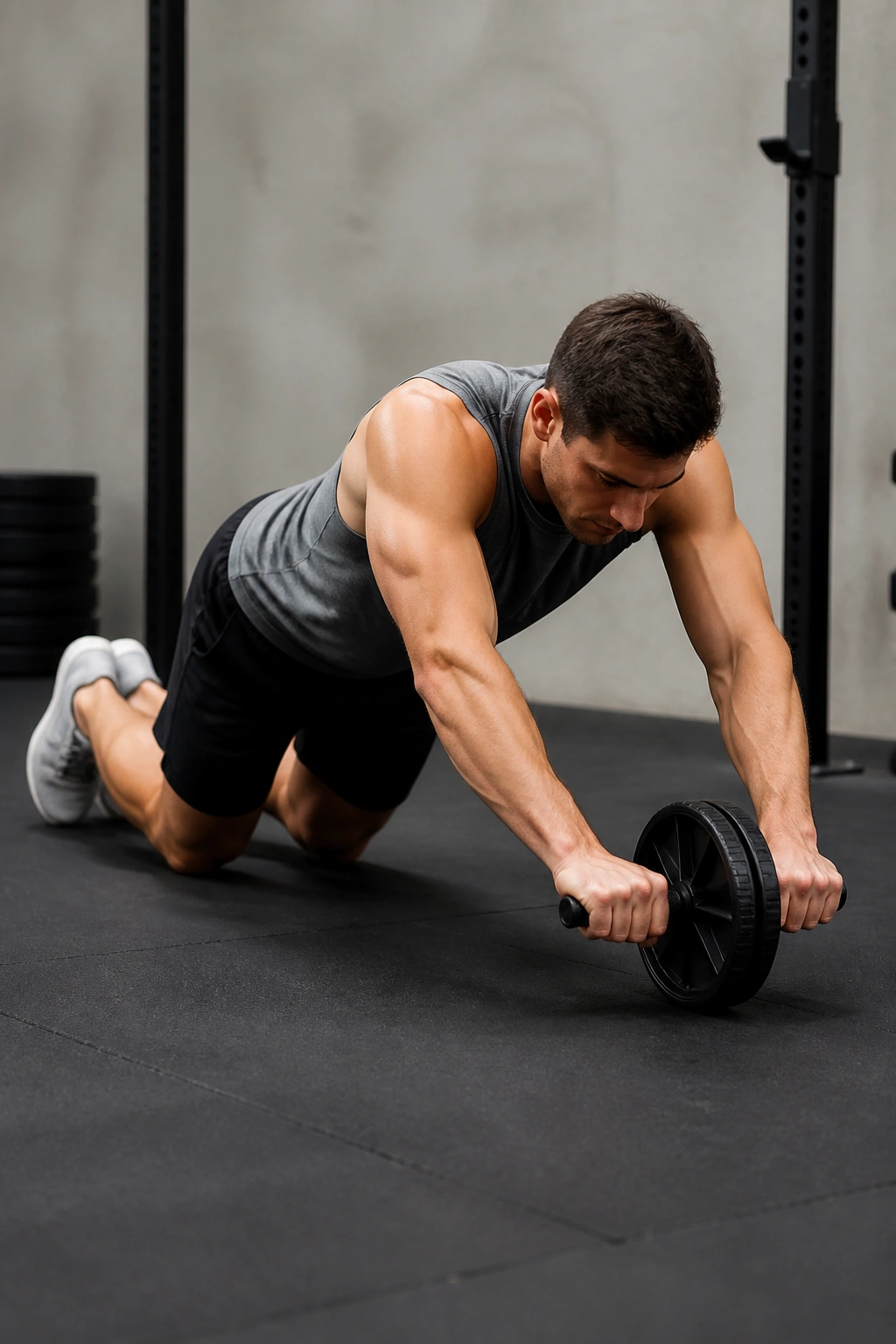
The ab wheel is a brutally effective core exercise. It also punishes bad form without mercy.
You kneel, grip the wheel, and roll forward while keeping the ribs from flaring and the low back from sagging. Then you pull yourself back in. The farther you roll, the harder the anti-extension demand gets. That’s why people who breeze through crunches often get humbled here.
What Makes It Useful
The ab wheel trains the core to resist a long lever. That’s the part crunches can’t touch very well. It also asks the shoulders and lats to stay organized, so the move becomes more than an ab burn — it turns into a full trunk-and-upper-body brace.
Start tiny. Seriously. A short rollout where you keep the pelvis tucked and the spine stable is far better than a heroic reach that dumps you into your lower back. If your belly drops toward the floor, pull back and shorten the range.
Regressions That Work
- Roll from a wall and stop early
- Use a stability ball instead of a wheel
- Slide only a few inches on a smooth floor
The harder the lever, the less ego helps.
12. Body Saw
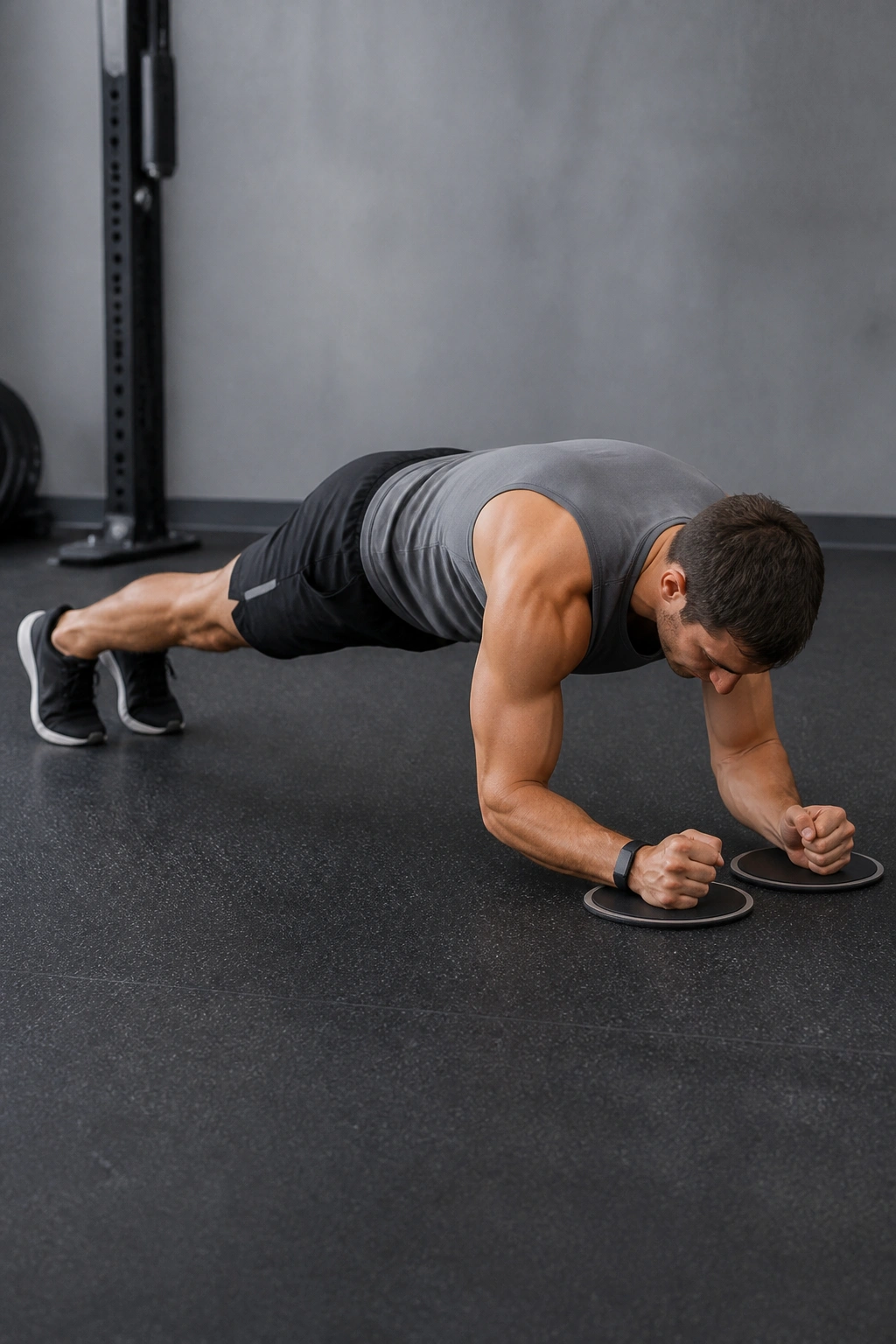
The body saw feels like a plank that got meaner.
Set your forearms on sliders, towels, or a suspension trainer, then hold a plank while you gently glide backward and forward. The movement is tiny. The tension is not. Your core has to fight to stop your ribs from dropping and your hips from wandering.
Why Small Range Is Enough
People often make the mistake of thinking harder core work needs bigger motion. Not here. A few inches of slide, done well, can light up the abdominals far more than a big sloppy range. The goal is to keep the body long and rigid while the floor tries to move beneath you.
The body saw is excellent if you want a no-crunch option that still hits anti-extension hard. It’s also nice for people who like plank work but want something less static.
A good body saw should feel like you’re dragging tension through your whole front side — abs, lats, shoulders, even quads. If your low back starts to pinch, shorten the slide and reset.
Use 6 to 10 controlled reps, not a fast slide show.
13. Slow Mountain Climber
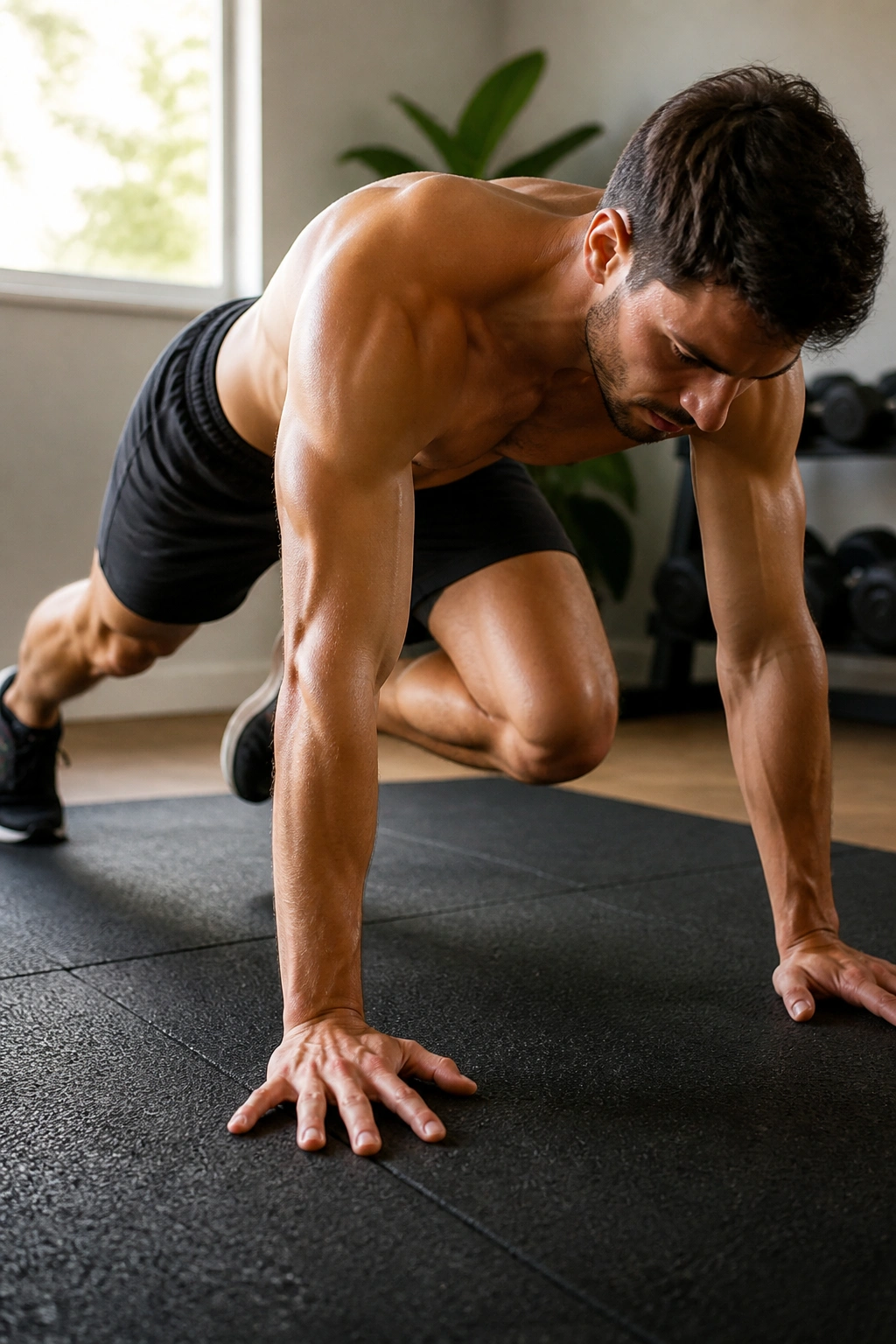
Fast mountain climbers are mostly cardio. Slow mountain climbers are core work.
That distinction matters. When you slow the pace down and keep the hips steady, the drill becomes a controlled march from a plank position. Each knee drive asks the trunk to resist twisting and sagging while the hip flexes under tension.
How to Make It Worth Doing
Keep the shoulders over the wrists, press the floor away, and bring one knee toward the chest without letting the hips bounce. The moving leg should feel deliberate, not frantic. If your torso wiggles side to side, the speed is too high.
This is one of those exercises that gets better when you strip away the hustle. No jumping. No racing the clock. Slow, clean reps make the midsection work in a way that looks almost plain from the outside.
It’s also a decent bridge between static planks and more dynamic movement. If your body likes rhythm, this tends to go over better than endless holds.
Aim for 20 to 30 total knee drives, controlled from start to finish.
14. Glute Bridge March
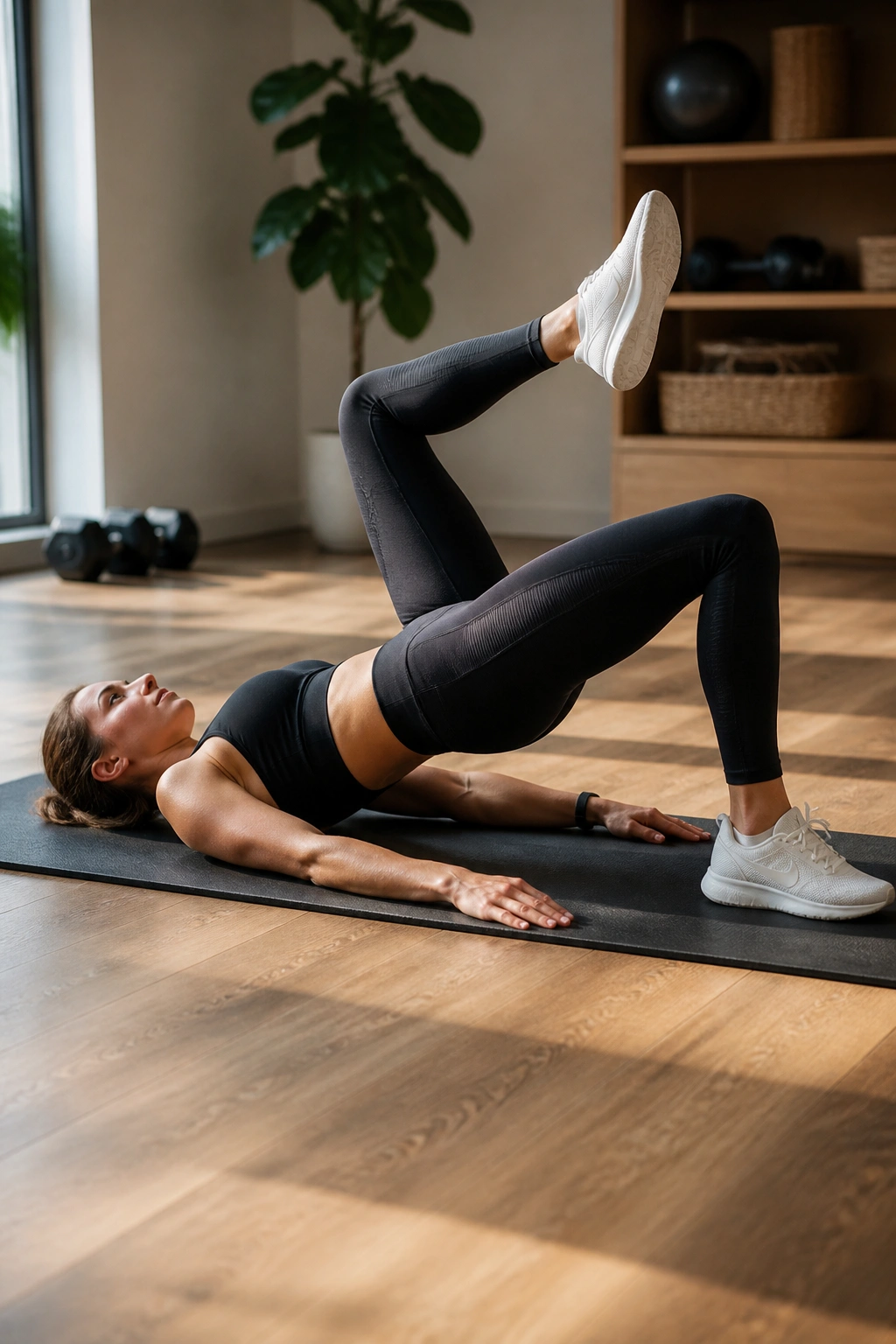
If planks make your shoulders complain, the glute bridge march is a cleaner option for building trunk control from the hips up.
You start in a bridge position with hips lifted, then raise one foot a few inches at a time without letting the pelvis drop or twist. The abs brace, the glutes hold the line, and the marching leg has to move without wrecking the shape.
Why It Matters
A lot of people think core training has to feel like a burn in the front of the stomach. Not true. Sometimes the real win is keeping the pelvis stable while the hips move. That’s what this drill does well, and it’s why I like it for runners, lifters, and anyone with a stubborn low back.
Quick Details
- Hold the bridge high before you march
- Keep the ribs down
- Move one knee at a time, slowly
- Stop if the hips start to sag
This drill feels cleaner than crunches for many people because it trains the trunk in a supported position. That can make it easier to learn if floor flexion work has always felt awkward.
You should feel the glutes doing real work.
15. Turkish Get-Up
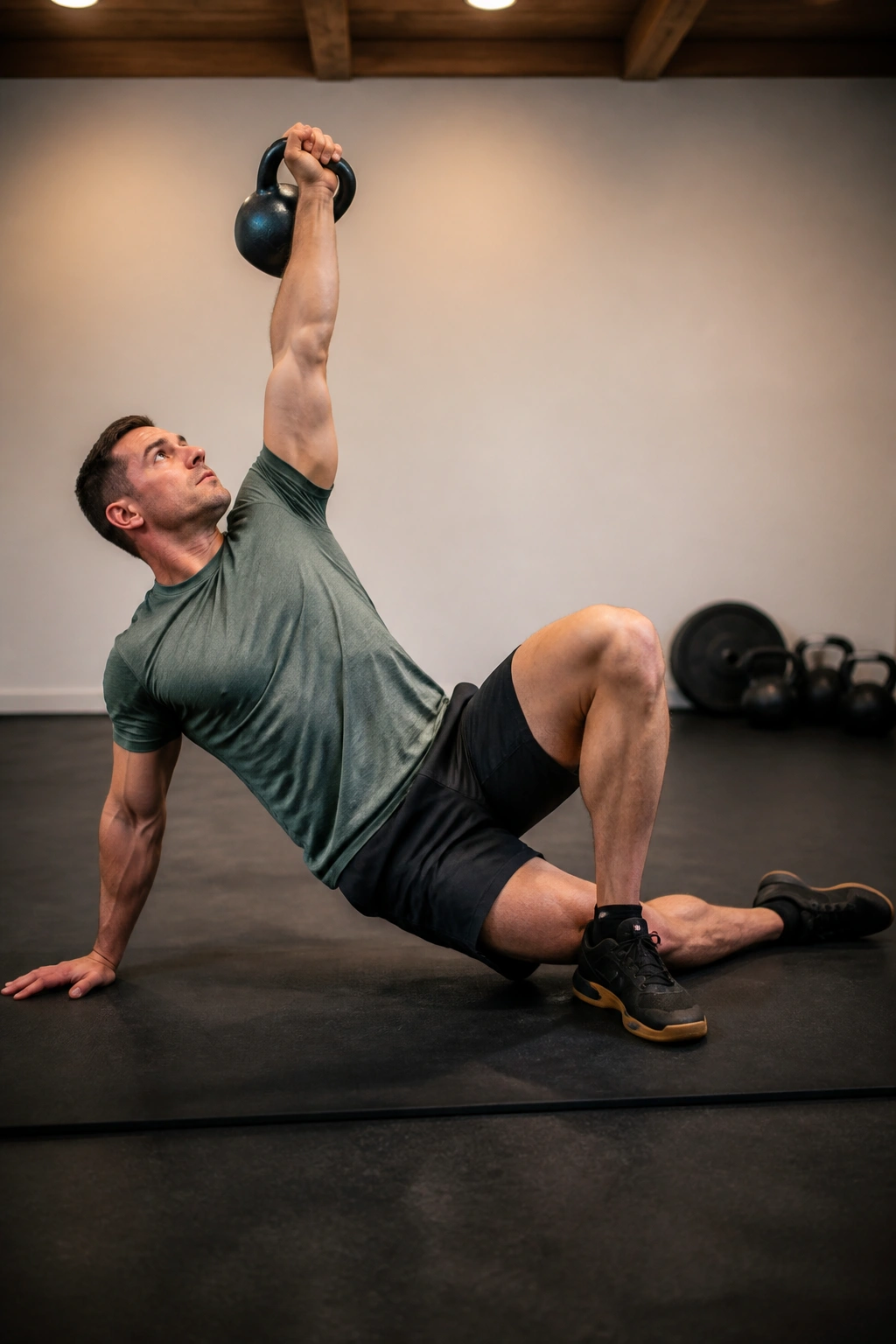
The Turkish get-up is the most complete core movement on this list, and it’s not close.
One side of the body has to stay stacked while you roll, post, kneel, stand, and reverse the whole thing under load. The core does not get to relax. Neither do the shoulders, hips, or feet. Every phase asks for control.
Why It Belongs Here
Crunches train one slice of trunk motion. The get-up trains the core as a system. It teaches you how to keep a load stable while the body changes level, which is about as useful as core training gets. It also reveals weak links fast — wrist, shoulder, hip, or trunk, whichever one is the first to complain.
How to Learn It
Start with no weight or with a light shoe balanced on your fist. Move through each phase slowly. If the shape gets messy, stop and clean it up before adding load. That’s not cautious for no reason; it’s the right way to keep the movement honest.
A simple approach works best here:
- 1 rep per side for beginners
- 2 to 3 reps per side for experienced lifters
- Plenty of rest between sides
Break It into Pieces
The get-up is easier when you stop treating it like one giant rep and start respecting the transitions. The roll to elbow. The post. The bridge. The sweep. The kneel. The stand. Each piece has its own job, and each one makes the core work a little differently.
It’s awkward at first. Then it starts to feel like the body is learning how to organize itself under load, which is a far better use of time than chasing a hundred half-hearted curls.
Final Thoughts
If crunches have been annoying your neck or back, you do not need to force them. A smarter core routine usually mixes anti-extension, anti-rotation, anti-lateral flexion, and one or two controlled flexion drills that don’t chew up your spine.
Pick three or four of these and use them well. A dead bug, a Pallof press, a suitcase carry, and a reverse crunch will cover more ground than most high-rep ab circuits. Add the ab wheel or Turkish get-up when you’re ready for something harder. Keep the reps clean. Keep the bracing honest.
Strong abs do not need to be noisy. They need to hold shape when the rest of you wants to fold.
