



If your ab work still feels like endless crunches on a yoga mat, the missing piece is probably the mix, not the effort. A flat stomach and a strong core are not the same thing, and six pack ab workouts for women at home work best when they train the front, sides, deep stabilizers, and the muscles that keep your pelvis from tipping forward.
Visible abs are partly about muscle and partly about body fat. The routines below lean on tension, control, and smart pacing, because racing through 50 sloppy reps usually teaches your body bad habits. Crunches have a place. So do dead bugs, planks, leg raises, anti-rotation work, and the odd finisher that leaves your middle shaking.
I like home ab training when it feels honest. A mat, a timer, maybe a band, and no circus moves you only saw on a screen. If your lower back usually takes over, or your neck gets cranky during crunches, a few of these will feel like a relief.
Start with the one that matches how your body feels today, not the one that looks toughest on paper.
1. Dead Bug and Hollow Hold Core Reset for Six-Pack Abs
Dead bugs are boring in the best way. They teach your pelvis to stay quiet while your arms and legs move, which is a fancy way of saying your abs finally do their job instead of your hip flexors stealing the show. Pair that with a short hollow hold and you get a tight, braced feeling that carries over to almost everything else.
Why It Works
- Do 8 dead bugs per side, moving slowly enough to breathe out on every extension.
- Hold the hollow position for 20 seconds with your ribs pulled down and your lower back pressed into the floor.
- Rest for 30 seconds, then repeat for 3 rounds.
- If your back arches, bend your knees more. That is not cheating.
Best used as a warm-up or recovery-day core session. It should feel controlled, not frantic.
I reach for this one when I want the front of my core to wake up without a big sweat. It is especially useful if you sit a lot or feel your lower back grabbing during crunches.
2. Reverse Crunch Ladder on the Mat
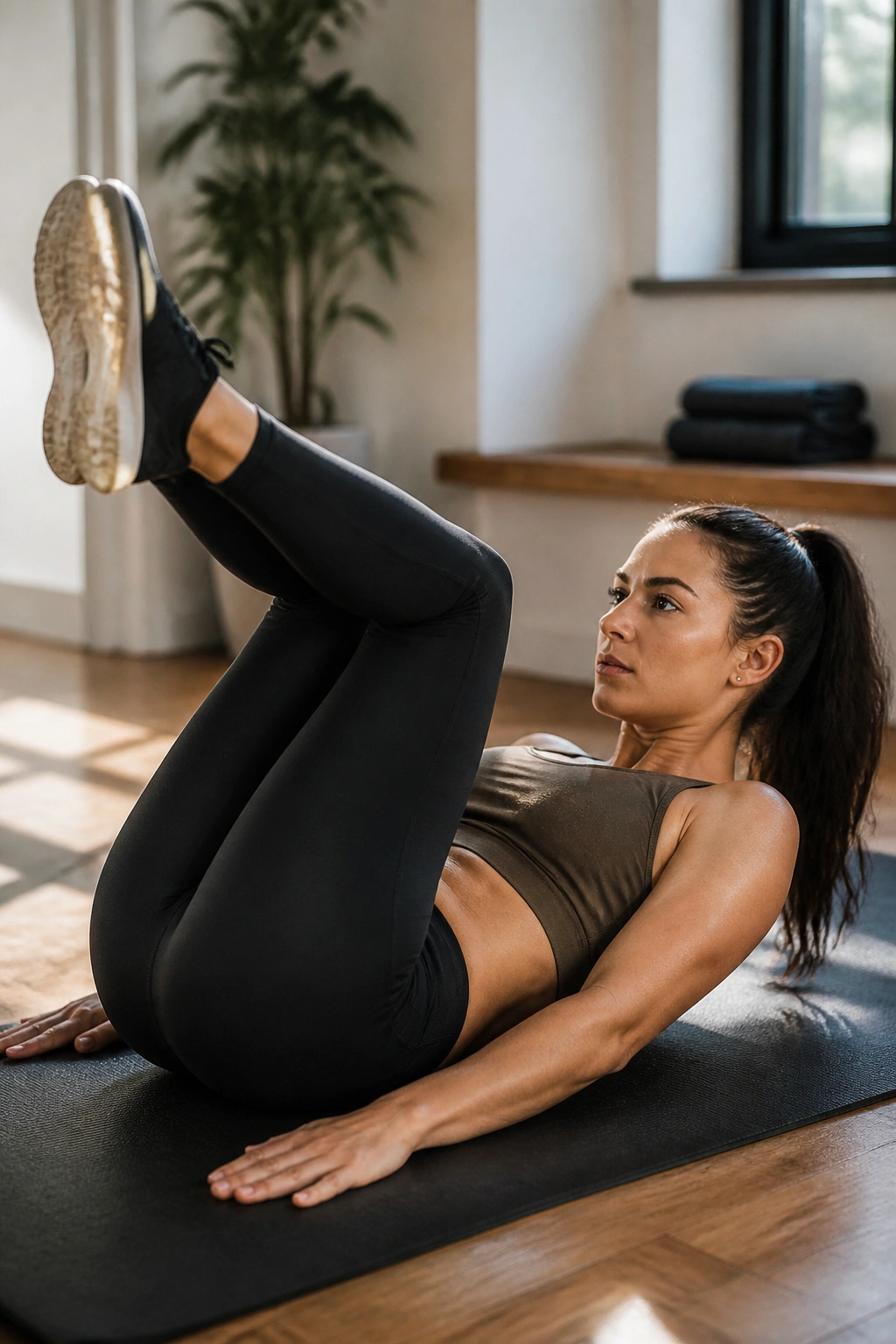
Reverse crunches are the move I wish more people trusted. They hit the lower part of the rectus abdominis by curling the pelvis up instead of yanking on the neck, and that small change makes the whole exercise feel cleaner. You do not need speed here. You need a smooth tuck and a slow lower.
The ladder keeps things interesting: 8 reps, then 10, then 12, with 20 to 30 seconds of rest between rounds. Keep your knees bent at about 90 degrees, then lift your hips an inch or two off the floor at the top. That tiny lift matters more than tossing your legs around.
One sentence that saves a lot of people: do not swing.
If your hips keep lifting too high, shorten the range and slow the descent to three full seconds. That extra control is where the work lives.
3. Mountain Climber Sprint Intervals
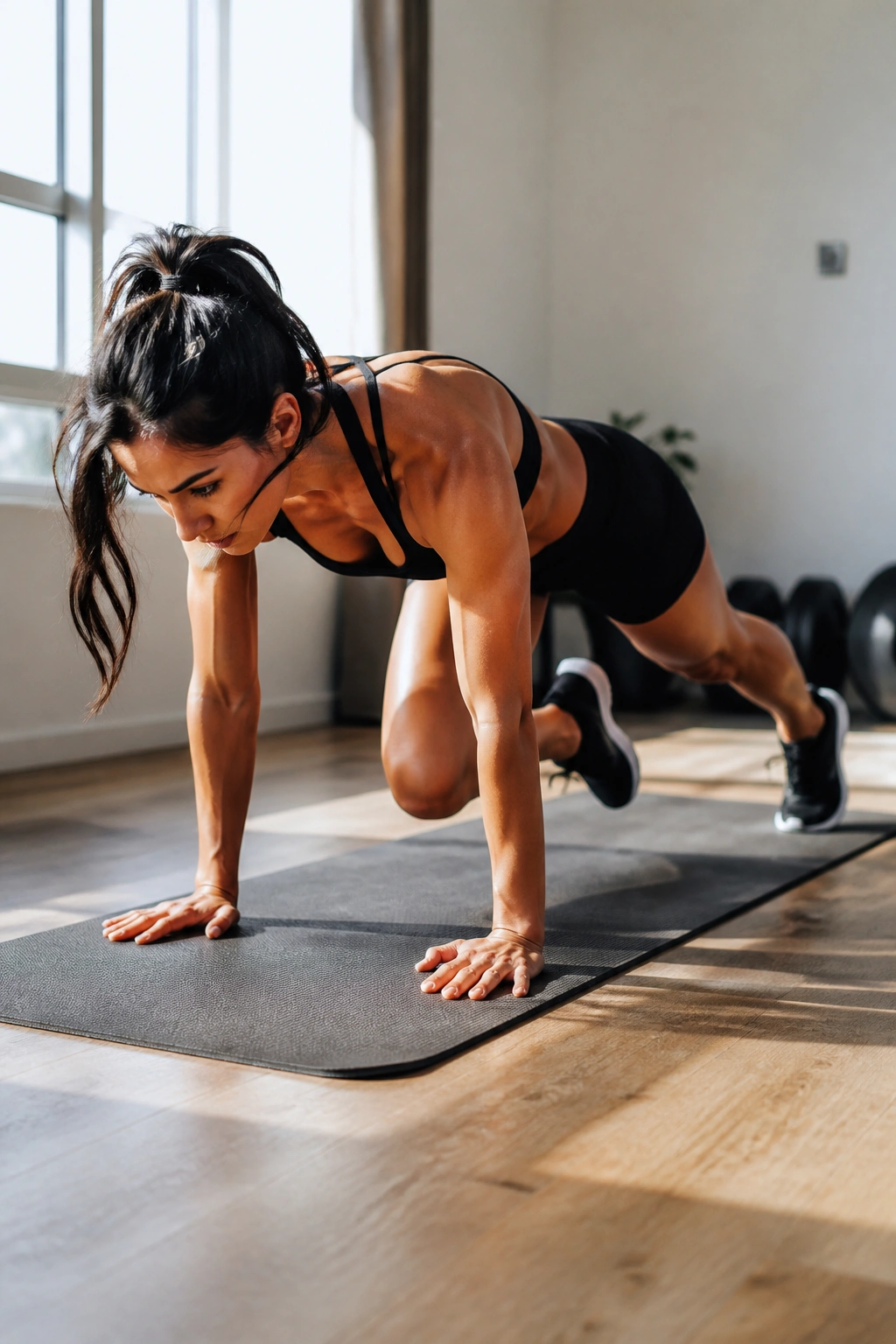
Can a cardio move build abs? Yes, if you stop treating it like a messy run in place. Mountain climbers light up the whole front of the core when you keep your shoulders stacked over your wrists and drive the knees with some intention.
How to Use It
Set a timer for 20 seconds on, 10 seconds off, and repeat for 8 rounds. Keep the hips low enough that your body looks like a straight line from shoulders to heels, then drive one knee toward the chest without bouncing side to side. Cross-body climbers, where the knee reaches toward the opposite elbow, put a little more work into the obliques.
Fast does not mean sloppy. If your shoulders are rocking like a seesaw, slow down and widen your feet a touch.
I like this as a finisher because it gives you that hard breathing, heart-thumping feel without any equipment. It also teaches you how to brace under motion, which is a skill a lot of floor crunches never touch.
4. Plank Shoulder Tap Stability Circuit
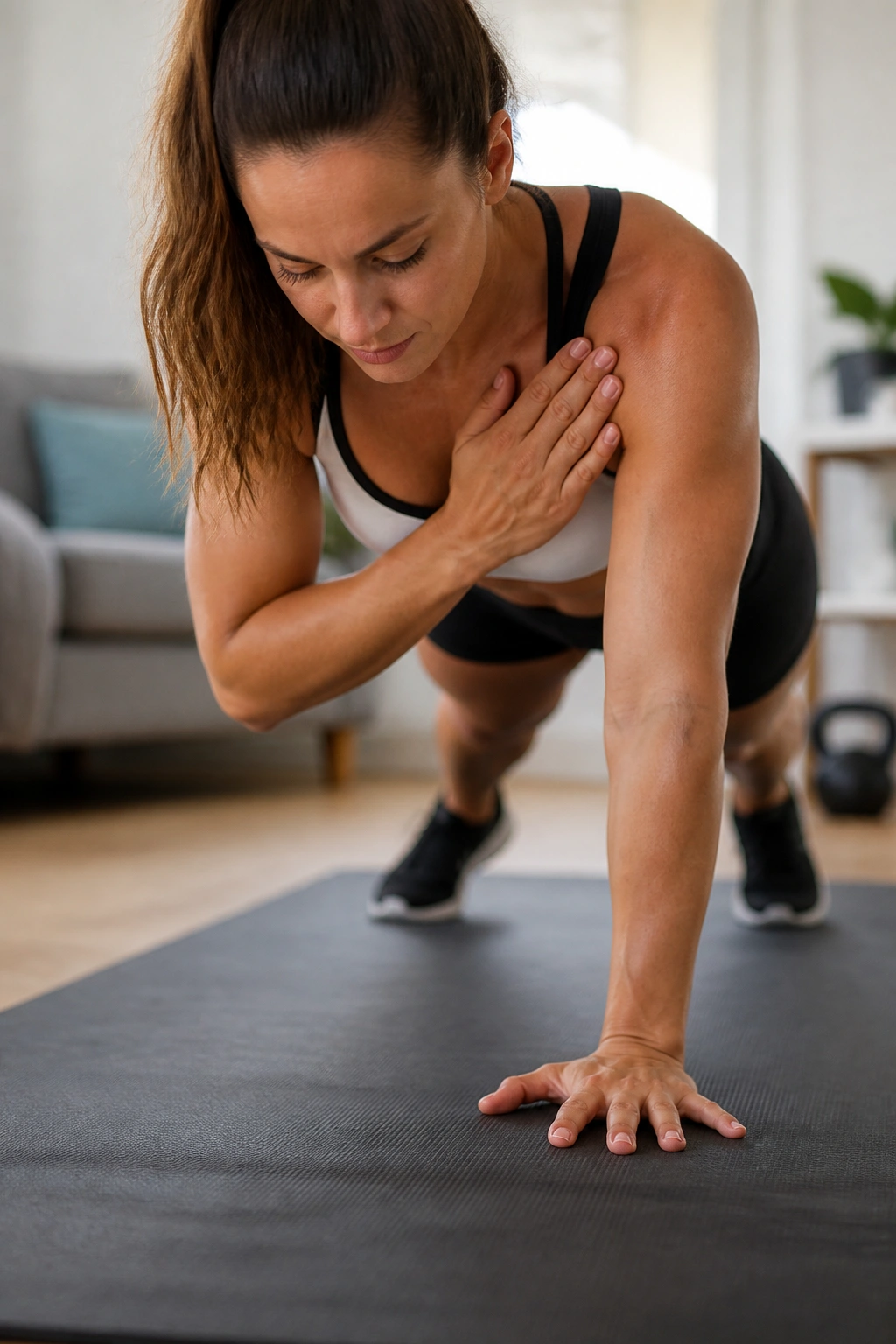
If your hips sway like a hammock the second you touch one shoulder, this workout will expose it fast. That is the point. Plank shoulder taps train the body to resist rotation, and that anti-rotation work is one of the cleanest ways to build a tighter-looking midsection at home.
Start in a high plank with your feet a little wider than hip-width. Tap your left shoulder with your right hand, set it down, then switch. Keep the movement slow enough that your hips do not roll around. After 30 seconds, drop into a 20-second bear hover with your knees two inches off the floor, then rest for 30 seconds.
Do 3 rounds.
A stable plank looks almost boring from the outside. Inside the body, it is not boring at all.
5. Bicycle Crunches Done Slowly and Cleanly
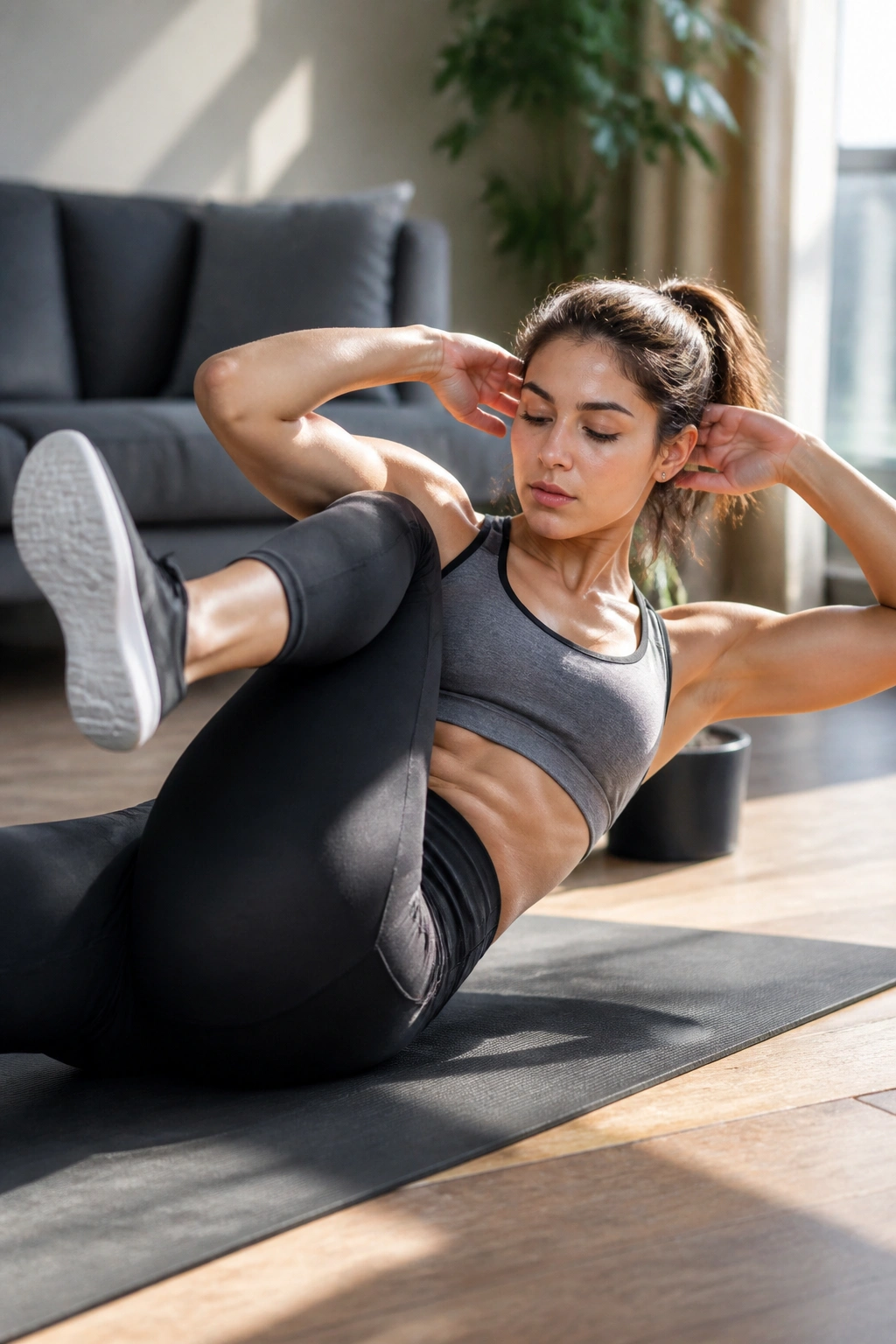
Bicycle crunches get a bad name because most people do them like they are trying to beat a stopwatch. That turns the move into a neck tug and a hip-flexor party. Slow them down, and the exercise becomes one of the better bodyweight choices for the upper abs and obliques.
Here is the version I trust: hands lightly behind the head, elbows wide, one knee in while the opposite shoulder lifts and twists. Think elbow to space near the knee, not elbow-smashing-knee contact. Exhale as you rotate. Inhale as you switch sides. That breath pattern helps keep your ribs from flaring out.
Do 3 sets of 12 to 16 reps per side or 30 to 40 seconds at a controlled pace.
The burn shows up later than you expect. That is fine. If you can hear your own breathing by the end, you probably got enough.
6. Side Plank Hip Lift Series
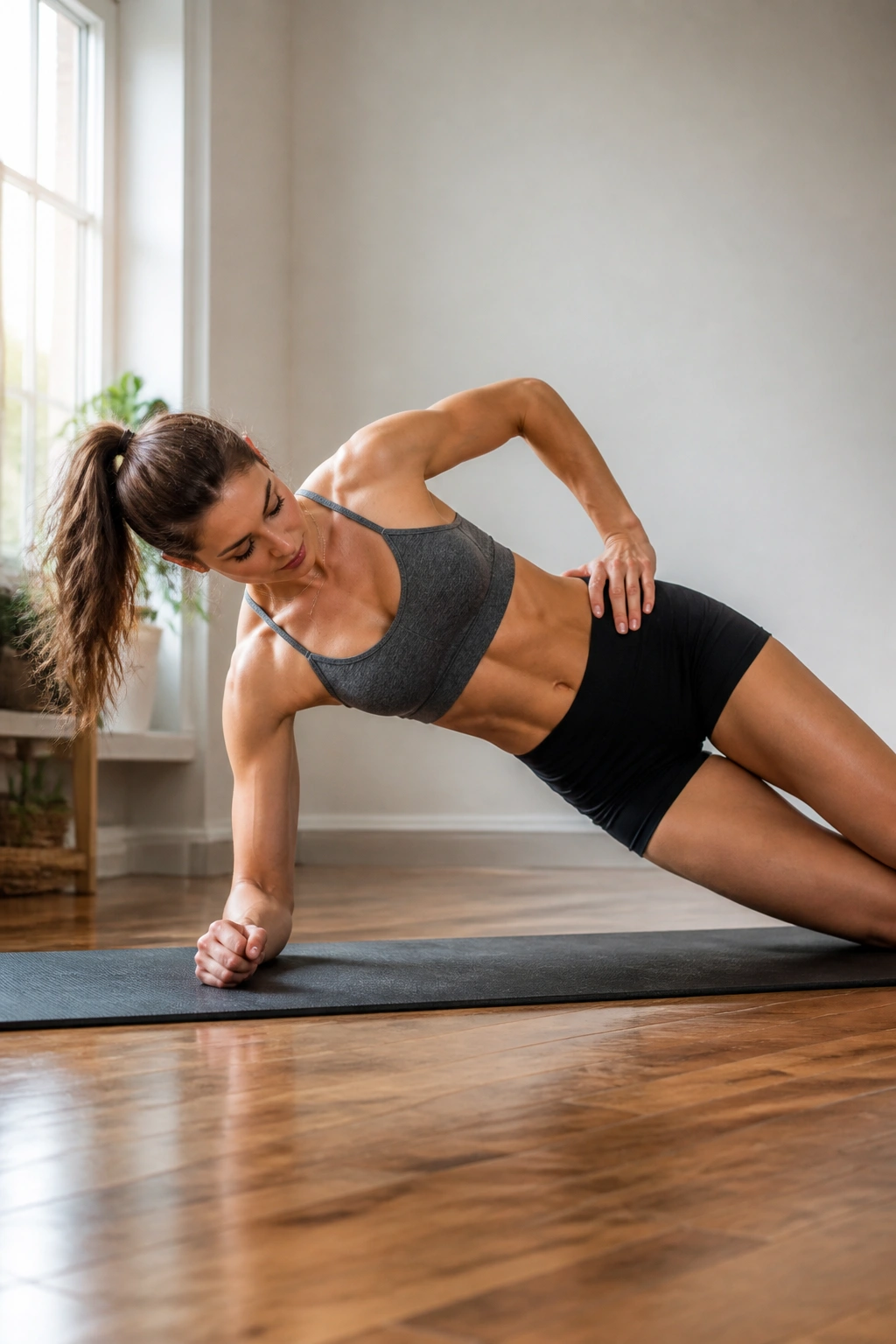
A straight crunch trains flexion. A side plank trains your body to stay long and strong when gravity tries to fold you in half. That is why side planks matter so much for obliques, waist control, and the deep muscles that keep your trunk from collapsing to one side.
Unlike a basic sit-up, this move asks your core to hold shape while one side of your body works harder than the other. That makes it a smart pick if your lower back gets cranky with too much spinal bending. Start with the knee-down version if needed, then progress to full feet-on-floor side planks.
Do 8 hip lifts per side, pause for 1 second at the top, then finish with a 20-second hold. Repeat for 3 rounds. Keep your top shoulder stacked directly over the lower one.
I like this one for people who want definition without pounding their neck or lower spine into the floor.
7. Pilates Hundred Plus Toe Taps
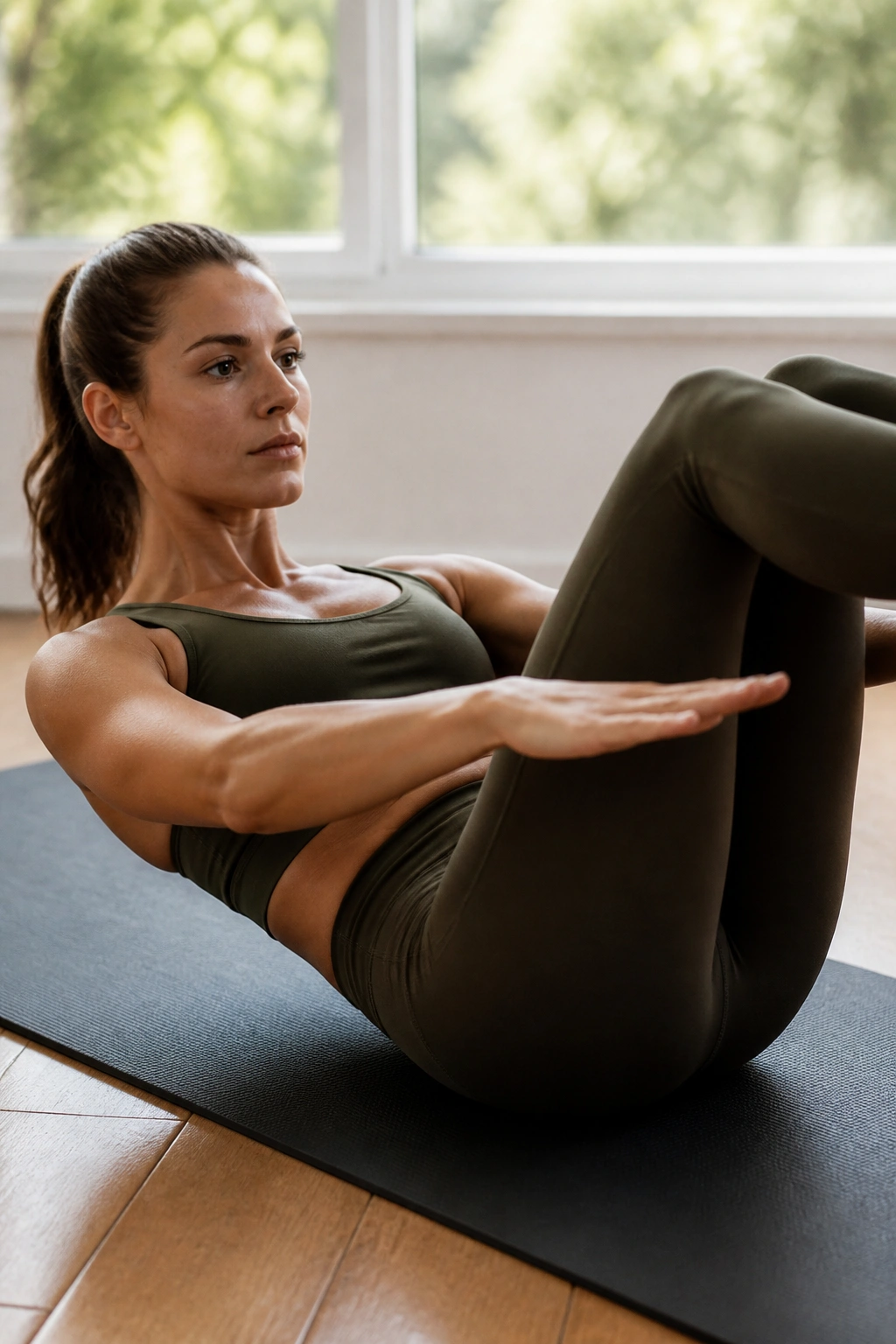
Pilates work looks calm right up until you do it. Then your abs start shaking in that weird, honest way that tells you the deep muscles are actually paying attention. The Hundred and toe taps are a good pair because one teaches breath control while the other teaches the pelvis not to tilt all over the place.
Breathing Pattern
- Curl the upper body just enough to feel the abs switch on.
- Pump the arms for 5 counts in and 5 counts out.
- Keep the lower back heavy on the mat during toe taps.
- Move slowly enough that the ribs stay tucked.
Try 30 to 40 seconds of the Hundred, then 10 toe taps per side. Rest for 20 seconds, then repeat for 3 rounds. If your neck gets tight, lower your head between rounds and reset.
A lot of people rush Pilates-style moves because they look soft. They are not soft. They are sneaky.
8. Standing Oblique Drive Workout for Six-Pack Abs at Home
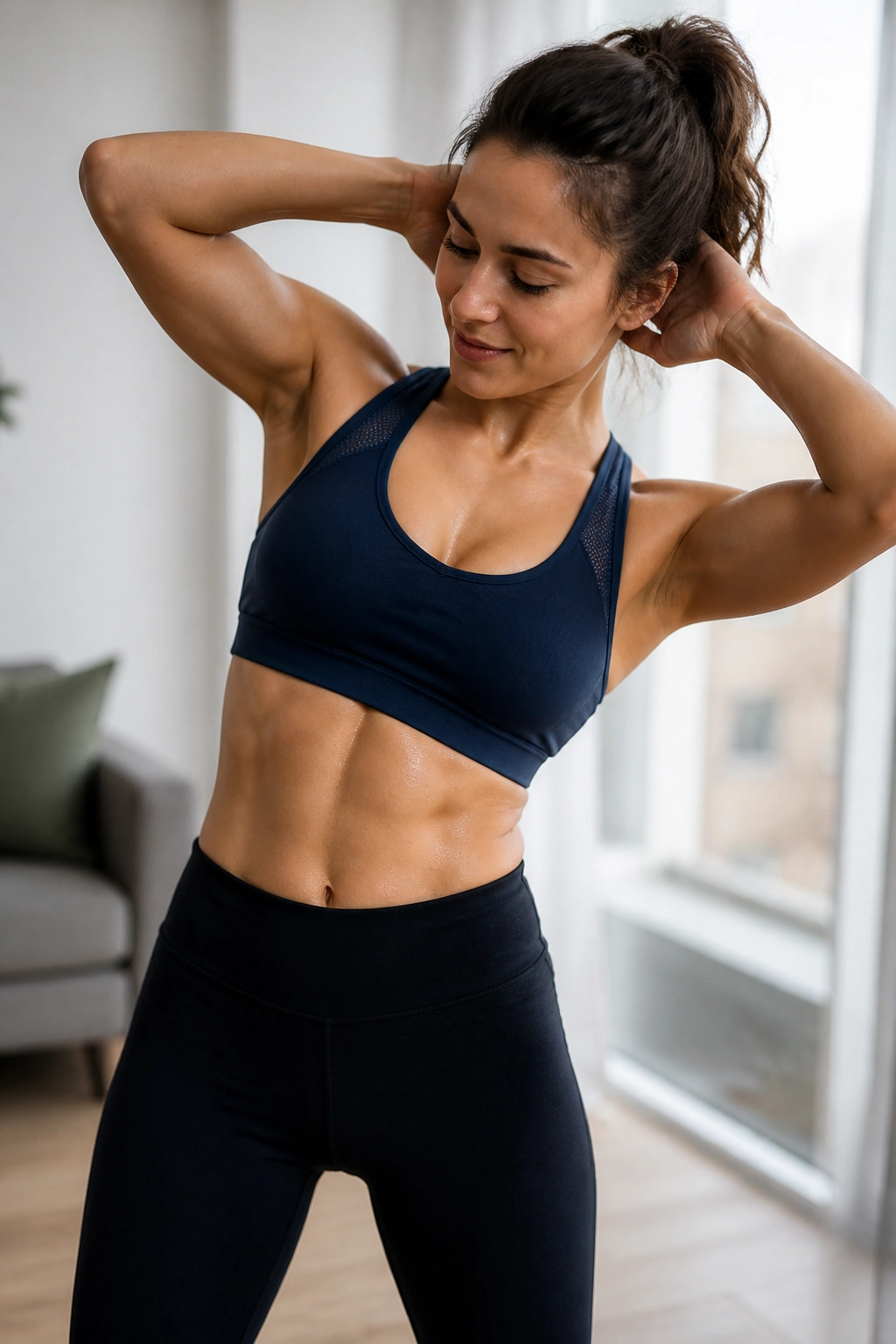
Not every good ab workout needs you on the floor. Standing core work is underrated, especially if your wrists hate planks or you want something that feels more like training and less like punishment. Cross-body knee drives and standing side crunches can light up the obliques fast when you keep the pace honest.
Do 45 seconds of work, then rest for 15 seconds. Alternate between standing knee drives, standing side crunches, and cross-body elbow-to-knee reaches. Keep your ribs down and avoid leaning so far back that your lower back starts doing the job.
If you want a little more resistance, hold a 1- to 2-pound water bottle in each hand. Not much more than that. Heavy weights turn a clean core drill into a swinging mess.
This is one of my favorite six pack ab workouts for women at home because it fits into a busy day and still feels like real training.
9. Slow Leg Raise and Lower Sequence
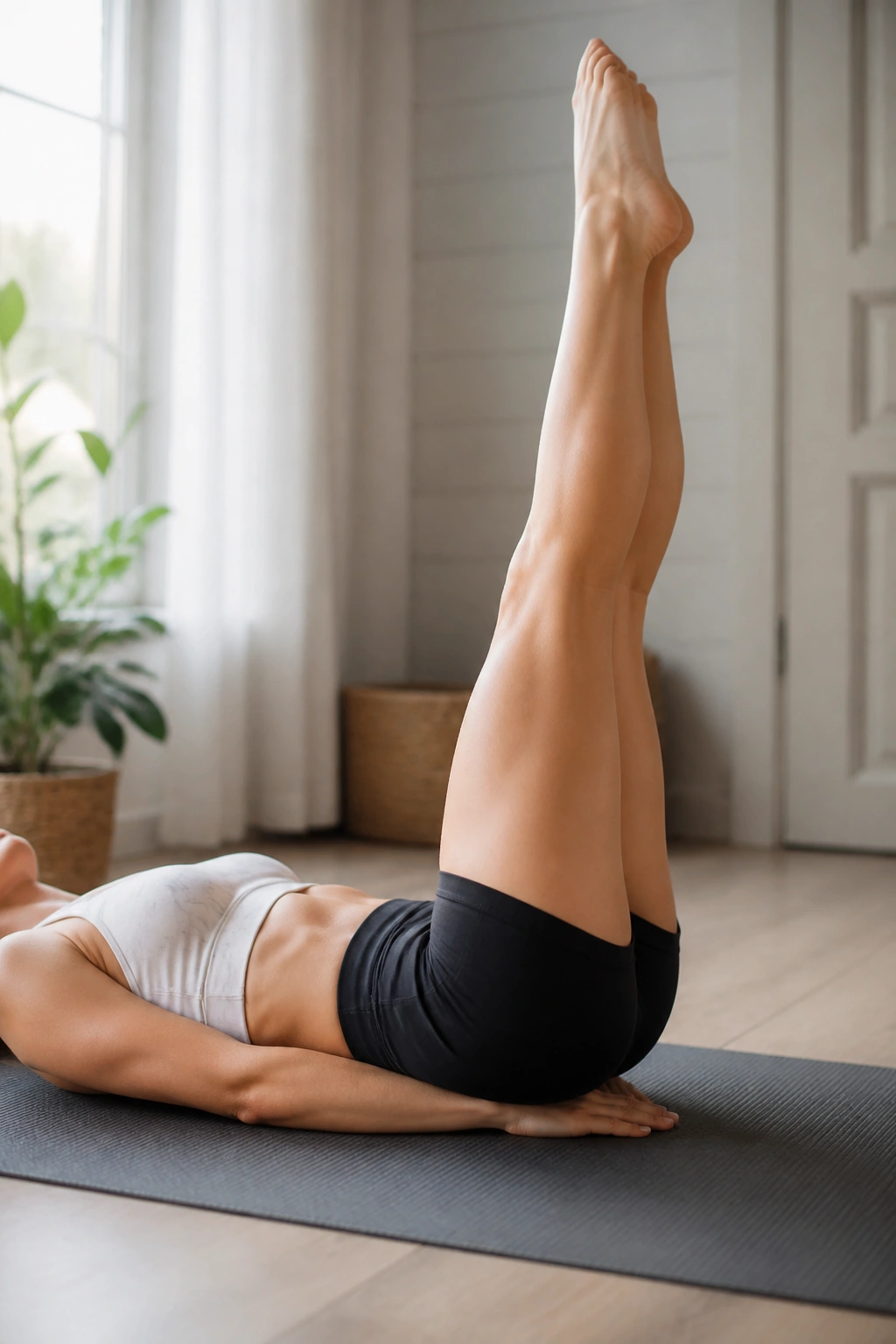
Why do leg raises feel so brutal? Because the lever is long, and your lower abs have to work hard to keep your back from arching. That is the whole trick. If the low back pops off the mat, the exercise changes from ab work into hip flexor wrestling.
How to Keep Your Lower Back Flat
- Place your hands under your hips or just beside them.
- Lift your legs only as high as you can while keeping your lower back pressed down.
- Lower them for 3 full seconds.
- Stop the set the moment your back starts to lift.
Do 6 to 10 reps for 3 sets. Bend the knees if straight legs are too much. That simple change makes the move more manageable and often more effective, because you can keep the tension where it belongs.
One good rep beats ten sloppy ones. Every time.
10. Bear Crawl Core Burn
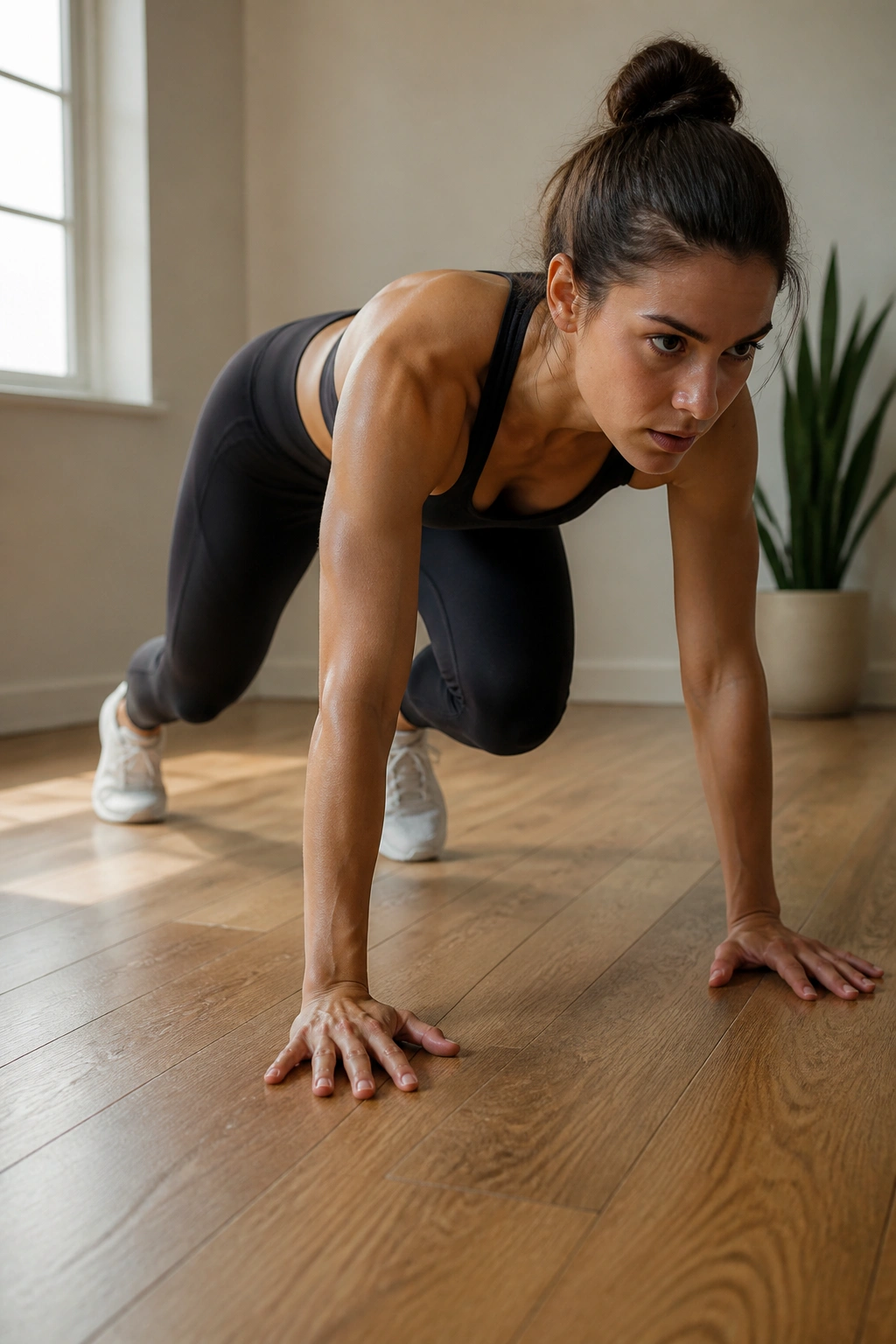
Bear crawls are what happens when a core workout stops being polite. You hover on your hands and toes, knees floating a couple of inches off the floor, and suddenly every part of your trunk has a job. The shoulders work. The abs brace. The hips have to stay quiet.
Start with 20 seconds of forward crawl, then 20 seconds of backward crawl. Rest for 20 seconds, then finish with a 15-second bear hover hold. Do 4 rounds. Keep your steps small and controlled; big steps usually turn into hip swaying and shoulder collapse.
What Makes It Different
- Cross-body coordination forces the core to resist twisting.
- The low hover keeps tension on the abs the entire time.
- Crawling backward hits the body in a way most floor work never does.
It is messy in a good way. And yes, it will make you sweat.
11. Russian Twist Reach Circuit
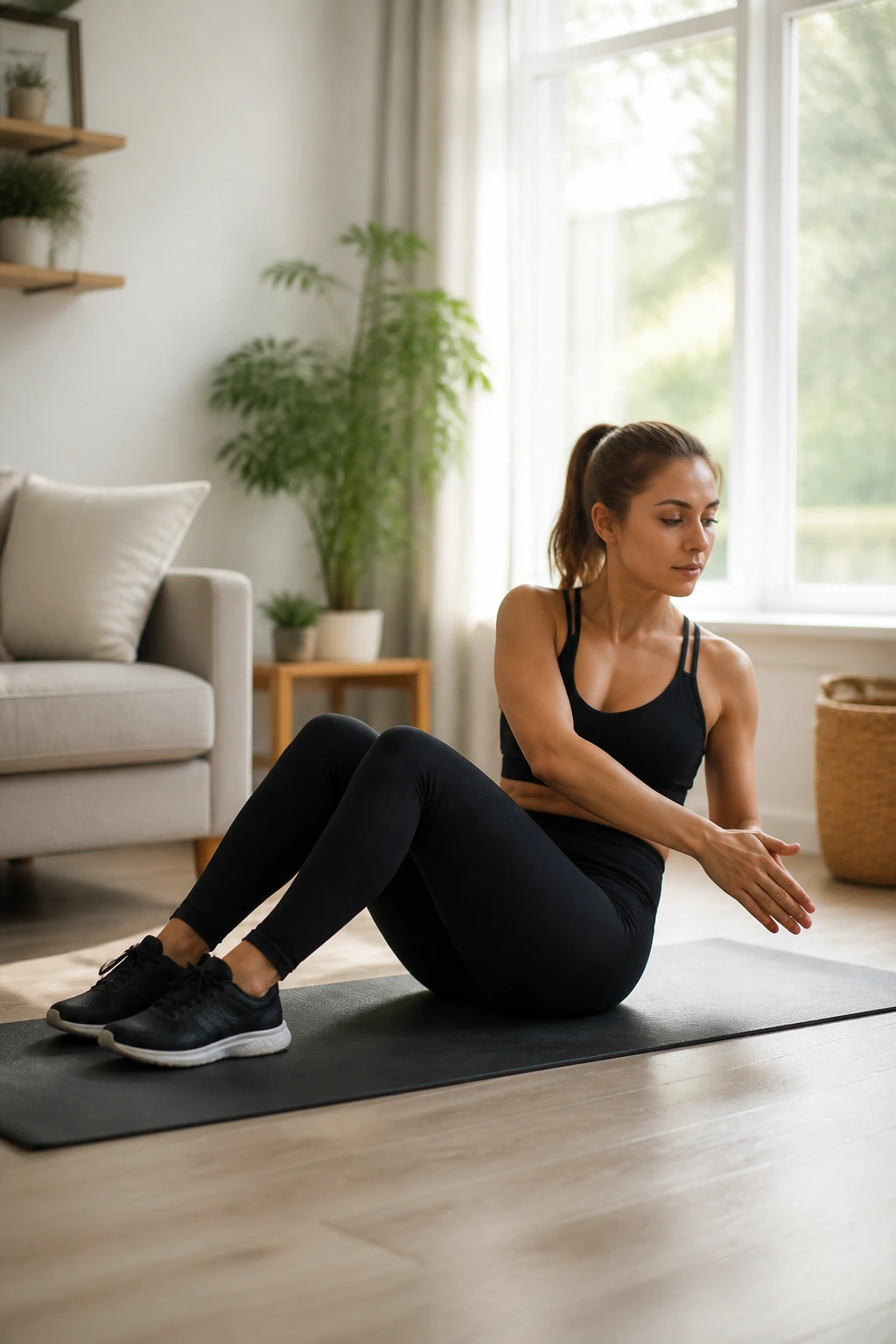
Russian twists can be great, and they can also be a fast track to neck and lower-back irritation if you treat them like a speed contest. The fix is simple: sit tall, move the rib cage as one piece, and keep the arms from flailing around like props.
I prefer the reach version. Lift the feet only if your back stays long, then twist from side to side and tap the floor beside your hip. If the full version feels shaky, keep one heel down. That small adjustment is enough for a lot of people, and it keeps the work in the core instead of the lower spine.
Do 3 sets of 20 touches or 40 seconds. You can hold a light dumbbell, a water bottle, or nothing at all. The weight is not the point. Control is.
This move is one of those exercises where the burn tells the truth. If you feel it mostly in your hip flexors, reset your posture and slow down.
12. Towel Slider Knee Tuck Session
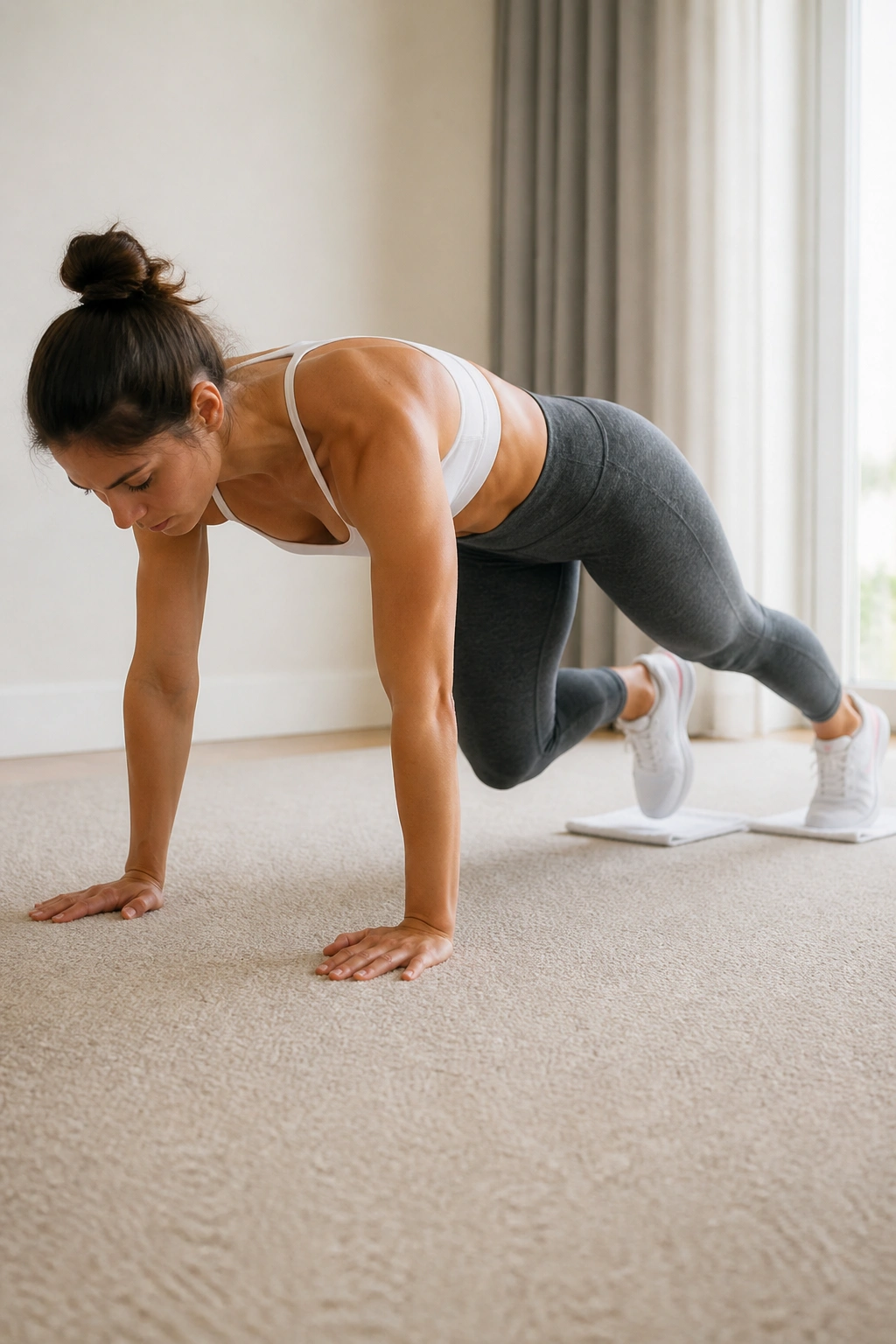
A smooth floor and a towel can do more than half the fancy gadgets people buy. Slider knee tucks turn the floor into resistance, and that sliding action makes the abs work hard to stop the body from falling apart at the middle. It is a sharp little home workout.
Unlike crunches, this move asks you to hold a plank while the knees travel in and out. That means your shoulders, lower abs, and deep stabilizers all show up together. It is a good choice if you want a more athletic feel and you have a surface that lets socks or towels slide easily.
Try 6 to 10 reps for 3 sets with 30 seconds of rest. If the floor is rough, use furniture sliders or even paper plates on carpet. Keep the hips level and stop the moment the low back sags.
It feels simple. Then your core starts bargaining with you.
13. Bird Dog to Plank Combo
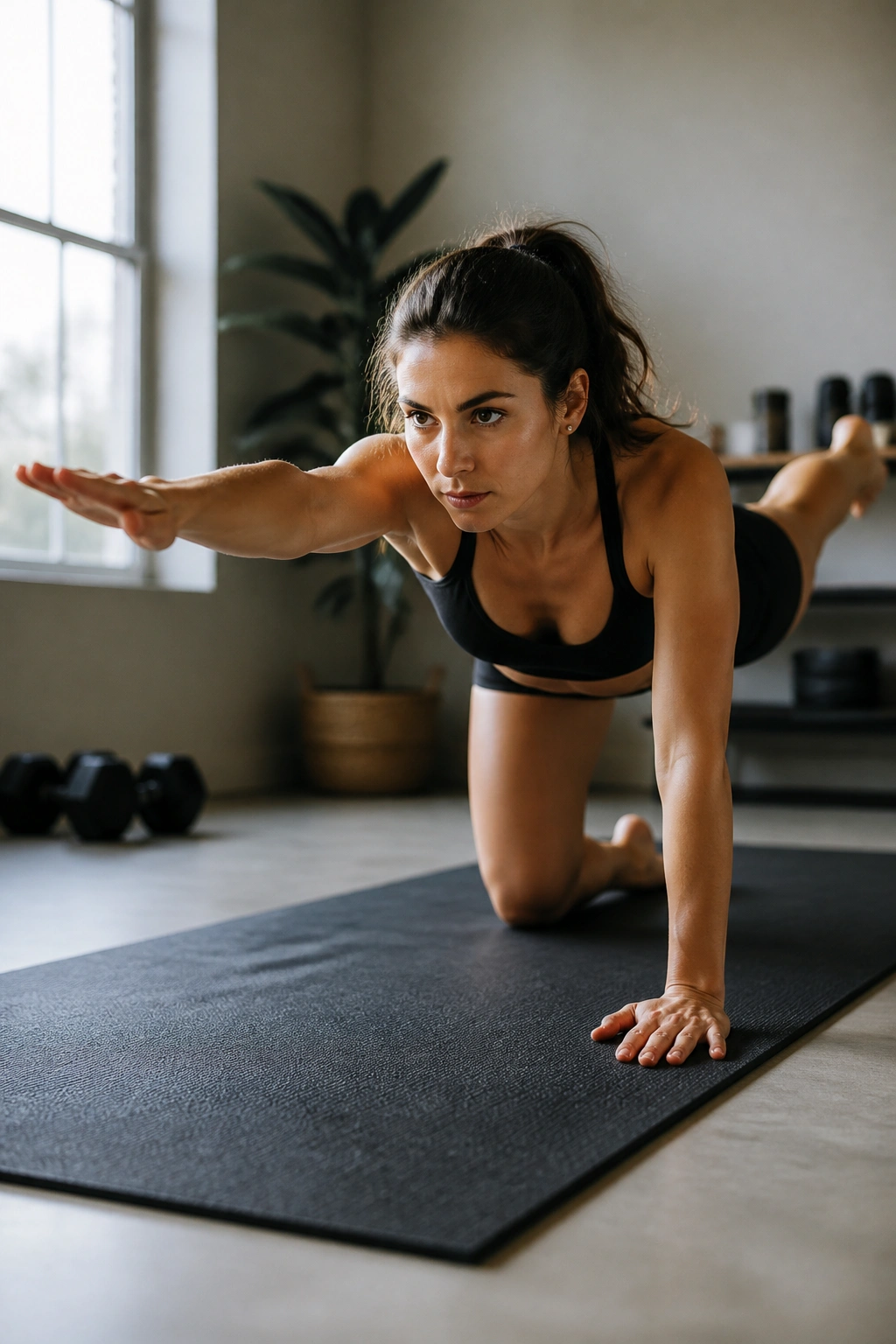
Bird dog work is the quiet cousin in the family, and I mean that as a compliment. It builds control from the spine out, which makes it one of the best choices if floor crunches bother your back or you just want cleaner movement before harder work. Add a plank and it turns into a surprisingly complete core session.
Why It Feels Easier on the Back
The body stays long instead of folding and folding. That means less compression through the lower spine, and more work from the muscles that keep the pelvis steady. Start on all fours, extend opposite arm and leg for 5 seconds, then step back into a plank and hold for 10 to 15 seconds.
Do 6 rounds per side.
- Keep the hips level.
- Reach long, not high.
- Move slowly when stepping into plank.
I reach for this one when someone wants something smart, not flashy. It builds strength you can feel in daily movement.
14. V-Up and Tuck Hold Finisher
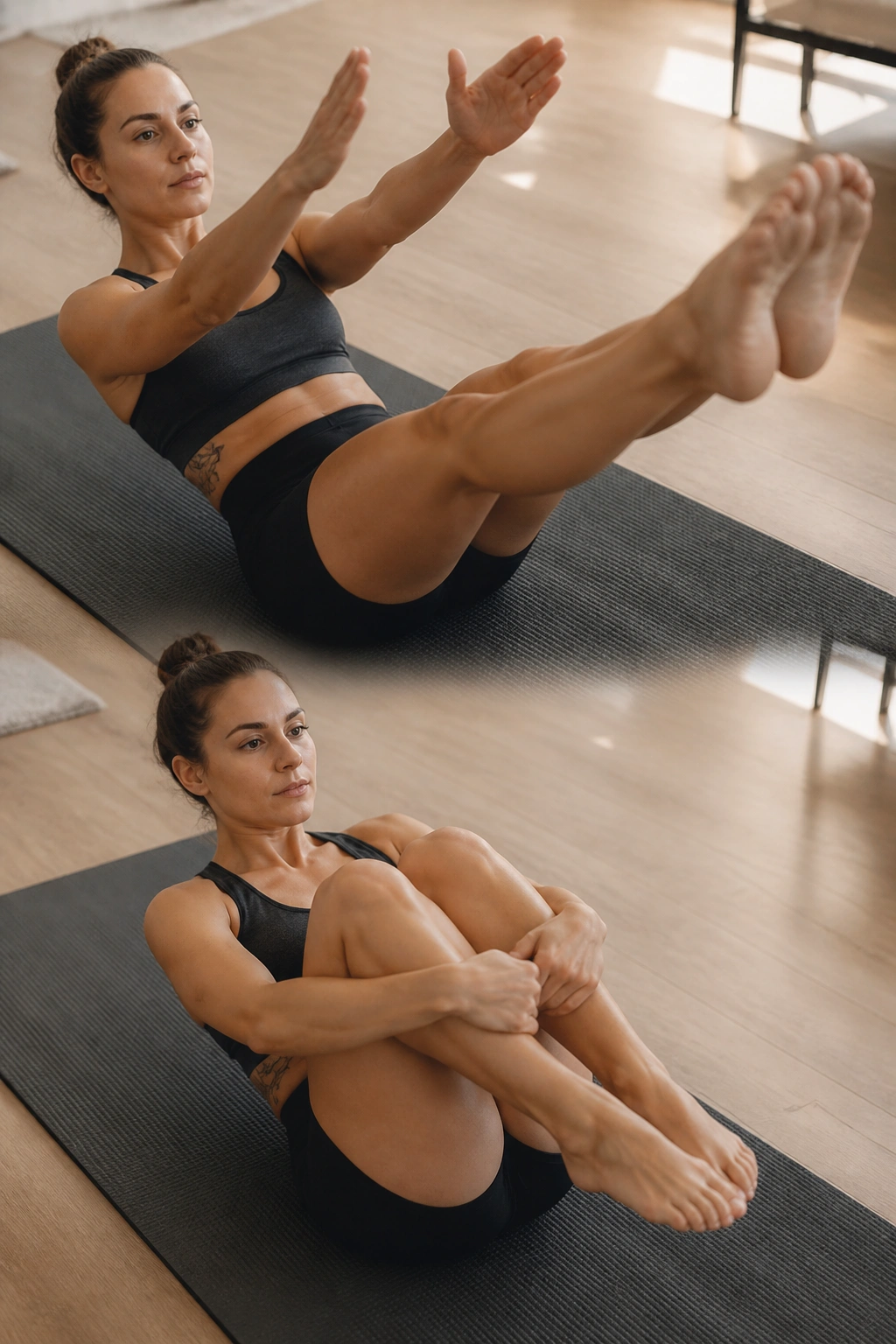
V-ups are hard because they ask your body to fold and balance at the same time. That is a rough combo. The upside is that they hit the upper and lower abs together, which is why they make such a strong finisher when your core is already warm.
Start with bent knees if full V-ups are too much. Reach your hands toward your shins, lift the chest and legs at the same time, then lower slowly for 2 to 3 seconds. After your reps, hold a tight tuck position with knees pulled in for 10 to 15 seconds. Do 3 rounds of 5 to 8 reps.
Do not throw your torso upward. If the movement gets jerky, the set is over.
This is one of those workouts that looks small on paper and feels far bigger in real life. Good sign.
15. Chair Incline Knee Drive Workout
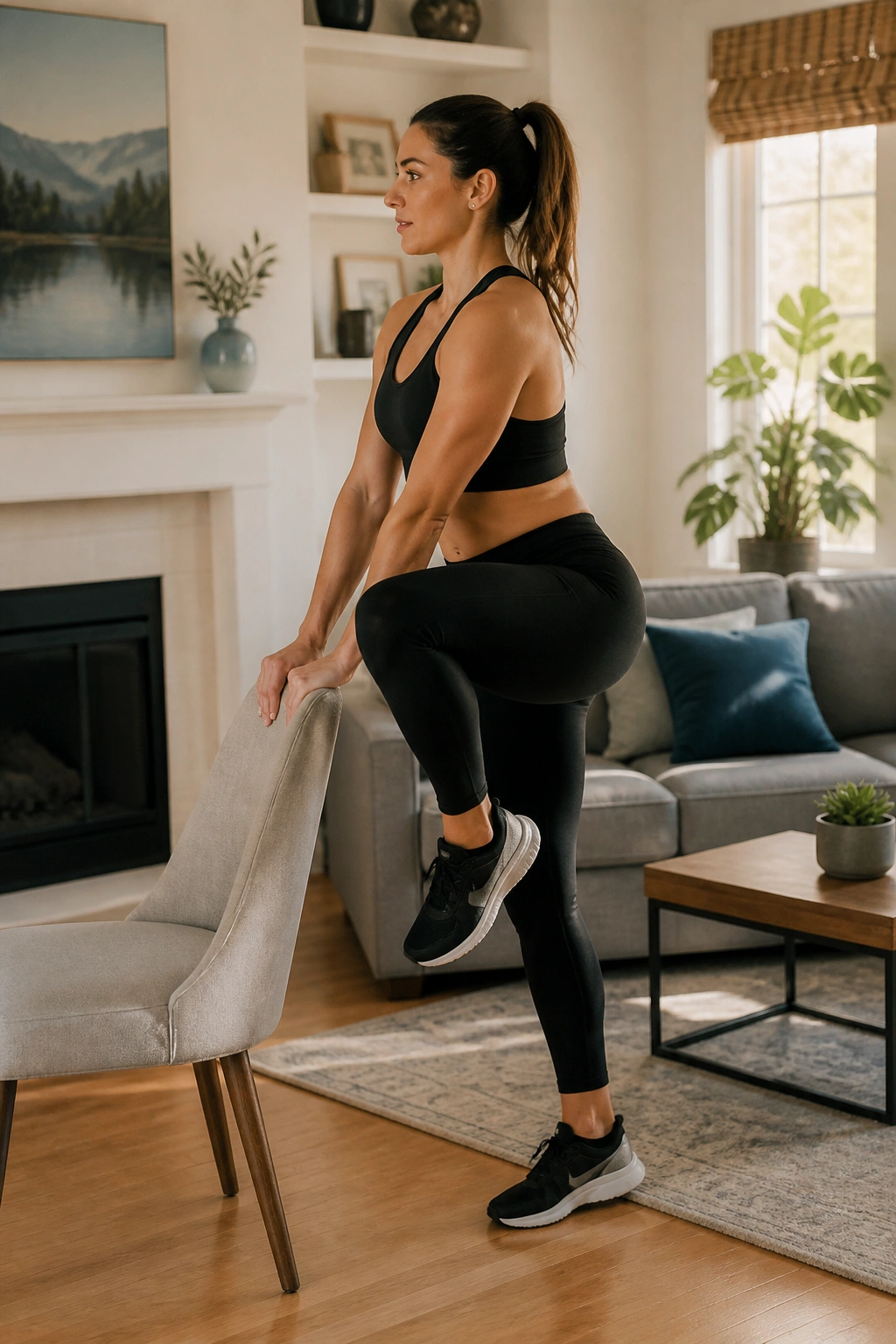
Can you do serious core work with a chair? Absolutely. A sturdy chair, couch edge, or countertop gives you support and lets you train your abs without dropping to the floor, which is useful if wrists, knees, or a cranky back need a break.
How to Use It
Stand a step away from the chair and place your hands lightly on it. Drive one knee up toward the chest, hold for 1 second, then lower under control. Add a cross-body reach by aiming the knee toward the opposite elbow if you want more oblique work. Use 30 seconds per side, then rest 20 seconds.
Do 3 rounds.
- Keep the torso tall.
- Avoid leaning on the chair.
- Squeeze the standing glute for balance.
It is beginner-friendly, but not easy if you do it with clean form. That is the nice thing about it.
16. Flutter Kicks With Tempo Control
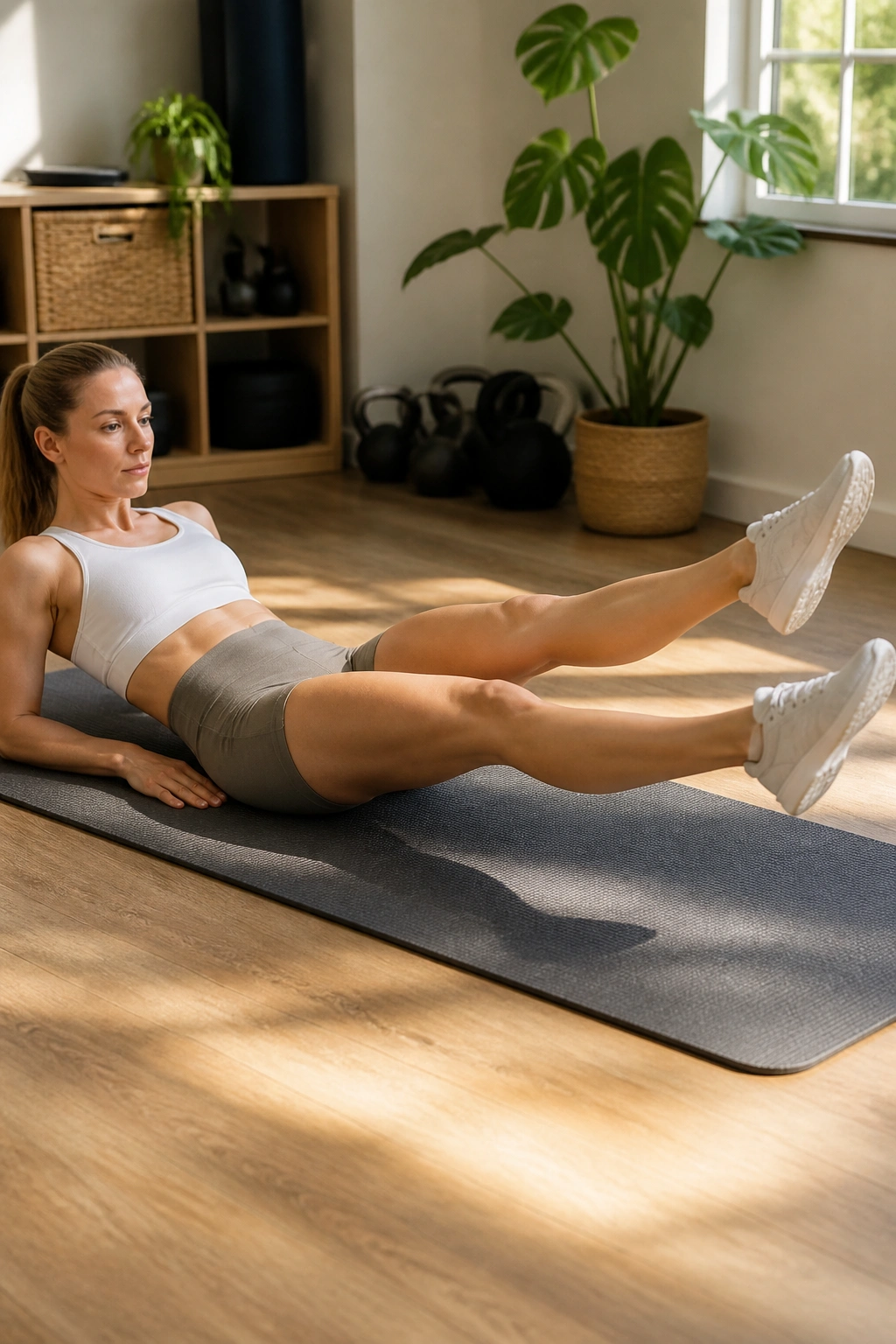
Flutter kicks look tiny. Then your abs start shaking and your hip flexors complain. The fix is tempo. Slow the movement down enough that the lower back stays glued to the mat, and the whole exercise becomes a lot more useful.
Set a timer for 20 seconds of work, then 20 seconds of rest. Do 4 rounds. Keep the legs low only if your back can stay flat; otherwise, raise them a bit higher. Point the toes if you like, but do not let the legs swing wildly. Small kicks win here.
The Important Part
If your neck tenses up, drop your head and look at the ceiling. If your back arches, lift the legs higher and shorten the range. The point is not to make the kicks big. The point is to keep tension in the abs long enough that they stop pretending to be asleep.
This one is sneaky. It sneaks up on you.
17. Resistance Band Anti-Rotation Press
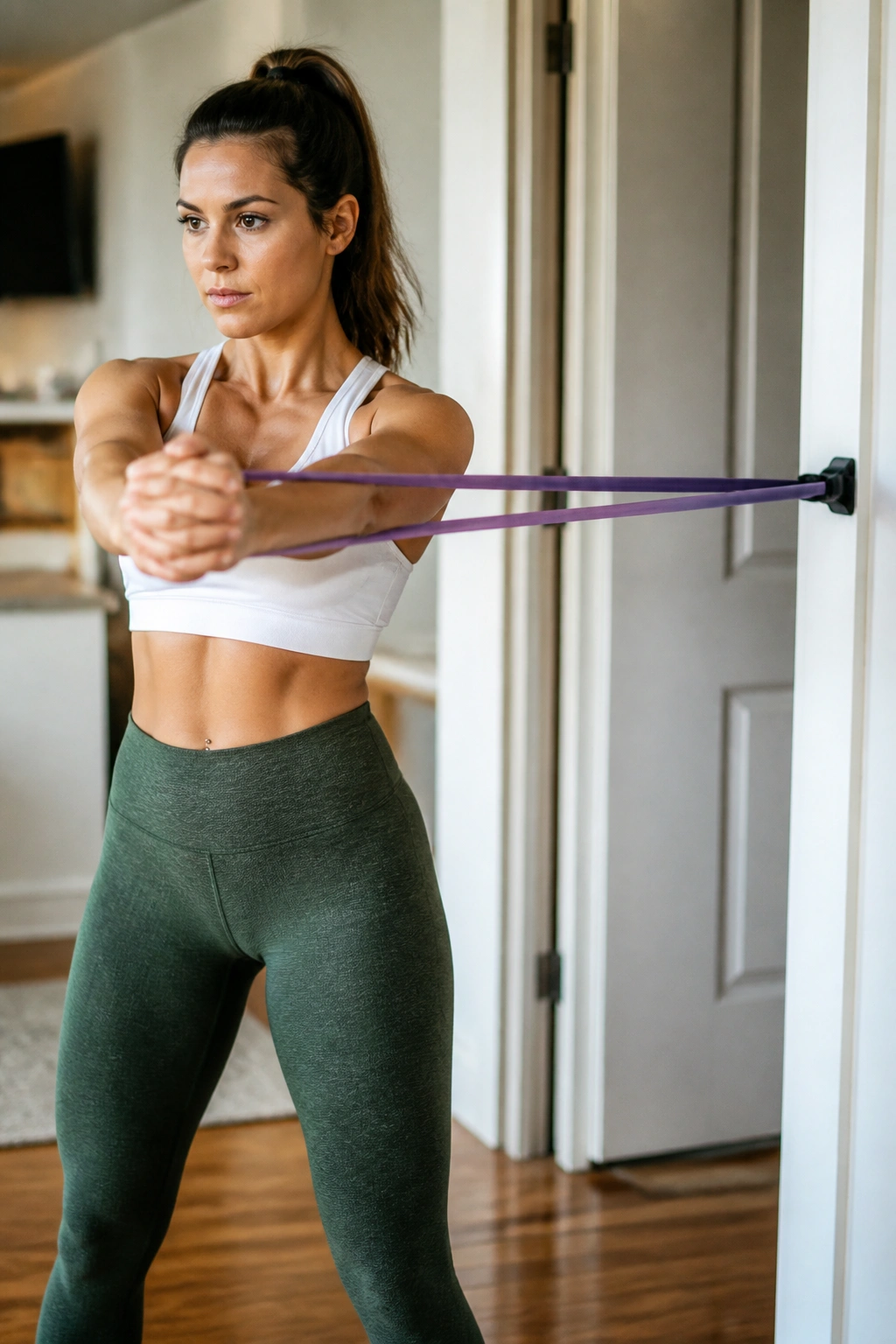
A resistance band anchored to a door handle or sturdy post can do a lot for your core. The anti-rotation press, often called a Pallof press, trains your torso to resist twisting, which is a skill that shows up when you carry groceries, lift a kid, or hold posture through a long workday.
Stand sideways to the anchor point, hold the band at your chest, then press it straight out and bring it back in. The band will try to pull you sideways. Your job is to stay square. Do 10 to 12 presses per side, or press out and hold for 2 to 3 seconds on each rep. Repeat for 3 sets.
A lot of core work is about motion. This one is about not moving when the band wants you to. Different job. Same midsection.
If the band is yanking you around, step closer to the anchor or use less tension. Clean form beats a heroic struggle every time.
18. Toe-Touch Crunch Ladder
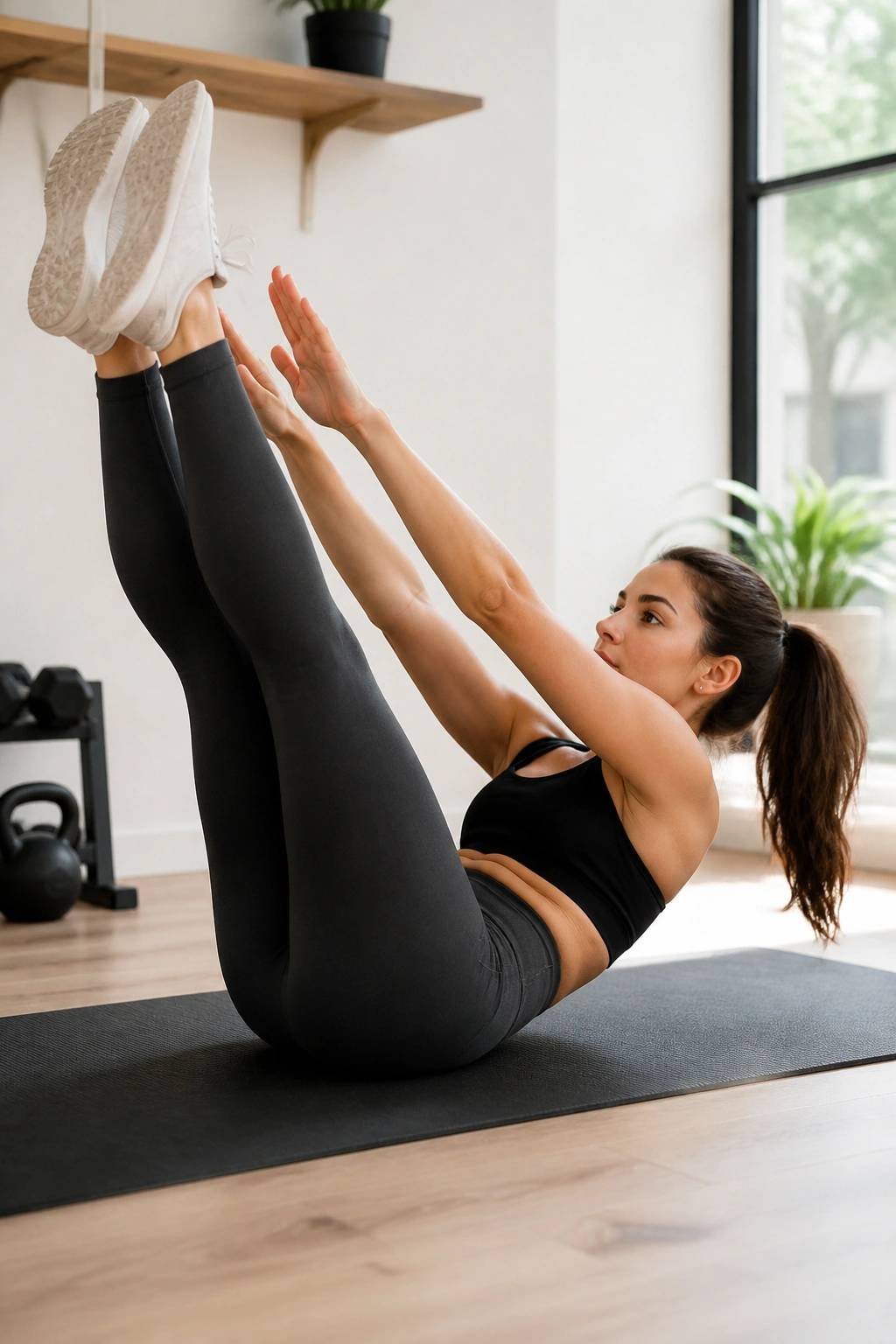
Toe-touch crunches are old-school, but they still work when you keep them tidy. Unlike bicycle crunches, which pull in rotation, toe-touches stay more vertical and put a sharper focus on the upper abs. They also give you a simple visual cue: reach toward the toes without making the neck do all the work.
Start with legs up, knees bent if needed, and reach hands toward the ceiling. Crunch up and try to tap the toes or the tops of the shins. Lower with control. Do a ladder of 10 reps, 12 reps, and 14 reps, resting 20 to 30 seconds between sets.
Who does this suit best? People who want a clear, obvious burn and do not mind a little flexion work in the session. If your neck gets tight, keep the chin slightly tucked and eyes on the ceiling.
Simple move. Honest payoff.
19. Tabata Core Burnout
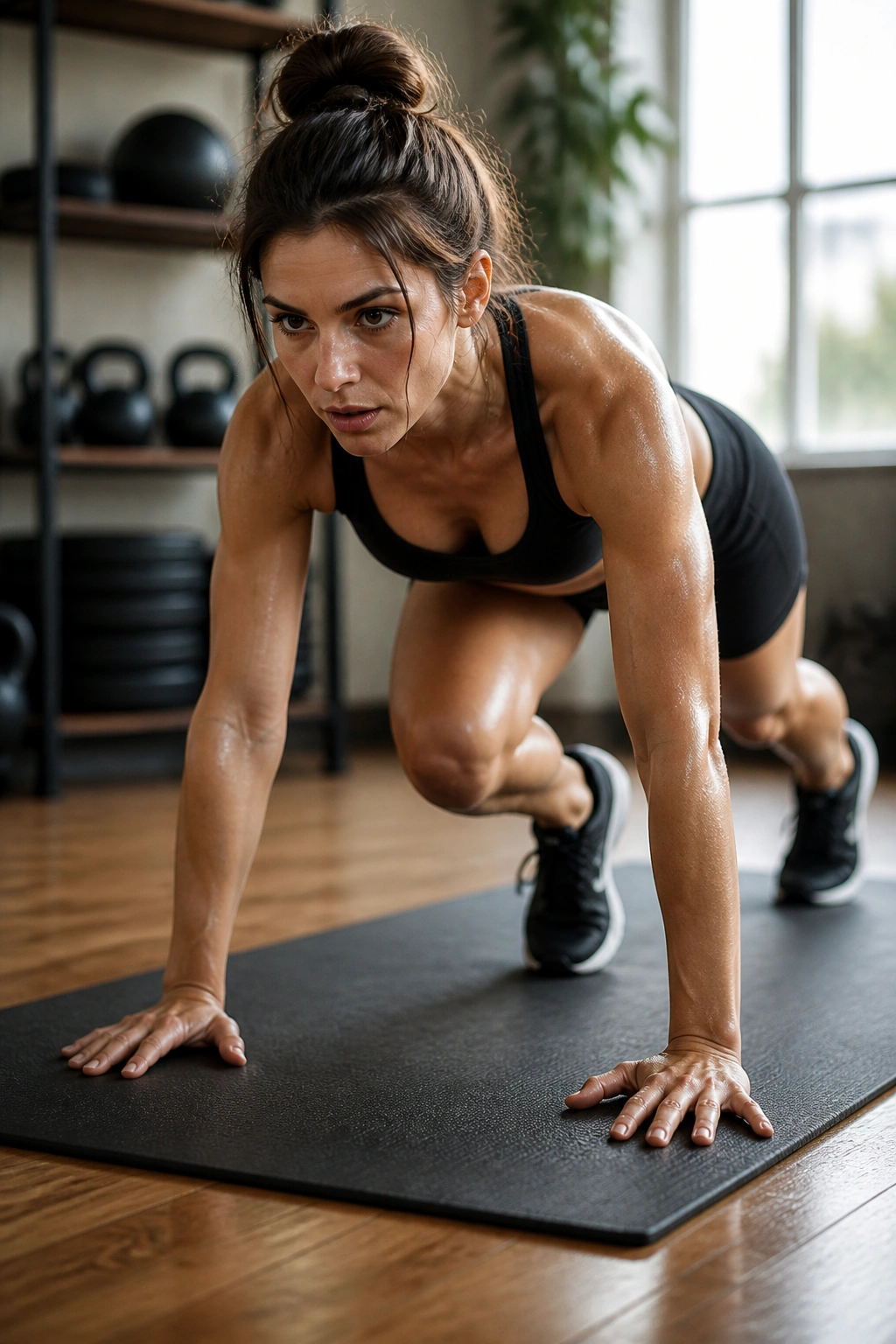
Tabata works because the timer does the hard part for you. Twenty seconds on, ten seconds off, repeated for eight rounds, is enough to make a short core workout feel serious without dragging it out forever. The trick is picking moves that stay clean even when fatigue shows up.
The 20-Second Rule
Choose four exercises and alternate them through the rounds: mountain climbers, dead bugs, plank jacks, and hollow rocks are a strong mix. Keep each work burst at a pace you can control for the full twenty seconds. If your form collapses by round four, slow down or swap in a simpler move.
- Work for 20 seconds
- Rest for 10 seconds
- Repeat for 8 rounds
- Use 4 different moves or just 2 if you want a tighter session
Tabata is short enough to repeat, which is what makes it useful. A lot of workouts are too long to do consistently. This one does not have that problem.
20. 10-Minute Daily Core Circuit for Six-Pack Abs at Home
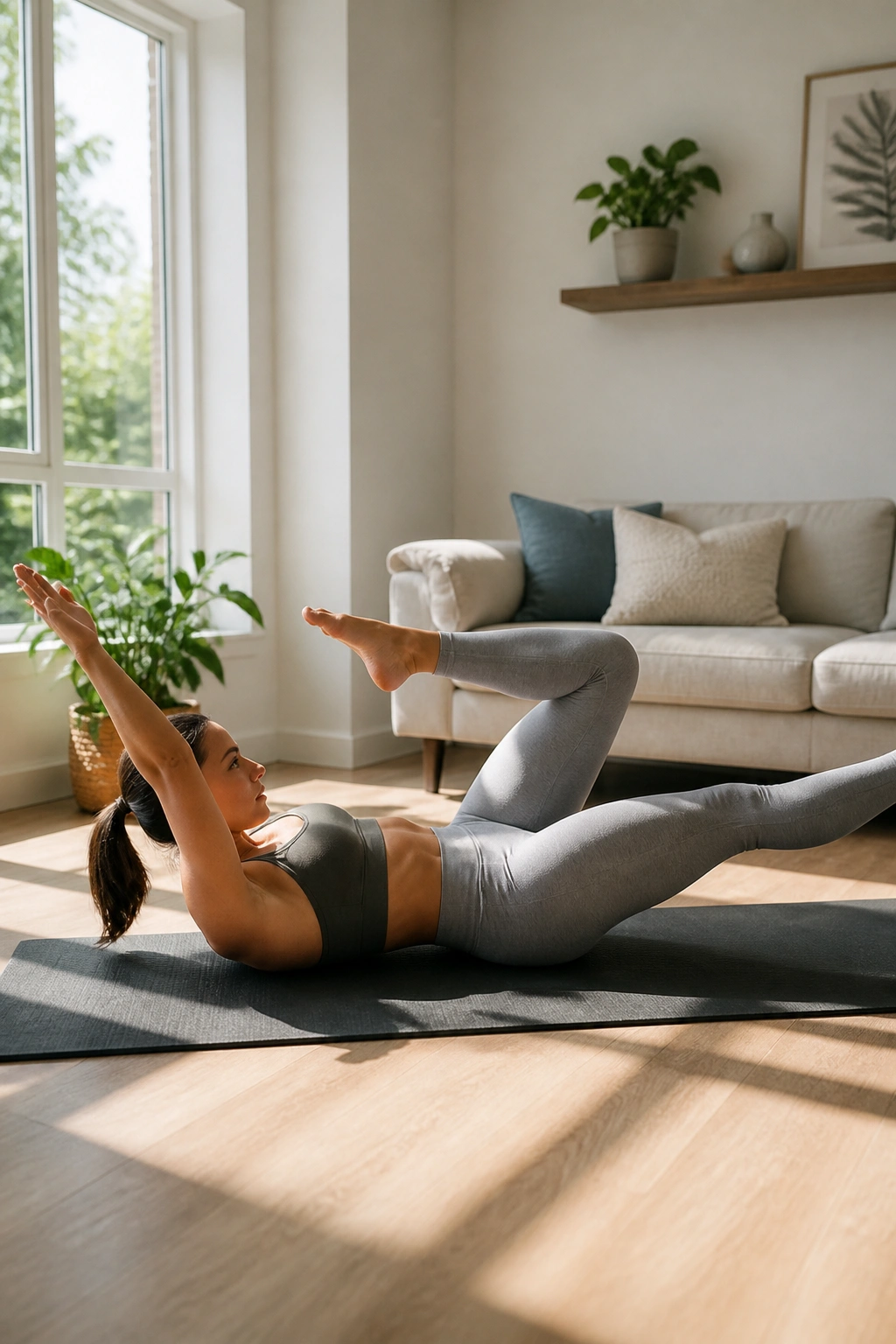
If you want a routine you can actually stick with, this is the one I would hand over first. A short daily circuit beats a once-in-a-while marathon of ab chaos, because the body responds to repetition, cleaner movement, and enough rest to come back strong the next day.
Use 40 seconds of work and 20 seconds of rest for each move:
- Dead bug
- Reverse crunch
- Side plank, left side
- Side plank, right side
- Standing knee drive
That gives you a clean 10-minute session. Do it 3 to 5 times a week, and rotate in one harder workout from this list when you want more challenge. If your form starts slipping, cut the work interval to 30 seconds and keep the rest the same.
This is the kind of routine that earns its place. Not flashy. Very repeatable. That matters more than people like to admit.
Final Thoughts
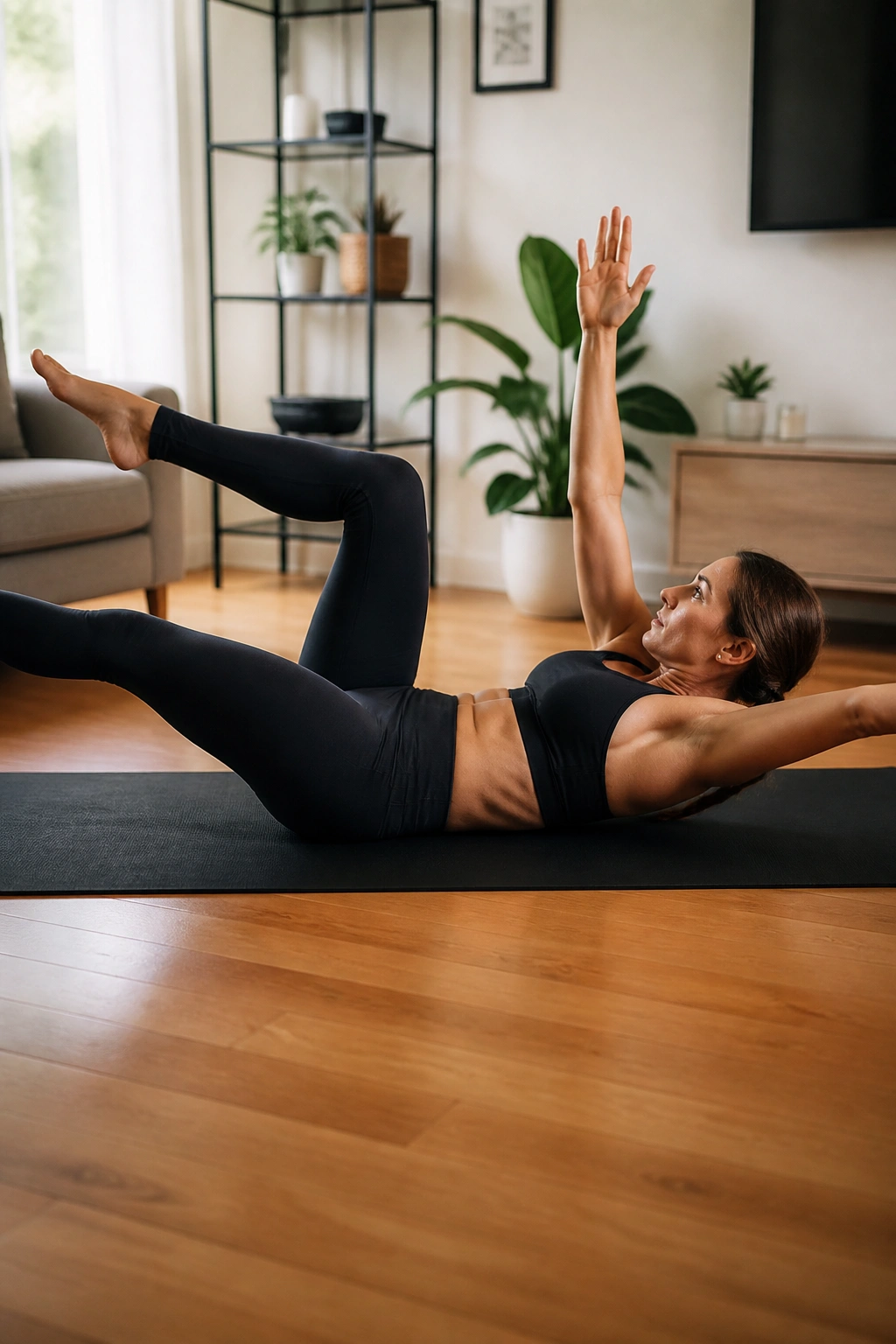
The best ab work is the kind your body can repeat with good form the next day. Crunches, planks, leg raises, and standing core drills each do a different job, and the smart move is to mix them instead of marrying one favorite forever.
Visible abs come from training plus a food pattern that does not fight your goals. You do not need to eat like a machine, but you do need enough protein, enough water, and a little patience. The core work helps shape the muscles; the rest decides how much of that shape shows through.
Pick four or five workouts from this list, run them for a few weeks, and watch which ones keep your hips still and your low back calm. Those are the keepers.
