



Core workouts for runners are not about chasing a washboard stomach. They’re about keeping your ribs, pelvis, and hips from arguing with each other when the pace rises.
If you’ve ever felt your lower back take over on hills, or your form start to wobble after a few hard intervals, you already know the problem. The legs may be doing the visible work, but the torso is what keeps the whole thing stacked, efficient, and repeatable.
That’s why the best core work for runners looks a little different from the endless crunch routine people still pass around like it’s 1998. Runners need anti-rotation, anti-extension, side-to-side control, and enough deep trunk endurance to stay tidy when breathing gets loud and the stride gets sloppy.
And honestly? The boring exercises are often the ones that pay rent. Dead bugs, carries, planks, bridges, crawls — the stuff that looks simple until you do it well.
1. Dead Bug With a Slow Exhale
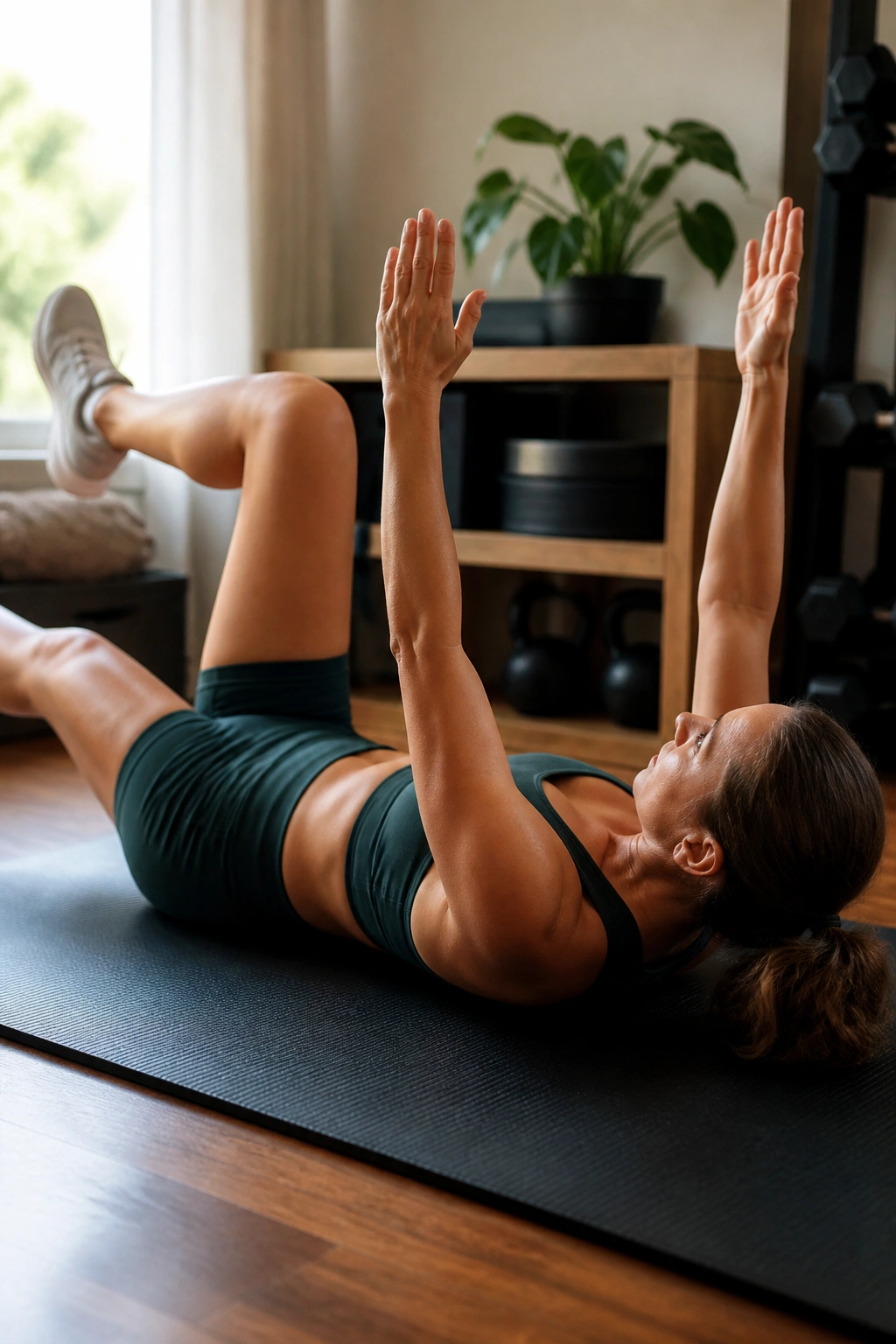
Dead bugs are one of the most honest core drills out there. If your ribs flare, your low back arches, or your breathing turns into a panic shrug, the exercise tells on you fast.
That is why runners need it. The goal isn’t to make your abs look busy. The goal is to keep the pelvis from tipping forward every time one leg leaves the ground, which is basically running in a nutshell.
How to do it well
Lie on your back with your knees over your hips and your arms pointed at the ceiling. Exhale first, let your ribs drop, then slowly extend one leg and the opposite arm without letting your low back peel off the floor.
- Do 3 sets of 6 to 8 reps per side
- Take 3 to 4 seconds on each extension
- Pause for 1 full breath before switching sides
- Stop the rep if your back starts to arch
Best cue: think heavy ribs, quiet pelvis. If you feel the exercise mostly in your hip flexors, shorten the range and slow down.
A lot of runners rush this one and call it done. Don’t. The slow exhale is the point. It teaches your trunk to stay organized when the diaphragm is working hard, which matters more on a steep climb than in a gym mirror.
2. Front Plank With Shoulder Tap

Why does a front plank matter if you already run upright? Because running is a tiny balancing act repeated thousands of times, and the shoulder tap exposes every bit of side-to-side wobble.
The trick is keeping the tap slow enough that your hips stay level. If they rock, the exercise turns into a polite little failure test. Which is useful, by the way.
What to feel
Set up in a high plank with your feet slightly wider than hip-width. Squeeze your glutes, brace lightly through the midsection, then lift one hand to tap the opposite shoulder without shifting your body.
- Hold for 20 to 30 seconds
- Use 3 rounds
- Keep your feet a little wider if your hips sway
- Breathe behind the brace, not above it
Watch for this: if your neck tightens, you are probably trying to freeze your whole body. That’s too much. You want calm tension, not a full-body statue impression.
I like this one for runners because it trains the trunk to resist a little chaos. That is what late-race form really is — not collapse, just small losses of control that build up.
3. Side Plank With Top-Leg Lift
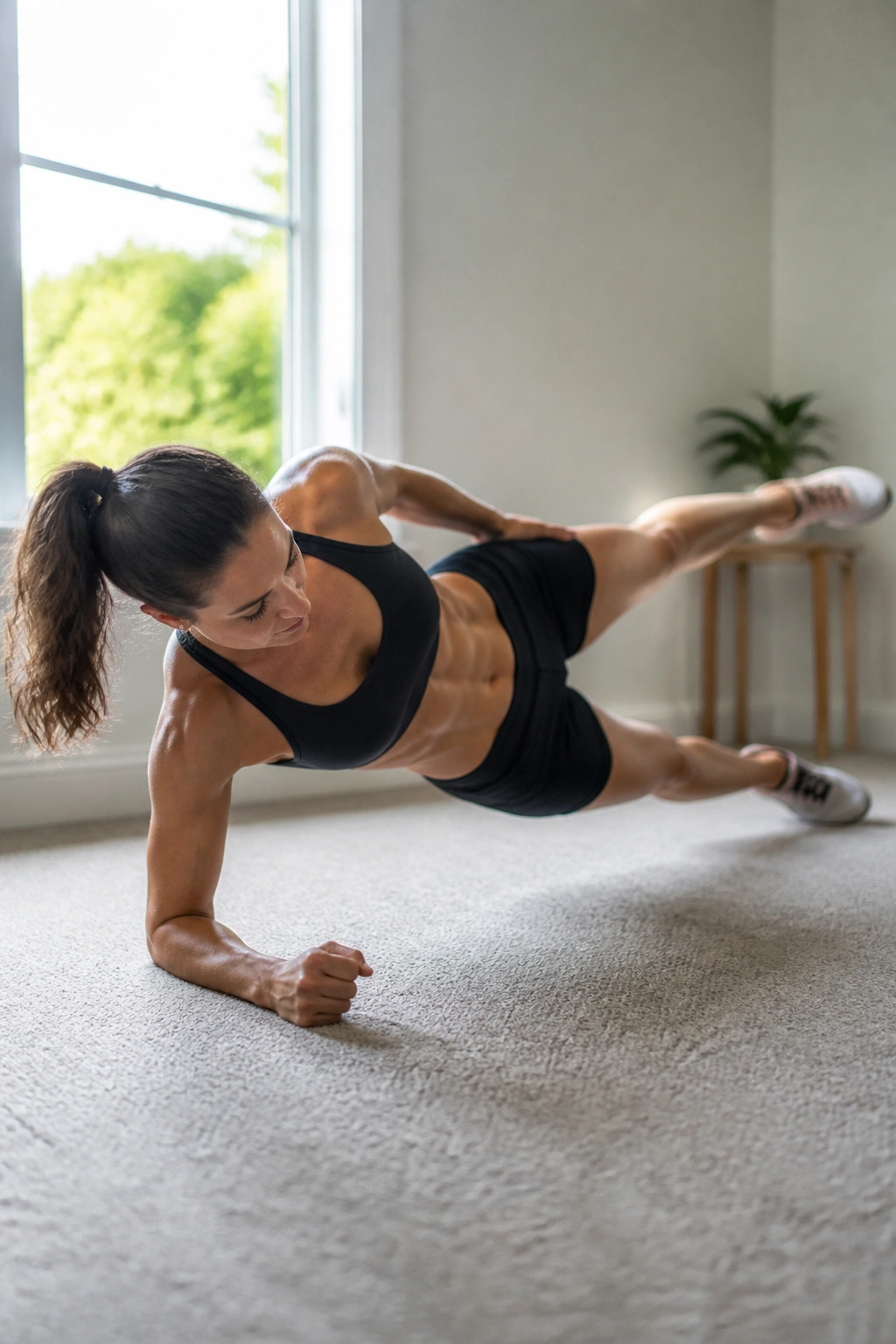
Picture the classic runner’s hip drop. One side of the pelvis sinks, the knee caves in a little, and suddenly the stride looks tired even if the lungs still have gas.
The side plank with a top-leg lift hits that problem from two directions. The obliques and glute med work together, and the body has to stay long instead of folding at the waist.
Why it earns a spot
Set your elbow under your shoulder, stack your feet, and lift your hips until your body makes one straight line. From there, raise the top leg only a few inches. Small lift. Big demand.
- Hold each side for 15 to 25 seconds
- Add 5 to 8 controlled leg lifts
- Keep the bottom rib from flaring forward
- If full side plank is too much, drop the bottom knee
Tip: the lift should feel slow and precise. If you swing the leg, the exercise gets noisy and the wrong muscles take over.
This one is sneaky. It looks like a side-abs move, and it is, but it’s also a hip-stability drill that has real carryover when one foot hits the ground and the other swings through.
4. Bird Dog Reach
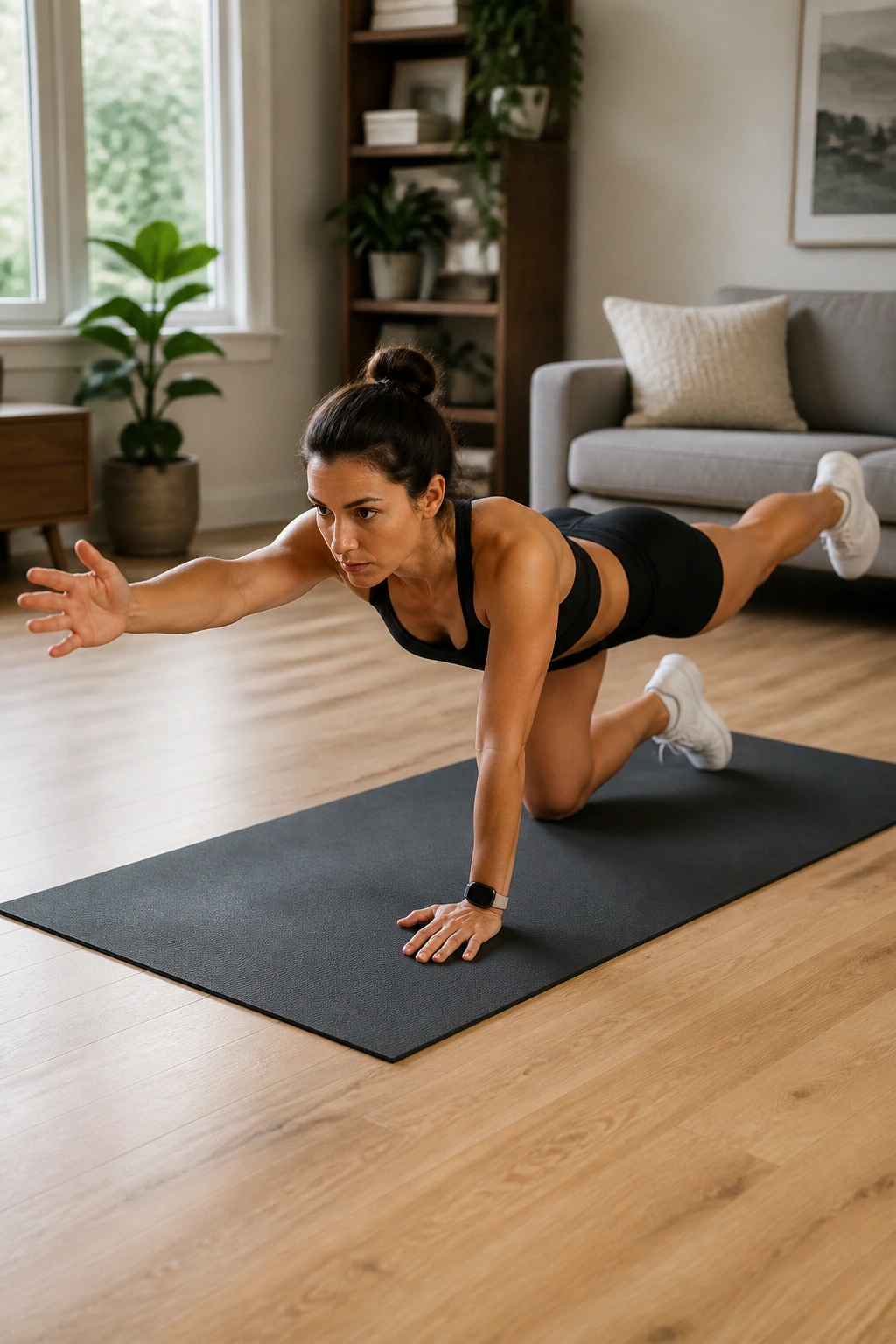
Bird dog looks too easy until you hold the reach for three seconds. Then the body starts negotiating.
That’s the charm of it. You’re not chasing burn here. You’re teaching the spine to stay quiet while the limbs do separate jobs, which is a runner’s daily life in miniature.
Start on hands and knees. Reach one leg long behind you and the opposite arm forward, but keep the ribs from turning and the lower back from sagging. Imagine balancing a glass of water across your low back. Not literally. Please don’t.
Best cues to use
- Reach long, not high
- Keep the hips square to the floor
- Pause for 2 to 3 seconds at full extension
- Do 2 to 3 sets of 6 reps per side
The real value here is control under a small load. That’s enough. If you want a cleaner stride, you need the torso to stop leaking energy every time the arms and legs swing out of sync.
One small note: this is a good warm-up move, but only if you do it slowly. Fast bird dogs turn into a flailing contest, and nobody needs that before a run.
5. Glute Bridge March
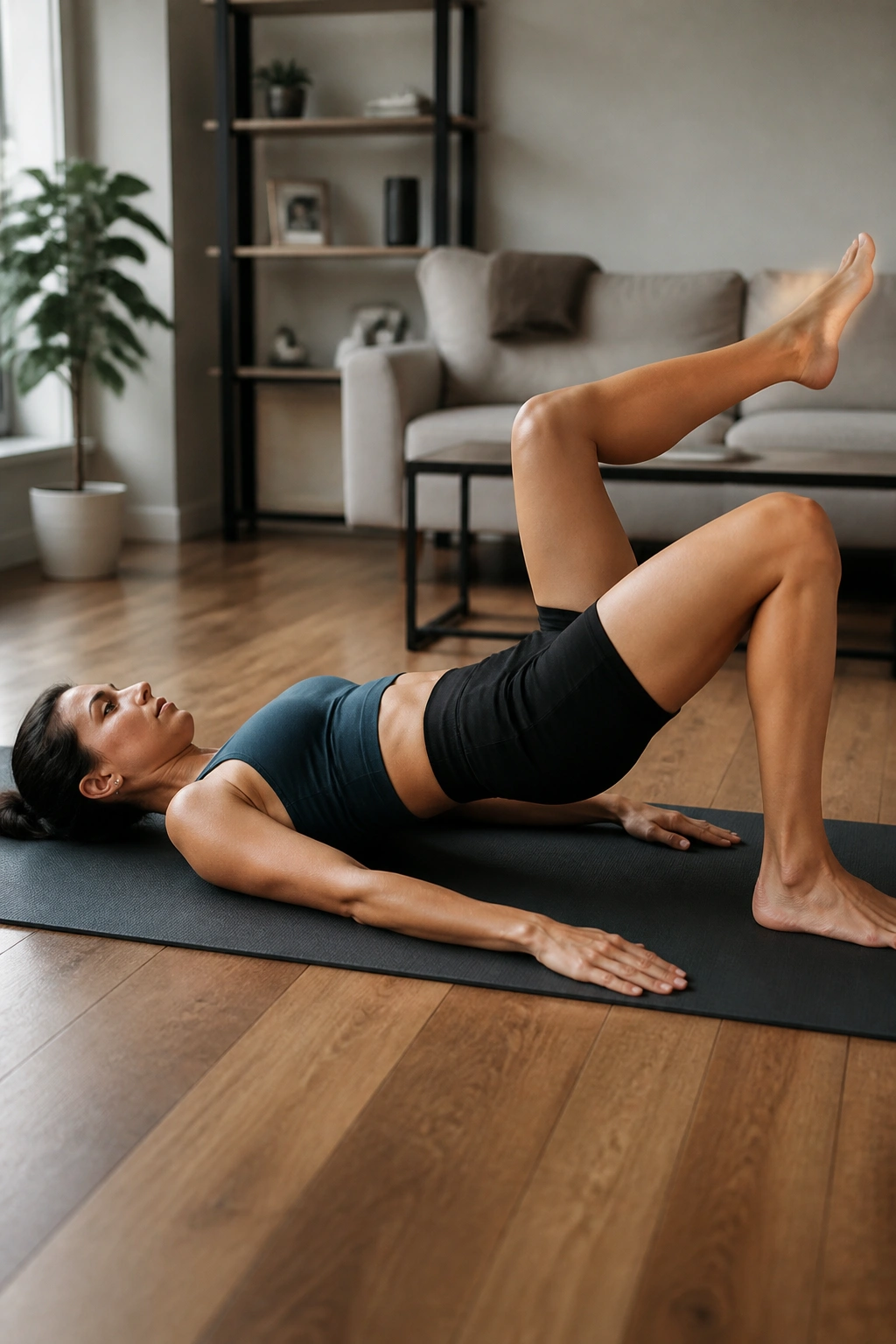
A good glute bridge march feels like your pelvis is floating on rails. Not stiff. Not loose. Just steady.
Runners need that steadiness because the hips are the bridge between stride and trunk. When the bridge is weak, the lower back picks up the slack, and that is where the cranky stuff starts.
Lie on your back, feet flat, and lift into a glute bridge. Keep the hips level, then pick one foot off the floor for a slow marching step without letting the pelvis twist.
- Try 3 sets of 8 to 10 marches per side
- Hold the bridge high enough that you feel the glutes, not the hamstrings alone
- Keep your knees pointed forward
- If your back arches, lower the hips a bit
A useful cue: think “belt buckle up.” That helps keep the pelvis from dumping forward.
This is a better running core drill than it looks like on paper. It ties the glutes to the trunk, which helps on climbs, in accelerations, and in that weird stage of a long run when your form starts to feel a little untied.
6. Hollow Body Hold
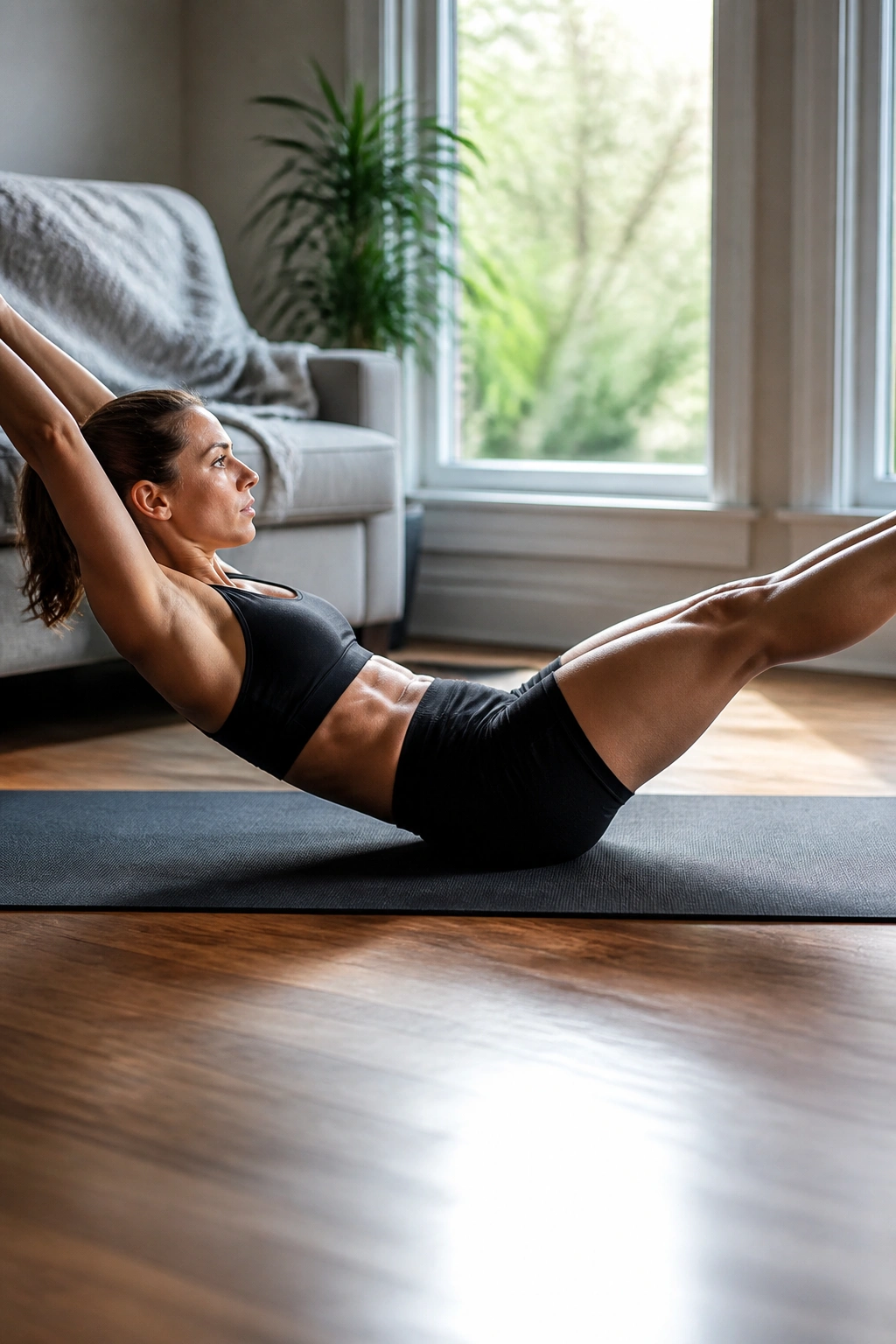
Can you hold a hollow body without turning your lower back into a ramp? That’s the whole question.
The hollow hold is a hard, simple anti-extension exercise. It teaches the front of the body to resist opening up too much, which matters when you’re breathing hard and your ribs want to pop upward.
How to scale it
Start by pressing your low back into the floor. Lift your shoulders slightly, keep your chin tucked, and either extend both legs or keep them bent if the full version is too aggressive.
- Hold for 10 to 20 seconds
- Repeat for 3 to 5 rounds
- Bend the knees if the back starts arching
- Keep the arms by the ears only if you can do it without strain
If your hip flexors complain, that doesn’t mean the drill is wrong. It usually means the position is too long or too big. Shrink it, then build it back.
How to make it run-friendly
Use it on days when you want trunk endurance rather than brute force. Short holds done well beat a long ugly hold every time. Seriously.
This is one of those exercises that punishes ego. Good. Runners need a little of that.
7. Pallof Press
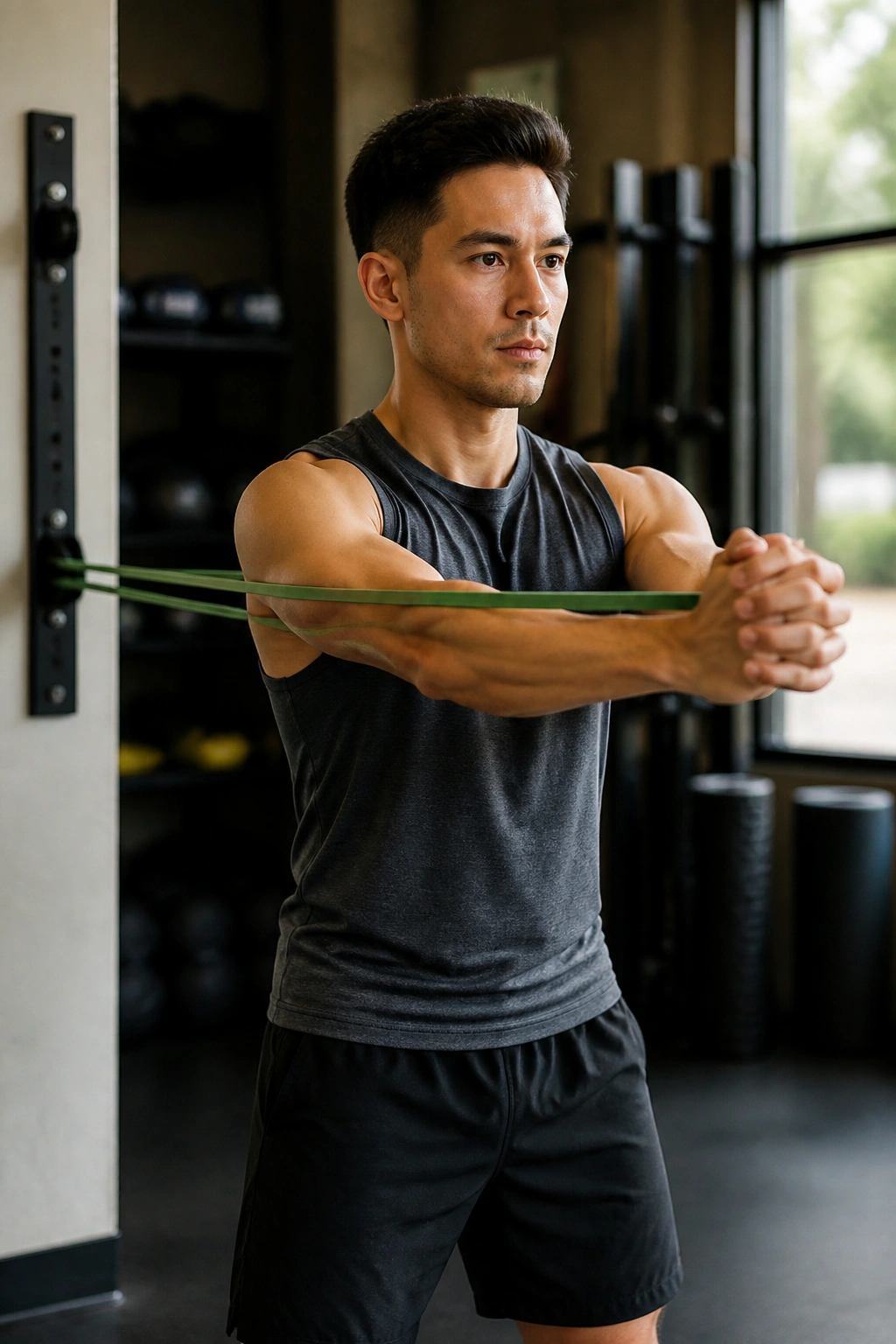
Pallof presses are the closest thing to anti-wobble training.
You stand beside a band or cable, press it straight out from your chest, and fight the twist that wants to pull you off line. That resistance matters for runners because every stride creates a tiny rotation force through the torso.
You are not trying to look strong here. You are trying to not move when the load asks you to move.
What makes it useful
- Use 3 sets of 8 to 12 presses per side
- Hold each press for 1 to 2 seconds
- Keep the ribs stacked over the pelvis
- Stay tall through the crown of the head
The press should feel like a clean line from sternum to hands. If your shoulders shrug or your torso leans, the load is too heavy. Lower it. There’s no prize for fighting a band that clearly won.
I like this one for runners who over-rotate late in a workout. It teaches a calm middle section, and that calm shows up when the arms get tired and the stride starts pulling the body around.
8. Bear Crawl
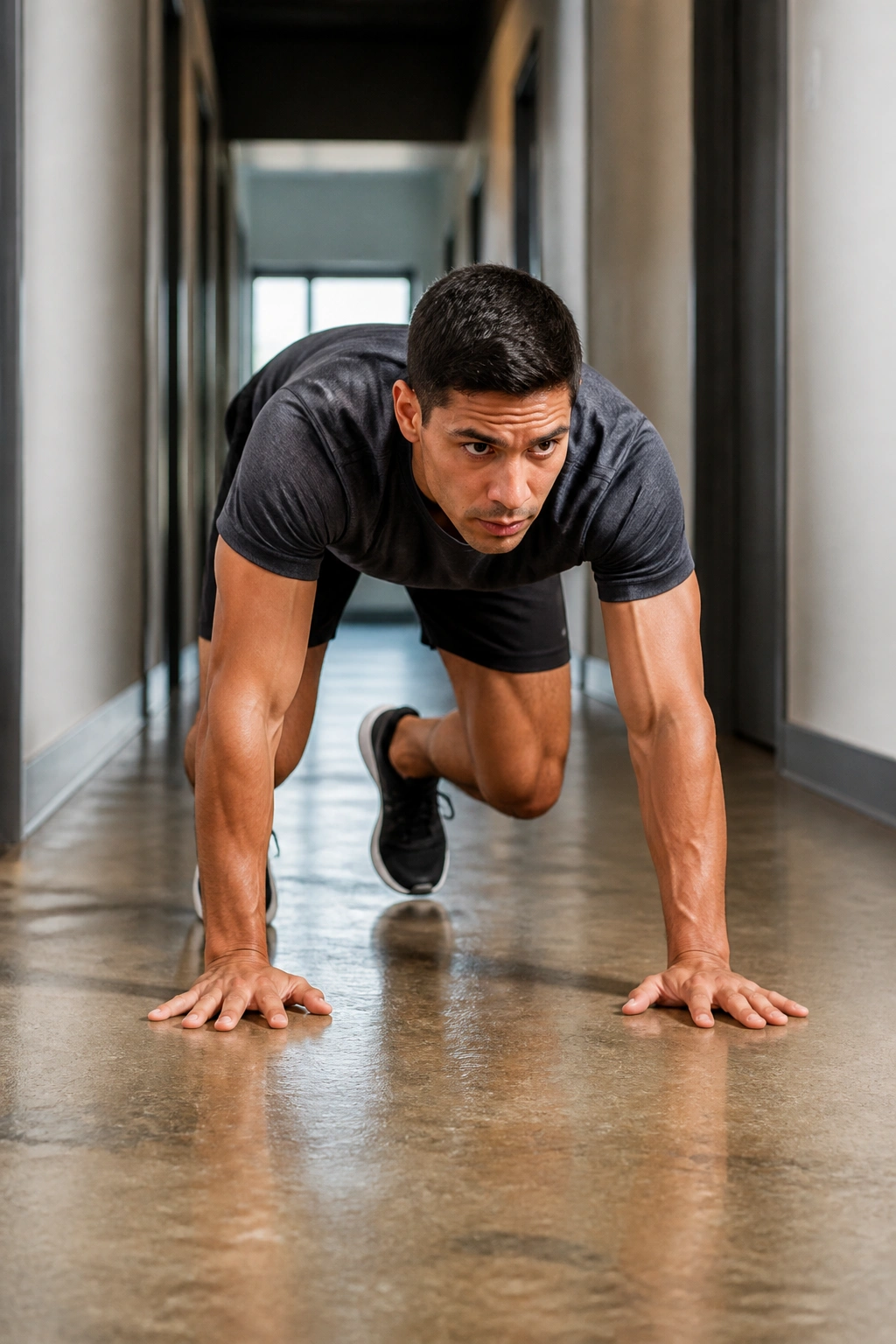
Bear crawling down a hallway looks odd. It works anyway.
This drill asks the shoulders, core, and hips to stay connected while all four limbs move in a pattern that forces coordination. Runners love to think in straight lines, but real movement has a little cross-body mess in it. That’s where the bear crawl lives.
Keep the knees just off the floor, back flat, and steps short. If the hips bounce all over the place, slow down and make the crawl smaller.
- Crawl forward for 10 to 20 meters
- Or do 3 rounds of 20 to 30 seconds
- Keep your steps quiet
- Breathe steadily through the nose if you can
The best version feels controlled, not frantic. Your shoulders will warm up, your trunk will start to brace, and the whole thing will feel a bit like a moving plank.
It’s also a nice change of pace from floor holds. Not every core workout has to be static, and runners usually do better when their trunk can stay solid while motion is happening all around it.
9. Suitcase Carry
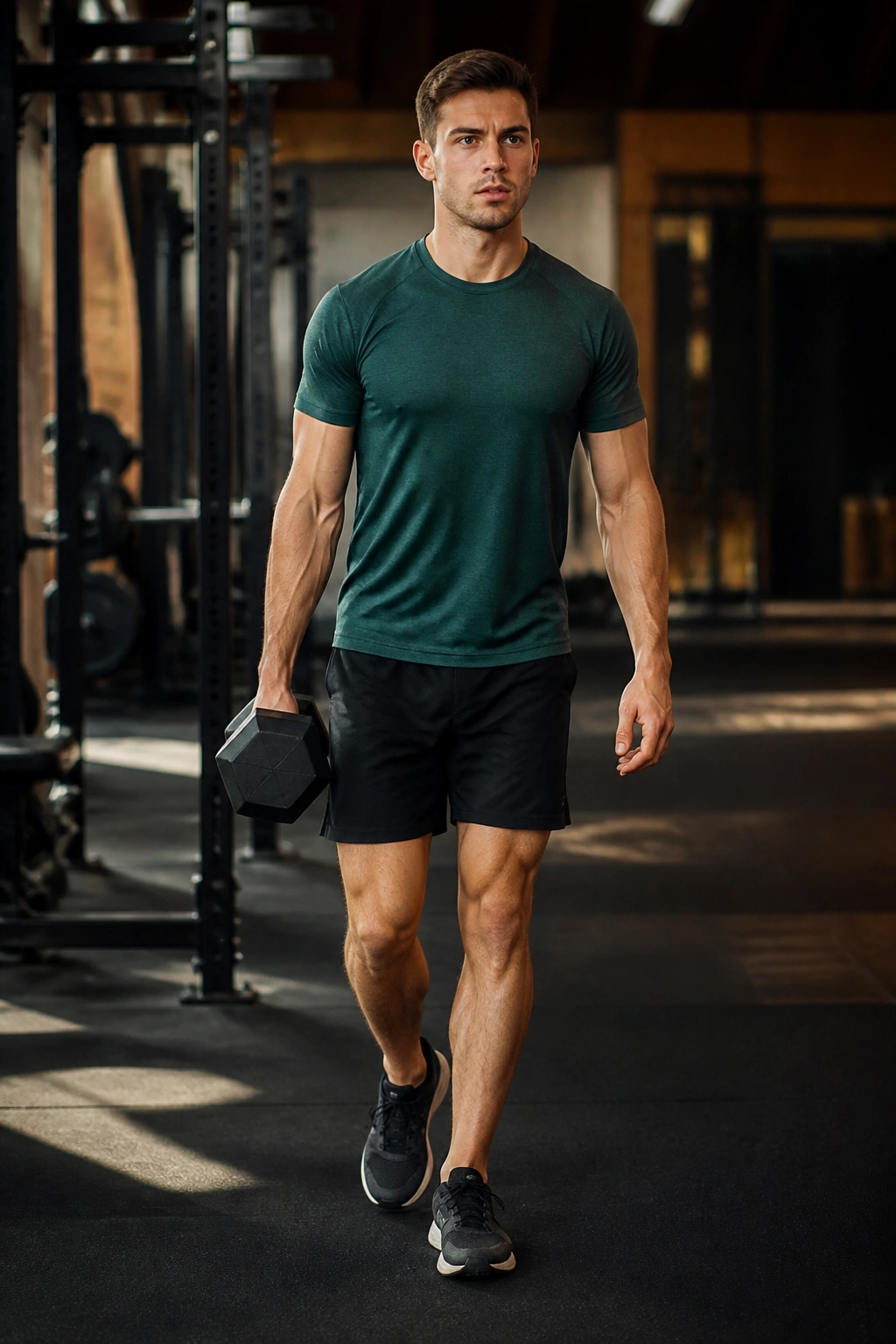
A suitcase carry does more for runners than most cable crunches, and I’ll happily die on that hill.
One heavy weight in one hand forces the torso to resist side bending while the hips keep you moving forward. That is gold for runners, especially if one side of the body tends to collapse when fatigue shows up.
What to pay attention to
Walk tall with a dumbbell or kettlebell in one hand. Don’t lean away from it. Don’t let the shoulder hike. Stay long through the spine and keep the steps smooth.
- Carry for 20 to 40 meters per side
- Use 3 to 4 rounds
- Switch hands only after the full distance
- Choose a load that makes posture work, not panic
A lot of people hold the weight too low and call it good. Better to stay firm through the ribs and keep the walk crisp. If your torso bends like a wilted houseplant, the load is too heavy.
This one carries over well to hills and final miles. When one side is tired, the body wants to lean. A suitcase carry teaches you not to give in.
10. Single-Leg RDL Reach
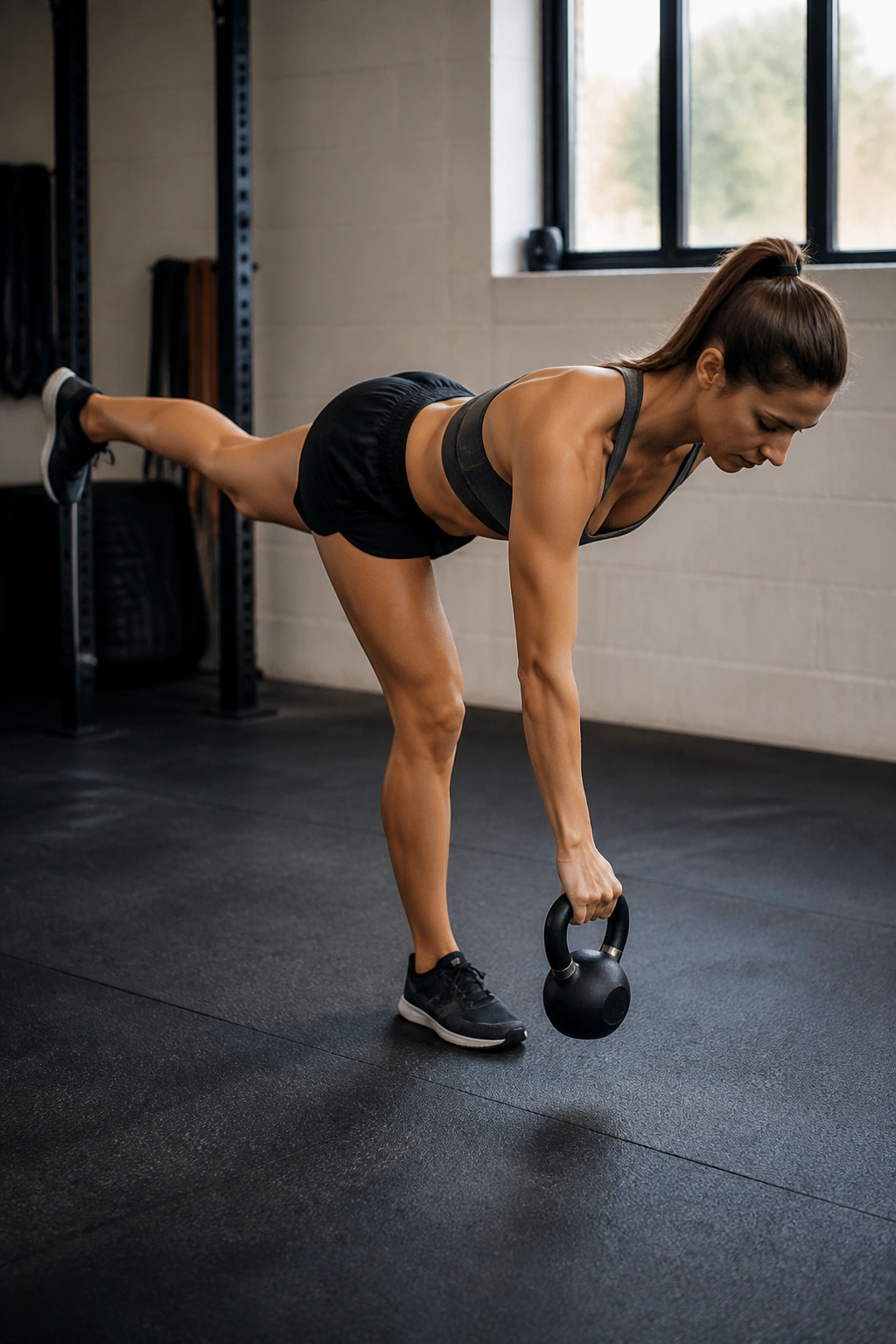
Single-leg RDLs are where balance and trunk strength meet.
Yes, the hamstrings work. Yes, the glute on the standing leg works. But the real lesson is what the torso does while one leg reaches back and the body tries not to fold. That is very runner-shaped training.
Start with a light dumbbell or no weight at all. Hinge at the hip, send the free leg behind you, and keep the pelvis square. Reach the weight toward the floor only as far as you can without spinning open.
How to make it stick
- Do 3 sets of 6 to 8 reps per side
- Move slowly on the way down
- Keep a soft knee on the standing leg
- Hold a wall with one hand if balance gets messy
This is one of those drills where the setup matters more than the ego load. A cleaner body line with a lighter weight beats a shaky, ugly rep every time.
Runners who feel unstable in the pelvis usually like this more than they expect. It teaches the whole backside to cooperate while the trunk keeps the body from drifting around.
11. Reverse Crunch With Pelvic Curl
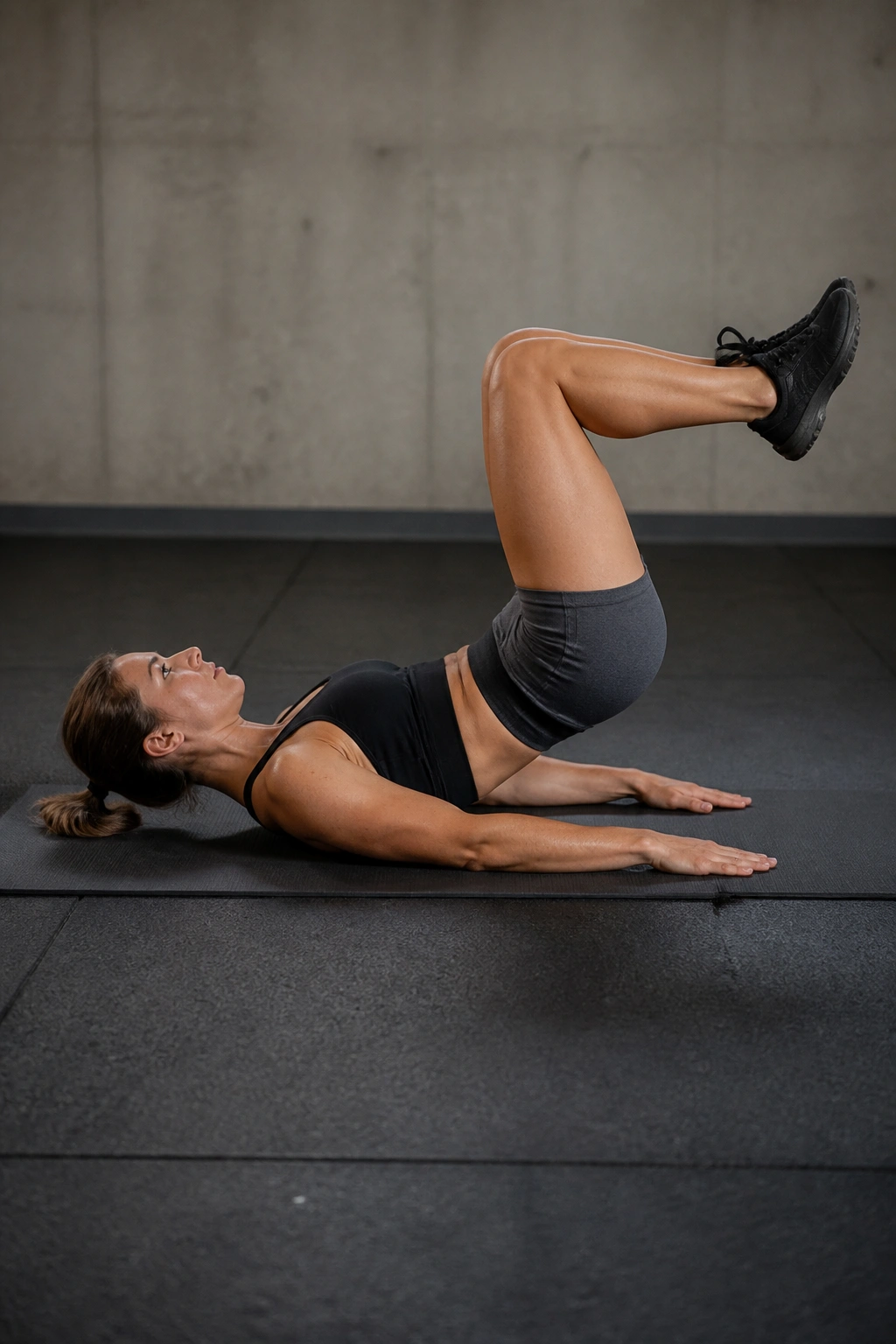
Reverse crunches usually get done badly.
People swing the legs, yank with the hip flexors, and call it lower-ab work. That misses the point. The good version starts with a small pelvic curl, where the tailbone lifts because the abs tuck the pelvis, not because the legs are whipping around.
Lie on your back, knees bent, and press your low back into the floor. Curl the pelvis up a few inches, then lower with control.
- Aim for 3 sets of 8 to 12 reps
- Move slowly enough to feel each curl
- Keep the knees bent to reduce hip flexor takeover
- Stop before your lower back arches off the floor
What to avoid
Do not chase height. The lift is small on purpose. If you kick the ceiling, you’ve left the core behind and handed the job to momentum.
This drill is nice for runners because it teaches the lower abs to finish the job of rib and pelvis control. That can make a difference when your stride gets long and the front of the body wants to loosen up.
12. Slow Mountain Climber
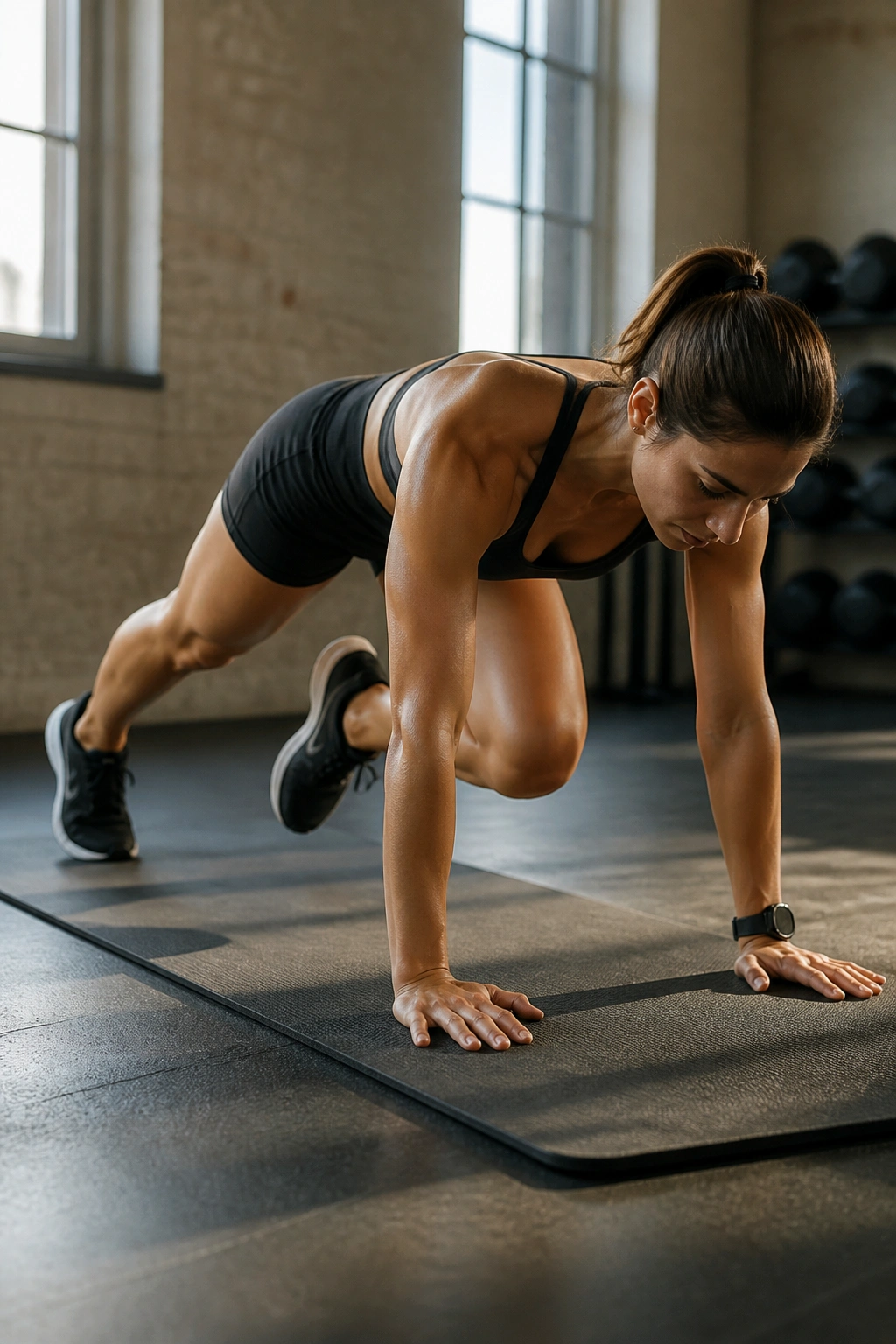
Need a dynamic core drill that matches the rhythm of running? Slow mountain climbers are a good place to land.
The fast version turns into cardio noise. The slow version teaches the body to stay square while one knee drives in and the other leg reaches back. That’s the useful part.
Get into a strong plank and draw one knee toward the chest without shifting your shoulders. Then switch sides with control. The motion should feel deliberate, almost boring, and that’s a compliment.
How to use it
- Do 3 rounds of 20 to 30 total reps
- Keep the shoulders stacked over the wrists
- Drive the knee under the torso, not out to the side
- Breathe every few reps instead of holding your breath
If the hips bounce, slow the tempo. If the wrists complain, elevate the hands on a bench. Simple fixes. No drama.
This one is especially handy when you want a more athletic feel than a static plank. It bridges the gap between strength and running mechanics without turning into a circus.
13. Plank Row

Plank rows are not about your abs alone.
They’re about keeping the torso from twisting when one arm pulls and the other side has to stay honest. That is a runner problem, because arm swing and trunk control are connected more than people like to admit.
Set up in a plank with dumbbells under your hands, or use a bench if the floor version is too much. Row one weight toward your ribs, pause, then lower it without letting the hips rotate.
- Use 3 sets of 6 to 8 rows per side
- Keep the feet a little wide
- Let the shoulders stay level
- Choose a light load first; this gets sloppy fast
A lot of runners overdo the row and forget the plank. Don’t chase the arm. Chase the stillness.
This is one of my favorites for people who want a harder upper-body piece without wandering away from core work. The trunk has to resist the pull, and that resistance is the whole point.
14. Standing Cable Chop
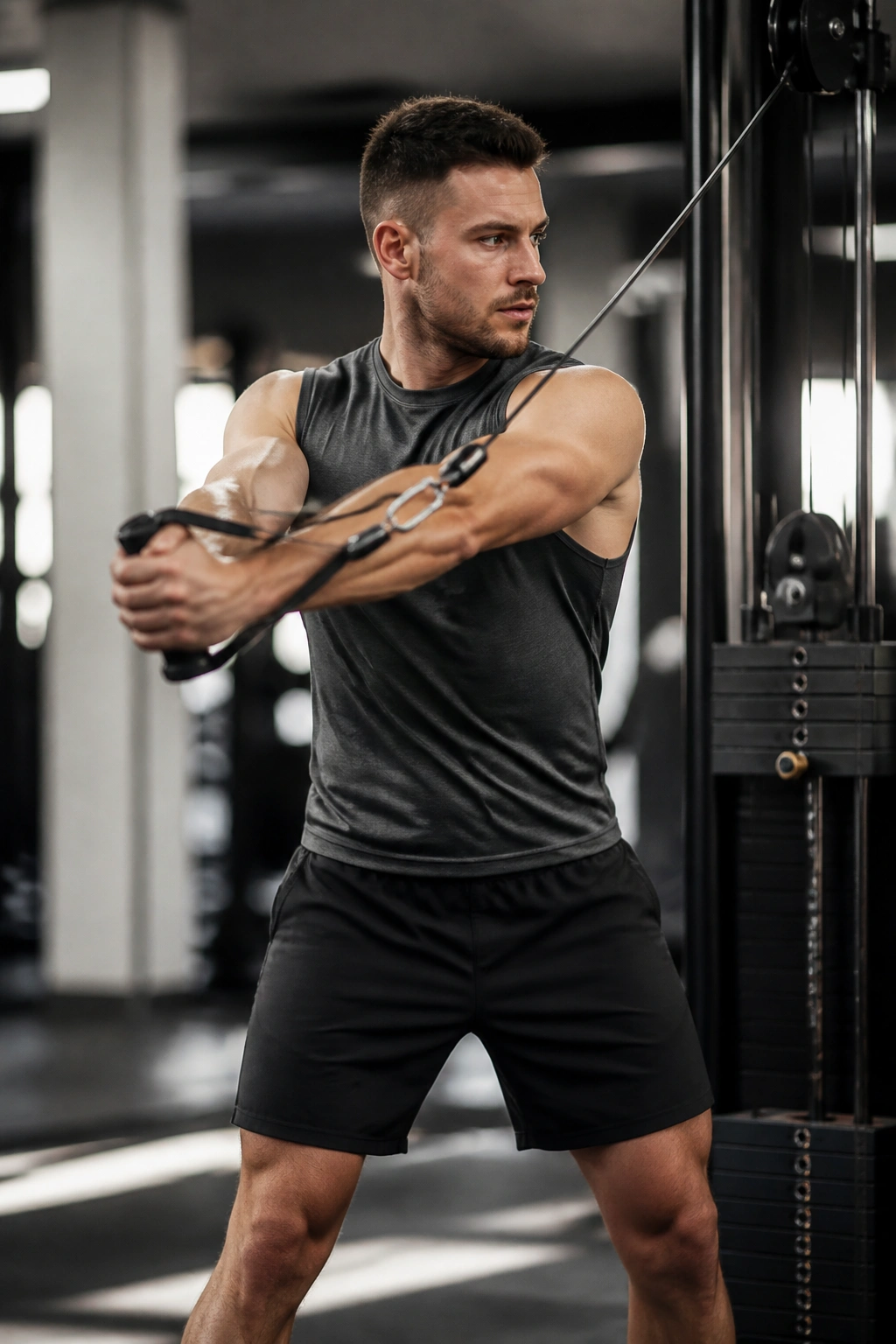
The chop pattern teaches your torso to turn without folding.
That matters because running has rotation in it, but it should be controlled rotation, not a collapse through the waist. A standing cable or band chop gives you a way to train that diagonal line from shoulder to opposite hip.
Stand tall with the cable high or low, depending on the variation, and pull across the body with the ribs staying stacked. The movement comes from the torso and hips together, not a yank from the arms.
Quick setup notes
- Do 2 to 3 sets of 8 reps per side
- Keep the hips from spinning wildly
- Rotate through a controlled range
- Exhale as you pull
The band should feel like it wants to pull you apart a little. That’s good. If you can’t keep your posture, the resistance is too high.
Runners often benefit from this because it trains the diagonal sling system — the lines of muscle that help connect opposite shoulder and hip during movement. Fancy name, plain result: better control when the stride gets messy.
15. Copenhagen Plank
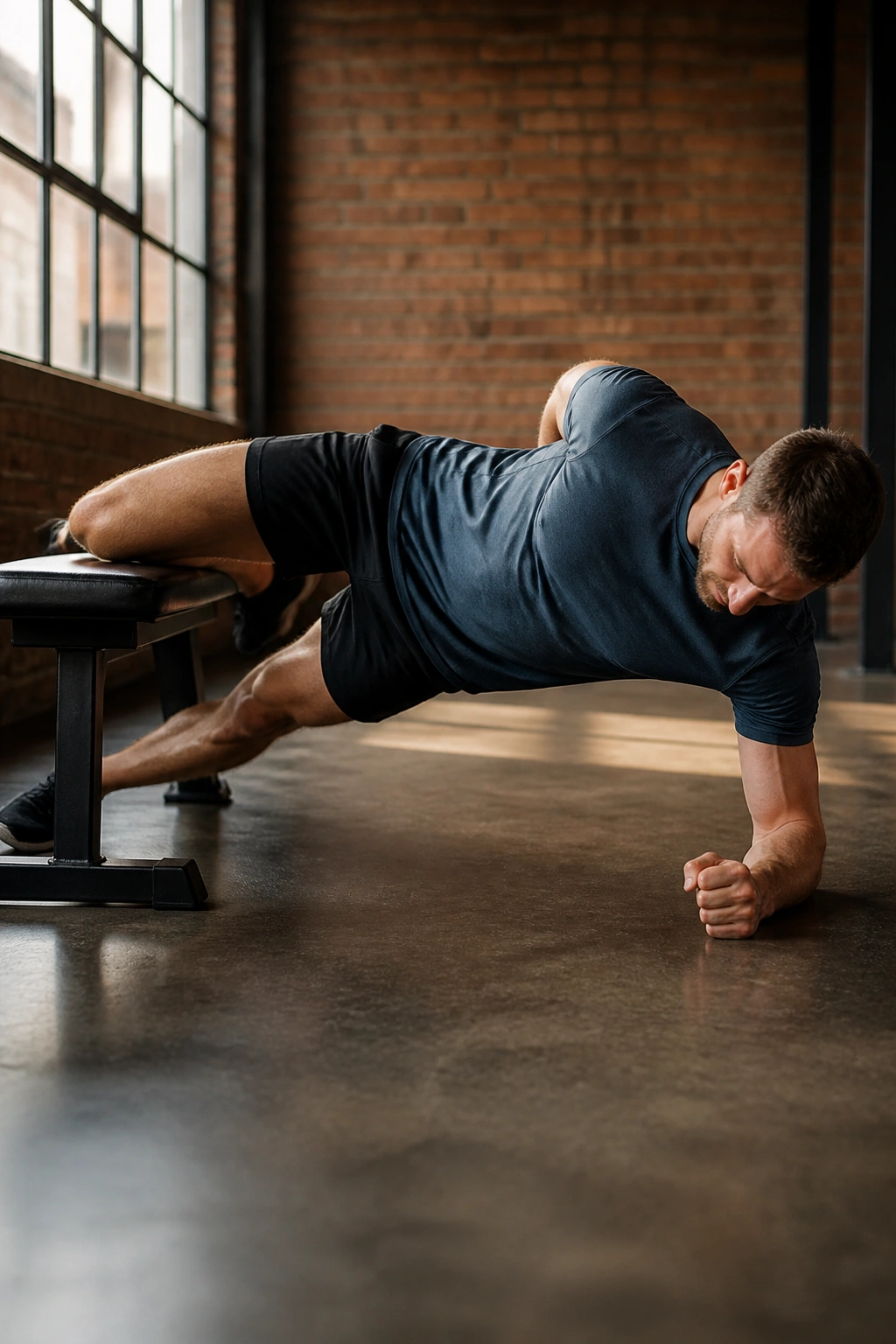
Inner-thigh strength gets ignored.
That’s a mistake, especially for runners. The adductors help stabilize the pelvis and assist with leg drive, and when they’re weak, the body often borrows stability from the hips and low back instead.
The short-lever Copenhagen plank is the version most people should start with. Put your top knee on a bench or box, support the body on your forearm, and lift the hips. Keep the bottom leg floating or lightly supported at first.
How to approach it
- Hold for 10 to 20 seconds per side
- Use 2 to 4 rounds
- Start with the top knee bent, not the ankle
- Stop if the groin twinges sharply
This move feels a little awkward the first few times. That’s normal. It’s not a flashy exercise, and it doesn’t need to be. The payoff is in pelvic control and groin durability, which runners notice when they start handling faster pace changes.
Short version: this one is worth learning, but respect it. The adductors can get grumpy if you rush the progression.
16. Wall March With a Band
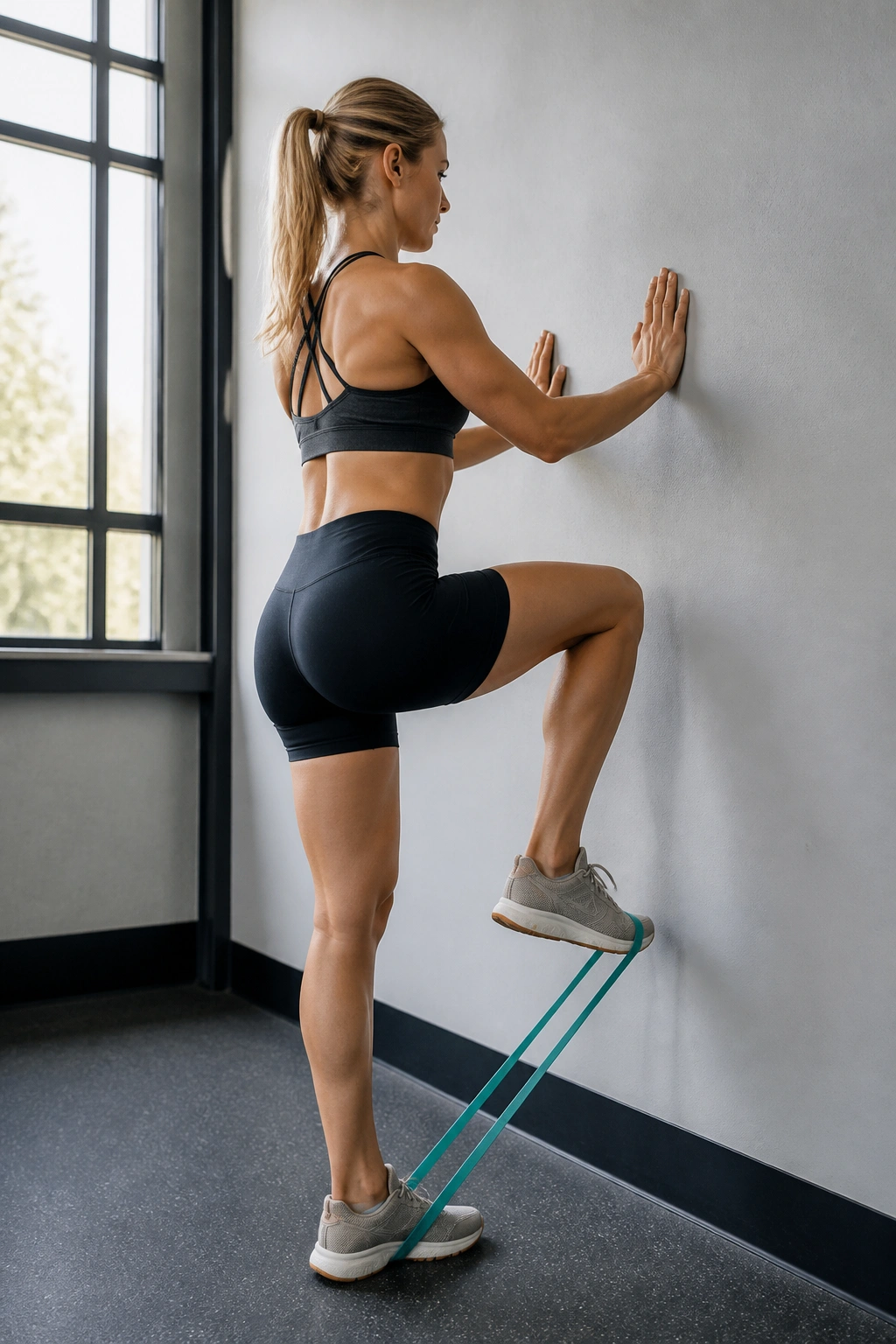
A wall march sounds like rehab because it is — and that’s not a bad thing.
Stand facing a wall with your hands lightly on it. Drive one knee up, hold the pelvis level, and keep the ribs from flaring as if you were practicing running posture in slow motion. Add a mini-band around the feet or knees if you want a little more work.
- Hold each march for 2 to 3 seconds
- Do 2 to 3 sets of 8 reps per side
- Keep the standing leg solid
- Stay tall through the crown of the head
What makes this useful is the shape. You’re standing, breathing, and stabilizing in a posture that feels closer to running than most floor drills do. The wall gives just enough feedback to keep you honest.
I like this as a pre-run primer or a light strength-day finisher. It wakes up the trunk without frying it, which means you can still move well afterward.
17. Stir-the-Pot on a Stability Ball
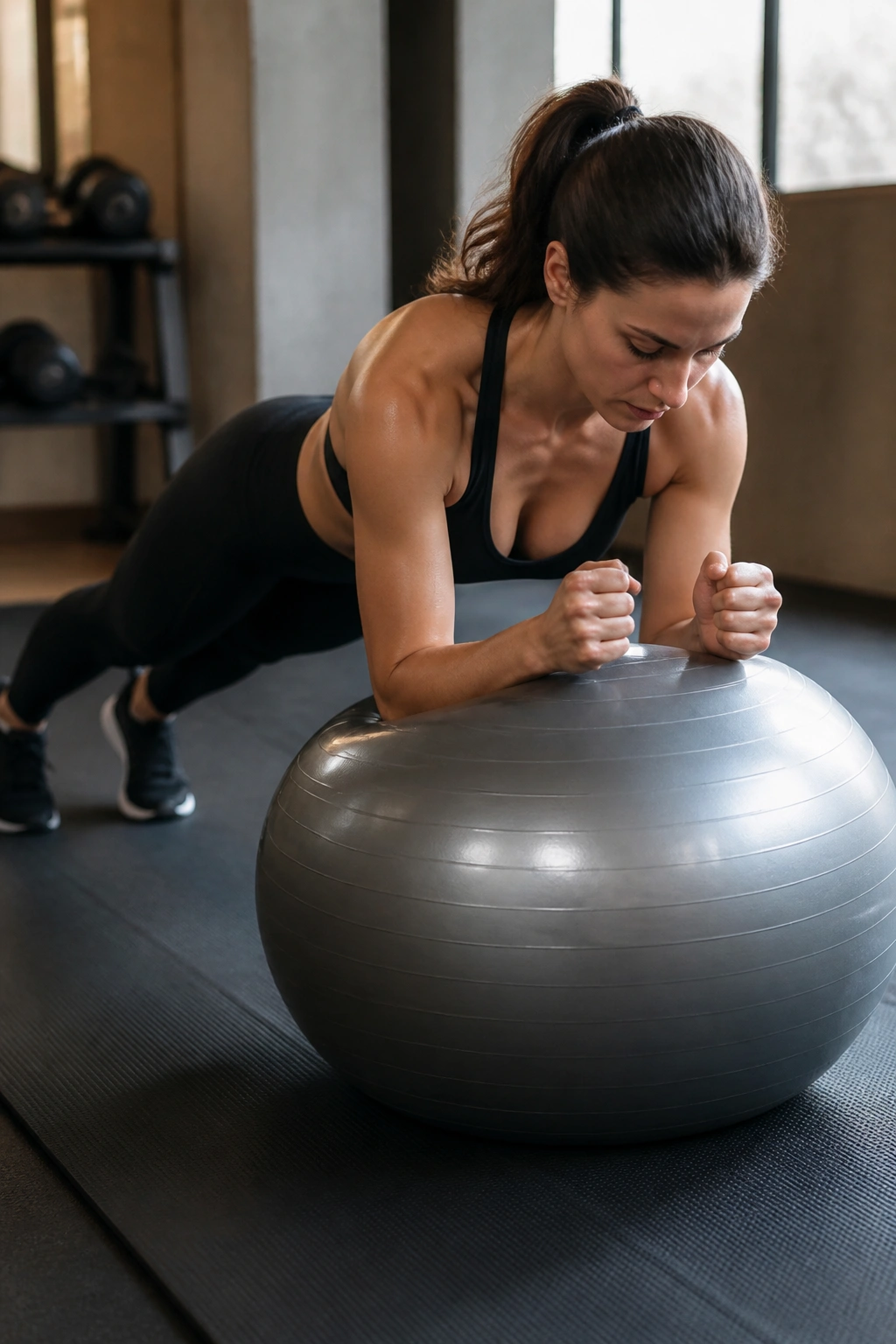
Why put a stability ball under your elbows when you could plank on the floor? Because the tiny circles make the core work in a less polite way.
Stir-the-pot adds moving instability to an anti-extension plank. The torso has to stay braced while the forearms draw slow circles on the ball, and every little wobble asks the deep core to clean things up.
Start in a forearm plank with the elbows on the ball. Make small circles, maybe the size of a dinner plate, and keep the hips from drifting.
How to keep it useful
- Try 2 to 3 rounds of 15 to 20 seconds
- Make the circles small at first
- Squeeze the glutes to steady the pelvis
- Stop before the low back starts sagging
This is not the first exercise I’d hand to a beginner. It’s better for runners who already have some plank control and want a more demanding test.
The ball makes cheating harder. That is the whole draw. If you can keep the spine quiet while the elbows move, you’re building the kind of trunk endurance that holds up when running form gets a little noisy.
18. Reset Circuit
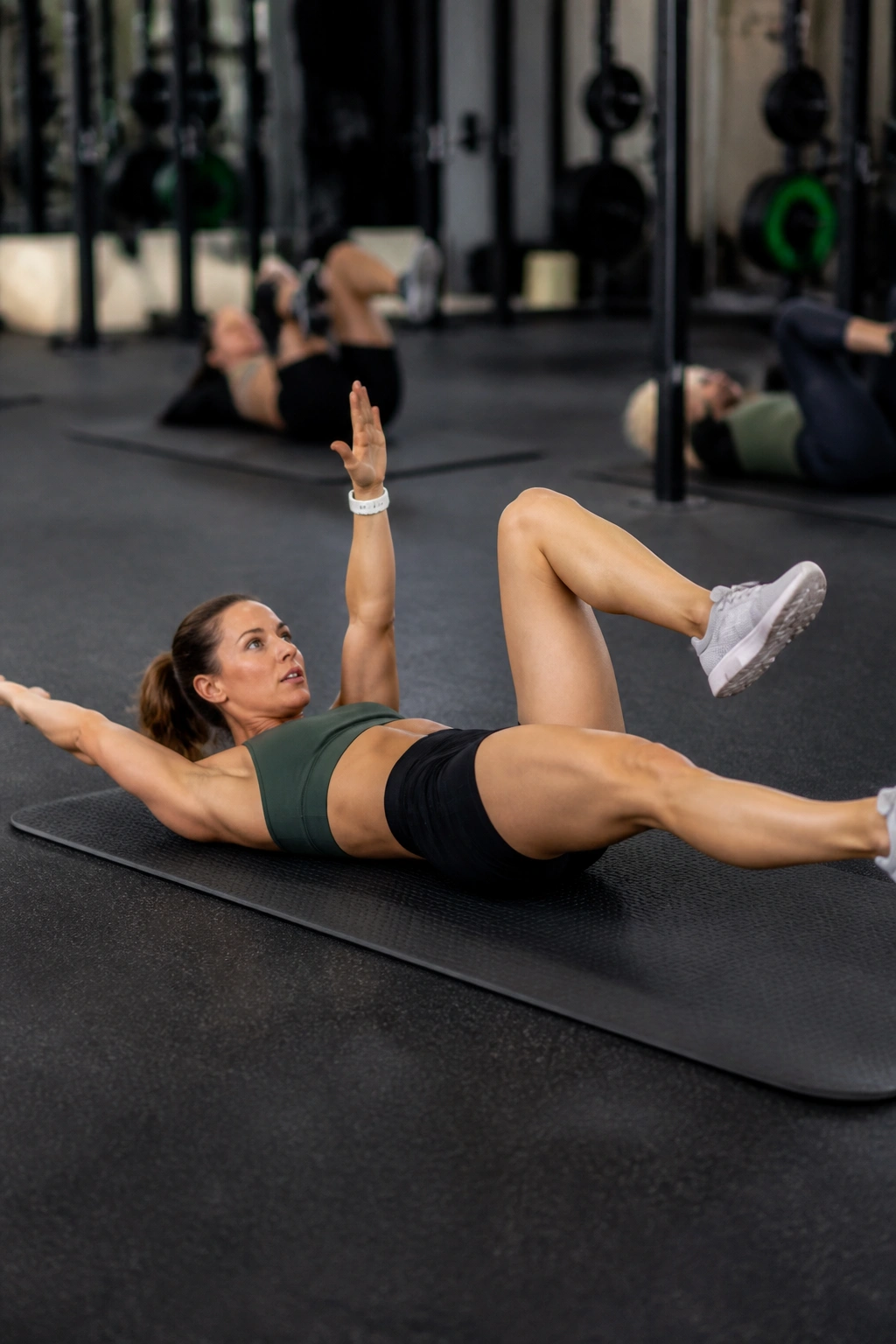
This is the workout I keep for days when running has chewed up the brain.
Nothing fancy. Just a short circuit that hits anti-extension, anti-rotation, hip stability, and breathing control without leaving you wrecked. If you only have eight to twelve minutes, this kind of session gets the job done.
The circuit
Do 2 to 4 rounds of the following:
- Dead Bug With a Slow Exhale — 6 reps per side
- Suitcase Carry — 20 to 30 meters per side
- Side Plank With Top-Leg Lift — 15 seconds per side
- Wall March With a Band — 8 reps per side
Rest 30 to 45 seconds between rounds. If your form starts to wobble, stop there. Clean work beats extra work.
The nice thing about this circuit is that it feels like a reset, not a punishment. You can place it after an easy run, on a strength day, or on a day when you want to feel more organized before speedwork. No need to grind.
And that may be the real lesson with runner core training. You do not need endless ab exercises. You need a small set of drills that keep your torso steady, your hips level, and your breathing under control when the miles stop being polite.
