



Belly fat is stubborn, and crunches do not bully it away. What actually changes the waistline is a mix of calorie burn, daily movement, and cardio workouts you can repeat without falling apart halfway through the week.
The best conditioning work for this job is not always the most brutal one. Sometimes it is the workout you can do three times a week, keep honest, and recover from without spending the next day negotiating with your legs.
That means brisk incline walking matters. So do sprints, rowing, jump rope, boxing, stairs, swimming, and a few ugly little bodyweight drills that make your lungs complain in the best possible way. The waist usually changes when training gets consistent enough to keep the energy balance moving in the right direction.
Start with the one your body will tolerate. Then build from there.
1. Brisk Incline Treadmill Cardio Walk
This is the one I’d hand to almost anyone first. It looks mild and works harder than people expect because the incline jacks up the heart rate without the pounding that comes with running.
A good setup is 20 to 40 minutes at a pace where talking takes effort, with the belt set somewhere around 5% to 12% incline. Keep your steps short, let your arms swing, and do not hang on the rails like you’re waiting for a delayed train.
Why It Burns More Than Flat Walking
The incline changes the whole feel of the session. Your glutes and calves have to work, your breathing gets deeper, and the calorie cost climbs fast enough to matter.
A Simple Structure
- 5 minutes easy warm-up
- 15 to 30 minutes at a steady hard walk
- 2 to 5 minutes easy cool-down
Tip: If you can chat in full paragraphs, the incline is probably too low.
2. Running Intervals on a Track

Running intervals are efficient because they strip out the fluff. Short hard bursts plus real recovery let you accumulate more work than a sloppy, half-speed jog that drags on forever.
Try 30 seconds fast and 90 seconds easy for 8 to 12 rounds. “Fast” does not mean sprinting like a cartoon. It means the pace that makes your breathing noisy by the second rep and your legs warm by the fourth.
The track helps because distance is easy to judge. One lap, half a lap, or even a marked straightaway gives you structure, and structure keeps people from drifting into comfort. That matters more than people think. A workout that is easy to measure is easier to repeat.
3. Hill Sprints Outside
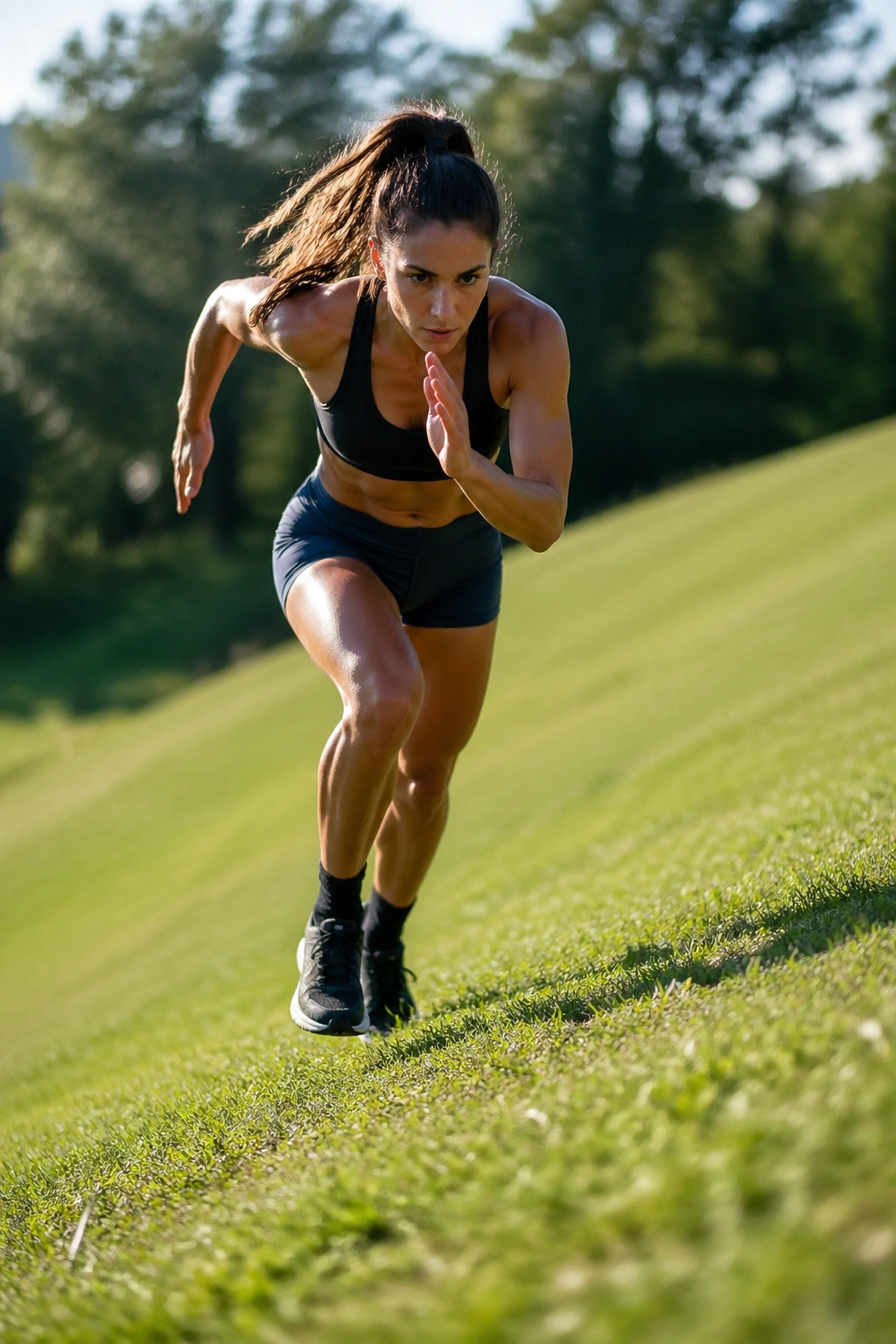
Hill sprints are rude in a useful way. The slope slows you down just enough to protect your hamstrings a bit while still making the effort sting.
Run hard for 10 to 20 seconds, then walk back down fully before the next one. Six to ten sprints is plenty. More is not always smarter; by the time your form falls apart, the quality has already gone.
The hill should be steep enough that you feel your glutes pushing, not so steep that you’re climbing like a confused hiker. Find the sweet spot and keep your chest tall. Small steps. Fast arms. No heroics on the first repeat.
4. Stationary Bike Cardio Intervals

The bike is a gift if your joints get cranky. It lets you push hard without the same impact cost as running, and that makes it easy to recover from.
A clean interval set looks like 20 seconds hard, 40 seconds easy, repeated 10 to 15 times. You can also ride for 1 minute at high resistance and 1 minute easy if you prefer a more grinding feel. Seat height matters here more than most people admit. If the saddle is too low, your knees start complaining fast.
What to Watch For
- Keep the cadence smooth, not bouncy.
- Add resistance before chasing speed.
- Sit tall so your hips do not pinch.
- Finish with legs that feel cooked, not wrecked.
A bike session can be boring on paper. It is not boring when your lungs are doing all the talking.
5. Spin Class Rounds

Spin class works because somebody else does the programming and the clock never lets you coast for long. You get hard effort, rhythm, and very little chance to negotiate with yourself.
The good ones mix climbs, sprints, and moderate recoveries so you never settle into a lazy groove. That variability is useful. It keeps the heart rate up and sneaks in more total work than a session where you think you’re “taking it easy” every ten minutes.
If you like structure and music, this is one of the easiest cardio workouts to stick with. If you hate counting reps, even better. Just keep the resistance honest. Spinning your legs like crazy with almost no load is basically expensive leg flailing.
6. Rowing Machine Cardio Sprints
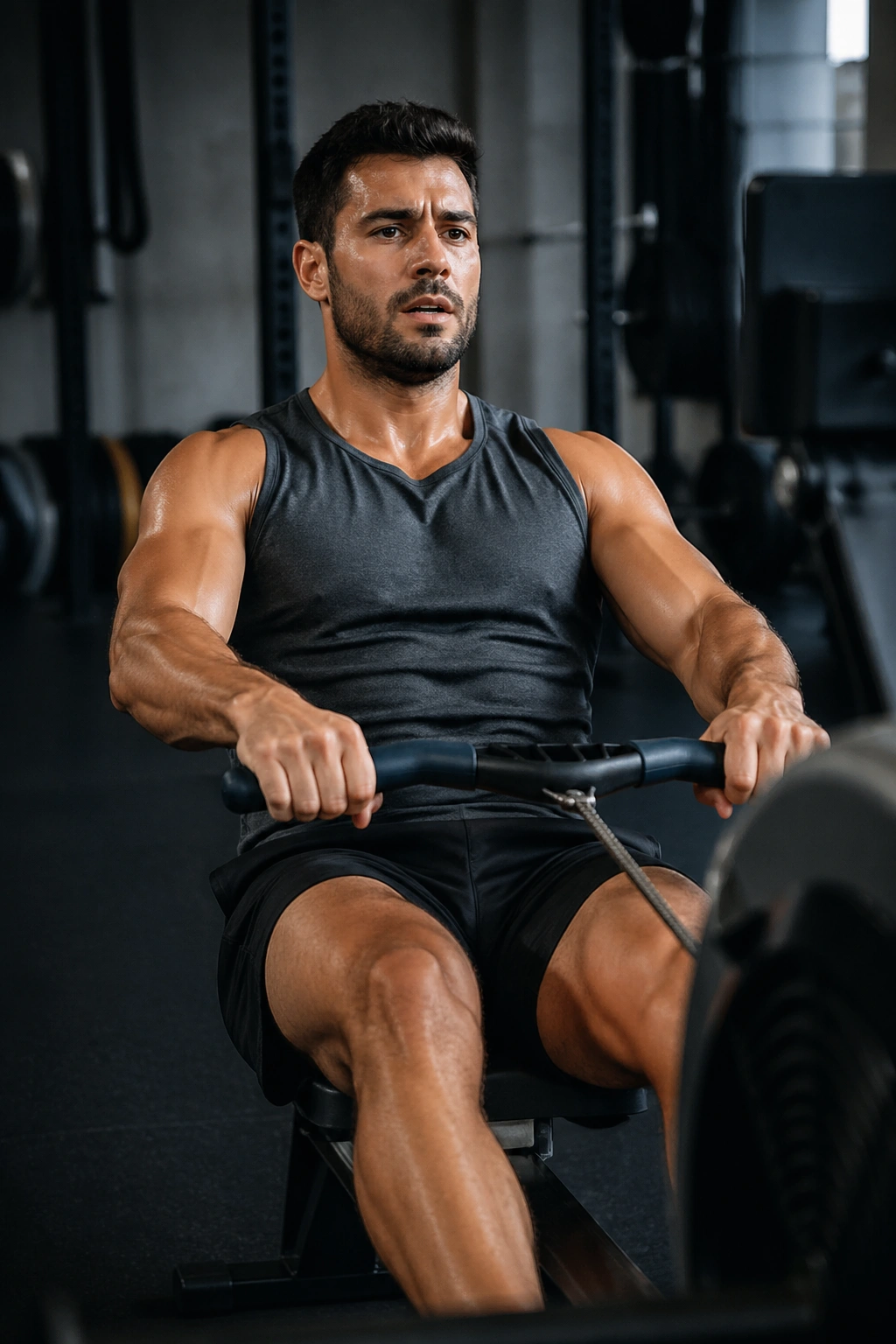
Rowing is one of those machines people misjudge because the first minute feels manageable. Then the clock keeps moving, and suddenly the lungs are filing complaints.
The stroke is a full-body pattern: legs, hips, back, arms. Push through the feet first, then swing the torso, then finish with the arms. Reverse that order on the way back. If you yank with your arms too early, the machine punishes you with sloppy power and a tired lower back.
A Clean Sprint Set
- 5 minutes easy row
- 10 rounds of 30 seconds hard, 60 seconds easy
- 3 minutes cool-down
Keep the stroke smooth. The chain should sound controlled, not chaotic. If you’re flopping on the seat and hunching forward, the workout is still hard, but it’s also messier than it needs to be.
7. Steady Rowing for 20 Minutes
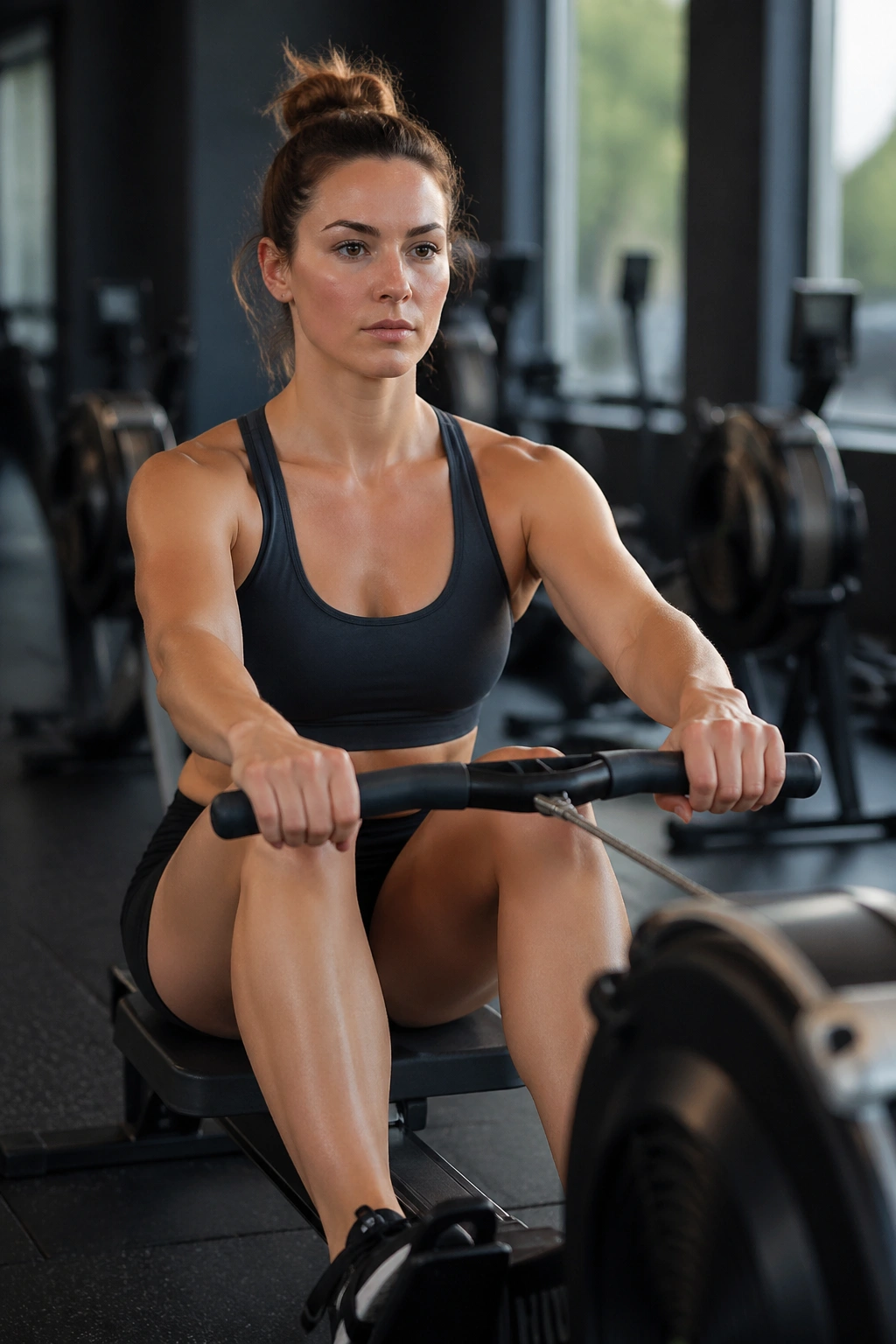
Not every row has to feel like a fight. A steady 20-minute row can be sneaky in the best way because it lets you keep working before fatigue turns ugly.
Stay at a pace where you can hold a conversation in short sentences. Stroke rate around 20 to 24 is a useful target for many people, though the real anchor is control. You want strong leg drive and a calm breathing pattern, not frantic pulls.
This version is especially good on days when your body wants movement but not punishment. It still burns a meaningful amount of energy, and the rhythm gives your core and upper back some quiet work that you’ll feel later when you stand up.
8. Stair Climber Intervals
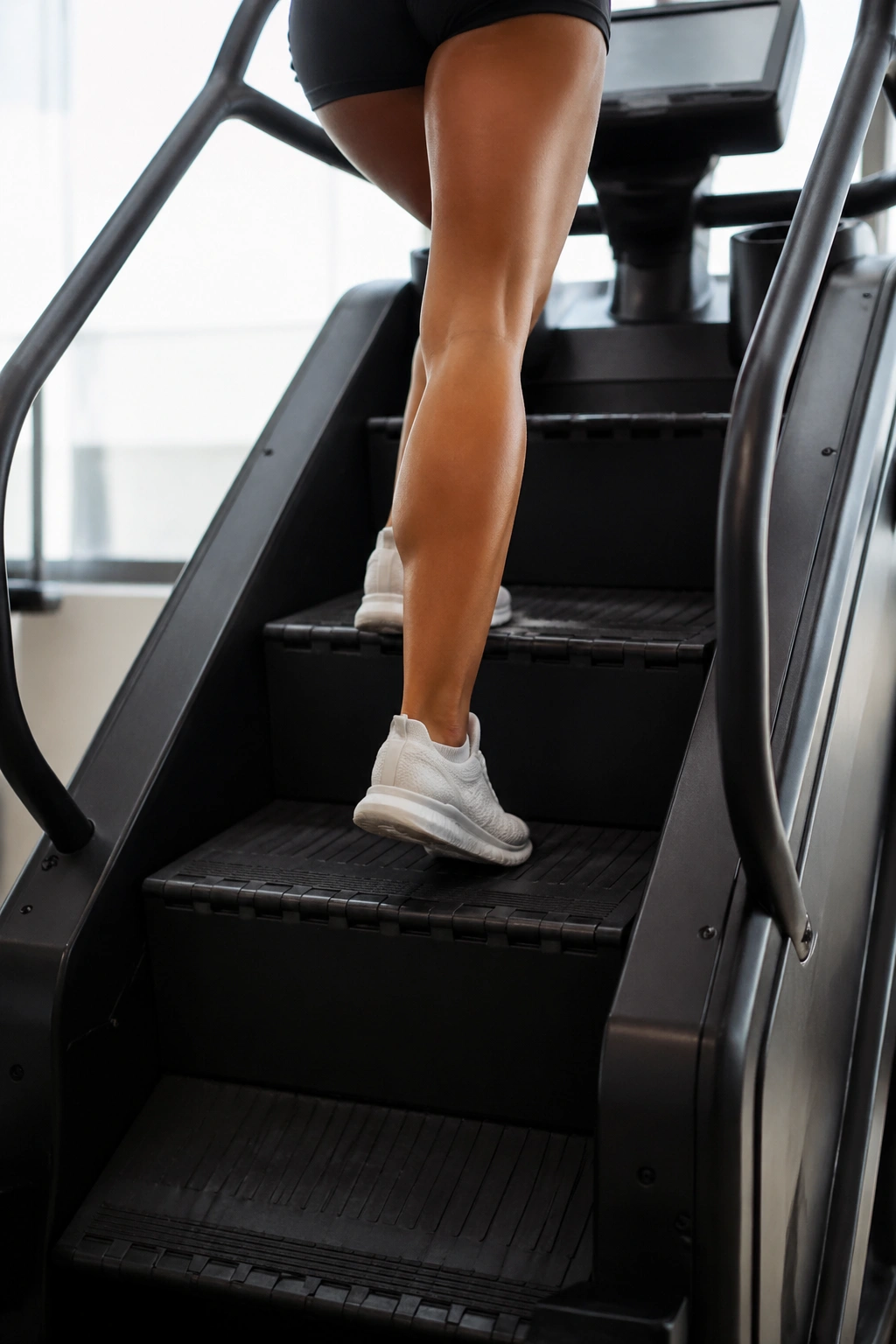
The stair climber is one of the bluntest tools in the gym. Every step is a tiny climb, and tiny climbs add up fast.
Do 1 minute hard and 1 minute moderate for 10 to 15 rounds. Keep your hands light on the rails. If you lean your whole upper body onto the machine, you steal the work from your legs and make the burn less honest. Chest tall. Hips forward. Feet fully on the steps.
A lot of people turn this into a calf-only grind. That’s a mistake. Drive through the whole foot and keep the pace smooth enough that your knees track cleanly. The session should leave your breathing ragged before your posture collapses.
9. Jump Rope Rounds
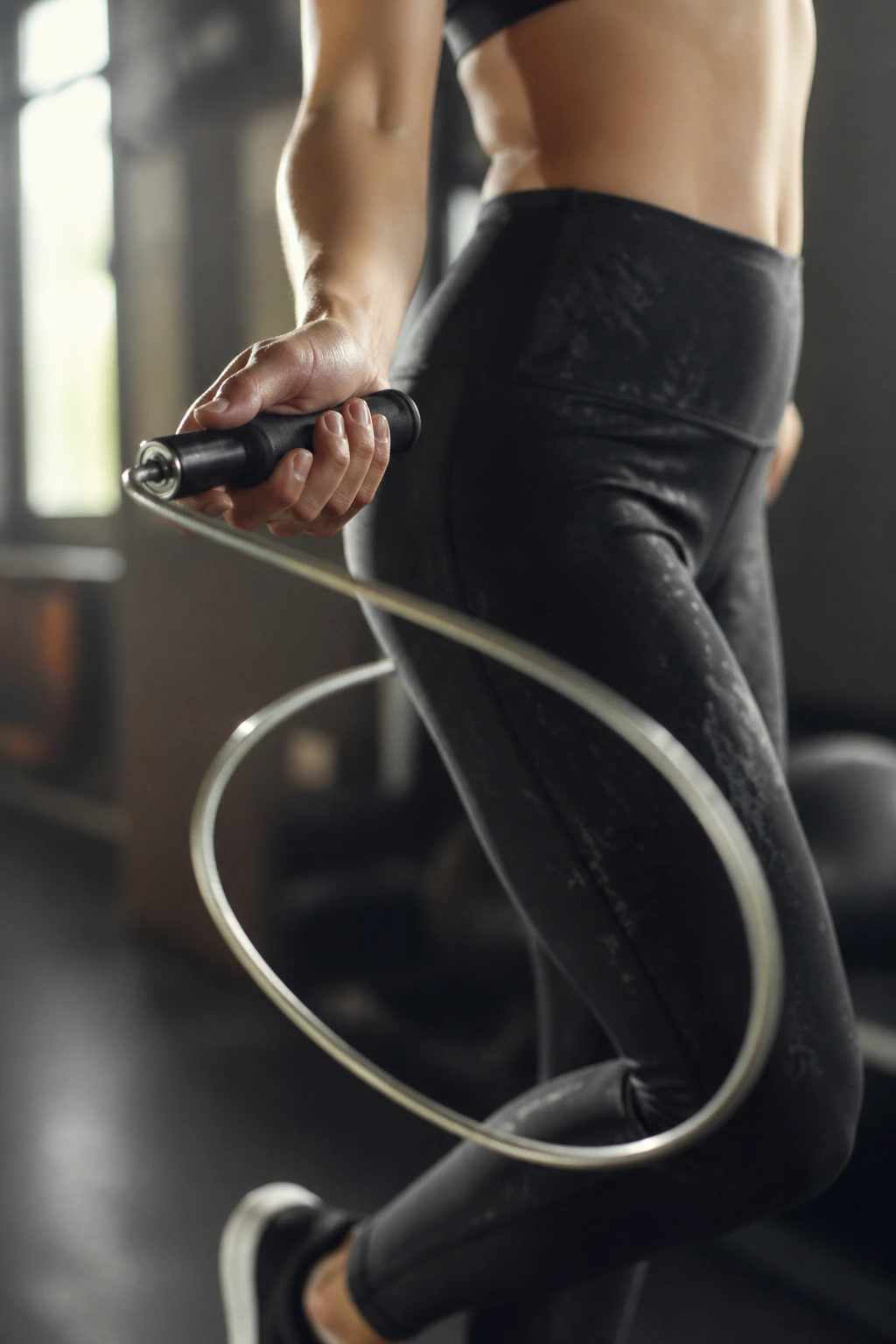
Jump rope is cheap, portable, and annoying in exactly the way good cardio should be. It rewards timing, not brute force.
Start with 30 seconds on and 30 seconds off for 10 to 15 rounds. Singles are fine. Boxer steps are fine too. The point is not to look flashy; the point is to keep bouncing without tripping every twelve seconds.
If your calves tighten fast, shorten the sessions instead of quitting the rope entirely. A few short rounds done with good form will beat one heroic mess. And yes, the little misses matter. That tiny reset is a built-in lesson in rhythm.
10. Heavy Bag Boxing Cardio Rounds
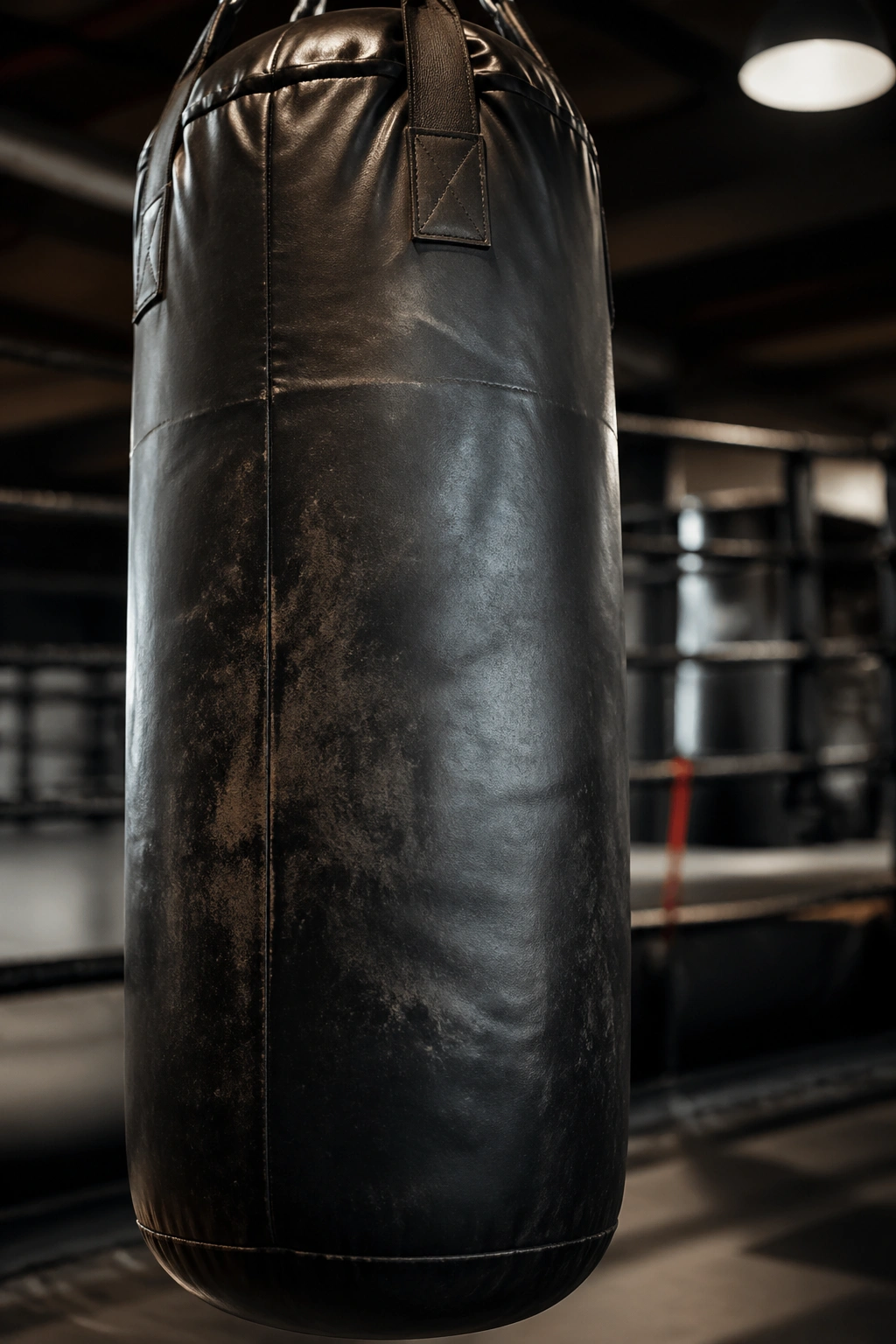
A heavy bag session feels different from ordinary cardio because your brain has to stay awake. Hands, feet, breathing, timing — all of it is working at once.
Three-minute rounds with one minute of rest are the classic setup. Throw simple combinations: jab-cross, jab-cross-hook, then step off at an angle and reset. You do not need wild power on every shot. In fact, you probably should not. Clean mechanics let you last longer and keep the shoulder burn from turning ugly.
A Simple Round Pattern
- Round 1: straight punches only
- Round 2: add hooks
- Round 3: add body shots
- Round 4: move your feet every 3 to 4 punches
The bag is best when you treat it like a timed task, not a punching tantrum.
11. Shadowboxing with Footwork

No bag. No equipment. Just movement. Shadowboxing is one of the best at-home cardio workouts because it teaches your feet to work with your hands.
Set a timer for 2 or 3 minutes and move the whole time. Jab, slip, pivot, shuffle, reset. Then do it again. The actual punches matter less than the rhythm between them. That rhythm keeps your heart rate up and your shoulders honest.
A mirror helps, but it is not required. What matters is staying light on your feet and avoiding the frozen, stiff posture people fall into when they start thinking too hard. Keep the knees soft. Keep the chin tucked. And keep moving, even if it feels awkward at first.
12. Deep-Water Running
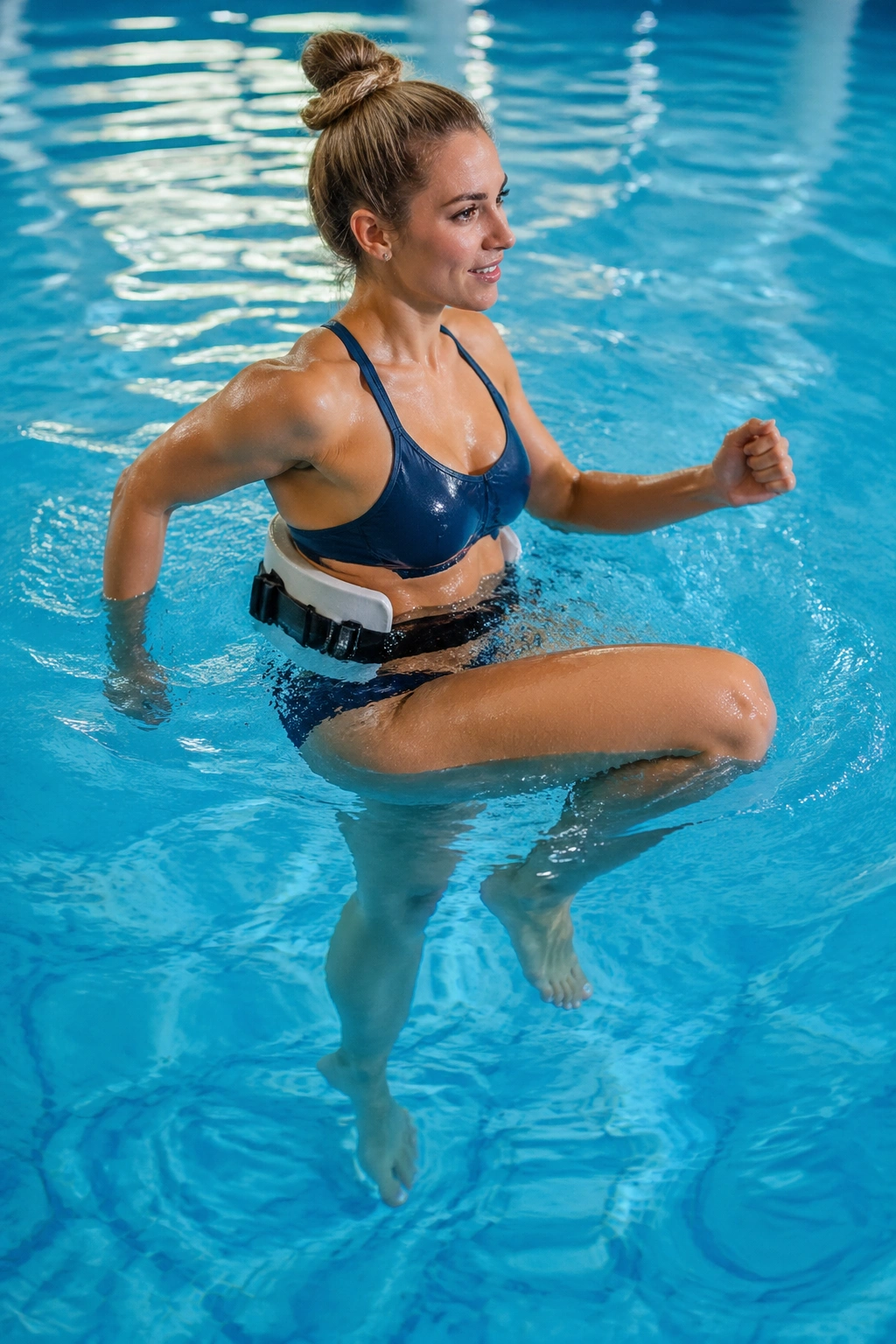
This one looks strange until you try it. Deep-water running takes the impact out of the equation while still making your lungs work hard.
You usually wear a flotation belt and run in place or push through water with a strong knee drive. Because your body is suspended, the joints get a break. That makes it a smart pick when running on land is out of reach for a while.
The pace can be gentle or fierce. A good interval set is 30 seconds hard, 30 to 60 seconds easy, repeated for 15 to 20 minutes. The water resistance slows everything down, so big arm swings and deliberate knee lifts matter. It feels odd for the first few minutes. Then it starts feeling like honest work.
13. Chest-Deep Pool Jogging
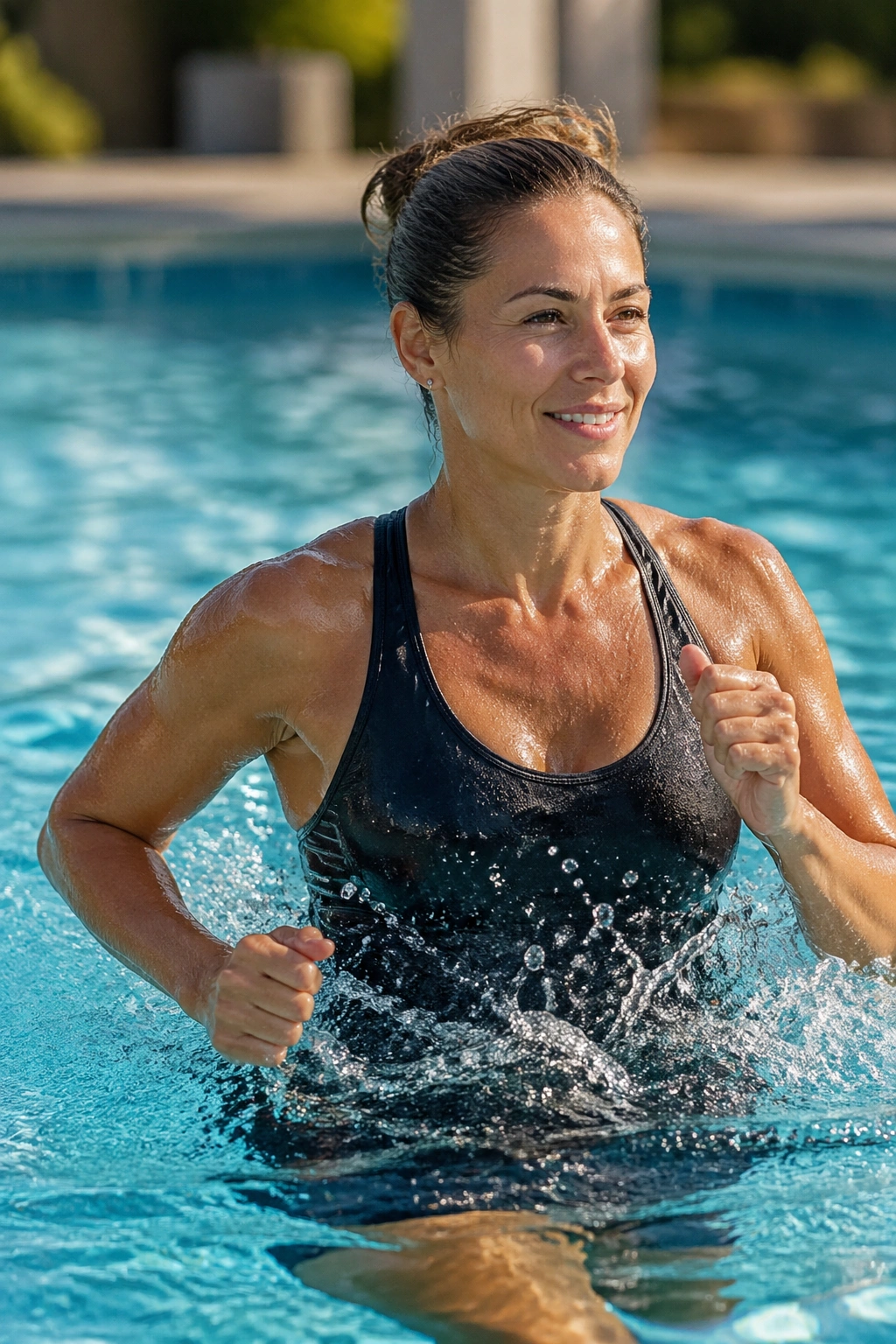
Pool jogging is the less flashy cousin of deep-water running, and it earns its keep. The water supports your body, but it still resists every step and shuffle.
Move across the pool in chest-deep water with high knees, side steps, or backward jogs. That backward piece is worth keeping. It wakes up the hips in a way a straight jog never quite does. Short intervals work well here — 1 minute hard, 1 minute easy, for as long as you can keep form decent.
This is a smart option if your legs need a break from impact but you still want a session that leaves you warmed through. It can feel almost too easy at first. Then your breathing changes, and you remember that water is a lot less forgiving than it looks.
14. Elliptical Cardio Hill Intervals
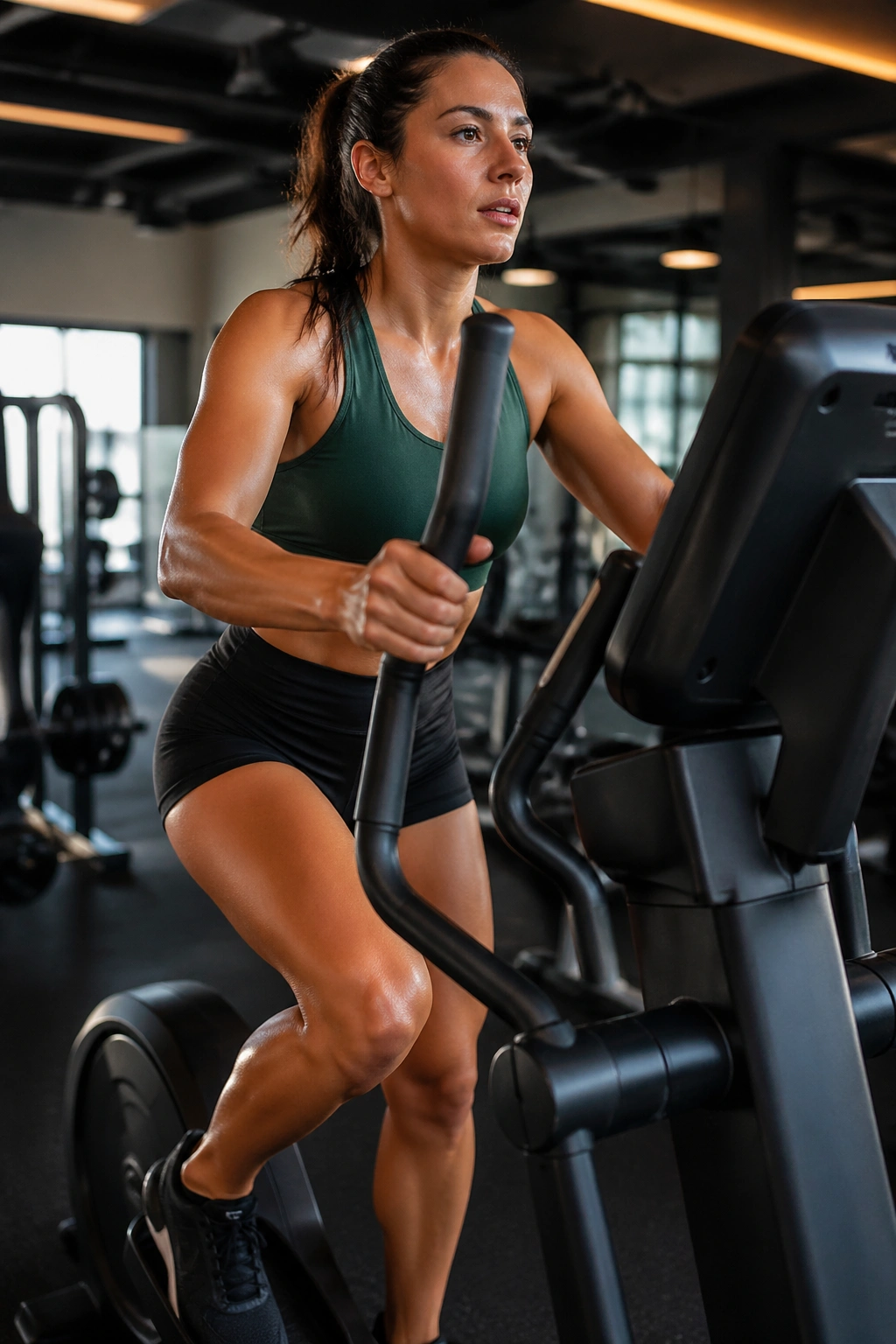
The elliptical gets dismissed too quickly by people who think only brutal workouts count. That’s lazy thinking. If you turn the resistance up and use interval timing, the machine turns serious fast.
Try 2 minutes moderate, 1 minute hard, repeated for 20 to 30 minutes. Increase resistance before you chase speed. A fast, low-resistance shuffle is not the same as a demanding climb. Keep your hands light on the handles and drive through the heels.
What Makes It Work
- Less impact than running
- Easy to control the effort
- Good for longer sessions when joints are fussy
- Simple to ramp up without changing machines
You should finish sweaty and breathing hard, not just mildly pleased with yourself.
15. Dance Cardio Circuits
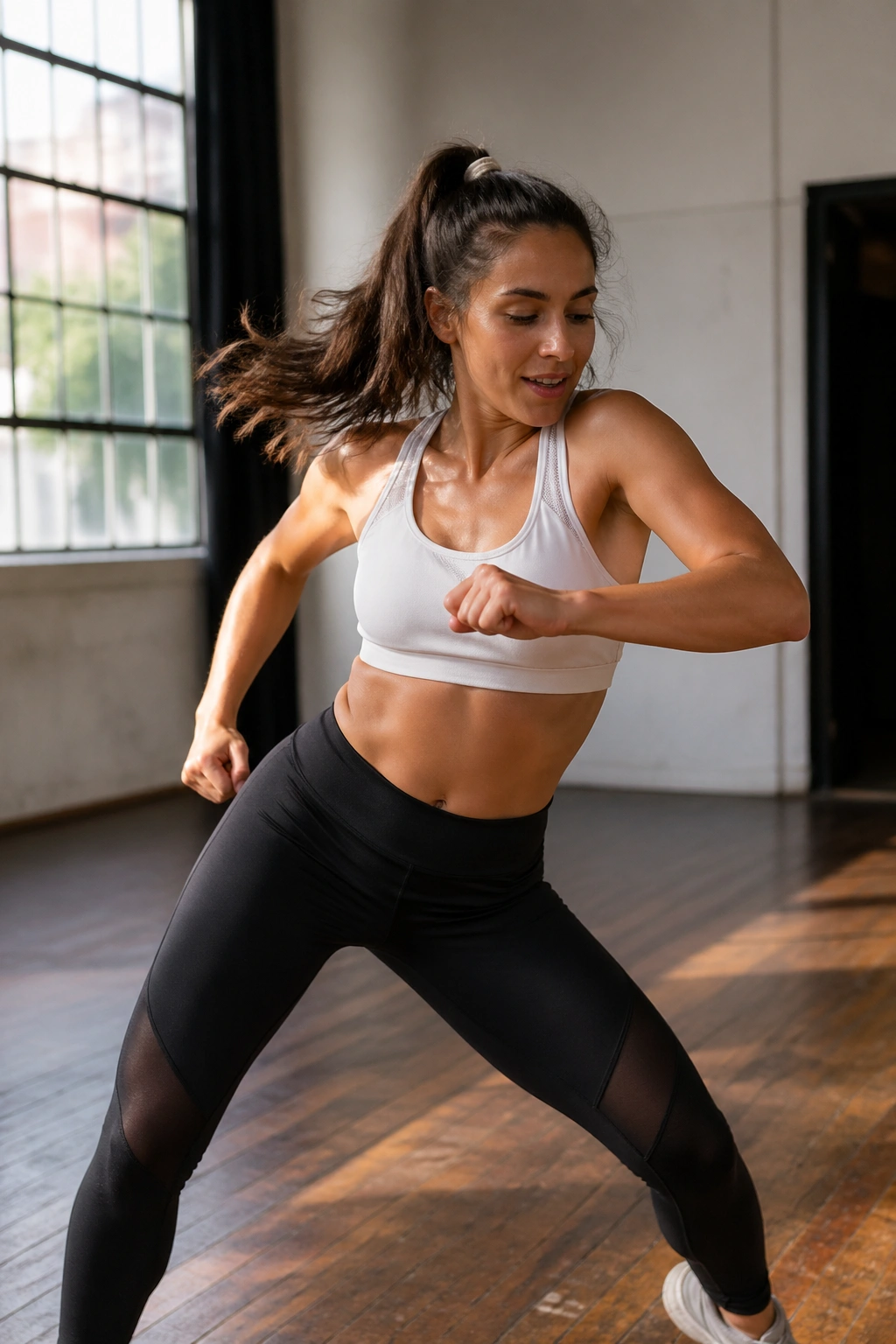
Dance cardio works because it sneaks the effort in through rhythm and repetition. You stay busy enough that the time passes quickly, and that matters more than people admit.
Pick 4 to 6 simple moves and cycle through them for 30 to 45 seconds each: step touches, knee lifts, grapevines, side shuffles, quick reaches overhead. Then repeat the circuit for 20 to 30 minutes. The moves do not need to be fancy. They need to keep the body in motion.
This is a good choice for anyone who gets bored on machines. It also tends to be easier to repeat because it feels less like punishment and more like moving with a plan. A workout you’ll do again beats a perfect one you hate.
16. Hiking with Elevation

A long uphill hike is not flashy, but it can be excellent for fat loss. Elevation forces the pace to stay honest, and the time spent on your feet adds up in a way the treadmill can’t always mimic.
Use a trail with steady climbs, not just pretty flat ground. If you like, carry light trekking poles or a small pack. That can help on long grades and gives the upper body a little extra work. Keep the pace brisk enough that you’re breathing deeper than a normal walk, but not so hard that you burn out halfway.
This is one of the best choices for people who can’t stand intervals. It spreads the effort out, which makes it easier to sustain for an hour or more. The waist tends to respond to that kind of repeatable volume.
17. Rucking with a Weighted Pack

Rucking is just walking with weight, and it is far more effective than it sounds. A loaded walk raises energy cost without turning your joints into a chemistry experiment.
Start light. Ten to 20 pounds is enough for most beginners, especially if the walk is long or hilly. The pack should sit close to your back, not bounce around like a sack of groceries. You want a strong, upright posture and a step that stays smooth under the load.
Rucking is underrated because it looks too simple to count. That’s exactly why it works so well for some people. It layers extra effort onto something you already know how to do, and that makes consistency easier.
18. Sled Pushes and Pulls
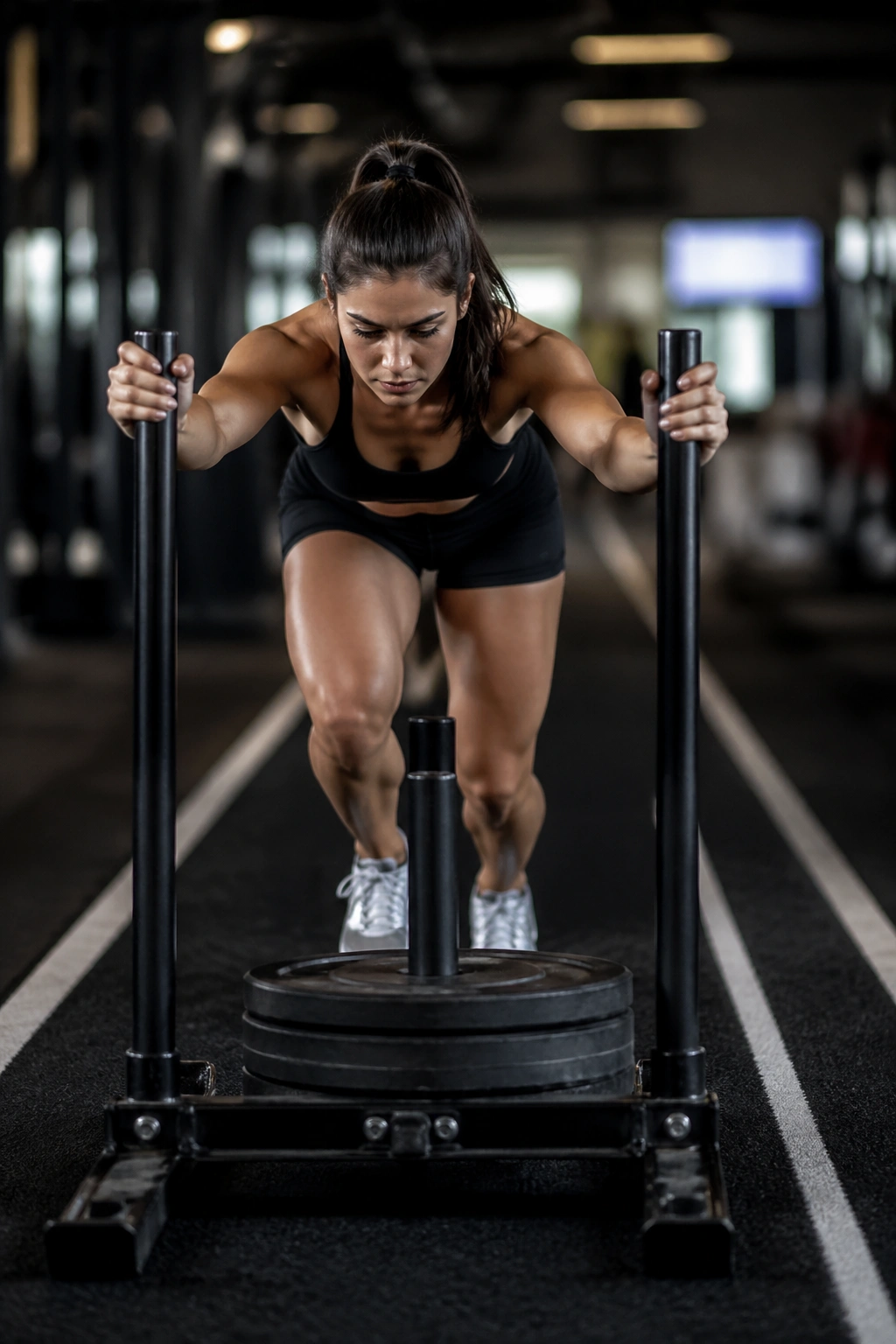
Sled work sits in that nice gray area between strength and cardio. It makes your legs and lungs argue at the same time, which is a useful place to be if you want dense work in a short window.
Push the sled for 15 to 30 meters, rest, then pull it back with straps or a harness. Keep the torso angled forward on the push and your steps short and powerful. If the sled barely moves, the load is too heavy. If it flies across the floor, it’s probably too light for the conditioning goal.
How to Program It
- 6 to 10 pushes total
- Rest 60 to 90 seconds between efforts
- Keep each rep crisp
- Stop before your back rounds badly
Sleds are wonderful because they punish sloppy pacing. The floor tells the truth.
19. Ski Erg Intervals

The ski erg is one of the most underrated machines in the gym. It hits the upper body hard while still demanding leg drive and a tight core.
The pull starts from the lats and trunk, not just the arms. Keep the ribs down, hinge slightly, and drive the handles with a controlled snap. A good interval session might be 15 seconds hard, 45 seconds easy, repeated for 12 to 16 rounds. That ratio keeps the quality high without turning the workout into a total fade-out.
If rowing feels too back-heavy and the bike feels too leg-heavy, this machine splits the difference nicely. It also has a sneaky way of making your grip tired before your lungs give up. That is a good sign. Annoying, but good.
20. Battle Rope Cardio Intervals

Battle ropes are loud, messy, and effective. They turn the upper body into a conditioning tool and make the trunk brace harder than people expect.
A simple round is 20 seconds of hard waves, slams, or alternating arms, followed by 40 seconds of rest. Repeat that for 10 to 15 rounds. Keep your knees soft and your spine tall. The ropes should move because your whole body is involved, not because your shoulders are whipping around like loose hinges.
What To Throw
- Alternating waves
- Double-arm slams
- Side-to-side chops
- High-low switches
The key is pace. Go hard, but stay smooth enough that the last rep looks like the first one.
21. Burpee and Sprint Ladder
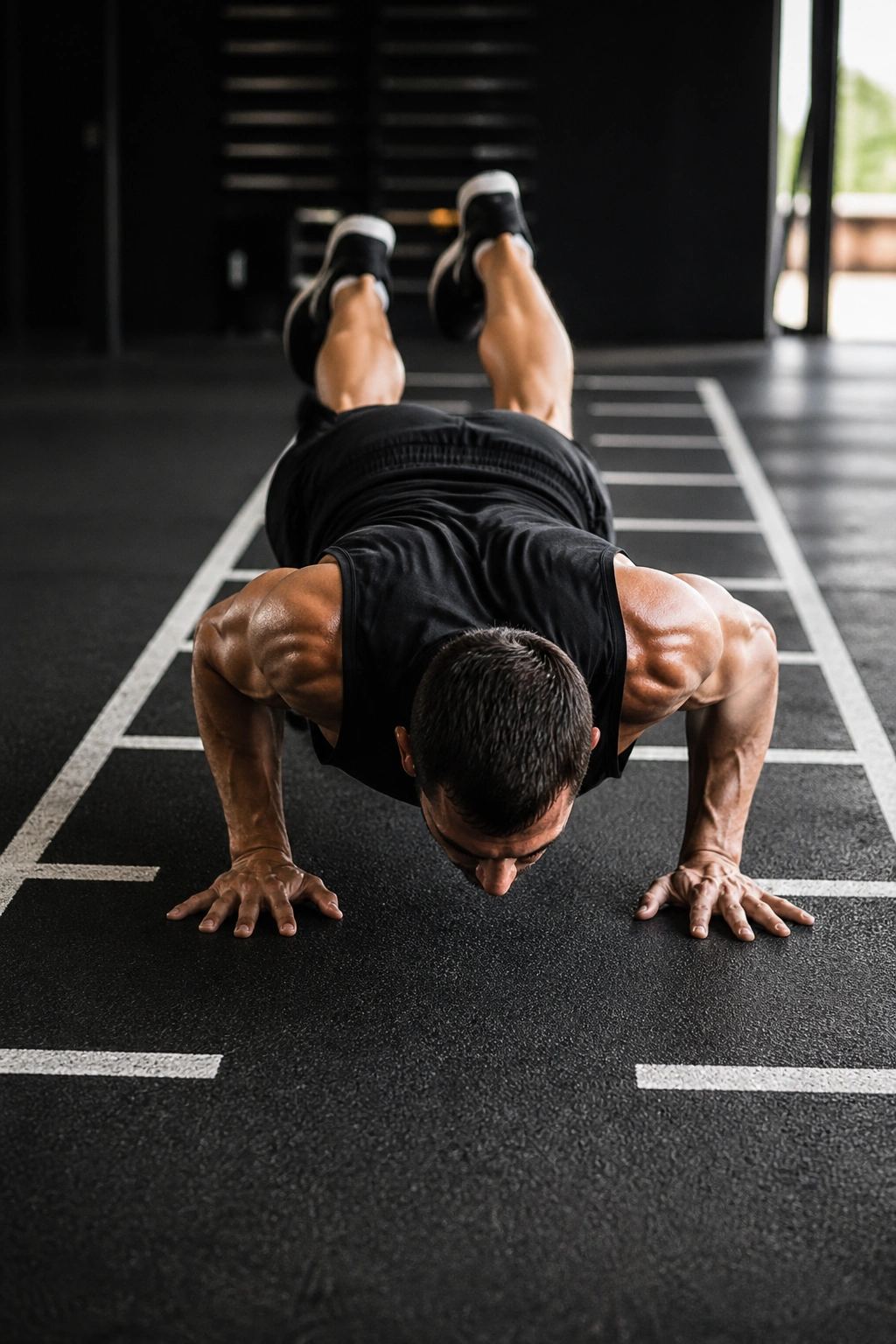
This one is nasty, in a fair way. Burpees plus short sprints create a pile-up of effort that gets your heart rate high fast.
Try 3 burpees, then a 20-meter sprint. Then 5 burpees, then another sprint. Keep adding 2 reps each round until the form starts going sideways, then stop. If you prefer a cleaner setup, do 30 seconds of burpees followed by 30 seconds of sprinting in place or shuttle runs.
The catch is obvious. If your wrists, knees, or lower back hate burpees, don’t force them. Swap in squat thrusts or fast mountain climbers and keep the ladder moving. The goal is a hard session, not a grudge match with the floor.
22. Mountain Climber Tabata
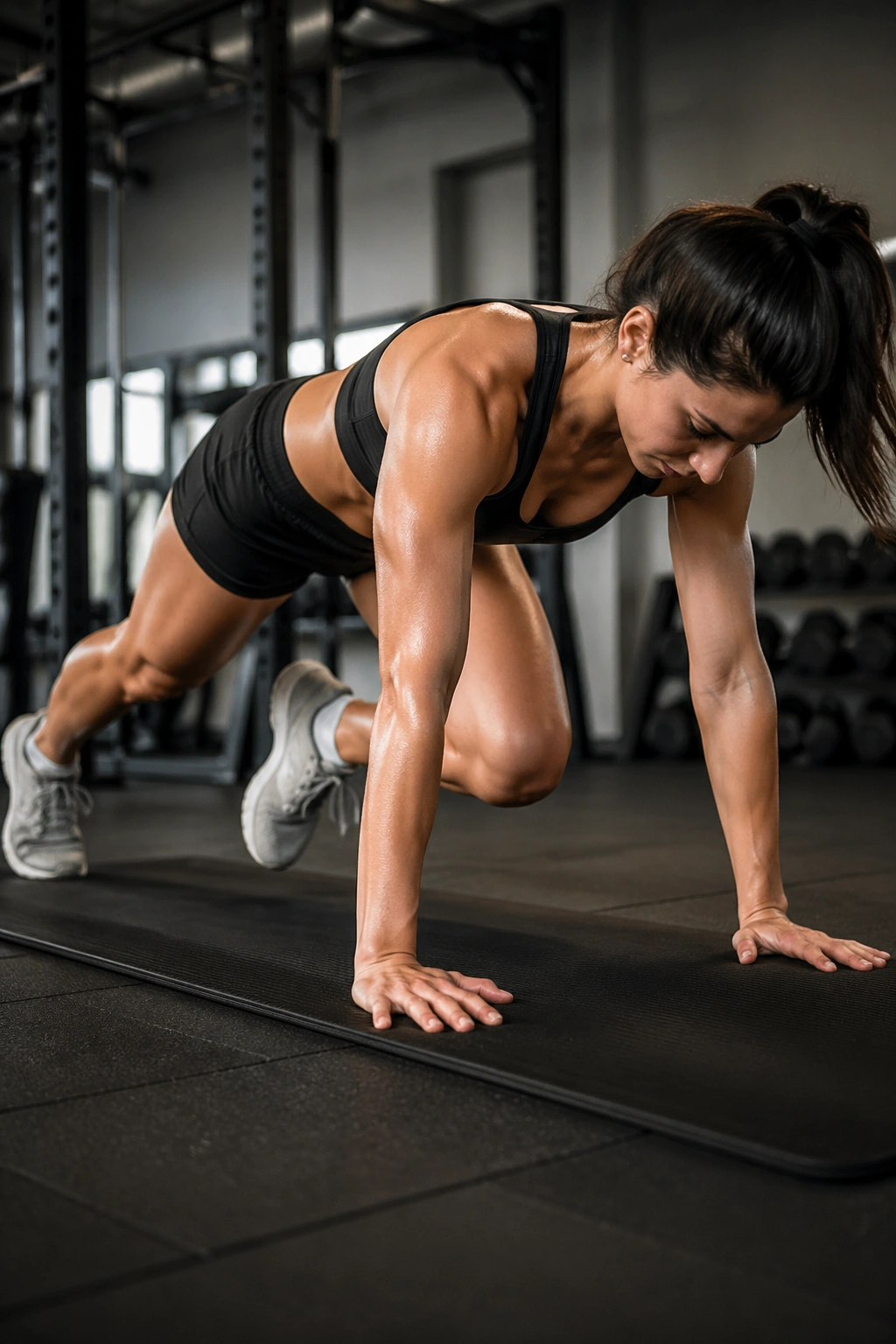
Mountain climbers are simple, which is why people underestimate them. Once the timer starts, your core, shoulders, and hip flexors all have a job to do.
Tabata format means 20 seconds hard, 10 seconds rest, repeated 8 times. That’s only 4 minutes, and it can feel much longer if you keep the knees moving fast and the hips low. Hands under shoulders. Brace the midsection. Don’t bounce your hips so high that the movement turns into sloppy scrambling.
If the floor bothers your wrists, do the same pattern with hands on a bench or sturdy box. Small adjustment. Big difference. This is one of those workouts that looks short on paper and leaves a real mark.
23. High-Knee Intervals

High knees are old-school for a reason. They raise the heart rate quickly and require almost no setup, which makes them easy to use when motivation is low.
Run in place with fast knee drive for 20 to 30 seconds, then recover for 30 to 60 seconds. Keep the torso upright and land softly. If you turn it into a sloppy bounce with no arm action, the effort fades. Treat it like a sprint pattern, not a random hop.
This works well in small spaces. Apartment, garage, hallway, backyard. Doesn’t matter. The main trick is intensity. Short, sharp bursts beat long half-efforts every time.
24. Shuttle Run Repeats
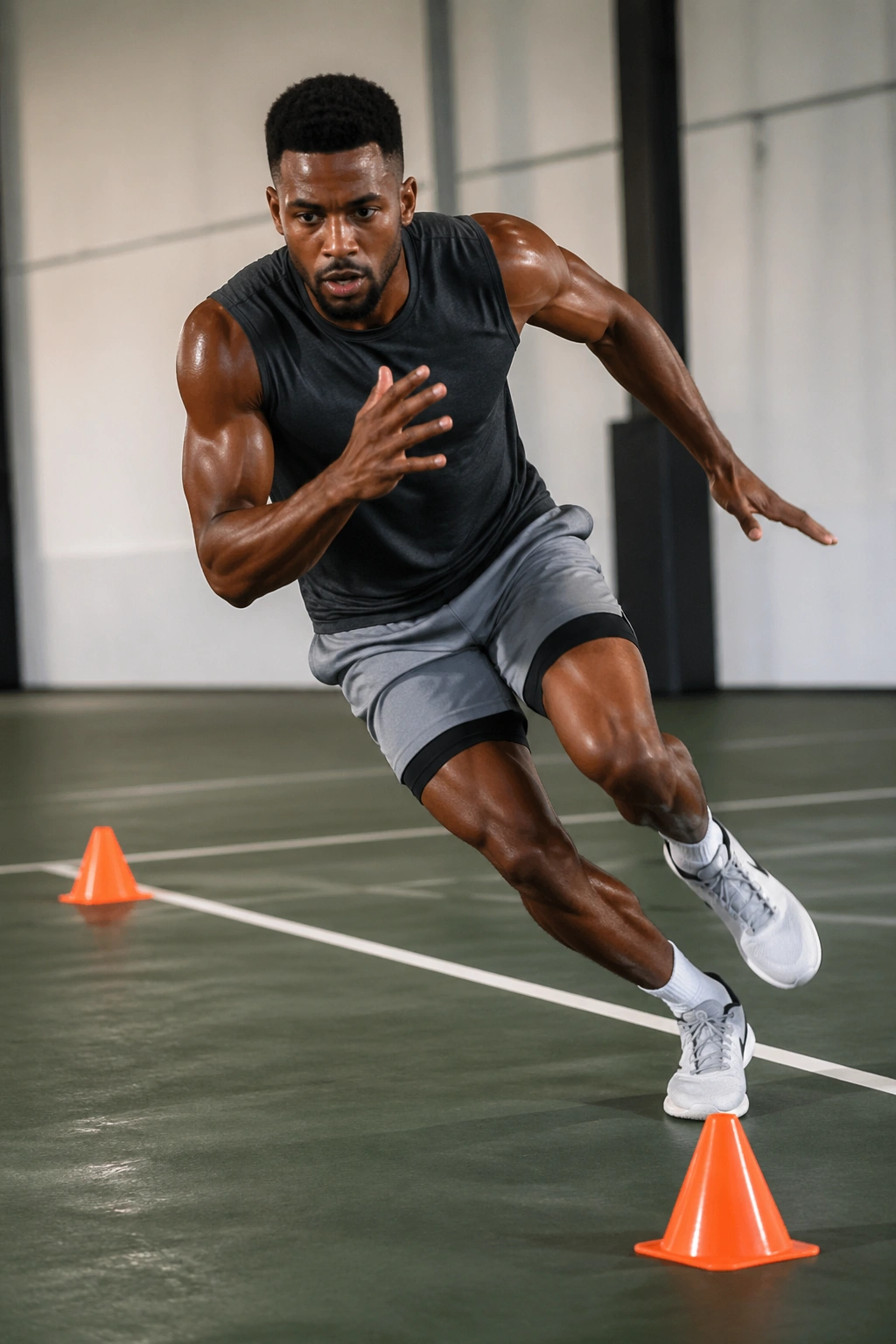
Shuttle runs bring change of direction into the mix, and that matters. Stopping and starting burns energy fast because the body has to brake, turn, and accelerate again.
Set two markers 10 to 20 meters apart. Run hard to one, touch the line, pivot, and sprint back. Rest 30 to 60 seconds between repeats, or longer if the turns get sloppy. The surface should be flat and not slick. That sounds obvious. People still ignore it and then wonder why the ankles feel weird later.
These are brutal in a different way than straight sprints. The quick decel demands clean footwork, so you end up working the hips, calves, and core just to stay controlled.
25. Aerobic Step Bench Intervals
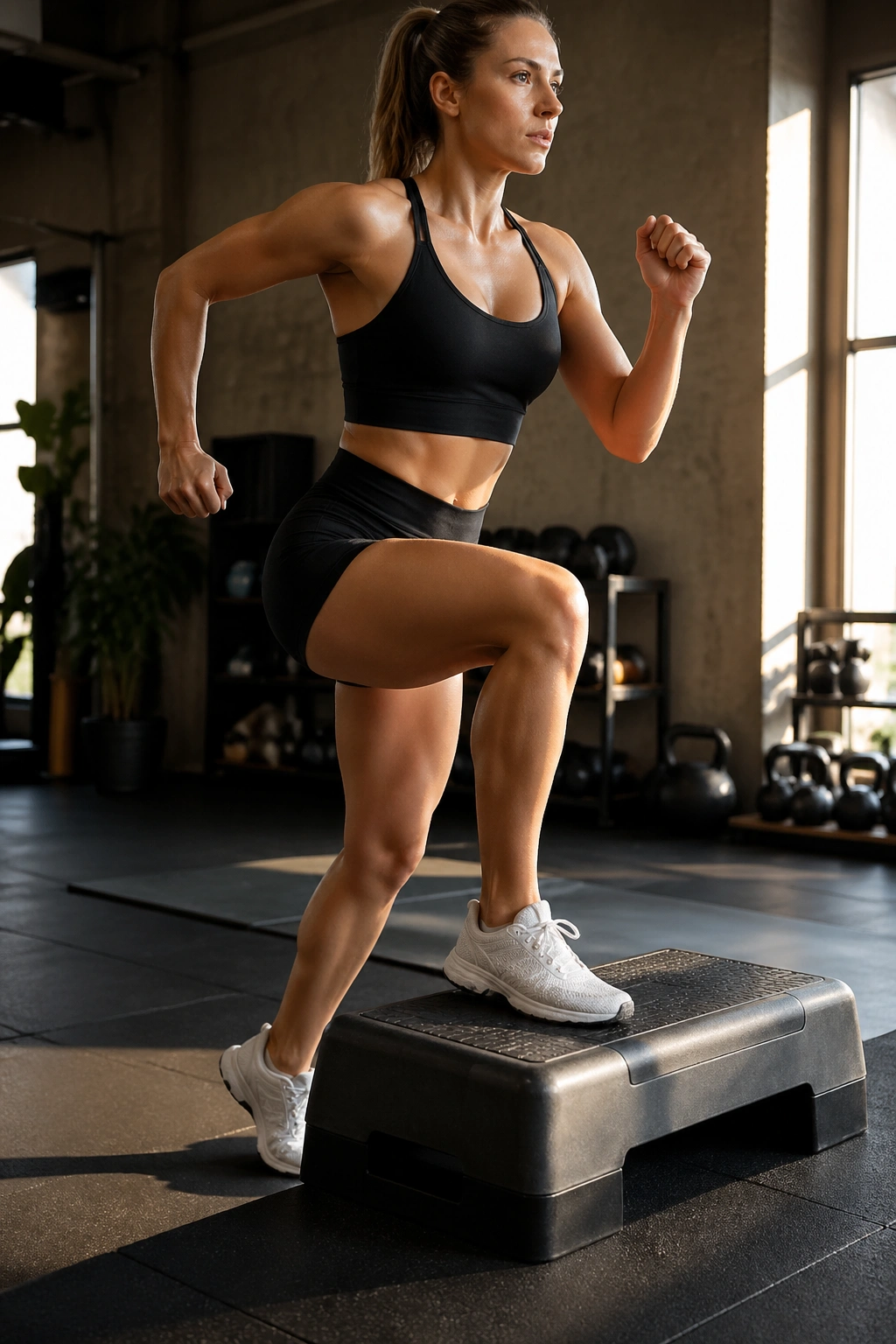
A step bench can look almost quaint until you start moving fast on it. Repeated stepping raises the heart rate without needing a full gym setup.
Use a bench around 6 to 8 inches high if you’re new, higher only if your knees and balance are comfortable with it. Step up, drive the knee, step down under control, and keep the rhythm steady. Try 45 seconds hard, 15 seconds easy, for 10 to 20 rounds.
Small Details That Matter
- Land the whole foot, not the toes only.
- Keep your chest lifted.
- Use a pace you can repeat cleanly.
- Add arm swings if you want more work.
The beauty here is boring on purpose. Simple movements repeated with intent are often the ones people can actually keep doing.
26. Air Bike Cardio Assault Rounds
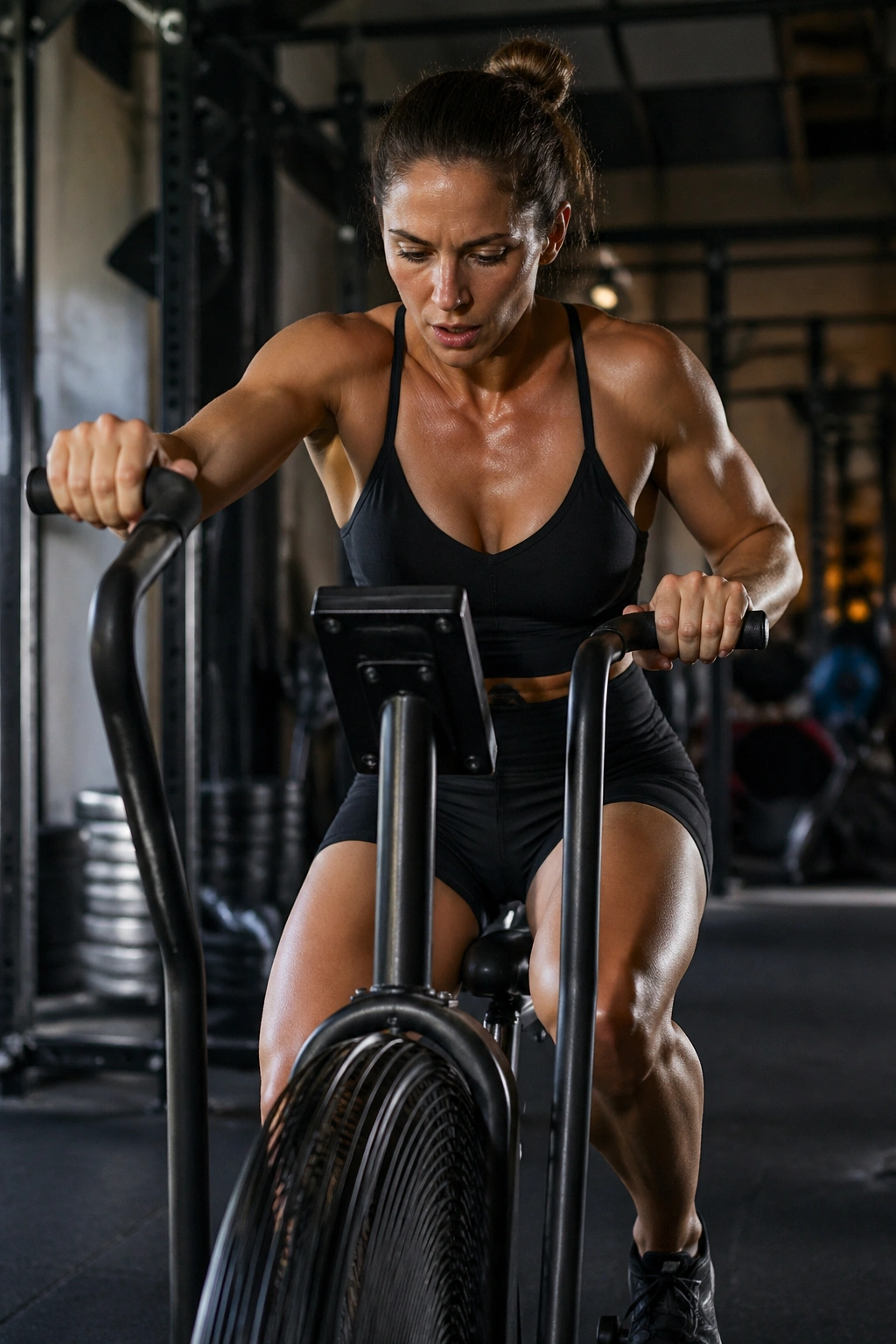
The air bike is rude. That is its charm. It uses both the arms and the legs, and the resistance climbs as you push harder, which means the machine meets your effort with more punishment.
A clean round might be 20 seconds all-out and 100 seconds easy, repeated for 8 to 12 rounds. Some people do 10 seconds hard, 50 seconds easy if they want the session shorter and meaner. Keep your shoulders from creeping up into your ears. Grip the handles, drive the pedals, and let the machine take the punishment.
This is one of the fastest ways to get the lungs burning without needing a lot of time. It’s also one of the hardest to fake. The machine knows.
27. Mini-Trampoline Cardio
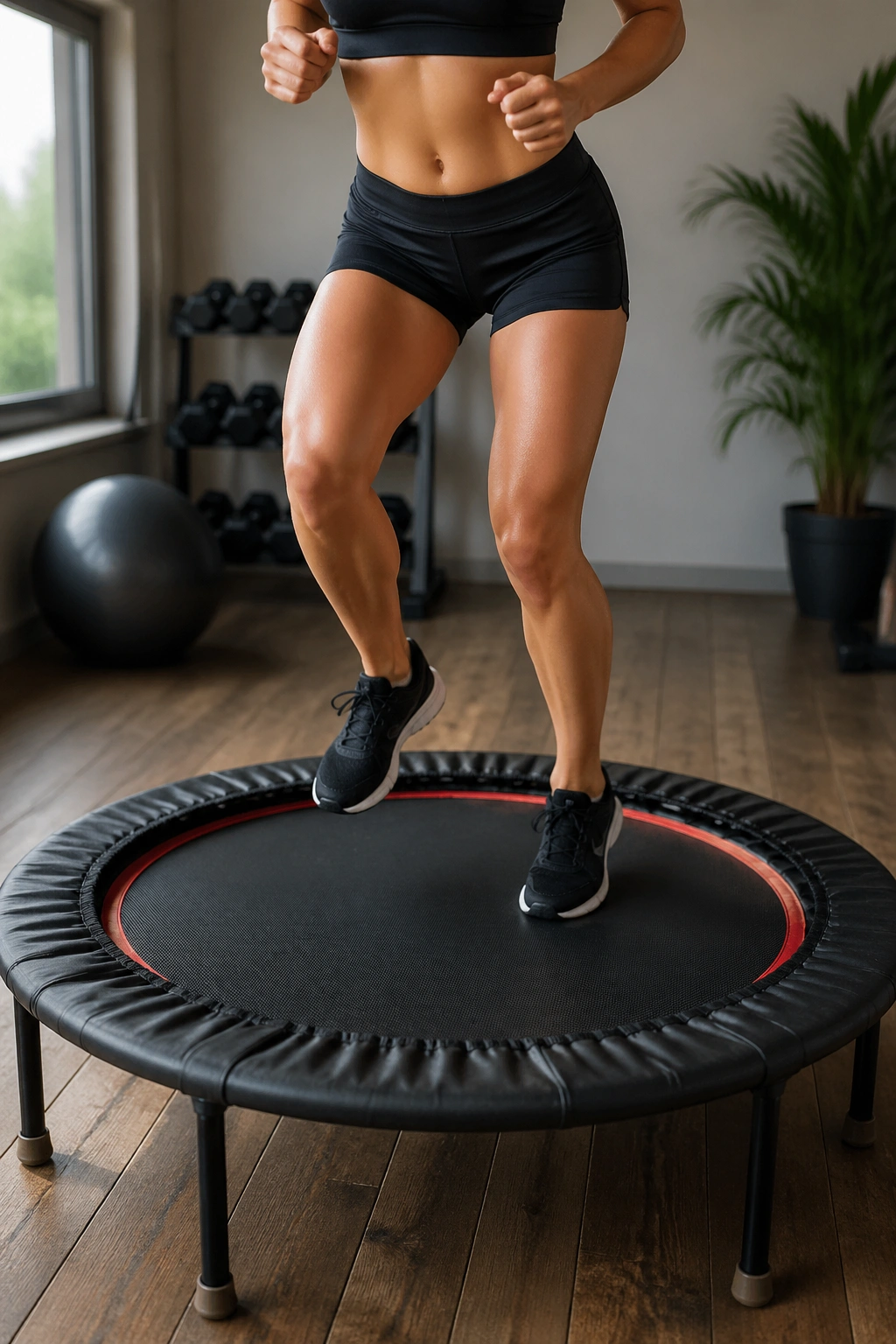
A rebounder looks playful, and it is. It can also be a very respectable low-impact cardio option when you keep the pace honest.
Use small bounces, jogging steps, knee lifts, or side-to-side shifts for 1 to 3 minutes at a time. Rest briefly, then go again. The surface helps absorb impact, which is handy if your joints are touchy or if you just want something lighter than running.
This is a smart pick for people who need a session that feels less punishing but still gets the heart rate up. Keep the jumps small. Bigger is not better here; control is. If the bed starts wobbling under you, slow down and clean up the rhythm.
28. Fartlek Run

Fartlek is just a fancy Swedish word for play speed, and I like that it sounds a little unpolished. It’s a run with random bursts, which makes it feel less rigid than formal intervals.
Run easy for a few minutes, then pick a landmark and surge to it. Then back off. Then surge again. You can do this on roads, trails, or a track. The exact pattern matters less than the habit of changing pace before boredom sets in.
For people who hate timers, this can be the most livable form of running. It still gives you fast efforts, but the session feels more like moving through a route than obeying a spreadsheet. That difference matters if you want to keep doing it.
29. Sprint Swim Ladder

Swimming ladders are one of those workouts that look graceful from the outside and feel very different from the inside. Short hard swims with climbing distances make the lungs work and keep the pace from getting stale.
Try 25 meters hard, rest 30 seconds, then 50 meters hard, rest 45 seconds, then 75 meters hard. If you have the energy, work up to 100 meters and then come back down. Keep the stroke clean. A frantic splash does not count as better swimming.
How To Use It
- Pick one stroke or a small mix
- Hold the same effort from repeat to repeat
- Rest enough to keep the next length sharp
- Stop if your form turns sloppy
This is a serious workout if you respect the water. If you don’t, it politely punishes you.
30. Outdoor Stair Climb Intervals
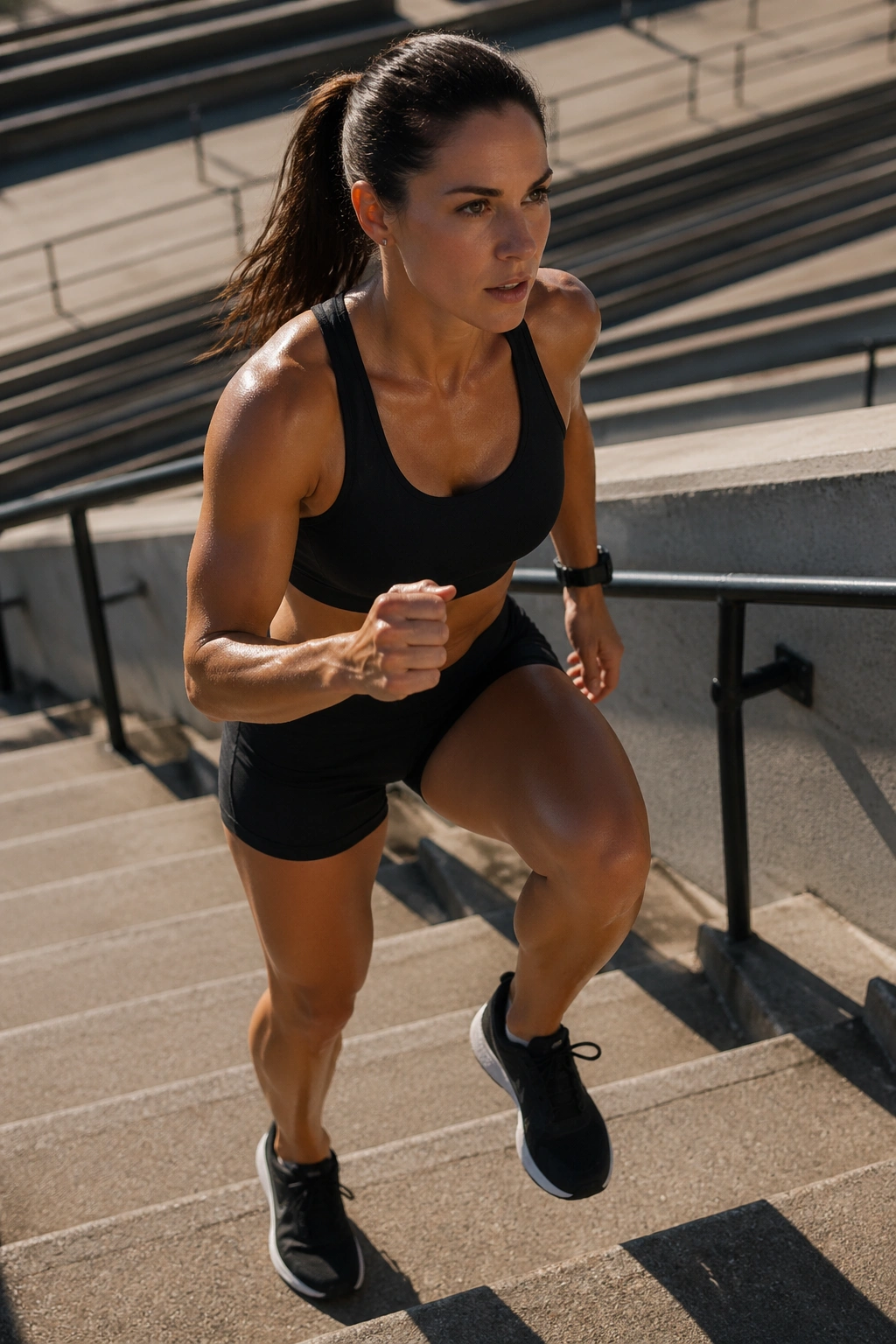
Outdoor stairs are the plainest option here, and maybe that is why they work so well. You get incline, impact, and pace control in one place without needing a machine at all.
Find a stadium staircase, a long public stairway, or a safe set of steps with enough length to repeat. Climb hard for 20 to 40 seconds, walk back down, then go again. Keep the feet landing fully on each step. If you rush so badly that your knees cave inward, slow down and clean it up.
This is the kind of workout that rewards patience. The first few reps feel manageable. Then the legs start talking, the breath gets tighter, and you realize the session has more bite than it promised.
Final Thoughts

The waist changes when training gets repeatable, not when it gets dramatic. A hard session is useful, but a hard session you can actually do again is better.
Pick one lower-impact option and one higher-intensity option, then stop chasing novelty for its own sake. A week with incline walking, rowing, biking, stairs, or short sprint work will do more for your body than a random mash-up of painful workouts you hate.
And don’t ignore the unglamorous pieces. Daily steps, decent sleep, and food that doesn’t invite constant snacking matter more than people like to admit. The belly usually leans out when the whole routine starts pulling in the same direction, which is less exciting than a miracle fix and a lot more useful.
