



A flatter waist usually comes from boring consistency, not heroic punishment. That’s the part people skip over because it sounds too plain, but it’s the truth: belly fat workouts for women over 50 work best when they build muscle, raise your heart rate, and leave you able to come back the next day.
Crunches alone won’t do that. Neither will endless jumping if your knees hate it. After 50, the smartest routines tend to do three things at once: keep your metabolism active, protect joints, and train the muscles that quietly support your posture, hips, and midsection. That matters more than a sweaty finish.
There’s also a practical side to this. Hormonal shifts, slower muscle loss if you stay inactive, stress, sleep, and plain old life can all push fat storage toward the middle. You cannot out-crunch that. You can, however, use workouts that make your body work harder overall while keeping the center of your body tight and stable.
The list below leans hard on moves that are joint-friendly, realistic, and useful. Some are cardio. Some are strength work. A few are core drills that make your waist feel firmer because they teach your body how to brace, carry, and move without wobbling. Start with the ones that feel doable. That’s where the momentum lives.
1. Brisk Walking Intervals for Belly Fat Loss
Walking sounds almost insultingly simple, which is exactly why people underestimate it. But a brisk walk with short faster bursts can be one of the best places to start if you want a waistline change without pounding your joints.
Why it works
A steady walk burns calories, sure. The real win comes when you add intervals. A 30-second faster stretch followed by 90 seconds at a comfortable pace nudges your heart rate up and down, which makes the workout feel more alive than a flat stroll around the block.
Try this: walk for 20 to 30 minutes, and during each 5-minute block, insert three to five faster bursts. Your faster pace should make talking possible, but not effortless. If you’re gasping, you’ve pushed too far.
- Keep your ribs stacked over your hips.
- Swing your arms a little more than usual.
- Stay tall through the crown of your head.
- Use comfortable shoes with real cushioning.
Best tip: make the first 5 minutes easy, not fast. People who start too hot usually fade by the midpoint.
2. Chair Sit-to-Stands
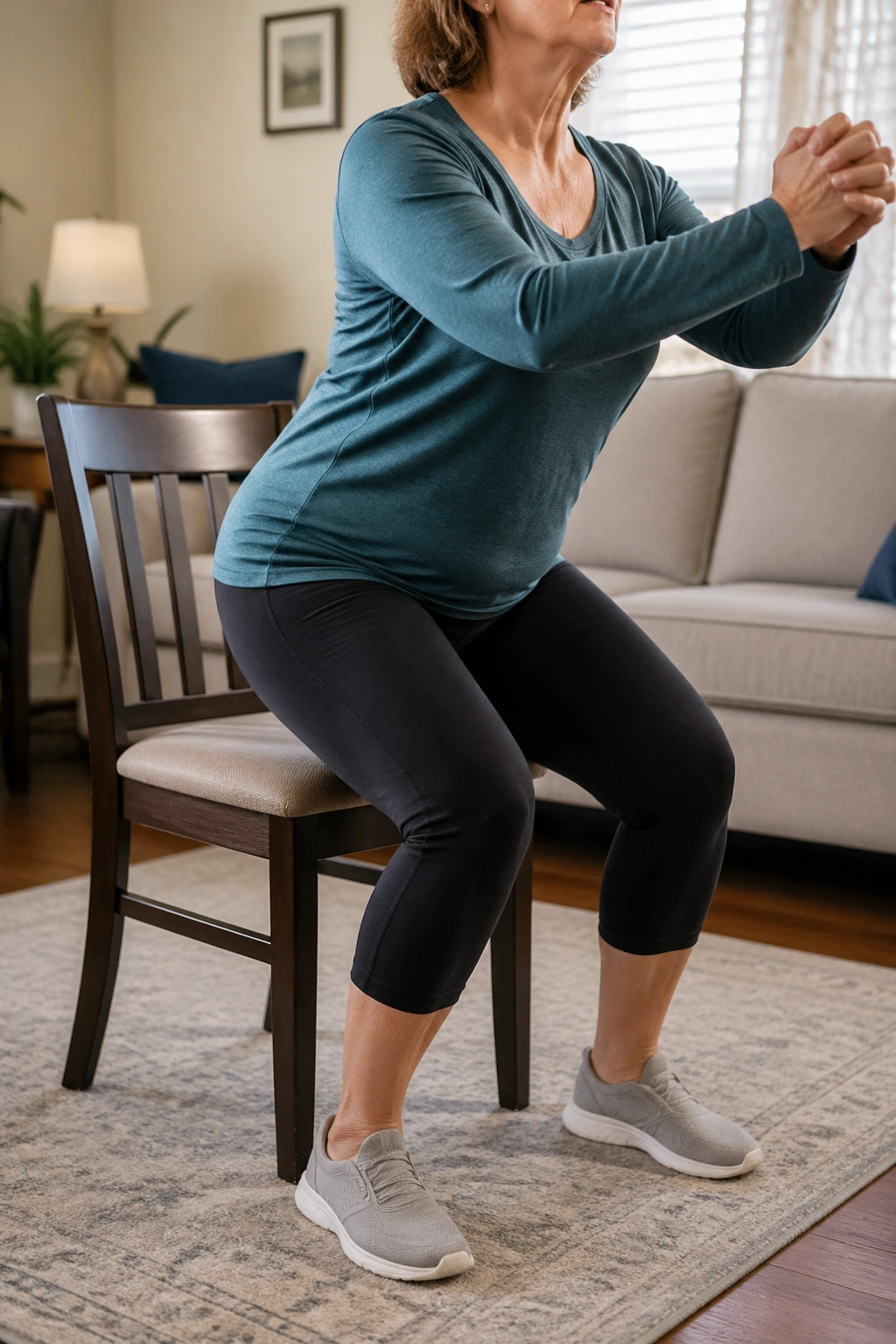
This is the sneaky strength move people ignore. A simple sit-to-stand from a sturdy chair trains the legs, glutes, and core together, and that combination matters a lot more for fat loss than it gets credit for.
Stand up, sit down, repeat. It looks plain. It is plain. And that’s the beauty of it. You’re practicing the same pattern you use to get out of a car, rise from a low sofa, or stand from the dinner table without using your hands like a rescue rope.
Set up with your feet about hip-width apart and your chest lifted. Lean forward slightly, push through your heels, and stand all the way up. Then sit with control. Do 2 to 4 sets of 8 to 12 reps. If the chair is low, place a folded towel on the seat to raise it a little.
The move gets better when you slow it down. A 3-second lower phase makes your thighs work harder and keeps the whole thing from turning sloppy. That one detail changes the exercise more than people expect.
3. Dumbbell Romanian Deadlifts
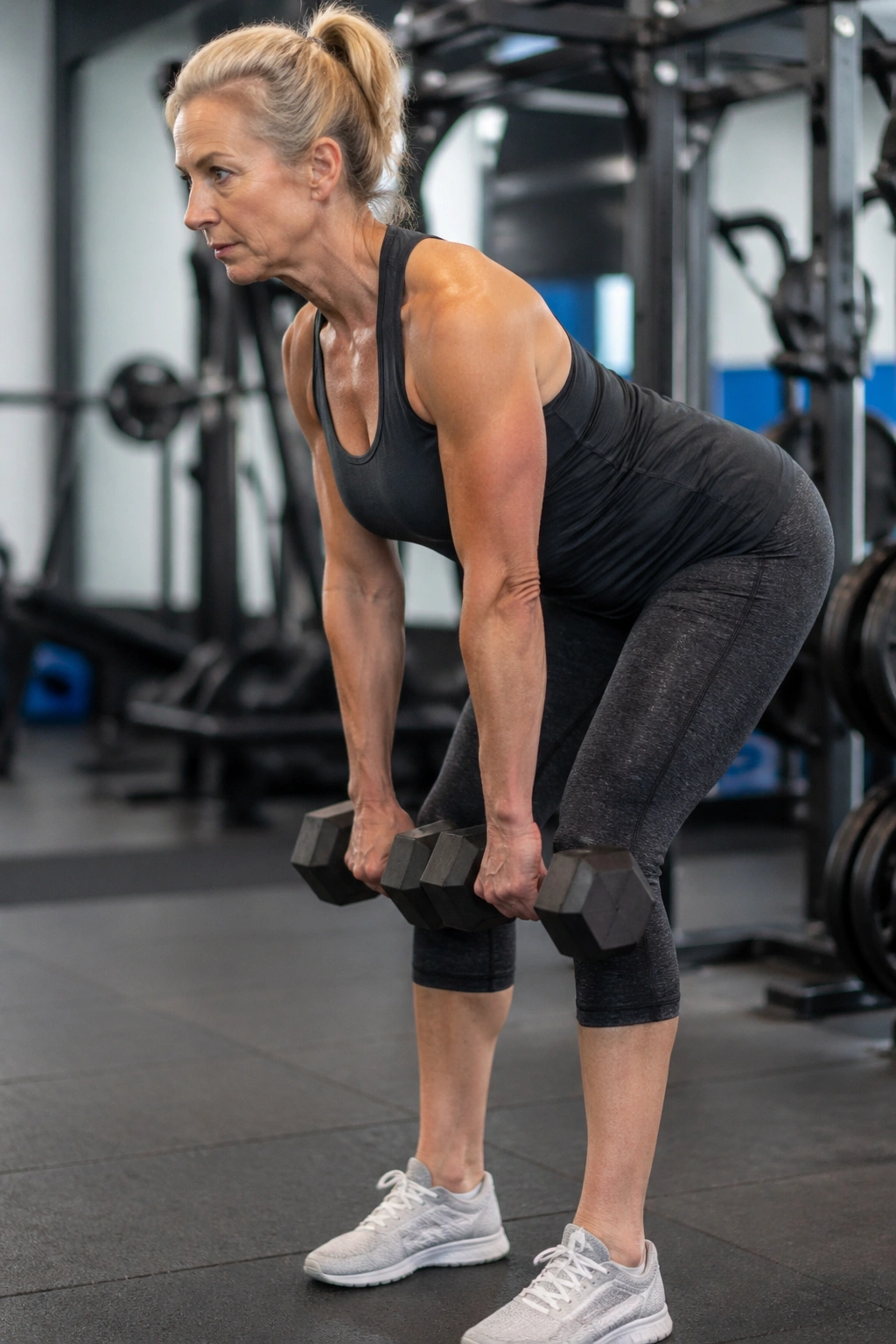
A lot of women over 50 are told to “just do more cardio.” That advice misses a big piece of the puzzle. Dumbbell Romanian deadlifts train the back of the body — hamstrings, glutes, and spinal support — which helps shape the waist by improving posture and adding muscle where it actually helps.
What makes them different
You’re not squatting here. You’re hinging at the hips, pushing them back like you’re trying to close a car door with your backside. The knees stay softly bent, the spine stays long, and the weights slide down the thighs before returning to a standing position.
Use a pair of dumbbells that feel moderate, not heroic. Start with 2 sets of 8 reps. If your lower back takes over, the weights are too heavy or you’re bending the knees too much.
- Keep the dumbbells close to your legs.
- Stop when your torso is about halfway to the floor.
- Feel the stretch in the hamstrings, not the lower back.
- Rise by driving the hips forward, not by yanking with your shoulders.
One honest warning: this move rewards patience. If you rush it, it turns into a back exercise you didn’t ask for.
4. Wall and Counter Push-Ups
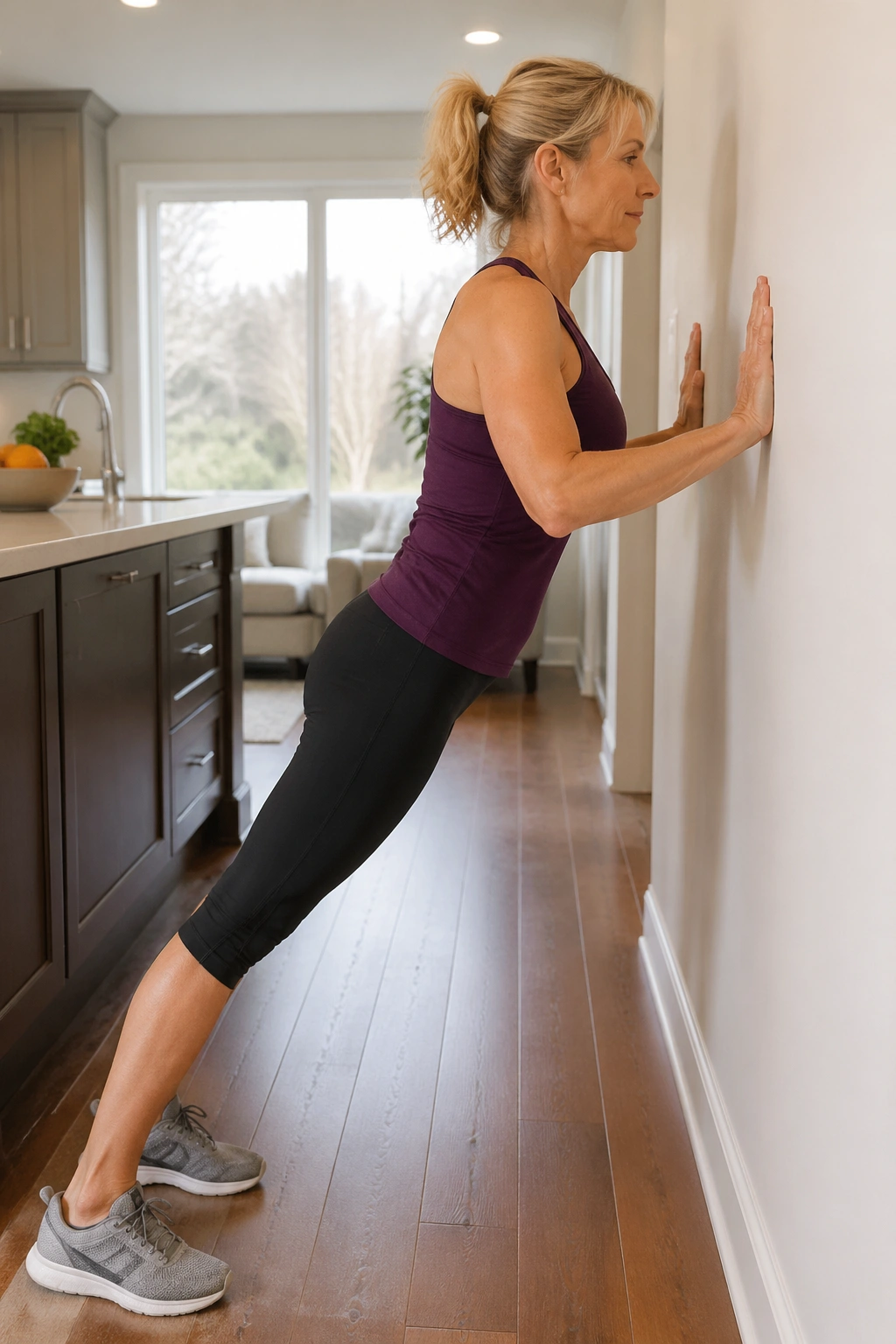
Can push-ups help with belly fat? Indirectly, yes. They build upper-body and core strength, and that means more muscle working during the day and better support through the torso when you stand, carry, or reach.
Start at a wall if you need to. Seriously. There’s no prize for doing a floor push-up before your body is ready. Place your hands on a wall or counter, step your feet back, and keep your body in one straight line. Bend your elbows, bring your chest toward the surface, then press away with control.
How to make them harder
Move from a wall to a countertop. Then to a sturdy bench. Then to the floor when you’ve earned it. Each lower angle increases the load and makes your chest, triceps, and core do more work.
Keep your elbows at about a 45-degree angle from your body. Flared elbows can bother the shoulders. If your low back sags, shorten the range or raise the surface again. A cleaner push-up is always better than a lower one done badly.
Two sets of 6 to 10 controlled reps is plenty to start. Breathe out as you press up. That small habit helps the core brace without feeling tense.
5. Step-Ups on a Low Bench
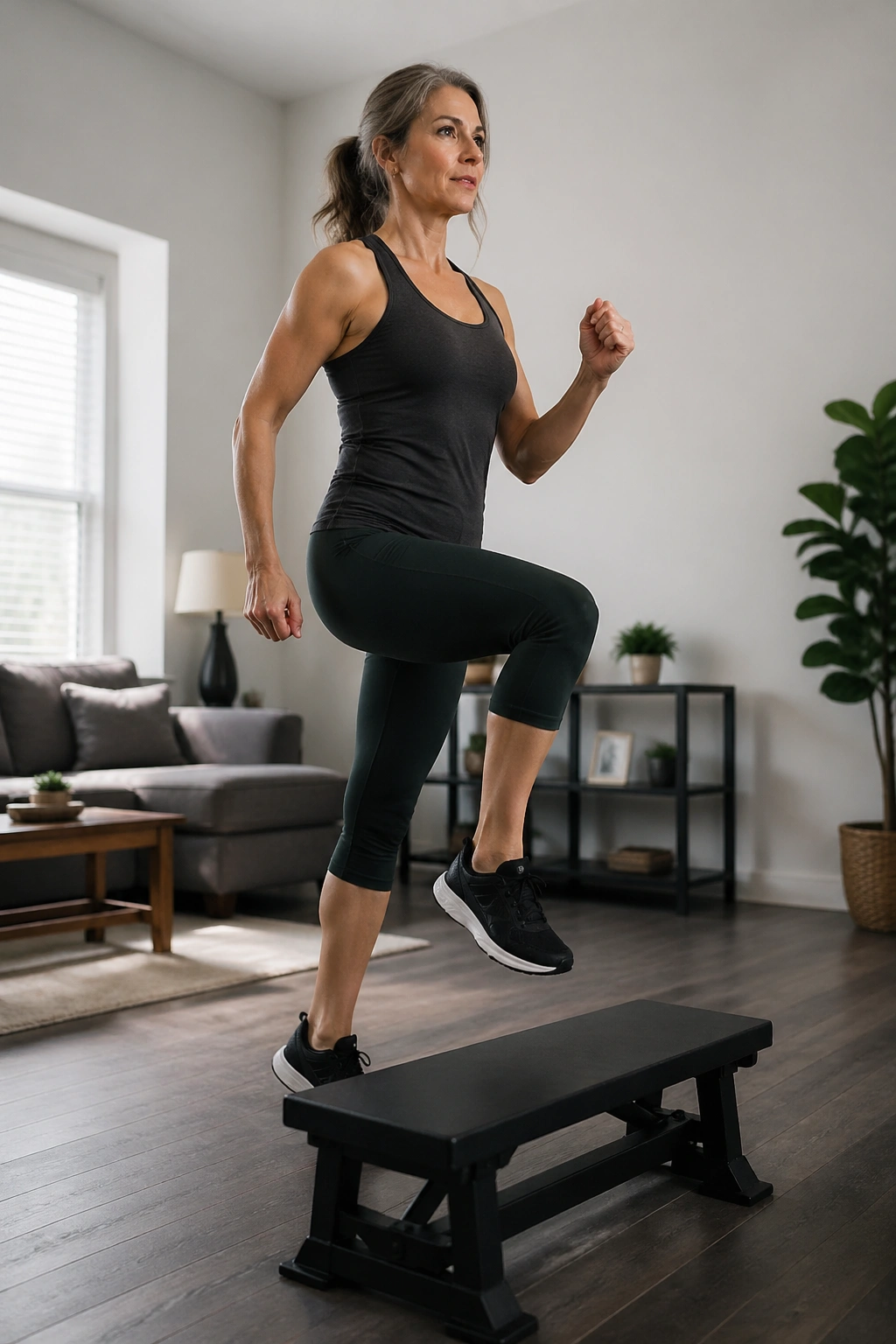
Step-ups are one of those exercises that looks ordinary until you do them for real. Then your thighs light up fast. A low bench, a stair, or a very sturdy box turns this into a leg workout that also demands balance and a little coordination, which is useful after 50.
The reason I like step-ups for belly fat workouts is simple: they make you work one leg at a time. That means the glutes and thighs have to do honest work instead of sharing the load with momentum. Less cheating. More muscle.
Choose a step height that lets your whole foot land flat. Push through the heel of the working leg and stand tall at the top instead of bouncing off the back foot. Do 8 to 10 reps per leg for 2 to 3 rounds.
If your knees complain, lower the step. If balance feels shaky, hold a railing or a wall with one hand. That doesn’t make the move easier in a useless way. It makes it safer so you can keep doing it.
6. Shadow Boxing Rounds
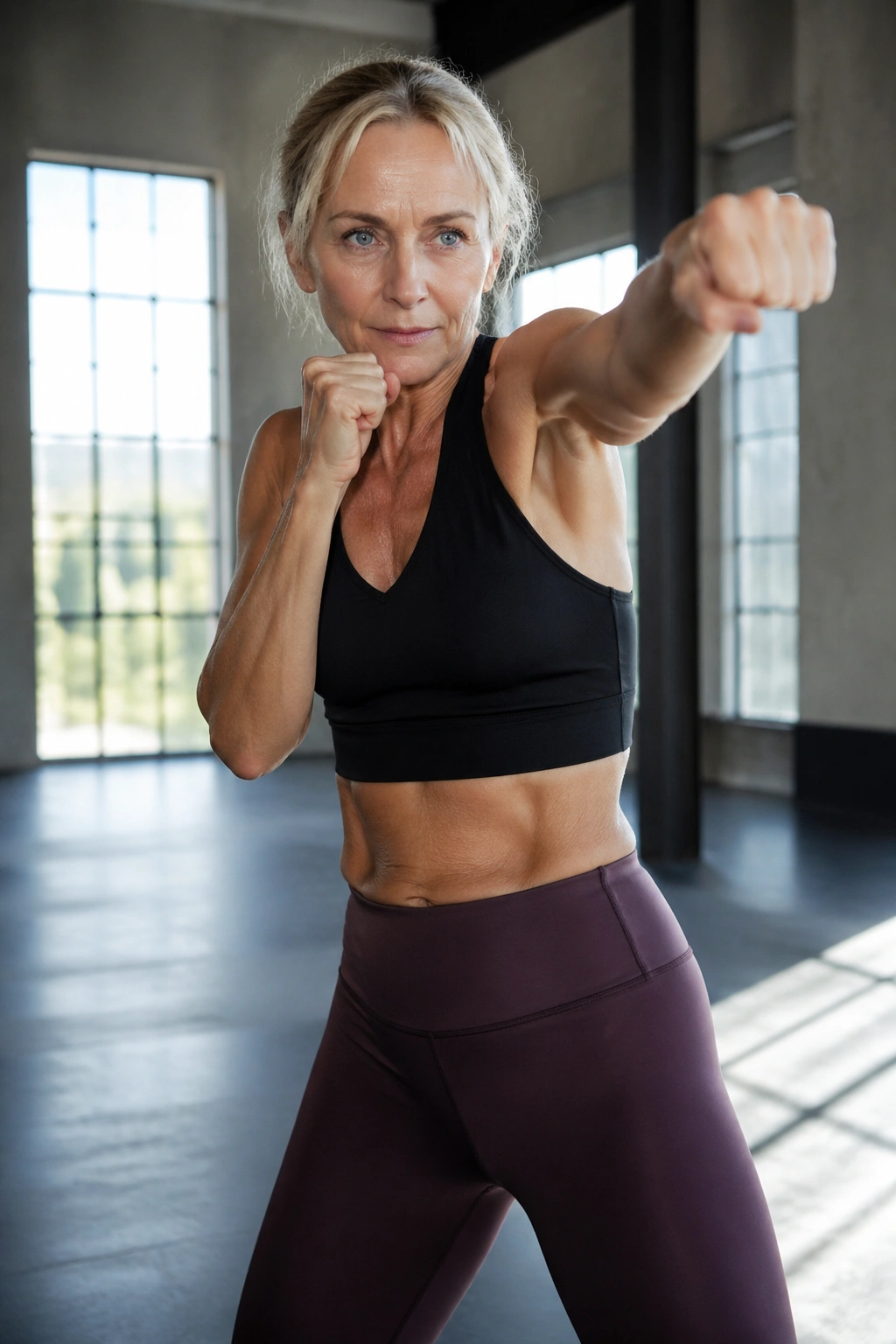
Shadow boxing is one of my favorite underused cardio tools because it feels more playful than a treadmill and more forgiving than jump-heavy routines. You throw punches into open space, move your feet, and keep your core braced the whole time.
It’s not about punching hard. It’s about staying active with purpose. Jab, cross, hook. Then step to the side and do it again. The torso has to rotate under control, which wakes up the deep abdominal muscles without the neck strain that comes from doing too many curl-ups.
Try 30 seconds on and 30 seconds off for 8 to 12 rounds. Keep your shoulders loose and your fists at cheek level. If you start hunching, shake out your arms and reset. Tension in the neck is a sign to dial it back.
A nice side effect? It burns frustration. That matters more than people admit. Workouts you can actually enjoy tend to happen more often, and frequency beats perfection every time.
7. Glute Bridges
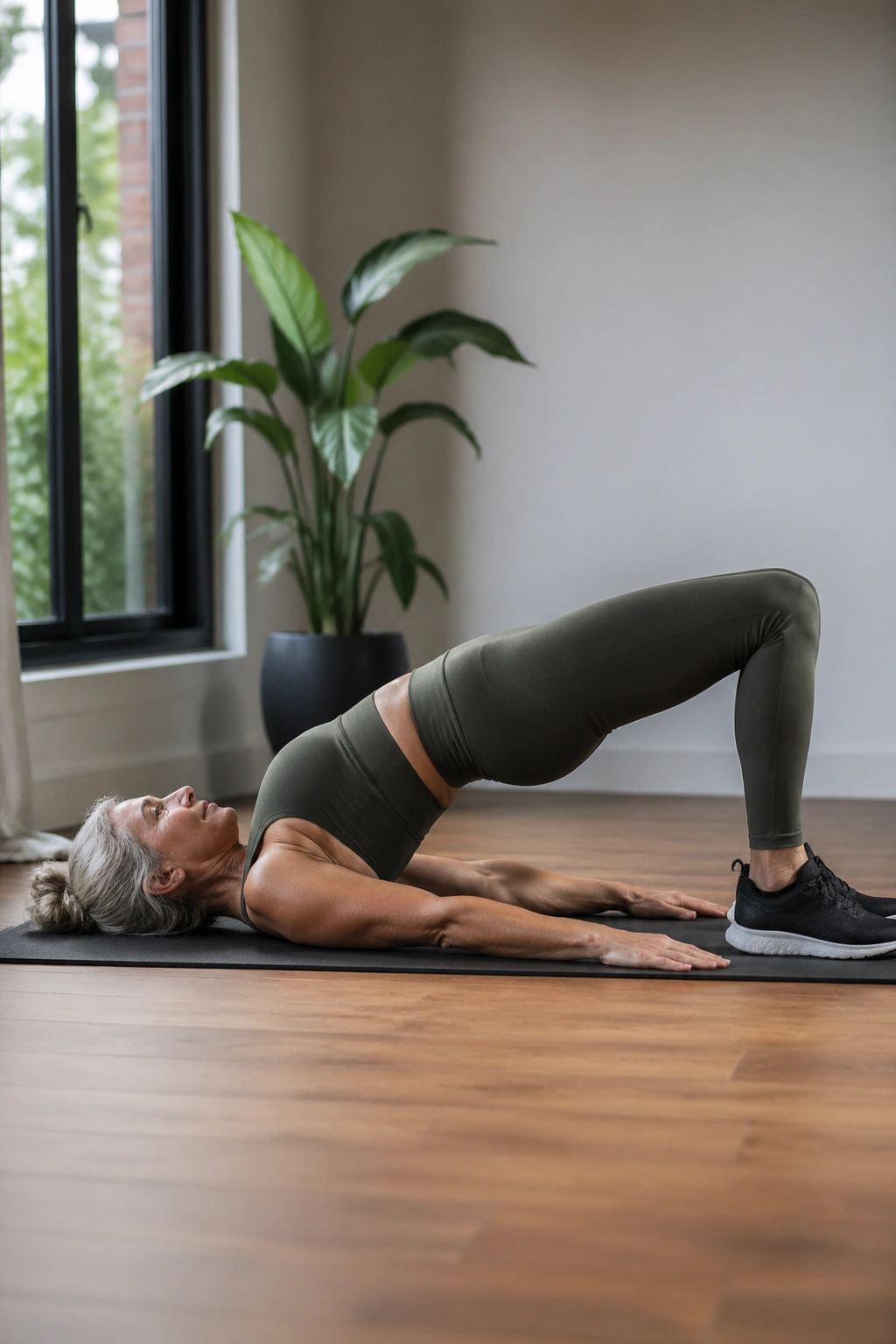
Glute bridges deserve more love than they get. They look gentle, but they wake up the posterior chain fast, and that’s a big deal if your lower back gets cranky or your hips feel sleepy after long hours of sitting.
Why the glutes matter
Weak glutes shift too much work into the lower back and thighs. Stronger glutes help you stand taller, walk better, and keep your pelvis in a more stable position. That can make your midsection feel tighter because you’re not collapsing through the middle.
Lie on your back with knees bent and feet flat. Press through your heels, lift your hips until your body forms a straight line from shoulders to knees, then pause for one second at the top. Lower slowly. Do 2 to 4 sets of 10 to 15 reps.
How to get more from them
Add a mini band above the knees if the basic version feels too easy. Or hold the top position for 20 to 30 seconds at the end of a set. That little burn is not glamorous, but it works.
Do not over-arch your lower back at the top. If you feel compression there, lower the height of the lift and tighten your ribs before you start.
8. Resistance Band Rows
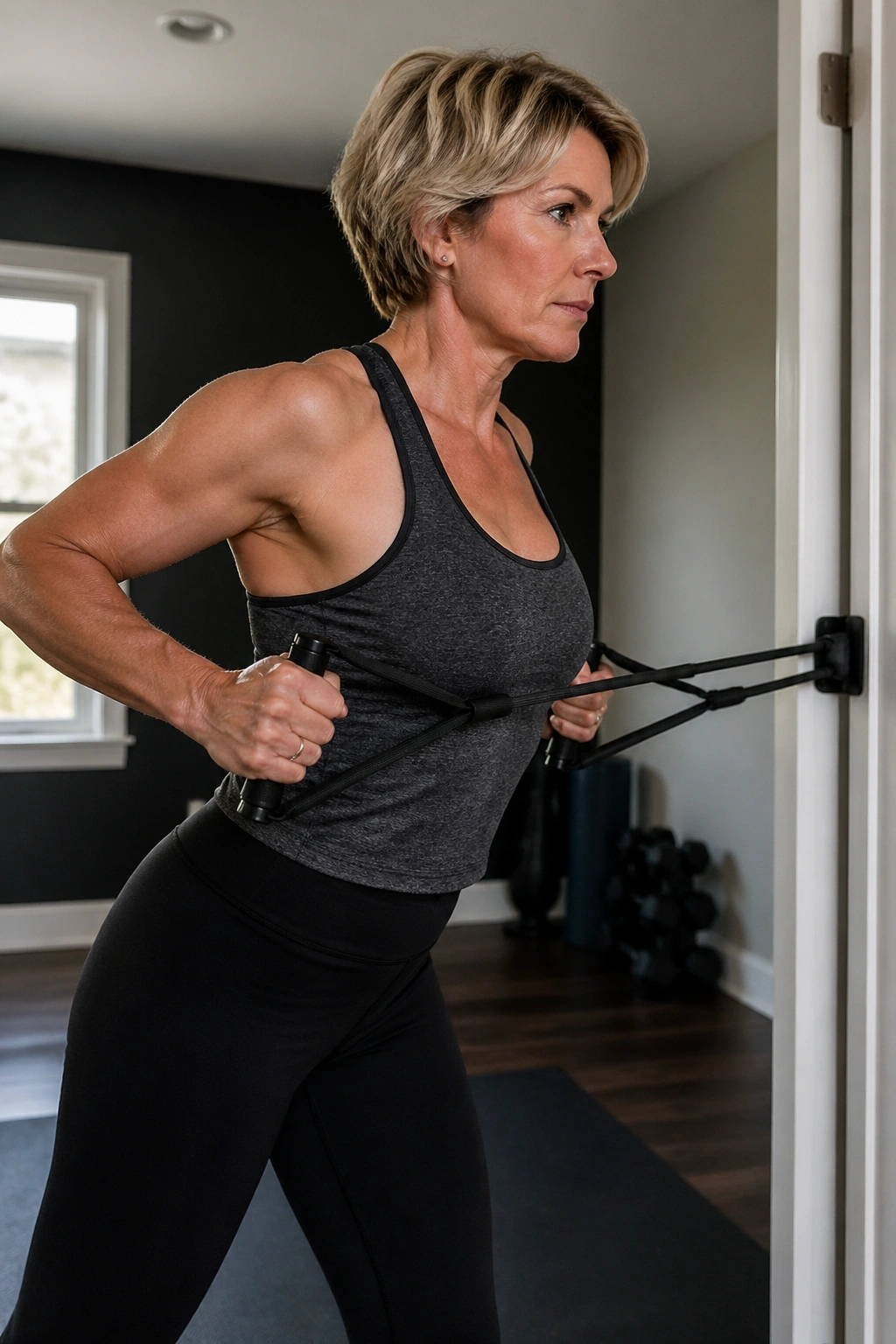
If you sit a lot, rows are non-negotiable in my book. They pull your shoulders back into better position, strengthen the upper back, and help your torso look and feel less folded forward. That does a lot for your shape, even if nobody talks about it enough.
Unlike crunches, rows do not chase the front of the body. They balance it. Strong back muscles help you hold yourself upright during walks, carries, and everyday lifting. That means your core has to work in a cleaner way, which is exactly what you want.
Anchor a band around a sturdy post or use a door-safe setup. Pull the handles toward your ribs, pause for a beat, and let the band return slowly. Aim for 2 to 3 sets of 12 to 15 reps.
- Keep your neck long.
- Squeeze between the shoulder blades, not up by the ears.
- Don’t lean back to fake the pull.
- Use a band that feels challenging on the last 3 reps.
This is a quiet exercise. Not flashy. Very useful.
9. Standing Cross-Body Knee Drives
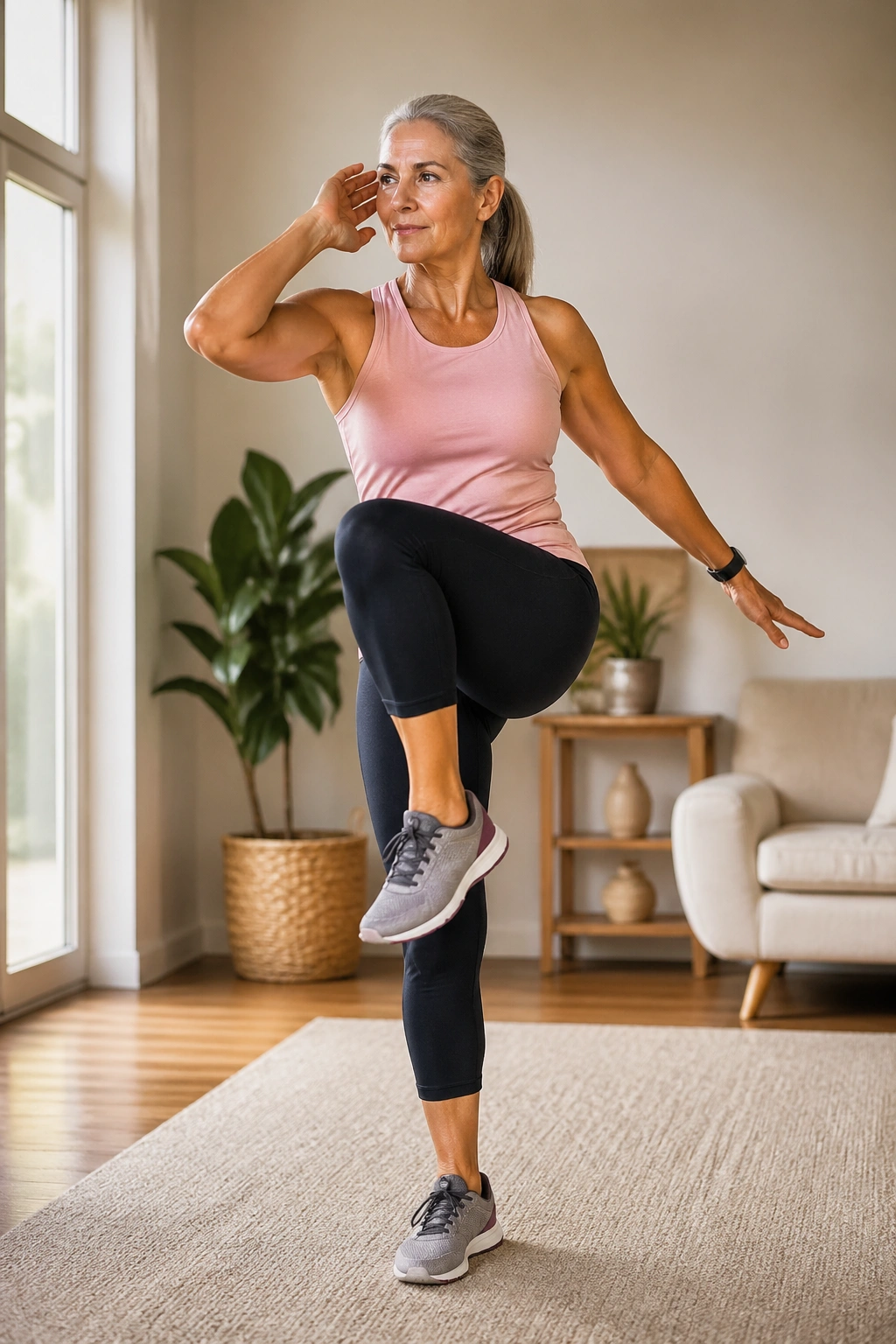
Can a standing core move help with belly fat? It can help more than a hundred sloppy crunches, mainly because it teaches your abs to brace while your legs and hips move. That’s the kind of strength you use in real life.
Stand tall, lift one knee toward the opposite elbow, and bring it down under control. Then switch sides. Keep your chest open and your torso as steady as you can. The movement should feel crisp, not frantic.
How to keep the torso tall
Imagine a string pulling the top of your head upward. That keeps you from folding over and turning the whole exercise into a low-back shuffle. Move slowly at first. Speed comes later.
Try 20 to 40 alternating reps, or do 30 seconds of work followed by 30 seconds of rest. If balance is tricky, place one hand lightly on a wall. That tiny support lets you train the core without wobbling all over the room.
This one works well between strength sets because it raises your heart rate without battering the joints. Handy. And underrated.
10. Squat-to-Overhead Press
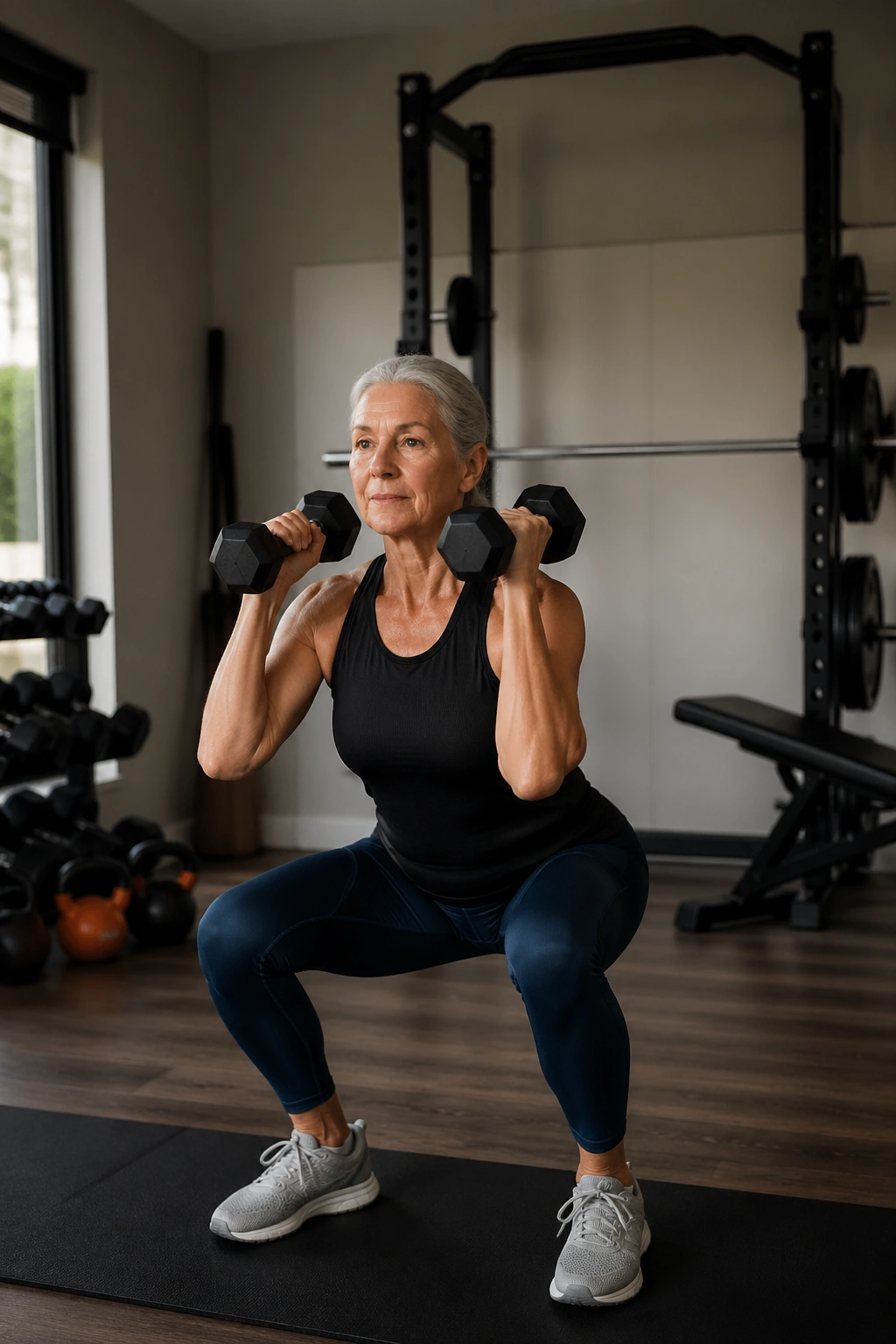
This is a full-body move that earns its place because it asks for more than one thing at once. Legs. Shoulders. Core. Timing. A squat-to-overhead press makes you work hard enough to feel it, which is exactly why it belongs in a belly fat routine.
Start with light dumbbells at shoulder height. Sit back into a squat, keep your chest lifted, stand up, and press the weights overhead as you rise. Lower them with control and repeat for 8 to 10 reps.
The squat part should feel like you’re reaching for a chair behind you, not dropping straight down. The press should finish with your biceps near your ears and your ribs still tucked in. If your lower back arches when the weights go up, the load is too heavy.
This move is especially useful if you want efficiency. One exercise. Many muscles. A better use of your time than doing isolated arm work for half an hour and wondering why nothing else changes.
11. Mini-Band Side Steps
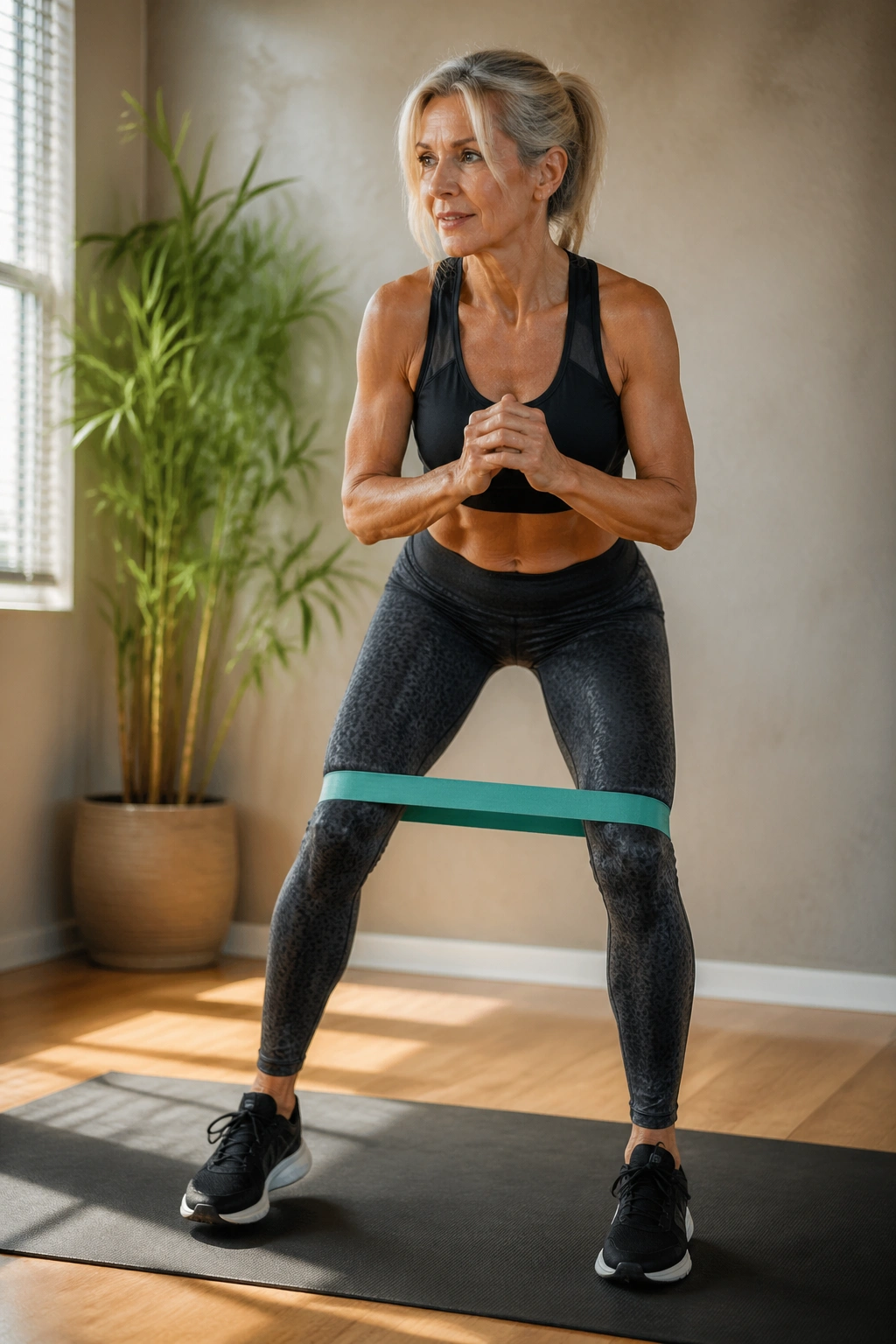
Mini-band side steps look small. They are not small in your glutes. Put a loop band above your knees or around your ankles, bend slightly at the hips, and step side to side with tension in the band the whole time.
The point here is not speed. The point is constant tension. If your feet slap together and the band goes slack, the exercise turns into a walk with accessories. That is not what we want.
Use 10 to 15 steps in one direction, then return the other way. Keep your feet parallel and your knees tracking over your toes. You should feel the outer hips and side glutes working.
If your lower back starts doing all the talking, make the stance narrower and bend less deeply. This is a glute move first. A balance drill second. A fashion statement never.
Mini-band work is one of the best ways to support knees that feel a little unstable. Strong hips help the whole lower body behave better.
12. Plank Variations for Deep Core Control
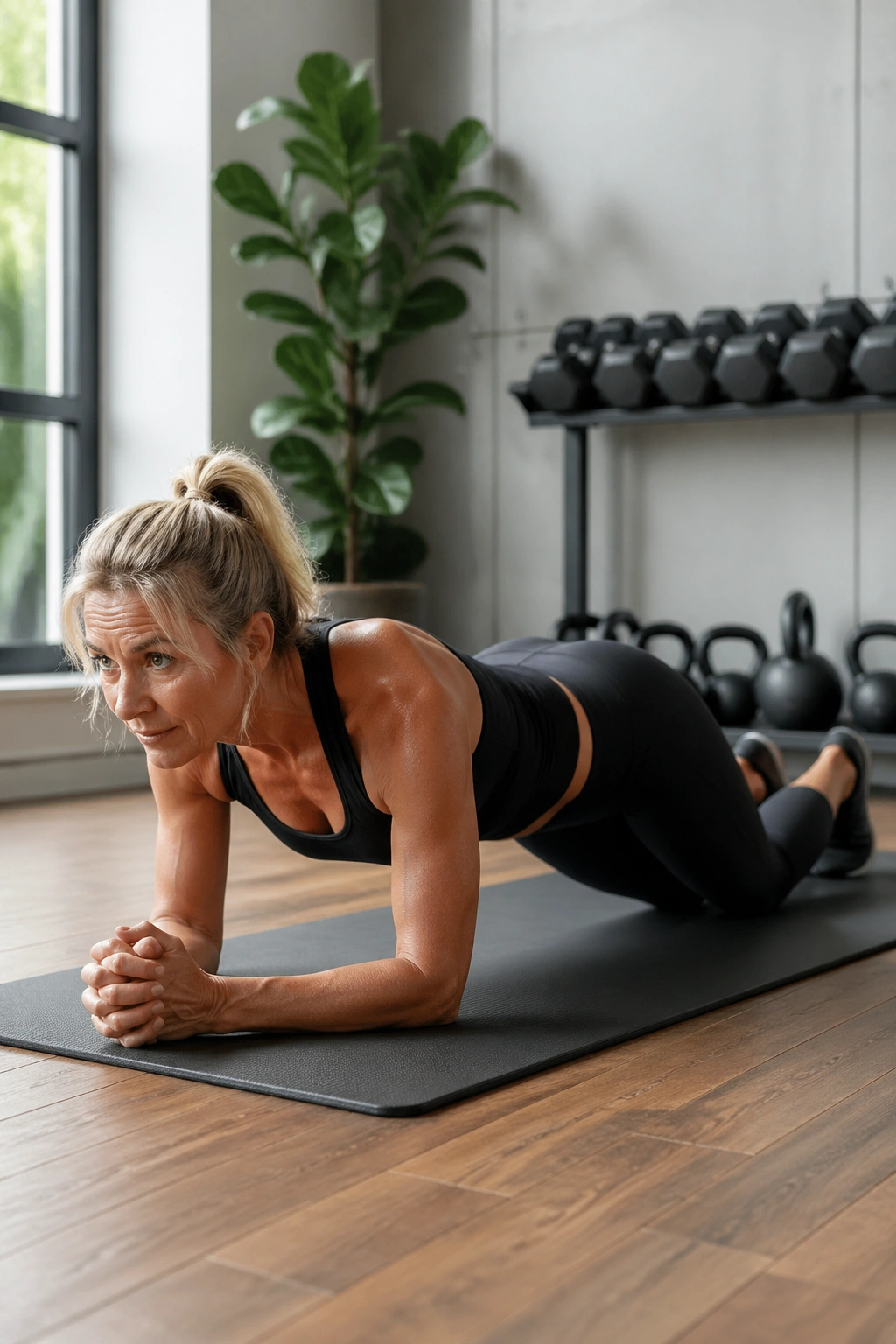
Planks get talked about so much that people forget the useful part: they train the core to resist movement instead of just bending and twisting. That’s closer to real life, and for many women over 50, it’s kinder to the neck and back than endless floor crunches.
Choose the right version
A full plank is not required. Start with a wall plank, a countertop plank, or a forearm plank with knees down. Your body should stay straight, your glutes gently engaged, and your ribs not flaring out.
Hold for 15 to 30 seconds at first. Stop before form slips. A short clean hold beats a long shaky one every single time.
How to make it safer
Place your forearms on a bench if getting down to the floor feels awkward. Keep breathing. If you hold your breath, the core braces too hard and your face gets red for no good reason.
The best plank is the one you can repeat. Not the one that leaves you flattened on the mat.
13. Bird Dogs
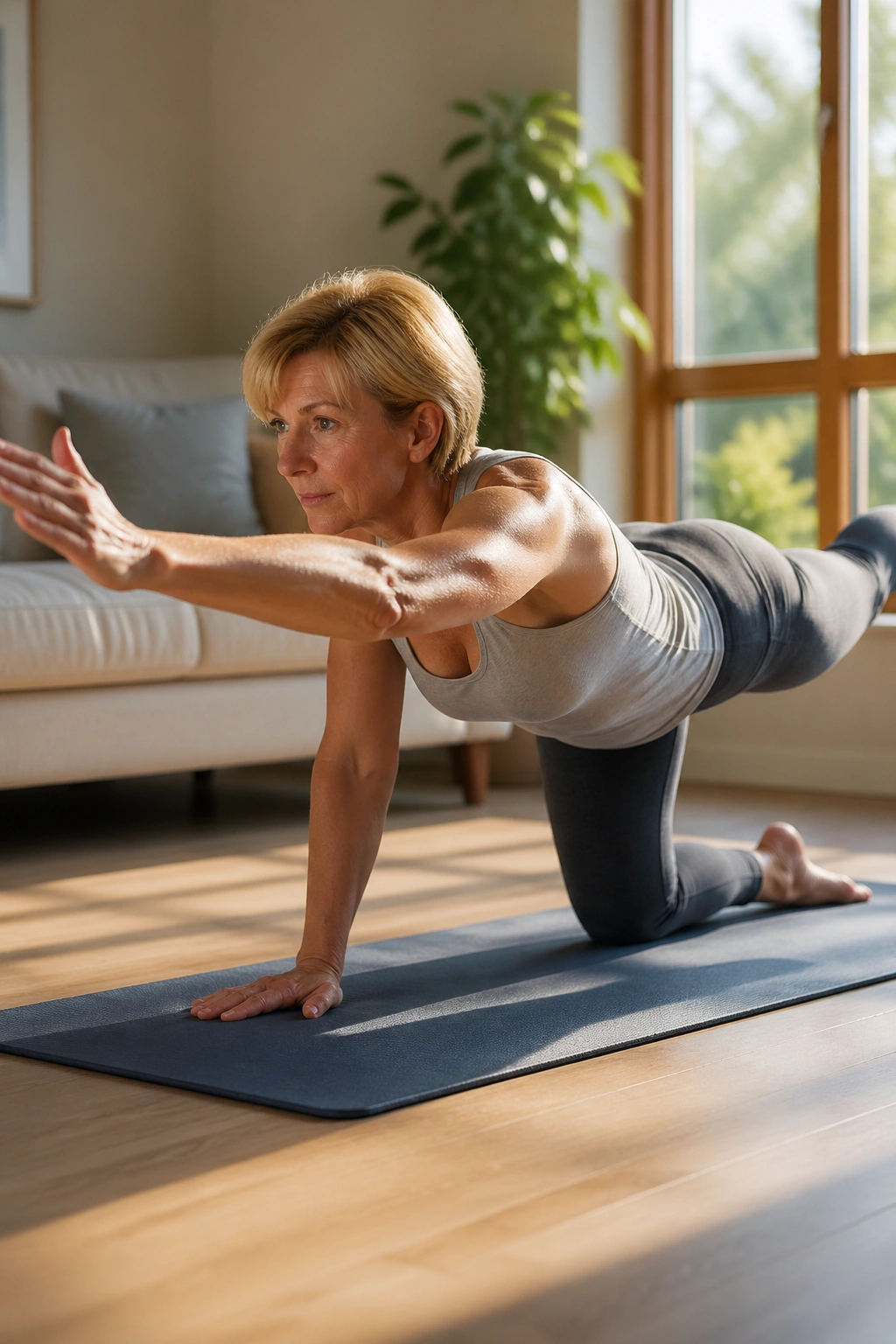
Bird dogs are one of those exercises that look too easy right up until you try to keep your hips level. Then the whole thing gets honest fast. They train the deep core, lower back, shoulders, and glutes all at once.
Get on hands and knees. Reach one arm forward while extending the opposite leg back. Pause for a second, bring both limbs back under you, and switch sides. Do 6 to 10 reps per side.
The trick is keeping your low back from sagging. If the leg lift is too high, you’ll feel it in the spine instead of the glute. Keep the reach long rather than high. Long wins here.
- Keep your neck in line with your spine.
- Move slowly enough to stay level.
- Exhale as you extend.
- Stop if your wrists hurt and use fists or handles.
Bird dogs belong in almost every midlife routine because they build core control without much strain. That is a rare thing.
14. Farmer Carries
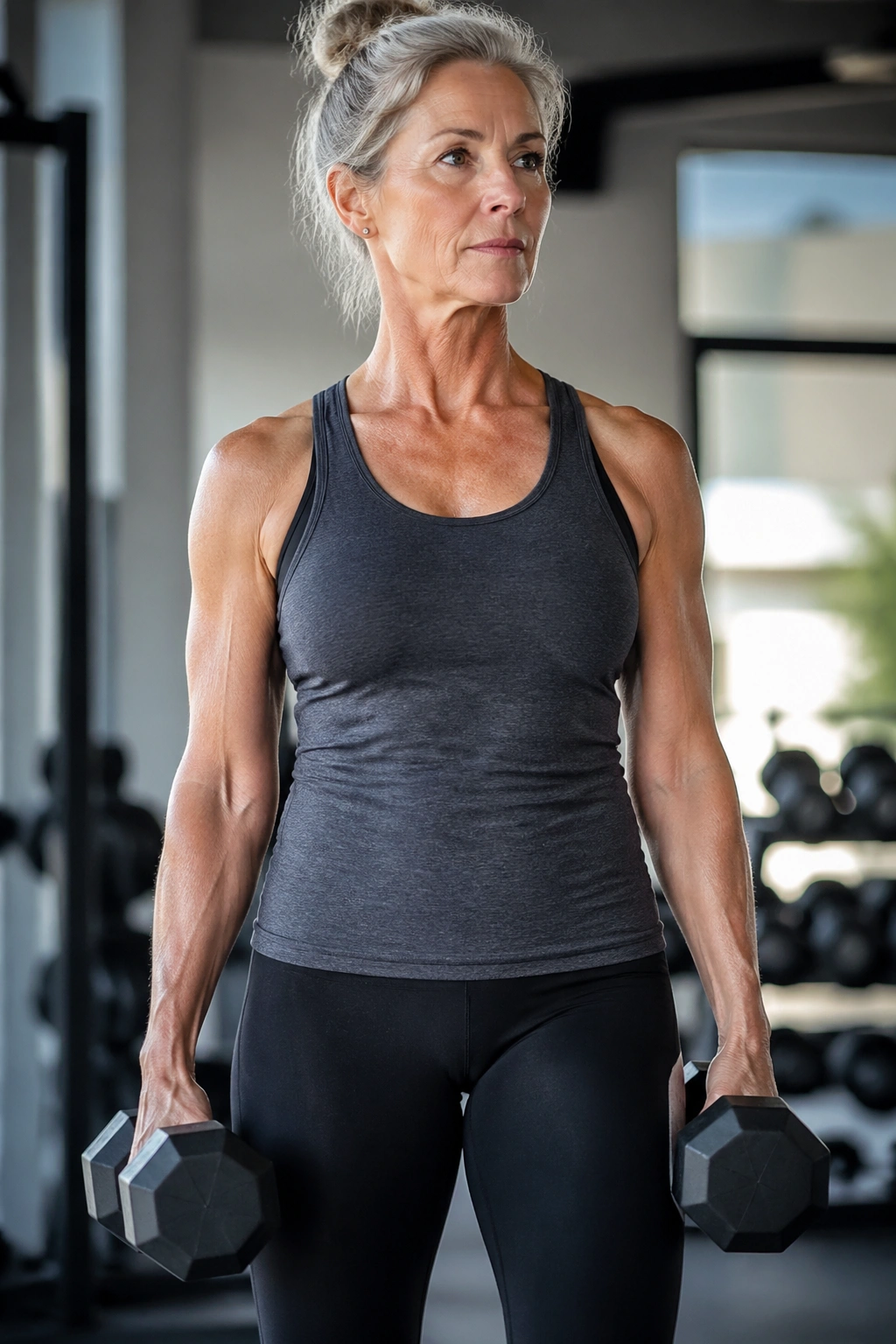
Farmer carries are gloriously plain. Pick up two weights, stand tall, and walk. That’s the whole deal. And yet this move can do more for your posture, grip strength, and waistline support than some flashy core routines that leave people sore and annoyed.
Unlike a stationary ab exercise, carries train your body to resist side-bending and slouching while you move. That matters. Life happens while you’re carrying groceries, lifting laundry baskets, or moving a suitcase across a parking lot.
Use dumbbells, kettlebells, or even heavy grocery bags if you have nothing else. Walk for 20 to 40 seconds, rest, then repeat for 4 to 6 rounds. Keep your shoulders down and your ribs stacked over your hips.
If you lean to one side, the weight is too heavy. If your hands give out long before your legs do, that’s also useful feedback. Grip strength is part of the package, and it tends to fade if you never train it.
15. Stair Intervals
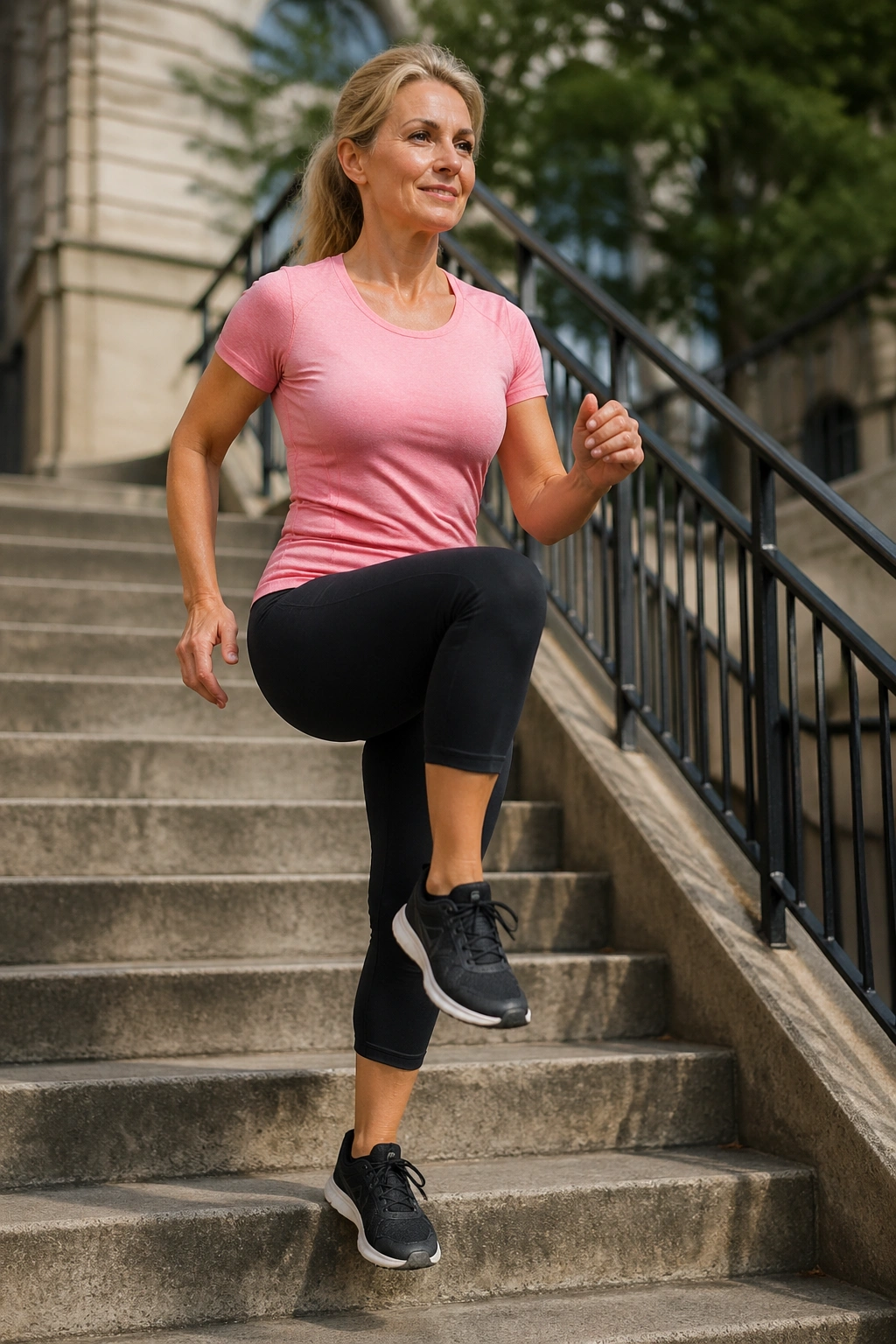
Stairs are not subtle. One flight can wake up your heart, thighs, and glutes fast, which is why stair intervals are a useful fat-loss tool when your joints can handle them.
Use a short staircase or a stair machine. Walk up at a steady pace for 30 to 60 seconds, then take your time coming down. The descent should be controlled. Rushing it makes the knees grumble.
A good stair session feels like hard work in the legs and lungs without impact-heavy pounding. That’s the sweet spot. If your Achilles tendons or knees get irritated, cut the volume right away and switch to walking intervals instead.
Try 8 to 12 climbs total. If you need a handrail, use it. That is not a cheat. It is a smart safety tool that keeps the workout honest and repeatable.
Stairs are especially useful if you get bored easily. They do not let your mind drift much. Every step asks for attention.
16. Low-Impact Dance Cardio
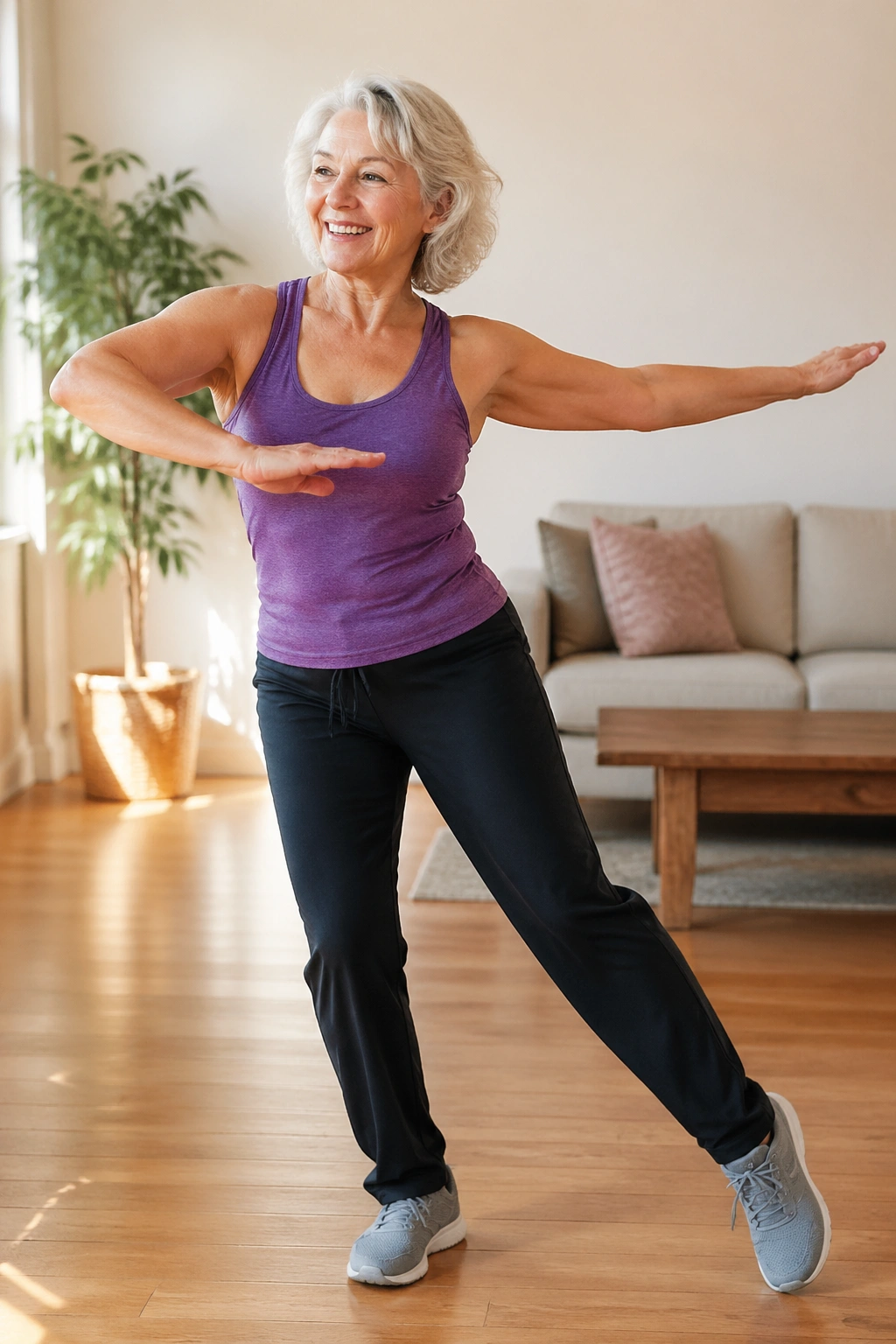
Some people lose weight by tracking sets and reps. Others stick with a routine because it feels a little playful. Low-impact dance cardio sits in that second group, and I think that matters more than fitness purists want to admit.
You can step side to side, add arm sweeps, march in place, and turn the music up enough to stay interested. No jumping required. No complicated choreography either. If you can follow four counts, you can do this workout.
Keep the bounce soft and the footwork grounded. The goal is to stay moving for 15 to 30 minutes without beating up your ankles. When the heart rate rises and stays there, your body does the rest.
This kind of cardio is useful for women who have done too many “hardcore” workouts and then quit for two months because they hurt. A sustainable workout you enjoy beats a punishing one you avoid.
17. Stationary Bike Intervals
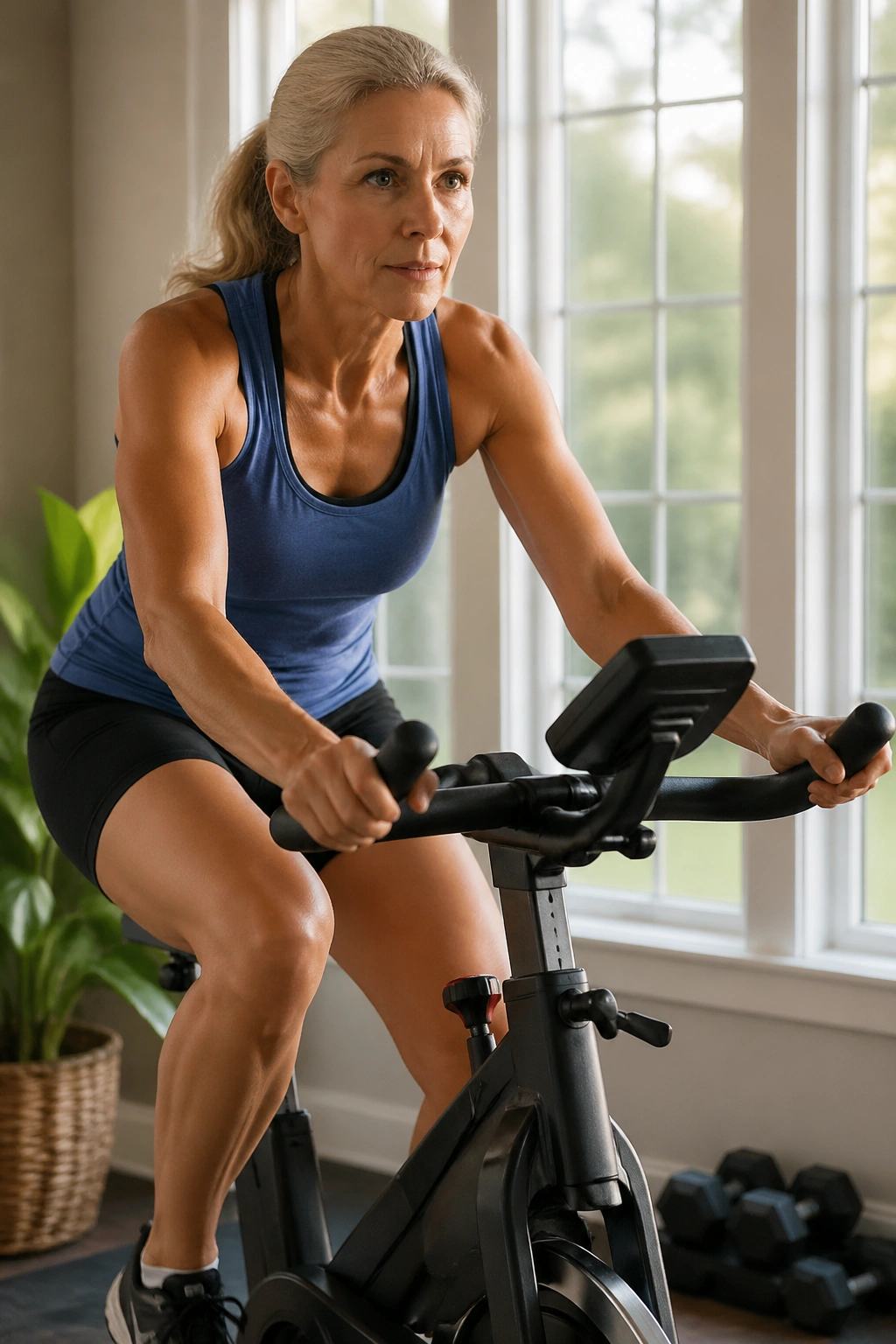
Is a bike better than walking? Sometimes, yes, especially if your knees or feet prefer seated cardio. The stationary bike lets you push the heart rate up while taking impact out of the equation, and that’s a nice trade.
Cadence and resistance
Use a resistance that lets you pedal smoothly for 1 minute of harder work, then ease off for 1 to 2 minutes. If you spin like crazy with almost no resistance, your legs get busy but not very strong. If the resistance is too heavy, your knees and hips complain.
A simple round looks like this: 1 minute brisk, 2 minutes easy. Repeat 6 to 10 times. You should finish warm and challenged, not wrecked.
Who it suits best
The bike is a strong choice if you are rebuilding fitness after time off, dealing with a weight-bearing joint issue, or just trying to add more cardio without extra pounding. It also works well on days when your energy is lower but you still want to do something useful.
A good bike session leaves your legs a little heavy and your breathing controlled. Nothing dramatic. Just enough.
18. Pilates Toe Taps and Dead Bug Combos
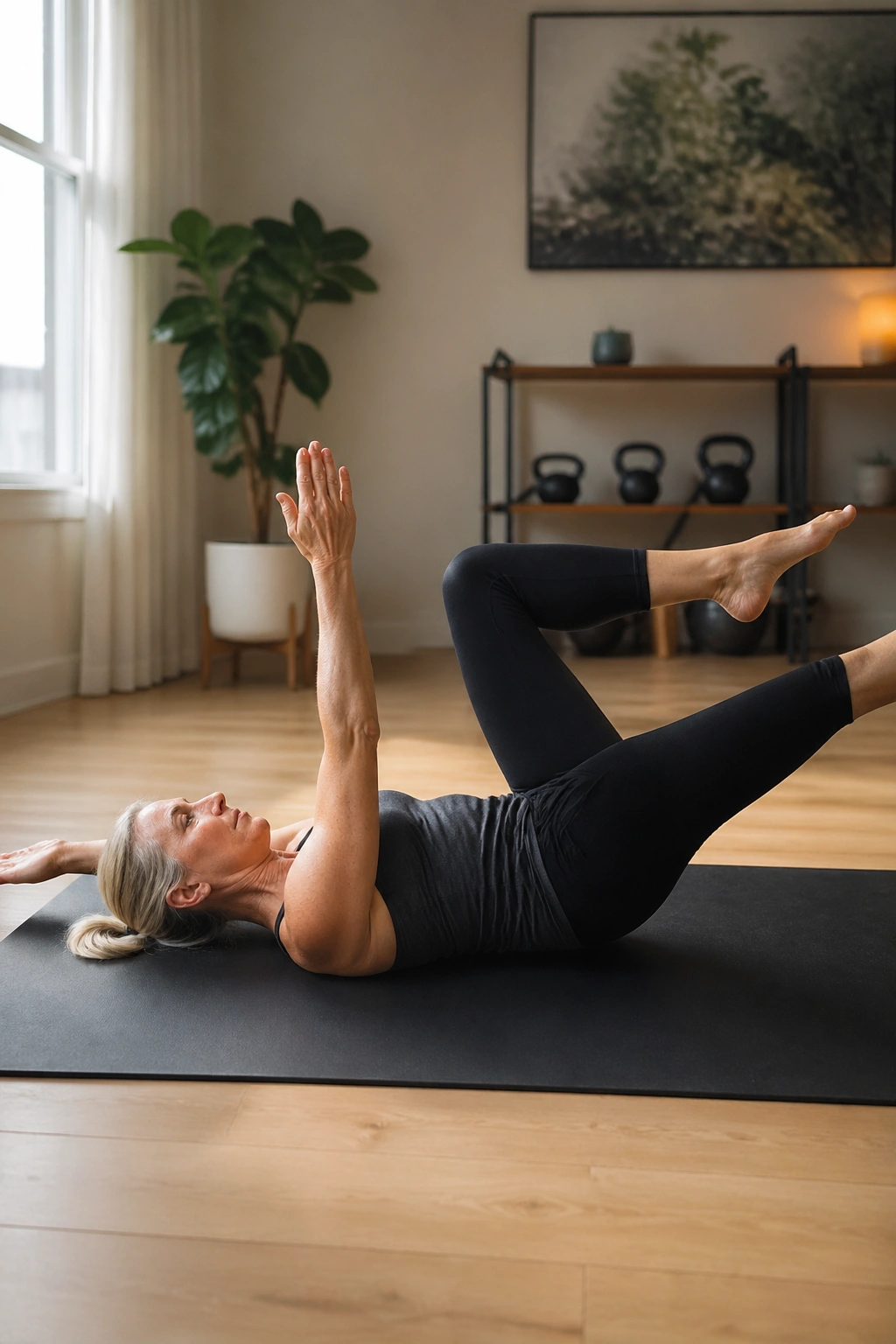
A strong core after 50 is not about chiseled abs. It’s about control. Dead bugs and toe taps train the front of the core to stay steady while the arms and legs move, which is exactly what the middle section of your body needs.
Lie on your back with knees bent over your hips. Lower one heel toward the floor, then bring it back. Or extend the opposite arm and leg in a dead bug pattern. The back should stay gently pressed into the mat, not arched up like a bridge gone wrong.
Start with 6 to 8 reps per side. Slow down if the low back starts to lift. That’s your signal to shorten the range, not push harder.
This is a quiet workout. Almost annoyingly quiet. But it teaches the abdominals to do their actual job, which is to stabilize rather than just flex over and over.
If you want a tighter-feeling midsection without cranky necks, this is a good place to live.
19. A Simple Full-Body Circuit
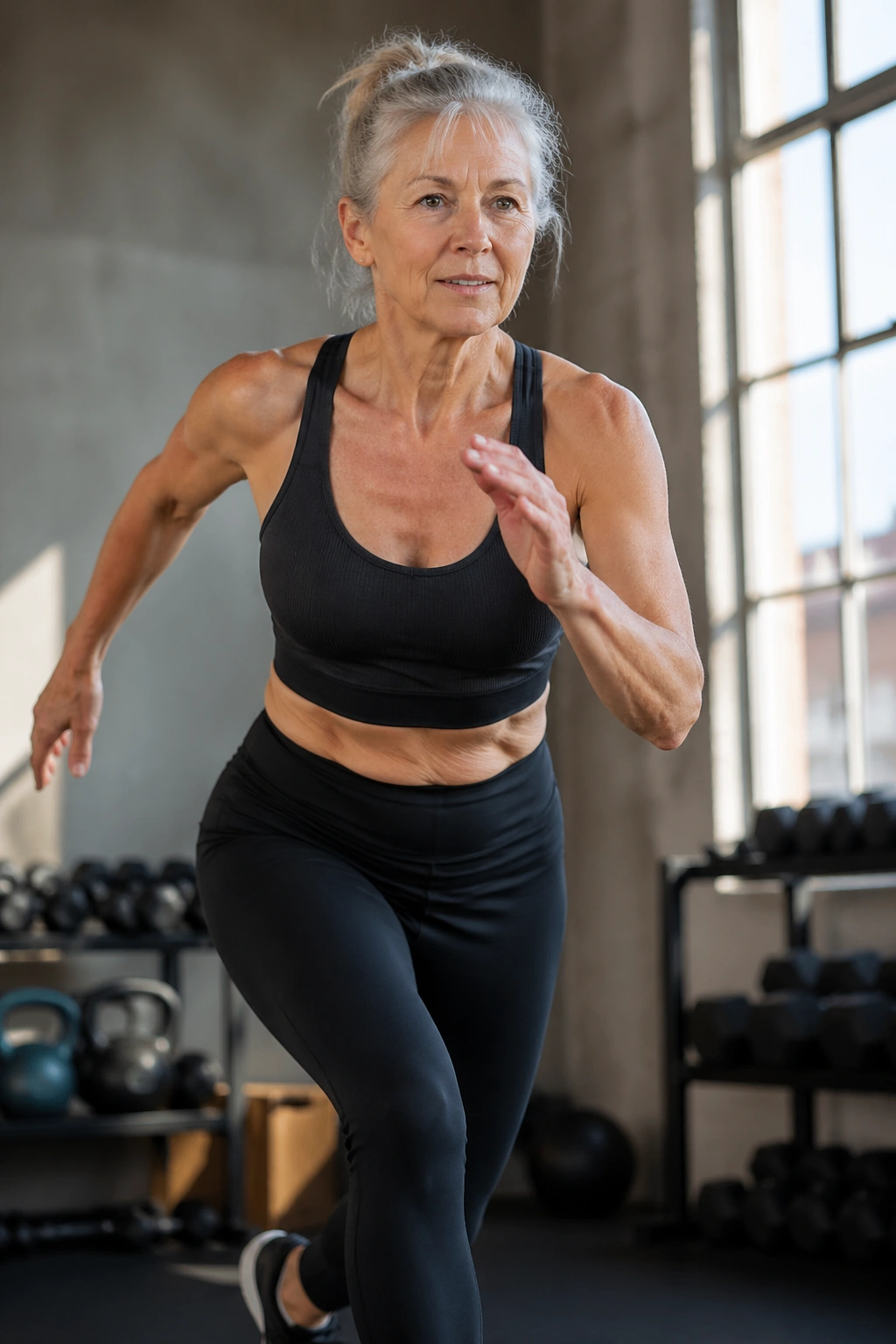
This is where the pieces start working together. One exercise helps the next. Heart rate rises, muscles stay engaged, and the whole session feels more like real training instead of a collection of random moves.
Try a circuit like this:
- 10 chair sit-to-stands
- 10 band rows
- 10 dumbbell deadlifts
- 20 seconds of marching knee drives
- 20-second farmer carry or suitcase hold
- 20 seconds of plank on a bench
Rest for 60 to 90 seconds, then repeat 2 to 4 times. Use weights that feel manageable but not lazy. The goal is steady effort, not a dramatic collapse on the mat.
This kind of circuit is useful because it hits strength, balance, and cardio without making the workout feel like a military event. That matters. People repeat what feels doable.
If you like a little structure and a clear finish line, this one is hard to beat.
20. Recovery Walks and Mobility Flow
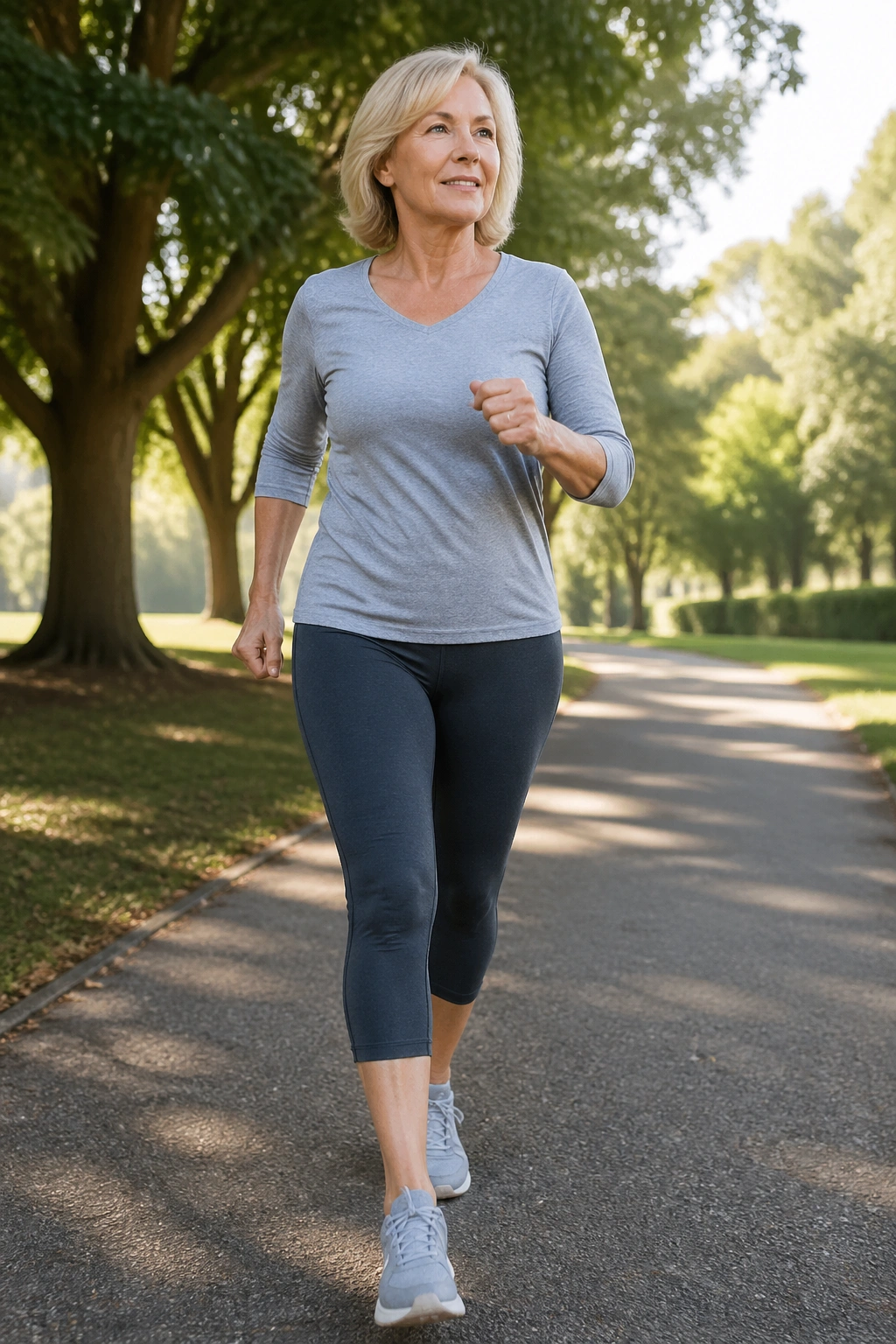
The workouts that help shrink belly fat are not only the hard ones. Recovery walks and a short mobility flow keep you moving on the days when your body feels stiff, tired, or plain stubborn.
A 15- to 25-minute walk after dinner can help lower stress, loosen your hips, and keep your routine from falling apart. Add a few minutes of shoulder rolls, hip circles, calf stretches, and gentle trunk rotations when you get home. No need to turn it into a circus.
The value here is consistency. People get stuck because they think every session must be intense. It does not. A recovery day keeps the next hard day possible, and that may be the smartest thing in the whole list.
If your knees, back, or energy levels need a kinder option, use this one without guilt. Movement counts even when it feels quiet. Especially then.
