



Fifty crunches won’t melt belly fat. They never did.
If your idea of belly fat workouts is a pile of floor exercises and a sore neck the next day, you’re probably missing the part that matters: big muscle work, a braced torso, and a heart rate that stays up long enough to matter. Dumbbells are excellent for that at home. They make a squat tougher, a carry more honest, a press less casual.
You cannot pick where fat comes off first, and that’s the part most glossy fitness promises leave out. Still, the right dumbbell moves can help reduce overall body fat while building the kind of strength that changes how your waist, hips, and upper body look and feel. A suitcase carry lights up the obliques. A thruster leaves you breathing hard. A hinge drill like the Romanian deadlift teaches your trunk to hold shape under load. That matters more than endless floor crunches ever will.
Pick five or six moves from the list below, put them in a circuit, and use a weight that makes the last two reps honest. If the set turns sloppy, the weight is too heavy. If you finish and feel like you could have chatted through the whole thing, it’s too light.
1. Goblet Squat
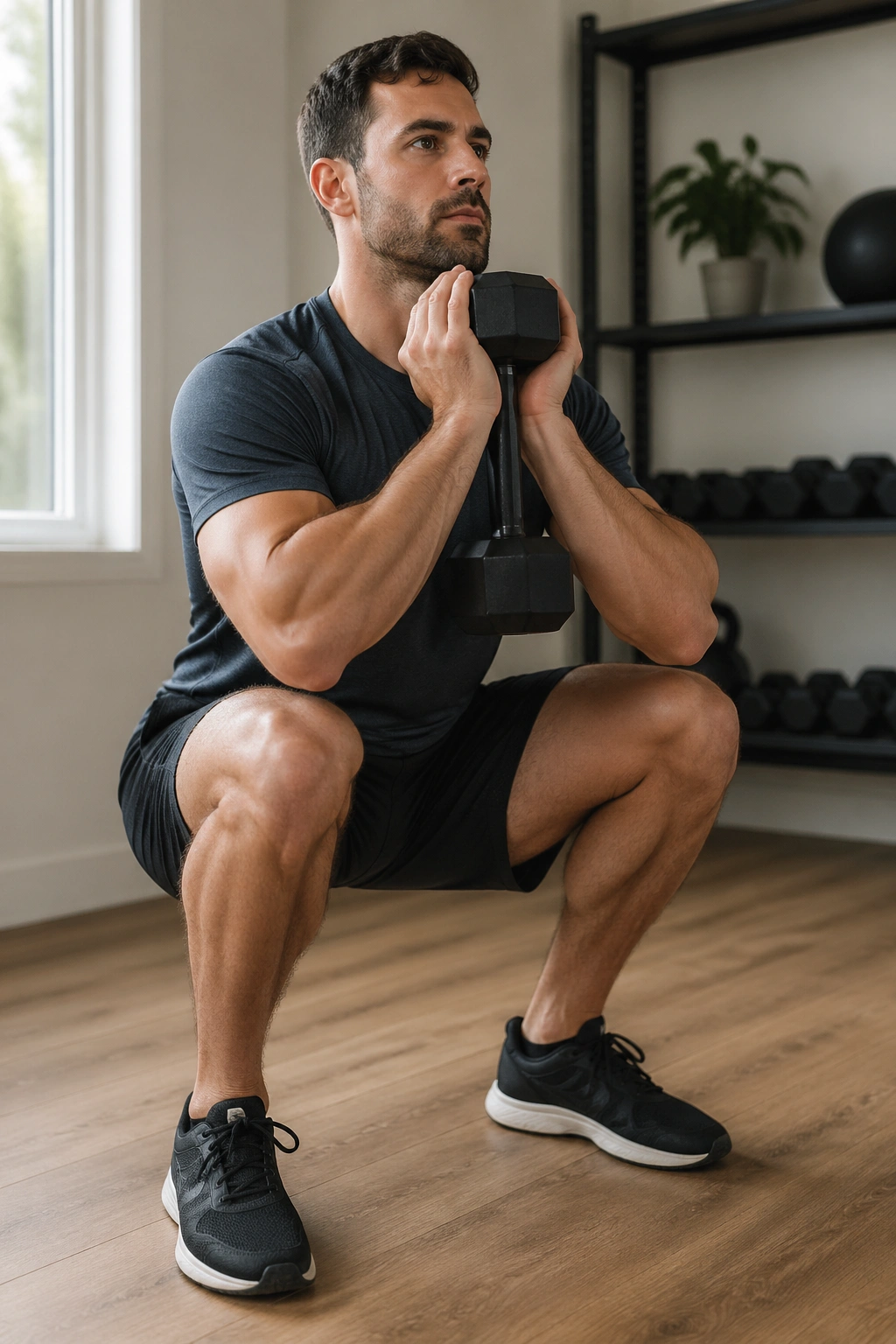
The goblet squat is one of those exercises that looks simple and punishes lazy form fast. Hold one dumbbell upright at chest level, sit down between your hips, and keep your ribs stacked over your pelvis. That front-loaded position makes your core brace harder than it does in a bodyweight squat.
Why it works so well at home: you get leg work, torso tension, and a little heart-rate spike all at once. That mix is useful when the goal is fat loss and not just pretty movement. Big muscles like your quads and glutes use more energy than tiny isolation moves.
Form cues that matter
- Hold the dumbbell close to your chest, not out in front of you.
- Keep your elbows pointed down and slightly inside your knees at the bottom.
- Drive up through the whole foot, not just your toes.
- Use 8 to 12 reps for 3 rounds if you want a solid home workout.
If your lower back rounds, stop the descent a little higher. Depth is useful, but control is better. A clean, tight squat with a modest range beats a deep ugly one every time.
2. Romanian Deadlift
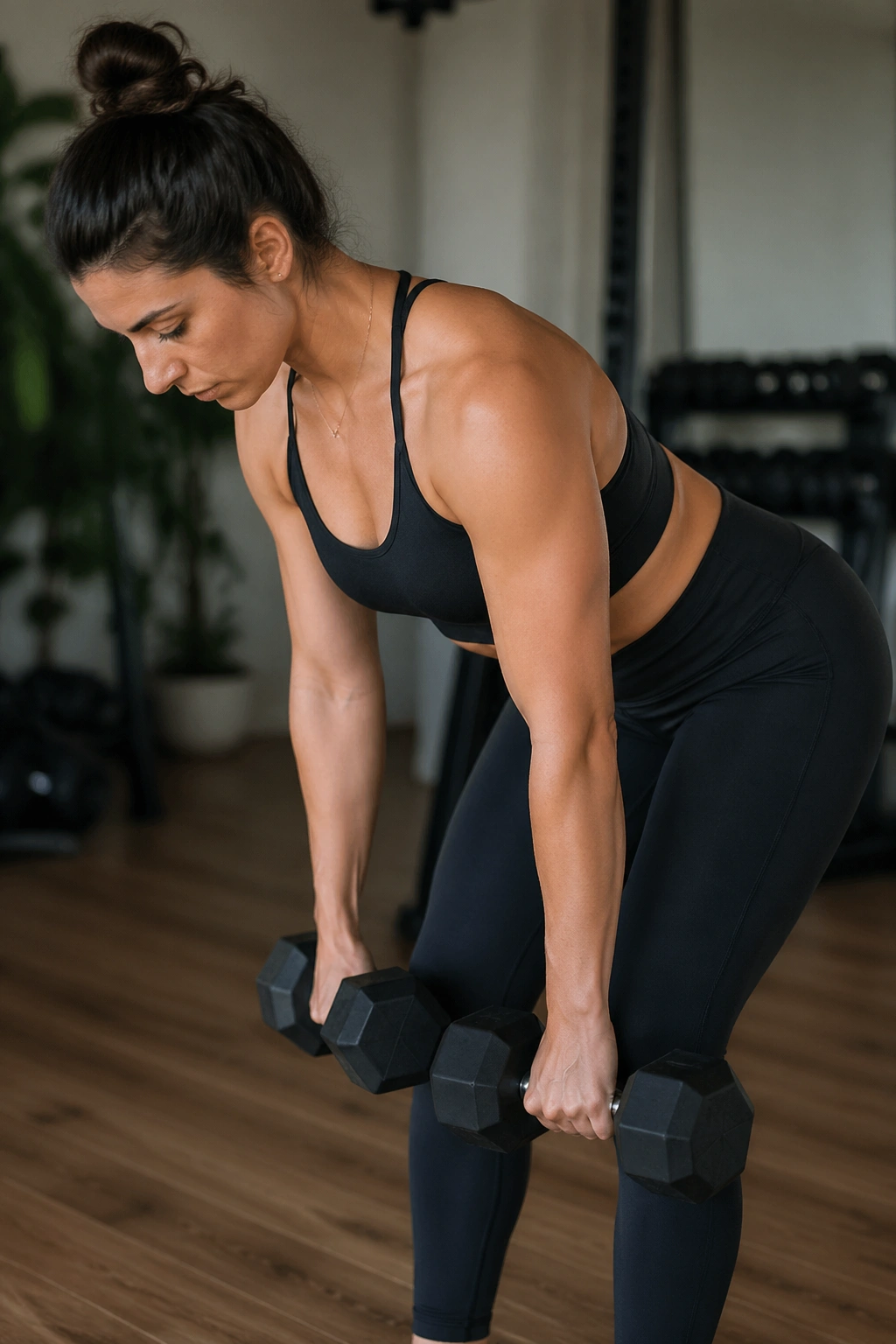
Why do so many people skip hinge work when they want a tighter middle? Because it doesn’t look flashy. Bad call. The Romanian deadlift trains the hamstrings, glutes, and back of the body, which helps you build more muscle mass and better posture without pounding your knees.
Keep a soft bend in your knees, push your hips back, and let the dumbbells slide down the front of your thighs. You should feel a stretch in the hamstrings before you feel your lower back doing the work. That stretch is the point.
Don’t turn it into a squat. The shins stay fairly vertical. The hips travel back. The spine stays long and neutral. If you can only lower the dumbbells a third of the way before your back rounds, that’s your range for now.
Best use
- 3 sets of 8 to 10 reps
- Lower for about 2 seconds
- Pause for a beat at the bottom
- Stand up by squeezing your glutes, not by yanking with your back
This move is one of the best dumbbell workouts at home for building the kind of strength that supports fat loss without wrecking your joints.
3. Dumbbell Thruster
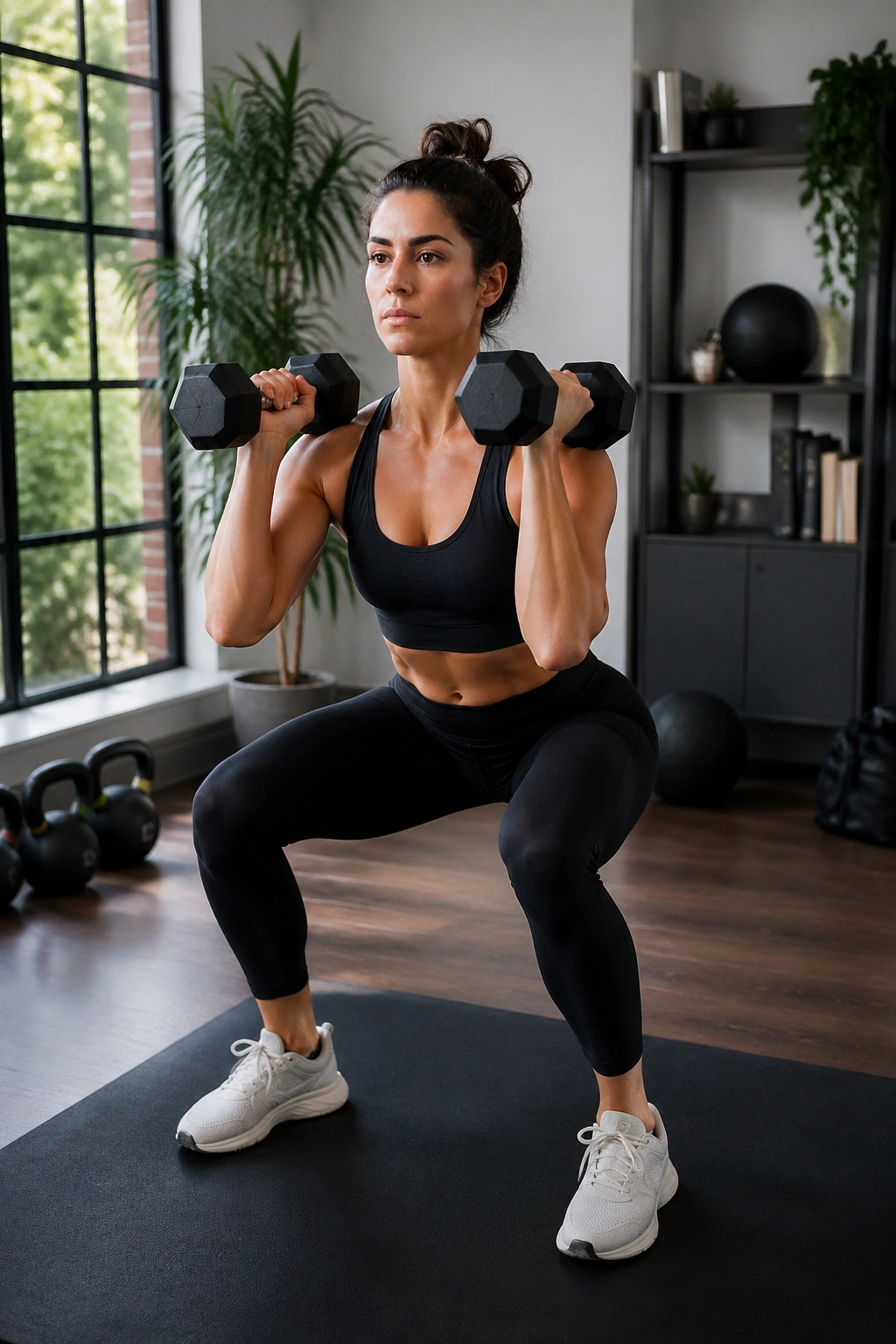
If you want one move that gets your whole body involved fast, this is it. A thruster is a front squat that flows straight into an overhead press, which means your legs, shoulders, arms, and midsection all have to cooperate under fatigue.
That transition matters. A squat alone is useful. A press alone is useful. Together, they turn into a sweaty compound lift that drives your heart rate up and keeps your torso braced the whole time.
Start with dumbbells at shoulder height. Drop into a squat, stand up hard, and press the weights overhead as you finish the drive. If the press turns into a weak little push, the weight is too heavy or the pace is too fast.
A good thruster should feel powerful, not chaotic.
Use a moderate load and aim for 6 to 10 reps. You want enough weight to feel challenged, but not so much that your shoulders flare up and your lower back arches at the top. That arch is a waste. Keep your ribs down and finish tall.
4. Renegade Row
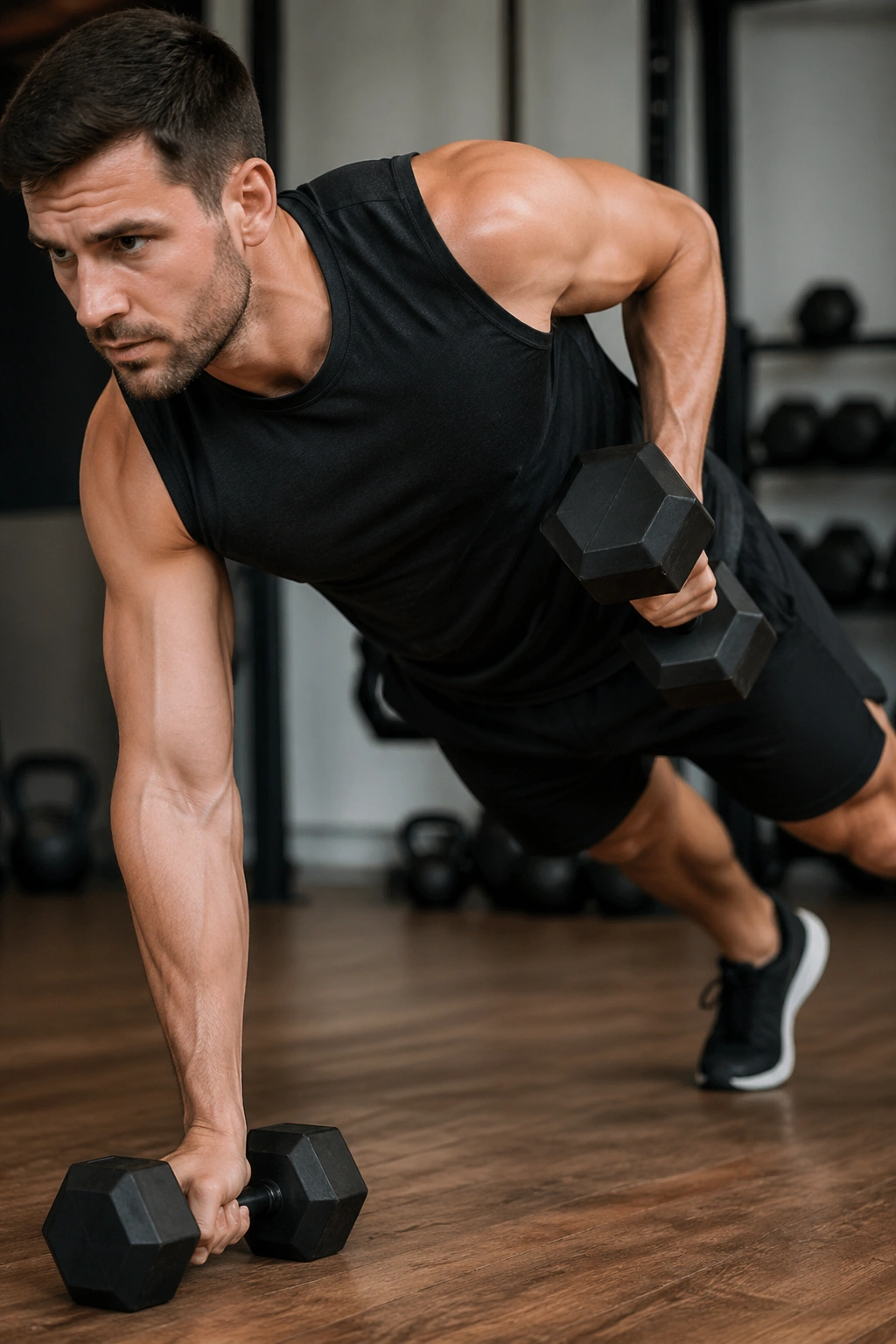
Your abs do not get a vote when you row from a plank. That’s why the renegade row earns its place in a belly fat workout list. It forces anti-rotation, which is a fancy way of saying your torso has to resist twisting while your arm works.
Set two dumbbells on the floor, get into a high plank, and plant your feet a little wider than hip-width. Row one dumbbell toward your ribcage, set it down with control, and switch sides. The hips should stay as quiet as you can make them.
What to watch for
- Keep the feet wide if your hips sway.
- Pull the elbow toward your back pocket, not straight up to the ceiling.
- Don’t let your head jut forward.
- Use lighter dumbbells than you think you need.
A lot of people rush this move and turn it into a hip wiggle with some pulling mixed in. That is not the point. Slow rows, clean reps, and a stiff plank will do more for your core than frantic movement ever will.
5. Suitcase March
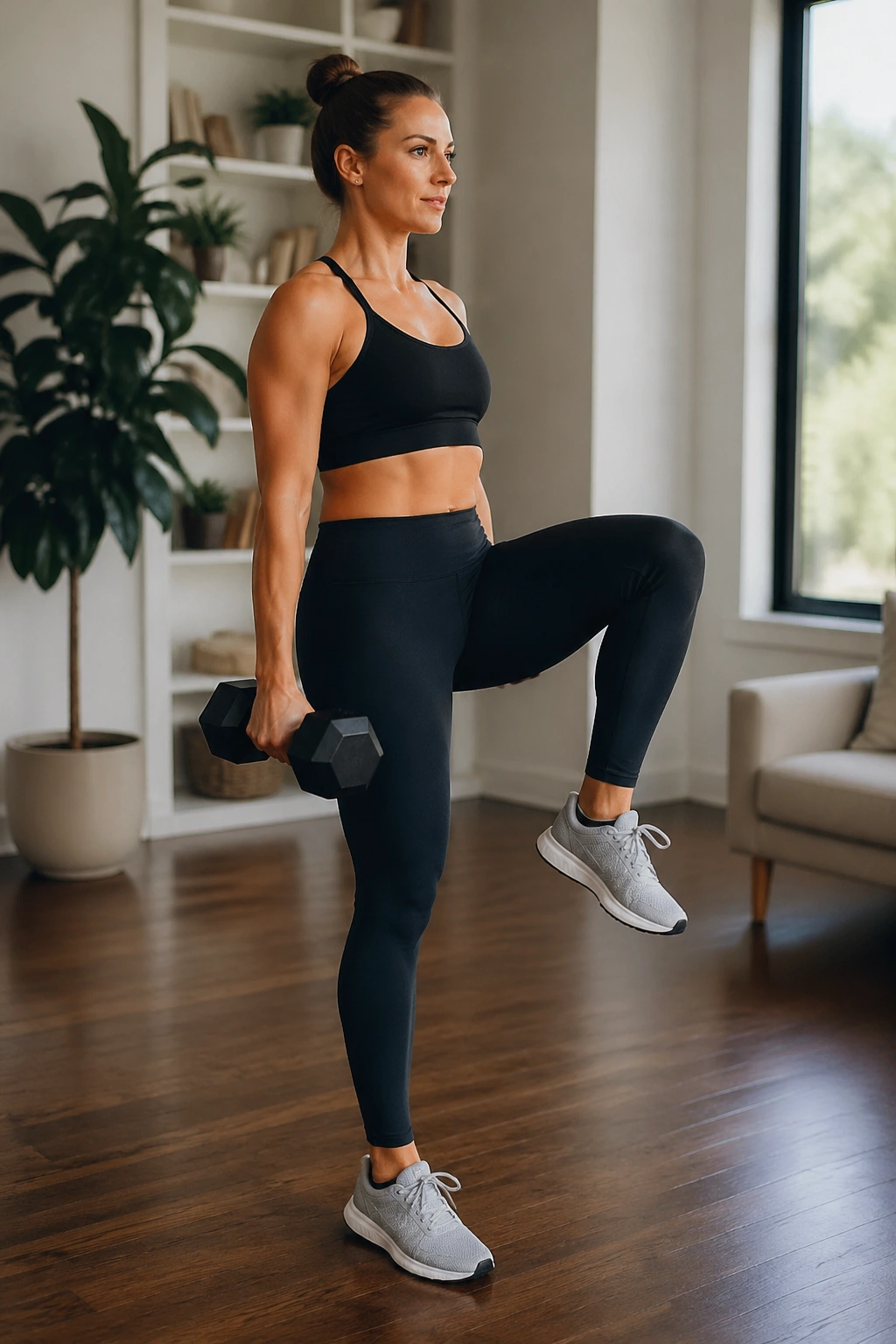
One dumbbell. One side of the body. That’s enough to make your obliques work hard.
The suitcase march is one of my favorite home moves because it sneaks up on people. Hold one heavy dumbbell at your side, stand tall, and march in place slowly. The goal is to keep your shoulders level while your body tries to lean toward the weight.
That sideways pull is exactly what your trunk has to resist. It trains the muscles that help keep your waist stable when you walk, carry groceries, or stand under load. Simple. Brutal. Effective.
Try 20 to 40 seconds per side. If you have room, walk forward and back for a few steps. If not, marching in place works fine. Don’t shrug the shoulder. Don’t lean. And don’t rush the steps like you’re late for a train.
A suitcase march is a small movement with a big payoff.
6. Dumbbell Woodchop
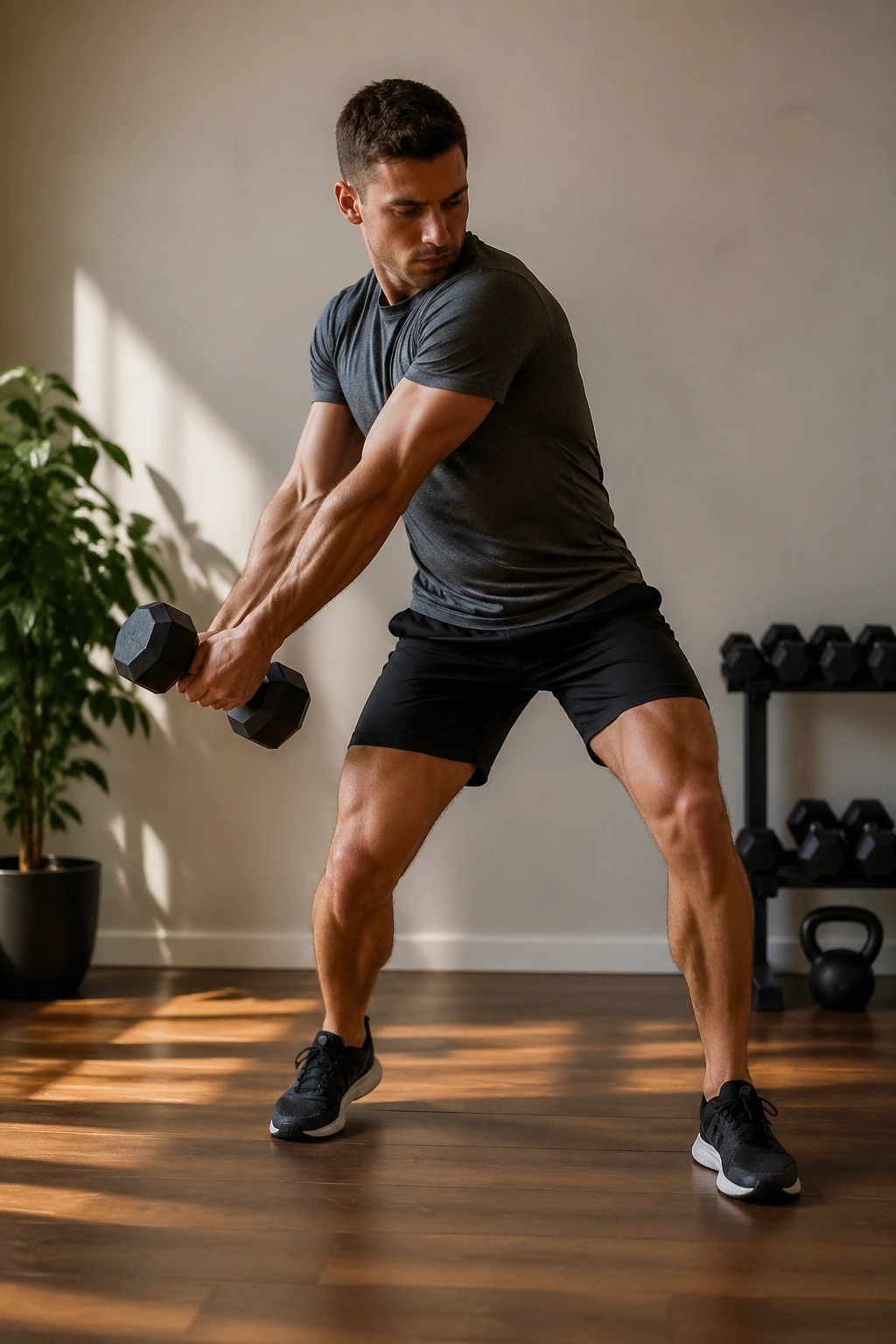
The woodchop is one of those exercises that looks easy until you try to do it with control. The motion is diagonal, which makes the obliques and deep trunk muscles fire while your shoulders and hips help guide the path.
Start with the dumbbell near one hip and finish high across the body, or reverse the direction and pull from high to low. Keep the movement smooth. The dumbbell should travel in a clean line, not a jerky arc.
Keep it honest
- Rotate the torso, but do not fling the weight with your arms.
- Let the hips turn a little if needed.
- Keep the abs tight as the weight moves across the body.
- Use 8 to 12 reps per side.
This is a useful move if your midsection work has been too straight up and down. Rotation matters. So does control. If you feel it mostly in your arms, slow down and shorten the range until your torso starts doing its share.
7. Reverse Lunge to Press
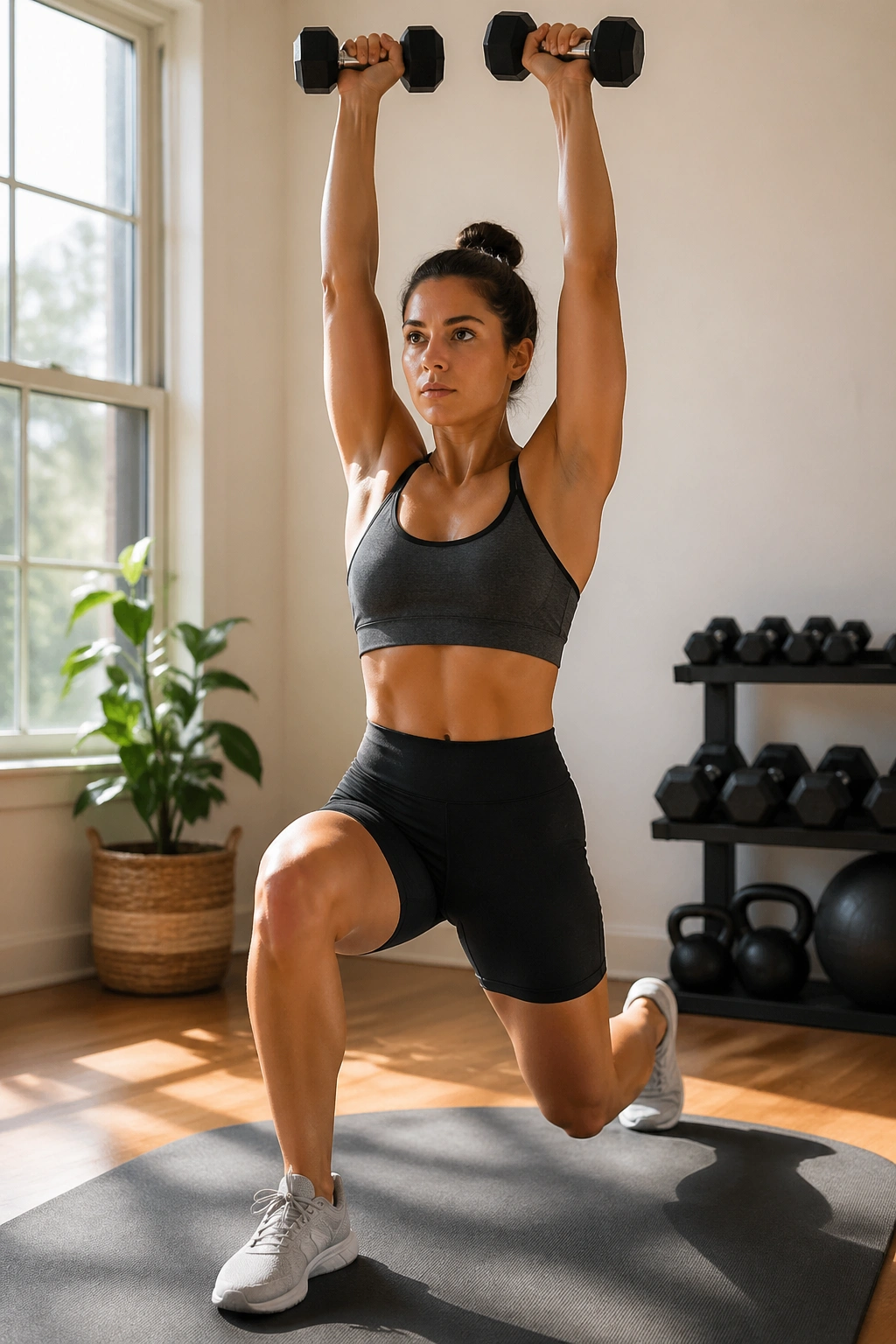
Single-leg work tends to expose weak spots fast, and that’s why it belongs here. A reverse lunge to press makes your legs stabilize one side at a time while your core keeps the body from tipping.
Step one leg back, sink into the lunge, then drive up to standing and press the dumbbells overhead. The back leg does not need to travel far. You want a clean step, a stable front foot, and a strong stand.
This move hits the lower body hard, but the press adds an upper-body finish that pushes the whole body into work mode. That combination raises the training cost without needing a mountain of equipment.
If your balance is shaky, do the lunge first, reset at the top, then press. That is not cheating. It’s smart. Use 6 to 8 reps per side with a weight you can control without wobbling.
One clean rep beats three ugly ones.
8. Dumbbell Dead Bug Press
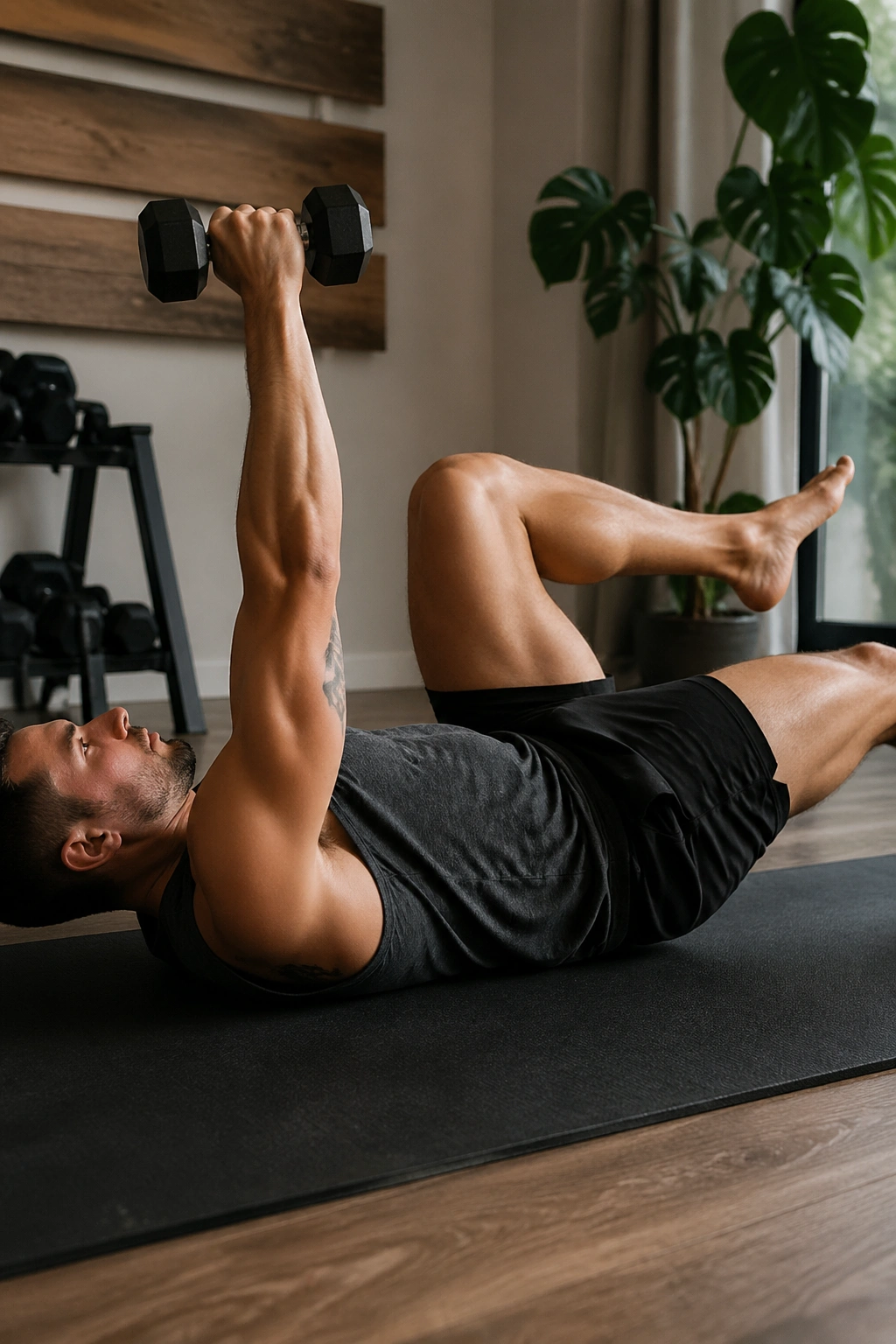
Want a floor exercise that actually teaches your abs to do their job? Use the dead bug press.
Lie on your back with one dumbbell held over your chest. Lift your legs into tabletop, then slowly extend one leg while pressing the dumbbell upward or holding it steady over the chest. The lower back should stay gently pressed into the floor. If it arches, back off.
This move is all about anti-extension. In plain English, it teaches your torso not to flare open when your limbs move. That skill matters more than people think, especially if your lower back tends to take over during standing lifts.
Good cues
- Move slowly enough to keep the lower back flat.
- Keep the ribs down.
- Breathe out as the leg extends.
- Use a light dumbbell at first.
Do 6 to 10 reps per side. If you want a stronger burn, slow the lowering phase and pause for one full breath at the hardest point.
9. Russian Twist
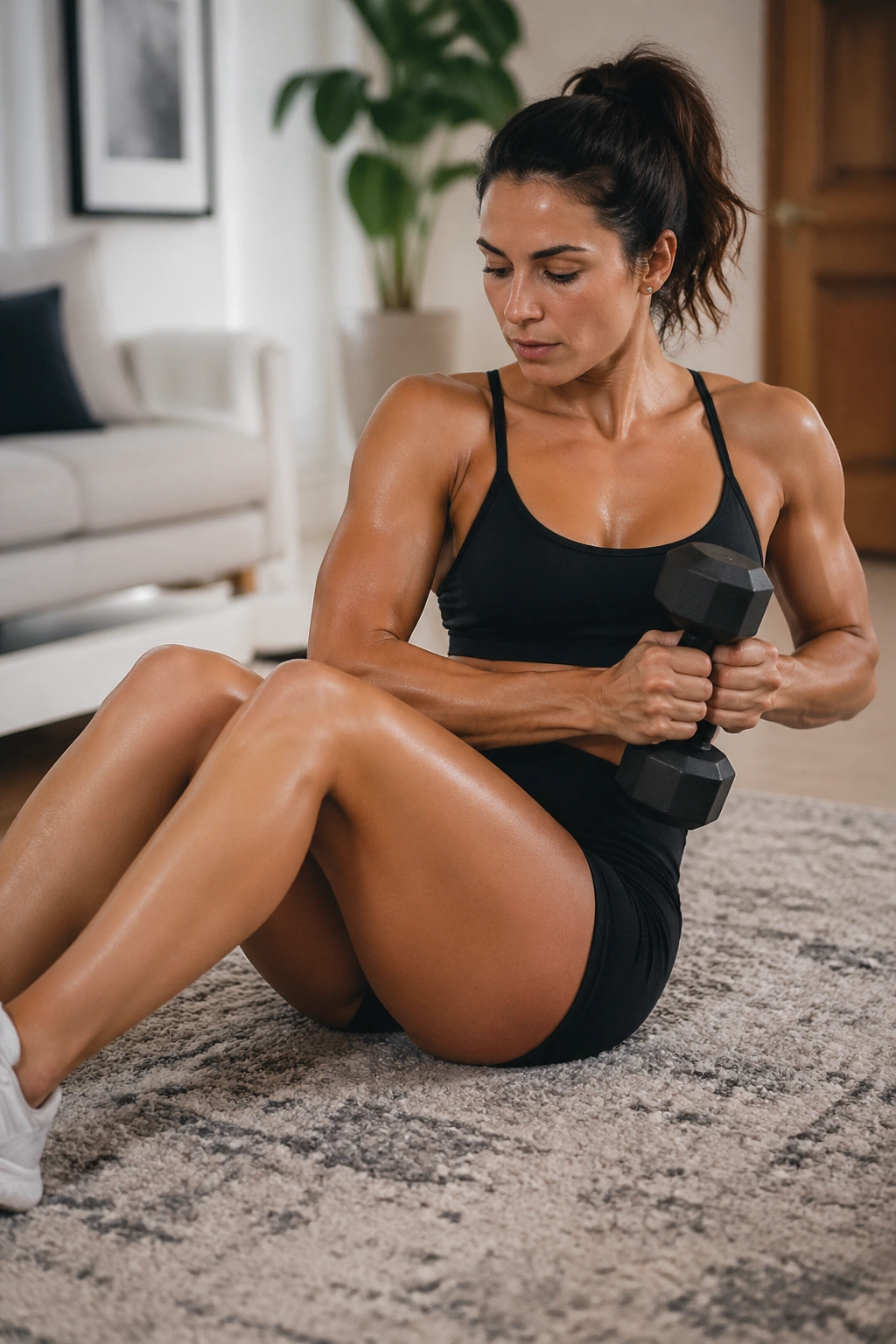
I’m not wild about sloppy Russian twists, but controlled ones have a place. The problem is not the exercise itself. It’s the way people fling their upper body side to side with a dumbbell that’s too heavy.
Sit on the floor, bend your knees, lean back a little, and hold one dumbbell close to your chest. Rotate your shoulders and ribcage from side to side while keeping the motion deliberate. Your arms are there to hold the weight, not to throw it around.
If your lower back hates this move, keep your feet down. If that still feels sketchy, skip it and use the dead bug instead. No exercise is magic enough to justify pain.
Try 10 to 16 controlled twists total. Small, clean rotations are better than huge sloppy swings. You want your obliques working, not your hip flexors taking over because you leaned too far back.
10. Dumbbell Pullover
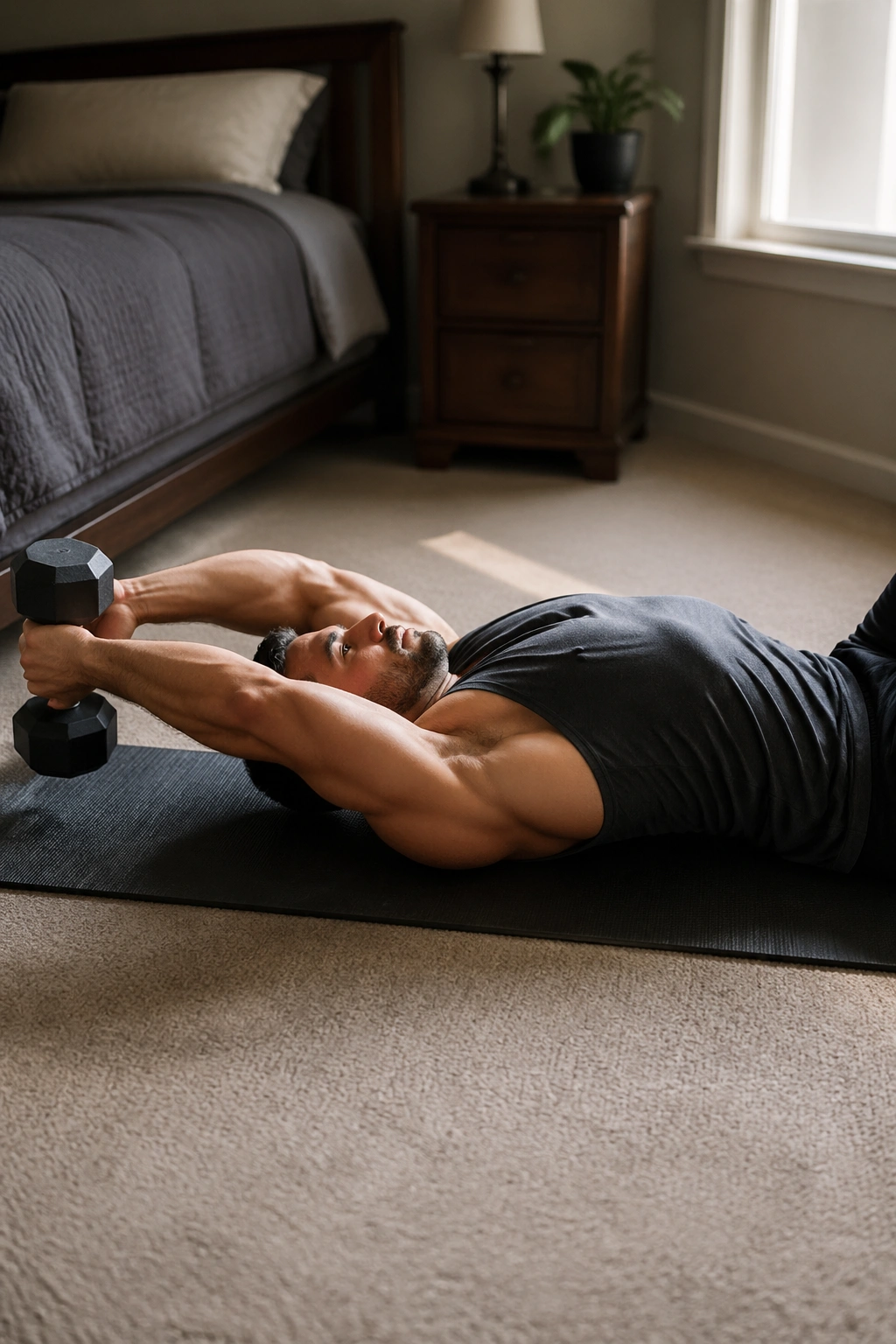
The dumbbell pullover gives you a lot more than chest work. Done well, it hits the lats, the upper back, the serratus, and the muscles around the ribs that help you stay tight through the trunk.
Lie on the floor or across a bench if you have one. Hold one dumbbell with both hands over your chest, then lower it back slowly until you feel the ribcage want to open. That is the cue to stop. You do not need to chase the floor with the weight.
The big mistake is letting the lower back arch like a bridge. Keep your ribs pulled down and your abs firm. If the back starts to lift, shorten the range.
This one feels smooth when it’s right. There’s a long stretch, a controlled pull back, and a quiet kind of tension through the torso. Use 8 to 12 reps with a weight you can lower without wobbling.
11. Floor Press with Glute Bridge
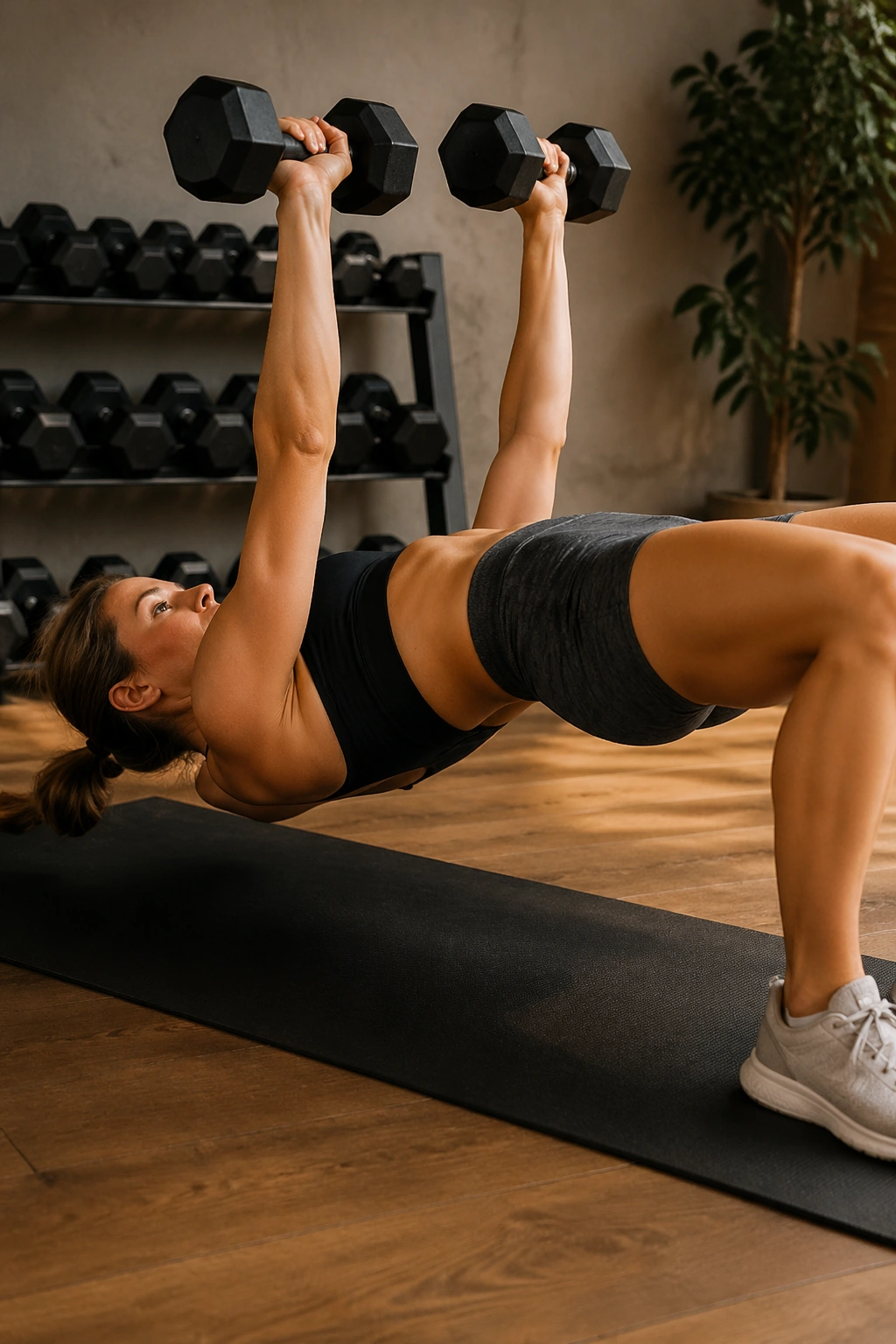
Two exercises for the price of one. That’s the beauty of the floor press with a glute bridge.
Set up on your back with dumbbells at chest level. Lift your hips into a bridge, squeeze the glutes, and press the weights up. The bridge keeps your lower body engaged while the press works your chest, shoulders, and triceps. Your core has to keep everything stacked while the body stays lifted.
This is a smart choice if you want a strong torso without needing a bench. The floor also limits how far your elbows drop, which can feel nicer on the shoulders for some people.
Hold the bridge the whole time. That’s the point. If your hips sag halfway through the set, rest and reset. Go for 8 to 10 reps and keep the movement crisp. A pause at the top makes the set much harder, which is usually a good thing.
12. Dumbbell Clean and Press
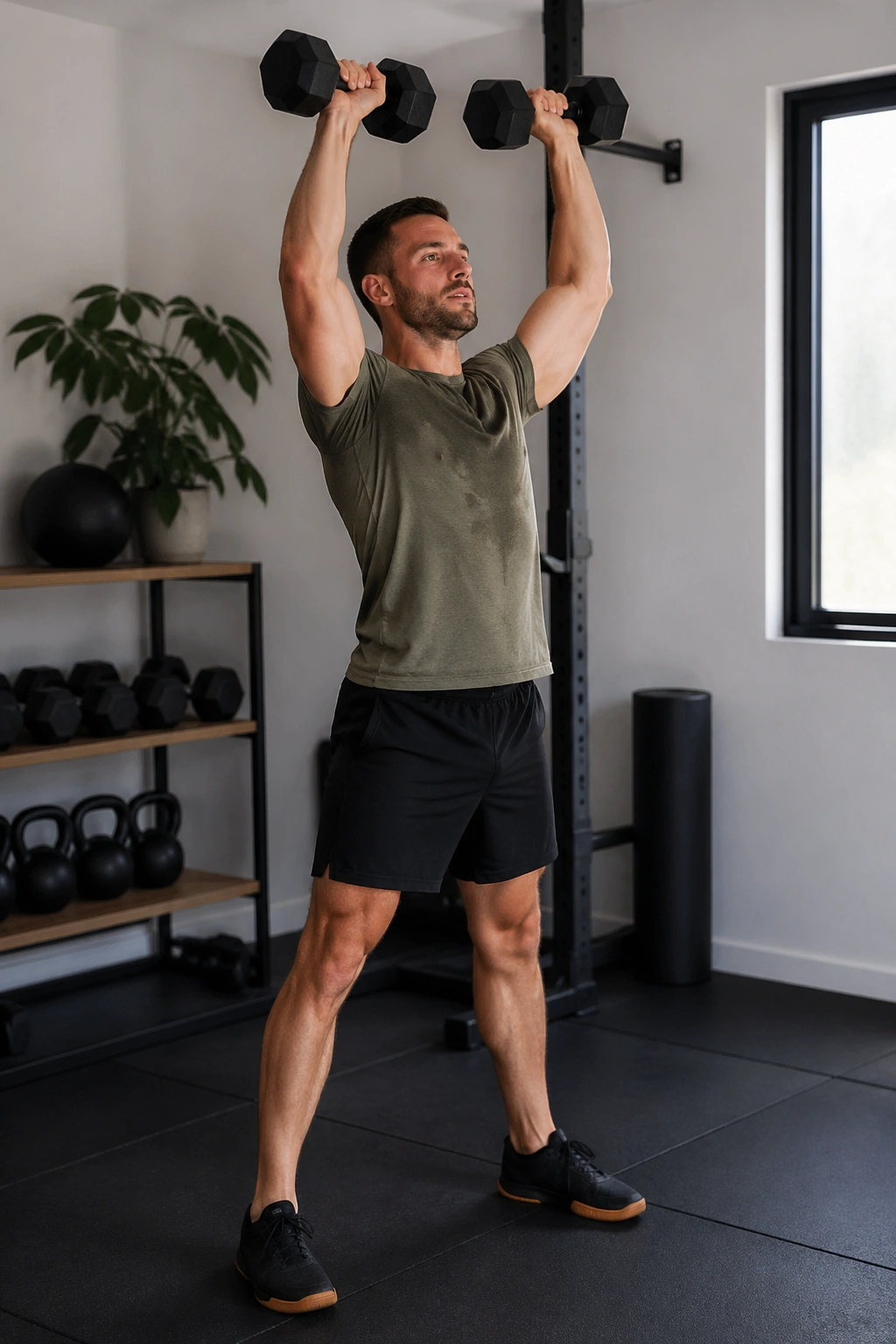
This is one of the fastest ways to make a home dumbbell workout feel like work. The clean and press is explosive, athletic, and a little humbling if you try to rush it.
Start with the dumbbell near your feet or between them. Pull it up to the shoulder in one clean motion, then dip and press overhead. If you’re using two dumbbells, both can move together. If one feels easier, alternate sides.
The clean portion teaches power from the hips. The press adds overhead strength. Together, they turn a simple piece of iron into a full-body conditioning tool.
Use a lighter weight than you would for a strict press. This is not the place to max out. 6 to 8 reps per side is plenty. If the dumbbell bangs into your forearm or you catch it awkwardly, slow down and clean it more cleanly. That’s not a pun. That’s a form fix.
13. Dumbbell Side Bend
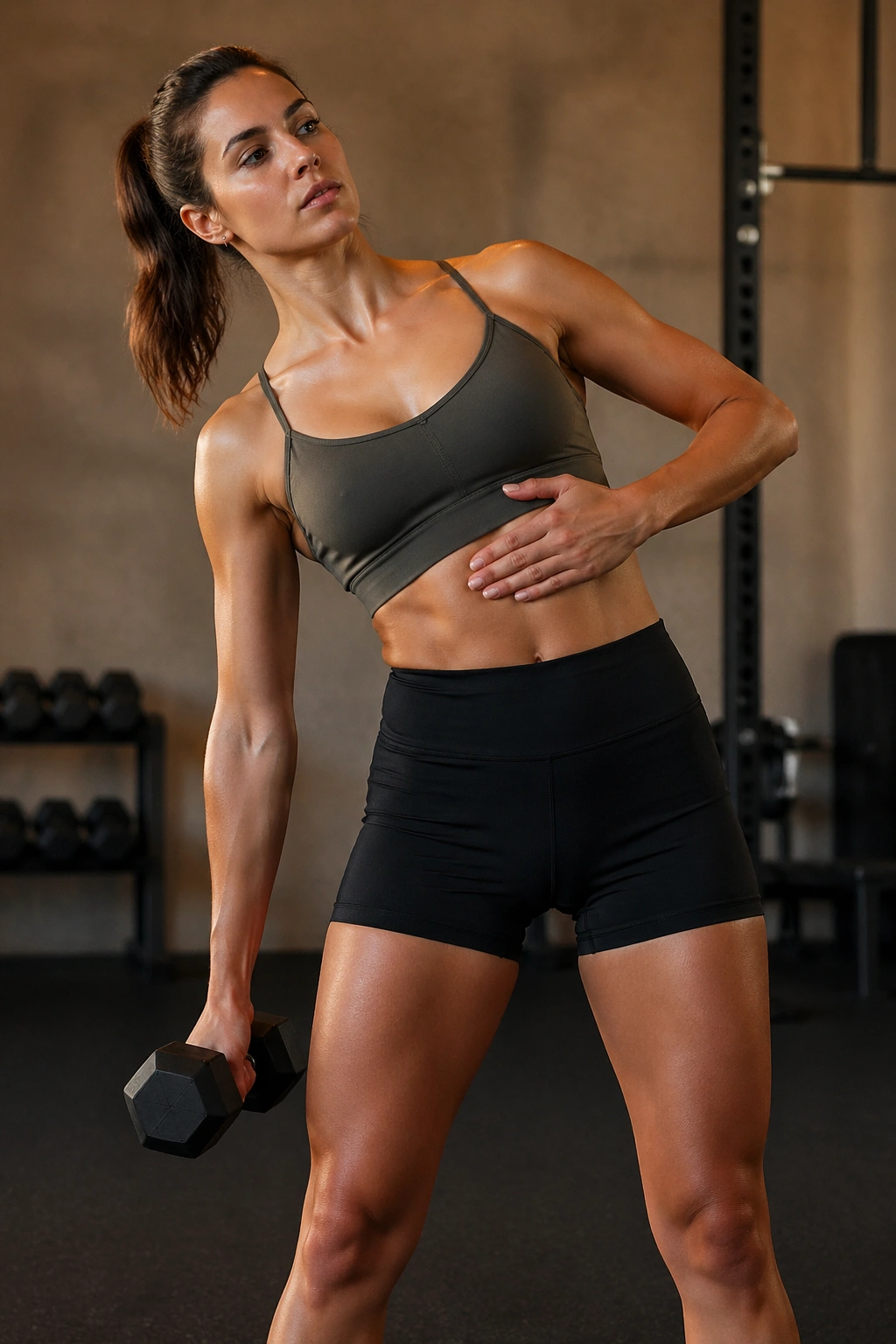
Side bends get a bad rap because people turn them into a lean-and-heave contest. That’s sloppy, not useful.
Stand tall with one dumbbell in one hand and the other hand at your side or on your ribcage. Let the weight slide down the outside of your thigh a few inches, then stand back up without leaning forward or backward. The goal is to move through the side of the torso, not to collapse at the waist.
Keep the load moderate. Heavy side bends can be fine, but only if your form is solid and your lower back is happy. Otherwise, they get ugly fast.
Watch for these mistakes
- Don’t shrug the weighted shoulder.
- Don’t twist as you lower.
- Don’t bend forward.
- Don’t bounce at the bottom.
Use 10 to 15 reps per side. The obliques should feel worked, but the movement should still look smooth. If it turns into a wobbly slide, the dumbbell is too heavy.
14. Plank Dumbbell Drag
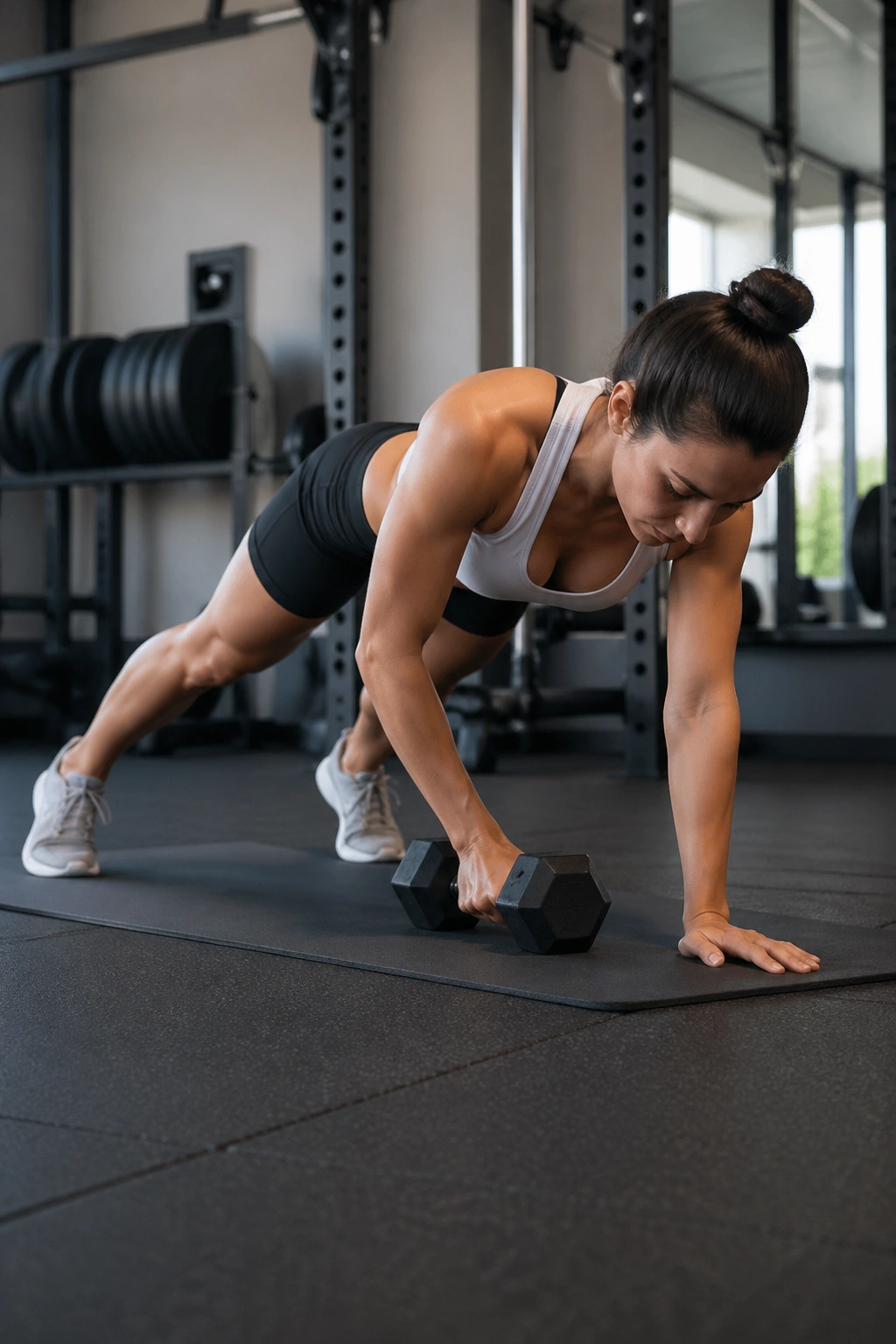
Can one dumbbell make a plank harder? Absolutely.
Set a dumbbell just outside one hand while you hold a high plank. Reach the opposite hand under your body, drag the dumbbell across to the other side, then switch hands. Your feet should stay a little wider than hip-width so you have a stable base. The challenge is resisting the twist.
This move is sneaky because the drag looks small. The work comes from keeping the hips square while one arm moves. That anti-rotation demand is exactly what your midsection needs if you want stronger, more useful core work.
Use a light dumbbell at first. A heavy one will jerk the plank around and turn the set into a mess. Try 6 to 8 drags per side. If your hips sway a lot, widen your stance and slow the tempo.
You should feel this in the abs, shoulders, and even the grip. That’s a good sign.
15. Front Rack March
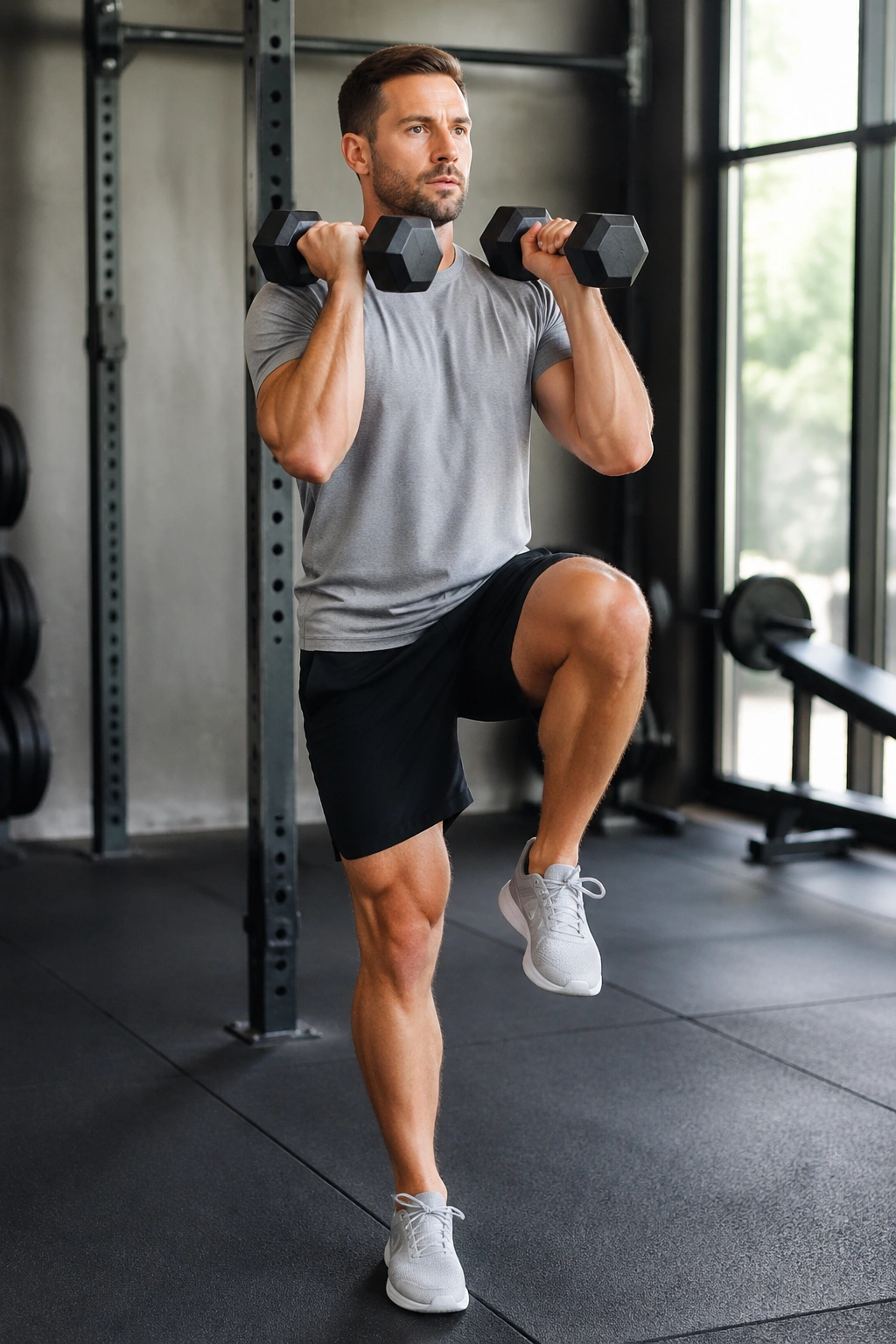
The front rack position makes your abs work before you even move. Hold two dumbbells at shoulder height, elbows slightly forward, and stand tall. Then march in place with slow, deliberate steps.
Your torso has to resist the pull of the weights while your legs keep moving. That combination is nasty in a good way. It builds trunk stability, upper-back strength, and breathing control at the same time.
This is one of those exercises that looks too easy until the first thirty seconds pass. Then your waist starts to light up. Don’t lean back. Don’t flare the ribs. Keep the shoulders relaxed even though the load is sitting up front.
Use 20 to 45 seconds at a time. If you want a harder version, hold the march at a slow, even pace instead of bouncing from foot to foot. Clean posture matters more than speed here.
16. Bent-Over Row
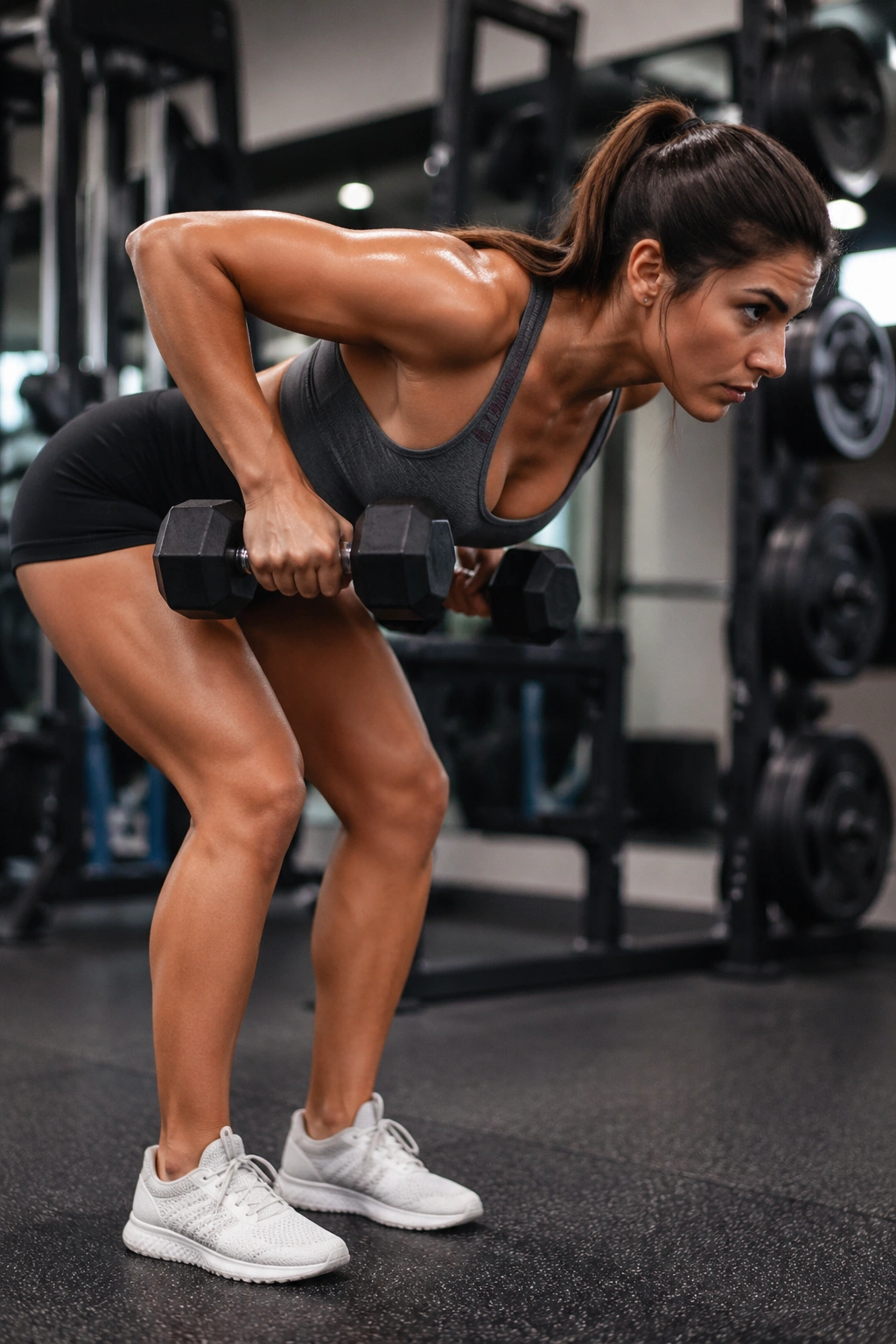
A lot of people skip rows when they chase a smaller waist. Bad move. Strong back muscles help with posture, and better posture changes how your midsection looks under clothing more than most people expect.
Hinge at the hips, keep your back flat, and row the dumbbells toward your hips or lower ribs. The pull should come from your back, not from a shrug at the top. If you yank the weights with momentum, you’re cheating the muscles that need the work.
Quick form check
- Hips stay pushed back.
- Neck stays long.
- Elbows travel close to the body.
- The dumbbells lower under control.
Use 8 to 12 reps. If your lower back gets tired before your upper back does, stand a little taller and reduce the load. This one is worth doing well. It supports nearly every other dumbbell workout in this list.
17. Overhead Carry
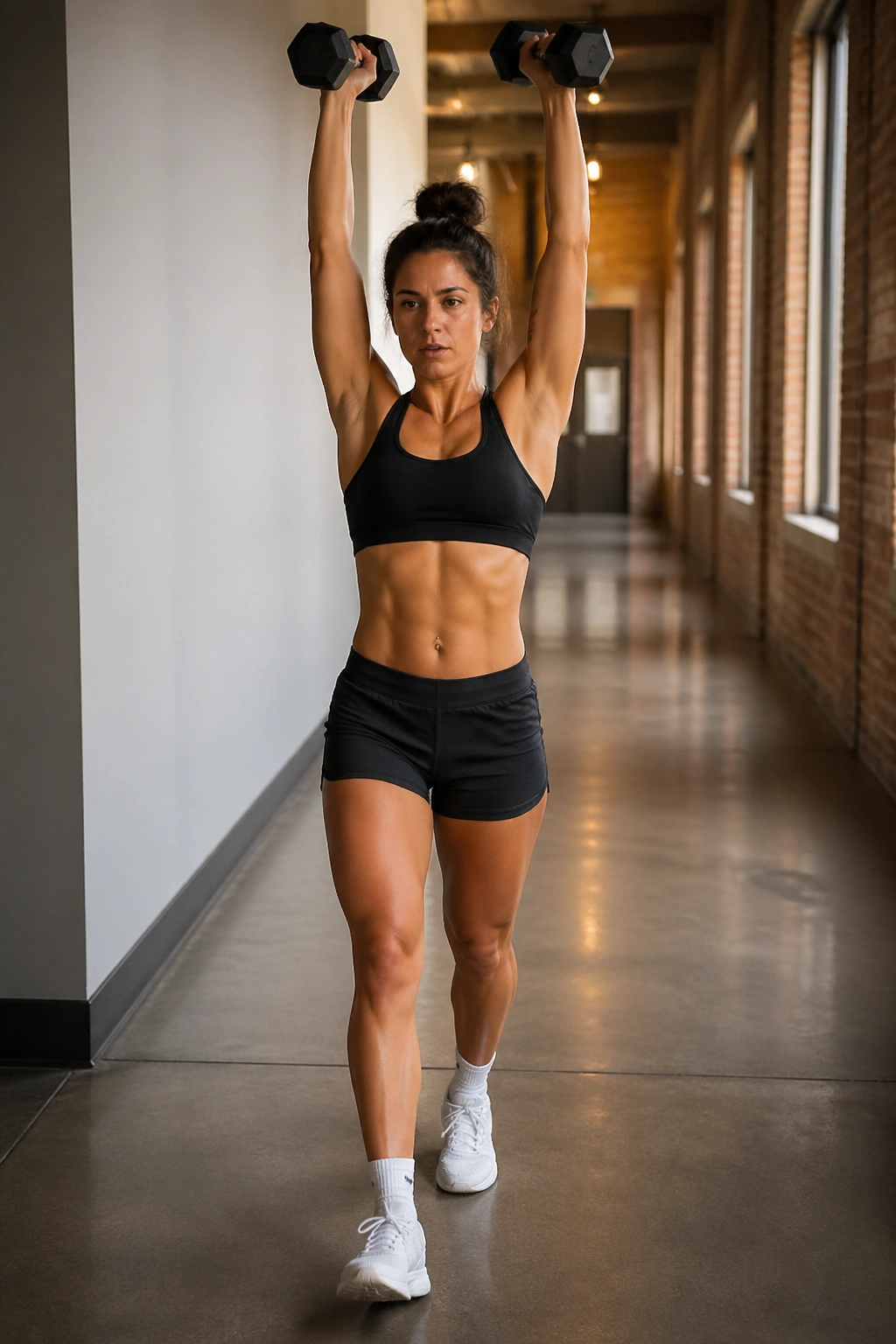
Walking with weight overhead looks simple until you try it. Then you find out how much your torso wants to lean, ribcage wants to flare, and shoulder wants to wobble.
Press one dumbbell overhead and walk slowly in a straight line, or march in place if space is tight. Keep the biceps near the ear, the ribs down, and the steps small. The body should feel stacked, almost like you’re balancing a book you don’t want to drop.
This is a killer finisher because it mixes shoulder stability with core control and breathing under load. If one arm overhead feels too unstable, use a lighter dumbbell. If both arms overhead feel easier, try a single-arm carry and switch sides.
Aim for 20 to 30 seconds per side or 30 to 45 seconds with both arms. Your abs will know they’ve been there. So will your shoulders.
18. Turkish Get-Up
The Turkish get-up is less a single exercise than a whole sequence of positions, and that’s why it belongs at the end of this list. It asks your body to move from the floor to standing and back again while holding a dumbbell overhead. That means shoulder stability, trunk control, hip strength, and coordination all show up at once.
Start with the dumbbell locked out over one shoulder while you lie on your back. Roll to your elbow, then to your hand. Bridge the hips, sweep the leg through, come to a kneel, and stand. Then reverse the whole path. Slow is the point. Messy speed is useless here.
A clean way to learn it
- Practice the first two transitions with no weight.
- Use a very light dumbbell at first.
- Keep your eyes on the weight until you’re stable.
- Break the movement into pieces if needed.
If you want one move that teaches control better than nearly anything else, this is it. It’s not flashy. It’s not quick. It does, however, make your whole body work, and that kind of work carries over to the rest of your training.
If you build your routine from six or seven of these exercises — one squat, one hinge, one press, one pull, one carry, one floor drill — you’ve got a better at-home dumbbell plan than most people ever follow.
Keep the sets honest, rest a little less than feels comfortable, and let the dumbbells do more than your abs mat ever could.
