



Most people approach abdominal training with a misunderstanding that borders on tragic. They spend hours grinding through ineffective crunches, hoping that if they just do enough repetitions, the extra padding around their midsection will somehow vanish. Here is the reality check: you cannot spot-reduce fat. You can, however, build a remarkably strong, functional core that sits beneath that layer of fat, eventually revealing a sculpted midsection once your body composition shifts.
The goal here is not to just “work the abs.” It is to challenge the entire trunk—the rectus abdominis, the obliques, the transverse abdominis, and the lower back. This collection of muscles is designed to stabilize your spine, facilitate rotation, and resist force. When you train them with that purpose in mind, you stop treating them like accessories and start treating them like the structural engine of your body.
Stop looking for the magic bullet. If you want results, you need a combination of controlled, slow-burn movements that force your core to fight gravity and high-intensity motions that spike your heart rate. This list covers twenty distinct, purposeful exercises that will challenge your endurance and build real, tangible strength.
1. Plank
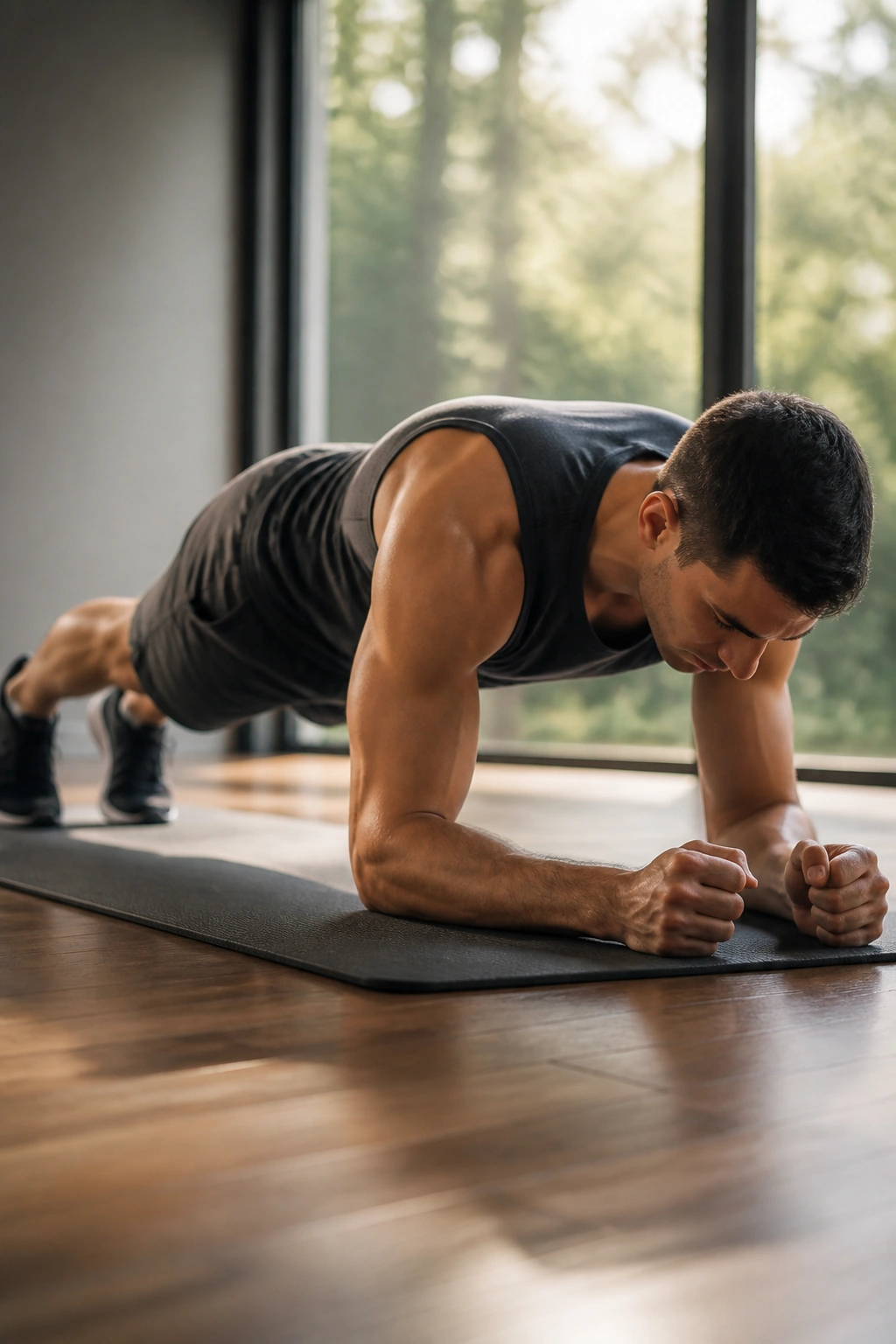
The plank is the absolute baseline of core stability. If you cannot hold a proper plank, you have no business doing more advanced dynamic movements. Most people get this wrong by letting their hips sag toward the floor or hiking them too high, which puts unnecessary strain on the lower back rather than engaging the deep abdominal muscles.
How to Execute a Proper Plank
- Position: Start on your forearms with your elbows directly under your shoulders.
- Alignment: Extend your legs behind you, resting on your toes. Your body should form a perfectly straight line from your head to your heels.
- Engagement: Squeeze your glutes and tighten your core as if you are bracing for a punch. This prevents the sagging lower back.
- Hold: Keep your neck neutral by looking at a spot on the floor just beyond your hands. Do not let your head hang.
Pro tip: If you aren’t shaking by the 45-second mark, you probably aren’t squeezing your muscles hard enough. Imagine pulling your elbows toward your toes to create tension throughout your entire torso.
2. Bicycle Crunches
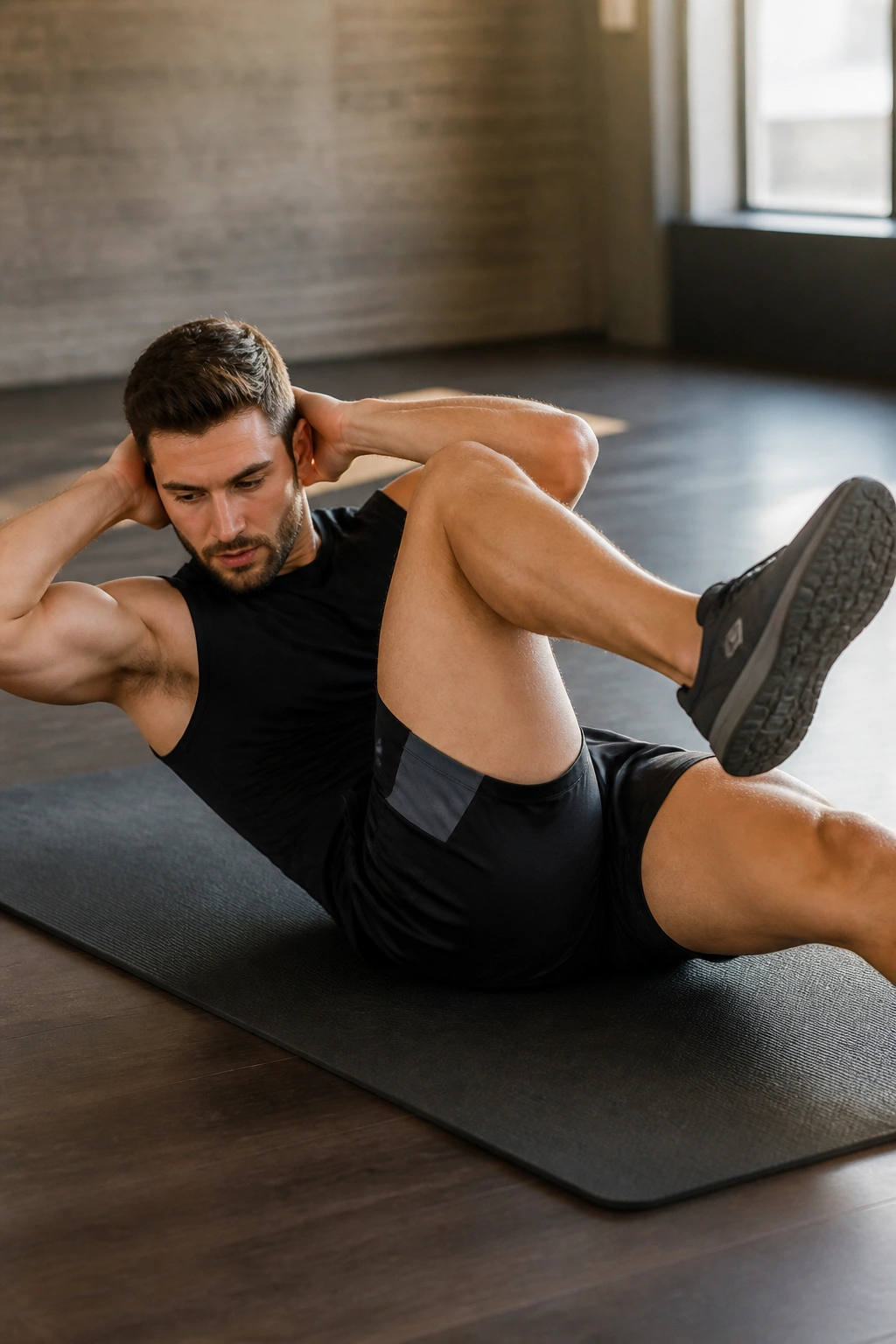
These are arguably the most effective movement for targeting the obliques while still hitting the rectus abdominis. The secret is the speed—or rather, the lack of it. When people rush through bicycle crunches, they use momentum to swing their bodies. That is a waste of time. Slowing down forces your core to control the rotation, which is where the real muscular fatigue happens.
Imagine your upper body is a piece of machinery that needs to move in a slow, controlled arc. As you lift your shoulder, rotate your torso so the opposite elbow points toward the knee. Do not just pull your neck with your hands. Your hands are there for light support behind your head, not to crank your cervical spine forward. If you feel this in your neck, you are doing it wrong. Focus on the oblique muscle engaging to pull your torso around. You should feel a distinct burn in the sides of your waist after ten reps.
3. Mountain Climbers
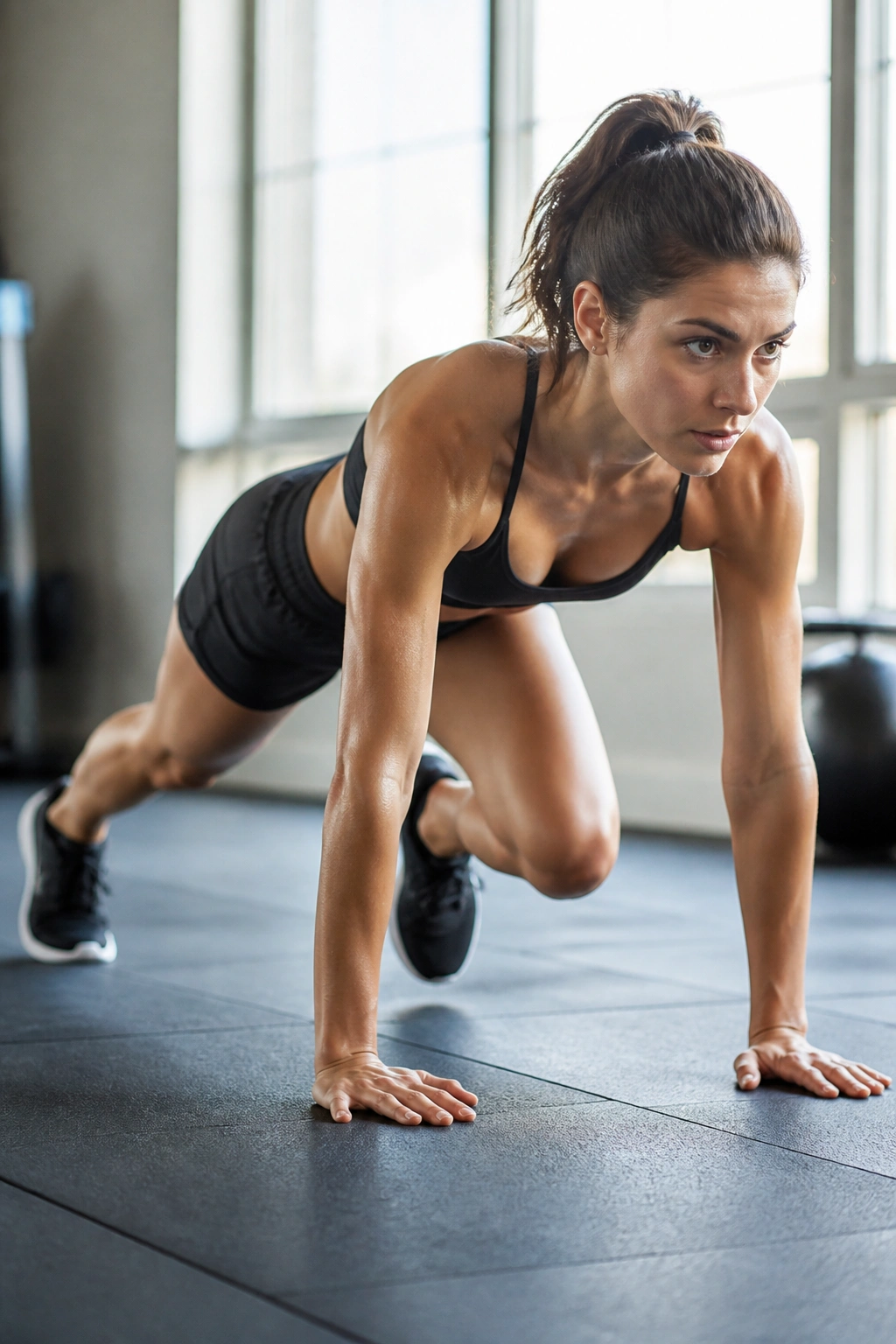
Why do these work so well for core training? Because they combine a static plank hold with active, high-intensity knee drives. Your core has to constantly adjust to keep your spine stable while your legs are moving beneath you.
Getting the Rhythm Right
- Hand placement: Keep your palms flat on the floor, directly under your shoulders.
- Movement: Drive one knee toward your chest, then switch in a fluid, running motion.
- The core rule: Your hips should not bounce up and down. If your butt is bobbing, your core is not engaged. Keep your torso completely level.
Why Speed Isn’t Everything
Beginners often prioritize speed, turning this into a frantic cardio exercise where form falls apart. Instead, aim for a steady, controlled pace where you pause for a split second at the top of the knee drive to squeeze your abs. This creates a much higher level of muscular tension than simply running in place.
4. Leg Raises
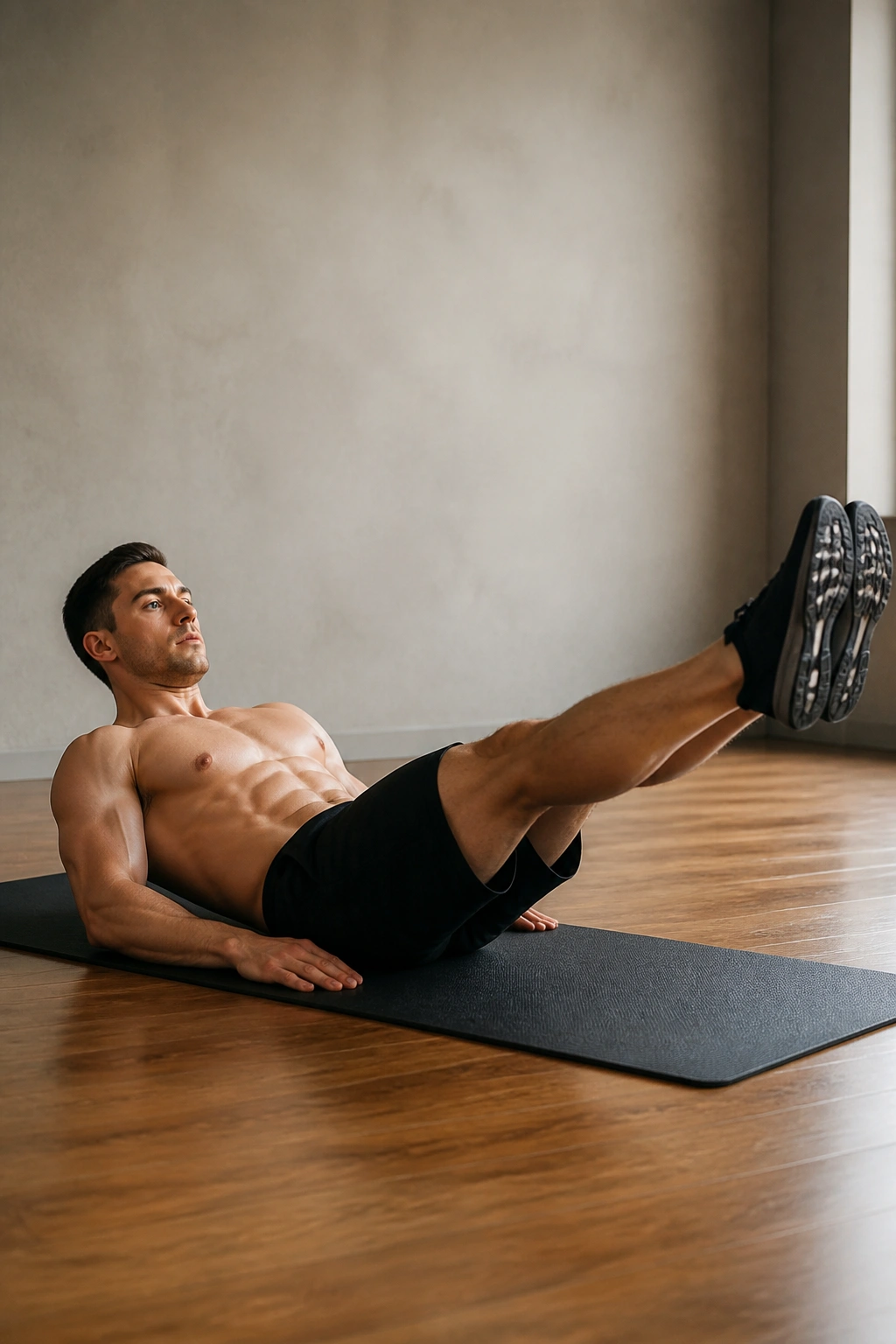
Lying flat on your back might look like you are resting, but leg raises are brutal if executed correctly. The biggest mistake people make here is allowing their lower back to arch off the floor as they lower their legs. That arch is a sign that your hip flexors are doing all the work and your abs have checked out.
To fix this, think about pressing your lower back into the ground with the same force you would use to hold a dollar bill underneath your spine. If you can’t keep your back flat, don’t lower your legs all the way to the floor. Lower them only to the point where your back starts to arch, then pull them back up. This range-of-motion restriction actually makes the exercise harder because it keeps the tension on your lower abs for the entire set.
5. Russian Twists

This movement is all about rotational torque. You need to sit on the floor with your knees bent and your torso leaning back at a 45-degree angle. By lifting your feet off the floor, you immediately force your core to fight for balance, which is the key to this movement.
If you are using a weight—like a medicine ball or a dumbbell—do not just move the weight from side to side. You need to follow the weight with your eyes and rotate your entire upper body. The movement comes from the torso, not just the arms. If you keep your chest facing forward and only move your arms, you are missing the entire point of the exercise. Feel the twist deep in your obliques.
6. Dead Bug
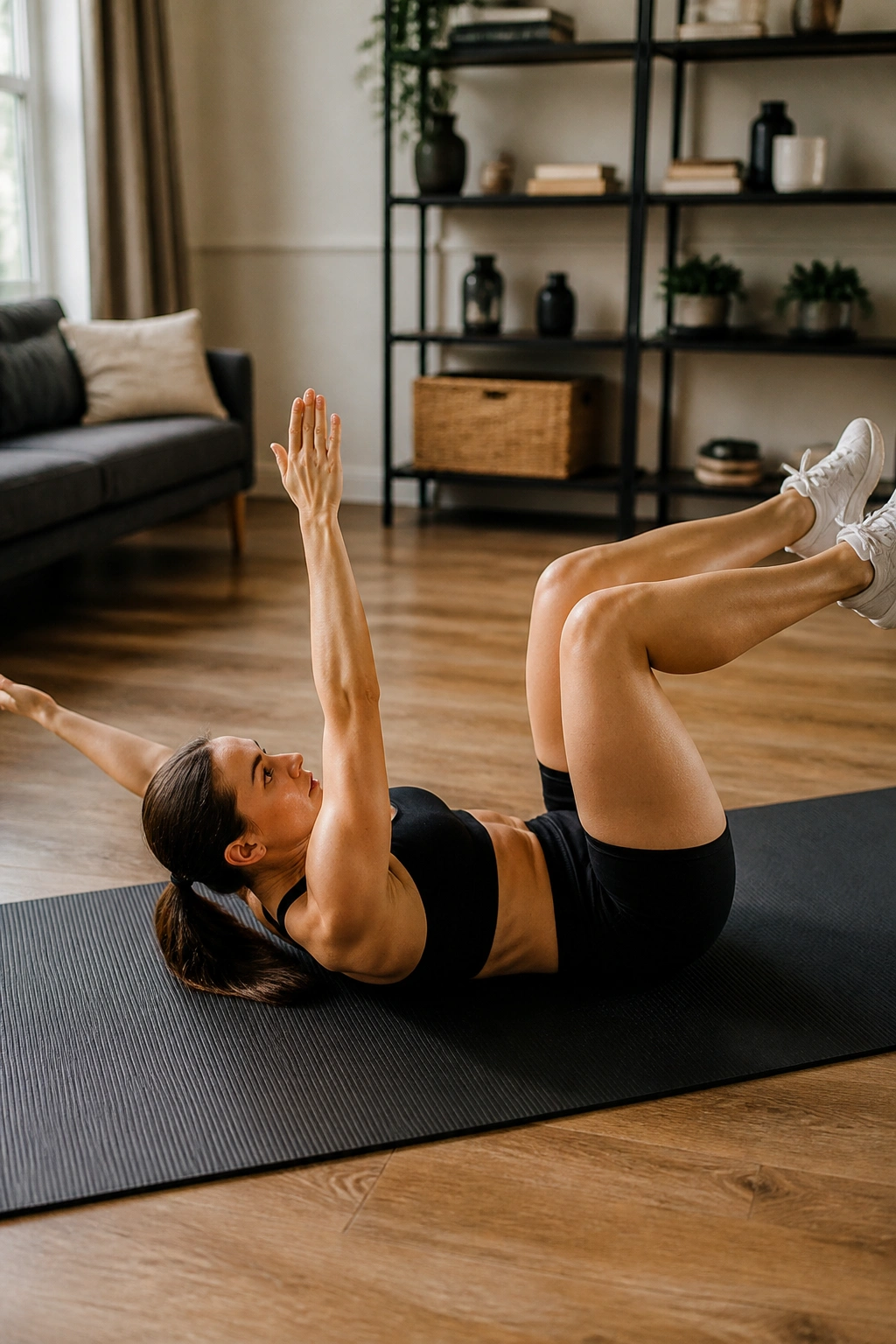
The name sounds ridiculous, but the movement is a masterclass in anti-extension core strength. It teaches you how to keep your spine stable while your limbs are moving, which is a fundamental requirement for everything from heavy lifting to daily life.
The Mechanics
- Lie on your back, arms extended toward the ceiling and legs in the air, knees bent at 90 degrees.
- Simultaneously lower your right arm behind your head and extend your left leg forward.
- Return to the start and switch sides.
The challenge is keeping your lower back pinned to the floor the entire time. As your limbs extend, your back will naturally want to arch away from the floor. Fight that urge. The closer your limbs get to the floor, the harder the abs have to work to stop the spine from moving.
7. Flutter Kicks
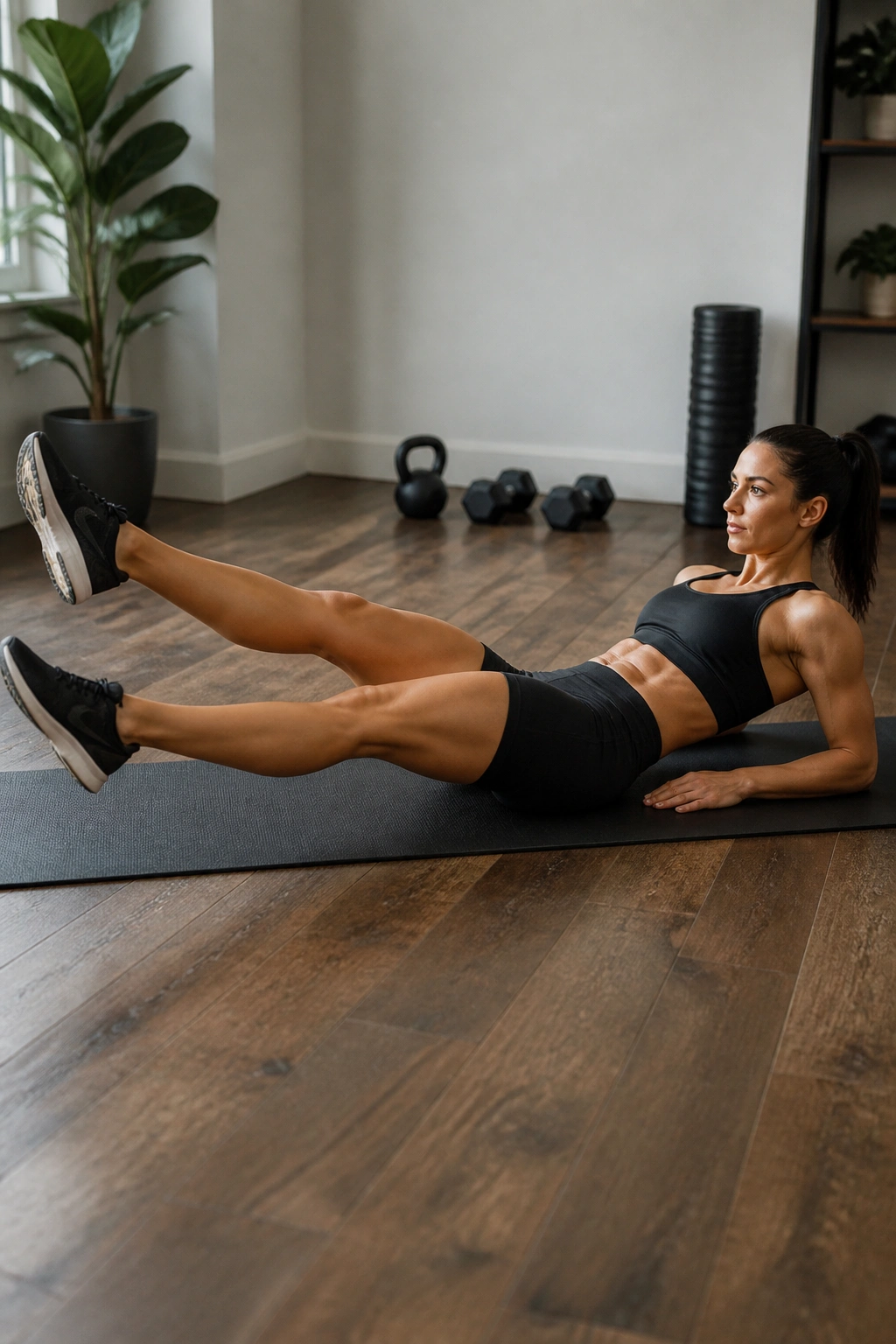
This is a low-impact, high-endurance movement that targets the lower abdominals. The trick is to keep your legs low to the ground. If you lift them too high, you stop challenging the core and start engaging the hip flexors.
Keep your legs straight, toes pointed, and kick in small, rapid movements. Your lower back must stay glued to the floor. If you find your back popping up, put your hands underneath your glutes for extra support. Don’t let the fatigue cause you to hold your breath; you need consistent oxygen to keep the burn going in your lower gut.
8. Hollow Body Hold
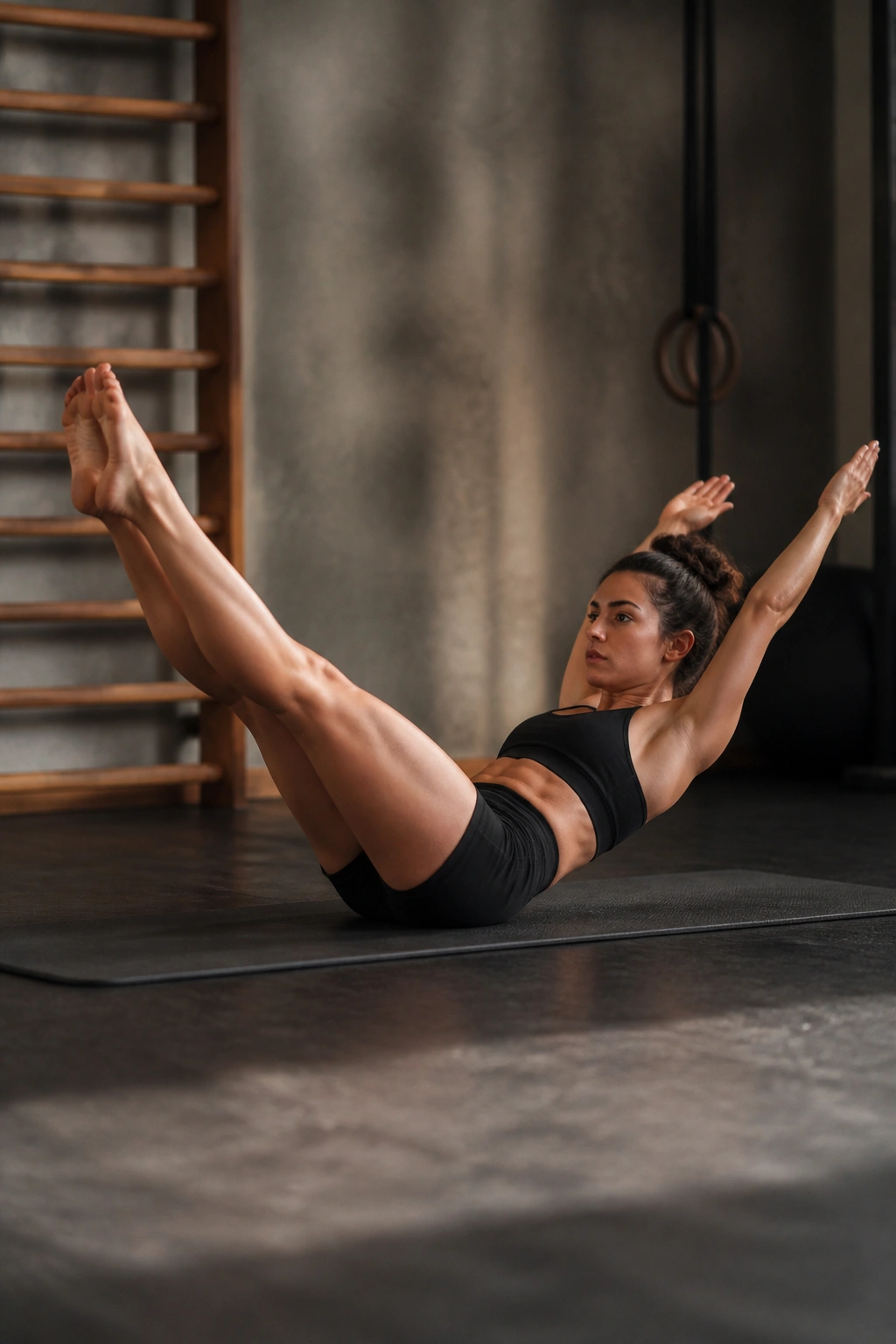
Gymnasts use this hold to develop rock-solid stability, and it is arguably the best “no-equipment” core exercise in existence. It is essentially a plank on your back.
To get into position, lie flat and lift your shoulders and legs simultaneously until your body forms a shallow “banana” shape. Your lower back is the only part of your body touching the floor. If you can do this for 30 seconds with perfect form, your core is stronger than most people in the gym. The shaking will start almost immediately. Embrace it. If your lower back comes off the floor, your core strength has failed, and it is time to break.
9. Side Plank
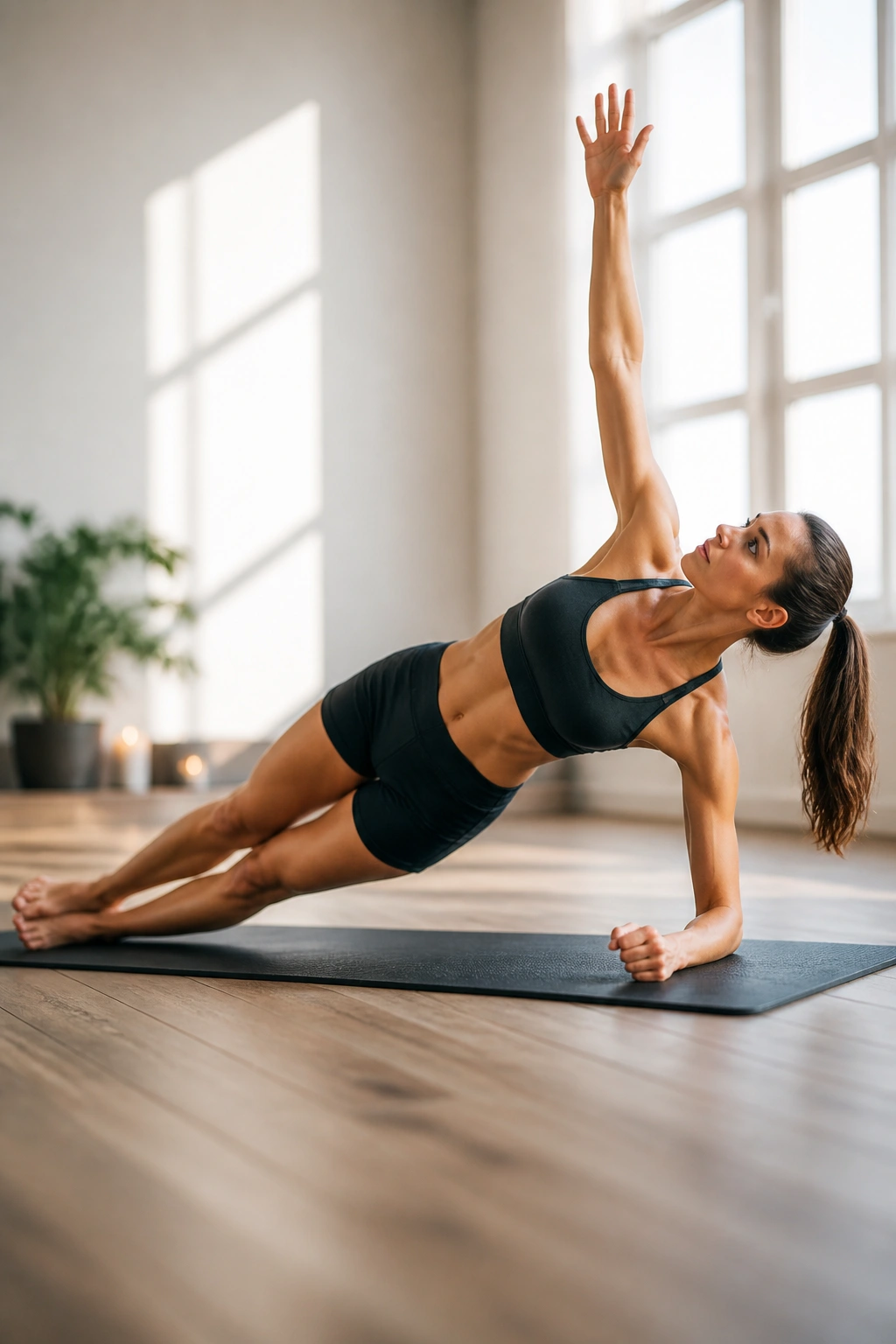
If you are only doing standard front planks, you are neglecting the sides of your body. The side plank targets the obliques and the quadratus lumborum—a deep muscle in the lower back that is crucial for spine stability.
Instead of just holding the position, try lifting your top leg or “threading the needle” by reaching your top arm under your torso and back up to the ceiling. This adds a rotational element that challenges your stability much more than a static hold. Keep your hips lifted; do not let them sink toward the floor.
10. Reverse Crunches
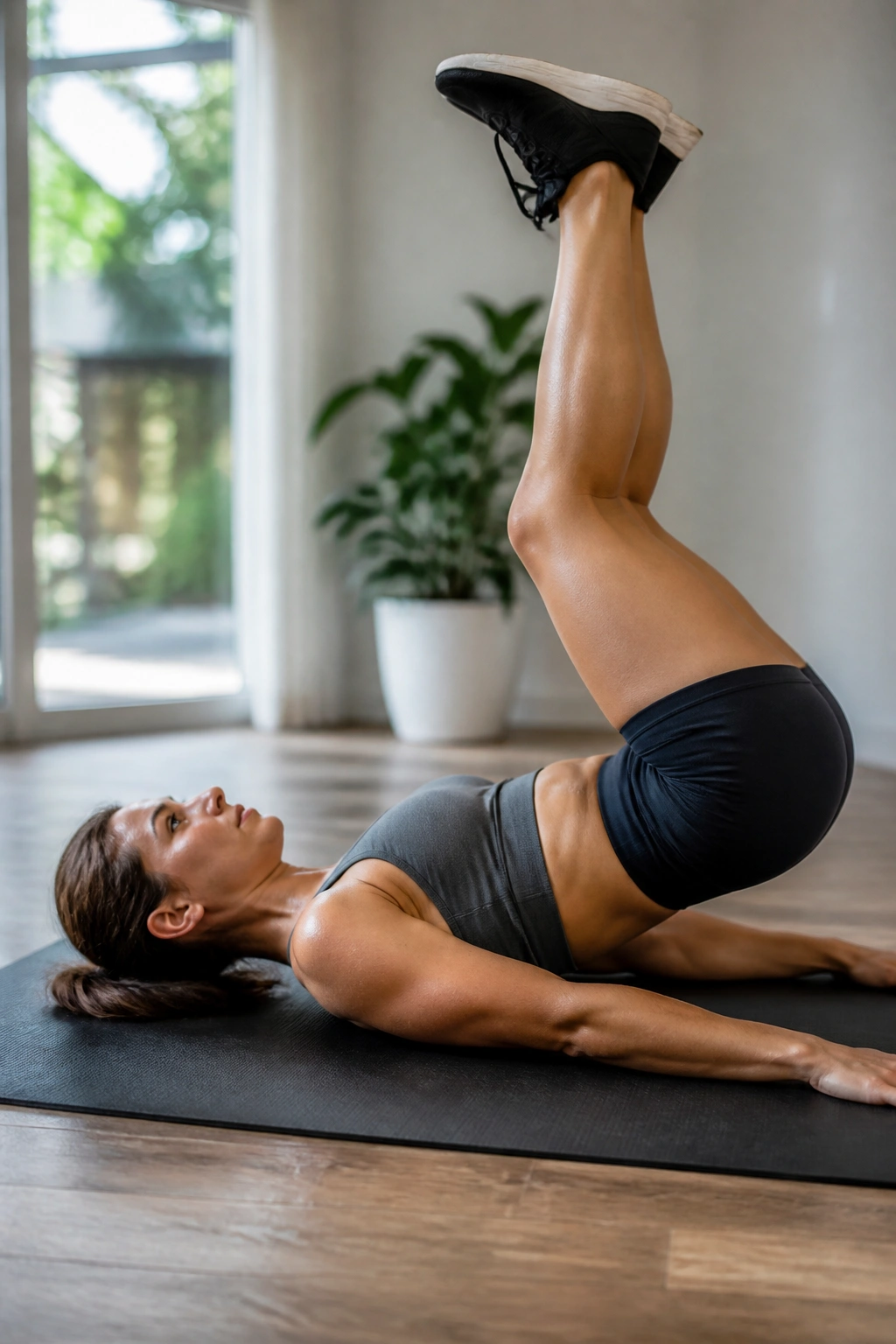
Standard crunches put a lot of pressure on the spine because they require you to pull your head forward. Reverse crunches flip that logic, bringing your pelvis to your ribcage instead.
Start on your back with your legs in the air. Use your lower abs to curl your hips off the floor, bringing your knees toward your chest. The range of motion is small—maybe only a few inches—but the focus should be on the squeeze. Do not use your momentum to kick your legs; think about rolling your pelvis upward as if you were trying to tuck your knees into your chin.
11. V-Ups
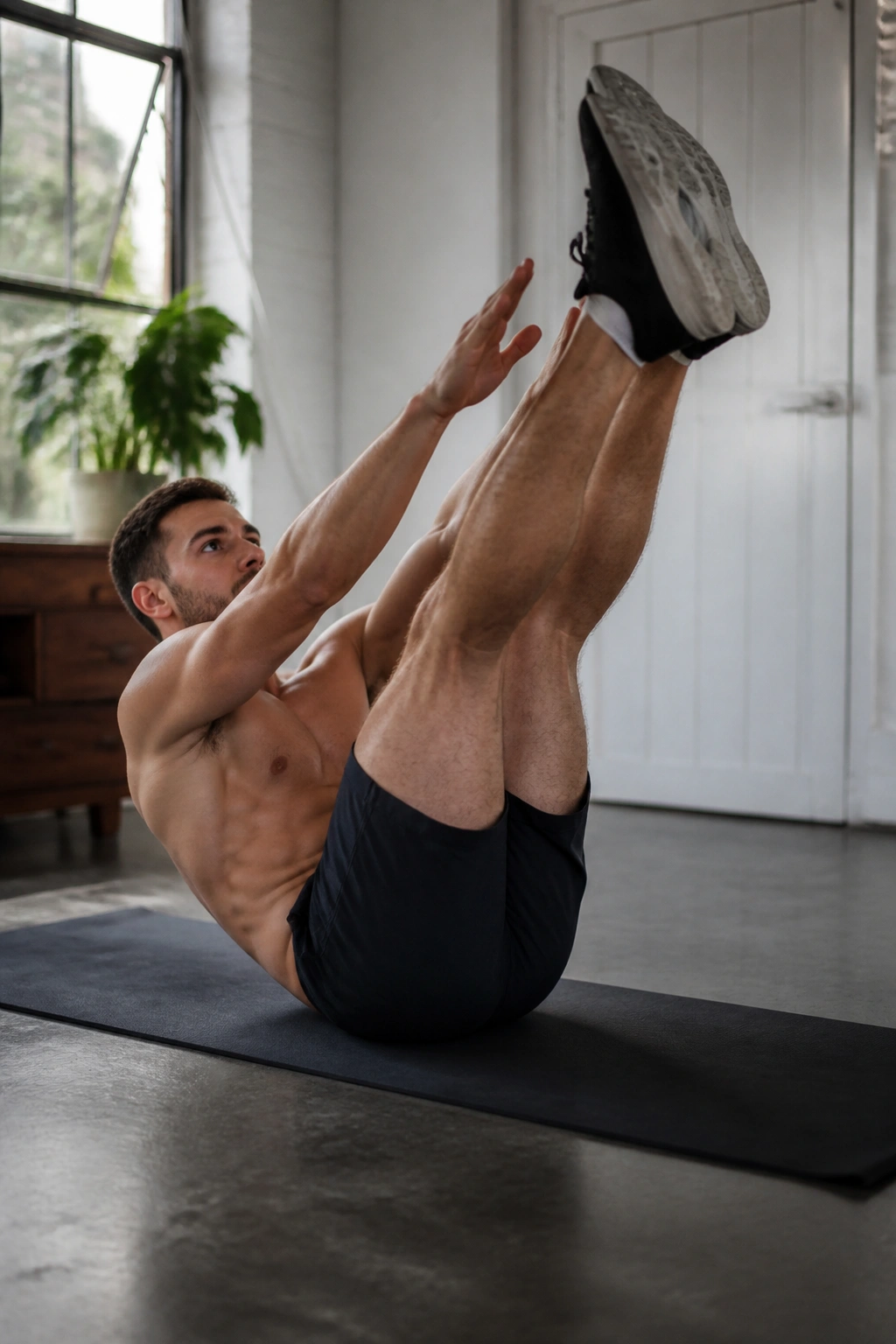
This is an advanced movement that requires both coordination and explosive power. You lie flat, then lift your torso and legs simultaneously to meet in the middle, touching your hands to your feet.
Because this requires a full-body contraction, it burns more calories than standard floor work. The key to V-ups is not the touch, but the ascent. Use your abs to pull yourself up; don’t rely on swinging your arms to build momentum. If you can’t keep your legs straight, keep them slightly bent, but focus on the “folding” motion of your body.
12. Bird Dog
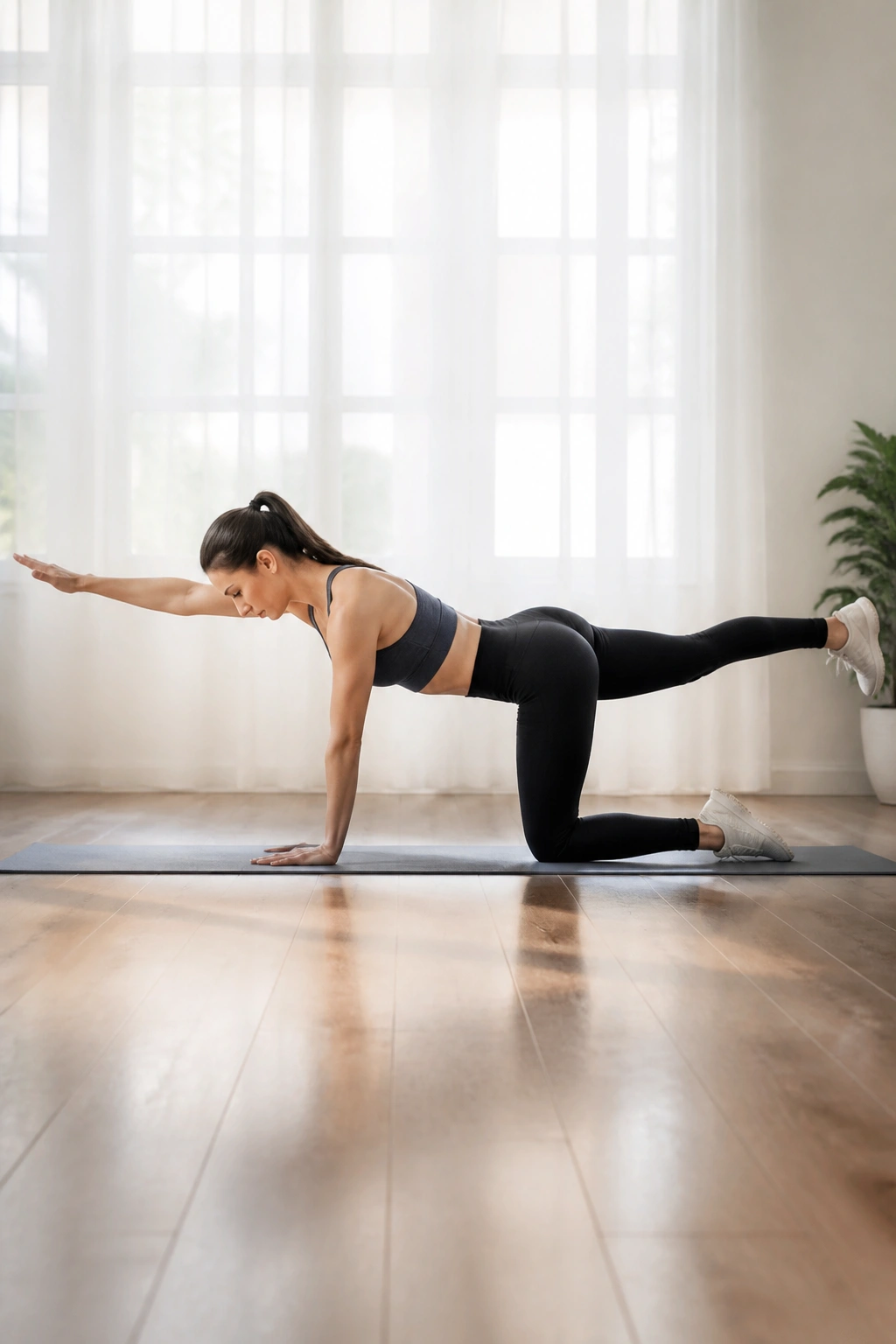
This is less about “burning” the abs and more about stabilization and back health. It is excellent for rectifying muscle imbalances.
How to do it
- Start on your hands and knees in a tabletop position.
- Extend your right arm forward and your left leg backward at the same time.
- Pause for a second, focusing on keeping your hips level—they shouldn’t tilt to the side.
- Return to the start and switch to the left arm and right leg.
The goal is zero movement in your torso. If your back sways or your hips rotate, you need to slow down and prioritize the stability component.
13. Plank Jacks
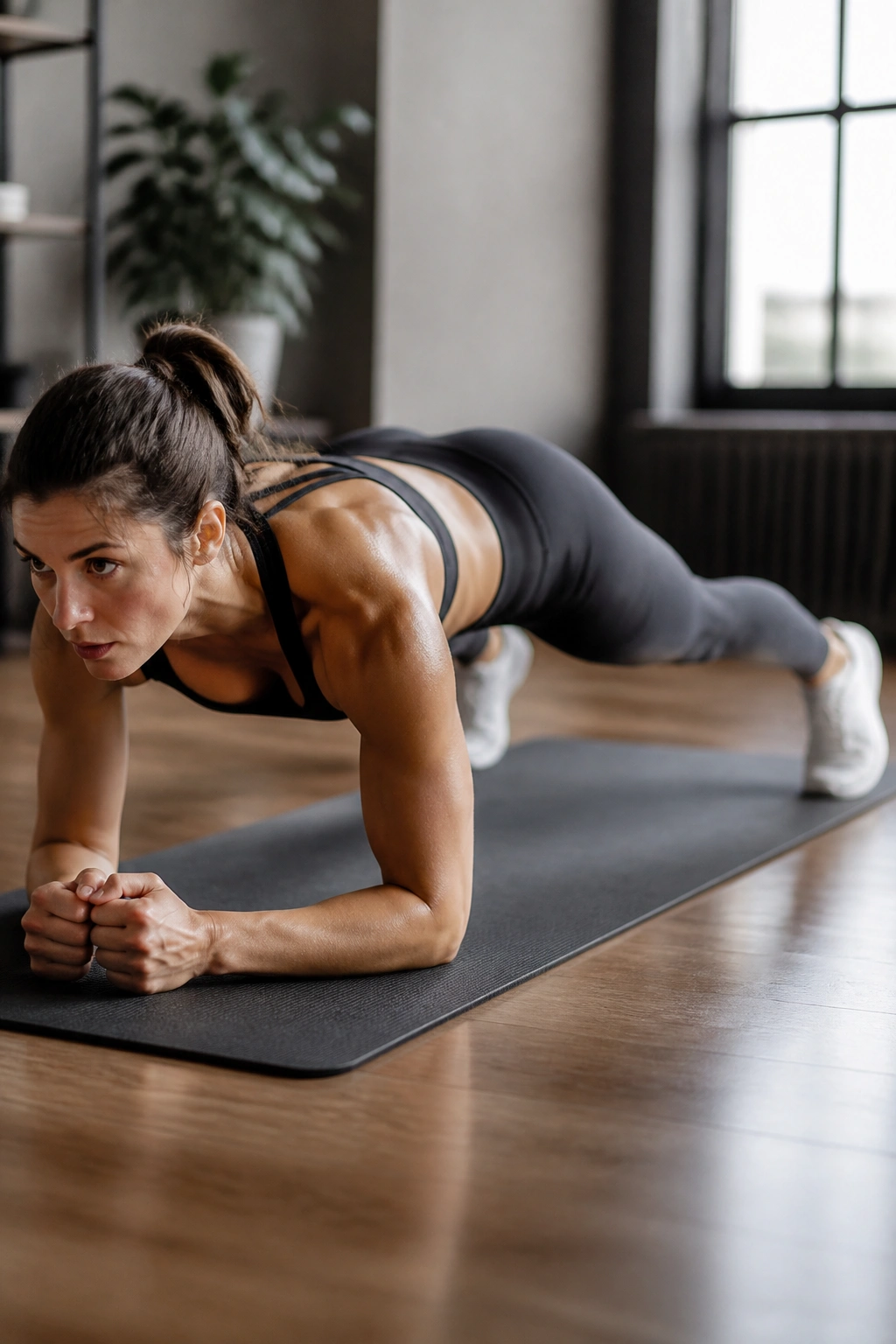
Take a standard plank and add a cardiovascular element. While holding a forearm plank, jump your feet out to the sides and back in, similar to a jumping jack.
This movement forces your core to work overtime to stabilize your spine against the impact of your feet hitting the floor. It’s excellent for burning fat because it keeps your heart rate elevated while you maintain the core tension. Keep your back flat; don’t let your hips bounce up into the air as your feet move.
14. Toe Touches
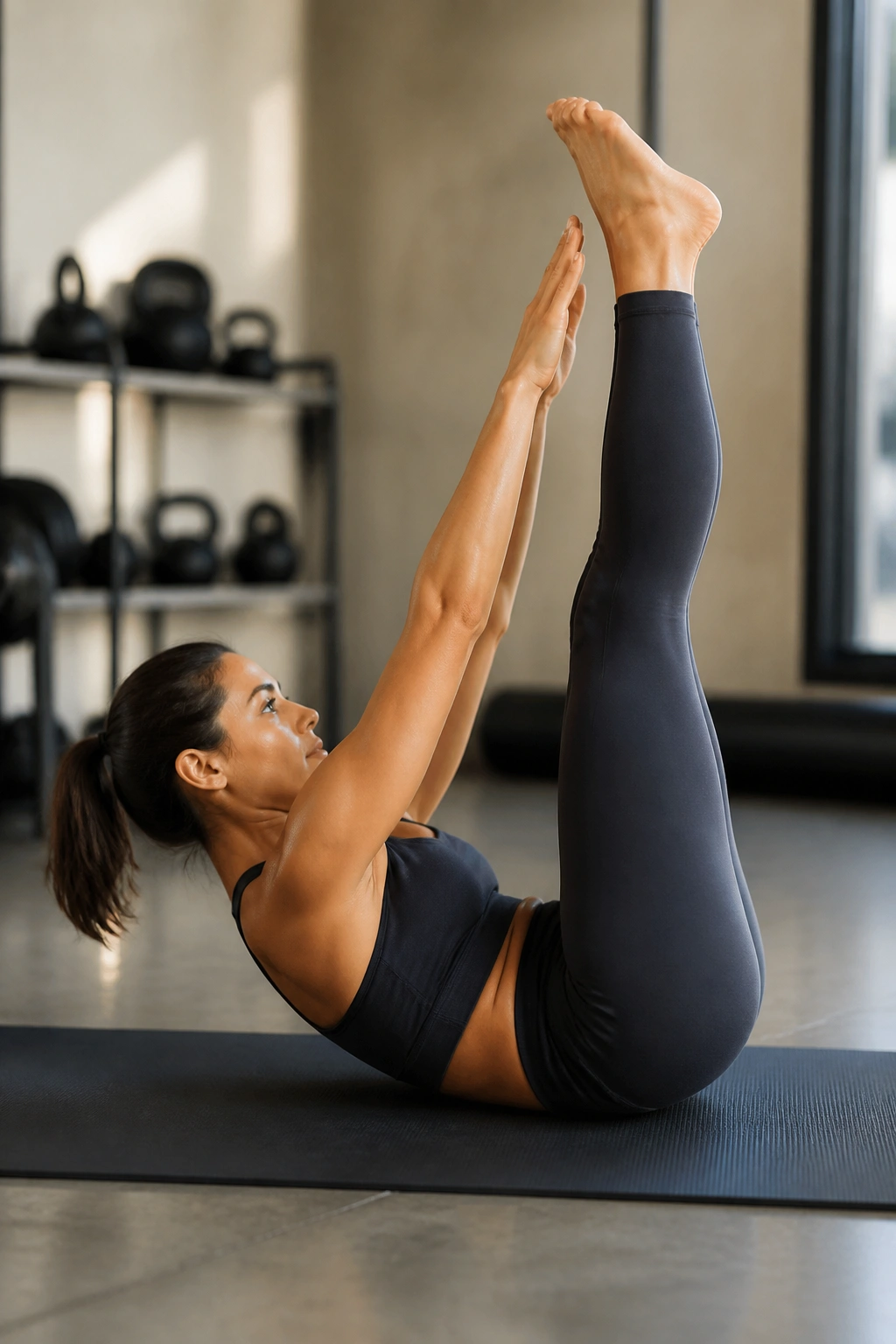
Lie on your back with your legs extended straight up toward the ceiling, feet flexed. Reach your fingertips toward your toes by lifting your shoulder blades off the floor.
The reach should be vertical, not toward your knees. You want to feel the upper abs crunching inward. Keep your legs as still as possible; they act as the anchor for the movement. If they start moving around, your core isn’t locked in.
15. Windshield Wipers
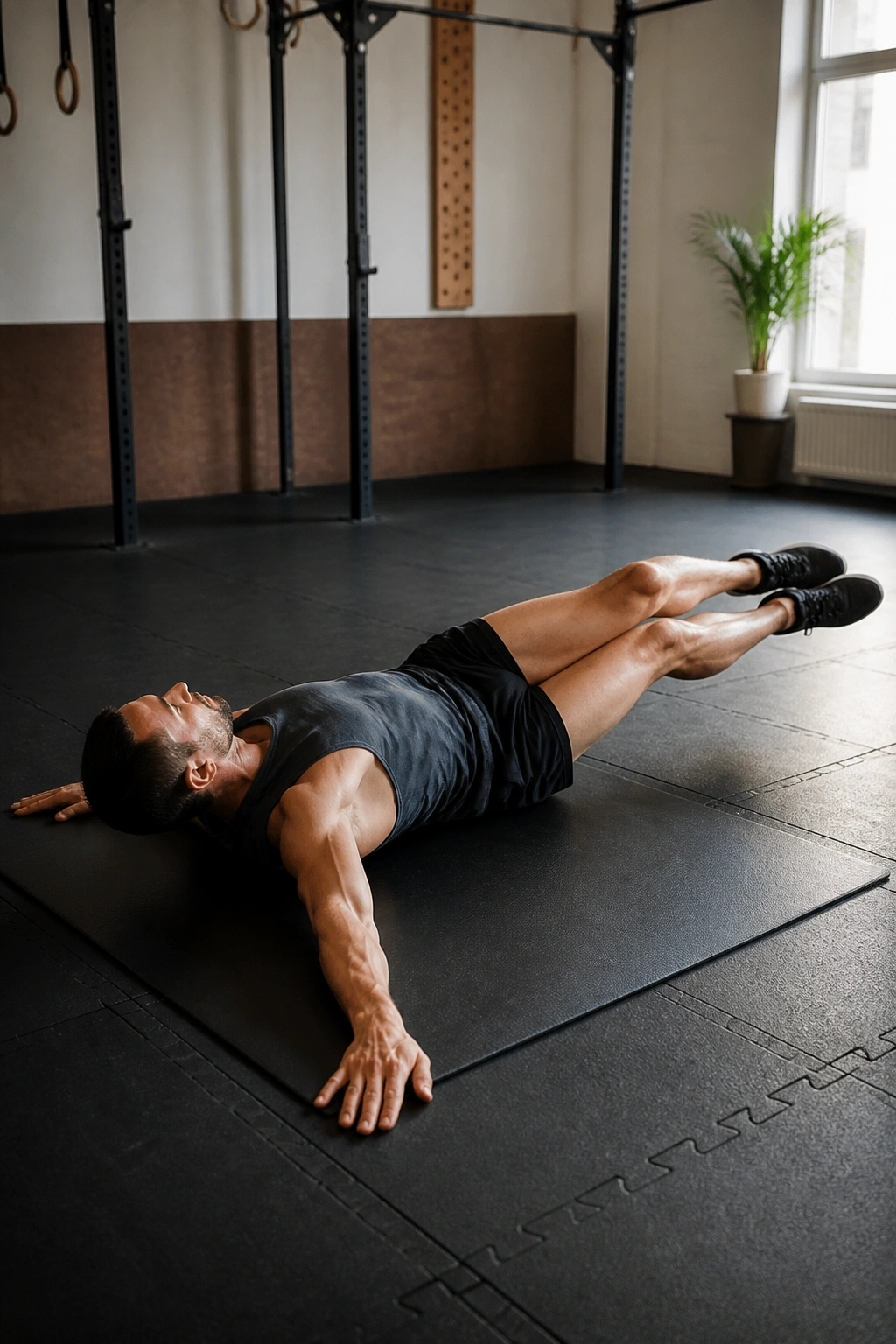
This is a more advanced rotational exercise. Lie on your back with arms extended out to the sides for stability. Lift your legs straight up toward the ceiling.
Keeping your shoulders pressed firmly into the floor, rotate your legs to the right until they are just above the ground, then rotate them to the left. The difficulty comes from preventing your torso from rotating with your legs. Your core must fight to keep your shoulders flat while your lower body moves. If it’s too hard, bend your knees to reduce the leverage.
16. Spiderman Planks
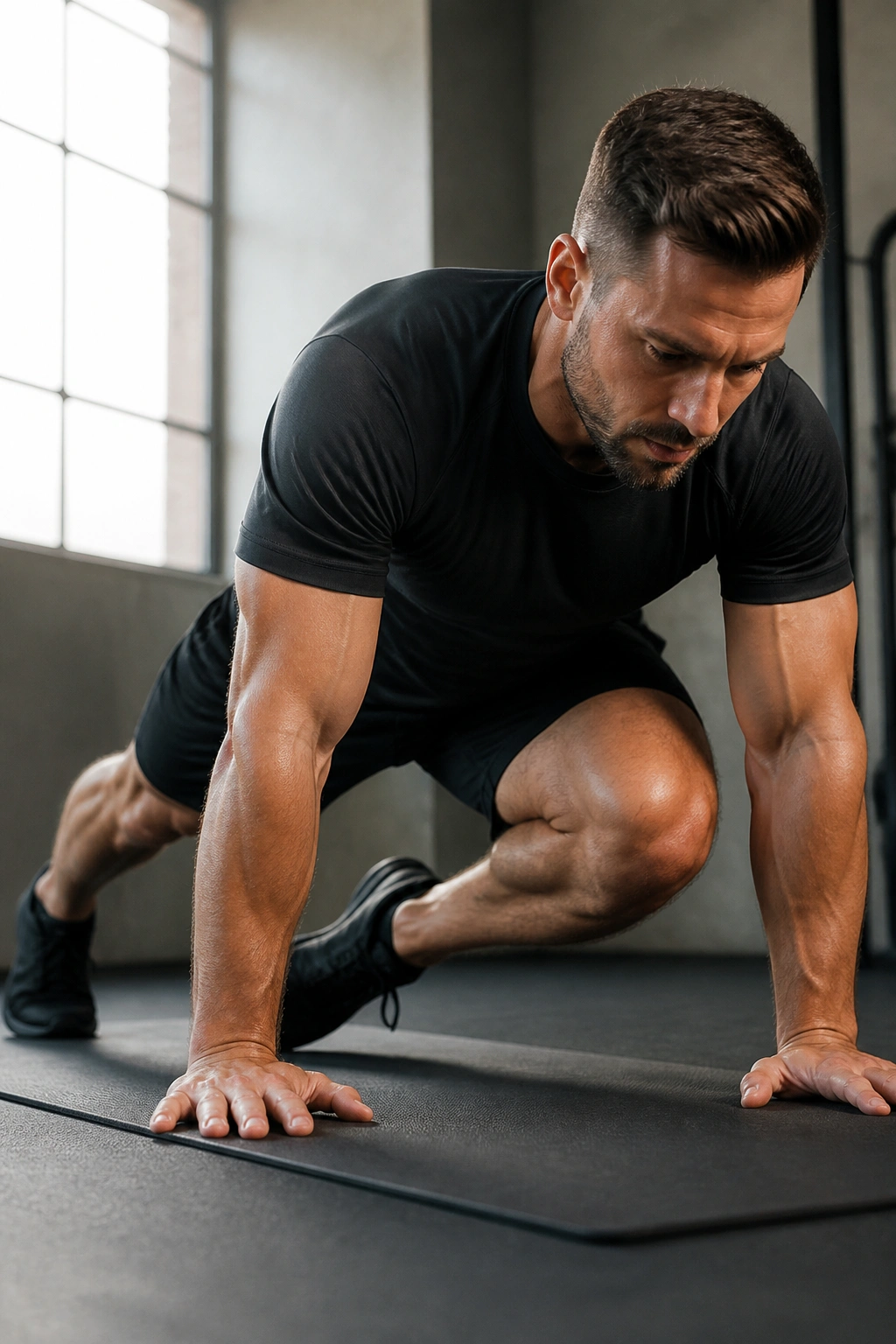
In a standard push-up position, bring your right knee to your right elbow as you perform a push-up. Then switch to the left side.
This adds a layer of oblique engagement and balance to a standard upper-body exercise. It forces you to stabilize on three points of contact. The oblique squeeze at the top of the movement is what really counts—make sure you aren’t just moving your leg, but actively crunching your side.
17. Scissor Kicks
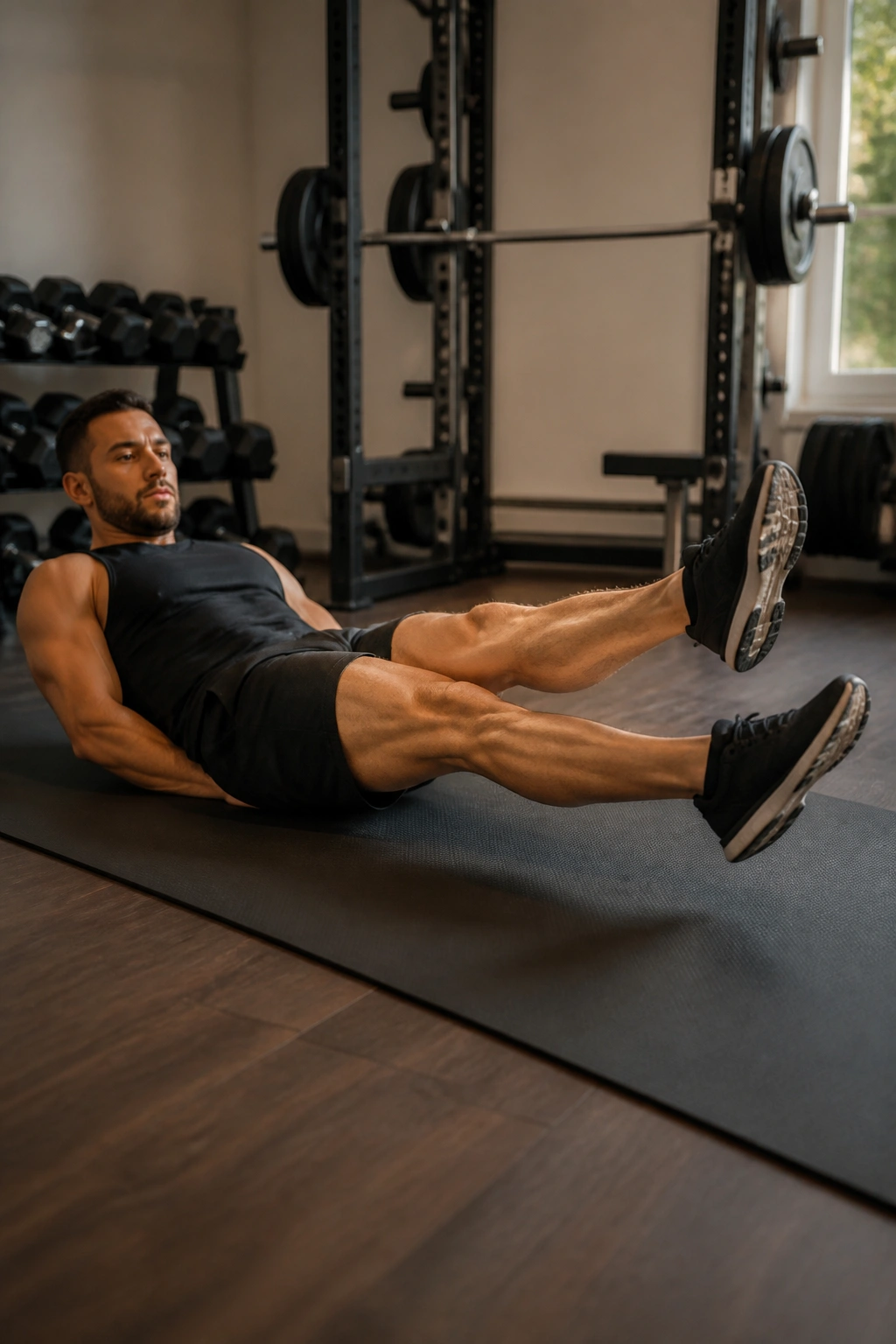
Similar to flutter kicks, but with a cross-over motion. Lie on your back, hands under your glutes, and legs extended. Cross your right leg over your left, then switch, alternating which leg is on top.
Keep the movements controlled and focus on keeping the legs close to the floor. The lower your legs are, the more your abs have to work to keep your back pressed down. If you feel this in your hip flexors, try focusing more on the “cross” rather than the “down.”
18. Heel Touches
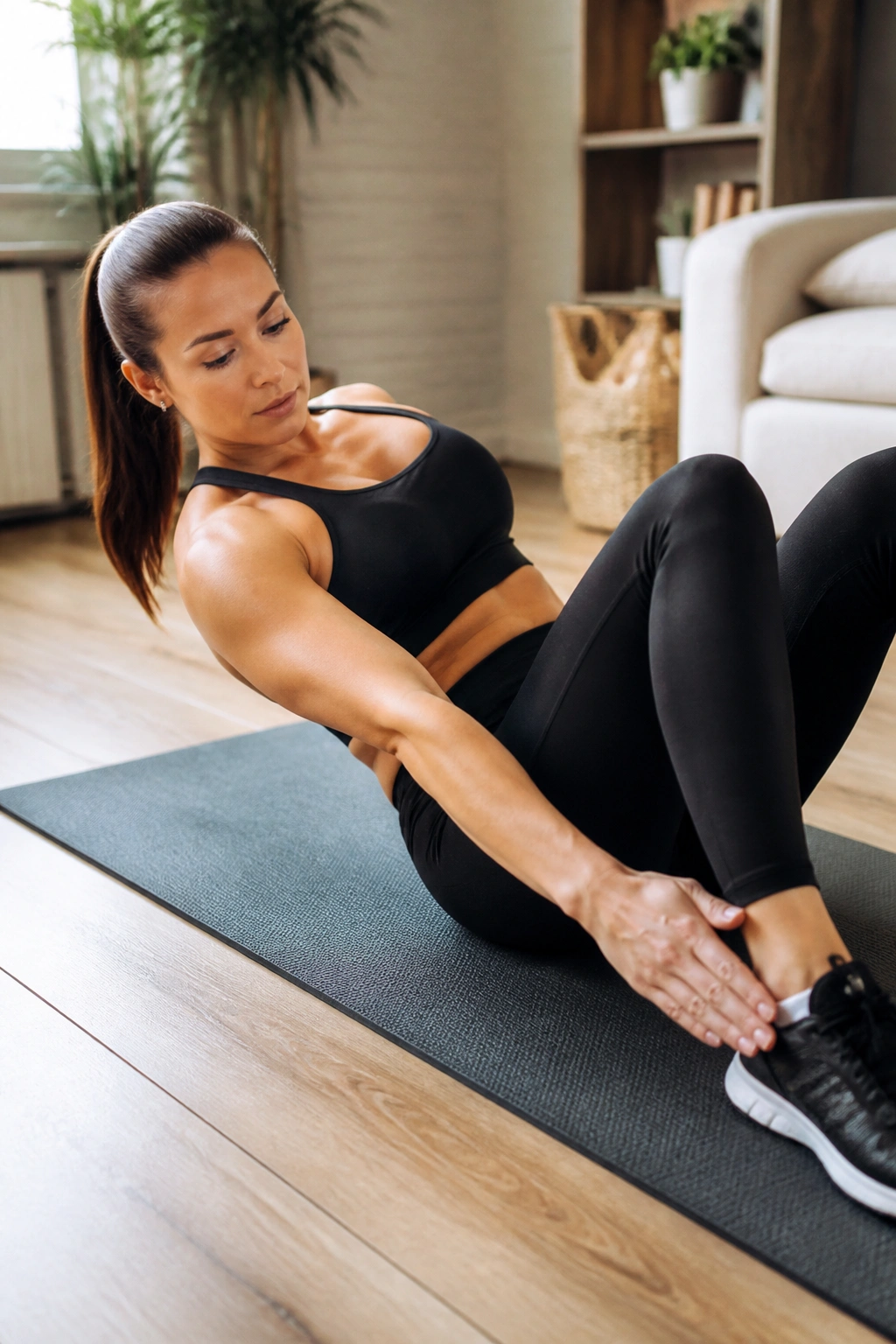
Lie on your back, knees bent, feet flat on the floor. Lift your shoulder blades slightly off the ground and, using your obliques, reach your right hand to touch your right heel, then left hand to left heel.
Because your torso is already lifted, you are staying in a constant state of contraction. This is great for hitting the “love handle” area. The further you reach, the harder you have to work your side muscles to pull your body into the curve.
19. Ab Rollouts
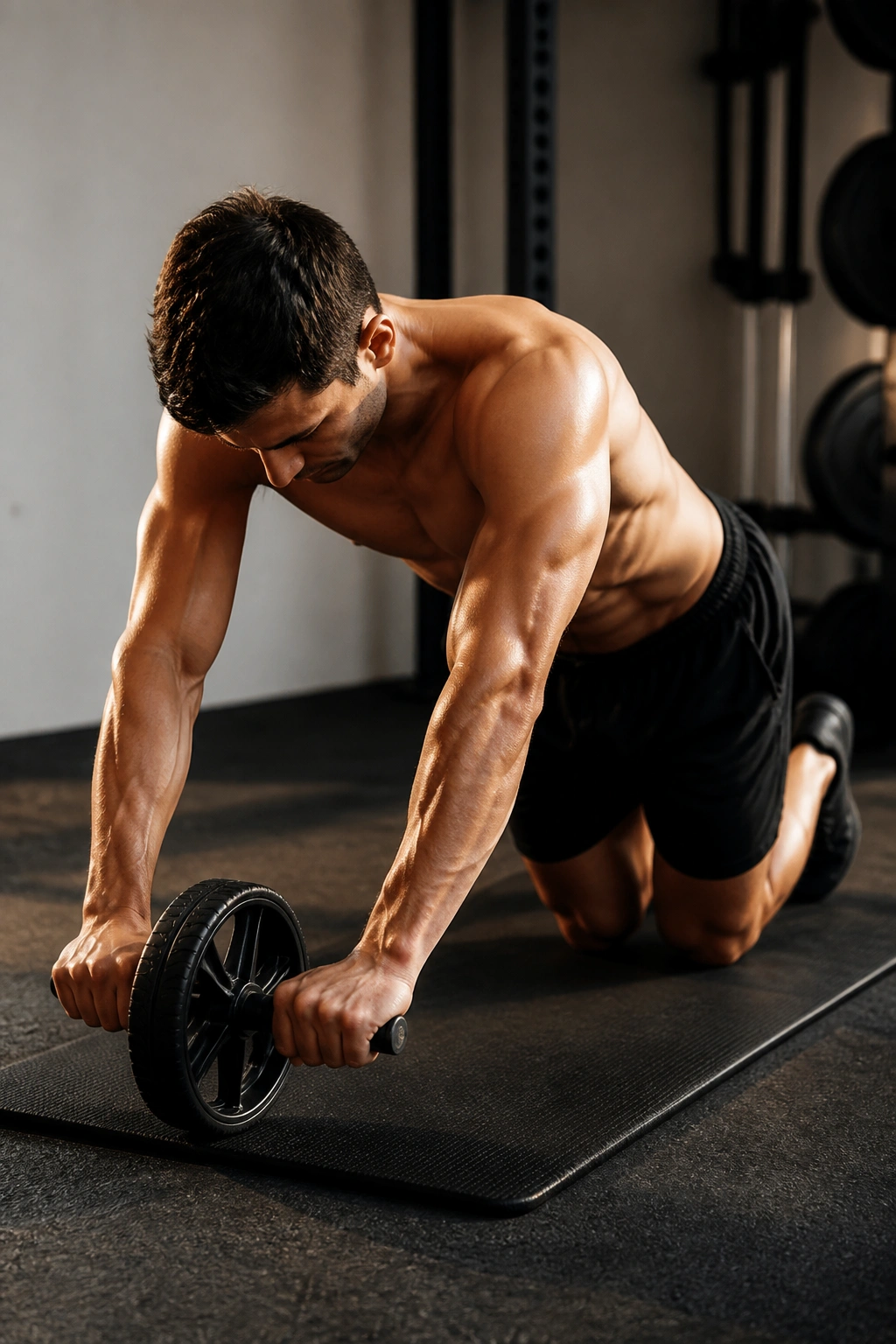
This is perhaps the most intense exercise for the rectus abdominis. Using an ab wheel (or a barbell with plates), start on your knees, holding the wheel in front of you.
Controlled Extension
- Slowly roll the wheel forward, extending your body.
- The further you go, the harder the abs must work to prevent your spine from hyperextending.
- Only go as far as you can while maintaining a flat back.
- Use your abs to pull yourself back to the starting position.
If you go too far, your back will arch and you will lose the tension. It is better to have a smaller range of motion with perfect form than to overextend and feel it in your lower back.
20. High Knees

To finish off a core-focused workout, you need to spike your metabolic rate. High knees involve running in place and bringing your knees up to waist height with every step.
This isn’t just about speed; it’s about the crunching motion of your midsection as you lift your knee. Every time you drive your knee up, you are performing a standing crunch. By doing this at a high intensity for 30 to 60 seconds, you burn out the remaining energy in your abs while simultaneously incinerating calories. Keep your torso upright—don’t hunch over—and focus on the lift.
Final Thoughts
Building a strong core is not about chasing the perfect ab workout or finding a new movement that guarantees a six-pack. It is about consistency, progressive overload, and understanding how your muscles actually work. You can do all twenty of these exercises until you are exhausted, but if your nutrition isn’t dialed in, those muscles will remain hidden.
Think of your core training as building the foundation of a house. The muscles are the structure. The fat-loss aspect is the exterior finish. You cannot have a strong structure if you ignore the basics of anatomy and physics. Focus on the squeeze, control the movement, and never sacrifice your lower back health for a few more repetitions. The best workout is the one you can perform with perfect form, time after time.
