



That midday slump is real, and it usually hits right around the time you’re staring at a screen trying to decipher a spreadsheet or finish that last email. You know the feeling: your shoulders are hunched, your eyes are tired, and your brain feels like it’s wading through molasses. Most people respond to this by grabbing another coffee or mindlessly scrolling through social media, hoping the time will pass faster. But there is a better way to spend those sixty minutes. Stepping onto a treadmill for a dedicated workout during your break isn’t about training for a marathon—it’s about hitting the reset button on your day.
You don’t need an hour of heavy lifting or a complex gym routine to feel the benefits. A short, focused burst of movement can do more for your energy levels than any double-shot espresso ever could. When you get your heart rate up, you aren’t just burning calories; you’re flooding your brain with oxygen and releasing endorphins that help you tackle the afternoon with actual focus. The key is to have a plan. If you walk into the gym without a structure, you will waste your time wandering. Having a specific, timed routine allows you to get in, get the work done, and get back to your day feeling capable and sharp.
It does not take much equipment, either. A standard treadmill in a hotel fitness center, your office gym, or your home garage is plenty. Forget the idea that you need a complicated fitness tracker or a subscription app to guide you. All you need is the machine, a pair of decent shoes, and the willingness to sweat for twenty to thirty minutes. Whether you have time for a full-throttle sprint or just a steady, incline-heavy stroll, there is a way to make it count. Here are twenty-two specific ways to structure that lunch break.
1. The Gentle Walk and Talk
This is the baseline. When you are feeling mentally fried and the thought of high-intensity intervals makes you want to lie down, just walk. The trick here is to make it a purposeful walk rather than a stroll. Set the treadmill to a speed that feels brisk but sustainable—usually around 3.0 to 3.5 miles per hour. Keep the incline at a flat 1.0 percent to simulate outdoor walking. Use this time to catch up on a podcast, listen to an audiobook, or just process your thoughts without any interruptions.
Why This Works for Mental Clarity
When you remove the physical stress of a hard workout, you free up mental bandwidth. Your subconscious can process information more effectively when your body is moving in a rhythmic, predictable way. This is the definition of active recovery. It keeps your joints moving, prevents that stiff-back feeling from sitting at a desk, and keeps your metabolism ticking over without leaving you exhausted for the rest of your shift.
Pro tip: Do not hold onto the handrails. Let your arms swing naturally. Holding on changes your posture and reduces the number of calories you burn, plus it can lead to weird imbalances in your gait.
2. Incline Walking Endurance
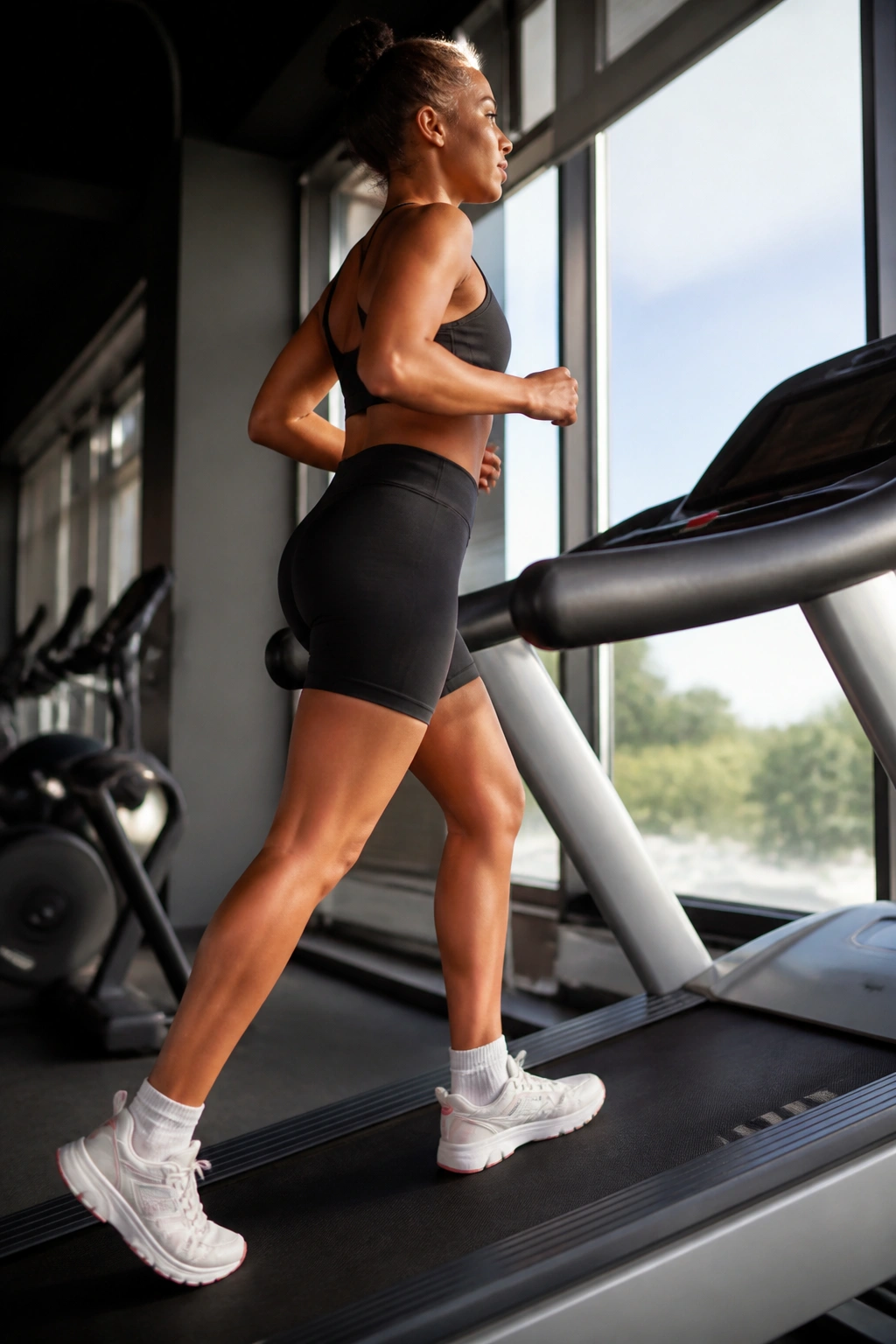
You do not need to run to get a serious sweat going. Incline walking is the secret weapon for anyone who wants a lower-impact workout that still feels like a slog. Set the treadmill to 3.0 mph and raise the incline to 5.0 percent. This creates just enough resistance to force your heart rate up without the impact stress of running on the joints.
How to Stay Consistent
The temptation to slow down will be real. Fight it. Pick a fixed speed and stick to it for the entire duration of your break. If you start to feel like you are struggling, check your form. Keep your chest up and your shoulders back, rather than hunching over the console. This simple adjustment opens your airway and makes the incline feel significantly easier to manage.
The Benefit: Your glutes and hamstrings do most of the work here. It is one of the most efficient ways to fatigue the posterior chain without spending hours in the weight room.
3. The 12-3-30 Variation

This is a classic format for a reason, even if the name sounds like a marketing gimmick. It is simple: set the incline to 12 percent, the speed to 3.0 miles per hour, and walk for 30 minutes. It is intense, it is effective, and it is universally hated by those who start out too fast. If 30 minutes is too long for your lunch break, you can easily scale it down to 20 minutes while keeping the same speed and incline settings.
What to Watch For
The biggest mistake people make is grabbing the handrails. By gripping the sides, you essentially turn a 12-percent incline into a flat walk. You cheat yourself out of the entire workout. If you find yourself needing to hold on, your incline is too high or your speed is too fast. Drop the incline to 8 percent and focus on maintaining a steady, hands-free pace for the first few sessions.
- Start with a 5-minute warm-up at a flat incline.
- Transition to the 12-percent grade slowly.
- Focus on driving your heels into the belt.
- Finish with a 3-minute slow walk to bring your heart rate down.
4. Short-Burst Speed Intervals

If you only have 20 minutes total, this is your best option. You need to keep the pace high to get the physiological benefits in such a short window. Alternate between 60 seconds of a challenging run and 60 seconds of a slow walk. Repeat this cycle ten times.
Why It Builds Fitness Fast
By spiking your heart rate and then letting it recover, you improve your cardiovascular efficiency much faster than you would with a steady-state jog. This type of training—often called HIIT—is excellent for busy schedules because it packs a lot of intensity into a small package. You will leave the gym feeling the residual heat of the effort, which is a great sign that you hit the right zones.
Warning: Make sure you actually warm up for two minutes at the beginning. Walking straight into a sprint is a recipe for a calf strain, and you definitely do not want to be hobbling around the office for the rest of the day.
5. The Pyramid Walk

This workout plays with your brain as much as your body. Start at a slow speed and low incline, increasing the difficulty every two minutes until you hit the peak of the pyramid, then work your way back down. It feels structured and logical, which helps pass the time quickly.
Suggested Settings
- Minutes 0-2: 2.5 mph, 0% incline
- Minutes 2-4: 2.8 mph, 2% incline
- Minutes 4-6: 3.0 mph, 4% incline
- Minutes 6-8: 3.2 mph, 6% incline
- Minutes 8-10: 3.5 mph, 8% incline (Peak)
- Minutes 10-12: 3.2 mph, 6% incline
- …and so on back down to the start.
This layout keeps you engaged because you are constantly waiting for the next change. It removes the monotony of staring at the clock, wondering how many minutes are left.
6. Speed Walking Focus

Forget about the incline for a moment. This workout is purely about foot turnover. The goal is to walk as fast as you possibly can without breaking into a jog. For most people, this is around 4.0 to 4.5 mph.
The Mechanics of Fast Walking
To hit these speeds, you have to exaggerate your hip movement and use your arms. Bend your elbows at 90 degrees and pump them forward and back, not across your body. Focus on rolling from heel to toe with every step. You will find that this works your core significantly more than a standard walk because your body has to work overtime to stabilize your torso while your legs are moving at top speed. It is a fantastic way to develop better walking mechanics that will actually make you faster and more efficient in your day-to-day life.
7. The Lateral Shuffle

Lateral movement is almost always ignored in standard gym routines, yet it is vital for hip health and ankle stability. Since treadmills are narrow, you have to be careful with this one. Make sure you are comfortable with your balance before trying it.
How to Execute
Turn sideways on the treadmill. Hold onto the handrail closest to the console for support. Set the speed very low—start at 1.5 mph. Shuffle sideways, leading with one foot, for 5 minutes, then switch directions. It sounds easy, but it will light up your outer glutes and quads in a way that forward walking never will.
Important: Do not try this if the treadmill is narrow or if you are prone to dizziness. If you are unsteady, skip this one and stick to forward-facing movements.
8. Backward Walking
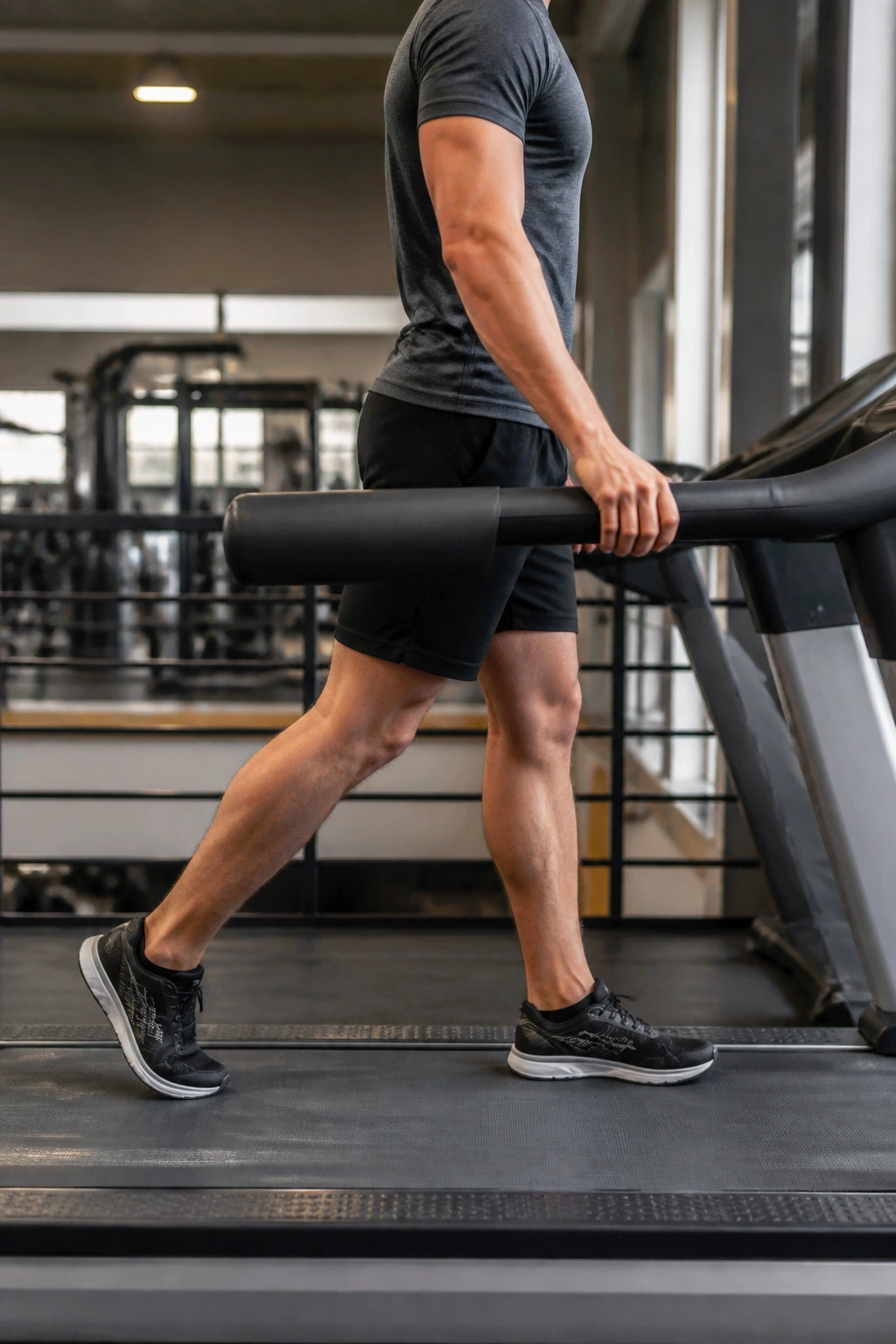
Walking backward on a treadmill is a brilliant way to strengthen the muscles around your knees, specifically the quadriceps and the tibialis anterior (the muscle on the front of your shin). It feels unnatural at first, but once you get the rhythm, it is surprisingly soothing.
Step-by-Step Instructions
- Stand with your back to the console.
- Set the speed to a very slow 1.0 or 1.5 mph.
- Hold onto the side rails for safety until you find your bearings.
- Reach back with your toe and plant your heel securely.
- Walk backward for 10 minutes.
You will find that your calves have to work much harder here. It is excellent rehab for anyone with nagging knee aches, as it encourages you to stay upright and engage your core rather than relying on momentum.
9. Heavy Incline Power Hike

This is not for the faint of heart. If you want to simulate hiking up a steep mountain, this is the workout. Crank the incline to 10-12 percent and drop the speed down to 2.0 or 2.5 mph. Focus on a deliberate, heavy step.
Why This is Great for Strength
When you are moving that slowly on a steep grade, it stops being a cardio workout and starts being a leg-strengthening session. You are essentially doing a hundred partial lunges. By the end of 20 minutes, your legs will feel heavy in the best way possible. This builds endurance in the muscles that keep you stable, which is useful if you spend your weekends hiking or just standing on your feet all day.
10. The Ladder Workout

Ladders are about increasing duration or intensity in a systematic way. For a lunch break, use an intensity ladder. Every 3 minutes, increase the speed by 0.2 mph. Keep the incline at a constant 2.0 percent.
Pushing the Limits
This forces you to keep pushing into the uncomfortable zone. You start feeling easy, and by the end, you are working hard. It is a test of mental fortitude. Keep track of your starting speed so you can try to beat your “final speed” the next time you have a lunch break available. Seeing that number climb over the weeks is a tangible way to measure your fitness gains without needing complex metrics.
11. Walk-Jog-Run Progression

Some days, you want a bit of everything. This workout cycles through three intensities. Spend 3 minutes walking, 2 minutes jogging, and 1 minute running. Repeat this for the duration of your break.
The Benefit of Variation
This keeps the workout interesting because the demands on your body change every few minutes. The walk allows you to catch your breath, the jog keeps your heart rate elevated, and the run pushes your cardiovascular system to its limit. It prevents boredom, which is usually the biggest obstacle to getting a consistent workout in during a busy workday.
12. Heavy Bag Mimicry

This is a fun, slightly unconventional way to get your arms moving while you walk. You don’t need a bag, just some shadowboxing moves. Walk at a steady 3.0 mph, and while you walk, perform light shadowboxing: jabs, crosses, and hooks.
The Coordination Factor
Combining upper-body movement with lower-body walking requires concentration and coordination. It will keep your mind busy and prevent the “zombie walk” feeling. You don’t need to throw hard punches—just rhythmic, controlled movements. You will find that this significantly increases your heart rate because your upper body is working along with your legs. It’s also a great way to relieve stress after a frustrating morning meeting.
13. Lunge Walking

This is a slow-motion, high-intensity workout. Set the treadmill to a very slow speed, around 1.0 to 1.5 mph. Every few steps, perform a controlled walking lunge.
Why This is Advanced
This requires serious balance. Because the belt is moving beneath you, you have to stabilize your front leg quickly. Do not try this if you have any balance issues or haven’t done lunges on solid ground. If you master it, though, this is a glute and quad destroyer. Keep your hands on the rails for support if you need to, but try to use them only for balance, not for pushing yourself forward.
14. Side-to-Side Crossovers
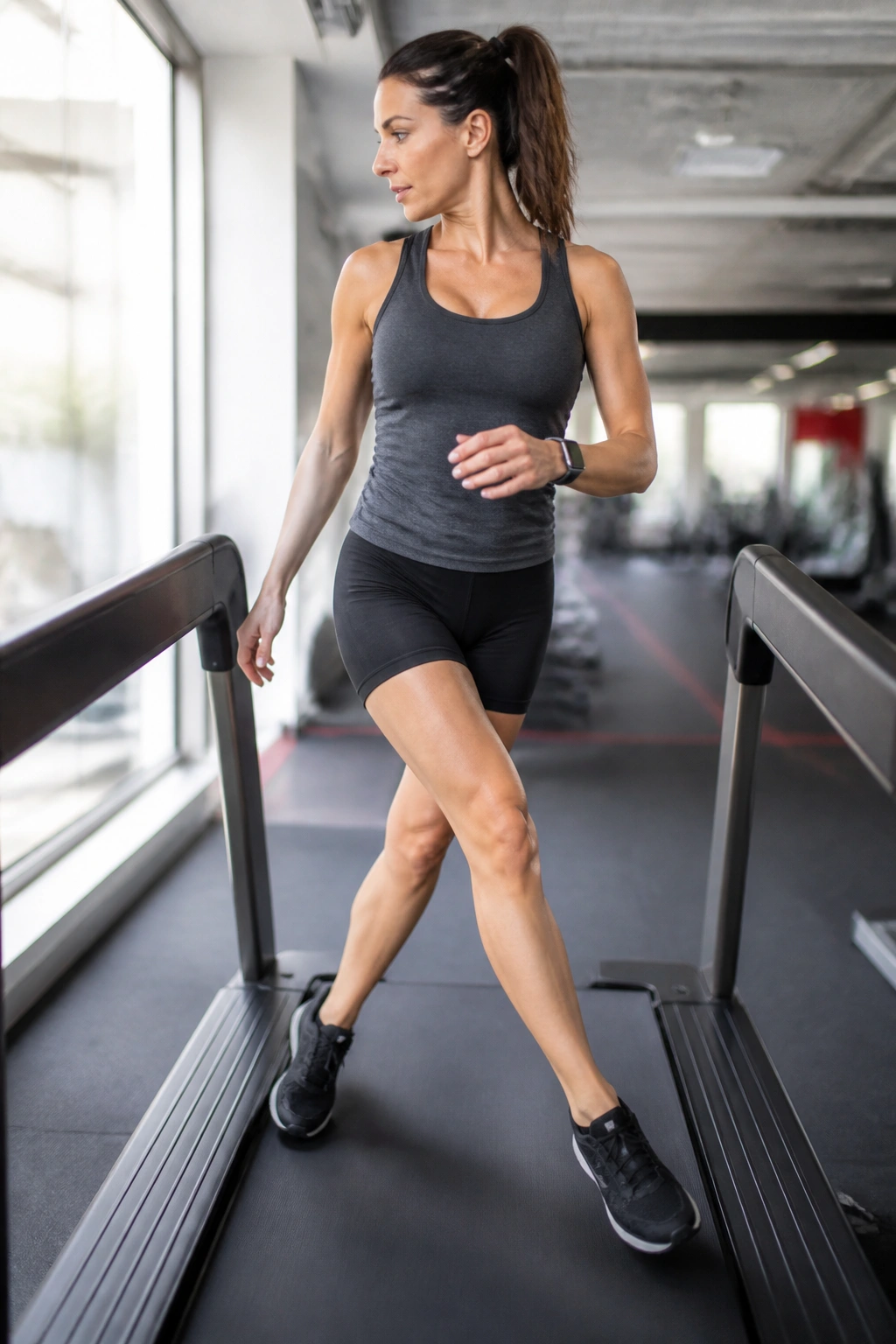
Similar to the lateral shuffle, but this involves crossing one leg over the other. This targets the hips and the adductors (inner thighs) in a way that standard walking never will.
Cautions
Set the speed low, around 1.2 mph. Face sideways and cross your lead leg over your trailing leg, then step out. It feels like a grape-vine dance move. This is amazing for hip mobility. If your hips feel tight from sitting in a chair all morning, this is the exact remedy you need.
15. The Steady State Sweat

Sometimes, you just want to zone out. Pick a speed that is slightly uncomfortable—a pace where you can talk, but you wouldn’t want to hold a full conversation. Set it and forget it. Don’t touch the buttons for 30 minutes.
The Zen of Consistency
There is a specific meditative quality to a steady-state workout. By keeping the pace constant, you stop anticipating the next interval and just enter a flow state. This is great for clearing your head. By the time you get off, the stress of the morning usually feels distant and manageable.
16. Tabata-Style Sprints

Tabata is a specific protocol: 20 seconds of all-out effort, followed by 10 seconds of rest. Do this for 8 rounds. It is only 4 minutes of work, which makes it perfect if you have a tight schedule.
How to Make it Work
Use the first 5 minutes to warm up thoroughly. Then, jump into the 8 rounds. Because it is so short, you have to be willing to hit high intensities during those 20 seconds. It is exhausting, but it is over quickly, and the metabolic “afterburn” will keep your body firing for an hour or two after you sit back down at your desk.
17. The Hill Repeats Simulation

You don’t need a mountain to do hill repeats. Use the treadmill’s incline settings. Start with 1 minute at a 6-percent incline, then drop it to 1 percent for 1 minute. Repeat.
Mastering the Effort
Treat the incline portion as a “climb.” Lean into it slightly. Focus on pushing through your mid-foot. The recovery minute is crucial; don’t skip it. Use that minute to breathe deeply and reset your posture. This builds incredible leg strength and lung capacity in a very short amount of time.
18. Weighted Walking (Light Dumbbells)

Walking with light dumbbells (2-5 pounds) in your hands is a simple way to make a walk feel like a full-body workout. Do not pump them aggressively, as this can strain your shoulders. Just hold them in your hands and let your arms swing naturally, or do controlled bicep curls as you walk.
The Impact on Posture
The extra weight forces you to engage your core to keep your balance. It adds a slight resistance to your arm swing, which burns more calories. Just make sure the weights are light. The goal is not to lift heavy, but to add a small amount of dynamic resistance. If you feel any shoulder clicking or strain, drop the weights immediately.
19. The “Steady-Incline” Endurance Test

This is a mental game. Pick an incline (start at 3 percent) and a moderate speed (3.0 mph). Your goal is to walk for 40 minutes without stopping or changing the settings.
Mental Training
The struggle here is purely against your own impatience. You will be tempted to change the speed or the incline. Don’t. Stay the course. This builds the discipline to endure boring, repetitive tasks—a skill that is surprisingly useful in professional life. By the end, you will feel a sense of accomplishment that comes from simply finishing what you started.
20. The Cool Down and Stretch Focus

Sometimes, the best workout is one that prioritizes mobility. Use the treadmill for a slow, 15-minute walk, and then spend the final 10 minutes doing dynamic stretching on the treadmill deck (while it is stopped).
Why Focus on Stretching?
Sitting all day ruins your posture. You get tight hip flexors and rounded shoulders. Use the treadmill to get your blood flowing, and then perform lunges, leg swings, and torso twists. You will go back to your afternoon work feeling two inches taller and much less compressed.
21. Variable Terrain

If your treadmill has a “random” or “hills” program, use it. This forces you to adapt to constantly changing inclines without knowing what is coming next.
Reactivity
This keeps your brain sharp because you have to constantly adjust your stride to the change in grade. It is the closest thing to walking on actual uneven ground. It prevents the repetitive stress that can come from doing the exact same movement pattern for 30 minutes straight.
22. The “Mindful” Walk

This is the antidote to the hyper-connected workday. No phone. No podcast. No audiobook. Just you, your breathing, and the sound of your feet on the belt.
Reconnecting with Yourself
When you take away the digital input, you start to hear your own thoughts. It is amazing how much stress we carry simply because we are always consuming information. Walking in silence for 20 minutes can be the most therapeutic part of your entire day. Focus on the sensation of your feet hitting the deck. Notice your breathing. It is a form of meditation in motion, and it will leave you far more refreshed than checking your emails for the tenth time.
The Bottom Line
There is no “perfect” workout for your lunch break. The best one is the one that you actually do. If you have 15 minutes, do a quick Tabata session. If you have 40 minutes, take a steady-state incline walk. The goal is to break the cycle of sitting and stagnation.
It is easy to get caught up in the details—finding the right program, wearing the right gear, tracking the exact calories. Let that go. Just focus on showing up. Even a mediocre workout is infinitely better than staying in your chair for another hour. Your body wants to move, your brain needs the break, and the treadmill is waiting. Pick one of these routines, step on, and get it done. You will thank yourself when the afternoon drags on and you are the only one in the office who still has the energy to power through.
