



If your midsection feels stubborn, the answer is not 300 sloppy crunches. The better move is a stack of no-equipment exercises that push your heart rate, force your abs to brace, and let you repeat the work often enough for it to matter.
The phrase belly fat workouts gets used in a sloppy way, so let’s clean that up right away. No exercise can pick fat off your stomach like a spoon scraping frosting off a cake. What these workouts can do is raise calorie burn, build muscle under the waistline, and tighten the way your body holds itself so your middle looks and feels firmer over time.
That distinction matters. A lot.
The list below leans on bodyweight moves that you can do in a living room, bedroom, hallway, or a patch of floor next to the sofa. Some are explosive. Some are controlled and slow. A few will make your lungs work harder than you expect, which is the point. If a move lights up your neck or lower back, scale it down and keep going with cleaner form — sloppy reps waste more time than they save.
A simple way to use these is to pick 5 to 8 moves, work for 30 to 40 seconds each, rest 15 to 20 seconds, then repeat for 3 to 5 rounds. Short. Mean. Effective. Mountain climbers make a fine place to start.
1. Mountain Climbers
Mountain climbers look simple — until your shoulders start shaking and your breathing turns ragged. They hit the abs, hip flexors, shoulders, and the cardio system all at once, which is why they show up in so many no-equipment fat-loss routines.
How to Keep Them Useful
Keep your hands under your shoulders and drive your knees toward your chest without letting your hips bounce all over the place. The goal is a tight, steady plank with fast legs, not a frantic scramble that turns into a low-quality hop.
- Keep your core braced so your low back doesn’t sag.
- Drive one knee in at a time for a cleaner line of work.
- Land lightly on the balls of your feet.
- Start with 20-second bursts if 40 seconds feels messy.
Best tip: short sets done well beat long sets done badly, every time.
2. Bicycle Crunches
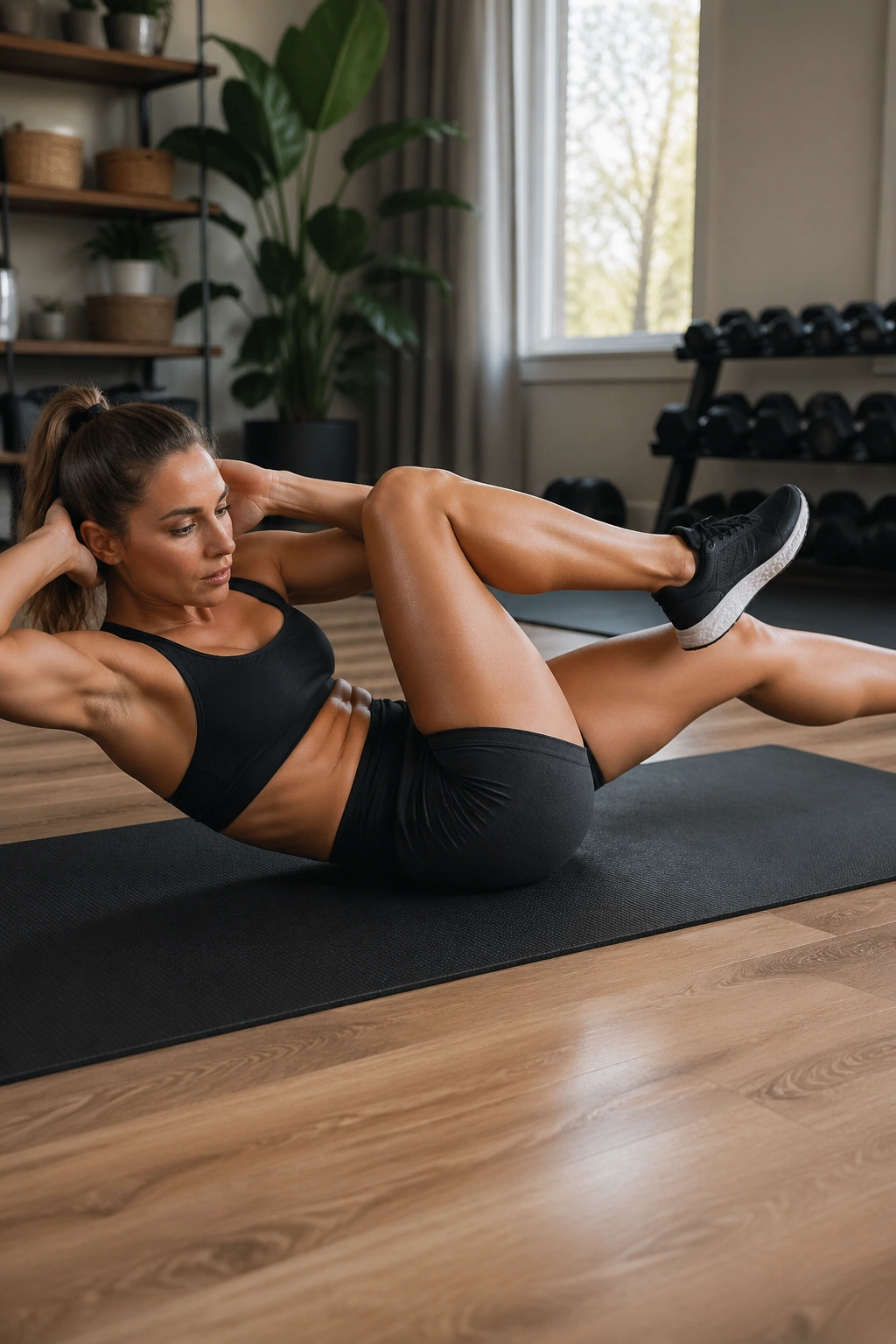
Bicycle crunches earn their spot because they ask your abs to resist while your torso twists. That combination is harder than plain crunching, and it tends to make people feel the burn where they want it most.
The mistake most people make is rushing. They pedal like they’re late for a train, then yank on the neck and call it core work. Slow the movement down, keep your elbows wide, and rotate your rib cage toward the opposite knee instead of just flapping your arms around.
The exhale matters here. Breathe out as you twist, and you’ll usually feel the abs tighten more sharply. If your hip flexors take over, bring the knees in a little closer and keep the pace under control.
3. Plank Shoulder Taps
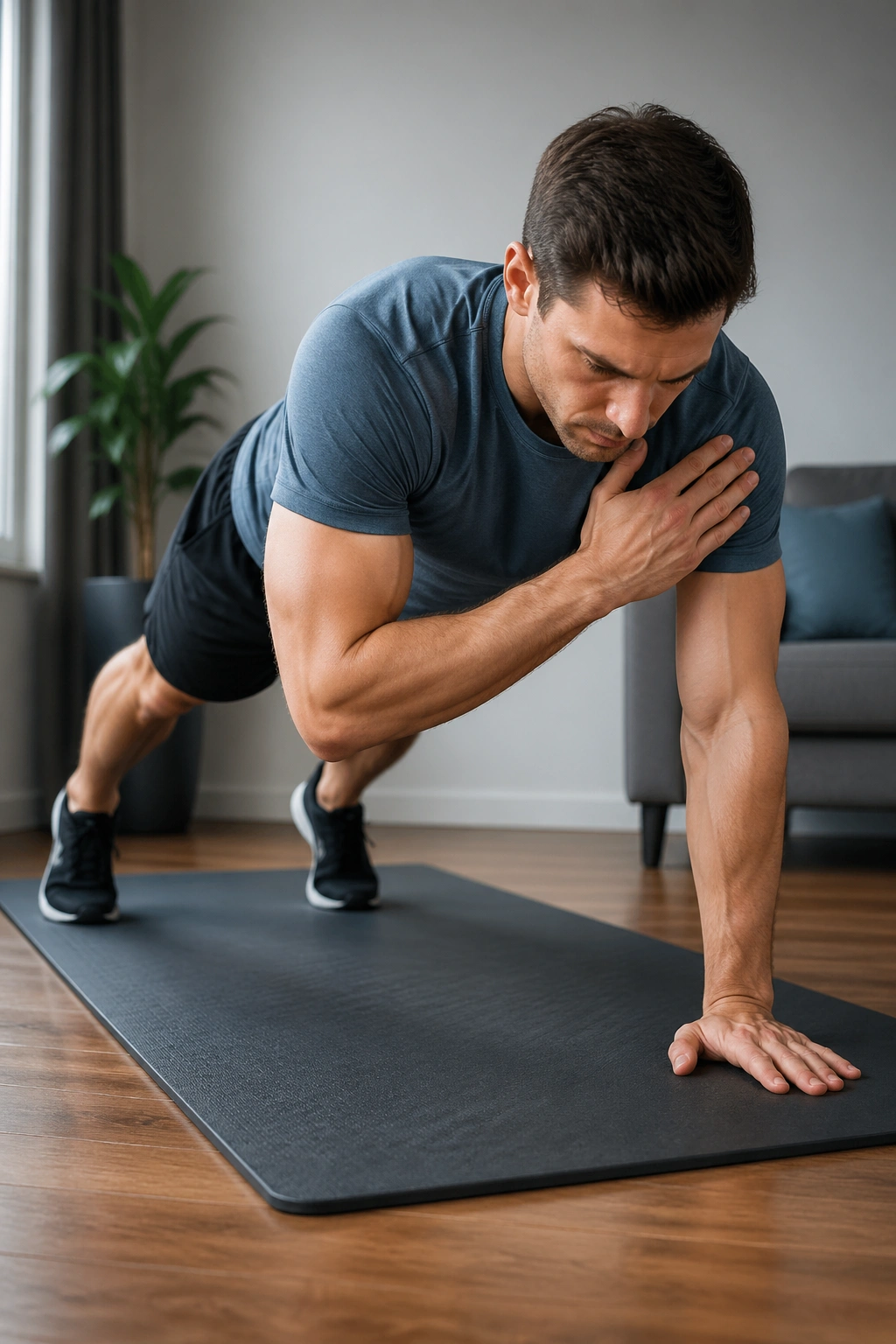
Want a move that looks calm and still makes your middle work hard? Plank shoulder taps do that well. They train anti-rotation, which is a fancy way of saying your torso has to stay quiet while one hand leaves the floor.
What Makes Them Work
The core’s job here is not to crunch. It’s to stop your body from rocking side to side every time a hand lifts. That tiny battle is what makes this such a solid no-equipment choice.
Keep your feet a little wider than hip-width at first. Tap one shoulder, then the other, while squeezing your glutes and keeping your hips as still as you can. If you feel your lower back dipping, slow down and widen your stance a bit more.
A clean 20-second set will do more for you than a sloppy minute.
4. Reverse Crunches for Belly Fat Workouts
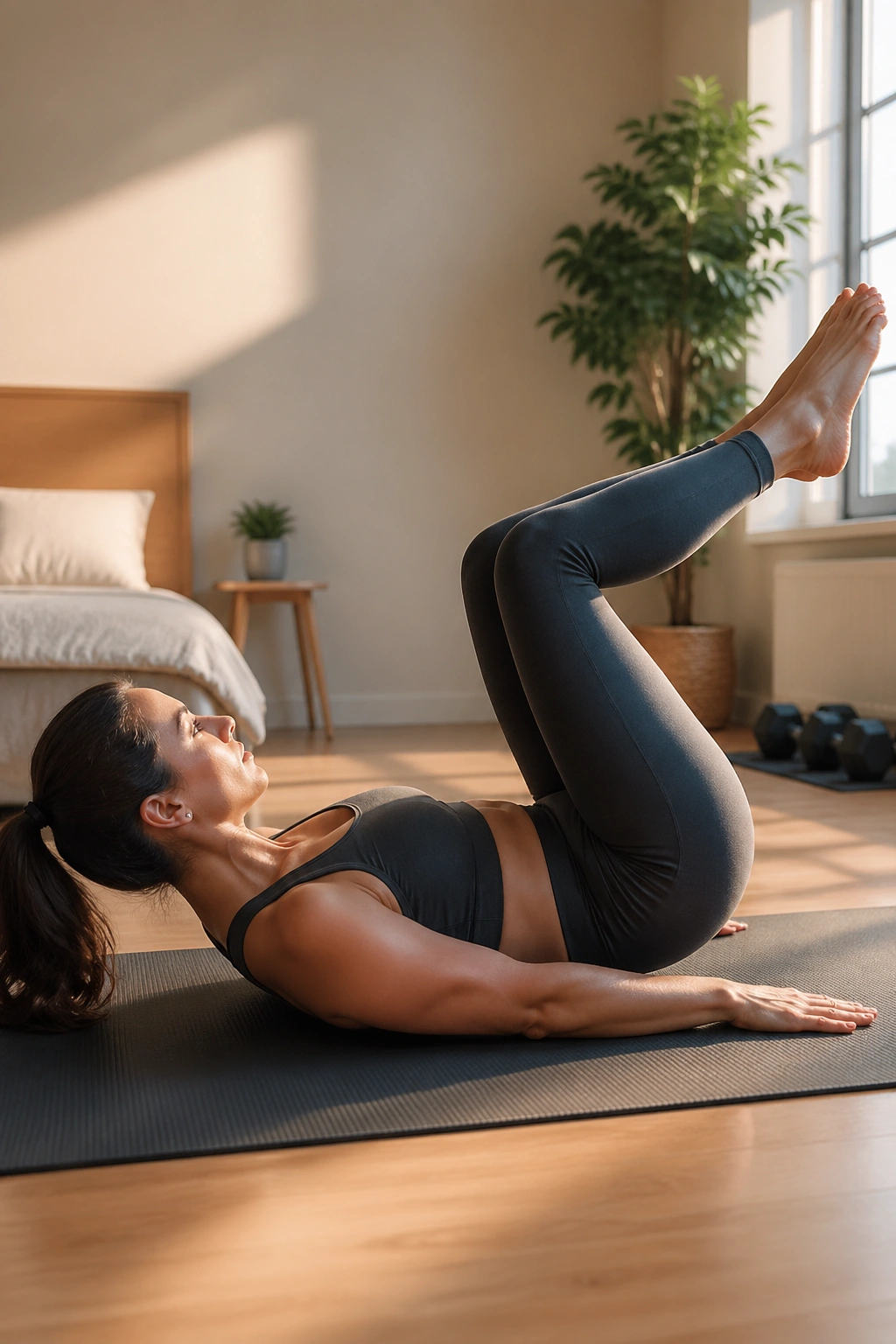
If regular crunches light up your neck or make your hip flexors complain, reverse crunches are a much better trade. They focus on curling the pelvis upward, which many people feel deeper in the lower abs than traditional sit-up work.
Lie on your back, bring your knees up, and curl your tailbone off the floor. That small lift matters more than swinging your legs around. The movement should feel like your pelvis is tipping, not like you’re trying to kick the ceiling.
A few clean points matter here:
- Press your lower back into the floor before each rep.
- Bend the knees to about 90 degrees.
- Lift slowly, then lower with control.
- Stop the descent before your back arches.
That last part saves a lot of frustration. Once the lower back starts to arch, the abs stop doing the job and the movement turns into a momentum trick.
5. High Knees
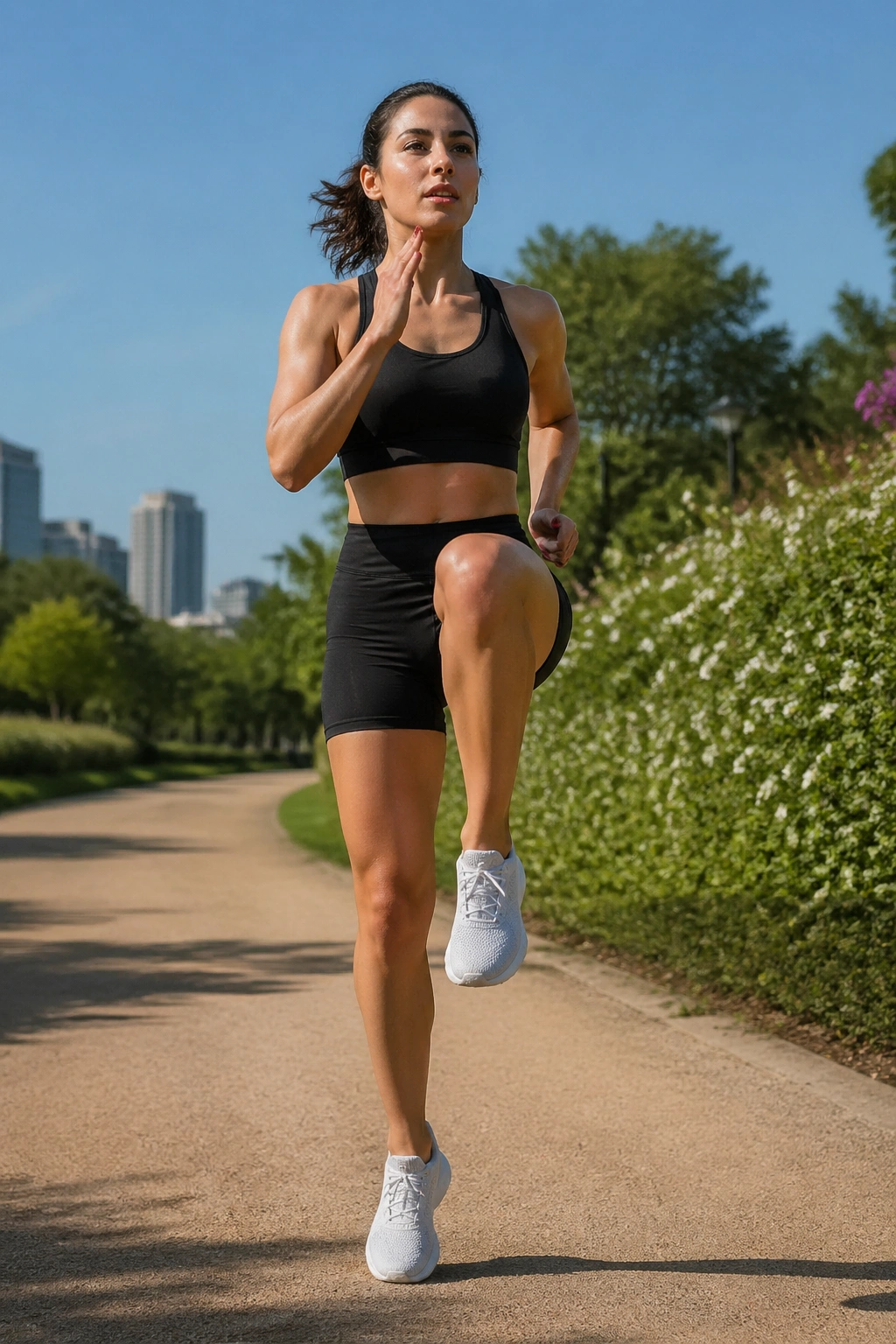
High knees are not an ab isolation move, and that’s exactly why they work so well in a fat-loss circuit. They drive your heart rate up fast, keep your trunk engaged, and make your legs earn every second.
The trick is posture. Stand tall, pump your arms hard, and bring each knee up with purpose instead of shuffling in place like you’re waiting for a bus. You want quick feet and a braced center, not a slouching jog that barely changes your breathing.
If you need a gentler version, march fast with knee lifts and sharp arm swings. That still counts. In fact, for some people it counts more, because they can stay on pace longer and repeat the set without falling apart halfway through.
6. Dead Bug
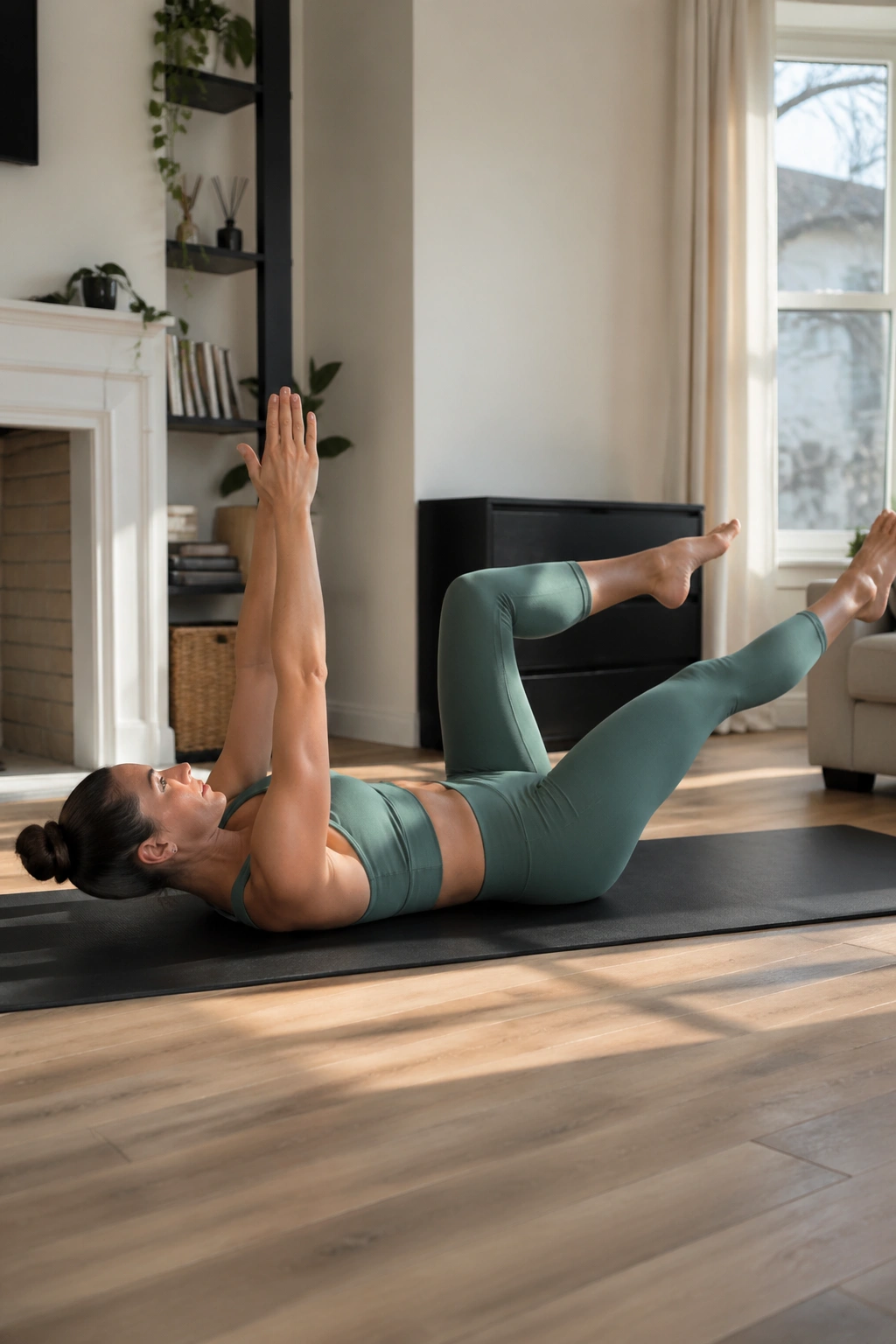
Dead bug is boring in the best way. It teaches your core to stay steady while your arms and legs move, which is a skill most fast ab workouts skip entirely.
Unlike crunches, dead bug asks you to keep your ribs stacked and your lower back pressed into the floor. That makes it a sneaky-good choice for anyone who wants stronger abs without a lot of spinal bending. It also carries over into running, walking, and even basic standing posture more than people expect.
Start with bent knees above the hips and arms reaching toward the ceiling. Lower one opposite arm and leg slowly, then return to center before switching sides. If your back pops off the floor, shorten the range. No drama. Just make the movement cleaner.
7. Burpees
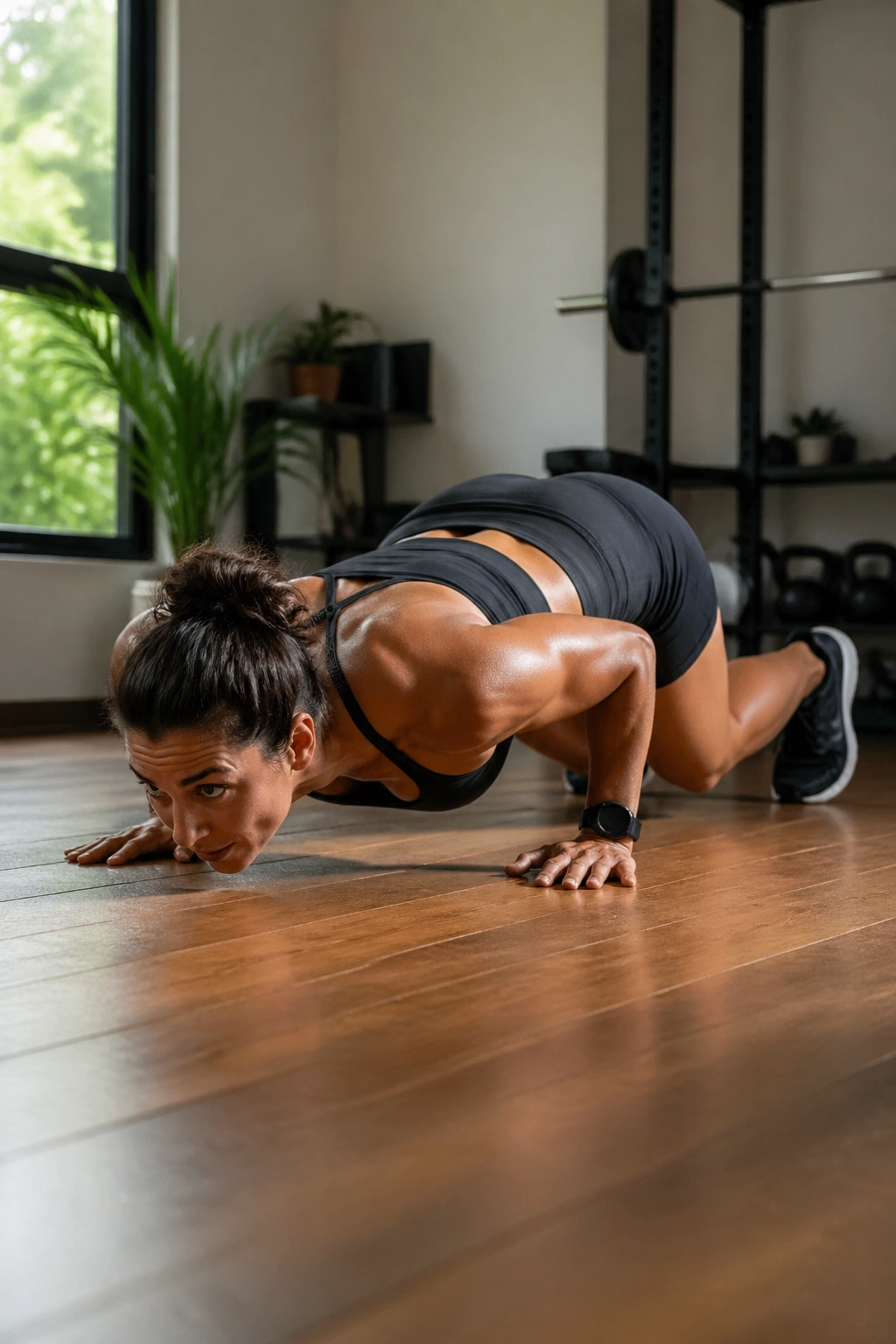
Burpees are rude. They show up, demand effort, and leave you breathing through your mouth faster than you planned. That’s also why they belong in a belly fat workout list.
A good burpee combines a squat, a plank, and a quick return to standing, so it taxes the whole body instead of one small area. The abs work hard to stabilize the trunk, while the legs and shoulders help drive the pace. It’s hard to fake a burpee and still get much out of it.
If full burpees feel too sharp, strip them down. Step your feet back instead of jumping, and stand up instead of leaping at the top. You’ll still get a solid calorie-burning set, and your form will stay far cleaner. That’s a trade worth making.
8. Flutter Kicks
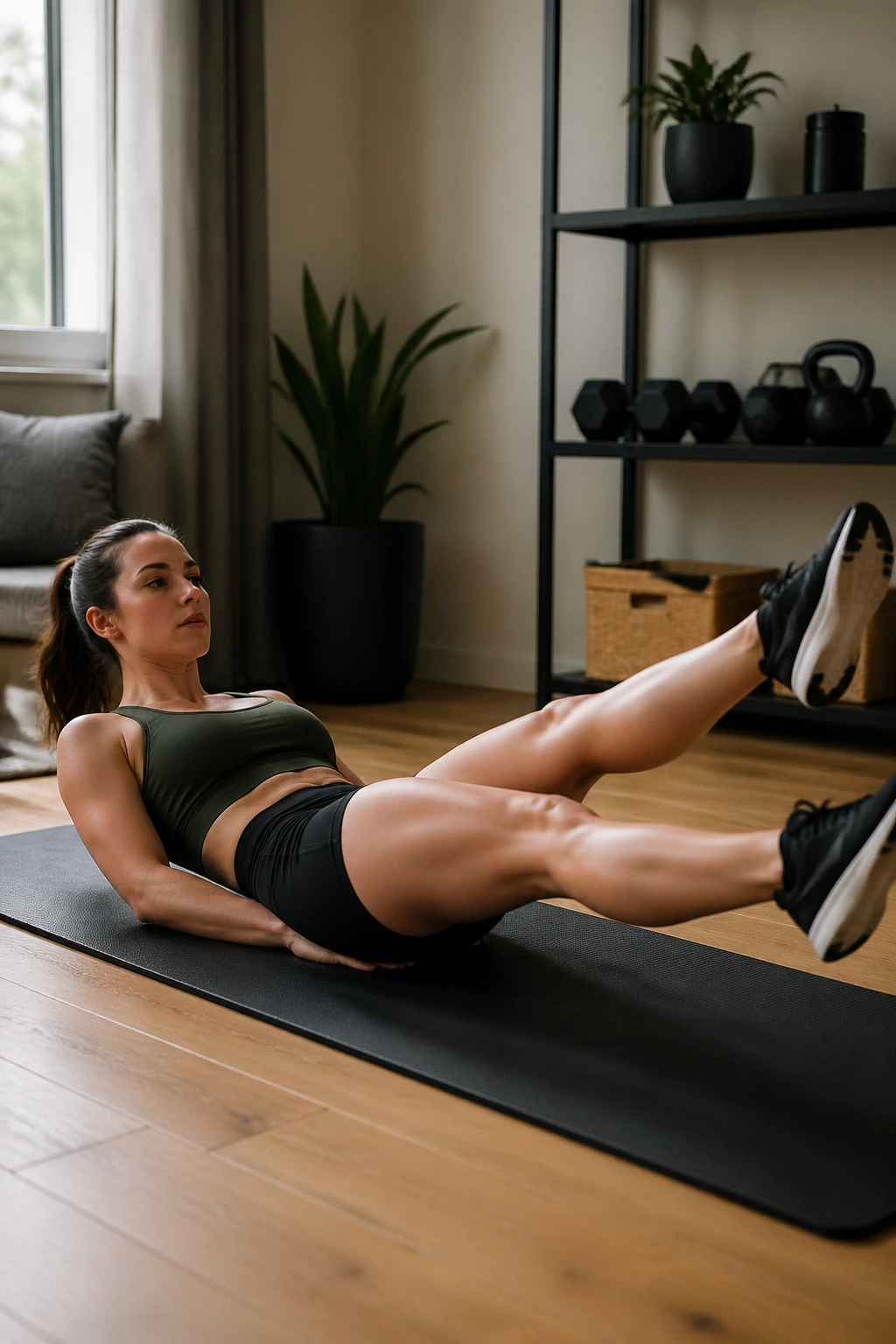
Why do flutter kicks burn so much when the movement looks tiny? Because the legs act like long levers, and your lower abs have to fight to keep the back from arching.
Lie on your back, press your hands under your hips if needed, and lift your legs a few inches off the floor. Then kick one leg up as the other goes down, keeping the motion short and controlled. Big kicks usually mean lost tension. Small kicks usually mean more work where you want it.
How to Make Them Count
Keep your chin slightly tucked and your lower back glued to the floor. If the back arches, raise the legs a little higher and slow the tempo. A 15- to 20-second set done cleanly can be plenty.
Flutter kicks are not glamorous. They work anyway.
9. Side Plank Hip Lifts
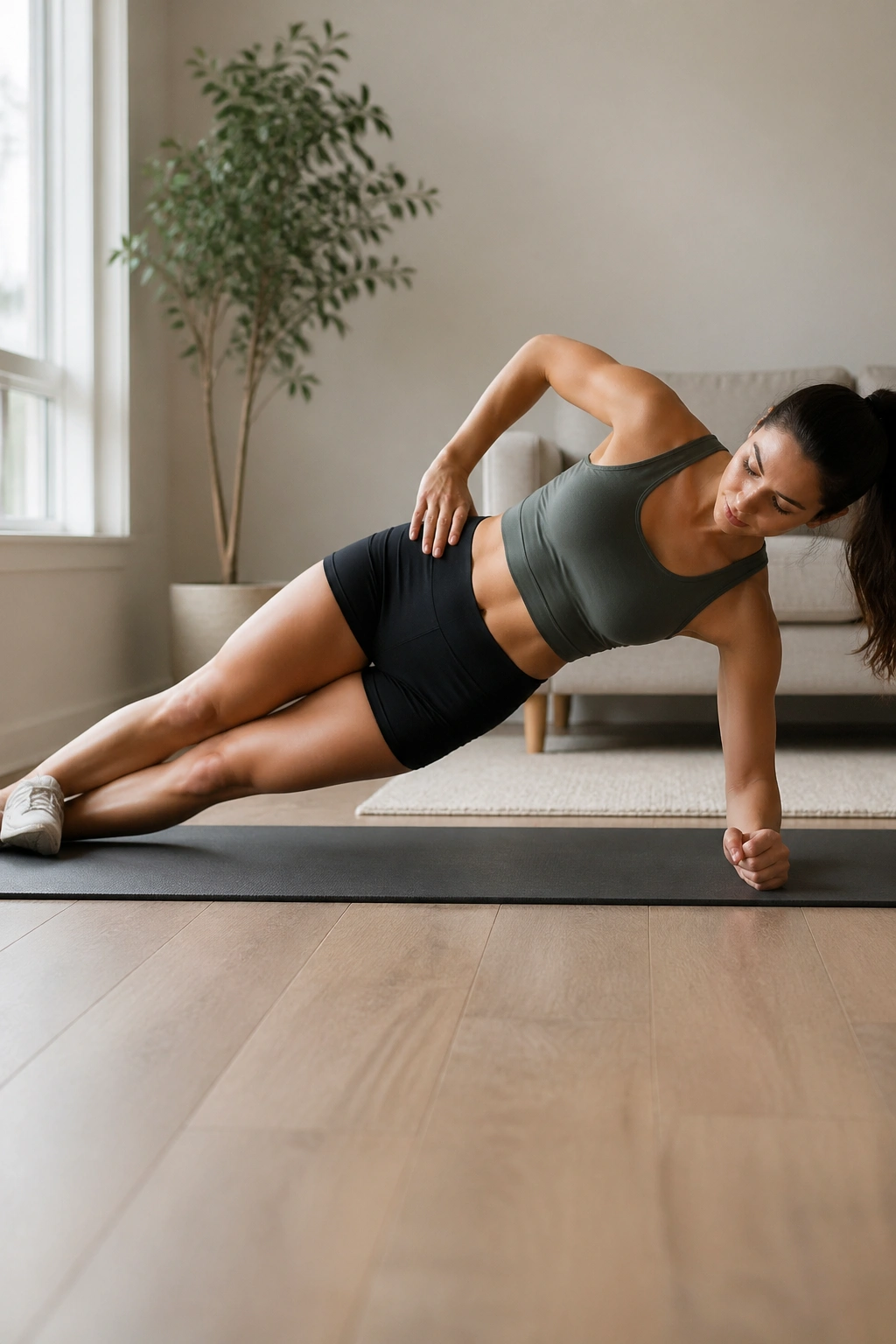
Side plank hip lifts hit the obliques, glutes, and the small stabilizers around your hips. That makes them useful for more than waistline work — they also help your body stay level when you walk, run, or twist.
Set up on one forearm with your elbow under the shoulder and your feet stacked or staggered. Lift the hips, lower with control, then raise them again. The motion is small, but the effort climbs fast if you keep the body in one line.
If a full side plank feels too harsh, drop the bottom knee and keep the upper body long. You’ll still train the side wall of the core without turning the move into a wrist or shoulder test.
10. Leg Raises for a No-Equipment Belly Fat Workout
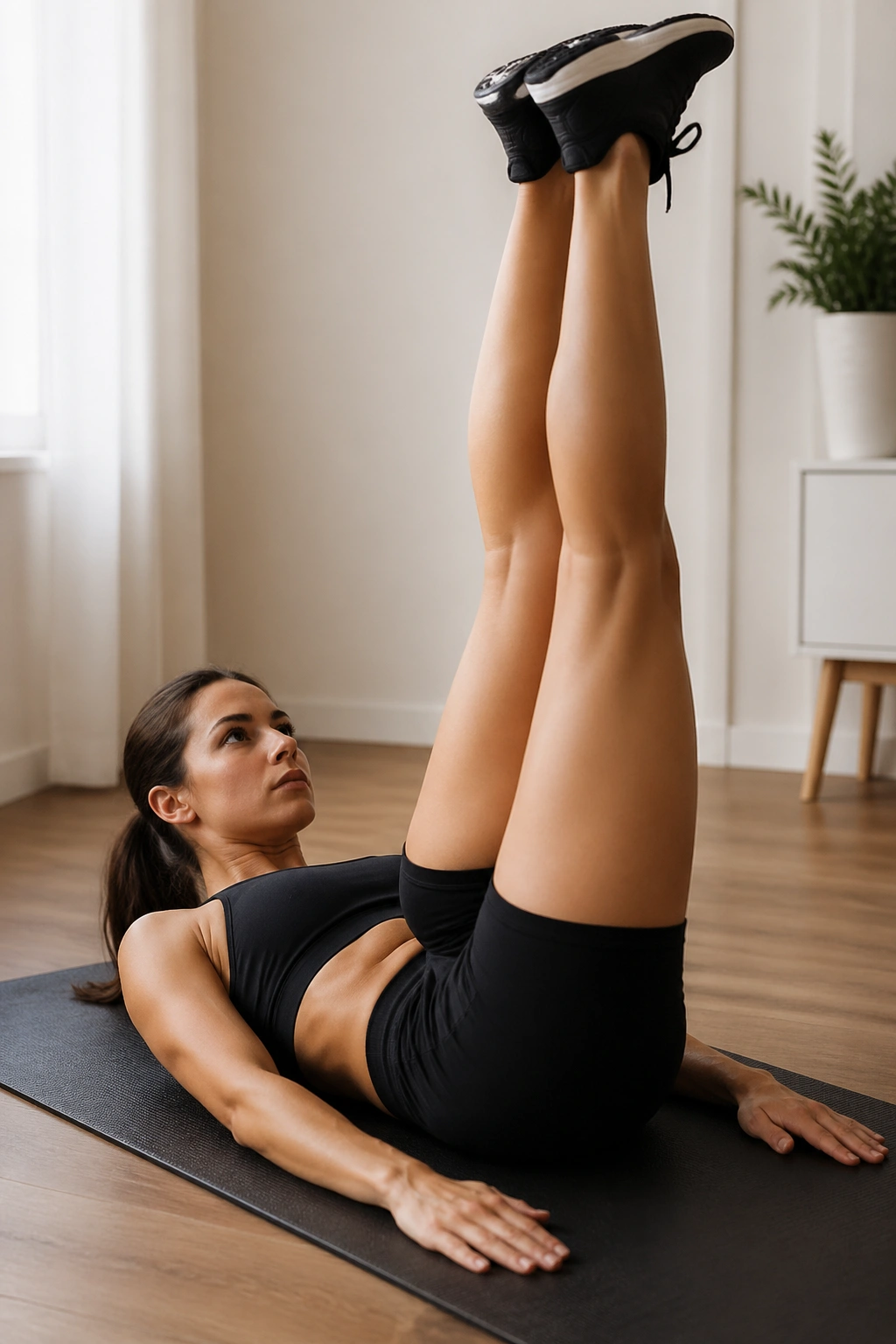
Leg raises are one of those exercises that look easy until your lower abs start shaking. They’re a tougher version of the reverse crunch because the lever is longer, which means the core has more work to do to keep the pelvis steady.
The biggest mistake is letting the low back arch off the floor. Once that happens, the work shifts away from the abs and your hips start doing the lifting. Keep the movement slow and lower only as far as you can while keeping your back flat.
How to Scale Them
Bend your knees if straight legs feel brutal. That small change makes the move much more manageable while still training the same basic pattern. You can also stop the legs halfway down and hold there for one extra second before lifting back up.
Leg raises reward patience. Chase control first, range second, speed last.
11. Skaters
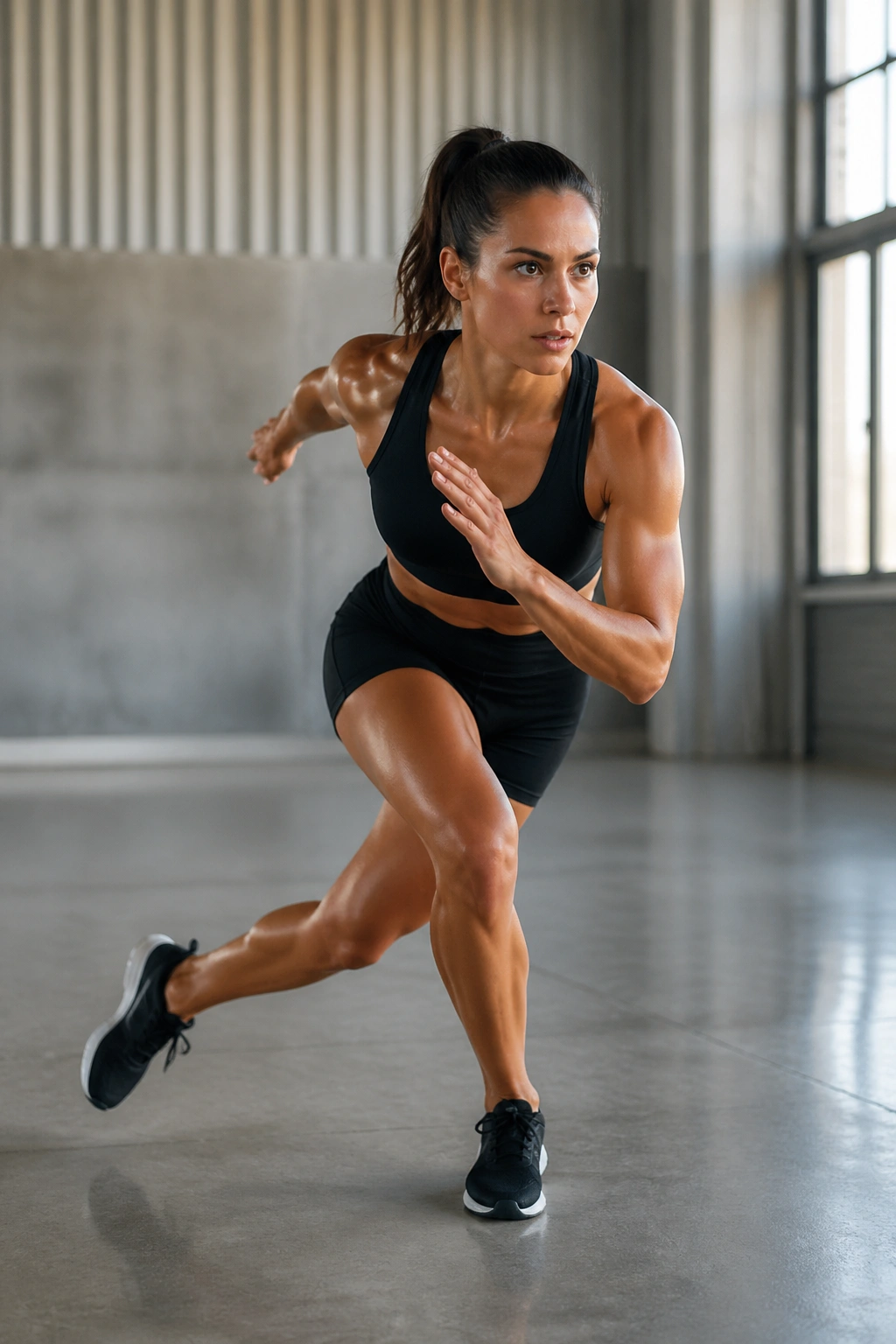
Skaters give you a side-to-side move that most floor ab exercises miss. That lateral shift wakes up the hips, glutes, and outer core while keeping the heart rate high enough to matter.
Picture a broad room and a little space to land on each side. Push off one leg, glide across, and land softly on the other foot with the back leg crossing behind. Arms should swing naturally, but the torso stays braced so you do not flop from side to side like a bag of laundry.
The landing matters more than people think. If the knee caves inward or the foot slams down, the movement gets noisy and less useful. Keep the knee tracking over the toes and stay light on the floor. It feels athletic for a reason.
12. Russian Twists
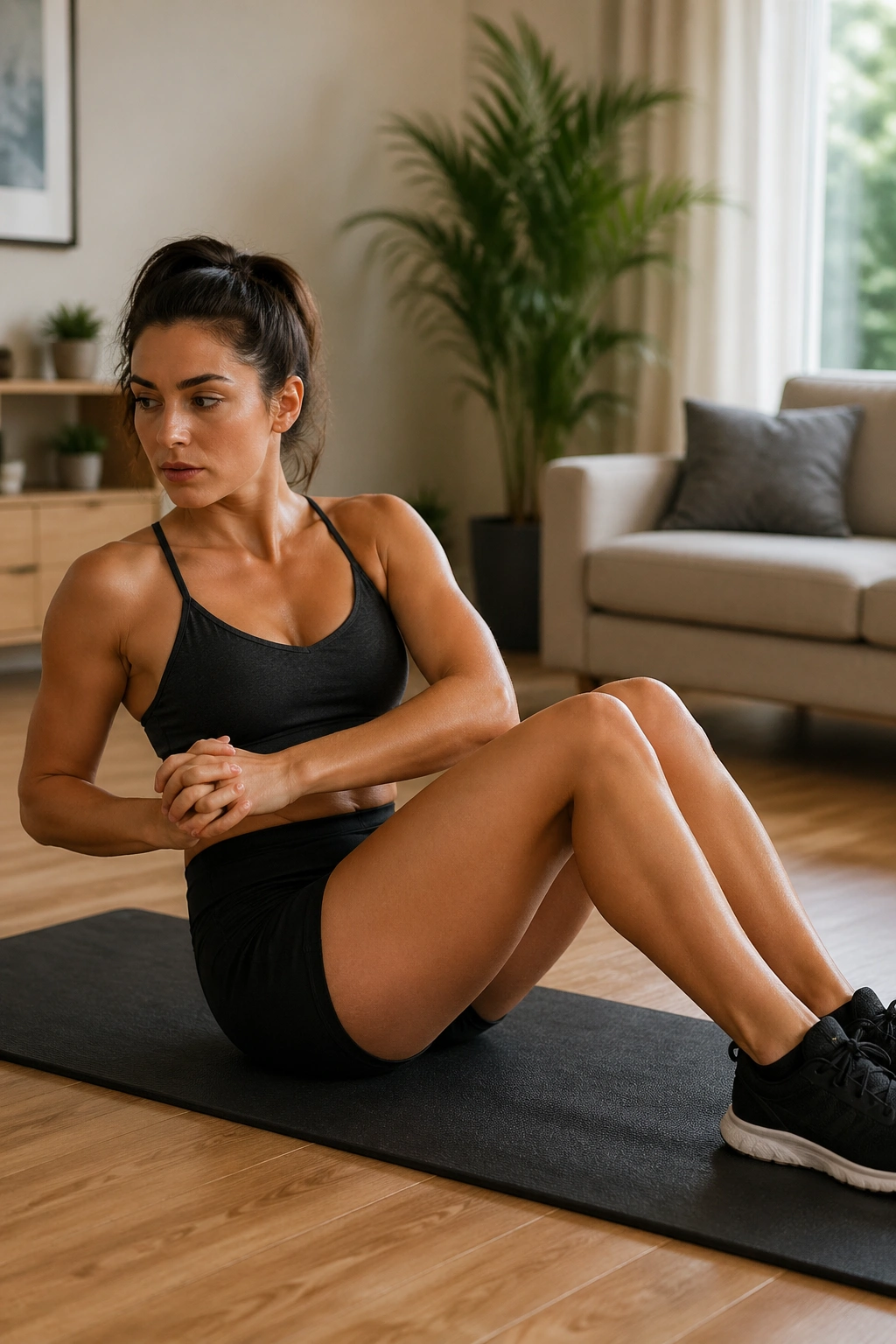
Russian twists can help your core work hard, or they can turn into a fast, sloppy fling that annoys your lower back. The difference is how much control you keep.
Sit with your knees bent, lean back a little, and rotate your torso from side to side. The twist should come from the ribs and waist, not just from whipping the hands across the body. If your back starts rounding, sit a little taller or keep both feet on the floor.
- Keep the chest open.
- Turn slowly enough to feel the sides of the waist.
- Stop if the lower back pinches.
- Use a smaller range before you chase speed.
This is one of those moves where less noise usually means more work.
13. Standing Cross-Body Knee Drives
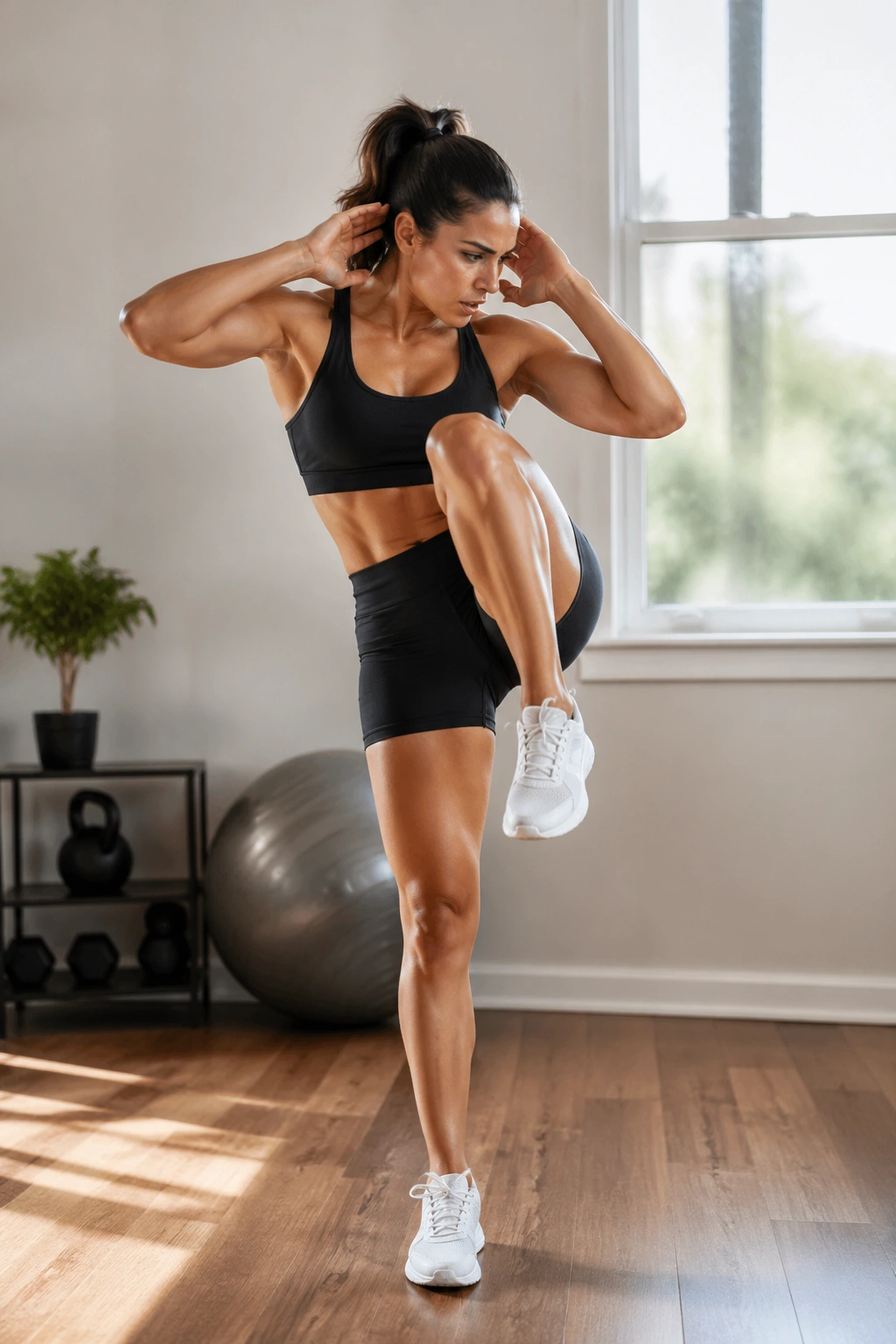
What if you want a core move that doesn’t put you on the floor? Standing cross-body knee drives are the easy answer. They’re beginner-friendly, good for warm-ups, and useful when your wrists or back need a break from planks.
How to Get More From Each Rep
Bring one knee up while crunching the opposite elbow down toward it. Exhale sharply as the knee rises, and keep the standing leg soft so you can stay balanced. The trick is to use your abs to pull the ribs toward the thigh, not to swing the leg like a pendulum.
This move also fits into interval work nicely. Do 30 seconds hard, 15 seconds easy, and repeat. You’ll feel your heart rate climb, and your midsection stays active the whole time.
It’s not flashy. It works.
14. Bear Crawl
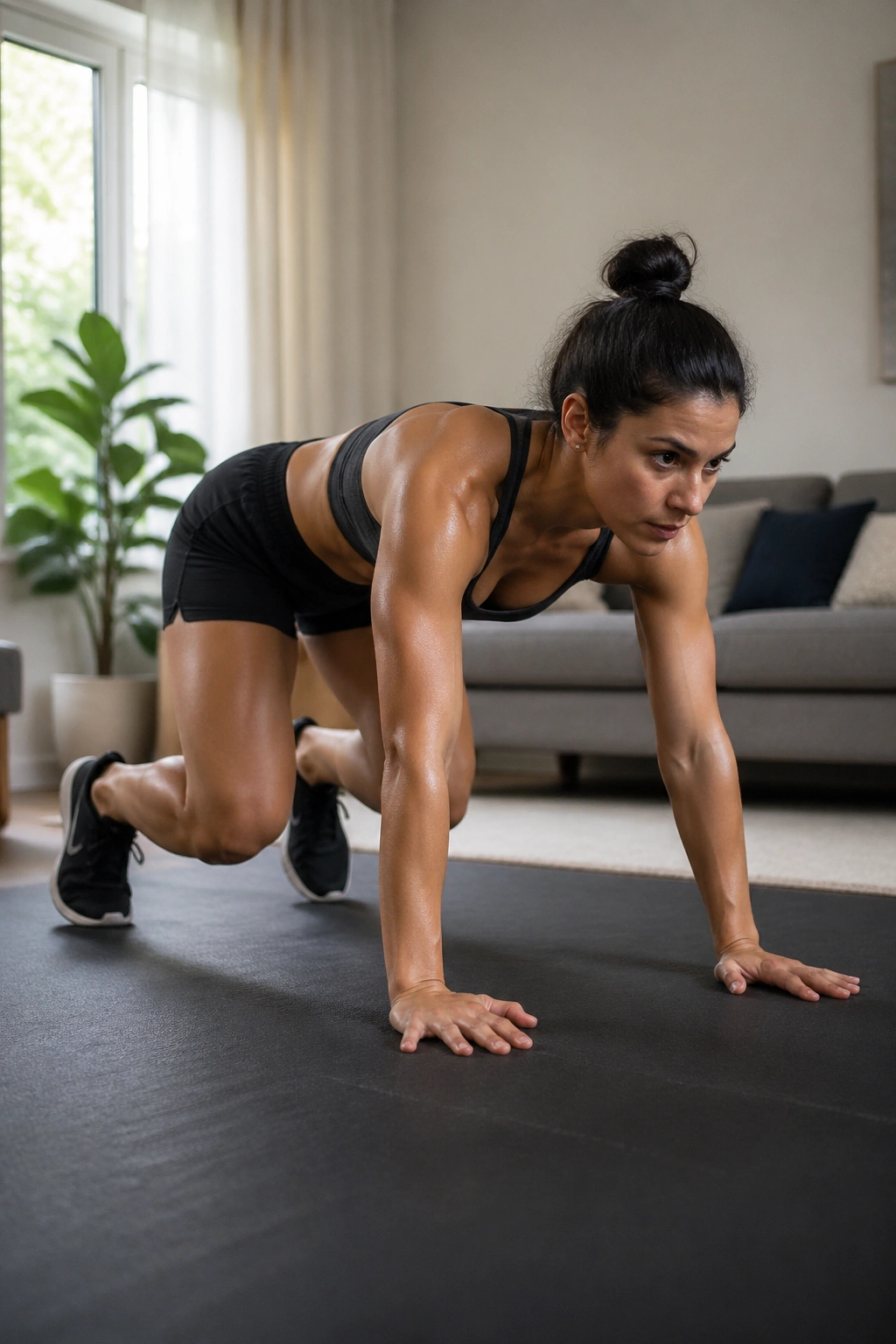
Bear crawl looks playful until five steps in, when your shoulders, abs, and hips all start complaining at once. That’s why I like it. It’s a full-body move that asks your core to stay tight while the limbs move in a very awkward pattern.
Start on hands and knees, lift the knees a few inches off the floor, then crawl forward by moving the opposite hand and foot. Keep the steps small. The moment the hips shoot up, the whole drill gets easier in the wrong way.
Bear crawls are sneaky. They make your shoulders burn, your stomach brace, and your breathing turn hard without needing a single piece of gear. Try 10 to 20 steps forward, then back up to where you started. Short floor space is enough.
15. Hollow Body Hold
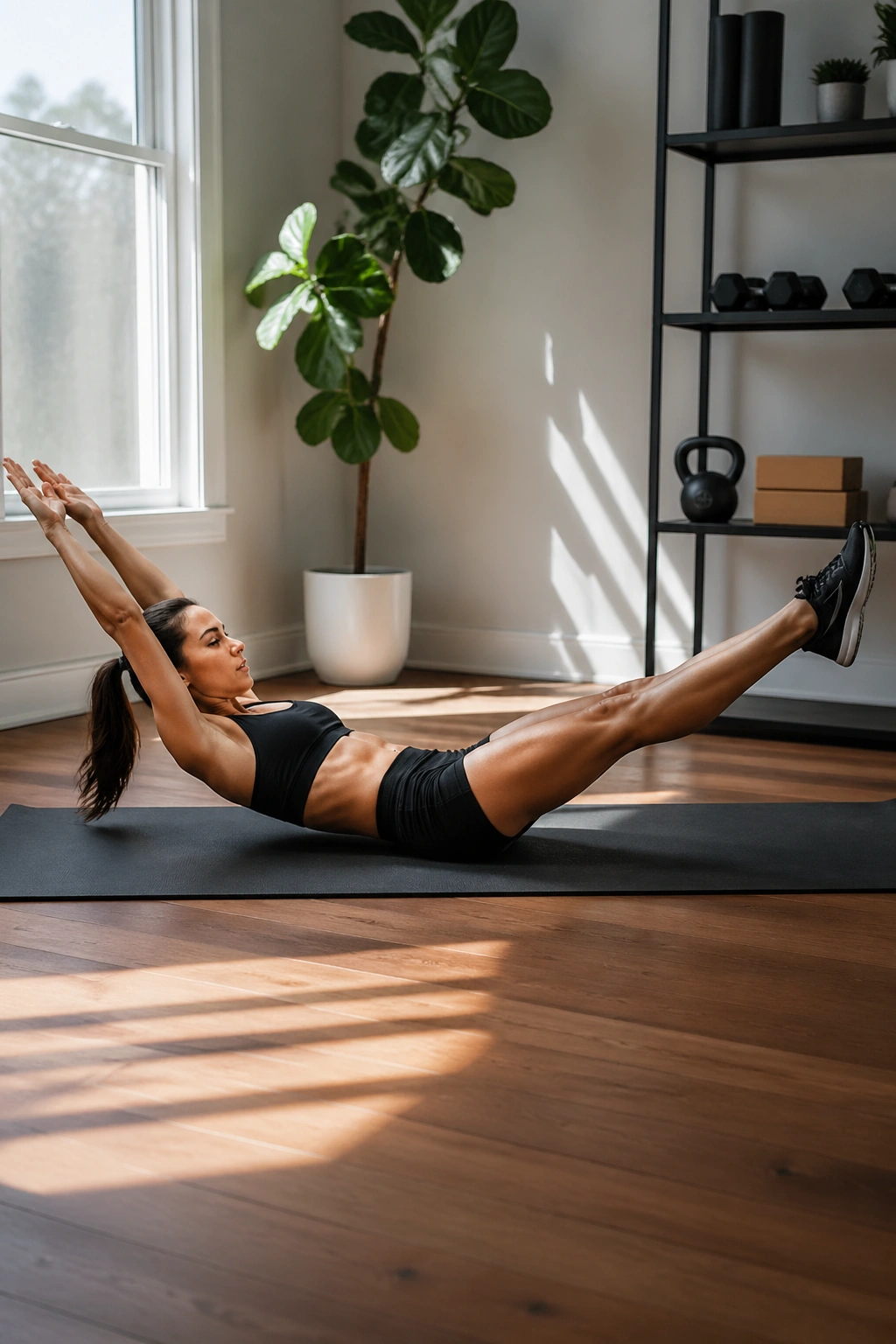
The hollow body hold is one of those exercises that looks almost too still to matter. It matters a lot. Gymnasts use this shape because it builds deep core tension, and that same tension is useful for anyone trying to make the midsection stronger and tighter.
Lie on your back, press your lower back into the floor, and lift your shoulders and legs slightly off the ground. Arms can reach overhead if that feels manageable, or stay by the sides if you need a smaller version. The goal is a low, hollow shape — not a high V.
If the back arches, you’re doing too much. Bend the knees, raise the legs higher, or shorten the hold to 10 seconds. The hold should feel hard, but it should still feel controlled.
16. Plank Jacks
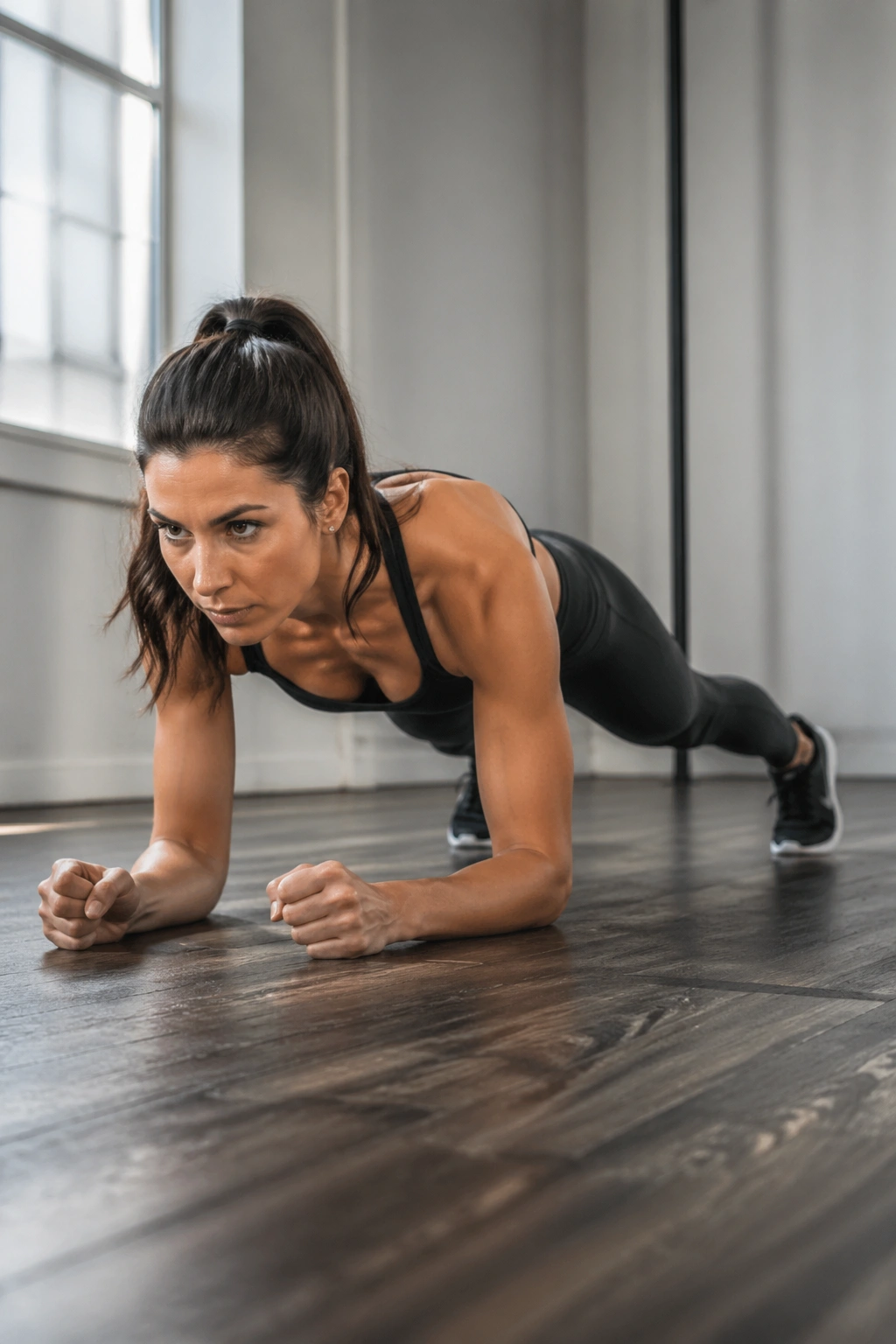
Plank jacks are what happens when jumping jacks and planks get together and decide to make things harder. You hold a strong plank while the feet hop wide and narrow underneath you, which keeps the core engaged and the heart rate climbing.
Set the shoulders over the wrists, keep the glutes lightly squeezed, and jump the feet out and in with control. If the hips bounce, slow down. If the wrists ache, step the feet out one at a time instead of hopping.
- Stay low through the torso.
- Land softly.
- Keep the neck long.
- Use a smaller range if your lower back starts to sway.
This one fits well in short intervals. It gets noisy fast, so your neighbors may not love it, but your conditioning probably will.
17. V-Ups
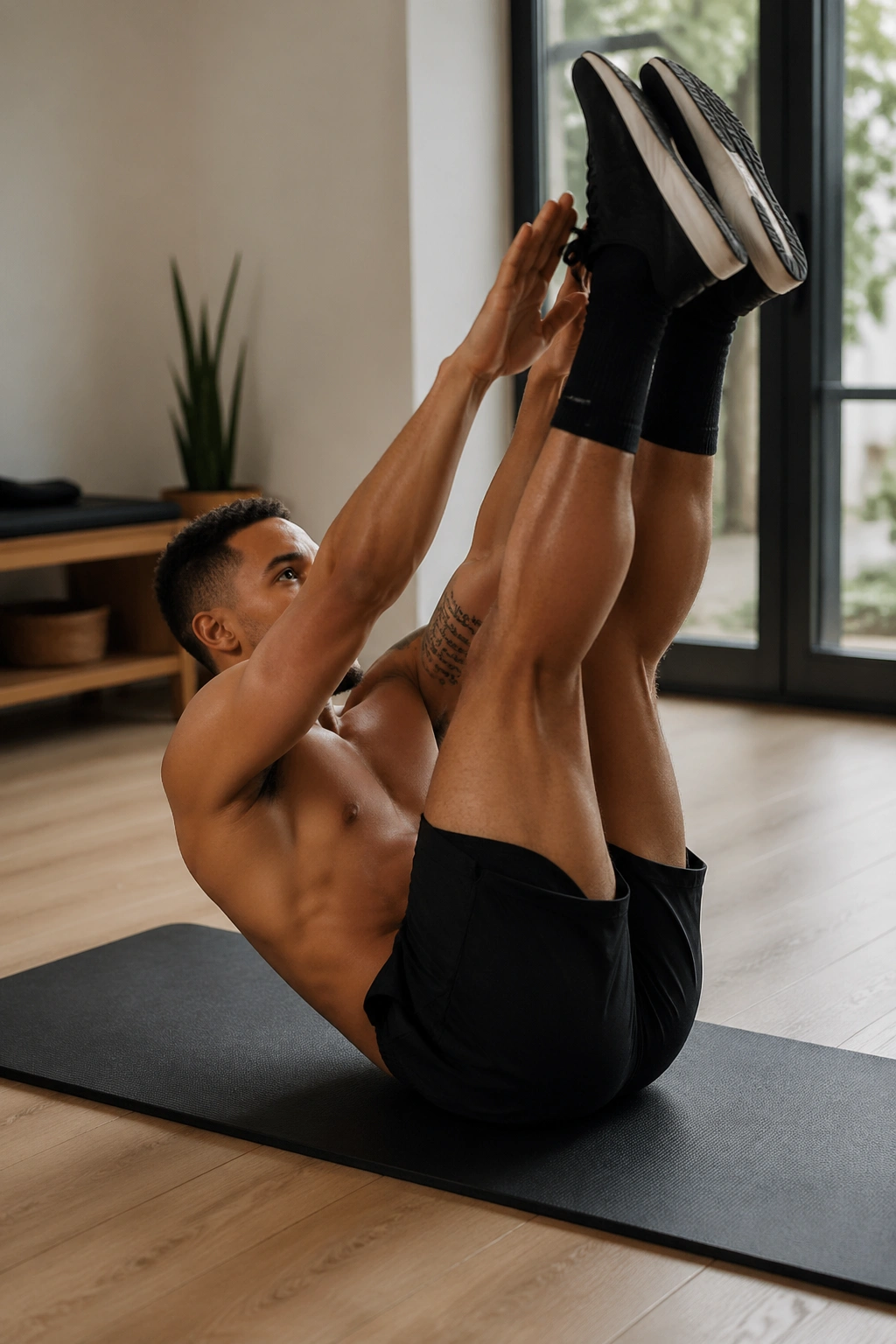
V-ups are not beginner-friendly, and that’s fine. They ask your abs to do a lot at once: lift the torso, raise the legs, and meet somewhere in the middle without using momentum as a crutch.
Start flat on your back with arms overhead. Lift the shoulders and legs together, reaching the hands toward the feet as the body folds into a V shape. If straight legs feel brutal or your lower back starts tugging, bend the knees a little and work with a smaller range.
The sharp part of this move is the lowering phase. That’s where people usually dump the legs and lose control. Lower slowly, keep the ribs down, and make the abs do the work instead of letting gravity win the set early.
18. Bicycle Knee Tucks
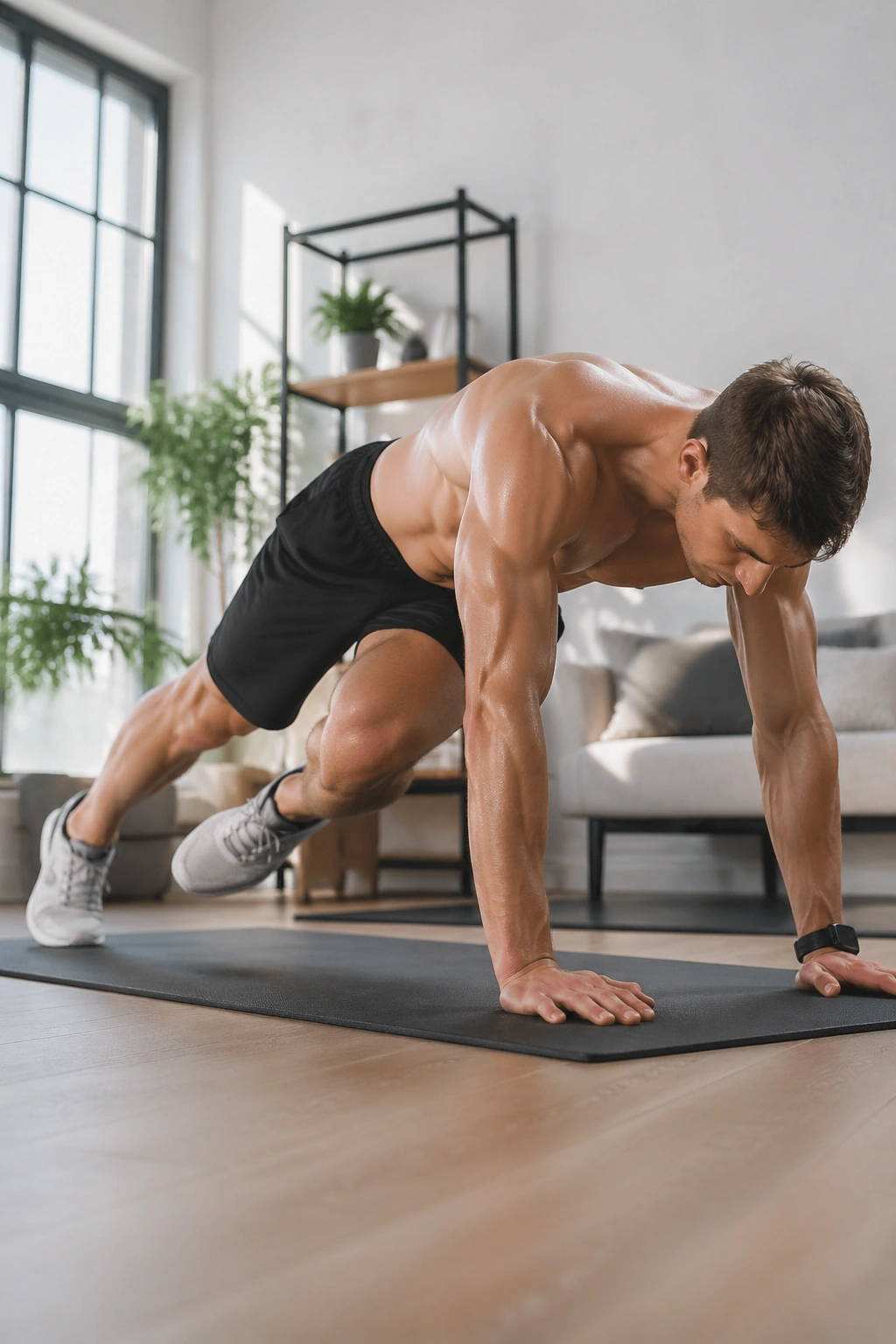
Bicycle knee tucks sit somewhere between a mountain climber and a crunch. That mix is useful because it keeps the core under tension while the knees move across the body in a more deliberate way than a simple sprinting drill.
What Makes Them Different
Unlike straight mountain climbers, these ask for a bit more twist and a bit more abdominal squeeze. That can make them feel more focused on the waist, especially if you keep the pace honest and the hips from bouncing around.
Set up in a plank, then drive one knee toward the opposite elbow before switching sides. The movement should be smooth, not jerky. If you rush, the shoulders take over and the abs stop doing their share.
Try 20 to 30 seconds at a time. It’s enough to make the work honest without turning the set into chaos.
19. Squat Thrusts
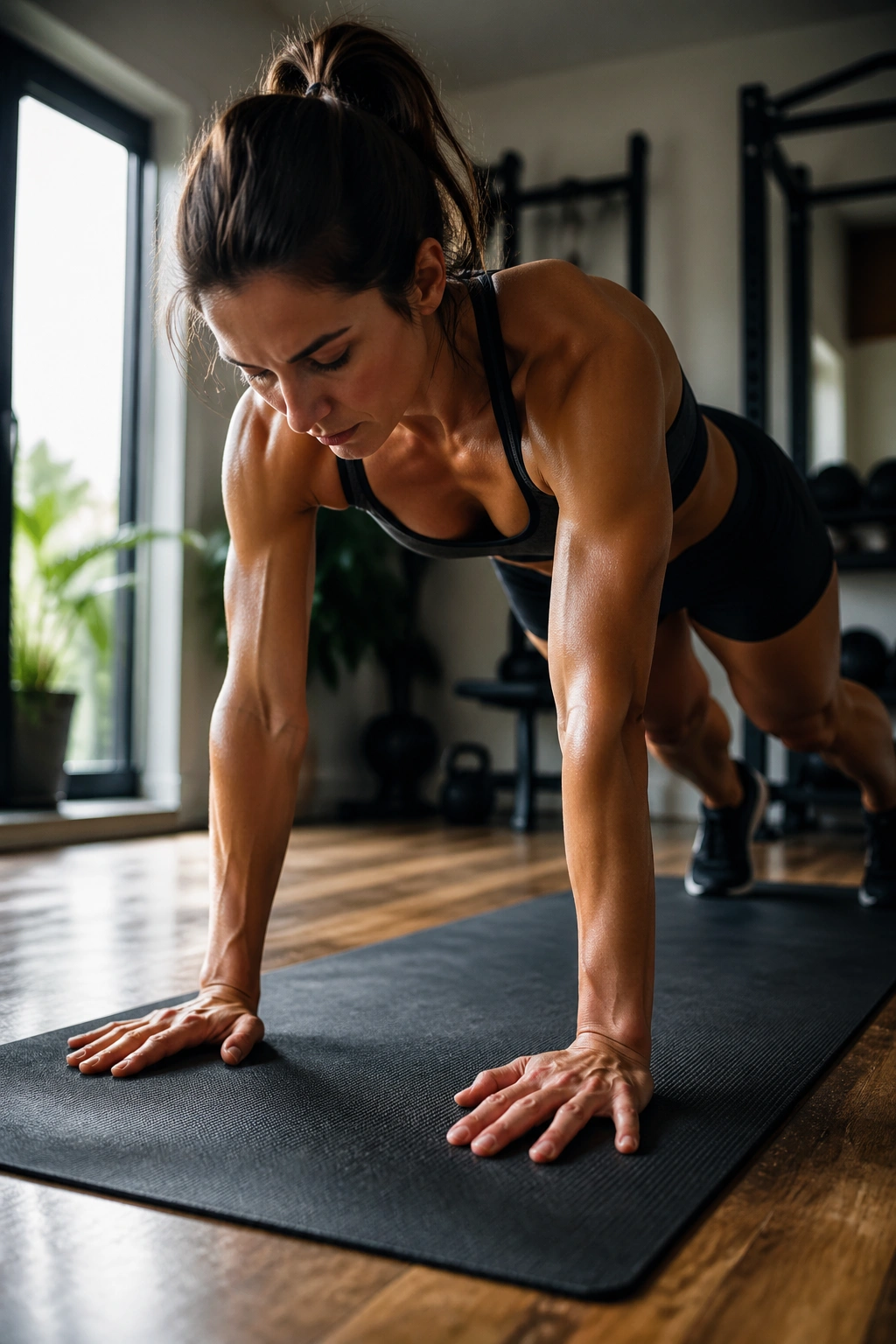
Squat thrusts are burpees without the push-up and without the jump, which makes them easier to repeat and still very useful. They’re a smart pick when you want a no-equipment workout that keeps the pulse up but doesn’t leave you wrecked after three reps.
Start standing, drop into a squat, place the hands on the floor, and step or jump the feet back into a plank. Then step or hop them forward again and stand tall. That’s the whole thing. The move is simple, but the body works hard to keep the trunk steady during the transitions.
If you want a fast conditioning block, squat thrusts are a clean choice. They fit beautifully into intervals, and you can keep the speed high without the landing stress that comes with bigger jumps.
20. Shadow Boxing for Belly Fat Workouts
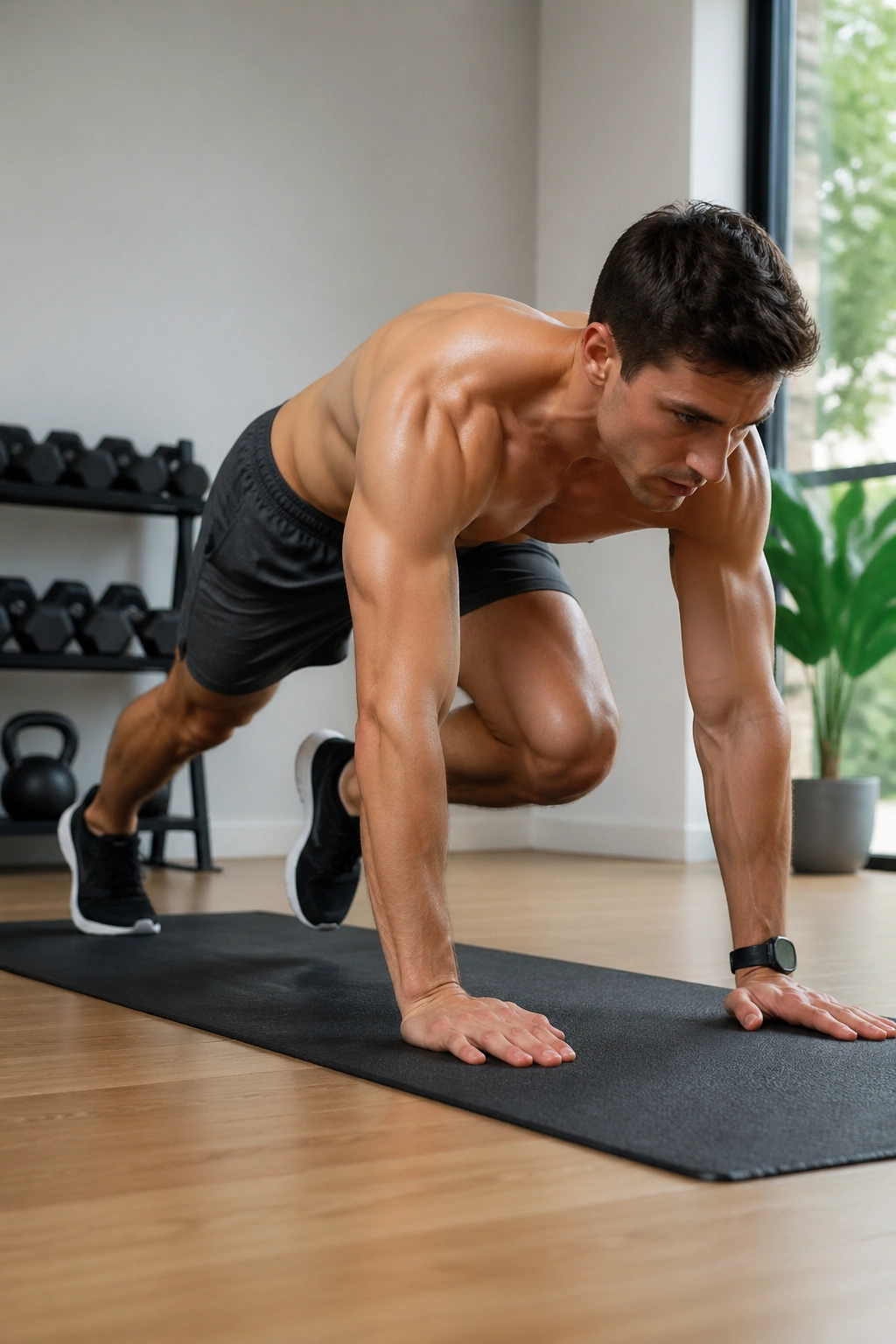
Shadow boxing is one of the easiest ways to make a home workout feel less like punishment. It keeps you moving, gets your torso rotating, and lets you layer in quick bursts of cardio without needing space, gear, or fancy timing.
Keep your hands up, knees soft, and abs lightly braced. Throw quick jabs, crosses, hooks, and uppercuts while turning through the ribs and hips instead of just swinging the arms. If you stay planted and twist from the middle, the core has to work harder to control the motion.
A Simple Round to Try
Work 30 seconds of jabs and crosses, then 30 seconds of hooks, then 30 seconds of mixed punches with a little footwork. Rest for 20 seconds and repeat for 3 rounds. You’ll get a sweaty, useful session without hammering your joints.
It’s a strong finisher because it feels athletic and stays easy to scale. That mix is rare, and worth using.
One last thought: the best belly fat workouts without equipment are the ones you can repeat next week without dreading them. Put a few of these together, keep the reps clean, and let consistency do the heavy lifting.
