



Belly fat does not care how many crunches you do. If the rest of your day is full of sitting, grazing, and skipping sleep, a hundred sit-ups will not do much except make your neck tired.
The exercises that help most are the ones that make your whole body work harder. Think fast walking, jumping, crawling, squatting, bracing, and short bursts that leave you breathing through your mouth for a minute or two. That is the kind of effort that belongs in a serious belly fat exercise challenge.
A 30-day challenge works best when you stop treating every move like an isolated ab exercise. Your midsection tightens up when your core has to hold steady during bigger moves, and your calorie burn climbs when your legs, lungs, and shoulders all join the party. That is why the list below mixes cardio, bodyweight strength, and core drills instead of giving you thirty versions of the same crunch.
Pick four to six moves a day, work for 30 to 45 seconds each, rest for 15 to 30 seconds, and rotate the order so your body never gets too cozy. Keep your form clean. Keep your pace honest. And if a move feels too aggressive, scale it down rather than turning it into a sloppy mess that your lower back will hate later.
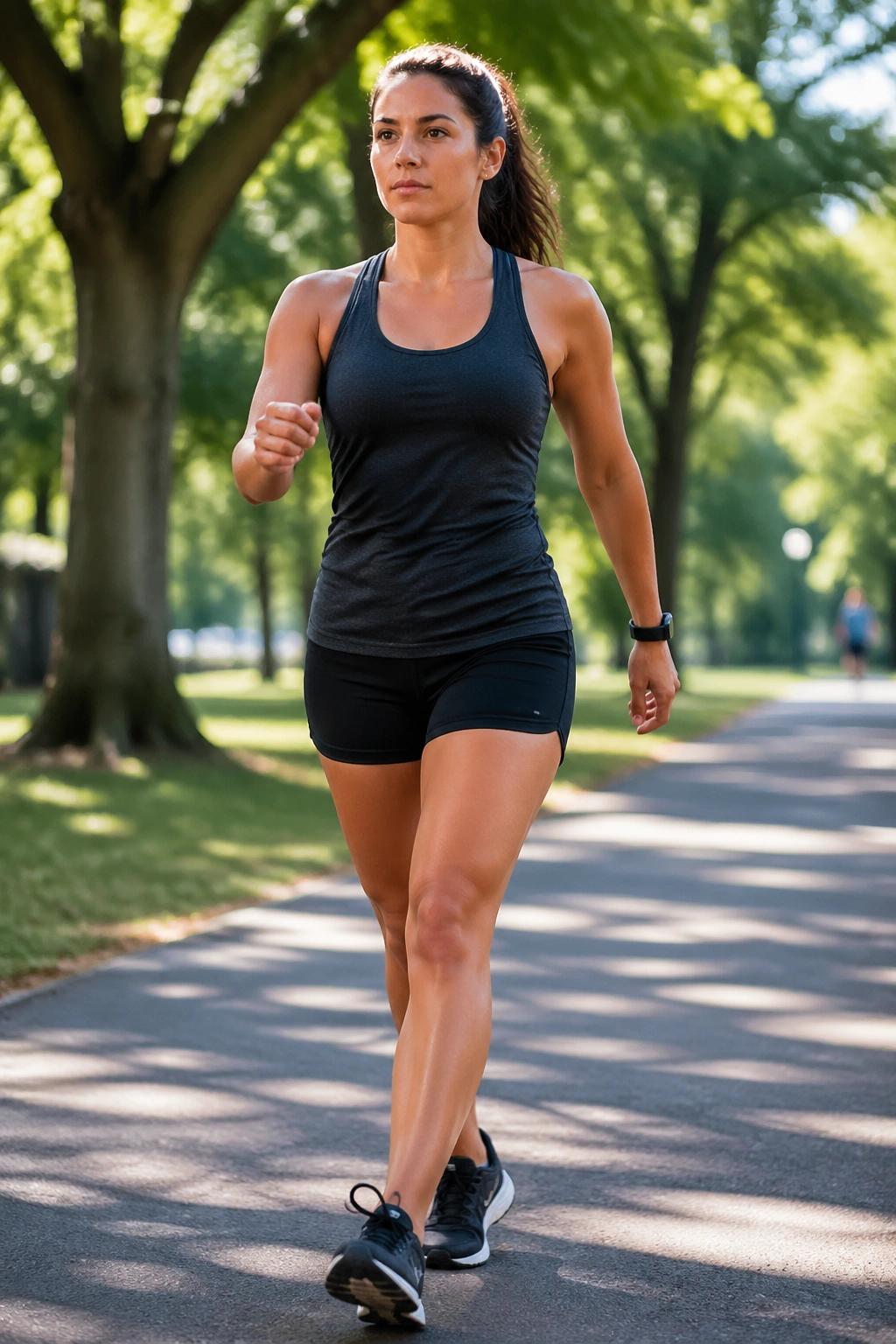
1. Brisk Walking Intervals
Brisk walking is the unglamorous workhorse of a fat-loss plan. It does not look flashy, and that is part of why people ignore it. Big mistake.
A fast walk raises your heart rate, stacks up daily steps, and gives your joints a break from all the jumping in a typical belly fat workout. The trick is to walk with purpose for 2 minutes, then ease off for 1 minute, and repeat that rhythm for 20 to 30 minutes. That simple pattern can make your challenge feel doable on days when burpees sound like a personal insult.
Quick way to use it:
- Walk at a pace where you can speak in short phrases, not long stories.
- Swing your arms hard enough to feel your upper body waking up.
- Keep your ribs stacked over your hips instead of leaning back.
- Use hills or stairs if your route is too flat.
One brisk walk will not flatten your stomach. A week of them starts to matter.
2. Jumping Jacks
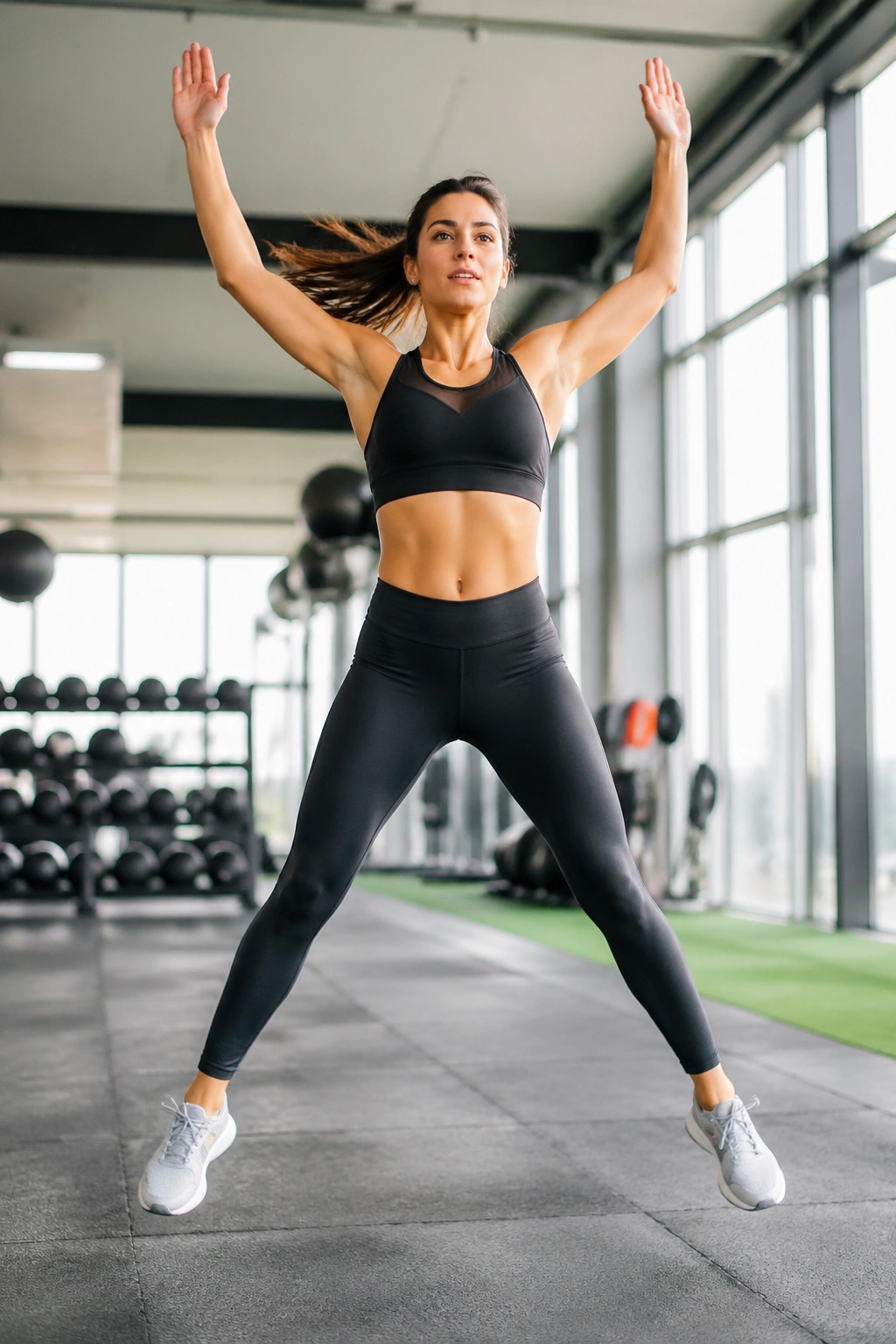
Why do old-school jumping jacks still show up in fat-loss circuits? Because they warm up the whole body fast, and they do it without equipment, setup, or fuss.
A solid set of jumping jacks gets your shoulders moving, opens your hips, and nudges your heart rate up before your brain has time to negotiate. They work well as a starter move in a 30-day challenge because they are easy to scale. Ten reps is a warm-up. Sixty seconds is a workout.
How to use them
- Do 30 seconds on, 15 seconds off for 3 to 5 rounds.
- Land softly on the balls of your feet.
- Keep your arms active, not lazy.
- If jumping bothers your knees, step one foot out at a time.
No drama here. Just rhythm, pace, and a little sweat.
3. Mountain Climbers
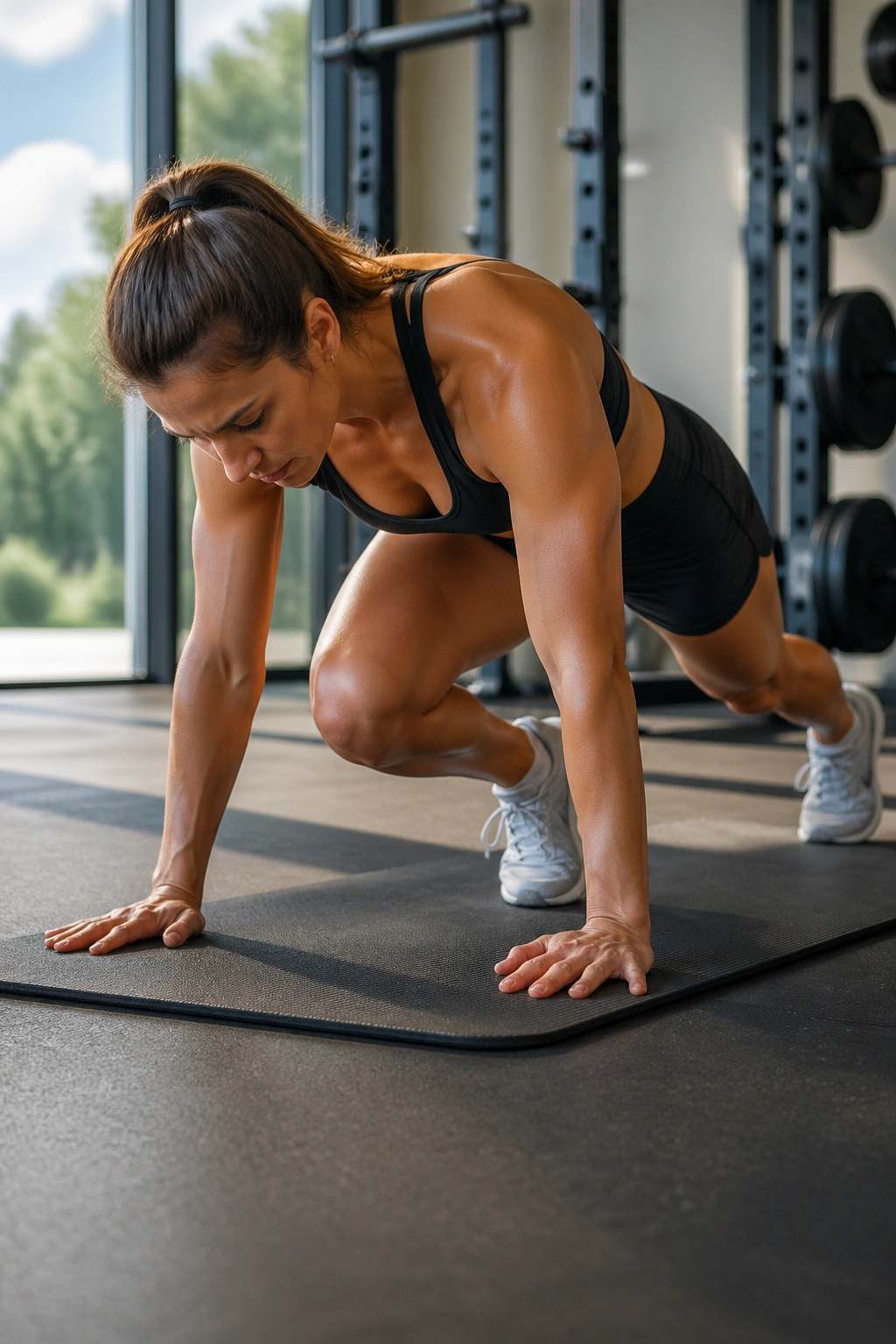
Mountain climbers look simple. They are not. Once you speed up, they turn into a sneaky blend of core work, shoulder stability, and cardio that can light up your abs faster than a slow crunch routine.
The best version keeps your hips low and your knees driving forward under your chest, not bouncing around like a tent in the wind. If your lower back is sagging, slow down. If your wrists ache, raise your hands on a bench or sturdy couch. Clean reps matter more than frantic reps.
What to watch for:
- Hands under shoulders.
- Neck long and relaxed.
- Knees moving in a controlled line.
- Breathing steady instead of chaotic.
Mountain climbers are ugly when rushed. They are excellent when controlled.
4. Burpees
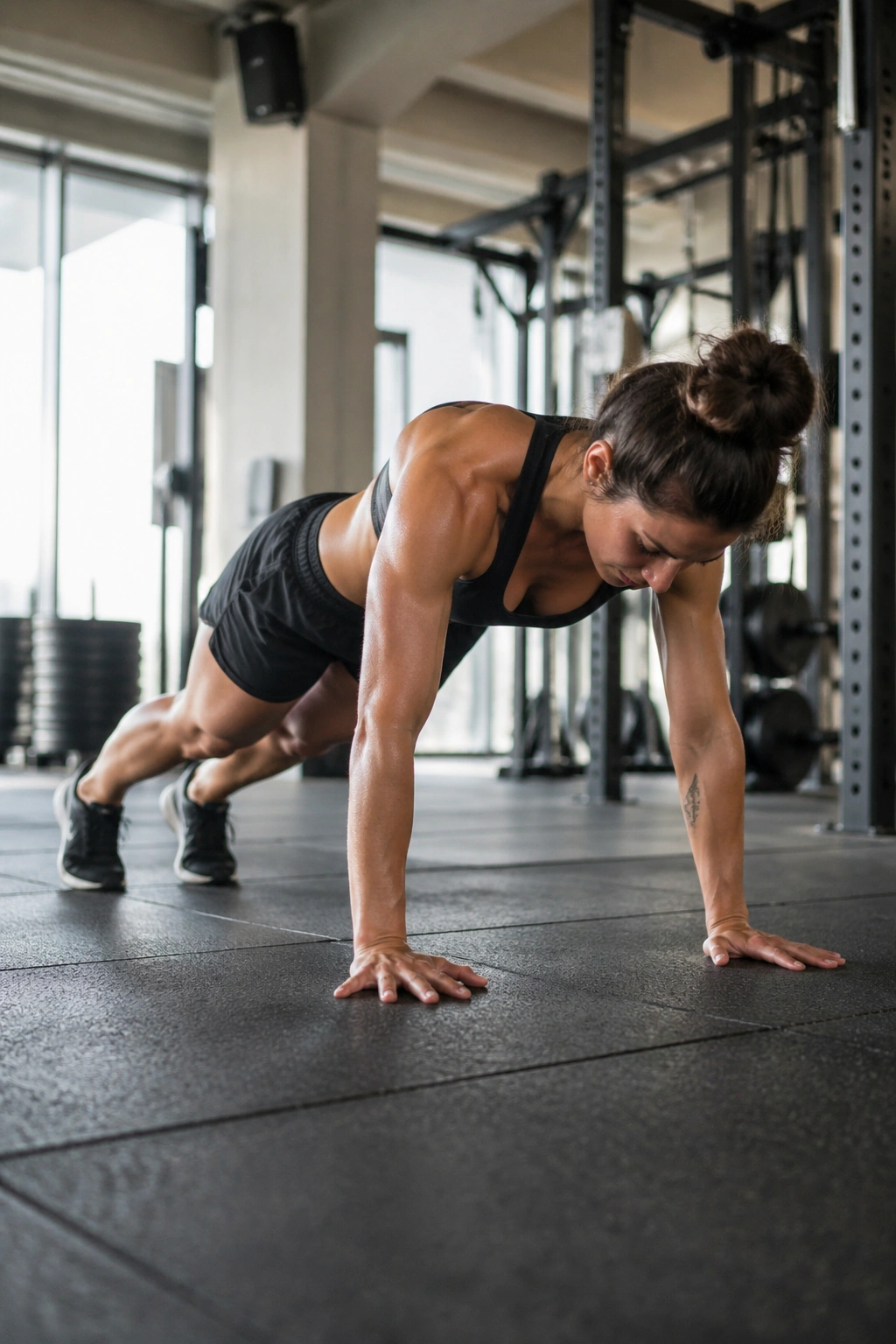
A burpee is what happens when a squat, a plank, and a jump all decide to argue in the same 15 seconds. That is also why people love to hate them.
Done well, burpees are one of the best high-intensity moves for a belly fat challenge because they light up your legs, chest, shoulders, and core at once. Done badly, they become a flung-together flop with a sore back and no real payoff. Start with a step-back version if you need it: squat down, step to plank, step back in, stand tall, and skip the jump until your form feels solid.
Short sets work best. Three to five good burpees can sting more than ten sloppy ones.
5. High Knees
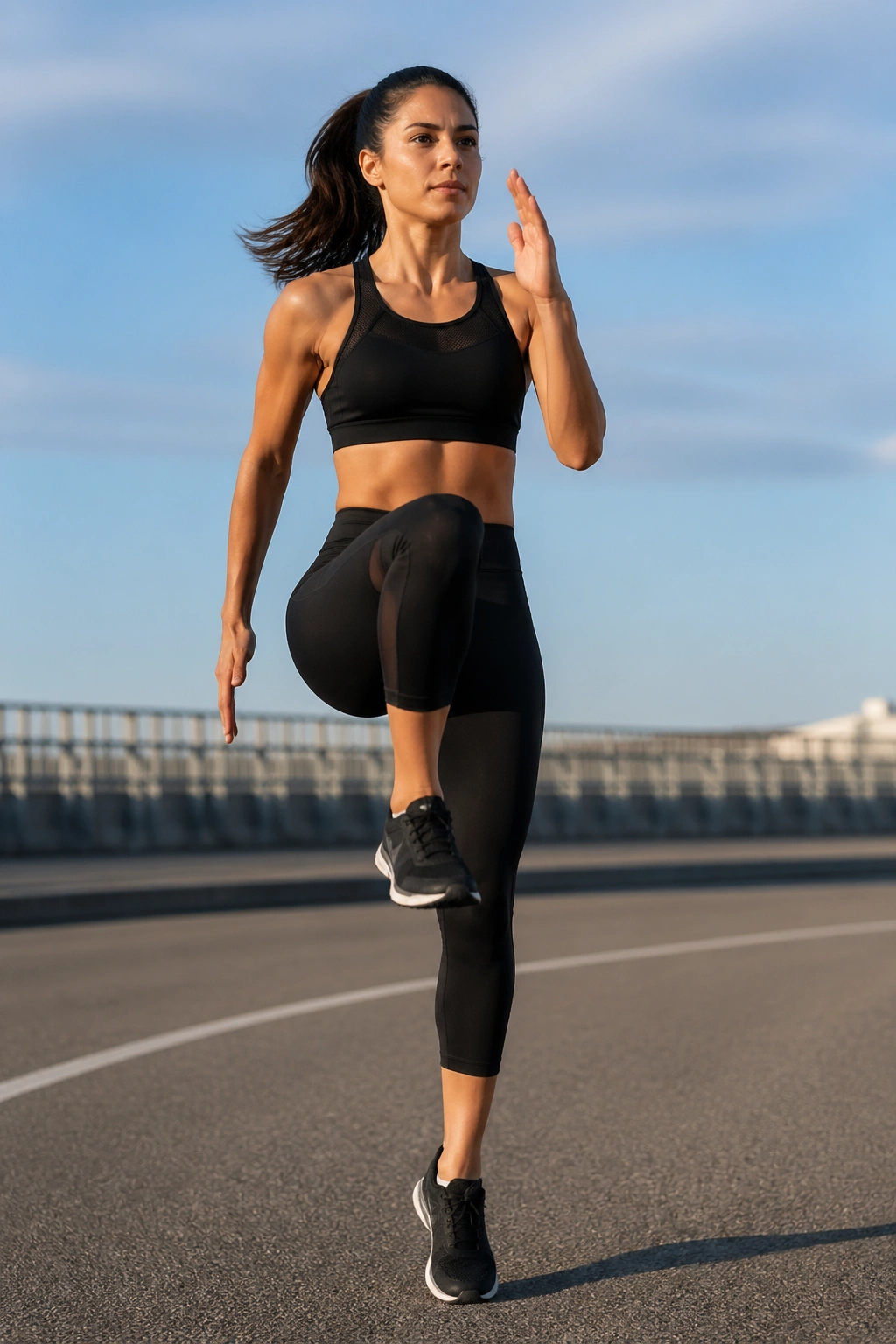
High knees are basically running in place, but with attitude. They work better than a lazy jog because you are forced to lift each knee, brace your torso, and keep the pace sharp.
What makes them useful in a 30-day challenge is the combination of speed and posture. If you lean back too far, your lower back takes over. If your knees barely lift, you lose the point. Drive one knee up at a time, keep your chest tall, and pump your arms like you mean it.
How to keep them crisp
- Do 20 to 30 seconds per round.
- Land lightly and stay on the front of the foot.
- Keep your core tight so your hips do not swing.
- Use a slower march if jumping feels rough.
Fast feet, tall spine. That is the whole trick.
6. Squat to Overhead Press
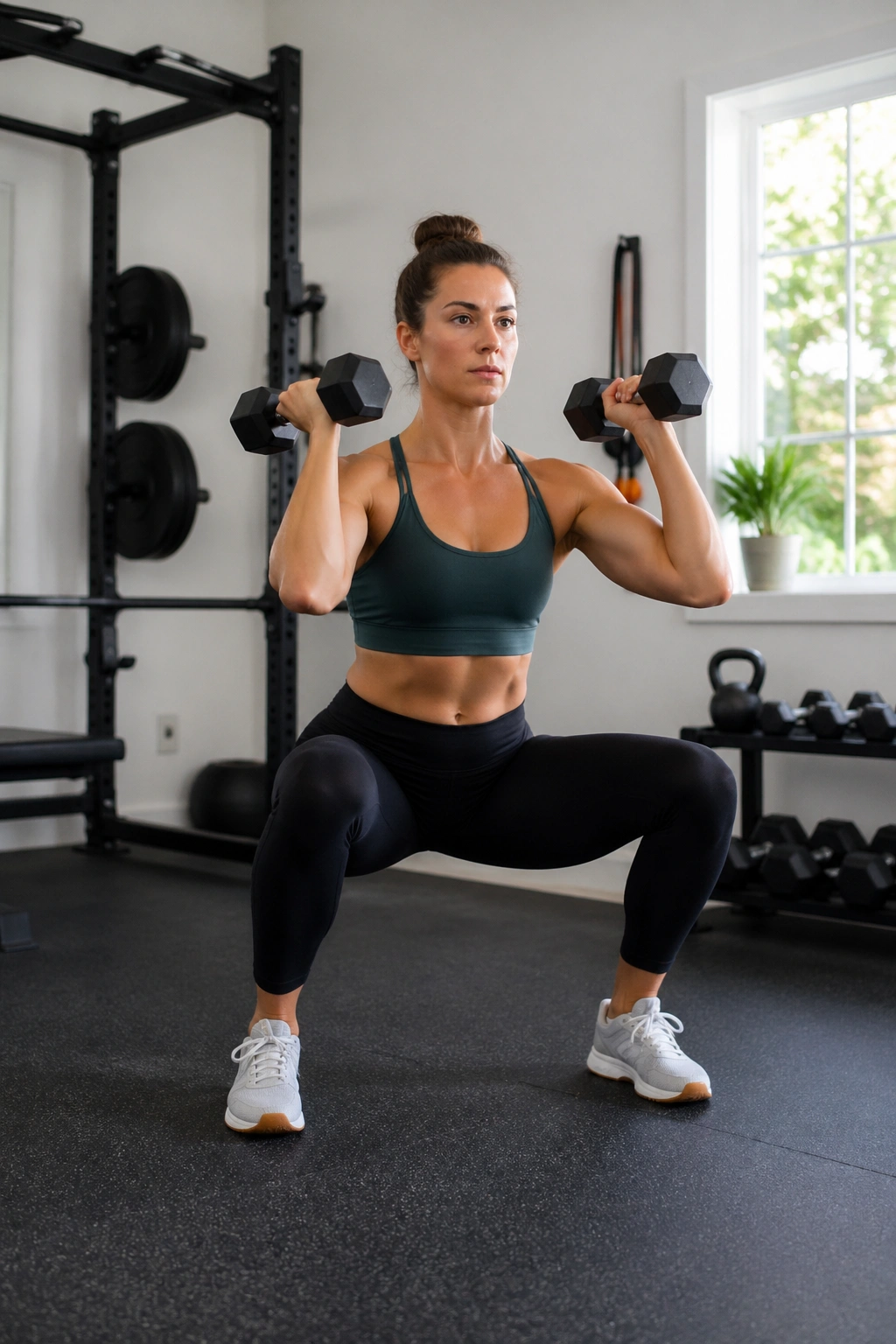
A squat to overhead press is one of those moves that quietly earns its place. Your legs do the first half, your shoulders finish the job, and your core has to hold the whole thing together.
Use dumbbells, water jugs, or even a pair of loaded backpacks if that is what you have. Drop into a squat, stand up with control, and press overhead without arching your lower back. That last part matters more than people think. If you lean back to get the weight up, your abs are no longer doing their job.
This move belongs in a challenge because it gives you strength and calorie burn at the same time. It is also easy to scale. Light weight. Slow tempo. Clean reps.
7. Forearm Plank
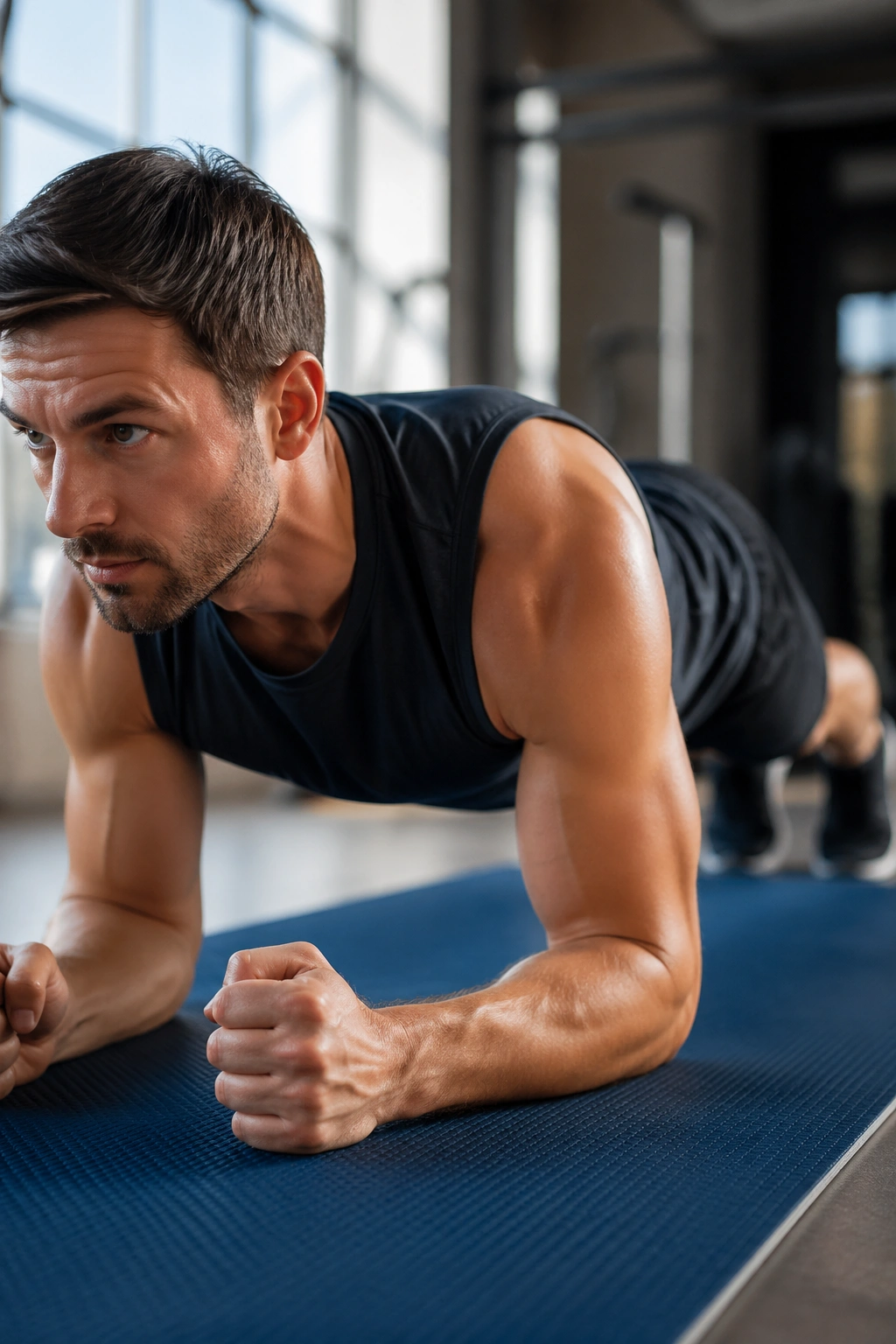
The forearm plank is boring in the way good medicine is boring. No spinning lights. No jumping. Just you, the floor, and your ability to stop your middle from sagging.
A proper plank should feel like a full-body brace, not a lower-back hang. Push the floor away with your forearms, squeeze your glutes, and pull your ribs down so your body forms one long line. If your hips are floating too high, you are cheating. If they drop, your back will complain.
What good form feels like
- Belly tight, not sucked in hard.
- Shoulders steady and away from ears.
- Neck neutral, eyes on the floor.
- Breath controlled instead of held.
Start with 20 seconds if you need to. A clean short plank beats a long sloppy one every time.
8. Plank Shoulder Taps
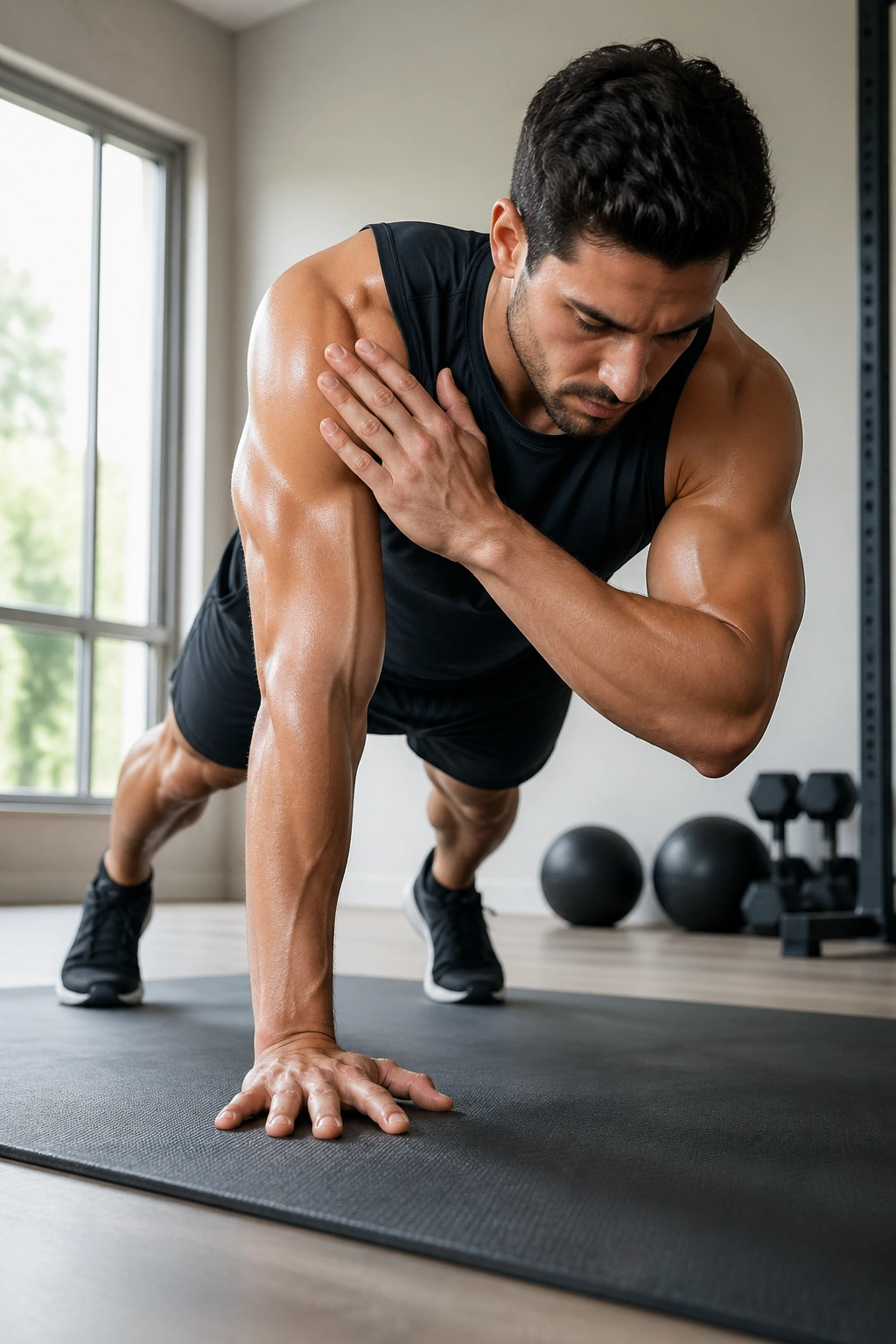
Plank shoulder taps are the plank’s less polite cousin. Your body has to resist twisting every time one hand leaves the floor, and that anti-rotation work is gold for your waistline and your core control.
The move is simple: set up in a high plank, spread your feet a little wider than hip-width, and tap one shoulder with the opposite hand. Slow is the point. If your hips sway all over the place, your core has checked out. If you can keep your pelvis still, the abs and obliques are doing real work.
This is one of my favorite belly fat exercises for people who get bored with static holds. It looks easy. It rarely is.
9. Bicycle Crunches
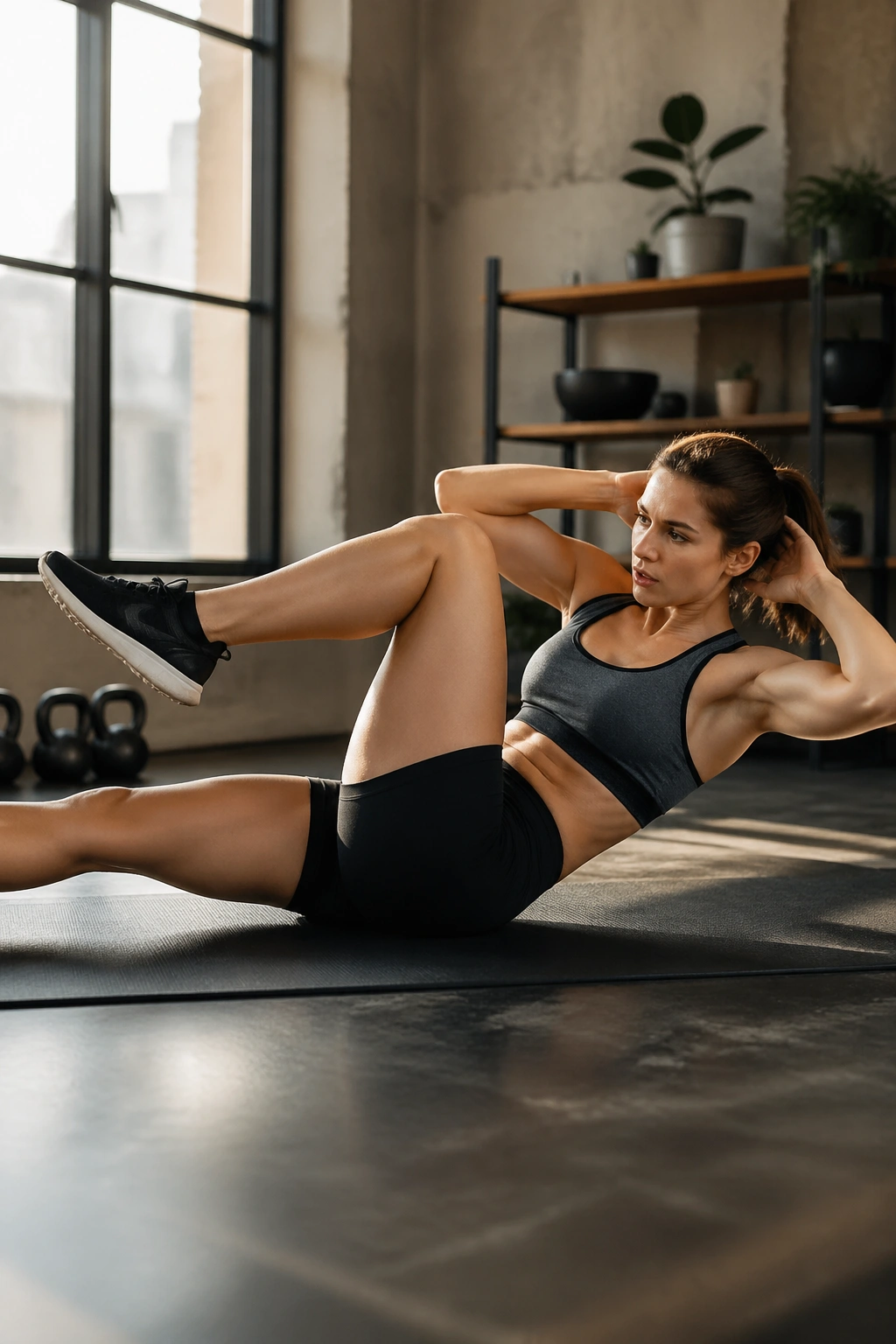
Bicycle crunches are only useful when they are controlled. Fast flailing turns them into hip flexor chaos, and nobody needs more of that.
Think about bringing one rib cage toward the opposite hip while the other leg extends long, then switch sides without yanking on your neck. Exhale on the twist. That tiny breath cue helps the abs engage harder and keeps you from muscling through with momentum.
A slow set of 10 to 20 good reps per side can feel far harder than a giant pile of rushed ones. Keep your elbows wide, your chin off your chest, and your lower back gently pressed into the floor. Messy bicycle crunches are common. Clean ones are worth the effort.
10. Dead Bug
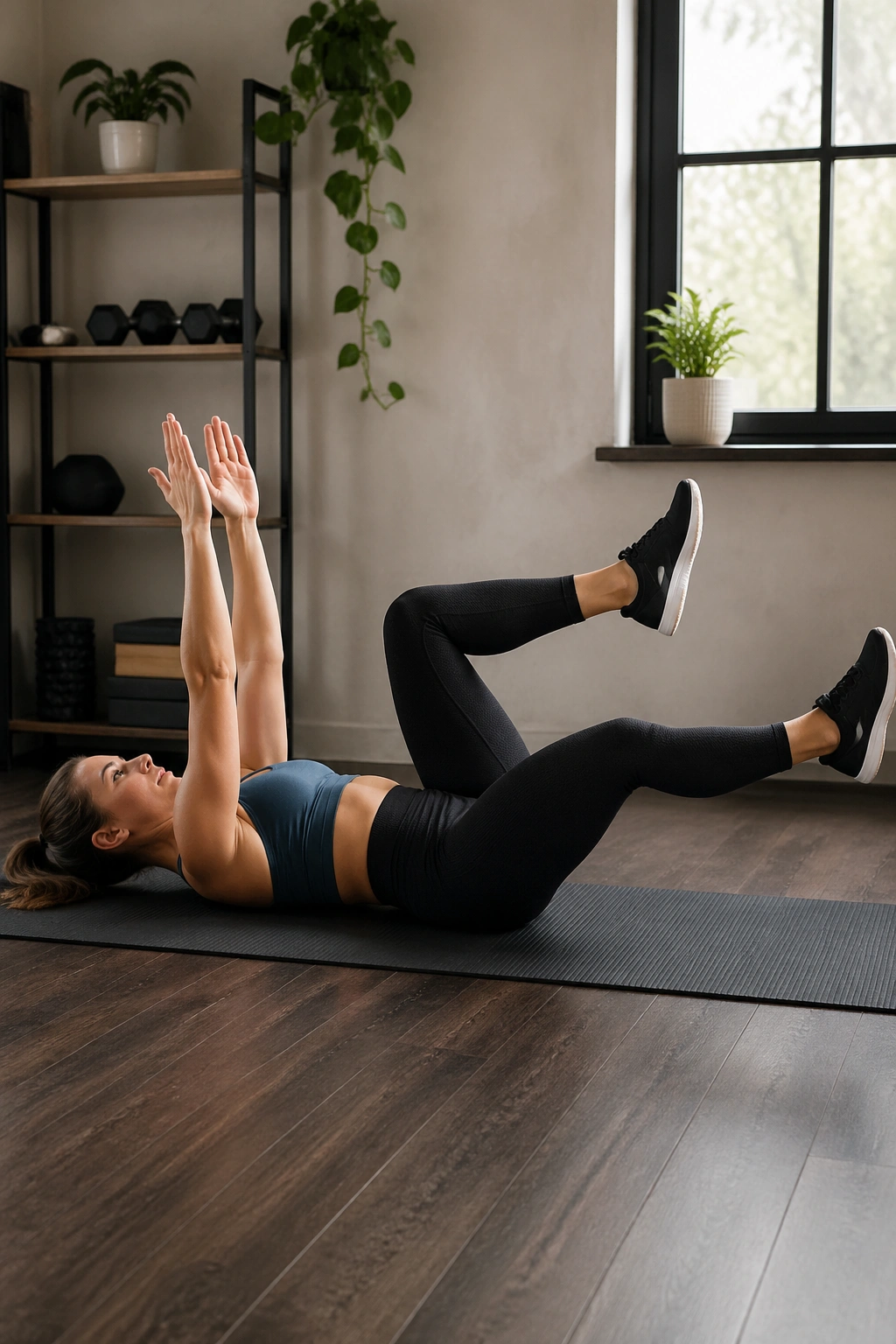
Why do trainers keep reaching for the dead bug when the goal is a tighter midsection? Because it teaches your core to hold still while your arms and legs move, and that skill carries over to almost everything else.
Lie on your back with your knees over your hips and your arms pointed up. Lower one leg and the opposite arm at the same time, then bring them back without letting your lower back pop off the floor. Slow wins here. If your back arches, the range is too big.
How to keep the low back down
- Exhale before each rep.
- Move one limb a little slower than you think you should.
- Stop the descent the moment your back starts to lift.
- Use bent knees if straight legs feel too hard.
It is not flashy. It works.
11. Reverse Crunches
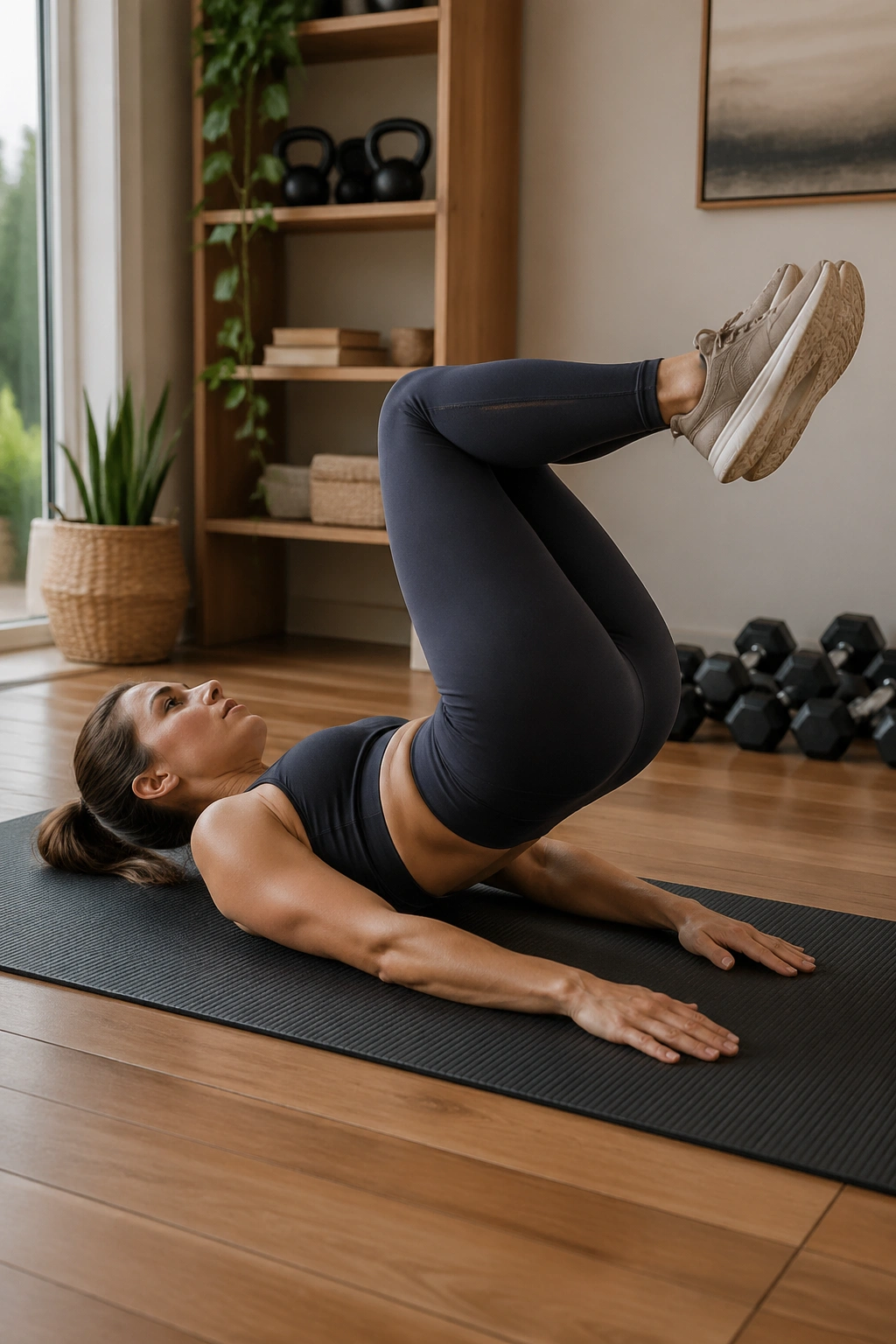
Reverse crunches are better than a lot of people give them credit for, mostly because they target the job everyone wants the lower abs to do: curl the pelvis up, not just swing the legs around.
Lie down, bend your knees, and pull them in until your hips tip slightly off the floor. That tiny pelvic curl is the whole point. If you fling your legs and bounce your knees toward your face, you are missing the ab work and giving the hip flexors a free ride.
Do them slowly. Pause at the top for one beat. Lower with control. That little pause makes the exercise feel much harder without needing more reps. No drama. Just a clean curl and a controlled return.
12. Side Plank
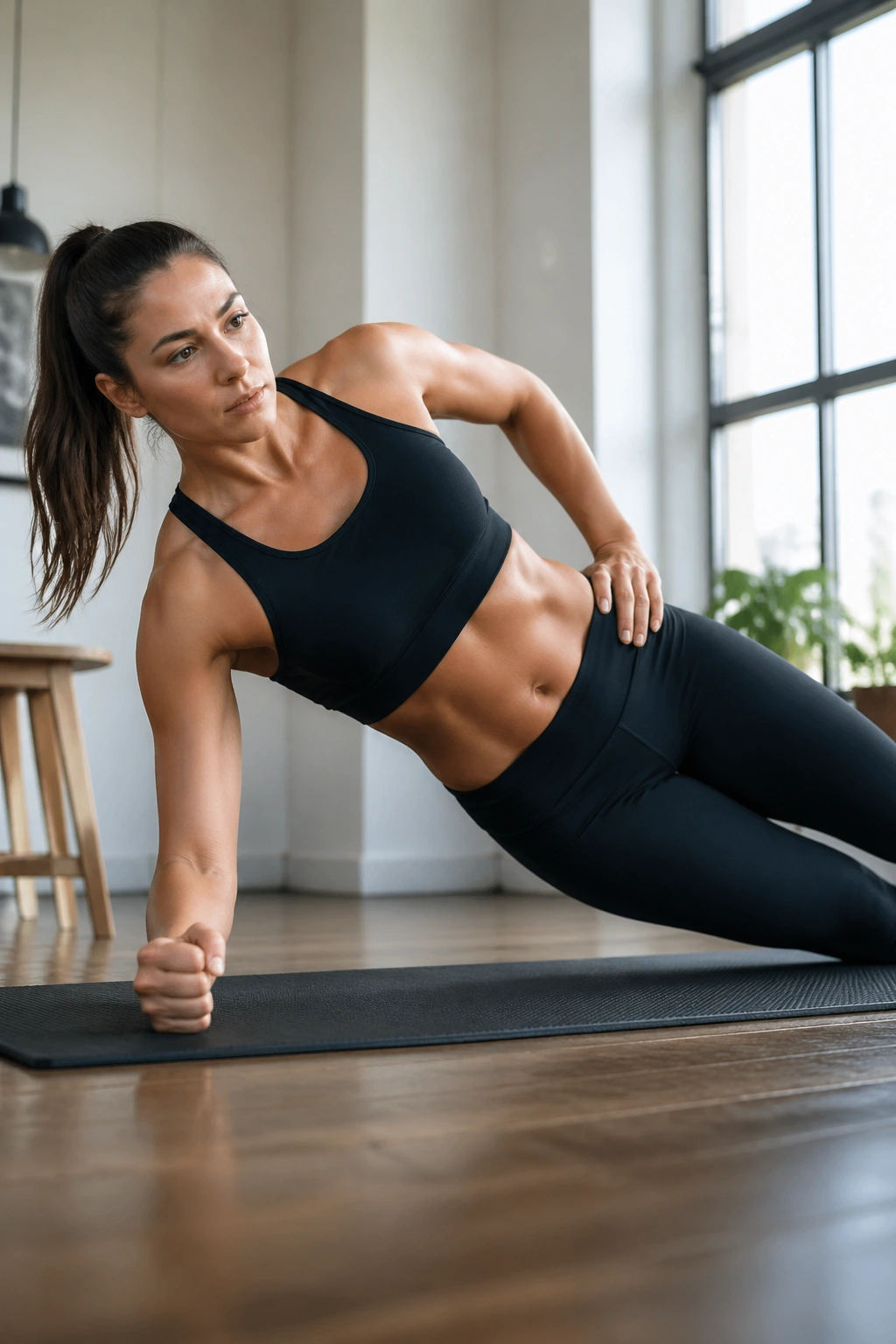
A side plank is the move you feel in your obliques, but it is also a shoulder test and a balance test. You are not just holding a line. You are preventing your body from folding sideways.
Start on your forearm, stack your feet, and lift your hips until your body makes one long diagonal. If that is too much, drop the bottom knee to the floor and keep the line from shoulder to knee straight. That version still works the core. It just gives you more room to breathe.
Easy ways to scale it
- Keep the top hand on your hip for balance.
- Bend the lower knee if your hips shake too hard.
- Hold 15 to 20 seconds per side at first.
- Add a reach-through only after the base hold feels steady.
Side planks look quiet. They are not easy.
13. Russian Twists
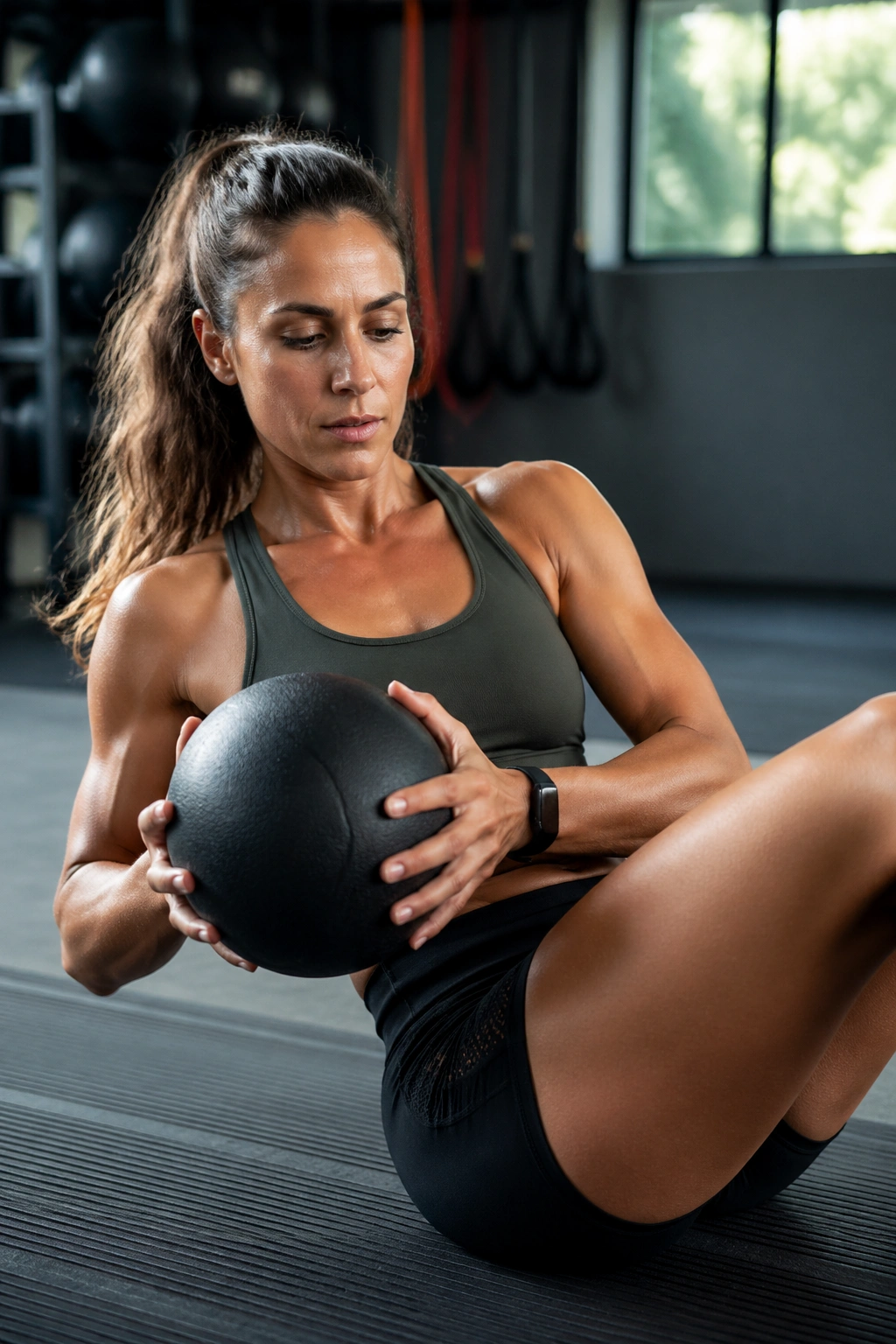
Russian twists are useful when they are honest. The point is not to whip your hands side to side like you are trying to stir soup. The point is to rotate your torso with control.
Sit tall, lean back a little, and keep your chest open while you turn from side to side. Feet can stay on the floor if your core is still building strength. A light dumbbell, medicine ball, or even clasped hands is enough. Heavy weight is not the prize here. Clean rotation is.
Unlike crunches, twists ask your obliques to work in a rotated position, which gives your core challenge from another angle. That matters. Repetition alone does not. Control does.
14. Leg Raises
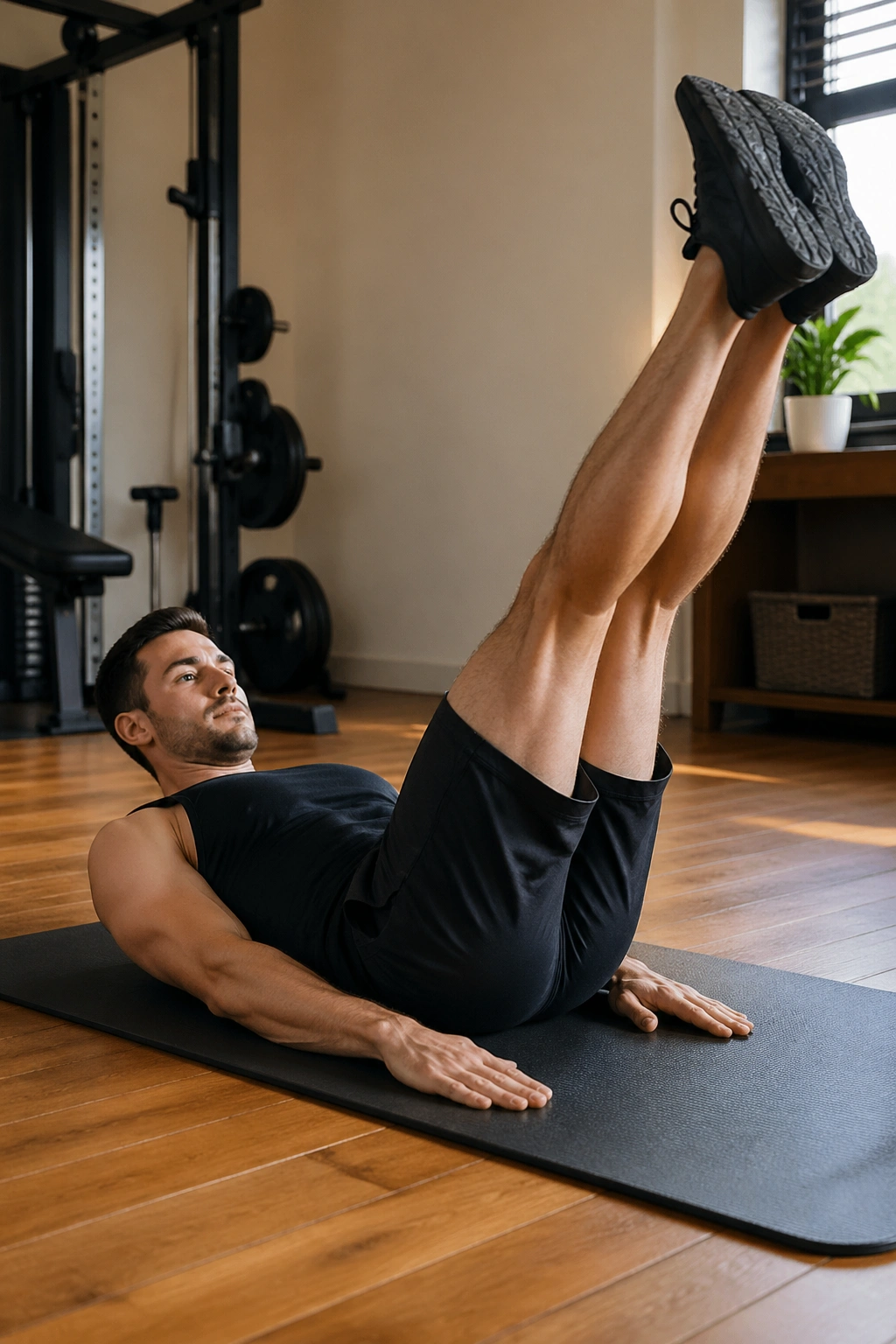
Leg raises are one of those exercises that sound easy until your lower abs start shaking and your back starts reminding you of last week’s bad idea.
Lie on your back, press your arms into the floor, and lift both legs together only as far as your control allows. If your lower back arches, stop the lift sooner or bend your knees a little. The whole game is keeping tension in the abs while lowering the legs slowly.
You should feel the work under your navel, not in your hip flexors or your lumbar spine. If it turns into a back pinch, shorten the range and slow down. No prize goes to the person who lowers their legs closest to the floor with bad form.
15. Bear Crawl
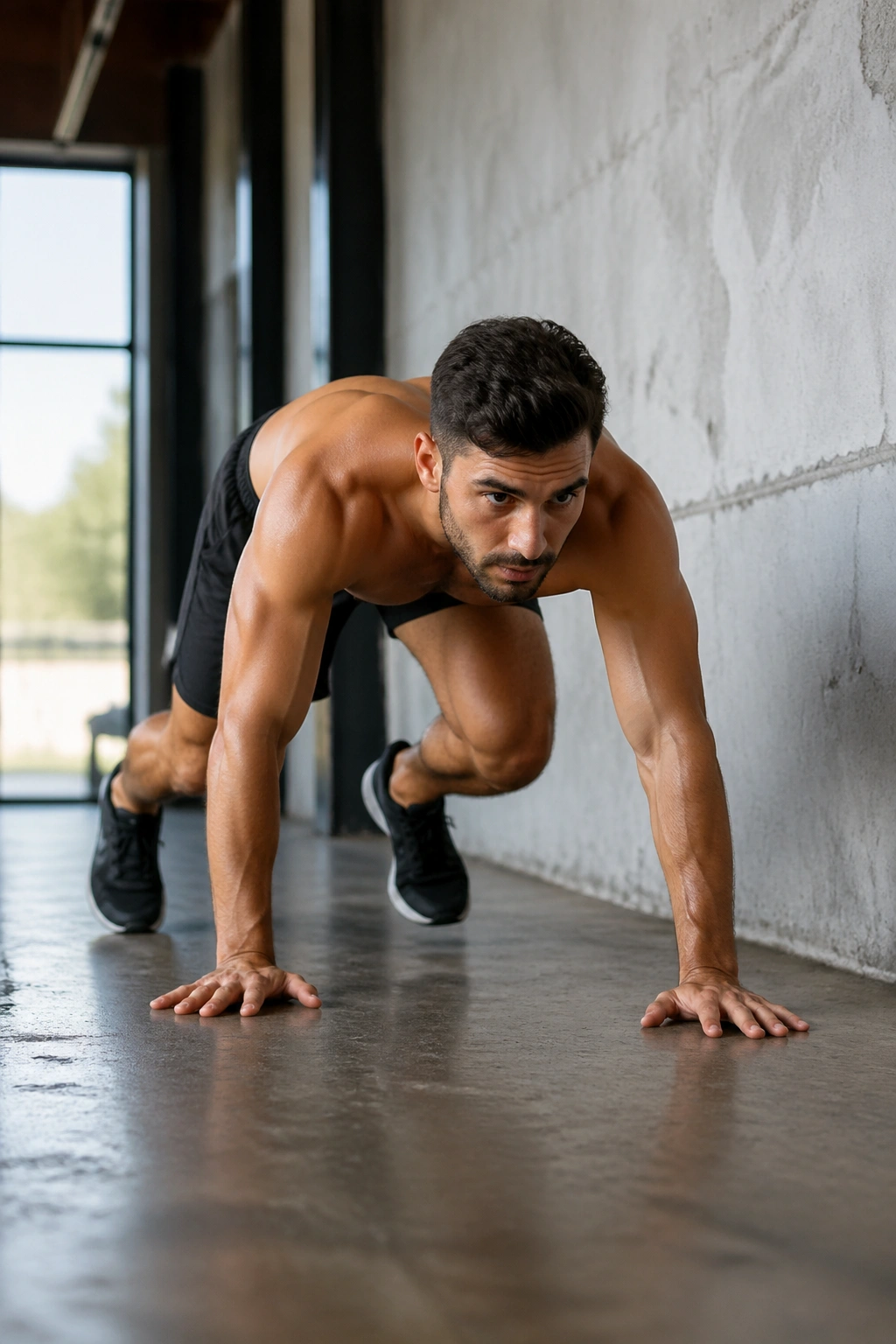
Bear crawls look like kid stuff until your shoulders, abs, and hips all light up at once. Then they stop being cute.
Get on hands and feet with your knees hovering a few inches above the floor. Move opposite hand and foot forward together, then back the same way, keeping your hips low and your back flat. Short distances work best. Ten to twenty steps forward, then turn around.
This move is great for a 30-day challenge because it trains the core to resist wobble while the whole body moves. That combination is gold. If your knees come too close to the floor, slow down and shorten the stride. If your hips shoot up, you are just walking weird.
16. Skater Hops
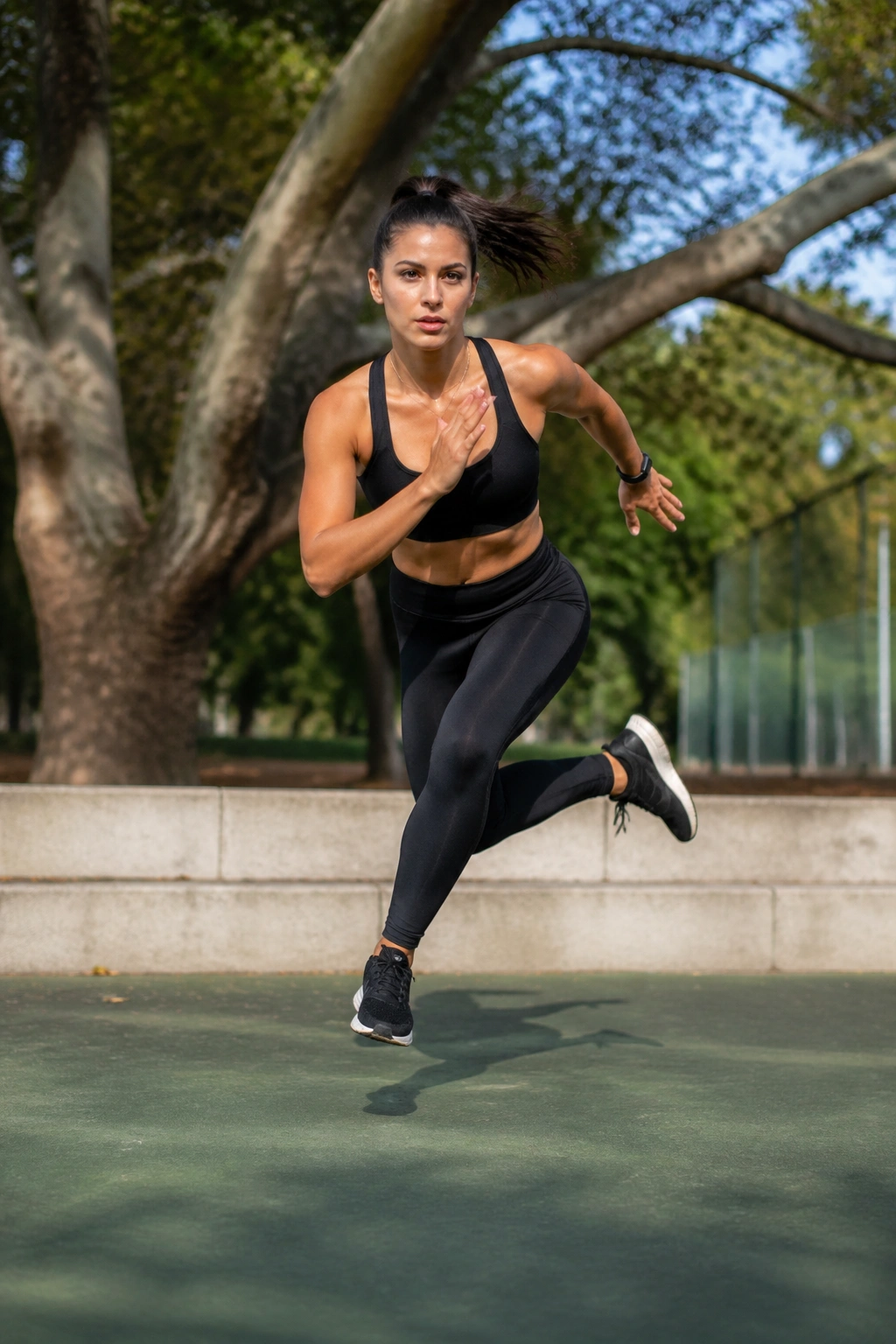
Skater hops bring side-to-side power into a challenge that can get stale if every move goes straight ahead. They also jack up the heart rate fast, which is exactly why they earn a spot here.
Hop from one foot to the other in a lateral pattern, landing softly and letting the back leg sweep behind you a little. Keep the movement controlled. The goal is not to bounce like a rubber ball. The goal is to move laterally with enough snap that your lungs notice.
A small hop is fine. A deep reach is fine too, if your knee and ankle stay lined up. What matters is that you keep your trunk steady instead of folding at the waist. Your obliques will notice the difference.
17. Jump Rope Intervals
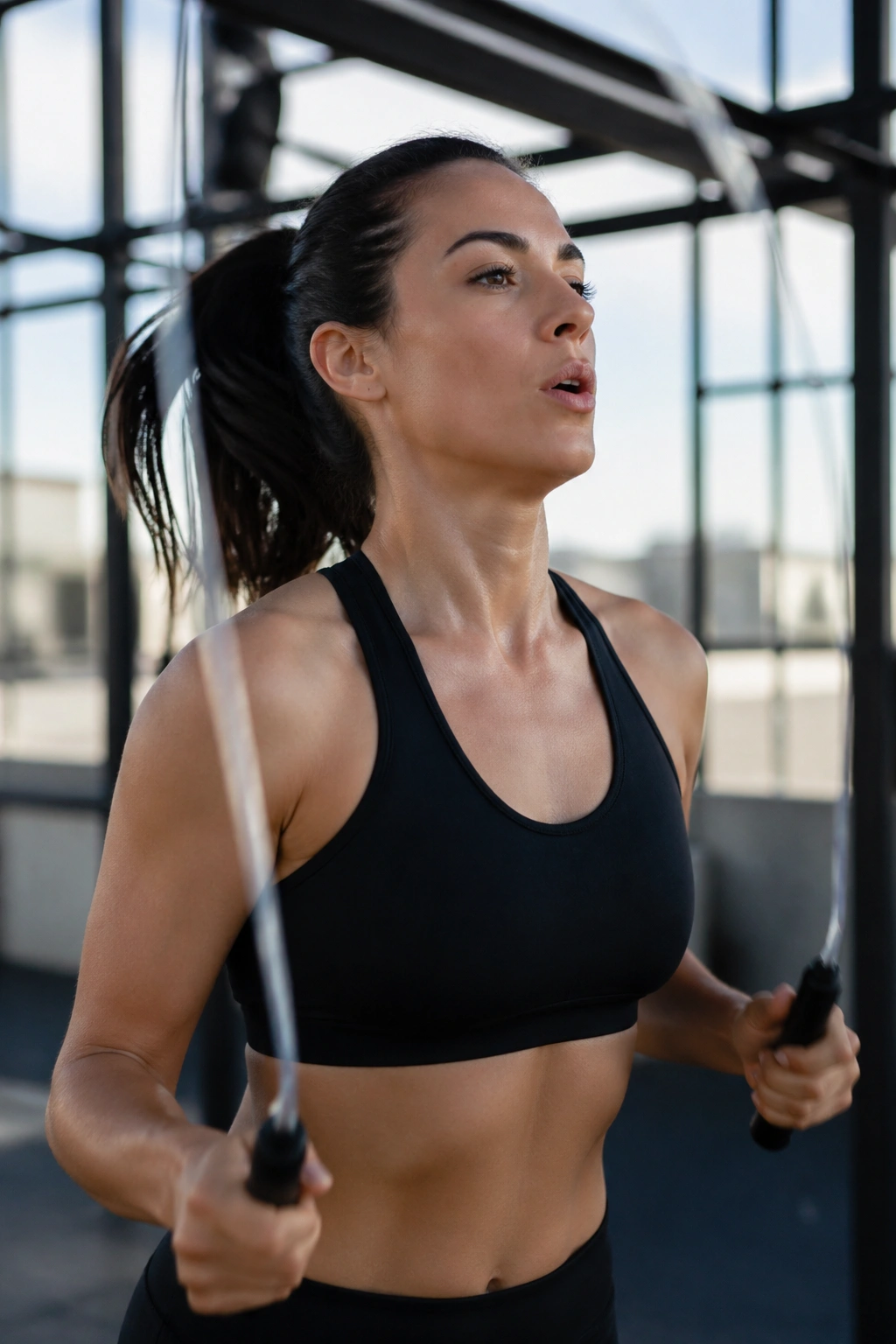
Do you need a rope to get the benefit? Not really. The movement pattern and the pace do most of the work.
Jump rope intervals are great because they are light, rhythmic, and deceptively brutal when you string them together. If you own a rope, use it. If you do not, fake the motion with the same wrist turn and the same little bounce. Try 30 seconds on, 30 seconds off for 8 to 12 rounds.
A few simple cues
- Keep jumps low, just high enough to clear the rope.
- Land softly and stay relaxed in the shoulders.
- Use short, quick wrist turns.
- Stop if your calves start cramping and switch to marching for a round.
It is old-school for a reason. It works.
18. Step-Ups
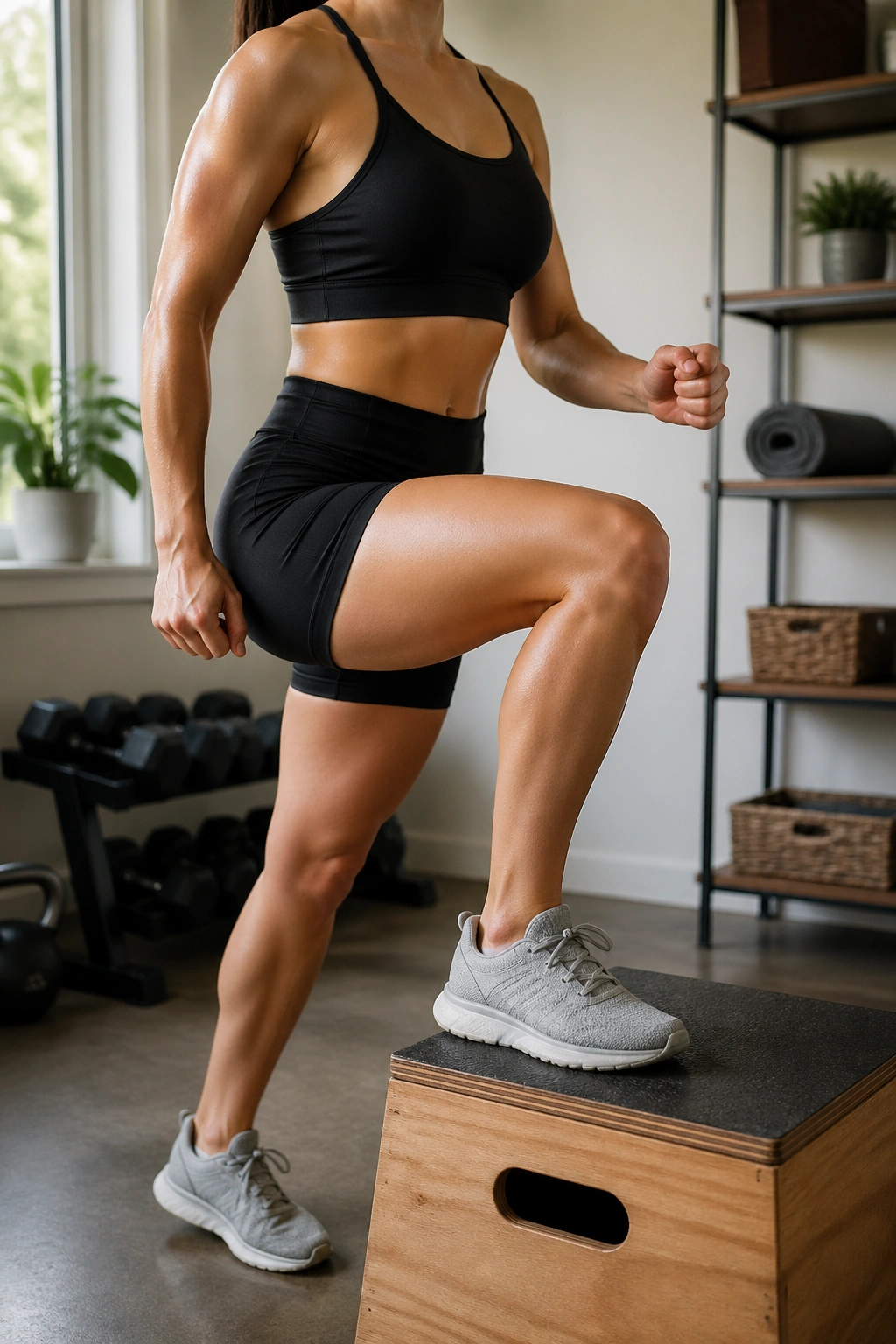
Step-ups are one of the cleanest ways to build legs and raise your heart rate without needing a gym full of machines. A sturdy step, bench, or staircase is enough.
Place one whole foot on the platform, drive through the heel, and stand tall at the top before stepping back down with control. Do not bounce off the bottom leg if you can help it. That cuts the work in half and turns the move into a sloppy swing.
People who dislike jumping often do well with step-ups because they can keep the pace steady while still feeling the lungs kick in. Add knee drive at the top if you want a tougher core challenge. Small upgrade. Big difference.
19. Bodyweight Squats
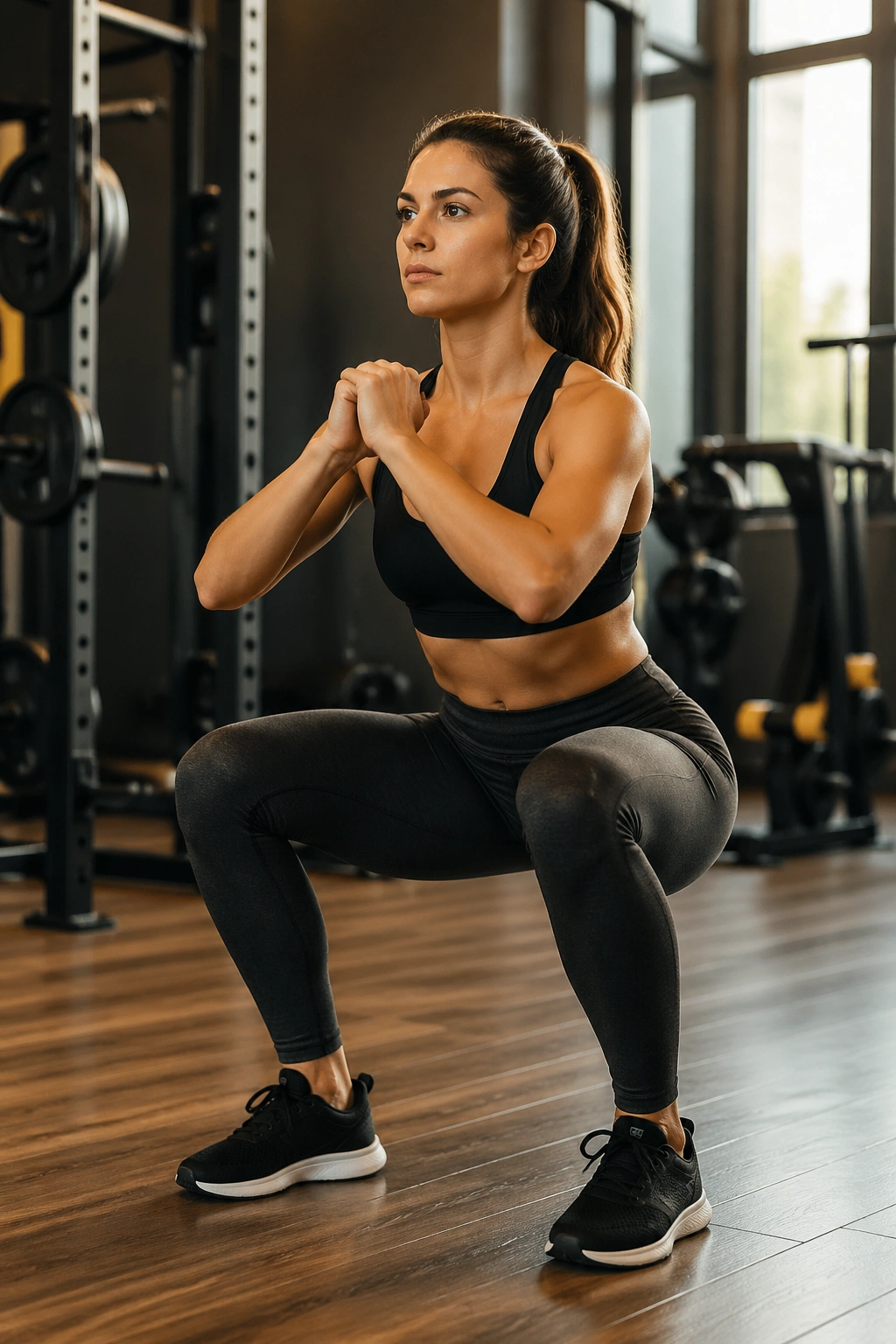
Bodyweight squats are plain, but plain does not mean easy. Once you slow them down and keep the reps crisp, they become a hard-working part of any belly fat exercise challenge.
Sit your hips back, keep your chest up, and let your knees track in line with your toes. The bottom position should feel stable, not collapsed. Stand up by pushing the floor away, not by tipping your torso forward and hoping for the best.
What to watch for
- Heels stay on the floor.
- Knees do not cave inward.
- Core stays braced on the way up.
- Reps stay smooth, not rushed.
Ten slow squats can feel better than twenty bouncy ones. That is the part people miss.
20. Walking Lunges
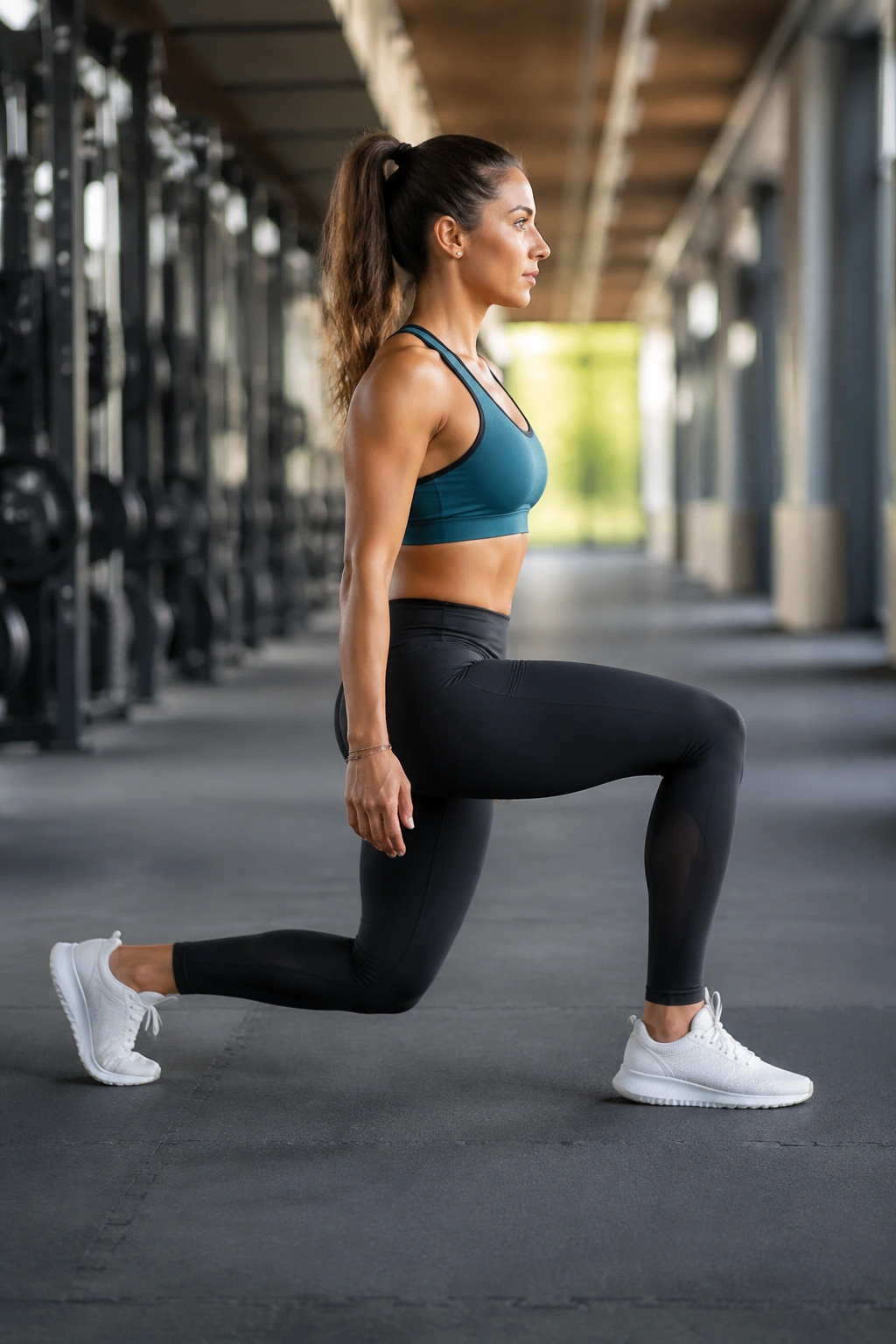
Walking lunges are a little harder to fake than static lunges, which is exactly why they belong in a 30-day challenge. Every step asks for balance, leg strength, and a bit of core control.
Take a long enough step that your front knee can bend without shooting far past your toes. Drop under control, press through the front heel, and step through into the next lunge. Keep your torso tall. If you fold forward, the move turns into a back exercise you did not ask for.
Compared with stationary lunges, walking lunges keep your heart rate higher and your body working longer between reps. That makes them a smart pick when the goal is calorie burn plus lower-body strength. Nice side effect: your glutes notice them too.
21. Glute Bridge March
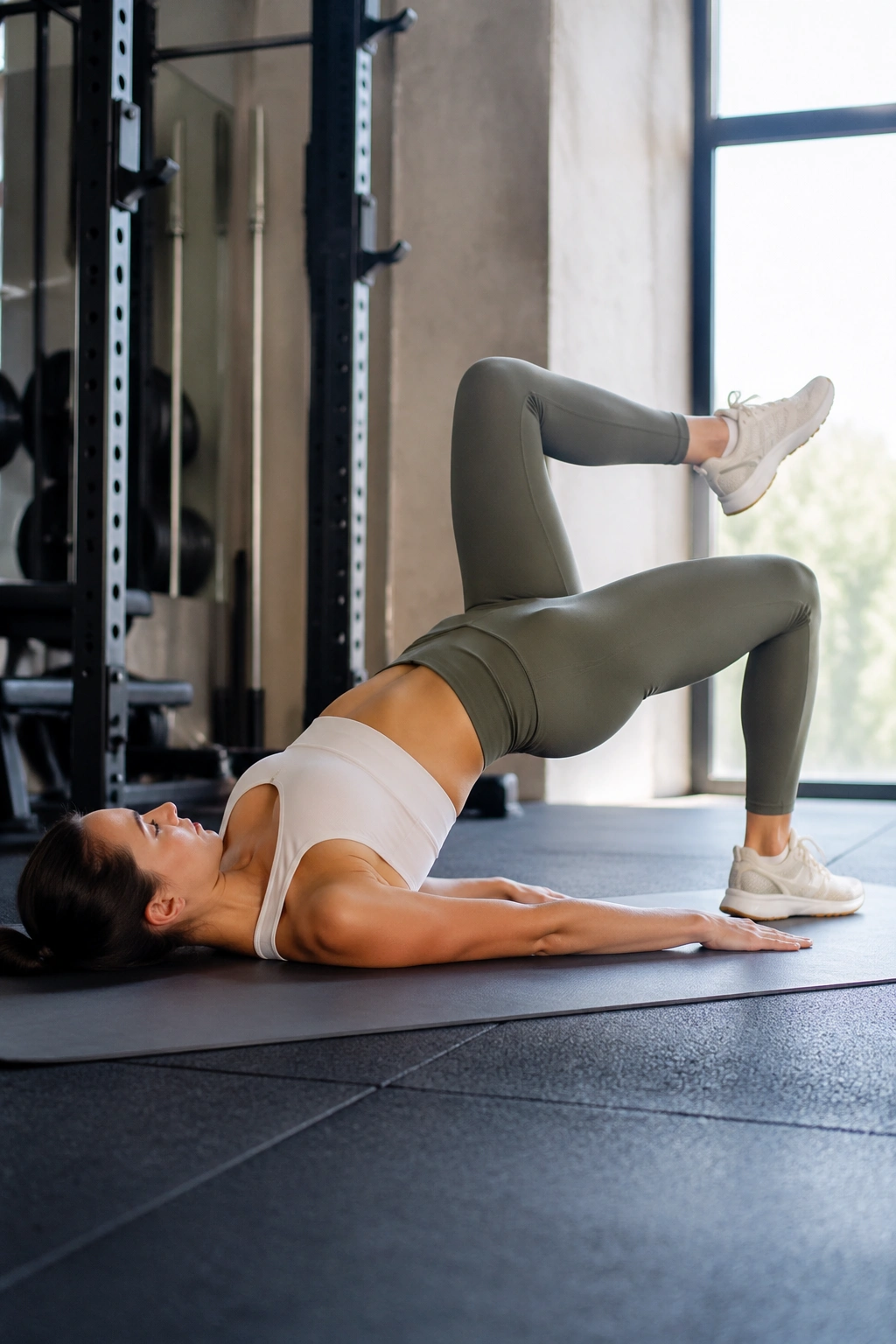
Glute bridge marches are sneaky. They look calm, but once you lift one foot at a time, your pelvis starts working hard to stay level.
Set up in a bridge with your hips lifted, knees bent, and feet flat. Keep your ribs down, then lift one foot a few inches and set it back down without dropping your hips. Switch sides. The bridge position wakes up the glutes, and the marching pattern forces your core to stop your pelvis from wobbling.
This move is useful if your lower back tends to take over during ab work. It gives you core tension without the same amount of spine flexion. That is a nice break, and your body will probably thank you for it after a rougher session.
22. V-Ups
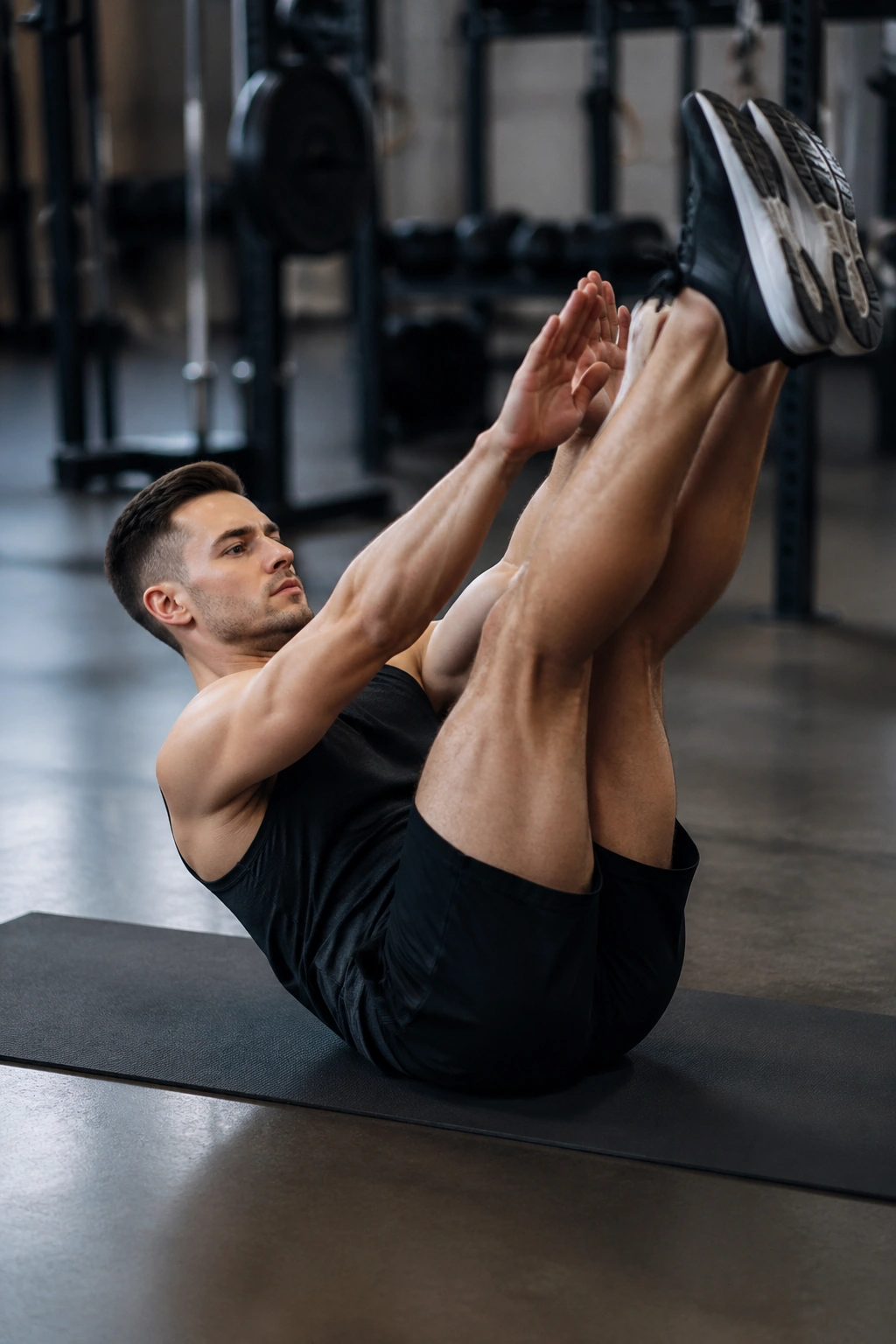
V-ups are the kind of exercise that makes people say, “I thought that would be easier.” It is not easier. Not even close.
Start flat on your back, then lift your legs and torso together so your hands can reach toward your feet. If that full shape feels too harsh, bend your knees and make a smaller tuck. The key is still the same: abs pulling the body together, not momentum throwing the limbs around.
Watch your lower back. If it arches off the floor, shorten the range immediately. A controlled tuck-up done cleanly is more useful than a flashy V-up that turns your spine into a complaint department.
23. Hollow Hold
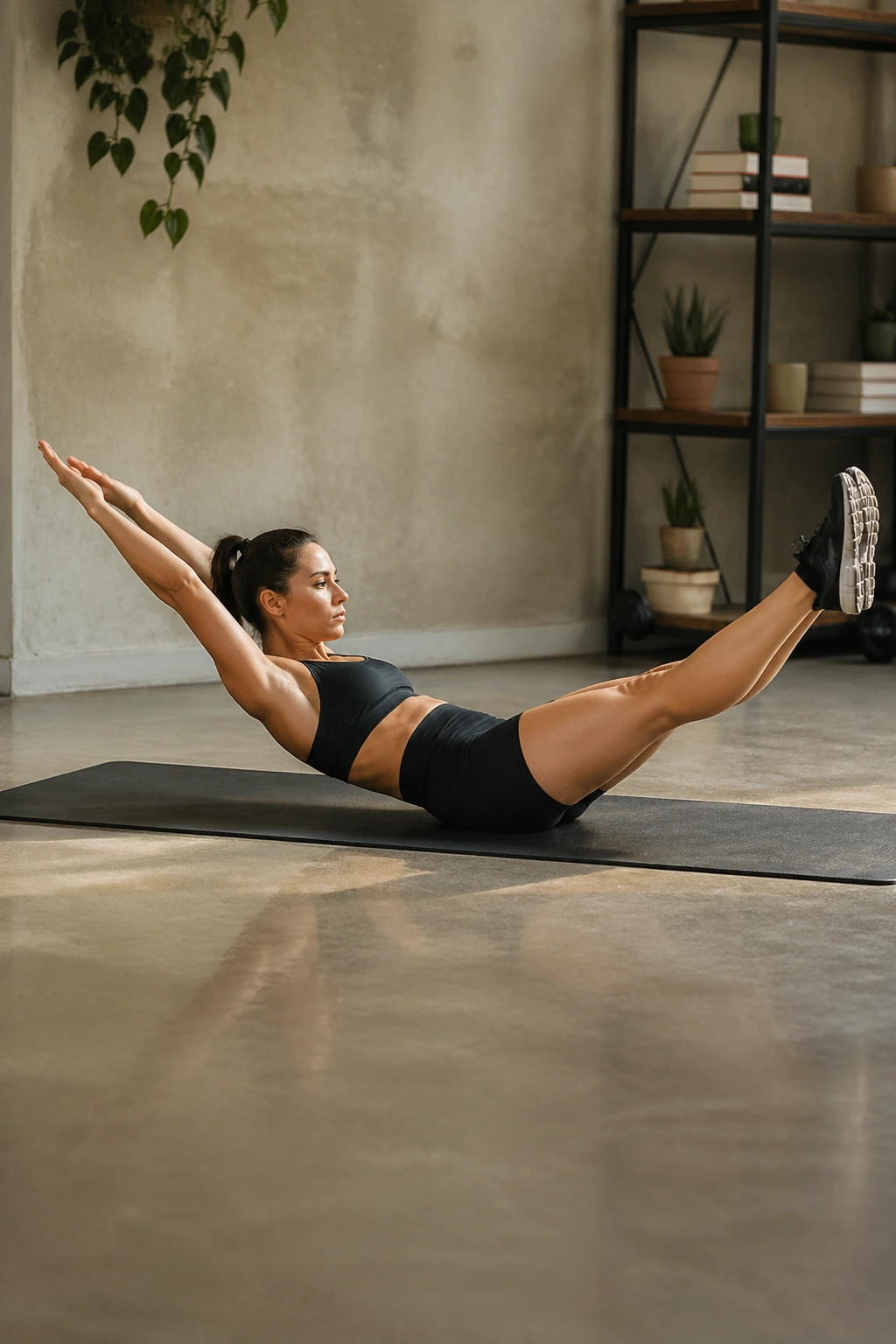
The hollow hold is one of the best core positions for learning real trunk tension. It is also one of the least forgiving if you rush it.
Lie on your back, press your lower back into the floor, and lift your shoulders and legs just enough to keep the hold alive. Arms can reach overhead or stay by your sides if you need an easier version. The instant your back starts to pop up, the hold is too hard.
You will feel your abs shaking in a way that crunches never quite manage. That is a good sign, not a badge of honor to chase forever. Start with 10 to 20 seconds and build from there. Short, clean holds work better than dramatic suffering.
24. Shadow Boxing
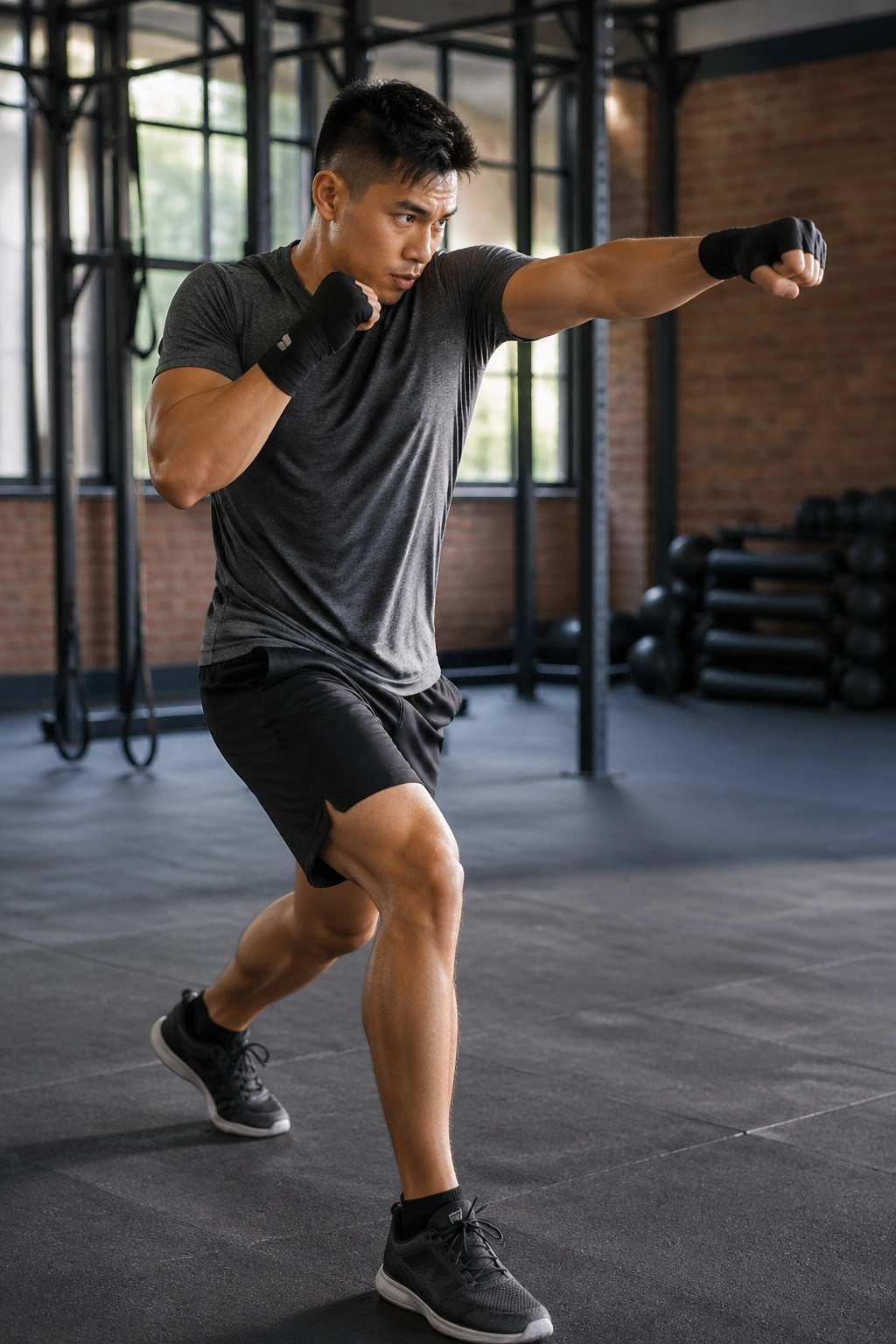
Shadow boxing is one of the easiest ways to make a fat-loss circuit feel less stale. Fast hands, light feet, and a slight twist through the torso can turn a few minutes into real work.
Throw straight punches, hooks, and uppercuts in the air while keeping your core tight and your ribs stacked. Do not lean so hard into the punches that your lower back arches. Keep the movement crisp. If you want more burn, move your feet between combinations and stay on the balls of your feet.
Unlike a straight cardio move, shadow boxing asks your trunk to rotate while your heart rate stays up. That combination makes it a smart choice for people who get bored fast. Boredom kills consistency. This helps.
25. Pike Walkouts
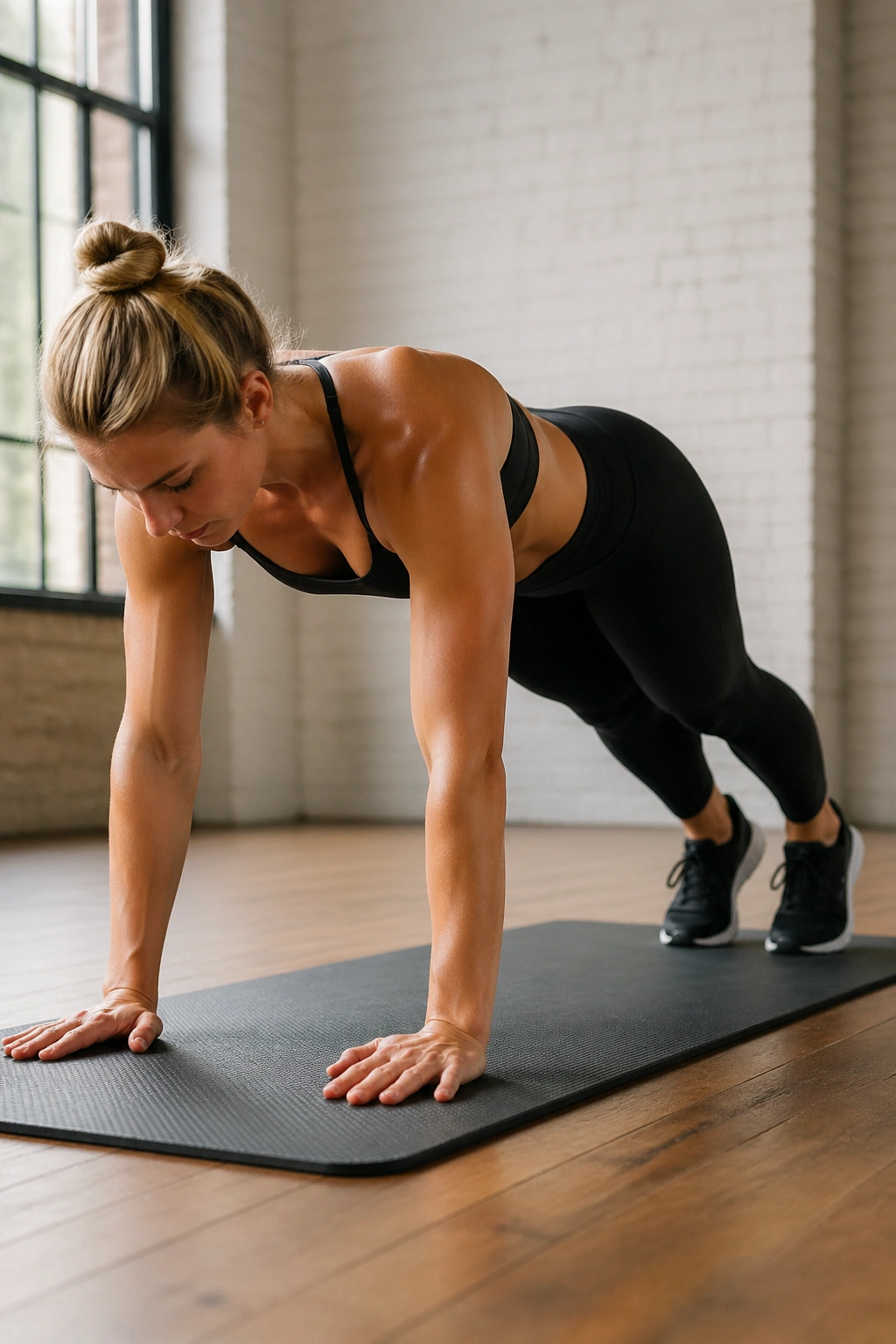
Pike walkouts are quiet, controlled, and much tougher than they look. They also spare you the chaos of jumping while still asking your whole front side to work.
Start standing, fold at the hips, walk your hands out to a plank, hold for a breath, then walk your hands back and stand. The whole motion should feel deliberate. If you rush it, you lose the core demand and the shoulder work gets sloppy.
This is a nice bridge exercise between core work and full-body conditioning. It teaches control as much as effort, which is handy when a challenge starts making you sloppy from fatigue. Move slow enough that every hand placement feels intentional.
26. Toe Taps
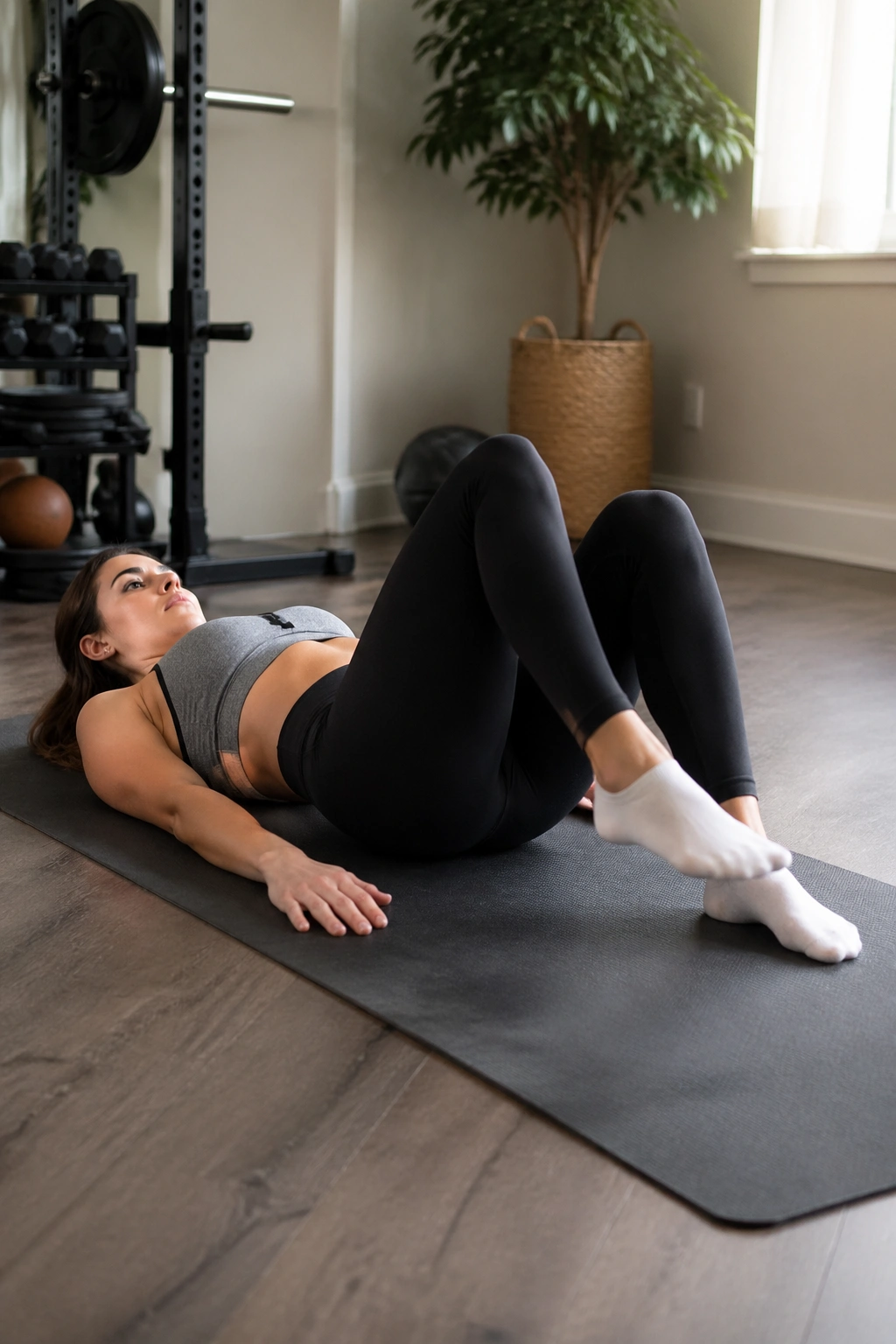
Toe taps are a good answer when your core is tired but you still want to keep moving. They are low drama, back-friendly for many people, and easy to fit into a finisher.
Lie on your back with your knees bent over your hips. Lower one foot at a time to tap the floor, then bring it back up, alternating sides. Keep your lower back pressed down and your movements small enough that you do not lose control. The point is stability, not speed.
How to make them count
- Exhale as the foot lowers.
- Keep the shoulders relaxed on the floor.
- Move one leg at a time if both at once feels messy.
- Slow the tempo before adding more reps.
It is a small move. It adds up fast.
27. Standing Woodchops
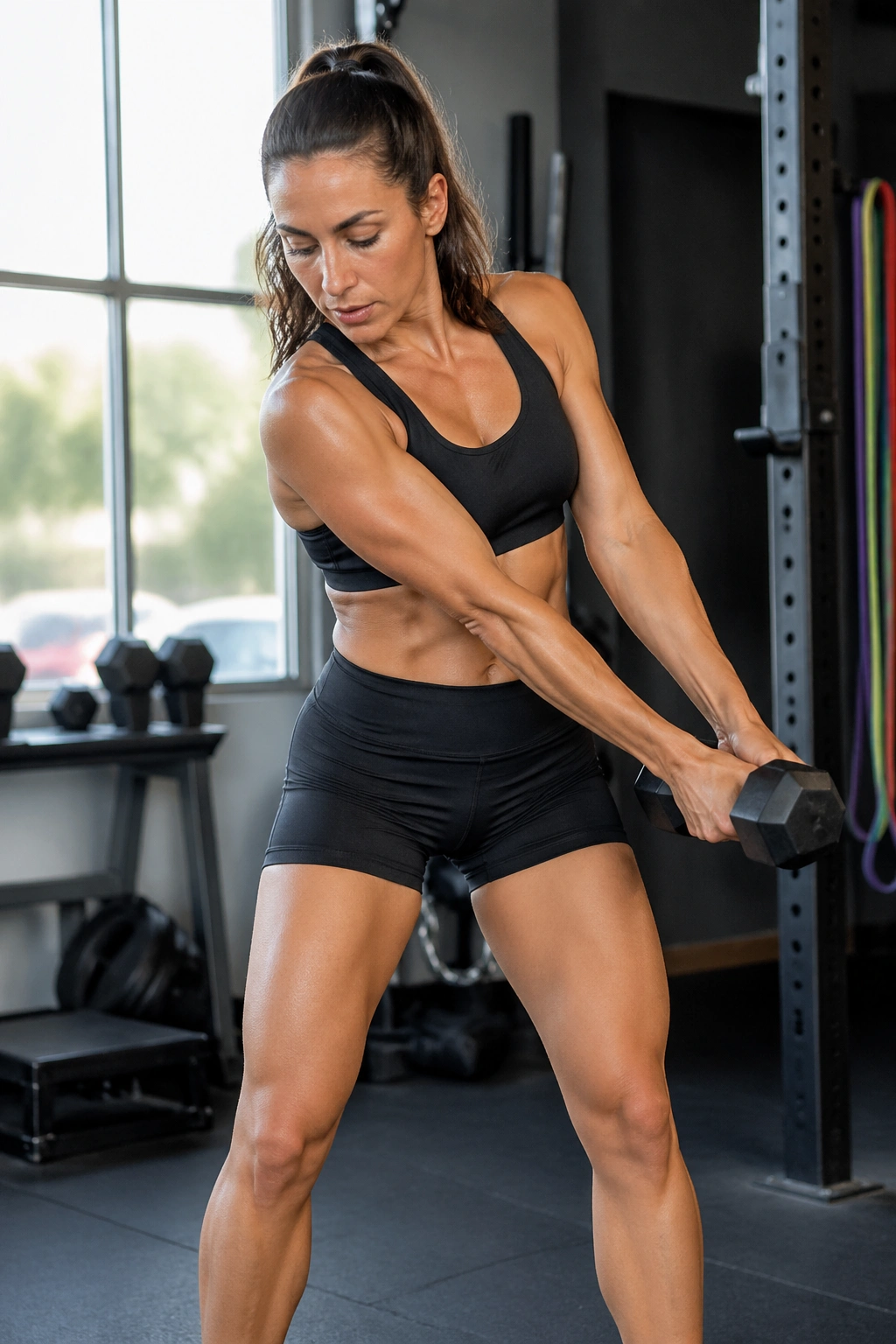
Standing woodchops are one of the better standing core exercises because they train rotation the way the body actually uses it. You are not curled on a mat. You are standing, braced, and moving through space.
Use a resistance band, dumbbell, or cable if you have one. Start high and pull diagonally across the body toward the opposite hip, or reverse that path if you prefer the opposite direction. Keep your hips mostly steady and let the torso do the work. If the whole body spins, the core has checked out.
Why standing versions matter
- They carry over better to daily movement.
- They challenge balance and control.
- They wake up the obliques without a hundred floor reps.
- They fit neatly into a circuit without much setup.
Slow chops beat wild swings. Every time.
28. Thrusters
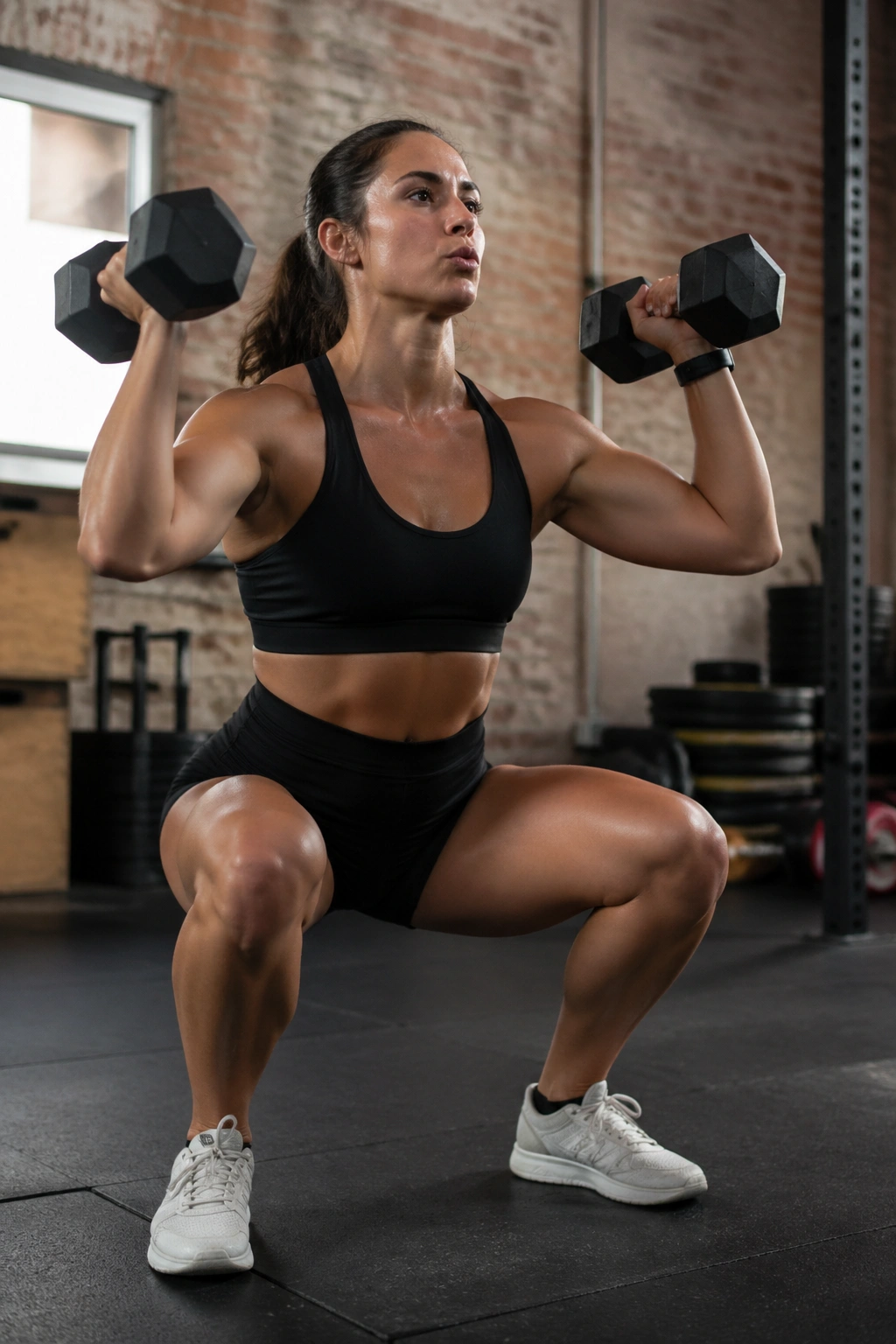
Thrusters are one of those moves that punish weak pacing. You squat, then press, and the combination asks for legs, lungs, shoulders, and core all at once.
Use light dumbbells or even bodyweight if you are learning. Sink into a squat, stand powerfully, and drive the weight overhead in one smooth motion. The magic is in the rhythm. If you pause too long between the squat and the press, the move gets easier but less useful. If you go too heavy, the form falls apart.
A good set of thrusters feels like a mini workout inside the workout. They are hard to love during the set and easy to respect afterward. That is a decent sign you picked the right kind of movement for a challenge.
29. Stair Climbs or Incline Walks
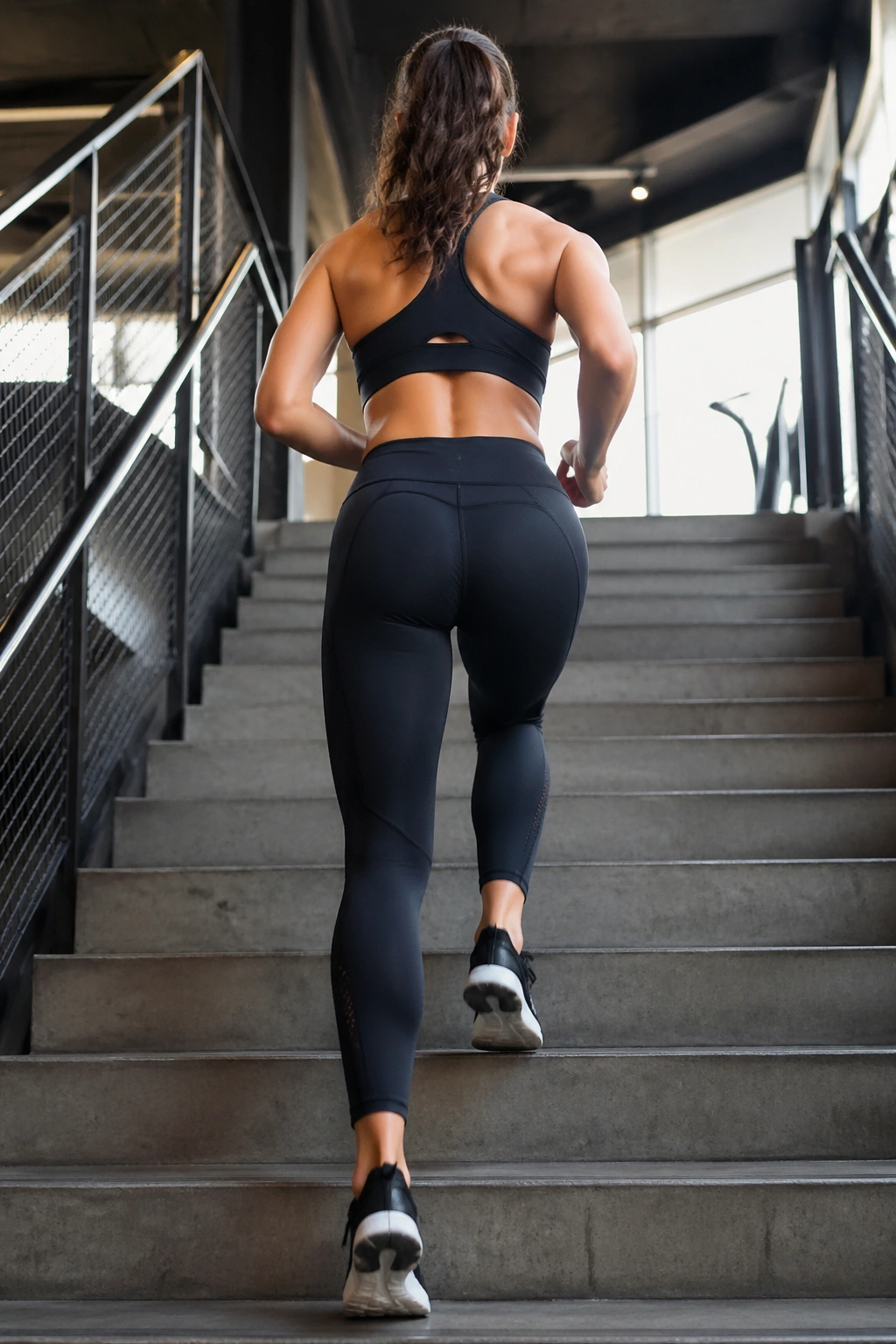
Stairs are brutally honest. So is any incline that makes your calves, glutes, and lungs work harder than flat ground.
If you have stairs, climb at a steady pace for 1 to 3 minutes, then walk down slowly and repeat. If you have a treadmill, a decent incline walk can give you a similar effect with less impact. Keep your torso tall and avoid leaning heavily on the rails or railings. That turns real work into a very expensive stroll.
This is a strong choice for people who want a belly fat exercise option that does not involve jumping. It is simple, repeatable, and easy to progress by adding rounds. Harder than it looks. That is usually a good sign.
30. Sprint Intervals
Sprint intervals are the sharp edge of a 30-day challenge. They are short, hard, and not something you should do every day unless you enjoy dragging your legs around afterward.
Run hard for 10 to 20 seconds, then walk or jog for 60 to 90 seconds. Repeat for 6 to 10 rounds on a track, hill, bike, or treadmill if that feels safer for your joints. The short burst is the point. If you can talk while sprinting, you are not sprinting. You are speed-walking with ambition.
Use these sparingly, maybe once or twice a week, and place them on days when your legs are fresh. They can be a strong finish to the challenge because they force you to work fast, recover, then do it again. That cycle matters. It is hard. It works.
