



Most people start chasing a smaller waist with endless crunches, then get annoyed when their neck hurts, their lower back feels tight, and their midsection looks the same. Belly fat burning exercises can help at home, but not because one move melts fat off your stomach. They help because the right mix of cardio, strength, and core work raises your heart rate, builds muscle, and gives you something you can repeat without needing a gym.
There’s another piece people miss: belly fat is not all the same. Some sits under the skin. Some sits deeper around the organs, which is the kind doctors pay close attention to because of its link to metabolic health. A home workout cannot pick one layer and erase it on command, yet it can absolutely become part of the routine that lowers total body fat over time.
I’m also a big believer in choosing moves you will actually do in a small room with a mat, a towel, and maybe a sturdy chair. Fancy programming looks nice on paper. A circuit you can finish before your coffee goes cold tends to work better in real life.
Start with the warm-up, pick a handful of the exercises below, and treat the list like a toolbox rather than a punishment menu.
What Belly Fat Burning Exercises Can and Cannot Do
Crunches will not peel fat off your waist. Bodies do not work that way.
What they can do is strengthen the muscles under the fat, which still matters. A stronger trunk helps you brace harder during squats, lunges, crawls, and fast intervals. That means better movement quality, more work done in the same 15 to 25 minutes, and a higher training effect from the whole session.
Public health guidance from groups such as the World Health Organization and the American College of Sports Medicine keeps landing in the same place: combine aerobic work with muscle-strengthening work through the week. That combination tends to do more for body composition than a pile of ab work alone, especially when you pair it with enough walking, decent sleep, and meals that do not quietly erase the calorie burn from training.
A practical way to think about this list:
- Fast full-body moves raise your heart rate and push calorie burn up during the session.
- Strength-focused bodyweight moves help you hold onto muscle while losing fat.
- Core drills teach your trunk to resist twisting, sagging, or arching, which carries over to nearly every other exercise here.
- Low-impact options let you train on days when your knees, ankles, or downstairs neighbor need mercy.
That’s the game. Not magic. Repetition.
The Warm-Up That Makes Belly Fat Burning Exercises Safer at Home
Skip the warm-up and the first round often feels stiff, clunky, and louder than it needs to. Five to eight minutes is enough to wake up your hips, shoulders, ankles, and core so the work sets feel smoother.
Run through this once before a short workout, or twice before a longer one:
- March in place for 60 seconds, swinging your arms shoulder-high and breathing through your nose if you can.
- Do 10 bodyweight good mornings, hands behind your head, pushing your hips back until you feel your hamstrings turn on.
- Perform 10 squat-to-reaches, sitting into a squat and reaching both arms overhead as you stand.
- Step into 6 reverse lunges per side, slow and controlled, letting the back knee hover above the floor.
- Hold a forearm plank for 20 seconds, then rest 10 seconds and repeat once.
- Do 8 dead bugs per side, flattening your lower back into the floor before each rep.
- Finish with 20 seconds of easy jumping jacks or step jacks, then shake your arms out.
Your body should feel warmer, not cooked. If you’re already breathing hard before the main workout starts, you went too hard.
How to Build a Weekly Plan From These Belly Fat Burning Exercises
A solid home workout does not need all 35 exercises crammed into one heroic session. Pick one fast cardio move, one lower-body move, one upper-body or plank move, one core move, and one finisher. That’s enough for most people.
A simple 20-minute circuit could look like this:
- 40 seconds mountain climbers
- 40 seconds bodyweight squats
- 40 seconds push-ups
- 40 seconds reverse crunches
- 40 seconds shadow boxing
- Rest 20 seconds between moves
- Repeat for 4 rounds
If you’re newer to training, start with 30 seconds of work and 30 seconds of rest. If your conditioning is better, move to 45 seconds on and 15 seconds off. Keep one or two reps “in the tank” on strength-focused moves so your form does not unravel.
A week that works for many people looks like this:
- 3 home circuits
- 2 brisk walks of 30 to 45 minutes
- 1 lighter mobility day
- 1 full rest day
You do not need a punishing routine. You need one you can keep showing up for.
1. Mountain Climbers
Mountain climbers look like a core drill. Done with speed and clean form, they feel closer to a sprint performed on your hands.
Why they earn a spot
They hit your shoulders, chest, hip flexors, and deep core while driving your heart rate up fast. That blend makes them one of the better belly-fat-workout staples for small spaces.
- Keep your hands under your shoulders
- Brace so your hips stay level
- Drive one knee in, switch, and keep the pace sharp for 20 to 40 seconds
- Exhale on each knee drive if your lower back wants to arch
Tip: Slow down before you let your hips bounce. Fast and sloppy turns into a plank with noise.
2. Burpees
Burpees are hard for a reason. Each rep asks your legs, chest, shoulders, and lungs to work at once, which is why even 8 to 12 clean reps can feel like a lot.
Drop into a squat, place your hands down, jump or step your feet back, hit a plank, return your feet forward, then stand and jump if you want the full version. No need to slam yourself into the floor. The floor is not grading you.
If your wrists or lower back complain, use the step-back burpee. Step one foot back, then the other, step in, stand up tall, and skip the jump. You still get a demanding full-body interval without the extra impact.
3. High Knees
Why do high knees work so well in short workouts? Because they turn running mechanics into an in-place drill you can push hard for 20 to 30 seconds without needing a treadmill, a driveway, or much room.
Lift your knees toward hip height, pump your arms hard, and stay light on the balls of your feet. The goal is not a lazy march. You want quick contacts with the floor and a tall chest.
Make them count
Try 6 to 10 rounds of 20 seconds on, 20 seconds off at the end of a circuit. If jumping bothers your joints, swap in a fast march with the same arm drive and knee height. Keep the rhythm. That’s where the value is.
4. Jumping Jacks
Need something simple that still works? Jumping jacks have survived every fitness trend because they warm you up, spike your breathing, and fit between tougher moves without much setup.
They also teach rhythm. That matters more than people think. When you can recover while moving, your circuits stop feeling like one long collapse.
A few details make them better:
- Land with soft knees, not stiff legs
- Reach your arms high without shrugging your shoulders into your ears
- Stay on the middle of your foot, not heavy on the heels
- Use 30 to 60 seconds as a work interval
If impact is the issue, do step jacks. One foot steps out at a time while the arms still travel overhead.
5. Squat Thrusts
Squat thrusts are the quieter cousin of the burpee, and I like them for apartment workouts because they drop the jump while keeping the up-down pace. You still squat, place your hands down, kick or step back to plank, return to squat, and stand. That sequence taxes the core more than many people expect, since your trunk has to stay braced as your legs move under you.
The move works best when each rep looks the same. Hands down. Feet back. Feet forward. Stand tall. If you start reaching for the floor with a rounded spine and folded chest, your hips are too high and your squat is too rushed.
Use 10 to 15 reps for time-efficient conditioning, or set a timer for 30 seconds and count how many quality reps you can maintain.
No jump. Still plenty hard.
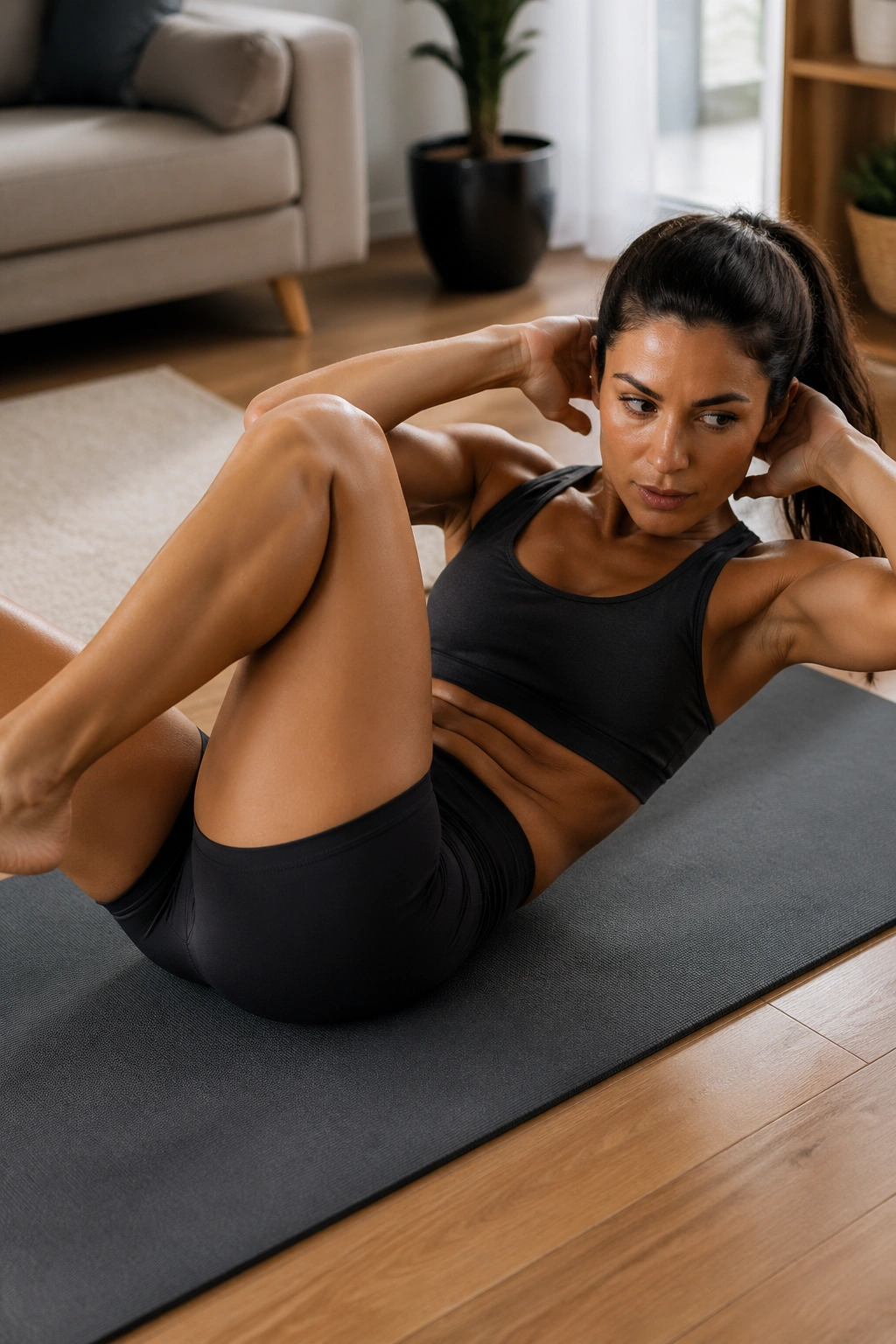
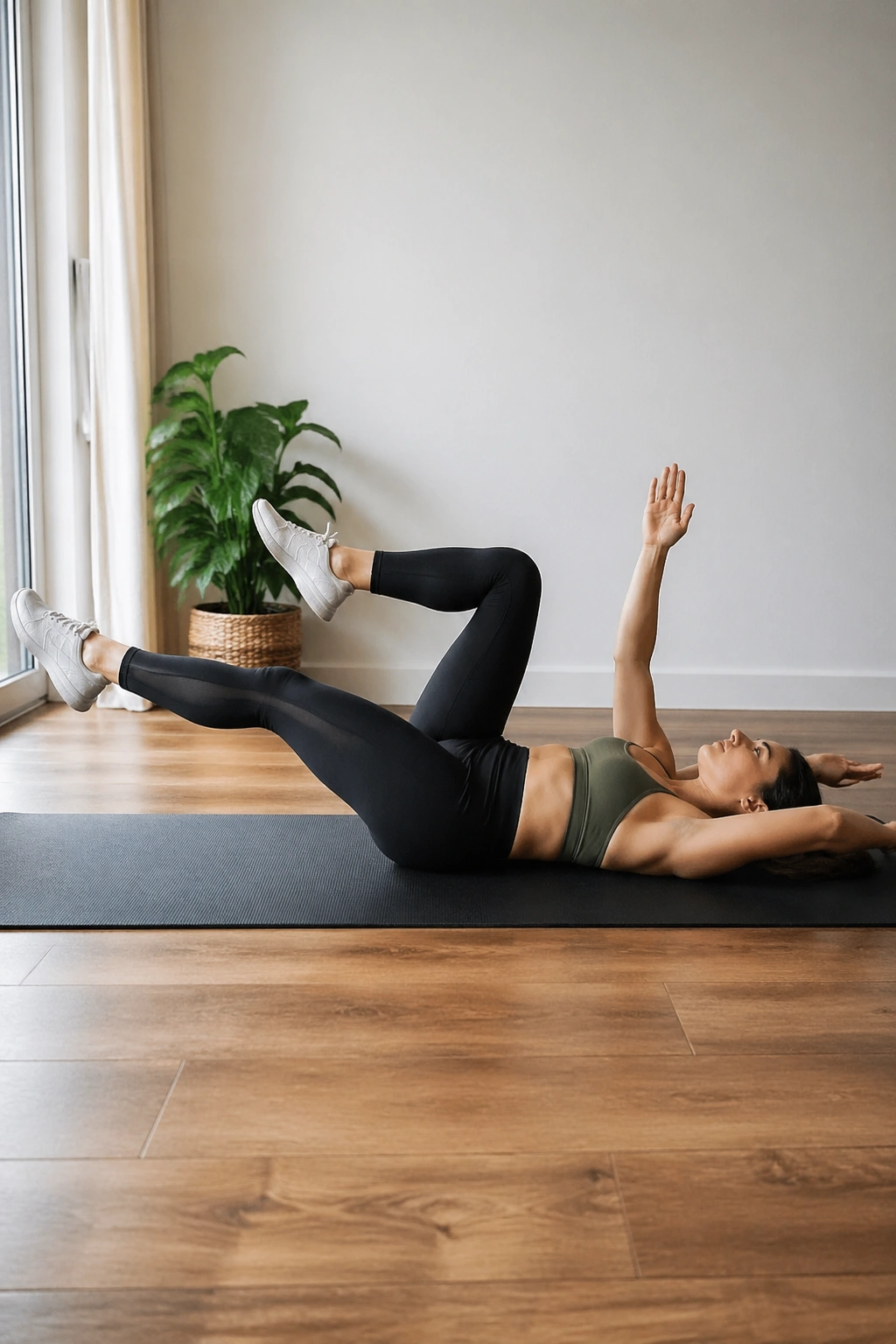
6. Bicycle Crunches
Unlike straight crunches, bicycle crunches challenge rotation and control at the same time. The catch is that many people race through them and end up flinging elbows around while their abs do almost nothing.
The cleaner version starts with your lower back pressed into the floor. Rotate your rib cage toward the opposite knee, extend the other leg, pause for a split second, then switch. That brief pause matters. It turns momentum off.
This one is a strong pick if you want a direct abdominal burn after bigger cardio moves. Aim for 12 to 20 controlled reps per side.
Who gets the most from it? People who can keep their chin relaxed, ribs tucked, and movement slow enough to feel the obliques instead of their neck.
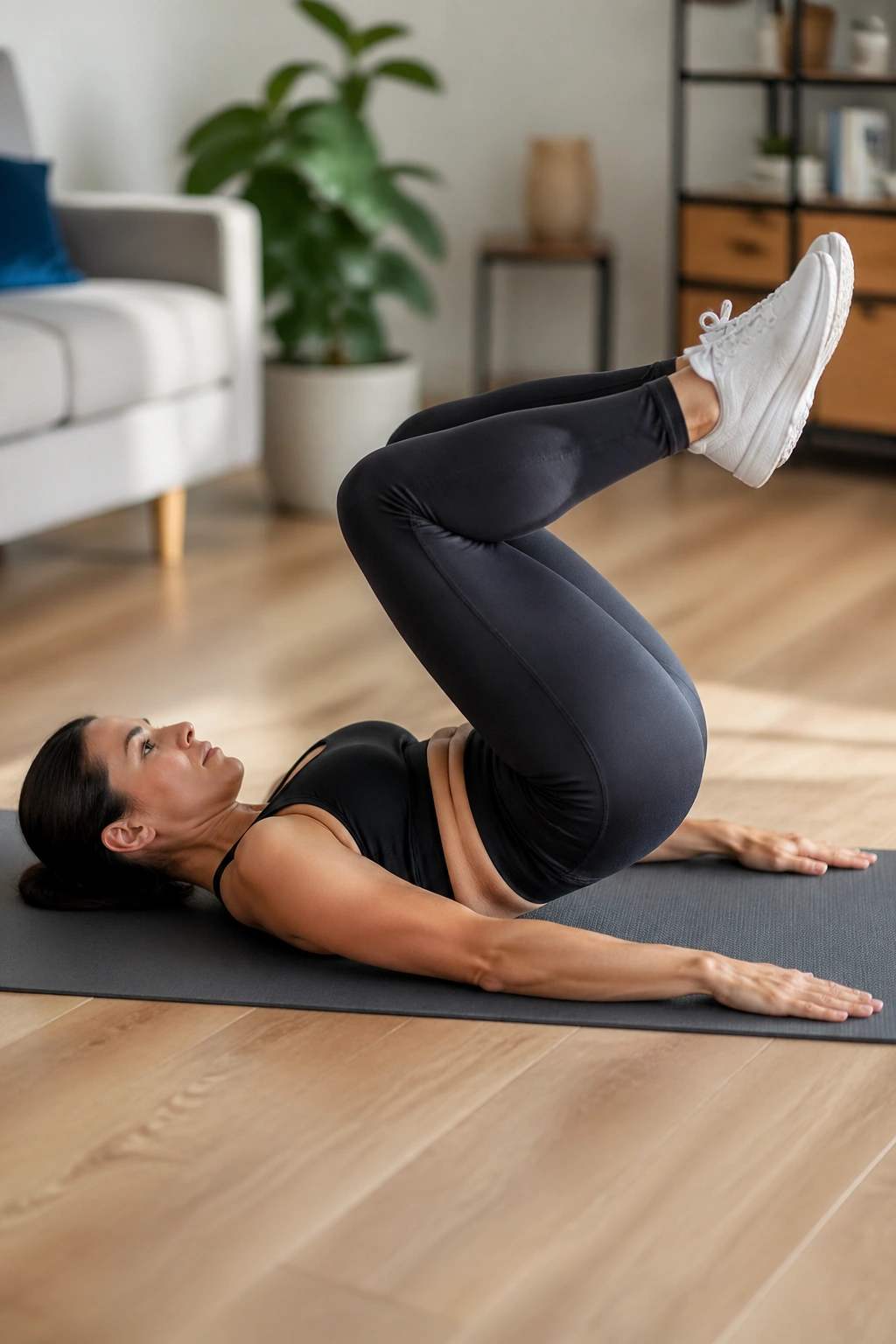
7. Reverse Crunches
If lower-ab work always turns into hip-flexor work for you, reverse crunches deserve another look. They train the pelvis to curl toward the rib cage, which is a different action from swinging your legs around.
Form cue that changes everything
Start on your back with knees bent at 90 degrees. Pull your knees toward your chest, then gently lift your tailbone off the floor by rolling your pelvis upward.
- Think curl, not kick
- Move for 10 to 15 reps
- Lower your feet with control until your lower back still stays in contact with the floor
- Rest 20 to 30 seconds between sets
Tip: If your legs drop and your back pops up, the set is over. Stop there.
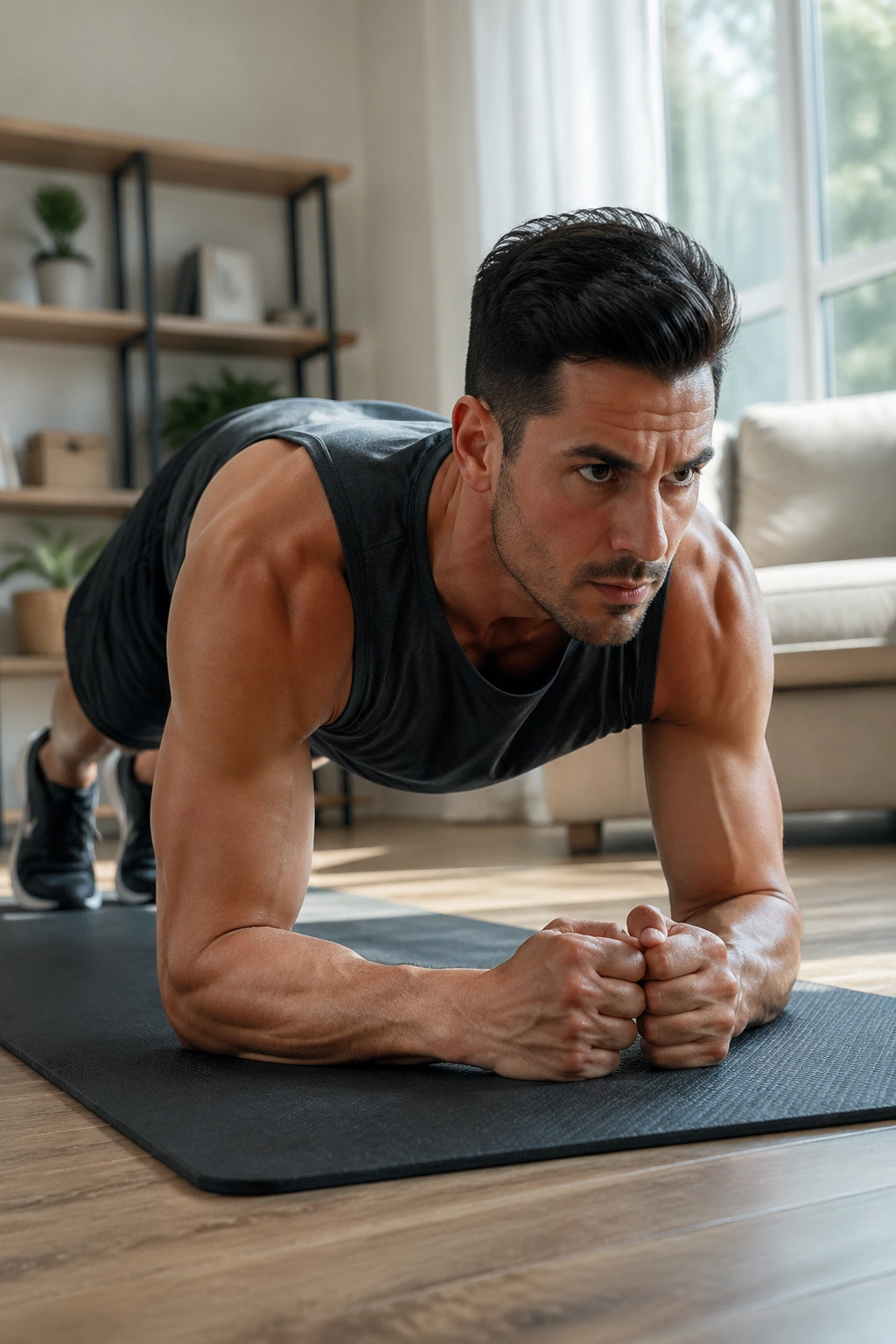
8. Forearm Plank
Long planks are overrated when they turn ugly. A hard 20-second plank with full-body tension beats a 90-second sagging hold every time.
Set your elbows under your shoulders, squeeze your glutes, pull your ribs down, and press the floor away. You should feel your abs, lats, quads, and glutes all switch on together. If you only feel shoulder strain, reset and shorten the set.
A useful approach is 3 to 5 rounds of 20 to 30 seconds with crisp tension. Once that feels steady, extend to 40 seconds or add a loaded variation later with a backpack on your upper back if you want more challenge at home.
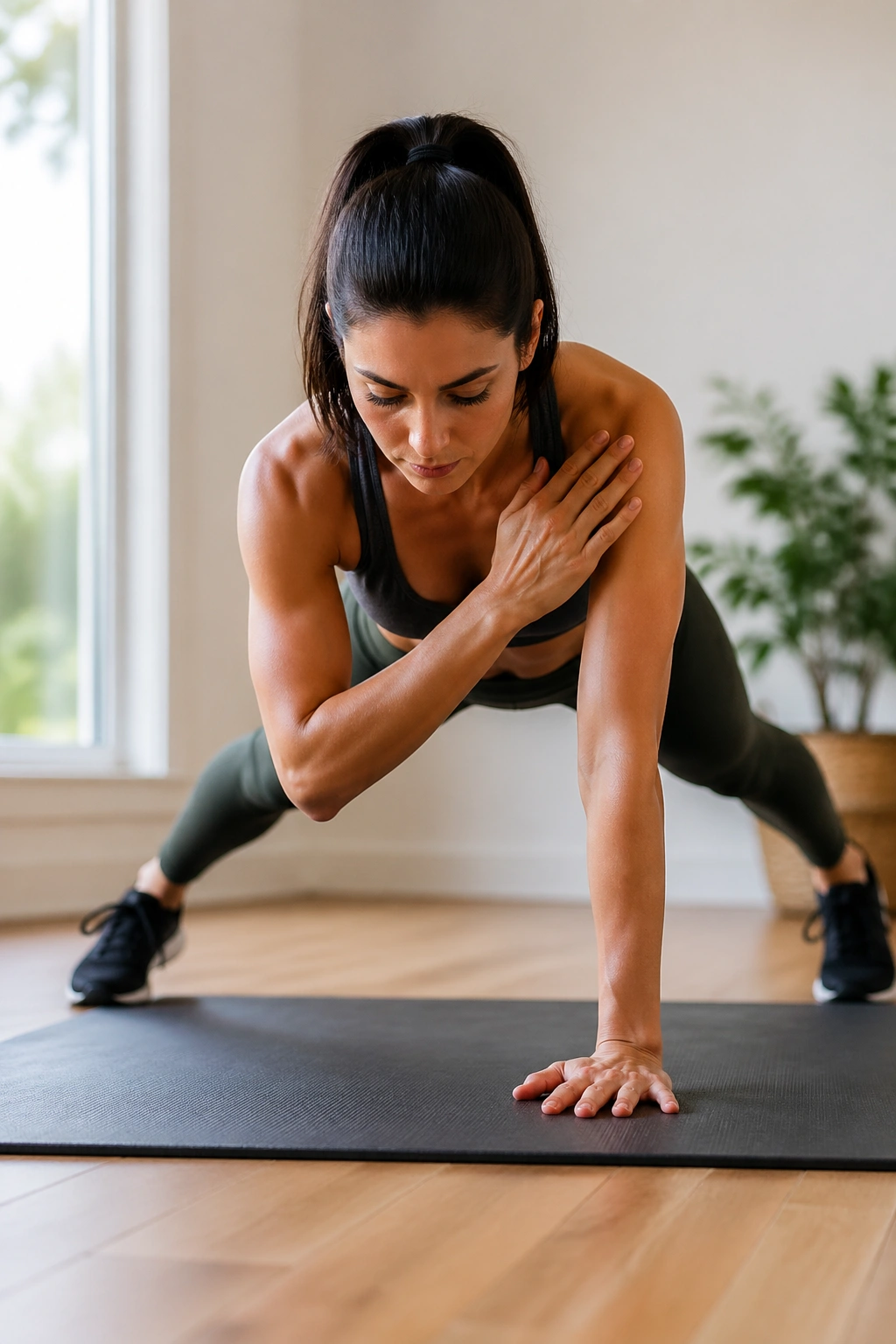
9. Plank Shoulder Taps
What makes shoulder taps harder than a plain high plank? The shifting. Every tap asks your body to resist rotation while balancing on three points instead of four.
Start in a push-up position with feet wider than hip-width. Tap one shoulder, place the hand back down, then switch sides. Wider feet give you a bigger base and cut the side-to-side wobble.
Watch the hips
Try 16 to 30 total taps. Move slowly enough that a glass of water could sit on your lower back without spilling. That image sounds corny, yet it works. If the hips rock like a canoe, spread your feet farther and cut the rep count.
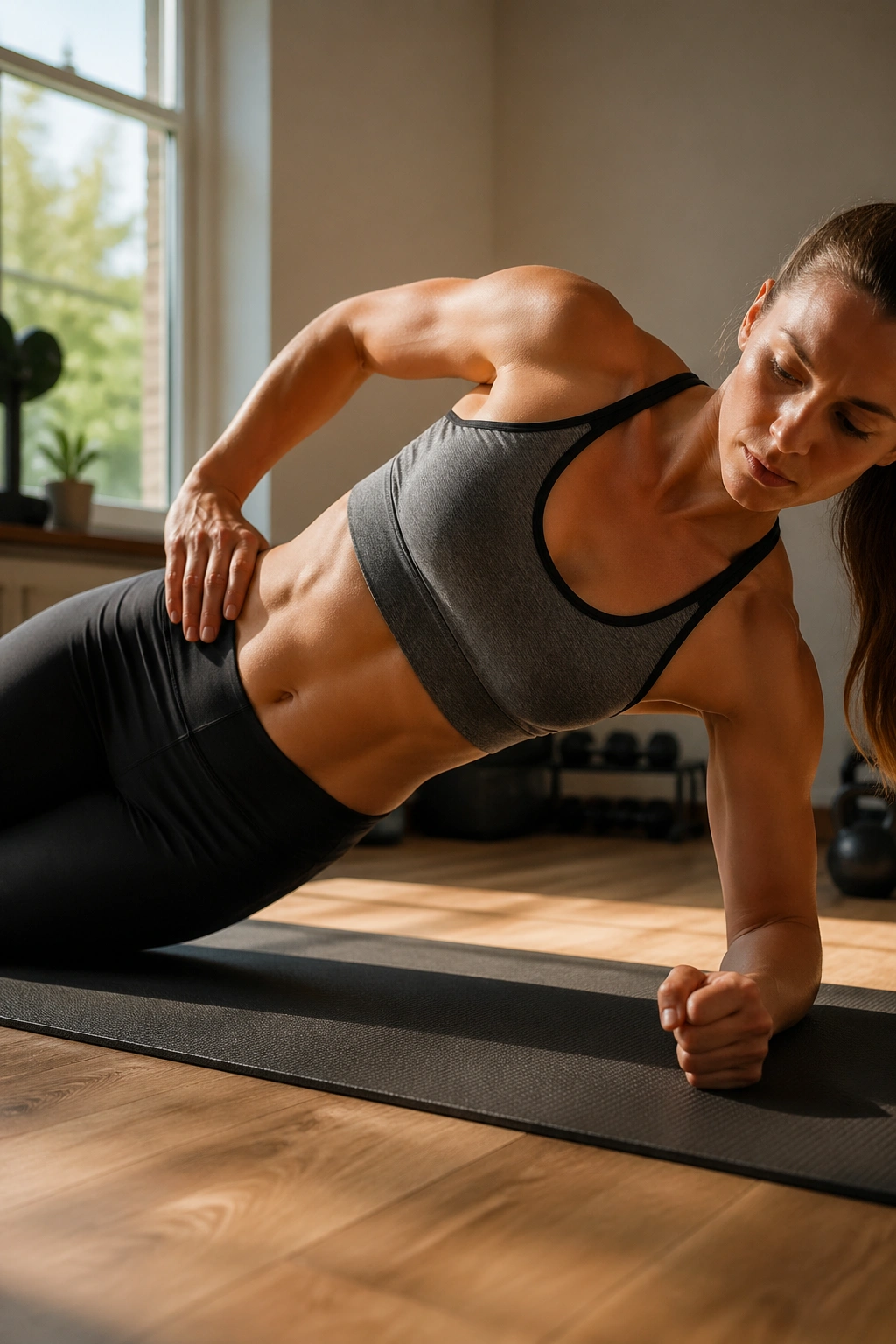
10. Side Plank Hip Dips
Picture the line from your ankle to your shoulder. In a good side plank, that line stays long and firm even as your hips lower and lift.
This move lights up the obliques, glute medius, and shoulder on the support side. It is not a speed exercise. Chasing reps turns it into flopping.
A cleaner set looks like this:
- Hold a side plank on your forearm
- Lower your hip a few inches toward the floor
- Lift back to a straight line
- Do 10 to 15 reps per side
The range does not need to be huge. Small, controlled dips with full tension beat giant swings.
11. Dead Bug
Dead bugs look easy until you do them well. Then they feel like a lesson in humility.
Lie on your back with knees and hips at 90 degrees, arms straight above your chest. Flatten your lower back into the floor. Extend one leg and the opposite arm without losing that contact, then return and switch sides. The whole job is to keep your trunk still while your limbs move away from it.
That matters for belly-fat workouts because a stable trunk improves nearly every standing and crawling move in this list. You will brace better during lunges, breathe better in planks, and stop leaking tension through the midsection.
Go for 6 to 10 slow reps per side. If your back lifts, shorten the reach. Pride has no use here.
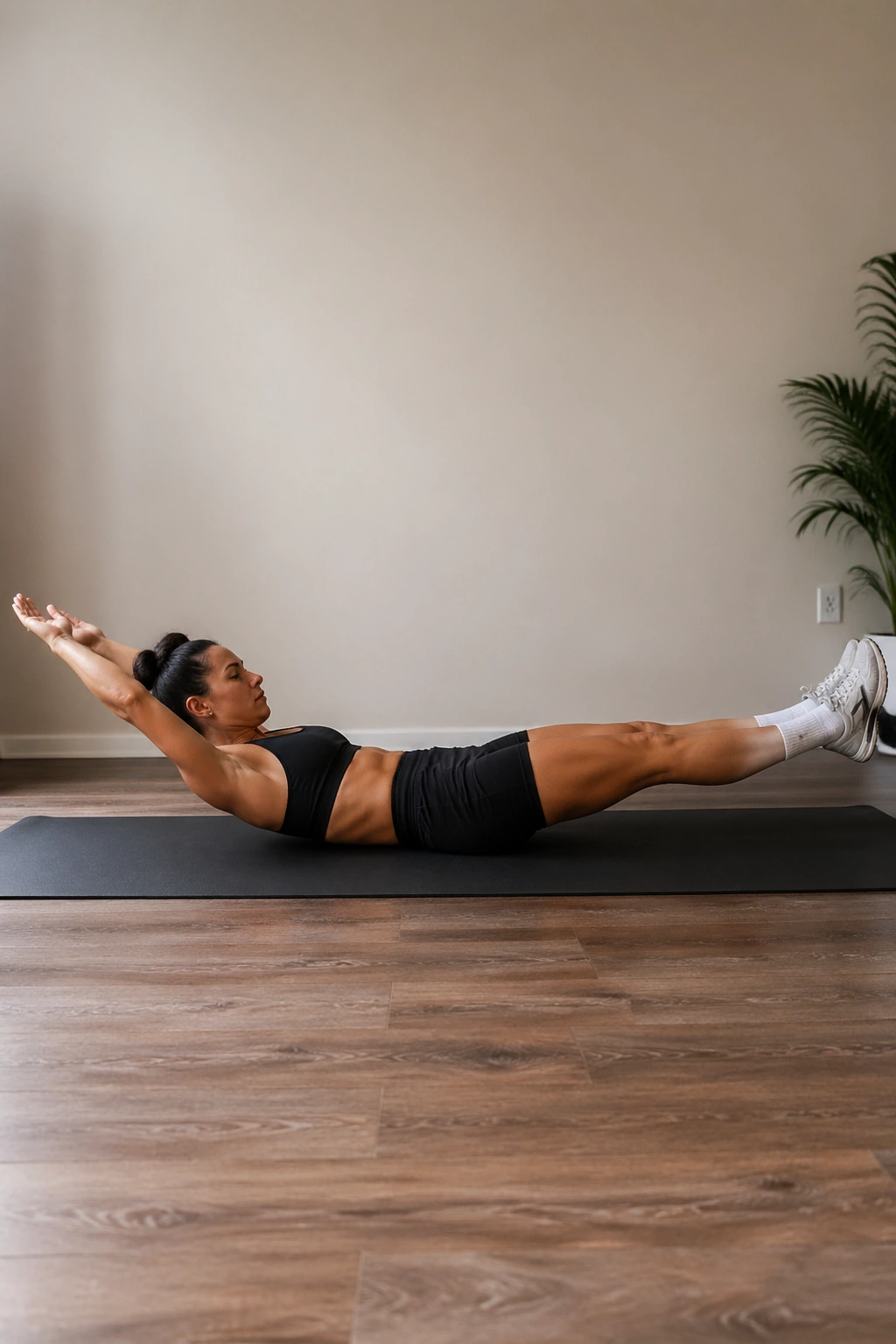
12. Hollow Body Hold
Compared with a standard crunch, the hollow hold trains your abs in a longer, more demanding position. Gymnasts have leaned on this idea for years because it builds a rigid trunk that carries over to hanging work, push-ups, and fast floor drills.
Start on your back. Press your lower spine into the floor, lift your shoulders, extend your arms overhead, and straighten your legs if you can keep the back flat. If not, bend the knees or keep the arms by your sides.
This is a short-set move. Hold 10 to 25 seconds, rest, and repeat. Best for people who want a direct core challenge without a pile of spinal flexion.
13. Flutter Kicks
Flutter kicks are small, fast, and far more punishing than they look once your abs have to keep your lower back pinned down.
Get the setup right
Lie on your back, hands by your sides or tucked under your hips, lift both legs a few inches, and alternate short kicks up and down.
- Keep the kicks compact
- Aim for 20 to 40 seconds
- Lift your head and shoulders only if your neck stays relaxed
- Bend your knees a bit if your back arches
Tip: The lower your legs, the harder the set. Do not chase “harder” at the cost of position.
14. Russian Twists
Tempo decides whether Russian twists help or annoy you. The frantic version people do in boot camps often turns into arm swinging with a tired lower back. Slow them down and the obliques finally get the memo.
Sit with your knees bent, heels on the floor or lifted, lean back until your abs engage, and rotate your rib cage side to side. Let your eyes follow your hands so the movement comes from your torso, not only your arms.
Use 16 to 30 total touches. If your hip flexors grab too much, sit taller and shorten the lean. You are still training rotation control even with a smaller range.
15. Heel Tap Crunches
Why do heel taps belong in a list about belly fat workouts when they do not send your heart rate through the roof? Because not every useful move needs to feel like a sprint. Some need to build the side-wall strength that helps every other exercise land better.
Lie on your back with knees bent and feet flat. Lift your shoulders slightly, keep your chin neutral, and reach one hand toward the same-side heel, then switch. The motion is short and sharp.
How to place them in a workout
Use heel taps after a big cardio drill like burpees or skater hops. Go for 20 to 40 alternating touches, rest briefly, then move back to a standing exercise. That pairing gives you trunk work without killing the pace of the session.
16. V-Ups
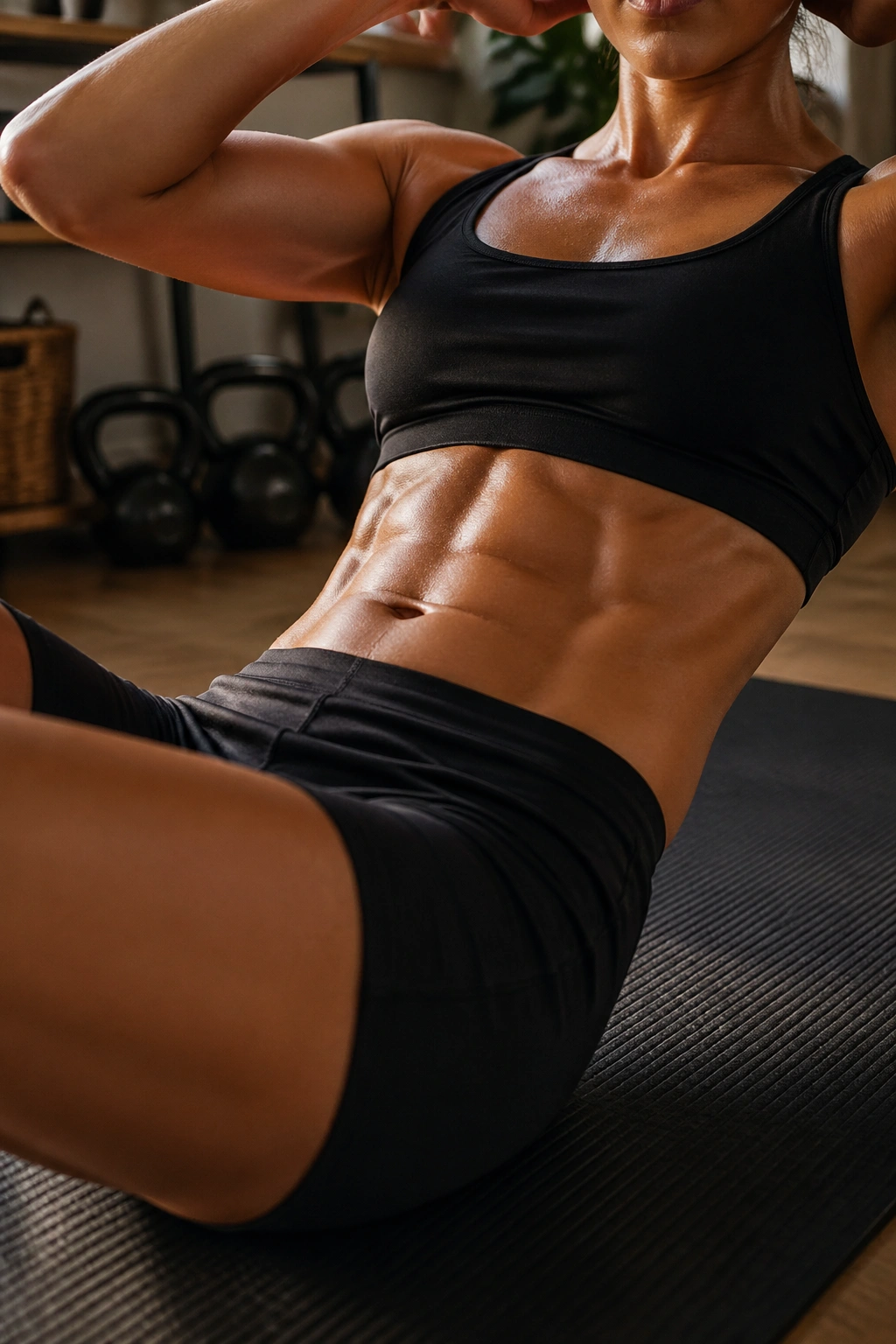
The first few V-ups often feel fine. Rep seven is where form starts negotiating.
You begin flat on your back with arms overhead and legs straight. Lift your torso and legs at the same time, reaching toward your toes, then lower with control. The challenge is keeping the movement crisp instead of folding in half any way you can.
A few cues help:
- Exhale as you come up
- Keep the legs as straight as your hamstrings allow
- Stop at 8 to 12 reps if the lower back starts taking over
If full V-ups are too much, switch to single-leg V-ups and alternate sides.
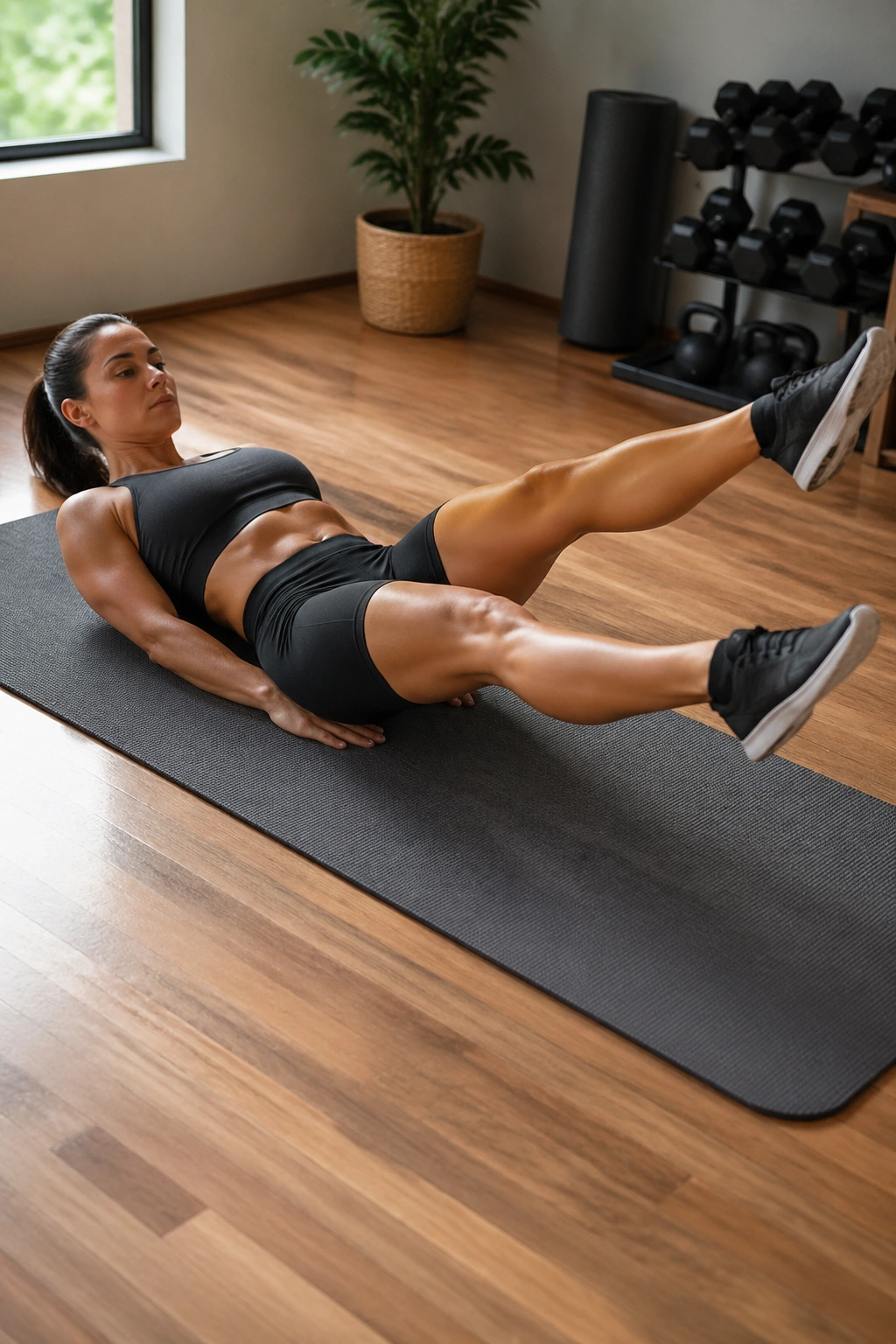
17. Leg Raises
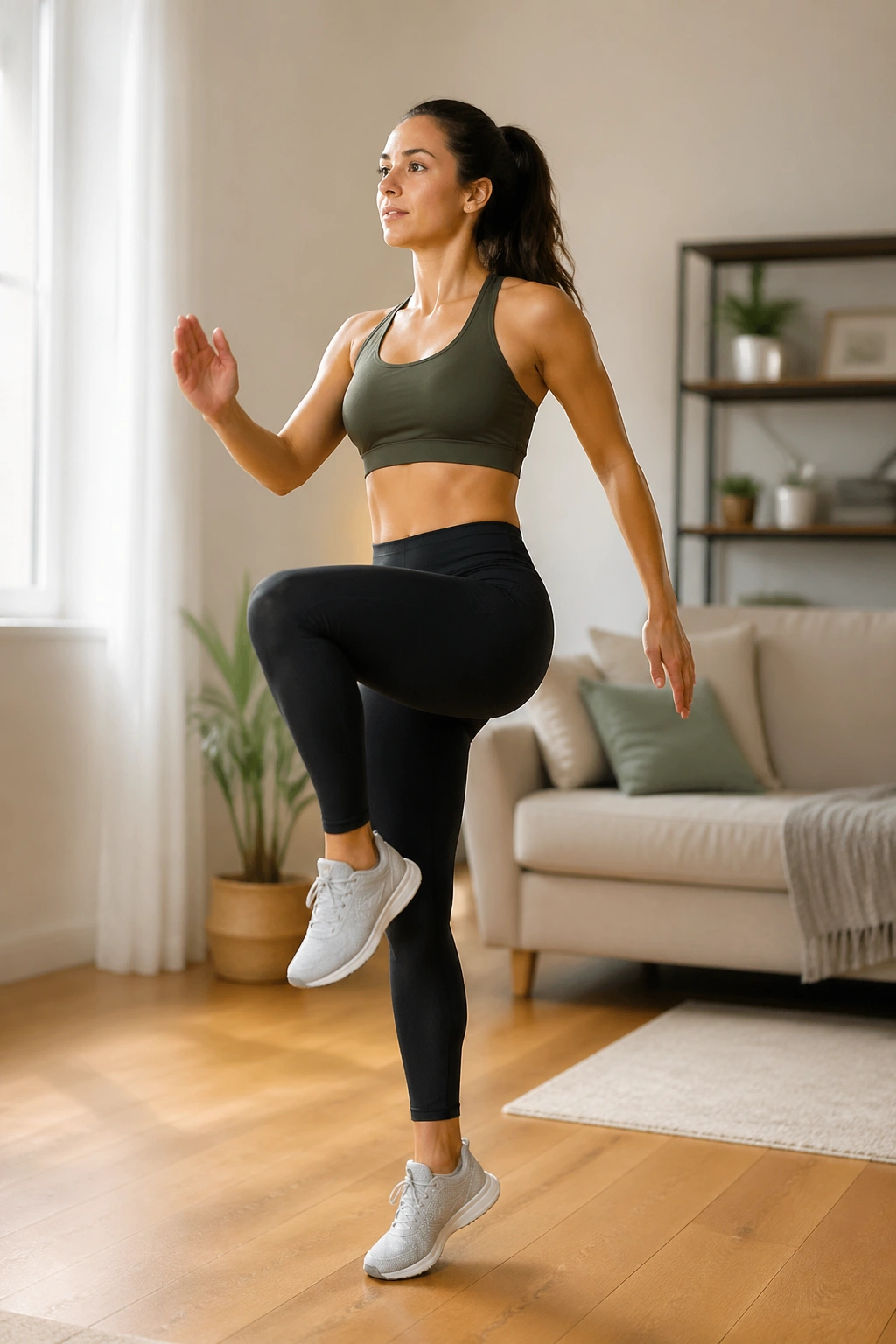
Leg raises are one of those moves people either feel in their abs or hate with a passion. The difference is pelvic position.
Lie flat, place your hands under your glutes if needed, and raise your legs until they point upward. Lower them slowly until your back wants to arch, then bring them back up. That stopping point is your range. Going lower than you can control does not make the exercise tougher in a useful way. It turns it into hip-flexor chaos.
Start with 8 to 15 reps. Add a tiny pause an inch above the floor if you want a sharper challenge. That pause is nasty in the right way.
18. Toe Touch Crunches
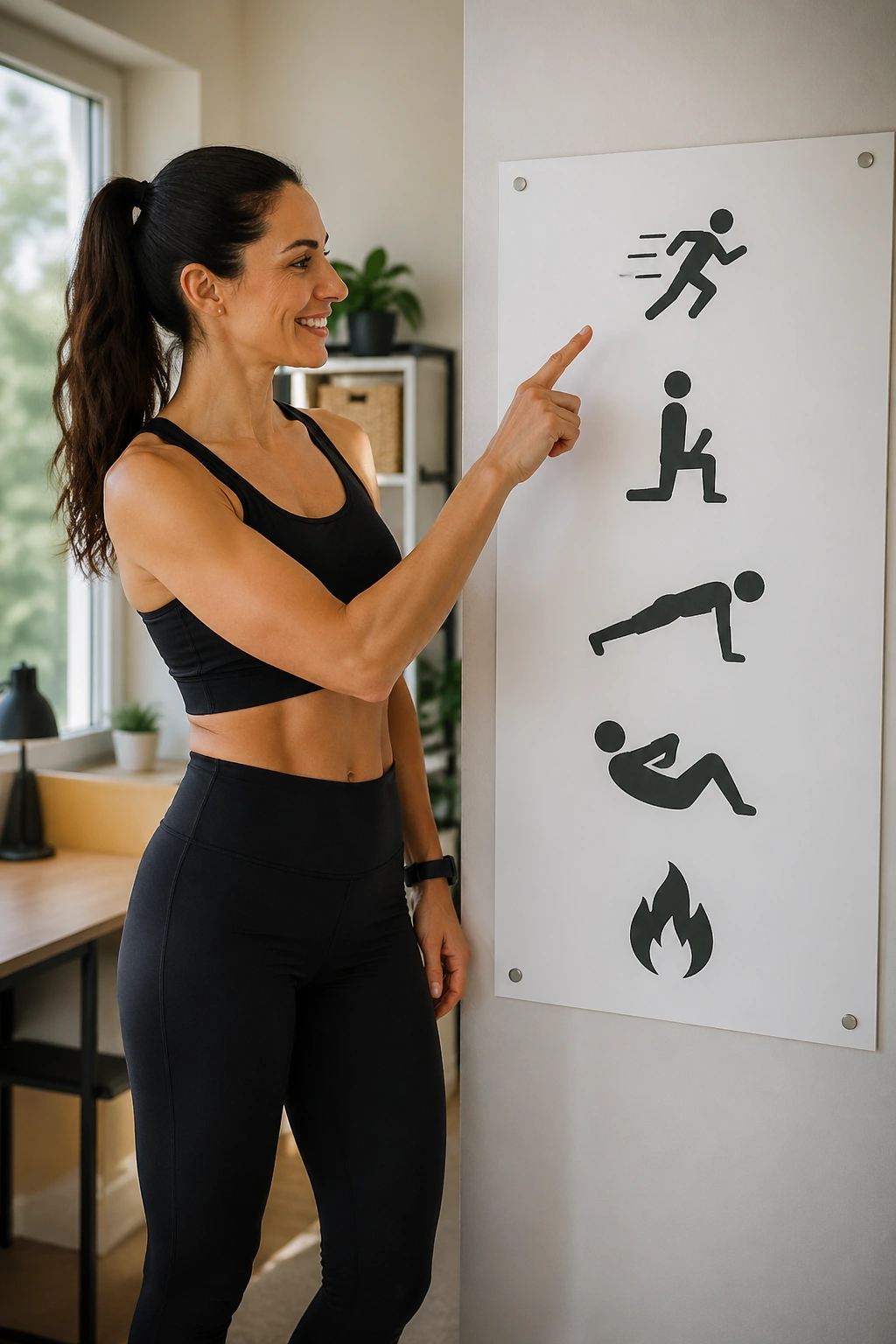
Unlike leg raises, toe touch crunches shorten the range and shift the focus higher up the abdominal wall. They are a handy choice when you want direct ab work but your lower back feels cooked from crawls, squats, or plank-heavy sessions.
Lie on your back with your legs pointed up. Reach both hands toward your toes by curling your shoulder blades off the floor. Lower down with control and repeat for 12 to 20 reps.
Who likes these most? People who want a clean burn in the upper abs without neck strain. Keep your gaze on your thighs, not the ceiling, and avoid yanking your head forward.
19. Bear Crawls
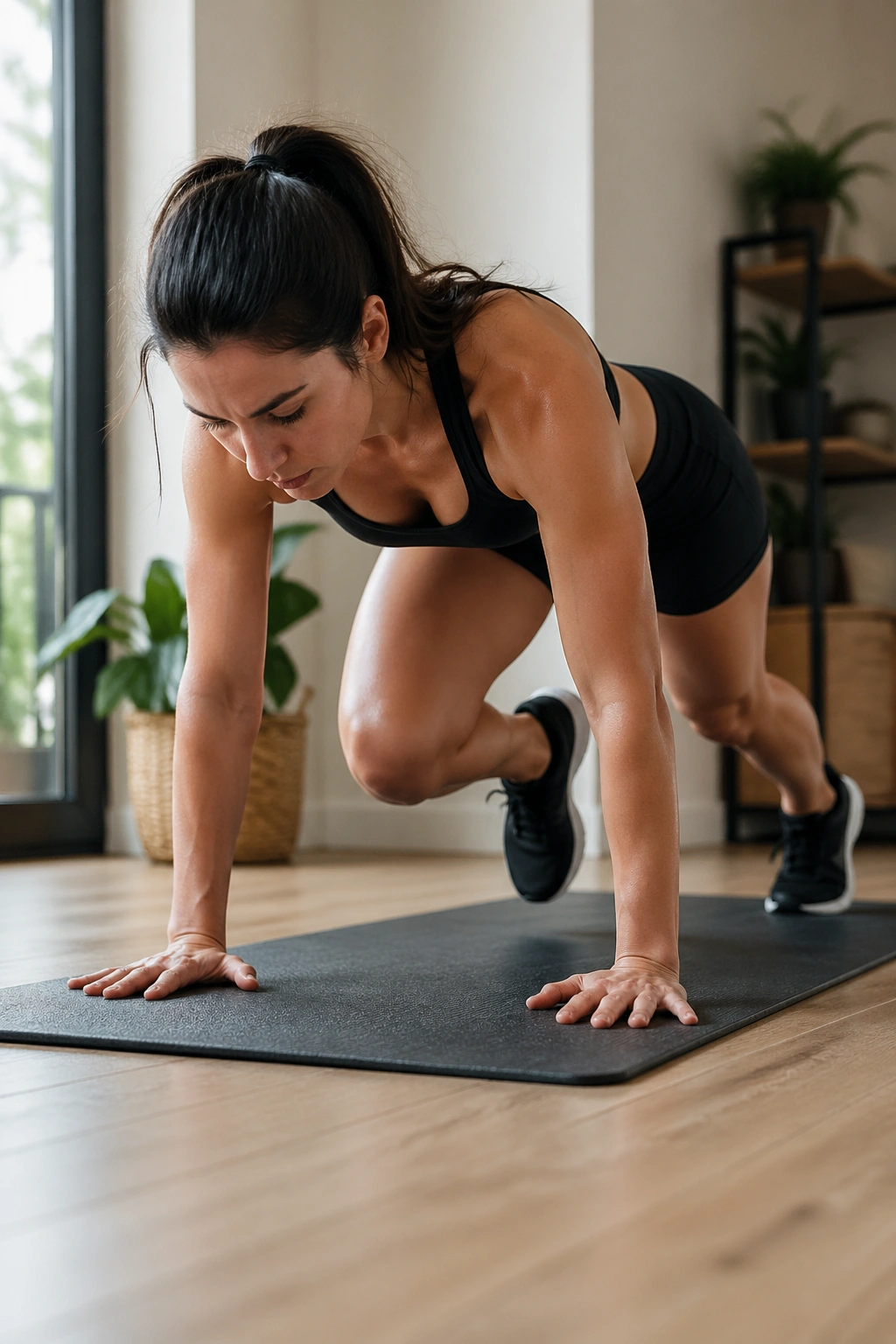
Bear crawls make small spaces feel large. Four slow steps forward and four back can smoke your shoulders, core, and legs faster than a long hallway workout.
What makes them work
Hover your knees an inch or two off the floor, keep your back flat, and move opposite hand and foot together. Tiny steps are the secret.
- Crawl for 15 to 30 seconds
- Keep your knees low the whole time
- Move slowly enough that your hips stay level
- Breathe out every couple of steps so you do not hold your breath
Tip: If your hips pop high, shorten the crawl and reset. The hover is the point.
20. Skater Hops
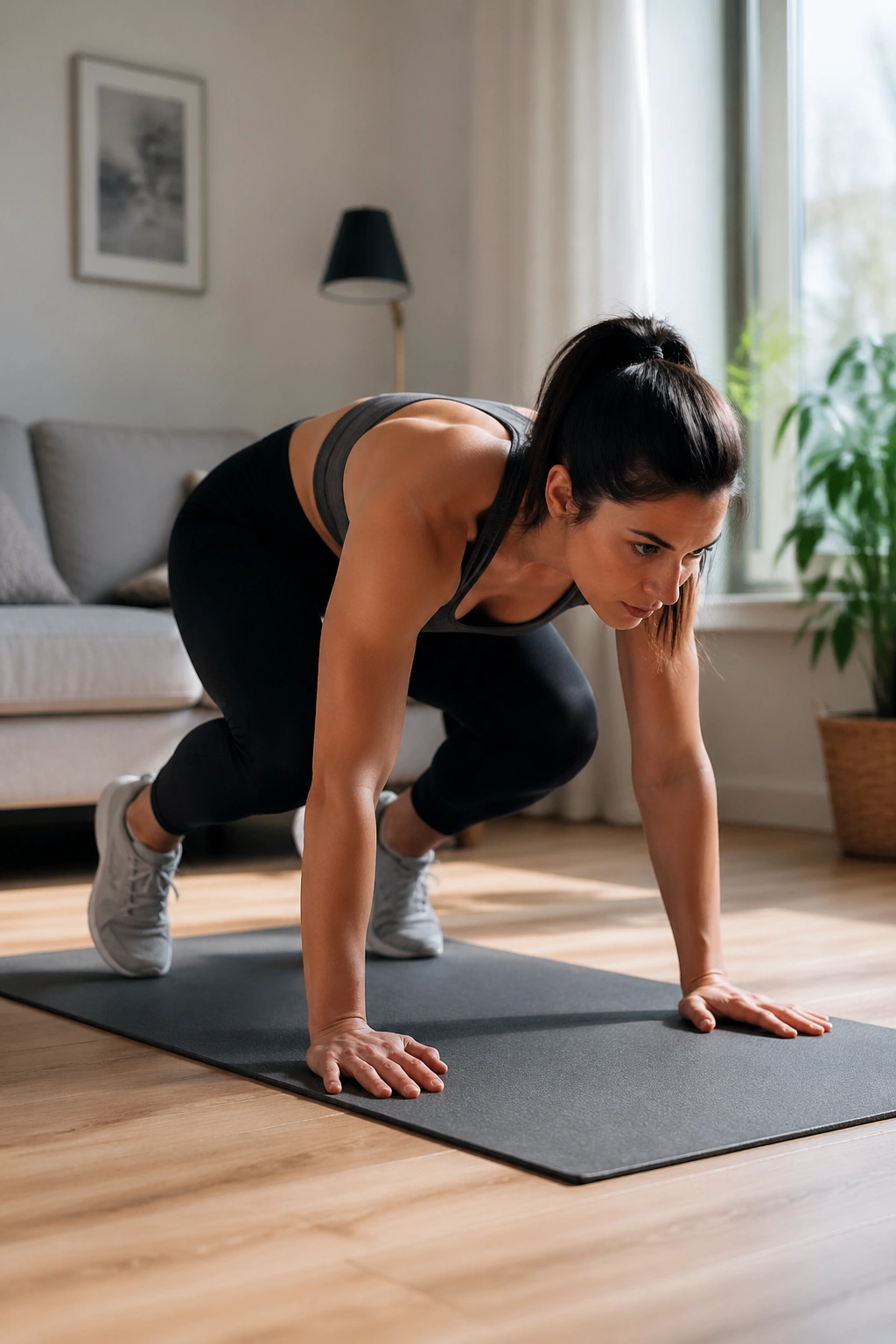
Skater hops do more than add cardio. They train lateral power, balance, and deceleration, which is a fancy way of saying they teach you to land without collapsing.
Push off one foot, leap sideways, and land on the opposite foot with the free leg sweeping behind you. Pause for a beat before the next hop if you need more control. Speed comes later.
This move shines in intervals of 20 to 40 seconds. If impact feels rough, turn the hop into a lateral step with a reach. The side-to-side pattern still wakes up the glutes and raises the heart rate.
21. Jump Squats
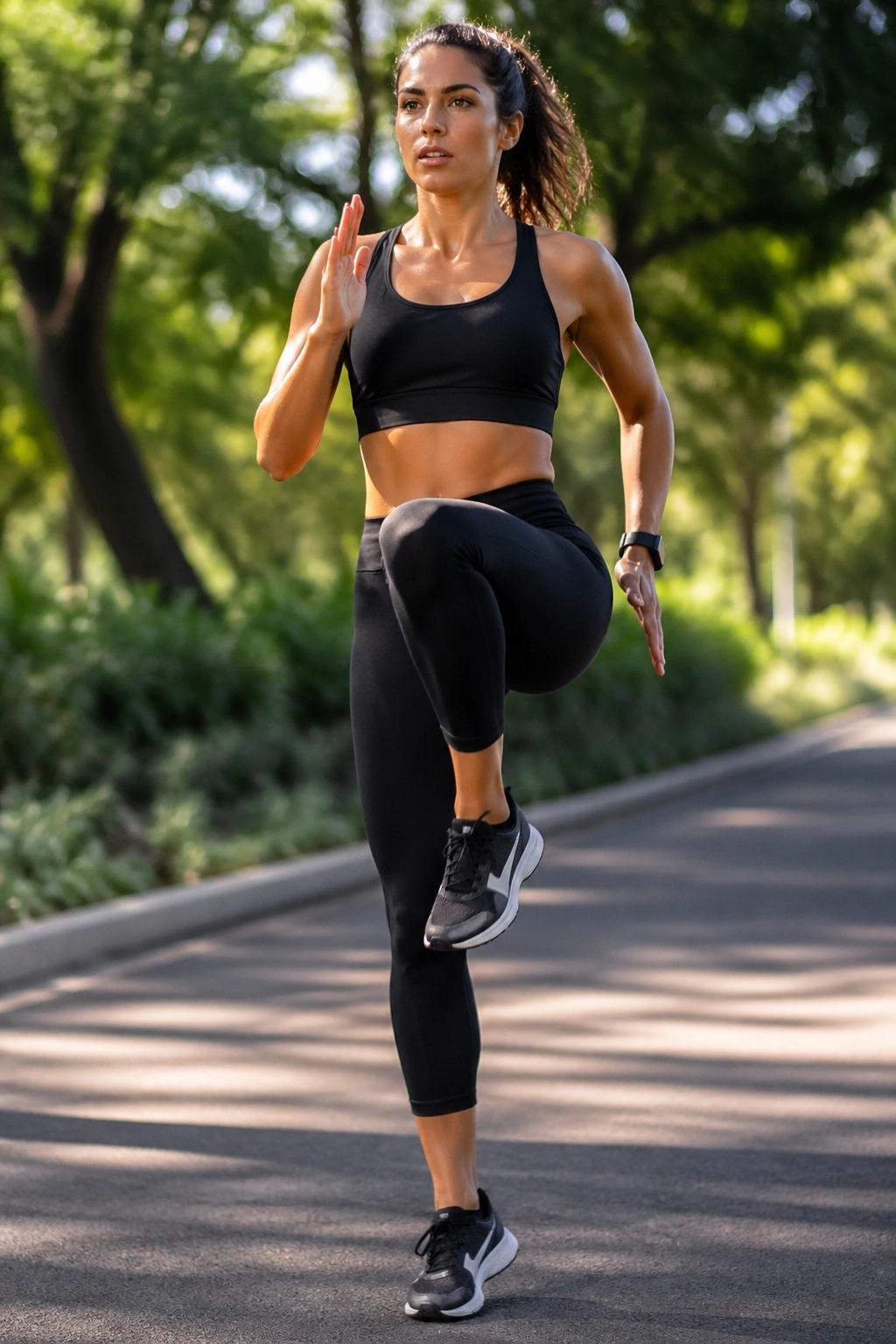
What makes jump squats such an efficient home exercise? They layer lower-body strength and power on top of a movement pattern you already know, which lets you work hard without learning much choreography.
Sink into a squat, drive through the floor, leave the ground, and land softly before the next rep. The landing matters as much as the jump. Quiet feet, bent knees, chest up.
A smart dose
Keep these to 6 to 10 reps per set, or 15 to 20 seconds in a circuit. Quality drops fast once the legs fill with acid. If your knees cave in or the landing gets noisy, swap to fast bodyweight squats instead.
22. Reverse Lunges With Knee Drive
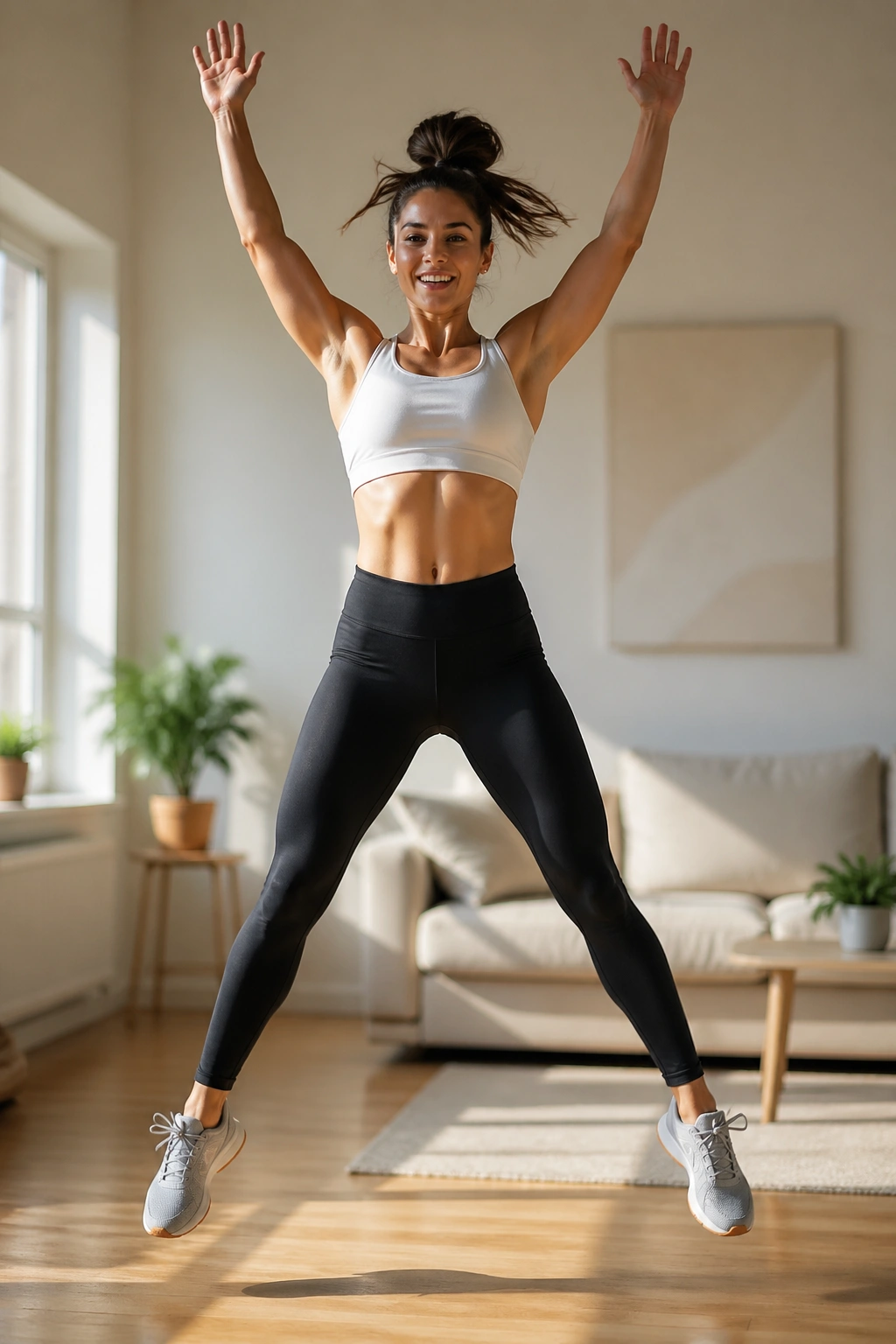
This one feels athletic without needing much room. Step one foot back into a reverse lunge, push through the front leg, then drive the back knee up as you stand tall.
That knee drive adds a balance challenge and a small cardio bump, which makes the movement more demanding than a plain lunge. Your standing foot has to stabilize, your core has to brace, and your glute has to finish the rep.
Try it this way:
- 8 to 12 reps per side
- Front knee tracks over the middle toes
- Torso stays tall rather than tipping forward
- Pause at the top for a half-second if balance is the goal
If you wobble, touch a wall with two fingers. No shame in that.
23. Walking Lunges
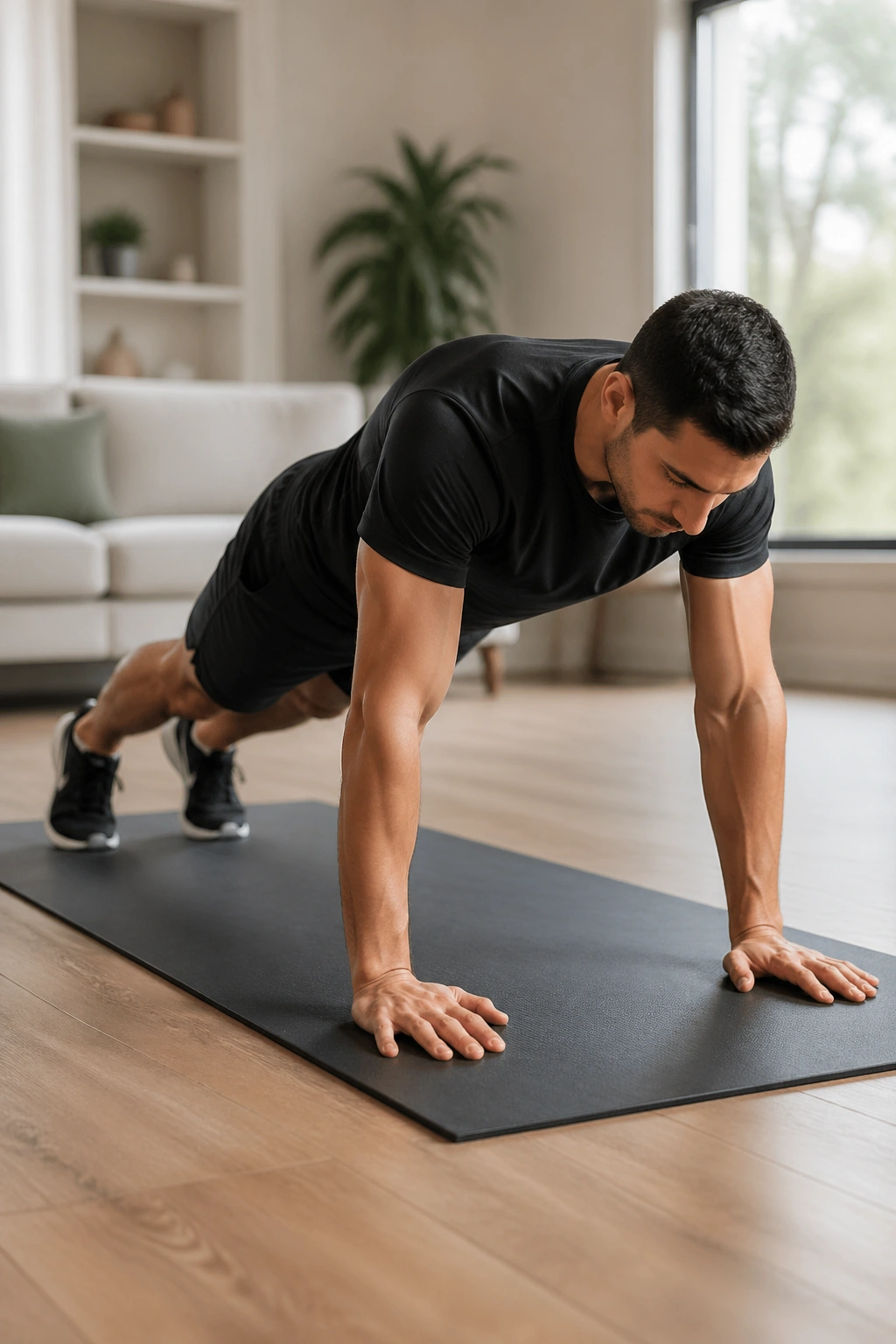
Walking lunges are one of my favorite bodyweight moves because they expose weakness fast. Tight hips, shaky balance, lazy glutes, poor trunk control—you meet all of it in about 20 steps.
If you have the space, walk across the room and back. If not, do alternating forward lunges in place and keep the same rhythm. Step long enough that both knees can bend without the front heel lifting.
Use 10 to 20 total steps. These pair well with floor-based core work because the shift from standing to lying down lets your breathing settle while your legs keep working. They also give your glutes a bigger role than most people expect, which helps your pelvis stay in a better position during ab drills later in the session.
24. Bodyweight Squats
Compared with jump squats, plain bodyweight squats are easier on the joints and easier to scale for longer sets. Do not mistake “plain” for “pointless.” High-rep squats can turn into a serious conditioning tool when you keep moving.
Sit your hips back and down, keep your chest proud, and stand up by driving through the middle of your feet. The range you use should let you stay balanced. Heels glued to the floor. Knees tracking cleanly.
Best use: 15 to 25 reps in a circuit, or 40 to 50 seconds at a steady pace. If your knees feel grumpy, shorten the depth a bit and slow the lowering phase to 3 seconds.
25. Glute Bridge March
Glute bridge marches look gentle. Then your hamstrings start talking.
Why this one matters
A lot of people trying to lose belly fat have an overworked lower back and sleepy glutes from sitting too much. This move teaches the hips to extend while the trunk stays steady.
- Lift into a bridge with your ribs down
- March one knee toward your chest without letting the pelvis twist
- Alternate for 10 to 20 total marches
- Hold the top position the whole time
Tip: If hamstrings cramp, pull your heels a little closer to your hips and squeeze your glutes harder before each march.
26. Plank Jacks
Plank jacks are sneaky. They look like a small variation, yet they force your abs and shoulders to stabilize while your feet jump apart and together over and over.
Set up in a strong high plank. Jump your feet out wide, then back in, keeping your hips as still as possible. Think of your torso as the table and your legs as the moving parts.
Use 20 to 30 seconds. If the jumping bothers your back or floor noise is an issue, step one foot out at a time instead of hopping. You still get the anti-rotation challenge, and your neighbors may like you more.
27. Inchworm Walkouts
Why do inchworms show up in so many smart home programs? Because they warm up the hamstrings, load the shoulders, train the core, and elevate the heart rate without any impact.
Stand tall, hinge forward, walk your hands out to a plank, pause, then walk them back and stand up. Add a push-up at the bottom if you want more upper-body work.
Where people rush
Keep the knees soft, not locked. Let the hips fold. Walk the hands out with control and spend a breath in the plank before returning. 6 to 10 reps is enough to feel it from your calves to your abs.
28. Push-Ups
You do not need a bench press to get a dense upper-body training effect at home. Push-ups still deliver if you treat them like a strength move instead of a race.
Hands go slightly wider than shoulder-width, body stays in one line, chest lowers between the hands, and you press back up without letting the hips sag or pike. If floor push-ups are out of reach, elevate your hands on a couch, sturdy table, or countertop.
A useful dose is 6 to 15 reps with one or two solid reps left before failure. Pair them with a cardio move such as high knees and suddenly the session feels much more complete.
29. Commando Planks
Commando planks are messy in the right way. You move from forearms to hands and back down while trying to keep your trunk from twisting all over the place.
Start on your forearms. Press one hand into the floor, then the other, rise to a high plank, lower one forearm, then the other. Alternate which arm leads each rep. That last part matters, or one side gets all the hard work.
Go for 6 to 12 total up-down reps. Your hips will want to sway. Fight that urge. The less your body wiggles, the more your core is doing what it should.
30. Tuck Jumps
Compared with jump squats, tuck jumps push intensity up fast because you have to create more lift and control a more demanding landing. They are not for every knee, ankle, or floor.
Stand tall, dip into a quarter squat, explode upward, and pull your knees toward your chest. Land softly and reset before the next rep. Resetting is not weakness. It is how you keep the reps safe and clean.
This move fits better in small clusters of 4 to 6 reps than in long burnout sets. Best for people who already handle jump squats well and want a sharper conditioning spike.
31. Shadow Boxing Intervals
Shadow boxing is criminally underrated for home fat-loss workouts. You can push pace, rotate through the trunk, and unload stress without pounding your joints.
How to box without flailing
Set your feet shoulder-width apart, soften the knees, keep your hands up, and throw straight punches, hooks, and uppercuts while pivoting through the hips.
- Work for 30 to 60 seconds
- Exhale with each punch
- Keep the chin tucked and shoulders loose
- Add slips, ducks, or fast footwork once the punches feel natural
Tip: Hold tiny water bottles only if your shoulders stay happy. Speed matters more than fake heaviness.
32. Standing Cross-Body Knee Drives
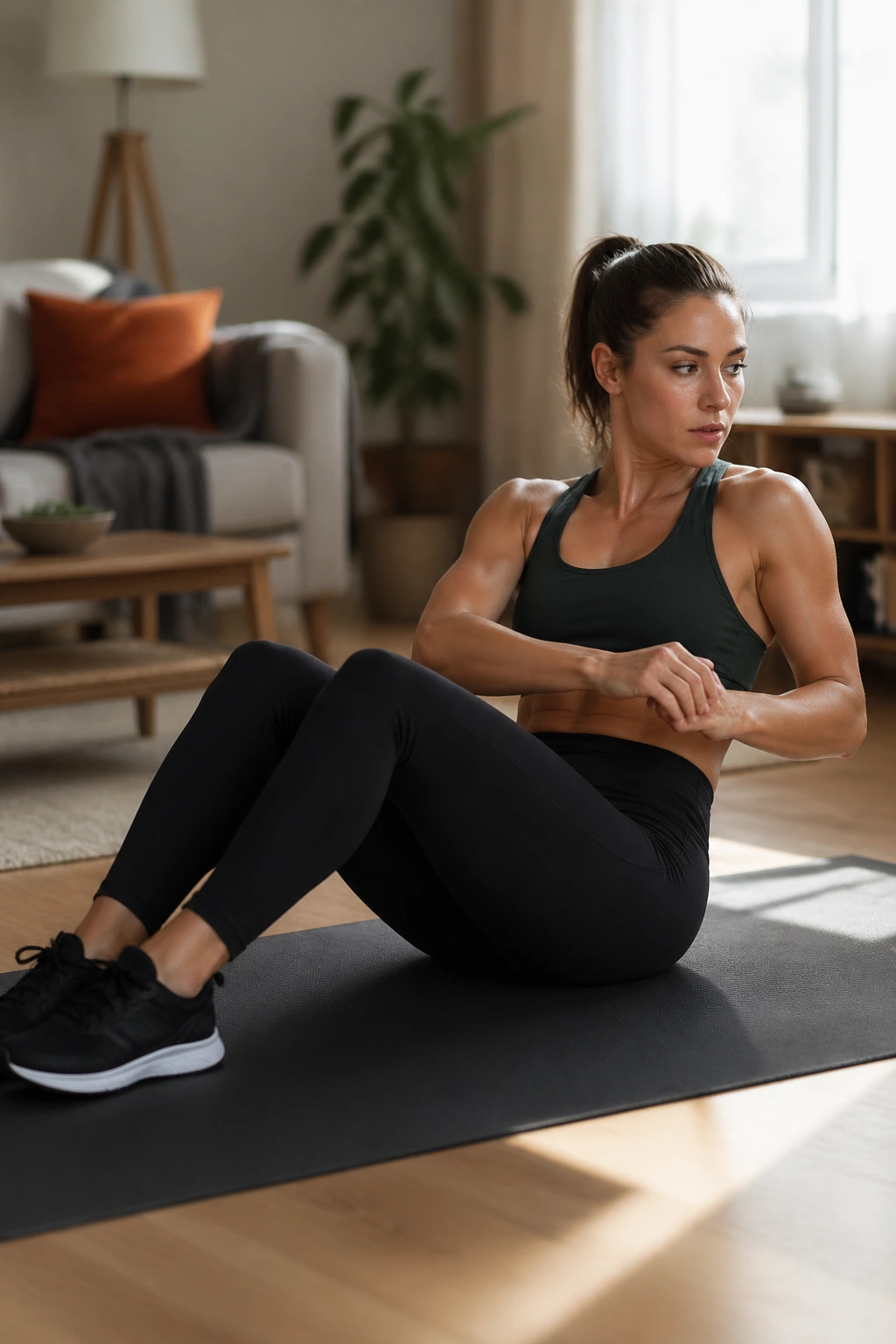
This is one of the better low-impact moves in the whole list. It gets the heart rate up, trains coordination, and asks the abs to connect the rib cage to the hips without lying on the floor.
Stand tall, place your hands behind your head or reach one elbow toward the opposite knee, then drive across the body and switch sides quickly. Think of crunching from the side waist rather than yanking the knee up with the hip flexor alone.
Run it for 30 to 45 seconds. On recovery days, this can replace higher-impact drills like tuck jumps or burpees while keeping the workout honest.
33. Wall Sit With Punches
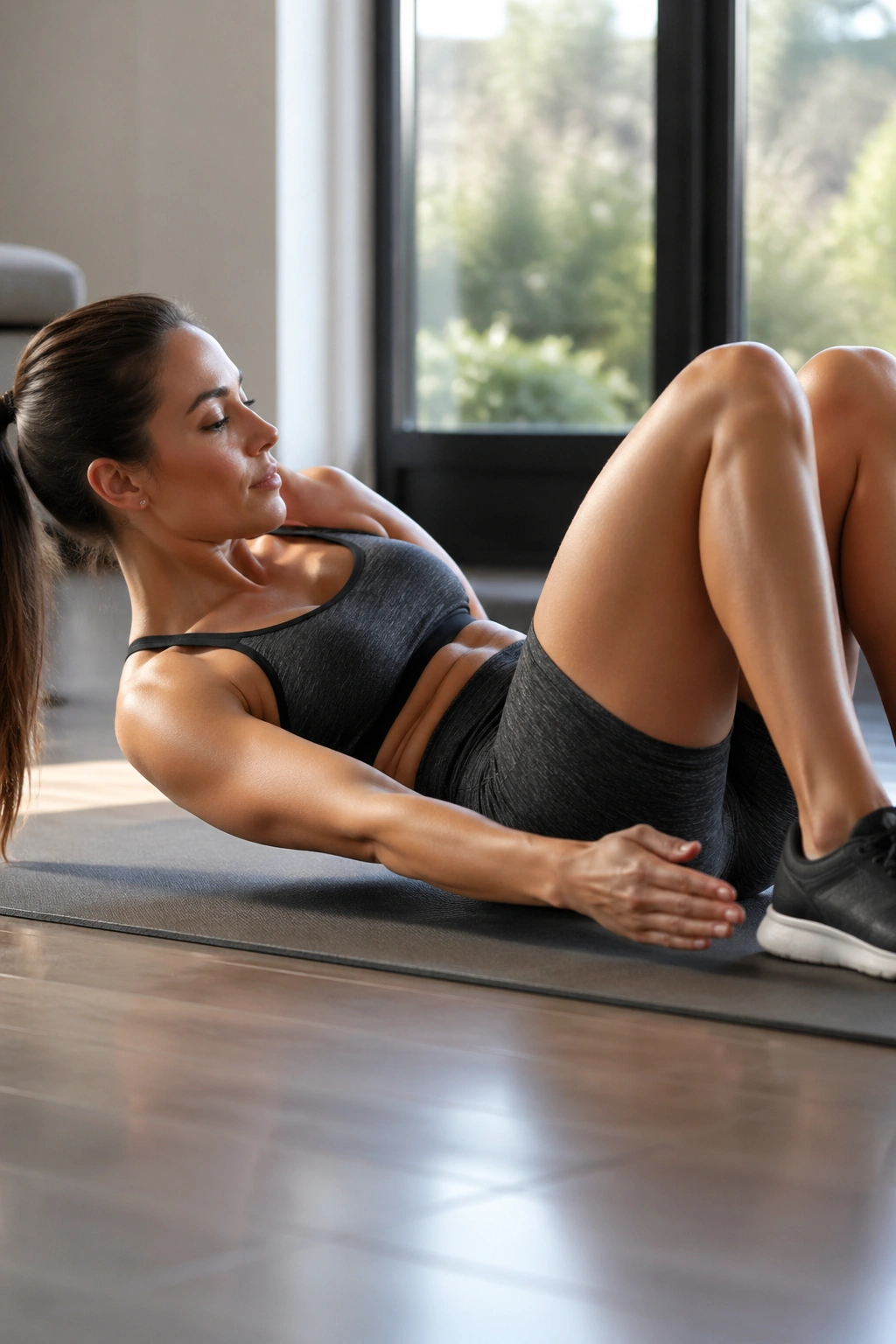
Why add punches to a wall sit instead of holding still? Because the upper-body motion forces your trunk to resist rotation while your legs burn, which makes a static drill feel a lot more alive.
Press your back into the wall, slide down until your knees are near 90 degrees, brace your abs, and start punching straight ahead in quick bursts. Do not let the ribs flare or the low back peel off the wall.
Use it as a finisher
Hold for 20 to 45 seconds. Short, sharp sets work best. If your thighs are screaming by second 15, you found the right depth. If not, sit lower.
34. Chair Step-Ups
A sturdy step, low bench, or bottom stair can do a lot of work. Step-ups train the legs one side at a time, ask the core to stabilize, and can be turned into a sneaky cardio drill when you keep the pace brisk.
Drive through the whole foot on the step, stand tall at the top, then lower under control. Avoid pushing off the trailing foot too much. The front leg should do the job.
A few ground rules:
- Use a stable surface that does not wobble
- Start with 8 to 12 reps per side
- Keep the knee lined up with the toes
- Slow the lowering phase to 2 to 3 seconds for more challenge
If balance feels shaky, hold a wall or railing.
35. Crab Toe Touches
Crab toe touches hit the backside of the body in a way many ab circuits miss. You work the glutes and shoulders while the trunk rotates and stabilizes.
Sit with your hands behind you and feet flat, lift your hips into a crab position, then reach one hand toward the opposite foot as it lifts. Return and switch sides. The move looks awkward at first. That is normal. Stay patient for two or three sessions and it starts to click.
Use 10 to 20 alternating touches. Keep your hips as high as you can manage and move with control. This one finishes a session nicely because it trains rotation from a fresh angle without needing much space.
How to Keep Making These Belly Fat Burning Exercises Harder
The body adapts fast. A circuit that leaves you breathless for a week or two can turn into background noise if you never change the dose.
Here are the easiest ways to progress without buying gear:
- Add 5 seconds to each work interval until you reach 45 to 50 seconds
- Cut rest from 30 seconds to 15 or 20 seconds
- Slow the lowering part of strength moves to 3 seconds
- Add a 1-second pause at the hardest point of planks, squats, lunges, and crunches
- Track total reps and try to beat your score by 1 to 3 reps
- Pair a hard move with a calmer one, like burpees + dead bugs or jump squats + reverse crunches
One note here. If your form falls apart the second the timer starts, the answer is not always “push harder.” Sometimes the smarter move is fewer reps, sharper technique, and one extra round done well.
Final Thoughts
The home workouts that trim body fat are rarely the flashy ones. They’re the sessions built from repeatable moves, honest effort, and clean form. Pick six or seven exercises from the list, run them for 20 minutes, and keep doing that long enough for the routine to matter.
I’d start with a simple mix: one crawl or plank, one squat or lunge, one fast cardio drill, one direct core move, and one finisher. That combination covers more ground than 200 rushed crunches ever will.
And if you find yourself coming back to the same moves week after week, that is not boring. That is usually where progress starts showing up.
