



Most people walk into a gym, head straight for the heavy iron, and ignore the wall of rubber loops hanging in the corner. They assume that if they aren’t lifting hundreds of pounds of steel, they aren’t going to see significant changes in their body composition. That assumption is, frankly, one of the biggest missed opportunities in fitness. Resistance bands offer a unique form of constant tension that free weights simply cannot replicate. When you combine that constant, elastic resistance with the principles of high-intensity interval training, you get a metabolic stimulus that forces your heart rate to spike and your muscles to work through ranges of motion that often get neglected.
You don’t need a massive rack of dumbbells or an expensive cable machine to torch body fat. What you need is the ability to maintain high intensity for a short window of time, followed by brief, active recovery periods. Bands allow you to transition from one movement to the next in seconds, keeping your heart rate elevated and your metabolism engaged throughout the entire session. This is the secret to burning fat effectively without spending two hours in the gym. If you approach these sessions with enough grit, you will feel the burn—the good kind, the kind that tells you your muscles are being pushed to their limit and your body is burning fuel.
Stop worrying about having the perfect home gym setup. A basic set of loop bands or tube bands with handles is all you need. The following workouts are designed to be brutal, efficient, and highly effective for fat loss.
1. Full Body Band Power Circuit
This is your baseline workout. It covers every major muscle group while keeping your heart rate high enough to trigger the afterburn effect. You are essentially looking for maximum output in a short timeframe.
The Mechanism of Fatigue
By keeping the band under constant tension, you force your muscles to resist the recoil during the eccentric phase of every movement. This is where most people get lazy. If you let the band snap back to the start, you lose the primary benefit. You must control the tension on the way back.
The Workout Protocol
Perform each exercise for 40 seconds, followed by 20 seconds of rest. Complete the entire circuit four times.
- Band Thrusters: Step on the band and hold the handles at your shoulders, squatting deep and pressing overhead.
- Resisted Push-Ups: Wrap the band behind your upper back, holding the ends in your hands on the floor.
- Band Rows: Stand on the band, hinge at the hips, and pull back with force.
- Band Woodchoppers: Anchor the band high and pull diagonally across your body to engage the core.
Pro tip: Use a lighter band than you think you need for the thrusters; your shoulders will fatigue much faster than your legs.
2. Upper Body Push-Pull Hypertrophy

Fat loss is not just about cardio. It is about muscle maintenance. When you train your upper body with high intensity, you increase your metabolic demand significantly because you are engaging large muscle groups like the lats and pectorals.
Why This Works for Fat Burning
By alternating between pushing and pulling movements, you allow one group of muscles to rest while the other works. This keeps the total intensity high because you aren’t doing the same repetitive motion until failure. You are constantly shifting blood flow from the front to the back of the body, which is exhausting for your cardiovascular system.
The Workout Routine
Complete three rounds of this circuit with minimal rest.
- Band Chest Press: Anchor the band behind you and drive forward.
- Band Lat Pulldowns: Anchor high and pull down to your chest.
- Band Shoulder Press: Stand on the band and drive straight up.
- Band Face Pulls: Pull the band toward your forehead, squeezing the rear delts.
Maintain a pace that leaves you breathless. If you can hold a conversation during this workout, you aren’t using enough resistance.
3. Lower Body Glute and Quad Focus
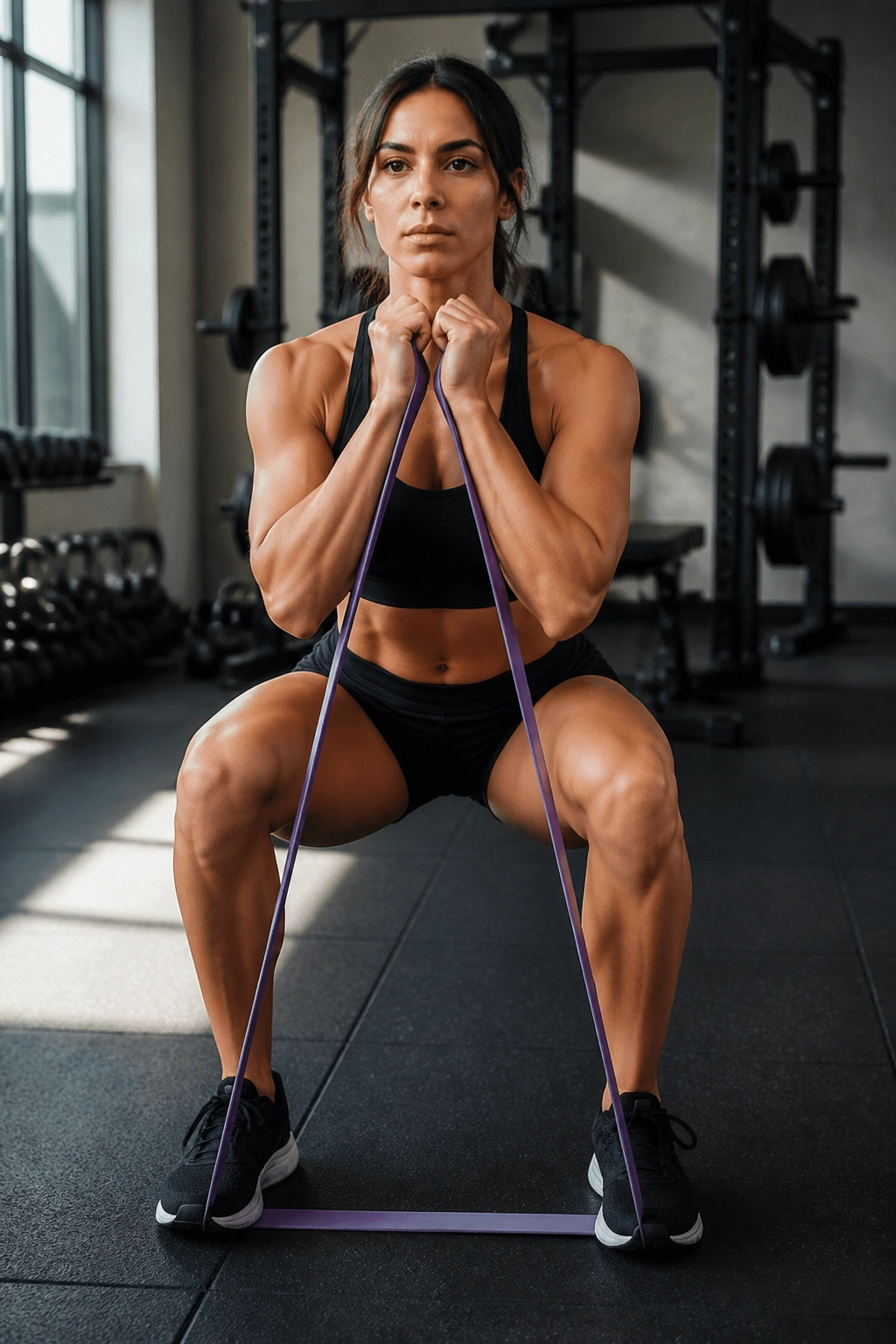
Your legs contain the largest muscle groups in your body. Training them with bands creates an immense amount of metabolic stress, which is exactly what you want when your goal is shedding fat.
Understanding the Tension Curve
Unlike a barbell, which feels the same from the bottom of the squat to the top, bands feel easier at the start and progressively harder as you stretch them. This means you have to explode through the movement to overcome the peak resistance at the top. This explosive power is key to high-intensity training.
Essential Movements
Focus on these four exercises to hammer the lower body:
- Banded Goblet Squats: Hold the band at your chest while standing on it.
- Banded Romanian Deadlifts: Step on the band with feet wide, hinge, and drive your hips forward.
- Lateral Band Walks: Place a mini-band around your ankles and shuffle side-to-side.
- Banded Lunges: Hold the band under your front foot and pull the handles to your shoulders.
Safety note: Ensure your band is not cracked or frayed before doing deadlifts. A snapping band mid-exercise is a lesson you do not want to learn the hard way.
4. Core Stabilization and Fat Burn

Core training is often mistaken for endless crunches. That is the wrong approach for fat loss. You want compound, functional movements that require your core to stabilize your entire frame while you are moving at high speeds.
Why Oblique Engagement Matters
Most injuries occur when we move laterally or rotate. By training the core to resist rotation—or to generate it under tension—you build a tighter, more resilient midsection. This is not about getting a six-pack overnight; it is about building a body that can handle high-intensity work without breaking down.
The Core Protocol
Do each exercise for 45 seconds, then rest for 15 seconds.
- Band Pallof Press: Anchor the band at chest height and press out, fighting the pull to the side.
- Banded Russian Twists: Sit on the floor, hold the band, and rotate from side to side.
- Resisted Plank: Have a partner place a band across your back, or anchor it low and hold against the tension.
- Band Mountain Climbers: Anchor the band behind you and loop it around your waist for resistance.
5. Tabata-Style Band Sprints

Tabata is the king of efficiency. Twenty seconds of all-out effort followed by ten seconds of rest. It forces your heart rate into the anaerobic zone almost immediately.
The Science of the Interval
The short rest period means your heart rate doesn’t have time to drop back to a baseline level. You stay in a state of oxygen debt for the duration of the eight-minute set. This is brutal, but it works.
How to Execute
Select one movement—like high knees with a band around your waist—and perform it for 20 seconds. Rest for 10. Repeat this eight times. If you are not gasping for air by the fourth round, you aren’t moving fast enough. The resistance should be enough to challenge you, but not so heavy that it prevents you from moving quickly. Speed is the priority here, not absolute strength.
6. The “EMOM” Resistance Band Challenge

EMOM stands for Every Minute on the Minute. This format forces you to finish a set amount of work within 60 seconds. Whatever time is left in that minute is your rest. If you work slow, you rest less.
Managing Your Work-Rest Ratio
If you take 45 seconds to finish your reps, you have 15 seconds to recover. If you finish in 30 seconds, you get 30 seconds to breathe. The incentive here is to work efficiently.
The EMOM Routine
Set a timer for 20 minutes. At the start of every minute, perform:
- 15 Band Thrusters
- 15 Band Rows
- 15 Band Lunges If you cannot finish the reps within the minute, reduce the count, but keep the pace high. This teaches you to manage fatigue while maintaining output.
7. Shoulder and Back Definition Routine

This workout targets the aesthetic muscles that create the “V-taper” look, while keeping the intensity high enough to incinerate calories.
The Importance of High-Rep Tension
Shoulders respond incredibly well to high-volume training. By using bands, you can extend your sets well beyond what you would do with heavy dumbbells, keeping the muscle under tension for longer.
Routine Structure
Perform these as a superset with no rest between moves:
- Band Front Raises (15 reps)
- Band Lateral Raises (15 reps)
- Band Rear Delt Flys (20 reps)
- Band Pull-Aparts (25 reps) Repeat this cycle four times. Your shoulders will feel like they are on fire. That is the feeling of muscle fibers breaking down, which eventually leads to greater definition.
8. Leg-Dominant Plyometric Band Work

Plyometrics are explosive, jump-based movements. Adding bands adds an extra layer of resistance to your landing and take-off, making the movement much more difficult.
Why This Is Different
Usually, plyometrics use your body weight. Adding a band means you have to fight to push off the ground. It forces your muscles to recruit more motor units, leading to higher caloric expenditure.
The Movements
- Banded Squat Jumps: Hold the band at your shoulders and explode upward.
- Banded Broad Jumps: Use a long band around your waist and jump forward against the resistance.
- Split Squat Jumps: Keep one foot anchored on the band and explode into a lunge switch. These are intense. Limit these sessions to twice a week to allow for joint recovery.
9. The 30-Minute Metabolic Finisher

This is designed to be the final workout of the week. It is a grind. You are exhausted, your muscles are tired, and you want to leave everything on the floor.
The Psychology of Finishers
A finisher isn’t about setting personal records. It is about mental toughness. You are training your mind to keep moving when your body wants to quit.
The Protocol
Do 50 reps of each of the following as fast as you can. Do not stop until you hit 50, then move to the next.
- Band Pull-Aparts
- Band Squats
- Band Bicep Curls
- Band Overhead Press Keep a running clock. The next time you do this, try to beat your time by even a few seconds.
10. Resistance Band Burpee Variations
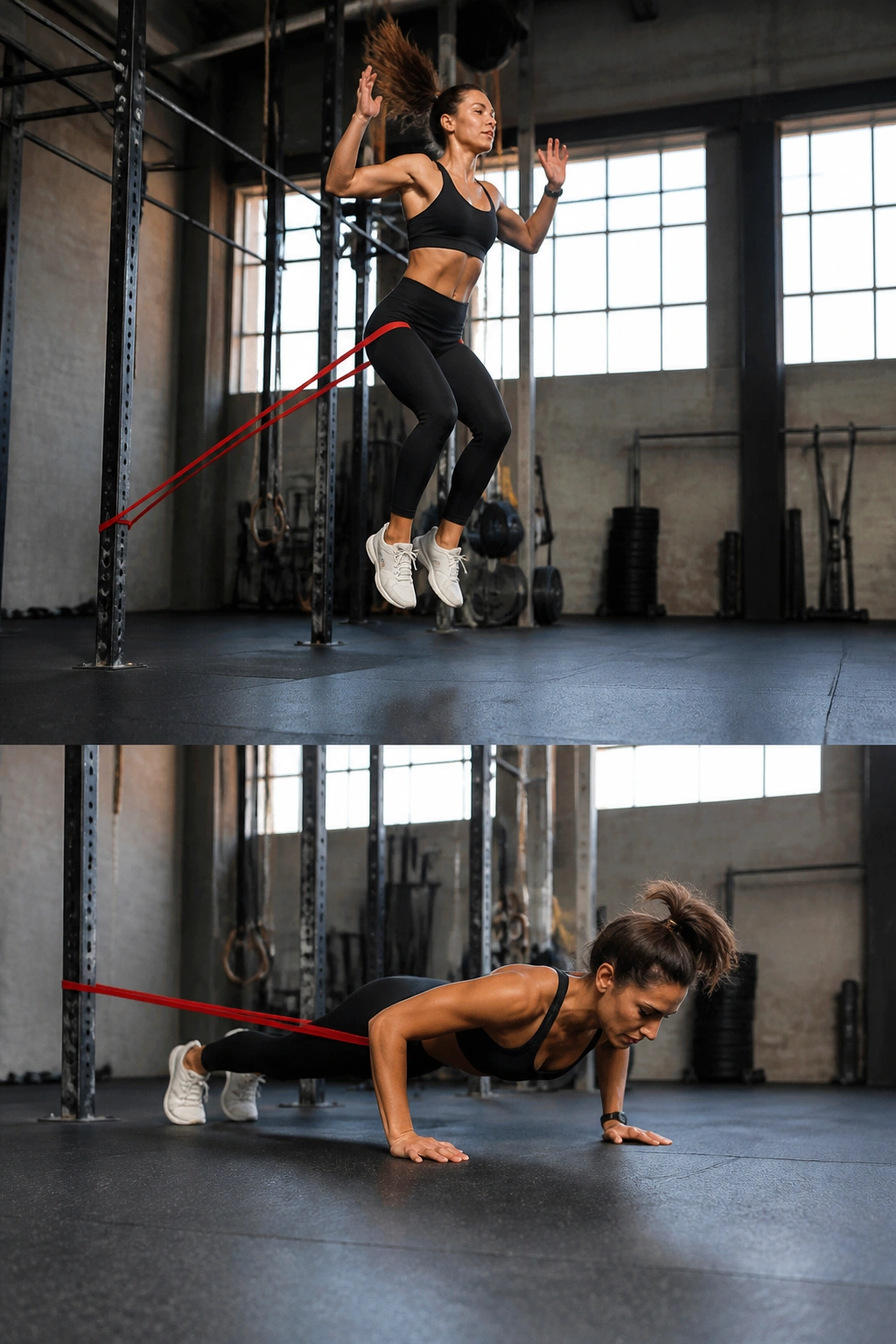
The burpee is already a great fat-loss movement. Adding a resistance band makes it a full-body power exercise.
How to Add the Band
The easiest way is to anchor a band around your waist and secure it to a pole behind you. Every time you push up or jump, you are fighting the band’s pull. It turns a simple cardio movement into a strength and conditioning hybrid.
The Routine
- Set a timer for 10 minutes.
- Perform as many resisted burpees as you can.
- Maintain a steady rhythm—do not sprint the first minute and crash in the second.
11. Lateral Movement and Agility
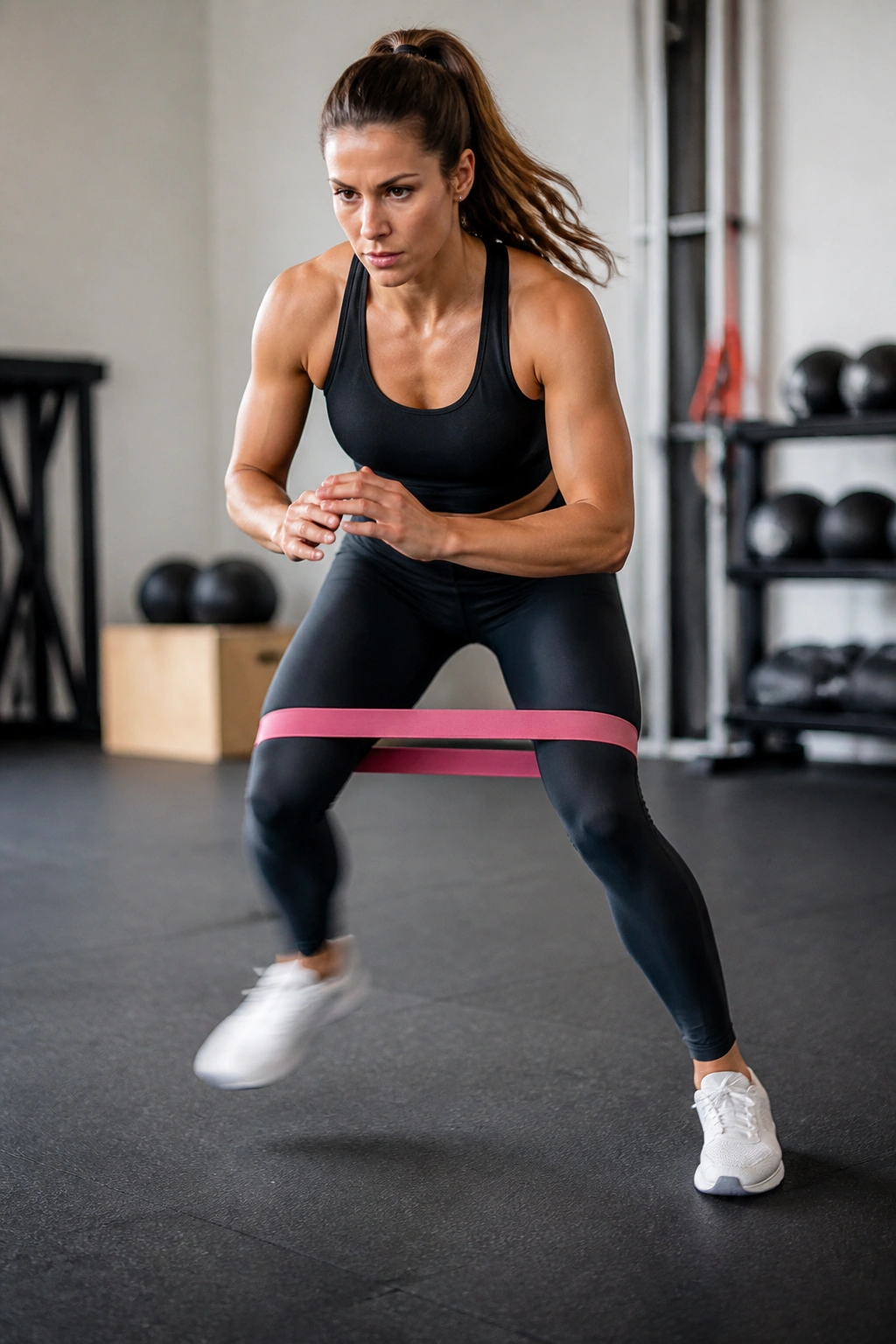
Most people train in only one plane of motion: forward and backward. Lateral training builds hip stability and burns fat in areas that standard linear exercises like running or cycling miss.
Why Lateral Training Matters
Moving side-to-side requires different muscle recruitment, specifically in the glute medius. This helps with balance and long-term joint health, which means you can train harder, for longer, over the years.
The Setup
- Place a mini-band just above your knees.
- Perform lateral shuffles for 30 seconds.
- Follow immediately with lateral lunges while holding a resistance band. This is less about heavy lifting and more about speed and control.
12. Posterior Chain and Deadlift Focus

The posterior chain—your hamstrings, glutes, and lower back—is the powerhouse of your body. Strengthening it is essential for fat loss because these are large muscles that require a lot of energy to move.
The Deadlift Mechanic
When you use a band for deadlifts, the resistance increases at the top of the movement. This forces you to squeeze your glutes hard at lockout, which is where the real work happens.
The Routine
- Banded Conventional Deadlift: 15 reps.
- Banded Good Mornings: 15 reps.
- Banded Glute Bridges: 20 reps. Do these back-to-back without rest. Your posterior chain will be fatigued, but that is where the growth and fat-burning potential lies.
13. Bicep and Tricep Arm Sculpt

Some might argue that arm training doesn’t burn fat. That is incorrect. When you train your arms using a high-intensity circuit, you are still elevating your heart rate and demanding energy from your body.
The Arm Circuit
- Banded Hammer Curls: 15 reps.
- Banded Overhead Tricep Extension: 15 reps.
- Banded Preacher Curls: 15 reps.
- Banded Tricep Kickbacks: 15 reps. Perform four rounds. The key is to keep moving. Do not rest between the bicep and tricep exercises.
14. Rotational Power and Oblique Blast

Rotation is the foundation of athletic movement. By training your body to rotate under tension, you build a lean, athletic midsection.
The Movement
- Banded Woodchoppers (Low to High): 15 reps.
- Banded Rotational Press: 15 reps.
- Banded Bicycle Crunches: 30 seconds. Rotate with force. Imagine you are swinging a bat or throwing a punch. You want to generate power from the ground up, moving through your hips and core.
15. The “100-Rep” Band Challenge

This is a mental and physical test. Pick a resistance band that is moderately difficult for you to handle.
The Strategy
Your goal is to reach 100 reps of a single movement, like a band squat, as quickly as possible. You can take as many breaks as you need, but the clock never stops.
Why This Works
It forces you to manage your rest intervals. If you take 30-second breaks, your total time will be higher. If you push through the burn and keep the breaks to 5 seconds, your intensity stays in the fat-burning zone.
16. Resistance Band Mountain Climbers
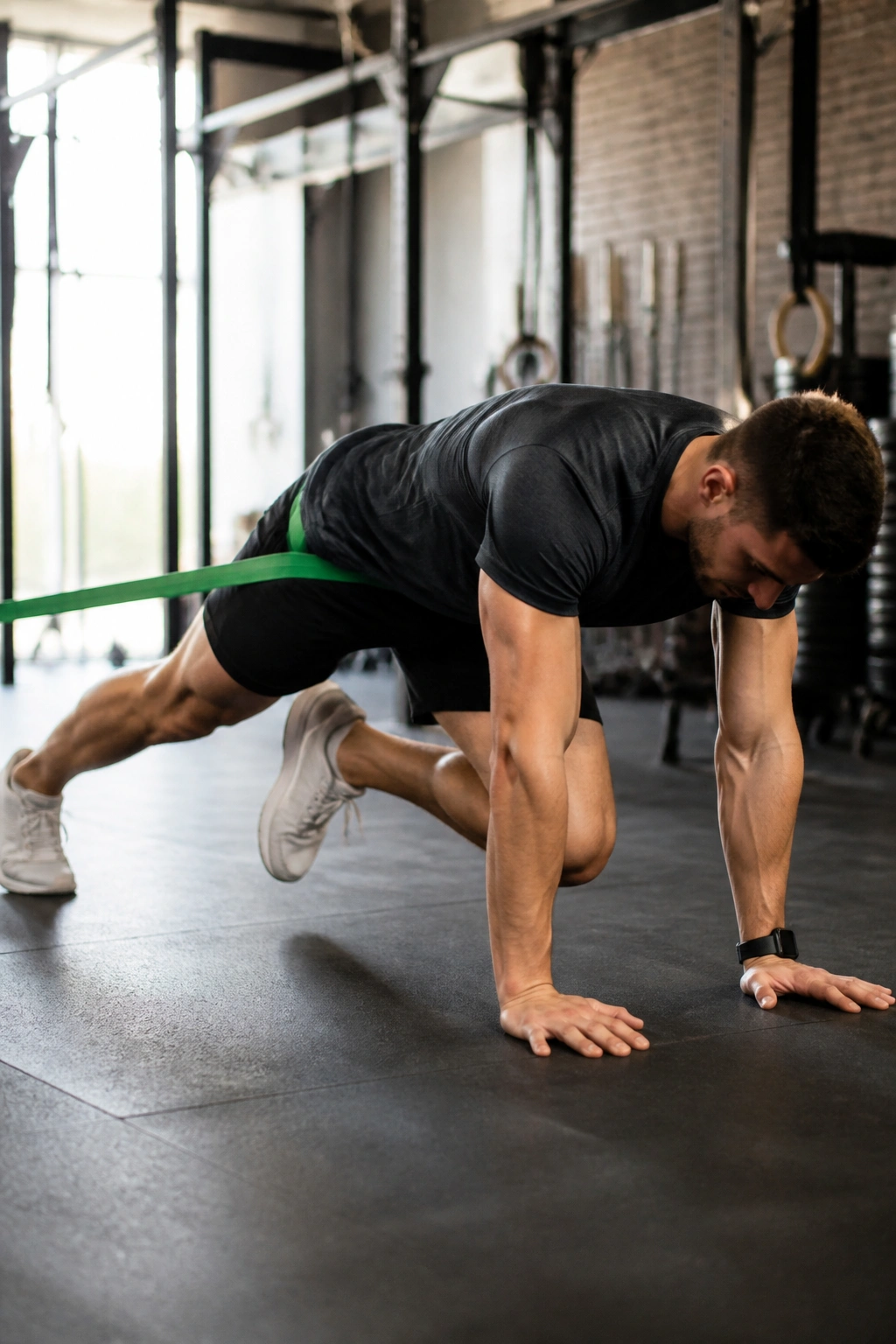
Mountain climbers are usually just a cardio exercise. By looping a band around your feet or waist, you add resistance to every single stride, making it a strength exercise.
The Execution
- Anchor a band around your waist and fix the other end to a post.
- Get into a plank position.
- Perform mountain climbers, driving your knees against the resistance. This will challenge your core and your stamina in a way that regular mountain climbers never could.
17. Chest and Push-Up Resistance Hybrid
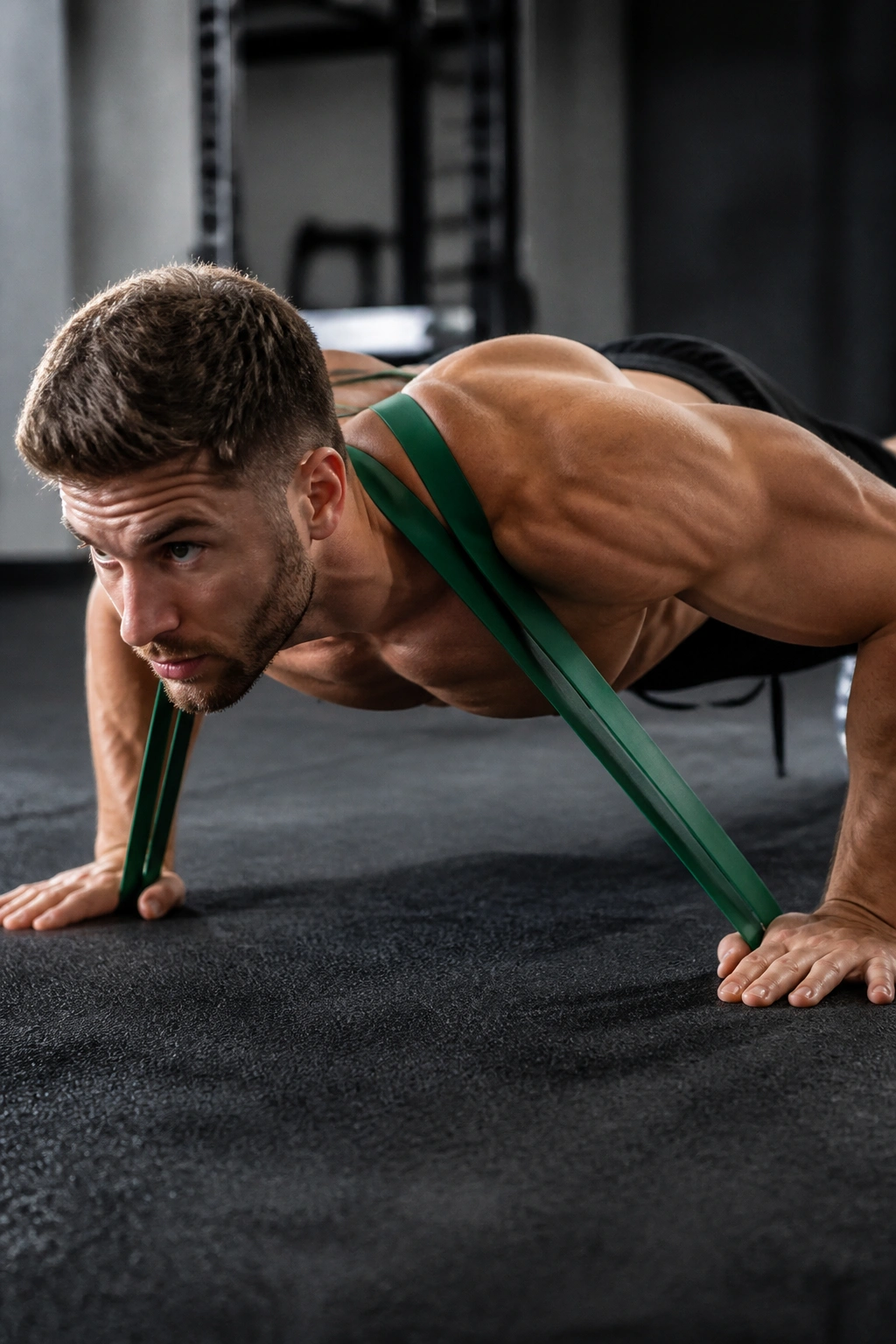
Push-ups are one of the most effective movements in existence. Adding a band creates an overload that helps with muscle hypertrophy and metabolic demand.
The Setup
- Loop the band around your upper back.
- Hold the ends of the band under your palms.
- As you press up, the band stretches, increasing the load. This mimics a bench press but requires more core stabilization. Do this for sets of 15 to 20 reps.
18. High-Speed Band Thrusters
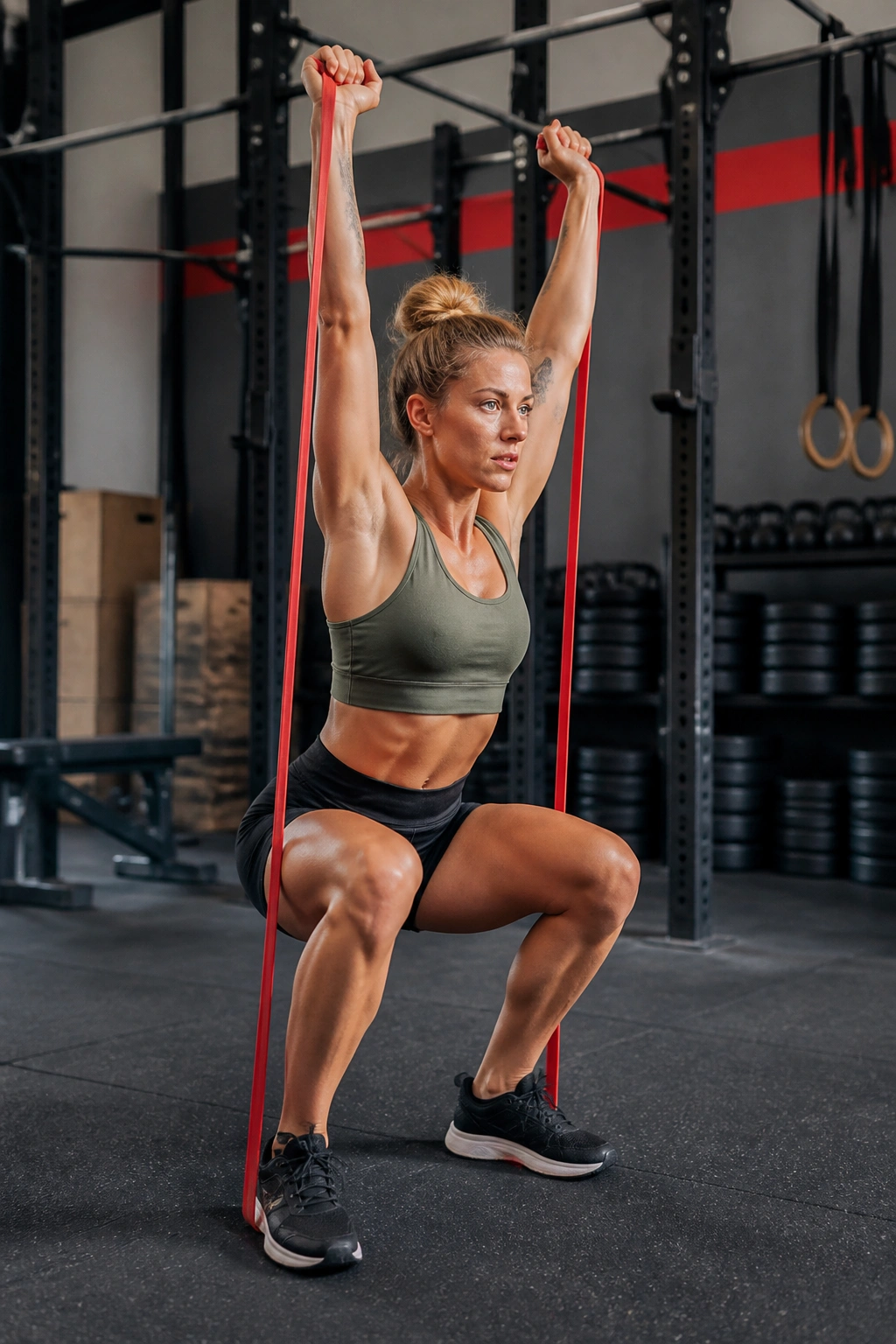
Thrusters are arguably the most taxing exercise you can do with a band. They combine a squat with an overhead press, hitting every muscle in the body at once.
The Intensity Factor
To turn this into a fat-burning workout, you must focus on speed. Do not move slowly. Explode out of the squat and drive the band overhead in one fluid motion. 30 seconds of high-speed thrusters will leave you breathless.
19. The “Ladder” Repetition Workout

Ladders are a great way to accumulate high volume without feeling overwhelmed. You start with 5 reps, then 10, then 15, then 20, and then you work your way back down.
Why Ladders Work
It allows you to get a high total rep count (which equals high metabolic demand) while managing fatigue by increasing the count gradually. By the time you reach 20 reps, your muscles are screaming, but you know you get to go back down the ladder.
20. Full-Body Endurance and Cardio Hybrid
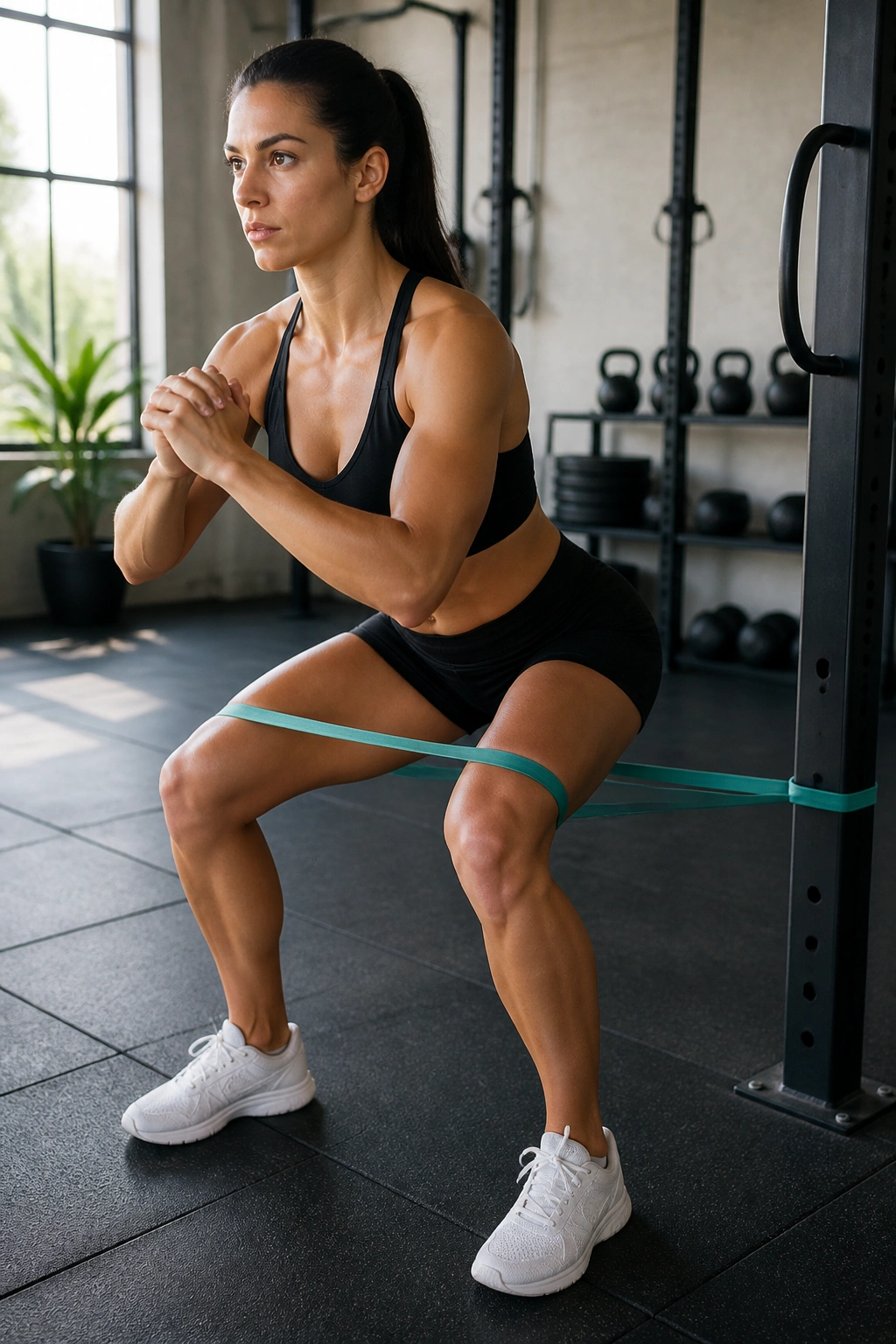
This is the final test of your endurance. It combines compound lifts with sustained movement.
The Routine
- 1 minute: Band Squats
- 1 minute: Band Rows
- 1 minute: Band Overhead Press
- 1 minute: High Knees (no band) Repeat this cycle five times with no rest between minutes. This is pure conditioning. It will test your lung capacity and your muscular endurance simultaneously.
Preparing Your Body for High-Intensity Work
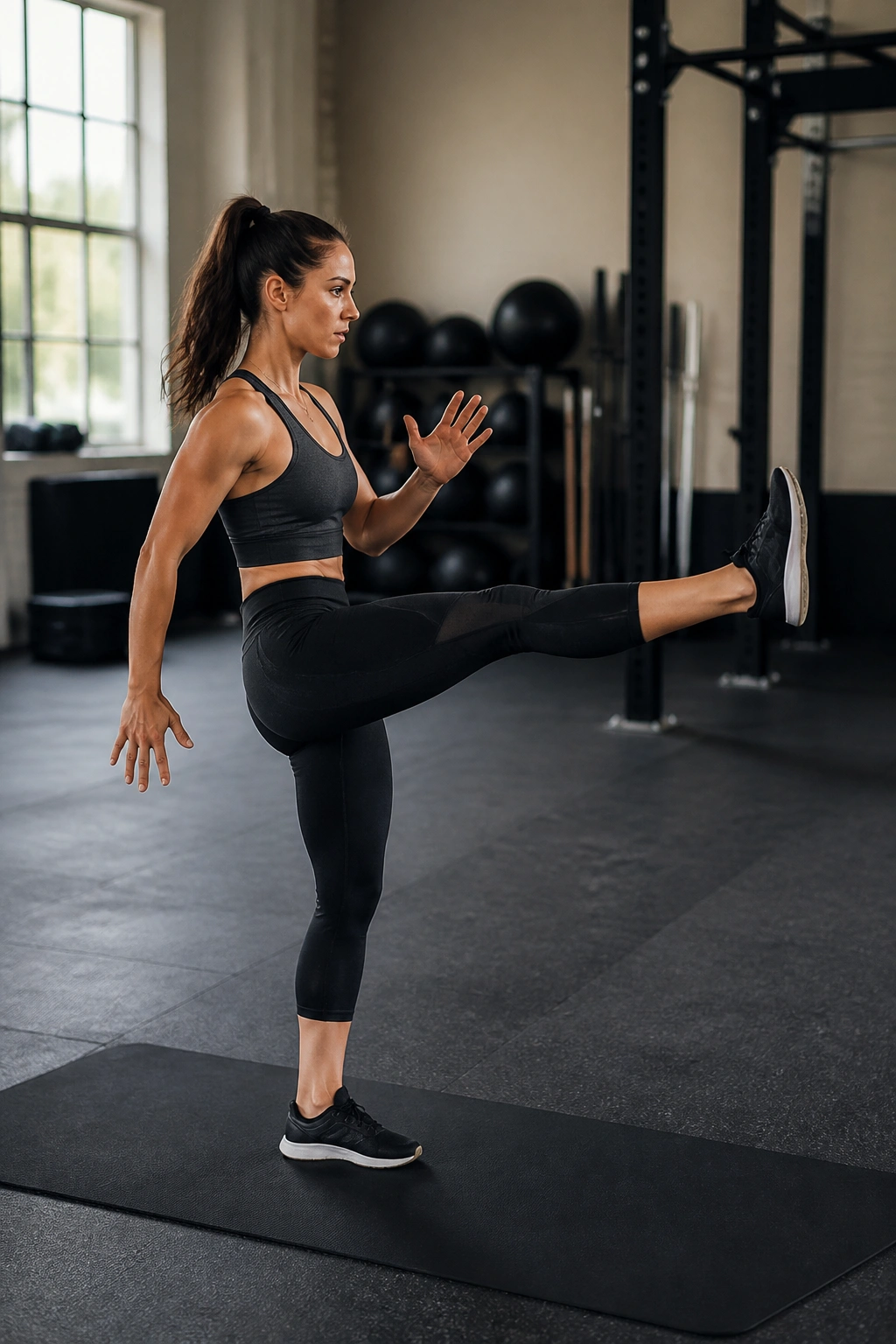
Before jumping into any of these workouts, understand that high-intensity training places significant stress on your nervous system. You cannot do this seven days a week.
The Importance of Recovery
Your muscles grow and your body leans out during recovery, not during the workout. If you are always pushing and never resting, you will plateau. Aim for three to four of these sessions per week. Use the off days for active recovery like walking, mobility work, or light stretching.
Nutrition and Hydration
You cannot out-train a poor diet. If you are doing these HIIT sessions to burn fat, you need to be in a caloric deficit. Ensure you are getting enough protein to support muscle maintenance, as this will keep your metabolism running efficiently. Drink water before, during, and after your session. Dehydration will kill your intensity faster than any workout routine.
Listening to Your Joints
Bands are generally safer than heavy weights, but they can still cause strain if you have poor form. If you feel sharp pain in a joint, stop. Adjust your stance. Change the angle of the pull. You should feel the burn in your muscles, not in your tendons or ligaments. If your shoulders are popping or your lower back is rounding during deadlifts, stop and reset.
Consistency Over Perfection
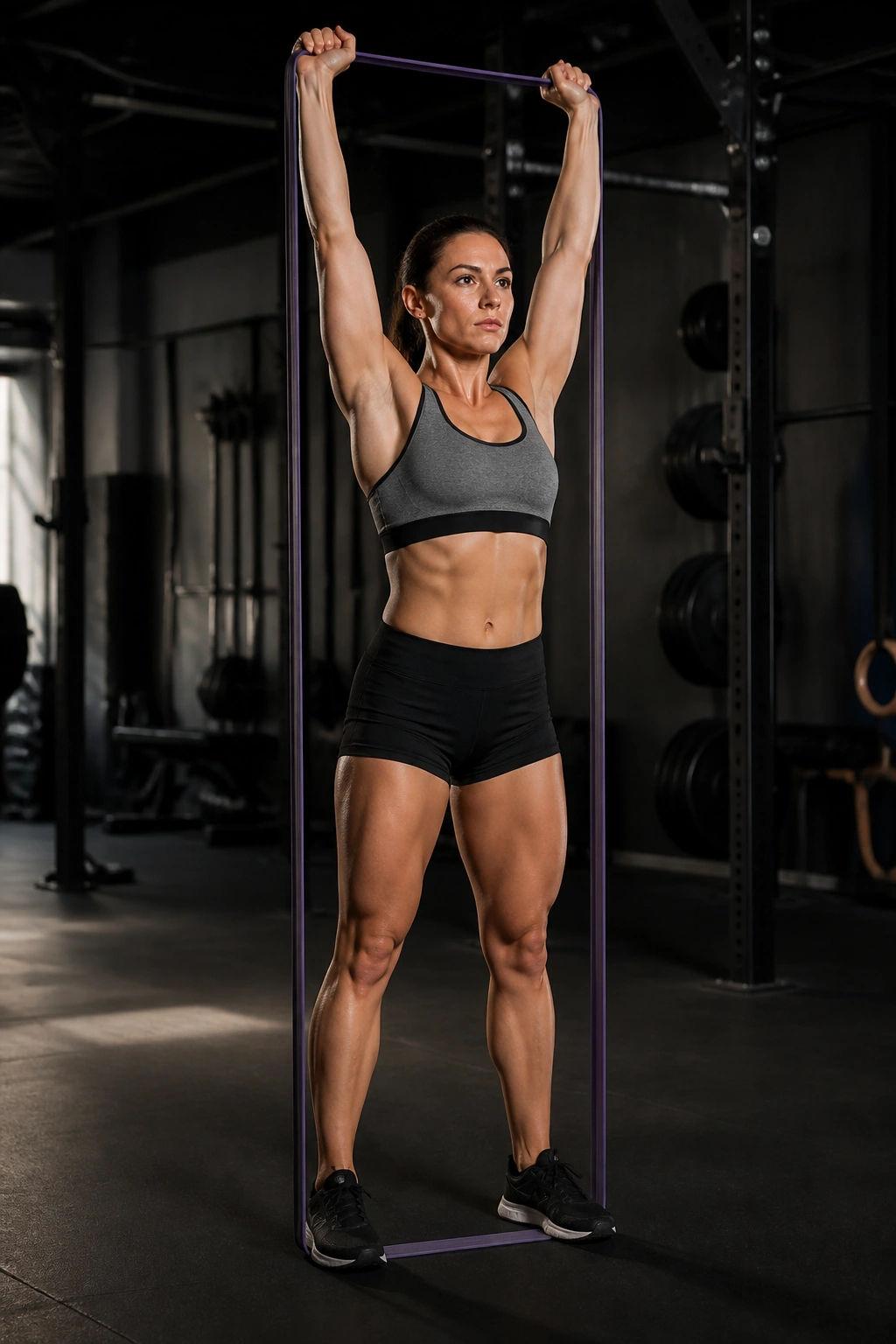
The best workout in the world is useless if you don’t do it. You don’t need the most complicated routine or the most expensive bands. You need to show up. Pick three of the workouts listed above and cycle through them.
Tracking Progress
Keep a simple notebook or a note on your phone. Write down which band you used and how you felt. Did you finish the circuit? Did you have to take an extra break? Tracking these metrics is the best way to ensure you are actually improving. When you find a workout becoming easier, shorten your rest periods or use a thicker, higher-resistance band.
The Role of Mindset
These workouts are designed to be uncomfortable. That is the point. When you are deep into the fourth round of a circuit and your lungs are burning, that is the moment where the fat-burning magic happens. Embrace the discomfort. It is fleeting, but the results you gain from pushing through it are the real reward. You are capable of much more than you give yourself credit for—you just have to be willing to apply the right kind of pressure.
