



HIIT workouts for belly fat at home work best when they feel a little rude. Short bursts. Short rests. A bit of sweat on the floor and the kind of breathing that makes you check the clock twice.
The part people get wrong is the belly fat part. No workout peels fat from the stomach alone, no matter how many crunches a social feed tries to sell you. What HIIT does well is push your heart rate up fast, burn a solid number of calories in a short window, and make it easier to stay consistent because you do not need a gym, a machine, or an hour you’ll never find.
That does not mean every hard circuit is useful. Some are too jumpy. Some are too light. Some make your legs burn but never really get your pulse up. The good home sessions hit both sides: enough intensity to matter, enough control that you can repeat them tomorrow without feeling wrecked.
Warm up first. Seriously. Three to five minutes of marching, arm circles, hip hinges, and easy bodyweight squats changes the whole session, especially if you’re doing jumping work on a hard floor. Start with the simpler options if you’re new, then earn your way into the nastier ones.
1. Jumping Jack and Squat Thrust Ladder
This is the kind of workout that looks harmless until round three. You alternate a jumping jack set with a squat thrust set, and the constant switch keeps your heart rate from settling down.
How to run it
- 30 seconds of jumping jacks
- 15 seconds of rest
- 30 seconds of squat thrusts
- 15 seconds of rest
- Repeat for 5 rounds
Keep the jumping jacks crisp and light. On the squat thrusts, plant your hands, jump or step your feet back, bring them in again, then stand tall at the top. If you want a harder version, add a push-up at the bottom. If you want a friendlier version, step back instead of jumping.
Best cue: stop chasing speed if your landing gets loud. Quiet feet usually mean better control.
2. Mountain Climber Sprint Intervals

Want a workout that smokes the midsection without needing a single piece of equipment? Mountain climbers are a workhorse. They load the shoulders, wake up the core, and make your lungs complain in a hurry.
Form check
- Hands under shoulders
- Hips low, not hiking up
- Drive one knee forward at a time
- Keep the pace sharp, but not sloppy
Do 8 rounds of 20 seconds hard and 10 seconds rest. That sounds short. It is not. By the fifth round, those 20 seconds feel much longer.
If your wrists get annoyed, put your hands on a sturdy couch edge or a countertop and run the same interval at an incline. Same workout. Less strain. And if your lower back starts sagging, slow down immediately. Fast and crooked is just a mess.
3. High Knees With Cross-Punches
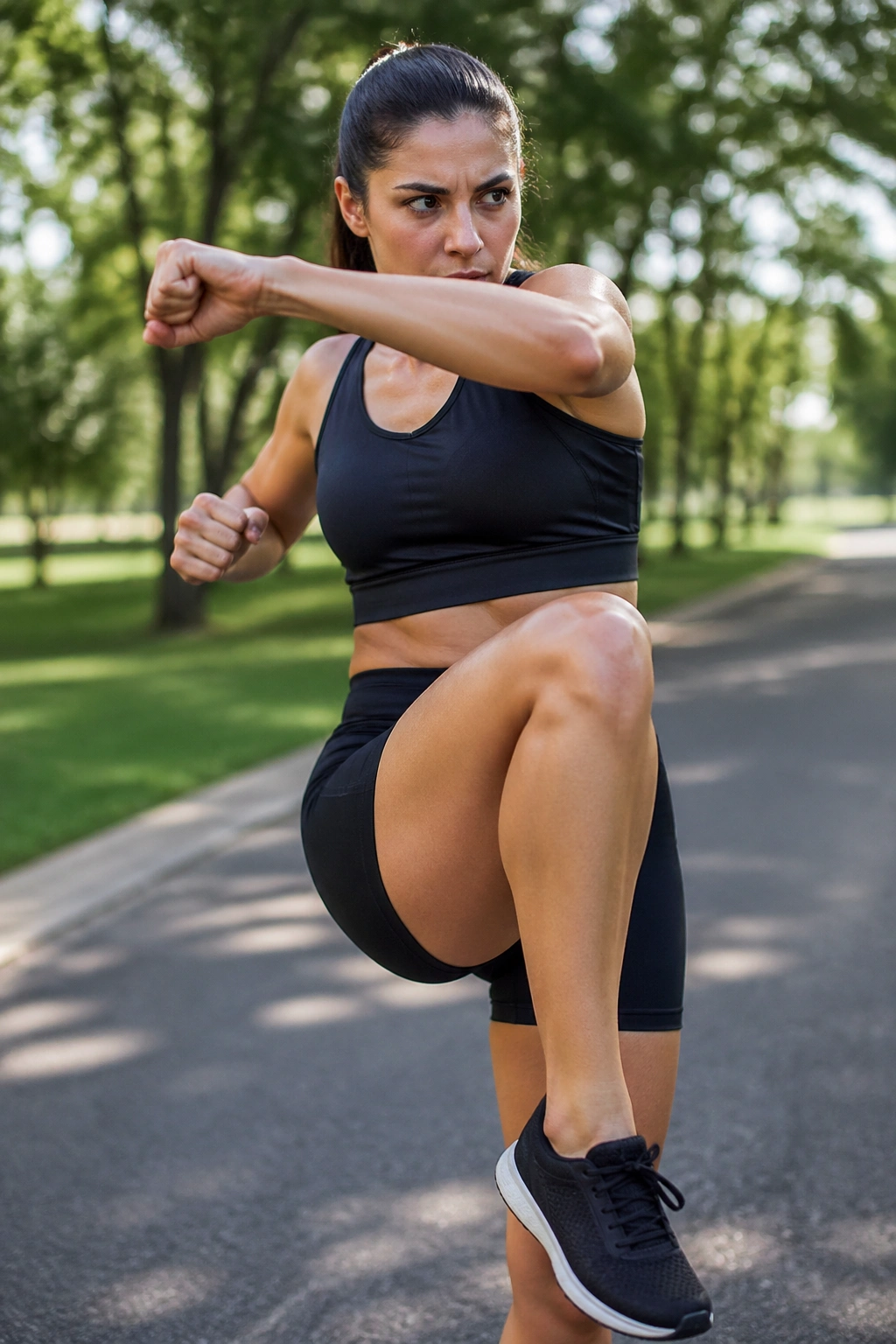
No room? No problem. High knees with cross-punches is a classic because it gives you cardio, coordination, and a sneaky core challenge all at once.
Picture a boxer jogging in place, then punching across the body as the opposite knee drives up. That twisting pattern makes your obliques work harder than straight-up marching, and the rhythm keeps your brain busy enough that the burn sneaks up on you.
Run 6 rounds of 40 seconds on and 20 seconds off. Punch high enough to stay out of your own face, and keep your ribs from flaring out every time you throw a punch. If your knees do not love hard impact, turn the high knees into a fast march and keep the punches snappy.
What to watch for
- Do not lean back
- Keep your hands returning to guard
- Stay on the balls of your feet
- Breathe out on the punches
4. Burpee and Plank Jack Gauntlet
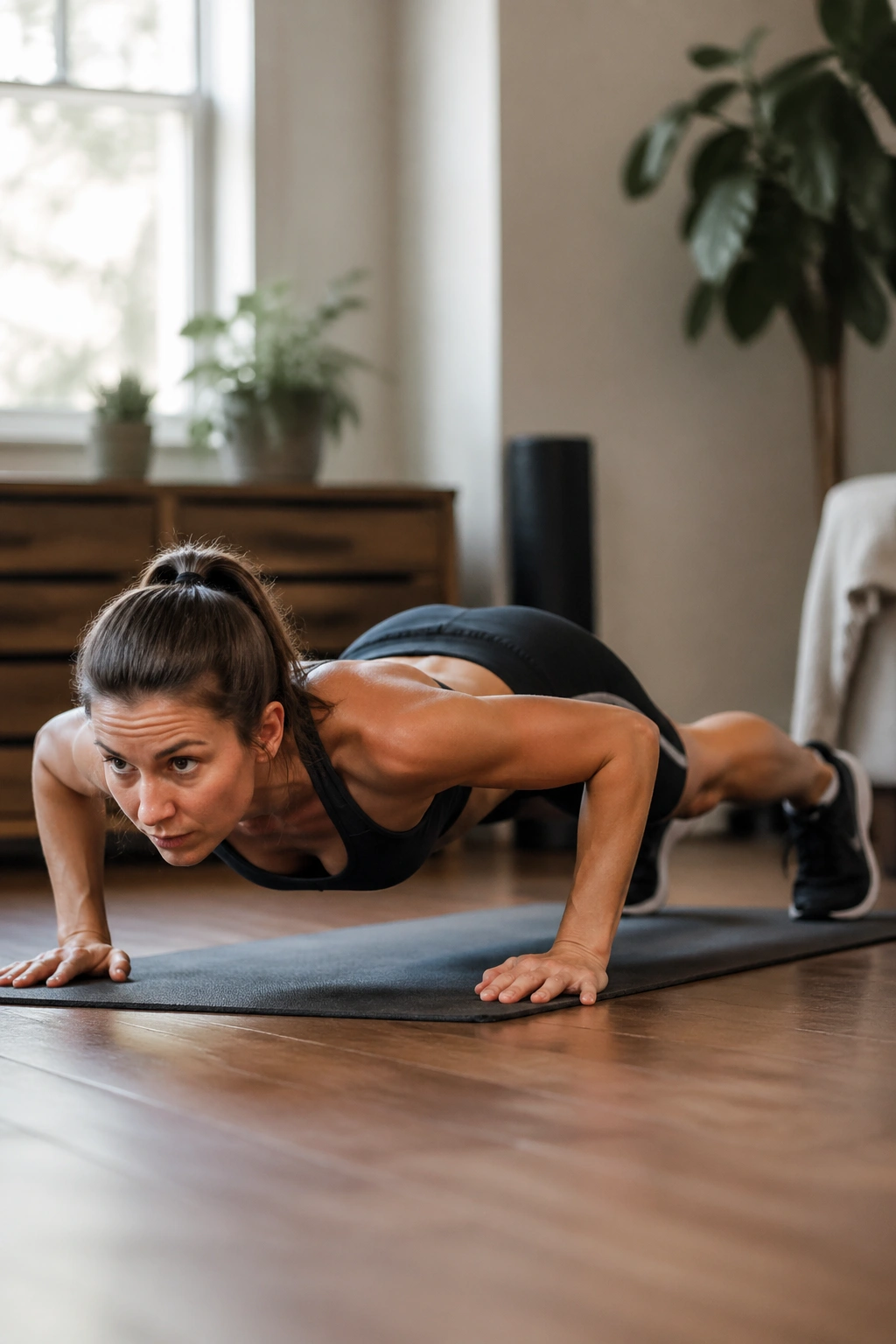
Burpees are rude. Plank jacks are worse in a quieter way. Put them together and you get a home HIIT session that refuses to be ignored.
Do 4 to 6 rounds of:
- 6 burpees
- 20 plank jacks
- 20 seconds of rest
That’s enough. More is not always smarter here. The point is to keep each burpee clean — chest drops, feet jump back, feet jump in, stand tall — instead of flinging yourself at the floor like you’re late for a bus.
Easier version
- Step back into the plank
- Step or hop your feet apart for the jacks
- Remove the jump at the top
This workout is a good test of honesty. If your burpees get mushy, you’re going too fast. Slow down a touch and keep the shape tight.
5. Skater Hop Intervals
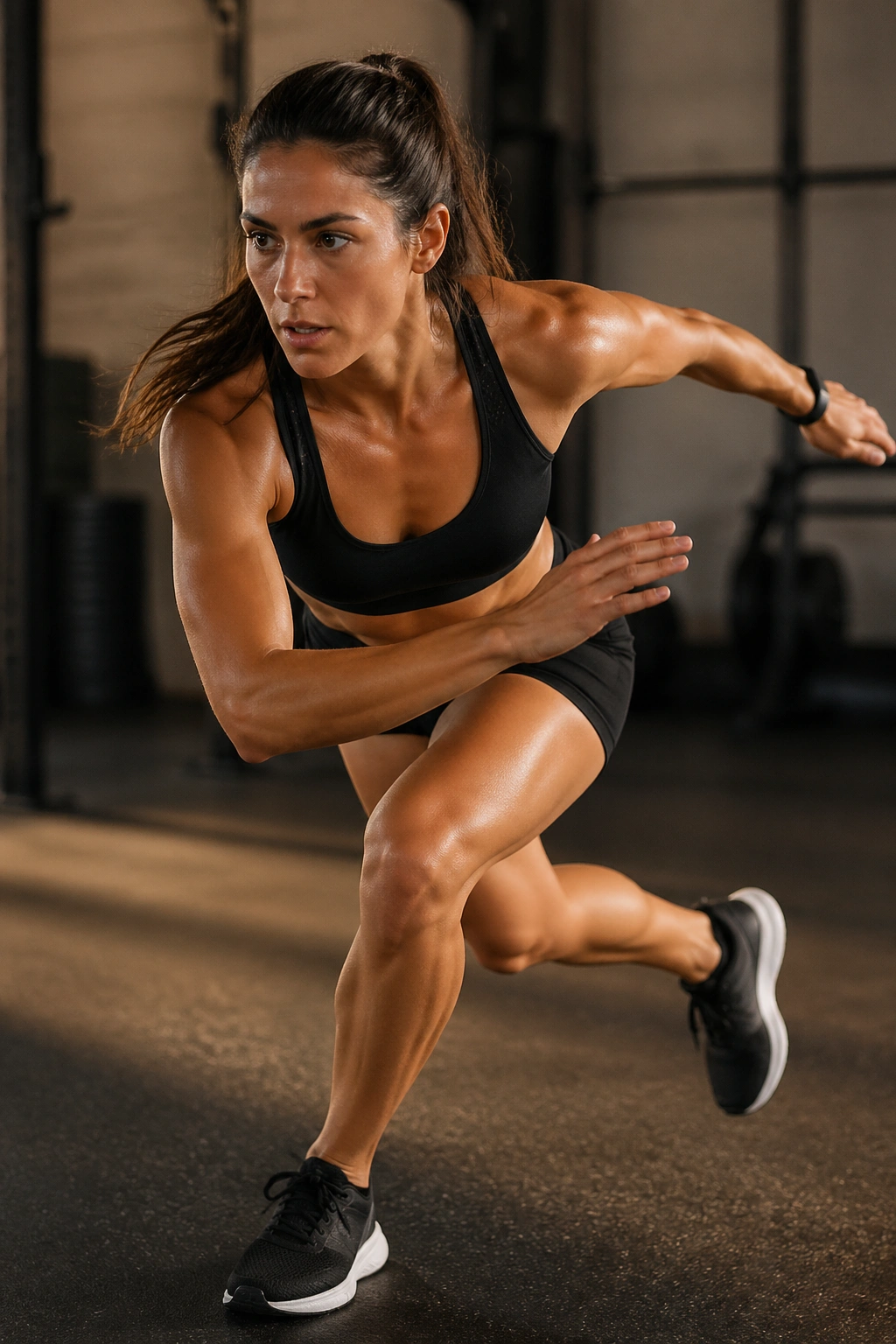
Skater hops are one of my favorites because they change the angle. Straight-line cardio gets boring fast. Lateral work feels different, wakes up the hips, and gives your glutes and outer thighs more to do.
The move is simple: hop side to side, land on one leg, and let the back leg sweep behind you like a speed skater pushing off the ice. Bend the landing knee. That matters more than people think.
Do 8 rounds of 30 seconds work and 15 seconds rest. If your balance wobbles, pause for half a beat on each landing. If you want more challenge, reach the opposite hand toward the floor on each side. That lowers your center of gravity and forces the core to stabilize.
A lot of people rush skaters and end up bouncing straight up and down. Don’t. Travel sideways. That’s the point.
6. Fast Feet and Air Squat Blasts
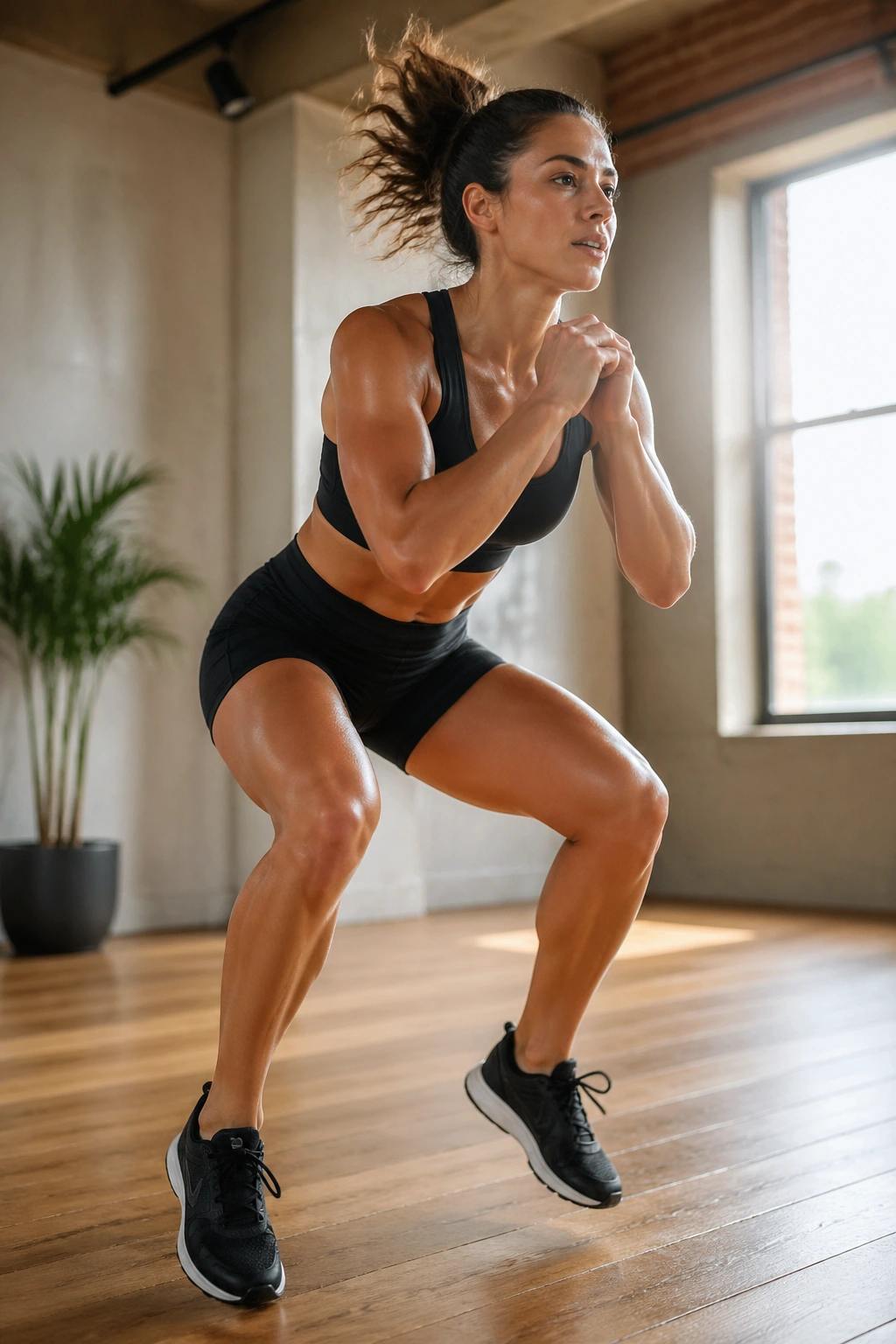
Fast feet is one of those drills that looks tiny and feels huge. It’s just quick steps in place, but if you keep your knees soft and your torso braced, your heart rate climbs fast.
Keep the pace honest
Do this as a 10-minute EMOM:
- Minute 1: 25 seconds fast feet, 10 air squats, rest the remaining time
- Minute 2: 25 seconds fast feet, 10 air squats, rest the remaining time
- Repeat for 10 total minutes
The air squats give your legs a reason to stay awake. The fast feet keep the session moving. Together, they make a blunt little calorie burner that does not need much space at all.
If your calves tighten, keep the footwork shorter and lighter. If your squats turn into a forward fold, slow down and sit your hips back more. Your heels should stay rooted. That’s the part that saves your knees.
7. Reverse Lunge Jump Ladder
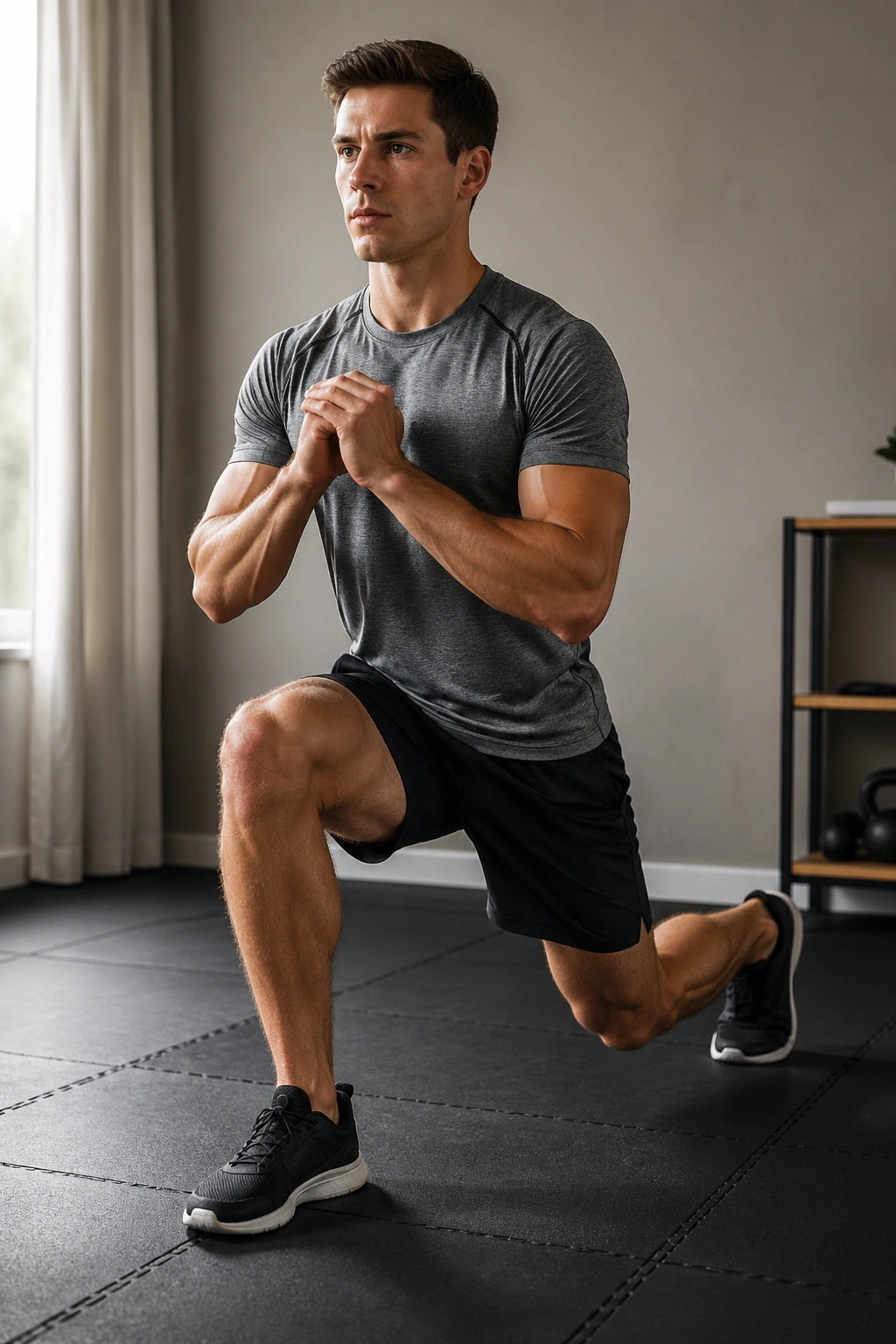
Legs first. Then lungs. Then the little voice in your head that starts negotiating after the second round.
This one uses reverse lunge jumps, which are kinder than forward jumps on the knees because you’re stepping back into the load instead of crashing forward into it. Still, this is a more advanced move. If you’re not ready for jumping lunges, stay with fast reverse lunges and move your arms hard.
Try this ladder:
- 10 jump lunges total
- 8 jump lunges total
- 6 jump lunges total
- 4 jump lunges total
Rest 30 to 45 seconds between rungs.
Make it safer
- Keep your chest tall
- Land softly
- Switch to regular reverse lunges if form breaks
- Stop the set the moment the front knee caves inward
The ladder format is sneaky because the first round feels easy. The last round tells the truth.
8. Stair Sprint Repeats
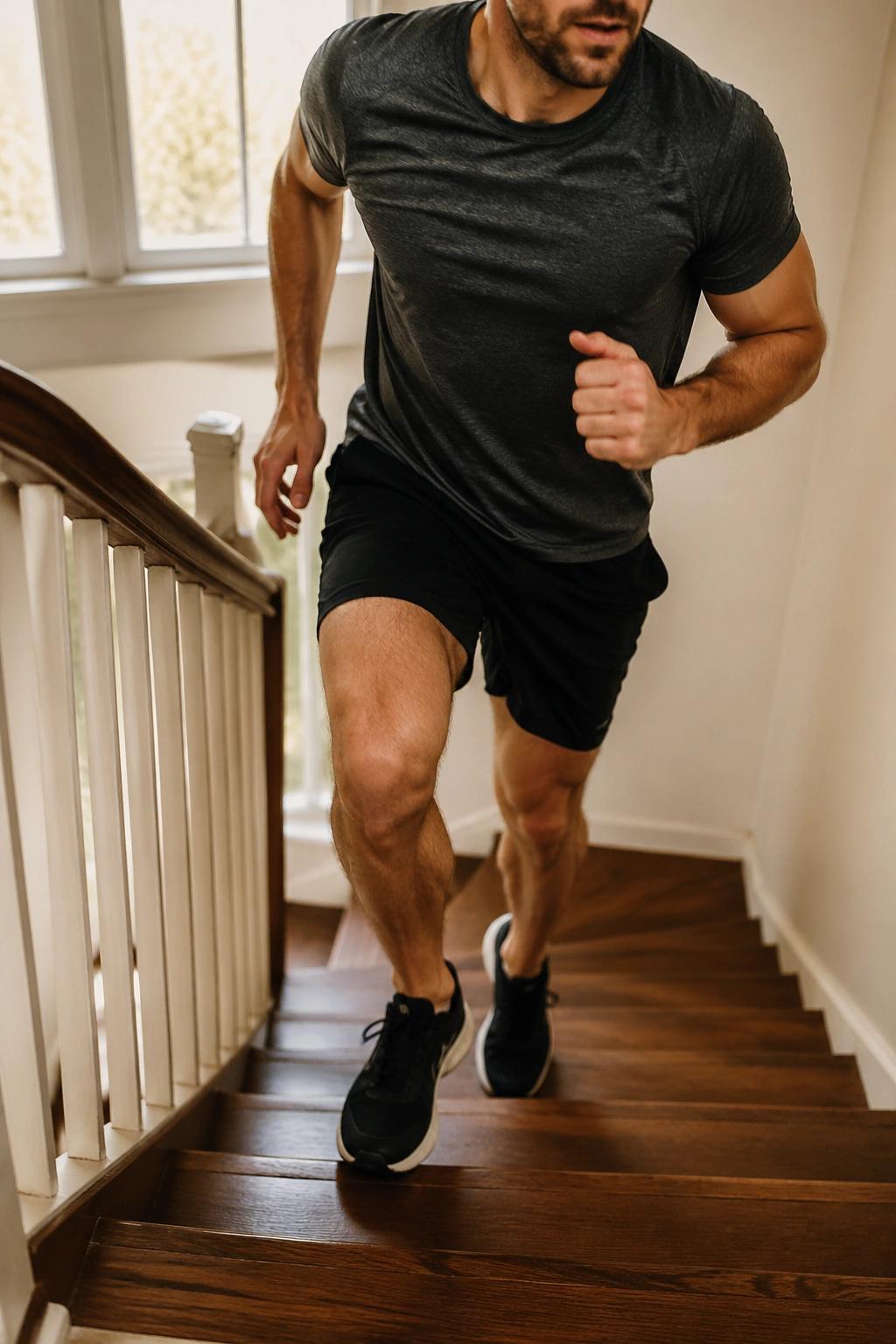
A staircase is a very rude piece of home equipment. It asks for little and gives a lot back.
Run up for 10 to 15 seconds at a hard but controlled pace, then walk down slowly and recover fully. Repeat 8 to 12 times. If you can speak in full sentences during the sprint, you are probably not pushing hard enough.
Use the railing on the way down if you need it. Don’t power-walk the descent like you’re trying to win a race. That’s how ankles complain later. If you live in a place without stairs, use a sturdy step or a single low platform and do fast step-ups instead.
Why I like this one
- The work is short
- The recovery is built in
- It gets brutal fast
- You do not need much floor space
Stair work is one of the cleanest ways to turn a cramped home into a cardio session.
9. Shadow Boxing Tabata Rounds

Shadow boxing looks almost too easy until your shoulders start burning and your breathing gets choppy. That is the point.
Tabata means 20 seconds of work and 10 seconds of rest, repeated for 8 rounds. Pick 2 or 3 punch combos and rotate them:
- Jab-cross
- Jab-cross-hook
- Cross-body hook-slip
- Double jab-cross
Keep your hands near your face between punches. Twist through the torso, but don’t fling your low back around like a towel in the wind. The power should start from the floor and travel through the hips.
Punching cues
- Exhale sharply on each punch
- Keep the chin tucked
- Stay light on your feet
- Reset your guard fast
This one is gold if you want low-impact cardio that still feels athletic. It’s also easy to scale. Shorter punches, slower pace, smaller bounce — all fine. Just keep moving.
10. Bear Crawl and Shoulder Tap Circuit
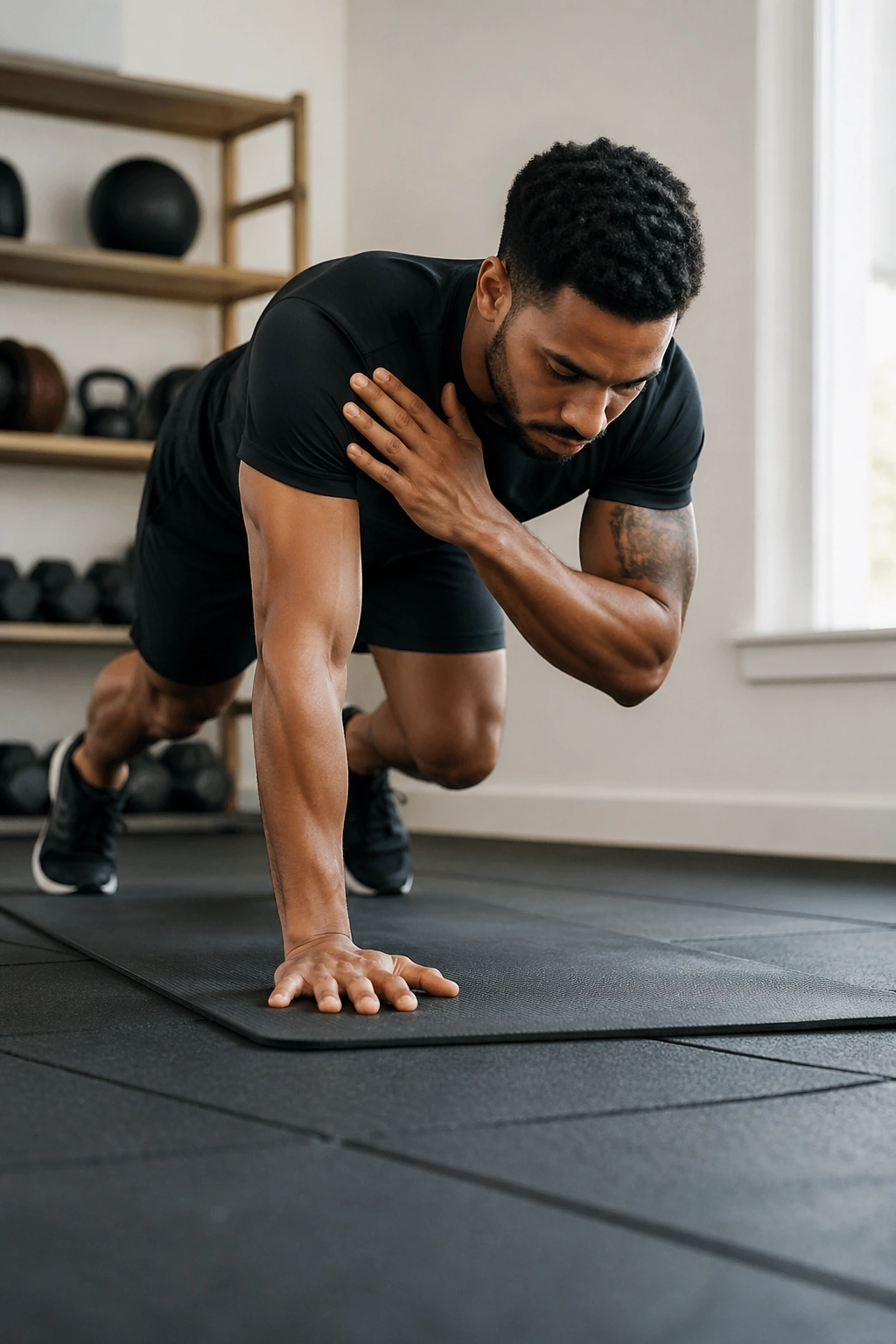
Bear crawls are nasty in the best possible way. They light up the shoulders, brace the core, and make your whole body feel busy.
Here’s a simple format:
- 20 seconds of bear crawl forward
- 10 seconds of bear crawl back
- 20 shoulder taps from a bear position
- 20 seconds of rest
Repeat for 5 or 6 rounds.
Keep your knees hovering just off the floor. If your hips rise too high, the drill turns into a weird plank walk and loses some of its bite. The shoulder taps matter because they force the trunk to stay still while the arms move. That is sneaky core work.
If the crawl space in your home is tiny, stay in one spot and crawl in place with tiny steps. Same effect. Less furniture risk.
11. Bicycle Crunch and Hollow Hold Sprints
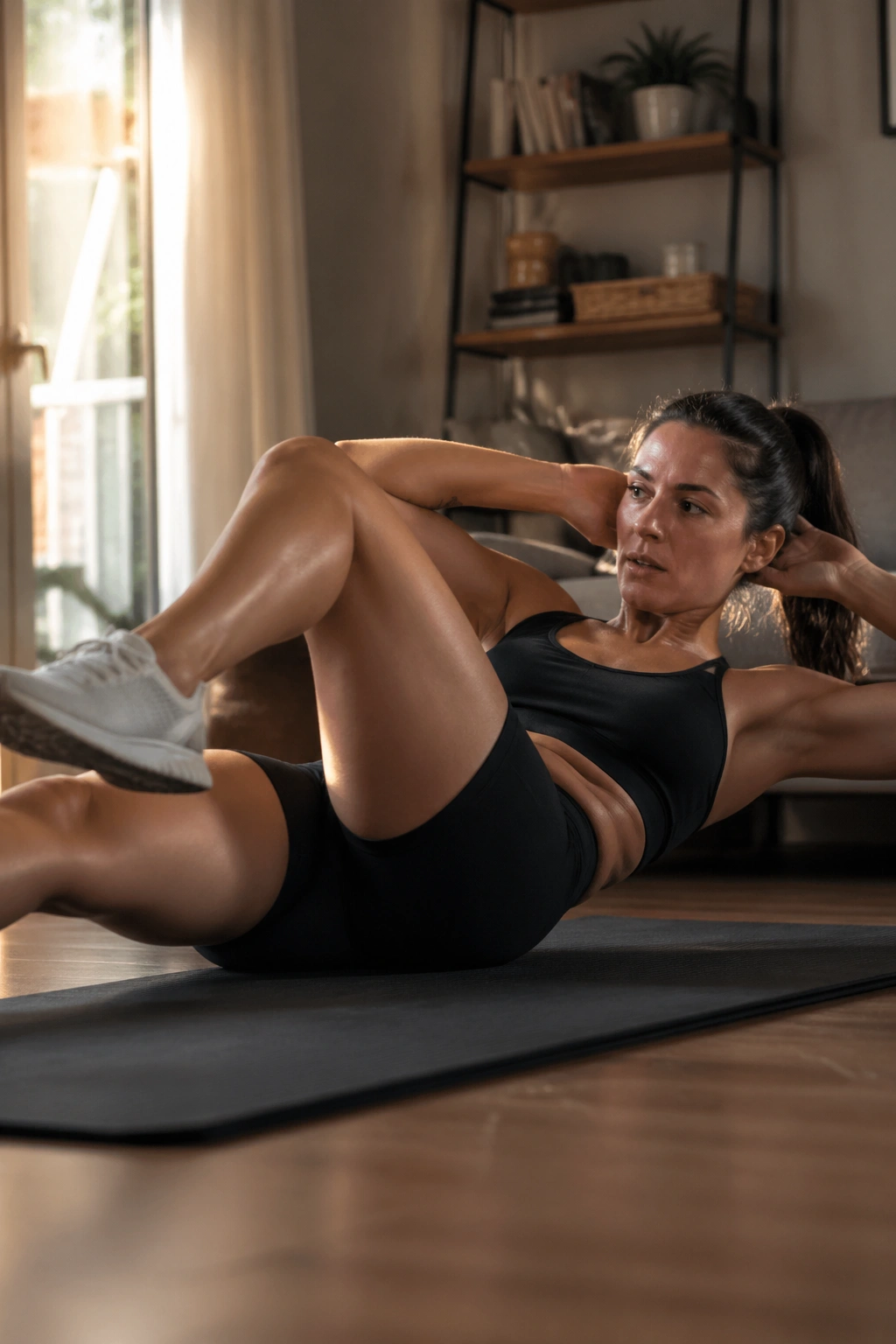
This one burns in a way that feels personal. Bicycle crunches are already demanding. Pair them with a hollow hold and you have a short core-heavy interval that also keeps the heart rate up.
Do 6 rounds of:
- 30 seconds of bicycle crunches
- 20 seconds of hollow hold
- 20 seconds of rest
Press your lower back into the floor during the hollow hold. If it pops up, bend your knees a little. That is not cheating. That is smart training. The goal is tension, not a fight with your spine.
Lower-back cue
The most common mistake here is rushing the bicycle so fast that the torso starts swinging and the neck takes over. Slow the twist down. Touch elbow toward opposite knee with control. You should feel the abs, not your hip flexors stealing the whole show.
This is a good finisher on days when you want a shorter session with more core emphasis.
12. Cross-Body Toe Touch and Skater Combo
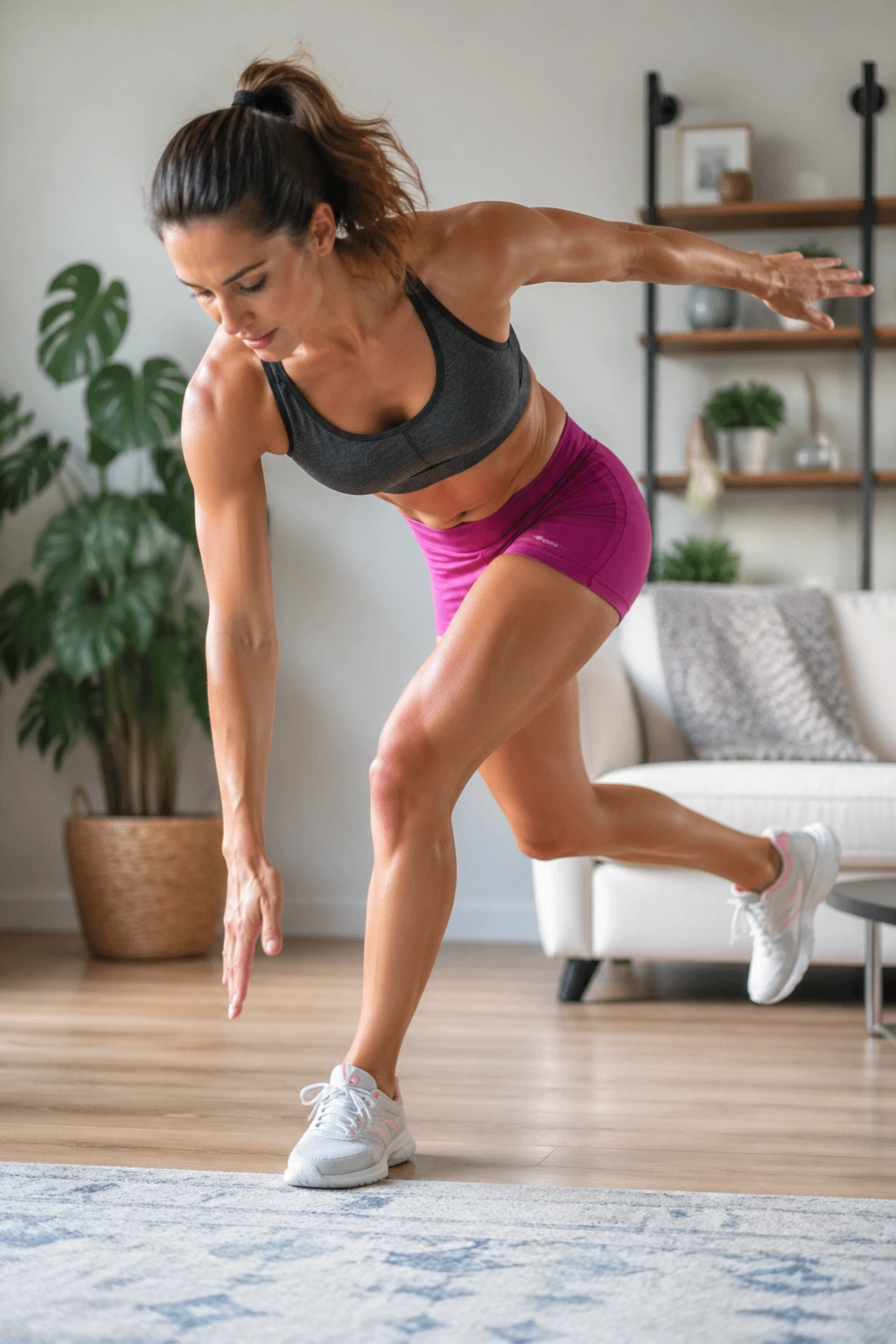
You know those workouts that feel almost dance-like until your breathing gets ugly? This is one of them.
Alternate 45 seconds of cross-body toe touches with 45 seconds of skater hops, then rest 30 seconds. Do 6 to 8 rounds. The toe touches bring in the obliques and front of the core, while the skaters keep the session in full-cardio territory.
Reach the opposite hand toward the outside of the foot, not just straight down. That twist is where the side-body work happens. On the skaters, land soft and keep the chest from collapsing forward.
If the floor work bothers you, stay upright and turn the toe touch into a standing knee raise with a cross-body reach. Same pattern. Less bend.
This is a nice choice when you want a workout that feels athletic but not punishing.
13. Bodyweight Cardio Circuit With Push-Ups
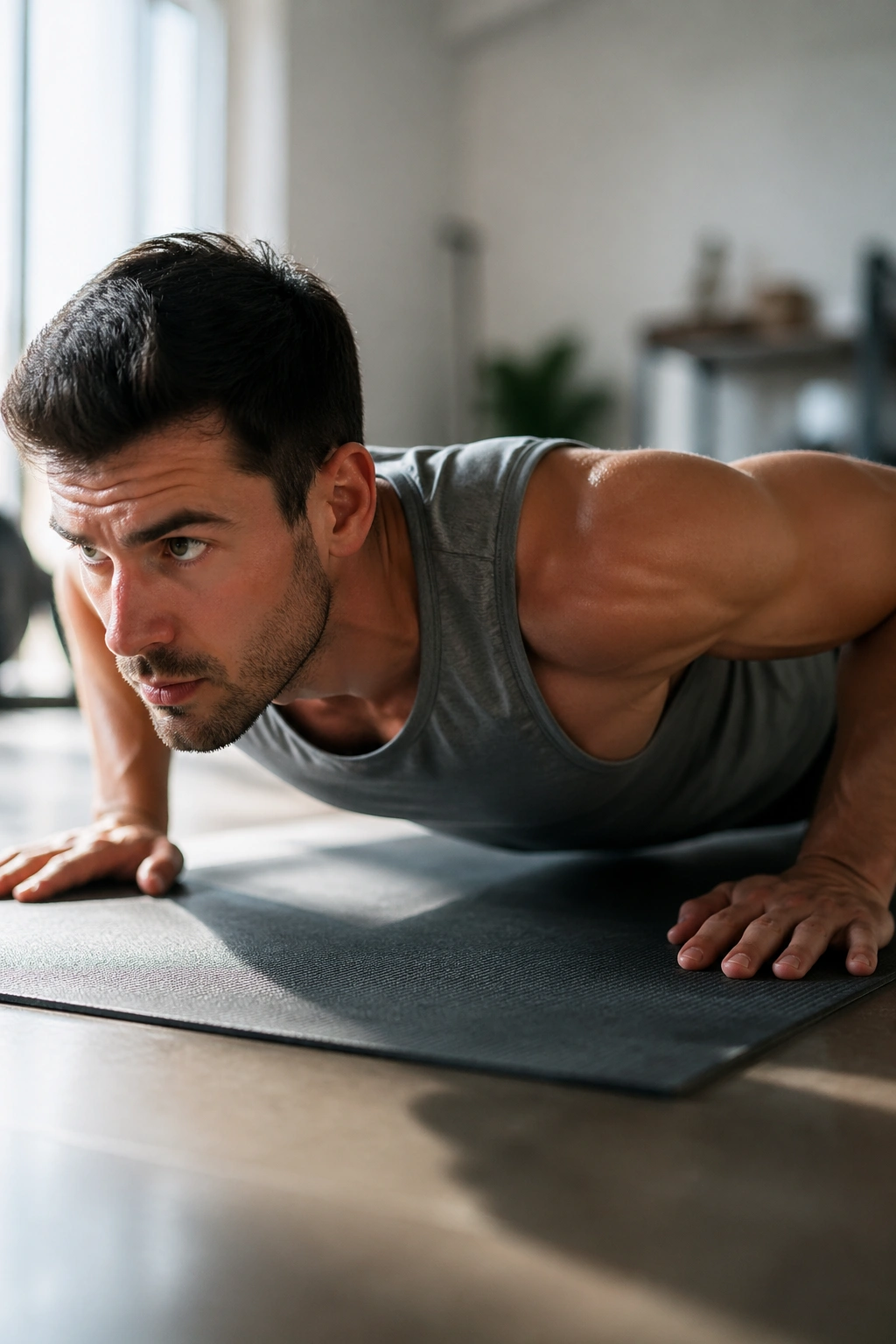
A lot of home HIIT sessions overdo the jumping and ignore the upper body. That gets old fast. A balanced circuit keeps the workout from feeling like a leg-only punishment.
Try 4 rounds of:
- 12 squats
- 8 push-ups
- 20 mountain climbers per side
- 10 reverse lunges per leg
Rest 45 seconds between rounds.
The push-ups slow you down just enough that the heart rate stays high while the muscles complain. If full push-ups are a stretch, use a couch, a bench, or a wall. A clean incline push-up is better than a sloppy floor rep.
Why this mix works
- Squats build leg output
- Push-ups add upper-body demand
- Climbers keep the pace sharp
- Lunges bring in balance and control
This one feels like an honest workout. No tricks. No fluff.
14. Low-Impact March and Punch Intervals
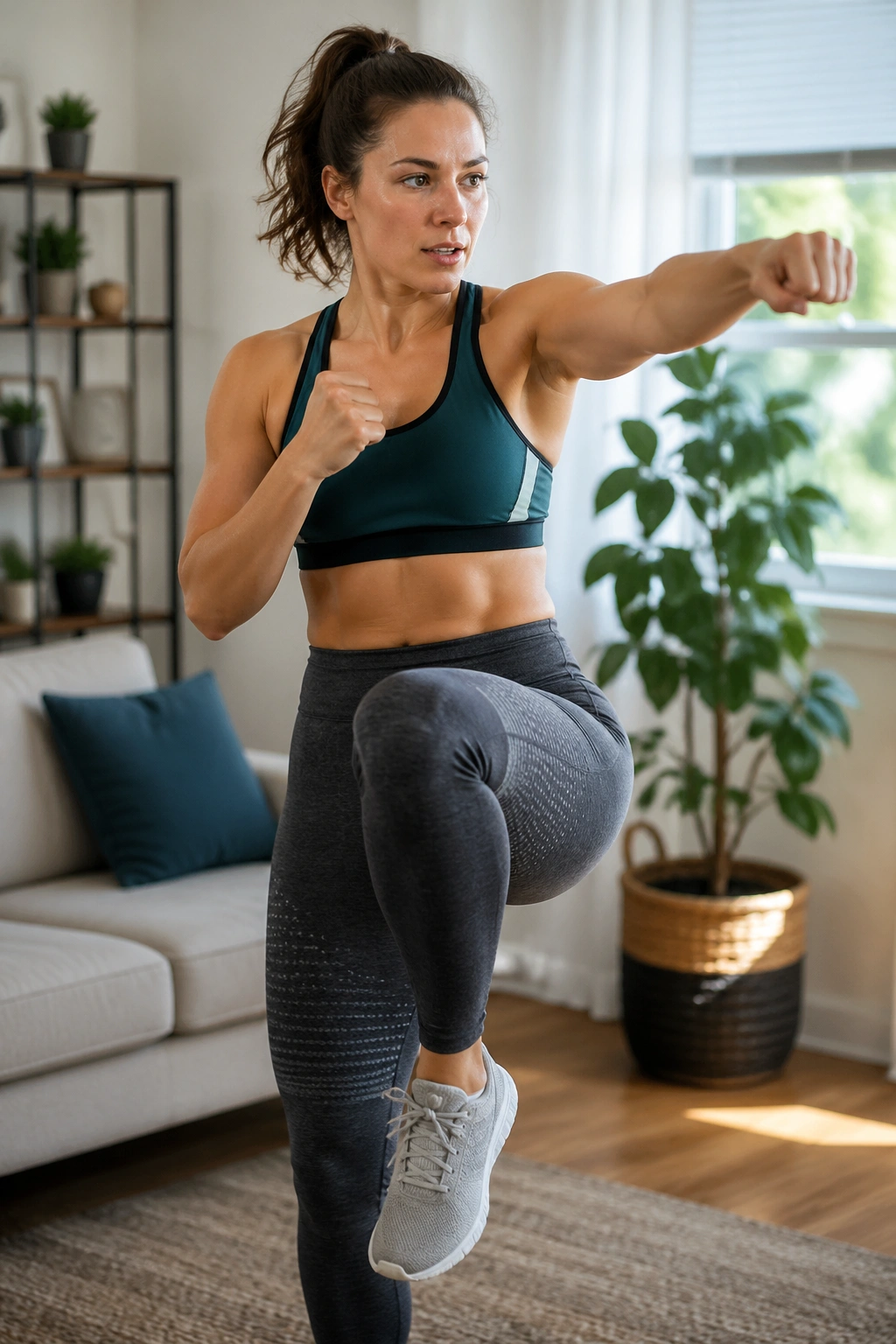
Not every effective HIIT workout has to sound like a drumline. Low-impact intervals still do the job, and they are a better fit on days when joints feel a little cranky.
Use 40 seconds of work and 20 seconds of rest for 8 rounds. Alternate these moves:
- March with fast punches
- Step jacks
- Knee drives with arm pulls
- Squat to reach
Keep the march active. No sleepy shuffling. Drive the knees, swing the arms, and make the upper body do more work than it wants to. If you keep the pace high enough, this gets sweaty faster than people expect.
Low-impact swaps
- Replace jumps with step-outs
- Replace burpees with squat-thrust walkouts
- Replace knee hops with alternating marches
- Keep the rest short, but not zero
This is a smart option for beginners, apartment living, or anyone who wants to train without making the floor sound like a construction site.
15. EMOM Total-Body Burner
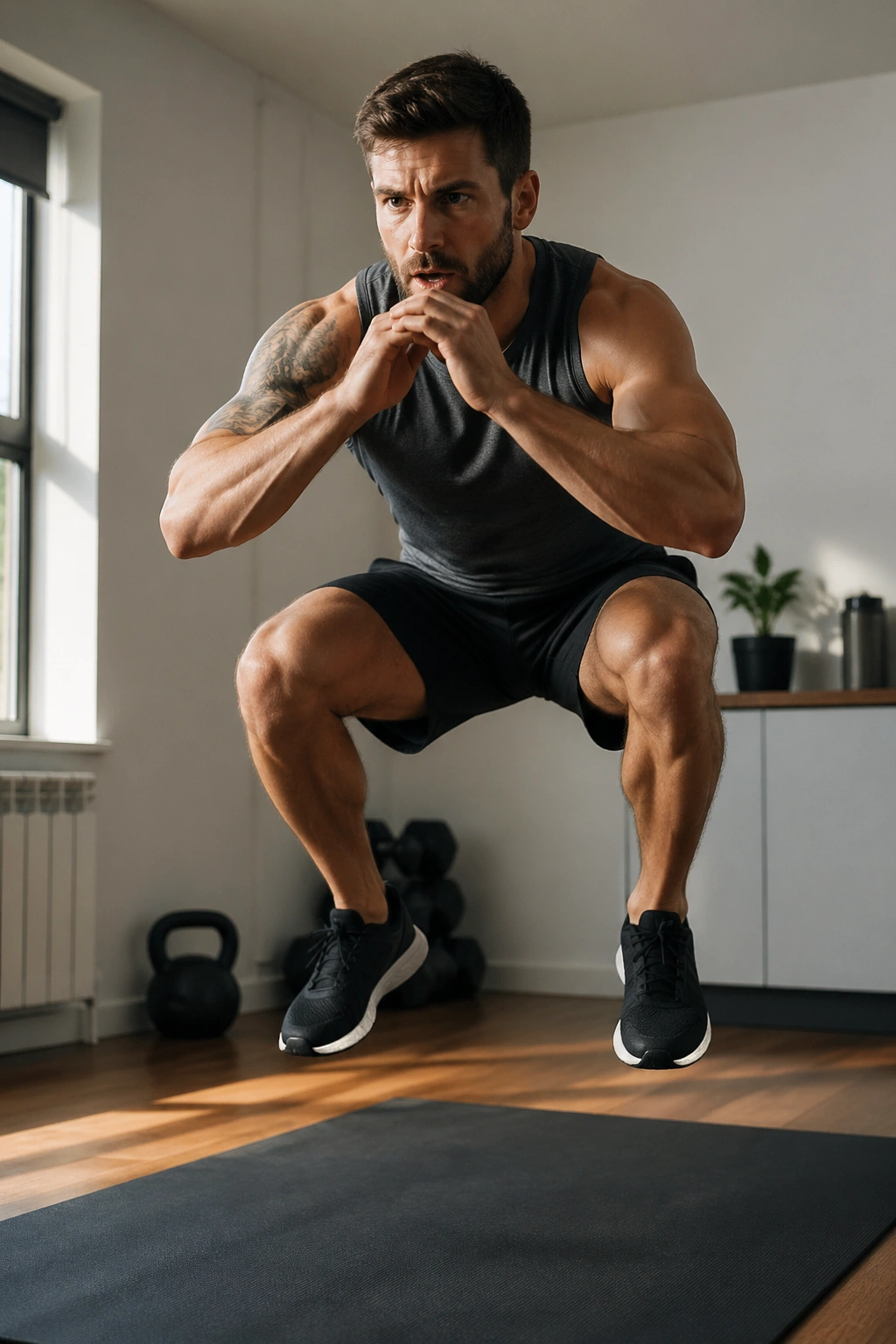
Every-minute-on-the-minute workouts are clean and ruthless. You do the assigned reps, then you rest until the next minute starts. That rest is the secret sauce. It keeps the pace high without turning the session into chaos.
Set a timer for 15 minutes and repeat this 5-minute cycle three times:
- Minute 1: 10 squat jumps
- Minute 2: 8 push-ups
- Minute 3: 20 mountain climbers
- Minute 4: 12 alternating lunges per leg
- Minute 5: 30 seconds of fast feet
If you finish early, rest. Do not add junk reps just because the clock gave you time.
How to scale it
- Use regular squats instead of squat jumps
- Drop to knee push-ups if needed
- Keep climbers slow and controlled if your hips bounce too much
The beauty of EMOM work is how honest it is. If a minute feels tight, you know you picked the right reps. If you breeze through, add one or two reps next time.
16. AMRAP Fat-Loss Circuit
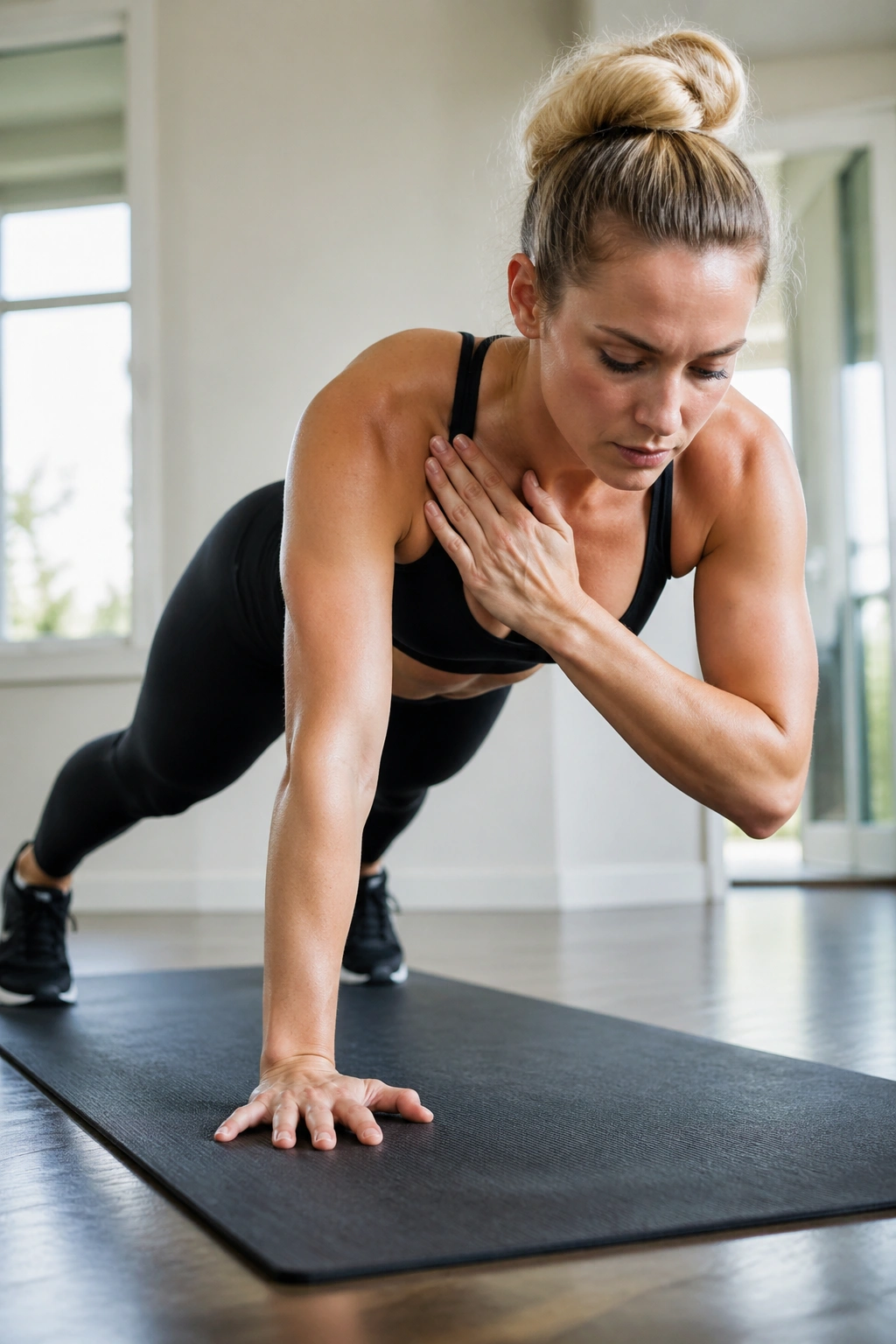
AMRAP means as many rounds as possible in a set time. The trick is not going all-out for 90 seconds and then collapsing into the carpet. You want a pace you can hold for the full block.
Set a 12-minute timer and cycle through:
- 8 squat thrusts
- 10 reverse lunges per leg
- 12 plank taps
- 20 jumping jacks
Keep moving, but keep the reps clean. On the plank taps, make sure your hips stay level. That’s the part that turns a simple drill into real core work.
How to track it
Write down your total rounds and partial round. Next time, try to beat it by half a round or one full rep on the last movement. That tiny goal is enough to keep progress moving without making the session feel like homework.
This is one of the better belly fat home workouts because it blends cardio, core, and leg work without needing fancy gear.
17. Pyramid Interval Session
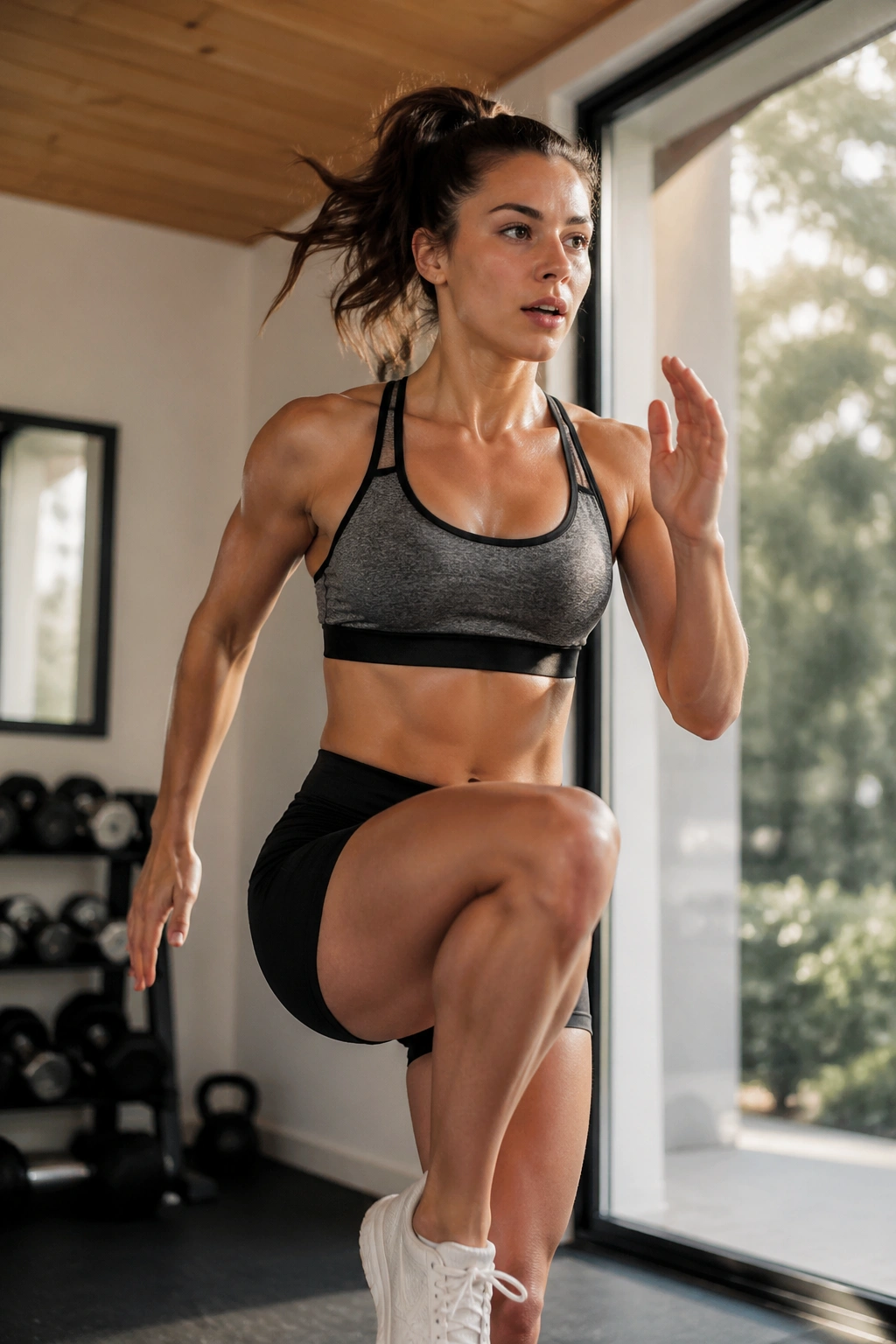
Pyramids are useful when you want a workout to feel like it builds instead of just repeats. The work climbs up, then comes back down, and that shape gives your body a chance to hit different gears.
Use one movement or rotate between three. Here’s a simple version:
- 20 seconds hard, 10 seconds rest
- 30 seconds hard, 15 seconds rest
- 40 seconds hard, 20 seconds rest
- 30 seconds hard, 15 seconds rest
- 20 seconds hard, 10 seconds rest
Pick from high knees, skaters, or squat thrusts.
What makes it different
The shorter intervals at the top feel punchy. The longer middle work teaches pacing under fatigue. When the timer starts shrinking again, your legs usually feel heavier than they did at the beginning. That’s normal.
Pyramids are a good choice if straight Tabata work feels too sharp or repetitive. They still hit hard, but they give you a little shape and rhythm.
18. Core-and-Cardio Finisher
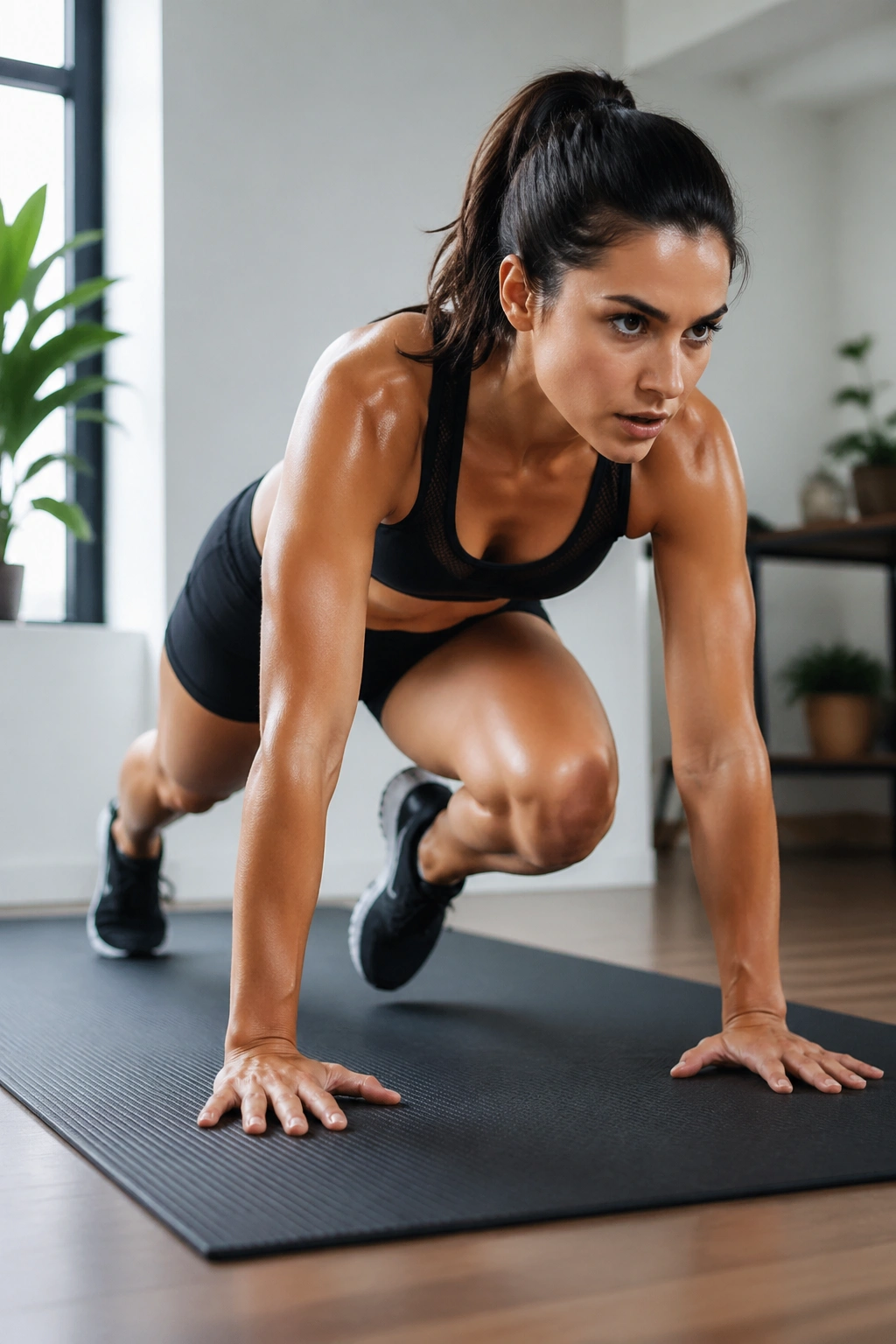
A finisher should be short, annoying, and easy to fit onto the end of a strength day. Or, if you’re short on time, it can stand alone.
Try 5 minutes total:
- 30 seconds plank knee drives
- 30 seconds dead bug marches
- 30 seconds squat jumps
- 30 seconds mountain climbers
- Repeat once more
The dead bug keeps the core honest in a way people often skip. Slow opposite-arm, opposite-leg movement. Low back pressed into the floor. No rushing. That little reset between the more explosive moves helps you stay in control instead of slumping into the last round.
When to use it
Use this after a full-body workout, after a brisk walk, or on a day when you only have a few minutes and want to feel like you earned dinner. Short finishers are underrated. They are not glamorous. They work.
19. No-Equipment Ladder Drill
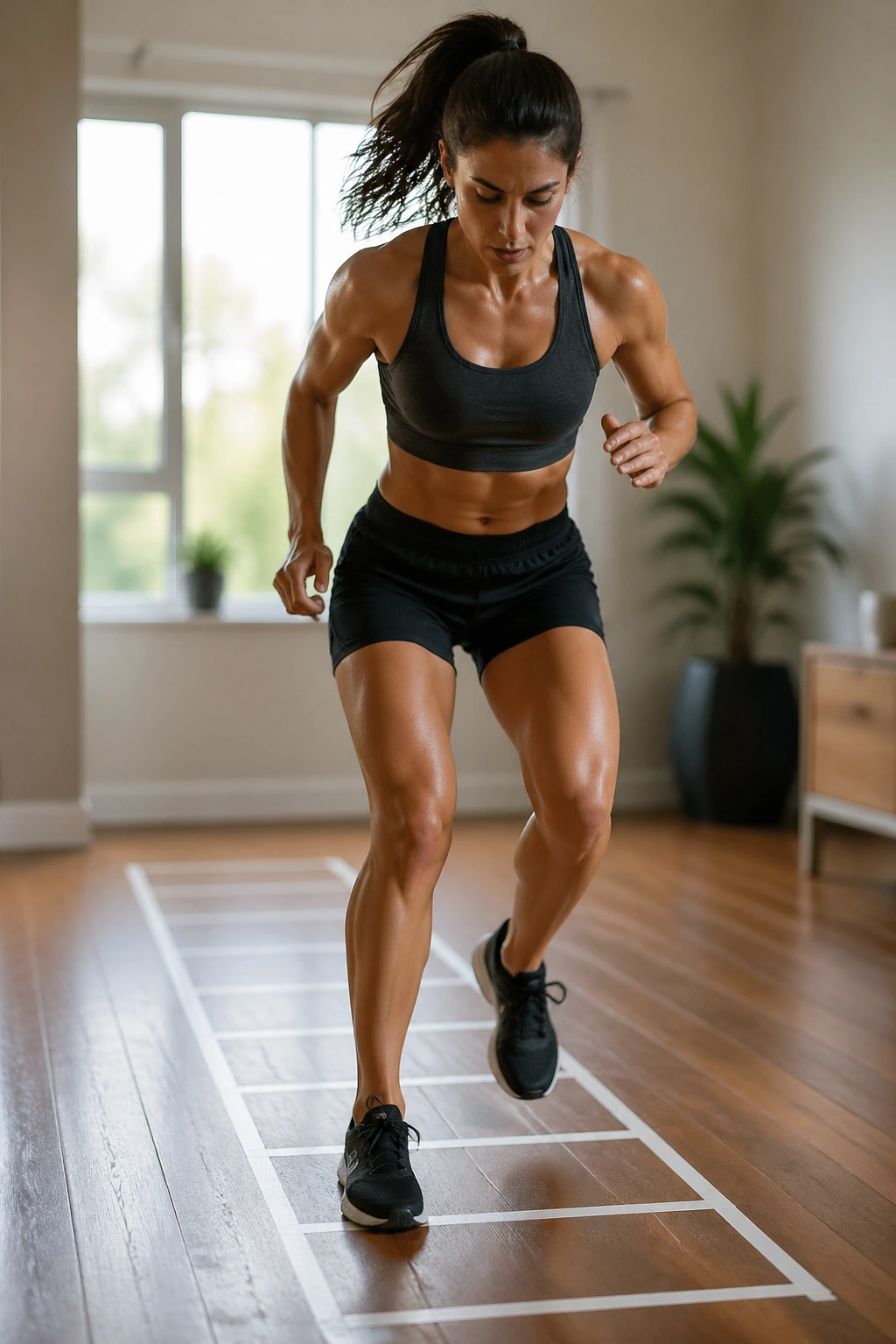
Simple ladders are sneaky. They look tidy on paper and then turn into a steady grind once you start climbing.
Do this ladder and then reverse it:
- 1 burpee
- 2 push-ups
- 3 air squats
- 4 mountain climbers per side
- 5 jumping jacks
Then come back down: 4, 3, 2, 1. Rest 60 seconds and repeat for 2 or 3 total rounds.
If push-ups are the weak link, elevate your hands. If burpees are too much, step back and step in. The ladder works because the volume rises in a way that feels manageable at first, then quietly gets serious.
This is a good one for people who like counting. It also gives your brain a job, which helps the session go by faster than a pure timer.
20. Two-Round Full-Body Home HIIT
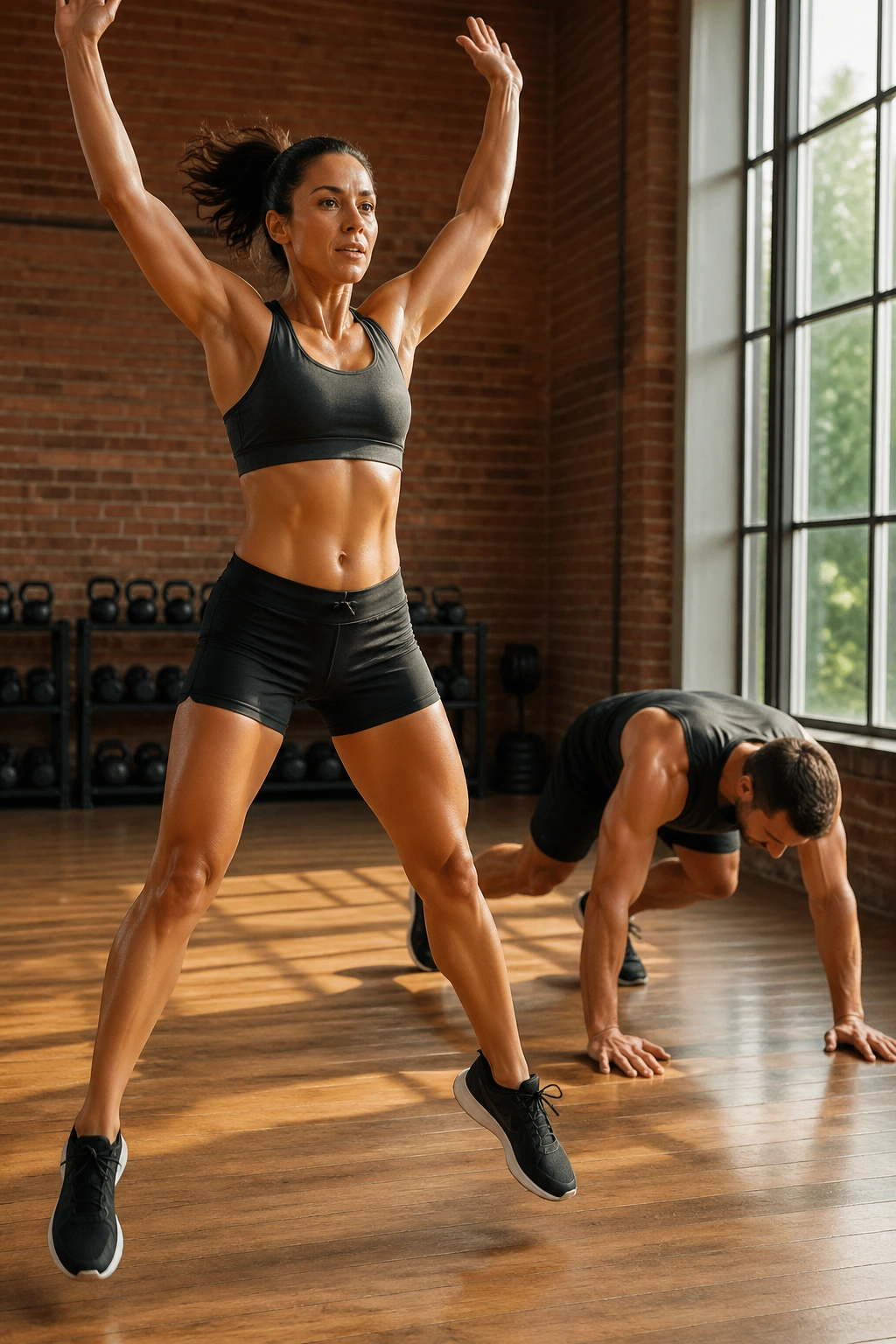
Finish with a session that covers the whole body without dragging on forever. Two rounds is enough if the work is honest.
Best way to finish
Do 45 seconds of work and 15 seconds of rest for each move:
- Squat jumps
- Skaters
- Push-ups
- Mountain climbers
- Alternating reverse lunges
- High knees
Complete the circuit twice. Rest 60 to 90 seconds between rounds if needed.
The point here is not to turn every exercise into a sprint from start to finish. It’s to keep the effort steady, keep the form clean, and leave the workout knowing you actually trained. That’s a good place to be. Not wrecked. Not bored. Just worked.
Pick the versions that let you move with control, then repeat them often enough that they stop feeling new and start feeling useful. That’s where the real change comes from.
