



Beginner workout calendars to print and follow solve a very ordinary problem: when the plan lives on paper, you stop negotiating with yourself every morning. A phone screen can be ignored. A sheet taped to the fridge tends to stare back.
The best printable calendars are not fancy. They’re useful in the boring, practical sense — short sessions, clear rest days, and a pace that leaves you able to walk up stairs the next morning without making a face. Ten minutes counts. So does a five-minute mobility block when the rest of the day is messy.
A good calendar also cuts down on decision fatigue. You are not inventing a workout from scratch after a long day. You’re checking off Tuesday’s walk, Wednesday’s strength circuit, or Friday’s stretch session. That tiny shift matters more than most people want to admit.
Some of the calendars below lean on walking, some use dumbbells, some stay chair-friendly, and a few are built for tiny apartments or packed schedules. Pick the one that fits your real life, not the version of you that magically has two free hours and a perfect mood every day. The easiest place to begin is the walking calendar.
1. 7-Day Walking Calendar for Absolute Beginners

Walking is where a lot of people should start, and I mean that in the nicest possible way. It’s low drama. It asks for decent shoes, a safe route, and the willingness to move for 10 to 30 minutes at a time.
Why It Works
A walking calendar is gentle enough to build trust. If you’ve been inactive for a while, the first win is not speed or sweat — it’s showing up four or five times in a week and finishing without feeling cooked.
Print seven boxes and keep the schedule simple:
- Day 1: 10-minute easy walk
- Day 2: 12-minute walk with 3 short brisk bursts
- Day 3: Rest or a 5-minute stretch
- Day 4: 15-minute steady walk
- Day 5: 15-minute walk with hills or a slight incline
- Day 6: 20-minute easy walk
- Day 7: Rest
What To Watch For
Your pace should let you talk in short sentences. If you’re gasping, you’re pushing too hard for a first week. Back off a little and keep the habit alive.
Best tip: put this calendar somewhere you’ll see it before coffee. Morning checks beat good intentions.
2. 2-Week Mobility and Stretching Calendar
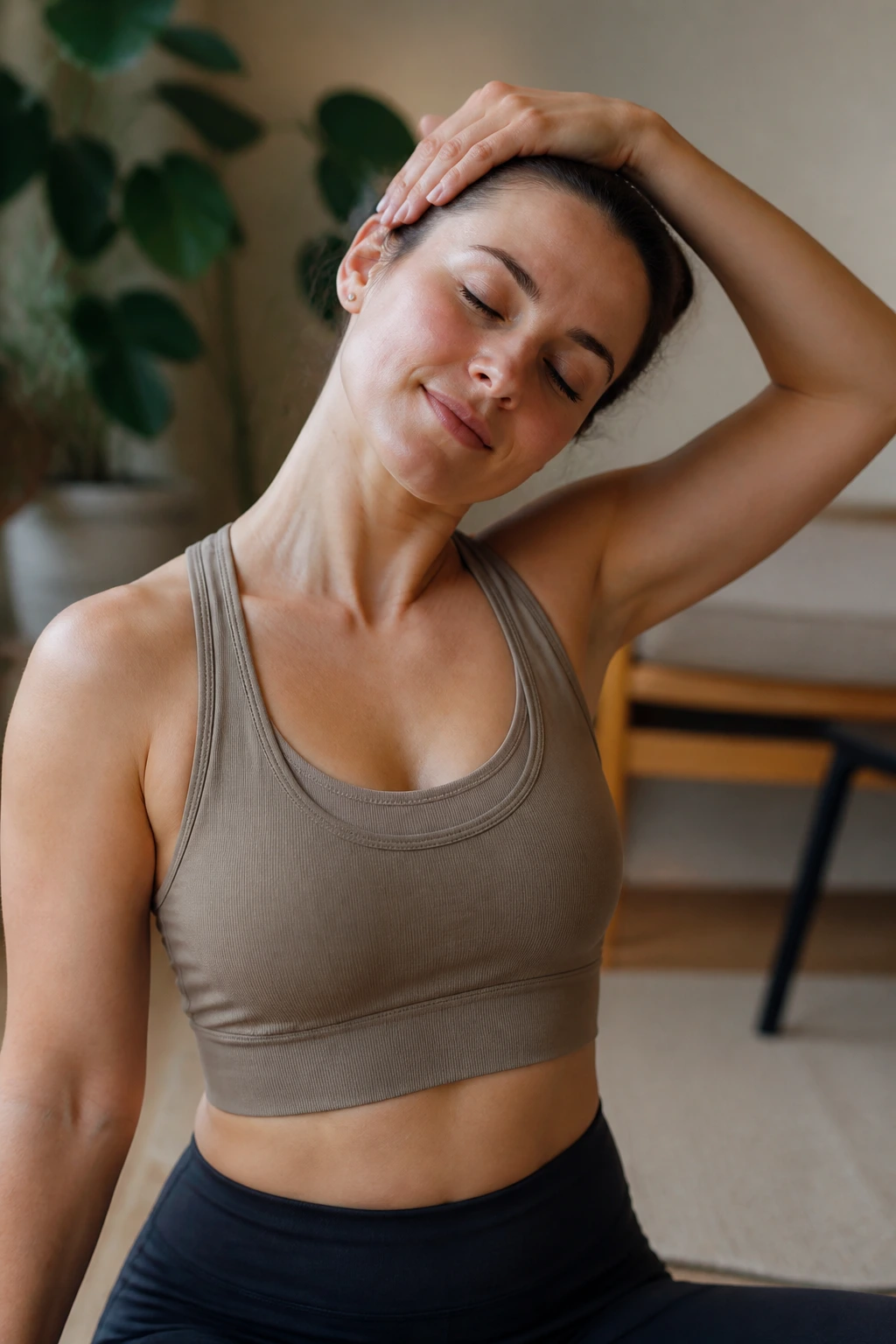
If your body feels rusty, this is the calmer choice. A mobility calendar is not flashy, and that’s exactly why it works. Hips loosen. Shoulders stop feeling glued up. Your lower back usually complains less when you stop asking it to do everything.
What The Week Looks Like
Use 10 to 15 minutes a day. That’s enough. Really. A beginner does not need an hour of floor work to feel looser.
One week can look like this:
- Monday: Neck, shoulders, and chest openers
- Tuesday: Hip circles, hamstring reaches, calf stretches
- Wednesday: Rest or a gentle walk
- Thursday: Cat-cow, child’s pose, thoracic rotations
- Friday: Ankle work, glute stretches, deep breathing
- Saturday: Full-body flow
- Sunday: Repeat the easiest session
Why People Stick With It
Mobility calendars are easier to repeat because they don’t leave you sweaty and wiped out. That matters when you are rebuilding a routine from zero. You can do them before work, after dinner, or even beside the bed in socks.
Print note: leave space for a mood check. A simple “stiff,” “okay,” or “loose” note helps you spot patterns fast.
3. 4-Week Bodyweight Strength Calendar
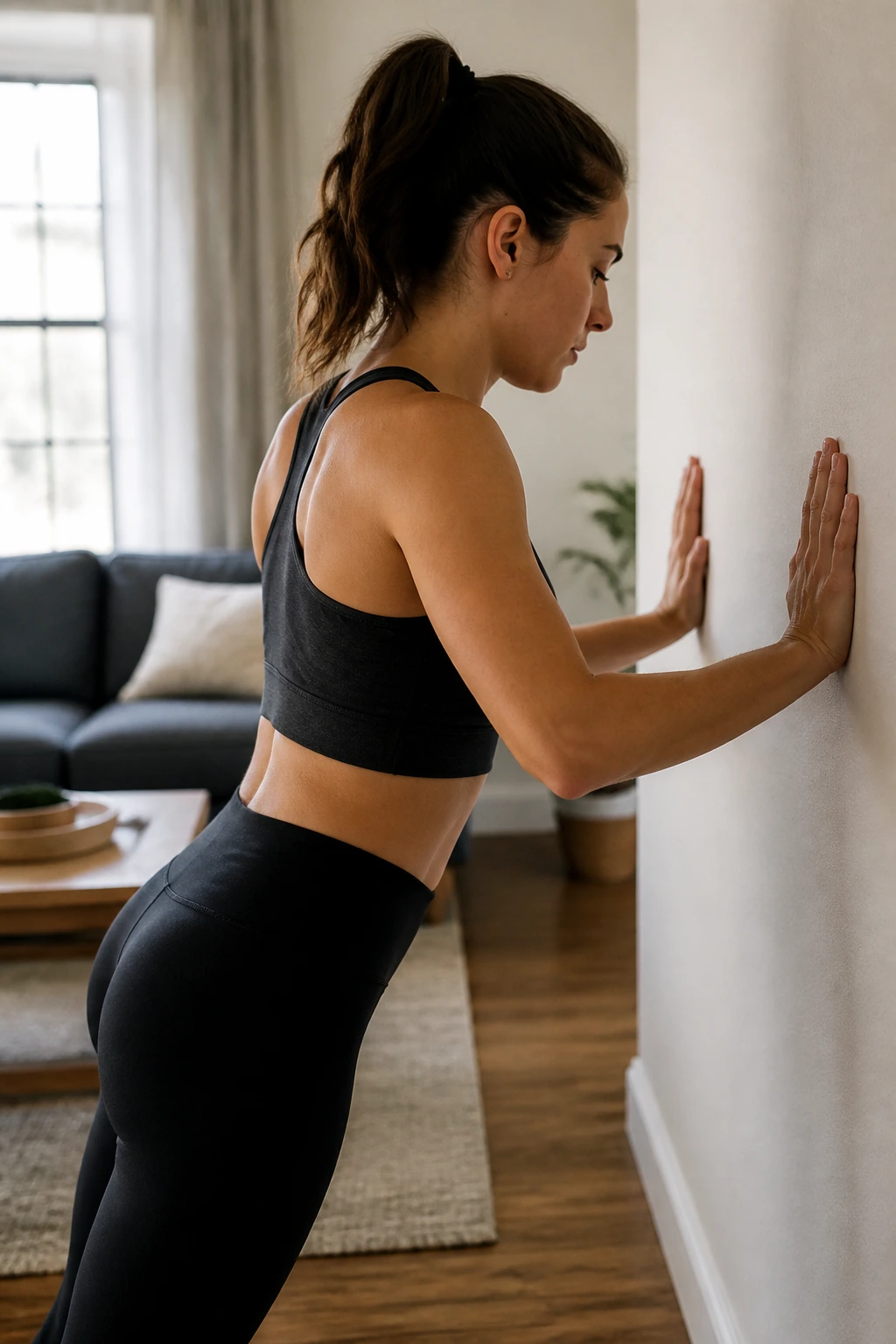
What if you have no equipment and still want to get stronger? A bodyweight calendar is the clean answer. You only need floor space, a sturdy wall, and a bit of patience while your legs learn to work again.
Sample Weekly Layout
This one works well with three strength days and two light recovery days:
Strength Days
- Squats: 2 sets of 8 to 10
- Incline push-ups: 2 sets of 5 to 8
- Glute bridges: 2 sets of 10 to 12
- Dead bugs: 2 sets of 6 per side
Recovery Days
- 20-minute walk
- 5-minute stretch
- Easy breathing drill
The first week should feel almost too easy. Good. That is not wasted effort. It’s how beginners keep form clean and soreness manageable.
How To Progress
Add one or two reps per week, or add a third set once the first two sets feel neat. Do not chase exhaustion. Chase repeatability. A beginner strength calendar works best when you finish a session thinking, “I could do that again.”
4. Beginner Workout Calendar with Dumbbells

Dumbbells change the game in a nice, straightforward way. You can load a squat, press, or row without needing a gym full of equipment, and the plan still fits on one sheet of paper. If you like seeing numbers go up, this is a satisfying calendar.
How To Fill The Boxes
Use two strength days and one lighter day in the first week, then build to three strength days. Keep sessions at 20 to 25 minutes.
- Goblet squat: 2 sets of 8
- Dumbbell row: 2 sets of 8 per side
- Floor press: 2 sets of 8
- Romanian deadlift: 2 sets of 10
- Farmer carry: 3 walks of 20 to 30 seconds
What Makes It Beginner-Friendly
A pair of light dumbbells is enough. You do not need heavy weights that make your grip fail before your legs even wake up. Start with loads you can move slowly and cleanly for all the reps on the page.
Print It Like This
Make one column for workout, one for weight used, and one for how it felt. That last column is gold. If the same 10-pound dumbbells feel easy on rows but awkward on presses, you’ll know where to adjust next time.
5. Chair-Based Low-Impact Calendar
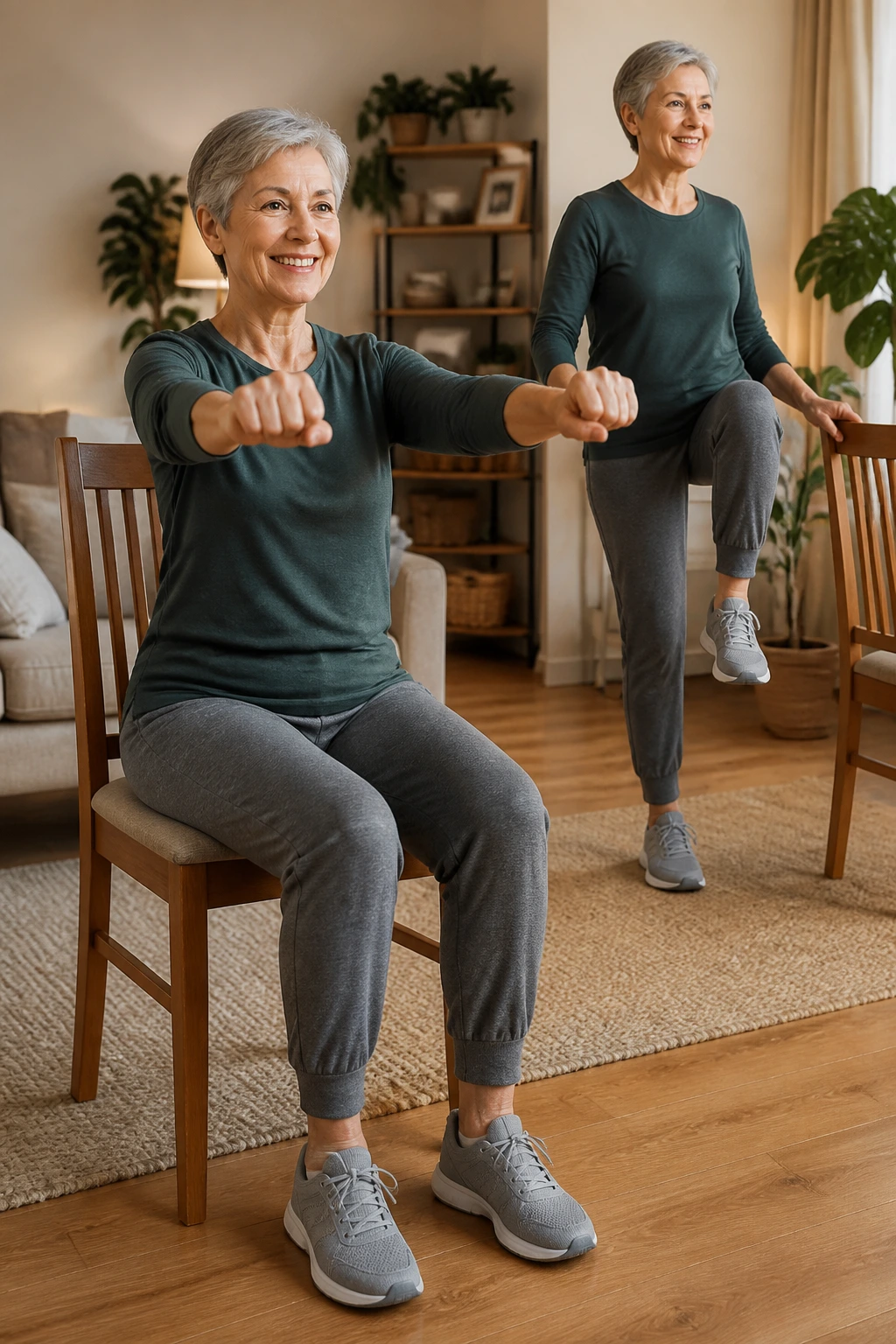
A chair-based calendar is the one I recommend to anyone who wants a very low-friction start. You can do most of it in regular clothes, and you don’t need to get down on the floor unless you want to.
The Shape Of The Week
Keep sessions short: 8 to 15 minutes, four or five days a week. Use the chair for support on standing moves and for seated work when balance is shaky or energy is low.
A simple week might include:
- Seated marching for 60 seconds
- Sit-to-stand reps, 2 sets of 6
- Seated overhead reach, 2 sets of 8
- Wall push-ups, 2 sets of 8
- Standing calf raises while holding the chair, 2 sets of 10
One day can be all seated. Another can mix seated and standing work. That flexibility keeps the calendar from turning into a failed promise when energy dips.
Honest note: this style looks tame on paper. It isn’t. Sit-to-stands can light up your legs fast if you do them slowly and with control.
6. 30-Minute Treadmill Calendar with Speed Changes

A treadmill calendar is a lot less boring when you stop treating every minute the same. Walking at one speed for half an hour gets old fast. Small changes make the session feel shorter and keep your attention awake.
A Better Beginner Pattern
Use a 5-minute warmup, then alternate easy and brisk walking:
- 5 minutes: easy walk
- 2 minutes: brisk walk
- 2 minutes: easy walk
- Repeat that pattern 4 to 5 times
- Finish with 3 minutes easy
If the treadmill has incline, keep it mild. A 1% to 2% incline is enough to change the feel without making you cling to the rails.
What To Put On The Calendar
Mark three treadmill days, two rest or mobility days, and one optional longer walk outside. That mix keeps your legs from getting too used to one motion.
The biggest mistake here is turning the handrails into a security blanket. Light touch is fine. Leaning is not. If you’re hanging on for dear life, slow the belt down.
7. Resistance Band Calendar for Small Spaces
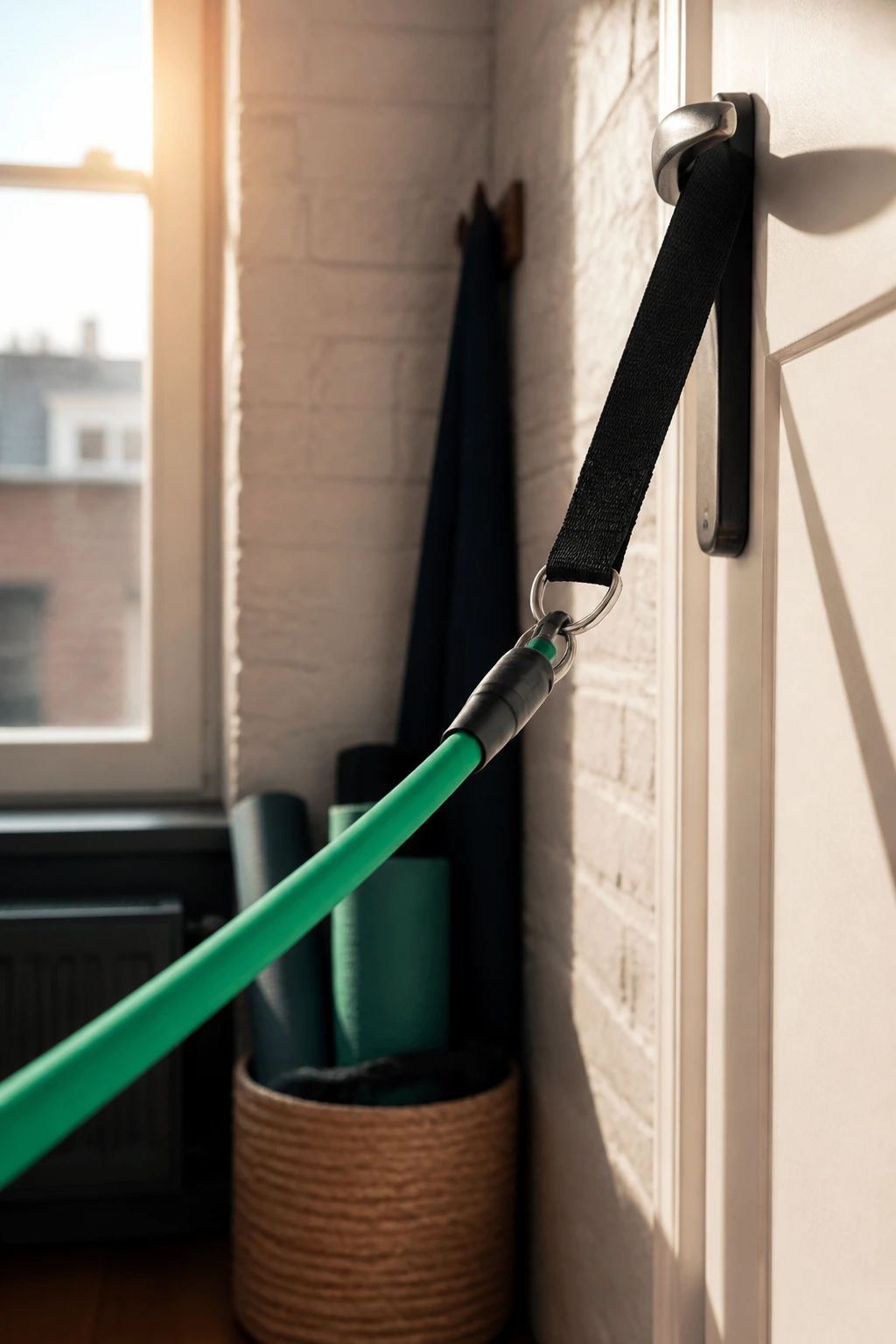
Resistance bands are perfect when you’ve got a corner of a room and not much else. They’re cheap, quiet, and annoying in the best possible way. A band calendar can train almost every major muscle group without a single clanking weight.
Best Moves To Rotate
- Band rows for your upper back
- Banded squats for legs and glutes
- Chest press with a door anchor or around your back
- Lateral walks for hips
- Pallof press for the core
Use 10 to 15 reps per move, then rest 45 to 60 seconds. Two rounds is enough to start.
Why This Calendar Sticks
Bands are portable, which means the calendar travels well. If you live in a small apartment or share space, they also keep noise down. No dropping dumbbells. No jumping. No dramatic setup.
Practical tip: buy one light and one medium band if you can. A single band gets old fast because upper-body work and leg work need different tension.
8. Three-Days-a-Week Full-Body Calendar
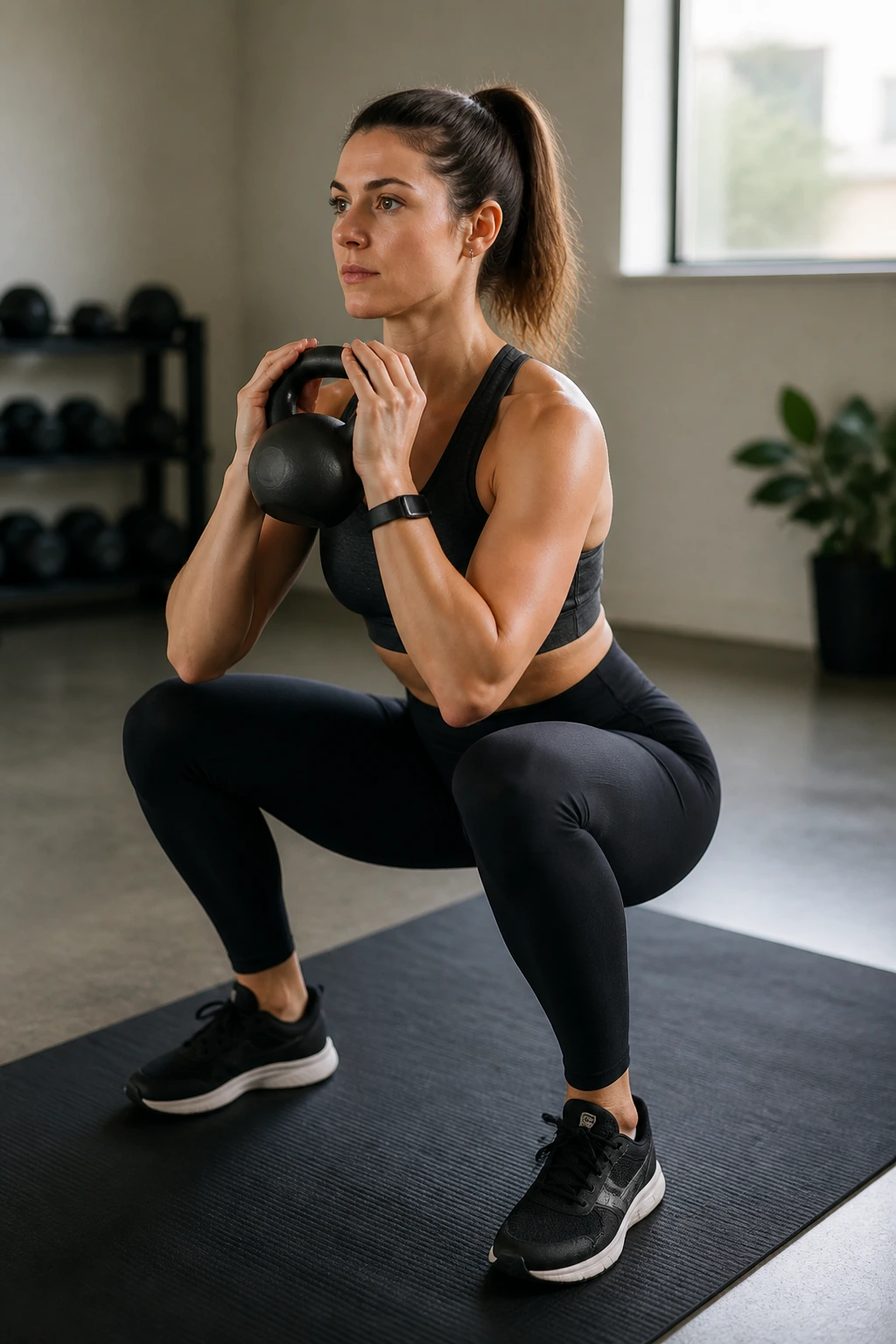
This is probably the most sensible beginner strength calendar of the bunch. Three full-body sessions leave enough room to recover, and you get more practice with the same movements. Practice matters. Beginners get better faster when they see the same squat, push, hinge, and pull every week.
A Solid Weekly Pattern
- Monday: full body
- Wednesday: full body
- Friday: full body
- Other days: walking, stretching, or plain rest
Each workout can be built around four moves:
- Squat pattern
- Hinge pattern
- Push pattern
- Pull pattern
Keep it to 2 sets per move in the first two weeks. Then add a third set if your form stays tidy and you’re not sore for days.
Why It Works Better Than Random Workouts
Random workouts feel busy. This calendar creates familiarity. The second time you see a goblet squat, you already know the groove. The third time, you usually feel less awkward. That’s real progress, even if the mirror doesn’t care yet.
9. Beginner Workout Calendar for Busy Mornings
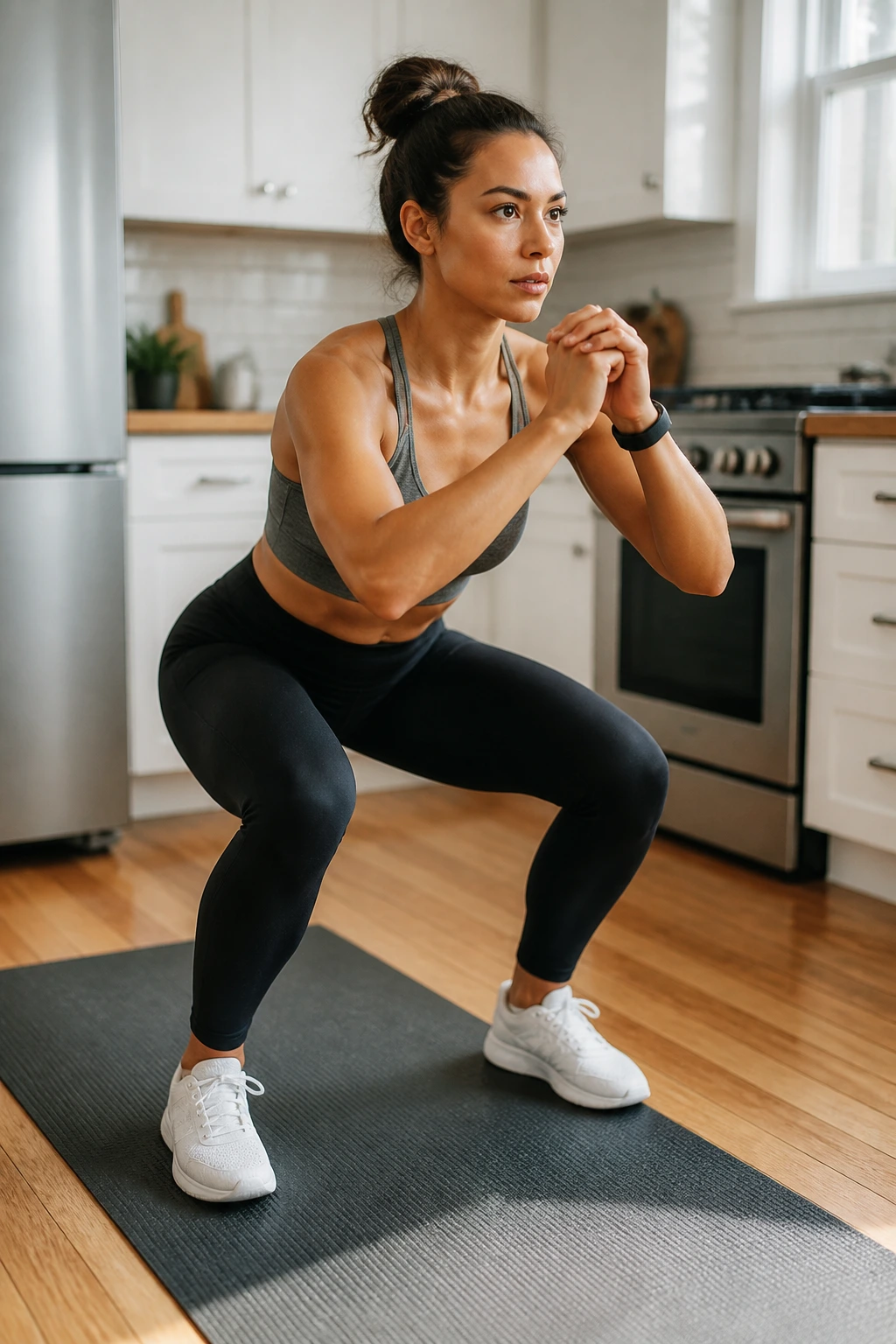
Can 12 minutes count? Yes. More than you think.
How To Build It
This calendar is for people who do not have a spare hour before work. Give yourself three tight workouts each week and a couple of easy recovery days. Keep the sessions short enough that you’re not tempted to skip them because they look huge.
A simple morning block:
- 1 minute marching in place
- 8 squats
- 6 incline push-ups
- 10 glute bridges
- 20-second plank
- Repeat twice
That’s it.
Why Short Sessions Work
Short sessions reduce the mental buildup. You can start before your brain starts negotiating. And once you’ve done that for a few weeks, the calendar stops feeling like a chore and starts feeling like part of your day, the way brushing your teeth does.
Print Trick
Use giant checkboxes and keep the page by your coffee maker. Tiny boxes are annoying. Large ones make the win feel bigger, and beginners need visible wins.
10. Weekend-Only Reset Calendar

Some weeks are a mess. That happens. A weekend-only calendar keeps the routine alive without pretending your schedule is something it isn’t.
Simple Weekend Layout
Saturday
- 20-minute walk
- 10-minute bodyweight circuit
- 5-minute stretch
Sunday
- 15-minute mobility work
- 15-minute easy bike ride or walk
- 5 minutes of breathing or cooldown
Why It’s Worth Printing
This is the calendar for people who can’t touch weekday consistency yet. You still get movement, and more important, you still stay in the habit of planning movement. That matters. A two-day rhythm is easier to build on than a broken promise every Monday.
A Small Warning
Don’t use the weekend plan as an excuse to go wild and punish yourself. Keep both days moderate. You want to finish Sunday thinking, “That felt doable,” not “I need a nap and a sandwich the size of a pillow.”
11. Stair Climb and Walk Calendar
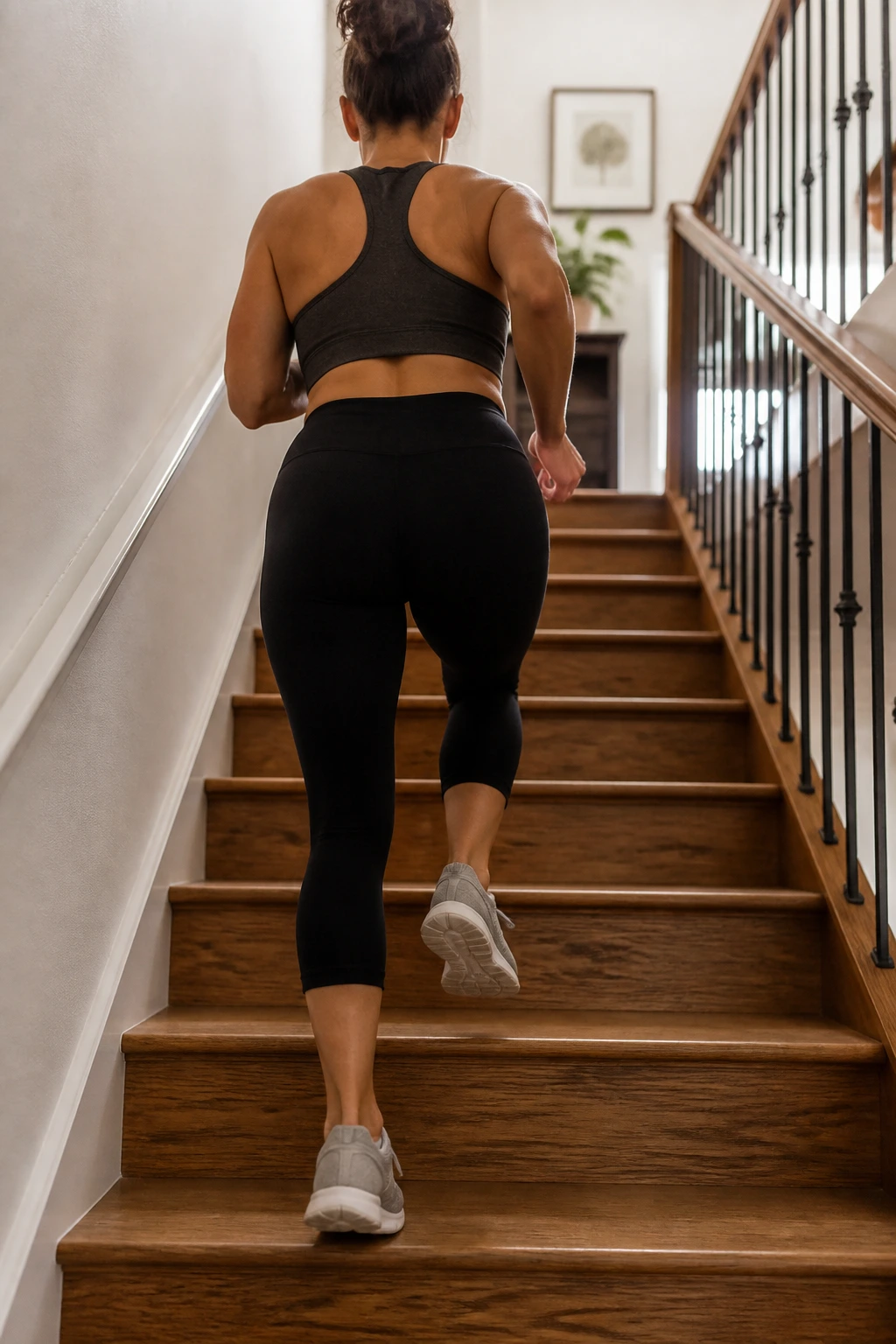
Stairs look harmless until you do them for 10 minutes. Then they make their point. A stair calendar is a nice way to build leg strength and cardio together without needing a gym.
How To Pace It
Use short climbs and longer walks between them:
- 30 seconds climb
- 90 seconds walk
- Repeat 6 to 8 times
If your knees are touchy, keep the climbs slow and use the handrail lightly. If stairs feel too aggressive, swap in step-ups on the bottom stair or a curb.
Why It’s Different From Plain Walking
Stairs ask more from your glutes, calves, and breathing. That means the session stays short but feels useful. You’re getting a stronger training effect in less time, which is handy when you’re printing a beginner plan that has to fit real life.
A stair calendar also helps with confidence. Once you realize you can handle intervals, other workouts stop looking so intimidating.
12. Bike Cardio Calendar

A bike calendar is easier on the joints than jogging, and it’s a lot friendlier to people who want cardio without impact. The trick is not to pedal aimlessly for 30 minutes and call it a plan.
A Better Layout
Use one easy day, one interval day, and one steady ride:
- Easy ride: 12 to 15 minutes
- Interval ride: 1 minute moderate, 2 minutes easy, repeat 5 times
- Steady ride: 20 minutes at a pace that still lets you talk
Try to keep your posture relaxed. Shoulders down. Hands light. If the seat feels wrong, adjust it before you blame the workout.
Who This Suits
This calendar works well if you get bored walking or if running feels too harsh. It also works for people who want a quiet indoor option that still raises heart rate enough to matter.
One-sentence truth: a bad bike fit can ruin a beginner’s motivation fast.
13. Yoga-Strength Mix Calendar
A pure yoga calendar can feel too soft for some beginners, and a pure strength calendar can feel too stiff. Mixing the two solves a common problem: your body wants both control and mobility.
What The Week Can Look Like
- Day 1: 15-minute strength circuit
- Day 2: 20-minute yoga flow
- Day 3: rest or a walk
- Day 4: strength circuit
- Day 5: yoga flow
- Day 6: longer stretch or mobility
- Day 7: rest
Why It Works
The yoga days help with hips, hamstrings, shoulders, and breathing. The strength days teach your body to push, squat, and brace without wobbling all over the place. That pairing makes sense for beginners who feel stiff but also want to get stronger.
If you’re printing this one, leave a notes box under each day. Write down which poses felt awkward. Half the battle is learning where you’re tight, not pretending you’re fine.
14. Core and Posture Calendar
A strong core is not about doing endless crunches. It’s about learning how to hold your trunk steady while your arms and legs move around it. That’s why a good core calendar is part strength, part posture work, part patience.
Best Moves To Include
- Dead bug
- Bird dog
- Side plank from knees
- Wall slides
- Suitcase carry
- Glute bridge
Two or three rounds is enough. Keep rests short, around 30 to 45 seconds, so the work feels steady without turning sloppy.
The Print Version
Make this one a four-day calendar: two core days, one posture day, and one light walking day. You do not need to hammer the same muscles daily. Core work gets better when it’s clean, not frantic.
A lot of beginners notice their standing posture improves before their abs look different. That’s normal. The first changes are often about feeling steadier, not looking like a fitness ad.
15. Glute-Focused Beginner Calendar
Glutes are lazy only if you never ask them to do much. A glute calendar gives them a job and keeps it simple enough that beginners can actually follow the plan.
A Good Weekly Mix
- Glute bridge: 2 to 3 sets of 10
- Step-up: 2 sets of 8 per leg
- Bodyweight squat: 2 sets of 8 to 10
- Hip hinge or Romanian deadlift: 2 sets of 8
- Side-lying leg raise: 2 sets of 12 per side
Why It Feels Different
This isn’t about making your butt tired for the sake of it. It’s about teaching the hips to help with walking, stairs, lifting, and standing. That pays off in boring daily life, which is where most beginners need help.
A Small Adjustment That Helps
Slow down the lowering phase of each rep. A three-second lower on bridges or step-ups makes a light workout feel more useful without needing more weight. That little pause is often the difference between “I moved a little” and “I trained.”
16. Upper-Body Starter Calendar
Want to get stronger arms, shoulders, and back without turning the plan into a mess? Keep the upper-body calendar basic. Push, pull, press, carry. That’s enough.
The Weekly Shape
Use two upper-body days and one short mobility day.
Each workout can include:
- Incline push-ups or wall push-ups
- Dumbbell rows or band rows
- Overhead press with light dumbbells
- Farmer carry
- Shoulder circles and chest opener stretches
What Beginners Usually Miss
They train the front of the body and ignore the back. That’s a fast road to cranky shoulders. Rows matter. Carry work matters too. They teach grip, posture, and shoulder stability without needing fancy equipment.
Who Should Print This
If you sit a lot, carry grocery bags, or feel weak in the shoulders when lifting a backpack, this calendar makes sense. It’s direct. It doesn’t waste time.
17. Lower-Body Starter Calendar
Leg day sounds intimidating only until you strip it down to the basics. Squat, hinge, lunge, calf raise. That’s the whole story at the beginner level.
A Smart Weekly Pattern
- Day 1: bodyweight squat and bridge
- Day 3: split squat and hinge
- Day 5: step-up and calf raise
Use 2 sets of 8 to 10 for each move. If balance is shaky, hold a wall or a chair. There is no prize for wobbling harder than necessary.
Why It Works
Lower-body training supports walking, stair climbing, getting up from chairs, and general stamina. It also tends to make beginners feel the workout in a way that’s easy to notice. Your legs will tell you they were involved.
Print a notes box for knee comfort, ankle comfort, and balance. Those three things matter more than the exact exercise names when you’re starting out.
18. Apartment-Silent Calendar
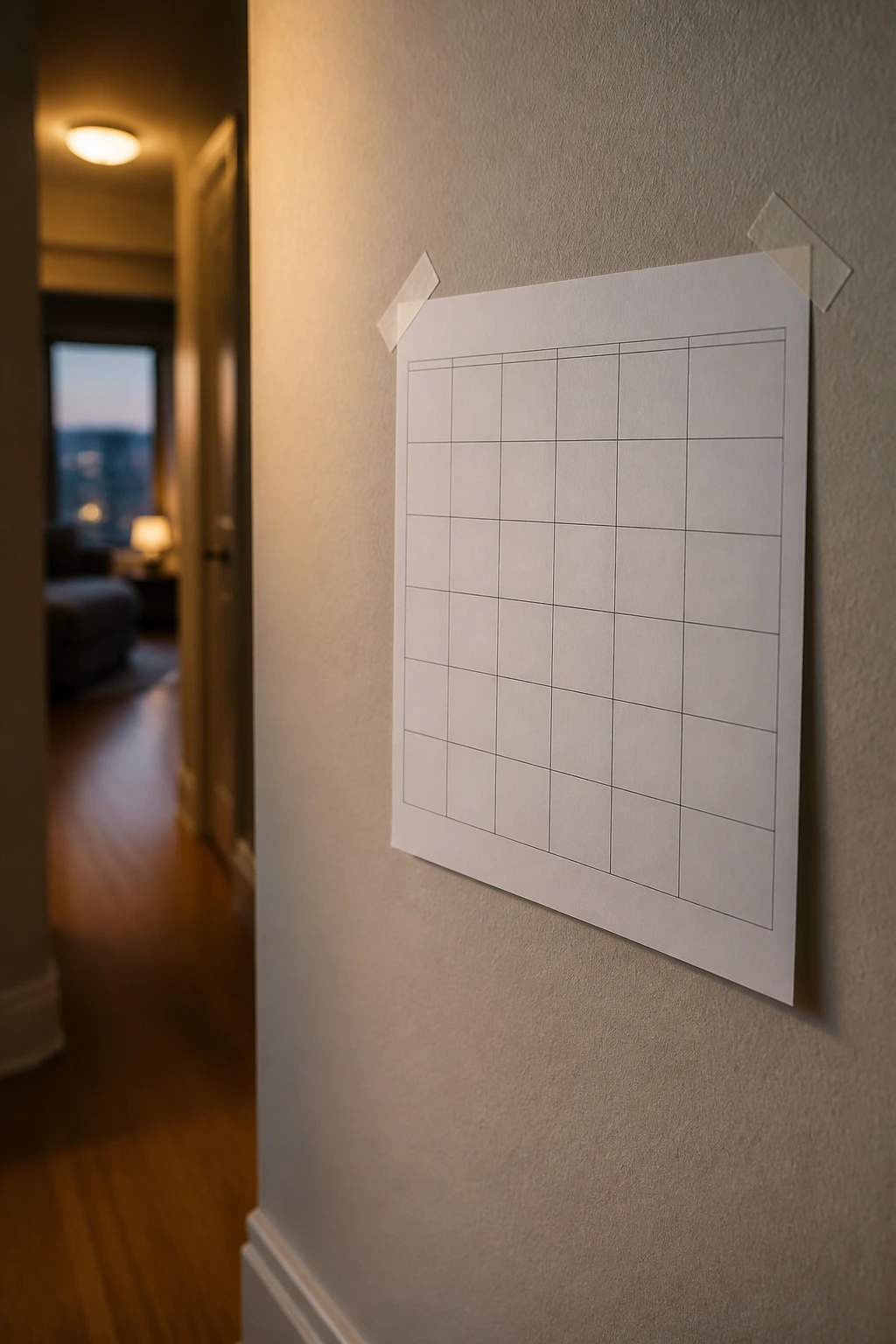
No jumping. No dropping weights. No thudding feet. That’s the apartment-silent rule, and it makes a beginner calendar much easier to live with when you share walls and floors with other people.
Good Exercises For Quiet Work
- Slow squats
- Reverse lunges
- Marching in place
- Glute bridges
- Shadow boxing without bouncing
- Planks from knees or toes
Use slower tempo to make the session harder without making noise. A three-second lowering phase is a gift here.
Why This One Gets Used
People skip workouts they think will disturb the house. This calendar removes that excuse. It also works for rainy days, late evenings, and small rooms where a mat is the only gear you own.
The best version of this calendar sits by the door. Shoes on, mat out, 15 minutes done. Quiet plans are still plans.
19. Outdoor Park Calendar

There’s something useful about taking the workout out of the house and into a park. Benches, paths, and open space make a beginner routine feel less boxed in, and the calendar gets a little more interesting because the environment changes.
A Simple Park Week
- Walk the path for 10 minutes
- Use a bench for step-ups, incline push-ups, or triceps dips
- Do 2 rounds of 8 to 10 bodyweight moves
- Finish with another 10-minute walk
Why It Helps
The park gives you built-in landmarks. Walk to the second bench. Stop at the big tree. Loop back. That tiny structure keeps the session from feeling endless. Beginners often do better when the workout has visible sections.
A park calendar also works well on days when indoor motivation is flat. Fresh air helps. So does the simple fact that you’re outside and not staring at a ceiling fan between sets.
20. Beginner Workout Calendar for Travel Weeks

Travel does not have to kill the routine. A small hotel-room calendar can keep you moving when your normal setup disappears. That’s the whole point: no drama, no special equipment, no excuse about not knowing where to start.
The Travel Template
Pack one resistance band if you can. If not, use bodyweight.
- Day 1: 12-minute bodyweight circuit
- Day 2: 20-minute walk
- Day 3: band rows, squats, presses
- Day 4: rest or stretch
- Day 5: stairs or brisk walk
- Day 6: 10-minute core session
- Day 7: easy mobility
What Makes It Useful
The workouts are short enough to survive a long day of sitting, airports, or strange sleep. That matters. Travel plans tend to punish big workout expectations. Smaller plans survive.
Print It Before You Leave
Mark the calendar with three possible workout windows: morning, afternoon, and evening. You won’t always get the first one. Having backups keeps the week from collapsing.
21. Low-Impact Joint-Friendly Calendar
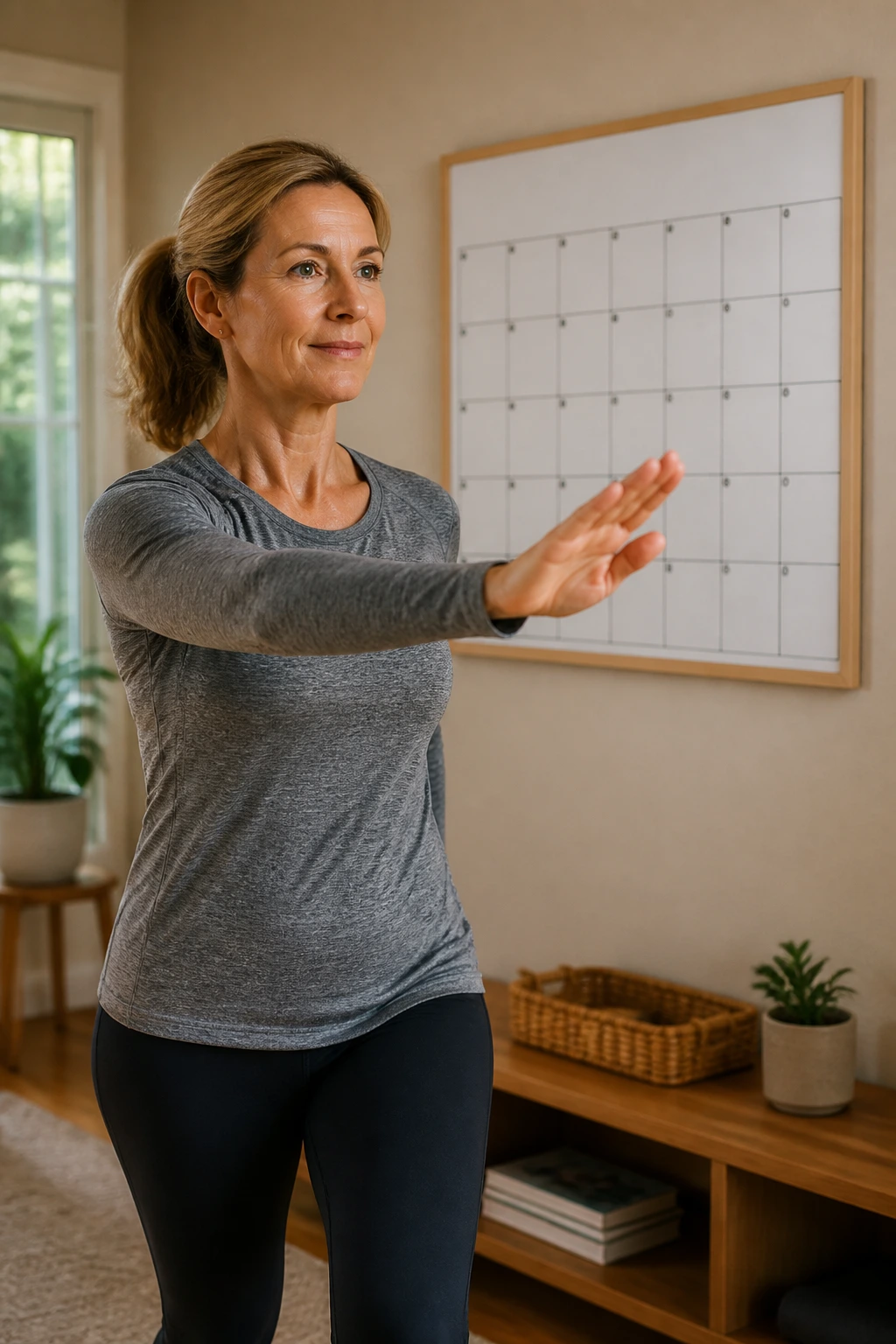
A joint-friendly calendar is not soft. It’s smart. It keeps the stress down while still asking enough from your muscles and lungs to move the needle in the right direction.
Best Options Here
- Walking
- Recumbent bike
- Water walking
- Band work
- Chair support for standing moves
Keep sessions at 15 to 20 minutes and stop before your form turns ugly. The goal is steady motion, not a hero moment.
Why People Use It For Months
Because it doesn’t punish them. That sounds simple, but it’s huge. If your knees, ankles, hips, or shoulders complain easily, a low-impact calendar can be the one you actually keep. Consistency beats intensity when pain is the thing that keeps stealing your momentum.
If a move causes a sharp ache, swap it out. Don’t argue with the joint.
22. Back-Friendly Rebuild Calendar
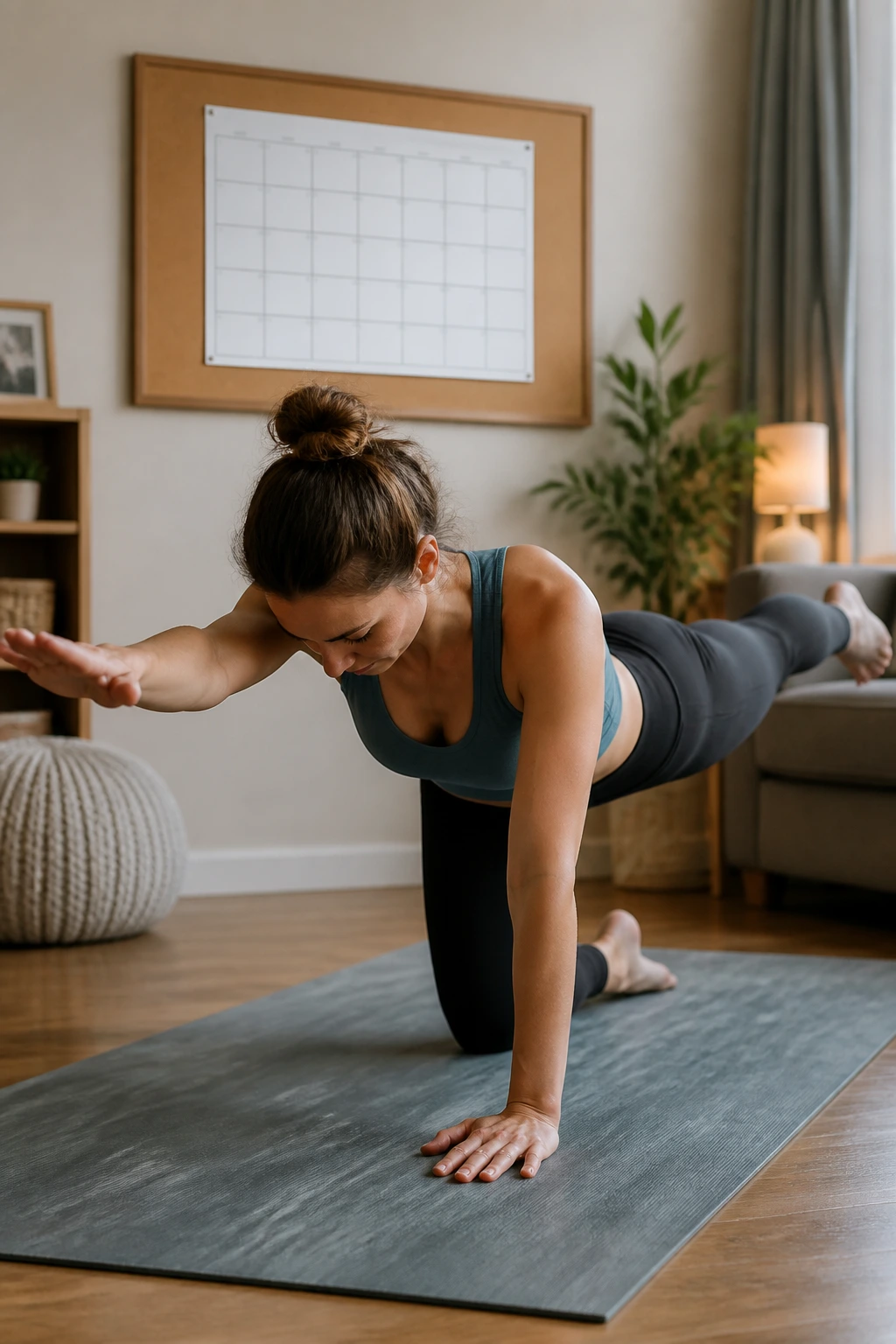
Back-friendly does not mean doing nothing. It means choosing moves that build support without loading the spine in clumsy ways. Beginners with a cranky lower back often do better with a slower, cleaner plan.
Good Exercises To Prioritize
- Bird dogs
- Glute bridges
- Wall sits
- Supported hinges
- Carry work with light weights
- Walking
How To Structure It
Use two strength days, two walk days, and one mobility day. Keep the strength work short, around 15 to 20 minutes. Avoid rushing through twisting or rounded-back positions when you’re tired.
A Practical Warning
Don’t try to “stretch out” a painful back with random floor work. That usually turns into more irritation, not less. A back-friendly calendar should feel controlled. If one move makes symptoms flare, cross it off and pick a cleaner option.
23. 10-Minute-a-Day Calendar
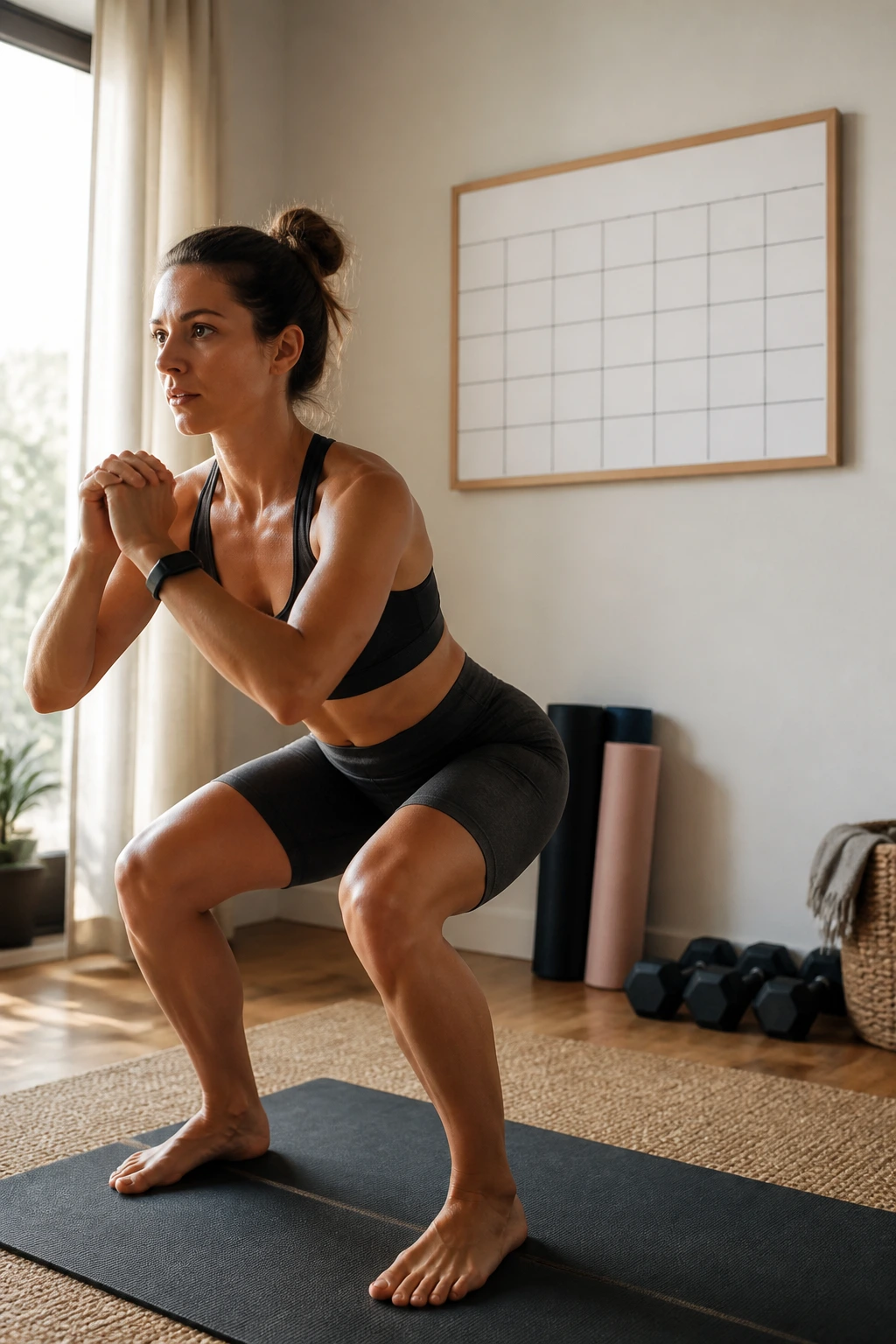
Ten minutes is enough to build the habit. That’s the part people ignore. Not every workout has to leave you soaked and bent over. Some days, you just need to keep the chain unbroken.
A Clean Weekly Setup
- Monday: 10-minute walk
- Tuesday: 10-minute strength circuit
- Wednesday: 10-minute stretch
- Thursday: 10-minute walk
- Friday: 10-minute strength circuit
- Saturday: 10-minute mobility
- Sunday: off or easy stroll
Why It Works
You learn to show up on low energy days. That skill carries over into bigger plans later. Ten-minute calendars are also easy to print because every box feels manageable. Nobody looks at the page and sighs.
A short session can still include a warmup, a main block, and a cooldown. It just happens fast. That’s the beauty of it.
24. Lunch-Break Calendar
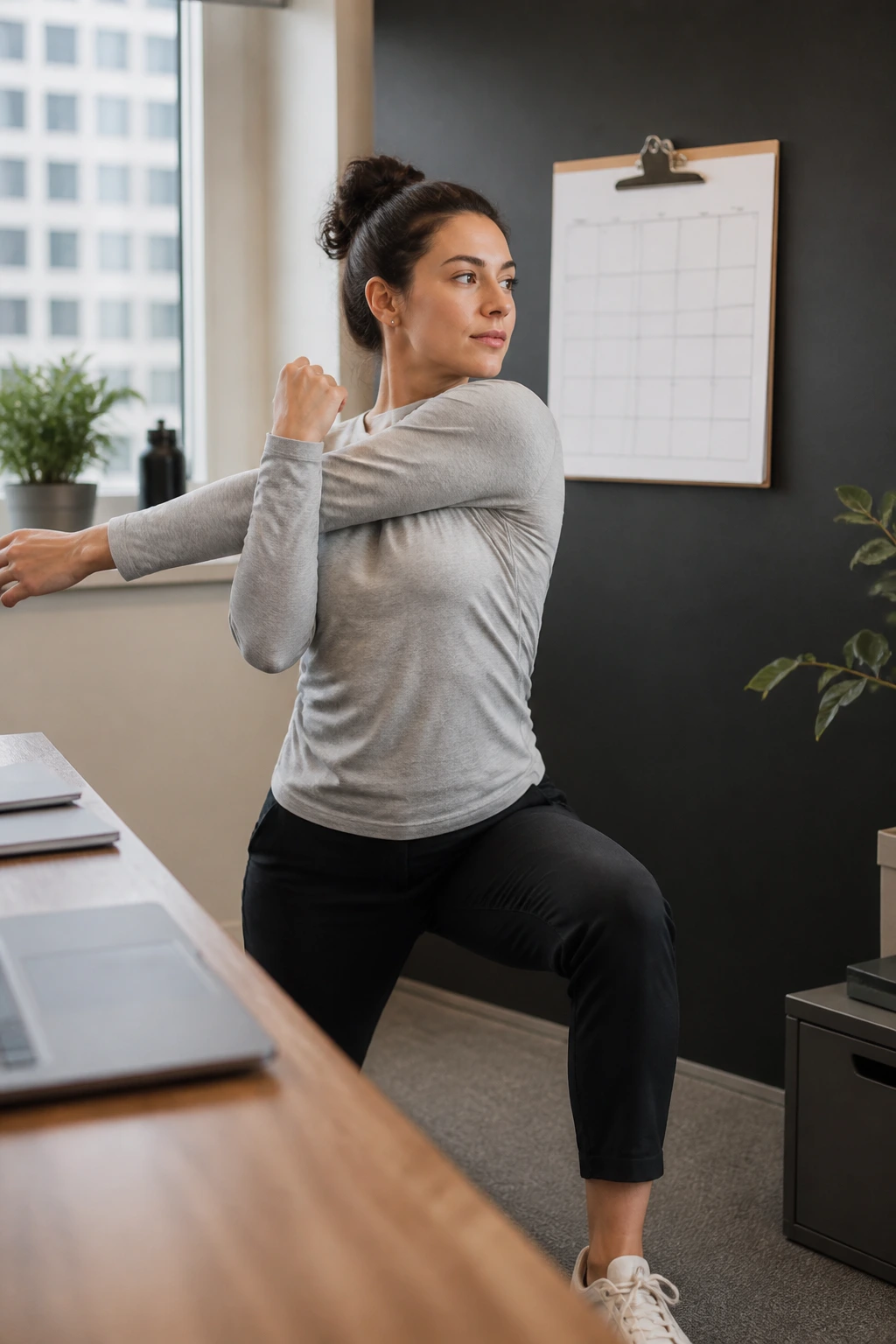
A lunch-break workout should not look like a full gym session crammed between meetings. It should be tidy, fast, and realistic enough that you can return to work without needing a shower and a nap.
A Good Template
- 3-minute brisk walk
- 6-minute strength circuit
- 3-minute walk back down
- 2-minute stretch
Or, if you have a little more time:
- 5-minute walk
- 10-minute band or bodyweight circuit
- 5-minute cooldown
Why It’s Easy To Keep
The calendar uses a predictable pocket of time that already exists. You’re not “finding” time. You’re claiming it. That mental switch matters more than a lot of fitness advice wants to admit.
Print this on a half-page sheet and keep it in a drawer at work or tucked into your bag. If the plan lives near your lunch, it’s easier to use.
25. Dance Cardio Calendar
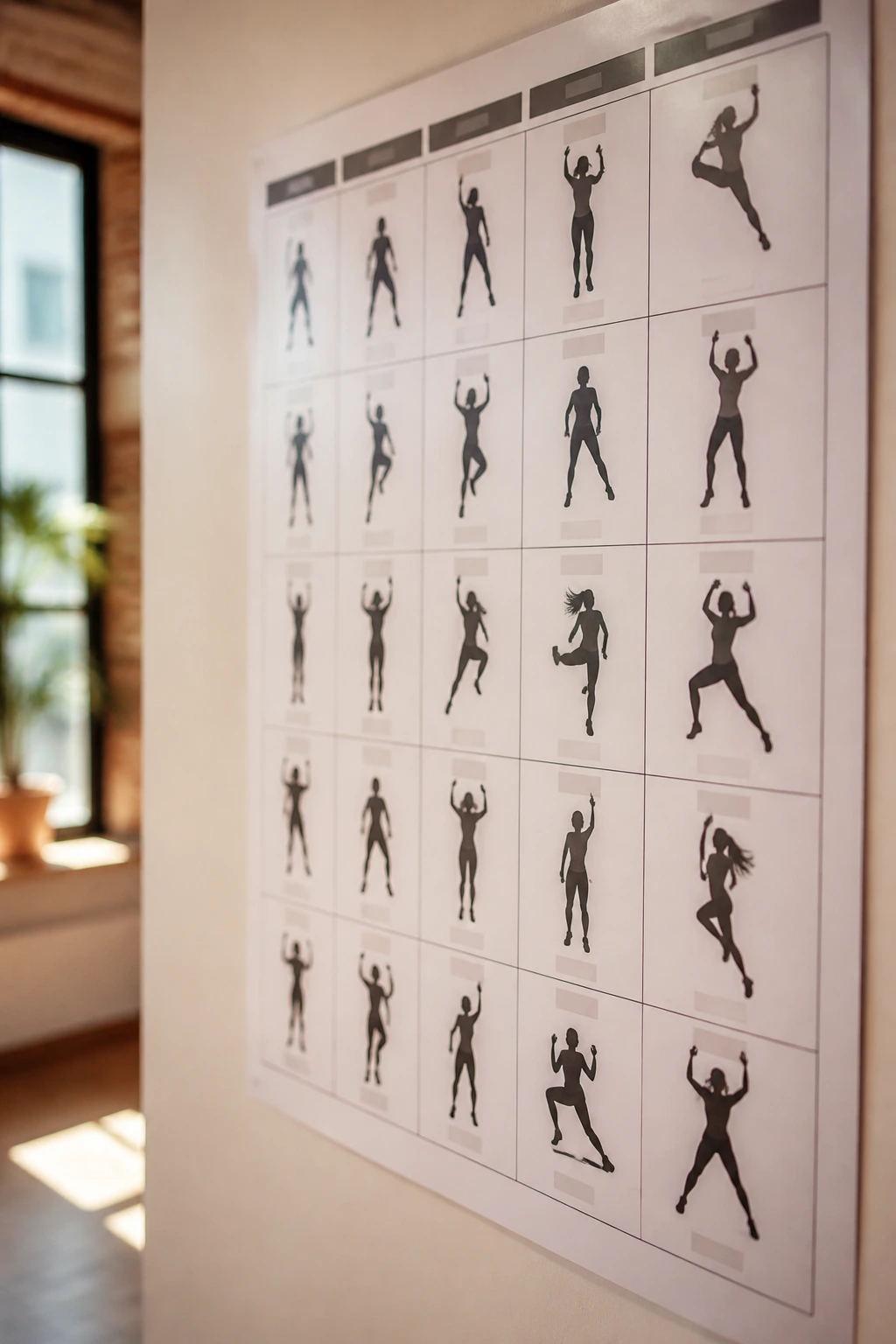
Dance cardio is the rare beginner cardio plan that doesn’t feel like a chore if you like moving to music. It can be messy. Good. It should be. Perfection is not the point here.
Weekly Rhythm
- Day 1: 15-minute dance session
- Day 2: mobility or walking
- Day 3: 20-minute dance session
- Day 4: rest
- Day 5: 15-minute dance session
- Day 6: stretch and easy walk
- Day 7: off
Why Beginners Stick With It
The music does some of the work. When the beat is strong and the moves are simple, you stop counting every second. That helps time pass quickly, and time passing quickly is half the battle for beginners who don’t love traditional cardio.
Keep the moves low and controlled if you’re new to it. Big jumping isn’t required. You can get a real sweat with marching steps, side taps, and arm reaches.
26. Swim or Pool-Walk Calendar
Water changes the rules in a good way. It gives support, takes pressure off joints, and makes movement feel smoother than it would on land. A pool calendar is especially handy if impact has kept you away from exercise.
A Simple Pool Week
- Day 1: pool walking, 10 minutes
- Day 2: easy swim or kickboard work, 10 to 15 minutes
- Day 3: rest
- Day 4: pool walking with direction changes
- Day 5: easy laps or water jogging
- Day 6: mobility on dry land
- Day 7: repeat the easiest pool session
What To Notice
Water resistance sneaks up on you. Movements that feel mild on land can feel harder in the pool, so start slow. That’s not a weakness. It’s the whole point.
If you have access to a pool, this calendar can be a relief. It feels kinder than a lot of beginner plans and still gives a decent workout.
27. Beginner HIIT-Lite Calendar
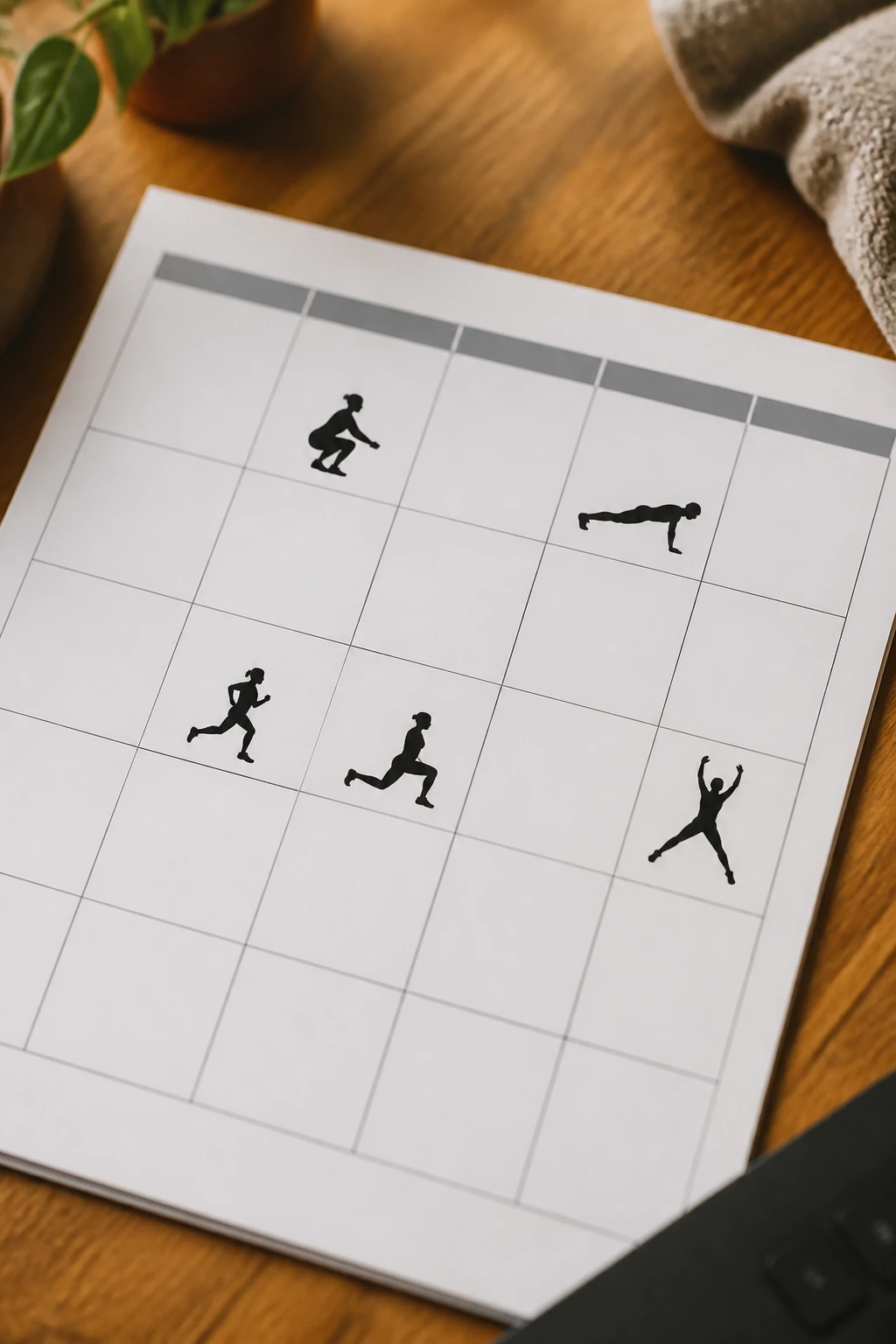
This is not the place for all-out suffering. Beginner HIIT should be short bursts, longer rests, and clean form. If the plan leaves you dizzy every time, it’s too hard.
A Safer Ratio
Try 20 seconds of work and 40 seconds of rest, or 30 seconds on and 30 seconds off. Use moves like marching jacks, squats, mountain climbers on a bench, and fast walks in place.
Why It Belongs On The List
Some beginners want cardio that feels punchy. This calendar gives them that without asking for a full fitness background. The work intervals stay brief, and the rest intervals save your form from falling apart.
Print a warning note right on the page: stop if your breathing never settles. That’s not a punishment rule. It’s a useful boundary.
28. Home Circuit Timer Calendar
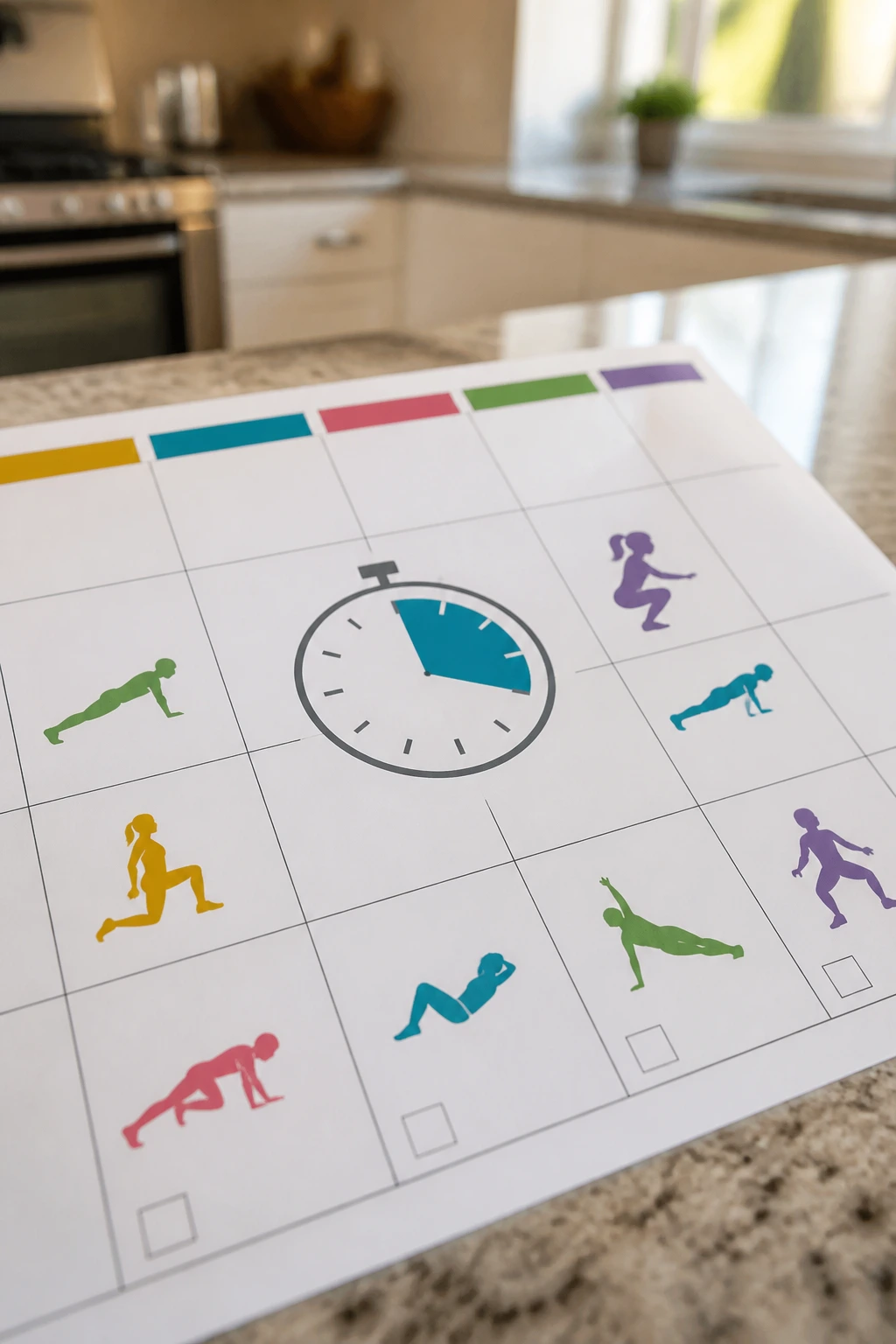
A timer-based circuit calendar is one of my favorites because it removes a lot of thinking. You set the clock, follow the stations, and move on. Simple. Clean. Hard to overcomplicate.
The Circuit Shape
Pick five moves and spend 30 to 45 seconds on each one:
- Squat
- Push-up variation
- Row or band pull
- Glute bridge
- March in place or plank
Rest 30 to 45 seconds after the round. Do 2 or 3 rounds.
Why It Feels Manageable
You never stare at a giant list of reps. You just work until the timer ends. That keeps the session from feeling endless, which is often the beginner’s real problem. People don’t hate exercise. They hate workouts that look like chores on paper.
Make a printable grid with circles for each round. Crossing off a circle is weirdly satisfying.
29. Mixed Cardio and Strength Calendar
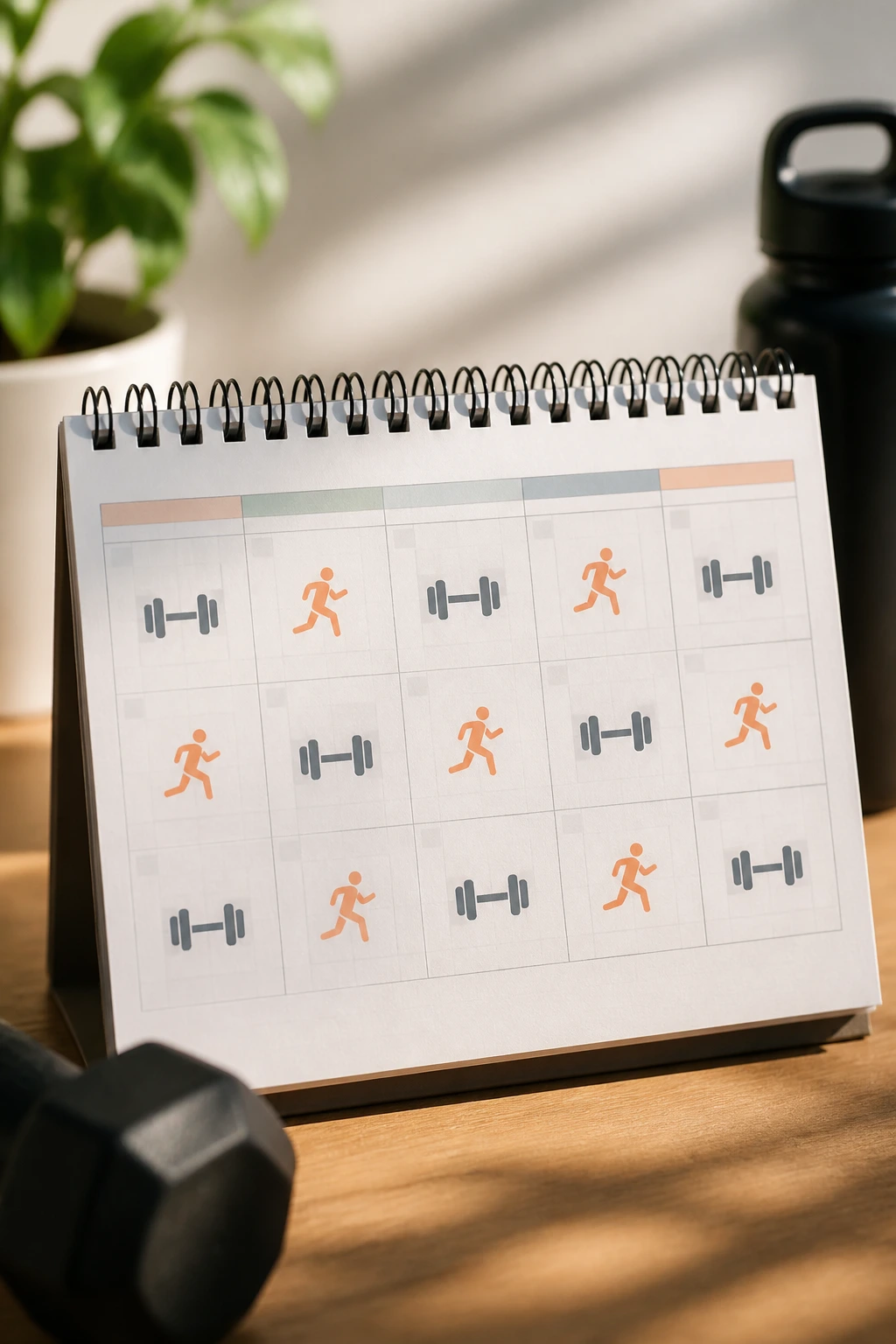
A mixed calendar is good for beginners who get bored fast. One day is a walk. One day is dumbbells. One day is mobility. You get enough variety to stay interested without turning the week into chaos.
Weekly Layout Idea
- Day 1: brisk walk
- Day 2: strength circuit
- Day 3: mobility
- Day 4: bike or dance cardio
- Day 5: strength circuit
- Day 6: easy walk
- Day 7: rest
Why It Works
You train different qualities without overloading one thing. Cardio improves. Strength improves. Recovery has room to breathe. Beginners often do better when the week feels balanced instead of extreme.
The trick is keeping the sessions short enough that you can repeat them. Variety helps only when it’s still easy to follow. Otherwise it turns into noise.
30. Blank Beginner Workout Calendar for Repeating a Simple Week
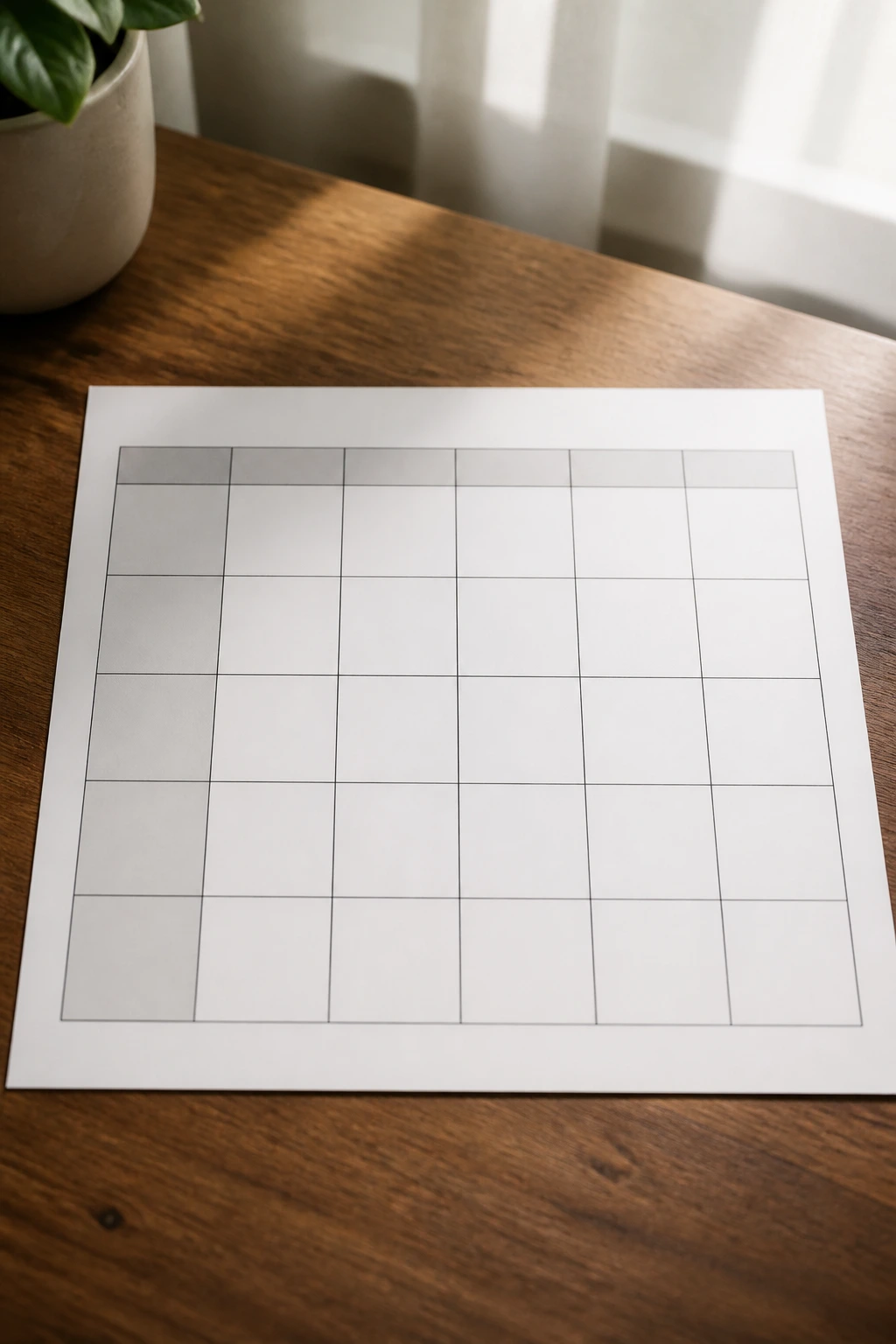
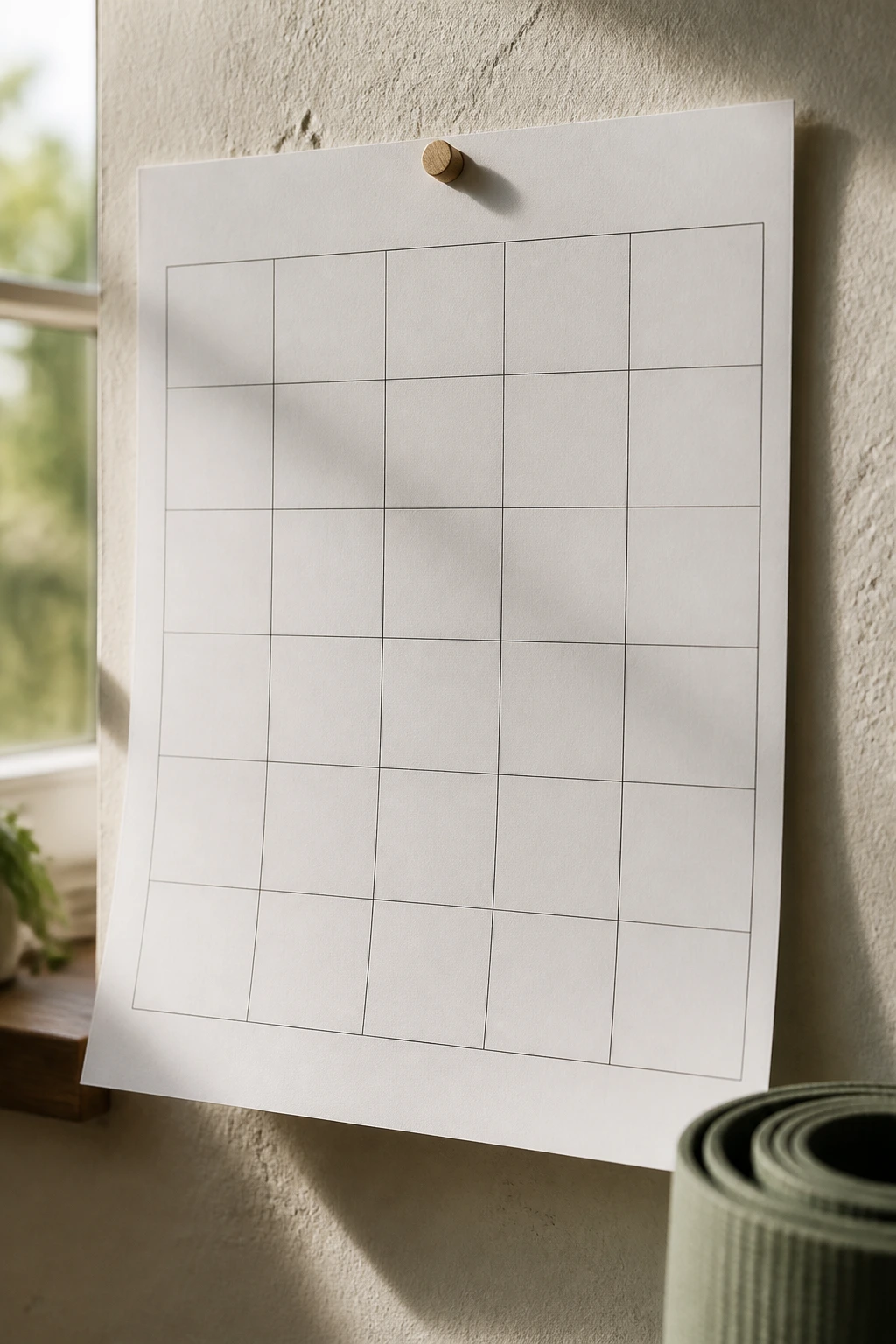
A blank calendar is for the person who wants a plan but hates being boxed in by a rigid one. You choose the moves, write them in, and repeat the same structure until it feels familiar. That’s a good way to build confidence without starting over every Monday.
A Solid Weekly Template
- 3 strength boxes
- 2 cardio boxes
- 2 recovery boxes
Inside each strength box, write one lower-body move, one upper-body move, and one core move. In the cardio boxes, pick walking, cycling, dance, or stairs. In the recovery boxes, use stretching, breathing work, or a light stroll.
How To Use It
Pick one week and repeat it for 4 weeks before changing anything. That’s the part people skip. They tinker too early, then wonder why nothing feels familiar. Repetition is useful. It makes the calendar feel like yours instead of something you are merely surviving.
Best print move: make two copies. Keep one in view and one in a bag, drawer, or desk. Paper gets lost. Backup paper does not.
Final Thoughts
The right beginner workout calendar is the one you can see, understand, and repeat without a lot of drama. Short sessions, clear boxes, and plain language beat a complicated plan you never open.
If one calendar feels too ambitious, drop to the easier version. If one feels too easy, add five minutes, not twenty. That small adjustment is usually where real progress starts to show up.
Print the one that matches your week, tape it somewhere annoying to ignore, and give it a fair shot for a few rounds. The first win is not a dramatic transformation. It’s the second checkmark.
