



The treadmill can feel loud.
Not because it makes noise. Because every blinking number on the screen seems to ask a question you did not plan to answer.
That moment is why beginner cardio workouts at the gym matter so much. The right session should feel simple enough to start, calm enough to repeat, and useful enough that you leave with a little more gas in the tank than you had when you arrived.
Start easy. That part matters.
A good beginner workout does not need to look dramatic. A brisk walk, a steady bike ride, a few short rope rounds, or a light row can all build the same habit: show up, move, breathe hard enough to notice, and finish without feeling wrecked. That is the sweet spot for most people, and it beats random suffering every time.
Beginner Cardio Workouts at the Gym: How Hard Should They Feel

The best test is boring, which is why it works. If you can speak in short sentences while you move, you’re in the right neighborhood. If you can sing, you probably need a touch more effort. If you cannot get a sentence out without gulping air, back off a notch.
Most beginners do well with an effort level around 3 to 5 out of 10. That feels active, warm, and a little sweaty, but not panicked. You should finish thinking, I could do a bit more, not I need to lie on the floor for an hour.
A lot of people make the mistake of going too hard too soon. Then the workout becomes a negotiation with dread. Not fun.
A simple rule helps: leave 20 to 30 percent in reserve. That means your breathing picks up, your legs work, and your form stays neat. The second your stride gets sloppy or your shoulders climb toward your ears, ease off. That tiny check keeps beginner cardio sessions useful instead of miserable.
Beginner Cardio Workouts at the Gym: Choosing Machines That Match Your Joints
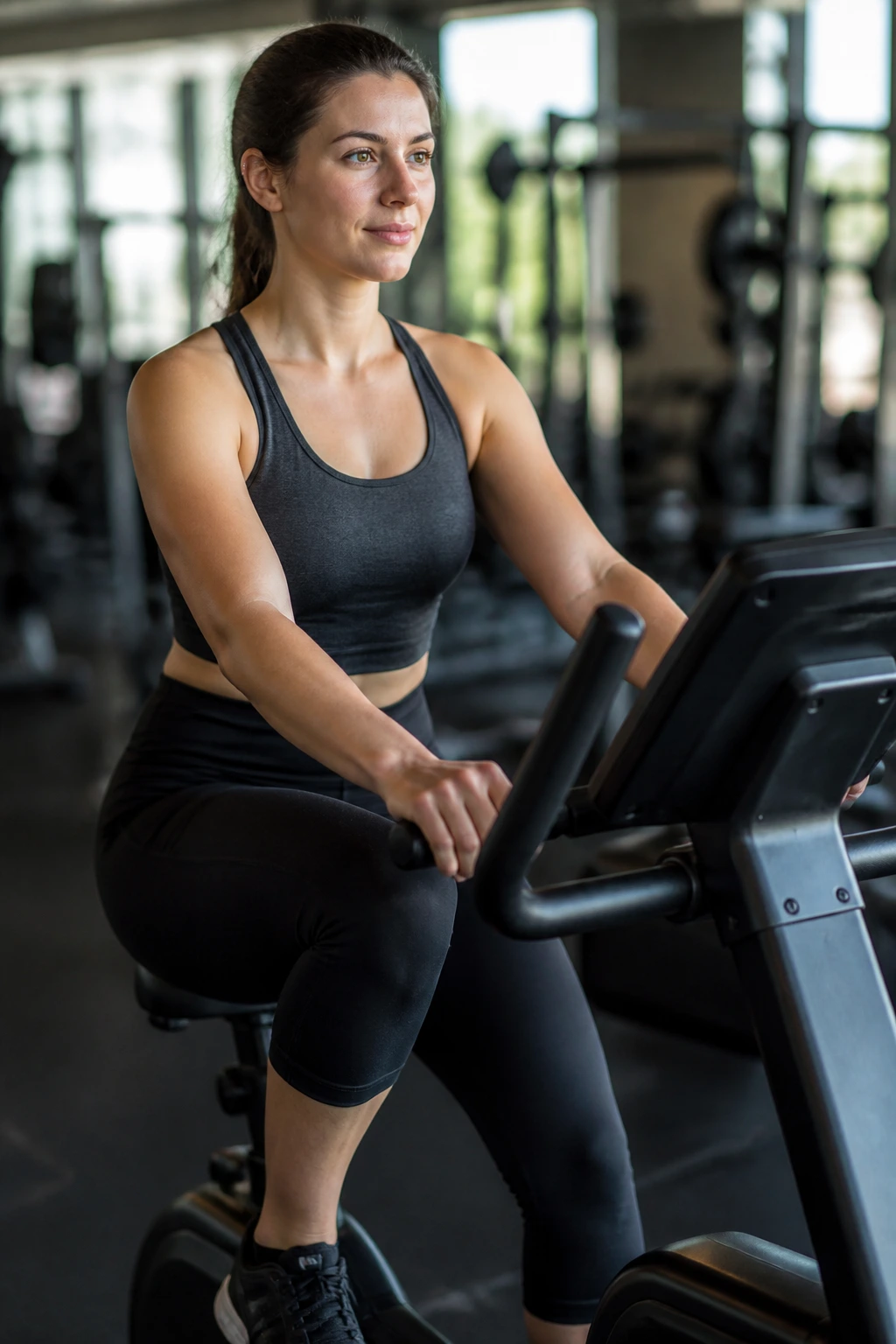
Some workouts feel friendly right away. Others look friendly and then punish your shins, your low back, or your balance.
If walking feels natural, start there. If impact bugs your knees, the bike or elliptical may feel kinder. If you want short, punchy efforts, the air bike, rower, sled, or battle ropes can give you a lot of work in a small window.
I like to think about three things: impact, coordination, and boredom. Low impact matters if you’re new or sore. Low coordination matters if you get flustered by too many moving parts. And boredom matters more than people admit, because the “perfect” workout is worthless if you hate it by minute six.
The nice part is that you do not need to marry one machine. Mix two or three over a week. That keeps things fresh and makes your body adapt without making your brain beg for mercy.
1. Flat Treadmill Walk at a Conversational Pace
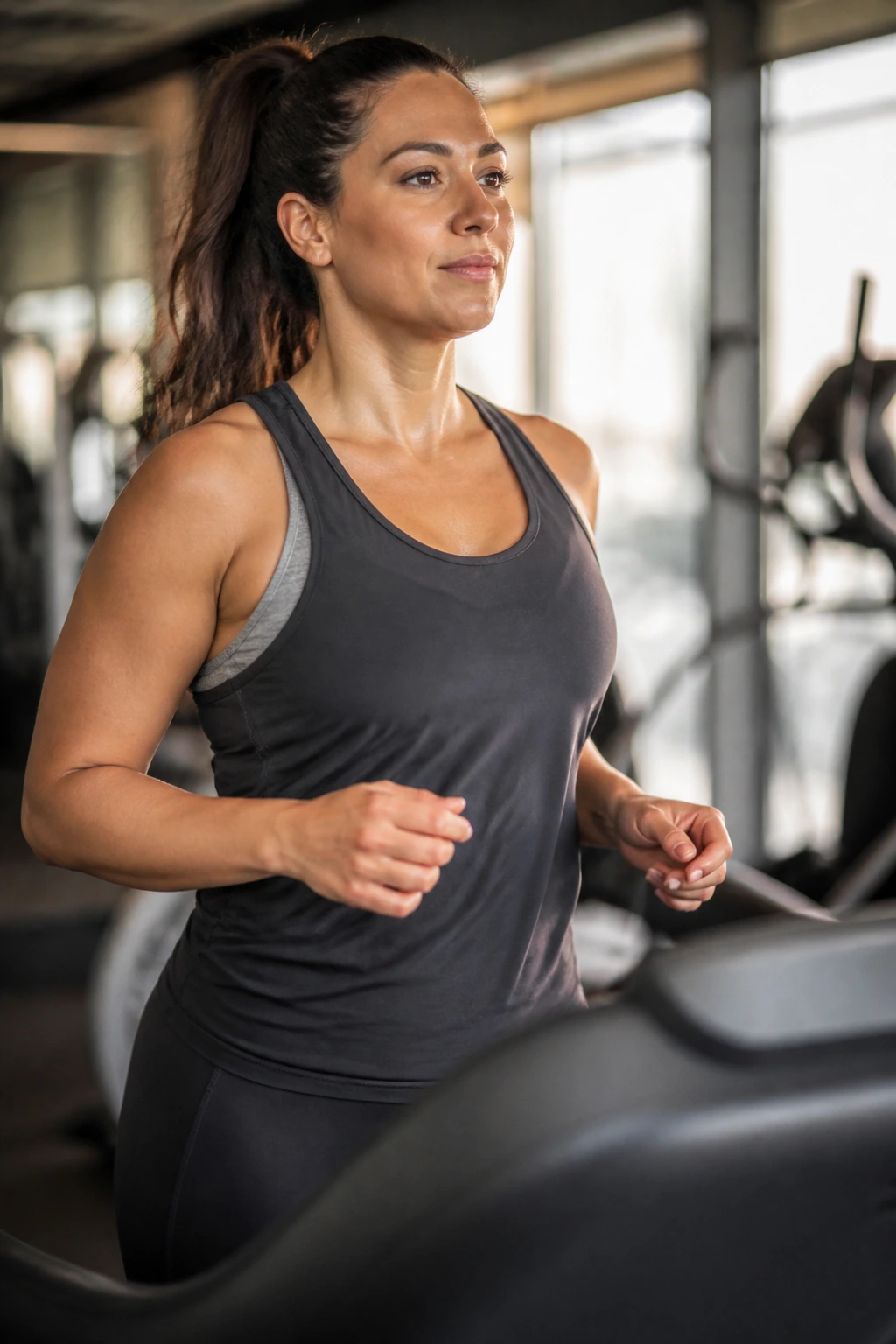
A flat treadmill walk is the plain white T-shirt of cardio. It sounds basic, and it is, but basic is often what gets people moving consistently.
Set the speed around 2.5 to 3.5 mph and walk for 10 to 20 minutes. Keep the incline at 0 to 1 percent if you want the closest feel to outdoor walking. Your shoulders should stay loose, your arms should swing naturally, and your steps should land quietly.
What makes it worth doing
The treadmill gives you one useful thing: control. You can watch pace, time, and distance without guessing, which is comforting when you’re new.
Pro tip: resist the urge to grip the rails. Light fingertips are fine for balance, but hanging on changes your posture and makes the walk easier in a fake way.
2. Incline Walk With Hands Off the Rails
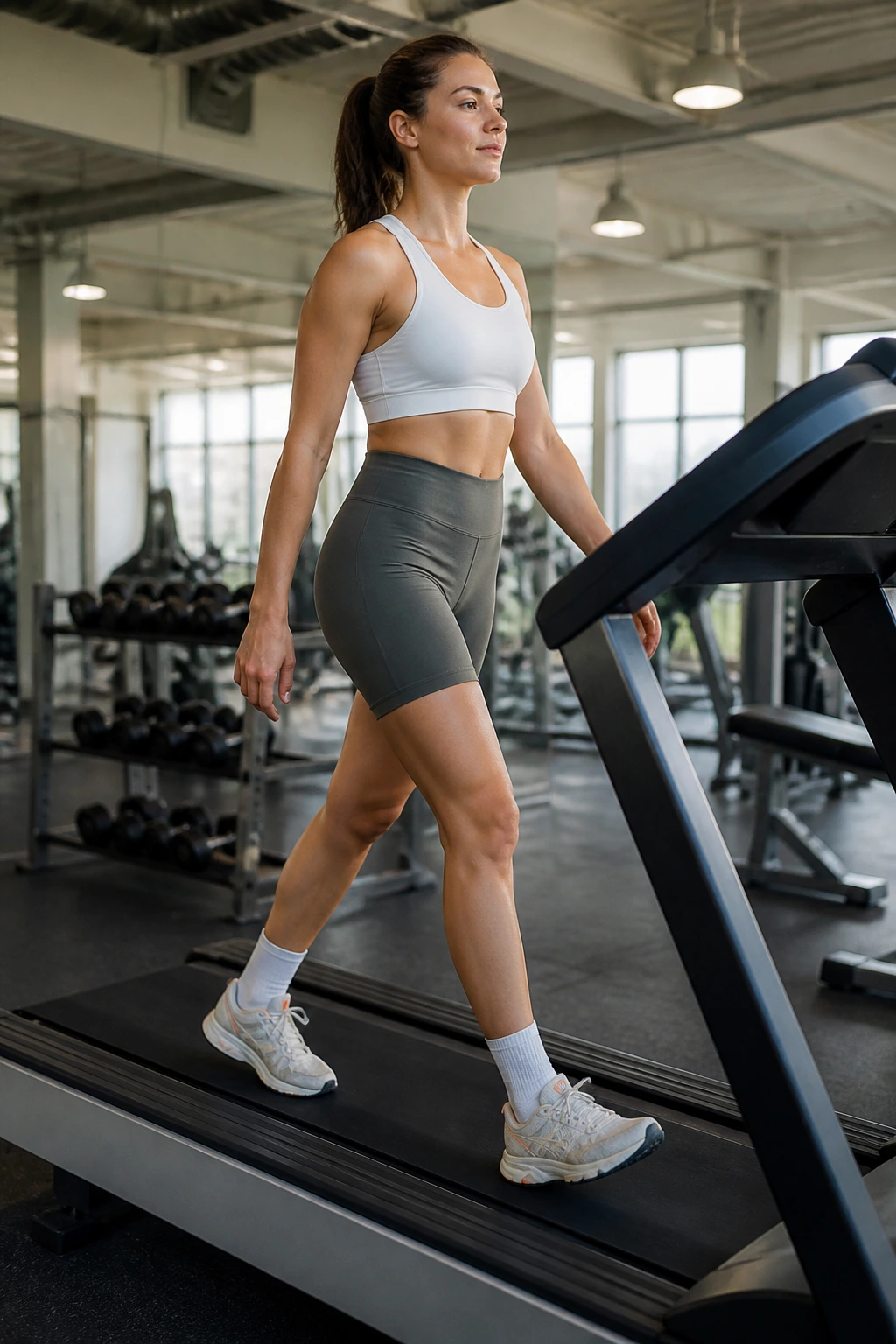
Why does a little incline feel so effective? Because it bumps the work up fast without forcing you to run.
Try 3 to 6 percent incline at a pace that lets you keep your chest tall and your breathing steady. Most beginners land somewhere near 2.8 to 3.5 mph, though speed matters less than the feeling in your legs and lungs.
This one is a favorite of mine because it wakes up the glutes and hamstrings without the sharp landing that comes with jogging. You’ll feel your calves working more than on a flat walk, and your heart rate usually climbs faster than people expect.
How to use it
- Start with 5 minutes flat.
- Add 2 minutes at 3 percent.
- If that feels fine, bump to 5 percent for another round.
- Finish with 3 minutes flat to cool down.
Keep the stride short. Big lunging steps on incline make the hips work oddly, and the calves complain later.
3. Walk-Jog Intervals on the Treadmill

This is the bridge between walking and running, and it’s often the smartest way to get there.
Use 1 minute of easy jogging followed by 2 minutes of walking. Repeat that pattern for 12 to 18 minutes. The jog should feel awkward only for the first minute or two; if it feels like a sprint, you’re going too hard.
People often think they need to “earn” running by doing long, punishing cardio. Nope. A short jog segment repeated a few times teaches your body to tolerate impact without frying your legs.
Watch for this
If your feet slap the belt or your knees cave inward, slow the jog down. Tiny steps are fine. A beginner jog is usually more of a shuffle than a movie scene.
4. Easy Elliptical Strides
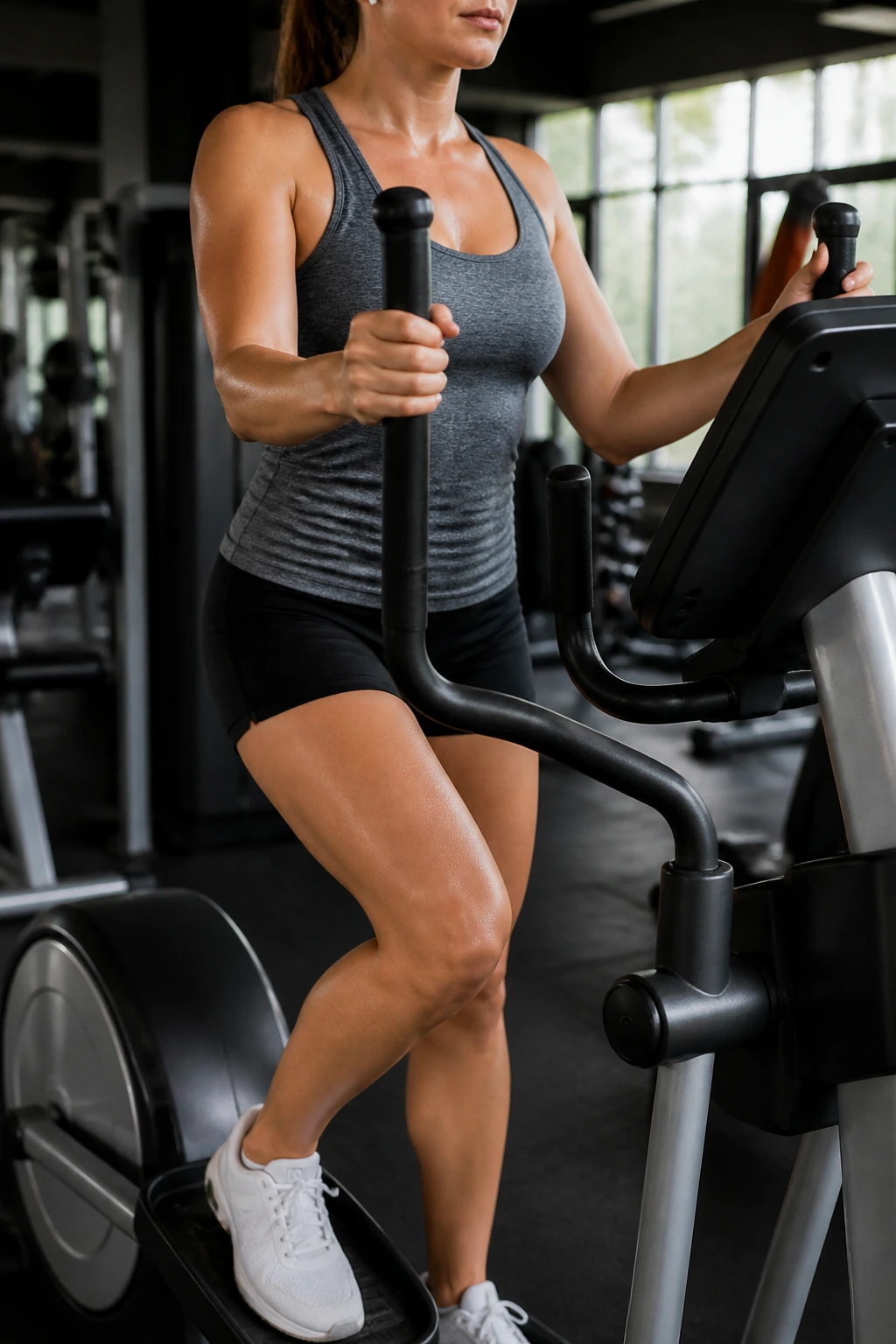
The elliptical is the machine for people who want motion without the thud.
Set the resistance low enough that you can keep the pedals moving for 10 to 25 minutes without your thighs burning by minute four. Your heels should stay planted on the pedals, and your hands should rest lightly on the moving handles if you want extra upper-body work.
The nice thing about the elliptical is the rhythm. Once it settles in, the motion can feel smooth and almost meditative. That is not a word I use often for gym cardio, but here it fits.
What to focus on
- Stand tall, don’t hunch.
- Push and pull evenly with both arms.
- Keep the motion smooth, not jerky.
- Increase resistance only after the first few sessions feel easy.
If your lower back tightens, check whether you’re leaning too far forward. That usually fixes it faster than changing the machine.
5. Stationary Bike Steady Ride
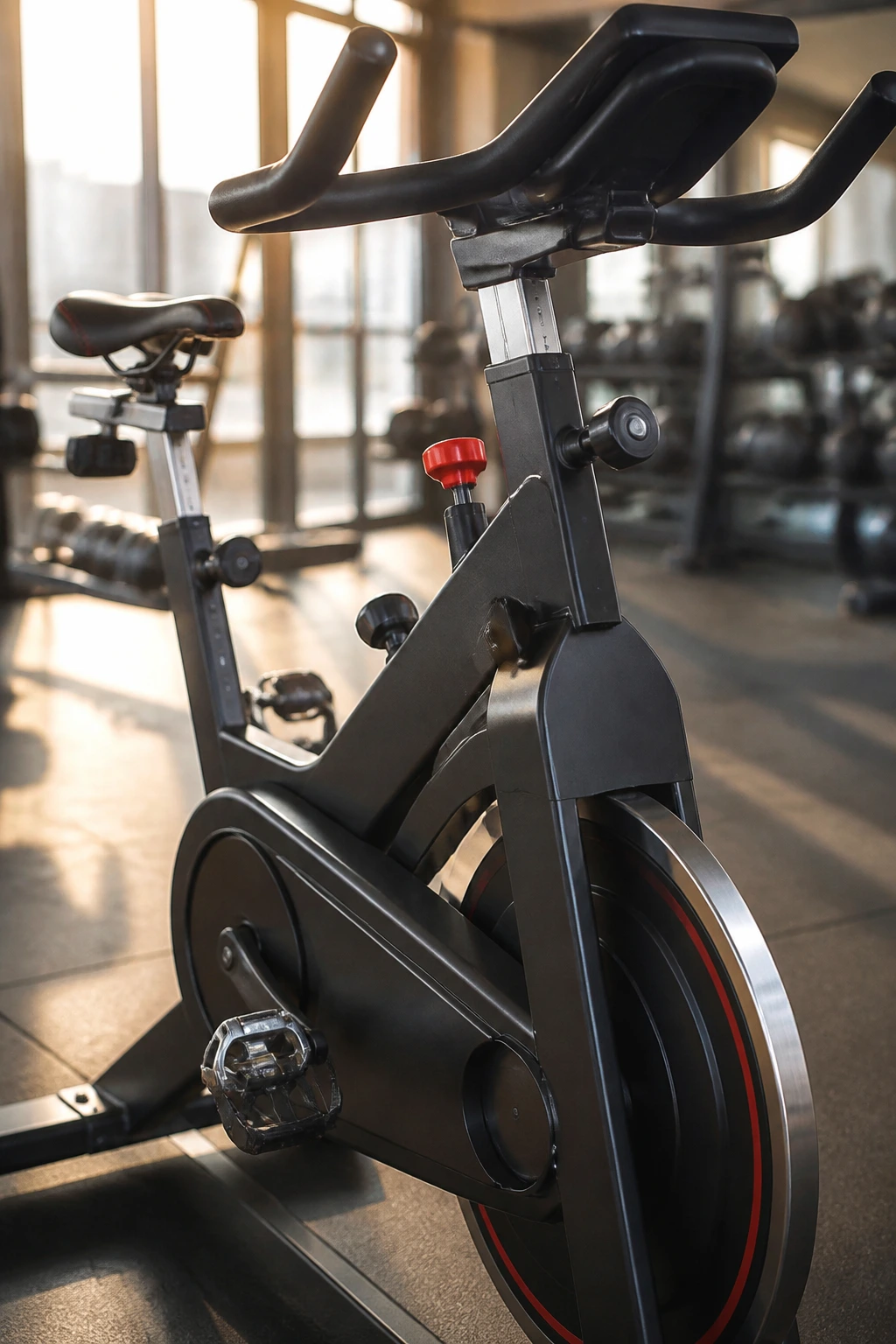
A stationary bike is one of the easiest places to build cardio confidence.
Set the seat so your knee has a soft bend at the bottom of the pedal stroke. Then ride at a pace that lets you breathe harder but still keeps your face relaxed. A good starter ride lasts 12 to 20 minutes with resistance low to moderate.
I like this one for days when you want to move but don’t want to pound the floor. The bike doesn’t care if you’re tired, and your joints usually appreciate the break. The catch is that people sometimes sit too low, which turns the workout into a quad burner and makes the knees grumpy.
Small fix. Big difference.
6. Recumbent Bike for Low-Back-Friendly Cardio
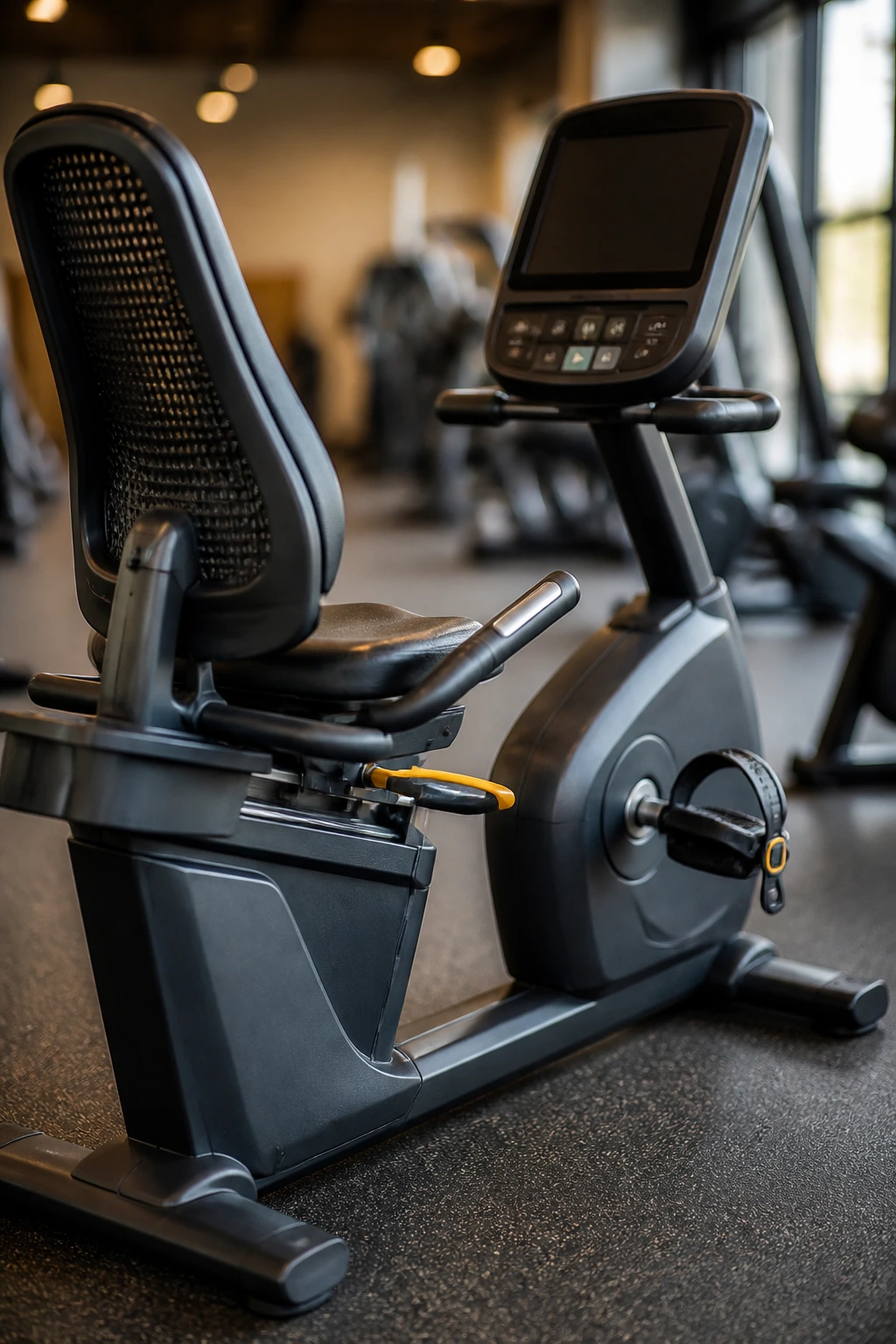
The recumbent bike looks a little sleepy, which is exactly why some beginners love it.
You sit back in a supported seat, push the pedals forward, and keep your torso relaxed. That makes it a strong pick for people with touchy lower backs, balance issues, or days when standing cardio feels like too much. Try 15 to 25 minutes at a moderate effort.
What makes it different
Unlike the upright bike, the recumbent keeps your hips more open and your spine supported. That can make longer sessions feel less intimidating.
It is also easy to stay honest here. Set a timer, choose a level that makes you breathe a bit harder after five minutes, and keep pedaling. Boring in the best way.
7. Rowing Machine Technique Reps
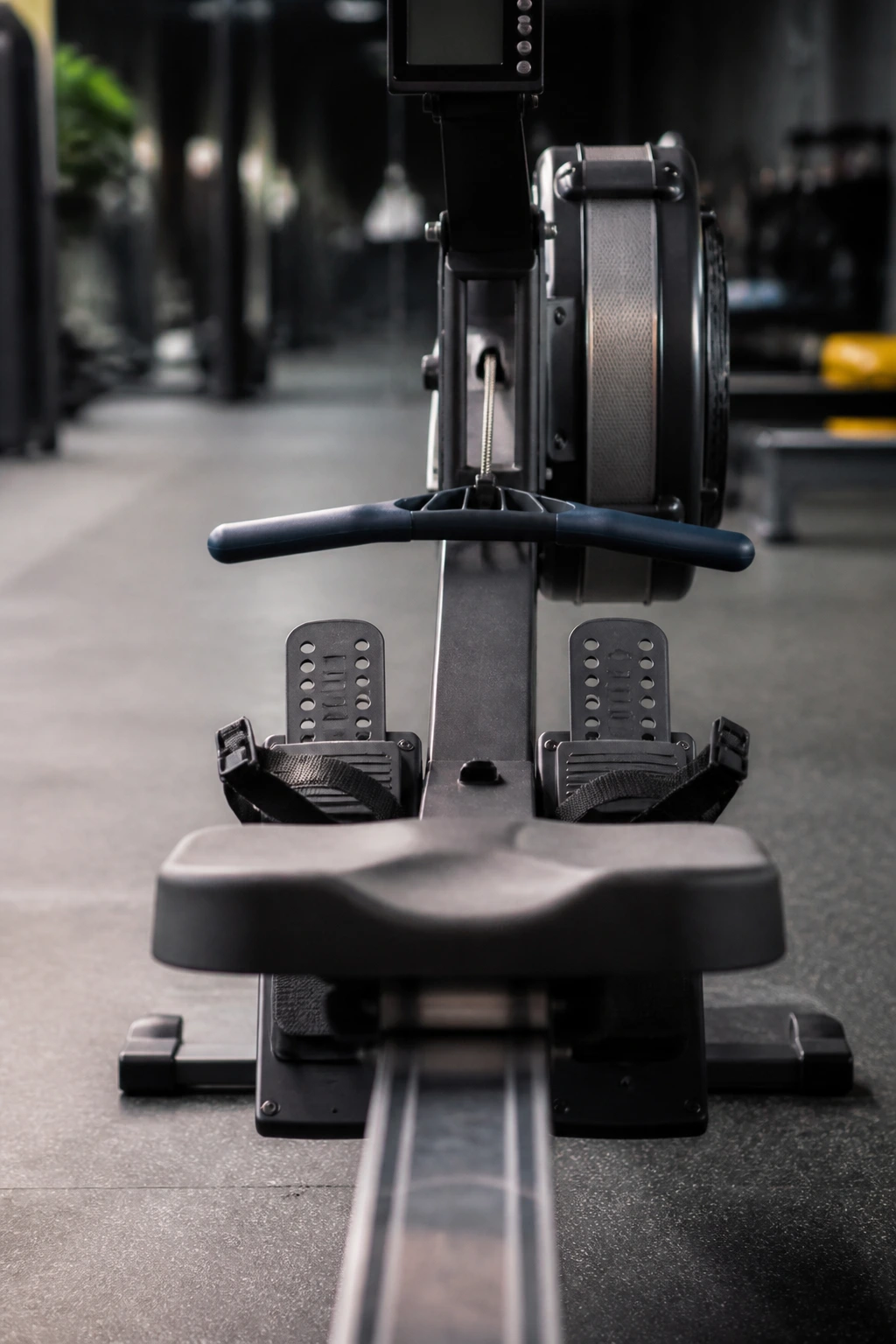
The rower is fantastic, but only if you respect the order of the movement.
Use short sets of 30 to 45 seconds rowing with 60 to 90 seconds of easy rest between rounds. Keep the damper moderate, not maxed out, and think legs, then body, then arms on the pull. Return in reverse.
Why it works
Rowing gives you legs, back, and arms in one package, which is efficient. It also teaches rhythm. If the machine feels awkward, that usually means the stroke is rushing.
A clean beginner row should feel smooth in the seat, not sloppy in the shoulders. Keep the handle path straight, and don’t yank the chain toward your neck. That little mistake shows up everywhere on new rowers.
8. Stair Climber Micro-Intervals
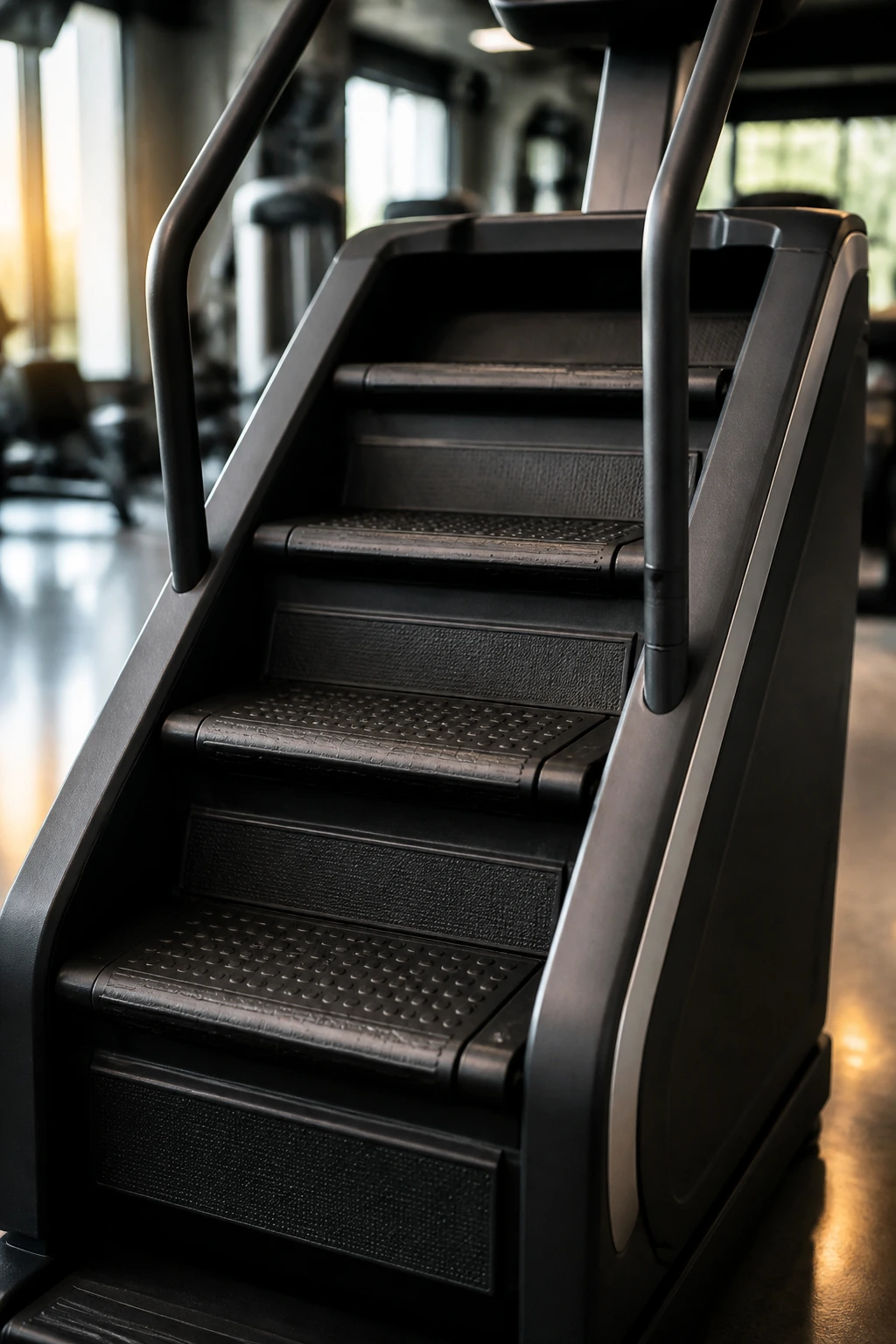
The stair climber is honest. It will tell you, fast, if you’re awake.
Use 20 to 30 seconds of climbing followed by 60 to 90 seconds of standing or slow stepping. Keep the pace slow enough that each foot lands fully on a step. If the machine has rails, use them lightly, not as a crutch.
This workout wakes up the glutes, calves, and heart all at once. It also bites if you start too aggressively, so I’d rather see a beginner do six clean rounds than one heroic round and five wobbly ones.
How to scale it
- Start at the lowest or next-to-lowest speed.
- Keep your chest forward, not folded over.
- Step all the way onto each stair.
- Stop before your heels start to bounce.
Short bursts are the point here. No need to make it harder than that.
9. Air Bike Sprints With Long Recoveries
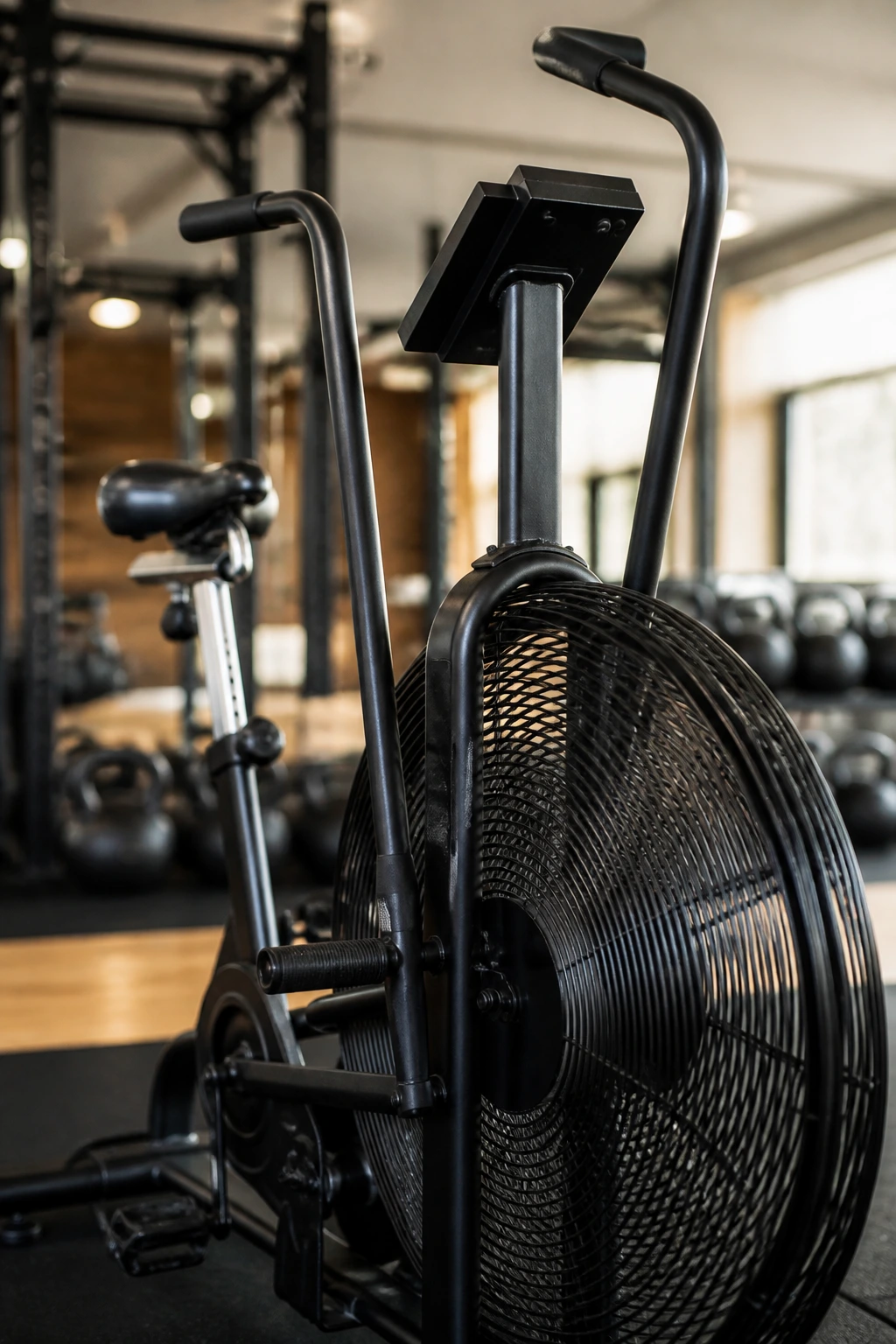
The air bike looks harmless until you start pedaling. Then it gets loud.
Do 10 to 15 seconds hard and 75 to 90 seconds easy. Repeat for 6 to 10 rounds. The effort should spike your breathing fast, but the recovery is where beginners win this one. Let your heart rate fall before the next round.
The air bike is good for people who like clear effort. Hard means hard. Easy means easy. There’s no pretending.
One sentence is enough here: Respect the recovery.
10. Arm Bike Intervals
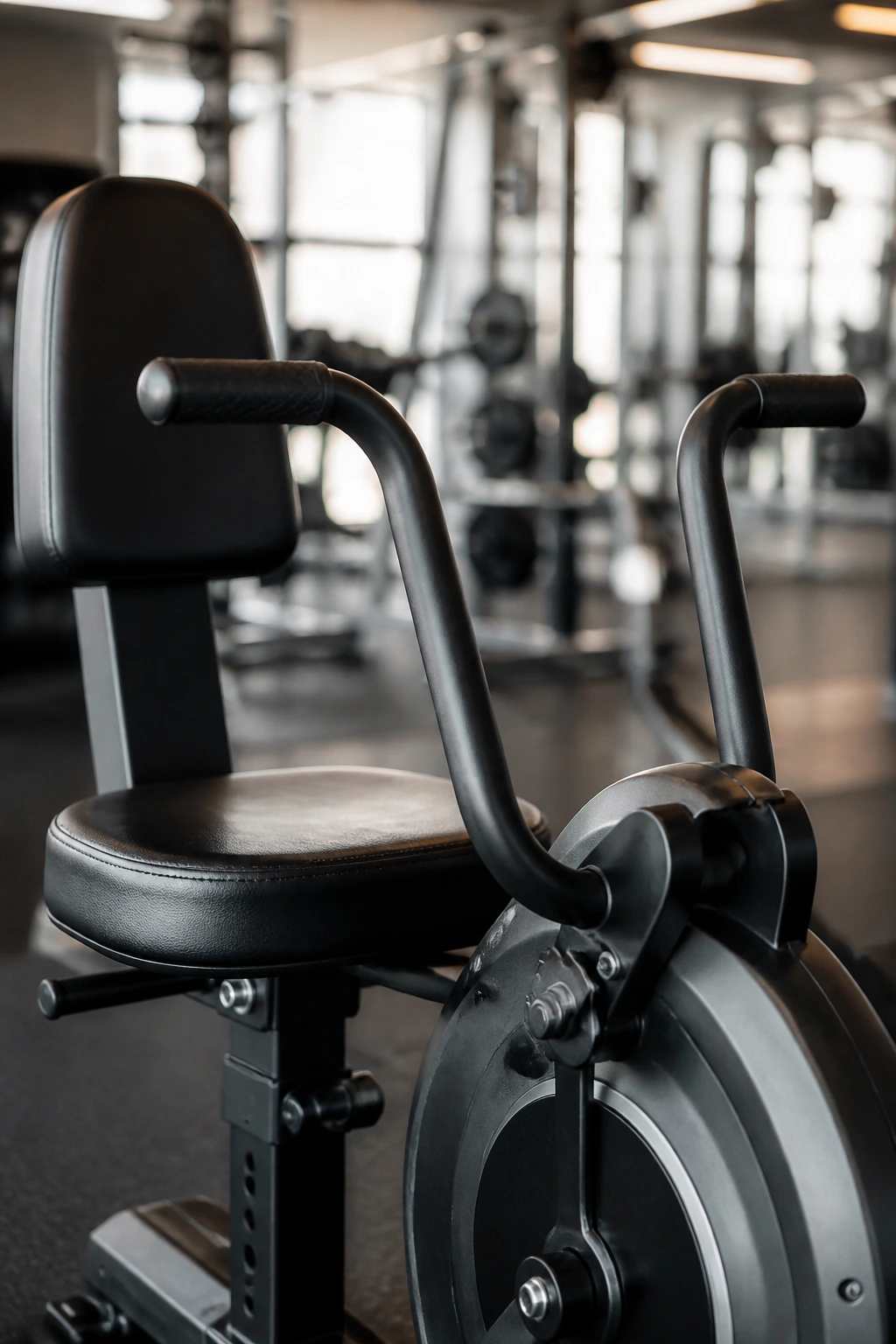
The arm bike is underrated because it doesn’t look glamorous.
Set the seat so your shoulders stay relaxed, then move the handles in a steady rhythm for 20 to 40 seconds. Rest for 60 to 90 seconds, and repeat. If your gym has one, this is a solid option for days when your legs feel cooked or you want to spare impact entirely.
What to notice
Your forearms will tire sooner than you expect. That is normal. Keep the shoulders down and the wrists neutral, and do not try to win the session by jerking the handles.
It’s also a sneaky good warm-up. Five minutes here can wake up the upper body before you move to a bike or treadmill.
11. Indoor Track Walks and Gentle Laps
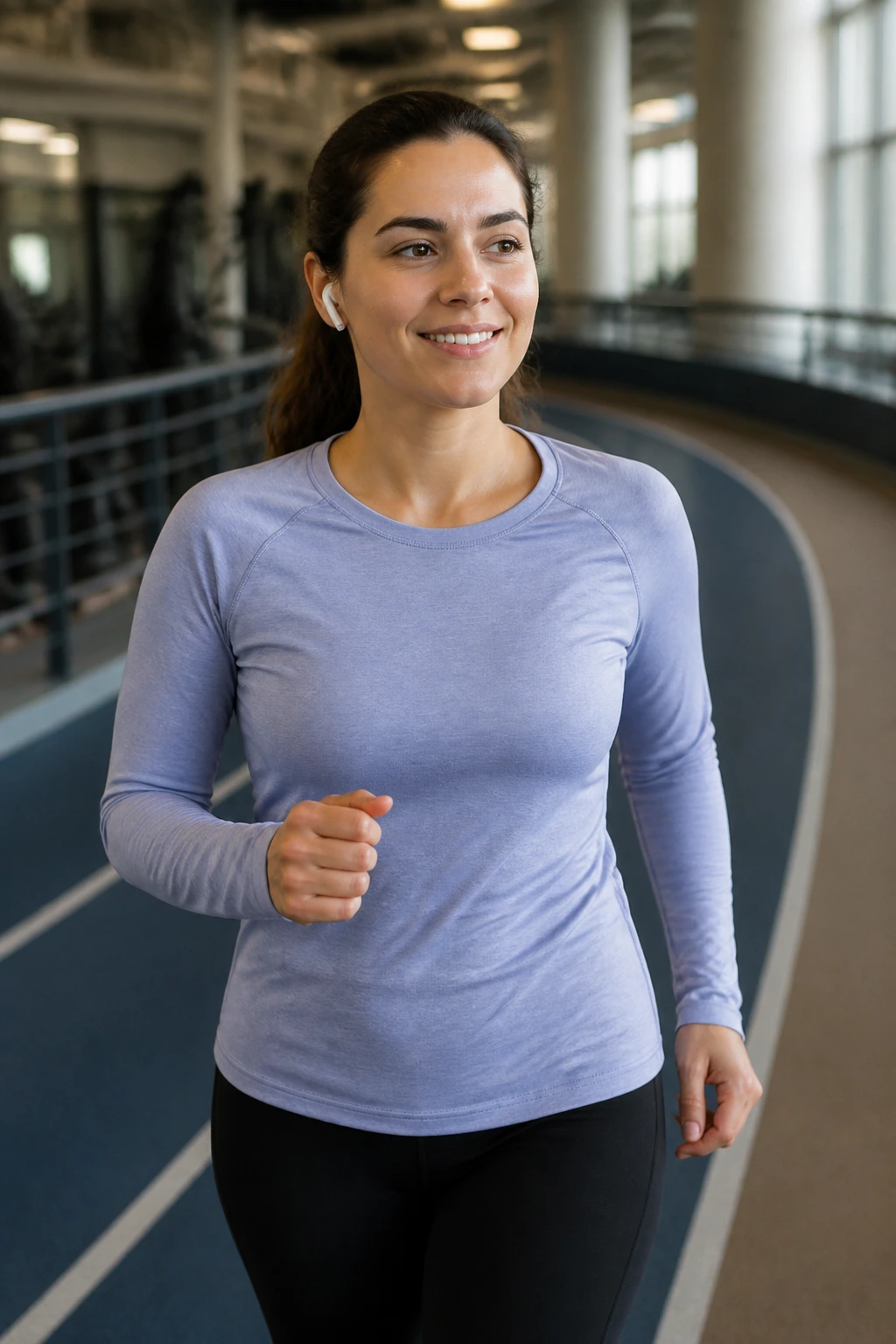
A track changes the mood of cardio. No screen. No machine belt. Just laps.
Walk the straight sections at a brisk pace and ease up around the curves if you need to. A starter session can be 8 to 12 laps, which usually works out to 10 to 15 minutes depending on the track size. Some people like counting laps because it feels cleaner than watching a clock.
Why it’s easier to stick with
There’s something calming about moving in a loop. You can see the whole space. You can stop if needed without fiddling with settings.
Use the track if treadmills make you feel boxed in. Keep your arms swinging, stay off the inside lane unless the gym allows it, and breathe through your mouth if the pace starts to climb.
12. Stepmill 30-Second Sets
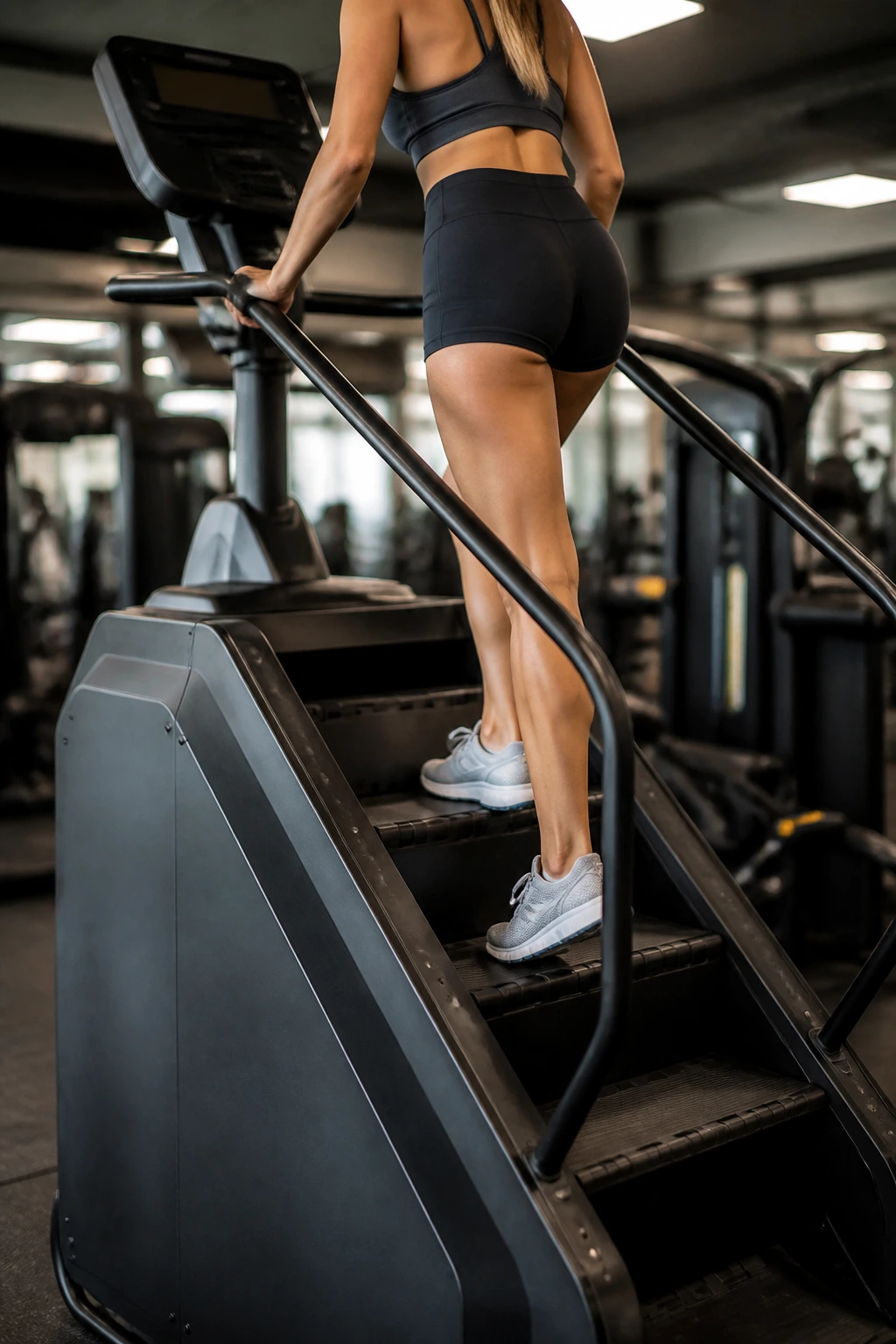
The stepmill is the machine that makes people stare at the floor.
That said, it can be a very manageable beginner cardio workout if you keep the sets short. Try 30 seconds on, 90 seconds off for 6 to 8 rounds. Use the slowest comfortable speed and step with your whole foot.
What to watch for
- Don’t lean on the rails.
- Don’t hop steps to “save time.”
- Keep your hips level.
- Stop if your knees start to cave inward.
The stepmill rewards patience. If your first week is only three rounds, that is still a win. No one needs to prove anything to the stairs.
13. Jump Rope Singles and Recovery Walks
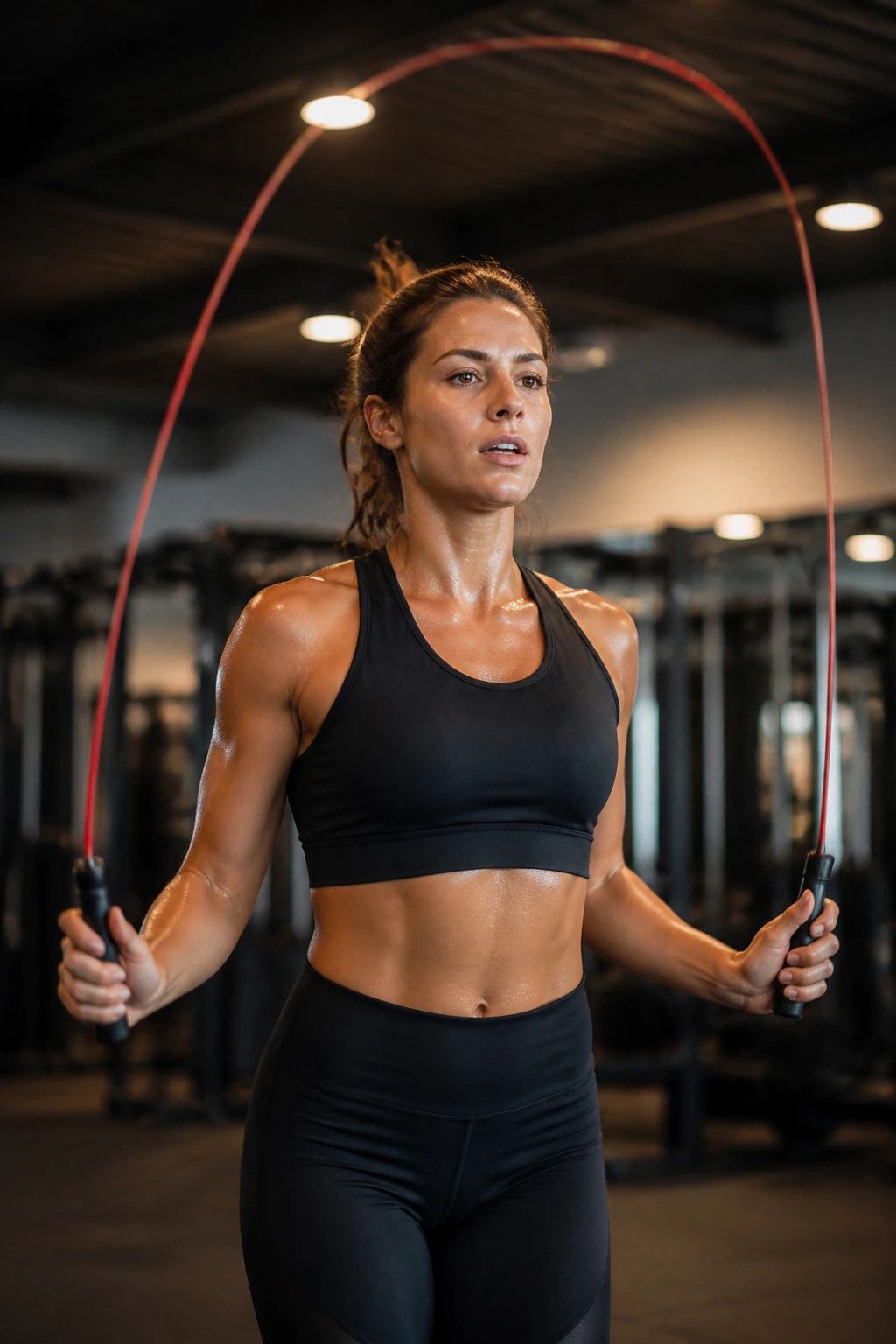
Can beginners jump rope? Yes, if they scale it down.
Start with 20 to 30 single jumps, then walk for 30 to 60 seconds. Repeat for 6 to 10 rounds. If continuous jumping feels rough, break the rope movement into tiny chunks and focus on soft landings. You’re aiming for quiet feet, not show-off height.
The thing most people get wrong is trying to jump too high. A rope clears fine with barely any lift. Tiny bounce. Fast wrists.
If you struggle with the rhythm
Do not force speed first. Practice turning the rope without jumping for a few reps, then add one jump at a time. That little awkward phase passes quicker than people think.
14. Battle Rope Rounds
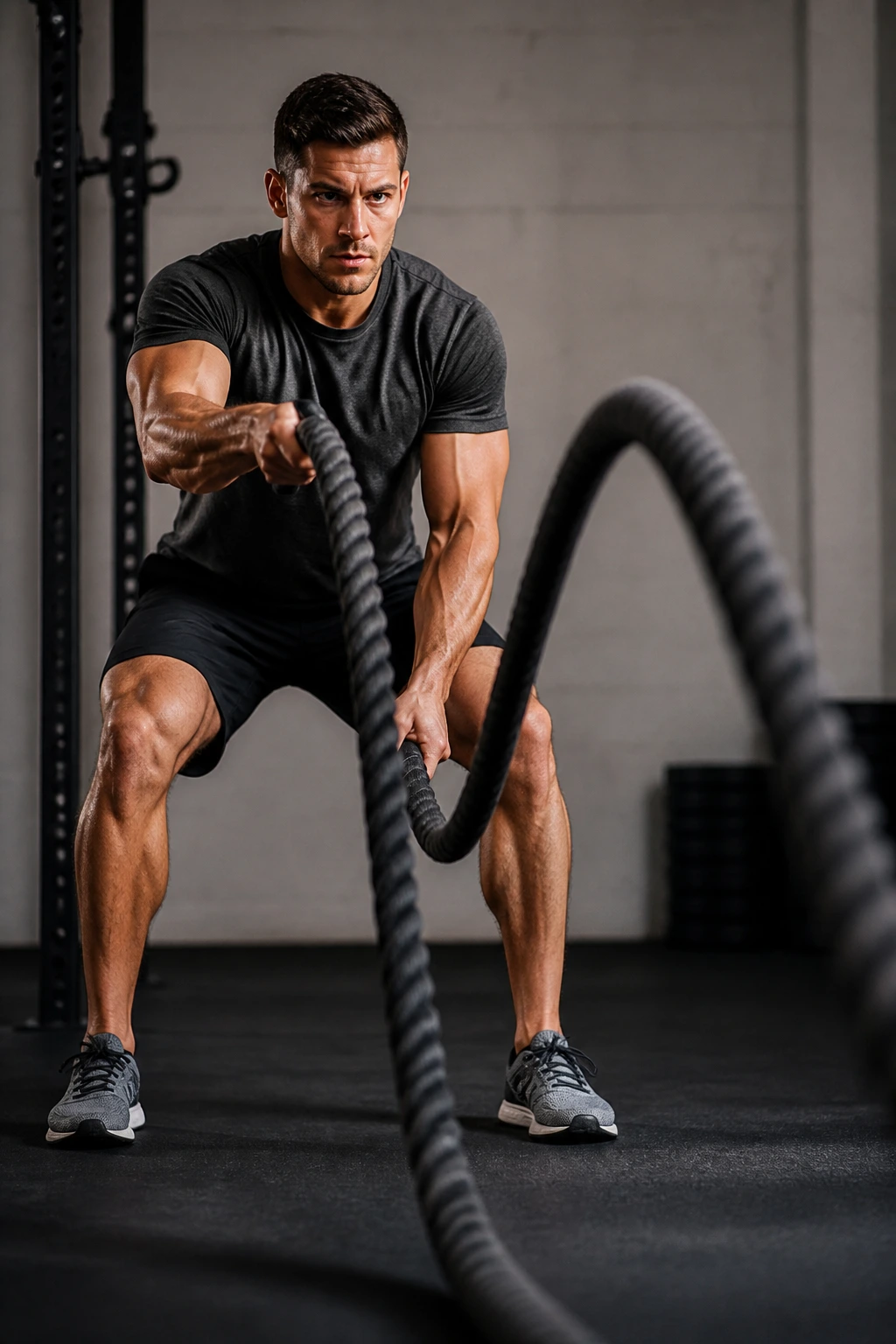
Battle ropes look like punishment in a gym costume. They are also a fantastic beginner cardio tool.
Work for 15 to 20 seconds, then rest for 40 to 60 seconds. Start with alternating waves, then try both arms together once the motion feels natural. Keep your knees soft and your core braced so the ropes do not pull you off balance.
What makes this useful
The ropes push your heart rate up fast without needing long impact. They also teach timing. The arms burn, the breathing speeds up, and then the rest comes in just in time.
Best move: pick waves you can repeat with the same shape for every round. Sloppy rope waves look dramatic. They don’t help much.
15. Sled Pushes Across the Turf
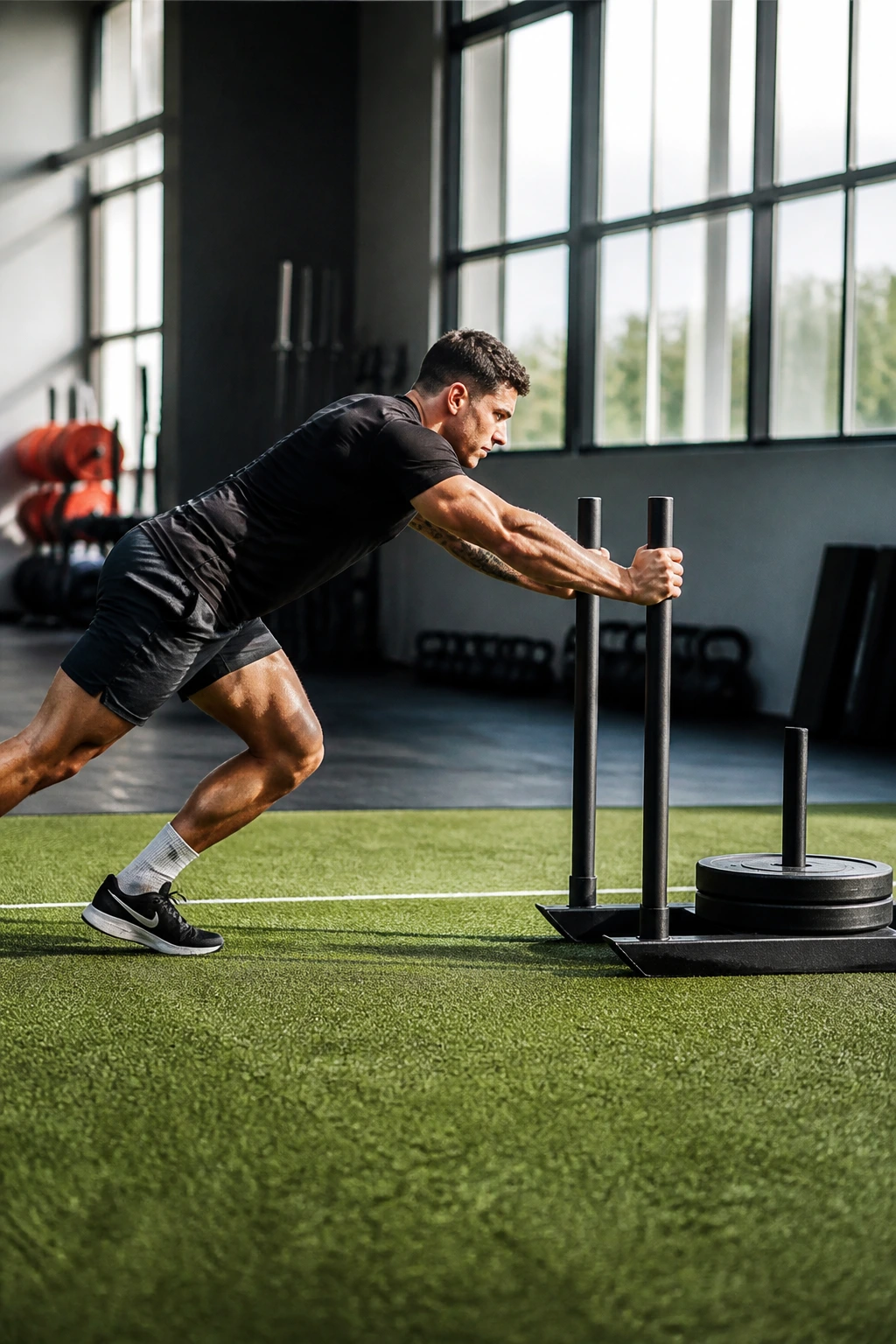
If your gym has turf, use it. Sled pushes are brutally simple.
Load the sled light, lean slightly forward, and push for 10 to 20 meters at a steady pace. Rest enough to walk back and recover fully. Beginners should think of this as a power walk with resistance, not a race.
This one is gold because it trains the legs and lungs together without much technical fuss. No bouncing. No complicated pattern. Just force into the floor.
A common mistake is piling on weight too early. Heavy sleds turn the push into a grind that wrecks your form. Light sled, clean steps, smooth breathing. That’s the start.
16. Sled Pulls and Backward Drags
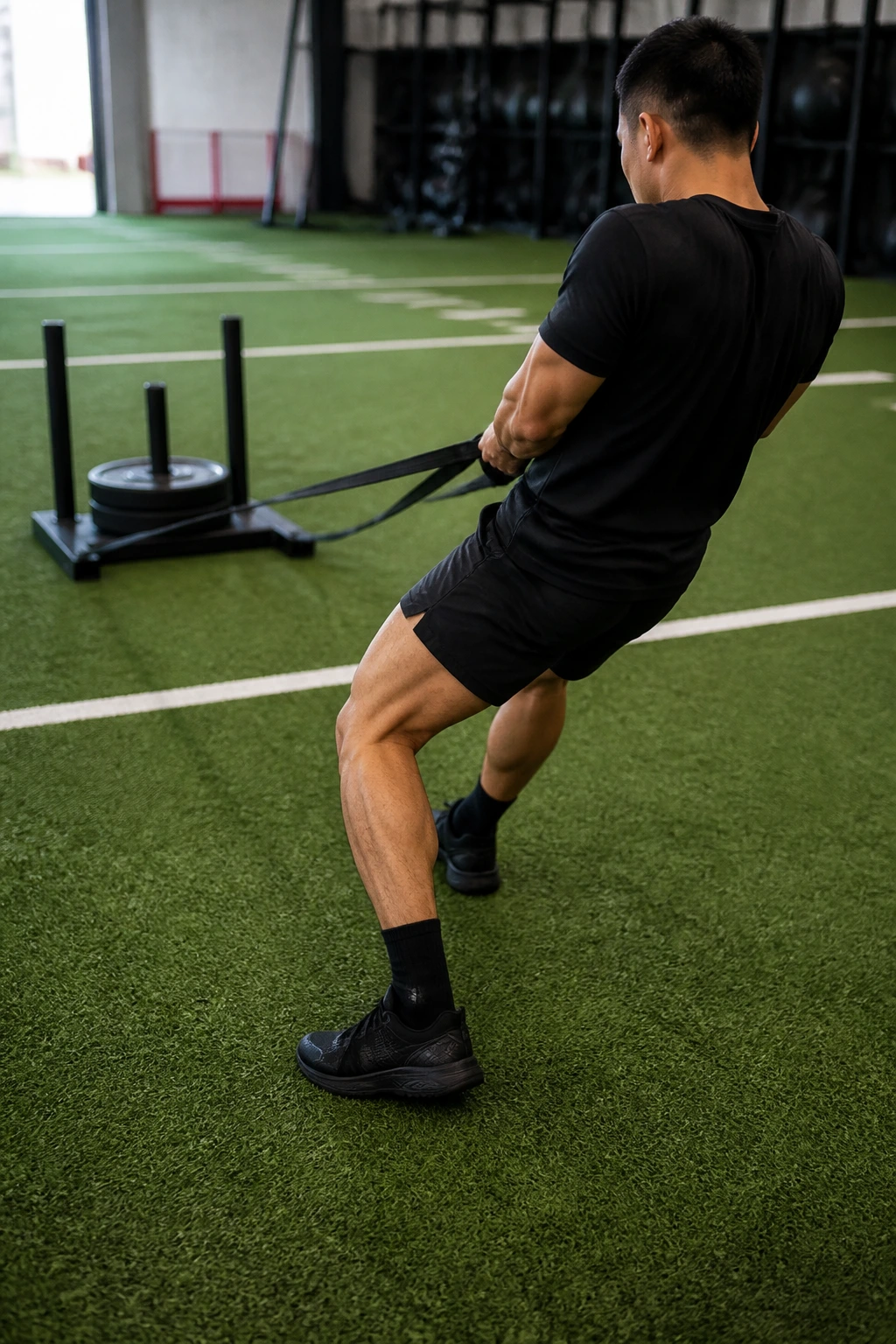
Backward sled work gets less attention than pushing, and that’s a shame.
Use a light load, attach a strap if your gym has one, and walk backward for 10 to 15 meters. Keep your chest up, your knees bent, and your steps short. If you’ve never done this before, one or two sets can light up the quads in a way that surprises you.
Why it’s a smart beginner choice
It feels different enough from walking that it wakes up unused muscles. It also tends to be gentle on the joints when done with control.
You can alternate one push and one pull in the same session. That makes the workout feel more complete without getting fancy.
17. Medicine Ball Slams
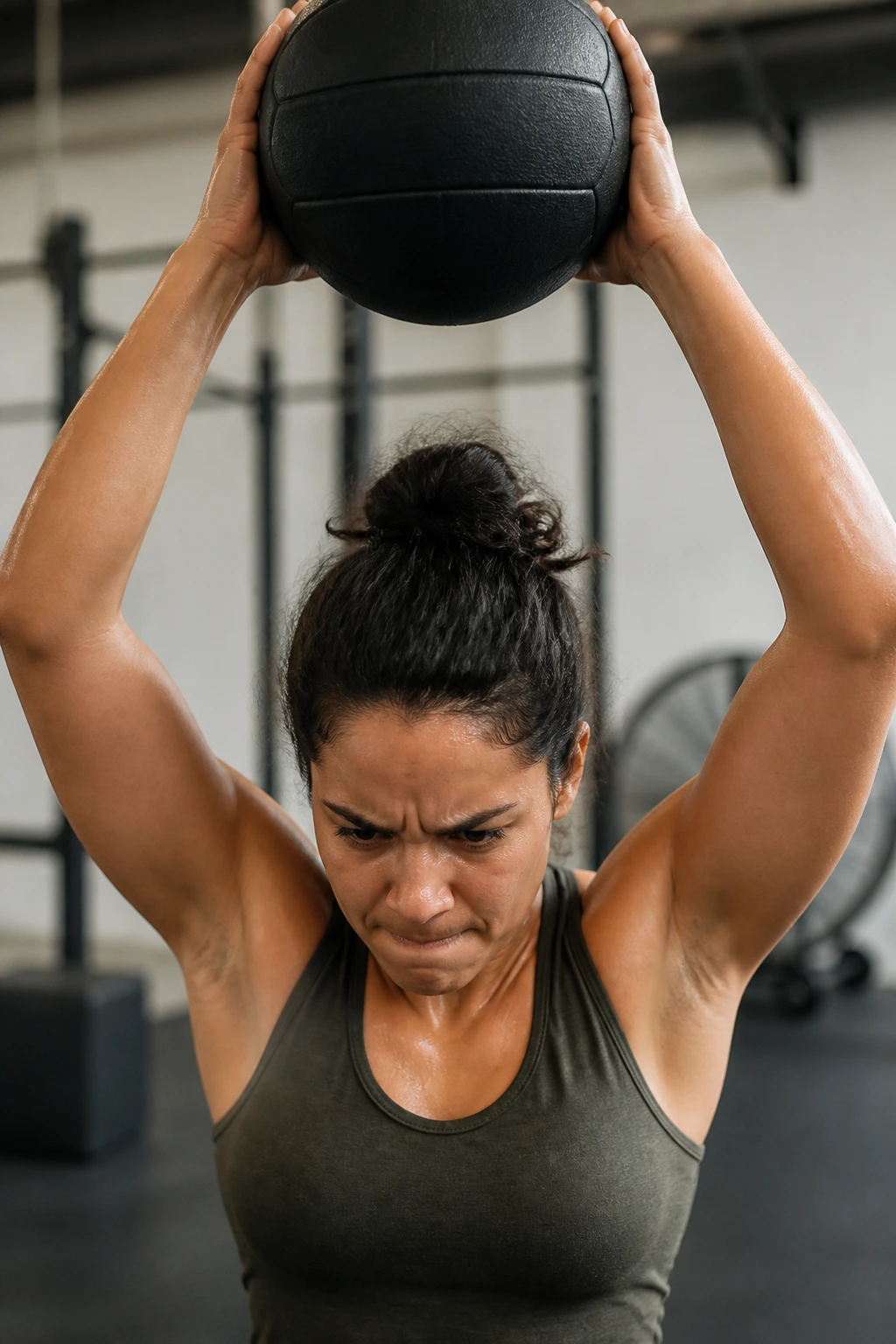
Medicine ball slams are messy, loud, and useful.
Pick a ball that feels manageable overhead and do 8 to 12 slams at a time. Lift it with control, slam it into the floor, catch the rebound if your gym allows it, and reset. Rest 45 to 60 seconds between sets.
The point is not rage. The point is full-body effort with a clear end.
How to keep it beginner-friendly
Use a lighter ball than you think you need. If your low back arches hard on the lift, the ball is too heavy or your range is too big. Keep your ribs down and your knees soft.
18. Kettlebell Carry Circuits
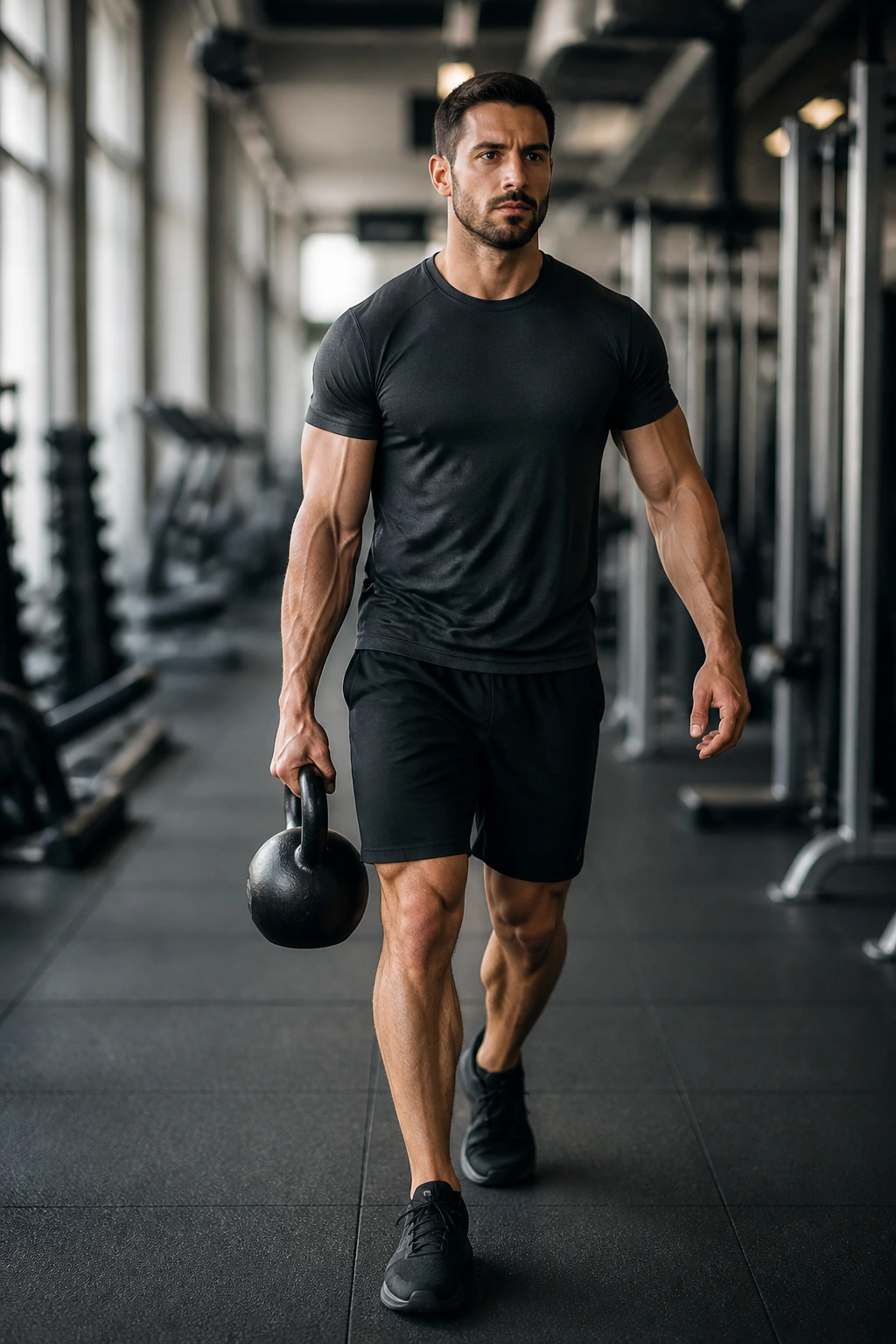
Carries look too simple to count as cardio. They do count.
Grab a light-to-moderate kettlebell in one hand or two, walk 20 to 40 yards, rest, then repeat. Suitcase carries, farmer carries, and front-rack carries all work. The goal is steady walking with a tighter core and a stronger grip.
Why it feels different
Unlike machine cardio, carries make you manage posture while you move. Your breathing gets sharper, but your joints aren’t taking repeated impact.
I like this for beginners who want something athletic without needing coordination drills. Keep the walks smooth. If the weight makes you lean hard to one side, drop it.
19. Heavy Bag Rounds

Heavy bag work is one of the most satisfying beginner cardio sessions in the gym.
Work in 1-minute rounds with 1 minute of rest. Use jabs, crosses, and basic hooks only at first. Stay light on your feet, keep your hands up, and aim for rhythm instead of power. The bag should move, not swing wildly across the room.
The best part is that it feels like play. The second-best part is that it’s sneaky cardio.
If your wrists or shoulders feel shaky, slow down and shorten the punches. Crisp beats hard.
20. Shadow Boxing on the Turf
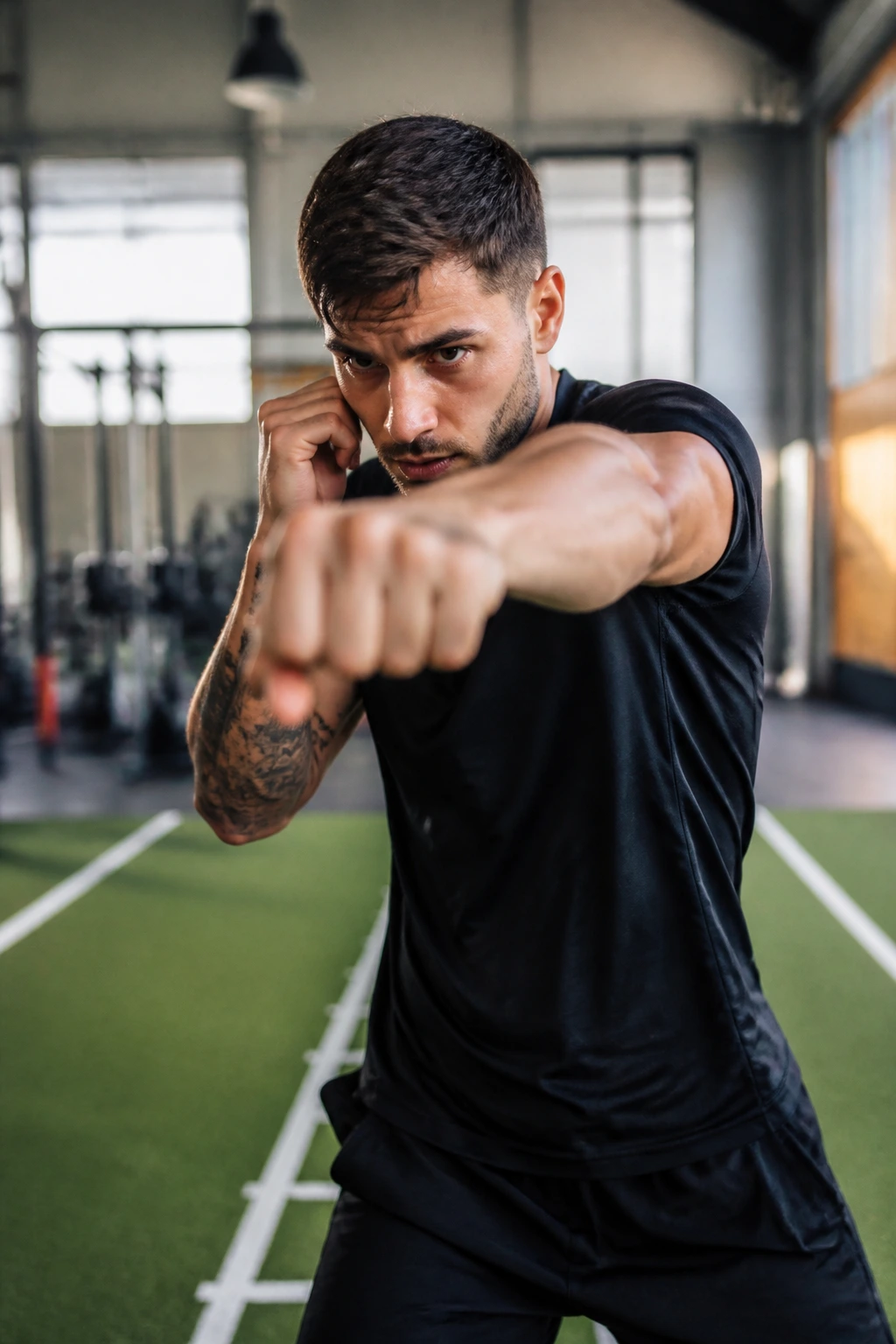
No bag? Fine. Shadow boxing still raises the heart rate.
Move for 30 to 60 seconds, then walk or bounce in place for another 30 to 60 seconds. Use simple combinations and keep your guard high. The floor space matters less than the rhythm and footwork.
What to think about
- Stay light on the balls of your feet.
- Turn the hips a little with each punch.
- Keep the chin tucked.
- Breathe out on the strike.
This session looks easy until you do three rounds and notice your calves, shoulders, and lungs all talking at once.
21. Low-Impact Step Aerobics
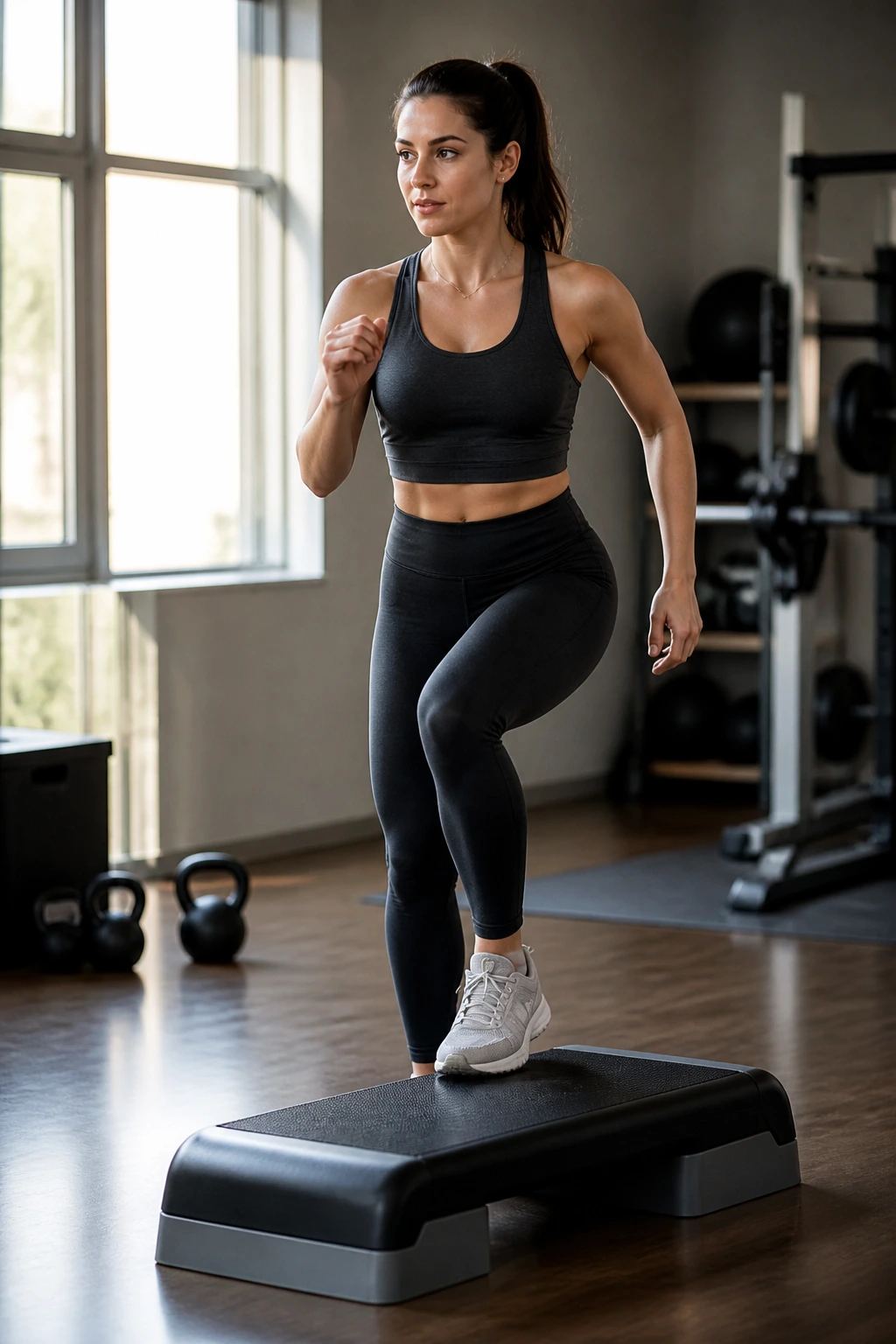
Step aerobics gets ignored by people who have never tried a good class or a simple platform routine.
Use a low step and practice moves like step-ups, taps, knees, and side steps for 10 to 20 minutes. Keep the choreography simple. The goal is flow, not a perfect performance.
Why it works for beginners
You’re moving continuously, but the impact stays modest if the platform is low. It also gives your brain something to do, which helps if straight machine work makes you restless.
A small platform is enough. If the step looks too high when you first stand on it, lower it. That’s the correct move, not a defeat.
22. Cone Drills and Lateral Shuffles
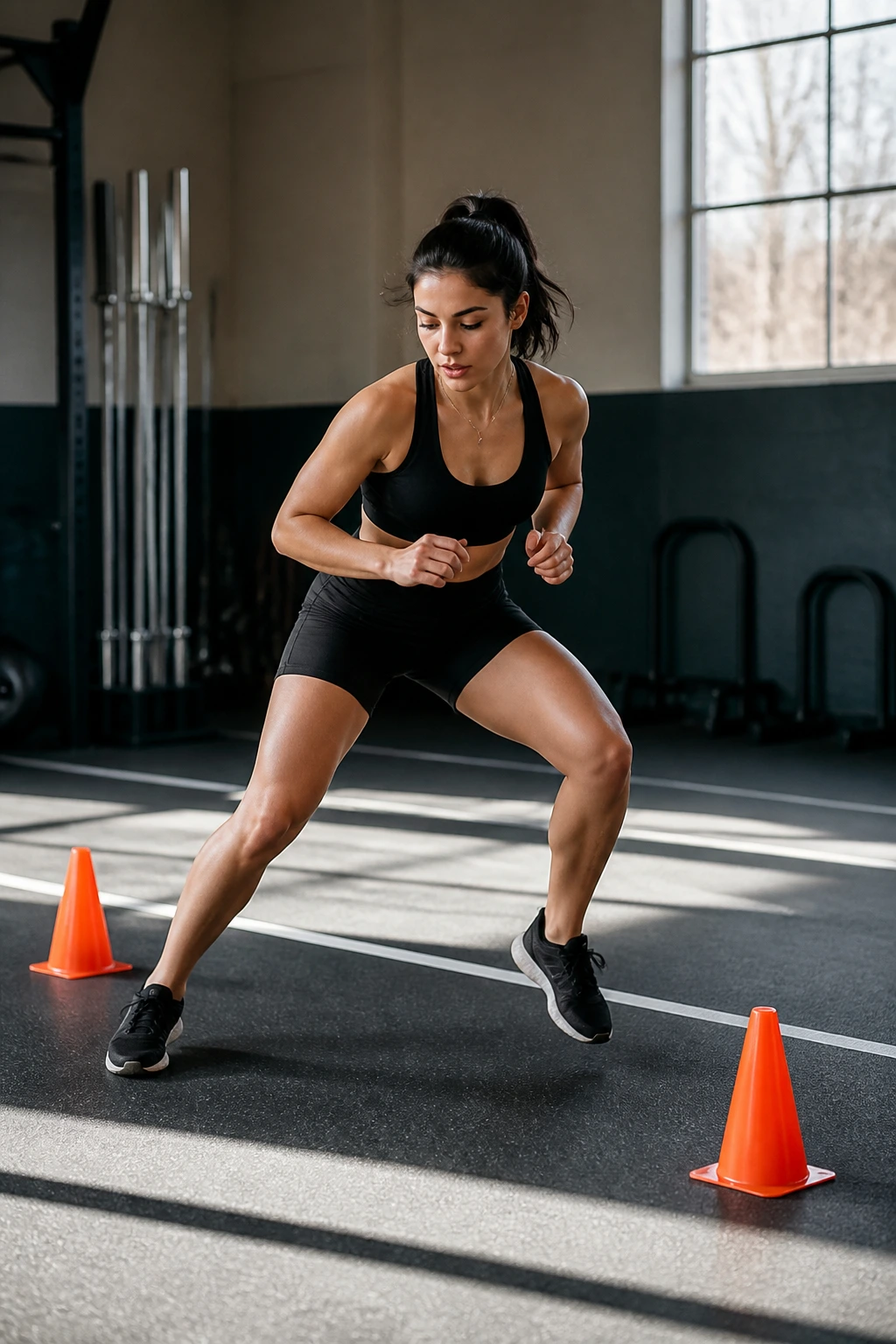
Side-to-side work changes the feel of cardio fast.
Set up two cones or markers about 10 to 15 feet apart. Shuffle between them for 20 to 30 seconds, then walk back and recover. Add a few forward and backward runs once the movement feels stable.
This kind of training is good for beginners because it teaches control in more than one direction. Your ankles, hips, and feet get a little smarter with every round.
Keep the stance athletic but not wide enough to strain the groin. Short steps beat big dramatic slides.
23. Bodyweight Cardio Circuit
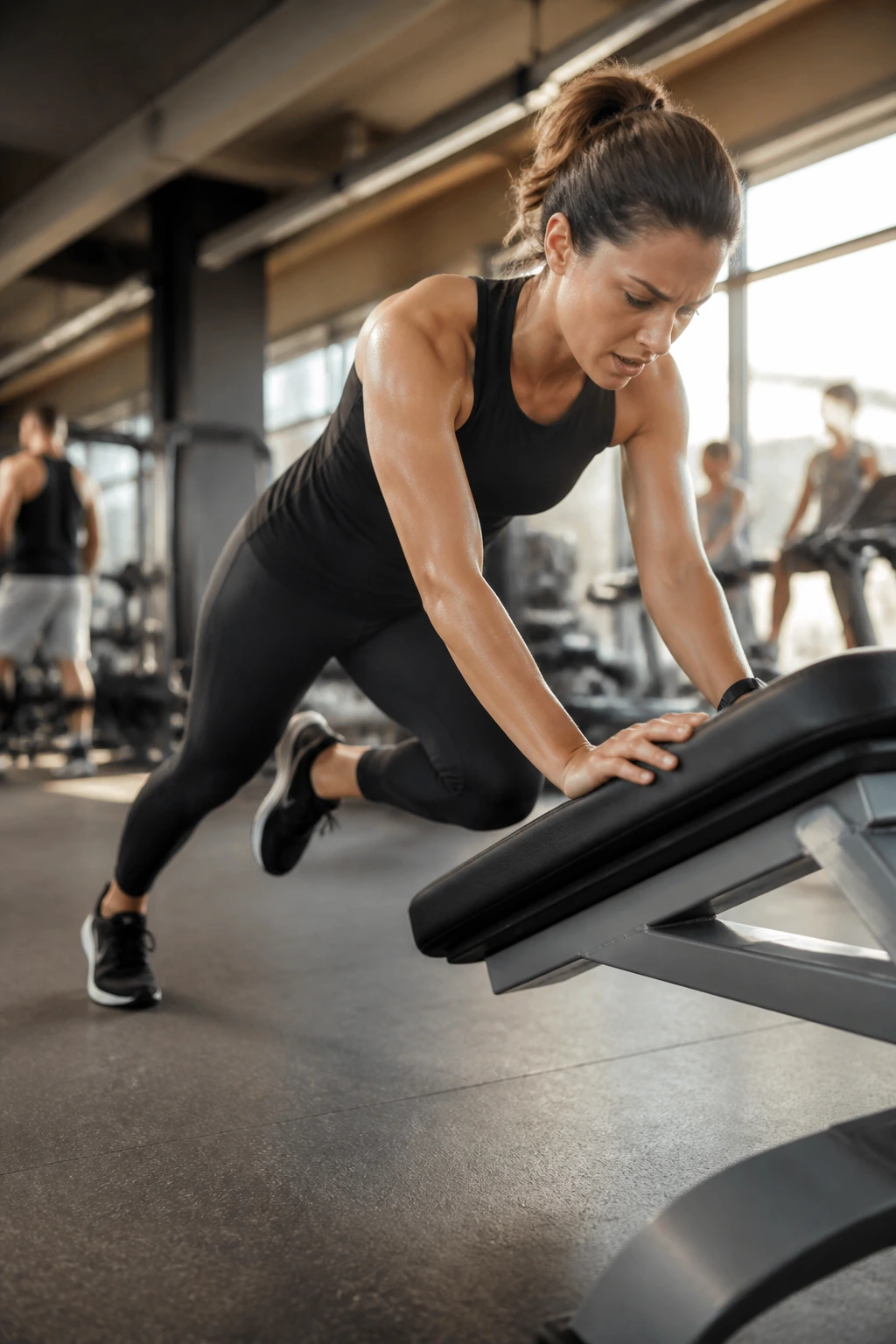
A bodyweight circuit is the gym version of “I don’t want to think too hard.”
Pick four moves: marching high knees, squat-to-reach, step-back lunges, and mountain climbers on an incline bench. Do each for 30 seconds, then rest 30 seconds, and run the circuit 3 to 5 times.
How to keep it beginner-safe
Choose the easiest version that lets you keep moving the whole time. Incline mountain climbers are friendlier than floor climbers. Shallow squats are fine. A circuit that you finish with decent form beats a hard one that collapses by round two.
It’s also easy to modify on the fly. If your heart rate spikes too fast, make the next round a little gentler.
24. Machine Ladder: Treadmill, Bike, Rower
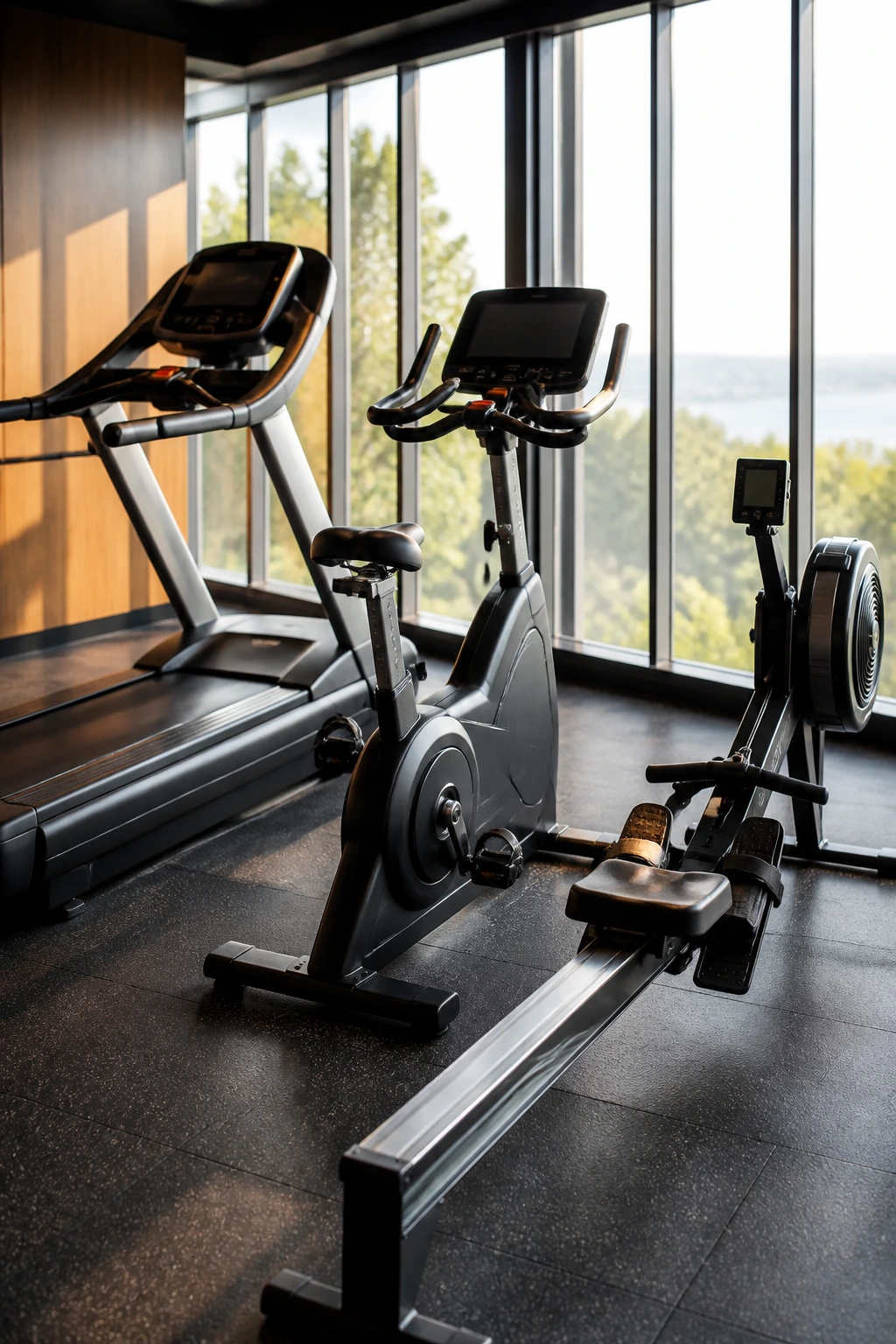
Can you combine machines without turning the workout into chaos? Yes, and it works well.
Try 5 minutes on the treadmill, 5 minutes on the bike, then 5 minutes on the rower. Keep all three at an easy-to-moderate effort, or use 3-minute blocks if you’re brand new. The ladder keeps the session fresh because your legs never settle into one groove for too long.
What makes it useful
Different machines stress different muscles. That means one machine gets to rest while another does the work.
It’s also mentally easier. If you dislike one machine, you know it’s only a short stint before you move on.
25. Elliptical-Bike Combo Session
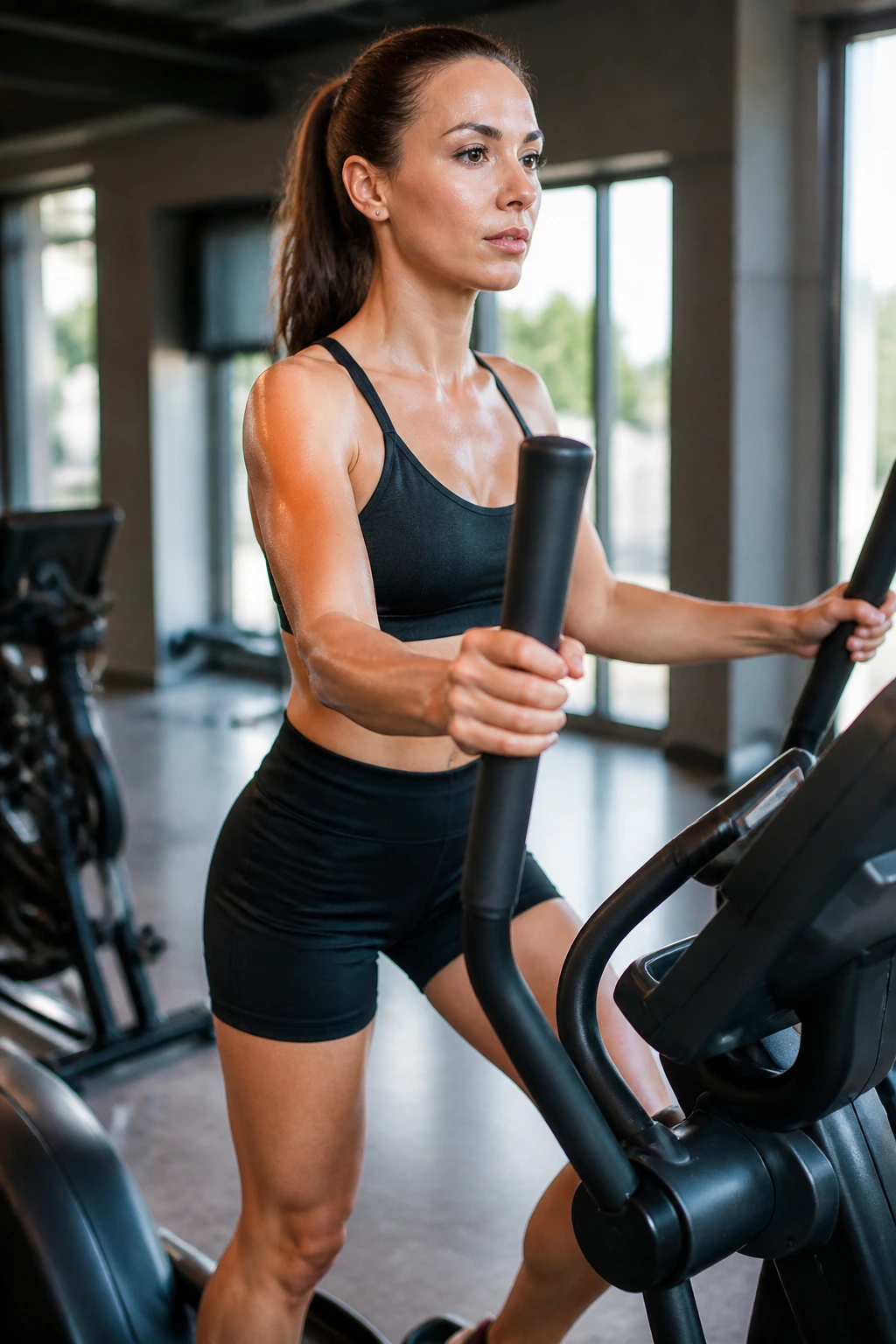
This one is for the person who gets bored halfway through the warm-up.
Do 8 minutes on the elliptical, then 8 minutes on the bike, and repeat if you want a longer session. Keep both machines at a moderate effort, and use the change to reset your posture.
The combo works because it gives you variety without asking you to learn anything new. The shift from standing to seated also takes some pressure off the same muscles over and over.
If one machine starts to feel too easy, nudge the resistance up a notch on the next round. Small jumps, not giant ones.
26. Treadmill Hill Repeats
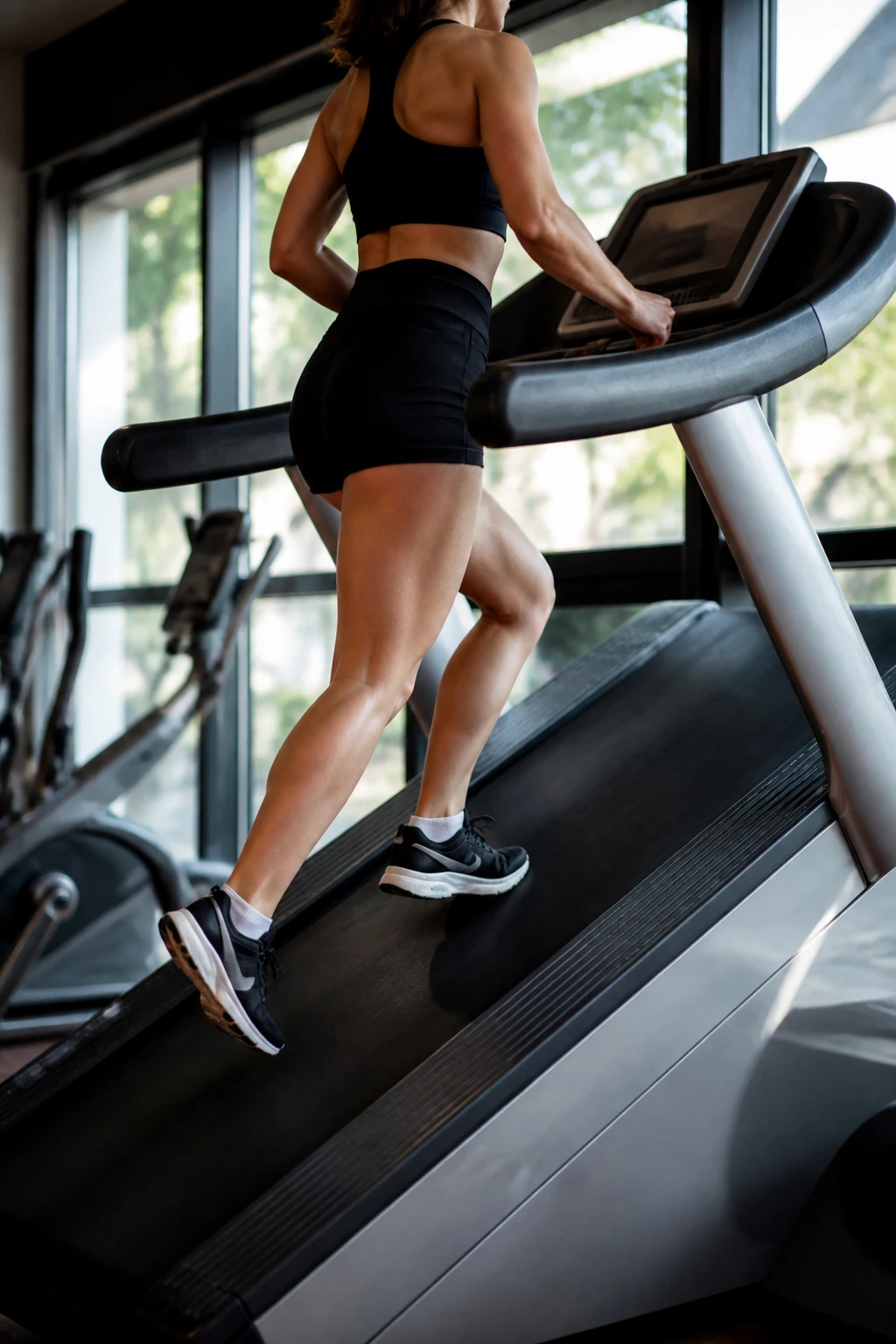
Hill repeats sound advanced, but short versions are beginner-friendly.
Walk hard for 45 to 60 seconds at 4 to 8 percent incline, then recover for 90 seconds at a flat incline. Repeat 5 to 8 times. Keep the speed walking-fast, not jogging-fast, so your posture stays clean.
Why I like this one
You get a clear burst of effort without needing to run. The legs work, the lungs work, and the session stays structured enough that beginners don’t wander into overdoing it.
Watch your grip on the rails. People cling harder on hills. That usually means the speed or incline needs to come down one click.
27. Bike-to-Stair Switches
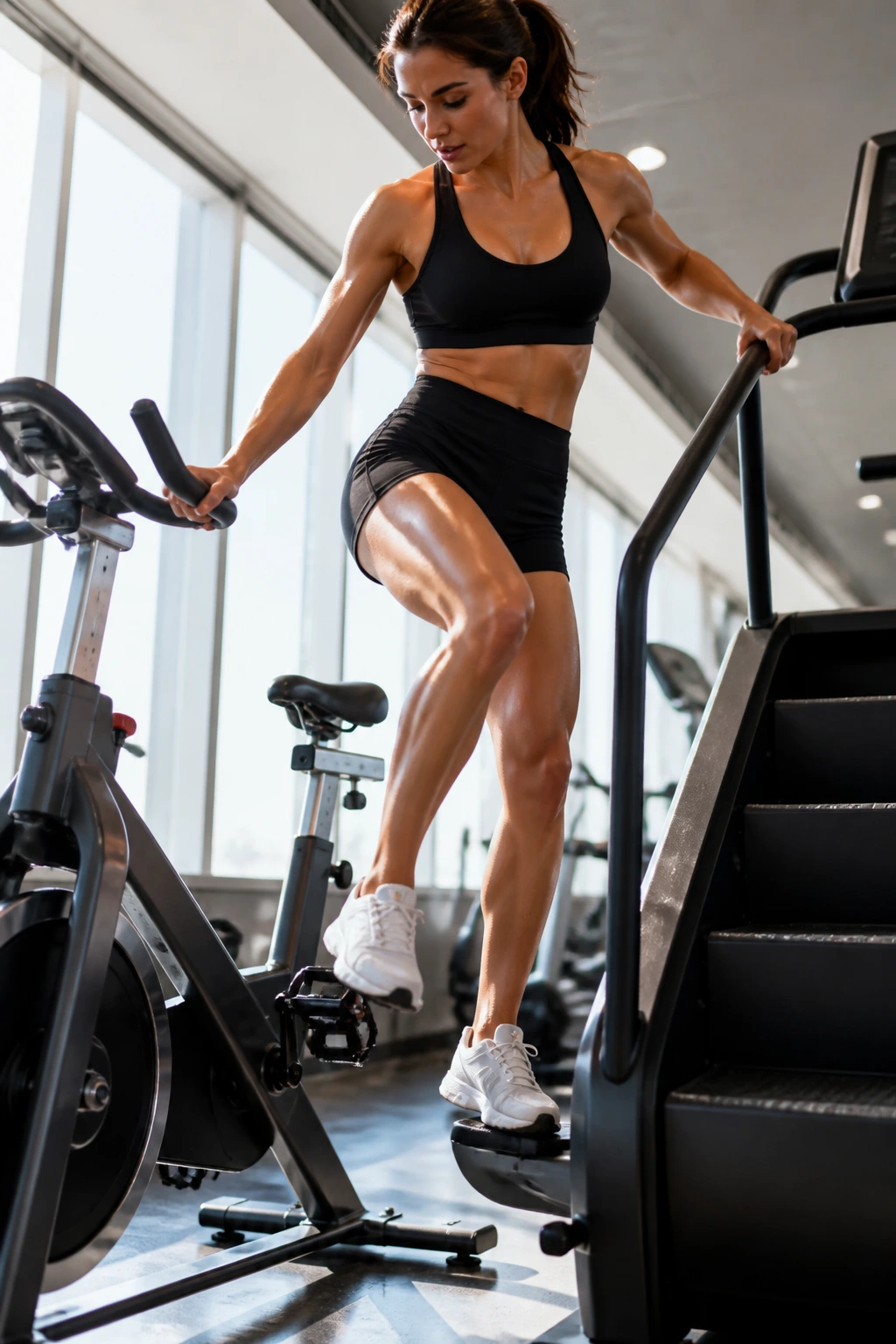
Here’s a smart way to keep the workout from going stale: alternate the bike and the stair climber.
Ride the bike for 4 minutes, then climb for 1 minute. Repeat that cycle 4 to 5 times. The bike gives you a built-in recovery while still moving the legs, and the stair climber makes the effort spike without needing long duration.
It’s a good pick if you want a workout that feels like progress instead of repetition. One machine feeds into the next.
If the stair climber wipes you out too fast, shorten the stair segment to 30 seconds and keep the bike block the same.
28. Rower-and-Walk Recovery Session
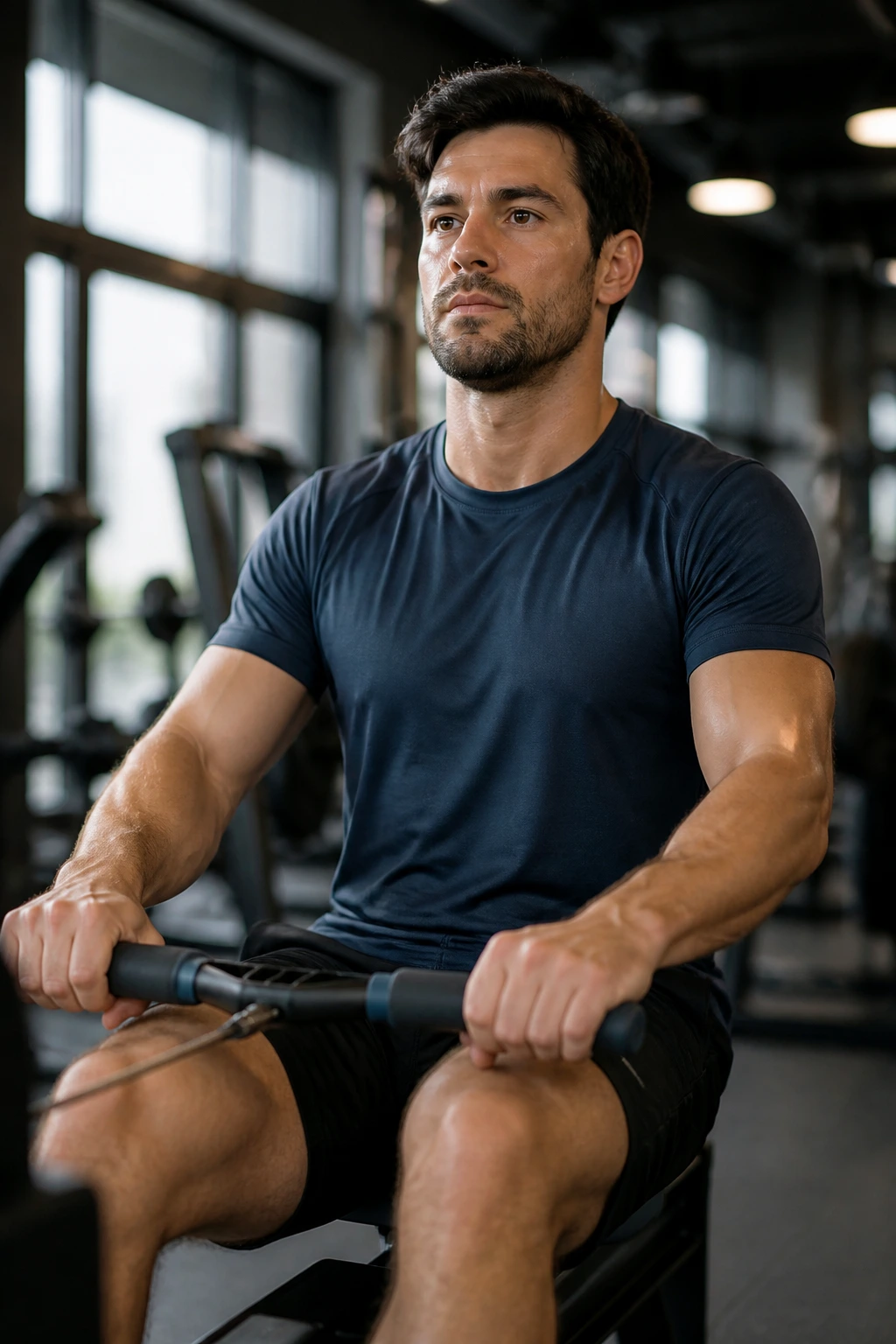
This is the workout I reach for when I want the rower’s full-body feel but don’t want the whole session to live there.
Row for 1 minute, then walk for 2 minutes. Repeat 5 to 8 times. The walking keeps your breathing under control, and the rower gives you a little burst of power each round.
The key detail
Do not row like you’re trying to win a prize. Smooth pulls, moderate pace, and a clean finish at the handle are enough.
The walk also helps beginners notice how hard the rower actually felt. That feedback matters more than people think.
29. Fan Bike Pyramids
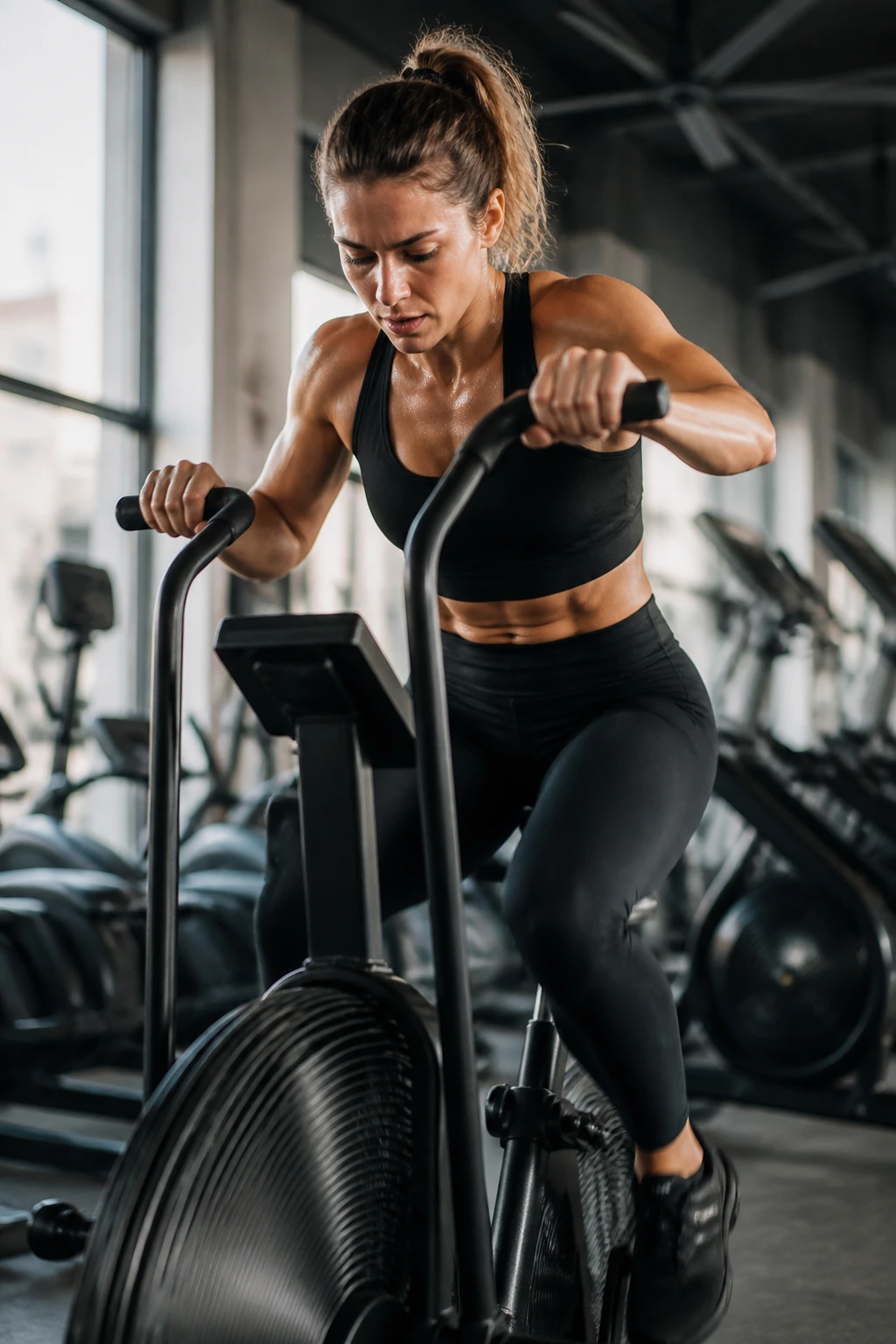
The fan bike can turn a short workout into a serious sweat, so pyramids work well.
Start with 15 seconds hard, 45 seconds easy. Then move to 20/40, 25/35, 30/30, and back down if you want. Keep the hard efforts controlled enough that you can finish the whole pyramid without fading.
This one has a nice shape to it. You get a climb, a peak, and a way back down. That feels better than random all-out efforts, especially if you’re still learning pacing.
If your knees get cranky, shorten the hard intervals and use a lighter resistance feel. The machine should challenge you, not punish you.
30. Freestyle 20-Minute Cardio Circuit
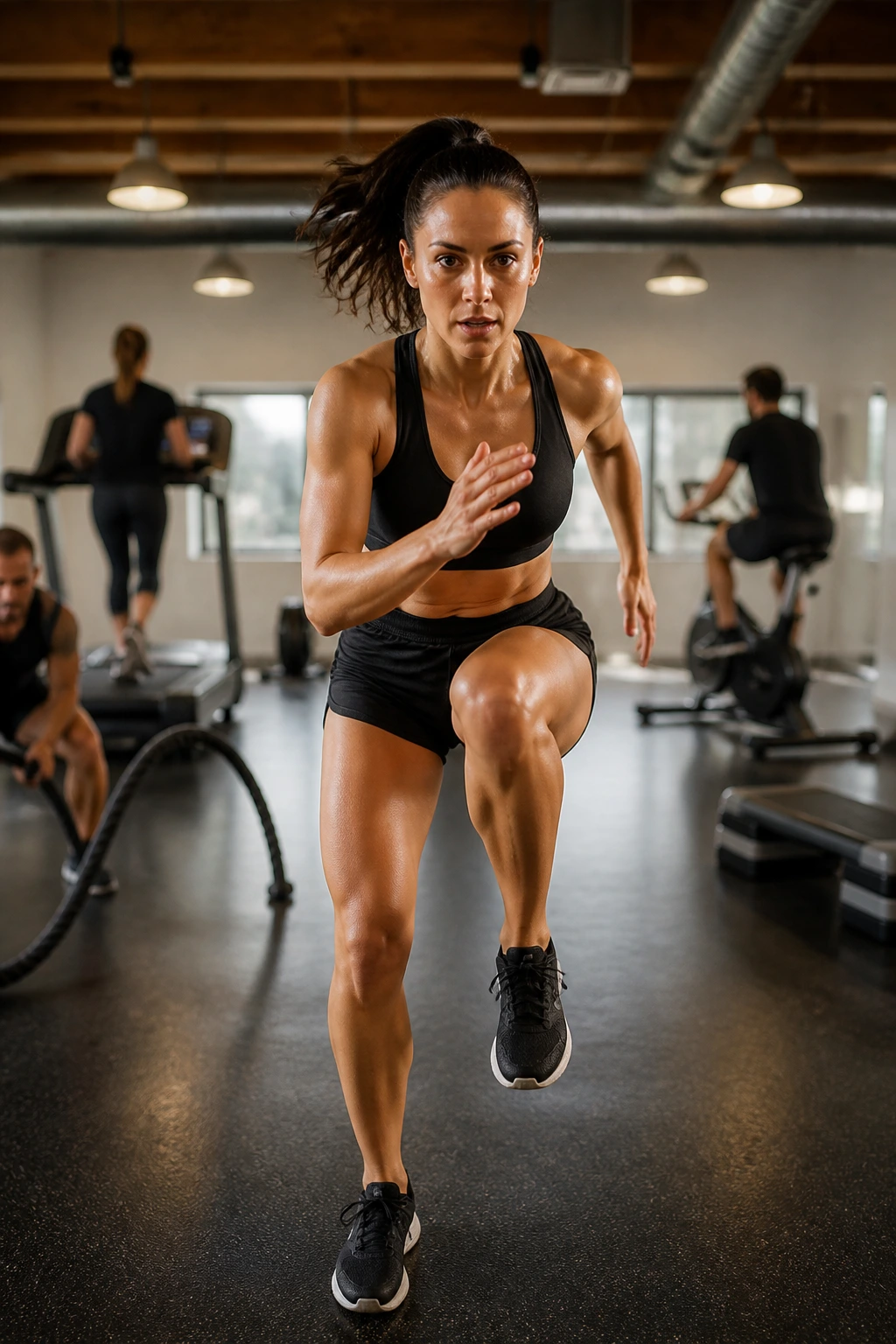
Sometimes the best answer is a simple timer and a few stations.
Pick four stations: treadmill walk, bike, battle ropes, and bodyweight steps. Spend 3 minutes at each station, then repeat the loop once. Keep the effort moderate across the whole circuit so you finish tired but not flattened.
A good beginner flow
- Treadmill: brisk walk, 0 to 3 percent incline.
- Bike: smooth cadence, easy resistance.
- Ropes: short waves or alternating slams.
- Steps: low platform or fast marching in place.
This kind of session is good when you want structure without being trapped on one machine. It also teaches a useful skill: how to recover while still moving. That skill shows up in every other cardio workout later.
Final Thoughts
The best beginner cardio workout is the one you’ll actually repeat next week. That sounds obvious, but it’s the part people skip while chasing the session that looks toughest.
If you want my honest pick, start with two or three steady options — a treadmill walk, a bike ride, and one machine or circuit that feels a little more active. Once those stop feeling scary, the rest of the gym opens up fast.
And if a workout leaves you sweaty, breathing harder, and still able to walk out of the gym under your own power, that’s a good sign. That’s the lane.
