



Low impact HIIT workouts at home have a funny reputation: people assume they’re the soft option, then twenty seconds of honest effort tells a different story. No jumping does not mean no intensity. When the work sets are tight and the rests are short, your heart rate climbs fast, your legs feel the time under tension, and your joints get a break from all the bouncing that turns some home workouts into a complaint from the downstairs neighbor.
I keep coming back to low-impact intervals because they’re easy to repeat. A hallway, a patch of clear floor, the space beside your couch — that’s enough. They work on days when your knees feel cranky, on days when you don’t want to rattle the apartment, and on days when you want to finish sweaty without feeling beaten up afterward.
The real trick is not to make the moves timid. March hard. Punch with intent. Step like you mean it. The best no-jump routines still have sharp edges: quick transitions, clean form, and enough resistance from your own body to make the whole thing feel serious. Start with the first move below and a timer set for short bursts. You’ll know fast whether the pace is honest.
1. Low Impact HIIT Marching Bursts
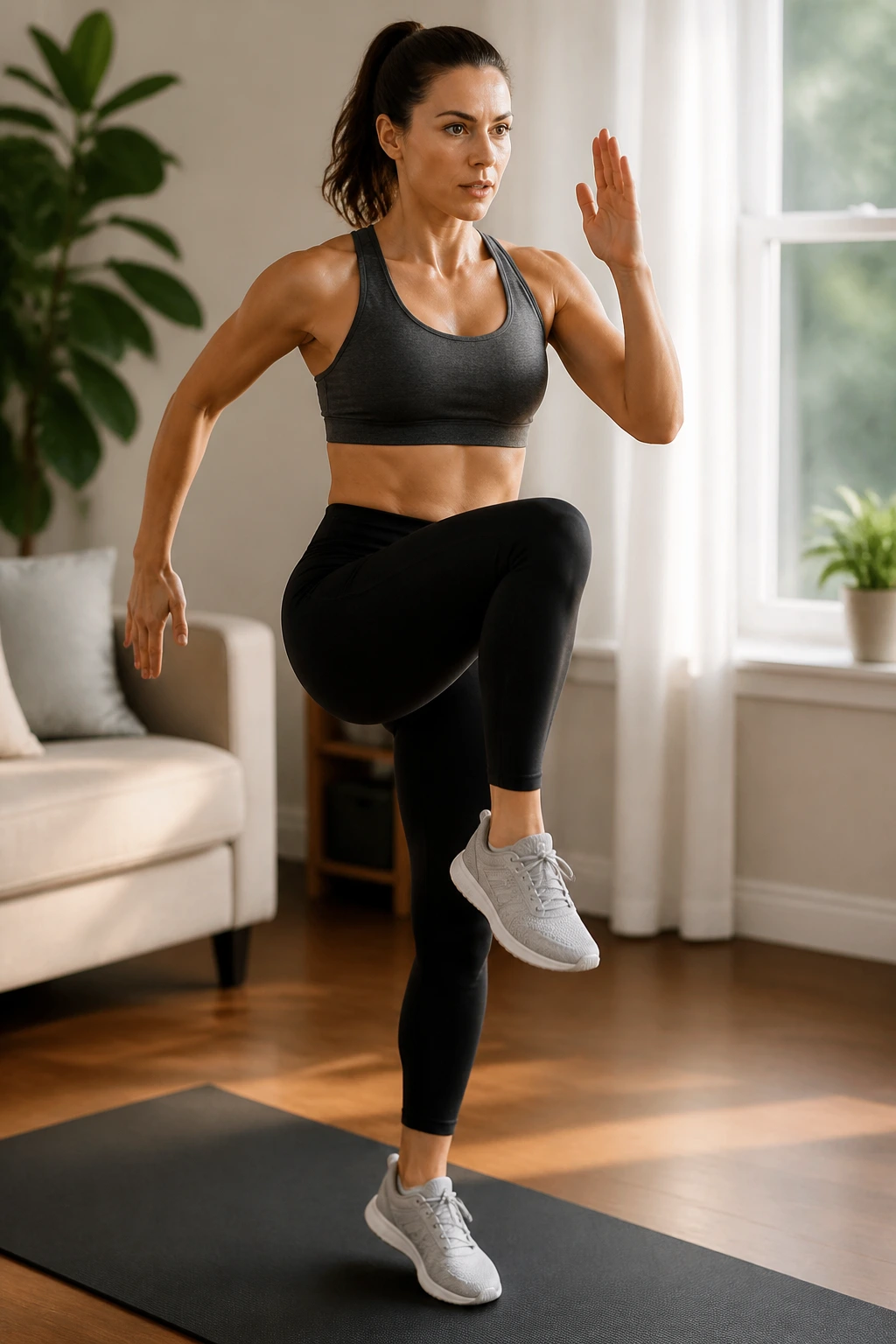
Marching looks harmless until you do it properly. Then it turns into one of the best low impact HIIT workouts at home, especially if you’re trying to warm up fast without a single jump. Drive one knee up, swing the opposite arm, and land softly through the whole foot.
Why it works
The big muscles in your hips and thighs do most of the work here, and that’s exactly what makes it effective. A brisk march also wakes up your trunk because your torso has to stay tall while your arms and legs move in opposite directions. That little cross-pattern matters more than people think.
Quick setup
- Use 20 seconds hard / 10 seconds easy for a true sprint feel.
- Use 30 seconds on / 15 seconds off if you want a longer work block.
- Keep your chest lifted and your shoulders loose.
- Step onto a yoga mat or a flat rug if your floor is cold or slippery.
Pro tip: Drive your elbows back like you’re trying to put them in your back pockets. That one cue usually adds more intensity than people expect.
2. Shadow Boxing With Knee Drives
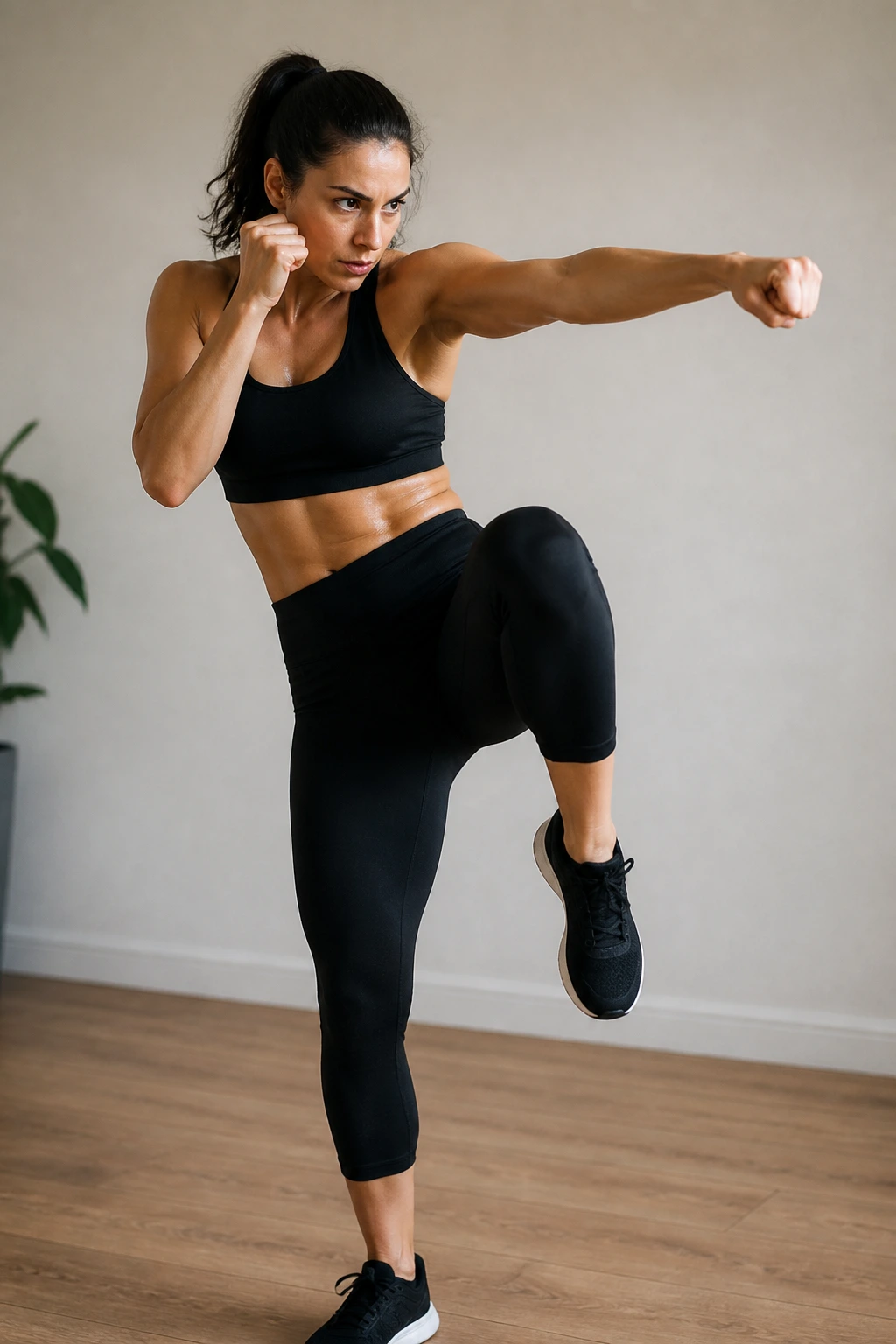
Shadow boxing is one of the few cardio moves that can feel aggressive without a single jump. Add knee drives between punch combos and you get a sharp little home workout that hits the arms, core, and hips in one shot.
Stand in a staggered stance, hands high, and throw a jab-cross, then a hook-cross. After the combo, drive one knee up and switch sides on the next round. The punches don’t need to be wild. Crisp beats sloppy every time. A clean punch returns to guard faster, and that return is part of the work.
I like this one at 45 seconds on and 15 seconds off for six or eight rounds. The rhythm gets addictive once your breathing settles into it. And if you want it harder, add a tiny pivot through the back foot on each cross. Nothing dramatic. Just enough rotation to make your trunk earn its keep.
3. Step Jack Intervals Without the Jump
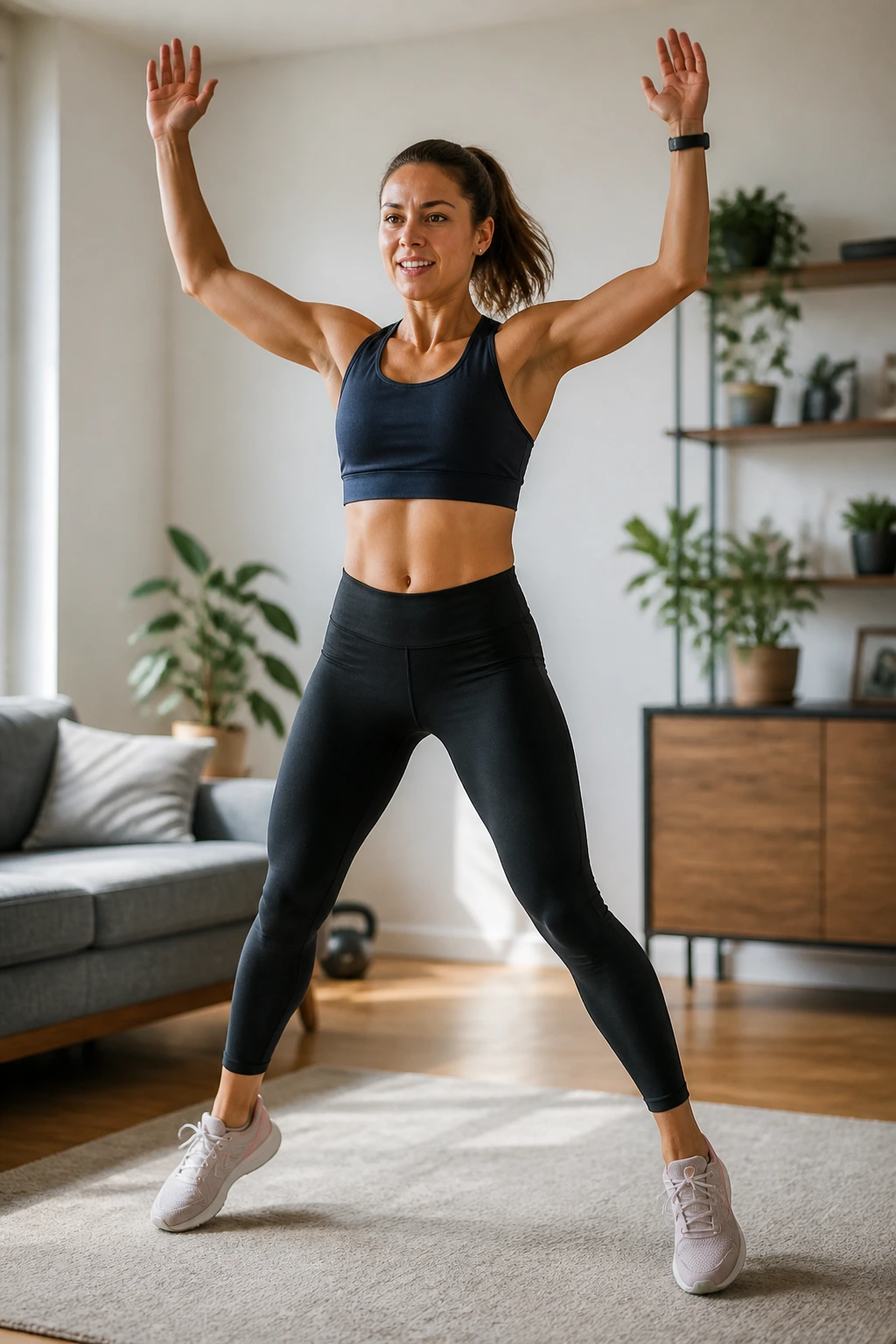
Can a jumping-jack pattern still count when both feet stay close to the floor? Absolutely. Step jacks give you the same wide-narrow rhythm as the classic version, but without the thud that can annoy knees, hips, or thin apartment floors.
Start with your feet together and your arms at your sides. Step one foot out, then the other, while your arms rise overhead or to shoulder height if you want a gentler shoulder angle. Step back in the same order. That little side-to-side travel keeps the heart rate up more than a lot of people expect.
How to use it on a timer
- Try 30 seconds of work followed by 15 seconds of rest.
- Keep the steps quick enough that the move feels like a flow, not a stroll.
- Turn the arms into the engine; do not let them dangle.
- Switch which foot leads first every round if you want to stay balanced.
The move is simple. The pace is what changes it.
4. Squat-to-Calf-Raise Power Reps
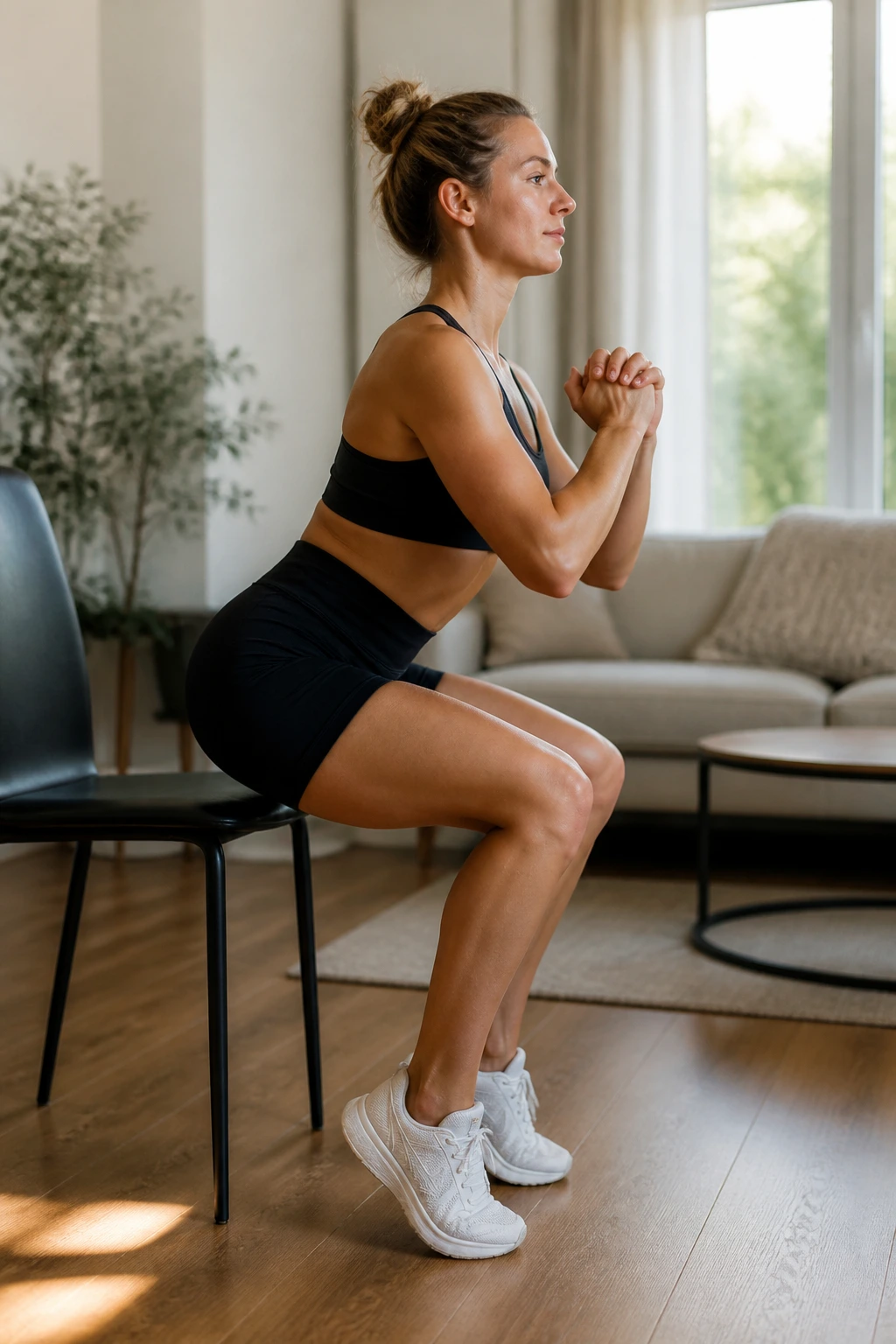
A chair, a bit of floor space, and one hard minute can give you more leg burn than a fancy machine. Squat-to-calf-raise reps are one of those moves that look almost too basic, then leave your quads and calves talking back.
Sit your hips down toward chair height, press through your heels to stand, and finish by lifting onto the balls of your feet. Then lower with control and repeat. The squat loads the thighs and glutes; the calf raise adds a second layer without impact. That extra rise at the top is what makes the move feel more athletic.
- Keep your knees tracking over the middle toes.
- Use a 2-second lower if you want the legs to work harder.
- Hold water bottles at your sides once bodyweight starts to feel tame.
- Stop the squat when your form starts to tilt or your heels pop up early.
A steady 40 seconds on / 20 seconds off works well here. Fast enough to count as cardio. Controlled enough to stay joint-friendly.
5. Reverse Lunge and Reach Rounds
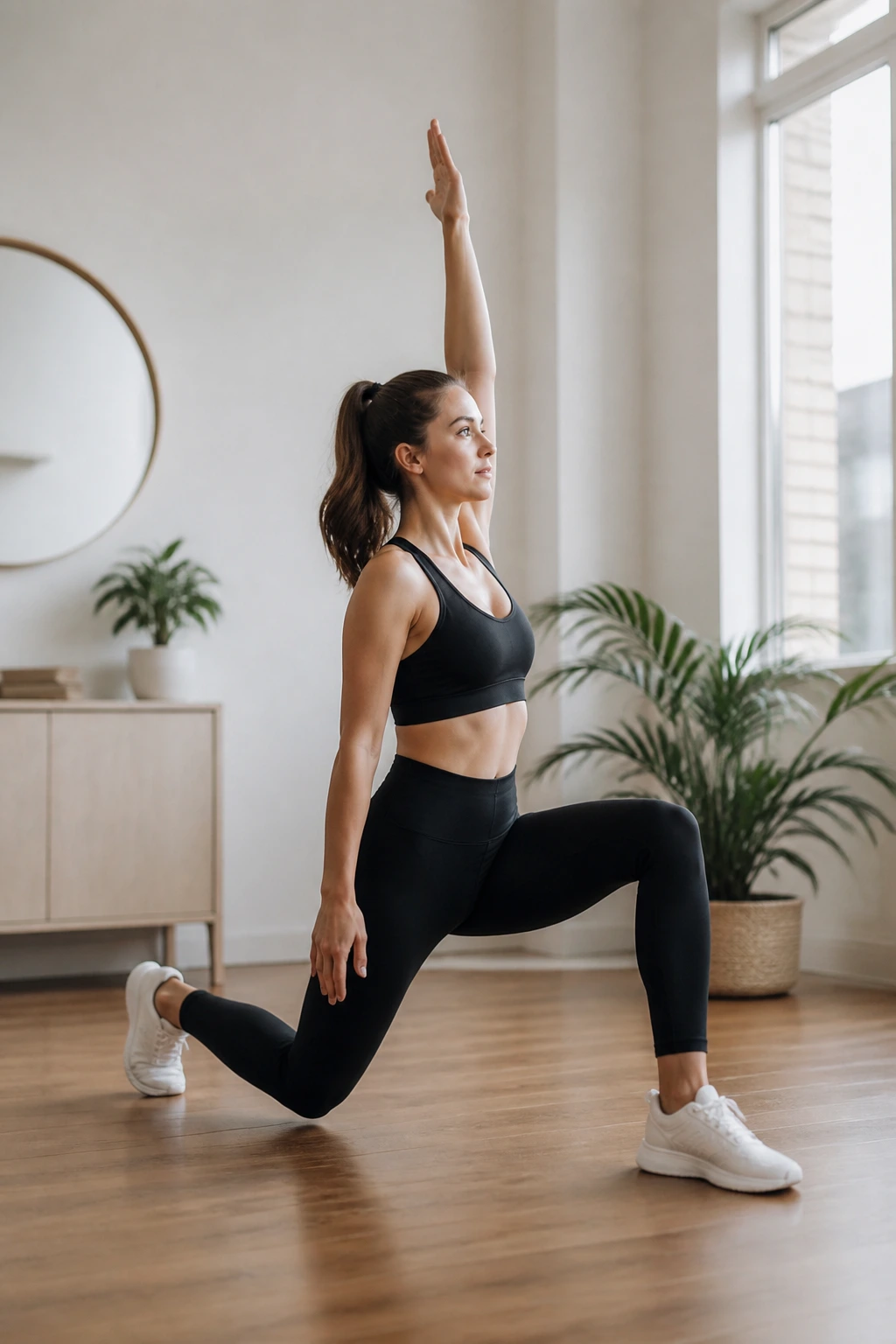
Reverse lunges are kinder than forward lunges, and I’ll happily die on that hill. Stepping back keeps the front shin in a friendlier position, which is a blessing if your knees prefer calm over chaos. Add an overhead reach and the move wakes up your balance, core, and hips all at once.
Step one leg back, lower until both knees bend, and push the floor away through the front heel to stand. Reach the same-side arm overhead as you rise, or take both arms up if your shoulders like more room. The reach changes the shape of the move, and that matters. You’re not just working the legs; you’re asking the torso to stay stacked while the body shifts.
Slow is not the point. Clean is the point.
A good home timer here is 30 seconds each side with 15 seconds rest. If your balance wobbles, keep one hand on a wall for the first few rounds. That does not make it easy. It just makes it usable.
6. Incline Mountain Climbers on a Couch or Bench
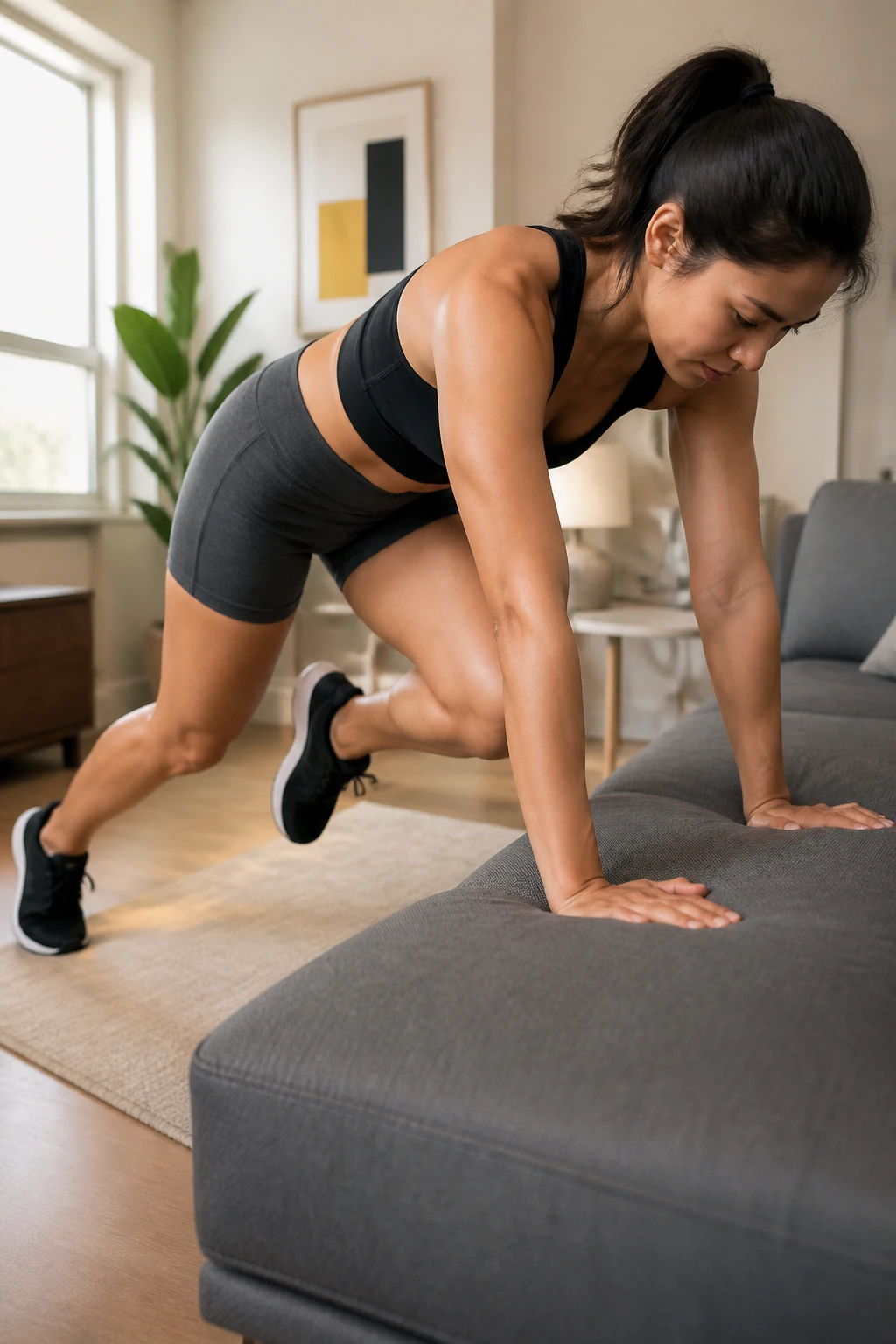
Incline mountain climbers are the version I use when floor climbers feel too harsh on the wrists or too noisy for the room below. Put your hands on a couch arm, sturdy bench, or heavy ottoman, step one knee in, then switch fast enough that your trunk has to stabilize.
The incline changes the angle in your favor. Your shoulders carry less load, your hips stay a little higher, and the move becomes easier to sustain for longer bursts. That said, don’t turn it into a lazy march. Drive the knees with purpose and keep your hands pressing into the surface so your upper back stays active.
This one works well for people who want a cardio hit without getting down on the floor. It’s also a smart choice if your wrists complain during planks. Use 20 to 30 seconds hard followed by 20 seconds easy and keep the surface stable. A rolling stool is a bad idea. A couch that doesn’t budge is the move.
7. Glute Bridge Speed Sets
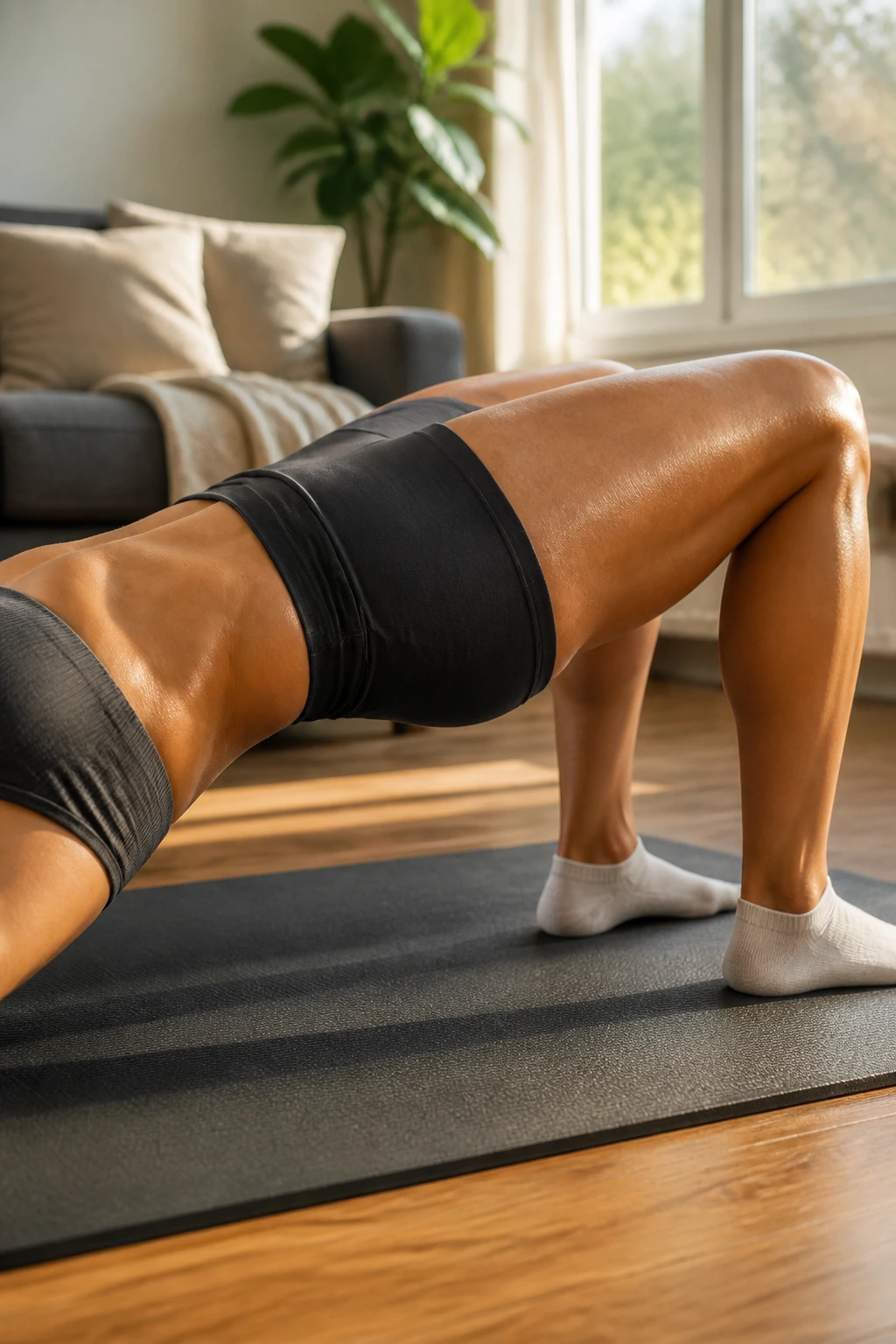
If your glutes switch on fast, your whole body feels it. Glute bridges are a quiet-looking move that can turn nasty in the best way when you shorten the rest and speed up the rhythm. You lie down, feet flat, knees bent, and drive the hips up hard enough that your heels dig in.
The key is the top position. Squeeze the glutes for a full second, then lower without collapsing. If your lower back takes over, the bridge gets sloppy and the whole point disappears. Keep your ribs down and think about tucking the pelvis slightly before you lift. That tiny setup is what lets the glutes do the work instead of your spine.
I like 15 quick pulses, 5 full reps, then 20 seconds rest. Repeat that pattern for four or five rounds. It sounds tame. It is not. This is especially good on days when you want cardio plus posterior-chain work without pounding around the room like a squirrel on espresso.
8. Standing Cross-Body Punch and Twist
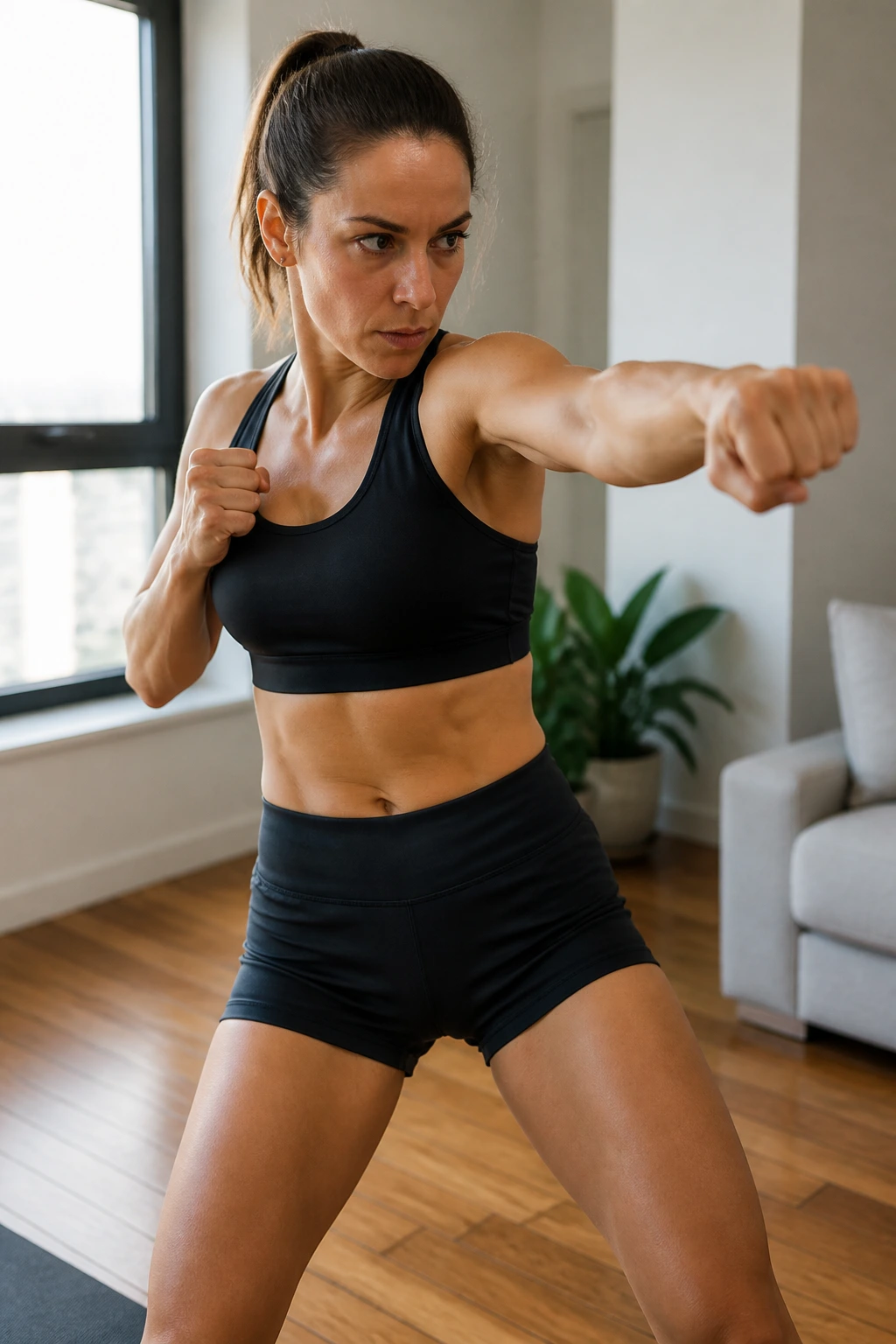
Do standing punches need a big stance to work? Not really. A cross-body punch and twist routine can light up the shoulders and obliques without any floor work, and it travels well into small spaces.
Stand with soft knees, fists near your chin, and punch across the centerline while the opposite hip and shoulder rotate together. The twist should start from the floor, not from your arms flinging around like loose ropes. If the feet pivot a little, even better. That makes the body feel connected, which is what keeps the move from becoming arm flapping.
How to make it count
- Exhale on every punch.
- Keep the chin tucked and the ribs pulled in.
- Use short, snappy punches rather than big wild swings.
- Add a knee lift after every four punches if you want more lower-body work.
A 40-second round here can get your heart rate up fast. The best part is how little setup it needs. No mat. No weights. Just a little space and the willingness to move like you mean it.
9. Bear Crawl Hold and Tap Combo
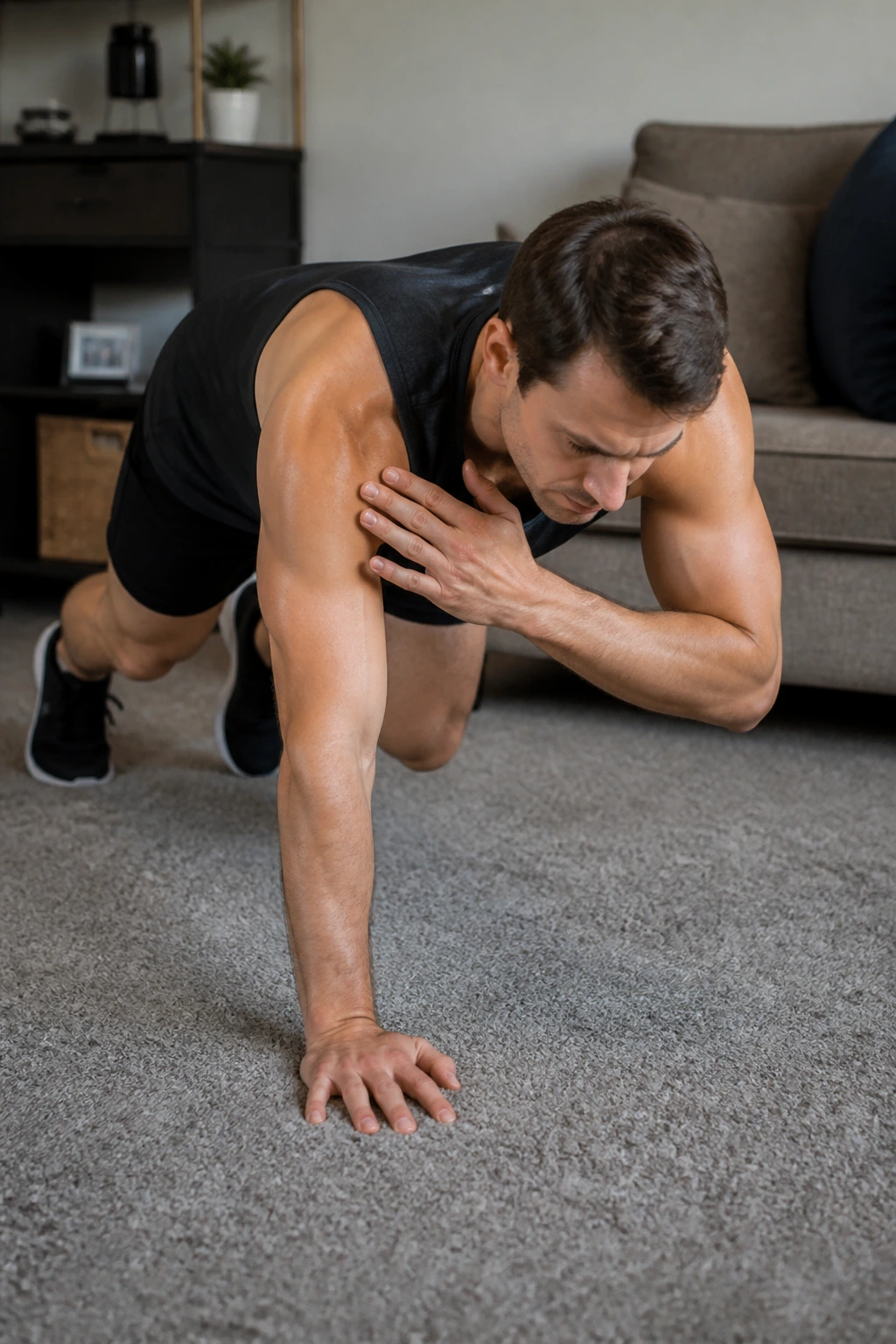
If traditional mountain climbers bug your wrists, bear crawl work gives you a similar shoulder-and-core burn with a different flavor. Start on hands and knees, lift the knees an inch or two off the floor, and hold. That hovering position is the whole game.
From there, tap one shoulder with the opposite hand, set it down, and switch sides. Keep your hips as still as you can. They’ll want to wobble. That wobble is the challenge. The moment you tighten the midsection and keep the knees low, the exercise turns from a curious animal pose into a legit interval.
- Keep your back flat, not sagging.
- Set your knees under your hips before you lift.
- Use 10 to 20-second holds if you’re new to it.
- Put a folded towel under the hands if the floor feels hard.
This is a good one when you want your upper body to work without a single jump. It’s sneaky, and I mean that in the nicest way.
10. Step-Up Sprints on Stairs
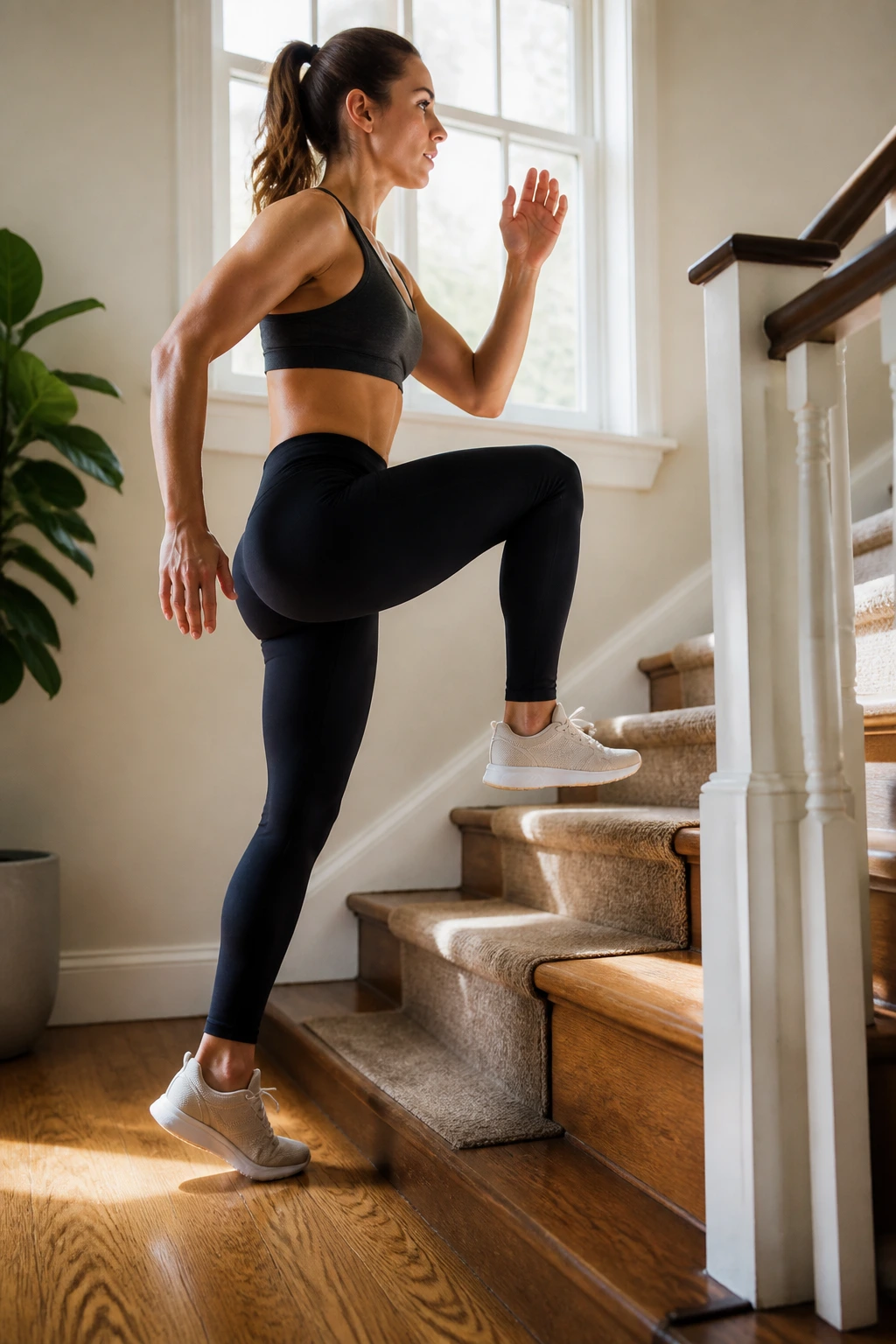
Stairs are one of the simplest tools for low impact cardio at home, and people ignore them far too often. A single sturdy step or a short staircase can turn into a hard interval station if you move with enough intent. Step up, drive the opposite knee, and step down under control.
Don’t bounce off the back foot. That’s the mistake that makes the move sloppy. Put the whole foot on the step, press through the heel, and lift tall at the top before stepping back down. If you rush the descent with no control, your knees feel it. The point is power, not noise.
One stair is enough. Seriously. You can alternate leading legs every rep or stay on one side for a full interval, then switch. Try 20 seconds up and down, 40 seconds recovery for eight rounds if you want a short, sharp session. On a bigger staircase, keep one hand near the rail and stay focused. This is the kind of move that looks easy from the living room and feels different halfway through round three.
11. Dead Bug Fast-Twitch Core Rounds
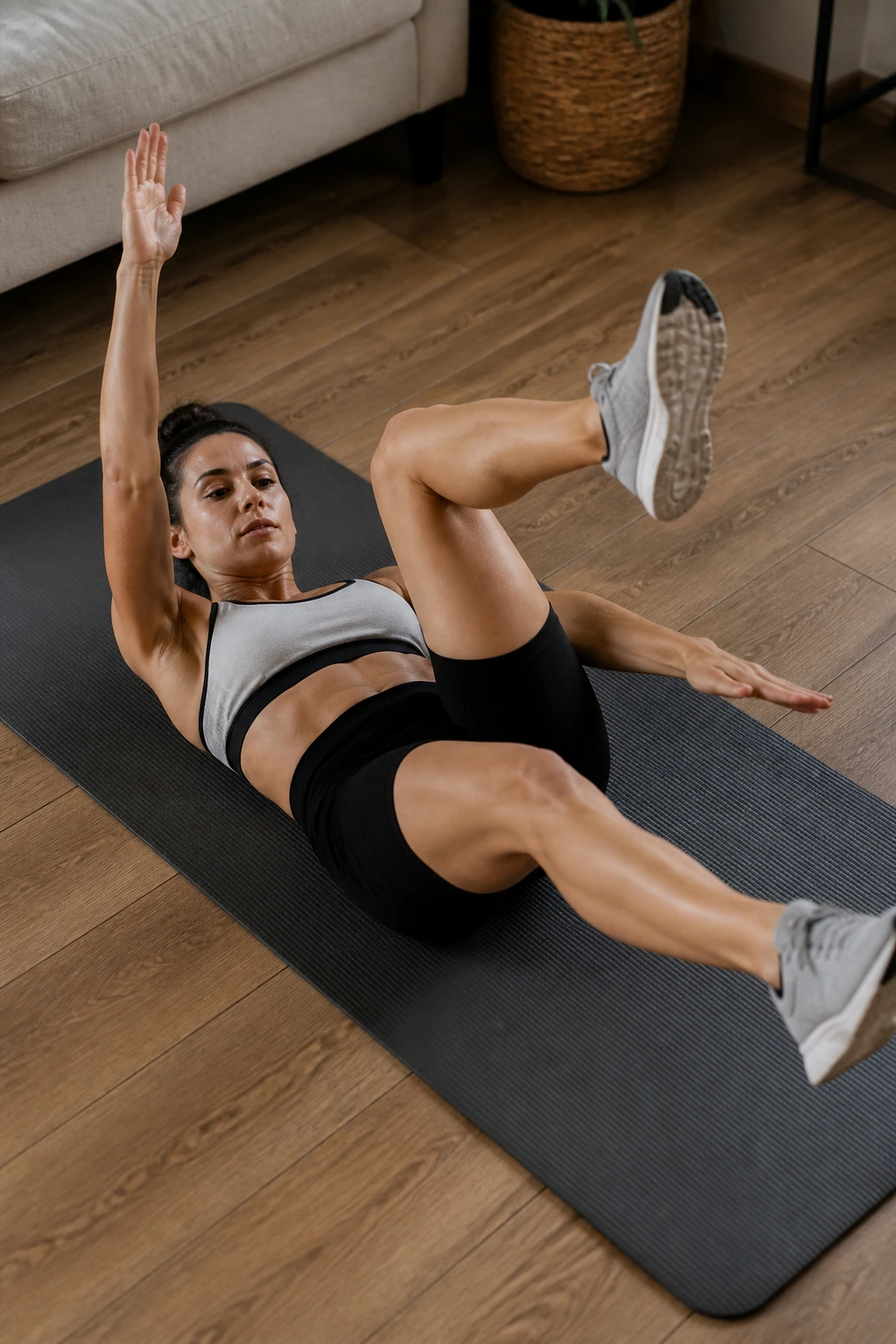
Dead bugs look slow, but done fast they train the core better than a stack of sloppy crunches. That’s the version I prefer. Lie on your back, press the lower back into the floor, and move opposite arm and leg away from the center while the other pair stays still.
The challenge is coordination under fatigue. Your rib cage wants to pop up, your back wants to arch, and your limbs want to rush. Keep the movement crisp instead. A good dead bug round feels almost boring for the first ten seconds, then your abs start shaking because the stabilizers have to keep doing their quiet work.
Why this beats crunches for HIIT days
- The neck stays relaxed.
- The spine gets support instead of repeated flexion.
- The breath has room to stay steady.
- You can go faster without turning the movement into nonsense.
Use a 4-count out, 4-count back if you want control, or speed it up for 20-second bursts once the pattern is clean. Best of all, it gives your heart rate a chance to stay elevated while the floor keeps the impact near zero.
12. Low Impact HIIT Burpee Walk-Outs
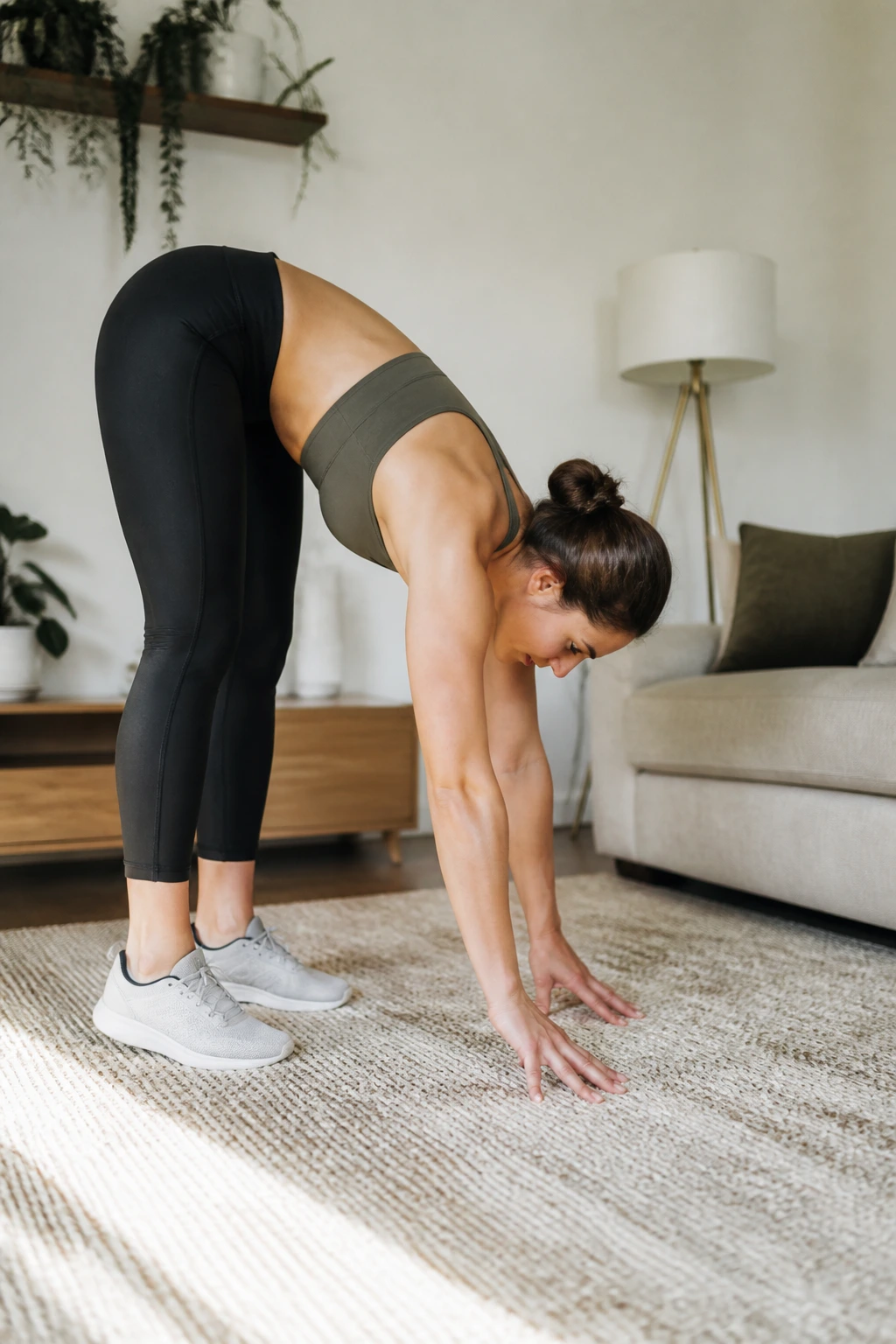
A burpee doesn’t need a jump to be rude. Walk-outs keep the full-body feel of the classic move while stripping out the pounding, which makes them much more usable for home training when your joints want less drama.
Start standing. Hinge down, place your hands on the floor, and walk your feet back one at a time into a high plank. Walk them back in, stand tall, and add a reach overhead if you want to finish with a bit more length through the body. No leap. No clap. Still hard.
The move gets serious because every part has to happen under fatigue: the hinge, the plank, the return, the stand. That sequence taxes the shoulders, core, legs, and lungs without asking your feet to leave the ground. I like 20 seconds on and 40 seconds off for this one, mainly because form tends to slide if you push the pace too long. Keep the lower back from sagging in the plank. That’s the non-negotiable piece.
13. Skater Step-Touches for Side Legs
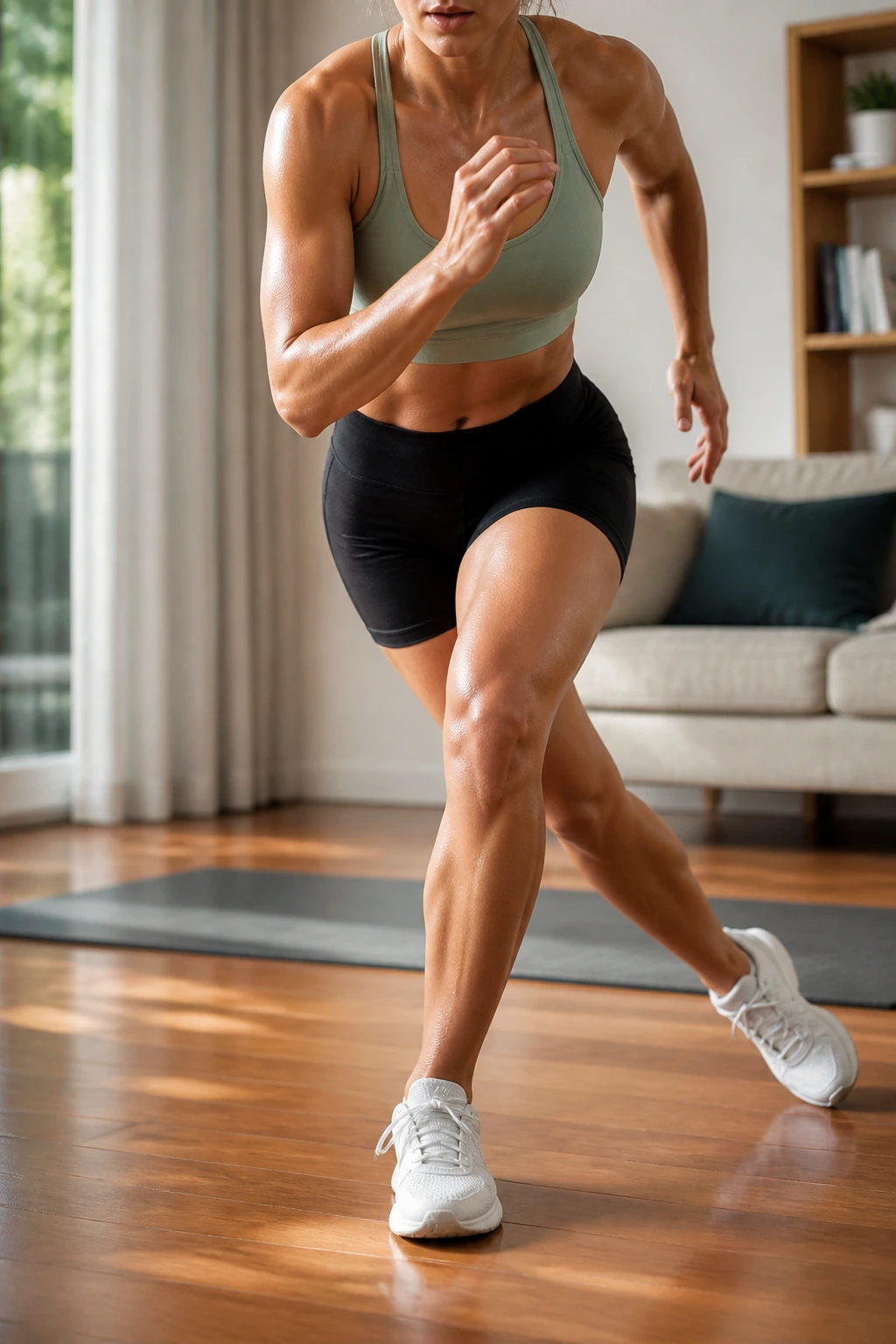
Can skaters work without the hop? Yes, and your hips may even thank you for it. A step-touch skater keeps the side-to-side pattern while cutting out the jump, which is a nice trade if you want lateral movement without pounding the floor.
Step to one side, let the trailing leg sweep behind lightly, and tap the floor before you drive back across. The arms can swing in a runner’s rhythm, or you can reach the opposite hand toward the planted foot for more trunk work. Either way, the lateral push is what wakes up the outside of the hips.
How to keep it sharp
- Sit the hips back a little on each step.
- Keep the chest proud instead of folding forward.
- Use a quick tap behind the body, not a big cross-over step.
- Finish each rep by pushing off the standing leg hard.
A 30-second interval is enough to feel this one. If you want more spice, widen the step and move faster. The move still stays low impact. It just stops pretending to be mild.
14. Plank Shoulder Tap Intervals on an Incline
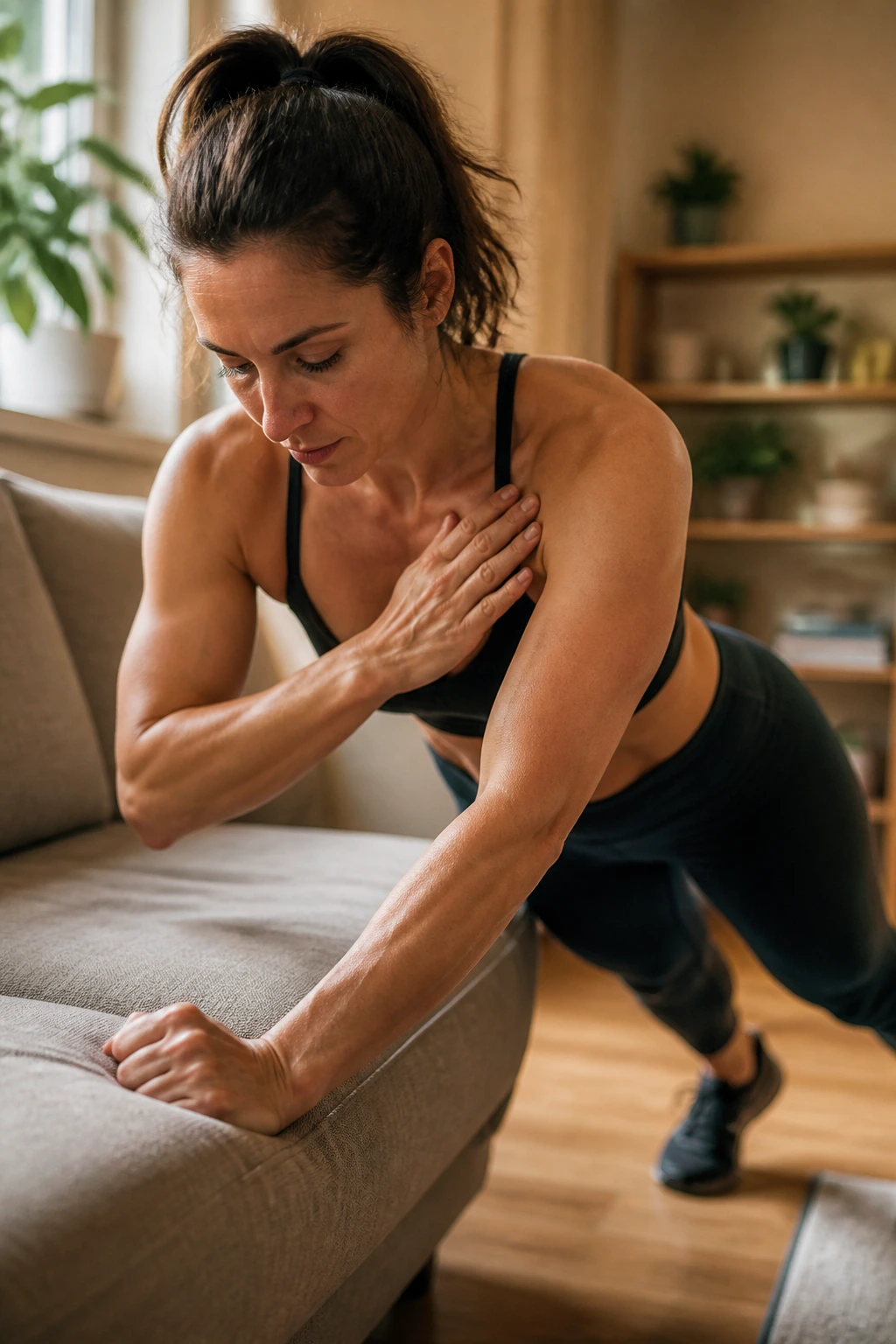
If floor planks feel rough on your wrists or shoulders, move your hands to a couch, counter, or sturdy bench. Incline plank shoulder taps give you a cleaner angle and a little less load, which makes the exercise easier to repeat without losing the core challenge.
Set up with hands under the shoulders, feet back, and body in a straight line from head to heels. Tap one shoulder, return the hand, then tap the other side. The trick is to keep the hips from rocking all over the place. That quiet body line is where the work lives.
- Squeeze the glutes before you start.
- Step your feet a little wider if you need more stability.
- Tap with a light hand; do not crash into the shoulder.
- Stop the set when your hips start swinging side to side.
This move is a small wrecking ball for the midsection when you keep the tempo brisk. A 25-second work block is plenty for most people. The longer you hold the line, the more the abs and shoulders have to stay switched on.
15. Curtsy Lunge and Punch Combos
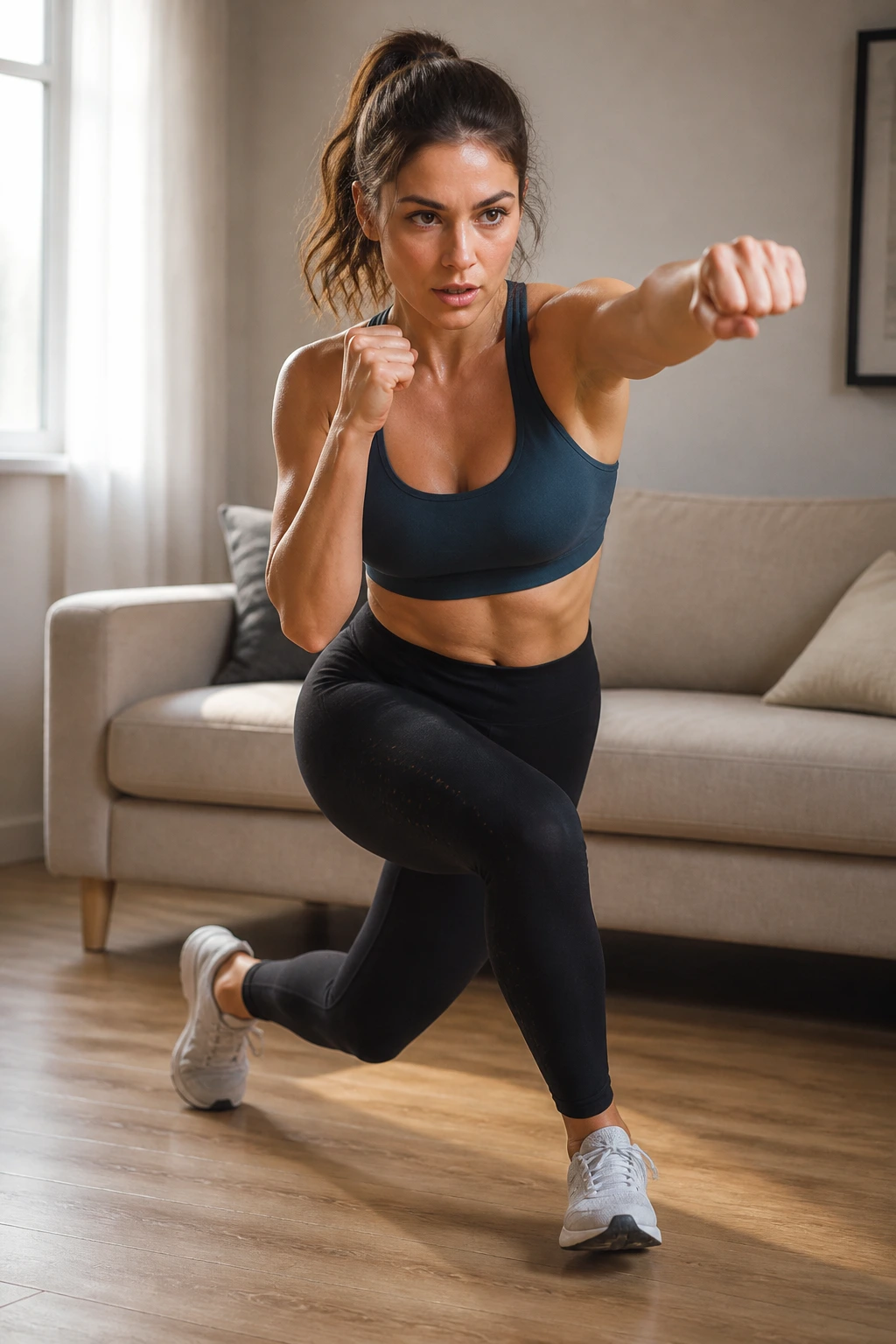
Curtsy lunges are not for everyone, and I mean that in the practical sense, not the dramatic one. They put the rear leg on a diagonal path that can light up the outer glutes and inner thighs, then the punching arms keep the heart rate from drifting down.
Step one leg back and across, lower with control, then drive back to standing while throwing a quick punch combo. The cross-body pattern gives the upper body something to do while the legs work through a slightly awkward line. That awkwardness is part of the point. It forces attention.
If your knees complain, shorten the cross-over and stay shallower. No trophy for digging too deep. A controlled 20 seconds per side or 30 seconds alternating usually works well, and a pair of light dumbbells or water bottles can make the punches feel more grounded. Tiny punch. Big leg burn. That’s the whole mood.
16. Fast Feet Without Leaving the Floor
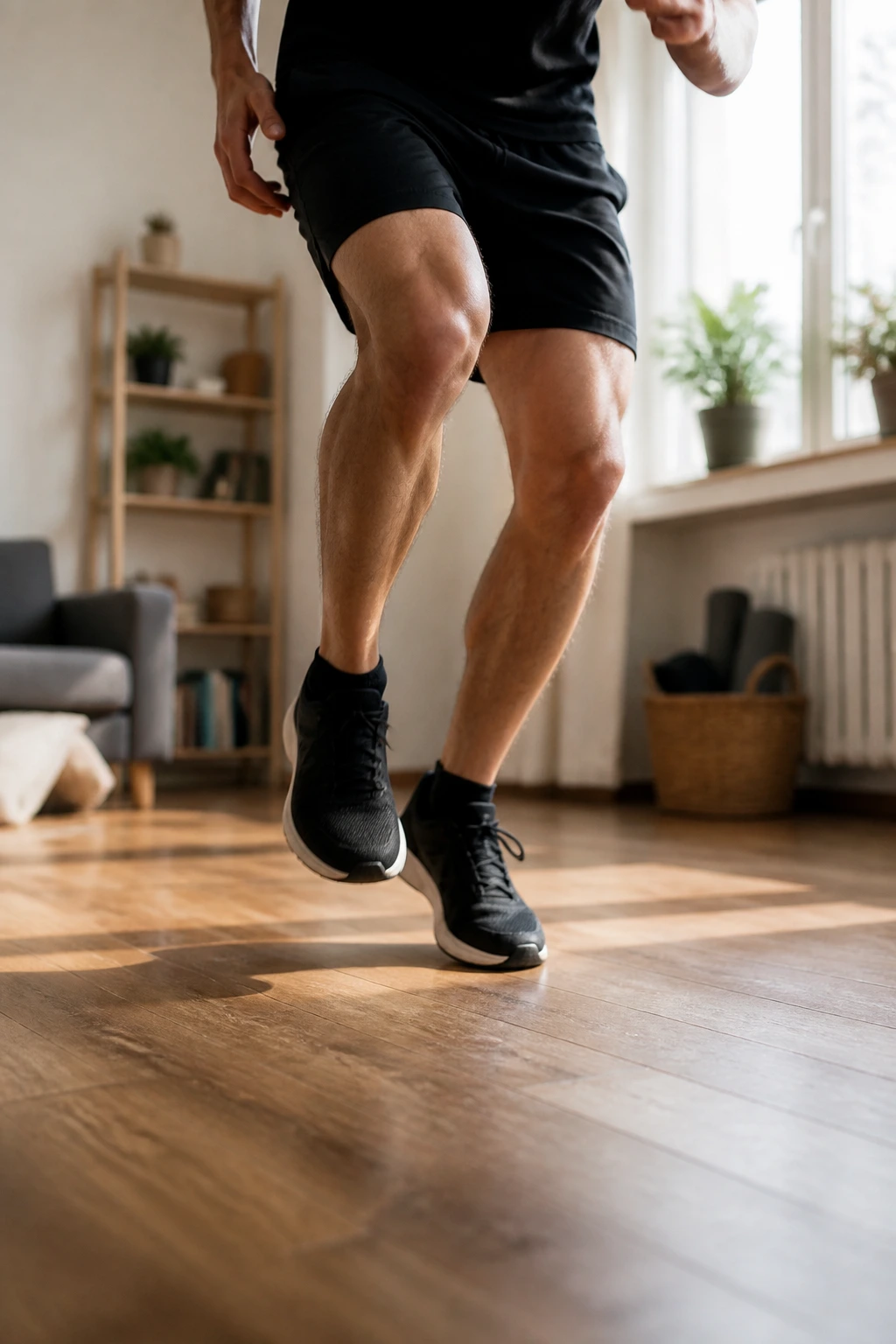
Fast feet without leaving the floor are what I reach for when I want speed but don’t want the sound of jumping. You stay on the balls of the feet, take tiny rapid steps in place, and keep the knees soft enough that the motion feels springy instead of stiff.
Unlike jump rope, this version asks nothing of your wrists and doesn’t need a rope at all. Unlike jumping jacks, it keeps the body in a tighter lane, which is a real gift in small apartments or rooms with low ceilings. The trick is to keep the steps small and the cadence high. Big steps slow the whole thing down.
I like this one in 15- to 20-second bursts because the intensity climbs fast. You can swing the arms hard, add a boxer stance, or hold a light squat while the feet fire. I use it on days when the floor is thin and I don’t want to annoy anyone below me. No bounce. Plenty of work.
17. Chair-Assisted Knee Drive Intervals
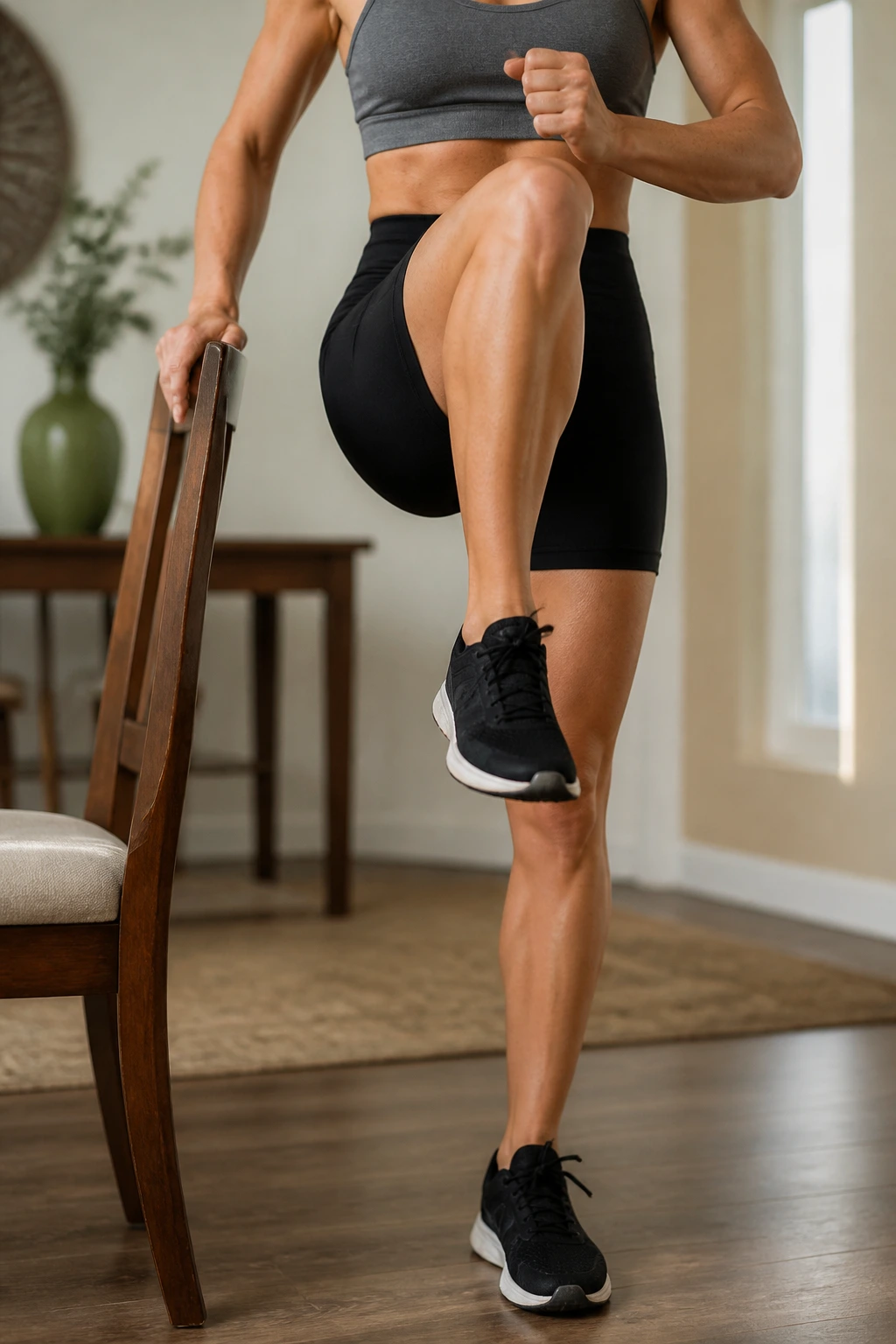
A chair-assisted knee drive is one of the friendliest low impact cardio moves you can teach a beginner. One hand hovers over the back of a chair or rests lightly on it, one knee drives up, and the standing leg does the real job.
The support lets you move faster without wobbling all over the place. That matters. Balance eats energy, and sometimes you want that energy aimed at the heart rate instead. Keep the standing foot rooted, drive the lifted knee high enough that the hip has to work, and switch with a clean rhythm.
What makes it useful
- It’s a safe bridge for people returning to exercise.
- It still raises the pulse when the pace gets honest.
- It gives the core a little challenge without floor work.
- You can layer in opposite-hand punches once the pattern feels steady.
A 45-second round can be surprisingly demanding if you keep the knee snaps quick and the torso tall. It’s a small move. It doesn’t stay small for long.
18. Split-Stance Hinge and Row Pulses
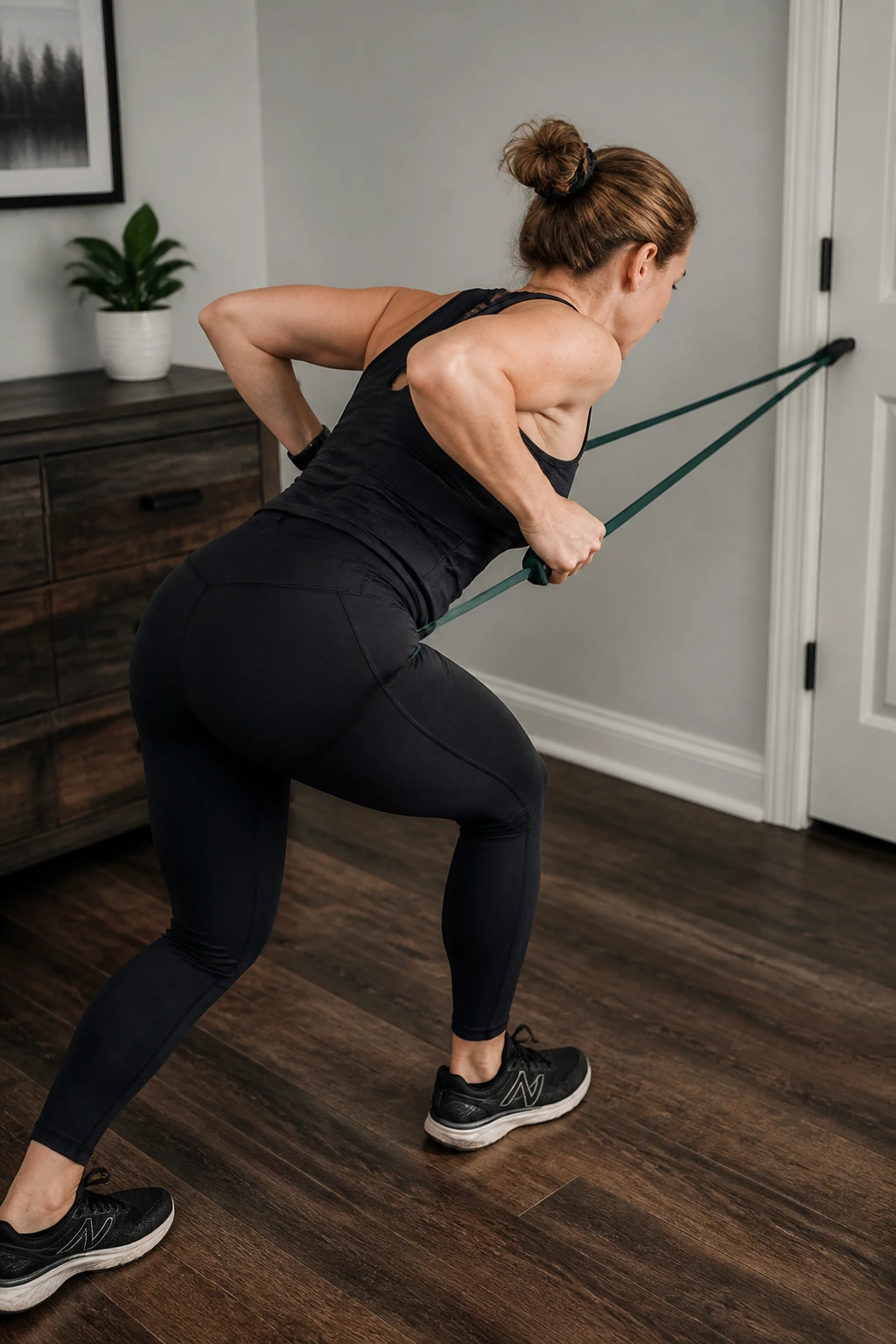
If you own a resistance band, this is the one I’d nudge you toward. Split-stance hinge and row pulses hit the back, hamstrings, and core while keeping the feet planted, which makes the whole thing low impact but not low effort.
Set one foot forward and one back, soften both knees, and hinge at the hips until your torso leans forward a bit. From there, row your elbows back toward your ribs, then pulse the row in a short, quick range. The hinge keeps the legs honest. The row keeps the upper back awake. Put them together and the move becomes a full-body grind in disguise.
Why the split stance helps
- It cuts down on balance wobble.
- It makes the hip hinge easier to feel.
- It lets you load one side a little more at a time.
- It keeps the lower back from taking over.
Use a 30-second work block per side with a light band or a pair of bottles. The shorter pulses are what turn it into cardio instead of a strength-only drill.
19. Low Impact HIIT Cardio Ladder Circuit
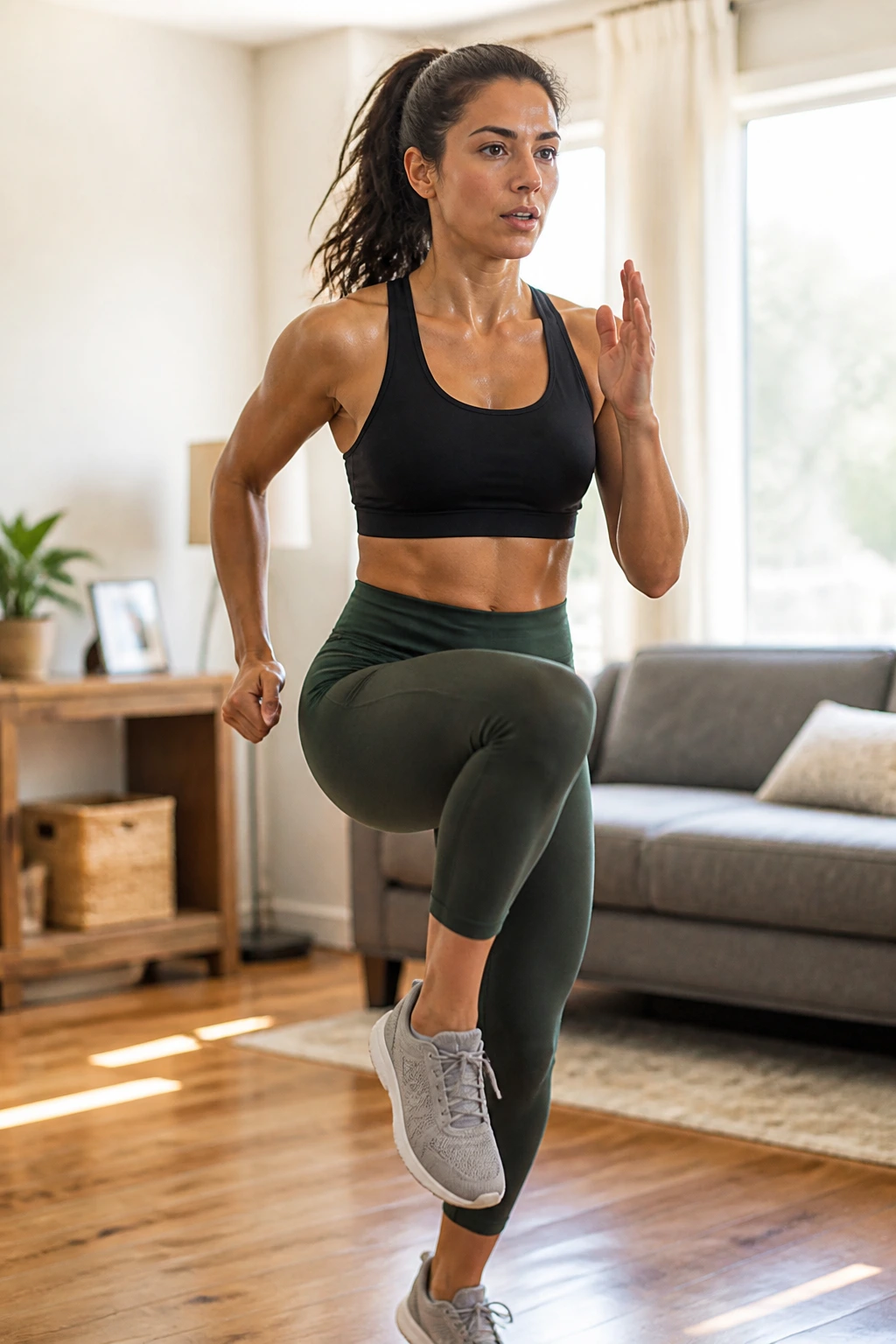
A ladder circuit is what I use when I want a session to feel organized without getting dull. Pick four low impact moves — marching bursts, step jacks, shadow boxing, and squat-to-calf raises work well — then climb the timer and come back down.
Start with 20 seconds on / 10 seconds off for each move. Then move to 30/15, then 40/20, then drop back down to 30/15 and 20/10. That rising-and-falling pattern gives the workout a shape, and the shape matters. It keeps you from drifting through the session on autopilot.
- Keep the order the same for every round.
- Push harder on the second half of each ladder step.
- Rest long enough to keep form tidy.
- Skip any move that starts feeling sloppy and swap in a march or a brisk step-touch.
The nice part is how flexible it feels. You can make the circuit five minutes or fifteen, depending on how many rounds you want. It’s the kind of home setup that saves decision-making when your brain is done for the day.
20. Low Impact HIIT Recovery Walk Intervals
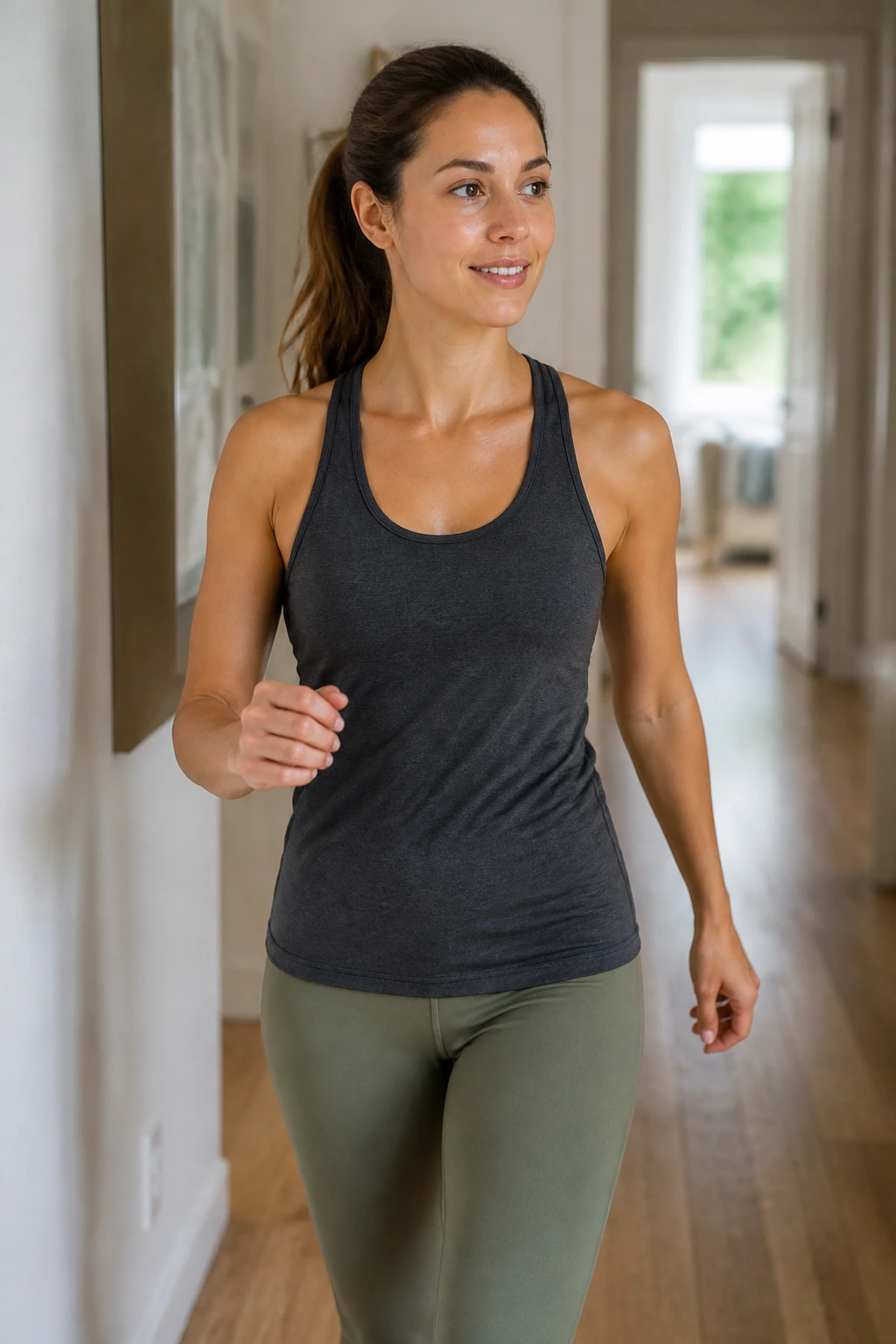
Recovery walks do not look flashy, and that’s fine. They’re the part that lets the rest of the session stick. If you finish hard intervals and your body feels a little fried, a brisk walk in place or around the room brings the pulse down without slamming the brakes.
Keep the pace honest for 60 seconds, then slow for 30 seconds and focus on breathing out longer than you breathe in. Swing the arms, roll through the feet, and let the shoulders drop away from the ears. If you want a tiny extra challenge, add an overhead reach every third step or a knee lift every few beats.
This works well as a cool-down, but it also stands on its own on days when you want movement without impact. A lot of people underestimate how useful that is. The best home routine is not the one that leaves you wrecked. It’s the one you can do again tomorrow without bargaining with your knees or your lower back.
A clean no-jump session is built on that idea: hard work, quiet landings, and enough room to keep showing up.
