



A chair, a timer, and six square feet of floor space can be enough for a hard workout. That is the appeal of circuit workouts: they work in a hallway, a hotel room, a patch of grass, or beside a bed when the day is already too full.
The trick is not fancy moves. It is clean intervals, honest rest, and exercises you can keep doing with decent form when your legs start talking back. A good circuit leaves you breathing hard, but not flailing around.
Hard does not need to be complicated.
Bodyweight squats, push-ups, lunges, planks, step-ups, shadowboxing — the old reliable stuff still earns its place because it scales well. Add a backpack, a bench, a stairwell, or a towel, and the same basic patterns become new problems. That is why these circuit workouts cover everything from no-equipment starters to tougher sessions that sneak in real resistance.
Most are built around 20 to 45 seconds of work with short rests, because that range keeps the pace honest without turning every session into a sprint. A five-minute warm-up of marching, arm circles, hip hinges, and a few easy squats makes the whole thing feel less like a surprise attack.
1. The 20-Minute No-Equipment Starter Circuit

Start here if you want a circuit workout that feels sane on day one. No gear. No setup. No need to guess whether the couch counts as equipment, which it never really does.
Set a timer for 40 seconds of work and 20 seconds of rest. Run four moves in order: bodyweight squats, incline or floor push-ups, reverse lunges, and a plank hold with shoulder taps if your wrists are happy. Do 3 to 5 rounds, depending on how your breathing holds up.
Why This Starter Circuit Works
The mix is simple on purpose. Squats and lunges give your legs a job, push-ups bring in your chest and shoulders, and the plank keeps your trunk from going soft. That balance matters more than making the session look hard on paper.
Keep the pace steady, not frantic. A lot of beginners blow up early because they rush the first round like they are trying to win a race nobody else is running. If your last round looks cleaner than your first, you picked the right speed.
- 4 exercises
- 20 minutes total, give or take
- Zero equipment required
- Scale down to 30 seconds work / 30 seconds rest if needed
- Add a fifth round only when the first four feel controlled
Bold tip: Stop one rep before your form gets sloppy. That one habit saves more workouts than any clever trick ever will.
2. The Hotel-Room Quiet Circuit
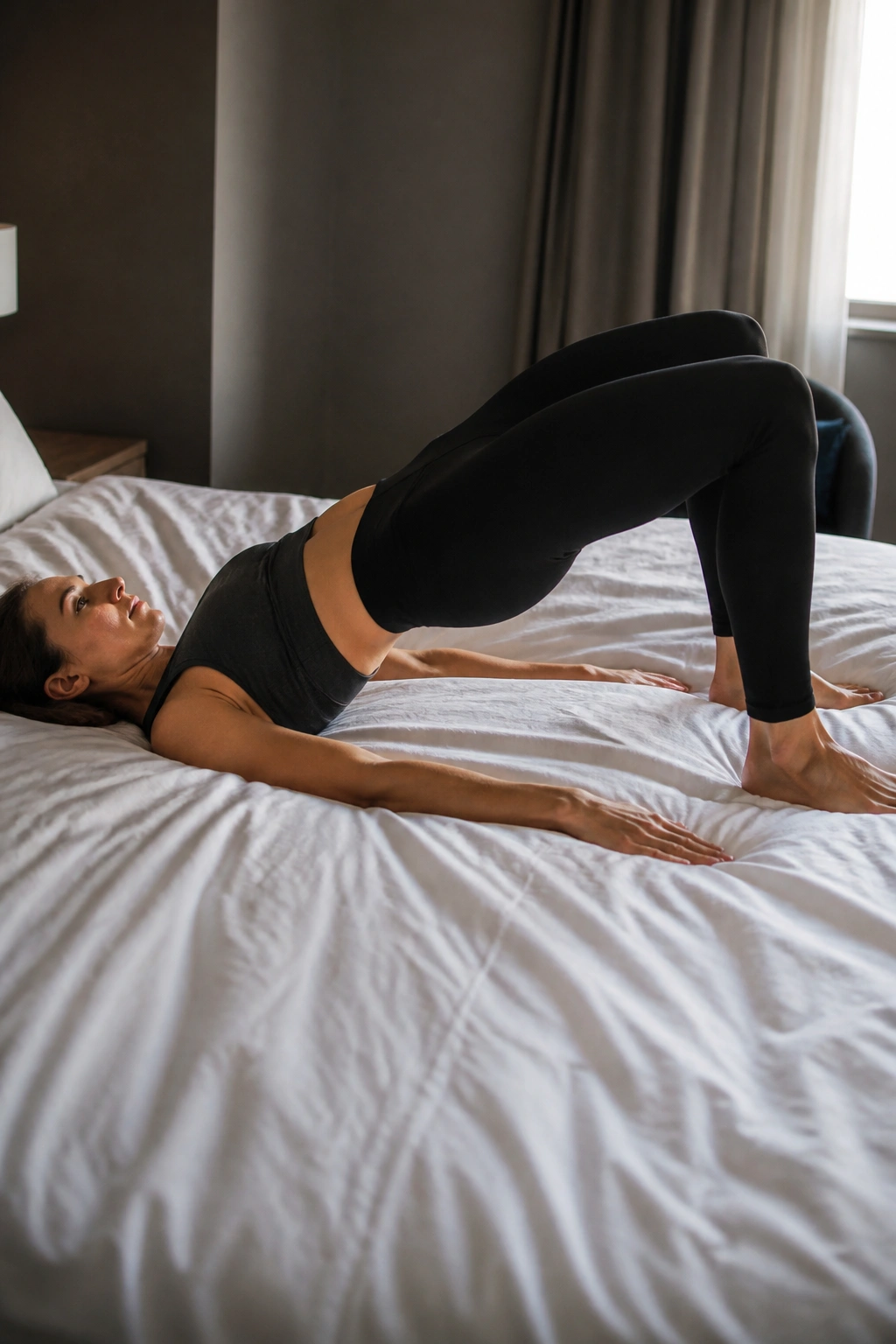
Quiet does not mean easy. It just means your neighbors are less likely to bang on the wall when you finish.
This one is built for a small room, a thin floor, and legs that need work without jumping. Try 35 seconds on, 15 seconds off for four rounds: glute bridges, dead bugs, split squats, wall sits, then bird dogs. A towel under your knees helps on hard floors, and a folded blanket makes floor work less annoying if the carpet is thin.
The beauty here is the low noise. No burpees. No high knees. No stomping around like you are moving furniture at midnight. You still get a real burn in the quads and glutes, and your core has to stay awake to keep the dead bug and bird dog honest.
I like this one after a long travel day because it wakes the body up without leaving me feeling beat up. The pace is calm, but the legs still complain by round three.
3. The Stairwell Power Circuit

One decent stair flight can carry an entire workout.
That is the whole trick. Use the stairs for step-ups, fast climbs, calf raises, and incline push-ups on the landing. A solid version looks like this: 30 seconds brisk stair climbing, 10 step-ups per leg, 12 calf raises on a step edge, 8 to 12 push-ups with hands on the railing or landing, then a 20-second wall sit. Rest one minute and repeat for 4 to 6 rounds.
Stair Work Turns Simple Moves Into Honest Work
Stairs add a bit of resistance and a bit of balance demand. That combination makes your legs work harder than they would on flat ground, and it sneaks in more cardio without turning the workout into a jumpy mess.
Keep your whole foot on the step. That matters. Half-foot reps on stairs feel sketchy and can turn a useful workout into a bad ankle story.
- Climb with a controlled drive through the heel
- Walk down, don’t sprint down
- Use the railing for balance if the stairs are narrow
- Skip the fast run if the surface is wet or slick
One more thing: stairs are sneaky. People think they are getting a leg workout only, then they are breathing through their mouth by the second round.
4. The Backpack Strength Circuit
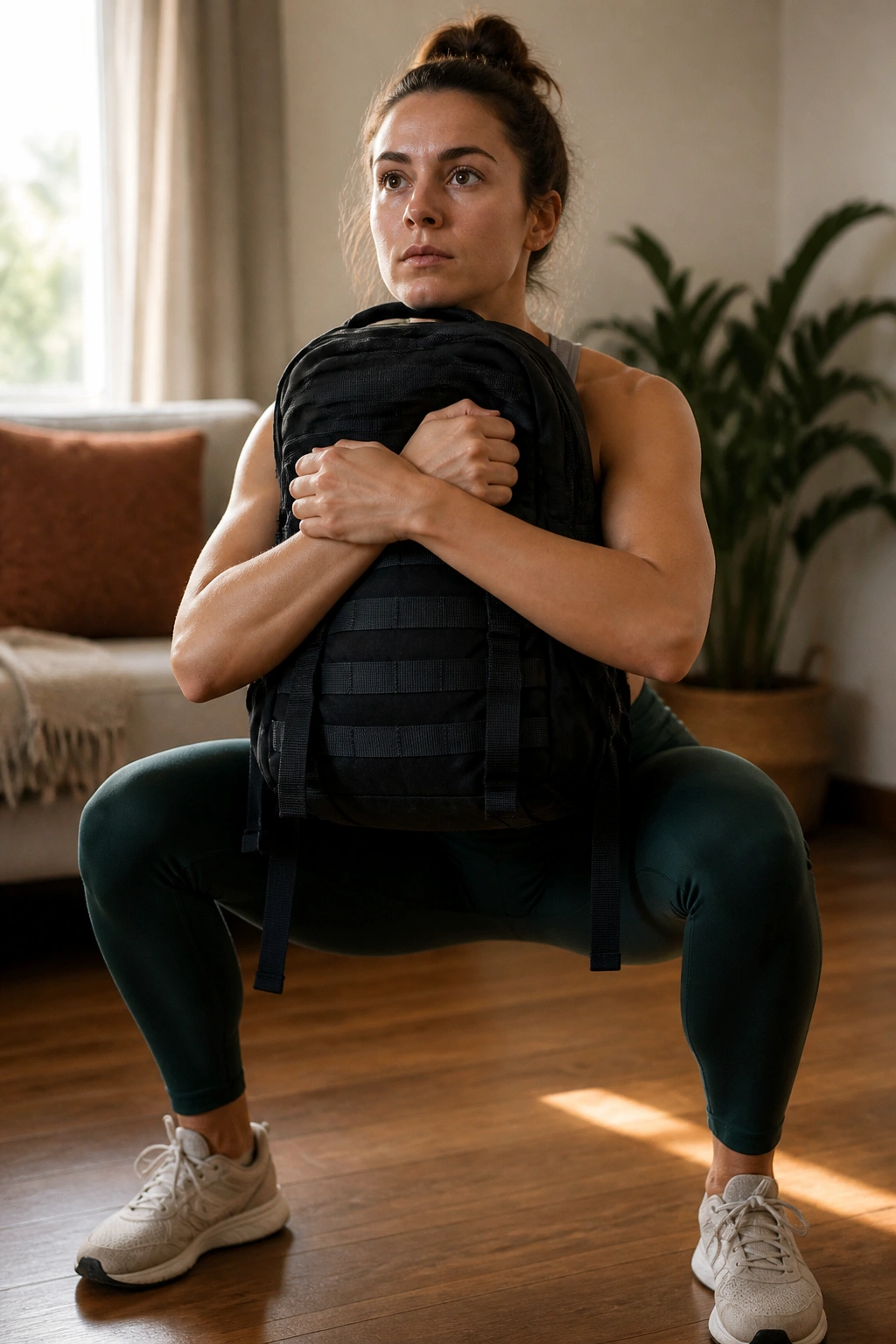
What if you need real resistance and only have a bag?
Then load the bag with books, water bottles, or anything dense that does not shift around like loose laundry. A backpack strength circuit is one of the cheapest ways to make circuit workouts feel more like strength training. Run 8 to 12 reps of backpack goblet squats, bent-over rows, reverse lunges, Romanian deadlifts, and a loaded march for 3 rounds.
How to Load the Bag
A tight, balanced pack matters more than brute weight. Put the heaviest items low and close to your back, then zip everything down so nothing slaps against the sides when you move. A sloppy bag wiggles; a snug bag feels like a real load.
Use a slow lowering phase on the squats and deadlifts. Three seconds down is enough to make light weight feel serious, and it keeps your form from turning lazy just because the load is small.
- 10 to 20 pounds is plenty for many people
- 8 reps is fine if the load is heavy
- 12 reps works well if the load is modest
- Use a towel inside the bag to stop the books from rattling
This is the kind of circuit I like when I want the room to stay small but the training to feel more like work.
5. The Core-and-Cardio Reset Circuit
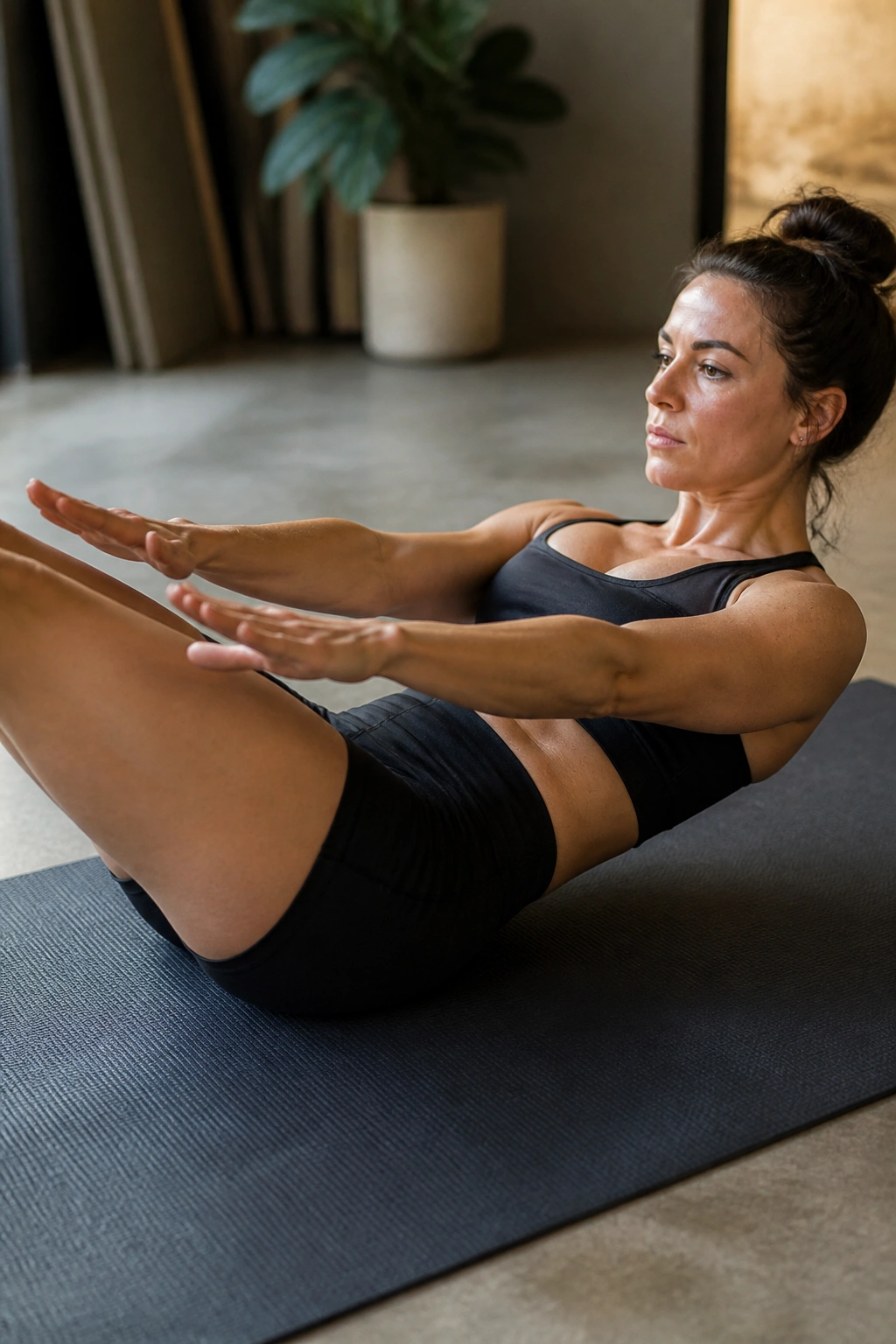
A short, ugly-looking circuit can be exactly what your torso needs.
Run 20 seconds on, 10 seconds off for five rounds through mountain climbers, bicycle crunches, high knees, hollow holds, and slow bear crawls. That mix hits the abs from the front, the sides, and the deep stabilizers that keep your trunk from wobbling when you move fast.
Floppy hips waste the whole thing.
Keep your ribs tucked on the hollow hold. If your lower back arches off the floor, shorten the hold or bend your knees a little. Bear crawls should feel controlled, not frantic. A lot of people crawl like they are trying to escape a fire, and that just turns the exercise into chaos.
The high knees add a cardio hit, but they also tell you whether your midsection can keep shape while your legs move quickly. That is the useful part. A circuit like this is short enough to fit into a busy gap, and specific enough to leave your core feeling like it actually did something useful.
6. The EMOM Space-Saver Circuit
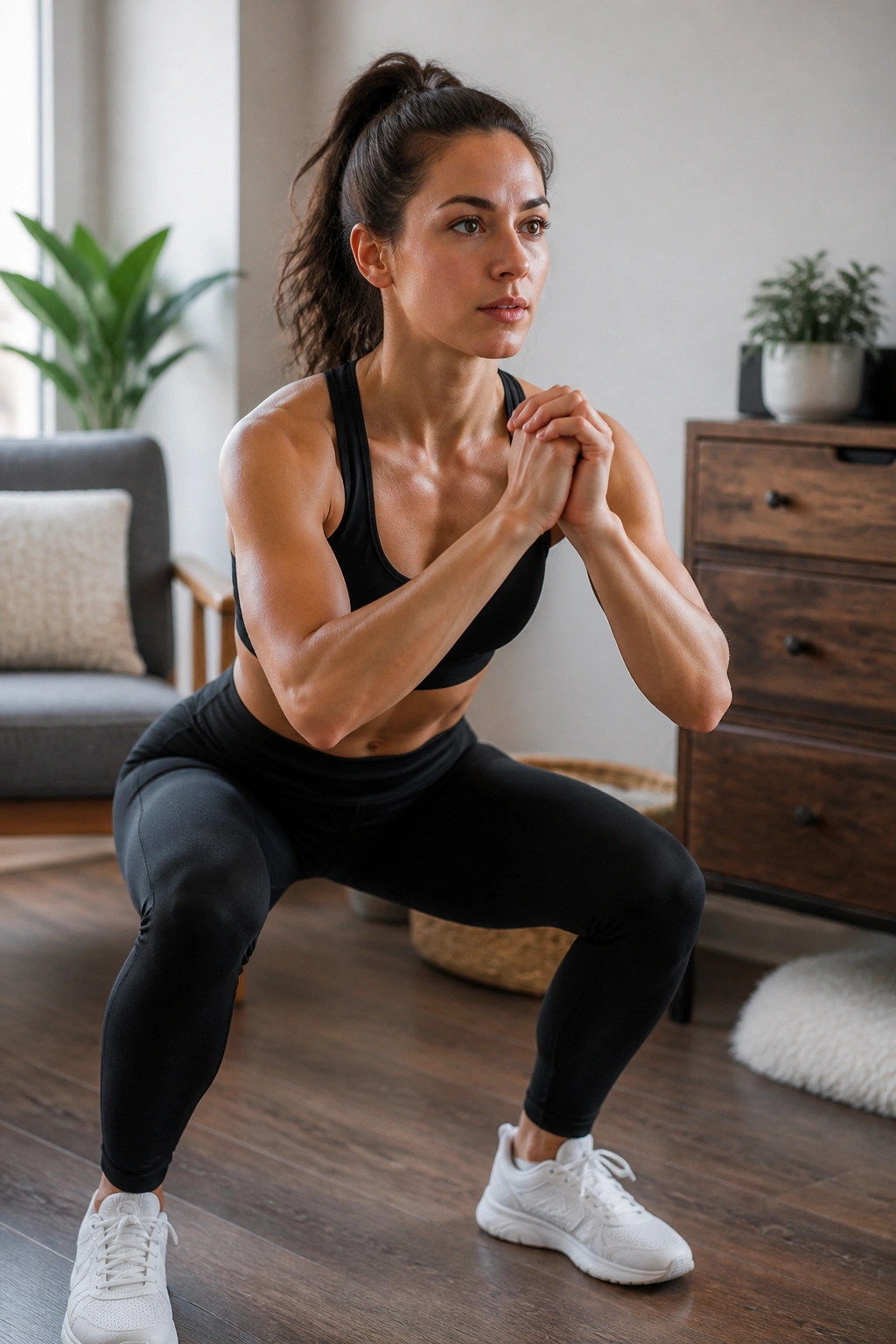
EMOM means every minute on the minute. That tiny bit of structure changes the feel fast.
Unlike an AMRAP, where you chase as many rounds as possible, EMOM gives you built-in rest after each set. That is why I like it for small spaces and for days when you want work without the sloppy, breathless scramble. A simple 10-minute version can rotate 12 squats in minute one, 8 push-ups in minute two, 12 alternating lunges in minute three, and a 30-second plank in minute four, then repeat the pattern.
Why the Timing Matters
The minute clock does two useful things. It keeps you from dawdling, and it stops you from turning every set into a near-collapse. You get enough recovery to keep form cleaner, which matters when you are training alone and no one is there to correct a weird rep.
This style is especially good if you hate guessing how long to rest. The clock does the arguing for you.
If 8 push-ups is too much, drop to 5 and use the extra seconds to breathe and reset. If you finish a minute with 20 seconds left every time, the circuit is too easy and the load needs a nudge.
7. The Glute-and-Leg Burner Circuit
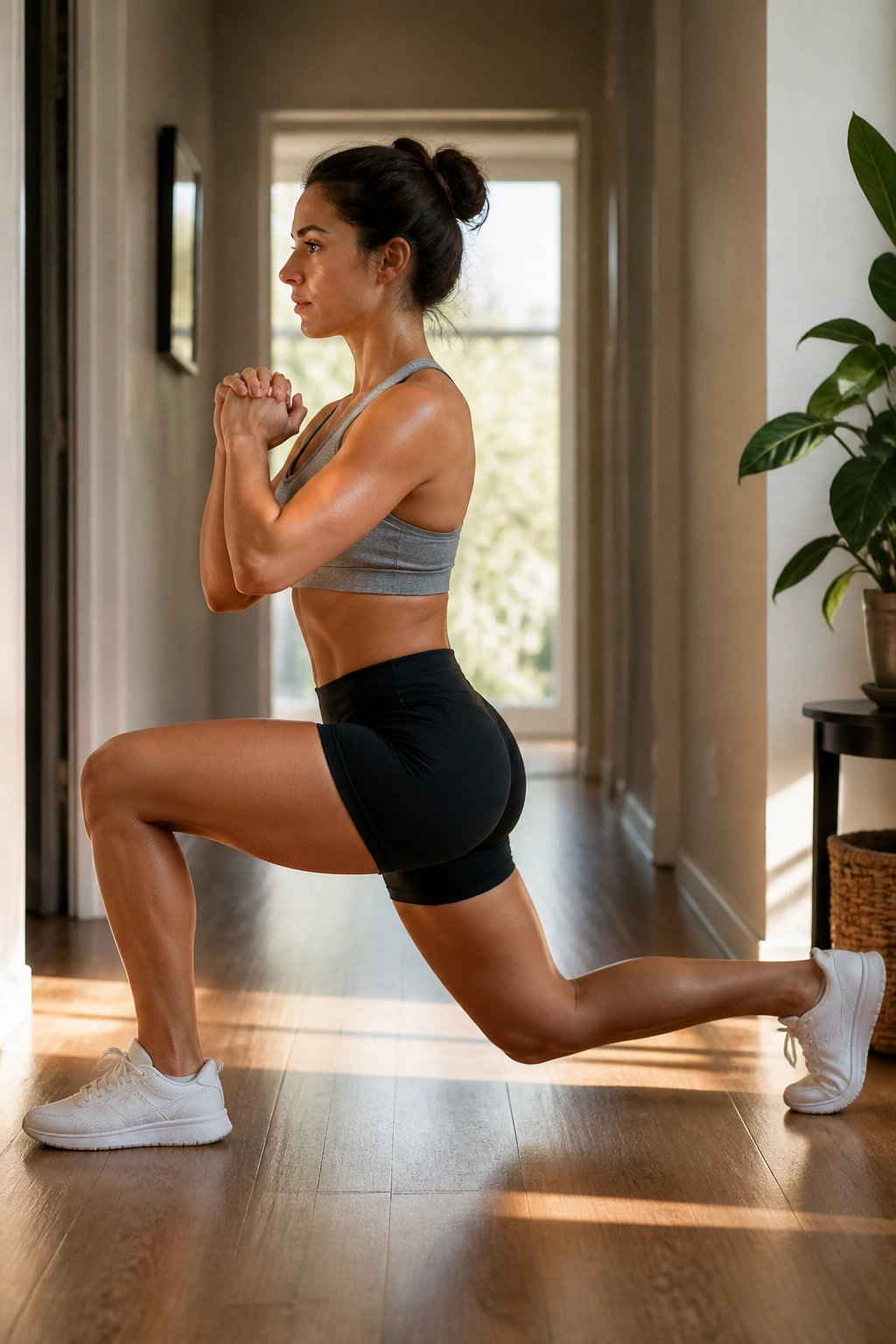
Leg work does not need machines to be effective. It needs tension, balance, and a little patience.
Try reverse lunges, glute bridges, split squats, wall sits, and single-leg deadlifts for 3 to 4 rounds. I like 10 to 12 reps per side on the unilateral work and 30 to 40 seconds on the wall sit. The glute bridge gets better if you pause for one full second at the top and squeeze the floor with your heels.
What to Pair Together
- Reverse lunge: 10 to 12 reps each leg
- Glute bridge: 15 reps with a 1-second squeeze
- Split squat: 8 to 10 reps each side
- Wall sit: 30 to 45 seconds
- Single-leg deadlift: 8 to 10 reps each side
The point is not to chase soreness for its own sake. It is to make the hips and thighs work through a full range while staying controlled. That pause at the bottom of each lunge is the difference between mindless reps and reps that actually light up the muscle.
My favorite cue: push the floor away with the whole foot, not just the toes. It keeps the knee tracking cleaner and gives the glutes something to do.
8. The Upper-Body Floor Circuit

You can train your upper body hard on the floor. People forget that part.
A good floor-based circuit builds pressing strength without needing a bench, a rack, or anything fancy. Use push-ups, pike push-ups, prone Y-T-W raises, plank walkouts, and close-grip holds. Run 6 to 10 reps on the strength moves and 20 to 30 seconds on the holds, then take 45 seconds of rest and repeat for 3 to 5 rounds.
The small detail that matters here is elbow angle. Keep your elbows roughly 30 to 45 degrees from your sides on push-ups so your shoulders do not hate you later. If a full push-up is too much, put your hands on a table, couch, or wall. That is not cheating. It is sensible training.
Pike push-ups are the hardest move in the bunch for most people, and they are worth keeping if your shoulders want more work. The floor raises round out the circuit by waking up the back of the shoulders, which too many push-up plans ignore.
This is a clean, no-drama session. You feel it fast, and you do not need much room to do it.
9. The Shadowboxing Circuit

If your knees complain about jump training, shadowboxing is a cleaner answer.
Three-minute rounds work well here. Shadowbox for 3 minutes, rest for 1 minute, and repeat for 4 to 6 rounds. During the rounds, mix straight punches, hooks, slips, and a few fast foot switches. Keep your hands at cheek level, your chin tucked, and your shoulders loose enough that you do not lock up by round two.
Combos Worth Repeating
- Jab-cross, reset, then jab-cross again
- Jab-cross-hook, step out, repeat
- Slip left, cross, hook
- Double jab, body shot, exit
- Jab, roll under, cross
The nice thing about shadowboxing circuits is that they sneak in a lot of cardio without pounding your joints. Your feet stay light, your upper body stays busy, and the rounds go by fast if you keep your combinations simple.
A light bounce is enough. You do not need to dance around like you are in a music video. The cleaner your movement, the better this one feels.
10. The Mobility-First Recovery Circuit
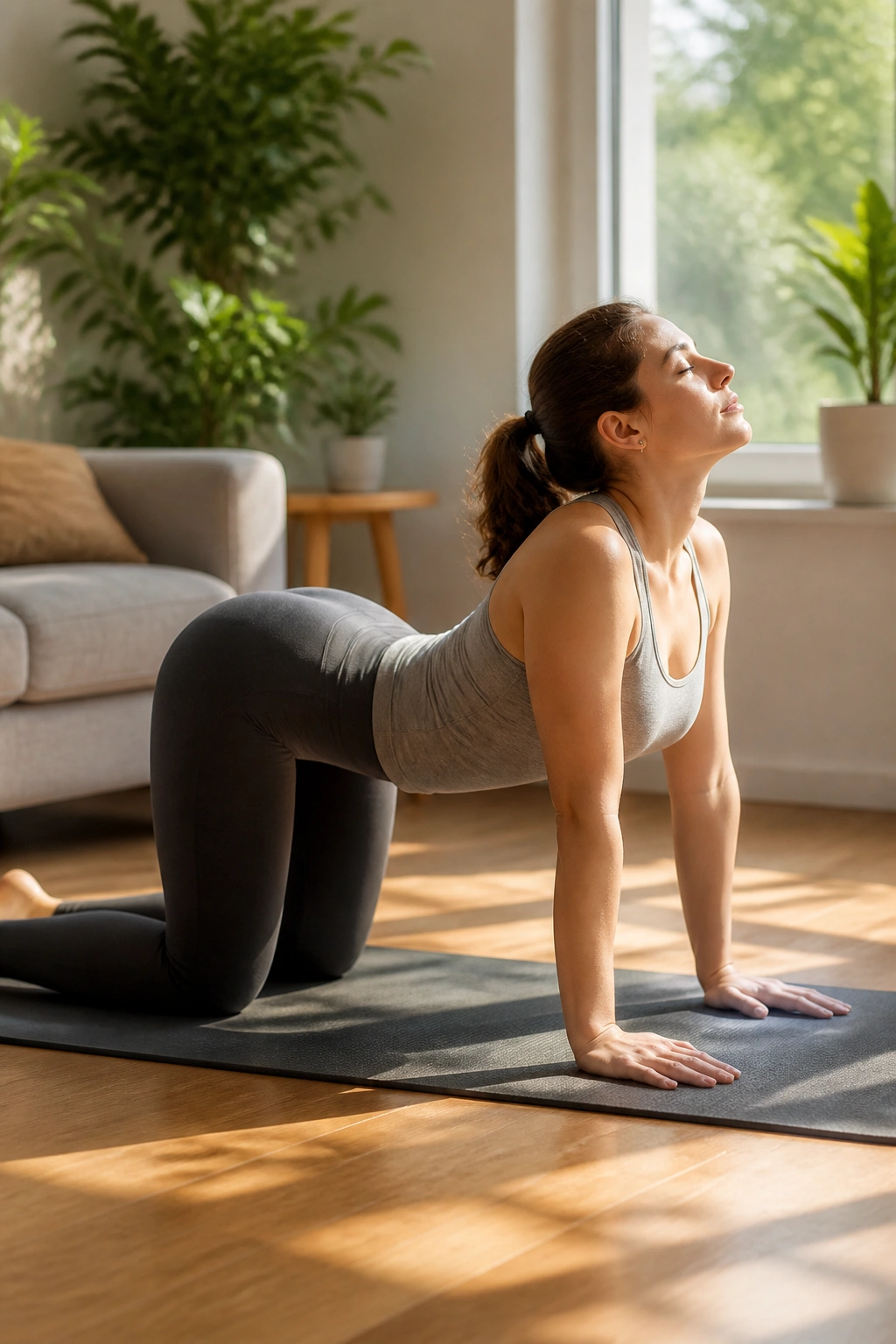
Can a circuit be easy and still useful? Yes. Absolutely.
Use this on the days when your body feels stiff, your shoulders are cranky, or your hips have forgotten they own any range at all. A calm version is 45 seconds per move for two to three rounds: cat-cow, thoracic rotations, ankle rocks, deep squat holds, and couch stretch or kneeling hip flexor stretch. Move slowly enough that you can breathe through your nose for most of it.
How to Slow It Down
The goal is not to “win” a mobility circuit. It is to make the joints move well enough that your next hard workout feels less clunky. Hold each position long enough to find the tight spot, then back off just a little. That little adjustment is usually where the good work happens.
If the deep squat hold feels impossible, hold onto a door frame or chair. If the couch stretch lights up the front of the thigh like a match, shorten the position and keep the pelvis tucked under. You are after a stretch, not a cramp.
This is the circuit I reach for when I want to feel better after sitting too long. It is not flashy. It works.
11. The Low-Impact Knee-Friendly Circuit
Not every hard workout needs jumping.
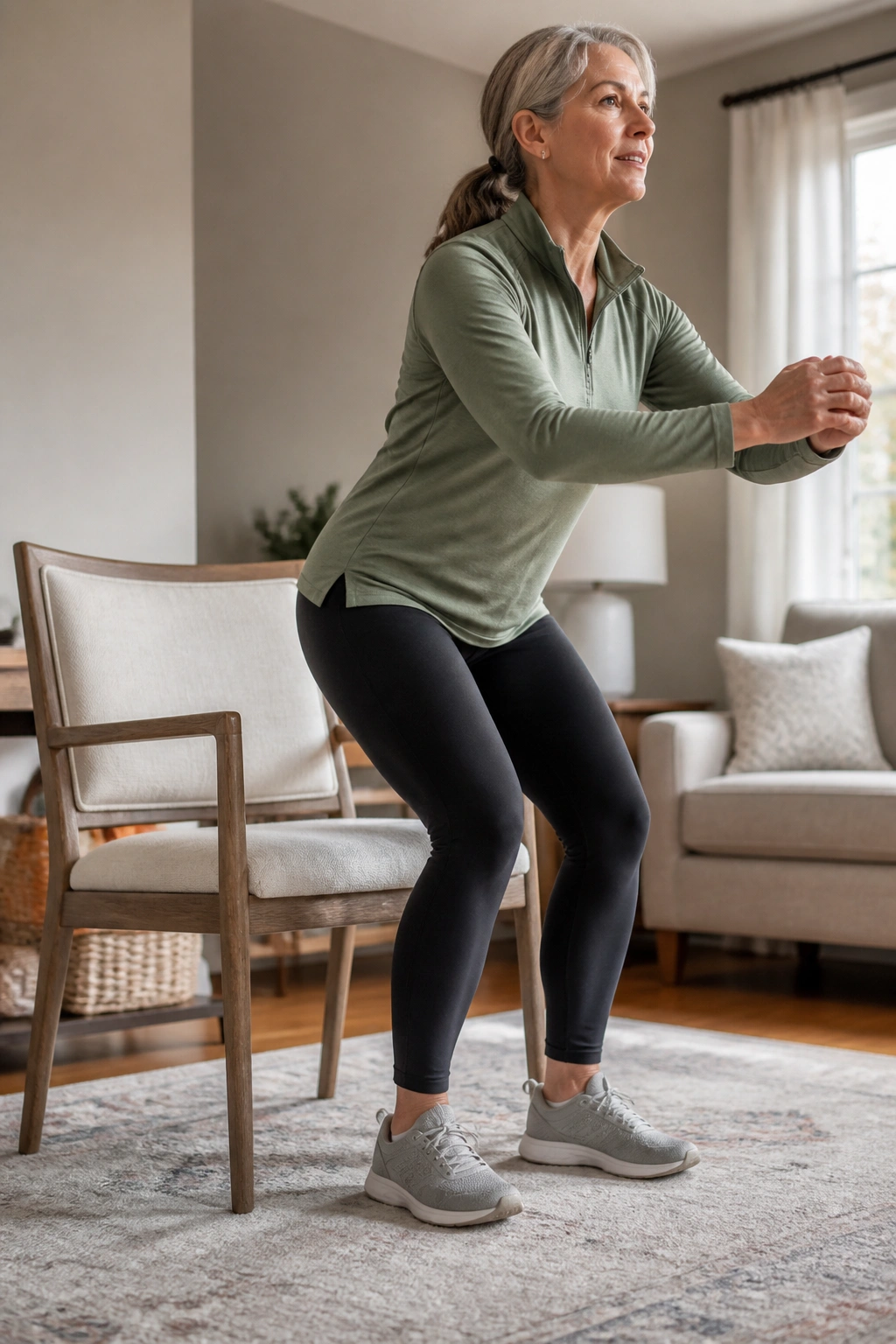
This one keeps the impact down while still making the legs earn their keep. Use sit-to-stand from a chair, glute bridges, side-lying leg raises, short-range step-back lunges, and dead bugs. A simple setup is 30 seconds of work with 15 seconds of rest for 3 rounds. The key is controlled tempo, not speed.
Burn is one thing. Sharp pain is another.
If the front of the knee complains, shorten the range on the lunge and slow the lowering phase. If standing from the chair feels easy, pause for two seconds at the bottom before driving up. That pause turns a basic movement into a cleaner strength drill without loading the joint with extra impact.
I like this circuit for people who want to keep moving but do not want the pounding that comes with jump-heavy conditioning. It also works well as a bridge back into more aggressive lower-body work.
12. The Park Bench Circuit

Unlike floor-only circuits, a park bench gives you height. That changes the whole game.
Use the bench for step-ups, incline push-ups, split squats, incline planks, and knee drives. Run 10 to 12 reps for the strength moves and 20 to 30 seconds for the planks, then rest 45 to 60 seconds between rounds. Three to four rounds is enough for most people unless the step-ups get spicy fast.
What to Watch For on a Bench
- Check that it does not slide
- Use a height that lets you keep control
- Keep the push-up angle steep enough to be useful, not so steep that your shoulders shrug
- Step down with control; don’t drop off the bench
A bench makes incline work easier on the wrists and shoulders, which is why it shows up in so many good outdoor circuits. It also gives you a clean way to train one leg at a time without dragging extra gear along.
If you want a workout that feels structured but still outdoor-friendly, this is one of the cleanest options.
13. The AMRAP Full-Body Circuit

AMRAP means as many rounds as possible in a set time. The clock sets the limit, not the number of sets.
A good 12-minute AMRAP might be 10 squats, 8 push-ups, 12 alternating lunges, 20 mountain climbers, and 10 glute bridges. Keep moving at a pace you can sustain for the full window, because the point is to stack quality rounds instead of detonating in the first four minutes.
What AMRAP Actually Does
It forces pacing. That is the value.
You learn very fast whether you can hold form when your breathing gets noisy and your legs start going dull. A lot of people think they need more exercises when they really need a better pace and cleaner transitions. AMRAP makes that obvious.
- Set one timer
- Pick five moves
- Keep the round short
- Write down how many rounds you finish
- Try to beat the score by one rep or one full round next time
Do not sprint the first round. That is the classic mistake. Leave a little in the tank, because the middle minutes matter more than the opener.
14. The Tabata Sprint Circuit

Tabata looks tiny on paper and feels like a mess in the lungs.
The classic format is 20 seconds of work, 10 seconds of rest, repeated 8 times. You can use one move, like squat jumps or burpees, or alternate between two moves, like mountain climbers and squat thrusts. Keep the total block short — 4 minutes per exercise — and stop if your form starts falling apart.
Tabata is not the place for long warm-up feelings or messy technique. Pick a move you can perform fast without turning it into chaos. Fast shadowboxing, squat jacks, skaters, or high-knee drives all work if your joints handle them well.
One honest note: this style can chew through your energy faster than you expect. That is part of the deal. It is also why I would rather see someone do two clean Tabata rounds with good form than try to be heroic and regret it halfway through.
Short. Sharp. Done.
15. The Chair-and-Couch Circuit
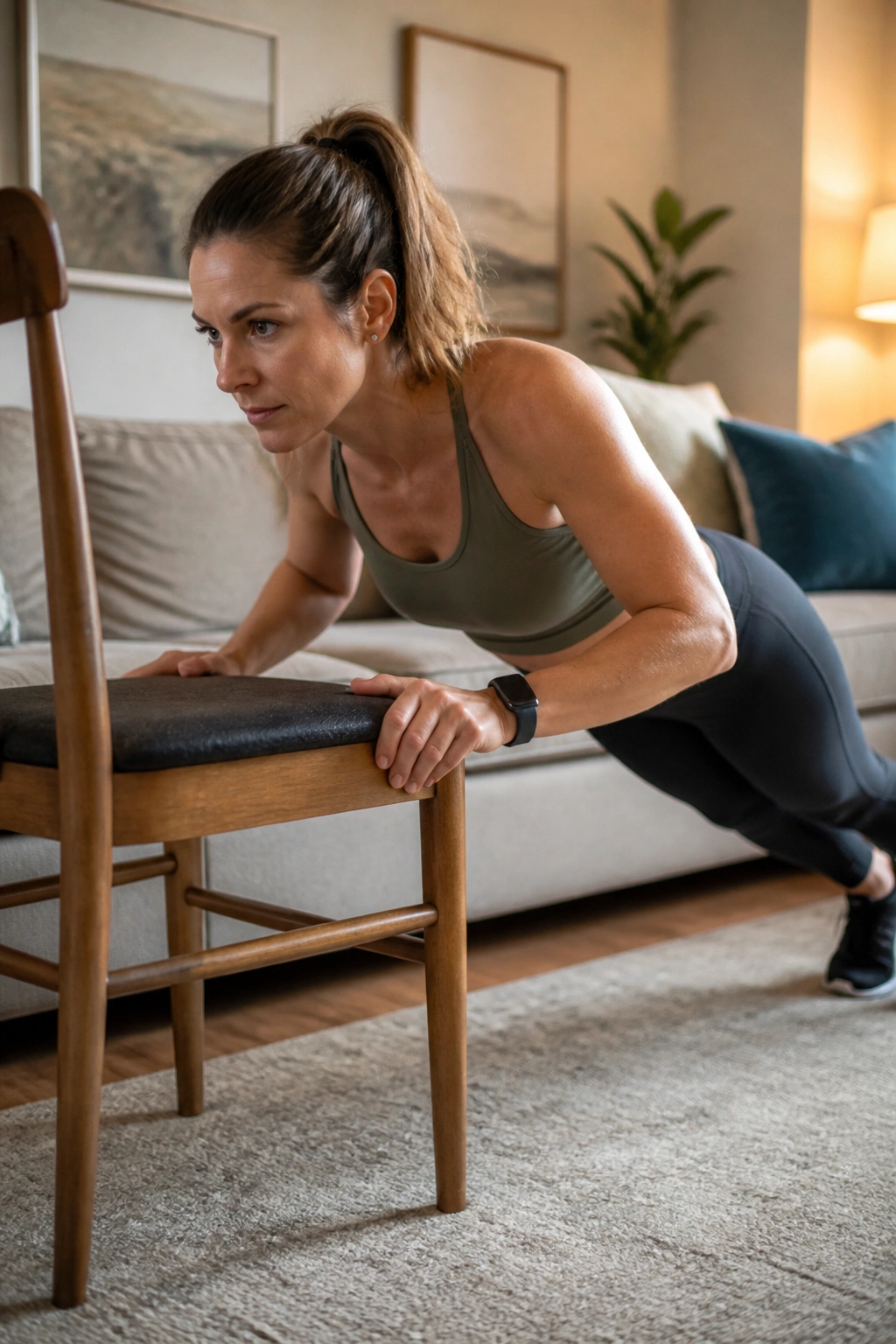
Furniture can do more than hold laundry.
A chair and a couch give you height, support, and a few useful angles for a home circuit. Try chair squats, couch push-ups, Bulgarian split squats with the back foot on the couch, triceps dips on a sturdy chair, and elevated planks. Aim for 8 to 12 reps on the strength moves, then 20 to 30 seconds on the plank or dip hold.
Use the Furniture, Don’t Trust It Blindly
Before the first rep, press down on the chair or couch to make sure it does not slide. A wobbly setup is not brave; it is annoying. If the couch is soft, use it for split squats and push-ups, not for anything that needs a firm edge.
This circuit works well because the furniture changes the angles enough to keep the session from feeling flat. A couch push-up is easier than a floor push-up, but the elevated split squat can make the legs complain in a way that surprises people.
I like it when I want a home workout that feels a little more structured than pure bodyweight floor work. It is practical, and it uses what is already in the room.
16. The Band-If-You-Have-One Circuit
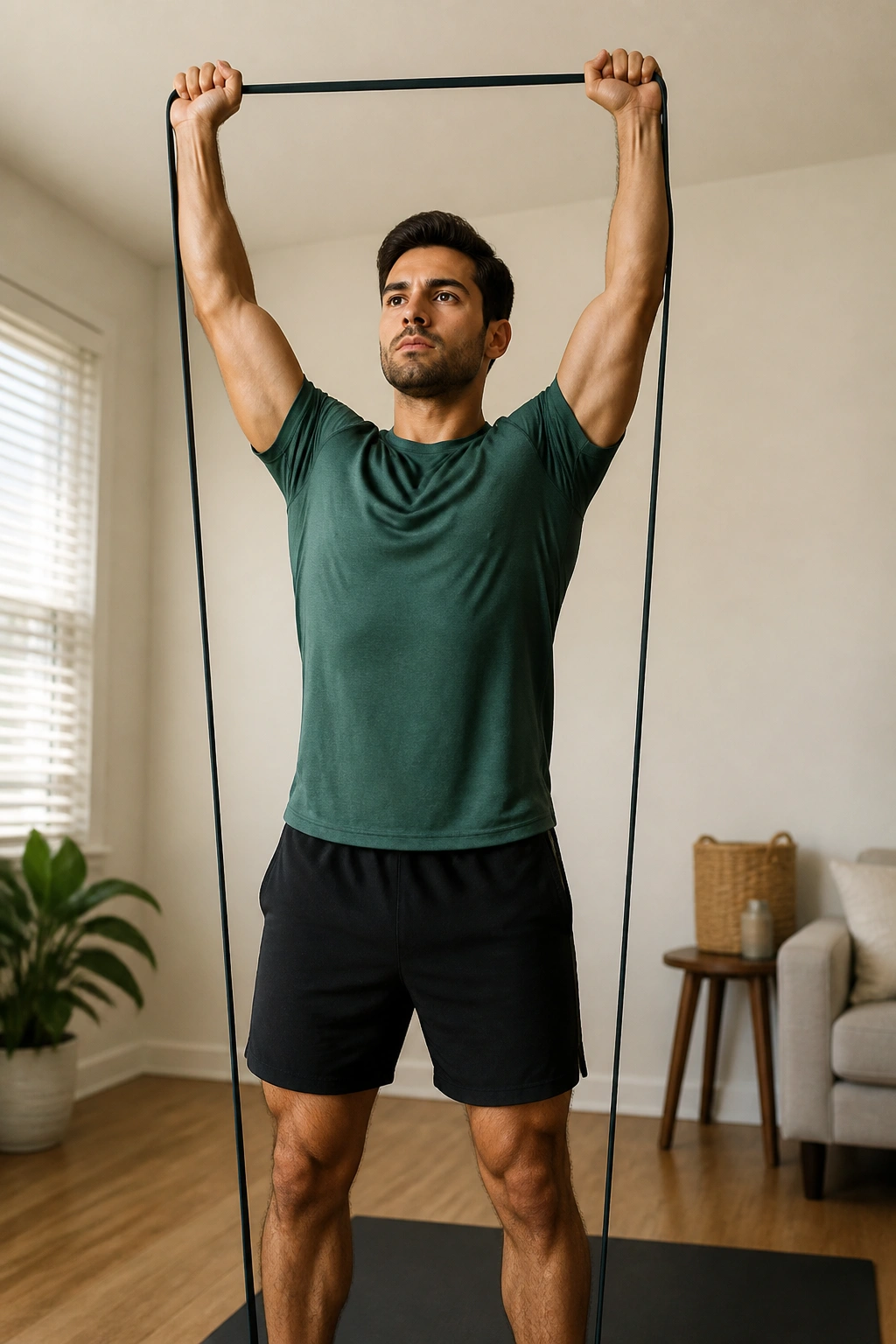
Do you have a resistance band tucked in a drawer somewhere? Use it.
Bands are small, cheap, and annoyingly useful. A simple circuit can run band rows, pull-aparts, overhead presses, lateral walks, and banded good mornings for 12 to 15 reps each, repeated for 3 rounds. If you have a loop band, step into it for the lower-body work and hold it under both feet for presses and rows.
Useful Band Moves
- Row: squeeze the shoulder blades down and back
- Pull-apart: keep the arms level, don’t shrug
- Overhead press: brace the ribs so you do not lean back
- Lateral walk: small steps, constant tension
- Good morning: hinge at the hips, not the waist
The band is best when it stays tight the whole time. If it goes slack at the top of the rep, the resistance drops off and the set turns less useful. Stand on the band wider than you think for the leg work so the tension stays steady.
This is a smart circuit when you want upper-back work without hauling around dumbbells.
17. The Walk-Jog Interval Circuit

A sidewalk, a park loop, a track, even a long driveway can carry this one.
Use a repeating pattern like 60 seconds brisk walk, 30 seconds jog, 60 seconds brisk walk, then stop for 10 squats or 8 push-ups on a bench or curb if you want the circuit part to feel more like a circuit. Run that cycle for 15 to 25 minutes. It is easy to adjust, and it does not require much thinking while you move.
The nice part is how it spreads the effort out. Your lungs get work, but your joints get a bit of a break between the harder intervals. That makes it useful for people who want conditioning without pounding themselves into the ground.
If running is not the thing, keep the walk brisk and swap the jog for a fast power walk. Even that change can raise the effort enough to matter. The point is rhythm, not speed records.
This is one of those workouts that looks mild from a distance and feels much bigger once your breathing changes.
18. The Partner Callout Circuit

Unlike solo circuits, this one removes thinking from the equation.
One person sets the timer, and the other calls the movement every 30 to 45 seconds. Swap roles after 10 to 15 minutes. Good calls include squats, push-ups, mountain climbers, plank holds, bear crawls, and lunges. You can even use a deck of cards or a list of five moves so nobody has to invent the session on the spot.
Why the Pair Setup Helps
Random order keeps your body guessing. It also stops you from mentally checking out halfway through, which happens more often than people admit. When you do not know whether the next move is a plank or a set of lunges, you stay a little more alert.
Keep the moves simple. Partner circuits fall apart when people get too clever and start choosing exercises that need equipment or too much explanation. A good session should feel obvious once the timer starts.
- 5 to 6 moves total
- 30 to 45 seconds per move
- 2 to 3 rounds each
- Pick one low-impact option for recovery days
It is a good circuit for friends, couples, or anyone who likes a little unpredictability.
19. The Towel-and-Floor Circuit
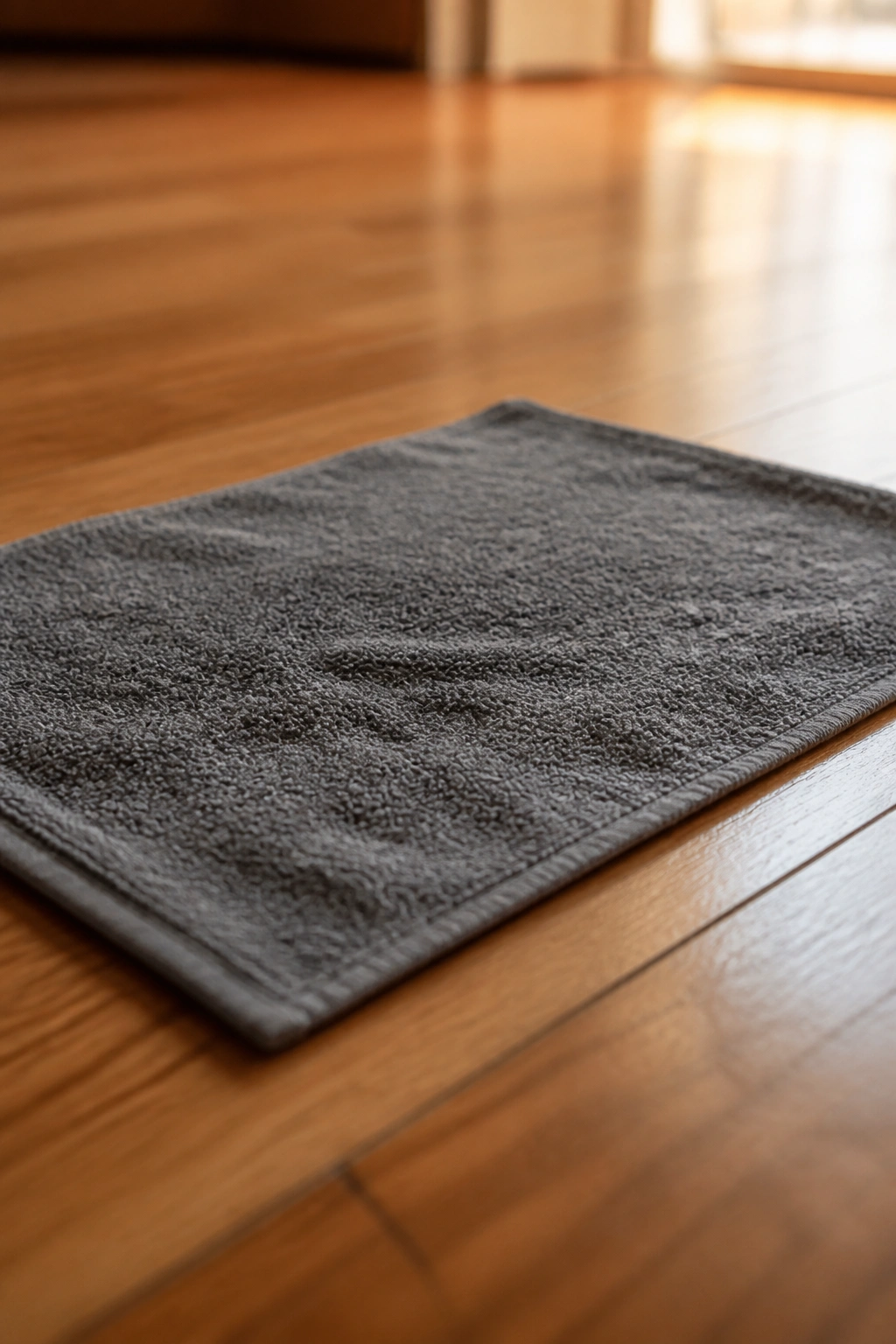
A towel on a smooth floor can turn a plain room into a tougher workout.
Slide work is sneaky. Put socks on or use a towel under your feet, then run sliding mountain climbers, hamstring curls, body saws, reverse lunge slides, and plank pikes. Aim for 8 to 12 reps on the slower moves and 20 to 30 seconds on the planks. Hardwood, tile, or a very slick gym floor works best.
Why a Towel Matters
The towel creates instability. Your legs and trunk have to control the slide, which makes even a short set feel expensive. Hamstring curls on sliders are especially brutal because your heels keep moving while the hips have to stay lifted.
Keep the movement small at first. Big slides look impressive and often become a hip sagging mess. A short, controlled range teaches the muscles what to do before you ask for more speed or more reps.
This one is excellent when you want a home circuit that feels unusual without needing a single machine. It is cheap, effective, and a little mean in a good way.
20. The One-More-Round Ladder Circuit
The count does the work.
A ladder circuit climbs and then comes back down. Try 2, 4, 6, 8, 10, then 8, 6, 4, 2 on squats, push-ups, alternating lunges, or sit-ups. You can run one move at a time or pair two together, then rest 30 to 60 seconds at the top of each rung if needed.
What I like about this format is that it gives your brain a target. You are not staring at the clock, guessing whether the set is almost over. You just have to reach the next number.
The ladder also exposes pacing fast. If you charge the first couple of rounds, the middle rungs get ugly. If you stay calm early, the whole thing feels cleaner, even when the total work adds up.
Use this one when you want a workout that feels organized without being repetitive. It is simple, and that is part of why it works.
21. The Travel-Day Desk-Break Circuit

Sitting all day makes your hips and upper back feel like they have been packed in a box.
This is the circuit I would use as a reset between meetings, after a flight, or any time your body wants to stay folded into a chair shape. Do 2 rounds of 15 calf raises, 10 hip hinges, 8 desk or wall push-ups, 8 split squats per leg, and 5 thoracic rotations per side. Total time: about 6 to 8 minutes.
A Small Reset Beats a Long Delay
You do not need a huge workout to feel less stiff. You need a little bit of movement in the places that went stale. Calf raises wake up the lower leg, hip hinges remind the back of the body how to load, and push-ups get the shoulders moving again.
- Keep the split squats shallow if your legs are cold
- Use a wall instead of a desk if the surface is too low
- Wear shoes if the floor is slippery
- Breathe out on the effort, not the setup
This is not glamorous work. It is maintenance. And, honestly, maintenance is what keeps the bigger workouts from feeling awful.
22. The Keep-This-Useful Benchmark Circuit
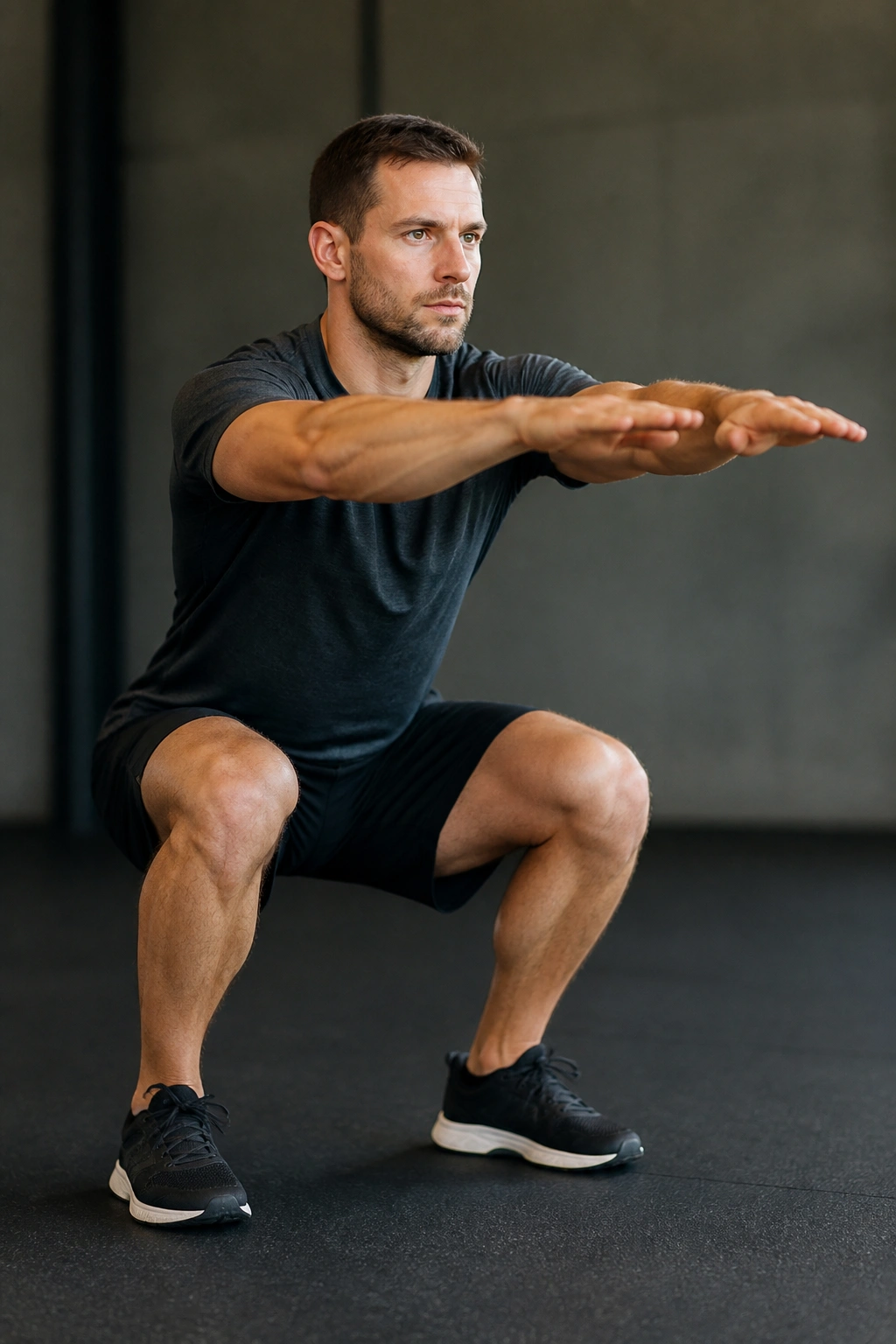
A good benchmark circuit should tell you something without making a big speech about it.
This one is the version I keep coming back to when I want a clear baseline: 5 rounds of 5 squats, 5 push-ups, 10 alternating lunges, a 20-second plank, and a 30-second march in place. It is short enough to fit anywhere, but it still shows where your strength and conditioning start to wobble.
If the first two rounds feel smooth and the last two fall apart, you learned something useful. If you can shorten the rest by 10 seconds and keep your form clean, that is progress. If you can add one round without losing your breathing, even better.
The point is not to chase drama. It is to have one circuit you can return to every few weeks and measure honestly. That kind of repeatable workout matters more than a clever new routine every time you lace up.
A few weeks from now, this benchmark will tell the truth. Not loudly. Just enough.
