



A good ab workout should leave your midsection tired, your breathing a little sharper, and your lower back untouched. That last part matters more than people admit. A lot of women get fed a diet of crunches and sit-ups, then wonder why their neck aches, their hip flexors feel busy, and the whole thing seems to help everyone except the abs.
The smarter route is to train the core the way it actually works: bracing, resisting motion, coordinating with breath, and keeping the ribs stacked over the pelvis. That means planks, dead bugs, carries, anti-rotation drills, and controlled flexion work when it earns its place. It also means accepting one annoying truth: visible abs are not built by movement alone. Body fat, posture, stress, sleep, and daily activity all play a role. No magic. Just useful work.
The good news is that useful work can still be fun. A challenge gives you a target, a clean finish line, and enough structure to stay consistent without turning every session into a random pile of exercises. Some of these ab workout challenges for women are quiet and controlled. Some are sweaty. A few will test your patience. All of them are meant to make your core stronger in a way you can feel when you stand up, lift groceries, run up stairs, or carry a child on one hip.
1. 7-Day Plank Ab Workout Challenge
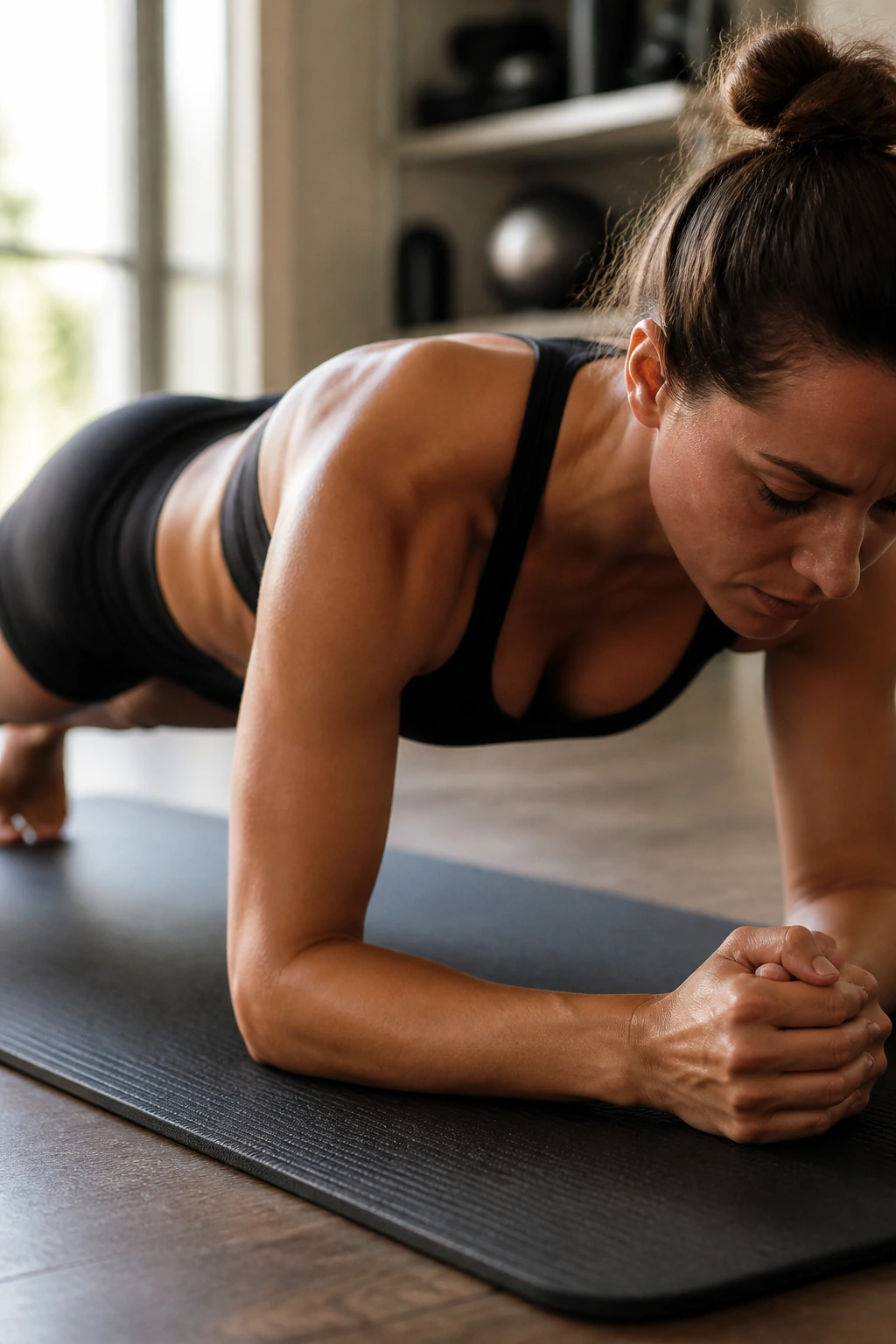
Planks are boring only if you do them badly. Done well, they’re a ruthless little lesson in body control, and that’s why this challenge earns a spot near the top. Start with 20 seconds on day one and add 5 to 10 seconds a day until you hit 60 seconds. If your lower back starts sagging before the timer ends, the set is over. No hero points for sloppy form.
Why It Works
The plank is an anti-extension move, which means your abs have to stop your spine from arching. That’s more useful than people think. You need that skill when you press a stroller uphill, hold a heavy bag, or keep your ribs from flaring during a lift.
- Elbows under shoulders.
- Squeeze your glutes.
- Exhale slowly through the hardest part.
- Stop the second your low back takes over.
Bold tip: If forearm planks feel brutal on your wrists or shoulders, raise your hands on a bench and keep the same body line.
2. Dead Bug and Breath Challenge
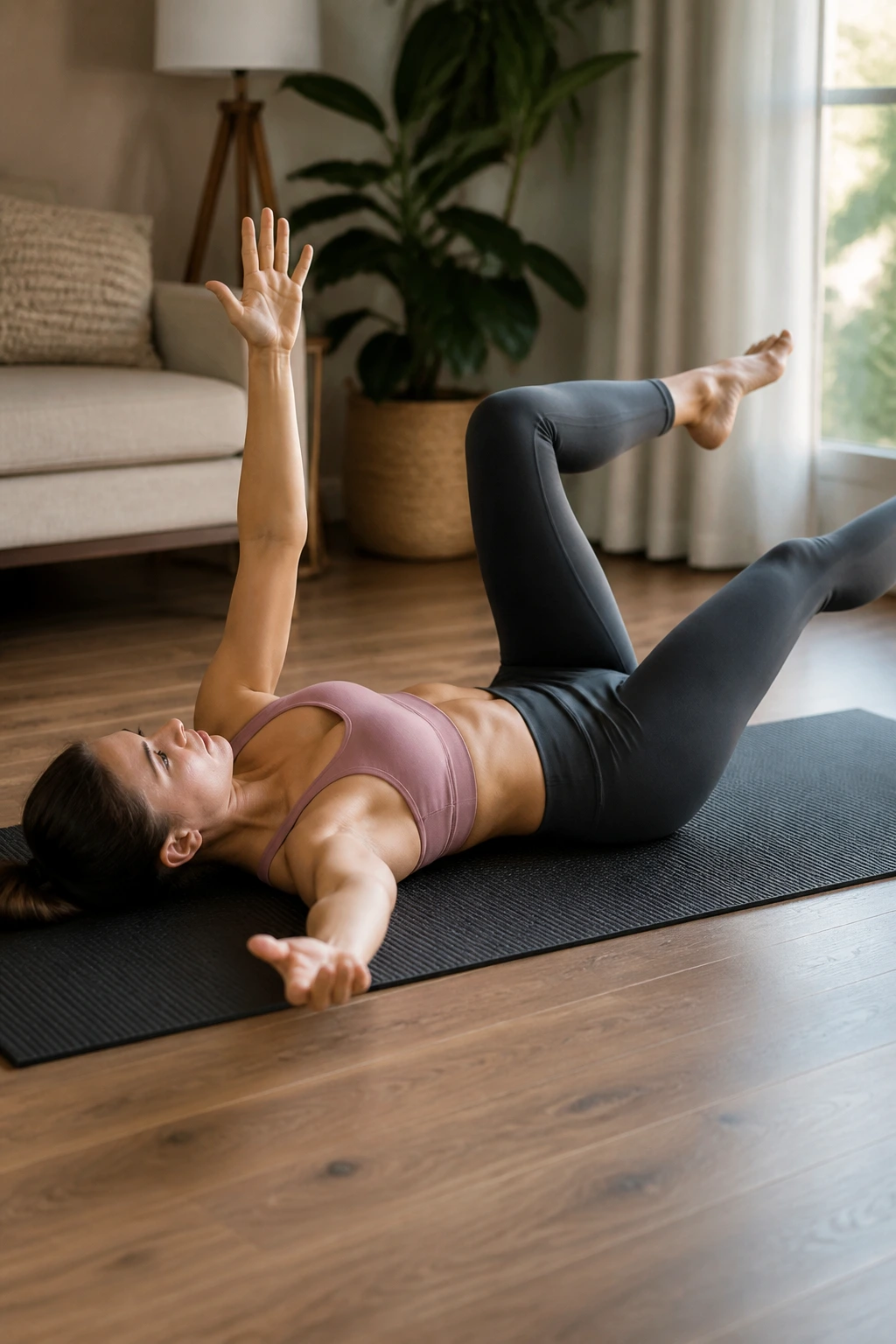
This is one of the best core drills for women who want abs that work, not abs that just burn. The dead bug looks gentle. It is not. The slow leg-and-arm pattern forces your trunk to stay quiet while your limbs move, which is exactly the skill most crunch-heavy workouts skip.
Lie on your back, knees above hips, arms reaching up. Before the first rep, flatten your low back lightly into the floor and take a long exhale. That exhale is doing real work. It helps your ribs settle and keeps your abdomen from popping up like a tent. Then extend one leg and the opposite arm, but only as far as you can go without your back lifting.
Try 3 rounds of 6 reps per side, with each rep lasting about 4 seconds out and 4 seconds back. If that sounds slow, good. Slow is where the control shows up.
The practical version is simple: do it on a mat after a walk, between strength sets, or as a reset on days when your back feels cranky. Clean dead bugs are worth more than fast ones. Every time.
3. Reverse Crunch Countdown Challenge
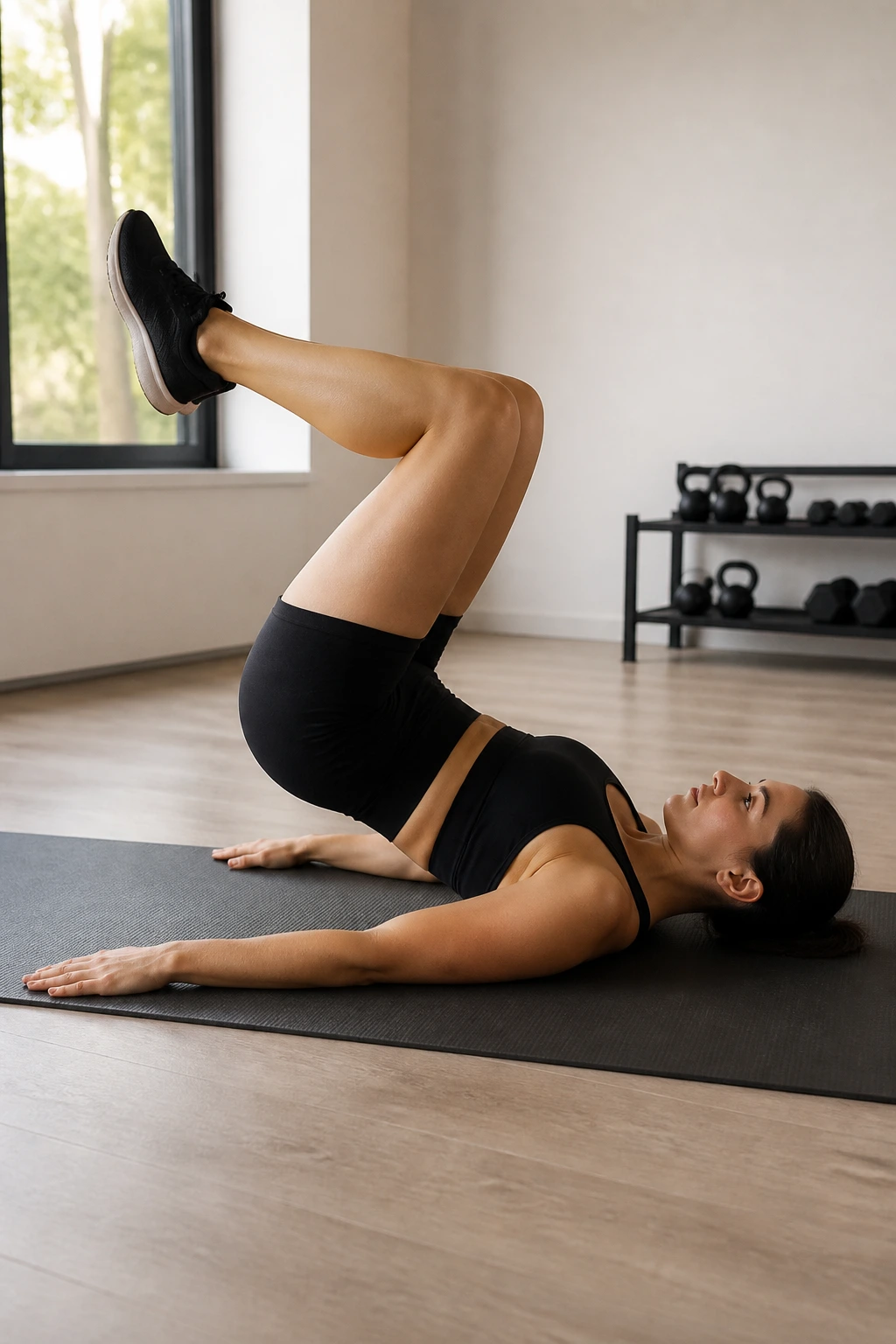
Why do reverse crunches feel so much more direct than regular crunches? Because they teach you to curl the pelvis instead of yanking on your neck. That subtle shift is the whole game. When the movement starts from the tailbone tucking up, the lower abs have to finish the job.
Lie with your knees bent at 90 degrees and your hands lightly on the floor. Pull your knees toward your chest by lifting the pelvis, not by swinging your legs. The range of motion stays small. That’s fine. Small is the point.
How to Use It
- Start with 12 reps.
- Rest 30 seconds.
- Drop to 10, then 8, then 6, then 4.
- Keep every rep slow enough that your hips leave the mat under control.
The mistake I see most is momentum. People kick their knees and call it abs. Nope. If your feet are flying and your low back is arching on the way down, shorten the range and slow the lowering phase to 3 seconds. That’s when this challenge starts to feel honest.
4. Side Plank Oblique Challenge
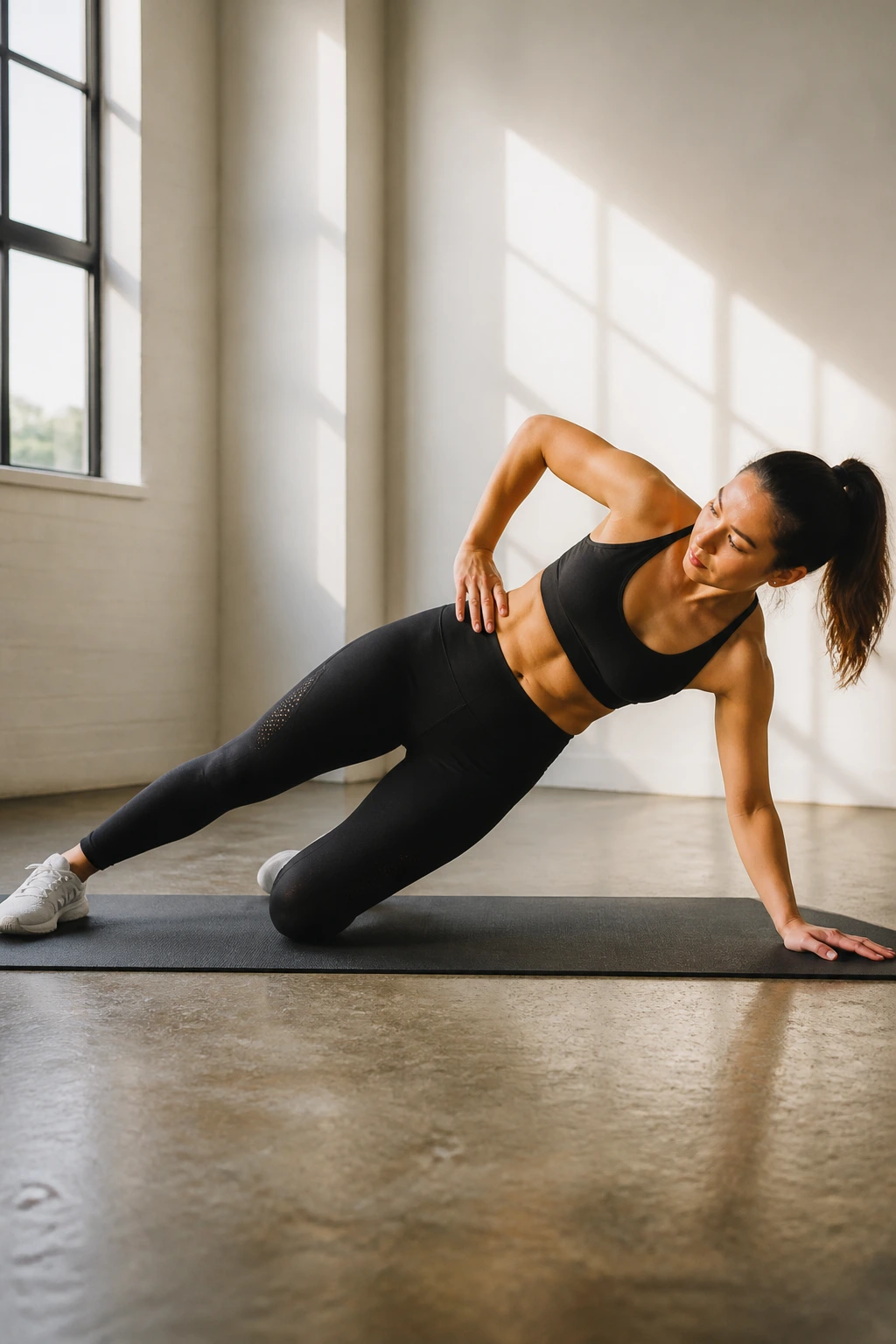
At the end of a long day, side planks have a funny way of exposing weaknesses you never notice in a front plank. One side may shake earlier. One shoulder may cave. One hip may droop. That’s not a flaw. It’s information.
The side plank is an anti-lateral flexion drill, which means your obliques, glute med, and shoulder stabilizers all have to keep the body from collapsing sideways. That matters if you carry a tote on one shoulder, stand on one leg to put on pants, or run with a little trunk sway.
Start with 20-second holds on each side for 3 rounds. If full side plank is too spicy, drop the bottom knee and keep the ribs stacked over the hips. The lift should feel more like a long line than a crunch.
Watch for this: if your waist sags or your top shoulder rolls forward, shorten the set and fix the line before chasing longer time. A clean 25-second hold beats a messy 45 every time.
5. Hollow Body Hold Challenge
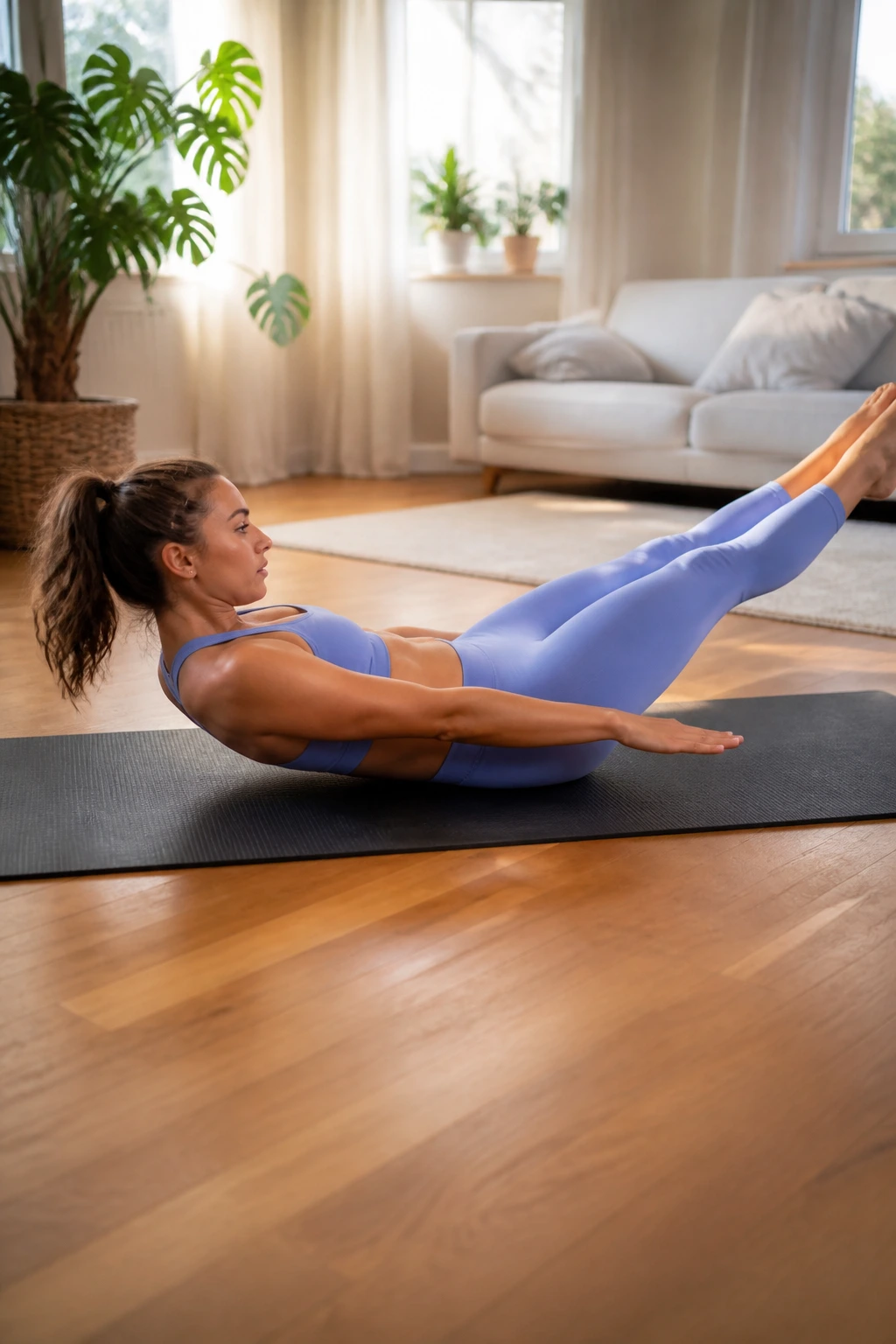
The hollow body hold is the one people either love or hate. I’ve never met anyone who felt neutral about it. Lie on your back, press your low back into the floor, and float your shoulders and legs just enough to create a shallow banana shape. That small curve is what makes it hard.
What you’re training here is tension. Not movement. Tension. Your abs, hip flexors, and even your breathing pattern all have to cooperate while the body stays long and tight. When done well, it feels like your entire front side is working as one piece.
Begin with 15-second holds, then build toward 30 seconds. Bend the knees if your low back starts peeling off the mat. A tucked version still counts. A collapsed version does not.
The best part is how transferable it is. Hollow work makes planks cleaner, leg raises safer, and gym lifts steadier. It also teaches a lot of women the difference between “hard” and “reckless,” which is a useful distinction in any core plan.
6. Mountain Climber Interval Challenge
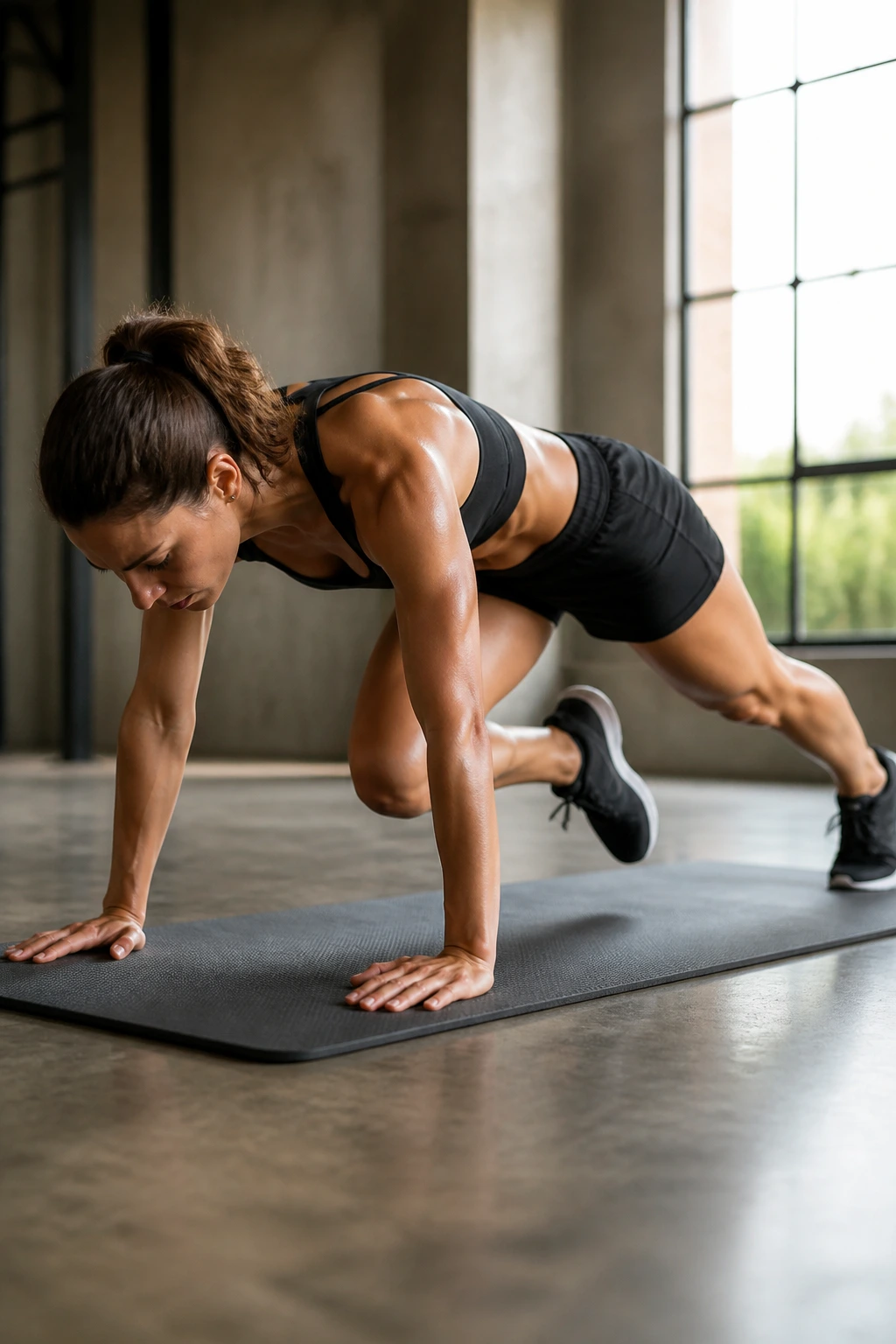
Mountain climbers are often treated like a cardio punishment, but they’re also a pretty sneaky core test. Compared with running in place, they ask your shoulders to stabilize, your abs to resist twisting, and your hips to keep a steady rhythm while fatigue creeps in.
Try 20 seconds hard, 40 seconds easy for 10 rounds. Keep your hands planted under your shoulders and drive the knees forward without bouncing the hips around like crazy. If your torso starts to wobble, slow down. Fast ugly climbers are just cardio with bad manners.
This challenge suits women who like sweat and want their abs to show up under a bit of fatigue. It’s also handy on days when you don’t want a long workout but still want to feel worked. Do it after a lower-body session or as a short finisher.
A tiny detail that matters: exhale when the knee drives forward. That small breath cue often tightens the whole midsection faster than trying to “brace harder,” which usually just makes people clamp up.
7. Bird Dog Control Challenge
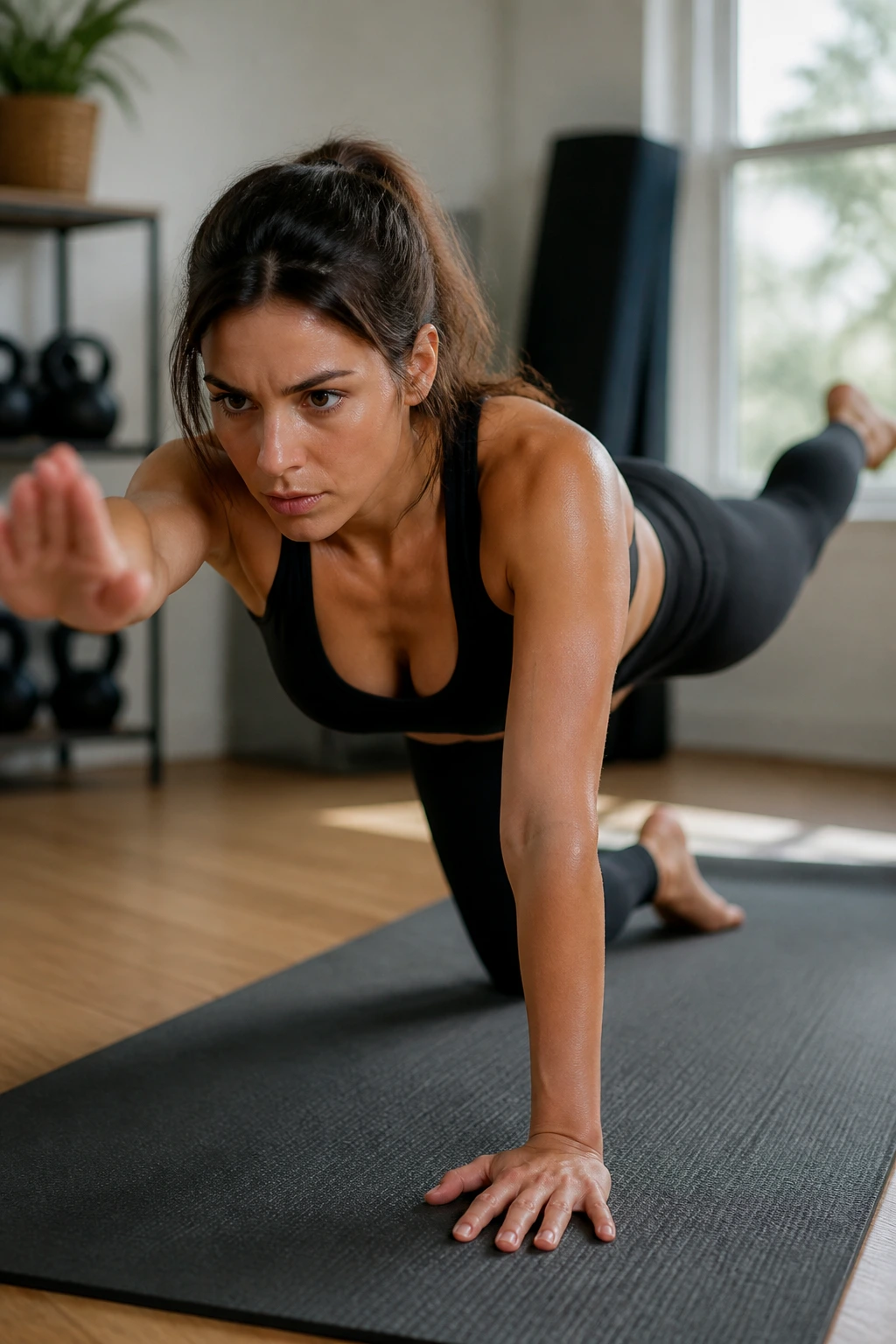
The bird dog does not look dramatic, and that’s exactly why it works. One arm reaches, the opposite leg extends, and the torso is supposed to stay still. That quiet middle is where the challenge lives.
What Makes It Different
Unlike a crunch or a plank, the bird dog teaches cross-body control. You’re asking your abs, glutes, and upper back to coordinate while one side moves at a time. That is useful for walking, lifting, and standing on one leg, which women do constantly without thinking about it.
Try 5 slow reps per side, pausing for 3 seconds at full extension. Keep your ribs from turning open and your hips from twisting. If the arm and leg can’t straighten fully without wobble, shorten them a little. Nobody needs a perfect Instagram reach.
How to Get the Most From It
- Start on hands and knees.
- Reach long, not high.
- Press the floor away with the supporting hand.
- Finish each rep by returning with control, not a flop.
A bird dog challenge can feel almost too easy on rep one. Then rep four shows up and the whole thing gets real.
8. Toe-Tap Core Burn Challenge
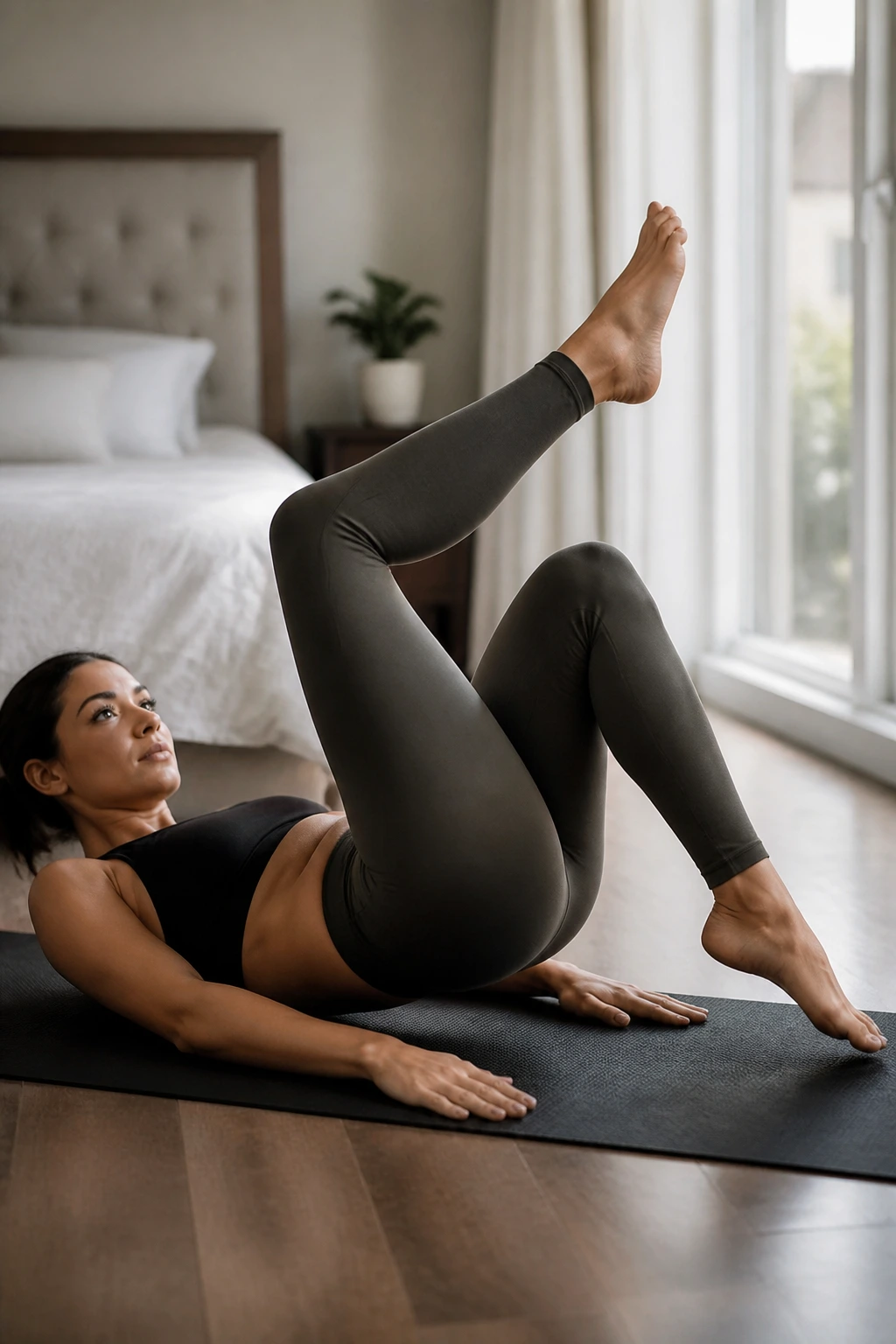
Toe taps are the kind of move that looks harmless until your abs start shaking halfway through the second round. Lie on your back, lift your legs to tabletop, and lower one foot at a time to tap the floor. The key is keeping the low back glued down while the legs move.
I like this challenge because it teaches women how to hold the pelvis steady without making the neck or hip flexors do all the work. That matters if you spend a lot of time sitting, running, or doing workouts where the front of the body tends to take over.
Use 4 rounds of 12 taps per side. If your back arches, raise your knees higher and shorten the lever. A tiny floor tap is better than a huge swing. And if you start gripping your neck, relax your shoulders and look straight up instead of curling your chin.
The real goal is control during motion. Not a big burn, not a flashy finish. Just a cleaner torso.
9. Standing Core Challenge with Marches
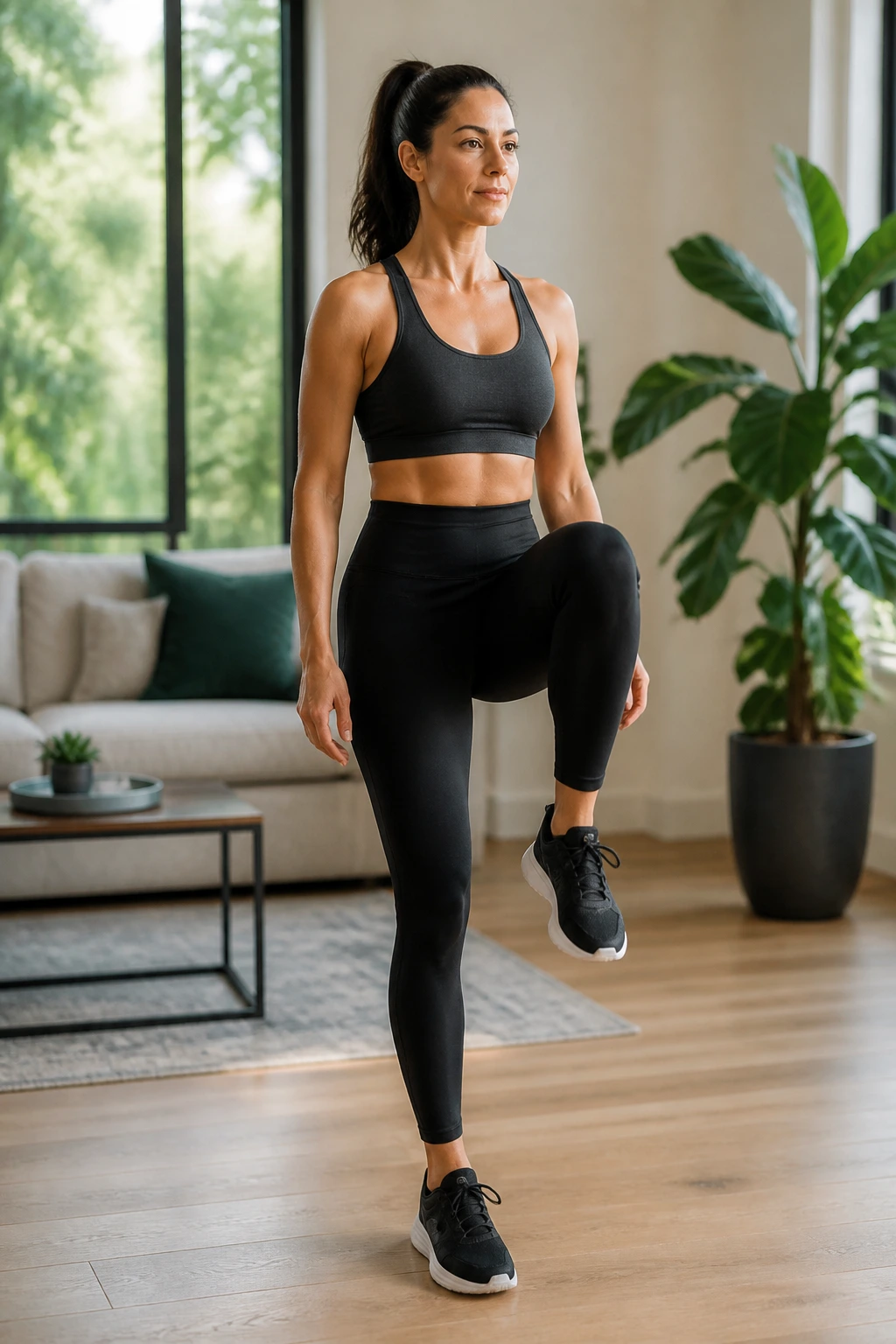
Why spend time on standing abs when the floor is right there? Because standing core work makes the trunk do its job in a more real-world position. You’re upright, breathing, balancing, and resisting sway all at once.
Stand tall, feet hip-width apart, hands on your ribs or held overhead if you want more difficulty. March one knee up to hip height, pause for 1 second, and lower with control. The standing leg should stay rooted, and the torso should stay tall. No leaning back. No side bend. No sloppy shrugging.
A good starting dose is 3 sets of 20 marches, alternating sides. If that feels too easy, press one hand overhead on the same side as the lifted knee and fight the urge to crunch sideways. It gets much harder fast.
This challenge is especially useful on days when lying on the floor feels like one more thing you do not have energy for. It’s also a smart warm-up before lower-body training, because it wakes up the abs without draining them.
10. Plank Shoulder-Tap Ab Workout Challenge
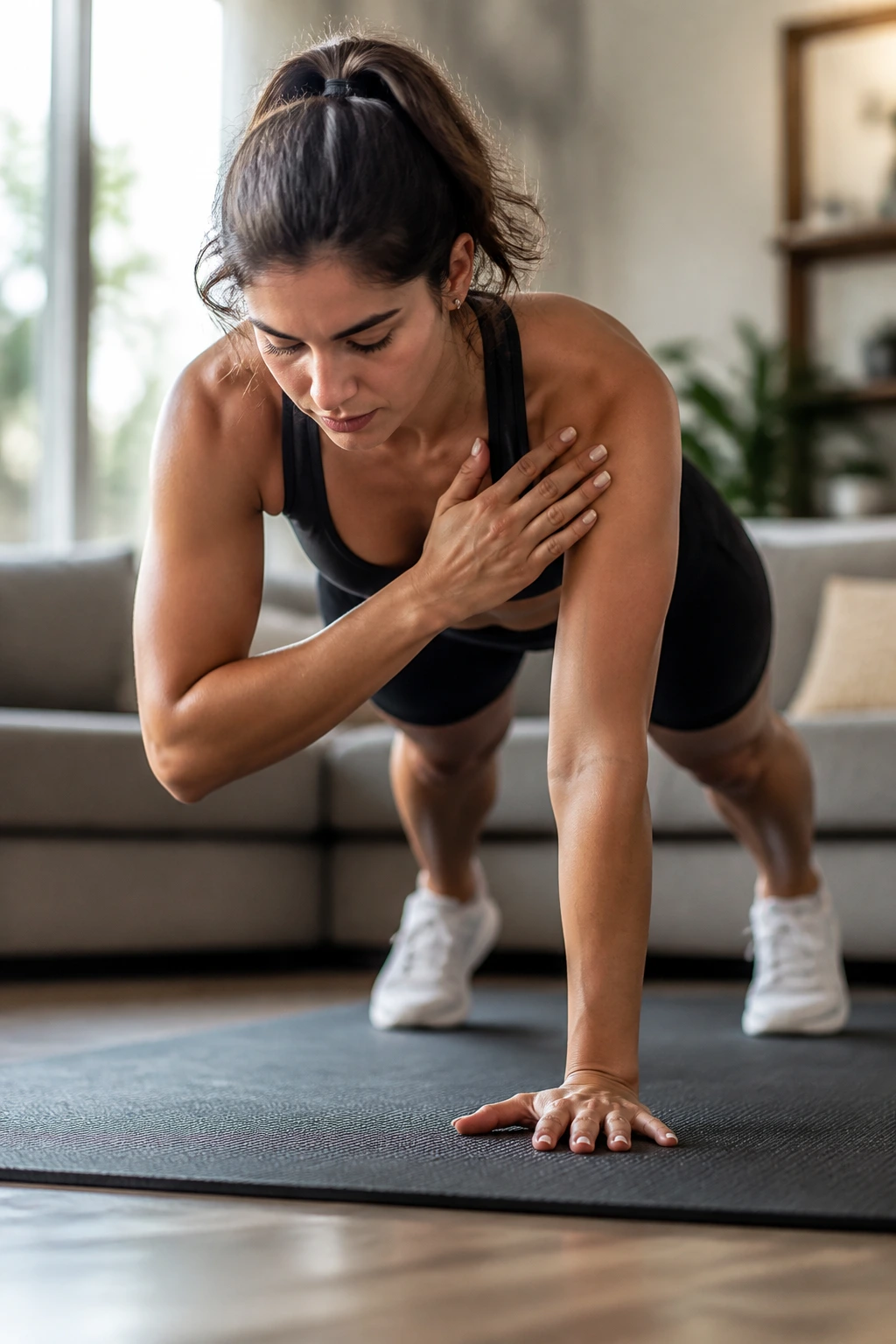
Picture a plank where your only goal is to stay perfectly square while touching one shoulder at a time. Sounds simple. It is not. The shoulder-tap plank exposes every little bit of trunk wobble you’ve been getting away with.
Start in a high plank with feet a little wider than hip-width. Tap your left shoulder with your right hand, then place the hand back down without rocking the hips. Switch sides. The wider stance makes the challenge manageable; bringing the feet in tight turns it into a much harder drill.
What to Watch For
- Hips staying level.
- Hands landing under shoulders, not too far ahead.
- Feet pressing into the floor for balance.
- Breath staying steady instead of held.
Work up to 3 rounds of 20 taps total. If your lower back starts to sway, slow the reps down and widen your feet. The point is not speed. The point is staying still while one hand leaves the ground.
I like this one for women who already plank well and want something less static without turning the session into a cardio race.
11. Stability Ball Rollout Challenge
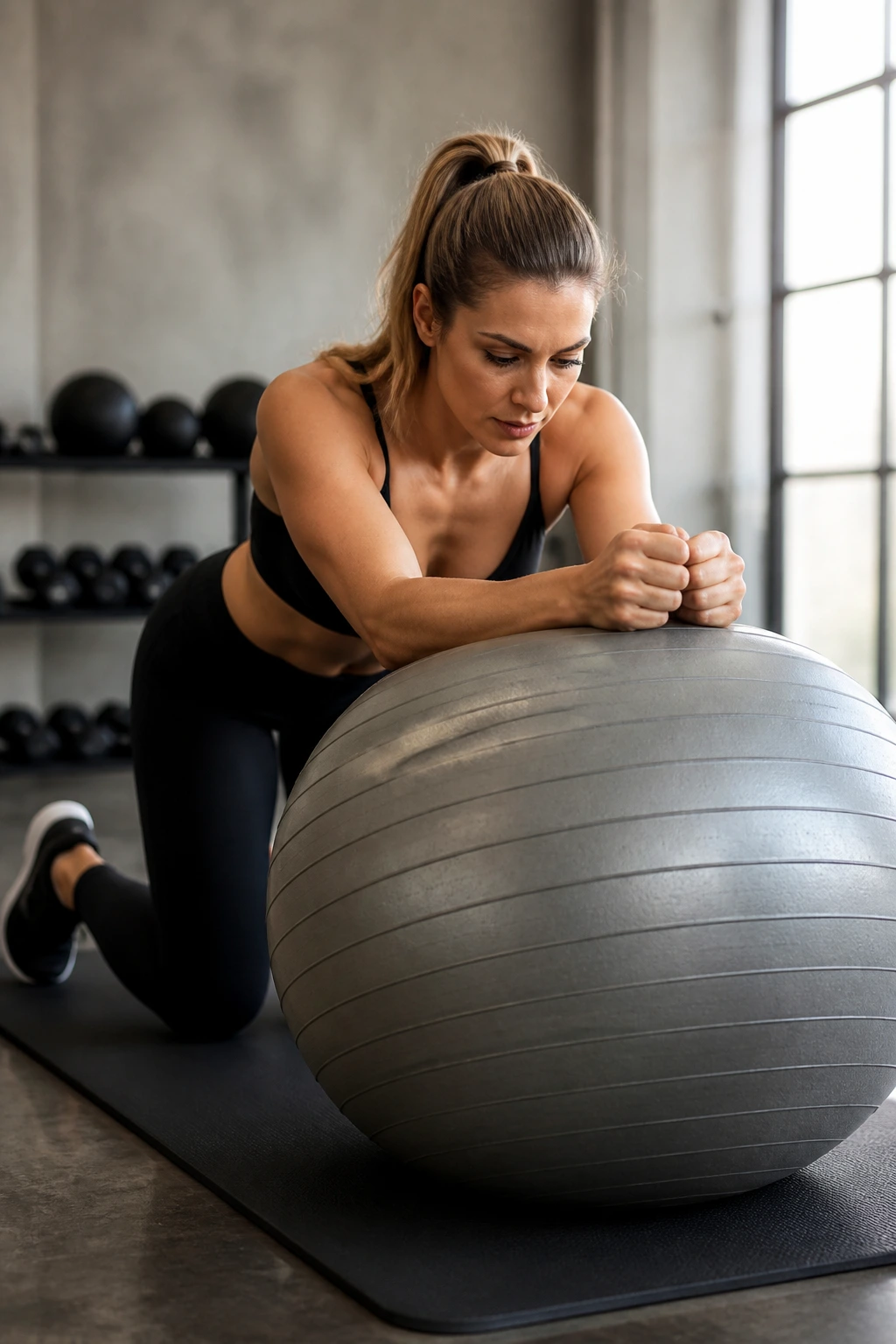
The stability ball rollout is where core training starts to feel serious. Kneel behind a ball, place your forearms on it, and roll forward just far enough that your abs have to fight to keep your spine from overextending. Then pull yourself back in.
This move is gorgeous in theory and humbling in practice. A short range is plenty. People usually make the mistake of rolling too far, then collapsing into their shoulders and low back. That’s not a rollout challenge. That’s a surrender.
Try 3 sets of 8 slow reps with a 2-second roll out and 2-second return. If you do not have a ball, a towel on a slick floor can mimic some of the challenge, though it feels different and a little more abrupt.
The payoff is huge for anti-extension strength. It teaches your midsection to stay organized while the arms move overhead, which carries over to pressing, carrying, and even holding posture when you’re tired. Not flashy. Useful. I’ll take useful.
12. Resistance-Band Chop Challenge
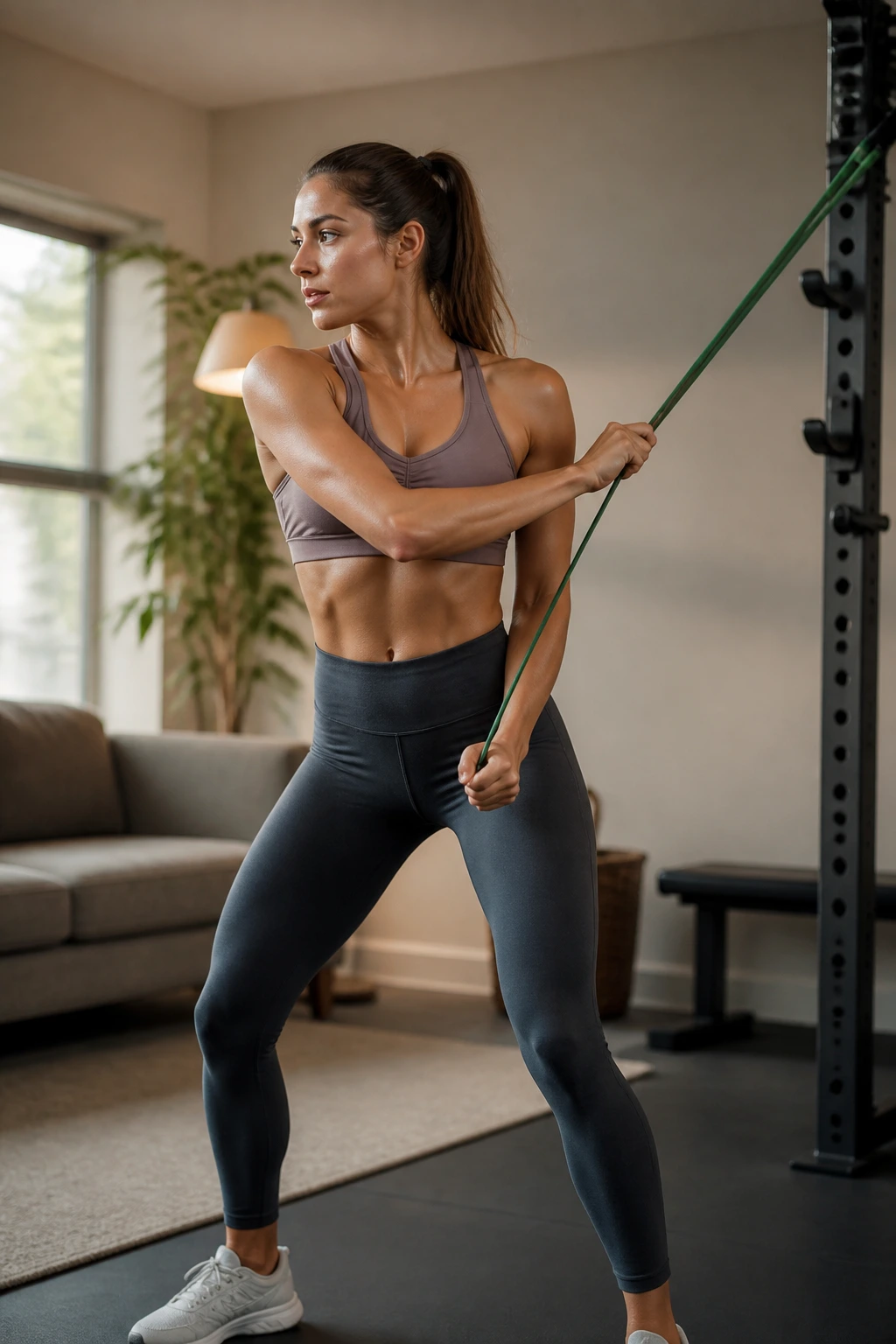
A band chop is one of those exercises that looks like a woodshop motion until your obliques start shouting. Anchor a light resistance band above shoulder height, stand sideways to the anchor, and pull the band down across your body in a controlled diagonal. Then return slowly.
Unlike crunches, which mostly train spinal flexion, chops train your torso to rotate under control. That makes them a smart pick for women who run, lift, swing kettlebells, or spend a lot of time carrying kids and bags on one side. The body rarely moves in a straight line. Training it that way all the time is a little silly.
Use 3 sets of 10 reps per side. Keep your hips mostly steady and let the rib cage and shoulders do the moving. If you want a harder version, lower the band angle or slow the return to 3 full seconds.
This challenge is best for people who want stronger obliques without endless floor work. Bands are cheap, portable, and honestly underrated.
13. Glute Bridge and Core Brace Challenge
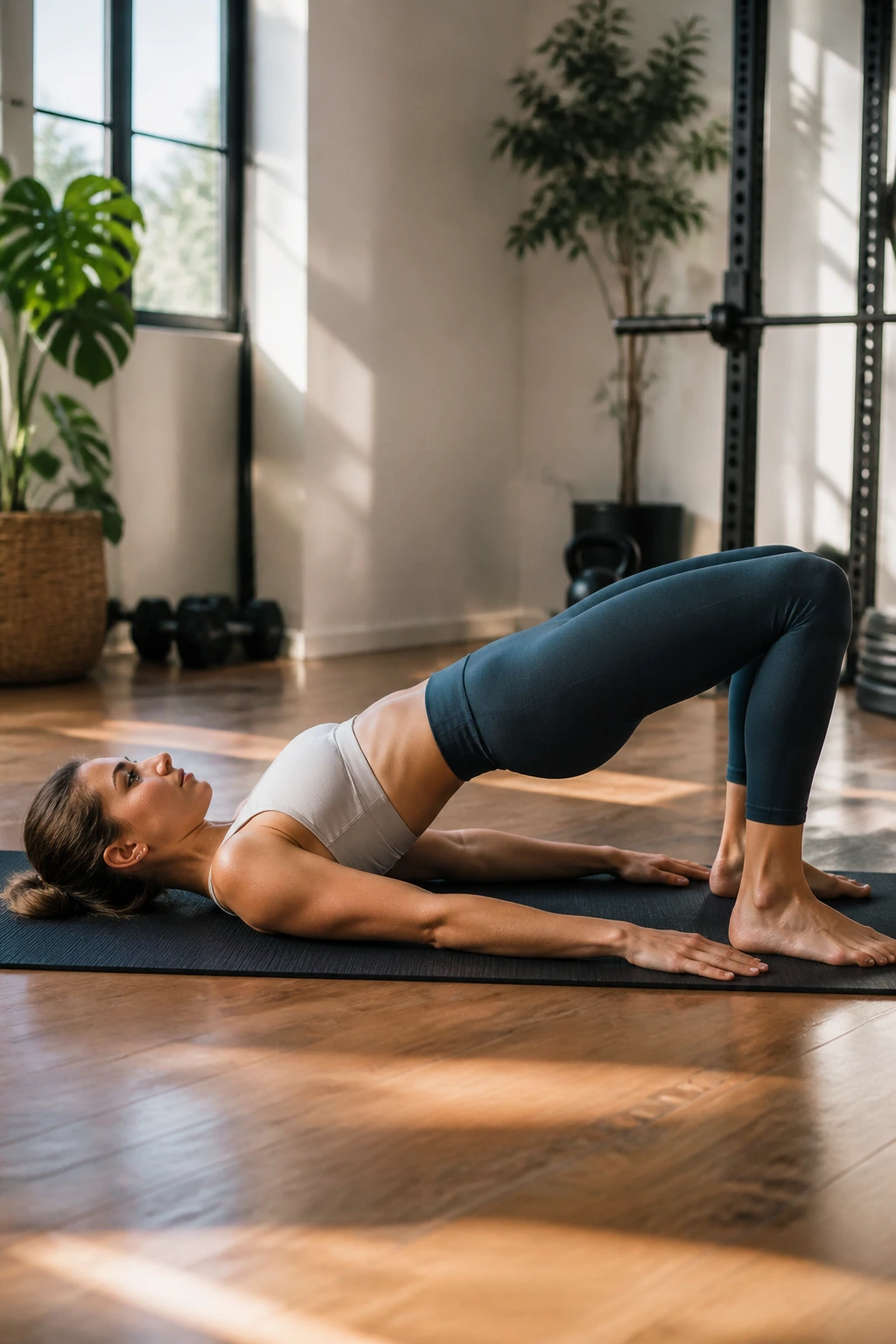
A lot of core trouble starts in the same place: the hips. If the glutes are lazy, the lower back often tries to help, and that usually ends badly. The glute bridge and core brace challenge fixes that by making the backside and front side work together.
The Connection
Lie on your back with knees bent and feet flat. Before lifting, take a breath that expands the ribs, then exhale and gently tuck the pelvis. Lift the hips until your body forms a straight line from shoulders to knees. Hold for 2 seconds at the top and keep the ribs from flaring. That top position should feel like glutes and abs sharing the load.
How to Use It
- Do 3 sets of 12 reps.
- Pause for 2 seconds at the top.
- Keep feet close enough that your hamstrings do not cramp.
- Lower with control, not a drop.
This challenge is a good one for women who feel their lower back during ab work. It teaches the trunk to brace while the hips extend, which is a very practical skill, even if it doesn’t sound glamorous.
14. High-Knee Core Cardio Challenge
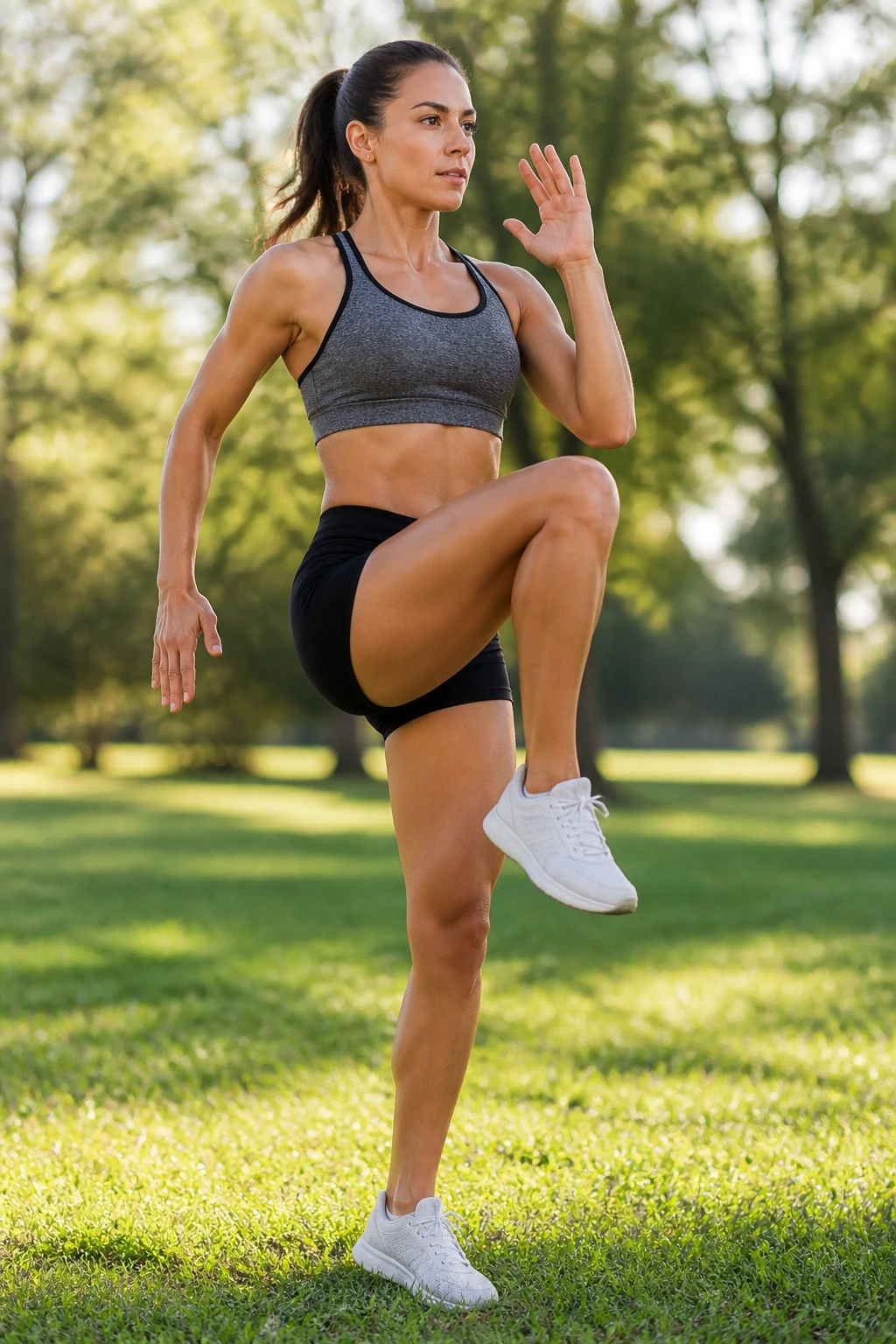
High knees are often sold as cardio, but the core is doing half the work. Every knee drive asks the torso to stay upright while the legs move fast underneath it. That’s a useful mix if you want abs that hold their shape during a hard heart-rate spike.
Try 30 seconds on, 30 seconds off for 8 rounds. Keep the chest tall and drive the knees up without leaning backward. If your shoulders creep toward your ears, reset. Fast feet mean nothing if the trunk turns into a mess.
This challenge is good for women who want a sweaty session without equipment. It also slots nicely into a circuit after strength work, since it does not require a lot of setup. A clean knee drive looks simple, but it gets honest once fatigue shows up.
One thing people miss: land softly. Slamming the feet down turns the drill into noise. Quiet feet usually means better control.
15. Pilates Hundred Challenge
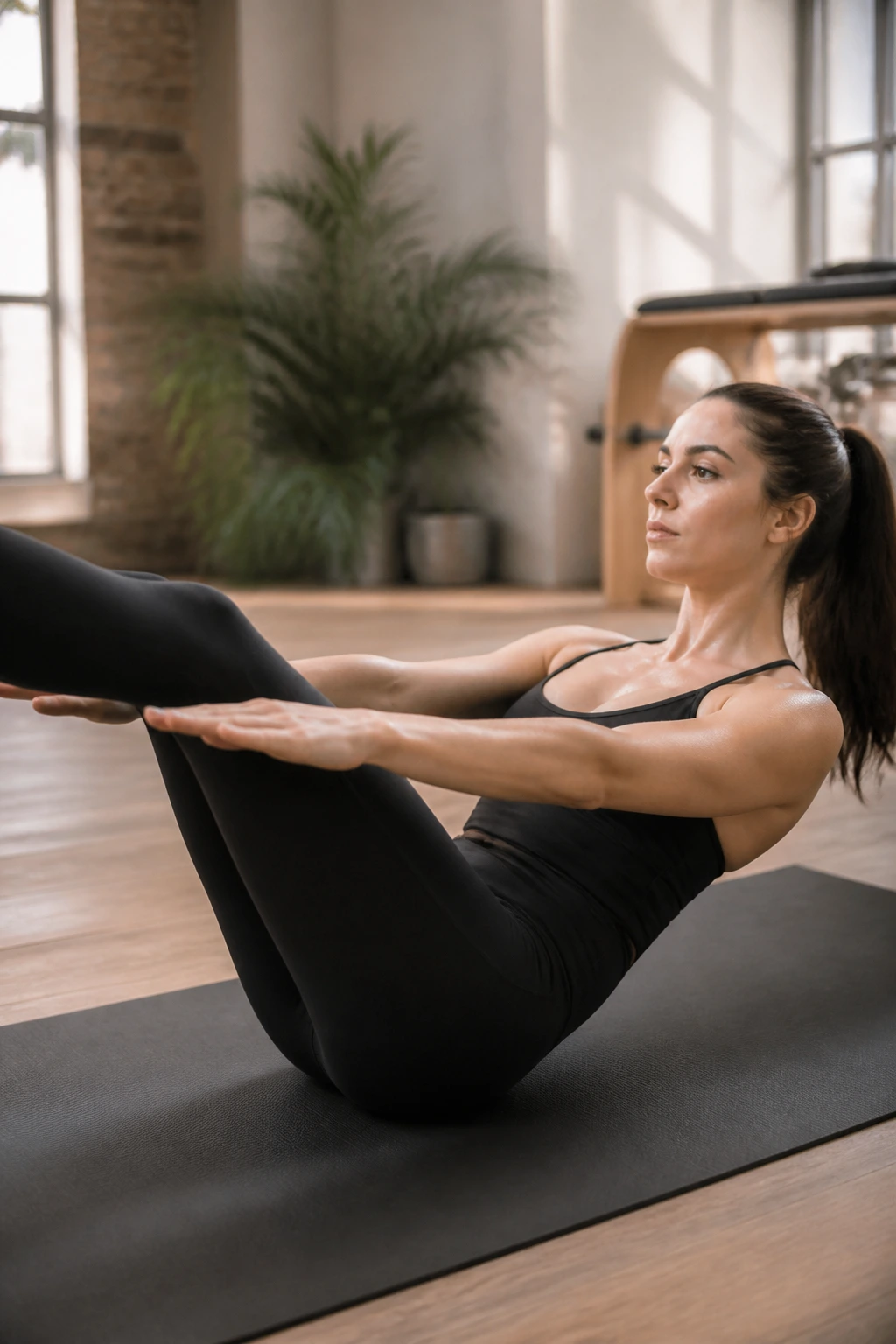
What makes the Pilates Hundred such a classic? It pairs breath with endurance, and that combination is hard to fake. You hold the upper body in a small curl, pump the arms, and breathe in a steady pattern for 100 counts.
Begin with the knees bent and feet down if needed. Lift the head and shoulders just a few inches off the floor, not a giant crunch. Pump the arms up and down for 5 counts in, 5 counts out, or use a slow nose-in, mouth-out rhythm if that feels better. The goal is not speed. It’s staying organized while the burn builds.
The challenge is surprisingly good for women who want abdominal work without heavy spinal motion. It can feel cleaner than endless sit-ups, and the breathing pattern often helps people stop gripping through the neck.
Start small: 20 to 30 arm pumps is enough if you’re new. The hundred count is a target, not a law.
16. Bear Crawl Core Challenge
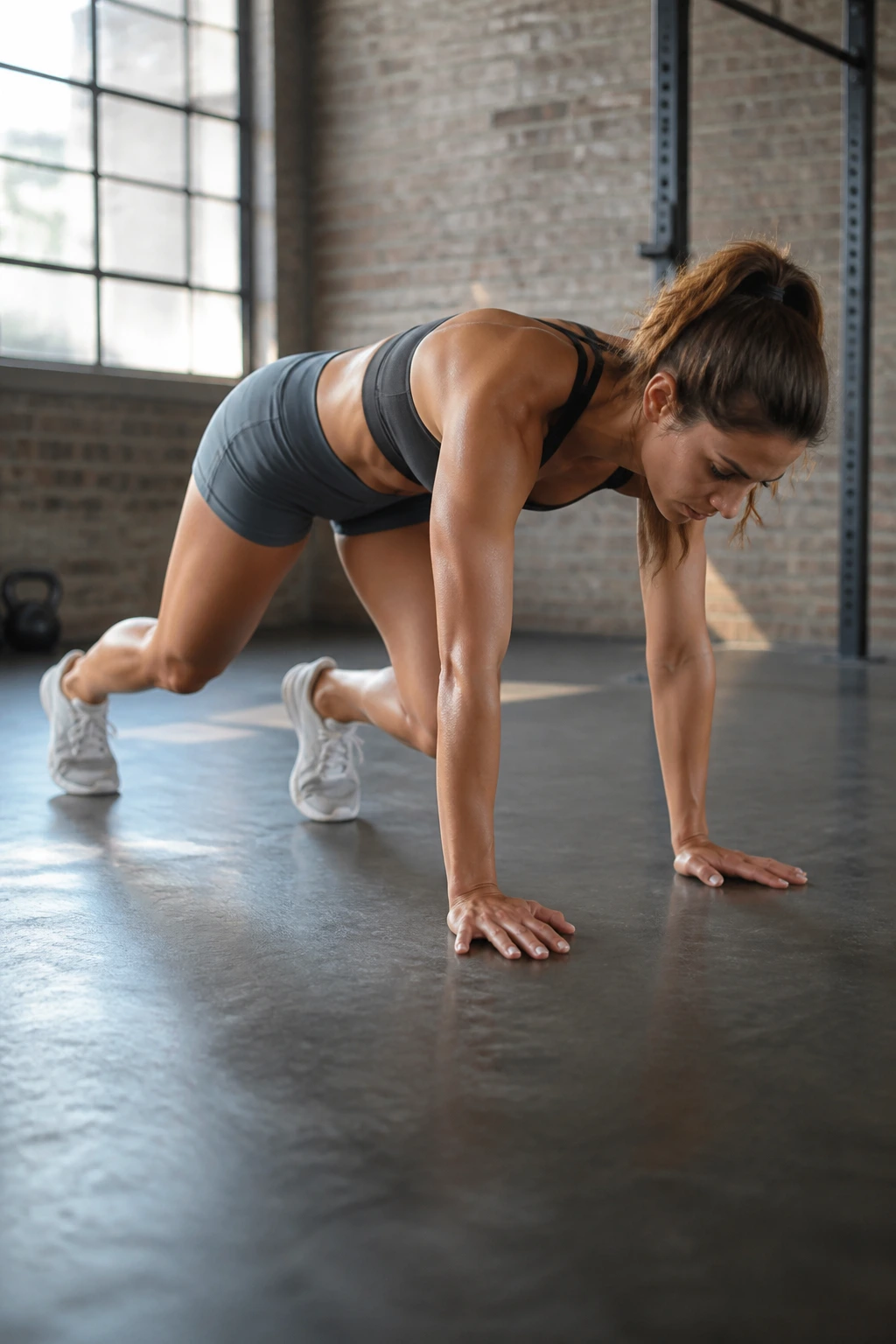
Bear crawls are messy in the best way. Hands and feet stay on the floor, knees hover an inch or two off the mat, and the whole body has to move without wobbling. If you’ve ever watched someone do them well, you know how much control they require.
Move forward for 10 steps, backward for 10 steps, and repeat for 4 rounds. Keep the knees low, the back flat, and the head in line with the spine. The hands should land softly. If the hips swing side to side, slow it down and shorten the step.
This challenge is excellent for women who want a more athletic core workout. It trains the abs to stabilize under load, and it also wakes up shoulders and hips in a way floor crunches never will. The movement is awkward at first. That’s part of the value.
If wrist comfort is an issue, put your hands on an elevated surface or skip this one and come back later. No need to force it.
17. Lying Leg Raise Progression Challenge
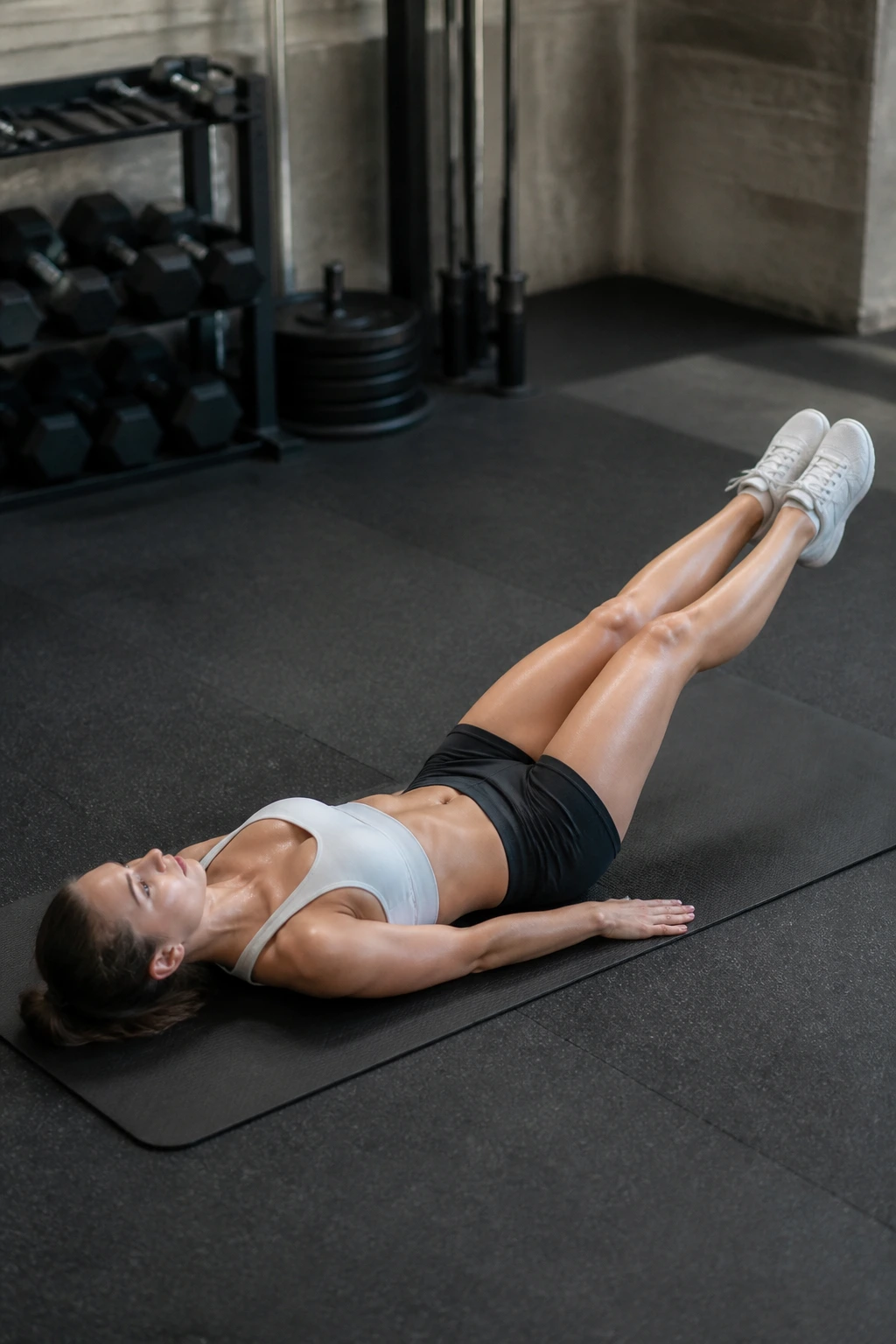
Straight-leg raises can be a disaster if you rush them. They can also be one of the best lower-ab challenges when you respect the position. Lie on your back, press your lower back into the floor, and lift both legs only as high as you can control on the way down.
The real trick is the lowering phase. Slow it to 3 to 5 seconds. If your back arches, bend your knees slightly or switch to one leg at a time. A small bend is not cheating. It is smart.
Do 3 sets of 8 reps with a pause at the bottom of each rep, just before the heels touch down. That pause keeps momentum from taking over. It also makes the abs work through the whole range instead of just the top half.
This challenge tends to punish ego. Good. The best version is the one your back can tolerate while your abs stay honest.
18. Suitcase Carry Challenge
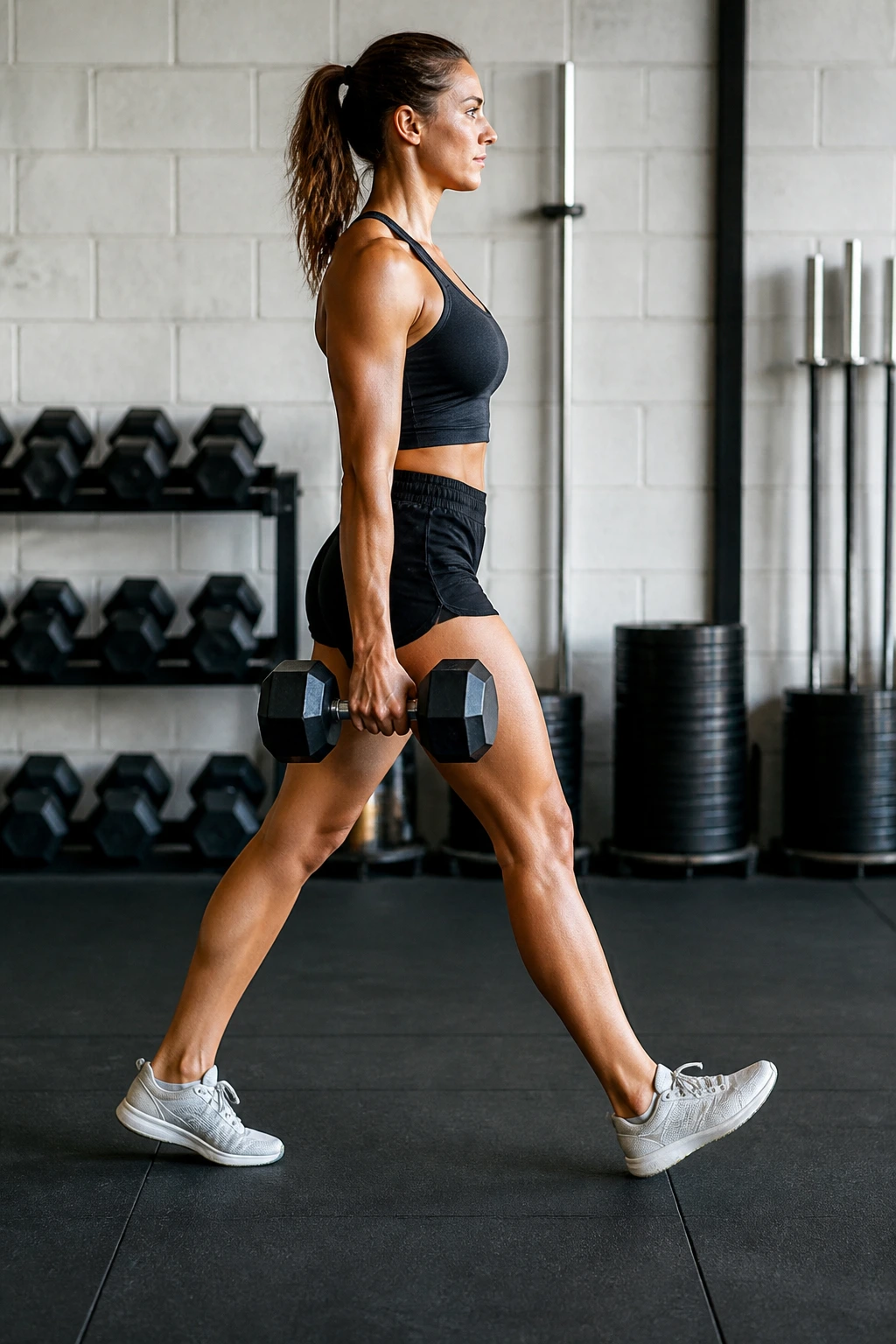
A suitcase carry looks almost too ordinary to matter: pick up one heavy weight and walk. That’s the beauty of it. Your body hates being pulled sideways, so the obliques and deep core muscles have to keep you upright the whole time.
Use a kettlebell or dumbbell that feels heavy for 20 to 40 meters on one side, then switch hands. Keep the torso tall and resist the urge to lean toward the weight. The shoulders should stay level. The walking should be smooth, not stiff.
Unlike crunches, this challenge trains the core the way life actually uses it: against imbalance. That makes it a smart choice for women who lift grocery bags, carry a child, or want better trunk stability for running and strength training.
Do 3 to 5 carries per side. If the weight drags your shoulder down or makes you sway, it’s too heavy. You want a challenge, not a wobble-fest.
19. Bicycle Crunch Endurance Challenge
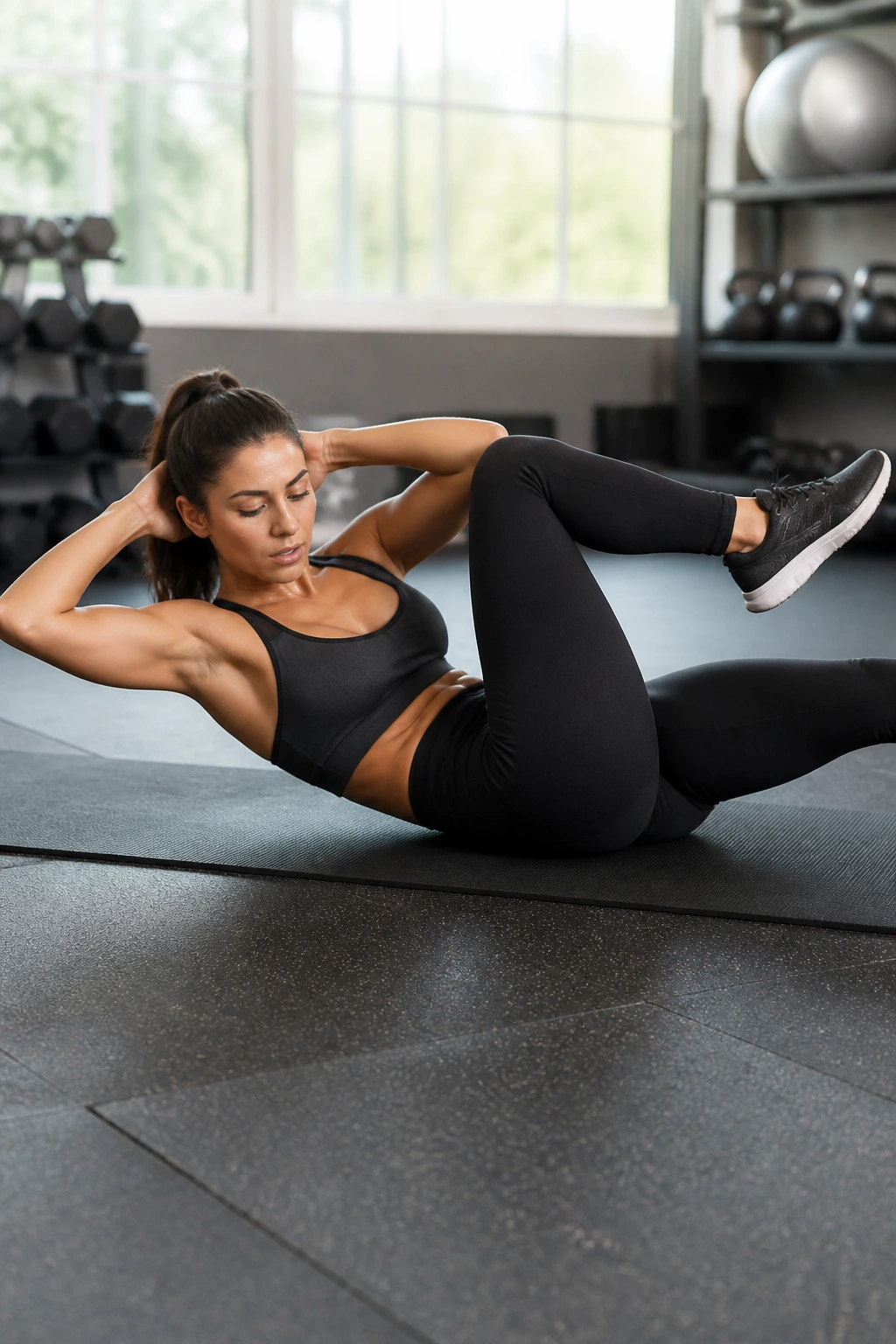
Bicycle crunches get a bad reputation because people fling them around like they’re trying to win a speed contest. Slow them down and they become a much better tool. The twist and elbow-to-knee pattern can light up the obliques when the reps are controlled.
What to Watch For
- Rotate from the rib cage, not the neck.
- Keep the lower back heavy on the mat.
- Extend one leg long without losing control.
- Move at a pace where each rep still looks clean.
Try 3 rounds of 20 total reps, then increase to 30 if the form holds. I prefer these as an endurance challenge rather than a max-burn finish. Once the neck starts pulling, the set has gone sideways.
The real win here is stamina. Women who want stronger twisting endurance for classes, sports, or general conditioning often get more out of this than they expect. Just slow down enough to make the movement count.
20. V-Up Progression Challenge
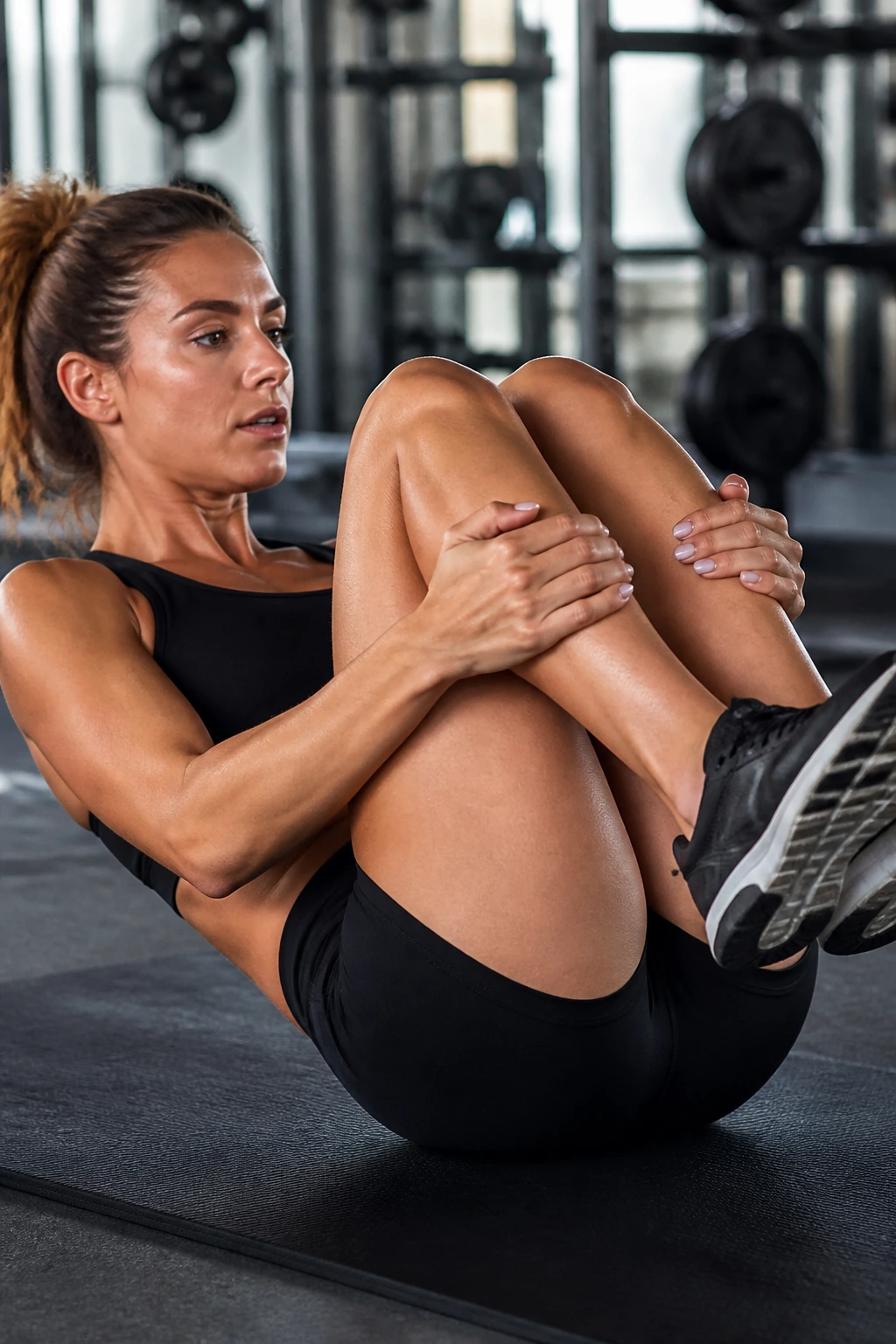
V-ups are the move people try after seeing someone do them effortlessly and then immediately regret. Fair enough. They demand hip flexor strength, core compression, and enough hamstring openness to keep the legs from fighting you.
Start with a tuck-up if full V-ups feel rough. Bring knees toward the chest and reach the hands toward the shins. If that’s clean, extend one leg at a time. Only then move to the full V. The lowering phase matters most. A sloppy drop steals the whole benefit.
Try 3 sets of 6 to 10 reps, resting 45 seconds between sets. The goal is a strong squeeze at the top, not a flung-open flop on the way down. If your low back complains, regress immediately. That’s not weakness. That’s feedback.
This is a better challenge for women who already have a decent baseline of core control and want something more athletic than a simple crunch.
21. Cross-Body Chop Challenge
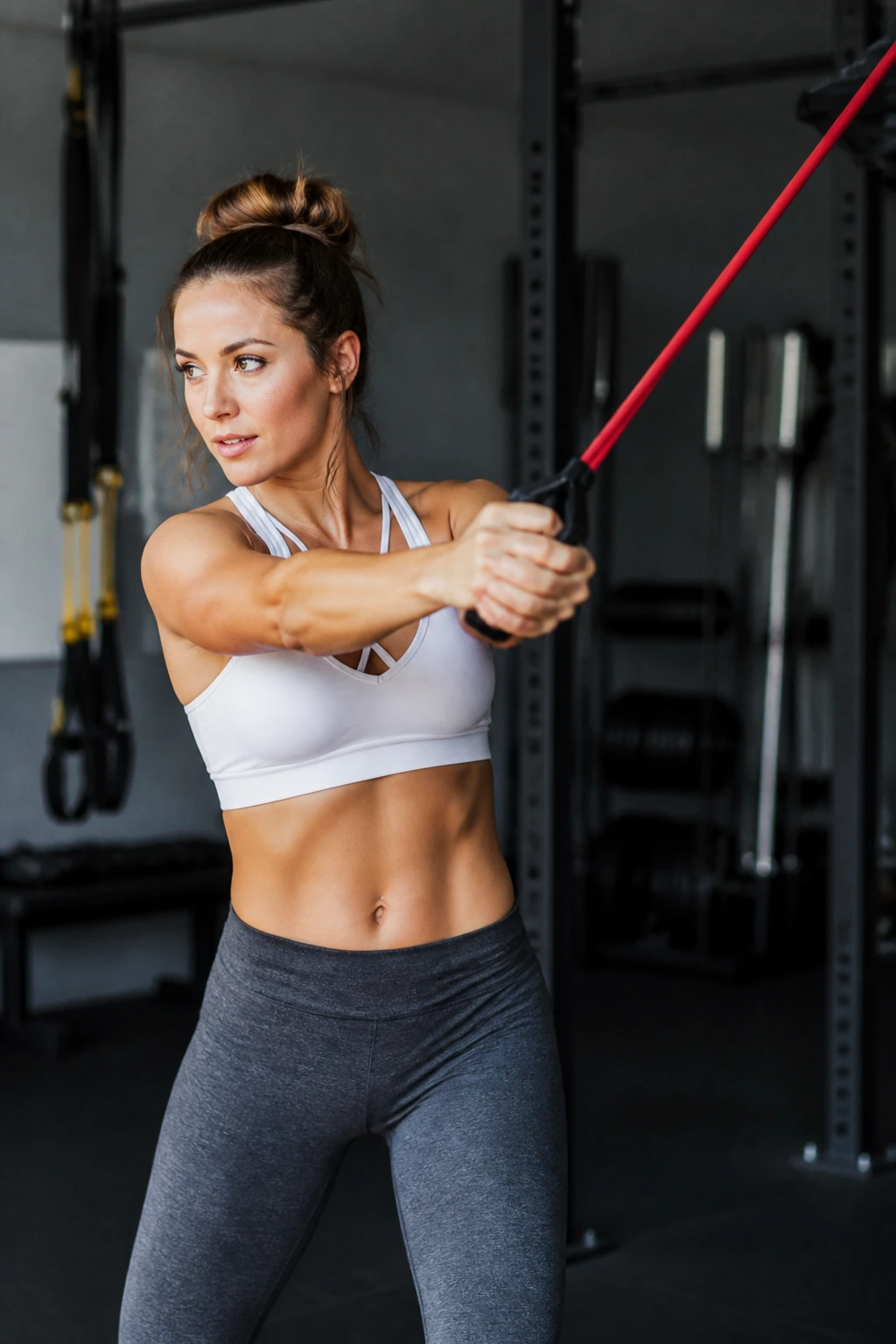
Why does a chop feel different from a crunch? Because your torso has to resist motion across an angle, not just fold forward. That diagonal path wakes up the obliques, shoulder girdle, and deep stabilizers in a way a straight-up-and-down move cannot.
Anchor a band high, step away enough to create tension, and pull the handle down across the body toward the opposite hip. The hips stay mostly square. The rib cage rotates only as much as you can control. Return the band slowly so the tension does not yank you back.
Use 3 sets of 10 reps per side. If you want more challenge, step farther from the anchor or pause for 1 second at the bottom. If your shoulders hunch, lighten the tension. A chop should feel crisp, not strained.
This one is excellent for women who train with dumbbells or kettlebells and want their core work to support the rest of their lifting.
22. Lower-Ab Finisher Challenge
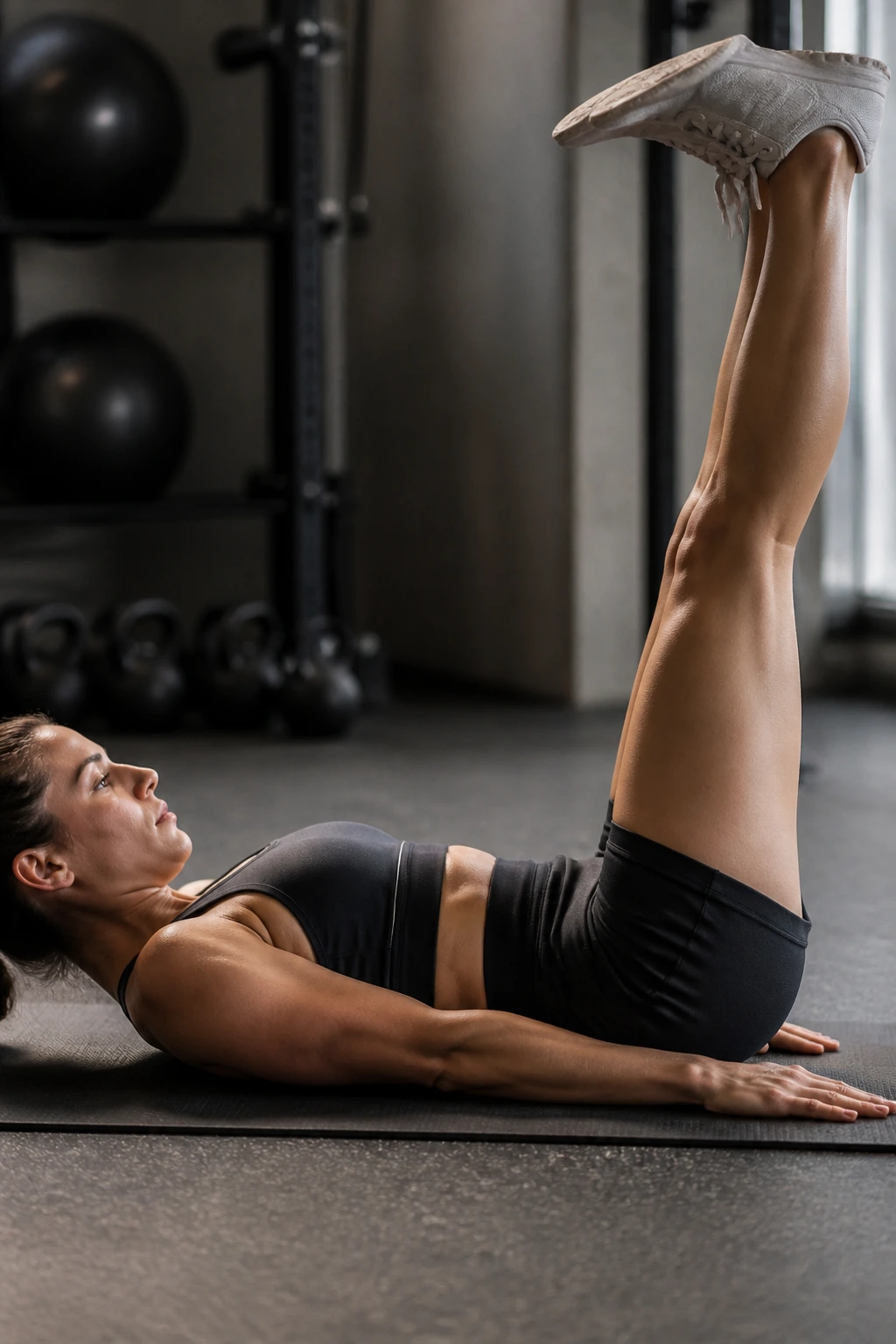
A lot of “lower-ab” work is really pelvis control wearing a different name. That’s not a bad thing. It’s the reason this finisher works. Put together reverse crunches, heel hovers, and dead bug pulses, and you get a short sequence that leaves very little room for cheating.
Use this order: 10 reverse crunches, 20-second heel hover, 8 dead bug pulses per side. Rest 30 seconds and repeat for 3 rounds. Keep the lower back pressed down during the hover, and shorten the leg lever if the position shakes apart.
This challenge is best saved for the end of a workout. It does not need fresh energy, and it punishes momentum almost immediately. That’s exactly why it’s useful. You see where control disappears.
If you want a harder version, hold the heel hover for 30 seconds. If your back arches, reduce the time before you add more reps. Clean form first. Always.
23. Mobility + Core Reset Challenge
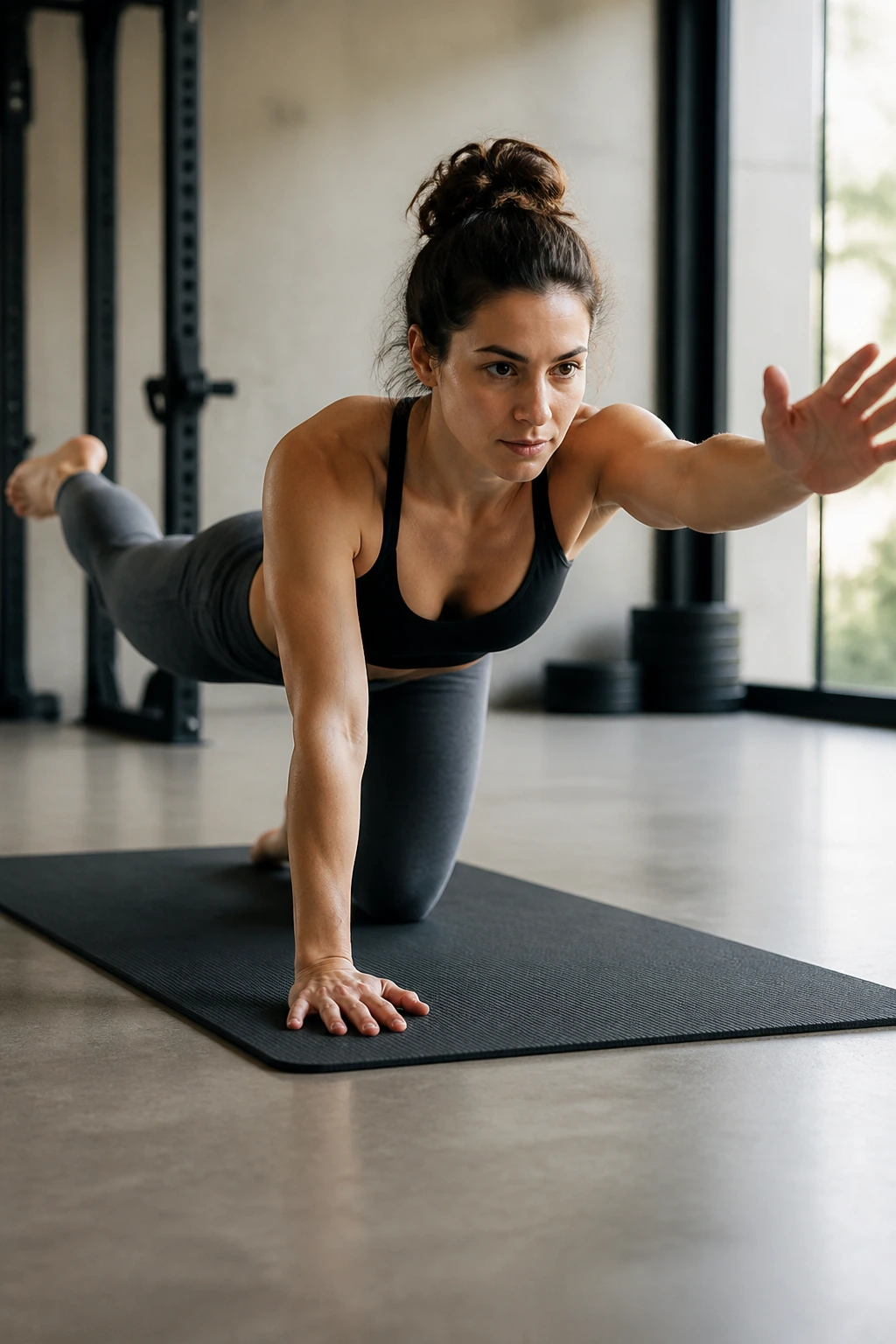
Some days the best ab work is the kind that gets your spine moving again. That sounds less exciting than a burn-heavy circuit, but I’ve seen more good come from this style than people expect. Tight hips, stiff backs, and shallow breathing make core training worse, not better.
Start with cat-cow for 6 slow reps, then move into 90/90 breathing for 5 breaths, followed by bird dogs for 5 reps per side and half-kneeling hip flexor reaches for 30 seconds per side. The pieces are gentle. Together, they wake up the trunk without frying it.
This challenge works well on rest days, after travel, or before a heavier core session. It also suits women who feel compressed from desk work. If you sit a lot, the front of the hips and the rib cage tend to get a little stubborn. This routine gives them a nudge.
The point is not to sweat. The point is to move better by the end than you did at the start.
24. Tabata Core Burner Challenge
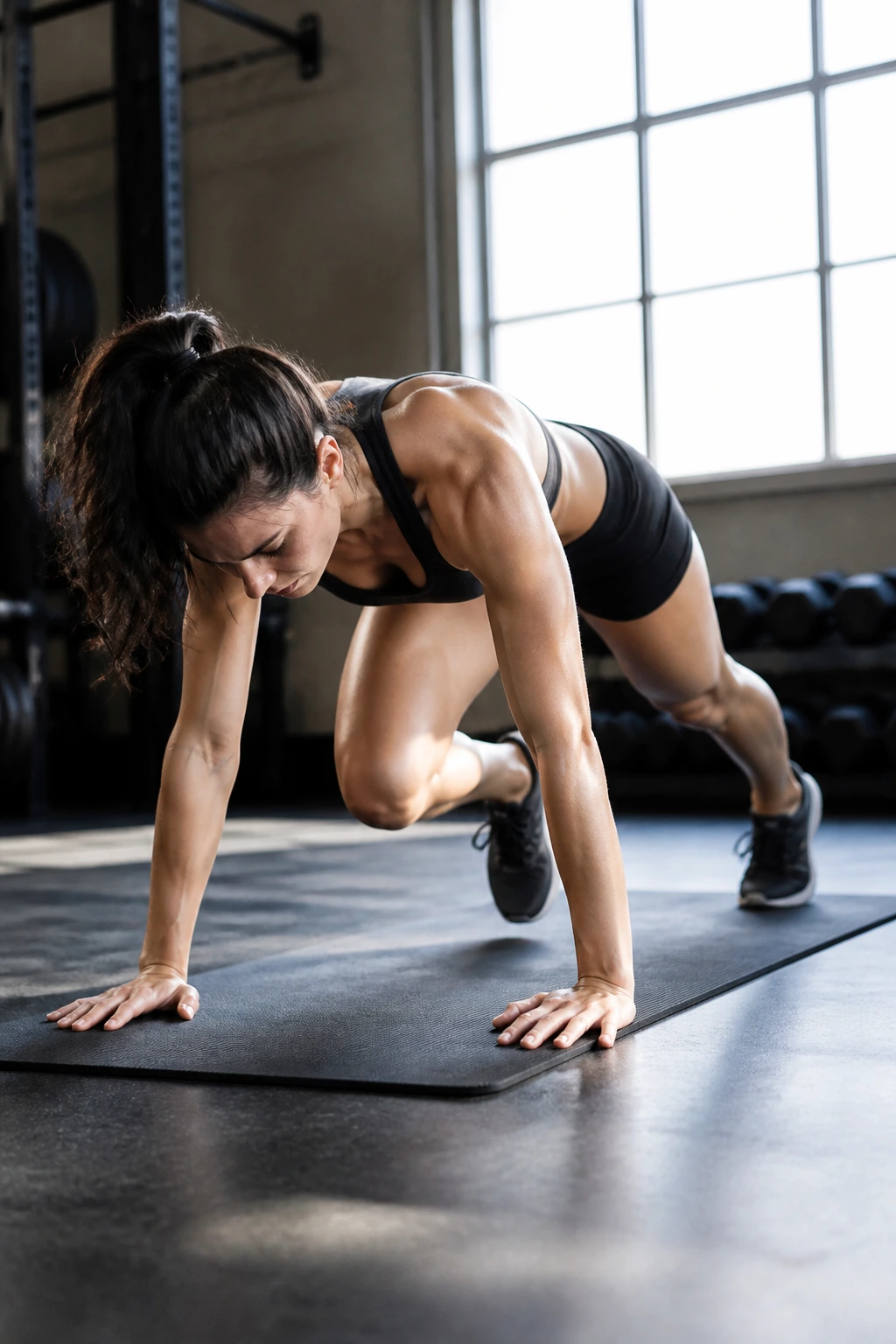
Tabata sounds flashy, but the formula is dead simple: 20 seconds of work, 10 seconds of rest, 8 rounds. The trick is choosing moves that can survive the pace without turning into chaos. I like dead bugs, mountain climbers, plank jacks, and fast toe taps for this style.
Unlike longer circuits, Tabata asks you to keep form under short, sharp fatigue. That makes it a nice fit for women who want a quick session and do not want to spend half the afternoon exercising. The whole thing can be done in under 10 minutes if the exercise choices are tight.
Pick one move or rotate four moves twice through. Stay honest about the quality of each round. If the movement gets sloppy by round four, you’ve gone too hard too early. Tabata is brutal that way.
This challenge suits people who enjoy a hard finish and don’t mind a little burn. It’s not the one I’d hand to a beginner first, but it’s a good tool when you want a sharp hit of effort.
25. Posture Core Challenge for Desk Days
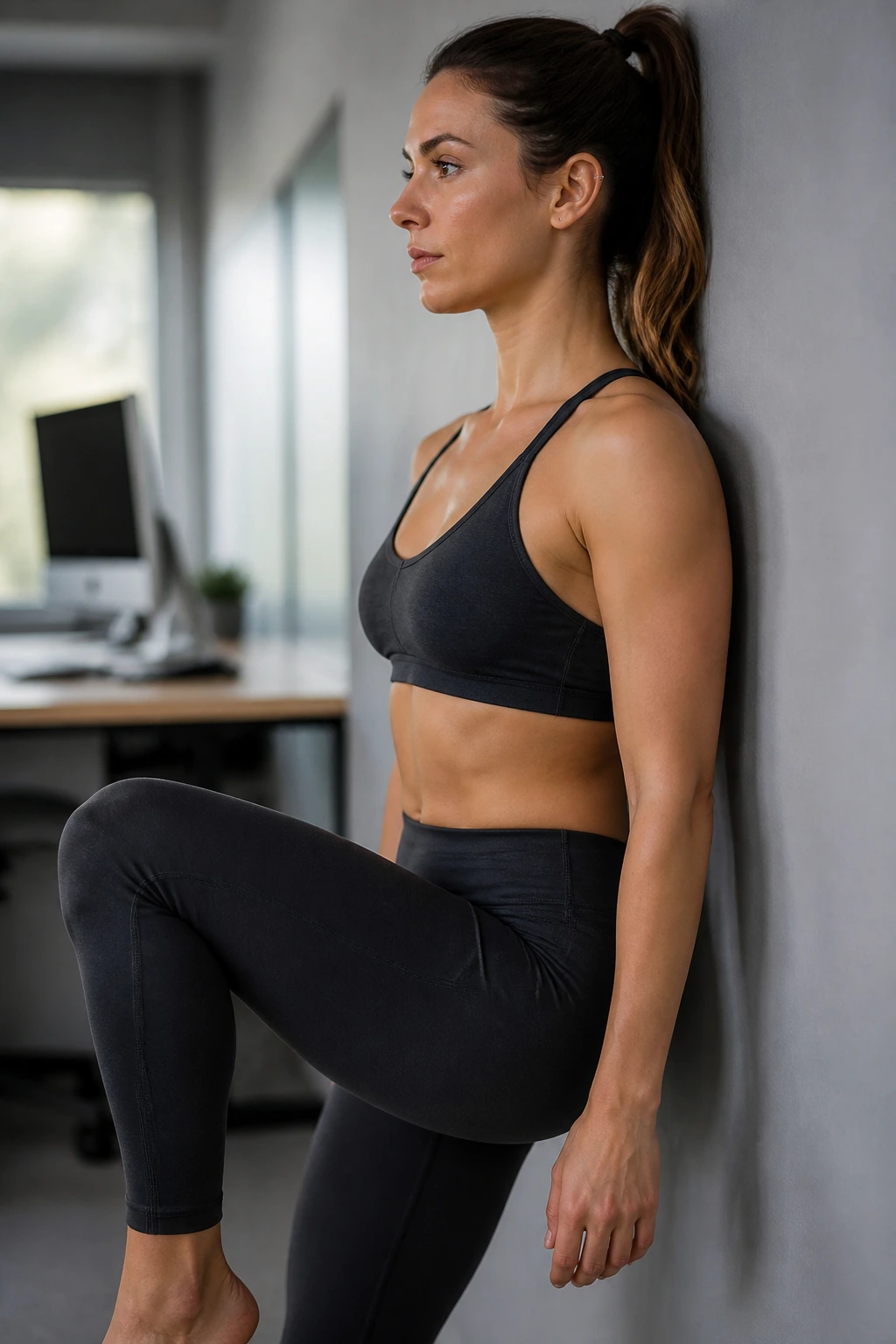
Sitting all day can make your midsection feel sleepy and your low back feel loud. This challenge aims at that exact problem. It uses upright core work, gentle anti-extension drills, and a little hip opening so you stop feeling folded in half.
Fix the Sitting Shape
Try wall marches, standing knee drives, and forearm planks with a reach. The wall march is simple: stand with your back against a wall, lift one knee, and keep the ribs from flaring as you switch sides. Do 3 sets of 10 per leg. It sounds small. It isn’t.
What to Focus On
- Long exhale on the lift.
- Ribs stacked over hips.
- Shoulders down, not jammed back.
- Neck relaxed.
This is the kind of ab challenge that makes you feel more put together after a long computer stretch. I like it for women who do not want another floor workout but still need their core to wake up before dinner, errands, or a walk.
26. 10-Minute Morning Abs Challenge
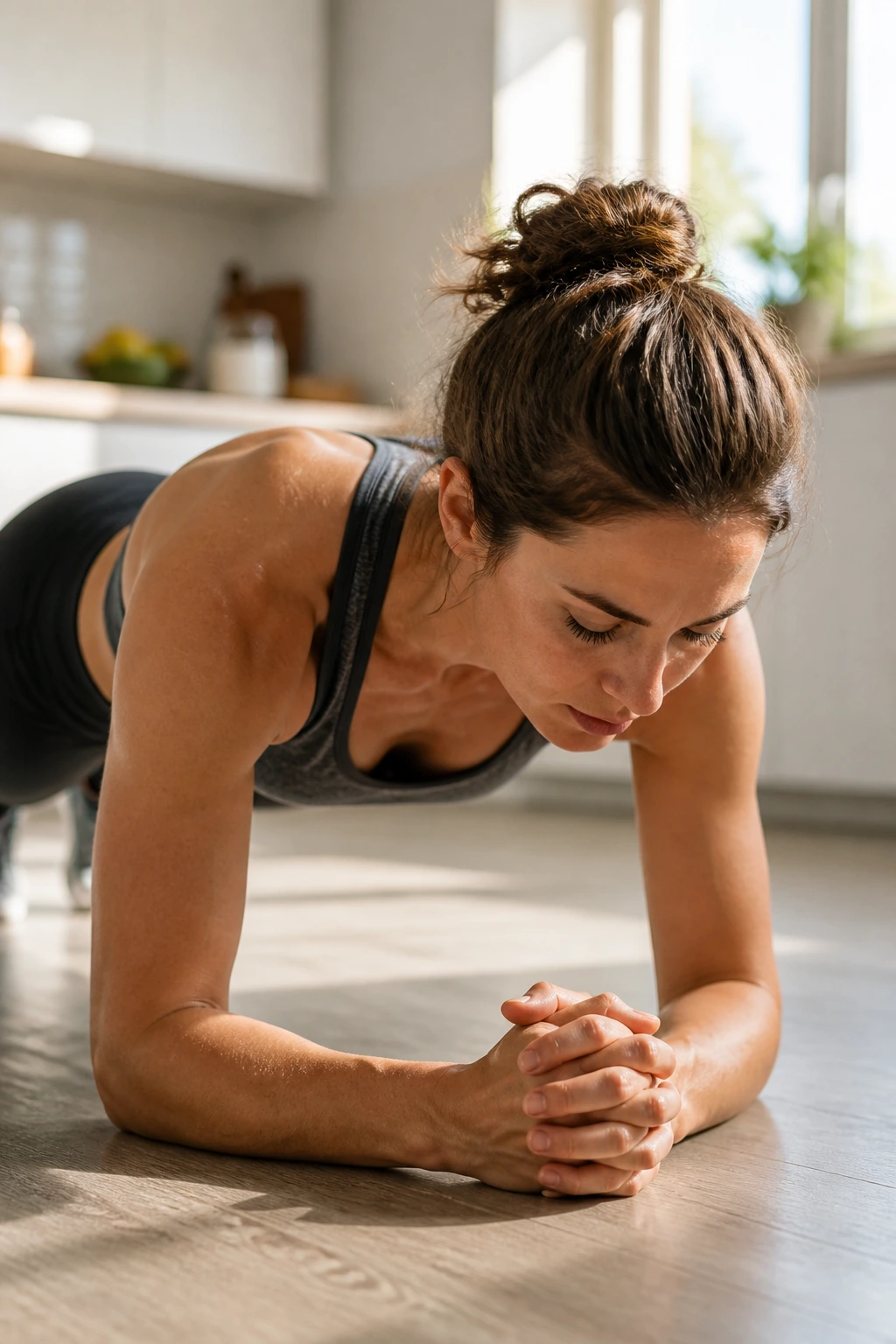
A short core workout can be enough if you actually do it. That is the whole reason this challenge works. Ten focused minutes before the day gets noisy often beats a vague promise to train “later.”
Use four moves: 30 seconds plank, 30 seconds toe taps, 30 seconds side plank right, 30 seconds side plank left. Rest 15 seconds between moves and repeat the circuit three times. If you need a gentler start, cut the work periods to 20 seconds and build from there.
The value here is rhythm. You do not need a huge sweat session to feel your trunk switch on. A small, repeatable routine often builds better consistency than an overstuffed plan that sounds impressive and gets skipped.
I especially like this one for women with busy mornings because it asks for no equipment, no setup, and no decision-making. Those three things are worth more than most fitness people admit.
27. Postpartum-Friendly Core Reconnection Challenge
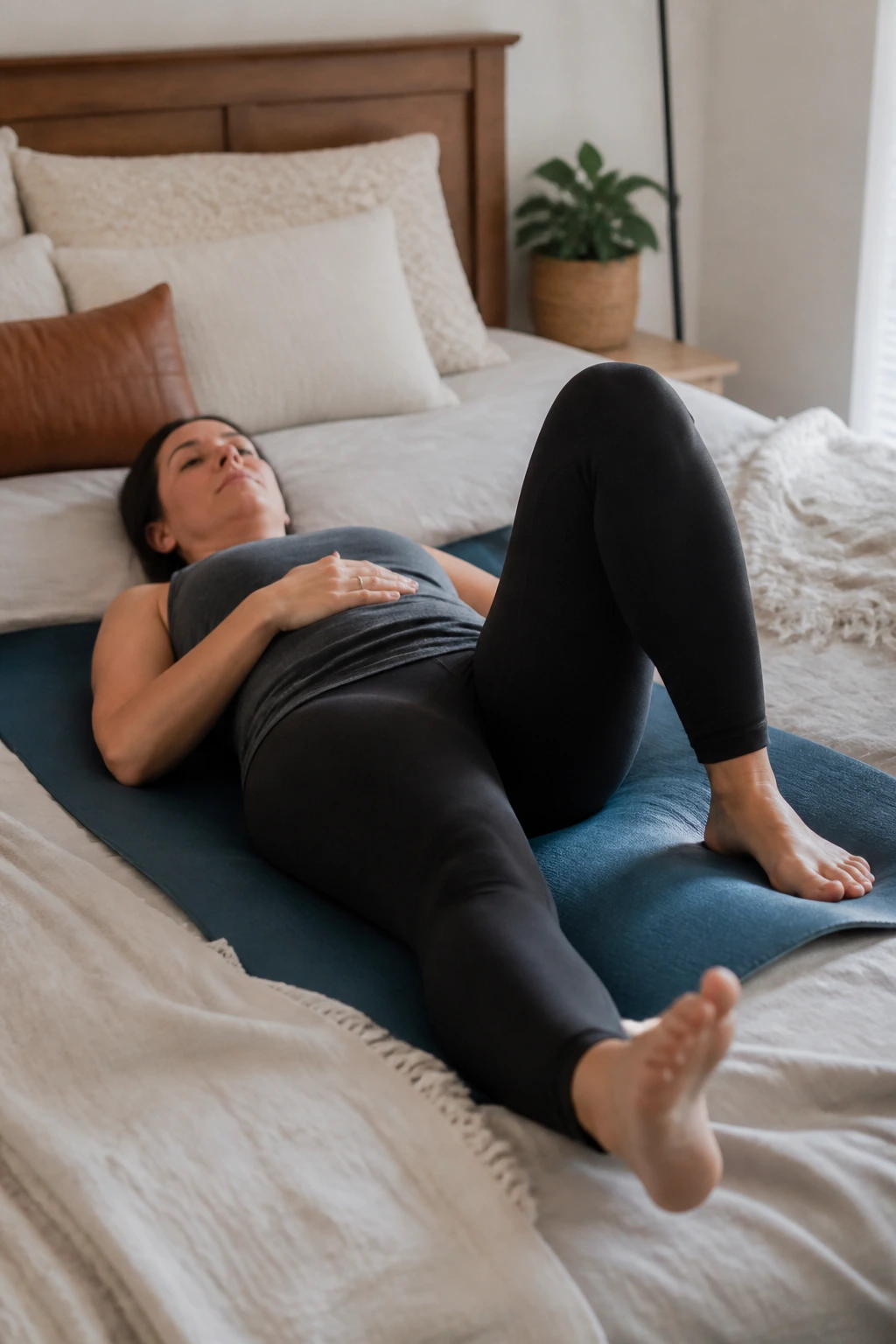
Can you train abs after birth? Yes, but not in the same way you would before. The early goal is reconnection, not destruction. Breath, pressure control, and gentle loading come first.
Start with 90/90 breathing, heel slides, dead bug arms only, and side-lying marches. Keep the work light and watch for signs that the midsection is pushing outward instead of drawing in. If you notice doming, pressure, heaviness, leakage, or pain, that’s a sign to back off and get help from a pelvic floor physical therapist.
How to Approach It
- Exhale on effort.
- Keep reps slow.
- Stop before fatigue turns into strain.
- Treat the pelvis and ribs like one unit.
This challenge is best for women who want to rebuild trust with their core, not punish it. And that distinction matters. Strong abs are useful. A calm, coordinated core is useful too, sometimes more so.
28. 14-Day Progressive Core Challenge
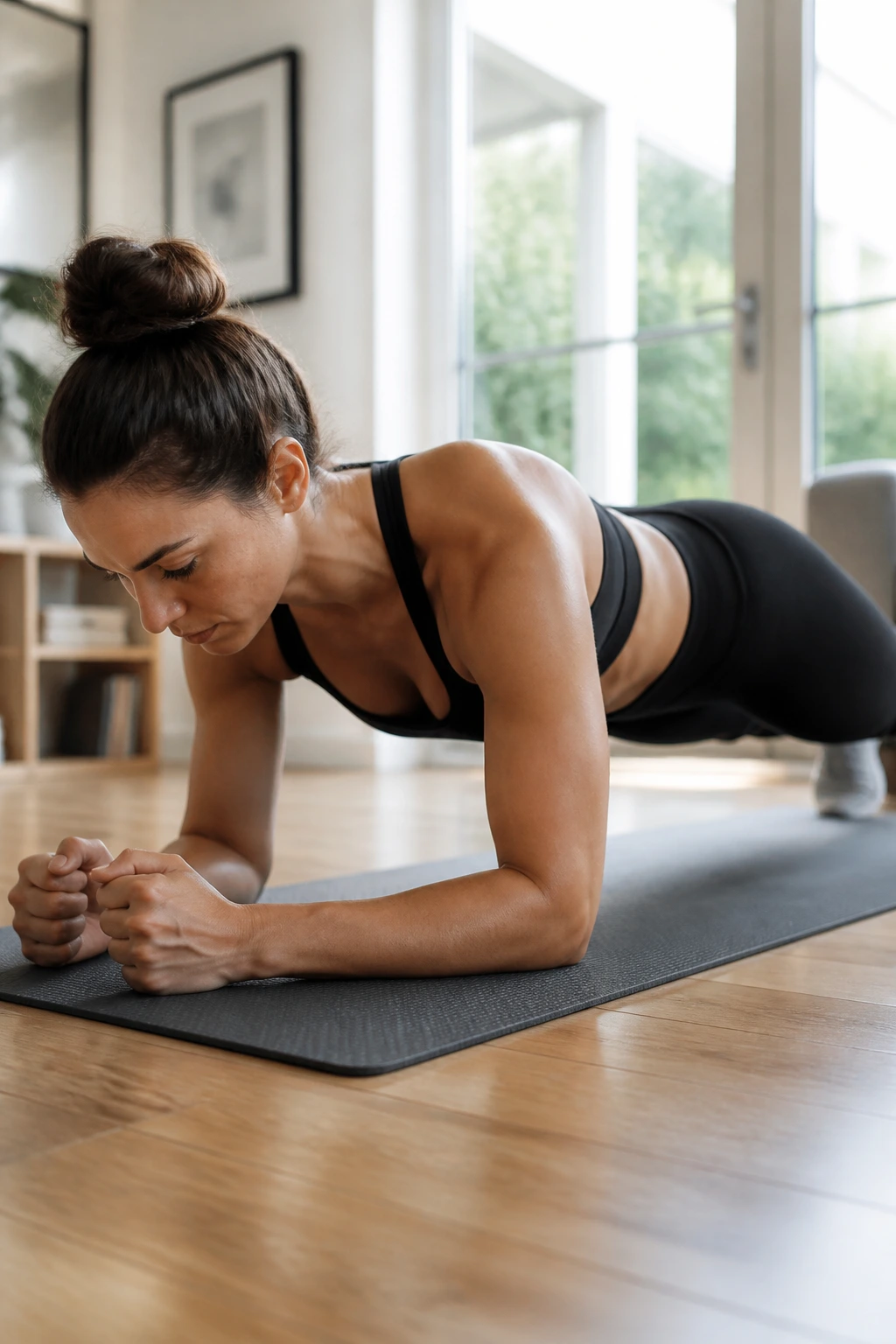
A lot of people start core training too hard and then spend the next week avoiding it. This challenge fixes that by building in small jumps instead of giant leaps. The first few days should feel almost too easy. Good. That means you’ve got room to progress.
Use a three-part structure: days 1 to 4 focus on planks and dead bugs, days 5 to 8 add side planks and toe taps, and days 9 to 14 layer in carries or rollouts. Increase either the time, the reps, or the load every three or four days, but only one thing at a time.
The beauty of a progression challenge is that it shows you exactly where form starts to break. Day one might feel neat. Day ten reveals whether your ribs flare, your neck takes over, or your low back starts stealing the load. That’s useful data.
I like this challenge for women who want structure without a rigid program. It gives you a clean runway and enough variety to stay interested.
29. Weekend Core Test Challenge
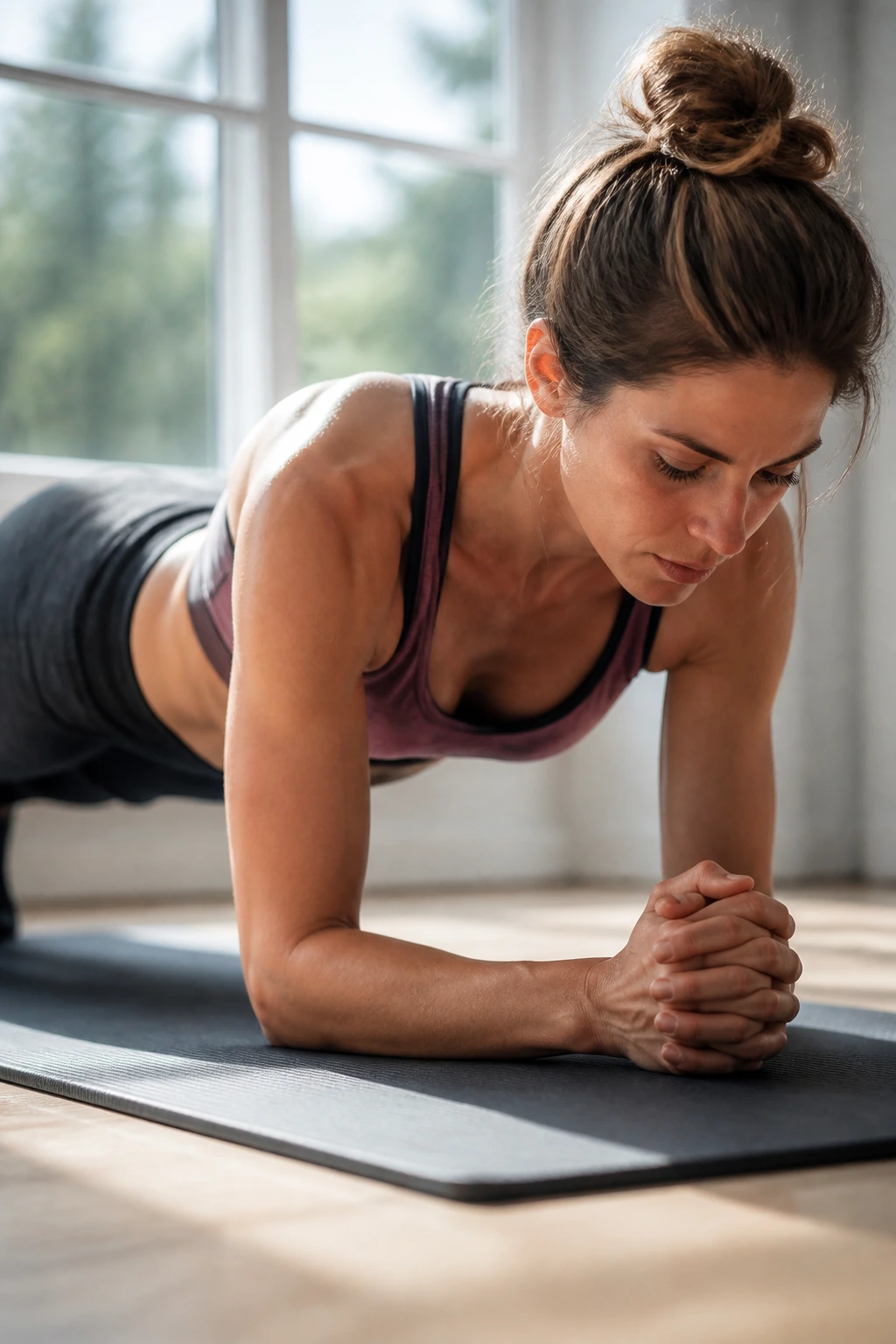
This one is less about burning and more about measuring. A weekend core test challenge gives you a chance to see what your midsection can actually hold when the effort is clean. I prefer three tests: a plank hold, a side plank hold, and a loaded carry.
Start with a 45-second plank, then a 30-second side plank each side, then a 20-meter suitcase carry each side using a weight that feels moderately heavy. Rest enough between tests that you’re not guessing. The point is not to wreck yourself. It’s to find out what clean control looks like on paper.
A test works best when you repeat it every couple of weeks and write down the numbers. That makes progress visible even when your waistline changes slowly or not at all. Strength is easier to track than feelings, and feelings tend to be dramatic.
This challenge suits women who like benchmarks. If you enjoy seeing numbers improve, this will keep you honest.
30. No-Equipment Ab Workout Challenge for Busy Days
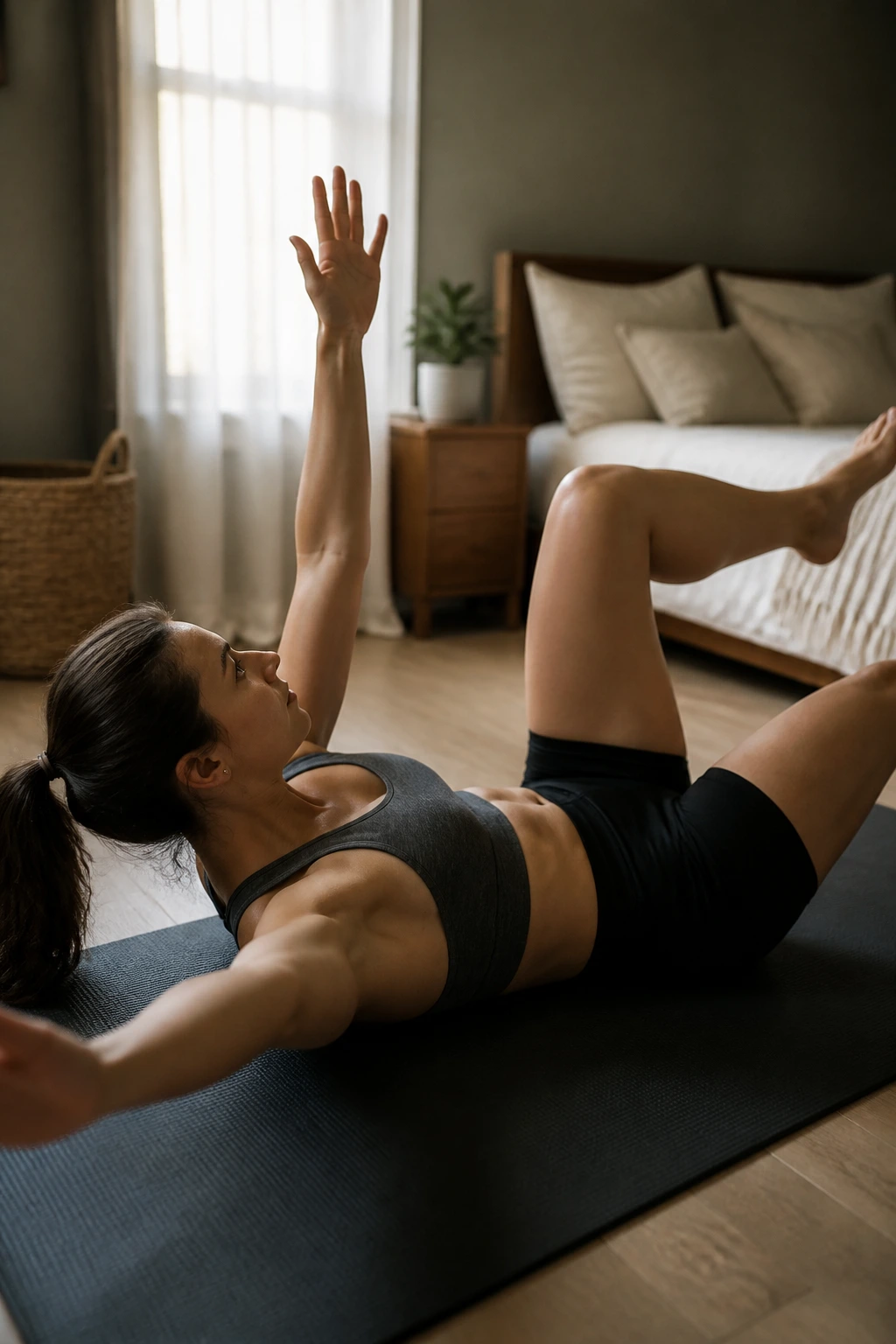
Some days you need a core session that fits into a tiny pocket of time and uses nothing but floor space. That’s where this challenge earns its keep. It’s simple, fast, and sneaky in the way good bodyweight work should be.
Do 20 seconds each of dead bugs, toe taps, plank shoulder taps, and side plank holds, then rest 40 seconds. Repeat for 4 rounds. If the full round feels too demanding, cut the work intervals to 15 seconds and keep the same order. The goal is clean reps, not frantic movement.
This is one of the best ab workout challenges for women who want a practical routine they can actually repeat. It works before a walk, after strength training, or on a day when your energy is low but you still want to keep the habit alive. The floor work hits the front, sides, and deep stabilizers without needing a single piece of gear.
Small session. Real work. That combination is hard to beat.
Final Thoughts
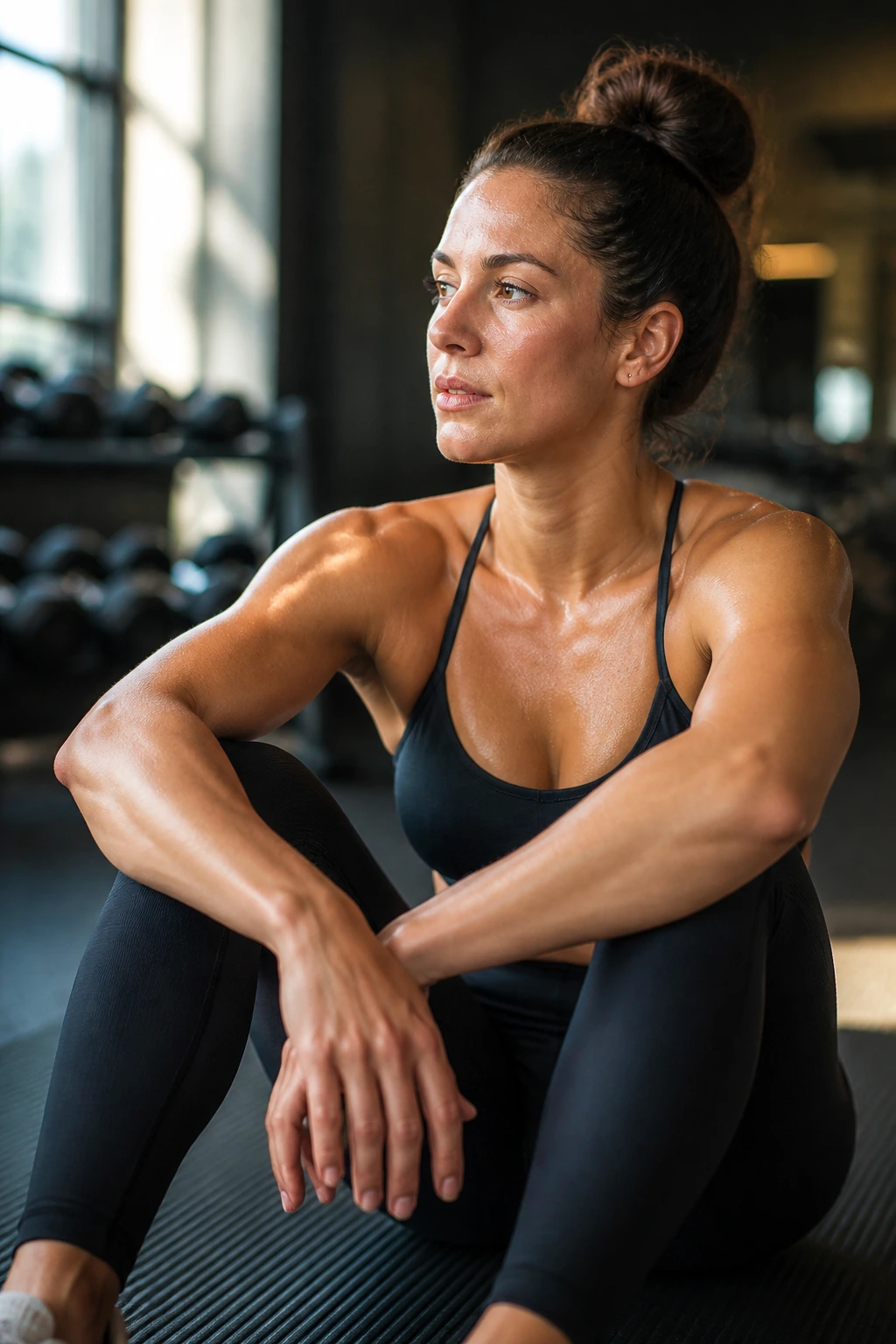
The strongest core plans do not chase burn for its own sake. They build control first, then add challenge. That’s why planks, dead bugs, carries, and controlled rotation show up again and again here. They teach your trunk to stay useful, not just tired.
If you want the most from any of these challenges, pick one that matches your current level and run it with clean form for two weeks. Write down seconds, reps, or load. That simple habit tells you more than a mirror ever will.
And if a move starts stealing work from your lower back, neck, or hip flexors, scale it down fast. The best ab training is the kind you can repeat tomorrow without dreading it.
