



Most women do not need five different “booty days” and a pile of random burnout circuits to build stronger glutes. They need a plan that loads the right movements hard enough to matter, leaves enough recovery to come back fresh, and keeps strength work front and center. A smart 3-day workout plan for women focused on glutes and strength can outwork a messy five-day split every single week.
I’ve seen the same pattern in gyms for years: endless kickbacks, bands around the knees for half an hour, then one lazy set of squats at the end. It feels busy. It even burns. But burn and progress are not the same thing. Your glutes grow and get stronger when you train hip extension, squat patterns, unilateral work, and abduction with intent, then repeat those lifts long enough to improve them.
Tiny details change everything here. If your feet are too far forward in a hip thrust, your hamstrings steal the job. If your torso folds over in a split squat, your glutes never get the deep stretch they need. If you rest 35 seconds between heavy sets and call it grit, your strength numbers stall.
Three good sessions beat six sloppy ones.
Why a 3-day workout plan for women can build glutes and strength
The first thing worth clearing up is this: more days does not automatically mean more results. When the goal is stronger glutes, stronger legs, and better lower-body shape, the quality of your hard sets matters more than how often you walk into the gym. Three sessions give you room to train hard, recover, and actually add load or reps over time.
Glutes respond well to a mix of movement patterns. You need at least one squat pattern, one hinge, one horizontal hip extension move like a hip thrust or glute bridge, and one unilateral lift that forces each side to work on its own. Add a little abduction work for the side glutes, and you’ve covered the main jobs the glute muscles do.
That mix is what too many programs miss. They either go all-in on squats and lunges and forget direct glute work, or they swing the other way and turn the whole plan into cable kickbacks and miniband pulses. Neither extreme is great. A better weekly target for many lifters is about 14 to 18 hard glute-focused sets, spread across two lower-body days and one lighter touchpoint.
Strength changes the look of this plan, too. That means at least one or two lifts each week should live in lower rep ranges where the weight feels serious. Not max-out serious. More like 4 to 6 reps with clean form, strong bracing, and enough rest to do the work well. That’s how you build the base that makes your glutes stronger and gives the higher-rep work something to grow from.
And there’s a side benefit people undersell: a three-day plan is easier to stick to when life gets noisy. Miss one day in a six-day split and the whole week starts to wobble. Miss one day in a solid three-day setup and you can still recover the week without playing calendar Tetris.
A weekly layout that gives your glutes room to recover
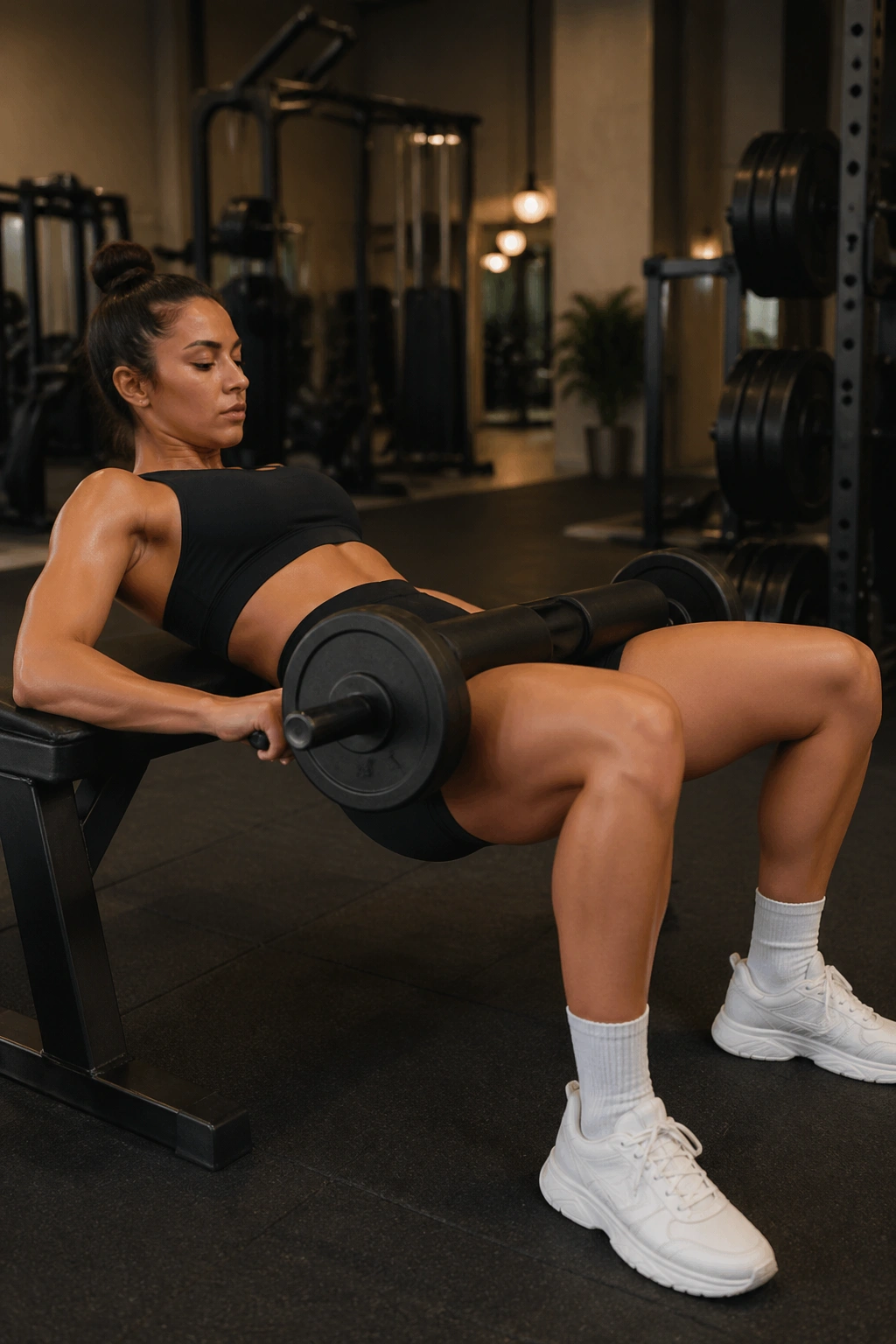
Recovery is part of the program, not a gap between workouts.
For most women, the cleanest weekly layout looks like this:
- Monday: Day One — squat strength and heavy glute work
- Wednesday: Day Two — upper body and glute stability
- Friday: Day Three — deadlift strength and glute hypertrophy
That spacing matters. You get roughly 48 hours between the first two sessions and another 48 hours before the final lower-body day. Your glutes, hamstrings, and lower back usually feel better with that rhythm than they do with back-to-back leg sessions.
Could you train Tuesday, Thursday, and Saturday instead? Absolutely. The exact days are flexible. What you want to preserve is the pattern: lower body, non-lower-heavy day, lower body. That keeps soreness from stacking up in the places that already take a beating from squats, hinges, split squats, and thrusts.
Here’s the part I push back on all the time: if you’re sore for four straight days after every glute workout, the answer is not “train harder.” It’s usually one of three things. Your volume is too high, your technique is leaking tension into your low back or quads, or your recovery is thin because sleep, food, and rest are not matching the work.
A good week has shape to it.
Heavy lower-body work early in the week lets you attack squats and hip thrusts with more energy. The midweek upper-body session gives your legs a break without turning you into a statue. Then the final session can lean into posterior-chain work, unilateral glute work, and slightly higher reps without burying you.
How to warm up before this 3-day workout plan for women
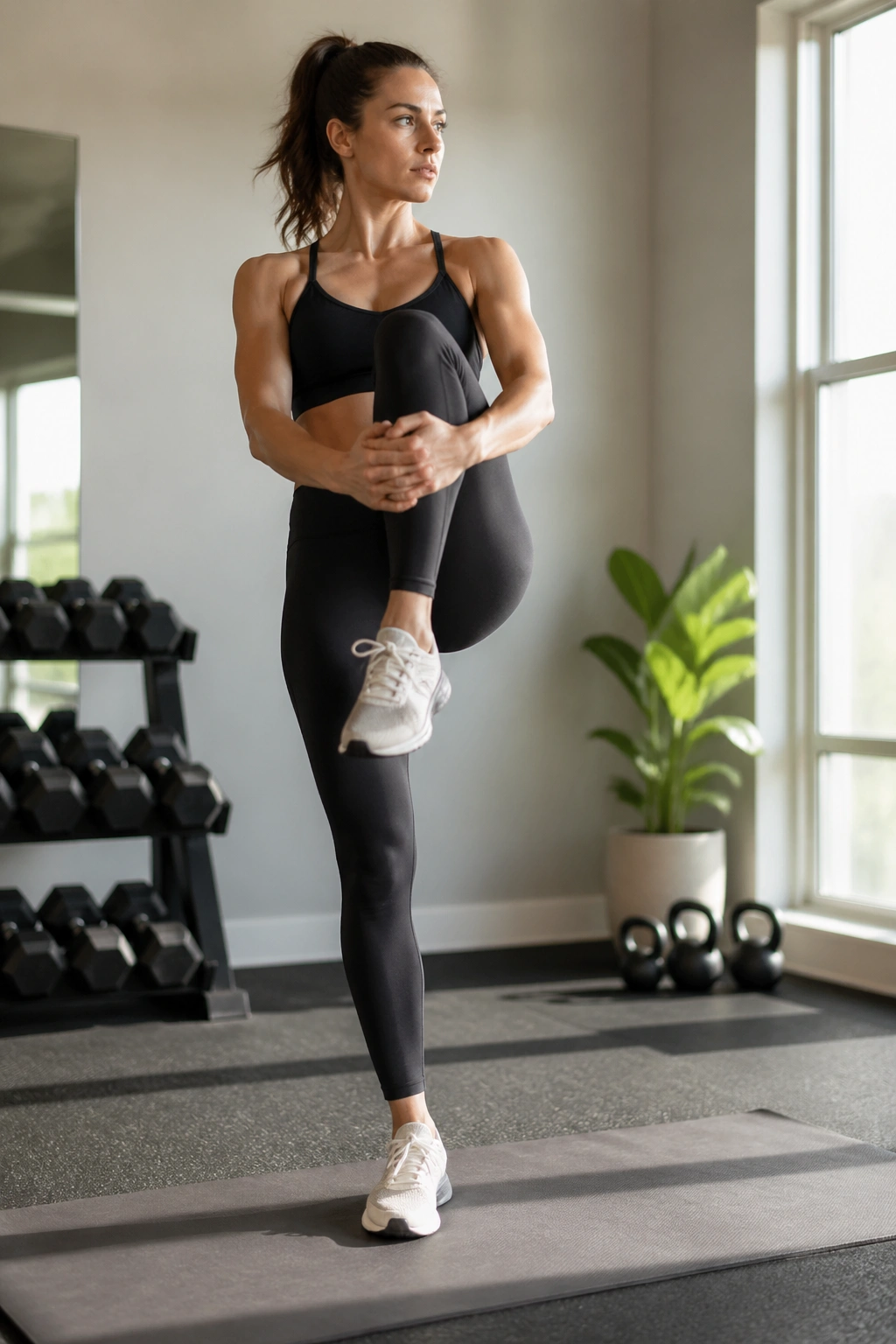
Most warm-ups are too long, too random, or both. You do not need 20 minutes of foam rolling and yoga poses before every lift. You need 8 to 10 minutes that raise body temperature, wake up the hips, and rehearse the first few movement patterns.
Start with two minutes of easy movement
Pick one:
- Brisk treadmill walk
- Easy bike
- Rower at a relaxed pace
- Marching in place if you train at home
You are not trying to get tired. You are trying to feel less stiff.
Move the joints you are about to load
Run through one round of this:
- 8 bodyweight good mornings
- 8 glute bridges with a 2-second pause at the top
- 6 reverse lunges per leg
- 10 lateral band steps each direction
- 8 dead bugs per side
- 10 bodyweight squats with a 3-second lower
That’s enough for most people. Your hips should feel warm, your core should feel switched on, and your knees should stop feeling like rusty door hinges.
Ramp the first lift instead of jumping into your work sets
This is the piece people skip, then wonder why their first set feels terrible.
If your first main lift is a squat and your work sets are 135 pounds for 5 reps, do something like this:
- Empty bar x 8
- 65 pounds x 5
- 95 pounds x 3
- 115 pounds x 2
- Then start your work sets
Same idea for hip thrusts, deadlifts, presses, anything heavy. Ramp-up sets are practice, not fatigue. They help you find your groove, feel your position, and spare you that ugly first work set where nothing feels connected.
One more thing. If a warm-up drill does nothing for you, drop it. I’d rather see you do five useful moves every session than fifteen forgettable ones you only half pay attention to.
When your cycle or energy dips, adjust the effort not the habit
Some women feel stronger and snappier during parts of their cycle. Others feel flatter, more crampy, or weirdly unstable under a bar for a few days. Both experiences are common. Trying to force the exact same performance every week can make training feel harder than it needs to.
The fix is not to disappear from the gym. It’s to adjust the dose.
On lower-energy days, keep the session but change one or two training variables:
- Drop one work set from the first two lifts
- Stay at the lower end of the rep range
- Leave 2 to 3 reps in reserve instead of pushing closer to failure
- Swap a barbell lift for a more stable machine or dumbbell version
- Shorten the session by cutting the least useful accessory, not the main lift
That last point matters. If you have 45 rough minutes in you, spend them on the lifts that matter most. Squat. Hinge. Thrust. Split squat. Then go home. The glute kickback finisher can wait.
Some women also deal with bloating, grip changes, headaches, or heavy legs for a few days. If that’s you, use the logbook honestly. A temporary dip in performance does not mean the plan stopped working. It means your body is not a robot, which — last time I checked — is fine.
Consistency beats perfection here.
How to choose weights, reps, and rest periods that build strength
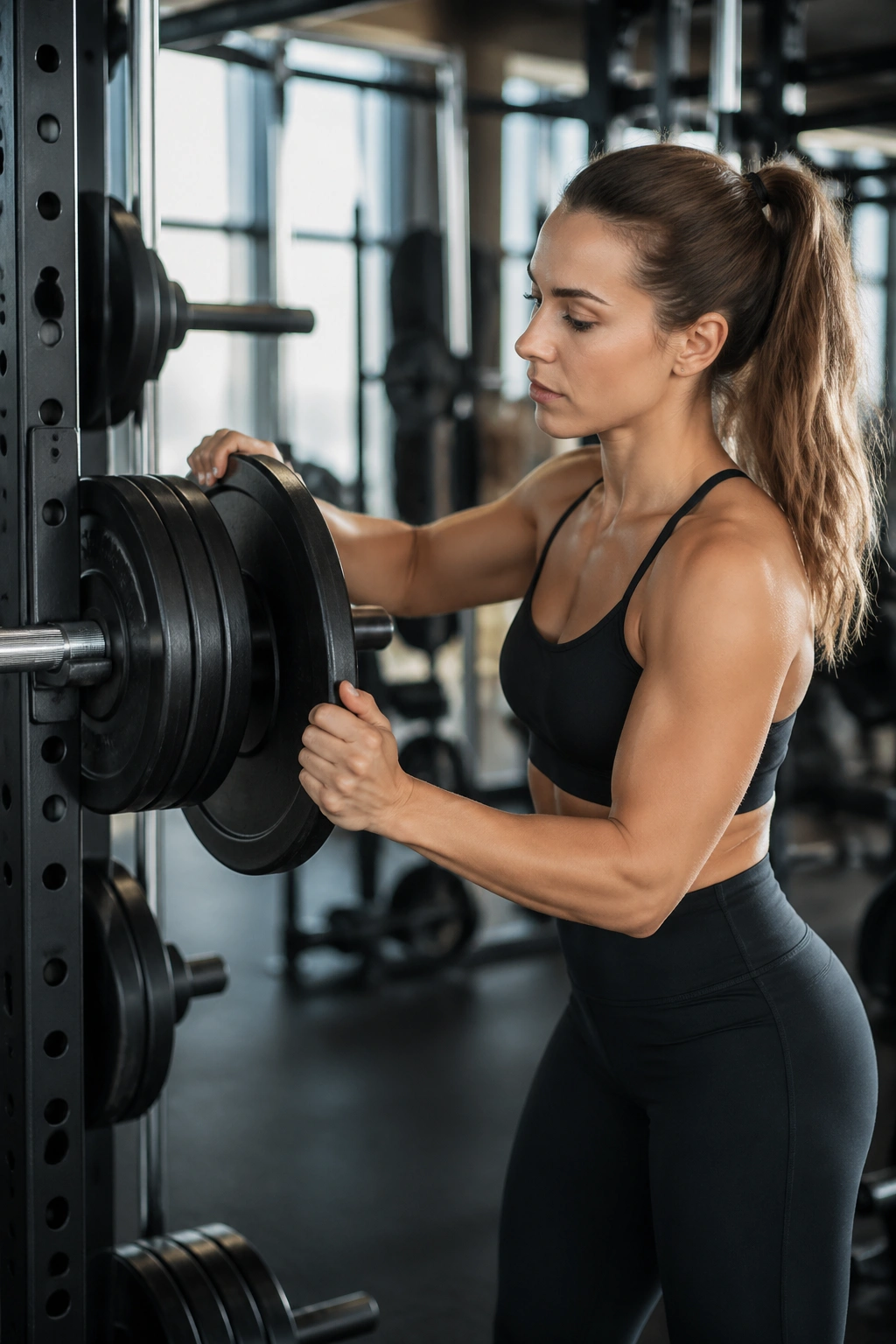
If you guess your loads every session, progress gets fuzzy fast. A better approach is simple: use rep ranges, stop most sets with 1 to 3 reps left in the tank, and only add weight when you earn it.
Here’s the structure I like for a glutes-and-strength plan:
- Main strength lifts: 4 to 6 reps for 3 to 5 sets
- Secondary compound lifts: 6 to 10 reps for 3 to 4 sets
- Isolation or machine work: 12 to 20 reps for 2 to 4 sets
That spread matches how these lifts behave in real life. Squats, deadlifts, and presses usually work better when you keep the reps lower and the rest longer. Hip abductions, kickbacks, and back extensions can live in higher rep ranges where the muscle stays under tension longer.
Use reps in reserve, not ego
If a set of 6 feels like you maybe had 2 more clean reps, that’s a good working set. If rep 5 turns into a prayer and rep 6 folds you in half, the weight is too heavy for the goal of the day.
On your big lifts, aim for 1 to 2 reps in reserve on the final set. On isolation work, you can push harder — sometimes to 0 or 1 reps in reserve — because the risk and fatigue are lower.
Rest longer than you think
This one annoys people because it feels less “hardcore,” but it works.
- Heavy squats, hip thrusts, deadlifts, bench press: 2 to 3 minutes
- Split squats, rows, presses, Romanian deadlifts: 75 to 120 seconds
- Abductions, kickbacks, core work: 45 to 75 seconds
If your breathing is still wild and your legs are shaking before a heavy set, you are not rested. You are rushed.
Progress with a double-progression method
Say the program calls for 4 sets of 5 to 6 reps. If you get 5, 5, 5, 5 this week and 6, 5, 5, 5 next week, you are moving in the right direction. Once you hit all sets at the top of the range with clean form, add weight the next time.
A good jump is:
- Lower body barbell lifts: 5 to 10 pounds
- Upper body lifts: 2.5 to 5 pounds
- Machine or cable lifts: one plate jump if the machine allows small changes; if not, add reps first
Small jumps add up. That’s the boring truth behind strong glutes.
1. Day One: Squat Strength and Heavy Glute Work
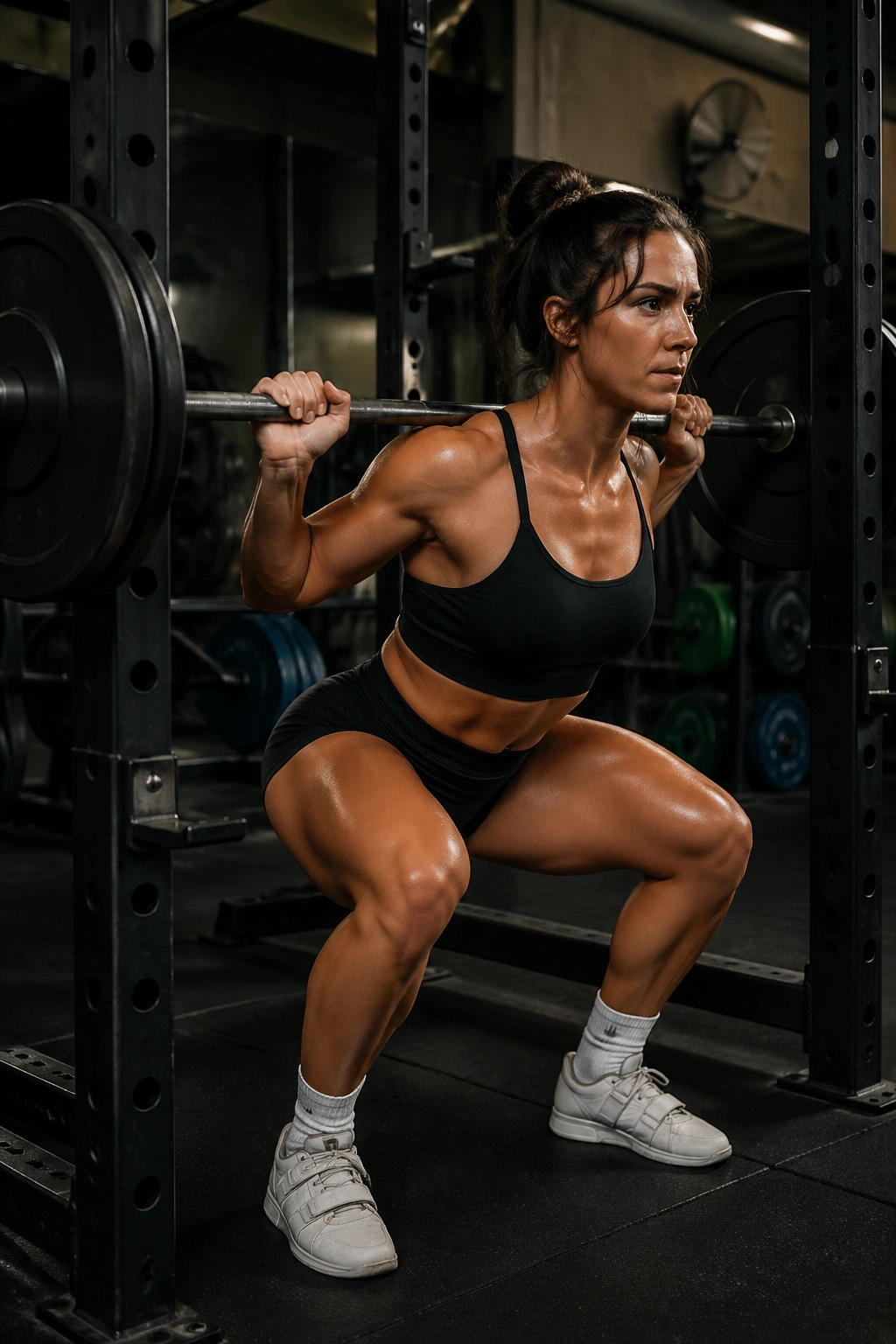
Day One should feel serious. Not chaotic, not lung-searing, not like a social media challenge. Serious. This is where you build the squat pattern, load the glutes hard, and set the tone for the week.
Main lift block
-
Back Squat or Safety-Bar Squat — 4 sets of 5 reps
Rest 2 to 3 minutes between sets. Brace before every rep, drive your feet into the floor, and keep the bar path stacked over midfoot. -
Barbell Hip Thrust — 4 sets of 6 to 8 reps
Rest 2 minutes. Pause for a full second at the top, ribs down, chin tucked, and do not fling the weight with your low back.
The squat gives you lower-body strength through a deep knee bend. The hip thrust lets you load hip extension heavily in the shortened glute position, where many women can move a surprising amount of weight once technique clicks. Pairing them works well because they challenge the glutes differently.
Accessory glute and hamstring work
-
Romanian Deadlift — 3 sets of 8 reps
Lower the bar until your hamstrings feel loaded and your back stays flat. If the weight drifts away from your legs, reset. -
Bulgarian Split Squat — 3 sets of 8 reps per leg
Take a long enough stride that you can sit down and slightly back. A forward torso lean is fine here — it often helps the glutes do more. -
Seated Hip Abduction or Cable Abduction — 2 to 3 sets of 15 to 20 reps
Slow the last third of each rep. If you swing through these, you lose the point.
Optional finisher if you still feel fresh
- Sled Push — 4 trips of 20 meters
or - Incline treadmill walk — 8 to 10 minutes at a brisk pace
Optional means optional. If your squat and hip thrust numbers are still climbing, you do not need to prove toughness with extra fluff. If your recovery is thin, cut the finisher first.
A clean Day One usually runs 65 to 75 minutes. Longer than that and the session often starts drifting. People chat, scroll, add random exercises, then wonder why Friday feels heavy before it even starts.
What to do after Day One so the next session does not feel sluggish
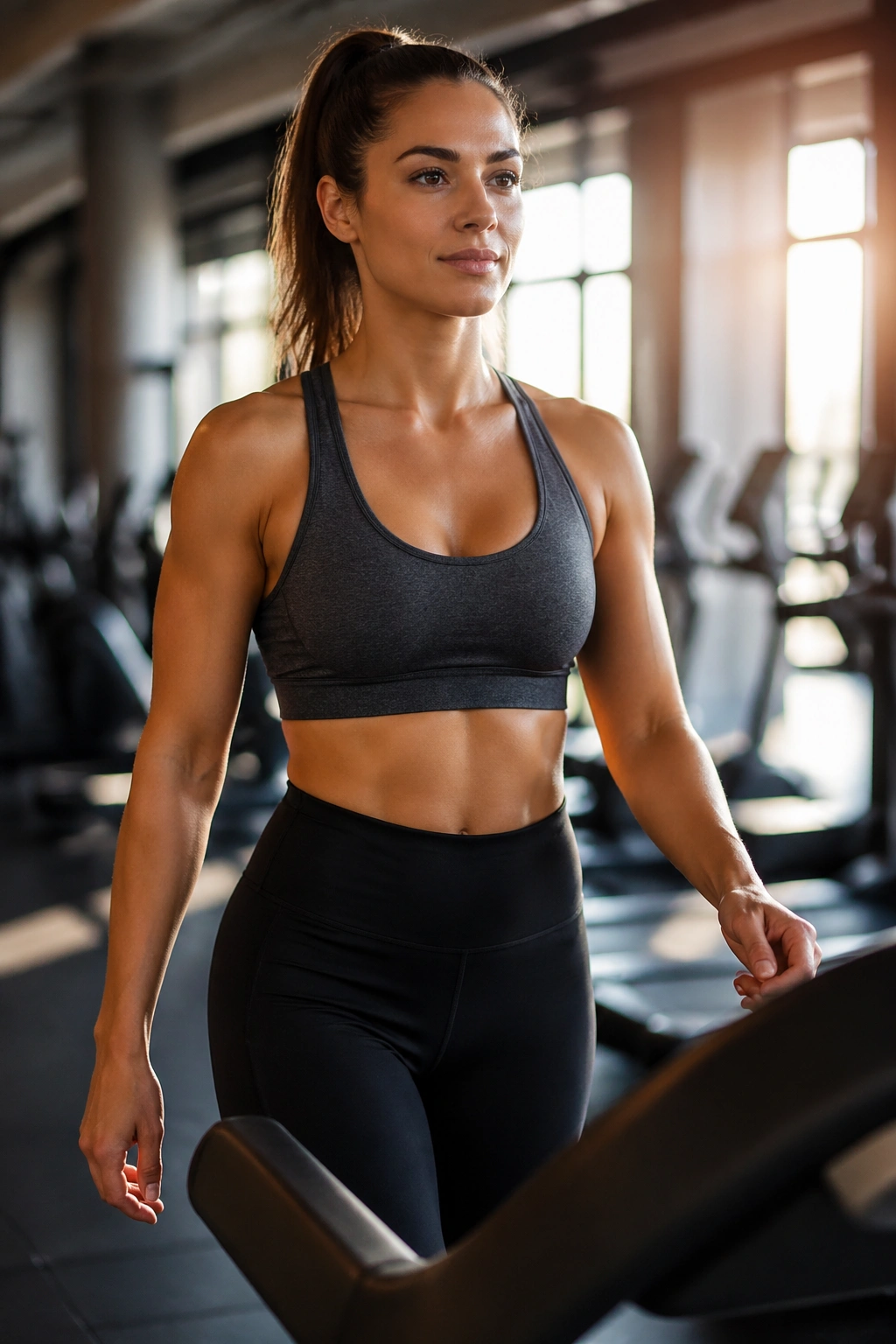
The work after the workout matters more than the cute playlist did.
Start with a short cool-down if your lower back or hips feel tight: 5 minutes of easy walking or cycling is enough. You are not “flushing toxins.” You are just letting your heart rate come down and keeping the legs from stiffening up as you leave the gym.
Get 25 to 35 grams of protein within a couple of hours. Add 30 to 60 grams of carbs if the session was hard or you trained before a full meal. Rice, potatoes, oats, fruit, toast — nothing magical, just food that helps you recover and train again.
Then sleep. I know, boring answer. Still the right one. Women chasing stronger glutes often spend more time hunting the right banded finisher than fixing the fact that they sleep 5.5 hours and call it normal. Muscle does not care about your intentions when your recovery is starved.
If soreness hits hard, do something light the next day: a 20-minute walk, a short mobility flow, even easy bodyweight squats. Sitting still all day usually makes stiff legs feel worse, not better.
2. Day Two: Upper-Body Strength With Extra Glute Stability
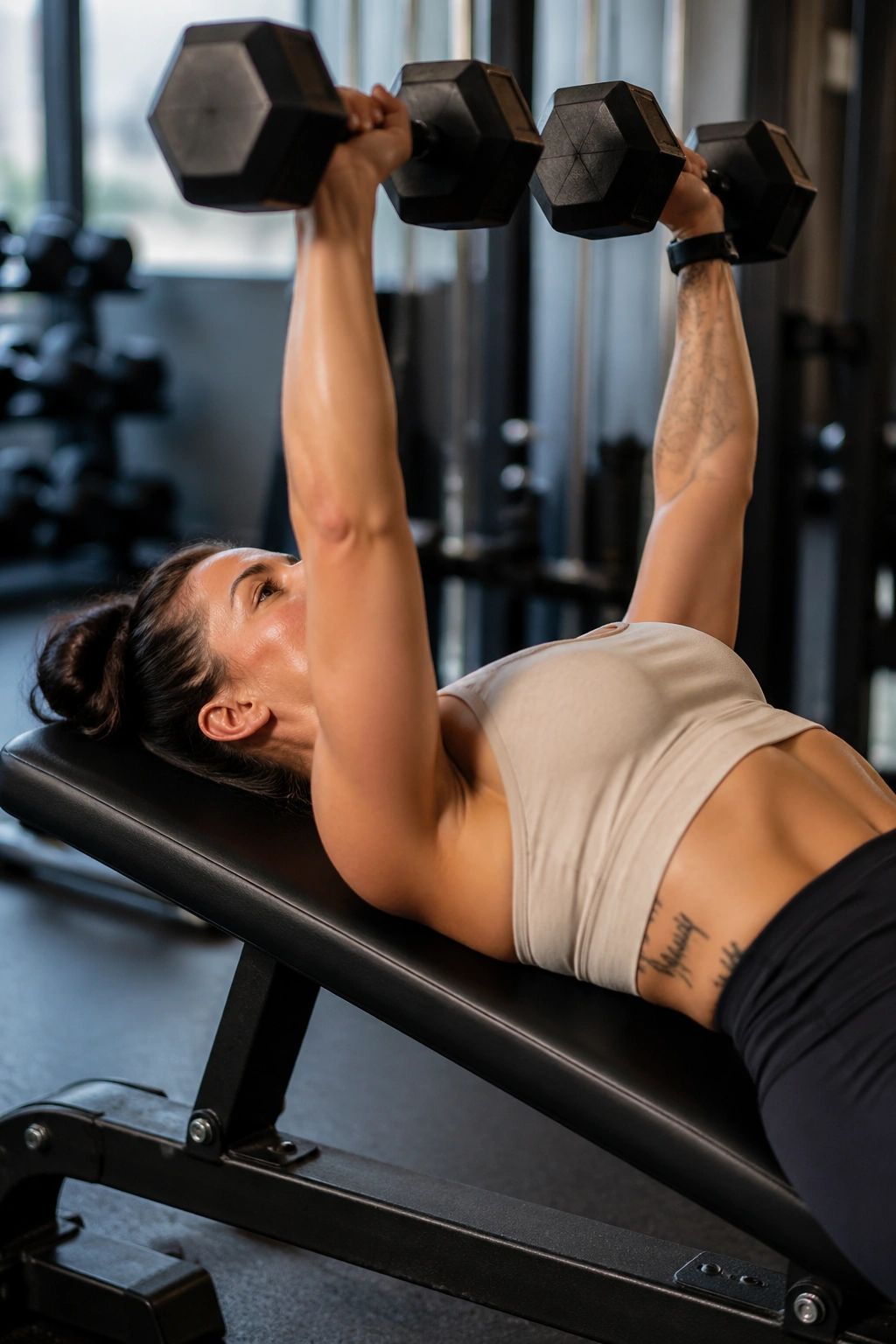
Why put an upper-body day in a glute-focused plan? Because stronger glutes do not live in isolation. A stronger upper back helps you hold a bar better. Better trunk strength helps you brace harder in squats and hinges. Even your split squats feel cleaner when your torso is not wobbling all over the place.
This session is also a smart place to sneak in glute stability work without hammering your legs the way Day One did.
Upper-body strength work
- Dumbbell Bench Press or Barbell Bench Press — 4 sets of 5 to 6 reps
- Lat Pulldown or Assisted Pull-Up — 4 sets of 6 to 8 reps
- Chest-Supported Row or One-Arm Dumbbell Row — 3 sets of 8 to 10 reps
- Seated Dumbbell Shoulder Press — 3 sets of 8 reps
Use rest periods long enough to keep the reps clean. You want strength here, not sloppy conditioning.
Glute stability and trunk work
-
Single-Leg Hip Thrust — 3 sets of 10 to 12 reps per side
Slow down. If your pelvis twists, you are moving too fast or using too much weight. -
Lateral Band Walk — 2 sets of 12 to 15 steps each way
Stay low, feet straight, tension on the band the whole time. -
Pallof Press or Dead Bug — 2 to 3 sets of 8 to 10 reps per side
Single-leg glute work on Day Two does something useful that heavy bilateral lifting can miss: it exposes side-to-side differences. One glute will almost always feel less coordinated at first. Good. Better to see it and train it than let it keep showing up in every squat and deadlift.
A quick note on band walks. People either go too heavy with the band and start waddling, or they move so fast the glutes barely work. Pick a band you can control, keep the knees tracking over the feet, and make the set last.
This session often feels lighter than the lower-body days, but do not sleep on it. If your upper back, shoulders, and core get stronger, your lower-body numbers usually follow.
The right amount of walking and cardio between lifting days
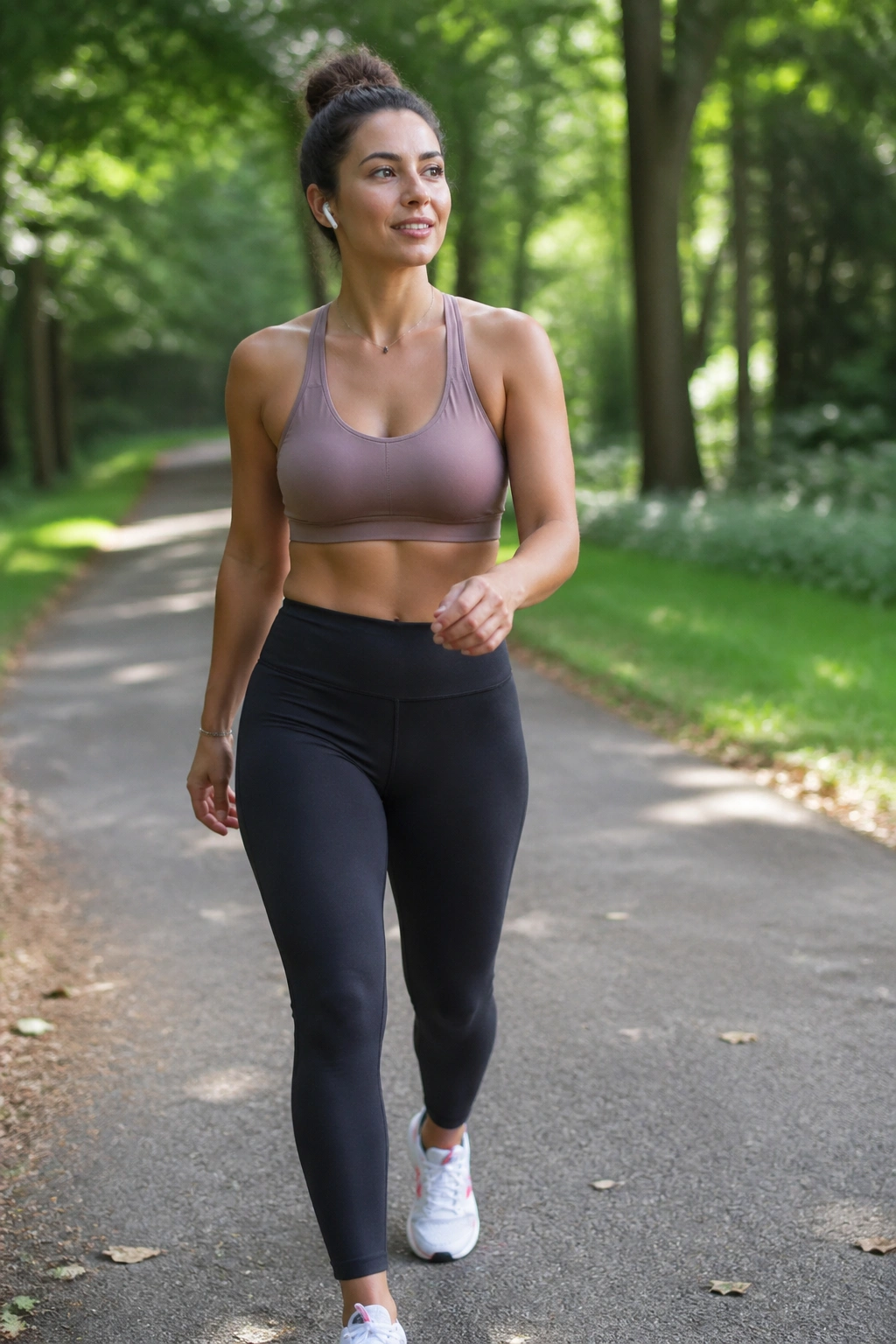
Cardio does not kill glute gains. Poorly timed, overly hard cardio can make your leg sessions feel flat, though, and that is where people get confused.
For this plan, the sweet spot is modest:
- 20 to 30 minutes of brisk walking on 2 to 4 non-lifting days
- 6,000 to 10,000 steps per day as a loose target
- Optional 10 to 15 minutes of easy incline walking after upper-body day
You do not need sprint intervals after heavy squats unless you love being tired for no reason. Save the hardest conditioning work for a block where strength is not your main target.
Walking is the boring hero here. It helps recovery, keeps appetite and stress from going off the rails, and does not crush your legs. If body composition is part of your goal, walking also gives you a clean way to raise daily output without interfering with your lifts much.
One caution: if your glutes are not recovering, check the “extra” stuff. A spin class, a long run, two dance sessions, and a weekend hike all count. Your body does not sort fatigue into neat little folders.
3. Day Three: Deadlift Strength and Glute Hypertrophy
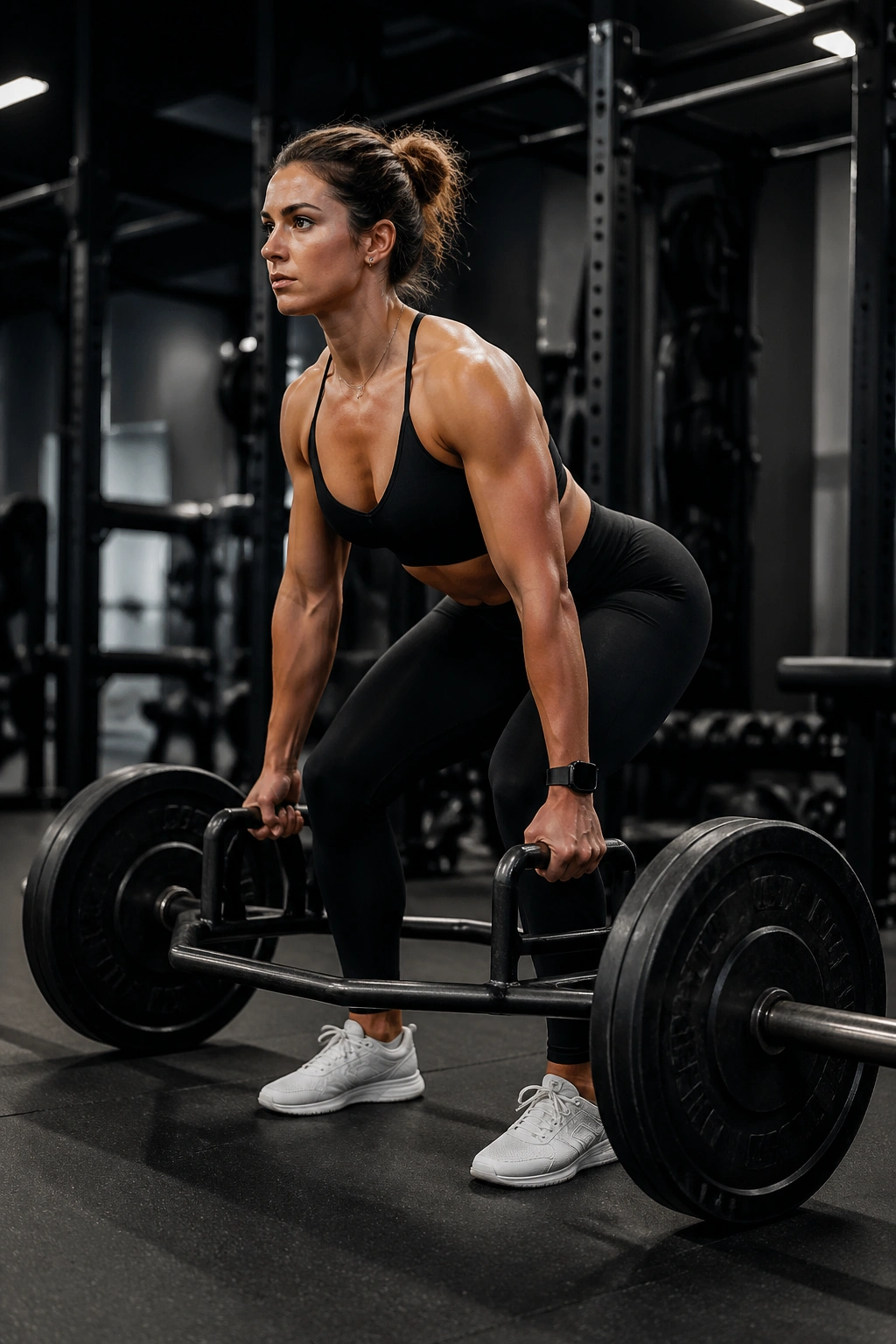
Day Three should hit differently. You are still training hard, but the feel is more posterior-chain heavy — more hinge, more deep glute stretch, more muscular fatigue in the backside rather than pure squat grind.
Main strength hinge
- Trap-Bar Deadlift or Conventional Deadlift — 4 sets of 4 to 6 reps
Rest 2 to 3 minutes. Set the bar over midfoot, pull the slack out, and push the floor away. Do not yank.
If conventional deadlifts beat up your lower back, switch to a trap bar. No medal is handed out for using the version that makes you feel worse. Trap-bar pulls are a strong choice for many women because they let you load heavy with a slightly more upright torso.
Glute-focused hypertrophy block
-
Front-Foot Elevated Split Squat — 3 sets of 8 to 10 reps per leg
That small front-foot lift — even 2 inches — can create a deeper range and a better glute stretch. -
Smith Machine Hip Thrust or Barbell Hip Thrust — 3 sets of 8 to 10 reps
If you already went heavy on hip thrusts earlier in the week, use a slightly lighter load here and own the top pause. -
45-Degree Back Extension, Glute Bias — 3 sets of 10 to 12 reps
Round the upper back slightly, keep the chin tucked, and think about driving the hips into the pad. Done right, these light up the glutes. -
Walking Lunge or High Step-Up — 2 sets of 10 to 12 reps per leg
Go controlled. If balance is the limiting factor, hold onto a rack and make the set cleaner. -
Cable Kickback or Seated Abduction — 2 sets of 15 to 20 reps
Use this as your final squeeze-and-burn piece, not the star of the day.
This is a bigger session, and you may not need every single exercise if recovery is shaky. If you only have room for four movements, keep the deadlift, split squat, hip thrust, and back extension. Those do the heavy lifting — literally and not literally.
Done well, Day Three leaves your glutes full, your hamstrings worked, and your lower back tired but not cooked. If your back is the only thing you feel, your hinge pattern needs attention before you add more weight.
Smart exercise swaps for home gyms and crowded weight rooms
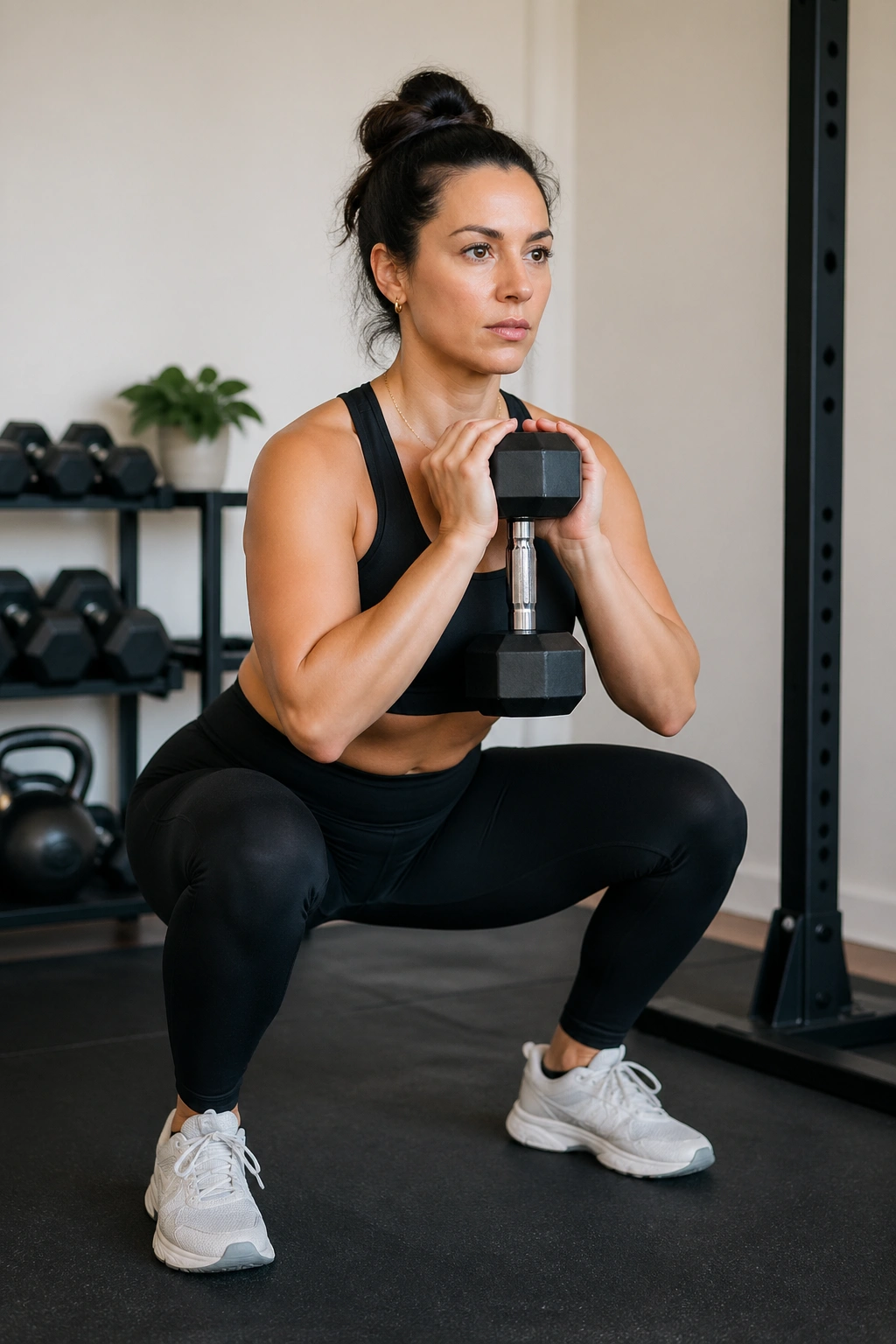
No rack? Bench taken? Cable station occupied by someone filming triceps pushdowns for half an hour? Fine. You can still keep the plan intact if you swap by movement pattern, not by random vibe.
Here’s the easiest way to think about it.
If you need a squat-pattern swap
- Back squat → Goblet squat
- Back squat → Leg press
- Safety-bar squat → Front squat
- Front-foot elevated split squat → Reverse lunge
If you need a hinge swap
- Conventional deadlift → Trap-bar deadlift
- Trap-bar deadlift → Romanian deadlift
- Romanian deadlift → Dumbbell Romanian deadlift
- Back extension → Cable pull-through
If you need a hip-thrust swap
- Barbell hip thrust → Smith machine hip thrust
- Smith machine hip thrust → Heavy dumbbell glute bridge
- Hip thrust → Frog pump with a loaded dumbbell if you are stuck at home
If you need unilateral glute work
- Bulgarian split squat → Step-up
- Walking lunge → Static split squat
- Step-up → Deficit reverse lunge
If you need side-glute work
- Cable abduction → Seated abduction machine
- Seated abduction machine → Mini-band lateral walk
- Lateral walk → Side-lying hip abduction with ankle weight
The rule is simple: swap like for like. Do not replace a heavy hinge with a random kickback just because both technically involve the glutes. One builds strength and tissue through high tension. The other is an accessory. Useful, yes. Interchangeable, no.
Form fixes for hip thrusts, squats, and deadlifts
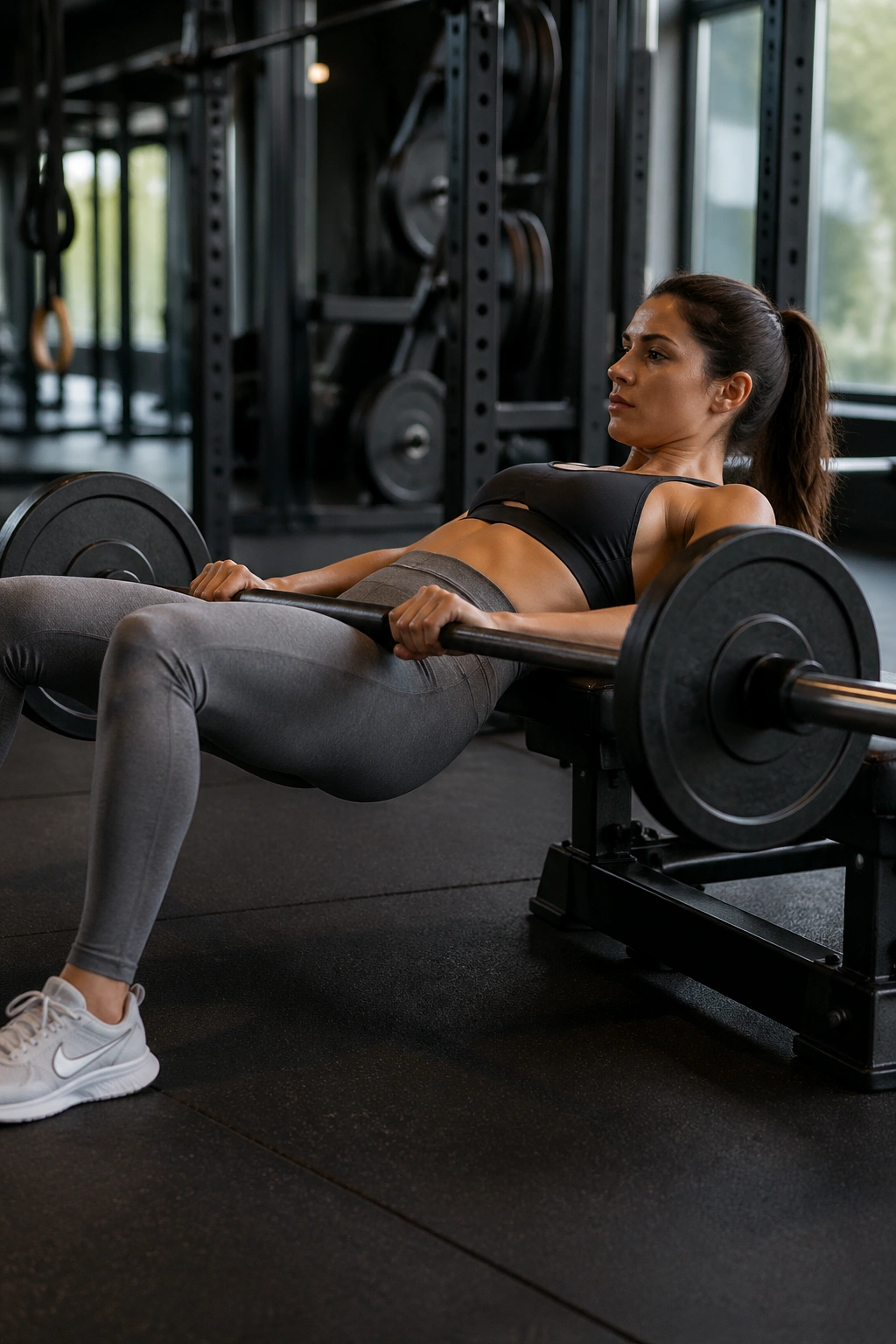
Technique does not have to be pretty to work, but it does have to be repeatable. When a lift feels wrong, the fix is often small — foot pressure, rib position, bar path — not some dramatic overhaul.
Hip thrust setup that actually hits the glutes
A bench that’s too high can make the whole lift awkward. A height around 14 to 17 inches works well for many women. Set your upper back on the bench near the bottom of the shoulder blades, not halfway down the spine.
At the top, your shins should be close to vertical. If your feet are far out in front, hamstrings tend to take over. If your feet are too close, quads join the party more than you want. Tuck the chin slightly, keep the ribs down, and finish by squeezing the glutes — not by flinging your chest to the ceiling.
Do not turn the top of the hip thrust into a backbend.
Squat cues that clean up the bar path
Start with a solid foot: heel, base of the big toe, base of the little toe. That tripod matters. Take air into your midsection before you descend and brace like someone is about to poke your sides.
Then squat down between your hips instead of folding forward and calling it depth. Knees can travel forward. That is not the villain people once made it out to be. What you want is a bar path over midfoot and a torso angle you can control without collapsing.
If your heels pop up, use a small wedge or lifting shoes. There is no shame in working with your structure instead of pretending every body should squat the same way.
Deadlift fixes that save your low back
Most messy deadlifts start before the bar leaves the floor. If the bar is too far from your shins, you will chase it. If your hips shoot up before the bar moves, you lose position and your back pays the bill.
Set the bar over midfoot, bend down, grab it, and pull the slack out until you hear the plates click into tension. Squeeze your armpits tight, flatten the upper back as much as your build allows, and push the floor away. Lock out by standing tall and squeezing the glutes — not by leaning backward.
Deadlifts should feel heavy. They should not feel random.
How to progress a 3-day workout plan for women for 8 to 12 weeks
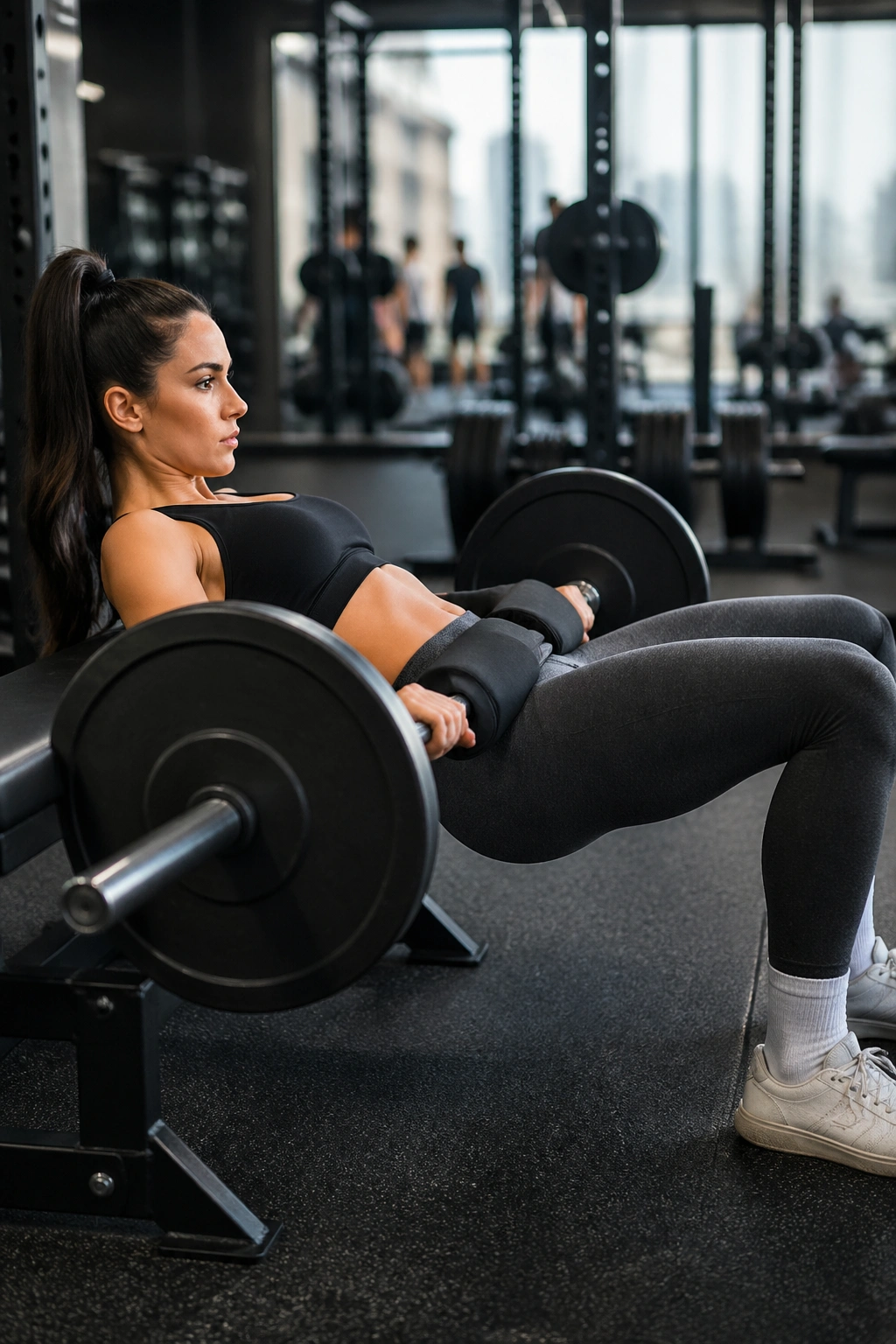
A plan only works if it keeps moving. That does not mean changing exercises every week because you got bored on Thursday. It means using a simple progression model, letting it run, then adjusting when the returns slow down.
Here’s a clean way to handle 8 to 12 weeks:
Weeks 1 to 2: Find your working weights
Start slightly conservative. Your first week should not be a max-out week disguised as “testing.” Hit the lower end of the rep ranges, learn the pace of the sessions, and leave the gym feeling like you could have done a little more.
Weeks 3 to 6: Add reps, then load
Push the rep ranges upward while keeping form tight. Once you hit the top of the rep range across all sets on a lift, add weight the next week and start again at the lower end.
A sample progression on hip thrusts might look like this:
- Week 1: 4 x 6 at 135
- Week 2: 4 x 7 at 135
- Week 3: 4 x 8 at 135
- Week 4: 4 x 6 at 145
That is enough. It does not need to be fancy.
Week 5 or 6: Pull back if fatigue is stacking
If your sleep is worse, your legs feel dead all week, and loads that used to move clean now feel glued to the floor, take a lighter week. Cut volume by about 30 to 40 percent. Keep the movement patterns. Just do less.
Weeks 7 to 12: Push again, then rotate a lift or two
After a lighter week, run the progression again. Near the end of the block, swap one or two lifts if needed:
- Back squat → front squat
- Conventional deadlift → trap-bar deadlift
- Barbell hip thrust → pause hip thrust
- Bulgarian split squat → step-up
Do not rotate everything at once. That turns progress into guesswork.
And if glutes are the top priority, add volume carefully. One extra set on hip thrusts and one extra set on abductions per week is enough to test. You do not need to bolt on three bonus glute sessions because social media told you soreness equals growth.
Eating for stronger glutes, steadier energy, and better recovery
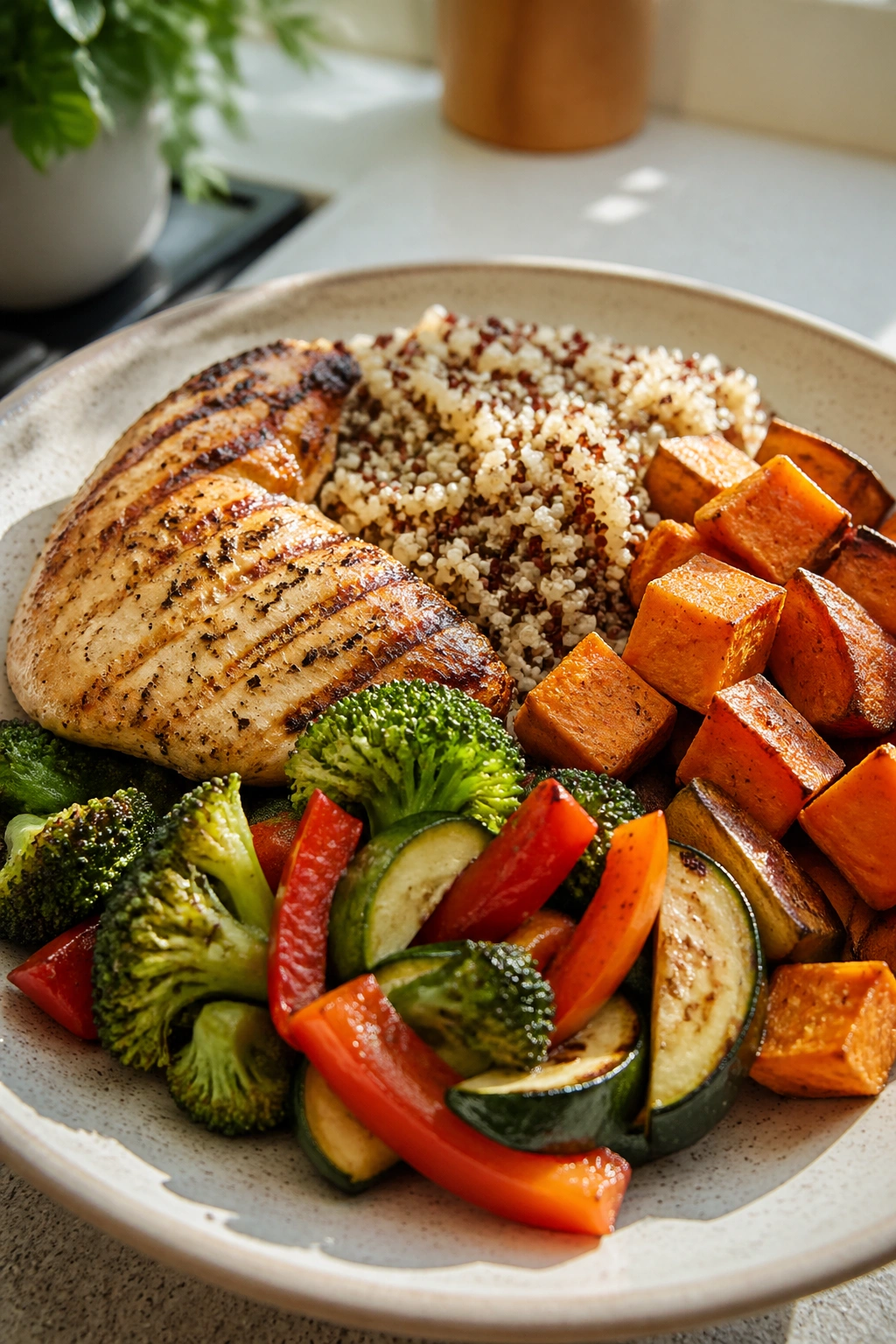
You cannot build stronger glutes on fumes.
Protein is the first piece to lock in. A practical daily target for many active women is 1.6 to 2.2 grams of protein per kilogram of body weight, or roughly 0.7 to 1.0 grams per pound. Spread that across 3 to 5 meals if you can. A solid target per meal is 25 to 35 grams.
Carbs matter more than diet culture likes to admit. Lower-body strength sessions feel better when you are not trying to hip thrust on air and coffee. A meal with 30 to 60 grams of carbs and 20 to 30 grams of protein about 60 to 120 minutes before training works well for many women. Post-workout, another protein feeding plus some carbs helps refill the tank.
Hydration counts, too. Aim for 2 to 3 liters of fluid across the day, more if you sweat hard or train in heat. If you cramp easily or leave sessions drenched, add sodium through food or an electrolyte drink.
Want glute growth? A small calorie surplus helps. Something like 150 to 250 extra calories per day is often enough to support training without making you feel sloppy. If body recomposition is the goal, staying near maintenance while keeping protein high and training hard can still work — just expect the process to move slower.
One supplement earns its keep here: creatine monohydrate, 3 to 5 grams per day. It can help strength performance and training output. No need to cycle it. No need for a fancy version. Plain creatine monohydrate is the one with the strongest track record.
A side note for women with heavy periods: if your energy tanks, your heart rate feels odd during sets, or you get winded on loads that used to feel normal, it is worth asking a clinician to check iron status. That issue gets missed all the time.
How to tell the plan is working before the mirror catches up
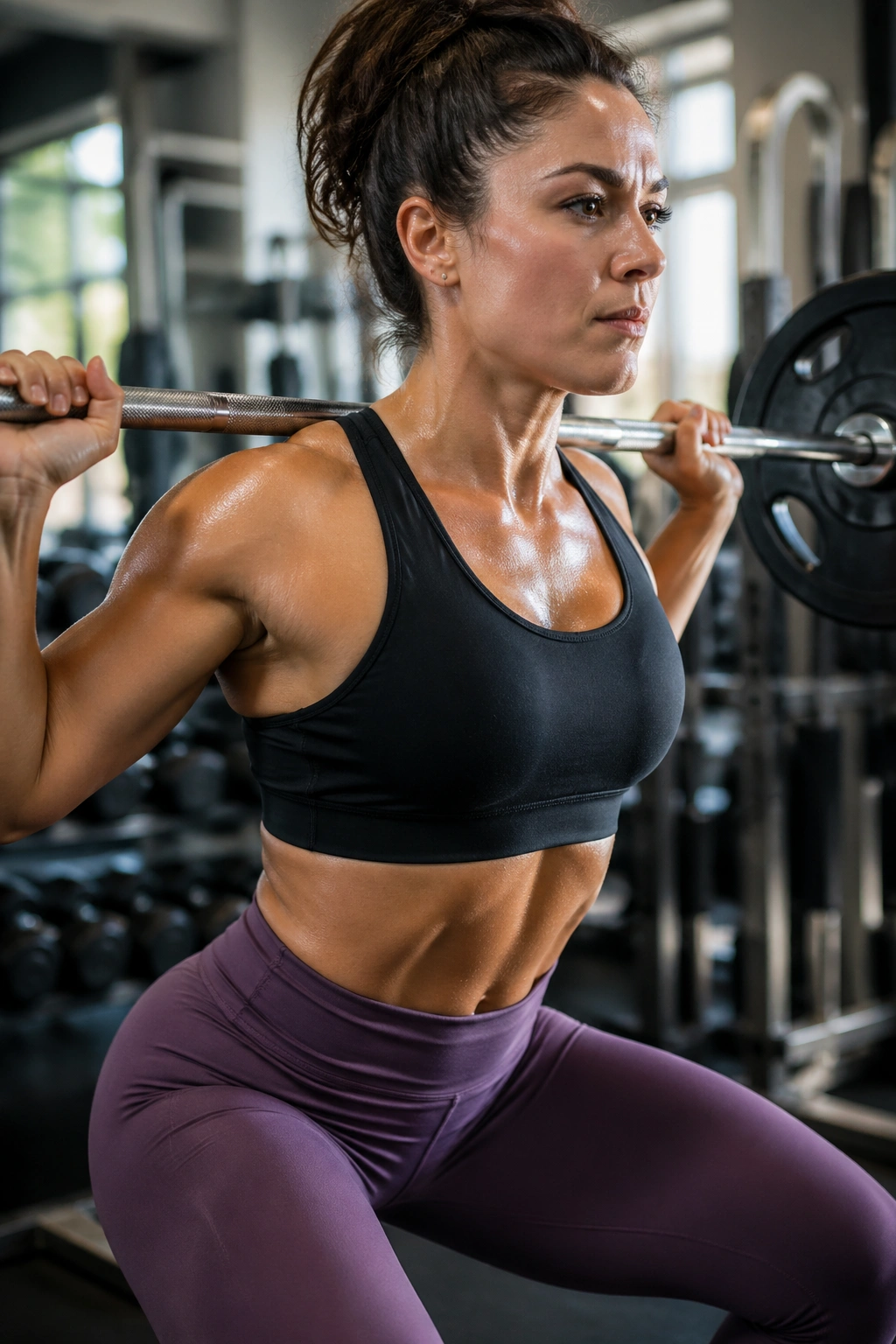
The mirror is slow. Your training log is faster.
One of the clearest signs this plan is doing its job is simple: weights you used to grind now move cleanly. Maybe your 95-pound squat becomes your warm-up set. Maybe your split squat stops wobbling. Maybe the top of your hip thrust finally feels like glutes instead of hamstrings and low back. Those are real wins.
Performance markers matter:
- More reps with the same load
- Same reps with better form
- Shorter recovery between sets
- Better balance in unilateral lifts
- Less low-back takeover in hinges
- A stronger brace under the bar
Clothing also tells the truth in its own annoying way. Many women notice pants fitting tighter through the glutes and upper thighs before the scale changes much. Sometimes the scale does not move at all for a while, especially when strength goes up and recovery is decent.
Then there is the less glamorous sign: you are not wrecked all the time. A good glute-and-strength program should challenge you, not flatten you. If you feel strong enough to train hard, recover, and live your life, that is not “taking it easy.” That is a plan doing what it should.
Final Thoughts
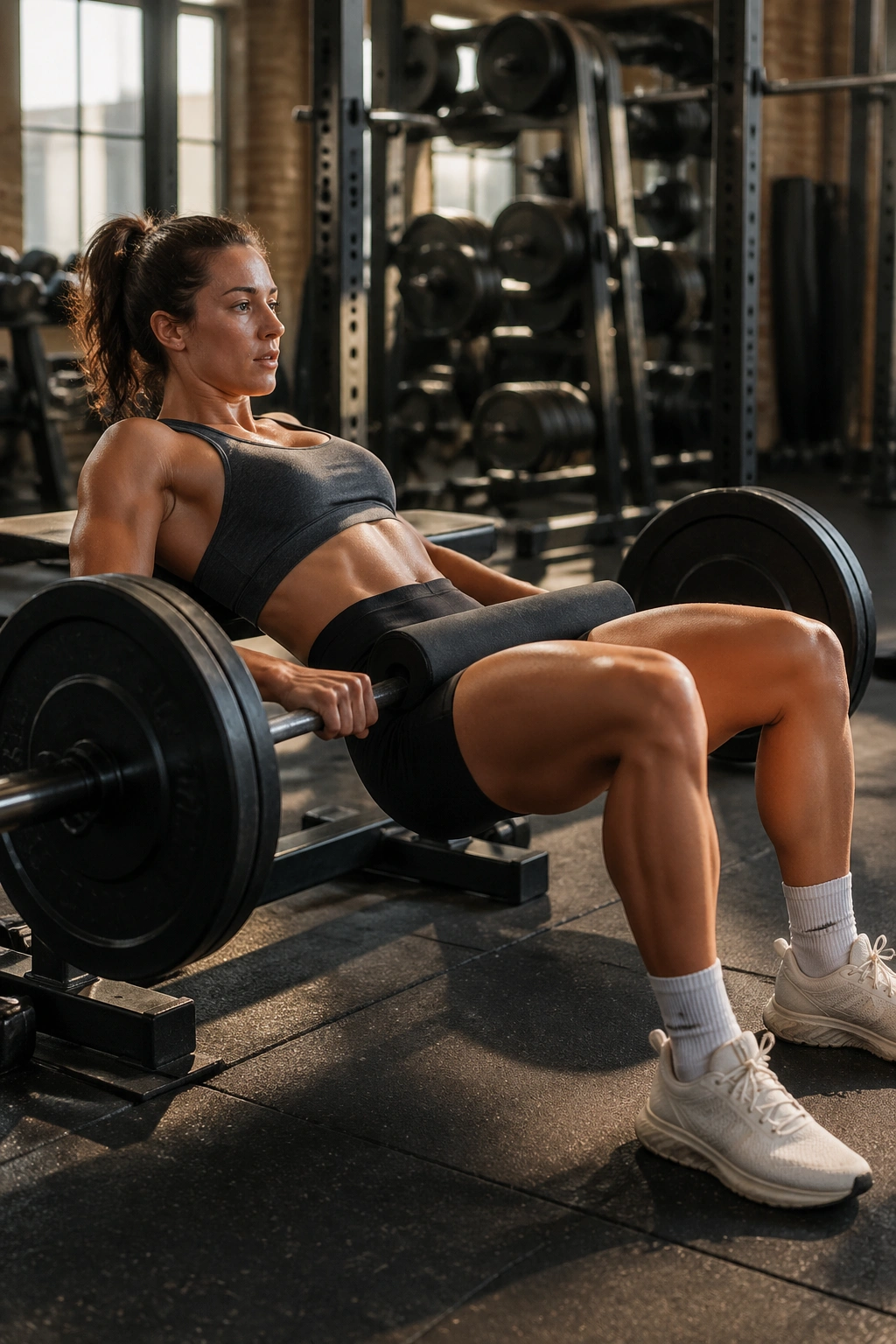
If you train three days a week, treat those three days like they matter. Put your energy into the lifts that give the best return: squats, hinges, thrusts, split squats, rows, presses, and a small amount of direct glute work that supports the big stuff instead of replacing it.
The women who build strong glutes are rarely the ones chasing the fanciest workouts. More often, they are the ones who repeat the basics, track their numbers, eat enough to recover, and stop changing plans every time they feel impatient.
Start lighter than your ego wants. Add load slower than your impatience wants. Stay with it longer than your attention span wants. That is usually where the real change shows up.
