



The treadmill is not the only way to elevate your heart rate, and frankly, staring at a wall while running in place is a special kind of monotony that many people find unbearable. If you are one of those individuals who would rather lift a heavy barbell than spend thirty minutes jogging toward nowhere, you are in luck. Your lower body is the largest muscle group you have. When you train it with intensity, volume, and purpose, the metabolic demand is immense. It forces your cardiovascular system to work overtime just to pump blood to those working quads, glutes, and hamstrings.
Training legs properly is a full-body event in terms of energy expenditure. It requires bracing, stabilization, and deep, rhythmic breathing that mimics the intensity of a sprint, even if you never take a step that isn’t under a load. The key to replacing traditional steady-state cardio with leg work is density. You cannot spend ten minutes resting between sets if you want to keep your pulse high. You need to keep the pace, move with intention, and accept the challenge of a heavy, exhaustive workload.
1. The Heavy Compound Foundation
This is the “big rock” approach. There is no replacement for the sheer systemic demand of heavy barbell work. When you put a significant load on your back, your entire nervous system lights up. You aren’t just training legs; you are training your ability to stabilize a load under pressure, which taxes the heart and lungs far more than most people expect.
Why It Taxing Your Heart
When you perform a heavy back squat, your body needs to stabilize your core, maintain balance, and move a heavy load against gravity. This requires immense oxygen consumption. You will find yourself gasping for air after a set of five heavy reps, not because you are unfit, but because your muscles have demanded an immediate supply of oxygen that your lungs are struggling to provide in that moment.
- Back Squat: 5 sets of 5 reps (Focus on depth)
- Barbell Deadlift: 3 sets of 5 reps (Focus on control)
- Barbell Hip Thrust: 4 sets of 8 reps (Squeeze the glutes at the top)
Pro Tip: Treat every rep like it’s a one-rep max. The intensity of your focus is what makes this effective.
2. The Time-Under-Tension Hypertrophy Session
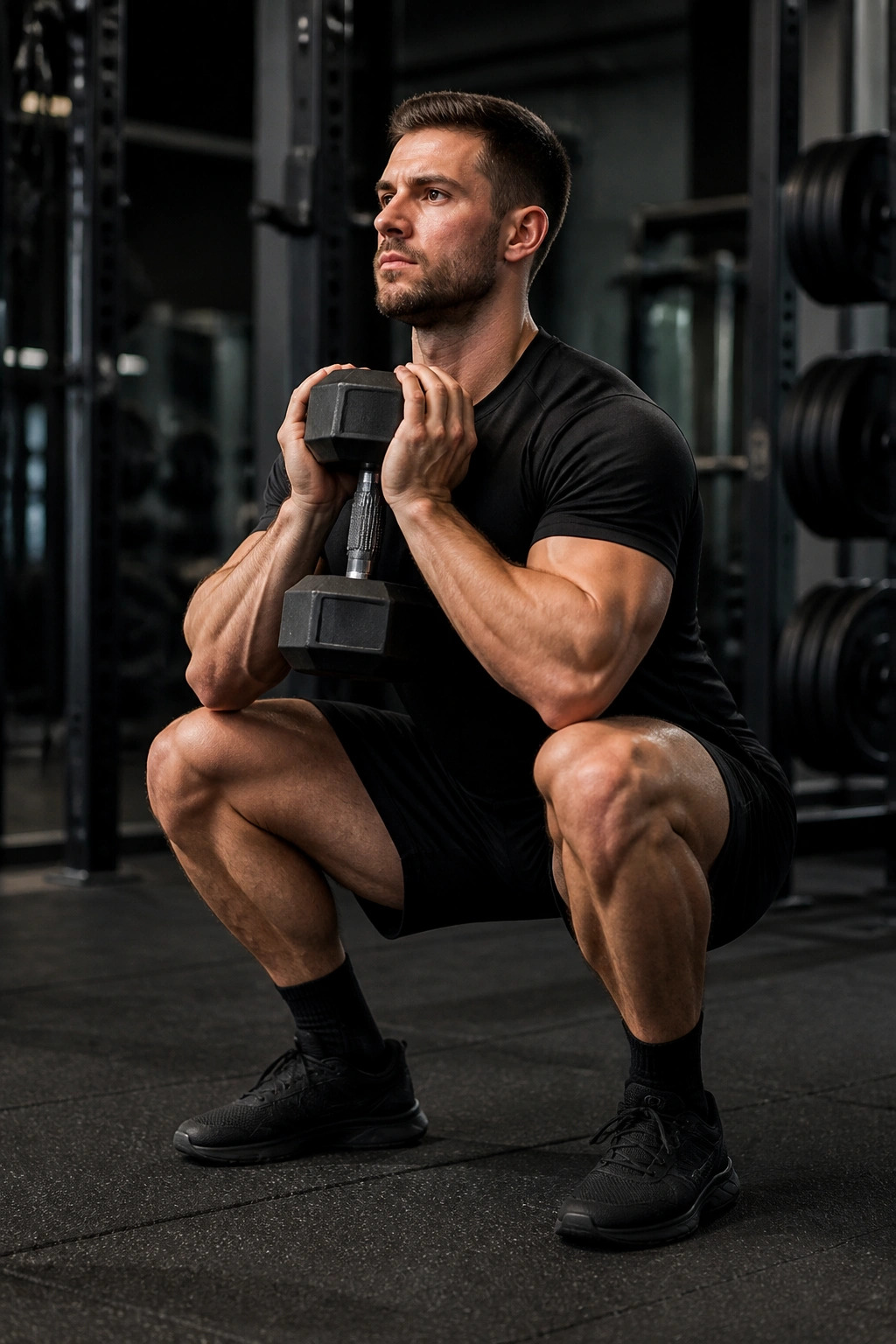
Speed isn’t everything. In fact, if you want your legs to grow and your metabolic rate to soar, you should slow down. This workout is all about the eccentric portion of the lift—the way down. Controlling the weight for three or four seconds on the descent creates massive micro-trauma in the muscle fibers and forces your body to expend significant energy just to keep the weight from crashing down.
Mastering the Eccentric
If you drop the weight quickly, you rely on gravity. If you lower it slowly, you rely on muscle engagement. Try this: squat down for four seconds, hold the bottom for one second, and explode up in one second. Do not bounce.
- Goblet Squat: 4 sets of 10 (4-second descent)
- Romanian Deadlift: 4 sets of 10 (3-second descent)
- Walking Lunges: 3 sets of 12 per leg (Slow motion)
The result: You will feel a deep, burning fatigue that lingers long after you finish your last set.
3. The Unilateral Stability Routine
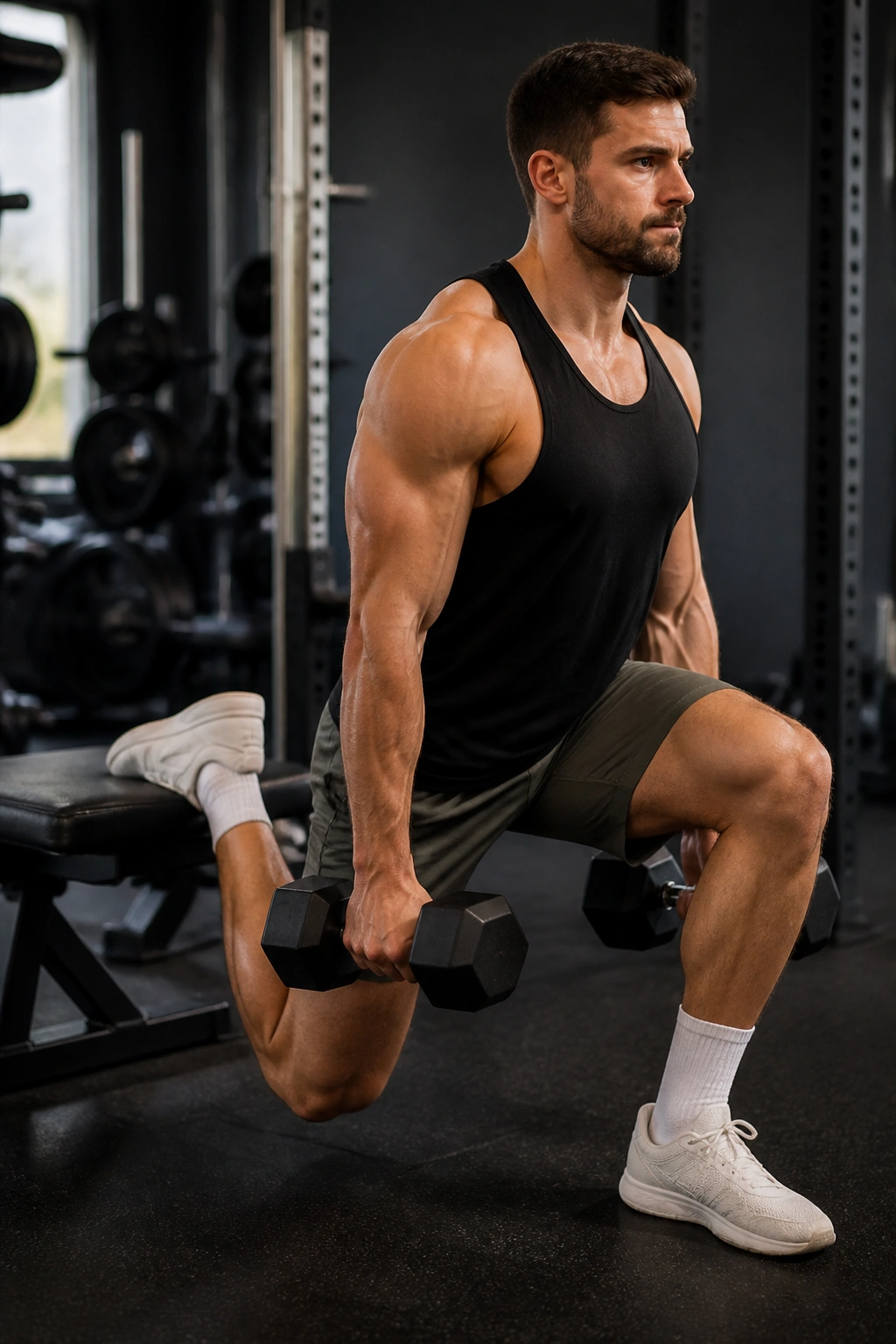
Most people ignore single-leg work because it is uncomfortable and exposes weaknesses. If you have a dominant leg that does all the work, you are missing out on balanced development and the metabolic burn that comes from stabilization. This workout forces your smaller stabilizing muscles to fire constantly, turning a standard leg day into a full-body balance challenge.
Why Focus on One Leg
When you train unilaterally, your core has to fight to keep you upright. This added layer of complexity increases the total muscular recruitment per rep. It’s significantly harder to maintain intensity when you are wobbling on one leg, which keeps your heart rate elevated.
- Bulgarian Split Squats: 3 sets of 10 per leg (Hold dumbbells)
- Single-Leg Romanian Deadlift: 3 sets of 10 per leg (Use a kettlebell)
- Step-Ups: 3 sets of 12 per leg (Drive through the heel)
Note: Do not rush these. The goal is to move with precision, not to race the clock.
4. The Posterior Chain Posterior Focus

If your training program is all quads all the time, you are neglecting the muscles that actually give your lower body its power. Your hamstrings and glutes are the engines of your movement. By hitting them with high volume, you recruit more muscle mass than almost any other movement pattern.
The Anatomy of the Burn
Your hamstrings cross two joints—the hip and the knee. Exercises that focus on hinging at the hip, like the deadlift, prioritize the posterior chain. Exercises that focus on knee flexion, like the leg curl, prioritize the hamstring itself. This workout combines both for maximum effect.
- Stiff-Leg Deadlift: 4 sets of 8 (Feel the stretch)
- Glute Ham Raise (or Nordic Curls): 3 sets to failure
- Lying Leg Curls: 3 sets of 15 (Focus on the squeeze)
- Kettlebell Swings: 5 sets of 20 (Keep the rhythm fast)
Warning: Your hamstrings will feel tight. Stretch them gently, but do not ignore the soreness; it’s part of the process.
5. The Quad-Dominant Burner
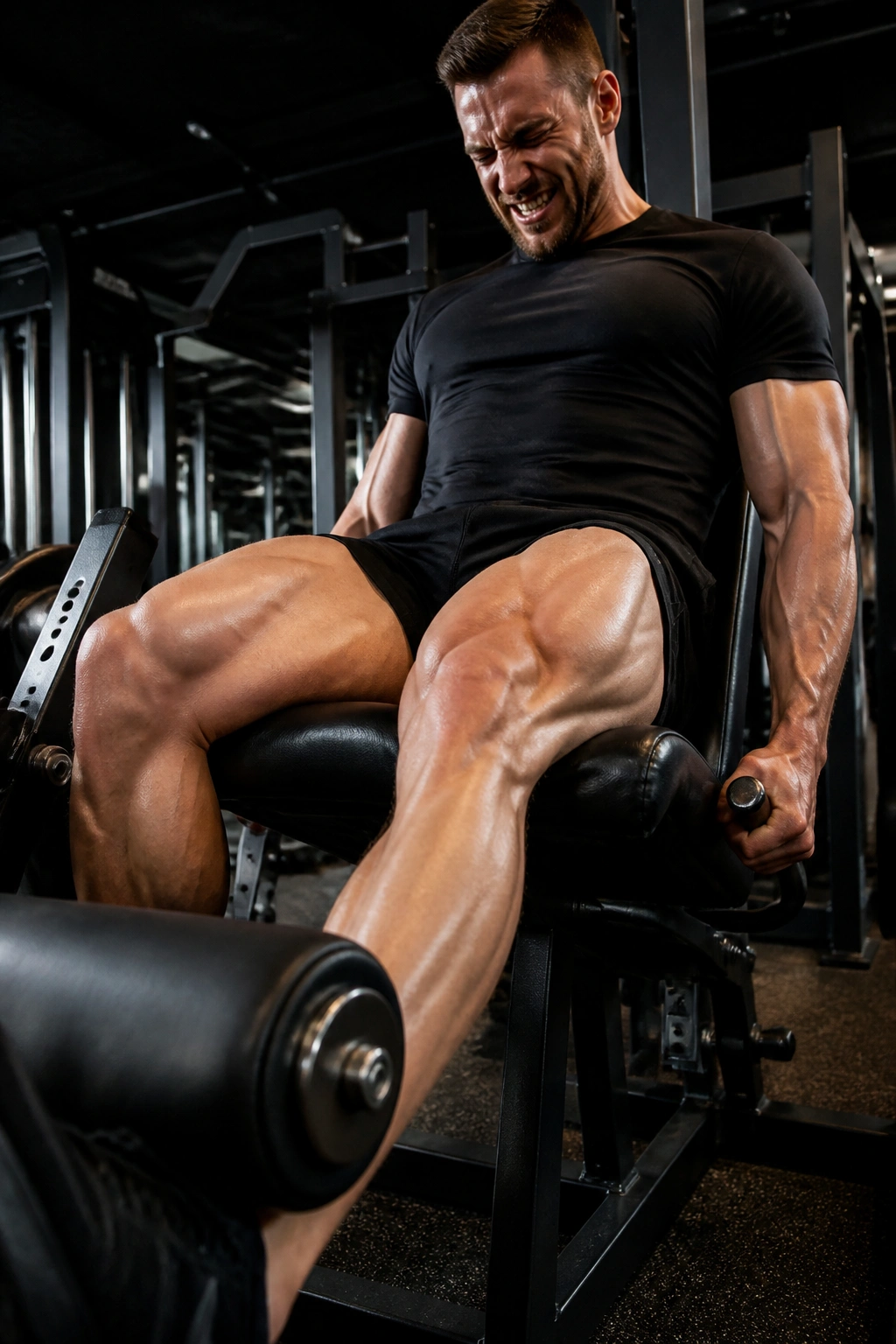
Some days, you just want to feel your quads screaming. This routine is designed for that specific sensation. We are using machines and free weights to isolate the front of the leg until failure, which creates a massive pump and forces blood into the tissue.
The Volume Approach
High-rep work on the quads is incredibly demanding. When you push past the 15-rep mark, you move into the territory of lactic acid accumulation. Your legs will burn, your breathing will get heavy, and you will want to quit. That is exactly where the growth and the metabolic benefit happen.
- Leg Extension: 4 sets of 20 (Hold the peak contraction)
- Hack Squat or Leg Press: 4 sets of 15 (Don’t lock out the knees)
- Front Squats: 3 sets of 10 (Keep the torso upright)
Pro Tip: If you can’t get the reps, drop the weight and keep going. Do not rest until the set is over.
6. The 15-Minute “No Equipment” Hotel Room Blast

Sometimes life gets in the way, and you are stuck without a gym. Do not let that be an excuse to skip training. This routine uses your own body weight to keep the intensity high. You have to move fast to make it count, which effectively replaces a cardio session.
The Power of Bodyweight
Without external weight, you have to use volume and speed to create a stimulus. This routine is a circuit. Move from one exercise to the next with minimal rest. You should be sweating within the first five minutes.
- Jump Squats: 30 seconds on, 30 seconds off
- Reverse Lunges: 30 seconds on, 30 seconds off
- Wall Sit: Hold for 45 seconds
- Glute Bridges: 30 reps
Repeat the entire circuit three times. This is high-density training at its finest.
7. The “I Only Have Dumbbells” Setup

You don’t need a rack of barbells to build serious legs. A pair of heavy dumbbells can be just as effective if you choose the right movements. Dumbbells allow for a greater range of motion and require more stabilizing effort than a barbell, which makes them excellent for lower body development.
Maximizing Your Tools
The trick with dumbbells is to choose a weight that makes the last few reps of every set feel like a struggle. If you can easily complete all your sets with the same weight, grab something heavier.
- Dumbbell Goblet Squats: 4 sets of 12
- Dumbbell Sumo Deadlifts: 4 sets of 12
- Dumbbell Walking Lunges: 3 sets of 20 steps
- Dumbbell Calf Raises: 3 sets of 20
Observation: Holding the weight in front of you (goblet style) forces you to keep your chest up, which is a great cue for good squat form.
8. The Kettlebell Complex
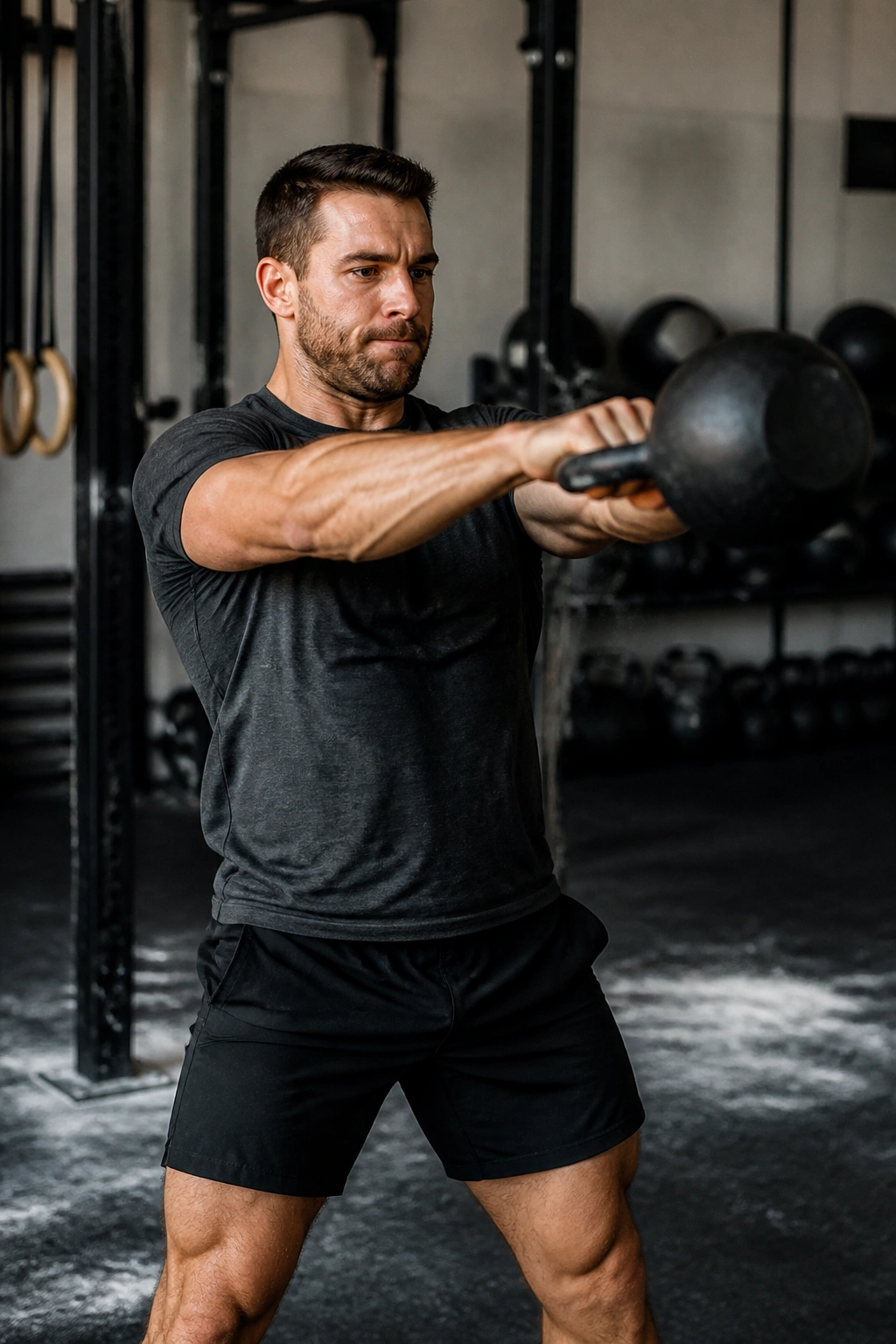
Kettlebells are uniquely suited for metabolic conditioning. Because the center of mass is offset, you have to fight to control the bell, which engages your core and stabilizing muscles throughout the entire movement. This workout flows from one move to the next to keep the heart rate pegged.
Why Complexes Work
A complex involves doing multiple exercises back-to-back without putting the bell down. This creates constant tension and makes the workout feel more like an athletic event than a standard weightlifting session.
- Kettlebell Swings: 15 reps
- Goblet Squat: 10 reps
- Reverse Lunge: 8 reps per side
- Suitcase Carry: 30 seconds
Do 5 rounds total. Rest only after you complete the full sequence of moves.
9. The Explosive Power Plyometric Sequence
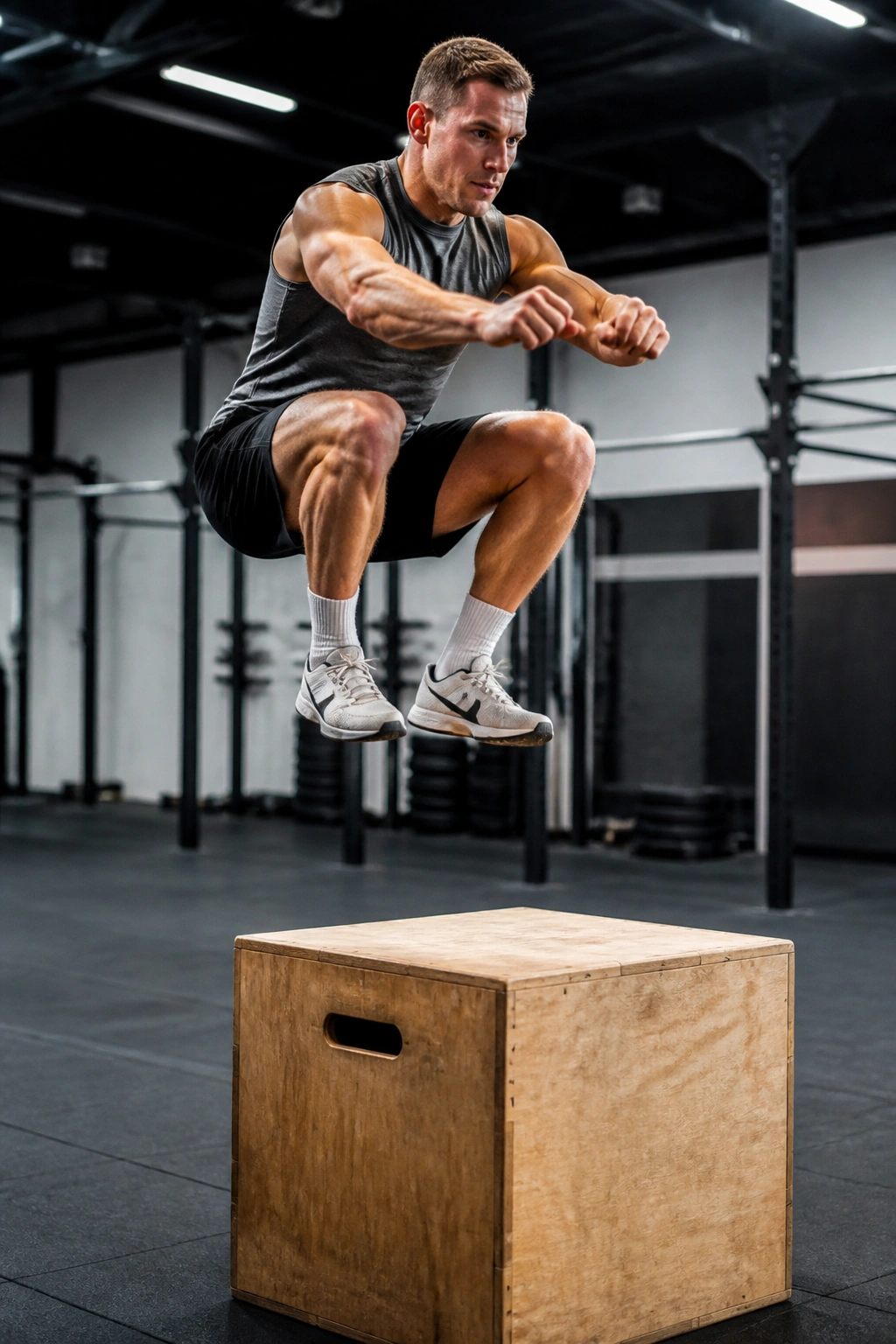
If you want athletic legs, you have to train explosively. Plyometrics are jump-based movements that teach your muscles to generate force rapidly. This type of training is demanding and builds a different kind of strength—the kind that translates to movement and agility.
Tread Lightly
Plyometrics are hard on the joints. Ensure you are warmed up, and focus on landing softly. Think of your body like a spring: load it up, and then release that energy.
- Box Jumps: 3 sets of 8 (Find a height that is challenging but safe)
- Lateral Bounds: 3 sets of 10 per side
- Broad Jumps: 3 sets of 6
- Split Squat Jumps: 3 sets of 8 per side
Caution: If your joints are hurting, swap these for controlled, non-jumping movements. The goal is power, not pain.
10. The Glute-Focused Accessory Day
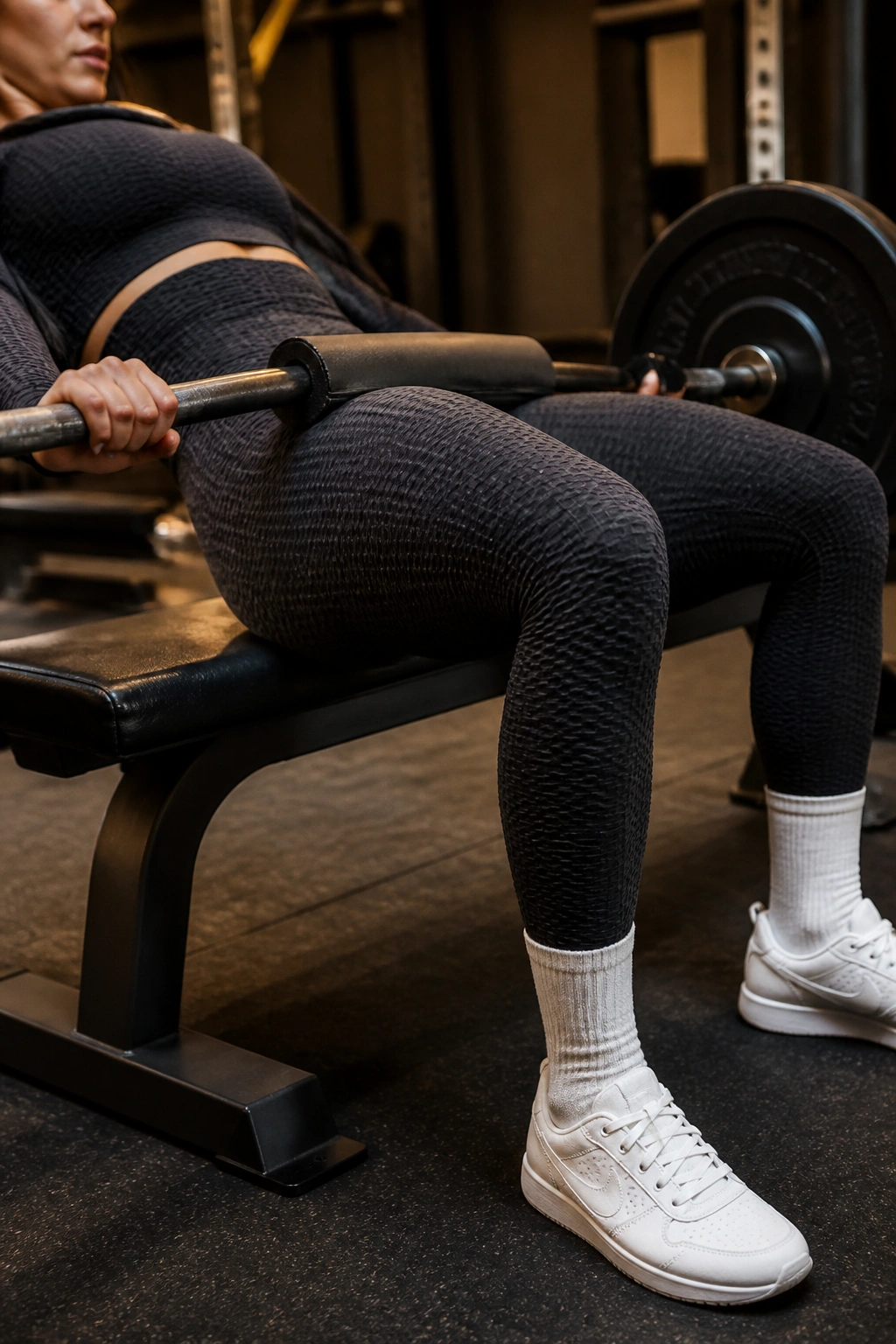
Strong glutes are the key to a healthy back and a powerful lower body. Most people have “glute amnesia” from sitting in chairs all day. This day is about waking those muscles up and firing them until they fatigue.
The Anatomy of Glute Growth
The glutes are powerful hip extensors. To train them effectively, you need to load the hip hinge pattern and use abduction movements (moving the leg away from the center of the body).
- Barbell Hip Thrusts: 4 sets of 10 (Pause at the top for 2 seconds)
- Cable Kickbacks: 3 sets of 15 per leg
- Seated Hip Abduction: 3 sets of 20
- Weighted Glute Bridges: 3 sets of 15
Pro Tip: Do not use your lower back to lift the weight. Think about tucking your pelvis under at the top of the movement to lock the glutes in.
11. The Calisthenics Strength Circuit
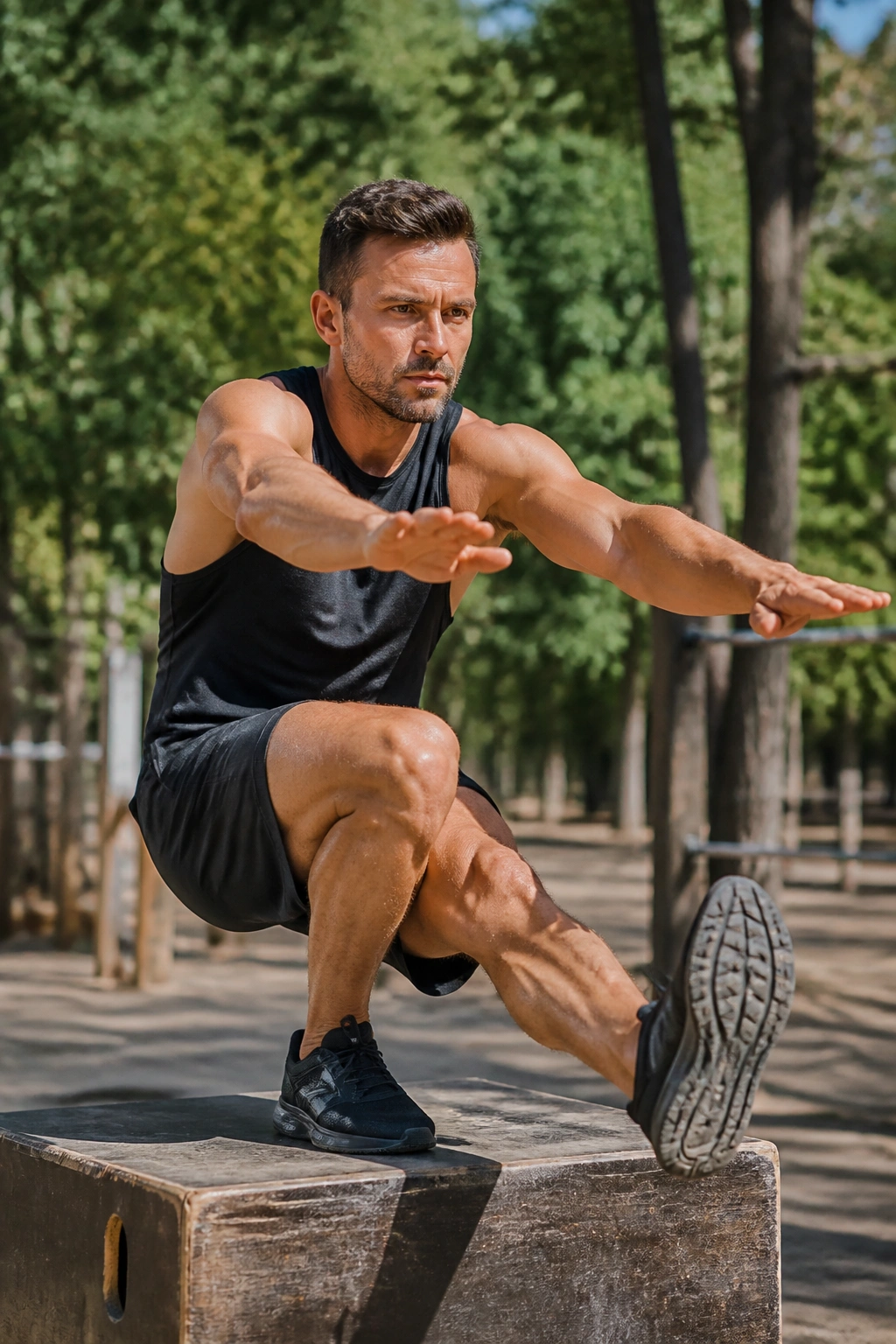
Calisthenics aren’t just for upper body. There is a progression of movements for the legs that can humble even the strongest lifter. Pistol squats, shrimp squats, and cossack squats are all incredibly difficult and require immense control.
Progressive Difficulty
If you cannot do a pistol squat yet, that is fine. Use a box or a bench to assist you until you have the strength to perform it unassisted.
- Pistol Squats (or assisted): 3 sets of 5 per leg
- Cossack Squats: 3 sets of 10 per side
- Jump Lunges: 3 sets of 12
- Deep Bodyweight Squats: 3 sets of 25
Note: This routine builds incredible mobility in the ankles and hips.
12. The Slow-Eccentric Torture Session

We touched on slow eccentrics earlier, but this workout takes it to the extreme. We are talking about a 5-second count on the way down for every single rep. It is boring, it is painful, and it is brutally effective.
Controlling the Descent
Five seconds feels like an eternity when you are under a load. You have to focus on maintaining a rigid core and controlled breathing. You will find that you have to drop the weight significantly compared to your normal working sets, but the muscle damage you create will be superior.
- Squats: 3 sets of 8 (5-second descent)
- Leg Press: 3 sets of 10 (5-second descent)
- Lunges: 3 sets of 10 (5-second descent)
The takeaway: Your legs will likely be stiff for two days after this. That is normal.
13. The Minimalist Barbell Complex

Sometimes you only have one barbell and a small corner of the gym. This complex is designed to use that minimal space. You pick one weight—something that is heavy enough for your weakest lift in the sequence—and you do it all without racking the bar.
Efficiency is Key
This is a test of grip strength and endurance. Because you cannot put the bar down, your upper body and core will fatigue as quickly as your legs.
- Barbell RDL: 10 reps
- Bent-Over Row: 10 reps (to work the back)
- Front Squat: 10 reps
- Overhead Press: 10 reps
Complete 4 rounds. Rest as little as possible between the movements.
14. The Pyramid Loading Scheme
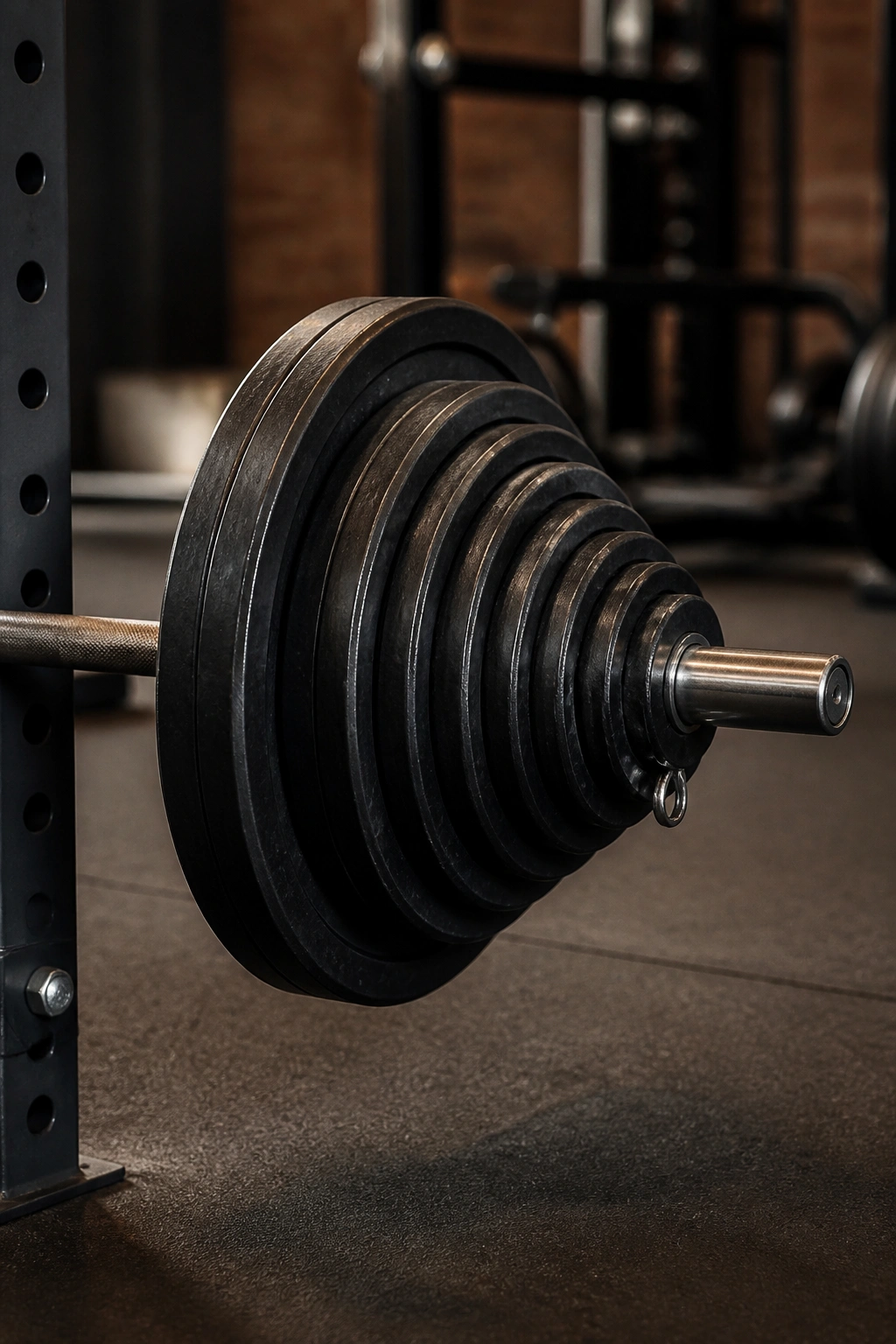
Pyramid training is a classic for a reason. You start with light weight and high reps, then add weight and decrease reps as you go. This prepares your joints, builds volume, and finishes with a heavy load. It covers all your bases in one workout.
Moving Up the Stack
This approach manages fatigue well because you aren’t jumping immediately into your heaviest lift. You are building toward it, which keeps the intensity ramped up throughout the entire session.
- Set 1: 15 reps (Light weight)
- Set 2: 12 reps (Medium weight)
- Set 3: 8 reps (Heavy weight)
- Set 4: 5 reps (Very heavy weight)
- Set 5: 15 reps (Drop back to the first weight)
Note: The last set of 15 is the hardest part. Do not skip it.
15. The “Drop Set” Endurance Test
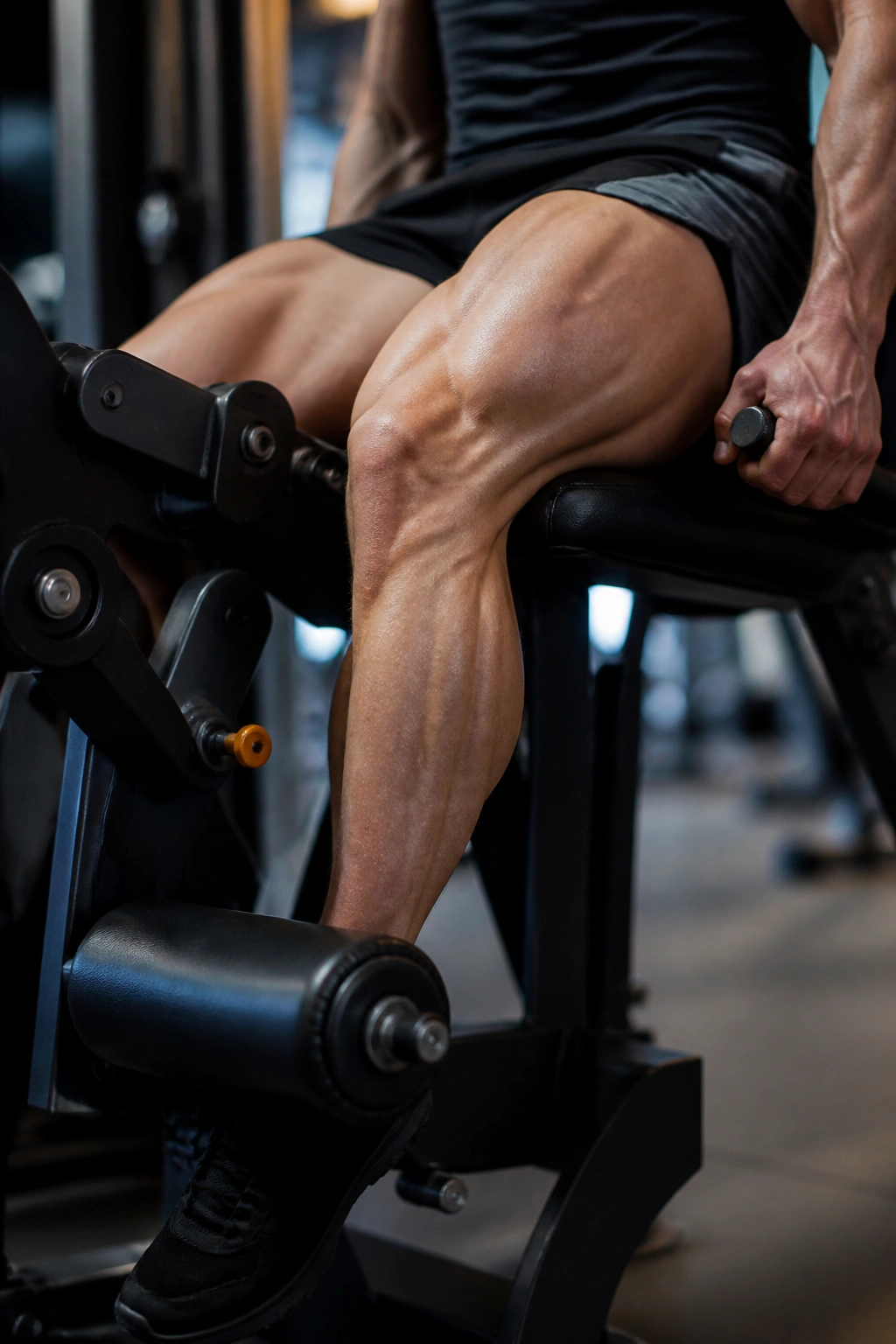
If you want to ensure total muscle failure, use drop sets. A drop set involves doing a set to failure, immediately reducing the weight by 20–30%, and going to failure again without resting. It’s a great way to squeeze extra volume out of your muscles.
The Metabolic Burn
You aren’t giving your muscles a chance to clear the metabolic waste (the “burn”). You are forcing them to continue working under high-fatigue conditions. This is the closest you will get to the feeling of a hard cardio session while standing in one spot.
- Leg Extension: 3 sets (each set includes 2 drop sets)
- Leg Press: 3 sets (each set includes 2 drop sets)
- Goblet Squat: 3 sets (each set includes 1 drop set)
Warning: Do not do this for every exercise in every workout. It is incredibly taxing on the central nervous system.
16. The Rest-Pause Metabolic Circuit

Rest-pause training involves taking a set to near failure, resting for just 10 to 15 seconds, and then doing a few more reps. It is a form of cluster training that keeps the intensity high.
Maximizing Intensity
By taking that short rest, you clear just enough ATP (the chemical energy in your muscles) to squeeze out 3 or 4 more reps. This allows you to perform more total volume at a high intensity than you could in a traditional straight set.
- Squats: Perform a set of 10, rest 15 seconds, perform 4 more reps. That is one cluster. Do 3 clusters total.
- Lunges: 3 clusters per leg.
- RDLs: 3 clusters.
Pro Tip: Choose a weight that you could normally do for 12 to 15 reps.
17. The Isometrics-Only Holding Routine

Isometric training means holding a position under tension without moving. It sounds easy, but holding a squat at the bottom for 45 seconds is one of the most painful things you can do to your legs. It builds incredible strength at the specific angle you are holding.
The Strength of Stillness
Isometrics are often overlooked in standard hypertrophy programs, but they are fantastic for overcoming sticking points in your lifts. If you always fail your squat at the halfway point, hold a squat at that halfway point for 30 seconds.
- Wall Sit: 3 sets of 60 seconds
- Squat Hold (at the bottom): 3 sets of 45 seconds
- Lunge Hold (at the bottom): 3 sets of 45 seconds per side
The benefit: This builds massive mental toughness. You have to learn to breathe through the pain.
18. The Band-Resisted Constant Tension Workout
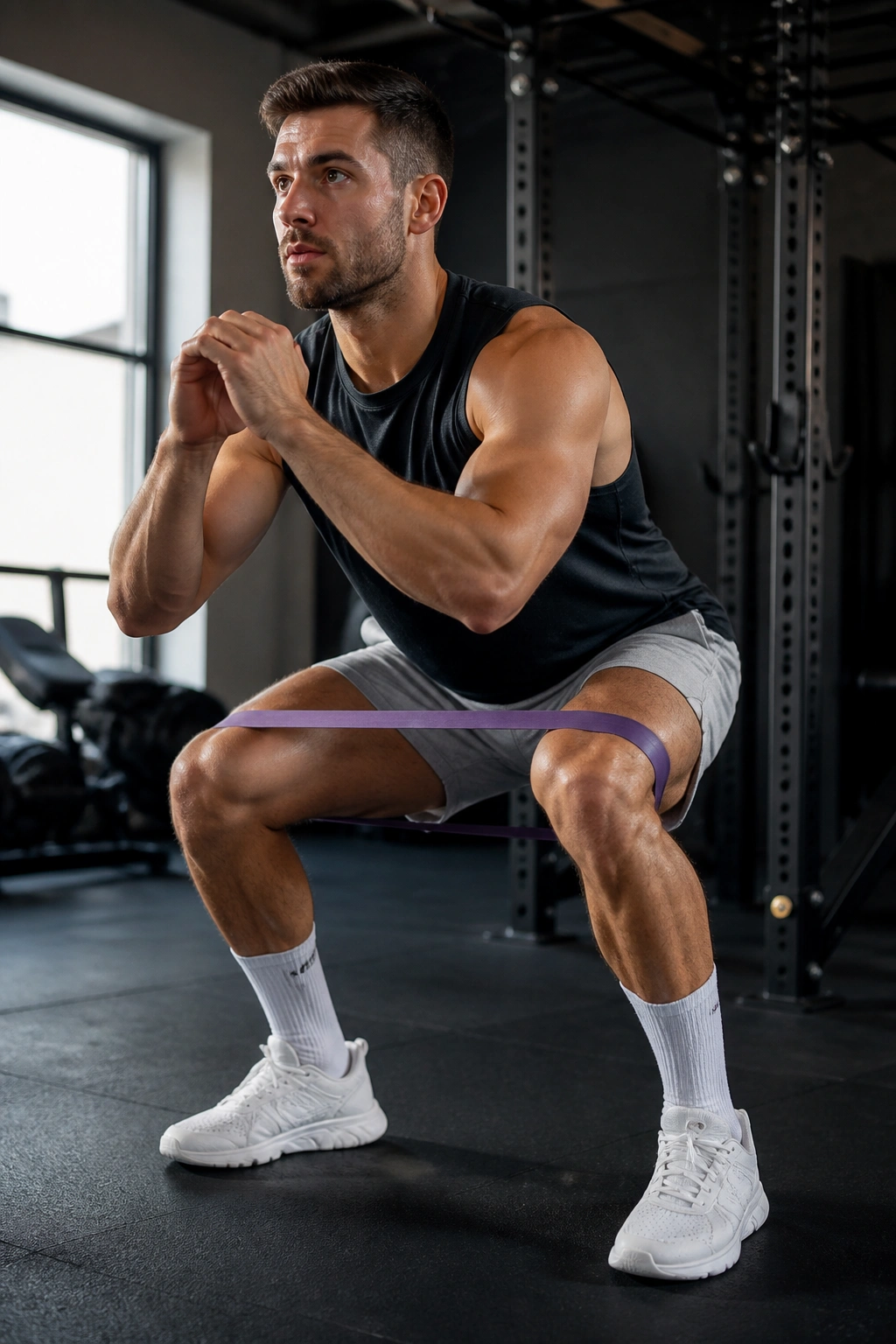
Resistance bands are great because they increase the resistance as you reach the top of the movement. This forces you to accelerate through the whole rep. You don’t get that “rest” at the top of a squat or deadlift anymore.
Why Bands Change the Game
A barbell weight is the same at the bottom as it is at the top. A band is light at the bottom and heavy at the top. This matches your strength curve—your legs are strongest at the top of a squat, so the band provides the most resistance where you can handle it.
- Band-Resisted Squats: 4 sets of 10
- Band-Resisted Deadlifts: 4 sets of 10
- Band-Resisted Good Mornings: 3 sets of 15
Note: If you don’t have gym-grade bands, you can use heavy resistance bands looped around the barbell.
19. The Athletic Performance Lower Body Routine
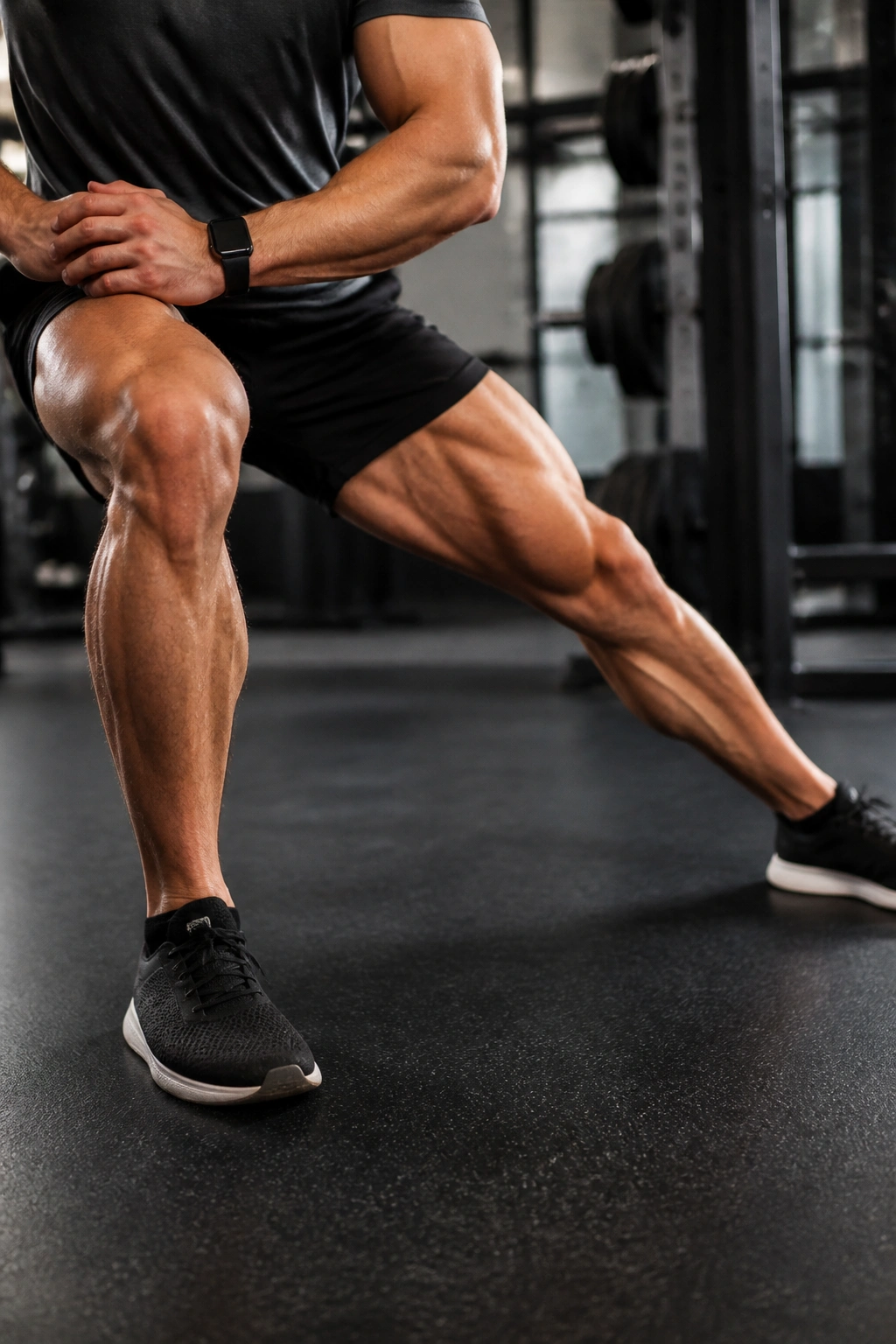
This workout is designed for the person who wants to be functional and strong. We focus on multi-planar movement—moving forward, backward, and side-to-side. This keeps the joints healthy and the movement patterns diverse.
The Importance of Variety
Training only in the sagittal plane (straight forward) can lead to overuse injuries. By moving laterally (side-to-side) and rotationally, you develop a more robust, injury-resistant lower body.
- Lateral Lunges: 3 sets of 12 per side
- Curtsy Lunges: 3 sets of 10 per side
- Box Squats: 3 sets of 8 (Sit back fully)
- Step-Ups: 3 sets of 10 per leg
Observation: This routine will likely make you sore in muscles you didn’t know you had.
20. The “Active Recovery” Mobility Focus

Every leg day doesn’t have to be a fight against gravity. Sometimes, the most productive workout is one that prioritizes mobility and blood flow. This improves your ability to get into deeper squat positions, which will ultimately make all your other workouts more effective.
Why Mobility is Training
Increasing your range of motion is a form of strength. If you can squat deeper with perfect form, you are training more muscle fiber. This session is about getting the joints loose and the blood moving.
- Deep Bodyweight Squat Hold: 2 minutes
- Cossack Squat Flows: 20 reps total
- Pigeon Stretch: 2 minutes per side
- Lying Leg Swings: 20 reps per leg
Final thought: Do this on a day when you are too sore to lift heavy. You will wake up feeling much better the next day.
Final Thoughts

The most effective leg workout is the one you actually do. If you hate cardio, do not force yourself to do it. Just ensure that your lifting intensity is high enough to generate that “cardio-like” breathless sensation. Keep your rest periods short, your focus sharp, and your effort maxed out. You will find that training legs with this level of intensity provides all the metabolic benefits you were looking for from the treadmill, with the added bonus of building a pair of strong, capable legs that you will appreciate for the rest of your life. Consistent effort over months and years beats any single perfect workout. Train hard, recover properly, and keep showing up.
