



There is a distinct sensation that sets in after a truly grueling leg day. Your quads feel like lead, your glutes are screaming, and you genuinely debate whether walking down the stairs is worth the effort. It is the best kind of exhaustion. You know you have pushed your muscles past their limit, forcing the kind of recovery and growth that translates into real-world power. Whether you are aiming to squat heavy weight, improve your athletic performance, or simply build a foundation of functional strength, your lower body requires more than just showing up. It demands intentionality, variety, and the willingness to embrace exercises that are as challenging as they are effective.
Building total leg strength is rarely about finding one “magic” movement. It is about stacking different stimuli—heavy compound lifts, unilateral movements that test your balance, isolation exercises that target stubborn areas, and explosive work that builds speed. When you combine these elements, you create a comprehensive approach that leaves no muscle group underdeveloped. The following list covers the essential exercises you should weave into your routine to ensure your legs are balanced, powerful, and injury-resilient.
1. Barbell Back Squat
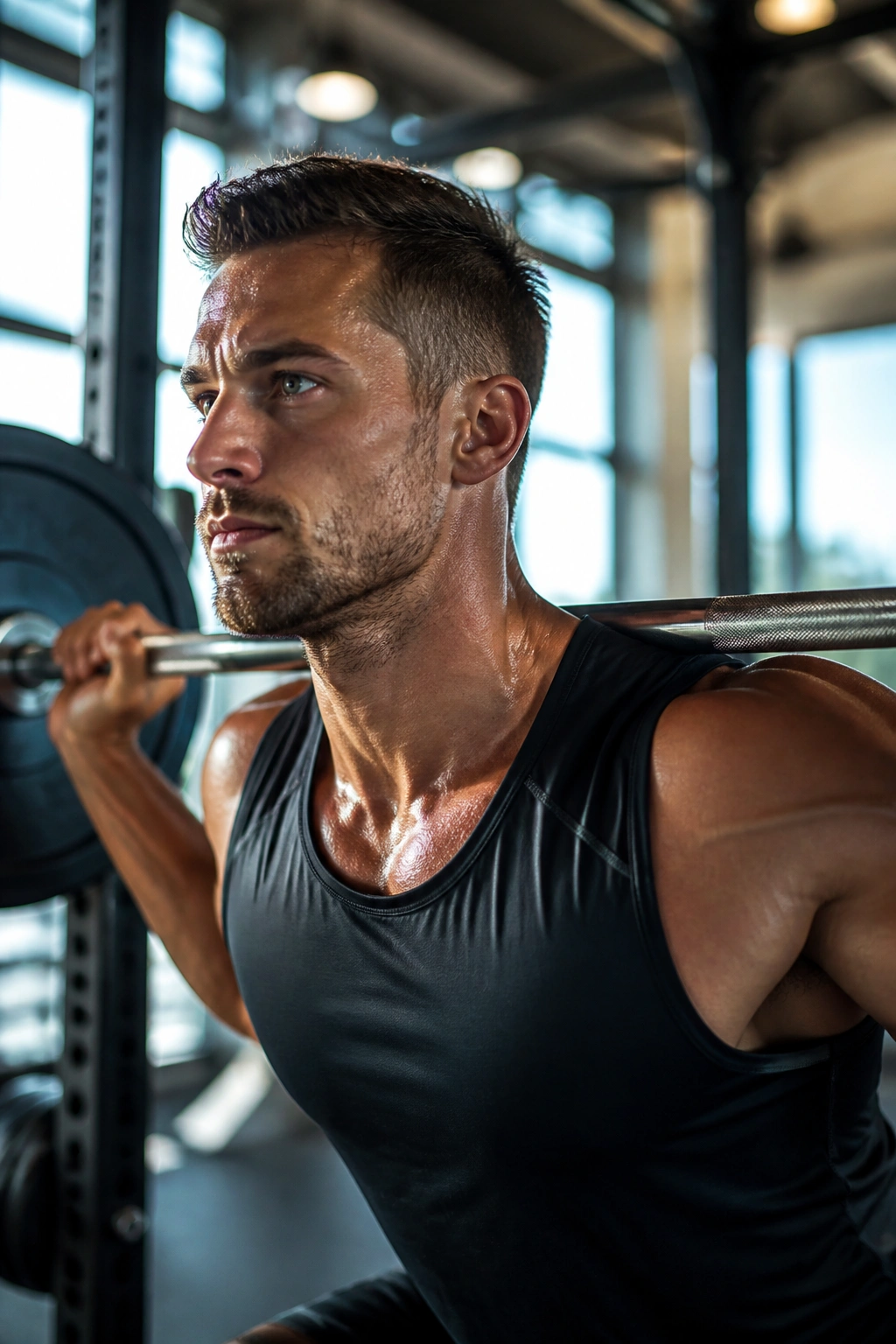
This is the king of lower body exercises for a reason. When you put a heavy barbell across your upper back, you are forced to engage your entire core to stabilize your spine, effectively turning a leg exercise into a full-body challenge. Most people struggle with the back squat because they try to force a specific depth that their mobility does not allow. You do not need to hit rock bottom if your hips start tucking under (the dreaded butt wink); focus on hitting parallel while maintaining a neutral spine.
Why It Works for Total Strength
The back squat allows you to load the body with more weight than any other leg movement. This heavy loading is essential for increasing nervous system recruitment and stimulating bone density.
Pro Technique Tip
Before you unrack the bar, take a deep breath into your diaphragm, not your chest. Hold that breath throughout the descent and only exhale once you are near the top of the movement. This intra-abdominal pressure creates a rigid cylinder of support for your spine.
2. Romanian Deadlift
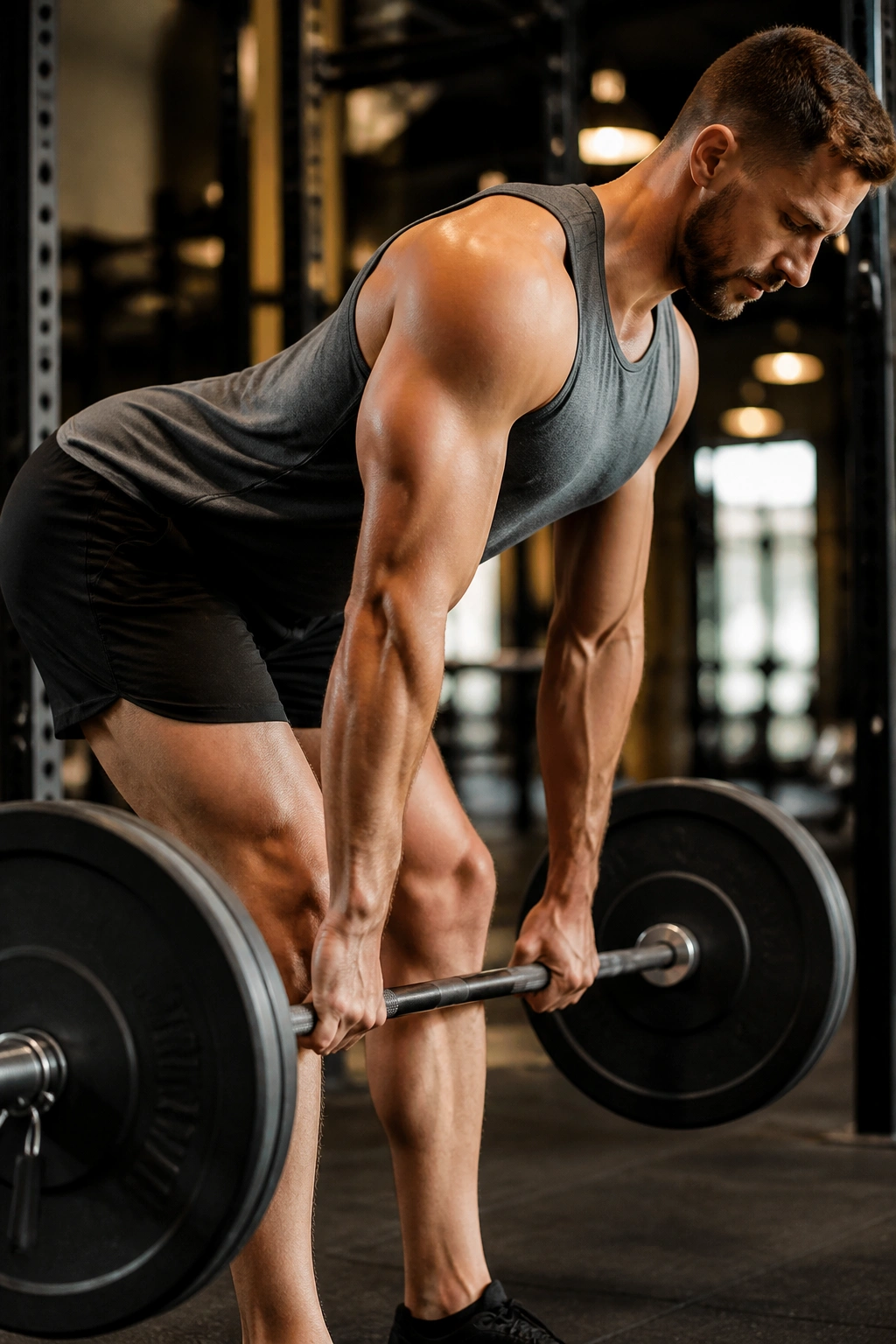
If the back squat is the king of the quads, the Romanian Deadlift (RDL) is the sovereign of the posterior chain. It targets the hamstrings and glutes in a stretched position, which research consistently shows is highly effective for muscle growth. You are not trying to touch your toes here; you are trying to push your hips back as far as possible until you feel a deep, intense stretch in your hamstrings.
Common Form Mistakes
- Rounding the back: Your spine should remain straight from your neck to your tailbone.
- Bending at the knees: The knees should have a soft bend, but they should stay relatively fixed while the hips do all the moving.
- Looking down: Keep your neck neutral by gazing at a spot on the floor about six feet in front of you.
3. Bulgarian Split Squat
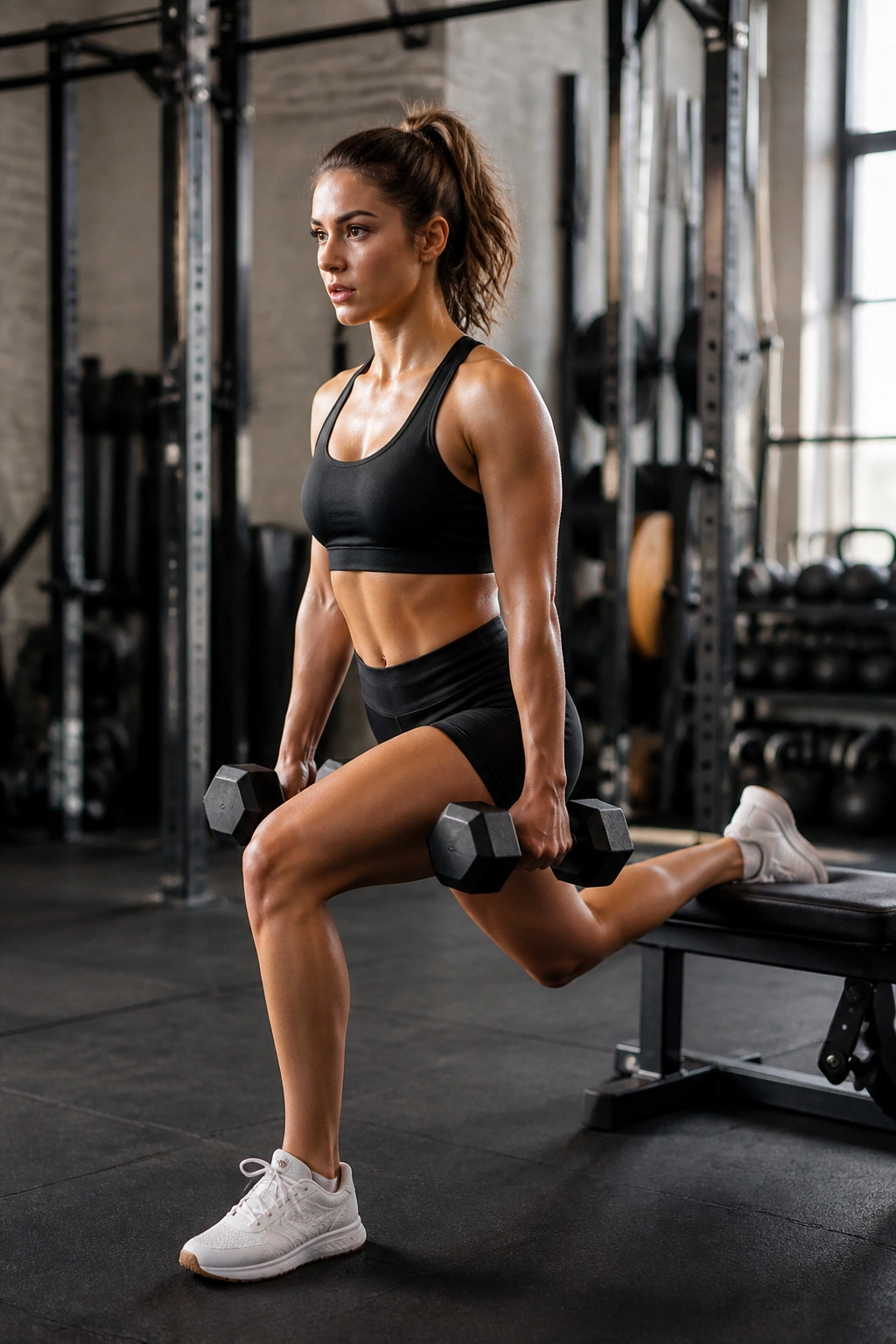
This exercise is notorious for a reason: it is incredibly difficult and equally effective. By elevating your rear foot, you remove the stability of a standard squat, forcing the working leg—specifically the quads and glutes—to handle the entire load. If you struggle with balance, try placing your rear foot on a lower platform, like a medicine ball or a smaller weight plate, rather than a full bench.
Why You Need This
Unilateral training exposes strength imbalances between your left and right legs. Almost everyone is stronger on one side, and if you only perform bilateral movements like standard squats, your dominant side will subconsciously compensate for your weaker side, perpetuating the imbalance.
4. Leg Press
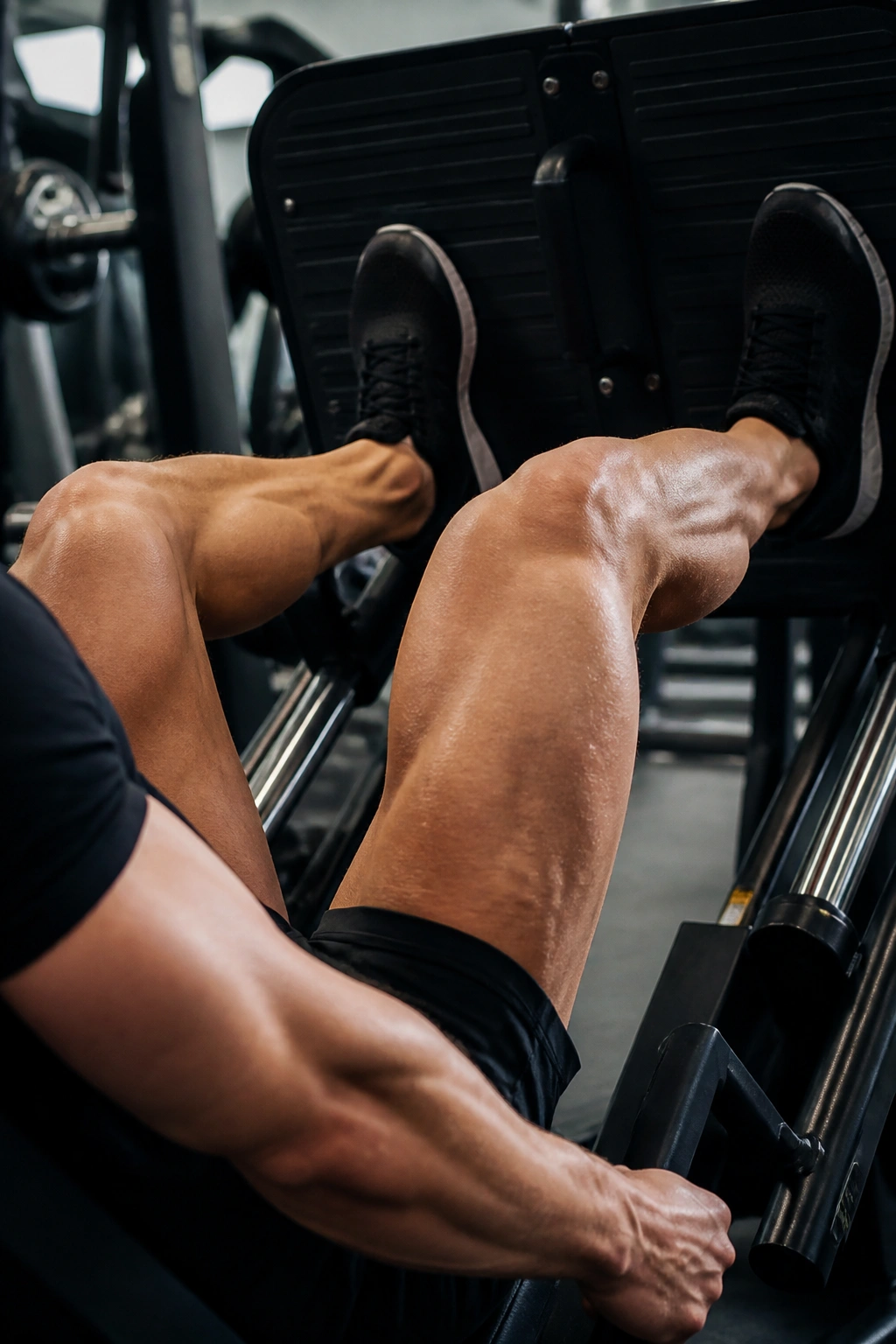
The leg press often gets a bad reputation as a “lazy” alternative to the squat, but that is only true if you use it incorrectly. When performed with a full range of motion, it allows for a massive amount of volume without the systemic fatigue that comes from balancing a barbell. It is a fantastic tool for focusing specifically on the quadriceps without worrying about core stability or lower back strain.
Adjusting Foot Placement
- High foot placement: Places more emphasis on the glutes and hamstrings.
- Low foot placement: Shifts the tension squarely onto the quads.
- Narrow stance: Works the outer sweep of the quadriceps.
- Wide stance: Engages the adductors (inner thighs).
5. Goblet Squat
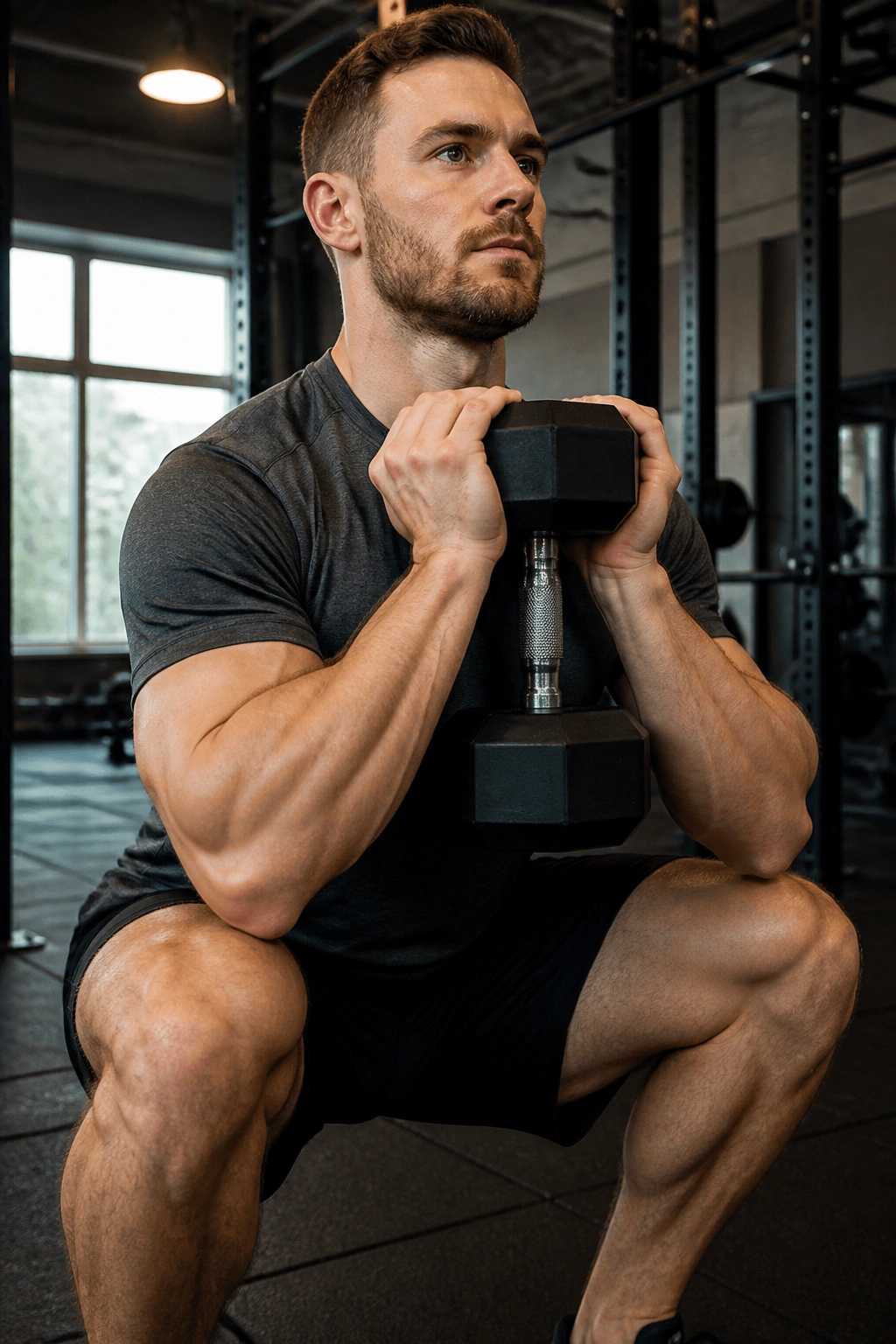
Holding a dumbbell or kettlebell against your chest is one of the fastest ways to fix a messy squat pattern. The weight acts as a counterbalance, allowing you to stay more upright and sink deeper than you could with a back squat. This is not just for beginners; even elite lifters use the goblet squat as a warm-up or a technique-perfecting tool.
Creating Tension
Do not just hold the weight; “crush” it. Pull the dumbbell into your sternum and squeeze your elbows toward each other. This creates tension through your upper back and lats, which helps you maintain an upright torso throughout the entire repetition.
6. Walking Lunges
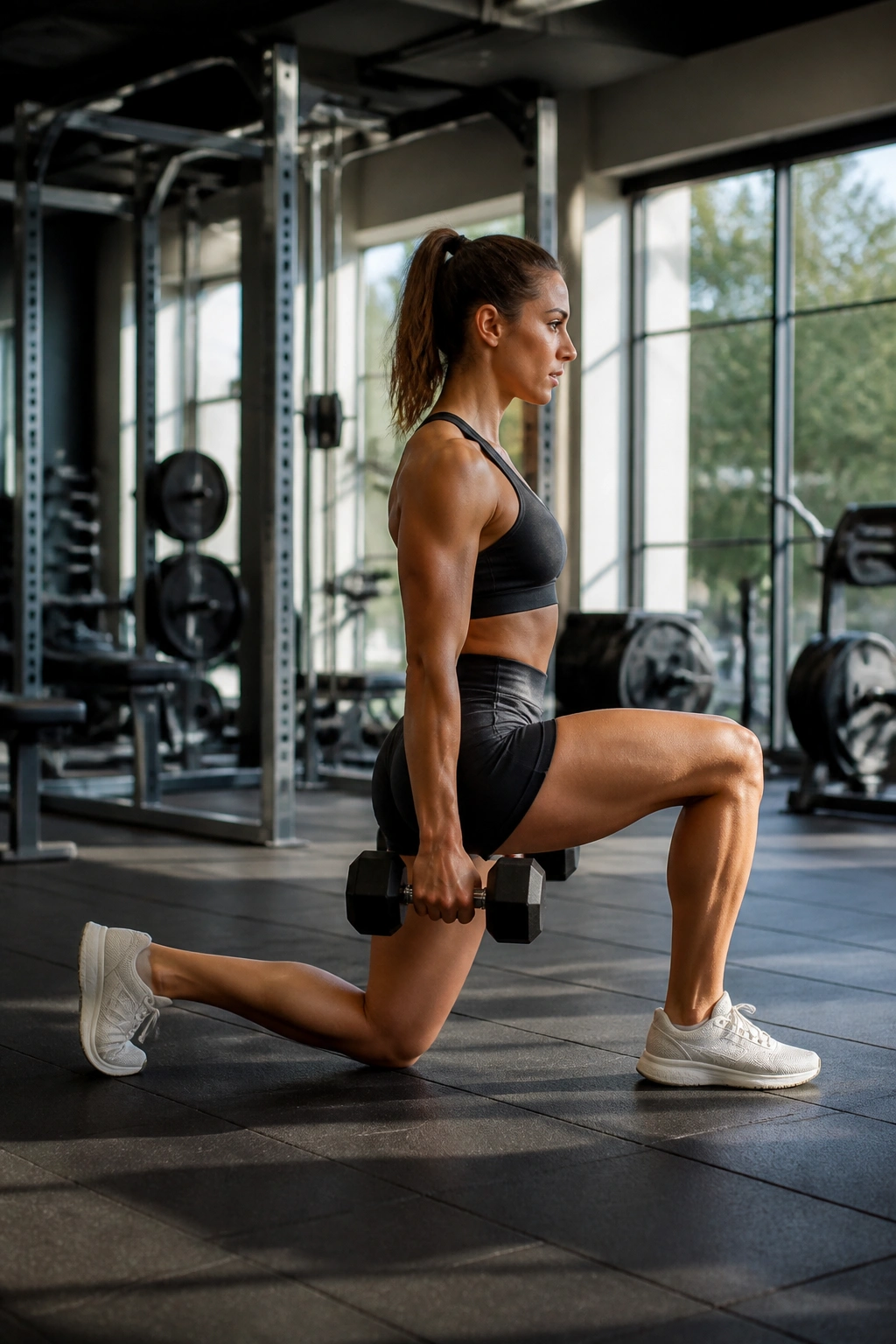
Walking lunges are a staple for a reason. They require coordination, balance, and endurance. Unlike a static lunge, the walking variation requires you to stabilize your body after every single step. This constant deceleration and re-acceleration challenge the stabilizer muscles around the hips and knees in a way that very few other movements can.
The Mechanics of the Move
Take a long enough step so that your front shin remains relatively vertical. If your front knee drifts too far over your toes, you might feel more pressure in the knee joint than in the muscles. Keep your torso upright and engage your core to prevent tipping forward.
7. Trap Bar Deadlift
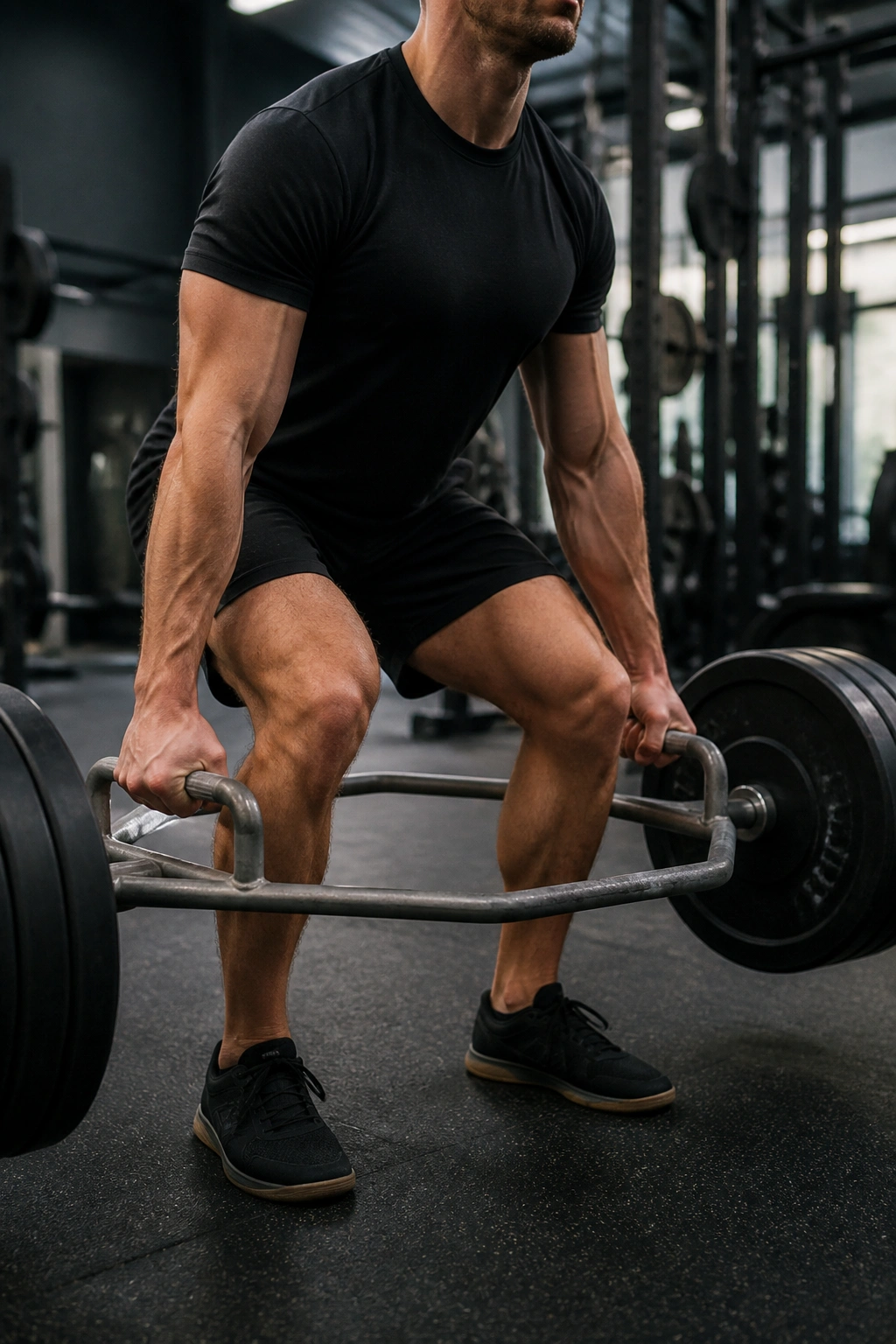
The trap bar (or hex bar) changes the mechanics of the traditional deadlift by centering the weight around your body rather than in front of it. This significantly reduces the shear force on your lumbar spine while still allowing you to move heavy loads. It is essentially a cross between a squat and a deadlift, making it one of the most back-friendly ways to build serious leg power.
Why Use It
The handles are usually higher than a traditional barbell, which makes it more accessible for people with limited hip mobility. It is a high-reward, low-risk movement that should be a cornerstone of any strength-focused lower body routine.
8. Kettlebell Swings
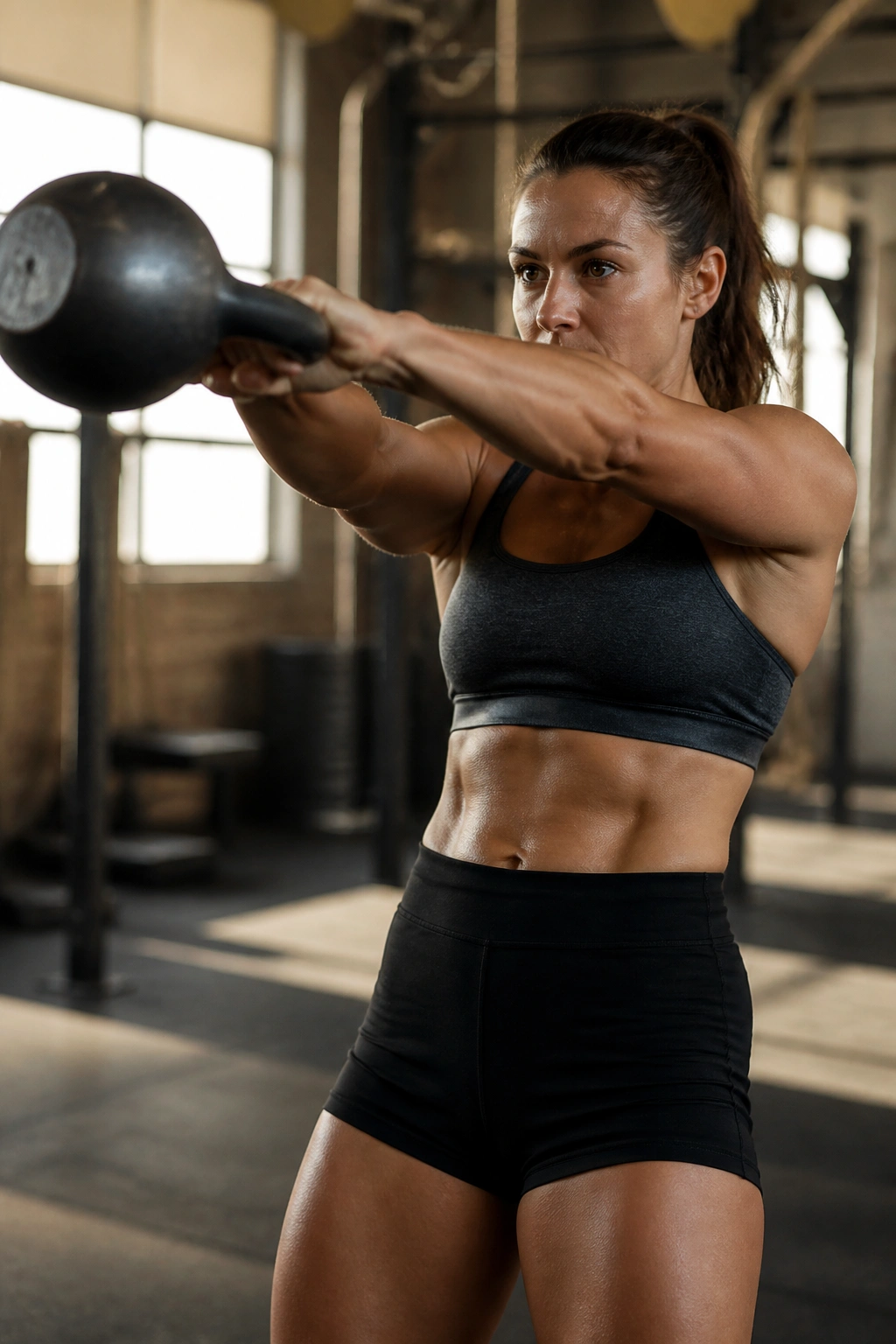
While often categorized as a conditioning tool, the kettlebell swing is a premier posterior chain strengthener. It teaches the “hip hinge” pattern—the same movement used in deadlifts and RDLs—but does so with an explosive tempo. You are training your glutes to fire rapidly and forcefully, which is essential for athletic performance and explosive power.
Mastering the Rhythm
The bell should not move because your arms are lifting it. The bell should move because your hips violently snap forward. Think of your arms as ropes and your kettlebell as a pendulum. If your arms are tired, you are likely doing the movement correctly.
9. Weighted Glute Bridges
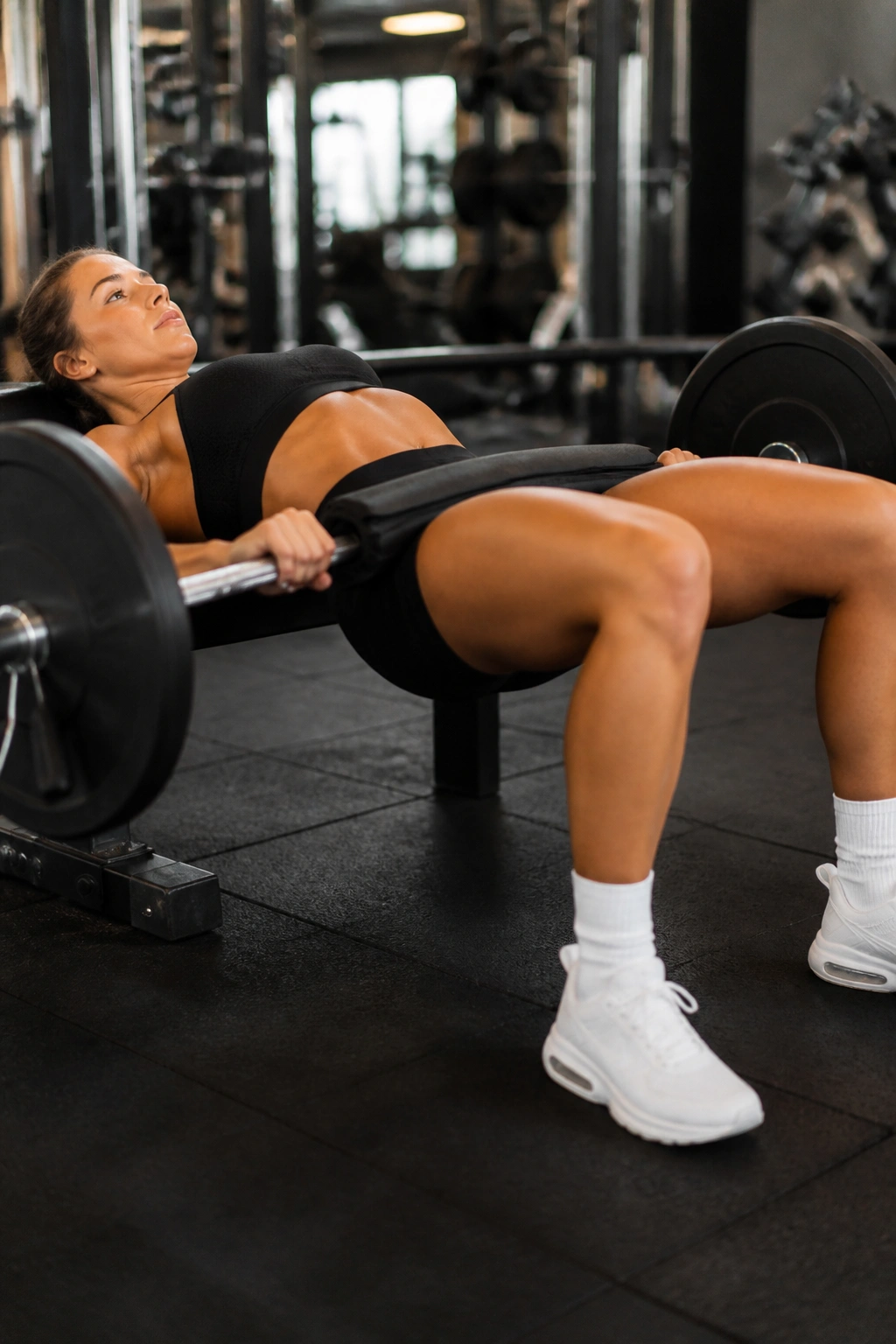
Isolation for the glutes is often overlooked in favor of bigger compound lifts, but heavy glute bridges can build a shelf of muscle that helps with hip extension. By placing a barbell across your hips and driving upward, you create a direct line of tension on the glutes that is difficult to achieve with squats alone.
Important Setup Details
- Chin tucked: Keeping your chin tucked into your chest helps keep your ribs down, preventing your lower back from arching.
- Feet position: Your shins should be vertical at the top of the movement.
- Squeeze: At the top, hold for a split second and squeeze your glutes as hard as you can. Do not just go through the motions.
10. Step-Ups
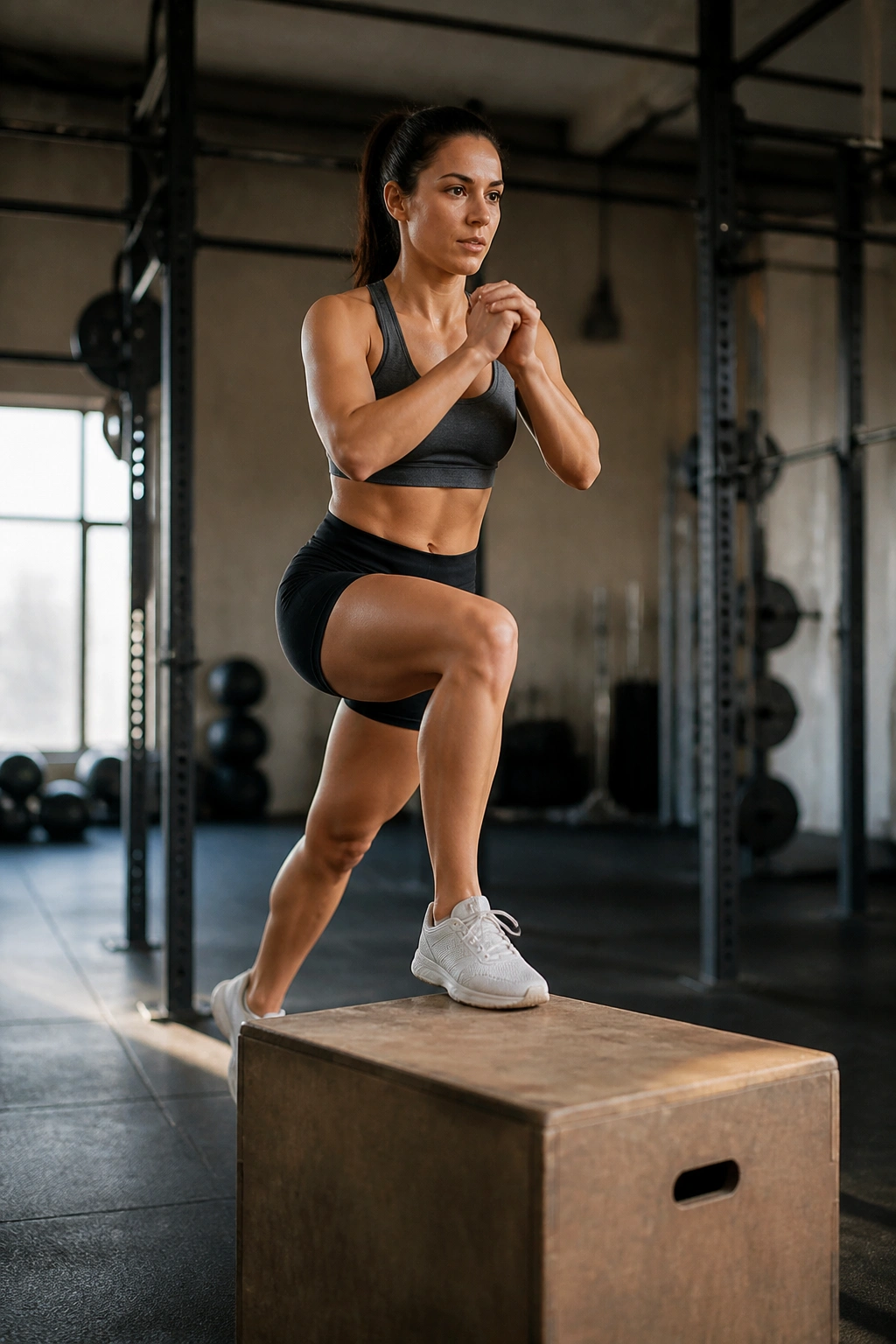
Step-ups are the ultimate “functional” leg exercise. You are literally training your body to perform the movement you do thousands of times a day: climbing. The key here is to control the descent. Most people just flop back down to the floor, but the eccentric (lowering) phase is where the muscle damage—and thus, the growth—happens.
How to Scale
Do not start by stepping onto a box that is at hip height. That is a recipe for bad form. Start with a height that brings your thigh to parallel with the ground. As you get stronger and more comfortable with the movement, you can increase the height of the box.
11. Leg Extensions
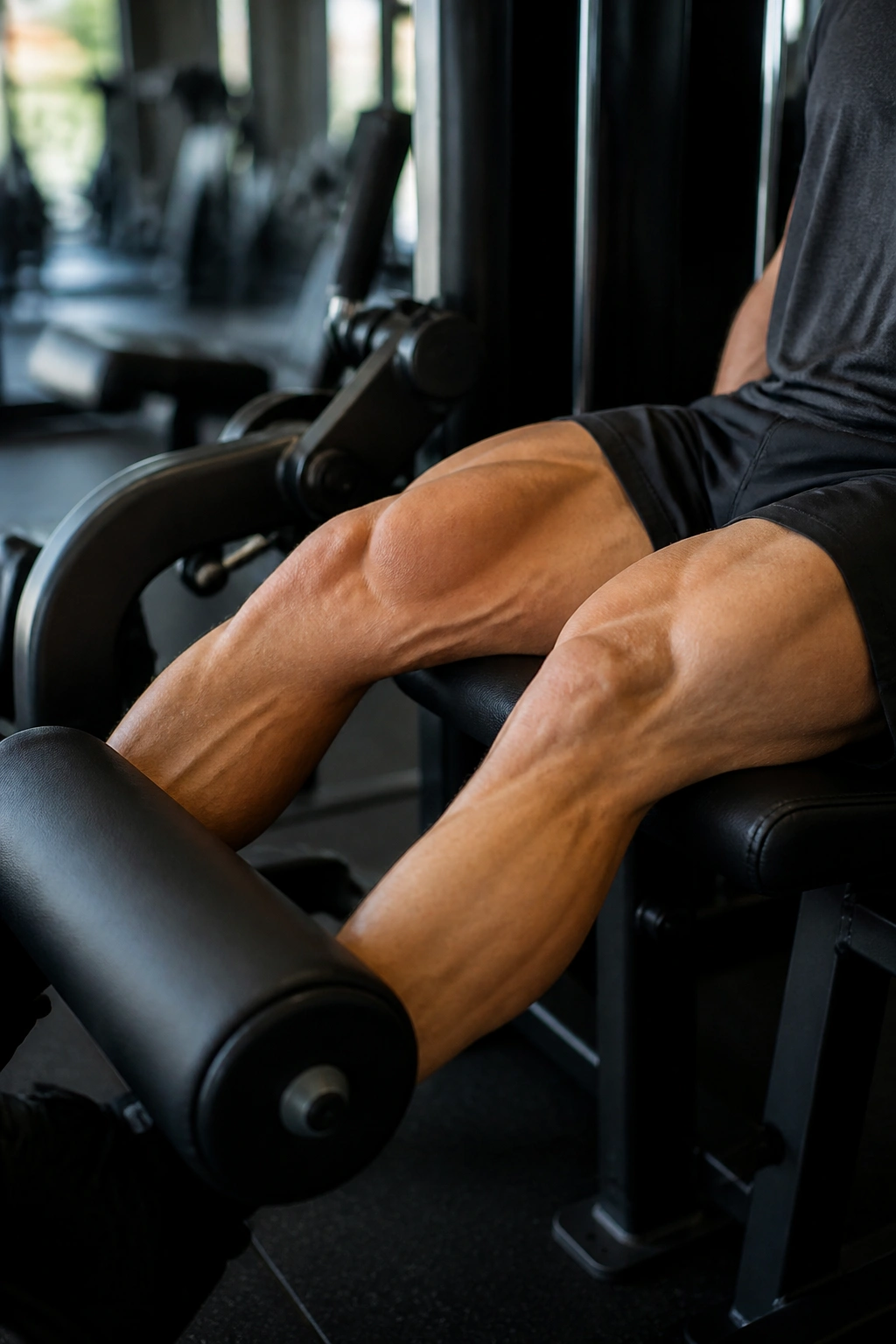
Isolating the quads can be difficult with compound movements alone. The leg extension machine is the classic solution. It allows you to fatigue the quads without relying on the glutes or hamstrings to help. This is a great “finisher” exercise to perform at the end of a workout when your stabilizer muscles are already tired and you want to burn out the target muscle group.
The Secret to Effectiveness
Do not use momentum. Select a weight that allows you to control the movement on the way down. Count to three as you lower the weight. That 3-second eccentric phase will turn a simple machine exercise into a brutal leg-builder.
12. Lying Leg Curls
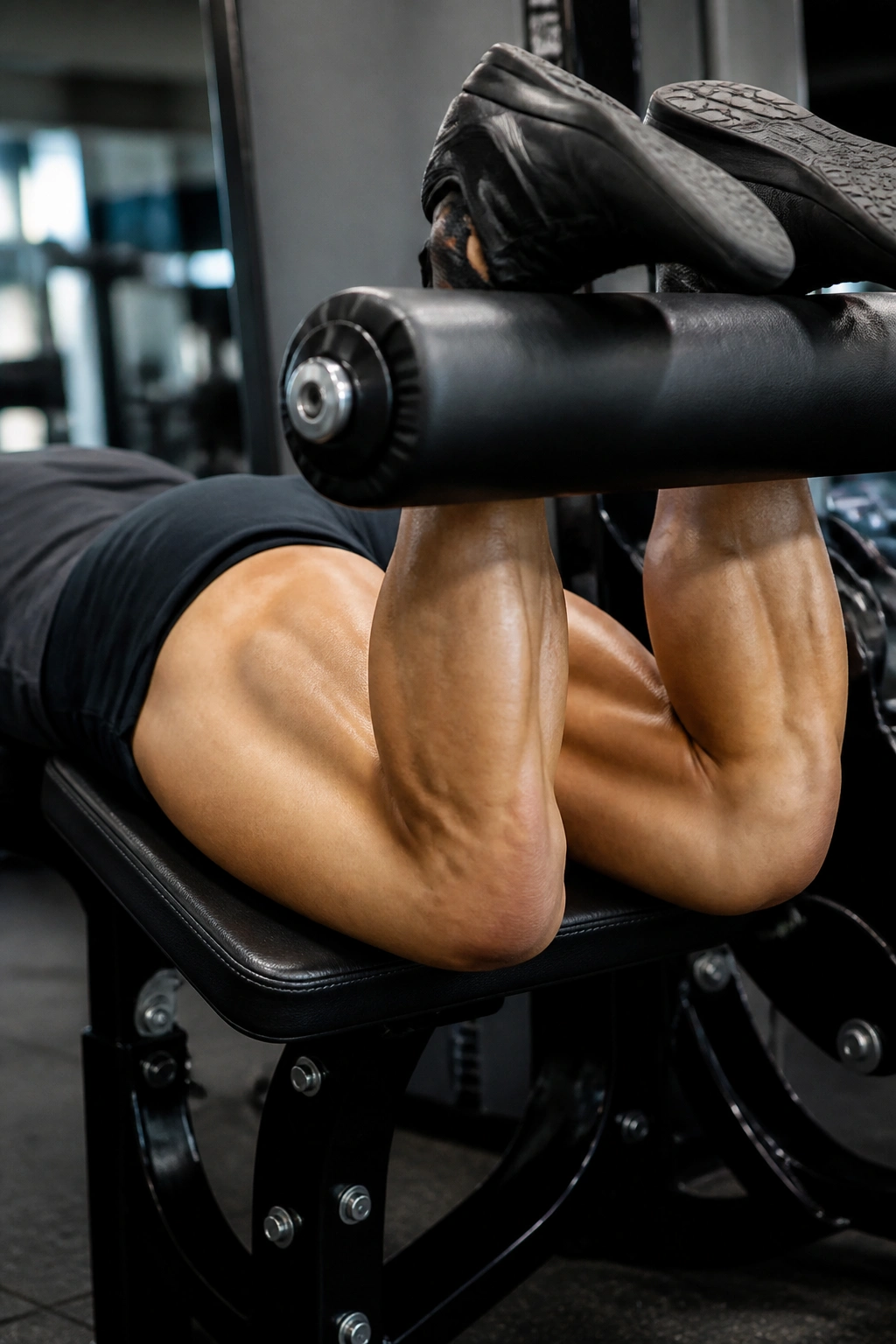
The hamstrings have two main functions: knee flexion and hip extension. Most deadlift variations train hip extension, but very few train knee flexion. That is where the lying leg curl comes in. It is one of the few exercises that effectively targets the hamstrings through knee flexion, which is critical for knee joint health.
Mind-Muscle Connection
Push your hips into the bench throughout the entire set. If your hips rise off the pad, you are likely using your lower back to move the weight instead of your hamstrings. Keep your pelvis pinned down and isolate that movement to the back of your legs.
13. Sumo Squats
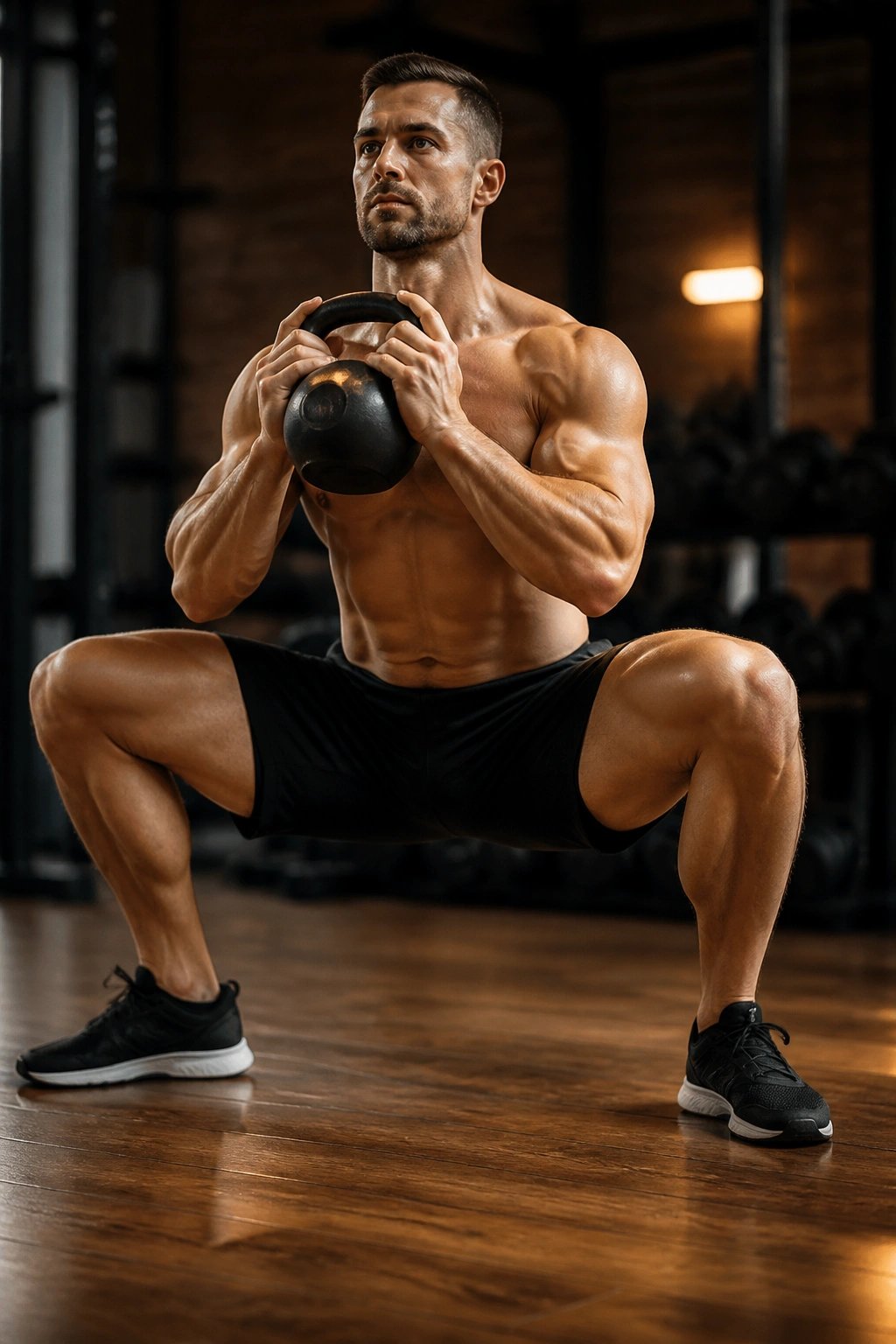
By taking a wide stance and pointing your toes outward, you shift the load away from the lower back and place it onto the adductors (the muscles on the inside of your thighs) and the glutes. The sumo stance is often more comfortable for people with long femurs who struggle to get depth in a standard squat because it allows for a more upright torso.
Technical Nuance
Since your legs are wide, your knees must track in line with your toes. If your knees cave inward, you lose stability and risk injury. Focus on pushing your knees outward as you descend, as if you are trying to spread the floor apart with your feet.
14. Pistol Squats
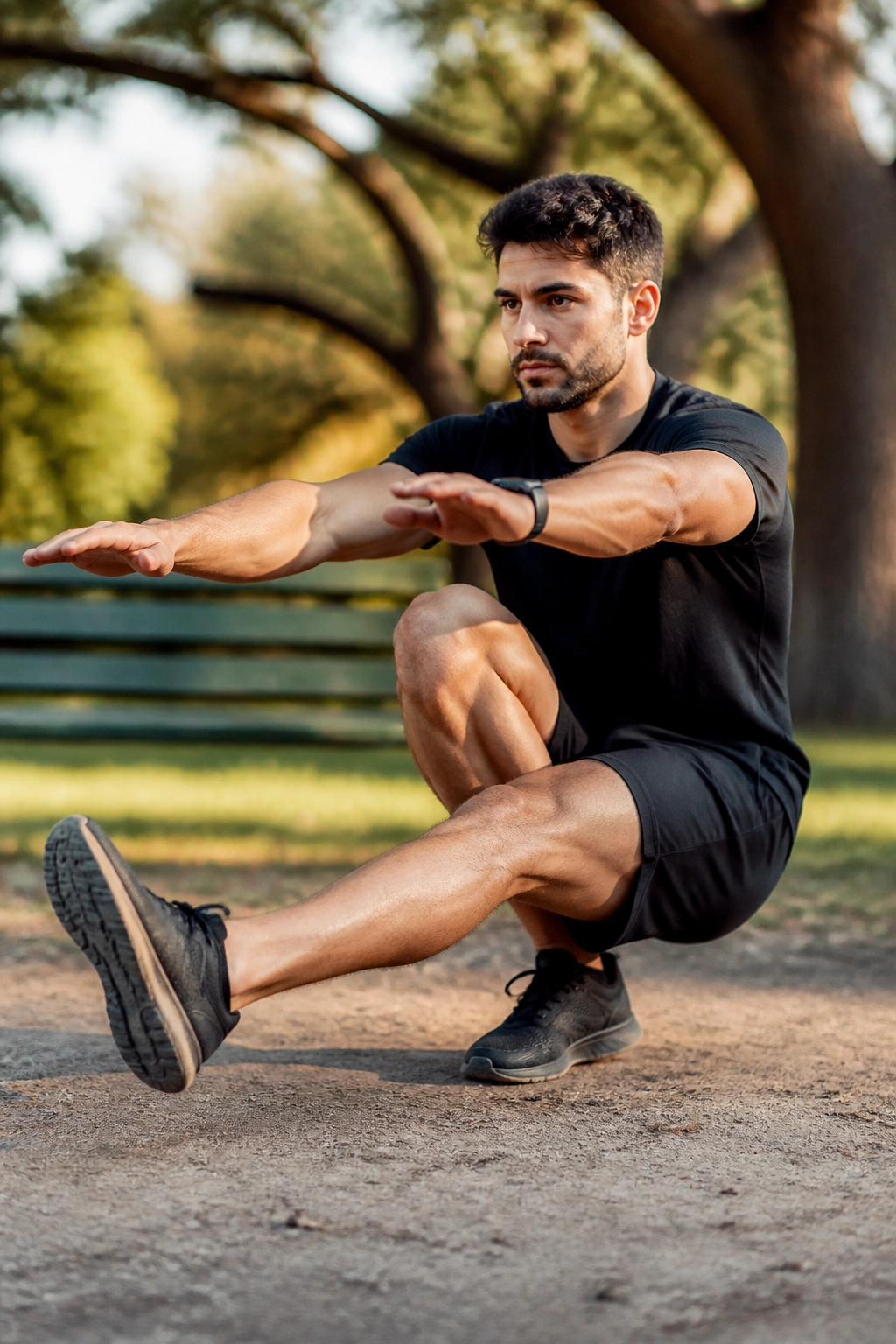
The pistol squat is a single-leg squat performed without a bench or support. It is the ultimate test of lower body strength, balance, and ankle mobility. If you can perform a clean pistol squat, you likely have excellent structural integrity in your lower body.
Breaking Down the Movement
If you cannot do a full pistol yet, use a TRX band or hold onto a sturdy doorframe for support. The focus should be on keeping the heel of your working foot planted firmly on the ground. Once the heel starts to lift, you lose your leverage and stability.
15. Box Jumps
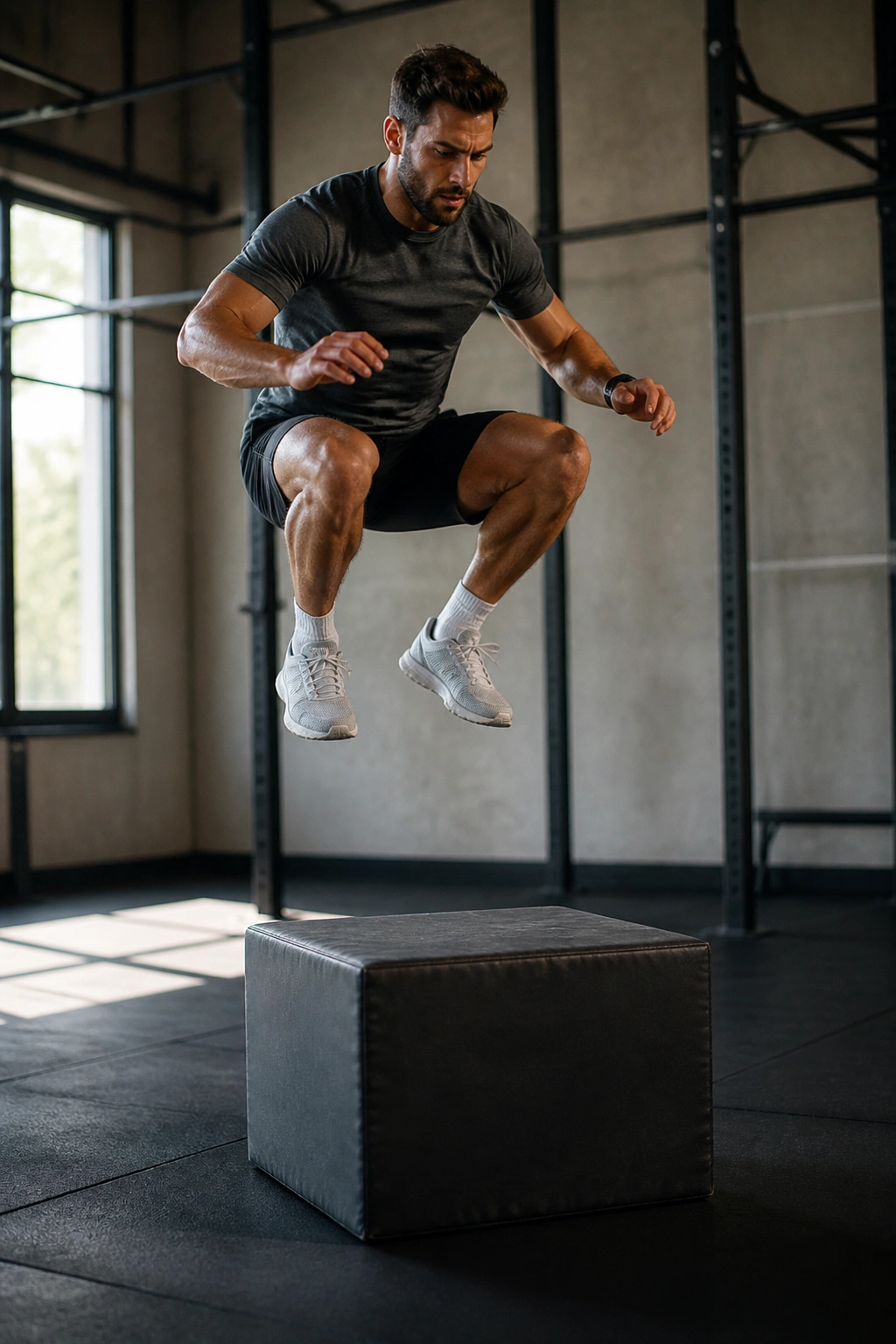
Strength is only half the equation; power is the other. Box jumps train your nervous system to fire your leg muscles as quickly and forcefully as possible. You do not need to jump onto a 40-inch box to get the benefits. A moderate height is perfectly fine—the goal is to land softly, not to perform a circus act.
Landing Safely
The most important part of the jump is not the ascent; it is the descent. Your knees should track forward, and you should land quietly. If you land with a “thud,” you are not absorbing the force correctly. Imagine landing like a ninja—silent and controlled.
16. Jefferson Squat
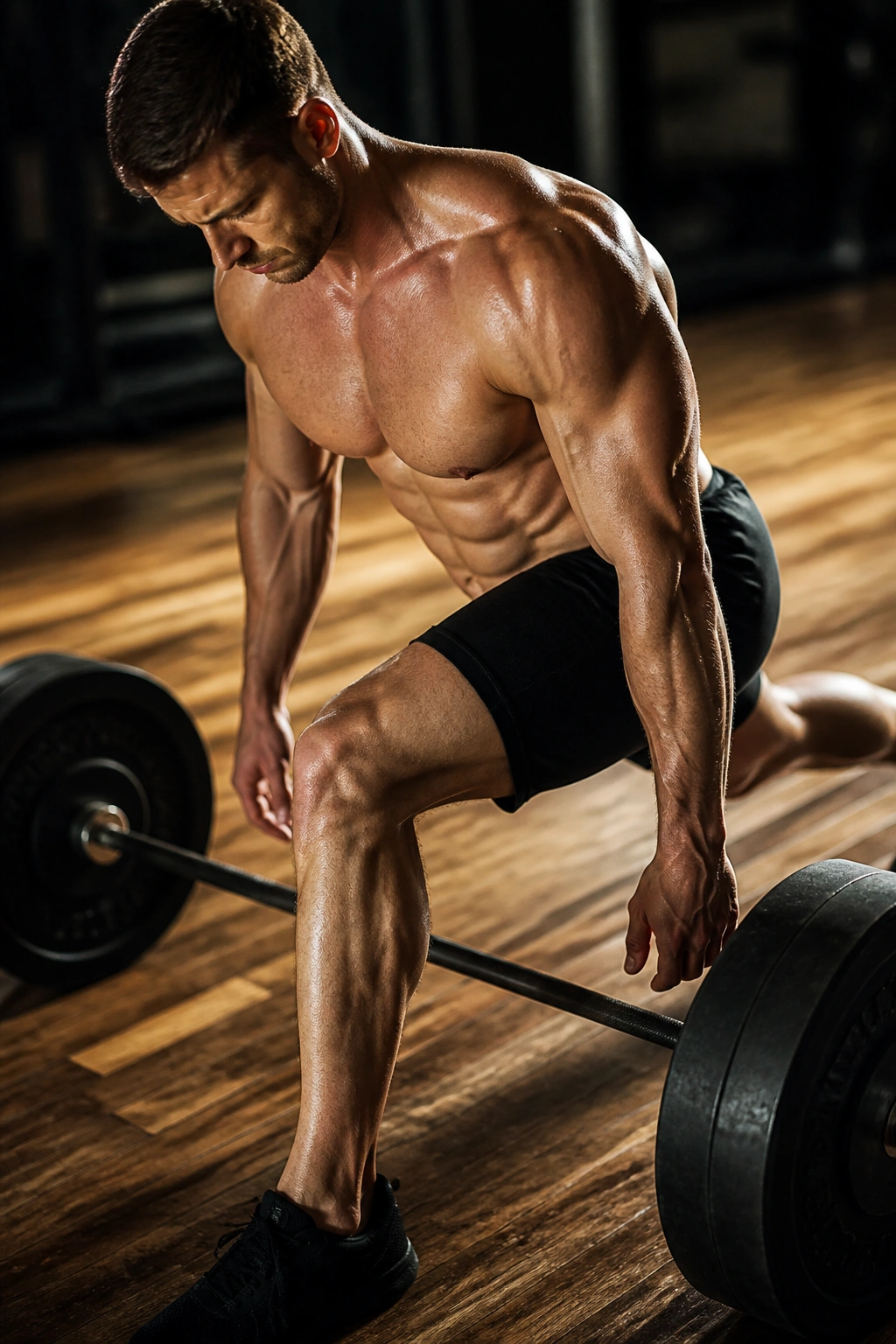
The Jefferson squat is an old-school, slightly obscure exercise where you straddle the barbell, with one leg in front and one behind. It sounds strange, and it looks strange, but it is incredibly effective for targeting the inner thighs and glutes. It forces a very unique movement pattern that most gym-goers never train.
Why Include It?
It challenges your body in a different plane of motion than the standard squat. By placing your body directly over the load, you get a deep stretch through the adductors. It is a fantastic variation to break the monotony of standard leg training.
17. Nordic Hamstring Curls
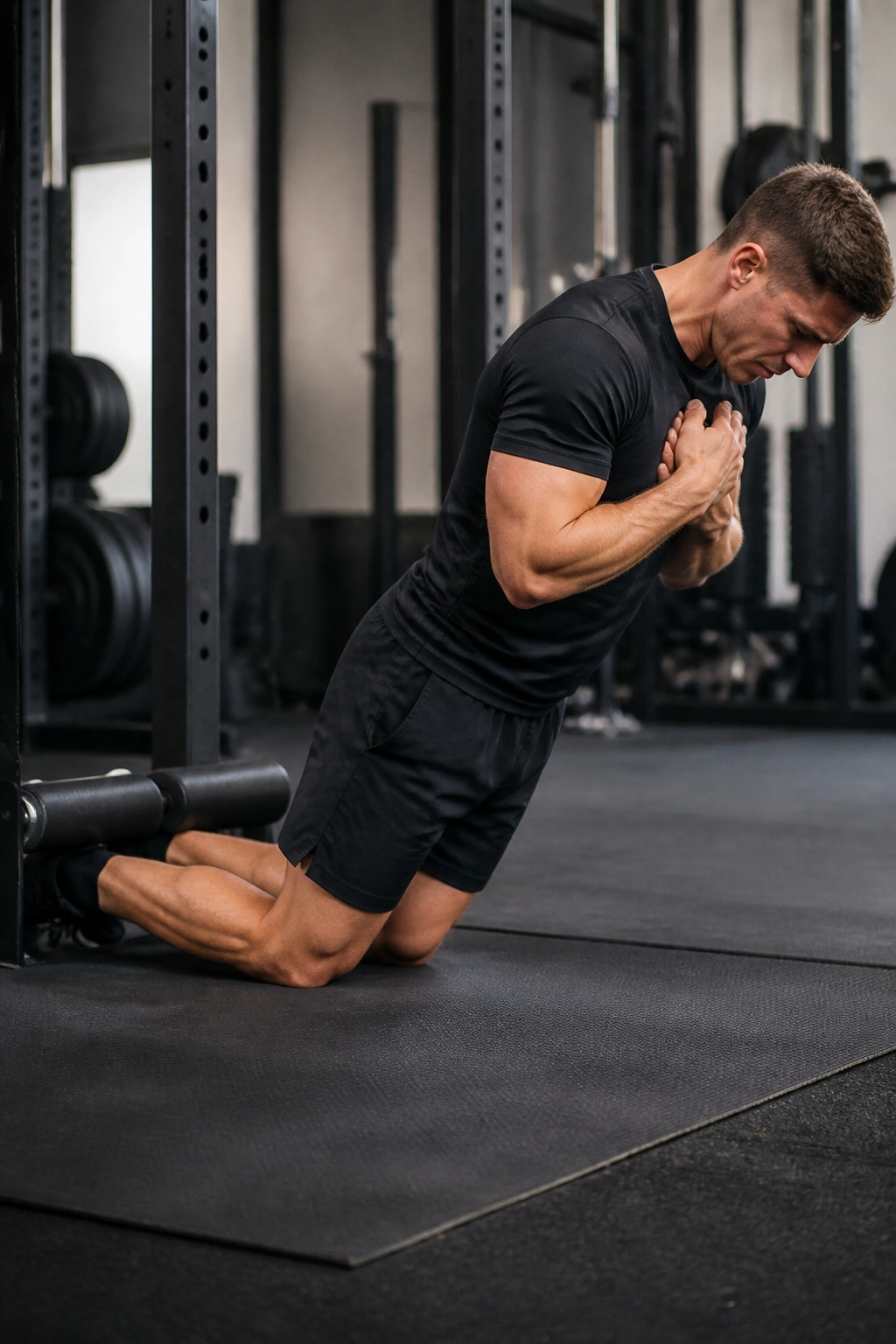
This is arguably the most brutal hamstring exercise in existence. You lock your heels under a fixed object (or a partner holds them) and slowly lower your torso toward the floor, using only your hamstrings to hold you up. It is an eccentric exercise that has been shown to drastically reduce the risk of hamstring strains in athletes.
Progression Strategy
You will likely not be able to perform a full rep at first. That is fine. Focus on the lowering phase (the eccentric). Lower yourself as slowly as possible, and then use your hands to push yourself back up. Over time, you will find you need less assistance from your hands.
18. Side Lunges
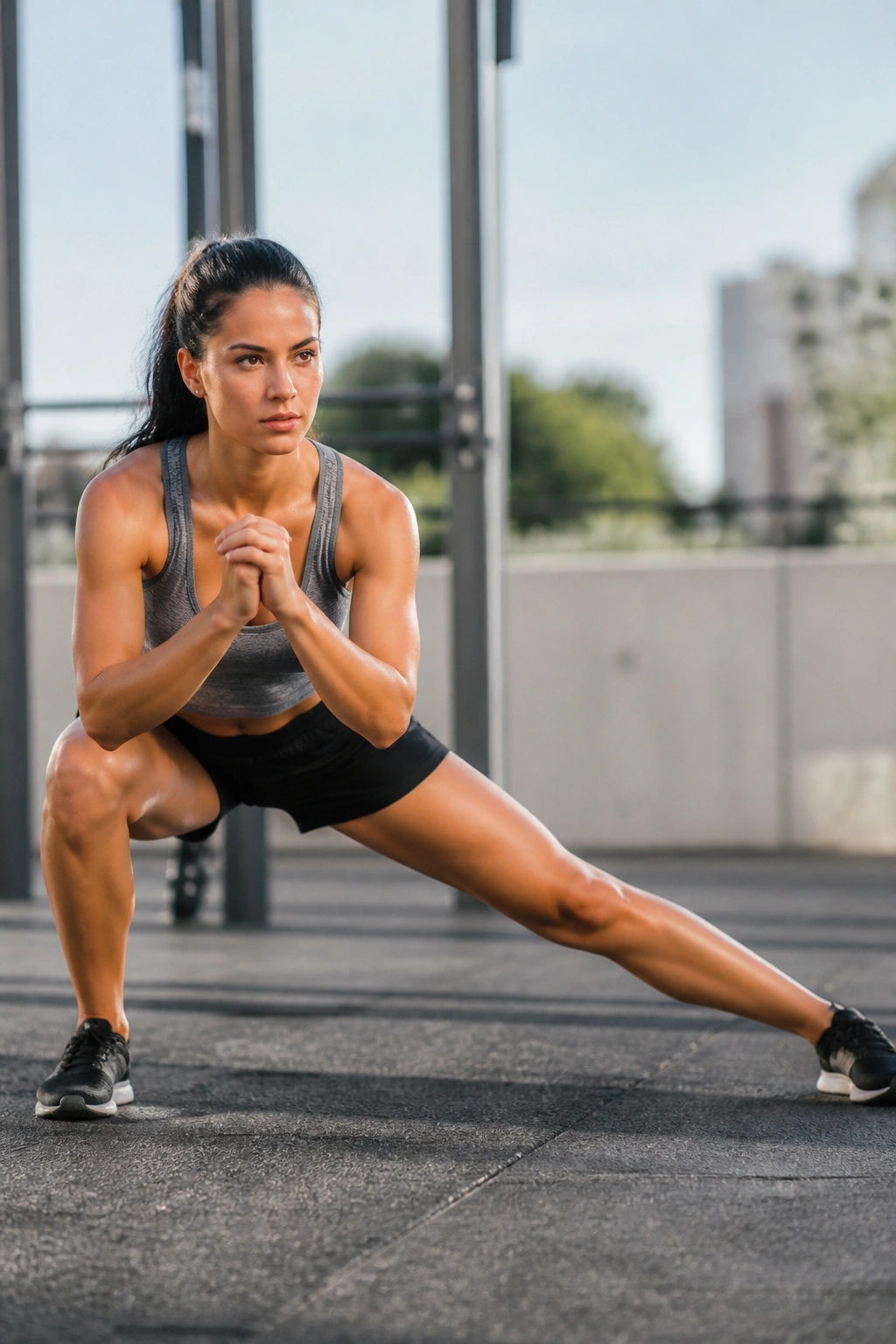
Most people train in the “sagittal plane”—moving forward and backward. But life happens in the “frontal plane”—moving side to side. Side lunges (or lateral lunges) train your legs to handle force from the side. This is vital for knee health and building well-rounded leg musculature.
Proper Form
Step out wide to the side, keeping one leg straight and bending the other. Push your hips back as you descend. It should feel like a single-leg squat to the side. Ensure that the foot of the bent leg stays flat on the floor the entire time.
19. Standing Calf Raises
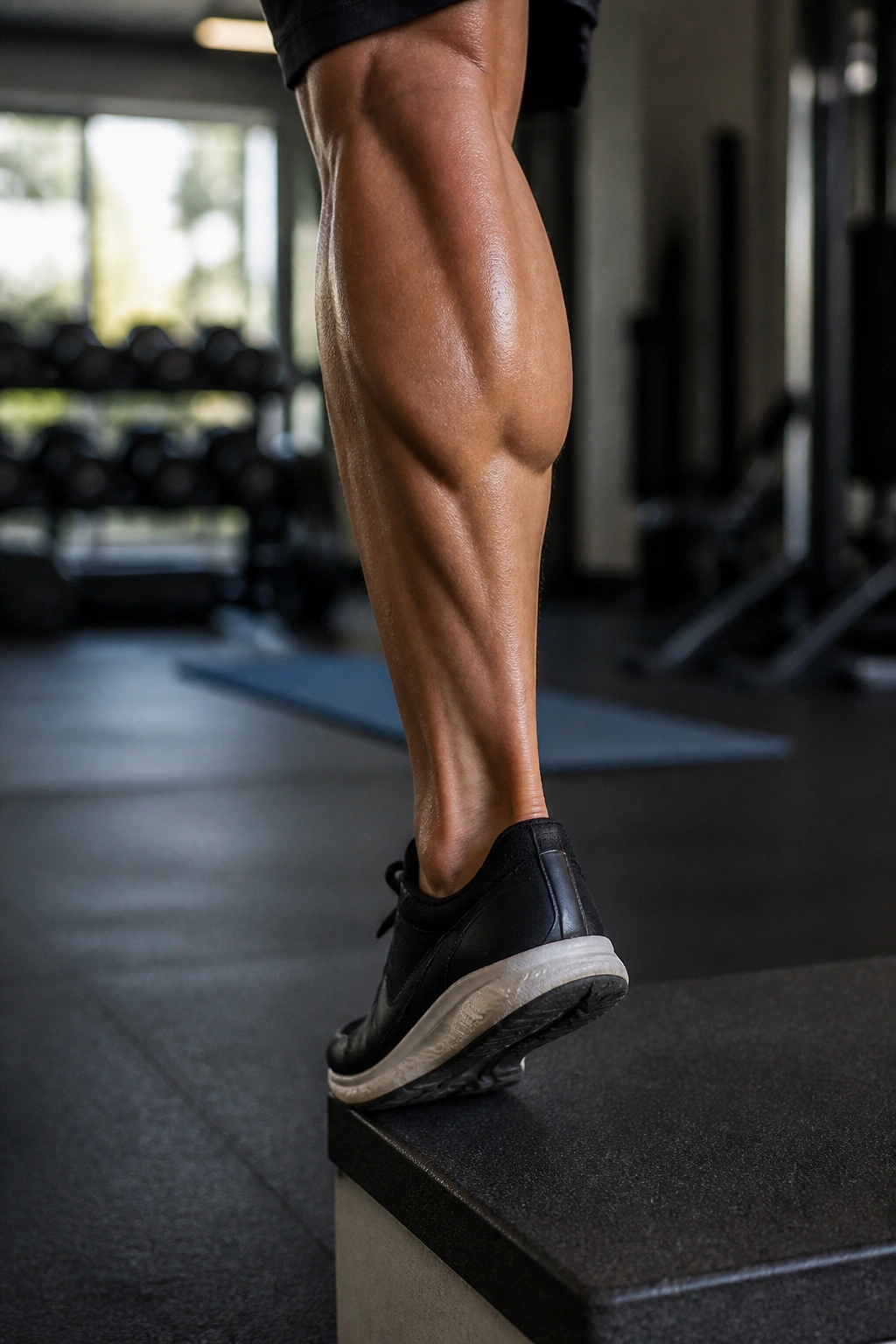
Calves are notorious for being stubborn, often because people train them with high reps and no intensity. Treat your calves like any other muscle group: use a full range of motion. Stand on the edge of a step, let your heels drop as low as they can, and then drive up onto the balls of your feet.
The Secret
Pause at the bottom. Do not bounce. Bouncing uses the Achilles tendon as a spring, which takes the tension off the calf muscle. A true calf raise starts from a dead stop at the bottom of the stretch.
20. Seated Calf Raises
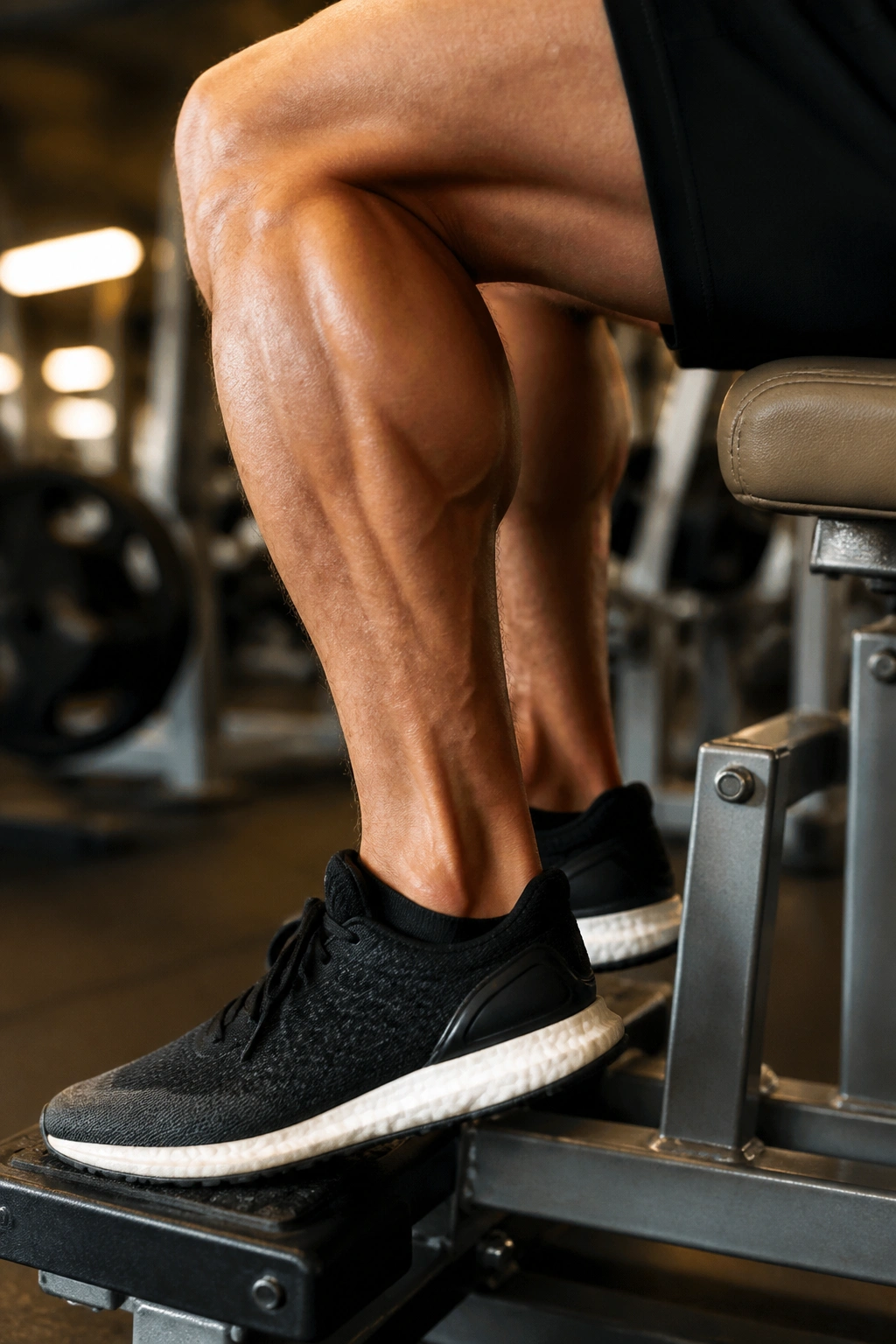
While standing calf raises target the gastrocnemius (the upper part of the calf), seated calf raises focus on the soleus (the lower part). You cannot fully isolate the soleus without bending the knee, because the gastrocnemius is a two-joint muscle that is effectively “turned off” when the knee is bent.
Training for Growth
Because the soleus is made up primarily of slow-twitch muscle fibers, it often responds well to higher rep ranges and a slower tempo. Do not rush these. Aim for a long, controlled burn. If you do these, you will quickly realize why people say calves are the most painful muscle to train.
21. Sled Pushes and Pulls
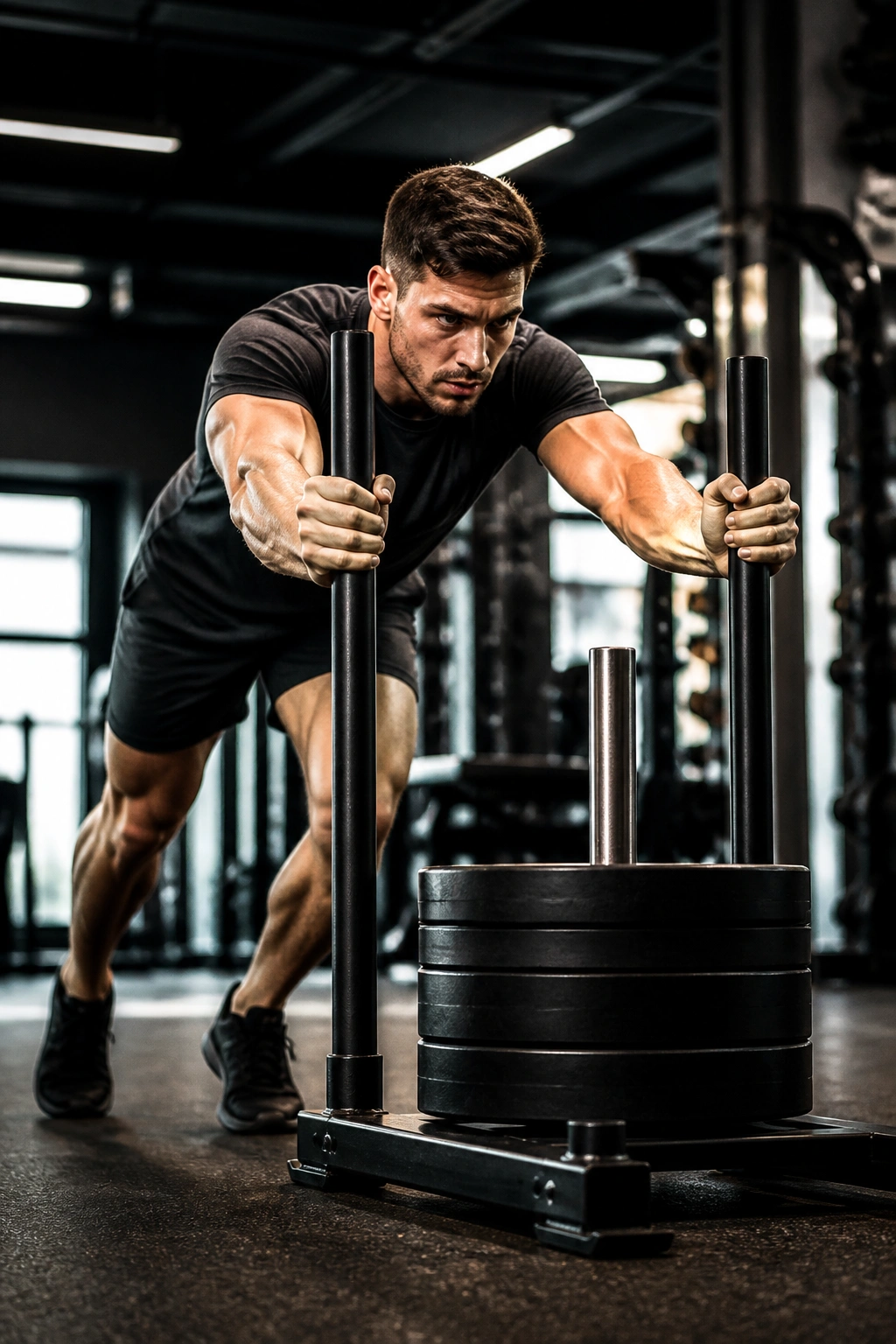
Sled work is the great equalizer. It is entirely concentric—there is no eccentric (lowering) phase, which means you can do a massive amount of volume without the same level of muscle soreness that follows a squat session. It is incredible for building endurance, leg power, and work capacity.
Tips for Success
Keep your arms relatively straight and drive through your heels. If you are leaning too far forward, you are essentially doing a push-up. If you stay upright, you are forced to drive with your legs. It is a grueling, effective way to finish any leg workout.
22. Copenhagen Planks
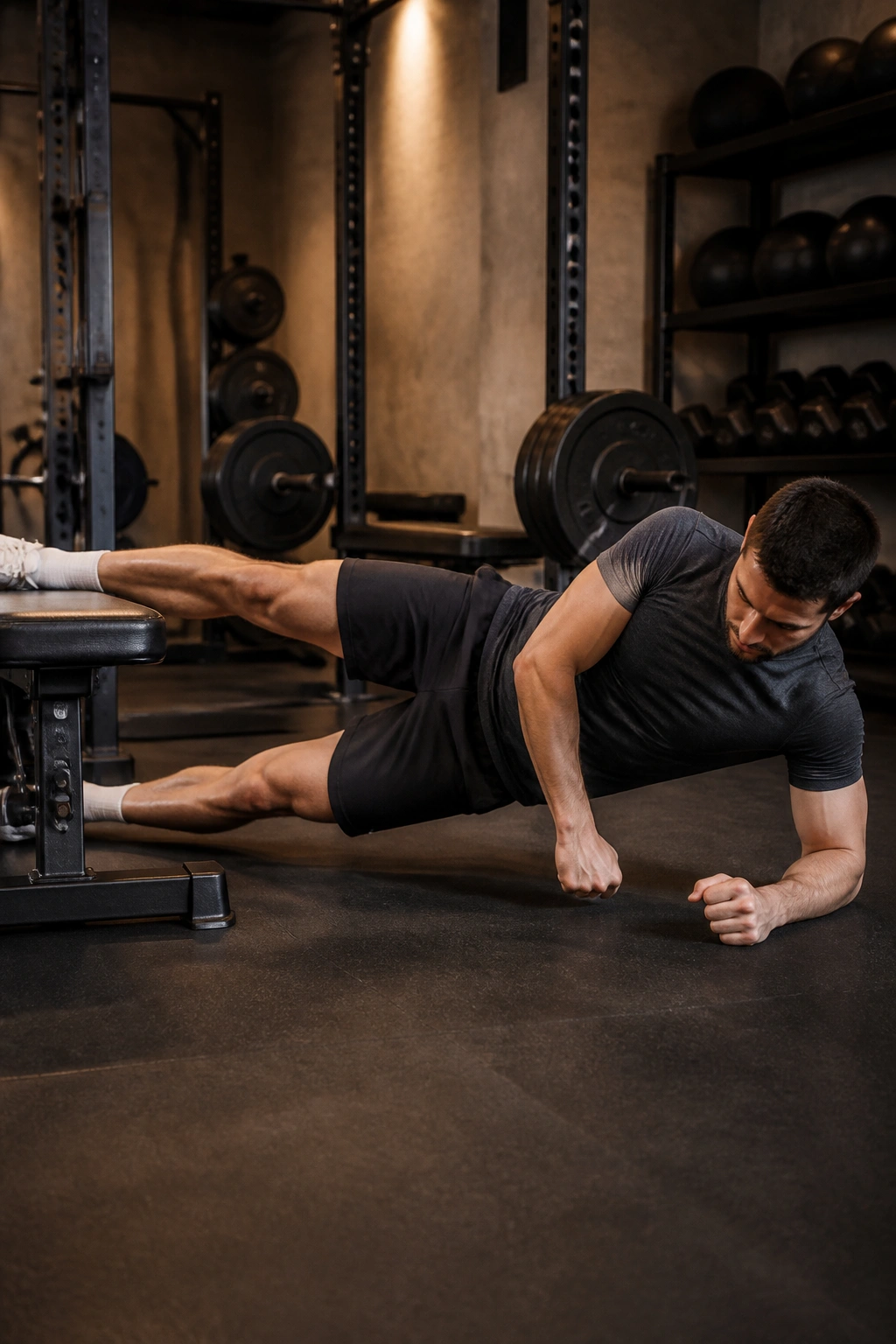
Adductor strength is one of the most neglected areas in fitness, yet it is essential for hip stability. The Copenhagen plank involves holding a side-plank position with your top leg resting on a bench and your bottom leg hovering. It looks simple, but it will make your inner thighs shake within seconds.
Why This Matters
Strong adductors act as hip stabilizers. When your adductors are weak, your glutes and quads have to work overtime to stabilize your hip, which can lead to fatigue and knee issues. A few sets of these per week can make a massive difference in your squat form and overall lower body stability.
Final Thoughts
The key to unlocking total leg strength is not about doing all 22 of these movements in a single session. That would be impossible. Instead, focus on building a routine that rotates these exercises to keep your training fresh and your muscles challenged. Start with the heavy compound movements—squats, trap bar deadlifts, and lunges—before moving into the isolation work like leg extensions or calf raises.
Listen to your body. If a certain movement feels “off” or causes sharp pain, swap it out for a variation that feels more natural. Strength is a long-term pursuit. Consistency with a few well-executed movements will always outperform a chaotic program filled with fancy, untested exercises. Keep your form strict, your intensity high, and your recovery a priority, and your lower body will respond with the strength and power you are after.
