



There is a specific kind of burn that settles into the deep abdominals about thirty seconds into a well-executed Single Leg Stretch. It isn’t the sharp, superficial ache of a poorly performed crunch. Instead, it’s a slow, radiating heat that feels as if you are wringing out a sponge from the inside. When you do it right, your spine stays anchored to the floor like a magnet, and your legs move with the precision of a clock pendulum. But when you stay in the same pattern for too long, your body begins to normalize the movement. It stops being a challenge and starts being a habit.
That is exactly why variation matters. Pilates is not about doing the same repetitions until you are bored; it is about finding the exact angle, speed, or resistance that forces your muscles to recruit new fibers. If you have been performing the standard version for years, your psoas, your obliques, and your deep transverse abdominals might be on autopilot. We need to wake them up. The following variations aren’t just for show. They serve to target the specific nuances of your core, from the deep pelvic floor connections to the upper abdominal wall. You do not need a fancy studio or a reformer to execute these; you just need a mat and a commitment to slowing down.
1. The Classic Single Leg Stretch
The foundation of every variation on this list is the classic version. You start lying on your back, hugging both knees into your chest, creating a small, tight ball of energy. As you exhale, you lift your head, neck, and shoulders, curling up until your shoulder blades are hovering just off the mat. Extend one leg out to a forty-five-degree angle while pulling the other knee toward your chest with your hands.
Why It Remains the Gold Standard
This movement forces a constant battle between your hip flexors and your core. If your belly pooches out when you extend the leg, you have lost your connection. The goal is to keep that scoop in the abdomen regardless of how low the leg drops. Think of your powerhouse—that center ring of muscles—as a corset that tightens every time you exhale.
Key Performance Cues
- Keep your gaze directed toward your navel, not the ceiling.
- The hand placement should be specific: one hand on the ankle, the other on the knee.
- Your elbows should remain wide, keeping the chest open even while you curl.
- Inhale to switch, exhale to pull.
Pro tip: Imagine you are pulling the knee into your chest against heavy resistance; the harder you pull, the deeper the ab connection.
2. Single Leg Stretch with Head Down
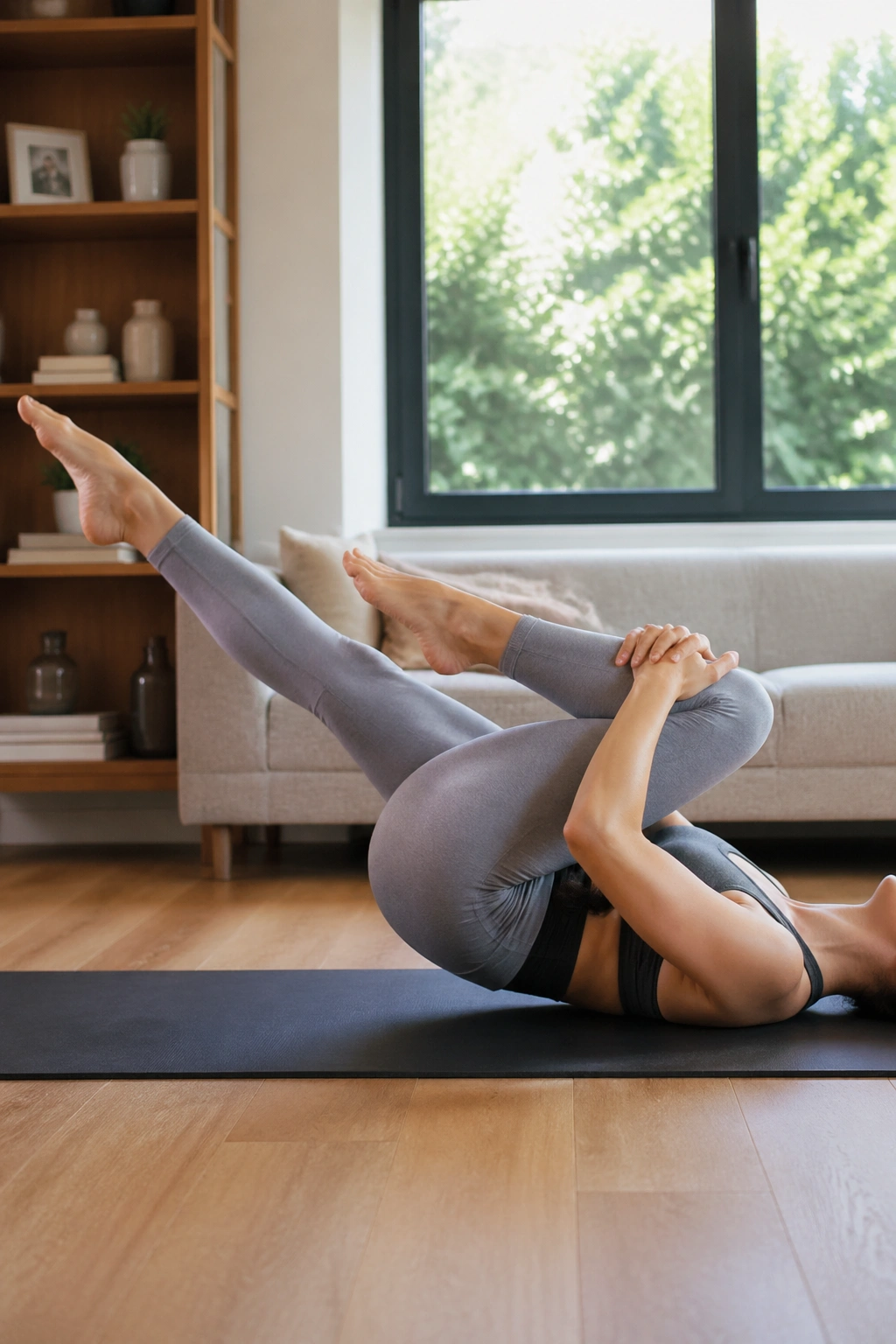
Sometimes the neck takes over. It is a common frustration for people who are newer to Pilates. When your neck muscles (the sternocleidomastoids) work harder than your abs, you end up with a stiff neck rather than a strong core. This variation removes the gravity load from the upper body so you can focus entirely on the leg and pelvic stabilization.
Focusing on the Pelvic Anchor
By keeping the head on the floor, you can pay close attention to your lower back. When the leg extends, the weight of the thigh bone tries to pull your lumbar spine into an arch. This is your chance to practice keeping the pelvis perfectly still. If your back lifts, your leg is too low.
How to Execute Properly
Lie flat on the floor with your arms by your sides. Perform the leg movements exactly as you would in the classic version—alternating extensions—but do not lift your head. Feel how much easier it is to control the tilt of your pelvis without the added pressure of the upper body curl. This is not a “beginner” move; it is a diagnostic tool for finding your true range of motion.
3. Single Leg Stretch with Arm Reach
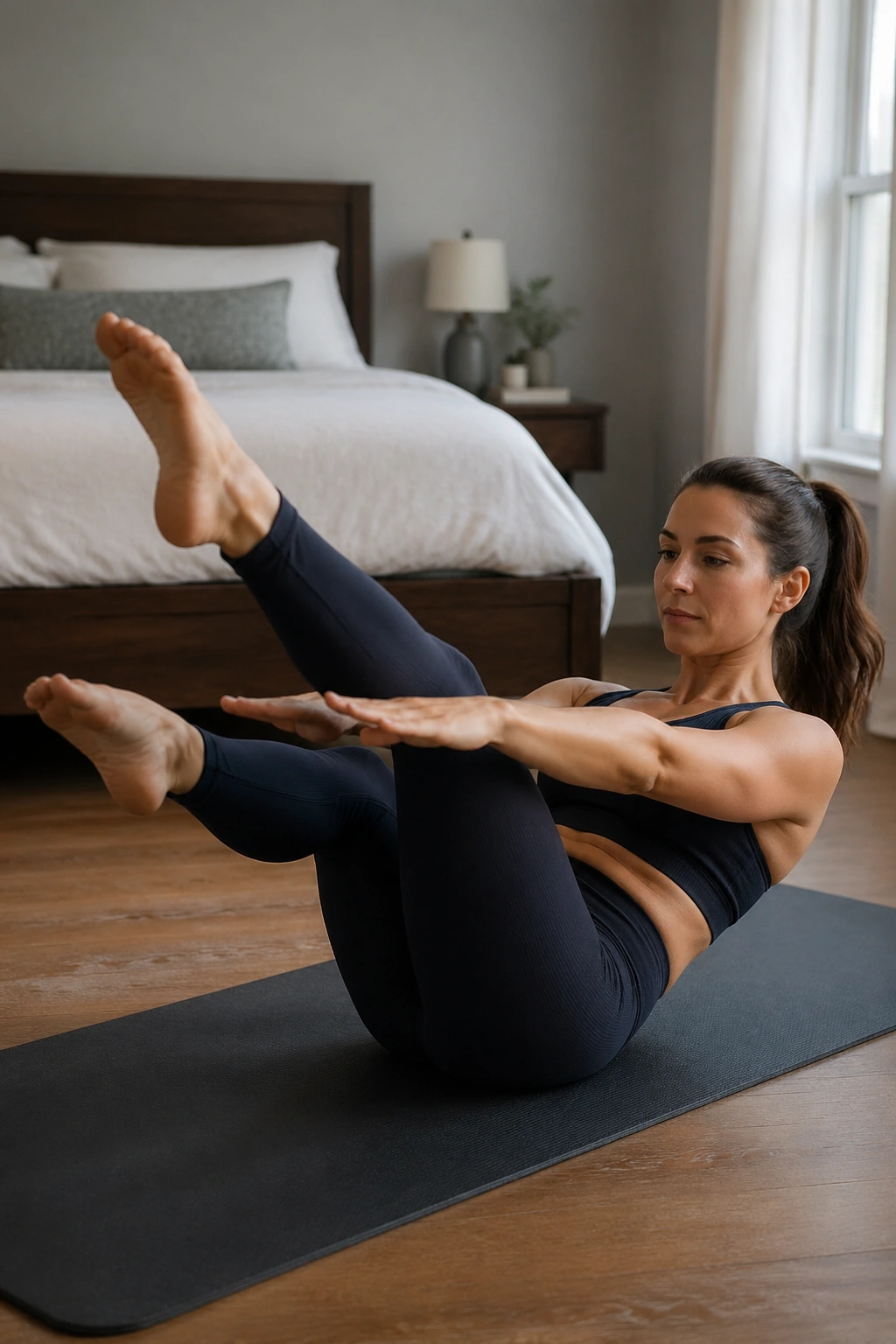
In the classic version, your hands are glued to your legs. This creates a feedback loop that feels safe. When you remove the hands and reach the arms forward, you change the lever length. Now, your upper abdominals have to work significantly harder to maintain the curl because you have removed the support structure holding you up.
Shifting the Center of Gravity
Reach your arms long past your hips, hovering them slightly off the mat. As you switch legs, keep those arms reaching continuously forward, like you are trying to touch the wall on the other side of the room. This prevents you from “resting” on your legs. You will notice that your upper abs start to quiver much faster than they usually do.
What to Watch For
- Do not allow your shoulders to hike up toward your ears as you reach.
- The arms should move in unison with the leg switches.
- If your neck strains, reach your arms slightly higher toward the ceiling rather than parallel to the floor.
4. Single Leg Stretch with Pulse
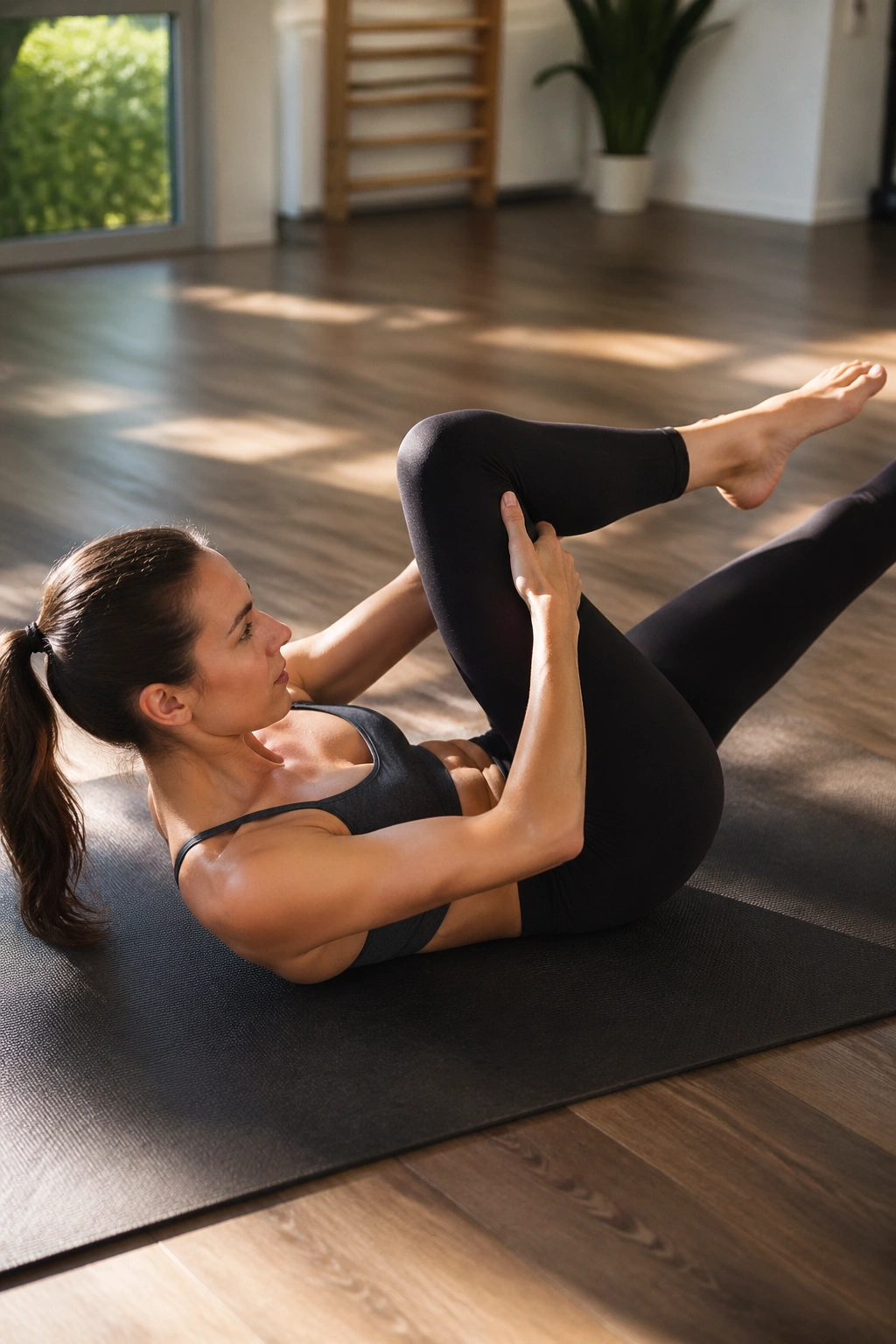
Pilates is rarely about rapid, jerky movements, but the pulse is an exception that serves a specific purpose. It is a micro-movement that forces you to hold your maximal contraction while adding a tiny bit of extra tension at the end range. It’s the difference between holding a plank and planking for a minute while someone nudges you.
Why This Variation Works
The pulse encourages you to deepen the exhale. As you pull the knee in, give it a tiny, controlled double-tug. Pull, pull. This forces the remaining air out of your lungs, which in turn forces the diaphragm to lift and the abdominals to contract even further. It is a respiratory challenge as much as a muscular one.
Proper Application
Perform the movement with control. The pulse should be small—only an inch or two—but distinct. Do not use momentum to swing the leg. The movement must come from the depth of your belly, not from a flick of your ankle.
5. Single Leg Stretch with Leg Lowering
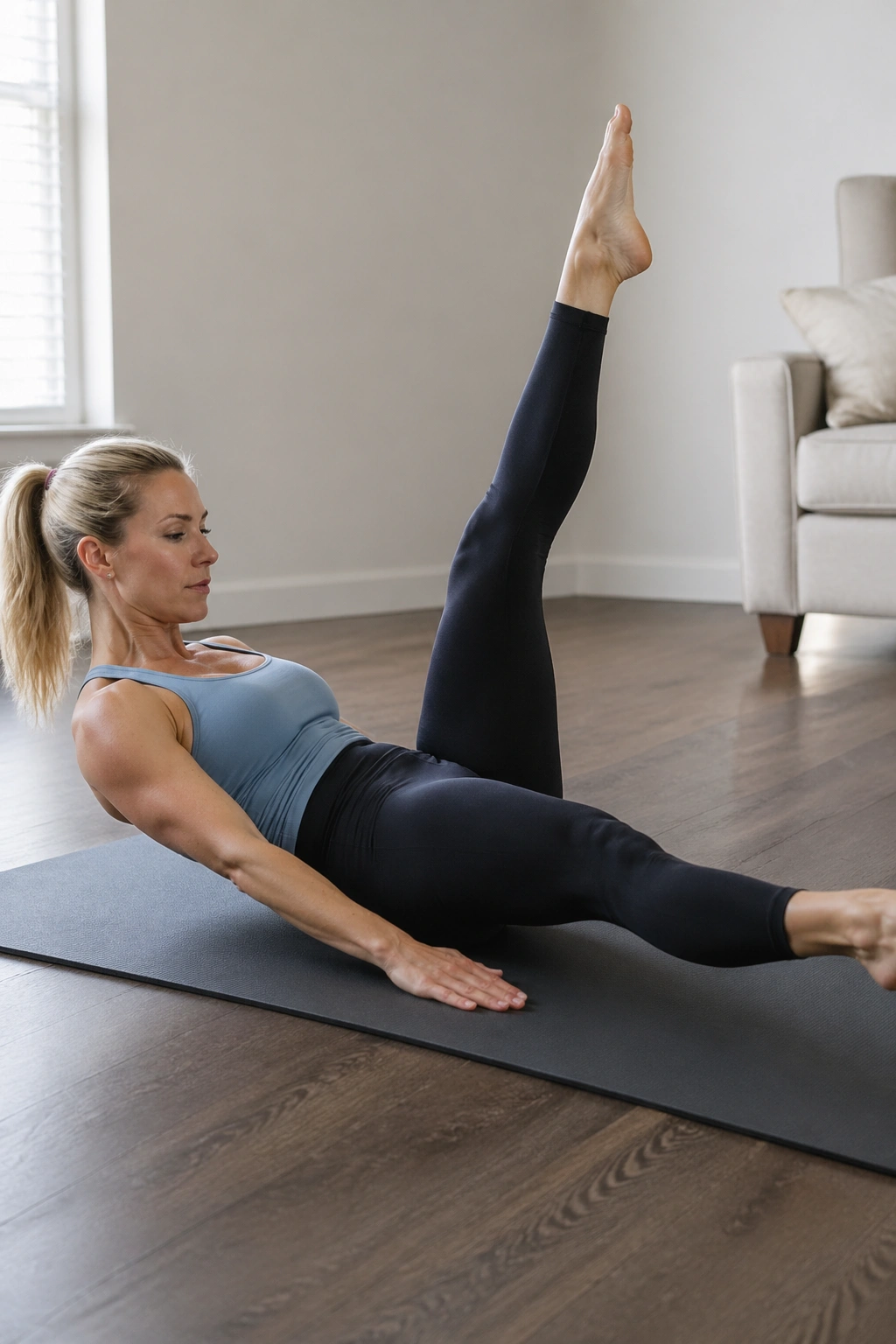
If you want to feel your lower abs scream, this is your variation. In the standard version, most people keep the extended leg at a comfortable forty-five-degree angle. By lowering the leg toward the floor—just an inch or two above the mat—you exponentially increase the leverage. The longer the lever, the heavier the leg feels.
The Physics of the Core
Gravity is your opponent here. As the leg nears the floor, the femur bone acts like a crowbar trying to pry your lower back off the mat. To stay grounded, your lower transverse abdominals must clamp down with significant force. If you feel your back arching, you have gone too low. Respect the feedback your spine gives you.
How to Progress
Start with the leg at forty-five degrees for the first few repetitions. As you warm up, slowly begin to lower the leg a few inches more with each set. Stop immediately if you feel your back “pop” or lose contact with the mat. Precision always beats range of motion.
6. Single Leg Stretch with External Rotation
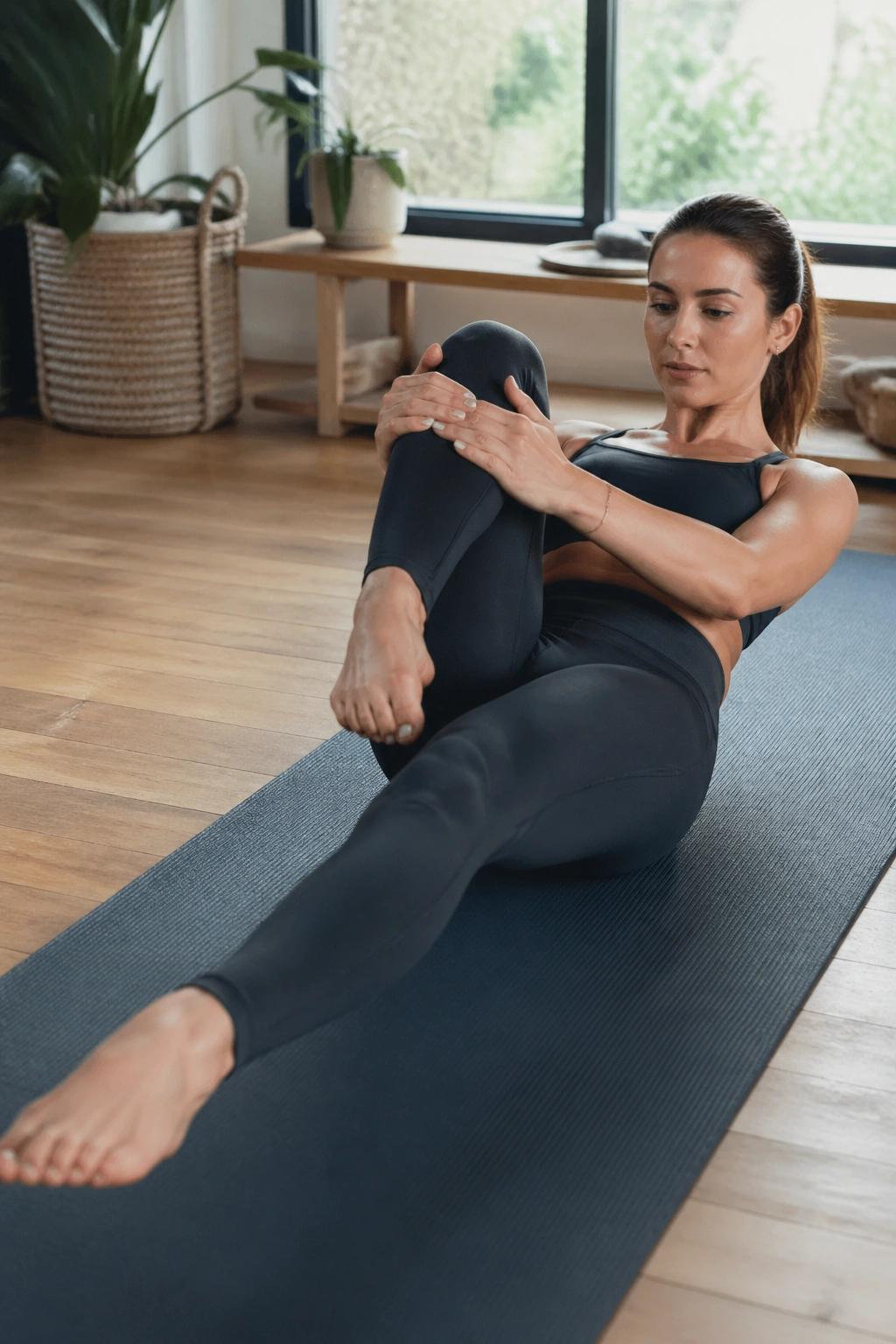
Pilates is famous for “Pilates V” or external rotation (turning the toes out). We usually do this for side-lying work, but applying it to the Single Leg Stretch completely changes the focus of the hip flexors and the inner thighs. It forces your glutes to stay active while your abdominals work.
Connecting the Inner Thighs
By rotating the femur outward (so the kneecap faces away from the center of the body), you engage the adductor group. This prevents the “lazy leg” syndrome, where the trailing leg just flops around. Now, both legs have energy. Even the leg that is extended is working in a turned-out position, which requires a surprising amount of coordination.
A Practical Tip
Think of the energy radiating from your hip socket, not your knee. When you rotate from the hip, the leg feels longer and more connected to the torso. It is a subtle internal shift that changes the entire quality of the exercise.
7. Single Leg Stretch with Internal Rotation
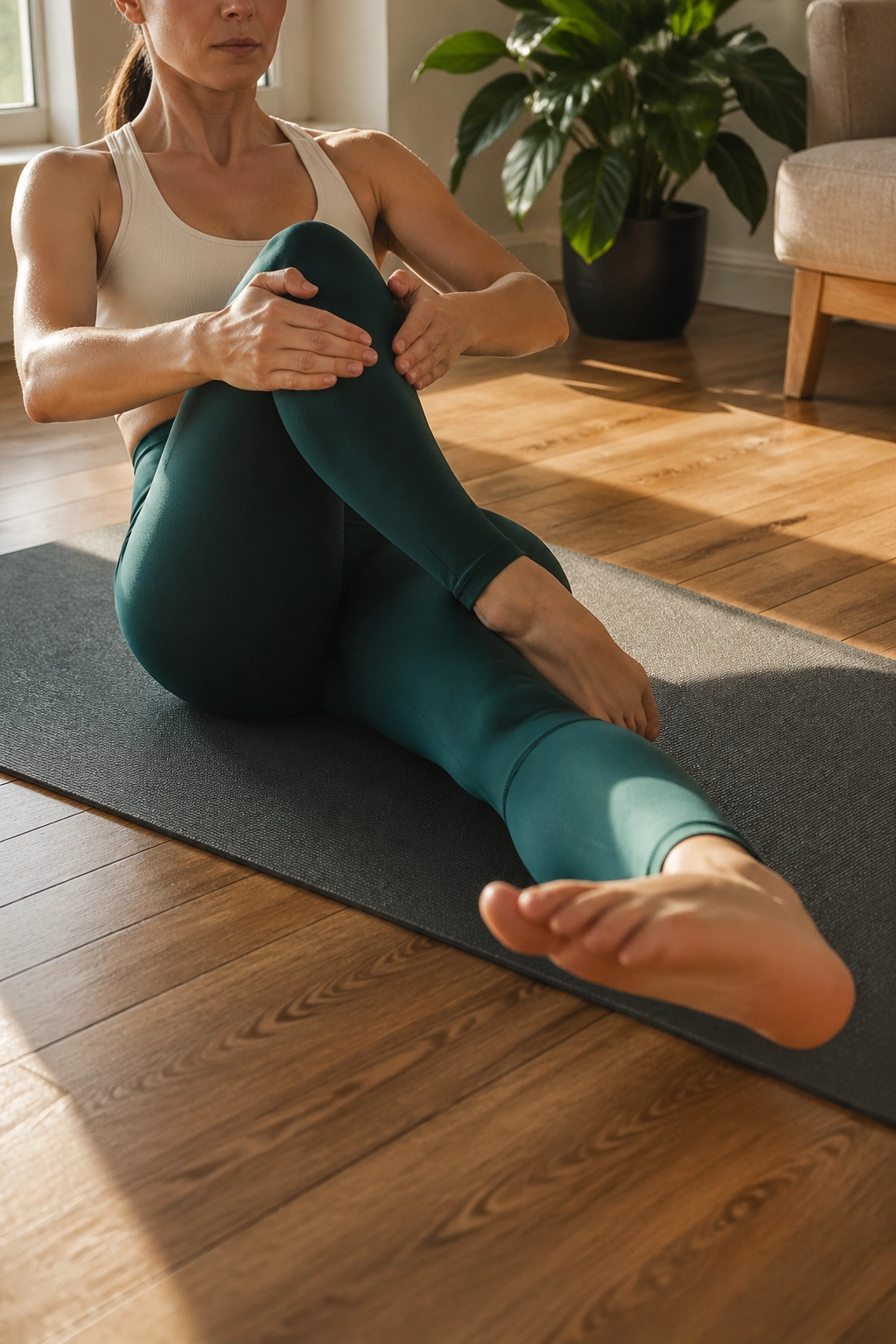
We rarely talk about internal rotation in Pilates because we are so focused on opening the hips, but turning the toes inward—pigeon-toed, essentially—can be a powerful way to target the side of the hip and the outer glute. It is a challenging, slightly uncomfortable position, which is exactly why it is useful.
Why Use This Variation?
Most of us live our lives in neutral or external rotation. Internal rotation forces the muscles around the hip joint to stabilize in a way they are not accustomed to. When you extend the leg in internal rotation, you will feel the work shift from the front of the hip (the psoas) to the side (the tensor fasciae latae and glute medius).
Important Safety Note
This variation can be tough on the knee joint if you overdo it. Keep the rotation gentle. You aren’t trying to twist your knee; you are rotating the entire leg bone from the hip socket. If you feel sharp pain in the knee, go back to neutral immediately.
8. Single Leg Stretch with Flexed Feet
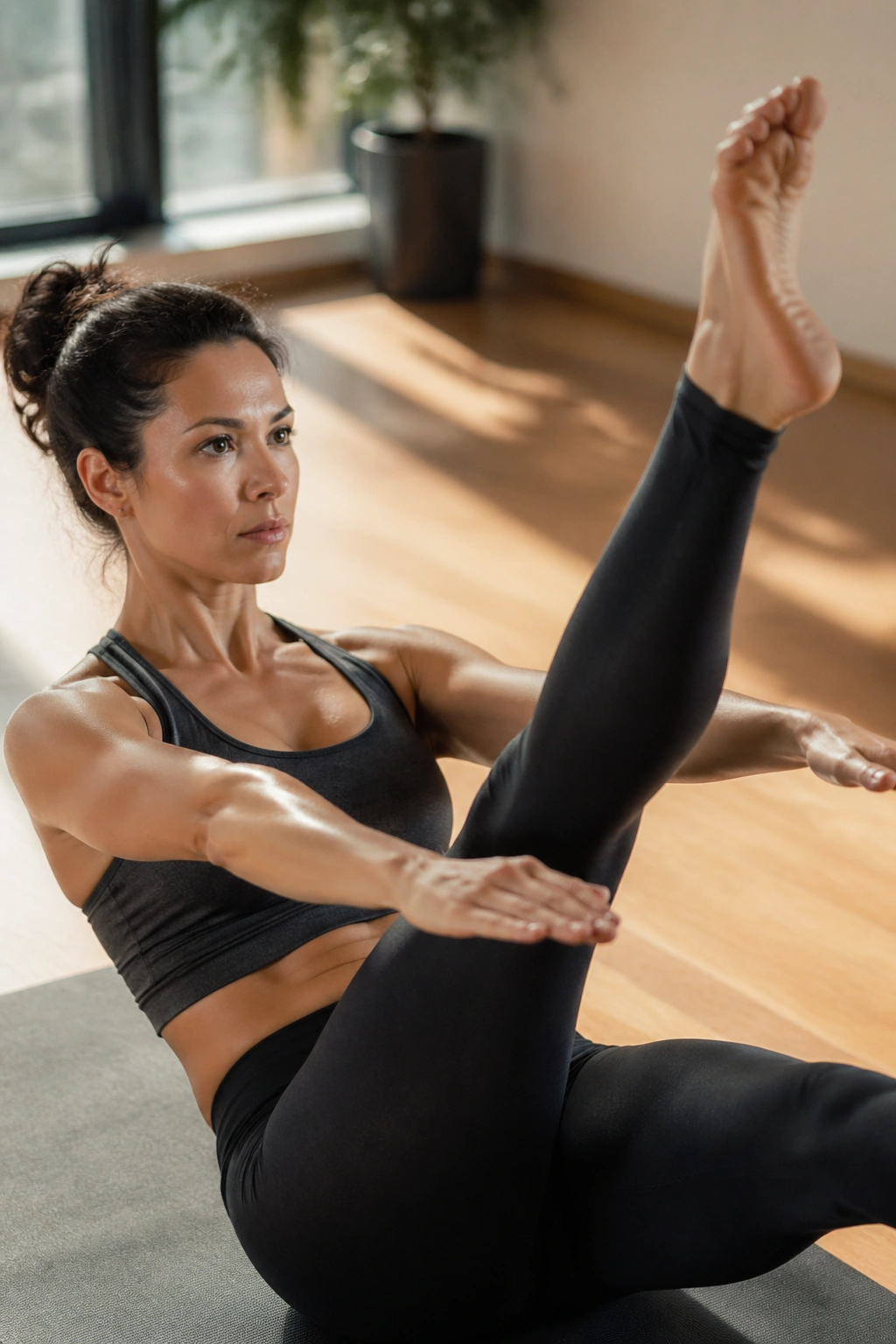
Flexing the feet (dorsiflexion) changes the tension profile of the leg. Pointed toes are beautiful and athletic, but flexed feet engage the muscles all the way up to the hip. This is essentially an active stretch for your calves and hamstrings while you perform a core workout.
Hamstring Engagement
By driving through the heel, you activate the posterior chain. This prevents the legs from just “hanging” in space. It forces you to reach through the heel, which lengthens the back of the leg. It is a fantastic way to counteract the tightness many of us have in our hamstrings, which can otherwise cause the pelvis to tuck or tilt uncontrollably during ab work.
The Visual Cue
Imagine you are pushing against a heavy door with your heel. The energy should be forceful and deliberate. This turns the Single Leg Stretch into a total-body engagement move rather than just an abdominal one.
9. Single Leg Stretch with Scissor Legs
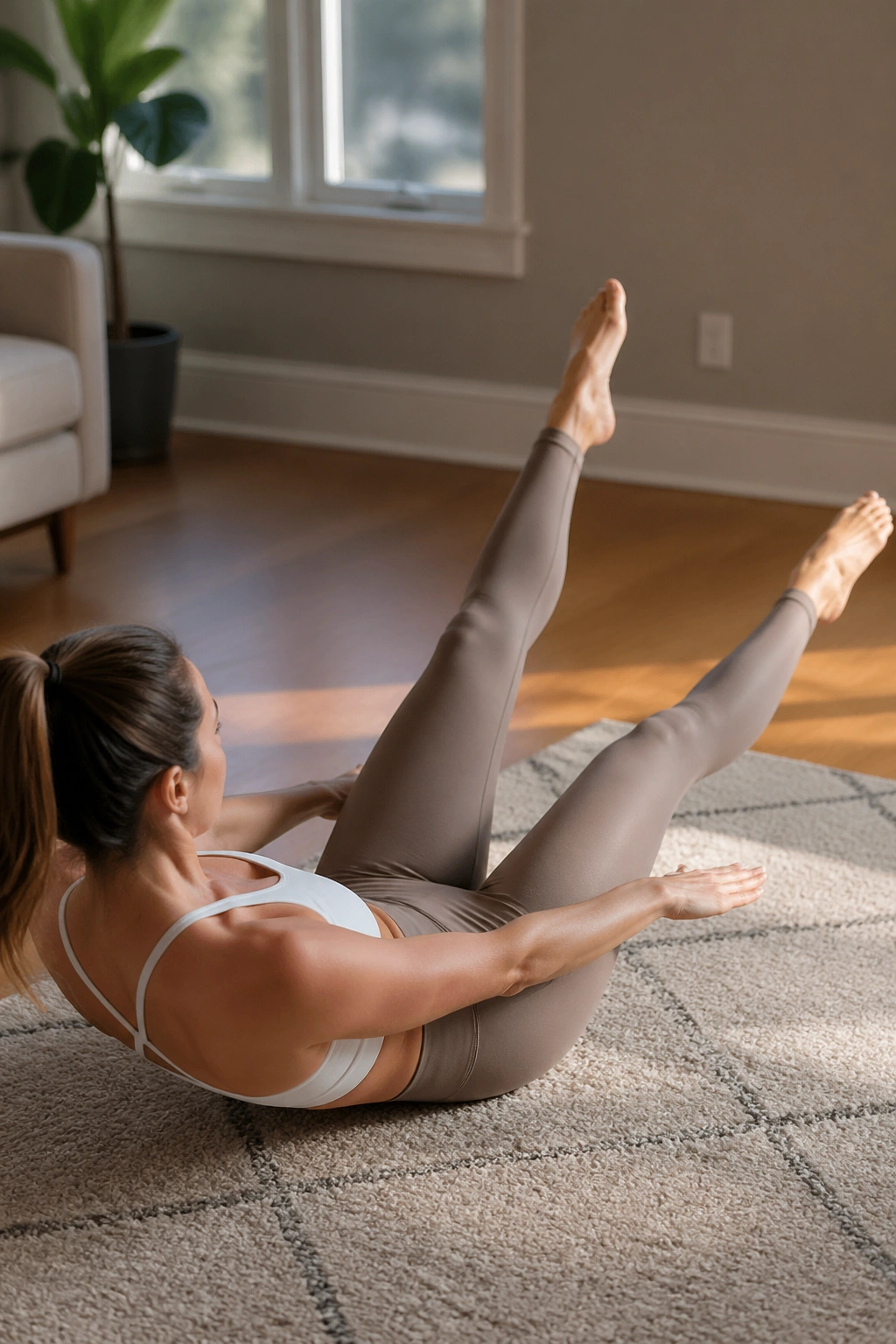
This variation blends the Single Leg Stretch with the Scissor exercise. Instead of one knee in and one leg out, you alternate with a straight-leg scissor kick in the middle. It’s a rhythmic, fluid transition that builds stamina. It requires your core to stabilize while the legs are moving through a larger arc.
Coordination Is Key
The challenge here is not the ab work; it’s the brain-body connection. You have to maintain your abdominal curl while simultaneously managing the scissor switch. It’s easy to drop your head or lose your curl as you transition.
How to Practice
Keep the movement slow at first. Don’t rush the switch.
- Perform the classic Single Leg Stretch.
- After the switch, extend both legs straight up to the ceiling.
- Lower one and pull the other.
- Keep the torso frozen in space. The movement should be smooth, like oil in a machine.
10. Single Leg Stretch with Leg Extensions
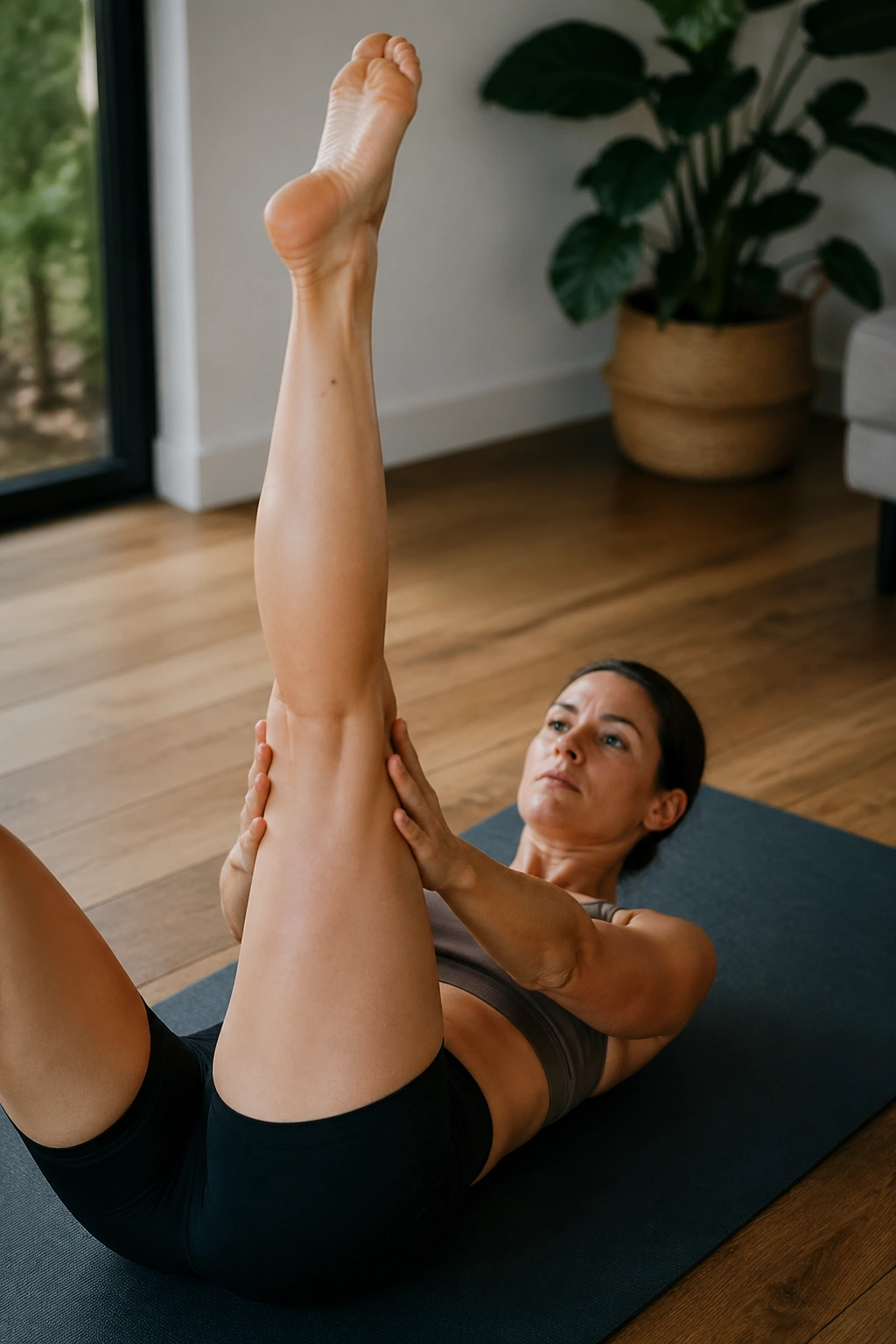
In this variation, you hold the knee in for a two-count hold, then extend the leg slowly for a four-count hold. The slow, controlled extension is where the magic happens. Many people rush the extension, using momentum to flick the leg out. By slowing it down, you force the quads to stabilize the leg while the abs hold the weight of the torso.
Why Speed Matters
When you move slowly, you cannot hide. If you are weak in your core, you will feel the torso wobble. If you have tight hip flexors, the leg will shake. This variation is a brutal honesty test for your form.
The “Teardrop” Focus
As you extend the leg, think about the muscle around the knee (the vastus medialis, or teardrop muscle). Engaging this muscle keeps the knee straight and strong. Do not let the leg soften; make it as straight and sharp as a spear.
11. Single Leg Stretch with Hands Behind Head
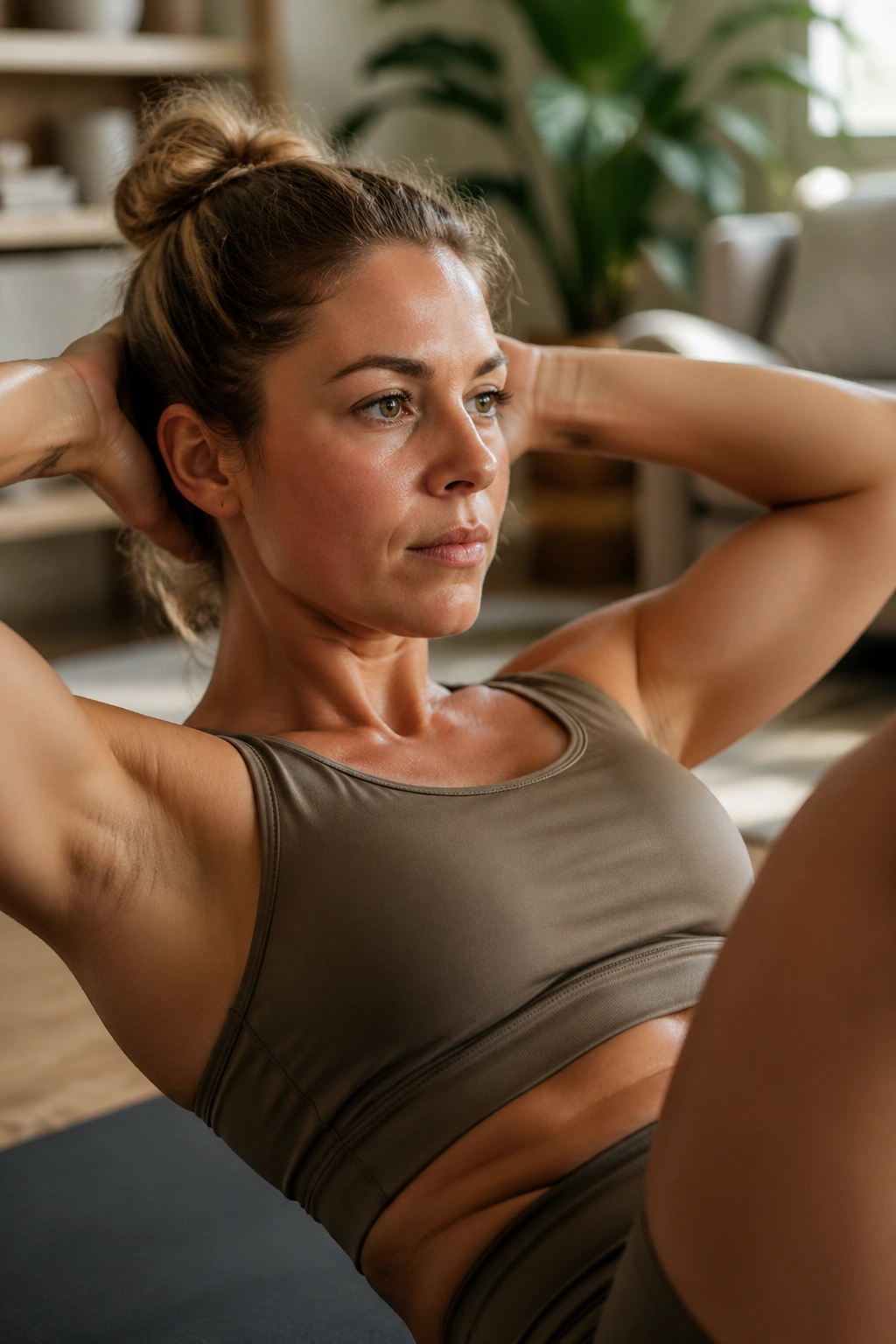
If your neck is truly fatigued, or if you simply want to challenge your upper abs, clasp your hands behind your head. This creates a “craddle” for your skull. It adds weight to the upper body, which forces your abdominals to work harder to keep you lifted off the mat.
Elbow Positioning
The secret here is to keep your elbows wide in your peripheral vision. If you pull your elbows in, you will naturally pull on your neck. Keep the chest wide and the elbows broad. You should be able to see your elbows without turning your head.
The Abdominal Challenge
Because your hands aren’t holding your legs, you lose the “pull” that helps you curl up. You have to use your own abdominal strength to lift your head, neck, and shoulders. It is significantly more difficult than the classic version.
12. Single Leg Stretch with Spine Twist
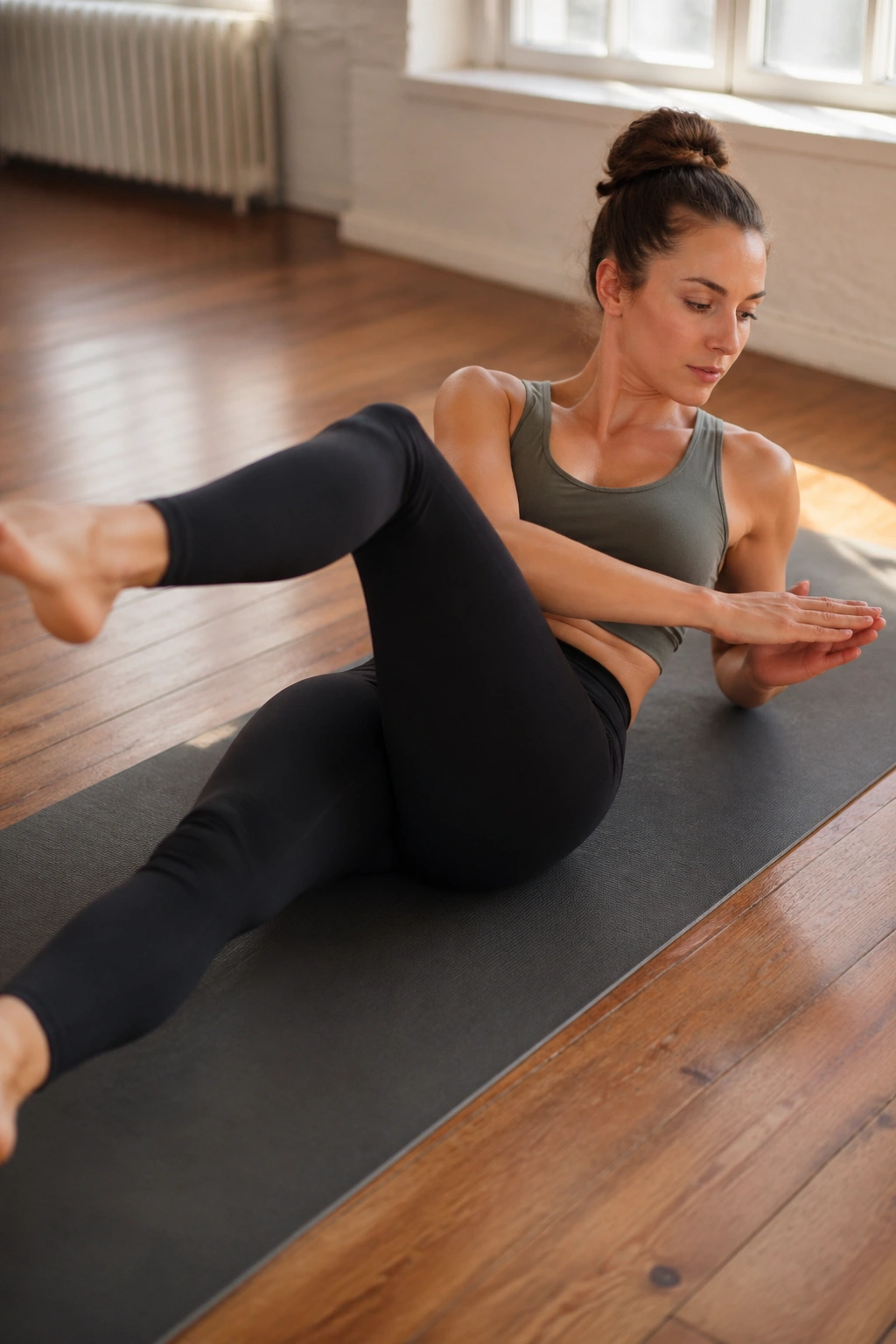
This adds a rotational component. As you extend the left leg, you twist your upper body to the right, aiming your right armpit toward the left knee. This is essentially merging the Single Leg Stretch with the Criss-Cross. It targets the obliques, those muscles responsible for rotation and side-bending.
The Power of the Oblique
The obliques are the natural corset of the body. When you add rotation, you force them to shorten. This is where you get that deep definition. However, do not just flick your elbows. The rotation must come from the bottom of your ribcage, not your shoulders.
Checklist for Success
- Keep the hips glued to the floor. Do not let your pelvis rock side to side.
- The twist should be small and precise.
- Exhale completely on the twist to deepen the contraction.
13. Single Leg Stretch with Yoga Block
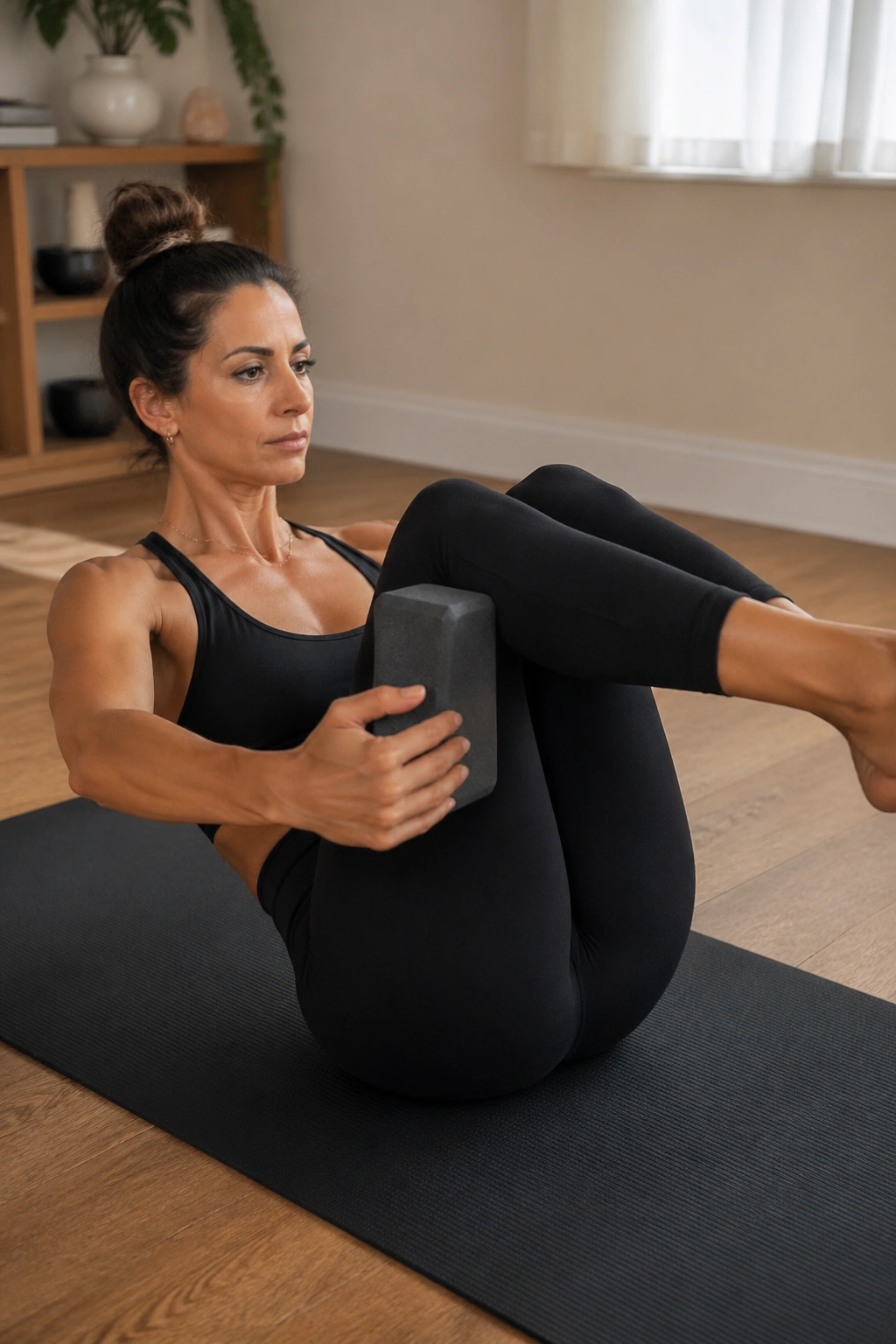
Take a yoga block and hold it between your hands. Now, as you switch legs, pass the block around the outside of your knee. This forces you to stay curled up consistently. You cannot drop your shoulders, or you will lose the block. It creates a physical constraint that demands perfect posture.
Adding Tactical Feedback
The block acts as an external cue. If you are not reaching, you will drop the block. It creates a “game” aspect that takes your mind off the burning sensation in your abs. It is a fantastic tool for teachers or for those practicing solo who tend to “cheat” by lowering their head slightly.
Using the Prop
Start with the block on your shins. As you switch legs, pick it up and pass it under the knee. It sounds complicated, but once you find the rhythm, it becomes a seamless dance.
14. Single Leg Stretch with Resistance Band
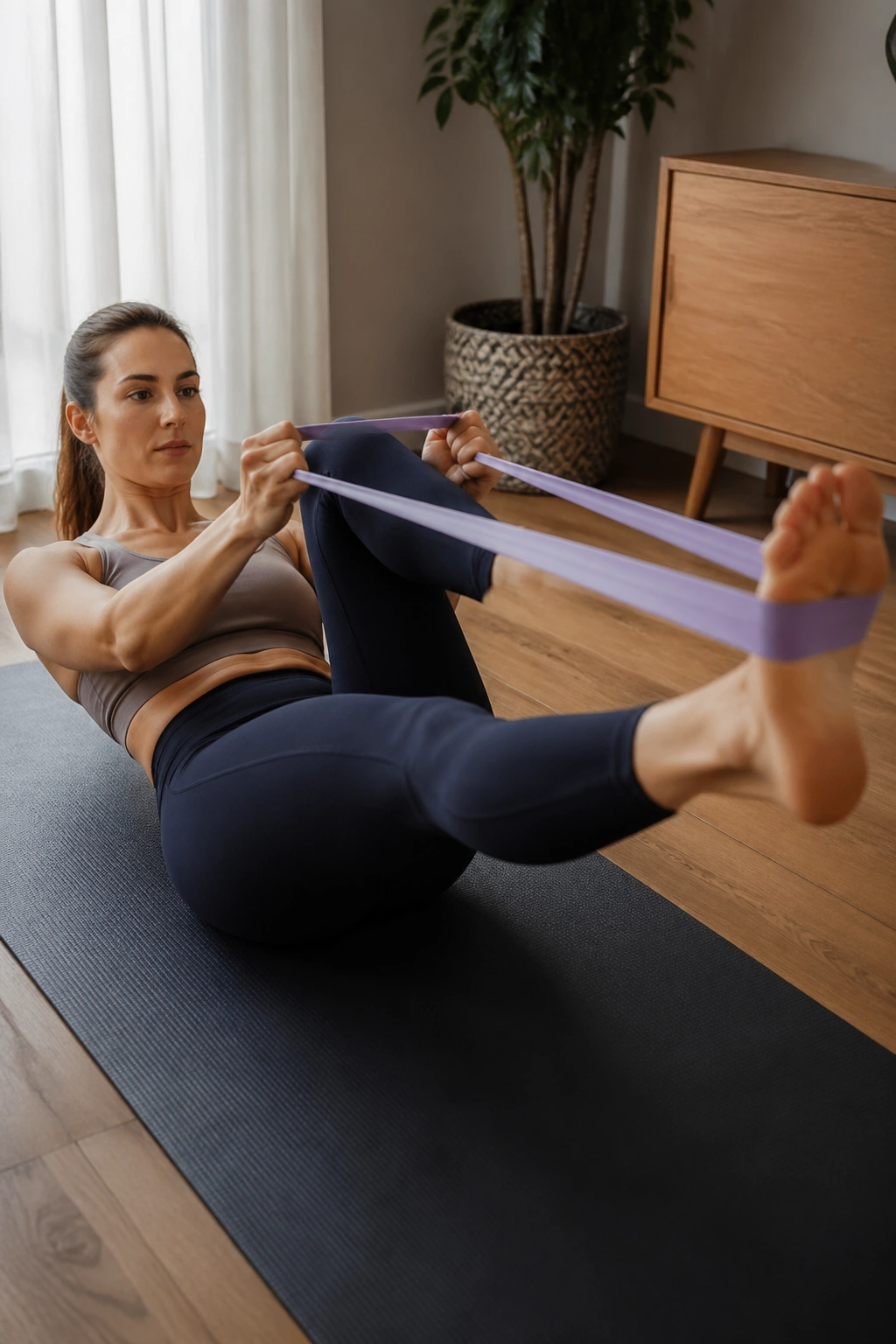
Wrap a resistance band around the arch of the foot of the leg that is extending. Now, instead of just pushing the leg out, you have to push against the resistance of the band. This creates a massive amount of tension in the quad and hip flexor, requiring more abdominal strength to keep the pelvis anchored.
Managing Tension
The key here is the return. Do not let the band snap your leg back. Control the band as you bring the knee back into the chest. This is called eccentric loading, and it is where real strength gains happen.
Equipment Note
Use a light-to-medium band. If the band is too heavy, you will lose your form and your back will arch. You are looking for a challenge, not a struggle.
15. Single Leg Stretch with Ball Squeeze
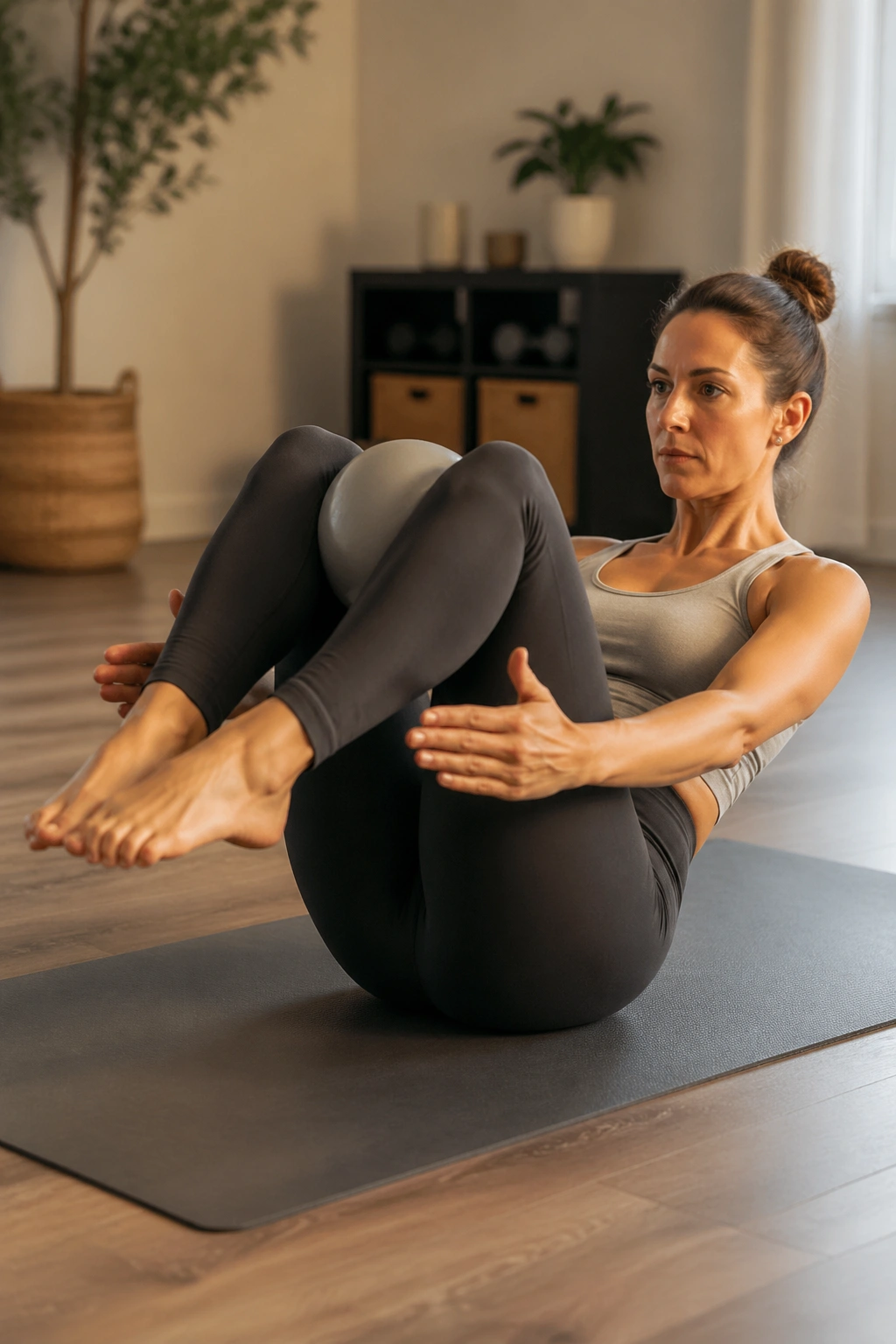
Place a small Pilates ring or a soft sponge ball between your knees. This forces your inner thighs to remain active throughout the entire set. Most people let their legs go “dead” during the Single Leg Stretch, but with the ball, you have to keep squeezing to prevent it from dropping.
Adductor Connection
When the inner thighs are active, the pelvic floor is often more engaged. It creates a sense of “lifting” from the bottom of the core. It’s a subtle connection, but once you feel it, the standard version will feel like it’s missing a piece of the puzzle.
Keeping the Ball in Place
You must keep your legs at a constant distance from each other. If you allow the knees to drift apart, the ball will fall. It forces your legs to move in a parallel, geometric pattern, which is the hallmark of proper Pilates technique.
16. Single Leg Stretch with Slow Tempo
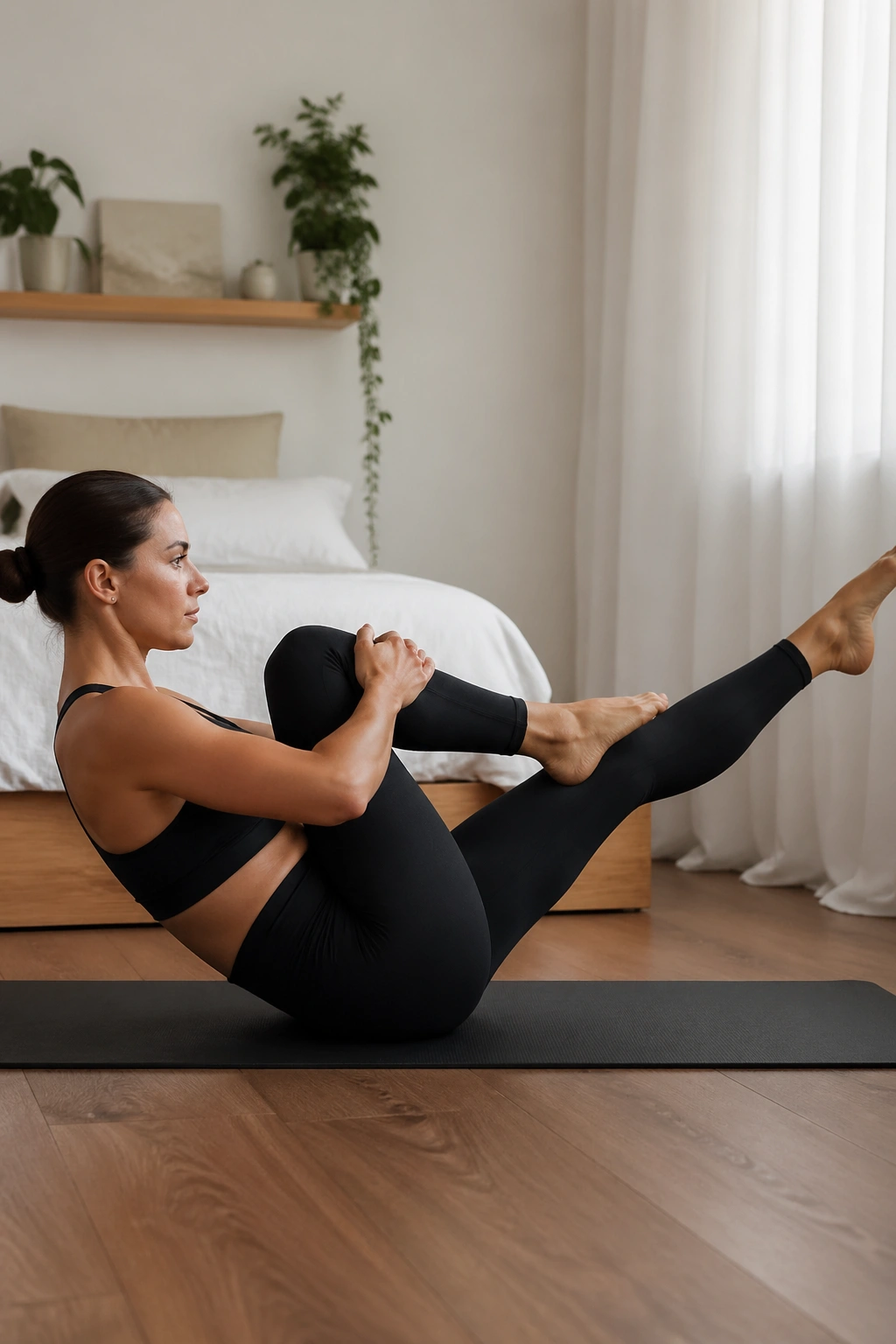
We live in a world of “more reps, faster.” Pilates is the opposite. Try this: count to four on the extension, and count to four on the pull-in. Total focus. If you move slowly, you have to stabilize your muscles at every single degree of the range of motion.
The Difficulty of Slowness
When you move fast, you can use momentum to bypass the “sticking point” of the exercise. When you move slowly, you have to move through that sticking point with pure muscle power. You will find that your abs start shaking almost immediately.
Timing Tips
- Inhale during the extension.
- Exhale during the return.
- Keep the movement constant—no stopping, no jerking, just a smooth, molasses-like tempo.
17. Single Leg Stretch with Crossover
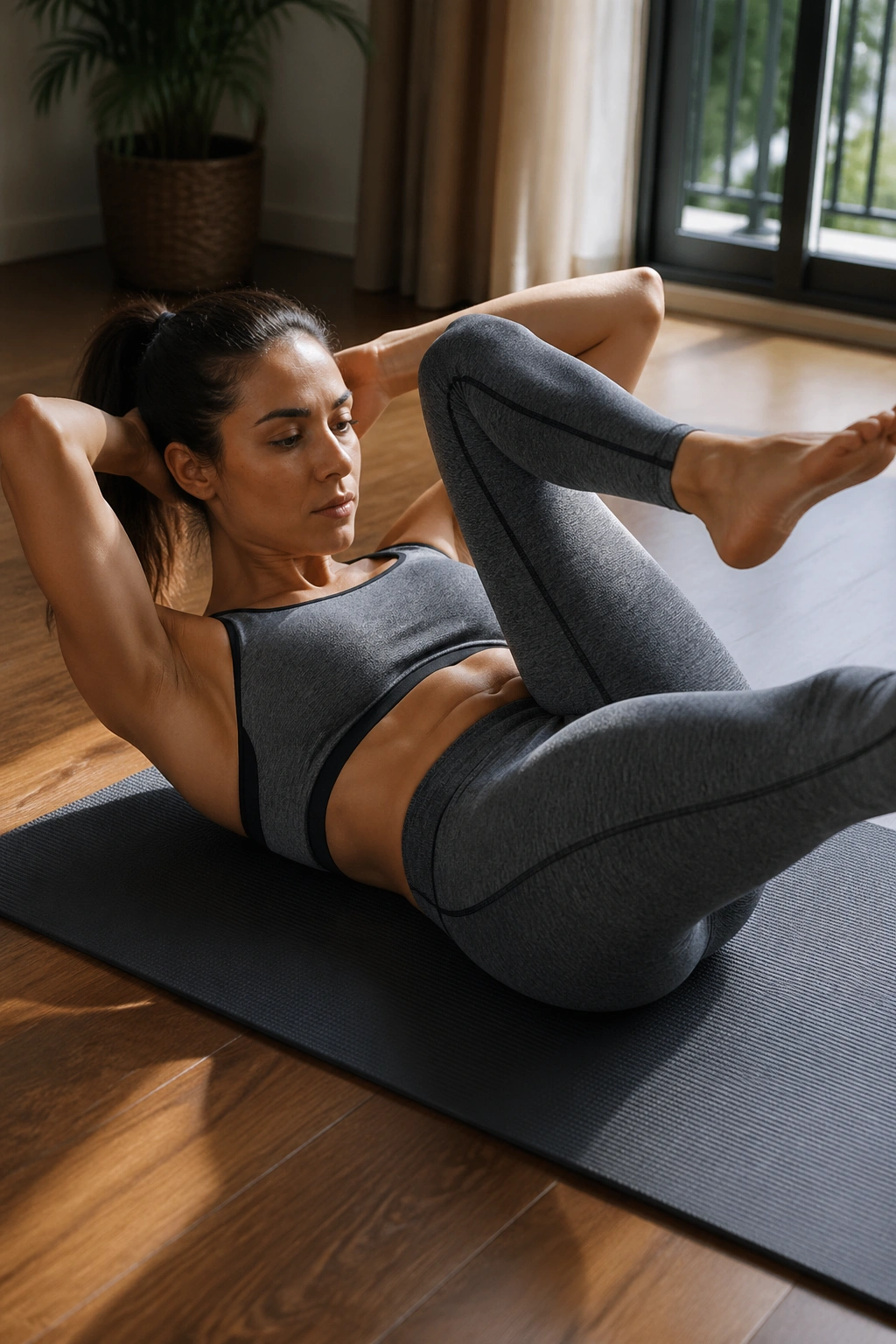
In this variation, you pull the knee toward the opposite shoulder rather than the same-side shoulder. It creates a slight cross-body tension. This helps mobilize the hip joint and forces a subtle rotation in the lower spine that can feel like a great release for the lower back.
The Cross-Body Connection
By pulling the left knee toward the right shoulder, you are engaging the muscles of the hip and lower back in a diagonal pattern. This mimics the way we walk and move in daily life. It is functional training at its best.
Watch the Shoulder
Be careful not to lift the opposite shoulder off the mat. The upper body stays flat and quiet while the lower body does the cross-body work. The disconnect between the stable torso and the mobile leg is the entire point.
18. Single Leg Stretch with Hover
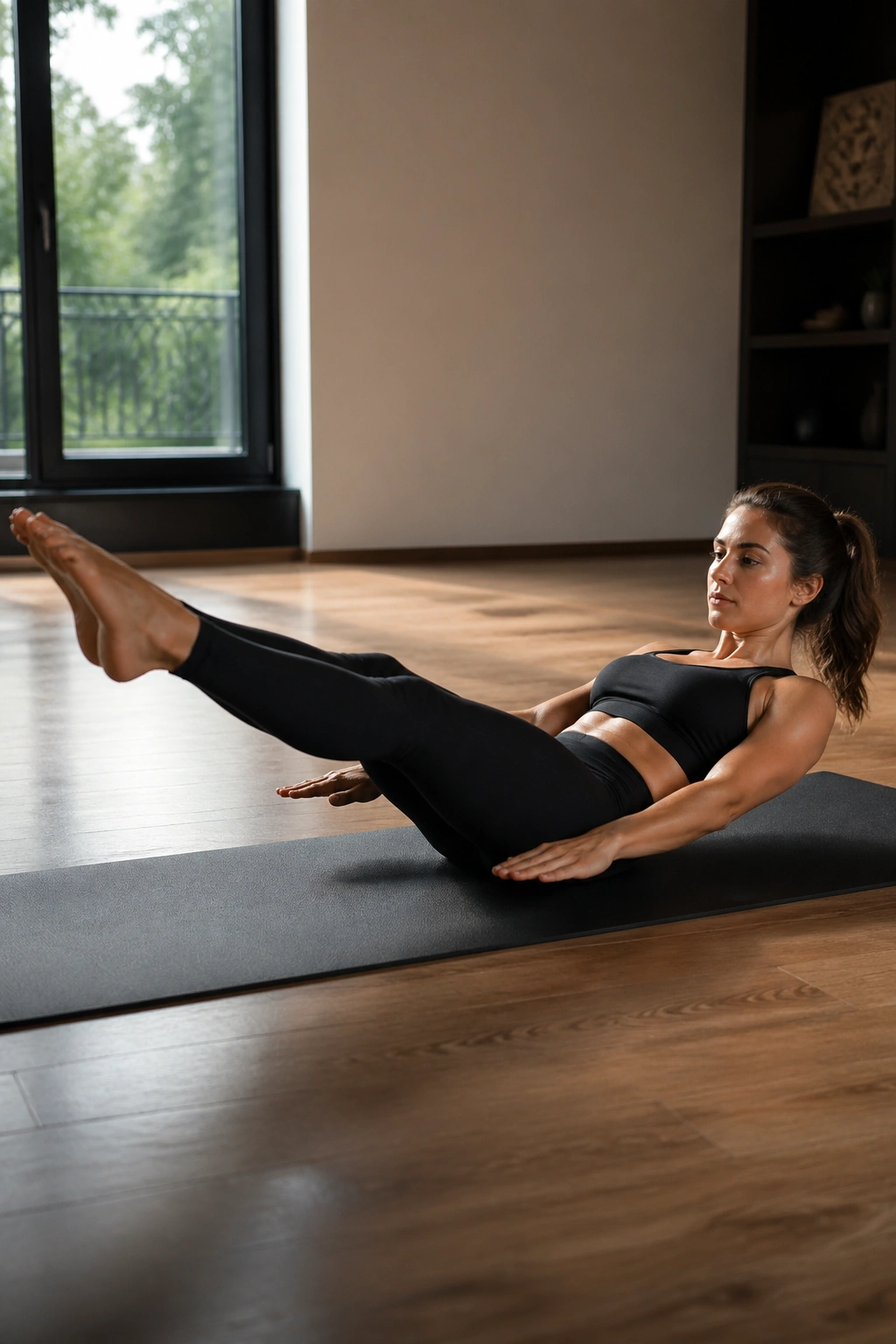
Instead of grabbing the knee, let the leg hover just an inch above the mat. The other leg also stays in the air, creating a “teardrop” shape with your body. You are working both legs at the same time, but in different positions. This is a level of intensity that requires very high abdominal control.
Why This Is Hard
You no longer have the leverage of pulling the knee in. You must support the weight of the leg using only your core. It is an advanced variation that should only be attempted once you have mastered the ability to keep your back glued to the floor.
Staying Grounded
If your back starts to lift, you must bring the legs higher toward the ceiling. The height of the legs is a safety valve. If you feel shaky, aim your legs higher. As you get stronger, you can gradually lower them.
19. Single Leg Stretch on a Bosu or Stability Ball
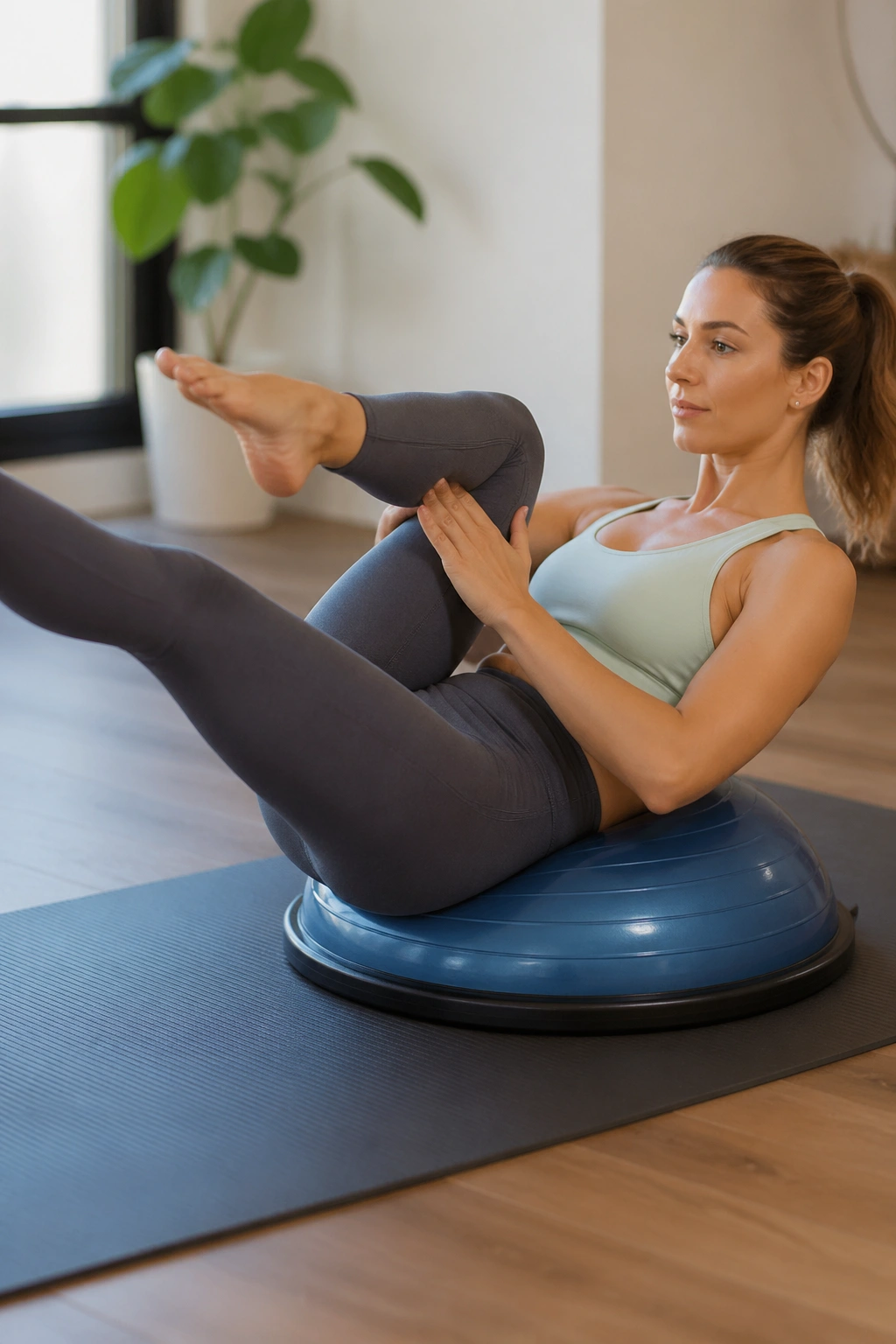
If you have a Bosu ball or a stability ball, lie with your lower back supported by the curve of the ball. Perform the Single Leg Stretch with the support of the ball. The ball will force your core to constantly adjust to the instability.
Improving Proprioception
Your body will have to work overtime to stay centered. You cannot “lock in” and relax. Every muscle fiber must fire to prevent you from rolling off the side of the ball. It is excellent for balance and teaching your body to find center in chaotic environments.
Safety First
Ensure the ball is stable and not rolling away. If you are using a stability ball, make sure it is inflated properly so it doesn’t bottom out under your weight.
20. Single Leg Stretch with Deep Elevation
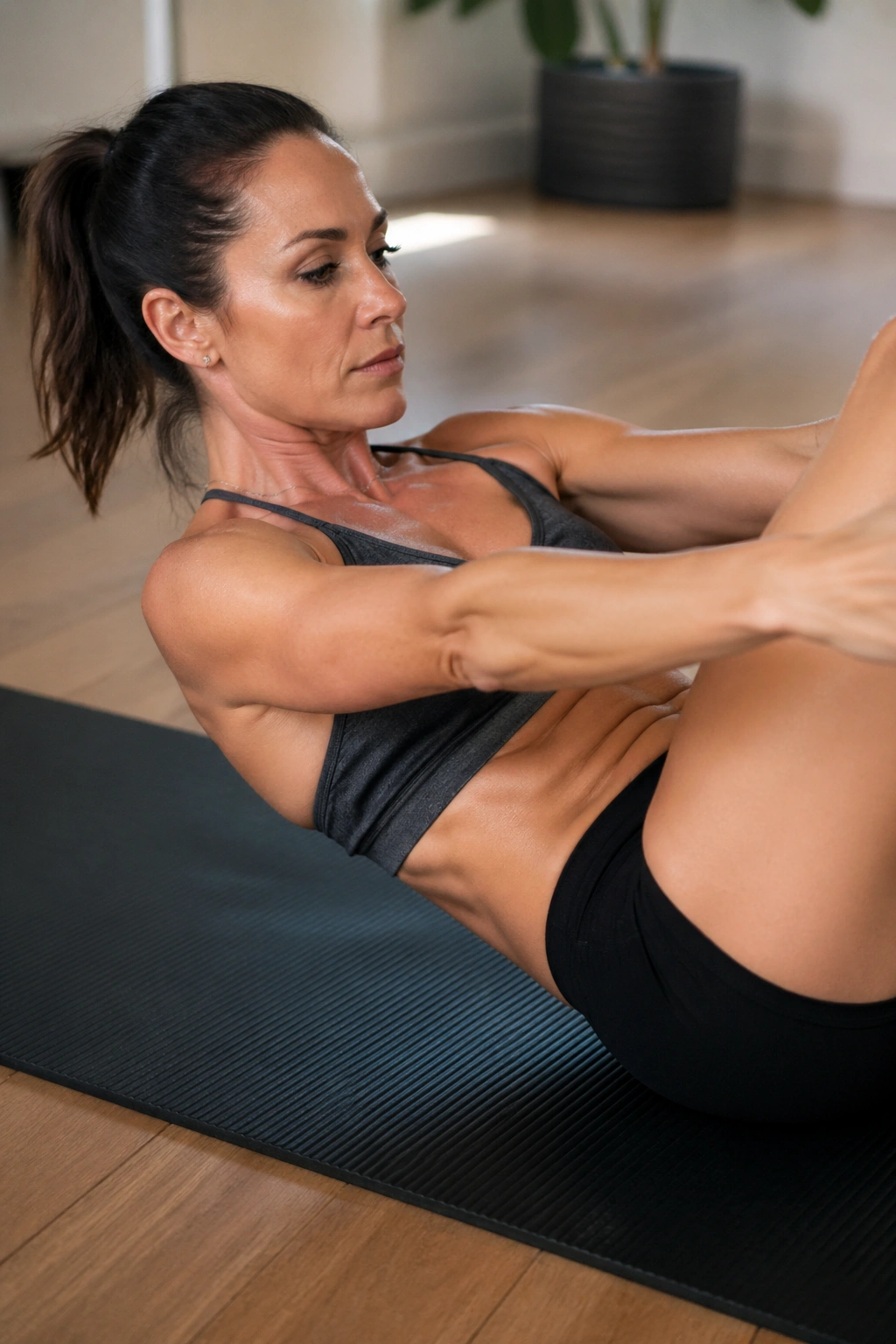
The final variation involves lifting the head and chest as high as possible—think of the “Hundred” position. You aren’t just hovering the shoulder blades; you are curling the upper torso until your ribcage is practically touching your pelvis.
The Rib-to-Hip Connection
This movement is designed to shorten the rectus abdominis. By curling up higher, you are forcing the muscle to contract to its shortest, strongest point. It is exhausting, but it is the most effective way to carve out the upper abs.
Breathing Technique
With such a deep contraction, breathing becomes difficult. You will have to take shorter, sharper breaths. This is fine. Just ensure you are still exhaling deeply enough to empty the lungs. You want that vacuum sensation in your belly; that is where the real work happens.
Final Thoughts
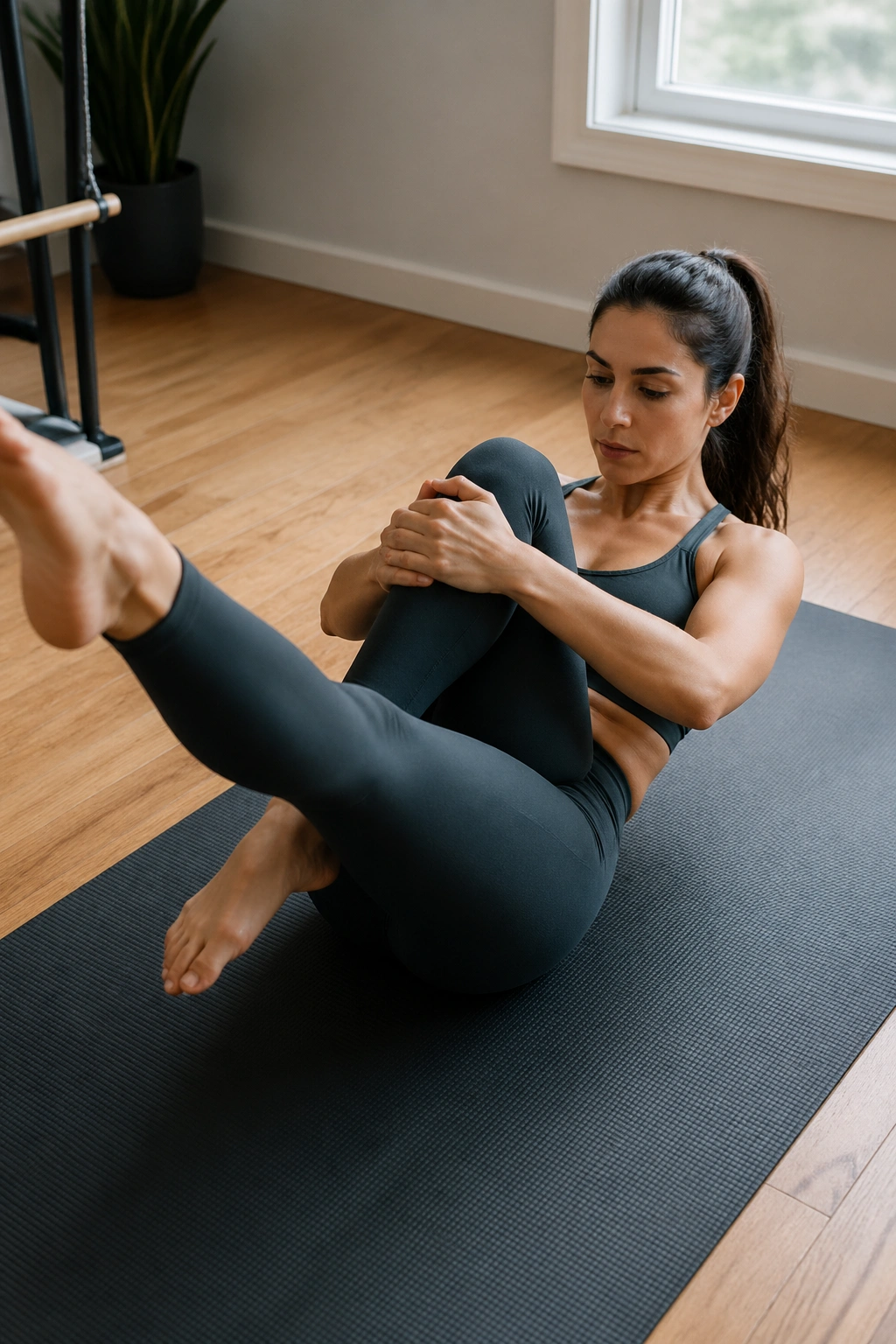
The Single Leg Stretch is a deceptively simple movement, but it is a lifetime practice. You can do it for ten years and still find a new way to challenge yourself, whether that’s by slowing down the tempo, adding a prop, or just being more honest with your form. Do not rush through these variations. Pick one that feels accessible today and focus on the sensation in your abdominals rather than the number of repetitions.
Your core is not just a muscle group to be “worked out”; it is the center of your movement, your balance, and your posture. Treat these variations as a way to listen to your body. Some days you will need the support of the head-down variation, and other days you will be ready for the hover. That is the beauty of this discipline. Listen to the feedback, respect your limitations, and keep moving with intention.
