



A 28-day Pilates challenge works best when the early sessions feel almost too easy. If you jump straight into long teaser holds and shaky planks, your neck and hip flexors start doing all the work, and the whole month turns into a fight you did not need to start.
What actually works is a slow climb: breath, pelvic control, glutes, spinal articulation, then the harder stuff. Pilates rewards precision, not noise, and a 20-minute mat session done cleanly will do more for your body than a sloppy 45-minute grind that leaves your lower back annoyed.
This lineup keeps that rhythm. The first days build trust with your spine and pelvis, the middle days ask more from your core and hips, and the final stretch ties everything together so you finish stronger instead of just tired. A mat is enough for the whole thing; a small ball or mini band can make a few sessions more interesting, but they are optional.
1. Breath-Led Reset and Pelvic Curl
Start on your back and keep the first day almost insultingly simple. That is the point. You are teaching your ribs, pelvis, and deep abdominals to stop fighting each other.
Why It Belongs First
A pelvic curl wakes up the back of the body without jarring your joints. It also gives you one of the cleanest clues in Pilates: if the movement feels smooth, your center is doing its job; if it feels clunky, something else is taking over.
- 5 slow breaths with knees bent
- 8 pelvic curls
- 6 chest lifts with one hand behind the head
- 8 toe taps, one leg at a time
- 5 seconds of rest between each round
Tip: Keep the ribs heavy on the mat. If they pop up, shorten the range and move slower.
2. Hundred Prep and Tabletop Holds
Can a workout that barely moves still leave you warm? Absolutely. The hundred prep does that sneaky Pilates thing where the burn shows up a minute late and then refuses to leave.
Hold tabletop, pump the arms, and keep the breath steady. Do not chase speed. If your neck starts bracing, lower the head and keep the shoulders soft; the abs can still do their job without you grimacing through it.
Try 3 rounds of 20 arm pumps, then 10 seconds of rest. Add toe taps if your lower back stays quiet. If the back arches or the hip flexors grab, go back to the simpler version and stay there for another day.
3. Glute Bridge Ladder and Side-Lying Legs
The first time your glutes really switch on in Pilates, you feel it when you stand up later. That is a good sign. It means the work got where it was supposed to go instead of dumping into your lower back.
This session uses a bridge ladder: 6 slow curls up, 6 pulses at the top, 6 marches, then a roll-down. After that, flip to your side for leg lifts and small circles. Tiny circles are not a joke. They light up the outer hip fast when you keep the pelvis still.
- 6 bridge lifts
- 6 bridge pulses
- 6 bridge marches
- 10 side-lying leg lifts per side
- 8 small circles each direction
4. Roll-Up and Spine Stretch Forward
A roll-up looks graceful until your abs start negotiating with your hip flexors. Then it gets honest. That honesty is useful, because the movement tells you exactly how much control you have through the middle of the body.
What To Focus On
Keep the legs heavy and the arms long. Roll one vertebra at a time, then reverse the path on the way down. If you fling yourself up, you miss the point and usually tug the neck along for the ride.
A Clean Mini Sequence
- 5 roll-ups with bent knees if needed
- 6 spine stretch forwards
- 4 half roll-backs
- 3 controlled pauses at the bottom
- 20 seconds of rest between rounds
The goal is smooth spinal articulation, not a race to touch your toes. Slow is harder.
5. Dead Bug Toe Taps and Neck-Safe Core
If your neck tends to complain, this is one of the smartest workouts in the whole challenge. Dead bug toe taps keep the trunk busy while letting the head rest, which sounds boring until you feel how hard the abs have to work to keep the pelvis still.
Exhale as one foot taps down. Inhale to return. Keep the low back neutral or lightly imprinted, depending on what feels better in your body. No dramatic arching. No frantic speed.
A clean version looks like this: 8 toe taps each side, 6 slow leg extensions, then 30 seconds of rest. If you want more, repeat the round. If your back starts to shimmy, shrink the range and make the exhale longer.
6. Swan Prep and Upper-Back Opening
Why spend a full day on back extension? Because so many people live in a forward-folded shape all day that their upper back forgets how to move. Swan prep opens that area without asking you to throw your spine into a big backbend.
Lift the chest a few inches, keep the pubic bone grounded, and let the neck stay long. The movement should feel like space between the shoulder blades, not a crunch in the lower back. If the shoulders creep toward the ears, stop and reset.
How To Build It
- 6 swan prep lifts
- 6 arm reaches with the forehead down
- 4 holds of 10 seconds
- 8 gentle shoulder rolls between sets
The payoff is posture. Not fake “stand up straight” posture. Better posture — the kind that actually feels easier to hold.
7. Clamshells, Side Kicks, and Hip Stability
Side-lying work belongs earlier in the month than most people expect. The outer hips are boring until they start failing you on stairs, lunges, and single-leg balance.
Clamshells warm up the glute medius, side kicks teach the leg to move without twisting the pelvis, and a lifted top leg makes your waistline work too. Keep the hips stacked. If you roll backward, the exercise gets easier and less useful.
- 12 clamshells each side
- 10 side kicks front and back
- 8 tiny lifts with the leg turned out
- 20 seconds on each side to finish
A mini band can make this day spicy, but bodyweight alone is plenty if you move slowly.
8. Standing Balance and Calf Work
A Pilates challenge should not live only on the mat. Stand up for this one. Your feet, ankles, and calves matter more than people admit, and they show up in nearly every balance exercise that follows.
Try single-leg stands near a wall, heel lifts, and slow rises onto the balls of the feet. Then add a controlled reach of the opposite leg behind you. The wobble is normal. The trick is not to panic and fling the free leg around like a propeller.
Do 3 rounds of 30-second single-leg holds, 12 heel lifts, and 6 slow reaches per side. If you can keep the toes spread on the standing foot, even better. That tiny detail changes the whole exercise.
9. Single-Leg Stretch and Oblique Control
Single-leg stretch looks simple because it is famous. That fame is misleading. The second one leg extends, the waist has to stop rotating, the ribs have to stay knitted, and the lower back has to stay calm.
Keep your elbows wide and your chin slightly tucked. Exhale on the switch, and make the leg change happen from the center, not from momentum. Fast does not mean strong here.
A good session might be 2 sets of 8 switches, then 8 double-leg stretches if your back stays steady. If the neck gets tired, keep the head down and keep going. That version still counts, and honestly, it is often smarter.
10. Inner-Thigh Squeeze with a Small Ball
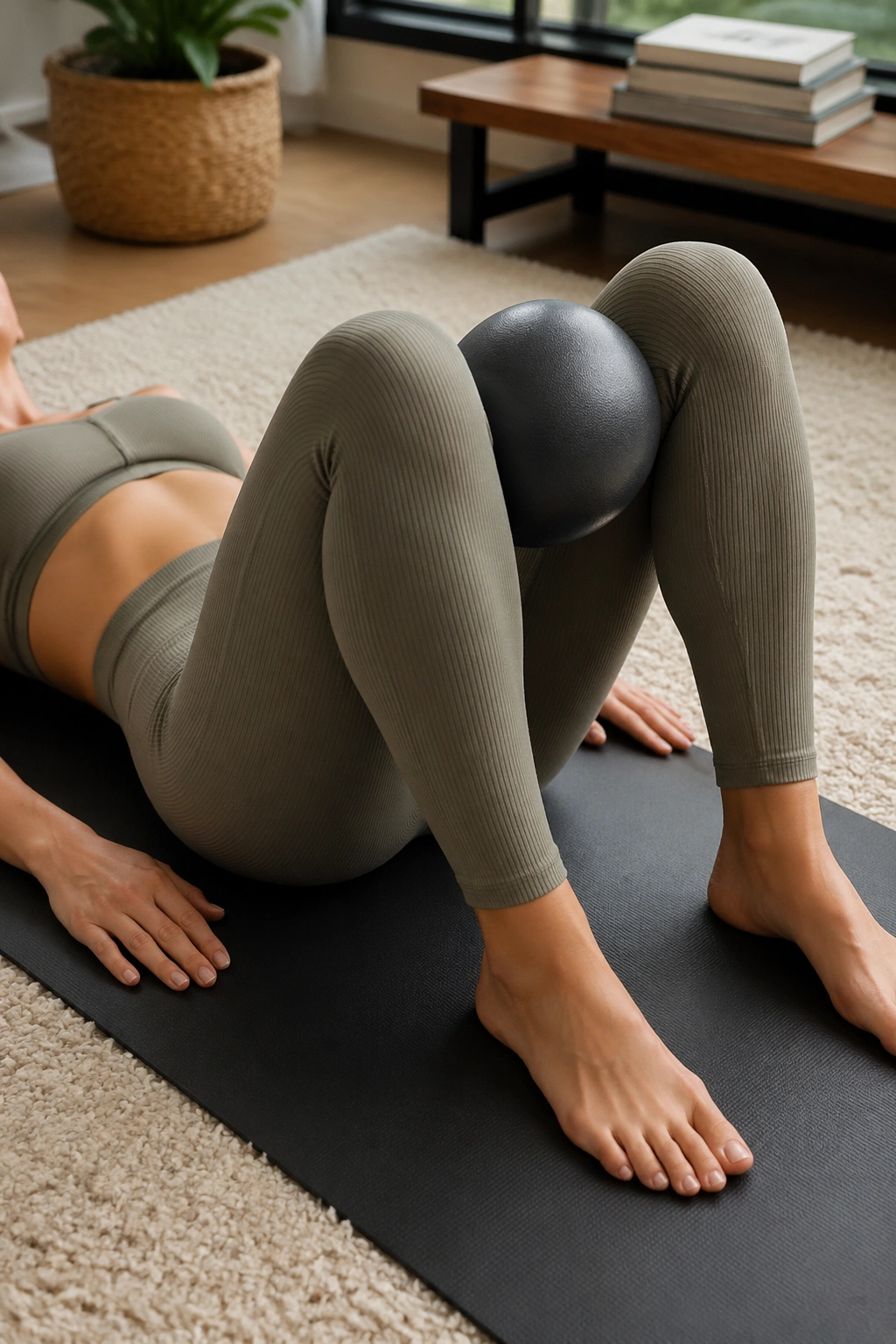
A small ball between the knees can make a “quiet” workout feel surprisingly intense. Inner-thigh work matters because those muscles help stabilize the pelvis, and most people only notice them when they start burning.
Squeeze on the exhale, release on the inhale, and keep the tailbone heavy. If the knees jam inward hard, you are using force instead of control. Gentle pressure is enough. The body reads precision better than brute strength.
A Simple Flow
- 10 squeezes in bridge
- 8 squeezes in tabletop
- 6 slow pulses at the top
- 20-second hold with relaxed shoulders
A pillow works if you do not have a ball. Not fancy. Still useful.
11. Forearm Plank and Shoulder Stability
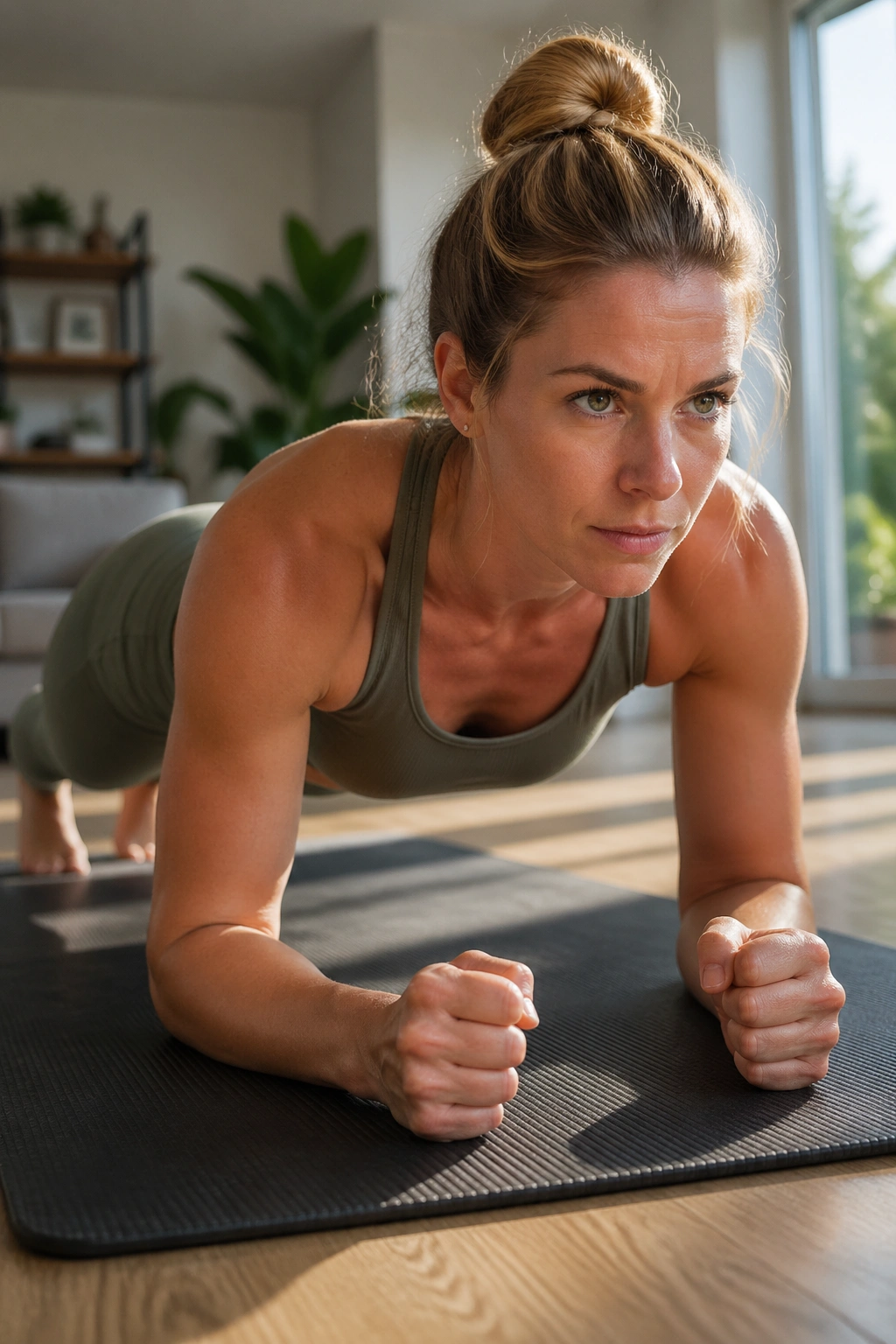
Planks do not need to be long to matter. A clean 20-second plank with good rib control beats a sloppy minute every time, and your shoulders will thank you for that honesty.
Stack the shoulders over the elbows, press the floor away, and keep the back of the neck long. If the belly drops, shorten the hold. If the lower back pinches, stop and reset. This is not the day to prove anything.
Try 4 rounds of 15 to 20 seconds, with 15 seconds of rest. Add knee taps only if the basic hold stays solid. The real goal is a stable shoulder girdle, not a dramatic sweat puddle.
12. Bridge Marches and Hamstring Endurance
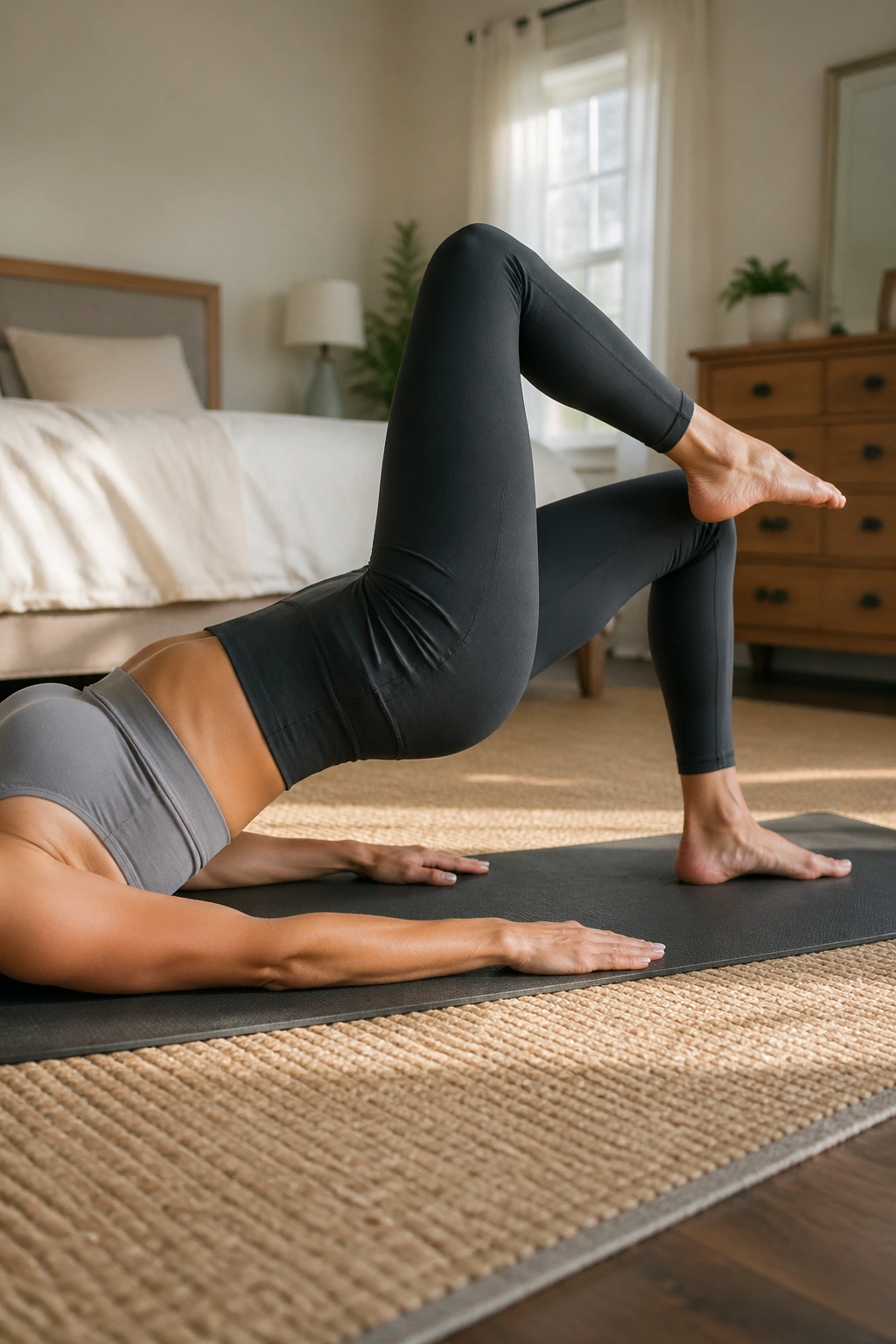
You know a bridge is working when your hamstrings start complaining before your glutes do. That is not failure; it is a clue that the back of the legs needs more time under tension.
Lift into bridge, keep the knees hip-width apart, and march one foot at a time without dropping the pelvis. The hips should stay level. No wobbling side to side. If they shift, make the bridge lower and slower.
- 8 bridge marches
- 8 bridge pulses
- 6 bridge lowers
- 2 rounds total
- 20 seconds rest between rounds
This workout is short, but it gets serious fast. Hamstrings love that kind of work, even if they pretend otherwise.
13. Side Plank and Waist Lift
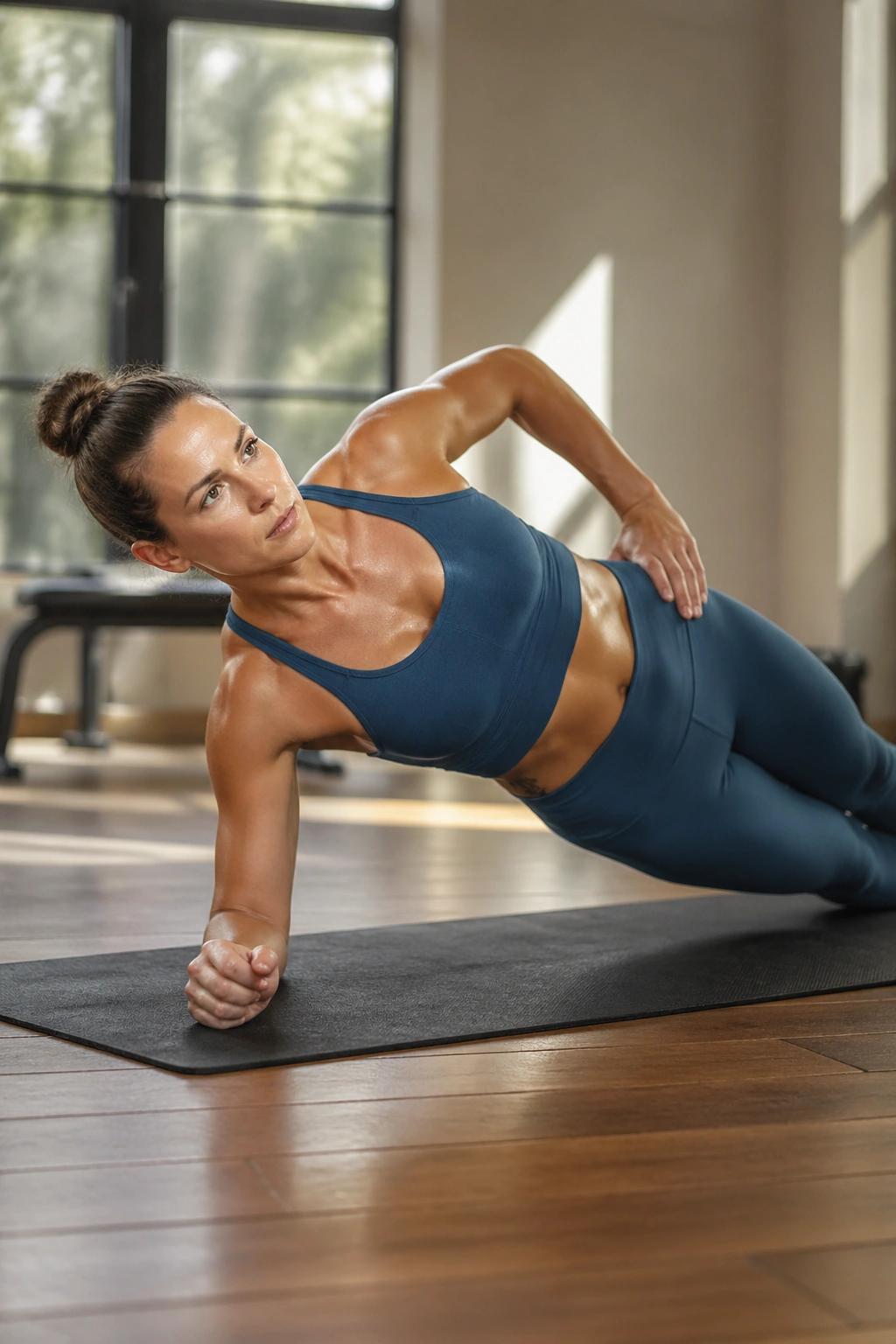
Side plank is where the waist starts telling the truth. You can feel the obliques, the shoulder, and the hip working together — or you can feel them not working together, which is also useful information.
Start with the knee-down version if needed. Lift the hips only as high as you can keep the rib cage from flaring. The top waist should shorten. If the neck tightens, look slightly down and keep the shoulders away from the ears.
How To Use It
- 3 holds per side
- 15 to 25 seconds each
- 6 hip lifts if you need movement
- Finish with a 10-second side bend stretch
This is one of those days where a smaller shape is often the better shape.
14. Full-Body Mat Circuit
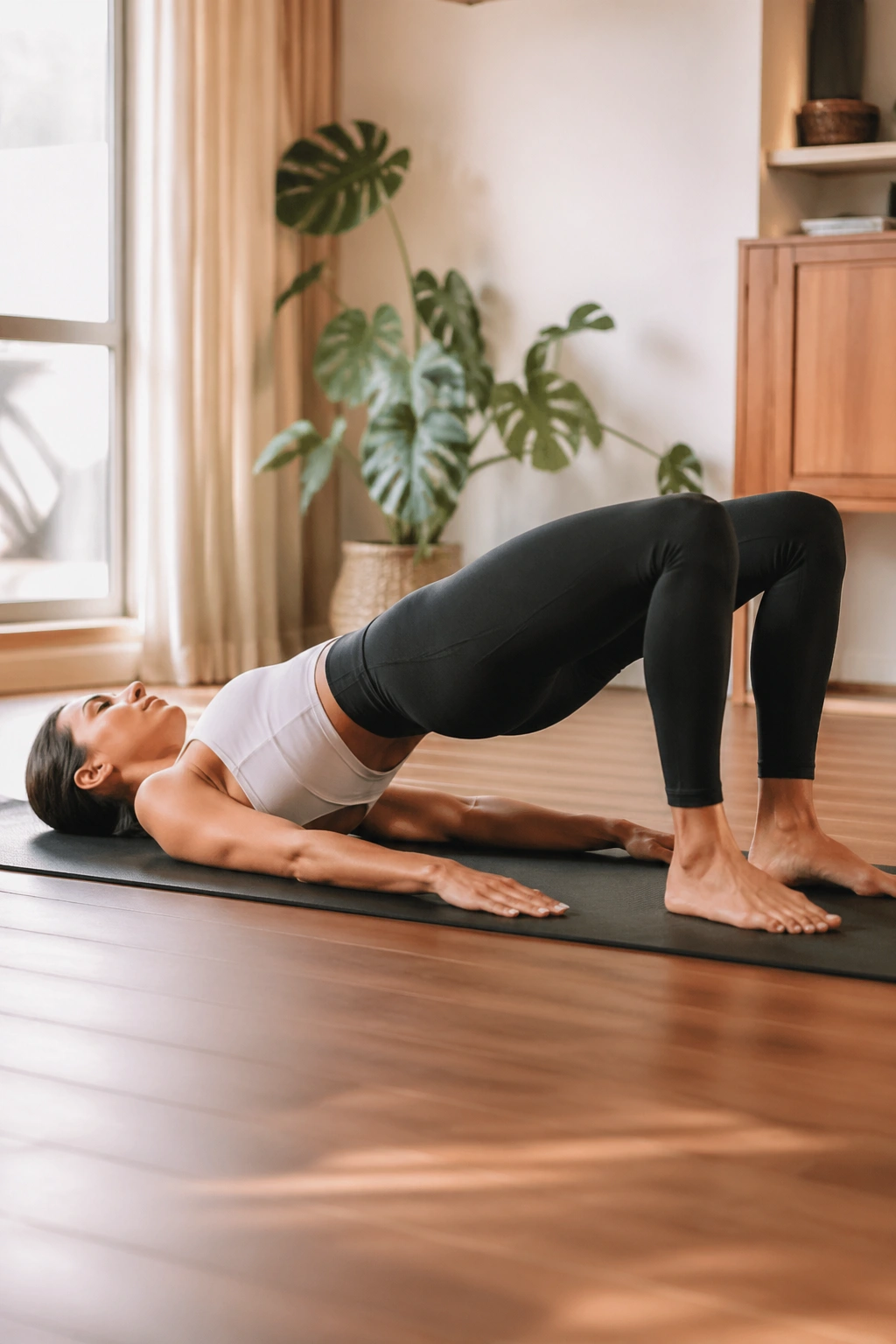
A good full-body Pilates circuit feels like a tidy mess: a little core, a little glute, a little spine work, and enough transitions to keep you honest. No single move gets to dominate, which is exactly why the session works.
Move from bridge to hundred prep, then into single-leg stretch, swan prep, and side-lying kicks. Keep each station short. Thirty to forty seconds per exercise is enough if your form stays tight.
Sample Round
- 40 seconds bridge
- 30 seconds hundred prep
- 40 seconds single-leg stretch
- 30 seconds swan prep
- 40 seconds side kicks
- 30 seconds rest
Do 2 to 3 rounds. The body starts feeling integrated instead of split into parts.
15. Teaser Prep and Hollow Hold
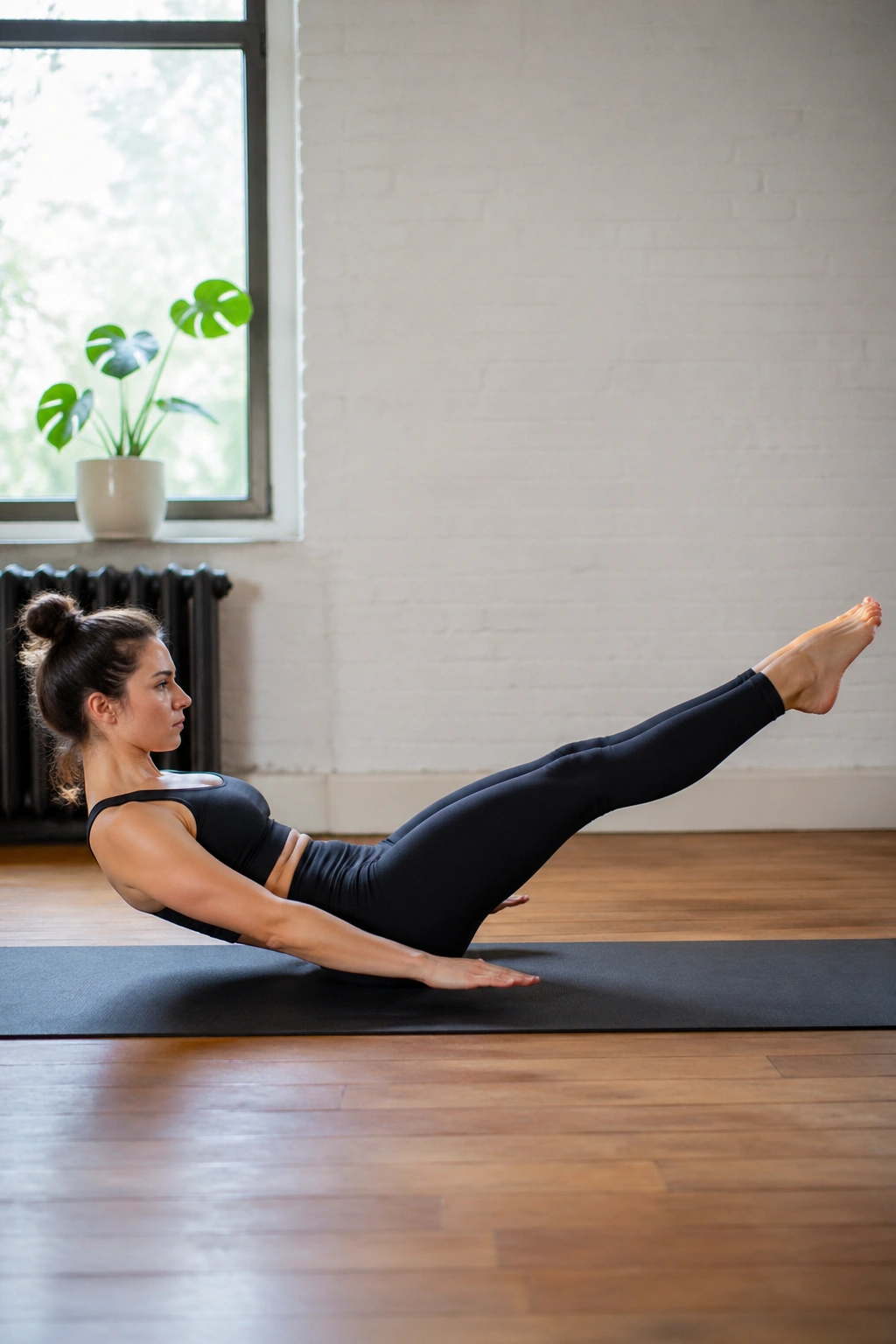
Teaser prep asks for patience. Full teaser is flashy, sure, but the real work happens in the setup: the roll-back, the pause, the control of the legs as they hover.
Can you hold a hollow shape without gripping your jaw? That is the better question. Keep the lower ribs anchored, reach long through the heels, and use the exhale to hold the shape together. If the hip flexors scream, bend the knees.
A smart version is 5 roll-backs, 5 one-leg teaser preps, and 10-second hollow holds. Then stop before the form gets sloppy. This workout should feel exact, not heroic.
16. Mini Band Leg Burn and Seat Work
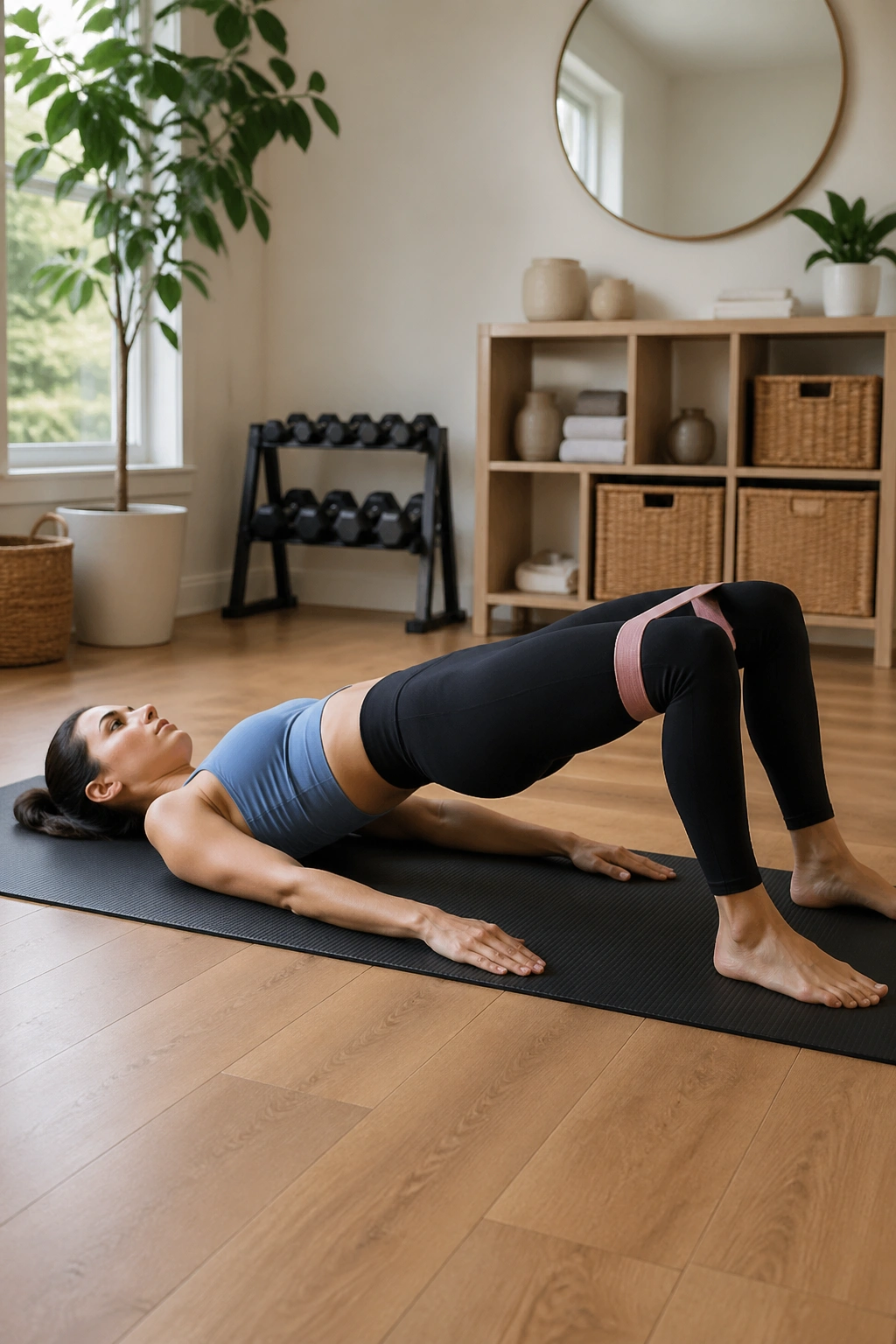
A mini band changes the mood fast. The outer hips and glutes have to work against constant pressure, and the legwork gets a lot more honest than it looks on paper.
Place the band above the knees or at the ankles and keep the pelvis quiet. Move through bridge abductions, side steps, and standing kickbacks. The band should resist you, not yank you around. If it does, the band is probably too tight for the exercise you picked.
Best Moves for This Day
- 10 bridge abductions
- 8 side steps each direction
- 10 standing kickbacks each side
- 6 slow pulse squats if your knees feel good
The burn arrives early. That is normal. Breathe through it and keep the range small.
17. Mobility and Recovery Flow
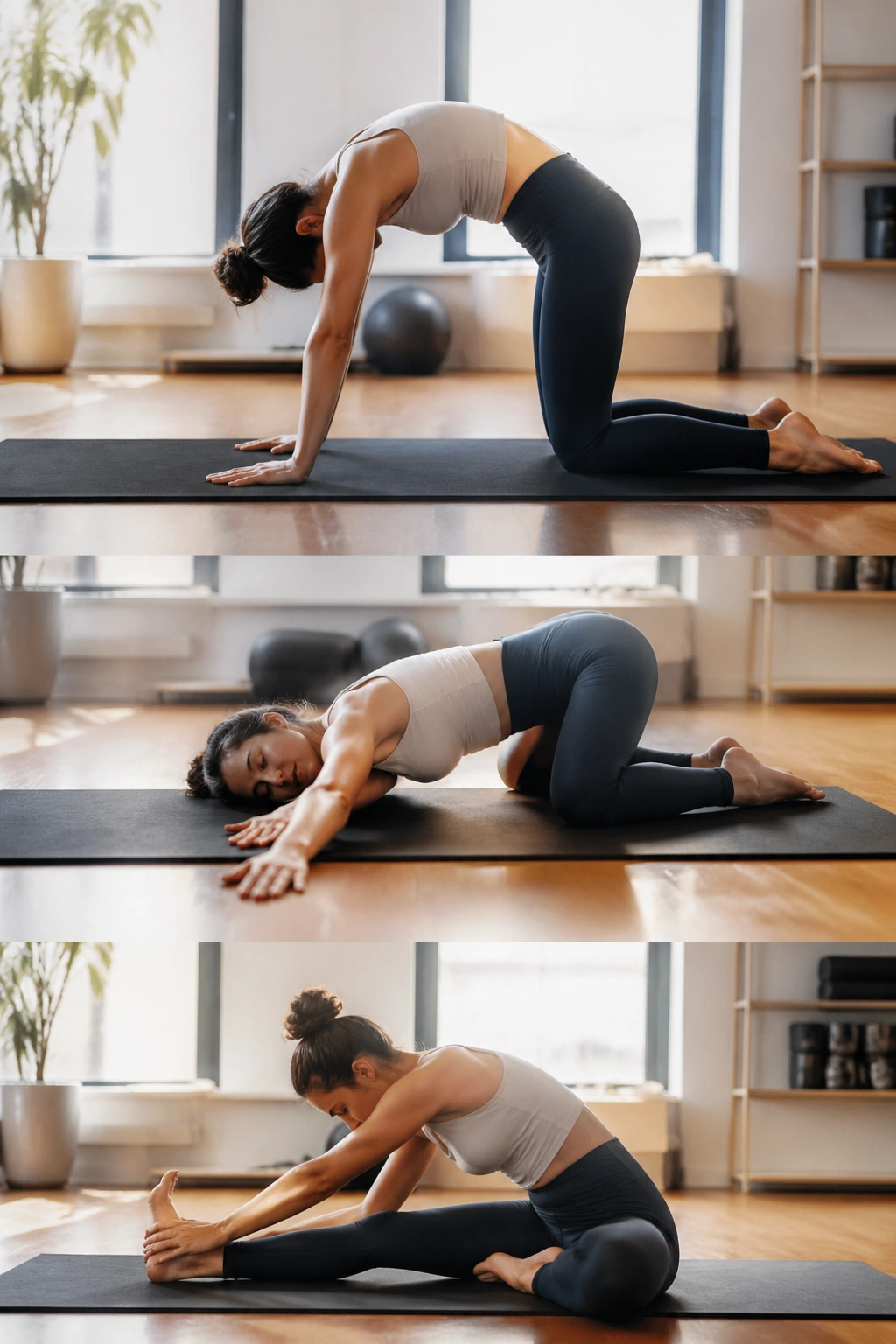
Not every day needs to feel like a test. A recovery session in a Pilates challenge keeps your hips, spine, and shoulders from locking up, which makes the harder days better.
Use cat-cow, thread-the-needle, supine spinal twists, and a long hamstring stretch. Hold each shape for 20 to 40 seconds and let your breath slow down. This is not wasted time. People who skip this day usually pay for it later in the week.
Keep the movement smooth and unhurried. If you feel a pinch anywhere, back off a little and try again. Recovery days work best when you stop trying to “win” them.
18. Standing Abs, Rotation, and Reach
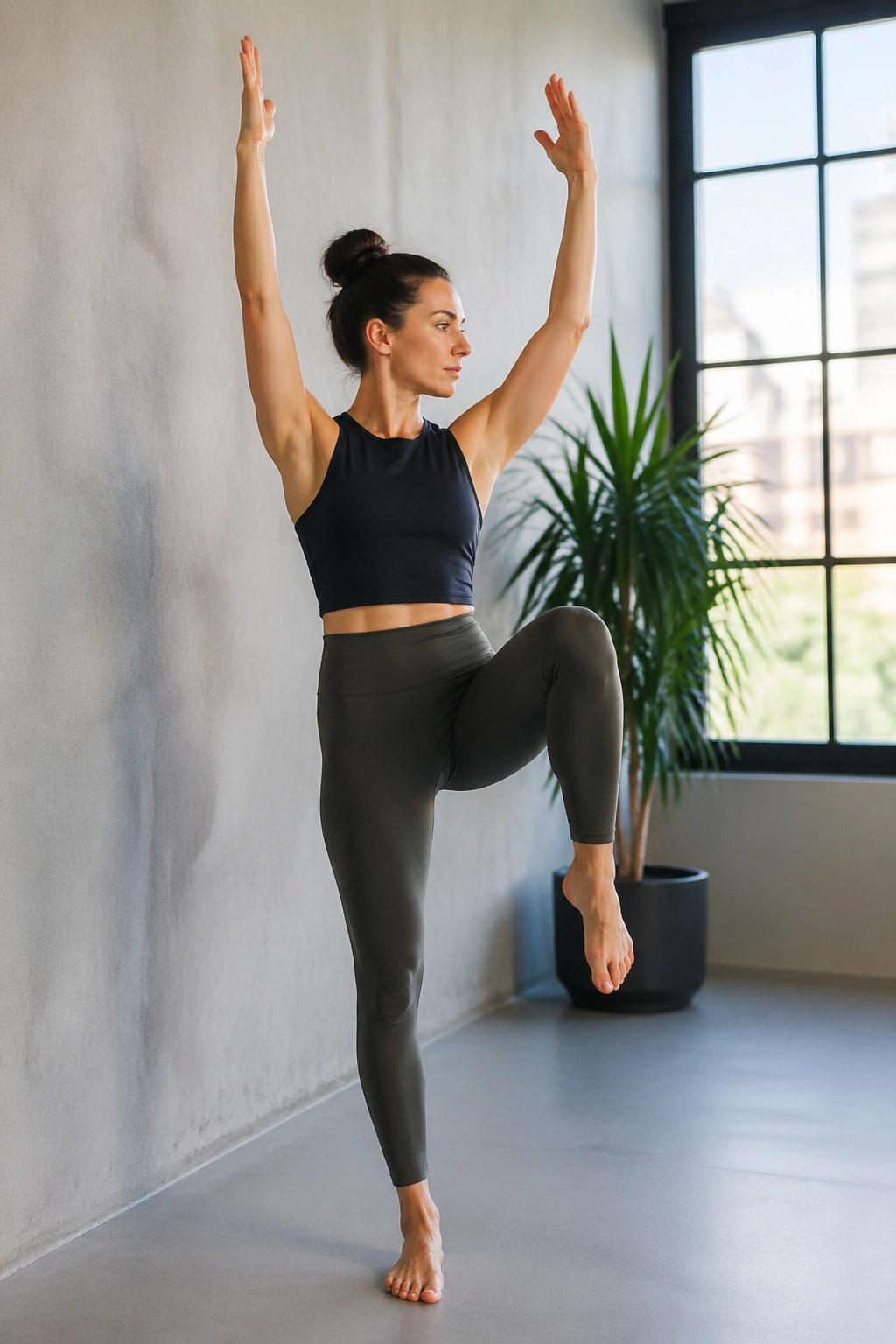
What happens when you pull Pilates off the mat? The answer is a more useful workout than most people expect. Standing abs train balance, coordination, and posture at the same time.
Reach one arm overhead, rotate through the rib cage, then bring the knee across the body with control. Keep the standing foot rooted. The pelvis should stay quiet while the ribs move. If you twist from the hips, the exercise changes shape.
Try 8 reaches per side, 8 knee lifts, and 6 standing crisscrosses. Use a wall nearby if balance gets wobbly. That is not cheating. That is smart setup.
19. Swimming and Back Extension
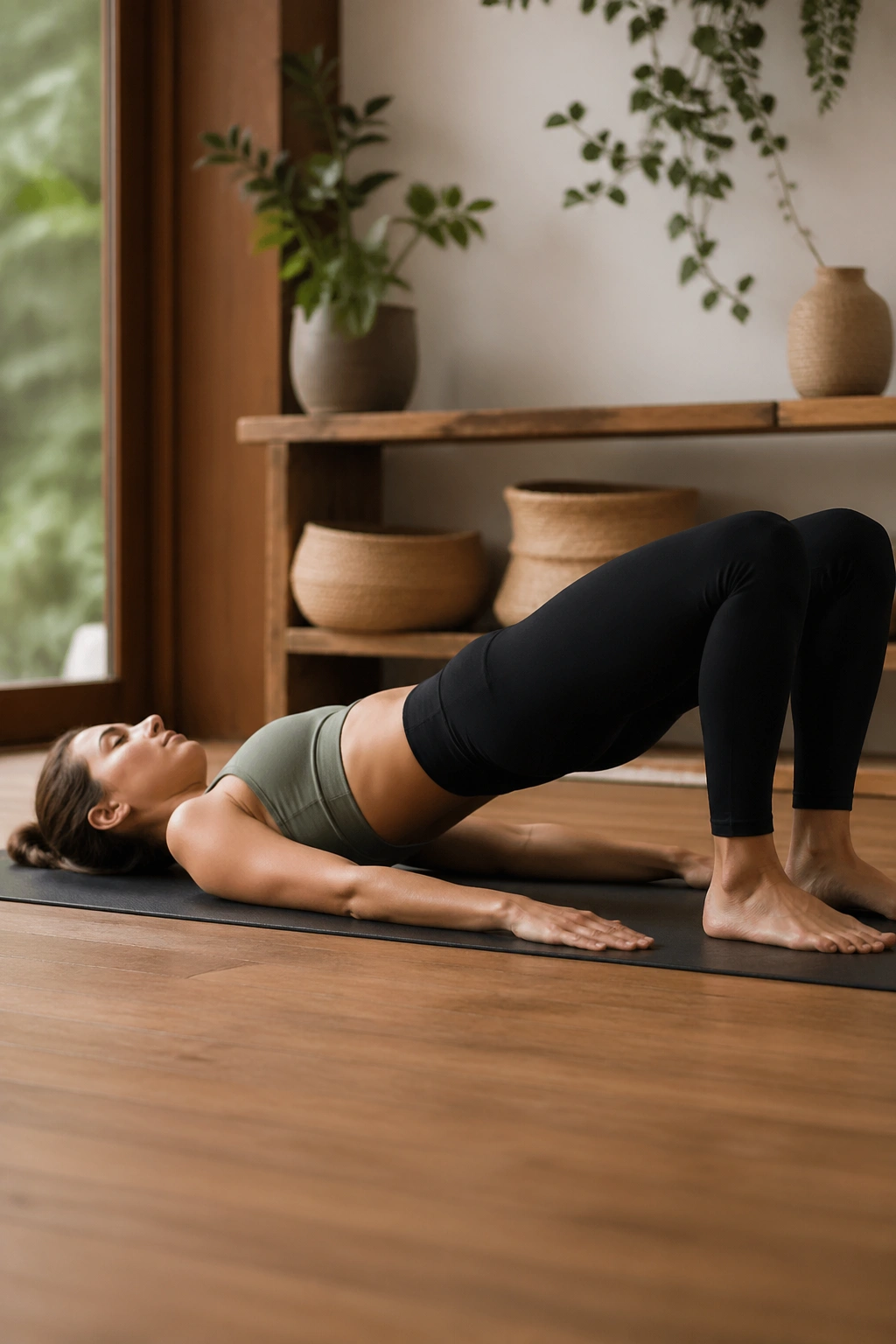
Swimming is one of the best ways to wake up the back body without loading the spine the way heavy backbends can. It is small, fast, and sneaky, which is probably why people underestimate it.
What To Feel
Reach opposite arm and leg long, then switch sides with a quick, clean rhythm. The chest stays slightly lifted, but the neck stays long. If the low back pinches, lower the lift. You want length, not compression.
Set It Up
- 3 rounds of 20 to 30 seconds
- 15 seconds rest between rounds
- 6 slow swan prep lifts after each round
The upper back tends to wake up first, then the glutes join in. That order is exactly what you want.
20. Classic Pilates Flow Combo
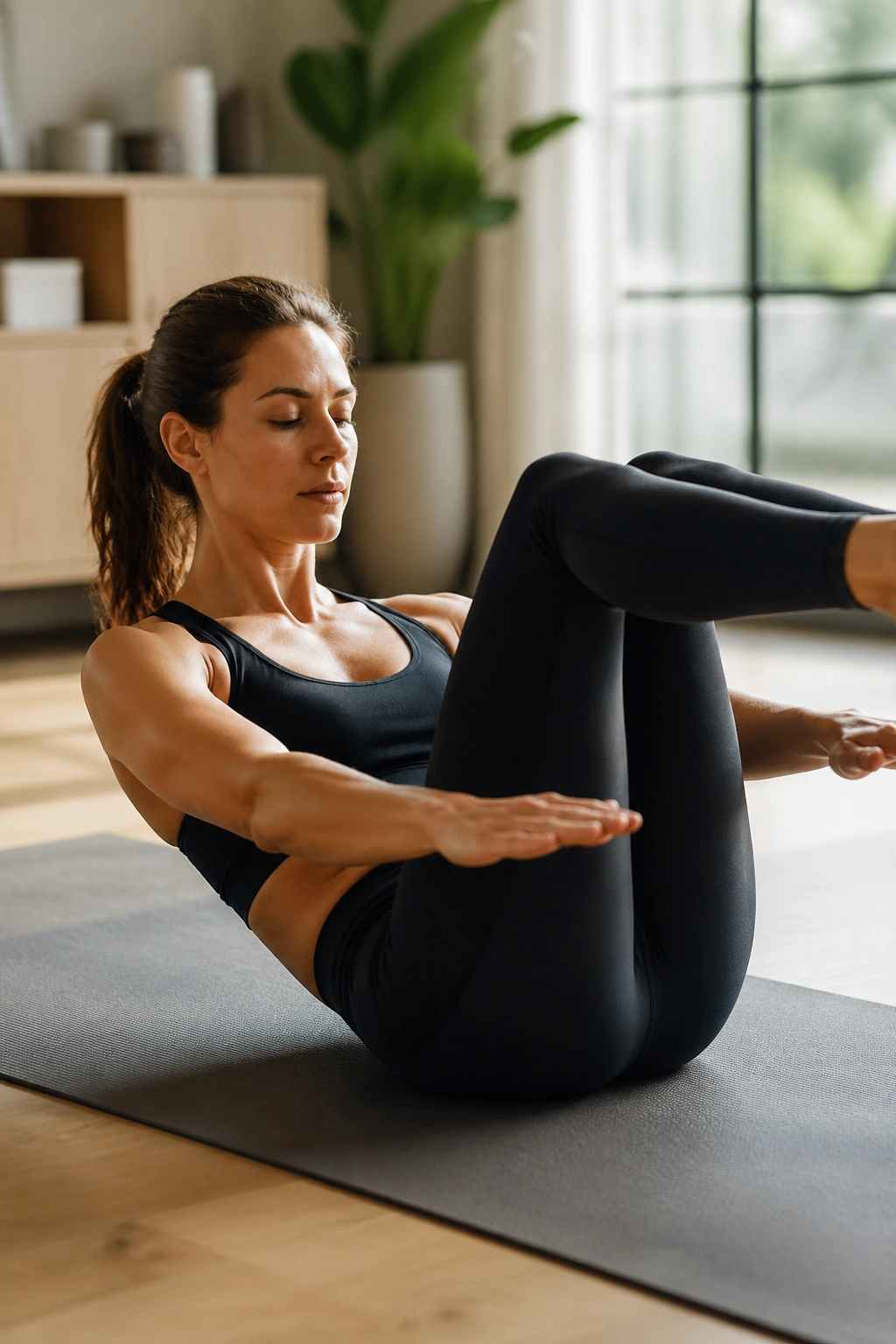
This day has a little old-school flavor. Roll-up, hundred prep, single-leg stretch, bridge, swan, side kicks. The point is not novelty. The point is finding out whether the basics still hold together when you string them in a row.
Unlike a random mash-up of exercises, a classic flow makes transitions matter. Moving from flexion to extension, then to side work, exposes where you rush and where you lose control. That is the real test.
I like this day for people who already know the moves but need a cleaner connection between them. Keep the transitions short, rest only when your form starts to slide, and stop the sequence while you still feel crisp.
21. Deep Core Breathing and Marching
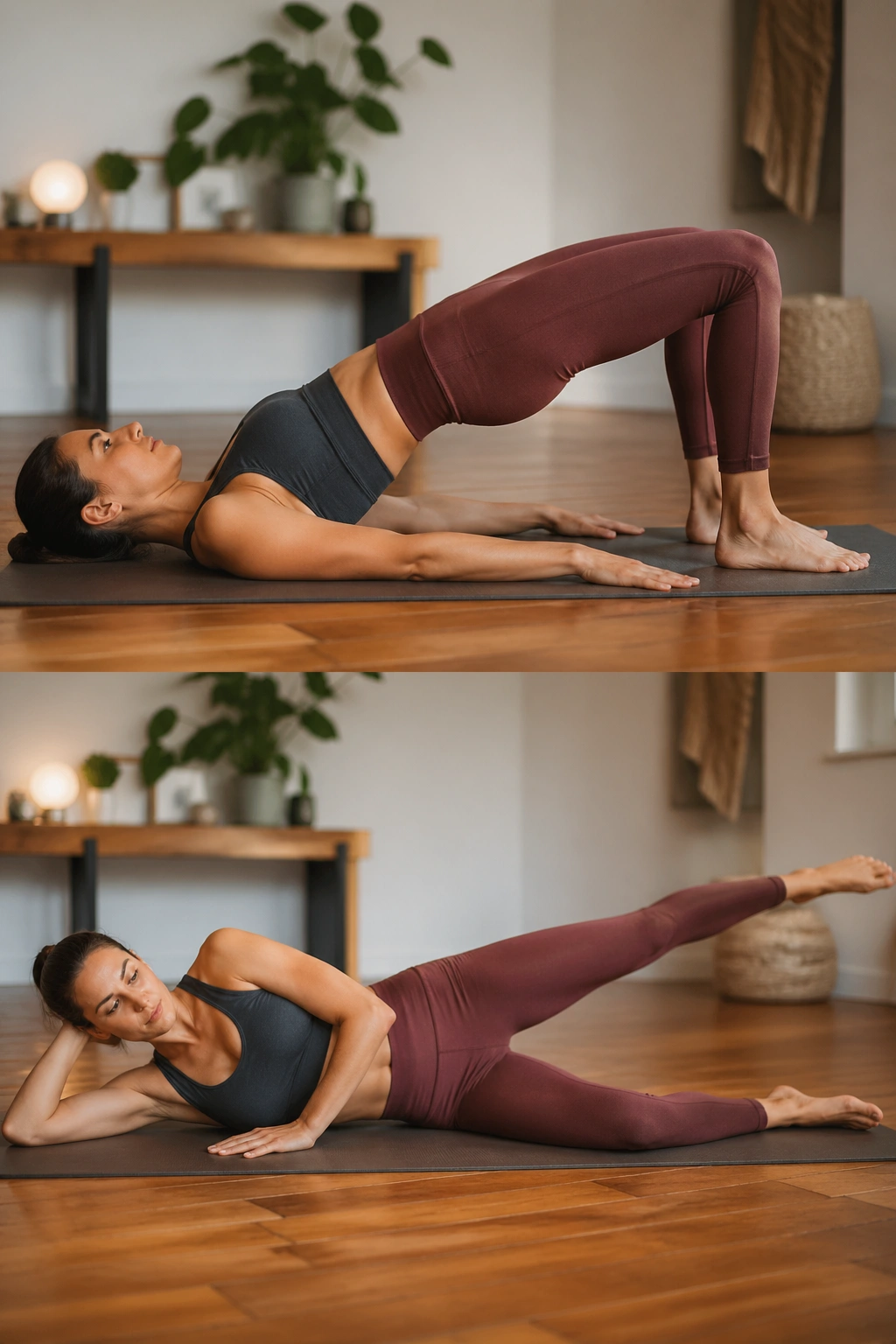
Why does breath show up again this late in the month? Because breathing is not a warm-up trick. It is the thing that keeps the whole system organized when the work gets harder.
Lie on your back, place one hand on the ribs, and exhale long enough to feel the lower belly draw in. Then march one leg at a time without losing that control. If the ribs pop up, the exhale was not long enough.
A strong version is 6 slow breaths, 8 marching reps each side, and 4 dead bug extensions. The numbers are modest on purpose. This workout teaches the body to stay calm while the limbs move, and that lesson carries everywhere.
22. Glute Medius and Hip Stability
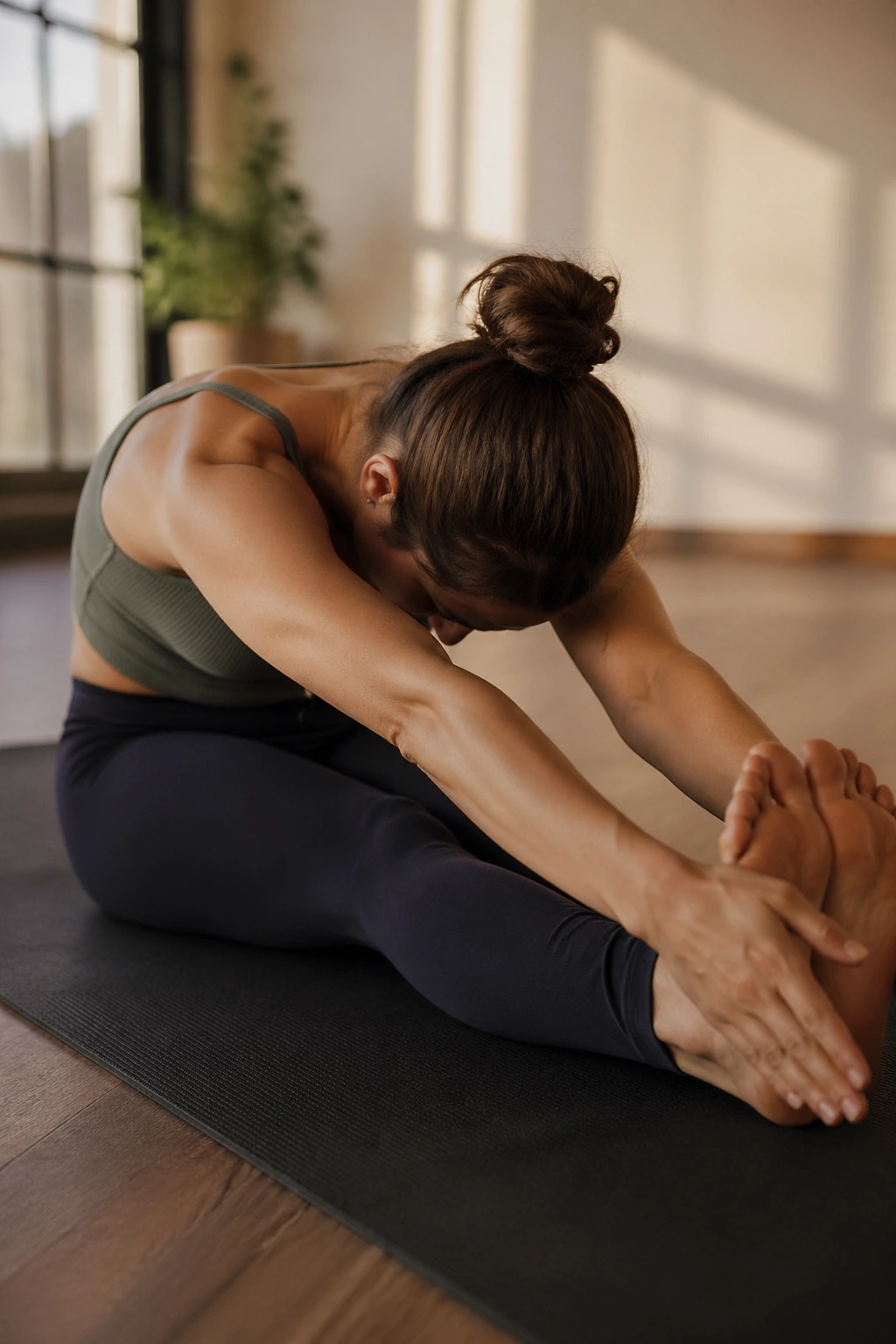
The outer hip does a lot more than people think, especially in single-leg balance, stair climbing, and any standing leg work. When it is weak or lazy, the pelvis shifts and the knees often pay the price.
Use side-lying leg lifts, clamshells, and standing hip abductions. Keep the foot flexed on the lifted leg so the outer hip turns on cleanly. Do not let the waist collapse. That turns a hip exercise into a waist exercise, which is not the same thing.
- 12 clamshells
- 10 side-lying lifts
- 8 standing abductions
- 2 rounds per side
You will feel this in a very specific spot. That is a good sign.
23. Arm Toning Without Neck Tension
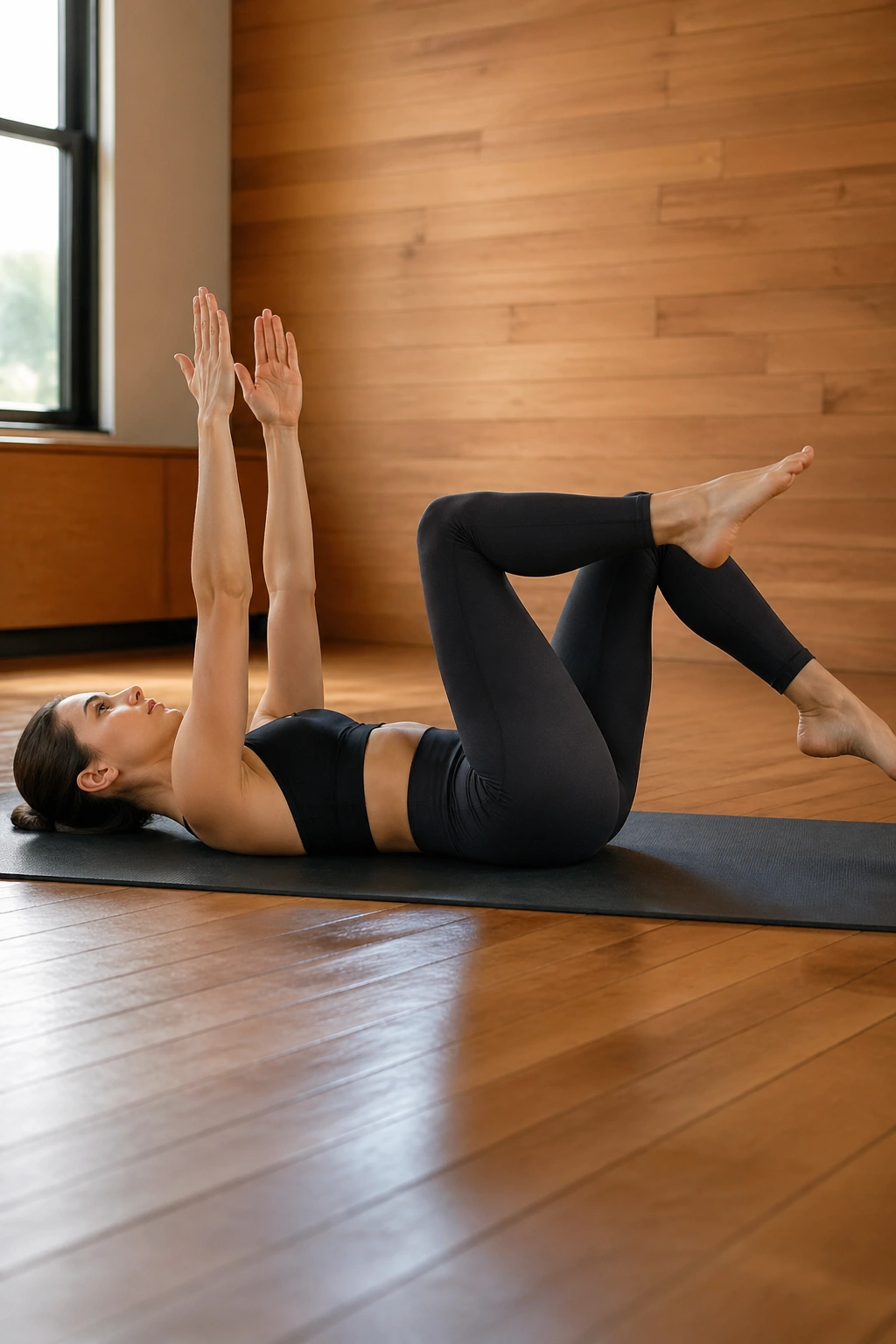
A lot of arm work goes wrong because the shoulders creep up and the neck starts helping. Pilates arm series should do the opposite: long neck, anchored ribs, arms moving from the back and side of the shoulder.
Keep These Cues in Mind
Press the arms into tiny pulses while the chest stays broad. Use light hand weights if you want them, but even without weights, slow arm circles and triceps extensions can sting. Pain in the neck means the range is too big or the shoulders are too high.
Try 20 arm pumps, 10 triceps presses, and 8 small circles forward and back. A mirror helps here. If the shoulders are touching the ears, start over and make the shape smaller.
24. Footwork and Lower-Leg Strength
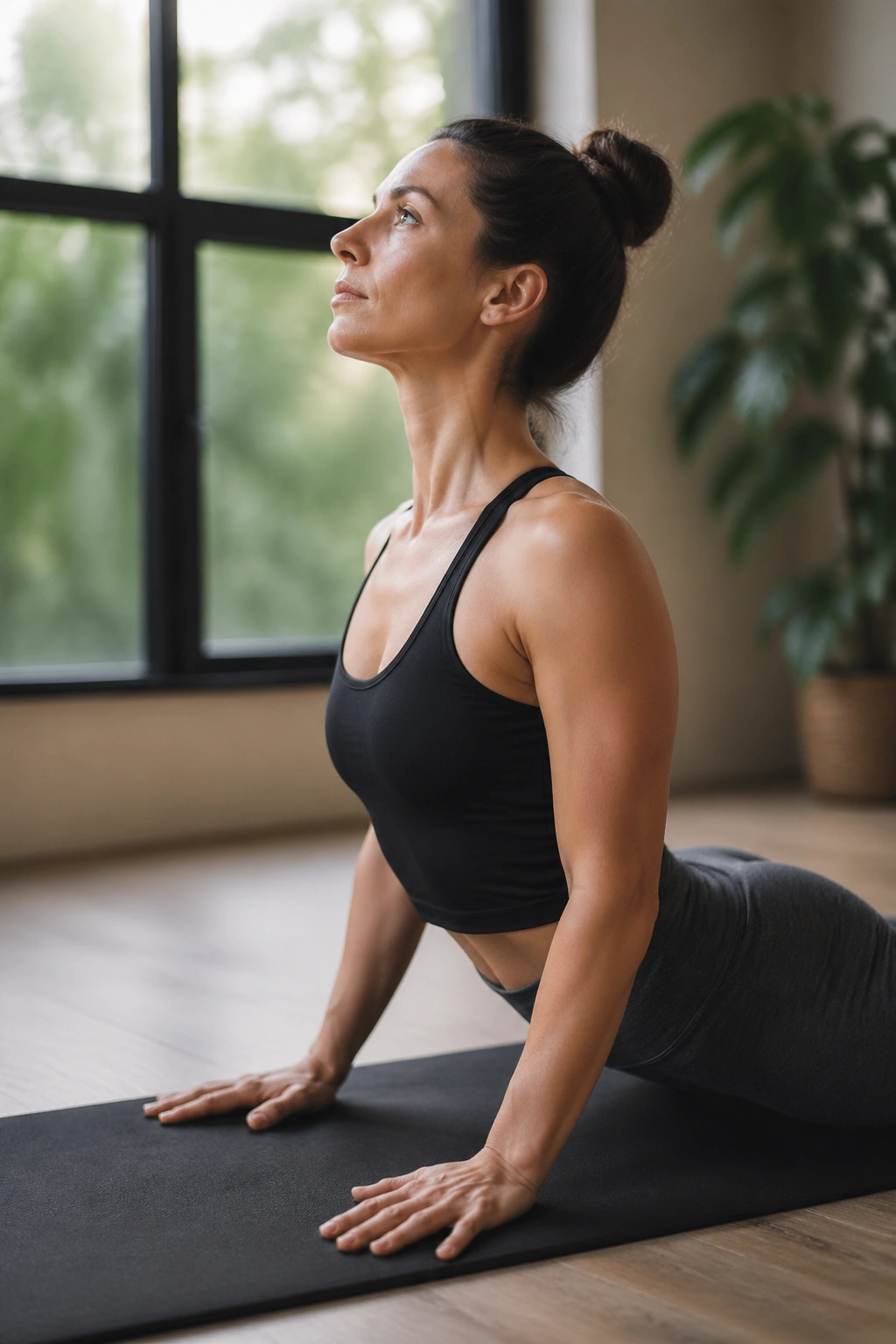
Feet get ignored until they start aching. Pilates footwork gives them a job again, and that matters more than people realize.
Stand in Pilates stance, rise onto the balls of the feet, lower with control, then shift into heel lifts and ankle circles. Keep the toes relaxed but active. If you claw the floor, the calves tighten and the ankles lose range.
This session is short, but it pays off in balance and walking control. Do 12 calf rises, 8 slow ankle circles each direction, and 30 seconds of single-leg standing on each side. A wall is fine. I’d rather see clean support than a shaky hero pose.
25. Rotation, Reach, and Corkscrew Prep
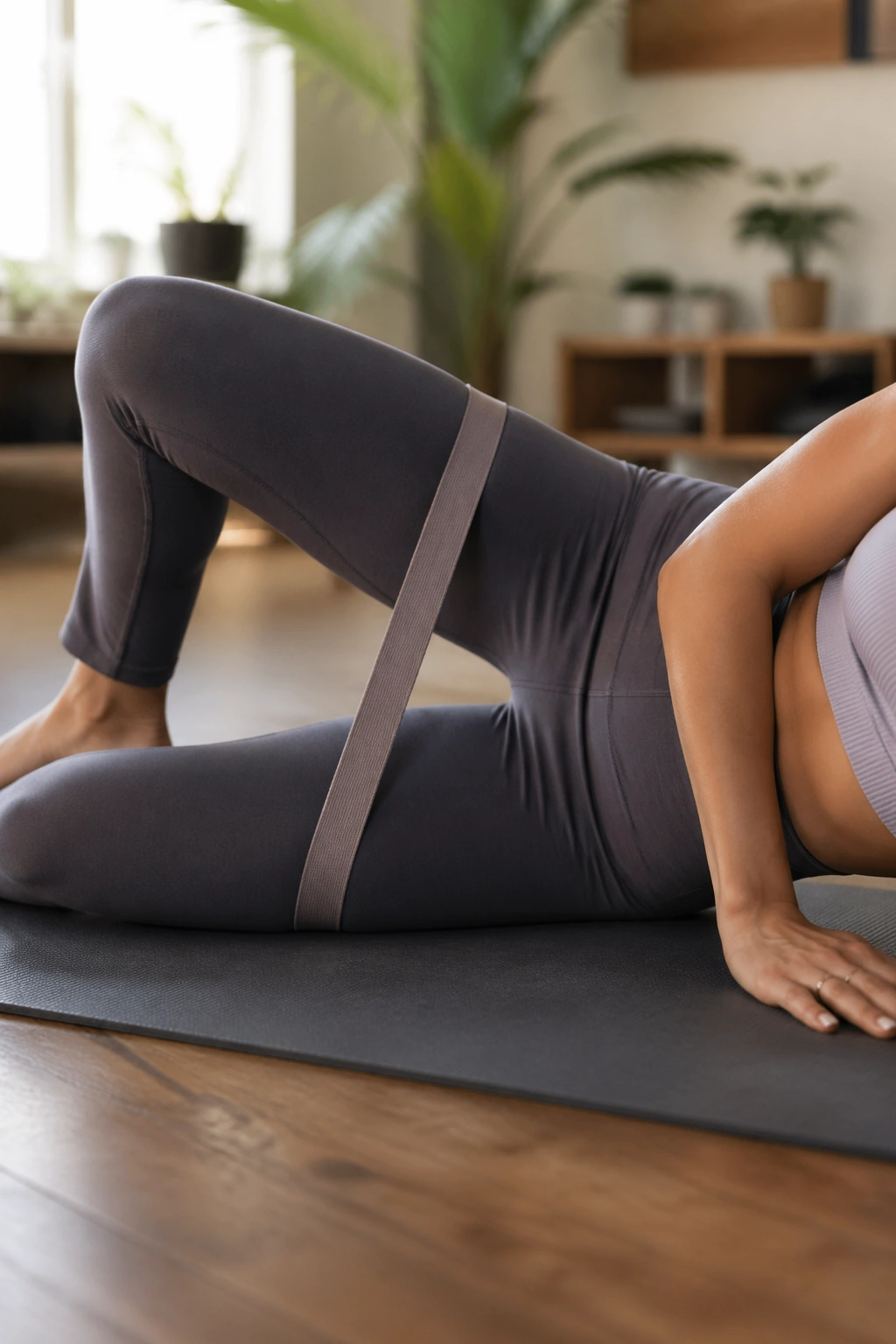
Rotation is where Pilates gets a little mischievous. The body wants to twist from the hips, but the real work is in the ribs and waist. Once that clicks, the movement feels cleaner and more powerful.
Saw, twist, and corkscrew prep all teach that lesson. Keep the pelvis heavy and let the ribs lead. The reach matters as much as the twist. If you only rotate and never lengthen, the spine does not get the full benefit.
A Useful Sequence
- 4 saws each side
- 6 seated twists
- 5 corkscrew prep circles
- 20 seconds of seated breath between rounds
This day feels athletic without turning loud. That balance is what makes it so good.
26. Long Stretch and Decompression
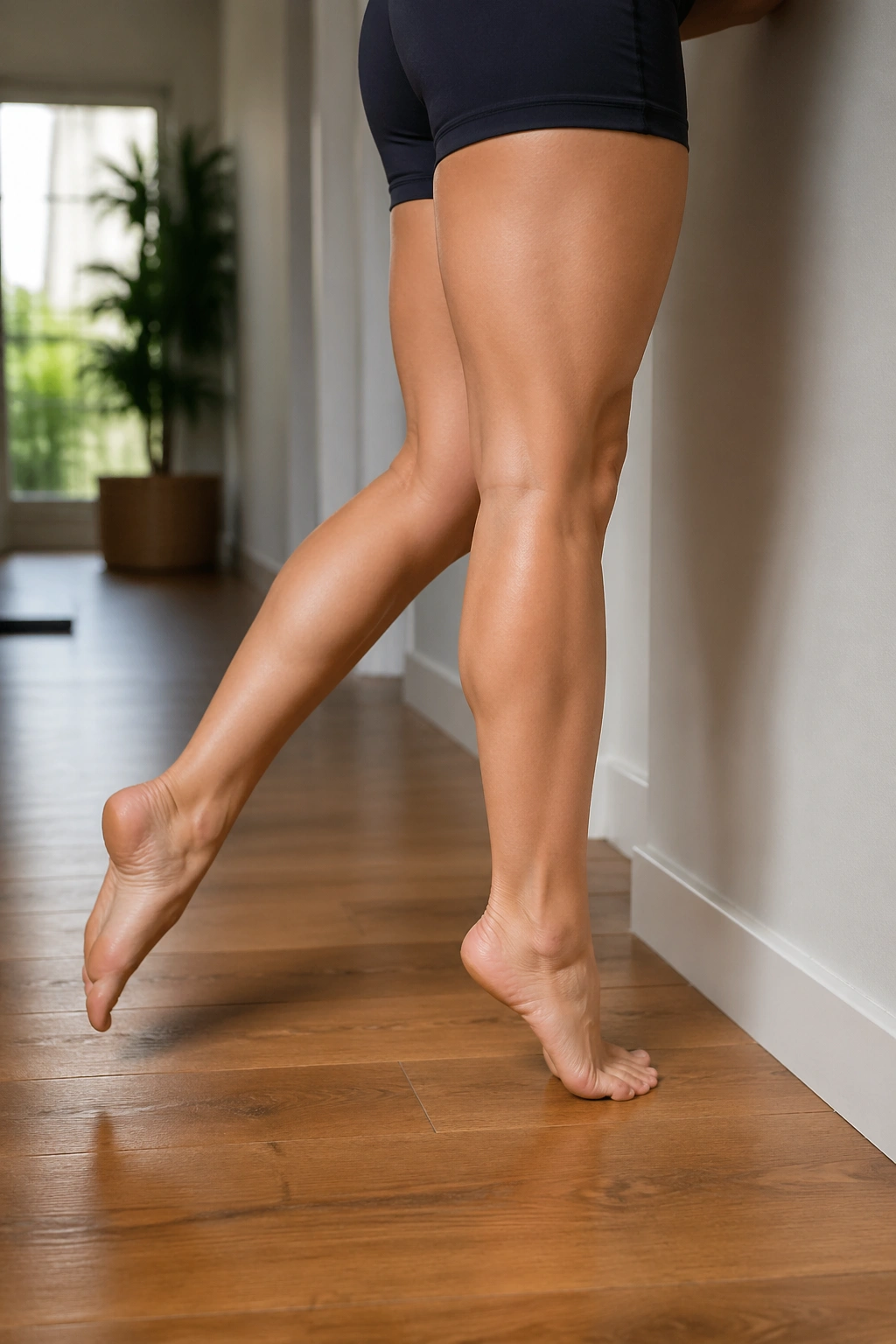
By this point, the body usually wants a little space. Give it some. Long stretch days are where you get to open the hips, lengthen the spine, and let the joints breathe after all the work.
Use child’s pose variations, supine twists, a long hamstring stretch with a strap if you have one, and a gentle chest opener on the mat. Hold each position long enough to feel the muscles soften. Do not force the stretch. The job is release, not drama.
Ten to twelve minutes is enough. Honestly, sometimes that is the best workout in the whole month because it lets the tougher sessions settle into place.
27. Rehearsal Day with Favorite Moves
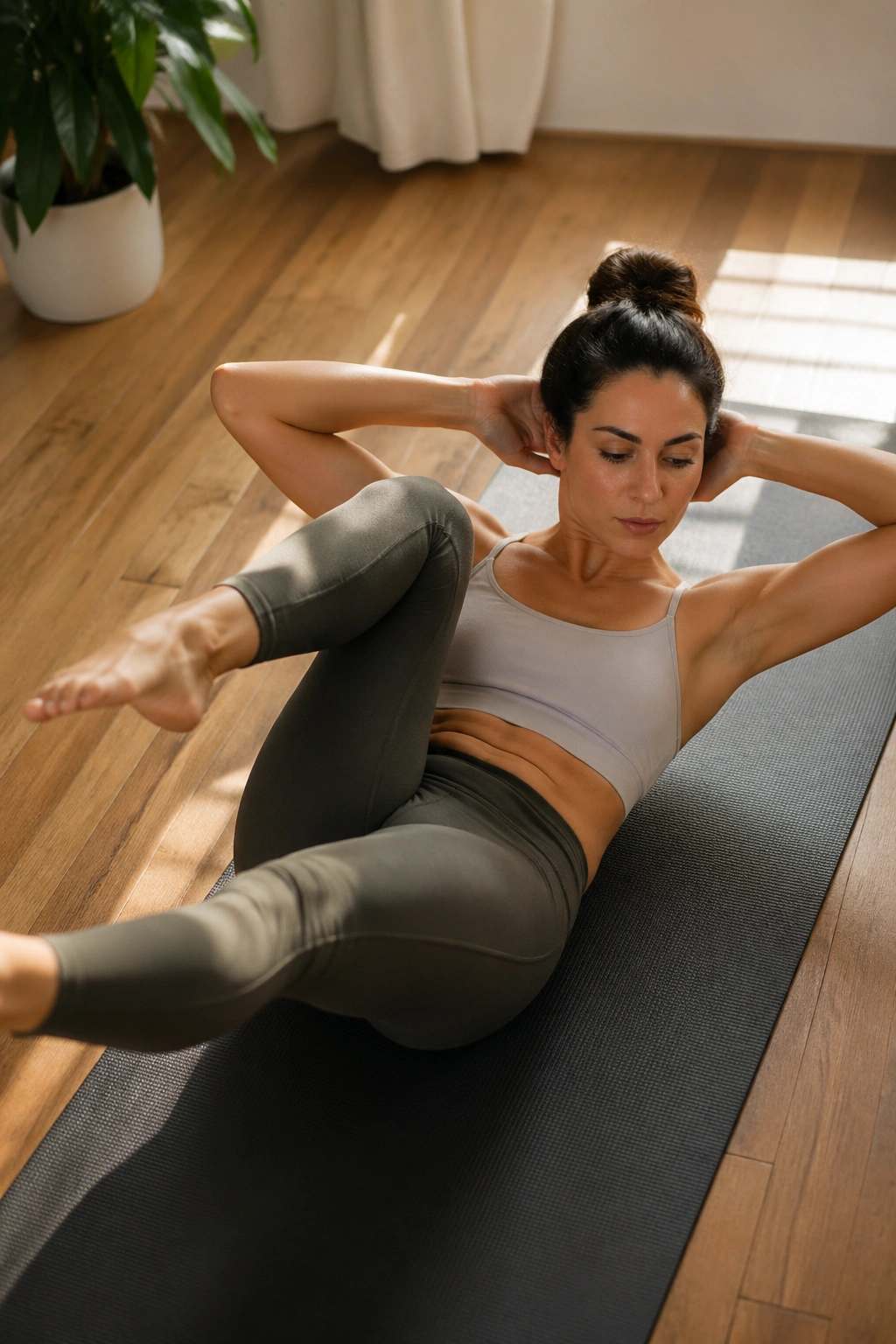
This is the day to revisit the moves that have felt best so far. If bridges made your glutes wake up, keep them. If side planks felt cleaner than crunches, keep those too. A Pilates challenge should earn the right to be repeated.
A rehearsal day is part practice, part check-in. Move through 4 or 5 favorite exercises and pay attention to what feels steadier than it did on day 1. That difference is the point. Not perfection. Better control.
Pick 3 rounds from your best sessions: maybe pelvic curls, single-leg stretch, swan prep, and side kicks. Keep the rest short and sharp. When the form looks cleaner, you know the month is working.
28. Final Flow and Retest
End with a workout that quietly measures progress. Repeat a few early moves — pelvic curl, tabletop hold, a roll-up, a plank, maybe a side series — and notice what changed. The body usually gives away the answer before the mind does.
Try 5 minutes of breath work, 8 pelvic curls, 20 seconds of plank, 6 roll-ups or roll-back prep reps, and a final stretch on the mat. The goal is not to crush yourself on the last day. The goal is to feel more organized than you did on day 1.
If you want a real marker, retest one move that used to shake. Maybe it feels smoother. Maybe it still burns, but less chaotically. That counts.
Finish Strong
A Pilates challenge works best when it builds skill instead of just fatigue. The sessions that look small on paper often turn out to be the ones that change how you move, stand, and breathe.
Keep the recovery days. Keep the days that feel almost too easy. Those are part of the plan, not the break from it. If you repeat this challenge later, start by making day 1 cleaner rather than harder. That habit does more for your body than chasing an extra minute or two ever will.
