



A lot of Pilates shoulder workouts for women fail for the same reason they look tidy in a studio mirror and fall apart the second you actually load them: the arms are moving, but the shoulder blades are along for the ride.
That is the part most people miss. The shoulder joint is tiny, mobile, and a little fussy, so the work has to come from good setup, not from muscling through big shapes with a shrugged neck and a flared rib cage.
If you spend long hours at a desk, carry bags on one side, lift kids, train around an old neck twinge, or just want stronger arms without a bunch of joint pounding, Pilates can be a smart place to start. The best versions do not chase a burn for its own sake. They teach your upper body to stay organized when the shape gets harder.
And that matters. Neck burn is not the goal.
1. Wall Angels With the Ribs Packed Down
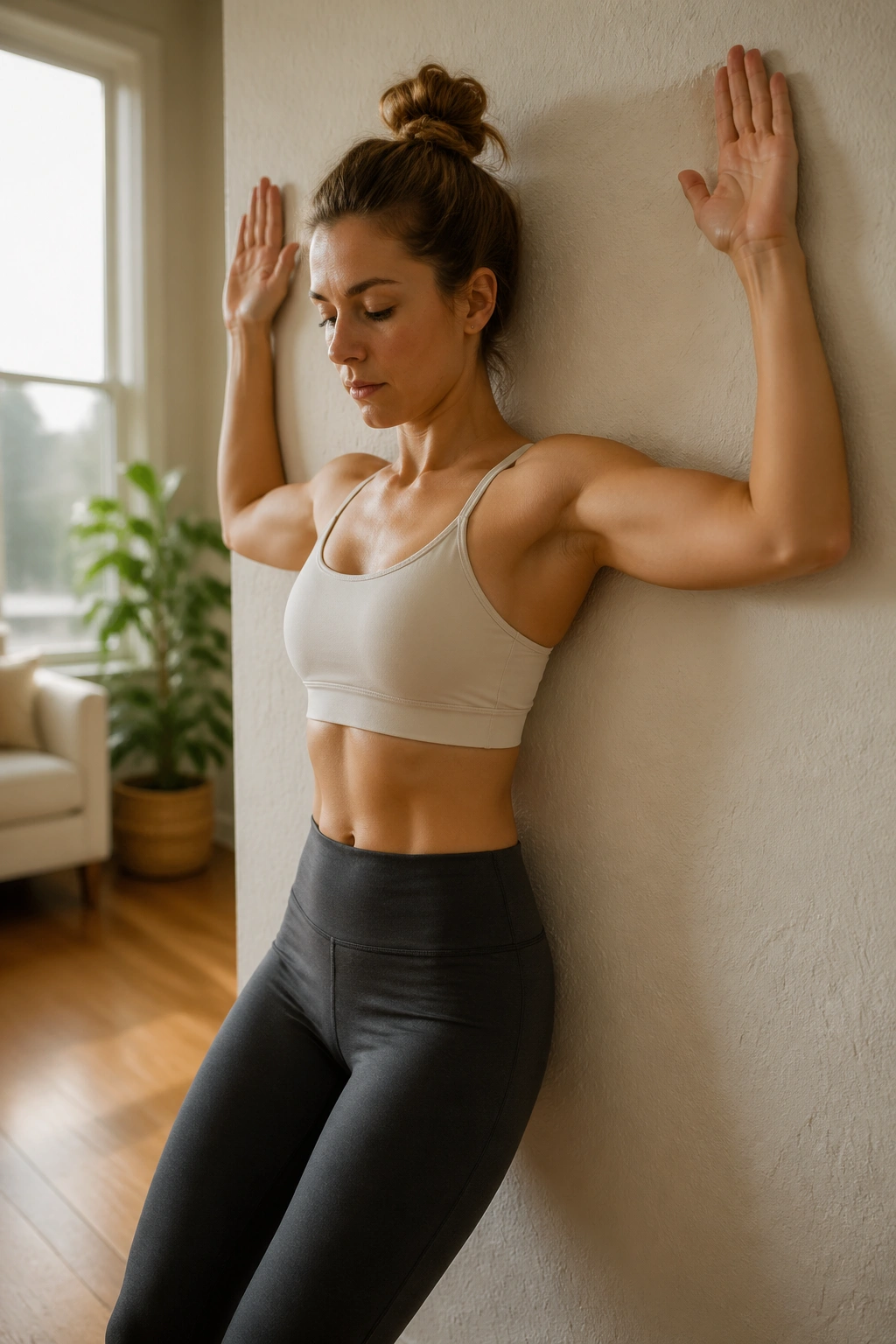
Wall angels look almost too simple, which is why people skip them and then wonder why overhead reach still feels awkward. Stand with your heels a few inches from a wall, your low back gently touching it, and your elbows bent like a goalpost. As you slide your arms up and down, the trick is to keep the ribs quiet and the chin soft, so the movement comes from the shoulder joint instead of a lower-back arch.
Why this one earns its place
Wall angels are one of the cleanest Pilates shoulder workouts for women who want better posture without a lot of equipment. They teach upward arm motion while asking the shoulder blades to glide instead of pinch. That sounds minor, but it changes everything.
Try 5 to 8 slow reps. If your arms can’t stay on the wall the whole time, that’s fine. Work in a smaller range and keep the ribs from popping forward. A smaller, honest angle beats a bigger, sloppy one every time.
- Keep your wrists, elbows, and the backs of your hands as close to the wall as your body allows.
- Move slowly enough that you can feel where your shoulders want to cheat.
- Stop before your lower back arches.
- If the neck starts working hard, lower the arms by 2 or 3 inches.
Best cue: keep your exhale long and let the ribs settle before each rep. That one detail changes the whole exercise.
2. Seated Arm Circles With Light Weights
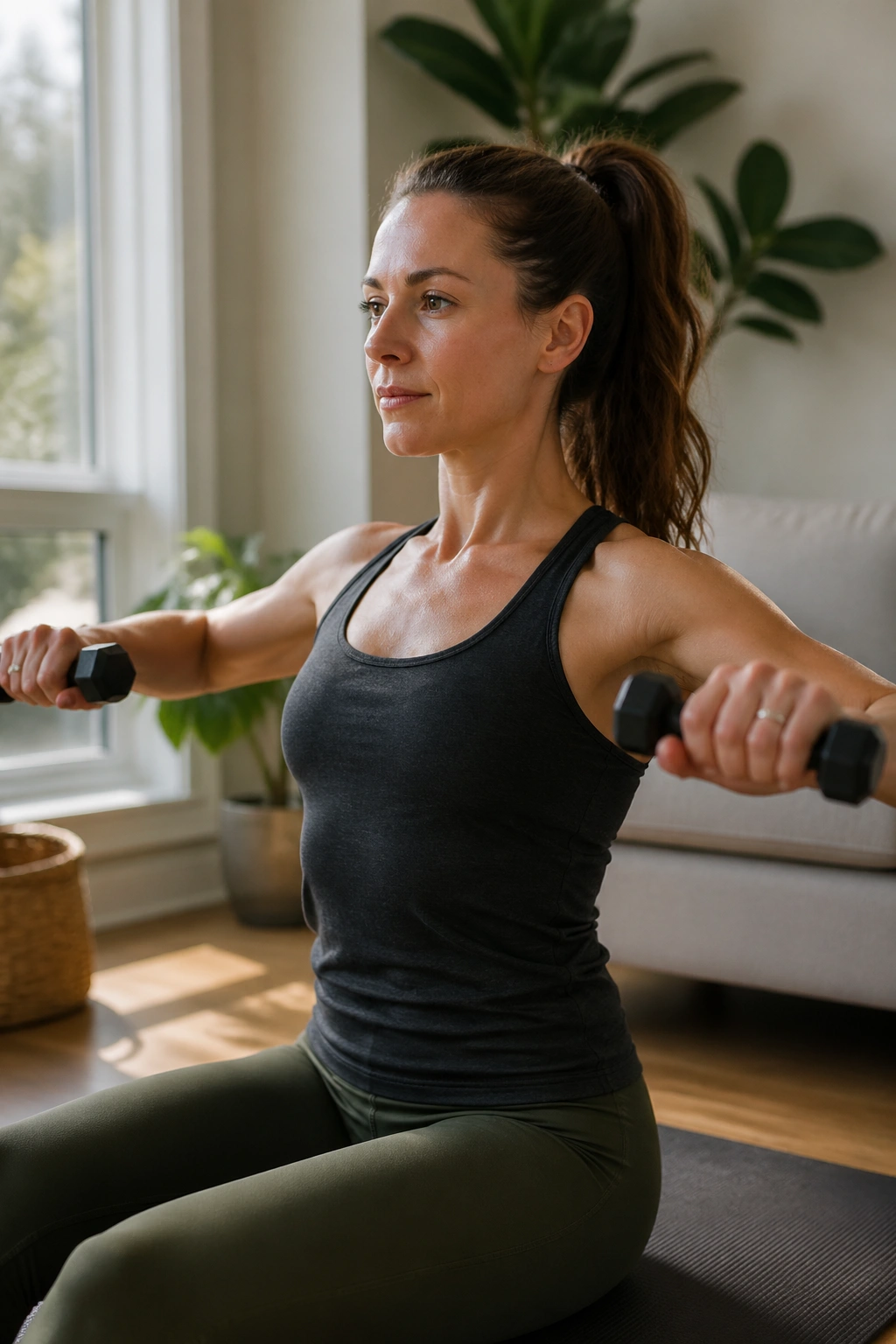
Tiny circles can light up your shoulders faster than a lot of heavy pressing, and that surprises people the first time they do them properly. Sit tall on the mat or a chair, hold 1- to 2-pound weights, and make circles about the size of a dinner plate. If your shoulders creep up toward your ears, the circles are too big.
The beauty of this move is that it punishes sloppy habits immediately. You feel every shrug, every rib flare, every bit of overreach. Good. That feedback is useful.
Do 8 circles forward, 8 backward, then rest for 15 to 20 seconds. Repeat for 2 rounds. Keep the fingertips relaxed and the elbows soft. If you lock your arms straight, the work gets dumped into the neck and upper traps, which is exactly what we are trying to avoid.
Use this as a warm-up before planks, band work, or any overhead pattern. It wakes up the deltoids without frying them. And if you are new to shoulder training, start with no weights at all. The motion alone is plenty.
3. Scapular Push-Ups on Knees or in a High Plank
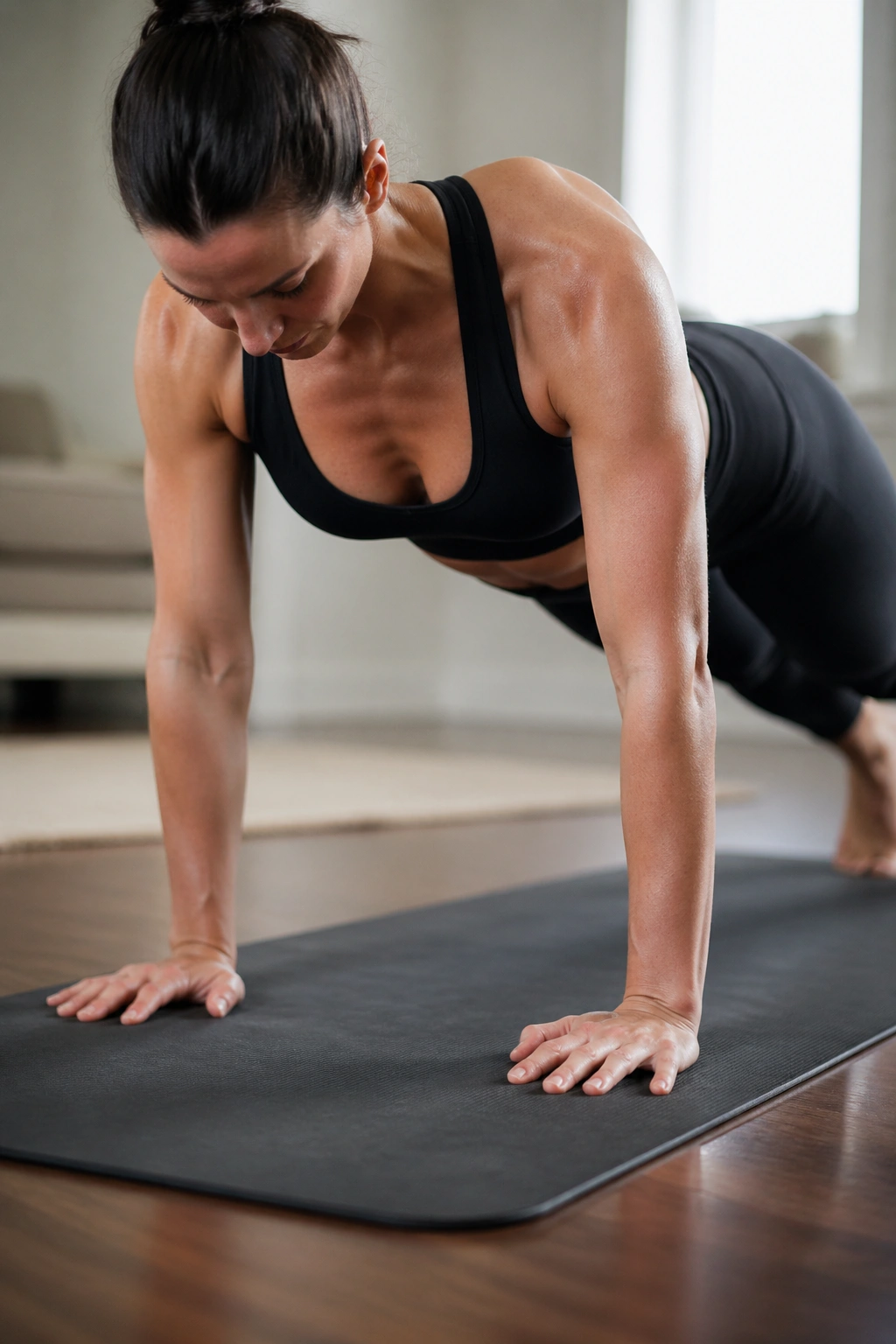
Why does such a small movement burn so much? Because scapular push-ups ask your shoulder blades to move cleanly while the rest of you stays braced. Start in a high plank with hands under shoulders, or drop to your knees if your wrists or core need a break. Without bending the elbows, let the chest sink a little between the shoulders, then press the floor away and spread the shoulder blades apart.
That is the whole exercise. No drama. No elbow bend.
The muscles that usually wake up first are the serratus anterior and the lower part of the shoulder stabilizers, which are both useful if your shoulders feel flat, stiff, or glued down. Keep the motion small. A lot of people make this into a push-up and miss the point completely.
How to do it well
- Start with 6 to 10 controlled reps.
- Keep the neck long and the gaze slightly ahead of the hands.
- Move only through the shoulder blades.
- If your lower back sags, shorten the hold or come to the knees.
A good rep feels clean and a little humbling. A bad rep feels like your chest is dropping while your neck does the complaining.
4. Plank Shoulder Taps Without the Hip Wobble
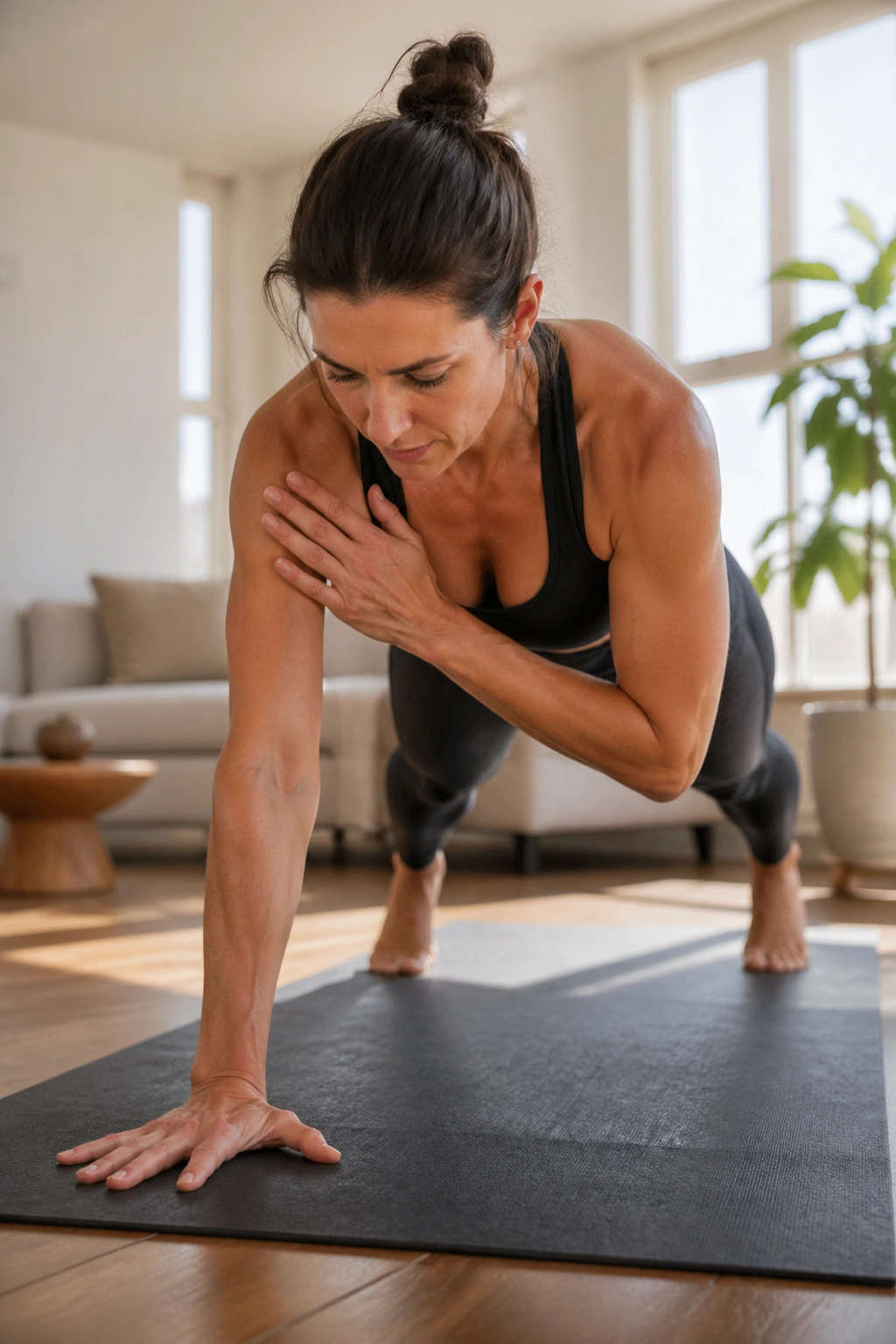
A plank shoulder tap is basically a balance test wearing a strength exercise’s clothes. Get into a high plank, feet a little wider than hip-width, and tap one shoulder with the opposite hand. Then switch sides. The goal is not speed. The goal is keeping the pelvis still while the shoulders support your body weight.
It is a sneaky one, and I like that. The best Pilates shoulder workouts for women often do this sort of thing: they ask the core and shoulder girdle to cooperate instead of treating them like separate systems.
If your hips rock like a boat, widen the stance a little more and slow down. Ten taps total can be enough when you do them well. If the wrists complain, try the same pattern on a countertop or bench so the body angle is easier.
A clean tap should feel controlled from your ribs through your fingertips. If one side collapses, that is useful information, not failure. That side probably needs a little more time under control, not a harder variation.
5. Chest Expansion With a Band
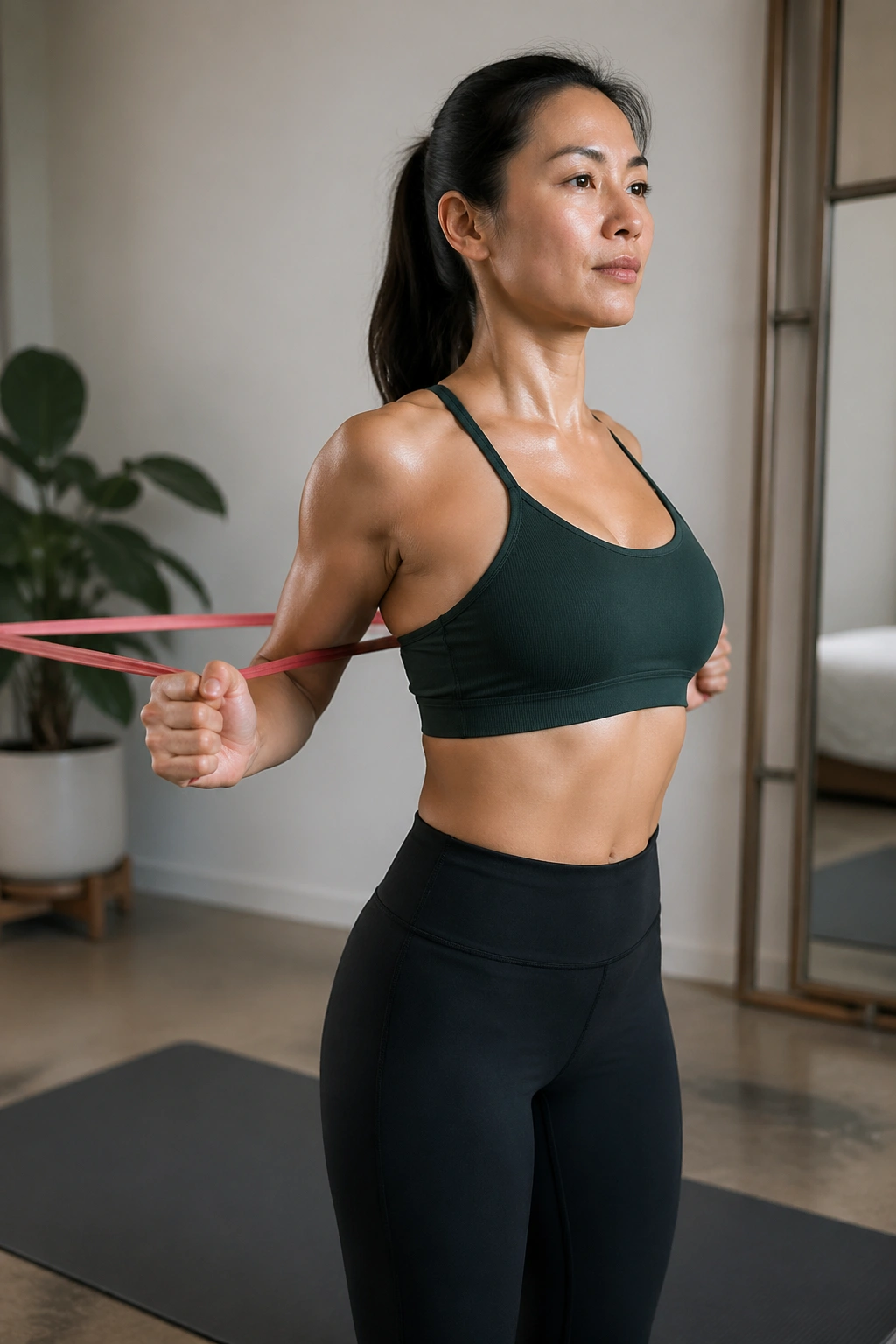
Chest expansion is one of those exercises that sounds open and breezy but turns serious in the first few reps. Anchor a light resistance band at chest height, stand tall, and hold the band with your arms long in front of you. Pull the arms straight back beside your body, pause, then return with control.
The shoulders should feel broad, not jammed. That distinction matters. A lot of people yank their shoulder blades together and call it posture work, but the better version keeps the chest open while the neck stays quiet.
Do 8 to 12 reps with a very light band at first. You should feel the backs of the shoulders, the upper back, and a little work in the triceps. If you feel pinching in the front of the shoulder, the band is too heavy or your range is too wide.
I prefer this move for women who sit a lot because it teaches the body how to pull the arms back without over-arching the low back. That’s a useful skill when you’re carrying groceries, rowing, or even just reaching behind you for a seat belt.
6. Hug-a-Tree With Soft Elbows
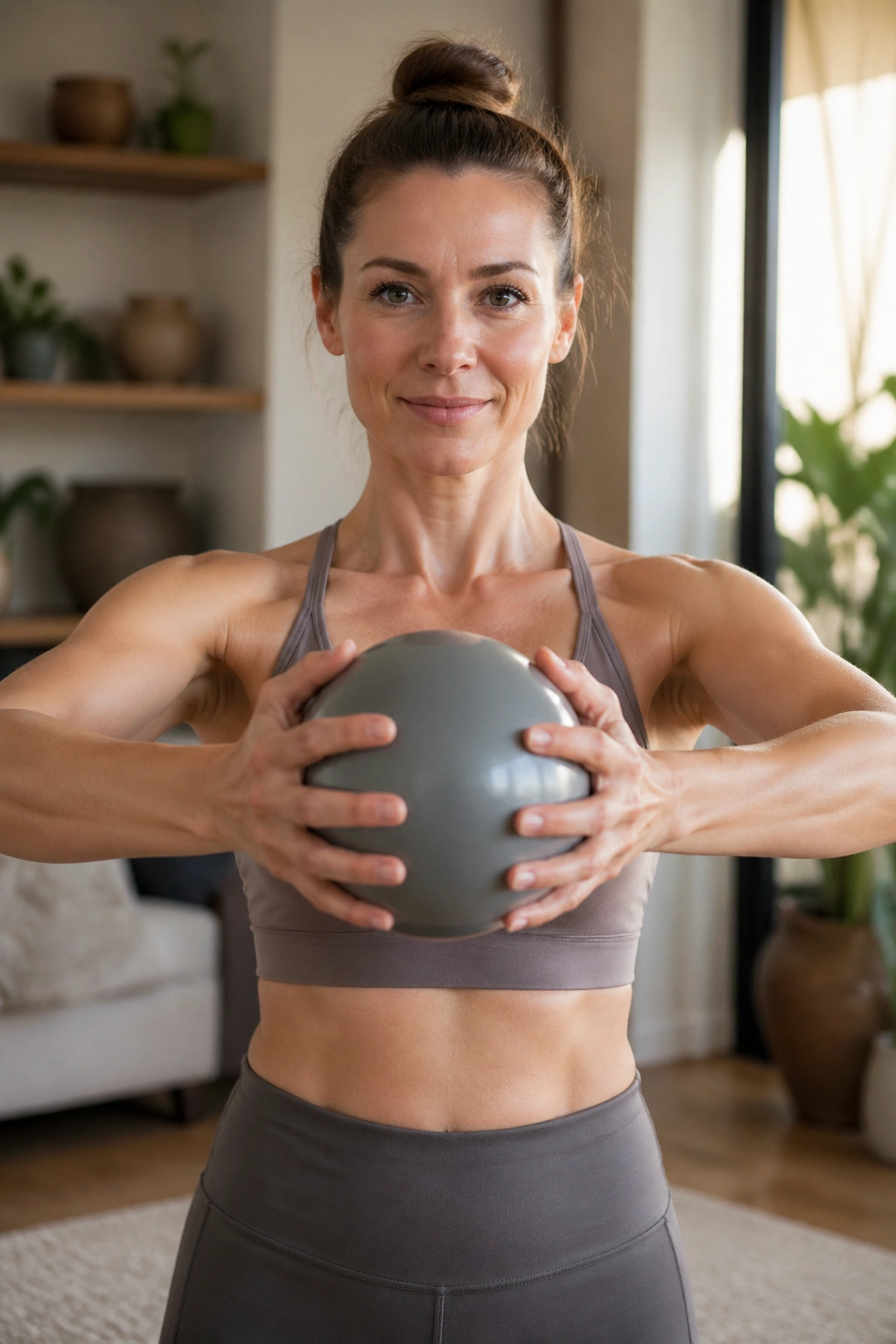
Unlike a chest fly in a gym, Hug-a-Tree asks for control more than range. Hold a small Pilates ball, a soft cushion, or light dumbbells in front of your chest with your elbows gently bent. Open the arms wide in a rounded shape, then bring them back together as if you’re wrapping your arms around a big tree trunk.
The name sounds whimsical. The work is not.
This is one of the better shoulder workouts for women who want front-of-shoulder strength without jerky motion. It also asks the chest to open without letting the ribs shove forward. That makes it useful for posture, but also for anyone whose shoulders feel tight after too much phone time or desk work.
What to watch for
- Keep the elbows soft, not locked.
- Move through a smooth arc, not a snap.
- Stop if the shoulders roll forward at the bottom.
- Use 8 to 10 reps with a slow 2-second return.
The best version feels like you’re drawing the arms together with intent, not squeezing with force. There’s a difference, and you can feel it.
7. Side-Lying Arm Lifts for the Outer Shoulder
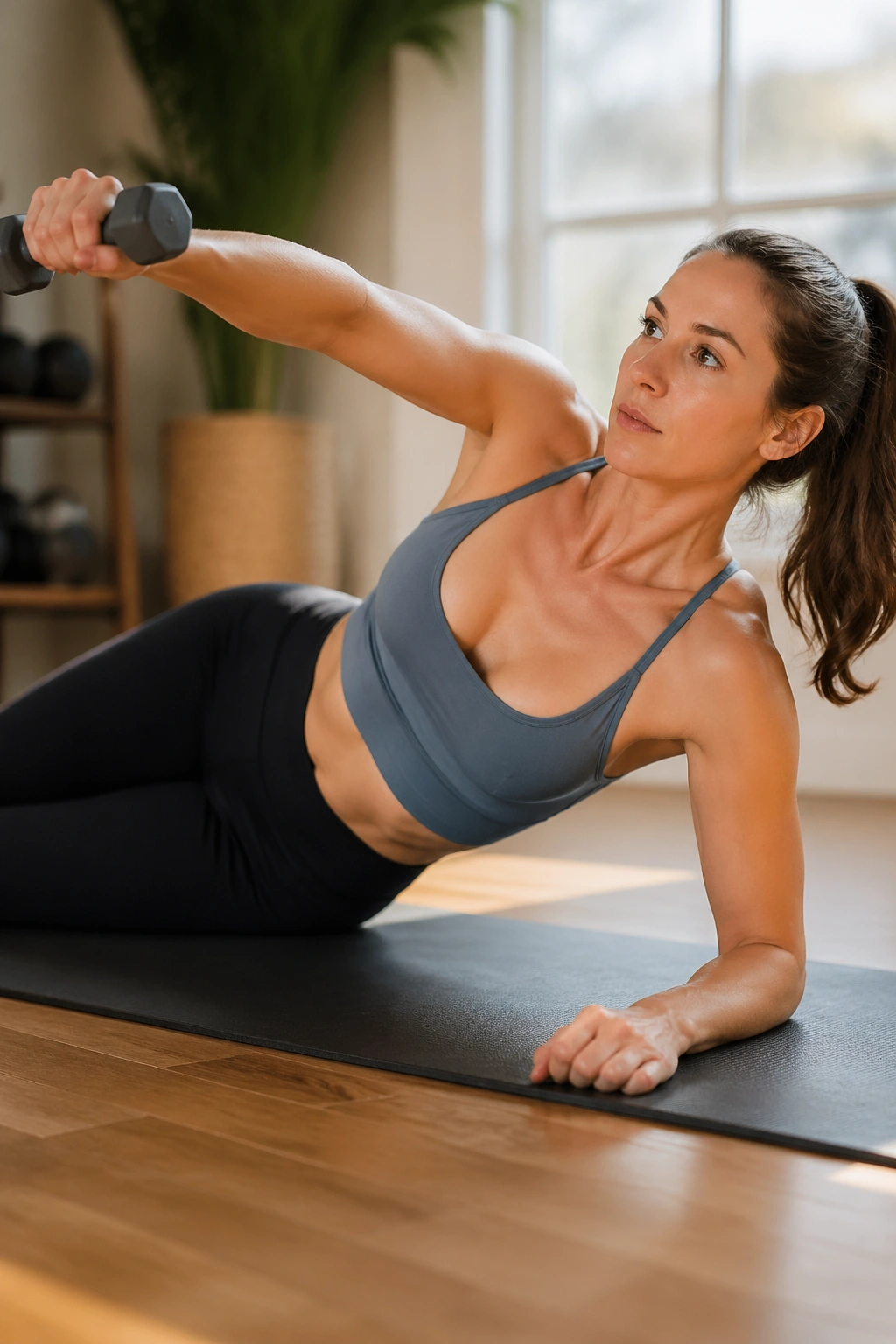
Lie on your side with your bottom knee bent for balance and your top arm resting along your body or holding a light weight. Lift the arm to shoulder height, then lower it with a steady, even pace. Simple? Yes. Easy? Not really, if you do it honestly.
Side-lying arm lifts are one of my favorite choices when standing weights bother the lower back or make the whole body tense up. The floor gives you enough feedback to stay tidy. You can keep the ribs stacked, the neck long, and the shoulder moving without the usual standing compensation.
Do 10 to 12 lifts with a 1- to 3-pound weight, or no weight at all if your shoulder feels cranky. The arm should feel long and lightly energized, not stiff. If the top trap takes over, shorten the range by a few inches and slow down the lowering phase.
This one is especially good if one shoulder feels weaker than the other. The side-lying setup exposes side-to-side differences fast. Not glamorous. Very useful.
8. Pilates Boxing With Tiny Pulses
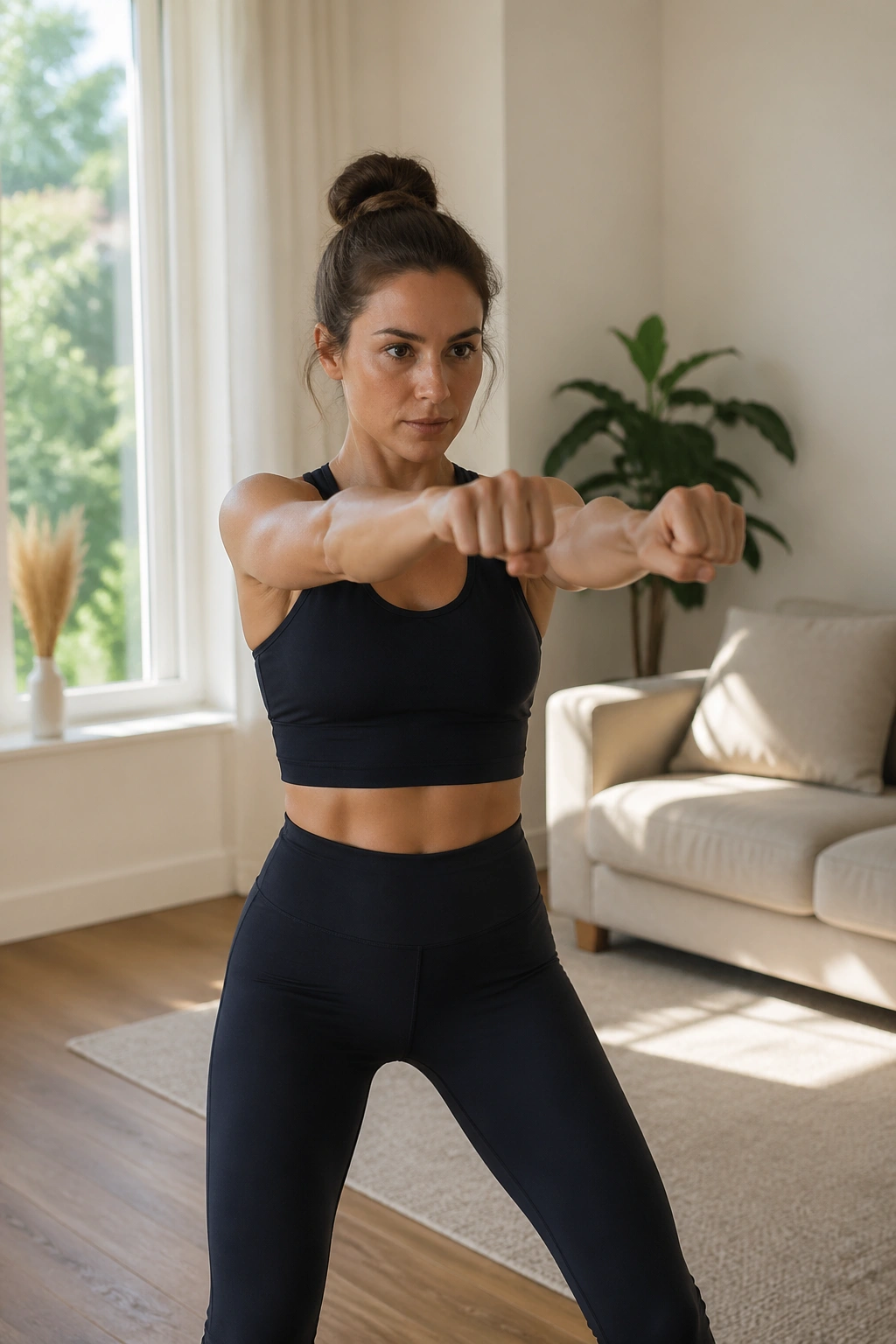
Pilates boxing sounds playful until your shoulders start to heat up. Sit or stand tall, lightly bend the knees, and punch forward with alternating arms. Keep the fists soft, the ribs stacked, and the punches short enough that you can still control the shoulder blades.
The point is not to throw a real punch. The point is to build endurance in the shoulders while the trunk stays steady. A good set can feel almost like a dance drill—quick, rhythmic, and a little gritty by the end.
Try 20 to 30 seconds of jabs, rest for 15 seconds, then do a second round. If you want more challenge, add tiny circles between sets or hold 1-pound weights. But don’t get greedy. Heavier weights turn this into sloppy arm swinging pretty fast.
One useful cue: keep the shoulders low and let the shoulder blade move forward and back naturally. If the neck starts jutting forward, you’ve gone too hard. Back off. The clean version works better anyway.
9. Prone Y, T, and W Shapes
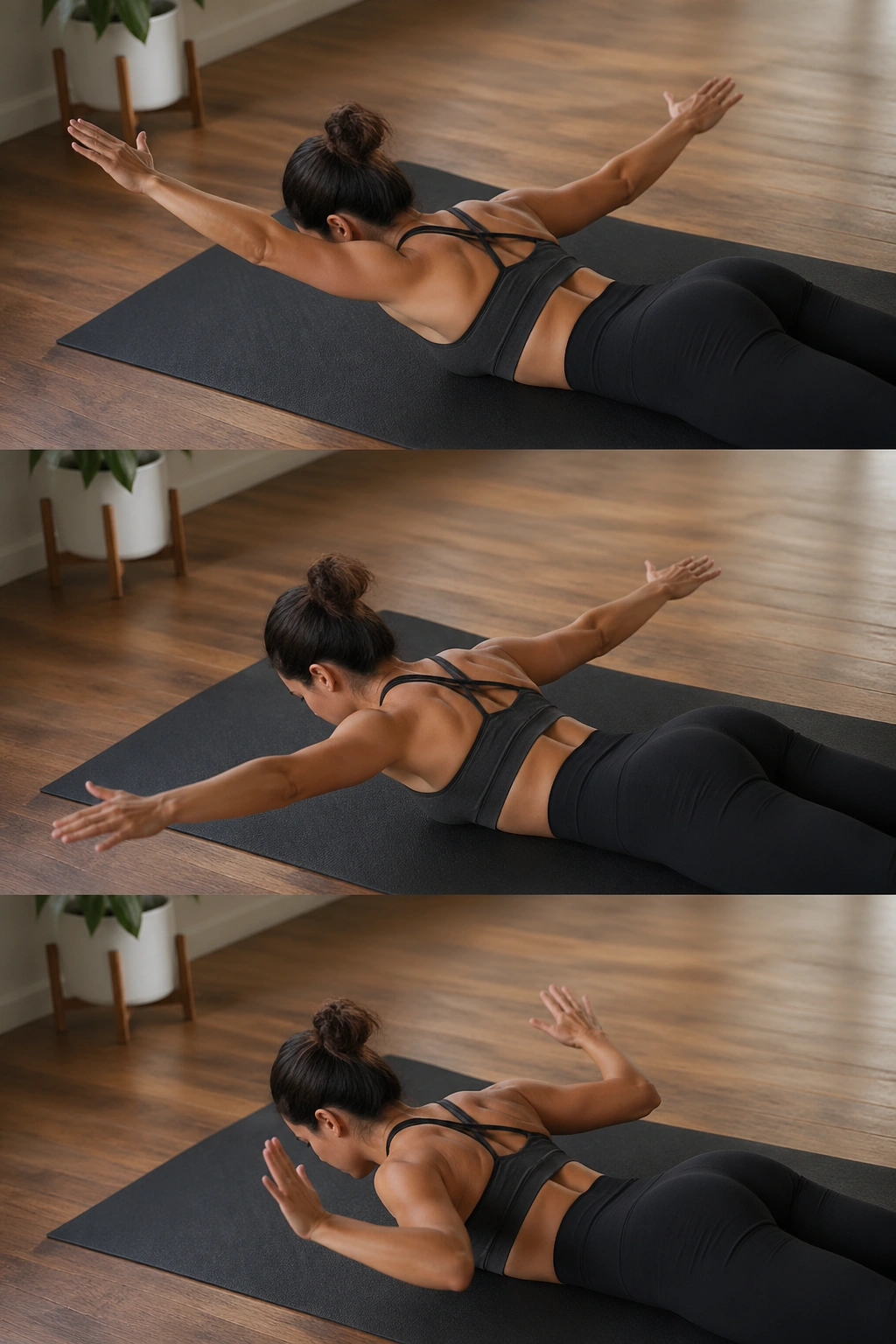
This is the mat series that looks boring until your upper back starts shaking. Lie face down with your forehead on a folded towel and your arms resting overhead in a Y shape, then out to the sides in a T, then bent into a W. Lift each shape a few inches off the floor and lower with control.
The shapes do different jobs
The Y shape asks for lower trap work and shoulder blade upward rotation. The T shape hits the mid-back and rear shoulder. The W shape brings the shoulder blades into a more controlled bend and teaches the rotator cuff to help, not panic.
Do 5 reps of each shape, or 3 if you are new to it. Keep the neck long. That means no chin jutting toward the floor and no shrugging up toward the ears. A tiny lift is enough.
A lot of Pilates shoulder workouts for women chase the front of the body and forget these back-side muscles. That’s a mistake. If the back line is weak, the shoulders never feel stable, no matter how many presses you do.
10. Dolphin Plank Holds With Active Shoulder Pressure
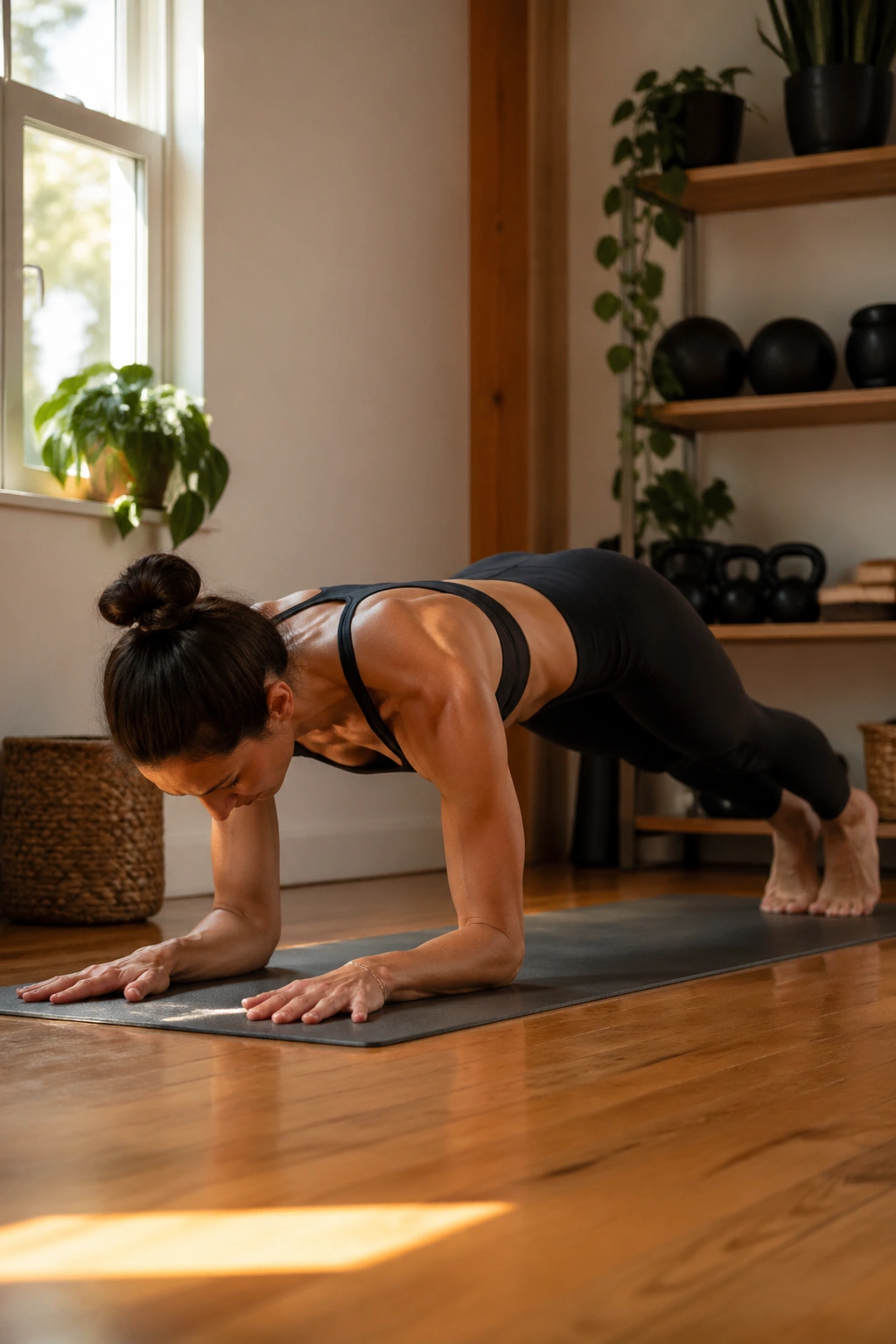
Dolphin plank is a forearm plank variation that looks calm right up until your shoulders discover they are doing real work. Set your forearms on the mat with elbows under shoulders, lift the knees, and hold a straight line from head to heels. Then press the forearms down as if you’re trying to push the floor away.
That pressing action matters. It helps turn on the muscles around the shoulder blades and upper back, not just the core. And because the elbows are bent, some people find it friendlier than a straight-arm plank.
Hold for 15 to 25 seconds at first. Two sets is enough for most beginners. If the low back starts sagging or the shoulders inch toward the ears, come down sooner. That is not you failing. That is you keeping the work in the right place.
Strong warning: if your shoulders feel pinchy in loaded flexion, skip this one for now and build with wall work first. There is no prize for forcing it.
11. Mermaid Side Bend With an Overhead Reach
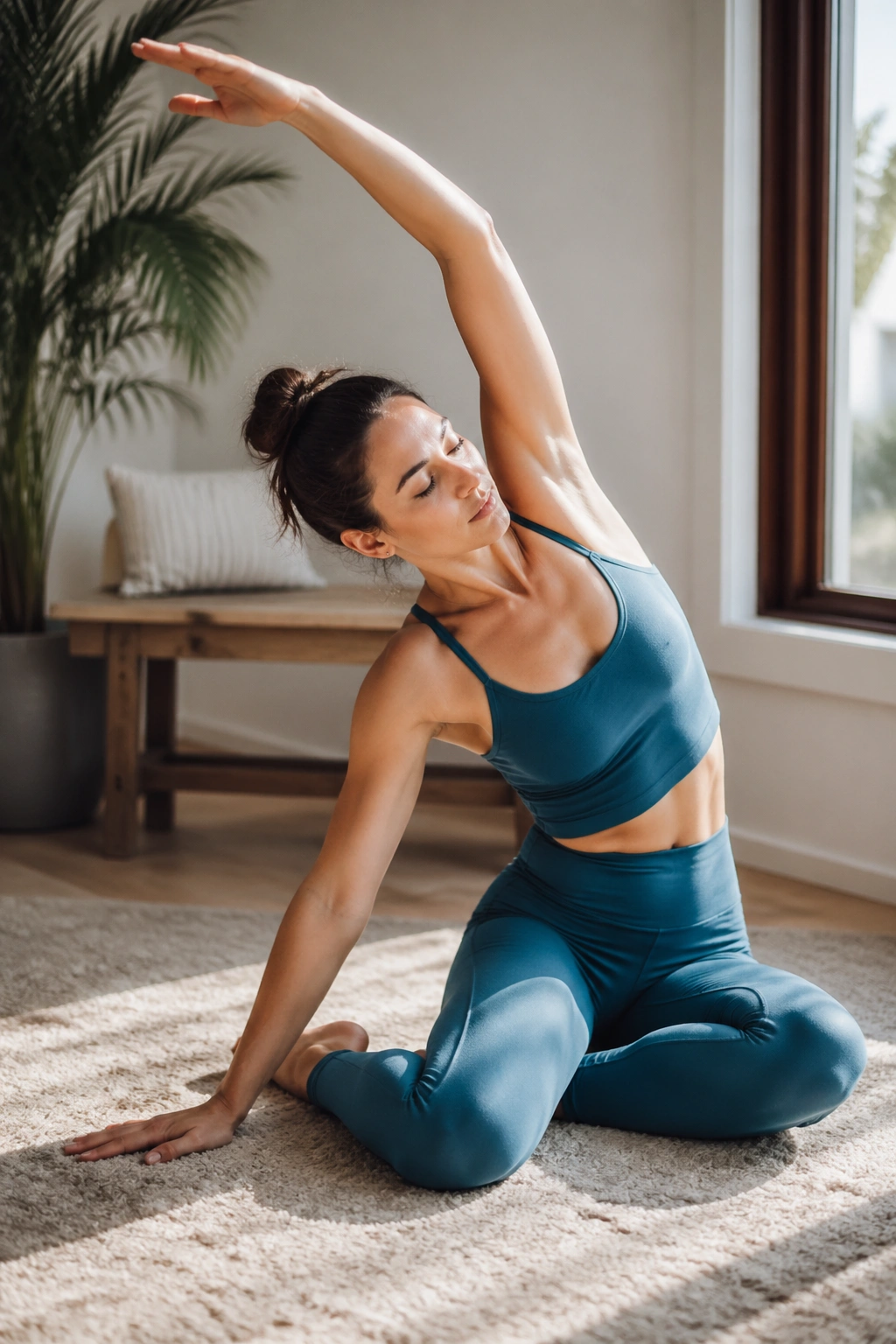
Mermaid is less of a strength drill and more of a shoulder-opening shape, but I still put it in the list because so many women need both movement and control. Sit to one side with your legs folded in a comfortable position, one hand on the floor, and the opposite arm reaching overhead. Side-bend gently, then lengthen back to center.
The feeling should be long and spacious along the side body, not jammed into the lower back. Keep the reaching arm active all the way through the fingertips. That tiny detail changes the line from floppy to organized.
Why include a mobility move in a shoulder workout list? Because shoulders rarely get strong in a vacuum. They need room to move. Mermaid gives you overhead reach, side-body length, and a little breath work all at once.
Try 3 slow side bends per side, holding each one for 2 to 3 breaths. If your shoulder feels sticky, don’t yank deeper. Stay in the clean range and breathe into the ribs. That alone can make the arm path easier the next time you lift overhead.
12. Standing Band External Rotations at the Elbows
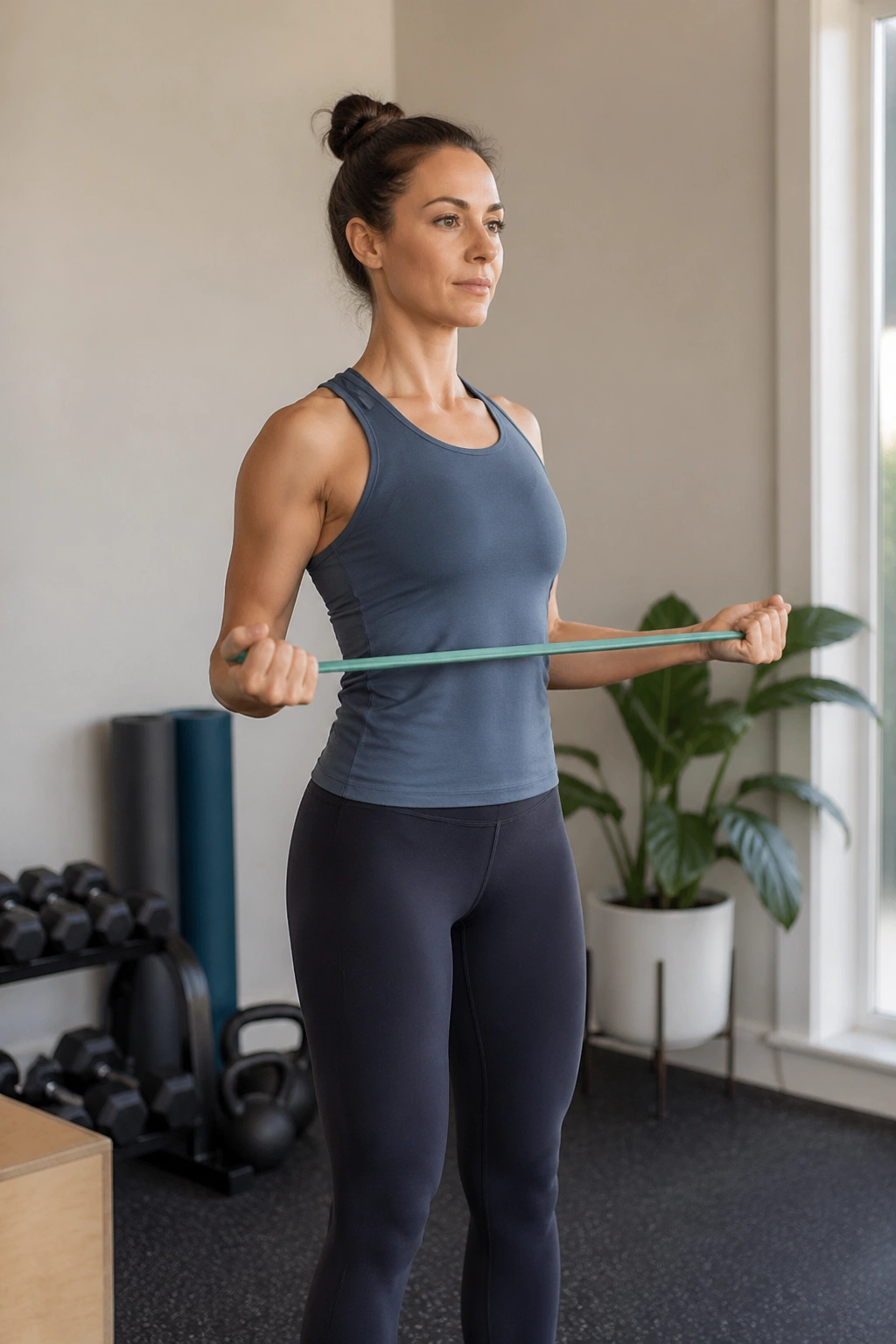
If your shoulders have a weak, wobbly feeling, this is one of the best small fixes. Stand with elbows tucked against your ribs, hold a light band with both hands, and rotate the forearms outward without letting the elbows drift. The movement is tiny. That is the point.
This hits the rotator cuff, especially the muscles that help stabilize the top of the shoulder. You won’t feel a dramatic sweat storm, but you will feel better control in almost every other upper-body move.
Set-up matters here
- Keep the rib cage quiet.
- Hold the band with light tension, not a death grip.
- Rotate only as far as you can without shrugging.
- Do 10 to 15 reps for 2 rounds.
I like this one for women who already do plenty of pushing—push-ups, carrying, reaching, typing, all of it. External rotation is the missing piece in a lot of upper-body programs. Neglect it long enough and the shoulders start feeling cranky during basic tasks.
It is a plain exercise. Sometimes plain is exactly what you need.
13. Reverse Tabletop Presses
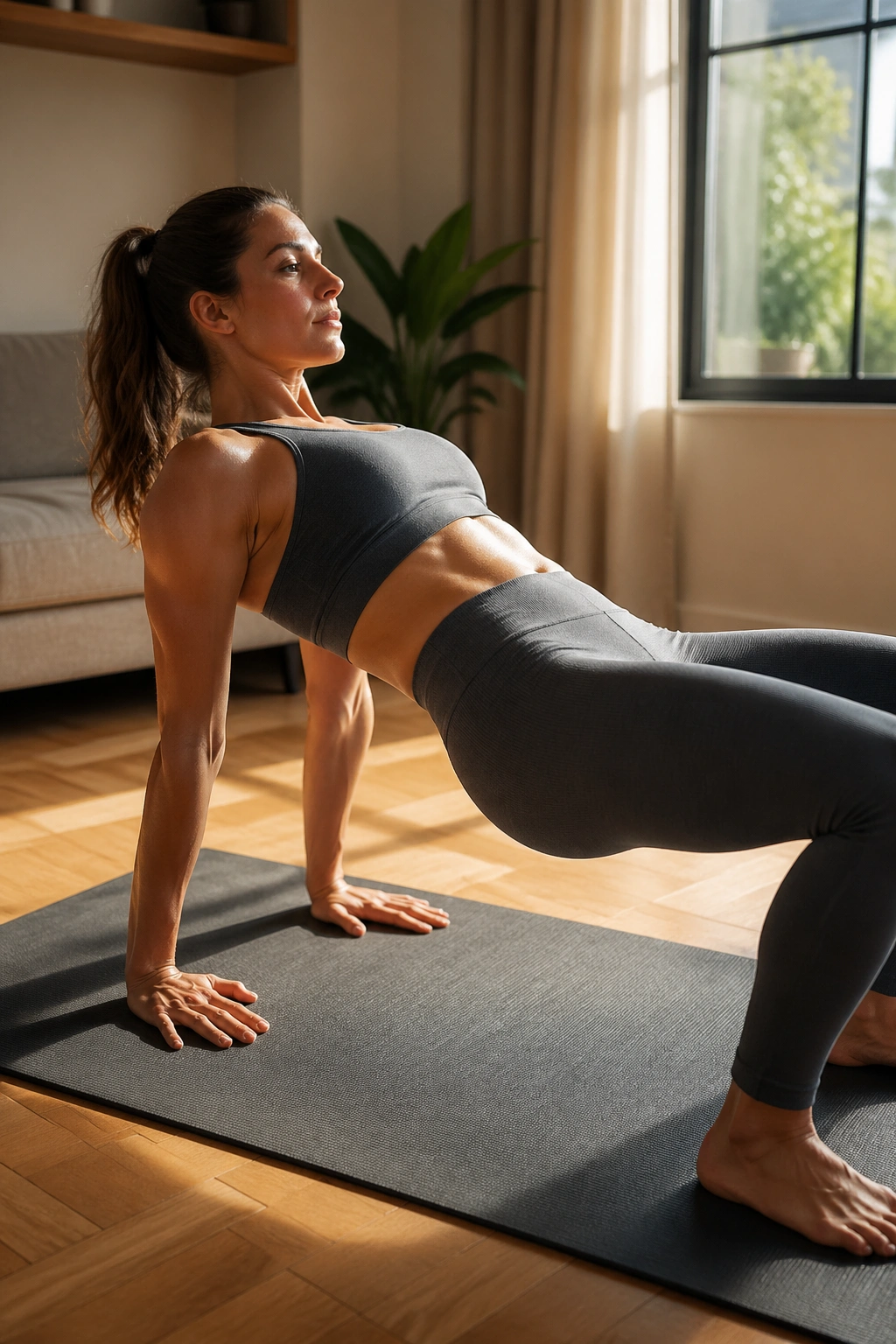
Reverse tabletop is the move people glance at and assume is just for the glutes. It does more than that. Sit on the mat with your hands behind you, fingers facing forward or slightly out if your wrists prefer it, then lift your hips into a tabletop shape. Once you’re up, press the floor away and let the shoulders stay broad.
The shoulder work happens in the support. You are asking the front of the shoulders to open without collapsing, while the back body helps keep the line steady. That combination is gold if your chest feels tight and your posture has gone a little cave-like.
Hold for 10 to 20 seconds, then lower. Two or three holds are plenty. If the wrists hate the angle, turn the fingers slightly out or put your hands on a bench, sofa edge, or yoga blocks.
Unlike a lot of classic shoulder exercises, this one doesn’t isolate the delts. It blends shoulder extension, chest opening, and bodyweight support into one pattern. That makes it useful for people who want a more whole-body feel rather than just a small burn in one spot.
14. Bear Hover Shoulder Shifts
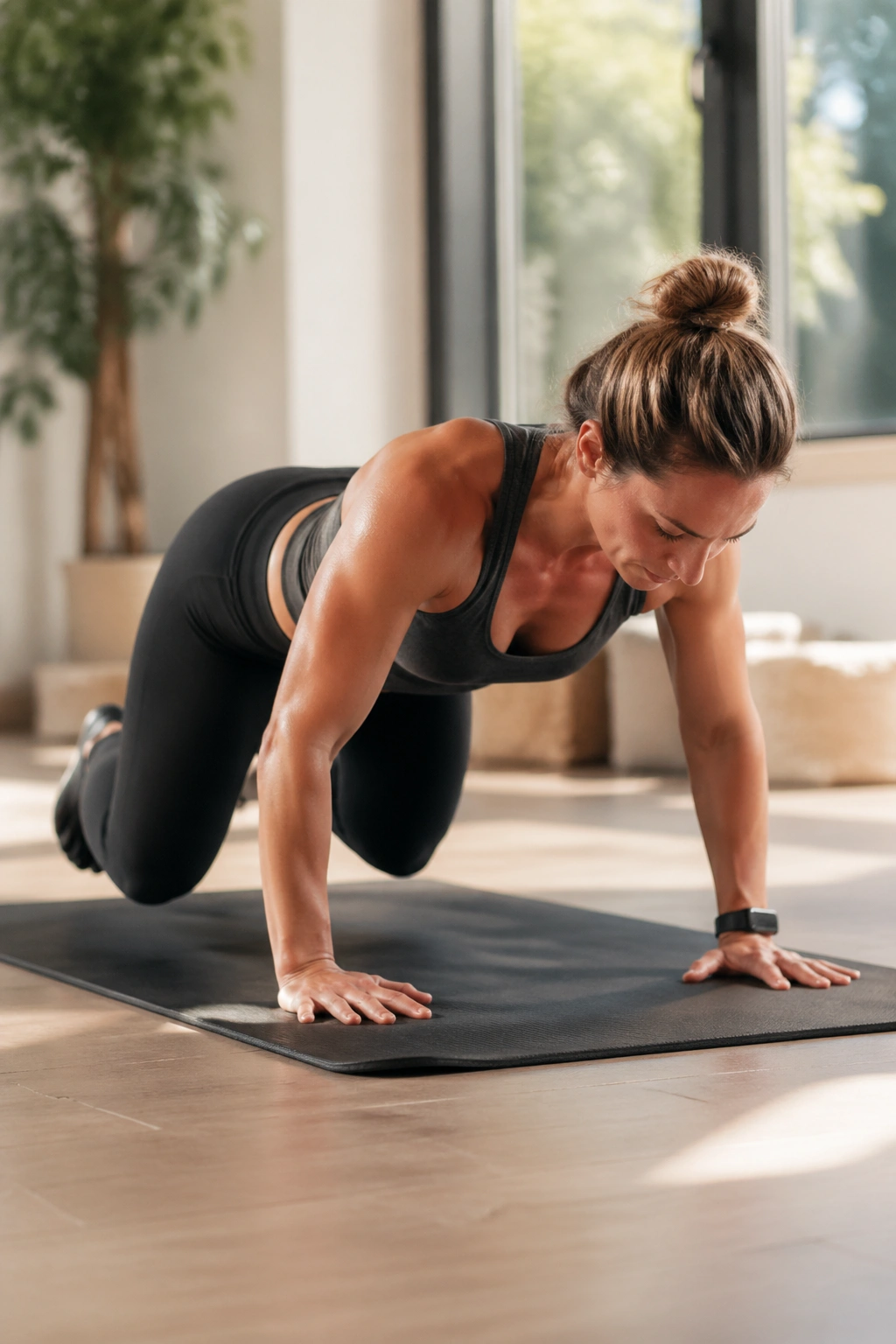
Bear hover is one of those exercises that looks compact and feels far bigger than it looks. Start on hands and knees, tuck the toes, then hover the knees one or two inches off the floor. From there, shift your body weight forward and back by a few inches while keeping the shoulders steady and the hips low.
The shoulders have to work to keep you from sinking. So does the core. So do the hands, which is part of the reason people either love or hate this drill.
Do 5 to 8 controlled shifts. Keep the breath moving. If the knees hover only for 3 seconds at a time, that is fine. You do not need a long hold to get value from it. Clean shape matters more than heroic effort.
This is a good progression once wall work, planks, and scapular push-ups feel solid. It builds shoulder stability in a way that transfers well to crawling patterns, lifting, and more dynamic Pilates work later on. And yes, the front of the shoulders will know they were there.
15. Wall Slide With Lift-Off
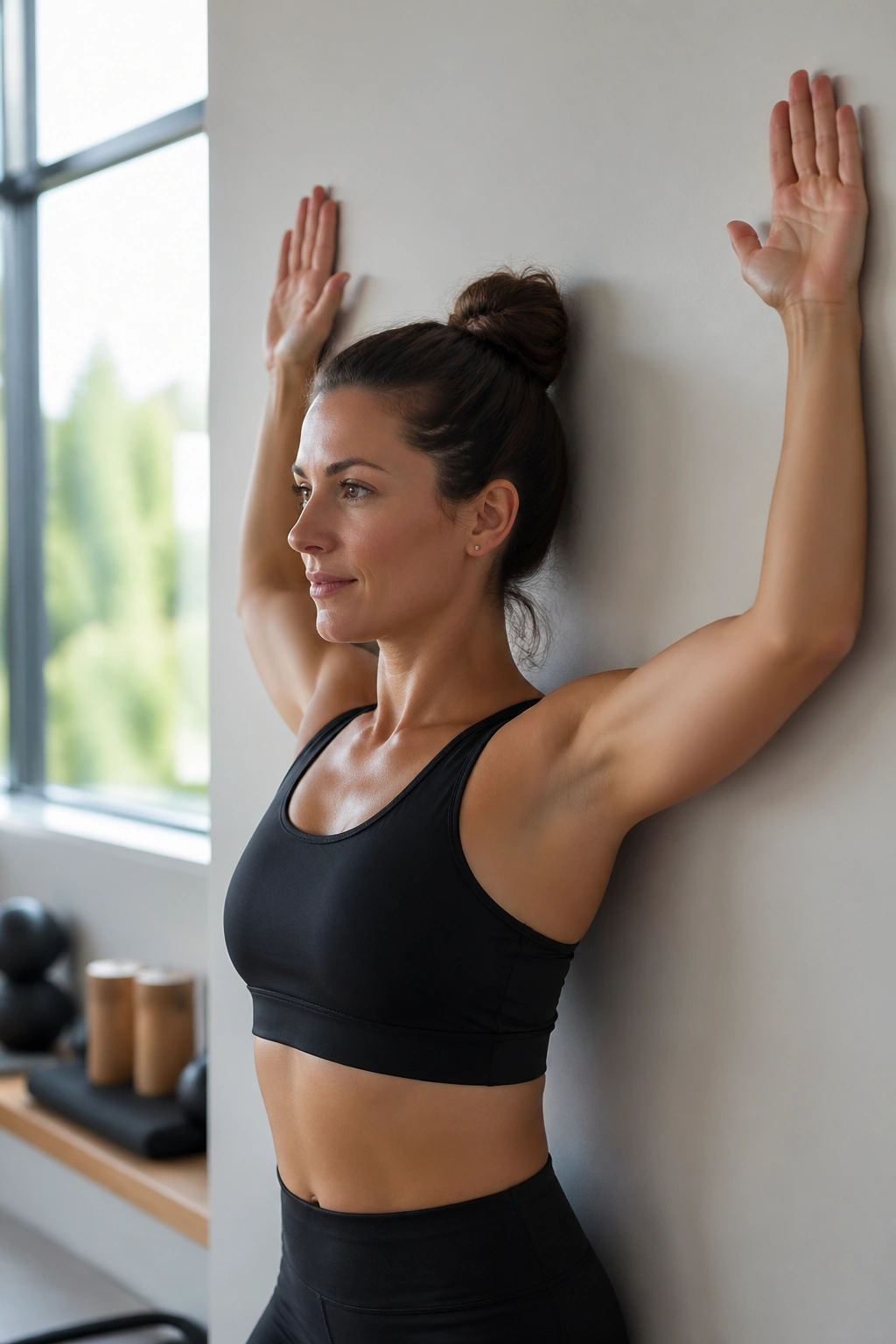
Wall slides with lift-off are the quiet finisher I reach for when someone wants stronger overhead range without a lot of fuss. Stand with your back against a wall, arms in a goalpost shape, and slide the forearms upward. At the top, lift the hands a hair away from the wall, then lower with control.
That little lift-off is the interesting part. It asks the shoulder blades to rotate and the upper arms to stay organized, instead of simply dragging along the wall. If the ribs flare, the range is too big. If the neck tightens, the arms are doing too much.
Try 6 slow reps. Some days, 4 good reps are enough. That is not laziness. That is attention.
Useful modification: place a small Pilates ball or folded towel between the forearms and the wall if you need more feedback. It can make the motion cleaner, especially if you tend to arch through the low back.
Stronger Shoulders
The best shoulder work in Pilates is rarely the loudest work. It is the kind that asks your ribs to settle, your shoulder blades to cooperate, and your neck to stop stealing the show.
Pick 4 or 5 of these moves and rotate them through the week instead of trying to do all 15 at once. That approach usually feels better, and it gives you a clearer read on which pattern your body actually needs more of.
If you want one simple rule, use this: small range, clean shape, slow return. That combo gets you farther than rushed reps ever will.
