



The misconception that barre is strictly a slow-burn, low-impact exercise method that relies entirely on tiny, microscopic movements is a relic of the past. If you walk into an actual, intensive barre class, or if you perform a properly structured barre workout at home, your heart rate should be elevated, your breath should be short, and you should be dripping with sweat by the twenty-minute mark. Mixing high-intensity movement with the traditional isometric holds and small-range pulses found in ballet-inspired training creates a metabolic environment that burns calories while simultaneously tightening muscles.
You do not need a professional-grade ballet studio or expensive props to achieve this. A sturdy chair back, a countertop, or even the back of a sofa serves as your barre. The resistance comes from your own body weight, gravity, and the sheer volume of repetitions required to fatigue your muscle groups. This list focuses on specific cardio-barre hybrid moves that force your heart to work just as hard as your glutes and quads.
1. The Classic Cardio Plié Jump
The plié is the foundation of most barre routines, but it is usually performed with slow, controlled precision. By adding an explosive jump, you turn a muscle-sculpting move into a high-intensity cardio blast. Start in a wide second position, heels under your shoulders, toes turned out. Sink into a deep squat, keeping your chest upright and your shoulders stacked over your hips.
Why It Spikes Your Heart Rate
Moving from a low, isometric squat into a vertical leap requires significant power from your quads and calves. Your heart rate surges to supply oxygen to these large muscle groups as they work explosively. This rapid shift between eccentric loading (the lowering phase) and concentric explosiveness (the jump) is what drives the calorie burn.
How to Execute
- Lower into a wide squat until your thighs are nearly parallel to the floor.
- Push through your heels to jump upward, bringing your legs together in the air or keeping them wide depending on your preference.
- Land softly on your toes, rolling immediately back into the wide squat position.
- Perform 30 seconds of continuous movement followed by 15 seconds of holding the low plié pulse.
Pro tip: Focus on the landing; if you hear your feet hitting the floor, you need to engage your core more and bend your knees deeper to absorb the impact.
2. Dynamic Relevé Pulses with High Knees
Most people associate relevé—rising up onto the balls of your feet—with balance and grace. However, when you perform these rises in rapid succession while alternating high-knee lifts, the dynamic changes entirely. Stand with your feet in a narrow, parallel position, holding your barre with one hand for light balance.
The Mechanism of Fatigue
By lifting your knee high with every rise, you force the standing leg to stabilize continuously. The constant shifting of weight prevents the standing leg from ever catching a break. This creates a state of perpetual tension, which is the hallmark of an effective barre workout.
Training Notes
- Keep your upper body tall.
- Avoid leaning on the barre; it is there for balance, not for support.
- If you find your balance wobbling, slow down the tempo until you can stabilize your core before increasing speed again.
3. The Glider-Powered Mountain Climber Barre Variation
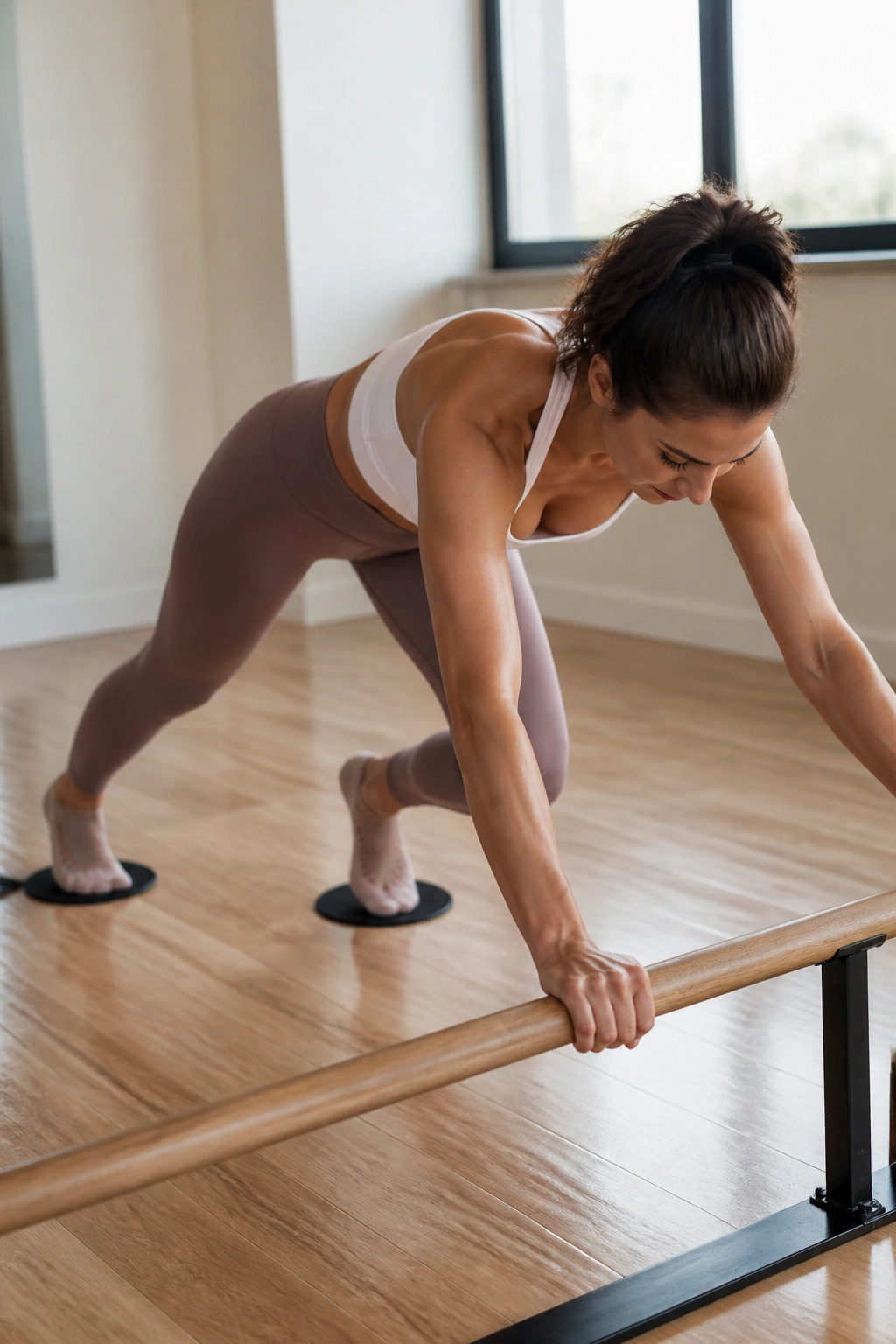
If you have hardwood floors, a pair of gliders or even two thick washcloths will change your workout intensity. Place your hands on the barre, feet on the gliders, and assume a high-plank position. The goal here is to drive your knees toward your chest as fast as possible without letting your hips sag or hike toward the ceiling.
Why This Works
The barre provides an elevated platform that changes the angle of your core engagement compared to a floor-based mountain climber. You are essentially doing a hybrid of a plank and a core-stabilization move. Because your feet are sliding, you eliminate the impact, allowing you to move at a much higher velocity for a longer duration.
Essential Cues for Form
- Pull your navel toward your spine to protect your lower back.
- Keep your gaze slightly forward, not down, to maintain a neutral neck position.
- Do not let your shoulders creep up toward your ears; keep them active and pressed down.
4. Curtsy Lunge with Overhead Arm Sweeps
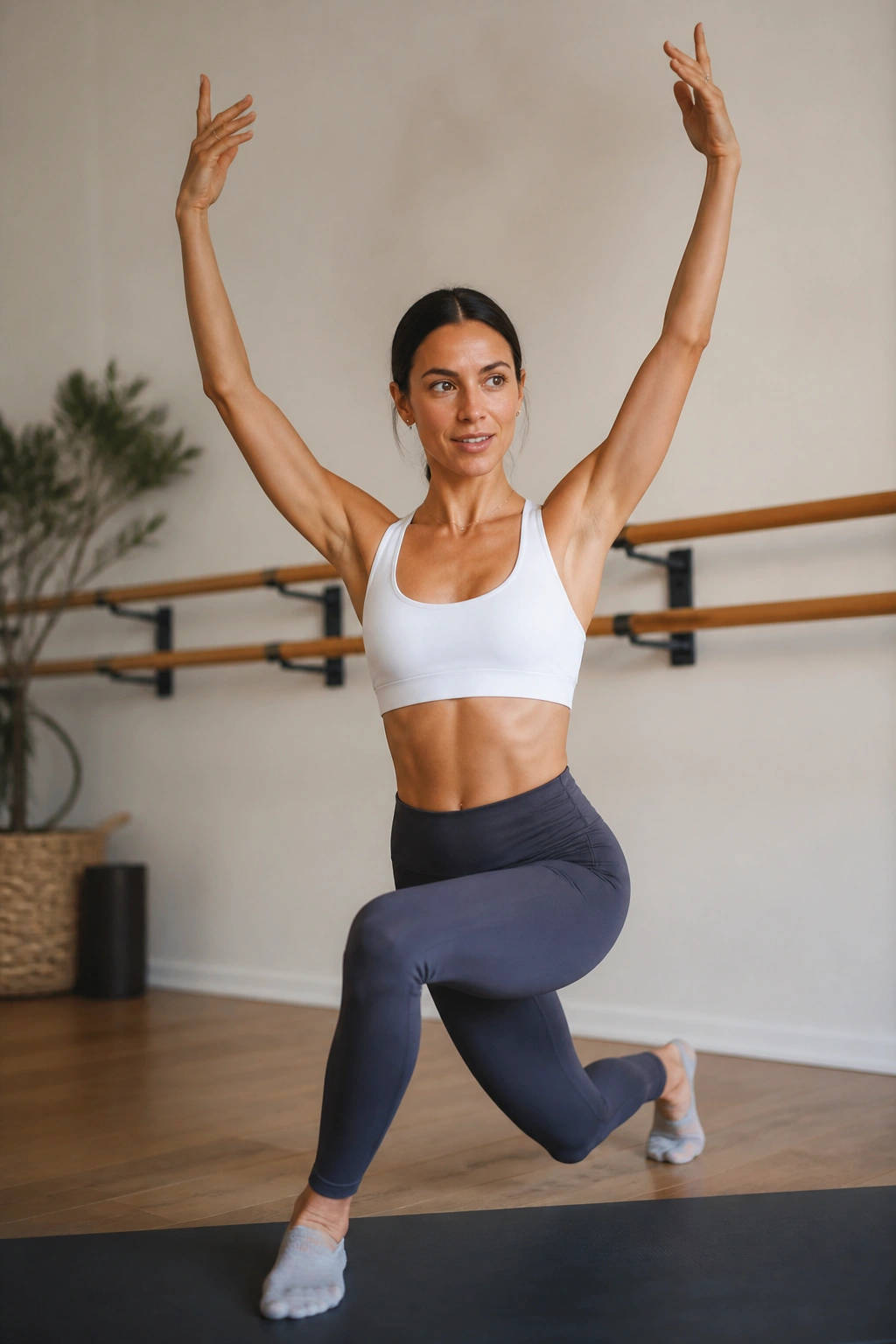
The curtsy lunge is fantastic for targeting the outer glutes and the obliques, but adding an overhead arm sweep turns it into a total-body movement. Start standing, feet hip-width apart. Step one foot back and behind the other, sinking into a deep lunge. As you sink, sweep your arms overhead in a wide arc.
Integrating Cardio
The key to making this a cardio move is the speed. Do not linger at the bottom of the lunge. You should be moving with fluid, fast transitions. Each time you return to center, bring the back leg up into a knee drive before sending it back behind you again. This introduces a unilateral balance challenge that requires significant energy expenditure.
What to Watch For
- Ensure your front knee tracks over your middle toes.
- If your arms feel heavy, clench your fists to create tension, which helps maintain upper-body posture throughout the set.
5. The Barre-Supported Burpee
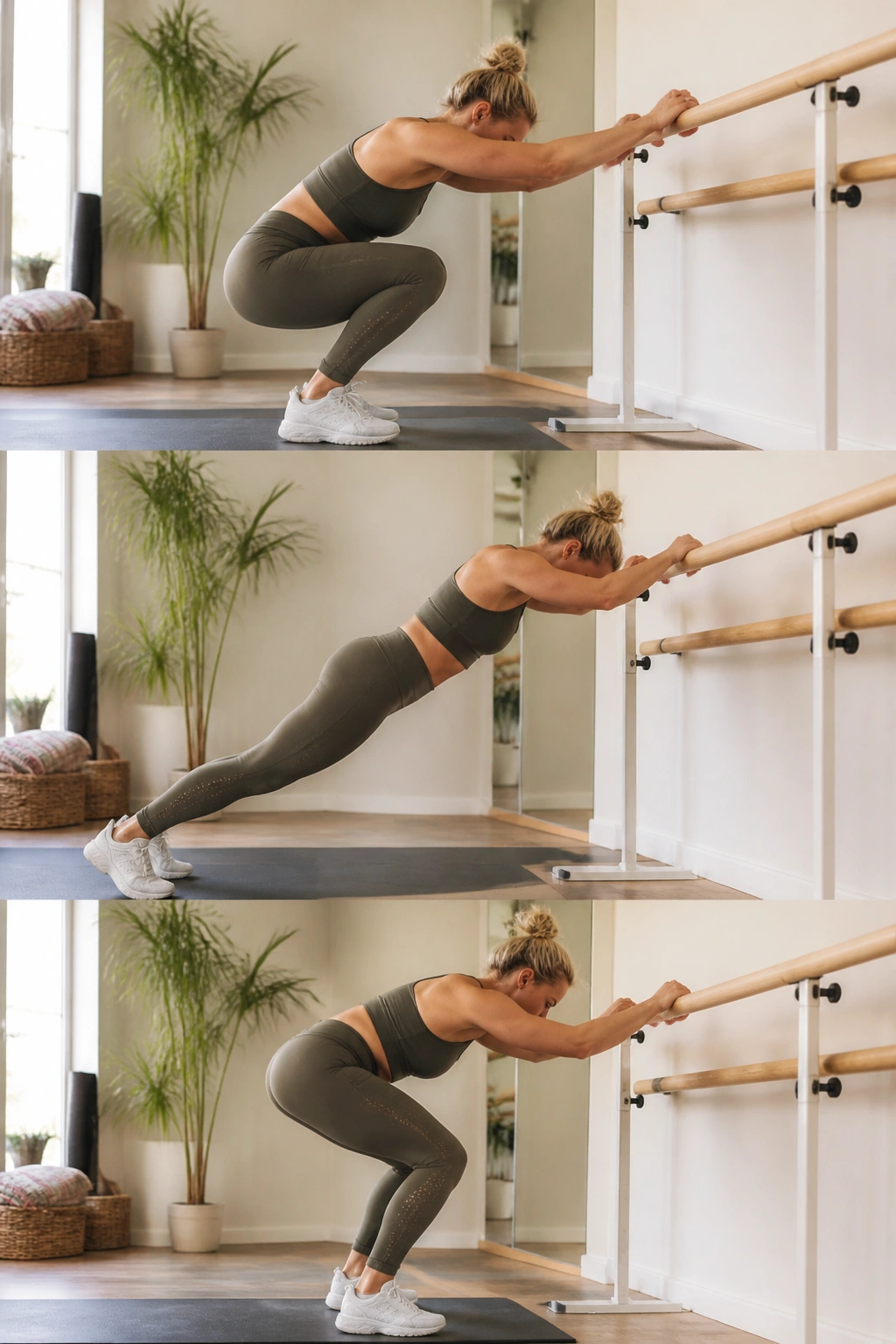
Burpees are widely reviled for being grueling, but the barre actually makes them more accessible and effective for high-repetition sets. Place your hands on the barre, jump your feet back into a plank, jump them forward, and stand up. Because you are elevated, you can maintain a higher speed than you would with your hands on the floor.
Why It’s Effective
The elevated position allows you to maintain a better posture than a floor burpee, where many people round their spines. You can get through a higher volume of repetitions, keeping your heart rate in the anaerobic zone for the entire duration of the set.
How to Modify
If jumping feels too high-impact, step your feet back and forward quickly. The intensity will still be there as long as you do not pause between the transitions.
6. Rapid-Fire Second Position Plies
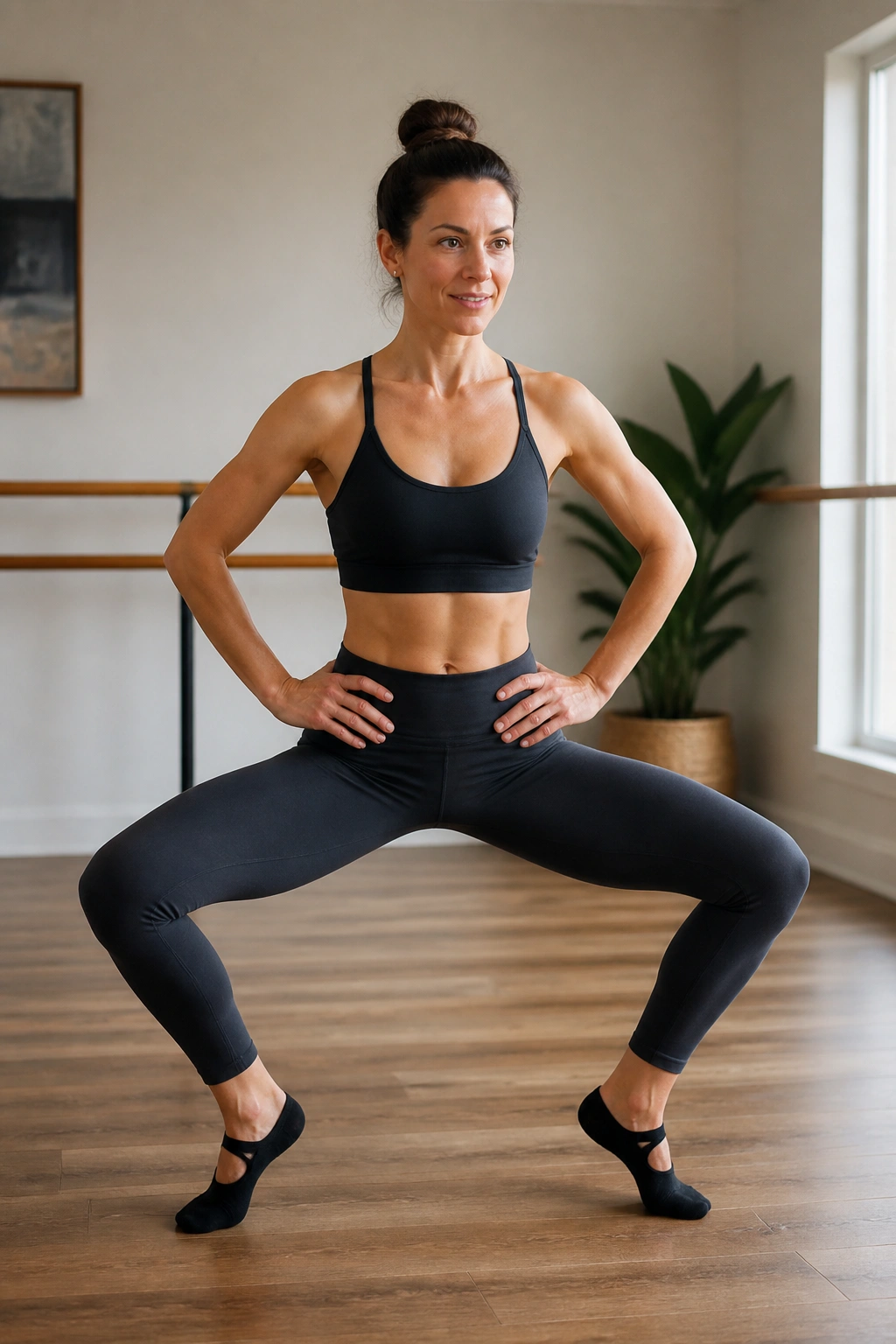
Stand in a wide second position. Lower into a squat and pulse, but at a tempo that feels almost frantic. You are not looking for the deepest squat possible; you are looking for speed and control. The goal is to keep the quads under constant, vibrating tension without locking out the knees at the top.
The Science Behind the Burn
Small, fast movements recruit slow-twitch muscle fibers that are responsible for endurance. By adding speed, you demand more from your cardiovascular system to keep those muscles fueled. It is a dual attack on your stamina and your muscle definition.
Pro Tips
- Keep your tailbone tucked.
- Ensure your knees are pressing back toward your pinky toes, not caving inward.
- If your thighs stop shaking, you aren’t going fast enough or your stance is too narrow.
7. The Attitude Kick with Heart-Rate Spike
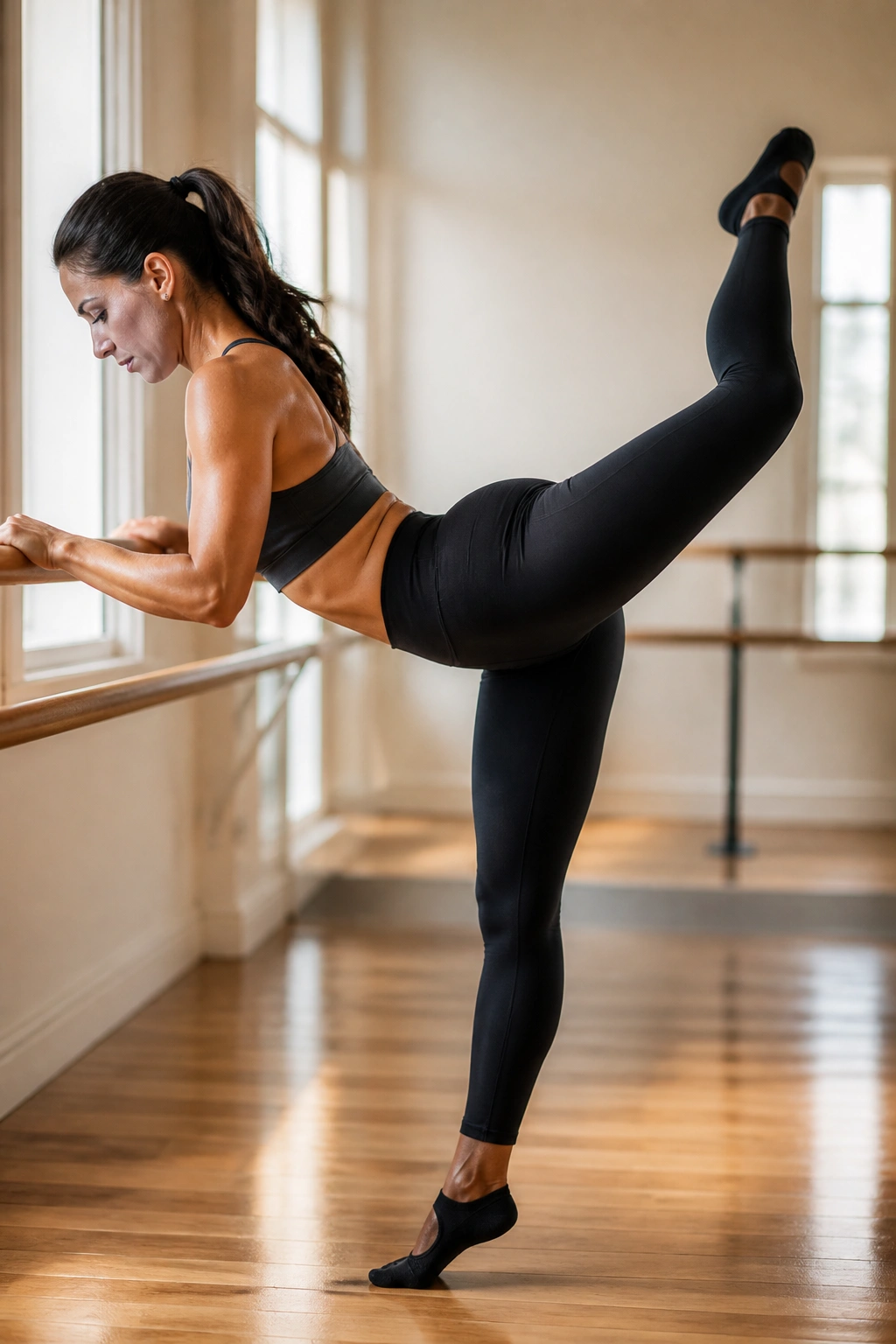
An attitude position involves bending the knee with the foot pointed. In this variation, you stand at the barre, lean your torso forward slightly, and perform rapid, small pulses with the leg in the attitude position. To add the cardio element, periodically explode into a larger, higher kick before returning to the pulse.
Why This Works
This move targets the gluteus medius and the lower back. The “heart-rate spike” comes from the transition between the small, isometric pulses and the large, explosive kicks. It forces your body to switch energy systems instantly.
How to Improve
- Keep your hips square to the barre.
- Focus on the height of the knee, not the foot.
- Think about driving the energy through your heel, even though your foot is pointed.
8. The Single-Leg Arabesque Hop
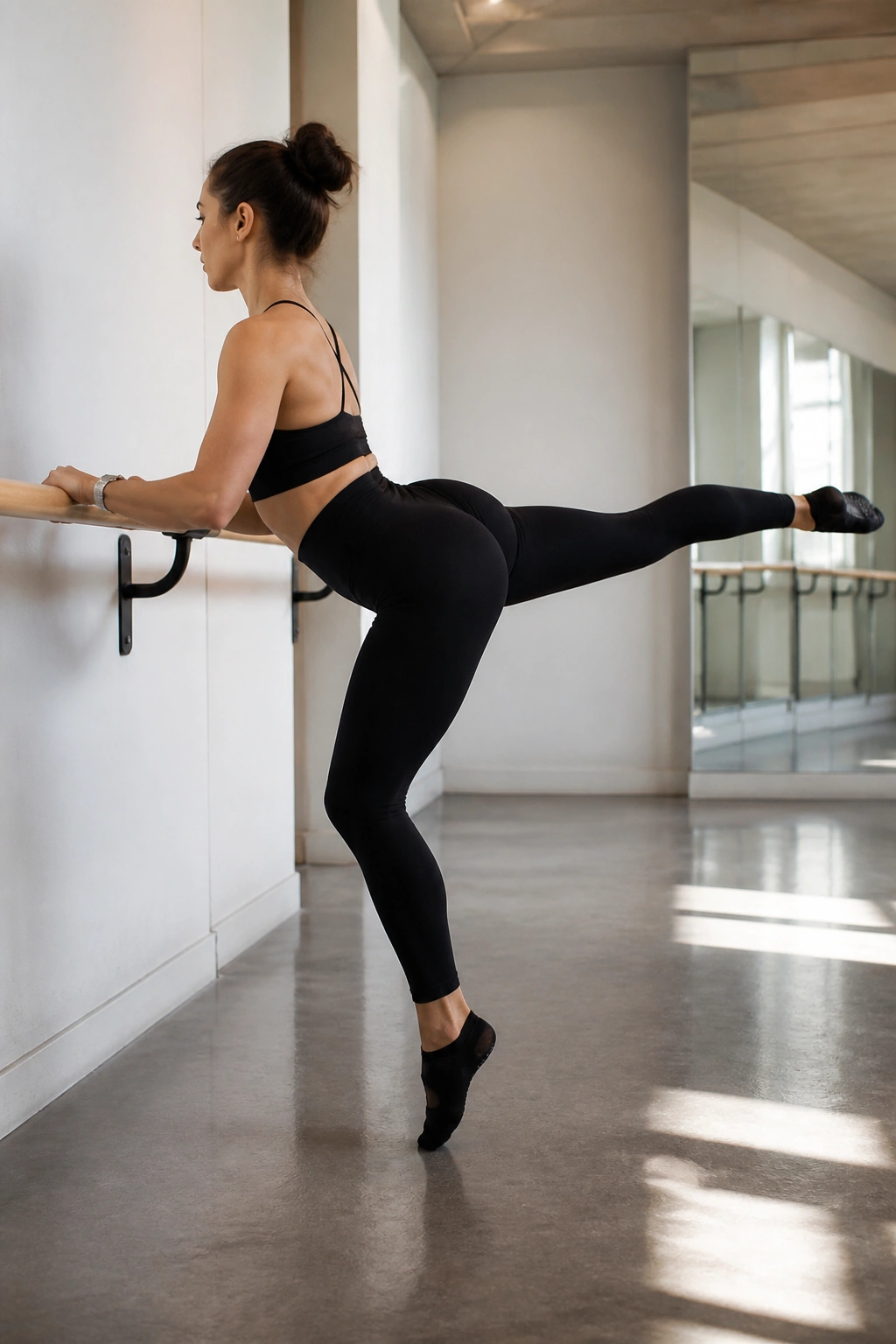
This move requires significant balance. Stand facing the barre, holding it with both hands. Extend one leg straight back behind you, lifting it until it is parallel to the floor or higher. Keep the standing leg slightly bent. Now, perform small, sharp hops on the standing leg.
The Cardio Factor
Hops are inherently high-intensity. Because you are balanced on one leg while holding an arabesque, your entire posterior chain—glutes, hamstrings, and lower back—is firing to stabilize your body against gravity. This is a deceptively hard move that will leave your heart pounding.
Critical Safety Note
Only perform this if you have stable ground and a secure barre. If the hopping feels like it’s putting too much pressure on your knee joint, switch to rapid, deep pulses on the standing leg instead.
9. Light Weight Arm Circles in Power Squats
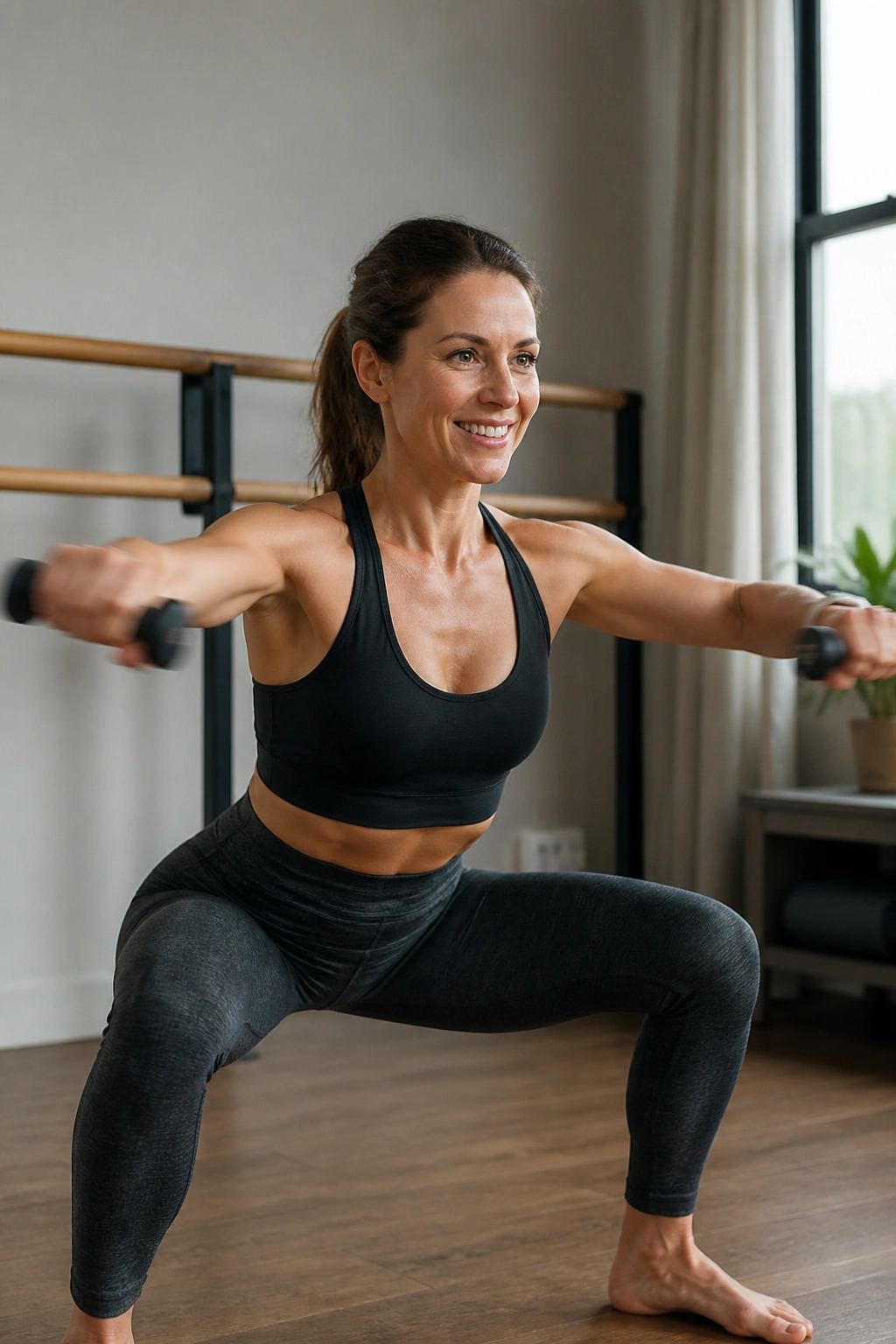
Hold a very light weight—one to two pounds—in each hand. Stand in a deep squat position, holding it for the duration of the set. While in the squat, perform fast, small arm circles. The combination of static lower-body tension and dynamic upper-body movement is a classic barre staple for a reason.
Why This Combination Matters
Your legs are big muscles. Keeping them in a static squat creates a significant oxygen debt. By moving your arms, you force your heart to pump blood to both your lower and upper body simultaneously. It is an efficient way to increase your calorie burn without jumping around.
Form Check
- Keep your core braced. If your lower back starts to ache, stand up, reset, and sink back down.
- Do not shrug your shoulders. Keep them down and back.
10. The L-Fold Pulse with Alternating Toe Taps
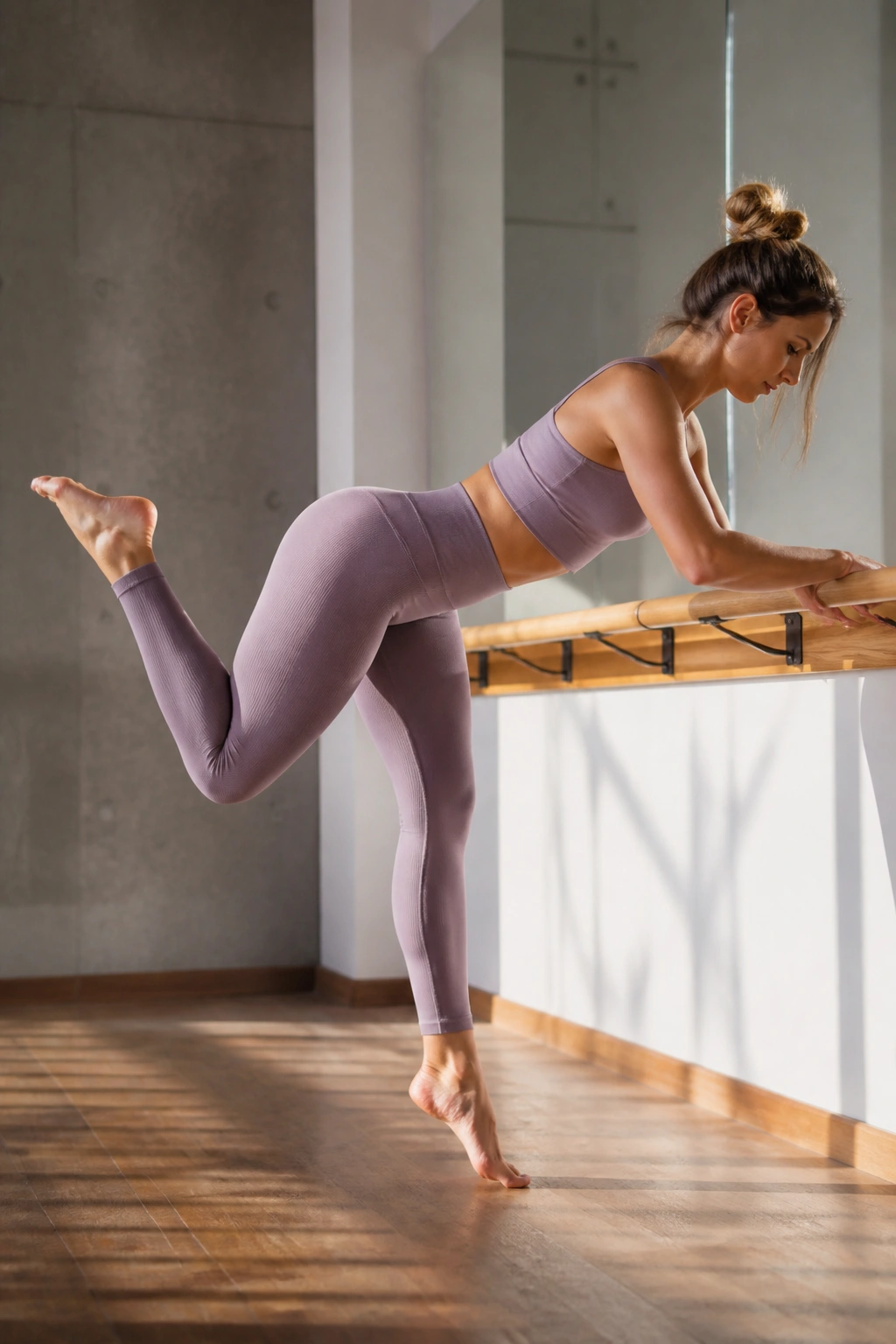
Stand facing the barre. Fold your torso forward, hands on the barre, creating an “L” shape with your body. Lift one leg straight back. Hold this position, and perform a pulse with the lifted leg while simultaneously tapping the toe of your standing leg up and down.
Why It Works
This is a multitasking move. You are working your glutes on the lifted leg, your balance on the standing leg, and your core stability in the torso. The constant toe tapping keeps your heart rate elevated because it forces the muscles in your lower leg to work through their entire range of motion rapidly.
How to Stay Balanced
- Keep your hips completely level.
- Focus your eyes on a single spot on the floor.
- If you start to feel dizzy, lower your head closer to the barre.
11. Plank-to-Pike Barre Slides
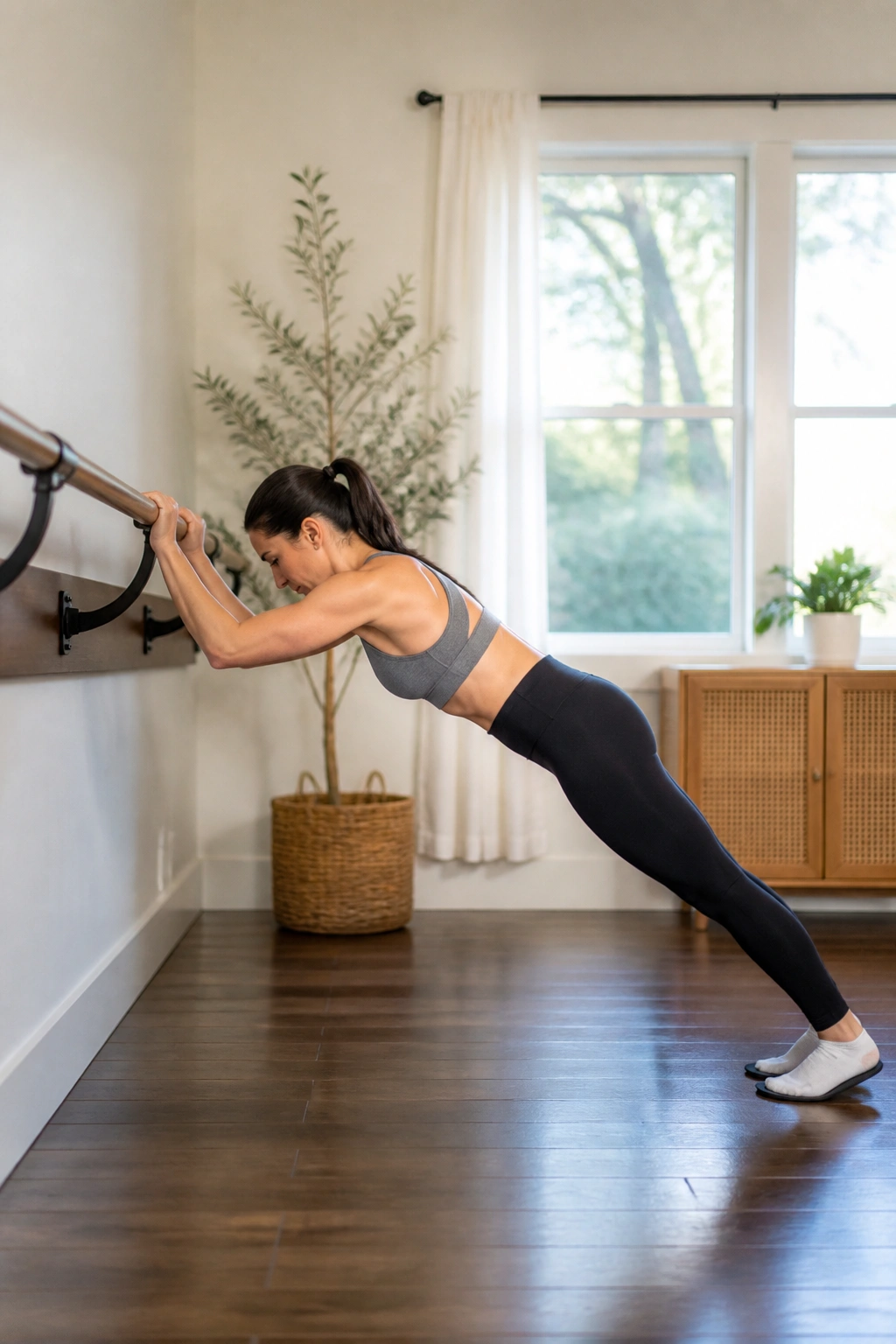
Start in a plank position with your hands on the barre. Using gliders or simply socks on a slick floor, pull your hips up toward the ceiling into a pike position, then slide back out to a plank. The speed at which you move is the deciding factor for intensity.
The Core Engagement
This is essentially an abdominal crunch performed in a vertical orientation. Because you are using the barre for leverage, you can get a deeper pike than you could on the floor. This deep contraction engages the entire rectus abdominis.
Tips for Success
- Keep your arms straight.
- Do not let your shoulders shrug.
- If you cannot slide, step your feet in and out, but keep the tempo fast.
12. The Standing Side Crunch with Barre Support
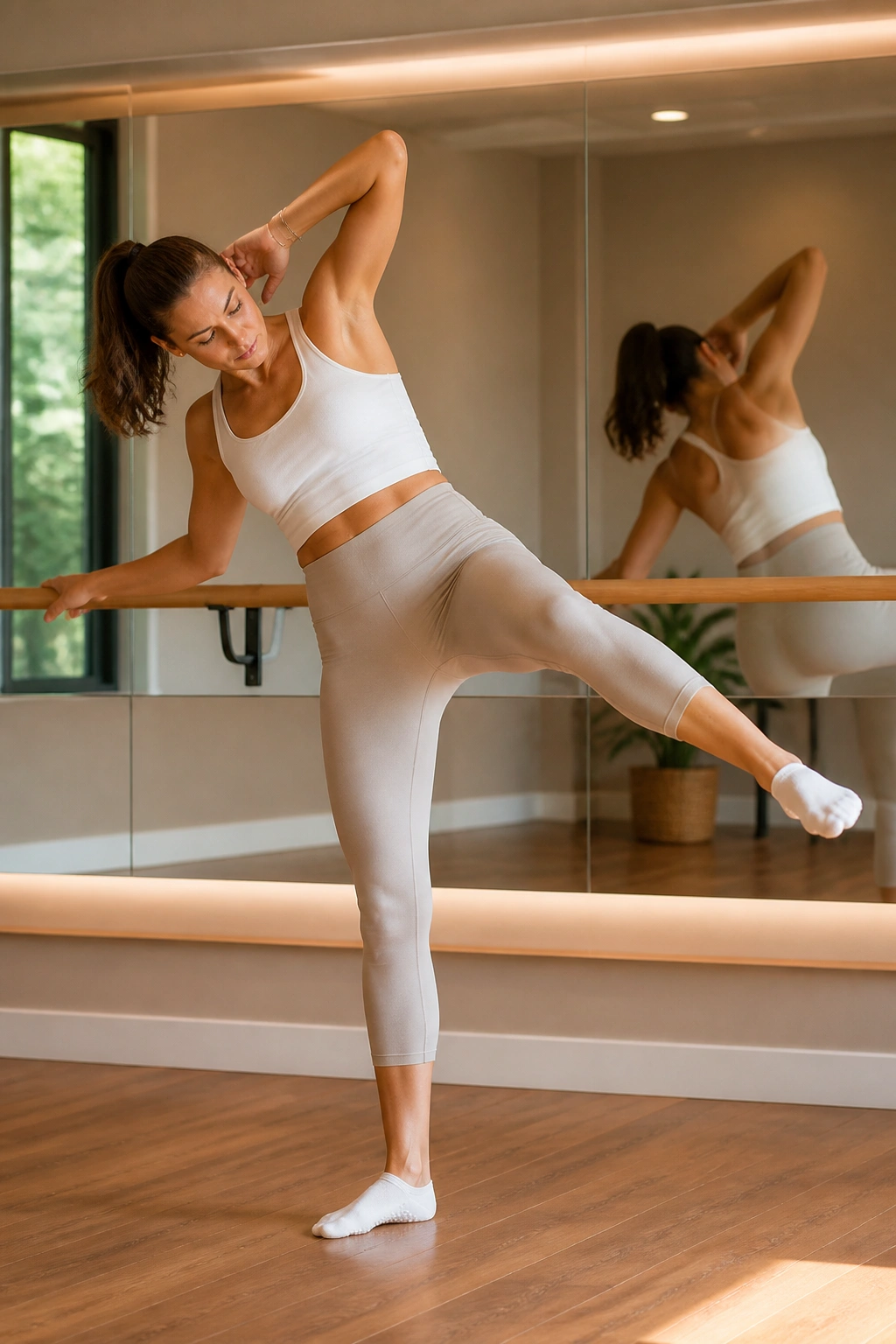
Stand sideways to the barre. Place one hand on the barre. Lift the outside leg out to the side while simultaneously crunching your torso toward that leg. Return to standing, then repeat. This is a rhythmic, fast-paced exercise that targets the obliques.
Why It Works
Standing side crunches are often neglected in favor of floor crunches, but they are highly effective because they force you to work against gravity. By adding speed, you make it a cardio movement that flattens the waistline and tones the side abs.
Execution Cues
- Exhale sharply as you crunch.
- Imagine you are trying to touch your elbow to your knee, even if you can’t quite reach.
- Keep your chest open; don’t collapse forward.
13. Plié Squat Jumps with Pulse-Hold Recovery
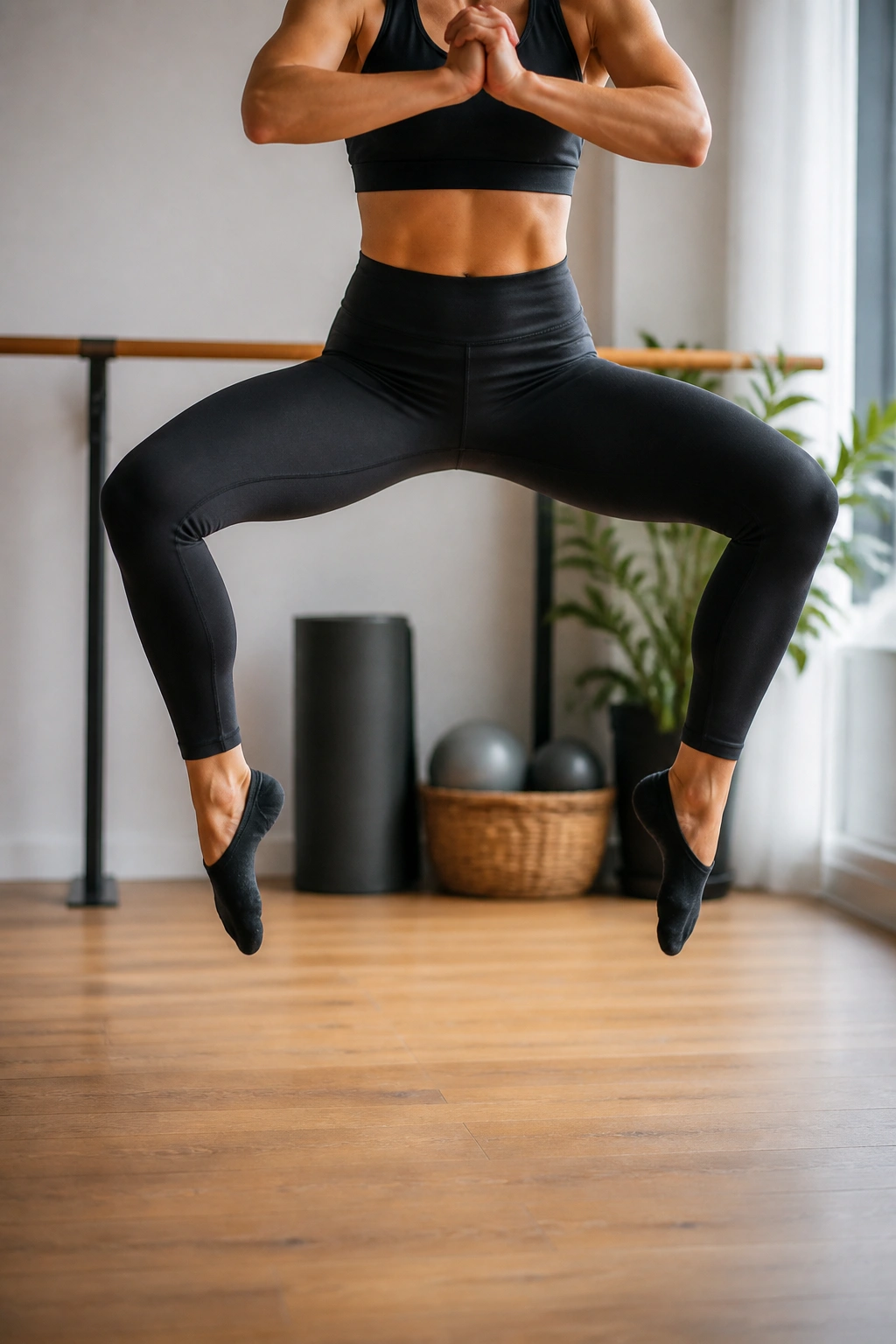
This is an interval-training move. Start in a second position squat. Perform 10 explosive jumps, then immediately drop into a static low-squat hold for 10 seconds. Repeat this cycle four times. The contrast between explosion and stillness is intense.
The Metabolism Boost
Interval training, even for just a few minutes, is superior for fat burning than steady-state movement. The “pulse-hold” recovery is not really a rest; it is an active recovery that forces your muscles to maintain tension while your heart rate remains elevated from the jumps.
How to Push Through
- When you are in the hold, do not let your knees collapse.
- If you start to gasp for air, take deep, controlled breaths rather than shallow ones.
14. The “Round-the-World” Leg Lift Sequence
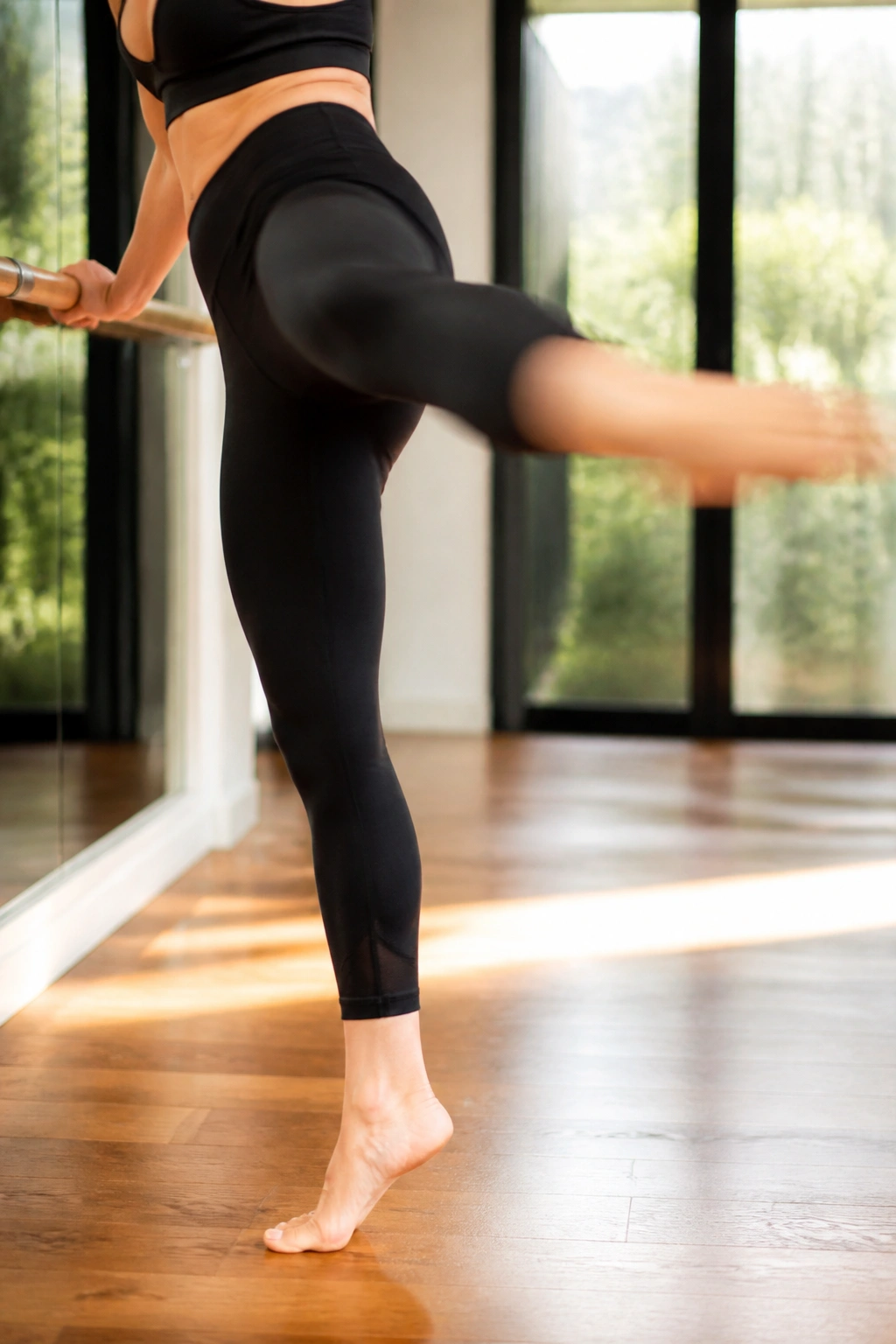
Stand facing the barre. Lift your right leg to the side, then back behind you (arabesque), then forward. Do this in a continuous circle without putting your foot down. The trick to the cardio element is the tempo. You must sweep the leg with purpose and speed.
Why This Works
The hip flexors, glutes, and inner thighs are all working to move the leg through the full range of motion. Because you are not resting the foot on the floor, you have constant time-under-tension. The heart rate rises because the leg is the heaviest limb, and moving it rapidly requires significant energy.
Common Pitfalls
- Avoiding torso movement. Your upper body should be rock solid; only the leg should move.
- Letting the leg get lazy. Keep the muscle engaged even as the leg swings through the air.
15. Resistance Band Lateral Walks in Chair Pose
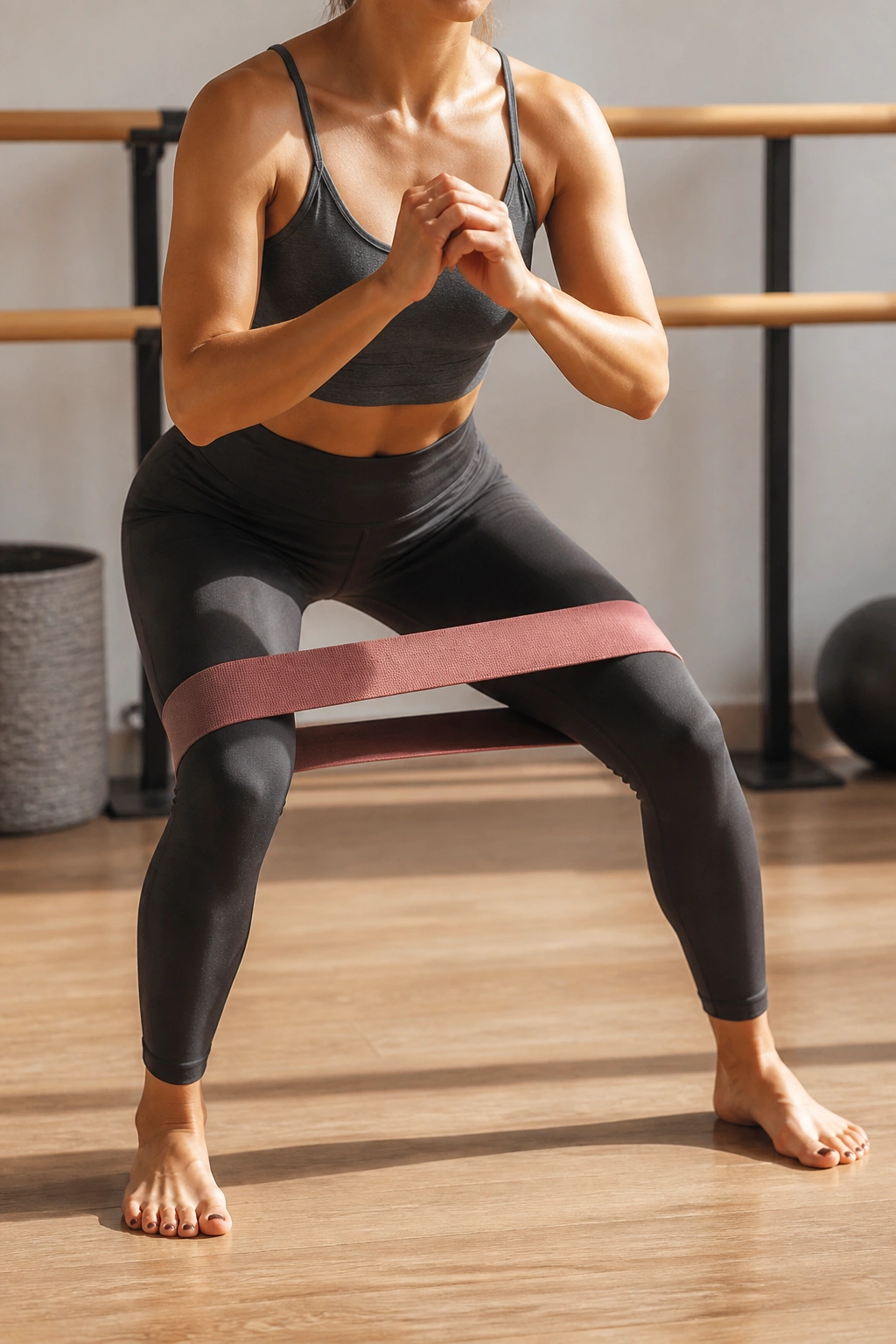
Place a resistance band just above your knees. Sink into a chair pose—squatting with feet together. Take a step to the right, then a step to the left, staying low in the squat the entire time. The constant tension of the band combined with the squat position is brutal.
The Glute Activation
This move specifically targets the abductors and glutes. The resistance band forces your knees to stay apart, which increases the recruitment of the gluteus medius. Keeping this up for sixty seconds will make your legs feel like lead.
Pro Tips
- Do not stand up between steps. Stay low.
- Keep your knees tracking over your toes, don’t let them cave in.
16. The Barre-Assisted Skater Leap
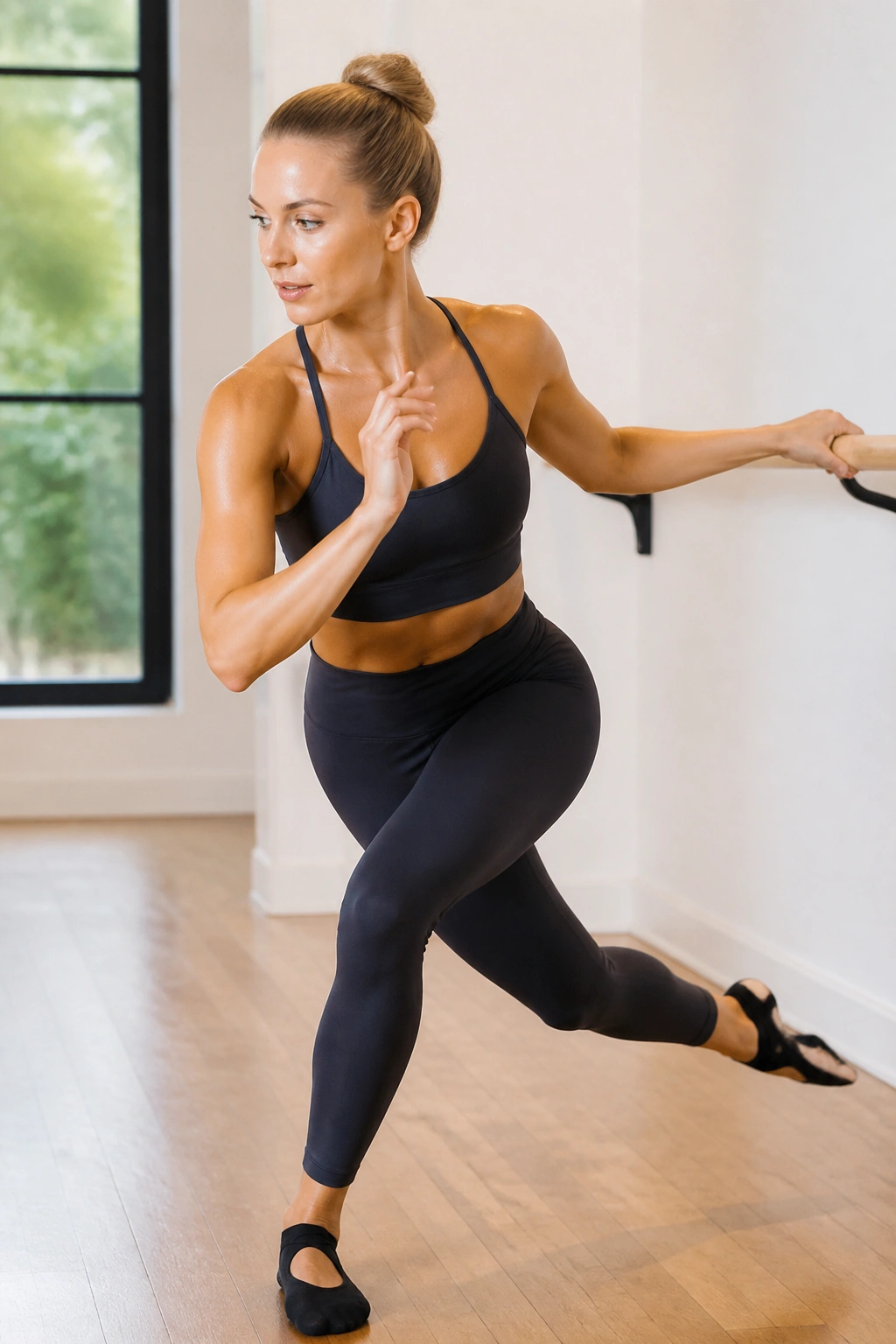
Stand behind your barre. Leap laterally from one side to the other, landing softly in a curtsy lunge while touching the barre for balance. The faster you move, the higher your heart rate goes. This mimics the movement of a speed skater but provides more upper-body support.
Cardiovascular Benefits
Lateral movement is excellent for agility and joint health, but it’s rarely utilized in standard workouts. By using the barre, you can push yourself to move wider and faster than you would without support, increasing the overall calorie expenditure of the exercise.
Form Check
- Land softly. If you are stomping, your core is not engaged.
- Use your arms to propel your movement side to side.
17. Fast-Tempo Tendus with Arm Drivers
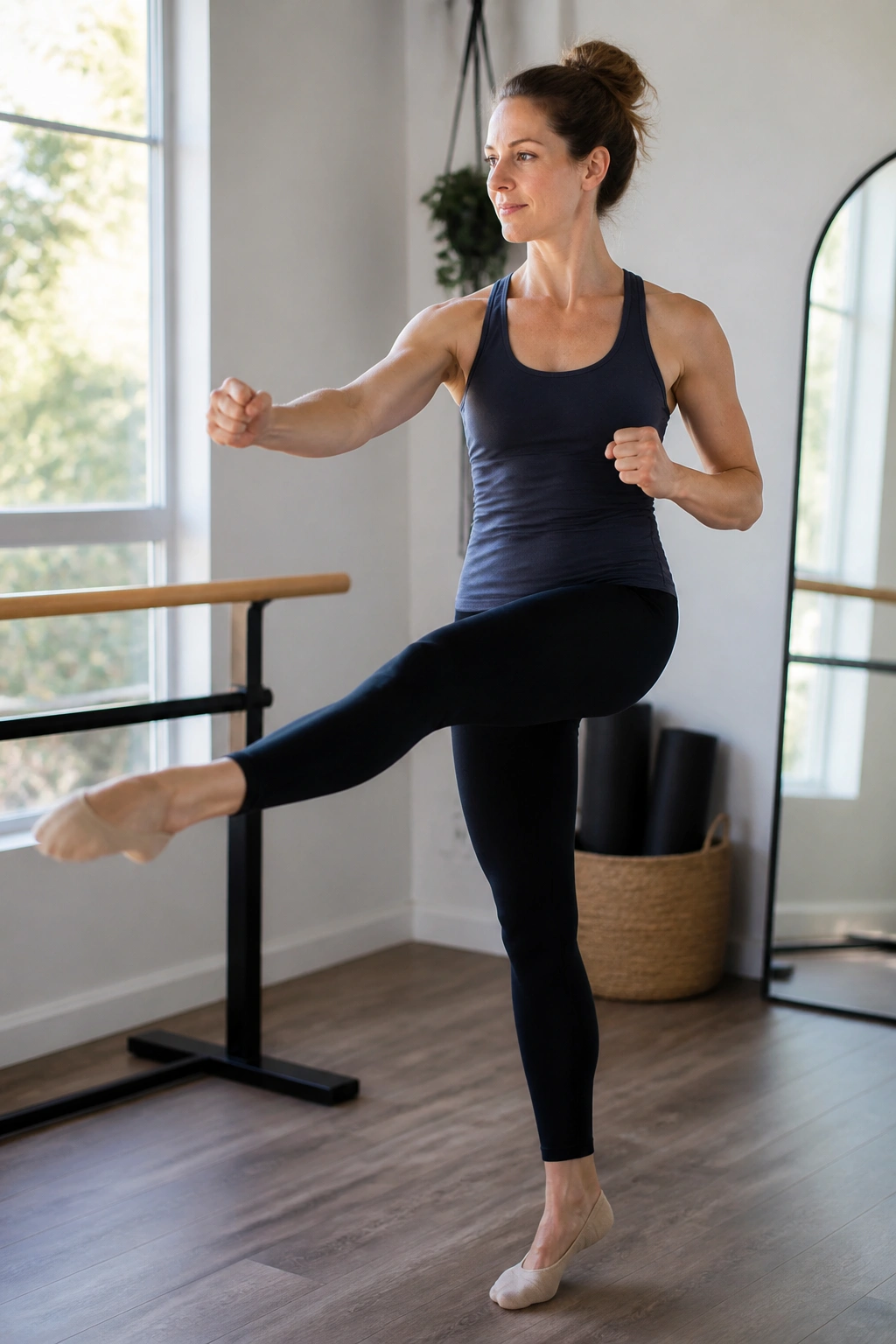
Stand in first position. Perform a rapid tendu (extending the leg and pointing the toe) to the front, side, and back. As you move the leg, use your arms to “drive” the movement, pumping them in synchronization with the leg extensions.
Coordination and Calorie Burn
This move requires brainpower, which adds to the intensity. Coordinating your arms and legs at speed forces your nervous system to fire more neurons. It feels deceptively simple, but doing this for a full minute at a high tempo is surprisingly fatiguing.
Keys to Mastery
- Don’t just swing the leg; push through the floor with your toe.
- Keep the standing leg perfectly still.
18. The Tricep Dip and Knee-Tuck Combo
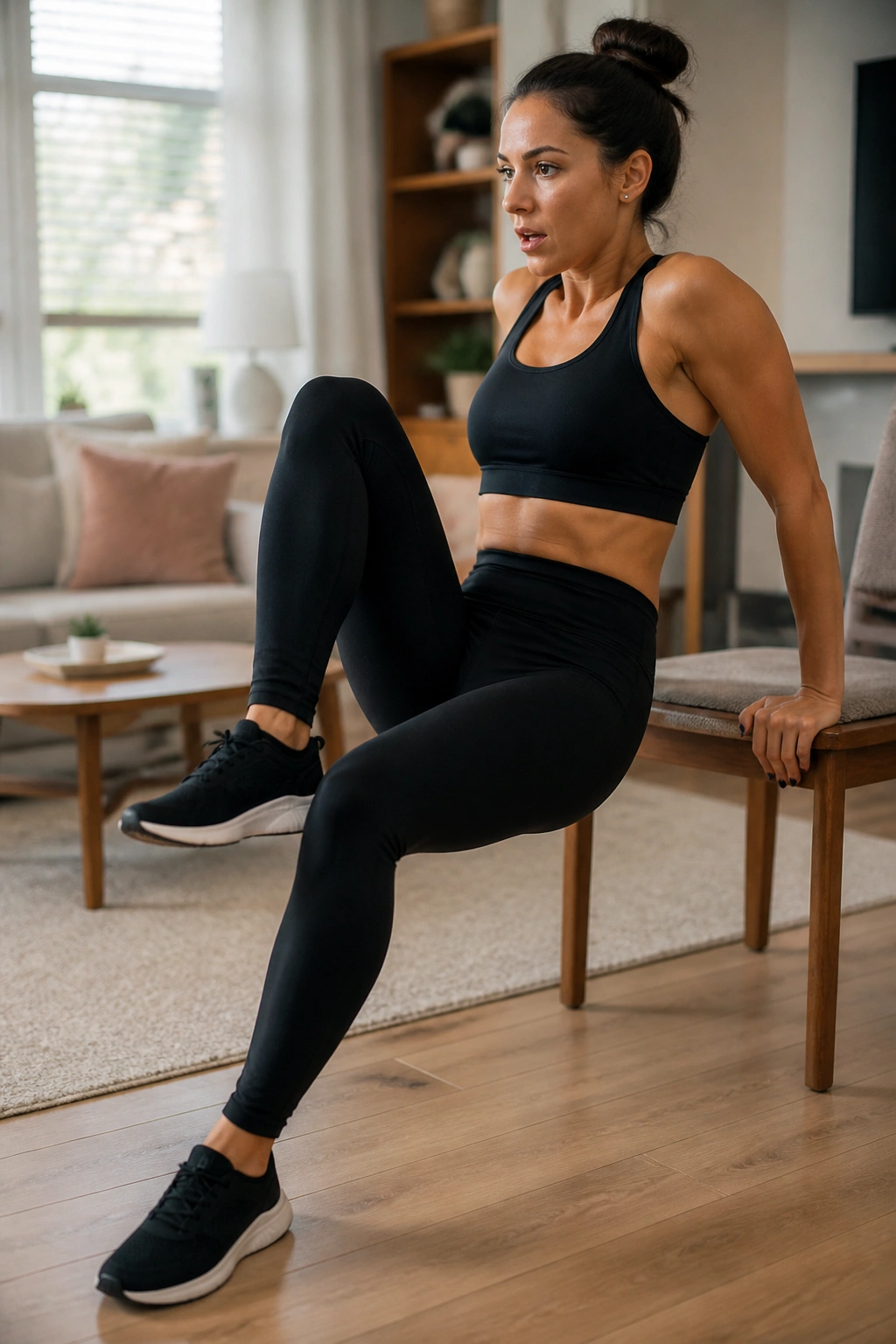
Use a stable chair or low bar for tricep dips. As you push yourself up from the dip, drive one knee into your chest. Alternate knees with each dip. This creates a full-body movement that targets the arms and the core.
Why It’s Efficient
Dips are excellent for the backs of the arms, and knee-tucks are great for the lower abs. By combining them, you eliminate the rest period that usually exists between arm sets and ab sets. Your body has to keep processing the oxygen demand for two completely different muscle groups at once.
Safety Cues
- Keep your back close to the chair/bar.
- Do not let your shoulders round forward during the dip.
19. Wide Second Position Calf Raises with Overhead Reaches
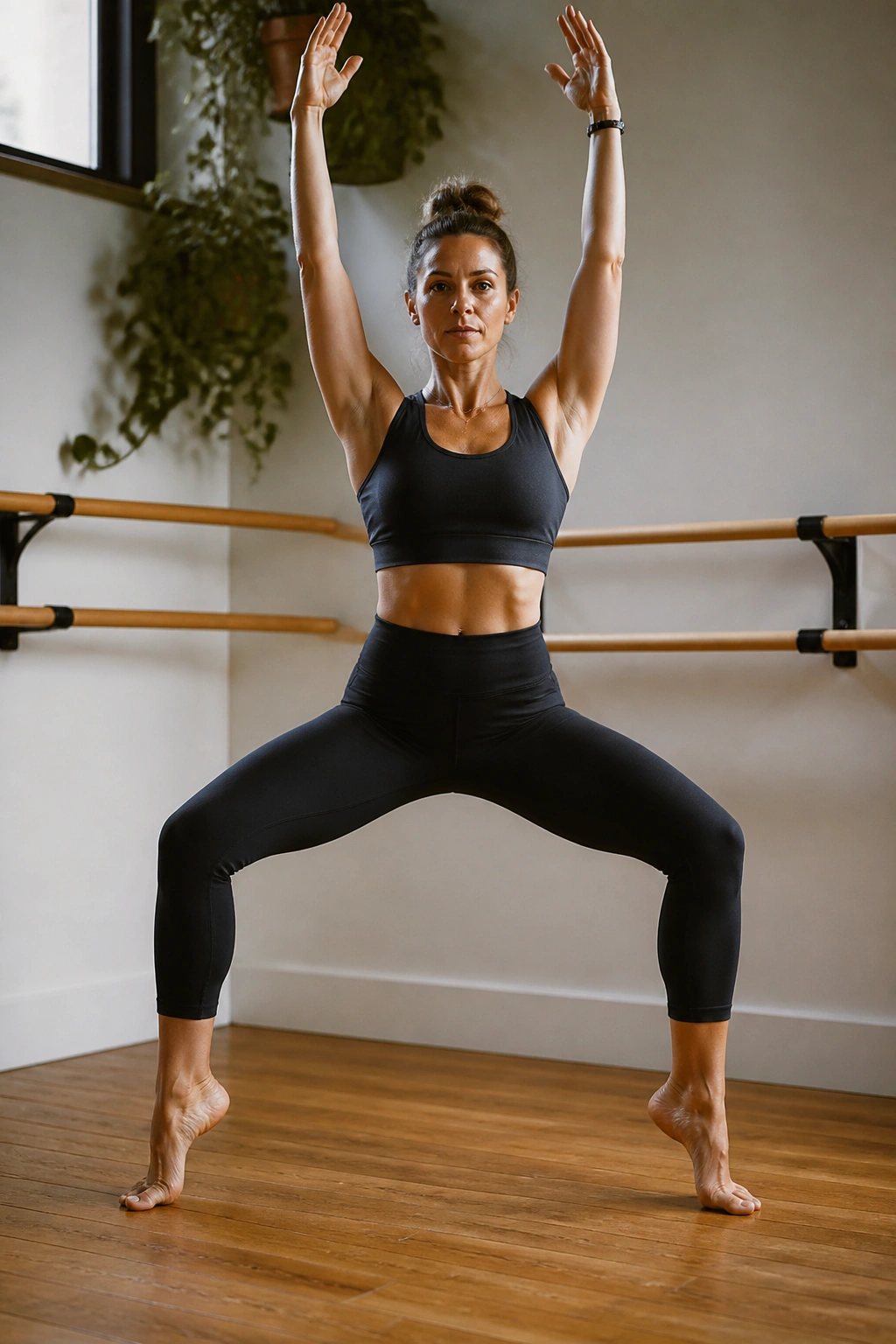
Return to a wide second position squat. While holding the squat, perform continuous, rapid calf raises. As you rise up on your toes, reach your arms overhead. When you lower your heels, pull your arms down to your sides, squeezing your lats.
Total Body Engagement
The calf raise is small, but doing it in a wide-squat position makes it much more difficult. The addition of the arm reach turns it into a total-body cardiovascular move. You are squeezing your lats, working your shoulders, and tiring out your calves, all while keeping the legs in a state of endurance training.
How to Maintain Intensity
- Do not lock your knees at the top.
- Keep the tempo fast—no pausing.
20. High-Tempo Parallel Squat-to-Lunge Transitions
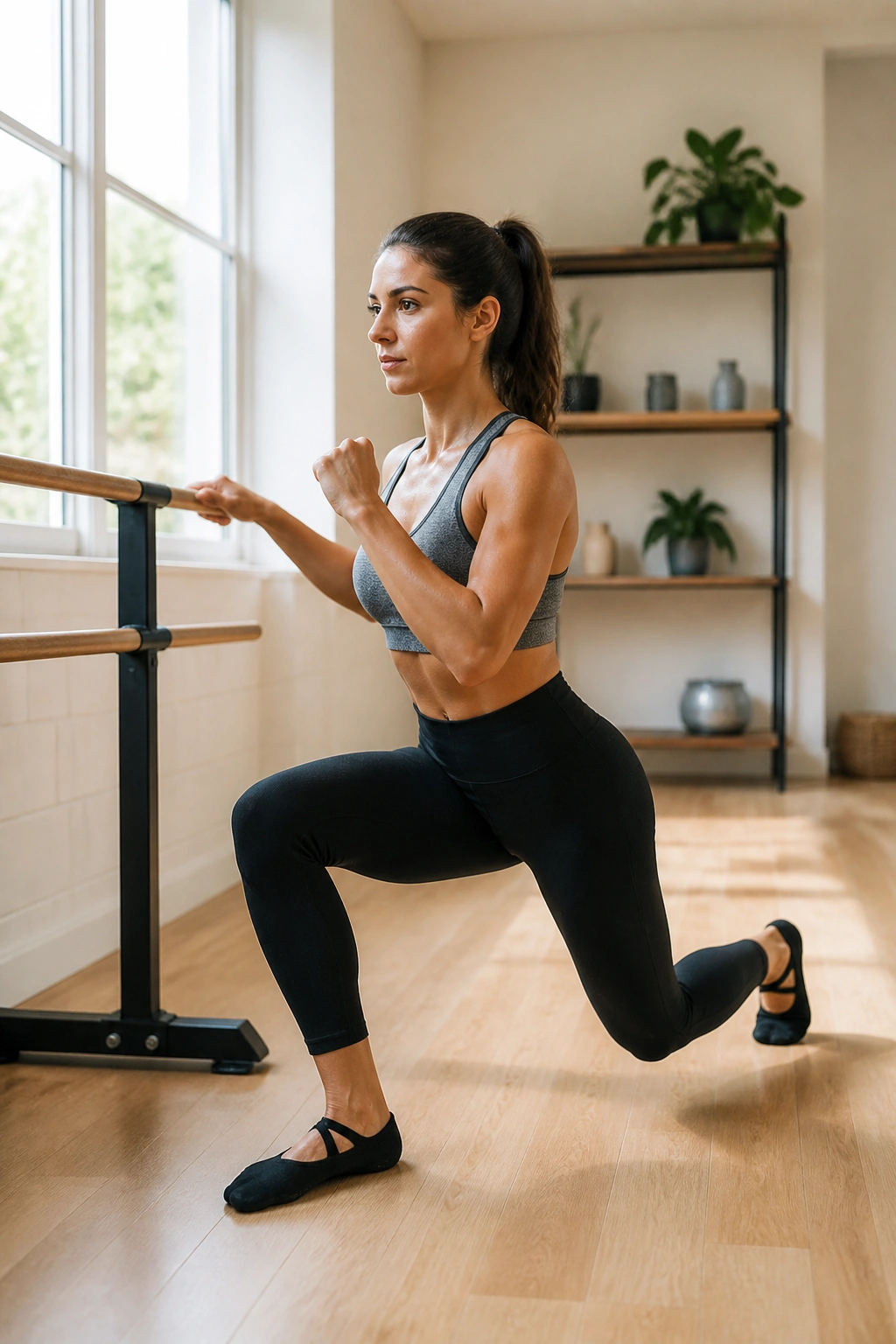
Stand in a parallel position. Squat, then step back into a lunge, then back to a squat, then step back into a lunge with the other leg. The transitions must be explosive. Use the barre for light balance, but rely on your own leg power to move between positions.
Why It Works
Changing planes—from a parallel squat to a rear lunge—requires your body to stabilize in different directions. This constant shifting prevents the muscles from adapting to a single movement pattern, which keeps the heart rate high.
Pro Tips
- Keep your chest lifted.
- Focus on the quality of the lunge; don’t just step back, sink into the lunge.
21. The Glute Bridge and Hamstring Pulse
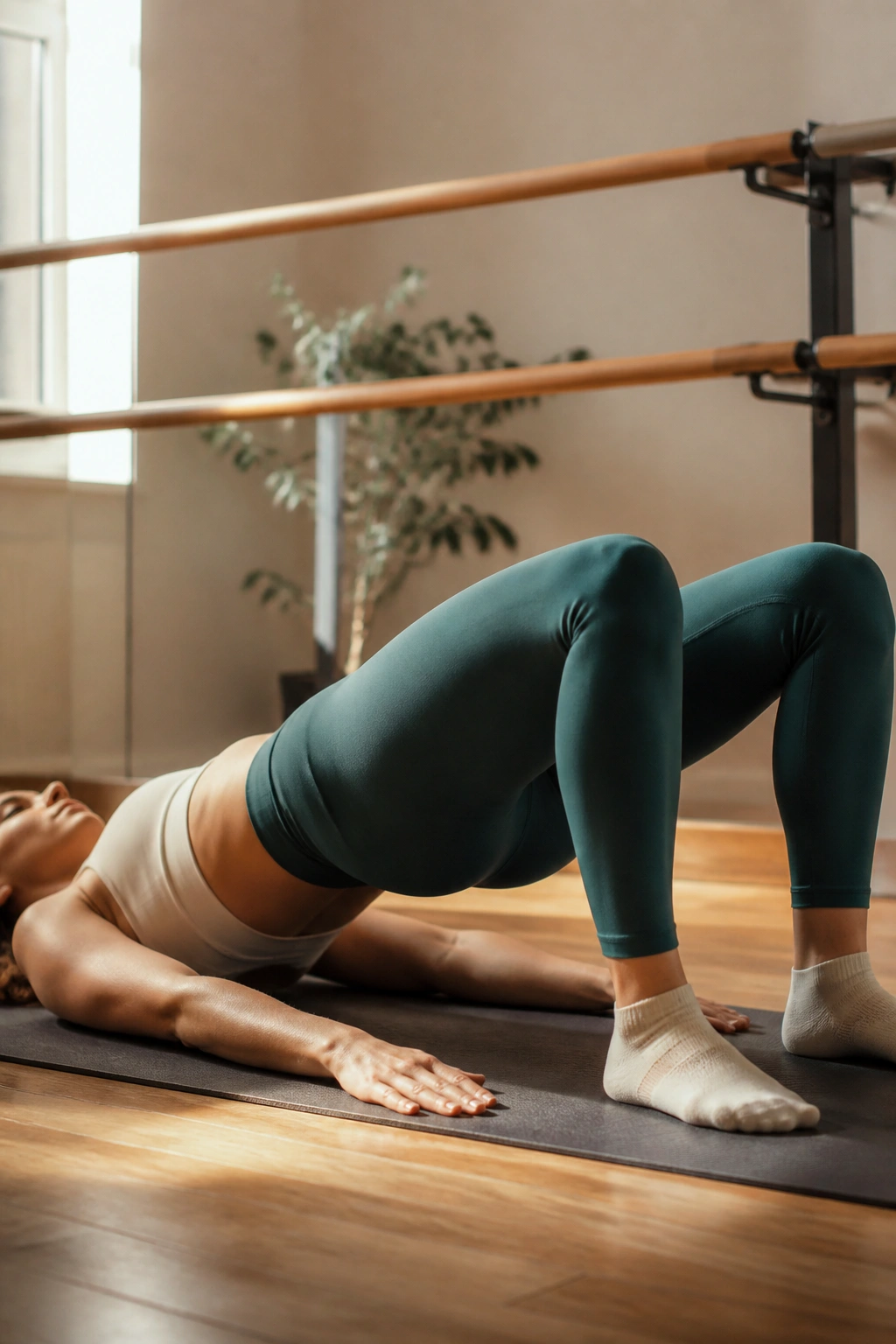
Lie on your back, feet on the floor (or heels on the barre if you are advanced). Lift your hips into a bridge. While holding the bridge, perform rapid, small pulses with your hips. This isn’t high cardio, but it is high intensity in terms of muscular exhaustion.
The Posterior Chain
This move isolates the glutes and hamstrings, which are the largest muscles in the lower body. Exhausting these muscles creates a high metabolic demand. Your body has to work overtime to circulate blood to these large, fatigued tissues, which keeps your heart rate elevated.
Form Check
- Squeeze your glutes at the top of every pulse.
- Do not arch your lower back; keep your ribs knit together.
22. Barre-Supported Inchworm Walkouts
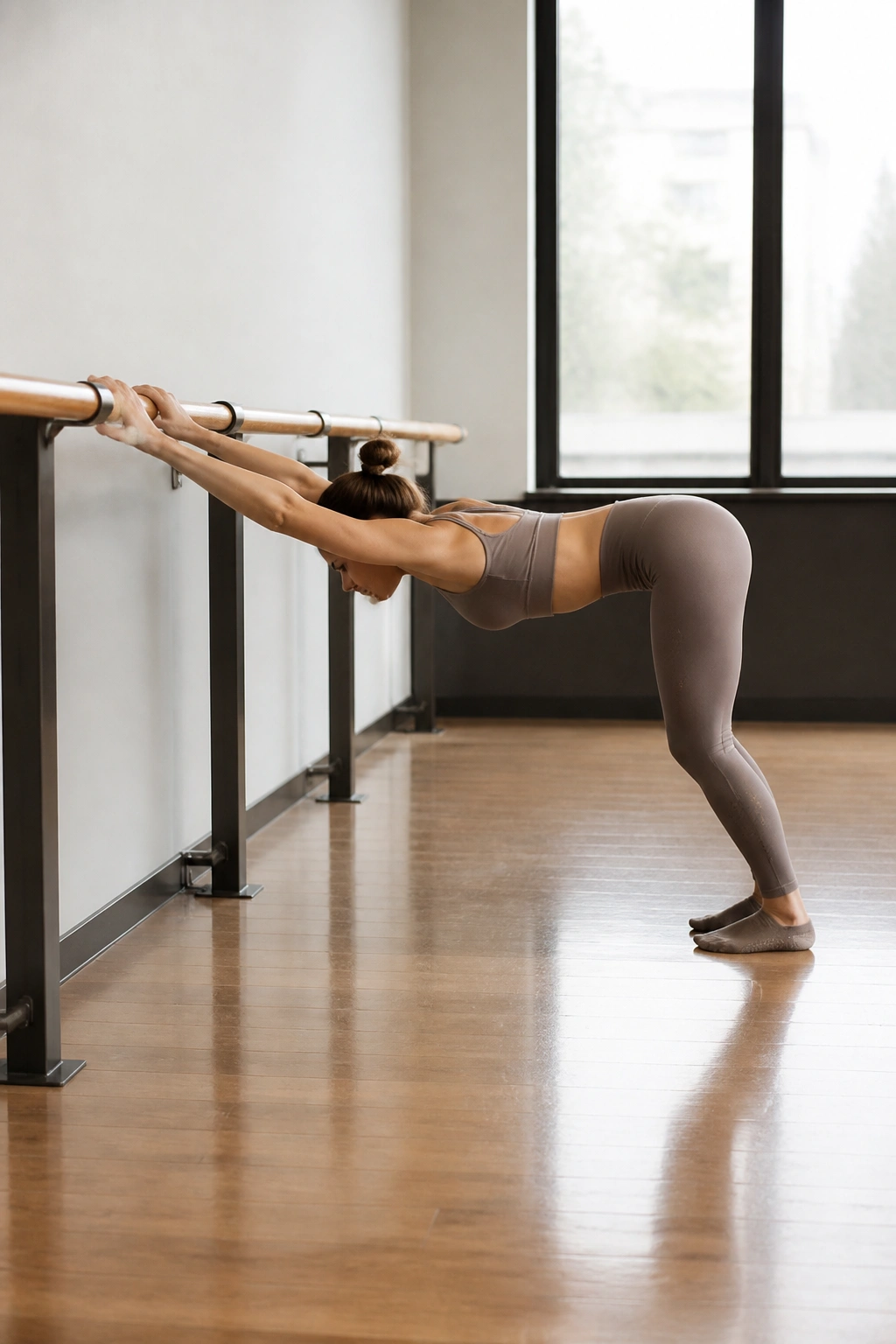
Stand facing the barre. Fold forward, place hands on the barre, and walk them down until you are in a plank, then walk them back up. Increase the speed. This is a rhythmic, full-body movement that requires shoulder strength and core stability.
The Functional Benefit
This movement builds shoulder endurance and core strength simultaneously. By using the barre, you can perform this quickly without needing to get all the way down to the floor, making it a great cardio-filler between lower-body exercises.
Avoiding Common Mistakes
- Keep your legs as straight as possible to get a hamstring stretch.
- Don’t let your hips sag in the plank position.
23. The Pretzel Pulse with Torso Twist
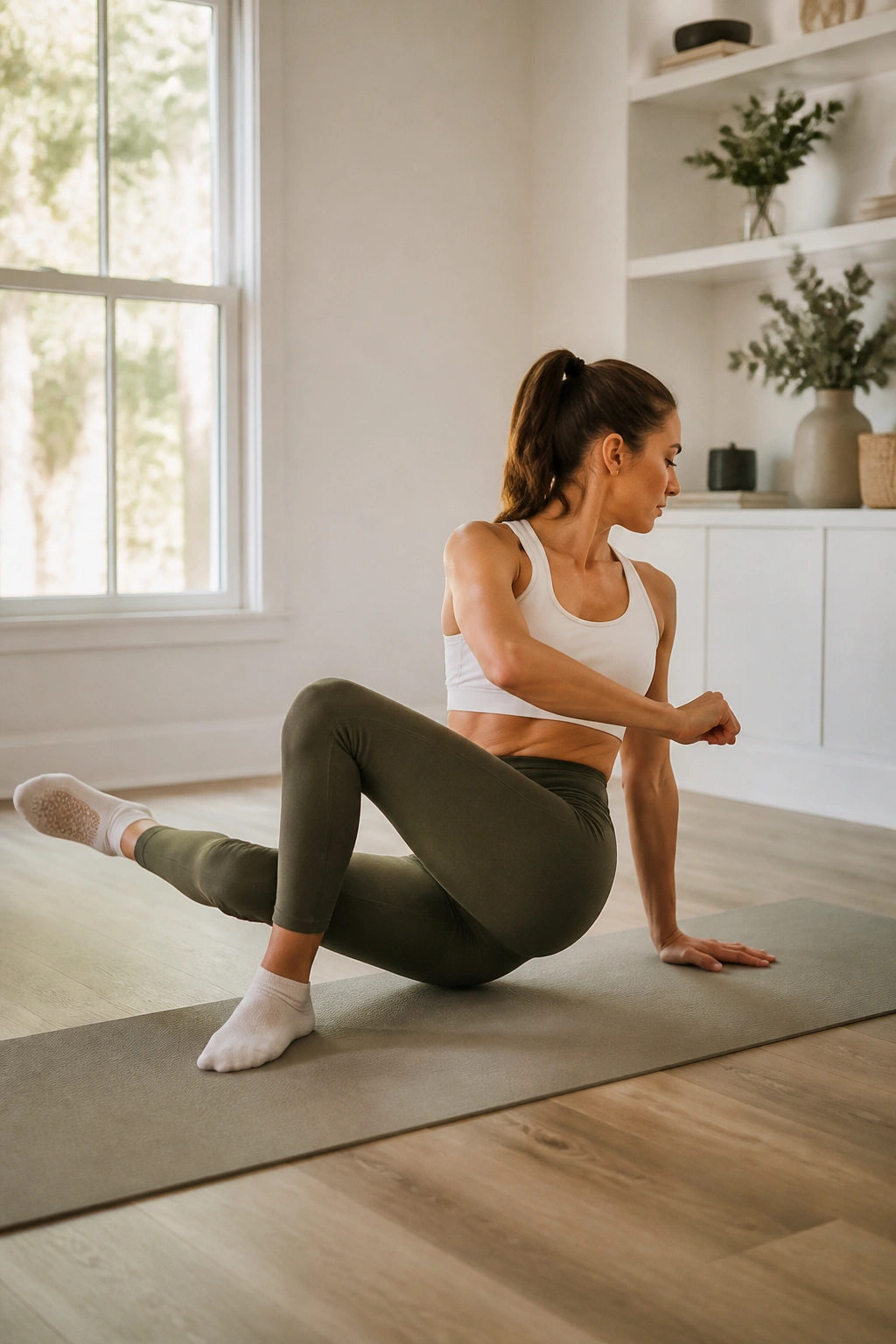
Sit on the floor, one leg bent in front of you (90 degrees), the other bent behind you. Lean over the front leg and lift the back leg. Pulse the back leg while twisting your torso toward the back.
Targeting the Gluteus Medius
This is a classic barre move for sculpting the glute. It is incredibly effective at isolating the side of the hip. While it is low-impact, the constant, rapid pulsing is taxing and will cause a deep muscular burn that simulates high-intensity exercise.
Tips for Better Form
- Keep your chest lifted.
- The lift of the back leg should be tiny—an inch up, an inch down.
24. The Swan Dive Extension with Speed
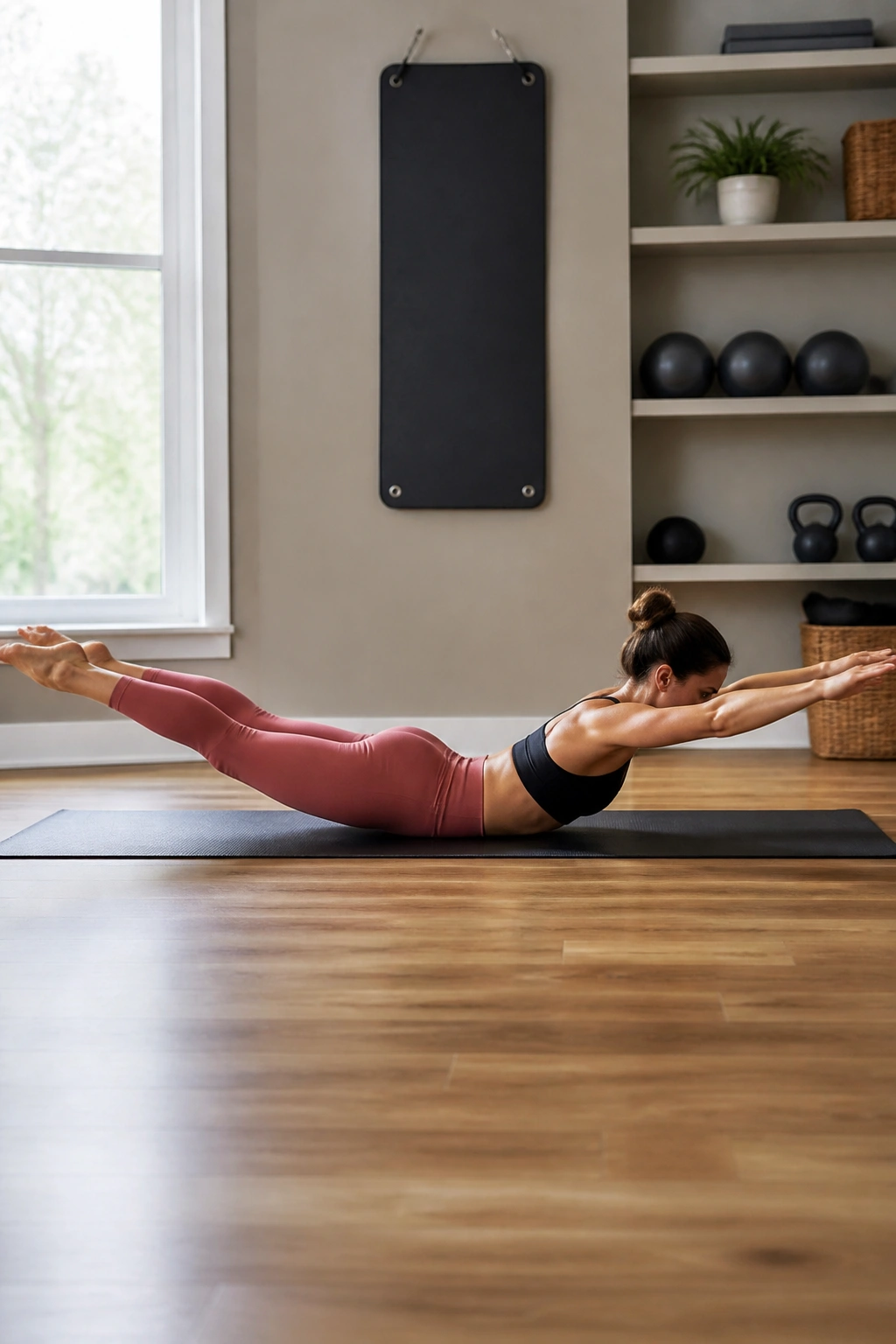
Lie on your stomach. Extend your arms and legs. Lift your chest and thighs off the floor, then lower. Perform this in a rapid, continuous motion. This targets the entire back of the body, from your traps to your heels.
The Postural Benefit
We spend a lot of time hunched over. This move opens the chest and strengthens the back, improving posture. When done at a higher tempo, it serves as a great bridge between lower-body sets, keeping your energy output high without stressing your joints.
How to Modify
- If it’s too much, lift only your chest, then only your legs.
- Keep your gaze on the floor to protect your neck.
25. The Final Minute: Full Body Pulse-Out
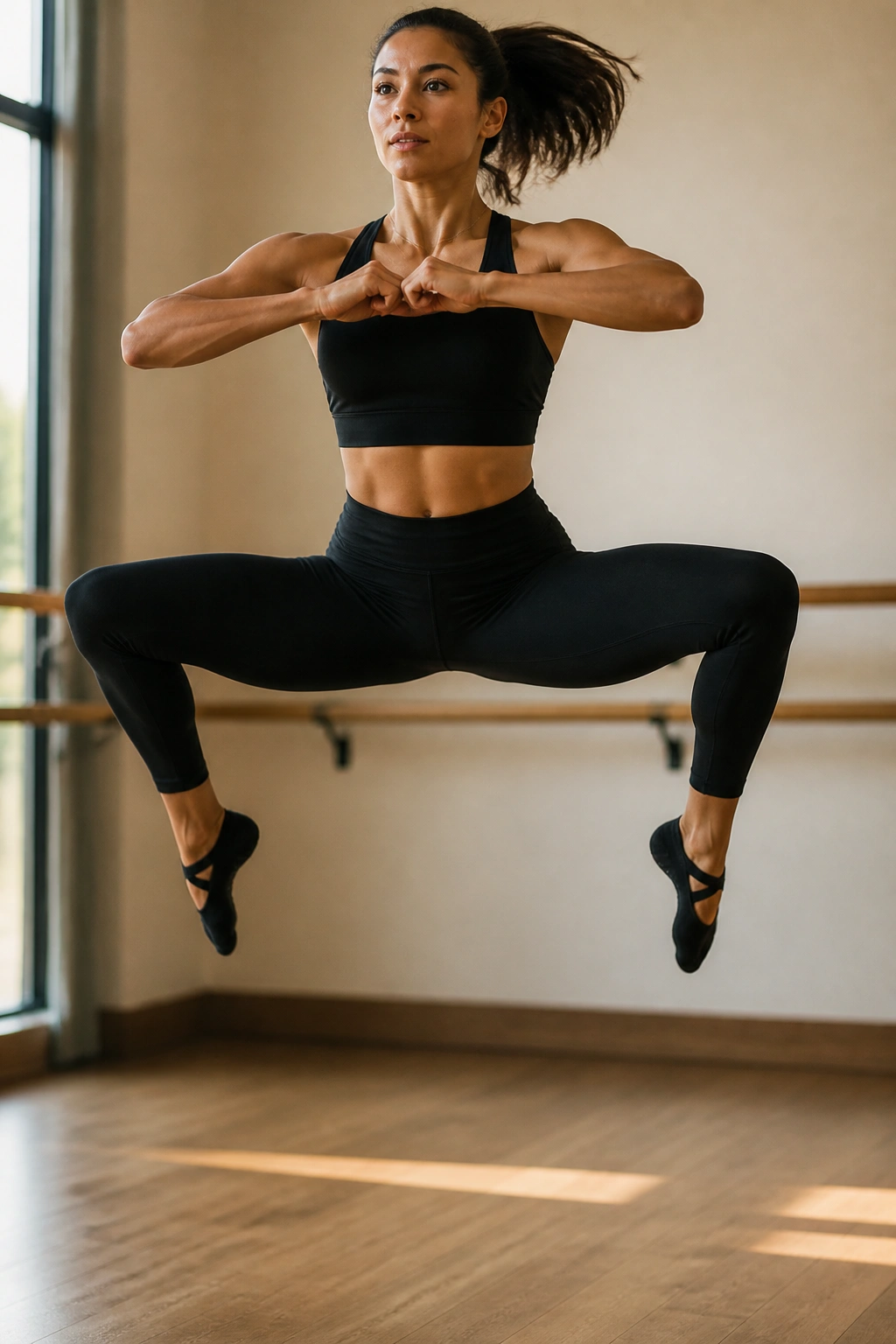
Finish with one minute of “everything.” Stand in a narrow parallel position, sink into a chair pose, and pulse everything—your legs, your arms (at your sides or overhead), and keep your core bracing tight. There is no rhythm here; the goal is to make every muscle in your body shake simultaneously.
The Psychological Finish
This is about mental endurance. By keeping your entire body in motion, you ensure that your heart rate stays at its peak until the very last second. You are utilizing every muscle group, which is the most efficient way to finish a session.
The Mindset
- Don’t count the seconds. Just keep moving.
- If you feel like you are going to fall, hold onto the barre tighter. This is the moment where the most change happens.
Final Thoughts
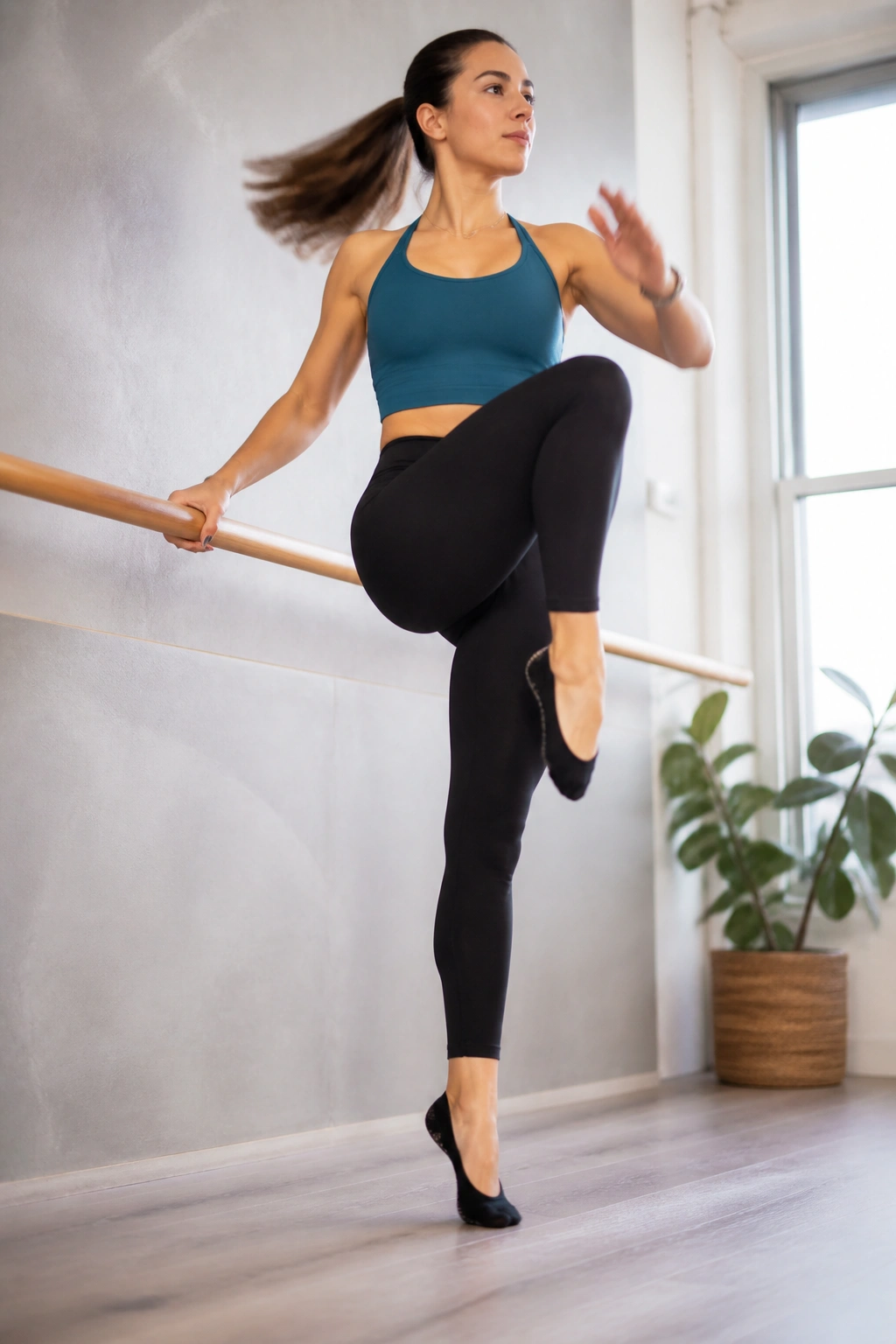
The beauty of cardio barre lies in its ability to manipulate tempo and range of motion to turn low-impact movements into high-intensity training. You do not need to be a dancer, and you do not need complex equipment to achieve these results. The structure of these workouts is meant to keep your muscles under tension while forcing your cardiovascular system to work harder than it would during a traditional strength session.
Focus on your form before you focus on your speed. It is far better to perform ten repetitions of a perfect curtsy lunge than fifty repetitions of a sloppy one. As you become more proficient, the goal is to increase your tempo and decrease your rest time. This is how you continue to progress without needing to add extra weight. Listen to your body, stay consistent, and appreciate the burn for what it is: the sensation of your body becoming stronger and more efficient with every repetition.
